Ulster head coach Richie Murphy said his side “were a bit wasteful at times” during their 28-12 United Rugby Championship victory over Zebre in Parma.
Despite the home side being reduced to 14 men after Simone Gesi’s straight red card just before the half-hour mark, it was a tight and tense match.
The bonus-point win moves Murphy’s side up to third position in the URC table as they return to winning ways ahead of their Challenge Cup fixture against Ospreys at the Affidea Stadium.
“We expected it to be really physical over here and that is what we got,” Murphy said.
“I suppose the red card early in the game gave us a bit more of an advantage and I thought from our point of view, we have to look after the ball better as we were a bit wasteful at times.
“But very happy to get four tries. Coming over here is always very difficult.”
Player of the Match Werner Kok, who scored the bonus-point try, believed that the turning point in the game was the start of the second half.
Ulster scored three tries after the restart with Rob Herring, Zac Ward and Kok all able to cross the line.
“We stopped playing when they went down to 14 and we tried to regroup again and the boys stuck together and played as a team,” Kok said.
“I think the energy from the kick-off [in the second half] was the turning point. The boys stuck in there and that was the turning point for me.”
‘Iran has the ability to keep hurting the global energy markets.’
Rob Geist-Pinfold, a lecturer in International Security at King’s College London, says that the United States has an interest in ending the war on Iran, while Tehran is likely to prolong the conflict to increase pressure on global markets and force more favourable terms
South African sprinter Caster Semenya, a two-time Olympic 800-metres champion, says the International Olympic Committee’s (IOC’s) reinstatement of gender verification tests for the 2028 Los Angeles Games is “a disrespect for women”.
The hyperandrogenic athlete on Sunday also expressed her disappointment that the measure was taken under new IOC President Kirsty Coventry of Zimbabwe.
Recommended Stories
list of 3 itemsend of list
“For me personally, for her being a woman coming from Africa, knowing how African women or women in the Global South are affected by that, of course it causes harm,” Semenya said in Cape Town on the sidelines of a sporting competition.
The IOC said on Thursday that only “biological females” will be allowed to compete in women’s events, preventing transgender women from competing.
The IOC had previously used chromosomal sex testing from 1968 to the 1996 Atlanta Olympics before abandoning it in 1999 under pressure from the scientific community, which questioned its effectiveness, and from its own athletes commission.
“It came as a failure, and that’s why it was dropped,” Semenya said.
“It’s like now we need to prove that we are worthy as women to take part in sports. That’s a disrespect for women.”
Semenya has become the symbol of the struggle of hyperandrogenic athletes, a battle on the athletics tracks and then in courtrooms, to assert her rights, which she has waged since her first world title in the 800m in 2009.
In 2025, she won a partial victory at the European Court of Human Rights in her seven-year legal fight against track and field’s sex eligibility rules.
The court’s highest chamber said in a 15-2 ruling that Semenya had some of her rights to a fair hearing violated before Switzerland’s Supreme Court, where she had appealed against a decision by the Court of Arbitration for Sport. It had ruled in favour of track’s international governing body, World Athletics.
The original case between Semenya and Monaco-based World Athletics was about whether female athletes who have specific medical conditions, a typically male chromosome pattern and naturally high testosterone levels, should be allowed to compete freely in women’s sports.
The European court’s ruling did not overturn the World Athletics rules that in effect ended Semenya’s career running the 800m after she had won two Olympic gold medals and three world titles since emerging on the global stage as a teenager in 2009.
IOC’s policy shift removes conflict with Trump
In a major shift of policy, the IOC is abandoning rules it brought in in 2021 that allowed individual federations to decide their own policy and is instead implementing a policy across all Olympic sports.
“Eligibility for any female category event at the Olympic Games or any other IOC event, including individual and team sports, is now limited to biological females, determined on the basis of a one-time SRY gene screening,” the IOC said in a statement.
They will be carried out through a saliva sample, cheek swab or blood sample. It will be done once in an athlete’s lifetime.
“The policy we have announced is based on science and has been led by medical experts,” Coventry said.
“At the Olympic Games, even the smallest margins can be the difference between victory and defeat, so it is absolutely clear that it would not be fair for biological males to compete in the female category. In addition, in some sports it would simply not be safe.”
The new policy removes a potential source of conflict between the IOC and United States President Donald Trump as the 2028 Los Angeles Olympics comes onto the horizon.
Trump issued an executive order banning transgender athletes from women’s sport soon after he returned to office in January 2025.
The US leader took credit for the IOC’s new policy in a post on his Truth Social network on Thursday.
“Congratulations to the International Olympic Committee on their decision to ban Men from Women’s Sports,” Trump wrote. “This is only happening because of my powerful Executive Order, standing up for Women and Girls!”
2024 Olympic gender row
While sports such as swimming, athletics, cycling and rowing have brought in bans, many others have permitted transgender women to compete in the female category if they lowered their testosterone levels, normally through taking a course of drugs.
The IOC is bringing in the new policy after the women’s boxing competition at the 2024 Paris Olympics was rocked by a gender row involving Algerian fighter Imane Khelif and Lin Yu-ting of Taiwan.
Khelif and Lin were excluded from the International Boxing Association’s 2023 world championships after the IBA said they had failed eligibility tests.
However, the IOC allowed them both to compete at the Paris Games, saying they had been victims of “a sudden and arbitrary decision by the IBA”.
Both boxers went on to win gold medals.
Lin has since been cleared to compete in the female category at events run by World Boxing, the body that will oversee the sport at the Los Angeles Summer Games.
EMMA Bunton has been spotted beaming alongside pal Holly Willoughby at a Disney launch after the Spice Girls reunion was cancelled.
The singer, 50, attended the press day of Disney Adventure World and World Of Frozen at Disneyland Paris in France on Saturday.
Sign up for the Showbiz newsletter
Thank you!
Emma Bunton posed alongside pal Holly Willoughby at a Disney press launch in ParisCredit: GettyShe looked chic as she embraced the Disney spiritCredit: Getty
She appeared to put her band’s woes to one side as she posed for pictures with her longtime friend Holly, 45.
Baby Spice got into the spirit of things by donning a pair of Mickey Mouse ears as well as a tie with the famous character on it.
She looked chic in a white shirt tucked into a pair of straight leg jeans and a cream wool coat.
Emma wore her blonde locks straight and opted for a subtle make-up look.
Meanwhile, Holly wore a black t-shirt tucked into jeans with a black coat and some brown boots.
She too got into the Disney spirit with a set of ears as the two put on their widest smiles for photos.
The two women have been firm friends for several years and are often spotted socialising with their group of friends, including Melanie Blatt and Christine Lampard.
Emma’s appearance comes after The Sun exclusively revealed that the Spice Girls’ 30th anniversary reunion has been cancelled after they failed to pull their plans together in time.
Emma, as well as Mel C, Mel B, Victoria Beckham and Geri Halliwell-Horner had been in talks to reunite for a string of concerts to mark three decades since the release of their debut single Wannabe.
The Sun understands they failed to reach an agreement and plans for a comeback tour in 2026 have been ditched.
Confirming the news during an interview on The Smallzy Show on Australia’s KIIS Radio, Mel C, 52, said: “No, there is no reunion.
“We are communicating all the time. We want to do something – who knows when.
“But I still feel very optimistic and I keep my fingers crossed that you will see the Spice Girls together at some point in the future.”
The Sun told last April how Geri, 53, was back in touch with the band’s former manager Simon Fuller and had flown out to Miami to try and agree on a deal.
It comes as it was revealed that the Spice Girls reunion has been cancelledCredit: Instagram
As recently as January, Mel C had insisted they were still in active discussions about celebrating the milestone.
And even Victoria, 51, had prompted hopes she could return to the group, saying she “loves” the idea of a residency at Las Vegas venue Sphere.
She said in October of the prospect: “It would be tempting. But could I take on a world tour? No I can’t. I have a job…
“How good would the Spice Girls be at the Sphere! I love the idea of it. I mean I don’t know if I could even still sing, I mean I was never that great!”
However, in recent weeks, plans have fallen apart, with just a collectible coin from the Royal Mint being announced to mark the anniversary.
A planned Netflix drama based on the group was shelved last month amid reported tensions in the group.
The Spice Girls have not performed together as a five-piece since the London 2012 Olympics closing ceremony.
They last reunited without Posh in 2019 for a sold out 13-date stadium tour of the UK and Ireland, selling 700,000 tickets and making £4.4m each.
The group are celebrating 30 years since the release of their hit song WannabeCredit: Getty
A pilot has revealed his one method of balancing work and family life in the industry, despite the seriously long hours and time away from home that comes with the role
Christine Younan Deputy Editor Social Newsdesk
11:27, 29 Mar 2026
The pilot revealed how he balanced work and family (stock image)(Image: Getty Images/iStockphoto)
It’s widely recognised that pilots work lengthy shifts and spend considerable periods away from home. While on duty, they usually work between 10-14 hours daily, encompassing flight time, briefings and taxiing, although this can stretch to 16 hours when unexpected situations arise.
Throughout the week, the schedule can become more demanding, with pilots working up to 60 hours across 7 consecutive days, averaging around 20 hours weekly in the air. While travelling to different countries constantly and experiencing the world sounds thrilling, it can prove incredibly challenging for pilots with families.
One pilot has recently shared how he successfully balanced his career with family life. During a TikTok Q&A session, Captain Steve, employed by American Airlines, outlined his approach to making it work.
Following someone sharing their ambition to become an airline pilot, they ask: “What is your advice on a work-life balance in the industry?”
Content cannot be displayed without consent
Steve responds: “Well it’s like anything else if you travel, you have to balance being on the road and being home, the electronics help these days, you can FaceTime, communicate much more effectively and frequently than you did back then.”
When his children were young, the pilot succeeded in spending quality time at home while working as a reserve for the airline.
He added: “I did reserve on the airline and didn’t work as much on reserve, I’d get called a few times a month, maybe for a trip where when you’re regular line holder, you’re going to fly four or five times.
“Was it a big difference? Yeah, it was a huge difference because I got to spend more time with my kids and I still got paid as an airline pilot to be on call.”
While working as a reserve wasn’t straightforward for Steve but he “made the sacrifice”.
He went on: “There were some inconveniences with being on call as well but I made that sacrifice to be with my family so there is a way to work it up, where there’s a will, there’s a way.”
Numerous elements influence working hours. Short-haul pilots might complete 4-6 legs per day (consecutive flights). Long-haul pilots typically endure lengthier stints, such as 12-15 hours on a single extended flight.
Early starts, such as 5am, can cut into allowable duty hours owing to fatigue regulations. Between shifts, pilots must receive a minimum of 10 hours of rest, incorporating 8 hours of uninterrupted sleep.
WASHINGTON — President Trump says the United States is winning the war with Iran, even as thousands of additional American troops deploy to the Middle East.
He has pilloried other countries for not helping the U.S., only to say later he does not need their assistance. He has twice delayed deadlines for Iran to reopen the Strait of Hormuz. He has threatened to “obliterate” Iran’s energy plants if the vital waterway remains largely shut down and said the U.S. was “not affected” by the closure.
At one point this month, Trump claimed that one of his predecessors — who, he strongly suggested, was a Democrat — privately told him he wished he had taken similar action against Iran. Representatives for every living former president denied that any such conversation happened.
As the war entered its second month over the weekend, Trump’s penchant for embellishments, exaggerations and falsehoods is being tested in an environment where the stakes are much higher than a domestic political fight.
A president who has long embraced bluster and salesmanship to shape narratives and focus attention is confronting the unpredictability of war.
Leon Panetta, who served Democratic presidents as Defense secretary, CIA director and White House chief of staff, said he has “seen enough wars where truth becomes the first casualty.”
“It’s not the first administration that has not told the truth about war,” he said. “But the president has made it kind of a very standard approach to almost any question to in one way or another kind of lie about what’s really happening and basically describe everything as fine and that we’re winning the war.”
Michael Rubin, a historian at the American Enterprise Institute who worked as a staff advisor on Iran and Iraq at the Pentagon from 2002 to 2004, said Trump is “the first president of any party in recent history that hasn’t self-constrained to live within rhetorical boundaries.”
“So of course it creates a great deal of confusion,” he said.
The zigs and zags are the point
To his critics, Trump’s style is a sign that doesn’t have a coherent long-term strategy. But for Trump, the zigs and zags seem like the point, a method that keeps his opponents — and pretty much everyone else — always on their heels.
The approach was clear last week in the hours before he announced the second delay of the deadline for Iran to reopen the strait. Asked what he would do about the deadline, Trump said that he did not know and that he had a day before he had to decide.
“In Trump time, a day, you know what it is, that’s an eternity,” Trump said to laughter from members of his Cabinet.
But investors are unimpressed, with U.S. stocks closing out their worst week since the war began. To some on Capitol Hill, the freewheeling is more frustrating than amusing.
Rep. Gregory Meeks of New York, the top Democrat on the House Foreign Affairs Committee, lamented that Trump is “going back and forth and constantly contradicting himself.”
“The administration is winging it,” he said. “So how can you trust what the president says?”
Republicans were not willing to go that far, but their concern was apparent heading into a two-week break from Washington. Sen. John Kennedy of Louisiana said his constituents “support what the president has done.”
“But most of my people are also equally or even more so concerned about cost of living,” he said.
Republican Rep. Chip Roy of Texas, who sits on the House Budget Committee and is a member of the hard-right House Freedom Caucus, said his constituents were on board with “blowing some crap up.” Nonetheless, he expressed reservations about the prospect of ground troops and said the administration has not provided enough details in briefings for lawmakers. Such sessions, he said, only reveal information you “read in the papers.”
“Taking out bad guys, taking out conventional [weapons], taking out or at least working to take out nuclear capability, pressing to keep the straits open, all those are good things and I’ve been supportive and will continue to be supportive,” Roy said. “But we’ve got to have a serious conversation about how long this is going to go, boots on the ground, all those things, press for further briefings and understanding of where it’s all headed.”
Political risks ahead
While Trump has maintained deep support among Republicans, a poll last week from the Associated Press-NORC Center for Public Affairs Research indicates that the president risks further frustrating his voters if the U.S. gets involved in the kind of prolonged war in the Middle East that he promised to avoid. He campaigned against starting new foreign wars altogether, and his reversal on that already has irked some of his longtime supporters.
Although 63% of Republicans back airstrikes against Iranian military targets, the survey found, only 20% back deploying American ground troops.
That reflects the political challenges ahead for Trump, who did not prepare the country for such an extensive overseas conflict. If the war drags on or escalates, pressure on Republicans could build before the November elections, when their majorities in Congress are at risk. Some in the party have said sending in ground troops would be a red line that Trump should not cross.
The administration also will probably need congressional support for an additional $200 billion he seeks to support the war. That amount of money, which Trump has said would be “nice to have,” even as he said the war was “winding down,” would be a tough vote at any time. But it poses particular risks for Republicans in an election year.
White House spokesperson Anna Kelly said in a statement that Trump is “right to highlight the vast success of Operation Epic Fury,” the military name for the war in Iran.
“Iran desperately wants to make a deal because of how badly they are being decimated, but the President reserves all options, military or not, at all times,” she said.
Some see ‘logic’ to Trump’s approach
Rubin, the former Iran and Iraq advisor at the Pentagon, said there could be some “logic” to the president’s ever-evolving rhetorical approach to the war. He said Trump’s initial comments about ongoing negotiations, which Iran denied, could “spread suspicion and fear within the regime circles.”
“Perhaps Donald Trump or those advising him simply want the Iranians to grow so paranoid they refuse to cooperate with each other or perhaps they even turn on each other,” he said. “But then again, there’s always a danger with Donald Trump of assuming that his rhetoric is anything more than shooting from the hip.”
Rep. Adam Smith of Washington state, the top Democrat on the House Armed Services Committee, said Trump is not going to be able to fully achieve his objectives, even those that have been clearly articulated — including the complete elimination of Iran’s nuclear program — “in the current trajectory.”
And if that is the case, Smith said, the president has the option to rely on his rhetorical skills to simply say the U.S. won — and end the war.
“As I’ve jokingly said, nobody I have ever met or heard of in human history is better at exaggerating his own accomplishments than Donald Trump,” Smith said. “So go knock yourself out and claim this was some great success.”
Verstappen’s dissatisfaction with F1 is focused on the degree of energy management required of the new engines.
They need to be recharged several times a lap, and that is leading to drivers losing speed on the approach to corners at the end of long straights as the engine runs out of battery power and starts to recharge.
It is also generating a form of racing that has proved attractive to fans and many in the sport, with places swapping and swapping back again.
But Verstappen does not like the way this happens as a result of different stages of battery charge between two drivers racing.
Discussing his attempts to pass Alpine’s Pierre Gasly for seventh place, Verstappen said: “You can pass around here, but then you have no battery for the next straight.
“So I tried once just to have a look, but then of course Pierre immediately got by me again on the main straight and I think that was basically the story of today. You can pass, but then you get re-passed. That was basically it.”
Commenting further on his thoughts about his future, Verstappen said: “I see it like this: You hear it from a lot of sports people when you speak to them about how are you successful. It all starts with actually enjoying what you’re doing before you can actually commit to it 100%.
“Now I think I’m committing 100% and I’m still trying, but the way that I am telling myself to give it 100% I think is not very healthy at the moment because I am not enjoying what I’m doing.
“And now people can easily say, ‘Yeah, well, you’ve won so many championships and races and now just because the car is not good you are complaining.’ Maybe you can see it like that, but I see it different.”
He added that one option would be to go and race in sports cars – he is already planning to take part in the Nurburgring 24 Hours this year.
“I have a lot of other projects anyway that I have a lot of passion about,” he said. “The GT3 racing. Not only racing it myself but also the team. It’s really nice and fun to build that. And I really want to build that out further in the coming years.
“It’s not like if I would stop here that I’m not going to do anything. I’m always going to have fun. And also I will have fun in a lot of other things in my life.
“But it’s a bit sad to be honest that we’re even talking about this. It is what it is. You don’t need to feel sorry for me. I’ll be fine.”
Referring to the bosses of F1 and his potential loss from the paddock, he implied that a change of the rules would make a difference to his decision.
“They know what to do,” Verstappen said.
F1 bosses are due to meet in the four-week gap between Japan and the next race in Miami to discuss changes to the rules to allow drivers to push flat-out in qualifying.
The need to manage energy over one ultimate lap and the effect this having on driving is unanimously regarded in F1 as an issue that needs fixing.
The plans, which fall short of a full invasion, could involve raids by special operations and conventional infantry troops, The Washington Post reported.
The Pentagon is preparing for weeks of limited ground operations in Iran, potentially including raids on Kharg Island and coastal sites near the Strait of Hormuz, according to United States officials quoted by The Washington Post newspaper.
The plans, which fall short of a full invasion, could involve raids by special operations and conventional infantry troops, the Post reported on Saturday, exposing US personnel to Iranian drones and missiles, ground fire, and improvised explosives.
Recommended Stories
list of 3 itemsend of list
Whether President Donald Trump would approve any of those plans remains uncertain, according to the report.
“It’s the job of the Pentagon to make preparations in order to give the Commander in Chief maximum optionality. It does not mean the president has made a decision,” White House press secretary Karoline Leavitt said in a statement, responding to questions over the Post report.
The Trump administration has deployed US Marines to the Middle East as the war in Iran stretches into its fifth week, and has also been planning to send thousands of soldiers from the army’s 82nd Airborne to the region.
On Saturday, the US Central Command (CENTCOM) said about 3,500 additional soldiers arrived in the Middle East on board the USS Tripoli.
The sailors and marines are with the 31st Marine Expeditionary Unit and arrived in the region on March 27, along with “transport and strike fighter aircraft, as well as amphibious assault and tactical assets”, according to CENTCOM.
Officials speaking to The Washington Post said discussions within the administration over the past month have touched upon the possible seizure of Kharg Island, a key Iranian oil export hub in the Gulf, and raids into other coastal areas near the Strait of Hormuz to find and destroy weapons that can target commercial and military shipping.
According to the report, one person said the objectives under consideration would probably take “weeks, not months” to complete, while another put the potential timeline at “a couple of months”.
The Pentagon had not responded on Saturday to the Post’s requests for comment. Iran has yet to respond to the report.
The report comes as Pakistan, which shares a 900km-long (559-mile) border with Iran, mediates between Washington and Tehran, hosting two days of talks starting on Sunday with the foreign ministers of Saudi Arabia, Turkiye and Egypt.
Iranian threats
The Iranian parliament speaker, Mohammad Bagher Ghalibaf, said on Sunday the “enemy openly sends messages of negotiation and dialogue and secretly plans a ground attack”.
“Unaware that our men are waiting for the arrival of American soldiers on the ground to set fire to them and punish their regional partners forever. Our firing continues. Our missiles are in place,” the Tasnim news agency reported, quoting Ghalibaf.
“Our determination and faith have increased. We are aware of the enemy’s weaknesses, and we clearly see the effects of fear and terror in the enemy’s army.”
It was not clear whether Ghalibaf was responding to the Post report.
On Wednesday, Ghalibaf had warned that intelligence reports suggested that “Iran’s enemies” were planning to occupy an Iranian island with support from an unnamed country in the region.
He said any such attempt would be met with targeted attacks on the “vital infrastructure” of the regional country – which he did not name – that assists in the operation.
Tasnim quoted an unnamed military source as saying on Wednesday that Iran could open a new front at the mouth of the Red Sea if military action takes place on “Iranian islands or anywhere else in our lands”.
The source told Tasnim that Iran can pose a “credible threat” in the Bab al-Mandeb Strait, which lies between Yemen and Djibouti.
Tasnim later quoted an “informed source” claiming that Yemen’s Houthi rebels, backed by Iran, are prepared to play a role “if there is a need to control the Bab al-Mandeb Strait to further punish the enemy”.
Police in Tel Aviv dispersed hundreds of protesters on Saturday opposing Israel’s operation with the US against Iran, now in its second month. Up to 18 people have been arrested so far, according to local media, as wartime restrictions on gatherings remain in place.
KIM Kardashian has been accused of editing her sister Khloe’s face by fans as the family enjoy a trip to Japan.
The sisters have been living their best lives in Tokyo over the past week, along with Kim’s children, Saint, Psalm and Chicago and Khloe’s daughter True.
Sign up for the Showbiz newsletter
Thank you!
Kim Kardashian has been accused of editing her sister Khloe’s faceCredit: InstagramThe sisters are enjoying a trip to Tokyo with their children, including Kim’s son SaintCredit: InstagramFans think Khloe’s face looks different in the snapCredit: Instagram/Khloe Kardashian
The Skims founder, 45, took to Instagram on Saturday to share a photo dump of their trip but soon came under fire for allegedly using editing tools to change the appearance of hers and Khloe’s faces.
In one snap, the pair are seen standing in front of a toy claw machine, as Khloe, 41, holds a stuffed toy in her arms.
The sister duo look flawless with their skin glowing and their make-up on fleek, but fans think she may have altered the pictures.
One person commented: “The amount of facetuning on khloe gaadammmm.”
Another social media user expressed: “We saw you at the Oscar party. We know you don’t look anywhere close to this. Nor does your sister.”
Somebody else said: “Ya’ll do not look like this in person. Kim embrace your age and imperfections. Especially Khloe.”
Yet another penned on Reddit: “Why does khloe look photoshopped in. It looks like she’s been pasted in and resized to be around Kim’s height lol.”
While a fifth added: “I hope those Instagram filters get overtime pay cuz they be working hard af.”
Most read in Entertainment
Kim’s new man Lewis Hamilton was spotted with the group in Tokyo earlier this week, before the start of the Japanese Grand Prix.
Things appear to be heating up for the pair as she introduced him to three of her children.
“It’s more than just a casual connection. It takes a lot to capture Kim’s interest and she’s definitely intrigued,” an insider told People.
“He’s just an easygoing guy with great energy.
“Her family likes him and Kim’s very into him. They are both busy with their careers, but see each other as much as possible.”
On Sunday, Kim and Lewis took a stroll around the streets of Tokyo before being sighted by fans.
Fans pointed out Kim’s alleged editing fail on social mediaCredit: instagram
Surrounded by security, Kim waved back as she walked in a full-body grey dress.
Linking arms with BF Hamilton, the American offered some PDA for those watching on.
Kim’s romance with Lewis became public knowledge after The Sun revealed she flew in from Los Angeles on her £100million private jet to spend an evening with him.
On January 31, the couple enjoyed a brief stay at the exclusive Estelle Manor in the Cotswolds, with insiders saying they had the spa to themselves, before enjoying a meal in a private room.
A source told The Sun: “It all appeared to be very romantic. Kim and Lewis made use of all the facilities on offer.
“She had two bodyguards with her and Lewis had a close protection officer but they remained in the background.
“Two of the three stood guard outside the door to their room, so no one could disturb them.”
Lewis was friends with her rapper ex Kanye West, who she divorced in 2022.
A source added: “They had a couple’s massage booked in and had full use of the facilities for just the two of them.
“It was all kept very quiet – they clearly wanted to have some time for just the two of them.”
They hard-launched their romance at the Super Bowl last month, when they were spotted in the stands alongside her sister Kendall Jenner.
Kim’s new man Lewis Hamilton was spotted with the group in TokyoCredit: Shutterstock
Passengers should act now before flights get more expensive
Steffan Rhys Deputy Content Hub Director
10:35, 29 Mar 2026Updated 10:40, 29 Mar 2026
The cost of air passenger duty goes up on Wednesday
Passengers thinking of booking flights from the UK should book before Wednesday if they want to avoid an imminent cost increase. Air passenger duty (APD) is going up on April 1, making flights more expensive. As the duty forms part of the cost of each airline ticket, carriers say the adjustment is likely to result in higher fares on some routes, Majorca Daily Bulletin reports.
The amount of air passenger duty per person depends on several things, including ticket class and how far the country’s capital city is from the UK. The amount goes up significantly if you sit in anything but basic economy and if you fly to a country whose capital is more than 2,000 miles away from London.
Travel expert Simon Calder explains that the levy “is unique to the UK and a topic of much controversy”. He adds: “Chancellor Rachel Reeves has imposed an above-inflation increase from April 1, 2026 and one in line with the retail prices index a year after that. By the summer of 2027, a family of four flying premium economy to Orlando will pay over £1,000 in tax for leaving the UK in anything better than basic economy.”
Four different categories of destination
UK domestic flights
Band A: Countries where capital city is 2,000 miles or less from London — this covers all of Europe
Band B: Capital city is 2,001-5,500 miles from London — includes most long-haul destinations
Band C: Capital city is over 5,500 miles from London — includes Bangkok, Singapore, Hong Kong, Tokyo, Buenos Aires and Australia.
What are the rates?
From April 1, 2026, they will all rise to the following:
UK domestic: £8 (economy) or £16 (anything but economy)
Band A: £15 or £32
Band B: £102 or £244
Band C: £106 or £253
Before April 1, 2026 the rates are as follows:
UK domestic: £7 or £14
Band A: £13 or £28
Band B: £90 or £216
Band C: £94 or £224
So you can see, the increases are not huge but could add significant costs to the price of a holiday for a family of four to somewhere that is more than 2,000 miles away.
APD does not apply to children under 16 travelling in basic economy but is payable for all children over two travelling in premium classes.
How much APD will I pay?
A family of four with childrenbetween two and 15 will pay the following APD from April 1, 2026:
UK: £16 in basic economy, £64 in premium economy or better.
Europe: £30 or £128
Most long-haul destinations: £204 or £976
Ultra-long-haul destinations: £212 or £1,012
But a family of four with children aged 16 and over will pay the following APD from April 1, 2026:
UK: £32 in basic economy, £64 in premium economy or better
Europe: £60 or £128
Most long-haul destinations: £408 or £976
Ultra-long-haul destinations: £424 or £1,012
As you can see, the year-on-year increases are not that significant for shorter flights, but can add up more if you are taking older children on longer flights. But if you feel that you want to save every pound possible, if you get your flights booked before Wednesday then you’ll save on APD.
SACRAMENTO — California has a huge deficit, a looming cash crisis, an angry public and pressure to raise taxes — and in this dismal state of affairs, the state’s minority Republicans see opportunity.
GOP lawmakers hope to use their leverage over the state budget, which cannot pass without some of their votes, to roll back landmark policies implemented by Democrats and the governor. Among them are curbs on greenhouse gas emissions, regulations banning the dirtiest diesel engines and rules dictating when employers must provide lunch breaks for workers.
None of those laws has any direct connection to the state budget; changing them will do nothing to close California’s $15.2-billion deficit. And the Democrats who control the Legislature already have rejected Republican proposals to delay or eliminate the laws through the regular legislative process.
But as pressure mounts on lawmakers to resolve the budget crisis, the GOP’s renewed requests could get some traction. Republican clout grows along with the state’s financial problems — at least during the summer budget season.
“We think the budget is an appropriate place to talk about these issues,” said Sen. George Runner (R-Lancaster). “We are setting them on the table for discussion.”
Runner acknowledges that the proposals won’t help balance the books in the coming fiscal year, but he argues that they would stimulate the economy and thus generate cash for the state over time.
“They are reasonable issues to bring up” now, he said.
Lawmakers are making little progress in those negotiations. Legislators did not meet their June 15 constitutional deadline for passing a budget, and they are saying publicly that a spending plan is unlikely to be in place by the July 1 start of the fiscal year.
The state will run out of cash in September, according to the state treasurer, and finance officials say that borrowing to remain solvent will be extremely tough without a budget in place by July. Securing a loan takes time, and lenders look for an enacted budget as assurance that the state will have enough cash to repay them.
Democrats, meanwhile, are calling for as much as $11.5 billion in new taxes — though they have not specified what they want to tax.
Republicans say cuts in government services and programs are the way to go — though they, too, mostly demur when it comes to specifics.
Republicans have made clear, however, that relaxing the environmental and labor laws would put them in more of a mood to compromise. That position has drawn a sharp rebuke from Democrats and activists.
“Using a fiscal crisis to delay and roll back protections for Californians is just wrong,” said Sen. Alan Lowenthal (D-Long Beach).
Sierra Club lobbyist Bill Magavern called the GOP lawmakers “a dwindling minority trying to exploit the limited leverage they have.”
Environmentalists are particularly outraged by the Republican call for a delay in the curbs on greenhouse emissions.
The global warming measure is one of Gov. Arnold Schwarzenegger’s proudest accomplishments. It has landed the governor, himself a Republican, on the covers of magazines around the world.
State officials are drafting rules for implementing the emissions caps, which are scheduled to take effect in January 2010. GOP legislators say complying with the rules will be costly for businesses at a time when they already are reeling from the poor economy and higher oil prices.
They want the governor to exercise a provision in the law that allows him to postpone implementation by declaring that it would cause the state “significant economic harm.”
“We’ve got a major downturn in the economy,” said Dave Cogdill of Modesto, leader of the state Senate’s Republicans. “We’re trying to convince the governor to give us more time on this.”
Republicans are making the same case for new rules requiring retrofitting of diesel engines on trucks, tractors and heavy construction equipment. The engines are a leading source of pollution and have been singled out by scientists as a cause of thousands of premature deaths and hospital admissions for respiratory problems in California each year.
Supporters of the laws say that the sickness they will prevent and the boost they will give to “green” technologies promise to be far more helpful to California’s economy than a delay in their implementation.
Schwarzenegger has said through aides that he does not wish to postpone environmental regulations and won’t let the budget situation sidetrack his long-term goals. But he also says nothing is off the table.
“We have open doors where everything is on the table,” Schwarzenegger said in a speech last month to the California Peace Officers Assn. “I don’t want to go and say to anything, ‘No.’ ”
Schwarzenegger spokesman Aaron McLear said the governor is interested, for example, in working with Republicans on a relaxation of workplace rules that dictate when employees must be granted lunch breaks.
The governor, an ally of the state Chamber of Commerce and other business groups, is sympathetic to complaints from business owners that some workplace rules cost them money without benefiting employees.
The example most often cited comes from restaurant owners who say they must give their workers breaks at particular times, even if it is in the middle of the busiest shift, when many would rather be working tables to collect tips.
The Legislature must sign off on changes to such laws, something Democrats say they have no intention of doing. Their labor allies say budget season is a cynical time to raise the issue.
“If these were viable policy proposals, they would pass on their own merits,” said Emily Clayton, policy coordinator with the California Labor Federation.
Republicans, she said, “are trying to hold the budget negotiations hostage.”
There is bad news and good news to report on the Kings’ push for a fifth straight playoff berth.
First, the bad.
With a chance to move into a playoff position Saturday, the Kings came out flat and were routed 6-2 by the Utah Mammoth at Crypto.com Arena, leaving them a point out of postseason position.
It was the Kings’ most one-sided loss in more than a month, not exactly the way it wanted to start its final sprint to the postseason. And that left coach D.J. Smith with more questions than answers with nine games left in the season.
“We were not sharp in any facet of the game. It’s not good enough,” said Smith, after Utah scored two goals on the power play and three in transition.
“We’re going to ask ourselves why. Why we weren’t ready. What didn’t we do? The excuses really don’t matter. We’ve got to be way better than we were tonight.”
But wait, it gets worse.
Saturday’s game was also the first of a seven-game homestand, matching the Kings’ longest in 15 years. But that’s not the advantage it would appear to be since only the Vancouver Canucks and New York Rangers have been worse at home than the Kings this season.
“I don’t know what it is,” Smith said. “Last year we couldn’t lose here. Right now, we don’t lose very much on the road. That’s in your head. People say it’s luck. You make your own luck.
“We didn’t come ready to play today. And whether it’s our building or the road or wherever we played this game, that isn’t good enough.”
The Kings are also bucking history since 18 of their losses have come in either overtime or a shootout. Just one team — the 2012 Florida Panthers — have lost that many games after regulation and made the playoffs since the shootout was adopted 21 years ago.
Kings forward Quinton Byfield tries to shoot in front of Utah Mammoth defenseman Nate Schmidt during the second period Saturday.
(Jae C. Hong / Associated Press)
If the Kings had won just half those overtime games, they’d be a point back of the Pacific Division-leading Ducks. Instead, they appear to be going backward at the worst possible time, dropping seven of their last 10 games and nine of 14 since Smith replaced Jim Hiller behind the bench.
And suddenly there’s traffic in their rear-view mirror, with four teams bunched no more than three points behind them in the Western Conference standings.
Despite all that, the Kings took the ice against Utah with a chance to control their own playoff destiny, only to play with little urgency, falling behind for good 2½ minutes after the opening faceoff on the first of two goals by fourth-line winger Alexander Kerfoot.
Kerfoot entered with three goals on the season and nearly doubled that in two periods against the Kings. For a team with everything to play for, the Kings looked distracted and disinterested.
“I don’t know what it was,” defenseman Drew Doughty said. “There’s no excuses for the way we performed.”
Now for the good news — and there is some.
Despite the loss, the Kings are still just a point out of the second wild-card berth — with two of their final six regular-season home games coming against Nashville, the team that currently owns that final playoff berth. Win those two, and the Kings are back in the driver’s seat.
“We’re still in the thick of things,” said captain Anze Kopitar, whose career ends when the Kings’ season does. “We’re not out by any means. But we’re going to have to play much better.”
Added Doughty: “Take it one [game] at a time and win every one.”
A wild-card is no longer the Kings’ only — or even clearest — path to the postseason, however. The Vegas Golden Knights, the team directly ahead of the Kings in the Pacific Division standings, have lost six of their last 10, whittling their lead to four points over the Kings in the battle for the division’s third and final postseason berth.
Pass them and the Kings will likely face the Edmonton Oilers — again — in the first round of the playoffs. The opportunities are there for the taking. But the Kings need to play like they want them.
“We’ve got three days to figure it out, and then we’ve got nine games [left],” Smith said. “We’re going to turn the page and find a way to be better for the next one. It’s got to be a playoff mentality.
“You can’t dwell on it. You’ve got to move on. But you’ve got to get better and you have to learn from why we lost the way we lost tonight.”
IN our trusty motorhome, my family and I have gone across much of Europe – but somehow never quite made it to Germany.
Perhaps that was because of my ill-fated attempts at learning German at school, which lasted little more than a term.
Sign up for the Travel newsletter
Thank you!
I explored the ‘Bavarian Alps’ by motorhome with fairytale castles and storybook villages my kids lovedCredit: GettyMarcus’s rental camperCredit: Supplied
But keen to head off the beaten path, we loaded up our Bailey of Bristol Adamo XL-DL and headed for the Bavarian Alps.
Of course, there was the slight worry of “what if it’s not as good as where we usually go?”. Spoiler alert: The Bavarian Alps are brilliant.
And they are a region — and part of a culture — with so much to offer the whole family.
The drive to get there was a little longer than we are used to.
However, much to my children’s delight, stop-off point Lech Camping coincided with a visit to Legoland Germany, providing all manner of brilliant rides and attractions.
It was also the perfect contrast to what awaited us in the mountains.
Our base was Via Claudia Camping, set on the edge of Lake Lechsee in the Allgau region, which gave us easy access to attractions and impressive views of the mountains.
But the mountains would have to wait, because first on the list was a visit to one of Germany’s most famous castles.
Perched dramatically on a prominent hill, and surrounded by dense pine forests, Neuschwanstein Castle is, quite simply, magical.
With its towers, turrets and whimsical balconies straight out of a fairytale, you feel Rapunzel herself would have been right at home here.
The kids at Legoland GermanyCredit: Supplied
That was followed by the charming village of Oberammergau, recommended by our campsite receptionist as the best example of something truly Bavarian.
Here you get Luftlmalerei — the centuries-old tradition of painting murals on the exterior walls of houses — giving the village the air of a living storybook.
Our own tale from the village came in the most unlikely of circumstances.
Walking down a small cobbled street, we noticed a vending machine set into the wall.
Half expecting our children to request some sort of chocolate bar, we were surprised to see it wasn’t filled with the usual confectionery.
Instead, it was stuffed with every manner of German sausage imaginable.
The restaurant on Wank mountainCredit: Supplied
It made shopping for dinner easy and I got to tell my joke about German sausages, which the children insist is the wurst.
Talking of silly humour, I had to giggle at the name of the mountain we were headed to for hiking: Wank (pronounced Vank).
Anyone who has hiked with younger children will know they can be fascinated by every stick, rock and oddly shaped pine cone.
So our pace was on the slow side, but it let us appreciate the beauty of the mountains that surrounded us.
Despite frequent stops to play, rest and satisfy the children’s curiosity, we eventually made it to the top and the traditional summit cross found on Alpine peaks.
Our final reminder of why we should never have left it so long to venture into Germany came courtesy of lake Eibsee, lying at the foot of Germany’s tallest peak, the mighty Zugspitze.
The mountain for hiking: Wank (pronounced Vank)Credit: Supplied
Not even moody skies and the threat of rain could dampen our spirits as we set off, us on foot and the children on their bikes, on the 8km trail that heads around the shore of the lake, with the glacier-clad Zugspitze towering over us.
From fairytale castles and storybook villages with sausage vending machines, to majestic mountains and alpine lakes, Bavaria had surprised us at every turn.
And as we savoured a final sunset in the mountains, it left us with one lingering question: When are we coming back to Germany?
GO: BAVARIAN ALPS
GETTING THERE: Marcus got a ten per cent discount on his Le Shuttle crossing from Folkestone to Calais, booking through the Caravan and Motorhome Club.
Return fares for a motorhome plus family of four from £370 in May.
Talks are under way in Islamabad, as the Pakistani government acts as mediator between the US and Iran.
Published On 29 Mar 202629 Mar 2026
Top diplomats from Saudi Arabia, Egypt and Turkiye have gathered in Islamabad for two-day talks with their Pakistani counterpart on the US-Israel war on Iran, seeking to de-escalate the conflict.
The talks on Sunday and Monday are being led by Pakistani Foreign Minister Ishaq Dar, who announced late on Saturday that Iran had allowed “20 more ships” under the Pakistani flag, or two ships daily, to pass through the Strait of Hormuz.
Recommended Stories
list of 4 itemsend of list
Pakistan’s Prime Minister Shehbaz Sharif also said on Saturday that he had a “detailed telephone conversation with my brother President Masoud Pezeshkian of Iran earlier today, lasting over one hour”, as part of preparations for the Islamabad talks.
Al Jazeera’s Kamal Kyder, reporting from Islamabad, said Pakistan has been acting as “a key interlocutor” between the United States and Iran, passing messages between the two sides as part of the mediation efforts.
“The gathering in Islamabad, what many people say, is the beginning of a critical process that includes the only viable option: diplomacy and dialogue,” he said.
“A difficult process, given the escalation, so all eyes will be on Islamabad – what consensus can be reached here, and whether that will be acceptable to the US, whether it is looking for a way out of this war or whether it is trying to buy time,” he added.
Pezeshkian hailed Islamabad’s efforts and “thanked Pakistan for its mediation efforts to stop the aggression against the Islamic republic”, according to his office.
The pair have spoken previously in recent weeks about the conflict and Pakistan’s commitment to bringing it to an end.
Islamabad has longstanding links with Tehran and close contacts in the Gulf, while Sharif and the army chief, Field Marshal Asim Munir, have struck up a personal rapport with US President Donald Trump.
Germany’s Foreign Minister Johann Wadephul said earlier on Friday he expected a direct US-Iran meeting in Pakistan “very soon”, without revealing his source.
The risk of an expanded Iran war grew on Saturday as Yemen’s Iran-aligned Houthi rebels launched their first attacks on Israel since the start of the conflict, after the first of the two contingents of the thousands of additional US forces dispatched to the Middle East arrived on Friday on an amphibious assault ship.
Deir el-Balah, Gaza Strip – Every morning, Abdel Karim Salman begins his routine by heading out carrying his own phone and his wife’s phone, both completely drained of charge. He walks to a nearby charging point to plug them in and recharge them again.
Throughout the night, Abdel Karim relies entirely on the torches from the phones to light the inside of the tent he lives in with his family in central Gaza’s Deir el-Balah.
Recommended Stories
list of 3 itemsend of list
Abdel Karim, 28, a former civil engineer at the Beit Lahiya municipality in northern Gaza, was displaced to Deir el-Balah a year and a half ago with his wife and two children, along with about 30 members of his extended family.
His family home was completely destroyed on October 9, 2023, in the first few days of Israel’s genocidal war on Gaza.
Abdel Karim and his family have been on a difficult journey of displacement since then, with little in the way of normality, and in particular, a regular source of electricity for a bulb in his tent.
So he looks for alternatives to light up the structure, namely the phones, despite the rapid battery drain caused by keeping the torch function on.
“I charge my phone and my wife’s phone, and we use them for lighting at night, especially since my children are under five years old and they get scared if they wake up in the dark,” he says.
Abdel Karim says that the suffering caused by electricity shortages in Gaza is one of the largest “silent” forms of suffering that receives little attention.
For Abdel Karim, the charging process itself has turned into a daily, exhausting burden.
He walks between 150 and 200 metres every day to reach a charging point, paying between two and four shekels ($0.65 to $1.30) per charging session, twice a day.
“That means about eight to 10 shekels ($2.55 to $3.20) per day just for charging phones,” Abdel Karim explains, equivalent to approximately 270 to 300 shekels ($86 to $95) per month, a large amount given the lack of income among displaced families in Gaza amid the territory’s war-driven economic crisis.
“Many days and nights we sleep in darkness inside our tent. When we can’t charge the phones, they turn off, and we are unable to recharge them.”
Abdel Karim Salman heads daily to the charging station to charge his phone and his wife’s phone, which they use as a source of light in their tent throughout the night [Abdelhakim Abu Riash/Al Jazeera]
Few options
With municipality-supplied electricity absent for two years in Gaza, several temporary alternatives have emerged, such as solar-powered lamps, but they remain unaffordable for most residents, having increased tenfold to about 300 shekels ($95) during the war.
As for solar energy systems, they are even more expensive, reaching $420 per panel, and with the additional cost of a battery – about $1,200 – and an inverter. All these items are also scarce due to severe Israeli restrictions on their entry into the Gaza Strip since the beginning of the war.
For Abdel Karim, who lost his job soon after the war began, those sums are out of his reach.
Among the alternative solutions introduced during the war are private generator-based electricity systems operating on diesel fuel.
However, those are also unaffordable for many, and their services have fluctuated due to irregular fuel supplies through the crossings.
And so, with most options simply too expensive, that leaves many in Gaza in the same boat as Abdel Karim.
The impact of the power cuts is not limited to lighting or charging, but extends to every detail of daily life, especially for families with children.
“There is no refrigerator, no washing machine … even baby milk cannot be stored for more than two or three hours,” Abdel Karim explains, as he remembers his previous life, when his home was filled with electrical appliances and reliable power.
“The phone charging socket used to be right beside my bed. I could plug it in whenever I wanted. Today, that has become a dream inside this tent,” Abdel Karim adds.
He also says his children have been psychologically affected, especially his eldest son, due to the lack of any means of electronic entertainment or distraction from his grim surroundings.
“There is no TV or screen. He keeps asking for the phone all the time just to calm down, but that also needs charging. Everything is dependent on electricity.”
According to Abdel Karim, his suffering is not an exception. He believes almost all of the people in Gaza are living the same reality, noting that even families in nearby camps who tried to pool resources to buy energy systems have been unable to afford them.
“We hope God brings relief … because we are truly left without any solutions, as if we were abandoned in the desert.”
Abdel Karim Salman lives with his wife and two children in a tent [Abdelhakim Abu Riash/Al Jazeera]
Longstanding problem
On October 7, 2023, Hamas launched an attack on southern Israel, and Israel then began its war on Gaza.
More than two years on, Gaza has been decimated by Israeli attacks – on top of the more than 75,000 Palestinians killed.
But even before the war, Gaza faced daily rolling blackouts due to limited power imports from Israel and fuel shortages.
Israel, despite withdrawing its illegal settlements from Gaza in 2005, continued to control access into and out of the Palestinian enclave, and repeatedly attacked it.
And so, even in normal conditions, most households only received a few hours of electricity per day, relying on a fragile mix of imported supply and Gaza’s one power plant.
The situation escalated sharply after October 7, when Israel declared a “complete siege” on Gaza, cutting electricity supply and blocking fuel imports.
Within days, Gaza’s power plant shut down due to fuel depletion, and by October 11, 2023, the territory entered a full electricity blackout, according to United Nations agencies.
With no fuel entering and transmission lines cut, homes, hospitals, water systems and communication networks lost reliable access to power, shifting to limited and increasingly unsustainable generator use.
Since then, Gaza’s electricity infrastructure has continued to deteriorate due to both fuel shortages and widespread physical destruction of the grid. Generators remain the primary alternative but are severely constrained by fuel scarcity, affecting essential services such as healthcare, water production and telecommunications.
During the time between 2025 and 2026, Gaza’s power system is widely described as effectively non-functional, with electricity access fragmented, inconsistent and largely dependent on emergency solutions rather than a stable grid.
An opportunity
The severe electricity crisis has created an indirect source of income for Jamal Musbah, 50, who runs a mobile phone charging station powered by solar energy and a generator line.
Before the war, Jamal worked as a farmer and owned two agricultural plots on the eastern borders of Deir el-Balah. Today, they have been bulldozed and fall under Israeli control.
His charging station has instead become his main source of income, supporting his eight children.
“I had an energy system consisting of six panels, batteries, and a device, which I used for pumping water and irrigating the remaining land around my house before the war,” Jamal says to Al Jazeera.
As an alternative income source after the war and the electricity blackout in Gaza, Jamal repurposed his solar system to provide basic phone charging services to residents, though this came with major challenges.
“The demand for charging was extremely high, and my batteries were exhausted within the first months, as electricity became very scarce at home,” he adds.
However, things worsened when a neighbouring house was targeted, destroying four of his six solar panels, significantly reducing his capacity and income.
At the beginning of the service, Jamal also offered food refrigeration services alongside phone and battery charging, but after the damage and battery depletion, he had to stop those services.
“We used to charge about 100 to 200 phones daily. Now we only manage 50 to 60 at most due to reduced efficiency of the solar panels,” Jamal says, attributing this also to weather conditions, clouds and the winter season, when solar efficiency drops significantly.
“In winter, you look for alternatives to solar panels and turn to generators that barely work … the electricity crisis makes you feel like you are running in a never-ending cycle of suffering.”
His charging station now operates with a small system of two panels and one battery.
People from nearby areas, including university students and displaced families, rely on it due to a lack of alternatives and the inability to afford generator-based electricity subscriptions.
“My sons are university graduates and earn their living from this station. We charge 1 to 2 shekels per phone.”
Even though Jamal is able to make some money out of the crisis, he ultimately faces the same hardships as others in Gaza do.
“Economic hardship has affected all of us … even basic services like phone charging have become a heavy burden. There are no local solutions to this crisis.”
“The only real and lasting solution is the official restoration of electricity to the Gaza Strip.”
The streamer’s latest true crime offering tells the harrowing story of Manuel Blanco Vela.
The harrowing Netflix documentary is climbing the charts(Image: NETFLIX)
Netflix’s dark new documentary has left viewers reeling. It has just added a new series to its extensive library of true crime offerings, which delves into a case that evaded justice for many years until one survivor spoke out.
The Netflix series recalls a woman’s fight to expose Manuel Blanco Vela, a Spanish tour guide who ran student trips and abused the trust of young women by assaulting them.
Blanco Vela, who ran Discover Excursions, a travel company offering trips across Spain, is the main subject of The Predator of Seville.
Viewers learned of how between 50 and 100 women may have accused Blanco Vela of assaults or attempted assaults over time, although only a small number of cases were prosecuted.
Taking to X, formerly Twitter, to share their thoughts on the new crime documentary, one viewer said: “That Manuel Blanco documentary is horrifying.”
Another praised the survivors, sharing: “What a brilliant and brave woman you are. He massively underestimated the collective power of women.”
On IMDb reviews, one viewer expressed their shock, sharing: “How could this go on for so long?
“It’s disgusting to see how long Manuel was able to get away with this abuse and how difficult it seems to be to actually convict someone like that. Incredibly brave of all the women who have shared their stories.”
Another shared: “It is a very interesting story on Manuel’s serial behaviour. It’s sad to hear it took so long to be recognised. The woman starting the story seems to have been healing well and hope she continues on doing so.”
A third added: “Every woman that was affected by this guy, I am so happy that you stood up for yourself, the fact that he was running away for so long honestly mind-boggles me.”
A fourth shared: “Unbelievable that that man got away with it for so long. A confronting story for parents and young girls. Let it be a lesson that young girls should never go out alone, no matter where in the world.”
The synopsis for the limited series reads: “A sexual assault by a Spanish tour guide sparks a surge of similar claims from multiple US students. This documentary follows their fight for justice.”
The trailer for the series sees a group of women explaining how Blanco Vela took advantage of their vulnerable state until one survivor set up an online investigation to expose him.
Experts say families could save more than £100, though Ryanair disagrees
09:08, 29 Mar 2026Updated 09:13, 29 Mar 2026
Ryanair has disputed the claims(Image: turbo83 via Getty Images)
Passengers flying with Ryanair are being encouraged to follow several steps to reduce costs on their journeys, though the airline has responded by dismissing the advice as “fake news”.
Consumer champion platform Which? claimed its research revealed travellers may have been spending more than necessary. Last month, Which? suggested families could potentially save over £100 on their next Ryanair flight by simply disregarding the airline’s “recommended” fare option. When arranging a summer journey from London to Alicante for a family of four, Ryanair promoted its “Regular” fare as the “ideal” selection.
But opting for this choice would have cost £59 more than picking the “Basic” fare and adding the identical seats and luggage manually later during the booking process, Which? claimed. The article continues: “If our family decided that we could get by with four cabin bags instead of the eight included in Ryanair’s ‘Regular’ fare, then we could reduce the fare by £163 from Ryanair’s recommendation.
“The Regular fare comes with priority boarding, carry-on luggage and free standard seat selection included, but on around 30 checks over the past two years we’ve only once found it cheaper. We looked at 15 flights to a range of locations in February 2026 and only once was the Regular ticket cheaper, even if we wanted all those extras.”
Ryanair has made its feelings on Which?’s findings abundantly clear. A spokesperson for the airline told Sky News: “This is more fake news from Which? Thankfully no one reads, or takes any notice of Which’s fake recycled news articles or your spurious ‘advice’, as our traffic growth from 200 million to 208 million passengers in 2025 proves.”
Donald Trump wanted only the pretty ones, his employees said.
After the Trump National Golf Club in Rancho Palos Verdes opened for play in 2005, its world-famous owner didn’t stop by more than a few times a year to visit the course hugging the coast of the Pacific.
When Trump did visit, the club’s managers went on alert. They scheduled the young, thin, pretty women on staff to work the clubhouse restaurant — because when Trump saw less-attractive women working at his club, according to court records, he wanted them fired.
“I had witnessed Donald Trump tell managers many times while he was visiting the club that restaurant hostesses were ‘not pretty enough’ and that they should be fired and replaced with more attractive women,” Hayley Strozier, who was director of catering at the club until 2008, said in a sworn declaration.
Initially, Trump gave this command “almost every time” he visited, Strozier said. Managers eventually changed employee schedules “so that the most attractive women were scheduled to work when Mr. Trump was scheduled to be at the club,” she said.
A similar story is told by former Trump employees in court documents filed in 2012 in a broad labor relations lawsuit brought against one of Trump’s development companies in Los Angeles County Superior Court.
The employees’ declarations in support of the lawsuit, which have not been reported in detail until now, show the extent to which they believed Trump, now the Republican presidential nominee, pressured subordinates at one of his businesses to create and enforce a culture of beauty, where female employees’ appearances were prized over their skills.
A Trump Organization attorney, in a statement to The Times, called the allegations “meritless.”
In a 2009 court filing, the company said that any “allegedly wrongful or discriminatory acts” by its employees, if any occurred, would be in violation of company policy and were not authorized.
Employees said in their declarations that the apparent preference for attractive women came from the top.
“Donald Trump always wanted good looking women working at the club,” said Sue Kwiatkowski, a restaurant manager at the club until 2009, in a declaration. “I know this because one time he took me aside and said, ‘I want you to get some good looking hostesses here. People like to see good looking people when they come in.’ ”
As a result, Kwiatkowski said, “I and the other managers always tried to have our most attractive hostesses working when Mr. Trump was in town and going to be on the premises.”
Trump has struggled to win the support of female voters as he seeks the nation’s highest office. In the past, he has insulted women’s appearances, sometimes calling them “pigs” or “dogs.”
Trump’s record with women got renewed attention after this week’s presidential debate, when Democratic nominee Hillary Clinton told the story of a former beauty pageant winner who said Trump called her “Miss Piggy” when she gained weight.
Trump has previously defended himself by saying he has “great respect for women” and “will do far more for women” than Clinton. He has also said that “all are impressed with how nicely I have treated women.”
As part of the lawsuit over a lack of meal and rest breaks at Trump’s golf club about 30 miles south of downtown Los Angeles — his largest real estate holding in Southern California — several employees said managers staffed Trump’s clubhouse restaurant with attractive young women rather than more experienced employees in order to please Trump.
The bulk of the lawsuit was settled in 2013, when golf course management, without admitting any wrongdoing, agreed to pay $475,000 to employees who had complained about break policies. An employee’s claim that she was fired after complaining about the company’s treatment of women was settled separately; its terms remain confidential.
A public relations firm working for the Trump campaign referred questions about the lawsuit to one of the attorneys who represented the Trump National Golf Club in the case.
“We do not engage in discrimination of any kind and have always complied with all wage laws, including by providing our employees with meal and rest breaks,” said the attorney, Jill Martin, assistant general counsel for the Trump Organization.
The former employees’ statements primarily describe the club’s work culture from the mid- to late 2000s. The Times spoke at length to one of the ex-employees, who described in detail the allegations about workplace culture. The person declined to be quoted by name, citing a fear of being sued.
In their sworn declarations, some employees described how Trump, during his stays in Southern California, made inappropriate and patronizing statements to the women working for him.
On one visit, Trump saw “a young, attractive hostess working named Nicole … and directed that she be brought to a place where he was meeting with a group of men,” former Trump restaurant manager Charles West said in his declaration.
“After this woman had been presented to him, Mr. Trump said to his guests something like, ‘See, you don’t have to go to Hollywood to find beautiful women,’” West said. “He also turned to Nicole and asked her, ‘Do you like Jewish men?’”
One of the few older people on the wait staff who served Trump, Maral Bolsajian, said she was “uncomfortable” when he visited, calling his behavior toward her “inappropriate.”
“Although I am a grown woman in my forties, Mr. Trump regularly greeted me with expressions like ‘how’s my favorite girl?’” Bolsajian said in a declaration. “Later, after he learned (by asking me) that I was married — and happily so — he regularly asked, ‘are you still happily married?’ whenever he saw me.”
Trump also asked her to pose for photos with him, said Bolsajian, who added that she felt she “had little recourse given that Donald Trump is not only the head of the company but also one of the most powerful, well-known people in the United States.”
Bolsajian said, “In short, I consistently found Mr. Trump to be overly familiar and unprofessional.”
The lawsuit focused on the course’s high-pressure work culture. Employees said they were not allowed to take the breaks required under California law.
The statements about Trump’s preference for young, attractive employees were filed in support of a separate claim for retaliation, lodged after former restaurant host Lucy Messerschmidt, then 45, contended that she had been fired for complaining about age discrimination.
Jeffrey W. Cowan, a Santa Monica attorney who represented the employees in the lawsuit, said the case targeted Trump’s development company, VH Property Corp., but “the evidence certainly suggested” that the club’s work culture flowed from Trump.
Donald Trump takes an unfinished pathway at the Trump National Golf Club in Rancho Palos Verdes in 2005.
(Mel Melcon / Los Angeles Times )
Although Trump was mostly absent from the course he purchased in 2002, workers said his company maintained a rigorous work environment that often left workers exhausted.
Employees said managers urged them to hurry through brief meal breaks, sometimes even expressing impatience with bathroom breaks.
“My manager insisted that because this was Trump’s golf course, it had to be top-notch,” one employee said in a declaration. “He was concerned that if Trump observed employees eating or resting, Trump would not be pleased.”
Another employee said his manager “seemed obsessed with the fact that this was Donald Trump’s golf course,” believing that “Mr. Trump wouldn’t like it if he saw employees sitting around because he would think the golf course was inefficient and overstaffed.” A valet described a stretch where “someone got fired every week.”
One busboy said in a declaration that he took up smoking so that he would have an excuse for going outside for a break.
In response, Trump’s company filed declarations from more than a dozen other employees who said they regularly were offered lunch breaks of at least 30 minutes for every five-hour shift, and were counseled by managers if they didn’t take them.
Lili Amini, general manager, said in a declaration that the company implemented a firm policy about such breaks in 2009.
Employees said managers started instituting breaks after the class-action lawsuit was filed.
The Trump National Golf Club on the Palos Verdes Peninsula in 2005.
(Luis Sinco / Los Angeles Times )
Female employees said they faced additional pressures.
Strozier, the former catering director, said Vincent Stellio — a former Trump bodyguard who had risen to become a Trump Organization vice president — approached her in 2003 about an employee that Strozier thought was talented.
Stellio wanted the employee fired because she was overweight, Strozier said in her legal filing.
“Mr. Stellio told me to do this because ‘Mr. Trump doesn’t like fat people’ and that he would not like seeing [the employee] when he was on the premises,” wrote Strozier, who said she refused the request. (Stellio died in 2010.)
A year later, Mike van der Goes — a golf pro who had been promoted to be Trump National’s general manager — made a similar request to fire the same overweight employee, Strozier said.
“Mr. van der Goes told me that he wanted me to do this because of [the employee’s] appearance and the fact that Mr. Trump didn’t like people that looked like her,” Strozier wrote.
When Strozier protested, Van der Goes returned a week later “and announced he had a plan of hiding [the employee] whenever Mr. Trump was on the premises,” Strozier wrote.
West, who worked as a restaurant manager at the club until 2008, wrote that Van der Goes ordered him “to hire young, attractive women to be hostesses.” West also said Van der Goes insisted that he “would need to meet all such job applicants first to determine if they were sufficiently pretty.”
Van der Goes, who worked at the club until 2008, did not respond to requests for comment, though he defended Trump in a February interview with the Santa Clarita Gazette.
“He’s not a racist. He’s not a bigot,” said Van der Goes, who called Trump “an astute businessman and a marketing genius.”
Employees said several women quit or were fired because they were perceived as unattractive.
A server, John Marlo, recalled seeing a co-worker crying in 2007. The woman had wanted to be promoted to server.
“She told me that she was upset because a manager had told her that she couldn’t be a server because of she had acne on her face,” Marlo said in a declaration. “According to her, she was qualified for the job and wanted it, but couldn’t get it solely because of her acne.”
The woman quit soon after, Marlo wrote.
Messerschmidt, the employee who said she was fired in retaliation for complaining about age discrimination, said in 2008 that one of her managers, Brian Wolbers, changed her schedule to give her time off during one of Trump’s visits because Trump “likes to see fresh faces” and “young girls.”
Wolbers did not respond to a request for comment.
Gail Doner, who worked as a food server from 2007 to 2011, wrote that she was 60 and had often been frustrated by the inefficiency of the restaurant’s young, inexperienced hostesses, who “usually were not competent but were kept anyway.”
“The hostesses that were the youngest and the prettiest always got the best shifts,” Doner wrote.
Meanwhile, Doner — who had 20 years of experience working for wine vendors, and was at “the top of [her] game” while working for Trump National — said managers slowly cut back her shifts until they stopped scheduling her at all, “effectively firing [her].”
“It did not appear to me that this reduction in shifts was happening to any of the younger, more attractive female food servers,” Doner said. She added: “I chose not to fight to get my job back because by that point I was fed up with the toxic environment and the way that I was treated.”
THERE are plenty of beautiful islands around Greece, but you might not have heard of Andros.
It’s the second-largest island in the Cyclades and is considered to be one of the most beautiful, and underrated.
Sign up for the Travel newsletter
Thank you!
Andros is the second-largest island in the CycladesCredit: AlamyBeaches on the island look like they’re in the Caribbean, like Zorkos BeachCredit: Alamy
Andros has it all, with mountain landscapes, beaches with bright blue waters, lush greenery with waterfall trails, and a town classically painted in Greece‘s blue and white.
Visitors arriving by ferry will first come to Gavrio, on the northwest coast which historically was a fishing village.
Now it’s a lot busier and vibrant with plenty of tavernas, bars and hotels – however this isn’t the capital of the island.
An hour’s drive away from Gavrio is Chora, which literally means ‘main village’.
One visitor who blogged about their recent trip named Verde as a top place to grab a bite there.
Their top tip was to taste the Miss Pink cocktail, which is a mix of champagne, lime and grapefruit.
When it comes to drinks, on Andros, you can pick up a glass of wine from €3 (£2.60).
Along with its pretty village to explore, the real gems of this island are the beaches that are dotted along the coastline.
There are beautiful beaches too with white sands and bright blue seas.
One of the most popular north of Chora is called Zorkos Beach, which is also one of the island’s biggest.
One visitor said: “One of the best beaches I have visited in general in my life! Incredible waters, clear and a very quiet place even though it has a beach bar there!”
Another added: “Zorkos beach is just fantastic! Clean water and a very relaxed atmosphere. Perfect place to escape and enjoy the sea without a lot of people. We will definitely visit again.”
Other popular spots include Vitali Beach on the north eastern side of the island.
The beach is always fairly empty as it’s secluded and can only be accessed by a narrow dirt track – so it’s recommended to get there by motorbike or jeep.
Another spot which has crystal clear waters is Tis Grias to Pidima Beach, which has a huge rock stack off its shore.
The beach can be reached via a dirt road and steep trail, but lots of visitors say it’s worth a visit thanks to its beautiful views.
A glass of wine in Greece can cost as little as £2.50Credit: AlamyPithara Waterfalls is considered a ‘hidden paradise’Credit: Alamy
Heading inland, one popular activity for tourists on Andros is hiking to its waterfalls.
One of the easiest trails that takes around 10-minutes is to the Pithara Waterfalls, which is dubbed a ‘hidden paradise’ in Apikia.
Visitors say there’s enough water for a small swim, along with plenty of pretty viewing points from above the falls.
For those staying on the island, some hotels cost as little as £36 per night, which you can find on Booking.com.
The Ostria Hotel & Apartments has an outdoor pool, and is a few minutes walk away from Gavrio.
On Airbnb, pretty apartments start from £67 per night.
This one in Chora is within walking distance to the sea, as well as restaurants, bars, cafes, museums and art galleries.
When it comes to getting to the island, Brits will have to fly to Athens, which in May can be done for £25 with Ryanair.
From there, take a ferry across to the island which can be as quick as one hour with Seajets (with tickets from £30).
Ryanair has stopped flying to the popular holiday destinationCredit: Getty
From today – March 29, 2026 – all services to and from the Azores – which are famous for their stunning beaches and vibrant greenery – have been stopped.
The move means six different routes have been scrapped, impacting approximately 400,000 passengers who visit the islands annually.
The airline previously pointed to a 120 per cent rise in air traffic control charges and the introduction of a new travel tax as the breaking points.
Ryanair’s CCO Jason McGuinness said: “We are disappointed that the French airport monopoly ANA continues to raise Portuguese airport fees to line its pockets, at the expense of Portuguese tourism and jobs – particularly on the Portuguese islands.”
As costs continue to climb, the airline stated it had no choice but to move its planes to cheaper airports elsewhere in Europe.
McGuinness added: “As a direct result of these rising costs, we have been left with no alternative other than to cancel all Azores flights from 29 March 2026 onwards.”
The region – located about 950 miles from mainland Portugal – has lost direct low-fare links to London, Brussels, Lisbon and Porto.
The nine volcanic islands are known for having unspoiled beauty, which includes vibrant green hills and black sandy beaches.
British Airways still flies to the islands seasonally, with direct flights from London Heathrow to Ponta Delgada and Terceira.
The Azores is famous for its stunning beaches and vibrant greeneryCredit: Getty










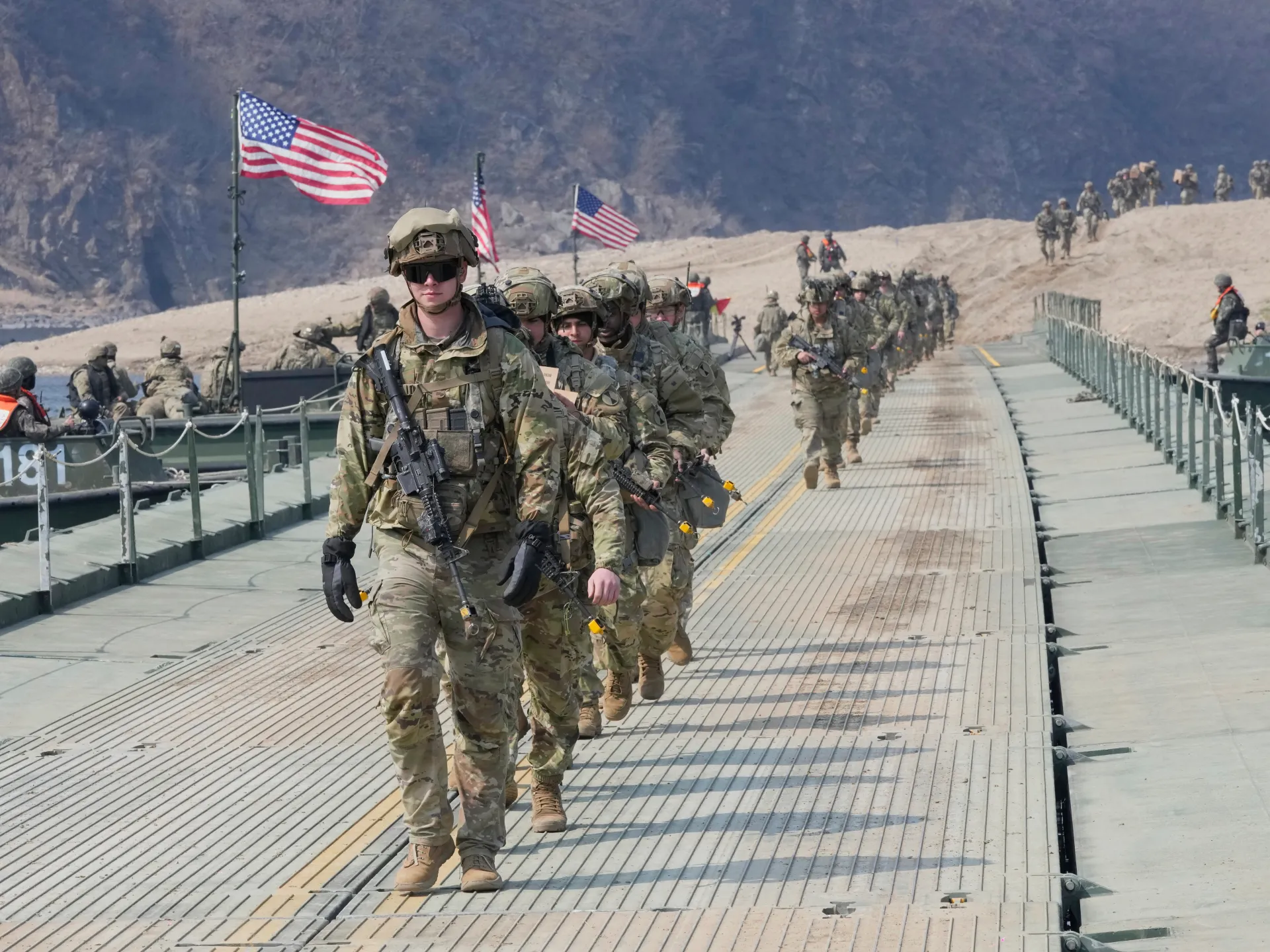














![Abdel Karim Salman heads daily to the charging station to charge his phone and his wife’s phone, which they use as a source of light in their tent throughout the night [Abdelhakim Abu Riash/ Al Jazeera]](https://i0.wp.com/www.aljazeera.com/wp-content/uploads/2026/03/873A6907-copy-1774666645.jpeg?w=640&ssl=1)