Deir el-Balah, Gaza Strip – Every morning, Abdel Karim Salman begins his routine by heading out carrying his own phone and his wife’s phone, both completely drained of charge. He walks to a nearby charging point to plug them in and recharge them again.
Throughout the night, Abdel Karim relies entirely on the torches from the phones to light the inside of the tent he lives in with his family in central Gaza’s Deir el-Balah.
Recommended Stories
list of 3 itemsend of list
Abdel Karim, 28, a former civil engineer at the Beit Lahiya municipality in northern Gaza, was displaced to Deir el-Balah a year and a half ago with his wife and two children, along with about 30 members of his extended family.
His family home was completely destroyed on October 9, 2023, in the first few days of Israel’s genocidal war on Gaza.
Abdel Karim and his family have been on a difficult journey of displacement since then, with little in the way of normality, and in particular, a regular source of electricity for a bulb in his tent.
So he looks for alternatives to light up the structure, namely the phones, despite the rapid battery drain caused by keeping the torch function on.
“I charge my phone and my wife’s phone, and we use them for lighting at night, especially since my children are under five years old and they get scared if they wake up in the dark,” he says.
Abdel Karim says that the suffering caused by electricity shortages in Gaza is one of the largest “silent” forms of suffering that receives little attention.
For Abdel Karim, the charging process itself has turned into a daily, exhausting burden.
He walks between 150 and 200 metres every day to reach a charging point, paying between two and four shekels ($0.65 to $1.30) per charging session, twice a day.
“That means about eight to 10 shekels ($2.55 to $3.20) per day just for charging phones,” Abdel Karim explains, equivalent to approximately 270 to 300 shekels ($86 to $95) per month, a large amount given the lack of income among displaced families in Gaza amid the territory’s war-driven economic crisis.
“Many days and nights we sleep in darkness inside our tent. When we can’t charge the phones, they turn off, and we are unable to recharge them.”
Abdel Karim Salman heads daily to the charging station to charge his phone and his wife’s phone, which they use as a source of light in their tent throughout the night [Abdelhakim Abu Riash/Al Jazeera]
Few options
With municipality-supplied electricity absent for two years in Gaza, several temporary alternatives have emerged, such as solar-powered lamps, but they remain unaffordable for most residents, having increased tenfold to about 300 shekels ($95) during the war.
As for solar energy systems, they are even more expensive, reaching $420 per panel, and with the additional cost of a battery – about $1,200 – and an inverter. All these items are also scarce due to severe Israeli restrictions on their entry into the Gaza Strip since the beginning of the war.
For Abdel Karim, who lost his job soon after the war began, those sums are out of his reach.
Among the alternative solutions introduced during the war are private generator-based electricity systems operating on diesel fuel.
However, those are also unaffordable for many, and their services have fluctuated due to irregular fuel supplies through the crossings.
And so, with most options simply too expensive, that leaves many in Gaza in the same boat as Abdel Karim.
The impact of the power cuts is not limited to lighting or charging, but extends to every detail of daily life, especially for families with children.
“There is no refrigerator, no washing machine … even baby milk cannot be stored for more than two or three hours,” Abdel Karim explains, as he remembers his previous life, when his home was filled with electrical appliances and reliable power.
“The phone charging socket used to be right beside my bed. I could plug it in whenever I wanted. Today, that has become a dream inside this tent,” Abdel Karim adds.
He also says his children have been psychologically affected, especially his eldest son, due to the lack of any means of electronic entertainment or distraction from his grim surroundings.
“There is no TV or screen. He keeps asking for the phone all the time just to calm down, but that also needs charging. Everything is dependent on electricity.”
According to Abdel Karim, his suffering is not an exception. He believes almost all of the people in Gaza are living the same reality, noting that even families in nearby camps who tried to pool resources to buy energy systems have been unable to afford them.
“We hope God brings relief … because we are truly left without any solutions, as if we were abandoned in the desert.”
Abdel Karim Salman lives with his wife and two children in a tent [Abdelhakim Abu Riash/Al Jazeera]
Longstanding problem
On October 7, 2023, Hamas launched an attack on southern Israel, and Israel then began its war on Gaza.
More than two years on, Gaza has been decimated by Israeli attacks – on top of the more than 75,000 Palestinians killed.
But even before the war, Gaza faced daily rolling blackouts due to limited power imports from Israel and fuel shortages.
Israel, despite withdrawing its illegal settlements from Gaza in 2005, continued to control access into and out of the Palestinian enclave, and repeatedly attacked it.
And so, even in normal conditions, most households only received a few hours of electricity per day, relying on a fragile mix of imported supply and Gaza’s one power plant.
The situation escalated sharply after October 7, when Israel declared a “complete siege” on Gaza, cutting electricity supply and blocking fuel imports.
Within days, Gaza’s power plant shut down due to fuel depletion, and by October 11, 2023, the territory entered a full electricity blackout, according to United Nations agencies.
With no fuel entering and transmission lines cut, homes, hospitals, water systems and communication networks lost reliable access to power, shifting to limited and increasingly unsustainable generator use.
Since then, Gaza’s electricity infrastructure has continued to deteriorate due to both fuel shortages and widespread physical destruction of the grid. Generators remain the primary alternative but are severely constrained by fuel scarcity, affecting essential services such as healthcare, water production and telecommunications.
During the time between 2025 and 2026, Gaza’s power system is widely described as effectively non-functional, with electricity access fragmented, inconsistent and largely dependent on emergency solutions rather than a stable grid.
An opportunity
The severe electricity crisis has created an indirect source of income for Jamal Musbah, 50, who runs a mobile phone charging station powered by solar energy and a generator line.
Before the war, Jamal worked as a farmer and owned two agricultural plots on the eastern borders of Deir el-Balah. Today, they have been bulldozed and fall under Israeli control.
His charging station has instead become his main source of income, supporting his eight children.
“I had an energy system consisting of six panels, batteries, and a device, which I used for pumping water and irrigating the remaining land around my house before the war,” Jamal says to Al Jazeera.
As an alternative income source after the war and the electricity blackout in Gaza, Jamal repurposed his solar system to provide basic phone charging services to residents, though this came with major challenges.
“The demand for charging was extremely high, and my batteries were exhausted within the first months, as electricity became very scarce at home,” he adds.
However, things worsened when a neighbouring house was targeted, destroying four of his six solar panels, significantly reducing his capacity and income.
At the beginning of the service, Jamal also offered food refrigeration services alongside phone and battery charging, but after the damage and battery depletion, he had to stop those services.
“We used to charge about 100 to 200 phones daily. Now we only manage 50 to 60 at most due to reduced efficiency of the solar panels,” Jamal says, attributing this also to weather conditions, clouds and the winter season, when solar efficiency drops significantly.
“In winter, you look for alternatives to solar panels and turn to generators that barely work … the electricity crisis makes you feel like you are running in a never-ending cycle of suffering.”
His charging station now operates with a small system of two panels and one battery.
People from nearby areas, including university students and displaced families, rely on it due to a lack of alternatives and the inability to afford generator-based electricity subscriptions.
“My sons are university graduates and earn their living from this station. We charge 1 to 2 shekels per phone.”
Even though Jamal is able to make some money out of the crisis, he ultimately faces the same hardships as others in Gaza do.
“Economic hardship has affected all of us … even basic services like phone charging have become a heavy burden. There are no local solutions to this crisis.”
“The only real and lasting solution is the official restoration of electricity to the Gaza Strip.”
The streamer’s latest true crime offering tells the harrowing story of Manuel Blanco Vela.
The harrowing Netflix documentary is climbing the charts(Image: NETFLIX)
Netflix’s dark new documentary has left viewers reeling. It has just added a new series to its extensive library of true crime offerings, which delves into a case that evaded justice for many years until one survivor spoke out.
The Netflix series recalls a woman’s fight to expose Manuel Blanco Vela, a Spanish tour guide who ran student trips and abused the trust of young women by assaulting them.
Blanco Vela, who ran Discover Excursions, a travel company offering trips across Spain, is the main subject of The Predator of Seville.
Viewers learned of how between 50 and 100 women may have accused Blanco Vela of assaults or attempted assaults over time, although only a small number of cases were prosecuted.
Taking to X, formerly Twitter, to share their thoughts on the new crime documentary, one viewer said: “That Manuel Blanco documentary is horrifying.”
Another praised the survivors, sharing: “What a brilliant and brave woman you are. He massively underestimated the collective power of women.”
On IMDb reviews, one viewer expressed their shock, sharing: “How could this go on for so long?
“It’s disgusting to see how long Manuel was able to get away with this abuse and how difficult it seems to be to actually convict someone like that. Incredibly brave of all the women who have shared their stories.”
Another shared: “It is a very interesting story on Manuel’s serial behaviour. It’s sad to hear it took so long to be recognised. The woman starting the story seems to have been healing well and hope she continues on doing so.”
A third added: “Every woman that was affected by this guy, I am so happy that you stood up for yourself, the fact that he was running away for so long honestly mind-boggles me.”
A fourth shared: “Unbelievable that that man got away with it for so long. A confronting story for parents and young girls. Let it be a lesson that young girls should never go out alone, no matter where in the world.”
The synopsis for the limited series reads: “A sexual assault by a Spanish tour guide sparks a surge of similar claims from multiple US students. This documentary follows their fight for justice.”
The trailer for the series sees a group of women explaining how Blanco Vela took advantage of their vulnerable state until one survivor set up an online investigation to expose him.
Experts say families could save more than £100, though Ryanair disagrees
09:08, 29 Mar 2026Updated 09:13, 29 Mar 2026
Ryanair has disputed the claims(Image: turbo83 via Getty Images)
Passengers flying with Ryanair are being encouraged to follow several steps to reduce costs on their journeys, though the airline has responded by dismissing the advice as “fake news”.
Consumer champion platform Which? claimed its research revealed travellers may have been spending more than necessary. Last month, Which? suggested families could potentially save over £100 on their next Ryanair flight by simply disregarding the airline’s “recommended” fare option. When arranging a summer journey from London to Alicante for a family of four, Ryanair promoted its “Regular” fare as the “ideal” selection.
But opting for this choice would have cost £59 more than picking the “Basic” fare and adding the identical seats and luggage manually later during the booking process, Which? claimed. The article continues: “If our family decided that we could get by with four cabin bags instead of the eight included in Ryanair’s ‘Regular’ fare, then we could reduce the fare by £163 from Ryanair’s recommendation.
“The Regular fare comes with priority boarding, carry-on luggage and free standard seat selection included, but on around 30 checks over the past two years we’ve only once found it cheaper. We looked at 15 flights to a range of locations in February 2026 and only once was the Regular ticket cheaper, even if we wanted all those extras.”
Ryanair has made its feelings on Which?’s findings abundantly clear. A spokesperson for the airline told Sky News: “This is more fake news from Which? Thankfully no one reads, or takes any notice of Which’s fake recycled news articles or your spurious ‘advice’, as our traffic growth from 200 million to 208 million passengers in 2025 proves.”
Donald Trump wanted only the pretty ones, his employees said.
After the Trump National Golf Club in Rancho Palos Verdes opened for play in 2005, its world-famous owner didn’t stop by more than a few times a year to visit the course hugging the coast of the Pacific.
When Trump did visit, the club’s managers went on alert. They scheduled the young, thin, pretty women on staff to work the clubhouse restaurant — because when Trump saw less-attractive women working at his club, according to court records, he wanted them fired.
“I had witnessed Donald Trump tell managers many times while he was visiting the club that restaurant hostesses were ‘not pretty enough’ and that they should be fired and replaced with more attractive women,” Hayley Strozier, who was director of catering at the club until 2008, said in a sworn declaration.
Initially, Trump gave this command “almost every time” he visited, Strozier said. Managers eventually changed employee schedules “so that the most attractive women were scheduled to work when Mr. Trump was scheduled to be at the club,” she said.
A similar story is told by former Trump employees in court documents filed in 2012 in a broad labor relations lawsuit brought against one of Trump’s development companies in Los Angeles County Superior Court.
The employees’ declarations in support of the lawsuit, which have not been reported in detail until now, show the extent to which they believed Trump, now the Republican presidential nominee, pressured subordinates at one of his businesses to create and enforce a culture of beauty, where female employees’ appearances were prized over their skills.
A Trump Organization attorney, in a statement to The Times, called the allegations “meritless.”
In a 2009 court filing, the company said that any “allegedly wrongful or discriminatory acts” by its employees, if any occurred, would be in violation of company policy and were not authorized.
Employees said in their declarations that the apparent preference for attractive women came from the top.
“Donald Trump always wanted good looking women working at the club,” said Sue Kwiatkowski, a restaurant manager at the club until 2009, in a declaration. “I know this because one time he took me aside and said, ‘I want you to get some good looking hostesses here. People like to see good looking people when they come in.’ ”
As a result, Kwiatkowski said, “I and the other managers always tried to have our most attractive hostesses working when Mr. Trump was in town and going to be on the premises.”
Trump has struggled to win the support of female voters as he seeks the nation’s highest office. In the past, he has insulted women’s appearances, sometimes calling them “pigs” or “dogs.”
Trump’s record with women got renewed attention after this week’s presidential debate, when Democratic nominee Hillary Clinton told the story of a former beauty pageant winner who said Trump called her “Miss Piggy” when she gained weight.
Trump has previously defended himself by saying he has “great respect for women” and “will do far more for women” than Clinton. He has also said that “all are impressed with how nicely I have treated women.”
As part of the lawsuit over a lack of meal and rest breaks at Trump’s golf club about 30 miles south of downtown Los Angeles — his largest real estate holding in Southern California — several employees said managers staffed Trump’s clubhouse restaurant with attractive young women rather than more experienced employees in order to please Trump.
The bulk of the lawsuit was settled in 2013, when golf course management, without admitting any wrongdoing, agreed to pay $475,000 to employees who had complained about break policies. An employee’s claim that she was fired after complaining about the company’s treatment of women was settled separately; its terms remain confidential.
A public relations firm working for the Trump campaign referred questions about the lawsuit to one of the attorneys who represented the Trump National Golf Club in the case.
“We do not engage in discrimination of any kind and have always complied with all wage laws, including by providing our employees with meal and rest breaks,” said the attorney, Jill Martin, assistant general counsel for the Trump Organization.
The former employees’ statements primarily describe the club’s work culture from the mid- to late 2000s. The Times spoke at length to one of the ex-employees, who described in detail the allegations about workplace culture. The person declined to be quoted by name, citing a fear of being sued.
In their sworn declarations, some employees described how Trump, during his stays in Southern California, made inappropriate and patronizing statements to the women working for him.
On one visit, Trump saw “a young, attractive hostess working named Nicole … and directed that she be brought to a place where he was meeting with a group of men,” former Trump restaurant manager Charles West said in his declaration.
“After this woman had been presented to him, Mr. Trump said to his guests something like, ‘See, you don’t have to go to Hollywood to find beautiful women,’” West said. “He also turned to Nicole and asked her, ‘Do you like Jewish men?’”
One of the few older people on the wait staff who served Trump, Maral Bolsajian, said she was “uncomfortable” when he visited, calling his behavior toward her “inappropriate.”
“Although I am a grown woman in my forties, Mr. Trump regularly greeted me with expressions like ‘how’s my favorite girl?’” Bolsajian said in a declaration. “Later, after he learned (by asking me) that I was married — and happily so — he regularly asked, ‘are you still happily married?’ whenever he saw me.”
Trump also asked her to pose for photos with him, said Bolsajian, who added that she felt she “had little recourse given that Donald Trump is not only the head of the company but also one of the most powerful, well-known people in the United States.”
Bolsajian said, “In short, I consistently found Mr. Trump to be overly familiar and unprofessional.”
The lawsuit focused on the course’s high-pressure work culture. Employees said they were not allowed to take the breaks required under California law.
The statements about Trump’s preference for young, attractive employees were filed in support of a separate claim for retaliation, lodged after former restaurant host Lucy Messerschmidt, then 45, contended that she had been fired for complaining about age discrimination.
Jeffrey W. Cowan, a Santa Monica attorney who represented the employees in the lawsuit, said the case targeted Trump’s development company, VH Property Corp., but “the evidence certainly suggested” that the club’s work culture flowed from Trump.
Donald Trump takes an unfinished pathway at the Trump National Golf Club in Rancho Palos Verdes in 2005.
(Mel Melcon / Los Angeles Times )
Although Trump was mostly absent from the course he purchased in 2002, workers said his company maintained a rigorous work environment that often left workers exhausted.
Employees said managers urged them to hurry through brief meal breaks, sometimes even expressing impatience with bathroom breaks.
“My manager insisted that because this was Trump’s golf course, it had to be top-notch,” one employee said in a declaration. “He was concerned that if Trump observed employees eating or resting, Trump would not be pleased.”
Another employee said his manager “seemed obsessed with the fact that this was Donald Trump’s golf course,” believing that “Mr. Trump wouldn’t like it if he saw employees sitting around because he would think the golf course was inefficient and overstaffed.” A valet described a stretch where “someone got fired every week.”
One busboy said in a declaration that he took up smoking so that he would have an excuse for going outside for a break.
In response, Trump’s company filed declarations from more than a dozen other employees who said they regularly were offered lunch breaks of at least 30 minutes for every five-hour shift, and were counseled by managers if they didn’t take them.
Lili Amini, general manager, said in a declaration that the company implemented a firm policy about such breaks in 2009.
Employees said managers started instituting breaks after the class-action lawsuit was filed.
The Trump National Golf Club on the Palos Verdes Peninsula in 2005.
(Luis Sinco / Los Angeles Times )
Female employees said they faced additional pressures.
Strozier, the former catering director, said Vincent Stellio — a former Trump bodyguard who had risen to become a Trump Organization vice president — approached her in 2003 about an employee that Strozier thought was talented.
Stellio wanted the employee fired because she was overweight, Strozier said in her legal filing.
“Mr. Stellio told me to do this because ‘Mr. Trump doesn’t like fat people’ and that he would not like seeing [the employee] when he was on the premises,” wrote Strozier, who said she refused the request. (Stellio died in 2010.)
A year later, Mike van der Goes — a golf pro who had been promoted to be Trump National’s general manager — made a similar request to fire the same overweight employee, Strozier said.
“Mr. van der Goes told me that he wanted me to do this because of [the employee’s] appearance and the fact that Mr. Trump didn’t like people that looked like her,” Strozier wrote.
When Strozier protested, Van der Goes returned a week later “and announced he had a plan of hiding [the employee] whenever Mr. Trump was on the premises,” Strozier wrote.
West, who worked as a restaurant manager at the club until 2008, wrote that Van der Goes ordered him “to hire young, attractive women to be hostesses.” West also said Van der Goes insisted that he “would need to meet all such job applicants first to determine if they were sufficiently pretty.”
Van der Goes, who worked at the club until 2008, did not respond to requests for comment, though he defended Trump in a February interview with the Santa Clarita Gazette.
“He’s not a racist. He’s not a bigot,” said Van der Goes, who called Trump “an astute businessman and a marketing genius.”
Employees said several women quit or were fired because they were perceived as unattractive.
A server, John Marlo, recalled seeing a co-worker crying in 2007. The woman had wanted to be promoted to server.
“She told me that she was upset because a manager had told her that she couldn’t be a server because of she had acne on her face,” Marlo said in a declaration. “According to her, she was qualified for the job and wanted it, but couldn’t get it solely because of her acne.”
The woman quit soon after, Marlo wrote.
Messerschmidt, the employee who said she was fired in retaliation for complaining about age discrimination, said in 2008 that one of her managers, Brian Wolbers, changed her schedule to give her time off during one of Trump’s visits because Trump “likes to see fresh faces” and “young girls.”
Wolbers did not respond to a request for comment.
Gail Doner, who worked as a food server from 2007 to 2011, wrote that she was 60 and had often been frustrated by the inefficiency of the restaurant’s young, inexperienced hostesses, who “usually were not competent but were kept anyway.”
“The hostesses that were the youngest and the prettiest always got the best shifts,” Doner wrote.
Meanwhile, Doner — who had 20 years of experience working for wine vendors, and was at “the top of [her] game” while working for Trump National — said managers slowly cut back her shifts until they stopped scheduling her at all, “effectively firing [her].”
“It did not appear to me that this reduction in shifts was happening to any of the younger, more attractive female food servers,” Doner said. She added: “I chose not to fight to get my job back because by that point I was fed up with the toxic environment and the way that I was treated.”
THERE are plenty of beautiful islands around Greece, but you might not have heard of Andros.
It’s the second-largest island in the Cyclades and is considered to be one of the most beautiful, and underrated.
Sign up for the Travel newsletter
Thank you!
Andros is the second-largest island in the CycladesCredit: AlamyBeaches on the island look like they’re in the Caribbean, like Zorkos BeachCredit: Alamy
Andros has it all, with mountain landscapes, beaches with bright blue waters, lush greenery with waterfall trails, and a town classically painted in Greece‘s blue and white.
Visitors arriving by ferry will first come to Gavrio, on the northwest coast which historically was a fishing village.
Now it’s a lot busier and vibrant with plenty of tavernas, bars and hotels – however this isn’t the capital of the island.
An hour’s drive away from Gavrio is Chora, which literally means ‘main village’.
One visitor who blogged about their recent trip named Verde as a top place to grab a bite there.
Their top tip was to taste the Miss Pink cocktail, which is a mix of champagne, lime and grapefruit.
When it comes to drinks, on Andros, you can pick up a glass of wine from €3 (£2.60).
Along with its pretty village to explore, the real gems of this island are the beaches that are dotted along the coastline.
There are beautiful beaches too with white sands and bright blue seas.
One of the most popular north of Chora is called Zorkos Beach, which is also one of the island’s biggest.
One visitor said: “One of the best beaches I have visited in general in my life! Incredible waters, clear and a very quiet place even though it has a beach bar there!”
Another added: “Zorkos beach is just fantastic! Clean water and a very relaxed atmosphere. Perfect place to escape and enjoy the sea without a lot of people. We will definitely visit again.”
Other popular spots include Vitali Beach on the north eastern side of the island.
The beach is always fairly empty as it’s secluded and can only be accessed by a narrow dirt track – so it’s recommended to get there by motorbike or jeep.
Another spot which has crystal clear waters is Tis Grias to Pidima Beach, which has a huge rock stack off its shore.
The beach can be reached via a dirt road and steep trail, but lots of visitors say it’s worth a visit thanks to its beautiful views.
A glass of wine in Greece can cost as little as £2.50Credit: AlamyPithara Waterfalls is considered a ‘hidden paradise’Credit: Alamy
Heading inland, one popular activity for tourists on Andros is hiking to its waterfalls.
One of the easiest trails that takes around 10-minutes is to the Pithara Waterfalls, which is dubbed a ‘hidden paradise’ in Apikia.
Visitors say there’s enough water for a small swim, along with plenty of pretty viewing points from above the falls.
For those staying on the island, some hotels cost as little as £36 per night, which you can find on Booking.com.
The Ostria Hotel & Apartments has an outdoor pool, and is a few minutes walk away from Gavrio.
On Airbnb, pretty apartments start from £67 per night.
This one in Chora is within walking distance to the sea, as well as restaurants, bars, cafes, museums and art galleries.
When it comes to getting to the island, Brits will have to fly to Athens, which in May can be done for £25 with Ryanair.
From there, take a ferry across to the island which can be as quick as one hour with Seajets (with tickets from £30).
Ryanair has stopped flying to the popular holiday destinationCredit: Getty
From today – March 29, 2026 – all services to and from the Azores – which are famous for their stunning beaches and vibrant greenery – have been stopped.
The move means six different routes have been scrapped, impacting approximately 400,000 passengers who visit the islands annually.
The airline previously pointed to a 120 per cent rise in air traffic control charges and the introduction of a new travel tax as the breaking points.
Ryanair’s CCO Jason McGuinness said: “We are disappointed that the French airport monopoly ANA continues to raise Portuguese airport fees to line its pockets, at the expense of Portuguese tourism and jobs – particularly on the Portuguese islands.”
As costs continue to climb, the airline stated it had no choice but to move its planes to cheaper airports elsewhere in Europe.
McGuinness added: “As a direct result of these rising costs, we have been left with no alternative other than to cancel all Azores flights from 29 March 2026 onwards.”
The region – located about 950 miles from mainland Portugal – has lost direct low-fare links to London, Brussels, Lisbon and Porto.
The nine volcanic islands are known for having unspoiled beauty, which includes vibrant green hills and black sandy beaches.
British Airways still flies to the islands seasonally, with direct flights from London Heathrow to Ponta Delgada and Terceira.
The Azores is famous for its stunning beaches and vibrant greeneryCredit: Getty
‘Once the US starts capturing territory in Iran, all bets are off.’
Kenneth Katzman, a senior fellow at the Soufan Center for Strategic Dialogue, says US war objectives in Iran that cannot be met with air power can be met with a limited ground invasion.
The 19-year-old Mercedes driver’s historic championship accomplishment came after he won his second F1 race in a row.
Published On 29 Mar 202629 Mar 2026
Kimi Antonelli of Mercedes won the Japanese Grand Prix on Sunday for his second straight victory as the 19-year-old Italian became the youngest driver in Formula One history to lead the world championship standings.
Antonelli took advantage of a mid-race safety car to leapfrog into the lead after a dreadful start from pole position at Suzuka and eventually led home McLaren’s Oscar Piastri and Ferrari’s Charles Leclerc.
Recommended Stories
list of 4 itemsend of list
He whooped with delight as he crossed the line, telling his team, “The pace was unbelievable today.”
He leads the championship after three races, building on the first Grand Prix win of his career two weeks ago in China.
George Russell of Mercedes, who started the day on top of the championship standings, finished fourth.
Russell battled Piastri for the lead over the first half of the race but pitted just before the safety car to drop back out of contention for the win.
McLaren’s world champion Lando Norris was fifth ahead of Ferrari’s Lewis Hamilton and Alpine’s Pierre Gasly.
Red Bull’s four-time world champion Max Verstappen, who had won in Japan for the past four years, was eighth after starting from 11th on the grid.
Antonelli leads during the Japanese Grand Prix [Andrew Caballero-Reynolds/AFP]
Antonelli recovers from poor start
Antonelli was in pole position for the second straight race, having become the youngest pole-sitter in F1 history in China.
But the Italian had a shocking start, sinking to sixth by the first corner.
Piastri took the early lead ahead of Leclerc, with Norris, Russell and Hamilton all overtaking Antonelli.
Russell moved up the field to sit on Piastri’s tail as the game of cat and mouse began.
Antonelli also made up lost ground, but a crash from Haas driver Ollie Bearman brought out the safety car midway through the race.
Bearman was limping badly as race marshals helped him off the track, and his team later said he had “a right knee contusion”.
Antonelli dived into the pits moments after the safety car was deployed, a stroke of good luck that won him the race as he emerged at the head of the pack.
Russell slid out of contention, first being overtaken by Hamilton before watching Leclerc go past.
Antonelli increased his lead while Russell recovered, but Piastri held on to deny Mercedes a third successive one-two Grand Prix finish.
Haas said initial X-rays showed Bearman had no fractures after his crash, which saw him hit the barrier at high speed.
The 20-year-old had moved up the field after starting from 18th on the grid.
Formula One now takes an extended break until the Miami Grand Prix on May 3.
The Bahrain and Saudi Arabia races scheduled for April have been cancelled because of the war in the Middle East. The 19-year-old Mercedes driver’s historic championship accomplishment came after he won his second F1 race in a row.
Antonelli crosses the finish line to win the Formula One Japanese Grand Prix [Andrew Caballero-Reynolds/AFP]
INFLUENCER Charlotte Greedy has left fans confused by revealing she and her partner Harriet are trying for another baby, months after they almost split.
The couple already share daughter Phoebe together, while Charlotte is a mum to sons Enzo and Brody from a previous relationship.
Sign up for the Showbiz newsletter
Thank you!
Influencer Charlotte Greedy has shocked fans by announcing she is trying for another baby with wife HarrietCredit: Instagram/@missgreedyshomeIt comes after the couple nearly ended their eight-year relationship last summerCredit: Instagram/@missgreedyshome
Charlotte, known as ‘missgreedyshome’ online, has over half a million Instagram followers, while her wife Harriet boasts over 100K and shares fitness content.
After tying the knot in October 2024, the couple of eight years almost split up last summer – with Charlotte even sharing a split statement before quickly retracting it.
At the time, the influencer said she was “left with no choice” due to “disrespect” in the relationship.
Since then, Harriet and Charlotte have shared several posts about their relationship and how they have battled through its ups and downs.
And now seemingly in a much stronger place, the couple are once again expanding the family.
Sitting down for a new video, they told the camera: “We’re going to try for another baby.”
Charlotte- who had a tummy tuck last year – went on the explain that having more children is something the couple have been thinking about for a while.
She said: “We’ve been talking about this for a few months. Harriet has been set on it and I’ve kind of been on the fence, leaning back off the fence, and now I’ve fallen frontwards off the fence.
“We just love being mums, and, I think, the boys are growing up; Enzo is nearly 13, Brody is 10 and Phoebe is now two.
The couple shared a video online discussing their decision to have another babyCredit: Instagram/@missgreedyshomeThe online couple wed in October 2024Credit: Instagram/@missgreedyshome
“I can’t stand the thought of not having another one. You guys sent an incredible quote to me the other week saying that you’ll never regret the baby you have but you will regret not having that baby.
“And, it just, kind of cemented it for us, didn’t it?”
Charlotte went on to explain that they were only going to have another child if they could use the same sperm donor they previously used to have Phoebe.
Adding that it was “meant to be”, Charlotte said the couple were successful in reserving the same sperm and are set to undergo IUI (Intrauterine Insemination), as opposed to IVF.
They are set to begin the first round in May, with the couple assuring they are set to take fans with them throughout the journey.
While the comment section of the post was filled with friends and fans congratulating the couple, some were also confused about the massive switch up from their previous split woes.
One Instagram user commented: “I say this with respect, but I can’t help thinking about the posts you shared not long ago about you and Harriet splitting up and going through marriage counselling.
“Bringing a baby into the situation is a huge step, and I just hope it’s coming from a place of real stability rather than trying to fix things. A child deserves a secure and settled environment.”
Giving her side of the story, Charlotte replied to the comment: “We have been together nearly 10 years and had many a blip like others I’m sure, we already have 3 kids who have ‘stability’ but thank you for your message.
“I’m sure it doesn’t come from a bad place, our blip was over a year ago now & we share real life and real life will always have its ups and downs.”
The baby news comes after Charlotte underwent a tummy tuck last JuneCredit: Instagram/@missgreedyshomeThe couple previously welcomed daughter Phoebe via sperm donorCredit: Instagram/@missgreedyshomeWhile Charlotte is also a mum to sons Enzo and Brody
A Canadian woman who moved to the UK with her partner and three children recently paid a visit to a charity shop where she noticed several differences between the stores here and in her home country
Jess Flaherty Senior News Reporter
08:05, 29 Mar 2026
A Canadian woman noticed some big differences when she visited a charity shop in the UK (stock image)(Image: Nick David/Getty Images)
A Canadian woman currently living in the UK has shared the key differences she noticed when perusing charity shops here as opposed to the “thrift stores” in her home country.
Many people from the United States and Canada relocate to the UK and quickly come to realise that despite sharing the same language, there’s plenty of cultural quirks and differences. This seems to be the case for Jaclyn Walton, who swapped life in North America for England with her partner and their three children.
The mum has praised many aspects of life in the UK, from the school curriculum involving swimming lessons to the “beauty and history” that’s rife, as well as the football opportunities for her son.
She also spotted the different terms used commonly over here, like “sweets” instead of her native “candy” and “holiday” instead of the Canadian term, “vacation”.
Recently, Jaclyn took to Instagram to share a video of herself exploring a small charity shop here in the UK. Over the top of the footage, she narrated her thoughts: “Come with me to a British charity shop – it’s like a thrift store in Canada but here they call them charity shops as the sales help raise funds for charity.
“The differences I notice in Canada and the UK is the culture around charity shops. In the UK, it’s common, easy to pop in, take a look, and pretty normal.
“In Canada, you’re either a thrifter or you’re not. In the UK, like almost everything else, it’s smaller; these little shops with this type of selection.”
She went on: “In Canada, they have small ones like this but you also immediately think of big ones like Value Village where you have aisles and aisles upon selection.”
Content cannot be displayed without consent
Back to her thoughts on UK charity shops, Jaclyn concluded: “These shops often have volunteers working here as well.”
In the comments section, Jaclyn added: “I didn’t love thrift stores in Canada but I do enjoy looking around here… maybe I just wasn’t in my thrifting era yet.
“I feel like with all the history in England, I am looking for a beautiful find.”
Fellow Instagram users were keen to share their thoughts. One said: “I think the difference in the UK is that people donate old stuff and the charity sells it for money.
“A thrift store is a kind of recycling centre where you can sell old stuff like books, which the operator cleans up and resells for a profit.”
Another said: “I never went in charity shops until I developed a book habit! I can now never resist popping int. My hometown is blessed with eight charity shops.
“One in particular is so nicely set out that you would think it is new items only. I look at clothes now and have bought some really lovely items. I’m definitely a thrifter now!”
A third commented: “You can find some really good stuff a charity shops in affluent areas. Try places like in the Cotswolds like Chipping Norton.” And a fourth added: “Love it.”
WASHINGTON — Sen. Lloyd Bentsen (D-Tex.), chairman of the Senate Finance Committee, is examining ways to reduce capital gains taxes, it was reported today.
Bentsen told the Wall Street Journal in a telephone interview that he intends to ask his tax-writing committee to devise a bill that would raise federal revenues about $8 billion in fiscal 1990, which begins Oct. 1.
Such an increase would extend several tax breaks that are about to expire, including the credit for research and development expenditures.
Bentsen said a capital gains tax cut “is one of those things we’ll have to take a look at” as part of the tax package.
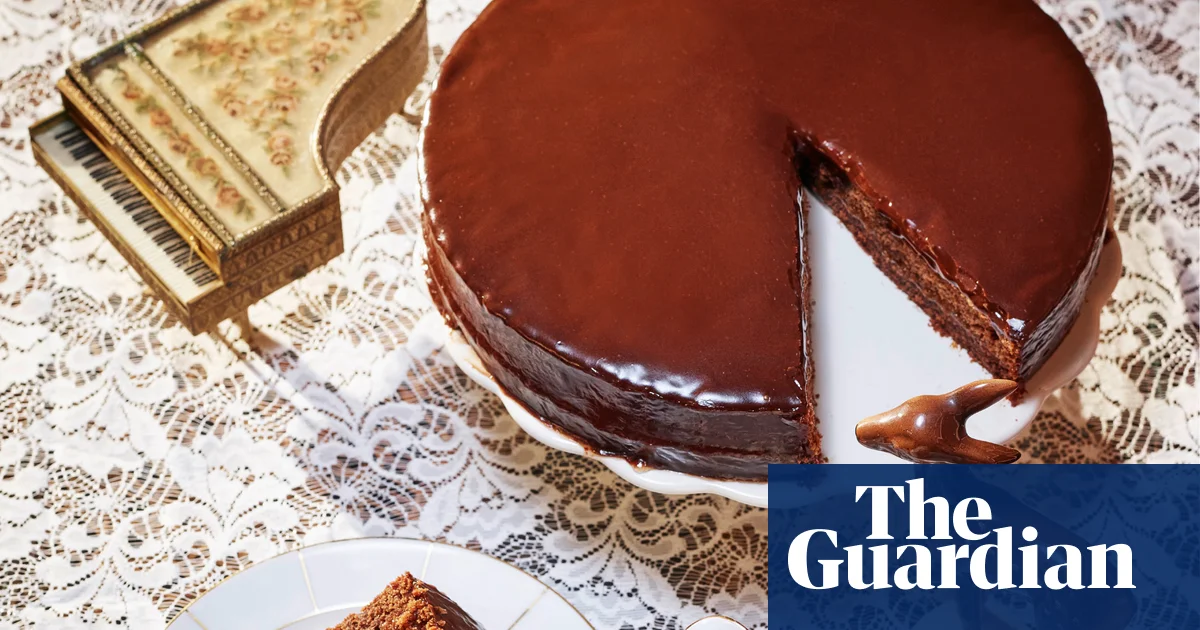
I’m on a tram on Vienna’s Ringstrasse as towering facades, columns, statues and domes drift past, each more ornate than the last. Here, the State Opera; there, the Austrian parliament, built in the Greek neoclassical style.
As I gawp, I shove cake in my mouth. After all, Vienna isn’t just the city of music, or lavish architecture. Thanks, in part, to its centuries-old coffeehouse culture, it’s also one of Europe’s finest pastry destinations. Cake (or more precisely, torte, kuchen or Mehlspeisen) has its own day here – “Sweet Friday”, the most delicious of Catholic customs, when meat dishes are replaced with sweets. I have been introduced to it via the medium of Marillenknödel – apricot dumplings.
It’s my first visit to Vienna, my boyfriend Wolfi’s home city. The priority is checking out the old neighbourhood and making a good first impression on his granny. Always keen to fit in, I have identified the national obsession and offered to test Austria’s most famous cake: Sachertorte.
According to legend, it was created in Vienna in 1832 by the 16-year-old apprentice chef Franz Sacher for Prince Metternich. It went on to great acclaim and sparked a decade-long cake war.
In the 1950s, the Hotel Sacher and Demel pastry shop battled over the torte’s trademark, thanks to Franz’s son Eduard, who had refined the recipe while working at the Demel, then offered it on the menu when he opened the Hotel Sacher in 1876.
In 1963, an out-of-court agreement stipulated that the Sacher could market their version – with a layer of apricot jam below the icing and another between the sponges – as the original. The Demel could market theirs as the “Eduard-Sacher-Torte” – featuring one layer of apricot jam below the icing. A big fight about jam, for good reason.
These days, Sachertorte is often decried as dry and overhyped for tourists. Blame that on infantile modern tastes – overindulgent “death by chocolate”, endless cronut-style hybridisations. I’m a fan of the Sachertorte: dark chocolate sponge covered in fondant, tangy apricot jam, whipped cream on the side. It has no need to shout. But is it just for tourists? As I ponder, a call comes from Wolfi’s gran, inviting us for Sunday lunch.
Anna, 82, a Klimt devotee and string enthusiast (she played in her youth), is Vienna born and bred. “For dessert,” she announces, “Sachertorte.” It is a local cake! I’m swiftly corrected. “It’s not a cake! A torte is a torte.” Immediately recognising her superior judging potential, I recruit Anna into my testing team.
Photograph: Education Images/Universal/Getty
First stop is Stephansplatz, with its stunning gothic cathedral. Nearby is the unmissable Aïda shopfront, a riot of pink. It is billed as the world’s first coffee shop chain. Inside, there’s neon-pink lettering on pink walls, pink lighting, staff dressed head-to-toe in pink. The atmosphere is chaotic – a group of Germans complain about seating and Wolfi manages to lose a euro in the pay turnstile to the loos.
We opt for takeaway. The torte, unforgivably, comes without cream (€1 extra, in a pink pot). We retreat to the shadow of Stephansdom. Smooth chocolate icing, jammy layers. Looks good. I bite. The sponge is … dense. I’m glad of the cream. It’s on the dry side. Anna concurs: “The pores are too close and small.” €6.10 (takeaway),4.5/10
Photograph: Hemis/Alamy
The smell of Kaiserschmarrn (pancake) is strong in the bustling Demel patisserie and the queue snakes up the stairs to the cafe. It’s going to be another takeaway. I’m disappointed to find creased icing on the torte, but happier on first bite. It’s far superior to Aïda – moist, with a fruity tang. I look again. What I see is shocking. Two layers of apricot jam, one under the icing and one in the middle! What’s going on? I check Demel’s website. “A thin layer of apricot jam sandwiched between two layers and beneath the chocolate glaze.”
Evidently, they have updated their recipe. I hope I don’t spark a sticky lawsuit because I don’t blame them: the extra jam is welcome. “It’s a bit too sweet,” Anna counters. “The cake is not fluffy or airy enough,” she concludes, severely. €8 (takeaway),5.5/10
Photograph: Xinhua/Alamy Live News
We are swept to a snug booth in an elegant panelled room, all 1920s mirrors and Thonet chairs. The room design muffles chatter, but snatches of Viennese dialect indicate plenty of locals. Snowflakes fall prettily outside the window.
We order Melange (for the sake of argument, a cappuccino) and one Sachertorte. “With three spoons,” the waiter offers, “if the ladies will allow.” I’d heard Viennese waiters were renowned for perfectly honed sarcasm and slight disdain; I wasn’t expecting next-level charm. These guys have a timeless quality, like smooth magicians – utterly hypnotic.
The coffee comes in dainty porcelain and I focus on the (“lactose free”) torte. A wee bit thin on the jam, but the fondant is thick and fudgey, with a decent sponge. I browse newspapers on the old Zeitungshalter(traditional wooden paper rack), trying not to be influenced by my surroundings – and then get giddy in my marking. €8.10, 8.5/10
Photograph: Mark Glassner
Coffeehouse culture has evolved through this social enterprise – a “granny cafe” set up to combat loneliness and supplement the pensions of senior bakers. Genius. These places have been taken to the city’s heart, judging by the stream of fashionable youngsters coming through the doors. It’s lively, with a cosy retro vibe.
But forget the feelgood factor; we’re here to judge their “Sachertorte master”, Mr Johannes, 72. Things start well when Wolfi declares the Melange the best he’s had in Vienna. Now to the torte. Oh my. It delivers and then some. The apricot jam is fairly oozing, the chocolate icing almost caramel-like with a velvety sheen (made with untraditional-but-delicious butter and cream). It’s one of four he baked fresh today. A delicious bargain! €6, 8/10
Photograph: Vienna Slide/Alamy
Across from the beautiful Staatsoper (Vienna State Opera), Hotel Sacher is as plush as you’d hope: red velvet, white marble, gold relief. Tourists queue in the cold to get in (book to avoid this fate). The handsome torte arrives complete with seal. The thickest-yet layer of chocolate fondant holds everything nicely in place. Orderly. An excellent balance of fruity jam and rich sponge that also manages to be light.
The internet is awash with complaints that the Sacher’s torte is dry. I can’t agree, but agree it’s overpriced. “More airy than all the rest,” declares Anna. “With every bite,” she proclaims, “we know we are in the Sacher.” We chat about the archduke Otto von Habsburg wandering the hotel naked at the turn of the 20th century. Lots of history; lavish surroundings; technically, the best torte we’ve tried (one of 1,000 produced daily) – but something is lacking. I miss the heart of the Vollpension and old-world elegance of the Landtmann. €10.50, 8/10
An anonymous family member (it’s Auntie Linda!) tips me off to a budget option “better than Hotel Sacher’s” that’s available in the supermarket. Nothing beats an underdog winning the taste test, so we thaw out this frozen Sachertorte in anticipation. Not this time. But it’s good. Fruity and moist, decent ganache. More chocolate cake than Sachertorte, I’d venture, but a highly competitive price point. About €1 a slice, 5.5/10
A YouTuber who moved from her home town in the USA to the UK has talked about her experiences of relocating across the pond, and how her new home treats its citizens
An American has talked about the big differences between the US and UK (stock)(Image: Getty)
A woman who moved from the United States to the UK has talked about the main differences between her old life and her new life.
Mindy Hickson, who posts about her experiences on YouTube channel The Hickson Diaries, said there are seven ways in which living in the UK has provided what she describes as “the simple life”.
Mindy alluded to the fact that the way Americans have been told to live is not necessarily the only way to live. She said: “Growing up in the US we’re indoctrinated into believing that success looks like a specific set of things.”
Said things that could be suggestive of a cultural mistruth, Mindy said, included owning a massive house, two big SUVs, and a having a salary that keeps climbing
Mindy added: “We’re taught if you don’t have those things you’re failing….But honest when you step outside of the US bubble you do actually start to see exactly what they mean when Europeans say things like, ‘Americans are rich in things, but extremely poor in time’.”
Mindy noted that she feels like the UK offers a safety net for people who have suffered through struggles in their lives.
In the first of her seven comparisons, she said that in the USA, there’s “this low level background of anxiety that hums in your brain 24/7. It’s the fear that one bad day…it can take away everything that you’ve built”.
Whilst Mindy acknowledged the NHS isn’t perfect, she concluded: “Nobody here in the UK is losing their house because they got sick.”
Mindy then compared isolation in the USA to the UK’s community spirit, explaining the concept of spaces where Britons could exist without spending a lot of money. She said the UK has “places where you can just exist around other people without having to spend a lot of money, pay a cover charge or have an over abundance of stimulation”.
When it came to the workplace, Mindy said she felt that the UK doesn’t weaponise productivity in the same way, and that employers have greater respect for allowing people to rest after finishing work for the day. In contrast, she said that having a break in the USA is often seen as a “weakness”.
Mindy’s fourth piece of evidence that the “simple life” in the UK is better than that of the USA is due to dignity in ageing.
She pointed out that the UK tends to look after its retirees and pensioners better by giving them things such as free bus passes to help them get around major cities.
Fifth on her list was the food. Mindy touched on how food is much less processed in the UK. She also said there is a different mentality, that eating well doesn’t mean eating more, but meant eating high quality food instead.
Mindy additionally praised the UK as she feels Britons make more thoughtful purchasing choices.
She said this is because companies don’t deliver products every two hours, and that the UK system forces people to be “more intentional” about their choices. As a result, Mindy said she’s stopped buying things “just to fill a void”.
Mindy’s final and seventh statement she felt supported her claim that UK citizens have a better way of life came down to safety.
Whilst the UK is not bereft of crime, she talked about how she felt less anxious, that she didn’t have to check the exits as she walked into a building or venue, and that she felt less on edge.
Kimi Antonelli took his second win in succession and the lead of the world championship after being gifted victory in the Japanese Grand Prix by a safety-car period.
The 19-year-old Italian had not yet made a pit stop, while his rivals for victory McLaren’s Oscar Piastri and Mercedes team-mate George Russell had, when Oliver Bearman’s Haas crashed heavily.
That gave Antonelli a pit stop that cost him less time than the others and ensured he could retain the lead.
A frustrated Russell, who finished fourth behind Piastri and Ferrari’s Charles Leclerc, said over the radio “unbelievable” as he realised Antonelli would beat him for the second consecutive race.
Antonelli becomes the youngest driver in history to head the championship and leads his team-mate by nine points.
World number one Aryna Sabalenka edges Coco Gauff in a tense three-set final to claim the ‘Sunshine Double’ in Florida.
Published On 29 Mar 202629 Mar 2026
Defending champion Aryna Sabalenka beat hometown favourite Coco Gauff 6-2, 4-6, 6-3 in the Miami Open final on Saturday to join an exclusive club by completing the coveted “Sunshine Double”.
Top-seeded Sabalenka, who reached the final without dropping a set, won 73 percent of her first-serve points and faced just two break points en route to victory in a rematch of the 2025 French Open final won by Gauff.
Recommended Stories
list of 3 itemsend of list
Sabalenka is only the fifth woman to win the Indian Wells and Miami titles back-to-back, a feat known as the “Sunshine Double”, given the tournaments’ respective locations in California and Florida.
“I want to start with [Coco]. You’re a fighter, and you also push me so hard to be a better player, and I like our rivalry,” Sabalenka, who improved to 7-6 all-time versus Gauff, said during the trophy ceremony.
Sabalenka returns a shot against Gauff in the final [Carmen Mandato/Getty Images via AFP]
Sabalenka raced out to a 2-0 lead, but Gauff, from nearby Delray Beach and appearing in her first Miami final, got on the board with a love hold and then repelled three break points in her next service game to get within 3-2.
But Sabalenka did not lose focus and eventually went up a double break on the world number four before closing out a dominant opening on her serve.
There was very little to separate the two players in the middle set, which remained on serve until Gauff broke Sabalenka for the only time in the match to force a third set. Sabalenka broke Gauff to open the decider, held at love in two consecutive service games to go 5-3 up and then sealed the victory with her fourth break of the match when Gauff sent a backhand wide.
Sabalenka is the first player to win back-to-back Miami titles since Ash Barty in 2019 and 2021. The 2020 edition was cancelled due to the COVID-19 pandemic.
The Belarusian joins Iga Swiatek (2022), Victoria Azarenka (2016), Kim Clijsters (2005) and Steffi Graf (1994, 1996) as the only women to complete the Sunshine Double.
She also improved to 23-1 on the year, her only loss coming in the Australian Open final at the hands of Elena Rybakina, whom she went on to beat in the Indian Wells final and Miami semifinals.
“Aryna, congratulations. We’ve had many battles, many finals and, yeah, I think you push me to be a better player,” said Gauff. “You’re a great fighter, and hopefully we can play many more. I think we will.”
Sabalenka and Coco Gauff, right, embrace after the final [Marta Lavandier/AP Photo]
Former two-time champion loses his fourth straight bout after being stopped by Pyfer in the second round.
Published On 29 Mar 202629 Mar 2026
Joe Pyfer sent former Ultimate Fighting Championship middleweight champion Israel Adesanya back to the drawing board in Saturday’s UFC Fight Night headliner in Seattle, stopping Adesanya at 4:18 of the second round to cap the night.
Before the technical knockout (TKO) finish, both fighters exchanged their best punches in a stand-up battle until a Pyfer (16-3 MMA) takedown signalled the beginning of the end.
Recommended Stories
list of 3 itemsend of list
“I just have this mentality where I don’t care; I’m going to search and destroy,” Pyfer said, following the stoppage, securing the finish in top control.
Adesanya (24-6 MMA), fighting out of New Zealand, has not won a bout since regaining middleweight gold in April 2023 at UFC 287, and confirmed he has no plans to retire.
“I’m just going to keep going and going and going,” Adesanya said.
Pyfer, left, delivers a right-hand punch to Adesanya [Steven Bisig/Imagn Images via Reuters]
Grasso dominates Barber in rematch
A rematch five years in the making commenced at flyweight as former champion Alexa Grasso made short work of Maycee Barber with a TKO stoppage at 2:42 of the opening round. The Mexican used a left hook to down Barber before jumping on top of her immediately as the referee stepped in.
The two first met in February 2021, with Grasso earning a decision. Grasso (17-5-1 MMA) snapped a two-fight losing skid, whereas Barber (15-3 MMA) had not lost since the first meeting with Grasso, having won her previous seven fights.
In his final MMA fight, welterweight Michael Chiesa (20-7 MMA) had a hometown send-off as he submitted Niko Price (16-11 MMA) with a first-round rear-naked choke. Chiesa needed just 63 seconds to put a bow on his UFC career, one that spanned a decade-plus and included winning the 15th season of The Ultimate Fighter in June 2012.
Chiesa ended his UFC career at 15-7, while Price, who has been in the promotion for over a decade himself, now sits at 8-11, with two no contests in the Octagon and has dropped four straight fights.
The finishes were a theme on the night, as featherweight Lerryan Douglas (14-5 MMA) of Brazil needed 3:33 of the opening round to deliver a devastating TKO against Julian Erosa (31-13 MMA). Douglas has now won his last six in a row while Erosa continues to struggle at 9-9 in the UFC.
At middleweight, Yousri Belgaroui of the Netherlands scored a third-round TKO stoppage against Mansur Abdul-Malik by landing a perfectly timed knee to end the fight in a back-and-forth battle. Belgaroui (10-3 MMA) has won five straight and remains undefeated in the UFC. Conversely, it was Abdul-Malik’s (9-1-1 MMA) first professional loss, as he had won seven of his 11 outings by KO/TKO.
The main card got under way in emphatic fashion in the opener, with lightweight Terrance McKinney needing just 24 seconds to dispatch Canadian Kyle Nelson with a series of punches following a head kick. McKinney (18-8 MMA) has won three of his last four, while Nelson (17-7-1 MMA) has lost two of his last three.
AI is coming. AI is here. AI is a bubble. AI is the future we want. AI is the end. AI is the path to a better us (at least the ones who survive it).
A big topic, this artificial intelligence, with a lot of different ways to think about it. To grapple with AI is a worthy endeavor for any filmmaker. (And by grapple, I don’t mean asking AI to make the film for you.)
Daniel Roher, the man behind the Oscar-winning “Navalny,” has, along with co-director Charlie Tyrell, attempted a nonfiction primer of sorts on the biggest technological, societal and existential challenge of our time with “The AI Doc: Or How I Became an Apocaloptimist,” a title boasting a hybrid coinage Roher picks up from one of his interviewed experts — one of too many, it turns out. “The AI Doc” is a well-intentioned but aggravating soup of information and opinion that wants to move at the speed of machine thought.
Roher’s approach is understandable for a mainstream doc. He assumes many of us are tech-competent, anxious and confused as to what AI even is to begin with. In his pursuit of answers, Roher employs a cloying framework: his loving wife occasionally narrating as if this were a storybook and Roher the protagonist of a scary adventure. The fable construct extends to a frenetic visual scheme of handmade art and animation that interrupts our absorption process as if we were kids needing stimulation between all the talking heads.
As for the AI itself, the experts — a mix of tech founders (such as Sam Altman and Anthropic’s Amodei siblings), historians, scientists and assorted champions and skeptics — come to Roher’s home, because he wants to foreground a key question as an expectant father: Should he be bringing a child into this world?
Perhaps more urgently, should Roher have made an AI doc that treats us like children? First, he parades all the safety doomers, seeming to believe their warnings that an unfeeling superintelligence is upon us and we can’t trust it. Then, sufficiently disturbed, he hauls in the AI cheerleaders, a suspiciously positive gang who can envision only medical miracles and grindless lives in which we’re all full-time artists.
Only then, after this simplistic setup where platitudes reign, do we get the section in which the subject is treated like the brave (and grave) new world it is: geopolitically fraught, economically tenuous and a playground for billionaires.
Why couldn’t the complexity have been the dialogue from the beginning, instead of the play-dumb cartoon “The AI Doc” feels like for so long? Maybe Roher believes this is what our increasingly gullible, truth-challenged citizenry needs from an explanatory doc: a flashy, kindhearted reminder that we’re the change we need to be.
But if you thirst for a sober-minded investigation into this ominous tool — one with an approach that treats you like the intelligent being you are — you’ll have to wait for AI doc 2.0.
‘The AI Doc: Or How I Became an Apocaloptimist’
Rated: PG-13 for language
Running time: 1 hour, 44 minutes
Playing: Opens Friday, March 27 in limited release
If kids were in charge on holiday they would eat dessert before mains, go treasure hunting – and have a giant water fight. A poll of 1,000 children aged 6-12 revealed their ideal getaway, which would include eating three ice creams a day, using bikes or scooters as their go-to form of transport and playing board games every night.
One in five would play hide and seek with their family, 14% would indulge in a pyjama day and 40% would spend all day in the pool. When it comes to locations, 93% of youngsters want to stay at a holiday park, with 72% of them saying they are fun places with lots of activities to keep them entertained.
The study was commissioned by Sykes Holiday Cottages, which has unveiled a competition to appoint two youngsters as its resident Directors of Fun, created to place kids at the centre of holiday planning.
The playful job ad specifies entrants must be spontaneous, have a big imagination and bring enthusiasm to every day, and applicants can share their perfect holiday itineraries until 30th April 2026 to win the chance to make them come true.
James Shaw, spokesperson for the staycation specialist said: “It’s always interesting to see what kids would do if they were in charge of the whole holiday – and it turns out it would be pretty fun for everyone else too.
“While there’s plenty of excitement around things like unlimited ice cream and activities, what really stands out is how much they value simply spending time together.
“That’s why we wanted to bring children back into the heart of holiday planning with this competition, recognising that their ideas of a great break are often less about packed schedules and more about being with the people around them.”
Over half (51%) of the youngsters surveyed said their favourite aspect of being on holiday was spending time with family and for over a third (35%) it’s meeting other kids their age.
Eight out of ten confessed they’d like to take control of a family holiday, with leading the way in order to do the activities they want (63%), instructing their relatives what to do (41%) and feeling like an adult (40%) the top three reasons.
The research via OnePoll.com also discovered 19% feel like holiday parks are a home away from home, with popular forms of entertainment such as swimming, adventure playgrounds and arcade games making it ideal accommodation.
James Shaw added: “Holidays should give families the chance to properly switch off, reconnect and enjoy shared experiences all in one place.
“What’s striking is how much children value the freedom to shape their own days – whether that’s choosing activities, exploring, or just having unstructured time to play.
“That’s where settings like holiday parks come into their own, offering a mix of flexibility and variety that lets every family member make the most of their time away.”
THE TOP 10 THINGS KIDS WOULD DO ON HOLIDAY IF THEY WERE IN CHARGE:
This is the April 14, 2021, edition of the Essential Politics newsletter. Like what you’re reading? Sign up to get it in your inbox three times a week.
Former President Trump‘s banishment from Twitter has had a calming effect on the country that even some of his sharpest critics did not foresee.
Yet political discourse on social media has not fundamentally changed. It remains nasty and brutish at times.
Good morning and welcome to Essential Politics, Kamala Harris edition. This week, I’ll talk about my takeaways from reporting on the vice president’s biggest online cheerleaders, the KHive, a loose-knit network of supporters who say they are responding to the toxicity of social media by fighting back when it comes to Harris. Their critics say they are part of the problem.
Get our L.A. Times Politics newsletter
The latest news, analysis and insights from our politics team.
By continuing, you agree to our Terms of Service, which include arbitration and a class action waiver. You agree that we and our third-party vendors may collect and use your information, including through cookies, pixels and similar technologies, for the purposes set forth in our Privacy Policy such as personalizing your experience and ads.
KHive and the political questions it raises.
The story about the KHive, published online last week and in print on Sunday, told of the comradery, celebration and mutual sense of purpose its members find, mostly on Twitter, where they defend Harris against what they see as an unfair standard applied to political women of color. The Harris fans’ biggest fights, with fellow liberals, have gotten personal at times. Some members have had their accounts suspended by Twitter.
I hope you will read the story, because they are an interesting group of people. A few broader political points are worth considering as you do:
These kinds of online groups will be an important force in 2024 and beyond.
Ashley Bryant, a Democratic strategist who specializes in digital politics, told me she sees the early fights among the KHive, Bernie Bros (the nickname for Bernie Sanders’ progressive fans) and other groups as a precursor to the party’s next presidential nomination fight.
That could come in 2024 or 2028, depending on whether President Biden runs for reelection. Hard-core partisans are getting a head start.
Republicans have their social-media fights as well. But Trump’s still-dominant presence in the party, combined with his Twitter ban, has given the Republican version of this battle a different flavor.
Many in the NeverTrump faction seem to have given up on the Republican Party, while the post-Trump crowd of potential presidential aspirants and their followers is paralyzed by Trump’s hold on the party’s base. This week, for example, former United Nations Ambassador Nikki Haleybacktracked on her prior comments disavowing Trump, telling reporters she would support him if he chose to run in 2024.
But I thought Twitter isn’t real life!
This is an important point. The Biden team’s motto, both when he was a candidate and now that he’s president, is that Twitter is not real life. By that they mean that some of the strongest opinions shared by the partisans and pundits who dominate the platform do not often reflect the broad swath of voters who decide primaries and general elections.
That posture helped Team Biden avoid overreacting to criticism or praise shared on Twitter. And the contrast with Trump, who exhausted Americans with his constant provocative presence online and in the news, appears to be playing a big part in Biden’s relative popularity. Politico published a smart story on Biden’s lower-volume media strategy this week, summarizing his approach as “First, do no self-harm.”
One important caveat: Online debates may not be the driving force in public opinion, but they can stoke debate in Congress. For example, the fight over whether to abolish the filibuster in the Senate — which requires many bills to garner a supermajority of 60 votes to pass — has been much hotter online than it is with the general public, though a change in that relatively obscure practice could have significant policy implications for the country.
Notwithstanding Biden’s relatively low-key online persona, Harris has courted the in-your-face KHive. And it’s easy to see why. Its members provide a sense of passionate support, something she lacked in her 2020 presidential primary run. Some members I spoke with spend 20 hours or more online each week. Others said they are active offline in volunteering for her and the Democratic Party.
But such occasionally confrontational groups also pose risks for her, if she becomes too reactive to online debates or gets dragged into some of the more personal and provocative squabbles among partisans.
Democrats are content right now but still divided.
There is also risk for the Democratic Party. Online, Sanders and Harris boosters accuse each other of all manner of attacks, including a practice known as doxxing, in which a target’s personal information is posted online.
Among many, anger lingers from the 2016 nomination contest between Hillary Clinton and Sanders — when Clinton supporters blamed the other side for costing her the election by resisting her candidacy, and Sanders supporters accused Clinton proxies of controlling the party apparatus to stymie Sanders. Some of the Clinton supporters are now behind Harris.
If Democrats want to hold on to the White House and Congress, they need to hash out policy debates but stay unified.
“I don’t have a crystal ball, I don’t know what 2024 could potentially look like,” Bryant said. “But you don’t want voters not even being willing to open their eyes to another candidate just because they’re aligned to one that may not get the nomination.”
Enjoying this newsletter? Consider subscribing to the Los Angeles Times
— From David S. Cloud and Tracy Wilkinson: Biden is planning to withdraw all remaining troops from Afghanistan and will complete the pullout before Sept. 11, the 20th anniversary of the terrorist attacks that sparked the United States’ longest war, according to a senior U.S. official.
— Biden began to fill the top posts at the Homeland Security Department on Monday. Its ranks were hollowed out by his predecessor amid politicization and record vacancies. Almost all the appointees have California ties, reports Molly O’Toole.
— Lifting kids out of poverty could be Biden’s legacy. Yet the future of his policies remains uncertain as the administration’s ambitions run into spending limits, writes David Lauter.
— Biden spoke Tuesday morning with Russian President Vladimir Putin, warning him against aggressive moves toward Ukraine but also inviting him to a summit meeting, Lauter and Wilkinson write.
— Biden will address a joint session of Congress for the first time on April 28 after receiving an invitation from Speaker of the House Nancy Pelosi.
The view from Washington
— Congress has a very short window to reverse regulatory actions approved by President Trump’s administration before he left office. Sarah D. Wire writes that at least two are expected to get Senate votes in the coming weeks. Also from Wire: Can Biden really cancel student debt? Here’s where the debate stands.
— The Supreme Court is set to decide soon whether conservative Christians can refuse to work with same-sex couples in a city-funded foster care program. David G. Savage writes that it’s the latest clash at the high court between religious liberty and marriage equality.
— Democrats and Republicans on Capitol Hill are negotiating a modest bill designed to help law enforcement combat the rise in hate crimes targeting Asian Americans, a rare moment of potential bipartisan compromise on legislation, Jennifer Haberkorn reports.
The view from California
— In 2020, demonstrators began ditching traditional protest venues to instead chant, fulminate and sit-in outside the front doors of officials’ homes. Sacramento has begun to push back, with officials saying “no more,” reports James Rainey.
— There have been hundreds of attempts to break up California. Those forces are driving the effort to recall Gov. Gavin Newsom, writes columnist Mark Z. Barabak.
— And speaking of the recall effort: a colorful cast of hopefuls who want to replace the Democratic leader has started to emerge, including former porn star Mary Carey and Los Angeles billboard icon Angelyne. Both ran in the 2003 recall election to replace then-Gov. Gray Davis, writes Faith E. Pinho.
— A far-reaching proposal to outlaw hydraulic fracturing and ban oil and gas wells from operating near homes, schools and healthcare facilities failed in the California Legislature on Tuesday, writes Phil Willon.
— From John Myers: California law enforcement officers could lose their certification based on the decisions of a panel that includes victims of police misconduct under legislation that moved forward Tuesday in the Legislature. Lawmakers also supported an expansive ban on policing techniques that obstruct a person’s breathing.
Great Britain’s Lilah Fear and Lewis Gibson miss out on an ice dance world medal by less than a fifth of a point after having two points deducted for an “illegal element”.
A supporter of former Brazilian President Jair Bolsonaro poses during a vigil outside DF Star Hospital in Brasilia, Brazil, on Friday. Bolsonaro was discharged after two weeks in the hospital with acute pneumonia and returned home under house arrest, as ordered by the Supreme Court. Photo by Andre Borges/EPA
March 27 (UPI) — Former Brazilian President Jair Bolsonaro was discharged from the hospital Friday and transferred to his residence in Brasilia, where he will serve a 90-day period of house arrest.
The house arrest follows a decision by the Supreme Federal Court that considered his health condition, his personal physician told local media.
Bolsonaro, 71, had been hospitalized March 13 with bronchopneumonia after presenting high fever, low oxygen saturation and chills while in prison.
His doctor, Brasil Caiado, confirmed that the former president “has just been discharged” and will continue his recovery at home under a “disciplined” treatment.
The ruling came from Justice Alexandre de Moraes, who authorized the former leader to temporarily serve his sentence under house arrest for an initial period of 90 days, starting from his discharge from the hospital, according to reports by Infobae. The provision may be extended and will be reassessed at the end of that period.
According to the medical team, the former president’s right lung “is normal,” while the left still shows some alterations that will be treated with physiotherapy.
Bolsonaro is serving a 27-year prison sentence for his involvement in an attempted coup after losing the 2022 election to current President Luiz Inácio Lula da Silva.
Bolsonaro had previously been serving his sentence under house arrest. However, the court ordered his imprisonment in November at the Federal Police Headquarters in Brasilia due to flight risk after he damaged his electronic ankle monitor with a welding tool.
Caiado said full recovery from severe bilateral pneumonia can take between six weeks and six months, and did not rule out possible complications such as pulmonary fibrosis.
Bolsonaro’s family made adjustments to his home to facilitate his recovery, including installing a special bed to treat reflux issues and episodes of hiccups.
The doctor described the judicial decision as a “sensible decision” and said the home environment offers better conditions to prevent relapses than a prison facility.
The Supreme Court had previously rejected similar requests from the defense, but in this case determined that the former president’s health condition “requires constant and careful attention,” in line with the recommendation of prosecutors.
House arrest imposes a series of restrictions on Bolsonaro, according to the digital outlet G1. The former president must wear an electronic ankle monitor at all times. He is prohibited from using smartphones, computers or any other means of communication, including through third parties.
He is also fully barred from publishing or recording videos or audio. This is particularly relevant, as polls show a technical tie in a potential runoff between his son Flavio Bolsonaro and President Luiz Inacio Lula da Silva in the October elections.

![Abdel Karim Salman heads daily to the charging station to charge his phone and his wife’s phone, which they use as a source of light in their tent throughout the night [Abdelhakim Abu Riash/ Al Jazeera]](https://i0.wp.com/www.aljazeera.com/wp-content/uploads/2026/03/873A6907-copy-1774666645.jpeg?w=640&ssl=1)