Willie Colón, a legendary trombonist and pioneer of salsa music, has died. He was 75.
His death on Saturday was confirmed in a Facebook post by his longtime manager, Pietro Carlos.
News of the singer’s condition circulated on the web in recent days. Yonkers Voice News reported Colón was admitted to NewYork-Presbyterian Westchester hospital in Bronxville, N.Y., on Tuesday with respiratory problems and he appeared fragile.
:
Born William Anthony Colón Román on April 28, 1950, to Puerto Rican parents in New York City, Colón first picked up the trumpet in school. It seemed like a natural choice for the former bugle-playing Boy Scout, who attended the youth program at the suggestion of his grandmother.
“So I could learn how to be a good boy,” said Colón in a 1988 interview with Associated Press.
By age 13, Colón had started a band and played at some weddings and in the bustling nightclubs of New York City. At one point, he forged a cabaret card, a mandated ID for musicians and entertainers between 1940 and 1967 who worked in establishments serving alcohol, which required individuals to be 18 years and older.
The thrilling 1960s Latin music scene in New York consumed Colón, who was deeply inspired by Latin jazz pioneer and bandleader Eddie Palmieri, once part of a main act at the Palladium Ballroom who went on to form La Perfecta, a Cuban conjunto that revolutionized the New York Latin music scene with its inclusion of two trombones, played by Barry Rogers and Jose Rodriguez, instead of the costly four-set trumpets.
But Colón’s instrumental preference changed once he heard the bodied timbre of Mon Rivera’s all-trombone brass lineup marching to a bomba beat. “It would knock my socks off,” said Colón in a 1988 interview with Associated Press, leading the singer to teach himself how to play the instrument.
By age 15, Colón was signed to Fania Records. Two years later at age 17, he went on to release his debut album, “El Malo,” a record that defined the fierce sounds of New York’s salsa scene, which Colón later described as the Latin equivalent of rap.
According to his former label, the name of “El Malo” was bestowed upon Colón by older musicians who sought to mock his trombone range at the time, though the young bandleader would find a way to use the label to his advantage.
On the LP, Colón’s sound moved away from the polished mambo sounds of orchestral bands decades prior, in large part due to Puerto Rican singer Héctor Lavoe, whose vocals can be heard in tracks like the gritty “El Malo” that vows to knock out any wanna-be street phony.
The pair would go on to record a total of 14 albums through 1973, with Lavoe’s talents for improvisation complementing Colón’s raw, aggressive trombone.
“Salsa came from the same kind of situation that rap does,” Colon said in a 1992 interview with The Times. “It was kind of a hybrid of a bunch of different elements. Hector had just come from Puerto Rico and didn’t speak English. I didn’t speak much Spanish, I was a little New York kid. We got together and just started with the same kind of irreverent, rebellious attitude, writing songs about the baddest guy on the block, drugs and sex. Before that, the lyrics and whole attitude of Latin music was, ‘Look at me dance, listen to those drums, I’m cutting sugar cane.’ It was a rural, folkloric emphasis; we changed it to an inner-city kind of culture.”
Colón’s impact went beyond live music. The album cover of “El Malo,” which showed two serious profiles of Colón, depicted the singer as a sly bad boy, and ultimately gave rise to his gangster persona, which would be a throughline in future projects, including his sophomore 1968 album, “The Hustler” which featured the band with fitted suits, smoking cigars and placing bets in a pool hall. His 1970 album “Cosa Nuestra” featured Colón smoking a cigar while overlooking a dead body in broad daylight in Manhattan’s East River Bikeway. Most famously, his 1971 album, “La Gran Fuga,” depicted the singer on a fake FBI “Most Wanted” poster.
These mob-like depictions occurred long before cult-favorite films like Francis Ford Coppola’s 1972 “The Godfather” and Brian De Palma 1983’s “Scarface” became the prominent gangster storylines various male acts venerate in their music.
By 1973, Colón and Lavoe split — allegedly due to Lavoe’s drug addiction leading to many missed concert performances — although the two would remain frequent collaborators until the latter’s death in 1993 due to complications of AIDS.
The Nuyorican musician would introduce Blades as the new singer of his orchestra, whom he had met years prior while visiting Panama during carnivals. They collaborated briefly on Colón’s 1975 LP “The Good, the Bad, the Ugly,” cementing their partnership in the 1977 album “Metiendo Mano,” which delved into socio-political themes, notably in their track “Pablo Pueblo,” which shares the story of a working class man with broken dreams halted by toils of daily life. Other tracks like “Plantación Adentro,” detailed the story of Camilo Manrique, a fictionalized enslaved character who died at the hands of a Spanish colonizer in 1745.
Many considered this album Colón’s first foray into intellectual salsa — in large part because of Blades, who had a knack for storytelling and political interests (he unsuccessfully ran for president of Panama in 1994) — that addressed colonialism and class disparities. Together they released three albums, including their 1978 “Siembra,” one of the bestselling salsa albums at that time; from the start, their track “Plastico” fused the popular disco music of the moment while addressing superficial beauty standards and colorism in Latin America.
According to 1996 reporting by The Times, “Siembra” delivered pulsating salsa rhythms that “carried messages of freedom at a time when most of Latin America was oppressed by military dictatorships.”
By 1982, Blades and Colón parted ways, but they collaborated again on projects like their 2005 LP “Tras La Tormenta” — which led the bandleader to sing for the first time in his career, “I had to start from zero, and it took me many years to feel comfortable,” Colón said.
This newfound independence gave rise to some of Colón’s most famous songs, including his 1995 track “Talento de Televisión,” an upbeat song with his signature trombone wailing in the backdrop as he sang about an attractive woman with a lack of talent.
Many across Latin America might be familiar with his 1989 song “El Gran Varon” — which narrated the story of a trans woman who is rejected by her father and presumably dies of AIDS — a landmark salsa song that brought awareness to LGBTQ+ themes during the AIDS crisis. Colón would later serve as a member of the Latino Commission on AIDS. “El Gran Varon” is an anthem to this day.
Colón released more than 40 albums in all.
He also acted, taking roles in films including 1982’s “Vigilante,” the 1983 sports drama “The Last Fight,” as well as one-episode stints in TV shows like “Miami Vice” and “The Cosby Show.” He was even featured in Bad Bunny’s “Nuevayol” music video, cutting a slice of cake; the 31-year-old superstar pays homage to the singer in its lyrics: “Willie Colón, me dicen el malo, ey. Porque pasan los años y sigo dando palo”/ “Willie Colón, they say I’m bad, because the years come and I’m still hitting.”
In his later years, he became more involved in politics. In 1994, he unsuccessfully went up against U.S. Rep. Eliot Engel of the Bronx in the Democratic primary. He also ran as a Democrat for Public Advocate in 2001, focusing on community issues, education and AIDS awareness, but failed to gain the popular vote. In 2008, he endorsed Hillary Rodham Clinton over Barack Obama in the primary election.
On May 26, 2014, after graduating from Westchester County Police Academy, Colón was sworn in as a deputy sheriff for the Department of Public Safety, later becoming deputy lieutenant.
As President Trump took office in his first term, Colón’s politics shifted in support of the right-wing candidate, and he said he would be open to performing at his inauguration in 2017.
International commitments over the winter months have interrupted pre-season preparations and that was a common message from coaches as some teams coped better than others on the big stage.
In front of packed stands at one of the UK’s largest indoor arenas, Birmingham Panthers and Manchester Thunder both lost three from three.
“It’s been a tough day,” said Thunder coach Karen Greig, whose side lost their three games heavily to make an early exit.
Thunder will face NSL champions Pulse in the league’s opening match, with more than 5,000 tickets sold for that Copper Box encounter.
Greig has brought England goal shooter El Cardwell back to England after a successful stint in Australia while Thunder also have fellow Roses star Nat Metcalf back after she missed last season when pregnant and looking after baby son Miller.
But it was to no avail at the Super Cup.
“Today was about us understanding where we were actually at,” Greig said.
“The performances and the connections on the court definitely highlighted that.
“The quality that we’ve got in our group is undeniable and it’s about us now making sure we get everyone on the same page and connected.”
There was no such problem for Lightning while Pulse took consolation from being a whisker away from another major title.
As Pulse coach Sam Bird said: “I’m not too worried. I’m disappointed because I like winning everything available but I think we take a lot of positives from the day. It’s a nice rivalry to continue with.”
Some British nationals could face problems at the border when the change begins on February 25, 2026
The new rules begin this Wednesday, February 25(Image: NurPhoto, NurPhoto via Getty Images)
A cluster of UK citizens are bracing themselves for the prospect of obtaining a new passport or shelling out hundreds of pounds due to an impending border change set to kick in on Wednesday. Dual British nationals, including children, could be denied entry into the UK unless they hold a British passport, under fresh regulations slated to come into force later this month.
An estimated 1.2 million dual British citizens are scattered across the globe. From February 25, 2026, those journeying to the UK will need an Electronic Travel Authorisation (ETA). Travellers without an ETA will be prohibited from boarding their flight, ferry or train.
British and Irish citizens, which includes dual nationals, are exempt from this requirement but must adhere to other stipulations. To travel to the UK, dual nationals will now require a valid British passport.
Alternatively, they can fork out £589 for a certificate of entitlement to attach to their second nationality passport. In the past, dual nationals were able to enter the UK using their non-British passport at no cost.
Dual nationals attempting to gain entry to the UK solely with a foreign passport may face hurdles. Although British citizens have a legal right to reside in the UK, travellers could be subjected to extra scrutiny while their status is verified. They might also be barred from boarding if they fail to prove their right of entry.
The Government rolled out these regulations last year, but numerous dual nationals have argued the changes arrived with insufficient warning and inadequate communication. Anxiety is growing that getaways or work journeys could face disruption if people don’t obtain a passport or certificate of entitlement quickly enough.
Why have ETAs been introduced?
ETAs have been brought in as part of wider plans for a “more streamlined, digital immigration system” which the Government expects will be faster and more secure for the millions crossing the UK border each year. It’s a digital travel authorisation – not a visa or levy, simply granting someone permission to travel to the UK.
Government officials maintain that introducing ETAs mirrors the approach numerous other countries have taken for border security, such as the US and Australia.
At present, an ETA costs £16 and permits multiple journeys to the UK for stays of up to six months at a time across a two-year period. There are plans to raise the charge to £20 down the line.
A Home Office spokesperson said: “From February 25, 2026, all dual British citizens will need to present either a valid British passport or certificate of entitlement when travelling to the UK. Without one, carriers cannot verify they are a British citizen, which may lead to delays or refused boarding.
“Public information advising dual nationals to carry the correct documentation has been available since October 2024 and a substantive communications campaign about the introduction of ETA has been running since 2023. This requirement applies to all British citizens regardless of other nationality and is the same approach taken by other countries, including the United States, Canada and Australia.”
Slovakia and Hungary vexed after Russian oil flows via Ukraine halted by alleged Russian drone strike last month.
Published On 21 Feb 202621 Feb 2026
Share
Slovak Prime Minister Robert Fico has issued Ukraine a two-day deadline to resume the pumping of Russian oil through its territory, threatening to cut off electricity to the war-torn country if this demand is not met.
Fico issued his ultimatum to Ukrainian President Volodymyr Zelenskyy on Saturday, warning on X that he would ask state-owned company SEPS to halt emergency supplies of electricity if flows of Russian crude via the Soviet-era Druzhba pipeline crossing Ukraine are not resumed by Monday.
Recommended Stories
list of 3 itemsend of list
Slovakia and neighbouring Hungary, which have both remained dependent on Russian oil since the Kremlin launched its invasion of Ukraine almost four years ago, have become increasingly vocal in demanding Kyiv resume deliveries through the pipeline, which was shut down after what Ukraine said was a Russian drone strike hit infrastructure in late January.
The Slovak leader accused Zelenskyy of acting “maliciously” towards his country, alluding to Ukraine’s earlier halting of Russian gas supplies after a five-year-old transit agreement expired on January 1, 2025, which he claimed is costing Slovakia “damages of 500 million [euros; about $589m] per year”.
Describing Zelenskyy’s actions as “unacceptable behaviour”, he said that his refusal to “involve the Slovak Republic in the latest 90 billion euros ($105bn) military loan for Ukraine” had been “absolutely correct”.
Slovakia is a major source of European electricity for Ukraine, needed as Russian attacks have damaged its grid. Energy sector experts say Slovakia provided 18 percent of record-setting Ukrainian electricity imports last month.
EU loan in peril
Hungary, Slovakia and the Czech Republic all opposed the interest-free European Union loan package, which was agreed to by the bloc’s member states back in December to help Ukraine meet its military and economic needs over the coming two years.
While the three nations opposed the package, which replaced a contentious plan to use frozen Russian assets that ran aground over legal concerns, a compromise was reached in which they did not block the initiative and were promised protection from any financial fallout.
However, as tensions mounted over the interrupted supply of Russian oil this week, Hungarian Prime Minister Viktor Orban threatened on Friday to overturn December’s deal by vetoing the EU loan package.
“As long as Ukraine blocks the Druzhba pipeline, Hungary will block the 90‑billion-euro Ukrainian war loan. We will not be pushed around!” the Hungarian leader wrote on Facebook.
Slovakia and Hungary both received a temporary exemption from an EU policy prohibiting imports of Russian oil over the war in Ukraine.
Ukraine responds
The Ukrainian Ministry of Foreign Affairs slammed Slovakia and Hungary on Saturday for what it called their “ultimatums and blackmail” over energy issues, saying the two countries are “playing into the hands of the aggressor [Russia]”.
The ministry said that Ukraine had provided information on the damage that resulted from “Russian attacks” on the Druzhba pipeline to Hungary and Slovakia, and that repair work is under way.
In the meantime, it said, it has “also proposed alternative ways to resolve the issue of supplying non-Russian oil to these countries”.
Youtuber KSI is the newest judge to the Britain’s Got Talent panel, joining the show permanently this year after a successful guest stint covering for Bruno Tonioli last year
KSI booed by Britain’s Got Talent audience as he breaks unofficial rule(Image: ITV)
KSI‘s first episode as a permanent member of Britain’s Got Talent’s judging panel didn’t get off to the best start, as a rule-breaking act led the audience to boo him.
During the show, one wowed the audiences and three of the judges, but not KSI. Dom and his dog Ninja were a parkour double act, and while their opener to the act – a video in which they did flips and jumps off of the Blackpool benches and landmarks – impressed KSI, he was unhappy with the rest.
The other judges were happy with the performance, and as such, KSI was the only one to say no to Dom and Ninja. When it was revealed that KSI has cats, the audience started to boo.
Ensure our latest headlines always appear at the top of your Google Search by making us a Preferred Source. Click here to activate or add us as your Preferred Source in your Google search settings.
This got the YouTuber riled up, and he began to shout back at the audience, loudly telling them: “Don’t boo my cats!” Meanwhile, Dec Donnelly, one half of the hosting duo Ant and Dec, said KSI had broken an unofficial rule on the show. “You don’t say no to dogs on Britain’s Got Talent, KSI,” he said to a camera. “It’s the rules.”
KSI is the newest judge on the panel, as this year is his first on the show. He filled in for Bruno Tonioli last year and has now taken over following Bruno’s departure.
Another guest judge on the show last year was Stacey Solomon, who filled in for Simon Cowell after he had a fall and injured his head. Judge Amanda Holden, who took over as the head judge when Simon was off, was thrilled to welcome Stacey to Britain’s Got Talent, praising her for bringing a great deal of warmth to the panel and drawing on her past experience from The X Factor in 2009.
“She’s so lovely, and I think we’ve got quite a similar style of judging,” Amanda reveals. “She’s warm, she’s super funny, she has a great understanding of what it’s like to be on the other side, because she obviously auditioned for The X Factor all those years ago.”
However, she was less pleased to be a head judge. “I must admit I hated sitting in that seat,” confessed Amanda. “I’ve been on the show the longest, so I understand why I probably need to sit in that seat, but when I was there, I felt very outcast on the end.”
Amanda concedes she felt vulnerable without a fellow judge on either side. “It’s OK if your team are sitting to the left of you – Simon’s got dozens of staff and family watching from the side and communicating with him.
“Mine all decided to eat my snacks and sit in the dressing room, paying no attention to the show or me whatsoever!” Amanda quipped.
“Simon said to me, ‘You must have loved it. Did you feel powerful?’ I said I hated it because I had to keep leaning in to be part of the conversation. I never want to sit in that seat again! I’m juicy in the middle, it’s such a good spot.”
Boston Celtics star Jaylen Brown is not satisfied with an apology he received from the city of Beverly Hills on Thursday, days after police shut down an event he was hosting in the city’s Trousdale Estates neighborhood.
The apology was not for shutting down the event. Instead, it was for including what the city called “inaccurate information” in its initial statement about the event.
Brown told ESPN’s Andscape he is considering legal action against the city after it “embarrassed my brand and my team” and then continued “to tell untruths in [its] apology statement.”
The promotional event for Brown’s performance brand, 741, was held last weekend at the home of Oakley founder Jim Jannard on the eve of the NBA All-Star Game at Intuit Dome. It was scheduled to include a panel discussion featuring National Basketball Players Assn. president Andre Iguodala followed by an after-party with around 200 invited guests.
In an X post after his event was stopped, Brown wrote, “300k down the drain.” On Thursday, in response to the city’s statement, Brown wrote on X: “You targeted me and my @741Performance event based on biased information then you give a half a— apology after the damage is already done.”
The Times reached out to the city of Beverly Hills on Friday for a response to Brown’s comments concerning the incident, including his mention of possible legal action. A representative referred The Times to the statement released the previous day.
The city’s first statement, issued Sunday, said that “an event permit had been applied for and denied by the City due to previous violations associated with events at the address” and “organizers still chose to proceed with inviting hundreds of guests knowing that it was not allowed to occur.”
On Thursday, the city issued a second release saying that upon further internal review it had determined that “no permit application was submitted nor denied for the event and the residence does not have any prior related violations on record.”
The release included a statement from city manager Nancy Hunt-Coffey, who apologized for the inaccurate information but asserted that the city still had reason to shut down the event.
“The City’s previous statement about the weekend event at the Trousdale home was inaccurate, and on behalf of the City, I would like to apologize to Jaylen Brown and the Jannard family,” Hunt-Coffey said.
“The City has a responsibility to its residents and neighborhoods to ensure adherence to established regulations for events held at private residences. These are designed to support the safety and welfare of neighbors and attendees. City staff observed circumstances that are believed to be City code violations and for that reason alone, the event was ended.”
Brown was far from satisfied with the apology.
“The city has now stated the event was shut down because officials believed codes were being violated,” he said in a statement released by Jalen Brown Enterprises Inc. “A private gathering cannot lawfully be terminated based on assumption alone, particularly when no official ever entered the residence to observe conditions or verify any alleged violation.
“This was a private, invitation-only gathering at a private home among friends and partners, not a public or commercial event requiring a permit. … No proof of any alleged violation was ever produced to the homeowner, our team, or legal counsel. Without observation, documentation or confirmed violations, enforcement action based on belief alone raises serious due-process concerns.
“Jalen Brown Enterprises Inc. supports lawful compliance and cooperative engagement with municipalities wherever we operate. However, this private residential gathering was interrupted without substantiated cause, resulting in significant financial and reputational harm.”
“We remain open to a constructive resolution with the city of Beverly Hills.”
Brown had more to say on the matter after the Celtics’ 121-110 win over the Golden State Warriors on Thursday night in San Francisco.
“This is All-Star Weekend at 7 p.m. I just wanted to enjoy myself. And I feel like that got taken away, and I got embarrassed to some degree,” said Brown, who was named an All-Star starter for the first time this year. He added, “I feel like that apology, you know, even in the statement they put out, they included some stuff that wasn’t true, even in an apology. So I don’t think that apology was acceptable.
“I lost a lot of money … and then people were making assumptions, like we didn’t go through the proper protocols. So that’s just all around a bad look, leaves a bad taste in my mouth. I’m extremely offended. My team is offended still. I’m not sure what the conclusion is going to be. All I know is that, that was some bulls—.”
Brown said he heard about the city’s most recent statement on his way to the game and that it fueled his third triple-double of the season (23 points, 15 rebounds, 13 assists).
“I wasn’t even thinking about the game,” said Brown, who will be back in Los Angeles when the Celtics play the Lakers on Sunday. “I was pissed. I was still pissed.”
Persistent rain in Colombo forces abandonment of Pakistan’s game with New Zealand, which was to open Super Eights stage.
Published On 21 Feb 202621 Feb 2026
Share
Pakistan and New Zealand’s Super Eights match to open the second phase of the 2026 T20 World Cup was abandoned because of rain without a ball being bowled.
The rain started at Colombo’s R Premadasa Stadium as soon as Pakistan captain Salman Ali Agha won the toss and chose to bat first on Saturday.
Recommended Stories
list of 4 itemsend of list
The post-toss interviews were completed, but with the forecast suggesting the game would be in doubt, there was little surprise when the teams ran for cover.
More than 60 ground staff were on hand to cover the square and the majority of the playing surface.
The persistent rain eventually led to the umpires calling the Group 2 match off at 9:05pm local time (15:35 GMT).
Not even a five-over match was possible by the 10:16 pm (16:46 GMT) cut-off time, giving the two teams one point each.
Tournament co-host India plays South Africa in Ahmedabad in the first Group 1 match on Sunday, when co-host Sri Lanka and England meet in Group 2 in Pallekele.
Tandy’s response to heavy opening defeats against England and France, in which Wales conceded 15 tries and 102 points, was to make four changes.
Uncapped Leicester wing Gabriel Hamer-Webb, Scarlets fly-half Sam Costelow , Dragons second-row Ben Carter and Scarlets flanker Taine Plumtree coming in for Ellis Mee, Dan Edwards, Adam Beard and Olly Cracknell.
Wales made shocking starts in the opening two games but ensured that was not the case on this occasion.
Plumtree and Hamer-Webb both picked up injuries in the opening two minutes. Hamer-Webb was forced off briefly with a bloody nose before Plumtree was permanently replaced by James Botham because of a shoulder problem.
Wales’ discipline was again poor in the opening exchanges with two soft penalties, before Joe Hawkins was sent to the bunker for a high tackle on Scotland flanker Gregor Brown, who had moved from lock to the back row from the victory over England to replace the injured Jamie Ritchie.
Wing Josh Adams made a couple of important early interventions with a crucial tackle on Scotland centre Huw Jones followed by a vital interception.
Wales rallied with 14 men and after a searing break from scrum-half Tomos Williams, the home side produced an identical successful tap penalty move to last week when Carre dived over after the initial drive from Lake.
Hawkins’ card remained yellow as it was deemed a passive tackle but it was still an 11th sin-binning in Tandy’s seven games in charge.
Scotland took advantage of the extra back with a sweeping move that was finished by Steyn.
Hawkins returned and his fellow Scarlets centre Eddie James, along with Lake, Carre and flanker Alex Mann, laid the foundations for Adams to cross for his 24th Wales try.
Costelow, who was starting his first game since July 2025 with Edwards having played the past seven games, converted from the touchline.
Botham was outstanding after his early introduction and a turnover laid the foundations for a Costelow penalty.
Scotland made a couple of early tactical substitutions as prop Pierre Schoeman and back rower Josh Bayliss came on for Nathan McBeth and Max Williamson, with Brown reverting to lock.
After another storming Steyn break, a vital Mann turnover forced a penalty as Wales led 17-5 at half-time, the first time the home side had led under Tandy at the interval.
A sparkly pink electric guitar hangs on a wall of the recording studio where Hilary Duff made her new album. The cozy, gear-filled joint near the Van Nuys Airport belongs to her husband, Matthew Koma, who produced “Luck… or Something,” the singer and actor’s first LP in more than a decade. But as Duff points out on a recent afternoon, the paisley-print guitar is all hers.
“I got it for my 16th birthday,” she says proudly — a gift from the Fender company. “I found it in the storage unit and Matt was like, ‘Oh, that’s going up there.’”
Before Miley Cyrus, before Sabrina Carpenter, before Olivia Rodrigo, Duff arrived in the early 2000s as a Disney kid with pop-idol ambitions. She broke out in the endearingly awkward title role of the Disney Channel’s “Lizzie McGuire” then went on to star in family-friendly movies like “Agent Cody Banks” and “Cheaper by the Dozen.” By the time she received that guitar, she’d topped the Billboard 200 with her album “Metamorphosis,” which sold 4 million copies and spawned hit singles like “So Yesterday” and “Come Clean.”
Duff stepped away from music for most of her 20s to focus on acting and starting a family. (An attempted comeback album in 2015, “Breathe In. Breathe Out.,” didn’t really go anywhere.) Now, at 38, she’s returned with a bracingly honest record full of the texture and detail of her life as a wife, sister and mother of four.
In frank yet wordy songs that layer guitars and synths over shimmering grooves, Duff sings about trying to overcome old habits and about her fear that her best times are behind her. “We Don’t Talk” appears to address her estrangement from her older sister, Haylie, while “Weather for Tennis” describes her tendency to keep the peace as a child of divorce. In “Holiday Party,” she recounts a recurring dream in which Koma cheats on her with her friends.
“I wake up in a rage and he’s like, ‘I didn’t do anything!’” she says with a laugh. “And I’m like, ‘But you want to.’ A lot of this stuff came out of the hormonal boom of: I’ve just had a baby and I’m nursing and I’m trying to get my two feet back on the ground again.” (Duff and Koma have three daughters aged 7, 4 and 1, while Duff shares a 13-year-old son with her ex-husband, former hockey player Mike Comrie.)
Asked how he hopes the album fares commercially, Koma says, “I don’t [care]. Public perception or sales, that’s all cool, but it’s a separate experience from why we did it.” The producer, who’s known for his work with Zedd and Shania Twain, adds, “The whole purpose was to make something that Hilary could feel good about stepping into.”
Yet early-2000s nostalgia led to a recent run of sold-out theater gigs, and this summer it’ll carry her into arenas around the world, including Inglewood’s Kia Forum on July 8 and 9. (Less happily for Duff, it also made a viral sensation of an essay in the Cut by her fellow millennial Ashley Tisdale in which Tisdale wrote about leaving a “toxic mom group” that allegedly included Duff and Mandy Moore.)
Curled on a sofa in the studio’s control room, Duff says, “I’m finally at this place where I’m zero percent ashamed of my past and any of the things that used to embarrass me” — one reason she made the bold choice to open her set at the Wiltern last month with two of her biggest hits, “Wake Up” and “So Yesterday.”
After those songs came “Roommates,” perhaps the most vulnerable track on Duff’s new album. It’s about navigating a dry patch in a marriage, and the language is as vivid as it is unsparing: “I only want the beginning / I don’t want the end,” she sings, adding that she longs to be in the “back of a dive bar, giving you h—.”
A surprising word choice. How would you have said it? Sometimes you need to make the lyrics fit — you need it to rhyme with something. [Laughs] It’s meant to be polarizing because it’s such a desperate plea. I can say I haven’t actually given h— in the back of a dive bar. But it’s just trying to capture the feeling of a time when you felt alive.
Like all teen stars, you had to figure out how to grow up and talk about sex as a public figure. Now there’s the idea that it’s better left to the young. I finally feel like I know a lot about sex. My whole 20s, sex was not always enjoyable — it was so much to figure out. Now I finally understand it. Maybe that’s a female thing, but I’m not ready to be put out to pasture. People come up to me all the time and they’re like, “Wow, you aged really well.” I’m like, “I’m only 38! Just because you’ve known me since I was 9…”
You’re handling senior citizenship well. When do I start getting the discounts? I feel like 38 is not old, although when I thought about my parents at 40, they looked so different than we look now.
I always stop at those TikToks where it shows what 35 looked like in 1982. I don’t think anyone drank water back then. They were, like, dusty-crusty.
Hilary Duff, left, and Matthew Koma at Apple Music Studios in Los Angeles in December.
(Amy Sussman / Getty Images for Apple Music)
You borrow the chorus of Blink-182’s “Dammit” for your song “Growing Up.” Why? Blink is one of my favorite bands. I remember getting my driver’s license, and that was what was playing on my iPod. “Growing Up” is such a deeply personal song to me, talking about sitting in the backyard with one of my best friends and just needing to drink too much wine and unload about life. But it also feels like a love letter to my fans. I don’t like saying that word, but I genuinely feel like I’ve had fans for 25 years, and getting to see them now in adulthood — I didn’t know I was going to have this opportunity.
What’s the problem with “fan”? It puts me on a pedestal that makes me feel uncomfortable. If you were to talk to Matt or someone close to me, they’d probably say, “Hilary doesn’t understand what she’s meant to some people.” And I think that’s true. When I think of myself, I’m not like a grand pop star — I feel more like a woman of the people.
A woman of the people? Am I allowed to say that? [Laughs] Is that offensive in any way? My feet hit the ground in the morning, and I’ve got a million things to do. Sometimes my baby’s still sleeping. And I have a teenager to get ready for school that we’re always all waiting on.
Why do you have four children? I know — we’re sick.
Did you expect to have four? I thought I would have at least three. I always wanted a big family because I come from a super small family and I always wanted more siblings. I had Luca obviously pre-Matt, and then we had Banks before we got married. Then the pandemic hit — we had a pandemic baby like everybody else. The fourth was just a crazy-a— decision. Matt was like, “Everybody’s gonna think we’re really Christ-y if we go for No. 4.” We also have three dogs, two cats and eight chickens.
As two artists, how do you sort out the work of child-rearing? I don’t know if I’ve actually said this out loud — to Matt I have for sure — but I think that part of my wanting to make a record was coming out of having my fourth child. I love motherhood, obviously — I wouldn’t have four kids if I didn’t. But I think I felt really jealous that he got to go to work every day and just be alone with his thoughts. I was like, I need to stretch. That’s what it felt like after the fourth baby: I’m either gonna lose myself completely and just become a stay-at-home mom and wait for the phone to ring, or I’m gonna go make something that moves me.
You don’t need me to tell you that our culture is always happy to make moms feel guilty. Was it a journey to accept that it’s OK to do something for yourself? That’s what the healthy part of the brain says. But the other part that’s wired to be with the children you birthed — sometimes that part overshadows it. And it’s very hard to fight that. I could probably cry right now thinking about all the things I’m gonna miss this year.
Hilary Duff in the studio where she recorded her new album.
(Jay L Clendenin / For The Times)
You’ve got a line in “Roommates” where you say, “Life is life-ing and pressure is pressuring me.” At the shows you just played, did you think of your audience as being at the same place in life as you? For sure. When they were scream-singing it back to me, I was like, “Oh, you know.” That doesn’t mean you have to be a parent. “Life is life-ing” is the bills and the monotony and the traffic and the family — it’s all the things. I knew that if it’s bumping around inside my head, and I’ve been living a pretty normal life for 10 years — normal as I can get — then people would see themselves in it.
Twenty-five years ago, you were playing to 10-year-olds. Would a 10-year-old today be interested in your new songs? I don’t think so. But I mean, I used to sing Natalie Imbruglia’s “Torn” all the time, and I had no idea what it was about.
The last decade has been a golden age for young female songwriters: Taylor Swift, Billie Eilish, Olivia Rodrigo. You forgot Chappell Roan.
“Luck… or Something” feels aligned with that deepening craft. But maybe your early stuff felt sophisticated to you. I don’t think the intent back then was sophisticated songwriting. There was no Taylor Swift yet — it’s like before Christ and after Christ.
She changed the game? On all the levels.
How’d you end up on Atlantic Records? I wondered whether this was a product of personal friendships — the Elliot Grainge and Sofia Richie and Good Charlotte of it all. We’re more personally friends with them now. I finished making the record and for the first time ever was like, “It’s done — do you like it?”
You weren’t looking for notes from the label. I’m not saying I didn’t have meetings with A&R. But pretty much the record was created, and that was that. I didn’t go shopping anywhere else, which was fantastic because I hate a dog-and-pony show.
Did you feel like you’d been chewed up by the record industry in any way? After “Breathe In. Breathe Out.,” it was very easy to be like, “RCA forced me to lead with this song when I knew it should’ve been this song.” But that was me not having [courage], you know what I mean? It was a joint effort of [messing] it up. But I learned a lot from that. I don’t think I would’ve made this record if I hadn’t fumbled the ball a little.
The story about the toxic mom group blew up just as you were launching this album. Did that experience give you pause about reentering the pop world? I mean, this is not new for me. I’ve had this since I was maybe 15 and starting to get followed around by paparazzi. Everything starts getting documented and everyone knows my life and all the players in it. So the stories that get news pickup — it’s not what happens to a normal person who maybe became an actor as an adult. And now it’s escalated by the talking heads on TikTok that need clickbait. It’s hard because you’re like, “Wait, whoa, that person kind of got it right,” and “Whoa that person doesn’t know what they’re talking about.” I saw something that was like, “None of the moms at school actually like her and neither do the teachers,” and I was like, “First of all…”
Is it hard or easy for you to tune out — By the way, the women at school are lovely and I’m obsessed with all of them.
But can you ignore the chatter about you on social media? It just depends on the day. Knowing that I get to open up the backdoors and play soccer as a family and take a hot tub and go get our chicken eggs — that’s the purpose of life. On the days when crazy s— happens, I go home and quiet the noise.
DESIGNED by one of the UK’s most famous civil engineer, Hilton London Paddington is both well connected and grand.
Here’s everything you need to know.
Sign up for the Travel newsletter
Thank you!
Hilton London Paddington dates back more than 170 yearsThe bar and restaurant was recently updatedCredit: Paul Rogers
Where is the Hilton London Paddington?
I can see why they call it London’s best connected hotel, being adjoining to London Paddington Station.
Along with trains to destinations such as Plymouth and Oxford, from here there are five London Underground routes, as well as a fast 15-minute train to London Heathrow.
What is the hotel like?
The grand hotel dates back to 1854, originally called the Great Western Royal Hotel by HRH Prince Albert.
It was designed by Isambard Kingdom Brunel, an English civil engineer behind Great Western Railway, the Clifton Suspension Bridge, and London Paddington Station, as well as the hotel.
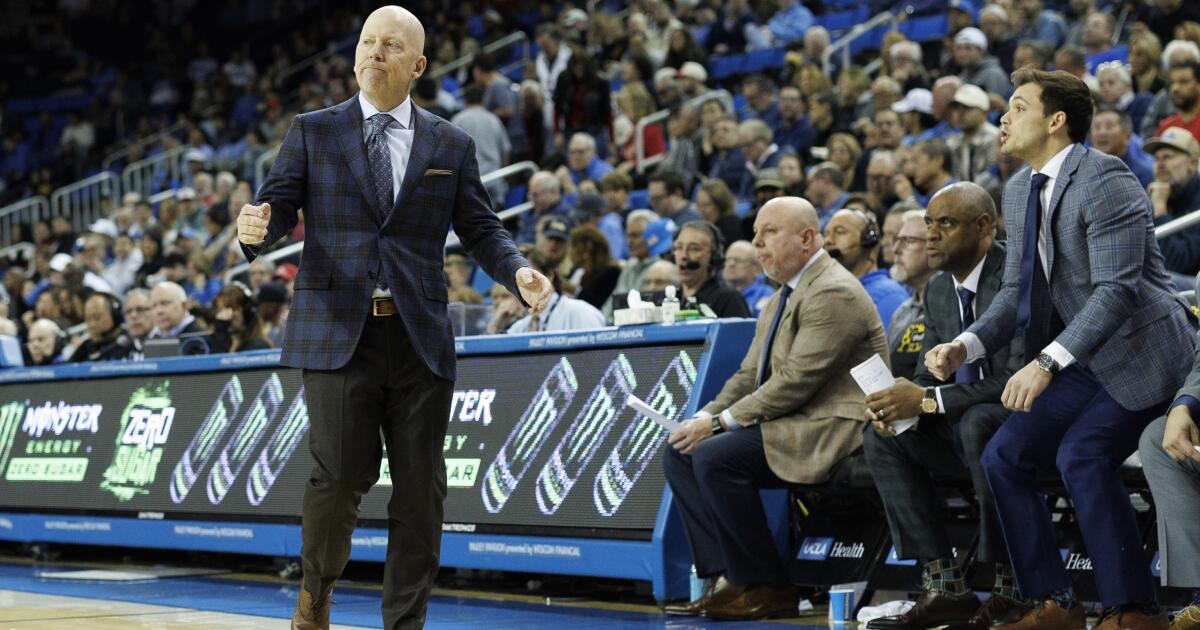
How does Mick Cronin survive this, sending his own player off the court after hustling hard on defense to get a piece of the ball but unfortunately too much contact and drew a foul. Does he not constantly rip his team for weak defense?
Steven Jamerson, you deserved better from your coach and I won’t be surprised if your teammates and UCLA’s decision-makers agree going forward. Except …. he just recently got an extension. Way to go, Martin Jarmond.
Ron Mortvedt San Bernardino
How can UCLA’s combustible coach possibly demand discipline, hold his players responsible, or blame them for failing to take accountability when, night after night, he’s the most unhinged person in the building? Hey Mick, as my grandma used to say, “When you point a finger at someone, three point back at you.”
Steve Ross Carmel
Bill Plaschke nailed it in his column today. Mick Cronin just seems to be angry all the time prowling the sidelines. What does that look like to a kid still playing in high school? How AD Martin Jarmond gave him an extended contract with a $22.5-million buyout is beyond me. It’s going to cost UCLA to move on from him. It would be a lot easier if he only starts throwing chairs.
Paul Atkinson Ventura
The sky has fallen! For the first time I can remember I agree with something Bill Plaschke has written!
Julian Pollok
Palm Desert
As a lifelong fan and proud alumnus, I believe it’s time for UCLA to seriously evaluate the direction of its men’s basketball program. Why would we want a head coach who appears angry every time he’s in the spotlight? Leadership sets the tone, and right now that tone feels tense and joyless. Players want to compete for someone who inspires them and makes them better — not someone whose public demeanor seems rooted in frustration.
Watching from the outside, it often looks like the team is playing tight rather than confident, and that reflects leadership. Mick Cronin has had success and deserves credit for that, but UCLA basketball is bigger than any one résumé; if the standard is sustained excellence and a culture players are proud to represent, then it’s fair to question whether this is the right long-term fit for the program.
1 of 3 | Nearly 250 million gallons of untreated wastewater on Jan. 19 spilled into the Potomac River, pictured in 2022 in Washington, D.C., near The Kennedy Center. Photo by Pat Benic/UPI | License Photo
Feb. 21 (UPI) — President Donald Trump approved an emergency declaration that will mobilize the Federal Emergency Management Agency to assist in the clean-up of millions of gallons of sewage in the Potomac River.
The declaration comes five weeks after nearly 250 million gallons of sewage spilled into the river after a sewage line collapsed.
The Potomac River runs between Maryland, Virginia and Washington, D.C.
“The President’s action authorizes FEMA to coordinate all disaster relief efforts to alleviate the hardship and suffering caused by the emergency on the local population and to provide appropriate assistance to save lives, to protect property, public health and safety and to lessen or avert the threat of a catastrophe,” FEMA said in a press release.
The spill started when the Potomac Interceptor, a 72-inch in diameter pipe that carries up to 60 million gallons of wastewater per day from Maryland and Virginia to a treatment plant in Washington, D.C., ruptured on Jan. 19, spilling 243 million gallons of untreated wastewater into the river.
DC Water, which operates the pipe, installed a temporary bypass on Jan. 24, stopping more wastewater from leaking into the river.
Washington, D.C., Mayor Muriel Bowseron Feb. 18 formally declared a major disaster in the District and directly requested that Trump mobilize FEMA to help with cleaning up the waterway as work starts on a permanent fix, which could take as long as 10 months to complete.
On Feb. 16, Trump said that he would send FEMA to assist with the clean-up and, with his approval of Bowser’s declaration, the agency will now be mobilized to provide equipment and resources necessary.
Show host Thalía Sodi walks the red carpet at the Univision 2026 38th edition of Premio Lo Nuestro award show at the Kaseya Center in Miami, on Thursday. Photo by Gary I Rothstein/UPI | License Photo
Latest Israeli attacks bring total death toll in Gaza since October ‘ceasefire’ to 614.
Published On 21 Feb 202621 Feb 2026
Share
Israeli air strikes killed at least two Palestinians in Gaza on the third day of Ramadan in the latest breach of the truce deal signed with Hamas more than four months ago.
The attacks on Saturday occurred in northern Gaza’s Jabalia camp and the Qizan an-Najjar area in southern Gaza.
Recommended Stories
list of 4 itemsend of list
The total death toll from Israel’s attacks since the “ceasefire” came into effect has risen to 614, with 1,640 more Palestinians wounded, according to the Palestinian news agency Wafa.
Israel’s military appeared to acknowledge one of the attacks in a post on X, claiming its forces killed a fighter who crossed onto Israel’s side of the demarcation line in northern Gaza and approached its troops “in a manner that posed an immediate threat”.
The army said it would “continue to act to remove any immediate threat”.
‘Board of Peace’ deliberations
Saturday’s attacks come two days after US President Donald Trump’s Board of Peace held its first-ever meeting addressing reconstruction, security, and governance in the war-battered Strip.
Trump announced at the gathering that nine countries committed $7bn for Gaza reconstruction efforts, on top of a $10bn contribution from the United States. While significant, the total is far short of the estimated $70bn needed to rebuild the devastated Palestinian territory.
Trump also said five countries pledged to send troops to participate in an eventual 20,000-strong International Stabilization Force (ISF), which is to take over security from Hamas. But the task of disarming Hamas – called for in the next stage of the deal – is still unresolved, threatening to delay or derail the entire process.
Israeli Prime Minister Benjamin Netanyahu has insisted Hamas must disarm before any reconstruction begins. Last week, a top Netanyahu aide said Israel planned to give Hamas a 60-day deadline to comply before resuming its war, an ultimatum the group rejected.
Hamas has said it will not relinquish its weapons as long as Israel continues occupying the Strip and discussions on any political process in Gaza “must start with the total halt of aggression”.
The group has said it is open to a peacekeeping force, but with caveats.
“We want peacekeeping forces that monitor the ceasefire, ensure its implementation, and act as a buffer between the occupation army and our people in the Gaza Strip, without interfering in Gaza’s internal affairs,” said Hamas spokesperson Hazem Qassem on Friday.
‘Unclear in vision’
Along with Hamas’s disarmament, the next stage of Trump’s plan for Gaza calls for the gradual withdrawal of the Israeli military and the ISF’s deployment, with a transitional Palestinian technocratic committee overseeing day-to-day governance.
Many Palestinians told Al Jazeera they are deeply sceptical about the plan’s prospects for success, citing Israel’s continued deadly attacks and lingering aid shortages.
“Israel kills, bombs, violates the ceasefire agreement daily and expands the buffer zone without anyone stopping it,” said Awad al-Ghoul, 70, a Palestinian displaced from Tal as-Sultan in southern Rafah and who now lives in a tent in the town of az-Zawayda.
“So this project is a failure from the start and unclear in vision.”
Imelda Marcos’ fetish for fiendishly expensive shoes was a running gag in the 1980s. But did you know that she was also something of a disco queen?
The image of a jet-setting Marcos in her Beltrami pumps boogieing with arms dealers at fashionable New York nightspots is one of the inspirations of David Byrne’s musical about the notorious former first lady of the Philippines, who sang on the campaign trail for her husband, Ferdinand E. Marcos, and ruled with an iron fist alongside him after he declared martial law and plunged his nation into a brutal dictatorship.
“Here Lies Love,” which is having its Los Angeles premiere at the Mark Taper Forum, traces the political power couple’s rise and fall through a series of dance cuts that capture the irrational hold charismatic leaders can have on a public — at least while the music is blasting.
Byrne, the ingenious Talking Heads co-founder, conceived the show and wrote the music and lyrics. Fatboy Slim, a Grammy Award-winning DJ, musician and record producer, contributed to the music. The score, a mix of lush disco and synth pop with hints of island breezes and karaoke camp, brings a club-like energy to the stage.
Aura Mayari and the company of “Here Lies Love” at the Mark Taper Forum.
(Jeff Lorch)
I first saw “Here Lies Love” at New York’s Public Theater in 2013, when the production, directed by Alex Timbers, was staged as an immersive dance party. Audience members moved along a shifting dance floor as the love story between Imelda, a beauty queen from the provinces, and Ferdinand, an ambitious senator accustomed to getting what he wants, sourly played out amid the backdrop of a traumatic national story.
This sung-through musical pulled off something of a coup of its own. As Ferdinand, now president and philandering husband, and Imelda, his embittered wife dripping in compensatory luxury, shore up their “conjugal dictatorship,” theatergoers discovered that, while partying to the seductive beat, a political dystopia was solidifying around them.
Imagine if, in “Evita,” audience members were invited to sing back up on the balcony as Eva Perón belts out “Don’t Cry for Me Argentina,” accompanying her in her last manipulative hurrah. “Here Lies Love” seemed to want its audience to leave with an aftertaste of cognitive dissonance.
Audiences don’t usually like being duped. But voters need to be continually reminded that when they go to bed with a strongman, they’ll likely wake up without healthcare or voting rights.
“Here Lies Love” at the Taper doesn’t follow the Public Theater’s staging or the similarly immersive Broadway production by Timbers that followed in 2023. It’s a more straightforward presentation that keeps audience members in their seats, except for a moment when uprising is in the air and a few theatergoers are conscripted to join the ecstatic rebellion.
Jeff Lorenz Garrido, from left, Joshua Dela Cruz, and Garrick Goce Macatangay in “Here Lies Love” at the Mark Taper Forum.
(Jeff Lorch)
Snehal Desai’s direction is politically clear-eyed and scrupulous. Corruption, authoritarianism and censorship, as we’re learning firsthand, scandal after constitutional scandal, are no laughing matter. The question is whether “Here Lies Love” can bear the scrutiny of a more traditional musical.
There’s not a traditional libretto, so the story is transmitted mostly through song lyrics. But stump speeches, rallying cries and the theatrical guidance of Imeldific (Aura Mayari, alum of Season 15 of “RuPaul’s Drag Race”) help flesh out the chronicle.
This emcee figure, a Taper innovation, replaces the DJ role of previous productions and establishes the show’s metatheatrical frame. The opening number, “American Troglodyte,” underscores the American imperial role in the story and provides Imdeldific with a satiric banner that doesn’t let a smiling superpower off the hook.
William Carlos Angulo’s choreography is unfailingly kinetic, but participating in a party is more energizing than watching one at a remove. Yet the political case of Ferdinand and Imelda Marcos, a tale of celebrity and tyranny marching in lockstep, speaks so directly to our own time that I found myself gripped by the object lesson of this public saga, even if it’s not always easy to connect all the fragments, never mind distinguish between hard fact and fictional license.
I was particularly fascinated by the portrayal of Imelda (Reanne Acasio), whose political character seems to be shaped by personal disappointments and run-of-the-mill humiliations. Imelda is wounded not only by the philandering of Ferdinand (Chris Renfro) but by an even more painful injury inflicted by her first love, Ninoy Aquino (Joshua Dela Cruz), a politician determined to become the voice of his people.
Ninoy recognizes an essential incompatibility between them. Imelda lives for love while he has political work to do. He bids her adieu in the song “Opposite Attraction,” though fate will bring them together after Imelda and her husband gain power and Ninoy, as the leading opposition figure, becomes their prisoner and eventual victim of the chaos unleashed by their regime.
Joan Almedilla and the company of “Here Lies Love” at the Mark Taper Forum.
(Jeff Lorch)
Unfolding under the theatrical auspices of Imeldific, “Here Lies Love” retells the history of the Marcos years as a musical pageant. Imelda’s transformation, from shy, lowly country girl to “Iron Butterfly,” covering up her shame with jewelry from Tiffany and revealing a will every bit as hard as the diamonds she flaunts, is presented with music so catchy and compulsive that it has the force of historical inevitability
The grooves supplied by Byrne and Slim take not just the characters but the audience on a ride through a brutal anti-democratic period. Does the disco spectacle aesthetic treat this history too lightly?
The production seems wary of this criticism. A program note from dramaturg Ely Sonny Orquiza, attuned to the sensitivities of the large Filipino diaspora in Los Angeles, notes that the production, “featuring an all-Filipino cast and majority-AAPI creative team, is not intended as a definitive or comprehensive history, but as an entry point for dialogue and inquiry.”
The scale of damage perpetrated by the regime is still being collectively processed. One victim, Estrella Cumpas (Carol Angeli), makes the mistake of confronting Imelda, a childhood friend, and is taken into custody. She will have to stand in for thousands of others.
The design scheme certainly doesn’t want to spoil anyone’s good time. Arnel Sancianco’s sets, Marcella Barbeau’s lighting and the more glittering of Jaymee Ngernwichit’s costumes seem to place us in a retro Euro-style disco world, where fun is typically a function of the strength of the cocktails consumed.
But there’s a countermovement in the show, the People Power Revolution that gains momentum after the assassination of Nimoy. The funeral speech of his mother (Joan Almedilla) is turned into the galvanizing protest song, “Just Ask the Flowers,” in which something as basic as maternal love wakes the country to the madness around them. Desai, whose directorialwork at the Taper thus far has brought together rave and rebellion, smoothly merges the Dionysian frenzy of the music with the nonviolent revolution that ended Ferdinand Marcos’ protracted dictatorship in 1986.
Dela Cruz’s stirring Ninoy standing tall against the patriarchal savagery of Renfro’s Ferdinand and the petty vindictiveness of Acasio’s well-drawn Imelda is a powerful call to action. Byrne and Slim’s score insists that not even death can stop the beat of this democratic spirit.
The production points out at the end that another Marcos, Ferdinand “Bongbong” Marcos Jr., Ferdinand and Imelda’s son, is now president. Perhaps the show’s final number can shed light: “God draws straight, but with crooked lines.”
‘Here Lies Love’
Where: Mark Taper Forum, 135 N. Grand Ave., L.A.
When: 7:30 p.m. Tuesdays-Thursdays, 8 p.m. Fridays, 2 and 8 p.m. Saturdays, 1 and 7 p.m. Sundays. (Check for exceptions.) Ends April 5
WASHINGTON — President Trump said Saturday that he was raising the global tariff he wants to impose to 15%, up from 10% he had announced a day earlier after the Supreme Court declared most of his tariffs to be illegal.
Trump said in a social media post that he was making the decision “Based on a thorough, detailed, and complete review of the ridiculous, poorly written, and extraordinarily anti-American decision on Tariffs issued yesterday.”
After the court ruled he didn’t have the emergency power to impose many sweeping tariffs, Trump signed an executive order Friday night that would allow him to bypass Congress and impose a 10% tax on imports from around the world. The catch is that those tariffs would be limited to 150 days unless Congress agrees to extend them.
Trump’s post, significantly ratcheting up a global tax on imports to the U.S. yet again, was the latest sign that despite the court’s check, the Republican president was intent on continuing to wield in an unpredictable manner his favorite tool for the economy and to apply global pressure. Trump’s shifting announcements over the last year that he was raising and sometimes lowering import taxes with little notice jolted markets and rattled nations.
Saturday’s announcement seemed to be a sign that Trump intends to use the temporary global tariffs to continue that pattern.
“During the next short number of months, the Trump Administration will determine and issue the new and legally permissible Tariffs, which will continue our extraordinarily successful process of Making America Great Again,” Trump wrote in his post.
Under the order Trump signed Friday night, the 10% tariff was scheduled to take effect starting Feb. 24. The White House did not immediately respond to a message inquiring when the president would sign an updated order.
In addition to the temporary tariffs that Trump wants to set at 15%, the president said Friday that he was also pursuing tariffs through other sections of federal law that require investigation by the Commerce Department.
Trump leveled pointed personal attacks on the Supreme Court justices who ruled against him in a 6-3 vote, two of whom he appointed during his first term, Justices Neil M. Gorsuch and Amy Coney Barrett. Trump, at a news conference Friday, said of the court majority: “I think it’s an embarrassment to their families.”
He was still seething Friday night, complaining on social media about Gorsuch, Barrett and Chief Justice John G. Roberts Jr., who wrote the majority opinion.
On Saturday morning, Trump issued another post declaring that his “new hero” was Justice Brett M. Kavanaugh, whom he also appointed and who wrote a 63-page dissent. He also praised Justices Clarence Thomas and Samuel A. Alito Jr., who joined Kavanaugh in the minority.
The president said of the three dissenting justices: “There is no doubt in anyone’s mind that they want to, MAKE AMERICA GREAT AGAIN!”
Allianz Stadium.England head coach Steve Borthwick feels his side left themselves a “mountain to climb” after an error-strewn first half in the 42-21 defeat by Ireland at Allianz Stadium.
Kim Kyung-man, director of the Artificial Intelligence Policy Office at the Ministry of Science and ICT, announces additional selections for the Independent AI Foundation Model project at the Seoul Government Complex in Jongno-gu, Seoul, on Feb. 20. Photo by Asia Today
Feb. 20 (Asia Today) — Motif Technology’s consortium has been selected in an additional call to join South Korea’s government-backed effort to build an “independent” artificial intelligence foundation model, as officials said a second evaluation in August will continue to weigh whether teams meet the project’s originality standard.
The Ministry of Science and ICT said Motif was chosen for its experience designing models with its own architecture and for achieving performance it said could compete with leading global systems despite operating in a limited data environment.
The Motif consortium includes the company, startup More, Seoul National University’s industry-academia cooperation foundation and the Korea Advanced Institute of Science and Technology.
The group plans to build an inference-focused large language model with 300 billion parameters and later expand work into vision-language models and vision-language-action models, the ministry said.
Motif will develop its model from this month through July and then compete in an August stage evaluation against LG AI Research, Upstage and SK Telecom. The ministry said it will extend the development timeline for the existing three teams by one month, setting the deadline at the end of July, and will provide Motif with support comparable to the other teams, including 768 graphics processing units and data.
The August stage evaluation will narrow the field to three teams and will include the originality requirement, officials said. Two teams are to be selected for final support by the end of the year.
Kim Kyung-man, director of the ministry’s AI policy office, said the four teams will discuss how to apply the originality assessment and that more detailed criteria will be developed with input from industry and academia.
The project drew attention last month after Naver Cloud failed to meet the originality requirement in an initial evaluation and NC AI was eliminated after scoring lowest on other criteria, raising questions in some quarters about the program’s momentum.
The ministry said the project’s priority is building a domestic AI ecosystem through teams capable of developing an independent foundation model.
Maryna Bondarenko, a 51-year-old journalist, has three packed suitcases in her apartment in Poland, hopeful for the return of peace in Ukraine. She fled Kyiv with her son and mother when Russia invaded on February 24, 2022, expecting to be away for just a month or two. Now, four years later, she continues to work in a Ukrainian language newsroom serving over 1.5 million Ukrainians in Poland. Bondarenko recounts many moments of anticipation for returning home, having even packed her belongings multiple times, convinced the war would soon end.
The ongoing war has resulted in Europe’s largest refugee crisis since World War Two, with over 5 million Ukrainians dispersed across Europe, particularly in Central and Eastern regions. Most refugees are women and children due to martial law in Ukraine that prevents military-age men from leaving. Bondarenko expresses a strong desire to reunite with her husband, Andrij Dudko, who works as a drone operator on the front line. However, the harsh conditions in Kyiv, including devastating air strikes and bitter winter, keep her from returning with her child.
In Poland, large Ukrainian communities have formed in cities like Warsaw and Krakow, but this has sometimes led to tensions with local residents over jobs and welfare benefits. Bondarenko wishes to return home but acknowledges that Ukraine will be significantly changed. Ukrainian President Volodymyr Zelenskiy hopes that 70% of Ukrainians abroad will go back after the war, but surveys indicate that many want to stay away, particularly among younger generations. Her 11-year-old son, Danylo, finds it hard to remember life in Ukraine and finds Poland more familiar, though he has faced some hostility at school.
Additionally, Iryna Kushnir and Olga Yermolenko, who were high school friends in Kharkiv, found each other again in Istanbul, where they moved at the start of the war. Kushnir had hoped for a quick return home but remains in Turkey, now married and employed as a teacher at Istanbul University, while she left her 19-year-old daughter Sofia to study in Ukraine. Yermolenko works remotely for Ukrainian clients and stays in touch with her mother who still lives in Kharkiv. Despite her efforts to adapt to life in Turkey, she feels caught between her past and an uncertain future. Both women follow the war closely, with Yermolenko expressing fear when seeing news of missile strikes in Kharkiv and making sure to check on her mother’s safety.
Britain’s Got Talent returns on Saturday night – but without former Strictly star Bruno Tonioli as he quit the show in 2025 after just two years of service
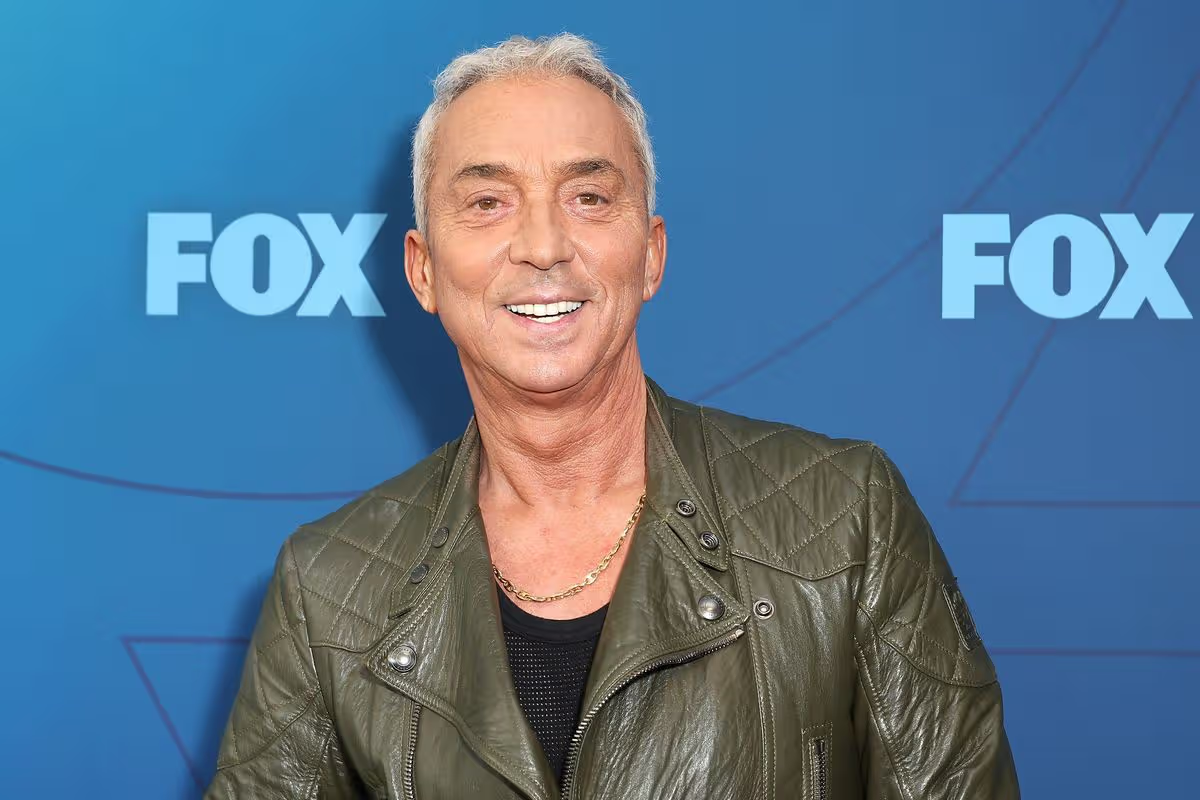
Bruno Tonioli quit Britain’s Got Talent in 2025 after two years and three seasons of work(Image: GettyImages)
Britain’s Got Talent fans will notice Bruno Tonioli is missing from the line-up when the show returns to ITV on Saturday night. The former Strictly Come Dancing judge exited the series after just two years.
Head judge Simon Cowell will be joined as usual by presenter Amanda Holden and singer Alesha Dixon as the long-running series returns for a 19th season. And the Bruno-shaped hole has been seamlessly filled by YouTube sensation KSI, who BGT fans will recall appeared on the 2025 season as a guest judge.
Fans of the ITV talent show were surprised when Bruno ditched rival BBC show Strictly to join the panel in 2023, replacing controversial judge David Walliams, who appeared on the panel from 2012 until 2022. After just two years and three seasons of red and golden buzzer bashing, Bruno decided it was time to vacate his Got Talent chair – but reportedly left the show on good terms. Here is a look back at the reason Bruno quit Britain’s Got Talent.
Ensure our latest headlines always appear at the top of your Google Search by making us a Preferred Source. Click here to activate or add us as your Preferred Source in your Google search settings.
Why did Bruno Tonioli quit Britain’s Got Talent in 2025?
Despite appearing on BGT for three seasons, Bruno Tonioli is arguably still best known for being a judge on the BBC’s Strictly Come Dancing from 2004 until 2019. The Italian TV star is also a judge on the American version of Strictly – Dancing With The Stars – and has appeared on the panel across the Atlantic since 2005.
While Bruno had been able to balance judging both Strictly and DWTS, the filming schedule for Britain’s Got Talent proved to be too challenging – with clashes ultimately forcing Bruno to walk away. In a statement released last year, Bruno explained why he was leaving the ITV show – and threw his support behind his replacement.
The 70-year-old star said: “After three incredible series, I’ve sadly had to walk away from a job which has opened my eyes to so much incredible talent and step down as a judge on BGT.
“And whilst I look forward to filming a new series of Dancing with the Stars in the US, I will miss the chaos and joy that BGT brings, as well as all the wonderful people I’ve had the privilege of working with. They truly are a brilliant team who make brilliant television, and I know KSI will be a fantastic judge too, as he’s already proven this year.”
Bruno previously opened up to the Daily Mail about the strain the constant travel between the UK and the USA was having on him. He revealed: “There is no animosity, it was a mutual decision with both of us saying, ‘Listen, this is not going to work like it used to.’ I just couldn’t do the flying anymore. I don’t know how I survived that schedule. To be honest, it’s a miracle.”
What has KSI said of replacing Bruno as a BGT judge?
Britain’s Got Talent fans will recall seeing YouTube star and rapper KSI – real name Olajide Olatunji, 32 – filling in for Bruno at certain points during the 2025 season as his busy schedule kept him away from the UK. After wowing audiences as well as the fellow judges, KSI seemed like an obvious choice to take over from Bruno full-time.
The rap star has been enthusiastic about his promotion as a full-time judge – and vowed to help the panel uncover more undisputable talent via the ITV show. He said in a past statement: “I’m so grateful and happy to be a part of Britain’s Got Talent team for another season.”
He added: “I had such a good time last year, and I can’t wait to see some more top talent. I’m full of energy, ready to go, and can’t wait to make this the most entertaining BGT season ever. Let’s do this.”
What has Simon Cowell said about losing Bruno as a judge?
While head judge Simon Cowell, 66, has not explicitly commented on Bruno’s BGT exit, it has been reported that he supported the dance expert’s decision to leave – and consulted his young son Eric, 12, before announcing KSI as a replacement. A source told The Sun last year: “Simon’s been friends with Bruno for over 35 years and loved working with him on BGT.
“It was really tough knowing he had to let Bruno go because they couldn’t get the filming dates to work out with his commitments on Dancing with the Stars. Simon is always looking for new ways to keep the show evolving and loves to get the opinion of his young son. Eric was a big influence for Simon in choosing Bruno’s replacement. He’s obsessed with him and adores him. KSI is Eric’s favourite influencer. Plus, he’s been such a hit as a guest judge, and Simon recognises they need to keep the show different by moving forward to keep attracting the younger audience.”
The source added: “Bruno was popular with the grannies, but KSI is for the youngsters. KSI has a huge social media presence and Simon knows how important it is to keep the show more modern.”
Britain’s Got Talent returns to ITV and ITVX on Saturday night at 7pm.
Good morning, and welcome to L.A. on the Record — our City Hall newsletter. It’s Noah Goldberg, with an assist from David Zahniser and Sandra McDonald, giving you the latest on city and county government.
There was a brief discussion on the L.A. City Council floor, with hardly any disagreement, before a motion brought by Councilmember Monica Rodriguez passed on Tuesday.
Rodriguez wants to allow city officials to enter hillside properties in “Very High Fire Hazard Severity Zones,” even without an owner’s permission, to clear hazardous materials and homeless encampments. The goal is to stop encampment fires that could grow into wildfires.
Councilmembers Hugo Soto-Martínez and Ysabel Jurado voted against the proposed change to the city’s municipal code, citing details they wanted addressed, but said they agreed with its spirit.
A third councilmember, Eunisses Hernandez, also voted against the measure, though she did not speak during the meeting.
The political implications of the seemingly routine vote could play out more bitterly over the next several months as Soto-Martínez and Hernandez, both members of the council’s four-person “progressive bloc,” run for reelection in their districts, which include fire-prone hillsides.
The proposal could become another wedge issue on homelessness for the two members, just as the city’s controversial anti-encampment law, Municipal Code section 41.18, was in the 2022 election.
That year, it was Soto-Martínez and Hernandez who were running against incumbents and took a progressive stance against 41.18, which allows council members to designate areas near schools, libraries, senior centers and other sensitive areas as no-camping zones. The two said they believed the law was ineffective at solving homelessness, merely shuffling people around without addressing the root issues.
Now, as the two council members defend their seats, Rodriguez’s proposal has already spurred similar attacks from would-be incumbent-busters.
MariaLou Calanche, a nonprofit leader seeking to unseat Hernandez in District 1, lives in a “Very High Fire Hazard Severity Zone” at the bottom of a hill by Debs Park. The area is full of dry brush, and Calanche said in an interview that parts of the park catch fire every summer.
“The council district has a lot of hillside property and open space. Debs Park has encampments in it that have not been cleared and that’s public property,” said Calanche, who formerly served on the city Police Commission. “I’m concerned that the current council member puts ideology over the safety of the citizens and residents.”
Calanche said she would consider highlighting Hernandez’s “no” vote on campaign mailers.
“This is such a simple way to make a difference,” Calanche said. “It just seems incredible they would not be supportive.”
Hernandez said she is open to supporting Rodriguez’s proposal but that it fails to define the type of hazard that would allow city officials to enter private property without permission.
“When you expand government authority without tight definitions and guardrails, you end up with inconsistent enforcement and expensive lawsuits,” she said in a statement.
She said she hopes to work with the city attorney’s office, Fire Department and others to make sure the policy is “precise, intentional, legally sound and actually focused on reducing fire risk.”
In District 13, Dylan Kendall, a nonprofit founder and entrepreneur who is running against Soto-Martínez, said she supports the “common-sense” proposal and that her opponent’s vote was “irresponsible.”
The district, which stretches from Hollywood to Atwater Village, includes high fire-risk areas like Elysian Heights and parts of Silver Lake.
“We know what [firefighters are] seeing on the ground: encampments on or adjacent to private property with exposed wiring, pressurized fuel canisters and dense vegetation, and a maze of legal questions about who controls the site when they respond to a call,” she said in a statement. “If a private owner cannot or will not remove combustible materials and encampments that clearly increase wildfire risk, the city should be able to step in, clear the danger.”
Before Tuesday’s vote, Soto-Martínez said he would have supported the proposal had it included a definition of what exactly a fire hazard is, making the same point that Hernandez later did.
Soto-Martínez had supported Rodriguez’s initial proposal at the council’s Public Safety Committee, which was to ask for a report on what municipal code changes would be needed.
But on Tuesday, Rodriguez amended her motion to go straight to the city attorney’s office to change the municipal code. She said she wanted to accelerate the change because of the importance of preventing encampment fires.
Soto-Martínez also expressed an underlying concern that echoed his earlier statements about 41.18, which he fiercely opposed.
“What I don’t want to see is this being used as a tool to push homeless folks from one side of the street to the other side of the street,” he said.
Notably, Councilmember Nithya Raman, who is running for mayor against incumbent Karen Bass, voted in favor of Rodriguez’s motion.
“The problem that this motion is identifying — gaining permission to access private property in Very High Fire Severity Zones — is one that needs to be resolved to ensure that we are mitigating the risk for a serious fire to our fullest capacity,” Raman, who opposed 41.18 and is a member of the council’s progressive bloc along with Jurado, said in a statement.
Former Councilmember Mike Bonin, who runs the Pat Brown Institute for Public Affairs at Cal State LA, said the hillside encampment issue is less clear-cut than 41.18 but could still prove to be divisive.
“This is the kind of thing political consultants salivate over,” he said. “It’s an example of taking an issue that even from the council debate seemed to appreciate the shades of gray and making it black and white.”
You’re reading the L.A. on the Record newsletter
State of play
— KARATE KAREN: Bass said at a rally in Leimert Park on Sunday that she is ready to fight off a challenge from Raman, invoking her training in karate to remind Angelenos that she is not too nice to battle. “I was trained to fight physically,” she said, stooping into a bow. “But if you know the martial arts, you know to bow before you kill somebody. You know to smile to throw them off.”
The mayor said she was joking, adding, “But seriously, we know how to fight and we know how to organize.”
— SCHOOL LAYOFFS: The Los Angeles Unified School District board — confronted with deficit spending and a forecast of insolvency in three years — narrowly voted to send out 3,200 notices of possible layoffs. The move, which is ultimately expected to result in 657 job cuts, is strongly opposed by labor unions as unnecessary and harmful to students.
— UCLA AX: UCLA fired its chief financial officer, Stephen Agostini, saying he inaccurately described the school’s budget deficit. The termination comes after Agostini told the school newspaper, the Daily Bruin, that “financial management flaws and failures” predating his arrival led to a $425-million deficit. The school claimed his comments were inaccurate.
— PRESSURE ON WASSERMAN:Casey Wasserman faced more calls to step down as chair of the 2028 Los Angeles Olympics over racy emails with convicted sex Ghislaine Maxwell from decades ago. Bass, along with some gubernatorial candidates, was among those joining the chorus.
“My opinion is that he should step down,” Bass said in a CNN interview.
— STRICTLY BUSINESS: A coalition of business and hotel industry leaders submitted more than 79,000 signatures in support of a measure to repeal the gross receipts tax on L.A. businesses. The measure, proposed for the November ballot, would punch an $800-million hole in the city budget if approved by voters.
— WRITE IT RIGHT: Angelenos hoping to write arguments for or against three city ballot measures — dealing with cannabis and hotel taxes — can apply by Friday with the office of Council President Marqueece Harris-Dawson. The arguments will be published in the Voter Information Pamphlet mailed out before the June 2 election.
— PUSHING FOR PARK: The union that represents rank-and-file police officers is putting $278,000 into efforts to reelect Councilmember Traci Park, according to a filing submitted to the city’s Ethics Commission. The money from the Los Angeles Police Protective League will go toward polling and canvassers in Park’s coastal district.
— SLAP ON THE WRIST: City Council candidate Jose Ugarte, who is running to replace his boss Curren Price in District 9, has agreed to pay $25,000 for committing a city ethics violation. Ugarte admitted that on his financial interest forms, he failed to disclose a consulting firm he owns and income he made. He has called it a “clerical reporting error.”
QUICK HITS
Where is Inside Safe? The mayor’s signature program was in Skid Row in Councilmember Ysabel Jurado’s district providing assistance to homeless people during the heavy rains this week.
On the docket next week: The Charter Reform Commission will meet Thursday to address City Council expansion, ranked choice voting, mayoral powers and more.
Stay in touch
That’s it for this week! Send your questions, comments and gossip to LAontheRecord@latimes.com. Did a friend forward you this email? Sign up here to get it in your inbox every Saturday morning.
The rise of girls’ flag football is following a familiar path. There now are travel teams with girls competing in offseason competitions as all-star teams similar to seven-on-seven football tournaments.
Under The Radar sports media, which for years has shot videos for YouTube and been involved in 11-man football competitions, is sponsoring a flag football team gaining attention for its success this year.
Called the Ballerettes, the team has several high school athletes from Southern California.
Leah Davis is a sophomore from Upland who was All-Baseline League. Denver De Jongh was a standout freshman at Mater Dei. Savvy Su’e was the freshman quarterback at Banning last season. She also plays softball and basketball.
As participation and popularity rise, you can expect more travel competitions, camps and opportunities for college recruiting.
This is a daily look at the positive happenings in high school sports. To submit any news, please email eric.sondheimer@latimes.com.