Warner Bros. Discovery said Tuesday that it was “reviewing” a revised offer from Paramount Skydance — the latest twist in the high-profile auction to claim one of Hollywood’s corporate jewels.
The company did not provide any details of Paramount’s bid. Paramount separately confirmed that it submitted a revised offer.
In a short statement, Warner acknowledged that Paramount had submitted a modified proposal to buy all of the company’s outstanding shares and that board members were evaluating the offer “in consultation with our financial and legal advisors.”
“We will update our shareholders following the Board’s review,” Warner said.
The Larry Ellison-backed Paramount had been facing a late Monday night deadline to boost its bid to claim the company that owns CNN, HBO, TBS and the storied Warner Bros. movie and film studios. Last week, the auction’s winning bidder — Netflix — agreed to allow Warner Bros. Discovery to reopen talks with Paramount for seven days to determine whether Paramount would bring more money to the table.
Warner instructed Paramount to present its “best and final” offer.
The move comes nearly three months after Warner’s board unanimously agreed to sell HBO and studio assets, including its deep library that includes Superman, Harry Potter, Scooby-Doo, “Game of Thrones,” and “The Big Bang Theory,” to Netflix for $27.75 a share.
Netflix’s deal, valued at $82.7 billion, does not include Warner’s basic cable channels, including CNN, TBS and HGTV.
Those channels are slated to be spun off to a new company later this year.
But Paramount, managed by scion David Ellison, has repeatedly cried foul, saying its cash bid for all of Warner Bros. Discovery, including the Warner cable channels, would be more lucrative for shareholders. Paramount, which enjoys friendly relations with President Trump, has also boasted that it has a more certain path to win U.S. regulatory approval compared to Netflix.
But Warner Bros.’ board has stuck with Netflix’s bid, saying the streaming giant’s financing was more secure.
“The Netflix merger agreement remains in effect, and the Board continues to recommend in favor of the Netflix transaction,” Warner said in its Tuesday statement.
Warner Bros. Discovery told Paramount last week that it expected the billionaire Ellison to put more money into the deal.
Paramount has previously said that the tech billionaire would guarantee more than $41 billion in equity financing that was needed to pull of the more than $108-billion take-over.
Under Paramount’s previous offer, the Ellison family was planning to contribute about $12 billion. Another $24 billion was expected to come from the royal families from Saudi Arabia, Qatar and Abu Dhabi.
In recent weeks, Paramount agreed to cover a $2.8 billion break-up fee that Warner would owe Netflix should Warner walk away from the Netflix deal. Paramount also suggested that it would increase its offer to at least $31 a share.
The move comes amid heightened political interest in the monumental deal that would reshape Hollywood.
The Department of Justice is investigating whether a Netflix takeover, or Paramount’s alternative bid, would harm competition.
Republican lawmakers have been critical of the Netflix deal, saying it would blunt competition.
President Trump has said he didn’t plan to get involved in the investigation, but over the weekend he threatened Netflix, writing on social media that Netflix must fire Susan Rice, a former high-level Obama and Biden administration official, from its board or “pay the consequences.”
Warner Bros. Discovery is consulting with investment bankers from Allen & Company, J.P. Morgan and Evercore and the law firms Wachtell Lipton and Debevoise & Plimpton.
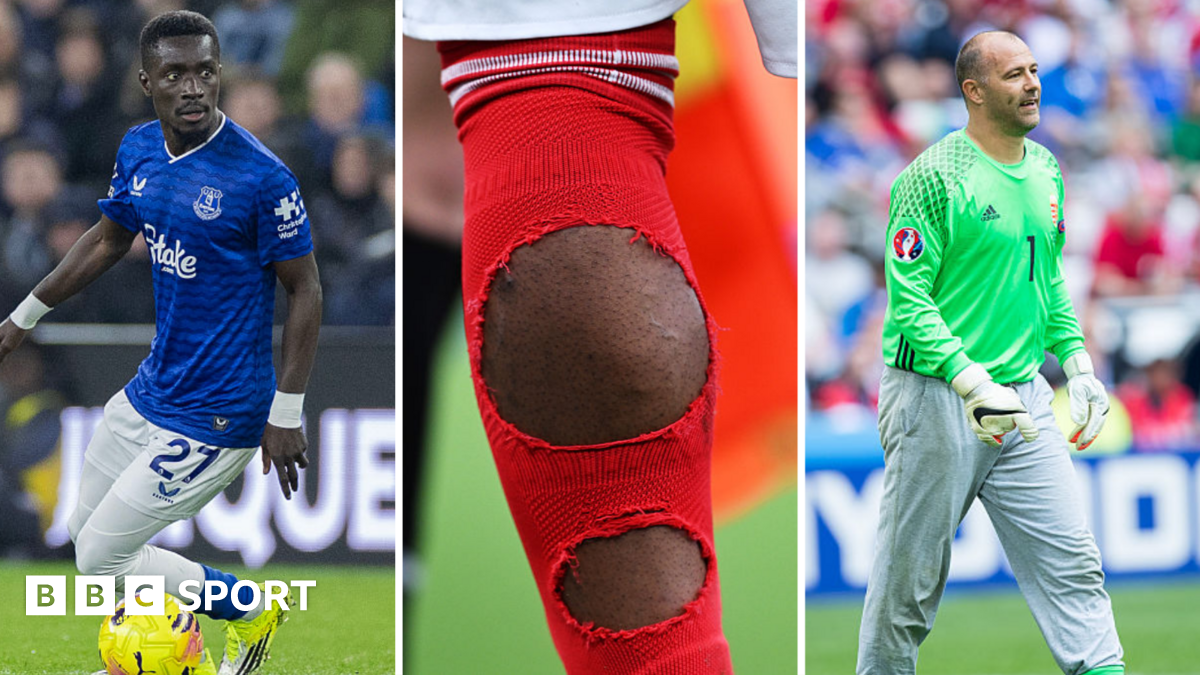
One of the rarer football fashion choices is that of tracksuit bottoms, which goalkeepers are allowed to wear.
They are among the game’s more retro fashion choices, though former Crystal Palace No 1 Gabor Kiraly famously wore them throughout his career.
“I’m a goalie, not a model,” he once said. “I’ve played on clay or grass that’s been frozen in winter; it makes your legs hurt when you fall so jogging bottoms seemed obvious.”
Former Manchester United goalkeeper Massimo Taibi wore tracksuit bottoms during his short stint at Old Trafford, while former Colombia keeper Rene Higuita was wearing them while making his famous scorpion-kick save against England in 1995.
WANT a getaway but don’t want the hassle of flying? Well, you can see amazing destinations across and within reach of the UK, just by sailing.
Whether you want to see dramatic landscapes or explore beaches that make you feel as if you are in the Caribbean, sailing to destinations can achieve just that.
Sign up for the Travel newsletter
Thank you!
There are a number of destinations you can head to via a ferry from the UKCredit: AlamyFor example, you could head to Castlebay from Oban in ScotlandCredit: Alamy
UK ferry industry body, Discover Ferries, and its 12 operator members have shared the 10 most scenic and iconic ferry routes that you can try out across the UK and further afield.
Abby Penlington, director of Discover Ferries, said: “Ferry travel is not just a mode of transport but a premier sightseeing platform.
“There are so many fantastic sights on our doorstep, from Britain’s own Hebridean fjords to the turquoise waters and white sands of the Isles of Scilly, these routes offer a visual scale that other forms of travel simply cannot replicate.”
Oban to Castlebay
The Hebridean waterway is often dubbed ‘Britain’s fjords’ due to its jagged coastlines, ancient castles and colourful seafront homes of Tobermory.
You can hop on a ferry and travel through the Sound of Mill before heading onto the open sea to travel to Castlebay with the Caledonian MacBrayne from just £19.05 per adult.
Oban is the busiest port in Scotland and located directly in the pretty coastal town.
Known as the seafood capital of Scotland due to its supply of fresh and locally-sourced fish, the town is surrounded by miles of pretty coastline and dramatic landscapes.
When you get off at Castlebay, on the Isle of Barra, you can explore Kisimul Castle, which is also known as the ‘Castle in the sea’.
The 15th century fortress is the ancestral seat of Clan MacNeil and is the only remaining medieval castle in the region.
Plus, you can only get to it by boat.
France to Dover
When you are on a boat, ferry or ship and are heading towards the White Cliffs of Dover, you can’t help but be impressed.
The chalk-formed cliffs essentially act as a gateway to England.
You can sail from either Calais or Dunkirk with DFDS, Irish Ferries or P&O Ferries with day returns starting from £44 per car.
There are other attractions you can explore in Dover as well, such as wartime tunnels and a Bronze Age Boat at Dover Museum.
And you could come back from France to the UK, landing in DoverCredit: Alamy
Holyhead to Dublin
The journey from Holyhead to Dublin is bookended by mountains so is ideal for those who love to see impressive and breathtaking landscapes.
In Holyhead you will leave the mountains of Snowdonia behind and as you arrive into Dublin you’ll see the Irish Alps (Wicklow Mountains).
Day trips cost from £10 with Irish Ferries or Stena Line.
There is a lot to see and do in Dublin including heading to the famous Guinness Storehouse, which is a multi-story experience with a panoramic rooftop bar.
If history is more of your thing, then head to Dublin Castle and explore the state apartments and sprawling gardens.
Penzance to The Isles of Scilly
Down in Cornwall, you can see the deep-blue Atlantic ocean transform into crystal clear waters that will remind you of the Caribbean but actually belong to The Isles of Scilly.
The Penzance to the Isles of Scilly route is named one of the best for wildlife spotting, with passengers often seeing whales, dolphins, porpoises and seals.
And this year is the last year that travellers can sail across on the Scillonian III, which has served the island for over four decades.
When exploring the Isles of Scilly, you will see numerous white-sand beaches, historic ruins and subtropical gardens.
For example, head to the Tresco Abbey Garden which is spread across 17 acres and features exotic plants from around the world.
Hiking is great on the island as well and you will most likely spot puffins if you visit this spring.
From Penzance, you can reach the Isles of ScillyCredit: Alamy
Lymington to Yarmouth
The picturesque fishing town of Lymington in the New Forest is a pretty place itself to explore, but you can also head towards the Isle of Wight which is another picturesque spot to discover.
On a clear day, you will be lucky enough to see the Needles, which are three iconic stacks of chalk rock and are visible from the deck.
As you approach Yarmouth, you will see Yarmouth’s pier, which is the longest timber pier in England.
If you travel at dusk you might see one of the pretty sunsets and arrive on the island at the ideal time to stargaze.
Day return tickets with Wightlink start from £22.20.
And from the New Forest area, you can reach Yarmouth on the Isle of WightCredit: Alamy
Arriving in medieval St Malo
When you arrive at St Malo in Brittany, France, you will be greeted by a walled Breton city with ancient spires.
According to Discover Ferries, it is said, “A wave of emotion washes over anyone who beholds Saint-Malo, so striking and proud…Spellbinding!”.
You can travel with Brittany Ferries on a day return from Portsmouth to St Malo from £63 per person based on two sharing an en suite cabin both ways, or book an adult day trip with DFDS via Jersey from £32.
In St Malo, visitors can head to a number of pretty beaches on the Emerald Coast or head on a mile-long walk to the 12th-century city walls with panoramic views of the sea.
If you fancy heading outside of the UK, you can travel to St Malo in FranceCredit: Alamy
Embankment to Greenwich
If you are in the capital, head on the Uber Boat by Thames Clipper to see some of the city.
You can hop on and hop off at some of London’s most iconic sights such as the Houses of Parliament, the Shard, the Tower of London and Tower Bridge.
A one-day hop on, hop off ticket costs £25.40 per adult.
Make the most of hopping on and off the boat by exploring the major landmarks.
For example, you can stop off at Battersea Power Station and see the building that once used to produce a fifth of London’s power supply.
Or jump off at Tower Bridge and walk across the bridge to see the city’s skyline from a new angle.
Even London has a scenic boat rideCredit: Alamy
Southampton to Cowes
Cowes’ harbour on the Isle of Wight is known for being full of Victorian charm and maritime heritage.
You can head on the ‘Chain Ferry’ or Floating Bridge service which connects West and East Cowes.
Adults can sail with Red Funnel from £14 each way.
Cowes is a great destination for those who love spotting luxury boats, as the marina is full of yachts.
In the town centre you can then explore lots of independent shops and cafes as well.
From Southampton, you could head to Cowes on the Isle of WightCredit: Alamy
Heysham to Isle of Man
As you set sail from Heysham, you will leave the rolling hills of the Lake District and Morecambe’s sandy beach before the Isle of Man – the Jewel of the Irish Sea – comes into view.
As you approach the island, you will see the Tower of Refuge on Conister Rock, which is built on a partially submerged reef.
You can sail with the Isle of Man Steam Packet Company from £26 each way.
The Isle of Man is a great spot for those who love Viking history, as you can head to the Manx Museum, which has historical artefacts from the Viking period and information about Celtic heritage.
There’s also Peel Castle, which dates back to the 11th century and the House of Manannan, which is an interactive museum based on the island’s Celtic and Viking roots.
Or visit the Isle of Man, which is full of Vikings historyCredit: Alamy
Sailing into Rotterdam
If you are wanting to explore further afield, you could head to Rotterdam in the Netherlands.
The city is dubbed the ‘New York of Northern Europe‘ due to its skyline which is visible from the port.
Sail with P&O Ferries from £144 one way or from £95.40 each way with Stena Line.
When it comes to exploring Rotterdam, the city features a huge market with more than 100 food spots.
Make sure to look up at the ceiling when in the market hall, as often there are digital butterflies flitting around.
You can also see the iconic cube houses just opposite the market.
Who: Real Madrid vs Benfica What: Champions League playoff, second leg Where: Santiago Bernabeu, Madrid, Spain When: Wednesday at 9pm (20:00 GMT) How to follow: We’ll have all the build-up on Al Jazeera Sport from 17:00 GMT in advance of our live text commentary stream.
Real Madrid carry a slender 1-0 lead over Benfica going into the second leg of a Champions League playoff tie that has been overshadowed by allegations of racism.
Recommended Stories
list of 4 itemsend of list
UEFA has suspended Benfica midfielder Gianluca Prestianni from the second leg on Wednesday after he was accused of racially abusing Real Madrid’s Vinicius Jr, who scored the only goal in the first game in Lisbon last week.
Meanwhile, Benfica coach Jose Mourinho, who is also suspended for the second leg, has come under fire for criticising Vinicius for his effusive goal celebration.
So the Portuguese side will be expecting an especially hostile welcome at the Bernabeu as they try to overturn their one-goal deficit and reach the last 16.
Vinicius Jr confronts Prestianni during the first leg at the Estadio Da Luz in Lisbon on February 17, 2026 [Eric Verhoeven/Soccrates/Getty Images]
Courtois ‘disappointed’ in Mourinho’s response
Vinicius wrote that “racists are above all cowards” on social media after the game while Madrid striker Kylian Mbappe backed his teammate and said he had heard Prestianni calling the winger a “monkey”.
The 20-year-old Benfica midfielder, who hid his mouth with his shirt during the confrontation with Vinicius, insisted he did not racially abuse the Brazilian forward after his stunning goal at the Estadio da Luz.
Prestianni could miss at least 10 games if European football’s governing body finds he racially abused Vinicius.
Mourinho waded into the controversy by saying Vinicius’s goal celebration was disrespectful and insisting Benfica was not a racist club because their biggest icon, Eusebio, was Black.
Madrid goalkeeper Thibaut Courtois said he disagreed with Mourinho’s words.
“At the end of the day, Mourinho is Mourinho. As a coach, you’re always, I think, going to defend your club and what your player has told you,” Courtois said.
“The only thing that disappoints me a bit is using Vini’s celebration. I don’t think Vini did anything wrong there,” he added.
“I don’t think we can justify alleged racism because of a celebration.”
Mourinho’s Bernabeu homecoming upended by suspension
Benfica’s boss has not set foot in the Santiago Bernabeu since leaving Real Madrid in 2013, and he cannot sit in the dugout for the playoff’s second leg after being sent off during his team’s 1-0 first-leg defeat in Lisbon last week for making vituperative complaints about the officials from the touchline.
Mourinho said referee Francois Letexier was avoiding booking Madrid players who were at risk of suspension for the second leg.
“I’ve had my butt on the bench for 1,400 games and [I could see that] he knew perfectly well who he could book and who he couldn’t,” Mourinho complained bitterly.
“I [won’t be] sitting on the bench. I can’t go to the dressing room. I can’t communicate with the team,” he added. “It’s hard for me, but my teammates and my assistants are there. They’ll do their job.”
Benfica also said Mourinho was not going to attend the pregame news conference on Tuesday and his assistant would take over.
Mourinho is shown a red card by Letexier during the first leg [Angel Martinez/Getty Images]
Arbeloa says UEFA have chance for ‘turning point’ against racism
Real Madrid coach Alvaro Arbeloa called on UEFA to make their fight against racism into more than just a slogan after the alleged abuse of Vinicius Jr.
“We have a great opportunity to mark a turning point in the fight against racism,” Arbeloa told reporters on Tuesday.
“UEFA, which has always been and has led this fight against racism, now has the chance not to leave it at just a slogan, at just a nice banner before matches, and I hope that they seize this opportunity.”
Arbeloa said he believed Vinicius will thrive on Wednesday at the Santiago Bernabeu as the record 15-time champions bid to reach the last 16.
“Vinicius Jr has always shown a lot of bravery and a lot of character,” Arbeloa said. “That is always his response. It always has been, and I think it always will be.
“He is a fighter, and I’m sure tomorrow he will go out to fight and have a great game and keep showing he’s one of the best players on the planet.”
Head-to-head
This is only the sixth meeting between two of the biggest clubs from Spain and Portugal. Benfica have won three of the games while Real Madrid have won two.
The two clubs also faced each other in a league stage match in January when Mourinho’s team stunned his former club in a 4-2 win that allowed Benfica to qualify and prevented Madrid from automatically reaching the round of 16.
How many times have Madrid and Benfica won the Champions League?
Madrid are the record winners of Europe’s premier club competition with 15 titles to their name, the last coming in 2024.
Benfica have lifted the trophy on two occasions, and both of those came in consecutive years.
In what was regarded as Benfica’s golden era, Portuguese legend Eusebio helped the team to wins against Barcelona in 1961 and Real Madrid in 1962.
A hat-trick from Hungary’s finest export, Ferenc Puskas, could not save Madrid as Benfica earned a 5-3 win that included a double from Eusebio.
Vinicius Jr scores a brilliant goal in the first leg against Benfica [Pedro Nunes/Reuters]
Real Madrid’s team news
Jude Bellingham, Dani Ceballos and Eder Militao have all been ruled out through injuries while centre back Dean Huijsen, who missed the 2-1 defeat at Osasuna over the weekend with a muscular problem, is a major doubt.
Winger Rodrygo will be unavailable due to a suspension but would anyway be a doubt as he struggles to recover from a hamstring issue.
Raul Asencio is available again after returning from suspension.
Vinicius Jr will be looking to score for the fifth game in a row as he is set to start up front alongside Mbappe.
PASSENGERS travelling between the UK and Ireland will see a major change to passport requirements from tomorrow.
A popular airline is switching up its identification process for anyone flying between the two states.
Sign up for the Travel newsletter
Thank you!
Aer Lingus passengers travelling between the UK and Ireland will now be required to carry a valid passport or passport card (stock image)
From Wednesday, February 25, Aer Lingus will join Ryanair in requiring all passengers travelling between the UK and Ireland to carry their passports.
The Irish airline previously accepted alternative identification documents for these routes, such as driving licences or Irish Garda age cards.
Despite the Common Travel Area agreement between the UK and Ireland, a new rule change will require all passengers travelling between the two states to carry either a passport or passport card.
In a statement issued by Aer Lingus’s spokesperson, the airline said the new measures “will ensure consistency across our network and further improve our operational performance for our customers”.
They added: “Aer Lingus is updating its travel document requirements for flights between the Republic of Ireland and the UK, effective from 25th February 2026.
“All customers (including Irish or British nationals) travelling on Aer Lingus and Aer Lingus Regional services between the Republic of Ireland and the UK will now require a valid passport or Irish passport card.
“The other forms of photo ID (driver’s licence, etc.) previously accepted will no longer be valid for travel.”
Flights between Belfast and the UK are exempt from this latest update.
British Airways, which is the sister airline of Aer Lingus, will continue to allow passengers to travel without passports on flights from London City and Heathrow to Dublin.
The airline said: “You do not need a passport to travel between these destinations, known as the Common Travel Area (CTA), but you do require recognised photographic identification that proves your identity and nationality.”
Ferry companies sailing between Ireland and England and Wales will continue to accept alternative forms of identification.
There are no checks between the Republic and the North of Ireland.
Aer Lingus has launched dedicated phone lines for passengers who do not have a passport but need to fly between Ireland and the UK before they can obtain one.
British Airways will not require passports for its services between Dublin and London City and London Heathrow (stock image)
EGYPT is having a holiday comeback, with trips to the destination booming according to all the experts.
The Red Sea resorts are tempting holidaymakers back with their incredible weather, beautiful beaches, activities like snorkelling – and it’s just five hours away.
Sign up for the Travel newsletter
Thank you!
Brits are heading back to Egypt – and it’s 22C there this weekCredit: AlamySearches for Egypt holidays are up 10 per cent according to TUICredit: Alamy
For many years Egypt was the sought-after destination for Brits thanks to its promise of great weather and barely any rain.
In 2010, Egypt saw peak British holidaymaker numbers, with around 1.4million tourists visiting.
But then Brits stopped going to Egypt as much – leading to the 2011 flight cancellations – due to conflict within the region.
This was followed by the 2015 terror attack on a Russian passenger plane which killed all 224 onboard.
Now, many airlines fly to to Egypt, in particular the Red Sea resorts, like EgyptAir, easyJet, TUI, Wizz Air, British Airways, and Turkish Airlines.
And interest in heading to Egypt is higher than ever – TUI has revealed that customer numbers are up 10 percent more than last year.
It’s not just TUI which has found that Egypt is growing ever more popular. River cruise and tour operator Riviera Travel named it as the fastest-growing destination for 2026.
Comparing January-February 2025 with January-February 2026 bookings, Egypt is up 310 per cent.
It’s no surprise as in just five hours Brits can enjoy sun, sea and sand as well as affordable food and drink.
The resort cities are brilliant winter sun destinations and during the summer, temperatures can be as high as 38C – this week it’s seeing highs of 22C.
It’s not just the sunshine and beautiful resorts either as Egypt remains very affordable too.
According to Wise, a beer in Egypt can be as little as 50EG£ which is 77p.
Coffee can be as little as 54p and a meal at an inexpensive restaurant starts from £1.55.
Chris Logan, Commercial Director at TUI UK&I added: “It’s one of our most in demand destinations and a stand-out location for holidaymakers in 2026.
“The choice and standard of hotels have evolved significantly keeping pace with the increased demand from UK and international tourists.”
He named Sharm El Sheikh as a popular spot for couples with its blend of relaxation, vibrant nightlife, and world‑class reefs.
Hurghada is a popular resort destination for familiesCredit: AlamyTUI offers package holidays to resorts like the TUI MAGIC LIFE Redsina in Sharm el SheikhCredit: TUI
Whereas Hurghada is “especially popular with families thanks to its impressive all‑inclusive offering, shallow beaches, and brilliant snorkelling”.
There’s also Marsa Alam which is gaining in popularity with “pristine beaches, exceptional diving, and a more laid‑back atmosphere”.
Chris added: “Value for money is another reason for Egypt’s resurgence.
“Whether it’s grabbing a pint in Hurghada for the equivalent of 80p, enjoying a cocktail on the seafront in Sharm for just £3, or dining out at local restaurants, customers consistently tell us they’re getting exceptional quality at a price that’s hard to beat.
“While Spain and Turkey remain firm favourites, we’re seeing North Africa flourish and Egypt is leading the way as the top choice for 2026.
“It really does have everything – UNESCO listed bucket list experiences, a welcoming culture, inspiring history, adventure, value, amazing resorts and hotels, beautiful locations, crystal clear waters, and outstanding beaches.
“All within easy reach of the UK. What’s not to love?”
TUI has revealed some of its favourite package holidays.
In Marsa Alam, you can stay in the Jaz Grand Marsa with TUI from £625ppCredit: TUI
This is based on two adults sharing a Family Area Deluxe Double Room with Garden View and Balcony departing from London Gatwick on 11 March 2026 with 20kg hold luggage per person and transfers included.
If you’re heading to Marsa Alam, TUI offers a seven-night holiday at the Jaz Grand Marsa on an all-inclusive basis from £625 per person.
Price is based on two adults sharing a Superior Twin Room with Garden View and Balcony or Terrace departing from London Gatwick on 15 March 2026 with 20kg hold luggage per person and transfers included.
Here is perfect for swimmers as its private beach has a coral reef – and there’s a trio of sea-view pools.
Over in Hurghada, you can stay at the 3T Sindbad Club on an all-inclusive basis from £1114 per person.
Price is based on two adults and two children sharing a Superior Family Room with Pool View, Waterpark View and Balcony departing from Birmingham on 30 March 2026 with 20kg hold luggage per person and transfers included.
This hotel is great for families as it has its own waterpark and a pool scene as well a 10 bars and five restaurants.
Here are the 10 fastest-growing destinations for 2026…
Riviera Travel named these 10 destinations the fastest-growing destinations for this year…
IMPATIENT passengers who unfasten seatbelts before their plane has come to a complete stop at the gate could get hit with $37,000 fines.
There’s one key reason for the Federal Aviation Administration (FAA) to penalize unruly flyers racing to be the first to disembark flights.
Sign up for the Travel newsletter
Thank you!
Keep your seatbelts fastened if required on flights in the United StatesCredit: GettyYou’ll risk a fine of up to $37,000 for ignoring Illuminated fasten seatbelt signs onboardCredit: Getty
It’s a violation of federal law to ignore illuminated safety signs such as an aircraft’s “fasten seatbelt” sign.
But that doesn’t stop people from opening their safety restraints and reaching for their cabin bags in overhead luggage compartments.
The rule applies during the taxi, takeoff, and landing stages – until the aircraft has safely reached the gate and the sign has been turned off.
Passengers must remain buckled in while the seatbelt sign is illuminated, the FAA has warned.
Snubbing these safety instructions can result in a hefty civil penalty of up $37,000.
The regulation dates back to the 1970s, and was imposed for safety reasons.
After a plane lands, passengers are at risk of falling or other injuries if they stand and attempt to move while the aircraft taxis to the gate.
Seatbelts restrain the body movement when excessive force is applied, for example in a crash, explained Skybrary.
Keeping them fastened helps passengers survive by preventing flyers from being thrown around the aircraft and against hard objects or other people.
It also “prevents people being thrown out of the aircraft in case of a hull breach,” the website added.
What defines an unruly passenger?
Illegal use of narcotics
Refusing to follow safety instructions, including seat belt, smoking, or device rules
Verbal confrontations with crew or other passengers
Physical altercations onboard
Interfering with crew duties
Refusing to board or exit a plane
Making threats toward crew, passengers, or the aircraft
Sexual harassment or abuse
Riotous behavior such as screaming, kicking seats, or banging tray tables
There have been fatalities as a result of a failure to comply with the rule.
For example, in July 2013, a Boeing passenger flight operated by Asiana Airlines from Seoul Incheon, South Korea, to San Francisco crashed within the airport’s perimeter shortly before completing a landing.
The aircraft had hit the sea wall situated prior to the runway and the tail had detached.
Two people were found dead outside the plane, after being ejected at impact.
The dead girls were both 16-year-old students, Wang Linjia and Ye Mengyuan.
More than a decade ago, a passenger on board a Southwest Airlines flight appealed an FAA penalty after he left his seat and approached the front of the aircraft while the safety sign was on.
Don’t ignore a ‘fasten your seatbelt’ warning while flying in the U.S.Credit: Getty
He was slapped with a $3,300 civil penalty.
In 2013 an appeal heard that the man, Brian Wallaesa, believed he should not be held accountable for his behavior in 2009 because he was having a medical emergency.
But his appeal was denied as he “failed to prove that he had a medical emergency that caused him to lose control of his actions on that flight,” according to the decision.
“About an hour outside of Las Vegas, the captain turned on the ‘fasten seatbelt’ sign and informed the flight attendants that he wanted them to sit down and wear their seat belts because he expected the flight to experience turbulence.
“Not long afterwards, while the ‘fasten seatbelt’ sign was lit, Wallaesa stood up and walked quickly toward the front of the airplane,” the filings added.
When flight attendants asked him to return to his seat, “he refused.”
The FAA had originally sought a $5,500 civil penalty, but he was given a $3,300 fine after his appeal was denied.
History of Aviation Safety Belt Policy
Many travelers don’t know that disobeying illuminated safety signs violates federal law
Major General Benjamin D. Foulois, one of the first military pilots, invented the safety belt to prevent himself from being thrown out of the aircraft in the early 1900s.
His idea for a seatbelt began to spread throughout the aviation community
By the time World War I began in Europe in 1914, the US military began installing seat belts or harnesses in aircraft
After the war, seat belts started to appear in civil aircraft
By 1928, seatbelts were mandatory in all types of aircraft, but passengers were not required to wear them
The purpose of safety belts was to prevent passengers from being tossed around or thrown out of the cockpit during turbulence or other maneuvers in the 1920s
In 1947, the Air Force conducted a study which found that if secured with a safety belt, the human body can withstand at most 4870 pounds of force without injury
In 1971, amendments to the Federal Aviation Regulations required that “each occupant of an aircraft fasten his safety belt during the takeoff and landing of that aircraft”
Large planes still use the lap belt due to its design and aerodynamics – shoulder belts require a strong secure anchor spot, which would need the airline seats to be heavier, making the plane less aerodynamic
In 2021, the FAA proposed a $14,000 civil fine for an Endeavor Airlines passenger who allegedly unfastened her seat belt while the warning sign was illuminated.
The passenger had also refused to wear a mask properly despite repeated instructions from flight attendants.
“I can’t tell you how many times on a domestic flight, 10, 15, 20, 30 people would get up before we were parked at the gate,” ex-American Airlines flight attendant Steve Burman told the New York Times last May.
He saw a woman being injured after a bag toppled on top of her when an overhead bin was opened too soon.
The FAA has recently implemented a “zero-tolerance policy” of issuing fines.
This is due to skyrocketing cases of problem passengers risking the safety of crew and fellow flyers.
Unruly passengers can face fines of up to $37,000 per incident – as well as criminal prosecution, the agency confirmed last year.
Previously, the maximum civil penalty per violation was $25,000.
A passenger fastening seat belt while sitting on an airplane for flight safetyCredit: Getty
The $37,000 fine per violation for passengers also applies to flyers who assault, threaten, intimidate, or interfere with airline crew members, said World of Aviation.
“This is as unjust to the innocent as it is to the genuine victims. I calmly await this trial, which will allow the truth to come out publicly.”
No date has been set for the trial.
Hakimi’s lawyer confirmed in a statement that a “trial has been ordered” and that “it is with determination and resolve that we await this trial so that justice may be served”.
BBC Sport has contacted the Nanterre prosecutor’s office for comment.
Paris St-Germain host Monaco in the second leg of their Champions League knockout round play-off tie on Wednesday.
Hakimi was named in PSG’s initial squad, published last Tuesday.
The 27-year-old was born in Spain but represents Morocco and has made 194 appearances for Paris St-Germain, winning the Champions League and Ligue 1 titles last season.
His performances led to him being honoured at the Best Fifa Football Awards ceremony held in Paris on Monday, where he was named in the Fifpro men’s world team of the year.
Morocco will face Scotland, Haiti and Brazil at the World Cup in the USA, Mexico and Canada this summer.
The director of one of the best films of 2025 that’s up for several Oscars is working on a highly anticipated revival of an iconic series
Michael B Jordan as Smoke and Stack in the hit film Sinners(Image: WARNER BROS)
Ryan Coogler’s The X-Files reboot has just been given a thrilling update.
The revamped sci-fi mystery drama was first announced back in 2023, with the acclaimed director releasing his hit period horror blockbuster Sinners in the meantime.
Nearly three years later, the project has finally been given a pilot greenlight by streaming service Hulu, with Jennifer Yale (The Copenhagen Test) coming on board as showrunner.
Black Panther filmmaker Coogler will write and direct the first episode, which will star Danielle Deadwyler (The Piano Lesson) as an FBI agent investigating the paranormal.
A synopsis via Deadline confirms the series will follow “two highly decorated but vastly different FBI agents — one played by Deadwyler — [who] form an unlikely bond when they are assigned to a long-shuttered division devoted to cases involving unexplained phenomena.”
Deadwyler has a big year ahead as she’ll next be seen in the HBO comedy series Rooster with Steve Carell as well as the third season of Euphoria. Her X-Files co-star has yet to be confirmed.
The original series starred David Duchovny and Gillian Anderson as agents Fox Mulder and Dana Scully, a believer and a skeptic who investigate unsolved cases known as X-Files.
Originally airing from 1993-2002 over nine seasons, the series is widely considered one of the greatest shows of all time, with Radio Times calling the first episode ‘the greatest pilot in TV history’. It returned for two new seasons in 2016 and 2018.
One Redditor claimed it’s “never to be dethroned”, and someone else agreed: “This show is my #1 of all time. It has its flaws but this is the show I go to every night.
“If TV died as a whole entirely and I was stranded on a desert island, this would be my one and only choice.”
And an X user called it “literally the best show ever made, so beautifully shot and a killer soundtrack!”
The reboot certainly has a daunting legacy to live up to, though thankfully director Coogler has more than enough credentials to meet fans’ high expectations.
His latest film, Sinners, starring Michael B Jordan as twin gangsters who encounter a chilling cult of vampires in 1930s Mississippi, was named the best film of 2025 by the African American Film Critics Association.
The critics consensus on Rotten Tomatoes reads: “A rip-roaring fusion of masterful visual storytelling and toe-tapping music, writer-director Ryan Coogler’s first original blockbuster reveals the full scope of his singular imagination.”
Teasing his next project on the Last Podcast on the Left, Coogler said: “I’ve been excited about that for a long time, and I’m fired up to get back to it. Some of those episodes, if we do our jobs right, will be really f***ing scary.
“We’re gonna try to make something really great and really be something for the real X-Files fans, and maybe find some new ones.”
He also revealed that he had spoken to Anderson about the revamped series, though her and Duchovny’s involvement is currently unconfirmed.
For the latest showbiz, TV, movie and streaming news, go to the new **Everything Gossip** website.
Ensure our latest headlines always appear at the top of your Google Search by making us a Preferred Source.** Click here to activate**** or add us as your Preferred Source in your Google search settings.**
WASHINGTON — President Trump is set to deliver a high-stakes State of the Union address on Tuesday night at 6 p.m. Pacific time before a joint session of Congress in the U.S. Capitol.
The president is expected to emphasize economic issues, an immigration crackdown that has been central to his agenda, and tariffs in the wake of a recent legal setback to his trade agenda.
Trump is expected to focus on his immigration crackdown and his promises to go after what he says is government “waste, fraud and abuse,” as previewed in two White House videos on Monday.
One year back in office, Trump has led an aggressive deportation campaign that has involved violent arrests, troops in American cities and an uptick in detentions. The tactics used by federal immigration agents have raised concerns among lawmakers in the aftermath of the fatal shooting of two U.S. citizens in Minneapolis. Those concerns are central to ongoing standoff over funding for the Department of Homeland Security.
It will also be worth watching how Trump talks about future efforts to target waste and abuse in public spending, an effort that has often roped in blue states like California.
Who will deliver responses?
Democrats have picked Gov. Abigail Spanberger of Virginia and Sen. Alex Padilla of California to deliver the Democratic responses to Trump’s speech.
Spanberger will give her remarks in English, while Padilla will deliver the Spanish-language response.
More than 75,000 people packed the Coliseum for a soccer game Saturday night.
LAFC hosted the largest crowd for a soccer game in the world last weekend, the largest crowd for an MLS season-opening game and the second-largest in league history.
MLS moved the game from cozy BMO Stadium, LAFC’s regular home, a few hundred feet west to the cavernous 77,000-seat Coliseum because Lionel Messi, arguably the best to ever play the sport, would be there. It worked: The crowd was the largest at the Coliseum for any event in more than six years.
But the people didn’t come to see Messi or his team, Inter Miami, the reigning MLS champion. The crowd was not dressed in Miami pink but in the black and gold of LAFC, which won 3-0.
And that’s a good sign for MLS.
According to one high-ranking MLS executive who has attended multiple Messi games in NFL stadiums, Saturday was the first time he heard he Argentine captain booed.
“The fans immediately started booing Inter Miami and Messi as they came out of the tunnel for warmups,” said the executive, who was not authorized to speak publicly. “And that continued throughout the game. There were hardly any pink jerseys in the crowd. It was a real testament to the incredible fan base of LAFC.”
The league made a trade-off in 2007 when the Galaxy signed David Beckham, who was followed by a steady stream of big-name stars from Thierry Henry, Wayne Rooney and Frank Lampard to Zlatan Ibrahimovic, Robbie Keane and Bastian Schweinsteiger. Tens of thousands of curious fans came out to cheer the European soccer royalty, not the local teams they were playing against.
Messi took that to another level. Three MLS teams drew the largest crowds in their franchises’ histories when Messi came to town. He brought attention and excitement to MLS and eyeballs to its TV broadcasts.
What the league needed to move to the next level, though, was an authentic fan culture. It needed supporters who cheered for their team through thick and thin, not curious, casual fans who came out to see whatever big-name player was passing through town but never came back.
It has found that with LAFC.
“This atmosphere in the stadium is nice for the team. We know the fans are coming to support us,” LAFC striker Denis Bouanga said. “It’s good for me and my teammates.”
Twice in the last four seasons an LAFC game produced an attendance record. In 2023, LAFC played the Galaxy before 82,110 at the Rose Bowl, the largest crowd in league history. Saturday’s attendance of 75,673 was the second-largest, and largest for a season opener.
LAFC has earned that following. And if the team is the future of MLS, then it will be a bright future.
Since LAFC began play in 2018, no other MLS team has won more games, scored more goals or amassed more points. No other team has won more trophies either. And while LAFC may not have Messi, it’s hardly lacking for star power.
Son Heung-min, the captain of South Korea’s national team and a former English Premier League scoring leader, assisted on LAFC’s first goal Saturday. Bouanga, who scored the second goal, has more regular-season goals than Messi since Messi joined MLS in the summer of 2023. And Hugo Lloris, who pitched the shutout in goal, has played more World Cup games than any other goalkeeper in history.
Lloris also has played in — and won — as many World Cup finals as Messi. In some parts of MLS, Messi is an enemy to be beaten, not a celebrity to be welcomed.
“We want to beat Messi; we want to beat Miami because Messi is there,” Bouanga said. “The motivation is so high for this game. Maybe this game means more.”
Certainly for LAFC supporters it did. Because more than 75,000 of them came to cheer the local team and boo the visiting one, no matter who was wearing that bright pink uniform.
Feb. 24 (UPI) — The U.S. military seized a third oil tanker moving from the Caribbean Sea to the Indian Ocean, the Pentagon said Tuesday.
The Bertha, a ship flying the Cook Islands flag, was intercepted overnight in the U.S. Indo-Pacific Command region after the Defense Department said it attempted to evade U.S. forces.
“International waters are not a refuge for sanctioned actors. By land, air, or sea, our forces will find you and deliver justice,” the Department of Defense said in a post on X. “The Department of War will deny illicit actors and their proxies freedom of maneuver in the maritime domain.”
The department alleges that the ship was “operating in defiance of President [Donald] Trump’s established quarantine of sanctioned vessels in the Caribbean.”
The Cook Islands is a nation of 15 islands located in the South Pacific.
Two more oil tankers were seized in the Indian Ocean by the United States earlier this month.
On Feb. 9, the military pursued an oil tanker from the Caribbean Sea to the Indian Ocean without incident.
On Feb. 14, another oil tanker was captured. The Veronica III was the ninth oil tanker the United States had intercepted or seized that was linked to Venezuela since Dec. 10.
The United States has enforced a blockade on oil tankers from Venezuela since Dec. 10. The initial operation was meant to pressure President Nicolas Maduro to step down. In January, the U.S. military captured and detained Maduro and his wife.
President Donald Trump speaks alongside Administrator of the Environmental Protection Agency Lee Zeldin in the Roosevelt Room of the White House on Thursday. The Trump administration has announced the finalization of rules that revoke the EPA’s ability to regulate climate pollution by ending the endangerment finding that determined six greenhouse gases could be categorized as dangerous to human health. Photo by Will Oliver/UPI | License Photo
Last week, American diplomats and their Iranian counterparts sat down in Geneva for yet another round of talks mediated by Oman. The outcome seemed unclear. While the Iranians said “good progress” had been made, the Americans claimed there was “a little progress”. Meanwhile, United States President Donald Trump threatened once again to strike Iran.
In recent weeks, there has been a heavy US military build-up in the Middle East in preparation for what many observers see as an imminent attack. In this context, it may be apt to question whether the current negotiations are not simply a tactic to buy time to better prepare for the inevitable.
In the face of US military might, some have suggested that Iran’s only option is negotiating an agreement with the US, however unfair it may be. While Iranian military capabilities stand no chance against an army with the world’s biggest budget, accepting capitulation through a debilitating deal that may be broken again by Washington may not necessarily be Tehran’s only choice.
There is another way in which Iran can stand up to US bullying and win.
The fate of past negotiations
The ongoing US-Iran talks cannot be viewed in isolation. For Iran, any diplomatic engagement with the US is overshadowed by the legacy of the Joint Comprehensive Plan of Action (JCPOA).
Signed by the US, China, Russia, France, the United Kingdom, Germany, the European Union and Iran in 2015, the agreement provided sanctions relief in exchange for full transparency of the Iranian nuclear programme. Tehran accepted the deal even though it had some unfair provisions, including some US sanctions remaining in place.
Nevertheless, it fulfilled its obligations – a fact that was repeatedly verified by the International Atomic Energy Agency.
In return, however, the US as a signatory did not uphold its end of the deal. In 2018, Trump unilaterally withdrew from the JCPOA and reimposed maximum pressure sanctions aimed at crippling Iran’s economy.
It was a stark reminder that American promises are nonbinding. As a leader who has shown no regard for the interests of American allies in pursuit of an “America first” policy, Trump could hardly be expected to respect the interests of American adversaries.
However, even if a Democratic president had been in the White House, there would not have been any guarantee that the JCPOA would have remained in place. In the US’s polarised political climate, an American president’s signature is only valid until the next election.
For the US, negotiations can also be little more than a facade intended to lull adversaries into a false sense of security. Last year, just as US and Iranian representatives were scheduled to meet in Oman for another round of talks, Israel, a key American ally, launched a massive military campaign against Iran.
While the US denied direct involvement, it acknowledged having received prior notice. Given the close ties between the two countries, this prior knowledge strongly implied that the US had given Israel tacit approval for the air attacks.
Today, Iran is engaging in negotiations with the US again, and it is being pressured to accept an even more unfair deal. Should it back down and submit to US demands, then Trump – who preys on perceived weakness – would simply move the goalpost. Demands would shift from Iran’s nuclear programme today to its ballistic missiles tomorrow and regime change the day after.
The special US relationship with Israel means that Washington is fundamentally hostile to an Iranian government that sees the Israeli state as an enemy. Consequently, Trump’s goal is not to reach a durable agreement but to ensure that Iran can never fully comply with his demands, thereby justifying a permanent campaign of maximum pressure and hostility.
In this context and given its recent experience, it would be foolish for Iran to rely on US promises and negotiated agreements.
Leverage through strong regional ties
The current US-Iran standoff is a high-stakes game in which an all-out war is a likely outcome. While the US could achieve an initial victory through overwhelming military superiority, it could also get bogged down fighting a protracted counterinsurgency in Iran’s mountainous terrain.
Conversely, while Iran could eventually repel an American invasion – just as its Afghan neighbours did – the country would be reduced to rubble in the process.
That does not mean Iran should back down. The Greenland crisis and the China-US trade war have demonstrated that Trump’s propensity for sabre-rattling is tempered by his aversion to losses. Even though the EU and China are far more powerful than Iran, a clear show of resolve could compel Trump to retreat.
And Tehran does not have to be alone in its defiance. In its neighbourhood, there are other big players who recognise that another disastrous war led by the US is not in their interests. Iran can and should leverage the regional desire for stability.
For years, Iran pursued a policy of confrontation in the region until it realised that carving out a sphere of influence was actually exacerbating its security dilemma. This recognition ultimately led to the historic normalisation of relations with Saudi Arabia in 2023 – a breakthrough facilitated by China, Oman and Iraq – which in turn set in motion a broader detente with other Arab countries.
Three years later, that decision is yielding dividends. Notably, Saudi Arabia, Oman, Turkiye and Qatar are lobbying Trump to exercise restraint. Building on this neighbourly diplomacy and investing in developing regional stability and a security architecture could help stave off another major US war in the region.
The most important path to peace – and the only means of countering American gunboat diplomacy – does not lie in matching American military might, a contest Iran is destined to lose, but in establishing good relations with its neighbours and accepting regional stability as part of its national security.
The views expressed in this article are the author’s own and do not necessarily reflect Al Jazeera’s editorial stance.
Britain’s Got Talent judge Amanda Holden has been open about her feelings towards Phillip Schofield in recent years, following the pair’s reported fallout in 2018
Amanda Holden took a fresh swipe at Phillip Schofield
Amanda Holden has taken a fresh swipe at Phillip Schofield after his name was mentioned live on air on Tuesday. The 56-year-old and her Heart Radio co-host Jamie Theakston were joined by Jack Whitehall ahead of his hosting duties at The Brit Awards this weekend.
During the discussion, Amanda was keen to know what Jack was wearing for the gig, to which he confirmed it would be a suit. Pressed further on whether he would opt for a “snappy pair of socks” like his dad, he joked: “I’m not going to go too jazzy with the socks, you never want to be upstaged by a sock.”
Turning to her co-star following the response, she said: “Well, Jamie, I rest my case.”
Puzzled by her comment, her co-star asked: “What are you talking about? Children’s television? That wasn’t me, that was Phillip Schofield.”
After instantly hearing his name, Amanda didn’t hold back from taking a swipe at her former This Morning co-star. She said with a laugh: “Oh god, please, let’s not mention that name on air, it’s a family show!”
The pair fronted This Morning together for a brief period while Holly Willoughby was on maternity leave in 2014.
Four years later, reports claimed that Phillip had ruined her chances to co-host with him again, as Holly fronted I’m A Celebrity… Get Me Out Of Here! alongside Declan Donnelly.
A former daytime TV executive previously told The Sun that Phillip “actively campaigned” for Rochelle Humes to get the job instead.
However, an ITV spokesperson later denied the reports, stating that presenter decisions are only made by producers.
Phillip also addressed the rumours on social media, branding them “hurtful and wildly untrue”.
During a playful game on Heart Radio about three things she didn’t want to find in her home, she quipped in 2019: “Spiders, flies and Phillip Schofield.”
Later, she revealed she had reached out to him for a heart-to-heart over coffee but claimed he didn’t respond.
Quizzed about her former co-star on Heart, Amanda confessed: “I did offer to meet him for a coffee months ago, he didn’t reply to my text. What can I say?”
Jamie added: “The olive branch had been extended,” to which she replied: “Oh, yes.”
The presenter has also previously appeared to take a swipe at Phillip’s former co-star Holly.
Discussing reports about her and Paul C. Brunson’s show Unfinished Business being commissioned for a second series, Amanda was asked if they were true.
“Well, yesterday I read in the paper that we are doing another series, but I don’t know for sure,” she confessed.
Cheekily stirring things up, he replied: “What are they suggesting, they getting Holly Willoughby?”
Caught off guard, Amanda responded: “I… what?!”, followed with a laugh and the comment: “No, they want a proper presenter.”
Jamie replied: “You’re going to get in trouble for that!”, to which Amanda said playfully: “No one’s listening.”
Five beautiful countries that will pay Brits up to £70,000 to move there – The Mirror
Need to know
Have you been dreaming of escaping the UK for a better quality of life? Whether your expat fantasies involve a Mediterranean island, a hermit-like rural escape, or being surrounded by wildlife, there are a number of schemes that could help make them come true. Here are five countries that offer incentives for people willing to relocate.
14:35, 24 Feb 2026Updated 14:35, 24 Feb 2026
Would you move to a village in Tuscany in exchange for half-price rent?(Image: Getty Images)
Need to Know – Five countries offering financial incentives for people to relocate there
Sardinia – The gorgeous Italian island of Sardinia is offering incentives of up to €15,000 (around £13,000) for expats willing to move to its sun-soaked shores. The catch is that the grants are only given to those moving to villages of under 3,000 people, as the island is trying to reverse the declining population and boost economies in rural areas. Couples considering starting a family can also enjoy €600 (just over £500) a month payments when they have their first child, and €400 (around £350) a month for the second until they reach five years old.
Tuscany – Ever dreamt of living among the rolling Tuscan hills? A small village called Radicondoli is one community looking to reverse its depopulation with incentives for both property buyers and renters. The scheme known as WivoaRadicondoli covers either 50% of rent payments for two years or offers grants towards home purchases for those willing to commit to staying for ten years. Around 100 of the village’s 450 homes lie empty, so people relocating will be spoiled for choice.
Spain – Spain has long been a sought-after destination for expats, so you may be surprised to see the country on the list. However, while Brits often try to find homes in the Costas or Canaries, many Spanish villages in rural areas have struggled to attract new residents. Some examples of schemes on offer include the Live in Ambroz programme in Extremadura. This pretty region, close to the border with Portugal, is offering digital nomads grants of up to €15,000 to live in the area for at least two years. With a lower cost of living than many areas of Spain, a quick search shows a 3-bedroom country house to rent for €690 a month (about £600), and your money can go further.
Ireland – Would you be willing to live on a remote Irish island? If so, the Our Living Islands programme could be for you. Buy a home in one of Ireland’s remote island communities and you could get a grant of up to £70,000 to help with renovation costs. You must have been granted the legal right to work in Ireland, and you’ll need to use the home as your permanent residence. It’s not a scheme for those simply looking for a holiday home.
Switzerland – If you’re under 45 and willing to live among the spectacular Swiss mountains for at least ten years, then you could get a grant to help with your expenses. A village called Albinen is offering 25,000 CHF for each adult and 10,000 CHF per child (approximately £23,000 and £9,500 respectively) to new residents, although you will need to buy a property of at least 200,000 CHF (about £191,000) to qualify. Expats can live in the unspoiled mountains surrounded by traditional Swiss chalets, with a medium-sized town and some impressive ski resorts just a short drive away.
Have a story you want to share? Email us at webtravel@reachplc.com
Ensure our latest stories always appear at the top of your Google Search by making us a Preferred Source. Click here to activate or add us as your Preferred Source in your Google search settings.
The Supreme Court just declared most of Trump’s tariffs to be unconstitutional. But consumers probably won’t be getting any money back
Treasury Secretary Scott Bessent, who has a way of saying the quiet parts out loud in defending President Trump’s economic policies, told the truth again Friday, during a public appearance a few hours after the Supreme Court threw out most of Trump’s tariffs.
Asked about the prospects that Americans would be receiving refunds of the illegal tariffs paid since Trump imposed them in April, Bessent replied with a condescending smirk: “I get a feeling the American people won’t see it.”
A couple of things about that. One is that there doesn’t seem to be any legal question that those who paid the tariffs are entitled to refunds. In his 6-3 ruling invalidating levies imposed on imports under the International Emergency Economic Powers Act of 1977, or IEEPA, Chief Justice John Roberts made clear that those tariffs were unconstitutional and illegal from their inception.
The refund process is likely to be a ‘mess.’
— Supreme Court Justice Brett Kavanaugh
Therefore, there’s no excuse for the government to hold on to the money it has collected — estimated at somewhere between $135 billion and $170 billion. But Roberts didn’t state whether refunds are warranted or, if so, how they should be calculated and distributed.
Trump has dangled the prospect of tariff refunds — actually, tariff “dividend” checks of $2,000 — in front of taxpayers for months. In effect, that would mean returning to taxpayers the money that his tariffs have cost them. Bessent’s comments put paid to that promise.
Get the latest from Michael Hiltzik
Today, no one is arguing seriously that checks should be cut for taxpayers — except Illinois Gov. JB Pritzer, who demanded refund checks totalling $8.7 billion for his constituents. But that has the aroma of a campaign stunt for Pritzker, who is running for a third term and may be positioning himself for a presidential run.
By not specifying a refund process, the Supreme Court decision left a vacuum that Bessent tried to fill. In his comments, he explained why refunds will be nothing but a dream for the average American — and those comments were chilling.
First, he said, Trump has the authority to reimpose the same tariffs under different laws. Indeed, Trump has already announced that he will be imposing 15% tariffs across the board.
He also signaled that although Roberts pushed refund decisions down to the Court of International Trade, the government is poised to challenge importers’ applications for reimbursement, generating litigation that “can be dragged out for weeks, months, years.”
In other words, Bessent implied that, far from resolving the economic confusion Trump has generated through his on-again-off-again tariff policies during 2025, the court’s decision provoked Trump to inject even more uncertainty into U.S. trade relations and domestic business decisions.
That dime appeared to drop for stock market investors Monday. The markets rose modestly in a relief rally Friday after the Supreme Court released its decision, but tumbled Monday as Trump doubled down on tariffs. At the close, the Dow Jones industrial average was down by 821.91 points, or nearly 1.7%, and the Nasdaq and Standard & Poor’s 500 indices both fell by more than 1%.
Bessent didn’t mention the most important reason why American consumers are unlikely to see anything resembling a tariff refund.
Tariffs on imported products are, by any measure, a tax on domestic consumers. Economic opinion is virtually unanimous on that point. As I reported in January, the Kiel Institute for the World Economy, a German think tank, concluded that 96% of the 2025 Trump tariffs were paid by American importers and their domestic clients.
“The tariffs are, in the most literal sense, an own goal,” Kiel’s researchers wrote. “Americans are footing the bill.” Their conclusion was largely echoed earlier this month by the Federal Reserve Bank of New York, which placed the burden on American importers and consumers at “nearly 90%.”
That said, the specifics of tariff payments are in the hands of importers and retailers, which keep records of how much they’ve paid and on what products or parts. Consumers don’t normally know the numbers. (I actually received an invoice last year breaking out the tariffs charged by a Japanese retailer on a set of pens I had bought for a birthday present, but since the sum came to $12 I’m not sure that demanding a refund from the government would be worth it.)
So far, about 1,500 businesses have filed claims for refunds through the Court of International Trade. Most filed these claims to secure for themselves a position in the scrum for refunds, like music fans lining up overnight for tickets to a star’s upcoming concert.
Many of these businesses may not actually have put a number on their claim. Costco, perhaps the biggest retailer to file with the CIT, didn’t say in its Nov. 28 filing how much it thought it was owed, possibly because it was still bound to pay the tariffs until the Supreme Court issued a final decision.
U.S. Customs and Border Protection, which actually computes and collects the tariffs, says it will cease collecting the invalidated levies when the clock strikes 12:01 a.m. Tuesday morning.
What consumers don’t know is how much of the tariffs have been passed down to them. Some sellers decided to eat some or all of the tariffs to keep consumer prices steady. Some may have stocked up on tariff-eligible products ahead of the formal imposition of the levies.
Will retailers seek out customers who paid higher prices on products that were tariffed to hand them refunds? None has said that such an eventuality is in the cards, though it might not be surprising to see some businesses use the end of tariffs as a marketing device — you know, “We’re cutting prices on Toyotas during ‘tariff freedom month!’” etc., etc.
It’s also conceivable that retailers passed imaginary tariff costs on to their customers, putting through price increases that had nothing to do with the levies but could be blamed on them anyway.
That’s what happened after Trump imposed tariffs on washing machines, which were almost all foreign-made, in 2018. According to a 2020 survey by Federal Reserve and University of Chicago economists, the tariffs forced washing machine prices up by nearly 12%, or about $86 each. The researchers discovered, however, that prices on clothes dryers increased by about the same amount, even though they weren’t subject to the tariffs at all.
What happened? The researchers conjectured that because washers and dryers are typically sold as pairs, retailers may have simply spread the washing machine cost increase between the two products to keep their prices similar. It’s also possible that retailers, figuring that consumers would expect to pay more for tariffed washing machines and would assume the same effect held for dryers, charged more for the latter to fatten their profits. One wouldn’t expect consumer refunds in those cases.
Another imponderable is the effect of Trump’s tariffs on the U.S. consumer economy generally. The Trump tariffs cost the average American household the equivalent of a tax increase of about $1,000, the Tax Foundation has calculated.
About $600 of that sum was due to the IEEPA tariffs now struck down. But the new tariffs Trump announced after the Supreme Court ruling will raise the tariff tax for American families by $300 to $700, the Foundation reported — potentially a greater total burden than existed before the court’s action.
All of Trump’s tariffs increased the average tariff rate to 13.8%, the Foundation reckoned. The Supreme Court’s ruling reduced that to about 6% — still the highest U.S. tariff rate since 1971 — but the new 15% tariff Trump announced would raise the applied rate back to 12.1%. By law, the new tariff can remain in effect for only five months unless it’s extended by Congress. In 2022, America’s applied tariff rate was 1.5%.
Perhaps the most immediate question facing businesses is how refund claims will be administered. In his dissent to Roberts’ IEEPA decision, Justice Brett Kavanaugh wrote that “the refund process is likely to be a ‘mess.’”
Possibly Kavanaugh’s concern was that the Court of International Trade will have to adjudicate 1,500 claims one by one. But it need not be so.
In 1998, the Supreme Court declared a Harbor Maintenance Tax on exports, based on the constitutional provision that exports can’t be taxed. Responsibility for those refunds also fell to the Court of International Trade, which established a standardized procedure for claims. Even under the streamlined system, however, the resolution of all those claims took until 2005, or seven years. And that involved only about $1 billion in claims, not the more than $130 billion at stake today.
What remains unexplained in the miasma created by Trump’s tariff policies is why he is doing this. None of his rationales has been borne out. The tariffs haven’t restored manufacturing employment in the U.S., which have fallen throughout Trump’s current term. They haven’t eliminated America’s trade deficit with the rest of the world, which has persisted since 1975 and — despite Trump’s assertions — isn’t anywhere close to an economic crisis.
As it happens, while the overall trade deficit fell modestly last year by less than $3 billion, or about one-third of 1%, most of the reduction was in services; the deficit in goods rose by $25.5 billion to a record $1.24 trillion.
All that’s left is Trump’s inclination to wield tariffs as tools of geopolitical bullying. He has raised or threatened to raise tariffs on Brazil because of that country’s criminal pursuit of former President Jair Bolsonaro for leading a coup attempt; on Switzerland because he felt dissed by a Swiss government leader; and on several European countries for thwarting his effort to annex Greenland.
None of those actions bore fruit (Bolsonaro was convicted and is currently serving a 27-year prison sentence). America’s trading partners plainly recognize that the new tariffs must expire within 150 days and can’t be renewed without action by a Congress plainly queasy about giving Trump his tariffs back after the Supreme Court took them away. They don’t seem to be taking Trump seriously.
They can tell that on tariffs, as on many other things, Trump is increasingly behaving like a lame duck, albeit one with a whim of iron. But as the stock market seemed to be telling us Monday, even a whim of iron can be very, very costly.
Welcome back to the Lakers newsletter, where we dive into how to get the best out of big man Deandre Ayton and hear iconic Lakers coach Pat Riley praise current Lakers coach JJ Redick and his team.
The conundrum that is Deandre Ayton is now living with the Lakers.
All things Lakers, all the time.
They see the talent and skills. But they still are searching for the right ways to maximize what Ayton can offer.
They see the passion and love for the game. They want to get that out of Ayton on a consistent basis.
They see his sensitivity. They know that to bring out the best in Ayton takes patience and constant encouragement.
When the Lakers watched film of their loss to the Boston Celtics on Sunday, Redick used lines like “there’s positive trends” with Ayton and lines like “he could be better” in certain instances.
That is the paradox of Ayton.
As the Lakers enter the stretch run of the season with 26 games remaining, they need Ayton to play at a higher level more frequently if they are to be successful.
Against the Celtics, Ayton had just four points on two-for-six shooting. He had seven rebounds, one assist and one blocked shot.
“There’s positive trends,” Redick said after practice Monday. “We did watch some film today. There was some real positive trends defensively. I think his spirit and engagement and stuff has been really good. I think for all the guys, if he has a smaller player on him, that’s an advantage for us. Let’s just get him the ball. I think it’s just thematically across the team, we have to pass it to each other more and trust each other more. …
“There was a clip last night or a play last night, Jaylen Brown goes to the floor. We’ve got a five-on-four and he [Ayton] goes at about 20% speed where it’s clearly a man-down situation. So in terms of him running and putting pressure on the rim and offensive rebounding, particularly against switches and smaller players, he could be better there.”
However, Redick, his staff and Ayton’s teammates want to be clear that they support him at all times.
Earlier this season, Redick gave his 7-foot center a T-shirt featuring Ayton’s face combined with the likeness of a lion.
“We want him to be the lion,” Redick said then.
“I have his back,” Redick said Monday. “These guys, we try to make them understand my job is to help the Lakers try to win basketball games. And so nothing is ever personal. If he doesn’t close a game, it’s not personal. It’s because I think there’s a better option. And that’s not just true for him personally. There’s essentially three guys on our team that if they’re on the lineup, they’re going to close games and everybody else [will rotate]. We talked about that today.”
Ayton is producing the lowest averages of his NBA career in points (13.0), rebounds (8.4) and minutes (28.1). His field-goal attempts (8.9) and makes (5.9) are lows too, but he’s shooting a career-high 66.6%.
“He’s done OK,” said Marcus Smart, who sits next to Ayton in the ’ locker room. “You know, he definitely could be better; we all could. But the thing I love about it is he understands it and he’s working. We all are trying to figure it out; this is new to everybody. He’s doing his best, but he understands it’s another notch that we need him to go to, and we’re going to try to get him there and help with that. But he knows he’s got to do his part as well.”
Ayton plays on a team with three dominant ballhandlers in Luka Doncic, LeBron James and Austin Reaves, and it is their job to feed the 7-footer. Getting Ayton activated has been a positive for the Lakers. When he doesn’t get the touches, Ayton hasn’t been as productive.
Still, NBA scouts say Ayton can do a little more himself. He can run harder on the fast break, seal his man down low and play with force, roll to the basket with a purpose, use his athleticism to his advantage and play defense and rebound at a higher level.
Ayton came into the NBA with high expectations, the first overall pick in the 2018 draft, even going ahead of Doncic. Over five seasons with the Phoenix Suns, Ayton was a double-double machine, averaging 16.7 points and 10.4 rebounds. He shot the ball more, averaging 12.5 field goal attempts per game. He averaged 12.8 in two seasons in Portland.
With the Lakers, he’s had to adjust his game.
“I’m sure it’s a big adjustment,” Smart said. “It was an adjustment for me when I came in … The type of player I was in college and coming in and the way I played both offensively and defensively, [now I’m] taking a more defensive approach more than offensive. So it definitely can be frustrating and it’s definitely a challenge because you still value and look at the opportunity that you have to be that person. But unfortunately, sometimes the circumstances don’t call for it. That’s the hard part, understanding that early. Like I said, we all could do better at that because we all want to win. Deandre is doing the best he can, and we appreciate that. We love it too because he also uses that to motivate himself, which can be a good thing.”
Riley praises Redick, Lakers
A statue of former Lakers coach Pat Riley is unveiled outside Crypto.com Arena.
(Greg Beacham / Associated Press)
After Pat Riley had his statue unveiled Sunday on Star Plaza outside of Crypto.com Arena, he took time to praise Redick.
Riley led the Lakers to four NBA championships in the ‘80s, his coaching style a big part of the Showtime era. He likes what he sees out of Redick and the Lakers.
“I love JJ. I really do,” Riley said. “I competed against him. My teams competed against him, you know, in various teams that he played with. He’s a fiery guy. He could shoot the hell out of the ball. He was tough as nails, you know. I don’t know. Sometimes I look back and I remember myself at that time and I looked at JJ and I think they picked the right person [for the Lakers job]. There’s just a quality about him, I think, that goes above and beyond.
“And they have a hell of a team for him right here, right now with Doncic and Reaves and obviously with LeBron. And so I think Rob [Pelinka, president of basketball operations] will continue with the new ownership to build that team and to complement those players. But they have a great opportunity and I think JJ will be a great coach for it.”
On tap
Tuesday vs. Orlando (30-26), 7:30 p.m.
The Magic are a deep and versatile team, with six players who score in double figures. Paolo Banchero leads them in scoring (21.5) and rebounds (8.4) and is second in assists (5.0). He’s shooting 45% from the field. Desmond Bane is one of three Orlando players averaging more than 20 points at 20.1, making 48.3% of his shots and 38.8% of his threes. He just dropped 36 in a win over the Clippers on the second night of a back-to-back.
Thursday at Phoenix (33-25), 7 p.m. PST
Injuries are starting to take a toll on the Suns. Dillon Brooks has a broken left hand and reportedly is out four to six weeks. This comes on the heels of All-Star Devin Booker missing at least one week because of a right hip strain and fellow guards Grayson Allen (ankle/knee) and Jordan Goodwin (calf) also dealing with injuries.
Saturday at Golden State (30-27), 5:30 p.m.
The Warriors don’t have All-Star guard Stephen Curry (knee) and forward Jimmy Butler (torn ACL), leaving them without a lot of offensive firepower. The Warriors have been leaning on guard Brandin Podziemski to keep them afloat. He is averaging 12.1 points per game.
Sunday vs. Sacramento (12-46), 6:30 p.m.
The Kings have the worst record in the NBA. They have three players with season-ending surgeries — De’Andre Hunter (eye), Domantas Sabonis (knee) and Zach LaVine (hand).
Status report
Jaxson Hayes: right ankle injury
Redick said Hayes, who left Sunday’s game, got an MRI on Monday that showed his ankle had “a little bruise.” Hayes, the backup center, is day to day, Redick said. The Lakers listed Hayes as doubtful for Tuesday night’s game against the Magic at Crypto.com Arena.
“We’ll see how he feels tomorrow morning,” Redick said..
Favorite thing I ate this week
Risotto col codeghin e la peara from Tre Risotti Trattoria.
(Thuc Nhi Nguyen / Los Angeles Times)
Ciao! It’s Thuc Nhi checking in a final time from the Olympics. My final dinner of the Games had to honor northern Italy, so instead of just pizza or pasta, I went searching specifically for risotto. In Verona, before the closing ceremony, I asked the server at Tre Risotti Trattoria what the most popular risotto was and she suggested the risotto col codeghin e la peara (risotto with sausage and pepper sauce). She didn’t miss. The salty, creamy bite with the crunchy crouton around the plate was the ideal way to end my third Olympics Games. Arrivederci!
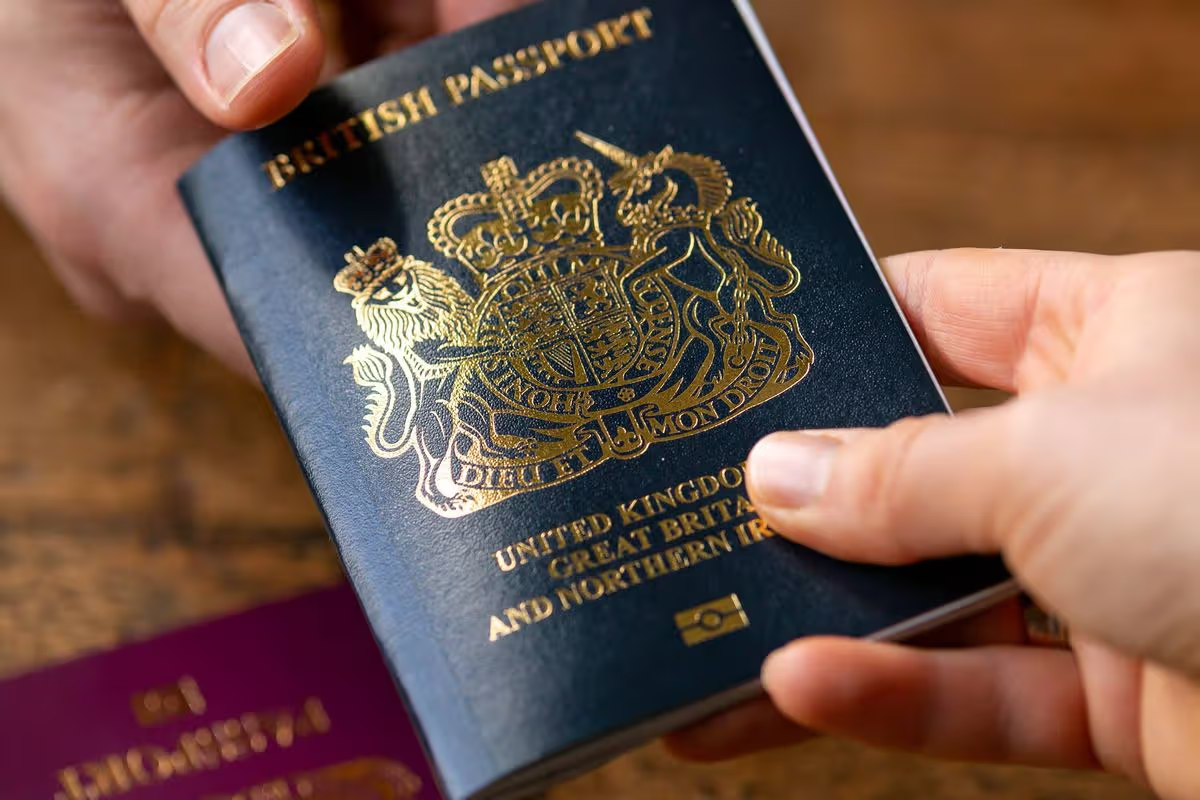
Both options, available through the HM Passport Office, are ideal for when you’re in a rush for a passport, but believe the standard service, which takes around three weeks, won’t cut it in time. On occasion, the standard process may even take longer than three weeks if additional documents, information, or an interview are required.
Below, the Mirror has delved into two fast-track options available and how much they’ll cost you.
Option 1: One-day premium
The one-day premium service is exclusively for adults renewing their passports. Applicants must apply online and will be required to pay £222 or £235 for a 54-page frequent-traveller passport.
Once the application is submitted, an appointment is arranged, with the earliest available slot coming two days afterwards. Official Government advice adds: “You’ll need to hand in your old passport at your appointment.
“Your new passport will be ready to collect from the passport office four hours after your appointment.”
Option 2: One-week fast track
This second option is similarly open to anyone who needs to renew their passport. However, it is also accessible under the following circumstances:
You need to get a child’s passport
You need to change the personal details on a passport (your name, place of birth or gender)
You need to replace a lost, stolen or damaged passport
The fast-track option comes in cheaper, costing £178 for an adult passport (£191 for a 54-page frequent traveller passport) or £145 for a child passport (or £158 for a 54-page frequent traveller passport). However, you can only secure an appointment the day after submitting your application.
The passport will generally land on your doormat one week afterwards. Neither service is available if you’re presently abroad or seeking your very first adult passport.
The Government’s guidance adds: “If you’ve already applied for a passport and have not received it yet, do not pay for an urgent passport. You will not get your passport sooner and you will be charged a £32 admin fee for each additional application.”
Ensure our latest headlines always appear at the top of your Google Search by making us a Preferred Source.Click here to activate or add us as your Preferred Source in your Google search settings.
For casting director Gabriel Domingues, putting together the ensemble of “The Secret Agent” meant materializing characters inspired by director Kleber Mendonça Filho’s recollections.
“It’s not that he was showing us a picture and saying, ‘They must look like this.’ They were ideas of memories that could change,” Domingues says of the Brazilian period thriller about a father on the run during an interview at The Times newsroom. One of the nominees for this year’s inaugural Academy Award for casting, Domingues appreciates how politically charged Mendonça Filho’s films are. His narratives are often fertile ground for an eclectic mix of performers.
And there are no throwaway roles in “The Secret Agent”: “Even the small characters represent ideas about Brazilian life and its contradictions,” Domingues adds.
To honor his large cast, a “panorama” of his country’s people, Mendonça Filho includes a montage at the end of the film in which each actor is acknowledged individually. The director thinks of this as the cinematic equivalent of a curtain call or final bow at the end of a stage production.
“Gabriel tries to find an interesting mix of experienced actors and people that we can discover,” says producer Emilie Lesclaux about Domingues, with whom she’s worked on multiple projects. He first collaborated with Mendonça Filho and Lesclaux on “Aquarius” as a casting assistant.
Domingues believes working on “Aquarius” was instrumental in developing his casting method, which involves searching for the least obvious option to cast the character. He prides himself on doing the shoe-leather work of looking for fresh, compelling faces in cities where others might not think to look — those without a prominent arts scene, for instance.
Gabriel Leone as Bobbi/Abdias (Victor Juca)
Hermila Guedes as Claudia (Victor Juca)
Luciano Chirolli as Henrique Ghirotti (Victor Juca)
Roberio Diogenes as Euclides Cavalcanti (Victor Juca)
Tânia Maria as Dona Sebastiana (Victor Juca)
Joalisson Cunha as Frentista (Victor Juca)
Isabel Zuaa as Tereza Victoria (Victor Juca)
Kaiony Venancio as Vilmar (Victor Juca)
That’s not to say the entire cast was discovered. Mendonça Filho had lead Wagner Moura in mind from the outset, while others sprung to mind as he wrote the screenplay: Maria Fernanda Cândido, a famous soap opera actor, as a crucial ally to Moura’s character; and the late Udo Kier, who had previously appeared in the director’s blood-soaked film “Bacurau,” as a German Jewish immigrant who lived through World War II.
The filmmaker admits that envisioning parts with a specific person in mind is “dangerous.” “I can write a character thinking of you, but I never know if you will want to make the film,” says Mendonça Filho. “And I grow attached to the image.”
Among the other supporting roles, the most challenging to cast, the team agrees, was that of Euclides, the sleazy police chief. Though the character is “repulsive,” it also required an edge of charisma to make him more emotionally layered. Eventually, they came across actor Robério Diógenes. “Robério has studied the clown art in the theater, and he’s a very funny guy, so he adds a component of ridiculousness to this character,” Domingues says.
For Vilmar, an impoverished man hired as a subcontractor for a murder, Mendonça Filho had in mind a real-life contract killer he’d seen in a 1970s TV program. The actor had to convey a certain ambiguity not often afforded to people of a lower social class. There’s no doubt Vilmar is acting out of necessity, but he is not entirely without agency since he negotiates his payment. Domingues found the ideal embodiment of this complex character in Kaiony Venâncio, an actor from the city of Natal who had mostly worked in short films.
Then there’s the scene-stealing Tânia Maria, who plays the endearing, chain-smoking Dona Sebastiana. The 79-year-old talent first appeared in “Bacurau” as an extra. “I just could not help thinking of her,” says Mendonça Filho about casting her in his latest film. “I even pre-ad-libbed many of her lines knowing what she might say.”
Before finding her way onto the screen, Tânia Maria has long made a living as an artisan handcrafting rugs. “I never thought about being an actress. I only thought about sewing,” she says with an endearing smile. “All of this came as a surprise.”
Igor de Araujo as Sergio (Victor Juca)
Joao Vitor Silva as Haroldo (Victor Juca)
Robson Andrade as Clovis (Victor Juca)
Maria Fernanda Candido as Elza/Sara Gerber (Victor Juca)
Alice Carvalho as Fatima (Victor Juca)
Thomas Aquino as Valdemar (Victor Juca)
Licinio Januario as Antonio (Victor Juca)
Udo Kier as Hans (Victor Juca)
And though she’s still sewing, her acting prospects look bright. She’s already appeared in another film, “Yellow Cake,” premiering at the Berlin International Film Festival this month. That Tânia Maria also recently starred in humorous local commercials for Burger King and Heineken is proof of her current status in Brazilian pop culture — as are the Dona Sebastiana costumes that have become popular during this year’s Carnival.
“I can’t go out on the street without people stopping me. They ask me for autographs, for photos, they want to talk to me, they ask me questions,” she says in Portuguese via an interpreter while on a video call from her home. “I make time for everyone, and I’m enjoying all of it.”
Undaunted by what she calls the most challenging aspect of acting — memorizing the lines — Tânia Maria is eager to continue exploring this unexpected new facet. “I don’t want to stop because I’m not old! I’m waiting for more invitations to move forward in acting,” she says.
The success many of the actors have found thanks to “The Secret Agent” very much pleases the filmmakers, but it also has a major downside.
“That’s all that we want for the people that we work with, that the film is good for them and their career,” says Lesclaux. “But for us, it also makes things more complicated for the next film because we will want to work with them, and they might not be available.”