The Heat was set to be ITV’s next big reality show but the culinary programme fronted by Olivia Attwood has been criticised after its first episode
22:38, 25 Feb 2026Updated 22:49, 25 Feb 2026
The Heat has been criticised
Olivia Attwood’s new ITV show, The Heat, reportedly ran into a few hiccups during filming. Former Love Island star Olivia, 34, took on the hosting duties for the new reality TV cooking show. It sees 10 chefs head over to Barcelona to work under multi Michelin Star award-winning chef Jean-Christophe Novelli.
The group is battling it out to become the next rising star in the culinary world. But guests invited into the pop-up establishment were supposedly greeted with non-alcoholic Prosecco.
A source told The Sun: “The diners waited for nearly two hours for their main courses while shouting and screaming could be heard from the kitchen.
“They didn’t even have any alcohol to keep them going – just some warm non-alcoholic Prosecco.”
Ensure our latest headlines always appear at the top of your Google Search by making us a Preferred Source. Click here to activateor add us as your Preferred Source in your Google search settings.
And the insider added that some of the show’s starters were served “lukewarm”. There is also claims that the Spanish omelette that was served on the menu was missing a key ingredient – potatoes. Things took a turn for the worse when the establishment was forced to be evacuated following a small fire, which is shown in the trailer.
In the first episode of the show, it was soon a baptism of fire for the new chefs as they hit the ground running while trying to stay focused on a first service while having fun flirting. In an exclusive first look at the second episode that was obtained by the Mirror, host Olivia is seen on a lavish yacht in the Mediterranean sea.
The presenter says: “Yesterday The Heat opened its doors, the fire was on in the kitchen and later on the team let their hair down but there were sparks there too… Today, a new head chef has to step up and take control. Let’s hope there’s not too many distractions!”
And later, Olivia hilariously asks crew members: “Is my a**e out? I want it to be, I’ll get more likes” to which laughter off camera is heard.
Opening up on what she is usually like in the kitchen, Olivia confessed: “I’m a bit Victoria Beckham-coded. I could eat the same thing every day, I can’t be bothered to make a big mess. I want to eat the food, I don’t want to make it.”
UNIVERSITY PARK, Pa. — Kara Dunn had 24 points and Jazzy Davidson had 22, but Penn State rallied to defeat the USC women, 85-82 on Wednesday night.
The Trojans led 62-58, early in the fourth quarter and 70-68 with 5:35 to play before Kiyomi McMiller and Moriah Murray made key shots to give Penn State the lead.
Penn State extended its lead to 79-74 after a 15-foot jumper by McMiller. The teams exchanged buckets until Dunn hit a three-pointer with 14 seconds left, pulling the Trojans back within two at 82-80. McMiller was fouled immediately after the inbounds pass, and made both her free throws. Davidson scored on a layup to make it 84-82 with four seconds remaining. Vitoria Santana was fouled and made one of two free throws with three seconds remaining, but USC was unable to get a shot off after that.
Dunn made a season-high six three-pointers and had six rebounds and three assists. Davidson had her 25th consecutive double-figure scoring performance and sixth straight 20-point game. Kennedy Smith had 19 points along with six rebounds, four assists, two steals and a block.
With the loss, USC drops to 17-11 overall and 9-8 in Big Ten play. Wednesday was Penn State’s second win all-time and first win against USC since Jan. 6, 1980.
US Justice Department accuses former Air Force officer Gerald Brown of training Chinese military pilots.
A former United States Air Force officer and “elite fighter pilot” has been arrested and accused of betraying his country for illegally providing training to Chinese military pilots.
The US Department of Justice said ex-Air Force Major Gerald Brown, once known by his pilot’s call sign “Runner”, was arrested on Wednesday in Indiana and charged with a criminal complaint for providing and conspiring to provide defence services to Chinese pilots without authorisation.
Recommended Stories
list of 4 itemsend of list
Brown, 65, a former F-35 Lightning II instructor pilot with decades of experience in the Air Force, “allegedly betrayed his country by training Chinese pilots to fight against those he swore to protect”, Roman Rozhavsky, assistant director at the FBI’s Counterintelligence and Espionage Division, said in a statement.
“The Chinese government continues to exploit the expertise of current and former members of the US armed forces to modernise China’s military capabilities. This arrest serves as a warning,” Rozhavsky said.
US Attorney Jeanine Ferris Pirro for the District of Columbia said Brown “and anyone conspiring against our Nation” will be held accountable for their actions.
According to the Justice Department, Brown served in the US Air Force for 24 years, had led combat missions and was responsible for commanding “sensitive units”, including those involved in nuclear weapons delivery systems.
After leaving the US military in 1996, Brown worked as a commercial cargo pilot before working as a defence contractor training US pilots to fly F-35 and A-10 warplanes.
Brown is alleged to have travelled to China in December 2023 to begin his work training Chinese pilots, and he remained in the country until returning to the US in early February 2026.
His contract to train Chinese pilots was negotiated by Stephen Su Bin, a Chinese national who in 2016 pleaded guilty and was sentenced to four years in prison for conspiring to hack a defence contractor in the US to steal military secrets for China, according to the Justice Department.
The department said Brown faces charges similar to those levelled against former US Marine Corps pilot Daniel Duggan, who was arrested in Australia in 2022 and is currently fighting his extradition back to the US, where he faces prosecution for violating the US Arms Export Control Act for providing pilot training to the Chinese armed forces.
Duggan appeared in an Australian court in October 2025 to appeal against his extradition, which was approved in December 2024 by Australia’s then Attorney General Mark Dreyfus.
Duggan, 57, a naturalised Australian citizen, was arrested by Australian police in 2022 shortly after returning from China, where he had lived since 2014.
According to the Reuters news agency. Duggan’s lawyer, Christopher Parkin, told the court that his client’s extradition to the US was “uncharted territory” for Australia.
He argued that his client’s conduct was not an offence in Australia at the time or when the US requested extradition, and so did not meet the requirement for dual criminality in Australia’s extradition treaty with the US.
The governments of Australia, Canada, New Zealand, the United Kingdom and the US published a notice in 2024 warning current and former members of their armed forces that China was seeking to recruit them and other NATO military personnel in order to harness Western military expertise and bolster its own capabilities.
“The insight the PLA [People’s Liberation Army] gains from Western military talent threatens the safety of the targeted recruits, their fellow service members, and US and allied security,” the notice stated.
“Those providing unauthorized training or expertise services to a foreign military can face civil and criminal penalties,” it added.
Weekly insights and analysis on the latest developments in military technology, strategy, and foreign policy.
So, here we are, once again. The United States has flooded the Middle East with combat capabilities. A massive investment has already been made in airframe hours, manpower, and naval resources in preparation for what could be the biggest initial military action America has taken in more than 20 years. Such an operation is not without absolutely massive risks. Iran has prepared for this day for many decades, and so many questions remain outstanding. Glaring ones. Ones that impact the globe and especially those tasked with fighting what could very well be a bloody war that has, at least at this time, highly opaque goals.
Let’s talk about those questions.
What is the goal?
This is the biggest unknown. What are we getting into here? Aside from the possibility that this is a giant feint — a hammer and anvil tactic to force a diplomatic outcome — there have to be clear military goals. Would an air campaign be focused on destroying Iran’s nuclear program alone? There are limitations to achieving that goal with airpower. Israel, too, is well aware of this. Is this goal to be paired with absolutely neutering Iran’s military-industrial base, along with its existing combat capabilities? That would seem more likely, but doing so would require a much larger, sustained operation.
There have also been reports that the White House is eyeing a limited operation in order to force Iran to make a deal. This seems wildly reckless both on a military and diplomatic level, and I doubt these reports are true. The Pentagon would never recommend this. It would ruin any element of surprise and the cumulative impact of using everything at its disposal to shock, blind, and deafen Iran’s command and control. It would also likely result in Iran counter-attacking, which sets off a chain of events that will be hard to pull back from.
The limited strike to pressure Iran to make a deal with the threat of more seems extremely problematic on so many levels. Messaging that now is a sign of weakness in the negotiations. Sorry, that’s the reality. I can’t believe military commanders would recommend this. https://t.co/1R5TwcRhOZ
Then there is regime change. That term comes with immense baggage for obvious and totally relevant reasons. Even if this goal is achieved — the collapse of the current regime — mainly through strikes, what comes next? Is there a plan in place for who will succeed Khamenei, and what would that group’s own goals be? How would they seize power when the power vacuum appears? Or will decapitating the regime throw Iran into civil war or even worse, a country controlled by the fanatical IRGC, which, on paper, would seem to be a prime candidate with the might and infrastructure to assume control.
In other words, could lopping off the head of the snake just see another, even more gruesome serpent take its place?
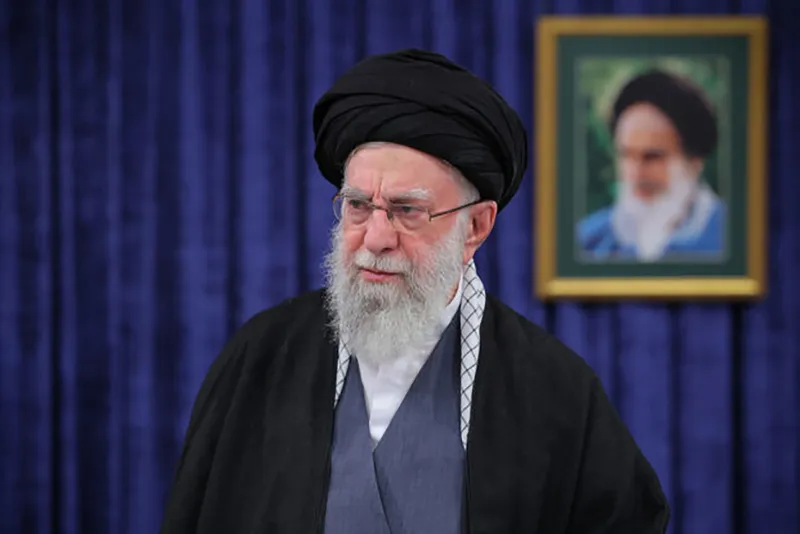
Iran’s Supreme Leader Ali Khamenei addresses the public on the occasion of the 47th anniversary of the Iranian Revolution, according to Iranian state television in Tehran, Iran on February 9, 2026. (Photo by Iranian Leader Press Office/Anadolu via Getty Images) Anadolu
We don’t know the intelligence or what is going on clandestinely to see that such a risky operation has any chance of long-term success. Without a solid plan, such a move would seem to only invite more risk.
And once again, obtaining this level of transformation largely via airpower is a highly questionable proposition, at best. There is absolutely no appetite domestically to engage in another ground war in the Middle East, so that option is a non-starter, which is a good thing, as America’s track record in this regard is terrible.
Finally, as we have mentioned before, the U.S. military has a lot of combat capability now in the region, and more that can strike from afar, but there doesn’t appear to be enough to sustain a long campaign with a wider set of objectives. So this may limit what can be achieved.
That brings us to the next question.
What will Israel’s role be?
I think it’s safe to assume that Israel will be involved deeply in any major military operation the United States executes against Iran. Frankly, for any sustained campaign, based on the airpower capabilities in the region, America will need Israel’s help, and for that to be en masse.
Israel brings hundreds of fighter aircraft, unique munitions, and more to the fight. Supported fully by America’s tanker force, Israel’s tactical airpower will be far more effective than it was during the 12 Day War less than a year ago. Combining forces fully to achieve a common outcome is more powerful than the sum of its parts in this case.
Beyond traditional airpower, leveraging Israel’s intelligence would be critical. Traditional intelligence products from Israel will be key in achieving any outcome faster in an air war. The same can be said for the flow of U.S. information in Israel’s direction. Still, operating seamlessly is very tough in such a complex, long-range combat scenario. While Israel and the United States have repeatedly trained on smaller scales for this type of operation, doing it on a massive scale is a different story. How the tasking orders would be assigned and deconflicted would be very interesting to watch.
An Israeli Air Force F-15 Strike Eagle moves into formation with a U.S. Air Force B-1B Lancer over Israel as part of a presence patrol above the U.S. Central Command’s area of responsibility Oct. 30, 2021. Multiple partner nations’ fighter aircraft accompanied the B-1B Lancer at different points during the flight, which flew over the Gulf of Aden, Bab el-Mandeb Strait, Red Sea, Suez Canal, Arabian Gulf, Strait of Hormuz and the Gulf of Oman before departing the region. (U.S. Air Force photo by Senior Airman Jerreht Harris) Staff Sgt. Jerreht Harris
But even above the traditional combat power and intelligence Israel can offer such a mission, Israel’s deep presence on the ground in Iran will be arguably of the greatest value. Nobody is anywhere as deeply embedded inside Iran as Israel. And this will impact the full gamut of potential operational scenarios.
Case in point is the Mossad’s novel operation to take out Iran’s air defenses in key areas using operatives on the ground equipped with one-way attack drones and loitering anti-tank guided missiles. While suppression and destruction of enemy air defenses is largely thought to be relegated to the role of airpower, it is anything but limited to just this domain. And Israel proved this on an unprecedented level in the opening stages of the air war in June. Those near-field attacks on Iranian air defense sites allowed standoff munitions, drones, and eventually manned aircraft to make it to their targets, firmly setting the momentum in Israel’s favor during the opening parts of the campaign. It wouldn’t be that surprising if this is repeated, at least in some altered fashion, during whatever could happen in the coming days.
תיעוד מטורף: הכוח המבצעי של המוסד בשטח איראן בעת פריסת מערכות תקיפה מדויקות שנועדו להשמיד את מערכות ההגנה האווירית האיראנית pic.twitter.com/X3Xtcc5JJ9
— איתי בלומנטל 🇮🇱 Itay Blumental (@ItayBlumental) June 13, 2025
Mossad operatives on the ground also worked to assassinate the cream of Iran’s nuclear scientist corps during the operation, mainly using drones launched from near their targets. We would likely see a similar operation take place against military and regime leadership in the opening stages of the looming conflict, if it comes to pass. There are no indications that the United States has anywhere near this capability working inside Iran.
This morning, Israel launched a strike to Iran and killed Iranian nuclear scientist and military head, IIRG, Hossein Salami.
Look at the place of impact. It was exactly the bedroom of the man. How did they conduct this strike such that it only affected just his flat, without any… pic.twitter.com/UNLEVUCf0G
— Apostle Michael Olowookere (@myk_da_preacher) June 13, 2025
Israel continues targeting Iran’s nuclear scientists: Israeli media report that the strike on a residential apartment in Tehran moments ago aimed to assassinate an Iranian nuclear scientist. pic.twitter.com/oRTv2zcj4w
As we have discussed for years, Israel would likely be willing to put special operations units on the ground to seize and destroy absolutely critical hardened targets, such as nuclear sites or possibly individuals hidden within regime bunkers, that are not capable of being destroyed from the air. The United States could as well, but the political risks would be far higher if such an operation went awry.
Finally, it is worth noting that going to war alongside Israel against Iran brings additional diplomatic risks in the region, although these have waned in recent years as Arab countries have become far less hostile to the Jewish State. These Arab states also could see a massive benefit from a successful campaign that rejiggers the status quo in the region and ends Iran’s troublesome influence throughout it. Still, the economic disruption alone could be large, especially if the war carries and if Iran actively works to deny access to the Persian Gulf.
Real dangers
We have not seen modern Iran fight for its very life against the United States or even Israel. On paper, Iran can do immense damage to the region. Yes, it can close and mine the Strait of Hormuz, causing massive repercussions that could last long after the war ends, a possibility which you can read about here. This is a well-understood danger. But above even that, Iran has an absolutely huge inventory of standoff weapons — specifically cruise missiles, long-range one-way attack drones, and most importantly, ballistic missiles. On the latter, there is a broad misconception that Israel wiped out Iran’s ballistic missile capabilities. This couldn’t be further from the truth.
During the 12 Day War, Israel was concerned with Iran’s long-range ballistic missiles — MRBMs and IRBMs. These are also the easiest to find, fix, and destroy. They are large and their launchers are vulnerable because of it, especially during the pre-launch fueling stage. The location of the storage areas for these missiles is well known, including the missile cave complexes, some of which have the ability to launch the missiles through apertures in launch room ceilings. By hitting the entry and exit points of these facilities, these weapons are not destroyed but they are trapped inside.
In addition, Israel focused their interdiction ‘missile hunting’ efforts on these long-range weapons that threaten its homeland. They were also the weapons that had to be exposed as they were employed in retaliatory strikes during the war. The shorter-range stuff didn’t need to be as it was largely not used.
To make this clear, Iran’s far more plentiful short-range ballistic missiles that threaten American bases in Gulf Arab allied states were not heavily targeted. The same can be said for the shorter-range drones and cruise missiles.
So no, these capabilities were not knocked out by any means, and they are also by far the easiest for Iran to disperse and hide. This makes hunting for them from the air extremely problematic. This is especially true when Iran enters into a combat state, where it distributes these missiles, which are largely loaded onto common truck platforms, into population centers and hidden under pretty much anything. They can also shoot and scoot much faster than their long-range counterparts.
The IRGC-N took a massive delivery of anti ship missiles for coastal defense
Note the dual tube launcher in the pics, which we’ve never seen before. Seems to be a new anti ship new cruise missile. Sadly no information was given besides pics
— Iran Defense commentary (unofficial) (@IranDefense) August 9, 2024
With all of America’s intelligence capabilities, finding and destroying these weapons from the air will be extremely challenging. Even the relatively meager arsenal belonging to Yemen’s Houthis proved vexing for the U.S. military after many months of sustained ‘hunting.’ The Houthis continued to get off successful coastal launches throughout these operations. The scale of the Iranian threat is exponentially larger, and the country has more complex terrain to hide these weapons.
Iran’s shorter-range standoff weapons number in the thousands. They have the ability to saturate the best defenses on earth and lay waste to prized targets across the Persian Gulf and the Arabian Sea, and deeper into allied Arab nations. This not only makes nearby basing of U.S. aircraft and personnel problematic, but it greatly increases the cost of any war the United States could execute against Iran.
We have seen what it took to defend against just one volley of Iranian short-range ballistic missiles. It resulted in the largest volley of Patriot interceptors in history. Even that defensive action wasn’t entirely successful at rebuffing the attack, let alone repeated ones that would include layers of drones, as well as cruise and ballistic missiles.
Footage of a US/Qatari PATRIOT surface to air missile system conducting a large ballistic missile engagement over Al-Udeid this evening, salvoing out dozens of PAC-3 interceptors at incoming Iranian ballistic missiles. pic.twitter.com/a7OHrs9svr
There is also a risk to American warships, even those that are operating far out to sea. Iran has shown it has the ability to launch long-range anti-ship weaponry not just from its coasts and warships, but from unassuming seaborne platforms, including using containerized missiles and drones. The farther U.S. Navy vessels have to operate from Iranian territory also means their missiles won’t be able to penetrate as far into the country. A carrier’s air wing will need additional tanking support to get to its targets, and sortie rates will be lowered.
These capabilities, along with the possibility of closing the Strait of Hormuz, drastically increase the chances of expanding the conflict by pulling Arab countries into it, as well, which would complicate, not help the cause, at least in many respects.
Iran knows full well where American aircraft are currently based, and they will throw everything they have at these sites. This includes America’s sprawling airbase in Jordan that is packed with tactical airpower. They know what defenses are there and have an understanding of what it will take to overwhelm them if they get the chance to do so. So the idea that we could not see mass losses of aircraft and other materiel, and even lives, on the ground, even when striking from afar, is not reality.
The same can be said about an air war. The U.S. has the most advanced air combat capabilities on earth, but ‘shit happens,’ especially during war. Even the Houthis nearly downed U.S. fighter aircraft optimized to destroy enemy air defenses. But regardless of defenses and the state of Iran’s air defense overlay, putting Americans over Iran, and repeatedly over days and weeks, is a risk. Aircraft can malfunction and mistakes can be made. When that happens, it will require even more risk to push combat search and rescue assets into the area to try and recover the crew. In other words, regardless of America’s outstanding air warfare capabilities, there is still a real risk involved in any operation over Iran.
A U.S. Air Force F-16 Fighting Falcon conducts night time air refueling operations above the U.S. Central Command area of responsibility, June 26, 2023. The KC-135 Stratotanker allows air assets to significantly increase flight time and decrease time spent on the ground. (U.S. Air Force photo by Senior Airman Jacob Cabanero) Senior Airman Jacob Cabanero
Finally, if Iran is really backed into a corner, and especially if its most extremist elements remain in play, it could resort to weapons of mass destruction. Specifically, chemical weapons and rudimentary radiological ones (dirty bombs) could be used in a dying gasp of the regime. If they did this, it would mean a certain end for the sitting power structure in the country, but if that is going to happen anyway, they could lash out in horrible ways. There is debate as to whether Iran would, or even could, actually do this, but historically, the regime in Tehran is no stranger to the use of chemical weapons.
Defending Israel again
Iran did not run out of long-range ballistic missiles during the 12 Day War, either. They ran out of ones available for launch, and they likely saw real degradation in their ability to launch those accessible due to Israel’s interdiction efforts and disarray in Iranian command and control after nearly two weeks of being bombarded. Since that war, Iran has been pumping out more of these missiles at a high rate, despite Israel’s attacks on missile production-related targets. Some of these weapons are quite advanced, proving their ability to penetrate the IDF’s multi-tier integrated air defense system, the most advanced one on Earth, an air defense capability you can read all about here.
The Israel Missile Defense Organization (IMDO) of the Directorate of Defense Research and Development (DDR&D) and the U.S. Missile Defense Agency (MDA) completed a successful flight test campaign with the Arrow-3 Interceptor missile. (MDA) Missile Defense Agency
If Iran was truly fighting for its life and knowing the end could be near, how many missiles will it send at Israel, and how many interceptors are available to defend against those barrages? Iran also has become increasingly savvy on what tactics to employ and where in order to overwhelm Israel’s defenses. While targeting has focused, at least to a degree, on military and governmental targets, if this was an all-out conflict, it’s likely Iran would just concentrate on population centers with whatever it has to throw at the cause.
The U.S. stockpile of advanced munitions is already a real concern after multiple campaigns to defend Israel, the long and violent standoff in the Red Sea, and the war in Ukraine. This is especially true for its more advanced interceptors, which are also in extreme demand among allies globally. This is all happening as the threat from China is growing more concerning by the day. A war in the Pacific will consume stocks of these weapons at a vastly higher rate than anything we have seen before. If those magazines run dry, it could mean the difference between winning and losing in that critical theater. And remember, these weapons take years to produce and cost many millions of dollars each. So it’s not like you can just say, ‘we’ll buy more.’ Of course, we will, but we won’t get those weapons for years, even as expansion of production is now underway across the DoW’s munitions portfolio.
Lt. Gen. Patrick Frank, U.S. Army Central Commanding General, meets with a Terminal High Altitude Area Defense (THAAD) crew next to a launcher emplaced and prepared to launch interceptors to counter ballistic missile threats at an undisclosed location in the CENTCOM Area of Operations, Dec. 12, 2023. THAAD is an important component of the integrated air and missile defense network that defends critical assets in the U.S. Central Command area of responsibility amidst needs for increased force protection. (U.S. Army Courtesy Photo) Capt. Duy Nguyen
So the cost of taking on Iran is not just in money and assets, and especially blood, it’s the opportunity cost of expending precious weapons in a war of choice that would be essential in a war of necessity that could erupt at any time.
Wild cards
There are capabilities and war plans we know nothing about. It may be possible that the United States thinks it can break Iran’s command and control capabilities so quickly that it can preempt many of its most dangerous weapons from being used in large quantities. This could come in the form of cyber attacks, other forms of espionage, electronic warfare, and exotic weaponry — and more likely a combination of the above. It could also be the orchestration of an insider coup-like scenario.
There is also the possibility that the United States thinks Iran’s military apparatus would simply collapse under a full combined aerial assault by the U.S. and Israel. A possible decapitation of the regime is another factor here.
If this is the case, and Iran’s warfighting capabilities can be left largely unused, then the risk equation changes. But this is a massive bet to make, and just how certain whatever measures are used will have the exact crippling effects intended could mean the difference between go and no-go for a major campaign.
The guided-missile destroyer USS Arleigh Burke (DDG 51) launches Tomahawk cruise missiles to conduct strikes against ISIL targets. Arleigh Burke is deployed in the U.S. 5th Fleet area of responsibility supporting maritime security operations and theater security cooperation efforts. (U.S. Navy photo by Mass Communication Specialist 2nd Class Carlos M. Vazquez II/Released) Chief Petty Officer Carlos Vazquez II
In other words, we really don’t know what the United States and Israel still have up their sleeves. And maybe they have nothing that would cause such a dramatic effect at all. Instead, hitting them traditionally fast and hard, along with cyber, espionage, electronic warfare, and everything else, will be needed to erode Iran’s ability to fight back over time.
Regardless, the United States and Israel have prepared for exactly this eventuality for decades, so there certainly are bound to be some surprises. Of what magnitude is the question.
What if a deal is made, but Israel doesn’t think it’s good enough?
It’s possible that the game tree could expand in such a way that the United States makes a nuclear deal with Iran, but it does not address the long-range missile threat, or even the nuclear program, to a sufficient degree in Israel’s eyes. If this occurs, there is still the chance that Israel goes it alone and tries to do as much damage as possible to both of these elements. In some ways, this could be played to America’s advantage as it could deny being involved in the conflict and work to see if the deal sticks even after Israel’s kinetic action. In this case, American resources would be used to defend Israel, but not participate in the attack.
This may sound far-fetched, but it really isn’t an impossibility. Especially if Trump realizes how much of a commitment achieving something meaningful via an air campaign could become, as well as the risks of what comes after on the ground in Iran.
Whether a nuclear deal would even survive such a situation is unclear, but it’s possible.
Why now?
In the end, these are the fundamental questions Trump has to be asking himself and his aides: Is going to war with Iran really worth the risks, both the known ones and unknown ones, and what is the goal in doing so? Is that goal readily attainable and at what cost?
These questions also bleed directly into the political arena. Trump claimed to be the President that would get America out of wars, not start them, and especially ones that seem like they could spiral out of control relatively easily, resulting in much longer-term commitments. While he has had some stunningly successful military victories as of late, and there is a danger for politicians to think it will always turn out a similar way, that can change very quickly. If America wakes up to seeing a U.S. pilot being dragged through the streets of Tehran, any support for this conflict could quickly evaporate.
Above all else, the question has to be asked, why now? What has prompted the idea of declaring war on Iran at this moment? Yes, the protests and the brutal deaths of thousands at the hands of the regime seemed to have moved Trump, but that was subsequently used as a pretext for nuclear negotiations, not to correct human rights abuses.
President Donald J. Trump and First Lady Melania Trump receive honors from rainbow sideboys aboard the Nimitz-class aircraft carrier USS George H. W. Bush (CVN 77) during a Titans of the Sea Presidential Review Oct. 5, 2025. (U.S. Navy photo by Mass Communication Specialist 2nd Class Pierce Luck) Petty Officer 2nd Class Pierce Luck
In addition, Trump has declared repeatedly that he destroyed Iran’s nuclear program after the B-2 strikes in June. So why, just eight months after that action took place, is the United States about to go all-in against Iran over its nuclear program? We have heard anecdotes about possible threats of Iran starting the nuclear program back up, the threat posed by the enriched uranium they already have, and the possibility that they could develop new, longer-range missiles that could hit the U.S. one day, maybe. Yet nothing has been presented in a concrete manner as to why doing this right now is essential. It doesn’t match Trump’s long-standing political rhetoric at all.
There is obviously much the public doesn’t know, but the risk-reward equation seems like a uniquely puzzling one with this crisis, at least at this time.
If Iran doesn’t make a deal, it seems clear that Trump has put himself in a position where he will either have his bluff called or he will need to commit to an air war against Iran.
What happens from that historic split in the road is really anyone’s guess.
A small hilltop town in Italy is home to stunning panoramic views and a wealth of history – but many tourists are flocking to it for something quite different
(Image: Universal Images Group via Getty Images)
For those who want a challenge, there’s an alleyway is a gorgeous town in Italy that stands at just 43 centimetres wide – but amazingly that’s not the world’s narrowest.
The incredibly slender street is in Ripatransone, a small village in the province of Ascoli Piceno in the Marche region in central Italy, known for its breathtaking views and medieval, renaissance and baroque style buildings.
And, of course, famous for the incredibly narrow alleyway at Via Francesco Lunerti, 14 which has gained significant notoriety as a result of social media and has people flock from far and wide to see it. The narrowest part is only 38 centimetres wide before it widens, funnel-like, to 43 centimetres.
The alleyway received official certification from the local Tourism Office and has a dedicated tourism sign so visitors can find it easily, near Piazza XX Settembre and Via Margherita.
Originally a service passage between two medieval houses, over time planning modernisation meant the space between the properties was reduced as a result of building expansion – paving the way for it to become Ripatransone’s main attraction.
However, the beautiful village is more than just a small walkway. A hilltop village situated between the valleys of the Menocchia torrent and the Tesino rover, Ripatransone has a stunning panoramic view of its surrounding landscape and boasts a rich historical and artistic heritage.
As one of the oldest and most important centres in the province of Ascoli Piceno, the historic centre is medieval in its layout with buildings from 19th Century and noble palaces which run lengthwise from north to south for about one kilometre.
The neighbourhoods sport a myriad of narrow streets and alleys which open out onto small squares with characteristic nooks and crannies.
Of course, none of the alleys are quite as narrow as the 43 centimetres-wide space which actually took the title as Italy’s narrowest from Via Baciadonne in Citta della Pieve in the province of Perugia in central Italy which stands at 53 centimetres. It was given the title in 1968 which Professor Antonion Giannetti surveyed all the alleyways in the historic centre.
However, despite its incredibly slight size, the alley in Ripatransone does not hold the world record for the narrowest. That belongs to an alleyway in the hilltop town of Gassin in the heart of the Saint-Tropez peninsula in southeastern France.
At its narrowest point, that alleyway is only 29 centimetres wide and National Geographic has dubbed it the narrowest alley in the world. As for streets officially registered in the land registry, the narrowest in the world is Spreuerhofstraße in Germany which sits at 31 centimetres wide.
Ensure our latest stories always appear at the top of your Google Search by making us a Preferred Source. Click here to activate or add us as your Preferred Source in your Google search settings.
Fronted by Olivia Attwood, the culinary programme follows ten ambitious chefs working in an upmarket Barcelona restaurant led by award-winning cook Jean-Christophe Novelli.
The determined group are challenged with operating the restaurant daily in a bid to impress Jean-Christophe.
But it’s not just their kitchen exploits that take centre stage, cameras also track the young competitors on evenings out as well as during their leisure time.
Wednesday’s (February 25) episode saw unexpected drama unfolding between the chefs as Seren and Kat both developed feelings for the same bloke, reports the Daily Star.
Whilst visiting a local Spanish bar, Seren confided in her close mates that she fancies Djordje but there’s a complication. She said: “I think he’s very fit. However, he likes Kat.”
The fashion marketing student went on to disclose that she had noticed chemistry developing between Kat and Djordje when they worked on the pastry section together during the day.
Seren later acknowledged her genuine feelings in the confessional room, saying: “I would love to tell you that I’m deeply happy for them, but do I wish it was me? Possibly.”
The Buckinghamshire chef had already revealed her feelings to Djordje the previous night, but that didn’t prevent Kat from making her own advance.
Kat even recognised that her connection with Djordje could create a rift with her co-star. “Seren told Djordje last night that she liked him,” she said.
“So I am feeling a little bit awkward. I don’t want to be stepping on toes.”
Despite her reservations, Kat and Djordje subsequently enjoyed a flirtatious conversation and chose to leave together.
Wakefield-born Djordje then discussed their budding connection, revealing: “I had an amazing chat with Kat tonight, it went exactly as I planned.”
For the latest showbiz, TV, movie and streaming news, go to the new **Everything Gossip** website.
Yet he made it clear she wasn’t his sole focus. “But you know me, my doors are always still open. I’m here to have fun in Barcelona,” the chef remarked.
Meanwhile, Seren remained optimistic about her chances with the tattooed chef. She confided to producers: “It’s not over yet.”
A preview for episode three hints at the fallout from Kat and Djordje’s evening together, though viewers will need to tune in to discover whether Seren will make her move to gain the advantage.
The Heat continues on ITV2 and ITVX tomorrow at 9pm
Ensure our latest headlines always appear at the top of your Google Search by making us a Preferred Source.Click here to activateor add us as your Preferred Source in your Google search settings.
It will be two Marmonte League baseball rivals matching up in the Easton tournament championship game at 6:30 p.m. Friday at Birmingham.
Pitchers Connor Sahagan and Gavin Geyer combined on a no-hitter in Oaks Christian’s 2-1 win over Bishop Alemany. Luke Puls hit two doubles, including a two-run double in the fifth inning. Geyer struck out five and retired all nine batters in order in three innings of relief.
Oaks Christian (4-0) will play Calabasas (4-0), a 4-2 winner over St. Francis. Auron Blackledge had three hits and Michael Morales got the save with two scoreless innings of relief. Jayden Singer had two hits. Lucas Becerra had three hits for St. Francis.
Chaparral 19, Knight 4: Dean Mariani contributed four hits and three RBIs while Griffin Fien had three hits and three RBIs.
Camarillo 3, Valencia 1: Ryan Coyne gave up two hits in a complete-game performance for Camarillo.
Corona Santiago 3, Los Alamitos 2: Striker Pence, Johnny Thorton and Josh Angulo each had two hits for Santiago. Jerry Garfiaz homered for Los Alamitos.
El Camino Real 3, Rio Mesa 2: Cameron Rosenberg threw his first complete game in varsity baseball, striking out five for the Royals. Football standout Shane Bogacz had a two-run triple.
Granada Hills 14, Ventura 3: Michael Quintana had two hits and three RBIs for the Highlanders.
San Marcos 7, Simi Valley 2: Mason Crang hit a three-run home run in the first inning for San Marcos.
Birmingham 4, Agoura 3: The Patriots rallied for two runs in the bottom of the seventh. Ethan Dalumpines had the walk-off hit. Carlos Acuna struck out seven and gave up two hits in six innings.
Verdugo Hills 2, Garfield 0: Michael Wong had a two-run single while Jack Iafrate and Jared Smith combined on a three-hit shutout.
Paraclete 10, Cleveland 3: Christian Saenz had three hits and four RBIs while Gabe Villanueva went four for four to lead Paraclete.
Quartz Hill 18, Chatsworth 3: Seth Humphreys had two doubles, a single and three RBIs for Quartz Hill.
Thousand Oaks 2, Mira Costa 1: Dane Bacon threw three innings of scoreless relief to hand a rare defeat to Mira Costa ace Garrett Jacobs, who struck out 10 and walked none in six innings.
Fullerton 7, Northwood 1: Sammy Chacon finished with three hits for 3-0 Fullerton.
Hart 7, Buena 6: Jaiden Chan contributed three hits for Hart.
Taft 10, Palisades 8: The Toreadors scored six runs in the seventh, then hung on for the win. Josh Friedman had two hits and two RBIs.
South Korean President Lee Jae Myung speaks during a Cabinet meeting at the presidential office Cheong Wa Dae in Seoul, South Korea, 10 February 2026. File. Photo by YONHAP / EPA
Feb. 25 (Asia Today) — President Lee Jae-myung on Tuesday promoted expanded financial rewards for whistleblowers who report stock price manipulation, saying payouts could reach tens or even hundreds of billions of won.
“Now, reporting stock manipulation can earn you tens of billions or even hundreds of billions of won in rewards,” Lee wrote on social media. “It is certainly easier than winning the lottery to change your life.”
Lee urged individuals to refrain from engaging in stock manipulation, warning that such conduct would lead to severe consequences. He added that even participants in manipulation schemes could receive reduced punishment and financial rewards if they come forward.
The president shared a post by Financial Services Commission Chair Lee Won-eun outlining plans to raise whistleblower rewards to as much as 30% of illicit gains recovered.
A day earlier at a Cabinet meeting, Lee made similar remarks about rewards for reporting collusion, telling Fair Trade Commission Chair Joo Byung-ki that generous payouts could serve as a deterrent.
The administration has said it aims to strengthen enforcement against unfair market practices by increasing incentives for insiders to report wrongdoing.
China officially announced in late January 2026 its refusal to join the Board of Peace at the “International Peace Council for the Administration of the Gaza Strip.” This council, proposed by the United States under the leadership of Donald Trump, is a new international entity launched by the US president as an alternative to traditional UN mechanisms. China confirmed in January 2026 that it had received a formal invitation from the United States to join the “International Peace Council” for Gaza, launched by President “Trump” as a global initiative to resolve the conflict. China’s stance toward this council is characterized by caution and a demand for further details while adhering to its established principles.
The reasons for China’s rejection of the US-sponsored peace council for the Gaza Strip are based on several strategic and legal justifications, the most important of which is the marginalization of the UN’s role by the International Peace Council, sponsored by Washington. Beijing believes that the council seeks to replace the role of the United Nations and the Security Council, and it affirms its commitment to an international system centered on the United Nations and based on international law. Regarding China’s criticism of the lack of Palestinian representation within the International Peace Council, China criticized the Council’s charter for failing to mention the Palestinians or respect their will, asserting that any arrangements for the future of Gaza must be based on the principle of “Palestinians governing Palestine.” Furthermore, (China’s concerns about “American dominance” over the International Peace Council): Beijing warned that the Council could be a tool for Washington to impose “control” or establish military bases in the Gaza envelope area under the guise of reconstruction. Also, (China’s rejection of the financial membership criteria within the International Peace Council): The Council requires substantial financial contributions (up to one billion dollars for permanent membership), which China views as transforming peace into a “deal” driven by financial power rather than the legal rights of the Palestinians.
At the same time, China is demanding structural clarity regarding the resolution establishing the International Peace Council and its actual feasibility. China, through its Permanent Representative to the United Nations, “Fu Cong,” expressed concern that the resolution establishing the council lacks essential details, particularly concerning its structure, composition, and terms of reference, as well as the nature of the proposed “international stabilization force” in Gaza. Therefore, Beijing insisted on the UN’s authority in this matter, maintaining that any future arrangements for Gaza must be made under the auspices of UN Security Council resolutions and with broad participation including Palestinian parties and Arab states. China rejected any “closed” or “unilateral” mechanisms that could marginalize the UN’s role. Furthermore, China categorically emphasized the principle of “Palestinian governance of Gaza,” considering the Gaza Strip an integral part of Palestinian territory. China rejects any plans aimed at imposing external trusteeship or control over its administration, affirming that the principle of “Palestinians governing Palestine” is the foundation for any post-conflict governance. China has supported Arab initiatives on post-war management of the Gaza Strip, explicitly endorsing reconstruction and peace plans proposed by Egypt and other Arab states, deeming them consistent with the aspirations of the Palestinian people. China firmly adheres to the two-state solution, maintaining that any peace efforts must ultimately lead to a two-state solution and the establishment of an independent Palestinian state within the 1967 borders, with East Jerusalem as its capital.
Therefore, the motives behind China’s rejection of the American request to join the International Peace Council on Gaza can be summarized as follows: China’s insistence on upholding the international legitimacy of the United Nations and its deep suspicions regarding the security and political objectives behind the council’s formation and Washington’s enthusiasm for it. The main reasons for China’s rejection of the International Peace Council on Gaza are China’s desire to protect the UN system. Beijing believes the proposed council seeks to replace or marginalize the role of the United Nations. The Chinese Foreign Ministry affirmed its commitment to an international system centered on the United Nations and based on its Charter and international law, rejecting any “alternative frameworks” outside of this scope. (Ambiguity in structure and tasks): The Chinese representative to the United Nations, “Fu Cong,” criticized the draft resolution concerning the council (Resolution 2803) for its lack of clear details regarding its structure, composition, and criteria for participation, describing it as “worrying.” In addition to China’s security concerns regarding the Gaza issue: Chinese intelligence reports indicate that one of the hidden objectives of the Washington-sponsored International Peace Council in Gaza is to destroy Hamas tunnels under the guise of “reconstruction,” which Beijing considers a “provocative and extremely dangerous” foreign military intervention. Furthermore, (China rejects American unilateralism in dealing with regional and global issues): China views the American International Peace Council initiative in Gaza as part of Washington’s attempts to impose “unilateralism” and exacerbate confrontation between blocs, which contradicts the “Global Governance Initiative” championed by Chinese President “Xi Jinping. ”.
Herein lies China’s alternative vision to the American initiative to form the International Peace Council: China, in its alternative to joining the Council, calls for the activation of the two-state solution as the only way to guarantee lasting peace in the Middle East and the implementation of the Beijing Declaration to support Palestinian national unity and strengthen the legitimacy of the Palestinian state. (UN Reform): Instead of creating parallel initiatives, Beijing calls for making the Security Council more responsive to the expectations of the world’s people on its 80th anniversary.
China proposes a different vision for managing the Gaza and Middle East issues, based on the following pillars: (Security Council Authority): This involves full adherence to UN Security Council resolutions as the sole basis for international legitimacy in Gaza. The Chinese call for (the principle of self-governance in the Gaza Strip): This involves China’s insistence that post-war administration of Gaza must be in the hands of the Palestinians themselves, rejecting any plans for forced displacement or external trusteeship. The Chinese call for a broad international peace conference on Gaza: Beijing calls for a more inclusive and credible international peace conference under UN auspices, with the aim of concretely implementing the two-state solution within a defined timeframe. With China prioritizing land routes over sea routes or temporary docks, as proposed by the US, China rejects maritime alternatives or “temporary docks” as substitutes for land corridors, viewing them as attempts to circumvent international obligations regarding humanitarian relief in the Gaza Strip.
From the preceding analysis, we understand that China considers itself a “positive stabilizing force” seeking to end the ongoing conflict in the Gaza Strip through comprehensive dialogue, in contrast to what it describes as the “unilateral” US approach, which it believes could deepen regional divisions. In short, while China does not reject participation in international dialogue on Gaza, it stipulates that the international peace council, sponsored by Washington, should be an instrument for strengthening international legitimacy, not a replacement for it, while preserving full Palestinian sovereignty over Gaza.
Some would argue that Downton failed to steal the crown of this classic.
Ketsuda Phoutinane Spare Time Content Editor
00:01, 26 Feb 2026
Downton Abbey is beloved for its opulent visuals and costumes(Image: ITV)
Some things are simply unbeatable. A classic period drama, one as critically acclaimed as it was popular, remains regarded as amongst the finest ever produced — Upstairs, Downstairs.
The family saga charted the lives of the aristocratic Bellamy family and their staff in the early 1900s. Spanning three decades, the programme’s narrative stretched both World Wars and the jazz age through to the Great Depression.
As the quintessential period drama of its era, comparisons between Upstairs, Downstairs and Downton Abbey are inevitable. The BAFTA-winning ITV series established the benchmark for costume dramas with storylines that mirror its successor.
Upstairs, Downstairs came before Downton Abbey by 50 years. Both programmes portray the lives of an aristocratic family and their servants against a backdrop of social and political upheaval in the early 20th century.
They diverge in some major ways though, with the most obvious being Downton Abbey’s production values. The 1970s show looks more understated, a quality that strikes viewers as either nostalgic of off-putting.
Downton’s location is fundamentally more grand. The Bellamy family inhabit a London townhouse, worlds apart from the Crawley family’s lavish country manor which became a character in its own right.
Whilst Downton was famed for its visual spectacle, a share of the audience felt the series occasionally strayed into the melodramatic. In contrast, Upstairs, Downstairs has been likened to theatre due to its more grounded visuals and plot lines.
Fans of both period dramas have invariably come together online to compare the shows and name their favourite.
One person sparked a debate on a Downton Abbey forum by asking: “If you have seen both shows, which show do you think is better?” to which one person simply responded: “Upstairs Downstairs without question.”
“The original Upstairs Downstairs is one of the finest TV programmes ever made,” argued another. “Downton Abbey is a jumped up soap opera.”
Of course it would be remiss not to mention the BBC’s reboot of Upstairs, Downstairs in the 2010s, but that’s a whole ‘nother debate.
Mohamed Salah would be happy to stay at Liverpool until 2027, there are six Premier League clubs interested in Eintracht Frankfurt’s Nnamdi Collins, while Casemiro wants to keep playing in Europe.
Egypt forward Mohamed Salah, 33, is happy to see out the remainder of his Liverpool contract, which runs up to the end of next season, should a move to the Saudi Pro League not materialise this summer. (Football Insider), external
Manchester United‘s Brazil midfielder Casemiro, 34, wants to continue his career in Europe when his contract ends at Old Trafford in the summer, and Italy is a possible next destination. (Sun), external
German agent Volker Struth, who has worked with Florian Wirtz in the past, says he offered the Germany midfielder to RealMadrid last summer before his £116m move from Bayer Leverkusen to Liverpool. (Phrasenmaher via Mirror), external
Manchester United plan to sell Cameroon goalkeeper Andre Onana, 29, this summer, but expect to receive significantly less than the £50m they paid Inter Milan to sign him in 2023. (Talksport), external
However, Onana wants to fight to re-establish himself as Manchester United‘s number one when his loan spell at Trabzonspor finishes in May – and believes he will be given a chance to do so. (Guardian), external
A popular sun-drenched and culturally rich country has topped the poll as the place to book for Brits heading on holiday this year – but have you been?
This article contains affiliate links, we will receive a commission on any sales we generate from it. Learn more
As Brits look towards booking some summer sunshine, the UK’s top trending destination has been revealed – and it’s a sun-drenched country steeped in history just a four-hour plane ride away.
Tour operator Riviera Travel has compared bookings for January and February 2026 to last year’s and discovered the fastest-growing destination has had a 310% increase in demand.
The figures show travellers are increasingly looking beyond typical European destinations and spreading their net to the Middle East and even as far as Southeast Asia. The location with the biggest surge in demand for 2026 is Egypt.
In addition to Egypt’s mostly dry weather that sports lots of sunshine and very little rain, as one of the world’s oldest civilisations, the country has a wealth of unparalleled history.
The Ancient Egyptian civilisation – with a history spanning close to 3,000 years – left a compelling legacy in the many monuments that have stood the test of time. From the mighty pyramids to the impressive temples, sacred chambers, and treasure-filled tombs, there is an abundance of world-famous attractions for travellers to visit.
Many people take the opportunity to cruise down the world-famous Nile while holidaying in Egypt and Will Sarson, travel expert at Riviera Travel, explained why that was proving so popular for holiday makers in 2026.
He said: “Egypt’s 310% surge in interest reflects the timeless draw of the Nile, where travelling by river offers a uniquely immersive way to experience one of the world’s oldest civilisations. Ancient temples, riverside villages and fertile banks unfold gradually, creating a powerful sense of continuity between past and present.
“Time along the Nile allows for deep exploration of monumental sites such as Luxor, Karnak and the Valley of the Kings, balanced with quieter moments watching daily life along the water. The experience feels both awe-inspiring and surprisingly intimate, with history never far from view.”
The best time to visit the country is between October and April when the daytime temperatures are comfortable, and the nighttime temperatures are cool. The coolest month is January and the hottest are from June to August.
For those wanting to experience some sand and sea as well as some culture, Egypt’s beaches offer something for every kind of traveller. From the snorkel-friendly water in Hurghada and Sharm El Sheikh to the wildlife-rich bays of Marsa Alam, Egypt’s Red Sea coast lines up some of the country’s best beaches.
Those deciding to visit and stay in one place often travel to the tourist-friendly region of Sharm El Sheikh or Hurghada, which offer a wide array of child-friendly attractions and hotels.
The Mirror’s Jess Phillips was recently blown away by a visit to Egypt. “I genuinely feel as though I discovered one of Egypt’s best-kept secrets after jetting off from London Gatwick on a direct TUI flight to Marsa Alam International – the country’s first privately owned and operated international airport, which opened in 2003,” she wrote.
“Marsa Alam is a burgeoning coastal resort catering to tourists from around the world. The area is still actively developing – though that definitely doesn’t mean it’s lacking in things to do – and offers the best of both worlds: incredible beaches, perfect blue water, and the more traditional Egyptian desert experiences.”
South Korean President Lee Jae-myung speaks during the National Startup Era Strategy Meeting to discuss strategies to nurture startups at the main building of the Cheong Wa Dae presidential office in Seoul, South Korea, 30 January 2026. File. Photo by YONHAP / EPA
Feb. 25 (Asia Today) — President Lee Jae-myung on Tuesday defended his directive to review a comprehensive survey and possible sale orders for uncultivated farmland, rejecting criticism that the move amounts to communist-style policy.
Lee said on social media that some critics “misunderstand the constitutional principle of land to the tiller and talk about the Communist Party” in response to his order.
He clarified that the review does not target inherited farmland or land left uncultivated due to age or unavoidable circumstances. Instead, he said it focuses on cases in which individuals submit farming plans for speculative purposes, acquire farmland and then fail to cultivate it themselves.
Under South Korea’s Constitution and the Farmland Act, only those who intend to farm the land directly may acquire farmland. Prospective buyers must submit a farming plan detailing how they will cultivate it. If they fail to do so, authorities may issue a sale order through legal procedures.
Lee emphasized that the “land to the tiller” principle was enshrined in the Constitution under former President Syngman Rhee, who also led postwar land redistribution by acquiring land from non-farming landlords and distributing it to farmers.
“The government’s land reform based on this principle became the foundation of South Korea’s economic development,” Lee said, adding that even critics of Rhee acknowledge his achievements in land reform. “Syngman Rhee was not a communist,” he said.
At a Cabinet meeting Monday, Lee said high farmland prices are making it difficult for people seeking to return to farming or rural life.
“We need to lower the cost of returning to farming, and fundamentally that requires bringing down land prices,” he said, calling for a full-scale investigation and possible sale orders if illegal activity is found.
Lee added that soaring real estate prices are at the root of many social and economic problems in the country.
Weekly insights and analysis on the latest developments in military technology, strategy, and foreign policy.
The commander of Air Force Reserve Command (AFRC) has said that he would like to field F-15E Strike Eagle and F-15EX Eagle II combat aircraft to help the command meet its commitment to supporting the overall Air Force mission. AFRC commander Lt. Gen. John P. Healy was speaking at the Air & Space Forces Association’s annual Warfare Symposium, where TWZ is in attendance.
Headquartered at Robins Air Force Base, Georgia, the AFRC is responsible for three numbered air forces, 34 flying wings, 10 flying groups, a space wing, a cyber wing, and an intelligence, surveillance, and reconnaissance wing. It also has other subordinate units that help to accomplish its total-force missions.
Lt. Gen. John P. Healy, Chief of Air Force Reserve, speaking at the NATO Interallied Confederation of Reserve Officers (CIOR) Winter Meeting in Norfolk, Virginia, on January 28, 2026. U.S. Army Maj. Tara-Lee Gardner
Healy was addressing how AFRC is grappling with how best to contribute to the Air Force’s 10-year fighter jet plan, which calls for purchasing more F-15EXs, F-35s, and F-47s, as it aims to have nearly 1,400 combat-coded tactical aircraft in service by 2030. The commander noted that the plan is not only “pretty ambitious” but also that, while it has been submitted to Congress, it is still very much a work in progress.
Nevertheless, Healy said that, whatever happens, the Air Force’s future fighter plans will rely heavily on the AFRC. At the same time, this organization is facing upcoming combat aircraft retirements, including the A-10 attack jet, which the Air Force wants to withdraw entirely.
U.S. Air Force Capts. Andrew Glowa, lead, and William Piepenbring, both with the 74th Fighter Squadron out of Moody Air Force Base, Georgia, fly two A-10Cs over the skies of southern Georgia, August 18, 2014. U.S. Air Force photo by Staff Sgt. Jamal D. Sutter/Released Tech. Sgt. Jamal Sutter
“As the commander of Air Force Reserve Command, I am keenly aware that some of my units are scheduled to divest without any plan of recapitalization,” Healy said. “Some could say I am loud and annoying when it comes to how we can ensure that we can maintain this fighting force,” he added, noting that in certain AFRC units, 100 percent of the airmen are combat veterans, and that he wants to ensure “that talent, that experience, doesn’t walk out the door during a normal, planned divestment.”
Healy is hopeful that the historic practice of aircraft divestment without recapitalization, something he said has existed over the last 14 years, is now on the way out.
“I think we’re finally at a point where we’re putting a stop to that,” Healy said. “We’re looking at maintaining our classic associations where we have them and recapping as the active duty can. For the remaining fighter units that we have that are divesting or scheduled for divestment, our full expectation is that we’re going to recap those with new weapons systems.”
There’s no doubt that many of the AFRC’s planned divestments are badly needed, with upward of 80 percent of the command’s fleet now being considered “legacy.” Healy continued: “You know, it’s code for old. Some of these airplanes need to be divested, but we also need to ensure that we are proportionately, concurrently fielded with new equipment.”
That’s where the F-15E and F-15EX could come into play.
“For every one of these A-10 units that are going away, I’m looking at if there’s a means by which we can get an F-15 unit behind it, whether it’s a Strike Eagle or an EX.”
A U.S. Air Force F-15E Strike Eagle assigned to the 336th Expeditionary Fighter Squadron parks on the runway before a flight at Kadena Air Base, Japan, May 13, 2025. U.S. Air Force photo by Senior Airman Luis E. Rios Calderon Senior Airman Luis E. Rios Calderon
Meanwhile, Healy said he’s also “pressing hard” to ensure that ARFC units divesting from the F-16 will be backfilled with F-35 stealth jets.
“We’ve got that combat capability,” Healy added. “We’ve got that combat experience. We need to leverage that.”
The AFRC boss also made the financial case for continuing to re-equip his command’s squadrons with new (or, failing that, newer) equipment.
According to the Air Force’s own factsheet, the AFRC provides around 14 percent of the total force within the service, while consuming only around four percent of the total manpower budget.
“My job is to constantly remind the programmers and remind the chief and the secretary of the value proposition, the advantage of the Reserve, because at the end of the day, we’re providing a little bit more money that we can reinvest into other things as well.”
Healy said that, when it comes to operating the F-16, an AFRC squadron does that “$12 million cheaper than the active duty can.”
A crew chief assigned to the 482d Maintenance Squadron marshals out a 67th Fighter Squadron F-16 at Homestead Air Reserve Base, Florida, April 4, 2025. U.S. Air Force photo by Master Sgt. Lionel Castellano Master Sgt. Lionel Castellano
The savings on F-15 units would be even more compelling, Healy argued, with an AFRC Strike Eagle squadron working out as $28 million cheaper than the active-duty equivalent, or $24 million in the case of the F-15EX.
There remains a question, however, around just how feasible it might be for the ARFC to get the F-15E or F-15EX. For all their undoubted capabilities, these types are both in short supply and high demand.
Originally, the Air Force had a minimum number of 144 F-15EX aircraft to replace the F-15C/D force. Some of the Eagle units have switched to other platforms since then, but units that fly A-10s, F-16s, and even F-15Es could end up getting F-15EX if the service chooses to go such a route. It seems quite possible that further growth of the program could occur, and that would seem to be a prerequisite if the ARFC is to get the Eagle II as well.
A formation of four U.S. Air Force F-15EX jets, assigned to Eglin Air Force Base, Florida, fly over the Gulf of America, November 21, 2025. U.S. Air Force photo by Staff Sgt. Blake Wiles Staff Sgt. Blake Wiles
When it comes to the F-15E, the Air Force inventory numbers 218 aircraft, of which 119 are powered by the older F100-PW-220 turbofan engines that produce some 23,500 pounds of thrust each. The other 99 have the F100-PW-229s, each of which is rated at 29,000 pounds of thrust.
The Air Force previously aspired to retire the Dash-220-powered jets by the end of Fiscal Year 2028.
The possibility of transferring F-15Es from active-duty units to Air National Guard (or AFRC) units is something that TWZ has discussed in depth in this previous feature.
As far as the AFRC is concerned, the best chance of getting its hands on F-15Es will almost certainly be provided by the return stateside of the two squadrons of Dash-229-powered Strike Eagles currently at RAF Lakenheath in England. These are due to be replaced by F-35s in the future. For the time being, they are the only permanently forward-deployed F-15Es, which remain the service’s first choice for a wide variety of critical missions around the globe.
A U.S. Air Force F-15E from the 48th Fighter Wing, RAF Lakenheath, approaches a KC-135 Stratotanker from the 100th Air Refueling Wing during exercise Ocean Sky, over the Atlantic Ocean, October 15, 2025. U.S. Air Force photo by Airman 1st Class Chloe Masey Airman 1st Class Chloe Masey
Another option, and one we have explored in the past, would be to pass on the Dash-220-powered jets to the AFRC, and it is somewhat surprising the Air Force hasn’t floated this idea before when it has sought to offload the older, less-powerful Strike Eagles.
Asked by TWZ about the likelihood of F-15Es making their way to his command, the AFRC commander responded: “I am optimistic that we’ve at least got people listening to the value that we provide, the combat capability we provide, the experience that we provide. We’ve proven it over and over again. We’re efficient, we’re experienced, we’re 100 percent accessible as a reserve force, and we’re lethal in all these mission sets. I think our message is sounding in a positive way with senior leadership within the Air Force. I’m not going to cash the check yet, but I’m optimistic about our future in terms of recapitalizing some of our units.”
Many of the savings that the AFRC makes are a result of the efficiencies that are baked into its ‘business’ practices. Of the 67,000 airmen that make up the command, 14,000 are full-timers.
“Those full-timers are the ones that keep the lights on day-to-day,” Healy continued. Our business model is such that a typical unit will have 25 percent full-timers, and they run that unit for 28 days of the month. It’s only that one weekend a month that we’re at 100 percent — full strength. So those cost savings, right there, are what allow us to realize benefits. It adds up when we start putting it into big numbers like that.”
Whether examples of the F-15E Strike Eagle or F-15EX Eagle II end up on Air Force Reserve Command ramps remains to be seen, but in Lt. Gen. John P. Healy, that component has a strong advocate for making that happen.
ALL Saints star Melanie Blatt says taking part in the Strictly Come Dancing Christmas special stripped away her confidence.
The 1990s girl group singer, 50, said she did not feel comfortable in the flowing yellow dress she wore, which she said made her “look like custard”.
Sign up for the Showbiz newsletter
Thank you!
Melanie Blatt said the flowing yellow dress she wore on Strictly made her ‘look like custard’Credit: BBCMel with her dance partner Kai WiddringtonCredit: PA
Speaking to Good Housekeeping UK she said: “I felt extremely vulnerable.
“It’s taken me 50 years to feel as good as I have ever felt about myself and Strictly stripped it away from me. Nothing dodgy went on — I think they’re on their best behaviour — but I just didn’t feel comfortable in a dress.”
Mum Mel and her professional dance partner Kai Widdrington finished fifth out of six couples after performing an American smooth in the telly extravaganza.
It was won by TV host Scarlett Moffatt and Vito Coppola, who got a perfect 40 score for their cha-cha-cha.
Despite finishing second from bottom, Mel and Kai scored 36 out of 40 and she was hailed “fabulous” by judges Shirley Ballas and Anton Du Beke.
Mel had been tipped to take part in the full series this autumn but her comments suggest there is no way back.
Yet following her Christmas Day dance on the BBC One show, watched by 7.75million at home, Mel told host Tess Daly: “I really enjoyed it.
Mel in her All Saints heyday (L-R) Nicole Appleton, Shaznay Lewis, Natalie Appleton, and MelCredit: Getty
In a telling remark, she added: “It’s been amazing yet challenging, getting out of my comfort zone, having to wear a dress, having to look like custard . . . all of these things.”
A source insisted that Mel had taken her own dress which was “styled and adjusted” by the Strictly costume team to her specifications.
They added: “Strictly would never make anyone wear something they felt uncomfortable in.”
Mel, who had five No1 singles with All Saints, revealed last year that she was serving burgers at a North London boozer.
She is no longer in the pub but wants to start a new career in the food industry.
Mel, who performed in All Saints with Shaznay Lewis and sisters Nicole and Natalie Appleton said: “The main thing I want from life is peace and happiness.
“My dream is to do a cookery book or have my own cookery programme, something like ‘Cheeses of the World’. I will make it happen.”
Mel’s full interview can be read now in April’s Good Housekeeping.
All Saints singer Melanie Blatt revealed that Strictly ‘stripped away’ years of confidenceCredit: Jonty Davies / Good Housekeeping UKThe Good Housekeeping cover girl was left low after the reality TV stintCredit: Jonty Davies / Good Housekeeping UKThe Good Housekeeping cover star has spoken about fame, family and being in the bandCredit: Jonty Davies / Good Housekeeping UK
Real Madrid’s win against Benfica to reach the Champions League last 16 was a “victory for everyone who stands against racism”, midfielder Aurelien Tchouameni says.
Vinicius Jr alleged he was racially abused by Benfica’s Gianluca Prestianni during the first leg, in which the Real forward scored the game’s only goal.
Prestianni – who has denied racially abusing the Brazilian – was subsequently handed a one-match ban, meaning he missed Wednesday’s return leg.
Support was shown for Vinicius by the home fans as a banner with the words “no to racism” in Spanish was displayed in the stands before kick-off.
Vinicius was again on the scoresheet, netting Real Madrid’s second goal as the Spanish side came from 1-0 down on the night to win 2-1 and book their place in the next round with a 3-1 aggregate victory.
“I think there are more important things than this match, than football,” said Tchouameni, who scored Real’s first-half equaliser.
“Vinicius keeps his confidence and he keeps focused on what he needs to do.
“I think they made the right decision by not letting the boy [Prestianni] play this match.
“Like I said, there are things more important than football and this is a victory for all of us.”
Real Madrid and England defender Trent Alexander-Arnold said Vinicius had been his usual self before the fixture, “very chilled” and “very relaxed”.
“He didn’t need to score to send a message or show his mentality,” said the former Liverpool player.
“He doesn’t need to prove anything to anyone because he’s shown time and time again how good he is.
“He steps up when we need him the most. He knows his quality and what he brings to the team.”
Known across the country simply as “The Chief”, Michael Somare was Papua New Guinea’s longest-serving leader after it became independent of Australia in 1975. He was Prime Minister for 17 years during four separate periods.
He died February 26th 2021, aged 84, after being diagnosed with late-stage pancreatic cancer and admitted to a hospital on February 19th, his daughter Betha Somare said.
“Sir Michael was a loyal husband to our mother and great father first to her children, then grandchildren and great-granddaughter. But we are endeared that many Papua New Guineans equally embraced Sir Michael as father and grandfather,” she said.
LAUSD Superintendent Alberto Carvalho interacts with students in a classroom at Marlton School on August 15 2022. On Wednesday, the FBI raided two homes linked to the superintendent. File Photo by Etienne Laurent/EPA-EFE
Feb. 25 (UPI) — FBI agents executed search warrants at the home of Los Angeles Unified School District Superintendent Alberto Carvalho and the district’s headquarters Wednesday, the LAUSD said.
A statement from the district provided no details about the raids. Law enforcement officials also declined to confirm the reason, Politico reported.
“The district is cooperating with the investigation, and we do not have further information at this time,” the statement read.
The FBI and Justice Department confirmed the searches to KTTV-TV in Los Angeles, adding that a third location, a Southwest Ranches residence connected to Carvalho, was also searched. They said they evacuated LAUSD employees from headquarters during the the search there.
The news outlet said its helicopter spotted agents carrying boxes out of Carvalho’s San Pedro home.
Prior to heading up the LAUSD in 2022, Carvalho was superintendent of Miami-Dade County Public Schools for nearly 14 years.
US judge says that rapid deportation of migrants to countries other than their own violates due process.
A United States federal judge has ruled that the administration of President Donald Trump had violated the law through the swift deportation of migrants to countries other than their own, without giving them an opportunity to appeal their removal.
US District Judge Brian Murphy declared the policy invalid on Wednesday, teeing up a possible appeal from the Department of Homeland Security (DHS) to the Supreme Court.
Recommended Stories
list of 3 itemsend of list
“It is not fine, nor is it legal,” Murphy wrote in his decision, adding that migrants could not be sent to an “unfamiliar and potentially dangerous country” without any legal recourse.
He added that due process – the right to receive fair legal proceedings – is an essential component of the US Constitution.
“These are our laws, and it is with profound gratitude for the unbelievable luck of being born in the United States of America that this Court affirms these and our nation’s bedrock principle: that no ‘person’ in this country may be ‘deprived of life, liberty, or property, without due process of law’,” Murphy said.
The ruling is the latest legal setback in the Trump administration’s mass deportation campaign.
Trump has long pledged to remove immigrants from the country who violate the law or are in the country without legal paperwork. But critics argue that his immigration crackdown has been marked by widespread neglect of due process rights.
They also point out that some of the deportees have been in the country legally, with their cases being processed through legal immigration pathways like asylum.
Murphy said in his ruling that the swift nature of the deportation obscures the details of each case, preventing courts from weighing whether each deportation is legal.
“The simple reality is that nobody knows the merits of any individual class member’s claim because [administration officials] are withholding the predicate fact: the country of removal,” wrote Murphy.
In the decision, Murphy also addressed some of the Trump administration’s arguments in favour of swift deportation.
He highlighted one argument, for instance, where the administration asserted it would be “fine” to deport migrants to third-party countries, so long as the Department of Homeland Security was not aware of anyone waiting to kill them upon arrival.
“It is not fine, nor is it legal,” Murphy responded in his decision.
Murphy has previously ruled against efforts to swiftly deport migrants to countries where they have no ties, and over the past year, he has seen some decisions overturned by the Supreme Court.
Noting that trend, Murphy said Wednesday’s decision would not take effect for 15 days, in order to give the administration the opportunity to appeal.
Last year, for instance, the conservative-majority Supreme Court lifted an injunction Murphy issued in April that sought to protect the due process rights of migrants being deported to third-party countries.
The injunction had come as part of a case where the Trump administration attempted to send eight men to South Sudan, despite concerns about human rights conditions there.
Wednesday’s decision, meanwhile, stemmed from a class-action lawsuit brought by immigrants similarly facing deportation to countries they had no relation to.
A lawyer for the plaintiffs, Trina Realmuto from the National Immigration Litigation Alliance, hailed Murphy’s latest ruling.
“Under the government’s policy, people have been forcibly returned to countries where US immigration judges have found they will be persecuted or tortured,” Realmuto said in a statement.
Realmuto added that the ruling was a “forceful statement” about the policy’s constitutionality.
Paramount Skydance is betting its future on its streaming business, as gains at the media and entertainment company’s Paramount+ platform helped boost earnings for the fiscal fourth quarter of 2025.
On Wednesday, Paramount reported $8.1 billion in revenue for the three-month period that ended Dec. 31, up 2% compared to the previous year’s quarter. That was due to growth in its streaming business, which saw a 10% increase in quarterly revenue to $2.2 billion, as well as gains at Paramount’s filmed entertainment segment, which reported revenue of $1.3 billion,an increase of 16% compared to the previous year.
The company’s TV media business, however, had a tougher quarter.
That segment reported revenue of $4.7 billion, down 5% compared to last year, as traditional broadcast networks continue tolose subscribers. Paramount also cited a 10% decrease in advertising, partially due to a drop in political spending and not having the Big 10 championship as it did in 2024.
Paramount reported an operating loss of $339 million, which included $546 million in restructuring and transaction-related costsattributed to its merger with Skydance last year. Diluted losses per share totaled 52 cents, compared to a loss of 33 cents during the prior year.
Chief Executive David Ellison praised the company’s progress under his tenure, noting that investments in the film studio, original series, UFC and tech upgrades to Paramount+’s streaming platform and advertising would build momentum in the coming years.
“It’s been six months, but we really do feel good about the work the team has done to date,” he said during an earnings call with analysts Wednesday afternoon. “You can expect that to accelerate into the future quickly.”
The company said it expects total revenue of $30 billion for 2026, which would mark a 4% increase compared to 2025. Paramount signaled the primary driver of that growth will be its streaming business, though the company also anticipates a boost from its studio segment.
Company executives declined to answer questions on the call about Paramount’s bid to acquire rival Warner Bros. Discovery.
The only mention of the ongoing fight was in Paramount‘s letter to shareholders, which noted that the company was “confident” in its standalone strategy and growth trajectory, but that adding Warner would be an “accelerant to achieving these goals more quickly” and in a way that would be “economically compelling” for Paramount’s shareholders.
Paramount submitted a higher bid Monday offering $31 a share in cash to Warner Bros. Discovery investors. Previously, the offer was $30 a share.
The company also agreed to pay $7 billion to Warner should the deal fail to clear various regulatory hurdles. That was a $2 billion increase. (The previous commitment was $5 billion.)
Paramount reaffirmed that it would cover the $2.8 billion termination fee that Warner would owe Netflix if Warner abandoned its deal with the streamer.
Paramount also said it would pay a so-called ticking fee sooner. Now, the company said it would pay an additional $0.25 per quarter to shareholders after Sept. 30 until a Paramount-Warner transaction closed. It also agreed to cover Warner’s potential $1.5 billion in financing costs associated with a planned debt exchange offer.
Additionally, Paramountsaid it “agreed to an obligation to contribute additional equity funding to the extent needed to support the solvency certificate required by PSKY’s lending banks.” That provision was offered because Warner board members have expressed concerns that Paramount may not be able to round up sufficient financing to close such a gargantuan deal.
But the company’s earnings — and the declines its facing in its own TV business — raised concerns about the potential Warner acquisition, John Conca, analyst at Third Bridge, wrote in an email.
“It is becoming questionable why leadership is aggressively pursuing [Warner], a deal that would effectively double their exposure to dying linear networks while also creating even more massive integration headaches,” he said.
Former Premier League defender Curtis Davies said the decision was an “absolute disgrace”.
“Kelly goes up for a header, he’s gone for the header cleanly. His feet have to land on the ground somewhere,” he added on BBC Radio 5 Live.
“Unfortunately, he lands on the player. There needs to be a level of understanding – where is he meant to put his feet? I understand Kelly’s frustration.”
Davies’ sentiments were echoed by football journalist Rory Smith, who called the decision “awful” and a “disgrace”.
Meanwhile, former Tottenham midfielder Andy Reid felt football was “moving closer and closer to being a non-contact sport”.
“There needs to be contact in football and sometimes people do get painful ones. It happens. There’s nothing you can do about that. It’s part of the game,” he said.
According to Uefa rules, any player sent off by the referee – whether that is via two yellows or a straight red – is automatically suspended for the next match in European club competition.
However, in light of Juventus’ exit from the Champions League, Kelly’s suspension will carry over to next season.
Former Manchester City defender Nedum Onuoha added: “If I was Kelly I’d be really disappointed, but with how football works, it’s always going to be a red.”
But former Liverpool full-back Stephen Warnock disagreed.
“I don’t agree with it because it is purely accidental. I understand the yellow card, but not the red,” he said.
Manila, Philippines – “Bongbong is our principal worry. He is too carefree and lazy,” then-President of the Philippines Ferdinand Marcos Sr wrote in 1972.
Marcos Sr was referring to his only son and namesake by the child’s moniker, Bongbong.
Recommended Stories
list of 4 itemsend of list
He was concerned about what the future would hold for the young Marcos.
“The boy must realise his weakness – the carefree wayward ways that may have been bred in him,” his father further warned in his diary.
The rise of Marcos Jr to the presidency marked his family’s dramatic rehabilitation after the mass street protests that forced Marcos Sr from power and the family into exile in 1986.
In his inaugural speech, Marcos Jr invoked memories of his late father’s presidency – though he skipped the years of brutal dictatorship and reported plunder of state resources – to project hope for “a better future” for 110 million Filipinos.
“You will get no excuses from me,” Marcos Jr said as he took his oath of office.
“You will not be disappointed.”
But three years into his term in office, Marcos Jr’s popularity has withered.
His political alliance with Vice President Sara Duterte has shattered, and his administration is ensnared in a multibillion-dollar corruption scandal that has plunged the country into a period of uncertainty.
The president who ran on a platform of unity is now struggling to lead a divided nation that is deeply disappointed over his lacklustre performance.
On the 40th anniversary of the People Power Revolution that ousted his father, Marcos Jr seems unable to escape history as some political factions in the opposition are calling for his removal – an ending that befell his father on the fateful date of February 25, 1986.
President Ferdinand Marcos Jr, right, with Vice President Sara Duterte, left, before their alliance completely collapsed after his administration paved the way for the International Criminal Court’s arrest of the vice president’s father, former Philippine President Rodrigo Duterte, in 2025 [File: Rolex dela Pena/EPA]
‘No plan’
Political analyst and economist Andrew Masigan pulls no punches. Masigan said what is happening in the Philippines is a consequence of an electorate choosing the “entitled son of a dictator” over a more competent candidate.
“[Marcos Jr] campaigned under the slogan and promise of unity. Economists and political pundits all assumed that there was a plan behind it. We’ve been waiting, and it has been three years. No such thing exists,” he said.
“His plan was to be president. It was a self-serving plan. It’s a presidency about Bongbong Marcos for Bongbong Marcos,” he added.
As president, Marcos Jr has “squandered” the demographic advantage of the Philippines, Masigan continued, pointing to the country’s youth, who make up almost half of the population. Given such a youthful and dynamic society, the country’s economy should have been growing 7 to 8 percent annually by now, Masigan said.
Instead, the economy posted a sluggish 4.4 percent growth in 2025, well below the government target of 5.5-6.5 percent, he added.
Susan Kurdli, an assistant professor at De La Salle University in Manila, said the first three years of Marcos Jr’s six-year term were “indeed a period of missed opportunities”.
Kurdli said the “vague direction” the Philippines is heading was only to be expected, “as Marcos Jr never ran on a clear policy ticket”.
“He won the election largely by relying on the tried and tested tactics of tribalism, name recognition and alliance building,” she said.
Foreign investment has also declined by half from $9.42bn in 2024 to $4.7bn in 2025, its sharpest fall in five years, according to the Philippine Statistics Authority (PSA).
Unemployment rose at the same time from 3.8 percent in 2024 to 4.2 percent in 2025, PSA data showed. In 2025, only 172,000 jobs were added to the overall labour market, making it the fifth-worst year in job creation in 25 years, according to the think tank IBON Foundation.
A lack of economic opportunity and unemployment are the top risks for the Philippines in the next two years, the World Economic Forum (WEF) 2026 Global Risks Report notes.
If the weak economic figures have left Filipinos disgruntled, allegations of corruption have left them seething with anger.
“The scandal allegations surrounding him and his family have particularly hit a nerve with voters,” Kurdli of De La Salle University told Al Jazeera.
“They have definitely impacted the perceived legitimacy of Marcos Jr as a national leader.”
The latest corruption perceptions index conducted by Transparency International (TI) reflects that assessment.
According to the anticorruption body’s latest report, the Philippines has slipped six notches lower, ranking 120th out of 182 territories covered.
In response to the TI report, presidential spokesperson Claire Castro said Marcos Jr “has not lost interest” in fighting corruption, and is working to strengthen government institutions.
Philippine President Ferdinand Marcos Jr delivers his 2025 State of the Nation Address at the House of Representatives in front of Senate President Chiz Escudero, back left, and House Speaker Martin Romualdez, right, both of whom have since been ousted amid allegations of corruption [File: Ted Aljibe/AFP]
‘Ghost projects’
It was in the middle of last year when allegations first emerged that Marcos Jr had abused his authority by approving three consecutive national budgets riddled with questionable infrastructure projects amounting to billions of dollars.
Among those implicated in the alleged scheme was Ferdinand Martin Romualdez, the once-powerful speaker of the House of Representatives and a first cousin of Marcos Jr, who oversaw the drafting of the national budget.
He was accused by opposition congresspeople of manipulating the budget. An investigation by a Philippine news website also linked him to multimillion-dollar homes in the Philippines and the United States that are allegedly not listed in his government disclosure forms. He has since relinquished his post but has not been called to account despite massive protests and political pressure.
Also accused of cornering millions of dollars in public funds for pet projects were the president’s sister, Senator Maria Imelda Marcos, and his son, Ferdinand Alexander Marcos, a congressman.
Combined, the three Marcos relatives secured government projects worth at least $560m in the last three years, according to public works department data and the National Expenditure Program listed in the budget. They have all denied wrongdoing related to the awarding of the lucrative projects.
Private contractors and government bureaucrats were also linked to the scandal.
Some were reported by the news media to have spent their newfound wealth on Bentley and Rolls-Royce vehicles and gambling sprees. One mid-ranking official, whose monthly salary was the equivalent of $1,250, admitted during a congressional inquiry that he owned a GMC Denali SUV worth $200,000, a Lamborghini Urus worth between $500,000 and $700,000 and a Ferrari estimated at $1m.
Further investigations revealed several nonexistent government infrastructure initiatives, described as “ghost projects”, worth millions of dollars. Marcos Jr himself discovered an abandoned flood control project estimated to be about $1m in Baliwag, a city just north of Metro Manila.
In Quezon City in Metro Manila, the local government reported that 35 flood control projects were missing out of the 331 listed, with a total budget of almost $300m.
According to estimates by the Department of Finance, alleged corruption in flood control projects cost taxpayers approximately $2bn between 2023 and 2025.
The scale of the corruption allegations has reminded some Filipinos of the time when Marcos Sr and his wife, Imelda, ruled the country in what historians have described as a “conjugal dictatorship”.
During their two decades in power, the Marcos couple were accused of emptying the Philippine treasury of up to $10bn.
Masigan, the political analyst and economist, said despite all efforts to distance himself from the ongoing scandal, it is difficult for the current president to do so.
“The three budgets were authored, presided over and approved by the president himself. He signed it,” Masigan said.
“Everything leads to him.”
‘Give Marcos some credit’
Jan Credo, political science professor at Silliman University in Dumaguete City, Philippines, said despite the fierce criticism of the president, Marcos Jr should still get some credit for his role in highlighting the massive corruption scandal during his annual State of the Nation Address last year.
“President Marcos, in fact, started the expose when he chastised members of Congress and told them, ‘Shame on you’, for their involvement in the alleged massive bribery,” Credo told Al Jazeera.
“What this has generated is the consciousness among the public about the issue that led to the crystallisation of the social movement against corruption,” he said.
“If you ask me, Marcos Jr does not have anything to do” with the corruption, Credo said, blaming his close allies instead.
Credo also did not believe that the ongoing scandal would cost Marcos Jr the support of one of the country’s most powerful institutions, the military. Over the last four decades, two Philippine presidents, including Marcos Sr, were forced out of office in popular revolts backed by the military. Two other presidents faced coup attempts.
“Marcos Jr may be in survival mode now. But he is also fortunate to have a military that is highly professionalised and no longer politicised,” Credo said.
“The recent calls by retired military officers to withdraw support from Marcos Jr have not gained traction, because we have learned their lesson,” he explained.
Political analyst Masigan agreed, saying a move by the military was “out of the question”, noting that while there were some whispers for Marcos Jr’s removal, “nothing is being seriously considered”.
“As far as the military is concerned, they are loyal to the constitution; there is no movement to oust the president and have a caretaker government,” he added.
Marcos Jr stands with his mother, seated, as they visit the tomb of former President Marcos Sr at the Heroes Cemetery in Manila in 2024 [File: Ted Aljibe/AFP]
Securing a legacy
With just about two more years left in office, Marcos Jr still wields enough power to change the narrative of his administration, restore the Marcos name and implement policies that help Filipinos, political observers who spoke to Al Jazeera said.
But the president must act fast before the narrowing window of opportunity closes on him, and he becomes a “lame duck” leader, they added.
Major legislation that needs to be addressed includes government transparency, education, energy and investment reforms, as well as an overhaul of the transport and manufacturing industries, said Kurdli of De La Salle University.
But the most urgent policy reform that Marcos Jr has to address is the passage of a law banning political dynasties, which is the main culprit of corruption in the country, Masigan and Credo said.
“If he really wants to have an impact, he must get the antipolitical dynasty law passed,” Masigan said of the president.
In the Philippines, political dynasties have dominated about 80 percent of seats in the Senate and the House, according to a 2025 analysis by the Anti-Dynasty Network.
At the Philippine Senate, for instance, there are four sets of siblings occupying a third of the 24-seat chamber. At least eight other senators have close family members in the House.
President Marcos Jr comes from a dynasty himself. He has one sibling in the Senate, a son and two cousins in the House, and several relatives elected as town and provincial executives.
Vice President Duterte, who is the daughter of former President Rodrigo Duterte, is no different. Her brother, nephew and a cousin are serving in Congress. Another brother serves as the mayor of the Duterte stronghold, Davao City, while a nephew serves as the vice mayor.
While political dynasties are prohibited under the 1987 Philippine Constitution, Congress has failed to pass a supplementary law that spells out what a ban should look like.
For Credo, getting the antipolitical dynasty law passed is “a tall order” for Marcos Jr, given that a vast majority of legislators come from dynasties, guaranteeing fierce resistance.
“But if he can get it done, that would be a major achievement on his part. He will be able to secure his place in the history books,” Credo added.
Masigan said, given the Marcos family history, it is really up to the Filipino citizenry to keep the pressure on and demand real reforms from the government.
“I’ve seen how the Marcoses operate since the 1970s. They are fond of creating a semblance of reforms and giving people hope. But it will never come to fruition,” Masigan said.
“I hope this time it’s different. But I am not holding my breath.”