President Volodymyr Zelenskyy says he has ordered Ukraine’s military leaders to respond after a spate of Russian attacks targeting railway infrastructure and logistics routes.
His comments on Monday come after Russian forces stepped up attacks, including on a train last week that killed five people in a railway car in the eastern region of Kharkiv.
Recommended Stories
list of 4 itemsend of list
Ukraine has managed to keep its nationwide rail network running despite almost four years of war. Russian forces have prioritised the capture of train hubs, such as Kupiansk and Pokrovsk in eastern Ukraine.
“The Russian army remains focused on terror against our logistics – primarily railway infrastructure,” Zelenskyy said in a post on social media. “In particular there were strikes in the Dnipro region and in Zaporizhzhia, specifically targeting railway facilities.”
State railway operator Ukrzaliznytsia warned that several of its routes in eastern Ukraine are becoming increasingly “high risk” and urged passengers to instead take buses.
In the eastern region of Sumy, Ukrzaliznytsia said it will monitor Russian drone threats and stop trains near bomb shelters if they emerge.
‘Very complex’ negotiations
Russian drones and missiles have continued to bombard civilian areas, killing 12 miners in a bus on Sunday in the most recent mass aerial attack. The barrages are also wrecking the Ukrainian power grid, leaving people without heating, light and running water in bitter winter cold.
The attacks come as a new round of US-brokered talks on ending the war are set to go ahead this week after a brief postponement. Kremlin spokesman Dmitry Peskov said discussions will take place on Wednesday and Thursday in Abu Dhabi, United Arab Emirates, where a meeting was held last month.
On Sunday, Zelenskyy said he will send a delegation.
United States President Donald Trump’s administration over the past year has pushed the two sides to find compromises to end the war. But breaking the deadlock on key issues appears no closer as the fourth anniversary of Russia’s all-out invasion of its neighbour approaches this month.
Peskov described the negotiations as “very complex”.
“On some issues, we have certainly come closer because there have been discussions, conversations and on some issues it is easier to find common ground,” he told reporters. “There are issues where it’s more difficult to find common ground.”
Russian envoy Kirill Dmitriev was in Miami, Florida, at the weekend for talks with American officials, but Peskov refused to provide any details of the meeting.
A key sticking point is whether Russia gets to keep Ukrainian territory its army has occupied, especially in Ukraine’s eastern industrial heartland. Moscow is also demanding possession of other Ukrainian land there that it hasn’t been able to capture on the battlefield.
Ukraine has ruled out ceding ground, saying such a move would only embolden Moscow, and it has refused to sign any deal that might fail to deter Russia from invading again.
After failing in its aim of a lightning offensive to capture Kyiv and topple Ukraine’s leadership in a matter of days in 2022, Russia has been bogged down in the face of Ukrainian defences and is now mounting a grinding advance that has come at a huge human cost.
BEIJING — Beijing on Monday criticized the Dalai Lama ’s first Grammy win, describing the music industry award for an audiobook, narration and storytelling as “a tool for anti-China political manipulation.”
The Tibetan Buddhist spiritual leader, who lives in exile in India, took the award on Sunday for his book, “Meditations: The Reflections of His Holiness the Dalai Lama.”
He said in a statement on his website that he saw the award “as a recognition of our shared universal responsibility.”
“I receive this recognition with gratitude and humility,” he added.
China’s Foreign Ministry spokesperson Lin Jian said: “It is well known that the 14th Dalai Lama is not merely a religious figure but a political exile engaged in anti-China separatist activities under the guise of religion.”
“We firmly oppose the relevant party using the award as a tool for anti-China political manipulation,” he added.
The Dalai Lama, who is seen by many as the face of Tibet’s struggle for autonomy, has lived in exile since 1959, when Chinese troops crushed an uprising in the Tibetan capital of Lhasa.
China, which governs Tibet as an autonomous region, has been accused of trying to stamp out the Tibetan language, culture and identity.
Beijing and the Dalai Lama also spar over the spiritual leader’s eventual successor. Tibetan Buddhists believe the Dalai Lamas are reincarnations of a spiritual leader first born in 1391.
Beijing maintains the next Dalai Lama will be born in Tibet and recognized by the ruling Communist Party, whereas the Dalai Lama has said his successor will be from a free country and that China has no role in the process.
DID you know the first package holiday was actually in the UK, nearly 200 years ago?
My boys aged 13, 11 and six are all big steam train fans and we’ve had some amazing days out on heritage railways around the country.
Sign up for the Travel newsletter
Thank you!
Thomas Cook’ for his’s first ever package holiday excursion around 185 years ago was between Leicester and LoughboroughCredit: AlamyTravel writer Catherine Lofthouse’s boys on the Great Central Railway todayCredit: Catherine Lofthouse
But what we didn’t realise riding the rails here in the Midlands, is that we were retracing a route that replicates the one chosen by package holiday pioneer Thomas Cook for his first ever excursion, some 185 years ago.
The stretch of track he used became so popular in Victorian times that a new line was eventually built to get passengers about, and you can still board heritage trains on the Great Central Railway today.
Nowadays, holidays offered by tour operators are all about flying abroad, fun in the sun and food and drink on tap.
But back then, a train trip between Leicester and Loughborough launched the concept of paying once and having all your needs met.
About 500 passengers paid a shilling each for the trip, which included travel, refreshments and entertainment from a brass band.
Booze was a no-no as Thomas Cook and his first tourists were part of the temperance movement – it’s safe to say that things have moved on a bit since that first package holiday in 1841…
One thing that remains the same is that the Great Central Railway still offers a great family-friendly day out, with steam and diesel trains running on its eight-mile line between Leicester North and Loughborough.
If you’re looking for something to do over February halfterm, it’s the perfect option as it’s fantastic fun in all weathers and for all generations.
It’s lovely getting all cosy inside an old-fashioned carriage, enjoying the great British countryside passing by your window.
Some of our best trips have actually been on rainy days as the train tracks run alongside fields, woodland and even Swithland Reservoir so there is lots of wildlife to spot, without getting wet.
There are several old stations en route where you can hop on and off to enjoy kids’ activities, model railways, cafes and lots of heritage touches that bring the golden age of rail travel back to life.
Kids can ride for a quid at some points throughout the year and last year there was also a cut-price ticket for locals, so if you time your visit right or live nearby, you can bag a bargain day out.
There are several old stations en route where you can hop on and off to enjoy kids’ activities, model railways, cafes and lots of heritage touchesCredit: Catherine LofthouseKids can ride for a quid at some points throughout the yearCredit: Catherine Lofthouse
There’s a couple of things you’ll want to bear in mind if you do decide to head to the Great Central Railway.
It’s not open every day so check out the website to find which trains are running when and for ticket prices, which can change depending on the season and what’s on offer.
There are special events throughout the year, including character appearances from family favourites like Paw Patrol or the Snowman.
Parking at Loughborough is on the road outside the station, so it can be tricky to find a space on busy days.
We usually head to Quorn to catch the train up and down the line from there, as it’s got a big car park and often has kids activities in its marquee. The other two stations also have parking.
There’s a small branch line to Mountsorrel and Rothley Community Heritage Centre, which only occasionally has trains running on it.
But if you can time your visit to coincide with the branch line being open, the heritage centre itself is well worth a visit, with a playground, den-building, woodland trails, a narrow gauge railway where you can take a short ride and a model train track where visitors can have a go at the controls for Thomas the Tank Engine or one of his friends.
It’s exciting times for the Great Central Railway, which is in the middle of a multimillion pound project to reconnect two stretches of track.
passengers will be able to travel on heritage trains for 18 miles between Nottingham and Leicester North for the first time since the line was axed in the 1960s and a small part of the track was built over.
So it’s full steam ahead for this half term and beyond.
Rothley station on the Great Central Railway, a heritage steam railway running between Loughborough and LeicesterCredit: AlamyThe train now arriving… Great Central RailwayCredit: Alamy
BRITS wanting sun, sea, sand have been swapping the UK for Spain for years – but its neighbour is fast gaining in popularity.
Portugal is increasingly becoming a more popular place for Brits to relocate to, thanks to its lower cost of living, great weather and beautiful beaches.
Sign up for the Travel newsletter
Thank you!
Portugal has overtaken Spain when it comes to an interest in relocating from the UKCredit: 1st Move InternationalPortugal has plenty of sun – some reports say even more than SpainCredit: Alamy
Portugal is a more popular place to move to than Spain according International moving company, 1st Move International.
It analysed UK Google search data to reveal which countries are seeing the biggest increases and declines in emigration-related interest – and Portugal is number six.
Historically, Spain has been one of the most popular destinations for Brits looking to relocate abroad – but Portugal has nabbed its spot.
Mike Harvey, managing director at 1st Move International said: “Mass tourism and the decision to impose taxes on foreign property buyers have affected affordability, making it more complex for retirees and long-term residents to move to Spain.
“Spain’s interest among Brits has begun to dip, and neighbour Portugal may take Spain’s crown in the coming years.
“Portugal’s already firmly among Brits’ top 10 expat hotspots, and it’s creeping up the ladder with emigration searches increasing by 18.90 per cent year on year.”
This has been backed up by data from the National Institute of Statistics (NIE) which revealed that UK expats living in Spain fell by 2.2 per cent in 2024, as reported by Spanish media The Olive Press.
UK resident numbers came to 266,462, down from 272,402 a year earlier.
It continued to reveal that ‘British expats now account for 3.9 per cent of all foreign residents, compared to 4.2 per cent in 2023’.
When it comes to competition between the two, there are lots of similarities – mostly their glorious weather which is much better than the UK throughout the year.
According to some weather sites Portugal is actually sunnier than Spain – but both have around 300 days of sun every year.
Portugal is slightly more mild in places like Lisbon along the western coast thanks to itscool Atlantic breeze.
Just like Spain, Portugal is pleasant during the winter months sitting at around 10C.
Of course most Brits move abroad to spend time nearer the coast and Spain has always been popular thanks to having over 3,000 beaches across 4970 miles of coastline.
Portugal has less beaches as the length of the coastline is much shorter – around 1,115 miles – however it still has around 404 Blue Flag beaches as of last year.
You can get a local pint for €2 in Portugal and coffee for €1.81
After moving abroad, you’ll probably want a quieter place to relax – but of course both countries remain popular especially the summer holidays.
Portugal gets fewer tourists than Spain – although it did reach record highs in 2024 with around 31.6million visitors.
Meanwhile, Spain saw 94 million international visitors in 2023.
Both are likely to remain busy in the summer months – unless you head to less touristy areas.
Portugal tends to be cheaper when it comes to cost of living (and holidaying) too.
In Portugal you can get a meal for two at a mid-range restaurant €40 (£34.63) and a local beer can cost as little as €2 (£1.73).
The average price of a cappuccino is as little as €1.81 (£1.57).
When it comes to getting around, a one-way ticket on local transport is around €2 (£1.73).
Renting an apartment in one of the country’s city centres is around €943 (£816.34) per month.
Meanwhile in Spain, a meal for two at a mid-range restaurant is on average €50 (£43.29) and a local beer costs around €3 (£2.60), according to Wise.
The average price of a cappuccino is a bit more expensive too at €1.90 (£1.65).
Getting about in Spain is generally cheaper with a one-way ticket on local transport priced at €1.50 (£1.30).
Renting an apartment in one of Spain’s city centres is priced at an average of €950 (£822.40) per month.
In terms of logistics, Portugal is generally considered easier for British citizens to move to thanks to itsD7 passive income visa for those who want to move there.
In Spain, expats will need a Non-Lucrative Visa (NLV), which requires more proof of income, and it has stricter residency rules.
One writer reveals why she ditched the UK for Lisbon…
“Socialising in Lisbon needn’t cost a fortune – in fact you can catch up with a friend over a glass of wine for the price of a coffee back home.
“A fruity ‘vinho verde’ from a quiosque or restaurant terrace, enjoyed in the sunshine, might set you back just a few euros.
“One of the reasons why the top-notch wine is so affordable – with a bottle of my favourite white costing around three euros in the supermarket – is because Portugal is covered in swathes of vineyards.
“Most of Lisbon is very walkable – at least, if you don’t mind a steep incline – and most places I need to get to are well within a 30-minute stroll.
“Throughout the month of June, the city erupts into a series of big, lively street parties at night to celebrate the Festas dos Santos Populares – with the 13th the most important date.
“Lisbon isn’t a beach-side city in the same way as Barcelona, however just a short train ride or drive away are some incredible coastal spots.
“This means that, if you finish work at 5pm, you could be taking a dip in the ocean by half past – although, be warned, it will be refreshing.”
UK airports that have scrapped 100ml liquid rule ahead of half-term – The Mirror
Need to know
Ahead of your next trip abroad, it’s important to know which airports still require liquids to be 100ml, as a number of major airports have ditched the limit at security
Check what airports require liquids to be 100ml and those that have scrapped the limit(Image: Getty Images/iStockphoto)
Airport rules have changed for 100ml liquids
Airports across the country have scrapped the 100ml liquid rule and now allow passengers to take up to 2 litres of liquids through security
The change is thanks to new CT scanners that provide security staff with detailed 3D images of bags and travellers can also leave their 2L liquids in their bags when going through airport security
Not every UK airport has implemented the switch, and some still require liquids to be 100ml or less. Some also require liquids to be in a plastic bag when going through airport security
It’s vital you check the airport before travelling, particularly in the lead-up to the February half-term, to avoid being delayed or having any liquid item confiscated at security
You should always check the airport’s rules, from where you are travelling home, as they can differ, particularly in a different country
List of airports that have scrapped the 100ml rule:
Birmingham
Bristol
Edinburgh
London Gatwick
London Heathrow
List of airports that still have the 100ml rule:
Aberdeen
Bournemouth
Cardiff
East Midlands
Glasgow International
Glasgow Prestwick
Inverness
Isle of Man
Leeds Bradford
Liverpool
London City
London Luton
London Southend
London Stansted
Manchester
Newcastle
Newquay
Norwich
Southampton
Teesside
Do you have a travel story to share? Email webtravel@reachplc.com
George Skelton and Michael Wilner cover the insights, legislation, players and politics you need to know in 2024. In your inbox Monday and Thursday mornings.
When government officials arrogantly persist in blatantly lying, the public just might turn angrily against the prevaricators.
Or maybe they’re not lying technically. They simply might not care whether they’re telling the truth, or what it is. Their only intent is to spew a tale that fits a political agenda. Regardless, the citizenry can stomach only so much.
But, in fact, the public rebellion has been building during a yearlong nightmare of unjustified, inhumane, un-American violence by federal immigration agents. Their targets have been people with brown skin suspected of living in the country illegally. Never mind that many not only are documented, they’re U.S. citizens.
Such has been the slipshod and authoritarian way President Trump’s promised mass deportation program has been carried out.
Polls have consistently shown that voters strongly support the president’s goals of protecting the border and also deporting the “worst of the worst” undocumented criminals. But people have increasingly objected to his roughhouse methods, including masked federal agents slapping around and pepper-spraying legal protesters.
It’s not clear whether the two Minnesota citizens victimized by quick-draw federal agents were protesting. You can’t believe the Trump administration.
And that’s the danger in habitually lying: People can become so cynical that most disregard whatever they’re told by their so-called leaders. And that cripples what’s necessary for an ongoing healthy democracy: a cooperative relationship based on trust between citizens and those they’ve chosen to govern.
Some things we do know about the slain Minnesota citizens.
Alex Pretti, 37, was an intensive care nurse in a VA hospital. He was shooting video with his cellphone of agents and protesters when he was pepper-sprayed and wrestled to the ground by several agents as his legally carried handgun was removed. Then he was shot in the back several times.
He was not a “domestic terrorist” and “assassin” who wanted to “massacre law enforcement,” as Trump sycophants immediately lied on TV before backing off, after most of America saw videos of the killing and the president got nervous.
Renee Good, 37, was a mother and poet who appeared merely to be trying to drive through protest chaos when an agent shot her three times through the windshield. She did not try to run down the agent, as the administration claimed.
Good was not “obviously a professional agitator” who “violently, willfully and viciously ran over the ICE officer,” as Trump wrote on social media.
Public outrage at the lying and the brutish immigration enforcement has pressured elected officials into action all around the country.
Sure, you can call it political grandstanding and, of course, much of it is. But good politics and sound democracy involve listening to the public and acting on its desires.
In Sacramento, the state Senate held an emotional two-hour debate over a bill aimed at permitting people to sue federal law enforcement when their constitutional rights are violated. Rights such as the ability to peacefully protest and to be protected against excessive force. Lawsuits already are allowed against state and local officers. But federal agents are practically untouchable.
Senate Bill 747 by Sen. Scott Wiener (D-San Francisco) passed on a 30-10 party-line vote — Democrats for and Republicans against. The measure moved to the Assembly.
The vote was yet another sorry sign of today’s unhealthy political polarization. Not one Republican could break out of the Trump web and vote to hold illegally operating federal agents accountable in civil courts. But neither could one Democrat detect enough fault in the bill to vote against it.
Some law enforcement groups oppose the legislation because they fear it would spur additional suing against local cops. Look for an amendment in the Assembly.
The heated Senate debate reflected Democratic lawmakers’ frustration with Trump — and many of their constituents’ fears.
“The level of anxiety and anger is higher than I’ve ever seen in my 13 years in the Legislature,” Sen. Tom Umberg (D-Santa Ana) told me.
“People are coming into our offices fearful for relatives or friends who are hiding out, afraid to go to doctors’ appointments and their kids are staying away from schools.”
During the debate, several senators mentioned two young protesters who were each permanently blinded in one eye by rubber bullets shot by Homeland Security officers in Santa Ana. Lawmakers also railed against “kidnappings” off the street of people simply because of their skin colors, accents and dress.
“California is not going to let these thugs get away with it,” Wiener vowed.
“There’s a lot of hyperbole on this floor,” Sen. Tony Strickland (R-Huntington Beach) asserted. He called for repeal of California’s “sanctuary” laws that greatly restrict cooperation by state and local officers with federal immigration agents.
Easing those laws is probably a good idea. But more important, we’ve got to restrain undisciplined federal agents from shooting unarmed people in the back.
Sen. Shannon Grove (R-Bakersfield), who revealed that she has been packing a firearm for 30 years, said that Pretti should never have brought his gun to a protest even if it was legal — which it isn’t in California.
And she’s right. But he never brandished the weapon and shouldn’t have paid with his life.
Neither should Pretti have been immediately attacked as a bad guy by lying federal officials. They’re now paying a political price.
Hi, and welcome to another edition of Prep Rally. I’m Eric Sondheimer. It’s the final week of regular-season high school basketball before playoff pairings are announced Saturday.
Get our high school sports newsletter
Prep Rally is devoted to the SoCal high school sports experience, bringing you scores, stories and a behind-the-scenes look at what makes prep sports so popular.
With basketball playoff pairings coming Saturday, there has been few changes at the top for boys or girls.
Sierra Canyon (21-1) and Redondo Union (24-3) have stayed No. 1 and No. 2 for weeks. Sierra Canyon still likely has two challenging games left in the Mission League tournament Monday and Wednesday, but both would be at home. Redondo Union faces rival Mira Costa for a second time Tuesday at Mira Costa.
Kaleena Smith of Ontario Christian.
(Nick Koza)
In girls, Ontario Christian (26-1) closes out the regular season on Tuesday at Rancho Christian. Sierra Canyon (24-2) has never lost in the Mission League and came away Saturday with a win over a very good Oak Park team. Etiwanda (26-2), the defending state champion, continues to be the danger for Ontario Christian and Sierra Canyon.
Rising teams in boys basketball: Village Christian had an 11-game winning streak snapped but remains dangerous. Corona del Mar (26-1) has a final game left against Newport Harbor and can be a top seed in Southern Section Division 1. Damien has been surging with a 26-4 record. Palisades (14-11) is on a six-game winning streak and the heavy favorite to win the City Section Open Division title. The Dolphins might might be a surprise team in state playoffs depending on what division they are placed.
Rising teams in girls basketball: Sage Hill (23-4), despite a coaching change in the middle of the season, will be an Open Division team and has Texas-bound Amalia Holquin in top form. Brentwood won the Gold Coast League title. Mater Dei, despite losing its best player to injury, has won the Trinity League title.
Boys basketball
Brentwood’s Ethan Hill.
(Steve Galluzzo / For The Times)
Brentwood (24-3) is tied for first place in the Gold Coast League with Crossroads going into the final week of the regular season.
Orange Lutheran pulled off the biggest upsets of the week, knocking off St. John Bosco. The Trinity League tournament begins Monday. Orange Lutheran coach Nate Klitzing, despite having little size on his team, has done a remarkable job getting his team close to a playoff spot.
The Mission League tournament continues Monday with Loyola at Sierra Canyon and Crespi at Sherman Oaks Notre Dame. The winners play Wednesday. All four teams have earned automatic playoff berths. Loyola first-year coach Cam Joyce got his team into the playoffs with a must-win against St. Francis on Saturday. Otherwise, the Cubs’ record would have been below .500.
Heritage Christian knocked off Village Christian 74-71 with two freshmen and three sophomores in the starting lineup.
(Eric Sondheimer / Los Angeles Times)
A young Heritage Christian team is getting dangerous and upset Village Christian. Here’s the report.
Cleveland is headed to the West Valley League championship. San Pedro hosts Narbonne on Friday to decide the Marine League championship.
The Toyota Arena in Ontario will host the Southern Section Open Division finals Feb. 27 or Feb. 28.
Ed Waters of Crenshaw earned his 300th coaching victory.
Ventura upset Mater Dei on Saturday to add some interest in the Southern Section girls pairings.
Sierra Canyon is the new school for standout guard Hamiley Arenas, the sister of Alijah Arenas. She averaged 23.3 points for Sherman Oaks Notre Dame as a freshman. She hasn’t played for the Knights this season after a stress fracture injury and hasn’t been medically cleared to return. She attended Sierra Canyon in middle school.
The Trailblazers are 24-2 and routed Oak Park behind Jerzy Robinson, who scored 29 points.
Amalia Holguin of Sage Hill turned in a 64-point performance on senior night against Laguna Beach.
Birmingham (22-3) plays Granada Hills (18-7) on Monday at Granada Hills to decide the West Valley League championship.
Palisades played its first home basketball game since the Palisades fire in January of 2025. Here’s the report.
When the baseball season begins next month, three of the top senior pitchers will come from the Bay League in Garrett Jacobs (left) of Mira Costa, Robby Zimmerman of Redondo Union and Kai Van Scoyoc of Palos Verdes.
(Eric Sondheimer / Los Angeles Times)
The Bay League held a media day last week, and it’s clear the league has three of the top senior pitchers for the coming season in Garrett Jacobs,Robby Zimmerman and Kai Van Scoyoc. Two are UCLA commits, the other a USC commit.
Get ready for big sophomore season from Sherman Oaks Notre Dame’s Dru Wilson. An outfielder who will be one of the team’s closers. pic.twitter.com/JZWpV0Mg2T
There will be few teams in Southern California with more pitchers who can throw with high velocity than Sherman Oaks Notre Dame. The Knights have two closers in sophomore Dru Wilson and senior Malakye Matsumoto, who throw in the 90s. The starting pitching is also pretty good with Beckett Berg, A.J. LaSorta, JuJu Diaz-Jones and Peter Jackson. Have no sympathy for the Knights if they have to play a doubleheader with their pitching depth.
Former Sherman Oaks Notre Dame pitcher Hunter Greene returned to his alma mater to present two scholarships to students. Here’s the report.
Four freshmen ready to contribute immediately for UCLA baseball. Angel Cervantes (Warren), Zach Strickland (Maranatha), Dominic Cadiz (SO Notre Dame), Aiden Aguayo (La Mirada).
Palisades football coach Dylen Smith is the NFL Don Shula coach of the year.
(Steve Galluzzo)
Palisades football coach Dylen Smith has been named one of two high school football coaches of the year and winner of the NFL Don Shula High School Coaching Award. He guided the Dolphins to 10 consecutive wins in the wake of the Palisades fire. . . . .
There’s growing speculation that Orange Lutheran will announce that football coach Rod Sherman and the school are parting ways. He has been head coach since 2021 and his team eliminated top-seeded St. John Bosco in the Division 1 playoffs last season. Sherman said last week that he was still coach. School officials have declined comment. . . .
South East has an opening for football coach. The athletic director is seeking applicants at: drc0906@lausd.net.
Austin Montoya is the new football coach at St. Paul. He was head coach at Schurr last season. . . .
Dave Ramos is returning as football coach at Schurr. . . .
Former Warren and Cathedral football coach Kevin Pearson has been hired as the offensive coordinator at Long Beach Poly. He has worked for some outstanding quarterbacks through the years, including Heisman Trophy winner Bryce Young. . . .
Frankie Valdez is the new girls volleyball coach at Viewpoint. . . .
Mater Dei is seeded No. 1 for the Southern Section girls water polo playoffs. Here are the pairings. . . .
Aaron Castillo is the new flag football coach at Mater Dei. . . .
Former Franklin High baseball coach Rick Campbell has died. He took his team to three appearances at Dodger Stadium in City finals, winning twice. . . .
Birmingham won City Section wrestling dual meet championships for boys and girls on Saturday. . . .
One of the best freshman girls soccer players has been St. Genevieve’s Mia Rizo. Here’s the report. . . .
The Chen brothers, JT (left), a sophomore, and Ollie, a freshman, have helped Harvard-Westlake clinch the Mission League boys soccer title.
(Eric Sondheimer / Los Angeles Times)
Harvard-Westlake clinched its third Mission League soccer title in four years and Cathedral won the Del Rey League. Here’s the report. . . .
South East is looking like a City Section soccer title contender. Here’s the report.
From the archives: George Holani
Boise State RB George Holani runs into the secondary at the 2023 L.A. Bowl.
(Robert Gauthier/Los Angeles Times)
Former St. John Bosco running back George Holani is going to the Super Bowl as a back-up running back for the Seattle Seahawks. He was a star for the Braves and at Boise State.
He had back-to-back years rushing for more than 1,000 yards for St. John Bosco before graduating in 2019.
From ESPN.com, a story on a survey asking youth coaches why they quit.
From the Washington Post, a story on a high school basketball coach in Maryland in his 39th season.
From the Los Angeles Times, a story on the positive reception high school coaches have for new UCLA football coach Bob Chesney.
Tweets you might have missed
This is pretty amazing. The official is Drew Spooner. The coach is Derek Fisher. Spooner’s father, Bill, was an NBA official when Fisher was a player and coach. pic.twitter.com/sOS1bZbtp1
Have a question, comment or something you’d like to see in a future Prep Rally newsletter? Email me at eric.sondheimer@latimes.com, and follow me on Twitter at @latsondheimer.
Did you get this newsletter forwarded to you? To sign up and get it in your inbox, click here.
OLBIA in Sardinia was recently named one of the ‘best places to travel to in 2026’ by Lonely Planet, and it’s arguably the easiest beach city break destination in the world.
Located on the northeast coast of the island, the city has a charming old town, ruins and white sandy bays, it also has one of the best transfer times – just 3 minutes drive from the airport to the town centre.
Sign up for the Travel newsletter
Thank you!
British Airways is launching a new route from London Stansted to Olbia in SardiniaCredit: AlamyYou’re likely to spot dolphins if you head on a tour from OlbiaCredit: Alamy Stock Photo
British Airways will soon launch a new service, with flights running twice a week on Saturdays and Sundays from London Stansted to Olbia – starting on May 23 and ending on September 27, 2026.
The journey takes two and a half hours and a one-way ticket starts from £127.
Olbia has a great mix of pretty beaches, Roman and Greek history, and plenty of bars and restaurants.
Be sure to try the local dish of bread lasagne,made of cheese and bread soaked in broth.
Crispy Sardinian flatbread, mussels, stuffed dumplings and pecorino cheese also feature heavily on the menu, washed down with locally-made wine like Cannonau.
Late spring is a great time to visit, with highs of between 22 and 24C and rooms from £31pp a night.
For proper sunbathing weather, average highs reach the early 30s in July and August, when tourists head to the beach to cool down – two of the most beautiful are Costa Corallina and Porto Istana Beach, which has fine white sand.
Porto Istana also has views across to Tavolara Island which is a sought-after snorkelling spot where you’ll see shipwrecks and plenty of colourful fish.
Most read in Beach holidays
Then, hop onto a boat for an excursion towards Figarolo and the Golfo Aranci for bottlenose dolphin-spotting.
Dolphin tours generally start at £30 per person.
For souvenirs as well as boutiques and gelato spots head down Corso Umberto which is the main shopping street that stretches from the train station down to the waterfront.
When it comes to staying in Olbia, you can book a seven-night stay at the Olbia City Hotel & Spa from May 23 to May 30, 2026 for £217pp – or £31 per night.
Just a five-minute drive from the city centre, the 4-star hotel has a garden, a bar, small swimmingpool and air-conditioned rooms.
Spiaggia del Dottore is considered one of the prettiest beaches near OlbiaCredit: AlamyTwo hours away from Olbia is the ‘world’s best beach’, Cala GoloritzèCredit: Alamy
Lonely Planet named Sardinia as one of its best places to travel to in 2026 thanks to its “pristine beaches”.
If you fancy exploring more of Sardinia, one must-see is the beach called Cala Goloritzè, which is two hours south of Olbia.
Cala Goloritzè is tucked away in-between enormous limestone cliffs and was awarded the title of being 2025’s best beach in the world.
For more inspiration, Travel Reporter Cyann Fielding headed to Sardinia last year where she ventured to the south side of the island.
She said: “Most travellers head to Olbia in the north of the island, but Cagliari in the south – the capital of the island – is also a great destination to explore.
“The south of the island and around Cagliari is full of quaint villages, rocky hills and breathtaking beaches. You can also do a number of activities from the resort, including a two-hourhorse rideup into the island’s hills.
“The city is small, but even on a sunny Saturday at the end of August, its streets were quiet, free from hordes of tourists.”
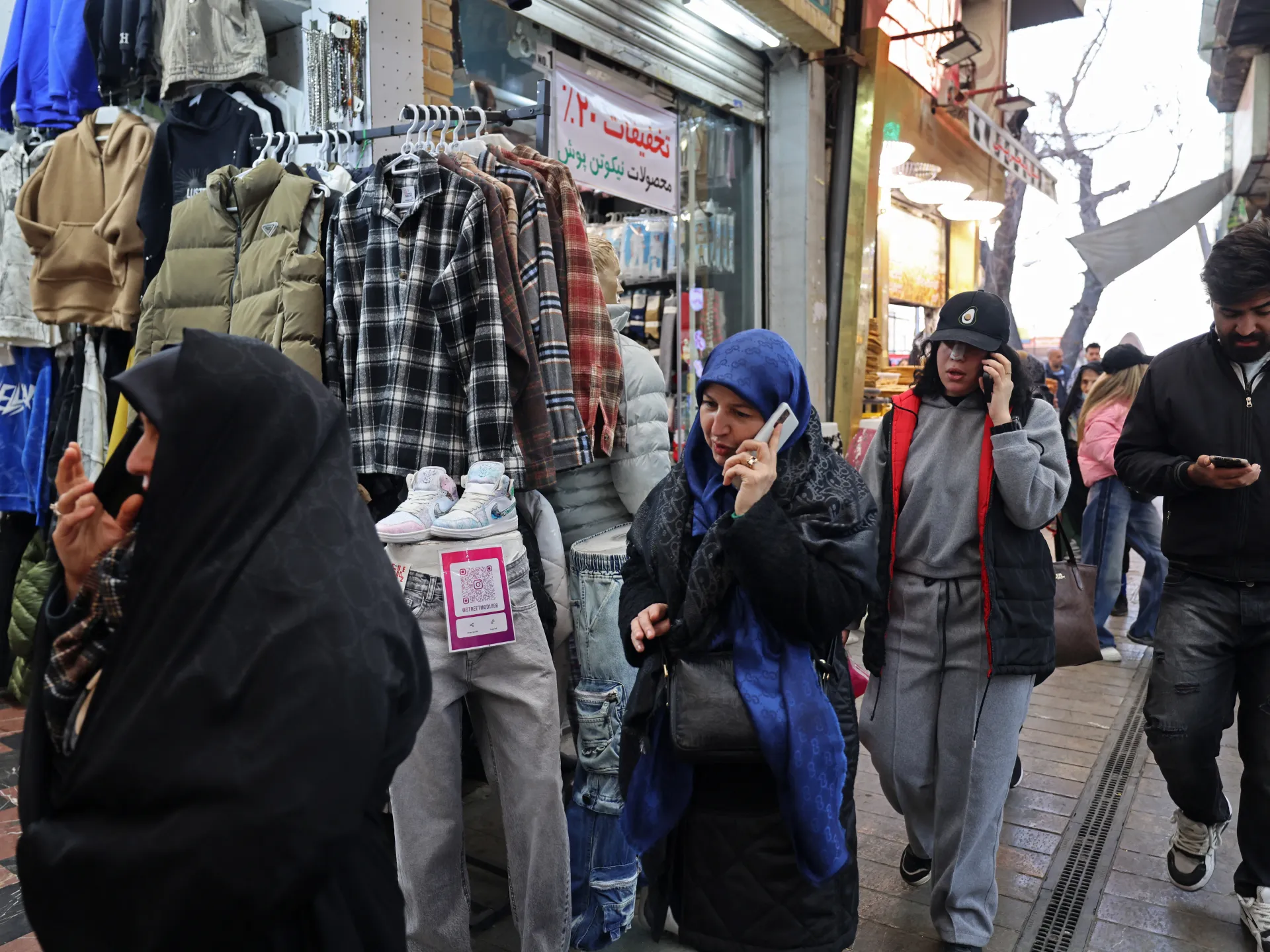
Tehran, Iran – Iran’s economic outlook appears increasingly grim more than three weeks after the start of what became one of the most comprehensive and prolonged state-imposed internet blackouts in history, impacting a population of more than 90 million people.
Iranian authorities abruptly cut off all communications across the country on the night of January 8, at the height of nationwide protests that the United Nations and international human rights organisations say were suppressed with the use of deadly force.
Recommended Stories
list of 3 itemsend of list
Most of Iran’s internet bandwidth, local and international phone calls and SMS text messages have been restored over recent days. But most of the country is still unable to freely connect to the global internet amid heavy filtering by the state.
The increased bandwidth allows more people to circumvent state restrictions using a variety of proxies and virtual private networks (VPNs), but solutions are often costly and temporary.
Last week, Information and Communications Technology Minister Sattar Hashemi told reporters his ministry estimates that the Iranian economy suffered at least 50 trillion rials (about $33m at the current exchange rate) in damages on a daily basis during the blackout.
But the minister admitted that the true toll is likely much higher, and said that other ministers and economic officials have privately offered heftier estimates that he did not expand upon.
‘Can’t do anything without the internet’
The government of President Masoud Pezeshkian has said the decision to fully block connectivity was taken outside of its control by the Supreme National Security Council.
Pezeshkian, who had made scaling back internet filtering a main campaign promise, has refrained from talking about Iran’s largest internet blackout to date, instead focusing on economic reforms and cash subsidies.
The administration has promised to offer online businesses financial support, but the losses have already been sudden, acute, and too heavy to bear for many.
Simin Siami, a travel agent working in Tehran, told Al Jazeera that her company lost most of its income and had to lay off a number of employees.
“Most international flights were cancelled, and there was no way to purchase tickets or compare existing flights,” she said, adding that her company was also unable to book hotels for customers, who were initially even unable to renew their passports.
“Unfortunately, that limited our services to selling tickets for local flights and booking local hotels, and cancelled all our previous international tickets and bookings.”
Saeed Mirzaei, who works at an immigration agency in the capital, said 46 employees at his company had to go on mandatory leave for weeks amid the shutdown.
He told Al Jazeera that they suddenly lost all contact with foreign counterparts, were unable to get updated information from embassies, and missed deadlines to apply for universities on behalf of their customers wishing to leave a heavily sanctioned Iran for better opportunities.
“We can’t do anything without the internet because our work deals directly with it,” Mirzaei said.
National internet a ‘bitter joke’
During the blackout, Iran’s theocratic establishment even struggled to sustain basic services using the so-called National Information Network, a limited nationalised intranet.
The connection to the intranet was slow and patchy, many companies remained disconnected from it, and those that were allowed to connect retained only a fraction of their customer base amid general economic stagnation across the country.
Hashemi, the communications minister, said a demand by hardliners within the establishment to move away from using the international web in favour of a domestic connection was a “bitter joke” that is not feasible to enforce.
He said his ministry estimates that the country’s online businesses could survive under a blackout for roughly 20 days, signalling that the state had no choice this week but to gradually restore internet bandwidth.
Figures for economic damages incurred by the blackout published by officials reflect only the visible costs and do not account for hidden losses, according to Abazar Barari, a member of Iran’s Chamber of Commerce.
“In the import and export sector, processes are heavily dependent on the internet from the very initial stages – such as price negotiations, issuance of pro forma and other invoices – to coordination with transportation companies and the verification of documents. As a result, the internet shutdown effectively disrupted foreign trade,” he told Al Jazeera.
“During this period, customer attrition also occurred, with the damage being particularly severe in certain food commodities, as many countries are unwilling to tie their food security to unstable supply conditions.”
‘They have no right to do this’
In a tumultuous country with one of the highest inflation rates in the world, numerous Iranians who tried to make money online to stay afloat are now deeply anxious as well.
From owners of small online businesses to teachers, chefs, crypto traders, gamers and streamers, people are taking to social media to ask others for extra support after the gradual reconnect this week.
Mehrnaz, a young video editor in Tehran, said she only went back to work this week after her company put her on forced leave without pay from the start of the protests in the city’s business district in late December.
“I was on the verge of having to move back to my parents’ house in another city. I’m only 25, and I hit near-zero for the second time this year. There might not be another time,” she said, pointing out that the first time was during the 12-day war with Israel and the United States in June.
Iran’s National Post Company announced on Sunday that postal deliveries experienced a 60-percent fall at the height of the blackout, mainly damaging small and home-based businesses that depended on mailing their products.
But beyond livelihoods, many in Iran are also angered by the fact that the state can cut off communications on command, violating the people’s right to benefit from the internet.
“They had the nerve to create a tiered internet and decide which type of use is ‘essential’,” said a woman who asked not to be identified for safety reasons.
“My child wants to search about his favourite animation movies, my mom wants to read news on Telegram, and my dad wants to download books. I want to go online and write that they have no right to do this.”
Pakistan’s decision to boycott their T20 World Cup game against India has been termed a political move, with cricketers and politicians in both countries and around the world urging the International Cricket Council (ICC) to resolve the dispute.
The Pakistani government on Sunday issued a statement saying its men’s cricket team will participate in the global tournament but will not take the field in the match against archrivals India on February 15.
Recommended Stories
list of 4 itemsend of list
In a swift response, the ICC was critical of Pakistan’s move of “selective participation” and asked the Pakistan Cricket Board (PCB) to consider the “significant and long-term implications” of its decision.
A decades-old political rift between the two nuclear-armed countries is blamed for their frosty sporting ties.
Pakistan was carved out of India in 1947, resulting in a bloody division of the subcontinent by the colonial British. Over the past 78 years, the nations have fought four wars, exchanged countless skirmishes and remained at odds primarily over the disputed Kashmir region that both claim in entirety but administer parts of.
The South Asian archrivals returned from the brink of an all-out war in May, when both countries clashed at their shared border before an internationally-brokered ceasefire.
An official of the Board of Control for Cricket in India (BCCI) has supported the ICC’s statement asking Pakistan to reconsider the move.
“The ICC has issued a big statement, they have spoken about sportsmanship,” BCCI’s Vice President Rajeev Shukla told the ANI news agency in India.
“We completely agree with the ICC. BCCI won’t make any comments on it until we speak with the ICC.”
However, former cricketers and politicians have called upon the ICC to act as a mediator between both countries’ cricket boards.
“Cricket can open doors when politics closes them,” former Pakistan captain Shahid Afridi wrote on X.
He urged the ICC to “lead and prove through decisions, not statements, that it is impartial, independent and fair to every member.”
‘Sport has been politicised’
Prominent Indian politician Shashi Tharoor was critical of the politicisation of cricket, and slammed the BCCI’s decision to expel Bangladeshi fast bowler Mustafizur Rahman from the Indian Premier League in January.
“It is pretty disgraceful that sport has been politicised in this way on both sides,” he told reporters in New Delhi.
“I don’t think that Mustafizur should have been denied his contract to play in Kolkata. It was most unfortunate. [An] intrusion of politics. I think the Bangladeshi reaction was an overreaction, but it is also a reflection of the same, and Pakistan is trying to show its solidarity with Bangladesh. ”
Tharoor, who is a member of India’s main opposition party, said the situation was “spiralling out of control”.
“Sports, especially a sport like cricket which means so much to all the people, should be a means of bringing us together at least on the playing field, rather than allowing this to go on like this,” he said.
The 69-year-old, who is also an author of several books on history and politics, called on the ICC to help mend the ties.
“This is now a wake-up call for all concerned to contact each other on an emergency basis. The ICC could be the platform for it. Just say, ‘Let’s call off this nonsense’. You can’t go on like this forever.”
Pakistan’s decision, which came six days before the start of the World Cup, has cast a shadow on the marquee fixture of the group stage.
India and Pakistan were scheduled to play in Colombo on February 15 in a game that attracts millions of viewers from across the world and is seen as a major revenue-generating fixture for the tournament’s organisers and sponsors.
Outspoken former Pakistan captain Rashid Latif said Pakistan could face sanctions from the ICC, but such a move would be hypocritical as teams have boycotted games at previous World Cups.
“Where was ICC when Australia and West Indies forfeited their matches in 1996; England refusing to travel to Harare and New Zealand to Nairobi in 2003,” he said on X.
Latif, who played 37 Tests and 166 one-day internationals (ODIs), feared that Pakistan may be sanctioned by the ICC.
“They [Pakistan] don’t seem to care about it,” he said.
‘Would Pakistan refuse to play the final?’
Should Pakistan keep their word and boycott the group game, they will forfeit two points, which could have an impact on their standings in Group A.
Pakistan and India could meet again in the tournament, in the final on March 8, but with the multiple stages of progress between the group game and the final, it is unclear how that match would pan out.
Former England captain Kevin Pietersen questioned whether Pakistan would boycott the tournament decider as well.
“Would Pakistan refuse to play the World Cup final?” he asked.
Cricketers from across the border condemned Pakistan’s boycott of the game.
“This isn’t about guts at all, this is about foolishness,” Madan Lal, a former Test cricketer and coach, told Indian media.
“Because Pakistan wants to show India down, that’s why they’re taking all these decisions. That’s the reason their growth isn’t happening, either. If you keep looking at others, what will you do for your own growth?”
Indian cricket writer and commentator Harsha Bhogle said the boycott could deal a financial blow to Pakistan cricket.
“If there is an inevitable reduction in the ICC’s revenue caused by Pakistan’s forfeit and future uncertainty, the least affected countries, given other strong sources of revenue, will be India, Australia and England,” he said in a social media post.
“The most affected will be those completely reliant on revenues from the ICC; not just the smaller and associate nations but also the West Indies, Sri Lanka, Bangladesh and…… Pakistan!”
Pakistan will open their T20 World Cup campaign on the opening day, February 7, against the Netherlands in Colombo.
The 2009 champions will play all their games, including any Super 8 fixtures and knockouts, in Sri Lanka.
This follows an ICC-brokered agreement between the PCB and the BCCI in December 2024 that allows both teams to play their games at a neutral venue when the neighbour hosts an ICC event.
Pakistan’s remaining Group A fixtures are against the United States on February 10 and against Namibia on February 18.
A record fiscal quarter for Walt Disney Co.’s theme parks division was dampened slightly by a streaming aquisition and a protracted fight with YouTube, the Burbank media and entertainment giant reported Monday.
Disney recorded overall revenue of about $26 billion in the three-month period that ended Dec. 27, up 5% compared to the previous year. Disney’s income before income taxes totaled nearly $3.7 billion, a 1% jump from the same time period last year. Earnings per share were $1.34 for the quarter, down from $1.40.
Disney Chief Executive Bob Iger said in a statement that he was “pleased” with the company’s start to the fiscal year and nodded at the transition ahead to a new CEO.
“As we continue to manage our company for the future, I am incredibly proud of all that we’ve accomplished over the past three years,” he said.
It was a big quarter for Disney’s experiences division, which includes its theme parks, cruise line and Aulani resort and spa in Hawaii.
The sector reported $10 billion in revenue, aided by a 1% bump in attendance at its domestic theme parks and higher guest spending. The launch of the new Disney Destiny cruise ship in November also helped boost operating income to $3.3 billion, a 6% boost compared to the previous year.
Disney’s box office success with billion-dollar hits like “Zootopia 2” and “Avatar: Fire and Ash” helped propel revenue for its entertainment division by 7% to $11.6 billion. But costs related to its acquisition of a majority stake in FuboTV, as well as higher marketing costs in theatrical distribution and streaming services affected the sector’s operating income, which declined 35% to $1.1 billion.
The dip in operating income from the entertainment sector took a toll on the company’s total segment operating income, which was down 9% to $4.6 billion. That was also partly due to Disney’s contract dispute last fall with YouTube TV, which lasted for nearly 15 days and resulted in a blackout of Disney channels.
The temporary suspension of Disney channels on YouTube TV took a $110 million toll on operating income within Disney’s sports division, which was down 23% to $191 million. Sports revenue for the quarter totaled $4.9 billion, up 1% compared to the previous year.
THE comedian John Tothill has been appeared in pubs and gig venues up and down the country, performing his stand-up routine to thousands of strangers.
So he’s better qualified than most to judge where is the the most welcoming spot in Blighty.
Sign up for the Travel newsletter
Thank you!
Wigtown in Scotland is what John Tothill called the UK’s ‘friendliest town’Credit: AlamyJohn Tothill and Fatiha El-Ghorri travelled through Scotland to find hidden gemsCredit: Channel 4
It turns out, it’s a little seaside town called Wigtown in Ayrshire, Scotland
Fresh from his nomination for ‘Best Show’ at the Edinburgh Comedy Awards last year, John was back in Scotland to discover the country’s best hidden gems for a Channel 4 show called ‘Where To Next‘, with fellow comedian Fatiha El-Ghorri.
They quizzed plenty of Scots on the best lesser-known places to visit and ended up in Wigtown, after it was recommended by several people.
John told us: “Wigtown is probably the friendliest place I’ve ever been to in my life.
“I didn’t meet a single person that wasn’t nice. It was full of enthusiastic people that loved living there.
“It’s a historic place, but of course it’s still modern because people live there. That’s why I think it’s a particularly lovely place to visit, it’s full of tourist attractions, but it’s not a museum.”
The town sits on the southwest coast of Scotland overlooking Wigtown Bay – Britain’s largest local nature reserve.
Wigtown’s claim to fame is that it’s Scotland’s National Book Town and has around 17 independently run second-hand bookshops.
Most read in Best of British
This includes Reading Lasses which is not only a bookshop, but also a café with a selection of cakes which you can enjoy in front of a log-burning fire in winter, or in the garden area during summer.
There’s also The Book Shop which is the largest second-hand bookshop in Scotland, with over a mile of shelving that holds 100,000 books.
The town holds a yearly book festival, which will be between September 25 and October 4 this year.
For a quirky way to spend a long-weekend, you can check into the flat above The Open Book and ‘play-bookshop’.
Holidaymakers can essentially manage their own bookshop during their stay, volunteer behind the till, make their own displays, and of course, read.
The experience is so in demand it has a two-year waiting list on Airbnb with the next available dates in January 2028.
It doesn’t come cheap either, four-nights at The Open Book for one person is £878.
Wigtown is filled with around 17 independently run second-hand bookshopsCredit: Channel 4You can even run your own bookshop at The Open BookCredit: Google maps
If you’re happy to stay somewhere without the bookshop experience then head to Booktown Bunkhouse where rooms start from £59 per night.
While Wigtown sits along the coast, it’s actually surrounded by marshes, and the bay is a nature reserve for birds like osprey and waders.
But you can still get beautiful sea views from the town, or if you want to head to the beach some of the nearest are Rigg Bay at Garlieston and pretty Monreith Bay.
40-minutes away from Wigtown is what John calls a ‘must-do experience’ while in Scotland.
Kitchen Coos & Ewes in Dumfries & Galloway offers a ‘hands-on highland cow experience’ visitors are given tours around the farm, and you can even give the younger calves a groom in the play-pen.
John said: “There were so many cows, and they were beautiful, really gorgeous.
“What the farmer told us is that highland cows don’t tire of human contact – and they don’t leave you alone.
“You have to stop grooming them because they will never have enough, so you have to set boundaries.”
Here you can have a guided experience, a selfie with the cows, groom them, tea and a bite to eat for £46 per person.
There are other options like the walking tour around the farm for £28pp, and even an ‘Insta Coo Tour’ where there’s ample time to take some enviable pictures from £24pp.
40-minutes in the other direction from Wigtown is Kirkcudbright, where John claims to have had some of the best food of his life at Swally n’ Scran.
You can pick up two courses for £19.95 – which includes scallops, haddock or crab.
John added: “The seafood is all locally sourced. I tried scallops andthe monkfish was incredible.”
One of the closest beaches to Wigtown is Monreith BayCredit: AlamyJohn Tothill and Fatiha El-Ghorri discovered hidden gems on ‘Where To Next’Credit: Channel 4
MINNEAPOLIS — For weeks, administrators at this charter high school have arrived an hour before class, grabbed neon vests and walkie-talkies, and headed out into the cold to watch for ICE agents and escort students in.
Lately, fewer than half of the 800 sudents show up.
“Operation Metro Surge,” the immigration crackdown in Minnesota that led to nationwide protests after federal agents shot and killed two U.S. citizens, has had students, parents and teachers on edge regardless of their immigration status.
Signs of a fearful new normal are all over the school. Green craft paper covers the bottom of many first-floor windows so outsiders can’t peer in. A notice taped outside one door says unauthorized entry is prohibited: “This includes all federal law enforcement personnel and activities unless authorized by lawful written direction from appropriate school officials or a valid court order.”
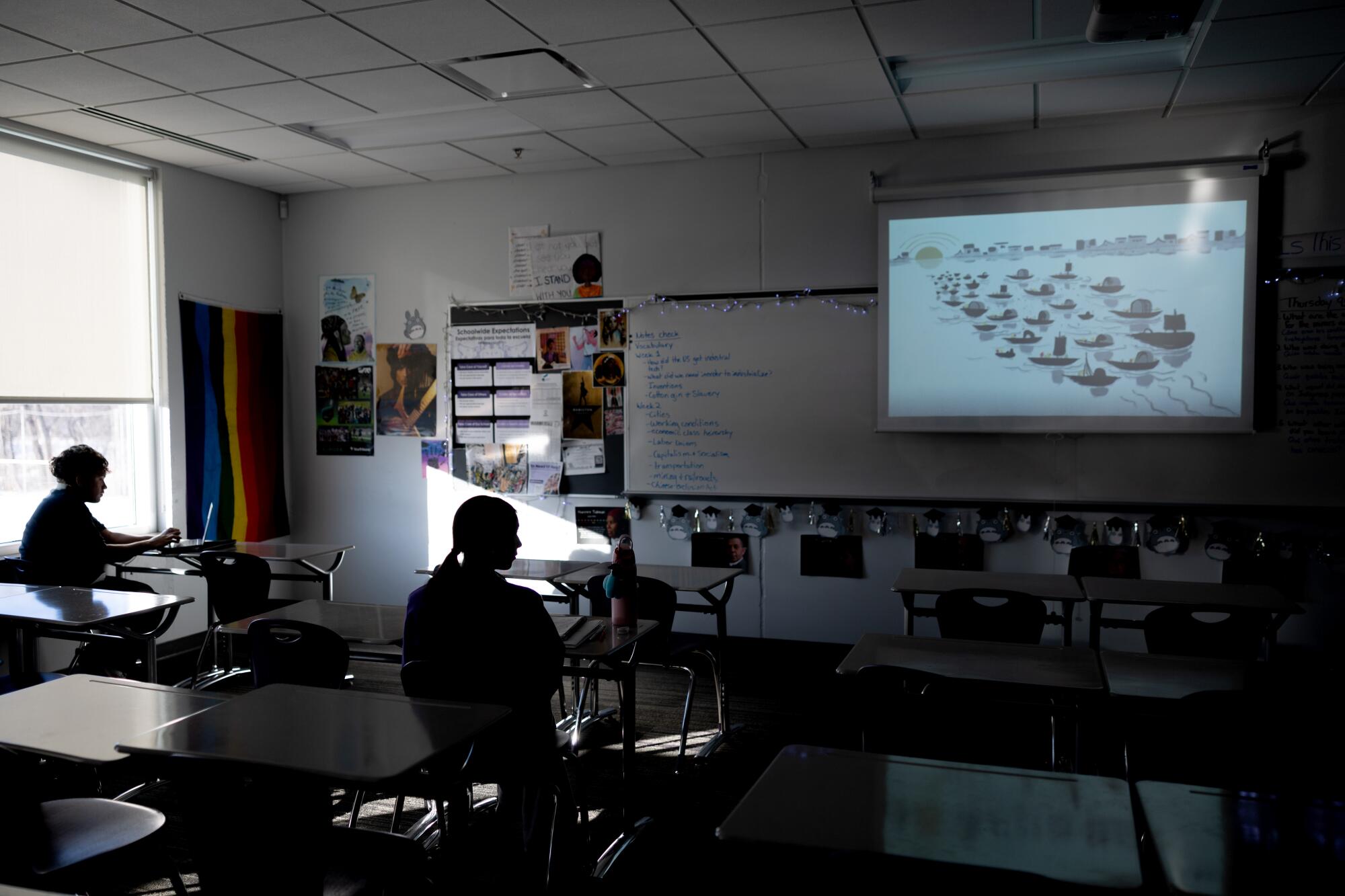
Students at a Minneapolis high school classroom with many empty seats on Jan. 29, 2026.
Staff coordinate throughout the day with a neighborhood watch group to determine whether ICE agents are nearby. When they are, classroom doors are locked and hallways emptied until staff announce “all clear.”
Similar tactics have been utilized by schools in other cities hit by immigration raids across the country. The Los Angeles Unified School District established a donation fund for affected families and created security perimeters around schools last summer.
But it appears nowhere have students felt the repercussions of local raids more than in Minneapolis.
Many schools have seen attendance plummet by double-digit percentages. At least three other, smaller charter schools in Minneapolis have completely shut down in-person learning.
At this high school, which administrators asked The Times not to identify for fear of retaliation by the Trump administration, 84% of students are Latino and 12% are Black. Staff and students are being identified by first or middle names.
A balloon sits in a hallway at the high school.
Doors and windows are covered at the school so outsiders can’t see in.
Three students have been detained — and later released — in recent weeks. Two others were followed into the school parking lot and questioned about their immigration status. Several have parents who were deported or who self-deported. Latino staff said they have also been stopped and questioned about their legal status.
“Our families feel hunted,” said Noelle, the school district’s executive director.
Students returned from winter break on Jan. 6, the same day 2,000 additional immigration agents were dispatched to Minneapolis to carry out what Immigration and Customs Enforcement Acting Director Todd Lyons called the agency’s “largest immigration operation ever.” The next day, an ICE officer fatally shot Renee Good, a 37-year-old mother of three.
“I describe that day as if you’re on an airplane and it’s really bad turbulence, and you have to keep your cool because, if you don’t, you lose the entire building,” said Emmanuel, an assistant principal. “It felt like we went through war.”
Attendance dropped by the hundreds as parents grew too afraid to let their children leave home. School leaders decided to offer online learning and scrambled to find enough laptops and mobile hotspots for the many students who didn’t have devices or internet. Some teachers sent packets of schoolwork to students by mail.
A teacher at the Minneapolis high school that administrators asked The Times not to identify for fear of retaliation by the Trump administration. Teachers and students there also asked not to be identified.
Noelle said in-person attendance, which had dropped below 400 students, increased by around 100 in the third week of January. Then federal agents shot and killed 37-year-old intensive care nurse Alex Pretti, and attendance plummeted again.
Rochelle Van Dijk, vice president of Great MN Schools, a nonprofit supporting schools that serve a majority of students of color, said many schools have redirected tens of thousands of dollars away from other critical needs toward online learning, food distribution and safety planning. For students still attending in person, recess has frequently been canceled, and field trips and after-school activities paused.
Even if students return to school by mid-February, Van Dijk said, they will have missed 20% of their instructional days for the year.
“A senior who can’t meet with their college counselor right now just missed support needed for major January college application deadlines. Or a second-grader with a speech delay who is supposed to be in an active in-person intervention may lose a critical window of brain plasticity,” she said. “It is not dissimilar to what our nation’s children faced during COVID, but entirely avoidable.”
At the high school, administrators said they tried to create “a security bubble,” operating under protocols more typical of active shooter emergencies.
Gym class at the Minneapolis school, where many students are so afraid of ICE that they won’t go to the campus.
If agents were to enter the building without a judicial warrant, the school would go into a full lockdown, turning off lights, staying silent and moving out of sight. That hasn’t happened, though ICE last year rescinded a policy that had barred arrests at so-called sensitive locations, including schools.
Tricia McLaughlin, assistant secretary for the Department of Homeland Security, said that blaming ICE for low school attendance is “creating a climate of fear and smearing law enforcement.”
“ICE does not target schools,” McLaughlin said. “If a dangerous or violent illegal criminal alien felon were to flee into a school, or a child sex offender is working as an employee, there may be a situation where an arrest is made to protect the safety of the student. But this has not happened.”
Alondra, a 16-year-old junior who was born in the U.S., was arrested after school Jan. 21 near a clinic where she had gone with a friend, also 16, to pick up medication for her grandmother.
She said that as she was about to turn into the parking lot, another car sped in front of her, forcing her to stop. Alondra saw four men in ski masks with guns get out. Scared, she put her car in reverse. Before she could move, she said, another vehicle pulled up and struck her car from behind.
Alondra shared videos with The Times that she recorded from the scene. She said agents cracked her passenger window in an attempt to get in.
“We’re with you!” a bystander can be heard telling her in the video as others blow emergency whistles.
She said she rolled her window down and an agent asked to see her ID. She gave him her license and U.S. passport.
“Is it necessary to have to talk to you or can I talk to an actual cop?” she asks in the video. “Can I talk to an actual cop from here?”
“We are law enforcement,” the agent replies. “What are they gonna do?”
In another video, an agent questions Alondra’s friend about the whereabouts of his parents. Another agent is heard saying Alondra had put her car in reverse.
“We’re underage,” she tells him. “We’re scared.”
A sign directs students to line up for their school bus route. Bus pickups are staggered, with one group of students escorted outside at a time. This way, the children can be taken back inside the school or onto the bus more easily if ICE arrives.
A Minneapolis Public Radio reporter at the scene said agents appeared to have rear-ended Alondra’s car. But Alondra said an agent claimed she had caused the accident.
“It’s just a simple accident, you know what I mean?” he says in the video. “We’re not gonna get on you for trying to hit us or something.”
“Can you let us go, please?” her friend, visibly shaken, asks the agent at his window.
Alondra and her friend were handcuffed and placed in a U.S. Customs and Border Protection vehicle as observers filmed the incident. At least two observers were arrested as agents deployed tear gas and pepper spray, according to an MPR report.
The agents took the students to the federal Whipple Building. Alondra said the agents separated the friends, looked through and photographed her belongings and had her change into blue canvas shoes before chaining her feet together and placing her in a holding cell alone.
“I asked at least five times if I could let my guardian know what was happening, because I was underage, but they never let me,” she said.
Finally, around 7 p.m., agents released Alondra — with no paperwork about the incident — and she called her aunt to pick her up. Her friend was released later.
Meanwhile, school administrators who saw the MPR video called Alondra’s family and her friend’s.
Alondra said officers didn’t know what had happened to her car and told her they would call her when she could pick it up. But no one has called, and school administrators who helped her make calls to Minneapolis impound lots haven’t been able to locate it either.
Though Alondra could attend classes online, she felt she had to return to campus.
“I feel like if I would have stayed home, it would have gone worse for me,” she said, her lip quivering. “I use school as a distraction.”
The backstage of the auditorium, dubbed the bodega, has been turned into a well-stocked pantry for families who are too afraid to leave their homes.
A volunteer organizes donated items for distribution to families at the Minneapolis high school.
A teacher makes a delivery to a family in Minneapolis.
Teachers and volunteers sort donations by category, including hygiene goods, breakfast cereals, bread and tortillas, fruit and vegetables, diapers and other baby items. Bags are labeled with each student’s name and address and filled with the items their family has requested. After school, teachers deliver the items to the students’ homes.
Noelle said some students, particularly those who are homeless, are now at risk of failing because they’re in “survival mode.” Their learning is stagnating, she said.
“A lot of these kids are — I mean, they want to be — college-bound,” Noelle said. “How do you compete [for admission] with the best applicants if you’re online right now and doing one touch-point a day with one teacher because that’s all the technology that you have?”
On Thursday afternoon, 20 of 44 students had shown up for an AP world history class where the whiteboard prompt asked, “Why might some people resort to violent resistance rather than peaceful protest?”
Upstairs, in an 11th-grade U.S. history class, attendance was even worse — four students, with 17 others following online. The topic was what the teacher called the nation’s “first immigration ban,” the Chinese Exclusion Act of 1882.
Students head to their bus at the high school.
Morgan, the teacher, asked the students to name a similarity between the Chinese exclusion era and current day.
“Immigrants getting thrown out,” one student offered.
“Once they leave, they can’t come back,” said another.
“The fact that this is our first ban on immigration also sets a precedent that this stuff can happen over and over and over again,” Morgan said.
Sophie, who teachers English language learners, led the effort to organize the online school option. She is from Chile and says she has struggled to put her own fear aside to be present for the students who rely on her. Driving to school scares her, too.
“It’s lawless,” she said. “It doesn’t matter that I have my passport in my purse. The minute I open my mouth, they’re going to know that I’m not from here.”
Sophie said she once had to call a student’s mother to say her husband had been taken by immigration agents after another school staffer found his car abandoned on a nearby street.
“Having to have that conversation wasn’t on my bingo card for that day, or any day,” she said. “Having to say that we have proof that your husband was taken and hearing that woman crying and couldn’t talk, and I’m like, what do I say now?”
Close to the 4:15 p.m. dismissal, administrators again donned their neon vests and logged on to the neighborhood Signal call for possible immigration activity.
Students walk to a bus Thursday. Dismissal used to be a free-for-all, with large numbers of students rushing outside as soon as the bell rang.
Dismissal used to be a free-for-all — once the final bell rang, students would rush outside to find their bus or ride or to begin the walk home.
Now pickups are staggered, with students escorted outside one bus at a time. Teachers grab numbered signs and tell students to line up according to their route. If ICE agents pull up, administrators said, they could rush a smaller group of students onto the bus or back inside.
In yet another example of how the immigration raids had crippled attendance, some buses were nearly empty. On one bus, just two students hopped on.
“I’ve been sniffing and knocking on the door for a couple of majors since those decisions have been made, and those moments did validate that decision.
“It’s good to see people wanting to play where it motivates them to be their best.”
Rose finished 23 under at last week’s Farmers Insurance Open, beating the tournament’s previous best winning score of 22 under by Tiger Woods in 1999 and George Burns in 1987.
Rose also became the oldest player to secure a wire-to-wire finish on tour – leading in all four rounds – since Rocco Mediate in October 2010 aged 47.
“I want to play in and among the best players in the world; that’s what keeps me motivated, keeps me hungry, keeps me pushing,” Rose continued.
“It would have been easy to potentially do other things but none of that excited me and none of that gave me access to what I wanted to achieve.
“I always felt my childhood self wouldn’t feel very good about making that decision and giving up on those dreams.”
Five-time major champion Koepka, 35, made his comeback at Torrey Pines under a new returning member programme.
The also opened the door to the return of other major winners Jon Rahm, Bryson DeChambeau and Cameron Smith but all three pledged their commitment to LIV before the 2 February cut-off date to apply to get on the programme.
Koepka agreed to make a $5m (£3.7m) charitable donation as part of his return, while 35-year-old Reed, who is planning to play on the DP World Tour this year, is eligible to begin competing on the PGA Tour in August, 2026 with a view to reinstating his membership for the 2027 season.
ICE agents in California detained several residents, including a US citizen, amid a surge in immigration raids under the Trump administration. Protests under the ‘ICE Out of Everywhere’ campaign erupted across southern California, where demonstrators faced arrests and injuries.
Iran examines regional proposals to ease tensions with the US as it expects a framework for talks in the coming days.
Iran has said that it expects progress on a framework to restart nuclear talks with the United States as unverified reports suggest the country’s president has ordered the revival of the negotiations.
Tehran said on Monday that it is examining several diplomatic processes pitched by countries in the region to ease tensions with Washington, adding that it expects a framework for talks in the coming days.
Recommended Stories
list of 3 itemsend of list
The announcement came as Tehran and Washington appear to be pulling back from the threat of military action.
US President Donald Trump sent warships to the Middle East after Iran violently put down mass protests in January, but he then called for Tehran to make a deal to resume talks on its nuclear programme, which were abandoned in June when Iran was attacked by the US and Israel.
On Sunday, Trump said the US is talking with Iran. Tehran’s Ministry of Foreign Affairs spokesman Esmaeil Baghaei has now confirmed indirect negotiations are ongoing.
“Countries of the region are acting as mediators in the exchange of messages,” he said on Monday without giving details on the content of the negotiations.
“Several points have been addressed, and we are examining and finalising the details of each stage in the diplomatic process, which we hope to conclude in the coming days.”
The state news agency IRNA reported that Foreign Minister Abbas Araghchi had telephone calls with Saudi Arabia, Egypt and Turkiye to discuss the latest developments.
Later, the Fars news agency quoted an unnamed source as saying Pezeshkian had ordered the resumption of nuclear talks.
“Iran and the United States will hold talks on the nuclear file,” Fars reported without specifying a date. The report was also carried by the government newspaper Iran and the reformist daily Shargh.
Araghchi is due to meet US envoy Steve Witkoff for negotiations against this backdrop, Iranian news agency Tasnim also reported on Monday. Neither Tehran nor Washington has verified a meeting has been arranged.
The reports out of Tehran came as the region has been braced for a potential US attack as an aircraft carrier and fighter jets are sitting in the Indian Ocean close enough to assist a strike.
Trump threatened Iran in the wake of mass protests there in which thousands of people were killed in January. The demonstrations, which were triggered by economic distress and the collapse of the country’s currency, morphed into a direct challenge to the government.
However, Trump’s approach has since transformed into a demand for a nuclear deal as the US and European Union are concerned that Iran is seeking to develop nuclear weapons. Tehran insists its programme is strictly civilian.
While Iran suggested on Monday that it is moving closer to agreeing to reopen talks, it is understood that the US has set some conditions.
Iranian sources told the Reuters news agency that for talks to resume, Trump has demanded that Iran agree to end enrichment of uranium, curtail its missile programme and halt support to its network of allied armed groups in the region.
In the past, Iran has shown flexibility in discussing the nuclear file, but missiles and regional allies have long been treated as nonnegotiable.
It is not clear whether Iran would change its position now that the country urgently needs sanctions relief to improve the economy and stave off future unrest.
In June, American and Iranian officials had kicked off negotiations in Oman, but the process stalled after Israel attacked Iran and then the US bombed Iranian nuclear facilities.
On Sunday, Trump said Iran was “seriously talking” with the US but insisted, “We have very big, powerful ships heading in that direction.”
Iranian Supreme Leader Ali Khamenei has also maintained a defiant tone, warning on Sunday that any attack would result in a “regional war”.
As officials in the region geared up their diplomacy to avoid another confrontation, the EU last week designated Iran’s Islamic Revolutionary Guard Corps as a “terrorist organisation”.
On Monday, Iran said it had summoned all EU envoys in recent days over the move, adding that it was considering “countermeasures”.
BRITISH superstar Harry Styles is heading to Hollywood.
On Sunday night the As It Was singer returned to the Grammys to present Album of the Year – keeping a low profile by skipping the red carpet and ceremony.
Sign up for the Showbiz newsletter
Thank you!
And now The Sun can reveal Harry Styles, 31, is on the brink of announcing a huge residency in California as part of his upcoming Together, Together tour.
Harry Styles will kick off his Together, Together tour this summerCredit: Johnny DufoHarry Styles is set to announce a huge residency in Los AngelesCredit: Getty
Sources have confirmed that Harry has committed to a run of shows in Los Angeles in Spring 2027.
He is currently weighing up which venue to call home after being met with two huge offers.
The management team of The Intuit Dome and The Kia Forum both have sent him big money deals.
The Sun understands a staggering 30 dates are on the table to match his upcoming run of shows in New York.
He will play 30 nights at the iconic Madison Square from August 26 – he only announced US shows.
Harry played a 15 night run at The Forum in late 2022 and early 2023 with Love On Tour.
Meanwhile, The Intuit, home to the LA Clippers, is the most technologically advanced LA gig spot with lights in seats and a cutting edge audio system.
A source said: “Harry is heading to Hollywood.
“He is definitely playing LA on this tour. He has mind set on a residency in early 2027.
“The question is which venue would work for him. He has been offered The Forum and The Intuit Dome and it’s his choice which he prefers.
“The Forum gigs were some of his most free, fun and exhilarating shows on his last tour.
“He was relaxed throughout the run and really touched by how the fans reacted to him.
“A 20 to 30 night run would be an instant sell out. He could probably play double that amount.
“Interestingly the team which booked these venues are the same people because both have the same ownership.”
The insider added: “The LA leg will be announced as part of an expansion of his tour.”
Cameron Mofid completed his quest to travel to all 195 UN-recognised countries and territories in 2025, and has now named three standout cities from his travels
13:39, 02 Feb 2026Updated 14:41, 02 Feb 2026
Cameron completed his journey when he visited his final destination, North Korea
(Image: @cameronmofid/Instagram)
A man who’s visited all 195 countries in the world has named a European city akin to a “living crossroads of history” as one of his favourites. San Diego’s Cameron Mofid set off on a quest to travel to all 195 UN-recognised countries and territories while struggling with obsessive compulsive disorder (OCD).
On April 3, 2025, Cameron completed his journey by visiting his final destination, North Korea—often referred to as the “hermit kingdom.” With this, he achieved his goal of travelling to every country in the world, all by the young age of just 25.
Cameron, who previously discussed some of his favourite countries with The Mirror, has also recently shared a list of three cities around the world that he particularly loves, including one located in Europe.
In a first-person piece for Business Insider, Cameron revealed that he has a particular fondness for the vibrant city of Sydney, Australia, and the breathtaking Krabi in the sun-drenched Southeast Asian nation of Thailand.
For those who might feel discouraged by the long journeys required to reach these two far-flung destinations, Cameron has also suggested an alternative favourite, which is much more accessible for Brits: Valletta, Malta.
Cameron wrote in Business Insider: “Valletta felt like a living crossroads of history from the moment I arrived. Sitting at the centre of the Mediterranean, the city reflects centuries of Italian, Arab, British, and North African influence, all packed into a compact, walkable capital.
“I’d walk past waterfront cafés and, minutes later, find myself standing on the city’s fortified walls, looking out over waters once travelled by Phoenician traders, Ottoman fleets, and British warships.
“What surprised me most about Valletta was how under-visited it felt compared to much of southern Europe. Even during peak season, it never felt overrun. A short ferry ride away, I spent time on the island of Gozo, where life moved even slower.”
Cameron detailed how he visited temples older than the pyramids in Egypt and experienced villages where fishing and farming continue to “shape daily life”, but travelling to the island also served to make Valletta feel even “more special”.
In further remarks about the European city, he went on to describe how the “historic” capital offered simple access to what he termed the “quieter, older side of the Mediterranean”.
Located south of Sicily in the central Mediterranean, Malta is an archipelago boasting a rich history. Over the centuries, it has been occupied by the Greeks, Romans, Phoenicians, and even France and Britain.
Some of the highlights in Valletta include St John’s Co-Cathedral, the National Museum of Archaeology, the stunning Upper Barrakka Gardens, and St Catherine’s Monastery.
The Met Office states that Malta enjoys “typically Mediterranean” weather, with hot and dry summers with temperatures hitting 32C in July and August and falling to 15 to 17C in December to February.
If you’d like to take a trip to Malta, you can expect an average flight time of 3 hours, 19 minutes (London Gatwick to Malta International Airport in Valletta), according to Booking.com.
This huge park that’s 2.5 hours from the UK is already among the largest in Europe, and visitors arriving in 2026 will have two more thrilling experiences to enjoy including a one-of-a-kind ride
The theme park is among the largest in Europe(Image: Publicity Picture)
One of the largest theme parks in Europe, which is popular with Brits on holiday, has announced two huge new attractions for the summer season.
PortAventura World is already a vast theme park set in a popular part of Spain. The resort includes PortAventura Park, the main theme park, which is split into six worlds including China, Mexico, and even Sesame Street. There’s also the separate Ferrari Land, which is themed around the luxury car; and PortAventura Caribe Aquatic Park, a large water park which has a range of waterslides, a lazy river, and more.
The first new attraction will be found in Caribe Aquatic Park and is named Coral Bay: The Lost Legend. It’s set to be a 6,000 m² family area themed around a pirate bay that has risen from the depths of the water.
At Coral Bay, visitors will be able to make a splash on a water coaster, which PortAventura claims will have a unique twist that’ll be a first in Europe. This is in addition to an adventure pool, featuring a fun obstacle course for kids to take on. The new area will also include more waterslides and new food and drink options for visitors.
The second addition is Makamanu Jungle: The Adventure Trek. The attraction will be added to the Polynesia area of PortAventura Park. Guests will experience exploring the deepest jungle, with secret walkways, hanging bridges, and obstacles and challenges for both “children and their companions”.
The adventure park will join existing rides in the Polynesia world, including Tutuki Splash, a water ride that’s popular on hot sunny days as it includes a cooling splash at the end, and Kontiki, a pirate ship-style ride with a Tiki theme.
PortAventura confirmed that both attractions will open to the public by summer, although it didn’t give exact dates.
PortAventura is close to the popular tourist town of Salou, and just a short drive from Reus Airport, which has seasonal flights to the UK from easyJet, Jet2, Ryanair, and TUI throughout the summer months. It’s also just under 90 minutes from Barcelona, and a popular day trip for those staying in the city.
If you want to spend longer exploring PortAventura, one option is to stay in the resort’s hotels, six of which can be found on-site and include unlimited visits to PortAventura Park. Packages also include one-day access to Ferrari Land, and discounted tickets to Caribe Aquatic Park, so you can enjoy all that this vast resort has to offer.
Four-star Hotel PortAventura is a popular option for guests as it offers direct access to the park through its Mediterrània area, home of Europe’s fastest rollercoaster, Furius Baco. Themed around a charming Mediterranean village, the hotel has its own pool, games room, and entertainment. Guests can also opt for half- or full-board stays, with buffets and an on-site restaurant.
Another fun-themed hotel is the Hotel Gold River, which is close to the park’s cowboy-themed Far West area. Designed to look like a Wild West town, the hotel has its own saloon and an upmarket Victorian-style restaurant. It also has three pools open for the summer season, so you can cool off after a day exploring the park.
Have a story you want to share? Email us at webtravel@reachplc.com
It all began after a viral video alleging fraud in Somali-run child-care centers in Minneapolis: strangers peering through windows, right-wing journalists showing up outside homes, influencers hurling false accusations.
In San Diego, child-care provider Samsam Khalif was shuttling kids to her home-based center when she was spooked by two men with a camera waiting in a car parked outside, prompting her to circle the block several times before unloading the children.
“I’m scared. I don’t know what their intention is,” said Khalif, who decided to install additional security cameras outside her home.
Somali-run child-care centers across the United States have become targets since the video caught the attention of the White House amid the administration’s immigration crackdown. Child-care providers worry about how they can maintain the safe learning environments they have worked to create for young children who may be spending their first days away from their parents.
In the Minneapolis area, child-care providers, many of them immigrants, say they’re being antagonized, exacerbating the stress they face from immigration enforcement activity that has engulfed the city.
One child-care provider said she watched someone emerge from a car that had been circling the building and defecate near the center’s entrance. The same day, a motorist driving by yelled that the center was a “fake day care.” She’s had to create new lockdown procedures, is budgeting for security and now keeps the blinds closed to shield children from unwanted visitors and from witnessing immigration enforcement actions.
“I can’t have peace of mind about whether the center will be safe today,” said the provider, who spoke on condition of anonymity for fear of being targeted. “That’s a hard pill to swallow.”
Video’s claims disproved
The day after Christmas, right-wing influencer Nick Shirley posted a lengthy video with allegations that members of Minneapolis’ large Somali community were running fake child-care centers so they could collect federal child-care subsidies.
The U.S. occasionally has seen fraud cases related to child-care subsidies. But the Minneapolis video’s central claims — that business owners were billing the government for children they were not caring for — were disproved by inspectors. Nonetheless, the Trump administration attempted to freeze child-care funding for Minnesota and five other Democratic-led states until a court ordered the funding to be released.
President Trump has repeatedly targeted Somali immigrants with dehumanizing rhetoric, calling them “garbage” and “low IQ” and suggesting that Rep. Ilhan Omar, a Minnesota Democrat who was born in Somalia, should be deported: “Throw her the hell out!” In Minnesota, 87% of foreign-born Somalis are naturalized U.S. citizens.
Trump has zeroed in on a years-old case in which a sprawling network of fraudsters — many of them Somali Americans — bilked Minnesota of an estimated $300 million that was supposed to help feed children and families. His rhetoric intensified after Shirley’s video was posted.
Activists take it upon themselves to investigate
In Federal Way, Wash., and Columbus, Ohio, both home to large Somali communities, right-wing journalists and influencers began showing up unannounced at addresses for child-care operations they pulled from state websites.
In one video, a man arrives at a bungalow-style building in Columbus. He films through the glass front door, showing a foyer with cheerful posters that read “When we learn, we grow” and “Make today happy.”
“It does not look like a child-care center at all,” the man says.
Ohio dispatched an inspector to the address and found that it was, in fact, a legitimate child-care center. The center’s voicemail was hacked, so parents calling heard a slur-laden message calling Somalis “sand rats” and saying they “worship a false religion of baby-raping terrorists,” according to WOSU-FM.
In Washington state, child-care workers called police on the right-wing journalists who kept appearing outside their homes.
Journalists with the right-leaning Washington outlet Center Square filmed themselves pressing a woman for proof that she ran a child-care center for which she was collecting federal subsidies. She refused to answer questions.
“Are you aware of the Somali day-care fraud? We’re just trying to check out if this is a real day care,” one of the journalists said. “Where are the children?”
Local officials speak out
Seattle Mayor Katie Wilson posted a statement on X saying she would not tolerate anyone trying to “intimidate, harass or film Somali child care providers.” Then, Harmeet Dhillon, who heads the Justice Department’s Civil Rights Division, issued her own warning: “Asking questions/citizen journalism are NOT HATE CRIMES in America — they are protected speech, and if Seattle tries to chill that speech, @CivilRights will step in to protect it and set them straight!”
In Ohio, Republican Gov. Mike DeWine held a news conference to debunk a right-wing influencer’s fraud claims about a Columbus child-care center and assured people the state diligently monitored centers that receive public money. He said a child-care provider refusing to let in a stranger should not be read as a sign of fraud.
“It shouldn’t be a shock when someone sees something on social media, and someone is going, ‘I can’t get into this place, no one will let me in,’” DeWine said in a news conference in January. “Well, hell, no! No one should let them in.”
Even after DeWine refuted the claims, Republicans in the Statehouse introduced legislation to more closely monitor child-care centers, including one measure that would require those that take public money to provide live video feeds of their classrooms to state officials.
Advocates say fraud claims are a distraction
Child-care advocates say the fraud allegations are detracting from more pressing crises.
Child-care subsidy programs in many states have lengthy waiting lists, making it difficult for parents to return to work. The programs that subsidize child care for families that struggle to afford it are also facing funding threats, including from the Trump administration.
Ruth Friedman, who headed the Office of Child Care under President Biden, accused Trump and Republicans of manufacturing a crisis for political gain.
“They are using it to try to discredit the movement toward investing in child care,” said Friedman, who is now a senior fellow at the left-leaning think tank Century Foundation.
Health and Human Services spokesperson Andrew Nixon said in a statement that the department “rejects the claim that concerns about child care program integrity are manufactured.” He urged people to report suspected fraud to the government.
Balingit and Kramon write for the Associated Press.
Name of Israeli military facility at Gaza crossing with Egypt linked to Zionist anthem and pro-settler NGO, signalling a shift, analysts say. from security control to West Bank-style land grab and dehumanisation of Palestinians.
The Rafah border crossing between Gaza and Egypt has reopened partially for a few Palestinians after an 18-month closure in tandem with an added restriction to control the movement of returnees. The Israeli army has set up a checkpoint called Regavim in an area under its control outside the crossing for those entering Gaza from Egypt.
As the first trickle of humanity passed through the gates on Monday, official Israeli military documents gave it a name that indicates the facility is no longer being treated as a border crossing but as an operation for population control.
In an official statement published on its website on Sunday, the Israeli army announced the completion of what it called the “Regavim Inspection Nekez”.
While the Israeli military frames this technical language as routine, analysts told Al Jazeera that the choice of the words “Regavim” and “Nekez” indicates Israel’s long-term intentions.
Al Jazeera spoke to Israeli affairs experts who argued that these terms reveal a dual strategy: invoking Zionist nostalgia to claim the land while using engineering terms to dehumanise the Palestinian people.
Historical code: ‘Clod after clod’
For analyst Mohannad Mustafa, the name Regavim is not random; it is a deliberate ideological trigger intended to resonate with the Israeli government’s far-right base.
“In Hebrew, Regavim means ‘clods of earth’ or patches of arable land,” Mustafa explained. “But it is not just a word. It is a trigger for the Zionist collective memory of land redemption.”
The term is inextricably linked to the Zionist children’s song and poem Dunam Po Ve Dunam Sham (A Dunam Here, a Dunam There) by Joshua Friedman, which was an anthem for the early settlement movement. The lyrics celebrate the acquisition of land: “Dunam here and dunam there/Clod after clod (Regev ahar regev)/Thus we shall redeem the land of the people.”
“By officially naming the Rafah corridor Regavim, the army is sending a subliminal message,” Mustafa said. “They are framing their presence in Gaza not as a temporary security mission but as a form of ‘redeeming the land’ identical to the ideology of the early pioneers.”
Political code: The ‘West Bank model’
Beyond the historical nostalgia, the name has a direct line to the present-day architects of Israel’s annexation policies: the Regavim Movement.
This far-right NGO, cofounded in 2006 by Finance Minister Bezalel Smotrich, has been the primary force behind the expansion of Israeli control in the occupied West Bank. A 2023 investigation by the Israeli newspaper Haaretz detailed how the organisation essentially became the “intelligence officer” for the state, using drones and field data to map and demolish Palestinian structures in Area C, the 61 percent of the occupied West Bank under full Israeli control.
Mustafa argued that applying this name to the Rafah crossing signals the transfer of the “civil administration” model from the West Bank to Gaza.
“It suggests that Gaza is no longer a separate entity but a territory to be managed with the same tools used to prevent Palestinian statehood in Judea and Samaria,” Mustafa said, using the Israeli terms for the West Bank.
Operational code: A ‘political brand’ and a ‘drain’
Analyst Ihab Jabareen takes the name Regavim a step further. He argued it has evolved beyond its linguistic meaning into a modern “political brand” for the settlement right and is being used to normalise a long-term Israeli presence.
However, Jabareen said the use of the term Nekez in the Israeli military statement portends even more danger.
“While Regavim operates as a political brand, Nekez reveals the cold, engineering mindset of the military,” Jabareen told Al Jazeera. “A Nekez is a drainage point. It is a hydraulic term used for managing sewage, floodwaters or irrigation – not for processing human beings.”
Jabareen argued that describing a human border crossing as a “drain” reflects three chilling assumptions now formalised in military doctrine:
Dehumanisation: “The Palestinian is no longer a citizen. They are a ‘fluid mass’ or a ‘flow’ that must be regulated to prevent overflow,” Jabareen said.
The end of negotiations: “You do not negotiate with a drain. Rafah is no longer a political border subject to sovereignty. It is an engineering problem to be managed.
Infrastructure, not a border: “Security is now being managed like a sewage system – purely technical, devoid of rights.”
“This is colder and more dangerous than standard settlement rhetoric,” Jabareen warned. “It converts the political issue of Gaza into a permanent technical function.”
A formula for ‘quiet control’
Both analysts agreed that the official adoption of these two terms points to a reality that is neither a full withdrawal nor declared annexation.
“It is a formula for ‘quiet control’,” Jabareen explained. “Israel doesn’t need to declare immediate settlement to control the territory. By treating the land as ‘Regavim’ (soil to be held) and the people as a ‘Nekez’ (a flow to be filtered), they are establishing a long-term reality where Gaza is an administered space, never an independent entity.”
Mustafa concurred: “The name ‘Regavim’ tells the settlers: ‘We have returned to the land.’ And the official designation ‘Nekez’ tells the security establishment: ‘We have the valve to turn the human flow on or off at will.’”