

Month: February 2026

T20 World Cup: Pakistan survive Netherlands scare in opener

The Netherlands made a positive start to their innings at the Sinhalese Sports Club after they were asked to bat first as opener Michael Levitt thumped 24 off 15 balls.

Bas de Leede continued the momentum with a composed 25-ball 30 and, at 105-3 with he and Edwards at the crease, the Netherlands looked set to post a competitive total.

But the Associate nation lost their last six wickets for 20 runs as Mohammad Nawaz, Abrar Ahmed and Saim Ayub picked up two wickets apiece.

Sahibzada Farhan’s classy 47 off 31 balls guided Pakistan to 98-2 before he slapped Aryan Dutt to cover to start a Pakistan collapse as Roelof van der Merwe and Paul van Meekeren bowled tightly.

Ashraf spared their blushes, though, when he hammered three sixes and a four off the penultimate over from Logan van Beek, the Netherlands missing a chance to dismiss him on seven when Max O’Dowd shelled a catch at long-off.

With five runs needed from the final over, bowled by De Leede, Ashraf got himself on strike then thrashed through cover for four to prevent a shock.

Source link

Reporter’s Notebook: Portugal’s far right surges in presidential election | The Far Right

The Algarve, Portugal – After fierce storms that brought days of torrential rain, the sun is finally out in Portugal’s Algarve.

In the coastal town of Portimao, cafe terraces are busy with people enjoying a respite from the bad weather. In nearby Albufeira, tourists, mostly from northern Europe in search of winter warmth, stroll on the sandy beach. The ocean is gleaming; the cliffs are topped with lush vegetation.

Recommended Stories

list of 3 itemsend of list

But behind the idyllic scenery is an increasingly disaffected population that may be on the cusp of embracing Portugal’s first right-wing nationalist president since the country’s dictatorship ended half a century ago.

The Algarve has long been a popular destination for holidaymakers, and tourism fuels much of the region’s economy. But it also pushes up housing prices and the cost of living, and attracts a high number of foreign workers. Some residents say they are fed up with the situation. Others will tell you wistfully that the Algarve is not what it once was.

Outside a supermarket in Albufeira, a man tells Al Jazeera he knows people who can barely pay their rent because salaries are so low. Another says that the Algarve and Portugal need change and new leadership.

The sense for many people here is that politicians in Lisbon are disconnected from the struggles of people outside of the capital. It is partly why the Algarve has become a stronghold for Andre Ventura’s far-right Chega party. Its anti-establishment and anti-immigration message resonates with voters here who feel unheard and unseen by mainstream parties.

A former TV football commentator, Ventura founded Chega, which means “Enough”, seven years ago. Since then, Chega’s made large gains in a region that has become a springboard for its leader’s ambitions, including the presidency.

Ventura is in the second round of the presidential run-off vote on February 8.  He is the first populist candidate in Portuguese history to make it that far. Ventura may well believe that momentum is on his side.

In the 2024 parliamentary elections, Chega grew to become the main opposition to the centre-right government of Luis Montenegro. Its rapid rise has shaken a political landscape long dominated by socialists and liberals. It has also rattled opponents and critics who believed Portugal was immune to the far-right surge seen elsewhere in Europe.

In Portimao and Albufeira, Ventura’s campaign billboards tower over roads and roundabouts. He is also a regular on TV shows and prolific on social media, much like Donald Trump, whom Ventura admires. Like the United States president, Ventura rails against immigration and immigrants. He has even been sanctioned by Portuguese courts for discriminatory comments.

Not everyone in the Algarve would welcome a Ventura presidency. At the Timing temporary employment agency in Albufeira, people come looking for work, mainly in the region’s many hotels and restaurants. Most are from outside Portugal.

Al Jazeera spoke with Tariq Ahmed and Saidul Islam Said from Bangladesh, and Gurjeet Singh from India. They work during the holiday season to save money. All say they like Portugal.

When asked whether they worry about Chega’s rhetoric, Saidul says he is aware of it but isn’t concerned for now. He says that every country has its problems and that he stays focused on work, not politics.

The agency has thousands of workers on its books, and about 70 percent come from abroad, says manager Ricardo Mariano. They work hard and are welcome, he says. He insists the Algarve could not function without immigrant labour and says neither could the rest of Portugal.

The country faces worker shortages in several industries. Portugal has a long tradition of emigration, and a lack of affordable housing, jobs and low wages mean young Portuguese people continue to seek opportunities abroad.

Successive socialist and liberal governments are viewed by some as having failed to reverse the trend. Nevertheless, it is a veteran socialist politician who faces Ventura in the presidential race. Antonio Jose Seguro has served as an MP, a junior minister and a member of the European Parliament.

He had retired from politics to teach but returned with a mission, saying he wanted to unite an increasingly divided country and defend Portugal’s institutions. Seguro says voters will have to choose between democracy and radicalism.

Opinion polls suggest Seguro could win, and several politicians from across the political spectrum are urging their supporters to rally behind him and block a Ventura victory. The presidential role is largely ceremonial, but it has the power to dissolve parliament or veto laws.

Back in Portimao, Chega MP Joao Graca is out campaigning for Ventura. He’s come to a food market wearing a suit jacket over a T-shirt printed with Ventura’s portrait.

He weaves through the stalls, chatting to sellers and shoppers. More than a dozen supporters chant behind him, enthusiastically handing out Chega pens and bags. The reception for them is noteworthy in that it is universally warm.

For some Portuguese voters, a Ventura win would be a disaster, widening divisions in society and destroying Portugal’s image as one of Europe’s most tolerant nations, but for Graca, it would be the best thing that could happen to the country. Portugal, he tells Al Jazeera, needs Ventura.

Source link

The gorgeous market town with UK’s best high street and celebrity fan who says it’s ‘best of the best’

It looks like something out of a fairy tale.

It’s easy to see why this was named the best place to live in the UK. It’s got cobbled streets, Tudor buildings, colourful timber-framed houses, bustling market square, and range of independent businesses.

After several days of rain, the sun appeared just as I arrived to walk through the town chatting with locals enjoying the sunshine in the market square, exploring independent shops and admiring the timber-framed houses. This historic Essex town was named the best place to live in the UK by The Sunday Times in March 2025, topping a shortlist of 72 locations. Judges considered schools, transport, broadband speeds, mobile signals, access to green spaces, and the quality of the high street.

In stark contrast to so many dwindling high streets found across the country, Saffron Walden appears to be thriving with its bustling twice-weekly markets and a town centre that is estimated to be home to over 200 independent shops, cafés and restaurants. In 2024, the high street was also named among Britain’s top 32 by experts from Cheffins estate agents.

The town hosts its market on Tuesdays and Saturdays, a tradition dating back to 1141, and it’s a favourite spot for celebrity chef Jamie Oliver and his son River, with the celebrity chef having spoken in the past of visiting every Saturday. The TV star spoke highly of the community spirit and variety of produce at Saffron Walden Market, which was voted Best Small Outdoor Market in 2018.

He previously said: “I’m so lucky to have one of the best markets right on my doorstep. Saffron Walden is an absolute treasure trove of artisan suppliers, from Dan at Crystal Waters fishmongers to Saffron Wholefoods making incredible ingredients.

“Going every Saturday morning is the highlight of mine and River’s week – he loves it even more than me! We look at what’s in season, what looks good and what’s crying out to be cooked up! It’s a great way to connect with the local community and support the best of the best. I couldn’t love my local market more, make sure you go out and support yours.”

Felicity Norton, who has lived in Saffron Walden for more than 35 years, said the town’s charm has never faded. She said: “I’ve always loved Saffron Walden. It’s changed over the years, but it’s still a lovely, quiet little town.”

The town’s sense of place is rooted in both its history and stunning surroundings, from the grand stateliness of Audley End House and Gardens to peaceful walks through Bridge End Garden, a beautiful restored Victorian garden. The market town’s roots stretch back to at least the Neolithic period, evolving through a Roman-oBritish settlement and an Anglo-Saxon community before expanding under the Normans into a thriving medieval market centre, later gaining wealth and its distinctive name from the flourishing saffron industry of the 15th and 16th centuries.

Despite challenges facing high streets nationwide, Saffron Walden continues to attract a mix of independent retailers alongside well-known names such as Holland & Barrett. While some much-loved businesses and banks have closed over time, the town has welcomed a wave of new ventures bringing fresh energy.

Locals highlighted beloved stores including Between the Lines, Harts Bookshop, Talents gift shop and a number of independent clothing boutiques. Organic coffee shops like Esquires and Chater’s, a bakery, restaurant and cafe which even has its own on-site distillery, are among the places to stop and linger.

We were told by many local business owners that Chater’s must not be missed and that Oliver often goes there. It is known for its bold, seasonal cooking using the best local ingredients.

Among Ms Norton’s favourite spots is Neon Leo, described as “such a fun shop – they sell really different things in there”. Neon Leo is a rental and pre-loved fashion store founded by best friends Mandy Weetch and Abigail North in 2023. Located on Market Row, the shop is truly a world of its own, filled with colour, laughter and positivity. When entering the store, customers are greeted with a beautiful selection of clothing, sequins, glitter balls and art. Ms Weetch told the Express: “Saffron Walden’s got a huge amount of independent businesses.”

Ms North added: “The community is really active. People want to be part of it, whether you’re a business owner or a customer. We’ve never experienced that anywhere else.”

The pair said the town’s collaborative atmosphere sets it apart, with independent shops actively supporting one another and they also highlighted how Oliver comes every weekend to support local traders. Neon Leo hosts events emphasising confidence and self-expression through fashion, a movement they’ve dubbed “fashionism,” celebrating the power of women dressing how they want and defying outdated style rules, whether through small accessories or statement pieces.

“Ultimately, you should wear what you want, wear what you love,” Ms Weetch said.

Burtons Butchers is also beloved by local residents. The longstanding family-run shop serves premium meat products to customers, restaurants, hotels, and catering companies across East Anglia.

Since 2010, more than 1,000 butchers have closed across the UK, and the number of butchers in the UK has generally been shrinking in recent years, according to data sources such as Statista. The town also has a fishmongers, a beautiful independent bookshop and a library. Burtons Butchers was established in 1984 and serves a range of meats including venison sausages and local pork, beef and chicken sausages.

Andrew Northrop, manager of Burtons Butchers, said on market days there’s a great bustle, a “great energy” and “enthusiasm” from people for their town. “People like to see it do well and wish to support,” he added. Jamie Oliver often buys meat from the butchers and comes in with his family. They are proud to be his supplier and enjoy seeing him and having a chat.

Mr Northrop added: “You have to enjoy what you do, and when you’re passionate about it and enthusiastic people respond to that, and enjoy coming in here and the experience of coming in.”


Source link

India now sets the terms of global cricket | Cricket

After Pakistan announced their boycott of the forthcoming T20I World Cup match against India, the International Cricket Council (ICC) was quick to lament the position the Pakistan Cricket Board (PCB) had put fans in. “[Pakistan’s] decision is not in the interest of the global game or the welfare of fans worldwide,” the ICC said in a release, before going on to make special mention of “millions in Pakistan”, who will now have no India fixture to anticipate.

Through the course of this statement, and the one the previous week, justifying the ICC’s ultimatum to the Bangladesh Cricket Board (BCB) – which eventually led to Bangladesh’s exit from the tournament – the ICC leaned on ideals of fairness and equality. The “integrity and sanctity” of the World Cup was invoked, as well as the “neutrality and fairness” of such an event.

Pakistan’s fans may clock, of course, that they had not attracted such concern before the Champions Trophy in 2025, when India had refused to play in Pakistan for what were, in truth, purely political reasons. As it happened, a semifinal and the final of that tournament were eventually moved away from Pakistan, India’s cricketing magnetism pulling the knockouts to Dubai, after the ICC had adopted a “hybrid” model wherein India played all its matches outside the “host” country.

This was a key moment setting cricket on its current trajectory. In return for India’s refusal to play in its home country, Pakistan insisted they would not travel to India for this year’s T20 World Cup – two of the most storied cricketing nations on the planet descending to reciprocal petulance. In the lead-up to this World Cup, Bangladesh was also drawn into the fray, the Indian Premier League (IPL) franchise’s jettisoning of Bangladesh bowler Mustafizur Rahman prompting Bangladesh to demand all its matches be played in Sri Lanka (India’s co-host for this tournament), and that demand, in turn, leading to it being thrown out entirely.

All claims that any of these boycotts are founded on security concerns are, in fact, bogus; security assessments ordered by the ICC had found India sufficiently equipped to handle Bangladesh’s visit, while Pakistan had hosted ICC-sanctioned international cricket involving multiple touring teams, and Pakistan had played an entire One Day International (ODI) World Cup in India as recently as 2023.

What is also clear, however, is that the ICC has now allowed its sport to become the medium through which South Asian states, currently as riven as they have been for decades, exchange geopolitical blows. What’s more, the ICC has begun to favour one set of geopolitical ambitions over others, India never so much as copping a censure for its refusal to play in Pakistan, while India’s men’s team’s refusal to shake hands with the Pakistan players in last year’s Asia Cup has now been adopted across the Board of Cricket in Control’s (BCCI’s) teams – the women’s and Under-19 (U19) sides following suit. To take the ICC at face value would also require believing that ICC Chair Jay Shah is conducting his business in complete separation from Amit Shah, who is India’s home minister.

It is India’s stupendous cricket economy that has chiefly brought about this imbalance. Since 2014, when a Big Three (India, Australia, England) takeover at the ICC diverted cricket to a hypercapitalist path, the game’s top administrators have been adamant that it is profits that must define cricket’s contours. Because India is the wellspring of much of the game’s finances, the ICC has organised for the Board of Control for Cricket in India (BCCI) to receive close to 40 percent of the ICC’s net earnings, while international men’s cricket largely surrenders a fifth of the calendar to the IPL. The sport’s high-octane driver of financial growth demands protection, or so the official line goes. If member boards fail to align with the BCCI agenda at the ICC, it has long been taken as read that the BCCI may threaten to cancel India’s next tour of that country, which in turn may shatter the smaller board’s revenues. The vote to issue that ultimatum to the BCB had run 14-2 against Bangladesh. A board must never forget at whose table it eats.

A cricket world that has spent 12 years lionising economic might cannot now be surprised that politics has now begun to overrun even the game’s financial imperatives. That monopolies tend to lead to appalling contractions in consumer choice has been a fundamental tenet of economics for generations. Hundreds of millions of Bangladesh fans are about to discover this over the next few weeks, as will the remainder of the cricketing world on February 15, when India and Pakistan were due to play. That profit-driven systems, which equate wealth with power, frequently lose the means to check the most powerful, is another longstanding principle in political economics.

The tournament’s competitive standards will also undoubtedly slip for Bangladesh’s absence. Bangladesh have a body of work in cricket that, respectfully, utterly dwarfs that of Scotland, who have replaced them. There are warnings here, too, for other cricketing economies. Although broadcast revenues from Bangladesh are a mere sliver of the mountains India presently generates, macroeconomic indicators from Bangladesh (a growing population, an improving gross domestic product (GDP) per capita and Inequality-adjusted Human Development Index (IHDI) ranking) suggest that market is set to grow in future decades. If the ICC is willing to freeze a Full Member with Bangladesh’s potential, what will it do to more vulnerable boards – Sri Lanka, New Zealand, and the West Indies, for example?

The irony for many boards is that they have largely served the BCCI’s agenda at the ICC for a dozen years, helping extend its financial dominance. Since the Big Three first carved up governance and finances at the ICC in 2014, most smaller boards have been enthusiastic supporters of the BCCI’s programme, believing that only by appeasing India can they survive, which in itself is a tacit admission of a galling lack of ambition. And still, a dozen years of carrying this water has delivered them to no less bleak a position. In fact, several of the smaller Full Members have regressed..

Sri Lanka Cricket, for instance, has in recent years been among the BCCI’s most loyal allies. But it has now been a dozen years since any of their senior teams made the semifinal of a global tournament. Their Test cricket survives, but barely – the schedule is increasingly thin. Sri Lanka men only have six Tests on their slate in 2026, having had as few as four Tests to play last year. Cricket West Indies, meanwhile, has not seen a major resurgence on the field either, their men’s T20 fortunes having subsided since 2016, while both their men’s and women’s ODI teams have failed to qualify for the most recent World Cups. Zimbabwe Cricket is in no less challenging a footing now than it was two decades ago.

New Zealand and South Africa have held their own on the field, especially in women’s cricket and in the Test format. But to get here, Cricket South Africa (CSA), in particular, has had to be publicly chastened by the BCCI – in 2013, when India shortened a tour there because the BCCI resented the appointment of a CEO it didn’t like. More recently, South Africa’s top T20 league has also failed to feature Pakistan players, because each of the SA20’s franchise owners has a base in India. Excluding sportspeople based on the circumstances of their birth cuts hard against the ethos of post-Apartheid sport in South Africa. And yet even this national ambition has been subjugated by Indian political interests. Smaller boards have become so reliant on funds flowing from India that India increasingly chooses the terms of their cricketing survival.

Now, a World Cup is about to begin with Bangladesh having learned the harshest lesson of all. The BCB had been among the first of the smaller boards to sign away power to the Big Three during the first takeover in 2014. In 2026, the BCB now finds itself deeply out of favour for non-cricketing reasons.

India is inarguably the greatest cricketing superpower there ever has been. Even in the days of the Imperial Cricket Conference (the ICC’s predecessor), Australia and England could perhaps be relied on to check each other’s most predatory instincts. Such checks do not hold when one board is the sun, and the remainder are merely planets in its orbit. Perhaps the lesson for CA and the ECB – the BCCI’s most eager collaborators – is that the time may be coming when India has decided they are past their use-by date too. Why shouldn’t the BCCI freeze them out eventually? Would India not merely be doing what all superpowers tend to do, which is to leverage its stupendous power until all others either conform or are cast off? And why should the BCCI’s ambitions fall short of gobbling up even those established markets?

Cricket is now making clear its allegiances, and despite the ICC’s rhetoric, its commitments are no longer to neutrality and competitive equilibrium which are such vital rudiments of any sport. Other boards have allowed India’s will to prevail to such an extent that its motives now need not be merely economic; they can be nakedly political. And cricket is being eaten alive in this dark intersection between money and politics.

The views expressed in this article are the author’s own and do not necessarily reflect Al Jazeera’s editorial stance.

Source link

This is the UK’s best train station

THERE is a train station in the UK that is often said to be one of the best in the world – and as my regular station, I agree.

London St Pancras first opened in 1868, then a major terminal for the Midland Railway with routes up north.

London St Pancras is my station – and the best in the worldCredit: Getty
Where else can you get a glass of champagne at Europe’s longest champagne bar?Credit: Getty
Or how about a free drink at the stations’ Booking Office 1869 Bar if you visit at 5:05pm?Credit: Alamy

However, it only became known as St Pancras International in 2007, after the introduction of the Eurostar.

Now, it has become a huge hub of a station, especially with the transformation of the area.

Just outside is Granary Square home to Coal Drops Yard with restaurants, shops and pop up markets.

And of course it is home to the famous British Library, one of the world’s biggest free libraries.

Read more on train stations

NEXT STOP

UK’s busiest train station reveals new plans for huge £1.2billion transformation


JINGLE CHAOS

Historic English train station to close this week – and won’t reopen for 2 YRS

The opening of the Google HQ has since led to it becoming a tourist hotspot, with cuisines ranging from Korean and Mexican to Indian and Sri Lankan on offer.

But back in the station – as someone who is often then after a late night out, it is easily one of my favourites in the UK.

It is certainly one of the country’s most beautiful, with the exterior red brick juxtaposed with the more modern glass interiors.

There is the famous free piano that often attracts both tourists and celebtrities.

Most read in Best of British

Most recently, famous faces include Jeff Goldblum, Alicia Keys and Jessie J.

And of course there is Searcy’s, a cool champagne bar with yes, a champagne button, found in the train carriage-like booths.

It even lays claim to being Europe‘s longest champagne bar, stretching 98-metres.

A little known secret is to head to the nearby Booking Office 1869 bar too.

Visit at 5:05pm and you can get a free cocktail and history lesson…

London St Pancras station is also the only one to offer direct trains to Europe.

While other stations are hoping to relaunch European trains – including Ashford and Ebbsfleet – St Pancras is the only one with Eurostar trains to Paris, Brussels and Amsterdam.

It is also the home of the EurostarCredit: Doug Seeburg
Time it right for a free surprise performance at the piano – Alicia Keys pictured there in 2023Credit: Getty

Need somewhere to stay? Where better than the iconic St Pancras London Hotel.

Spice Girl fans head straight to the curved stairway, which featured in one of their music videos.

Otherwise it recently rebranded its restaurants, becoming a Hawksmoor, complete with a martini bar.

So with fantastic bars and restaurants, celebrity sighting and a huge amount of destinations on offer?

It’s no wonder its my favourite.

In the mean time, here are some of the world’s most beautiful stations.

And here is everything to know about the UK’s busiest train station getting a mega revamp.

Trains to Europe, free celeb shows and great champagne? It’s a no brainerCredit: Getty

Source link

‘Natchez’ review: Documentary on Mississippi town reveals longtime fissures

In the 1930s, the white matriarchs of tiny Natchez, Miss. — one of the 19th century’s wealthiest American towns thanks to the slavery-driven cotton trade — opened their stately antebellum mansions to save themselves from economic ruin. Tourism dollars flowed in, even if the prettified Southern history being sold ignored the immoral plague that built its riches in the first place.

By turns cheeky and disturbing, blunt and nuanced, Suzannah Herbert’s excellent documentary “Natchez” offers its own guided tour of a memory-challenged community (population: 14,000) struggling to reconcile its exquisite, carefully scrubbed façade with the inconvenient truths some would like to see better represented in the narrative.

That longstanding erasure has made Natchez a less commercially friendly prospect to younger generations of visitors. And meaningful progress turns out to be much harder than simply refashioning an exhibit or a docent’s spiel.

Can a place like Natchez — home to both a cherished tourist pageantry called the Pilgrimage and the slave market site called Forks of the Road — find a harmonious existence between its green-and-serene sightseeing pleasures and its terrible past? Its optimistic mayor seems to think so, if the first scene is any indication, in which he exalts a “new Natchez” at a spirited ladies’ luncheon held by the tour-umbrella association, the Garden Club, and featuring that group’s first Black member, Deborah Cosey.

Cosey, we learn, runs Concord Quarters, a burned-down plantation’s last remaining building, which once housed its enslaved. (She also lives there.) Centering the work and lives of these forgotten souls is a mission she sees as telling “the rest of the story.” In one tense scene with her white colleagues, Cosey winces at their version of historical enlightenment — the reclamation project is moving at a horse-drawn carriage’s pace.

The big house is still the main show, antiquated customs and preserved finery still the plot, even as some of these hosting descendants, faced with declining revenues, grasp that there’s an increasing awkwardness to the “Gone With the Wind” myth they’re peddling. Meanwhile, charming and knowledgeable Black pastor Tracy “Rev” Collins offers a lively van tour (“See the real Mississippi”), an educational reality check about slavery’s legacy laced with witty asides.

The divide gets more complicated when the documentary trails openly gay veteran Garden Club member David Garner, whose charity work benefiting the LGBTQ+ community would seem to point to an old world’s shifting tolerance. But when this outlier’s intensely Southern-fried tour patter reveals a chillingly deep-seated racism, it slaps you right back into sobriety about Natchez’s roots — a neo-Confederate mindset that doesn’t care if a camera is there to record it.

“Natchez” is full of quietly charged moments in dreamily scenic surroundings, one result of Noah Collier’s lush cinematography, deployed like a deliberately performative nostalgia that lets us know there’s always more to see if we look (and listen) closely enough. This stylistic approach allows Herbert to expertly avoid inadvertently selling Natchez itself, instead focusing on how this town’s peculiar relationship to an overwhelming past still lives inside those doing the selling.

‘Natchez’

Not rated

Running time: 1 hour, 26 minutes

Playing: Opens Friday, Feb 6 at Laemmle Glendale

Source link

Darron Lee: Ex-NFL player charged with murdering girlfriend

The name of the victim is being withheld until her next of kin has been informed.

Lee, a first-round draft pick for the New York Jets in 2016, last played in the NFL for the Buffalo Bills in 2020.

His four-year deal with the Jets was cut short by a year in 2019, when he left the franchise because of disciplinary problems and poor form.

Lee was part of the Kansas City Chiefs’ roster that won the Super Bowl in 2020, although he did not feature in the match.

He signed with the Las Vegas Raiders in June 2021 but did not play before his release two months later.

Lee was arrested in 2023 for assault and domestic violence. The arrest report said he pushed a woman “against the wall, throwing her to the floor and striking her face and head eight to nine times with his closed fists”.

Source link

Iran’s foreign minister slams hypocrisy over Israeli military expansion | Military

NewsFeed

Iran’s Foreign Minister Abbas Araghchi slammed the double standard allowing Israel to expand its military while other countries in the region are demanded to reduce their defensive capabilities. Araghchi spoke at the Al Jazeera Forum in Doha, a three-day event focusing on geopolitical shifts in the Middle East.

Source link

Jet2 and Ryanair won’t allow common airport purchase on board flights

TUI and easyJet, however, do allow the popular item to be brought onto flights

Holidaymakers might be surprised to learn they’re banned from taking a commonplace item, which usually sets you back around £3, on board Ryanair or Jet2 planes. But the same item is perfectly acceptable on easyJet or TUI flights.

Different airlines have varying rules, and while many policies overlap between carriers, some specific rules can catch passengers off guard depending on which operator you’ve booked with. Travellers jetting off abroad frequently browse airport terminal shops and eateries, purchasing everything from duty-free products to snacks, drinks and more.

However, if you’re intending to splash out in the departure lounge, you ought to be aware that a specific purchase is not allowed on Ryanair or Jet2 services. Many passengers crave a caffeine hit while on the move, and airports typically offer numerous outlets selling coffee or other hot beverages, generally priced from approximately £3.

But you’ll have to drink your hot beverage before boarding Ryanair or Jet2 planes, as laid out in their respective regulations. Ryanair confirms it “cannot allow passengers to board the plane with hot drinks” due to safety reasons, while Jet2’s website explicitly states: “You may not bring hot food or hot drinks onboard the aircraft”.

If you’re jetting off with TUI or easyJet, though, you can take your terminal-bought coffee on board, as long as it’s got a secure lid on it. Meanwhile, post-Brexit regulations dictate that certain other items bought before departure aren’t allowed to accompany you into EU countries, and this applies no matter which carrier you’re flying with, reports the Liverpool Echo.

Whether you’ve picked them up at the airport or not, taking meat or dairy products into the EU – even if they’re part of a sandwich – is absolutely forbidden.

Source link

Ryanair tells all plane passengers to stop packing 1 item in suitcases

Ryanair has told plane passengers to stop placing a simple item in their suitcases. Little you may know, it should never be packed away when travelling to a different country

Jetting off on holiday is always a nice thought, but packing can be stressful when there are so many different rules to follow. In fact, you need to take another piece of expert advice on board, as Ryanair has issued a key piece of essential travel wisdom.

It turns out, there’s a specific item you should never pack in your suitcase, and it’s something you need to know about before you board a plane. When it comes to air travel, there are very specific rules you should follow, and this is one that needs to be adhered to for a super important reason.

This isn’t the only key piece of advice the airline has shared recently either. Just weeks ago, it also told passengers to stop packing a key item in their hand luggage too.

The topic previously came up on Reddit, when one person asked: “So I bought a lighter and I’m wondering if it’s legal to go from Italy to the UK via plane with it. Googled it and got no result apart from one Reddit question, but it wasn’t specified where they were going, and I’m wondering about going from Italy to the UK.”

The question got a lot of people talking, and they were quick to respond with answers too. Many seemed to have different ideas.

One person said: “If it’s an ordinary lighter, you can bring it in your hand luggage (not checked), with no issues.” Another added: “The only time I had an issue was when I had more than one lighter on me. I was told I can only carry one.”

A third also replied: “I do it all the time without any problems.” However, when travelling on planes, there are actually important rules you need to follow when carrying lighters.

It’s always best to check the airline’s guidance before you travel, but Ryanair has some vital information for customers to follow. There are some things travellers need to be aware of.

What does Ryanair say?

The Ryanair website states: “The following items are strictly prohibited on board and in checked baggage. Guns, firearms and other devices that discharge projectiles. Devices capable, or appearing capable, of being used to cause serious injury by discharging a projectile.

“Stunning devices. Devices designed specifically to stun or immobilise. Explosives and incendiary substances and devices. Explosives and incendiary substances and devices capable, or appearing capable, of being used to cause serious injury or to pose a threat to the safety of aircraft, including lighters and firelighters with a flammable liquid reservoir containing unabsorbed liquid fuel (other than liquefied gas), lighter fuel and lighter refills.”

It also listed all the other items that shouldn’t be placed in checked luggage, but there are some things you need to know about carrying lighters. Generally, you cannot pack lighters containing fuel in checked luggage, as they are considered a fire hazard in the cargo hold.

The safest and standard rule is to carry no more than one lighter on your person (in your pocket). Sometimes disposable or Zippo lighters without fuel are permitted in checked bags, but you should check what your airline’s rules are before flying.

Almost every airline bans lighters being packed in checked baggage, as the safety risk is considered too high. Torch or jet flame lighters are strictly prohibited in both checked and carry-on bags.

Another common item that’s generally banned is matches. You always need to be extra cautious when packing your suitcase.

Source link

Margot Robbie shows off endless legs in leather mini dress as she promotes new Wuthering Heights movie

ACTRESS Margot Robbie hits the Wuthering Heights of style — in a leather mini dress.

The Australian star was promoting her new movie, an adaptation of Emily Bronte’s classic love story, with a Q and A at Claridge’s in central London.

Margot Robbie showed off her long legs in a leather minidress while promoting Wuthering HeightsCredit: Getty
Margot was appearing in central London at Claridge’s for a Q and A with fansCredit: Getty

Last night, the 35-year-old appeared with co-star Jacob Elordi, 28, on The Graham Norton Show.

Jacob, who plays Heathcliff alongside Margot’s Catherine, said the couple’s obvious chemistry in the film was down to “mutual obsession”.

He said: “If you have the opportunity to share a film set with Margot Robbie, you’re going to make sure you’re within five to ten metres at all times.”

Margot and Jacob play Catherine Earnshaw and Heathcliff, respectively, and are joined in the film by Hong Chau, Shazad Latif, Alison Oliver, Martin Clunes and Ewan Mitchell in supporting roles.

READ MORE ON MARGOT ROBBIE

TAYLOR MADE

Margot Robbie wows in VERY expensive necklace once owned by Elizabeth Taylor


THE SHE-WOLF

Margot Robbie played me in movie – I found out shock secret from big screen

Margot wore a see-through corset dress at the Wuthering Heights premiere in London

She dazzled in a see-through nude mesh gown with gold detailing and a white corset underneath, which showed off her incredible figure.

The Barbie actress was recently named the world’s most beautiful woman in a poll.

We revealed in October how Margot is being lined up to take on the leading role in a big budget remake of cult horror film American Psycho.

Margot Robbie stunned in an ethereal gown at the Wuthering Heights premiere in LondonCredit: Getty
Co-star Jacob Elordi and and Margot appeared on the Graham Norton show discussing the upcoming releaseCredit: PA

Source link

Kawhi Leonard scores 31 points during Clippers’ win over Kings

Kawhi Leonard scored 31 points, grabbed nine rebounds and had seven assists to lead the Clippers to a 114-111 victory over Sacramento on Friday night, sending the Kings to their 11th straight loss.

John Collins added 22 points and Brook Lopez and Kris Dunn each had 15 for the Clippers, who ended a two-game skid.

Darius Garland, acquired from Cleveland earlier in the week, remained out. He hasn’t played since Jan. 14 because of a sprained big toe on his right foot.

Malik Monk had 18 points to lead Sacramento, which hasn’t won since beating Washington at home on Jan. 16. Nique Clifford had 16 points and Dylan Cardwell and Devin Carter each had 14 for the Kings. De’Andre Hunter, also acquired from the Cavaliers this week, had six points in his second game for Sacramento.

The Clippers went into halftime trailing 49-48, but took the lead for good with 9:50 left in the fourth quarter on a 3-pointer from Lopez to make it 86-84.

Up next

Clippers: At Minnesota on Sunday.

Kings: Host Cleveland on Saturday night.

Source link

South Korea in talks with UN Command on DMZ management

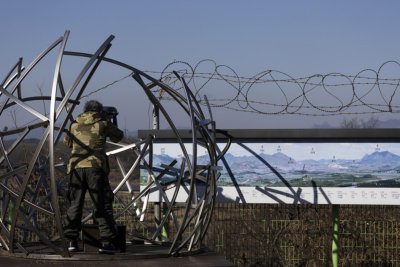
A man looks through binoculars toward the North Korean side of the border from the Tongilchon Village near the Demilitarised Zone (DMZ) in Paju, Gyeonggi-do province, South Korea, 25 December 2025. According to South Korea’s Joint Chiefs of Staff (JCS), North Korea launched a test firing of new anti-air missiles toward the East Sea on 24 December. File. JEON HEON-KYUN / EPA

Feb. 6 (Asia Today) — South Korea’s Defense Ministry said Thursday it is consulting with the United Nations Command on ways to manage the Demilitarized Zone more effectively.

A ministry official told reporters that discussions on improving and streamlining DMZ management have been under way at the working level since early this year, following the inauguration of Defense Minister Ahn Kyu-baek.

Media reports earlier indicated that the ministry has proposed a revised jurisdictional arrangement within the southern section of the DMZ. Under the proposal, areas north of the existing fence would remain under the UN Command’s authority, while areas south of the fence would be managed by the South Korean military.

The DMZ extends 2 kilometers south of the Military Demarcation Line, forming the southern DMZ zone. Although the fence was originally intended to follow the Southern Limit Line marking that boundary, it was installed slightly farther north to facilitate surveillance and guard operations against North Korea.

As a result, the area south of the fence accounts for about 30% of the southern DMZ zone, according to the ministry.

The Defense Ministry is expected to raise the issue of DMZ management formally with the U.S. side, which holds command authority over the UN Command, later this year. Officials said Seoul has also proposed addressing the issue through bilateral defense consultative frameworks, including the Korea-U.S. Integrated Defense Dialogue and the Security Consultative Meeting.

The ministry emphasized that discussions with the UN Command remain at an early, working-level stage. “We will provide further explanations as talks progress,” the official said.

— Reported by Asia Today; translated by UPI

© Asia Today. Unauthorized reproduction or redistribution prohibited.

Original Korean report: https://www.asiatoday.co.kr/kn/view.php?key=20260206010002476

Source link

Let’s Talk About All The Things We Did And Didn’t Cover This Week

Welcome to Bunker Talk. This is a weekend open discussion post for the best commenting crew on the net, in which we can chat about all the stuff that went on this week that we didn’t cover. We can also talk about the stuff we did or whatever else grabs your interest. In other words, it’s an off-topic thread.

This week’s second caption reads:

NANTWICH, ENGLAND – MAY 24: A general view outside of the former RAF Hack Green secret nuclear bunker on May 24, 2023 in Nantwich, England. Hack Green played a central role in the defence of Britain for almost sixty years. It was chosen during WW2 to protect the land between Birmingham and Liverpool from hostile attack and as a location for the new RADAR equipment. The bunker went on to be used for shelter and protection during the Cold War. As relations between East and West thawed many of the UK’s nuclear bunkers were sold off. The Secret Bunker is now privately owned by the Siebert family and is run as a museum trust. (Photo by Christopher Furlong/Getty Images)

Also, a reminder:

Prime Directives!

  • If you want to talk politics, do so respectfully and know that there’s always somebody that isn’t going to agree with you. 
  • If you have political differences, hash it out respectfully, stick to the facts, and no childish name-calling or personal attacks of any kind. If you can’t handle yourself in that manner, then please, discuss virtually anything else.
  • No drive-by garbage political memes. No conspiracy theory rants. Links to crackpot sites will be axed, too. Trolling and shitposting will not be tolerated. No obsessive behavior about other users. Just don’t interact with folks you don’t like. 
  • Do not be a sucker and feed trolls! That’s as much on you as on them. Use the mute button if you don’t like what you see.  
  • So unless you have something of quality to say, know how to treat people with respect, understand that everyone isn’t going to subscribe to your exact same worldview, and have come to terms with the reality that there is no perfect solution when it comes to moderation of a community like this, it’s probably best to just move on. 
  • Finally, as always, report offenders, please. This doesn’t mean reporting people who don’t share your political views, but we really need your help in this regard.

Tyler’s passion is the study of military technology, strategy, and foreign policy and he has fostered a dominant voice on those topics in the defense media space. He was the creator of the hugely popular defense site Foxtrot Alpha before developing The War Zone.


Source link

How the ‘Lowry effect’ is rejuvenating Salford and Manchester: a tour of the artist’s old haunts and new shrines | Manchester holidays

My nan had one in her downstairs loo. An LS Lowry print, that is. It showed a street scene: 100-odd people, a few dogs, some mills in the background. I remember liking the work mostly because I could see myself in it, in a way that I couldn’t when faced with paintings of fruit or water lilies. I’ve had a soft spot for the painter ever since, and to mark the 50th anniversary of his passing, I travelled up to Manchester for a Lowry-themed break.

My first stop was the Manchester Art Gallery on Mosley Street, where a number of his works hang alongside those of his mentor, the French impressionist Pierre Adolphe Valette (Lowry took evening classes with Valette while working as a rent collector).

Each of the paintings on show, whether of a street or park or lonely road, hints at a shared experience. They are more than the sum of their parts, more than mere matchsticks. Detractors bemoan Lowry’s lack of technique, but for me that’s rather like dismissing Gavin & Stacey for not containing enough big words.

With the rain falling heavily, I found refuge in Sam’s Chop House, down an alley off Cross Street. The pub-restaurant has been going since 1868, and was a bolthole for Lowry, who sits still at the bar, set in bronze. I leant on the man as I saw off a pint, then made a fool of myself by trying to get a selfie with the pair of us in it. Lowry was too large for the frame.

A statue of Lowry can be found propping up the bar in Sam’s Chop House. Photograph: Wirestock, Inc/Alamy

I crossed the River Irwell and entered Salford, which has a unique identity and is a city in its own right – not just Manchester’s bit on the side, as is routinely reported.

Alongside the Irwell, just a few yards into Salford, stands The Lowry hotel, which was initially owned by Sir Rocco Forte, whose hotelier father was a Lowry enthusiast. In the hotel’s gym, I realised that the music of the Smiths isn’t conducive to a workout. But on the treadmill I caught a Morrissey lyric about it taking “strength to be gentle”, and it made me think of Lowry, a man brave enough to stick to his everyday scenes at a time arty types in London were calling for more elevated fare.

I was collected from the hotel by John Consterdine, a local legend who does tours of the region in an electric black cab, including one focused on Lowry. We started at Lowry’s endpoint, Southern Cemetery, where the painter has lain since perishing of pneumonia in 1976, at the age of 88. His resting place is marked by a modest stone cross and adorned with paintbrushes. It is shared, fittingly, with his overbearing mother.

The writer with taxi tour guide John Consterdine outside the Lowry centre. Photograph: Scott Antcliffe

Next, we drove out to a part of town known as Victoria Park. Once a gated community for middle-class Victorians, it’s where Lowry grew up. The house at 14 Pine Grove offers no hint that he lived here until the age of 22, at which point the family were forced to move to Pendlebury, a deprived district of Salford. The relocation was a fall from grace, one that Lowry’s mother would never recover from.

Lowry did adapt to his new surroundings, however. Indeed, it was here that he discovered his unlikely muse – Manchester’s industrial landscape – and went to work on the down-to-earth scenes that he would become known for. Again, the house (117 Station Road) is unmarked. I’m tempted to consider this regrettable, but it’s probably what Lowry would have wanted. The artist refused a knighthood in 1968, and holds the record for most honours declined, turning down five in his lifetime.

After a brief stop at Peel Park, which Lowry painted several times, John dropped me at Salford Quays, which would have been as busy as a box of frogs back in the day, before the bottom fell out of the cotton market. Salford was affected badly by the slump and the city entered a long, deep depression, soundtracked by Joy Division. The docks were a wasteland, renewal a pipe dream.

Enter Lowry. Or rather, the Lowry: a theatre and gallery complex, conceived by Salford councillors in the late 1980s, who hoped an arts centre would rejuvenate the area. It opened in 2000 and set off a chain reaction. London’s Imperial War Museum erected a northern outpost; then the BBC moved to MediaCityUK and told Gary Lineker he’d be dipping his prawns in gravy henceforth. By the time ITV and Corrie moved in, in 2013, Salford Quays was becoming a tourist, retail, residential and leisure hub.

At the heart of it was the Lowry, whose halls had been decked with the vast collection of Lowry paintings the local council had been snapping up over the years.

I started with a new immersive experience called Lowry 360. I entered a space the size of a squash court, each side and surface alive with Lowry’s artwork – bobbies on the beat, bicycles on the move, matchsticks a go-go – the whole thing elevated by a voiceover from Sophie Willan, star of the sitcom Alma’s Not Normal. By animating Lowry in this way, the paintings grow to their subjects’ true height, becoming entire worlds. This is Lowry in the round, and it works like a dream.

Going to the Match, one of Lowry’s most famous works. Photograph: The estate of LS Lowry

I moved on to the paintings, which felt more alive off the back of the animation. Centre stage is Going to the Match (1953), one of his most famous works featuring signature “matchstick men”, which shows a crowd on their way to a Bolton Wanderers game.

The painting has been on quite the journey. When the Lowry opened, it was offered to the gallery on long-term loan by its then owners, the Professional Footballers’ Association. Twenty years later, the PFA suddenly asked for the painting back, because it wanted to flog it at auction. The Lowry was gutted, knowing its prized possession would be lost for good.

Enter Andrew Law, a state school lad from Stockport and the sitting CEO of a global hedge fund. He wrote the Lowry a blank cheque and told it to acquire the painting. It did so – for £7.8m. Someone buy that man a shandy!

I could bang on about each of the paintings on show at the Lowry, but suffice to say that the whole range is here: mills, streets, churches, parks, a girl in a corset and the deep blue sea. Despite the received wisdom, Lowry is no one-trick pony. When you’ve seen one, you haven’t seen them all.

Not just matchstick men – the pictures on display show Lowry had range. Photograph: Shaw and Shaw

It was time to go to the match. Manchester United were at home to Bournemouth that evening, so off I went to the “Theatre of Dreams”. I took up a position behind the East Stand, part of a thickening congregation as kick-off approached: kids on shoulders, a lady hawking scarves, coppers policing Matt Busby Way.

Not having a ticket, I withdrew to Hotel Football, within earshot of the ground. After the game I climbed to the top and looked towards the skyline of Salford and Manchester.

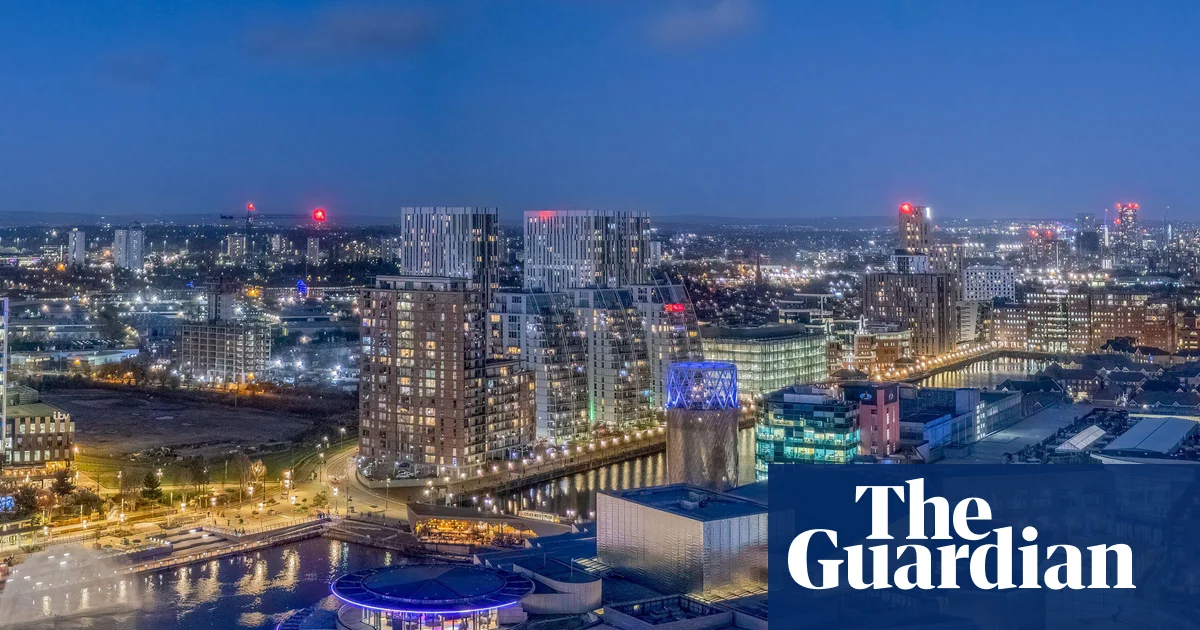
It was some view: the skyscrapers of New Jackson, the bright cluster of MediaCity, the dark lifted by countless northern lights. There wasn’t a chimney in sight, but I fancy Lowry would have captured the scene nicely nonetheless. He might have added a figure or two – a pair of window cleaners perhaps, harnessed and up high, braving the weather, buffing the glass, improving perspective, allowing others to see.

The trip was supported by The Lowry hotel, which has doubles from £162, room-only. Visit manchestertaxitours.co.uk to enquire about John Consterdine’s tours. Manchester Art Gallery and the Lowry have free entry

Ben Aitken’s new book is Sh*tty Breaks: A Celebration of Unsung Cities (Icon, £18.99). To support the Guardian, order your copy at guardianbookshop.com. Delivery charges may apply

Source link

‘The Love That Remains’ review: Icelandic domestic drama reinvents the form

The gorgeous, quirky and melancholy “The Love That Remains,” from Icelandic filmmaker Hylnur Pálmason (“Godland”), opens with an exhilarating shot from inside a long, empty seaside building, from where we can see the roof suddenly wrenched off by some exterior force. As it hovers in the air above, we get to consider the two parts of this one-time whole and how the light changes inside this deconstructed space.

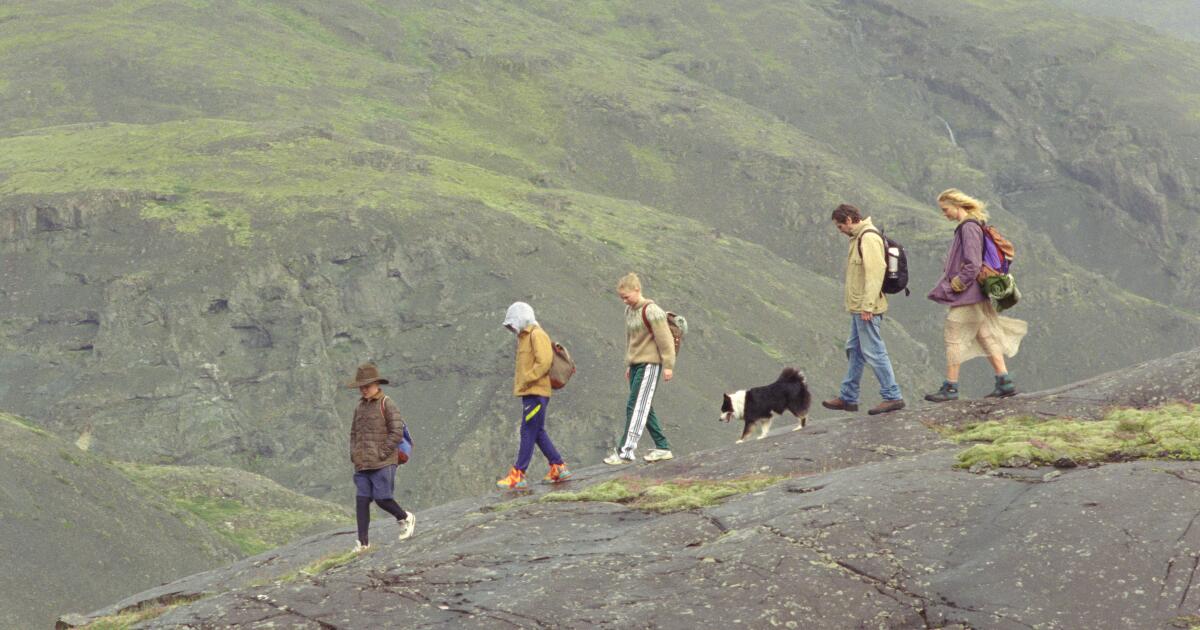
In one respect, that’s the whole of the movie encapsulated, as we encounter a family of five living in the wake of a separation. Visual artist Anna (Saga Garðarsdóttir) looks to assert herself while still living in the rural home she shared with her teenage sweetheart. The increasing alienation leaves fisherman Magnús (Sverrir Guðnason) living offshore on a big trawler as his hold on domestic security slips. Their kids, meanwhile — teenage Ída and twin boys Grímur and Þorgils (the trio played by director Pálmason’s own children) — exhibit a healthy absorption of the circumstances, meeting moments of togetherness with plenty of humor and spirit.

What we glean of the past comes from the fragmented present, as if we’re leafing through a stranger’s exquisitely curated album (there’s only Harry Hunt’s piano score for sad commentary). Elsewhere we see that home-cooked meals, chores and foraging excursions occasionally bring this fractured family back together. But when Magnus pushes to stay for a while, Anna firmly claims her independence.

While apart, their working lives — his at sea, hers on land — speak to a confluence of the elemental and the man-made. Pálmason, who serves as his own cinematographer (and a great one with the 4:3 framing), revels in the sweep and heft of deep-sea fishing, a seasonal trade that gives purpose to Magnus’ days and nights but also fosters an increasingly unwanted solitude. Anna, meanwhile, devotes herself to earth art, turning machine-lasered iron cutouts laid on white sheets in the open air into large-scale, rust-patterned pieces. Getting her work appreciated, however, is another matter. In one painfully funny sequence, a visiting gallerist (and gasbag) barely seems to care about her art, showing more interest in a goose’s nest that has materialized in an enclosure.

Is love another natural element susceptible to age and wear? Across a running time tied to the shifting seasons, pocked by images of breathtaking beauty, Pálmason is after a feeling that only patient observance yields: a lasting reality about the passing of relationships. One of the director’s frequent visual cutaways is to a knight-outfitted dummy the children build on a picturesque spot, lashed to a stake. It’s an indelibly amusing and heartbreaking totem, suggesting play and suffering, and eventually manifesting wounds both real and internalized. (The director’s 2022 short “Nest,” which captures the building of a tree house over a year, is a precursor to his temporal approach to this feature.)

On the heels of Pálmason’s masterful “Godland,” a 19th century colonizer epic of faith and conquest that couldn’t be more different, “The Love That Remains” nevertheless positions this filmmaker as a gifted craftsman of adult storybooks, no matter the era or scope. This is a delicate, confidently imagined fiction made with the eyes of a naturalist, the heart of a believer in family, and a sensibility with room for both the Pythonesque and the Lynchian.

‘The Love That Remains’

In Icelandic and English, with subtitles

Not rated

Running time: 1 hour, 49 minutes

Playing: Opens Friday, Feb. 6 at Laemmle Royal and Laemmle Glendale

Source link

L.A. County Supervisor Lindsey Horvath won’t run for L.A. mayor, ending weeks of speculation

Lindsey Horvath will not run for Los Angeles mayor, becoming the latest political heavyweight to decide against a challenge to incumbent Karen Bass.

Horvath, who as an L.A. County supervisor represents 2 million people in a sprawling Westside and San Fernando Valley district, ended weeks of speculation about her political intentions, saying her work in the county “is not finished.”

“Over these past few months, you have shown me all the reasons you love Los Angeles —and why it’s worth fighting for,” Horvath said Friday in a statement. “I am grateful to the many leaders, organizations, and every single Angeleno who urged me to run for Mayor of Los Angeles.”

Horvath’s announcement, issued the night before the deadline for candidates to file, comes days after former L.A. schools superintendent Austin Beutner ended his mayoral campaign, citing the death of his 22-year-old daughter. Real estate developer Rick Caruso also removed himself from contention, saying for a second time Thursday that he would not run.

The filing period for mayoral candidates in the June 2 primary closes at noon on Saturday.

Horvath, 43, has been one of the mayor’s most outspoken critics over the past year, assailing her record on homelessness and last year’s Palisades fire, which destroyed thousands of homes and left 12 people dead. On social media, Horvath stoked speculation about her political future while calling the city’s record on homelessness “indefensible.”

Bass, in turn, has criticized county officials for pulling hundreds of millions of dollars out of a city-county agency on homelessness — a move spearheaded by Horvath — and into a new county agency. More recently, the mayor spoke out against the county’s plan to cut $200 million in homeless services.

Bass, 72, still faces several other challengers from across the political spectrum.

Reality TV star Spencer Pratt, a Republican, has received praise from an array of Trump supporters, including Riverside County Sheriff Chad Bianco and U.S. Sen. Rick Scott, of Florida. Pratt has focused heavily on the city’s handling of the fire, which destroyed his home.

Democratic socialist Rae Huang is running against the mayor from her political left. Huang has called for more public housing and for a reduction in the number of police officers, with the cost savings poured into other city services.

Brentwood tech entrepreneur Adam Miller, who describes himself as a lifelong Democrat, said the city is on a downward trajectory and needs stronger management. The 56-year-old nonprofit executive plans to tap his personal wealth to jump-start his campaign.

Also in the race is Asaad Alnajjar, an employee of the Bureau of Street Lighting who sits on the Porter Ranch Neighborhood Council. Alnajjar, who has already loaned his campaign $80,000, said he would do a better job than Bass at running the city.

“I’m a leader. She’s a manager. That’s the difference,” said Alnajjar, 61.

With so many candidates in the mix, Bass and her political team do not expect she will clear the 50% bar to avoid a November runoff.

Bass has been running on her record, touting a major drop in homicides and reductions in street homelessness since she took office in 2022. She has talked up her efforts to speed up the approval of affordable housing and permits for rebuilding projects in Pacific Palisades.

The mayor has positioned herself as a check on Trump’s agenda. During last summer’s immigration raids in Los Angeles, she regularly called on the president to end the crackdown and remove the California National Guard from the city.

From the beginning, a mayoral run would have been a risky move for Horvath, who is not expected to face any major challengers to her own bid for reelection.

Horvath would have had to forfeit her seat to run against Bass, while facing a tight timeline for fundraising. Her campaign had already scheduled a reelection fundraiser for next week — after the filing deadline for mayoral candidates.

In political circles, Horvath is viewed as a strong candidate in 2028 for county chief executive, an elected office created through a ballot measure that Horvath championed.

The will-she-or-won’t-she events of the past week elevated Horvath’s political profile, as she aired her criticisms of the mayor on CNN and other news shows.

Relations between Bass and Horvath have been chilly at least since the Palisades fire broke out. The two were at odds over the press conferences that were held to update the public on the disaster and on efforts to reopen the burn area to traffic.

The relationship deteriorated further after Horvath and her colleagues voted to shift hundreds of millions of dollars out of the Los Angeles Homeless Services Authority, a city-county partnership, and into a new county agency on homelessness.

Horvath, on social media, accused Bass of putting out “misinformation” about the new county agency. Bass, in turn, warned the county’s actions could cause the city to backslide in its fight against homelessness.

Horvath has been in elected office on and off since 2009, when she joined the West Hollywood City Council. She left the council in 2011, then rejoined in 2015, staying for about seven years.

In 2022, Horvath won her supervisorial seat, defeating former Assembly Speaker Bob Hertzberg, a political veteran.

Had she entered the race, Horvath would have faced questions about an array of issues bedeviling the county, including a $4-billion legal payout over sexual abuse that was later marred by allegations of fraud.

She was also a major force behind Measure G, a 2024 ballot measure that will expand the number of county supervisors and create the county CEO position but also is on track to inadvertently repeal a criminal justice reform measure passed by voters in the wake of the police murder of George Floyd in Minneapolis.

Source link

Granit Xhaka on his Arsenal fallout, Sunderland and success in Germany

Kelly Somers: What’s been the toughest point in your career?

Granit Xhaka: I have two tough moments. The first one was when I moved for the first time away from my family at nearly 19 to Germany. It was very difficult for me. Everyone knows how close I am to my family and to be away from them was hard. I didn’t get the minutes I wanted [on the pitch] and I wanted to leave in January after six months, but I had my dad behind me. He said: ‘If you walk now, you will always walk away, so head down and just work.’ I did, and everything changed.

The second part is not a big secret. It was 2019 when I had this… I call it a misunderstanding… with the fans of Arsenal. Two moments where I think that I became stronger and better because it’s part of a process. It’s part of writing the whole history. On one side, very bad. On one side, I was lucky to have it.

Kelly: Now you’re back in the Premier League, have you had an opportunity to reflect on your whole period at Arsenal? Because you had some incredible highs as well as some really difficult moments…

Granit: In general, I think people just think about this moment in 2019. But I came in 2016, so to be part of a football club for seven years makes me proud… it’s not easy to be on this level for seven years. And, of course, when I left Arsenal it was a hard decision for myself and for my family because we were happy there. But I got another offer on the table where I was thinking more far [ahead] than in the moment. To be honest, I didn’t expect to be back in the Premier League after two years again. This was not the plan for myself, or for our family.

Kelly: So you never wanted to come back?

Granit: It’s not that I didn’t want to, but it wasn’t planned. When I moved from Arsenal, I signed a five-year contract at Leverkusen. So everything was planned around what happens after five years. But I always say in football, you never know where you are tomorrow.

Kelly: Why did you come back then?

Granit: Even the people closest to me were saying: ‘Why are you going back to the Premier League to join Sunderland?’ I came back because I love the challenge and I had the feeling I need a new challenge. After two years in Germany, where in the first year we won nearly everything… unbeaten in the Bundesliga, won the cup, lost the final of Europa League, which was very painful. I just had the feeling with the owner when I spoke with them – with the club, with the coach – this is the right club for me, because the people are very humble. It’s a small city like where I grew up. I just wanted to come back in a reality which I believe is the right direction for myself, for my family. I’m just happy that everything at the moment is going how I wanted it to.

Kelly: You must have expected it to go well because otherwise you wouldn’t have come here. But has it exceeded your expectations?

Granit: The first thing I said to the club was: ‘I’m not coming here to play in the Premier League for one year and to go down, because I’m leaving a Champions League club. I’m coming here to to push this project.’

Kelly: I find it fascinating, because you must have had other offers to come back to the Premier League…

Granit: It was a busy summer to be honest! I’m 33, I spoke with my brother and I said: ‘I never have had so many offers!’ The summer was very busy because every day someone else came. But I decided for myself – after 20 minutes on the call with the owner – I wanted to go to Sunderland. I was so sure.

Source link

European Union says video app TikTok must change ‘addictive’ design | Technology News

TikTok calls European Commission probe ‘meritless’, pledges to challenge findings the video platform harms minors.

Authorities in the European Union said that the video-sharing platform TikTok is in breach of online content regulations, warning the company to change “addictive” features in order to protect minors from compulsive use.

The European Commission shared the preliminary conclusions of a probe into TikTok on Friday, stating that features such as infinite scroll, autoplay, push notifications, and a personalised recommendation algorithm encouraged addiction.

Recommended Stories

list of 3 itemsend of list

“TikTok has to take actions and they have to change the design of their service in Europe to protect our minors,” EU tech chief Henna Virkkunen told reporters.

European Commission spokesperson Thomas Regnier said the “measures that TikTok has in place are simply not enough”.

“These features lead to the compulsive use of the app, especially for our kids, and this poses major risks to their mental health and wellbeing,” Regnier said, stating that the app is in violation of the Digital Services Act.

The EU regulator has threatened TikTok with a potential fine of as much as 6 percent of the global turnover of ByteDance, the platform’s owner.

TikTok slammed the findings, saying they are without basis.

“The Commission’s preliminary findings present a categorically false and entirely meritless depiction of our platform, and we will take whatever steps are necessary to challenge these findings,” a spokesperson for TikTok said.

The probe comes as EU countries are seeking greater restrictions on powerful tech and social media companies, often with the stated goal of protecting young users.

TikTok stands out among competitors for an algorithm able to craft a precise understanding of the users’ interests, directing related content into their feed.

The investigation into TikTok was first opened in February 2024, with Regnier citing a series of “alarming” statistics compiled during the course of the investigation.

He stated that the app is the most-used social media platform after midnight by children between the ages of 13 and 18, and that 7 percent of children between the ages of 12 and 15 spend four to five hours on the app every day.


Source link

Riad Tarabel Marrakech review: The perfect winter sun weekend city break in Morocco

After some late winter sun? This colourful Moroccan city should be top of your list to explore, with its magnificent palaces, stunning gardens and bustling souks

With its famous medina now a UNESCO World Heritage Site, a labyrinth of souks to explore and luxury riads to stay at, there’s never been a better time to head to Marrakech. Whether you’re looking for a spot of winter sun or want to soak up the culture later on in the year, you won’t be disappointed. We were surprised by how much was on offer – and in fact, your only problem is likely to be not having enough time to explore.

Where to stay in Marrakech

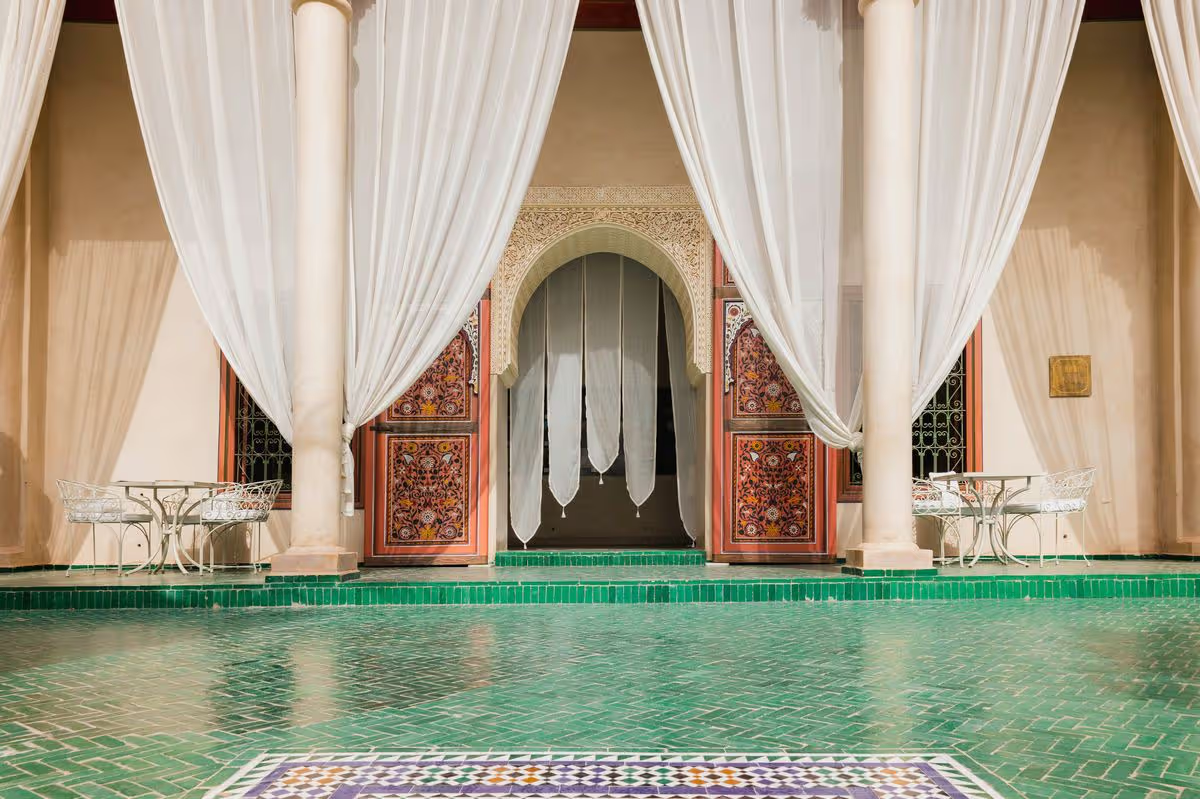
Hidden down a little alleyway, you’d never find Tarabel Marrakech unless you knew it was there, which makes it the perfect place to rest and relax after a long day of exploring. Upon arrival you step into a courtyard filled with orange trees and are welcomed with fresh mint tea, served with the most delicious biscuits. Looks can be deceiving – you may think the riad is small but there are three hid- den courtyards and cosy alcoves to unwind in. One of our favourite features was the mirror which opened up to reveal the hammam and spa, where you can indulge in a much-deserved massage or facial.

The hotel is made up of just 10 individually designed rooms and suites, meaning peace and quiet is guaranteed. If you can pull yourself away from your room, take a dip in the outdoor pool or recline in the sun on one of several roof terraces.

While the hotel doesn’t have a restaurant, it does have a dedicated kitchen team who are on hand to ensure you get to sample the best Marrakech has to offer. We enjoyed a romantic candlelit dinner on one of the many terraces, which was the perfect start to our trip. Our three-course Moroccan meal was bursting with flavour, starting with a trio of salads and sweet meat samosas before tucking into a chicken tagine with a citrus infusion. To finish it was a heavenly molten chocolate cake accompanied by sliced orange with a dusting of cinnamon.

The kitchen is also open for lunch, but it was breakfast that stole the show – we still think about the fluffy pancakes with honey and fresh fruit juice served in the warmth of the morning sun on the roof terrace.

What to do in Marrakech

We’d never been to Marrakech before but had a long list of spots we wanted to visit – but with just two days to pack it all in, we had to be decisive. Just a five minute walk from the hotel and amongst the hustle and bustle of the medina is Le Jardin Secret, a small but stunning garden filled with plants from across the continent. Stop and spend a minute or two under the pergola that sits in the centre of the gardens.

If you love fashion then be sure to head to Le Jardin Majorelle and the Yves Saint Laurent Museum. The garden is an oasis of calm and will have you stopping to take photos at every turn. Make sure you book tickets online to avoid disappointment, and get an early slot to avoid crowds.

And if you love architecture then Bahia Palace is a must. You’ll be blown away by the stunning tile designs on the floors and walls along with the beautifully painted ceilings and wooden doors. Our favourite spot however was Dar El Bacha Museum, which is located just minutes from Tarabel. Set back from the street, you’ll be open mouthed as you step into the courtyard with its intricate tiled floors, handpainted ceiling and the garden full of pomegranate trees.

Stop for a drink at Bacha Coffee, which is hidden inside the museum (although be warned, you may be waiting a while for a seat).

And finally, you can’t spend time in Marrakech without heading to the souk. The little alleyways are lined with small shops selling everything from jewellery and leather goods to spices and rugs. It’s a visual feast and you can easily lose hours exploring.

Hidden hotspot

One of our favourite finds while exploring the city was Ice Mamman. Once you’re finished haggling in the souks or just tired from exploring, this ice cream parlour with a roof terrace has everything from sorbets, snacks and smoothies for you to enjoy. The winning flavour has to be the chocolate ice cream – absolutely delicious!

How much does it cost?

Rooms at Tarabel Marrakech cost around €350 per night including breakfast. Marrakech is served by direct flights with BA, easyJet, Jet2, Ryanair, TUI and WIZZ Air from various locations across the UK, and Aer Lingus and Ryanair from Ireland.

Source link