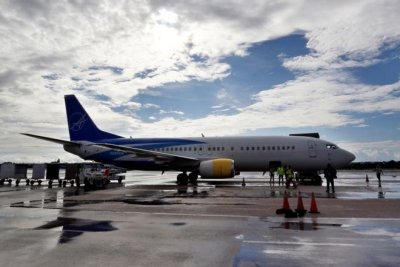
An operational notice from the international NOTAM system Sunday confirmed that Havana’s José Martí international airport will not have Jet A-1 fuel, the standard for commercial aviation, for one month between Tuesday and March 11. File Photo by Ernesto Mastrascusa/EPA
Feb. 9 (UPI) — The fuel shortage in Cuba began to simultaneously impact air transportation and tourism after an international aviation alert reported that Havana’s José Martí airport will not have fuel for one month.
The government also began to close hotels and relocate tourists as part of an emergency plan in the face of one of the worst energy crises in the island’s history, worsened by the end of oil shipments from Venezuela and pressure from the government of Donald Trump on crude oil supplies.
An operational notice from the international NOTAM system Sunday confirmed that Havana’s José Martí international airport will not have Jet A-1 fuel, the standard for commercial aviation, for one month between Tuesday and March 11, digital outlet CiberCuba reported.
The notification not only warns of the fuel shortage, but also of temporary limitations in landing aid systems, in addition to the inoperability of the runway visual range system, which is used to measure visibility when weather conditions are unfavorable.
The restriction is not limited to the capital. Similar notifications indicate fuel shortages at the country’s nine other airports.
Aviation authorities warned airlines that reserves could run out within a short period if supplies are not restored.
The measure compromises commercial, charter, cargo and executive aviation flights, and forces companies to arrive with extra fuel, make refueling stopovers in other countries or reschedule operations, reported Cuba Noticias 360.
This situation contrasts with recent statements by Transport Minister Eduardo Rodríguez Dávila, who had said operations at ports and airports remain guaranteed.
So far, international airlines have not communicated how they will deal with the contingency.
The impact is projected directly on tourism, the island’s main source of foreign currency.
Cancellations, delays and reduced air connectivity threaten the arrival of visitors from key markets such as Canada, Russia and Europe, in a context in which traveler confidence already shows signs of deterioration.
According to official figures, the arrival of international tourists to Cuba fell to 1.8 million in 2025, 17.8% less than in 2024. The result fell well short of the government target of 2.6 million visitors and marked one of the lowest records in more than two decades.
The energy crisis has as its backdrop the interruption of oil supplies from Venezuela, the island’s main supplier, following the capture of Nicolas Maduro.
This was compounded by the recent decision of the United States to declare a national emergency regarding Cuba and warn that it could impose tariffs on countries that supply oil to the Caribbean nation, in an escalation of pressure that has further complicated Havana’s access to fuel.
In parallel with the airport problem, the government has begun to close hotels in key tourist destinations and relocating foreign guests. The measure is part of an emergency plan to reduce energy consumption and reorganize facilities.
At least eight hotels closed in Cuba’s main tourist destinations and their clients are being relocated to other resorts amid the worsening national crisis and the shortage of fuel and supplies, Diario de Cuba confirmed from the island.
The hotel closures are occurring in the middle of the high season but amid travel advisories over the deterioration of internal conditions. The reduction of flights, energy uncertainty and hotel reorganization add pressure to an industry that is strategic for the Cuban economy.
Vice Prime Minister and Minister of Foreign Trade and Foreign Investment Oscar Pérez-Oliva Fraga said on state television that the executive branch “has designed a plan in tourism to reduce energy consumption, compact tourist facilities and take advantage of the high season,” digital outlet Cuba LLama reported.
Sources from the sector indicated that destinations such as Varadero and the northern cays concentrate much of these measures, where international chains operate.
Authorities are maintaining an emergency plan that includes broader energy restrictions, a reduction of state activities and measures to manage available fuel.
Cuban President Miguel Díaz-Canel said Thursday he was willing to initiate a negotiation process “without pressure” with the United States to help economic difficulties facing the island.
He acknowledged that the lack of Venezuelan oil has placed the country in a “complex” energy situation, affecting not only electricity generation, but also the population’s basic economic activities.
While the United States has sent more than $5.95 million in humanitarian aid managed by the Catholic Church, a measure criticized by Havana because of its “grossly opportunistic political purposes,” it has insisted on the blockade regarding hydrocarbons.
Meanwhile, countries have sent assistance. China was behind a financial package of about $81 million and a food shipment of 60,000 tons of rice in January. Mexico, sent two Navy vessels Sunday loaded with 800 tons of humanitarian aid.
In October 2001, two years into his presidency, Hugo Chávez made a trip to London to meet with then UK prime minister Tony Blair and other high-level officials.
Official records detail how the Venezuelan president’s proposed Hydrocarbons Law, a major restructuring of Venezuela’s oil industry, was high on the British agenda.
The law aimed to assert sovereignty over Venezuela’s resources by mandating at least 50% state ownership in mixed enterprises and increasing royalties on foreign oil interests.
This was a serious cause for concern for Britain, whose main interests in Venezuela centred on Shell, BP, and BG Group’s investments in the oil and gas industry.
“British companies have over $4bn already invested” in Venezuela, noted one Foreign Office official, with new investments of another $3bn planned for the oil industry.
Blair was thus instructed by advisers to impress on Chávez that the UK government was “following your proposed hydrocarbons legislation very closely”.
In private, Blair’s adviser and future MI6 chief John Sawers wrote that “the only reason for seeing him is to benefit British oil and gas companies”.
Sawers’ note drove at the core issue which had been guiding Britain’s relations with Venezuela for over a century: oil.
Declassified has combed through dozens of files in the National Archives which expose how the UK government has repeatedly sought to thwart the nationalisation of oil in Venezuela since it was first discovered during the early twentieth century.
Working in partnership with Britain’s leading oil corporations, the Foreign Office has resorted to political pressure, propaganda activities, and covert operations to maintain control over Venezuela’s lucrative crude.
The origins of Britain’s interest in Venezuela’s oil
In 1912, Royal Dutch-Shell began operations in Venezuela and, two years later, the company – alongside US firm General Asphalt – discovered a petroleum field in the small town of Mene Grande.
George Bernard Reynolds, a geologist at Venezuelan Oil Concessions Limited (VOC), a Shell subsidiary, described the supplies as “enough to satisfy the most exacting”.
By 1920, the CIA reported that practically all of Venezuela’s oil production and its most promising concessions were held by Royal Dutch-Shell and two American companies, Jersey Standard (SOCNJ) and Gulf.
Indeed, Venezuelan oil controlled by Royal Dutch-Shell had increased by over 600% from 210,000 barrels in 1917 to 1,584,000 in 1921.
“Is there any other company more conclusively British than this”, asked Sir Marcus Samuel, chairman of the Shell Transport and Trading Company, in June 1915, “who have proved themselves more willing and able to serve the interests of the Empire?”
But foreign control over oil had serious consequences for Venezuela’s land and people.
In 1936, oil workers in Maracaibo called a general strike in response to low wages, poor living conditions and the association of oil firms with the late dictator, Juan Vicente Gómez. It lasted for 43 days, during which time oil production decreased by 39%.
In response, Venezuelan president General Eleazar López Contreras introduced a series of reforms to improve labour conditions.
This made him unpopular with the British and US oil executives, who were described by US ambassador Meredith Nicholson as belonging to “the old school of ‘imperialists’ who believed that might – in the business sense – was right”.
Venezuela’s oil nonetheless remained central to the British imperial project and, by the outbreak of World War Two, Venezuelan oil “took on particular significance within the British war effort as oil from the Middle East became less accessible following the closure of the Mediterranean in 1940”, according to research by academic Mark Seddon.
Officials therefore became increasingly worried about nationalisation in Latin America, particularly after foreign oil interests – including those of Shell – had been expropriated in Mexico in 1938.
That year, for instance, British diplomat John Balfour wrote: “We should do all we can to show that it is not in the interests of a Latin-American country like Mexico to eliminate British interests from participating in the exploitation of its oil resources”.
A dangerous opponent of capital
Concerns around nationalisation arose once again during the Rómulo Betancourt administration in the 1940s.
He was described by the Foreign Office in 1945 as “by far the most dangerous opponent of capital in Venezuela”, while the oil companies worried about his past support for communism.
These concerns proved overblown as Betancourt developed into a staunch anti-communist. According to a CIA file dated March 1948, Betancourt and his predecessor, Rómulo Gallegos, met to discuss “the proposed outlawing of the Communist Party in Venezuela.”
The first step, according to the document, “was the dismissal from the [oil workers union] Fedepetrol of all Communist Party petroleum syndicate delegates”.
Shell’s directors nonetheless responded positively to the military coup which toppled Betancourt in 1948.
They believed, as UK ambassador John H. Magowan noted in February 1949, that the new administration would “reverse the Betancourt tendency to hostility towards the ‘capitalists’ and ‘colonial’ powers”.
While US-owned SOCNJ had emerged as Venezuela’s main oil producer by this time, Shell remained the second most important player and, by 1950, the company had centralized its operations, building a modernist headquarters in northern Caracas.
The propaganda campaign
During the 1960s, as the shadow of the Cold War cast over Latin America, a propaganda unit within the Foreign Office secretly worked to protect Britain’s oil interests in Venezuela.
That unit, named the Information Research Department (IRD), had been set up in 1948 to collect information about communism and distribute it to contacts worldwide.
The goal was to build resilience against communist and other national liberation movements while cultivating foreign agents of influence such as journalists, politicians, military officers, and businessmen.
By 1961, the IRD viewed Venezuela as the third most important country in Latin America in light of the risk of left-wing “subversion” and Britain’s strategic stake in the country’s oil industry.
That year, the IRD worked with Britain’s intelligence services to promote a boycott of El Nacional, the largest newspaper in Venezuela, with the goal of forcing it “to abandon its campaign in favor of expropriating foreign companies and promoting communist agitation”.
The campaign not only had the backing of powerful conservative and anti-communist groups in Venezuela but also the foreign oil companies, who agreed to suspend their advertising in the newspaper.
By 1962, IRD officer Leslie Boas was able to boast that El Nacional had “changed its tone in a great way”, with the newspaper’s circulation also dropping from 70,000 to 45,000 per day.
Reactionary networks in Venezuela were also being covertly funded by Shell in this period, according to recently declassified files.
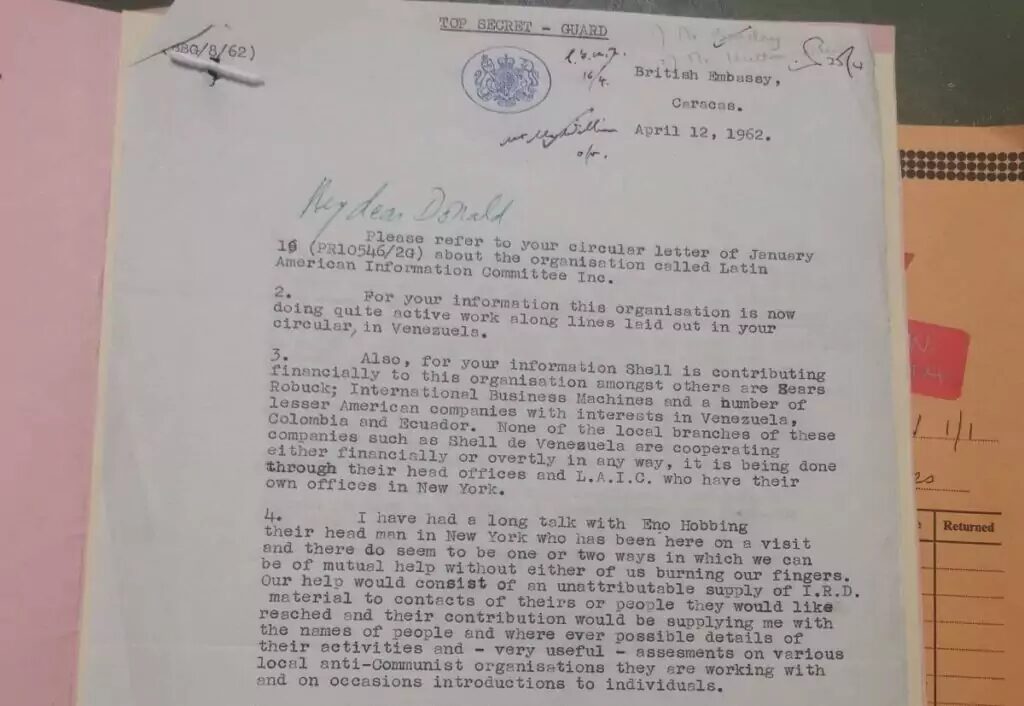
In April 1962, Boas wrote to IRD chief Donald Hopson about the Latin American Information Committee (LAIC) which was “now doing quite active work… in Venezuela”.
The first director of LAIC was Enno Hobbing, who divided his work between Time/Life magazine and the CIA and later played a role in Chile’s 1973 coup d’état.
Boas explained that he “had a long talk with Hobbing […] and there do seem to be one or two ways in which we can be of mutual help without either of us burning our fingers”.
A 1962 letter sent from Information Research Department officer Leslie Boas to his boss at the Foreign Office (National Archives)
Such help would include “an unattributable supply of IRD material to contacts” of LAIC in return for LAIC supplying Boas with access to and information about local anti-communist networks.
Remarkably, Boas disclosed that Shell was “contributing financially to” LAIC alongside US retailer Sears Roebuck and other “International Business Machines”.
He added that “none of the local branches of these companies such as Shell de Venezuela are cooperating either financially or overtly in any way, it is being done through their head offices and LAIC who have their own offices in New York”.
It was during this period that Shell and BP were also providing direct, “handsome” subsidies to the IRD to promote their oil interests across Latin America, the Middle East, and Africa.
Nationalisation rekindled
The IRD continued to promote Britain’s oil interests in Venezuela through the 1960s and 1970s, until the unit was closed down in 1977.
In a country assessment sheet for Venezuela, dated 1969, an IRD official noted how “we have considerable investments in the country, particularly those of Shell, whose fixed installations alone have been conservatively valued at £300 million”.
The official continued: “Shell’s operations in Venezuela play an important role in the company’s very substantial contribution in invisibles [earnings through intangible assets] to our balance of payments”, noting that Britain’s key objective was therefore “to protect our investments”.
Two years later, IRD field officer Ian Knight Smith wrote to London with concerns about how “the emotional issue of economic nationalism, always a potent force in a country whose main natural resources are largely in the hands of foreign companies, was [being] rekindled”.
Worse still, the Venezuelan president, Rafael Caldera, had “made his own contribution to the new nationalism – in the shape of a law nationalising all natural gas deposits”.
The IRD consequently prepared briefings “on communist instigation of charges against the international oil companies” to be shared with contacts across Venezuela.
In addition, the propaganda unit “cast around for material with which to brief IRD contacts who are in a position to influence government policy or legislation affecting foreign investments in Venezuela”.
Officials were particularly interested in commissioning a “well-researched paper on the positive aspects of foreign investment in developing countries, helping to counter the growing assumption, carefully fostered by the extreme left, that all foreign investment is basically suspect”.
It was within this context that the Foreign Office privately advised that “we should protect as far as we are able Shell’s continued access to Venezuelan oil”.
Share of the gravy
For all its efforts, the IRD was not able to turn the tide of nationalisation in Venezuela, with plans developed during the 1970s for the early reversion of foreign oil interests to the state.
Venezuelan oil was officially nationalised in 1976, with foreign companies including Shell being replaced by the state-owned Petróleos de Venezuela (PDVSA).
In 1976, President Carlos Andres Pérez and well-wishers celebrate as Venezuela’s oil industry is nationalised (Photo: Alamy)
But this was by no means the end of the road for Britain’s oil interests in Venezuela.
In a background briefing for a visit by Venezuelan president Carlos Andrés Pérez, dated November 1977, the Foreign Office observed that “Shell is still our largest single interest”.
The official added: “It should not be forgotten that despite nationalisation our largest commercial stake in this country is still Shell, and although they no longer, since nationalisation, produce oil here, they earn millions of dollars from their service and marketing contracts with their former company”.
The company also continued “to off-take very large volumes of Venezuelan oil for sale mostly in the US and Canada”.
Another official remarked upon the “furious activity of all European countries, including ourselves, in trying to get our share of Venezuela’s economic gravy”.
By 1978, the New York Times went so far as to say that Shell was “busier in Venezuela than before the oil industry was nationalized”.
‘Shell has been active‘
Even still, Britain’s oil firms wished to return to Venezuela’s oilfields.
Those hopes were stoked in the early 1990s by the “Oil Opening” of President Carlos Andrés Péres, whose austerity measures led to an explosion of poverty and street protests, but dashed once again by Chávez’ proposed Hydrocarbons Law in 2001.
In the lead-up to Chávez’ visit that year to London, Britain’s leading oil companies were once again in the prime minister’s ear about the projected impact on their interests.
Blair’s briefing noted unambiguously that UK and US companies were “concerned” about the oil reforms and wanted them watered down.
Days before the visit, Shell’s chairman Philip Watts offered suggestions on how Blair might handle Chávez.
Letter sent in 2001 from Shell chairman Philip Watts to the Foreign Office (National Archives)
“As you may have appreciated, Shell has been active in helping in the preparations for the visit through the Foreign Office”, Watts wrote.
“Considering the importance of the energy sector for both the Venezuelan and UK economies, I thought the PM may appreciate a small briefing on our… plans in Venezuela”, he added.
Those plans involved ameliorating the “uncertain investment climate” and softening the “fiscal and legal framework” in the country.
As part of the charm offensive, Watts also hosted a “farewell” banquet for Chávez, to which foreign secretary Jack Straw and other senior ministers were invited.
BP and BG Group also “registered their interest with No.10 about the visit”, with BP preparing “to put their case… forcefully” in favour of a meeting between the two leaders.
‘The Americans are concerned‘
The US government also weighed in on the matter.
On 18 October, an official in the British embassy in Washington wrote to London that “the Americans are concerned about the impact that the Hydrocarbons Law will have on investment in the energy sector”.
They continued: “The major oil companies, including BP, had all made clear that its tax and restrictive joint venture productions would hinder their operations”.
The US state department “thought it would be particularly useful for Chavez to hear these concerns in London, given his tendency to discount messages from the US”.
To this end, the George Bush administration hoped Blair would “talk sense into [Chávez] on the Hydrocarbons Law, where BP are among those who stand to lose”.
Blair hosts Chávez at Downing Street in October 2001 (Photo: Gerry Penny / Alamy)
Further pressure was applied by Gustavo Cisneros, a Venezuelan billionaire and media mogul who was introduced to Blair in 2000 by Daily Telegraph owner Conrad Black.
Sawers, Blair’s adviser, noted that Cisneros’ “sole message” for Blair “was that Chávez was a real danger to stability and free markets (and, of course, rich Venezuelans like himself)”.
A briefing document prepared by Cisneros, for instance, warned that “Chavez will likely react” to oil prices dropping “by lashing out at the private sector”.
Sawers viewed Cisneros with suspicion but broadly agreed that Chávez was objectionable. There was, he wrote, “a chance that the picture [with Chávez] at the front door [of Downing Street] would come back to haunt us”.
He continued: “This is one of the World’s tyrants whose hand I won’t have to shake”.
The coup against Chávez
A coup against Chávez broke out in April 2002, orchestrated by dissident military and political figures with support from Washington.
Pedro Carmona, an economist who was unconstitutionally appointed Venezuela’s president, quickly set about dismantling the country’s democracy and reversing Chávez’s oil reforms.
He happened to be in the offices of Cisneros, the mega mogul who had taken the opportunity to “pour poison” into Blair’s ears about Chávez, when the coup broke out.
The declassified files show how Britain quietly hoped the Carmona regime would be more accommodating to foreign interests while noting the unconstitutional nature of the coup.
“The Cabinet is strong on experience and business” and “hopefully its management capability will be much higher”, wrote the British embassy in Caracas.
The embassy was also informed by UK business leaders in Venezuela that “their operations should be back to normal by 15 April”, while Shell’s “production of oil was unaffected”.
At the same time, however, the Foreign Office was disturbed by the fact that “no one” had “ever elected” the Carmona regime.
“Venezuela may or may not have wanted to get rid of Chavez, but not necessarily to lose the other parts of their democratic system”, one official wrote. “The right-wing businessmen seem to have shot themselves in the foot”.
Notably, the UK government seemed to have some knowledge of Washington’s role in the events.
On 14 April, with Chávez imprisoned in a military barracks, the British embassy in Caracas cabled to London that the US ambassador had been spending “some hours in the Presidential Palace”.
“Please protect [the information]”, they instructed.
The opposition
The coup was short-lived.
Chávez was reinstated within 47 hours following a wave of popular mobilisations across Caracas.
With Chávez back at the helm, the Foreign Office quietly hoped that “the events of the last few days” would be seen as “a serious warning to change his ways”.
But the situation remained tense, with UK foreign secretary Jack Straw noting in July 2002 that Chávez’s position “remain[ed] shaky”.
The political opposition in Venezuela was seen by Whitehall as particularly intransigent, with Straw declaring that Chávez looks “positively resplendent compared with [them]”.
The Venezuelan opposition, Straw continued, “appear to be united, indeed motivated, by sheer indignation that someone like Chávez (not one of them and above all not white) should be in charge and have such a popular power base”.
An official in Britain’s embassy in Caracas similarly noted in 2002 that the Venezuela opposition “looks like a train that tried to breach a wall on one track in April and are now seeking to do the same on a slightly different track and at a slightly different angle”.
They added: “The opposition’s self-delusion is growing worse by the day: they claim alternately they are living in either a fascist or communist dictatorship”.
One of the key opposition figures in this period was María Corina Machado, with whom the UK government is currently in talks amid a renewed regime change campaign in Venezuela.
This year’s lineup of Oscar-nominated live-action shorts is as diverse as any in recent memory. From gritty political reality to absurdly cutting political commentary, tongue-in-cheek parody to touching, intimate drama (plus a moody adaptation of a Russian short story), voters have a wide selection from which to choose.
‘Butcher’s Stain’
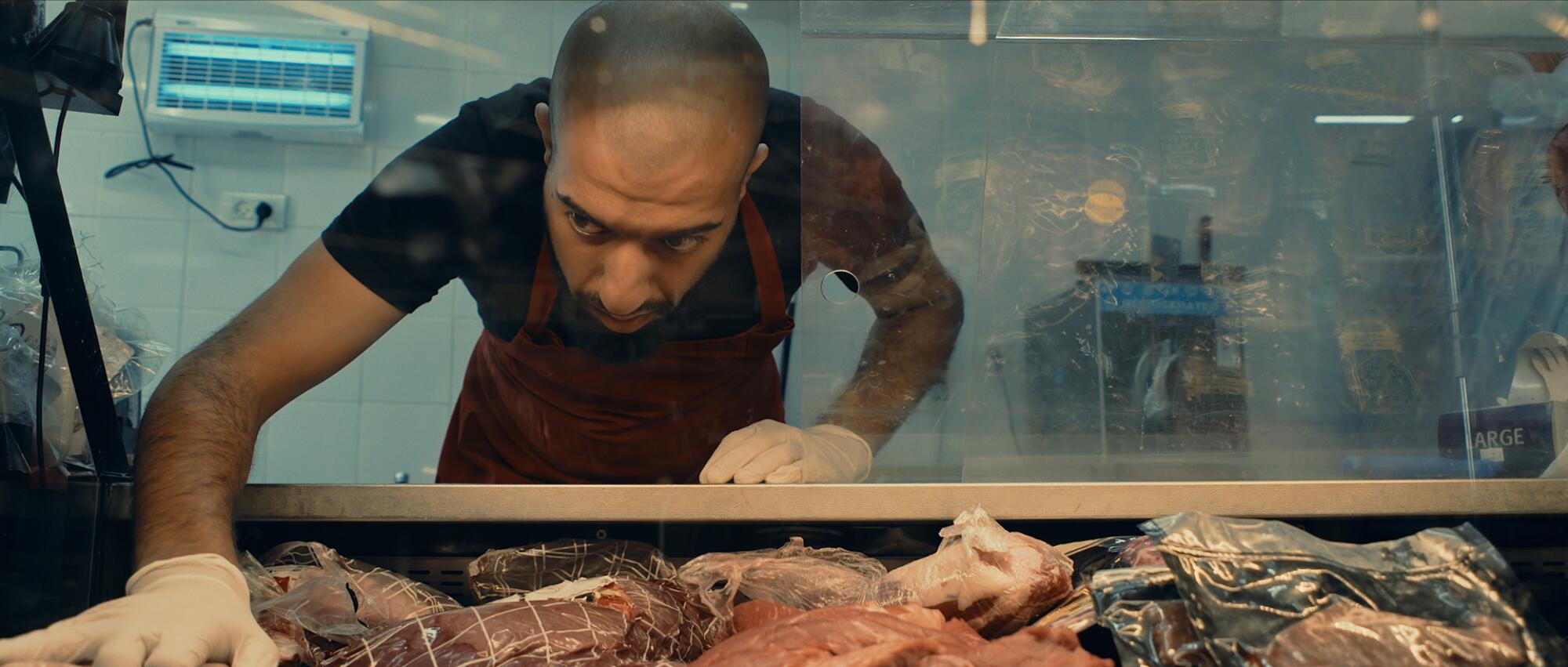
Following the horrific attacks of Oct. 7, 2023, a Palestinian butcher in an Israeli shop finds himself accused of defiling a tribute to the hostages.
“I worked at the supermarket, and I experienced the collective trauma everyone was going through,” says writer-director Meyer Levinson, but he also felt how much animus “was pointed to the Palestinians that were working at the supermarket … individuals who have nothing to do with anything that happened, especially like my [movie’s] character, who is an everyday, working-class guy, trying to get money for his family, and has nothing to do with politics.”
Levinson calls making the film, his first, “one of the greatest experiences of my life. The set of a student film is a magical place; people come there for free, for passion. You just have to get them a decent sandwich.
“There were Palestinians, Jewish Israelis, Palestinians within Israel on set. It was this sort of paradise where we could come together. I’ve learned so much from my Palestinian actors, who’ve taught me about their community.”
‘A Friend of Dorothy’
(Filthy Gorgeous Productions)
In Lee Knight’s film, a chance meeting between a young Black Englishman in the process of finding himself and an elderly, white Englishwoman blossoms into an unexpected kinship — one based on Knight’s experience.
“I had a unique friendship with an elderly neighbor,” says Knight. “Me and my husband looked after her. She had this huge passion for the arts that she didn’t get to explore; when she realized we were actors, it was a huge thing for her. We became very, very close.
“She told me she would hide gay men in the garden during the war” and help them during the time of England’s infamous Section 28 (“banning the ‘promotion’ of homosexuality,” Knight says). He says it was meaningful for her “to see an interracial, gay couple happy and safe in her lifetime. As a gay man, I loved being around women because they didn’t judge me.”
‘Jane Austen’s Period Drama’
A charming country hillside. A fetching lass in Regency garb and her paramour, confessing his ardor. And the equivalent of a needle scratch as he’s halted by the appearance of blood on her skirt. Yes, that’s what’s meant by “Period Drama.” How will Miss Estrogenia Talbot elucidate this conundrum to Mr. Dickley? And once comprehending, shall he go with the flow?
Co-writer and co-director Julia Aks (who plays Estrogenia) admits it was the titular pun that got her and co-writer and co-director Steve Pinder going, but, “As we followed the thread, it made me reflect on shame I maybe hadn’t thought about. And the more I talked to women about funny period stories, I found they had heartbreaking ones.”
The film addresses stigma surrounding menstruation and includes biologically accurate descriptions; educational groups have screened it. But foremost, this “Period Drama” is a comedy.
Pinder says, “When you hear people laugh and come to life watching it, and then come up to you afterward and look like they’re floating … that is just incredible.”
‘The Singers’
Sam A. Davis didn’t exactly love Ivan Turgenev’s short story “The Singers,” at first — “honestly, I nodded off a couple times,” he says. “But it sneaks up on you. These guys have this fleeting moment of connection.”
The film updates Turgenev’s 1850s Russia to contemporary America, but maintains the “Lower Depths” social stratum. The low-down dive bar is draped in painterly shadows inspired by Renaissance masters, the stale cigarette stench palpable. Then the notion of a singing contest arises, and life stirs.
Davis says, after reading the story, “This sort of kismet moment happened where I opened Instagram and the first video that popped up was Mike Yung singing in the subway station in New York City. I flashed on a modern adaptation, but starring viral singing sensations.”
He recruited them to play themselves without a formal script. “It was almost like casting and writing were one process … I wanted it to be a love letter to the underdog. You never know who you’re sitting next to at the bar.”
‘Two People Exchanging Saliva’
(Misia Films & Preromanbritain)
In bold black and white, we find ourselves in a luxurious French department store. In this world, items are paid for by receiving slaps to the face. And the crime of kissing is punishable by death, raising the stakes as a young sales assistant bonds with a regular customer.
“We were writing in late 2022 and there was the reintroduction of the ‘Don’t Say Gay’ law in Florida,” says co-writer and co-director Natalie Musteata. “In a sense, it presaged the moment that we’re living through; we’re all living in the fever dream of Florida. But other things were influencing us — the policing of queer love through history; you open your phone and see these women [in Iran] being shot at for taking off their hijabs.”
Co-writer and co-director Alexandre Singh says Oscar winner Barry Jenkins told them, on selecting the film for a program he curated at the Telluride Film Festival, “ ‘When I first watched this in 2024, it was surrealist, satirical, almost farcical. I couldn’t imagine how much more relevant it could become, in a scary way.’ ”
Bangladesh have requested that Pakistan end their planned boycott of their T20 World Cup match against India, opening the door for the fixture to be played on 15 February as scheduled.
The match, the biggest and most lucrative in cricket, has been in doubt since the Pakistan government advised its team not to take the field against their long-time rivals.
Prime Minister Shehbaz Sharif said that initial decision was made to “support” Bangladesh, who had a request for their matches to be moved out of India rejected and subsequently pulled out of the tournament.
“We are deeply moved by Pakistan’s efforts to go above and beyond in supporting Bangladesh during this period. Long may our brotherhood flourish,” he added.
The match is scheduled to take place in the city of Colombo in Sri Lanka, the co-hosts for the tournament with India.
Pakistan will forfeit the points from the group-stage match should it not be played but the team’s absence from the tournament would also have longer-term consequences for cricket.
It could lead to disputes over the ICC’s current rights deals and continued uncertainty would likely impact future agreements, with the current TV deals set to run out after the 2027 World Cup.
Many of the smaller cricketing nations rely on the money distributed by the ICC, so any cut in revenue would likely hit such countries hardest.
“Following my short visit to Pakistan yesterday and given the forthcoming outcomes of our discussions, I request Pakistan to play the ICC T20 World Cup game on 15 February against India for the benefit of the entire cricket ecosystem,” Islam said.
While stopping short of confirming the match will go ahead, the ICC released a statement on Monday evening confirming Bangladesh will not be sanctioned for their boycott.
It also said Bangladesh will host an ICC event between 2028 and the start of the 2031 World Cup.
“The ICC, PCB and BCB, along with other members, remain committed to continued dialogue, cooperation and constructive engagement in the best interests of the sport,” a statement said.
“All stakeholders acknowledge that the spirit of this understanding is to protect the integrity of the game and preserve unity within the cricket fraternity.”
There were no details on what event Bangladesh would host. All men’s events have been confirmed up until 2031, with Bangladesh already scheduled to co-host the 2031 World Cup with India.
The hosts of women’s tournaments have been chosen up to 2027, while the ICC also holds Under-19 World Cups.
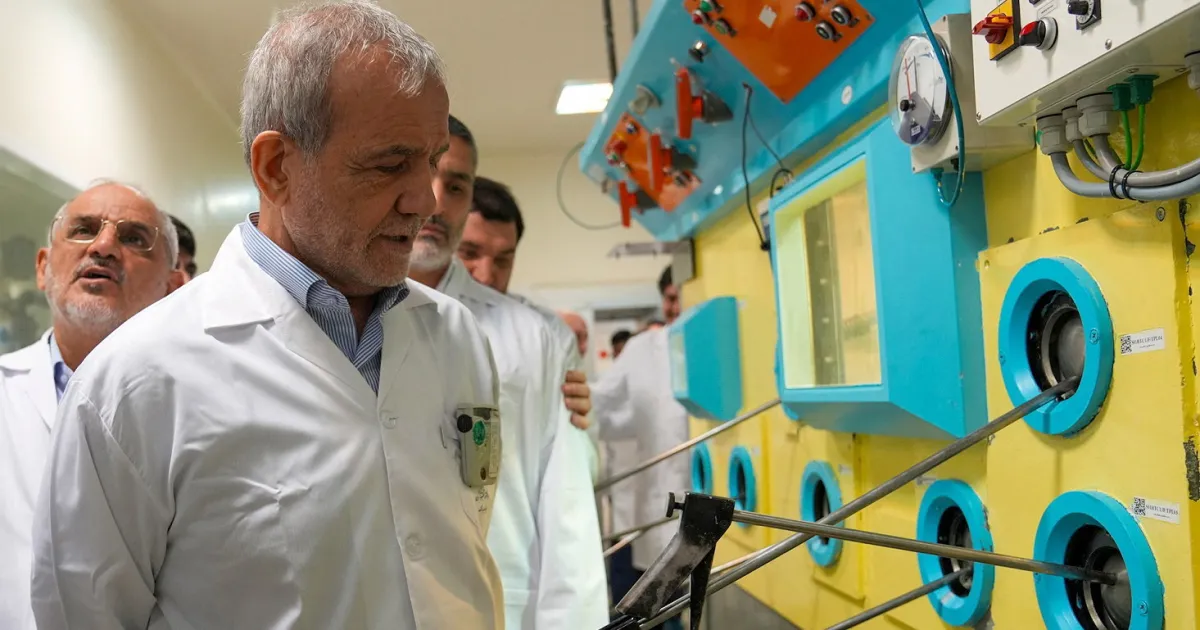
Iran’s atomic energy chief says Tehran is open to diluting its highly enriched uranium if the United States ends sanctions, signalling flexibility on a key demand by the US.
Mohammad Eslami made the comments to reporters on Monday, saying the prospects of Iran diluting its 60-percent-enriched uranium, a threshold close to weapons grade, would hinge on “whether all sanctions would be lifted in return”, according to Iran’s state-run IRNA news agency.
Eslami did not specify whether Iran expected the removal of all sanctions or specifically those imposed by the US.
Diluting uranium means mixing it with blend material to reduce its enrichment level. According to the United Nations nuclear watchdog, Iran is the only state without nuclear weapons enriching uranium to 60 percent.
US President Donald Trump has repeatedly called for Iran to be subject to a total ban on enrichment, a condition unacceptable to Tehran and far less favourable than a now-defunct nuclear agreement reached with world powers in 2015.
Iran maintains it has a right to a civilian nuclear programme under the provisions of the nuclear Non-Proliferation Treaty, to which it and 190 other countries are signatories.
Eslami made his comments on uranium enrichment as the head of Iran’s Supreme National Security Council, Ali Larijani, prepares to head on Tuesday to Oman, which has been hosting mediated negotiations between the US and Iran.
Al Jazeera’s Ali Hashem, reporting from Tehran, said Larijani, one of the most senior officials in Iran’s government, is likely to convey messages related to the ongoing talks.
Trump said talks with Iran would continue this week.
Negotiations ‘very serious’
Both the US and Iran have given mixed signals about their progress in the negotiations. Iranian Foreign Minister Abbas Araghchi said Iran is “very serious in negotiations” and is eager to “achieve results”. However, he said, “There is a wall of mistrust towards the United States, which stems from America’s own behaviour.”
Iranian President Masoud Pezeshkian said the ongoing negotiations are an “important opportunity to reach a fair and balanced solution”, IRNA reported. He stressed that “Iran seeks guarantees for its nuclear rights” and the lifting of “unjust sanctions”, the agency added.
Trump, for his part, praised the latest round of talks on Friday as “very good” but continued to warn of “steep consequences” for Iran if it does not strike a deal.
“They want to make a deal as they should want to make a deal,” the US president said. “They know the consequences if they don’t.”
Before the two sides agreed to talks, Trump had repeatedly threatened Iran with a “far worse” attack than the US strikes on three Iranian nuclear facilities during June’s 12-day Israel-Iran war. He has escalated the pressure by deploying an aircraft carrier and accompanying warships to the Middle East.
Trump is expected on Wednesday to meet with visiting Israeli Prime Minister Benjamin Netanyahu, who is pushing the US to take a hardline stance in its negotiations with Iran, demanding not just concessions on its nuclear programme but also on its ballistic missiles and regional alliances.
Andreas Krieg, an associate professor in security studies at King’s College London, said the US and Iran appear to be “pivoting closer to a deal” than they were several weeks ago, even though there’s still a high risk of conflict.
“The [US] ‘armada’, as Trump calls it, is still in the area, so we still have that coercion going against the [Iranian] regime by the Americans,” Krieg told Al Jazeera. “But it seems to be fruitful in the way that the pressure works, and the Iranians have to make concessions.”
He added: “All the messaging from the Gulf countries – from Qatar, from Oman – from everyone involved, including from the Americans, has been very positive. And the Iranians’ feedback themselves was very positive.
“I think the problem that we have right now is how do we translate this momentum that we have right now on a strategic framework into the nitty-gritty of the details.”
The Chadian government has launched the 2026 National Humanitarian Response Plan (NHRP) and the Refugee Response Plan (RRP) to coordinate assistance for vulnerable people uprooted by war. Amid a growing refugee crisis, including the arrival of 7,000 new Sudanese refugees at the eastern Oure Cassoni camp, the Chadian authorities established these schemes to tackle the humanitarian crisis overwhelming the country.
At an event held on Feb. 5, in N’Djamena, Chad’s capital city, the coordinator of the initiatives, Francois Batalingaya, commended humanitarian actors for their “constant engagement, which is essential for support to populations confronted by multiple crises”. He stressed the importance of mobilisation at both national and international levels, recognising the contributions of government, technical, financial, and humanitarian partners.
According to Batalingaya, the humanitarian plan is based on an analysis of four major drivers of crisis: conflicts and displacement, food and nutritional insecurity, sanitary emergencies, and climatic shocks. He revealed that 4.5 million people in Chad need assistance, with 3.4 million identified as priority targets, requiring nearly US$1 billion in financing.
He acknowledged persistent challenges, including financial deficits, insecurity, administrative constraints, and the need for stronger national appropriations and leadership. “Faced with these stakes, we must reinforce collective action and increase advocacy in order to avoid certain populations going without assistance,” he said.
The Minister of Social Action, National Solidarity and Humanitarian Affairs, Zara Mahamat Issa, described the launch of the NHRP and RRP as “a key moment for strategic planning and an exercise in accountability towards vulnerable populations.” She noted Chad’s continued solidarity in hosting refugees despite regional security crises, climate change, forced displacement, and socio-economic fragility.
“The government reaffirms its engagement to place the protection of vulnerable populations at the heart of its public action, considering humanitarian response as a factor of stability, social cohesion and sustainable development,” Zara said. She noted that transparency, accountability, and localisation of assistance are priorities, and called for better coordination amid limited resources.
During Batalingaya’s visit to the Oure Cassoni refugee camp, where more than 7,000 Sudanese refugees had recently arrived, he highlighted issues around the humanitarian crisis in Chad. He described the visit as “an immersion into an increasing humanitarian crisis which necessitates immediate responses.”
Testimonies from refugees, community leaders, and aid partners revealed feelings of uncertainty, exhaustion, and a shortage of basic necessities in the refugee camps. “Behind each of these problems are the suspended lives of children lacking access to education and families deprived of shelter,” stated a local humanitarian worker.
The refugees urgently need water, sanitation, healthcare, nutrition, food security, shelter, household items, protection, and education. “Oure Cassoni is an alarm signal. Without rapid and reinforced mobilisation, humanitarian needs would continue to overwhelm response capacities. The urgency is real, and inaction is no longer an option,” Batalingaya warned.
The Chadian government has launched the 2026 National Humanitarian Response Plan and the Refugee Response Plan to manage aid for people affected by conflicts, including an influx of 7,000 new Sudanese refugees.
Francois Batalingaya, initiative coordinator, emphasized the need for national and international cooperation, recognizing factors such as conflicts, food insecurity, sanitary issues, and climate shocks affecting 4.5 million Chadians, with 3.4 million needing urgent support.
Challenges like financial shortfalls, insecurity, and administrative barriers were highlighted, stressing the importance of collective action and increased advocacy to prevent assistance gaps. Minister Zara Mahamat Issa underscored the government’s commitment to protect vulnerable populations and maintain transparency, accountability, and local engagement in humanitarian efforts.
Concerns were raised about the growing crisis at the Oure Cassoni refugee camp, indicating urgent needs for water, sanitation, healthcare, and education, with calls for immediate and enhanced mobilization to address the crisis effectively.
Katie Price has shown off her new husband Lee to Kerry KatonaCredit: wesleeeandrews/InstagramKatie has introduced Lee to Kerry and her Celebs Go Dating boyfriendCredit: wesleeeandrews/InstagramThe long-time friends were seen enjoying some sun as they holidayed with their partnersCredit: wesleeeandrews/InstagramKerry and Katie’s new husband have hit it offCredit: wesleeeandrews/Instagram
Lee posted the holiday photos on his Instagram Stories – marking Katie’s recent return to the Middle East.
She displayed the results of her £2k bum lift as she posed in snaps with Lee, Kerry and her Celebs Go Dating boyfriend Paolo Margaglione.
The foursome posed for pictures together while enjoying their Dubai getaway.
Bikini-clad Kerry and Katie looked relaxed and happy as they styled out some pictures in the sunshine showing off their toned figures and tattoos.
Katie told fans while packing for her Dubai trip: “I bet everyone’s thinking, What’s going on in the Katie Price world? Well, you guys tell me because I’m reading it as it unfolds, just like you guys.
“I’m fully aware like everyone else. I see stuff, I get sent stuff. What I want everyone to know is, I’m a grown a**e woman.
“I’m 48 this year, I’m not a young kid. I’ve learned a lot in the past few years, through therapy and learning to love myself.
“So I’m not stupid, I know what I’m doing and if I’m happy that’s all that matters.”
Defending the marriage, she added: “I’m not worried, so you don’t need to worry about anything.
“Like I say, I will do what I want to do.”
Questionable information about self-proclaimed millionaire Lee has come to light.
Katie is celebrating her marriage to husband LeeCredit: Instagram/@wesleeandrewsThe loved-up pair have reunited in DubaiCredit: wesleeandrews/InstagramKatie was joined in Dubai by her close friend KerryCredit: PA
A MAJOR new safari park could be coming to the East Midlands.
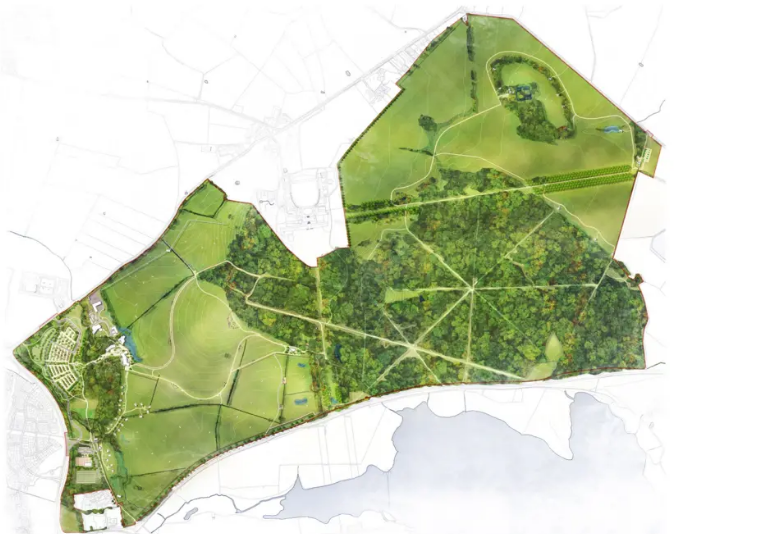
The “ambitious” planning proposal would see bears, wolves, and even lynxes arriving to a 1,000-acre woodland.
Sign up for the Travel newsletter
Thank you!
The site would hold bears, wolves, and reptilesCredit: Gillespies
Wild Rutland Partnership hopes to open a new nature conservation and wildlife park in Rutland, near Leicester.
If given the green light, Wild Rutland would house Eurasian brown bears, lynxes and wolves inside holding pens, with animal lovers able to see the mammals from various different viewing platforms.
The proposed safari park would be built on a huge site stretching from Burley Wood to Oakham bypass.
A barn already on the land is expected to be refurbished to house small reptiles and insects.
Plus, Wild Rutland is also seeking approval of its Visitor Village.
This would consist of a main reception area with a shop, a café, a restaurant, an indoor play area, as well as an education and exhibition building.
There will also be 22 self-catering guest lodges and a communal dining area for visitors who wish to stay the night.
A decision by the council is expected to be made in May.
CEO of Wild Rutland, Hugh Vere Nicoll, said: “Wild Rutland aspires to be an exemplar model of conservation-led ecological-tourism – one that restores heritage landscapes, reconnects people with nature and sets a benchmark for sustainable land management in the UK.
“Wild Rutland is driven by a team with a deep knowledge and respect for the site and the local area, working with experts in the fields of restoration, conservation, education, tourism, attraction development and management.”
Planning permission has been requested to build a 1,000 acre safari parkCredit: Gillespies
Wetherspoons opened its first pub outside the UK and Ireland at Alicante Airport on Monday morning, and Mirror News food editor Joe Rintel was there to sample the menu and prices
16:51, 09 Feb 2026Updated 16:52, 09 Feb 2026
(Image: Tim Merry)
Anyone familiar with Benidorm will tell you it’s Continental Europe’s undisputed capital of British cuisine.
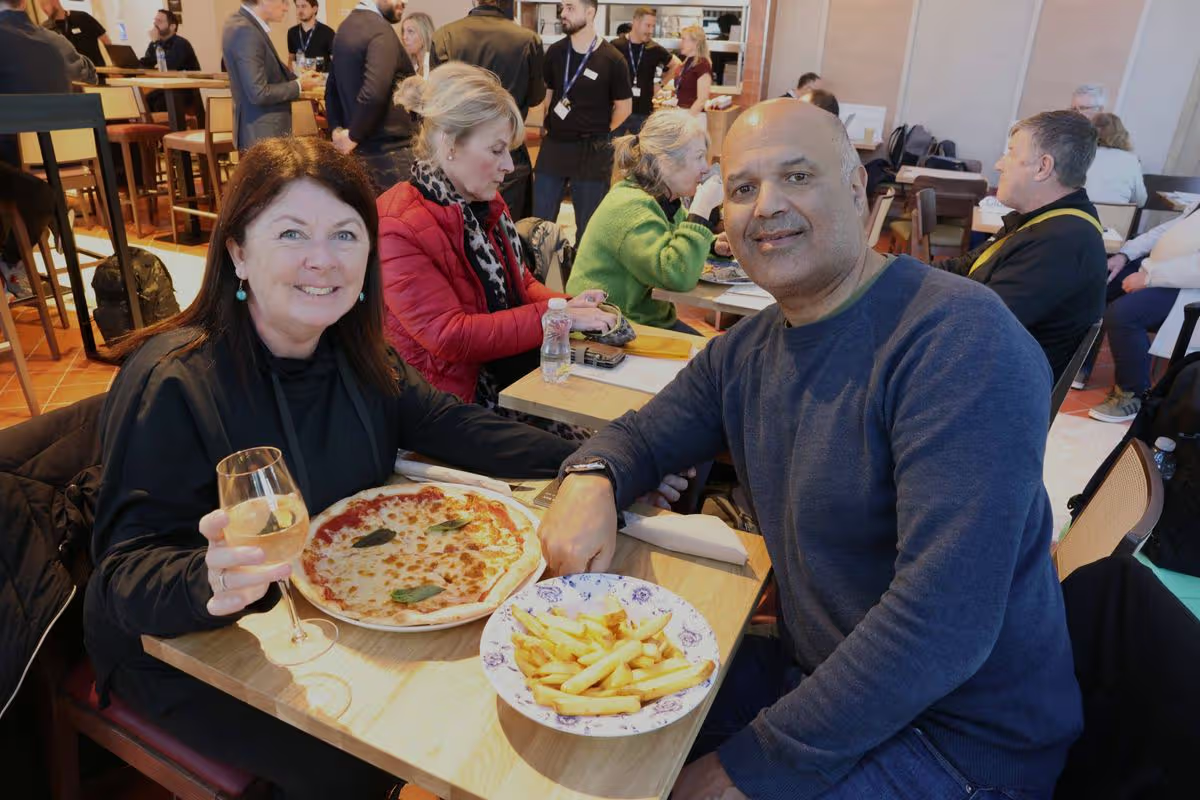
Stroll along the strip and you’ll encounter more Full English breakfasts and Sunday roasts than you could possibly tackle during a week-long break. This fine tradition of potatoes and gravy continues at Alicante Airport, where the first Wetherspoons beyond UK and Irish shores welcomed its inaugural customers on Monday morning.
I witnessed the historic moment as the first punters crossed the threshold, with Daz Sunderland becoming the maiden paying customer to savour a pint of lager. Dubbed Castell de Santa Bàrbera after a neighbouring mountain fortress, the establishment features several gestures towards its Spanish setting, including bilingual menus, a ‘Spanish tortilla’ offering, and multilingual staff who switch effortlessly between languages.
However, it remains unmistakably British at heart. The menu predominantly features quintessential British fare, accompanied by pints of Stella and tins of Old Speckled Hen.
Here’s a sample of what’s available (prices in euros):
Beer
Five beers are available on draught. As this Spoons is more compact than typical UK high street branches, tap capacity is restricted. Consequently, there’s no ale – just lager. This makes perfect sense given Alicante’s typically balmy climate.
The draught selections include:
Cruzcampo Especial 4.95
Amstel Original 5.95
Stella Artois 5.95
Guinness 7.50
Leffe Blonde 7.95
Wine
Where else at an airport can you secure a glass of wine for barely more than £3? You’d struggle to locate cheaper 125ml servings of the fermented grape anywhere else across Europe.
Viña Lobera Verdejo Ecológico 3.65
Cune Rueda 4.95
Viña Real Rosado 6.75
Mixers
Regarding spirits and mixers, Spanish Spoons operates a fixed-price structure (except for certain premium selections). It charges €6.95 for 25ml with a mixer, and €9.95 for a double. This includes:
Beverly peach liqueur
Disaronno amaretto
Malibu
Southern Comfort
Gordon’s
Gordon’s Pink Gin
Tanqueray
Tanqueray Flor de Sevilla
Bacardi Carta Blanca
Captain Morgan Original Spiced Gold
On the drinks front, there’s one notable absence. The establishment doesn’t provide complimentary tap water; instead, customers are directed to buy bottled water.
For those who adore Spoons’ grub, you’re in for a treat. The menu features several Spanish touches, though largely consists of familiar British favourites. Here’s a sample of what’s available:
Breakfast
Traditional breakfast: Fried egg, bacon, Lincolnshire sausage, baked beans, two hash browns, slice of toast 10.25
Small breakfast: Fried egg, bacon, Lincolnshire sausage, baked beans, hash brown 8.25
Large vegetarian breakfast; Two fried eggs, three vegan sausages, baked beans, three hash browns, portobello mushrooms, tomato, two slices of toast 12.95
Vegetarian breakfast: Fried egg, two vegan sausages, baked beans, two hash browns, portobello mushrooms, tomato, slice of toast
Steffan Rhys Deputy Content Hub Director and Andrew Forgrave Countryside and tourism editor
16:50, 09 Feb 2026
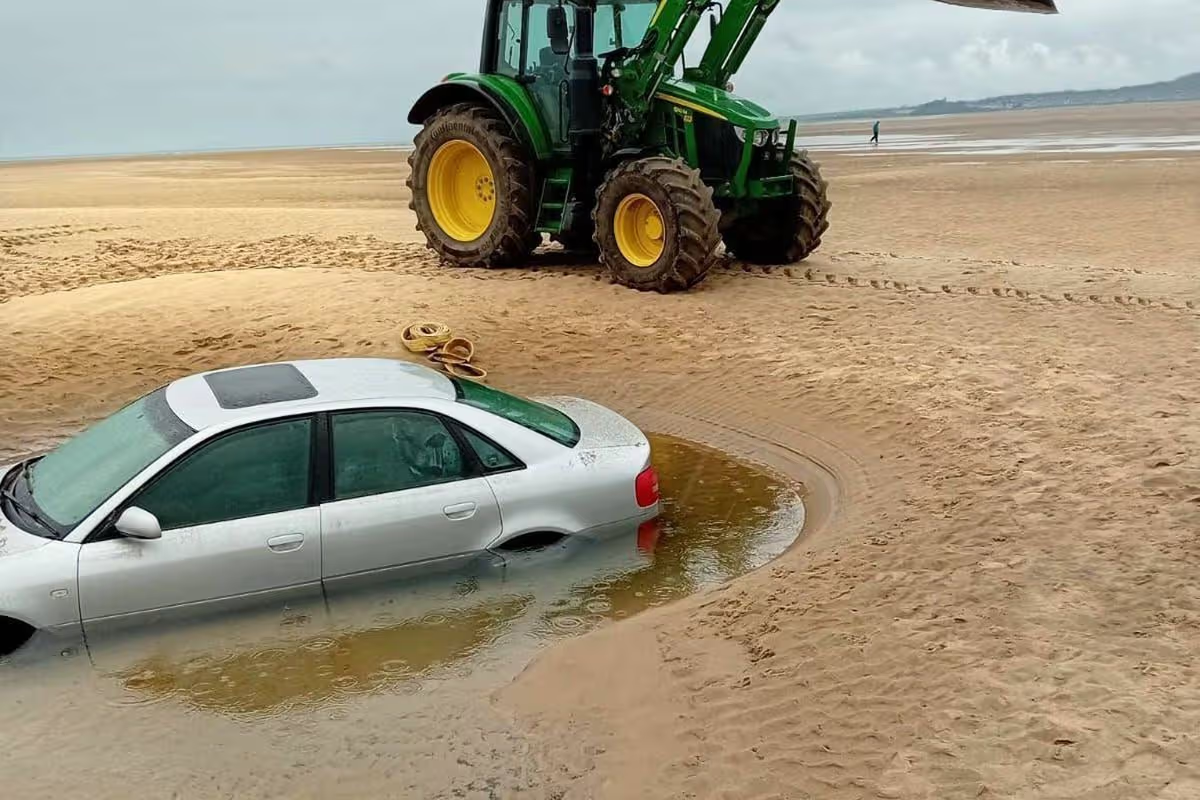
Submerged cars are regularly rescued from this beach(Image: Dafydd Davies)
It’s a stunning yet treacherous stretch of coastline where cars and motorhomes are routinely hauled from the waves after becoming partially or fully submerged. Over the past four decades, local farmer Dafydd Davies says he has repeatedly deployed his John Deere tractor to rescuevehicles from the infamous Traeth y Graig Ddu (Black Rock Sands).
His dedication to saving stranded vehicles stems from his own harrowing experience 40 years ago. In 1980, whilst working on a new silage pit at his farm, he endured a horrific accident with a JCB bucket loader that left him trapped against a concrete septic tank.
“I lost my eye but I was very lucky I didn’t lose my life,” he told North Wales Live. The traumatic experience heightened his awareness of potential hazards and sparked a determination to give back to the community, including offering his land for air ambulance landings.
“That incident made me much more aware of risks – even now I can sense accidents about to happen. It also made me want to give something back to the community – I volunteered my land for air ambulance landings,” he said.
This sense of responsibility also led him nearly a decade ago to assume the role of beach guardian at the beach in Gwynedd, north-west Wales, one of the few beaches where driving is allowed. Extracting cars from the advancing tide or liberating them from soft dune sands has traditionally been a job for local farmers, and when the previous guardian retired, Dafydd enthusiastically volunteered.
Vehicle owners sometimes react swiftly enough that their cars and motorhomes can be rescued. However, on occasion, all Dafydd can manage is to recover the ruined vehicle to avoid an environmental disaster.
Sometimes, his wife Kathryn, a former nurse, takes the hit from such episodes, such as when a pink VW campervan was consumed in 2020. The van and its transporter, taken to the beach for a 1970s-themed photo session, were devoured by a rapidly advancing tide after becoming trapped in the sand.
“I always remember the date – September 14 – as it’s my wife’s birthday,” Dafydd recalled. “I’d booked a meal at a restaurant but my mobile rang and we had to go to the beach instead. I usually get there in 18 minutes but by the time we arrived, it was too late – the tide was coming in too fast. Instead, I drove the tractor to the restaurant, had a meal, then I went back to the beach. It was around 2am when I finally got home.”
The devastated owner, from Cheshire, put losses at £60,000.
During a typical summer, approximately six to 10 vehicles meet their fate on the Gwynedd beach. However, it’s believed up to 30 cars and motorhomes required rescue last year in 2025, as the beach is hugely popular and amongst the few where motorists can drive their vehicles onto the sand.
Locals are familiar with the unpredictable character of a shoreline whose tempting shallow waters are ideal for bathing and aquatic pursuits yet conceal a lurking danger for unsuspecting drivers. The very characteristic that renders the beach perfect for recreational activities – its gradual incline – also creates a hazard by allowing tides to rush in rapidly.
But visitors are less familiar with the dangers. And while there are plenty of warnings displayed on the beach regarding the possible dangers, they cannot be positioned where motorists typically park at low tide close to the waterline. Those who pay for parking are given a leaflet outlining tide schedules and beach safety guidance, including recommendations on parking and even details about weeverfish.
“But it’s human nature, they don’t read the leaflets or look at the signs, and they park where they want. If the tide is high in the morning, all the cars park higher up the beach and, if the sand is dry and soft, that’s when people need pulling from the dunes,” said Dafydd.
The problem intensifies when the tide retreats and the more compact sand tempts motorists to travel further out, only to be taken by surprise when the sea returns. “However when the tide is out and the sand is harder, that’s when people park further out. Before they know it, the sea is coming in.”
During sweltering weekends, you could see 1,000 cars or more scattered across the beach, as well as queues extending more than half a mile back into Morfa Bychan village, essentially transforming the beach into a vast improvised parking area. Last year, the council began shutting the beach gate at 8pm, theoretically reducing late-evening rescues, though this didn’t always work as intended.
One one occasion, Dafydd was preparing to attend a wedding reception: “We were dressed and just about to go out the door to a wedding party. I drove to the beach while my wife went to the party alone. A family from Birmingham were stuck on the beach. As they reported it quickly, I was able to save their car – they were very grateful – and I made it to the party by 9pm. Only once the clock ticks past 8pm during the summer can I finally relax.”
Recent years have introduced a new complication to Dafydd’s coastal rescue work: the growing number of electric vehicles (EVs) poses a significantly more difficult challenge than recovering conventional petrol cars.
“Electric vehicles are so much heavier because of their batteries,” he explained. “You take a basic Honda EV – it weights 2.2 tonnes. Not only do they sink further into the sand, it requires more power and traction to pull them out.”
Nevertheless, like numerous farmers, Dafydd feels he has a duty to support his local community. Some clear snow from roads, whilst others rescue motorists stranded by flooding.
“I enjoy it,” said Dafydd. “I like the idea of giving something back. My son, Owain, who works with me on the farm, has done a couple of beach jobs, which means I can now get away for a day if I need to. But not for too long – helping others gives me great satisfaction.”
Ulster back row Bryn Ward has rejoined the Ireland squad while prop Tadhg Furlong has resumed full training before Saturday’s Six Nations game against Italy (14:10 GMT).
Three-time British and Irish Lions tight-head Furlong missed last week’s defeat by France in Paris with a calf problem.
In a squad bulletin on Monday, the Irish Rugby Football Union (IRFU) said “a decision will be made on his availability ahead of Thursday afternoon’s team announcement”.
Furlong, 33, only made one appearance off the bench in last year’s Six Nations because of injury.
Uncapped Ward was part of Ireland’s pre-tournament training camp in Portugal before linking up with the Ireland XV panel for Friday’s emphatic 52-14 loss to England A at Thomond Park.
The 21-year-old back row, the son of former Ireland flanker Andy, has impressed since breaking into the Ulster team earlier this season.
Ireland, who trained at Clongowes Wood College in Kildare on Monday, reported no fresh injury concerns after Thursday’s demoralising 36-14 loss to France.
Italy, meanwhile, have recalled Toulouse wing Ange Capuozzo to their squad ahead of Saturday’s trip to Dublin.
The 26-year-old, who has scored 16 tries in 31 Azzurri caps, has not played since December because of a finger injury.
However, Italy boss Gonzalo Quesada will be without Juan Ignacio Brex because of “family reasons”.
The Argentine-born Toulon centre set up Louis Lynagh’s try in Saturday’s win over Scotland in Rome.
Quesada is also without scrum-half Martin Page-Relo, fly-half Tommaso Allan, back rowers Sebastian Negri and Ross Vintcent, hooker Gianmarco Lucchesi, prop Marco Riccioni and wing Edoardo Todaro.
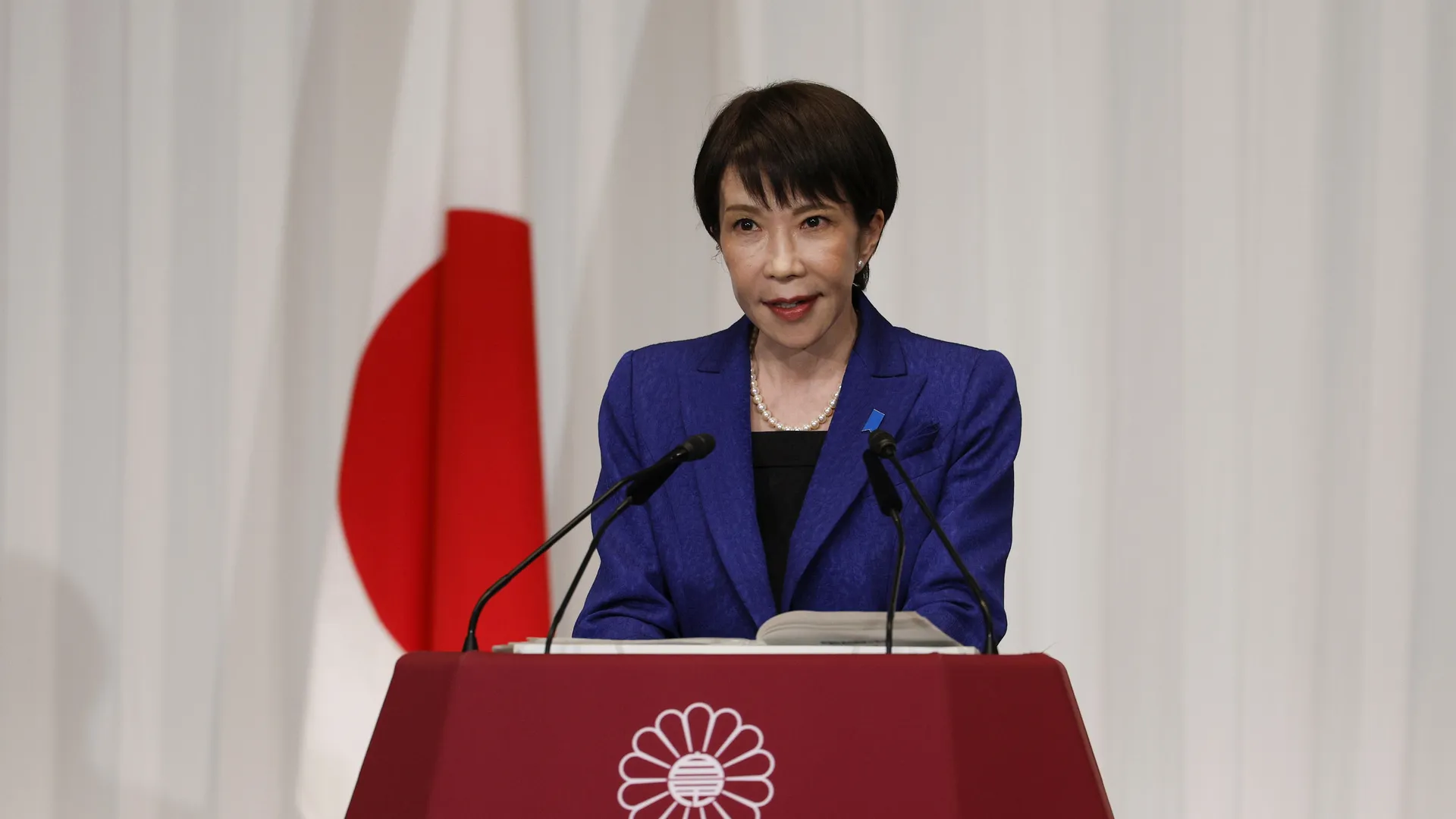
Japanese Prime Minister Sanae Takaichi’s coalition won 352 of the 465 seats in the lower house of Parliament, its best result ever at the polls. Experts say the decisive victory will pave the way for a defence expansion that China has condemned as a return to militarism.
For the second straight Winter Olympics, Mathilde Gremaud bests Eileen Gu in the women’s blue ribband freeski event.
Published On 9 Feb 20269 Feb 2026
Share
Switzerland’s Mathilde Gremaud has retained her Olympic title in the slopestyle freestyle skiing competition at the Milano Cortina 2026 Winter Games in a gripping race in the Italian Alpine town of Livigno.
China’s Eileen Gu, who had been hoping to convert her Beijing 2022 silver medal into gold this time, came in second on Monday after tumbling at the start of her last run.
Recommended Stories
list of 4 itemsend of list
Canada’s Megan Oldham, 24, took the bottom step of the podium despite a big crash on her second run.
Earning herself a day-late birthday present, Gremaud skied well above the already very high bar set by Gu on her first run with three spectacular runs of her own, wearing the Swiss flag like a cape as she came down the last time, having already ensured herself the gold medal.
Gremaud competes in the women’s slopestyle final [Kirill Kudryavtsev/AFP]
Gremaud rolls out new trick
On a crisp and sunny day in the high-altitude ski resort close to the Swiss border, Gremaud kicked off the final by performing – for the first time by a woman – an elite-level trick known as the nose butter double cork 1260.
In this trick, the skier presses the tips of the skis on the takeoff to start the spin and then performs a double cork 1260, two distinct off-axis, inverted flips combined with three-and-a-half full, horizontal rotations.
Known for her variety of tricks on the slope, the Swiss champion veered towards the very technical ones, followed by breathtaking acrobatic jumps during her second run, earning her the eventual highest score overall of 86.96, just pipping Gu’s first-run score of 86.58.
Despite the big crash on her second run, Oldham picked up in the third run, soaring through the rails and performing conservative yet still very acrobatic jumps at the end, winning her a score of 76.46.
At the end of the race and during the prize-giving ceremony, the crowd was painted in different hues of red as the flags of the three winning countries – Switzerland, China and Canada – all waved in the air to the beat of loud music and cheering. The medals were handed out by Britain’s Princess Anne, a former Olympic equestrian.
Gu won her second straight Olympic silver medal in the freestyle slopestyle event [Kirill Kudryavtsev/AFP]
High competition
Double Olympic champion Gu, 22, set the bar high on the first run with big tricks on the rails and stunning jumps, adding flair to all of her tricks and putting herself in first place early on.
After a poor second run when she stumbled on the rails at the beginning of the beautifully sculpted piste, Gu knew she would need something special on her final run to grab the title away from Gremaud. But she tumbled into the snow almost immediately, ending her hopes of reclaiming top spot in the competition.
American-born Gu, who represents her mother’s country of China at the Olympics, said last week that she had nothing left to prove after her two gold and one silver medal from Beijing.
She will be defending her big air and halfpipe titles later in the Games.
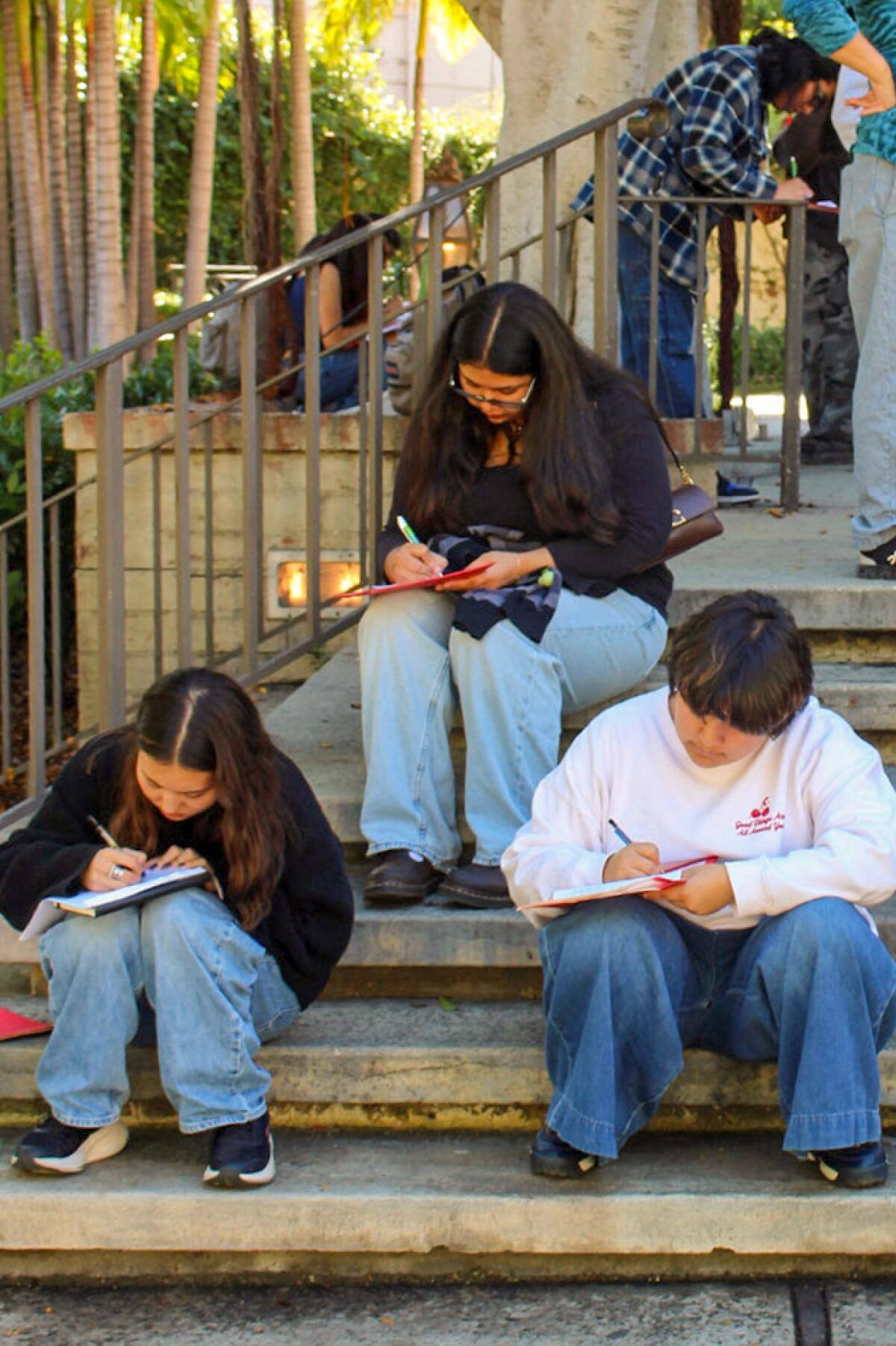
The late afternoon sun was setting over Coldwater Canyon when the bus arrived. Students from Boyle Heights’ Bravo High spilled out into TreePeople, a nature reserve and nonprofit in Coldwater Canyon Park, and took off hiking.
As they looked around the sage and monkeyflower-lined path, their chatter quieted, and soon, they were writing poetry.
Alina Sadibekova, a junior at the magnet medical school, sat under native oak trees, breathing in the soil-rich air with a pen in hand.
“Our city is very busy, especially living in L.A. where everything just goes on and on and it feels like there’s never a point where we can take a breath,” Alina said. “Going to the parks helped me ground myself.”
During a field trip to Gabrielino Springs and the L.A. River Gardens, Bravo High School students from Feng Shui Poetry in the Parks work on poems inspired by the landscape.
(Genesis Sierra)
TreePeople, is one of many green spaces she has visited with Feng Shui Poetry in the Parks, a program dreamed up by the West Hollywood poet laureate, Jen Cheng, in partnership with Bravo High English teacher Steve “Mr. V” Valenzuela. Cheng’s aim is for poetry, nature and Chinese principles to inspire a love for nature in students otherwise surrounded by concrete.
“I think as humans, we’re part of nature, so being better connected to nature actually brings you more home to yourself,” Cheng said. She explains that feng shui, the ancient Chinese practice of arranging a space to encourage harmony, is based on five natural elements: water, wood, fire, earth and metal.
“Feng shui, in poetry, is a lens that you can use to process big ideas using your surroundings,” Cheng said. “You can say, ‘Let’s write about water running down a river,’ not literally, but maybe as a metaphor for migration.”
Feng Shui Poetry in the Parks has grant funding through 2026’s spring semester, but next school year is still up in the air. Cheng says she’s looking for other grants, but as the Trump administration cuts humanities funding, including National Endowment for the Arts grants, the options are scarce.
As the oldest of five growing up in Oakland, Cheng felt seen for the first time when she discovered poetry in elementary school. It was inspired by her most cherished memories: field trips. At the time, her immigrant family worked to the point where they were often “too busy for nature.” During field trips, it was exciting, she said, to be out of Oakland’s urban landscape and in parks that felt rare in her working-class experience.
Decades after her elementary school field trips, as a newly appointed poet laureate for West Hollywood, she envisioned a way to mirror this childhood experience.
Poets laureate, whose role is to champion and encourage poetry in their community, are eligible for a $50,000 nationwide grant through the Academy of American Poets to support “meaningful, impactful and innovative projects,” according to the AAP.
As a recipient of this grant, Cheng brought Feng Shui Poetry in the Parks to life with one final addition — a teacher with a passion for poetry, who could connect her to a classroom of students.
Everyone she spoke to, she said, pointed her to the same person — “Mr. V.”
Jen Cheng, left, and Steve Valenzuela, right, close the Feng Shui Poetry in the Parks reading with words of encouragement for the students who shared their poetry at Bravo High School on Dec. 4, 2025. Both instructors have said that they were surprised by the emotion and creativity the students demonstrated in their poems.
(Kayte Deioma)
A sanctuary for ‘lifesaving’ creativity
When you enter Valenzuela’s classroom, the walls are covered with dozens of CD sleeves, from Deftones to Rage Against the Machine. In the gaps, student artwork, notes and photos with current and former students hang.
Valenzuela leads Bravo High’s poetry club, KEEPERS, and for the last few years, he’s guided the students to win awards at international poetry slam Get Lit.
“Poetry is expression, poetry is life-changing, lifesaving, which sounds very dramatic, but it’s not. Some of the things the students have written about are very traumatic,” Valenzuela said. “I’ve seen them work through difficult experiences and come out of it using poetry.”
One such student is 17-year-old Paige Thibodeaux. “I used to think it was better to be closed off, but throughout this, I was able to show my friends and peers who I am,” Paige said. “I didn’t think that’s something I could do and I’m here now.”
Paige, who lives with her family in Compton, recalled having her guard up as she walked through her neighborhood, where she said expression through poetry felt inaccessible.
“I don’t see a lot of kids doing things like this,” she said.
Student poets, friends and family members gather before the start of the Feng Shui Poetry in the Parks poetry reading and zine release at Bravo High School on Dec. 4, 2025.
(Kayte Deioma)
Working on a book, she said, opened up a whole new side of her. She started to confide in friends about stress, or things that bothered her, which otherwise would have stayed inside.
‘I still don’t believe it’
Since August 2025, Paige and her classmates have developed their poems, received feedback from Cheng and submitted their final pieces to be published as a poetry collection.
The cover, designed by Bravo student Adrian Lopez, depicts a tree wrapping around the spine. The poems are rooted in their observations of current affairs and native plants; the publication was completed in December, when Valenzuela and Cheng planned for a reading and celebration of their work at Bravo High.
“Did you guys know your work is going to be read across the country?” Cheng said to students in class one day. “I’m sending it all the way to New York!”
“Feng Shui Poetry in the Parks Vol. 1” is being printed as a zine and will be sent to bookstores and libraries from San Francisco to Chicago as well as the Library of Congress.
Students giggled and gasped in disbelief. “No pressure, I guess,” one student joked.
“It’s really crazy, I still don’t believe it. It’s been a dream of mine,” Alina said. “I never realized I could be a published author as a junior in high school.”
The night of the poetry reading, students, parents and friends gathered in excitement in Bravo High School’s library, settling in rows before a single microphone. Out in the hallway, the raucous chatter of teenagers echoed in the halls, and cars honked on the busy street outside to pick them up. But inside the haven of the library, there was a quiet settling among the crowd for the long-awaited show.
Alina Sadibekova reads her poems “I Want to Fly” and “Messy” for the Feng Shui Poetry in the Parks reading at Bravo High School on Dec. 4, 2025. She says writing poetry over the course of the program “grounded” her and alleviated the stress of school.
(Kayte Deioma)
Aolani “Lani” Alarcon approached the mic to hushed voices. As the lights lowered, she thanked the crowd, the white flower tucked in her hair catching the light as she recited her first poem, “White Sage.”
She says poetry didn’t always come easily to her. “One of the biggest things I struggle with is judgment, so opening up or writing about touchy subjects or things that mean something to me was hard,” Lani said. “Knowing that I wouldn’t be judged, or that people would actually like what I write, means a lot.”
The 16-year-old smiled as she read, describing sage as an ancestor’s prayer. Her next poem, “Hummingbird,” delved into grief.
“You teach me that healing isn’t forgetting,” she read, tears welling. “It’s learning to carry love without breaking under it.”
Manuel Alarcon, her father, was seated in the crowd, clasping his hands in rapt attention. When the readings had finished, he pulled Lani into a long embrace.
“These field trips, it exposed them outside of city life,” Alarcon said. “There’s more than opening a book, listening to a teacher. You need that outside exposure to really understand life. And inner city kids don’t have that. I want [my daughter] to be part of breaking a cycle.”
Valenzuela clapped loudly and cheered as each student stepped off the podium.
“When young voices, and voices from marginalized communities tend to be silenced, sometimes we internalize that and silence ourselves,” Valenzuela said. “I want them to feel like they can speak up.”
As Feng Shui Poetry in the Parks carries on for another semester— maybe its last — students continue to explore writing poetry in the greens of L.A. parks. Some, like 17-year-old Saneli Soto, express themselves along the way.
Saneli’s poem reads:
I’m used to concrete floors And concrete walls. I’m used to five story buildings. I needed a quiet place. Where I could just lie in the grass.
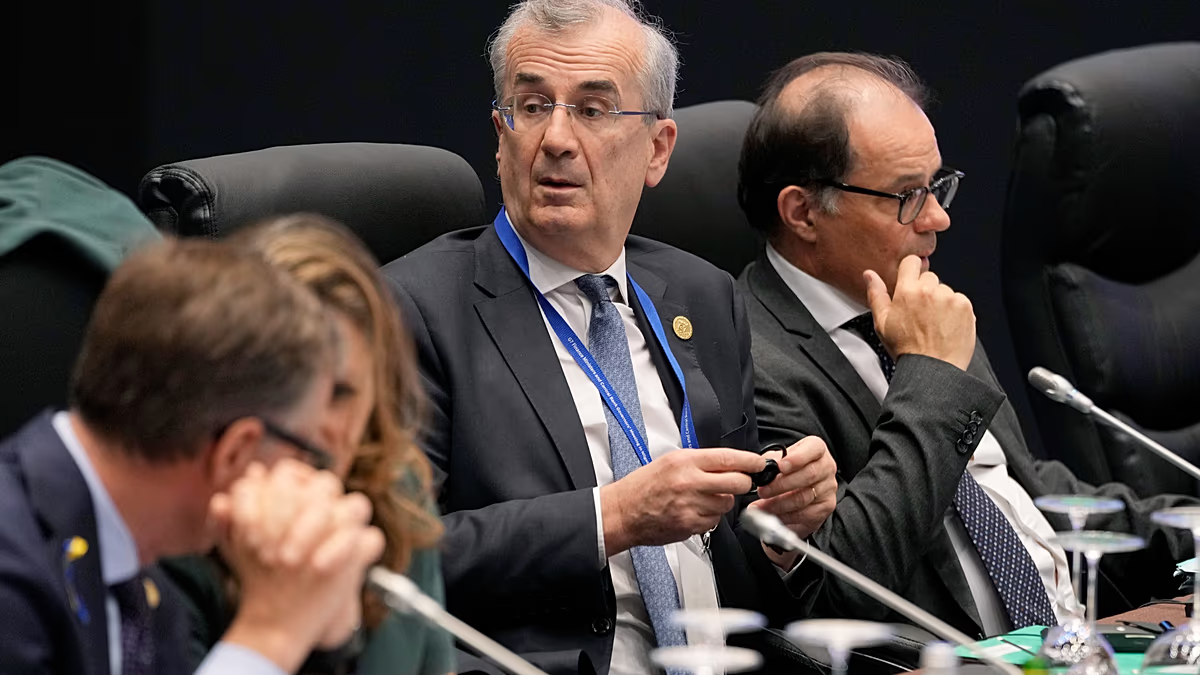
The French central bank governor handed in his resignation on Monday, which will take effect in June 2026.
This unexpected departure occurs roughly 18 months before his second term was scheduled to conclude in October 2027.
The move strategically shifts the responsibility of selecting his successor to the current President of France, Emmanuel Macron.
If Villeroy de Galhau had completed his full tenure, the appointment of the next head of the Bank of France would have fallen to the winner of the April 2027 presidential election, which current polling suggests could favour a far-right candidate.
While the French central bank governor cited personal reasons for his departure, specifically to lead the Fondation Apprentis d’Auteuil, a charity for vulnerable youth, the timing is perceived as a calculated effort to safeguard the institution’s future leadership.
In a press release, Villeroy de Galhau reassured that “a bit more than a year before the conclusion of my second term, it seems to me that I would have accomplished the core of my mission”.
In a separate letter to Bank of France employees, the governor also acknowledged that “this decision may come as a surprise”.
Resignation after stabilisation
Villeroy de Galhau may also have carefully chosen the right moment of stability in the present.
After a long and intense legislative deadlock in France, that saw the collapse of multiple governments, Prime Minister Sébastien Lecornu successfully navigated the approval of the 2026 budget which was announced at the start of the month.
Throughout late 2025, France’s inability to pass a budget had rattled investors, pushing the risk premium on French debt to its highest levels in years.
By waiting until this budget was finalised, Villeroy de Galhau ensured his departure did not trigger fresh market panic or exacerbate the existing political crisis.
President Emmanuel Macron can now focus on appointing a successor who will likely align with his pro-European and centrist economic vision.
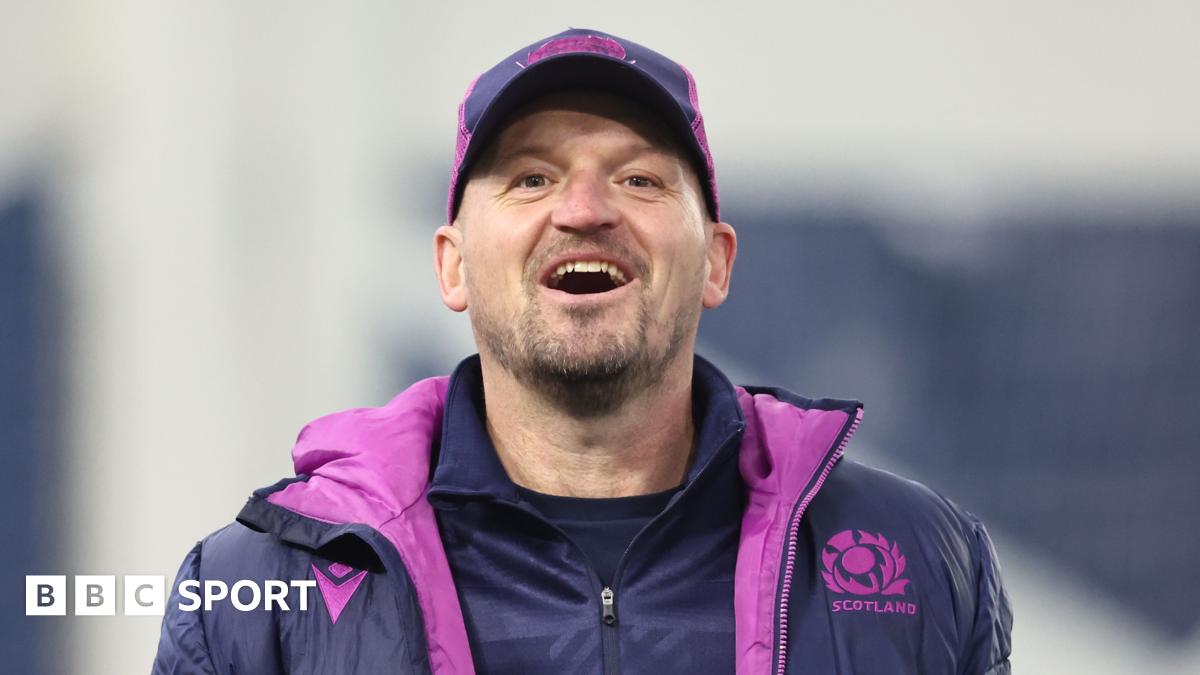
The ‘proud of the effort’ mantra from Townsend is the biggest red rag to the biggest Scottish bull.
The scale of the failure was epic, not so much because they lost – because this was always going to be a tight game against a fine Italy team – but in the way they lost.
Their lack of aggression and intent from the start, their defensive disorganisation for Italy’s tries, the terrible weaknesses in their lineout (while Italy were nailing most of theirs), the self-harming bouts of indiscipline at critical times, their inability to problem-solve on the move.
Italy were missing some key players. Scotland were missing no-one.
When it came to coaching nous and player execution, Italy had a little too much of both.
They inflicted a soul-destroying defeat on Scotland, but, in many senses, Scotland did it to themselves. A recurring theme, that.
The feeling of fury in the aftermath is unprecedented since Andy Robinson’s team lost to Tonga in 2013 and Matt Williams’ team lost to, well, pretty much everybody in his slapstick years in charge.
A campaign over after just one game? Maybe premature, but you can’t fault anybody for thinking it.
England will expect an angry Scottish reaction on Saturday. Some of the visitors, hard-bitten by recent experience, will know that there’s fire and brimstone coming their way.
The home fans in vast numbers are now dead against Townsend remaining as coach, but come kick-off time in Edinburgh, you won’t know it. The place will be electrified.
Could you discount a Scotland upset? No. Would you bet on it? No, again.
At Murrayfield, the decision-makers are sitting in silence, apparently still confident that improvement will come if they just hold their nerve.
As a reminder, Townsend took over in 2017. He’s nearly 100 games in. This is his ninth Six Nations. Scotland have never contended.
His future is being talked about, but not by the people who might determine it. Not yet.
That might come later, depending on what happens in the weeks ahead – ‘might’ being the operative word – but for now there is a Calcutta Cup to deal with and a world of questions for Townsend to answer.
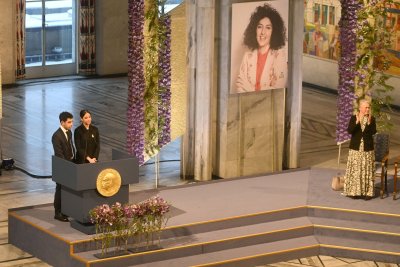
1 of 2 | Ali Rahmani, Kiana Rahmani and Nobel Committee chairwoman Berit Reiss-Andersen attend The Nobel Peace Prize ceremony for Iranian activist Narges Mohammadi at the Nobel Institute in Oslo, Norway in December 2023. File Photo by Paul Treadway/ UPI | License Photo
Feb. 9 (UPI) — Iranian Nobel Peace Prize Laureate Narges Mohammadi has been sentenced to a second prison sentence by the Iranian courts while still serving her first sentence.
Mohammadi, who accepted the Nobel Peace Prize in 2023 while in prison, was sentenced to more than seven years in prison for “gathering and collusion,” and “propaganda activities” against the Islamic Republic Regime, her attorney announced Sunday.
Mohammadi was detained on Dec. 12 for making “provocative remarks.” Her family said that during her arrest, she was beaten by Iranian authorities and had to be hospitalized.
Nili said in a statement that Mohammadi was sentenced at Branch 1 of the Mashhad Revolutionary Court. It was the first time she had spoken to her attorney since Dec. 14.
Mohammadi, 53, was on the sixth day of a hunger strike but ended it on Sunday.
“Given Narges Mohammadi’s critical history, including heart attacks, chest pain, high blood pressure, as well as spinal disc issues and other illnesses, her continued detention is life threatening and a violation of human rights laws,” a statement from the Narges Mohammadi Foundation said.
Nili added that Mohammadi was hospitalized last week due to her “poor physical condition.”
Mohammadi faces more than 17 years in prison. In total, she has been sentenced to 44 years in prison. She has also been banned from leaving Iran for two years and is ordered to live in “internal exile” for two years.
The Human Rights Activists News Agency reported last month that more than 5,000 people have been executed by Iranian authorities amid widespread protests.
With a palace, a castle and ancient volcano all within visiting distance of each other – it’s no wonder this Scottish city has been voted as the UK’s number for a break
15:23, 09 Feb 2026Updated 15:24, 09 Feb 2026
This article contains affiliate links, we will receive a commission on any sales we generate from it. Learn more
Edinburgh is packed with old streets and modern culture (Image: Getty)
The UK’s best city break has been revealed, and it’s famous for its beautiful buildings, historic castle, and even Harry Potter links.
From historic streets, to cultural spectacles, to iconic landmarks, scenic views or vibrant food scenes, the UK has a fantastic range of amazing cities for travellers to choose from but Sykes Cottages has revealed some of the highlights across the nation after a study revealed that 49 per cent of Brits choose cities for their top five breaks.
Edinburgh, which is also hailed as the UK’s most walkable city, took the top spot in the rankings. This bright and bustling city seamlessly combines the historic and the modern with Edinburgh Castle, one of the oldest fortified places in Europe, and Holyrood Palace, the official Scottish residence of the monarch originally built as an Abbey in 1128 connected by the Royal Mile, the historic spine of Edinburgh’s Old Town and the city’s world-famous Fringe Festival, one of the greatest celebrations of modern art and culture in the world.
As well as hosting the Fringe, Edinburgh is also the city where J.K Rowling lived when she was writing the Harry Potter books and people can visit The Elephant House café which is where the legendary wizard was first created.
There’s a wide array of accommodation too whether you’re looking for cosy holiday cottages or cheap hotels, although it’s worth noting that some popular seasons such as the Fringe can see prices surge in some areas.
Sykes Cottages offers a wide range of handpicked holiday homes across the UK and Ireland, from cosy countryside retreats to stunning coastal escapes. Prices start from £27 per night
For major Harry Potter enthusiasts, the city also offers a Harry Potter Magical Guided Walking Tour which allows people to explore Edinburgh through the lens of Harry Potter.
With storytelling, the written word and art and culture playing such a prominent part in the city, its contributions were recognised in 2004 when it became the world’s first UNESCO City of Literature.
Visitors can wander through the city’s cobbled streets and take in its incredible architecture and street designs, or hike up to Arthur’s Seat and enjoy the amazing views from atop the ancient volcano.
Calton Hill is also a must visit and is included in the city’s UNESCO World Heritage Site. The panoramic skyline views from the hill are renowned and pictures taken from there are regularly used in photographs or paintings of the city. The hill features the neoclassical landmarks including the National Monument, Nelson’s Monument and the Dugald Stewart Monument.
One reviewer of the city said: “Absolutely love Edinburgh, amazing city! So many gorgeous restaurants and cafes, lots of different vibes but I love the laid-back café culture Edinburgh does so well. Arthur’s Seat is great to climb and has gorgeous views across the city.”
Another said: “Edinburgh is a fantastic place to visit – the Royal Mile and the Castle are definitely worth a visit and there are some spectacular bars and restaurants that we thoroughly enjoyed.”
Do you think Edinburgh is the UK’s best city break? Email us at webtravel@reachplc.com
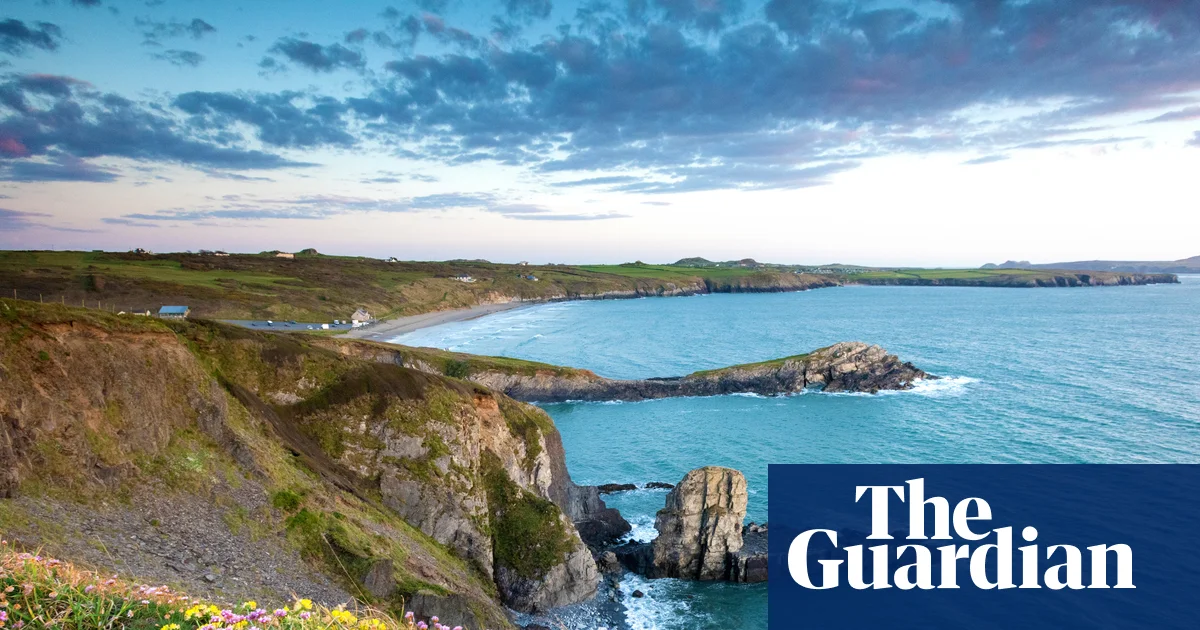
From the vast sandy surf beaches of the Gower to the peaks of Eryri national park (Snowdonia), Wales has no shortage of world-class natural attractions. But we’d love to hear about some of your favourite under-the-radar discoveries, whether it be a perfect hiking or biking trail, an intriguing small museum or attraction, or just an unexpected diversion which turned into the highlight of your trip.
The best tip of the week, chosen by Tom Hall of Lonely Planetwins a £200 voucher to stay at a Coolstays property – the company has more than 3,000 worldwide. The best tips will appear in the Guardian Travel section and website.
Keep your tip to about 100 words
If you have a relevant photo, do send it in – but it’s your words we will be judgingfor the competition.
We’re sorry, but for legal reasons you must be a UK resident to enter this competition.
The competition closes on Monday 16 February at 10am GMT
Your responses, which can be anonymous, are secure as the form is encrypted and only the Guardian has access to your contributions. We will only use the data you provide us for the purpose of the feature and we will delete any personal data when we no longer require it for this purpose. For alternative ways to get in touch securely please see our tips guide.
If you’re having trouble using the form click here. Read terms of service here and privacy policy here.
Bad Bunny’s Superbowl halftime show may have been dubbed the sexiest in sporting history, but many fans were busy watching another A-list star during the performance.
Hollywood actor Jon Hamm sent fans wild with his hilarious “dad dancing” as he watched the performance pitchside.
Sign up for the Showbiz newsletter
Thank you!
Hollywood legend Jon Hamm has left fans in stitches after hilariously ‘dad dancing’ to Bad Bunny’s Superbowl halftime performanceCredit: GettyThe Puerto Rican performer brought the house down with a performance dubbed the ‘sexiest’ in Superbowl historyCredit: Shutterstock EditorialAnd Jon was seemingly his biggest fanCredit: TikTok
He admitted at the time: “You can’t listen to his music and not smile. He’s a really nice guy. He’s funny, and he’s fun and his music is awesome.”
Bad Bunny rocked the iconic halftime show slot during last night’s superbowl, which saw the Seattle Seahawks reign victorious.
The Puerto Rican’s spicy performance included raunchy dancing and close-up making out which the thousands in attendance and the millions watching at home lapped up.
The performance also featured special guest appearances from Lady Gaga and Ricky Martin.
Meanwhile global stars like Pedro Pascal, Jessica Alba and Cardi B – girlfriend of New England Patriots star Stefon Diggs – danced on stage as part of the spectacle.
Jon didn’t hold back on busting a move as he watched the show pitchsideCredit: TikTokJon has previously described himself as a ‘massive fan’ of Bad BunnyCredit: TikTokWhile his wife, Anna, even donned a Bad Bunny jersey for the sporting eventCredit: GettyHis performance featured several stars, including Lady GagaCredit: Shutterstock Editorial