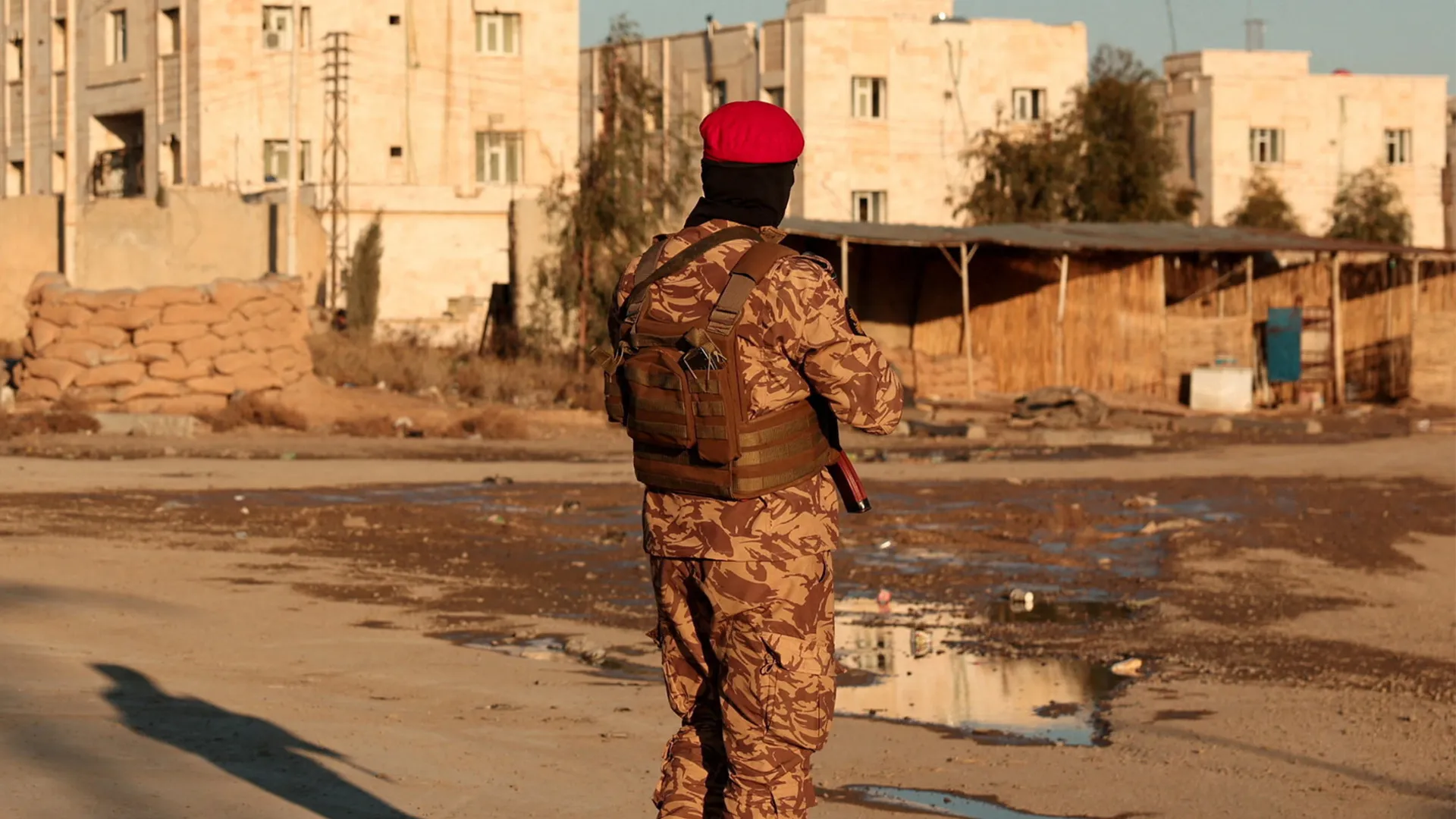
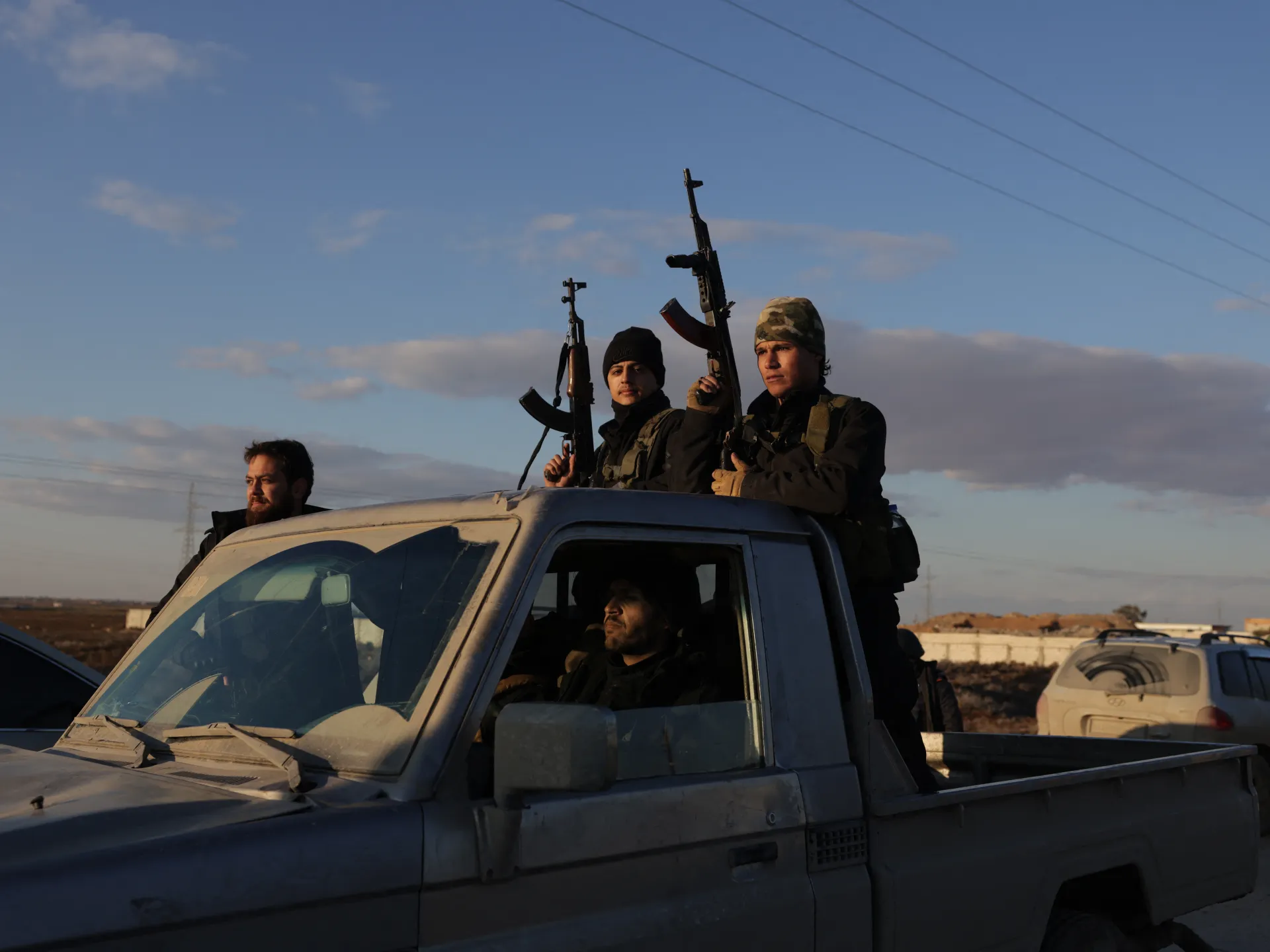
Syrian government forces have been searching for dozens of ISIL fighters who escaped prison during heavy fighting between the Syrian army and Kurdish-led fighters, hours after a ceasefire was agreed.
The destruction comes as Israel clamps down on NGOs providing humanitarian aid to Palestinians in Gaza.
Published On 20 Jan 202620 Jan 2026
Share
Israel has begun bulldozing the headquarters of the United Nations agency for Palestinian refugees (UNRWA) in occupied East Jerusalem as the far-right government clamps down heavily on humanitarian groups that provide desperately needed aid to Palestinians in Gaza.
UNRWA said on X on Tuesday that Israeli forces had confiscated staff devices and forced them out of their headquarters in the Sheikh Jarrah neighbourhood.
Recommended Stories
list of 3 itemsend of list
“This is an unprecedented attack not only against UNRWA and its premises. It constitutes a serious violation of international law and the privileges and immunities of the United Nations,” it said.
Local sources reported that an Israeli army group, accompanied by bulldozers, stormed the agency’s compound after sealing off the surrounding streets and intensifying its military presence in the area, and proceeded to demolish structures inside the compound, according to the Palestinian news agency Wafa.
Israel has repeatedly attacked UNRWA for what it terms pro-Palestinian leanings and accused the body of ties to Hamas, without providing evidence, which the UN agency has vehemently denied.
Israel’s Ministry of Foreign Affairs said the demolition was following through on a new law that banned the organisation.
National Security Minister Itamar Ben-Gvir said in a statement that he had accompanied crews to the headquarters and called it a “historic day”.
Israel has faced global condemnation after a ban on dozens of international aid organisations working to provide life-saving assistance to Palestinians in the war-ravaged Gaza Strip came into effect weeks ago.
Israel has revoked the operating licences of 37 aid groups, including Doctors Without Borders, known by its French initials MSF, and the Norwegian Refugee Council, for failing to comply with new government regulations.
The new rules require international NGOs working in Gaza and the occupied West Bank to provide detailed information on staff members, as well as their funding and operations.
Last week, UN Secretary-General Antonio Guterres warned Israeli Prime Minister Benjamin Netanyahu that he could take his country to the International Court of Justice if it does not repeal laws targeting UNRWA and return its seized assets and property.
In a January 8 letter to Netanyahu, Guterres said the UN cannot remain indifferent to “actions taken by Israel, which are in direct contravention of the obligations of Israel under international law. They must be reversed without delay.”
Israel’s parliament passed a law in October 2024 banning UNRWA from operating in Israel and prohibiting Israeli officials from having contact with the agency. It amended the law last month to ban electricity or water supply to UNRWA facilities.
Israeli authorities also seized UNRWA’s occupied East Jerusalem offices last month. The UN considers East Jerusalem occupied by Israel, while Israel considers all of Jerusalem part of the country.
The US Supreme Court has seemingly leaned in favour of West Virginia and Idaho laws banning trans athletes from sports.
On 13 January, the Court heard oral arguments in two high-profile cases – West Virginia v BPJ and Little v Hecox – challenging legislation that bans trans youth from competing in interscholastic and intercollegiate sports.
Lambda Legal, Legal Voice, and the ACLU filed two challenges on behalf of two trans female athletes, Lindsay Hecox and Becky Pepper-Jackson (B.P.J.).
While attending Boise State University in 2020, Hecox – who is now 24 years old- attempted to try out for the school’s women’s track and cross-country teams, but was barred from doing so under Idaho’s overarching Fairness in Women’s Sports Act.
B.J.P., who has identified as a girl since she was in third grade and has taken puberty blockers to avoid male puberty as well as hormone therapy with estrogen, faced a similar roadblock in West Virginia under the state’s Save Women’s Sports Act.
As a result of the girls’ respective lawsuits, federal courts have blocked the enforcement of the two aforementioned bans.
During the nearly three-and-a-half-hour oral arguments, the pair’s legal representation – Kathleen Hartnett and Joshua Block – argued that the two laws violate the rights of both trans and cisgender female students under the Equal Protection Clause of the Fourteenth Amendment.
They also argued that West Virginia’s law violates Title IX, which prohibits sex discrimination in educational programs, with Block adding: “unlike the case of a cisgender boy, excluding B.P.J from the girls’ teams excludes her from all athletic opportunity while stigmatising and separating her from her peers.“
Idaho solicitor general Alan Hurst defended the state’s ban, arguing that the law “classifies on the basis of sex because sex is what matters in sports.”
Michael Williams, West Virginia’s solicitor general, echoed similar sentiments to Hurst, telling the Court that the state’s law “is indifferent to gender identity because sports are indifferent to gender identity.“
The Supreme Court’s liberal justices – Ketanji Brown Jackson, Elena Kagan and Sonia Sotomayor– seemed to be sympathetic to the Hecox and B.P.J, with the former questioning why the laws should apply to a transgender girl “who does not have, because of the medical interventions and the things that have been done, who does not have the same threat to phyiscal competition and safety and all the reasons that the state puts forward.”
On the other side of the spectrum, conservative justices seemed to lean in favour of the two states, questioning the plaintiff’s arguments that the bans widely discriminate on the basis of sex and gender identity.
“For the individual girl who does not make the team or doesn’t get on the stand for the medal or doesn’t make all league, there’s a, there’s a harm there. I think we can’t sweep that aside,“ Justice Brett Kavanaugh argued.
However, Kavanaugh seemingly suggested that states that allow transgender girls to participate in school sports should be allowed to do so.
“Given that half the states are allowing it, allowing transgender girls and women to participate, [and] about half are not, why would we at this point, just the role of this court, jump in and try to constitutionalise a rule for the whole country, while there’s still, as you say, uncertainty and debate?“ he asked.
The Supreme Court is expected to issue rulings on the two cases by spring or early summer.
While reflecting on the oral arguments, Sasha Buchert, counsel, Nonbinary & Transgender Rights Project director, Lambda Legal, said in a statement: “Becky simply wants to be with her teammates on the track and field team, to experience the camaraderie and many documented benefits of participating in team sports.
“It has been amply proven that participating in team sports equips youth with a myriad of skills – in leadership, teamwork, confidence, andhealth. On the other hand, denying a student the ability to participate is not only discriminatory, but harmful to a student’s self-esteem, sending a message that they are not good enough and deserve to be excluded. That is the argument we made today and that we hope resonated with the justices of the Supreme Court.”
Block echoed similar sentiments in a separate statement, adding: “This case is about the ability of transgender youth like Becky to participate in our schools and communities.
“School athletics are fundamentally educational programs, but West Virginia’s law completely excluded Becky from her school’s entire athletic program even when there is no connection to alleged concerns about fairness or safety. As the lower Court recognised, forcing Becky to either give up sports or play on the boys’ team–in contradiction of who she is at school, at home, and across her life–is really no choice at all. We are glad to stand with her and her family to defend her rights, and the rights of every young person, to be included as a member of their school community, at the Supreme Court.”
You can listen to the full oral arguments for West Virginia v BPJhere and Little v Hecoxhere.
IF you want Maldives-like overwater bungalows without the long flight, thankfully there is a holiday resort much closer.
Found across the popular resort of Antalya, the resort even has a private beach.
Sign up for the Travel newsletter
Thank you!
A resort in Antalya has been called the Maldives of TurkeyCredit: TripAdvisorDoubleTree by Hilton Antalya Kemer has its own private beach and three pools to choose fromCredit: TripAdvisor
DoubleTree by Hilton Antalya Kemer has been dubbed the Maldives of Turkey thanks to its unique beach cabanas.
With just eight at the resort, each of the rooms are built on stilts overlooking the ocean – just like ones in the Maldives.
It is also a lot closer, with flights to Antalya around four hours, compared to the Maldives ten hours.
While you can’t stay in the huts, each can be privately hired with their own sunloungers and hot tub.
The resort has both sit-down restaurants and festival-style food trucksCredit: TripAdvisorWaterslides are part of the main pool areaCredit: TripAdvisorBeach bars overlook the water tooCredit: TripAdvisor
Basic rooms start from £120, with the beach cabanas costing around £75pp a day.
This is is for four people, and includes butler service, drinks and lunch.
Tour operators like TUI and Jet have package deals too, although the cheapest deal is with Loveholidays.
A seven night stay and flights can be found for £489pp, on an all-inclusive basis, while even in the peak summer deals are around £1,000pp.
With the average cost of a Maldives holiday being around £4,500 – it’s a cheaper (and closer) option.
Boulter endured a difficult 2025 season, dropping from 24th in the world to outside the top 100, and lost her British number one ranking amid injury struggles.
Seeking a fresh start this season, the Briton ended her partnership with long-term coach Biljana Veselinovic and is now being assisted by American Michael Joyce, who helped Maria Sharapova win two Grand Slams and reach world number one.
It is also a significant year for Boulter away from the court, with her wedding to Australian tennis star Alex de Minaur planned for later in 2026.
Speaking before the tournament, Boulter said: “I’m getting married this year. It’s going to be an unbelievable year, one of the best ones in my life, no matter what happens on the tennis court. I think for me that’s already given me a positive push.
“I feel like having a new coach, having a new set-up, everything is fresh and exciting again. Whereas I feel like I was dragging my feet a little bit at the end of last year just trying to get through the whole entire year without injuries.”
Now British number four, Boulter has won only four tour-level matches since Wimbledon.
She tore an abductor in her final event of last year in Hong Kong and returned to action at the ASB Classic in Auckland earlier this month, losing in the second round.
Jayne Harrison-Bond and husband Ian landed, enjoyed some sun, sand, and beers, then flew home
Jayne Harrison-Bond and husband Ian booked the trip three days in advance(Image: )
A couple jetted off to a Spanish island for some New Year’s Eve sunshine – and still made it back in time to ring in 2024 with family. Jayne Harrison-Bond, 52, and her husband Ian, 53, managed to squeeze in three hours of beach time in Lanzarote while still being home to celebrate with their adult children.
Community nurse Jayne, from Loughborough in Leicestershire, organised the spontaneous getaway after realising December 31 was her only free day during the festive season due to her hectic work schedule.
The adventurous pair secured £75 return flights from East Midlands Airport just three days beforehand, rising early to catch their 5.45am departure to the Canary Islands.
Their entire escapade cost under £100 each – covering flights, beach transport, meals, drinks, and a taxi back to Lanzarote Airport for their 6.05pm return journey. Jayne reflected: “It was lovely, a spur-of-the-moment thing, really. I was the only person at work on New Year’s Day with a sun tan, so I’ll take that.
“Somebody on a Facebook group put about going (to Lanzarote for the day) and we’re reasonably close to East Midlands (airport) ourselves.
“I was working all over Christmas but I had that day (the 31st) off. I said to my hubby, ‘that would be a good day trip’ kind of laughing about it, then ended up booking it on the Sunday.”
Welder Ian and Jayne touched down in Lanzarote at 10.15am, reaching Playa Honda beach by 10.35am after hopping on a bus for €1.40 each. “We did very little apart from the beach,” Jayne shared. “We had some nice tapas and a couple of nice drinks. The object of the day was just to utilise some rest time.”
The pair shelled out €4 each for beers at a beachside bar, before heading to Goliath Terraza for more food and drinks, setting them back €11 each. “My hubby had a large pizza and fries”, Jayne revealed. “I opted for a chicken caesar salad and we both enjoyed another drink.”
A €10 taxi fare got them back to the airport in time to catch their flight home, arriving just before midnight. Jayne recalled: “We’ve got two adult children still living at home; we raised a glass of Buck’s fizz with them. I was back to work the next day at 8am. It was well worth it.”
Jayne’s workmates were taken aback by her whirlwind trip, but the travel enthusiast – who has also made day trips to Alicante and Malaga recently – assured them she managed to get up for work without any issues.
She added: “They said, ‘I don’t know how you went that far for a day out’ but we weren’t exhausted after it or anything. It was a very straight-forward, everyday thing so I would recommend it to anyone.”
President Donald Trump walks to speak to members of the media before boarding Marine One en route to Palm Beach, Fla., on the South Lawn of the White House in Washington, D.C. on Friday, January 16, 2026. Early Tuesday, Trump told reporters that he would slap a 200% tariff on French wine and champagne in his push for the European nation to join his Board of Peace. Photo by Yuri Gripas/UPI | License Photo
Jan. 20 (UPI) — President Donald Trump early Tuesday threatened to impose a 200% tariff on French wine and champagne in an effort to pressure France to join his intergovernmental Board of Peace organization.
Trump made the comments early Tuesday to reporters at Palm Beach International Airport before boarding Air Force One to take him to Washington, D.C.
“I’ll put a 200% tariff on his wines and champagnes, and he’ll join,” Trump said, referring to President Emmanuel Macron of France, who is reportedly not planning to accept his offer to join the U.S.-led Board of Peace.
The Board of Peace is a U.S.-led intergovernmental organization proposed by Trump in connection with his Gaza cease-fire plan, which was endorsed by the United Nations Security Council in a resolution related to its Gaza peace mandate.
Though initially conceived as a mechanism to establish peace in Gaza, the charter now makes no mention of the Palestinian enclave, suggesting it may have larger ambitions to address global conflicts, The New York Times reported. The Times also reported that the United States is asking participating countries to pay more than $1 billion to join the board.
Several countries have already accepted Trump’s invitation, including Hungary, Vietnam and Morocco.
Trump told reporters early Tuesday that he has invited Russia, led by authoritarian President Vladimir Putin.
When asked about Macron reportedly turning aside his invite, Trump responded with an insult: “Well, nobody wants him because he’s going to be out of office very soon.”
France is to hold presidential elections next spring, with Macron ineligible to run again due to the country’s constitutional two-term limit.
Trump frequently uses tariffs as a bargaining tool, employing the economic measures as a negotiation tactic. However, those he has imposed during his second term have been challenged in court, as Congress constitutionally controls the nation’s taxing authority.
He recently announced a 10% tariff on goods from several European nations, including France, over their opposition to his plan to seize Greenland from Denmark.
Trump later Tuesday posted online what he said was the text of a message Macron had sent him seeking to arrange a dinner in Paris on Thursday while he is in Europe for the World Economic Forum, running Monday through Friday.
“I do not understand what you are doing on Greenland,” Macron wrote, according to Trump.
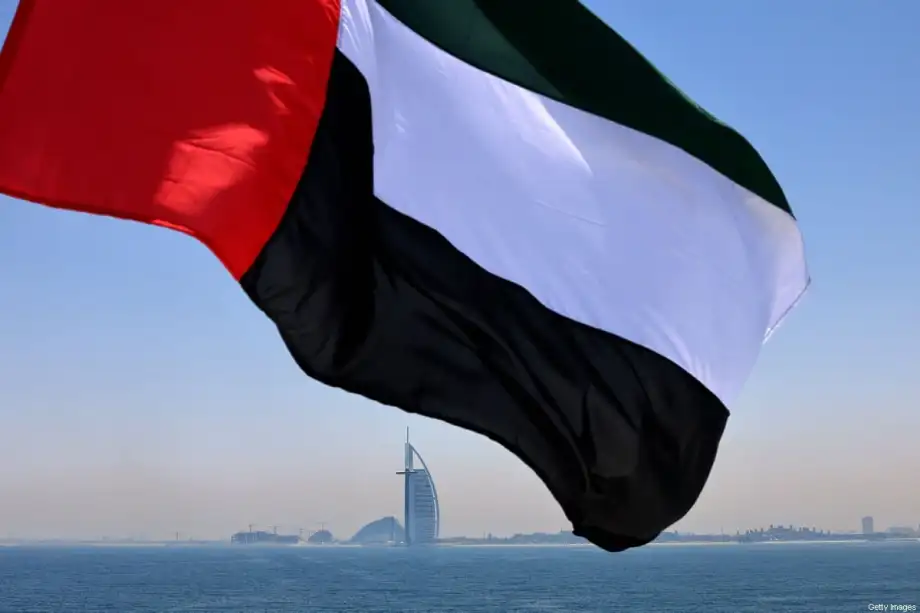
The United Arab Emirates (UAE) has deployed a military radar in the Somali region of Puntland as part of a secret deal, amid Abu Dhabi’s ongoing entrenchment of its influence over the region’s security affairs.
According to the London-based news outlet Middle East Eye, sources familiar with the matter told it that the UAE had installed a military radar near Bosaso airport in Somalia’s semi-autonomous Puntland region earlier this year, with one unnamed source saying that the “radar’s purpose is to detect and provide early warning against drone or missile threats, particularly those potentially launched by the Houthis, targeting Bosaso from outside”.
The radar’s presence was reportedly confirmed by satellite imagery from early March, which found that an Israeli-made ELM-2084 3D Active Electronically Scanned Array Multi-Mission Radar had indeed been installed near Bosaso airport.
Not only does the radar have the purpose of defending Puntland and its airport from attacks by Yemen’s Houthi rebels, but air traffic data reportedly indicates it also serves to facilitate the transport of weapons, ammunition, and supplies to Sudan’s paramilitary Rapid Support Forces (RSF), further fuelling the ongoing civil war in Sudan.
“The UAE installed the radar shortly after the RSF lost control of most of Khartoum in early March”, one source said. Another source was cited as claiming that the radar was deployed at the airport late last year and that Abu Dhabi has used it on a daily basis to supply the RSF, particularly through large cargo planes that frequently carry weapons and ammunition, and which sometimes amount to up to five major shipments at a time.
According to two other Somali sources cited by the report, Puntland’s president Said Abdullahi Deni did not seek approval from Somalia’s federal government nor even the Puntland parliament for the installation of the radar, with one of those sources stressing that it was “a secret deal, and even the highest levels of Puntland’s government, including the cabinet, are unaware of it”.
EXCLUSIVE: Death in Paradise star Shantol Jackson confirmed the exit of one beloved character
08:38, 20 Jan 2026Updated 08:38, 20 Jan 2026
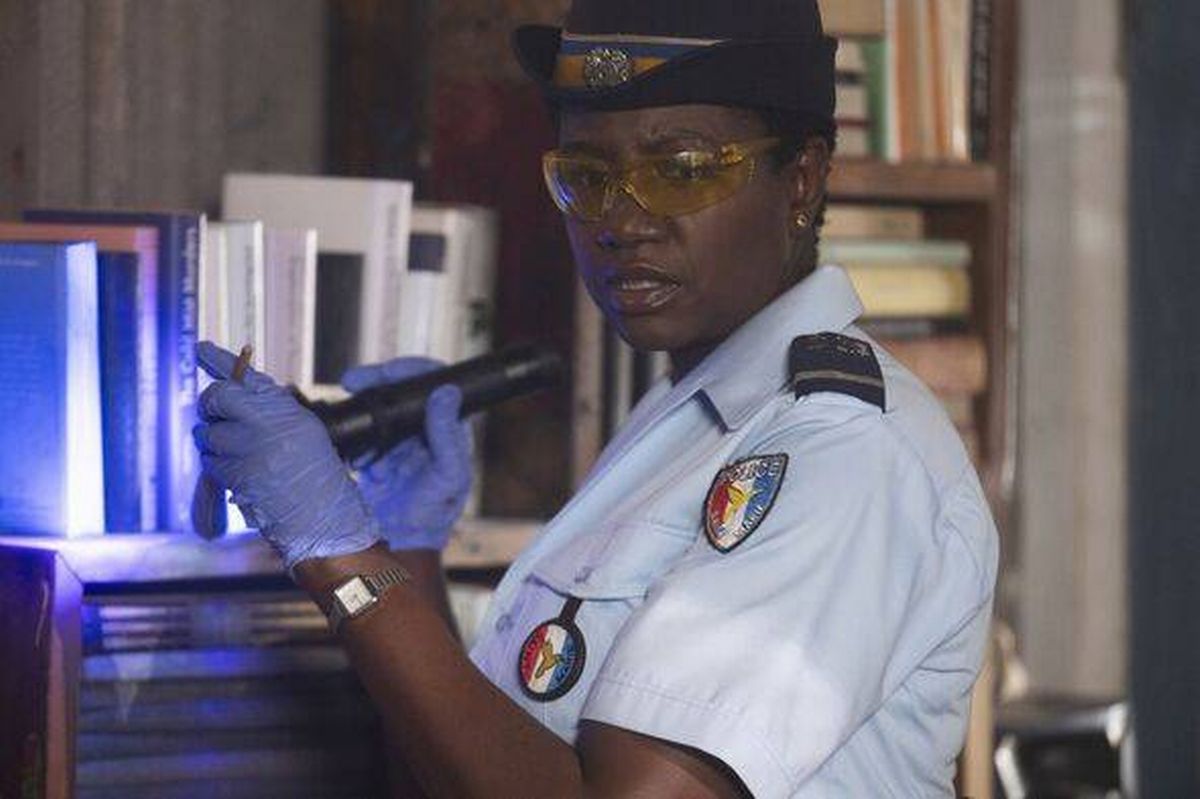
Death in Paradise has welcomed a new police officer to the fold, following Ginny Holder’s notable absence from the latest series. Viewers will now meet Police Sergeant Mattie Fletcher, portrayed by actress Catherine Garton.
Darlene was similarly absent from the Death in ParadiseChristmas special, making only a brief appearance via video link. Don Gilet returns as Detective Mervin Wilson, joined by Shantol Jackson as DS Naomi Thomas.
The series will also feature several high-profile guest appearances, including Sarah Hadland, Siobhan Finneran, Hermione Norris, Steffan Rhodri, Ben Willbond, Gary Wilmot, and Tim McMullan.
In an exclusive chat with Reach PLC and other media, the cast addressed Ginny’s departure, with Shantol Jackson confessing, “We’ll miss her,” reports the Express.
Shantol, who portrays Naomi Thomas, explained, “We definitely Miss Ginny because Ginny’s character, she was like…so Catherine comes in and she’s the older sister, or, you know, the older cousin, but Ginny was like, Queen Mother.”
Shaquille, who plays Officer Rose, added, “She was the auntie.”
Shantol continued, “And the beautiful thing about Ginny was that she was auntie of the police station, so Darlene…she carried that in her character, and then that’s how she was outside of set.
“So, you know, we’ll find that we miss the character and miss the person, but you know, thankfully, Catherine has done so exceptionally well that you don’t feel like there is an empty gap.
“It doesn’t feel like, oh, ‘we are missing a person, or we are missing a character’. It doesn’t feel that way at all. You miss the person, but that space. I think Catherine has done a really good job in carrying Jonny’s baton, and so we’re just really grateful for that.”
Additional guest stars featuring in Death in Paradise include Julian Rhind-Tutt, Ace Bhatti, Louis Davison, Scarlett Alice Johnson, Sean Delaney, Lizzie Davidson, Kojo Kamara, Layo-Christina Akinlude, Sandra James-Young, Phoebe Sparrow, Antonia Bernath, and Trieve Blackwood-Cambridge, who portrayed Selwyn Patterson’s successor when he departed Saint Marie.
The synopsis for the series reveals, “As DI Mervin Wilson (Don Gilet) continues to adjust to life in Saint Marie, he and the police team must face a myriad of baffling cases.
“But whilst attempting to connect with his recently discovered half-brother Solomon (Daniel Ward), Mervin’s newfound familial happiness soon turns to frustration as he discovers the pair are not quite as similar as he hoped they might be.”
The synopsis continues: “A returning Commissioner Selwyn Patterson (Don Warrington) confronts the impact of his recent period of absence, and after some tough love from old friend, Catherine Bordey (Elizabeth Bourgine), he’s determined to win back the trust of the island.
“Meanwhile, Detective Sergeant Naomi Thomas (Shantol Jackson) and Officer Sebastian Rose (Shaquille Ali-Yebuah) help new recruit Sergeant Mattie Fletcher (Catherine Garton) settle into the fold, which might be easier said than done as shadows from her past begin to reveal themselves.”
Death in Paradise is available to watch on BBC iPlayer.
**For the latest showbiz, TV, movie and streaming news, go to the new **Everything Gossip** website**
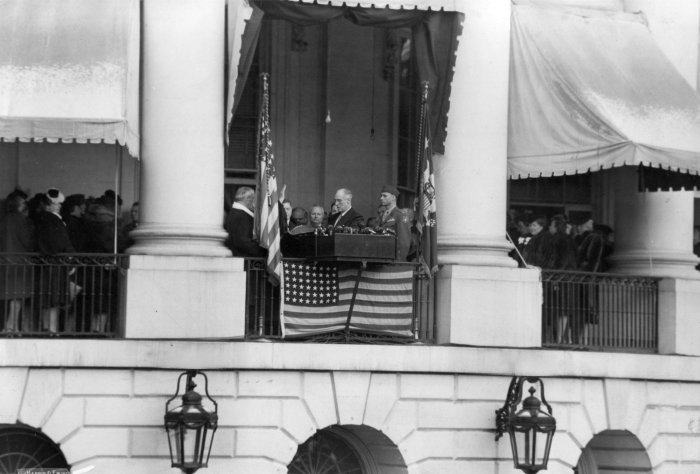
In 1937, President Franklin Delano Roosevelt took the oath of office for his second term as president. It was the first Inauguration Day held on January 20, a result of the 20th Amendment.
In 1945, Franklin Delano Roosevelt, the only president to be elected to four terms in office, was inaugurated to his final term. FDR died three months later and was succeeded by Harry S. Truman.
File Photo courtesy of FDR Library
In 1961, John Fitzgerald Kennedy began his presidency with inauguration ceremonies on the newly renovated east front of the Capitol.
In 1981, Ronald Reagan took the oath of office to become the 40th president of the United States.
In 1989, George H.W. Bush took the oath of office to become the 41st president of the United States.
In 1991, Iraq launched missile attacks on Saudi Arabia and paraded on television what Iraqi officials identified as seven captured allied airmen, including three Americans.
In 1993, Oscar-winning actress Audrey Hepburn died of cancer at her home in Switzerland. She was 63.
UPI File Photo
In 1993, Bill Clinton took the oath of office to become the 42nd president of the United States.
In 1996, Yasser Arafat was elected president of the Palestinian Authority with 88 percent of the vote.
In 2001, George W. Bush took the oath of office to become the 43rd president of the United States.
In 2006, Lawrence Franklin, a former U.S. State Department analyst and Iran expert, was sentenced to 12 years in prison for passing classified information to Israel and two pro-Israeli lobbyists. The sentence was later reduced to probation and 10 months of home confinement.
In 2007, U.S. Sen. Hillary Clinton, D-N.Y., became the first former first lady to seek the U.S. presidency when she entered the race for the 2008 Democratic nomination.
In 2010, senior Hamas Commander Mahmoud al-Mabhouh was assassinated in his hotel room while on a visit to Dubai in the United Arab Emirates.
In 2011, U.S. and local law officers arrested more than 100 suspected mobsters among seven families in New York, New Jersey and Rhode Island on a variety of charges, including murder, racketeering and extortion.
In 2017, Donald Trump took the oath of office to become the 45th president of the United States, the first person to hold the title without prior military or political experience.
In 2021, Joe Biden took the oath of office to become the 46th president of the United States, while Kamala Harris became the first woman to be sworn in as vice president.
In 2025, Donald Trump took the oath of office for the second time, becoming the 47th president of the United States. After Grover Cleveland, he was the second U.S. president to have non-consecutive terms in the White House.
Weekly insights and analysis on the latest developments in military technology, strategy, and foreign policy.
With much of the world’s attention on the growing rift between the United States, Denmark, and its allies over Greenland, the Royal Danish Air Force (RDAF) became the latest NATO operator to retire the iconic F-16 fighter. While the F-35A is already on duty to defend Denmark, the Danish F-16s will continue to serve with Argentina as well as Ukraine, the latter of which have already seen combat.
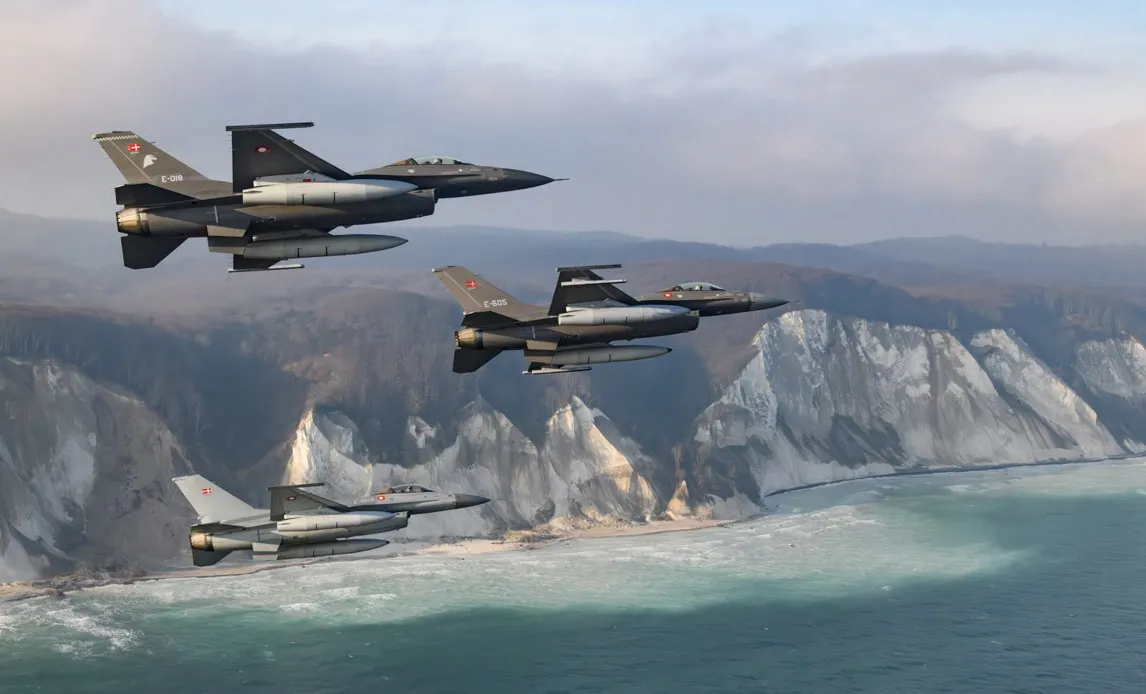
Yesterday, at just before 2:00 p.m. local time, at Skrydstrup Air Base, an F-16 touched down for the very last time while officially in RDAF service. Around two hours before that, three other RDAF F-16s had taken off for a final formation flight, departing from Skrydstrup in full afterburner to mark their retirement.
This was part of an official F-16 retirement ceremony at Skrydstrup, in southern Jutland, after more than four decades of service. The RDAF’s final Viper operator at the base was 727 Squadron.
F-16s on their last farewell flight over Denmark. Danish Armed Forces
“We never talk about the age of the F-16 because it has been maintained by probably the world’s best aircraft technicians and is flown by some of the world’s best pilots,” Gen. Christian Hvidt, the former Danish Chief of Defense, told attendees in Skrydstrup’s Hangar 3. “Congratulations to 727. What exciting and enormous challenges lie ahead,” he added.
Hvidt, with the callsign “VIT,” had touched down in the first Danish F-16 at Skrydstrup 46 years ago, in January 1980. He later became the commander of 727 Squadron, which was tasked with bringing the aircraft into operational service.
VIT opened the farewell event by paying tribute to the many efforts that have been part of the F-16. His original helmet was placed in the cockpit for the occasion. Casper Brock / Danish Armed Forces Casper Brock
In what became known as the ‘Sale of the Century,’ Denmark acquired the F-16 — at that time still a General Dynamics product — as part of a European collaboration with Belgium, the Netherlands, and Norway in the late 1970s. In service with the RDAF, the F-16 replaced the F-100 Super Sabre, F-104G Starfighter, and Saab Draken.
Denmark acquired 77 F-16A/B Block 1/15 aircraft in two main batches, plus additional attrition replacement orders.
Specific features of the Danish F-16 included a floodlight, fitted in the port forward fuselage side, in front of the canopy, for night interceptions, something that was also found on Norwegian jets. Two underwing stations were adapted to accommodate the Terma Pylon Integrated Dispenser Stations (PIDS). These pylons have built-in approach warning sensors and can be fitted with electronic warfare jammers, as well as dispensers for decoy flares and chaff. The pylons are tied to the jet’s internal self-protection suite to provide synergistic effects.
Reconnaissance pods used by Danish F-16s included the Per Udsen (now Terma) Modular Reconnaissance Pod (MRP), which replaced the earlier Red Baron pod.
The firing range at Rømø was one of the only places in Denmark where F-16 pilots were allowed to fly low over land with practice bombs. Danish Armed Forces
As a European Participating Air Forces (EPAF) member, Denmark took part in the Mid-Life Update (MLU) program and provided these modifications to 61 F-16s, with work completed locally, in Aalborg. This brought the jets to F-16AM/BM standard, broadly similar to the later F-16C/D Block 50/52, albeit without the more advanced radar.
Ultimately, F-16s were operated by four RDAF squadrons, 723 and 726 at Aalborg Air Base, in northern Jutland, and 727 and 730 at Skrydstrup.
An RDAF F-16 demonstration overAalborg Air Basein 2012:
Danish Air Force F-16 DEMO-FLIGHT HD
International operations in which Danish F-16s were involved included Allied Force over the former Yugoslavia in 1999, Enduring Freedom over Afghanistan in 2002–03, Unified Protector over Libya in 2011, and Operation Enduring Freedom in the Middle East on two separate occasions in 2014–15 and 2016. Closer to home, RDAF F-16s participated in Baltic Air Policing and Iceland Air Policing and Surveillance, with a first deployment to Iceland in 2009.
In April 2023, the RDAF received its first F-35A at Luke Air Force Base, Arizona, at which point the service still operated around 43 F-16AM/BMs, but the writing was by now on the wall for the Viper.
An RDAF F-35A escorts a Russian Il-20 Coot intelligence-gathering aircraft over the Baltic Sea on March 27, 2025. Danish Armed Forces
Denmark has now increased its F-35 orders from 27 to 43 aircraft. All aircraft are expected to be fully operational by next year, allowing the retirement of the F-16 at this point.
Explaining about the decision to replace the F-16 with the F-35, Steen Hartov, senior advisor in the Air Force Command’s Combat Aircraft Division, told guests at Skrydstrup yesterday: “In the future, we will see a completely different type of warfare. We will see significantly less fragmented battles, and instead we will see wars where battles on land, in the air, at sea, in space, and not least digitally will take place at the same time and directly influence each other.”
An RDAF F-16 over Greenland, as part of regular sovereignty enforcement on the island last year. Danish Armed Forces
The RDAF itself stresses the F-35’s “revolutionary ability to scan large areas, gather information, and send it directly back to its own forces [providing] a clear overview and insight into the battlefield all on its own,” as its key advantage over fourth-generation types.
As for the RDAF’s F-16s, retirement in Denmark doesn’t mean the end of their operational careers.
“Despite the aircraft’s many missions and countless flights, they are still in such good condition that there is no need to retire them,” the RDAF says.
Danish F-16s participating in the Iceland Air Policing and Surveillance mission in 2022. Danish Armed Forces
Some of the aircraft have been sold to Argentina, while others have been donated to Ukraine.
After months of discussion about whether to give Ukraine the F-16s, it became a reality in August 2023 when Denmark and the Netherlands officially pledged dozens of Vipers to Ukraine. You can read more about that here.
Ukrainian President Volodymyr Zelensky (left) and Danish Prime Minister Mette Frederiksen (right) in an F-16BM at Skrydstrup Air Base on August 20, 2023. Photo by MADS CLAUS RASMUSSEN/Ritzau Scanpix/AFP via Getty Images MADS CLAUS RASMUSSEN
To date, Kyiv has been promised 87 F-16s from four different European nations. These comprise 24 from the Netherlands, 30 from Belgium, 19 from Denmark, and 14 from Norway. Since its introduction to service, Ukraine has lost four F-16s in different incidents.
A Ukrainian F-16 with two Sidewinders and a Terma pylon. Ukrainian Air Force screencap
After an incredibly protracted selection process, Argentina secured a deal for 24 former RDAF F-16s in 2024. This came after many years of false starts, during which numerous different fighter options were pitched to Argentina as a replacement for its veteran A-4 Fightinghawks. In December of 2025, the first six Danish F-16s were handed over to Argentina and flown from Skrydstrup to their new base with the support of U.S. tanker aircraft.
An Argentinian pilot after their first back-seat flight in an F-16. Danish Armed Forces Rune Dyrholm
While the F-16 has now bowed out of Danish service, these aircraft are set to see out many more years of service and, in Ukrainian hands, are already being exposed to an intensity of combat operations that they never experienced with their original operator.
CHRISTIE Brinkley’s daughter, Sailor, has recreated her mother’s iconic photoshoot from over four decades ago in sexy new pics.
The 26-year-old couldn’t resist posing in shots reminiscent of her mom’s famous Sports Illustrated cover while vacationing in the Caribbean over the weekend.
Sign up for the Showbiz newsletter
Thank you!
Christie Brinkley’s daughter Sailor recreated her mom’s iconic pose in new sexy picsCredit: Instagram/sailorbrinkleycookSailor shared numerous photos on Instagram of her showcasing her figure in various swimwearCredit: Instagram/sailorbrinkleycookChristie famously appeared on the cover of Sports Illustrated in February 1981Credit: Getty
Sailor posted numerous photos on Instagram of her donning a skimpy blue string bikini and her blonde locks flowing straight down during the tropical getaway.
One captured the fashion model holding her hair up, one leg lifted, with a breathtaking view of tall greenery and the ocean in the background.
Another pic showed her leaning her back against a tree, her tiny frame on display as she gazed into the camera.
Other photos further showed Sailor’s confidence in front of the camera as she cheekily looked over her shoulder while riding a bicycle on the sand in another sultry swimsuit, took selfies while admiring the sunset, and checked out her tan lines in the mirror after a day in the sun.
Fans were immediately reminded of Christie‘s memorable SI photoshoot in February 1981, when she posed similarly in a Florida setting.
The mother-daughter pair looked nearly identical in their separate beach pics.
Sailor is the youngest of Christie’s three children and the only one she shares with her ex-husband, Peter Cook, whom she married from 1996 until 2008.
Christie is also a mother to Alexa Ray Joel, whom she shares with her first ex-husband, Billy Joel, and Jack Paris Cook, 30, with her ex-husband, Richard Taubman.
While Sailor appeared comfortable in her skin in her social media pics, she’s admitted that she’s struggled with body dysmorphia since a young age.
“I just have this awful feeling that if I’m not skinny, I’m not worth being celebrated and I’m not worth being praised,” Sailor confessed during a 2020 appearance on Good Morning America.
“I’ve been just been having these moments where I look in the mirror, and I’m just disgusted with myself,” she continued, explaining that the thoughts come on even after witnessing “the tiniest little things like a roll on my stomach, a little pooch on the bottom of my stomach.”
Sailor also said that her mother wasn’t aware of the gravity of her struggles, noting that she first developed an eating disorder at 15 years old.
“My mom didn’t fully know the pain that I was going through when I was at my worst,” she shared.
“I was looking up at all these major figures in modeling that are size double zero, and they’ve got these thin legs and these tiny waists.
“I was seeing them being so celebrated by everyone everywhere and being wanted by all the boys and all that greatness that comes around being this tiny supermodel. And I wanted that,” Sailor revealed.
Christie’s modeling career began in the late 1970s before reaching global fame.
The Uptown Girl author is still wowing fans with her ageless beauty, as she shared photos last week from her island vacation.
Just a few weeks earlier, Christie stunned again in a skintight dress while celebrating her daughter Alexa’s 40th birthday.
Sailor is the youngest of Christie’s three childrenCredit: GettyChristie is still wowing fans with her ageless beauty in sexy posts on social mediaCredit: Instagram
Eurogroup’s session in Brussels this Monday confirmed Croatia’s Boris Vujčić as the successor to Spain’s Luis de Guindos, whose eight-year mandate at the ECB expires in May.
While the nomination must still undergo consultative hearings at the European Parliament, and a review by the ECB’s Governing Council, this process is mostly protocol.
Vujčić is expected to take office on 1 June and become Christine Lagarde’s right-hand man.
The decision defied predictions and dismissed the European Parliament’s recommendations.
The Croatian beat five other candidates for the job, including the favourite to win, Finland’s Olli Rehn, and the Parliament’s favoured choices, Portugal’s Mário Centeno and Latvia’s Mārtiņš Kazāks.
Following the meeting, the president of the Eurogroup, Kyriakos Pierrakakis, said there was “an agreement on both the process and the person which is a sign of institutional maturity on the background of an exceptional number of candidates and past experiences”.
For Croatia, the promotion of its central bank governor to the ECB’s Executive Board is a swift ascent. The country only adopted the euro in 2023 and is the second-newest member after Bulgaria, which integrated the single currency at the start of this year.
Croatia’s infancy in the eurozone stands in stark contrast to the veteran status of the man who shepherded the nation through its transition.
Currently serving his third term, Vujčić has led the Croatian National Bank since 2012, playing a key role in negotiating the country’s accession to the EU in 2013 and overseeing the adoption of the euro a few years ago.
A “moderate hawk”
The ECB vice president makes a substantial contribution to the Governing Council’s financial stability analysis, influencing interest rate decisions, and also substitutes the President whenever necessary.
In the technical jargon of central banking, Vujčić is frequently classified as a “moderate hawk”.
Vujčić is a seasoned economist who has repeatedly cautioned against lingering inflation threats, pushing for a slow and measured reduction in interest rates to guarantee that price stability is firmly reinstated.
However, the Croatian’s colleagues have also previously described him as pragmatic, data-driven, and relatively predictable.
The Eurogroup likely sees Vujčić as someone who will not focus on political optics and instead help the ECB steadily navigate the tail end of its post-pandemic inflation fight.
The great reshuffle of the ECB
Despite Vujčić’s appointment being meaningful for Croatia, the vice presidency is not among the most desired roles in the ECB.
In fact, the EU’s major member states did not even propose candidates for this nomination, as they prepare for the many seats that become vacant next year.
The positions of president, chief economist, and head of market operations, will all be available in 2027.
The EU’s “big four”, Germany, Spain, France and Italy, are all expected to compete for those spots, aiming to preserve their controlling influence over the ECB.
The most enduring question surrounding Farrell’s squad has evolved in the months since Ireland last played.
What was viewed as a straight shootout between fly-halves Sam Prendergast and Jack Crowley is now a three-way tug of war for the 10 jersey with Harry Byrne firmly back in the mix.
The Leinster player, who this time last year was so far down the pecking order that he was allowed to join Bristol on loan, started two of four Champions Cup pool games ahead of Prendergast and kicked the winning penalty against La Rochelle this month.
That Prendergast was still on the pitch at the time of Byrne’s matchwinner was an interesting added wrinkle when it comes to judging the pair’s goalkicking. Farrell’s consistent namechecking of Byrne, who has not played Test rugby since 2024, during November felt significant too.
With continued questions over Prendergast’s defensive contributions, and Crowley steering an out of form Munster side, could Ireland begin a fourth consecutive Six Nations with a different player as their starting 10?
Scrum-half is considerably more straightforward. Leinster’s Jamison Gibson-Park has regained his sharpness as the season has progressed while, after an injury scare this month, Craig Casey is fit to be his back-up.
Connacht’s Caolin Blade was third-choice in November but has played just twice since and it will be interesting to see if one of the western province’s other nines, or Ulster’s Nathan Doak, comes into the mix on Wednesday.
The UK was ranked second most miserable country in a 2024 mental wellbeing survey, with only Uzbekistan scoring lower – but YouTuber Wendall travelled 4,000 miles from Walsall to discover a thriving nation full of friendly people
Wendall got a warm welcome in chilly Tashkent(Image: YouTube/Wendall)
A global survey conducted in 2024 has ranked the UK as the second most miserable country on Earth, according to a report on people’s mental well-being. The Mental State of the World Report revealed that increased wealth and economic growth do not necessarily equate to better mental health.
While countries like the Dominican Republic, Sri Lanka, and Tanzania top the rankings, nations such as Britain and Australia trail at the bottom of the list.
The team from Sapien Labs, who compiled the report, suggest that factors including high smartphone usage, particularly among children, along with the declining significance of family and community, are contributing to widespread dissatisfaction with life.
Only one landlocked former Soviet republic in Central Asia scored lower than the United Kingdom. Adventurous YouTuber Wendall, known for his global travels seeking out intriguing stories about different ways of life, journeyed all the way from Walsall to the Uzbek capital, Tashkent, to explore what life is like in Uzbekistan – a country supposedly even more downbeat than Britain.
However, what he found was a vibrant community with a positive, upbeat outlook on life and an absolute passion for European football. He also noticed a stark contrast with the people he met during his travels around the UK.
There are no direct flights to Uzbekistan, so Wendall’s 4,000-mile trek required a stopover in Turkey, where he splashed out £12 on a pint at 5am. Prices, however, are considerably more wallet-friendly in Tashkent.
His £60-per-night hotel was remarkably luxurious compared with UK lodgings, and there was little evidence of the hardship one might anticipate from a country that spent 67 years under Soviet rule.
“In recent years it’s been slowly, carefully reopening to the world,” Wendall explained. “On the surface, this seems a nation very much on the up, now open for tourism and business like never before.”
There’s certainly a laid-back approach to daily life that would be unthinkable in Britain. City park booths allow residents to try their hand at archery, while a vendor at Tashkent’s vibrant street market peddles beautifully crafted — yet menacing-looking — knives that would undoubtedly raise eyebrows on British high streets.
Surprisingly, most residents were perfectly comfortable appearing on camera, while back in the UK many of his interviewees preferred to remain off-screen.
One resident explained how dramatically Uzbekistan has transformed over the last decade: “You can say that it changed a lot in terms of education, politics and freedom. There is no war. It’s peaceful.”
While salaries were modest in the years following the Soviet collapse, they’re now climbing, she noted, with many Uzbeks who had sought opportunities overseas now choosing to return home. Tashkent’s metro network is significantly cleaner — and far more architecturally captivating — than the London Underground, Wendall noted, with ticket prices well below what you’d pay for a similar trip back home.
At the bustling street bazaars, you can snap up a knock-off Real Madrid top for next to nothing. And while English isn’t widely spoken among residents, they’ll enthusiastically shout out names of major European football teams in a bid to connect with visitors who don’t speak Uzbek.
When browsing the city’s street stalls, costs can initially appear eye-watering due to the exchange rate — one Uzbekistani som equals just £0.000062. A basic stuffed flatbread might cost 5,000 som, which works out at roughly 30p.
For a modest sum more, you can tuck into a serving of plov, a rice-based creation with lamb, carrots, and onions that’s celebrated as Uzbekistan’s signature dish. Wendall wasn’t particularly keen on it, though at those prices it’s hard to grumble.
Even a generous measure of brandy at one of the capital’s swankiest establishments will only set you back £1.50. It’s puzzling why Uzbeks have earned a reputation for being even gloomier than Brits.
Ultimately, Wendall was thrilled with his journey to the “world’s most miserable country.” He reflected: “It’s the supposedly most miserable, depressing country in the world — the only country more depressed than the UK. Well, I’ve met some wonderful people. I’ve been met with nothing but smiles, hospitality and a welcome I’ll never forget.”
Chinese exports of rare earth magnets to Japan fell 8% in December from November, following a diplomatic spat that rattled markets and raised fears about supply security. The drop came just weeks before Beijing imposed a January ban on exports of dual-use items to Japan materials that can have both civilian and military applications. Although December shipments of 280 metric tons were still 31.4% higher than a year earlier, the monthly decline signaled growing political risk in a sector where China dominates global supply.
Why it matters: Rare earth magnets are critical inputs for electric vehicles, wind turbines, electronics, and defense technologies. Any disruption in supply has immediate implications for Japan’s advanced manufacturing sector and longer-term consequences for global clean energy and high-tech industries. The episode highlights how trade in strategic materials is increasingly shaped by geopolitics rather than pure market forces.
Drivers behind the decline: The immediate trigger was worsening political relations after Prime Minister Sanae Takaichi stated Japan would respond militarily if China attacked Taiwan—a comment that angered Beijing. The subsequent ban on dual-use exports deepened uncertainty. At the same time, the strong year-on-year rise in December shipments suggests Japanese firms were stockpiling magnets in anticipation of tougher restrictions, temporarily inflating demand before a likely January drop.
Stakeholders: Japan’s automakers, electronics manufacturers, and defense planners are directly exposed to supply risks. Chinese producers face the challenge of balancing geopolitical directives with commercial interests, particularly as exports to key markets soften. The United States is another major stakeholder: December shipments to the U.S. fell 3% month-on-month, and total 2025 exports dropped over 20%, underlining how Washington is also affected by China’s export controls.
Global context: While exports to the U.S. partially recovered after President Xi Jinping and President Donald Trump agreed to pause some controls, overall Chinese rare earth magnet exports declined 1.3% in 2025. This points to a broader trend of fragmentation in strategic supply chains, with China using its dominance in rare earths as leverage amid rising great-power competition.
What’s next: Shipments to Japan are expected to fall further in January as the ban takes full effect. Japanese firms are likely to accelerate diversification efforts, including sourcing from alternative suppliers and investing in recycling and substitution technologies. In the medium term, continued tensions over Taiwan could make rare earth trade an even more politicized tool of statecraft.
Analysis: This episode illustrates how economic interdependence no longer guarantees stability in East Asia. China’s control over rare earths gives it a powerful instrument of coercion, but repeated use risks pushing countries like Japan and the U.S. to reduce dependence over time. In the short run, Japan bears the adjustment costs through higher uncertainty and potential production bottlenecks. In the long run, however, China may weaken its own leverage as strategic competitors invest heavily in alternative supply chains. The rare earth market, once a niche industrial sector, has become a frontline of geopolitics.
After 18 months of dignified silence, young Brooklyn Beckham has finally hurled his grenade.
Brooklyn Beckham has finally hurled a grenade in the feud with his parentsCredit: GettyDavid and Victoria Beckham are said to be ‘floored’ by Brooklyn’s six-part Instagram soliloquyCredit: Splash
He was under absolutely no coercive control from anyone. Indeed it is crystal clear he is utterly sick of the lazy misogynistic trope that has been used against his American wife. The notion he has no mind of his own, and does what his missus tells him.
He, of course, shared his plan with Nicola, who gave him over unwavering support. They are, after all, a team.
Of course no-one knows outside of the two families – the Beckhams and the Peltzs – what has really happened over the past year and a half.
And as the late Queen once said, recollections may vary.
Which is fitting because Brooklyn and Nicola’s situation is so incredibly similar to that of royal exiles, Meghan and Harry (about whom the Queen was referencing in her statement).
Brooklyn, by virtue of his surname, has grown up in the spotlight.
And as Harry once said, he cannot help who he was born to. He never asked for fame, never asked to be part of this world.
Will Brooklyn now drop his family name? If it is such an albatross around his neck, perhaps he will.
Certainly, married to a billionairess, he doesn’t need their millions. His in-laws, after all, have billions.
However, Brooklyn must surely be aware that he has his platform – 16million followers on Instagram alone – thanks to his superstar parents. To suggest otherwise would be utterly disingenuous.
Brooklyn is genuinely a lovely boy by all accounts. Polite and down to earth. This just seems so extraordinarily out of character.
Clemmie Moodie
They have helped him financially in the past, and given him a leg-up when he’s needed it.
But not any more.
Brooklyn is genuinely a lovely boy by all accounts. Polite and down to earth. This just seems so extraordinarily out of character.
Friends tell me his incendiary six-part Instagram soliloquy has absolutely “floored” David and Victoria.
The oldest Beckham child with his American wife Nicola PeltzCredit: InstagramBrooklyn made this decision to launch his weapons-grade statement himselfCredit: Getty
They are, I’m told, “absolutely blindsided” by this truth bomb.
For a family who, as Brooklyn points out, been at such odds to control their narrative, their very lucrative brand, this is unbelievably out of their hands.
Brooklyn Beckham’s statement in full
“I have been silent for years and made every effort to keep these matters private.
“Unfortunately, my parents and their team have continued to go to the press, leaving me with no choice but to speak for myself and tell the truth about only some of the lies that have been printed.
“I do not want to reconcile with my family. I’m not being controlled, I’m standing up for myself for the first time in my life.
“For my entire life, my parents have controlled narratives in the press about our family.
“The performative social media posts, family events and inauthentic relationships have been a fixture of the life I was born into.
“Recently, I have seen with my own eyes the lengths that they’ll go through to place countless lies in the media, mostly at the expense of innocent people, to preserve their own facade.
“But I believe the truth always comes out.
“My parents have been trying endlessly to ruin my relationship since before my wedding, and it hasn’t stopped.
“My mum cancelled making Nicola’s dress in the eleventh hour despite how excited she was to wear her design, forcing her to urgently find a new dress.
“Weeks before our big day, my parents repeatedly pressured and attempted to bribe me into signing away the rights to my name, which would have affected me, my wife, and our future children.
“They were adamant on me signing before my wedding date because then the terms of the deal would be initiated. My holdout affected the payday, and they have never treated me the same since.
“During the wedding planning, my mum went so far as to call me ‘evil’ because Nicola and I chose to include my Nanny Sandra, and Nicola’s Naunni at our table, because they both didn’t have their husbands.
“Both of our parents had their own tables equally adjacent to ours.
“The night before our wedding, members of my family told me that Nicola was ‘not blood’ and ‘not family’.
“Since the moment I started standing up for myself with my family, I’ve received endless attacks from my parents, both privately and publicly, that were sent to the press on their orders.
“Even my brothers were sent to attack me on social media, before they ultimately blocked me out of nowhere this last Summer.
“My mum hijacked my first dance with my wife, which had been planned weeks in advance to a romantic love song.
“In front of our 500 wedding guests, Marc Anthony called me to the stage, where in the schedule was planned to be my romantic dance with my wife but instead my mum was waiting to dance with me instead.
“She danced very inappropriately on me in front of everyone. I’ve never felt more uncomfortable or humiliated in my entire life.
“We wanted to renew our vows so we could create new memories of our wedding day that bring us joy and happiness, not anxiety and embarrassment.
“My wife has been consistently disrespected by my family, no matter how hard we’ve tried to come together as one.
“My mum has repeatedly invited women from my past into our lives in ways that were clearly intended to make us both uncomfortable.
“Despite this, we still travelled to London for my dad’s birthday and were rejected for a week as we waited in our hotel room trying to plan quality time with him.
“He refused all of our attempts, unless it was at his big birthday party with a hundred guests and cameras at every corner.
“When he finally agreed to see me, it was under the condition that Nicola wasn’t invited. It was a slap in the face.
“Later, when my family travelled to LA, they refused to see me at all.
“My family values public promotion and endorsements above all else. Brand Beckham comes first.
“Family ‘love’ is decided by how much you post on social media, or how quickly you drop everything to show up and pose for a family photo opp, even if it’s at the expense of our professional obligations.
“We’ve gone out of our way for years to show up and support at every fashion show, every party, and every press activity to show “our perfect family.”
“But the one time my wife asked for my mum’s support to save displaced dogs during the LA fires, my mum refused.
“The narrative that my wife controls me is completely backwards. I have been controlled by my parents for most of my life. I grew up with overwhelming anxiety.
“For the first time in my life, since stepping away from my family, that anxiety has disappeared. I wake up every morning grateful for the life I chose, and have found peace and relief.
“My wife and I do not want a life shaped by image, press, or manipulation.
“All we want peace, privacy and happiness for us and our future family.”
Over the next few weeks, newspapers, social media and the world of showbiz will be poring over this statement, dissecting it word by word.
I hope all parties concerned can somehow navigate a way through this, and that everyone is getting the support.
Clemmie Moodie
Yet in all this, it’s important we don’t lose sight of the fact these are real human beings with real feelings. Everyone is hurting. No-one wanted this.
For Brooklyn to have gone this far, he must be desperate. Certainly he sounds like a man in pain.
Victoria told me in our interview two months ago that she had therapy; She believes in mental health, and this will hurt her.
Her beloved eldest son’s words are deeply personal, and she must be hurt, embarrassed and very, very confused.
I hope all parties concerned can somehow navigate a way through this, and that everyone is getting the support – both personal and professional – they may need.
Will the Beckhams do what Brooklyn alleges they have refused to do, and contact him away from prying eyes? (Something David and Victoria folly refute).
No-one, except them, can possibly know.
But one thing is for sure – Brooklyn isn’t staying silent any more.
Clemmie with David BeckhamCredit: Clemmie MoodieClemmie snapped alongside VictoriaCredit: Clemmie MoodieDavid, his son Romeo and The Sun’s ClemmieCredit: Dan CharityBrooklyn shared his plan with Nicola, who gave him over unwavering supportCredit: GettyFor Brooklyn to have gone this far, he must be desperateCredit: GettyBrooklyn may now change his last nameCredit: InstagramThe feuding family pose before the riftCredit: Instagram
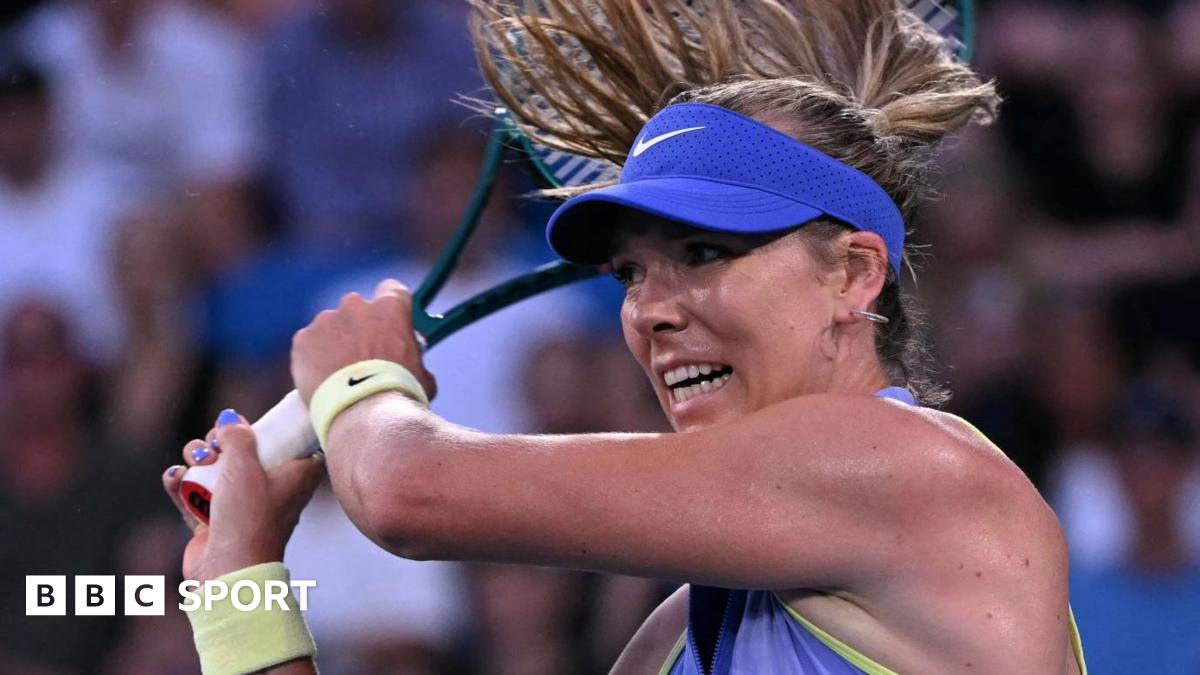
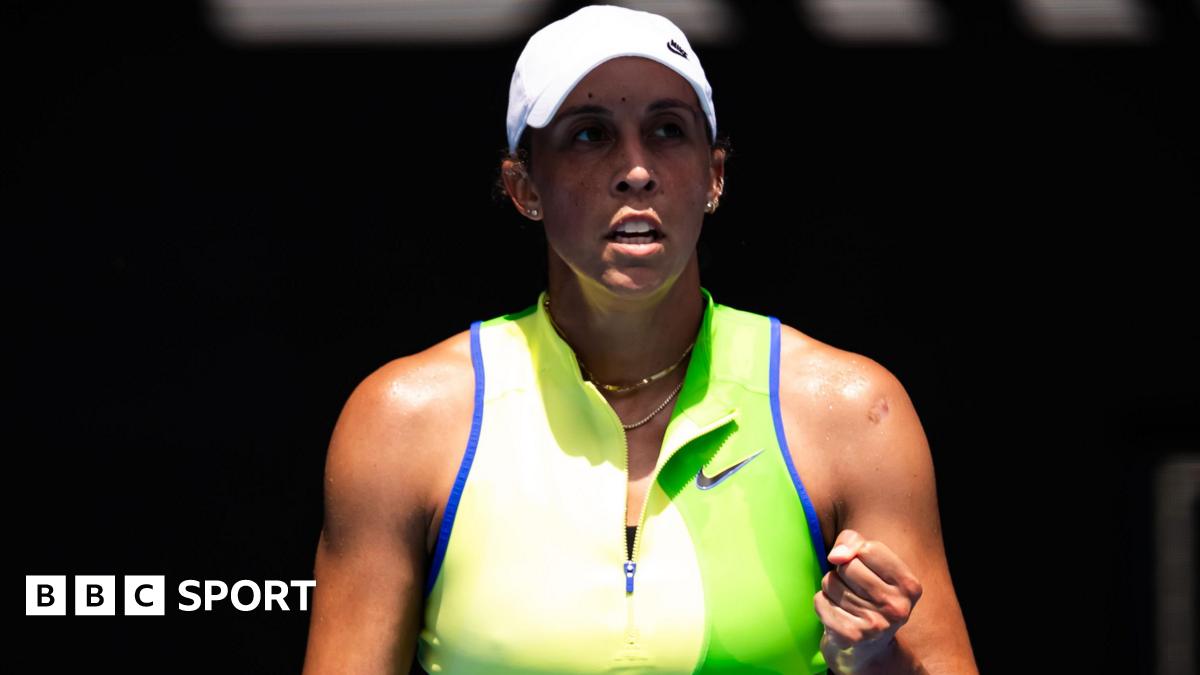
If Madison Keys was not nervous enough about starting her Australian Open title defence, facing an unknown opponent only added to the tension.
The 30-year-old American had a fairytale run in Melbourne 12 months ago, culminating in her lifting the first Grand Slam trophy of her career.
However, she made an edgy start to her title defence on Tuesday, losing the first four games to Grand Slam debutant Oleksandra Oliynykova.
Keys said afterwards she had struggled to find footage of her opponent to help her prepare, with Oliynykova’s defensive play style not matching up well with her big-hitting game.
But the ninth seed eventually settled down to clinch a 7-6 (8-6) 6-1 victory over the Ukrainian.
“I’ve been thinking about this moment for basically a year,” said Keys.
“The moment they say, ‘Ready, play’, it all hits you in a way that I don’t think you can ever really explain.
“As nerve-racking and stressful as that can be, I’m still reminding myself of just how few people get to be in that moment.
“Being able to walk out today and have the crowd be as welcoming as they were, I’ll take the stress any day.”
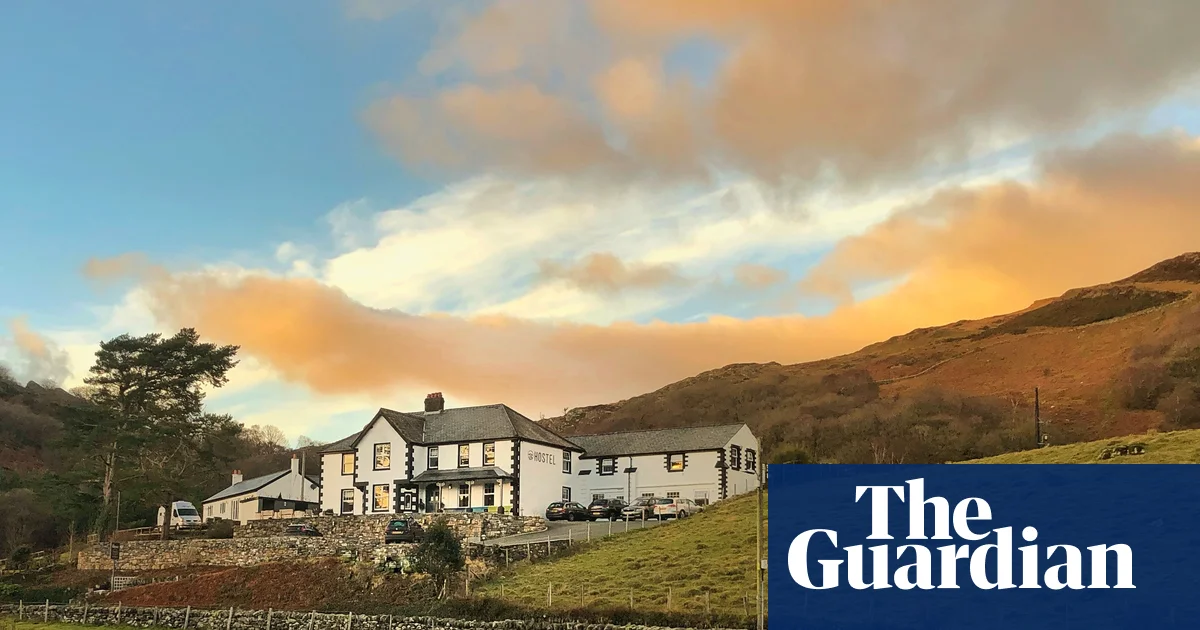
‘Penguins? In Snowdonia?” I asked incredulously. “That’s right!” came the enthusiastic reply from our newest hostel companion. We were standing in the large kitchen of The Rocks hostel in Capel Curig, a village in the north-east of Eryri national park (Snowdonia), chatting amiably while waiting for our teas to brew.
“Head up Moel Siabod to the lake, and that’s where the penguins are. You’ll see a sign warning about feeding them,” he said. “But even if they’re hiding and you don’t see one, it’s one of the best walks in the area.”
Spotting a penguin in the Welsh mountains seemed unlikely, but that hardly mattered, least of all to my 11-year-old son, who was thrilled by the idea of a day spent hunting for penguins. And with that, our daily adventure plans were settled, inspired not by an internet search or guidebook, but by the easy exchange of recommendations that happen so often in the communal spaces of hostels.
It was our fourth and final day at The Rocks and, to my relief, we’d settled into a comfortable rhythm: exploring the mountains by day and spending evenings relaxing at the hostel with fellow residents. Initially, my suggestion to try something different for our family holiday by staying at a hostel had been met with scepticism. My husband, haunted by memories of school trips, imagined bleak dormitories with creaking iron beds and draughty communal spaces, while our sons (one teen and one tween) were unenthusiastic about shared living spaces and polite chit-chat.
Travel tips are swapped over communal meals. Photograph: James Vincent
Still, I was eager to give it a go. Lately I’d begun to feel uninspired by holidaying in the UK. Endless scrolling through lists of private rentals – cottages, lodges, cabins – was exhausting and downright unaffordable. Seclusion, it seemed, had become highly prized and came with a hefty price tag. Yet I found myself thinking back to childhood memories of hostel holidays: communal dinners filled with laughter and nights spent tearing around with other kids. It made me wonder why privacy was so coveted.
In the golden era of travel, around the late 19th and early 20th centuries, meeting new acquaintances while away was common. Think of Lucy Honeychurch’s transformative trip to Florence in EM Forster’s A Room With a View, shaped largely by her meeting the Emersons in their pensione. Agatha Christie’s Death on the Nile also reminds us how trips were once far more social affairs – even if the passengers did keep bumping each other off. By retreating into isolation, have we lost the very essence of travel: the pleasure of meeting new people; sharing stories; hearing word-of-mouth tips; and stepping outside our familiar routines?
Hostels offer a gateway to those old ways of travel. First established in the UK in the 1930s to provide affordable accommodation, especially for young travellers, while also encouraging outdoor pursuits and socialising, their core purpose has changed little over time. What has evolved are the standards and the demographics. Today, private rooms are commonplace alongside bunk rooms, and guests range from solo travellers and students to families, couples and groups of friends.
To my delight, standards at The Rocks were exceptional: bright and stylish interiors ran throughout, with Scandi-style wooden furniture and colourful cushions. The fire in the shared lounge was a beacon of warmth, while the firepits outside allowed us a night of stargazing and marshmallow toasting. Upstairs, our snug but smart private family room was cosy and warm, kitted out with comfy mattresses, soft sheets and Welsh woollen blankets. Even my luxury-loving eldest son was impressed.
The Rocks has bright and stylish interiors, with Scandi-style furniture and colourful cushions
But what about the social element? Would this be an opportunity to meet like-minded folk, or just a series of awkward encounters to be endured before scuttling away to hide in our room? I needn’t have worried. Conversations flowed easily between guests, whether cooking dinner in the well-equipped kitchen, eating together in the airy dining room, surrounded by maps, games and puzzles, or gathering around the fire. There was a comforting pattern of change, with people coming and going, and new friendships forming quickly.
After our daily adventures, we looked forward to returning to the hostel and sharing our experiences. One evening, over cards and a glass of rum with two lads from the Midlands, we learned the recipe for “mountain doughnuts” (banana, jam and peanut butter spread between slices of bread, wrapped in tinfoil and gradually squished in a backpack during a hike). I picked up tips on thermal gloves from an army nurse who shared my despair over cold fingers, and talked 90s rave music with a couple from Spain. The children made friends instantly, disappearing for snowball fights and board games until bedtime. There was no pressure to socialise – some guests retreated to their rooms or books, others dipped in and out of communal life – and that flexibility was part of the appeal.
After a challenging few years through Covid, hostelling is enjoying a quiet revival. According to Sam Dalley, founder of the Independent Hostels network, “hostelling is in better health than ever. People want inexpensive stays where mingling is part of the adventure. There are more hostels now than at the height of the youth hostel movement in the 1950s.”
A tip from another guest led to a hike on Moel Siabod in search of penguins. Photograph: Georgie Duckworth
With places such as The Rocks combining comfort with affordability, privacy with community, the future looks bright for British hostelling, proof that meeting new people and sharing experiences can still be found at the heart of travel.
As we hiked up Moel Siabod, with the muffled crunch of snow underfoot and the promise of mountain doughnuts in our backpacks, I felt deeply satisfied. The trip had sparked an appreciation for something I hadn’t realised our holidays were missing; a sense of community. From now on, hostels will be my go-to for adventures like this, rather than the closed doors of private rentals. We never did see those elusive penguins, and we’re still baffled by the mysterious “Do not feed the penguins” sign perched on that remote Welsh mountainside, but who knows what adventures our next hostel stay may lead to?
The Rocks has dorm beds from £36pp, private family rooms from £115.60
For most of his adult life, Rafiul Alam did not believe that voting was worth the walk to the polling station. He is 27, grew up in a middle-class neighbourhood of Dhaka, and became eligible to vote nearly a decade ago. He never did – not in Bangladesh’s national elections in 2018, nor in the 2024 vote.
“My vote had no real value,” he said.
Like many Bangladeshis in his age group, Alam’s political consciousness formed under former Prime Minister Sheikh Hasina’s long period of government, when opposition parties and election watchdogs repeatedly questioned the credibility of polls.
Over time, he said, disengagement with politics became normal, even rational, for a generation. “You grow up knowing elections exist, but believing they actually don’t have the power to decide anything. So you put your energy elsewhere… studies, work, even trying to leave the country,” he said.
This calculation began to shift for him in July 2024, when student protests over a government job reservation system favouring certain groups spiralled into a nationwide uprising. Alam joined marches in Dhaka’s Mirpur area and helped coordinate logistics for protests, as Hasina’s security forces launched a brutal crackdown.
The United Nations Human Rights Office later estimated that up to 1,400 people – most of them young – may have been killed before Hasina fled to India on August 5, 2024, ending nearly 15 years in power.
When Hasina left, Alam said the moment felt like something that had appeared permanent had broken. “For the first time, it felt like ordinary people could push for a change,” he said. “Once you experience that, you feel responsible for what comes next.”
Bangladesh is now heading for a national election on February 12, the first since the uprising. European Union observers have described the upcoming vote as the “biggest democratic process in 2026, anywhere”. And Alam plans to vote for the first time.
“I’m thrilled to exercise my lost right as a citizen,” he said.
He is not alone. Bangladesh has about 127 million registered voters, nearly 56 million of them between the ages of 18 and 37, according to the Election Commission. They constitute about 44 percent of the electorate, and are a demographic widely seen as the driving force behind Hasina’s downfall.
“Practically speaking, anyone who turned 18 after the 2008 parliamentary election has never had the chance to vote in a competitive poll,” said Humayun Kabir, director general of the Election Commission’s national identity registration wing.
“That means people who have been unable to vote for the last 17 years are now in their mid-30s… and especially eager to cast their ballots.”
This eagerness comes after three post-2008 elections that “were not considered credible”, Ivars Ijabs, the EU’s chief observer, said.
The 2014 polls saw a mass opposition boycott, and dozens of seats where Hasina’s Awami League party faced no contest. The 2018 vote, though contested, became widely known as the “night’s vote”, after allegations that ballot boxes had been filled before polling day.
The 2024 election, meanwhile, again went ahead amid a major boycott by opposition parties, with critics arguing that conditions for a “fair contest did not exist”.
Protesters shout slogans as they celebrate Prime Minister Sheikh Hasina’s resignation, in Dhaka, Bangladesh, Monday, August 5, 2024 [Rajib Dhar/AP]
A pivotal electorate
Fragmented by class, geography, religion and experience, Bangladesh’s young voters are united less by ideology than by a shared suspicion of institutions, which, for most of their adult lives, have failed to represent them, say analysts.
“There is a significant age gap between pre–Hasina regime voters and new voters,” said Fahmidul Haq, a writer and faculty member at Bard College in New York and a former professor at the University of Dhaka. “Because of the nature of elections under the Hasina administration, we do not know the actual level of public acceptance of the political parties.”
As a result, he said, the current cohort of first-time voters will play a decisive role in shaping the future direction of politics in Bangladesh. Haq described the upcoming election as a psychological release valve after years of repression, during which young people “could not hold their representatives accountable; rather, those representatives appeared to them as oppressors”.
Many young people still do not trust the existing system, Haq argued, and some remain sceptical of the democratic transition itself.
Umama Fatema, a Dhaka University student who emerged as a prominent leader during the 2024 protests, said the uprising generated powerful expectations among young people: promises of “no corruption, no manipulation, equality of opportunity and political reform”.
But translating these aspirations into institutions has proven far more difficult. As the transition unfolded, Fatema said the reform process, led by the interim administration of Nobel laureate Muhammad Yunus, alongside manoeuvring by political parties – including those born out of 2024’s protests – became increasingly complex.
“Very few people and their aspirations have been meaningfully involved and incorporated,” she said.
Leader of National Citizen Party (NCP), Nahid Islam, addresses supporters during a political rally in Dhaka, Bangladesh, Sunday, August 3, 2025 [Mahmud Hossain Opu/ AP Photo]
A fraught alliance
With the Awami League barred from political activity by the interim Yunus government, the election has turned into a battle between two rival coalitions: one led by the Bangladesh Nationalist Party (BNP), and the other by Jamaat-e-Islami.
For many young protesters, this outcome cuts against the spirit of 2024.
Pantho Saha, a 22-year-old student from the Cumilla district in the country’s southeast, said many with whom he protested in 2024 had hoped the leaders who emerged from the uprising would break what he described as the “same old dynastic” patterns.
That expectation began to fracture, he said, when the National Citizen Party (NCP), a youth-led formation born out of the protest movement, moved towards an electoral alliance with Jamaat-e-Islami. A far-right Islamist party, the Jamaat’s opposition to Bangladesh’s independence during the 1971 war has long limited its mainstream appeal.
“Historically, those who rule us come to power with big promises,” Saha said. “But after a few years, power blinds them, and the same abuses repeat.”
The NCP, he said, initially felt different. “We thought of the NCP as a beacon of light. But seeing it align with a party that carries so much historical baggage made many of us lose hope.”
Fatema, who led the protests alongside several figures who later founded the NCP, said the party’s alignment with the Jamaat risks shrinking the significance of the July 2024 uprising. “Over time, it could seriously damage how this uprising is remembered in history,” he warned.
The NCP positioned itself at its launch as a generational alternative to Bangladesh’s traditional parties, promising what it called a “new political settlement” rooted in the 2024 July movement. But as talks advanced over the electoral alliance with Jamaat-e-Islami, the party saw a wave of resignations, including from several senior figures and women leaders who had been expected to contest parliamentary seats. Many of them have since announced independent bids, saying the party was “drifting from its founding commitments”.
Nahid Islam, the NCP’s chief, has defended the alliance with Jamaat-e-Islami, describing it as a “strategic electoral arrangement aimed at greater unity”, rather than an ideological alignment.
People watch Bangladesh’s Chief Election Commissioner AMM Nasir Uddin’s address to the nation on a television, in Dhaka, Bangladesh, Thursday, December 11, 2025 [Mahmud Hossain Opu/AP Photo]
Between hope and politics
Even so, the February 12 ballot carries particular weight for many younger Bangladeshis who helped drive last year’s uprising.
Moumita Akter, 24, a master’s student at Chittagong University who took part in the anti-Hasina protests, described the vote as “the first step to restore at least the most basic democratic practices”.
“I don’t expect miracles from a single vote. But I want to see whether the system can at least function properly. That alone would be a major change,” she said.
For others, like Sakibur Rahman, 23, a voter from the eastern Brahmanbaria district who studies philosophy at the University of Dhaka, the appeal of democracy remains conditional.
“You can talk about democracy all day, but if people don’t feel safe, can’t speak freely and can’t earn a living, democracy feels abstract, he told Al Jazeera.
Rahman said he would support whichever party could credibly guarantee public safety, freedom of expression, religious freedom, and minorities living without fear.
For many women voters, the calculation is sharper still. Women make up nearly half of Bangladesh’s electorate, but young women say questions of dignity and everyday security will shape their ballot.
“We hear promises of women’s rights, but the lived reality is far from ideal. That will shape how many of my female friends will vote,” Akter, the master’s student, said.
Yet the political field they are being asked to choose from remains overwhelmingly male. Election Commission data shows that only 109 of the 2,568 candidates contesting the election, or about 4.24 percent, are women.
Fatema said the political space for women has narrowed rather than expanded since the uprising. “After August 5, women who speak about their agency, their contributions, and their right to representation have been suppressed in many ways,” she said.
“Harassment, from online abuse to sexual threats, has become routine in political spaces.” These pressures are pushing women out of visible political roles, just as the country enters a critical political transition, she added.
Mubashar Hasan, a political observer and adjunct researcher at Western Sydney University’s Humanitarian and Development Research Initiative, said the disconnect between women’s prominence in protest movements and their marginalisation in formal politics raises doubts about the depth of reform.
“No structural change is possible without women’s political representation, and participation at the highest levels… both in parliament and in policymaking,” he said. “Without that, promises of any new political order remain incomplete.”
Fahmidul Haq of Bard College said political parties would have to approach young voters differently than in the past, by addressing “their traumas, desires, and demands sincerely”, and by campaigning with honesty and transparency.
“Young people are deeply sceptical of absurd promises,” he said, adding that those may in fact alienate them.
Still, something fundamental has changed. For Alam, the first-time voter from Dhaka’s Mirpur, July 2024 permanently altered how his generation relates to power.
“We now dare to question everyone,” he said. “Whoever comes to power, that habit won’t disappear.”