The new Rauchmühle bridge in Innsbruck, Austria, was built close to its final location to keep disruption to a minimum. Engineers then began lifting the structure more than five metres off the ground using hydraulic presses.
12:46, 26 Jan 2026Updated 12:47, 26 Jan 2026
Engineers used heavy duty platforms to move the bridge(Image: ÖBB)
A massive 1,400-tonne bridge has been transported nearly 100 metres through the heart of Innsbruck, Austria without requiring a single crane.
Austria’s state-owned railway operator, ÖBB, accomplished the feat at the weekend as part of a major overhaul of the city’s rail infrastructure. The new Rauchmühle bridge had been constructed near its ultimate destination to minimise disruption. Once completed, engineers began raising the structure more than five metres above ground level using hydraulic presses.
This phase required careful execution to maintain the bridge’s stability, reports the Express. On Sunday morning, the bridge began its slow journey. Rather than cranes, the team used heavy-duty platforms typically found at industrial facilities.
A total of 12 units were deployed, featuring 56 axles and 112 wheels. They travelled at approximately 1-2 km/h, providing precise control as the bridge rolled into position over Hallerstraße. The structure was also rotated roughly 90 degrees before being lowered onto its new supports.
Engineers stated the approach was safer and more precise than hoisting the bridge with cranes, particularly in a densely populated urban environment. Construction on the scheme continues.
Over the coming days, teams will install bearings, complete the supports, fit railway equipment and prepare the line for reopening. Rail services between Rum and Innsbruck Central Station remain suspended until January 29, with replacement buses running instead. The new bridge replaces a metal structure that had been in service for more than 60 years. Around 270 trains crossed it every day, and a combination of heavy use and harsh Alpine weather meant it had reached the end of its technical life.
The replacement is made from concrete, offers a longer lifespan, reduces noise and should provide a smoother ride for passengers. ÖBB released several figures showing the scale of the operation:
Engineers described the relocation as one of the most complex moves carried out on an Austrian railway site in recent years. The bridge is expected to come into full use once the remaining work is completed later this month.
With many of us eyeing up quirky travel destinations this summer, this intriguing construction is a bit of a must-see. Remember, however, it has a different name depending on what side of the crossing you’re on – Øresund in Danish and Öresund in Swedish.
What’s striking about this structure is that, while it begins as a bridge, it cleverly plunges into the ocean, transforming into a tube tunnel in such a way that makes it appear as though it simply vanishes beneath the surface. Completed in 2000, following a grand opening ceremony jointly hosted by Queen Margrethe II of Denmark and King Carl XVI Gustaf of Sweden, Øresund connects the two great cities of Copenhagen and Malmö.
All in all, the structure is approximately 16km in length, and cost £2.3 billion (£4.8 billion in today’s money) to build over a period of five years. Project designers opted to incorporate a tunnel over fears that a complete bridge could well interfere with radio signals from nearby Copenhagen Airport. This design also means a readily available shipping channel, whatever the weather.
More than a quarter of a century on since it was first unveiled, Øresund is regarded as a roaring success, helping to improve economic prospects for both Denmark and Sweden, and is credited with helping to build a trading region of some 4.2 million people, known on the world stage as the Øresund Region.
A recipient of the prestigious IABSE Outstanding Structure Award, Øresund is also immortalised in popular culture, being a key setting for the Swedish/Danish TV crime drama The Bridge. Seaon one, which first aired in 2011, kicked off with the discovery of a body on the bridge, located just between the two countries.
Travel enthusiast Laurie has warned cruise passengers about one common item that will be taken from you at boarding as it poses a big fire risk if you use it onboard the ship
Alice Sjoberg Social News Reporter
12:43, 26 Jan 2026Updated 12:43, 26 Jan 2026
Cruise passengers are urged to leave one common item behind or get it confiscated by staff (stock image)(Image: Getty Images)
For those embarking on a cruise in particular, it’s crucial to familiarise yourself with the varying regulations each cruise line enforces to ensure passenger safety whilst at sea. Typically, this involves each vessel maintaining a list of forbidden items that passengers are not allowed to bring aboard.
To help fellow holidaymakers in knowing what to leave behind, travel enthusiast Laurie – who goes by ‘traveltipsbylaurie’ on Instagram where she boasts 312,000 followers – has shared her expert advice on cruise packing.
“Do not get kicked off your ship by doing this one travel tip for the electronics that you bring to the ship,” Laurie warned at the beginning of her clip. “Just save yourself the stress by doing this one travel tip.”
Content cannot be displayed without consent
“In our room with two twin beds, there is only one outlet section on one side, so get a powerstrip that is non-surge protecting, this one’s from Amazon,” she told viewers.
In the caption accompanying her post, she clarified that standard power strip towers or extension leads won’t make it past cruise ship security as staff will seize them as soon as you board.
The reason? Their surge protection elements pose a substantial fire risk. Cruise vessels operate on different electrical systems to residential properties, and when surge protectors interact with the ship’s power network, they can trigger overheating, flip circuit breakers, and create genuine safety concerns.
That said, you’re permitted to bring aboard a “non surge protector” power strip, which typically gets the green light on cruise ships. Multi-port USB chargers (without high-voltage sockets) generally pass muster too.
But, it’s wise to double-check with your specific cruise line before you embark, so you know what the rules are beforehand.
Should your power strip be confiscated when you step onto the vessel, crew members will tag it and ensure its return when you disembark.
The comments section quickly filled with responses, as numerous people were caught off guard by this stringent cruise ship policy.
“Oh I had no idea,” one individual remarked.
Another shared: “I brought one a few years ago and it was taken right away. I got it as I exited the cruise ship. You are absolutely right!!!”.
A third person said: “Royal [Caribbean] doesn’t allow any power plugs with a cord. They are only allowing non surge protectors that plug directly in. I thought Celebrity (owned by same company) had been doing this, too.”
In the roiling debate over California’s proposed billionaire tax, supporters and critics agree that such policies haven’t always worked in the past. But the lessons they’ve drawn from that history are wildly different.
The Billionaire Tax Act, which backers are pushing to get on the November ballot, would charge California’s 200-plus billionaires a one-time, 5% tax on their net worth in order to backfill billions of dollars in Republican-led cuts to federal healthcare funding for middle-class and low-income residents.
Critics of the proposal have argued that past failures of similar wealth taxes in Europe prove they don’t work and can cause more harm than good, including by driving the ultra-rich out. Among those critics is San José Mayor Matt Mahan, a tech-friendly Democrat who is contemplating a run for governor.
“Over the last 30 years, we’ve seen a dozen European countries pursue national-level wealth taxes,” Mahan said. “Nine of them have rolled them back. A majority have seen a decline in overall revenue. It’s actually shrunk the tax base, not increased it, and it’s because it creates a perverse incentive and drives capital flight.”
Backers of the measure acknowledge such failures but say that they learned from them and that California’s proposal is stronger as a result.
Brian Galle, a UC Berkeley tax law professor and one of four academic experts who drafted the measure, said if it gets on the ballot, every voter in the state will receive a copy of the full text, a one-page explainer on what it does, and nearly two dozen additional pages of “rules for preventing wealthy people and their army of lawyers from dodging” it.
Many of those rules, he said, are based on historical lessons from places where such taxes have failed, but also where they’ve succeeded.
“If you understand the actual lessons of history, you understand that this bill is more like the successful Swiss and Spanish wealth taxes,” Galle said. “Part of that is learning from history.”
Warnings from Europe
Since the 1990s, several European countries have repealed net wealth taxes, including Austria, Denmark, Finland, France and Germany.
A major example cited by critics of the California proposal is France, which implemented a much larger wealth tax on far more people, including many millionaires. The measure raised modest revenues, which fell as rich people moved out of the country to avoid paying, and the measure was repealed by the government of President Emmanuel Macron in 2017.
In a 2018 report on net wealth taxes, the Paris-based Organization for Economic Co-operation and Development found that European repeals were often driven by “efficiency and administrative concerns and by the observation that net wealth taxes have frequently failed to meet their redistributive goals.”
“The revenues collected from net wealth taxes have also, with a few exceptions, been very low,” it found.
Critics and skeptics of the California proposal say they expect California to run into all the same problems.
Mahan and others have pointed to a handful of prominent billionaires who already appear to be distancing themselves from the state, and said they expect more to follow — which Mahan said will reduce California’s “recurring revenue” beyond the amount raised by the one-time tax.
Kent Smetters, faculty director of the Penn Wharton Budget Model, which analyzes the fiscal effects of public policies, said net worth taxes in other countries have “always raised quite a bit less revenue than what was initially projected,” in large part because “wealth is easy, as it turns out, to try to reclassify or move around” and “there’s all these tricks that you can do to try to make the wealth look smaller for tax purposes.”
A bus in London promotes a campaign by British millionaires advocating for an end to extreme wealth and inequality.
(Carl Court / Getty Images)
Smetters said he expects that the California measure will raise less than the $100 billion estimated by its backers because billionaire wealth in California — much of it derived from the tech sector — is relatively “mobile,” as many tech barons can move without it affecting business.
“Policymakers have to understand that they’re not going to get nearly as much money as they often project from a purely static projection, where they’re not accounting for the different ways that people can move their wealth, reclassify their wealth, or even just move out of the state,” Smetters said. “So far, we only know of a few people — with a lot of money — who have moved out of the state, [but] that number could go up.”
Kevin Ghassomian, a private wealth lawyer at Venable who advises rich clients, said he expects the administrative costs of enforcing the tax to be massive for the state — and much greater than the drafters have anticipated.
On the front end, the state will face a wave of legal challenges to the tax’s constitutionality and its retroactive application to all billionaires living in the state as of the end of 2025.
Moving ahead, he said, there will be litigation from wealthy individuals whose departure from California is questioned or who dispute the state’s valuation of their net worth or individual assets — including private holdings, which the state doesn’t have extensive experience assessing.
Valuating such assets will be “a nightmare, just practically speaking, and it’s going to require a lot of administrators at the state level,” Ghassomian said, especially considering many California billionaires’ wealth is in the form of illiquid holdings in startups and other ventures with fluctuating market valuations.
“You could be a billionaire today, and then the market plummets, and now all of a sudden, you’re a pauper,” he said. “It could really lead to some unfair results.”
Lessons from Europe
Backers of California’s proposal said they have accounted for many of the historical pitfalls with wealth taxes and taken steps to avoid them — including by making it harder for wealthy Californians to simply shuffle money around to avoid the tax.
“There are a lot of provisions that are designed based on what has worked well in other countries with wealth taxes in the modern era, especially Switzerland, and there are also provisions meant to shut down some of the holes in some of the earlier wealth tax efforts, especially the France one, that were viewed as not successful,” said David Gamage, a University of Missouri tax law professor and another of the proposal’s drafters.
Galle said the Organization for Economic Co-operation and Development study found that many of Europe’s historical wealth taxes “hadn’t figured out how to solve the problem of what small businesses were worth,” so were more narrowly focused on publicly traded stock and real estate. “Over time, there was a lot of abuse where people shifted their assets to make them look privately held.”
The California proposal “tries to solve that problem” by including small businesses and other privately held wealth in their calculations of net worth, he said — and benefits from the fact that such wealth has gotten a lot easier to track and appraise in recent years.
Doing so would be a familiar exercise for many California billionaires already, he said, as it is hard to raise venture capital, for example, without audited financial statements.
Backers of the measure said it is harder for U.S. citizens to avoid taxes by moving abroad than it has been for Europeans, and that evidence from Switzerland and Spain suggests differing tax rates between a nation’s individual states do not cause massive interstate flight.
San José Mayor Matt Mahan, who might run for governor, opposes the proposed tax on California billionaires.
(Rich Pedroncelli / Associated Press)
For example, each state in Spain sets its own wealth tax rate, and Madrid’s is 0% — but that has not caused an exodus from other parts of Spain to Madrid, Galle said.
The risk of California billionaires avoiding the tax by simply moving to another U.S. state was further mitigated by the measure’s Jan. 1 deadline for avoiding the tax. Galle said the deadline “was intended to make it more difficult for individuals to concoct the kind of misleading, apparent moves that wealthy people have used in other places to try to avoid a wealth tax.”
Gamage said that “history shows if a tax on the wealthy can be avoided by moving paper around, claiming that you live in another location without actually moving your life there, moving assets to accounts or trusts nominally in foreign countries or other jurisdictions, you see large mobility responses.”
But when “those paper moves are shut down,” there’s much less moving — and “that’s the basis for the California model,” he added.
The outlook
Ghassomian, who said he has been “fielding a lot of inbound inquiries from clients who are just kind of worried,” said it is clear that the proposal’s authors “have done their homework” and tried to design the tax in a smart way.
Still, he said, he has concerns about the cost of administering the tax outpacing revenues, especially amid litigation. Residency battles alone with billionaires whose claims of departing the state are questioned could take “years and years and years” to resolve, he said.
“The revenue has to line up with expenditures, and if you can’t count on the revenue because it’s going to be tied up in courts, or it’s going to be delayed, then I think that creates some real logistical hurdles,” he said.
Smetters said predicting revenues from a tax on so many different types of assets is “really hard,” but one thing that has generally held true through history is that “most countries, even with less-mobile wealth, typically do not get the type of revenue that they were hoping for.”
David Sacks, a venture capitalist and President Trump’s AI czar who decamped from California to Texas, said on the sidelines of the World Economic Forum in Davos, Switzerland, last week that the measure was an “asset seizure” more than a tax, and that the state would be headed in a “scary direction” if voters approved it.
Darien Shanske, a tax law professor at UC Davis and another drafter of the proposal, said he and his colleagues did their best to “look at the lessons of the past, and apply them in a way that makes sense and is generally fair and administrable” — in a state where wealth inequality is rapidly growing and a wealth tax presents unique opportunities.
“Having a tax on billionaires does make particular sense in California because of the large number that live here and the large number who have made their fortune here,” he said.
Shanske said the proposed tax is designed to provide California a way to “triage” soaring healthcare premiums resulting from legislation enacted by the Trump administration and congressional Republicans. The proposal asks for contributions from people who will quickly recoup what they are taxed given the exponential growth of their assets, he said.
Emmanuel Saez, director of the Stone Center on Wealth and Income Inequality at UC Berkeley and another drafter of the measure, said many of the repealed European taxes targeted millionaires while providing loopholes for billionaires to avoid paying, whereas California’s measure is “exactly the reverse.”
He said the measure will raise substantial revenue in part because California billionaire wealth more than doubled from 2023 to 2025 alone, and is “the innovative and first-of-its-kind tax on the ultra-wealthy that the moment requires.”
Thomas Piketty, a French economist and author of “Capital in the Twenty-First Century,” called California’s proposed tax “very innovative” and “relatively modest” compared with massive wealth taxes after World War II — including in Germany and Japan — and said it would not only improve healthcare in the state but “have an enormous impact on the U.S. and international political scene.”
“In the current context, with a deeply entrenched billionaire class, wealth taxes meet even more political resistance than in the postwar context, and this is where California could make a huge difference,” he said. “The fact of targeting the revenue to health spending is also very innovative and can help convince the voters to support the initiative.”
Times staff writer Seema Mehta contributed to this report.
Late in the mess that was the Rams’ final game of the season, Sean McVay was seen frustratingly burying his face in his play card.
That couldn’t hide the truth.
The Rams’ 31-27 loss to the Seattle Seahawks on Sunday in the NFC championship game must be draped on the deflated shoulders of the Rams’ resident genius.
As blasphemous as it sounds when referencing one of the greatest coaches in Los Angeles sports history, this one was on McVay.
A day after his 40th birthday, McVay coached like he was no longer the child prodigy, but instead an aging leader who leaves himself open to second-guessing.
McVay has rarely deserved criticism in his nine successful seasons here. But in the wake of an afternoon at Seattle’s deafening Lumen Field that should have propelled the Rams to the Super Bowl, this is one of those times.
A confusing final possession of the first half. Another special teams miscue. A bad decision to pass up a field-goal attempt in the fourth quarter.
It all added up to negatively impact a game the Rams could have won, and should have won.
“I love this team and I wasn’t ready to stop working with them,” McVay said. “This was a special year, it’s hard to fathom that it’s over.”
It shouldn’t be over. The Rams gained 479 yards against the league’s top-rated defense. They only committed four penalties. The offense didn’t have a turnover. Matthew Stafford was brilliant, 374 yards, three touchdowns, countless big throws.
The Rams were great, but during the biggest moments, they got goofy, and basically handed the Super Bowl invitation to the Seahawks on a grass-stained platter.
What was McVay thinking?
Rams coach Sean McVay watches from the sideline during the fourth quarter of a 31-27 loss to the Seahawks in the NFC championship game Sunday.
(Eric Thayer / Los Angeles Times)
Begin with the Rams’ possession at the end of the first half, after they scored a touchdown to take a 13-10 lead and their running game was rolling and they had a chance to capitalize on their momentum.
But instead of continuing to pound the ball and at least run down the clock, they threw twice in three plays, both incompletions, and had to punt after just 39 seconds, thus giving the ball back to the Seahawks with 54 seconds remaining in the half. Sure enough, the Seahawks then went 74 yards in 34 seconds, highlighted by a 42-yard pass from reborn Sam Darnold to Jaxon Smith-Njigba against Kam Curl and ending with a 14-yard touchdown pass to an uncovered Smith-Njigba to give them a 17-13 halftime lead.
The strategy by McVay was so flawed, it was actually criticized by Tom Brady on Fox, and Brady rarely criticizes anybody.
“The finality of all of it, I didn’t really expect this,” McVay said. “We had our chances … a couple of critical errors that ended up costing us. … I’m pretty numb.”
The next mistake occurred at the start of the second half with — surprise, surprise — more special teams struggles. This time it was Xavier Smith muffing a punt and Dareke Young recovering on the Rams’ 17-yard line. On the next play, Darnold hit former UCLA star Jake Bobo for a touchdown pass ahead of Quentin Lake to give the Seahawks a 24-13 lead.
“It was costly,” McVay said. “That was a tough one.”
Share via
Gary Klein breaks down what went wrong for the Rams in their 31-27 loss to the Seattle Seahawks in the NFC championship game at Lumen Field.
Special teams have haunted McVay for a couple of years. They were so bad earlier this season that he dumped the coordinator. It didn’t matter. They still stink. Coaches always talk about the three phases of the game. McVay clearly doesn’t have a handle on this third phase.
Even with all this, the Rams were driving in the fourth quarter with a chance to take the lead or at least make a dent in a four-point deficit when another decision went bad.
The Rams had rolled 84 yards in 14 plays and were facing fourth and four at the Seattle six-yard line. There was 4:59 left in the game. That was plenty of time to kick the field goal, take the points, then lean on the defense to stop mistake-prone Darnold long enough to drive back downfield for the winning field goal.
But, no. McVay decided to go for it, and Stafford ended up throwing a pass to a blanketed Terrance Ferguson, the ball fell incomplete, and the Seahawks held the ball until the last 25 seconds.
Take the points! C’mon man, take the points!
If the Rams were within a field goal of winning, the pressure on the Seahawks would have been enormously heightened and the momentum of the ensuing drive would have felt entirely different and even if the Rams still only got the ball back with 25 seconds left and no timeouts … that’s long enough for a field-goal drive.
Rams coach Sean McVay, right, shakes hands with Seattle Seahawks coach Mike Macdonald after the Rams’ 31-27 loss in the NFC championship game Sunday.
(Robert Gauthier / Los Angeles Times)
Granted, winning this game was a tough task. The Rams were trying to become only the sixth team to win three consecutive road playoff games. But they seemed up to the challenge and seemed destined to win … until they didn’t.
“A lot of resolve, a lot of resilience from our group, we just came up short,” McVay said.
The Rams will be back. Stafford has given no indication that he’s retiring, Puka Nacua isn’t going anywhere, the heart of the young defense returns and, of course, McVay is back.
One assumes his numbness will eventually disappear. One trusts it will be replaced by some of that resolve and resilience.
The Navy’s Self Defense Test Ship, formerly known as the USS Paul F. Foster, is shown returning to its home port at Port Hueneme, Calif., on June 12 following 14 months of repairs. Watchdogs say the Navy hasn’t developed a clear way to replace the aging vessel, which is used to test self-defense systems for warfighting ships. Photo by Dana Rene White/U.S. Navy
ST. PAUL, Minn., Jan. 26 (UPI) — A aging, decommissioned destroyer that plays a little-known, but vital, role in maintaining the self-defense systems of Navy warfighting ships is on its last legs, but there’s no clear plan to replace it, government watchdogs say.
The Government Accountability Office reported last week that the 564-foot Self-Defense Test Ship, which before being decommissioned in 2003 was a Spruance-class destroyer known as the USS Paul F. Foster, is aging quickly and is beset by problems
That could compromise its one-of-a-kind role as a vessel fitted to undergo missile attacks as a way to test the Navy’s shipboard self-defense systems.
The unique vessel is equipped with the SSDS Mk 2, the command-and-control system aboard the Navy’s amphibious ships and aircraft carriers, which can be operated by remote control without any crew onboard as a safety precaution as it faces incoming missiles.
The insights it provided about the effectiveness of shipboard self-defense systems were used extensively by the Navy to address the needs of the Gerald R. Ford-class aircraft carrier and the DDG 1000 Zumwalt class destroyer in the last decade, and the test ship is expected to continue to carry out more vital tests over the next few years.
But even after extensive upgrades in 2024 and 2025, the ship is on its last legs and could become inoperable at any time, the GAO warned, leaving the Navy without a clear plan for some way to replace its functionality quickly.
“The Self-Defense Test Ship is critical to the Navy’s ability to test and understand how ship self-defense systems will behave as missiles approach a ship,” said Shelby Oakley, director of contracting and national security acquisitions for the GAO and lead author of last week’s report.
He told UPI there’s a risk of a gap in U.S. testing and training capabilities if the test ship goes out of commission with no replacement immediately available — which could have dire repercussions as U.S. naval forces confront missile-wielding foes such as Yemen’s Houthi rebels in the Red Sea.
“Due to the speed of incoming missiles, the systems must function with precision. Without a test ship, the Navy is reliant on computer modeling to evaluate operational performance of self-defense systems at close range,” he said.
“Thus, without a test ship, the Navy would have less confidence that the systems will protect the ship from incoming fire, which could result in disastrous consequences in the heat of battle.”
The risk of having a gap in such test capability is amplified “when considering the steady advances in the weapons available to potential U.S. adversaries,” Oakley added.
The vessel underwent 14 months of repairs at Naval Base San Diego beginning in April 2024, after which it returned to its home base at Port Hueneme, Calif.
While it was out of commission, technicians examined and mended fuel tanks, the firefighting system, the fire main pipe and sea water service valves, according to the Naval Sea Systems Command.
Its superstructure was also inspected for corrosion and its deck was restored.
But Navy officials told the GAO during the lay-up period that regardless of any further maintenance it may receive in the next few years, “continuing to effectively operate it to the end of the decade will be a challenge based on its poor condition.”
The issue has come up as the Navy is struggling to achieve the goals of the Trump administration and bipartisan majorities in Congress to grow the size of the fleet.
The service has failed to consistently produce new ships at the scale, speed and cost demanded by the government due to “a series of interwoven, systemic issues,” such as ever-shifting specifications by military officials and the inability of defense contractors to find a stable and adequate workforce, according to a December report by the Center for Strategic and International Studies.
Amid those challenges, a concrete plan to replace the self-defense test ship remains elusive. The Navy explored several options to do so in the decade between 2013 and 2023, including extending the service life of the current vessel, replacing it with commercial ships or decommissioning and converting another destroyer.
The last option appeared to become less feasible when Secretary of the Navy John Phelan extended the service lives of the five DDG 51 class destroyers that were identified as potential replacements.
A request for comment by UPI to the secretary’s office was not returned. But in a brief written response included in the GAO report, officials of the Navy’s Operational Test and Evaluation Force, or OPTEVFOR, concurred that a new test ship is needed and that a “capability gap” may be created due to the lengthened decommissioning schedule of the DDG 51 class destroyers.
They also confirmed the test ship is scheduled to be retired after a new round of testing for the SSDS Mk 2 system slated to begin in fiscal year 2027.
While the vessel can still be used, its down time due to maintenance needs are increasing and it’s becoming increasingly hard for the Navy to plan around them, said defense analyst Christine Cook, a senior fellow at the bipartisan Center for Strategic and International Studies in Washington.
“The age and condition of the ship means that it would be useful for the Navy to develop a plan and make investments in a new one,” she told UPI. “However, the question is always, what will the Navy not be able to do with the funds spent on a new test ship?
“Recommendations on gaps don’t always ask this question, but it is one that Navy programmers have to grapple with,” she said. “A delay in developing a plan for a replacement ship does not mean that the test ship is not available — but it does create some level of future risk.”
The Navy’s larger shipbuilding challenges are indirectly affecting the situation because the sluggish pace of new production is forcing its leaders to keep existing vessels in service longer, Cook added.
“If the Navy wants to keep ships operational longer because shipbuilding constraints mean that it can’t access sufficient new builds, then there may not be a ship available for retrofitting,” she said.
“The goal of growing the size of the Navy may require delaying ship retirements, which also means that the fleet needs more maintenance, competing with the ability to maintain the test ship.”
Lebanese government says it documented 2,036 Israeli breaches of Lebanon’s sovereignty in the last three months of 2025.
Lebanon has filed a complaint with the United Nations about repeated Israeli violations of a November 2024 ceasefire, calling on the Security Council to push Israel to end its attacks and fully withdraw from the country.
The Lebanese Ministry of Foreign Affairs and Emigrants said the complaint, sent on Monday, stressed that Israeli abuses are a “clear” violation of UN Security Council Resolution 1701, which ended a war between Israel and Hezbollah in 2006.
Recommended Stories
list of 3 itemsend of list
The ministry said it called on the 15-member body to compel Israel to “completely withdraw to beyond the internationally recognised borders”, end its repeated violations of Lebanon’s sovereignty and release Lebanese prisoners it is holding.
“The complaint included three tables detailing Israeli violations of Lebanese sovereignty on a daily basis during the months of October, November and December 2025. The number of these violations amounted to 542, 691 and 803 respectively, totaling 2,036 violations,” it added.
The complaint was made a day after Israel launched a wave of air strikes across Lebanon, killing at least two people.
Despite the 2024 ceasefire, the Israeli military has been launching near-daily attacks in Lebanon, which have killed hundreds of people. In November last year, the UN put the number of civilians killed in Israeli attacks at at least 127.
Israel also continues to occupy five points within Lebanese territory as it blocks the reconstruction of several border villages that it levelled to the ground, preventing tens of thousands of displaced people from returning to their homes.
Meanwhile, Israel is estimated to be holding more than a dozen Lebanese prisoners, including Hezbollah fighters and civilians who were taken from border villages in 2024. Israel has resisted calls to submit a list of the Lebanese citizens it is holding, leaving the fate of many missing people in southern Lebanon in limbo.
Israeli forces have also repeatedly opened fire at peacekeepers in the UN Interim Force in Lebanon (UNIFIL) in southern Lebanon.
The Foreign Ministry in Beirut said on Monday that “it called for pressure to be exerted on Israel to stop its attacks on UNIFIL, which continues to make the ultimate sacrifices to bring security and stability to the region.”
Lebanon has filed similar complaints to the UN in the past, but Israeli attacks have not relented.
On Monday, Israeli drones dropped two stun grenades in the southern village of Odaisseh, Lebanese news outlets reported.
Israel had severely weakened Hezbollah in an all-out war late in 2024, killing most of the group’s military and political leaders. Israel’s campaign has helped it establish a new balance of power and allowed it to launch regular assaults in Lebanon without a response.
Meanwhile, the Lebanese government has been pushing to disarm Hezbollah.
This month, Beirut said it had completed the removal of the group’s weapons south of the Litani River, 28km (17 miles) from the Israeli border.
Despite that announcement, Israeli air strikes have continued both south and north of the Litani.
Hezbollah has tacitly agreed to disarmament south of the Litani in accordance with UN Resolution 1701, but it has warned that it will not completely give up its weapons, arguing that they are necessary to stop Israel’s expansionism.
The next phase of the Lebanese government’s plan to remove Hezbollah’s weapons will target the region about 40km (25 miles) north of the Litani River to the Awali River.
RYANAIR flights are about to get more expensive – after the airline reported a drop in profits.
The budget airline was fined £222million by Italian regulators for blocking travel agencies from accessing their flights.
Sign up for the Travel newsletter
Thank you!
Ryanair fares are set to go up this yearCredit: AFP
This has since resulted in a drop of profits, with pre-tax reports of £21.2million in the three months to December – a drop of 83 per cent in the previous year.
In response fares are likely to now go up by as much as nine per cent, more than their predicted seven per cent.
With the average fare costing around £50, this means it could go up to £54.50.
However, Ryanair has said they will be appealing the Italian case, and were “confident” it would be overturned.
After last year’s fires, cars were often all that remained on the lots of homes reduced to rubble. Some sat remarkably untouched, but most were damaged beyond repair — crushed by falling beams, burned to a shell, and covered in toxic dust. The steely husks stood sentinel over unfathomable loss for weeks or months until they were towed away and sold as scrap.
More than 6,000 cars were destroyed in the Pacific Palisades alone. Some were used for daily commutes and left in garages as families fled; others were trucks and vans packed with landscaping gear or tools.
Then there were the showpieces: steel-and-glass representations of an owner’s love for the open road and classic automotive design. It was these vehicles that captured the imagination of Ben Tuna, a self-described car guy and stained glass artist, who saw a way to create something beautiful from the rubble.
Pieces of salvaged glass and other tools litter the work table of artist Ben Tuna as he works to create sculptures using vintage Porches that were burned in the L.A. fires.
(Jason Armond / Los Angeles Times)
Beginning in March 2025, Tuna snagged five burned-out Porsches from the L.A. fires, and began turning the shells into cathedral-like creations using salvaged stained glass from old churches.
Armed with a soldering iron and good intentions, Tuna paid tribute to what the fires took.
Tuna said that he was moved by posts on Instagram of cars getting taken away on trailers, and by reading about the loss in news stories. He couldn’t stop thinking about what the collectors were experiencing.
“It was all so sad to imagine losing something that you might have worked 30, 40, 50 years to collect,” Tuna said. “And it kind of broke my heart. A lot of those cars were history. They’re not making new ones.”
Tuna made connections through social media to obtain the Porsche shells, with four coming from a single collector’s garage in the Palisades. As a fan of classic automotive design, Tuna calls the Porsches “icons of design” and “the most recognizable cars in the world,” despite what they looked like after the fires. He wishes he could have collected many more.
“I probably could have gotten 300, but I just didn’t have the space and couldn’t act fast enough,” he said, adding that he also acquired two additional Porches that were not burned in the city’s fires.
One of five vintage Porches burned in the L.A. fires that Ben Tuna reimagined as works of art using salvaged stained glass.
(Jason Armond / Los Angeles Times)
Tuna’s first post-fire project was a 1965 Porsche 356 that he turned into a 700-pound piece of movable sculpture. The artwork took him and two helpers several months to complete at his workshop on the east side of L.A. They wore respirators while they worked to avoid dangerous ash and chemicals, and began by stripping the car down to bare metal.
Next came the meticulous glass work. Tuna used pieces of glass from what he estimates are about 15 different salvaged stained glass windows from decommissioned churches. He thinks they were likely all created in different countries, eras and studios. Much of the illustrated glass in the car was hand-painted in Germany in the late 1800s, a look he grew to love as a kid after hearing how much his father — also a stained glass artist — adored it.
Tuna says he’s not trying to tell a story with the windows. Instead, he’s assembling them by feel: matching pieces of cut glass by size and color on top of a dark table before using lead to solder them together in a perfect arch for the car’s back window. Tuna says he never knows what a window is going to look like before the end, when he lights it up — but by merging the glass and the car he’s aiming to honor the design legacies of both.
Stained glass windows salvaged from churches are key to artist Ben Tuna’s practice. “All these windows were beautiful back in the day but have been forgotten,” he said.
(Jason Armond / Los Angeles Times)
“All these windows were beautiful back in the day but have been forgotten,” he said.
Though Tuna’s cars are still works in progress, his goal is to eventually display all seven as part of a gallery show. In the meantime, he’s hosting visitors who want to see the work so far — including the owner of the four cars salvaged from the Palisades, who cried.
Tuna says everyone who has come to see the art has left feeling a bit more reverent.
Artist Ben Tuna stands with a piece of art he made from a vintage Porsche that was burned in the L.A. fires. “Because these cars are so big, when you’re standing around them, you really see what fire can do,” he says.
(Jason Armond / Los Angeles Times)
“Because these cars are so big, when you’re standing around them, you really see what fire can do,” he said. “You can really study it, and you start to think about loss and how hot the fire must have burned and what shape the buildings around the cars must have been in afterwards.”
Each car is an altar of remembrance to the fires, Tuna said, but they’re also a reminder.
”Even when you lose everything, there’s still beauty that can come from that loss,” he said. “You can take all that devastation and still make something good.”
The airline – known for its no frills, low-budget style – has cited higher taxes and airport fees as the reason behind some of its schedule and route changes
11:11, 26 Jan 2026Updated 11:12, 26 Jan 2026
Ryanair is making big changes to its European routes(Image: Mondadori Portfolio via Getty Images)
Ryanair is making some big changes to its European network of routes in 2026 by exiting some airports entirely – including closing all flights to the ‘Hawaii of Europe’.
The budget-friendly airline, established in 1985, is reportedly going to close bases at various airports and quietly axe some routes at others, meaning travellers might not know which destinations are no longer available until they try to book.
Its biggest withdrawals are happening in the Azores region of Portugal – known as the ‘Hawaii of Europe’ – and the Asturias region of Spain, where all flights are being stopped completely.
Do you have a travel story to share? Email webtravel@reachplc.com
The Azores closure is effective from 29 March 2026 and will affect approximately 400,000 passengers a year, leaving fewer non-stop options and creating higher average prices. The airline has cited higher airport fees and air traffic control (ATC) charges for the change.
Speaking about the removal of the Azores route, Jason McGuinness, Ryanair’s chief commercial officer, said: “We are disappointed that the French airport monopoly ANA continues to raise Portuguese airport fees to line its pockets at the expense of Portuguese tourism and jobs, particularly on the Portuguese islands. As a direct result of these rising costs, we have been left with no alternative other than to cancel all Azores flights from March 29, 2026, onwards and relocate this capacity to lower cost airports elsewhere in the extensive Ryanair Group network across Europe.”
In addition to the full removal of services in some places, Ryanair routes will also remain closed at Dortmund, Dresden and Leipzig/Halle airports in Germany and Maastricht Aachen in the Netherlands. The German market will see a reduction of almost 800,000 Ryanair seats – for the Winter 2025/2026 schedule. Other airports have already seen reductions including Hamburg, Berlin, Cologne, Memmingen and Frankfurt-Hahn. Ryanair has blamed air traffic control and security fees, as well as aviation taxes.
Such taxes are, partially, in place to account for the devastating climate impact of flying, which is much more polluting than travel via train.
Further changes in Ryanair services have been billed by the company as ‘capacity changes’ and have been confirmed by airport operators, regional governments and media instead of being announced by the airline itself.
These include a number of changes to various Spanish regions such as Vigo – where services with end at the start of 2026 – Santiago de Compostela – where Ryanair has closed its base ad sharply reduced its routes – Tenerife North – where services were halted in winter 25/26 and have yet to be reinstated – and Jerez and Valladolid – where operations ended in earlier cuts to Spanish regional routes that will continue into 2026.
France will also be affected, as Ryanair suspended all flights to Brive and Strasbourg in winter 25/26 and is expected to continue suspending them into 2026. A partial comeback is expected at Bergerac in summer 2026.
Even airports where Ryanair will remain will not be exempt from some route cuts. From Cork Airport in Ireland, Ryanair plans to end routes to Poznań, Gdańsk, and Rome in March 2026. In Belgium, the airline will cut around 20 routes and one million seats from Brussels and Charleroi in winter 26/27, but has warned that the reductions could start in April 2026 if higher taxes are brought in.
Passengers should also expect multiple route cuts across Bosnia, Serbia, and Croatia, which will affect airports including Banja Luka, Niš, Zadar, and Rijeka.
Ryanair claims it is not giving up on popular European destinations but is simply trying to find areas where government policy and airport charges are compatible with its low-cost model.
Passenges may not be too badly impacted by the route cuts. Rival airlines such as Vueling, Binter, Iberia and Wizz Air have all stepped into the gaps left by Ryanair.
I would love to take my girlfriend out on a romantic date in L.A. There is no special occasion but instead “just because.” She loves movies, food and new experiences. She is very adventurous. She’s a horror fan but also a hopeless romantic. I want to give her a date she will never forget.— Daisy Vargas
Looking for things to do in L.A.? Ask us your questions and our expert guides will share highly specific recommendations.
Here’s what we suggest:
Daisy, this is so sweet. It sounds like you love your girlfriend a lot. Lucky for you, there are several places around L.A. where you can give her an unforgettable experience.
Since she’s into horror films, she’d probably love Horror Row, the stretch of Magnolia Boulevard in Burbank that is densely populated with spooky, spine crawling horror-themed shops and attractions you can enjoy year round. You’ll find the terror-themed coffee shop Horror Vibes Coffee, a convenience store known as the Horror Boodega, a year-round Halloween store called Halloween Town and the Mystic Museum, which Times contributor Jess Joho calls “a perfect date spot for oddity-inclined couples” in a guide about nightmare inducing spots in L.A. The museum sells occult essentials, cursed antiques and movie merchandise. In the back of the shop, there’s an interactive maze that changes seasonally.
For movie screenings, check out the VHS (Variety Horror Screenings) Society, which hosts monthly events. The next screening, happening on Feb. 22 at Benny Boy Brewing, will be a double feature of horror romance films, “Warm Bodies” and “Lisa Frankenstein.” (Goth fashion and ‘80s-themed outfits are encouraged.) After the event, if you’re hungry, Times food writer Stephanie Breijo suggests the nearby Macheen, which sells “amazing tacos” and was featured in our 101 best restaurants list or OG taco shop Guisados.
Brain Dead Studios in the Fairfax District also hosts film screenings throughout the month, and don’t sleep on the concession stand, Breijo tells me. It’s stocked with “some of the best snacks in all of L.A.” including Burritos La Palma and La Morra Pizzeria, she says. The independent theater and retail shop is also down the street from “all the hits on Fairfax” including the new location of Genghis Cohen, Lucia, Canter’s and Badmaash,” she adds.
Chances are that at least a few of your girlfriend’s favorite movies were filmed in L.A. so here’s a date idea you can steal from my colleague Jaclyn Cosgrove. For Valentine’s Day in 2020, they took their wife to different locations around the city where scenes from films she loves were shot. “I had the shots on my phone,” Cosgrove tells me. “It was both movie-focused and romantic, and a nice adventure before the shutdown.” You can also check out this list of 12 iconic L.A. film and TV horror homes to add to your tour.
For a thrill-inducing date, consider taking your girlfriend to a rock climbing gym. In this guide, Dakota Kim writes about seven gyms, including Sender One, which has three locations around the city, all of which “make indoor climbing feel luxurious.” Or if soaring across the sky is more your jam, go on a zip lining adventure. Cosgrove recently visited Highline Adventures near Solvang, which boasts the fastest and longest zip line in the state. The third zip line on the course, which is about 2,650 feet long, can reach up to 60 mph. Make it a weekend trip.
Times entertainment and features editor Brittany Levine Beckman suggests the Santa Monica Trapeze School, which is where her husband/then boyfriend took her on a birthday date years ago. “We had a good time and it was adventurous,” she tells me. Afterward, you can take a walk along the Santa Monica Pier or the beach, then grab what food columnist and critic Jenn Harris calls “the best grilled cheese in the universe” at Pasjoli.
Valentine’s Day is around the corner, so I hope these recommendations help you plan the perfect, memorable date for you and your girlfriend. The beautiful thing about love is that anything can feel romantic when you’re with the right person, so I’m sure whatever you end up doing will be amazing. Sending love. <3 <3 <3
CALGARY, Canada — Rookie Beckett Sennecke scored at 2:54 of overtime for his first NHL hat trick as the Ducks rallied to beat the Calgary Flames 4-3 Sunday night.
Sennecke’s winner came on a 2-on-1 in which he kept the puck and snapped a shot past Dustin Wolf, just inside the post.
Chris Kreider also scored for Anaheim (28-21-3), which extended its winning streak to seven games. Mikael Granlund and Alex Killorn each had two assists. Lukas Dostal made 32 saves and improved to 19-12-2.
Sennecke’s three-goal effort gives him 18 for the season and 41 points overall, which places him second in rookie scoring to Montreal’s Ivan Demidov, who has 11 goals and 32 assists for 43 points.
The Ducks moved to within one point of the second-place Edmonton Oilers in the Pacific Division. Anaheim holds one game in hand. The Ducks and Oilers play Monday in Edmonton.
Jonathan Huberdeau, Matt Coronato and Hunter Brzustewicz, who had his first NHL goal, scored for Calgary (21-25-6), which is winless in its last four games (0-2-2). Wolf, who had 17 stops, falls to 15-21-2.
Huberdeau’s ninth goal snapped a 10-game goalless streak. Brzustewicz’s first NHL goal comes in his 18th game.
Calgary entered the game having scored just once in each of its last three games since the trading away of defenseman Rasmus Andersson. However, goals less than two minutes apart by Huberdeau and Brzustewicz gave the Flames a 2-0 lead eight minutes into the first period.
Tied 2-2 entering the third period, Coronato broke the deadlock at 4:50 before Kreider tied it at 13:08 and forced the extra session.
The Ducks’ second seven-game winning streak of the season gives them multiple seven-game runs in a season for the first time since 2014-15, when they also had two.
Spot gold price touches an all-time high of $5,110.50 for an ounce in the first hours of the day.
Published On 26 Jan 202626 Jan 2026
Share
Gold prices have surged to a record high of more than $5,100 an ounce, extending a historic rally as investors piled into the safe-haven asset amid rising geopolitical uncertainties.
Spot gold was up 2.2 percent at $5,089.78 per ounce by 06:56 GMT on Monday, after earlier touching an all-time high of $5,110.50.
Recommended Stories
list of 4 itemsend of list
US gold futures GCcv1 for February delivery also gained the same amount to $5,086.30 per ounce.
The metal soared 64 percent in 2025, its biggest annual gain since 1979, driven by safe-haven demand, US monetary policy easing, robust central bank purchases, including China’s 14th straight month of buying in December, and record inflows into exchange-traded funds.
Prices have set consecutive record peaks over the past week and have already risen more than 18 percent this year.
Global trade disruptions
The continued rise in gold prices comes as the trade war, the most disruptive since the 1930s, unleashed by US President Donald Trump, has upended supply chains and raised business costs. Since taking office last January, the Trump administration has imposed tariffs on rivals and allies alike.
Most countries are reeling from the high tariff, in some cases up to 50 percent, as Trump has boasted tariffs have increased the tax revenue for the government.
Trump has also been accused of weaponising tariffs for geopolitical gains. He stepped back on Wednesday from threats to impose tariffs on European allies as leverage to take over Greenland, which he says is critical for US security.
Over the weekend, he said he would impose a 100 percent tariff on Canada, which boosted trade ties with China.
He has also threatened to hit French wines and champagnes with 200 percent tariffs in an apparent effort to pressure French President Emmanuel Macron into joining his Board of Peace initiative for Gaza.
Meanwhile, a rising yen dragged the dollar broadly lower on Monday, with markets on alert for possible intervention in the Japanese currency and investors cutting dollar positions in advance of this week’s Federal Reserve meeting.
A weaker dollar makes greenback-priced gold more affordable for holders of other currencies.
Silver climbed above the $100 an ounce mark for the first time on Friday, building on its 147 percent rise last year as retail-investor flows and momentum-driven buying compounded a prolonged spell of tightness in physical markets for the metal.
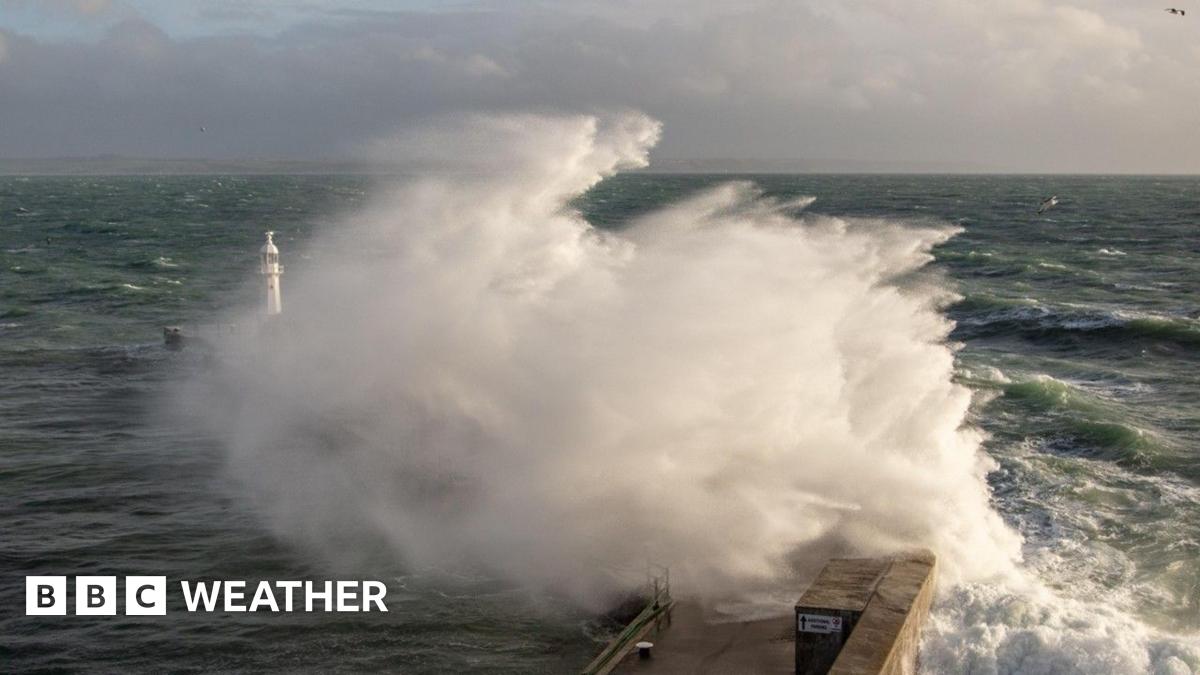
Storm Chandra is hitting hot on the heels of Goretti and Ingrid, bringing more soaking rains with little time between for the water to flow away and the rivers fully recover.
This continuing rain really heightens the flood risk.
The wind will also be a threat, as strong winds from Goretti and Ingrid have already battered parts of the UK this month, notably in south-west England.
As a result, many structures may have been weakened, trees may have been left vulnerable as well as power lines.
Netflix viewers were stunned watching the historic climb live
Viewers wondered what happened after the climb(Image: Netflix)
The anticlimactic method renowned climber Alex Honnold utilised to get down from one of the tallest buildings in the world after his historic climb has been revealed.
Free solo legend Honnold completed one of his riskiest challenges yet over the weekend. No only did he scale one of the world’s tallest skyscrapers with no ropes or safety equipment, the achievement was streamed live on Netflix across the world.
Taipei 101 stands at a staggering 1,667 ft tall and the brutal climb took just one hour and 35 minutes to complete. Honnold waved to fans who cheered him on from the ground and also inside the building during his feat.
While originally scheduled for 1am Saturday (January 24) morning UK time, the climb was delayed due to safety concerns about the weather. The climb instead took place at 1am on Sunday (January 25) UK time.
Ahead of the climb, Netflix teased: “No ropes. No fear. Free solo legend Alex Honnold risks it all in a high-stakes, live ascent of one of the world’s tallest skyscrapers in Taipei, Taiwan.”
Reaching the top of the building, the climber was heard simply stating: “Sick”. He then went on to admit that it was “windy” while he took out his own phone to record himself and take some selfies, while enjoying the view.
People watching along at home were amazed with the climb, however a similar question kept popping up. Sharing their reaction on social media, one person posted on X saying: “But how does he get down?”
Another added: “The journey up looks terrifying…thinking about coming back down may be even scarier.” Someone else asked asked : “BUT HOW DOES HE GET BACK DOWN?”
And one person likewise wanted to know: “How did he get down after that?” Another baffled viewer replied: “How did he get down in the end?”
Well now, there is an answer to all those questions and it may be a bit anticlimactic. According to The Sporting News, Honnold put on a harness and rappelled down from the very top of the building.
The report claims he then took a lift to the bottom of the skyscraper. It is somewhat different to some of his other climbs, like his famous free solo of Yosemite National Park’s El Capitan. However in that case, there was very little choice other than a rappelling or careful down-climbing that usually follows.
This is all because Taipei 101 is a working skyscraper. It has interior access points near the summit used for maintenance and observation. It means Honnold is able to simply move off the exterior and into a secure interior space.
The Sporting News goes on to claim that Honnold is all about the climb. Once he reaches his goal, he apparently sees no reason to extend the risk beyond it.
Skyscraper LIVE is streaming on Netflix.For the latest showbiz, TV, movie and streaming news, go to the new **Everything Gossip** website.
The Australian Open says it provides some health data to players and their teams at the tournament.
“They can monitor key external load measures such as distance covered, changes of direction, high acceleration events and speed/spin of shots,” it said.
The issue of player welfare has long been a hot topic in tennis, with fears some stars are reaching breaking point because of the physical and mental demands placed on them by a long, intense season.
Sports scientists have argued tennis falls behind other sports when it comes to data analysis.
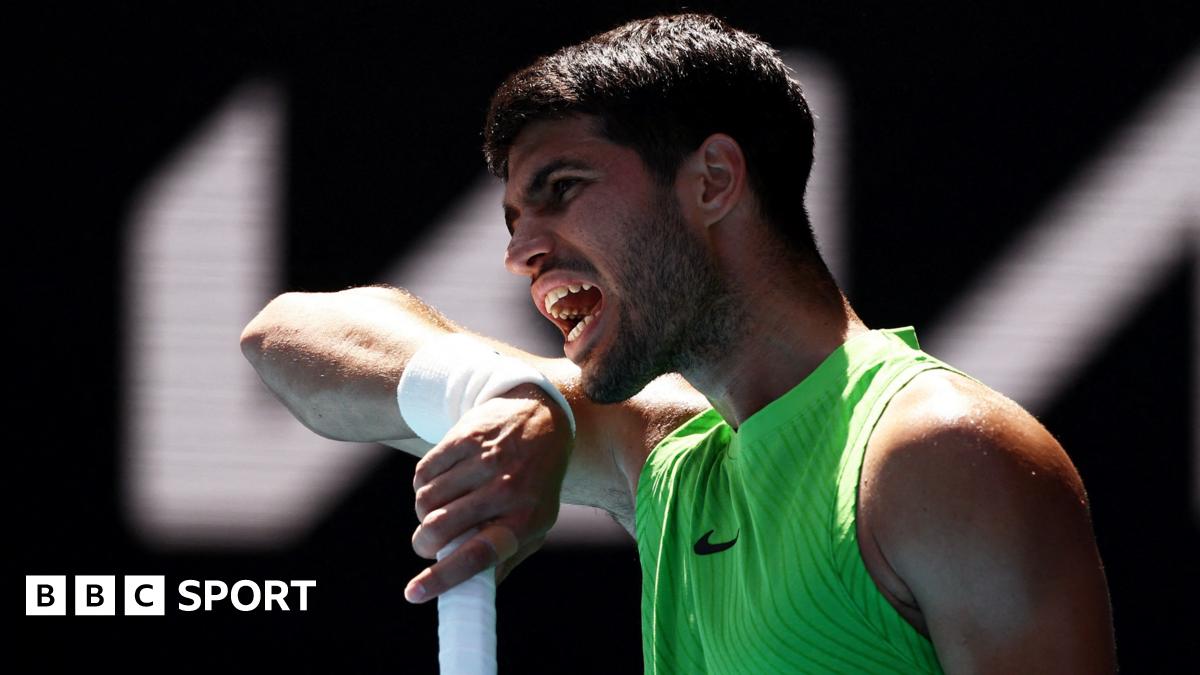
Alcaraz, who has expressed fears the season is too demanding, Sinner and Sabalenka being instructed to remove their devices appears to support that view.
Stephen Smith, founder of Kitman Labs, says tennis must collect more data from its athletes in both practice and match conditions.
This information should be centralised and shared across the tours for the benefit of all professionals, he says.
“There is a huge opportunity for tennis to start understanding how you apply tech and data to improve player welfare,” says Smith, whose company has provided Premier League football, Prem rugby and NFL teams with data and analytics.
“We’ve seen it work in other sports – particularly American sports like the NFL, NBA and MLB. The NFL are world leaders in this field.
“They’ve been collecting data across the demands of their games – training and games and the injuries – and making rule changes based off what has been happening.”
Dr Sikka, who is also a team physician for baseball’s New York Yankees, agrees.
“Other major sports leagues have already built thoughtful, evidence-based frameworks for wearable technology,” he said.
“Tennis should meet that same standard.”
This article is the latest from BBC Sport’s Ask Me Anything team.
Former Prime Minister Han Duck-soo, seen arriving at Seoul Central District Court on Jan. 21, on Monday appealed a court ruling sentencing him to 23 years in prison on insurrection charges for his role in former President Yoon Suk Yeol’s imposition of martial law. Photo by Yonhap
Former Prime Minister Han Duck-soo and a special counsel team on Monday both appealed against a court ruling sentencing him to 23 years in prison for playing a key role in an insurrection over former President Yoon Suk Yeol’s brief imposition of martial law.
Last Wednesday, the Seoul Central District Court handed down the sentence, making Han the first member of Yoon’s Cabinet to be convicted in connection to the former president’s declaration of martial law on Dec. 3, 2024.
Han’s legal team submitted the appeal earlier Monday, while special counsel Cho Eun-suk’s team also filed an appeal to challenge not-guilty verdicts on some charges in the ruling, including allegations that Han delayed a Cabinet meeting convened to lift the decree.
In last week’s ruling, the court confirmed for the first time that Yoon’s declaration of martial law constituted an insurrection, saying it amounted to a “self-coup.”
The punishment was heavier than the 15 years sought by special counsel Cho Eun-suk’s team, with Han being placed under custody after the ruling due to concerns of evidence destruction.
The court said the former prime minister took part in the insurrection by proposing that Yoon convene a Cabinet meeting before declaring the decree.
It also found Han guilty of signing a revised proclamation after the decree was lifted in a bid to enhance its legitimacy, discarding it and lying under oath at the Constitutional Court.
A Seoul High Court trial division dedicated to handling cases connected to Yoon’s martial law bid is expected to handle Han’s appeal. The special division is scheduled to launch on Feb. 23.
Copyright (c) Yonhap News Agency prohibits its content from being redistributed or reprinted without consent, and forbids the content from being learned and used by artificial intelligence systems.
Blessing William crouched by the stream in Bole-3 at dawn, scrubbing pots and dishes. The water surface had a milky tint, and a faint aftertaste lingered each time she drank from it. Still, this remains the only source of flowing water for her family and the wider community.
As a child, the 30-year-old mother of four used to come to the local stream to wash, fetch water, and swim. Back then, the water was clear and safe to drink without filtration.
“There are a lot of changes now,” she said. “We now struggle to get clean water.”
Her experience reflects a wider reality of over 500 residents in Bole-3, a community you would describe as disadvantaged. There is no electricity, no proper road network, and no primary health care centre. For decades, the local stream has been its most precious resource.
A section of the Bole-3 stream in Yola-South, northeastern Nigeria. Photo: Saduwo Banyawa/HumAngle.
Today, the stream has dwindled to a shallow trickle. Large stretches of the riverbed lie exposed, the current barely moving. In July 2024, white sediments began to cloud the stream, and many residents complained of a strange aftertaste that lingered on their tongues after drinking.
What went wrong?
These changes began shortly after a company run by Chinese nationals started mining operations in the community. Located in Yola-South, Adamawa State, in northeastern Nigeria, Bole-3 sits atop large deposits of fluorite beneath its rocky ground. When the mining company arrived a year ago, it built a dam to supply water for washing extracted minerals, which residents say has reduced the stream’s flow and contaminated the remaining water.
“As a result of how they blocked it to construct the dam, we don’t have enough water flowing into the stream this year,” Williams Ayuba, the village head, told HumAngle. “Although the water level naturally dwindles in November every year, it has not been this severe.”
When the community’s only borehole collapsed, water scarcity worsened. The village head mobilised some residents to meet with the company. The borehole was later repaired by the company’s representatives, but it stopped functioning three months later. However, the community has been unable to reach the company since then.
Like several other residents, all of Blessing’s children, who drink from the river, have been coming down with diarrhoea, which she described as chronic.
Celestina Jasckson, another resident of the Bole-3 community, echoes Blessing’s concern. “The water gives us diarrhoea all the time, and that’s how we are suffering,” she said, adding that she continues to consume it despite the risks.
However, diarrhoea is not the only health issue locals have been battling since the suspected contamination became pronounced in Bole-3. Eden Dimas, a healthcare provider who runs the only dispensary in the community, noted that “a lot of residents” have been arriving at the centre regularly with rashes covering different parts of their bodies.
“I am sure it is the chemicals. You could taste it while drinking the water,” Eden said.
The skin condition remains undiagnosed as the dispensary lacks lab equipment. The facility does not admit patients or offer delivery services; it only administers painkillers and provides other basic treatments. For childbirth and more complex care, residents travel an hour to a primary healthcare centre in Lakare, a neighbouring community.
When cases exceed what he can manage locally, Eden often refers residents with issues like the itchy skin to hospitals in Yola, the state capital, where many cannot afford treatment.
In the past, Ekklesiyar Yan’uwa a Nigeria, the Christian denomination that owns the dispensary, used to supply drugs whenever stocks were running short, but that has dwindled, leaving the dispensary barely functional. Part of the building has even been converted into a single room now occupied by a family.
Eden now buys drugs from Yola only when a sick person provides money for medication.
A resident of Bole-3 tries to draw water from the borehole, but only a few drops emerge before the flow stops abruptly. Photo: Saduwo Banyawa/HumAngle.
The stream and the unnamed mine
As contamination of the stream worsened, locals dug small ponds nearby. HumAngle learned from residents that the water in the pond is less polluted than that of the stream, so while the main stream serves their other needs, they use the pond for drinking and cooking.
“We did everything we could. We wrote to the company, but we have not seen any results yet. It’s like we don’t have anyone to help us,” the village head said. He added that locals have now resigned themselves to their fate.
A girl in Bole-3 scoops drinking water from a small pond dug close to the stream. Photo: Saduwo Banyawa/HumAngle.
Residents in Bole-3 refer to the mining company as the “China Company”. It is located on the outskirts of the host community, and it takes less than an hour by motorcycle to reach the mine.
The mine stretches across a wide, open area covered with fluoride and some monazite rocks. Fluorite is a valuable mineral that is used in refining hydrofluoric acid, aluminium smelting agents, optical lenses, gemstones for jewellery, flux for steelmaking, ceramics, and opalescent glass.
Get our in-depth, creative coverage of conflict and development delivered to you every weekend.
Subscribe now to our newsletter!
When HumAngle visited the mine, heaps of smaller rocks were scattered around, and labourers were also seen working under the watch of a Chinese supervisor.
Philip Ezra*, a Bole-3 resident, worked at the mine but resigned due to frequent illness and severe body aches. He was responsible for manual excavation and sorting, working at least 10 hours daily for a monthly compensation of ₦70,000.
During his employment, he recalled that a small pond had been dug at the mine for workers’ water consumption. “As time went by, I began to come down with typhoid and realised that it was from the water. I was always weak,” he said. “The water conditions and the strenuous nature of the work made me sick.”
When he returned home in June 2025 after resigning, Philip observed that the stream level had dropped and the water quality had deteriorated. “I noticed that the water tasted like the one from the labourer’s pond at the site,” he said.
Like other residents, Philip believes the significant reduction in water level in the stream is due to the dam built around the mine. “They trapped a large quantity of water from the source and turned it into a source for washing extracted minerals and carrying out other mining activities,” he said.
When HumAngle visited the mine, the supervisors did not respond to the inquiries. A letter submitted in November last year has yet to receive a response.
No signage at the site shows the company’s name, and workers who spoke to HumAngle claimed they did not know it. One employee, who asked not to be named, said the company was licensed and approved by the state government, but that “its name had yet to be formally ascribed”.
This explanation is highly unlikely, as companies registering with the Corporate Affairs Commission and the Nigeria Mining Cadastre Office are required to provide a name and board details. We reached out to the Adamawa Ministry of Environment and Natural Development and have not received a response.
To independently verify residents’ claims, HumAngle collected water samples from the Bole-3 stream in November 2025 and submitted them for laboratory analysis at Modibbo Adama University, a public research institution in Yola. The samples were tested twice for fluoride concentration and overall water quality, including heavy metal levels.
A Yola-based laboratory scientist who analysed and interpreted the results, and asked not to be named, said the water was unsafe for drinking, cooking, bathing, or other domestic use.
According to the scientist’s interpretation of the findings, the samples contained elevated levels of heavy metals, including Lead, Cadmium, Copper, and Chromium. Prolonged exposure to these substances, the scientist explained, can cause chronic diarrhoea, skin rashes, gastrointestinal irritation, and other long-term health problems.
“The health symptoms reported by residents, particularly skin rashes and chronic diarrhoea, are consistent with known effects of chronic heavy-metal exposure,” the scientist added.
Expert recommends solutions
In communities with long-standing mining activities, exposure to toxic dust and heavy metals poses severe health risks. A study at Arufu, a mining community in Wukari, Taraba State, found high concentrations of heavy metals, and the water was declared unsafe for consumption.
“There are rocks that bear the fluoride. So, naturally, it can enter through the dissolution of fluoride-bearing minerals in all these soils. However, human activities can also elevate fluoride in the water,” said Hamza Muhammad Usman, the Executive Director of Environmental Care Foundation in Adamawa State.
A section of the mining site in Bole-3 showing fluorite in rocks. Photo: Saduwo Banyawa/HumAngle.
Hamza explained that mining disrupts large volumes of rock and wells, exposing the minerals buried beneath them. “It can increase the release of fluoride and other heavy metals, including other contaminants into the water,” he added.
The environmental expert also noted that contaminants move faster through fractured drainage, a geological feature caused by blasting, which forms gully erosion. “This lets contaminants move quickly because mining creates new channels where none existed before. Pollutants can then reach streams and rivers that recharge groundwater,” he said.
Hamza emphasised that the geology and duration of mining activity, rainfall, and even groundwater flow, determine contamination levels. He added that contamination can occur within months in some cases, or take years in others, depending on the intensity of human activity.
He also recommended some cost-effective options for removing contaminants from water, including the Nalgonda technique, which uses lime and alum.
“There is also the bone char,” he said. This involves burning animal bones until they are nearly charcoal. “It is good for absorbing things like this. If they are burnt completely, it becomes like charcoal, you can use them, which is very effective to absorb fluoride and is viable in rural communities,” Hamza said.
The Yola-based scientist, who analysed the lab results, advised the immediate cessation of the water’s use, the provision of alternative safe water supplies, confirmatory lab testing, and medical screening for affected residents, highlighting the particular risks to children, pregnant women, and vulnerable adults.
“It is a public health hazard requiring immediate intervention,” the scientist added.
And yet, on the lips of the residents is the same urgent question: “If we can no longer use the Bole-3 stream, what should we drink?”
*Names with asterisks have been changed to protect the sources.
New York — Most of the time, Kiernan Shipka isn’t thinking about how fans are going to react to a scene when she’s reading scripts. And she’s had practice. Shipka got her start when she was just 6 years old on “Mad Men,” a series filled with the kind of jaw-dropping sequences made for water cooler conversation.
But when Shipka read the wild menage a trois her character Haley has in the third episode of Season 4 of “Industry,” which aired Sunday, she knew it was going to explode on the internet. “I looked at that scene and went, yeah, that’s going to get people talking,” she deadpans in the HBO offices one January afternoon, before breaking out into a giggle.
At 26 years old, Shipka has grown up onscreen. On AMC’s “Mad Men” we watched her, as Sally Draper, turn from an adorable little girl to an angsty youth, well aware of her father’s transgressions. Shortly after, Shipka graduated to playing the title teenage witch in Netflix’s “Chilling Adventures of Sabrina.” But even she admits that her role on the buzzy HBO drama feels like a turning point in her already long career.
“I wasn’t necessarily saying at the beginning of last year I wanted to play something that’s more mature and more adult, but I think I did,” she says. “I think deep down I wanted to do something that felt more in-line with being what 25 at the time felt like to me. I felt like a person who was an adult in the world and I wanted to play one.”
Kiernan Shipka as Haley in Season 4 of “Industry.”
(Simon Ridgway/HBO)
But Haley also isn’t exactly an easy nut to crack, which is what makes Shipka’s performance so intriguing. Three episodes in and we still don’t exactly know what her deal is. She works for Whitney Halberstram (Max Minghella), the founder of Tender, an app that has aspirations for being a bank in your pocket despite its history as a payment processor for OnlyFans-type porn sites. Haley is a party girl, whose job is seemingly to follow Whitney around, booking his cabs, travel and perhaps more nefarious dealings.
But Haley is also savvy, especially when it comes to sex, and she finds an opening when Yasmin (Marisa Abela) invites her into her bedroom while they are staying at an Austrian castle for some important schmoozing with the fascist owner of a bank. (The castle, for what it’s worth, was actually located in Wales.) Yasmin encourages Haley to get it on with her husband Henry Muck (Kit Harington), the CEO of Tender, before asking Haley to spread her legs. Then she joins in herself. (Yes, this does mean that Sally Draper and Jon Snow are making out onscreen; No, Shipka hadn’t met Harington before when they were on their former long-running TV shows.) As is tradition for “Industry,” the scene is provocative but it’s about more than just titillation: As Haley and Yasmin watch each other, you can see a game of one-upmanship unfolding. It’s just unclear exactly what cards someone like Haley is holding.
“I think she knows how powerful sex is,” Shipka says. “She knows that because of her own experience and going into that situation, whatever the outcome of it ends up being, I think she has in her head: ‘This is probably going to be good for me.’”
Haley is a new type of character for “Industry” co-creators Konrad Kay and Mickey Down. Unlike pretty much everyone else on screen, she’s not spewing a bunch of financial jargon. They knew they wanted to cast an American and the idea of hiring a “Mad Men” alum was incredibly appealing, considering they are huge fans.
In “Industry,” Shipka’s character Haley shares a provocative scene with Yasmin (Marisa Abela) and Henry (Kit Harington). “I think she knows how powerful sex is,” Shipka says.(Justin Jun Lee/For The Times)
“There was a cosmic circularity in having Don Draper’s daughter do all this crazy stuff,” Down says, adding, “It’s exciting to take an actor that you wouldn’t expect to be in a show like this and sort of put them through the wringer.”
When Shipka met with Down and Kay over Zoom, she played Haley, who is introduced during a night out clubbing, very drunk. Her voice was very raspy. Down didn’t know whether she was going Method.
It was actually a twist of fate. The meeting fell during awards season and Shipka had been going out a lot and lost her voice. (Shipka was in last season’s contender “The Last Showgirl” alongside Pamela Anderson.) “This is not my usual way,” she says, breaking out into laughter. “I answered this Zoom call and it sounded like I’d been partying all night.”
It was exactly right for Haley, though. Over the course of the season, just what exactly Haley’s deal is becomes clearer, which allowed Shipka to layer elements of her character into the scenes. Still, her slipperiness was something that attracted the actor. Haley is someone who seemingly doesn’t have a lot of power and yet acts as a “power player.”
“I was really interested in someone who looks at their situation and goes, ‘I’m going to leverage everything,’” Shipka says. “‘I’m going to weaponize what I can. I’m going to scratch my way no matter what. Everything’s a game.’ It’s so opposite to how I think and how I move about life that I was so enticed by the way she moved about the world.”
And how does Shipka herself move about the world? With a sense of joy that’s palpable even in the drab office space where we’re conducting our interview. Wearing a black-and-white ensemble that bares her midriff, she tucks her feet under her and treats our chat like a gab session. The next night when we say hello at the “Industry” premiere party, the celebratory environment is much more suited to her aura.
Haley is a character who leverages everything, Shipka says. “It’s so opposite to how I think and how I move about life that I was so enticed by the way she moved about the world.”
(Justin Jun Lee/For The Times)
While playing Sally in “Mad Men” was like “going to school,” in the years following the show, Shipka started to figure out what worked for her when it came to acting. She started to determine what kind of coaching she liked, and how she wanted to do backstories for her character. The question of whether she wanted to stick with this profession came up from time to time as she was getting older. “But not for longer than like five minutes, honestly,” she says.
She explains she was talking to her mother recently, wondering what she would have done if “Mad Men” hadn’t happened. “I kind of thought about it and got really terrified and a little sad,” she says. “Because I really do feel like this is what I’m meant to be doing and I don’t know how it would have found me if it didn’t happen so early.”
But Shipka is also not nostalgic for the past.
“I think there’s something to be said for frontal lobe development,” she says. “I think my work got more fun the more fun I had in my life, and the more not fun I had in my life, too. My work got better the more that I just lived my life.”
Before the pandemic, she was working all the time on “Sabrina,” which wrapped right before lockdown. Emerging from that, she found a group of friends whom she adores. She went to parties and got heartbroken and had the kind of human experiences that she could funnel into her craft. “I found myself in a lot of really funny situations,” she says. “And also I went on my own ‘Who am I?’ journey, did my therapy, read my self help books.”
Shipka, who began acting on “Mad Men” at 6, says it’s what she’s meant to do. “I don’t know how it would have found me if it didn’t happen so early.”
(Justin Jun Lee/For The Times)
When Shipka was filming “Industry,” which mostly shoots in Wales, she could have gone home multiple times when she wasn’t needed. Instead, she went to London and had herself a “U.K. Girl Summer,” as she says, hitting up Glastonbury where she saw Father John Misty and Charli XCX.
“I felt like I got to live in the U.K., and there was something so fun about that,” she says.
Down describes Shipka as “the nicest person” he’s probably ever met, who was game for just about everything.
“There were a few days where she actually was sort of a glorified extra, right in the background of the shot, working on Whitney’s desk, pretending to type,” he says. “She was background for the whole day and just sat there, not one single complaint.”
She also nailed all of Haley’s nuances, from her naivete to her titillation, including all the character beats in her big sex scene. “It was a very raw, vulnerable scene for an actor to do,” Kay says. “She brought a lot of herself to it in more ways than one. Both me and Mickey are really proud of that scene. I think it’s one of the strongest sex scenes we’ve done in the four seasons of ‘Industry.’”
For Shipka, it was her true indoctrination into this wild world.
“I felt like I was really in the show by that point,” she says. “I was super down.”
A TRAVEL company based in Ilkley, West Yorkshire has gone bust after three decades.
Gold Crest Holidays has announced it has stopped trading with ‘immediate effect’.
Sign up for the Travel newsletter
Thank you!
Gold Crest Holidays has ceased trading after 30 yearsCredit: UnknownThe company was known for operating coach tours to Disneyland ParisCredit: Alamy
The company revealed the news on its website on January 23, 2026.
It said: “After more than 30 years of creating unforgettable holidays, we are deeply saddened to announce that Gold Crest Holidays has ceased trading with immediate effect and has taken steps to enter voluntary liquidation.
“This difficult decision follows the severe impact of the COVID-19 pandemic, strategic changes in key partner arrangements that adversely affected our business, and a challenging trading environment with significantly rising costs.
“We are immensely grateful to our loyal customers, travel agents, suppliers, and dedicated staff for your support over the years. We are truly sorry we can no longer continue.”
The company was known for operating coach trips to the likes of Disneyland Paris, Paris for city breaks as well as Christmas markets and sporting events.
Gold Crest Holidays received generally positive reviews on Trustpilot with 65 per cent being 5-star.
As informed by ABTA, the company has also traded as Advent, Advent Tours and Overseas Dream Weddings.
ABTA added that “all future packages have been cancelled”.
However, for customers holding tickets, these could still be valid – but to confirm this you need to contact the event organisers and organise “alternative travel and accommodation arrangements”.
Those who booked through a travel agent should talk to them about it before starting a claim.
ABTA added that customers who booked and paid the travel company by credit card should “download a credit card referral letter” and send to their credit card issuer for a refund.
“Customers who paid by any other means will need to submit a claim for a refund to ABTA by visiting the ABTA claims portal.“
Just three weeks ago, Carrick were thrashed 7-0 by Glentoran. However, since then, they are unbeaten in five games and lifted the County Antrim Shield for the first time in 33 years.
We will never know what was said after that heavy defeat at Taylors Avenue, but something seems to have clicked for Carrick and their 5-1 win over Dungannon Swifts at the weekend was their second league match in a row in which they have scored more than four goals.
Stephen Baxter’s side have leapfrogged Crusaders and Ballymena and now sit ninth in the table.
Forwards Danny Gibson, Paul Heatley and Adam Lecky have all found form in recent weeks with the latter netting four crucial goals this week alone.
Trophies increase confidence and Baxter will be hoping their shield success can boost the last few months of their league season and help them advance in the Irish Cup as well.
Video shows Palestinian children crying in fear as their school bus is chased by Israeli settlers in an off-road vehicle in the occupied West Bank, where settlers regularly attack Palestinian civilians and property.
US President Donald Trump says his administration is “reviewing everything” after the fatal shooting by immigration agents of 37-year-old intensive care nurse Alex Pretti in Minneapolis on Saturday.
Protests continued in Minneapolis and other US cities on Sunday, as Minnesota Governor Tim Walz warned that America was at an “inflection point”.
The facts around the incident – the second fatal shooting by agents of a US citizen in recent weeks – have been hotly contested, setting up a fresh confrontation between state and federal officials.
The administration has defended the officer who shot Pretti. Homeland Security Secretary Kristi Noem said Pretti was shot because he was “brandishing” a gun.
Local authorities deny this, adding that the gun was legally registered and that Pretti was shot after the firearm was removed.
The Wall Street Journal reported that Trump was directly asked twice whether the agent had done the right thing. He responded: “We’re looking, we’re reviewing everything and will come out with a determination.”
He also told the newspaper: “I don’t like any shooting. I don’t like it.” He added: “But I don’t like it when somebody goes into a protest and he’s got a very powerful, fully loaded gun with two magazines loaded up with bullets also. That doesn’t play good either.”
The Trump administration is facing pressure from some prominent Republicans, who have joined opposition Democrats in calling for a wide-ranging investigation.
Senator Bill Cassidy said the probe should involve both federal and state officials. Congressman James Comer, an ally of Trump, suggested that the president should consider withdrawing immigration agents from Minneapolis and sending them elsewhere, telling Fox News that the city’s mayor and state governor were putting them in harm’s way, and “there’s a chance of losing more innocent lives”.
In his comments to the Wall Street Journal, Trump said of the deployment: “At some point we will leave. We’ve done, they’ve done a phenomenal job.”
Multiple vigils were held for Pretti in Minneapolis over the weekend.
Lifelong resident Pege Miller, 69, was among those who gathered on Sunday afternoon to pay her respects and protest against the Immigration and Customs Enforcement agency (ICE).
“I’m tired of protesting,” she told the BBC. “We can’t comprehend how this is happening. Why are we letting this happen?”
Demonstrators of all ages were chanting “No more Minnesota nice – Minneapolis on strike” and “ICE out now” before they began moving through the city streets.
“This is not the America I fought for,” said one man the BBC spoke to, who asked not to be named.
Protests have spread to other US cities, including New York, Chicago, Los Angeles and San Francisco.
The chief executives of more than 60 Minnesota-based businesses, including 3M, Best Buy and Target have also signed an open letter calling for “an immediate de-escalation of tensions” and for local and federal officials “to work together to find real solutions”.
Minneapolis Police Chief Brian O’Hara told the BBC that state officers were blocked from accessing the scene of Pretti’s shooting by federal agents, despite securing a search warrant.
He added that all levels of law enforcement in Minnesota have been working with federal law enforcement “for several years”, and that the unfolding situation in Minnesota was hampering agencies’ ability to continue such investigations.
Lawmakers continue to be divided over the shooting of Pretti, as well as his second Amendment right to bear arms. It is legal in Minnesota to carry a handgun in public if you have a permit.
The administration has characterised the Minneapolis operation as a public safety effort aimed at deporting criminals illegally in the US. It has also described Pretti as a “domestic terrorist”.
Critics warn migrants with no criminal record and US citizens are being detained, too.
Pretti’s family issued a statement in response to the comment, saying: “The sickening lies told about our son by the administration are reprehensible and disgusting”.
“Please get the truth out about our son. He was a good man,” his family said in the statement.
On Sunday, Tim Walz said: “I don’t care if you are conservative and you are flying a Donald Trump flag, you’re a libertarian, don’t tread on me, you’re a Democratic Socialist of America. This is an inflection point, America.
“If we cannot all agree that the smearing of an American citizen and besmirching everything they stood for and asking us not to believe what we saw, I don’t know what else to tell you.”
Watch: ‘Horrifying to so many people’ protesters express anger and shock over ICE killing
Backlash against the Trump administration’s crackdown is growing, including from within the Republican party.
Oklahoma Governor Kevin Stitt told CNN that people were watching fellow Americans being shot on television and that “federal tactics and accountability” had become a growing concern for voters.
Louisiana Senator Bill Cassidy said the Minneapolis shooting was “incredibly disturbing” and “the credibility of ICE and DHS are at stake.”
Democrats have responded by threatening to block a key government financing package if it contains funds for the Department of Homeland Security, of which ICE is a part, raising the prospect of another government shutdown.
Former Democratic Presidents Bill Clinton and Barack Obama have both criticised the situation in Minneapolis, with the former described events in Minneapolis as “horrible scenes” that “I never thought would take place in America.”
Getty Images
25 January, 2026: A demonstration against US Immigration and Customs Enforcement in Chicago
Meanwhile on Sunday evening Trump demanded in a post on Truth Social that Walz and Frey, as well as “EVERY Democrat Governor and Mayor in the United States” must “formally cooperate with the Trump Administration to enforce our Nation’s Laws, rather than resist and stoke the flames of Division, Chaos, and Violence”.
He also called on US Congress to end sanctuary cities, which he alleged were the cause of “all these problems”.
The term ‘sanctuary city’ is commonly used to describe places in the US that limit their assistance to federal immigration authorities.
Trump’s posts followed remarks from White House Press Secretary Karoline Leavitt, where she condemned Walz as wanting chaos, and encouraging “left-wing agitators to stalk and record federal officers in the middle of lawful operations”.
Getty Images
Federal agents shot and killed Pretti in Minneapolis on Saturday, and videos have since emerged showing a scuffle between Border Patrol agents and Pretti just before the shooting.
The Department of Homeland Security (DHS) said the agents fired in self-defence after Pretti, who they say had a handgun, resisted their attempts to disarm him.
Eyewitnesses, local officials and the victim’s family have challenged that account, pointing out he had a phone in his hand, not a weapon.
O’Hara, the Minneapolis police chief, told the BBC that Pretti was a lawful gun owner with no criminal record other than traffic violations.
In a statement, it said: “Responsible public voices should be awaiting a full investigation, not making generalisations and demonising law-abiding citizens.”
US Border Patrol commander Greg Bovino said earlier that at the time of the shooting, ICE agents were looking for a man named Jose Huerta Chuma during a “targeted” operation, and that Chuma’s criminal history includes domestic assault, intentional infliction of bodily harm and disorderly conduct.
The Minnesota Department of Corrections (DOC) has since rebutted those claims and said that Huerta had never been in Minnesota DOC custody and public records reflected only misdemeanour-level traffic offences from more than a decade ago.
Unpicking the second Minneapolis shooting frame by frame
The latest shooting follows weeks of tensions between the Minnesota authorities, federal agents and protesters who have taken to the streets to observe the agents during their anti-immigration raids.
Earlier this month, an ICE agent shot dead Renee Good, a 37-year-old Minneapolis resident who was taking part in such an observation.
In a statement to CBS News, the BBC’s US media partner, Good’s family law firm Romanucci & Blandin urged all Americans to “trust their own eyes as they interpret the horrific video” of Pretti’s shooting.
Trump’s crackdown in Minneapolis was launched in December after some Somali immigrants were convicted in a massive fraud of state welfare programmes. The state is home to the largest community of Somali immigrants in the US.
ICE agents have the power to stop, detain and arrest people they suspect of being in the US illegally.