Fatima Abdullahi stands beside a group of children with a bowl balanced in her hands. As the children rally around her, she tries to give them instructions. “The pap is small, so you must be patient and take turns,” she tells the children, who are each holding a plastic spoon.
The 30-year-old mother of five then places the bowl on the ground, and the children swing into action, scooping and scraping. Inside is pap made of corn flour and plain water.
“It was never this bad,” Fatima tells HumAngle, glancing at the children whose spoons were colliding in the wooden bowl. “There was a time when each child had their own bowl, and the pap had sugar in it, but things got worse.”
In 2015, Fatima and her family fled the Boko Haram insurgency that ravaged her hometown in Gwoza Local Government Area, Borno State, in northeastern Nigeria, and claimed the lives of over 350,000 people and displaced millions of others. They were transported by the Nigerian Army to Malkhohi, a displacement camp in Yola, the Adamawa State capital.
Like Fatima and her family, most of the over 360 people living in the camp were displaced from communities in Borno State, such as Gwoza, Askira Uba, and Damboa.
Back at home, she was an entrepreneur who sold akara and chin-chin, earning money to support her family. Fatima’s husband was an accomplished farmer. Their displacement halted all of these efforts, but things were better when they arrived in Malkhohi. At first, many structures were put in place to make life easier for residents.
Each family was provided with a tent, mosquito nets, blankets, and sufficient food. Donations in cash and kind were made regularly. Fatima said there was a United Nations Children’s Fund (UNICEF)-run clinic, and the Red Cross was always on the ground to address emergency health needs. Local civil society organisations were also available to offer support.
“There were organisations that came from time to time with food,” she recounts. “Some of them came and taught us different skills.”
However, things eventually began to change.
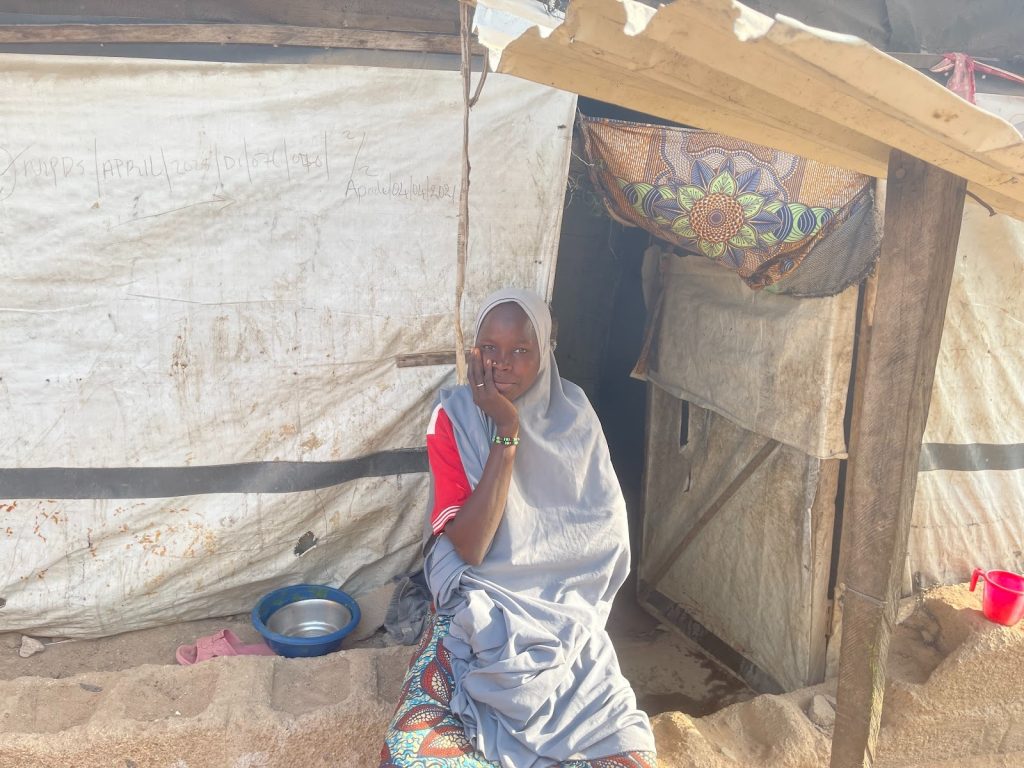
Fatima Abdullahi sits in front of her tent at the Malkhohi IDP camp. Photo: Saduwo Banyawa/HumAngle.
When the aid stopped
UNICEF was the first agency to exit the Malkhohi IDP camp in 2023, a move that led to the closure of the camp’s clinic. A few months later, the Red Cross also withdrew. In 2024, the International Organisation for Migration (IOM) closed its office at the camp.
It was at this point that residents began to realise the gravity of their situation.
The departure of these agencies that had provided healthcare and other essential services to the IDPs significantly affected the community, with conditions worsening steadily over time.
That decline deepened in 2025, when other local organisations providing aid in the camp, particularly those dependent on USAID funding, also began to leave, shortly after the US government suspended foreign aid.
For families in the camp, the impact has been tough.
“Before, my children had regular three square meals, but now they eat depending on how available food is. Sometimes, it’s breakfast and nothing till the next day. Other times, we go to bed like that,” Fatima said. She noted that starvation has made her children aggressive. “Whenever they see food lately, they start fighting over it, each wanting the largest share.”
As food became scarcer, meals grew more basic.
“These days, I mostly make pap for them with just plain water and corn flour, and sometimes, we make tuwo with the corn flour and eat without soup,” she added.
The UNICEF-run IDP clinic in the Malkhohi displacement camp remains abandoned following UNICEF’s exit from the camp in 2023. Photo: Saduwo Banyawa/HumAngle.
The withdrawal of aid also disrupted services beyond food. In addition to basic healthcare, UNICEF had played a key role in education, with about 285,000 Borno children reportedly trained in numeracy and literacy after being orphaned by the Boko Haram insurgency.
With the clinic closed, access to medical care has become increasingly difficult.
“We used to access free medicines and other healthcare services until the camp’s clinic closed,” Fatima told HumAngle. “If our children get sick these days, we go to the nearest clinic inside Malkhohi village. They charge a lot.”
Get our in-depth, creative coverage of conflict and development delivered to you every weekend.
Subscribe now to our newsletter!
She explained that private clinics require an upfront deposit of about ₦6000 before examining a sick child, a sum many families cannot afford. “If we are paying for malaria drugs, then it’s ₦6000, but if the child requires a drip, then it is ₦9000 and above,” she added.
Although there is a primary healthcare centre in Malkhohi, IDPs say it is far from the camp and difficult to access during emergencies, often taking hours to reach on foot.
“So when there is a health emergency, we just go to the private clinic closer to us,” Fatima said.
Living conditions in the camp have also worsened. Salome Ijarafu, the women’s leader at Malkhohi IDP Camp, told HumAngle that there are only a few standard toilet facilities in the camp.
“Sometimes, we have to wait till it is dark so that we can go and take our bath outside in the bushes because the bathrooms are not in good condition. Even then, we have to queue up and wait for others to get out before we make use of the good ones,” she said.
A section of the dilapidated toilets at the Malkhohi IDP camp in Yola. Photo: Saduwo Banyawa/HumAngle
Following a rise in vaginal infections at the camp, some women don’t use the toilets; they now relieve themselves in nearby bushes.
“Our toilets and bathrooms are all worn out. We rely on the few in better condition, but there are a lot of us relying on them, so it gets messy all the time. Before, we used to receive soaps, detergents, and Izal from the organisations, but since the aid stopped, we just clean the floors with water,” Fatima said.
The women’s leader also noted that pregnant women in the camp have become increasingly vulnerable since the closure of the UNICEF clinic, as access to antenatal care and delivery services is no longer readily available.
“When women want to give birth, there is no way it can be done here, so they have to be rushed to the distant primary health care, and sometimes when the primary healthcare centre can’t handle it, we have to look for a means to transport them to Yola town,” Salome said.
Beyond healthcare, women in the camp are also grappling with rising costs of sanitary materials.
“Sanitary pads are expensive now, so we use rags during our period. Before, we used to receive donations of sanitary pads, but we no longer get them,” she said.
‘We hustle to survive’
Buba Ware, Chairperson of the residents at Malkhohi displacement camp, told HumAngle that the Adamawa State government ceased communication with the camp five years ago, bringing an end to the donations from the State Emergency Management Agency (ADSEMA), but the IDPs didn’t feel much of that impact until the international agencies began to exit, followed by local humanitarian organisations. By the end of 2025, no organisation remained in the camp.
The IOM office lay deserted following the organisation’s exit from the camp. Photo: Saduwo Banyawa/HumAngle.
It has made it difficult for residents to renovate their tents, a responsibility that was carried out by IOM. “They fixed the leakages on our tents and replaced old structures, but now that they are gone, our tents are collapsing,” Buba said. “Even the local NGOs that came before no longer come, and that is why we go out and hustle so we can take care of ourselves.”
For many parents, that hustle has become a daily struggle to feed their children.
Forty-five-year-old Jummai Ali, a displaced person from Gwoza, has lived at the camp for the past decade. With seven children to care for, she has intensified her efforts to find food, especially now that aid is no longer forthcoming.
Every morning, Jummai joins other women in the camp to search for leftover grains on harvested farms. The women leave the camp at 6 a.m.. Each of them carries a basin, a broom, a sack, a hoe, and a small gallon of water.
Jummai Ali on her way to pick grains. Photo: Saduwo Banyawa/HumAngle.
“We don’t have a destination or specific location,” she said. “We just keep walking, scouting for farms where work has already been done. We pluck out grains that farmers have mostly overlooked during harvest. Some of them are bad, and sometimes it’s just husk, but we sieve out and try to gather the ones that are edible.”
The women, Jummai said, walk in groups and stop at certain fields. When work at one site is done, they move to the next field until they have gathered enough. They mostly labour on rice farms because that’s where they can collect more grains.
“When we return, we sieve out the grain, work on it and cook. It’s not easy. There are times we walk for three hours to get to certain communities where there are large farms and then walk back to the camp when we are done,” she added, stressing that the search for food has become increasingly exhausting.
In addition to foraging, some women in the Malkhohi IDP camp prepare local foods such as akara, groundnuts, and moi moi, which they hawk in neighbouring communities to earn an income. According to Salome, the women’s leader, most of what the women earn from petty trading goes into buying medicines, especially during the harmattan season, when many children in the camp suffer from colds.
“We catch colds all the time. Our blankets are worn out. We’ve been using the same ones for the last ten years. Since the tent floor is not plastered, it’s easier for the sand to get cold and penetrate our mats,” Fatima said.
As women struggle to cope, many men in the camp have also turned to risky forms of labour.
HumAngle learned that a growing number of men have taken up logging. With the Malkhohi IDP camp located on the outskirts of Yola and surrounded by dense forest, the men venture into the bush to cut down trees, chop them into pieces, and sell the wood to survive.
Adam Agalade, one of the loggers, said hardship in the camp pushed him into the trade. Formerly a businessman and farmer back home in Gwoza, Adam said he had never swung an axe until last year.
“Sometimes, we spend days in the bush, trying to gather enough timber for sale,” he said. “We stopped during the rainy season but resumed in December.”
Once the trees are chopped, the men transport the wood in wheelbarrows into Malkhohi, where it is stacked along the roadside and sold to households and local food vendors.
“We sell some batches for ₦1000 while some for ₦2000,” Adam said.
While the trade has helped him support his family of ten, he noted that the income is uncertain. “There are days when we spend the whole day without selling anything,” he said.
Adam Agalade still lives in Malkhohi IDP camp. Photo: Saduwo Banyawa/HumAngle
Adam is currently injured after a log fell on his leg while he was cutting a tree in the forest. With his leg swollen, he said his life has come to a standstill as he is unable to join other loggers in the forest.
The rain will come
Beyond daily survival, residents say they fear what lies ahead.
Some IDPs told HumAngle they are particularly anxious about the approaching rainy season, given the deteriorating condition of their tents. “All these planks supporting our tent have stayed for 10 years and have been eaten by termites. When the wind blows, the tents start to shake because the planks supporting them are worn out,” Adam said.
According to Buba, the camp chairman, most tents are leaking and require urgent repairs or replacement. IOM used to handle the maintenance, but they have left. While IDPs have made temporary fixes using sandbags to stabilise the structures, they say these measures are unsustainable.
“Once it is the rainy season, we get scared because of the condition of the rooms,” he said.
A worn-out tent at the Malkhohi IDP camp in Yola. Photo: Saduwo Banyawa/HumAngle
Buba added that heavy rains often cause tents to flood, forcing families to vacate them and seek shelter under trees until the storms subside. He recalled instances where tents collapsed on families, causing injuries, though no deaths were recorded.
Waiting for a way out
For years, residents of the Malkhohi displacement camp have waited for clarity on what comes next.
While the Borno State Government began closing displacement camps across Maiduguri in 2021, a move aimed at reducing long-term aid dependency, restoring dignity, and reviving local economies, those efforts have not reached displaced persons from Borno living outside the state.
Some IDPs within Borno were relocated to homes around their ancestral towns, but families in Malkhohi say they have been left behind. Still, even those in Borno who have been resettled complain of insecurity in their new location, lack of government support, and an absence of basic amenities.
However, for displaced persons from Borno living outside the state, such as those in Malkhohi, talks of resettlement have not reached them. The residents of the camp told HumAngle they no longer wish to remain there, but the lack of alternative shelter holds them back.
According to the camp chairperson, the IDPs have had no contact with the Borno State Government since their evacuation from the state over a decade ago. “They have never checked up on us. Our closest means to the government is the ADSEMA, but we have lost touch with them for more than five years now,” he said.
He added that the displaced persons had written several times to the Adamawa State government about the prevailing hardship in the camp, particularly the dilapidated condition of their tents, but had received no response to date.
“If the government will carry us back to where they took us from, then we are ready, because it’s not our wish to live here,” the camp chairperson added. “Alternatively, if the government can give us a place outside the camp or maybe build houses for us, we would prefer that, because once we have our homes, our struggles will reduce, and we will focus on providing food and other basic needs for our families.”
HumAngle reached out to the Adamawa and Borno Ministries of Humanitarian Affairs for comments, but received no response at the time of filing this report.
A TOP DJ has scrapped his upcoming tour after doctors warned him he’d need emergency surgery.
The Algerian-French music star, 39, told fans a health issue he’d been battling “finally caught up with me” and that he can’t “push or delay” further treatment.
Sign up for the Showbiz newsletter
Thank you!
A top DJ has been forced to scrap his upcoming gigs after being told he needs emergency surgeryCredit: GettyDJ Snake released a statement on social media where he told how a health issue had ‘finally caught up with me’Credit: GettyHis surgery means shows in India and Canada will be cancelledCredit: Getty
DJ Snake, whose real name is William Sami Étienne Grigahcine, then revealed he’d “need a month to fully rest and recover”.
While the In The Dark hitmaker did not reveal the exact nature of his illness, it has prompted him to postpone tour dates in Canada and India.
The record producer, who produced Lady Gaga‘s hit Applause alongside the tracks of many other well-known stars, posted a statement on social media to reveal the worrying news.
He wrote in a post with black text on a white background: “Hey guys.
“I’ve been battling a health issue for a while and it’s finally caught up with me.
“After talking with my doctors I need to have surgery in early February.
“It’s something I can’t push or delay anymore, and I’ll need a month to fully rest and recover after that.
“This means cancelling all my shows, including the India tour and that decision has been incredibly hard.
“But I need to get back to 100 per cent and this is the only way.”
DJ Snake, whose debut track Turn Down For What with Lil Jon was released to huge acclaim in 2013, added: “Thank you for your love and understanding.
“I will be back soon, stronger than before. William.”
He finished his upload with a white love heart Emoji icon.
Fans on X were quick to react and one wrote: “Wish you all the best. Get well soon”.
A second posted: “Hope it goes smoothly,” as a third uploaded: “Get well soon’.
One then added: “Get well soon DJ. Waiting for your great comeback”.
This isn’t the first time DJ Snake has cancelled a show.
In 2015, he was sadly injured in a car crash alongside electronic producer Tchami, and the pair were forced to miss Toronto’s Monster Mash Festival.
SNAKE SUCCESS
Previously, DJ Snake told how his stage name came about following a nickname in his youth.
It was sparked after he was known for graffiti and avoiding the police in his youth.
He said of his moniker: “When I started DJing, everyone called me Snake in my city first, I was like DJ Snake, OK let’s go for it.
“The name sucks, but it’s too late now.”
He also revealed to Rolling Stone Magazine the real reason for his sunglasses-clad look.
He told the publication: “In the clubs, people were dancing, but now they were just looking at me, like I was gonna do some magic tricks or some s**t, so I was panicking for real.
“I was petrified of making a mistake, and one of my friends told me to wear some sunglasses so that I couldn’t see the whole crowd.
“Now it helps me stay in the zone, stay focussed.”
He is a Grammy Award nominee, having scooped the nod in 2012 for Lady Gaga’s Born This Way album.
In 2016, he was also named on Forbes’ 30 Under 30 list.
He was unimpressed after the Ligue 1 heavyweights dropped their traditional Phil Collins entrance track – even though they replaced it with one of the DJ’s own hits.
PSG have taken the field to the sound of Collins’ 1985 hit ‘Who Said I Would’ for almost 30 years.
But in 2021, the Paris club dropped the song in favour of DJ Snake’s ‘Intro Mixed’.
The DJ then claimed the bespoke track was initially only intended for the one-off video to announce the arrival of superstar Lionel Messi that year.
The In The Dark DJ told how he’d ‘need a month to fully rest and recover’Credit: InstagramHe has worked on Lady Gaga track Applause, to name a fewCredit: Splash NewsDJ Snake, whose real name is William Sami Étienne Grigahcine, recently told of the reason behind his sunglasses-clad lookCredit: Getty
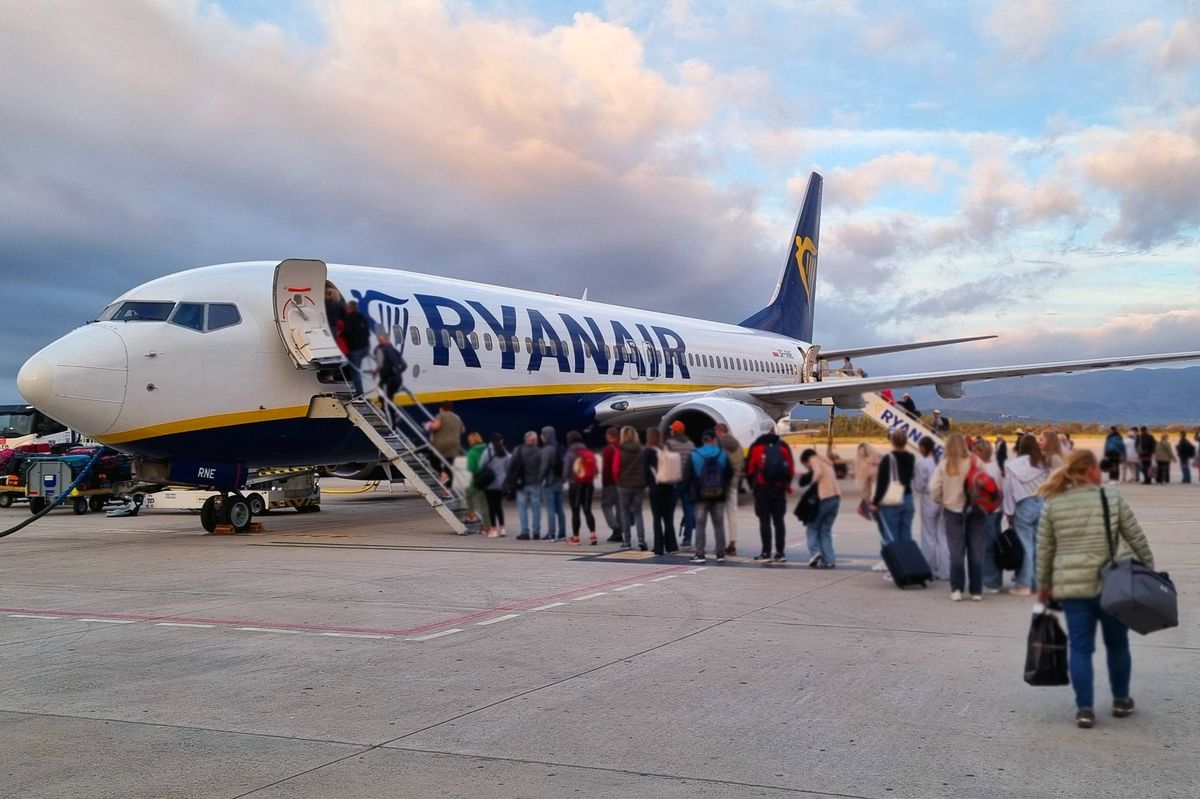
Ryanair has told all passengers to stop putting a popular item in their hand luggage from January. It turns out, it should never be stored there and could cause problems at security
08:01, 27 Jan 2026Updated 08:01, 27 Jan 2026
Ryanair has told passengers to stop packing a certain item (stock image)(Image: Dmitri Zelenevski via Getty Images)
With the UK being so wet and dreary at this time of year, it’s no wonder people dream of escaping to other parts of the world, but there are some things you need to know if you’re preparing to hop on a plane. When it comes to packing, there are some important rules you need to follow to ensure your airport experience goes smoothly.
According to Ryanair, certain items should never be packed in your hand luggage, and one of them is super popular at this time of year. From January, you may want to think a little more about how you’re preparing to travel.
Previously, the topic came up on Reddit when a social media user asked: “Looking for a trekking pole to buy. Which kind of pole (collapsible/telescopic) would be better so that it could be brought as a carry-on bag on Ryanair/Iberia?”
It got a lot of people talking, and they were quick to point out an essential piece of information, and it’s worth noting if you’re planning on going skiing any time soon. One person replied: “I don’t think it really matters what airline you fly. You have to get past security with them, and they are usually not allowed.”
Another wrote: “You will always be taking a risk unless you put them in a checked bag.” A third also replied: “Trekking poles are not allowed in your carry-on. This rule is not always enforced, but that is the rule.
“One time I flew to a location with my poles in my carry-on, but they wouldn’t let me on the flight to come back with those same poles in my carry-on (same airline).”
However, according to Ryanair, this isn’t the only thing you need to be aware of. If you’re going skiing any time from January, you need to stop packing poles in your carry-on luggage too.
What does Ryanair say?
According to the airline, various items are prohibited in carry-on luggage, and all of these are detailed on the website. However, when it comes to poles, it offers specific advice.
It reads: “The following items must not be carried on board, but may be carried as part of your checked baggage. Objects with a sharp point or sharp edge capable of being used to cause serious injury.”
Ski poles and hiking poles feature in the list, so it’s important you don’t take them in your hand luggage. Generally, they need to be checked in, as they are deemed too sharp to carry through airport security.
Due to their length and sharp tips, they are considered potential weapons. While some travellers may find success with collapsible poles tucked away, security agents typically require them to be checked.
Though some airline guidelines may differ, the safest option is to put them in your checked luggage. This will help avoid any problems or delays at airport security.
If you opt to try and take them through, you risk having to surrender them at airport security. It’s a gamble that’s really not worth taking when you travel.
People Power Party floor leader Song Eon-seok speaks at a general meeting of lawmakers at the National Assembly in Seoul on Monday. Photo by Asia Today
Jan. 26 (Asia Today) — People Power Party leader Jang Dong-hyuk was discharged from a hospital Monday after four days of treatment following an eight-day hunger strike, but party officials said the timing of major pending decisions, including a motion to expel former party leader Han Dong-hoon, remains uncertain.
The conservative People Power Party said Jang has expressed a strong desire to return to party duties soon, but medical staff advised he needs rest and recovery. The party said Jang will continue examinations and outpatient treatment after leaving the hospital.
Jang was taken from the National Assembly hunger strike site on a stretcher Thursday and hospitalized. He had staged the hunger strike from Jan. 15 to Jan. 22, urging the Democratic Party to accept what the party calls “dual special prosecutors” to investigate allegations tied to the Unification Church and a separate nomination-related bribery case.
At a general meeting of lawmakers Monday, People Power Party floor leader Song Eon-seok called for unity as the party prepares to resume its campaign as the main opposition force. Song said the special prosecutor bills are needed to ensure “black money” does not take root, arguing no one should be exempt from scrutiny.
Even if Jang returns to party work as early as Wednesday, party leaders said it is unclear when the expulsion motion involving Han will be submitted as an agenda item. Chief spokesperson Park Sung-hoon told reporters that the motion was not on Monday’s agenda and said its timing has not been decided.
Park said the period to request a retrial in Han’s disciplinary case has passed and that Han did not submit a defense during that window, leaving the next step dependent on Jang’s decision.
Park added that Jang’s condition appears more serious than initially expected, citing cardiopulmonary symptoms and low oxygen saturation. He said further examinations, including cardiac testing, were scheduled Monday and that the disciplinary motion could be handled as early as Monday.
The government will announce a cap on ground rents paid by leaseholders in England and Wales on Tuesday morning, the BBC understands.
Labour’s 2024 election manifesto promised to “tackle unregulated and unaffordable ground rent charges”.
However, there had been suggestions the government could retreat from its pledge due to concern about the potential impact on pension funds.
The government has not yet confirmed where it will set the cap, but campaigners have said they believe £250 a year is likely.
Earlier this month, former Housing Secretary Angela Rayner had urged the government to stick to its manifesto pledge on ground rents.
There are around five million leasehold homes in England and Wales, where people own the right to occupy a property via a lease for a limited number of years from a freeholder.
Leaseholds is the default tenure for privately-owned flats, and the Land Registry estimates that 99% of flat sales in 2024 in England were leasehold.
Ground rents were abolished for most new residential leasehold properties in England and Wales in 2022, but remain for existing leasehold homes.
The English Housing Survey has estimated that in 2023/24, leasehold owner-occupiers reported paying a median annual ground rent of £120 a year.
In 2024, when Labour were in opposition, the current Housing Minister Matthew Pennycook said his preference was for ground rents to be capped at effectively zero.
Recent reports have suggested that the Treasury and the housing department have been at loggerheads over the issue, with concerns over how a cap would impact pension funds which own freeholds.
Last week, former Labour minister Justin Madders told the BBC that the prime minister could face a “mass rebellion” if the government abandoned its pledge on a ground rent cap.
He said setting the limit at a peppercorn rate would be his preferred choice but that he could accept a £250 cap due to the “risk of elongated legal challenge”.
A spokesperson for the Residential Freehold Association has previously said that capping ground rents “would be an unprecedented and unjustified interference with existing property rights, which would seriously damage investor confidence in the UK housing market”.
Harry Scoffin, founder of the Free Leaseholders campaign group, has said: “At the election, Labour promised to end the feudal leasehold system and if they backtrack on reducing ground rates to a peppercorn or zero financial value they’re not ending the leasehold scam.”
KATIE Price’s new husband sent X-rated messages to an influencer just weeks before their wedding.
Businessman Lee Andrews called ex-bodybuilding champ Tina Prodromou, 48, a “sexy little beast” last month – and also joked about marrying her months earlier.
Sign up for the Showbiz newsletter
Thank you!
Katie Price’s husband Lee Andrews sexted a glam influencer weeks before he tied the knotCredit: instagram/@wesleeeandrewsTina Prodromou’s Instagram pictures caught Lee’s eyeCredit: InstagramTina, 48, told us Lee could be ‘very sexual’Credit: Instagram
Single mum-of-two Tina began chatting to Lee, thought to be 41, online in December 2024.
Katie’s new relationship timeline is muddied by the fact she appeared to have Lee’s name tattooed on her hand on January 12.
She told The Sun the tattoo and the purchase of their wedding rings came days after they first hit it off.
In other Katie Price news…
“How I met Lee was esoteric; we connected [by] both checking each others’ socials and quickly realised, ‘wow, this is for me’,” she said.
“In the old-fashioned way, first by words which captured us both.
“That evolved deeper as we connected further within days [getting] matching tattoos, and then both deciding to buy rings for the other.
“All this without even meeting, we let fate, but you could say destiny, decide.”
Lee then wed Katie in a quiet Dubai ceremony on Sunday – with none of their loved ones present – after they connected online.
It came just two days after Katie stunned friends and fans by revealing on Instagram that she had got engaged for a ninth time.
Ex bodybuilder Tina has a ripped physiqueCredit: InstagramLee showered Tina with compliments in her DMsThe pair swapped flirty messages but never met in person
Tina, from Enfield, North London, said: “We had good banter and he always came across warm and respectful with me – that’s why the timeline has shocked me.
“To be speaking to me like that at the end of December – he was affectionate, explicit – then a month later he’s married… it just doesn’t make sense to me.
“I’m not trying to paint him as a bad person, because I was genuinely drawn to him as a person.
“I just know it didn’t align with the person he presented himself as to me. “I was genuinely shocked and, if I’m honest, a bit disappointed – because I’m someone who values integrity. It simply didn’t sit well with me.”
Tina, who ended a previous relationship last May, added: “After my break-up, I did play along more than before – but I still kept it to that same boundary, so there were no blurred lines.
“I told him that if we don’t find someone in the future, we will just marry each other.
“It was just flirty banter.”
British-Greek Tina has 19,000 Instagram followers on her account, @greeksuperwoman_official – where she frequently posts pictures flaunting her chiselled body.
In one exchange, on September 12, Lee responded to a picture Tina posted on her Instagram Story showing her toned abs, saying: “Gorgeous one!
“Absolutely looking amazing!!!!!!
“The things I’d do to you!!!
“When we are married.”
DOUBLE TROUBLE
Yesterday, we told how Lee had proposed to Katie in exactly the same way he did to his ex-girlfriend, Alana Percival, four months ago.
He gave her a chunky diamond ring and popped the question at Dubai’s swanky Burj Al Arab hotel by using rose petals to spell out the words: “Will you marry me?”
Brit real estate worker Alana, who is understood to have invested in one of Lee’s companies, got into a relationship with him after they met on a beach in the United Arab Emirates city last May.
But she called off their romance after becoming suspicious of his intentions.
Twice-married Lee was also today accused of proposing to Katie with the same ring he had given to his ex-wife, Dina Sari Taji, whom he reportedly was with from 2020 to 2024.
Lee is Katie’s fourth husband – following singer Peter Andre, ex-cage fighter Alex Reid, and personal trainer Kieran Hayler.
She only split from her Married At First Sight star ex JJ Slater, 32, earlier this month after nearly two years together.
The Sun revealed how Katie had married Lee on Sunday, two days after he proposed.
Our exclusive photographs showed former glamour model Katie, who has been married three times before, saying her vows with Lee in a top-secret location in Dubai.
Tina said Lee was ‘warm and respectful’ in their exchangesCredit: InstagramKatie shows off her sparkling ringCredit: InstagramSmitten Katie called Lee her own ‘Richard Gere’Credit: FacebookKatie split from ex JJ Slater earlier this monthCredit: Getty
Insiders said none of Katie’s family or friends knew she was getting married and found out on The Sun’s website.
A source added: “Everyone was gobsmacked.
“No one knew about the engagement, nor the wedding.
“The first time those close to her found out was on social media or in the news.
“Everyone is still in shock.”
Katie is set to speak about the whirlwind romance in full for the first time on her podcast with her sister, Sophie, later this week.
Katie, who has got matching tattoos with her new fella, told The Sun: “How I met Lee was esoteric.
“We connected by checking each other’s socials and quickly realised, ‘Wow this is for me’.”
Lee and Katie were approached for comment yesterday.
Leith is Edinburgh’s port district, where people, goods and new ideas have flowed into the city for centuries. Here, the Water of Leith river meets the sea, and on bright days, when pubs and restaurants spill out to the Shore area, there’s nowhere quite like it. I moved here 13 years ago, and it has been a joy to watch the area evolve and reinvent itself. Today it’s the city’s creative heart, full of artists, musicians, designers and startups, with a thriving food and drink scene. The arrival of the tramline from Edinburgh city centre in 2023 has given it a big boost too.
The Shore, Leith. Photograph: Robert Harding/Alamy
Although the Leith immortalised in Irvine Welsh’s Trainspotting is long gone, to call it fully gentrified would be failing to pay attention. Two recent campaigns, both successful, have galvanised locals: one to stop Waterstones opening near the independent Argonaut Books; and the other to return the benches used by day-drinkers on the Kirkgate, which had been removed by the council. There’s space for both in Leith.
What keeps me here is the strong, village-like community spirit, paired with the ever-changing energy of a city. One day I can get stuck into digging on the Community Croft; the next I’m immersed in art galleries, gigs and fine dining. For visitors, Leith offers a slice of real Edinburgh, with no bus tours, shops selling tartan tat, or out-of-tune bagpipes.
Where to eat and drink
Barry Fish restaurant opened in early 2025
Leith’s food and drink ranges from Michelin-starred restaurants to community cafes, old-men’s pubs to smart cocktail bars. Over the past few years there has been a flurry of openings that mirror the creativity of the area. “Leith has the perfect mix of old and new: places that have been here for decades, and new energy coming through,” says chef Barry Bryson. “It’s multicultural, rich and varied, and serves a community of diners, not just one demographic.” Bryson opened his first restaurant, Barry Fish, on the Shore in early 2025. Immediately it became one of my favourite places to eat. I recommend cosying into the calm green interiors and ordering the trout pastrami and lobster agnolotti.
Chef Roberta Hall-McCarron and her husband, Shaun McCarron, opened the cafe-bar Ardfern in 2024, next door to their fine-dining restaurant The Little Chartroom. I’ve eaten there at every hour, enjoying lazy brunches, birthday lunches, early evening oysters and long dinners with friends. The hash browns are non-negotiable, most recently topped with sprout kimchi, fish sauce aioli and nori. “It’s inspiring to be part of a supportive, creative community,” says Shaun.
A dish at Ardfern. Photograph: AwAyeMedia
That emphasis on community is echoed at Dogstar, newly opened by chef James Murray along with Michael Lynch and Kyle Jamieson of Nauticus bar. After years cooking at the highest level and earning a Michelin star at Timberyard, Murray found an increasing sense of disconnect with the world of fine dining. “The next stage for me was wanting to live and work in my community, so choosing Leith was intentional,” he says. “There’s a pride to people down here. If it’s a Leith spot cooking for Leith people, they get behind you.” Sitting at the bar watching dishes spin in the kitchen, eating shellfish straight from the coals, and dunking warm focaccia into anchovy sauce, I’m certainly behind this restaurant.
Cultural experiences
To discover Leith’s artistic community, visit Custom Lane, a collaborative design space in the old Custom House building on the river, with artists’ workshops, galleries and an excellent cafe. Onsite, Bard is a gallery and shop designed to look like the home of a collector. Husbands Hugo Macdonald and James Stevens travel across Scotland bringing contemporary Scottish design to Leith, inviting the curious to explore the integration of high-end design in a domestic environment. Regardless of your interiors budget, it’s not to be missed.
Across the river is Brown’s of Leith, the newest outpost of Custom Lane. This vast three-storey Victorian warehouse has been transformed into a multi-use creative space by GRAS architects. On the ground floor, three food businesses – ShrimpWreck shellfish bar, Haze for wine and top-tier snacks, and Civerinos pizza – share a relaxed dining area, with more residents, events and collaborations imminent. “At Brown’s we identified a need for spaces that genuinely support and celebrate creativity,” says architect Gunnar Groves-Raines of GRAS. The restaurateurs are equally enthusiastic. “Leith has a strong sense of identity: independent, creative and rooted in its history,” says Joseph Radford of Haze. “Our intention is to respond to that rather than overwrite it.” I visit early in the evening when the lights are low, the music perfectly pitched and the atmosphere a relaxed buzz. Soon our table is full of oysters, bowls of mussels and tinned fish on toast. It’s a lot of fun.
GRAS architects at Brown’s of Leith, a Victorian warehouse that’s now a creative space. Photograph: Richard Gaston
Further collaborative art spaces across Leith are also worth exploring. Between Drill Hall, The Biscuit Factory and Coburg House Art Studios, there’s always something interesting going on. And there’s more to come – after years of tireless volunteer fundraising and campaigning, Leith theatre has been awarded lottery funding to restore the beautiful 1932 art deco building to its former glory. Pop-ups in the space, including a past Edinburgh international festival residency, have offered a thrilling glimpse of the future.
Where to shop
Leith is home to some great independent shops.Argonaut Books, inside the old train station, is run by people passionate about reading, and has a lovely cafe and regular events. Arty gift shops include Logan Malloch, Flux and Handsel on Leith Walk – all sell work by local artists. For interesting wine, head to the tiny independent Bludge.
Don’t miss
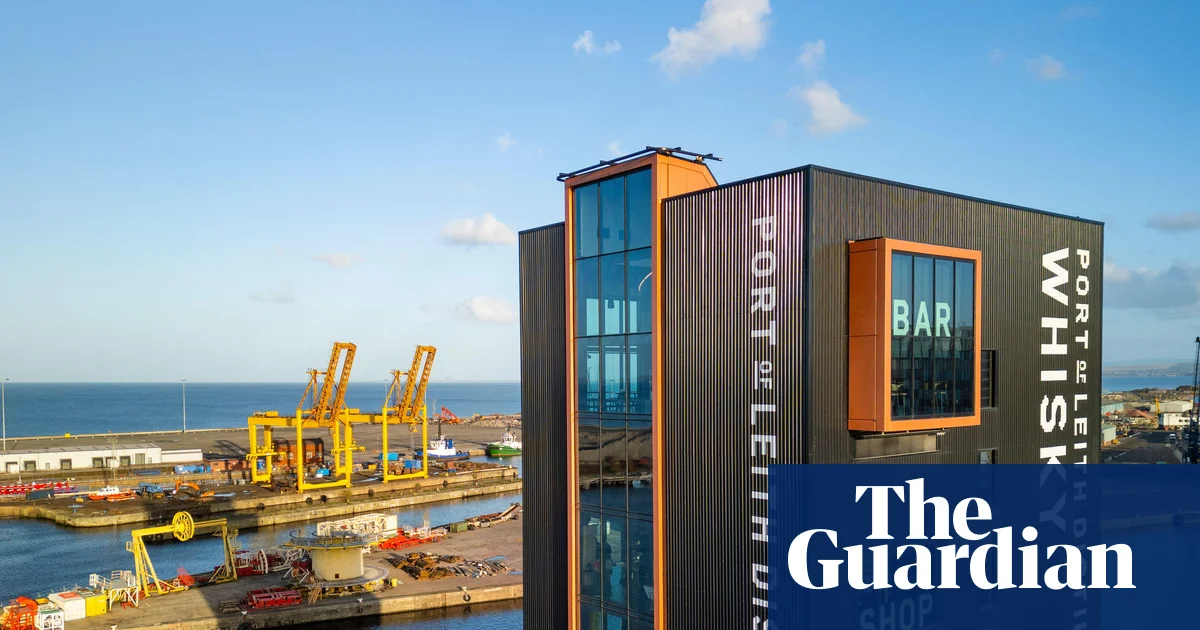
The Royal Yacht Britannia attracts hundreds daily, keen for a glimpse of how the monarchs holidayed. But I prefer the Port of Leith Distillery, an impressive-looking “vertical distillery” where whisky production takes place from top-to-bottom over nine storeys. Tours of the stills are fascinating and the views over the Firth of Forth to Fife from the cafe and bar are unmatched. Take a stroll along the Water of Leith path, perhaps followed by a visit to a taproom for a fresh pint. Leith has a flourishing craft brewery scene, and Moonwake, Campervan and Newbarns all have welcoming taprooms.
Stay
Malmaison Edinburgh has smart riverside rooms (from £77 room-only), or push the boat out (pun intended) and spend the night on board Fingal (cabins from £269 B&B), a former lighthouse tender turned luxury hotel, permanently moored in Leith.
Brentwood’s Ethan Hill was so sick before Monday night’s basketball game against Crossroads that he searched for an open urgent care to give him an IV.
By the game’s end, when Brentwood came back from an 11-point deficit to defeat rival Crossroads 70-60, the 6-foot-7 Hill was using all of his final energy to dance with the delirious student section that got loud and boisterous and helped inspire the Eagles’ rally.
“I feel horrible,” Hill said as he rested on the floor of the team room afterward blowing his noise. “I’m so fatigued.”
Somehow, he played the entire fourth quarter and made five consecutive free throws to help hand Crossroads its first Gold Coast League loss.
One hero for Brentwood was junior guard AJ Okoh. He finished with 24 points. Crossroads (14-11, 5-1) could not stop him from driving in the second half.
“One of the best point guards in the country,” Brentwood coach Ryan Bailey said. “He doesn’t back down from anyone.”
Brentwood (22-3, 4-1) lost to Crossroads 72-56 on Jan. 9 in one of its worst performances of the season. This time, the Eagles, in front of their home crowd, were determined not to let their former player, Shalen Sheppard, get out of the gym with a win.
The emotions twice resulted in technical fouls against Brentwood players for taunting. At the end of the game when the buzzer sounded, officials ejected Sheppard and Brentwood’s Ryan Howard when they got into a little wrestling match. Crossroads, which starts four sophomores, received 16 points from Evan Willis and 14 from Sheppard.
Brentwood fell behind 32-23 at halftime. That caused Bailey to give a fiery halftime talk.
“I was proud how they fought,” Bailey said. “We had a little halftime speech and they responded and the home crowd was phenomenal.”
Augustus Sugarman aided the comeback with two three-pointers and two free throws in the fourth quarter. There were seven lead changes to start the fourth quarter until Brentwood pulled away.
Police on South Korea’s Jeju Island announce the arrest of 12 people accused of being part of a drug smuggling ring. Photo by Yonhap News Service/UPI
JEJU ISLAND, South Korea, Jan. 27 (UPI) — Authorities on Jeju Island have busted a drug smuggling ring, arresting 12 people accused of trying to import methamphetamine into South Korea through the popular tourist resort island.
The Jeju Provincial Police Agency’s Narcotics Crime Investigation Unit said in a statement Monday that the arrests come after a months-long investigation that began in late October after a non-Korean smuggled about 1.2 kilograms, or 2.5 pounds, of methamphetamine into Jeju in his suitcase.
Police said the alleged courier was a Chinese national in his 30s who departed an airport in Thailand on Oct. 23 for Jeju via Singapore, according to local media.
A police report from late October states that after arriving on Jeju on Oct. 24, the suspect posted an advertisement on social media for a Korean to deliver the package to the mainland.
Jeju Island is visa-free for nationals from all but 23 countries, but those entering visa-free cannot then travel to mainland Korea without proper authorization.
According to police, a Korean man in his 20s replied to the advertisement and received the bag from the suspect on Oct. 27.
Suspecting the bag to contain a bomb, the unidentified Korean citizen contacted the police, resulting in authorities seizing the bag of drugs and the arrest of the suspect at a hotel in Jeju’s northeastern coastal village of Hamdeok.
Through the investigation, Jeju police identified what they described as a “tightly structured distribution network” of drug smuggling, distribution, sale and use.
“Over a three-month period, investigators persistently tracked suspects through stakeouts and investigative trips to Seoul and other regions,” the Jeju Provincial Police Agency said Monday in a statement.
Jeju police said Monday that they have requested an Interpol Red Notice for the operation’s ringleader and smuggling coordinator.
Of the 12 people arrested, seven remain in pretrial detention, according to authorities, who identified two of the arrested as distributors of the alleged drug smuggling organization and five buyers who had received and used methamphetamine.
“Although investigators faced significant difficulties in tracking the organization’s cell-based structure — where accomplices repeatedly recruited couriers through part-time employment under the direction of overseas ringleaders — police ultimately dismantled the domestic-foreign national network through long-term surveillance and extended investigative operations,” Jeju police said.
The development comes as packages of drugs, often ketamine, have repeatedly been discovered washed ashore on Jeju since September.
On Jan. 9, the Jeju Regional Maritime Police Agency announced that the drugs that have washed ashore stem from “a large-scale drug loss incident” in waters off western Taiwan in July. Taiwanese authorities discovered about 140 kilograms, or 308 pounds, of ketamine disguised in green and silver tea bag-style packaging in its waters.
Authorities continue to investigate the criminal group responsible.
A total of 34 kilograms, or 74 pounds, of drugs have washed ashore in Jeju since September, with the last discovery of narcotics in the province occurring Dec. 9 on Udo, a small islet off eastern Jeju.
Social media influencer Sammy Yahood is known to spread Islamophobic content online.
Published On 27 Jan 202627 Jan 2026
Share
Australia has cancelled the visa of an Israeli social media influencer who has campaigned against Islam, saying it will not accept visitors to the country who come to spread hatred.
Australian Minister for Home Affairs Tony Burke said in a statement on Tuesday that “spreading hatred is not a good reason to come” to Australia, hours after influencer Sammy Yahood announced that his visa was cancelled three hours before his flight departed from Israel.
Recommended Stories
list of 3 itemsend of list
People who want to visit Australia should apply for the correct visa and come for the right reasons, Burke said in a statement to the AFP news agency.
Just hours before his visa was cancelled, Yahood had written on X, “Islam ACCORDING TO ISLAM does not tolerate non-believers, apostates, women’s rights, children’s rights, or gay rights.”
He also referred to Islam as a “disgusting ideology” and an “aggressor”.
Australia tightened its hate crime laws earlier this month in response to a mass shooting at a Jewish celebration at Sydney’s Bondi Beach, which left 15 people dead.
In a recent post, Yahood, a native of the UK and a recent citizen of Israel, had also advocated for the deportation of United States Representative Ilhan Omar, a Somali-American, who is Muslim.
In another, he ridiculed the United Nations agency for Palestinian refugees, UNRWA, which is responsible for coordinating relief for Palestinians and Palestinian refugees in the occupied West Bank, Gaza, Jordan, Syria and Lebanon.
Israel began bulldozing UNRWA’s headquarters in occupied East Jerusalem last week, a move strongly condemned by the world body and Palestinian leaders, who said the flattening of the site marked a “barbaric new era” of unchecked defiance of international law by Israeli authorities.
Despite the cancellation of his visa to Australia, Yahood said he flew from Israel to Abu Dhabi, but was blocked from getting his connecting flight to Melbourne.
“I have been unlawfully banned from Australia, and I will be taking action,” he wrote on X.
“This is a story about tyranny, censorship and control,” he added in another post.
Yahood’s visa was reportedly cancelled under the same legislation that has been used in the past to reject people’s visas on the grounds of disseminating hatred.
Sky News Australia reported that Minister Burke previously revoked the visitor visa of Israeli-American activist and tech entrepreneur Hillel Fuld over his “Islamophobic rhetoric”, as well as the visa of Simcha Rothman, a lawmaker with Israel’s far-right Mafdal-Religious Zionism party and a member of Netanyahu’s governing coalition, amid concerns that his planned speaking tour in the country would “spread division”.
The conservative Australian Jewish Association, which had invited Yahood to speak at events in Sydney and Melbourne, said it “strongly condemned” the visa decision by Prime Minister Anthony Albanese’s government.
PARK CITY, Utah — Welcome to a special Sundance Daily edition of the Wide Shot, a newsletter about the business of entertainment. Sign up here to get it in your inbox.
Good evening — it’s Monday, Jan. 26, and you’re reading the last of our Sundance dispatches. Today we’ve seen a high of 36 degrees on a notably sunny day. We waited and waited for deal news, but it hasn’t quite arrived yet.
We’re hearing about distributors circling both Olivia Wilde’s “The Invite” and the provocative “Josephine,” the latter of which is coalescing into a critical favorite at the fest.
We’ve been speaking the last few days with a parade of fascinating stars and directors: Ethan Hawke, Salman Rushdie, the legendary Billie Jean King, Brittney Griner, many more. Check out our videos right here as we make them live.
Mark Olsen spoke with director NB Mager about her debut feature “Run Amok,” which premiered at the festival today. Here are some recommendations for you.
What we’re watching today
“Gail Daughtry and the Celebrity Sex Pass”
Miles Gutierrez-Riley, John Slattery, Ken Marino, Zoey Deutch and Ben Wang in the movie “Gail Daughtry and the Celebrity Sex Pass.”
(Sundance Institute)
Twenty-five years ago, the Sundance premiere of David Wain’s “Wet Hot American Summer” reignited the ’80s-style sex romp. Now he’s returned to Park City to see if he can rescue the comedy again.
“Gail Daughtry and the Celebrity Sex Pass” stars Zoey Deutch as a Kansas hairdresser whose fiancé cheats on her with his “hall pass”: a get-out-of-the-doghouse-free exemption for canoodling with his movie-star crush. (I’ll let you discover that cameo yourself.)
To even the score, Gail travels to Los Angeles to sleep with her own idol, Jon Hamm, and is soon skipping down Hollywood Boulevard with a ragtag group of new friends, including “Mad Men’s” John Slattery as himself. There’s a sensitive indie way to tell this story — and then there’s Wain’s giddy lampoon of “The Wizard of Oz.”
Too many modern comedies are jokeless anxiety attacks. I just wanna laugh. I need to laugh. If you need to laugh, this is your hall pass to get slap-happy. — Amy Nicholson
“Chasing Summer”
Iliza Shlesinger stars in the movie “Chasing Summer.”
Comedian Iliza Shlesinger writes and stars in “Chasing Summer,” directed by Josephine Decker. Having recently lost her job and her boyfriend at the same time, Jamie (Shlesinger) returns to her parents’ house in the small Texas town where she grew up.
As she falls back into some of the same social dynamics from when she was a teenager, possibly rekindling an old flame (Tom Welling), Jamie also enjoys an affair with a much-younger man (Garrett Wareing).
Though Schlesinger’s bawdy humor and Decker’s explorations of female interiority in films such as “Shirley” and “Madeline’s Madeline” (both played at Sundance) might make for an unexpected collaboration, it’s a surprisingly good match. Funny and insightful, the movie shows that sometimes you can in fact go home again. — Mark Olsen
The sexy ‘Sundance tribute’ in ‘Gail Daughtry’
Having the world premiere of “Gail Daughtry and the Celebrity Sex Pass” at Sundance was a full-circle moment of sorts for director and co-writer David Wain. His first introduction to the festival was Steven Soderbergh’s hall of famer “sex, lies and videotape,” and Wain noted after the well-received premiere of his new film that he “overtly stole” two sex scenes from that indie classic as “a tribute to Sundance.”
Of course, “Gail Daughtry” is about as opposite as you can get from Soderbergh. It’s an absurdist, cameo-filled comedy proudly shot on location in L.A. that co-writer Ken Marino described before the screening as a “silly, fun romp.”
Even before its theatrical release, it already has the hallmarks of a cult classic à la another Wain and Co. film, “Wet Hot American Summer,” and features many faces from that movie as well as the State, the comedy troupe that cast member Kerri Kenney-Silver explained started in a supply closet at New York University because they couldn’t get any other rehearsal space.
“Making movies with your friends is a privilege,” cast member Joe Lo Truglio said. And with their ever-expanding circle of friends, we’re the ones who benefit. — Vanessa Franko
Some deal news
Neon has acquired the worldwide rights to horror film “4 X 4: The Event” from filmmaker Alex Ullom, the indie studio said Sunday afternoon.
The deal is the first to be made in Park City so far, though the film was not shown at Sundance and will begin production later this year. The value of the deal was not disclosed.
The film follows eight contestants who join an illegal “sensory assault” livestream in which they can only harm each other with items they can buy online, Neon said in a statement.
The studio previously bought global rights to Ullom’s first horror film, “It Ends,” after it premiered at SXSW last year. — Samantha Masunaga
You’re reading the Wide Shot
Samantha Masunaga delivers the latest news, analysis and insights on everything from streaming wars to production — and what it all means for the future.
Only a few parts of this long-forgotten railway line remain standing, but it once carried up to 2,000 people a year on their final journeys along with their mourning loved ones clad in black
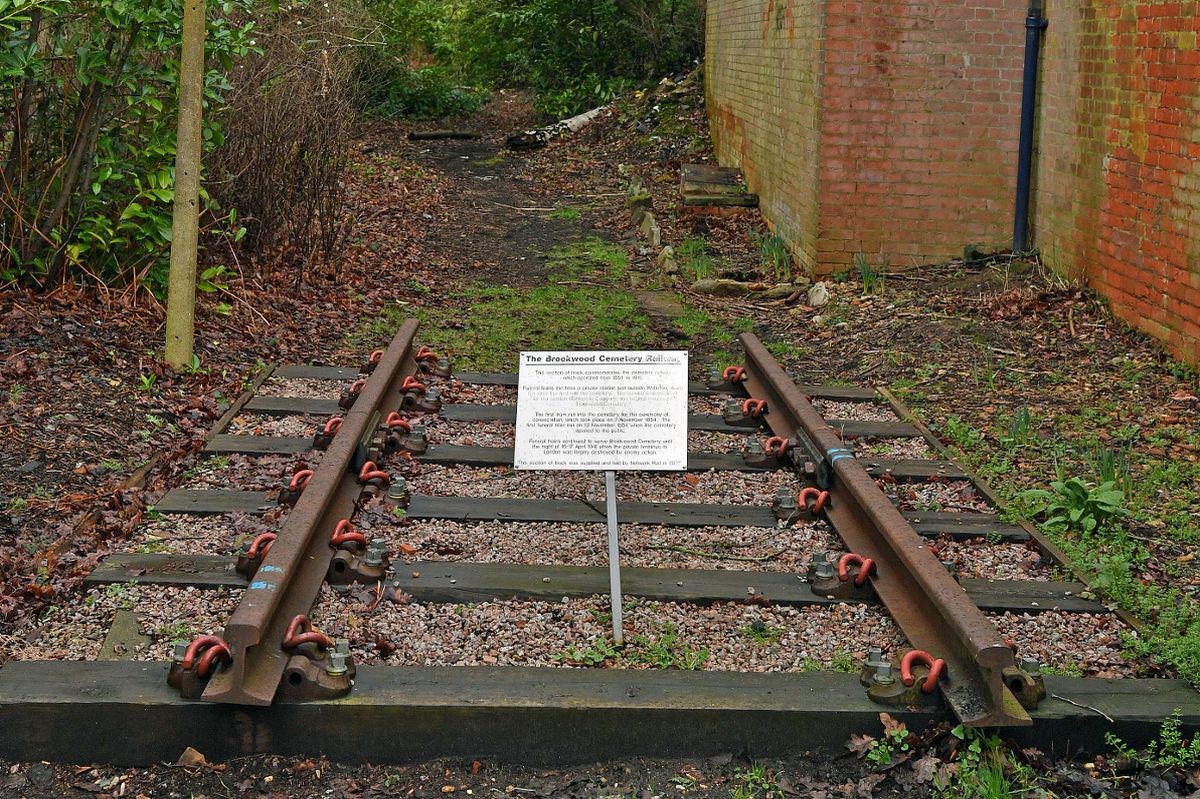
Brockwood Cemetery still has a few remaining sections of track where the London Necropolis Railway ran(Image: Surrey Advertiser – Grahame Larter)
The Victorians have a reputation for dealing with death in strange ways, from photographing the dead to their obsession with Memento Mori objects, reminding them of the inevitability of death. But one almost forgotten part of Victorian history is particularly creepy and involves a long-abandoned railway line.
Early into Queen Victoria’s reign, the city faced a horrific problem. It had doubled in size thanks to the Industrial Revolution, bringing the population up to 2.5 million, many of whom lived in crowded, unsanitary conditions, causing outbreaks of conditions such as Cholera. London was the largest city in the world, but it also had insufficient sewage facilities and poor water quality, leading to disease and death. A Londoner born in the 1840s had an average life expectancy of just 36.7 years.
London’s churches soon found their graveyards were full to capacity, leading to the horrific practice of exhuming the recently deceased to make way for newer burials. As a solution, a huge new cemetery was planned in Brookwood, Surrey, but the plodding horse and carriages of the time would have taken hours to transport a body to this location. Therefore, the idea for the London Necropolis railway was formed.
The London Necropolis railway station was built next to Waterloo, and had a beautiful, ornate exterior typical of Victorian architecture. Here, the bodies of people of all ages and social classes were readied for their final 23-mile journey to the new Brookwood Cemetery in leafy Surrey, a world away from the grubby streets of London.
Coffins were issued a one-way ticket, while the mourners accompanying them would get a return ticket to take them back into the city after the service. Once the trains arrived in Brookwood, they made two stops in the Anglican and Nonconformist parts of the cemetery, depending on the religion of the deceased.
While all sorts of people were laid to rest in Brookwood, the rich, of course, enjoyed a better class of funeral than the Victorian poor. A first-class funeral came with a choice of burial plots and the ability to erect a permanent memorial. Those who chose a second-class funeral could put up a gravestone or other memorial for an additional cost, but if they failed to do so, the grave could end up being reused.
In third class were people who had a pauper’s funeral, paid for by their local parish. While these people weren’t given their own gravestone, they did get separate graves, which were much more dignified than the horrific burial practices going on at London’s graveyards at the time. The London Necropolis Company (LNC) carried out the burials, and about 80% of the funerals it held were third class, for those whose families couldn’t afford a service.
First and second class passengers had a separate waiting area, and their loved ones’ names were announced as their coffins were carried onto the train, a ceremonial touch not afforded to those headed to unmarked graves.
As London grew, and with the building of the London Underground, proper sewage systems, and overground railways, many churchyards stood in the way. The Necropolis Railway took on a huge new project, relocating the bodies from 21 churchyards across the city to the Surrey cemetery
Trains ran daily, and Sundays were a particularly busy day for funerals. It was the only day of the week when many workers had off, and by scheduling their loved ones’ funerals, they could avoid taking an extra day off.
The London Necropolis Railway ran until 1941, when a World War Two bomb destroyed the London station and track. By that point, funeral directors were increasingly using motorised hearses, and in the post-WW2 reconstruction of the city, the destroyed funeral train service wasn’t seen as a priority.
Visit Westminster Bridge House and you can still see some of the façade of the old station building, although the old sign is boarded up. However, in Brookwood Cemetery, the remains of this unusual chapter of history are still on display. You can still see parts of the track, and plaques commemorate the 200,000 people who reached their final resting place on this unique train line.
Have a story you want to share? Email us at webtravel@reachplc.com
Everton manager David Moyes praises a “much better” second-half display that saw French forward Thierno Barry equalise to give the Toffees a 1-1 Premier League draw with Leeds at the Hill Dickinson stadium.
Deir el-Balah and Khan Younis, Gaza – For the past two years, Khitam Hameed has clung to the hope of a single sliver of news that could fundamentally change the fate of her entire family.
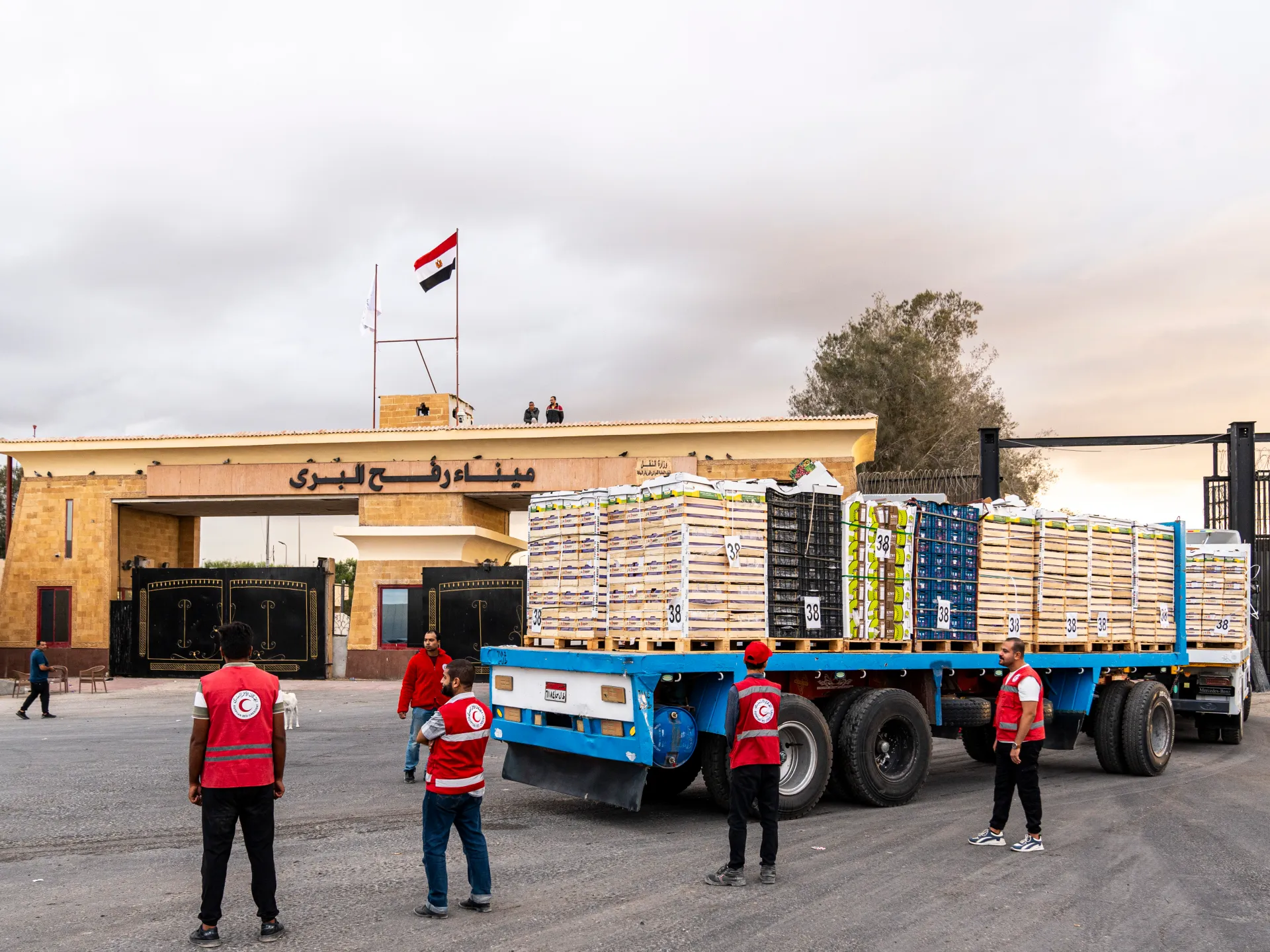
The reopening of the Rafah crossing, shut and controlled by Israel as part of its genocidal war on Gaza in spite of a ceasefire agreement, would allow her family to travel and reunite with her husband outside Gaza.
Recommended Stories
list of 4 itemsend of list
But for this family, the reopening is not just about freedom of movement. It represents both a chance for reunion after a long separation, and an opportunity to secure treatment for their son, whose life, schooling, and normal childhood have all been destroyed by the two-year Israel-Palestine war.
With the United States pushing a deeply intransigent Israel to progress to phase two of the ceasefire that began on October 10, the reopening of the Rafah crossing was directly tied by the far-right government to the recovery of the remains of the final Israeli captive, and only partially for pedestrian use under strict military supervision.
On Monday, the retrieval of the last Israeli captive’s body appeared to open that locked door, with thousands in urgent need of treatment or family reunification in a state of anxious anticipation.
From her family’s displacement site in the Nuseirat refugee camp near Deir el-Balah in central Gaza, Khitam, 50, a mother of six, sits trying to organise her thoughts as news circulates about Rafah.
Next to her is her 14-year-old son, Yousef, unable to walk, suffering from a rare genetic disorder called Ehlers-Danlos Syndrome (EDS), a painful condition primarily affecting his bone development, with potential cardiac complications.
“Yousef has been undergoing treatment for this syndrome since he was very young … he has had around 16 surgeries,” Khitam tells Al Jazeera.
“We got used to hospitals, but before the war, there was some monitoring and a little hope.”
Since long before October 2023, the Rafah crossing between Gaza and Egypt has been a lifeline for Palestinians, not only as a natural exit and entry point, but also as a symbol of connection with the outside world.
Before the war, the crossing was heavily used by patients seeking medical treatment, families visiting relatives abroad, and the movement of goods and supplies that helped ease Gaza’s economic pressure under Israeli blockade.
Its closure, beginning in May 2024 after Israeli forces took control, marked a dramatic turning point in the humanitarian crisis.
The shutdown affected not just the movement of people, but also significantly reduced the flow of medical aid and essential supplies, impacting thousands of patients waiting for treatment outside Gaza, including children and the wounded, amid a severe shortage of health services and medical equipment.
‘Opening the crossing shouldn’t be a miracle’
Before the war, Khitam and her family monitored Yousef’s condition regularly, and he could walk and move.
But the war halted everything. Hospitals were routinely bombed by Israel, and most ceased functioning. Medics were killed by the hundreds, medications ran out, and medical checkups became nearly impossible.
“Since the war, Yousef’s condition has deteriorated. His legs are weaker, walking is harder, he uses crutches,” Khitam pauses before continuing: “He falls often… and my heart is in my throat every time.”
The mother no longer knows the full extent of her son’s health. “I don’t know if he has heart complications, or if his spine has worsened … we are living with him with no answers.”
The war also separated the family. Weeks before the conflict erupted, Khitam’s 52-year-old husband, Hatim, had left Gaza for Egypt, as an initial step to secure a chance for the family to migrate and access advanced medical care for Yousef.
“Since then, I’ve been alone. Six children, one with a special medical condition, war, displacement, hunger,” Khitam says, her voice exhausted.
“Being displaced alone is so difficult. You don’t know where to go, how to protect your children, how to provide food or safety. The constant anxiety and fear have affected everyone, but Yousef suffers the most.”
“No school, no play, no outings, no treatment … even psychologically, he is exhausted. A child his age should be living his life, not caught between war and illness.”
But, she adds, “just the idea of travelling eases us a bit psychologically. It feels like a door might open” for treatment outside of the besieged enclave.
She still fears how the crossing will operate, even as hope keeps her going.
“Even if the crossing opens, not everyone can leave, and not every case will be approved,” she adds. “Opening the crossing shouldn’t be a miracle… it’s a right.”
Yousef’s story intersects with those of hundreds of families of sick children in Gaza, for whom Rafah is not just a crossing, but a lifeline.
‘The family started a new battle against time’
Local estimates indicate that more than 22,000 patients and injured people, including about 5,200 children, are unable to travel for treatment due to the Israeli closure, with thousands more waiting for approved medical transfers that cannot be executed.
Among them is Hur Qeshta, a newborn girl only 15 days old, born with a large, unusual tumour in her neck, affecting breathing and swallowing.
She requires urgent surgery outside Gaza, according to doctors at Nasser Hospital in Khan Younis, in southern Gaza.
Her mother, Doaa Qeshta, 32 and a mother of five, tells Al Jazeera, “From the first moment she was born, the family started a new battle against time to ensure she could urgently travel for treatment.”
Hur was delivered via Caesarean section and now lies in the Nasser Hospital neonatal ICU, on oxygen and fed via a tube from her abdomen.
“She can’t breastfeed, everything is through a tube, and the mass is growing rapidly … all within 15 days,” says her mother.
Doctors confirmed that surgery inside Gaza is currently impossible due to a lack of facilities.
Doaa links her daughter’s condition to the circumstances during her pregnancy, including displacement in a tent in al-Mawasi, exposure to nearby shelling, smoke, gunpowder, hunger, and lack of nutrition.
“I was pregnant during famine … no food, no vitamins, no safety,” she recalls. “Shelling was nearby, 300 metres (980 feet) away… the tent shook; we thought we were dead.”
“Opening the crossing means saving my daughter’s life,” she says. “I’ve registered the whole family as companions … the most important thing is Hur goes, gets treatment, and survives.”
Of the reopening of the Rafah crossing, Doaa says, “We hear news and live on hope, but we are really in a limbo… we don’t know what’s happening or when. We just pray this is true.”
‘Our lives and futures hang on a hope’
The effects of Rafah’s closure go beyond medical access, affecting an entire generation of youth whose education has been halted at a closed gate.
Among those affected is Rana Bana, a 20-year-old from the Daraj neighbourhood in Gaza City.
She graduated from high school in 2023 with a 98 percent average in the science track, with a focus on pharmacy. Within a single year, she received multiple opportunities abroad, but none materialised due to Rafah’s closure.
“In 2024, I was accepted for a scholarship in Egypt, ready to leave, but the crossing closed. A year later, I got a scholarship to Turkiye, did the online interviews, was accepted, and since then I’ve been stuck,” Rana tells Al Jazeera.
Her Turkish scholarship includes 220 students from Gaza, all from different disciplines, most with high academic grades.
Over the past two years, Rana tried not to stagnate, taking Turkish language courses and exploring alternatives like local universities. But she would hold back each time she heard news of Rafah possibly reopening.
“Every time there’s news the crossing might open, I tell myself, ‘Let me wait a bit’… but it turns out to be just talk, and my hopes are dashed,” she adds. “A lot of our time and life has been wasted waiting … our lives and futures hang on a hope.”
Rana is displaced with her family of eight. They returned briefly to northern Gaza during the first ceasefire, found their home intact, but fled again after fighting resumed, and are now settled in Deir el-Balah.
“My biggest fear is leaving and not being able to come back,” she says. “Before, they [her family] were 100 percent supportive. Now there’s fear because the travel process is unclear, and they don’t know how many will be allowed or registered to travel.”
Many Palestinians fear leaving Rafah would be a one-way ticket as part of an openly touted Israeli plan to permanently expel the population from Gaza.
“We students and youth are the most affected group during the war,” Rana says. “Our years have gone by silently, our studies destroyed by war, and no one talks about us. All we want is education — not travel for tourism or anything else.”
The news that the seagoing service is operating the A model of the Joint Strike Fighter came from aviation photographer @Task_Force23, who captured the VX-9 F-35A as it did a low-approach at Mojave Air and Space Port on January 23rd. He was kind enough to share his photos with our readers.
TASK_FORCE23
The aircraft in question was 17-5240, an F-35A that had previously served in a test capacity with the USAF’s 422nd Test and Evaluation Squadron based at Nellis Air Force Base. As for how the jet ended up being flown by the USN, the F-35 Joint Program Office (JPO) tells us:
“We have a service agreement whereby the Air Force can loan the Navy an aircraft and they have done that before.”
We have asked additional questions about the arrangement to the JPO, we will update this post when we hear back.
Regardless, it makes sense that Navy can pull from the Air Force’s much larger F-35A fleet for test and evaluation duties, the activities of which often benefit both services due to the joint nature of the F-35 program. The entire F-35C production target for the Navy and Marines is 273 aircraft (as of 2024), and many of those aircraft are yet to be ordered and delivered. In comparison, the USAF had well over 500 F-35As in its inventory at the start of fiscal year 2025. That number has only grown.
The F-35C that the Navy flies has much larger wings than the A, allowing it to approach the carrier at lower speeds. It also has a beefier landing gear for carrier operations, a robust tail hook, and it carries more fuel, among other tweaks. While the two fly similar and conversion from F-35C to A is likely relatively seamless, the C model is restricted to 7.5Gs compared to the A’s 9Gs. Due to the big wing and G restriction, they perform different in areas of the envelope, such as turns. High speed performance is also a bit different due to the big wings on the C. But those differences are fairly minimal, especially for test duties of a relatively mature aircraft that often have more to do with avionics, software, and weapons integration than raw performance and flying qualities. There are other use cases VX-9 could have for F-35As, as well, but generally this would be a capacity issue.
F-35 variants compared, from left to right: C, B, A.
Still, it is certainly… different… seeing an F-35A emblazoned with NAVY on its side and VX-9’s iconic bat on its tail.
TAKE That get taken back to some of their best days at the premiere of a three-part series on them, starting on Netflix today.
Gary Barlow, 55, Mark Owen, 53, and Howard Donald, 57, admitted some of the footage was “moving” at Battersea Power Station cinema in London last night.
Sign up for the Showbiz newsletter
Thank you!
Take That at the premiere of a three-part series on themCredit: GettyThe series tells of their rise, split and comeback, pictured members Gary Barlow, Howard Donald and Mark OwenCredit: Getty
It tells of their rise, split and comeback. Gary said: “It’s very emotional.”
The trio also performed Back For Good and Shine.
It comes after Gary Barlow welcomes the Brit Awards moving to Manchester claiming the music industry is ‘not just about London’.
The annual British music awards ceremony will be hosted in the North West for the first time after being held in the capital for its near 50-year history.
Barlow said: “Manchester’s now such a place for media, we’ve got Media City there.
“People who were trained in like camera work were never trained in areas like that. So it’s such a massive thing for the country.
“It doesn’t surprise me at all the Brits are there, in fact it should have been there five years ago just because it’s not just about London, the music industry.
“In fact, London’s probably down the list you know, it’s so much regional talent.
“Look back in history and see where bands and artists have come from all over the country, not just in London.
On how to further spotlight regional talent, Barlow added: “I think we are.
“I think that’s one of the benefits of having an internet-based industry now, is that you can be anywhere. Doesn’t matter where you are.
“Even as artists working we can be anywhere. We can be songwriters and live anywhere now because the world’s a smaller place.”
Formed in 1989 in Manchester, Take That were originally made up of Barlow, Howard Donald, Mark Owen, Jason Orange and Robbie Williams.
The band broke up in 1996 after Williams’ departure with the four remaining band members reuniting in 2005 until Orange left in 2014.
Take That were originally made up of Barlow, Howard Donald, Mark Owen, Jason Orange and Robbie Williams, pictured in 1992Credit: Getty
The Enhanced Games launched as a concept in 2023, with some doping measures permitted under medical supervision.
Only substances approved by the United States’ Food and Drug Administration (FDA) can be taken, which is different to the list the World Anti-Doping Agency (Wada) allows for elite athletes.
Organisers have claimed the event “will deliver transparency and health safety by removing the stigma of enhancement – bringing its responsible usage into the light, within an approved medical framework, and one that protects athletes who would otherwise risk their health by operating in the dark to circumvent punitive structures in place today”.
However, the event has been criticised for endangering athletes’ health and undermining fair play, with Wada describing it as a “dangerous and irresponsible project” and Travis Tygart, chief executive of the US Anti-Doping Agency, calling it a “clown show”.
Earlier this month, UK Athletics (UKA) said it did not recognise the Enhanced Games as a “legitimate sporting competition”.
UKA said it “places athletes’ health and welfare at serious risk”, adding that “any event that promotes or permits the use of harmful substances with the aim of pushing the human body to its limit for short-term goals is not sport as we value it”.
The Enhanced Games are planned to be an annual competition, initially comprising short-distance swimming, sprinting and weightlifting, with the inaugural event set to be held in Las Vegas on 24 May 2026.
The event offers appearance fees and bonuses, with Greek swimmer Kristian Gkolomeev receiving a prize of $1m (£739,000) for beating a world record time in the US in February 2025.
Organisers said he swam 20.89 seconds in a 50m freestyle time trial, 0.02 seconds quicker than the world record set by Brazil’s Cesar Cielo in December 2009, although the time will not be recognised by World Aquatics.
Resident foreign currency deposit balances by currency in December 2025. Data from Bank of Korea. Graphic by Asia Today; translated by UPI.
Jan. 26 (Asia Today) — South Korea’s resident foreign currency deposits rose sharply in December as renewed volatility in the won-dollar exchange rate prompted households and companies to park more money in dollars and other foreign currencies, central bank data showed.
Resident foreign currency deposits at local foreign exchange banks stood at $119.43 billion at the end of December, up $15.88 billion from the previous month, the Bank of Korea said.
Market participants increased foreign currency holdings as the exchange rate swung on expectations of further won weakness and repeated government and financial regulator efforts to curb sharp moves, the report said.
The won opened December near 1,470 per dollar and climbed into the 1,480 range by the end of the month before dropping below 1,450 following stronger verbal intervention by authorities. Since the start of the new year, the exchange rate has repeatedly moved higher and then retreated amid official efforts to stabilize the market.
The Bank of Korea said after its Jan. 15 policy meeting that most of the won’s recent weakness reflected external factors, with domestic factors accounting for roughly a quarter, while adding that authorities can mainly focus on smoothing short-term spikes.
Analysts said the dollar could lose some strength from prior levels, reducing the chance of a repeat of last year’s sharp surge in the exchange rate, as uncertainty rises over the U.S. interest-rate path amid growing political pressure on the Federal Reserve.
Park Sang-hyun, an analyst at iM Securities, said the dollar’s influence appears to be “temporarily weakening,” adding that inflation and employment data and political pressure could increase expectations for U.S. rate cuts.
Air Force Gen. Stephen Davis, head of Air Force Global Strike Command (AFGSC), talked about the future of Looking Glass and the E-4C during an exclusive interview with TWZ‘s Howard Altman. The U.S. Navy is separately working to retire its fleet of Boeing 707-based E-6B Mercury jets that currently serve in the Looking Glass role with joint crews that include Air Force personnel. The E-6Bs also perform the Navy’s Take Charge And Move Out (TACAMO) mission, which entails the ability to relay orders to Ohio class nuclear ballistic missile submarines, even if they are submerged. The Navy’s replacement E-130J Phoenix II aircraft will only be configured for the TACAMO mission.
An E-6B Mercury jet. USAFA rendering of the Navy’s future E-130J Phoenix II. Northrop Grumman
This is Davis’ first interview since taking up his current post last November. He also discussed ongoing work on the B-21 Raider and other areas of interest for his command.
“In terms of the Looking Glass platform, we did get recently assigned, the Air Force did, that mission [and] that will come to Global Strike,” Davis said. “We’re currently developing the capabilities documents, the requirements for that.”
“No decision has been made on if that will be a separate platform, or that might be collocated or brought into the SAOC program,” Davis added. “So, no decision on that at this point.”
The E-4Cs are set to supplant the Air Force’s current fleet of four E-4B Nightwatch aircraft, also known as the National Airborne Operations Center (NAOC). Three of those planes started their careers in the 1970s as E-4A Advanced Airborne Command Posts (AACP) before being upgraded to the E-4B standard. The fourth E-4B was acquired separately in the 1980s. The E-4Bs are all based on the older 747-200 models that have become steadily more difficult to operate and maintain. Boeing shuttered the 747 production line entirely in 2022. As such, the Sierra Nevada Corporation (SNC) is converting newer 747-8is acquired second-hand from Korean Air into E-4Cs.
A stock picture of an E-4B. DOD
The E-4Bs and future E-4Cs are both also described as ‘doomsday planes,’ but are also capable of acting as larger and more robust flying command centers than the E-6Bs.
For the Looking Glass mission, the current E-4Bs do lack a key feature: the Airborne Launch Control System (ALCS). With the ALCS, the E-6Bs can directly command the launch of Minuteman III missiles while in flight. This creates an additional obstacle to any adversary that might seek to prevent the use of these silo-based intercontinental ballistic missiles with a first strike targeting ground-based command and control links. It is worth noting here that the main purpose of the Minuteman III force is as a ‘warhead sponge’ that would require an opponent to expend substantial resources on trying to neutralize it in any nuclear exchange.
One E-4B was test-fitted with ALCS in the past, at a time when the Air Force envisioned those aircraft taking over the Looking Glass mission from EC-135Cs used in that role at the time. The service subsequently decided it was too expensive to use the NAOCs for that mission. Looking Glass passed to the Navy’s E-6s after the EC-135Cs were retired in the late 1990s.
The prospect now of using the E-4C in this role raises similar cost, as well as capacity questions. As noted, the SAOCs will be configured from the outset as more capable flying command centers for use by top U.S. officials, including the President of the United States. Looking Glass has somewhat similar, but different mission requirements, including when it comes to aircraft that have be available at all times.
All that being said, the SAOC fleet is set to be larger than the NAOC fleet. AFGSC’s Gen. Davis confirmed in the interview that the Air Force is looking to acquire six E-4Cs, at a minimum, and potentially up to eight of the jets. Previously released U.S. Army Corps of Engineers contracting documents had already discussed plans for improvements at Offutt Air Force Base in Nebraska to accommodate as many as eight SAOC jets. Offutt is currently home to the E-4B and E-6B fleets.
A slide from a US Army Corps of Engineers briefing on planned construction at Offutt Air Force Base to accommodate an E-4C fleet of between six and eight aircraft. US Army
The Air Force could still look to other platforms to perform the Looking Glass mission. Last year, Congress pushed to have the service report back on whether a C-130 Hercules-based design like the one the Navy is now pursuing for TACAMO could be another option. A business jet might be another starting place. It is even possible that part of the mission could migrate in another direction entirely with the help of space-based communications capabilities.
“The LG-N program is aimed at recapitalizing missions currently executed on the E-6B,” according to the notice. “The Government is seeking information on industry’s ability to deliver a complete weapon system to include aircraft, mission systems, training systems, system integration lab, training, and ground support systems.”
Whether or not the E-4Cs end up being part of the LG-N solution, and what other aircraft might serve in this role in the future, remains to be seen. Regardless, the Air Force is now well on its way to taking back control of the Looking Glass mission.
A film buff has shared 10 lesser-known psychological thrillers including Fresh, No Exit and Strange Darling that are described as masterpieces that will mess with your mind for days
Woman in the Window (2021) features Amy Adams as Anna Fox(Image: Melinda Sue Gordon/Netflix)
We all adore films that have us gripping the sofa, pulse pounding, eyes glued to the screen. That’s why psychological thrillers are so popular!
The films excel at delivering these spine-tingling sensations – and there’s a wealth of brilliant examples you might have missed. TikTok user horror_hideout91 has compiled a selection of underrated thrillers perfect for your viewing queue.
Some are hailed as masterpieces that’ll haunt your thoughts for days afterwards – so why not give them a whirl:
First up is ‘No Exit’. The plot follows a university student who discovers a kidnapped girl at a remote motorway services during a snowstorm, with the abductor lurking close by.
Following that, there’s ‘Fresh’. This chilling tale revolves around a woman fed up with dating apps, who hands her digits to an apparently delightful bloke she meets whilst shopping. Yet appearances can be deceiving.
Content cannot be displayed without consent
The third recommendation is ‘Deep Water’. A husband who permits his spouse to conduct extramarital relationships to prevent divorce becomes the main suspect when one of her loversvanishes.
Alternatively, consider ‘The Lie’. This centres on a dad and daughter who encounter the girl’s closest mate beside the motorway. When they pull over to offer transport, they discover their kind gesture has triggered dreadful repercussions.
Alternatively, there’s ‘The Woman in the Window’, which follows an agoraphobic woman who observes her neighbours for entertainment – only to discover she’s witnessed a horrific crime.
The cinema enthusiast also suggested ‘Exam’, featuring eight job candidates competing for a corporate position. They’re placed in a room and must answer one straightforward question. The catch? Working out what the question actually is.
Next up is ‘Burn’, centring on a lonely and unstable petrol station worker constantly living in the shadow of her more charismatic colleague. When they’re robbed one evening, she seizes it as the ideal chance to forge a bond with the robber.
Alternatively, give ‘Take Shelter’ a go. It tracks a man tormented by apocalyptic visions who must determine whether to protect his family from an impending catastrophe – or shield them from himself.
The penultimate recommendation is ‘Strange Darling’, depicting a one-night stand that descends into darkness, spiralling into a serial killer’s brutal killing spree.
Finally, the list concludes with ‘Milk & Serial’, where a surprise prank sees a well-known social media pair forced to confront the ramifications of their behaviour.
So there you have it – 10 chilling recommendations guaranteed to keep you gripped throughout!