A digital nomad visa is a document or program that gives someone the legal right to work remotely while residing away from their country of permanent residence. A digital nomad is someone who lives a nomadic lifestyle and uses technology to work remotely from outside their home country.
Although only some countries have visas targeted at digital nomads, many offer visas that are liberal enough to allow nomads to work remotely without becoming a resident. Forty regions offer remote working visas, including Anguilla, The Bahamas, Croatia, Spain, Norway, and Colombia, among others.
Key Takeaways
Digital nomad visas allow individuals to legally live and work in another country.
A digital nomad lives a nomadic lifestyle and uses technology to work remotely from outside their home country.
These visas are available to students and workers, although the costs and requirements tend to vary.
Many countries that offer these visas allow individuals to apply for themselves and their dependents.
Although a digital nomad lifestyle allows you to have a long vacation while you work, it can be stressful and may hinder the formation of long-lasting relationships.
What Is a Digital Nomad Visa?
A digital nomad visa is a type of visa that allows digital nomads to live and work in a foreign country for longer than a normal tourist visa. They may also offer favorable tax schemes for nomads that stay long enough to need to declare a new country as their tax residence.
Although many digital nomads take advantage of lenient temporary residence visas, only a few countries have debuted visas specifically for digital nomads or remote workers. Other countries simply offer visas that work with the frequent moves that many remote workers prefer. And still other countries have visas that cater to freelancers or entrepreneurs but aren’t open to remote workers employed by a foreign company in a full time capacity.
Both workers and students can use digital nomad visas, although the costs and requirements may differ. For example, the Work From Bermuda Certificate requires scholars to provide proof of enrollment in an undergraduate, graduate, doctoral, or research program with their application. Remote workers or self-employed applicants aren’t required to be enrolled in school.
Some countries allow employers to apply for a digital nomad visa for their company. Dominica’s program charges $800 (USD) plus an additional $500 (USD) for each employee for a business of four or more people.
Important
The information provided in this article focuses on digital nomad visas solely in the context of remote workers—not those who want to study abroad or people who are seeking a lengthy corporate retreat.
Who Offers Digital Nomad Visas?
As of 2025, over 50 regions offer programs for temporary remote workers. Besides the regions highlighted below, the following countries also accommodate the digital nomad: Abu Dhabi, Albania, Argentina, Greece, Hungary, Italy, Latvia, Romania, Spain, Belize, El Salvador, Panama, Brazil, Colombia, Ecuador, Uruguay, Dubai, Bali, Japan, Malaysia, South Korea, Grenada, Namibia, Andorra, South Africa, Sri Lanka, Taiwan, and the Philippines.
Other countries offer flexible visas that may attract digital nomads, but they’re not strictly remote a work visa. Some are temporary residence visas, while others offer lenient tourist visas that many use as a remote work visa. Countries that offer remote or freelance friendly visas include Croatia, Armenia, Finland, Georgia, Germany, the Netherlands, Norway, Canada, Mexico, Thailand, Serbia, Aruba, Montenegro.
North Macedonia, Goa, and Peru have each either discussed or announced digital nomad visas, but they aren’t available at the time of writing.
Antigua & Barbuda
Roberto Moiola / Sysaworld/Getty Images
Nomad Digital Residence is a long-stay program offered by both islands for remote workers. The visa is good for two years and costs $1,500 (USD) per individual, while couples and families of three or more must pay $2,000 (USD) and $3,000 (USD), respectively.
Applicants must fill out the application and submit up to 11 documents, including proof of expected income of at least $50,000 (USD) for each year of the program.
The Bahamas
Per Breiehagen/Getty Images
The Bahamas Extended Access Travel Stay allows digital nomads to work remotely for one year from any of 16 islands. An application requires a $25 (USD) fee, a valid passport data page, a medical insurance card, and proof of employment.
The application typically takes just five days to process. Approved applicants must pay $1,000 (USD) to receive their Work Remotely permit. You must add $500 (USD) for each dependent if they plan to join you.
Fast Fact
The nomad visas in this list are available to American remote workers. If you hold a passport from another country, especially one in the European Union, you may not need a special visa, as EU citizenship provides the right to work in any EU country. Outside of the EU, European passport holders may also need to obtain a visa to work and live for more than the standard tourist visa.
Barbados
Atlantide Phototravel/Getty Images
The Barbados Welcome Stamp established a visa that allows visitors to work remotely for up to one year. The application fee is $2,000 (USD) for individuals and $3,000 (USD) for families.
The application must be accompanied by two identical 50 x 50 mm photographs (that meet the specific visa photo requirements of the Barbadian government), the biodata page of a passport, and proof of relationship of dependents (if applicable).
Applicants must also prove that they will earn $50,000 (USD) during their 12-month stay.
Bermuda
Marc Guitard/Getty Images
The Work From Bermuda Certificate permits digital nomads to work remotely for 12 months. The $263 (USD) application fee must be accompanied by health insurance and proof of employment. Applicants cannot have a criminal record.
Although there isn’t a minimum requirement, applicants must have enough income to support themselves for the full year. Family members will also need to pay a fee and apply separately, but all applications must be submitted on the same day. The turnaround time is approximately five business days.
Cabo Verde
Wirestock/Getty Images
The Cabo Verde Remote Working Program is available to remote workers originating from Europe, North America, the Community of Portuguese Speaking Countries, and the Economic Community of West African States.
Applicants must:
Have a minimum bank account balance of €1,500 for individuals and €2,700 for families for at least the last six months
Submit five total documents with the application, including a passport and health insurance
Provide 10 total documents to border authorities in person after arriving at one of the 10 islands, though there is some overlap between the two sets of documents
Processing time can take roughly two weeks. The visa is valid for six months and can be renewed for another 12 months.
Costa Rica
Giordano Cipriani/Getty Images
This Central American country’s digital nomad visa, also known as Stay (Estancia) for Remote Workers and Service Provider, offers a one-year remote work opportunity.
Prospective visitors are required to have a monthly income of $3,000 (USD). That amount increases to $5,000 (USD) if there are dependents involved.
Other requirements include, but are not limited to, the payment of a $100 (USD) application fee, bank statements proving income, proof of medical insurance, and a valid passport. The permit can be renewed as long as all requirements are still being met.
Curaçao
Cultura RM Exclusive/RUSS ROHDE/Getty Images
This Dutch Caribbean island offers the @HOME in Curaçao program. Available to remote workers for six months, residency can be extended for an additional six-month period. American or Dutch citizens don’t need a visa—they’re already permitted to stay in Curaçao for up to six months as a tourist.
Outside of a $294 total for fees, the application also requires a copy of a passport photo, proof of solvency, and proof of health insurance. Processing time is approximately two weeks.
All applicants must file individually. Families may also apply for the program, but they must do so under the main applicant.
Czech Republic
Alexander Spatari/Getty Images
The Czech Republic’s freelancer visa, Zivno, is a bit trickier to acquire than most on this list. This program requires a variable fee, in addition to proof of minimum income equal to 1.5 the gross average annual salary listed by the Ministry of Labor and Social Affairs. (This amount changes annually.) You must also have documents like a passport, proof of accommodation, criminal record, etc.
The Zivno is only open to residents of a few countries: Australia, Japan, Canada, the Republic of Korea, New Zealand, the United Kingdom, the United States, Singapore, and Israel. The visa lasts for one year but holders may apply for an extension before the initial visa expires.
Dominica
Westend61/Getty Images
Dominica, also known as the Nature Island of the Caribbean, provides an 18-month Work In Nature Extended Stay Visa for digital nomads.Applicants must present proof of expected income of $50,000 for the next 12 months. There is also a $100 application fee and either $800 single or $1,200 family visa fee—all in USD.
Several other documents, including the biodata page of a passport, a bank reference letter, and proof of health insurance, must also be submitted alongside the application. Approval letters are often sent within 14–28 days.
Estonia
Frans Sellies/Getty Images
On Aug. 1, 2020, Estonia launched an official Digital Nomad Visa for remote workers to remain in the country for up to one year. Applicants need proof of a minimum of €4,500 in gross income and pay a state fee of €90 or €120 for a Type C (short stay) or Type D (long stay) visa, respectively.
Additional requirements include having a valid travel document and health insurance. They must also pass a background check. Applications must be submitted in person at the nearest Estonian Embassy or Consulate, and the processing time can take up to 30 days.
Iceland
Arctic-Images/Getty Images
The long-term visa for remote workers program is available to digital nomads from any country that doesn’t require a visa to travel to Iceland and isn’t available to any that are part of the EU, the European Economic Area, and/or the European Free Trade Association.
The visa can be issued for up to 180 days, so long as applicants apply and are accepted before coming. If you apply after arrival, the visa is only valid for 90 days. You must prove a monthly income equivalent to 1 million króna (ISK) for singles or 1.3 million ISK for couples. Each applicant must submit a separate application and pay a 40,000 ISK processing fee separately for each one.
Applications will also require a passport photo (no older than six months), copies of a passport, proof of health insurance, proof of purpose of stay in Iceland, and potentially a criminal record check.
All applications must be submitted in person or via mail to the Directorate of Immigration at Dalvegur 18, 201 Kópavogur.
Malta
chantal/Getty Images
The Nomad Residence Permit allows digital nomads to work remotely within the archipelago for one year. It can be renewed at the discretion of Residency Malta, as long as the applicant still meets the set eligibility criteria.
Applicants must meet a gross yearly income threshold of €42,000, hold a valid travel document, have health insurance, acquire a valid property rental or purchase agreement, and pass a background check.
Once the application and all required documents have been submitted via email, instructions will be sent to pay a €300 administrative fee for each applicant, including any family members included on the application.
Mauritius
Stuart Westmorland/Getty Images
The Premium Travel Visa offers one year of remote working abroad with the potential for renewal. The best part? The Premium Travel Visa is 100% free—no fees of any kind.
Prospective travelers must submit multiple documents with their online application, such as a valid passport, proof of travel and health insurance, and a copy of their marriage certificate (if applicable).
Applications are processed within 48 hours after they’re submitted.
Montserrat
Emad Aljumah/Getty Images
The Montserrat Remote Work Stamp is valid for one year of remote working. It requires proof of an annual income of $70,000 (USD), and there’s a $500 (USD) fee for single travelers or a $750 (USD) fee for families of up to three dependents (plus a $250 (USD) fee for any additional dependents).
Proof of valid health insurance, a copy of passport biographical data, a passport-size photo, a police record,and proof of employment or a business incorporation certificate are also required.
Processing takes seven working days after the application is submitted.
Portugal
Alexander Spatari/Getty Images
Portugal offers a D8 digital nomad visa that is valid for two years. It can be renewed for up to five years. The national visa costs €110, while the residency visa may come with additional charges.
In addition to the application form, prospective residents must provide a valid passport, two passport-size photos, valid travel insurance, proof of residence (if applicable), proof of sufficient income, proof of owning a business entity (or a contract for providing services), and a criminal record.
Income requirements for the D8 are, as of 2026, €3,480 per month.
Seychelles
levente bodo/Getty Images
The Seychelles Workcation program enables digital nomads to work remotely from any of the 115 islands that comprise the archipelago for as little as one month or as much as one year.
There is a €45 fee, and prospective travelers must also provide a valid passport, proof of being an employee/business owner, proof of income (exact amount unspecified), and a valid medical and travel insurance policy with their application.
Family members can also join an applicant as ordinary visitors, so long as they meet all requirements and submit birth and/or marriage certificates, whichever is appropriate.
Advantages and Disadvantages of Digital Nomad Visas
It’s crucial for anyone considering working abroad to review and follow whatever is requested by their temporary residence of choice. While there are certain benefits to working on a digital nomad visa, there are also some downsides to keep in mind.
Advantages
The obvious benefit of these programs is that you can enjoy a long vacation while maintaining a stable source of income without putting your career on hold. Most regions that offer digital nomad visas already have the infrastructure necessary to support remote workers, such as strong wifi as a selling feature.
Disadvantages
Being a digital nomad requires a job that’s remote and flexible. This is especially important when it comes to logging in hours when there’s a time difference. Although these kinds of jobs have become more common in the wake of the pandemic, this may be a guaranteed deal-breaker for some companies and workers.
Visas can be costly, and if the application for your next destination is rejected, you could be left scrambling to find a new place to live before you’re forced to leave when your current visa expires. Moving around can also make it harder to form long-lasting relationships, while the constant distance can also put a strain on existing ones.
Unless a country offers you permanent residency when your temporary visa expires, there’s little point in putting down roots where you won’t be living after a year or so. Although this lack of ties can be seen as a plus to those who value their independence, anyone thinking about a lengthy period abroad should carefully consider how isolating it might be.
Another consideration is your tax residency. Most countries will consider you a tax resident if you stay more than 183 days. Consider how that may impact your U.S. taxes and eat into your income. Unless you qualify for a specialized digital nomad tax scheme, you may find yourself paying higher taxes than you would back home.
Cons
Job must be remote and may require flexibility
Stress associated with constant moving
Expensive
Harder to plant roots and form long-lasting relationships
Potential for higher tax rates
Digital Nomads vs. Remote Workers
Although the term remote worker has become increasingly common, it isn’t perfectly synonymous with being a digital nomad. All digital nomads are, by necessity, remote workers. Yet the latter term can also apply to those who simply operate from their permanent residence instead of from an office. Laws differ, but entering a country as a tourist generally doesn’t permit the traveler to work while living there.
Working remotely (in your home country) wasn’t as popular in decades past as it is today. That’s because many employers felt that their employees wouldn’t be productive if they worked away from the office. Those who needed to work from home were given special permission for certain reasons, such as family or a lack of workplace accommodations.
Telecommuting has since become very commonplace, boosted by the pandemic. Many companies now believe that working from home can increase productivity. Some research indicates that people who work from home end up working 1.4 days more than in-office workers.
What Is a Digital Nomad?
A digital nomad is someone who works entirely remotely using digital technologies. A digital nomad may work out of cafes, beaches, or hotel rooms, and from anywhere in the world, as they’re not tied down to any one location.
What Is a Digital Nomad Visa?
A digital nomad visa legally allows visitors to work remotely for a foreign country and receive foreign income for an extended period of time. Several countries today offer such long-term stay arrangements to work digitally abroad.
What Other Countries Offer Digital Nomad Visas?
While we profile just a few countries with digital nomad visas, over 70 countries or regions either have a digital nomad visa, an equivalent that would allow digital nomads to work, or have one in the pipeline as of 2025.
The Bottom Line
The number of areas of the world that offer digital nomad visas is growing. Such travel programs can provide cultural and extended stay benefits to travelers who long to live and work in a country they’ve perhaps only dreamed about or visited briefly. Each country has specific requirements for its digital nomad visa, so be sure to do all the necessary research before you begin the application process.
WASHINGTON — Democratic senators are narrowing a list of demands for changes to U.S. Immigration and Customs Enforcement with a partial government shutdown looming by week’s end, hoping to pressure Republicans and the White House as the country reels from the deaths of two people at the hands of federal agents in Minneapolis.
Senate Minority Leader Chuck Schumer (D-N.Y.) has not yet outlined what his caucus will ask for before a crucial Thursday vote on whether to move forward with spending legislation that funds the Department of Homeland Security and a swath of other government agencies. Democrats were to meet Wednesday and discuss several possible demands, including forcing agents to have warrants and identify themselves before immigration arrests, and they have pledged to block the spending bill in response to the violence.
“This madness, this terror must stop,” Schumer said, calling for immediate changes to ICE and U.S. Border Patrol.
Senate Majority Leader John Thune (R-S.D.) has said he is waiting for Democrats to outline what they want and he suggested that they need to be talking to the White House.
It was unclear how seriously the White House was engaged and whether the two sides could agree on anything that would appease Democrats who are irate after federal agents fatally shot U.S. citizens Renee Good and Alex Pretti this month.
With no evident negotiations underway, a partial shutdown appeared increasingly likely starting Saturday.
Democrats weigh their demands
As the Republican administration pursues its aggressive immigration enforcement surge nationwide, Democrats have discussed several potential demands in the Homeland Security bill.
Those includes requiring judicial warrants for immigration arrests, mandating that federal agents have to identify themselves, ending arrest quotas, sending agents back to the border and forcing DHS to cooperate with state and local authorities in investigations into any incidents such as the two shooting deaths in Minnesota.
Sen. Chris Murphy (D-Conn.) said Democrats are looking at changes that will “unite the caucus, and I think unite the country,” including ending the “roving patrols” that Democrats say are terrorizing Americans around the country.
“None of this is revolutionary,” said Murphy, the top Democrat on the subcommittee that oversees Homeland Security spending. “None of this requires a new comprehensive piece of legislation.”
Schumer and Murphy have said any fixes should be passed by Congress, not just promised by the administration.
“The public can’t trust the administration to do the right thing on its own,” Schumer said.
Republicans say any changes to the spending would need to be passed by the House to prevent a shutdown, and that is not likely to happen in time because the House is not in legislative session this week.
“We can have conversations about what additional oversight is required, what additional laws we should consider, but not at the expense of shutting down the government,” said Sen. John Cornyn (R-Texas).
Many obstacles to a deal
Despite some conversations among Democrats, Republicans and the White House, it was unclear whether there could be a resolution in time to avoid a partial shutdown.
The House passed the six remaining funding bills last week and sent them to the Senate as a package, and that makes it difficult to strip out the Homeland Security portion as Democrats are demanding. Republicans could break the package apart with the consent of all 100 senators, which would be complicated, or through a series of votes that would extend past the Friday deadline.
It was unclear whether President Trump would weigh in.
Republican leaders had hoped to avoid another shutdown after last fall’s 43-day closure that revolved around Democrats’ insistence on extending federal subsidies that make health coverage more affordable for those enrolled in the Affordable Care Act marketplace.
Even if the Senate could resolve the issue, House Republicans have made clear they do not want any changes to the bill they have passed. In a letter to Trump on Tuesday, the conservative House Freedom Caucus wrote that its members stand with the president and ICE.
“The package will not come back through the House without funding for the Department of Homeland Security,” according to the letter.
Democrats say they won’t back down.
“It is truly a moral moment,” said Sen. Richard Blumenthal (D-Conn.). “I think we need to take a stand.”
Jalonick and Freking write for the Associated Press.
The car has now passed all its impact tests, Vowles added, and drivers Carlos Sainz and Alex Albon “stand shoulder to shoulder with me”.
“They’re clearly, as I am, disappointed,” said Vowles.
“They want to be out there testing the car, and whilst they’re in our driver and loop simulator in tandem now, to increase that programme, it isn’t the same.”
Vowles said the main problem was the factory was unable to cope with the demand put on it by the car build process.
“It’s more of an output than anything else, of pushing not just the boundaries of design but the boundaries of just simply how many components can be pushed through the factory in a very short space of time,” said Vowles.
“The car we’ve built is about three times more complicated than anything we have put through our business beforehand.
“So, to put that in perspective, it means the amount of load going through our system is about three times what it used to be.
“And we started falling a little bit behind and late on parts. There are compromises you can make as a result of it.
“In addition to that, we have absolutely pushed the boundaries of what we’re doing in certain areas. And one of those is in certain corresponding tests that go with it.”
However, he said the team were on target to make it to the second pre-season test, which takes place in Bahrain on 11-13 February.
Vowles added: “We could have made Barcelona testing. Simple as that. But in doing so, I would have to turn upside down the impact on spares, components, and updates across Bahrain, [the first race in] Melbourne, and beyond.
“And the evaluation of it was that for running in a cold, damp Barcelona, against doing a (rig) test, against the spare situation, and frankly, there was zero points for running in a shakedown test, we made the decision, and I stand by it, that the right thing to do is to make sure we’re turning up at Bahrain, correctly prepared, and prepared in Melbourne as well.”
Vowles did not directly answer a question as to whether the car was significantly over the minimum weight limit, saying it was impossible to respond to “murmurings in the media” because it was not possible to know the answer until the car was assembled.
He also said he had “experts and specialists” working with Williams to try to improve their factory operations.
Protesters in Baghdad burned photos of Donald Trump and waved the Iraqi flag, rejecting the US president’s demand that former Prime Minister Nouri al-Maliki not return to the premiership.
Plane vanished in remote jungle near eastern border with Venezuela; search hindered by dense terrain and adverse weather.
Published On 28 Jan 202628 Jan 2026
Share
Bogota, Colombia – Search and rescue teams in Colombia are searching for a passenger plane carrying 15 passengers that went missing near the eastern border with Venezuela.
Two crew members were among the passengers, which included a Colombian congressional representative and a candidate running in the upcoming elections, according to local officials and media reports.
Recommended Stories
list of 3 itemsend of list
It remains unclear what caused the disappearance, but local Air Traffic Control sources say the plane’s flight history shows a sudden altitude drop 11 minutes before it was expected to land in Ocana.
The flight, operated by government-run commercial airline Satena, was en route from Cucuta to Ocana, two cities in the North Santander department bordering Venezuela, when it left radar coverage.
“The Accident Investigation Directorate of @AerocivilCol reports that it is gathering information regarding the loss of communication from aircraft HK4709, which was flying the Cucuta-Ocaña route with 13 passengers and 2 crew members,” wrote Maria Fernanda Rojas, Colombia’s minister of transport, in a post on X.
“The corresponding protocols have been activated, and we have already initiated PMU,” added Rojas, referring to the “Unified Command Post” set up to respond to emergencies.
The plane disappeared in a remote region characterised by dense jungle, complicating search-and-rescue efforts.
Among the passengers was Diogenes Quintero, a lower house lawmaker who holds a seat specially reserved for conflict victims. He was accompanied by Carlos Salcedo Salazar, a candidate running for the same seat.
A local government official, who requested anonymity since they were not authorised to speak to the press, told Al Jazeera that authorities suspected that the plane had been affected by adverse weather conditions.
Drug trade
The Catatumbo region is also an active conflict zone and is home to the world’s largest cultivations of coca, the plant which produces the raw ingredient used to make cocaine.
Both the drug trade and the region’s strategic location on the Venezuelan border have made it a historic hotbed for armed conflict between rebel groups.
In January last year, violent clashes between the National Liberation Army (ELN) and Frente 33, a dissident group of the demobilised FARC fighters, displaced more than 50,000 people in the region.
The route from Cucuta to Ocana began operating only in June last year, marking an important milestone for a region that has historically had poor road connections to major cities.
Katie Price shocked fans as she married Lee Andrews in a quickie ceremony on SundayCredit: Instagram/ @wesleeeandrewsKatie’s new mum-in-law seemed happy with the news at first but has now taken a cryptic swipe at the loved-up pairCredit: Facebook / Trisha MediumThe clairvoyant posted a sad quote to her social media, which appeared to take aim at Katie and LeeCredit: Facebook
At the time, she told The Mirror that if Katie and Lee are happy then she is too.
But despite putting on a brave face, it now seems Trisha has doubts about the marriage.
The clairvoyant wasn’t present at the wedding and, today, posted a quote to her Facebook page that said: “Do not get upset with people or situations; both are powerless without your reaction.”
Trisha previously said to The Mirror: “There’s a lot of lies going around about Lee and that’s made me really upset. He’s not been married twice. I just want to defend my son, but I can’t say much more until I know everything.
“He did tell me that the wedding was happening. He spoke to me and if he is happy, I am happy – he’s my son, and that’s all that matters.”
Speaking about Katie, Trisha added: “Of course, I know who Katie is.
“I’ve always been very neutral about her. Everyone deserves a chance, you should never judge anyone in life.”
Last week the reality TV star sent fans wild as she dropped a series of engagement snaps.
In one photo, the podcast host was seen standing beside rose petals that were arranged to read “will you marry me” before she showcased her huge “25 carat” diamond ring.
Model Katie has since arrived back in the UK as two of Lee’s former lovers have hit out and warned that she should “run for the hills.”
Lee, who has also been caught faking his Instagram posts using AI, has revealed he is inbound for Britain as he wraps up “business” in the Middle East.
Meanwhile, Katie’s family are said to have been blindsided and are planning an intervention.
Katie Price shocked fans when she posted a string of engagement snaps to her Instagram just weeks after breaking up with her ex JJ SlaterCredit: wesleeeandrews/InstagramKatie has spoken out as her new loves ‘Walter Mitty’ life has begun to unravelCredit: Instagram/@wesleeeandrews
LONDON — The crime was in London, the suspect was Russian and the witness who saw the beating on a video call was in the United States and happened to be the youngest son of President Trump.
Barron Trump called police in the British capital and his intervention more than a year ago led Wednesday to the assault conviction of Matvei Rumiantsev, who admitted he was jealous of his girlfriend’s friendship with Trump.
Trump said he placed a late night FaceTime call to the victim, a woman he met on social media, and was startled when it was answered by a bare-chested man.
“This view lasted maybe one second and I was racing with adrenaline,” Trump told police. “The camera was then flipped to the victim getting hit while crying, stating something in Russian.”
The call was hung up after a few seconds and Trump then phoned London police in a recording in which Trump desperately pleaded for help as the dispatcher insisted he answer basic questions about the victim.
“How do you know her?” the operator asked after a back-and-forth dialog.
“Can you stop being rude and actually answer my questions?” the dispatcher said. “If you want to help the person, you’ll answer my questions clearly and precisely, thank you. So how do you know her?”
Police went to the address on Jan. 18 and arrested Rumiantsev, 22, a receptionist who lived in London.
He was acquitted in Snaresbrook Crown Court of rape and choking the woman on the night Trump called police, and an additional rape and assault alleged in November 2024.
Rumiantsev testified that he was jealous of Trump but that he also felt badly for him because he thought that his girlfriend was leading him on.
Defense lawyer Sasha Wass said that Trump didn’t know the woman had a boyfriend and questioned how much he could have seen in five or seven seconds of video.
Wass said that the woman exploited her ties to Trump to make her boyfriend envious in a “relationship full of dramas.”
Trump, 19, the only child of Donald and Melania Trump, didn’t testify in the case.
Justice Bennathan advised jurors before they began deliberating to treat Barron Trump’s accounts — on the recording of his call to police and his follow-up email to investigators — with caution because he hadn’t been subjected to cross-examination.
“If he had done so, no doubt, he could have been asked about things such as whether he ever got a good view of what happened, whether he actually saw (the woman) being assaulted, or jumped to this conclusion on the basis of her screams,” Bennathan said. “He might also have been asked whether his perception was biased because he was close friends with (her).”
Rumiantsev was also convicted of perverting the course of justice, because he sent the woman a letter from jail asking her to retract her allegations. He’s scheduled to be sentenced on March 27.
A PGA Tour statement said:, external “Given that he resigned his Tour membership prior to violating any Tour regulations, he would be eligible to return to Tour competition on August 25, 2026, as a non-member, provided that he complies with Tour regulations and does not participate in additional unauthorised events.
“At that time, Reed would be eligible to participate in FedExCup Fall events as a non-member and could accept sponsor exemptions or participate in open qualifying for those tournaments.
“Reed would then be able to reinstate his membership for the 2027 Tour season, where he would play out of the past champion category.”
“I will continue to compete and play as an honorary lifetime member on the DP World Tour, which is something that I am truly honored and excited to do,” said Reed.
“I’m a traditionalist at heart, and I was born to play on the PGA Tour, which is where my story began with my wife, Justine.
“I am very fortunate for the opportunities that have come my way and grateful for the life we have created.
“I am moving forward in my career, and I look forward to competing on the PGA Tour and DP World Tour. I can’t wait to get back out there and revisit some of the best places on earth.
“I want to thank everyone involved for helping me make this decision. Over the last four years, I have learned a lot about myself, about who I am and who I am not, and for that I am forever grateful.”
Reed was part of the 4Aces team in LIV Golf alongside fellow American Dustin Johnson.
“To Dustin Johnson, The Aces, and LIV Golf, I want to thank you for the memories we shared and created together,” added Reed.
“To golf fans around the world, I just want to thank you all for your continued support over the years.
“I just ask that you respect the decision we have made for our family, our children, and our future. Thank you for your continued support.”
Reed’s move comes with LIV Golf preparing for a fifth season in the first week of February in Riyadh.
“LIV has always been an advocate for player movement and recognises that when golf settles into a new normal, players will not only have the right, but the opportunity to play golf when and where they want,” added the LIV statement.
“As we look forward, our focus remains on building teams and a league that fans can believe in and players enjoy – those who compete at the highest level, play the game the right way, and understand the responsibility to grow the game around the world by engaging fans and celebrating partners.”
FBI searches Fulton County election office in Georgia over 2020 election concerns linked to Trump-Biden contest.
Published On 28 Jan 202628 Jan 2026
Share
The US Federal Bureau of Investigation (FBI) is executing a search warrant at a Fulton County election office in Georgia related to the 2020 United States election, an agency spokesperson said.
An FBI spokesperson said agents were “executing a court-authorised law enforcement action” at the county’s main election office in Union City, just south of Atlanta. The spokesperson declined to provide any further information, citing an ongoing matter.
Recommended Stories
list of 3 itemsend of list
FBI agents were spotted entering the Fulton County Election Hub and Operation Center, said Fox News, which first reported the search of a new facility that state officials opened in 2023.
The probe concerns the 2020 election, in which Republican Donald Trump, the current US president, lost to the former US president, Democrat Joe Biden, the official said.
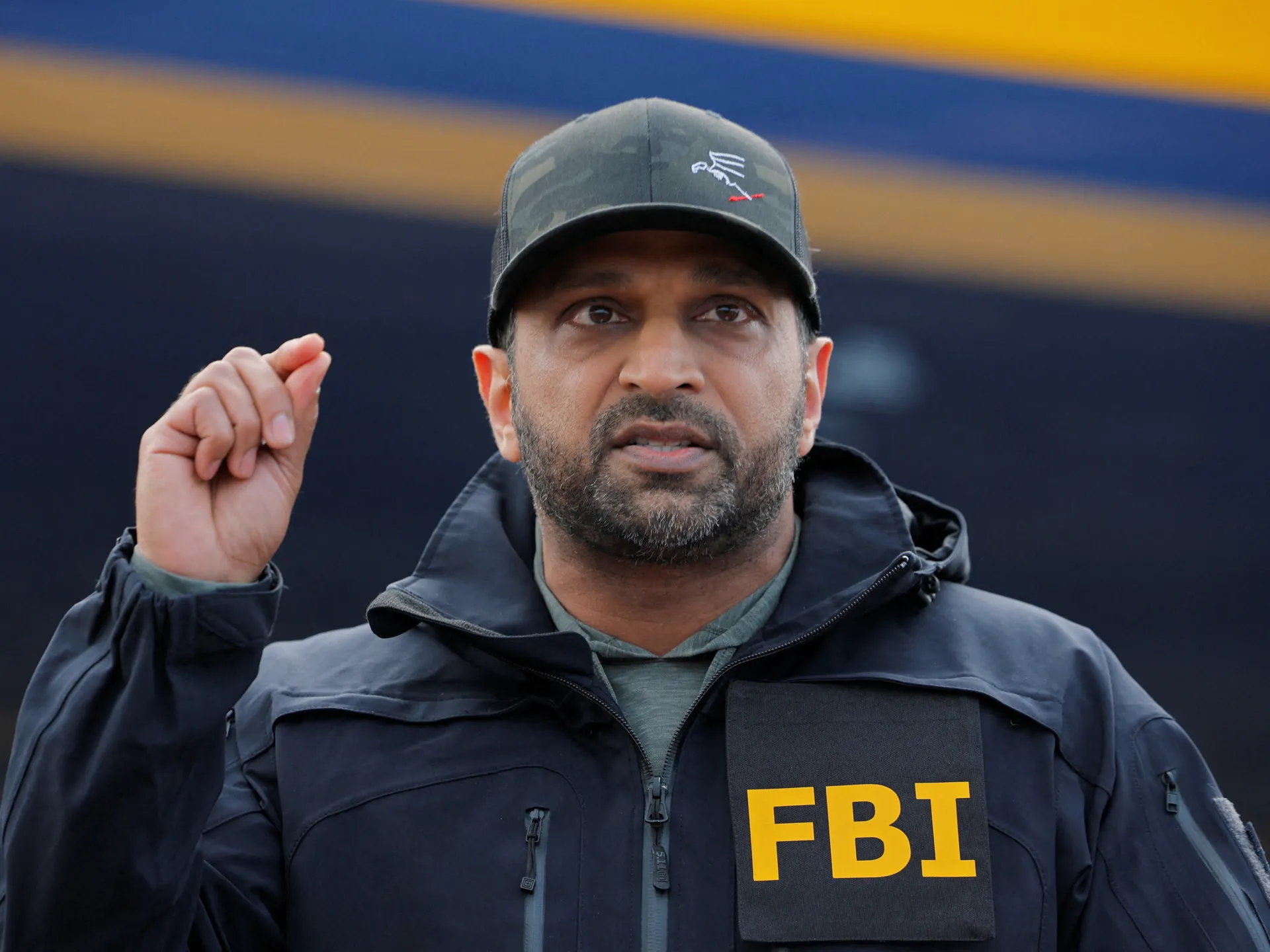
The search comes as the FBI, under the leadership of Director Kash Patel, has moved quickly to pursue the political grievances of Trump, including by working with the Justice Department to investigate multiple perceived adversaries of the commander-in-chief.
The Justice Department had no immediate comment.
Find the votes
Trump has long insisted that the 2020 election was stolen even though judges across the country and his own attorney general said they found no evidence of widespread fraud that tipped the contest in Biden’s favour.
Representatives for Fulton County’s election office referred queries to the county’s external affairs office, which did not immediately return a call seeking comment.
The Democratic-leaning county, home to Atlanta, backed Biden by a wide margin in the 2020 election, helping him win the state and the presidency.
Trump unsuccessfully sought to overturn the result, pressuring the state’s top election official to “find” him enough votes to claim victory.
Earlier this month, Trump asked a state court for $6.2m in legal fees, saying he spent it fighting criminal charges of election interference filed by Fulton County District Attorney Fani Willis.
In August 2023, Willis obtained an indictment against Trump and 18 others, accusing them of participating in a wide-ranging scheme to illegally try to overturn the results of the 2020 presidential election.
That case was dismissed in November after courts barred Willis and her office from pursuing it because of an “appearance of impropriety” stemming from a romantic relationship she had with a prosecutor she had appointed to lead the case.
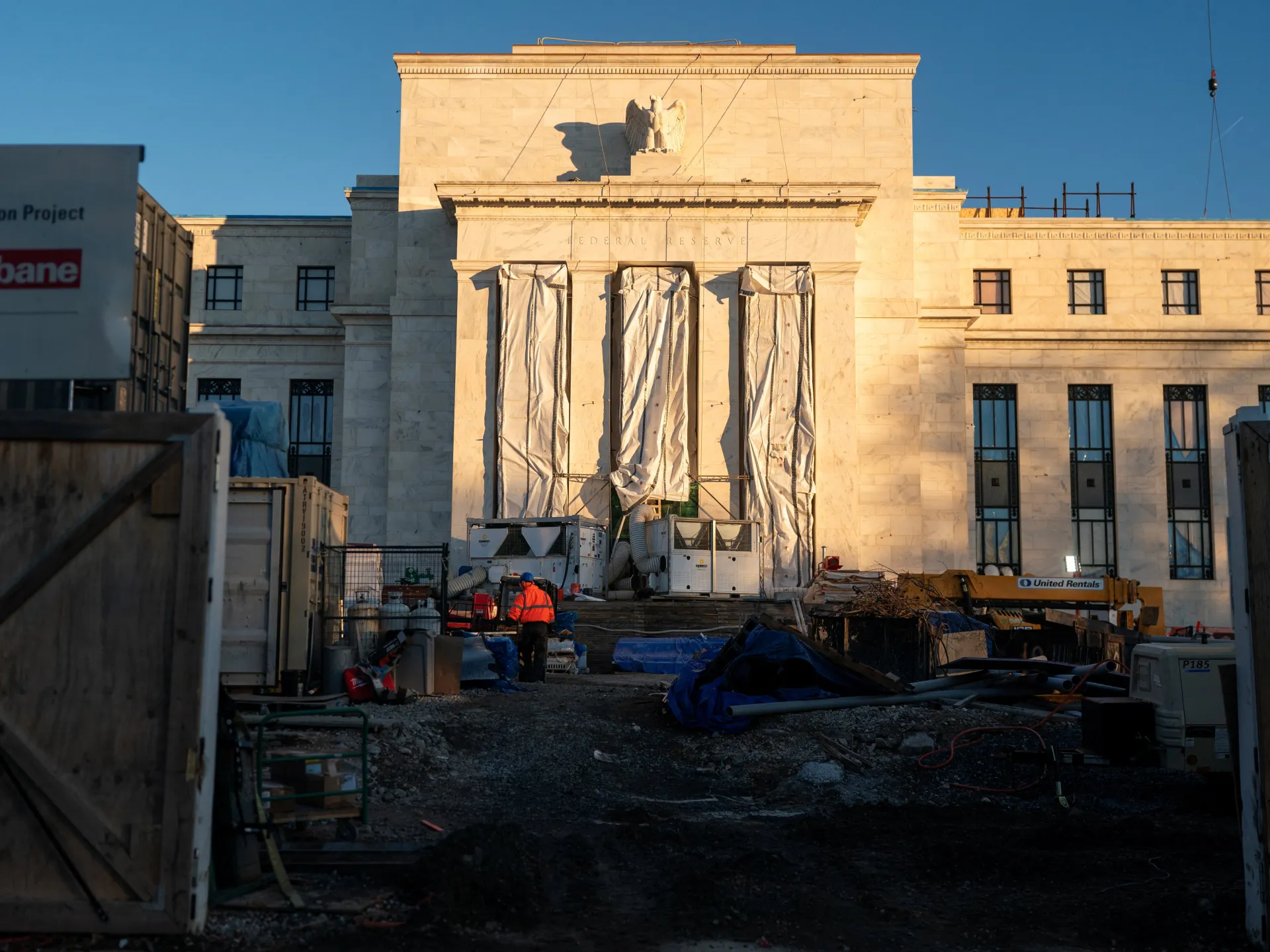
The United States Federal Reserve is holding interest rates steady in its first rate decision of 2026.
Rates will remain at 3.5 to 3.75 percent, the Fed said on Wednesday, defying US President Donald Trump’s calls for more aggressive interest rate cuts.
Recommended Stories
list of 4 itemsend of list
“The Committee seeks to achieve maximum employment and inflation at the rate of 2 percent over the longer run. Uncertainty about the economic outlook remains elevated,” the central bank said in its release announcing the decision.
Wednesday’s decision was widely expected. CME FedWatch, a tool that tracks expectations for monetary policy, forecast a more than 97 percent chance that the central bank would hold rates steady.
The tracker also expects two rate cuts in 2026, with the highest probability for the first cut occurring in June at the earliest.
“Available indicators suggest that economic activity has been expanding at a solid pace. Job gains have remained low, and the unemployment rate has shown some signs of stabilization,” the central bank said.
The decision comes amid signs of stabilisation in the US labour market. The US economy added 584,000 jobs in 2025, marking the lowest annual job growth since 2003. Payrolls rose by 64,000 jobs in October and 50,000 in December. While job growth remains weak, December’s figure represents a modest rebound from October, when the economy lost 105,000 jobs, according to the Bureau of Labor Statistics.
There are indications that the labour market may cool further in the months ahead. This week, both Amazon and UPS announced tens of thousands of job cuts, some of which were driven by a push towards increasing the use of artificial intelligence in the workplace.
Another threat to the US economy and the job market comes in the form of a looming government shutdown. That can happen as early as Saturday, and depending on its duration, it could slow spending as federal workers are temporarily left without paycheques.
Political tensions
The decision to hold interest rates steady comes despite Trump’s increased pressure on the central bank to cut rates. Fed Chairman Jerome Powell has long stressed the Federal Reserve’s independence, and Wednesday’s decision is the first since Powell’s rebuke of a criminal Department of Justice investigation into him. The central bank chair, whose term expires in May, called the inquiry a “pretext” to pressure him.
“The threat of criminal charges is a consequence of the Federal Reserve setting interest rates based on our best assessment of what will serve the public, rather than following the preferences of the president,” Powell said in remarks in early January in response to a subpoena.
Last week, the Supreme Court heard arguments in a case examining whether Trump has the legal authority to remove Fed Governor Lisa Cook amid allegations of mortgage fraud.
Meanwhile, Fed Governor Stephan Miran’s term is set to expire this week. Trump picked Miran to temporarily fill the seat vacated by Adriana Kugler in August while seeking a more permanent replacement.
Miran was one of two central bank governors who voted to lower interest rates alongside Christopher Waller.
The developments come as Trump searches for a new Fed chair. He has explicitly called for further interest rate cuts and for a chairman who shares his views.
“Anybody that disagrees with me will never be the Fed Chairman!” Trump said in a post on Truth Social in December.
The political pressure has caught the attention of global central banks as well.
“The Federal Reserve is the biggest, most important central bank in the world, and we all need it to work well. A loss of independence of the Fed would affect us all,” Bank of Canada Governor Tiff Macklem said on Wednesday. Canada’s central bank held rates steady ahead of the US central bank’s decision.
Macklem was one of the central bank heads who earlier this month issued a joint statement backing Powell. Last September, Macklem said Trump’s attempts to pressure the Fed were starting to hit markets.
The Dow Jones Industrial Average is flat, as is the Nasdaq, and the S&P 500 is down 0.1 in midday trading.
Last year, Spotify paid out more than $11 billion to the music industry, bringing the company’s total payouts since launch to nearly $70 billion.
The milestone year reflected the “largest annual payment to music from any retailer in history,” the company announced on Wednesday in a post. In 2025, Spotify’s payout amount grew by over 10%, making the Sweden-based streamer one of the industry’s main revenue drivers.
“Big, industry-wide numbers can feel abstract, but that growth is showing up in tangible ways,” wrote Charlie Hellman, the company’s new head of music. “Despite rampant misinformation about how streaming is working today, the reality is that this is an era full of more success stories and promise than at any point in history.”
When music streaming was first introduced, there was some controversy about how much artists earn from streams. According to Spotify, independent artists and labels accounted for half of all royalties. Additionally, the company said there are currently more artists earning over $100,000 a year from Spotify alone than were getting stocked on shelves at the height of the compact disc era.
Founded in 2006, the company, with a large presence in L.A.’s Arts District, has become the world’s most popular audio streaming subscription service. The platform offers access to over 100 million tracks, podcasts and audiobooks in over 180 markets.
At the top of the year, founder Daniel Ek moved from his CEO position to become executive chairman. Spotify named two co-CEOs, Gustav Söderström and Alex Norström, in his place.
This month, Spotify raised prices for its premium subscribers in the U.S., bringing the costto $12.99 per month. Hellman disclosed that as Spotify’s audience continues to grow, the higher prices are designed to help with the company’s ongoing expansion. According to the post, Spotify makes up roughly 30% of recorded music revenue and pays out two-thirds of all music revenue to the industry. The other third gets invested back into the company to maintain an “unrivaled listening experience.”
Separately, Spotify said it is hoping to counter new developments in AI by reinforcing a human connection between artists and fans. This includes an emphasis on more artist-powered videos, continuing to promote artists’ live shows on the platform and expanding the role of the company’s music curators. The streamer also has plans to crack down on AI-driven artists on the platform.
“AI is being exploited by bad actors to flood streaming services with low-quality slop to game the system and attempt to divert royalties away from authentic artists,” said Hellman. “We’re going to introduce changes to the systems for artist verification, song credits, and protecting artist identity. It’s critical to ensuring listeners and rightsholders can trust who made the music they’re hearing.”
UNION CITY, Ga. — FBI agents were executing a search warrant at the Fulton County elections office near Atlanta on Wednesday, an agency spokesperson confirmed.
An FBI spokesperson said agents were “executing a court authorized law enforcement action” at the county’s main election office in Union City, just south of Atlanta. The spokesperson declined to provide any further information, citing an ongoing matter.
The search comes as the FBI under the leadership of Director Kash Patel has moved quickly to pursue the political grievances of President Trump, including by working with the Justice Department to investigate multiple perceived adversaries of the Republican commander-in-chief.
The Justice Department had no immediate comment.
Trump has long insisted that the 2020 election was stolen even though judges across the country and his own attorney general said they found no evidence of widespread fault that tipped the contest in Democrat Joe Biden’s favor.
He has long made Georgia, one of the battleground states he lost in 2020, a central target for his complaints about the election and memorably pleaded with its then-secretary of state to “find” him enough votes to overturn the contest.
Last week, in reference to the 2020 election, he asserted that “people will soon be prosecuted for what they did.” It was not clear what in particular he was referring to.
Fulton County District Atty. Fani Willis in August 2023 obtained an indictment against Trump and 18 others, accusing them of participating in a wide-ranging scheme to illegally try to overturn the results of the 2020 presidential election. That case was dismissed in November after courts barred Willis and her office from pursuing it because of an “appearance of impropriety” stemming from a romantic relationship she had with a prosecutor she had appointed to lead the case.
A Chelsea supporter has described his “shock” after being stabbed and taken to hospital before Wednesday’s Champions League match against Napoli in Italy.
Marcus, 22, who did not want to give his surname, said he and a group of Chelsea fans were targeted in the centre of Naples by a group of Napoli ‘ultras’ – a term used for hardcore supporter groups in European football.
“We turned a corner – it wasn’t technically an alleyway, but it felt like one because there were no lights,” he said.
“There were about 20 or 30 people, all in black, walking towards us as soon as we made eye contact. Some people knew what was happening and ran straight away.”
Marcus, who was with “seven or eight” friends, added: “It was definitely a shock. Everyone was shaken up when we eventually found the police.
“I was in shorts and they were covered in blood, with blood going all down my leg. We think it was a screwdriver – it could’ve been a Stanley blade. It was either that or a screwdriver.
“I didn’t really feel it until I started running away. My left cheek felt heavy, almost, and as soon as I touched it my hand was covered in blood.”
A young Tunisian man goes on a personal journey to find his biological mother and understand where he comes from.
Twenty-one-year-old Moez al Shreiti was given up by his Tunisian mother at birth but is absolutely determined to find out where he comes from. His search takes him on a roller-coaster journey to find answers to the question that’s dominated his young life. This observational film follows his sometimes painful search with all its obstacles, going to courts and hospitals and trying to get hold of official records. Moez often gets frustrated by the whole process, and it takes an emotional toll on him, but with the help of music, the support of close friends and a “psychodrama” group, he finds ways of coping. His foster family and community workers also keep him grounded in the face of the barriers he encounters while looking for the answer to the burning question deep within him.
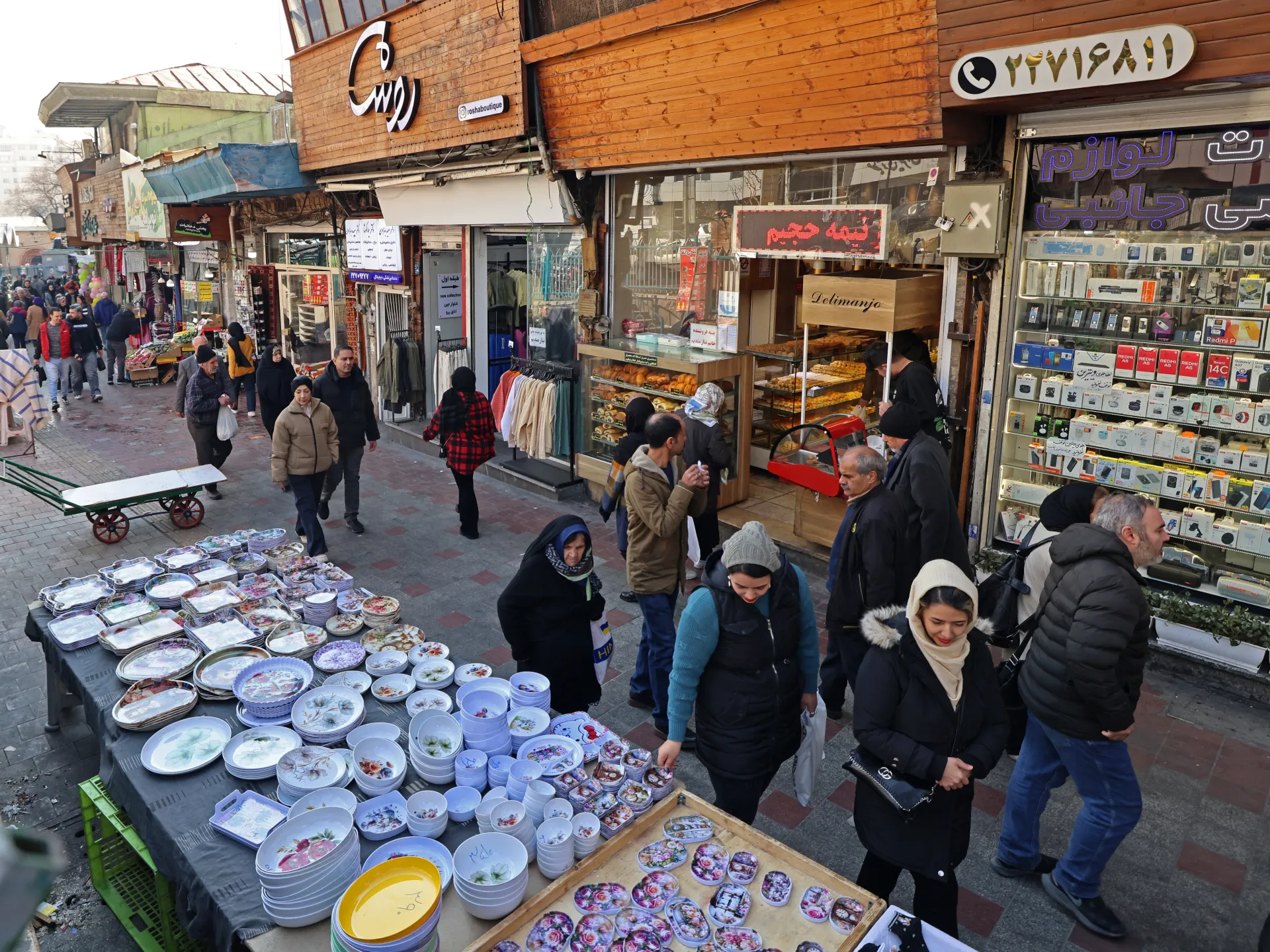
Tehran, Iran – The Iranian government is putting into place contingency plans for basic governance as the threat of another war with the United States and Israel looms large.
President Masoud Pezeshkian gathered governors of Iran’s border provinces as well as his economy minister in Tehran on Tuesday to delegate some responsibilities to the governors if a war breaks out, state media reported. A working group was also formed, tasked with ensuring the increased flow of essential goods, particularly food.
Recommended Stories
list of 3 itemsend of list
The governors have been given authority to import goods without using foreign currency, engage in bartering and allow sailors to bring in products under simplified customs rules, according to the government-run IRNA news agency.
“In addition to importing essential goods, governors now have the authority to bring in all goods that are directly linked with the livelihoods of the people and the needs of the market in order to balance the market and prevent hoarding,” Pezeshkian was quoted as saying at the meeting.
“Through enforcing this policy, a considerable part of the pressures resulting from the cruel sanctions are neutralised,” he said in reference to harsh restrictions imposed by the US as well as United Nations sanctions reimposed in September, which the Iranian government blames for the economic crisis the country is going through.
But while the government resorts to focusing on the basics, nearly all of Iran’s 90 million people and all sectors of the country’s beleaguered economy continue to suffer from an unprecedented internet shutdown.
The digital blackout was imposed by the theocratic state on January 8 as nationwide protests reached a boiling point, followed by the killings of thousands of Iranians.
The intranet set up to offer some basic services during the state-imposed shutdown is slow and has failed to shore up online businesses. Traditional shops are also struggling to bring in customers.
Economic trouble persists
Amid a large deployment of armed security personnel, most shops are now open in Tehran’s Grand Bazaar – where the protests against the poor economic conditions started on December 28 – and other downtown business districts.
But a shopkeeper at the Grand Bazaar told Al Jazeera that business activity is a fraction of what it was several weeks ago.
“There’s not much life and energy in the markets these days,” he said on the condition of anonymity. “The worst thing is that everything is still so unpredictable. You can see that in the currency rate too.”
Iran’s rial has been in freefall after markets partially reopened this week, degrading trust in the national currency.
The rial hit a new all-time low of about 1.6 million per US dollar on Wednesday. Each greenback had changed hands for about 700,000 rials a year ago and about 900,000 in mid-2025.
However, Central Bank of Iran chief Abdolnasser Hemmati said at the meeting with the governors in Tehran that the currency market was “following its natural course”.
He said $2.25bn worth of foreign currency deals have in recent weeks been registered in a state-run market set up to manage imports and exports, which he described as an “acceptable and considerable figure”.
The comments from Hemmati – who was also the Central Bank chief from 2018 to 2021 and was impeached as economy minister in March – immediately drew fire from the ultraconservative Keyhan newspaper, whose editor-in-chief is directly appointed by Supreme Leader Ali Khamenei.
The newspaper said his comments run counter to the reality in the tumultuous currency market as well as Hemmati’s promises of price stability for essential goods when he re-emerged as the Central Bank governor last month.
While dealing with foreign pressure, Pezeshkian’s government has also been hounded by hardliners at home who have demanded immediate changes to his relatively moderate cabinet.
The infighting became so serious that the supreme leader publicly intervened, telling lawmakers in parliament and other officials during a speech last week that they are “forbidden” from “insulting” the president at a time when the country must focus on providing essential goods to the people.
Subsidy scheme
For his part, Pezeshkian has kept his rhetoric focused solely on “combating corruption” through an initiative that has eliminated a subsidised currency rate used for imports of certain goods, including food.
Pezeshkian’s government argued the subsidised allocated currency was being misused by state-linked organisations. The scheme was supposed to deliver cheaper imported food, but that has not been the case.
The money freed up by the initiative has been distributed as electronic coupons among Iranians to buy food from select stores at prices set by the government.
But each citizen will get only 10 million rials per month for four months. That figure amounted to just over $7 when it was announced during the protests early this month, but it is now worth closer to $6 as the fall of the national currency further erodes purchasing power.
To add insult to injury, the announcement of the subsidy scheme contributed to an abrupt tripling or quadrupling of prices for some essential goods, including cooking oil and eggs. Iran’s annual inflation rate remains untamed at nearly 50 percent and has been on a rising trajectory in recent months.
The top two state-run carmakers, which hold a large monopoly in Iran’s auto industry, have also been positioning themselves for yet another price hike as the end of the Iranian calendar year approaches in March.
One of the firms, Iran Khodro, said on Tuesday that it would increase prices by up to 60 percent while local media reported that the other, Saipa, was expected to follow suit. The government has reportedly intervened to delay or slow the price hikes.
TEDPIX, the main index of the Tehran Stock Exchange, continued its recent decline on Wednesday, losing 30,000 points to stand at 3,980,000. The index was at an all-time high of 4,500,000 last week, having made gains in early January.
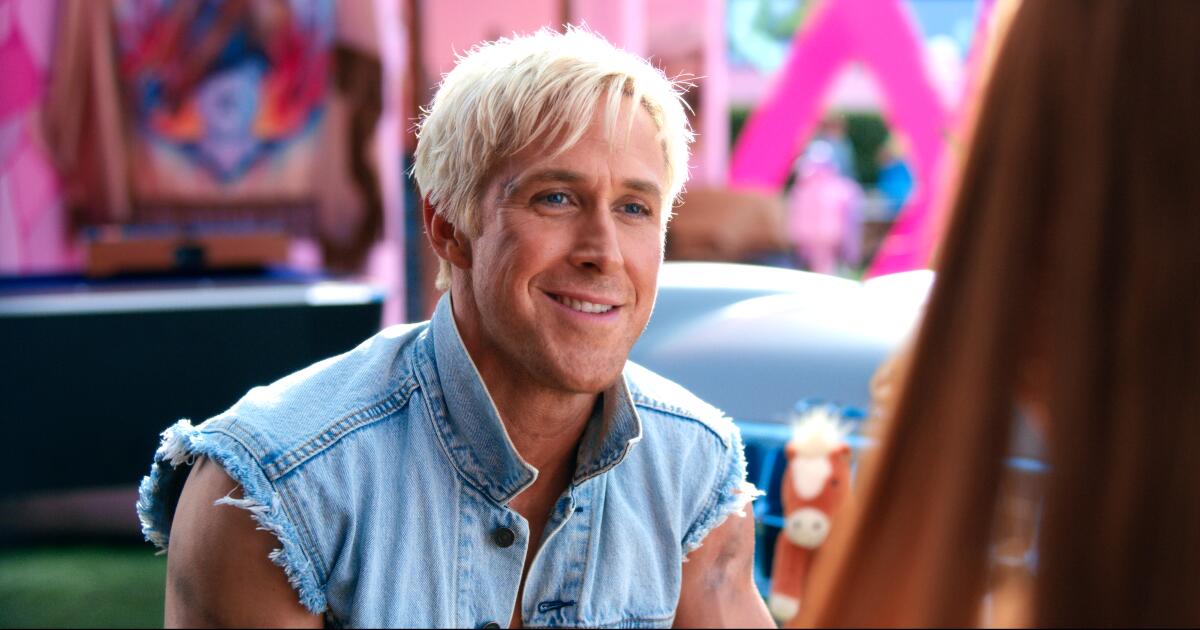
At the 2024 Oscars, Ryan Gosling, reprising his role as Ken in Greta Gerwig’s 2023 movie “Barbie,” donned a bedazzled pink suit and belted the ballad “I’m Just Ken.”
“I’m just Ken, anywhere else I’d be a 10,” the actor sang. “Is it my destiny to live and die a life of blond fragility?”
Barbie’s needy male counterpart, it turns out, is not “just Ken.” His full name is Kenneth Sean Carson, according to Mattel, which says the doll saw a uptick in popularity in the years following the hit movie’s release.
Ahead of Ken’s 65th birthday, the El Segundo-based toy giant shared a laundry list of niche biographical details about the doll, including his official “birthday” — March 11, 1961, making him a Pisces — as well as his relationship history with Barbie.
The company said in a statement Monday that Ken has “experienced a resurgence in recent years.”
A Mattel spokesperson cited the “Barbie” movie as a driving factor, as it showed a “different side” of Ken. In a meta move, the company later in 2023 released Ken dolls modeled after Ryan Gosling’s portrayal of Ken.
The “Kenbassador” line launched last year was a “great success,” the spokesperson said. The first product in that toy series was a $75 doll modeled after basketball player LeBron James released in April.
Mattel says it does not break out sales of Ken dolls, but in 2017, when Mattel unveiled Ken dolls with different body types, including one that invited “dad-bod” comparisons, the company told the Wall Street Journal that, on average, girls have one Ken doll for every seven Barbies they own.
Ruth Handler, the creator of Barbie, named the original doll after her daughter, Barbara. The glamorous doll, unique in that it depicted a grown woman rather than a baby, was an instant hit when it debuted at the New York Toy Fair in 1959. Barbie has significantly evolved in the decades since. Recent additions include Barbies with Type 1 diabetes and another with autism.
The Ken doll, created in 1961, was named after Handler’s son, Kenneth. He featured molded hair, wore red swim trunks and carried a yellow towel.
Kenneth Handler told The Times in a 1989 story that there were few similarities between him and the doll named after him. He died in 1994.
“Ken doll is Malibu,” he said. “He goes to the beach and surfs. He is all these perfect American things.”
But when Kenneth Handler was at Hamilton High School in Beverlywood, he “played the piano and went to movies with subtitles.” He continued, “I was a nerd — a real nerd. All the girls thought I was a jerk.”
Like Barbie, Ken dabbled in many different careers over the decades. There have been doctor, pilot, tennis player, firefighter, lifeguard, barista and even Olympic skier Kens, among many others. In 2006, he received a “mid-life makeover” from celebrity stylist Phillip Bloch.
According to the company, Ken and Barbie “met” on the set of their first television commercial in 1961 and soon began dating. After more than four decades, the doll couple broke up in 2004, but reunited in 2011.
Mattel was founded by Ruth Handler; her husband, Elliot Handler; and Harold “Matt” Matson in 1945 in a Los Angeles garage. The toy maker became a publicly traded company in 1960.
Mattel, which also owns Fisher-Price and Hot Wheels, wrote in its October Securities and Exchange Commission filing that “industry-wide shifts in retailer ordering patterns” pushed its third quarter net sales down 6%.
In 2024, Barbie gross billings — which measure the total value of products Mattel ships to retailers before sales adjustments — were down 12% from 2023, which had seen a boost from the movie, according to the company’s annual SEC filing.
MINNEAPOLIS — The man who sprayed an unknown substance on Democratic U.S. Rep. Ilhan Omar at a town hall in Minneapolis is a convicted felon who has made online posts supportive of President Trump.
Anthony Kazmierczak, 55, was convicted of felony auto theft in 1989, has been arrested multiple times for driving under the influence, and has had numerous traffic citations, Minnesota court records show. There are also indications he has had significant financial problems, including two bankruptcy filings.
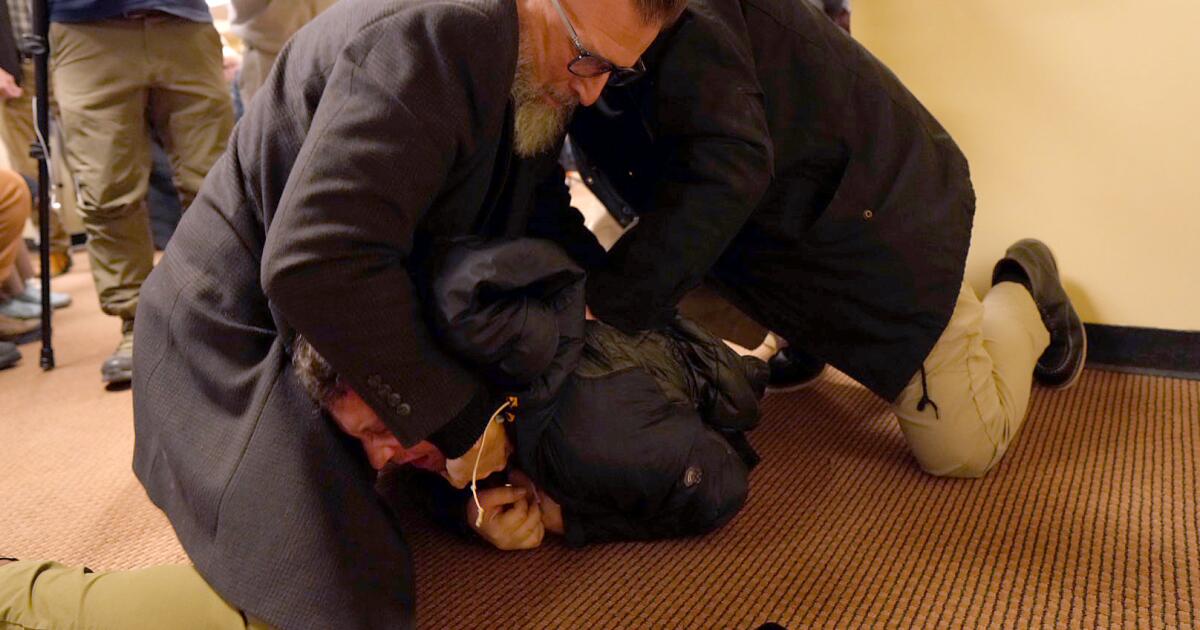
Police say Kazmierczak used a syringe to spray an unknown liquid at Omar during Tuesday’s event after she called for the abolishment of U.S. Immigration and Customs Enforcement and the firing or impeachment of Homeland Security Secretary Kristi Noem following the fatal shootings of Renee Good and Alex Pretti by immigration enforcement officers. Officers immediately tackled and arrested Kazmierczak, who was jailed on a preliminary third-degree assault charge, police spokesperson Trevor Folke said.
Photos of the syringe, which fell when he was tackled, showed what appeared to be a light-brown liquid inside. Authorities haven’t yet publicly identified the liquid.
After the attack, there was a strong, vinegarlike smell in the room, according to an Associated Press journalist who was there. Forensic scientists were called in, but none of the roughly 100 people who were there had a noticeable physical reaction to the substance.
Omar continued speaking for about 25 minutes after Kazmierczak was ushered out, saying she wouldn’t be intimidated. While leaving, she said she felt a little flustered but wasn’t hurt, and that she was going to be screened by a medical team.
She later posted on X: “I’m ok. I’m a survivor so this small agitator isn’t going to intimidate me from doing my work. I don’t let bullies win.”
A Trump supporter
Kazmierczak hadn’t been formally charged or scheduled for an initial court appearance as of Wednesday morning. The Hennepin County Attorney’s Office has until Thursday to charge him but could seek an extension. A spokesperson for the prosecutor’s office didn’t immediately return a call seeking further information.
It isn’t clear if Kazmierczak has a lawyer who could speak on his behalf. The county’s chief public defender, Michael Berger, said the case hasn’t been assigned to his office.
In social media posts, Kazmierczak described himself as a former network engineer who lives in Minneapolis. Among other things, he made comments critical of former President Joe Biden and referred to Democrats as “angry and liars.”
“Trump wants the US is stronger and more prosperous,” Kazmierczak wrote. “Stop other countries from stealing from us. Bring back the fear that enemies back away from and gain respect that If anyone threatens ourselves or friends we will (expletive) them up.”
In another post, Kazmierczak asked, “When will descendants of slaves pay restitution to Union soldiers families for freeing them/dying for them, and not sending them back to Africa?”
Often at odds with the president
Omar, a progressive, has been a frequent target of Trump’s barbs since she joined Congress in 2019.
That year, Trump urged Omar and three other freshmen congresswomen of color known as “the squad” to “ go back ” to their countries if they wanted to criticize the U.S. Omar was the only one of the four born outside of the U.S., having immigrated to the country as a child when her family fled violence in Somalia.
Trump stepped up his criticism of Omar in recent months as he turned his focus on the Minneapolis-St. Paul area, which is home to about 84,000 people of Somali descent — nearly a third of the Somalis living in the U.S. During a Cabinet meeting in December, he referred to her as “garbage.” And he has linked the Twin Cities immigration crackdown to a series of fraud cases involving government programs in which most of the defendants have roots in the East African country.
The White House did not respond to a Tuesday message seeking comment. But, when asked about the attack Tuesday night, he told ABC News that he hadn’t watched the footage and accused her of staging the attack. “She probably had herself sprayed, knowing her,” Trump said.
Earlier Tuesday, the president criticized Omar as he spoke to a crowd in Iowa, saying his administration would only let in immigrants who “can show that they love our country.”
“They have to be proud, not like Ilhan Omar,” he said, drawing loud boos at the mention of her name.
He added: “She comes from a country that’s a disaster. So probably, it’s considered, I think — it’s not even a country.”
Lawmakers face rising threats
The attack came days after a man was arrested in Utah for allegedly punching U.S. Rep. Maxwell Frost, a Democrat from Florida, in the face during the Sundance Film Festival and saying Trump was going to deport him.
Threats against members of Congress have increased in recent years, peaking in 2021 following the Jan. 6 attack on the U.S. Capitol before dipping slightly only to climb again, according to the most recent figures from the U.S. Capitol Police.
Following Tuesday’s attack on Omar, U.S. Capitol Police said in a statement that the agency was “working with our federal partners to see this man faces the most serious charges possible to deter this kind of violence in our society.”
Lawmakers have discussed the impact of the threatening political climate on their ability to hold town halls and public events, with some even citing it in their decisions not to seek reelection.
Biesecker and Bargfeld write for the Associated Press. Biesecker reported from Washington. AP reporter R.J. Rico in Atlanta contributed to this report.
Wainwright’s family were in the stands when he won his first cap in Wales’ historic 13-12 win against South Africa in Bloemfontein – the only time the men’s national team has won a game against the Springboks on their soil.
The prop from Prestatyn, then with Saracens after earning a move from Rygbi Gogledd Cymru (RGC), helped win a scrum penalty that set up field position for Josh Adams’ late try that was converted by Gareth Anscombe.
Wainwright was able to celebrate with his father, who was instrumental on his rise to Test level.
“He was a huge influence,” said the prop. “We were best friends and he did everything with me.
“He was one of the biggest support networks for me and when I got the call-up I thought about him a lot, it was quite emotional.
“We’d speak about everything and he’d watch every game. When I was at the Scarlets he would tell me what to pick up on after every game.
“He was unbelievable for me and that’s why getting this call up was a bit emotional for me. He would have been proud of me – 1,000%.”
A former rugby league player and a construction worker, Shaun ensured that Sam was able to give RGC his full attention.
“I told him I wanted to follow his route and have the rugby alongside it, but he would never let me do it,” said Wainwright, whose exploits earned a chance with Saracens in 2019.
“He said ‘I do this, not you – you just focus on the rugby’. I was part-time at RGC and got a wage, but my dad just told me to eat and sleep rugby.”
Wednesday’s cuts are the second mass layoffs in three months at the e-commerce giant.
Published On 28 Jan 202628 Jan 2026
Share
Amazon is slashing 16,000 jobs in a second wave of layoffs at the e-commerce giant in three months, as the company restructures and leans on artificial intelligence.
Wednesday’s cuts follow the 14,000 redundancies that the Seattle, Washington–based company made in October. The layoffs are expected to affect employees working in Prime Video, Amazon Web Services, and the company’s human resources department, according to the Reuters news agency, which first reported the cuts.
Recommended Stories
list of 4 itemsend of list
Amazon confirmed to Al Jazeera that all the cuts to the company will affect corporate-level employees.
In a memo to the employees, shared with Al Jazeera, Amazon said workers in the United States impacted by the cuts will have a 90-day window to find a new role in the company.
“Teammates who are unable to find a new role at Amazon or who choose not to look for one, we’ll provide transition support including severance pay, outplacement services, health insurance benefits [as applicable], and more,” Beth Galetti, senior vice president of People Experience and Technology at Amazon, said in the note provided to Al Jazeera.
The announced reductions come amid a broader restructuring effort at the company. Earlier this week, Amazon announced it would close its brick-and-mortar Amazon Go and Amazon Fresh grocery stores, accounting for more than 70 locations across the US.
Some of those physical stores will be converted into Whole Foods Market locations. Amazon acquired the Austin, Texas–based grocery chain in 2017, and it has since grown by 40 percent.
The cuts come alongside increased investment in AI. In June, CEO Andy Jassy touted investment in generative AI and floated the possibility of redundancies.
“We expect that this will reduce our total corporate workforce as we get efficiency gains from using AI extensively across the company,” Jassy said in a blog post at the time.
According to the AFL-CIO CEO PayWatch tracker, Jassy made 43 times more than the median employee at the company.
Amazon’s stock tumbled in midday trading and was down 0.7 percent. Overall, however, the stock is up 7 percent year to date.
Wave of cuts
Amazon is the latest company in a wave of redundancies hitting the tech sector at the start of the year. Earlier this week, Pinterest announced it would cut 780 jobs as the social media company reallocated resources amid increased investment in AI. Last week, Autodesk said it would cut about 1,000 jobs, also tied to AI.
Layoffs.fyi, a website that tracks redundancies in the tech sector, shows that more than 123,000 tech workers lost their jobs in 2025 as companies, including Salesforce and Duolingo, doubled down on AI investments.
But it is not just the tech sector facing redundancies. On Tuesday, UPS also announced job cuts. The shipping giant said it would eliminate 30,000 jobs and close 24 facilities as it reduces deliveries with Amazon.
UPS stock was down more than 1.2 percent in midday trading.
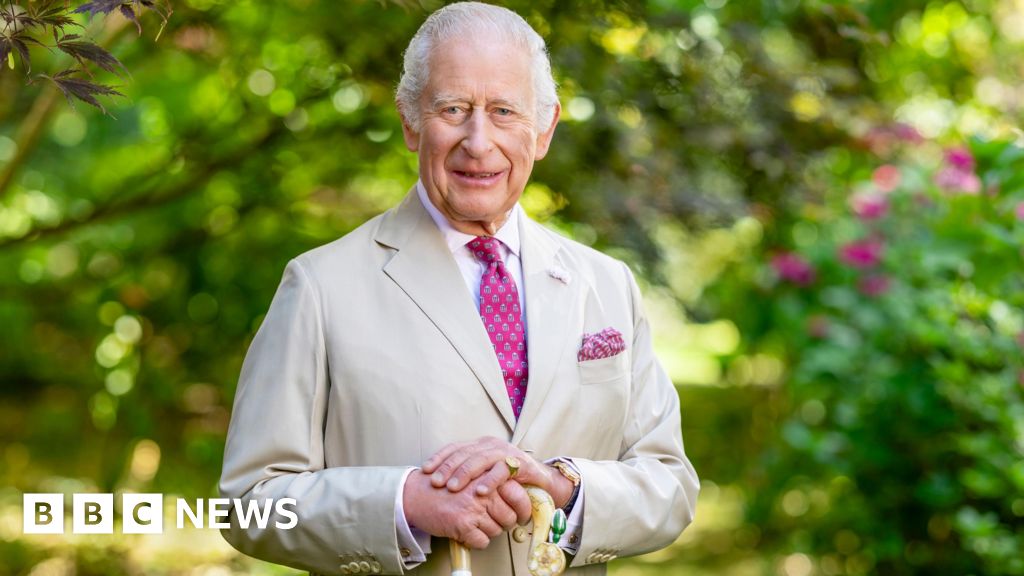
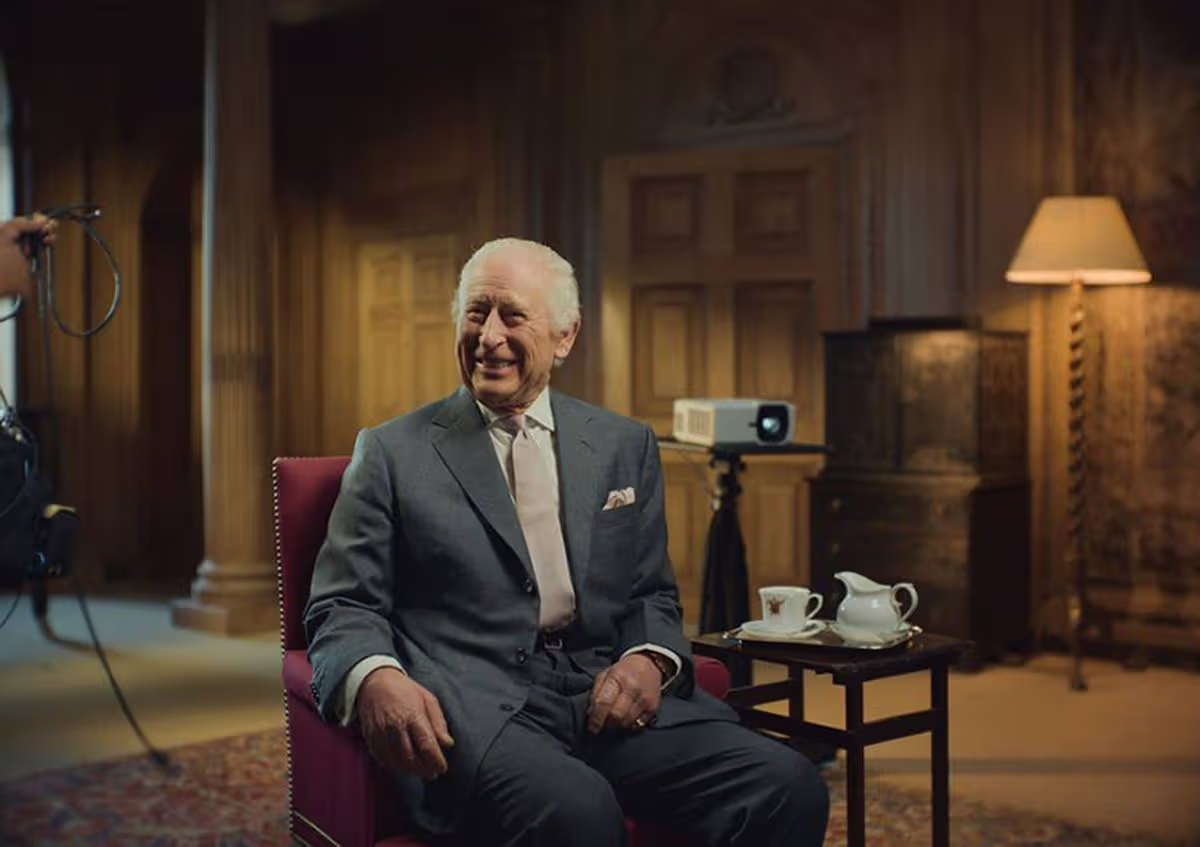
King Charles has revealed how he was always going to stick to environmental campaigning – despite fierce criticism – in a new documentary for Amazon Prime
Finding Harmony: A King’s Vision teased in trailer
The King has revealed how he refused to be diverted from campaigning on an important issue despite receiving ‘upsetting’ criticism. Charles makes the admission in a brand new Amazon Prime documentary, which looks back at the monarch’s ‘Harmony’ philosophy and his lifelong commitment to green issues.
The 90-minute film, called Finding Harmony: A King’s Vision, sees Charles warn that the situation with the environment is “rapidly going backwards” with mankind “actually destroying our means to survival”. But he also expresses his hope for the future and says that “by the time I shuffle off this mortal coil” that there might be more awareness of the “need to bring things back together again”.
The documentary sees the King collecting eggs from his chickens at their “Cluckingham Palace” coop on his Highgrove estate, and reveal his love of a crispy baked potato, declaring that “red Duke of Yorks” are the best variety for this.
Oscar-winning actress Kate Winslet, who narrates the film, also recounts how Charles was “haunted” by the criticism he faced after he said in a 1986 television interview that he talked to plants.
The documentary describes how the King, as Prince of Wales, emerged as a key figure on the environment over the years, making regular keynote speeches, despite “cries from some that he should take a back seat”, Winslet said.
The King, in new footage, adds: “I just felt this was the approach that I was going to stick to. A course I set and I wasn’t going to be diverted from.”
After an academic comments that the world is not on the “trajectory” needed to limit the worst affects of climate change, Charles remarks: “It’s rapidly going backwards, I’ve said that for the last 40 years, but anyway, there we are…I can only do what I can do, which is not very much – anyway.
“People don’t seem to understand it’s not just climate that’s the problem, it’s also biodiversity loss, so we’re actually destroying our means of survival, all the time. To put that back together again is possible, but we should have been doing it long ago. We’ve got to do it as fast as we can now.”
He adds: “Maybe, by the time I shuffle off this mortal coil, there might be a little more awareness… of the need to bring things back together again.”
The documentary also features archive footage of the King describing how he talks to plants, a comment that narrator Winslet says has “haunted him ever since”.
Ian Skelly, co-author of the King’s 2010 Harmony book, says: “Those criticisms really upset him. He got treated very unfairly, seen very unfairly, and those of us that knew him better were quite upset by that. It was difficult to know how to respond, but I really felt for him.”
Also appearing in the documentary is Prince Harry, who is shown fleeting in archive footage of Charles teaching him how to fish at Balmoral.
Prince William also features, as a small child with Charles at Highgrove, and lying next to his father on the grass as a youngster, and visiting a herd of cows with Charles at Home Farm in 2004, when William was in his twenties.
Prince Charlotte and Prince Louis, with the now Prince and Princess of Wales, are pictured briefly in footage from the King’s Coronation. And the late Queen Elizabeth II is shown filming a young Charles, in archive footage of the future king in home movies.
The documentary explores the origins, evolution and scientific foundations of the King’s “harmony” philosophy, which he set out in his 2010 book Harmony: A New Way Of Looking At Our World. The book will be republished by HarperCollins in March to mark the release of the documentary.
The film also shows how The King’s Foundation, which has its headquarters at Dumfries House in Ayrshire, embraces the harmony approach – the importance of living in balance with nature – through projects focusing on community regeneration, sustainable textiles and traditional skills.
Later tonight, the King and Queen will attend the premiere at Windsor Castle, believed by Buckingham Palace to be the first time a global movie premiere has been held at a royal residence.
A spokesperson for the King said the film was “not a conventional royal documentary”. “There are no golden carriages here; no glittering crowns or crimson robes,” the spokesperson added.
“Instead, this is a deeply personal exploration of ideas that have shaped His Majesty’s life and work: the interconnectedness of all things, the wisdom of traditional knowledge, and the belief that we can build a future that works in partnership with nature rather than against it.” The spokesperson added that it “sets a new high watermark for royal documentaries”.
Finding Harmony: A King’s Vision will be released on February 6 on Prime Video in more than 240 countries and territories worldwide.
In recent days, the Venezuelan public debate has been filled with comparisons between what has transpired after the January 3 US military operation and the era of Juan Vicente Gómez (1908–1935), the Andean strongman who ruled for 27 years. The immediate flashpoint is the National Assembly’s proposed reform of the 2006 Hydrocarbons Law, designed to reopen the oil industry to private capital.
Displaced chavistas such as Andrés Izarra argue the reform is unconstitutional and evokes the “servile” terms under which Gómez granted oil concessions to foreign firms in the 1920s. Yet the comparison extends beyond oil: chavismo’s political economy resembles Gómez’s in three recurring ways: monopoly rents, opaque bargains with capital, and repression that doubles as a system of extraction.
Scholars of early twentieth-century Venezuela have shown that corruption and the privatization of public office of the Gómez era functioned as governing tools that helped finance coercion, reward loyalists, and develop a powerful and centralized state. Gómez assembled a ruling coalition by binding regional powerbrokers and emerging civilian interests to state-sanctioned rents, especially through monopolies granted under the dictator’s shadow. The arrangement remains familiar to Venezuelans who have watched chavismo merge political loyalty, access to state resources, and personal enrichment into a single logic of rule. Those mechanisms are easiest to see in the political economy of monopoly, contracts, and prisons.
Public office as private business
First, monopoly rents have flourished under authoritarian rule. Under Hugo Chávez, the progressive erosion of checks and balances, and the hollowing out of democratic constraints, helped reconstitute a patrimonial logic of governance. Discretionary access to state resources became a core currency of political loyalty. Over time, the government entrusted senior military officers with the “management” of strategic sectors and state enterprises, creating incentives in which institutional loyalty and personal stake became difficult to disentangle. Alongside these appointments, the state’s dense architecture of controls and bureaucratic choke points created new opportunities to extract rents, shifting costs onto ordinary Venezuelans while protecting insiders. A similar political logic constructed power in Venezuela more than a century ago.
Gómez consolidated his ruling coalition through a tacit understanding: public office could be treated as private business, so long as loyalty held and order endured. One reliable stream of income that lubricated those clientelistic networks came from the cattle business. Beginning early in the regime, the autocrat and his circle leveraged control over cattle supply and slaughtering channels, backed by selective taxation and regulatory privilege, to squeeze competitors and reward allies. Another, more explicitly fiscal mechanism, was tax farming. The state granted private individuals the right to collect specific federal taxes, liquor being a prominent case, in exchange for a fixed payment to the treasury, leaving the tax farmer free to pocket the surplus. Many of the habits we now associate with the petrostate were already baked into everyday monopolies on beef and booze. Oil did not invent rent-seeking; it amplified it, turning familiar practices of privileged access into vastly more lucrative rents.
Delcy’s CPPs transfer operational and investment burdens to private actors, while the state retains political control. These deals have created a new class of intermediaries whose profitability depends less on technical competence than on privileged access to decision-makers.
If the military profited from monopolies in agriculture and cattle ranching, oil gave Gómez a broader instrument: it allowed him to co-opt civilian elites who had long bristled at Andean hegemony. Beyond the autocrat’s immediate family, the most visible beneficiaries of the concession trade were lawyers, engineers, bankers, and other members of the professional classes who monetized access, paperwork, and proximity to power in the new petroleum economy.
A comparable dynamic has surfaced amid PDVSA’s collapse. As the government ignored the current hydrocarbons framework, “productive participation contracts” (CPPs) emerged as a salient workaround. These arrangements effectively transfer operational and investment burdens to private actors, while the state retains political control. Investigative outlets have traced how these opaque deals created a new class of intermediaries whose profitability depends less on technical competence than on privileged access to decision-makers. The Anti-Blockade Law, in turn, has provided the legal umbrella for confidentiality, shielding contract terms from public scrutiny in the name of national security and sanctions evasion.
This pattern is not an accidental echo of the 1920s concession era: the bargain with foreign capital then was not merely economic, but political and deliberately opaque. And when monopolies and privileged access harden into a system, those who cannot buy their way around it are left to absorb the costs; those who challenge it often face a harsher penalty than economic hardship, imprisonment.
Extractivist fear
La Rotunda became a landmark of political oppression under Gómez. In its cells, political prisoners endured systematic torture and humiliation, and the regime’s agents turned captivity into a market through constant extortion for money, food, and favors. Many detainees suffered forced labor so that the infrastructure they built (roads and highways), and that the dictatorship showcased as “modernization,” often bore the hidden imprint of coerced bodies.
That same logic is painfully recognizable today for families with relatives held at El Helicoide and other detention centers. Relatives bring medicines, food, and basic supplies only to face a system in which guards and intermediaries can confiscate, withhold, or demand payments simply to deliver necessities, or even to confirm that a detainee is still there. Imprisonment becomes not only repression, but another revenue stream: a mechanism of extraction layered onto fear.
If the Gómez precedent teaches anything, it is that once an authoritarian equilibrium is broken, restoring the old order is far harder than improvising a new one.
These parallels go a long way toward explaining why both systems proved so resilient, able to ride out internal shocks by combining repression with co-optation, and by making access to rents the glue of elite cohesion. Important differences remain, however.
The dawn versus the sunset of democracy
Gómez ruled over a country still shaped by civil war legacies and weak national institutions. Part of his historical significance lies in how his dictatorship centralized coercion, built a state apparatus, and disciplined regional caudillos, an infrastructure that later governments could eventually open. Democracy did not arrive automatically, but the post-1935 succession did produce a cautious opening under presidents Eleazar López Contreras and Isaías Medina Angarita as the political opposition pressed for change.
Chavismo, by contrast, emerged through elections. It initially spoke the language of participation and inclusion, yet over time it systematically hollowed out checks and balances and concentrated authority in ways that destroyed institutional autonomy. In any case, neither model was indefinitely sustainable. Both eventually confronted moments of succession, and the question shifted from endurance to what, exactly, would replace them.
In both transitions, it was not ordinary domestic pressure that structurally broke the authoritarian bargain, but a decisive external shock. Gómez weathered conspiracies, incursions, and waves of dissent; in the end, only death removed him. For chavismo, the US extraction of Maduro abruptly altered the balance of power inside the ruling coalition, fracturing the status quo among factions and forcing them to operate under Washington’s shadow for the foreseeable future.
After 1935, López Contreras and Medina Angarita moved quickly to neutralize the most predatory residues of Gomecismo, including the family clique. They steered the system gradually toward institutional consolidation and political opening. Echoes of that succession moment now hover over Venezuelan politics.
It is too soon to tell where this transition leads, who will define its project, or what counter-moves it will invite. If the Gómez precedent teaches anything, it is that once an authoritarian equilibrium is broken, restoring the old order is far harder than improvising a new one. Whether that improvisation produces a democratic opening, or a reconstituted chavismo capable of surviving even where Gomecismo could not, remains the central question.