People wave South Yemen flags on Thursday during a rally in Aden, Yemen, calling for the region’s independence that was organized by the Southern Transitional Council separatist group. Photo by Najeeb Mohamed/EPA
Dec. 26 (UPI) — Saudi Arabia has reportedly fired on the eastern Hadramout province in Yemen.
The Southern Transitional Council, a separatist group in Yemen, claims that the Saudis fired warning airstrikes at its forces.
The STC seized two oil-rich provinces in December. The group is backed by the United Arab Emirates. It released a video showing the airstrikes that it said were close to its positions in Wadi Nahab in the Hadramaut province.
The strikes haven’t been independently verified.
Saudi Arabia on Thursday made a diplomatic appeal urging the STC to abandon Hadramaut and al-Mahra, which it recently captured . The strikes would be the first military action by Saudi Arabia since that plea.
“The kingdom remains hopeful that the public interest will prevail through ending the escalation by the Southern Transitional Council and the withdrawal of its forces from the two governorates in an urgent and orderly manner,” Saudi Arabia said in a statement on Thursday.
“The kingdom stresses the importance of cooperation among all Yemeni factions and components to exercise restraint and avoid any measures that could destabilize security and stability, which may result in undesirable consequences,” the statement said.
On Thursday, there were large demonstrations in the port city of Aden calling for STC President Aidarous al-Zubaidi to declare independence from Yemen. The U.N. and several other gulf states back Yemen and want it to stay whole. The United States hasn’t taken a side.
The Houthis have controlled the northern areas of Yemen since 2015.
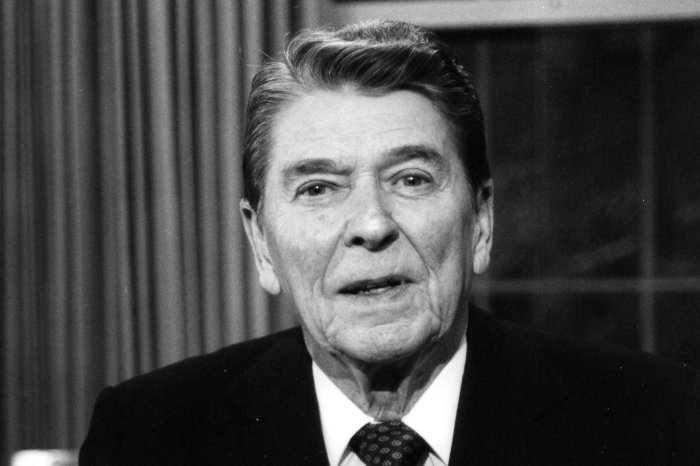
Former actor and sports broadcaster Ronald Reagan, known for films such as “Knute Rockne, All American” and “Kings Row,” is pictured in the Oval Office after delivering his farewell address to the nation on January 11, 1989. Reagan later served as the 40th president of the United States. Photo by Joe Marquette/UPI | License Photo
Ukrainian president highlights ‘significant progress’ in talks, but Moscow says Kyiv is working to ‘torpedo’ deal.
Published On 26 Dec 202526 Dec 2025
Share
Ukrainian President Volodymyr Zelenskyy is to meet with his United States counterpart, Donald Trump, in Florida on Sunday to discuss territorial disputes that continue to block progress towards ending Russia’s war on Ukraine.
Announcing the meeting on Friday, Zelenskyy said the talks could be decisive as Washington intensifies its efforts to broker an end to Europe’s deadliest conflict since World War II. “A lot can be decided before the New Year,” Zelenskyy said.
Recommended Stories
list of 3 itemsend of list
Territory remains the most contentious issue in the negotiations. Zelenskyy confirmed he would raise the status of eastern Ukraine and the Zaporizhzhia Nuclear Power Plant, which has been under Russian control since the early months of Russia’s invasion.
“As for the sensitive issues, we will discuss both Donbas and the Zaporizhzhia Nuclear Power Plant. We will certainly discuss other issues as well,” he told reporters in a WhatsApp chat.
Moscow has demanded that Kyiv withdraw from parts of the Donetsk region still under Ukrainian control as it pushes for full authority over the wider Donbas area, which includes Donetsk and Luhansk. Ukraine has rejected that demand, instead calling for an immediate halt to hostilities along the existing front lines.
Territorial concessions
In an attempt to bridge the divide, the US has floated the idea of establishing a free economic zone should Ukraine relinquish control of the contested area although details of how such a plan would operate remain unclear.
Zelenskyy reiterated that any territorial concessions would require public approval. He said decisions on land must be made by Ukrainians themselves, potentially through a referendum.
Beyond territory, Zelenskyy said his meeting with Trump would focus on refining draft agreements, including economic arrangements and security guarantees. He said a security pact with Washington was nearly finalised while a 20-point peace framework was close to completion.
Ukraine has sought binding guarantees after previous international commitments failed to prevent Russia’s invasion, which began in February 2022.
Trump has previously voiced impatience with the pace of negotiations, but he has indicated he would engage directly if talks reached a meaningful stage.
Last week, US Secretary of State Marco Rubio said his country is the only mediator that can speak to both sides to secure a peace agreement. At the same time, he downplayed the importance of the conflict for Washington.
“It’s not our war. It’s a war on another continent,” he said.
Zelenskyy said European leaders could join Sunday’s discussions remotely and confirmed he had already briefed Finnish President Alexander Stubb on what he described as “significant progress”.
Despite Zelenskyy’s assertion, Russian Deputy Foreign Minister Sergey Ryabkov accused Ukraine of working to “torpedo” the peace talks, saying a revised version of the US peace plan promoted by Kyiv was “radically different” from an earlier version negotiated with Washington.
“Our ability to make the final push and reach an agreement will depend on our own work and the political will of the other party,” he said during a television interview on Friday.
Ryabkov said any agreement must remain within the parameters set out between Trump and Russian President Vladimir Putin during a summit in August, which Ukraine and European partners have criticised as overly conciliatory towards Russia’s war aims.
On the ground, Moscow has intensified strikes on Ukraine’s energy infrastructure and the southern port city of Odesa while an attack on Kharkiv on Friday killed two people.
ROSIE Huntington-Whiteley goes through a purple patch in lingerie from her Marks and Spencer range.
The 38-year-old, married to movie action hero Jason Statham, 58, also modelled a modest red set.
Sign up for the Showbiz newsletter
Thank you!
Stunning Rosie Huntington-Whiteley dazzles in lingerie from her Marks and Spencer rangeCredit: Marks & SpencerRosie also modelled a modest red setCredit: Marks & Spencer
The ex-Victoria’s Secret model-turned-actress has worked with the high street giant since 2011.
Action film star partner Jason Statham, 57, popped the question in 2016, but she later said getting married was “not a priority”.
A source said: “Jason might be 20 years older than Rosie, but they are on the same page with each other in so many aspects of their lives.
“Their love for each other, and their children, is incredibly reassuring and something their friends look up to.”
Washington’s top diplomat says he thanked Asfura, who was backed by Trump, for ‘advocacy of US strategic objectives’.
Published On 26 Dec 202526 Dec 2025
Share
United States Secretary of State Marco Rubio has congratulated Honduran President-elect Nasry Asfura, whom President Donald Trump had endorsed, for his victory in the Central American country’s contentious election.
The Department of State said on Friday that Rubio and Asfura in a phone call discussed collaboration on issues such as trade and security.
Recommended Stories
list of 3 itemsend of list
“Secretary Rubio commended President-Elect Asfura for his advocacy of US strategic objectives, including advancing our bilateral and regional security cooperation, and strengthening economic ties between our two countries,” the State Department said in a statement.
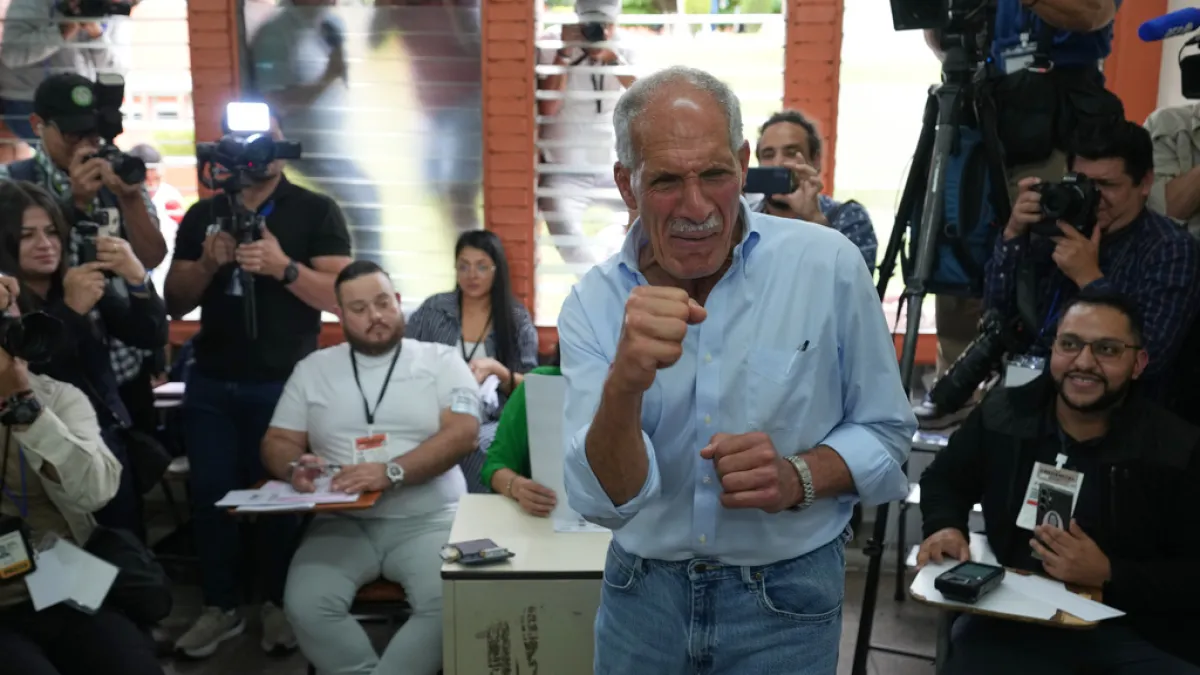
Asfura claimed a narrow victory on Wednesday in the November 30 election marked by Trump’s intervention on his behalf. Election authorities declared Asfura the winner after weeks of counting amid high tensions and allegations of fraud and impropriety from other candidates.
The right-wing Asfura, representing the National Party, edged out Salvador Nasralla of the centre-right Liberal Party with 40.27 percent of the vote to Nasralla’s 39.53 percent.
“Today, with deep gratitude, I accept the honour of being able to work for you. I extend my hand so we can walk together with determination to work tirelessly for Honduras. I will not fail you,” Asfura said in a video statement released on Wednesday night.
Both Nasralla and Rixi Moncada, the candidate for current President Xiomara Castro’s left-leaning LIBRE Party, who came in a distant third, have disputed the results of the election.
Nasralla said on Wednesday that election authorities had “betrayed the Honduran people”. He also took aim at Trump, who said before the election that a victory for anyone but Asfura would put US economic ties with Honduras at risk.
“Mr President, your endorsed candidate in Honduras is complicit in silencing the votes of our citizens,” Nasralla said in a social media post. “If he is truly worthy of your backing, if his hands are clean, if he has nothing to fear, then why doesn’t he allow for every vote to be counted?”
Honduras has experienced several contested elections since a US-backed coup in 2009. Protests over the November election have thus far remained peaceful.
Before the election, Trump also issued a criticised pardon for right-wing former Honduran President Juan Orlando Hernandez, who was convicted of crimes linked to the trafficking of drugs to the US during his time in office.
The pardon came as the US says it is shifting its foreign policy focus to the Americas.
Asfura, the former mayor of Honduras’s capital, Tegucigalpa, is of Palestinian descent. But his National Party is staunchly pro-Israel.
Under Hernandez in 2021, Honduras became only the fourth country to move its embassy in Israel to Jerusalem in breach of international law.
Asfura has also aligned himself with Trump and other right-wing leaders in the Americas, including Argentina’s Javier Milei.
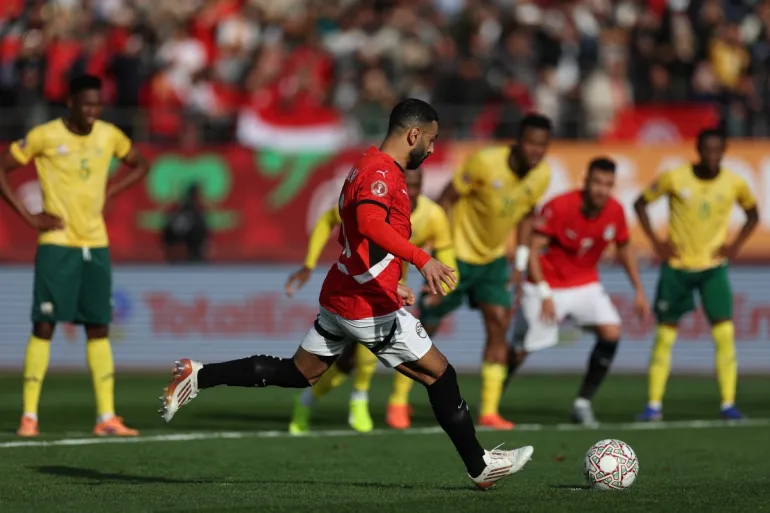
Mohamed Salah has scored as 10-man Egypt have beaten South Africa 1-0 in Agadir to become the first qualifiers for the knockout stage of the 2025 Africa Cup of Nations.
The Liverpool star converted a penalty on 45 minutes on Friday, and South Africa were denied a spot kick late in the second half when Yasser Ibrahim appeared to handle the ball inside the box.
Recommended Stories
list of 4 itemsend of list
Salah came to Morocco after not starting in five Liverpool matches and his omission leading to an outburst against manager Arne Slot.
Egypt were reduced to 10 men in first-half added time when right back Mohamed Hany was shown a second yellow card for a stamp, followed by a red.
After two rounds in Group B, record seven-time champions Egypt have six points and are guaranteed a top-two finish in the group stage and a place in the round of 16.
South Africa have three points and Angola and Zimbabwe one each after they drew 1-1 in Marrakesh earlier on Friday.
The first chance fell to Salah after 11 minutes, but he could not move forward quickly enough to connect with a low cross from Hany.
That the majority of the crowd were supporting the Pharaohs became obvious soon after when the Burundi referee ignored Zizo’s appeals for a free kick and loud whistling enveloped the stadium.
When Salah delivered a free kick into the heart of the South African area, three Egyptians darted forward, but none could connect with the ball.
Midway through the opening half, a pattern had developed. Egypt were pushing forward regularly while South Africa defended with calmness and solid tackling.
Salah shoots from the penalty spot to score the team’s winner during the Africa Cup of Nations Group B match against South Africa [Franck Fife/AFP]
When South Africa’s Teboho Mokoena fouled Omar Marmoush just outside the D, he was yellow-carded. However, the Manchester City striker fired the resultant free kick wide.
As the first half progressed, the sun broke out in the southern coastal city – a welcome sight for players and spectators with many earlier group matches staged in torrential rain.
A rare South Africa attack ended disappointingly as Lyle Foster struck a weak shot that was comfortably saved by 37-year-old Mohamed El Shenawy.
Awarded a free kick close to the touchline, South Africa performed an intricate, multipass move that ended tamely as El Shenawy clutched a cross.
Salah was being closely policed by Aubrey Modiba, and as half-time drew near, the Liverpool star retreated into the Egyptian half to retain possession.
Then, as the Egypt captain chased a loose ball with Khuliso Mudau, the South African right back raised his left arm, striking Salah’s left eye.
Amid Egyptian protests, the Burundian referee viewed the incident on a VAR monitor and pointed to the penalty spot.
A lengthy delay before the kick was taken could not have eased the nerves of Salah, but he comfortably converted the penalty as Ronwen Williams dived in the wrong direction.
More drama erupted in added time when Hany stamped on Mokoena, leading to a second yellow card for the defender.
South Africa, with a numerical advantage, attacked more as the second half progressed, but Egypt came close to a second goal with Williams foiling substitute Emam Ashour after a quick free kick.
El Shenawy displayed his agility with 15 minutes remaining, using his right hand to tip to safety a low shot from Foster. It was one of several saves that kept Egypt ahead.
Angola and Zimbabwe keep alive AFCON hopes
Veteran Knowledge Musona scored as Zimbabwe came from behind to draw 1-1 with Angola in Marrakesh to kick off the second round of AFCON matches earlier in the day.
Gelson Dala put Angola ahead midway through the first half, and recalled Musona levelled deep in first-half added time.
A draw in Group B suited neither team, leaving both two points adrift of joint leaders Egypt and South Africa after having played one match more.
Only the top two finishers in each group automatically qualify for the knockout phase. The best four third-placed teams from the six mini-leagues also will advance.
Bill Antonio wasted a good chance to give Zimbabwe an early lead when he blazed wide from close range before a small crowd.
Angola recovered quickly to establish control and took the lead after 24 minutes through Qatar-based striker Dala.
A superb lobbed pass from To Carneiro dropped in front of Dala inside the box, and he squeezed the ball between the near post and 40-year-old goalkeeper Washington Arubi.
Musona, one of four changes to the Zimbabwe lineup after a 2-1 loss to Egypt in Agadir four days earlier, became increasingly involved as the Warriors sought an equaliser.
Musona wasted a free kick opportunity by hitting the ball into the defensive wall, then shot wide, much to the frustration of Romanian coach Marian Marinica, who repeatedly shook his head.
Hugo Marques, the 39-year-old Angola goalkeeper, had his head heavily bandaged before continuing after a collision with an opponent.
The perseverance of Musona finally paid off six minutes into added time at the end of the opening half when he equalised.
After Angola were dispossessed in midfield, Zimbabwe counterattacked swiftly, and a superb pass found Musona inside the box.
He struck a slow shot between the legs of Carneiro and just wide of the outstretched right leg of Marques into the net.
As both sides sought a second goal and the lead, Marques rescued Angola 12 minutes from the end of regular time with an acrobatic one-hand save of an attempt by substitute Tawanda Chirewa.
Emmerdale has announced when Celia Daniels and Ray Walters will leave the village as their reign of terror on the Yorkshire village ends – with one more victim ‘revealed’
It’s the end of the road for Celia and Ray(Image: ITV)
Emmerdale has confirmed when Celia Daniels and Ray Walters will leave the village as their reign of terror comes to an end. The mother and son duo have been causing heartbreak and havoc in the sleepy Yorkshire village.
The pair are running a modern slavery ring, and have got teenagers April and Dylan involved in drug dealing, leaving Marlon and Rhona terrified for their family’s life. As suspicions grow around Ray and Celia, it seems like they’re keen to make their exit.
Speaking previously, actress Jaye Griffiths shared Celia’s plan to leave the village. She said: “Celia doesn’t mark Christmas. And this year she is planning on them leaving the area. As it has all got too complicated, April’s family are an irritant to her and things are also getting complicated business wise as Moira is becoming troublesome by asking too many questions.
“But more alarmingly Ray has gone and fallen in love. So she’s extricating them to another area. It is clear that this is something they have done before – find another farm in another location and set up their enterprise again.”
In today’s episode of Emmerdale, Ray seemed to have convinced April to leave the village with them to move to a new area to continue their criminal work if they keep her family protected.
As Ray explained the plan to April, he said they had set a date on January 1st to head out of the village, leaving April shocked that it was so soon. He warned her to enjoy her last Christmas in the village.
Fans have known for a while that this storyline with Ray and Celia would be ending soon. Jaye explained: “I knew it was finite from the start, which I am very sad about. I would like to stay forever, but it’s such a strong arc.
“It’s heaven [working on Emmerdale], one of the nicest places I’ve ever worked, and I’ve done a little bit of work before! It is gentle and kind and professional and funny, and people care that it’s good. People care that we tell the story properly.”
Speaking about her villainous character, she added: “I love her. She doesn’t have many laughs, I’m hardly swinging from the rafters but no, it’s just so wonderful to explore someone who doesn’t mind whether you like or not, because your opinion is of less than no value.
“It simply doesn’t cross her mind that you have one or that I should take any note of it. So it makes her big and to never be afraid, to never feel fear, because the worst that could happen has already happened, and she survived. So bring it on. Just bring it on!”
Motherwell have arguably been the best team to watch in the Premiership this season and are unquestionably the team punching most above their weight in Scotland’s top flight.
Manager Jens Berthel Askou has implemented an eye-catching possession-based style since joining in the summer, a feat several coaches have failed to do with far bigger budgets.
Elliot Watt has been a revelation in midfield, Elijah Just has slotted in seamlessly having worked under Askou previously at Danish club Horsens, while only Hearts captain Lawrence Shankland has scored more goals in the Premiership than Tawanda Maswanhise this season.
It is at the back though that perhaps the most impressive aspect of Askou’s set-up has been.
Motherwell are unbeaten in their past 10 league outings and haven’t conceded in over a month with six straight clean sheets.
They have shipped just 15 goals in the league all season, a record bettered only by Celtic and Hearts (both 14).
Research from my learned colleague Nick McPheat shows Motherwell are averaging their best defensive record in a top-flight campaign – 0.83 goals conceded per match – since the 1931–32 season, when they won the title.
Attacks win matches, but defences win titles. A festive omen of cheer for the Steelmen and Askou before they face Rangers at Ibrox.
Given Rangers’ struggles in attacking areas this term, don’t be surprised if Motherwell’s superb run continues into 2026.
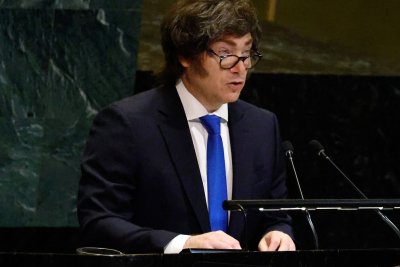
BUENOS AIRES, Dec. 26 (UPI) — Argentine President Javier Milei’s government is promoting a reform that seeks to redefine the role of the state in public education, curb direct government intervention and give families greater control over their children’s schooling.
A proposed law would legalize homeschooling, expand school choice and grant parents a more active role in school governance, including mechanisms to influence the appointment or removal of principals.
The stated goal is to introduce greater competition among educational institutions to attract students. The initiative has been submitted to Congress, and debate could begin in March.
The reform focuses primarily on basic education, which includes preschool, primary and secondary levels, while also introducing changes to the university financing system.
If approved, it would fully replace the current National Education Law in force since 2006.
“Argentina faces a deep educational crisis, as shown by our students’ results in national and international assessments,” a report by the Ministry of Deregulation and the Secretariat of Education said.
Internationally, PISA tests, which measure skills in math, reading and science, show stagnation or a sustained decline in the performance of Argentine students.
“Compared with other countries in the region, Argentina consistently ranks among the worst performers,” the report said.
Domestically, national assessments show that more than 80% of students in their final year of secondary school fail to reach satisfactory levels in math, while more than 40% have difficulties with reading comprehension.
The official diagnosis also describes the system as overly centralized and bureaucratic, with little room for pedagogical innovation and oversight mechanisms considered weak and lacking transparency.
“The family is the natural and primary agent of education; civil society is the space where it develops through various institutions and projects; and the state has the obligation to guarantee access, continuity and completion of studies at all levels,” the draft law says.
At the secondary level, reform would promote agreements between schools, companies and the productive sector to improve general education and vocational guidance.
Basic education also would be declared an essential service, requiring a minimum level of classes.
The bill recognizes multiple teaching modalities, including in-person, hybrid, community-based, home-based and distance learning, all subject to supervision and evaluation under national and local standards.
Julio Alonso, an academic at the University of Buenos Aires, told UPI the education reform is part of a broader package of changes pushed by the government.
“It is not an isolated measure. It is linked to labor and tax reforms,” he said.
According to Alonso, the central change lies in redefining the role of the state relative to that of families.
“The state takes on a subsidiary role. It guarantees access, but the main decisions fall to parents. The family is formally established as the central actor in the education system,” he said.
Another key point, he said, is the abandonment of a unified national curriculum. Provinces and the country’s capital would assume full responsibility for education, while the federal government would be limited to setting common minimum content.
“The idea of a national education project is left behind. In practice, responsibilities are further delegated to provincial governments,” Alonso said.
He added that the initiative also decentralizes education financing by eliminating the legal spending floor equivalent to 6% of gross domestic product.
“Under this reform, provinces would cover costs with their own resources, while the national government would concentrate spending on direct transfers to families,” he said.
A third pillar of the proposal concerns teachers, with greater family participation in evaluation processes, though not in hiring decisions.
Alonso warned, however, that the reform faces political and social obstacles. The ruling coalition lacks a majority in Congress and depends on support from provincial lawmakers — a weakness recently seen during the budget debate.
On the social front, Alonso anticipates strong resistance, particularly over cuts to the university system, with possible strikes and protests.
Attack comes a day after an Israeli army reservist in civilian clothes rammed his vehicle into a Palestinian man praying on the roadside.
Published On 26 Dec 202526 Dec 2025
Share
Two people have died in a stabbing and car-ramming attack in northern Israel, officials say.
Israeli police and emergency workers said a Palestinian from the Israeli-occupied West Bank attacked and killed a man and a woman on Friday before he was shot and wounded.
Recommended Stories
list of 3 itemsend of list
The attack came a day after an Israeli military reservist dressed in civilian clothes rammed his vehicle into a Palestinian man who was praying on a roadside in the West Bank after earlier firing shots in the area.
“Footage was received of an armed individual running over a Palestinian individual,” the Israeli military said in a statement about Thursday’s attack, adding that the Israeli reservist’s military service had been terminated. The Palestinian man went to hospital for checks after the attack before returning home.
In Friday’s incident, Israeli police said the attacker first crashed his vehicle into people in the northern city of Beit Shean, killing a 68-year-old man, and then sped onto a highway.
Later, he fatally stabbed a 20-year-old woman near the highway, “and the suspect was ultimately engaged with gunfire near Maonot Junction in Afula following intervention by a civilian bystander,” police said, adding that the attacker was taken to a hospital.
Both the victims were pronounced dead at the scene by paramedics, Israel’s rescue services said. A teenage boy was hospitalised with minor wounds sustained in the car-ramming, according to bystanders.
The Israeli military said the attacker had “infiltrated into Israeli territory several days ago”.
Since Israel’s genocidal war in Gaza began in October 2023, tens of thousands of Palestinians have been killed there.
At the same time, Israeli settlers have escalated violence in the West Bank, seizing Palestinian land and harassing civilians while Israeli forces conduct regular raids and arrests.
More than 1,000 Palestinians have been killed in the West Bank since October 7, 2023, mostly in operations by security forces and some by settler violence, according to the United Nations.
In the same period, 57 Israelis have been killed in Palestinian attacks.
After Friday’s incident, Israeli Defence Minister Israel Katz said he had instructed the military to respond forcefully in the West Bank town of Qabatiya, where he said the assailant came from.
The Israeli military said it was “preparing for an operation” in the area.
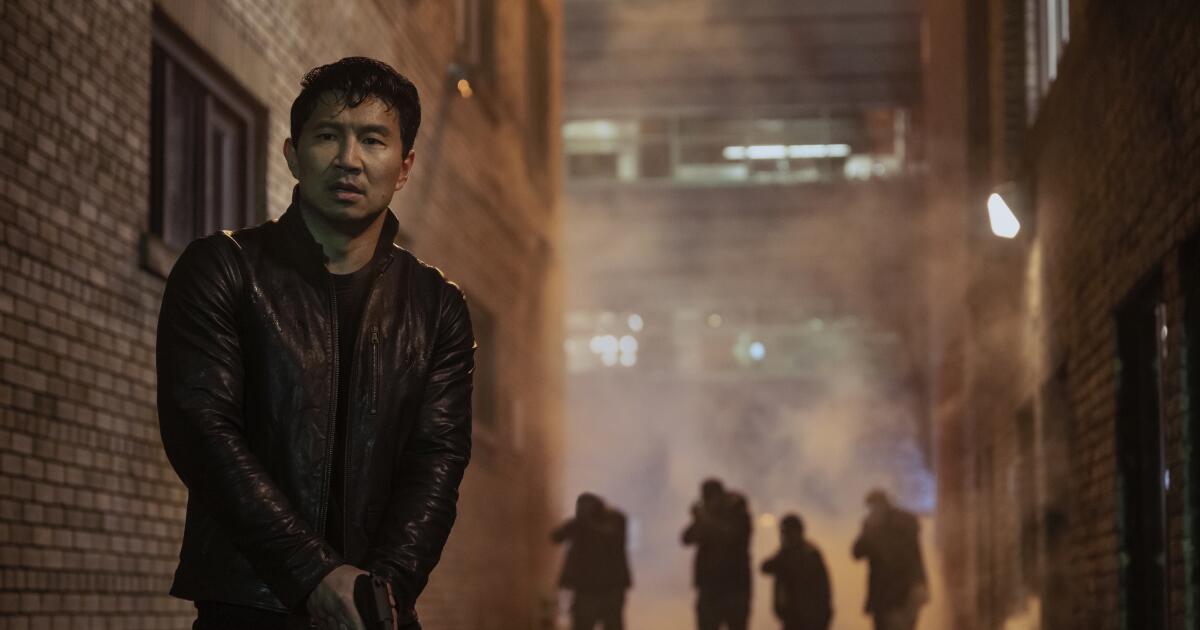
Most things in this world have their good points and their not-so-good points, and this is certainly true of “The Copenhagen Test,” a science-fiction spy story about a man whose brain has been hacked. Without his knowing it, everything he sees and hears is uploaded to an unknown party, in an unknown place, as if he were a living pair of smart glasses. Created by Thomas Brandon and premiering Saturday on Peacock, its conceit is dramatically clever, if, of course, impossible. What do you watch when you learn that what you’re watching is being watched?
In a preamble, we meet our hero, Andrew Hale (Simu Liu, “Shang-Chi and the Legend of the Ten Rings”), a first-generation Chinese American Green Beret, rescuing hostages in Belarus. A voice in his headset instructs him that there is enough room for one on a departing helicopter and that he must prioritize an American citizen. Instead he picks a foreign child. This, we will learn, is the less-preferred choice.
Three years later, Hale is working for the Orphanage, a shadowy American intelligence agency that spies on all the less-shadowy American intelligence agencies — watching the watchers. (So much watching!) Its proud boast is that, since its inception in the Bush I administration, it has never been compromised. (Until someone started looking through Hale’s eyes, that is.) There is a secret entrance to their giant complex, accessed by locking eyes with a statue in a library — it’s thematically appropriate, but also very “Get Smart!” That is a compliment, obviously.
The lower floor is where the analysts toil; entry to the upper floor, where the action is, is by the sort of fancy key that might have been used to open an executive washroom in 1895. (The decor is better there, too, with something of the air of an 1895 executive washroom.) Hale, who has been been listening to and translating Korean and Chinese chatter, dreams of moving upstairs, which will come with the discovery that his head is not entirely his own.
Meanwhile, he has been suffering migraines, seizures and panic attacks. Ex-fiancée Rachel (Hannah Cruz), a doctor, has been giving him pills under the table. Other characters of continuing interest include Michelle (Melissa Barrera), a bartender who will spy on Hale from the vantage point of a girlfriend, sort of; Parker (Sinclair Daniel), a newly promoted “predictive analyst” with a gift for reading people and situations; Victor (Saul Rubinek), an ex-spook who runs a high-end restaurant and has known Hale forever; Cobb (Mark O’Brien), a rivalrous colleague whose Ivy League persona has been drawn in contrast to Hale’s; and Cobb’s uncle, Schiff (Adam Godley), who also has spy knowledge. Peter Moira (Brian d’Arcy James) runs the shop, and St. George (Kathleen Chalfant) floats above Moira.
As parties unknown look through Hale’s eyes, the Orphanage is watching Hale with the usual access to the world’s security cameras. (That bit of movie spycraft always strikes me as far-fetched; however, a conversation in the privacy of my kitchen will somehow translate into ads on my social feeds, so, who knows?) “The Copenhagen Test” isn’t selling a surveillance state metaphor, in any case; this is just one of those “Who Can You Trust?” stories, one that keeps flipping characters to keep the show going, somewhat past the point of profitability.
Like most eight-hour dramas, it’s too long — “Slow Horses,” the best of this breed, sticks to six — and over the course of the show, things grow muddied with MacGuffins and subplots. While it’s easy enough to enjoy what’s happening in the moment, it can be easy to lose the plot and harder to tell just who’s on what side, or even how many sides there are. (It doesn’t help that nearly everyone is ready to kill Hale.) I can’t go into details without crossing the dreaded spoiler line, but even accepting the impossible tech, much of “The Copenhagen Test” makes little practical sense, including the eponymous test. (Why “Copenhagen?” Det ved jeg ikke. Danish for “I don’t know.”) I spent so much time untwisting knots and keeping threads straight that, though I continued to root in a detached way for Hale, I ceased to care entirely about the fate of the Orphanage and the supposedly free world.
The show is well cast. While the characters on paper are pretty much types, each actor projects the essence of the part, adding enough extra personality to suggest a real person. (And they’re all nice to look at.) When not keeling over from pain, or engaged in a shootout or hand-to-hand combat, Liu is an even-keeled, quiet sort of protagonist — rather in the Keanu Reeves vein — and as a Chinese Canadian actor, still a novelty among American television action heroes. He does have a kind of chemistry with Barrera, who has screen chemistry all on her own, though it’s somewhat limited by the demands of the plot.
The ending, including a diminished-chord twist, is pretty pat, if happier than one might imagine given the ruckus that’s gone before. Neat bows are tied — though at least one has been left loose in hopes, according to my own predictive analysis, of a second season. And though releasing a series in the last week of the year doesn’t exactly betoken confidence, I can predict with some confidence that there might be one.
Before the race, Redknapp said “we’ve come into the Champions League today”, and the victory is worth £142,375 to the 78-year-old.
Redknapp, who retired from management after leaving Birmingham City in 2017, was trembling as he spoke to ITV Racing moments after his winner was confirmed.
“It is a dream, to have a horse that good is unbelievable,” he said. “I love the game that much.
“To come here on King George day and just run made me so proud, but to have the winner is special. I am so lucky.”
Joint-favourite Jango Baie was a length back going into the final fence and was closing on the lead trio right up to the line.
“When they came to him, I thought he was beat and would finish fourth,” said Redknapp. “But he’s come again and the guts the horse has shown is just amazing.
“Everyone was jumping on me at the end and I didn’t know I had won.
“But we had a lot of support here today and I love the racing, I love the game, I love the people in it, so to have a winner on the big stage is fantastic.”
Tehran, Iran – Iran’s currency has been registering new lows amid ongoing economic turmoil that is also reflected in a planned budget for next year that effectively shrinks public spending.
Each United States dollar was priced at about 1.36 million rials in the open market on Wednesday in Tehran, its highest rate ever, before the Iranian currency slightly regained ground on Thursday.
Recommended Stories
list of 3 itemsend of list
The embattled national currency has been rapidly declining over recent weeks as the US and its Western allies pile on their sanctions and diplomatic pressure, and the threat of another war with Israel lingers.
President Masoud Pezeshkian this week sent his administration’s finalised proposed budget to the hardline-dominated parliament for the upcoming Iranian calendar year, which starts in late March. The budget will then have to be greenlit by the 12-member Guardian Council before being ratified into law in the coming weeks.
The presented budget nominally grew by just over 5 percent compared with last year, but inflation currently stands at about 50 percent – indicating that the government envisions lower spending while managing a so-called “resistance economy” as it faces a massive budget crunch yet again.
But minimum wages are to be raised far below the inflation rate, too, at only 20 percent, meaning that Iranians are once more guaranteed to have far less spending power next year as the embattled national currency sinks.
Iranians view decorations as they prepare to celebrate the Yalda feast, an ancient tradition marking the onset of winter and the longest night of the year, in Tehran, Iran, on December 20, 2025 [Abedin Taherkenareh/EPA]
At the same time, the budget says the government sees taxes rising by a massive 62 percent next year, as authorities try to gradually decrease dependence on oil revenues amid US efforts to drive down Iranian exports, which are carried by a shadow fleet of ships mostly to China.
At the current exchange rate, the whole budget is worth about $106bn, several times lower than the projected 2026 budgets of regional players like Turkiye, Saudi Arabia and Israel.
Iran’s rent-distributing multi-tier exchange rate system is still at play, with the government proposing allocating a rate for customs duties, import valuation and budget accounting tables, and another closer to the open market rate used for oil revenue realisation.
An earlier subsidised exchange rate, which was far lower than the open market rate, has now been abandoned. Any excess cash resulting from this is expected to be doled out to low-income Iranians in the form of electronic coupons that can be used to buy essential items like food.
For the first time, the budget is drafted in new rials as four zeros are expected to be removed from the ailing national currency by the time the budget is operational for next year.
After years of back and forth, the parliament in October approved the government plan to lop off four zeros. The move is only cosmetic and will not help with the runaway inflation, but proponents argued it was necessary after years of currency devaluation.
Budget spells grim outlook
Several major factors have already been raising alarm over how bad the economic situation could become next year.
Iranians online reacted poorly to the fact that the government predicts wages will be far outpaced by inflation and tax collection. Others were concerned that eliminating the subsidised rate for essential goods could cause another price shock in the short term.
Many shared a video of Pezeshkian from last year running for president, when he said during a televised interview that the stark disparity between wage increases and inflation is a “grave injustice” being done to the Iranian people.
“Unfortunately, so long as we do not resolve the structural issues, we are making labourers and government workers poorer by the day while those with money get bigger and bigger,” Pezeshkian said at the time.
“This inflation is an additional tax on the poor and the disenfranchised.”
Iranian women shop in a local market as the value of the Iranian rial drops, in Tehran, Iran, on December 20, 2025 [Majid Asgaripour/WANA (West Asia News Agency) via Reuters]
But successive governments have failed to eliminate budget deficits or rein in banks teetering on the brink of insolvency, therefore relying on the central bank to print more money to run the country and, in turn, exacerbate inflation.
Earlier in December, the government proceeded with increasing the price cap of petroleum despite repeated assurances it had no plans to that effect this year. The move has already led to increased transport costs, which will end up taking inflation higher.
There are now four price tiers for petroleum, with the cheapest and lowest quality that is available to most Iranians costing up to 50,000 rials per litre (about $1.19) and higher quality imported fuel delivered this week at 800,000 rials per litre ($19).
Hamid Pourmohammadi, who heads the Plan and Budget Organization of Iran, insisted that the government has devised a 20-point plan to be unveiled soon that will reduce pressure on the livelihoods of Iran’s 90 million population.
“The government is trying to adopt an active approach to address the economic challenges of the people, businesses and economists, so there is no perception of complacency in these economic conditions,” he said.
Suspect is in police custody; no information about potential motive.
Published On 26 Dec 202526 Dec 2025
Share
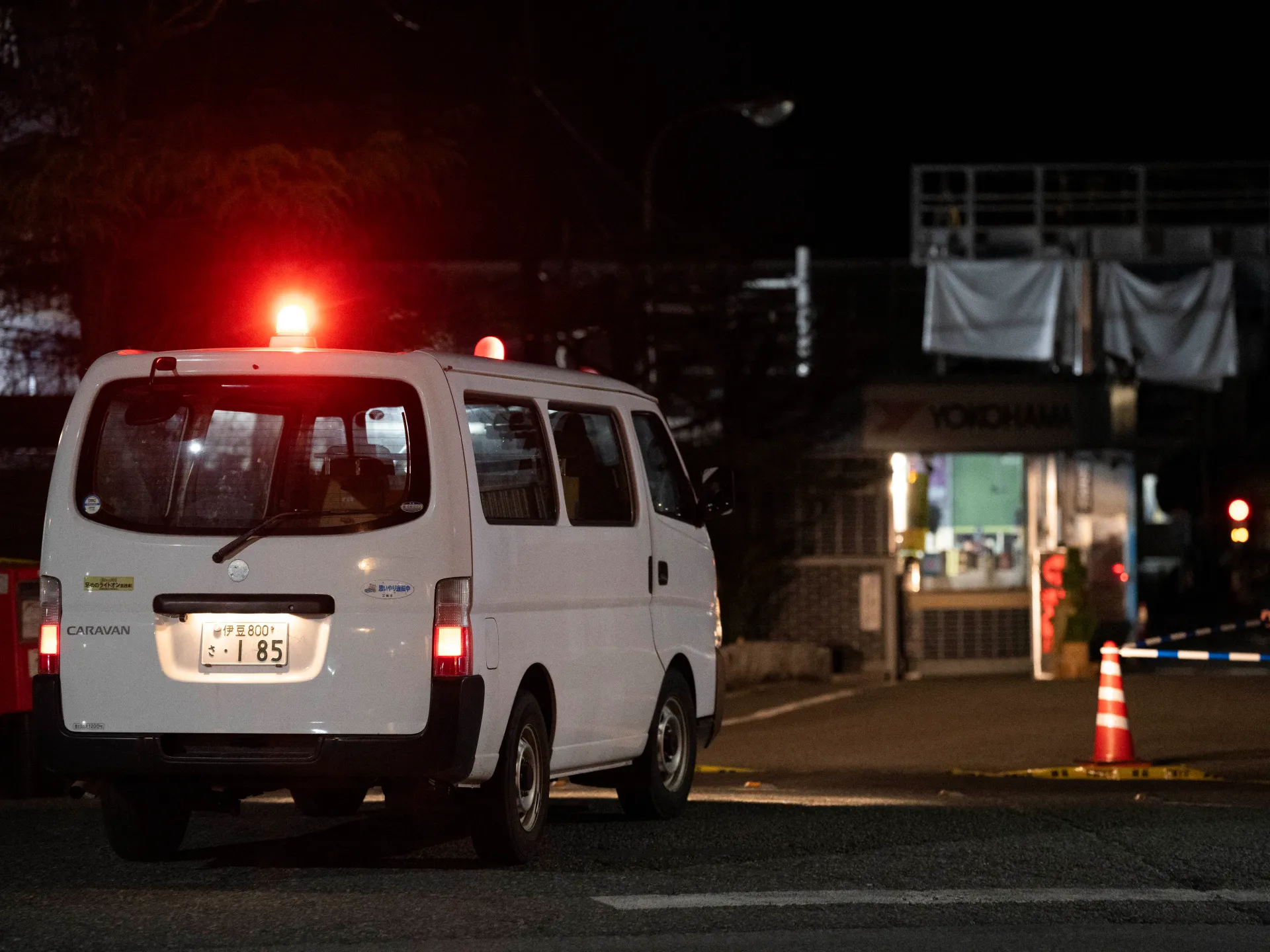
A man has carried out a mass stabbing attack at a Japanese tyre factory, also spraying victims with a chemical substance, according to local officials.
Eight people were stabbed and seven others were injured after being sprayed by a bleach-like agent at the Yokohama Rubber Co tyremaker in Japan’s Mishima, southwest of Tokyo, on Friday, said the Fujisan Nanto Fire Department.
Recommended Stories
list of 3 itemsend of list
Japanese media named the suspect as a 38-year-old who is now in custody. He is being charged with attempted murder, reported Japan’s Asahi Shimbun newspaper, citing the Shizuoka prefectural police.
The suspect was carrying a survival knife and wearing what appeared to be a gas mask, according to investigators cited in the Asahi report. He is believed by police to have acted alone, the report added, though there was no immediate information about a potential motive.
The Associated Press news agency cited the fire department as saying five of the stab victims are in serious condition, but conscious.
An employee of a nearby car dealership said she was “shocked” to learn of the attack in what is generally a “quiet” area.
“I’m scared, but I’m also shocked that it could have happened in a place like this,” the unnamed employee told Asahi Shimbun.
Violent crime is relatively rare in Japan, which has a low murder rate and some of the world’s toughest gun laws.
In June, Japan executed a man dubbed the “Twitter Killer”, after he was convicted of killing and dismembering nine people he met on social media. The execution was the country’s first use of capital punishment in nearly three years.
A Japanese man was also sentenced to death in October for a shooting and stabbing rampage that killed four people, including two police officers, in 2023.
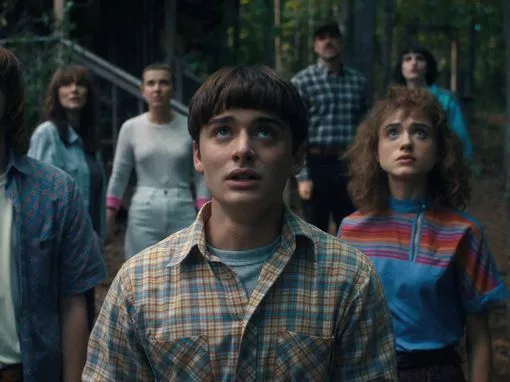
Following on from part one, which ended with Will (Noah Schnapp) discovering he had super powers, the three new episodes shed light on Henry’s (Jamie Campbell Bower) long-term plans.
It turns out the Upside Down isn’t an alternate dimension like the gang originally believed. It is actually a wormhole that was created during Dr Brenner’s experiments on Eleven (Millie Bobby Brown), and it connects Hawkins to another world called The Abyss.
Henry plans to use the children he has abducted to increase his powers so he can merge the Abyss, which the gang named after Dungeons and Dragons, with Hawkins. As far as we know, this other world is where the Mind Flayer and demogorgons are really from.
Episode 7 ended with Henry sitting around a table with all the children he has stolen and seemingly starting his master plan. So when can Netflix viewers dive back into the action?
Watch Stranger Things on Netflix for free with Sky
This article contains affiliate links, we will receive a commission on any sales we generate from it. Learn more
Sky is giving away a free Netflix subscription with its new Sky Stream TV bundles, including the £15 Essential TV plan.
This lets members watch live and on-demand TV content without a satellite dish or aerial and includes hit shows like Stranger Things.
When does Stranger Things season 5, episode 8 come out?
Stranger Things season five, episode eight (aka the series finale) is set to release on New Year’s Eve (December 31) for US audiences, and in the early hours of New Year’s Day for UK viewers.
If you’re keen to catch the episode as soon as it drops, it will be available to stream in the UK on Thursday, January 1st from 1am GMT.
How long is the Stranger Things finale?
Content cannot be displayed without consent
The series finale has a huge runtime of 2 hours and 8 minutes. Co-creator Ross Duffer confirmed the final runtime ahead of volume two’s release and fans had mixed reactions.
Considering how much ground the show still has to cover, some viewers aren’t convinced two hours will be long enough. But we’ll have to hold on and see how it unfolds.
After almost a decade on our screens, Stranger Things will be coming to an end with this episode.
Stranger Things Season 5, Episode 8 comes out on January 1st.
For the latest showbiz, TV, movie and streaming news, go to the new **Everything Gossip** website.
IF you’re ready to look ahead to 2026 and start planning your family trips for spring and summer, you might be looking at big names like Butlin’s, Haven and Eurocamp.
My family of five has had some great breaks at all three, but prices can quickly add up – especially if you need to travel during the school holidays. So how can you bag a bargain and get away for less?
If you’re planning your 2026 holiday, here’s how to save even more money on a cheap breakCredit: Not known, clear with picture desk
Here’s my top tips for shaving some money off your booking, so you’ll have more cash to splash when you’re on your break.
Before you book
There’s a few tricks of the trade that work across all three brands, whether you are sucker for a staycay or fancy a foreign foray.
The first thing to do is to check out any discount schemes available to you, to to see what savings they offer.
A Blue Light Card, which is available to teachers, emergency services and military personnel, offers money off holidays at Butlin’s, Haven and Eurocamp.
Costing £5 for two years, I usually save about £20 to £30 per break, which all adds up if you’re going on a few getaways over the course of the year.
If you have roadside cover with the AA or are in a scheme like Kids Pass, they often have holiday discounts – including £50 off at Haven currently.
Cashback sites like Quidco or Topcashback are also a great way to claw back a bit of holiday cash.
By signing up to one of these websites, you get a percentage of your spend back by clicking through a link to book at Butlin’s, Haven or Eurocamp.
You can also sometimes get an added bonus on top, especially during sales periods like Black Friday or the January sales.
I’ve had a payout of almost £50 on a Butlin’s booking before, although it can take several months for cashback to be tracked and appear in your account, so this method isn’t instant as an upfront discount.
Supermarket loyalty schemes partner with some holiday chains and are a good way of making money you spend on your food shop work harder for you.
If you’ve saved a stash of Tesco Clubcard points, these can be converted into vouchers to use at either Eurocamp or Butlin’s and are worth double what they would be if spent in store.
So if you’ve got £10 of points, you’ll get a voucher worth £20 to spend.
Bear in mind that using Clubcard vouchers can tie you in to paying the list price for your holiday, so you do need to be a bit savvy and work out if a discount code would save you more than your Clubcard points are worth.
If you don’t shop at Tesco, you could collect Nectar points when you’re booking with Eurocamp and those points can then be spent on Eurostar or British Airways to travel abroad at a later date.
Travel writer Catherine Lofthouse and her family have stayed at Haven, Butlin’s and Eurocamp, using a range of discount voucher sites available to everyday BritsCredit: Supplied
Price promises and spreading the cost
There’s lots to be said for booking early and spreading the cost of your holidays, whichever of the big names you’re using.
I’m currently paying a bit each month towards holidays at both Haven and Butlin’s in 2026, because both of them have a price promise that means you’ll get money back if your holiday costs less at a later date.
You do need to keep checking to see if you’ve bagged the best price, but if you’ve booked direct and find your holiday cheaper on either Haven or Butlin’s websites, they will refund you the difference.
I’ve seen some people enjoy payouts of hundreds of pounds using the price promise, so it is worth keeping an eye out in the run-up to your break.
If you’re booking Eurocamp, you can also pay in instalments.
If you book for 2026 before the end of January, you’ll put down a 15 per cent deposit when booking, then pay 10 per cent when you reach 150 days before your departure.
The remainder is then split in two payments at three months before your break and 56 days before departure.
Return guests can get a discount, particularly if you’re booking more than one break in the same season, so that’s worth a look before you book.
Butlin’s have a price drop promise tooCredit: Alamy
Saving big bucks at Butlin’s
There’s lots of ways to save at Butlin’s, so you just need to give yourself time to look at all the options and pick which one is right for you.
With three sites (at Bognor Regis, Minehead and Skegness) and lots of different types of accommodation, including room-only and self-catering, there can be a huge disparity in prices for the same week, depending on your destination.
I also find it’s worth checking out the last-minute deals at Butlin’s, as the prices do drop as you get closer to the departure date.
But if you like to get a booking in your diary sooner rather than later, you can make the most of the repeat booking discount while on site or within 30 days of a recent stay at Butlin’s.
My Haven holiday hacks
Once you’ve booked a break, it does pay to keep checking the offers section of the website to see what comes up, particularly before the Haven holiday season starts up in March.
There’s been great deals by bulk-buying activities or food and drink in recent years, so I’m looking forward to seeing what Haven introduces this year.
My favourite from recent trips was a bulk-buy bundle where you got the cheapest session free if you spent £45 or more on activities in one go.
That meant that if you booked three spaces on a £20 activity, you would actually only end up paying £40, as one of the spaces would be free.
There have also been some fantastic food and drink offers, including a preloaded card that you could use in the bars and restaurants, which was topped up by an extra 10 per cent if you bought it before your break.
I’ll be keeping an eye out in the next month or so to see if either of those offers return this year in time for my summer staycay.
Haven parks are a bargain in the UK but there are ways to save even moreCredit: Haven
Saving your euros at Eurocamp
We’ve had some lovely trips abroad to holiday parks in the Netherlands, Spain and France, but Eurocamp is just one way of booking these sites.
It’s worth considering whether you can get a better deal by booking direct with the individual park or if you’d prefer to pay a bit extra for some of the perks that come with a Eurocamp booking.
This includes extras such as a holiday rep who speaks English or the ability to change your dates, destination or accommodation once you’ve booked.
We enjoyed an October half-term stay at Duinrell in the Netherlands a few years ago and only paid £80 for the week.
But we did discover that you had to pay extra to get into the swimmingpool on site.
So it may have been better to book direct with Duinrell, as then entry to the waterpark would have been included and we could have chosen from tents, caravans and lodges for our accommodation.
Another top tip is to check out the Sun £9.50 holidays abroad, which we made the most of when we had younger children and were still travelling a lot in term time.
While we booked through the Sun, the actual booking is then passed to a holiday provider like Eurocamp if you’re going abroad or Parkdean if you’re staying in the UK.
So you can sometimes get the same accommodation and facilities as you would for a Eurocamp holiday but for a fraction of the price, if you pick a break where you only pay £9.50 per person without any added extras.
Bear in mind that you sometimes need to pay extra to add bed linen or towels to your booking abroad.
You can bring your own if you don’t want to pay, but that’s only really an option if you’re traveling by car and not by plane, when you’re trying to keep luggage to a minimum.
So whether you off to the summer sun abroad or you’re on a Brit bucket-and-spade break, now could be the perfect time to get your family getaway booked for 2026, whatever your budget.
Conor McDermott-Mostowy would like to compete at the Milano Cortina Winter Olympic Games. And he certainly has the talent, desire and ambition to do so.
What he lacks is the money.
“You could definitely reach six figures,” David McFarland, McDermott-Mostowy’s agent, said of what the speedskater needs annually to live and train while chasing his Olympic dream.
In the last year, finding that money has been increasingly difficult because McDermott-Mostowy is gay. Since President Trump returned to the White House in January, bringing with him an agenda that is hostile to diversity, equity and inclusion, sponsors who once embraced LGBTQ+ athletes and initiatives have turned away from the likes of McDermott-Mostowy, with devastating effect.
“There’s definitely been a noticeable shift,” said McFarland, who for decades has represented straight and gay athletes in a number of sports, from the NFL and NBA to professional soccer. “Many brands and speaking opportunities that previously highlighted LGBTQ athletes are now being pulled back or completely going away.”
“And these aren’t just symbolic partnerships,” he added. “They’re vital income opportunities that help athletes fund training, fund their competition and their livelihoods.”
The impact is being felt across a wide range of sports where sponsorship dollars often make the difference between winning and not being able to compete. But it’s especially acute in individual sports where the athletes are the brand and their unique traits — their size, appearance, achievements and even their gender preferences — become the things that attract or repel fans and financial backers.
“What’s most frustrating is that these decisions are rarely about performance,” McFarland said. “They’re about perceptions in the LGBTQ community. And that kind of fear-driven retreat harms everyone involved because, beyond the human costs, it’s also very short-sighted. The LGBTQ community and its allies represent a multitrillion-dollar global market with immense buying power.”
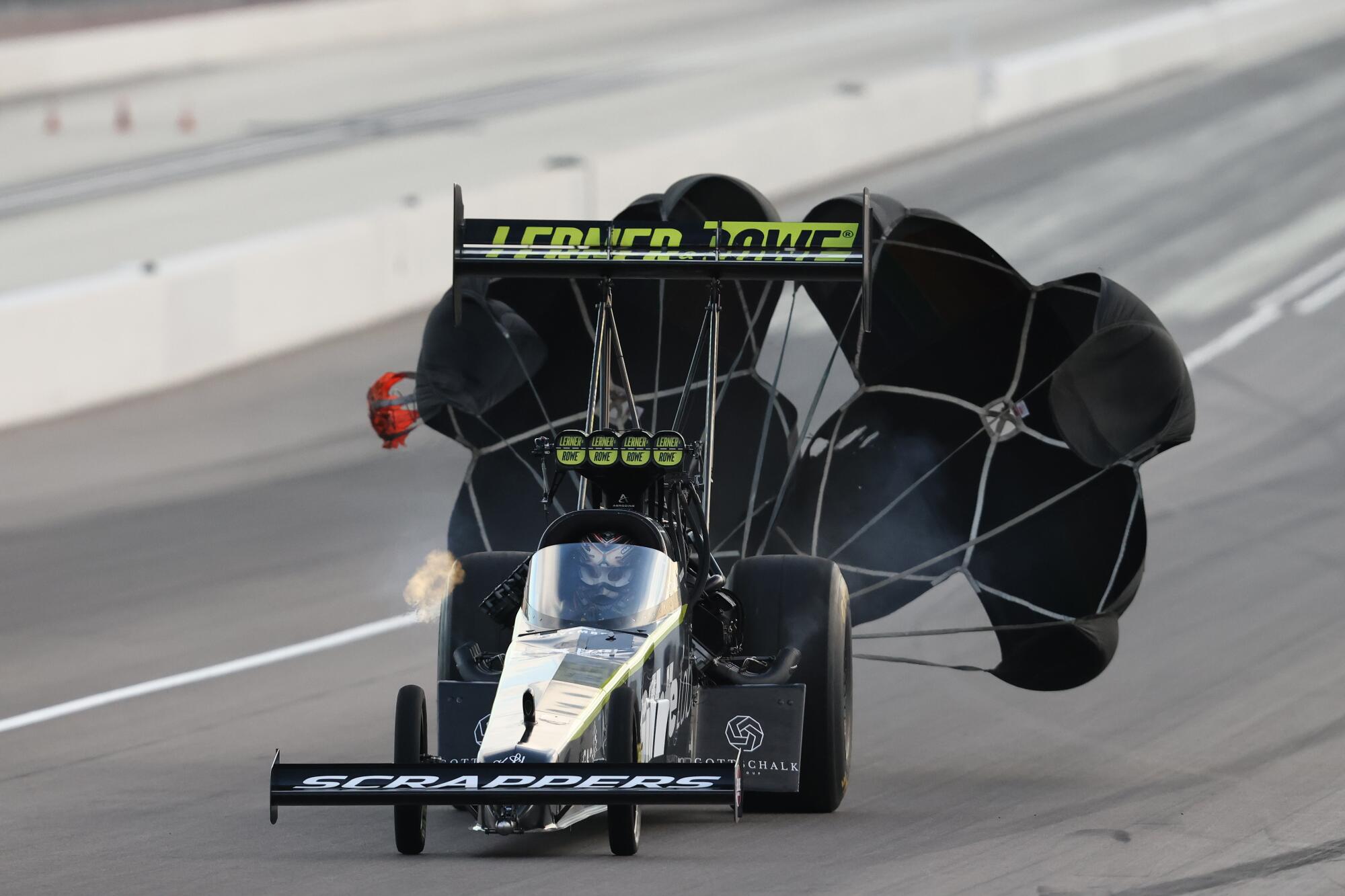
Travis Shumake, the only openly gay driver on the NHRA circuit, ran a career-high five events in 2022 and said he once had deals with major brands such as Mission Foods, Procter & Gamble and Kroger while using a rainbow-colored parachute to slow his dragster.
Kroger is the only one whose support has yet to shrink and as a result, Shumake had to keep his car in its trailer for the final eight months of the year.
And when he did race, his parachute was black.
Travis Shumake competes at the NHRA Nationals at Las Vegas Motor Speedway in November 2024.
(Marc Sanchez / Icon Sportswire via Getty Images)
“It was looking very optimistic and bright,” said Shumake, who spends about $60,000 for an engine and as much as $25,000 for each run down the dragstrip. “Being the only LGBTQ driver would have been very profitable. I ended last season with plans to run six to eight races. Great conversations were happening with big, big companies. And now it’s, I did one race, completely based on funding.”
“When you’re asking for a $100,000 check,” he added, “it’s very tough for these brands to take that risk for a weekend when there could be a large backlash because of my sexual identity.”
A sponsorship manager for a Fortune 500 company that had previously backed Shumake said he was not authorized to discuss the decision to end its relationship with the driver.
Daniel T. Durbin, director of the Institute of Sports, Media and Society at the USC Annenberg school, said there could be several reasons for that. A shrinking economy has tightened sponsorship budgets, for example. But there’s no doubt the messaging from the White House has had a chilling effect.
“It certainly makes the atmosphere around the issue more difficult because advertising and promotion tied to social change has come under fire by the Trump administration,” Durbin said.
In addition, corporate sponsors that once rallied behind diversity, whether out of conviction or convenience, saw the election results partly as a repudiation of that.
“We may be pissing off 50% of the population if we go down this path. Do we really want to do that with our brand?” Durbin said of the conversations corporations are having.
Backing away from causes such as LGBTQ+ rights doesn’t necessarily mean those corporations were once progressive and are now hypocritical. For many, the only color of the rainbow they care about is green.
“You’re trying to give people a philosophy who don’t have a philosophy,” Durbin said. “And even if they believe in causes, they’re not going to self-destruct their company by taking up a cause they believe in. They’re going to take it up in part because they think it’s positive for the bottom line.
“That’s the way it works.”
As a result, others have had to step up to try to help fill the funding gap. The Out Athlete Fund, a 501(c)(3) organization, was recently created to provide financial assistance and other support to LGBTQ+ athletes. McDermott-Mostowy was the first to get a check, after a November event in West Hollywood raised more than $15,000.
“We’re here to help cover their costs because a lot of other people aren’t doing it,” said Cyd Zeigler, a founding board member of the group and co-founder of OutSports, a sports-news website focused on LGBTQ+ issues.
That kind of retrenching, from deep-pocketed corporate sponsors to individuals giving their spare change, is threatening to derail the careers of athletes such as McDermott-Mostowy, who relies on his family and a modest U.S. Olympic & Paralympic Committee stipend for most of his living and training expenses. And since he’ll turn 27 before the Milano Cortina Olympic Games open in February, he may not be able to wait for the pendulum to swing back to have another chance at being an Olympian.
“I’m 99% sure I qualify for [food] stamps,” said McDermott-Mostowy, who medaled in the 1,500- and 500-meter events in October’s national championships, making him a strong contender for the U.S. heading into the Olympic long track trials Jan. 2-5 in Milwaukee. “What really saves us every year is when we travel. Almost all of our expenses are paid when we’re coming [with] the team.
“If I didn’t make the World Cup one year, I would be ruined.”
McDermott-Mostowy’s past success and his Olympic potential are what he pitches to sponsors, not that he’s gay. But that’s what makes him stand out; if he qualifies for Milano Cortina, he would be one of the few gay athletes on the U.S. team.
“I have always been very open about my sexuality. So that wasn’t really a debate,” he said.
“I have definitely heard from my agent that, behind closed doors, a lot of people are like ‘Oh, we’d love to support queer athletes. But it’s just not a good time to be having that as our public face.’”
The debate isn’t a new one, although it has evolved over the years. Figure skater Amber Glenn, who last year became the first out queer woman to win the U.S. championship, remembers gender preferences being a big topic of discussion ahead of the 2014 Games in Russia, where public support for LGBTQ+ expression is banned.
“At that point I wasn’t out, but I was thinking, ‘What would I do? What would I say?’” Glenn said. “Moving forward I hope that we can make it where people can compete as who they are and not have to worry about anything.
“Figure skating is unique. We have more acceptance and more of a community in the queer space. That’s not the case for all sports. We’re definitely making progress, but we still have a long way to go.”
Conor McDermott-Mostowy hopes to be competing for the U.S. in speedskating at the Milano Cortina Olympic Games in February.
(Dean Mouhtaropoulos / Getty Images)
In the meantime, athletes such as McDermott-Mostowy and Shumake may have to find ways to re-present themselves to find new sources of support.
“It’s not like I’m going back in the closet,” said Shumake, who has decided to rent out his dragster to straight drivers next year rather than leave it parked and face bankruptcy. “It’s just that maybe it’s not the main storyline at the moment. I’m trying a bunch of different ways to tell the story, to rebrand.”
“It’s been weird to watch,” added Shumake, who once billed himself as the fastest gay guy on Earth. “I know it will swing back. I also fear, did I make the right choices when I had a partnership with Grindr and I had rainbow parachutes? Like did I come on too strong?
“I’ve chosen to go the gay race car driver route and it’s just a little bit of a slowdown. I don’t think I need to blame myself. It’s just a fear people are having at the moment.”
A fear that’s proving costly to the athletes who can least afford to pay.
Israeli police pictured in September secure the entrance to the King Hussein Bridge Border Crossing. On Friday, an assailant allegedly ran over a 68‑year‑old man in Beit Shean before driving to Ein Harod, where he fatally stabbed an 18‑year‑old woman and injured a teenager. File Photo by Debbie Hill/ UPI | License Photo
Dec. 26 (UPI) — Israeli police said a Palestinian man from the West Bank killed two people in a so-called “terror attack” in northern Israel on Friday.
The assailant allegedly ran over a 68‑year‑old man in Beit Shean before driving to Ein Harod, where he fatally stabbed an 18‑year‑old woman and injured a teenager.
Hebrew-language media identified the victim of the northern Israel terror attack as 19‑year‑old Aviv Maor of Kibbutz Ein Harod. The other victim’s identity was not released.
A civilian shot and wounded the suspect, who was taken to a hospital.
The two victims were declared dead on scene.
Defense Minister Israel Katz ordered a military response in the attacker’s hometown of Qabaitya to prevent further violence.
Meanwhile, Israel’s military stated it was “preparing for an operation” in the area.
A young girl sits in front of a nativity scene in Manger Square, outside the Church of Nativity, in the biblical town of Bethlehem, West Bank, on December 23, 2025. Photo by Debbie Hill/UPI | License Photo
Tensions are flaring along the Tajikistan-Afghanistan border in Central Asia with the Tajik government reporting multiple armed incursions this month, straining its fragile relationship with Afghanistan’s Taliban leaders.
More than a dozen people have been killed in attacks by men whom Tajik authorities call “terrorists” and the resulting clashes with Tajik forces, officials in Dushanbe and Beijing said. Victims include Chinese nationals working in remote areas of the mountainous former Soviet republic.
In the latest fighting this week, at least five people were killed in Tajikistan‘s Shamsiddin Shokhin district, including “three terrorists”, officials said.
Tajikistan has long opposed the rise of the Taliban in Afghanistan, a country it shares a largely unsecured 1,340km (830-mile) border with.
Despite cautious diplomatic engagement between the two countries to adjust to new regional realities, analysts said, the frequency of the recent border clashes risks eroding the Taliban’s credibility and raises questions about its capacity to enforce order and security.
Here is all we know about the clashes along the Tajik-Afghan border and why they matter:
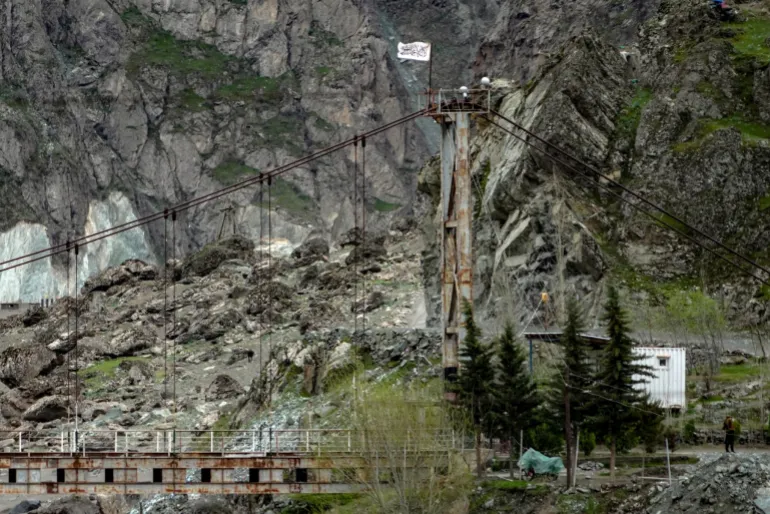
A Taliban flag flies on top of a bridge across the Panj river on the Afghan-Tajik border as seen from Tajikistan’s Darvoz district [File: Amir Isaev/AFP]
What’s happening on the Tajik-Afghan border?
The border runs along the Panj river through the remote, mountainous terrain of southern Tajikistan and northeastern Afghanistan.
On Thursday, Tajikistan’s State Committee for National Security said in a statement that “three members of a terrorist organisation” crossed into Tajik territory on Tuesday. The committee added that the men were located the following morning and exchanged fire with Tajik border guards. Five people, including the three intruders, were killed, it said.
Tajik officials did not name the armed men or specify which group they belonged to. The officials, however, said they seized three M-16 rifles, a Kalashnikov assault rifle, three foreign-made pistols with silencers, 10 hand grenades, a night-vision scope and explosives at the scene.
Dushanbe said this was the third attack originating from Afghanistan’s Badakhshan province in the past month that has resulted in the deaths of its personnel.
These attacks, Tajik officials said on Thursday, “prove that the Taliban government is demonstrating serious and repeated irresponsibility and non-commitment in fulfilling its international obligations and consistent promises to ensure security … and to combat members of terrorist organisations”.
The Tajik statement called on the Taliban to “apologise to the people of Tajikistan and take effective measures to ensure security along the shared border”.
Tajikistan has not suggested what the motive for the attacks may be, but the assaults have appeared to target Chinese companies and nationals working in the area.
Workers of Talco Gold, a joint Tajik-Chinese mining firm, speak in front of a poster of Chinese President Xi Jinping and Tajik President Emomali Rahmon at the Saritag antimony mine in western Tajikistan [File: AFP]
How is China involved in all this?
Beijing is Tajikistan’s largest creditor and one of its most influential economic partners with a significant footprint in infrastructure, mining and other border-region projects.
China and Tajikistan also share a 477km (296-mile) border running through the high-altitude Pamir Mountains in eastern Tajikistan, adjacent to China’s Xinjiang region.
Two attacks were launched against Chinese companies and nationals in the last week of November. On November 26, a drone equipped with an explosive device attacked a compound belonging to Shohin SM, a private Chinese gold-mining company, in the remote Khatlon region on the Tajik-Afghan border, killing three Chinese citizens.
In a second attack on November 30, a group of men armed with guns opened fire on workers employed by the state-owned China Road and Bridge Corporation, killing at least two people in Tajikistan’s Darvoz district.
Tajik officials said those attacks had originated from villages in Afghanistan’s Badakhshan province but did not disclose any affiliation or motive behind the attacks.
Chinese nationals have also come under attack in Pakistan’s Balochistan province and along the Afghanistan-Pakistan border.
China’s embassy in Dushanbe advised Chinese companies and personnel to evacuate the border area. Chinese officials demanded “that Tajikistan take all necessary measures to ensure the safety of Chinese enterprises and citizens in Tajikistan”.
Who is carrying out these attacks?
While the attackers have not been identified, analysts and observers believe the attacks carry the hallmarks of the ISIL (ISIS) affiliate in Khorasan Province (ISKP), which, they said, aims to discredit Afghanistan’s Taliban leaders.
“The ISKP has attacked foreigners inside Afghanistan and carried out attacks on foreigners inside Afghanistan as a key pillar of their strategy,” said Ibraheem Bahiss, a Kabul-based analyst at the International Crisis Group think tank.
“The aim is to shatter the Taliban’s image as a security provider with whom the regional governments should engage,” Bahiss told Al Jazeera.
Taliban members participate in a rally to mark the third anniversary of the Taliban’s seizure of Kabul in the Afghan capital on August 14, 2024. [Sayed Hassib/Reuters]
How has the Taliban reacted to these attacks?
Kabul expressed its “deep sorrow” over the killings of Chinese workers on November 28.
The Taliban blamed the violence on an unnamed armed group which, it said, is “striving to create chaos and instability in the region and to sow distrust among countries”, and it assured Tajikistan of its full cooperation.
After this week’s clashes, Sirajuddin Haqqani, the Taliban’s interior minister, said Kabul remains committed to the 2020 Doha Agreement, its deal with the United States for a phased foreign troop withdrawal from Afghanistan in exchange for Taliban commitments to prevent Afghanistan from being used as a base for attacking other countries.
Addressing a police cadet graduation ceremony at the National Police Academy in Kabul on Thursday, Haqqani said Afghanistan posed no threat to other countries and the door to dialogue remains open.
“We want to address problems, distrust or misunderstandings through dialogue. We have passed the test of confrontation. We may be weak in resources, but our faith and will are strong,” he said, adding that security had improved to the extent that Taliban officials now travel across the country without weapons.
The Taliban insists that no “terrorist groups” are operating from Afghanistan. However, in a recent report, the United Nations sanctions-monitoring committee cited the presence of multiple armed groups, including ISKP, Tehreek-e-Taliban Pakistan, al-Qaeda, the Turkistan Islamic Party, Jamaat Ansarullah and Ittehad-ul-Mujahideen Pakistan.
Jamaat Ansarullah is a Tajik group linked to al-Qaeda-aligned networks and active primarily in northern Afghanistan near the Tajik border.
Afghans travel along a border road as seen from Tajikistan’s Darvoz district [File: Amir Isaev/AFP]
How are relations between Tajikistan and the Taliban?
For decades, the relationship between Tajikistan and the Taliban has been defined by deep ideological hostility and ethnic mistrust with Dushanbe one of the group’s fiercest critics in Central Asia.
In the 1990s, Tajikistan aligned with the anti-Taliban Northern Alliance, led by Afghan military commander and former Defence Minister Ahmad Shah Massoud.
After the Taliban’s return to power in Afghanistan in August 2021, Tajikistan stood as the lone holdout among its neighbours in refusing to officially recognise the new government.
However, pragmatic diplomatic engagement quietly began about 2023, driven by economic necessity and shared security fears over the presence of ISKP. Stepping up the restoration of relations, a high-level Tajik delegation visited Kabul in November, the first such visit since the Taliban’s return to power.
But the two governments continue to trade accusations that the other is harbouring “terrorists”, the major thorn remaining in their bilateral relationship, and that drug smuggling is occurring across their border.
The Tajik-Afghan border has long been a major trafficking route for Afghan heroin and methamphetamine into Central Asia and onwards to Russia and Europe, exploiting the area’s rugged terrain and weak policing.
“The rising frequency [of the clashes] is new and interesting and raises a point: whether we might be seeing a new threat emerging,” Bahiss said.
Badakshan province, from which Tajik authorities said the attacks on Chinese nationals originate, presents a complex security situation for the Taliban as it has struggled to stem the threat from armed opposition groups, Bahiss added.
This security issue has been further complicated by the Taliban’s crackdown on poppy cultivation in the province, he said. The Taliban has faced resistance to this policy from farmers in the north. This is largely because the terrain of Badakshan means poppies are the only viable cash crop.
Afghanistan’s Taliban Foreign Minister Amir Khan Muttaqi called his Tajik counterpart early this month to express regret about the attacks on Chinese nationals and say his government was prepared to boost cooperation between their border forces [Anushree Fadnavis/Reuters]
How is the Taliban faring with other neighbours?
Since the Taliban retook control of Afghanistan in 2021, some of its neighbours have maintained a pragmatic transactional relationship while others have not.
Relations with Pakistan, previously its patron, have particularly deteriorated. Islamabad accuses Kabul of harbouring fighters of Tehrik-i-Taliban Pakistan, also known as the Pakistan Taliban. Tensions over this issue boiled over in November when Pakistan launched air strikes in Kabul, Khost and other provinces, prompting retaliatory Taliban attacks on border posts.
Dozens of people were killed before a ceasefire was brokered by Qatar and Turkiye. However, both sides have engaged in fighting since, blaming each other for breaking the fragile truce.
The Taliban denies Islamabad’s allegations and has blamed Pakistan for its “own security failures”.
Meanwhile, the Taliban is now invested in developing a new relationship with Pakistan’s archrival, India, with delegations visiting Indian cities for trade and security discussions. New Delhi was earlier part of the anti-Taliban alliance. However, that approach has changed with the deteriorating ties between Pakistan and the Taliban.
Nobody does a jaw-drop reaction like Bobby Berk. It’s only surprising when you assume he’s probably seen it all after eight seasons traveling the world as the interior design expert on Netflix’s reboot of “Queer Eye”; writing his 2023 book, “Right at Home: How Good Design is Good for the Mind”; making many TV appearances (including a Taylor Swift video) and selling pretty much anything to make your home shine on BobbyBerk.com.
But in his new HGTV series “Junk or Jackpot?”, premiering Friday at 9:30 p.m. Pacific, genuine reactions come often from Burke as he enters the homes of Los Angeles collectors and sees not only rooms jam-packed with action figures, pinball machines, puppets, marionettes and more, but also some jackpot items just sitting on a bookshelf. In one episode, for example, a collector shows Berk a trading card he has that is appraised in the $100,000 range. “I’m pretty sure I said, ‘What the f—?’ though I assume it was bleeped because it’s HGTV,” says Berk from his Los Angeles home. “I’m used to Netflix, where I could say whatever I wanted. But, yeah, that was just crazy to me.”
Reactions aside, the real marvel on “Junk or Jackpot?” is watching an enthusiastic Berk swoop into people’s homes to help them learn how to come to terms with a collecting hobby that has grown into something that’s stifling homes and putting a damaging strain on relationships. “Obviously, I’m not a therapist. I’m a designer, even though in our field, we often make the joke that we’re not just designers, we’re marriage counselors,” he says.
But Berk, born in Houston and raised in conservative Mount Vernon, Mo., is a self-taught pro at identifying what isn’t working and doing everything possible to fix it, including in his own life. Case in point: Berk, not feeling safe coming out in Mount Vernon, left home at 15 and bounced around for several years in various cities, never finishing high school. “From 15 to 22, I moved around and can’t even count the amount of places I had to move around to just due to finances and situations going on in life,” he recalls.
Eventually, he landed in New York City and worked for stores like Restoration Hardware, Bed Bath & Beyond and Portico before he opened his first online store in 2006 and first physical store in Soho in 2007. Soon thereafter, Berk was racking up appearances on networks like HGTV and Bravo before “Queer Eye” came calling in 2018 and took him to new heights, including his 2023 Emmy win for structured reality program. He also received an honorary degree from Otis College of Art and Design in 2022.
Now, with “Junk or Jackpot?” about to launch, the 44-year-old Berk spoke about how he was handpicked by pro wrestler and movie star John Cena for the show, the key to helping collectors let go of things that are weighing down their lives, and, after living many places and traveling the globe, where he considers home with husband Dewey Do and their mini Labradoodle, Bimini.
“I’m not a therapist. I’m a designer, even though in our field, we often make the joke that we’re not just designers, we’re marriage counselors,” Berk says.
(Jason Armond/Los Angeles Times)
What are the origins of “Junk or Jackpot?” and what does John Cena have to do with it all?
I’ve been toying back and forth with HGTV for years, even when I was still on “Queer Eye,” but with my exclusivity with Netflix, I couldn’t do design shows with anybody else. We always just kept that line of communication open, so then when this specific opportunity came about, Loren Ruch, the head of HGTV, who’s unfortunately since passed, reached out. He said, “Hey, John Cena’s created the show for us and you’re the top of his list of who he wants it to host it.” John was a big “Queer Eye” fan, so I said yes. It shot here in L.A., which was really important to me. We were really lacking for entertainment jobs here in the city so that was a big plus for me to be able to bring jobs here to L.A. to all of our amazing crews.
And it’s not your typical design show. Obviously, there’s nothing wrong with a typical design show and they do help people. But coming from “Queer Eye” where everyone we helped was because it was somebody deserving, somebody that was going through something and needed that extra boost in their life. That’s what this was with “Junk or Jackpot?”
Every single collector, as we’re calling them, had a story going on. With Patrick and Roger [in the premiere episode], Roger had moved out and their relationship was on the rocks because there was literally no space for Roger. With Carly and Johnny in another episode, they had a kid that they weren’t expecting to have in their early 40s, so it was a life-changing moment for them. Their priority needed to be their son, J.D.
I love the show because it was helping people at these moments in their life where they’re like, “We have this thing that we love and has brought us joy, but now this thing is actually starting to have negative things happening in our life.” I wanted to come in and really bring back the joyous part of their collection.
HGTV hasn’t given you a huge budget to revamp the homes and the collectors have to work themselves to sell off their collectibles to pay for the renovation. How did that angle come about?
It was a bit of therapy and I wanted the collectors to really realize that, yes, the collection that they have has value but this other thing that is happening in their life because of this collection has value, too. I wanted them to either be able to prove to themselves that what they were wanting to change in their life had more value than those things. Like with Patrick, Roger had a value.
I wanted them to go through the exercise of “You need to start parting with things.” And if you notice, I never pushed them to get rid of the most precious pieces of their collection. I pushed them to get rid of the things that often they had duplicates of but weren’t necessarily something like, “Oh, I got this as a child” or “somebody got this for me.” I wanted them to emotionally disconnect with those things so they could prioritize things better in life and in the future, they would have a lot easier time letting go even if I wasn’t there to push them.
Swatches and mood boards in Berk’s office. The host of “Junk or Jackpot?” says it is not your typical design show.(Jason Armond/Los Angeles Times)
How do you consider budget with the collectors? In one episode, you choose to cover a brick wall instead of tearing it down and building a new one.
The homeowners are the ones footing the bill for this, because again, a portion of this is the exercise of letting go. To your point, if we had just come in at HGTV and said, “Here’s all the money!” They’re like, “All right, I have no motivation to get rid of anything.” I wanted to make sure we made budget-conscious decisions and I think that’s also a really important thing to share with people at home that you don’t always have to go out and knock out a fireplace if you hate the material. You can do a thing like micro cement and you can completely change it for a minimal cost.
What would you say you learned from shooting the first season of “Junk or Jackpot?”
I wouldn’t say I learned anything necessarily new, but it was reaffirmed to me the emotional attachment and mental health aspect that your space and design can have on you, either in a good way or a bad way.
In the bad way, your house becomes so cluttered and overwhelmed with something that used to spark joy for you, but it’s now having an effect on not only your mental health, but your relationships with other people. On the other hand, the difference in your mental health just redoing that space, reorganizing that space, reclaiming that space can have on your mental health and your relationships not only with yourself, but with your family and your friends.
Vivian, who collects Wonder Woman memorabilia, her friends stopped coming over because there was just nowhere to sit. Her best girlfriend used to come in from Vegas all the time, where she lives, and she would spend the night and now she’s like, “I just can’t anymore because I’m surrounded literally. It’s too much and I just can’t do it anymore.” You see how just changing your space really can change your life.
“I wanted to make sure we made budget-conscious decisions and I think that’s also a really important thing to share with people at home, that you don’t always have to go out and knock out a fireplace if you hate the material,” Berk says.
(Jason Armond / Los Angeles Times)
Season 1 is set in Los Angeles but assuming you get more seasons, would you want to do other cities or countries?
I personally would always love just to keep doing L.A. I live there and with “Queer Eye” for eight years, we traveled all over America. That being said, this is a very niche show, so it might be hard to continue doing it in the same city season after season, so we probably will have to go to other cities, and I’d be fine with that. But I would at least like another season or two in L.A. After spending the last eight years filming “Queer Eye,” I like being home.
That said, you have lived in New York, you’re in L.A. now and you also have a place in Portugal. Where do you call home?
L.A. is definitely home for me. Portugal’s great, but L.A. is definitely home. Although the more time we spend in Southeast Asia, specifically Vietnam, since my husband’s originally from there, that also feels like home. I believe in reincarnation, and I was definitely from over there in my last life. Like when I landed in Vietnam, in China, anywhere in Southeast Asia — I just feel very at home.
“Queer Eye” was such a roller coaster for all you guys but what are your reflections now that it is behind you? Were you able to enjoy it at the time?
Yes and no. It was an amazing roller coaster. I enjoyed most of it, but there were times where we were just exhausted. I don’t know if you know the flight app “Flighty,” but it tracks your flights and tells you how many hours you’ve been in planes every year and how many times you’ve been on the exact same plane. I was looking the other day at how much I flew in 2019. Keep in mind in 2019, five months of the year I was filming, so I wasn’t flying anywhere. So this was just seven months, and I flew 200 flights. I flew over 500,000 miles. I don’t miss that. That was a lot. But as much as I can remember of it, I look back with fondness.
Last week, the Deputy Chief of Staff for Policy and Homeland Security offered a sharply different account of Venezuela’s 1976 oil nationalization. It is provocative, but it does not hold up to the record.
President Carlos Andrés Pérez (1974-1979) proclaimed the takeover of the petroleum industry on January 1, 1976. The announcement occurred at the Mene Grande oilfield in Zulia. Crucially, the transfer from private control to a state-run model went smoothly. The major multinationals were compensated, invited to work with the new state-owned company, Petróleos de Venezuela (PDVSA), as service and technology providers, and the process triggered no diplomatic incident with the United States. A brief look at the facts does not support claims of “theft of American wealth and property,” since “the tyrannical expropriation” was precisely engineered to avoid the kind of rupture Miller describes.
The nationalization of the Venezuelan petroleum industry responded to global events unfolding in the Middle East around 1970. To be sure, Venezuelan politicians had long dreamed of granting the state full control over the most important sector of the country’s economy. However, plans for an eventual state takeover of the oil fields remained nebulous, a goal set for a distant future. Muammar Qaddafi (1969-2011) in Libya, of all figures, provided Venezuelan lawmakers with a concrete horizon for materializing full control over the hydrocarbon sector. The Libyan strongman unilaterally increased royalties and taxes on multinationals, with Iran pursuing a similar approach. OPEC then formalized this push for higher prices at its December meeting that year. What followed in 1971 sent shock waves across the world: Libya nationalized its oil industry, followed by Algeria and Iraq. This process quickly expanded to the rest of the Middle East, setting the backdrop for the fuel shortages of that decade and the energy crisis of 1973.
This global context greeted President Rafael Caldera (1969-1974), a Christian Democrat of COPEI, who was intent on capitalizing on these favorable winds. Soon, every political faction in Congress sought to outdo the other in displaying their anti-corporate credentials. Caldera stood at the top as the most nationalist of the pack, passing an unprecedented package of bills and decrees destined to expand government control over the industry significantly. By the time he handed power to Carlos Andrés Pérez from Acción Democrática (AD), de facto state control over the entire industry was already in place. Nationalization became the only politically safe position when the electoral campaign of 1973 started. Once elected, Carlos Andrés Pérez authorized the creation of a Presidential Commission in charge of studying the state takeover and proposing a bill to that effect, to be approved by Congress in 1975. Ordinary Venezuelans shared this renewed fervor for ownership over the national riches of the country, though in a conflicted way.
Polls by the weekly political magazine Resumen showed broad support for nationalization. Yet respondents also rated working conditions at the foreign oil companies very favorably and many wanted foreign capital to remain involved after the takeover because they trusted the firms’ experienced managers. At the same time, they doubted the state’s capacity to run complex industries, while still believing it could improve over time and that a state-run oil sector was in the nation’s interest. That nuance rarely appeared in Congress.
The nationalization became a fait accompli without antagonism with the U.S. government or the multinationals
COPEI and a constellation of center-left and leftist organizations pushed for an immediate, total takeover without any foreign role. Some opposed compensation altogether and even welcomed a showdown if necessary, seeing local employees working for these multinationals as threats to a “genuine” nationalization of the industry. Venezuelan managers soon came under attack from politicians accused of having “their minds colonized” by the American and British firms. They were also viewed as “centers of anti-Venezuelan activity.” Insults in the press and public spaces galvanized domestic employees to take action. Led by Venezuelan mid-level managers such as Gustavo Coronel from Royal Dutch Shell, the managerial class came together to form Agrupación de Orientación Petrolera (AGROPET). The nonprofit aimed to help the country prepare to take full responsibility for the hydrocarbon sector.
From March 1974 through 1975, AGROPET ran a public campaign for an orderly, compensatory nationalization built on continuity, not a politicized break. Their activities included appearing on radio programs, giving TV interviews, publishing in newspapers, and participating in public forums, including congressional meetings, and talks with members of the Presidential Commission mandated by President Pérez. The irony of this body is that it gathered representatives from prominent sectors of society. And yet the Commission excluded the people who actually ran the industry.
AGROPET quickly steered the nationalization debate back toward a technocratic solution. The organization’s pivotal moment came in January 1975, when its leaders met with President Pérez and laid out what became the blueprint for the 1976 nationalization. They argued for an industry built on administrative efficiency, technological progress, apoliticism, and sound management not a politicized rupture. Their model envisioned a holding company with four affiliates that would absorb concessionaire operations. The new organizational culture would blend practices inherited from the Creole Petroleum Corporation and Shell, and the nationalized industry would retain ties to its foreign predecessors. Under this proposal, Petróleos de Venezuela (PDVSA) became, in effect, the direct descendant of the multinationals that built Venezuela’s modern oil industry. It perpetuated the business philosophy of the multinationals. Persuaded by Venezuelan managers, Pérez sided with the technocrats and sent an amended nationalization bill to Congress, crucially allowing foreign capital to return under Article 5. The AD-dominated legislature defended the bill and enacted it in August 1975. Two months later, Creole and the other firms accepted a compensation package of about $1 billion for their expropriated assets.
The nationalization became a fait accompli without antagonism with the U.S. government or the multinationals. It constituted less a watershed than a continuation of relationships the Venezuelan state and foreign oil companies had built across the twentieth century on new terms. PDVSA quickly signed service and technology agreements with the very companies it had expropriated. What’s more striking is that this smooth outcome became, in part, an unintended consequence of Venezolanization: the deliberate integration of Venezuelans at every level of the corporate ladder, a policy initiated by Creole and Shell in the 1940s. Unusual in the industry at the time, it stood out as a strand within a broader set of corporate social responsibility practices these companies implemented in Venezuela. Locals trained through that system helped make the transition to state control orderly and broadly beneficial.
For much of the political opposition, however, the outcome felt bittersweet. They denounced its chucuta nature (a “half-baked” nationalization) and framed Article 5 as outright betrayal. Many wanted the kind of dramatic showdown associated with Cárdenas in Mexico, Mossadegh in Iran, or Velasco Alvarado in Peru, cases where claims of expropriation and “theft” of U.S. property could at least be mounted. Venezuela in 1976 stood far away from that drama, and once the transfer was complete, business continued as usual despite the lamentations of certain congressmen. Venezuela’s 1976 oil nationalization was engineered to preclude confrontation. Getting the history right matters. If the current U.S. administration wants to cite this episode to justify pressure, escalation, or exceptional measures, it has chosen a poor example, precisely because the process avoided the kind of rupture Mr. Miller invokes. So, por este camino no es.
The city has cosy cabins, scenic walks and the chance to explore connected islands.
This article contains affiliate links, we will receive a commission on any sales we generate from it. Learn more
Inverness is a gorgeous city(Image: Getty)
If you’re on the hunt for a snug winter weekend escape, the UK offers an abundance of options. With so many stunning locations to choose from, it can be quite the task to decide.
From vibrant cities to ancient woodlands and charming villages, the UK is brimming with beautiful spots. However, one location has been singled out as the ideal winter retreat.
The team at Go Outdoors have recently unveiled their top choices for a winter escapade, and the favourite is a delightful blend of urban and rural attractions that cater to all tastes.
Using data on snowfall, woodland walks, cosy pubs with log fires, and cabins, they’ve ranked the top UK adventure destinations – and the Scottish city of Inverness has emerged as the champion.
Boasting over 200 winter cabins and a wealth of breathtaking walking trails, it’s not hard to see why Inverness clinched the top spot.
One of the most favoured walks is the Inverness Castle and River Circular, which guides you on a stunning 4.5km journey through some of Scotland’s most majestic landscapes, reports the Express.
During your hour-and-a-half stroll, you’ll also pass by the iconic Inverness Castle, nestled in the city centre.
Inverness even provides the opportunity for island hopping – without ever having to leave the city.
The Ness Islands are a chain of islands in the river, all interconnected by beautiful Victorian-era footbridges.
You can start on one side of the riverbank and end up on the other, meandering through the islands and spotting sculptures along the way. It’s the perfect way to spend a wintry day exploring.
Though Inverness is a small city that’s easy to navigate, it also serves as an excellent base for exploring the wider Highlands.
Just beyond the city limits, you’ll find the renowned Loch Ness, home to its elusive, legendary creature – perhaps you’ll be the lucky one to spot her.
Twisting and tying shoelaces into a knot became a formidable task for Justin Herbert in the days following hand surgery.
Every time the Chargers quarterback leaned over to tie his shoes, his cast would nudge in the way, complicating a once-menial task.
For Herbert, it became a constant reminder of the broken bone he suffered during a 31-14 victory over the Las Vegas Raiders on Nov. 30 — a helmet-to-hand hit from Raiders safety Jeremy Chinn that required surgery on his non-throwing hand the next day.
And while the 27-year-old, who earned his second Pro Bowl honor Tuesday, has been far from perfect since the injury, the Chargers (11-4) have managed to win four consecutive games, including two against last season’s Super Bowl teams.
“The days went on, and as I got better and more mobility with (the left hand), I think it’s become more normal, and it feels a bit better, so that’s also a positive,” Herbert said earlier this week.
Eking out wins against the Philadelphia Eagles and Kansas City Chiefs, Herbert increased his yards-per-pass attempt from 5.3 yards to 7.2 yards. His completion percentage improved from a season-low 46.2% against the Eagles to a respectable 65.5% against the Chiefs.
Against the Dallas Cowboys, Herbert recorded a 132.8 passer rating, his best since December 2021 in Week 14 against the New York Giants. He passed for 300 yards and three touchdowns in a 34-17 win over the Cowboys that led to the Chargers clinching a playoff berth Monday with San Francisco’s win over Indianapolis.
“To me, that’s just a test of the type of person, type of player he is,” said wide receiver Quentin Johnston, who made a spectacular, one-handed touchdown catch and finished with 104 receiving yards against Dallas. “I mean, shoot, still playing and executing at a high level — I’m really happy to be on the team with him. I would rather be with nobody else but him.”
The Houston Texans (10-5) on Saturday at SoFi Stadium will allow Herbert the chance to build on his impressive season, and exorcise at least some of his playoff demons.
Herbert’s nightmare performance against the Texans in the wild-card playoffs last season remains seared into his memory. He threw a career-worst four interceptions in a 32-12 defeat that dropped him to 0-2 in career playoff games.
“No one felt worse than I did,” Herbert said. “I think it’s important to continue to move forward and realize that it’s what happened, and it would be crazy of me to deny the truth of what happened and to live in this reality where, if I tried to block it out, I don’t think that’s gonna be any good.”
Plenty remains at stake for the Chargers. They remain in the hunt for the AFC West title and the AFC’s top playoff seed. If the Chargers beat the Texans and follow with a win over the Denver Broncos in Week 18, they’ll win the division. The Chargers need to win out and hope the Jacksonville Jaguars and New England Patriots both lose at least once to secure the No. 1 seed.
While coach Jim Harbaugh says the team is approaching the next two weeks one game at a time, the Chargers’ defense — inspired by Herbert’s efforts — sees the path to continuing their red-hot run.
“It’s a hell of a statement he’s making throughout the building, and everybody can feel it,” outside linebacker Khalil Mack said.