World

S. Korea to prioritize confirming fate of separated families’ kin in N. Korea

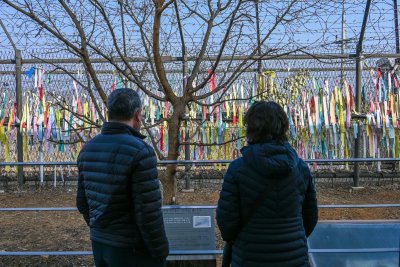
South Korea’s Unification Ministry said Wednesday it would prioritize confirming the fate of separated family members in North Korea if inter-Korean relations improve. In this February 2021 photo, visitors look at ribbons wishing for Korean Unification near the DMZ. File Photo by Thomas Maresca/UPI | License Photo

The unification ministry said Wednesday it will prioritize confirming the fate of separated families’ relatives in North Korea if strained inter-Korean relations begin to improve.

Under the 2026-2028 plan for supporting families separated by the 1950-53 Korean War, the ministry said it will make efforts to resume exchanges between such divided families at the government level and facilitate civilian-level exchanges between them.

“When there is progress over inter-Korean relations, the government will prioritize confirming the fate of the families’ relatives in North Korea,” the ministry said.

Since the first inter-Korean summit in 2000, the two Koreas have held 21 rounds of separated family reunions. Since the last event in August 2018, state-arranged family events have been suspended amid frosty inter-Korean ties.

North Korea dismantled a reunion facility for separated families inside its Mount Kumgang tourist area after North Korean leader Kim Jong-un ordered officials in 2019 to tear down all “unpleasant-looking” facilities built by South Korea at the mountain resort.

The ministry said it will consider measures to replace the family reunions location and seek reciprocal visits to Seoul and Pyongyang by separated families in the two Koreas.

The issue of separated families has taken on urgency as more elderly people have died without having a chance to meet their kin in the North due to Pyongyang’s reluctance to hold family reunion events.

The number of surviving separated family members registered with the government came to 34,658 as of the end of November. Of them, 32 percent are aged 90 and older.

Copyright (c) Yonhap News Agency prohibits its content from being redistributed or reprinted without consent, and forbids the content from being learned and used by artificial intelligence systems.

Source link

Rodong Sinmun access expands to 181 sites in South Korea

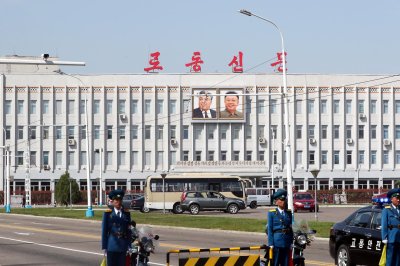
epa07029212 North Korean traffic policemen keep watch at a street in front of the building of the Rodong Sinmun newspaper (back), the official newspaper of the Central Committee of the Workers’ Party of Korea, in Pyongyang, North Korea, 18 September 2018. File Photo by PYONGYANG PRESS CORPS / EPA

Dec. 30 (Asia Today) — South Korea’s Unification Ministry said Tuesday that the public can now read North Korea’s state newspaper Rodong Sinmun at 181 designated outlets without special procedures such as separate identity checks or prior applications.

Vice Unification Minister Kim Nam-joong said at a briefing that visitors to institutions authorized to handle North Korean materials may view Rodong Sinmun “like any other general publication.” He said the ministry plans to broaden access to North Korea-related information so the public can independently compare and assess it.

The ministry said 181 institutions hold copies of Rodong Sinmun, with about 20 purchasing it regularly. It said anyone visiting those outlets may view the copies held there and that some procedures, including requirements tied to copying materials, have been simplified.

Rules governing the import of Rodong Sinmun into South Korea remain unchanged under customs regulations, the ministry said. Institutions not authorized to handle special materials still cannot import the paper, it said, adding it plans to discuss easing related restrictions with other agencies.

The ministry said it also plans to seek legal changes aimed at opening access to Rodong Sinmun and other North Korea-related sites online. About 60 North Korea-linked websites are currently blocked in South Korea, including Rodong Sinmun and the Korean Central News Agency, it said.

Unification Minister Chung Dong-young previously said the government would pursue a legal framework to expand access to North Korean materials, including broadcasts and publications. The ministry said an interagency consultative body met Dec. 26 and notified relevant agencies that Rodong Sinmun had been reclassified as general material, allowing broader public access.

— Reported by Asia Today; translated by UPI

© Asia Today. Unauthorized reproduction or redistribution prohibited.

Source link

Survey: Germans with reunification experience back Korean unification

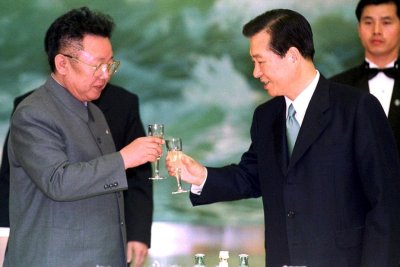
North Korean leader Kim Jong Il and his South Korean counterpart Kim Dae-jung give peace a chance in 2000. File Photo by EPA

Dec. 30 (Asia Today) — More than half of German respondents said they would recommend unification of the Korean Peninsula, drawing on their own country’s experience with reunification, according to a new international survey released Tuesday.

The findings came from the 2025 Global Unification Awareness Survey conducted by the Institute for Unification Studies, which polled 1,000 respondents in each of eight countries.

Among German respondents, 62.2% answered positively when asked whether they would recommend Korean unification based on Germany’s reunification experience. Of those, 17.9% said they “strongly agree,” while 44.3% said they “somewhat agree.”

When asked about the necessity of Korean unification, 55.4% of Germans responded positively. However, only 29.9% said they believe inter-Korean unification is realistically possible, highlighting a significant gap between perceived necessity and feasibility.

A similar pattern appeared in the United States, where 55.6% viewed unification as necessary but only 27.2% believed it was achievable. In Japan, just 29.3% said unification was necessary, and only 13.4% viewed it as possible.

The institute said the results show a consistent divide between recognition of unification’s importance and skepticism about its prospects. It noted that Germany, as a country that has already experienced national reunification, showed a higher perception of necessity than other surveyed nations.

Regarding Japan’s particularly low assessment of the need for Korean unification, the institute said the view appears to stem from a belief that unification would not benefit Japan. It added that, because support from neighboring countries is essential, Seoul should strengthen public diplomacy efforts aimed at improving Japanese perceptions.

On perceptions of North Korea’s nuclear program, Japanese respondents expressed the highest level of concern. A total of 81.5% of Japanese respondents said North Korea’s nuclear weapons pose a serious threat to peace, followed by Americans at 72.9% and Mongolians at 66.5%.

The institute said countries directly affected by North Korea’s nuclear issue – including Japan, the United States and Mongolia – tend to show heightened threat awareness.

Asked about Pyongyang’s motives for developing nuclear weapons, respondents most commonly viewed them as intended for offensive purposes. That perception was strongest in Japan at 71.8%, followed by the United States at 70.9% and Sweden at 70.2%. Excluding Mongolia, only about 20% to 30% of respondents in most countries viewed North Korea’s nuclear program as primarily defensive.

On preferred approaches to denuclearization, 74.6% across all eight countries favored diplomatic negotiations. Support for economic measures such as sanctions stood at 67.7%, while 48.2% supported military options.

The survey also examined national images of the two Koreas. South Korea was generally viewed as a country associated with trust and cooperation, while North Korea was widely perceived as a source of threat and distrust. Japan, however, showed low levels of trust toward both Koreas.

The annual survey was conducted online from Aug. 11 to 18 in Germany, Mongolia, the United States, Sweden, Italy, Japan, Canada and Poland.

— Reported by Asia Today; translated by UPI

© Asia Today. Unauthorized reproduction or redistribution prohibited.

Source link

Lee orders probe into claims of Unification Church lobbying

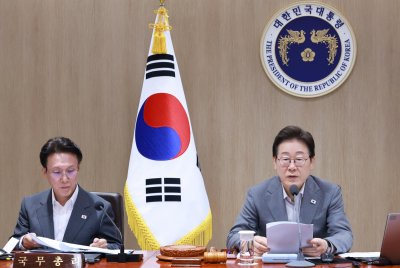
President Lee Jae Myung (R), alongside Prime Minister Kim Min-seok (L), speaks during a Cabinet meeting at the presidential office in Seoul, South Korea, 15 July 2025. File Photo by YONHAP /EPA

Dec. 30 (Asia Today) — President Lee Jae-myung on Tuesday ordered prosecutors and police to investigate allegations that the Unification Church lobbied politicians, directing authorities to begin work even as political parties debate appointing a special prosecutor.

Speaking at a Cabinet meeting at the presidential office, Lee said investigators should coordinate in advance on how the case would be handled if it is later transferred to a special prosecutor.

“Even if it becomes a special prosecutor case during the investigation and is handed over then, it would be better for the prosecution and the Ministry of the Interior and Safety to consult beforehand and decide who will handle it or if they will work together, and form a team,” Lee said. “It doesn’t seem like something we should just wait around for.”

Lee said religious interference in politics, bribery and collusion are serious matters that threaten democracy and the country’s future.

Prime Minister Kim Min-seok also called for a strong response, saying he believes instability in state affairs has been fueled by what he described as “shamanistic politics” and church-state collusion.

Kim said it was timely that discussions are emerging about appointing a special prosecutor to investigate the Unification Church and potentially expanding the scope to include Shincheonji, while warning the process could be derailed by political disputes.

He suggested the government should prepare for the possibility the political process fails to produce an agreement and said authorities could consider setting up a government-level special investigation headquarters.

– Reported by Asia Today; translated by UPI

© Asia Today. Unauthorized reproduction or redistribution prohibited.

Source link

Trump says he’s not worried about China’s blockade drills of Taiwan

A passenger looks at an LED board showing delayed flights during the Chinese military live-fire drills around Taiwan, in Taipei, Taiwan, Tuesday. China is conducting live-fire drills in five designated maritime and airspace zones around Taiwan. Photo by Richie B. Tongo/EPA

Dec. 30 (UPI) — China continued its live-fire drill called “Justice Mission 2025,” on Tuesday creating a blockade around Taiwan and disrupting flights, but President Donald Trump said he’s not worried.

Reporters asked Trump about the drills Monday, and he said he has a “great relationship with President Xi [Jinping], and he hasn’t told me anything about it.”

“I certainly have seen it … I don’t believe he is going to be doing it,” Trump said. He didn’t elaborate on what he meant that Xi could do. “Nothing worries me.”

“They’ve been doing naval exercises for 20 years in that area,” he told reporters.

Trump is expected to make a formal visit to Beijing next year.

Though Taiwan is a self-governing democracy, China claims it is a Chinese province. China has been pushing for a “peaceful reunification” with Taiwan. But it hasn’t ruled out taking the island nation by force.

On Friday, China sanctioned U.S. companies and their leadership after the United States announced an $11.1 billion arms deal with Taiwan on Dec. 18.

Taiwan’s Ministry of National Defense said it detected 130 Chinese military aircraft and 22 naval and coast guard vessels in the past 24 hours up to 6 a.m. Tuesday.

“China ignores the expectations of the international community for peace and persists in destroying regional stability with military threat, which is a blatant provocation to regional security and international order, and I would like to express my strongest condemnation,” President Lai Ching-te said Tuesday in a Facebook post.

Lai also said the drills were disrupting trade and air traffic.

“China’s military provocations along the First Island Chain severely disrupt global maritime trade, air traffic and regional peace. #Taiwan continues to act responsibly, neither escalating tensions nor yielding to threats – we will steadfastly defend our freedom against coercion,” he said on X.

Taiwan Defense Minister Wellington Koo said the drills disregarded international norms and “clearly aim to achieve cognitive warfare and deplete Taiwan’s combat capabilities … and to create division and conflict within Taiwanese society,” The Guardian reported.

This exercise is the sixth of its kind since 2022, though it’s the largest. In 2022, the drills were in retaliation for then-Speaker of the House Nancy Pelosi‘s visit. But this is the first time since then that China has created “maritime exclusion zones.” Planes and boats were not allowed to pass during the drills.

Source link

Zelensky: Russian drone attack claim an attempt to derail peace talks

Dec. 30 (UPI) — Ukrainian President Volodymyr Zelensky accused Russia of lying over a large-scale drone attack on President Vladimir Putin’s state residence 300 miles northwest of Moscow, which it claims was carried out by Kyiv.

Monday’s alleged attack shortly after high-level U.S.-Ukraine talks at Mar-a-Lago ended was an excuse to attack Ukraine, most likely Kyiv and government buildings there, and keep the war going, Zelensky told reporters.

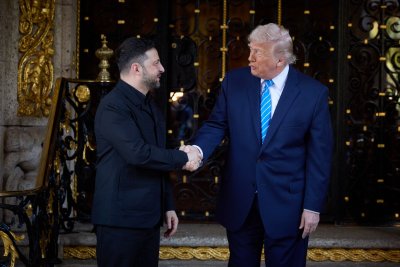
Zelensky said it was no accident that Moscow announced the attack after he and U.S. President Donald Trump said they had made good progress toward finalizing a peace agreement framework, as well as lengthy security guarantees, in talks Sunday at Trump’s resort in Palm Beach.

“It’s obvious that yesterday we had a meeting with President Trump, and it’s clear that when there is no scandal for the Russians, when there is progress, it is a failure for them. They do not want to end this war and are only capable of doing so under pressure. So they are looking for a pretext,” said Zelensky.

“Russia is at it again, using dangerous statements to undermine all achievements of our shared diplomatic efforts with President Trump’s team. We keep working together to bring peace closer. This alleged ‘residence strike’ story is a complete fabrication intended to justify additional attacks against Ukraine, including Kyiv, as well as Russia’s own refusal to take necessary steps to end the war. Typical Russian lies,” Zelensky wrote on X.

Russian Foreign Minister Sergey Lavrov said Monday that Moscow had already decided on when and which targets it would hit in retaliation for Kyiv’s targeting of Putin’s residence in the Novgorod region with 91 drones, which he described as a terrorist attack.

All the drones were downed by air defenses or electronic means and neither Putin or anyone else was hurt in the incident, according to Lavrov.

However, he warned Russia would revise its stance on the peace negotiations accordingly, “taking into account the Kyiv regime’s final transition to a policy of state terrorism,” but said Moscow would not be sharing details of its new tougher policy.

Speaking at a briefing on Tuesday, Kremlin spokesman Dmitry Peskov ruled out Moscow pulling the plug on the peace talks.

“Russia is not withdrawing from the negotiation process, and will certainly continue talks and dialogue, primarily with the Americans,” he said.

Speaking to journalists at Mar-a-Lago on Monday night, Trump said he was very angry about the attack, which he said he learned about directly from Putin, saying it was not the right time for offense when peace negotiations were in such a “delicate phase.”

“I don’t like it. It’s not good. I learned about it from President Putin today. I was very angry about it. It’s a delicate period of time. This is not the right time. It’s one thing to be offensive, because they’re offensive. It’s another thing to attack his house. It’s not the right time to do any of that.”

However, he acknowledged the attack may never have taken place and vowed that U.S. intelligence would get to the bottom of it.

According to the Kremlin, the attack in the early hours of Monday local time came “almost immediately” after the American and Ukrainian teams’ talks ended on Sunday evening.

Zelensky and Trump emerged from the talks to say they were at least 95% agreed on extendable 15-year security guarantees for Ukraine, but that the issues of territory and the Zaporizhzhia nuclear plant remained sticking points.

Source link

Lee to make state visit to China next week for summit with Xi Jinping

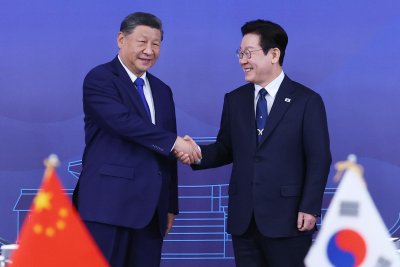
South Korean President Lee Jae Myung (R) will visit China next week for talks with Chinese President Xi Jinping, Cheong Wa Dae said Tuesday. In this November photo, the two leaders shake hands ahead of their meeting at the APEC summit in Gyeongju. Photo by Yonhap

President Lee Jae Myung will make a state visit to China early next week for summit talks with Chinese President Xi Jinping, Cheong Wa Dae said Tuesday, with the leaders expected to discuss ways to strengthen strategic cooperation and bilateral economic ties.

Lee is scheduled to depart for Beijing on Sunday for summit talks with Xi. On next Tuesday, Lee will travel to Shanghai before returning home on Wednesday, presidential spokesperson Kang Yu-jung said in a briefing.

The meeting will be the leaders’ second since their first summit talks on Nov. 1 on the sidelines of the Asia-Pacific Economic Cooperation summit in Gyeongju, South Korea.

It marks Lee’s first visit to China since taking office in June and the first state visit to China by a South Korean president since 2017.

Their first meeting in two months is expected to build on the momentum toward fully restoring “strategic cooperative partnership” between the two nations, according to the spokesperson.

“They are expected to discuss ways to produce tangible results that directly benefit people in both countries, including cooperation in supply chain investments, the digital economy and responses to transnational crime,” Kang said.

The planned visit comes as Lee has pledged to manage relations with China — South Korea’s largest trading partner and a key economic backer of North Korea — in a stable manner, amid Seoul’s efforts to bring Pyongyang back to the dialogue table.

Seoul has urged Beijing to play a constructive role in fostering conditions for the resumption of dialogue with North Korea, with China reaffirming its commitment to stability on the Korean Peninsula.

While in Shanghai, Lee will mark the 150th anniversary of the birth of Korean independence hero Kim Gu (1876-1949) and the centennial anniversary of the establishment of the Provisional Government of the Republic of Korea in the city.

Kim was a key leader of the independence movement during Japan’s 1910-45 colonial rule and served as president of the provisional government in Shanghai.

Lee is also scheduled to attend business events aimed at boosting partnerships between venture and startup companies from the two countries, Kang said.

The two countries plan to sign several memorandums of understanding covering a range of cooperation areas during the visit, she added, noting that further details will be released later.

According to industry sources, a large-scale business delegation led by SK Group Chairman Chey Tae-won is expected to accompany Lee on the trip.

Samsung Electronics Chairman Lee Jae-yong, Hyundai Motor Group Executive Chair Euisun Chung and LG Group Chairman Koo Kwang-mo are also likely to join the delegation organized by the Korea Chamber of Commerce and Industry, the sources said.

Copyright (c) Yonhap News Agency prohibits its content from being redistributed or reprinted without consent, and forbids the content from being learned and used by artificial intelligence systems.

Source link

Kim Jong Un praises new rocket system that can ‘annihilate the enemy’

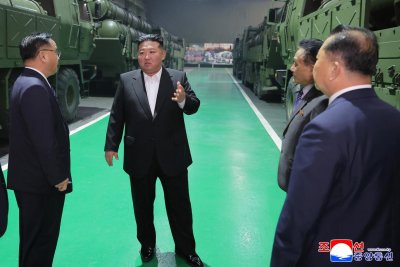
North Korean leader Kim Jong Un (C) visited a factory producing a multiple rocket launcher system, which he described as capable of “annihilating the enemy” through precise and devastating strikes, state media reported Tuesday. Photo by KCNA/EPA

SEOUL, Dec. 30 (UPI) — North Korean leader Kim Jong Un called for a major increase in the production of new multiple-rocket launcher systems that can “annihilate the enemy,” state media reported Tuesday.

During a Sunday visit to a munitions factory, Kim described the weapons as the “main strike means” that would transform the composition of the Korean People’s Army’s artillery forces and serve as a central tool in future military operations, according to the official Korean Central News Agency.

Kim said the rocket launcher “is a super-powerful weapon system” that can “annihilate the enemy through sudden precise strike with high accuracy and devastating power” and can also be used as a “strategic attack means,” KCNA reported. North Korea frequently uses the term “strategic” to signal nuclear capability.

Analysts warn that North Korea’s expanding long-range rocket artillery poses a growing conventional threat to South Korea, where much of the population and key military infrastructure lie within range of such systems.

Kim’s entourage included Defense Minister No Kwang Chol, ruling party secretary Jo Chun Ryong and Missile Administration General Director Jang Chang Ha.

The factory inspection comes amid a surge in weapons-related activity by Kim ahead of an upcoming key party congress, underscoring a broader push to expand North Korea’s arms production capacity.

On Sunday, Kim oversaw the test launch of long-range strategic cruise missiles in the Yellow Sea, saying the drills demonstrated “the absolute reliability and combat readiness of our strategic counterattack capability.” The missiles flew for roughly two hours and 50 minutes along a preset flight orbit before striking a target, KCNA said.

South Korea’s military confirmed detecting the launches and warned that further tests could follow toward the end of the year.

Last week, Kim visited the construction site of an 8,700-ton nuclear-powered strategic missile submarine, highlighting Pyongyang’s continued push to expand its strategic deterrent.

The inspection was accompanied by renewed calls from Kim to boost missile and artillery shell production capacity as North Korea ramps up weapons manufacturing ahead of the ruling Workers’ Party’s Ninth Congress, expected in early 2026.

The emphasis on munitions production has fueled speculation that Pyongyang is seeking to sustain or expand arms exports to Russia amid deepening military ties between the two countries. According to South Korea’s National Intelligence Service, North Korea has sent thousands of shipping containers of munitions to Russia and deployed about 15,000 troops to assist Russian forces in the Kursk region.

In return, experts assess that Moscow is providing Pyongyang with advanced military technology, including assistance related to space launch vehicles, reconnaissance satellites and air defense systems.

The party congress is expected to outline a new five-year economic plan and recalibrate North Korea’s military and foreign policy priorities. Analysts say the meeting could further entrench a hard-line stance toward South Korea, which the North officially designated a “hostile state” last year as Kim abandoned the long-standing goal of reunification.

Source link

Defectors protest proposed new label for North Koreans in South

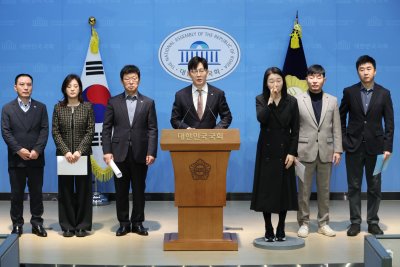
Rep. Park Chung-kwon of the People Power Party and leaders of North Korean defector groups hold a news conference at the National Assembly Communication Center in Seoul on Dec. 29 to oppose changing the official term “North Korean defectors” to “Bukhyangmin.” Photo by Yonhap News Agency

Dec. 29 (Asia Today) — North Korean defector groups on Monday urged South Korea’s Unification Ministry to halt its push to replace the official term for defectors, warning that one leading alternative could be misunderstood as meaning people who “look toward” North Korea.

Five defector organizations, including the Committee for North Korean Democracy and the North Korea Strategy Center, held a news conference at the National Assembly and issued a joint statement calling for the government to stop reviewing the term change and to release the results of a public opinion survey conducted from late September to early October, organizers said.

The groups objected in particular to “Bukhyangmin,” a term the ministry has weighed as a possible replacement for “North Korean defectors.” They said the word could be confused with similar-sounding phrases that imply sympathy for North Korea, framing it as an attack on defector identity.

The dispute also intensified after Unification Minister Chung Dong-young said during a Dec. 19 work report that “all” defectors strongly reject the current term, a claim critics said overgeneralized defector views. The ministry has said Chung asked roughly 60 residents at Hanawon, a government resettlement and education center in Anseong, Gyeonggi Province, during a private visit on Dec. 5 and that all those present supported a change.

At the news conference, Kang Cheol-hwan, head of the North Korea Strategy Center, questioned whether the new term would make defectors appear to be people who admire North Korean leader Kim Jong Un. Other speakers argued the current term reflects “escape” from the North Korean system and symbolizes resistance to repression.

A broader umbrella group, the National Association of North Korean Defectors, also issued a separate statement demanding a public apology for what it called distorted remarks and urging the government to guarantee public deliberation if it changes terminology tied to defectors, organizers said.

The ministry has said it is reviewing whether to adjust legal terminology and social usage to reduce negative connotations and support settlement and social integration.

Previous surveys have shown mixed views among defectors. A Korea Institute for National Unification survey found about 59% of defector respondents said a change was needed, but preferences among alternatives were split, with “Hanamin,” “Tongilmin” and “Bukhyangmin” drawing similar levels of support, news reports said.

The Unification Ministry has not announced a final decision and has said it is internally reviewing whether to disclose results from its latest survey, according to local reports.

— Reported by Asia Today; translated by UPI

© Asia Today. Unauthorized reproduction or redistribution prohibited.

Source link

Jofra Archer named in England T20 World Cup squad despite Ashes injury

Smith has been England’s one-day opener in their past nine matches, though has not played a T20 since June. The 25-year-old struggled in the one-dayers in New Zealand that preceded the Ashes, then has managed only one half-century in eight innings in Australia.

In contrast, 28-year-old Tongue has been England’s breakout star of the Ashes, claiming 12 wickets in his two Tests. He is in the squad for the T20s and not the ODIs.

Cox, the leading run-scorer in last year’s Hundred, can feel unfortunate to miss out. Tom Banton gets the nod as middle-order batting cover.

Duckett is in both squads despite a difficult Ashes and looks set to bring his Test opening partnership with Crawley to one-day internationals as England look for a combination that can build towards the 50-over World Cup.

Crawley has played eight one-day internationals, the last of which in West Indies in December 2023 was also his last List A game.

Root, who turns 35 on Tuesday, would have been a potential candidate to rest after the Ashes, yet travels to Sri Lanka for the ODIs only. His next cricket would then likely come in the home summer.

All-rounder Jacks missed the tour of New Zealand as he recovered from a broken finger and returns to both squads as one of a number of spin options in the subcontinental conditions.

Jacks joins Adil Rashid, Liam Dawson, Rehan Ahmed and Bethell in the slow-bowling ranks.

Along with Nepal, England join West Indies, Bangladesh and tournament debutants Italy in Group C of the T20 World Cup. All of their matches take place in Kolkata and Mumbai.

If Brook’s men finish in the top two, they would progress to a second-round group that could include New Zealand, Pakistan and Sri Lanka. The top two from that group advance to the semi-finals.

Source link

Thae Yong-ho says North may build nuclear submarine before South

Former People Power Party lawmaker Thae Yong-ho speaks during an appearance on Asia Today TV’s “Shin Yul’s Political Check” on Dec. 29. Photo by Asia Today

Dec. 29 (Asia Today) — Former People Power Party lawmaker Thae Yong-ho said Monday that North Korea is likely to build a nuclear-powered submarine before South Korea, citing Pyongyang’s ability to bypass lengthy legislative and administrative processes.

Thae made the remarks during an appearance on Asia Today TV’s political talk show Shin Yul’s Political Check. He was commenting on North Korea’s stated goal of developing a nuclear-powered strategic submarine as part of its five major defense modernization tasks.

“North Korea’s objective is to create a nuclear threat that the United States would perceive as credible,” Thae said. He added, however, that Washington still does not view Pyongyang’s nuclear capabilities as an immediate existential threat.

He said a land-based nuclear missile launched from North Korea would take about an hour to reach the United States and could be intercepted or neutralized through a preemptive strike. “That’s why North Korea is trying to develop a method to hide in the depths of the ocean and launch closer to U.S. shores,” he said, adding that Pyongyang ultimately seeks recognition as a nuclear-armed state.

“North Korea lies a lot and engages in bluster,” Thae said. “But when you look back, they usually end up building what they say they will. The quality may not be sophisticated, but they get it done. A nuclear submarine is just a matter of time.”

Asked whether South Korea or North Korea would succeed first, Thae said he believed the North would do so earlier. He noted that while South Korea has much of the necessary technology, building a nuclear-powered submarine would require years of preparation, legislative approval and negotiations, particularly with the United States.

“Even if it were built at a U.S. shipyard, the infrastructure alone could take five years to prepare,” he said. He added that fuel transfer issues and U.S. legislative approval would also pose major hurdles. “We are a democracy, so procedures take time. North Korea can simply cobble something together with Russia, but we cannot.”

Thae also said North Korea has not yet completed its submarine-launched ballistic missile technology. He noted that while the North has displayed launches from barges, it has not conducted a confirmed underwater launch since unveiling a nuclear attack submarine in September 2023.

“If they had mastered the technology, they would have demonstrated it by now,” he said, adding that firing missiles underwater while maintaining submarine stability is highly complex.

Thae also predicted that North Korea’s internal power structure could move into what he described as an “era of Ri Sol-ju,” referring to Kim Jong-un’s wife. He said Kim’s daughter, Kim Ju-ae’s public appearances appear symbolic rather than indicative of an imminent female successor.

Turning to South Korea’s decision to allow limited public access to Rodong Sinmun, Thae downplayed concerns about social impact. He said the newspaper is only available in restricted settings such as libraries and is not widely read even inside North Korea.

“In North Korea, officials are forced to read it during designated morning sessions,” he said. “Who would read it here, and how many people would bother? There won’t be major social repercussions.”

— Reported by Asia Today; translated by UPI

© Asia Today. Unauthorized reproduction or redistribution prohibited.

Source link

China warns U.S. it cannot stop Taiwan reunification

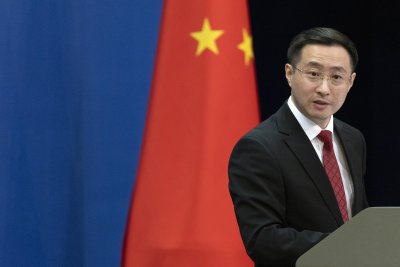
Ministry of Foreign Affairs’ spokesperson Lin Jian speaks during a press conference in Beijing, China, 05 February 2025. File ANDRES MARTINEZ CASARES/EPA

Dec. 29 (Asia Today) — China’s foreign ministry on Monday demanded the United States halt arms sales to Taiwan and warned that U.S. involvement in the Taiwan Strait cannot prevent what Beijing calls “complete reunification,” issuing the statement as the Chinese military launched large-scale drills encircling the island.

In a statement posted on social media, the ministry’s North American and Oceania affairs department criticized Washington’s approval of an $11.1 billion arms package for Taiwan, describing the move as a breach of U.S. commitments and warning it would “harm others” and ultimately “harm itself,” according to Chinese and state-linked media accounts.

The statement urged the United States to recognize what it called the “serious consequences” of arming Taiwan and argued that attempts to support “Taiwan independence” would increase the risk of conflict and confrontation between China and the United States.

It also invoked history, saying the United States sent warships to the Taiwan Strait more than 70 years ago to block reunification by force, adding that “China is no longer the China of over 70 years ago” and claiming a “fundamental shift” in the cross-strait balance of power.

“No matter how much the U.S. tries to turn Taiwan into a ‘porcupine,’ it cannot stop the historical trend of China’s complete reunification,” the statement said, warning that Washington would “reap what it sows” by encouraging pro-independence forces.

The foreign ministry’s comments followed an announcement earlier Monday by the People’s Liberation Army’s Eastern Theater Command that it would conduct joint drills involving land, sea, air and rocket forces around Taiwan, its first major “encirclement” exercise in months, according to multiple reports.

Taiwan placed its forces on heightened alert and condemned the drills, which came after Washington moved forward with the largest U.S. arms package for Taiwan to date, Reuters reported.

— Reported by Asia Today; translated by UPI

© Asia Today. Unauthorized reproduction or redistribution prohibited.

Source link

Luke Littler thanks booing crowd for ‘paying prize money’ at PDC World Darts Championship

Nathan Aspinall became the latest seed to fall at the PDC World Championship, but 20-year-old Charlie Manby continued his dream run by reaching the last 16.

Aspinall, who reached the semi-finals in 2019 and 2020, lost 4-3 in a final-set thriller against the Netherlands’ Kevin Doets.

The 15th seed won the first and third sets, but was pegged back on both occasions, only to seize control again with a stunning 170 checkout to claim the fifth set.

However, from there, Doets took over, reeling off sixth consecutive legs to seal a sixth straight win over Aspinall and set up a last-16 tie against world number two Luke Humphries on Tuesday.

Manby, who is playing in the tournament for the first time, overcame Ricky Evans 4-2.

The bricklayer from Huddersfield struggled on his doubles early on, taking out just four of 30 attempts in the first three sets as he went 2-1 down.

Scoring was never an issue though and his accuracy on the checkouts improved, alongside a drop-off from Evans, as he sealed a place in round four and a minimum £60,000 in prize money.

He will face the Netherlands’ Gian van Veen in the next round in what will be his toughest test so far, with the 10th seed having the tournament-high match average of 108.28 in his second-round win.

After the match, Evans posted on Facebook that he had received death threats as well as hate and fat jokes.

Another debutant also progressed with Somerset’s Justin Hood beating Ryan Meikle 4-1.

He raced into a 3-0 lead before Meikle pulled a set back but Hood sealed his place and said afterwards that he would not have to work in 2026 after also confirming at least £60,000 in prize money.

He has climbed to a provisional 63rd in the world rankings already and said post-match he still has aspirations to open a Chinese restaurant one day.

He will face 11th seed Josh Rock in the last 16, after the Northern Irishman overcame Callan Rydz 4-2 in the final third-round tie.

Rydz was emotional throughout following the death of his grandfather since his previous match.

Source link

U.S. pledges $2 billion for U.N. humanitarian aid as Trump warns agencies must ‘adapt or die’

The United States on Monday announced a $2-billion pledge for U.N. humanitarian aid as President Trump’s administration slashes U.S. foreign assistance and warns United Nations agencies to “adapt, shrink or die” in a time of new financial realities.

The money is a small fraction of what the U.S. has contributed in the past but reflects what the administration believes is still a generous amount that will maintain America’s status as the world’s largest humanitarian donor.

“This new model will better share the burden of U.N. humanitarian work with other developed countries and will require the U.N. to cut bloat, remove duplication, and commit to powerful new impact, accountability and oversight mechanisms,” Secretary of State Marco Rubio said on social media.

The pledge creates an umbrella fund from which money will be doled out to agencies and priorities, a key part of U.S. demands for drastic changes across the U.N. that have alarmed many humanitarian workers and led to severe reductions in programs and services.

The $2 billion is only a sliver of traditional U.S. humanitarian funding for U.N.-coordinated programs, which has run as high as $17 billion annually in recent years, according to U.N. data. U.S. officials say only $8 billion to $10 billion of that has been in voluntary contributions. The United States also pays billions in annual dues related to its U.N. membership.

“The piggy bank is not open to organizations that just want to return to the old system,” Jeremy Lewin, the State Department official in charge of foreign assistance, said at a press conference Monday in Geneva. “President Trump has made clear that the system is dead.”

The State Department said “individual U.N. agencies will need to adapt, shrink, or die.” Critics say the Western aid cutbacks have been shortsighted, driven millions toward hunger, displacement or disease, and harmed U.S. soft power around the world.

A year of crisis in aid

The move caps a crisis year for many U.N. organizations, including its refugee, migration and food aid agencies. The Trump administration has already cut billions in U.S. foreign aid, prompting the agencies to slash spending, aid projects and thousands of jobs. Other traditional Western donors have reduced outlays, too.

The U.S. pledge for aid programs of the United Nations — the world’s top provider of humanitarian assistance and biggest recipient of U.S. humanitarian aid money — takes shape in a preliminary deal with the U.N. Office for the Coordination of Humanitarian Affairs, or OCHA, run by Tom Fletcher, a former British diplomat and government official.

Fletcher, who has spent the past year lobbying U.S. officials not to abandon U.N. funding altogether, appeared optimistic at the deal’s signing in Geneva.

“It’s a very, very significant landmark contribution. And a month ago, I would have anticipated the number would have been zero,” he told reporters. “And so I think, before worrying about what we haven’t got, I’d like to look at the millions of people whose lives will be saved, whose lives will be better because of this contribution, and start there.”

Even as the U.S. pulls back its aid contributions, needs have ballooned worldwide: Famine has been recorded this year in parts of conflict-ridden Sudan and Gaza, and floods, drought and natural disasters that many scientists attribute to climate change have taken many lives or driven thousands from their homes.

The cuts will have major implications for U.N. affiliates like the International Organization for Migration, the World Food Program and refugee agency UNHCR. They have already received billions less from the U.S. this year than under annual allocations from the Biden administration — or even during Trump’s first term.

Now, the idea is that Fletcher’s office — which has aimed to improve efficiency — will become a funnel for U.S. and other aid money that can be redirected to those agencies, rather than scattered U.S. contributions to a variety of individual appeals for aid.

Asked by reporters if the U.S. language of “adapt or die” worried him, Fletcher said, “If the choices are adapt or die, I choose adapt.”

U.S. seeks aid consolidation

U.S. officials say the $2 billion is just a first outlay to help fund OCHA’s annual appeal for money. Fletcher, noting the upended aid landscape, already slashed the request this year. Other traditional U.N. donors like Britain, France, Germany and Japan have reduced aid allocations and sought reforms this year.

“This humanitarian reset at the United Nations should deliver more aid with fewer tax dollars — providing more focused, results-driven assistance aligned with U.S foreign policy,” U.S. Ambassador to the United Nations Mike Waltz said.

At its core, the changes will help establish pools of funding that can be directed either to specific crises or countries in need. A total of 17 countries will be initially targeted, including Bangladesh, the Democratic Republic of the Congo, Haiti, Syria and Ukraine.

Two of the world’s most desperate countries, Afghanistan and Yemen, are not included, with U.S. officials citing aid diversion to the Taliban and Houthi rebels as concerns over restarting contributions.

Also not mentioned on the list are the Palestinian territories, which officials say will be covered by money stemming from Trump’s as-yet-incomplete Gaza peace plan.

The U.N. project, months in the making, stems from Trump’s longtime view that the world body has great promise but has failed to live up to it and has — in his eyes — drifted too far from its original mandate to save lives while undermining American interests, promoting radical ideologies and encouraging wasteful, unaccountable spending.

“No one wants to be an aid recipient. No one wants to be living in a UNHCR camp because they’ve been displaced by conflict,” Lewin said. “So the best thing that we can do to decrease costs, and President Trump recognizes this and that’s why he’s the president of peace, is by ending armed conflict and allowing communities to get back to peace and prosperity.”

Keaten and Lee write for the Associated Press. Lee reported from Washington. AP writer Farnoush Amiri contributed to this report from New York.
Source link

Brazil leads international tourism in South America in 2025

Tourists visit the Iguazu Falls in Iguazu National Park in Foz do Iguazu, Brazil, last week. Photo by Juan Pablo Pino/EPA

Dec. 29 (UPI) — International tourism across South America rebounded strongly in 2025, led by Brazil, which received nearly 9 million foreign visitors and consolidated its position as the region’s top destination.

Brazil welcomed 8.97 million international tourists between January and November 2025, a 40% increase compared with the same period last year, according to data from Brazil’s Ministry of Tourism.

Argentines were the largest group of visitors, totaling 3.1 million tourists, followed by travelers from Chile, the United States, Uruguay and Paraguay.

Brazilian authorities said visitor numbers are expected to rise further in December with the year-end holidays and the peak of the Southern Hemisphere vacation season.

Tourism revenue generated more than $7.1 billion in foreign income through November, reflecting higher volumes and longer average stays, according to the Central Bank of Brazil and tourism officials.

Elsewhere in South America, tourism recovered at different speeds. Most countries reported clear gains compared with previous years, driven mainly by regional travel and improved air connectivity.

Argentina recorded 795,300 international visitors in November alone, according to national statistics, including 491,400 tourists who stayed at least one night and 303,900 same-day visitors.

Brazil was the main country of origin, followed by the European Union and Uruguay. Despite solid inbound figures, Argentina posted a negative tourism balance, as outbound travel by residents continued to exceed arrivals of foreign visitors.

Chile reported more than 5 million international tourist arrivals during the year, according to data from the National Tourism Service, marking one of the strongest recoveries in South America.

Authorities said the growth was driven mainly by visitors from Argentina and Brazil, along with a gradual return of long-haul travelers from North America and Europe as air connectivity improved.

Uruguay received 3,207,536 international visitors between January and November, with estimated tourism spending of $1.784 billion.

Argentina and Brazil remained the country’s main source markets. Argentine tourists totaled more than 2 million arrivals, generating $1.034 billion in spending, while nearly 450,000 Brazilian visitors produced approximately $296 million during their stays.

Paraguay posted one of the region’s strongest rebounds early in 2025, with international arrivals up more than 50% year over year in the first quarter, according to Unite Nations tourism data.

The growth was driven mainly by cross-border travel and short stays linked to commerce and regional mobility.

South American travelers took advantage of exchange rate differences and expanded land and air connections. The return of travelers from the United States and Europe added further momentum, particularly in Brazil and Chile, reinforcing South America’s post-pandemic tourism recovery.

Source link

World Darts Championship 2026: Stephen Bunting says 13-year-old son receiving online abuse

Stephen Bunting said he has been left “hurt” after his son was the victim of online abuse.

World number four Bunting, 40, was knocked out of the 2026 PDC World Darts Championship on Saturday with a dramatic 4-3 loss to world number 63 James Hurrell.

Bunting’s son, 13, was in attendance at Alexandra Palace and was shown regularly on television cameras passionately supporting his father during his dramatic loss in seven sets.

Posting on X for the first time since Saturday’s exit, Bunting said the abuse his son has received has been “hurtful” for the whole family.

“Hi guys. Sorry I’ve had a few days away from my socials but I just needed a small bit of time after my game to recover and rest,” Bunting posted.

“I love my family so much and they give me massive motivation to continue this journey. I still believe I have a lot to give darts over the rest of my career and I want to make them forever proud.

“They see the negative comments and do their best to make sure I don’t see them – and even [my son] has had some hate from some of the trolls online, which really is hurtful for us as a family.

“[He] is one of the nicest kids you could wish to meet and I’ll be doing a lot more social stuff with him this coming year.”

Stephen’s son regularly appears alongside his father at events on and off the oche, including Bunting’s social media pages.

The Bullet’s defeat to Hurrell could cost him an automatic qualification spot for the 2026 Premier League Darts campaign, with Bunting likely to drop outside the world’s top four following his early tournament exit.

Source link

British boxer Anthony Joshua injured in fatal car crash in Nigeria

Dec. 29 (UPI) — Anthony Joshua, a British heavyweight boxing champion, sustained injuries Monday in a car crash that killed two others in Nigeria, local authorities said.

Babaseyi Boluwatife, an Ogun State Police Command spokesperson, told CNN that Joshua incurred “minor bruises” in the crash around 11 a.m. (5 a.m. EST) on the Lagos-Ibadan Expressway. The highway connects Ogun State to the city of Lagos.

Nigerian media outlet Punch Newspapers reported the vehicle Joshua was in collided with a truck.

“The vehicle conveying Anthony Joshua, a Lexus SUV, was involved in the accident under circumstances that are currently being investigated,” Oluseyi Babaseyi, a spokesperson for Lagos police, told CBS News.

“He was seated in the rear of the vehicle, sustained minor injuries and (is) receiving medical attention.”

Boluwatife said two other occupants in the same vehicle as Joshua — both foreign nationals — died, including the driver.

Joshua, who was born to Nigerian parents, frequently visits the West African nation.

Joshua is a former two-time heavyweight boxing champion and most recently garnered attention for knocking out YouTube personality Jake Paul in a bout in Miami earlier this month.

Los Angeles Dodgers pitcher Yoshinobu Yamamoto (C) celebrates with teammates after the Dodgers defeat the Toronto Blue Jays 5-4 in 11 innings in Game 7 to win the World Series in Toronto on November 1, 2025. Photo by Aaron Josefczyk/UPI | License Photo

Source link

Professor says China’s tax, labor rules give firms edge over Korea

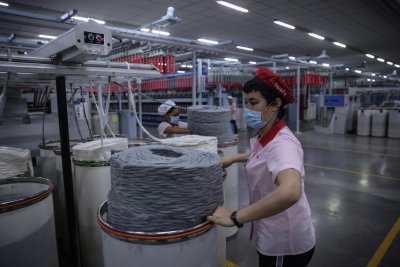
An Ethnic minority worker operates machinery at Aksu Huafu textile limited company in Aksu, western China’s Xinjiang Uyghur Autonomous Region during a government organized trip for foreign journalists, Aksu, China, 20 April 2021 (issued 30 April 2021). File Photo by WU HONG/EPA

Dec. 28 (Asia Today) — Hanyang University business professor Lee Woong-hee said South Korean companies face structural disadvantages versus fast-rising Chinese rivals, citing China’s lack of inheritance and gift taxes and fewer work stoppages tied to strikes.

In a column, Lee said many in South Korea view China as a socialist system with low economic freedom, but argued Beijing has increasingly tolerated business autonomy since its “reform and opening-up” era. He pointed to China’s 2004 constitutional recognition of private property rights as an example of what he described as a bold shift, even though the state retains land ownership.

Lee argued China has absorbed Western institutions such as private property rights and joint-stock companies into its system, rebranding them as “new socialism,” and said Chinese scholars have promoted theoretical justifications for that approach.

Lee said China holds advantages that South Korean firms do not, starting with taxation. He wrote that China does not currently levy inheritance, estate or gift taxes, unlike South Korea, where high inheritance and gift tax burdens can pressure founders to sell companies rather than pass them on to heirs.

He also said China faces fewer production disruptions from strikes. Lee noted China removed the right to strike from its 1982 constitution and allows only the All-China Federation of Trade Unions as a legal union structure, limiting independent organizing.

While acknowledging an increase in labor disputes, Lee cited reports estimating 1,509 labor incidents in 2024 and argued they remained relatively small-scale and dispersed, with authorities preventing wider escalation.

Beyond taxes and labor, Lee said China benefits from deeper pools of engineering talent and stronger industrial support. He also argued South Korea’s industrial electricity rates are significantly higher than China’s, and said Beijing offers broad policy backing for strategic industries.

Lee wrote that China’s startup momentum appears stronger, citing surveys suggesting higher startup rates among Chinese graduates and pointing to global rankings that placed Beijing among leading startup cities. He said China ranks second globally in the number of unicorn companies after the United States.

Lee concluded that China’s older socialist traits appear to be fading and that its entrepreneurial culture is reasserting itself, arguing it may only be a matter of time before China becomes more business-friendly than South Korea.

— Reported by Asia Today; translated by UPI

© Asia Today. Unauthorized reproduction or redistribution prohibited.

Caption:Professor Lee Woong-hee of Hanyang University’s business school. /Asia Today

Source link

At least 13 killed, scores injured in train crash in southern Mexico

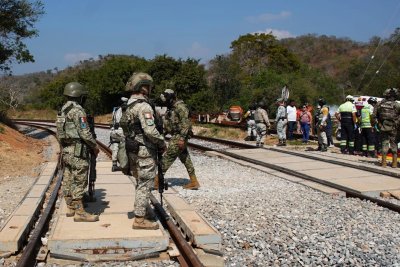
Mexican Navy troops secure the scene of a deadly train derailment in Asuncion Ixtaltepec municipality in Oaxaca, Mexico, on Sunday. At least 13 people were killed and 98 were injured, according to the Navy Secretariat which operates the country’s rail network. Photo by Luis Villalobos/EPA

Dec. 29 (UPI) — At least 13 people were killed and 98 injured after a train came off the tracks in the southern Mexican state of Oaxaca, authorities said.

The train, which was en route from Salina Cruz on the Pacific coast to Coatzacoalcos on the Gulf coast, derailed on a bend near Nizanda on Sunday.

President Claudia Sheinbaum said in an update on X early Monday that the injured, five of whom were in a serious condition, were being treated at four area hospitals, adding that she had instructed the Secretary of the Navy and the deputy interior minister to travel to the site and “personally attend to the families” of victims.

In an online post, Oaxaca Gov. Salomon Jara Cruz said of the 250 passengers and crew onboard, 139 were safe and 36 were continuing to receive medical treatment.

Expressing “deep regret,” Jara Cruz said that state authorities were working with federal agencies to assist those affected and pledged his administration would do all it could to help those caught up in the accident.

Attorney General Ernestina Godoy Ramos confirmed an investigation was underway.

The train comprising two locomotives and four passenger cars was on the Interoceanic Corridor route across the Tehuantepec Isthmus, the narrowest part of Mexico, connecting the Gulf coast with the Pacific, according to the Mexican Navy, which is responsible for Mexico’s railways.

The Interoceanic Train began operating in 2023 under former President Andres Manuel Lopez Obrador as part of an effort modernize passenger and freight links across the isthmus.

The long-term goal is to expand ports, railways and industrial infrastructure, stimulating development in the region to eventually create a global trade route to rival the Panama Canal.

Source link

People Power Party expels ex-lawmaker after minister nomination

Jang Dong-hyuk, leader of the People Power Party, drinks water during an all-night filibuster on a bill to create a special tribunal for cases tied to former President Yoon Suk Yeol’s Dec. 3 martial law at the National Assembly in Seoul on Dec. 23. File Photo by Asia Today

Dec. 28 (Asia Today) — South Korea’s People Power Party said Sunday it expelled former lawmaker Lee Hye-hoon after she accepted a nomination to serve as planning and budget minister in President Lee Jae-myung’s administration, calling the move an act that damaged the party ahead of local elections.

The party said its Supreme Council approved a resolution to expel Lee and void her party duties as an official. It said accepting the nomination amounted to misconduct because she agreed to join a Cabinet for the rival administration while holding a party post.

In a statement, the People Power Party said Lee, as a district party committee chair, “voluntarily agreed” to the appointment and thereby aided the current government. The party described it as an act of “disloyalty” with local elections six months away.

The party also said Lee continued party activities, including work related to evaluating elected officials, without disclosing her nomination as a State Council member, which it said disrupted party order and obstructed party operations.

The party warned it would respond “decisively and strictly” to any conduct that undermines its values and responsibilities, citing party rules and its constitution.

It also condemned President Lee and Lee Hye-hoon for what it described as turning a Cabinet post tied to national finances into an object of political bargaining and urged them to publicly apologize and take responsibility.

— Reported by Asia Today; translated by UPI

© Asia Today. Unauthorized reproduction or redistribution prohibited.

Source link

Yonsei team deploys AI system to draft medical records at Severance

Yoo Seung-chan, a professor at Yonsei University’s Department of Biomedical Systems Informatics, explains key features of Severance Hospital’s next-generation electronic medical records system, Y-NOT, on Dec. 18. Photo by Asia Today

Dec. 28 (Asia Today) — A research team at Yonsei University has built a generative AI-based medical record system that is now being used at Severance Hospital, aiming to cut doctors’ documentation time and allow more focus on patient care.

The system, known as Y-NOT and implemented through the hospital’s “Y-NOT” record platform, uses a large language model to draft admission and discharge notes for clinicians to review, according to Professor Yoo Seung-chan of Yonsei University’s Department of Biomedical Systems and Information Science.

“Why should we spend more time sitting in front of computers than seeing patients?” Yoo said, describing a question often raised by emergency care staff that helped drive the project.

Yoo said he began full-scale development last year as administrative burdens on medical staff intensified during tensions between doctors and the government. He said the team judged AI technology had matured enough to meaningfully reduce record-keeping workload and started development.

The project began in July last year and was deployed in clinical settings by November, Yoo said, with model development and hospital rollout carried out in parallel. He said the team focused first on achievable clinical usefulness rather than pushing only for maximum model performance.

Some medical staff initially expressed concerns, including the risk of errors in records, questions over responsibility for mistakes and worries that the system could infringe on physicians’ authority. Yoo said two surveys conducted after implementation showed those concerns eased, with especially strong satisfaction among older staff.

He said the team framed the system as supporting, not replacing, clinicians. Doctors continue to diagnose and make decisions, he said, while the AI drafts and organizes documentation for verification. Yoo added that some staff said the system made care easier because it reduced the need to manually search through past electronic records.

The “Y-NOT” system is now used beyond the emergency department, including operating rooms and inpatient wards, for broader record management, Yoo said.

The time required to create emergency room medical records fell by more than half, according to the report, dropping from 69.5 seconds to 32 seconds. Staff have said the reduced documentation burden gives them time to make eye contact with patients, Yoo said.

He said evaluations indicate record completeness and standardization have improved across care teams, including nurses, and that the time saved helps emergency physicians move quickly to the next patient or offer additional guidance to patients leaving the hospital.

Yoo said the longer-term goal extends beyond a documentation tool to an intelligent agent system designed to support safe care aligned with global standards. That direction is tied to Severance Hospital’s “Doctor Answer 3.0” project, he said, and future plans include exploring ways for patients to communicate with an AI system based on their own medical records.

Yoo said AI could help address rising medical demand tied to population aging and a decline in essential medical staff. He said it could support guideline-based care for clinicians and help patients maintain a sense of continuous connection to the hospital after discharge.

— Reported by Asia Today; translated by UPI

© Asia Today. Unauthorized reproduction or redistribution prohibited.

Source link

Korea sees decline in ‘junior pays’ custom as agencies push Dutch pay

Exterior of the Ministry of the Interior and Safety, Dec. 28, 2025. Photo by Asia Today

Dec. 28 (Asia Today) — South Korea’s Interior Ministry said Sunday that a long-criticized public-sector custom in which junior officials take turns paying for meals for senior executives has declined, as central and local governments expand measures such as anonymous reporting systems and Dutch pay.

Seoul’s city government has set up an anonymous reporting channel inside its electronic personnel system to curb the practice, known as “hosting days,” in which subordinates feel pressured to cover a superior’s meal. Reports can be filed anonymously by staff at headquarters or affiliated agencies, triggering investigations aimed at treating cases as an organizational issue rather than a personal complaint.

In South Jeolla Province, officials have promoted a “sympathy pay” campaign to formalize a Dutch treat principle under which each person pays their share. The province also banned the use of pooled office funds to cover department dinners or meal costs.

The Ministry of the Interior and Safety said its review of eradication efforts across central and local governments found “tangible improvements.” The custom refers to employees treating executives to meals at their own expense, a practice critics say undermines integrity and a horizontal workplace culture.

A joint survey by the Interior Ministry and the Personnel Innovation Ministry found that the share of central government employees who said they had paid for a superior’s meal in the past month fell to 7.7% in April from 10.1% in November last year. Among local government workers, the rate fell to 12.2% from 23.9% over the same period, a larger decline than in central agencies.

The ministry said agencies have combined integrity education with internal surveys, emphasizing awareness and voluntary participation rather than relying only on crackdowns or one-time campaigns. Efforts have also focused on changing communication patterns inside organizations, it said.

The Food and Drug Safety Ministry said its head personally urged elimination of the practice and operated an intensive reporting period. It also sought to ease hierarchical meal culture through events such as lunchtime communication sessions between senior officials and staff.

Asan, a city in South Chungcheong Province, held a “cushion word” contest to encourage softer expressions as part of broader efforts to reshape workplace culture starting with everyday language use. The Korea Forest Service promoted a “warm words” campaign to encourage communication based on mutual respect.

Programs aimed at narrowing generational and rank gaps are also expanding. The Personnel Innovation Ministry’s “Blue Out of Indigo” program allows young civil servants to share commuting-related difficulties with executives and seek improvements together. Gangwon Province’s “Lunch&Learn” runs as a reverse mentoring program, with Grade 6 and below employees mentoring senior officials during lunch breaks, officials said.

Other efforts pair employees across departments. The Overseas Koreans Agency runs a “Random Coffee” program that matches staff from different units. Buk-gu District in Gwangju subsidizes team discussion costs through a program called “A Spoonful of Communication,” which officials say is meant to encourage freer exchanges of opinion.

The Interior Ministry said it has held meetings with organizational culture officials across central and local governments along with the personnel ministry and the Anti-Corruption and Civil Rights Commission, while sharing best practices through official guidance and on-site discussions.

The ministry said it plans another joint survey with the Personnel Innovation Ministry in the first half of next year and will share best practices identified in the review. Vice Interior Minister Kim Min-jae said it was meaningful that agencies are continuing improvements tailored to their circumstances, adding that the goal is to eliminate unreasonable practices such as “executive day” and build a public service culture that supports open communication across generations and ranks.

— Reported by Asia Today; translated by UPI

© Asia Today. Unauthorized reproduction or redistribution prohibited.

Source link