World

Unification Ministry to livestream affiliates’ work report on UniTV

Unification Minister Chung Dong-young, South Korea’s point man on inter-Korean relations, speaks during a ceremony to mark his inauguration at the government complex in Seoul, South Korea, 25 July 2025. File Photo by YONHAP/ EPA

Jan. 8 (Asia Today) — South Korea’s Ministry of Unification said Thursday it will publicly livestream work reports by two affiliated organizations for the first time.

The ministry said the Inter-Korean Exchange and Cooperation Support Association and the Inter-Korean Hana Foundation will deliver their reports Wednesday at the inter-Korean talks headquarters conference room. The event will be streamed on the ministry’s UniTV channel.

A ministry official told reporters the live broadcast of an affiliated agency work report is unprecedented, adding that government ministries are now moving toward livestreaming work reports more broadly. The official said the ministry has received such reports when needed but they have not previously been made public.

President Lee Jae-myung received the first livestreamed work report last month. On Wednesday, senior presidential secretary for public relations and communication Lee Kyu-yeon said livestreamed policy briefings would be expanded to all 47 government ministries.

Lee said the government plans to livestream events led by the prime minister and ministries, major policy issues and matters of public interest. When ministries request live broadcasts on KTV, KTV will make them available to the public through television and YouTube channels. The Ministry of Unification is expected to use its own broadcast staff.

Lee said expanding live policy broadcasts is expected to improve transparency in government affairs and strengthen policy credibility.

— Reported by Asia Today; translated by UPI

© Asia Today. Unauthorized reproduction or redistribution prohibited.

Source link

Standards for a national AI remain unclear as Upstage, Naver diverge

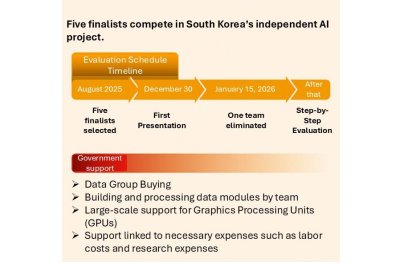
A graphic outlines the evaluation timeline and government support plan for South Korea’s sovereign AI project, including the selection of five teams, a first presentation by Dec. 30, elimination of one team by Jan. 15, 2026, and phased evaluations, alongside support such as joint data purchases, data module construction, large-scale GPU backing and funding for personnel and research costs. Graphic by Asia Today and translated by UPI

Jan. 8 (Asia Today) — South Korea’s push to develop a national artificial intelligence model has exposed a fundamental question the government has yet to answer: What, exactly, qualifies as a “sovereign” or “independent” AI?

A government-backed competition is underway to build a national AI system intended for use across society. The initiative, led by Ha Jung-woo, former Naver executive and now senior secretary for AI future planning at the presidential office, and Bae Kyung-hoon, former head of LG AI Research and now vice minister of science and ICT, aims to secure what officials call “AI sovereignty.” The stated goal is a Korean-built AI developed entirely with domestic technology.

As the competition has intensified, disputes over technical standards have moved to the forefront. The most prominent issue is whether participating models were truly built “from scratch” – a term borrowed from sports that implies starting with no preexisting foundation.

The debate first erupted when the CEO of Syonic AI publicly questioned whether Upstage’s model met that standard. Upstage CEO Kim Sung-hoon responded the following day by opening all training logs, checkpoints and experiment records for public verification. The company live-streamed the session, answered questions without prior preparation and ultimately received a public apology from the original accuser.

Senior Secretary Ha and Vice Minister Bae both praised the process on social media, calling it evidence that the national AI project is fostering a healthy and transparent ecosystem. They commended Upstage for proving the allegations unfounded through verification and credited the accuser for acknowledging the findings.

The controversy did not end there.

Attention soon shifted to Naver’s own “from scratch” claim. The company acknowledged that its model uses an encoder from China’s Qwen but said the component was not significant. In a statement, Naver said it had “strategically adopted a verified external encoder” to ensure compatibility with the global ecosystem and optimize system efficiency.

That explanation has been met with skepticism in the industry. Critics argue that the encoder is a core component of the model and that identical weights suggest a level of dependence comparable to directly adopting a foreign model. Because the entire system was trained around that structure, they say, the dependency cannot simply be removed.

The contrast in responses has drawn sharp comparisons. If a national athlete faces doping suspicions, the burden of proof lies with the athlete. Upstage disclosed everything immediately. Naver, critics argue, has asked for time without offering detailed verification. Post-hoc review, they say, is meaningless once the competition is over.

Naver has countered that innovation does not require building every technology from the ground up, arguing that AI advances by adding unique value atop proven global technologies.

But that raises a larger question: Is that what the government meant by a national AI strategy?

Industry observers say the issue is not a minor technical dispute but a political and strategic one, touching on technological sovereignty, research ethics and industrial trust. Some argue that marketing ambiguous standards risks undermining the very purpose of the project.

National AI systems are expected to underpin public services, defense, finance and other critical sectors. If their core components depend on foreign technology – particularly from countries where security assurances are uncertain – the issue extends beyond competitiveness to national economic and security risks.

What defines a “domestic AI”? Where are public funds and computing resources being directed? Who verifies technological independence, and by what criteria?

These are questions only the government can answer.

The project is officially called the Independent Foundation Model initiative. Without clear standards and qualifications, however, the national AI strategy risks losing both credibility and direction.

– Reported by Asia Today; translated by UPI© Asia Today. Unauthorized reproduction or redistribution prohibited.

Source link

Saudi-led group says separatist leader left Yemen

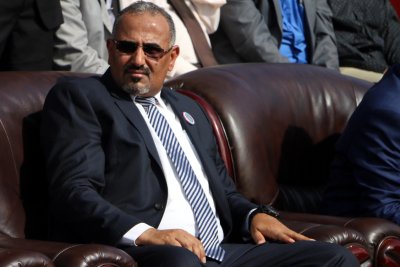
Southern Yemeni leader Aidarous al-Zubaidi fled Yemen with the help of the United Arab Emirates on Tuesday night and did not arrive in Riyadh, Saudi Arabia, on Wednesday for planned peace talks. File Photo by Stringer/EPA

Jan. 8 (UPI) — Separatist leader Aidarous al-Zubaidi exited Yemen with the help of the United Arab Emirates after he was charged with treason and expelled from Yemen’s Presidential Leadership Council.

Al-Zubaidi led the Southern Transitional Council in Yemen, which is supported by the UAE, and a Saudi-led coalition said he left the port city of Aden while aboard a boat on Tuesday night, the BBC reported.

The vessel carried him to the UAE-owned port of Berbera in Somaliland, where he boarded a cargo aircraft that flew him to Mogadishu, Somalia, and then a military airport in Abu Dhabi, according to The Guardian.

Neither the UAE nor the STC commented on the matter, which has raised tensions between officials in Saudi Arabia and the UAE.

The PLC expelled al-Zubaidi on Wednesday and accused him of treason when he did not arrive in the Saudi capital of Riyadh for peace talks.

The STC had sought to have southern Yemen declared an independent state and re-establish a north-south divide within Yemen that existed before the nation was unified in 1990.

The STC has controlled Aden for many years, and its leaders recently vowed to wage a guerrilla campaign while al-Zubaidi and many of his supporters remain safely in the UAE.

The STC, though, is undergoing an internal divide that has weakened it and prompted al-Zubaidi and others to leave Yemen.

Saudi-backed forces have regained territory previously held by the STC.

Tensions between Saudi Arabia and the UAE grew after separatists supported by the UAE captured territory in Yemen that reached the border with Saudi Arabia.

Saudi officials called the action a threat to their national security after earlier opposing Houthi forces in Yemen that are supported by Iran.

The UAE and Saudi Arabia had jointly opposed the Houthis, which gained control of northwestern Yemen in a 2022 cease-fire agreement.

Since then, the Saudis have backed Yemen’s PLC, which is in charge of the internationally recognized government of Yemen, while the UAE supports the separatist STC.

Source link

What are Bruno Mars’ 2026 world tour dates and how can I get tickets?

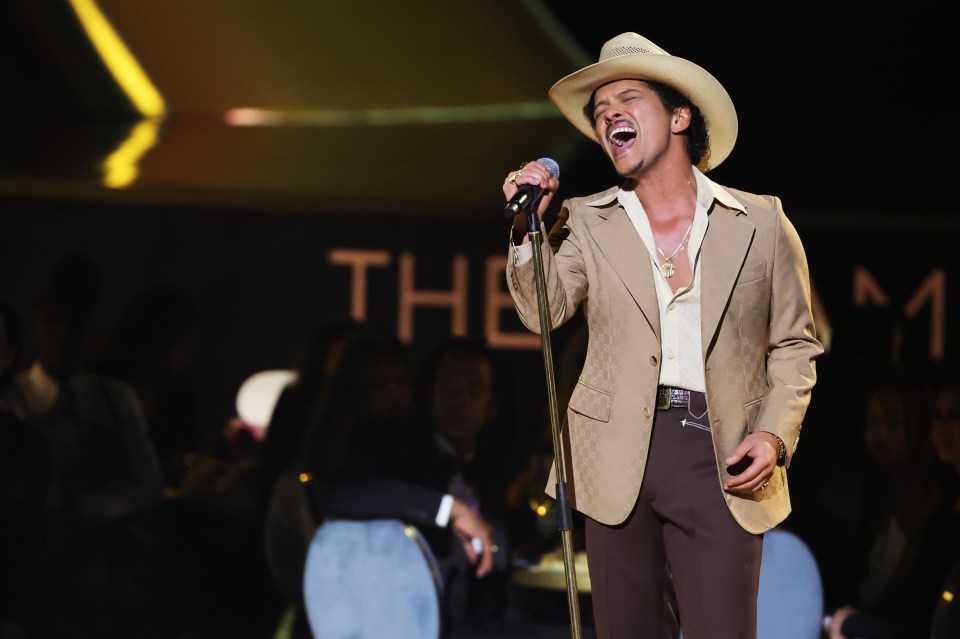
Bruno Mars singing into a microphone, wearing a tan cowboy hat, tan suit jacket, and brown pants, on stage at the 67th Annual GRAMMY Awards.
LOS ANGELES, CALIFORNIA – FEBRUARY 02: Bruno Mars performs onstage during the 67th Annual GRAMMY Awards at Crypto.com Arena on February 02, 2025 in Los Angeles, California. (Photo by Kevin Winter/Getty Images for The Recording Academy)Credit: Getty

All you need to know about the 24k Magic singer’s latest tour

Bruno Mars is back with a new project, a decade after his last solo release.

Bruno Mars at a party in 2022Credit: Getty

Here is everything you need to know about the tour dates and how you can get your hands on the hotly anticipated tickets.

Bruno Mars of Silk Sonic performs onstageCredit: Getty
Bruno Mars putting on a showCredit: Getty
Bruno Mars knows how to put on a showCredit: Getty

The tour is entitled ‘The Romantic tour’ and will show the Grenade singer showcasing songs from his new album ‘The Romantic’, which is released on February 27.

What are the UK dates?

  • July 18, 2026: Wembley Stadium, London
  • July 19, 2026: Wembley Stadium, London

Though there do seem to be gaps within his tour dates across the summer, leading fans to speculate more dates in separate venues in the UK.

Expect a setlist that spans his entire career, from the wedding-favourite “Marry You” to the high-energy “Perm,” and his recent Silk Sonic hits.

The full tour list:

  • April 10 — Las Vegas — Allegiant Stadium
  • April 14 — Glendale, Arizona — State Farm Stadium
  • April 18 — Arlington, Texas — Globe Life Field
  • April 22 — Houston, Texas — NRG Stadium
  • April 25 — Atlanta — Bobby Dodd Stadium at Hyundai Field
  • April 29 — Charlotte, North Carolina — Bank of America Stadium
  • May 2 — Landover, Maryland — Northwest Stadium
  • May 6 — Nashville — Nissan Stadium
  • May 9 — Detroit — Ford Field
  • May 13 — Minneapolis, Minnesota — U.S. Bank Stadium
  • May 16 — Chicago — Soldier Field
  • May 20 — Columbus, Ohio — Ohio Stadium
  • May 23 — Toronto — Rogers Stadium
  • May 24 — Toronto — Rogers Stadium
  • June 20 — Paris — Stade de France
  • June 21 — Paris — Stade de France
  • June 26 — Berlin — Olympiastadion
  • July 4 — Amsterdam — Johan Cruijff Arena
  • July 5 — Amsterdam — Johan Cruijff Arena
  • July 10 — Madrid — Riyadh Air Metropolitano
  • July 14 — Milan — Stadio San Siro
  • July 18 — London — Wembley Stadium Connected by EE
  • July 19 — London — Wembley Stadium Connected by EE
  • Aug. 21 — East Rutherford, New Jersey — MetLife Stadium
  • Aug. 22 — East Rutherford, New Jersey — MetLife Stadium
  • Aug. 29 — Pittsburgh — Acrisure Stadium
  • Sept. 1 — Philadelphia — Lincoln Financial Field
  • Sept. 5 — Foxborough, Massachusetts — Gillette Stadium
  • Sept. 9 — Indianapolis, Indiana — Lucas Oil Stadium
  • Sept. 12 — Tampa, Florida — Raymond James Stadium
  • Sept. 16 — New Orleans — Caesars Superdome
  • Sept. 19 — Miami — Hard Rock Stadium
  • Sept. 23 — San Antonio, Texas — Alamodome
  • Sept. 26 — Air Force Academy, Colorado — Falcon Stadium at the United States Air Force Academy
  • Oct.2 — Inglewood, California — SoFi Stadium
  • Oct. 3 — Inglewood, California — SoFi Stadium
  • Oct. 10 — Santa Clara, California — Levi’s Stadium
  • Oct. 14 — Vancouver — BC Place

How can I buy tickets for Bruno Mars’ 2026 World Tour?

If you don’t want to feel ‘locked out of heaven’ when tickets go live then make sure that you are ready to secure them as soon as they get released.

  • The O2 priority presale starts on January 14 at 10am
  • The general sale is on January 15 at 10 am

The main resale platforms to find tickets are Viagogo, Seat Unique, and StubHub.

What songs will appear on the Setlist?

Whilst the tour will feature many songs from the upcoming album, the following list is an indication of what fans can expect to hear.

  1. 24K Magic
  2. Billionaire
  3. Marry You
  4. Just the Way You Are
  5. Liquor Store Blues
  6. When I Was Your Man
  7. Straight Up & Down
  8. Chunky
  9. Treasure
  10. I Took Your Phones Away

Source link

Trump-Petro call may open path to reset relations with Colombia

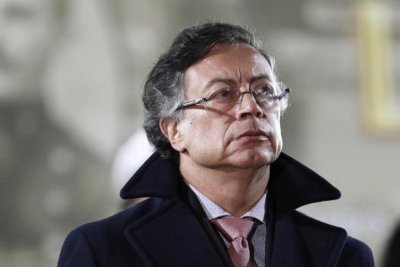
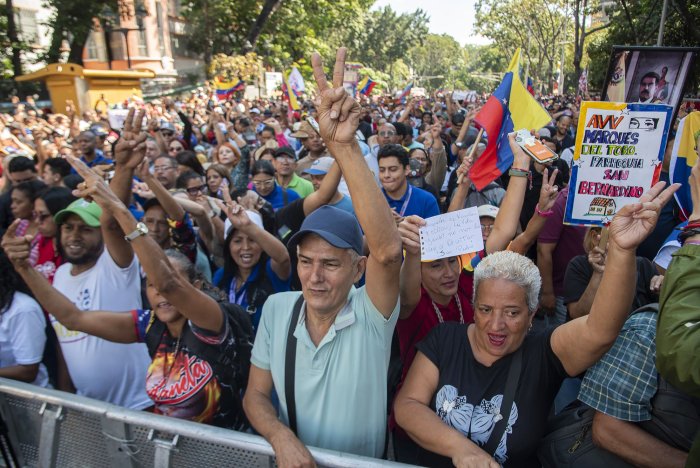
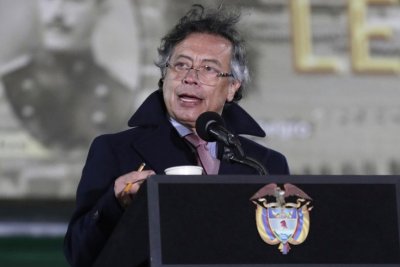
Hours after the call with President Donald Trump, , Colombian President Gustave Petro addressed a rally in Bogotá’s Plaza de Bolívar, convened “in defense of sovereignty,” and acknowledged that he softened a previously tougher attitude toward the American president. Photo by Carlos Ortega/EPA

Jan. 8 (UPI) — U.S. President Donald Trump and Colombian President Gustavo Petro held their first phone call Wednesday since the U.S. leader started his second term — a conversation described as “constructive” that could open a path to rebuilding a historically close relationship shaped by decades of cooperation on security and a fight against drug trafficking.

The more-than-40-minute conversation followed months of verbal escalation and administrative sanctions between the two governments and against a regionally tense backdrop after a U.S. operation led to the Jan. 3 capture in Caracas of Venezuelan President Nicolás Maduro.

Hours after the call, Petro addressed a rally in Bogotá’s Plaza de Bolívar, convened “in defense of sovereignty,” and acknowledged that he softened a previously tougher attitude after speaking with Trump.

“If there is no dialogue, there is war. Colombian history has taught us that,” Petro said, announcing he had requested the restoration of formal communication channels between Colombia’s Foreign Ministry and the U.S. State Department.

During his remarks, the Colombian president said the call covered counternarcotics cooperation and rejected accusations linking him to drug trafficking, stating that for more than two decades, he has confronted criminal organizations and allied politicians, according to Colombian outlet Noticias Caracol.

Petro said he presented Trump with official government figures, including drug seizure levels that he said reached 2,800 metric tons by year’s end, as well as the extradition of hundreds of narcotics leaders.

He also argued that, unlike previous administrations, his government halted the growth of coca crops, which he said doubled under former President Iván Duque, while increasing by no more than 10% during his tenure. Coca leaves are used to make cocaine.

Petro defended voluntary crop substitution over forced eradication, contending the latter increases violence in rural areas.

The Colombian leader added that he briefed Trump on coordination experiences with Venezuela in the fight against drug trafficking in border regions such as Catatumbo, one of the main illicit trafficking corridors, where guerrillas, dissidents and criminal gangs operate.

In a message posted on social media, Trump said it was “a great honor” to speak with Petro and that he looks forward to meeting him “soon.”

In the same message, he said Secretary of State Marco Rubio and Colombia’s foreign minister, Rosa Villavicencio, already are working on arrangements for a White House meeting.

Colombia’s ambassador to the United States, Daniel García-Peña, told Noticias RCN that the communication was facilitated by Republican Sen. Rand Paul, R-Ky., and that Trump extended the invitation to meet in Washington.

The diplomat described the exchange as “an extraordinary call” and said both leaders focused on issues of shared interest.

The conversation took place amid heightened domestic political tension in Colombia, marked by growing polarization and public confrontation on social media, fueled by earlier statements from Trump.

In the preceding days, the U.S. president suggested that an operation similar to the one carried out in Venezuela also “sounds good” for Colombia — rhetoric that drew strong official rebukes in Bogotá.

Petro has been a persistent critic of U.S. operations in the Caribbean Sea and the eastern Pacific, where U.S. forces have intercepted and sunk boats suspected of carrying drugs.

He has questioned that approach for its human cost, citing deaths reported during such operations.

In September, the U.S. government revoked Petro’s visa, and the Treasury Department later placed him, along with people in his inner circle, on the Office of Foreign Assets Control’s sanctions list, known as the “Clinton List,” following accusations made by Trump that the Colombian government rejected and that were not accompanied by public evidence.

Despite recent friction, bilateral ties rest on a solid historical foundation. Colombia has for decades been one of Washington’s main partners in Latin America on security and counternarcotics.

In the early 2000s, cooperation was consolidated under Plan Colombia with an initial U.S.-approved aid package of $1.3 billion in 2000, and in 2022 Washington designated Colombia a “Major Non-NATO Ally,” a status reserved for strategic partners outside the alliance.

Under Petro’s government, that partnership has faced political strain, particularly over differences on counternarcotics policy and bilateral rhetoric in a more volatile regional environment.

Source link

Column: Trump’s 626 overseas strikes aren’t ‘America First.’ What’s his real agenda?

Who knew that by “America First,” President Trump meant all of the Americas?

In puzzling over that question at least, I’ve got company in Marjorie Taylor Greene, the now-former congresswoman from Georgia and onetime Trump devotee who remains stalwart in his America First movement. Greene tweeted on Saturday, just ahead of Trump’s triumphal news conference about the United States’ decapitation of Venezuela’s government by the military’s middle-of-the-night nabbing of Nicolás Maduro and his wife: “This is what many in MAGA thought they voted to end. Boy were we wrong.”

Wrong indeed. Nearly a year into his second term, Trump has done nothing but exacerbate the domestic problems that Greene identified as America First priorities — bringing down the “increasing cost of living, housing, healthcare” within the 50 states — even as he’s pursued the “never ending military aggression” and foreign adventurism that America Firsters scorn, or at least used to. Another Trump con. Another lie.

Here’s a stunning stat, thanks to Military Times: In 2025, Trump ordered 626 missile strikes worldwide, 71 more than President Biden did in his entire four-year term. Targets, so far, have included Yemen, Syria, Iraq, Somalia, Nigeria, Iran and the waters off Venezuela and Colombia. Lately he’s threatened to hit Iran again if it kills demonstrators who have been marching in Tehran’s streets to protest the country’s woeful economic conditions. (“We are locked and loaded and ready to go,” Trump posted Friday.)

The president doesn’t like “forever wars,” he’s said many times, but he sure loves quick booms and cinematic secret ops. Leave aside, for now, the attacks in the Middle East, Africa and the Caribbean and the eastern Pacific. It’s Trump’s new claim to “run” Venezuela that has signaled the beginning of his mind-boggling bid for U.S. hegemony over the Western Hemisphere. Any such ambition raises the potential for quick actions to become quagmires.

As Stephen Miller, perhaps Trump’s closest and most like-minded (read: unhinged) advisor, described the administration’s worldview on Monday to CNN’s Jake Tapper: “We live in a world, in the real world, Jake, that is governed by strength, that is governed by force, that is governed by power. These are iron laws of the world since the beginning of time.”

You know, that old, amoral iron law: “Might makes right.” Music to Vladimir Putin’s and Xi Jinping’s ears as they seek hegemonic expansion of their own, confident that the United States has given up the moral high ground from which to object.

But it was Trump, the branding maven, who gave the White House worldview its name — his own, of course: the Donroe Doctrine. And it was Trump who spelled out what that might mean in practice for the Americas, in a chest-thumping, war-mongering performance on Sunday returning to Washington aboard Air Force One. The wannabe U.S. king turns out to be a wannabe emperor of an entire hemisphere.

“We’re in charge,” Trump said of Venezuela to reporters. “We’re gonna run it. Fix it. We’ll have elections at the right time.” He added, “If they don’t behave, we’ll do a second strike.” He went on, suggestively, ominously: “Colombia is very sick too,” and “Cuba is ready to fall.” Looking northward, he coveted more: “We need Greenland from a national security situation.”

Separately, Trump recently has said that Colombia’s leftist President Gustavo Petro “does have to watch his ass,” and that, given Trump’s unhappiness with the ungenuflecting Mexican President Claudia Sheinbaum, “Something’s going to have to be done with Mexico.” In their cases as well as Maduro’s, Trump’s ostensible complaints have been that each has been complacent or complicit with drug cartels.

And yet, just last month Trump pardoned the former president of Honduras, Juan Orlando Hernández, who was convicted in a U.S. court and given a 45-year sentence for his central role in “one of the largest and most violent drug-trafficking conspiracies in the world.” Hernández helped traffickers ship 400 tons of cocaine into the United States — to “stuff the drugs up the gringos’ noses.” And Trump pardoned him after less than two years in prison.

So it’s implausible that a few weeks later, the U.S. president truly believes in taking a hard line against leaders he suspects of abetting the drug trade. Maybe Trump’s real motivation is something other than drug-running?

In his appearance after the Maduro arrest, Trump used the word “oil” 21 times. On Tuesday, he announced, in a social media post, of course, that he was taking control of the proceeds from up to 50 barrels of Venezuelan oil. (Not that he cares, but that would violate the Constitution, which gives Congress power to appropriate money that comes into the U.S. Treasury.)

Or perhaps, in line with the Monroe Doctrine, our current president has a retro urge to dominate half the world.

Lately his focus has been on Venezuela and South America, but North America is also in his sights. Trump has long said he might target Mexico to hit cartels and that the United States’ other North American neighbor, Canada, should become the 51st state. But it’s a third part of North America — Greenland — that he’s most intent on.

The icy island has fewer than 60,000 people but mineral wealth that’s increasingly accessible given the climate warming that Trump calls a hoax. For him to lay claim isn’t just a problem for the Americas. It’s an existential threat to NATO given that Greenland is an autonomous part of NATO ally Denmark — as Danish Prime Minister Mette Frederiksen warned.

Not in 80 years did anyone imagine that NATO — bound by its tenet that an attack on one member is an attack on all — would be attacked from within, least of all from the United States. In a remarkable statement on Tuesday, U.S. allies rallied around Denmark: “It is for Denmark and Greenland, and them only, to decide on matters concerning Denmark and Greenland.”

Trump’s insistence that controlling Greenland is essential to U.S. national security is nuts. The United States has had military bases there since World War II, and all of NATO sees Greenland as critical to defend against Russian and Chinese encroachment in the Arctic. Still, Trump hasn’t ruled out the use of force to take the island.

He imagines himself to be the emperor of the Americas — all of it. Americas First.

Bluesky: @jackiecalmes
Threads: @jkcalmes
X: @jackiekcalmes

Source link

Analysis: Could the Venezuela model be applied to Iran?

The capture of Venezuelan President Nicolas Maduro was a blow for Iran and its main proxy, Lebanon’s Hezbollah, potentially depriving the group of an ally and a foothold, or safe haven, in Latin America. File Photo by Wael Hamzeh/EPA

BEIRUT, Lebanon, Jan. 8 (UPI) — The capture of Venezuelan President Nicolas Maduro in a dramatic military operation ordered by U.S. President Donald Trump represents another blow — a new red flag — for Iran and its main proxy, Lebanon’s Hezbollah, potentially depriving the group of an ally and a foothold, or safe haven, in Latin America.

The predawn raid in Caracas not only sparked renewed U.S. accusations that both entities were involved in drug and arms trafficking, money laundering and evading sanctions, but also raised questions about whether the Venezuela model could be applied to Iran.

“No more drug trafficking, no more Iran‑Hezbollah presence there and no more using the oil industry to enrich all our adversaries around the world,” U.S. Secretary of State Marco Rubio said in summarizing his country’s. goals for Venezuela and its allies.

Venezuela and Iran, which developed deep political, diplomatic, economic and military cooperation under Maduro and his predecessor, Hugo Chavez, as part of an “Axis of Unity” against U.S. influence, have suffered from U.S.-imposed crippling sanctions that have intensified their economic crises.

In June 2022, Iran and Venezuela signed a 20‑year cooperation agreement intended to strengthen their alliance and circumvent U.S. sanctions by expanding collaboration in areas such as energy, oil, petrochemicals, science and technology, and other sectors.

The accord envisaged Iranian assistance with Venezuela’s oil industry and broader technical cooperation, and since then, the two countries have also deepened military cooperation, including links involving drone technology.

Long-standing ties between Iran and Venezuela created conditions in which Hezbollah — through networks embedded in Venezuela and parts of the diaspora — was reportedly able to establish financial and logistical operations in the country.

According to U.S. congressional testimony in October, these activities included fundraising, money transfers, smuggling and using Venezuelan‑issued travel documents.

The Maduro government denied these allegations, but Washington sanctioned Venezuelan officials and businessmen accused of assisting Hezbollah operatives.

Such accusations against Hezbollah, whose military capabilities were significantly degraded during the war with Israel, have been described by analysts in Lebanon as exaggerated and unsupported by clear evidence.

Mohanad Hage Ali, an analyst and fellow at the Beirut-based Carnegie Middle East Center, said Venezuela offered “a window of opportunity” for Hezbollah to be active in a state where the regime is friendly to the group and sympathetic to its ideology. But many claims describing a vital Hezbollah-Venezuela relationship exceeded what publicly available evidence supports.

“This is because what we have seen are instances of involvement by individuals who have relationships with Hezbollah, whether relatives or others, and these relationships and the roles they play seem small compared to Hezbollah’s budgetary needs in Lebanon,” Hage Ali told UPI.

Undoubtedly, he said, Hezbollah has some form of presence, representation, financial and economic activities, or plays a role in drug trafficking, but these are “limited,” as is its ability to expand abroad.

With the militant group relying more on direct funding from Iran, Hage Ali said Hezbollah would be affected in the event of a regime change in Caracas, but added, “I fail to see Venezuela as a crucial part of the overall puzzle of Hezbollah financing.”

It remains to be seen whether Trump can translate or invest the success in capturing Maduro into political gains.

It would not be easy to contain a country such as Venezuela simply by abducting its president, retired Lebanese Brig. Gen. Hassan Jouni argued.

“Would Trump be able to control and subjugate the Venezuelan regime? Would that require boots on the ground– a land invasion?” Jouni asked, warning that such a move would entail significant attrition and deep involvement for the United States, making the operation highly risky.

Snatching Maduro from his home in Caracas and charging him with drug trafficking and terrorism sent a clear message from Trump to countries around the world — especially those opposing his policies, chief among them Iran: Cooperate or face the use of force.

Jouni said the message capped the Dec, 29 meeting between Trump and Israeli Prime Minister Benjamin Netanyahu, with threats that Iran would not be allowed to restart its nuclear program or rebuild its ballistic missile industry.

Could the Venezuela scenario be used for Iran? Could Trump do in Tehran what he did in Caracas — even going so far as to reach and capture Iran’s Supreme leader, Ayatollah Ali Khamenei?

Jouni ruled out such a possibility, explaining that Iran differs from Venezuela because of the nature of its regime, its geographical location and the vast size of the country. Moreover, Khamenei would be protected by an “exceptional protection system.”

“Would Russia and China accept the overthrow of the Iranian regime and its replacement with a pro-U.S. one?” Jouni asked during an interview with UPI, suggesting “under-the-table” coordination with Russia on Ukraine and with China on Taiwan for possible exchanges.

Moreover, Iran would not stand idle and would strike back at Israel — as it did during the 12-day war last June, causing considerable damage — and would likely target U.S. bases across the region.

Kassem Kassir, a political analyst who specializes in Islamic movements and is close to Hezbollah, said Iran is being targeted, whether through economic pressures and sanctions affecting the internal situation, or militarily.

“Today, Tehran is ready for all possibilities, working to contain popular movements and street protests by addressing economic problems,” Kassir told UPI.

With Hezbollah no longer constituting a threat to Israel, a war against Iran, which would require Trump’s approval and his green light for Israel, might not change much, given the fighting round in June, according to Jouni.

A possible way out could be a deal — modeled on the recently forced arrangement with Venezuela regarding its oil, under which Caracas agreed to export up to $2 billion worth of crude to the United States — through which Trump could secure substantial investments in Iran in exchange for eased tensions or dropping threats of regime change.

Whether all these new U.S. interventions could bring stability remains uncertain and doubtful, especially given the chaos unleashed after the 2003 Iraq invasion, when disbanding the army and rebuilding the state from scratch backfired both in the country and across the region, Hage Ali noted.

Source link

Philippine leadership puts ASEAN at center of South China Sea rivalry

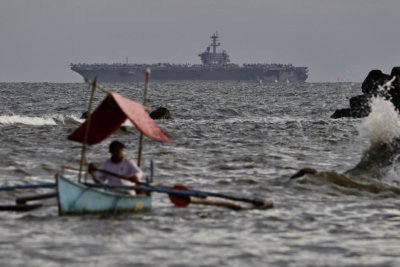
The U.S. Navy’s Nimitz-class nuclear-powered aircraft carrier USS George Washington is shown anchored in the waters of Manila Bay, Philippines, in July. The ship was making a a scheduled port visit after its recent patrol in the disputed South China Sea. File Photo by Francis R. Malasig/EPA

Jan. 8 (UPI) — As the Philippines takes over the rotating Association of Southeast Asian Nations chair in 2026, it will do so at a moment of sharpened maritime tension and narrowing diplomatic patience in the South China Sea.

Manila has made clear it intends to prioritize two parallel initiatives that reflect the region’s evolving reality: renewed efforts to finalize a legally binding code of conduct with China and a dramatic expansion of U.S.-Philippines military cooperation, with more than 500 joint activities planned for the year.

Taken together, the dual-track strategy underscores how Southeast Asia’s maritime order is being reshaped. Diplomacy remains essential, but it is increasingly paired with deterrence and preparedness, reflecting a regional judgment that rules alone are insufficient without the capacity to defend them.

The Philippines is moving to fast-track a binding code of conduct after decades of inconclusive talks, using its ASEAN chairmanship to push for enforceable rules rather than voluntary guidelines.

“The Philippines will push for a binding COC at the same time continue to strengthen defense ties with the United States, as well as other partners like Japan, Australia and others,” said Lucio Pitlo III, a foreign affairs and security analyst at Asia-Pacific Pathways for Progress Foundation.

Yet, the limits of ASEAN consensus diplomacy remain evident. Member states hold differing threat perceptions and economic dependencies, while China has resisted provisions that could constrain its operational flexibility or legitimize external involvement.

Analysts have argued that, with Manila chairing, a comprehensive agreement is unlikely to be concluded in 2026 given the temperature of China-Philippines tensions – though the chair can still steer narrower confidence-building steps and agenda-setting wins.

“I would not expect a binding code of conduct in the South China Sea to materialize regardless of who is ASEAN Chair,” said Hunter Marston, senior fellow at the Washington, D.C.-based Center for Strategic & International Studies.

As ASEAN chair in 2026, Manila is expected to press for a more active multilateral role in managing South China Sea disputes, seeking to use regional dialogue to dampen tensions when incidents erupt.

Philippine officials, however, are also likely to lean more heavily on bilateral channels with Beijing to manage flashpoints in real time. Chief among them is the Philippines-China Bilateral Consultative Mechanism, a forum designed to contain maritime flare-ups before they escalate into broader diplomatic or security crises, reflecting Manila’s effort to balance regional solidarity with the practical need for direct engagement with China.

Even so, chairmanship confers agenda-setting power. Manila can steer negotiations toward narrower but meaningful gains, such as clearer incident-avoidance protocols, standardized communications between maritime forces and provisions that explicitly address coast guards and maritime militias, which are now central actors in most confrontations.

In that sense, 2026 may be less about delivering a final document than about clarifying whether a credible code of conduct remains politically attainable.

“The progress on CoC isn’t necessarily hinged heavily on who holds the ASEAN chairmanship, though in some ways the ASEAN member state holding onto this position might influence or shape the direction it takes,” said Colin Koh, senior fellow of the S. Rajaratnam School of International Studies.

That diplomatic push unfolds against a backdrop of persistent friction at sea. Confrontations near Second Thomas Shoal, Sabina Shoal and other contested features have increasingly involved water cannons, ramming incidents and aggressive maneuvering, often targeting Philippine resupply missions and civilian fishing vessels.

Each episode reinforces Manila’s view that restraint has not been reciprocated, and that negotiations conducted without leverage risk entrenching, rather than moderating, coercive behavior.

This is where the second pillar of the Philippines’ 2026 strategy becomes decisive. Plans for more than 500 U.S.-Philippines joint military activities represent a significant escalation in tempo and scope, even in the absence of a single marquee exercise.

The schedule encompasses everything from staff-level planning and logistics coordination to maritime domain awareness, coastal defense drills and repeated operational rehearsals across air, land and sea domains.

“Having the Philippines as chairman, particularly under the U.S. friendly Marcos administration, is useful to the U.S. agenda in the region,” said Elizabeth Larus, adjunct senior fellow at the Pacific Forum.

She also underscored the critical importance of Trump-Marcos security accord in preventing China from displacing the United States as the dominant maritime power in the region.

The scale of this cooperation carries implications that extend well beyond symbolism. A Philippine maritime force that trains continuously with U.S. counterparts becomes harder to coerce at sea, raising the operational and political costs of gray-zone pressure in contested waters. In a region where presence, response time and narrative control often determine outcomes, that shift matters.

“China is likely to emphasize the Philippine defense cooperation with the United States over a Philippine-led ASEAN agenda that emphasizes legal norms and [United Nations Convention on the Law of the Sea],” said Khang Vu, a visiting scholar in political science at Boston College.

The volume of combined activities also accelerates alliance integration in less visible but more consequential ways. Regular staff talks, shared surveillance practices and logistics planning embed interoperability as a standing condition rather than a crisis response.

For regional observers, the message is unmistakable: U.S.-Philippines security cooperation is becoming structural, not episodic, and is likely to endure regardless of short-term political fluctuations.

By pairing expanded readiness with a renewed push for a binding code of conduct, Manila also is reframing diplomacy. The Philippines is signaling to ASEAN partners that engagement with China should proceed from a position of resilience, not restraint alone.

In practice, this reflects a broader regional reassessment that negotiations over the South China Sea will only carry weight if backed by credible capacity to resist coercion when rules are tested.

For ASEAN, the Philippine chairmanship will test the concept of “ASEAN centrality” under far less forgiving conditions than in previous decades.

While ASEAN remains indispensable as a diplomatic convener, the region’s most consequential security dynamics increasingly run through alliances and mini-lateral arrangements rather than consensus forums. The challenge for Manila will be to preserve ASEAN’s relevance without pretending that diplomacy alone can manage today’s risks.

Maritime relations in 2026 will be defined less by stability than by tempo, with a surge in patrols, surveillance flights and military exercises raising the risk of miscalculation and making clear rules of engagement and crisis hotlines more critical than ever.

At the same time, legitimacy at sea is becoming as important as capability. Each encounter is now fought on two fronts: on the water and in the information space.

Competing claims of lawful defense versus provocation, sovereign rights versus external interference, shape international perceptions and diplomatic alignments. How states behave during routine encounters may ultimately matter as much as formal agreements signed at the negotiating table.

The Philippines’ 2026 approach signals that the era of quiet accommodation in the South China Sea is over, with Manila pressing for binding rules while bolstering its military posture.

Whether that strategy stabilizes the region will depend on whether China and other regional actors are willing to translate pledges of restraint into behavior at sea, but the Philippine chairmanship already is set to shape how maritime order is contested in the years ahead.

Source link

From ramyeon to haenyeo, eight Korean words enter Oxford English Dictionary

SEOUL, Jan. 8 (UPI) — The Oxford English Dictionary has added eight words drawn from South Korean culture in its latest quarterly update, reflecting the continued influence of Korean food, customs and everyday life on global English usage.

In a press release issued Wednesday, Oxford Languages unveiled the newly added words, highlighting how Korean-language terms have entered English alongside the worldwide popularity of K-culture.

Among the additions are ajumma, a term commonly used to refer to a middle-aged or older woman; sunbae, meaning a senior colleague or mentor; jjimjilbang, a large communal bathhouse offering saunas, lounges and sleeping areas; and officetel, a blend of “office” and “hotel” describing mixed-use residential buildings common in South Korean cities.

Food-related entries include ramyeon, Korea’s version of instant noodles, and bingsu, a shaved-ice dessert topped with ingredients such as red beans, fruit or condensed milk.

The English phrase Korean barbecue was also added for the first time. While specific terms for grilled meat dishes such as samgyeopsal and galbi were already included in the dictionary, this year’s update marks the first formal appearance of the broader English term. Its earliest citation dates to a 1938 article in the Honolulu Star-Bulletin.

Another new entry, haenyeo, refers to the traditional female free divers associated with Jeju Island, whose seafood-harvesting practices have drawn international attention for their cultural significance.

The update continues a recent pattern of Korean-origin words entering the dictionary. Seven Korean words were also added in 2025, following a larger group of 26 terms introduced in September 2021 amid a period of heightened global interest in Korean popular culture.

In an analysis cited by Oxford Languages, scholar Simon Barnes-Sadler examined how Korean-origin words have entered the dictionary in relation to the rise of hallyu, or the Korean Wave.

“While words of Korean origin have been attested in English texts stretching back to the nineteenth century, a large number of such words have been added since 1997, the year to which the beginning of the Korean Wave is conventionally attributed,” Barnes-Sadler wrote.

He added that many Korean-origin words still occur relatively infrequently in the English-language sources tracked by the OED, raising questions about how quickly their emergence will translate into sustained everyday usage.

First published in 1884, the Oxford English Dictionary is widely regarded as the authoritative record of the English language. It contains more than 500,000 words and phrases from past and present English usage and traces their development through millions of quotations drawn from books, academic sources, news reports and social media.

Source link

Civic audit monitors give Lee government’s first audit an ‘F’

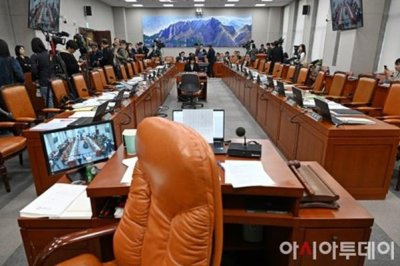
An empty seat is seen at a National Assembly committee hearing room in Seoul during a parliamentary audit session, as lawmakers, aides and reporters take their places around the chamber. Photo by Asia Today

Jan. 7 (Asia Today) — A coalition of South Korean civic groups that monitors the National Assembly’s annual audit process said Wednesday it gave the Lee Jae-myung administration’s first parliamentary audit an “F,” citing what it called a crisis in separation of powers and poor preparation.

The NGO Monitoring Group for National Audits, which said it has tracked the audit process for 27 years with participation from more than 1,000 experts and civic activists, said in a position paper that the audit “began” with controversy over Supreme Court Chief Justice Cho Hee-dae and “ended” with allegations of abuse of power involving Kim Hyeon-ji, the first deputy chief of staff at the presidential office.

The group listed reasons for the failing grade that included what it described as the worst crisis in separation of powers, inadequate preparation, extreme confrontation and an audit of Cho that it said only provoked backlash.

It also cited what it called structural problems during the audit, including committee chairs it said acted without restraint, a shortened audit period and the presence of seven senior ruling party lawmakers serving as ministers leading agencies subject to scrutiny.

The group said some committee chairs restricted lawmakers’ opportunities to question witnesses and, rather than acting as lawmakers, behaved like investigators, turning the audit into a confrontation-style interrogation.

– Reported by Asia Today; translated by UPI

© Asia Today. Unauthorized reproduction or redistribution prohibited.

Source link

British PM Keir Starmer: Parliament to vote on troop deployment to Ukraine

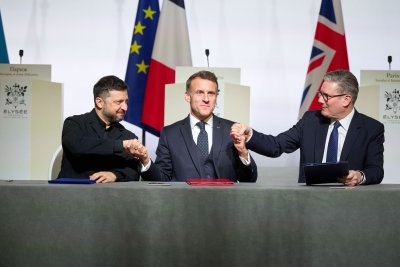
Ukrainian President Volodymyr Zelensky (L), French President Emmanuel Macron (C) and British Prime Minister Keir Starmer take part in the signing of the declaration on deploying post-ceasefire force in Ukraine during the Coalition of the Willing summit at the Elysee Palace in Paris on Tuesday. Facing questions from the British Parliament, Starmer said Wednesday lawmakers would have the ability to vote on such a deployment should a peace deal be signed. Photo courtesy Ukrainian President Office | License Photo
Jan. 7 (UPI) — British Prime Minister Keir Starmer said Wednesday Parliament would be able to debate and vote on whether to deploy troops to Ukraine on a peacekeeping mission.

Speaking to members of Parliament, Starmer said any action involving British troops deploying to Ukraine would be “in accordance with our military plans” and require parliamentary approval.

On Tuesday, Starmer, along with French President Emmanuel Macron signed a trilateral agreement with Ukrainian President Volodymyr Zelensky, opening the door for the two countries to deploy troops to Ukraine after it signs a peace agreement with Russia.

Starmer told members of Parliament that the leaders “made real progress on security guarantees, which are vital for securing a just and lasting peace.”

“We will set out the details in a statement at the earliest opportunity. I will keep the house updated as the situation develops, and were troops to be deployed under the declaration signed, I would put that matter to the house for a vote.”

His comments were in response to Conservative leader Kemi Badenoch, who questioned why Starmer hadn’t made a full statement to the House of Commons on the issue, The Guardian reported. She said she welcomed the prime minister’s efforts on peace in Ukraine, but she found it “astonishing” that he wasn’t making a full statement to lawmakers.

“No prime minister, Labour or Conservative, has failed to make a statement to the house in person after committing to the deployment of British troops,” she said. “His comments about making a statement in due course, quite frankly, are not good enough.”

Starmer responded that he wasn’t required to make a statement to Parliament because the agreement he signed Tuesday fell under previously existing military plans.

He also declined to specify how many British troops would be deployed should a peace deal be reached, the BBC reported.

Source link

Europe hit by winter storm; flights, trains disrupted

Children play in the Royal Parc in Brussels, Belgium, Wednesday. Snowfall was expected to continue in the coming days, with cold temperatures forecast to persist across the region as winter Storm Goretti hits the Atlantic coast of Europe. Photo by Olivier Matthys/EPA

Jan. 7 (UPI) — Flights and train service were delayed or canceled and driving became treacherous in parts of Europe on Wednesday as a winter storm hit the Atlantic coast.

Storm Goretti is the first named storm of the year in Europe, and it brought heavy snow, ice and cold to the area. Flights and train service were canceled or suspended in parts of France and Belgium.

About 100 flights were canceled at Paris’ Charles de Gaulle airport and 40 more at the city’s Orly airport, France’s transportation minister said.

In parts of the United Kingdom, amber snow warnings were issued for “danger to life” conditions, The Independent reported. Wind gusts of up to 90 mph were expected Thursday night, bringing large waves and debris. About 12 inches of snow was expected in Wales and the Peak District in central England.

There were four yellow weather warnings for snow and ice in Scotland, Northern Ireland and the Midlands. There were two more in eastern England and Wales, and a wind warning in the southwest.

A bus in Kent slid into a ditch, and a school coach full of children crashed into a bus in Reading after hitting black ice.

“Crews are reminding everyone to use extra caution when driving in cold temperatures as there could be black ice on the roads, so avoid sudden breaking and leave plenty of space between you and the vehicle in front,” the Kent Fire District warned.

Some intercity trains told passengers to reschedule Thursday travel to Wednesday to avoid the worst of the weather.

Flights from Amsterdam’s Schiphol Airport were canceled and delayed for the past week due to inclement weather. About 700 flights were canceled Wednesday, and Dutch airline KLM has been hit the hardest for the past six days, The Independent reported. Flightradar24 said more than 3,200 flights were canceled over the past week.

“While Schiphol certainly can operate during winter weather, the airport’s de-icing infrastructure obviously isn’t designed to handle a barrage of snow for multiple days in a row,” Daniel Gustafsson of Flightradar24 wrote on the site. He said there was also a “critical shortage” of de-icing fluid.

​​More than 1,000 people spent the night at Schiphol, the airport told Euronews. It said it set up cots and offered breakfast to travellers who had to sleep there.

Source link

U.S. seizes two oil tankers in North Atlantic, Caribbean Sea

1 of 2 | A member of the U.S. Coast Guard keeps watch on the Marinera, formerly known as the M/V Bella 1, in the North Atlantic. Photo courtesy of U.S. European Command

Jan. 7 (UPI) — The United States on Wednesday said that it seized two oil tankers — a Russian-flagged vessel in the North Atlantic and another in the Caribbean Sea.

U.S. Southern Command said, in coordination with the U.S. Department of Homeland Security, it “apprehended a stateless, sanctioned dark fleet motor tanker without incident.”

SOUTHCOM accused the vessel, the M/T Sophia, of carrying out “illicit activities” in international waters in the Caribbean Sea. In a post on X, the agency said the U.S. Coast Guard was escorting the vessel to the United States for “final disposal.”

U.S. European Command, meanwhile, announced it seized the Russian-flagged Mariners — formerly known as the M/V Bella 1 — a vessel it had been chasing across the Atlantic Ocean since December.

EUCOM, in a post on X, said it seized the tanker for violating U.S. sanctions and transporting Iranian oil.

“The vessel was seized in the North Atlantic pursuant to a warrant issued by a U.S. federal court after being tracked by USCGC Munro,” the agency said.

U.S. officials said Russia sent two naval ships and a submarine to escort the Marinera, which was between Iceland and Britain, heading northeast.

The United States deployed at least 10 special-ops military aircraft and transporter aircraft thought to be carrying helicopters to RAF bases in Britain in recent days, possibly in preparation for an interdiction.

The U.S. Coast Guard attempted to execute a warrant to seize the tanker in the Caribbean in December, when it was believed to be headed to Venezuela in contravention of a partial U.S. blockade.

The ship’s final destination was thought to be the Baltic Sea, or possibly the Russian port of Murmansk on the Barents Sea.

The Russian Foreign Ministry said it was monitoring the situation with “concern” and complained about what it said was unwarranted attention from the United States and its NATO allies.

The vessel refused to permit the Coast Guard to board on its first attempt Dec. 21 when it was en route from Iran to collect oil from Venezuela, changed course and headed back out into the Atlantic.

On the way, it painted a Russian flag on the hull, changed its name from Bella 1 to “Marinera” and listed on a Russian shipping registry, in a bid to shake off its U.S. pursuers.

The New York Times reported that Hyperion and at least three other vessels plying the Venezuela route, employed similar stealth tactics, swapping their original flags for Russian ones — exacerbating already tense relations strained over the U.S. attack on Venezuela which is backed by Moscow.

All the ships are suspected of being part of Russia’s so-called “shadow fleet,” moving Russian, Iranian and Venezuelan oil subject to sanctions imposed by the United States, European Union and other countries around the world.

The Russian Maritime Shipping Registry records show the ships, which are all sanctioned by the United States for transporting Iranian or Russian oil, changed their home ports to Sochi or Taganrog in southern Russia and switched flags.

Supporters of ousted Venezuela’s President Nicolas Maduro carry his portrait during a rally outside the National Assembly in Caracas, Venezuela, on January 5, 2026. Photo by Jonathan Lanza/UPI | License Photo

Source link

China investigating Japan dumping of semiconductor material

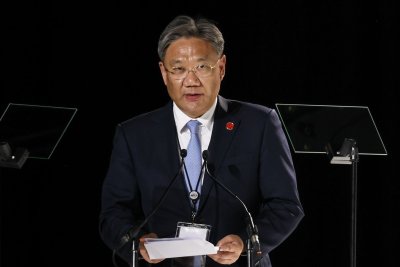
Wang Wentao, Minister of Commerce of the People’s Republic of China addresses attendees on behalf of Xi Jinping, President of China on day one of the BRICS summit at Sandton Convention Center in August 2023. China is opening an anti-dumping investigation into Japan over a key chemical used in manufacturing semiconductors, the Ministry of Commerce announced Wednesday. File Photo by Jemal Countess/UPI | License Photo

Jan. 7 (UPI) — China is opening an anti-dumping investigation into Japan over a key chemical used in manufacturing semiconductors, the Ministry of Commerce announced Wednesday.

The investigation is set to last a year as China probes whether Japan has been selling the chemical dichlorosilane at an unfairly low price — dumping — harming its domestic producers.

Dichlorosaline is commonly used to manufacture computer chips.

The investigation stems from a complaint by the Chinese company Sunfar that submitted evidence showing a 31% decrease in prices on the chemical from Japan despite an increase in imports between 2022 and 2024.

A review of the complaint found that it met the criteria for further investigation under Chinese laws and rules set out by the World Trade Organization.

“The investigating authority will conduct the investigation in accordance with the law, fully safeguard the rights of all interested parties and make an objective and impartial ruling based on the investigation results,” the Chinese Ministry of Commerce said in a statement.

The ensuing investigation will dig into dichlorosilane imports from Japan from July 1, 2024, through June 30, 2025.

Japan is home to the three leading producers of dichlorosilane, making it the top exporter of the chemical.

China’s top dichlorosilane producer has the fourth-largest market share of the chemical in the world. It relies heavily on imports from Japan, with Japanese products making up about 72% of China’s domestic market between 2022 and 2024.

On Tuesday, China banned the export of products to Japan’s military. Japan has warned China about pursuing control over Taiwan as China believes Taiwan to be part of its territory.

Wednesday’s announcement continues the escalating tension between the countries.

Source link

Trump administration suggests force an option to take over Greenland

Jan. 7 (UPI) — The White House said military force was among a range of options it was looking at in an effort to “acquire” Greenland for the United States.

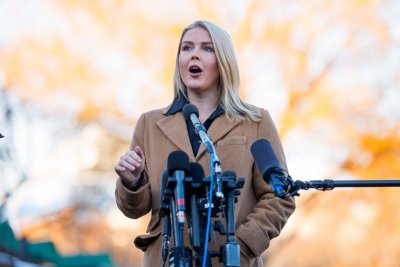
Doubling down on comments by the administration officials in the past few days that the United States has a stronger claim to the Arctic Island than Denmark, in a statement Tuesday carried by The Hill, ABC News and the BBC, White House Press Secretary Karoline Leavitt said using the military was “always an option.”

“President Trump has made it well known that acquiring Greenland is a national security priority of the United States, and it’s vital to deter our adversaries in the Arctic region. The president and his team are discussing a range of options to pursue this important foreign policy goal, and of course, utilizing the U.S. Military is always an option at the Commander-in-Chief’s disposal.”

The statement came hours after European leaders pushed back hard on the renewed claims emanating from the administration since the U.S. military action in Venezuela at the weekend that the United States needs Greenland for its security, and by extension NATO’s, and that Denmark was not up to the job of defending Greenland.

In a joint statement of solidarity with Denmark, the leaders of France, Germany, Britain, Italy, Poland and Spain said Greenland belonged to its people and that “it is for Denmark and Greenland, and them only, to decide on matters concerning Denmark and Greenland.”

They insisted that security in the Arctic was a priority and that they were taking steps to boost their military “presence, investments and activities,” but stressed that security could only be achieved collectively and “sovereignty, territorial integrity and the inviolability of borders,” had to be upheld.

“These are universal principles, and we will not stop defending them,” read the statement.

In a closed-briefing on Capitol Hill on Monday, Secretary of State Marco Rubio suggested to lawmakers that Trump’s talk of taking Greenland by force was just rhetoric to pressure Copenhagen to come to the table, and his actual goal was to buy Greenland from Denmark.

However, later Monday, White House Deputy Chief of Staff Stephen Miller reignited fears, telling CNN, military force was a non-question because America’s overwhelming military superiority meant “nobody is going to fight the United States militarily over Greenland.”

He also questioned the basis of Denmark’s territorial claim.

Greenland has been closely tied to Denmark since the 18th century, initially as a colony and then as an incorporated, semi-autonomous region with representation in the Danish Parliament.

Danish control of Greenland was recognized by the United States in 1916, as part of a deal for the purchase of what is now the U.S. Virgin Islands from Denmark.

The government in Nuuk said Tuesday it had asked for a meeting with Rubio.

Source link

S. Korea card delinquencies near $1.7B as long-term arrears jump

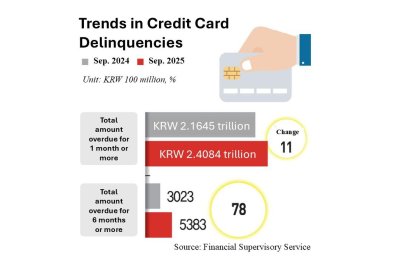
Trends in South Korea’s credit card delinquencies show rising overdue balances, with long-term arrears of six months or more jumping sharply between September 2024 and September 2025, according to the Financial Supervisory Service. Graphic by Asia Today and translated by UPI.

Jan. 6 (Asia Today) — South Korea’s credit card delinquencies have climbed to near 2.5 trillion won ($1.7 billion), with hard-to-collect arrears of six months or more jumping 78% from a year earlier, raising concerns about card issuers’ earnings and asset quality.

Data from the Financial Supervisory Service’s financial statistics system showed overdue payments of one month or more at eight major card companies totaled 2.4084 trillion won ($1.66 billion) as of the end of September 2025, up about 11% from a year earlier, the report said. The total peaked at 2.5845 trillion won ($1.79 billion) at the end of March 2025 before edging lower.

The sharper risk signal was in longer-term delinquencies. Overdue balances of six months or more totaled 538.3 billion won ($372 million), up 78% year-on-year, the report said. Such debts are often treated as effectively uncollectible, and analysts said a rapid increase can drive higher bad-debt costs and volatility in card companies’ performance.

Long-term delinquencies accounted for 22.3% of total delinquencies, up from about 11% at the start of 2025, the report said.

By issuer, Lotte Card posted the steepest increase in six-month-plus delinquencies, up 306% to 194.8 billion won ($135 million), the largest among the eight firms. The report attributed the rise to the reflection of delinquent debts linked to Homeplus entering corporate rehabilitation last March.

Other issuers’ six-month-plus delinquency balances were listed as BC Card at 41.7 billion won ($28.8 million), Shinhan Card at 98.5 billion won ($68.1 million), Hana Card at 77.7 billion won ($53.7 million), Hyundai Card at 27.5 billion won ($19.0 million), KB Kookmin Card at 30.1 billion won ($20.8 million), Samsung Card at 23.6 billion won ($16.3 million) and Woori Card at 40.9 billion won ($28.3 million), the report said.

Analysts linked the trend to heavier repayment burdens for vulnerable borrowers amid a slowing economy, high inflation and high interest rates. They also warned that rising card delinquencies can be an early risk indicator for household debt more broadly, since card loans and cash advances often serve as emergency funding for lower-income households.

An industry official said the rise suggests household finances have not fully recovered, but added that not all long-term overdue balances are uncollectible and that firms are managing receivables with recovery rates in mind.

— Reported by Asia Today; translated by UPI

© Asia Today. Unauthorized reproduction or redistribution prohibited.

Source link

Bangladesh to ‘work with ICC’ on T20 World Cup security concerns in India | Cricket News

BCB refutes reports saying ICC had issued an ultimatum over Bangladesh’s refusal to play its World Cup games in India.

Cricket authorities in Bangladesh have agreed to “work closely” with the International Cricket Council (ICC) to resolve security concerns regarding their team’s participation in the upcoming T20 World Cup in India.

The Bangladesh Cricket Board (BCB) will cooperate with the tournament’s organisers in order to ensure the country’s participation, it said in a statement on Wednesday, three days after saying its men’s team will not travel to the neighbouring country.

Recommended Stories

list of 4 itemsend of list

“The ICC has conveyed its willingness to work closely with the BCB to address the concerns, and has assured that the board’s inputs will be welcomed and duly considered as part of the detailed security planning for the event,” the BCB’s statement said.

“The BCB will continue constructive engagement with the ICC and relevant event authorities in a cooperative and professional manner to arrive at an affable and practical solution that ensures the smooth and successful participation of the team in the ICC Men’s T20 World Cup 2026,” the statement added.

The sport’s governing body and the BCB reportedly held a virtual meeting on Tuesday in response to Bangladesh’s request for a change of venue for its fixtures.

India and Sri Lanka are co-hosting the 20-team tournament from February 7, but all of Bangladesh’s group matches were allocated to Indian venues.

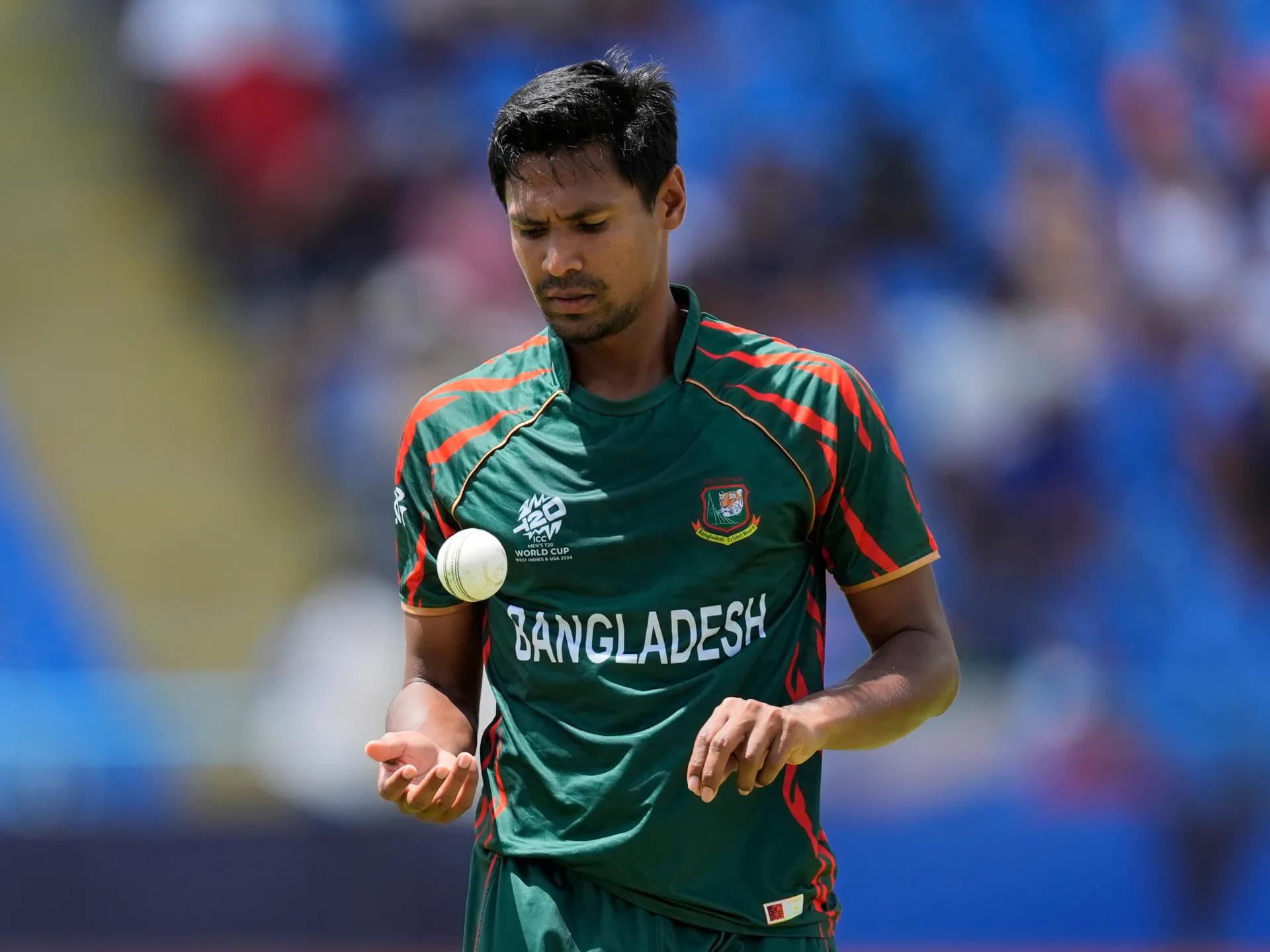
Bangladesh’s refusal to travel to India stemmed from a recent controversy, when its star fast bowler Mustafizur Rahman was dropped by his Indian Premier League (IPL) franchise Kolkata Knight Riders at the directive of the Board of Control for Cricket in India (BCCI).

It led to an outcry from cricket fans and administrators in Bangladesh, urging the BCB to take reciprocal action. In turn, the BCB asked the ICC to relocate its games from India to Sri Lanka over security concerns, saying its team will not travel to India.

Following two days of silence, the ICC – led by former BCCI chief Jay Shah – and BCB held a call to discuss the issue, with the tournament’s and Bangladesh’s opening match just more than a month away.

According to a report on ESPNCricinfo, the ICC told the BCB during the meeting that Bangladesh will need to travel to India or risk forfeiting points.

However, the BCB refuted the report and termed its claims as “completely false”.

“The BCB has taken note of certain reports published in a section of the media suggesting that the board has been issued an ultimatum. Such claims are completely false, unfounded and do not reflect the nature or content of the communication received from the ICC,” it said.

Earlier, Bangladesh’s interim government also banned the broadcast ‍of the IPL, saying the unceremonious dumping of a “star player defied logic” and had “hurt people”.

It is the latest flashpoint in a growing dispute with neighbouring India, which has now extended to cricket ties between the two nations.

The ongoing tensions flared in recent weeks after a 25-year-old Hindu man was lynched and burned publicly in Bangladesh following allegations of blasphemy.

A few days later, Hindutva activists tried to storm the Bangladesh High Commission in New Delhi as they rallied against the neighbouring nation for failing to protect its Hindu minorities.

Diplomatic relations between the once-close allies have been sharply tested since August last year, when former Prime Minister Sheikh Hasina fled to New Delhi from Dhaka after an uprising against her rule.

Bangladesh blames India for a number of its troubles, including Indian Prime Minister Narendra Modi’s support for Hasina when she was in power.

Source link

Acting U.S. ambassador leaves post in S. Korea: foreign ministry

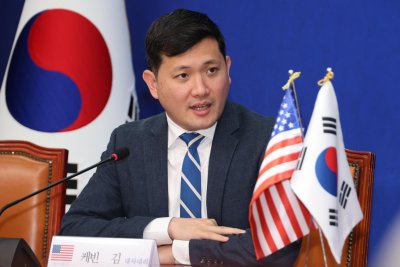
Acting U.S. Ambassador to South Korea Kevin Kim, seen here at the National Assembly in Seoul in December, has left his post and returned to the United States, the foreign ministry said Wednesday, File Photo by Yonhap

Acting U.S. Ambassador to South Korea Kevin Kim has left his post in Seoul and returned to the United States, the foreign ministry said Wednesday, amid speculation he may be assigned a new role in the Trump administration related to Korea issues.

Kim’s departure came just about two months after he took up the post as charge d’affaires at the U.S. Embassy in Seoul in October last year.

Kim succeeded then acting U.S. Ambassador Joseph Yun after the position had remained vacant since former U.S. Ambassador to Seoul Philip Goldberg left the post early last year following the launch of the second Trump administration.

Kim recently informed Seoul officials he returned to the U.S., according to the foreign ministry.

Jim Heller, deputy chief of mission at the U.S. Embassy in Seoul, is expected to serve as charge d’affaires until a new ambassador is appointed.

Sources say that Kim could be tapped for a new role handling Korea-related issues, possibly a position tasked with implementing the summit agreements reached between the allies on security and other matters, or dealing with North Korea issues.

Kim has likely been named a senior adviser to Allison Hooker, U.S. under secretary of state for political affairs, a diplomatic source said. Both Hooker and Kim were deeply involved in nuclear negotiations with North Korea during Trump’s first term, when denuclearization talks were in full swing.

Prior to his posting in Seoul, Kim served as U.S. deputy assistant secretary of state for China, Japan, Korea, Mongolia and Taiwan at the Bureau of East Asian and Pacific Affairs.

Kim’s departure leaves the ambassadorial post in Seoul vacant once again. Goldberg assumed the position more than a year after the Biden administration took office. It took about 18 months for Ambassador Harry Harris to take up the post under Trump’s first term.

Source link

South Korean opposition party leader apologizes for Yoon martial law bid

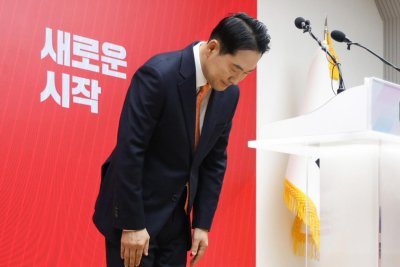
Rep. Jang Dong-hyeok, leader of the main opposition People Power Party, apologizes for the failed martial law attempt by ousted former President Yoon Suk Yeol during a press conference at its headquarters in Seoul on Wednesday. Pool photo by Yonhap

SEOUL, Jan. 7 (UPI) — The leader of South Korea’s main opposition People Power Party apologized Wednesday for former President Yoon Suk Yeol’s brief declaration of martial law last year, distancing the conservative party from the impeached ex-leader while pledging sweeping reforms aimed at broadening its political appeal ahead of upcoming local elections.

Rep. Jang Dong-hyeok, chairman of the People Power Party, delivered the apology during a press conference at party headquarters in Seoul, as Yoon awaits trial on insurrection charges stemming from the failed December 2024 move.

“The emergency martial law declared on December 3, 2024, was a wrongful measure that did not fit the situation,” Jang said. “It caused great confusion and inconvenience to our people and inflicted deep wounds on our party members who have defended the constitutional order of liberal democracy.”

Jang said the People Power Party bore a “heavy responsibility” for the episode, acknowledging that it failed to fulfill its role as a governing party. He was among 18 PPP lawmakers who rushed overnight to the National Assembly to vote down the decree, which was overturned within hours.

“I gravely acknowledge that responsibility and offer my deepest apology to the people,” he said.

Seeking to move beyond the fallout, Jang unveiled what he called a “Change to Win” initiative, outlining plans to rebuild the party around youth participation, expert-driven policymaking and expanded public outreach.

Proposed measures include mandatory youth nominations in upcoming local elections, new platforms to recruit outside policy experts and standing committees focused on labor, social welfare and generational issues.

The announcement comes less than five months before nationwide local elections scheduled for June 1, as the People Power Party looks to reassert itself as a viable alternative to the current administration of President Lee Jae Myung.

Jang also signaled a willingness to broaden the party’s political coalition, saying the PPP would work with other opposition parties to win future elections.

“If they agree with the values of liberal democracy and share the will to stop the dictatorship of the Lee Jae Myung regime, we will open our hearts and join forces with anyone,” he said.

Lee, a former opposition leader, won the presidency in June following Yoon’s removal from office, with his Democratic Party holding a commanding majority in parliament. Conservatives have accused Lee’s administration of overreach, arguing that the party’s legislative dominance has marginalized the opposition, while the government says its actions are necessary to ensure stability and advance voter-mandated reforms.

Jang said the PPP would press ahead with internal reforms, including stricter anti-corruption rules, centralized oversight of candidate nominations and a possible change of the party’s name.

Past political turmoil, including the martial law episode and Yoon’s impeachment, should be left to the courts and historians, Jang said, urging the party to focus instead on restoring public trust.

“We will cross the river of martial law and impeachment and move toward the future,” he said.

Source link

Britain, France agree to send troops to Ukraine after peace deal

From left, Ukraine’s President Volodymyr Zelensky, France’s President Emmanuel Macron and Britain’s Prime Minister Keir Starmer shake hands during the signing of the declaration on deploying post-cease-fire force in Ukraine during the Coalition of the Willing summit on security guarantees for Ukraine, at the Elysee Palace in Paris Tuesday. Photo by Ludovic Marin/EPA

Jan. 6 (UPI) — The leaders of the Britain, France and Ukraine signed a trilateral agreement Tuesday to pave the way for French and British forces to deploy to Ukraine after it signs a peace agreement to end the war with Russia.

French President Emmanuel Macron hosted about two dozen leaders from the “Coalition of the Willing” at a summit that aimed to secure Ukraine’s ongoing security once there is a cease-fire.

Macron, British Prime Minister Keir Starmer and Ukrainian President Volodymyr Zelensky signed the agreement Tuesday evening.

“Following a cease-fire, the U.K. and France will establish military hubs across Ukraine,” Starmer said.

“The ‘Multinational Force for Ukraine’ will act as a reassurance force to bolster security guarantees and Ukraine’s ability to return to peace and stability by supporting the regeneration of Ukraine’s own forces,” Starmer said in a statement.

“The signing of the declaration paves the way for the legal framework to be established for French and U.K. forces to operate on Ukrainian soil, securing Ukraine’s skies and seas and building an armed forces fit for the future.”

Zelensky posted on X about the meeting.

“Military officials from France, the United Kingdom, and Ukraine worked in detail on force deployment, numbers, specific types of weapons, and the components of the Armed Forces required and able to operate effectively. We already have these necessary details. We understand which country is ready for what among all members of the Coalition of the Willing. I would like to thank every leader and every state that truly wishes to be part of a peaceful solution,” Zelensky said.

He also discussed the role of the United States in the post-war coalition.

“We had very substantive discussions with the American side on monitoring — to ensure there are no violations of peace. The United States is ready to work on this. One of the most critical elements is deterrence — the tools that will prevent any new Russian aggression. We see all of this,” he said.

U.S. Special Envoy Steve Witkoff said the talks led to “significant progress on several critical workstreams.”

“We agree with the Coalition that durable security guarantees and robust prosperity commitments are essential to a lasting peace in the Ukraine and we will continue to work together on this effort.”

He said talks will continue Tuesday night and Wednesday, and “we are hopeful to achieve additional positive momentum in the near future.”

The leaders of about 35 countries calling themselves the “Coalition of the Willing” met Tuesday afternoon in Paris to continue work on the joint statement released by European leaders after a summit in Berlin in December.

In his New Year’s speech, Macron said he expects “firm commitments” to be made in protecting Ukraine against Russian aggression after any cease-fire.

Zelensky recently met with U.S. President Donald Trump in Florida and said that the peace plan is about 90% agreed. But Russia hasn’t agreed to the plan since revisions were made.

Trump suggested there would be a security agreement for Ukraine and said “European nations are very much involved.”

“I feel that European nations have been really great, and they’re very much in line with this meeting and with getting a deal done. They are all terrific people,” Trump said.

The 10% that’s left in the plan is about territorial disputes. Kyiv hasn’t agreed to cede land.

Russia controls about 75% of the Donetsk region and 99% of Luhansk. Together, they are the industrial region of Donbas. Ukraine doesn’t want to let them go.

Causing anxiety in Europe is the recent invasion of Venezuela by the United States, as well as Trump’s threats to take over Greenland, which is part of NATO through Denmark.

Clouds turn shades of red and orange when the sun sets behind One World Trade Center and the Manhattan skyline in New York City on November 5, 2025. Photo by John Angelillo/UPI | License Photo


Source link

Brits to X: Stop allowing Grok to digitally undress women and girls

Jan. 6 (UPI) — British Technology Secretary Liz Kendall said Elon Musk must deal with “appalling and unacceptable” images of women without their consent generated by the platform’s Grok artificial intelligence service.

The Grok bot service has been digitally undressing women and putting them in sexualized situations without their consent.

Kendall called it “absolutely appalling.”

“We cannot and will not allow the proliferation of these demeaning and degrading images, which are disproportionately aimed at women and girls,” she said. “Make no mistake, the [United Kingdom] will not tolerate the endless proliferation of disgusting and abusive material online. We must all come together to stamp it out.”

X said in a statement: “We take action against illegal content on X, including Child Sexual Abuse Material, by removing it, permanently suspending accounts, and working with local governments and law enforcement as necessary.”

X user Daisy Dixon told the BBC that she found sexualized images of herself made by Grok.

She noticed that everyday pictures she had posted of herself on the platform were changed to undress her or sexualize her. It made her feel shocked, humiliated and afraid for her safety, she said.

“Myself and many other women on X continue to report the inappropriate AI images/videos we are being sent daily, but X continues to reply that there has been no violation of X rules,” she said. “I just hope Kendall’s words turn into concrete enforcement soon — I don’t want to open my X app any more as I’m frightened about what I might see.”

Jessaline Caine told The Guardian that the government’s action is “spineless.” Caine, a survivor of child sexual abuse, said that as of Tuesday morning, Grok was still obeying requests to change an image of her at age 3 to put her in a string bikini. ChatGPT and Gemini rejected the same requests.

“Other platforms have these safeguards so why does Grok allow the creation of these images?” Caine asked. “The images I’ve seen are so vile and degrading. The government has been very reactive. These AI tools need better regulation.”

Thomas Regnier, spokesperson for tech sovereignty at the European Commission told the BBC Newshour that the Commission is taking it very seriously.

“We don’t want this in the European Union … it’s appalling, it’s disgusting,” he said.

“The Wild West is over in Europe. All companies have the obligation to put their own house in order — and this starts by being responsible and removing illegal content that is being generated by your AI tool.”

It’s illegal to create or share non-consensual intimate images or CSAM, including AI deepfakes. Fake images of people in bikinis may also qualify.

Online child safety campaigner Beeban Kidron said AI-generated images of children in bikinis may not be CSAM but they disrespect children’s privacy and agency.

“We cannot live in a world in which a kid can’t post a picture of winning a race unless they are willing to be sexualized and humiliated,” The Guardian reported she said.

Source link

Petro calls on Colombians to defend sovereignty amid Trump threats

Colombian President Gustavo Petro called for a nationwide mobilization Wednesday and urged citizens to “defend sovereignty,” in response to statements by U.S. President Donald Trump that left open the possibility of military intervention. Photo by Carlos Ortega/EPA

Jan. 6 (UPI) — Colombian President Gustavo Petro has called for a nationwide mobilization Wednesday and urged citizens to “defend sovereignty,” responding to statements by the U.S. President Donald Trump that in Colombia have been widely interpreted as threats of intervention and direct attacks against the head of state.

The call, posted by Petro on X and echoed by government officials and political allies, urges rallies in public squares across the country starting at 4 p.m. local time, with the main protest planned for Bogota’s Plaza de Bolivar, the historic square that houses Colombia’s main government institutions. Petro said he will address the crowd.

The escalation follows remarks by Trump in which he referred to Petro in disparaging terms, accused him of backing drug production and left open the possibility of military action, according to reports by Colombian media.

In recent comments, Trump said a military operation against Colombia “sounds good,” following a U.S. military incursion in Venezuela. He also accused Petro of links to drug trafficking and said Colombia is “very sick.”

Petro publicly rejected the accusations and framed the dispute as a matter of national sovereignty. He said he would carefully assess the scope of Trump’s words before issuing a broader response but insisted that dialogue should be “the first path” and defended the legitimacy of his government.

“Although I have not been a soldier, I know about war and clandestinity. I swore not to touch a weapon again after the 1989 peace pact, but for the homeland, I would take up arms again, which I do not want,” Petro wrote, referring to the agreement that led to the demobilization of the M-19 guerrilla movement in which he once participated.

“I am not illegitimate, nor am I a drug trafficker. I own only my family home, which I am still paying for with my salary. My bank statements have been made public. No one has been able to say I have spent more than my salary. I am not greedy,” he added.

Separately, Colombia’s Foreign Ministry issued a statement after remarks attributed to Trump on Sunday and said it rejects what it considers unacceptable interference in matters of sovereignty and bilateral relations.

Vice President Francia Marquez joined those describing Trump’s statements as “threats” and called on Colombians to defend national sovereignty, according to local radio reports.

Demonstrations planned for Wednesday are expected in cities including Bogota, Medellin, Cali, Bucaramanga, Cartagena and Santa Marta, with calls to gather in central squares.

Petro described the protests as “peaceful” and urged Colombians to fly the national flag at their homes and bring it to public squares, El Espectador reported. He warned of the risks of military escalation and reiterated that the armed forces must follow their constitutional mandate to defend sovereignty.

The episode unfolds amid regional upheaval linked to Venezuela’s crisis and rising diplomatic tensions in Latin America.

According to daily El Tiempo, the situation has pushed Petro’s government to return to street mobilization as a political tool while Bogota seeks to manage relations with Washington without losing internal control.

Source link