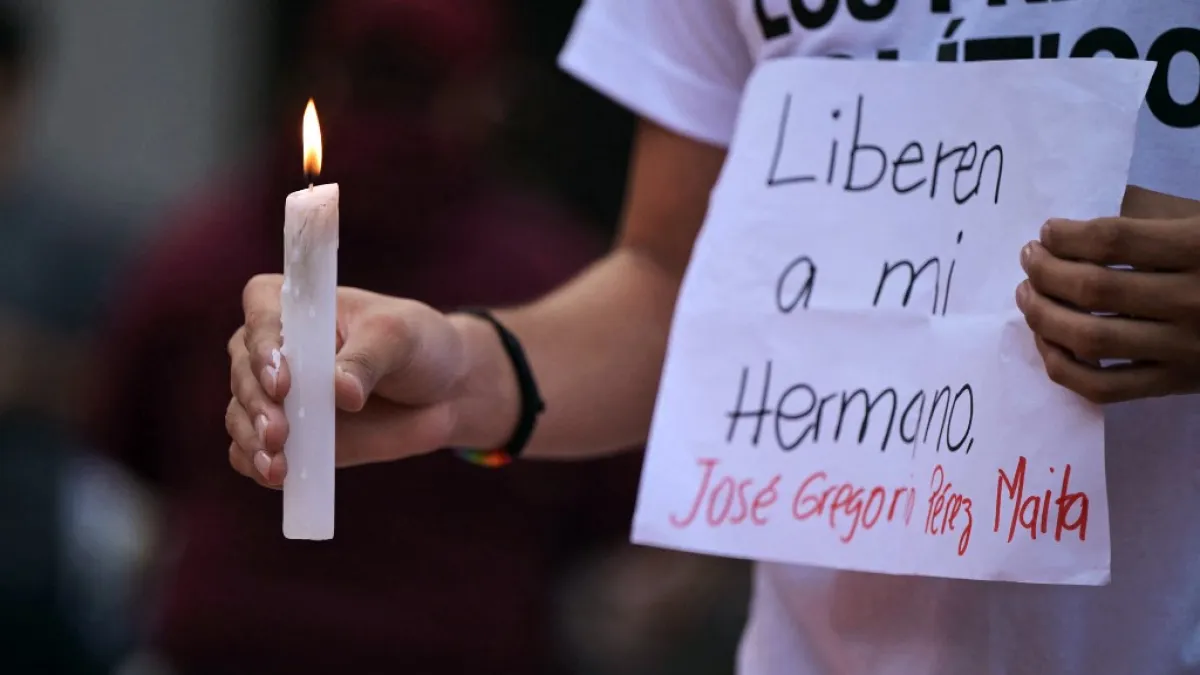
Families celebrate Christmas releases while calling for full freedom of detainees.
Published On 25 Dec 202525 Dec 2025
Share
Authorities in Venezuela have released at least 60 people arrested during protests against President Nicolas Maduro’s re-election, according to a human rights advocacy group, though campaigners say hundreds remain behind bars.
The releases began early on Thursday, over Christmas, according to the Committee for the Freedom of Political Prisoners, a group of rights activists and relatives of detainees arrested during unrest that followed July’s presidential election.
Recommended Stories
list of 3 itemsend of list
“We celebrate the release of more than 60 Venezuelans, who should never have been arbitrarily detained,” committee head Andreina Baduel told the AFP news agency.
“Although they are not entirely free, we will continue working for their full freedom and that of all political prisoners.”
Maduro secured a third term in office in the July 2024 vote, a result rejected by parts of the opposition amid allegations of fraud. The disputed outcome triggered weeks of demonstrations, during which authorities arrested about 2,400 people. Nearly 2,000 have since been released, according to rights groups.
Despite the latest releases, Venezuela still holds at least 902 political prisoners, according to Foro Penal, an NGO that monitors detentions.
Relatives said many of those freed had been held at Tocoron prison, a maximum-security facility in Aragua state, roughly 134km (83 miles) from the capital Caracas. Officials have not publicly clarified the conditions under which detainees were released.
“We must remember that there are more than 1,000 families with political prisoners,” Baduel said. Her father, Raul Isaias Baduel, a former defence minister and once an ally of the late president, Hugo Chavez, died in custody in 2021.
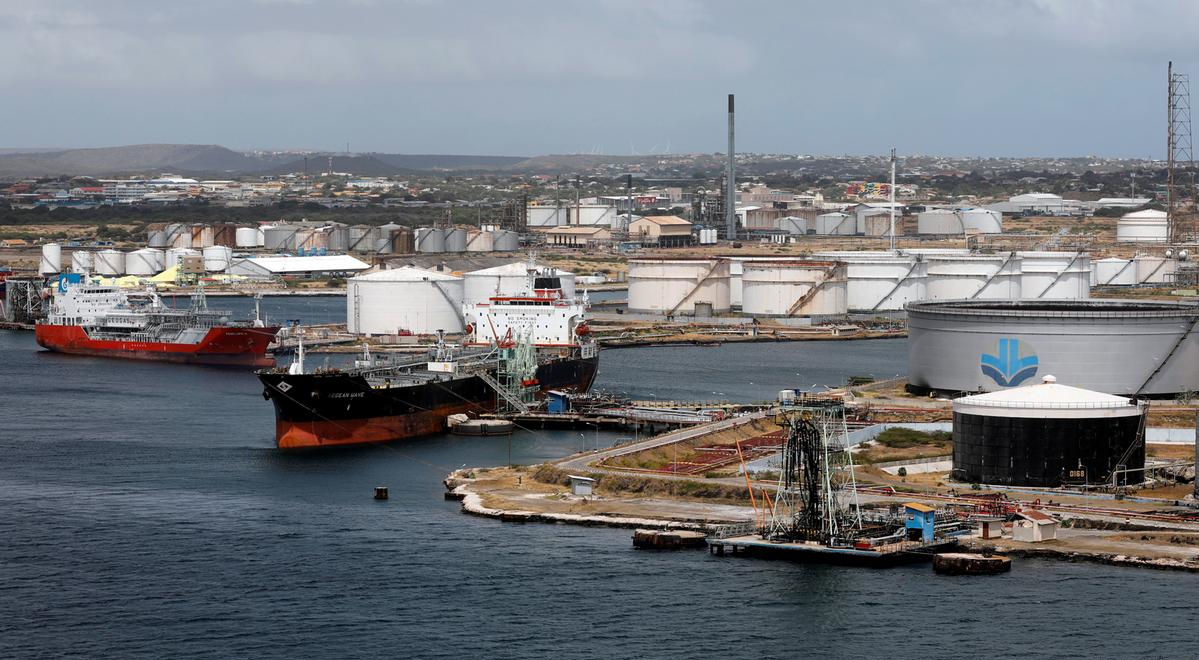
The Trump administration is escalating its “maximum pressure” sanctions campaign by targeting shipping companies. (Reuters)
Caracas, December 12, 2025 (venezuelanalysis.com) – The US Treasury Department levied new sanctions against the Venezuelan oil industry as the Trump White House looks to strangle the Caribbean nation’s most important revenue source.
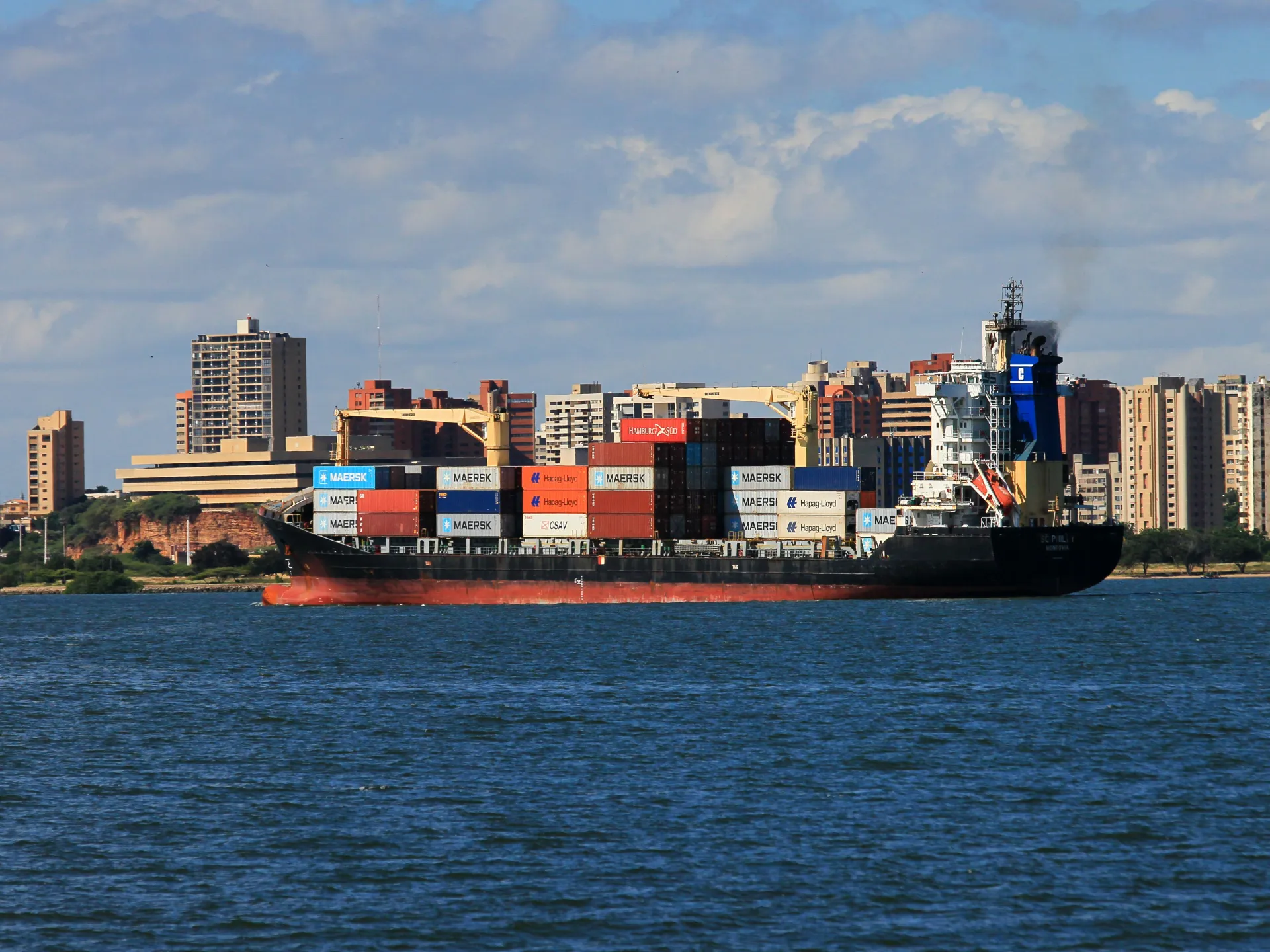
On Thursday, the Treasury’s Office of Foreign Assets Control (OFAC) blacklisted six shipping companies for allegedly transporting Venezuelan crude. OFAC likewise identified six tankers, one from each sanctioned firm, as blocked property.
“Today’s action also targets Venezuela’s oil sector, which continues to fund Maduro’s illegitimate regime,” the US Treasury stated in a press release.
The Trump administration’s latest coercive measures mark an escalation in its efforts to target Venezuela’s oil industry. During his first term, Trump introduced a “maximum pressure” campaign that included financial sanctions, an export embargo and secondary sanctions against Venezuela’s oil sector.
In his second term, the White House withdrew Chevron’s license to extract and export crude from its ventures in Venezuela before issuing a new, limited waiver in May.
The latest sanctions come amid a large-scale US military buildup and deadly operations in the Caribbean under a self-declared anti-narcotics mission. However, reports from specialized agencies have contradicted the White House’s “narcoterrorism” accusations against Caracas.
Trump has issued repeated threats to attack purported drug targets inside Venezuelan territory. Analysts and political figures have argued that Washington’s true goal is regime change in order to take control of Venezuelan natural resources.
On Wednesday, the US Coast Guard led the seizure of an oil tanker carrying Venezuelan crude. The Skipper, which had been blacklisted by the US Treasury in 2021 for allegedly transporting Iranian crude, was commandeered in international waters while carrying an estimated 1.6 million barrels of crude bound for Asian markets.
Caracas condemned the move as “international piracy” and vowed to denounce it before international bodies. US officials told Reuters that more seizures are expected in the near future, while former Biden administration advisor Juan González raised the prospect of a naval blockade against the South American country.
Washington’s tanker drew widespread rejection, with US anti-war collective Code Pink calling it “21st century piracy.” The American Association of Jurists likewise issued a statement condemning US actions as illegal and a violation of international law.
US authorities had previously seized Venezuela-bound Iranian fuel in 2020. In November, a US warship blocked the path of a Russian tanker, forcing it to make a U-turn before eventually reaching its destination in eastern Venezuela.
Thursday’s coercive measures likewise included individual sanctions against Ramón Carretero, Carlos Malpica, Efrain Campo and Franqui Flores. Carretero, a Panamanian national, was targeted for alleged involvement in Venezuelan oil sales.
Malpica, Campo and Flores are nephews of Venezuelan First Lady and National Assembly Deputy Cilia Flores. Malpica had been previously designated in 2017 before being withdrawn from OFAC’s List of Specially Designated Nationals and Blocked Persons (SDN List) in 2022. Campo and Flores were serving 18-year sentences on drug trafficking charges when they were released by the Biden administration in a prisoner exchange in 2022.
The sanctioned companies and individuals will see any US-based assets frozen, while US persons and firms are barred from conducting any business with them.
Oil production remains stable
Amidst recent US threats and escalatory actions, Venezuela’s oil sector has maintained a steady output level.
According to OPEC, production stood at 934,000 barrels per day (bpd) in November, slightly below 961,000 bpd in October, as measured by secondary sources. Venezuela’s oil industry recovered from decades-low output levels in 2020 but has not managed to surpass the 1 million bpd threshold.
In contrast, state oil company PDVSA reported a higher output of 1.14 million bpd in November. The direct and secondary measurements have differed over time due to disagreements on the inclusion of natural gas liquids and condensates.
The recent tanker seizure is expected to hit Venezuelan oil revenues through higher shipping and insurance costs. PDVSA is forced to rely on intermediaries and levy significant discounts in order to place crude cargoes in international markets.
An oversupply of sanctioned crude from Iran and Russia has likewise cut into PDVSA’s profit margins in recent weeks.
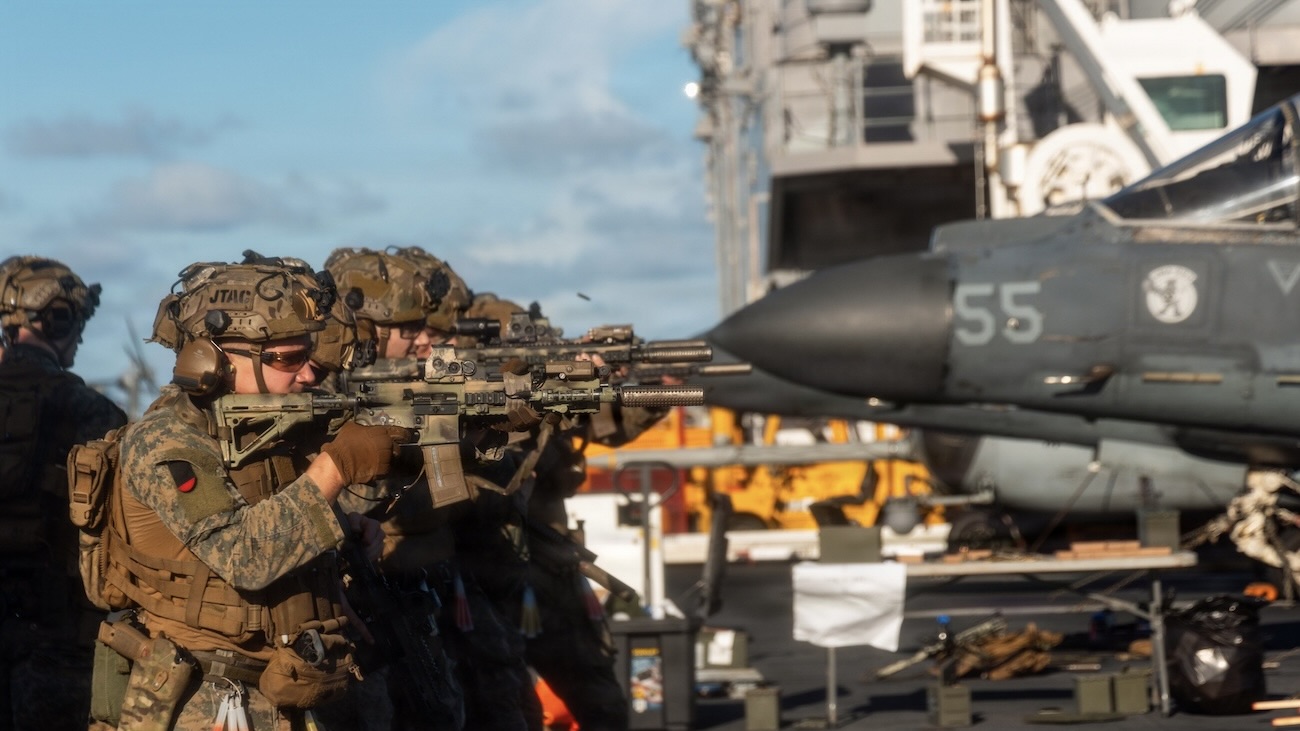
US Marines carrying out exercises on USS Iwo Jima as part of SOUTHCOM’s Operation Southern Spear in the Caribbean Sea. (SOUTHCOM)
Ever since Hugo Chávez came to power in 1998, the United States has attempted to overthrow the Bolivarian Revolution. They have tried everything short of a full-scale military invasion: a military coup, selecting a substitute president, cutting off access to the global financial system, imposing layers of sanctions, sabotaging the electricity grid, sending in mercenaries, and attempting to assassinate its leaders. If you can think of a method to overthrow a government, the United States has likely tried it against Venezuela.
However, in 2025, the escalation became unmistakable. The US sent its warships to patrol Venezuela’s coast, began sinking small boats and killing those on board as they left the South American mainland, and seized an oil tanker bound for Cuba. The quantity of attacks on Venezuela has increased, suggesting the quality of the threats has now reached a different magnitude. It feels as if the United States is preparing for a full-blown invasion of the country.
Donald Trump came to office saying that he was opposed to military interventions that did not further US interests, which is why he called the illegal US war on Iraq a waste of “blood and treasure”. This does not mean Trump is against the use of the US military – he deployed it in Afghanistan (remember the “Mother of all Bombs”) and Yemen, and has fully backed the US/Israeli genocide against the Palestinians. His formula is not for or against war categorically, but about what the US would gain from it. With Iraq, he stated that the problem was not the war itself, but the failure to seize Iraqi oil. Had the US taken Iraq’s oil, Trump would likely have been in Baghdad, ready to build – with Iraqi treasure – a Trump hotel on one of the former presidential properties.
Naturally, the US military buildup in the Caribbean is about Venezuelan oil – the largest known reserves in the world. The US-backed politician, Maria Corina Machado, awarded the Nobel Peace Prize just this week after supporting the Israeli genocide and calling for a US invasion of her own country, is on record promising to open up her country’s resources to foreign capital. She would welcome the extraction of Venezuela’s wealth rather than allow its social wealth to better the lives of its own people, as is the goal of the Bolivarian Revolution started by Hugo Chávez. A hypothetical “President Machado” would immediately surrender any claim to the Essequibo region and grant ExxonMobil full command of Venezuela’s oil reserves. This is certainly the prize.
But it is not the immediate spur. A close reading of the 2025 National Security Strategy of the United States shows that there is a renewed emphasis on the Western Hemisphere. The Trump Corollary to the 1823 Monroe Doctrine is clear: the Western Hemisphere must be under US control, and the United States will do what it takes to ensure that only pro-US politicians hold power. It is worth reading that section of the National Security Strategy:
“After years of neglect, the United States will reassert and enforce the Monroe Doctrine to restore American pre-eminence in the Western Hemisphere, and to protect our homeland and our access to key geographies throughout the region. We will deny non-Hemispheric competitors the ability to position forces or other threatening capabilities, or to own or control strategically vital assets, in our Hemisphere. This ‘Trump Corollary’ to the Monroe Doctrine is a common-sense and potent restoration of American power and priorities, consistent with American security interests.”
When Argentina faced local elections, Trump warned that the US would cut off external financing if candidates opposing pro-US President Javier Milei lost. In Honduras, Trump intervened directly to oppose the Libre Party, even offering to release a convicted drug trafficker (and former President). The United States is moving aggressively because it has accurately assessed the weakness of the Pink Tide and the strength of a new, far-right “Angry Tide”. The emergence of right-wing governments across South America, Central America, and the Caribbean has emboldened the US to squeeze Venezuela and thereby weaken Cuba – the two major poles of the Latin American left. Overturning these revolutionary processes would allow a full-scale Monroe Doctrine domination of Latin America and the Caribbean.
Since the 1990s, the United States began to speak of Latin America as a partner for shared prosperity, emphasizing globalization over direct control. Now, the language has changed. As the Trump Corollary asserts: “We want a Hemisphere that remains free of hostile foreign incursion or ownership of key assets and that supports critical supply chains…We want to ensure our continued access to key strategic locations.” Latin America is seen as a battlefield for geopolitical competition against China and a source of threats like immigration and drug trafficking. The attack on Venezuela and Cuba is not merely an assault on these two countries; it is the opening salvo of direct US intervention on behalf of the Angry Tide. This will not deliver better lives for the population, but greater wealth for US corporations and the oligarchies of Latin America.
Trump is ready to revive the belief that any problem can be solved by military force, even when other tools exist. The Trump Corollary promises to use its “military system superior to any country in the world” to steal the hemisphere’s resources.
The aggression against Venezuela is not a war against Venezuela alone. It is a war against all of Latin America.
UN experts criticise US blockade for endangering human rights and call for an investigation into alleged violations.
Published On 24 Dec 202524 Dec 2025
Share
Four United Nations human rights experts have condemned the partial naval blockade of Venezuela by the United States, finding it an illegal armed aggression and calling on the US Congress to intervene.
“There is no right to enforce unilateral sanctions through an armed blockade,” the UN experts said in a joint statement on Wednesday.
Recommended Stories
list of 3 itemsend of list
The US has deployed a major military force in the Caribbean and intercepted oil tankers as part of a naval blockade against Venezuelan vessels it considers to be under sanctions.
A blockade is a prohibited use of military force against another country under the UN Charter, they added.
“It is such a serious use of force that it is also expressly recognised as illegal armed aggression under the General Assembly’s 1974 Definition of Aggression,” the experts said. “The illegal use of force, and threats to use further force at sea and on land, gravely endanger the human right to life and other rights in Venezuela and the region.”
US President Donald Trump accuses Venezuela of using oil, the South American country’s main resource, to finance “narcoterrorism, human trafficking, murders and kidnappings”.
Caracas denies any involvement in drug trafficking. It says Washington is seeking to overthrow its president, Nicolas Maduro, to seize Venezuela’s oil reserves, the largest in the world.
Since September, US forces have launched dozens of air strikes on boats that Washington alleges were transporting drugs. It has yet to provide evidence for those accusations. More than 100 people have been killed.
‘US Congress should intervene’
“These killings amount to violations of the right to life. They must be investigated and those responsible held accountable,” the experts said.
“Meanwhile, the US Congress should intervene to prevent further attacks and lift the blockade,” they added.
They called on countries to take measures to stop the blockade and illegal killings and bring the perpetrators to justice.
The four who signed the joint statement are: Ben Saul, special rapporteur on protecting human rights while countering “terrorism”; George Katrougalos, an expert on promoting a democratic and equitable international order; development expert Surya Deva; and Gina Romero, special rapporteur on the right to freedom of peaceful assembly and association.
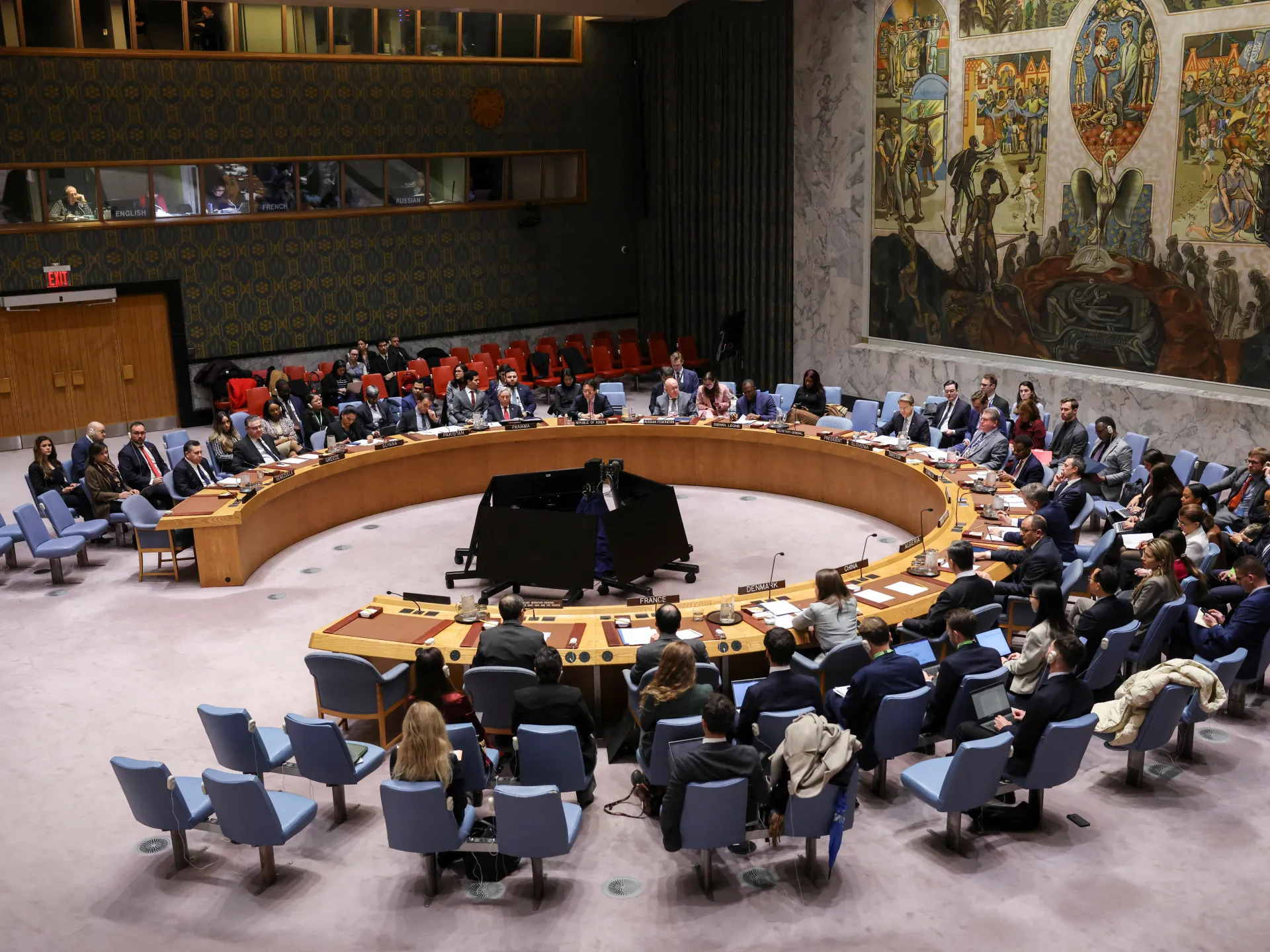
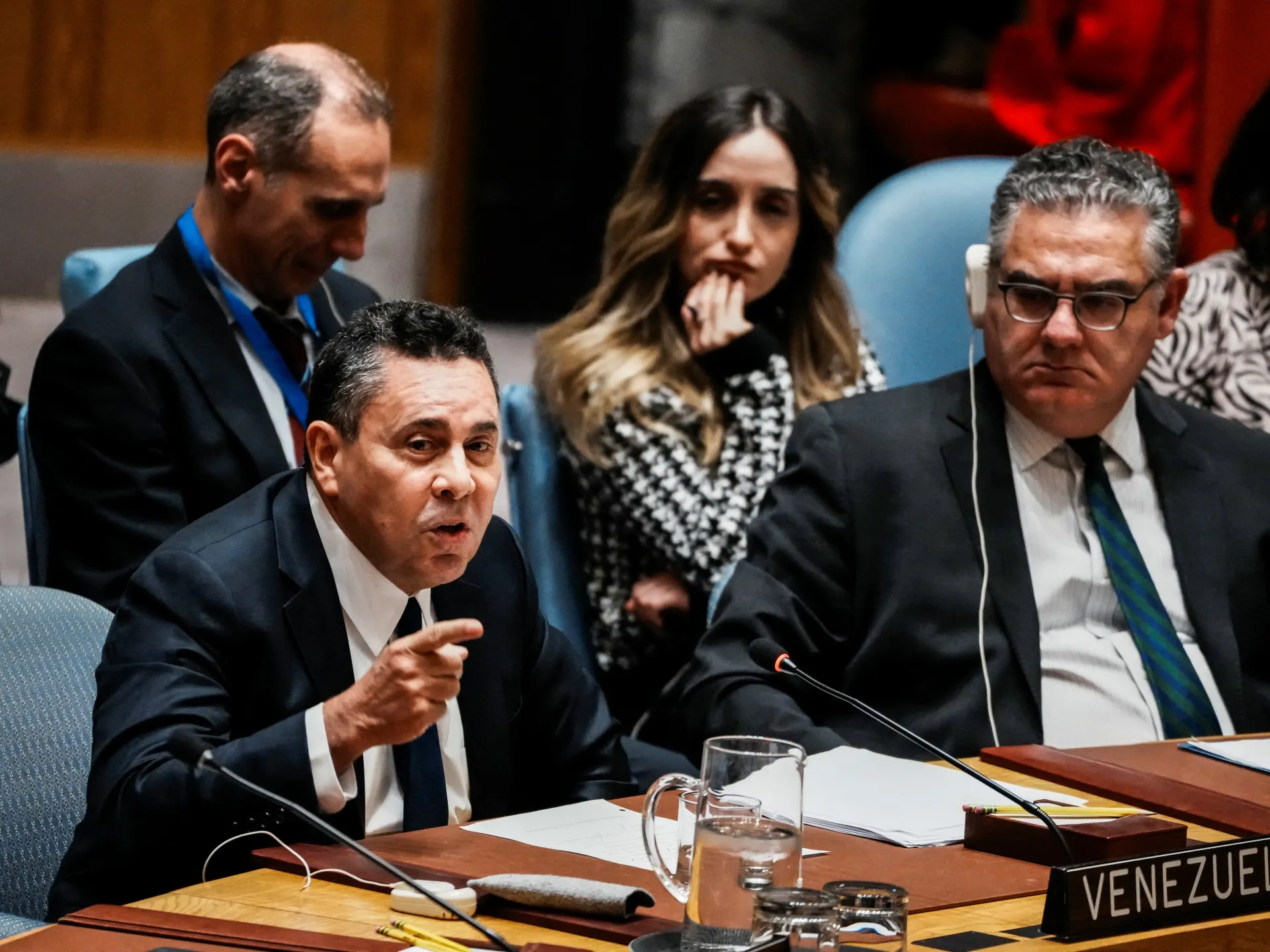
Venezuela’s UN ambassador denounces US military strikes and naval blockade at a meeting of the UN Security Council.
Venezuela has told the United Nations Security Council (UNSC) that the United States has “continental ambitions” over much of Latin America as it wages an unofficial war to remove the government of Venezuelan President Nicolas Maduro.
“It’s not just about Venezuela. The ambition is continental,” Venezuela’s UN ambassador, Samuel Moncada, told a meeting of the 15-member UNSC on Tuesday.
Recommended Stories
list of 4 itemsend of list
“The US government has expressed this in its National Security Strategy, which states that the future of the continent belongs to them,” Moncada said.
“We want to alert the world that Venezuela is only the first target of a larger plan. The US government wants us to be divided so it can conquer us piece by piece,” he said.
Venezuela, earlier this month, requested that the UNSC meet to address the “ongoing US aggression”, which began in September when the White House launched air strikes against vessels in the Caribbean Sea and eastern Pacific Ocean. The White House claimed, without providing any evidence, that the vessels were trafficking drugs to the US.
At least 105 people have been killed so far in the attacks by US forces, which legal experts and Latin American leaders have branded “extrajudicial killings”, but which Washington claims are necessary to stem the flow of drugs to US shores.
At the UNSC meeting, Moncada also accused the administration of US President Donald Trump of violating both international and US domestic law, since the White House has been acting without the approval of the US Congress, whose authority is required to formally declare war on another country.
Moncada said that Trump’s imposition last week of a naval blockade on all Venezuelan oil tankers sanctioned by the US was a “military act aimed at laying siege to the Venezuelan nation”.
“Today, the masks have come off,” Moncada said. “It is not drugs, it is not security, it is not freedom. It is oil, it is mines and it is land.”
US envoy denounces ‘Maduro and his illegitimate regime’
US forces have seized at least two Venezuelan oil tankers and confiscated at least 4 million barrels of Venezuelan oil, according to Moncada, in a move he described as “a robbery carried out by military force”.
The US has defended its naval blockade of Venezuela as a “law enforcement” action to be carried out by the US coastguard, which has the authority to board ships under US sanctions. A naval blockade, by contrast, would be considered an act of war under international law.
The US ambassador to the UN, Mike Waltz, told the UNSC that Latin American drug cartels remain the “single most serious threat” and that Trump would continue to use the full power of the US to eradicate them. Waltz also said that Venezuelan oil is a critical component in funding the cartels in Venezuela.
“The reality of the situation is that sanctioned oil tankers operate as the primary economic lifeline for Maduro and his illegitimate regime,” he said.
The White House earlier this year designated several international drug cartels, including Venezuela’s Tren de Aragua, as terrorist organisations. Washington also added the “Cartel de los Soles,” which it claims is headed by Maduro, to the list in November.
The Venezuelan leader has denied the US allegations and accused the Trump administration of using the drug trafficking claims as a cover to carry out “regime change” in his country.
Russia’s ambassador to the UN separately warned that US “intervention” in Venezuela could “become a template for future acts of force against Latin American states”.
China’s ambassador told the UNSC that the US actions “seriously infringe” on the “sovereignty, security and legitimate rights” of Venezuela.
The Bella 1 tanker has reportedly avoided capture. (MarineTraffic)
Caracas, December 23, 2025 (venezuelanalysis.com) – US President Donald Trump made new regime change threats against Venezuela and President Nicolás Maduro.
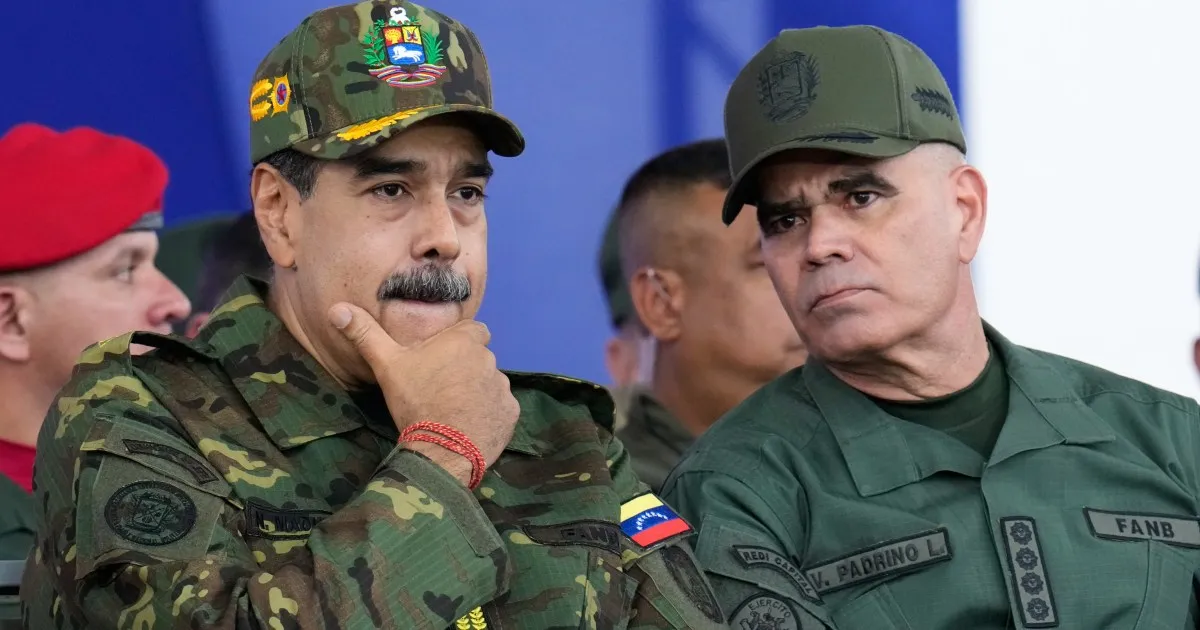
In a Monday press conference, Trump answered “probably” when asked if Washington intended to oust the Venezuelan leader but said it was up to Maduro to leave power.
“That’s up to him what he wants to do. I think it’d be smart for him to do that. But again, we’re gonna find out,” the US president told reporters in Mar-a-Lago, Florida.
Trump went on to warn the Venezuelan president not to “play tough.” “If he plays tough, it’ll be the last time he’s ever able to play tough,” he said.
The US president also said that land strikes against alleged drug cartels would start soon. He has issued such a threat on repeated occasions since September. He likewise repeated past unfounded claims that Venezuela sent “millions of people” to the US, many of them prisoners and mental patients.
Trump’s escalated rhetoric against Caracas followed ramped-up efforts to enforce a naval blockade and paralyze Venezuelan oil exports. On Saturday, the US Coast Guard boarded and seized the Centuries tanker east of Barbados in the Caribbean Sea.
The Panama-flagged ship had recently loaded a reported 1.8 million barrels of Merey crude at José terminal in eastern Venezuela for delivery in China. According to maritime vessel sources, the tanker is owned by a Hong Kong company and had transported Venezuelan oil several times in recent years.
The takeover operation was led by the US Coast Guard, with White House officials sharing footage of the boarding on social media.
The Centuries’ seizure followed a similar operation targeting the Skipper tanker on December 10. However, unlike the Skipper, the Centuries was not blacklisted by the US Treasury Department.
US officials referred to the tanker as transporting “sanctioned oil.” Analysts argued that the ambiguous definition is meant to allow US authorities to go after any vessel moving Venezuelan crude in an effort to drive shipping companies away from the Caribbean nation’s oil sector.
The White House’s threats and vessel seizures have already led several tankers to reverse course while en route to Venezuela, with customers reportedly demanding greater oil discounts in Venezuelan crude purchases. The South American oil industry might soon be forced to cut back production if it runs out of storage space.
On Sunday, US forces attempted to board a third tanker, the Guyana-flagged Bella 1 that was headed to Venezuela to load oil. However, the ship’s captain allegedly refused to allow the US Coast Guard’s boarding and turned the vessel back toward the Atlantic Ocean. According to reports, US forces continue to pursue the Bella 1.
Trump announced a naval blockade while demanding that Venezuela return “oil, land and other assets” that were “stolen,” in reference to nationalizations in past decades. Foreign corporations that saw their assets expropriated either agreed to compensation or pursued international arbitration.
The tanker seizures, alongside renewed sanctions targeting the Venezuelan oil industry, came amid a massive US military deployment in the Caribbean on the edge of Venezuelan territory. The build-up was originally declared as an anti-narcotics mission before Washington shifted the discourse toward oil and regime-change.
China and Russia express support
The Venezuelan government has condemned the US military threats and attacks against the oil industry. In a communique issued on Saturday, Caracas decried the second tanker seizure as a “serious act of piracy” and vowed to denounce it before multilateral bodies.
In recent days, the Maduro government received backing from China and Russia, two of its most important allies.
In a Monday press conference, Chinese Foreign Ministry spokesperson Lin Jian criticized the tanker seizures as violations of international law and stated Beijing’s opposition to “unilateral and illegal actions.” The official urged a response from the international community.
Likewise on Monday, Venezuelan Foreign Minister Yván Gil held a phone call with Russian counterpart Sergei Lavrov. According to Gil, Moscow’s top diplomat reiterated support for Venezuela in the face of “US hostilities.”
The UN Security Council is scheduled to meet on Tuesday afternoon at Venezuela’s request to address the most recent US escalations.
Venezuela’s National Assembly has passed a law enacting harsh penalties for those who support or help finance blockades and acts of piracy, including up to 20 years in prison.
The legislation was passed on Tuesday after the United States seized oil tankers linked to Venezuela, acts that the government of President Nicolas Maduro has denounced as lawless acts of piracy.
Recommended Stories
list of 3 itemsend of list
“This law seeks to protect the national economy and avoid the erosion of living standards for the population,” lawmaker Giuseppe Alessandrello said, while presenting the law before the National Assembly, controlled by Maduro’s governing party.
The US has carried out a series of increasingly aggressive measures over the past several months, deploying sizeable military forces to Latin America, seizing oil tankers, killing dozens of people in military strikes on what it says are drug-trafficking boats, and threatening land strikes on Venezuela itself.
The legality of some of those acts, such as the seizure of oil tankers in international waters, is contested. Others, such as the strikes against alleged drug traffickers, are widely considered illegal.
“We are in the presence of a power that acts outside of international law, demanding that Venezuelans vacate our country and hand it over,” Samuel Moncada, Venezuela’s representative at the United Nations, told the Security Council (UNSC) during a meeting on Tuesday.
“The threat is not Venezuela,” he added. “The threat is the US government.”
China and Russia also criticised US actions. Russia’s ambassador, Vassily Nebenzia, said that the Trump administration was creating a “template” for the use of force that could be used against other Latin American countries in the future.
“We saw clear support for Venezuela from Russia and China, but also from Colombia, and even from some other member states, talking about how the US needs to abide by international law and calling for de-escalation,” Al Jazeera correspondent Gabriel Elizondo said from the UN.
He added that several Latin American countries with right-wing governments, such as Argentina, Panama and Chile, appeared to side with the US.
“The bottom line here is that we have not gotten any better sense from the United States on what their endgame is here, where they plan to take this,” he added.
The Wall Street Journal reported on Tuesday that the US military had moved special operations aircraft and cargo planes with troops into the Caribbean this week.
“We have a massive armada formed, the biggest we’ve ever had, and by far the biggest we’ve ever had in South America,” Trump told reporters on Monday.
Maduro has said the US is seeking to topple his government and seize control of Venezuela’s large oil reserves, which members of the Trump administration have falsely claimed rightfully belong to the US. Trump said on Monday that the US would retain the oil seized from the tankers as well as the tankers themselves.
Addressing the UNSC, the US ambassador, Mike Waltz, said that oil sales were a “primary economic lifeline for Maduro and his illegitimate regime”, repeating an unsubstantiated claim that Maduro oversees a vast criminal enterprise that traffics drugs to the US.
“The single most serious threat to this hemisphere, our very own neighbourhood and the United States, is from transnational terrorist and criminal groups,” Waltz said.
The US pressure campaign has become a useful pretext for the Venezuelan government’s efforts to crack down on internal dissent.
Rights groups have said that Maduro’s government has become more repressive since the presidential election in July 2024, in which Maduro claimed victory despite the widespread doubts about the credibility of the results. The opposition has maintained it was the true winner, and few countries have recognised Maduro’s victory.
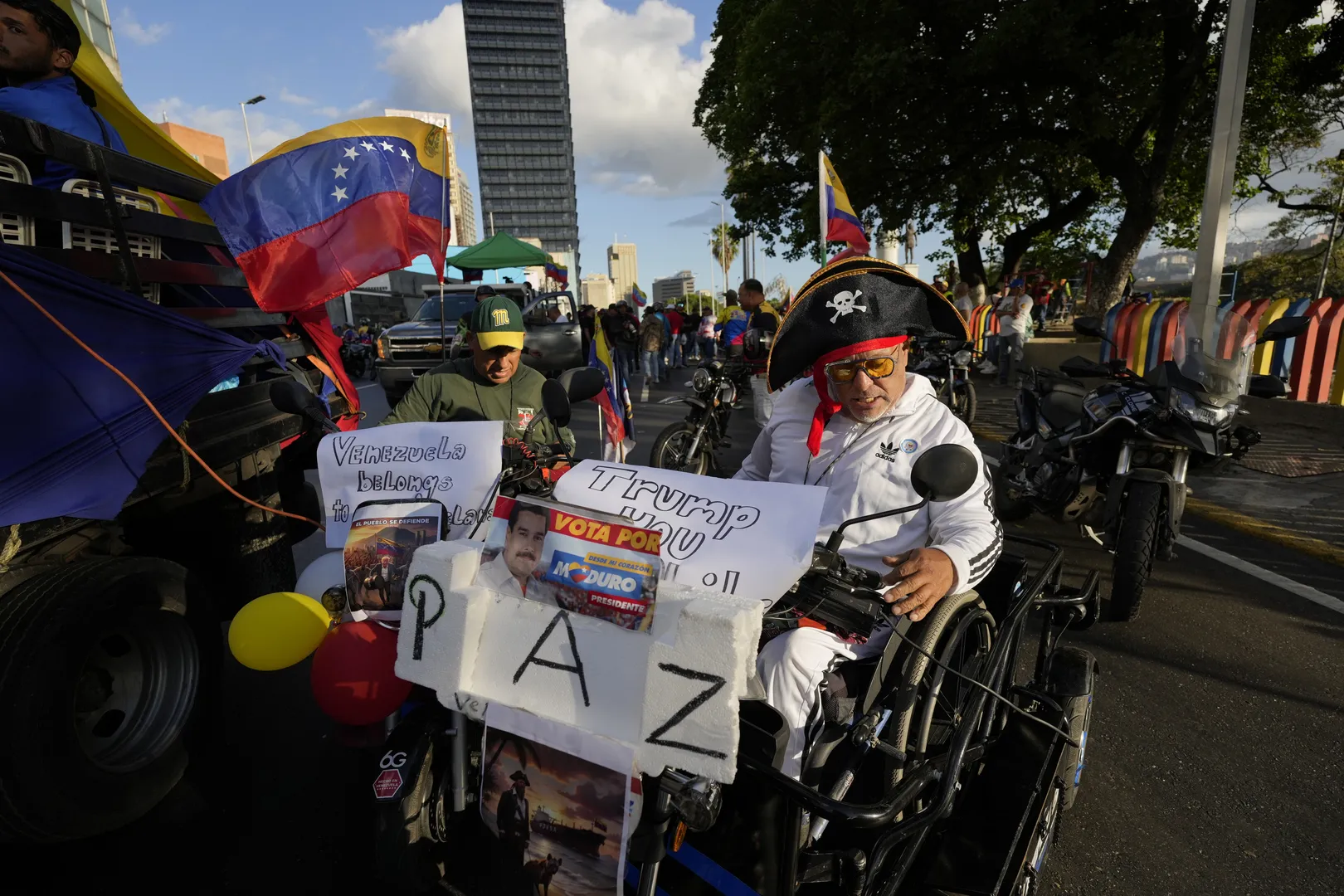
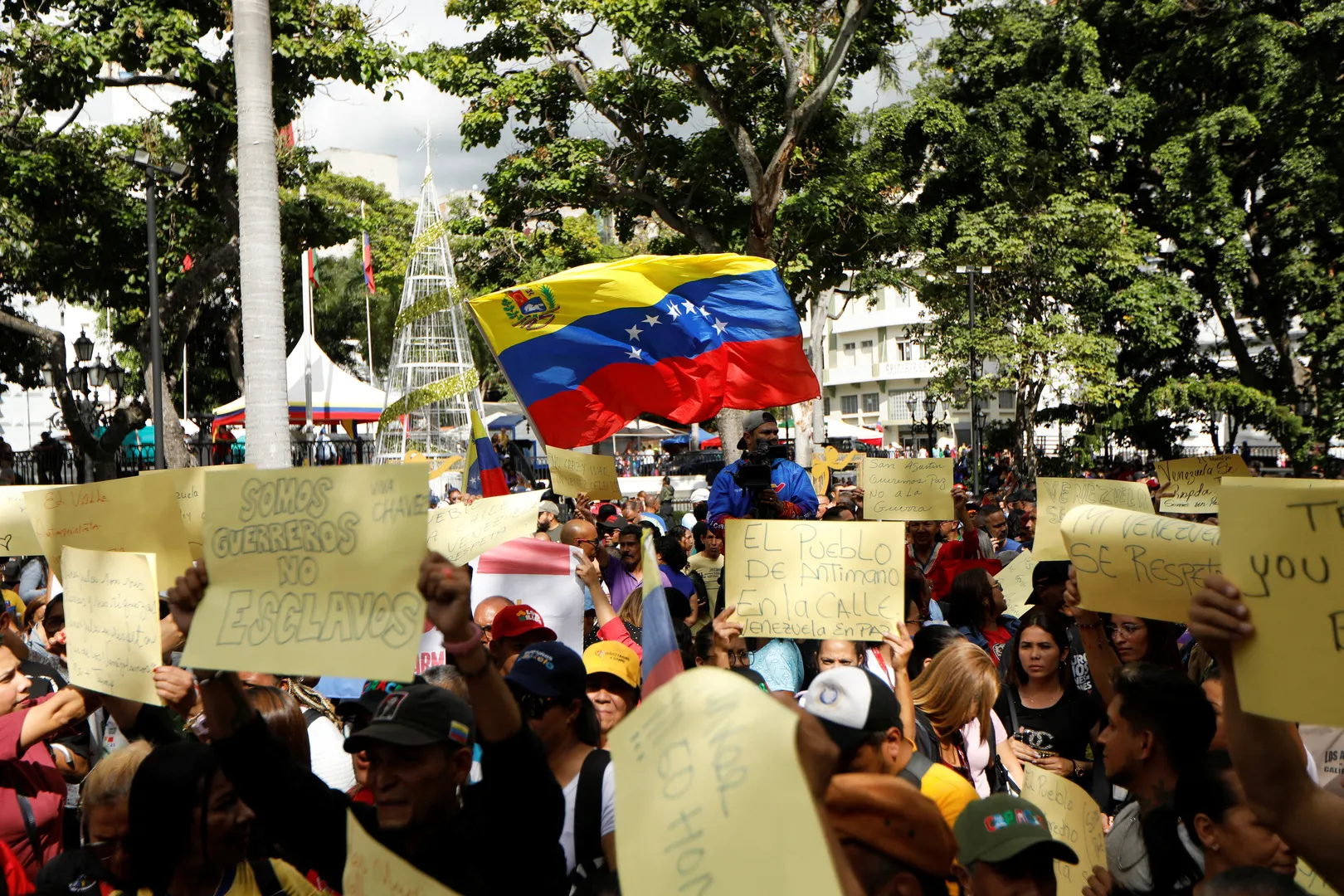
Motorcyclists wearing pirate costumes rode through Caracas in a protest against US President Donald Trump, after Washington ordered the seizure of Venezuelan oil tankers under a blockade targeting vessels linked to sanctions.
US President Donald Trump warned Nicolas Maduro to ‘not play tough’ and to step down on Monday, while the Venezuelan leader said Trump should focus on the issues in his own country. Trump told reporters the US will keep 1.9 million barrels of oil that were seized near Venezuela in December.
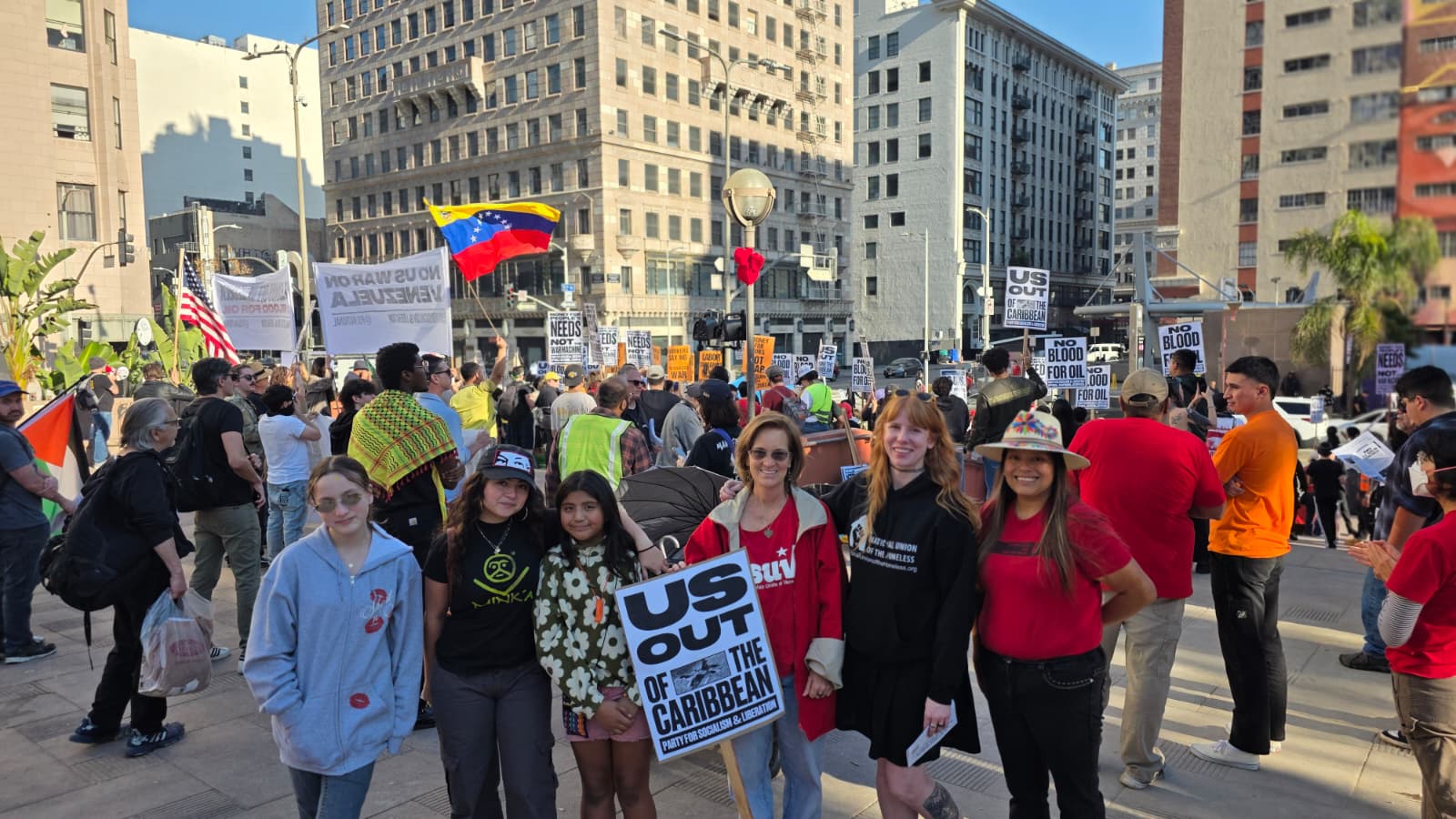
As Washington intensifies its political, economic, and military attacks against Venezuela, opposition to imperialism is also growing inside the United States—particularly among working-class and immigrant communities who experience the costs of imperialism directly. From cuts to social programs and housing insecurity to mass deportations and ICE raids, many are drawing connections between repression at home and US intervention abroad.
Elizabeth Blaney is a key figure in the Los Angeles tenant movement, a co-founder and co-director of Unión de Vecinos and part of the broader Los Angeles Tenants Union (LATU). With decades of experience organizing in Boyle Heights against displacement and gentrification, Blaney has also been deeply involved in international solidarity with Venezuela.
This conversation took place in the context of her participation in the recent People’s Assembly for Peace and Sovereignty held in Caracas. In it, she reflects on grassroots opposition to war and how the Bolivarian Revolution has helped radicalize housing struggles in the Los Angeles tenant movement.
How are organized working-class communities reacting to the latest imperialist military escalation against Venezuela?
Among the working-class base we organize with, there is absolutely no support for the war against Venezuela. In East Los Angeles, where I’m from—and in Los Angeles more broadly—the population is majority Latino, African American, and Asian. Most people in our communities are immigrants. Many come from countries that have experienced violence as a direct result of US intervention. Because of that, they understand the situation and recognize the real motivations behind what the US government is doing here in Venezuela. There is strong opposition to war and a clear demand for the United States to get out of the Caribbean.
People also understand that war funding comes directly at their expense. We’ve lost school programs, social services, and benefits. Starting in January, many people will lose Medicaid support. There is a widespread understanding that public resources are being redirected to fund wars. So, beyond solidarity or morality, there is also a concrete economic reason that people oppose war…. They know that they are already paying the price.
This has translated into organization. People want to learn more and get involved in the growing anti-war movement, and our leadership has participated in solidarity protests across Los Angeles. The ongoing ICE raids have also deepened understanding of what is happening to Venezuela: witnessing family members, friends, and neighbors abducted by ICE has generated fear, but also a growing disposition to resist.
Many people now understand that retreating into fear only strengthens the state. They also recognize that the same violence the US government deploys against them is being used against the people of Venezuela and Palestine. This has led to a broad rejection of imperialist aggression—people overwhelmingly oppose the imperialist military buildup in the Caribbean and the Israeli genocide, which is funded and enabled by the United States.
You participated in the recent “People’s Assembly for Peace and Sovereignty” [December 9-11] in Caracas. Getting to it was not easy, since most airlines stopped flying to Venezuela after Trump closed the airspace. Despite these obstacles, the Assembly took place and was a huge success. What can you tell us about it?
Hundreds of people were stranded in airports or had their flights canceled at the last minute because of Trump’s illegal attempt to control Venezuelan airspace. As a result, many delegates who were scheduled to attend didn’t make it.
Despite this, the conference went forward, with between 600 and 800 delegates from around the world present. In that sense, it was a success. Some people traveled through five or six countries just to get here. That level of commitment shows how deeply people oppose US aggression and support the call for peace!
Politically, what stood out most was how clearly delegates connected US aggression against Venezuela to its global impact. People discussed how sanctions and seizures—such as the illegal confiscation of oil tankers bound for Cuba and other countries—directly affect energy access and economic stability elsewhere. This makes it clear that what’s happening in Venezuela is an international issue.
There were also discussions about how war funding drains resources from working people in the United States and promotes speculation in financial and housing markets globally. One session focused specifically on housing, examining how imperialist war drives up rents and housing prices, worsening conditions for tenants worldwide.
Beyond peace, the Assembly’s debates emphasized people’s sovereignty and who has the right to control resources. The conclusion was clear—those resources belong to the Venezuelan people. If they are stolen from Venezuela, nothing prevents similar theft elsewhere.
The Peace Assembly helped develop a shared understanding of how to defend Venezuela’s sovereignty while preparing for what comes next globally. Now the analysis has to go back to our communities.
Members of the Unión de Vecinos in an LA concentration against the US military deployment in the Caribbean. (Unión de Vecinos)
You’ve said on other occasions that the Bolivarian Process, despite being demonized by the media establishment, has helped radicalize housing struggles in Los Angeles. How has that experience shaped your organization?
I’m part of the Unión de Vecinos, the East Side chapter of the Los Angeles Tenants Union. We’ve been engaged in internationalist solidarity work for many years. We first came to Venezuela in 2019 and have returned several times since, not only to oppose sanctions but to strengthen the tenant movement in Los Angeles and to be fellow travelers in the march toward socialism.
In July 2023, we organized a brigade of about 25 tenant organizers from across California. For many participants, it was a transformative experience. What people in the United States often don’t grasp is that in Venezuela, there is a real socialist project. Of course, it is not perfect and has contradictions, but it is a true emancipatory project with tangible advances. Housing rights, free university education, and free healthcare already exist here in ways they do not in the US.
Seeing this reality firsthand shifted how our organizers think. It made it clear that socialism is not just an abstract demand but something that can be built in practice. Over the past two years and across our 15 chapters, this experience has fueled profound debates about what it means to build a socialist project in Los Angeles.
We don’t see ourselves as just a housing movement. It is about tenants’ ability to survive, remain in their neighborhoods, and collectively shape their communities. This broader vision was strongly influenced by what we learned in Venezuela. Following a process of internal debates, the LA Tenants Union collectively declared itself a socialist organization in August. That decision would not have been possible without the internationalist exchange with Venezuela.
Another crucial lesson has been learning about participatory democracy. In the United States, democracy is reduced to voting every few years or speaking at meetings with no real power. In Venezuela, democracy is practiced as an ongoing process through communal assemblies and popular consultations. For our organizers, seeing Venezuela’s communal assemblies, which are the communes’ highest decision-making body—with “voceros” [spokespeople] accountable to them—has been especially influential. We are strengthening that model across our chapters.
This work goes beyond visits. We’ve built ongoing relationships with Venezuelan movements like the Movimiento de Pobladores, the Movimiento de Inquilinos, and the Simón Bolívar Institute through regular exchanges and political education initiatives. Reciprocal solidarity is central to our political formation and our ability to challenge dominant narratives in the United States.
At a recent event in El Panal Commune, the Simón Bolívar Institute launched the “Solidarity Committee with the Peoples of the US.” What does this initiative represent for grassroots movements in your context?
Solidarity requires sustained commitment and concrete action. This initiative creates a space where analysis and action converge in a spirit of reciprocal solidarity. At the launch, around ten or eleven organizations from the United States were present, all rooted in working-class communities, in addition to El Panal communards and spokespeople from the Instituto Simón Bolívar. That matters, because this isn’t just about organizations—it’s about the people they represent and organize.
The initiative strengthens our responsibility as organizers and working-class people in the US to fight fascism at home, while opposing imperialism abroad. It also demonstrates that we are not fighting alone. Through this work, we will also be deepening ties with movements in Mexico, Honduras, and Argentina, where people are facing similar crises, particularly around housing. Bringing these struggles together strengthens all of us.
Finally, how have the current ICE raids reshaped the political landscape inside the United States, and how do people connect this repression to US imperialist aggression abroad?
The raids and kidnappings being carried out by the US government against immigrants are a turning point. In practice, the Supreme Court has legalized racism, allowing federal agents to detain people based on skin color, language, or where they gather for work, without due process.
This has sparked resistance well beyond traditional activist circles. While working-class communities have always resisted, many people who were never politically active before are now organizing. Neighborhoods are forming patrols, blocking streets, warning residents, and physically slowing ICE operations.
This has opened space for deeper political conversations. People are increasingly connecting what is happening in their neighborhoods to US aggression abroad. They are asking: if the government can do this here—deporting people, including Venezuelans, or sending migrants to third countries—what stops it from escalating further against countries like Venezuela?
As a result, international solidarity no longer feels distant or abstract. More people are recognizing the shared enemy and taking action in solidarity with Venezuela. That political awakening is one of the most significant developments of the present moment.
United States President Donald Trump has issued a new warning to Nicolas Maduro, saying “it would be smart” for the Venezuelan leader to leave power, as Washington escalates a pressure campaign against Caracas.
The warning on Monday came as Russia pledged “full support” for Maduro’s government, and China condemned the US’s seizure of two oil tankers off the coast of Venezuela.
Recommended Stories
list of 4 itemsend of list
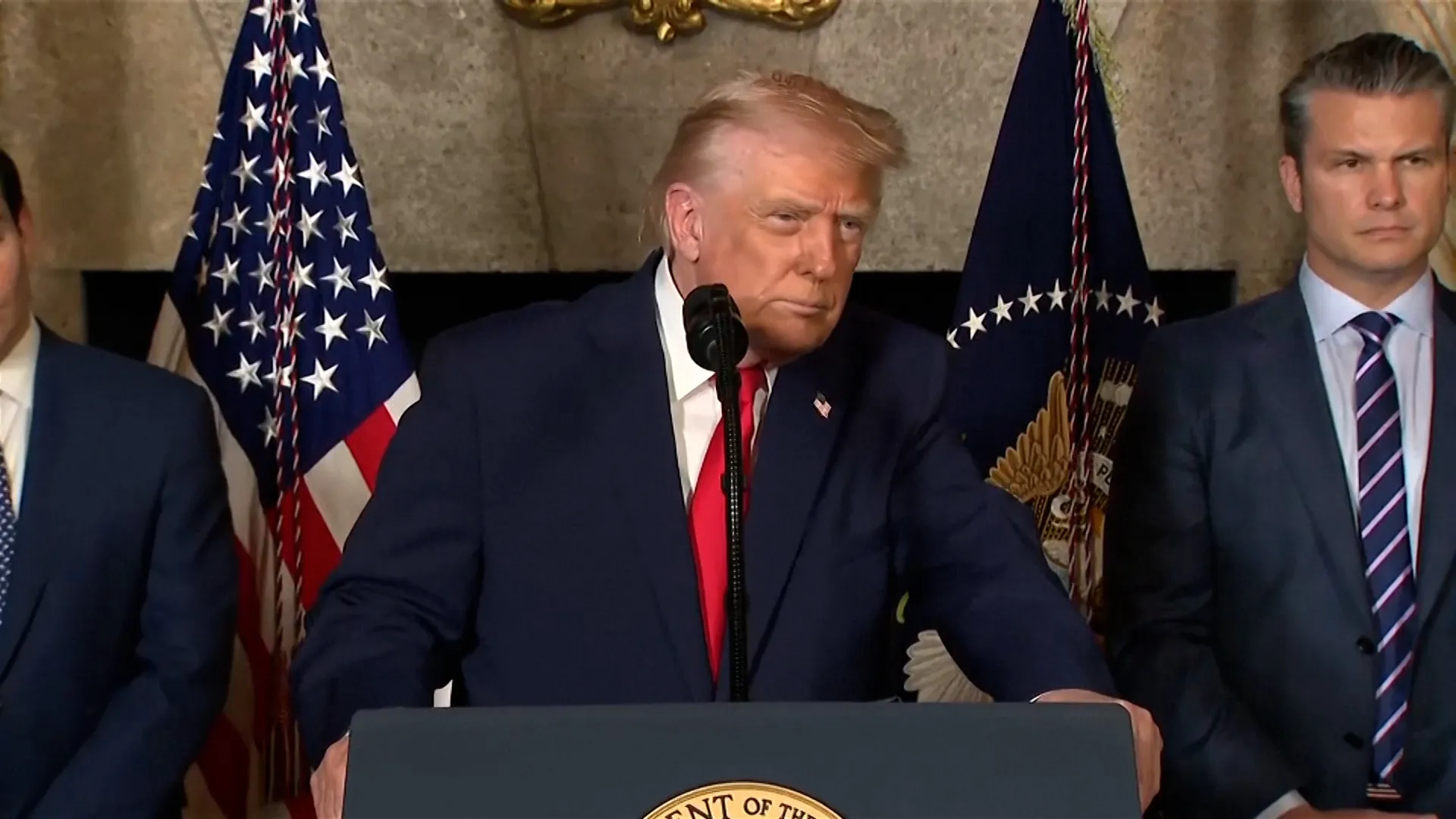
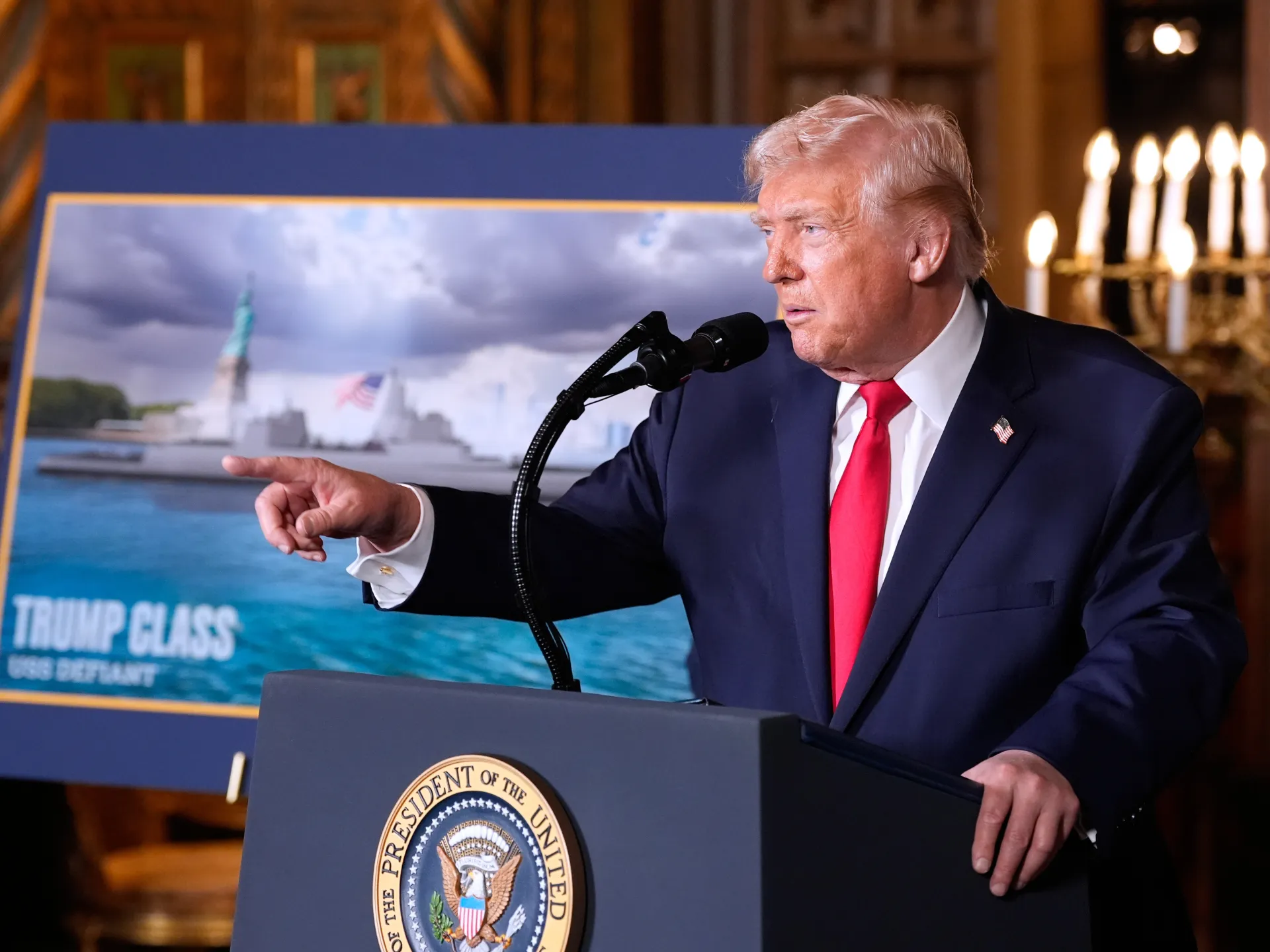
Trump, speaking at his Mar-a-Lago resort in Florida alongside his top national security aides, Secretary of State Marco Rubio and Secretary of Defense Pete Hegseth, suggested that he remains ready to further escalate his four-month pressure campaign.
When asked if the goal was to force Maduro from power, Trump told reporters: “Well, I think it probably would… That’s up to him what he wants to do. I think it’d be smart for him to do that. But again, we’re gonna find out.”
“If he wants to do something, if he plays tough, it’ll be the last time he’s ever able to play tough,” he added.
Trump levied his latest threat as the US coastguard continued for a second day to chase a third oil tanker that it described as part of a “dark fleet” that Venezuela uses to evade US sanctions.
“It’s moving along, and we’ll end up getting it,” Trump said.
The US president also promised to keep the ships and the nearly 4 million barrels of Venezuelan oil the coastguard has seized so far.
“Maybe we’ll sell it. Maybe we’ll keep it. Maybe we will use it in the strategic reserves,” he said. “We’re keeping it. We’re keeping the ships also.”
Maduro fires back
Trump’s campaign against Venezuela’s vital oil sector comes amid a large US military buildup in the region with a stated mission of combating drug trafficking, as well as more than two dozen strikes on alleged drug trafficking vessels in the Pacific Ocean and Caribbean Sea near the South American nation.
Critics have questioned the legality of the attacks, which have killed more than 100 people.
Venezuela denies any involvement in drug trafficking and insists that Washington is seeking to overthrow Maduro to seize the country’s oil reserves, which are the world’s largest.
It has condemned the US’s vessel seizures as acts of “international piracy”.
Maduro fired back at Trump hours after the latest warning, saying the US president would be “better off” if he focused on his own country’s problems rather than threatening Caracas.
“He would be better off in his own country on economic and social issues, and he would be better off in the world if he took care of his country’s affairs,” Maduro said in a speech broadcast on public television.
The exchange of words came on the eve of a United Nations Security Council meeting on Tuesday to discuss the growing crisis.
Russia’s Minister of Foreign Affairs Sergey Lavrov, in a phone call with his Venezuelan counterpart, Yvan Gil, slammed the US’s actions and expressed support for Caracas.
“The ministers expressed their deep concern over the escalation of Washington’s actions in the Caribbean Sea, which could have serious consequences for the region and threaten international shipping,” the Russian Ministry of Foreign Affairs said in a statement.
“The Russian side reaffirmed its full support for and solidarity with the Venezuelan leadership and people in the current context,” it added.
US blockade
China also condemned the US’s latest moves as a “serious violation of international law”.
“China opposes any actions that violate the purposes and principles of the United Nations Charter and infringe upon the sovereignty and security of other countries,” said Lin Jian, a spokesperson for the Chinese Foreign Ministry.
“Venezuela has the right to develop independently and engage in a mutually beneficial cooperation with other nations. China understands and supports Venezuela’s stance in safeguarding its legitimate rights and interests,” he added.
Last week, Rubio brushed aside Moscow’s stated support for Caracas.
Washington, he said, was “not concerned about an escalation with Russia with regards to Venezuela” as “they have their hands full in Ukraine”.
US-Russia relations have soured in recent weeks as Trump has voiced frustration with Moscow over the lack of a resolution on the war in Ukraine
Gil, on Monday, also read a letter on state television, signed by Maduro and addressed to UN member nations, warning that the US blockade “will affect the supply of oil and energy” globally.
“Venezuela reaffirms its vocation for peace, but also declares with absolute clarity that it is prepared to defend its sovereignty, its territorial integrity and its resources in accordance with international law,” he said.
“However, we responsibly warn that these aggressions will not only impact Venezuela. The blockade and piracy against Venezuelan energy trade will affect oil and energy supply, increase instability in international markets, and hit the economies of Latin America, the Caribbean, and the world, especially in the most vulnerable countries.”
The Trump administration has shifted from a “narcoterrorism” campaign to economic coercive measures. (Countercurrents)
In our Donald-in-Wonderland world, the US is at war with Venezuela while still grasping for a public rationale. The horrific human toll is real – over a 100,000 fatalities from illegal sanctions and over a hundred from more recent “kinetic strikes.” Yet the officially stated justification for the US empire’s escalating offensive remains elusive.
The empire once spun its domination as “democracy promotion.” Accordingly, State Department stenographers such as The Washington Post framed the US-backed coup in Venezuela – which temporarily overthrew President Hugo Chávez – as an attempt to “restore a legitimate democracy.” The ink had barely dried on The New York Timeseditorial of April 13, 2002 – which legitimized that imperial “democratic” restoration – before the Venezuelan people spontaneously rose up and reinstated their elected president.
When the America Firsters captured the White House, Washington’s worn-out excuse of the “responsibility to protect,” so beloved by the Democrats, was banished from the realm along with any pretense of altruism. Not that the hegemon’s actions were ever driven by anything other than self-interest. The differences between the two wings of the imperial bird have always been more rhetorical than substantive.
Confronted by Venezuela’s continued resistance, the new Trump administration retained the policy of regime change but switched the pretext to narcotics interdiction. The Caribbean was cast as a battlefield in a renewed “war on drugs.” Yet with Trump’s pardon of convicted narco-trafficker and former Honduran President Juan Orlando Hernández – among many other contradictions – the alibi was wearing thin.
Venezuelan oil tankers blockaded
The ever-mercurial US president flipped the narrative on December 16, announcing on Truth Social that the US would blockade Venezuelan oil tankers. He justified this straight-up act of war with the striking claim that Venezuela had stolen “our oil, our land, and other assets.”
For the record, Venezuela had nationalized its petroleum industry half a century ago. Foreign companies were compensated.
This presidential social media post followed an earlier one, issued two weeks prior, ordering the airspace above and surrounding Venezuela “closed in its entirety.” The US had also seized an oil tanker departing Venezuela, struck several alleged drug boats, and continued to build up naval forces in the region.
In response to the maritime threat, President Nicolás Maduro ordered the Venezuelan Navy to escort the tankers. The Pentagon was reportedly caught by surprise. China, Mexico, Brazil, BRICS, Turkey, along with international civil society, condemned the escalation. Russia warned the US not to make a “fatal mistake.”
The New York Times reported a “backfire” of nationalist resistance to US aggression among the opposition in Venezuela. Popular demonstrations in support of Venezuela erupted throughout the Americas in Argentina, Panama, Ecuador, Peru, Mexico, Brazil, Colombia, Honduras, and the US.
Trump’s phrasing about Venezuela’s resources is not incidental. It reveals an assumption that precedes and structures the policy itself: that Venezuelan sovereignty is conditional, subordinate to US claims, and revocable whenever it conflicts with Yankee economic or strategic interests. This marks a shift in emphasis, not in substance; drugs have receded from center stage, replaced by oil as the explicit casus belli.
The change is revealing. When Trump speaks of “our” oil and land, he collapses the distinction between corporate access, geopolitical leverage, and national entitlement. Venezuelan resources are no longer considered merely mismanaged or criminally exploited; they are portrayed as property wrongfully withheld from its rightful owner.
The day after his Truth Social post, Trump’s “most pointless prime-time presidential address ever delivered in American history” (in the words of rightwing blogger Matt Walsh) did not even mention the war on Venezuela. Earlier that same day, however, two House resolutions narrowly failed that would have restrained Trump from continuing strikes on small boats and from exercising war powers without congressional approval.
Speaking against the restraining resolutions, Rep. María Elvira Salazar – the equivalent of Lewis Carroll’s Red Queen and one of the far-right self-described “Crazy Cubans” in Congress – hailed the 1983 Grenada and 1989 Panama invasions as models. She approvingly noted both were perpetrated without congressional authorization and suggested Venezuela should be treated in the same way.
The votes showed that nearly half of Congress is critical – compared to 70% of the general public – but their failure also allows Trump to claim that Congress reviewed his warlike actions and effectively granted him a mandate to continue.
Non-international armed conflict
In this Trumpian Wonderland, a naval blockade with combat troops rappelling from helicopters to seize ships becomes merely a “non-international armed conflict” not involving an actual country. The enemy is not even an actual flesh and blood entity but a tactic – narco-terrorism.
Trump posted: “Venezuelan Regime has been designated a FOREIGN TERRORIST ORGANIZATION.” Yet FTOs are non-state actors lacking sovereign immunities conferred by either treaties or UN membership. Such terrorist labels are not descriptive instruments but strategic ones, designed to foreclose alternatives short of war.
In a feat of rhetorical alchemy, the White House designated fentanyl a “weapon of mass destruction.” Trump accused Venezuela of flooding the US with the deadly synthetic narcotic, when his own Drug Enforcement Administration says the source is Mexico. This recalls a previous disastrous regime-change operation in Iraq, also predicated on lies about WMDs.
Like the Cheshire Cat, presidential chief of staff Susie Wiles emerges as the closest to a reliable narrator in a “we’re all mad here” regime. She reportedly said Trump “wants to keep on blowing boats up until Maduro cries uncle,” openly acknowledging that US policy has always been about imperial domination.
The oil is a bonus for the hegemon. But even if Venezuela were resource-poor like Cuba and Nicaragua, it still would be targeted for exercising independent sovereignty.
Seen in that light, Trump’s claim that Venezuela stole “our” oil and land is less an error than a confession. It articulates a worldview in which US power defines legitimacy and resources located elsewhere are treated as imperial property by default. The blockade is not an aberration; it is the logical extension of a twisted belief that sovereignty belongs to whoever is strong enough to seize it. Trump is, in effect, demanding reparations for imperialists for the hardship of living in a world where other countries insist their resources belong to them.
Editor’s note: We are at a historical moment in which much of the mainstream discussion about Venezuela centers on two extremes: countering MAGA narratives, often riddled with lies and half-truths, and warning about the dangers of military intervention; or, conversely, leaning into the idea that the US will not back down from Maduro & Co., and that military intervention is imminent. Writing in absolutes and taking the words of figures like Diosdado Cabello, Stephen Miller, or even María Corina Machado at face value—within a context where they are in constant dialogue with allies and supporters—can seriously mislead audiences. Especially when framed as professional analysis. Which is not the same as opinion (as a former lady editor of this prestigious blog used to say: opinions are like assholes, everybody has one). And that’s fine. We have nothing against opinion, these pages are riddled with it.
But, again, professional analysis is something different, which is why the writing in our Political Risk Report doesn’t look at all like what we post on the webpage. Some actors posing as serious analysts and rational players are, of course, capable of generating strong headlines and plenty of material for meaty feature stories. But now, more than ever, focus should be on avoiding simplistic narratives and to bridge political discourse with on-the-ground realities, voices, and data obscured by chavismo’s censorship regime. Intelligence analyst Daniel Blanco here offers advice on how to help you identify (and/or write) credible analysis.
1) Don’t play into politics, stick to facts
Your role as an analyst, whether you are a political consultant advising a senior leader or an economic analyst with corporate clients, is to provide informed judgments to your consumers to support decision-making. It does not matter if the assumptions presented are an ugly truth; they need to be as accurate as possible. Shaping ugly truths into pleasing narratives to score points with political factions or escalate positions as a pleasing analyst can lead to policy failures or operational setbacks. Furthermore, such behaviour may end up damaging trust between analysts and consumers, as well as weakening the public credibility of your persona.
2) Use estimative language to communicate nuance
Estimative language—using terms like likely, probable, possible, or unlikely—signals that your conclusions are based on judgments under uncertainty and prevents giving the false impression that you have absolute certainty. Consumers often come from non-technical backgrounds and may interpret analytical conclusions as statements of guarantees. Communicating the likelihood and percentages of different outcomes allows your consumers (including readers from the public in some cases) to understand that you are not presenting a black-and-white fact.
3) Keep up with the domestic context
Context refers to the broad framework within which a foreign decision-maker operates, or within which an event or process unfolds. It is both temporal and spatial in nature. Venezuela, in particular, has a context dynamic that shifts constantly, variables that could act as an indicator yesterday could be a nothingburger tomorrow. Keeping up with the context can be the difference between interpreting data as a critical bullet point or an outdated pattern. Take for example, the power outages or connectivity blackouts that some junior analysts assessed as a major alert, while in reality, it is a common occurrence in Venezuela over the last seven years.
4) Never assume actors are rational or cohesive
Venezuelan actors are not always rational, and this includes decision makers in the government and the opposition. Some may act based on emotion or ideology, while others could throw personal ambition into their calculations. Assuming rationality may cause analysts to overlook actions that appear illogical but are nonetheless likely or meaningful within the actor’s perspective. Second, any organisation of human beings will produce factions. Before you assess the statement of a single actor as the current intent of a whole side, you need to take into account whether it represents a faction’s interest or if it’s part of a wider trend.
5) Human contacts will always beat open source
Don’t get me wrong on this one, publicly available information can help you collect observable patterns or supporting evidence, but will only get you so far once you get knee-deep in assessing intentions. Venezuela runs heavily on informal power structures that are not visible on social media or tracking applications. Additionally, the civilian population, from community leaders to corporate figures, do not express their opinions or knowledge in public space due to the increasing internal repression. Developing ground contacts in different organisations is critical to collect and process information that will never be open to the public.
6) Never stop challenging your local sources
Speaking from experience, sources can have motives that shape their reporting. They may exaggerate their access level or withhold critical information for a variety of reasons that can range from pursuing personal agendas to avoiding political conflicts. Your responsibility to the consumer is to ensure that firsthand observation is distinguished from hearsay or speculation. Also, you need to clarify the collection method. Ask your source if they heard this in a meeting or if it is indirect information coming from a family member or a party friend. This needs to be presented in the most honest way possible in the body of your analysis.
7) Write disclaimers/statements on your analysis
Writing a statement of analysis forces the analyst to evaluate the quality of sources and identify analytical uncertainties. Often, we have to make calls on incomplete information, and the whole purpose of a statement on analysis is to let the report consumer know that there are some potholes along the road and things may turn out differently. Communicating your own level of confidence (low-medium-high) on a written report may be the difference between your decision maker acting with caution, knowing that we don’t have as much information as we like, or committing to a decision that will become a failure down the road.
On September 1, at an international press conference convened in response to threats from the U.S. government, Nicolás Maduro declared: “The Miami mafia has seized political power in the White House and the State Department; they have imposed their extremist Miami-centric vision and have ‘Miamisized’ U.S. foreign policy toward all of Latin America and the Caribbean; because threatening Venezuela is threatening the entire continent.”
This statement fits with a script distributed through Siscom, the messaging system used by Venezuela’s Ministry for Communication and Information to send orders to media and digital activists. “The U.S. warmongering maneuver is driven by extremist sectors in South Florida, representing less than 10% of the U.S. population, who seek to impose their agenda on the entire country, ignoring the majorities who oppose wars and want the government to focus on internal problems,” reads a paragraph from the document.
La Hora de Venezuela obtained several of these scripts, distributed between March and September 2025 to 40,000 users participating in more than 600 Siscom groups. The main messages: the entire nation is enlisting as if it were Vietnam, while at the same time there is an atmosphere of calm and normalcy. But the scripts also aim to influence public discourse in the United States, by contrasting the “Miami lobby” with America First and MAGA, framing a military escalation against Venezuela as a useless cost in the face of its internal problems.
The propaganda apparatus takes phrases from U.S. politicians, analysts, and media outlets and amplifies to validate its propaganda and disinformation narratives.
On December 3, 2025, Democratic Representative Jim McGovern announced that he would introduce a resolution to force a vote in Congress against the Trump administration’s “crazy escalations” against Venezuela. “No one, except the president and his billionaire allies, wants this war,” McGovern stated.
A few hours later, Madelein García, a journalist for Telesur—the international propaganda channel dependent on the Venezuelan Ministry for Communication and Information—quoted and translated McGovern’s post. It wasn’t necessary for journalists, media outlets, or communicators allied to his government to claim that Washington was divided: it was enough to amplify the message of a congressman speaking from within the U.S. political system, while avoiding the sound of propaganda.
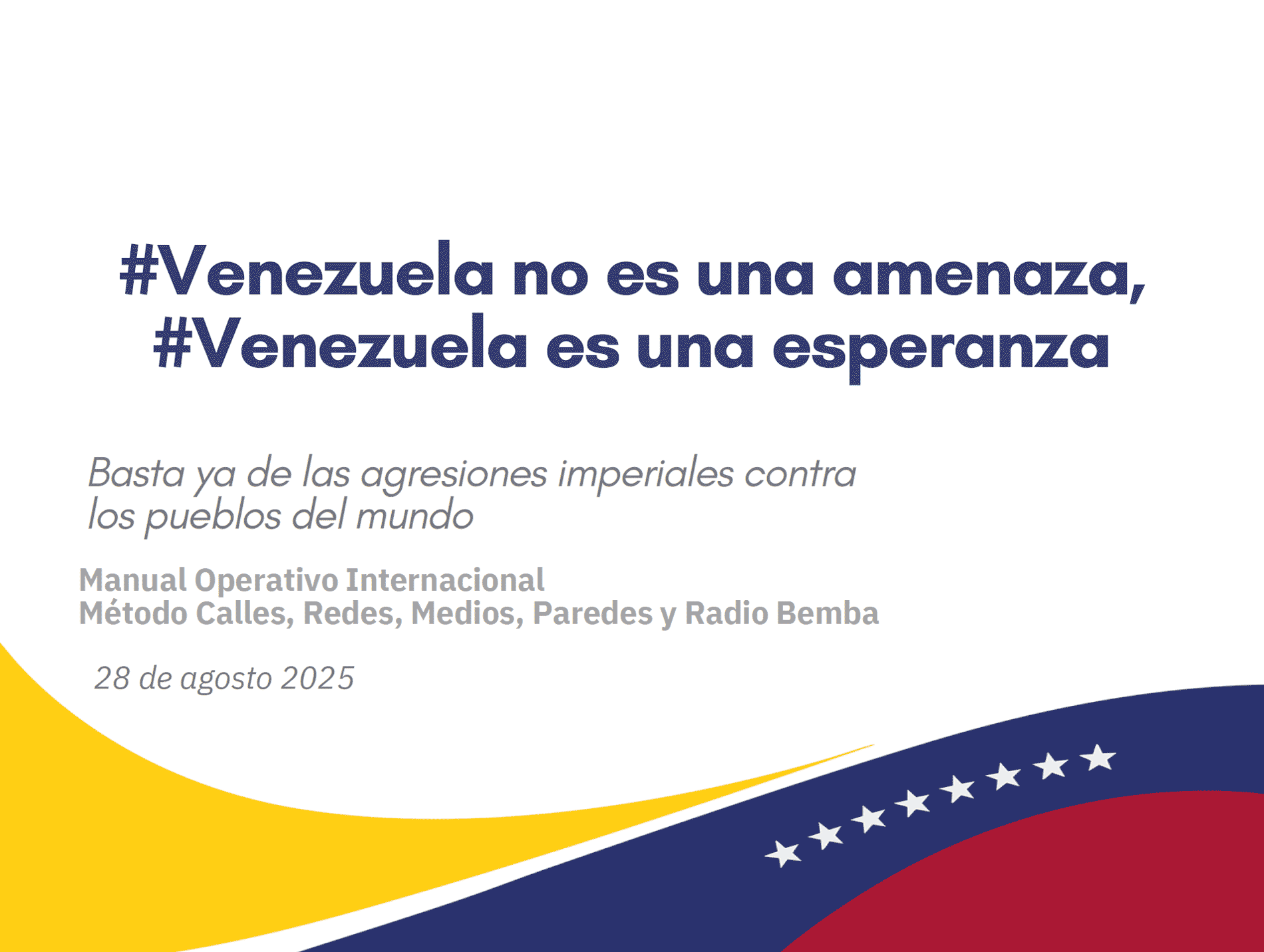
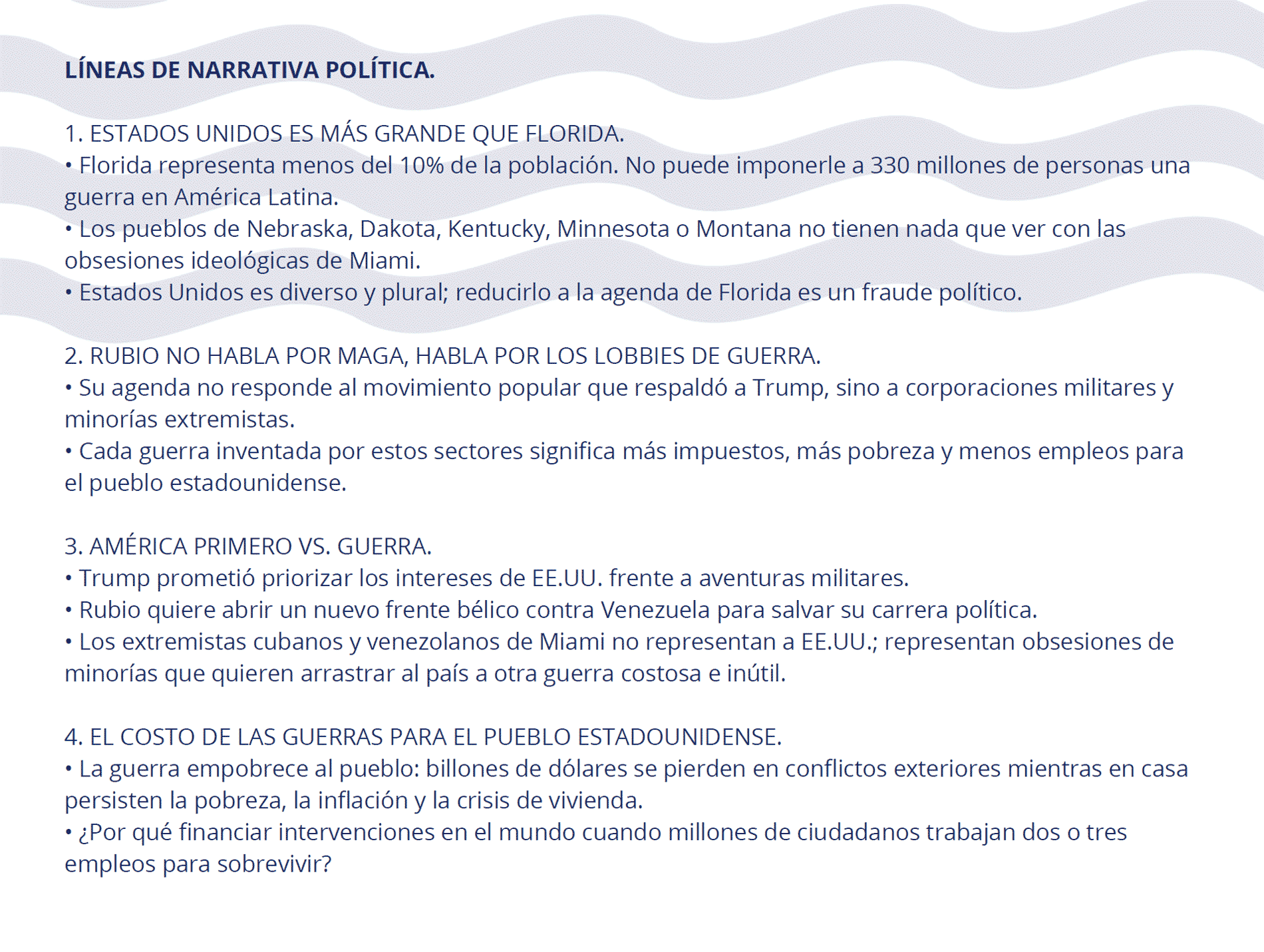
In general, McGovern’s statement echoed talking points included in an operational manual formatted as a slide presentation that had been circulated months earlier through Siscom, on August 29, by Johannyl Rodríguez, Venezuela’s vice minister of Communication and Information. Page 7 of that script includes, for example, phrases such as “Rubio does not speak for MAGA; he speaks for the war lobbies” and “His agenda does not respond to the popular movement that backed Trump, but rather to military corporations and extremist minorities.”
García’s quote of McGovern served as external validation for narratives that the Maduro administration is trying to position. There was no need for sympathetic journalists, outlets, or communicators to talk about divisions in Washington over Venezuela: amplifying a Democratic lawmaker from within the U.S. political system was enough to make the framing sound less like official propaganda.
Page 1 of Venezuela is not a threat presentationPage 7 of Venezuela is not a threat presentation
Days earlier, on November 29, 2025, Democratic Senator Chuck Schumer had also questioned the policy toward Venezuela, arguing that it didn’t align with the “America First” principle, alluding to the unnecessary expenditure of resources and internal priorities.
Schumer’s argument also resonated with ideas already laid out in the August 29 presentation: the split between America First and war, and the cost of escalation for ordinary citizens. Among the lines in the script sent by the Maduro Ministry of Communication official includes lines such as: “Trump promised to prioritize U.S. interests over military adventures,” “War impoverishes the people: trillions of dollars are lost in foreign conflicts while poverty, inflation, and the housing crisis persist at home,” and “Why fund interventions around the world when millions of citizens work two or three jobs just to survive?”
Venezuela News, an “unofficial” mouthpiece for pro-Maduro propaganda—and a frequent amplifier of disinformation—reported Schumer’s statements as further proof that figures in the Democratic leadership are questioning the coherence and legitimacy of an escalation against Venezuela.
On September 2, Juan González—former director for the Western Hemisphere at the Council of National Security during the Biden administration—questioned the logic of the military deployment in the Caribbean: “So the U.S. government is using false information to justify a terrorist designation and then spending at least $7 million a day to have a carrier strike group kill 11 traffickers…?” Days later, the Venezuelan News Agency (AVN) turned it into a headline (“Former Biden advisor denounces false information and million-dollar waste”). González’s comment was also reported by Venezuela News and Globovisión.
Once again, the framing was perfect for amplifying the script’s narratives, without the need to manufacture the message through Maduro’s propaganda apparatus.
Creating discord between Maga and Rubio
Alongside narratives about America First and the unnecessary use of U.S. public resources, the scripts distributed by Siscom also lay out another divisive line: portraying U.S. policy toward Venezuela as the result of an internal fracture, in which a minority—associated with Secretary of State Marco Rubio and several Florida Cuban politicians—drags the country into an escalation unwanted by the rest of the population.
These guidelines aim to intervene in the U.S. public conversation from within, seeking to sow discord by amplifying pre-existing tensions between the MAGA (Make America Great Again) movement and parts of Washington’s political apparatus.
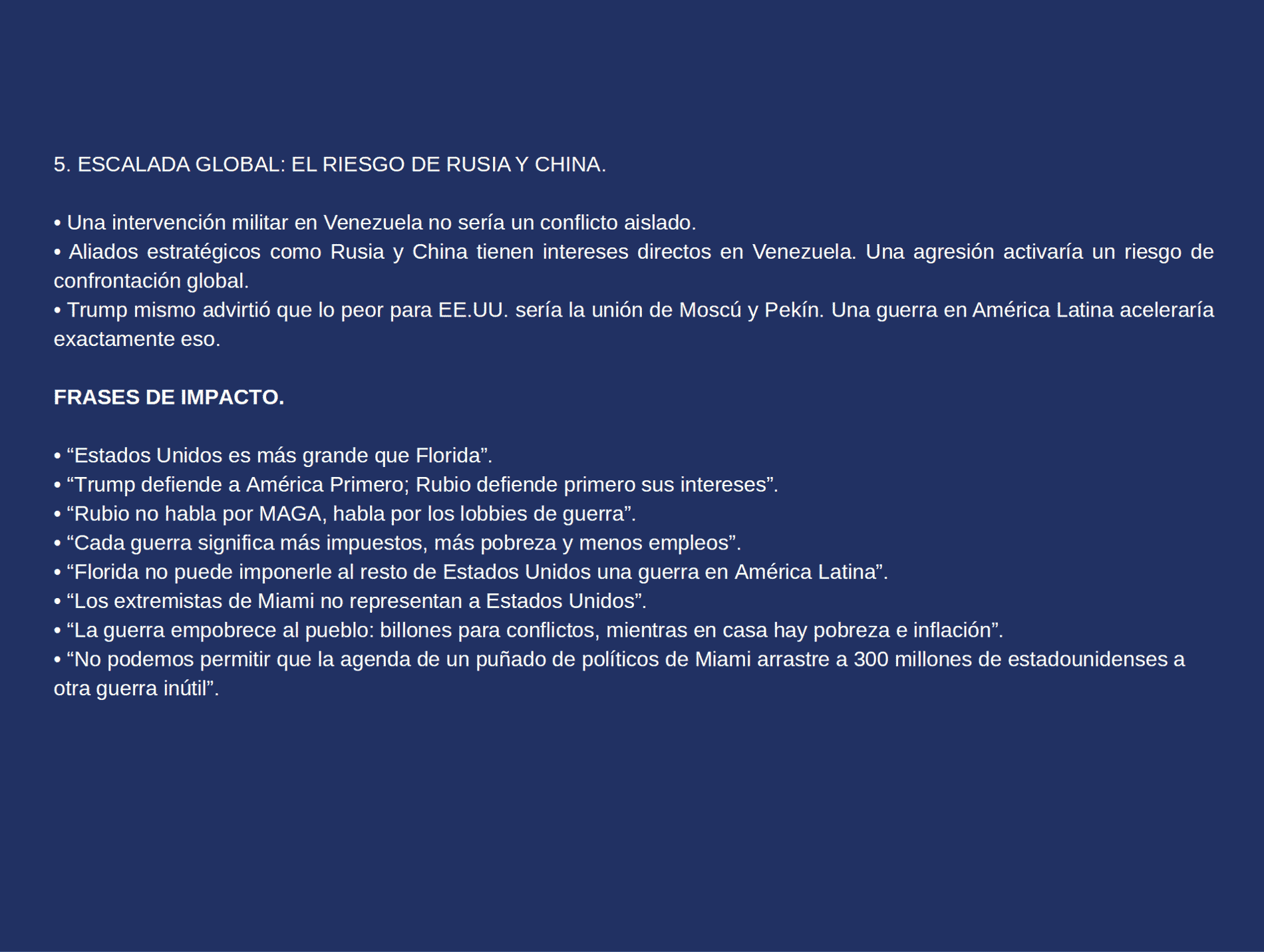
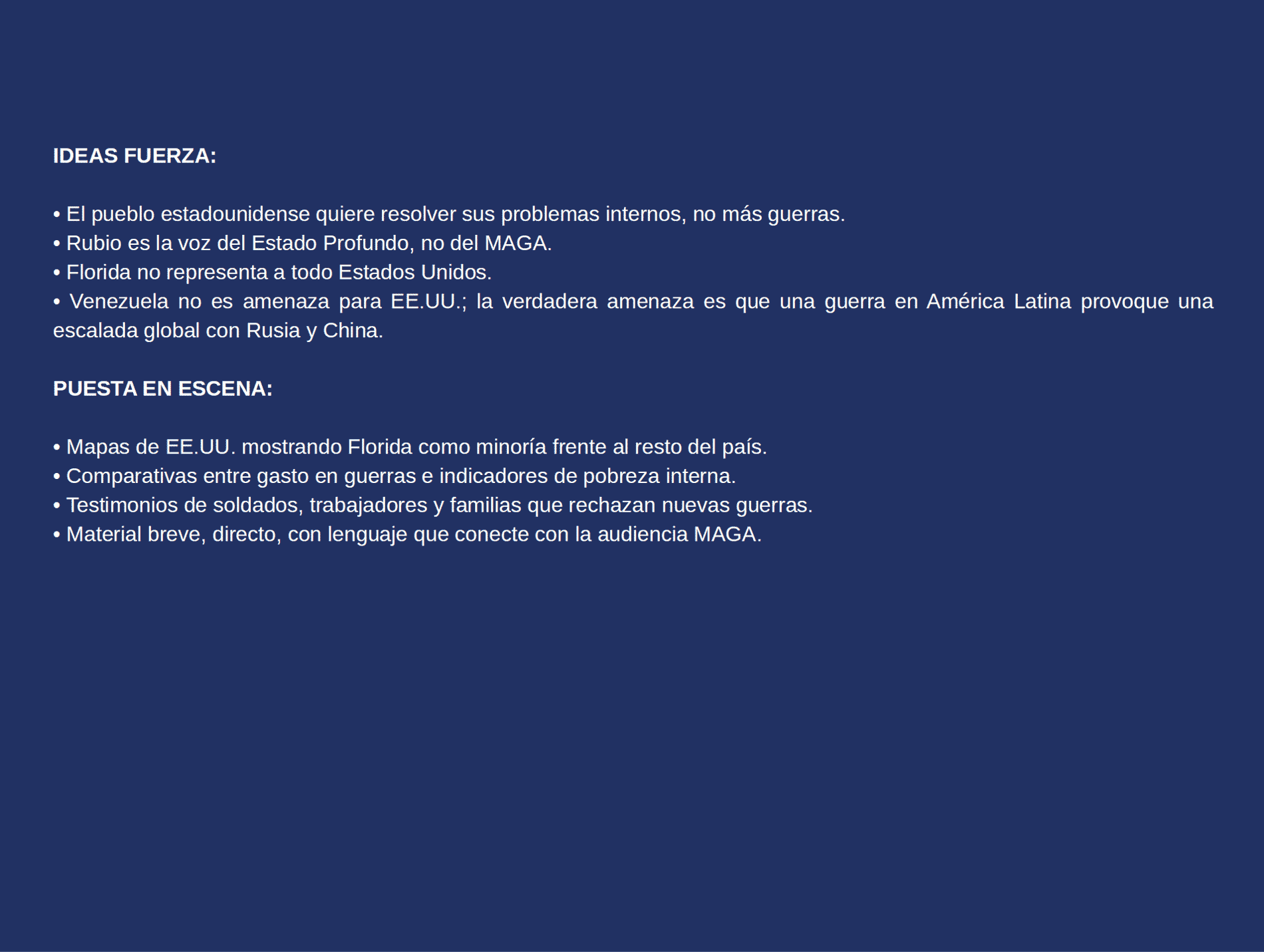
The same script sent by Siscom on August 29, for example, defines staging guidelines for content that includes “short, direct material that connects with the MAGA audience.” Another section features “impact phrases” such as “Rubio does not speak for MAGA; he speaks for the war lobbies,” “Trump defends America First; Rubio puts his interests first,” or “Florida cannot impose a war in Latin America on the rest of the United States.”
Page 8 of Venezuela is not a threat presentationPage 9 of Venezuela is not a threat presentation
Extra News Mundo, another “unofficial” source of Venezuelan propaganda, and “Unleash Dracarys,” (pseudonym used by Dayra Rivas, Director of Digital Media at Information Ministry), published a video to multiply the reaction of right wing activist Laura Loomer -who opposes military action in Venezuela- against an interview to Cuban American congresswoman María Elvira Salazar, a supporter of Machado. The video reiterates the “MAGA vs. Florida” trope recommended in the Siscom script: Cuban politicians in Florida are trying to impose a war on Trump.
Everyone is happy
Regarding the story line of “everything is fine in Venezuela and nobody is afraid of Trump,” the Maduro propaganda took advantage of a December 4 photo essay in The New York Times, which opens with a video of a group of Caracas residents dancing salsa in a nightclub and showcases scenes of concerts, baseball games, and Christmas celebrations in a country seemingly at peace. At the same time, the piece warns that the surveillance by security forces has stifled open expression of dissent and concludes with a question: whether this tranquility can truly be believed.
A summarized version of the article, published on The New York Times’ Instagram account, received over a thousand comments, at least half of which were negative or dismissive. The carousel opened with the same video of Venezuelans dancing salsa, but the final point of the report—the question of whether this calm is real—was relegated to the background. Its celebratory tone resonated with several pieces of reassuring propaganda that began appearing more frequently.
Since mid-November, at least five videos of Venezuelans dancing and celebrating were shared through Nicolás Maduro’s official Telegram channel. In one of them, Maduro was seen dancing and calling for a party every day of the week. All of this content was massively and coordinatedly amplified by state media and digital activist networks, in line with the Street, Networks, Media, Walls, and Word of Mouth Method signed by Maduro, that broadly defines the government’s information operation.
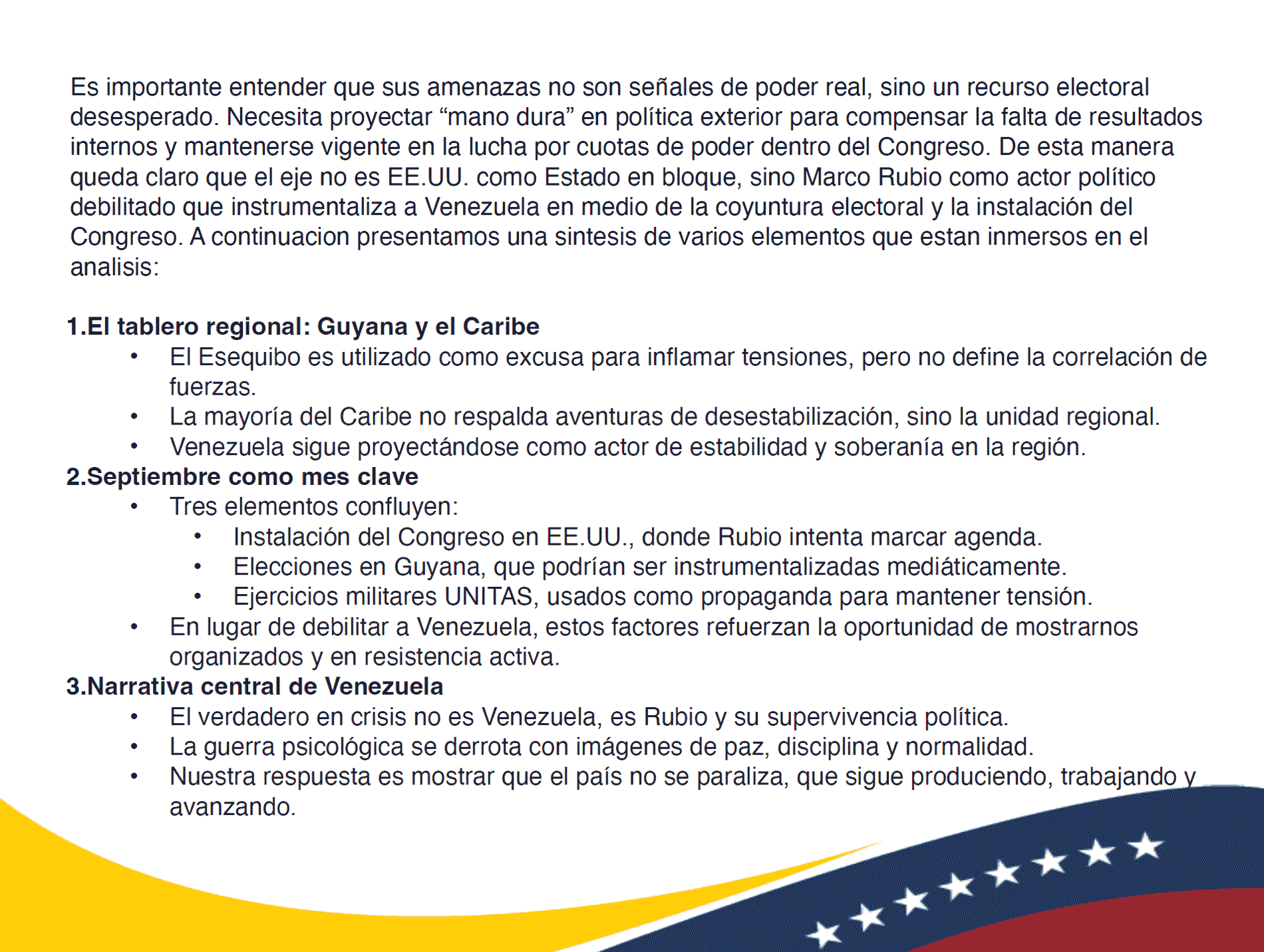
That same approach also appears laid out as an operational line in another playbook circulated through Siscom. In a presentation sent on August 26, ahead of the launch of the #YoMeAlisto campaign, it explains: “Psychological warfare is defeated with images of peace, discipline, and normality,” and “Our response is to show that the country does not grind to a halt, that it continues producing, working, and moving forward.”
Page 1 of #YoMeAlisto presentationPage 3 of #YoMeAlisto presentation
Even more explicit was the exploitation of another New York Times article, published on November 26, 2025, which compiled criticisms from former diplomats, experts, and opposition figures regarding statements attributed to María Corina Machado. The article warns that, amid the Trump administration’s military deployment in the Caribbean, some voices fear that false claims are being exaggerated or disseminated to justify intervention, and mentions “debunked claims” on issues of drug trafficking and security.
The report also echoed propaganda lines included in government scripts that present the “war on drugs” as a pretext for continuing the escalation and militarization of the Caribbean. In the script sent on August 29, for example, one line appears particularly clear: “The Cartel of the Suns is a media fabrication to justify aggression,” along with others that maintain that the U.S. uses this framework to promote regime change and expand its presence in the region.
Screenshots of that New York Times article were quickly seized upon by a network of propaganda video creators. The campaign attempted to reinforce a line already present in Siscom documents: to discredit María Corina Machado, presenting her as a source of disinformation that is pushing the United States toward intervention. An opportune corollary to the more than 80 hoaxes and disinformation incidents directed against Machado from Maduro’s communications apparatus in 2024 and 2025.
Journalism in Venezuela operates in a hostile environment for the press, with dozens of legal instruments designed to punish speech, such as the laws “against hate,” “against fascism,” and “against the blockade.” This content was produced by journalists who are in Venezuela and is being published with full awareness of the threats and constraints that, as a result, have been imposed on the dissemination of information from within the country.
The US Coast Guard is in “active pursuit” of another vessel in international waters near Venezuela as tensions in the region continue to escalate.
US authorities have already seized two oil tankers this month – one of them on Saturday.
Sunday’s pursuit related to a “sanctioned dark fleet vessel that is part of Venezuela’s illegal sanctions evasion”, a US official said. “It is flying a false flag and under a judicial seizure order.”
Washington has accused Venezuela of using oil money to fund drug-related crime, while Venezuela has described the tanker seizures as “theft and kidnapping”.
US President Donald Trump last week ordered a “blockade” of sanctioned oil tankers entering and leaving the country.
Venezuela – home to the world largest proven oil reserves – has accused the Trump administration of trying to steal its resources.
US authorities have not yet officially confirmed Sunday’s pursuit, and the exact location and name of the tanker involved is not yet known.
As of last week, more than 30 of the 80 ships in Venezuelan waters or approaching the country were under US sanctions, according to data compiled by TankerTrackers.com.
Saturday’s seizure saw a Panamanian-flagged tanker boarded by a specialised tactical team in international waters.
That ship is not on the US Treasury’s list of sanctioned vessels, but the US has said it was carrying “sanctioned PDVSA oil”. In the past five years the ship also sailed under the flags of Greece and Liberia, according to records seen by BBC Verify.
“These acts will not go unpunished,” the Venezuelan government said in response to Saturday’s incident. It added that it intended to file a complaint with the United Nations Security Council and “other multilateral agencies and the governments of the world”.
Venezuela is highly dependent on revenues from its oil exports to finance its government spending.
In recent weeks, the US has built up its military presence in the Caribbean Sea and has carried out deadly strikes on alleged Venezuelan drug-smuggling boats, killing around 100 people.
Sanctions also were placed on some of President Maduro’s relatives and on businesses associated with what the US calls his illegitimate regime.
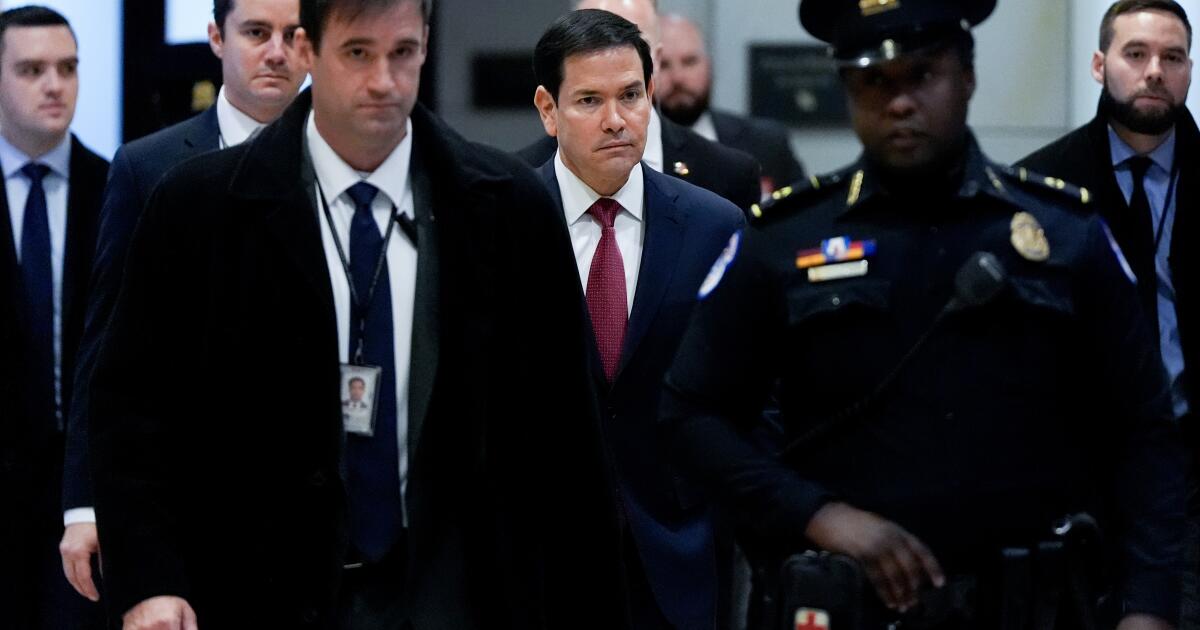
Secretary of State Marco Rubio told reporters on Friday: “It is clear that the current status quo with the Venezuelan regime is intolerable for the United States.”
He added that the goal of the Trump administration is to change that dynamic.
His comments were criticised by Venezuela’s foreign minister who accused Rubio dragging the US down the path of “regime changes”.
It has provided no public evidence that these vessels were carrying drugs, and the military has come under increasing scrutiny from Congress over the strikes.
The Trump administration has accused Venezuelan President Nicolás Maduro of leading a designated-terrorist organisation called Cartel de los Soles, which he denies.
The vessel was flying a false flag and under a judicial seizure order, according to US officials cited by US media.
Published On 21 Dec 202521 Dec 2025
Share
The United States is pursuing an oil tanker in international waters near Venezuela, US media reported, in what would be the second such operation in two days and the third in less than two weeks.
“The United States Guard is in active pursuit of a sanctioned dark fleet vessel that is part of Venezuela’s illegal sanctions evasion,” a US official told the Reuters news agency on Sunday.
Recommended Stories
list of 4 itemsend of list
“It is flying a false flag and under a judicial seizure order.”
Another official told the agency that the tanker was under sanctions, but added that it had not been boarded so far and that interceptions can take different forms – including sailing or flying close to vessels of concern.
The officials, who were speaking on condition of anonymity, did not give a specific location for the operation or name the vessel being pursued.
The pursuit of the tanker was also reported by The Associated Press news agency, which cited an official briefed on the operation separately.
The official, who also spoke on condition of anonymity, said Sunday’s pursuit involved “a sanctioned dark fleet vessel that is part of Venezuela’s illegal sanctions evasion.”
The official also said that the vessel was flying a false flag and under a judicial seizure order.
Two tankers seized
The pursuit comes after the US seized an oil tanker off Venezuela on Saturday as part of a “blockade” ordered by US President Donald Trump.
US Homeland Security Secretary Kristi Noem said on Saturday that the coastguard apprehended the vessel with support from the Pentagon.
“The United States will continue to pursue the illicit movement of sanctioned oil that is used to fund narco terrorism in the region,” she wrote.
“We will find you, and we will stop you,” she added.
The operation marked the second time in recent weeks that the US has seized a tanker near Venezuela, and it comes amid a large US military build-up in the region.
Trump, whose administration has continued to ramp up pressure on Venezuelan President Nicolas Maduro, ordered on Tuesday a “total and complete blockade” of all sanctioned oil tankers entering and leaving the South American country.
Trump’s pressure campaign on Maduro has also included a ramped-up military presence in the region and more than two dozen military strikes on alleged drug trafficking vessels in the Pacific Ocean and Caribbean Sea near the South American nation. At least 100 people have been killed in the attacks.
The two oil tankers that were seized were operating on the black market and providing oil to countries under sanctions, Kevin Hassett, director of the White House’s National Economic Council, said in a TV interview on Sunday.
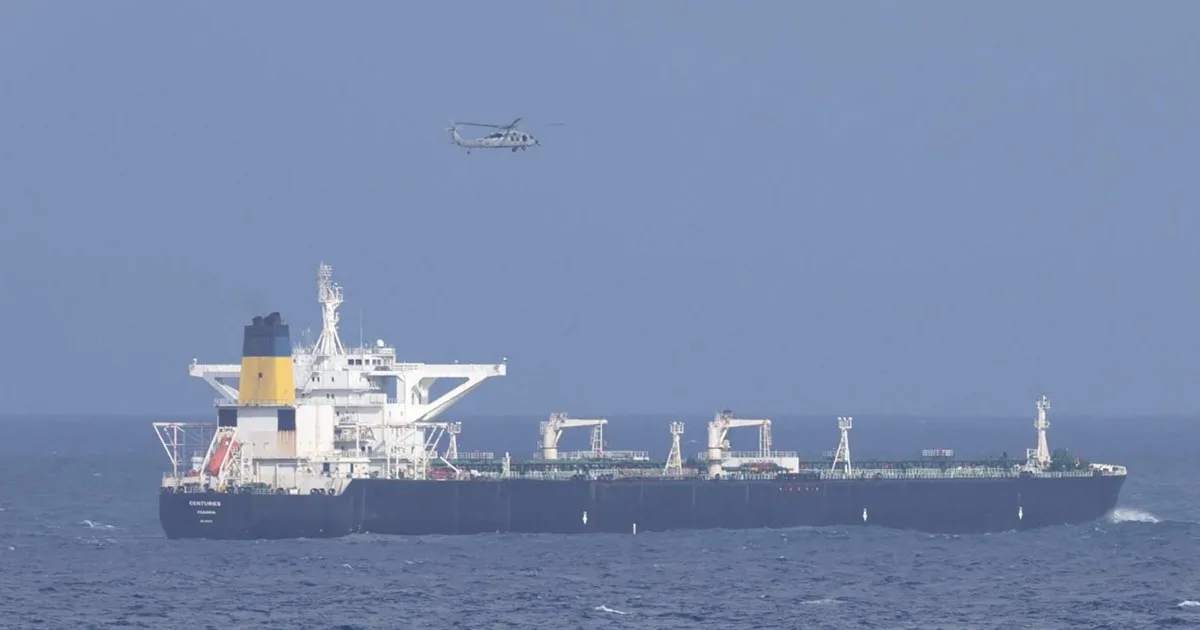
A U.S. military helicopter hovers over an oil tanker seized early Saturday morning in international waters near Venezuela. Photo Courtesy of the U.S. Coast Guard
Dec. 20 (UPI) — The U.S. Coast Guard led another seizure of an oil tanker in international waters near Venezuela on Saturday after President Donald Trump declared a blockade of Venezuela.
The U.S. Navy and other federal entities participated in the seizure of the oil tanker, which is not among those sanctioned by the federal government, the Wall Street Journal, CBS News and CNN reported.
Armed U.S. personnel on military helicopters descended onto the tanker’s deck during the early morning hours on Saturday and seized it, Homeland Security Sec. Kristi Noem said in a social media post.
In a pre-dawn action early this morning on Dec. 20, the US Coast Guard with the support of the Department of War apprehended an oil tanker that was last docked in Venezuela.
The United States will continue to pursue the illicit movement of sanctioned oil that is used to fund… pic.twitter.com/nSZ4mi6axc— Secretary Kristi Noem (@Sec_Noem) December 20, 2025
No one aboard the oil tanker resisted, and the United States seized it for carrying sanctioned Venezuelan oil.
The seized tanker displayed a Panamanian flag and was carrying Venezuelan oil that it was to offload in Asia.
Much of Venezuela’s oil is shipped to China, which has privately owned teapot refineries that often buy and refine illicit oil from Venezuela, Iran and other sanctioned nations.
The president on Tuesday ordered a “total and complete blockade” of all sanctioned oil tankers as they enter or leave Venezuelan waters.
Saturday’s raid shows the blockade could affect any vessel that carries Venezuelan oil, as affirmed by Noem.
The United States on Wednesday seized a sanctioned oil tanker after it departed a Venezuelan port and diverted it to Texas, where Trump said the United States could keep the oil in its hold.
That tanker, The Skipper, was flying the flag of Venezuela’s neighbor, Guyana, officials for which said the vessel is not among those registered there.
Such activities are typical of a shadow fleet that uses deceptive tactics to hide where respective vessels are located and transport illicit oil, which often benefits Iran, Russia and other sanctioned states.
Venezuelan President Nicolas Maduro‘s government called The Skipper’s seizure an act of “piracy” and “robbery” and said the blockade is a “grotesque threat” that violates international law, according to CBS News.
Maduro’s regime accuses the United States of trying to “appropriate the oil, land and minerals of the country through gigantic campaigns of lies and manipulations.”
The blockade and tanker seizures are in addition to U.S. military strikes on alleged drug boats carrying illicit drugs destined for the United States and Europe.
Both tactics are efforts to isolate the Maduro regime, which Trump seeks to force out of power by depriving it of its primary revenue sources.
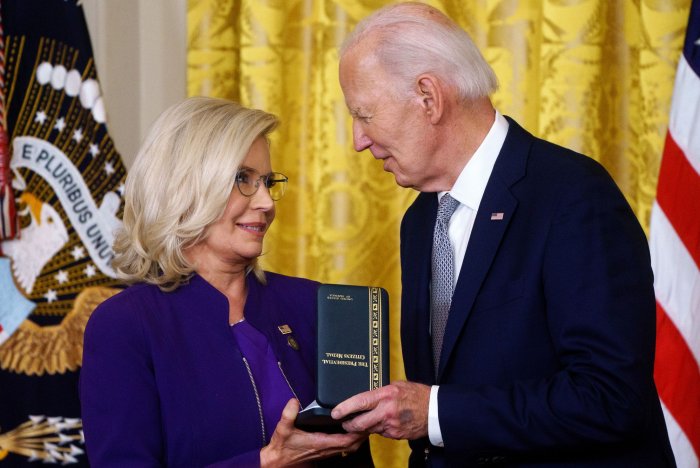
Former President Joe Biden presents the Presidential Citizens Medal to Liz Cheney during a ceremony in the East Room of the White House in Washington, on January 2, 2025. The Presidential Citizens Medal is bestowed to individuals who have performed exemplary deeds or services. Photo by Will Oliver/UPI | License Photo
The incident marks the second time in recent weeks that the US has seized an oil tanker near Venezuela.
Published On 20 Dec 202520 Dec 2025
Share
The United States has seized an oil tanker off the coast of Venezuela in international waters, according to officials quoted by international news agencies.
The incident comes just days after US President Donald Trump announced a “blockade” of all sanctioned oil tankers entering and leaving Venezuela.
Recommended Stories
list of 3 itemsend of list
This also marks the second time in recent weeks that the US has seized a tanker near Venezuela and comes amid a large US military build-up in the region as President Donald Trump continues to ramp up pressure on Venezuelan President Nicolas Maduro.
Three officials, who were speaking to the Reuters news agency on the condition of anonymity, did not say where the operation was taking place but added the Coast Guard was in the lead.
Two officials, speaking to The Associated Press news agency, also confirmed the operations. The action was described as a “consented boarding”, with the tanker stopping voluntarily and allowing US forces to board it, one official said.
Al Jazeera’s Heide Zhou-Castro said that there was no official confirmation from the US authorities on the operation.
“We are still waiting for confirmation from the White House and Pentagon on the details, including which ship, where it was located, and whether or not this ship was beneath the US sanctions,” she said.
The United States Department of the Treasury has announced new sanctions on several family members and associates of Venezuelan President Nicolas Maduro, as the Trump administration increases pressure on Caracas and continues to build up US forces on Venezuela’s borders.
The sanctions announced on Friday come as the US military continues attacks on boats off the country’s coast, which have killed more than 100 people. The US military has also seized a Venezuelan oil tanker and imposed a naval blockade on all vessels arriving and departing from Venezuelan ports that are under US sanctions.
Recommended Stories
list of 4 itemsend of list
Announcing the new sanctions, US Secretary of the Treasury Scott Bessent said in a statement that “Maduro and his criminal accomplices threaten our hemisphere’s peace and stability”.
“The Trump Administration will continue targeting the networks that prop up his illegitimate dictatorship,” Bessent added.
The new sanctions target seven people who are family members or associates of Malpica Flores, a nephew of Maduro, and Panamanian businessman Ramon Carretero, who were named in an earlier round of US sanctions that also targeted six Venezuela-flagged oil tankers and shipping firms, on December 11.
Flores, who is one of three of Maduro’s nephews by marriage, dubbed “narco-nephews” by the US Treasury Department, is wanted because he “has been repeatedly linked to corruption at Venezuela’s state-run oil company, Petroleos de Venezuela, SA”, the Treasury said in a statement.
It was not immediately clear how Flores’s role in Venezuela’s state-run oil company related to “propping up Nicolas Maduro’s rogue narco-state”, which Bessent said in his statement was the reason for widening sanctions to additional family members and associates of the president.
The US has claimed that tackling drug trafficking is the primary reason for its military escalation in the region since September, including the strikes on vessels in the eastern Pacific and Caribbean, which international law experts say amount to extrajudicial killings.
Despite the Trump administration’s repeated references to drug trafficking, its actions and messaging appear increasingly focused on Venezuela’s oil reserves, which are the largest in the world. The reserves have remained relatively untapped since sanctions were imposed on the country by the US during the first Trump administration.
Homeland Security adviser and top Trump aide Stephen Miller said last week that Venezuela’s oil belongs to Washington.
“American sweat, ingenuity and toil created the oil industry in Venezuela,” Miller claimed on X. “Its tyrannical expropriation was the largest recorded theft of American wealth and property,” he added.
US sanctions, particularly those targeting Venezuela’s oil industry, have contributed to an economic crisis in the country and increased discontent with Maduro, who has governed Venezuela since 2013.
For his part, Maduro has accused the Trump administration of “fabricating a new eternal war” aimed at “regime change” and seizing Venezuela’s vast oil reserves.
The European Union has also imposed targeted sanctions on Venezuela, which it renewed last week until 2027.
The European sanctions, first introduced in 2017, include an embargo on arms shipments to Venezuela, as well as travel bans and asset freezes on individuals linked to state repression.
WASHINGTON — Secretary of State Marco Rubio weighed in on Russia-Ukraine and Israel-Hamas peace efforts and defended the Trump administration’s increasing military pressure on Venezuela during a rare, end-of-year news conference Friday.
In a freewheeling meeting with reporters running more than two hours, Rubio also defended President Trump’s radical overhaul in foreign assistance and detailed the administration’s work to reach a humanitarian ceasefire in Sudan in time for the new year.
Rubio’s appearance in the State Department briefing room comes as key meetings on Gaza and Russia-Ukraine are set to be held in Miami on Friday and Saturday after a tumultuous year in U.S. foreign policy. Rubio has assumed the additional role of national security advisor and emerged as a staunch defender of Trump’s “America First” priorities on issues ranging from visa restrictions to a shakeup of the State Department bureaucracy.
The news conference is taking place just hours before Trump’s special envoy Steve Witkoff meets with senior officials from Egypt, Turkey and Qatar to discuss the next phase of the Republican president’s Gaza ceasefire plan, progress on which has moved slowly since it was announced in October.
Witkoff and other U.S. officials, including Trump son-in-law and informal advisor Jared Kushner, have been pushing to get the Gaza plan implemented by setting up a “Board of Peace” that will oversee the territory after two years of war and create an international stabilization force that would police the area.
On Saturday, Witkoff, Kushner and Rubio, who will be at his home in Florida for the holidays, are to meet with Russian President Vladimir Putin’s adviser Kirill Dmitriev in Miami to go over the latest iteration of a U.S.-proposed plan to end the Russia-Ukraine war.
Rubio said there would be no peace deal unless both Ukraine and Russia can agree to the terms, making it impossible for the U.S. to force a deal on anyone. Instead, the U.S. is trying to “figure out if we can nudge both sides to a common place.”
“We understand that you’re not going to have a deal unless both sides have to give, and both sides have to get,” Rubio said. “Both sides will have to make concessions if you’re going to have a deal. You may not have a deal. We may not have a deal. It’s unfortunate.”
The U.S. proposal has been through numerous versions with Trump seesawing back and forth between offering support and encouragement for Ukraine and then seemingly sympathizing with Putin’s hard-line stances by pushing Ukrainian President Volodymyr Zelensky to agree to territorial concessions. Kyiv has rejected that concession in return for security guarantees intended to protect Ukraine from future Russian incursions.
On Venezuela, Rubio has been a leading proponent of military operations against suspected drug-running vessels that have been targeted by the Pentagon in the Caribbean Sea and the eastern Pacific Ocean since early September. The Trump administration’s actions have ramped up pressure on leftist Venezuelan President Nicolás Maduro, who has been charged with narco-terrorism in the U.S.
In an interview with NBC News on Friday, Trump would not rule out a war with Venezuela. But Rubio and Defense Secretary Pete Hegseth have publicly maintained that the current operations are directed at “narco-terrorists” trying to smuggle deadly drugs into the United States. Maduro has insisted the real purpose of the U.S. military operations is to force him from office.
Rubio sidestepped a direct question about whether the U.S. wants “regime change in 2026” in the South American country.
“We have a regime that’s illegitimate, that cooperates with Iran, that cooperates with Hezbollah, that cooperates with narco-trafficking and narco-terrorist organizations,” Rubio said, “including not just protecting their shipments and allowing them to operate with impunity, but also allows some of them to control territory.”
Rubio defended Trump’s prerogatives on Venezuela and said the administration believes “nothing has happened that requires us to notify Congress or get congressional approval or cross the threshold into war.” He added, “We have very strong legal opinions.”
Trump has spoken of wanting to be remembered as a “peacemaker,” but ceasefires his administration helped craft are already in trouble due to renewed military action between Cambodia and Thailand in Asia and Rwanda and the Democratic Republic of the Congo in Africa. Rubio, however, said those deals helped create a list of commitments that can now be used to bring both sides back to peace.
“Those commitments today are not being kept,” Rubio said of the Thailand-Cambodia conflict, which now threatens to reignite following Thai airstrikes. ”The work now is to bring them back to the table.”
Rubio’s news conference comes just two days after the Trump administration announced a massive $11-billion package of arms sales to Taiwan, a move that infuriated Beijing, which has vowed to retake the island by force if necessary.
Trump has veered between conciliatory and aggressive messages to China since returning to the Oval Office in January, hitting Chinese imports with major tariffs but at the same time offering to ease commercial pressure on Beijing in conversations with China’s President Xi Jinping. The Trump administration, though, has consistently decried China’s increasingly aggressive posture toward Taiwan and its smaller neighbors in disputes over the South China Sea.
Since taking over the State Department, Rubio has moved swiftly to implement Trump’s “America First” agenda, helping dismantle the U.S. Agency for International Development and reducing the size of the diplomatic corps through a significant reorganization. Previous administrations have distributed billions of dollars in foreign assistance over the last five decades through USAID.
Critics have said the decision to eliminate USAID and slash foreign aid spending has cost lives overseas, although Rubio and others have denied this, pointing to ongoing disaster relief operations in the Philippines, the Caribbean and elsewhere, along with new global health compacts being signed with countries that previously had programs run by USAID.
“We have a limited amount of money that can be dedicated to foreign aid and humanitarian assistance,” Rubio said. “And that has to be applied in a way that furthers our national interest.”
Lee and Klepper write for the Associated Press. AP writer Bill Barrow contributed to this report.
US President Donald Trump has said the US owns rights to Venezuelan oil and land. The claims follow the US seizure of Venezuelan oil and the declaration of a naval blockade. But is any of this true? Soraya Lennie explains.
MEXICO CITY — President Trump has ordered a partial blockade on oil tankers going to and from Venezuela, potentially crippling the nation’s already battered economy, and accused Caracas of stealing “oil, land other assets” from the United States — a significant escalation of Washington’s unrelenting campaign against the government of President Nicolás Maduro.
Asked about Venezuela on Wednesday, Trump said the United States will be “getting land, oil rights and whatever we had.”
“We want it back,” Trump said without further elaboration. It was unclear if Trump planned to say more about Venezuela in a televised address to the nation late Wednesday night.
The blockade, which aims to cripple the key component of Venezuela’s faltering, oil-dependent economy, comes as the Trump administration has bolstered military forces in the Caribbean, blown up more than two dozen boats allegedly ferrying illicit drugs in both the Caribbean and the Pacific, and threatened military strikes on Venezuela and neighboring Colombia.
“Venezuela is completely surrounded by the largest Armada ever assembled in the History of South America,” Trump said in a rambling post Tuesday night on his Truth Social site. “It will only get bigger, and the shock to them will be like nothing they have ever seen before.”
Not long after Trump announced the blockade Tuesday night, the government of Venezuela denounced the move and other Trump efforts as an attempt to “rob the riches that belong to our people.”
Leaders of other Latin American nations called for calm and United Nations Secretary-General Antonio Guterres, after a phone call with Maduro, called on U.N. members to “exert restraint and de-escalate tensions to preserve regional stability.”
Also Wednesday, Trump received rare pushback from the Republican-dominated Congress, where some lawmakers are pressuring the administration to disclose more information about its deadly attacks on alleged drug boats.
The Senate gave final approval to a $900-billion defense policy package that, among other things, would require the administration to disclose to lawmakers specific orders behind the boat strikes along with unedited videos of the deadly attacks. If the administration does not comply, the bill would withhold a quarter of Defense Secretary Pete Hegseth’s travel budget.
The bill’s passage came a day after Hegseth and Secretary Marco Rubio came to Capitol Hill to brief lawmakers on the U.S. military campaign. The briefings left lawmakers with mixed reaction, largely with Republicans backing the campaign and Democrats expressing concern about it.
The White House has said its military campaign in Venezuela is meant to curb drug trafficking, but the U.S. Drug Enforcement Administration data shows that Venezuela is a relatively minor player in the U.S.-bound drug trade.
Trump also declared that the South American country had been designated a “foreign terrorist organization.” That would apparently make Venezuela the first nation ever slapped with a classification normally reserved for armed groups deemed hostile to the United States or its allies. The consequences remain unclear for Venezuela.
Regional responses to the Trump threats highlight the new ideological fault lines in Latin America, where right-wing governments in recent years have won elections in Chile, Argentina and Ecuador.
The leftist leaders of the region’s two most populous nations — Brazil and Mexico — have called for restraint in Venezuela.
“Whatever one thinks about the Venezuelan government or the presidency of Maduro, the position of Mexico should always be: No to intervention, no to foreign meddling,” Mexican President Claudia Sheinbaum said Wednesday, calling on the United Nations to look for a peaceful solution and avoid any bloodshed.
Brazilian President Luiz Inácio Lula da Silva has also urged Trump to pull back from confrontation. “The power of the word can outweigh the power of the gun,” Lula said he told Trump recently, offering to facilitate talks with the Maduro government.
But Chile’s right-wing president-elect, José Antonio Kast, said he supports regime-change in Venezuela, asserting that it would reduce migration from Venezuela to other nations in the region.
“If someone is going to do it, let’s be clear that it solves a gigantic problem for us and all of Latin America, all of South America, and even for countries in Europe,” Kast said, referring to Venezuelan immigration.
In his Tuesday post, Trump said he had ordered a “complete blockade of all sanctioned oil tankers going into, and out of, Venezuela.” While potentially devastating to Venezuela’s economy, the fact that the blockade will only affect tankers already sanctioned by U.S. authorities does give Venezuela some breathing room, at least for now.
Experts estimated that only between one-third and one-half of tankers transporting crude to and from Venezuela are likely part of the so-called “dark fleet” of sanctioned tankers. The ships typically ferry crude from Venezuela and Iran, two nations under heavy U.S. trade and economic bans.
However, experts said that even a partial blockade will be a major hit for Venezuela’s feeble economy, reeling under more than a decade of of U.S. penalties. And Washington can continue adding to the list of sanctioned tankers.
“The United States can keep sanctioning more tankers, and that would leave Venezuela with almost no income,” said David A. Smilde, a Venezuela expert at Tulane University. “That would probably cause a famine in the country.”
The growing pressure, analysts said, will likely mean the diminishing number of firms willing to take the risk of transporting Venezuelan crude will up their prices, putting more pressure on Caracas. Purchasers in China and elsewhere will also likely demand price cuts to buy Venezuelan oil.
Trump has said that Maduro must go because he is a “narco-terrorist” and heads the “Cartel de los Soles,” which the While House calls is a drug-trafficking syndicate. Trump has put a $50 million bounty on Maduro’s head. Experts say that Cartel de los Soles is not a functioning cartel, but a short-hand term for Venezuelan military officers who have been involved in the drug trade for decades, long before Maduro or his predecessor and mentor, the late Hugo Chávez, took office.
In his comments on Tuesday, Trump denounced the nationalization of the Venezuelan oil industry, a process that began in the 1970s, when Caracas was a strong ally of Washington.
Echoing Trump’s point that Venezuela “stole” U.S. assets was Stephen Miller, Trump’s homeland security advisor, who declared on X: “American sweat, ingenuity and toil created the oil industry in Venezuela. Its tyrannical expropriation was the largest recorded theft of American wealth and property.”
Among those believed to be driving Trump’s efforts to oust Maduro is Secretary of State Maro Rubio, the son of Cuban immigrants to Florida. Rubio has long been an outspoken opponent of the communist governments in Havana and Caracas. Venezuelan oil has helped the economies of left-wing governments in both Cuba and Nicaragua.
Christopher Sabatini, a senior fellow for Latin America at Chatham House, said Rubio has been on a long-time campaign to remove Maduro.”He has his own political project,” Sabatini said. “He wants to get rid of the dictators in Venezuela and Cuba.”
Staff writers McDonnell and Linthicum reported from Mexico City and Ceballos from Washington. Contributing was special correspondent Mery Mogollón in Caracas.