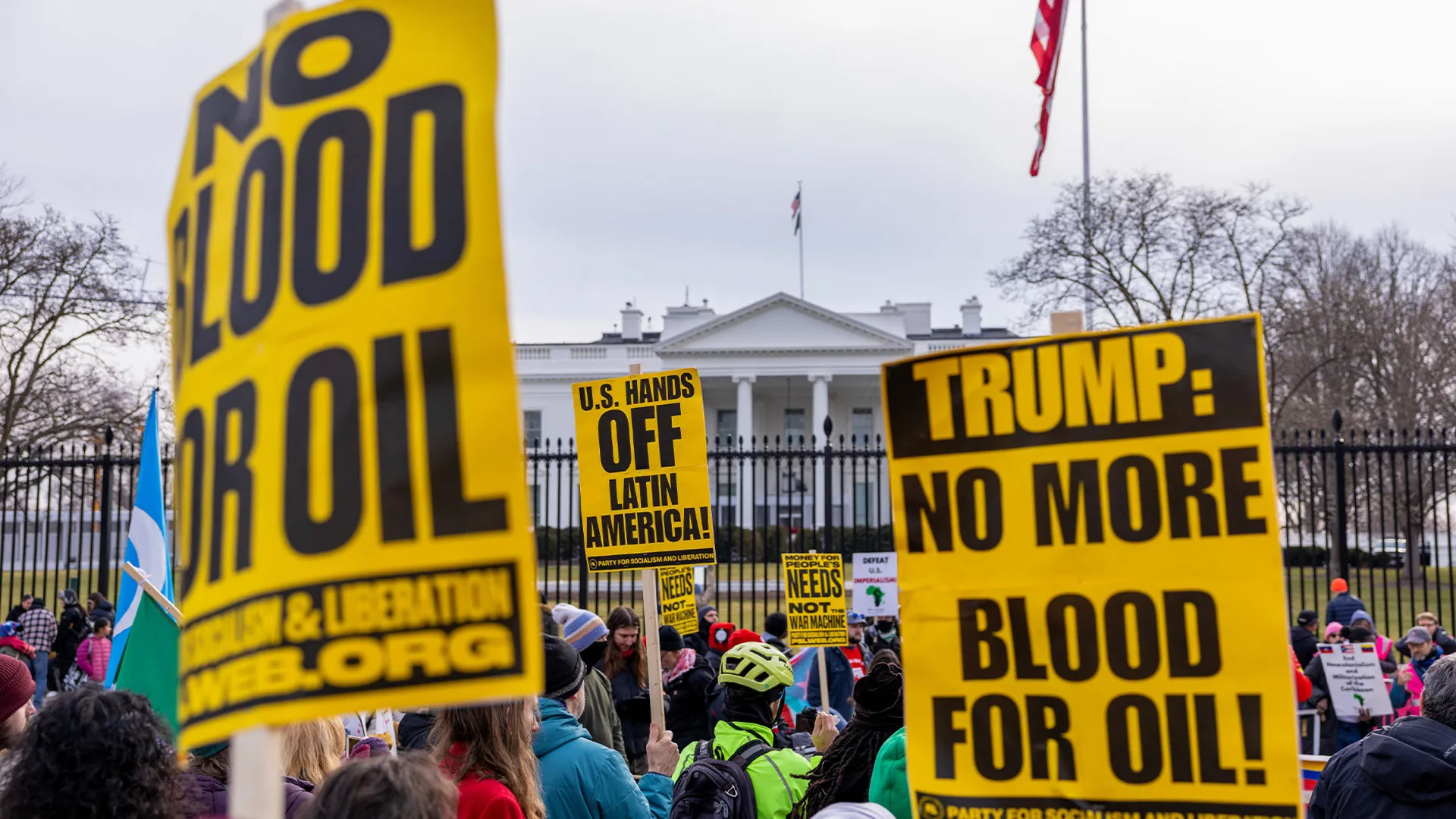
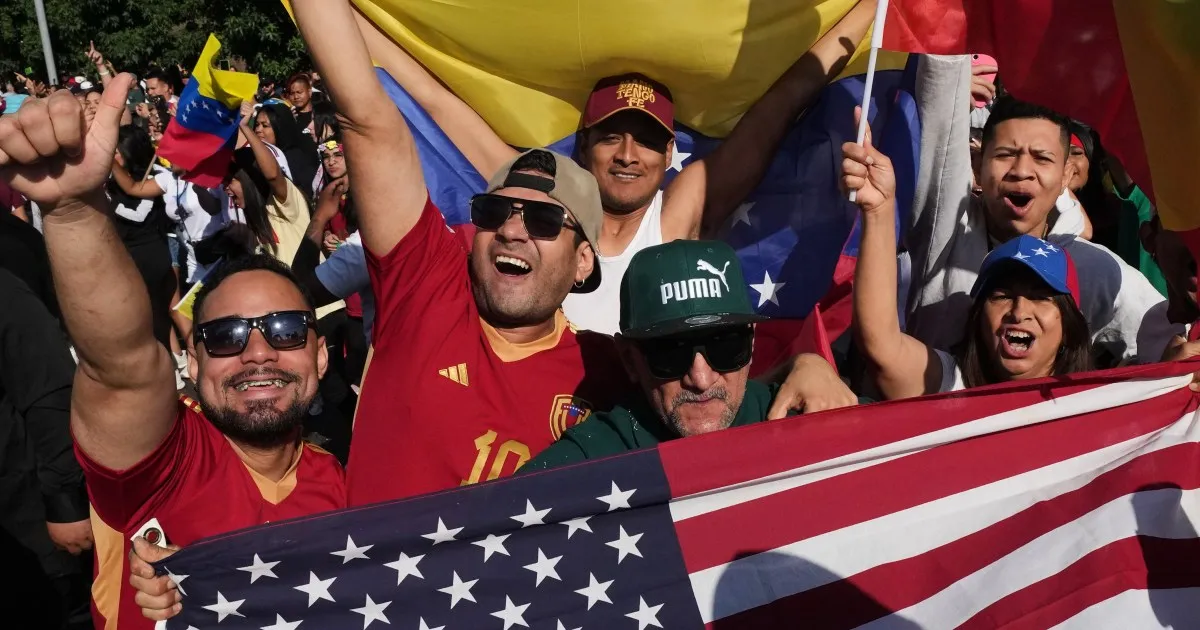
Protesters have rallied worldwide after Donald Trump announced the US would ‘run’ Venezuela following the abduction of President Nicolas Maduro and his wife. Demonstrators from Paris to Sao Paulo are denouncing what they call US aggression and imperialism.
Harlan Ullman, a senior advisor at Atlantic Council talks about Donald Trump’s plan to take over Venezuela and the significant issues that need to be considered.
Within hours of a massive operation of regime change in Venezuela, United States President Donald Trump revelled in his “success”. He posted a photo of Venezuelan President Nicolas Maduro in handcuffs and then addressed the American public.
He praised the military for launching “one of the most stunning, effective and powerful displays of American military might” in US history, allegedly rendering Venezuelan forces “powerless”. He announced that Maduro and his wife would be indicted in New York for “narcoterrorism” and claimed – without evidence – that US operations have reduced maritime drug trafficking by 97 percent.
Trump went further, declaring that the US would “run the country” until an unspecified transition could be arranged, while openly threatening a “second and much larger attack”. Crucially, he framed these claims within a broader assertion of US “domination over the Western Hemisphere”, explicitly invoking the 1823 Monroe Doctrine.
The US military intervention in Venezuela represents something far more dangerous than a single act of aggression. It is the latest manifestation of a centuries-old pattern of US interference that has left Latin America scarred. The regime change operation in Caracas is a clear sign the Trump administration is embracing this old policy of interventionism with renewed fervour. And that bodes ill for the region.
That this attack targeted Maduro’s repressive and corrupt government, which was responsible for the immense suffering of many Venezuelans, makes the situation no less catastrophic. Washington’s long history of supporting brutal dictatorships across the region strips away any pretence of moral authority. Trump himself can hardly claim any moral high ground given that he is himself embroiled in a major political scandal due to his close ties with convicted paedophile Jeffrey Epstein and has maintained unconditional support for Israel’s genocide in Gaza.
The Trump administration’s attack on Venezuela solidifies a catastrophic pattern of violations of international law. If the US can unilaterally launch military strikes against sovereign nations at a whim, then the entire framework of international law becomes meaningless. This tells every nation that might and power trump legality and sovereignty.
For Latin America specifically, the implications are chilling. To understand why this attack reverberates so painfully across the region, one must take a quick look at its history. The US has orchestrated or supported coups and military dictatorships throughout the region with disturbing regularity.
In Guatemala in 1954, the CIA overthrew the democratically elected government of Jacobo Arbenz. In Chile in 1973, the US backed the coup that brought Augusto Pinochet to power and ushered in an era of unchecked political violence. In 1983, the US invaded and occupied the island of Grenada to overthrow its socialist government. In Argentina, Brazil, Uruguay, and throughout Central America, Washington provided training, funding and political cover for military regimes that tortured dissidents and murdered civilians.
The new question now is, if the US carried out regime change in Venezuela so easily, who is next? Colombia’s President Gustavo Petro, who has been at odds with the Trump administration, was quick to react – and is right to be concerned, as in December, Trump threatened an intervention, saying “he’ll be next“. Others in the region are also nervous.
Beyond the looming threat of US intervention, Latin America now also faces the potential regional instability that a regime change in Caracas is likely to create. The political crisis under Maduro had already spilled beyond its borders into neighbouring Colombia and Brazil, where Venezuelans fled poverty and repression. One can only imagine the ripple effect the US-enacted regime change will have.
There are probably many Venezuelans who are celebrating Maduro’s ouster. However, the US intervention directly undermines the political opposition in Venezuela. It would allow the regime, which appears to retain power, to paint all opposition as foreign agents, eroding its legitimacy.
The Venezuelan people deserve democracy, but they have to achieve it themselves with international support, not to have it imposed at gunpoint by a foreign power with a documented history of caring more about resources and geopolitical dominance than human rights.
Latin Americans deserve better than to choose between homegrown authoritarianism and imported violence. What they need is not American bombs but genuine respect for self-determination.
The US has no moral authority to attack Venezuela, regardless of Maduro’s authoritarian nature. Both can be true: Maduro is a dictator who caused immense harm to his people, and US military intervention is an illegal act of aggression that will not resolve the crisis of democracy in Venezuela.
The region’s future must be determined by people themselves, free from the shadow of empire.
The views expressed in this article are the author’s own and do not necessarily reflect Al Jazeera’s editorial stance.
United States President Donald Trump has said that Washington will “run” Venezuela until a political transition can take place, hours after US forces bombed the South American country and “captured” its president, Nicolas Maduro.
Speaking during a news conference on Saturday, Trump said the US would “run the country until such time as we can do a safe, proper and judicious transition”.
Recommended Stories
list of 3 itemsend of list
“We don’t want to be involved with having somebody else get in, and we have the same situation that we had for the last long period of years,” he said.
The Trump administration launched attacks on Venezuela’s capital, Caracas, and seized Maduro and his wife in the early hours of Saturday.
A plane carrying the Venezuelan leader landed in New York state on Saturday evening, according to US media.
Footage broadcast by CNN, Fox News and MS Now showed US officials escorting a person they identified as Maduro off a plane at the Stewart international airport, about 97 kilometres (60 miles) northwest of New York City.
Maduro’s capture took place after a months-long US pressure campaign against his government, which included US seizures of oil tankers off the Venezuelan coast, as well as deadly attacks on alleged drug-smuggling boats in the Caribbean. The attacks were widely denounced as extrajudicial killings.
Washington had accused the Venezuelan leader, who has been in power since 2013, of having ties to drug cartels. Maduro had rejected the claim, saying the US was working to depose him and take control of Venezuela’s vast oil reserves.
During Saturday’s news conference, Trump said that “very large United States oil companies” would move into Venezuela to “fix the badly broken… oil infrastructure and start making money for the country”.
He added that his administration’s actions “will make the people of Venezuela rich, independent and safe”.
The Trump administration has defended Maduro’s “capture, saying the left-wing leader faced drug-related charges in the US.
These charges include “narco-terrorism conspiracy, cocaine importation conspiracy, possession of machine guns and destructive devices, and conspiracy to possess machine guns and destructive devices against the United States”, US Attorney General Pam Bondi said.
“They will soon face the full wrath of American justice on American soil in American courts,” she added in a post on X.
A Justice Department official told the Reuters news agency that Maduro is expected to make an initial appearance in Manhattan federal court on Monday.
‘Illegal abduction’
But legal experts, world leaders and Democratic Party lawmakers in the US have condemned the administration’s actions as a violation of international law.
“Attacking countries, in flagrant violation of international law, is the first step towards a world of violence, chaos, and instability, where the law of the strongest prevails over multilateralism,” Brazilian President Luiz Inacio Lula da Silva wrote on X.
Ben Saul, the United Nations special rapporteur on human rights and counterterrorism, slammed what he called Washington’s “illegal abduction” of Maduro. “I condemn the US’ illegal aggression against Venezuela,” Saul wrote on social media.
A spokesperson for UN chief Antonio Guterres said he was “deeply alarmed” by the situation, describing the US’s actions as setting “a dangerous precedent”.
“The Secretary-General continues to emphasize the importance of full respect – by all – of international law, including the UN Charter. He’s deeply concerned that the rules of international law have not been respected,” Guterres’s office said in a statement.
Earlier on Saturday, Venezuela’s defence minister released a defiant statement in response to the US attacks, urging people to remain united.
“We will not negotiate; we will not give up,” Vladimir Padrino Lopez said, stressing that Venezuela’s independence is not up for negotiation. “We must maintain calm and [be] united in order to prevail in these dire moments.”
Uncertainty prevails
It remains unclear how exactly the US plans to “run” Venezuela, and how long the purported transitional period will last.
During Saturday’s news conference, Trump said that US Secretary of State Marco Rubio had spoken with Venezuelan Vice President Delcy Rodriguez.
“She was sworn in as president just a little while ago,” Trump told reporters. “She had a long conversation with [Rubio], and she said, ‘We’ll do whatever you need’. I think she was quite gracious, but she really doesn’t have a choice.”
Rodriguez appeared to contradict that in a news conference in Caracas later in the day.
“We demand the immediate release of President Nicolas Maduro and his wife. The only president of Venezuela is President Nicolas Maduro,” she said.
“We are ready to defend Venezuela. We are ready to defend our natural resources, which should be for national development,” she added.
Al Jazeera’s Latin America editor Lucia Newman, reporting from Chile, said that, if Rodriguez is “on board” with the US plan for Venezuela, as Trump and Rubio have suggested, “she certainly didn’t sound like it” during her address.
“She sounded like her typical, fiery self, very much on the side of… Maduro, demanding that he be released and saying that Venezuela would not be a colony of the United States,” Newman said.
The events of the day have brought “a rollercoaster of emotions” to “Venezuelans both inside and outside of the country”, said Caracas-based journalist Sissi de Flaviis.
“When we first heard that Maduro was taken out of the country, there was a mix of reactions,” she said. “A lot of people couldn’t believe it. Other people were pretty much celebrating. Other people were kind of on standby, waiting.”
After Trump’s news conference announcing US plans to run Venezuela, “there’s been a shock”, de Flaviis added.
“People are a bit concerned about what this will actually mean for us, what this will mean for the government and who is going to lead us in the next few days, months and years.”
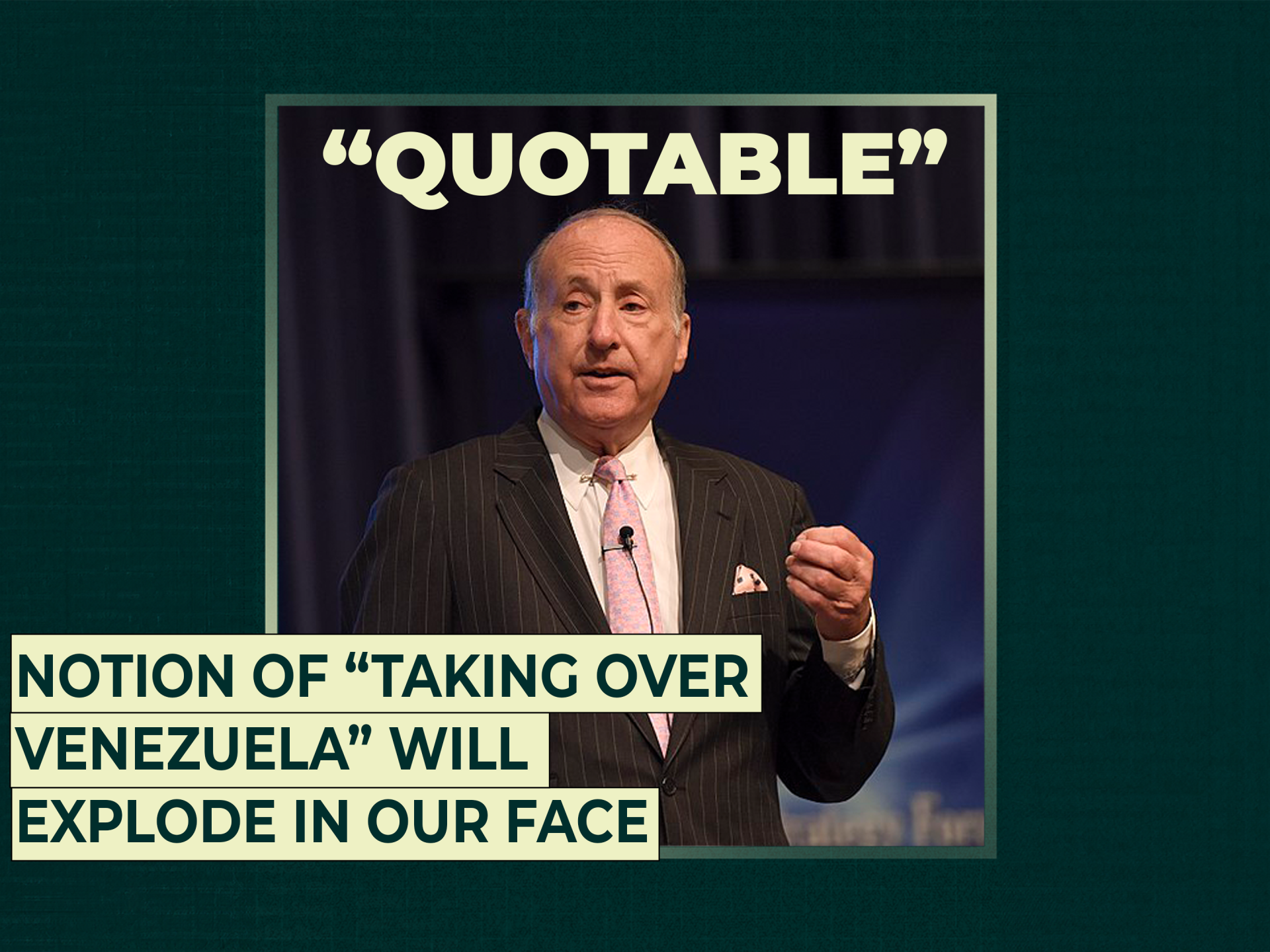
Meanwhile, Harlan Ullman, a former US naval officer, told Al Jazeera that “the notion of America taking over Venezuela is going to explode in our faces”.
“When Trump says, ‘We’re going to run the country’: We’re not capable of running America, how are we going to be able to run Venezuela?” Ullman said.
“I do not believe that we have a plan for dealing with Venezuela,” he added. “A country is extraordinarily complex. We lack the knowledge, understanding and all the logistics to do this.”
Since coming down the escalator in 2015 to announce his first presidential run, Donald Trump has presented himself as a break from the traditional hawkish foreign policy in the United States.
The US president has even criticised some of his political rivals as “warmongers” and “war hawks”.
Recommended Stories
list of 3 itemsend of list
But Trump’s move to abduct Venezuelan President Nicolas Maduro and announce that the US will “run” the Latin American country has drawn comparisons with the regime change wars that he built a political career rejecting.
Some critics from Trump’s Make America Great Again (MAGA) movement, who backed his message of focusing on the country’s own issues instead of conflicts abroad, are criticising Washington’s march to war with Venezuela.
Still, Trump’s grip on Republican politics appears to remain firm, with most legislators from the party praising Trump’s actions.
“To President Trump and his team, you should take great pride in setting in motion the liberation of Venezuela,” Senator Lindsey Graham wrote in a social media post.
“As I have often said, it is in America’s national security interest to deal with the drug caliphate in our backyard, the centrepiece of which is Venezuela.”
Graham’s reference to a “drug caliphate” seems to play on Islamophobic tropes and promote the push to liken the US attacks on alleged drug traffickers in Latin America to the so-called “war on terror”.
The US senator heaped praise on the winner of the FIFA Peace Prize – handed to Trump by the association’s chief, Gianni Infantino, in December – and called him “the GOAT of the American presidency”, which stands for “the greatest of all time”.
Muted criticism
While it was expected that Graham and other foreign policy hawks in Trump’s orbit would back the moves against Venezuela, even some of the Republican sceptics of foreign interventions cheered the abduction of Maduro.
Former Congressman Matt Gaetz, one of the most vocal critics of hawkish foreign policy on the right, poked fun at the “capture” of the Venezuelan president.
“Maduro is gonna hate CECOT,” he wrote on X, referring to the notorious prison in El Salvador where the Trump administration sent hundreds of suspected gang members without due process.
Libertarian Senator Rand Paul, who has been a leading voice in decrying Congress’s war-making power, only expressed muted disapproval of Trump’s failure to seek lawmakers’ authorisation for military action in Venezuela.
“Time will tell if regime change in Venezuela is successful without significant monetary or human cost,” he wrote in a lengthy statement that mostly argued against bringing “socialism” to the US.
“Best though, not to forget, that our founders limited the executive’s power to go to war without Congressional authorisation for a reason – to limit the horror of war and limit war to acts of defence. Let’s hope those precepts of peace are not forgotten in our justified relief that Maduro is gone and the Venezuelan people will have a second chance.”
Early on Saturday morning, Republican Senator Mike Lee questioned the legality of the attack. “I look forward to learning what, if anything, might constitutionally justify this action in the absence of a declaration of war or authorisation for the use of military force,” he wrote on X.
Lee later said that Secretary of State Marco Rubio told him that US troops were executing a legal arrest warrant against Maduro.
“This action likely falls within the president’s inherent authority under Article II of the Constitution to protect US personnel from an actual or imminent attack,” the senator said.
“Americans’ disgust with our own government’s never-ending military aggression and support of foreign wars is justified because we are forced to pay for it and both parties, Republicans and Democrats, always keep the Washington military machine funded and going,” Greene wrote on X.
Greene, a former Trump ally who fell out with the US president and is leaving Congress next week, rejected the argument that Trump ordered Maduro’s “capture” because of the Venezuelan president’s alleged involvement in the drug trade.
She noted that Venezuela is not a major exporter of fentanyl, the leading cause of overdose deaths in the US.
She also underscored that, last month, Trump pardoned former Honduran President Juan Orlando Hernandez, a convicted drug trafficker who was serving a 45-year sentence in a US jail.
“Regime change, funding foreign wars, and American’s [sic] tax dollars being consistently funneled to foreign causes, foreigners both home and abroad, and foreign governments while Americans are consistently facing increasing cost of living, housing, healthcare, and learn about scams and fraud of their tax dollars is what has most Americans enraged,” Greene said.
Congressman Tomas Massie, another Republican, shared a speech he delivered in the House of Representatives earlier this month, warning that attacking Venezuela is about “oil and regime change”.
“Are we prepared to receive swarms of the 25 million Venezuelans, who will likely become refugees, and billions in American treasure that will be used to destroy and inevitably rebuild that nation? Do we want a miniature Afghanistan in the Western Hemisphere?” Massie said in the remarks.
“If that cost is acceptable to this Congress, then we should vote on it as a voice of the people and in accordance with our Constitution.”
While Massie and Greene are outliers in their party, Trump’s risky moves in Venezuela were a success in the short term: Maduro is in US custody at a minimal cost to Washington.
Similarly, few Republicans opposed the US war in Iraq when then-President George W Bush stood under the “mission accomplished” sign on the aircraft carrier USS Abraham Lincoln after toppling Iraq’s leader, Saddam Hussein, in 2003.
But there is now a near consensus across the political spectrum that the Iraq invasion was a geopolitical disaster.
The fog of war continues to hang over Venezuela, and it is unclear who is in charge of the country, or how Trump will “run” it.
The US president has not ruled out deploying “boots on the ground” to Venezuela, raising the prospect of a US occupation and the possibility of another Vietnam, Iraq or Afghanistan.
“Do we truly believe that Nicolas Maduro will be replaced by a modern-day George Washington? How did that work out in… Libya, Iraq or Syria?” Massie warned in his Congress speech.
“Previous presidents told us to go to war over WMDs, weapons of mass destruction, that did not exist. Now, it’s the same playbook, except we’re told that drugs are the WMDs.”
US President Donald Trump and his allies have defended the US attacks on Venezuela and the removal of President Nicolas Maduro from power amid widespread condemnation that the actions violate international law.
Trump told reporters on Saturday that Maduro was “captured” after US military strikes on the Venezuelan capital, Caracas, for carrying out a purported “campaign of deadly narco-terrorism against the United States”.
Recommended Stories
list of 3 itemsend of list
He said the US government would “run” the South American country during a political transition, promising the Venezuelan people that they would become “rich, independent and safe”.
But Claire Finkelstein, a professor of law at the University of Pennsylvania, has rejected the Trump administration’s arguments in defence of the attacks and removal of Maduro, as well as its plans to exert control over Venezuela.
“I don’t think there’s any basis under international law for the action that occurred overnight by the US government,” Finkelstein told Al Jazeera, describing the attacks as an “illegal use of force [and] a violation of Venezuelan sovereignty”.
“Maduro has personal jurisdiction rights, so not only is it a violation of Venezuelan sovereignty, but it’s a violation of his personal, international rights,” she said.
Numerous statutes of international law – including the UN Charter – prohibit states from attacking another country without provocation.
“All Members shall refrain in their international relations from the threat or use of force against the territorial integrity or political independence of any state, or in any other manner inconsistent with the Purposes of the United Nations,” the UN Charter says.
The US actions came amid a months-long pressure campaign against Maduro, whom the Trump administration accused, without evidence, of being linked to drug traffickers.
Washington had carried out deadly strikes on alleged drug-smuggling boats in the Caribbean, seized vessels carrying oil off the Venezuelan coast, sanctioned members of Maduro’s family, and threatened to launch attacks on the country’s soil.
“Nicolas Maduro wasn’t just an illegitimate dictator, he also ran a vast drug-trafficking operation,” US Congressman Tom Cotton, a top Trump ally, wrote on social media on Saturday, welcoming the moves against the Venezuelan leader.
Before he was seized, Maduro had said he was open to dialogue with the US on drug trafficking. He also had accused the Trump administration of seeking to depose him and seize control of Venezuela’s vast oil reserves.
‘No imminent threat’
Democratic Party lawmakers in the US had been demanding answers from the Trump administration about its aims in Venezuela, accusing the Republican president of seeking to unlawfully carry out acts of war without congressional oversight.
Under the US Constitution, only Congress has the power to declare war.
But that authority has been weakened over the last several decades, with the US carrying out military strikes around the world during its so-called “war on terror” based on loosely-interpreted congressional authorisations.
On Saturday, Gregory Meeks, the top Democrat on the House of Representatives Foreign Affairs Committee, said that, despite the Trump administration’s claims, “there was no imminent threat to the United States” from Venezuela, “certainly not one that justified military action without congressional authorization”.
“These actions violate both US and international law and, by Trump’s own admission, this is not a limited operation,” Meeks said in a statement shared on social media.
This was echoed by the University of Pennsylvania’s Finkelstein, who said there was no “immediate threat” to the US that would justify the executive branch carrying out attacks without notifying Congress.
“It was an act of war against Venezuela, and we did not have the kind of self-defence justification that would normally justify bypassing Congress,” she told Al Jazeera.
“Even if you believe the US is at grave danger because of drug trafficking, there isn’t the kind of imminence there that would justify the president moving unilaterally and not turning to Congress and trying to get them on board.”
Finkelstein also rejected Trump’s plans for the US to “run” Venezuela as “incredibly illegal”.
“States have sovereignty rights, and you cannot just invade them and take them over,” she said.
“Even if Maduro were to fall of his own accord and we had not brought that about, we don’t have the right to go in and start running their government,” Finkelstein said.
“Democracy is premised on the idea that the people are sovereign and the people choose their own leaders, and that’s something we should be promoting in Latin and South America, not trying to undermine.”
US President Donald Trump says the US “successfully captured” Venezuela President Nicolas Maduro and his wife “in the dead of night” and they will “face American justice” for alleged narcoterrorism. Trump said the US will run Venezuela until there is a “safe… and judicious” transition of power.
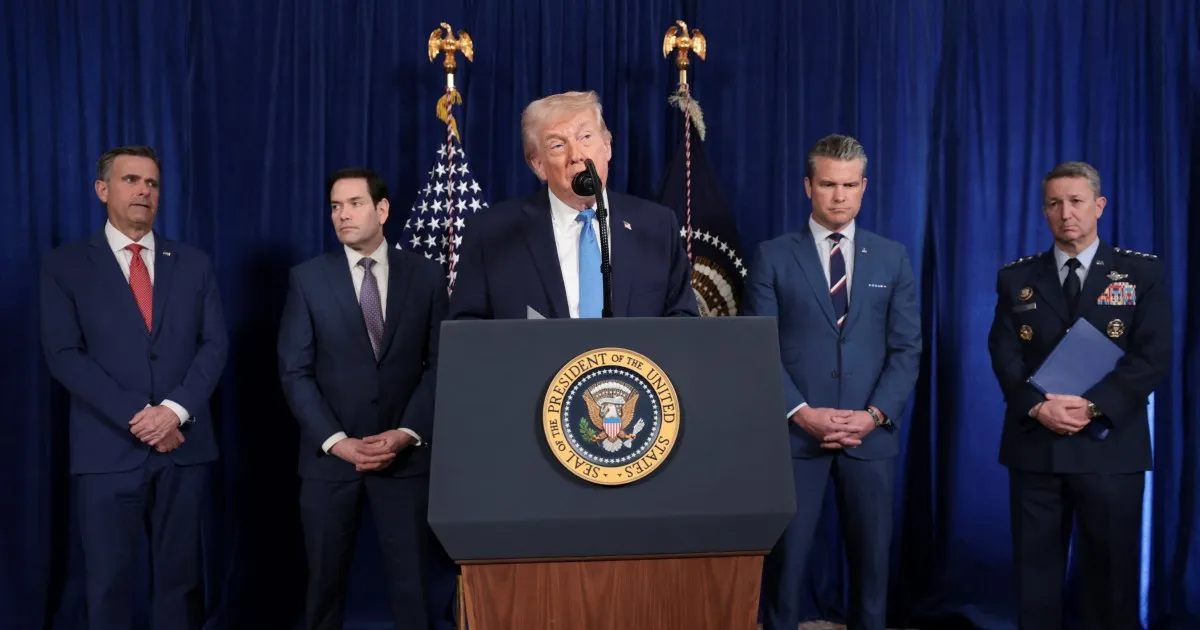
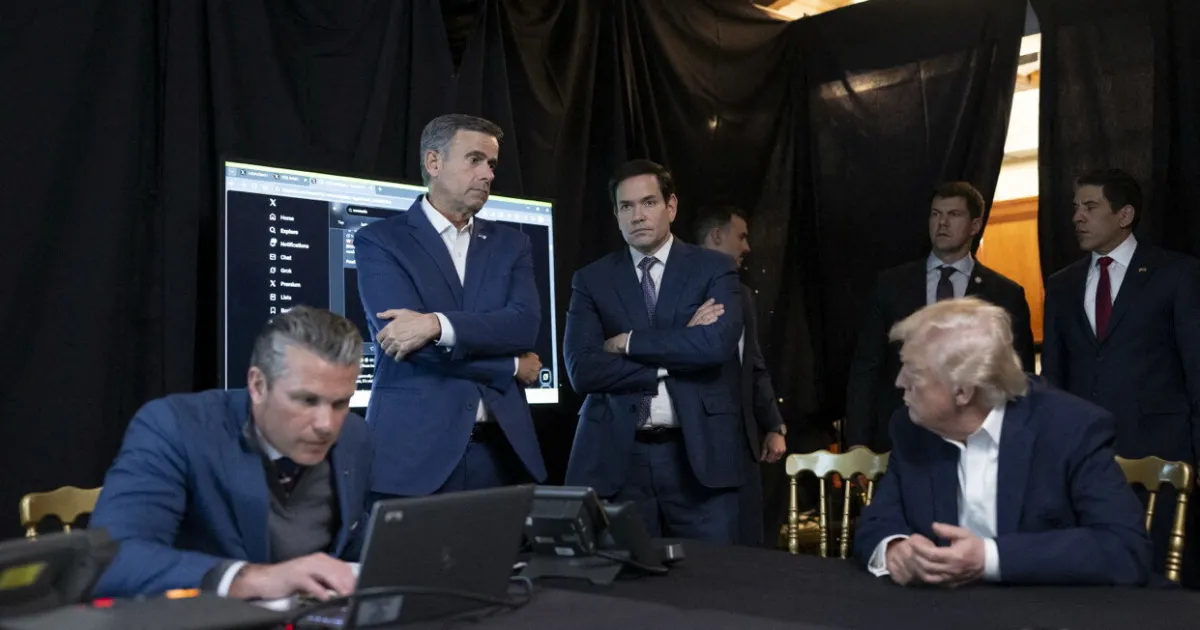
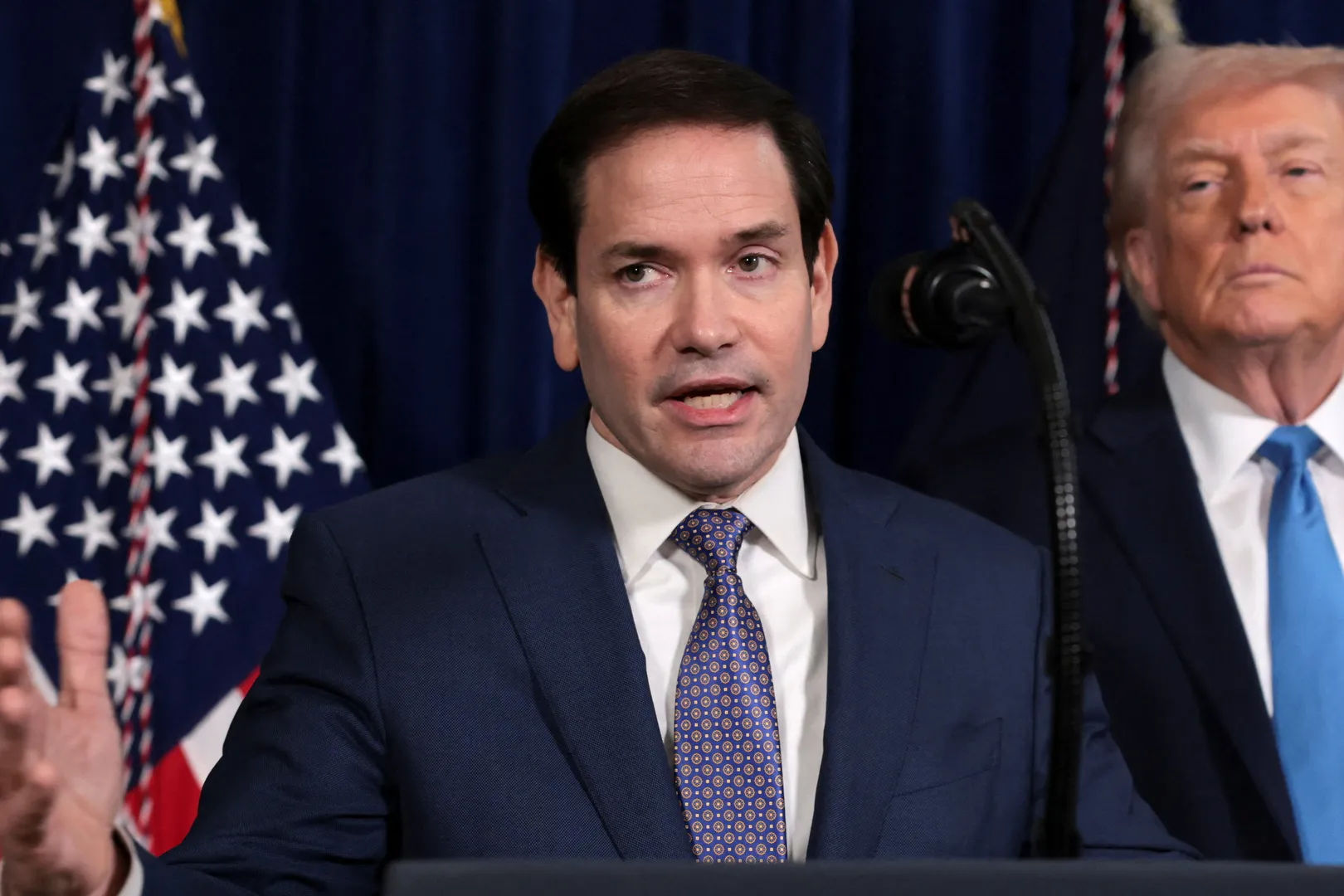
US President Donald Trump says ‘a team’ from the US will be running Venezuela for now, but he would not specify who is on the team. He was speaking at a news conference with Secretary of State Marco Rubio and Secretary of Defense Pete Hegseth.
Jake Paul’s defeat by Anthony Joshua in their heavyweight bout in December has seen American boxer lose his WBA ranking.
Published On 3 Jan 20263 Jan 2026
Share
Jake Paul has slipped out of the WBA cruiserweight rankings after the YouTuber-turned-boxer was soundly beaten by former world heavyweight champion Anthony Joshua last month.
Paul’s jaw was broken in two places and the American needed surgery to repair the damage after Joshua’s sixth-round knockout victory in a heavyweight bout in Miami.
Recommended Stories
list of 4 itemsend of list
The event had drawn criticism ahead of the bout due to the disparity in the sheer size and experience of the boxers, while Paul spent much of the fight dancing around the ring rather than engaging Joshua.
Paul (12-2, 7 KOs) had entered the WBA’s cruiserweight rankings at No 14 in July shortly after he beat 39-year-old Julio Cesar Chavez Jr by unanimous decision in Anaheim, California.
He was at No 15 entering the bout against Joshua. Bosnia’s Edin Puhalo has taken Paul’s place in the top 15, having recorded his 29th career win in December.
The WBA ranking announcement and changes were for the period ending December 31.
United States President Donald Trump announced on Saturday morning that his country’s forces had bombed Venezuela and captured the South American nation’s president, Nicolas Maduro, and First Lady Cilia Flores in a dramatic overnight military attack that followed months of rising tensions.
Venezuela’s government said that the US had struck three states apart from the capital, Caracas, while neighbouring Colombia’s President Gustavo Petro released a longer list of places that he said had been hit.
The operation has few, if any, parallels in modern history. The US has previously captured foreign leaders, including Iraq’s Saddam Hussein and Panama’s Manuel Noriega, but after invading those countries in declared wars.
Here is what we know about the US attacks and the lead-up to this escalation:
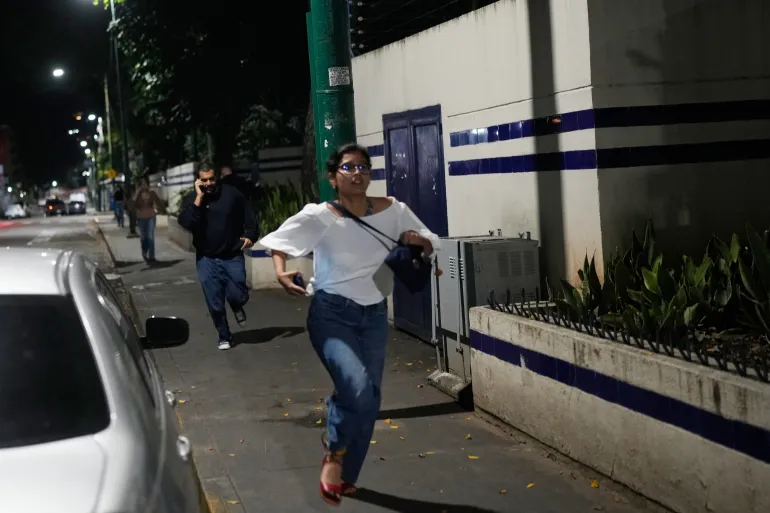
Pedestrians run after explosions and low-flying aircraft were heard in Caracas, Venezuela, on Saturday, January 3, 2026 [Matias Delacroix/ AP Photo]
How did the attack unfold?
At least seven explosions were reported from Caracas, a city of more than three million people, at about 2am local time (06:00 GMT), as residents said they heard low-flying aircraft. Lucia Newman, Al Jazeera’s Latin America editor, reported that at least one of the explosions appeared to come from near Fort Tiuna, the main military base in the Venezuelan capital.
Earlier, the US Federal Aviation Administration had issued instructions to American commercial airlines to stay clear of Venezuelan airspace.
Within minutes of the explosions, Maduro declared a state of emergency, as his government named the US as responsible for the attacks, saying that it had struck Caracas as well as the neighbouring states of Miranda, Aragua and La Guaira.
The US embassy in Bogota, Colombia, referred to the reports of the explosions and asked American citizens to stay out of Venezuela, in a statement. But the diplomatic mission did not confirm US involvement in the attacks. That came more than three hours after the bombings, from Trump.
Supporters of Venezuelan President Nicolas Maduro embrace in downtown Caracas, Venezuela, on Saturday, January 3, 2026, after US President Donald Trump announced that Maduro had been captured and flown out of the country [Cristian Hernandez/ AP Photo]
What did Trump say?
In a post on his Truth Social platform, Trump said, a little after 09:00 GMT that the US had “successfully carried out a large scale strike against Venezuela and its leader, President Nicolas Maduro, who has been, along with his wife, captured and flown out of the Country”.
Venezuela has not yet confirmed that Maduro was taken by US troops — but it also has not denied the claim.
Trump said that the attack had been carried out in conjunction with US law enforcement, but did not specify who led the operation.
Trump announced that there would be a news conference at his Mar-a-Lago resort in Florida at 11am local time (16:00 GMT) on Friday, where more details would be revealed.
Where did the US attack in Venezuela?
While neither the US nor Venezuelan authorities have pinpointed locations that were struck, Colombia’s Petro, in a social media post, listed a series of places in Venezuela that he said had been hit.
They include:
La Carlota airbase was disabled and bombed.
Cuartel de la Montana in Catia was disabled and bombed.
The Federal Legislative Palace in Caracas was bombed.
Fuerte Tiuna, Venezuela’s main military complex, was bombed.
An airport in El Hatillo was attacked.
F-16 Base No 3 in Barquisimeto was bombed.
A private airport in Charallave, near Caracas, was bombed and disabled.
Miraflores, the presidential palace in Caracas, was attacked.
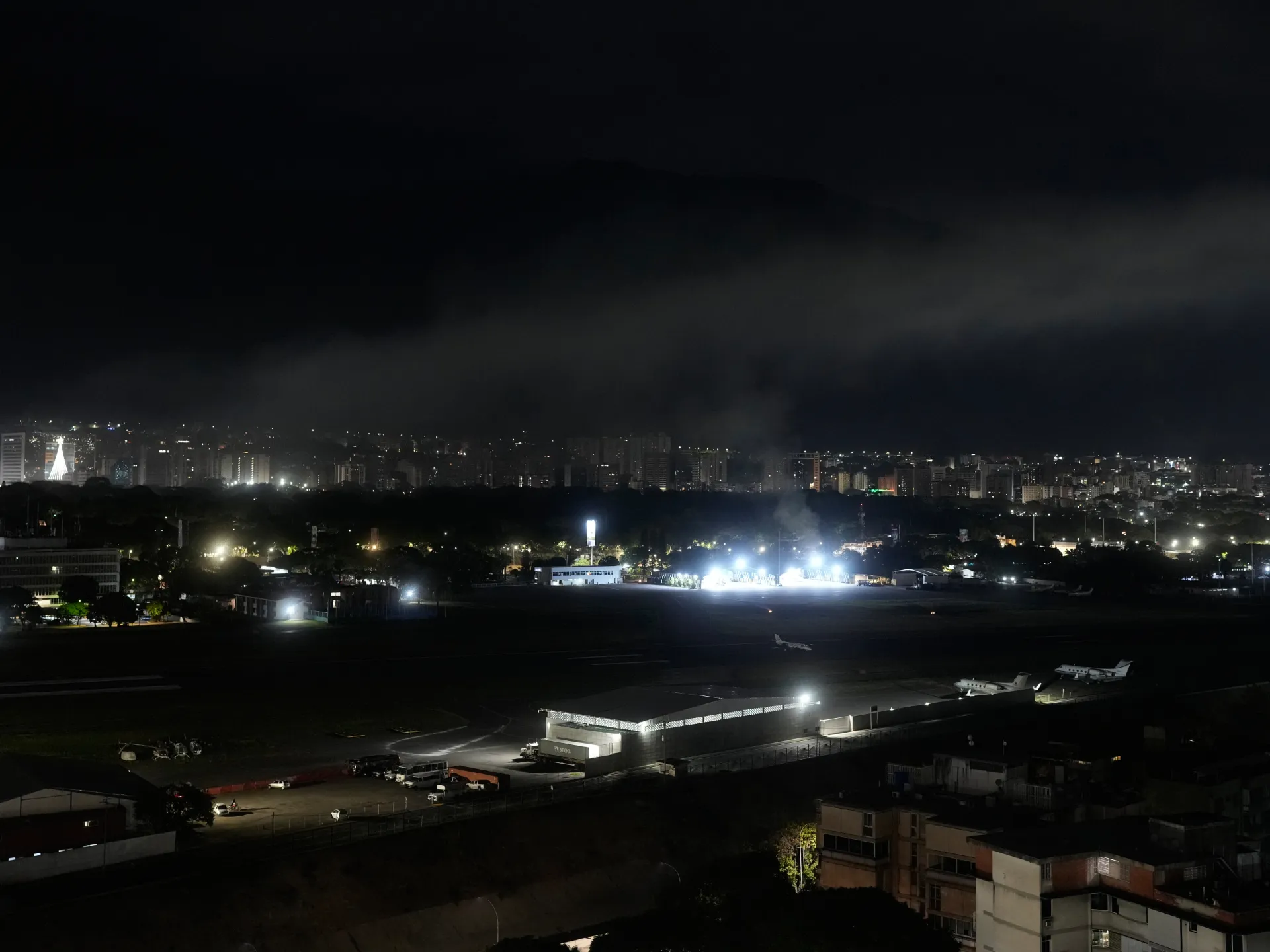
Large parts of Caracas, including Santa Monica, Fuerte Tiuna, Los Teques, 23 de Enero and the southern areas of the capital, were left without electricity.
Attacks were reported in central Caracas.
A military helicopter base in Higuerote was disabled and bombed.
The US Navy’s Gerald R Ford Carrier Strike Group, including the flagship USS Gerald R Ford, USS Winston S Churchill, USS Mahan and USS Bainbridge, sail towards the Caribbean Sea, in the Atlantic Ocean, on November 13, 2025 [US Navy/Petty Officer 3rd Class Tajh Payne/Handout via Reuters]
What led to these US attacks on Venezuela?
Trump has, in recent months, accused Maduro of driving narcotics smuggling into the US, and has claimed that the Venezuelan president is behind the Tren de Aragua gang that Washington has proscribed as a foreign terrorist organisation.
But his own intelligence agencies have said that there is no evidence that Maduro is linked to Tren de Aragua, and US data shows that Venezuela is not a major source of contraband narcotics entering the country.
Starting in September, the US military launched a series of strikes on boats in the Caribbean Sea that it claimed were carrying narcotics. More than 100 people have been killed in at least 30 such boat bombings, but the Trump administration is yet to present any public evidence that there were drugs on board, that the vessels were travelling to the US, or that the people on the boats belonged to banned organisations, as the US has claimed.
Meanwhile, the US began its largest military deployment in the Caribbean Sea in at least several decades, spearheaded by the USS Gerald Ford, the world’s largest aircraft carrier.
In December, the US hijacked two ships carrying Venezuelan oil, and has since imposed sanctions on multiple companies and their tankers, accusing them of trying to circumvent already stringent American sanctions against Venezuela’s oil industry.
Then, last week, the US struck what Trump described as a “dock” in Venezuela where he claimed drugs were loaded onto boats.
Could all this be about oil?
Trump has so far framed his pressure and military action against Venezuela and in the Caribbean Sea as driven by a desire to stop the flow of dangerous drugs into the US.
But he has increasingly also sought Maduro’s departure from power, despite a phone call in early December that the Venezuelan president described as “cordial”.
And in recent weeks, some senior aides of the US president have been more open about Venezuela’s oil: the country’s vast reserves of crude, unmatched in the world, amounted to an estimated 303 billion barrels (Bbbl) as of 2023.
On December 17, Trump’s top adviser Stephen Miller claimed that the US had “created the oil industry in Venezuela” and that the South American country’s oil should therefore belong to the US.
But though US companies were the earliest to drill for oil in Venezuela in the early 1900s, international law is clear: sovereign states — in this case Venezuela — own the natural resources within their territories under the principle of Permanent Sovereignty over Natural Resources (PSNR).
Venezuela nationalised its oil industry in 1976. Since 1999, when socialist President Hugo Chavez, Maduro’s mentor and predecessor, came to power, Venezuela has been locked in a tense relationship with the US.
Still, one major US oil company, Chevron, continues to operate in the country.
The Venezuelan opposition, led by Nobel Peace Prize laureate Maria Corina Machado, has publicly called for the US to intervene against Maduro, and has pointed to the oil reserves that American firms could tap more easily with a new dispensation in power in Caracas.
Oil has long been Venezuela’s biggest export, but US sanctions since 2008 have crippled formal sales and the country today earns only a fraction of what it once did.
Venezuelan Vice President Delcy Rodriguez speaks to the media at the Foreign Office in Caracas, Venezuela, on August 11, 2025 [Ariana Cubillos/AP Photo]
How has Venezuela’s government reacted?
While Venezuela has not confirmed Maduro’s capture, Vice President Delcy Rodrigues told state-owned VTV that the government had lost contact with Maduro and First Lady Flores and did not have clarity on their whereabouts.
She demanded that the US provide “proof of life” of Maduro and Flores, and added that Venezuela’s defences were activated.
Earlier, in a statement, the Venezuelan government said that it “rejects, repudiates and denounces” the attacks.
It said that the aggression threatens the stability of Latin America and the Caribbean, and places the lives of millions of people at risk. It accused the US of trying to impose a colonial war, and force a regime change — and said that these attempts would fail.
This combination of pictures created on August 7, 2025 shows US President Donald Trump in Washington, DC, on July 9, 2025, and Venezuelan President Nicolas Maduro, right, in Caracas on July 31, 2024 [Jim Watson and Federico Parra/AFP]
What happens to Maduro next?
In a statement posted on X, Trump’s Attorney General Pam Bondi announced that Maduro and his wife have been indicted in the Southern District of New York.
Maduro has been charged with “Narco-Terrorism Conspiracy, Cocaine Importation Conspiracy” among other charges, Bondi said. It was unclear if his wife is facing the same charges, but she referred to the Maduro couple as “alleged international narco traffickers.”
“They will soon face the full wrath of American justice on American soil in American courts,” she added.
Mike Lee, a Republican senator from Utah, earlier posted on X that he had spoken to US Secretary of State Marco Rubio, who had told him that Maduro had been “arrested by US personnel to stand trial on criminal charges in the United States, and that the kinetic action we saw tonight was deployed to protect and defend those executing the arrest warrant.”
In 2020, US prosecutors had charged Maduro with running a cocaine-trafficking network.
But US officials remain silent on the illegality of Maduro’s capture and the attacks on Venezuela, which violate UN charter principles of sovereignty and territorial integrity of nations.
Russia and Cuba, close Maduro allies, condemned the attack. Colombia, which neighbours Venezuela and has itself been in Trump’s crosshairs, said that it “rejects the aggression against the sovereignty of Venezuela and of Latin America” – even though Bogota itself does not recognise Maduro’s government.
Most other nations have been relatively muted in their response to the US aggression so far.
Venezuela’s Interior Minister Diosdado Cabello, left, Defence Minister Vladimir Padrino Lopez, second from left, and Vice President Delcy Rodriguez, centre, seen here at a ceremony commemorating the 80th anniversary of the Soviet Union’s victory over Nazi Germany in World War II in Caracas, Venezuela, on Tuesday, May 13, 2025. Rodriguez, Cabello and Lopez are among the leaders widely seen as Maduro’s closest aides [Cristian Hernandez/AP Photo]
What’s next for Venezuela?
Constitutionally, Rodriguez, the vice president, is next in line to take charge if Maduro indeed has been plucked out of Venezuela by the US.
Other senior leaders seen as close to Maduro and influential within the Venezuelan hierarchy include Interior Minister Diosdado Cabello, National Assembly President — and Delcy’s brother — Jorge Rodriguez, and military chief General Vladimir Padrino López.
But it is unclear whether the state apparatus that Chavez and Maduro carefully built over a quarter century will last without them.
“Maduro’s capture is a devastating moral blow for the political movement started by Hugo Chavez in 1999, which has devolved into a dictatorship since Nicolas Maduro took power,” Carlos Pina, a Venezuelan analyst based in Mexico, told Al Jazeera.
If the US does engineer — or has already engineered — a regime change, the opposition’s Machado could be a front-line candidate to take Venezuela’s top job, though it is unclear how popular that might be. In a November poll in Venezuela, 55 percent of participants were opposed to military intervention in their country, and an equal number were opposed to economic sanctions against Venezuela.
Trump might be mistaken if he thinks the US can stay out of the chaos that’s likely to follow in a post-Maduro Venezuela, suggests Christopher Sabatini, a senior research fellow for Latin America, the US and North America programme at Chatham House.
“Assuming even if there is regime change – of some sort, and it’s by no means clear even if it does happen that it will be democratic – the US’s military action will likely require sustained US engagement of some sort,” he said.
“Will the Trump White House have the stomach for that?”
Guterres says pending ban targets groups ‘indispensable to life-saving’ work, undermines ceasefire progress.
United Nations Secretary-General Antonio Guterres has called on Israel to reverse a pending ban on 37 nongovernmental organisations (NGOs) working in Gaza and the occupied West Bank.
In a statement on Friday, Guterres called the work of the groups “indispensable to life-saving humanitarian work”, according to spokesperson Stephane Dujarric. He added that the “suspension risks undermining the fragile progress made during the ceasefire”.
Recommended Stories
list of 3 itemsend of list
Israel banned the humanitarian groups for failing to meet new registration rules requiring aid groups working in the occupied territory to provide “detailed information on their staff members, funding and operations”. It has pledged to enforce the ban starting March 1.
Experts have denounced the requirements as arbitrary and in violation of humanitarian principles. Aid groups have said that providing personal information about their Palestinian employees to Israel could put them at risk.
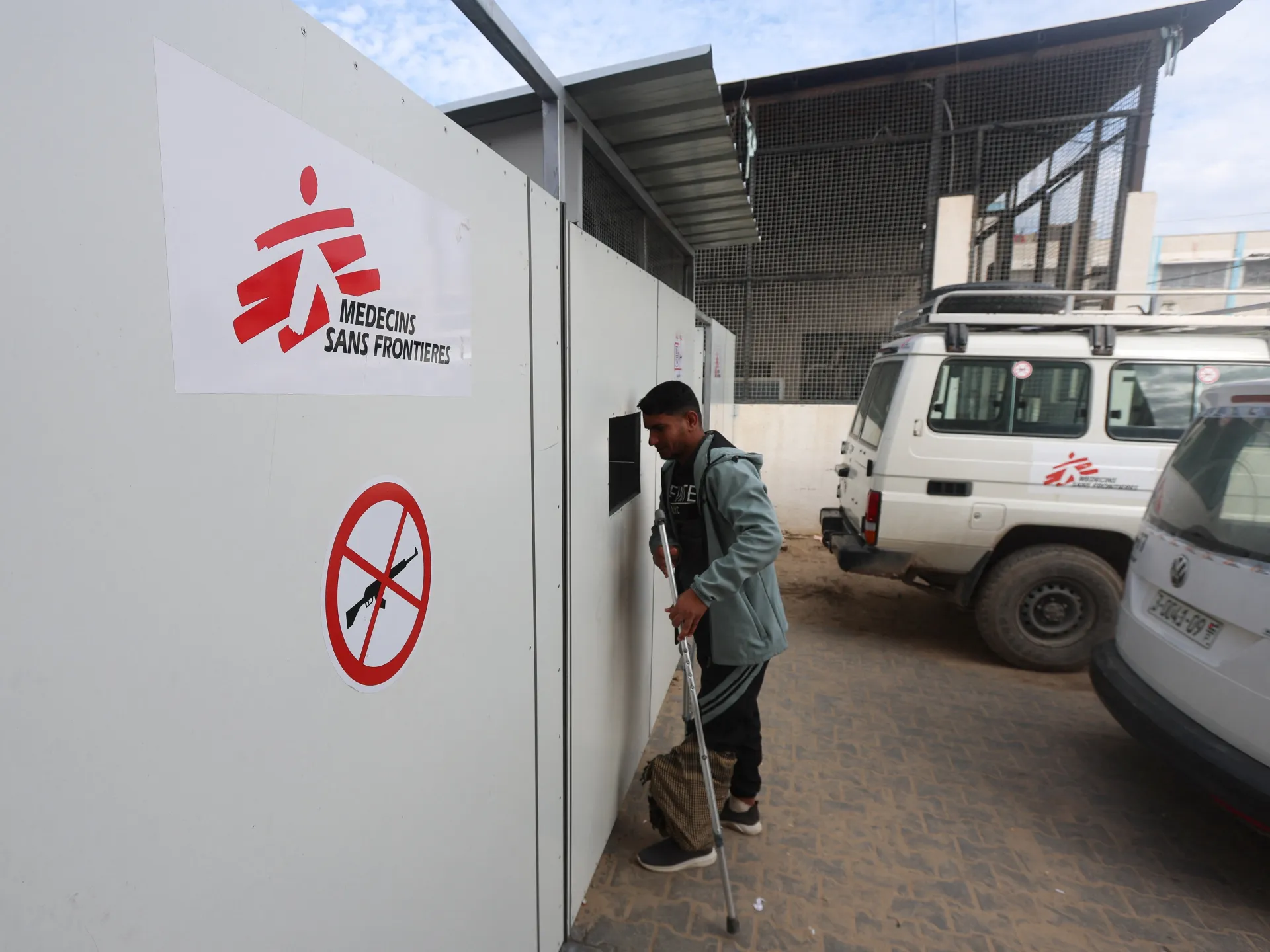
The targeted groups include several country chapters of Doctors Without Borders (known by its French acronym, MSF), the Norwegian Refugee Council, and the International Rescue Committee.
To date, Israel has killed about 500 aid workers and volunteers in Gaza throughout its genocidal war. All told, at least 71,271 Palestinians have been killed in Gaza since October 7, 2023.
In his statement, Guterres said the NGO ban “comes on top of earlier restrictions that have already delayed critical food, medical, hygiene and shelter supplies from entering Gaza”.
“This recent action will further exacerbate the humanitarian crisis facing Palestinians,” he said.
Nearly all of Gaza’s population has been displaced throughout the war, with many still living in tents and temporary shelters.
Israel had maintained severe restrictions on aid entering the enclave prior to a ceasefire going into effect in October. Under the deal, Israel was meant to provide unhindered aid access.
But humanitarian groups have said Israel has continued to prevent adequate aid flow. Ongoing restrictions include materials that could be used to provide better shelter and protection from flooding amid devastating winter storms, according to the UN.
Earlier on Friday, the foreign ministers of Qatar, Egypt, Jordan, Saudi Arabia, the United Arab Emirates, Turkiye, Pakistan and Indonesia warned that “deteriorating” conditions threatened to take even more lives in Gaza.
“Flooded camps, damaged tents, the collapse of damaged buildings, and exposure to cold temperatures coupled with malnutrition, have significantly heightened risks to civilian lives,” they said in a statement.
They called on the international community “to pressure Israel, as the occupying power, to immediately lift constraints on the entry and distribution of essential supplies including tents, shelter materials, medical assistance, clean water, fuel, and sanitation support”.
Letter to UN chief, UNSC comes after Trump says US will intervene if Tehran violently suppresses protests.
Published On 3 Jan 20263 Jan 2026
Share
Iran’s United Nations ambassador Amir Saeed Iravani has written to the UN secretary-general and the president of the UN Security Council (UNSC), urging them to condemn “unlawful threats” towards Tehran from United States President Donald Trump amid ongoing protests in the country.
The letter sent on Friday came hours after Trump said the US was “locked and loaded and ready to go” if any more protesters were killed in the ongoing demonstrations in Iran over the cost of living.
Recommended Stories
list of 4 itemsend of list
Iravani called on UN chief Antonio Guterres and members of the UNSC to “unequivocally and firmly condemn” Trump’s “reckless and provocative statements”, describing them as a “serious violation” of the UN Charter and international law.
“Any attempt to incite, encourage or legitimise internal unrest as a pretext for external pressure or military intervention is a gross violation of the sovereignty, political independence and territorial integrity of the Islamic Republic of Iran,” Iravani said in the letter, which was published in full by the IRNA state news agency.
The letter added that Iran’s government “reiterates its inherent right to defend its sovereignty” and that it will “exercise its rights in a decisive and proportionate manner”.
“The United States of America bears full responsibility for any consequences arising from these illegal threats and any subsequent escalation of tensions,” Iravani added.
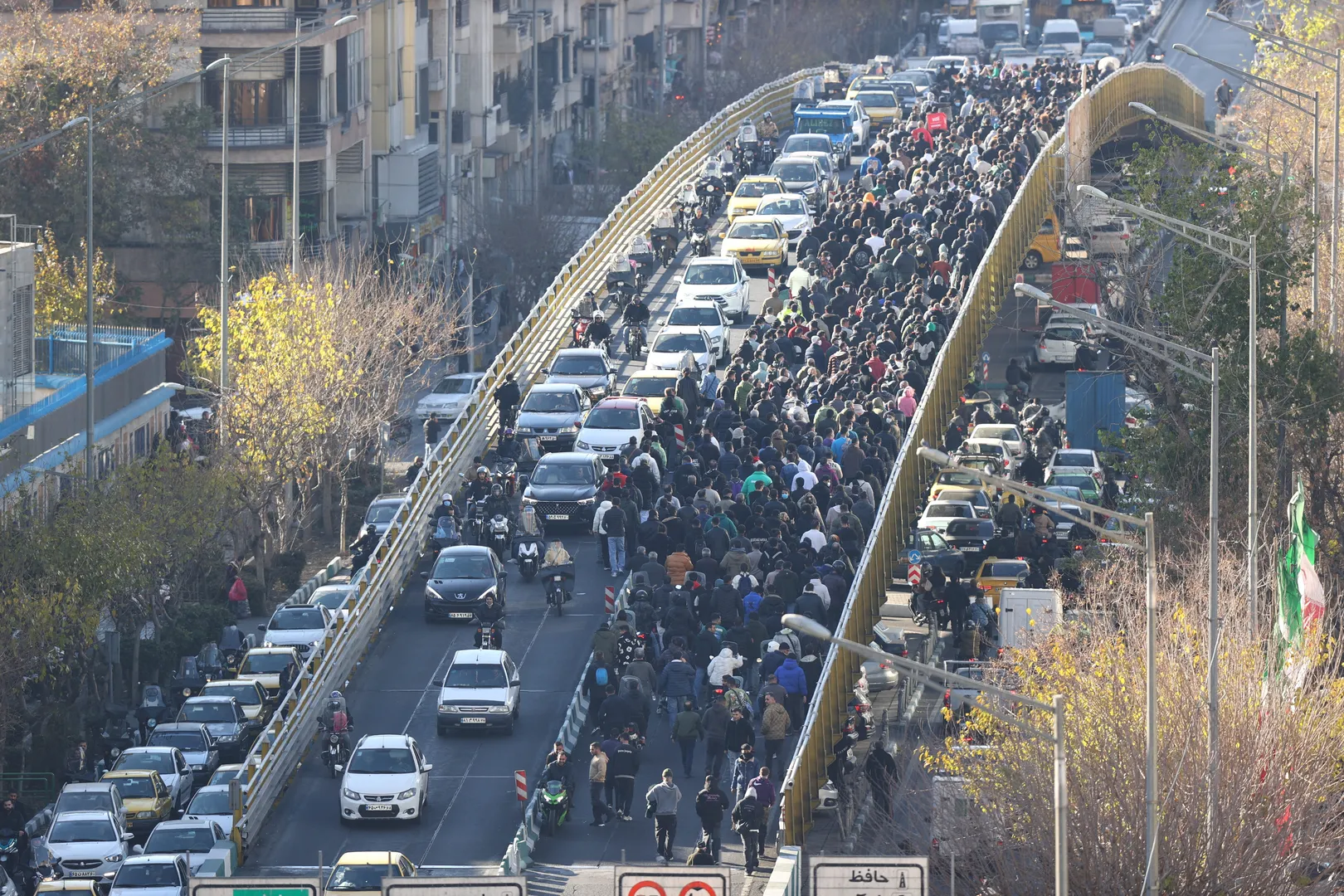
IRNA reported earlier that protests continued across Iran on Friday, with people gathering in Qom, Marvdasht, Yasuj, Mashhad, and Hamedan as well as in the Tehran neighbourhoods of Tehranpars and Khak Sefid.
The protests have swept across the country after shopkeepers in Iran’s capital Tehran went on strike on Sunday over high prices and economic stagnation.
At least nine people had been killed and 44 arrested in the unrest. The deputy governor of Qom province on Friday said that another person had died after a grenade exploded in his hand, in what the governor said was an attempt to incite unrest.
In his post on Truth Social, Trump said that if Iran “violently kills peaceful protesters, which is their custom, the United States of America will come to their rescue”.
Ali Larijani, secretary of the Supreme National Security Council, shot back that US interference “is equivalent to chaos across the entire region and the destruction of American interests”.
Iranian leaders have struck a surprisingly conciliatory tone in response, with President Masoud Pezeshkian saying the government is at “fault” for the situation and promising to find solutions. Observers have noted the response is markedly different from the harsh reaction to past protests in the country.
The United States bombed three Iranian nuclear sites in June this year during a 12-day escalation between Israel and Iran. Trump described the operation as a “very successful attack”.
Last week, during a news conference with Israeli Prime Minister Benjamin Netanyahu, Trump said the US will “knock the hell out” of Iran if it advances its nuclear programme or ballistic weapons programme.
The statement came amid an Israeli push to resume attacks on Iran.
Pezeshkian has pledged a “severe” response to any aggression.
Decline in sales comes amid outrage of Elon Musk’s political forays, end in US electric vehicle tax breaks.
Published On 2 Jan 20262 Jan 2026
Share
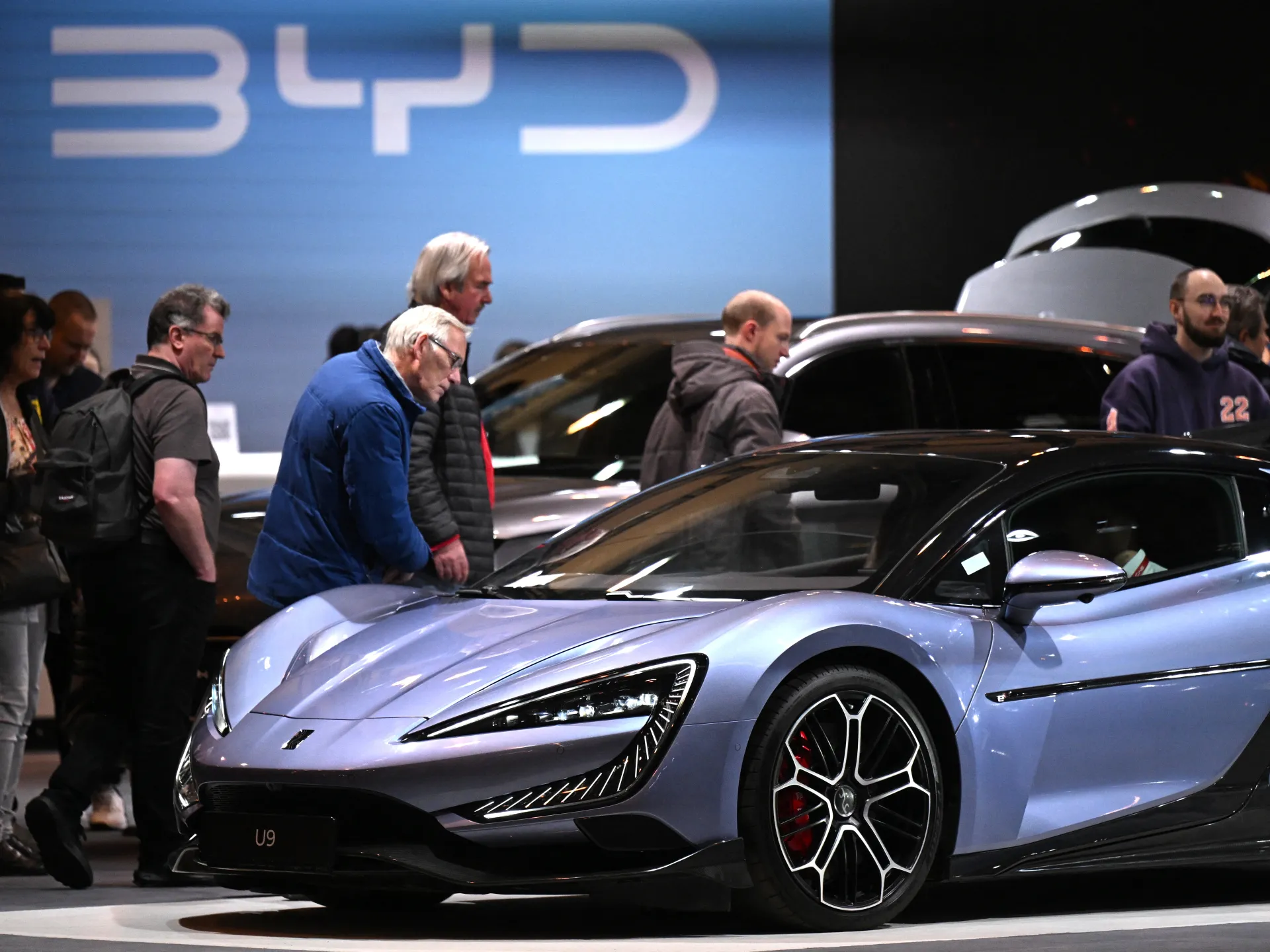
Tesla has lost its place as the top global seller of electric vehicles to Chinese company BYD, capping a year defined by outrage over CEO Elon Musk’s political manoeuvring and the end of United States tax breaks for customers.
The company revealed on Friday that it had sold 1.64 million vehicles in 2025, compared with BYD’s 2.26 million vehicles. The sales represented a 9 percent decline for Tesla from a year earlier.
Recommended Stories
list of 3 itemsend of list
Tesla, founded in 2003, had for years far outpaced traditional automakers in its development and sale of electric vehicles. However, the market has become increasingly crowded with competitors, with China’s electric vehicle market bounding ahead.
Musk’s embrace of US President Donald Trump in 2024 and subsequent spearheading of a controversial “government efficiency” panel (DOGE) behind widespread layoffs of federal workers has also proved polarising. The political foray prompted protests at Tesla facilities and slumps in sales.
The company’s fourth quarter sales totaled 418,227, falling short of the much-reduced 440,000 target that analysts recently polled by FactSet, an investment research firm, had expected.
Musk left DOGE in May, in what was largely viewed as an effort to reassure investors.
Tesla was also hard hit by the expiration of a $7,500 tax credit for electric vehicle purchases that was phased out by the Trump administration at the end of September. Trump’s opposition to electric vehicles has contributed to a strained relationship with Musk.
Despite the downward trends in sales, investors have generally remained optimistic about Tesla and Musk’s ambitious plans to make the company a leader in driverless robotaxi services and humanoid robots for homes.
Reflecting that optimism, Tesla stock finished 2025 up about 11 percent.
Tesla has also recently introduced two less expensive electric vehicle models, the Model Y and Model 3, meant to compete with cheaper Chinese models for sale in Europe and Asia.
Musk entered 2026 as the wealthiest person in the world.
It is widely believed that the public offering of his rocket company, SpaceX, set for later this year, could make the 54-year-old the world’s first trillionaire.
In November, Tesla’s directors awarded Musk a potentially historic pay package of nearly $1 trillion if ambitious performance targets were met.
Musk scored another huge win in December,when the Delaware Supreme Court reversed a lower court’s ruling, awarding him a $55bn pay package that had been paused since 2018.
Conversely, Tesla is at risk of temporarily losing its licence to sell cars in California after a judge there ruled it had misled customers about the safety of its driverless taxis.
Millions of Americans are facing a huge increase in the amount they have to pay for health insurance.
A dispute about government subsides for healthcare was one of the major issues that led to a 43-day shutdown of the US government last year – the longest in history.
But even when the shutdown ended, Republicans and Democrats failed to agree on and extension of the the subsidies.
As the clock struck midnight on January 1 – the health costs for 24 million people rose dramatically
So, what’s the impact for those in need? And how much politics is involved?
Presenter: James Bays
Guests:
Lindsay Allen – Health Economist and Policy Researcher at the Feinberg School of Medicine at Northwestern University
Neel Shah – Physician and Chief Medical Officer of Maven Clinic
Rinah Shah – Political Strategist and Geopolitical analyst
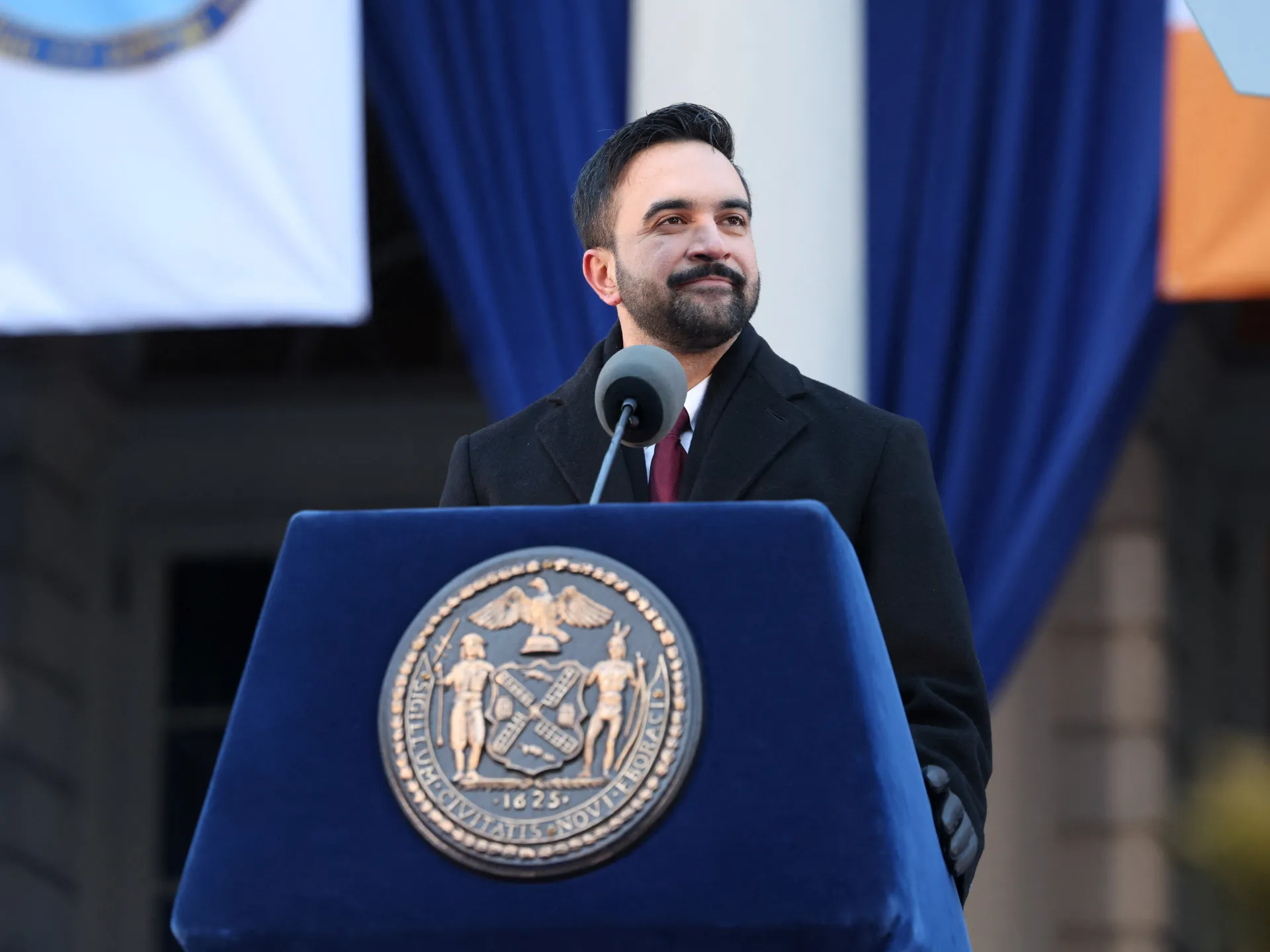
Palestinian rights advocates are praising New York City Mayor Zohran Mamdani for revoking pro-Israel municipal decrees within hours of his inauguration, a move that was promptly condemned by the Israeli government.
On Thursday, his first day in office, Mamdani wiped out all the executive orders his predecessor, Eric Adams, implemented after September 26, 2024, the day Adams was charged with bribery.
Recommended Stories
list of 3 itemsend of list
One of the orders restricted boycotts of Israel and prohibited mayoral appointees from issuing contracts “that discriminate against the State of Israel, Israeli citizens, or those associated” with the US ally.
It was signed by Adams less than a month ago and was seen by critics as an attempt to create controversy for the incoming Mamdani administration.
Another now-nixed decree adopted a controversial definition of anti-Semitism from the International Holocaust Remembrance Alliance (IHRA), which advocates say can be used to censor and penalise speech critical of Israel.
Nasreen Issa, a member of the Palestine Youth Movement – NYC, said Israel and its supporters have long pushed for the “criminalisation of dissent”.
“So, Mamdani’s rejection of this is a positive step towards protecting the rights of New Yorkers and the dignity of Palestinians,” Issa told Al Jazeera.
Afaf Nasher, the head of the New York chapter of the Council on American Islamic Relations (CAIR), also applauded Mamdani for revoking an “unconstitutional order restricting the ability of New Yorkers to criticize the Israeli government’s racism or boycott Israel’s human rights abuses”.
“This unconstitutional, Israel First attack on free speech should have never been issued in the first place,” Nasher said in a statement.
Nasher further slammed the IHRA definition, saying that the “overly broad” guidelines frame disagreement with Zionism as anti-Semitic.
“The order would have also unconstitutionally limited boycotts against only Israel,” Nasher said.
Palestinian rights supporters have long rejected the IHRA definition, which heavily focuses on Israel. The definition provides 11 examples of anti-Semitism, six of which involve Israel.
They include “claiming that the existence of a State of Israel is a racist endeavor” and “applying double standards” to Israel.
“I think it’s wonderful that Mayor Mamdani took measures on day one to reinforce our rights to free speech, which included our right to criticize and oppose Israeli apartheid and genocide,” said YL Al-Sheikh, a Palestinian-American writer active in the Democratic Socialists of America.
“The IHRA being implemented as government policy isn’t about combatting antisemitism but about stifling dissent and this should be something all Americans oppose.”
Israel weighs in
The Israeli Ministry of Foreign Affairs decried Mamdani’s moves on Friday, saying that the newly inaugurated mayor is showing “his true face”.
“This isn’t leadership. It’s antisemitic gasoline on an open fire,” it said in a post on the social media platform X.
Separately, Amichai Chikli, Israel’s minister of diaspora affairs, deployed Islamophobic language to criticise Mamdani’s decision.
He called the mayor a “Hamas sympathiser” and drew a connection between him and the Muslim mayor of London, Sadiq Khan.
“When a Muslim Brotherhood Islamist whose slogan is ‘Globalize the Intifada’ takes control of New York City or London, these are exactly the decisions you get,” Chikli wrote on X.
Neither Mamdani nor Khan has any known connections to the Muslim Brotherhood.
Issa said the intense Israeli response is not about the mayor’s policy moves but is rather aimed at controlling the narrative.
“Israel’s main approach – at the highest level, at the level of the Foreign Ministry – has been to push for the criminalisation of protected speech through these warped definitions of anti-Semitism like the IHRA,” she said.
“Since they’re losing in the court of public opinion, the response now is to push for the criminalisation of dissent.”
Issa also called Chikli’s attack on Mamdani “blatant Islamophobia, racism and disinformation”.
“They’re trying to promote these accusations that have no basis in reality whatsoever,” Issa told Al Jazeera.
“But from their perspective, any support for Palestinians, any opposition to Israel’s genocide or the conduct of its military – whether in Gaza or the West Bank, over the last two years, over the last decades – none of that is acceptable.”
Al-Sheikh said it was “absurd” that Israel is trying to impose its preferences on local policies in New York.
“Even Americans who aren’t Palestinian or pro Palestine can see this is strange and inhibits our rights,” Al-Sheikh said.
“It’s also weirdly counterproductive on Israel’s part since it only makes Mamdani look better. A single policy paper that said you can’t criticise a country was repealed and now they claim it is the end of the world, but ‘you should be allowed to criticise any country you want’ is the universal American position.”
Israel was not alone, however, in denouncing Mamdani’s actions. The administration of President Donald Trump also issued a warning to the Mamdani administration.
Harmeet Dhillon, assistant attorney general for the Justice Department’s Civil Rights Division, said her office would be vigilant “to ANY AND ALL violations of religious liberties” in New York.
“We will investigate, sue, and indict as needed,” Dhillon wrote in a social media post.
Palestine solidarity activists often stress that criticising Israeli abuses should not be conflated with attacking Judaism.
Mamdani’s rise
Mamdani has been a vocal critic of Israeli policies against Palestinians, prompting accusations of anti-Semitism from Israel’s supporters.
But he has repeatedly promised to protect Jewish residents. During his inauguration ceremony, he pledged to continue the Mayor’s Office to Combat Anti-Semitism (MOCA), an Adams-era development, and he told reporters his administration would “celebrate and cherish” Jewish New Yorkers.
The new mayor, 34, took the oath of office on a copy of the Quran at the turn of the new year, becoming the first Muslim mayor of America’s largest city.
The Democratic socialist, who formerly served as a state legislator, had minimal name recognition when he first announced his candidacy late in 2024.
But he steadily grew his base of support with a message focused on affordability and housing.
Last June, he defeated former Governor Andrew Cuomo to win the Democratic nomination, in one of the most stunning political upsets in recent US history.
Mamdani then defeated Cuomo again in the general elections in November, after the ex-governor relaunched his campaign as an independent with Trump’s support.
Adams was elected as a Democrat in 2021, but his administration faced numerous scandals during its four-year term, including accusations that Adams had entered into a quid pro quo with representatives from the Turkish government.
Earlier in 2024, Trump’s Justice Department dropped the federal bribery charges he faced. Adams had launched a re-election campaign as an independent, but he ultimately suspended his bid and backed Cuomo before the elections.
While Mamdani’s platform was largely focused on local issues, some of his supporters have argued that his vocal support for Palestinian rights helped propel his campaign amid the growing anger at Israel’s genocidal war on Gaza.
Protests are intensifying in Iran as a deepening economic crisis fuels public anger over soaring prices and falling living standards. Here’s a breakdown of what’s driving the unrest and how authorities are responding.
Federal authorities in the United States have accused an 18-year-old of plotting to carry out a “potential terrorist attack” on New Year’s Eve in the suburban town of Mint Hill, North Carolina, outside Charlotte.
On Friday, officials from the US Attorney’s Office and the Federal Bureau of Investigation (FBI) identified the suspect as Mint Hill resident Christian Sturdivant, a US citizen. The targets of Sturdivant’s alleged plans were a grocery store and a fast-food restaurant in Mint Hill.
Recommended Stories
list of 3 itemsend of list
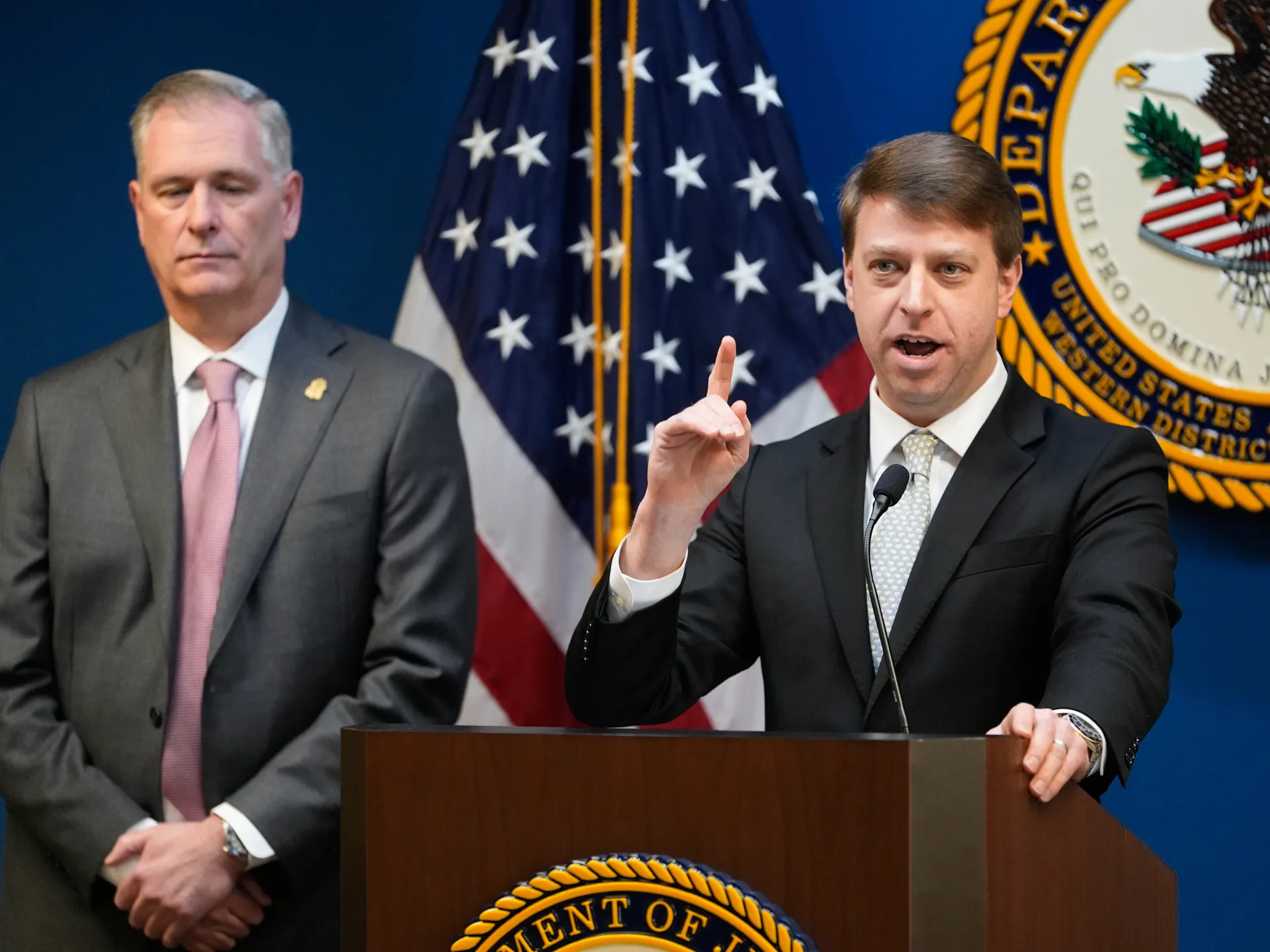
“ Countless lives were saved here,” US Attorney Russ Ferguson said at a news conference.
“On New Year’s Eve, everyone is at the grocery store. We’re all buying the things we need to celebrate. And we could have had a significant, significant loss of life, a significant injury here.”
Ferguson explained that Sturdivant was arrested on New Year’s Eve, the day of his planned attack. The 18-year-old has been charged with “attempting to provide material support to a foreign terrorist organisation”, and he made his first court appearance on Friday.
Sturdivant faces a maximum sentence of 20 years in prison, according to Ferguson.
But during his news conference, Ferguson, an appointee of President Donald Trump, appeared to voice frustration with the court system for failing to approve an earlier effort to detain Sturdivant on mental health grounds.
“ I think it is notable that, as part of their efforts, the FBI took Mr Sturdivant to a state magistrate judge to try to have him involuntarily committed,” Ferguson said.
“And that was because he had threatened not only other people’s lives, but in the process said that he planned to die by a policeman shooting him. So he had threatened other people’s lives and self-harm, but the state magistrate judge denied involuntary commitment.”
Authorities later specified that the hearing with the magistrate judge took place on Monday, days before his arrest. Sturdivant, they said, turned 18 last month.
Authorities detail arrest
During Friday’s news conference, officials said this week’s arrest was part of a multiyear effort to investigate Sturdivant, whom they described as a “prolific social media user”.
The suspect had previously been an employee at a local Burger King in North Carolina.
James Barnacle, the special agent in charge of the FBI’s North Carolina field office, said the suspect first came to the bureau’s attention in 2022, after he tried to contact the armed group ISIL (ISIS) through social media.
The US considers ISIL a foreign terrorist organisation and has conducted numerous military operations in the Middle East — and one recently in Nigeria — on the premise of combating the group.
Barnacle alleged that Sturdivant received instructions to knock on doors and attack people with hammers, but his initial attempts were thwarted by his family. He was about 14 years old at the time.
“ No charges were filed at that time,” Barnacle said. “He underwent psychological care, of which I don’t know the details.”
Then, in December, Barnacle said the FBI discovered that Sturdivant had returned to social media and posted threatening messages.
He had also allegedly made contact with two undercover officers: one from the New York Police Department and the second a covert agent with the FBI.
“Within just a few days, Sturdivant direct-messaged the online covert employee with a picture of two hammers and a knife,” Barnacle said. “The message was significant since in recent years an ISIS propaganda magazine promoted the use of knives to conduct terrorist attacks in Western countries.”
Barnacle added that later messages contained a loyalty oath to ISIL and a request for help obtaining firearms.
“The JTTF [Joint Terrorism Task Force] collected evidence showing he turned his back on his country and his fellow citizens by pledging allegiance to ISIS with the intent of becoming a martyr,” Barnacle said of the 18-year-old.
“We allege Sturdivant was willing to sacrifice himself by committing a terrorist attack, using knives and a hammer to support the murder, torture and extreme violence that ISIS represents.”
An FBI search of his home reportedly recovered hammers and knives hidden under Sturdivant’s bed, as well as notes allegedly detailing his attack plans.
“I could tell you the FBI had 24/7 surveillance on this subject, all hours of night, Christmas Day, Christmas Eve,” Barnacle said. He described the suspect’s targets as “Jews, Christians and LGBTQ individuals”.
FBI Director Kash Patel quickly promoted Sturdivant’s arrest on social media, praising his bureau and its partners for “undoubtedly saving lives”.
The arrest comes one year after a pickup truck driver intentionally rammed his vehicle down Bourbon Street, New Orleans’s famed entertainment district, in a deadly New Year’s Day attack.
Fourteen people were killed, and authorities recovered an ISIL flag in the truck.
But critics have questioned the use of undercover agents to make “terrorism-related” arrests with some defence lawyers arguing that agents have encouraged suspects to make incriminating statements or take actions they otherwise would not have.
Lawyers for the 18-year-old have yet to publicly comment.
United States tennis legend Venus Williams returns to the Australian Open for the first time since 2021.
Published On 2 Jan 20262 Jan 2026
Share
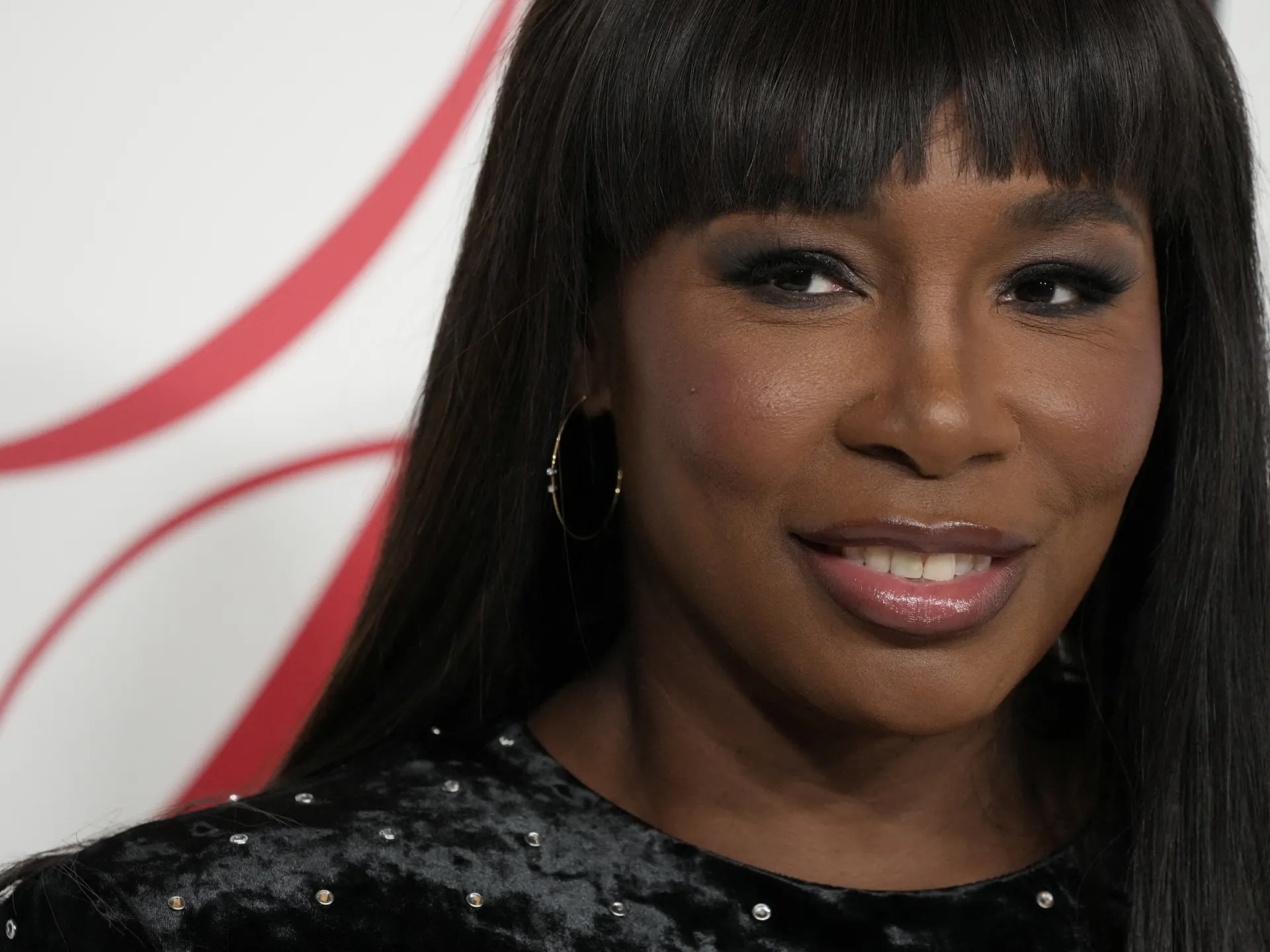
Seven-time major singles champion Venus Williams has been handed a wildcard to the Australian Open aged 45, becoming the oldest woman to play at the season-opening tennis Grand Slam.
The American, who has played only a limited number of singles matches in recent years, will compete in the main draw at Melbourne Park for the first time since 2021.
Recommended Stories
list of 4 itemsend of list
“I’m excited to be back in Australia and looking forward to competing during the Australian summer,” Williams said on Friday.
“I’ve had so many incredible memories there and I’m grateful for the opportunity to return to a place that has meant so much to my career.”
Williams is a five-time Wimbledon champion and also won two US Opens.
She was an Australian Open singles finalist in 2003 and 2017.
She will become the oldest woman to play at the Australian Open since Japan’s Kimiko Date, who was 44 when she lost in the first round in 2015.
Williams, a four-time Australian Open doubles champion, is set to begin her preparations for the January 18-February 1 tournament at the Auckland Classic next week, having returned to the circuit at the US Open last year after a 16-month break.
She will then head to the Hobart International immediately before Melbourne.
Two-time Grand Slam champion and fellow American Coco Gauff said it was “incredible” to see Williams still turning up for tournaments.
“She’s a legend of the sport, so it will be cool to see her back in action,” she said.
“It’s incredible the longevity of her career. She’s one of the people I looked up to, so looking forward to seeing her back on court.”
STC separatists accuse Saudi Arabia of requiring flights to UAE to land in Jeddah; Saudi source rejects claim.
Published On 2 Jan 20262 Jan 2026
Share
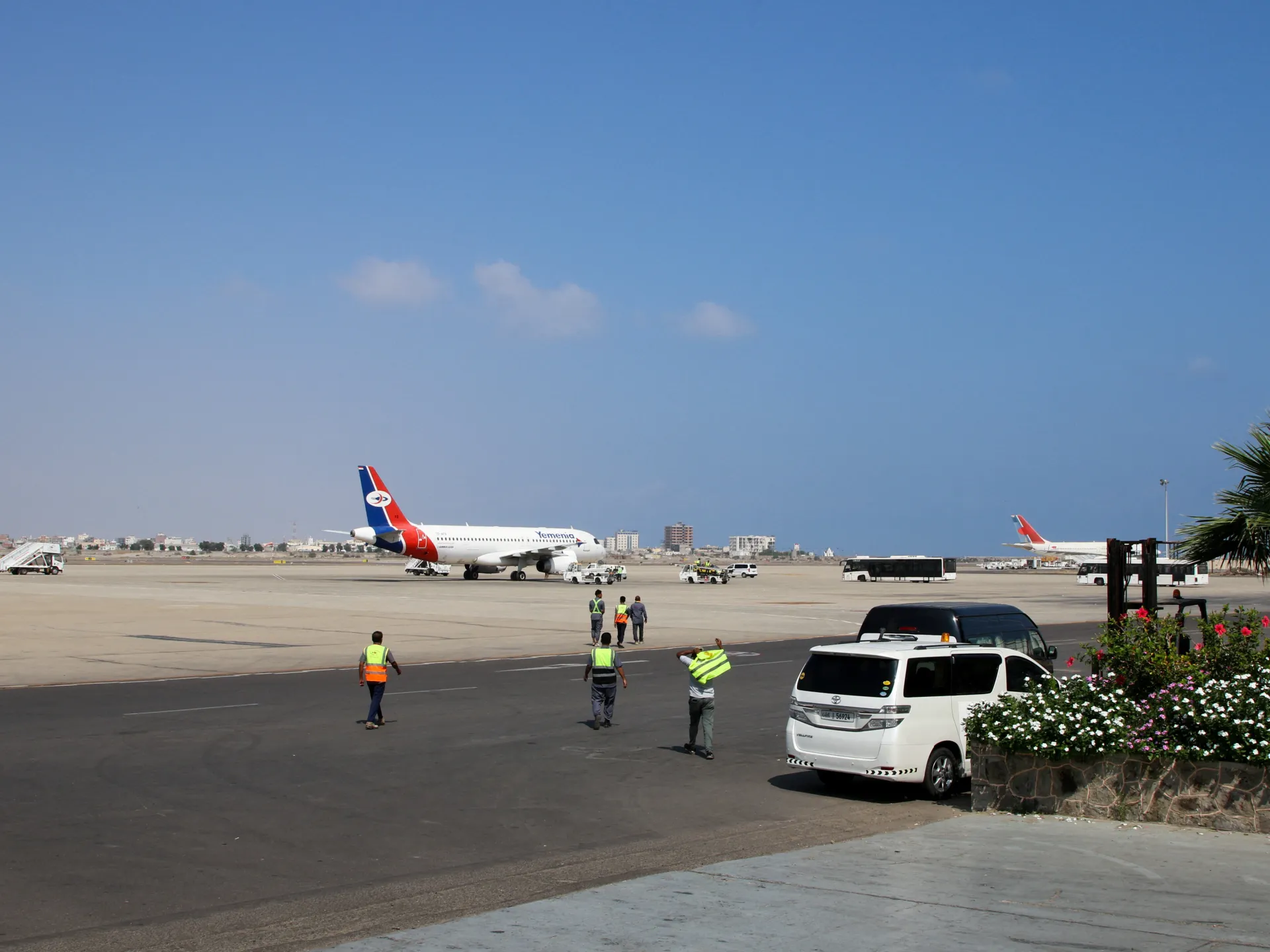
Flights from Aden international airport in Yemen were halted on Thursday amid continuing tensions between the Southern Transitional Council (STC) separatist group and the Saudi Arabia-backed internationally recognised government in Yemen.
Reuters news agency reported that all flights were suspended at the airport on Thursday, although further details of flight operations and possible resumptions remained unclear.
Recommended Stories
list of 3 itemsend of list
The STC has formally been a part of the Saudi-led coalition that, since 2015, has been fighting the Houthi takeover of large parts of Yemen. But the STC also seeks to carve out a separate nation in southern Yemen, and in December, expanded its military operations in Hadramout and al-Mahra provinces that border Saudi Arabia, setting off a rapid escalation in tensions.
Saudi Arabia has accused the United Arab Emirates – also a part of the anti-Houthi coalition – of arming the STC and of encouraging the separatist group to expand into Hadramout and al-Mahra, which Riyadh has said threatens its national security. The UAE has denied those allegations, insisting that it supports Saudi Arabia’s security.
However, while the UAE has since agreed to demands from Yemen’s Riyadh-backed Presidential Leadership Council and Saudi Arabia to withdraw its troops from Yemen, the STC has refused to pull back from Hadramout and al-Mahra.
On Thursday, the STC-aligned Transport Ministry within the internationally recognised government claimed that the stoppage at the airport was a result of Saudi Arabia imposing new requirements mandating that flights to and from Aden airport undergo inspection in Jeddah.
The ministry said it was “shocked” by the move, adding that Saudi authorities later clarified the restriction only applied to flights operating between Aden and the United Arab Emirates.
A Saudi source denied to the Reuters news agency that it was involved in restricting flights, saying Yemen’s internationally recognised government, led by the Presidential Leadership Council, was behind the requirement for UAE-bound flights.
Yemeni presidential adviser, Thabet al-Ahmadi, confirmed to Al Jazeera that it had imposed a requirement that applied to one flight route departing from Aden airport. He said the move was meant to prevent STC money smuggling.
Al-Ahmadi said the government did not support a complete halt to flights, adding it wanted to ensure air traffic continued unimpeded.
Earlier this week, the UAE announced it was voluntarily withdrawing its remaining “counterterrorism” forces from Yemen. That came after Riyadh struck what it claimed to be a UAE-linked weapons shipment in the southern port city of Mukalla.
On Wednesday, Rashad al-Alimi, the head of the internationally recognised government in Yemen, warned that any moves by the STC to further entrench their position in the provinces would have severe consequences.
The STC has, however, remained defiant, saying it would remain in the provinces.
However, STC spokesperson Mohammed al-Naqeeb said the group was coordinating its movements with the Homeland Shield forces, which had been the main security force in the provinces prior to the STC offensive. The Homeland Shield is affiliated with the Yemeni government and the Saudi-led coalition.
Yemen has been embroiled in a civil war since Houthi forces took control of the capital Sanaa in 2014. The group continues to control large swaths of the country’s northwest, with the STC and government contesting the southern and eastern flanks.