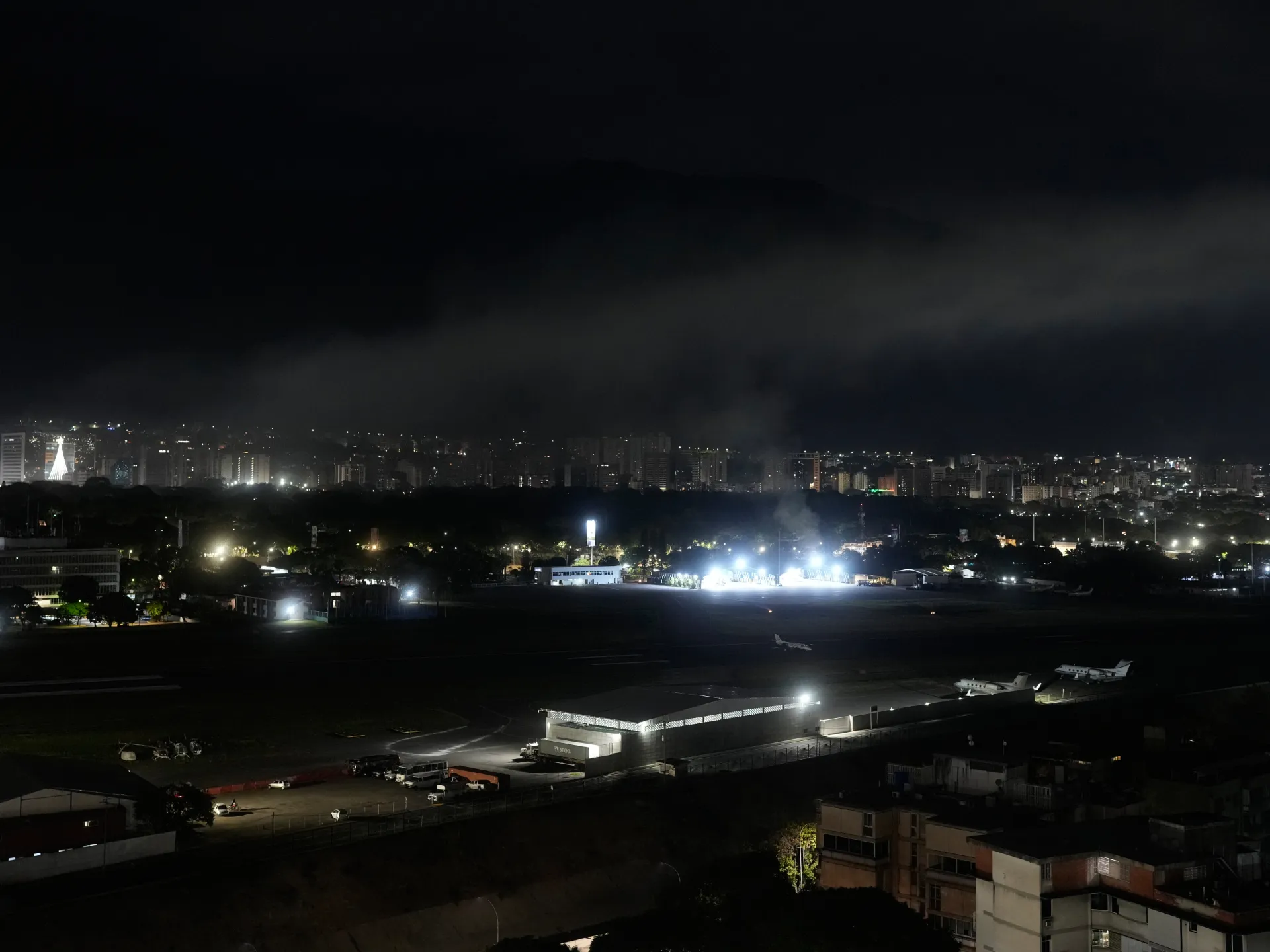
Live: Series of explosions reported in Venezuela’s capital amid US tensions | News
At least 7 explosions have been heard in Venezuela’s capital, Caracas, followed by a low-flying aircraft, according to The Associated Press.
Published On 3 Jan 2026
At least 7 explosions have been heard in Venezuela’s capital, Caracas, followed by a low-flying aircraft, according to The Associated Press.
Published On 3 Jan 20263 Jan 2026
Share
Letter to UN chief, UNSC comes after Trump says US will intervene if Tehran violently suppresses protests.

Published On 3 Jan 20263 Jan 2026
Share
Iran’s United Nations ambassador Amir Saeed Iravani has written to the UN secretary-general and the president of the UN Security Council (UNSC), urging them to condemn “unlawful threats” towards Tehran from United States President Donald Trump amid ongoing protests in the country.
The letter sent on Friday came hours after Trump said the US was “locked and loaded and ready to go” if any more protesters were killed in the ongoing demonstrations in Iran over the cost of living.
list of 4 itemsend of list
Iravani called on UN chief Antonio Guterres and members of the UNSC to “unequivocally and firmly condemn” Trump’s “reckless and provocative statements”, describing them as a “serious violation” of the UN Charter and international law.
“Any attempt to incite, encourage or legitimise internal unrest as a pretext for external pressure or military intervention is a gross violation of the sovereignty, political independence and territorial integrity of the Islamic Republic of Iran,” Iravani said in the letter, which was published in full by the IRNA state news agency.
The letter added that Iran’s government “reiterates its inherent right to defend its sovereignty” and that it will “exercise its rights in a decisive and proportionate manner”.
“The United States of America bears full responsibility for any consequences arising from these illegal threats and any subsequent escalation of tensions,” Iravani added.
IRNA reported earlier that protests continued across Iran on Friday, with people gathering in Qom, Marvdasht, Yasuj, Mashhad, and Hamedan as well as in the Tehran neighbourhoods of Tehranpars and Khak Sefid.
The protests have swept across the country after shopkeepers in Iran’s capital Tehran went on strike on Sunday over high prices and economic stagnation.
At least nine people had been killed and 44 arrested in the unrest. The deputy governor of Qom province on Friday said that another person had died after a grenade exploded in his hand, in what the governor said was an attempt to incite unrest.
In his post on Truth Social, Trump said that if Iran “violently kills peaceful protesters, which is their custom, the United States of America will come to their rescue”.
Ali Larijani, secretary of the Supreme National Security Council, shot back that US interference “is equivalent to chaos across the entire region and the destruction of American interests”.
Iran’s economic woes, including a collapsing currency and high inflation rates, follow years of severe drought in Tehran, a city with a population of some 10 million people, compounding multiple ongoing crises.
Iranian leaders have struck a surprisingly conciliatory tone in response, with President Masoud Pezeshkian saying the government is at “fault” for the situation and promising to find solutions. Observers have noted the response is markedly different from the harsh reaction to past protests in the country.
The United States bombed three Iranian nuclear sites in June this year during a 12-day escalation between Israel and Iran. Trump described the operation as a “very successful attack”.
Last week, during a news conference with Israeli Prime Minister Benjamin Netanyahu, Trump said the US will “knock the hell out” of Iran if it advances its nuclear programme or ballistic weapons programme.
The statement came amid an Israeli push to resume attacks on Iran.
Pezeshkian has pledged a “severe” response to any aggression.

Decline in sales comes amid outrage of Elon Musk’s political forays, end in US electric vehicle tax breaks.
Published On 2 Jan 20262 Jan 2026
Share
Tesla has lost its place as the top global seller of electric vehicles to Chinese company BYD, capping a year defined by outrage over CEO Elon Musk’s political manoeuvring and the end of United States tax breaks for customers.
The company revealed on Friday that it had sold 1.64 million vehicles in 2025, compared with BYD’s 2.26 million vehicles. The sales represented a 9 percent decline for Tesla from a year earlier.
list of 3 itemsend of list
Tesla, founded in 2003, had for years far outpaced traditional automakers in its development and sale of electric vehicles. However, the market has become increasingly crowded with competitors, with China’s electric vehicle market bounding ahead.
Musk’s embrace of US President Donald Trump in 2024 and subsequent spearheading of a controversial “government efficiency” panel (DOGE) behind widespread layoffs of federal workers has also proved polarising. The political foray prompted protests at Tesla facilities and slumps in sales.
The company’s fourth quarter sales totaled 418,227, falling short of the much-reduced 440,000 target that analysts recently polled by FactSet, an investment research firm, had expected.
Musk left DOGE in May, in what was largely viewed as an effort to reassure investors.
Tesla was also hard hit by the expiration of a $7,500 tax credit for electric vehicle purchases that was phased out by the Trump administration at the end of September. Trump’s opposition to electric vehicles has contributed to a strained relationship with Musk.
Despite the downward trends in sales, investors have generally remained optimistic about Tesla and Musk’s ambitious plans to make the company a leader in driverless robotaxi services and humanoid robots for homes.
Reflecting that optimism, Tesla stock finished 2025 up about 11 percent.
Tesla has also recently introduced two less expensive electric vehicle models, the Model Y and Model 3, meant to compete with cheaper Chinese models for sale in Europe and Asia.
Musk entered 2026 as the wealthiest person in the world.
It is widely believed that the public offering of his rocket company, SpaceX, set for later this year, could make the 54-year-old the world’s first trillionaire.
In November, Tesla’s directors awarded Musk a potentially historic pay package of nearly $1 trillion if ambitious performance targets were met.
Musk scored another huge win in December,when the Delaware Supreme Court reversed a lower court’s ruling, awarding him a $55bn pay package that had been paused since 2018.
Conversely, Tesla is at risk of temporarily losing its licence to sell cars in California after a judge there ruled it had misled customers about the safety of its driverless taxis.

Millions of Americans are facing a huge increase in the amount they have to pay for health insurance.
A dispute about government subsides for healthcare was one of the major issues that led to a 43-day shutdown of the US government last year – the longest in history.
But even when the shutdown ended, Republicans and Democrats failed to agree on and extension of the the subsidies.
As the clock struck midnight on January 1 – the health costs for 24 million people rose dramatically
So, what’s the impact for those in need? And how much politics is involved?
Presenter: James Bays
Guests:
Lindsay Allen – Health Economist and Policy Researcher at the Feinberg School of Medicine at Northwestern University
Neel Shah – Physician and Chief Medical Officer of Maven Clinic
Rinah Shah – Political Strategist and Geopolitical analyst
Published On 2 Jan 20262 Jan 2026
Share
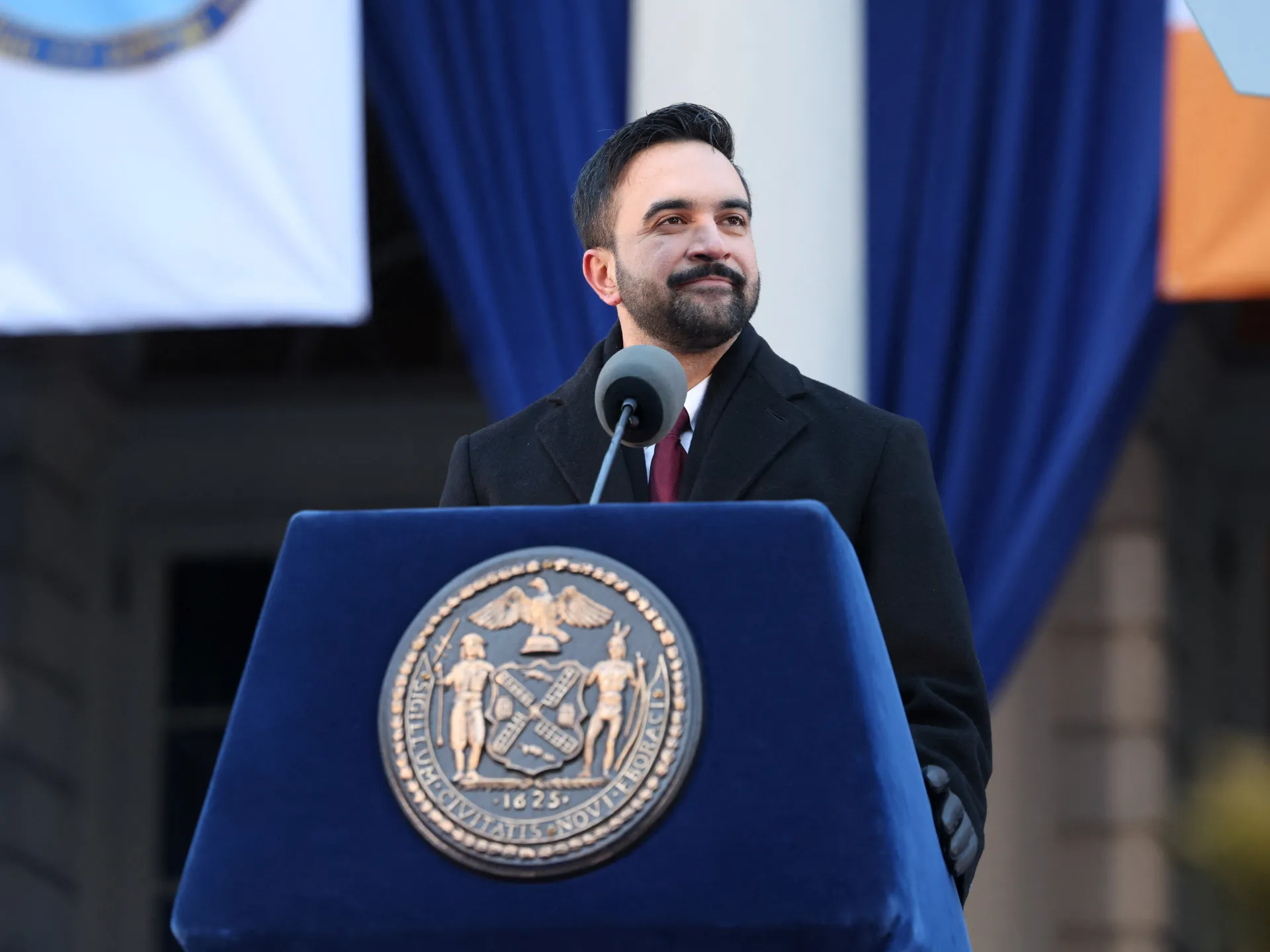
Palestinian rights advocates are praising New York City Mayor Zohran Mamdani for revoking pro-Israel municipal decrees within hours of his inauguration, a move that was promptly condemned by the Israeli government.
On Thursday, his first day in office, Mamdani wiped out all the executive orders his predecessor, Eric Adams, implemented after September 26, 2024, the day Adams was charged with bribery.
list of 3 itemsend of list
One of the orders restricted boycotts of Israel and prohibited mayoral appointees from issuing contracts “that discriminate against the State of Israel, Israeli citizens, or those associated” with the US ally.
It was signed by Adams less than a month ago and was seen by critics as an attempt to create controversy for the incoming Mamdani administration.
Another now-nixed decree adopted a controversial definition of anti-Semitism from the International Holocaust Remembrance Alliance (IHRA), which advocates say can be used to censor and penalise speech critical of Israel.
Nasreen Issa, a member of the Palestine Youth Movement – NYC, said Israel and its supporters have long pushed for the “criminalisation of dissent”.
“So, Mamdani’s rejection of this is a positive step towards protecting the rights of New Yorkers and the dignity of Palestinians,” Issa told Al Jazeera.
Afaf Nasher, the head of the New York chapter of the Council on American Islamic Relations (CAIR), also applauded Mamdani for revoking an “unconstitutional order restricting the ability of New Yorkers to criticize the Israeli government’s racism or boycott Israel’s human rights abuses”.
“This unconstitutional, Israel First attack on free speech should have never been issued in the first place,” Nasher said in a statement.
Nasher further slammed the IHRA definition, saying that the “overly broad” guidelines frame disagreement with Zionism as anti-Semitic.
“The order would have also unconstitutionally limited boycotts against only Israel,” Nasher said.
Palestinian rights supporters have long rejected the IHRA definition, which heavily focuses on Israel. The definition provides 11 examples of anti-Semitism, six of which involve Israel.
They include “claiming that the existence of a State of Israel is a racist endeavor” and “applying double standards” to Israel.
“I think it’s wonderful that Mayor Mamdani took measures on day one to reinforce our rights to free speech, which included our right to criticize and oppose Israeli apartheid and genocide,” said YL Al-Sheikh, a Palestinian-American writer active in the Democratic Socialists of America.
“The IHRA being implemented as government policy isn’t about combatting antisemitism but about stifling dissent and this should be something all Americans oppose.”
The Israeli Ministry of Foreign Affairs decried Mamdani’s moves on Friday, saying that the newly inaugurated mayor is showing “his true face”.
“This isn’t leadership. It’s antisemitic gasoline on an open fire,” it said in a post on the social media platform X.
Separately, Amichai Chikli, Israel’s minister of diaspora affairs, deployed Islamophobic language to criticise Mamdani’s decision.
He called the mayor a “Hamas sympathiser” and drew a connection between him and the Muslim mayor of London, Sadiq Khan.
“When a Muslim Brotherhood Islamist whose slogan is ‘Globalize the Intifada’ takes control of New York City or London, these are exactly the decisions you get,” Chikli wrote on X.
Neither Mamdani nor Khan has any known connections to the Muslim Brotherhood.
Issa said the intense Israeli response is not about the mayor’s policy moves but is rather aimed at controlling the narrative.
“Israel’s main approach – at the highest level, at the level of the Foreign Ministry – has been to push for the criminalisation of protected speech through these warped definitions of anti-Semitism like the IHRA,” she said.
“Since they’re losing in the court of public opinion, the response now is to push for the criminalisation of dissent.”
Issa also called Chikli’s attack on Mamdani “blatant Islamophobia, racism and disinformation”.
“They’re trying to promote these accusations that have no basis in reality whatsoever,” Issa told Al Jazeera.
“But from their perspective, any support for Palestinians, any opposition to Israel’s genocide or the conduct of its military – whether in Gaza or the West Bank, over the last two years, over the last decades – none of that is acceptable.”
Al-Sheikh said it was “absurd” that Israel is trying to impose its preferences on local policies in New York.
“Even Americans who aren’t Palestinian or pro Palestine can see this is strange and inhibits our rights,” Al-Sheikh said.
“It’s also weirdly counterproductive on Israel’s part since it only makes Mamdani look better. A single policy paper that said you can’t criticise a country was repealed and now they claim it is the end of the world, but ‘you should be allowed to criticise any country you want’ is the universal American position.”
Israel was not alone, however, in denouncing Mamdani’s actions. The administration of President Donald Trump also issued a warning to the Mamdani administration.
Harmeet Dhillon, assistant attorney general for the Justice Department’s Civil Rights Division, said her office would be vigilant “to ANY AND ALL violations of religious liberties” in New York.
“We will investigate, sue, and indict as needed,” Dhillon wrote in a social media post.
Palestine solidarity activists often stress that criticising Israeli abuses should not be conflated with attacking Judaism.
Mamdani has been a vocal critic of Israeli policies against Palestinians, prompting accusations of anti-Semitism from Israel’s supporters.
But he has repeatedly promised to protect Jewish residents. During his inauguration ceremony, he pledged to continue the Mayor’s Office to Combat Anti-Semitism (MOCA), an Adams-era development, and he told reporters his administration would “celebrate and cherish” Jewish New Yorkers.
The new mayor, 34, took the oath of office on a copy of the Quran at the turn of the new year, becoming the first Muslim mayor of America’s largest city.
The Democratic socialist, who formerly served as a state legislator, had minimal name recognition when he first announced his candidacy late in 2024.
But he steadily grew his base of support with a message focused on affordability and housing.
Last June, he defeated former Governor Andrew Cuomo to win the Democratic nomination, in one of the most stunning political upsets in recent US history.
Mamdani then defeated Cuomo again in the general elections in November, after the ex-governor relaunched his campaign as an independent with Trump’s support.
Adams was elected as a Democrat in 2021, but his administration faced numerous scandals during its four-year term, including accusations that Adams had entered into a quid pro quo with representatives from the Turkish government.
Earlier in 2024, Trump’s Justice Department dropped the federal bribery charges he faced. Adams had launched a re-election campaign as an independent, but he ultimately suspended his bid and backed Cuomo before the elections.
While Mamdani’s platform was largely focused on local issues, some of his supporters have argued that his vocal support for Palestinian rights helped propel his campaign amid the growing anger at Israel’s genocidal war on Gaza.
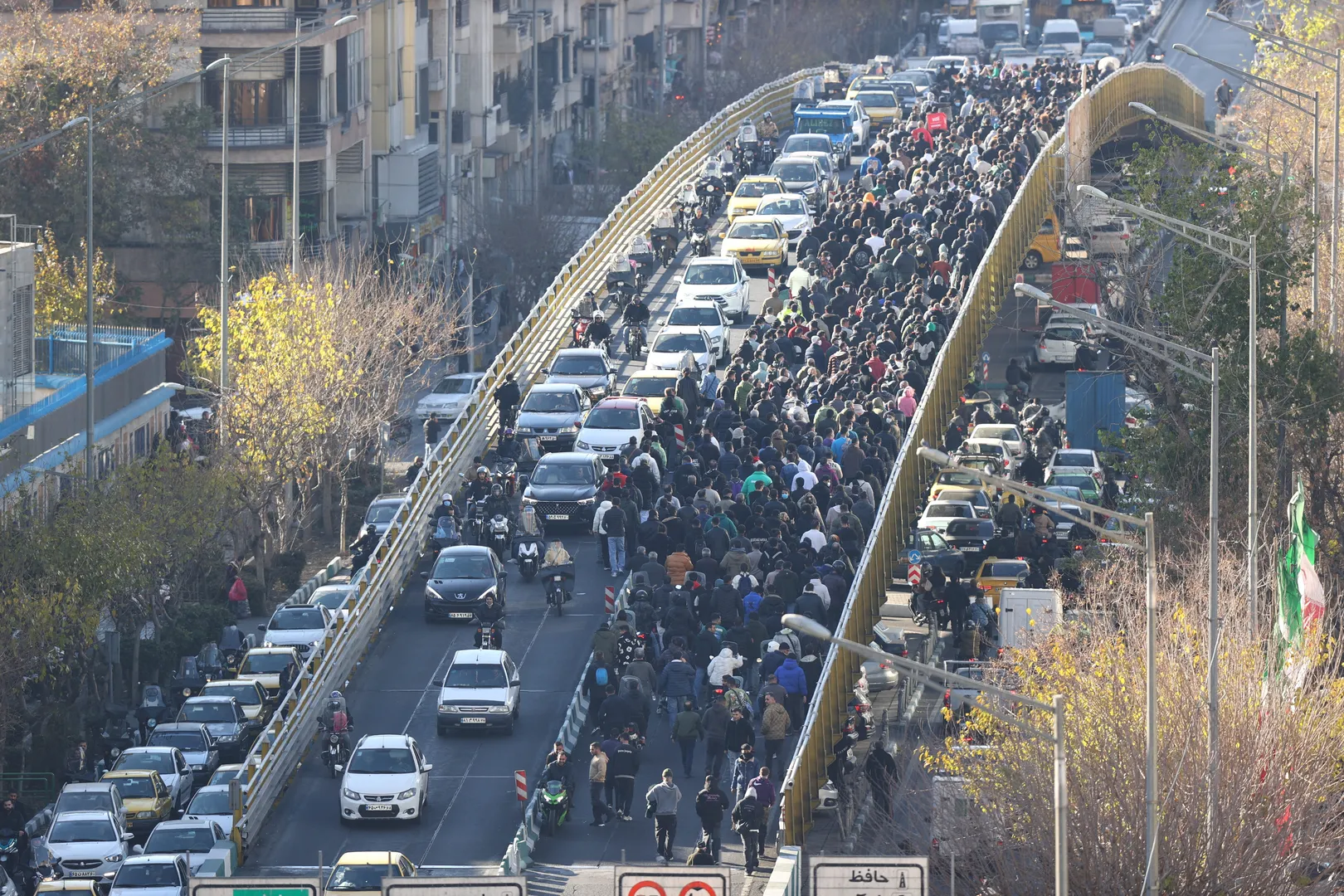
Protests are intensifying in Iran as a deepening economic crisis fuels public anger over soaring prices and falling living standards. Here’s a breakdown of what’s driving the unrest and how authorities are responding.
Published On 2 Jan 20262 Jan 2026
Share
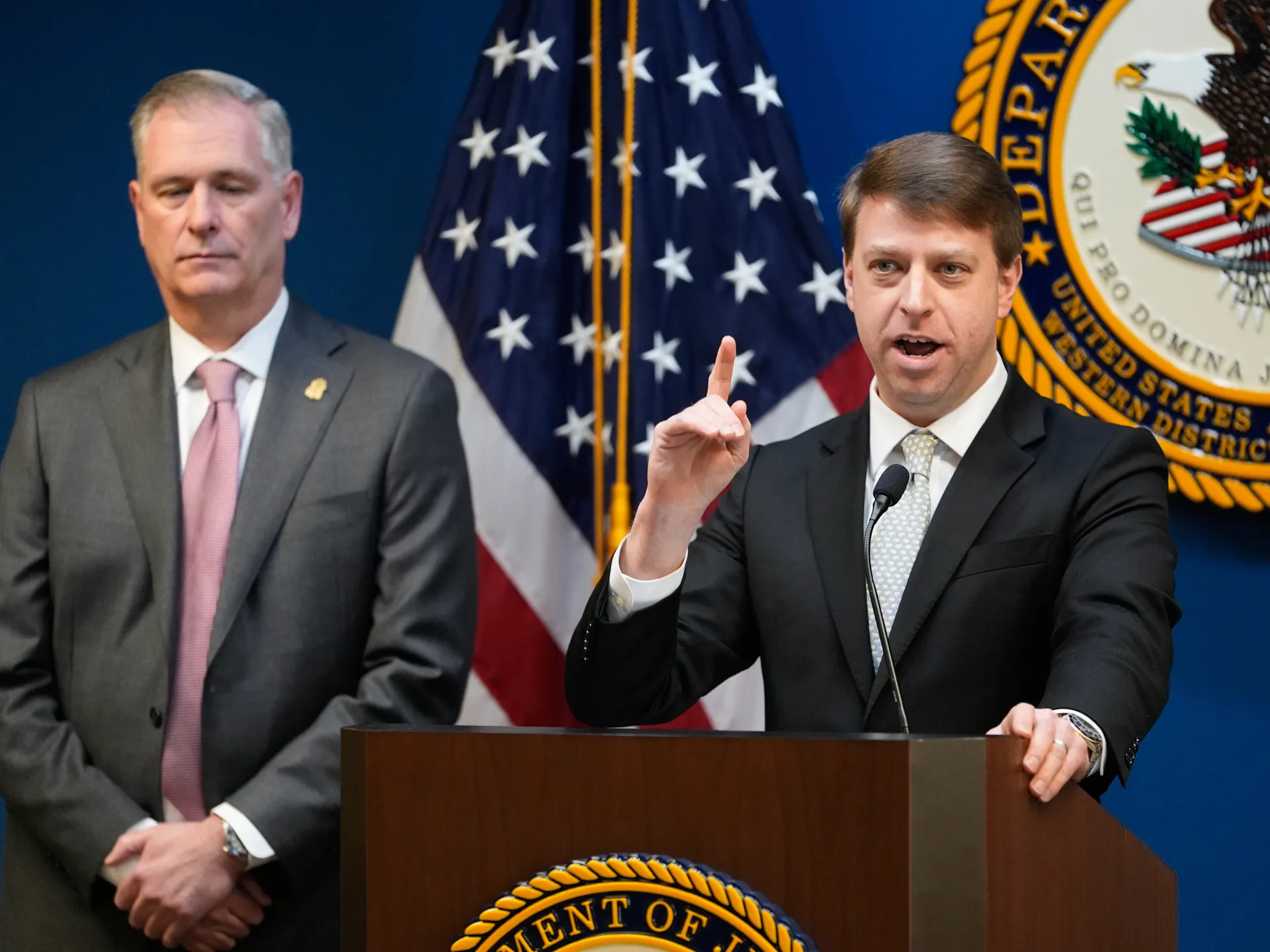
Federal authorities in the United States have accused an 18-year-old of plotting to carry out a “potential terrorist attack” on New Year’s Eve in the suburban town of Mint Hill, North Carolina, outside Charlotte.
On Friday, officials from the US Attorney’s Office and the Federal Bureau of Investigation (FBI) identified the suspect as Mint Hill resident Christian Sturdivant, a US citizen. The targets of Sturdivant’s alleged plans were a grocery store and a fast-food restaurant in Mint Hill.
list of 3 itemsend of list
“ Countless lives were saved here,” US Attorney Russ Ferguson said at a news conference.
“On New Year’s Eve, everyone is at the grocery store. We’re all buying the things we need to celebrate. And we could have had a significant, significant loss of life, a significant injury here.”
Ferguson explained that Sturdivant was arrested on New Year’s Eve, the day of his planned attack. The 18-year-old has been charged with “attempting to provide material support to a foreign terrorist organisation”, and he made his first court appearance on Friday.
Sturdivant faces a maximum sentence of 20 years in prison, according to Ferguson.
But during his news conference, Ferguson, an appointee of President Donald Trump, appeared to voice frustration with the court system for failing to approve an earlier effort to detain Sturdivant on mental health grounds.
“ I think it is notable that, as part of their efforts, the FBI took Mr Sturdivant to a state magistrate judge to try to have him involuntarily committed,” Ferguson said.
“And that was because he had threatened not only other people’s lives, but in the process said that he planned to die by a policeman shooting him. So he had threatened other people’s lives and self-harm, but the state magistrate judge denied involuntary commitment.”
Authorities later specified that the hearing with the magistrate judge took place on Monday, days before his arrest. Sturdivant, they said, turned 18 last month.
During Friday’s news conference, officials said this week’s arrest was part of a multiyear effort to investigate Sturdivant, whom they described as a “prolific social media user”.
The suspect had previously been an employee at a local Burger King in North Carolina.
James Barnacle, the special agent in charge of the FBI’s North Carolina field office, said the suspect first came to the bureau’s attention in 2022, after he tried to contact the armed group ISIL (ISIS) through social media.
The US considers ISIL a foreign terrorist organisation and has conducted numerous military operations in the Middle East — and one recently in Nigeria — on the premise of combating the group.
Barnacle alleged that Sturdivant received instructions to knock on doors and attack people with hammers, but his initial attempts were thwarted by his family. He was about 14 years old at the time.
“ No charges were filed at that time,” Barnacle said. “He underwent psychological care, of which I don’t know the details.”
Then, in December, Barnacle said the FBI discovered that Sturdivant had returned to social media and posted threatening messages.
He had also allegedly made contact with two undercover officers: one from the New York Police Department and the second a covert agent with the FBI.
“Within just a few days, Sturdivant direct-messaged the online covert employee with a picture of two hammers and a knife,” Barnacle said. “The message was significant since in recent years an ISIS propaganda magazine promoted the use of knives to conduct terrorist attacks in Western countries.”
Barnacle added that later messages contained a loyalty oath to ISIL and a request for help obtaining firearms.
“The JTTF [Joint Terrorism Task Force] collected evidence showing he turned his back on his country and his fellow citizens by pledging allegiance to ISIS with the intent of becoming a martyr,” Barnacle said of the 18-year-old.
“We allege Sturdivant was willing to sacrifice himself by committing a terrorist attack, using knives and a hammer to support the murder, torture and extreme violence that ISIS represents.”
An FBI search of his home reportedly recovered hammers and knives hidden under Sturdivant’s bed, as well as notes allegedly detailing his attack plans.
“I could tell you the FBI had 24/7 surveillance on this subject, all hours of night, Christmas Day, Christmas Eve,” Barnacle said. He described the suspect’s targets as “Jews, Christians and LGBTQ individuals”.
FBI Director Kash Patel quickly promoted Sturdivant’s arrest on social media, praising his bureau and its partners for “undoubtedly saving lives”.
The arrest comes one year after a pickup truck driver intentionally rammed his vehicle down Bourbon Street, New Orleans’s famed entertainment district, in a deadly New Year’s Day attack.
Fourteen people were killed, and authorities recovered an ISIL flag in the truck.
But critics have questioned the use of undercover agents to make “terrorism-related” arrests with some defence lawyers arguing that agents have encouraged suspects to make incriminating statements or take actions they otherwise would not have.
Lawyers for the 18-year-old have yet to publicly comment.
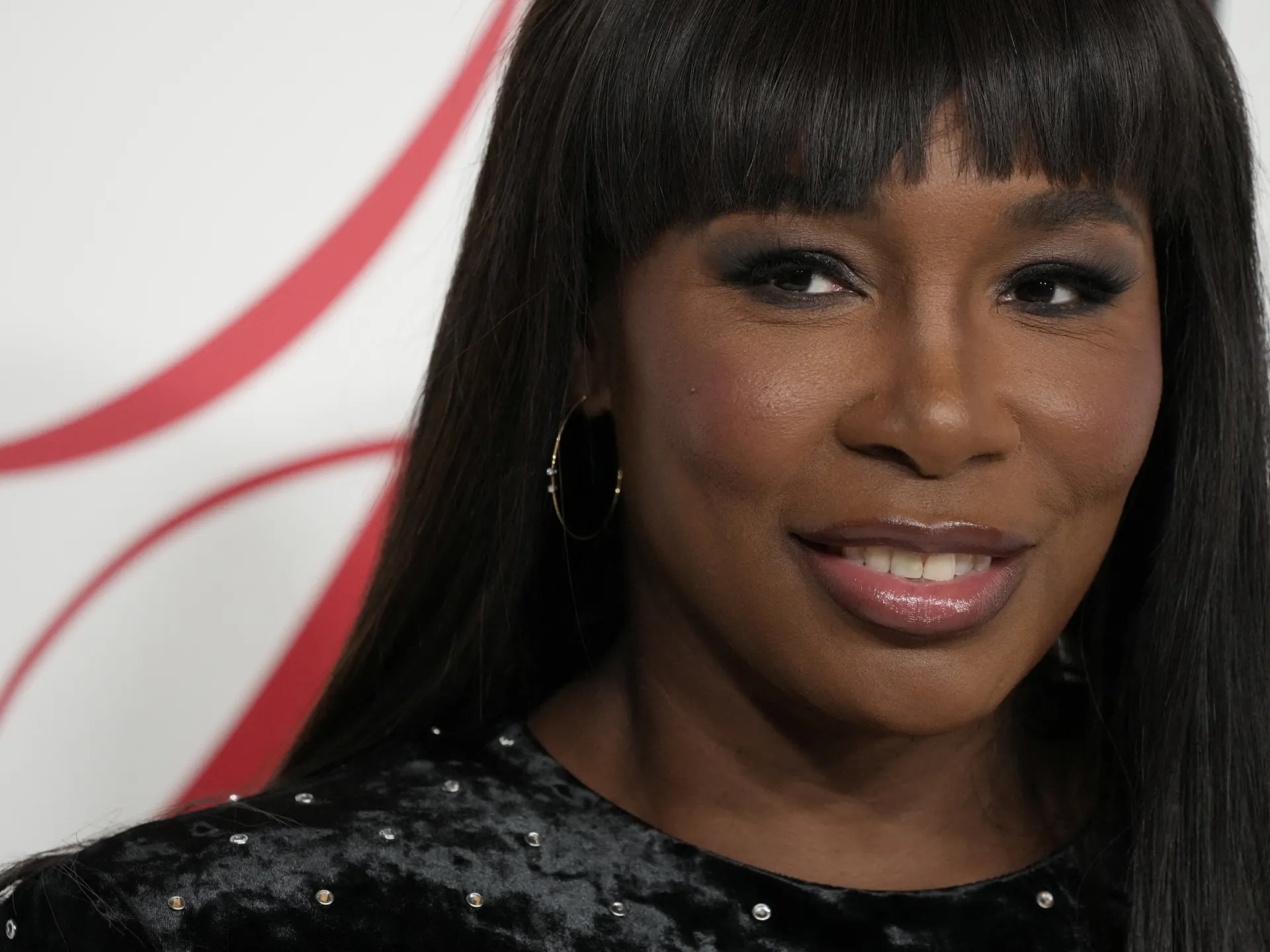
United States tennis legend Venus Williams returns to the Australian Open for the first time since 2021.
Published On 2 Jan 20262 Jan 2026
Share
Seven-time major singles champion Venus Williams has been handed a wildcard to the Australian Open aged 45, becoming the oldest woman to play at the season-opening tennis Grand Slam.
The American, who has played only a limited number of singles matches in recent years, will compete in the main draw at Melbourne Park for the first time since 2021.
list of 4 itemsend of list
“I’m excited to be back in Australia and looking forward to competing during the Australian summer,” Williams said on Friday.
“I’ve had so many incredible memories there and I’m grateful for the opportunity to return to a place that has meant so much to my career.”
Williams is a five-time Wimbledon champion and also won two US Opens.
She was an Australian Open singles finalist in 2003 and 2017.
She will become the oldest woman to play at the Australian Open since Japan’s Kimiko Date, who was 44 when she lost in the first round in 2015.
Williams, a four-time Australian Open doubles champion, is set to begin her preparations for the January 18-February 1 tournament at the Auckland Classic next week, having returned to the circuit at the US Open last year after a 16-month break.
She will then head to the Hobart International immediately before Melbourne.
Two-time Grand Slam champion and fellow American Coco Gauff said it was “incredible” to see Williams still turning up for tournaments.
“She’s a legend of the sport, so it will be cool to see her back in action,” she said.
“It’s incredible the longevity of her career. She’s one of the people I looked up to, so looking forward to seeing her back on court.”

New York, United States – Sprawling crowds, a seven-block-long party and chants to “tax the rich” in the world’s wealthiest city marked Zohran Mamdani’s public inauguration as New York City mayor on Thursday, as the metropolis welcomed a new year with a new leadership.
Political inaugurations are usually more stolid affairs. But, as he had in his campaign for the mayoralty, Mamdani flipped the script with his swearing-in events.
list of 4 itemsend of list
In act one, just after midnight, as the ball dropped in Times Square to ring in 2026, Mamdani took the oath of office in a small ceremony on the steps of the landmark New York City Hall subway station.
New York State Attorney General Letitia James administered the oath as Mamdani stood beside his wife, Rama Duwaji, on a staircase inside the transit hub, which has not been used for passenger service since 1945. He used a historic Quran borrowed from the New York Public Library for his swearing in, and a second one that belonged to his grandfather.
The public celebration arrived later, on New Year’s Day, when Mamdani repeated the oath on the steps of City Hall before a crowd that spilled across the surrounding plaza and into the streets. Despite the blistering cold, tens of thousands of supporters streamed into Lower Manhattan to watch the new mayor – along with the city’s comptroller, Mark Levine, and Public Advocate Jumaane Williams – formally assume office.
National political heavyweights, including Representative Alexandria Ocasio-Cortez and Senator Bernie Sanders of Vermont, flanked the city’s new leadership and delivered speeches outlining the progressive movement’s governing ambitions in New York and the national reverberations the race has already sent to lawmakers across the country.
“The most important lesson that can be learned today is that when working people stand, when they don’t let them [the ultra-wealthy] divide us up, there is nothing that we cannot accomplish,” Sanders said before swearing in Mamdani.
While guests and the press gathered inside the City Hall grounds, the city staged a seven-block-long public block party – a new twist on the traditionally ticketed inauguration format. In addition to a closed event capped at a few thousand attendees, anyone willing to RSVP and endure the frigid air and blustering winds after a night of snowfall could try their luck at getting in.
And many did, bundled New Yorkers shuffled through security checkpoints, hoping to glimpse the swearing-in of a 34-year-old democratic socialist now charged with running the largest city in the United States, streaming on large monitors stationed throughout the surrounding area outside City Hall.
Some supporters told Al Jazeera they waited in line for hours, and many never made it through the checkpoints in time. While crowds cheered and horns blasted in solidarity from a distance, a handful of protesters lingered behind police barricades.
The block party in and of itself was symbolic in its effort to reach more New Yorkers who have normally been left out of the political process, Democratic strategist Nomiki Konst told Al Jazeera.
“It was a way of opening up something that hasn’t been accessible for anybody, you know, that wasn’t part of the inner circle of New York politics and media,” Konst told Al Jazeera.
“It was an opportunity to give back to the people who helped him get into office.”
![New Yorkers gathered in a first of its kind inauguration open to the general public [Andy Hirschfeld]](https://i0.wp.com/occasionaldigest.com/wp-content/uploads/2026/01/IMG_6332-1767314647.jpg?w=640&ssl=1)
Mamdani, Williams and Levine spoke about unity for all New Yorkers, delivering remarks in English, Spanish, Hebrew and Greek, and appearing alongside faith leaders of several different faiths, including Islam, Christianity and Judaism.
“We have three swearings-in. One by a leader using a Quran, one by a leader using a Christian Bible, and one using a Hebrew Bible. I am proud to live in a city where this is possible,” Levine said after taking the oath of office.
Mamdani echoed that sentiment.
“We will draw this city closer together. We will replace the frigidity of rugged individualism with the warmth of collectivism. If our campaign demonstrated that the people of New York yearn for solidarity, then let this government foster it,” Mamdani said in his address.
“We will deliver nothing less as we work each day to make this city belong to more of its people than it did the day before.”
But the core message, voiced repeatedly by Mamdani, Levine, Williams, Sanders and Ocasio-Cortez, was the same one that defined the campaign: that the ultra wealthy should pay higher taxes.
“Demanding that the wealthy and large corporations start paying their fair share of taxes is not radical. It is exactly the right thing to do,” Sanders said, as supporters chanted, “Tax the rich.”
One of Mamdani’s core promises was to raise the corporate tax rate in New York City from 7.25 percent to 11.5 percent, equivalent to that of neighbouring New Jersey, as well as a 2 percent increase in taxes on those who make more than $1m a year. Any tax plan would need the approval of the governor to move forward.
“This movement came out of eight-and-a-half million somewheres – taxi cab depots and Amazon warehouses, DSA [Democratic Socialists of America] meetings and curbside domino games. The powers that be had looked away from these places for quite some time – if they’d known about them at all – so they dismissed them as nowhere. But in our city, where every corner of these five boroughs holds power, there is no nowhere and there is no no one,” Mamdani said.
Housing policy has been central to that affordability message for Mamdani. One of his signature campaign promises was to freeze the rent on the city’s rental stabilised apartments, which represent about half of the city’s rental housing stock.
“Those in rent-stabilised homes will no longer dread the latest rent hike – because we will freeze the rent,” Mamdani said in his remarks.
Only hours later, Mamdani introduced a slate of executive orders all aimed at housing.
“On the first day of this new administration, on the day when so many rent payments are due, we will not wait to deliver action,” Mamdani said at a news conference.
He announced three executive orders inside a rent-stabilised building in Brooklyn, including the creation of two new city task forces on housing policy: one to take inventory of city-owned land that could be used for housing, and another to identify ways to spur development.
“The housing crisis is at the centre of our affordability crisis. There are a number of things we are going to be focused on: protecting tenants, going after bad landlords, and building more housing. A huge part of how we get out of our housing crisis is to build more affordable housing across the city,” Leila Bozorg, the Deputy Mayor for Housing and Planning, told Al Jazeera on the steps of City Hall hours before announcing the new policies.
“These are policy decisions we can address if we have the political will and if we put the resources behind it. And that is what he [Mamdani] is committed to doing.”
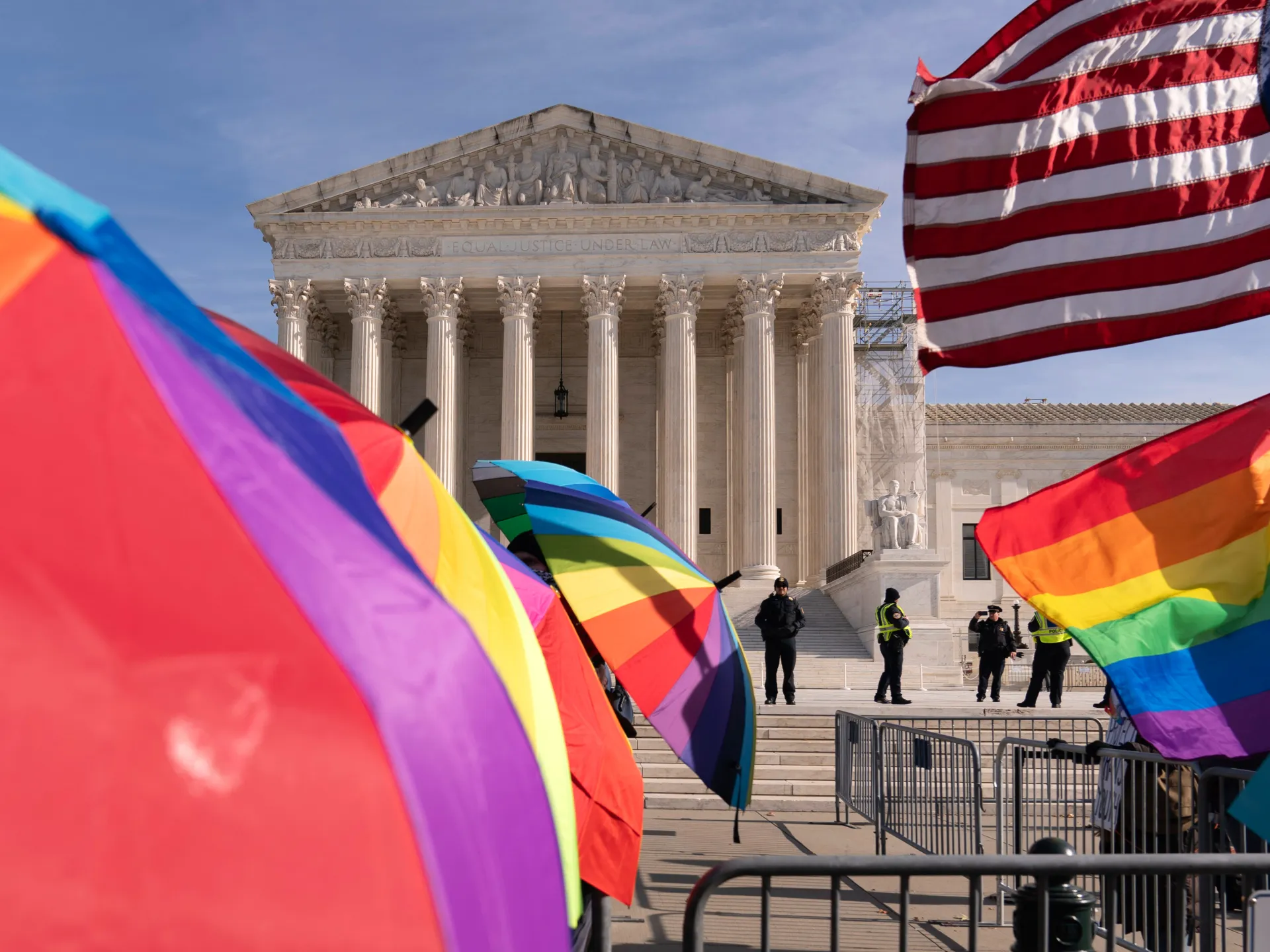
The complaint targets a policy that would nix coverage under federal health insurance for gender-affirming healthcare.
Published On 1 Jan 20261 Jan 2026
Share
A group of federal government employees in the United States has filed a class action complaint against President Donald Trump’s administration over a new policy that will eliminate coverage for gender-affirming care in federal health insurance programmes.
The policy took effect with the start of the new year, and on Thursday, the Human Rights Campaign Foundation issued the complaint, acting on behalf of the federal employees.
list of 3 itemsend of list
The US Office of Personnel Management (OPM) was named as a defendant.
In an August letter, the OPM stated that, as of 2026, “chemical and surgical modification of an individual’s sex traits through medical interventions” would no longer be covered under health insurance programmes for federal employees and US postal workers.
OPM officials could not be reached for immediate comment.
The complaint argues that the policy is discriminatory on the basis of sex. It asks that the policy be rescinded and seeks payment for economic damages and other relief.
If the issue is not resolved with the OPM, the foundation said that plaintiffs will pursue class claims before the Equal Employment Opportunity Commission and potentially continue with a class action lawsuit in federal court.
Separately, a group of Democratic state attorneys general last month sued the Trump administration to block proposed rules that would cut children’s access to gender-affirming care, the latest court battle over Trump’s efforts to eliminate legal protections for transgender people.
US Secretary of Health and Human Services Robert F Kennedy Jr has proposed rules that would bar hospitals that provide gender-affirming care to children from Medicaid and Medicare and prohibit the Children’s Health Insurance Program from paying for it.
Second release of prisoners related to 2024 election protests seen as possible conciliatory move from Maduro.

Published On 1 Jan 20261 Jan 2026
Share
The government of Venezuelan leader Nicolas Maduro has released dozens of prisoners held for protesting his disputed victory in the country’s 2024 election.
The release of at least 87 prisoners comes as the administration of United States President Donald Trump has continued its pressure campaign against Caracas.
list of 3 itemsend of list
It was the second release within a week, in what some observers have viewed as an effort by Maduro to strike a more conciliatory tone, even as he has accused Trump of seeking to topple his government and seize Venezuela’s vast oil reserves.
Two rights groups, the Committee for the Freedom of Political Prisoners and the Committee of Mothers in Defense of the Truth, confirmed the release on Thursday.
“On the morning of January 1, mothers and relatives reported new releases of political prisoners from Tocoron prison in Aragua state” in northern Venezuela, the Committee for the Freedom of Political Prisoners wrote on social media.
Venezuela’s government had previously announced the release of 99 prisoners on December 25, calling it “a concrete expression of the State’s commitment to peace, dialogue and justice”.
However, Foro Penal, a leading Venezuelan rights group, said afterwards it was only able to verify the release of 61 prisoners at the time.
Maduro claimed victory in the July 2024 vote, maintaining he had secured a third six-year term. The opposition has alleged widespread fraud, publishing results later verified by independent experts showing that Edmond Gonzalez had won by a landslide.
Gonzalez ran in place of opposition leader Maria Corina Machado after she was banned from standing in the election. Machado recently emerged in Oslo, Norway, after spending months in hiding.
The disputed vote prompted widespread protests across the country, resulting in at least 28 deaths and thousands of arrests.
Official records show that at least 2,000 people have since been released, while more than 700 people are still believed to be held for political reasons.
The disputed election has, in part, undergirded the Trump administration’s pressure against Maduro, whom they have accused of running a drug trafficking operation that aims to destabilise the US.
The Pentagon has surged military assets off the coast of Venezuela since August, with Trump earlier this week revealing the first attack on Venezuelan soil targeting a dock allegedly used to load drug boats earlier this week.
The US has also blockaded sanctioned oil tankers entering and exiting Venezuela, while simultaneously carrying out strikes on alleged drug boats in the Caribbean and eastern Pacific, in what rights groups say amount to extrajudicial killings.
More than 100 people have been killed in the strikes so far.
From exile, Machado has vocally supported the US pressure campaign. She has been more circumspect on strikes on Venezuelan territory, while maintaining that Venezuela has been “invaded” by “terrorist groups” and “drug cartels”.
Venezuela experts have warned that many opposition groups in the country oppose US military action.

US recently approved $11bn arms package for Taiwan, which condemned ‘provocative’ Chinese military drills.
Published On 1 Jan 20261 Jan 2026
Share
The United States has called on China to exercise “restraint” and avoid actions that raise tensions following a series of war games around Taiwan simulating a blockade of the island.
The US Department of State said in a statement on Thursday that China’s bellicose language and military drills, which prompted sharp condemnation from Taipei, were a source of unnecessary strain.
list of 3 itemsend of list
“China’s military activities and rhetoric toward Taiwan and others in the region increase tensions unnecessarily. We urge Beijing to exercise restraint, cease its military pressure against Taiwan, and instead engage in meaningful dialogue,” said State Department spokesman Tommy Pigott.
“The United States supports peace and stability across the Taiwan Strait and opposes unilateral changes to the status quo, including by force or coercion,” he added.
China fired missiles and deployed jets and naval vessels earlier this week in a simulation of military actions to encircle Taiwan, which Beijing claims as an integral part of its territory and has vowed to bring under its control.
Chinese military drills have become a frequent occurrence, causing few disruptions to life on the self-governed island, whose status the US has not officially weighed in on.
But Beijing’s assertive stance has prompted angry condemnations from Taiwanese officials, and crackdowns on formerly autonomous areas such as Hong Kong following integration with China have bolstered scepticism about the prospects of possible reunification with Beijing.
“As president, my stance has always been clear: to resolutely defend national sovereignty and strengthen national defence,” Taiwanese President William Lai Ching-te said on Thursday.
Lai has called for a $40bn increase in Taiwan’s military spending, but the proposal is stalled in the country’s legislature, where the opposition party currently holds a majority.
“The coming year, 2026, will be a crucial one for Taiwan,” the president said, adding that Taiwan must “make plans for the worst, but hope for the best”.
While US lawmakers often make strong statements of support for Taiwan, US policy towards the island has been marked by ambiguity for decades and does not include an assurance of military support in the event of an invasion by China.
The US recently approved an $11bn arms package for Taiwan, but President Donald Trump said earlier this week that he did not believe China had plans to launch an invasion of Taiwan in the near future.
“I have a great relationship with [Chinese] President Xi [Jinping]. And he hasn’t told me anything about it. I certainly have seen it,” Trump told reporters on Monday.
“They’ve been doing naval exercises for 20 years in that area. Now people take it a little bit differently,” he added.
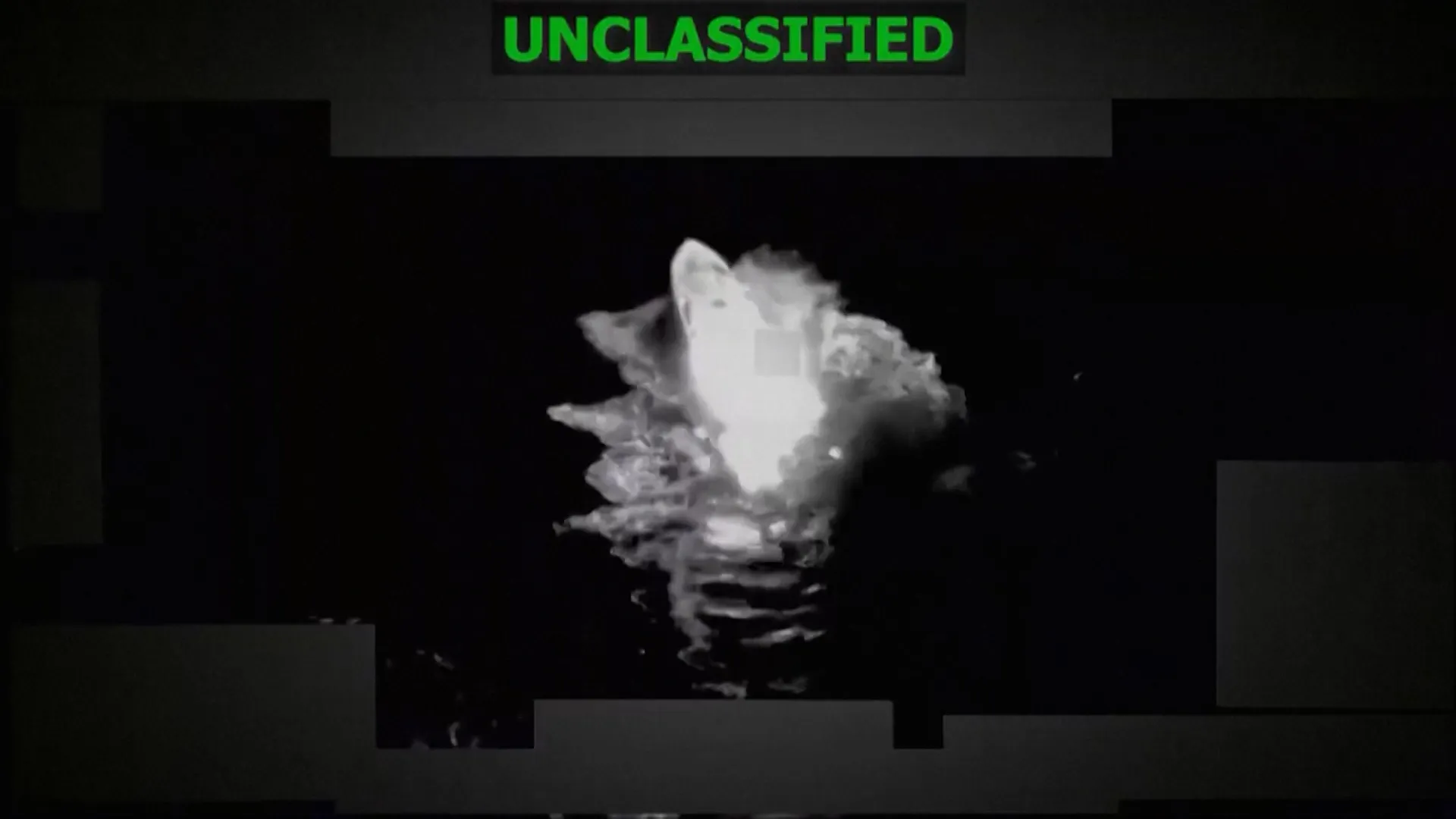
The US says a search is underway for survivors after it bombed what it said was a suspected drug trafficking convoy. The attack is believed to have taken place off the coast of Venezuela.
Published On 1 Jan 20261 Jan 2026
Share
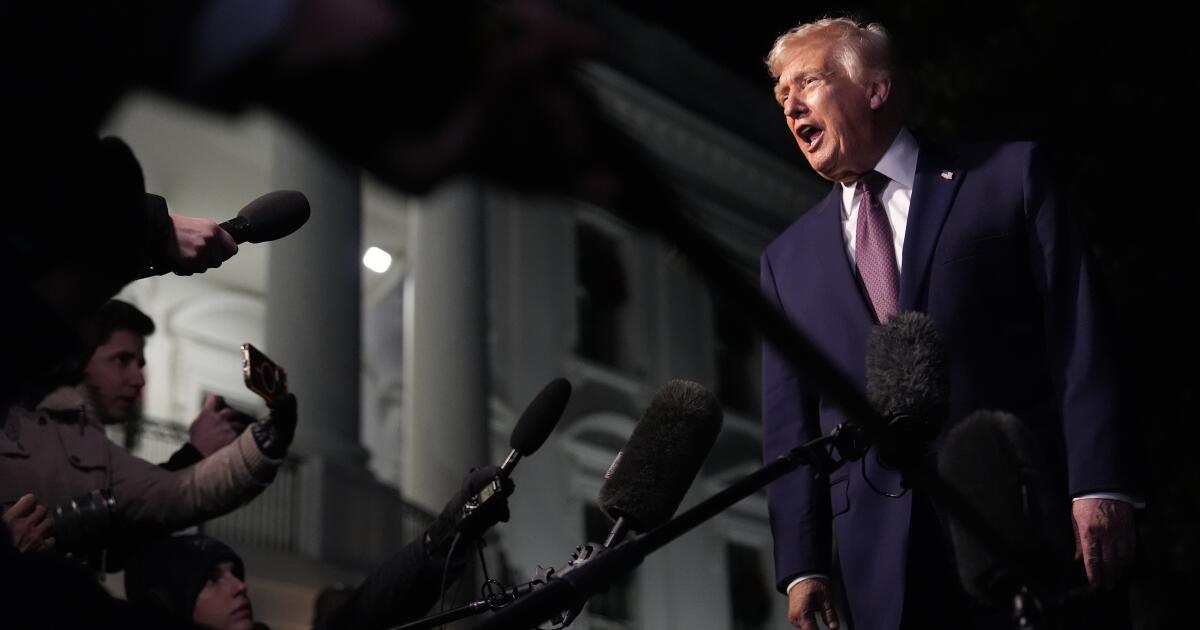
NEW YORK — By nearly any measure, 2025 has been a rough year for anyone concerned about freedom of the press.
It’s likely to be the deadliest year on record for journalists and media workers. The number of assaults on reporters in the U.S. nearly equals the last three years combined. The president of the United States berates many who ask him questions, calling one woman “piggy.” And the ranks of those doing the job continues to thin.
It’s hard to think of a darker time for journalists. So say many, including Timothy Richardson, a former Washington Post reporter and now program director for journalism and disinformation at PEN America. “It’s safe to say this assault on the press over the past year has probably been the most aggressive that we’ve seen in modern times.”
Worldwide, the 126 media industry people killed in 2025 by early December matched the number of deaths in all of 2024, according to the Committee to Protect Journalists, and last year was a record-setter. Israel’s bombing of Gaza accounted for 85 of those deaths, 82 of them Palestinians.
“It’s extremely concerning,” said Jodie Ginsberg, chief executive of the Committee to Protect Journalists. “Unfortunately, it’s not just, of course, about the sheer numbers of journalists and media workers killed, it’s also about the failure to obtain justice or get accountability for those killings.
“What we know from decades of doing this work is that impunity breeds impunity,” she said. “So a failure to tackle journalists’ killings creates an environment where those killings continue.”
The committee estimates there are at least 323 journalists imprisoned worldwide.
None of those killed this year were from the United States. But the work on American soil has still been dangerous. There have been 170 reports of assaults on journalists in the United States this year, 160 of them at the hands of law enforcement, according to the U.S. Press Freedom Tracker. Many of those reports came from coverage of immigration enforcement efforts.
It’s impossible to look past the influence of Trump, who frequently seethes with anger at the press while simultaneously interacting with journalists more than any president in memory — frequently answering their cell phone calls.
“Trump has always attacked the press,” Richardson said. “But during the second term, he’s turned that into government action to restrict and punish and intimidate journalists.”
The Associated Press learned that quickly, when Trump limited the outlet’s access to cover him after it refused to follow his lead to rename the Gulf of Mexico. It launched a court fight that has remained unresolved. Trump has also extracted settlements from ABC and CBS News in lawsuits over stories that displeased him, and is suing the New York Times and Wall Street Journal.
Long angry about a perceived bias against conservatives on PBS and NPR newscasts, Trump and his allies in Congress successfully cut funding for public broadcasting as a whole. The president has also moved to shut down government-run organizations that beam news to all parts of the world.
“The U.S. is a major investor in media development, in independent media outlets in countries that have little or no independent media, or as a source of information for people in countries where there is no free media,” Ginsberg said. “The evisceration of Radio Free Europe, Radio Free Asia and the Voice of America is another blow to press freedom globally.”
Others in his administration take Trump’s lead, like when his press office chose the day after Thanksgiving to launch a web portal to complain about outlets or journalists being unfair.
“It’s part of this overall strategy that we’re seeing from certain governments, notably the United States, to paint all journalists who don’t simply [repeat] the narrative put out by the government as fake news, as dubious, as dodgy, as criminal,” Ginsberg said.
Trump’s defense secretary, Pete Hegseth, has portrayed journalists as dark figures skulking around Pentagon halls to uncover classified secrets as his rationale for enacting restrictive rules for coverage.
That’s led to the most notable example of journalists fighting back: most mainstream news outlets gave up their credentials to work in the Pentagon rather than agree to these rules, and are still breaking stories while working off-site. The New York Times has sued to overturn the rules. The newspaper also publicly defends itself when attacked by the president, such as when he complained about its coverage of his health.
Despite the more organized effort against the press, the public has taken little notice. The Pew Research Center said that 36% of Americans reported earlier this year hearing a lot about the Trump administration’s relationship with the press, compared to 72% who said that at the same point in his first term.
Pew’s polling shows that trust in news organizations has declined over the last decade, and journalists are likely to elicit little sympathy when their work becomes harder.
“Really, the harm falls on the public with so much of this because the public depends on this independent reporting to understand and scrutinize the decisions that are being made by the most powerful office in the world,” Richardson said.
The news industry as a whole is more than two decades in to a retrenchment caused largely by a collapse in the advertising market, and every year brings more reports of journalists laid off as a result. One of the year’s most sobering statistics came in a report by the organizations Muck Rack and Rebuild Local News: in 2002, there were 40 journalists for every 100,000 people in the United States; by this year, it was down to a little more than eight.
Asked if they could find reasons for optimism, both Ginsberg and Richardson pointed to the rise of some independent local news organizations, shoots of growth in a barren landscape, such as the Baltimore Banner, Charlottesville Tomorrow in Virginia and Outlier Media in Michigan.
As much as they are derided in Trump’s America, reporters at mainstream media outlets are still working hard and able to set the nation’s agenda with their reporting, noted influential Axios CEO Jim VandeHei in a recent column.
As he told the AP: “Over time, people will hopefully come to their senses and say, ‘Hey, the media like anything else is imperfect but, man, it’s a nice thing to have a free press.’”
Bauder writes for the Associated Press.
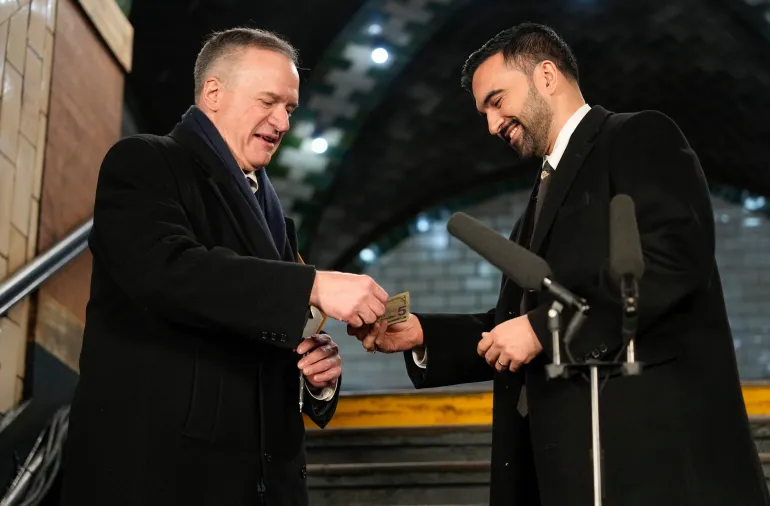
Zohran Mamdani has been sworn in as mayor of New York City, becoming the first Muslim and the youngest person in generations to take the oath of office in the United States’ biggest city.
Mamdani, a Democrat, was sworn in at a historic, decommissioned subway station in Manhattan just after midnight on Thursday, placing his hand on a Quran as he took his oath.
“This is truly the honour and the privilege of a lifetime,” Mamdani said.
The ceremony, administered by New York Attorney General Letitia James, a political ally, took place at the old City Hall station, one of the city’s original subway stops that is known for its stunning arched ceilings.
He will be sworn in again, in grander style, in a public ceremony at City Hall at 1pm (18:00GMT) by US Senator Bernie Sanders, one of the mayor’s political heroes. That will be followed by what the new administration is billing as a public block party on a stretch of Broadway known as the “Canyon of Heroes,” famous for its ticker-tape parades.
Mamdani now begins one of the most unrelenting jobs in US politics as one of the country’s most-watched politicians.
In addition to being the city’s first Muslim mayor, Mamdani is also its first of South Asian descent and the first to be born in Africa. At 34, Mamdani is also the city’s youngest mayor in generations.

In a campaign that helped make “affordability” a buzzword across the political spectrum, the democratic socialist promised to bring transformative change with policies intended to lower the cost of living in one of the world’s most expensive cities.
His platform included free child care, free buses, a rent freeze for about 1 million households, and a pilot of city-run grocery stores.
But he will also have to face other responsibilities: handling trash and snow and rats, while getting blamed for subway delays and potholes.
Mamdani will also have to deal with Republican President Donald Trump.
During the mayoral race, Trump threatened to withhold federal funding from the city if Mamdani won and mused about sending National Guard troops to the city and suggested that he should be deported.
He also called Mamdani a “100% Communist Lunatic” in a social media post.
But Trump surprised supporters and foes alike by inviting the Democrat to the White House for what ended up being a cordial meeting in November.
“I want him to do a great job and will help him do a great job,” Trump said in the meeting, and the US president even came to Mamdani’s rescue as the two addressed reporters.
When a journalist asked Mamdani if he continued to view Trump as a fascist, the president stepped in.
“That’s OK. You can just say it. That’s easier,” Trump told Mamdani. “It’s easier than explaining it. I don’t mind.”
Still, tensions between the two leaders remain.
Following the meeting, Mamdani said he still believed Trump is a fascist.
“That’s something that I’ve said in the past; I say it today,” Mamdani told NBC News.

Mamdani was born in Kampala, Uganda, the son of filmmaker Mira Nair and Mahmood Mamdani, an academic and author. His family moved to New York City when he was 7, with Mamdani growing up in a post-9/11 city where Muslims didn’t always feel welcome. He became an American citizen in 2018.
He worked on political campaigns for Democratic candidates in the city before he sought public office himself, winning a state Assembly seat in 2020 to represent a section of Queens.
Still, Mamdani had minimal name recognition when he launched his mayoral campaign late last year.
However, in the lead-up to the Democratic primary, he quickly rose in the polls with a message focused on lowering the cost of living.
Mamdani ultimately defeated former Governor Andrew Cuomo twice: once to clinch the Democratic nomination in June, and a second time in the November election.
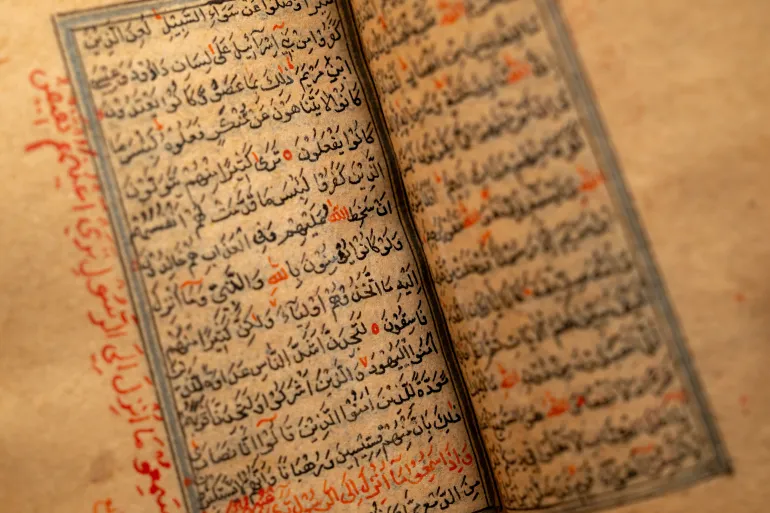
The incoming mayor will take his oath of office with two family editions of the Quran and a 19th century edition, symbolising New York City history, in the public ceremony on Friday.
Zohran Mamdani on Thursday became the first New York City mayor to be sworn in using a Quran.
The first Muslim and South Asian mayor of the United States’ biggest metropolis, Mamdani used his grandfather’s Quran and a 200-year-old copy on loan from the New York Public Library (NYPL) for the private swearing-in event held at a disused subway station under Times Square.
list of 4 itemsend of list
He then plans to use two copies of the Quran that belonged to his grandfather and grandmother for a daytime ceremony at New York City Hall on Friday.
The historic Quran, borrowed from the library, once belonged to Arturo Schomburg, a Black historian and writer who sold his collection of 4,000 books to the NYPL in 1926. His collection became the Schomburg Center for Research in Black Culture.
Schomburg was born in Puerto Rico in the 1870s to parents of German and Afro-Caribbean descent. He later immigrated to New York and was a key player in the Harlem Renaissance of the 1920s and 1930s – a period of intense cultural and intellectual flourishing within New York’s Black community.
The library praised Mamdani’s decision to use Schomburg’s Quran because of its connection to one of New York’s “most groundbreaking scholars and for its simple, functional qualities”.

The small size of the Quran and its black and red ink suggest it was designed for everyday use, the library said. The edition is neither signed nor dated, but its “minute naskh script and its binding, featuring a gilt-stamped medallion filled with a floral composition, suggest it was produced in Ottoman Syria in the 19th century”, the library added.
“The significance of this Quran extends far beyond the beauty of its pages,” said Hiba Abid, curator of Middle Eastern and Islamic studies. “It is a Quran close to the people, not only because of its simple craftsmanship, but also because it is part of the collections of the nation’s largest public library system.”
Anthony W Marx, the library’s president and CEO, said the choice of Quran and its association with Schomburg “symbolises a greater story of inclusion, representation, and civic-mindedness”.
Mamdani is one of only a handful of US politicians to be sworn in with the Quran. New York does not require mayors to take the oath of office with their hand on a religious text, but many past mayors have used a copy of the Bible.
Former New York City Mayor Michael Bloomberg used a 100-year-old family Bible during one ceremony, while Mayor Bill de Blasio used a Bible that once belonged to US President Franklin D Roosevelt. Mamdani’s predecessor, Mayor Eric Adams, also used a family Bible for his oath.

Mamdani’s faith and his background as a Ugandan-born American of South Asian descent were front and centre during his campaign, which focused on celebrating the diversity of New York.
In viral social media videos, Mamdani also spoke candidly about the effect of the September 11 terrorist attacks on New York and the subsequent rise in Islamophobia in the US. Other videos featured the experiences of everyday New Yorkers, including many of its Muslim and immigrant communities.
Mamdani has also been a firm critic of Israel’s policies towards Palestinians and its genocidal war on Gaza.
Critics like New York Representative Elise Stefanik homed in on Mamdani’s background and left-wing politics as a Democratic Socialist, calling the incoming mayor a “jihadist Communist” and “terrorist” sympathiser.
Mamdani, however, pledged to never hide from his background during a campaign speech. “I will not change who I am, how I eat, or the faith that I’m proud to call my own,” he said during his campaign. “I will no longer look for myself in the shadows. I will find myself in the light.”
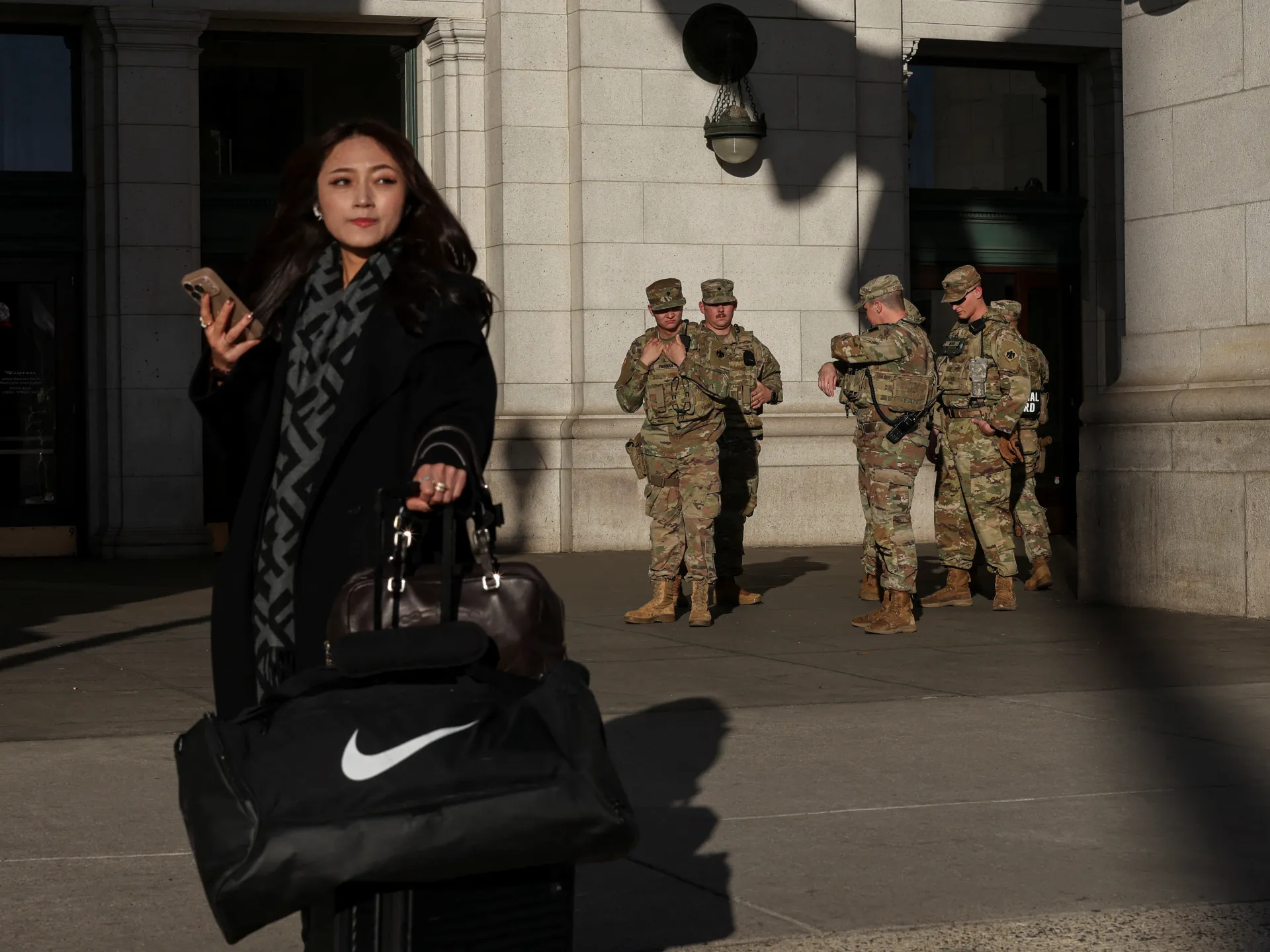
US president backs away from troop deployment to US cities amid legal setbacks, vows return when crime ‘begins to soar’.
United States President Donald Trump announced he is ceasing his efforts to deploy federal troops to several Democratic-led cities in a major policy pivot.
The announcement on Wednesday comes amid a series of legal setbacks to Trump’s efforts to deploy National Guard members to Chicago, Illinois; Los Angeles, California; and Portland, Oregon.
list of 3 itemsend of list
In a post on Truth Social, Trump said he’s “removing” the National Guard from those cities, although their deployment was already mostly limited by lower courts.
“We are removing the National Guard from Chicago, Los Angeles and Portland, despite the fact that CRIME has been greatly reduced by having these great Patriots in those cities, and ONLY by that fact,” he said.
Despite the claim, the National Guard has been barred from taking direct part in law enforcement, which remains illegal under US law. Trump had not invoked the Insurrection Act of 1807, which allows presidents to deploy troops domestically when “unlawful obstructions, combinations, or assemblages, or rebellion” against the federal government make it “impracticable to enforce” US law “by the ordinary course of judicial proceedings”.
Because of that, troops deployed in or around Los Angeles, Portland and Chicago had been largely tasked with guarding federal buildings and offering support services to immigration enforcement.
About 300 National Guard members remained under federal control in both Los Angeles and Chicago at the time of Trump’s announcement, with 200 more in Portland.
Since first deploying the National Guard in Los Angeles to respond to protests against mass immigration enforcement sweeps, Trump has repeatedly claimed major cities across the US have been plagued by overlapping crime and immigration crises.
Critics have accused Trump of taking part in dangerous political theatre to target opponents.
Trump’s announcement did not reference the ongoing National Guard deployment in Washington, DC, a federal territory, or in New Orleans, Louisiana, which had been specifically requested by the state’s Republican governor.
The president’s move comes amid a series of legal setbacks, topped last week by a Supreme Court order keeping in place a lower court’s ruling barring the president from deploying the National Guard to Chicago.
While members of the federal military, National Guard troops are typically deployed at the request of state governors. Presidents can unilaterally deploy the National Guard, but only in instances when other federal agents can no longer execute the law.
The majority of Supreme Court justices ruled Trump has not yet met that threshold, dealing a major blow to the administration’s justification for similar deployments across the country.
Earlier on Wednesday, Department of Justice lawyers in California withdrew a request to keep troops in the state under federal control as they appealed a lower court’s ruling. That ruling by US District Judge Charles Breyer said the troops must be returned to state control.
In a post on X, the office of California Governor Gavin Newsom, a Democrat and top Trump critic, said the “admission by Trump and his occult cabinet members means this illegal intimidation tactic will finally come to an end”.
Newsom and his staff “look forward” to a more lasting court ruling on the issue.
For his part, Trump, in his Truth Social post, said he would not hesitate to redeploy troops.
“We will come back, perhaps in a much different and stronger form, when crime begins to soar again – Only a question of time!” he said.
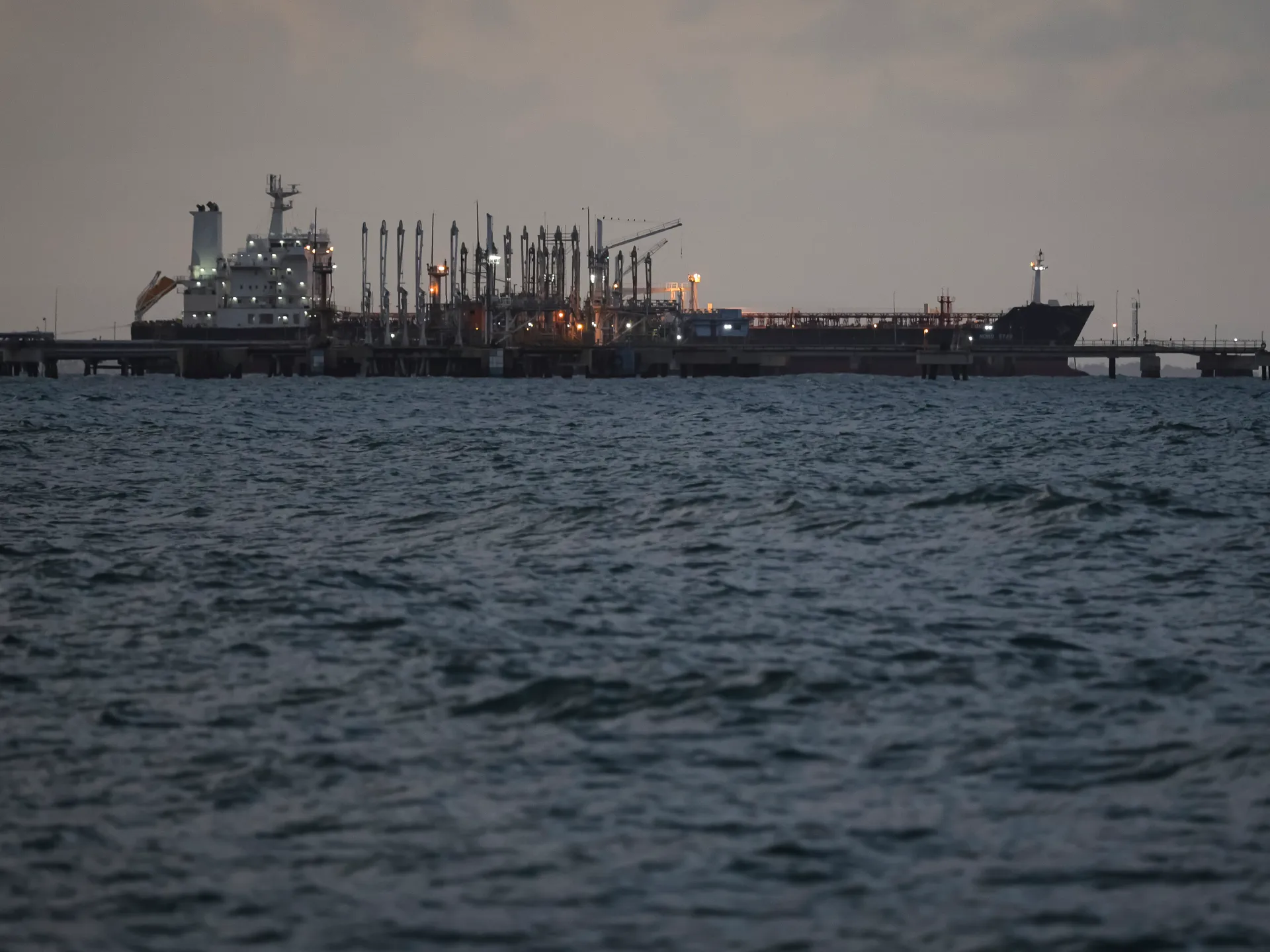
The United States Department of the Treasury has issued a new round of sanctions aimed at isolating Venezuela’s oil industry, as part of President Donald Trump’s pressure campaign against the South American country.
The sanctions announced on Wednesday target four companies and their associated oil tankers, which are allegedly involved in transporting Venezuelan oil.
list of 3 itemsend of list
Trump has claimed that Venezuelan leader Nicolas Maduro leads a so-called “narco-terrorist” government that seeks to destabilise the US, a charge repeated in the latest sanctions announcements.
“Maduro’s regime increasingly depends on a shadow fleet of worldwide vessels to facilitate sanctionable activity, including sanctions evasion, and to generate revenue for its destabilizing operations,” the Treasury said on Wednesday.
Petroleum is Venezuela’s primary export, but the Trump administration has sought to cut the country off from its international markets.
Wednesday’s notice accuses four tankers – the Nord Star, the Rosalind, the Valiant and the Della – of helping Venezuela’s oil sector to circumvent existing sanctions, thereby providing the “financial resources that fuel Maduro’s illegitimate narco-terrorist regime”.
“President Trump has been clear: We will not allow the illegitimate Maduro regime to profit from exporting oil while it floods the United States with deadly drugs,” said Treasury Secretary Scott Bessent.
“The Treasury Department will continue to implement President Trump’s campaign of pressure on Maduro’s regime.”
The sanctions come a day after Washington imposed sanctions on a separate Venezuelan company it says assembled drones designed by Iran.
In recent months, the Trump administration has cited several motives for ratcheting up pressure against Venezuela, ranging from immigration to Maduro’s contested election in 2024.
Trump, for instance, has framed the pressure campaign as a means of stemming the trade of illegal drugs, despite Venezuela exporting virtually none of the administration’s main target, fentanyl.
Critics have also accused Washington of seeking to topple Maduro’s government to take control of the country’s vast oil reserves.
Trump officials have fuelled those suspicions with remarks seeming to assert ownership over Venezuela’s oil.
On December 17, a day after Trump announced a “total and complete blockade” of sanctioned oil tankers entering and leaving Venezuela, his top adviser, Stephen Miller, claimed that the US “created the oil industry in Venezuela”.
He suggested that the oil was stolen from the US when Venezuela nationalised its petroleum industry, starting in 1976.
That process accelerated after the 1998 election of socialist President Hugo Chavez, who reasserted state control over Venezuela’s oil sector, ultimately leading to the seizure of foreign assets in 2007.
That “tyrannical expropriation” scheme, Miller alleged, “was the largest recorded theft of American wealth and property”.
Still, one major US oil company, Chevron, continues to operate in the country.
Trump has echoed Miller’s claims, writing online that the US “will not allow a Hostile Regime to take our Oil, Land, or any other Assets”.
He added that all of those assets “must be returned to the United States, IMMEDIATELY”.
In recent months, the Trump administration has tightened its focus on Venezuela’s oil industry, taking a series of military actions against tankers.
On December 10, the administration seized its first tanker, the Skipper, followed by a second seizure 10 days later.
The US military has reportedly been pursuing a third tanker as it crosses the Atlantic Ocean.
The attacks on the oil tankers come several months after the US began surging aircraft, warships and other military assets to the Caribbean region along Venezuela’s coast.
Since September 2, the US military has conducted dozens of bombing campaigns against alleged drug-smuggling boats in international waters in the Caribbean Sea and eastern Pacific, in what rights groups call extrajudicial killings.
More than 100 people have been killed, and the administration has offered scant legal justification for the attacks.
On Monday, Trump told reporters that the US had struck a “dock area” in Venezuela he claimed was used to load the alleged drug boats.
The dock bombing is believed to be the first of its kind on Venezuelan soil, though Trump has long threatened to begin attacking land-based targets.
While the administration has not officially revealed which agency was behind the dock strike, US media has widely reported it was conducted by the Central Intelligence Agency (CIA).
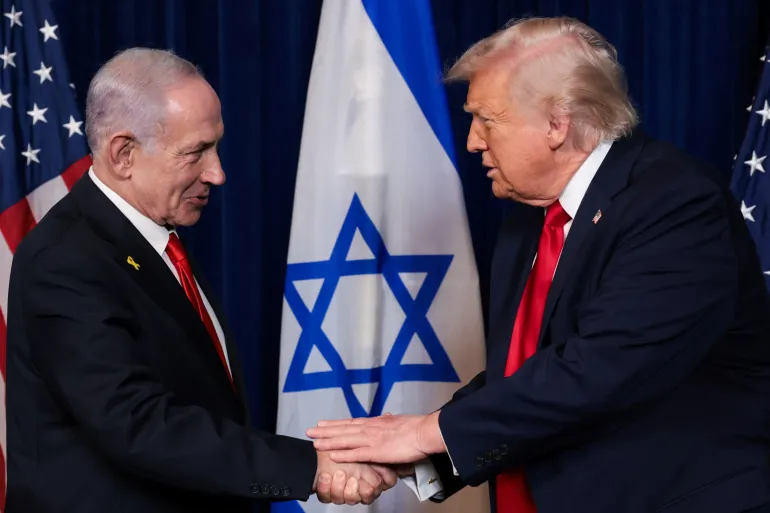
Israeli Prime Minister Benjamin Netanyahu has reached the end of his latest trip to the United States and appears to have gained what he wants from President Donald Trump.
Trump hailed Netanyahu after their meeting on Monday, calling him a “hero” and saying Israel – and by extension its prime minister – had “lived up to the plan 100 percent” in reference to the US president’s signature Gaza ceasefire.
list of 4 itemsend of list
That is despite reports emerging last week that US officials were growing frustrated over Netanyahu’s apparent “slow walking” of the 20-point ceasefire plan – imposed by the US administration in October – suspecting that the Israeli prime minister might be hoping to keep the door open to resuming hostilities against the Palestinian group Hamas at a time of his choosing.
Under the terms of that agreement – after the exchange of all captives held in Gaza, living and dead, aid deliveries into the enclave and the freezing of all front lines – Gaza would move towards phase two, which includes negotiations on establishing a technocratic “board of peace” to administer the enclave and the deployment of an international security force to safeguard it.

So far, Netanyahu has not allowed in all of the required aid that Gaza desperately needs and is also maintaining that phase two cannot be entered into until Hamas returns the body of the last remaining captive. He has also demanded that Hamas disarms before Israel withdraws its forces, a suggestion fully endorsed by Trump after Monday’s meeting.
Hamas has repeatedly rejected disarmament being forced upon it by Israel, and officials have said that the question of arms was an internal Palestinian matter to be discussed between Palestinian factions.
So is Netanyahu deliberately trying to avoid entering the second phase of the agreement, and why would that be the case?
Here are four reasons why Netanyahu might be happy with things just as they are:
Netanyahu’s ruling coalition is, by any metric, the most right wing in the country’s history. Throughout the war on Gaza, the support of Israel’s hardliners has proven vital in shepherding the prime minister’s coalition through periods of intense domestic protest and international criticism.
Now, many on the right, including National Security Minister Itamar Ben-Gvir and Finance Minister Bezalel Smotrich, oppose the ceasefire, protesting against the release of Palestinian prisoners and insisting that Gaza be occupied.
Netanyahu’s defence minister, Israel Katz, has also shown little enthusiasm for honouring the deal his country committed to in October. Speaking at a ceremony to mark the expansion of the latest of Israel’s illegal settlements in the occupied West Bank, Katz claimed that Israel’s forces would remain in Gaza, eventually clearing the way for further settlements.
Katz later walked his comments back, reportedly after coming under pressure from the US.

Allowing an international force to deploy to Gaza would limit Israel’s operational freedom, constraining its military’s ability to re-enter Gaza, conduct targeted strikes or pursue Hamas remnants within the enclave.
So far, despite the ceasefire, Israeli forces have killed more than 400 people in the enclave since agreeing to halt fighting on October 10.
Politically, agreeing to an international stabilisation force, particularly one drawn from neighbouring states, would broaden what Israel has often seen as a domestic war into an international conflict with many of the strategic, diplomatic and political decisions over that conflict being made by actors outside of its control.
It could also be framed domestically as a concession forced by the US and international community, undermining Netanyahu’s repeated claims of maintaining Israeli sovereignty and strategic independence.
“If Netanyahu allows a foreign military force into Gaza, he immediately denies himself a large degree of his freedom to operate,” Israeli political analyst Nimrod Flaschenberg said from Berlin. “Ideally, he needs things to remain exactly where they are but without alienating Trump.”

While not explicitly mentioning a two-state solution, the ceasefire agreement does include provisions under which Israel and the Palestinians commit to a dialogue towards what it frames as a “political horizon for peaceful and prosperous co-existence”.
Netanyahu, however, has been arguing against a two-state solution since at least 2015 when he campaigned on the issue.
More recently, at the United Nations in September, he branded the decision to recognise a Palestinian state “insane” and claimed that Israel would not accept the establishment of a Palestinian homeland.
Israeli ministers have also been at work ensuring that the two-state solution remains a practical impossibility. Israel’s plan to establish a series of new settlements severing occupied East Jerusalem – long considered the future capital of any Palestinian state – from the West Bank would make the establishment of a feasible state impossible.
This isn’t just an unfortunate consequence of geography. Announcing the plans for the new settlements in August, Smotrich said the project would “bury the idea of a Palestinian state”.
![Israeli far-right Finance Minister Bezalel Smotrich holds a map of an area near the settlement of Maale Adumim, a land corridor known as E1, outside Jerusalem in the occupied West Bank, on August 14, 2025, after a press conference at the site. [Menahem Kahana/AFP]](https://i0.wp.com/occasionaldigest.com/wp-content/uploads/2025/12/AFP__20250814__69HV6DR__v1__HighRes__IsraelPalestinianConflictSettlementPolitics-1755194568.jpg?w=640&ssl=1)
Netanyahu faces numerous domestic threats, from his own corruption trial to the potentially explosive issue of forcing conscription on Israel’s ultra-religious students. There is also the public reckoning he faces for his own failures before and during the Hamas-led attacks on southern Israel on October 7, 2023, all of which will fall within a critical election year for the prime minister.
Each of these challenges risks fracturing his coalition and weakening his hold on power. All of them, however, could be derailed – or at least politically blurred – by a new conflict either with Hamas in Gaza, Hezbollah in Lebanon or possibly even with Iran.
Renewed fighting would allow him to once more present himself as a wartime leader, limit criticism and rally both his allies and adversaries around the well-worn flag of “national emergency”.
But Schwartz told Al Jazeera that the trend towards government data consolidation has continued in the decades since, under both Democratic leaders and Republicans.
“Surveillance is bipartisan, unfortunately,” he said.
With Trump’s second term, however, the process hit warp speed. Schwartz argues that the Trump administration’s actions violate laws like the Privacy Act, marking a “dangerous” shift away from Nixon-era protections.
“The number-one problem with the federal government in the last year when it comes to surveillance is the demolition of the Watergate-era safeguards that were intended to keep databases separated,” he said.
Schwartz noted that Trump’s consolidation efforts have been coupled with a lack of transparency about how the new, integrated data systems are being used.
“Just as the current administration has done a great leap forward on surveillance and invading privacy, so it also has been a less transparent government in terms of the public understanding what it is doing,” Schwartz said.
Already, on March 20, Trump signed an executive order that called on government agencies to take “all necessary steps” for the dissolution of what he called “data silos”.
Shortly afterwards, in April, US Immigration and Customs Enforcement (ICE) inked a deal with the IRS to exchange personal information, including the names and addresses of taxpayers.
The memo was seen as an effort to turn private taxpayer data into a tool to carry out Trump’s goal of deporting immigrants.
A federal court in November paused the agencies’ data-sharing agreement. But other efforts continue.
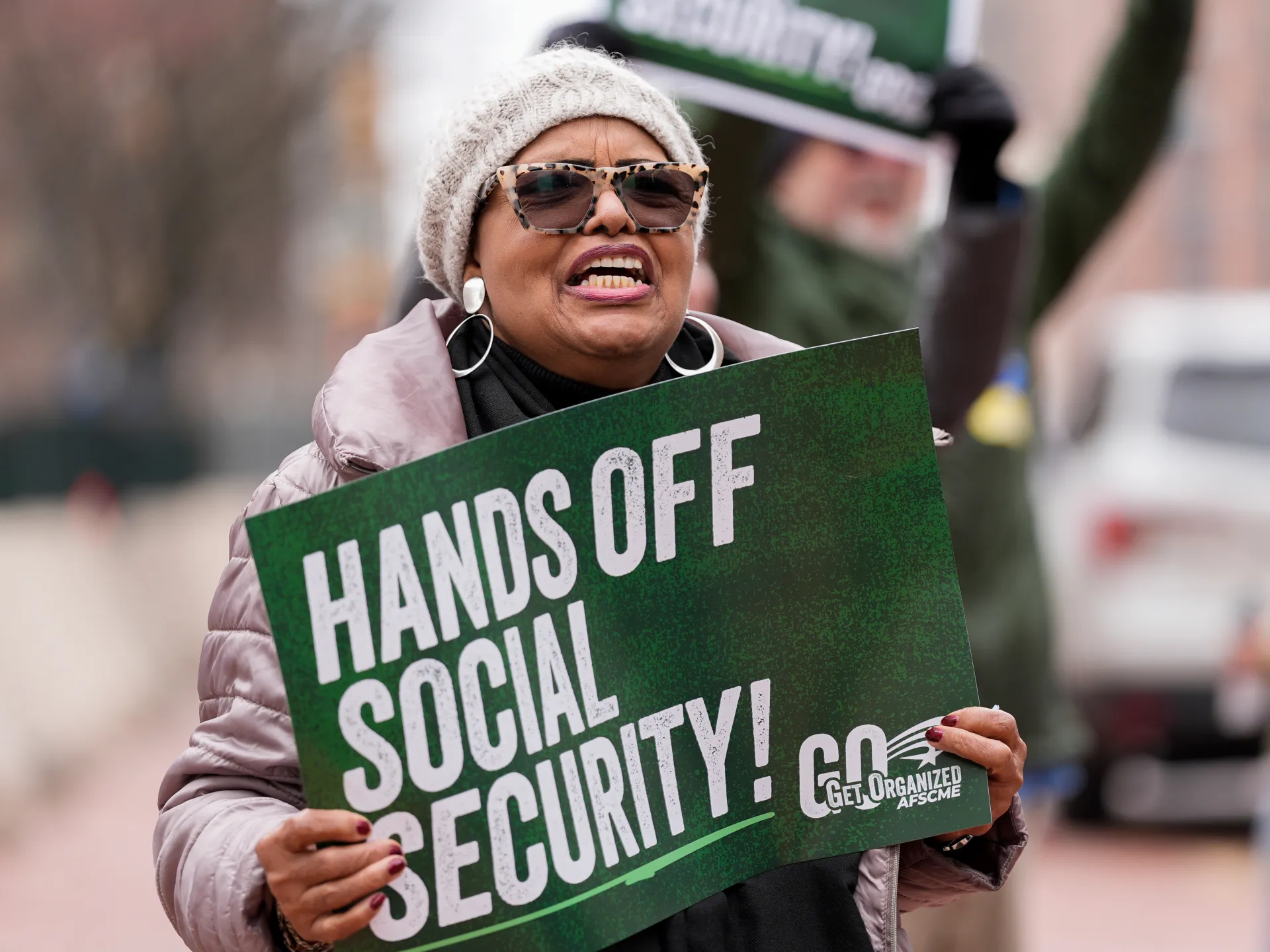
In June, the Supreme Court ruled in favour of giving DOGE access to sensitive Social Security data. And just this month, the Trump administration pressured states to share information about the recipients of food assistance, or else face a loss of funding.
While immigrants appear to be one of the main targets of the data consolidation project, Venzke said that Americans of all stripes should not be surprised if their personal information is weaponised down the line.
“There is no reason that it will be limited to undocumented people. They are taking a system that’s traditionally limited to non-citizens and vastly expanding it to include all sorts of information on US citizens,” Venzke said.
“That was unthinkable just five years ago, but we’re seeing it happen now, and consequently, its potential abuses are widespread.”
Settlement comes after US Federal Trade Commission accused the entertainment giant of unlawfully collecting children’s data.

Published On 31 Dec 202531 Dec 2025
Share
Disney has agreed to pay $10m to settle allegations that it breached child privacy laws in the United States, authorities have said.
A federal court approved the settlement to resolve allegations brought by the US Federal Trade Commission, the Department of Justice said on Tuesday.
list of 4 itemsend of list
The order also requires Disney to operate its YouTube channel in accordance with data-protection rules and establish a programme to ensure future compliance.
Disney had agreed to settle the claims brought by the US antitrust watchdog in September.
The civil case stems from allegations that Disney collected children’s personal data without parental consent via its videos on YouTube.
Antitrust officials alleged that Disney had wrongly designated more than 300 YouTube videos, including content from The Incredibles, Toy Story, Frozen, and Mickey Mouse, as not being aimed at children.
YouTube requires content creators to designate videos as “Made for Kids” or “Not Made for Kids” to comply with the Children’s Online Privacy Protection Rule.
Under the rule, companies in the US are prohibited from collecting data from children below 13 without parental notification.
Other major companies that have paid settlements under the rule, which has been amended several times since its enactment in 2000, include Google and Microsoft.
Disney did not immediately respond to a request for comment.
“The Justice Department is firmly devoted to ensuring parents have a say in how their children’s information is collected and used,” Assistant Attorney General Brett A Shumate said in a statement.
“The Department will take swift action to root out any unlawful infringement on parents’ rights to protect their children’s privacy.”
Disney, which has its headquarters in Burbank, California, is one of the world’s largest entertainment companies, with revenue for the fiscal year 2025 reaching $94.4bn.
The trouble with prosecutorial independence, however, is that it has not been codified in US law.
Instead, it is a norm that has developed over more than a century, stretching back to the earliest days of the Justice Department.
While the role of the attorney general dates back to 1789, the Justice Department itself is a more recent creation. It was established in 1870, during the Reconstruction period following the US Civil War.
That period was marked by an increasing rejection of political patronage: the system of rewarding political allies with favours and jobs.
Reformers argued that, rather than having law enforcement officers scattered across various government agencies, consolidating them in one department would make them less susceptible to political influence.
That premise, however, has been tested over the subsequent decades, most notably in the early 1970s under then-President Richard Nixon.
Nixon courted scandal by appearing to wield the threat of prosecutions against his political rivals — while dropping cases that harmed his allies.
In one instance, he allegedly ordered the Justice Department to drop its antitrust case against the company International Telephone and Telegraph (ITT) in exchange for financial backing at the Republican National Convention.
Key Justice Department officials were also implicated in the Watergate scandal, which involved an attempted break-in at Democratic Party headquarters.
But Sklansky, the Stanford Law professor, noted that Nixon tended to operate through back channels. He avoided any public calls to prosecute his rivals.
“He believed that, if he called for that openly, he would’ve been pilloried not just by Democrats but by Republicans,” Sklansky said. “And that was undoubtedly true at the time.”
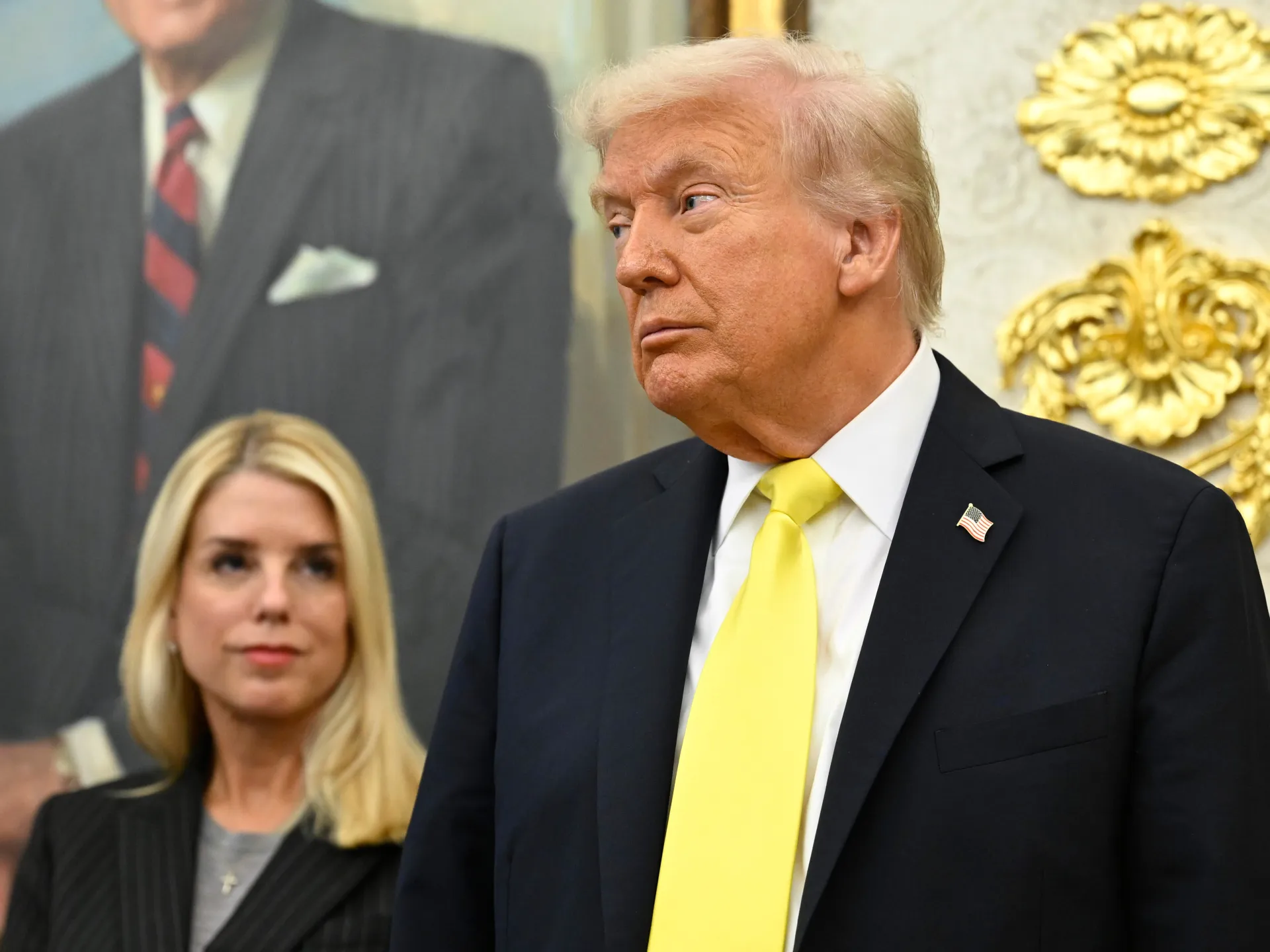
But Sklansky believes the second Trump administration has abandoned such discretion in favour of a public display of power over the Justice Department.
“Trump’s openness about the use of the Justice Department to go after his enemies is really something that is quite new,” he said.