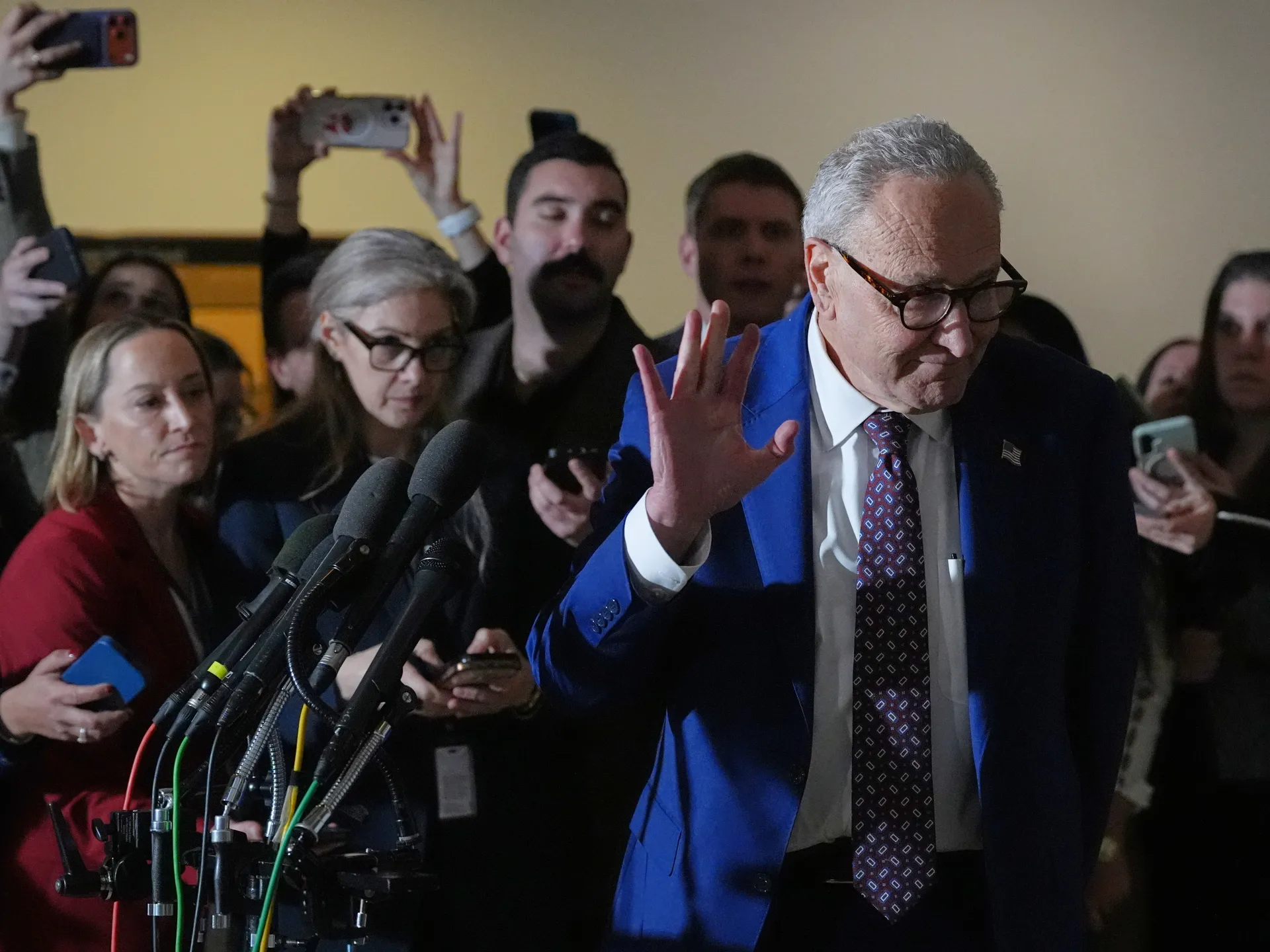
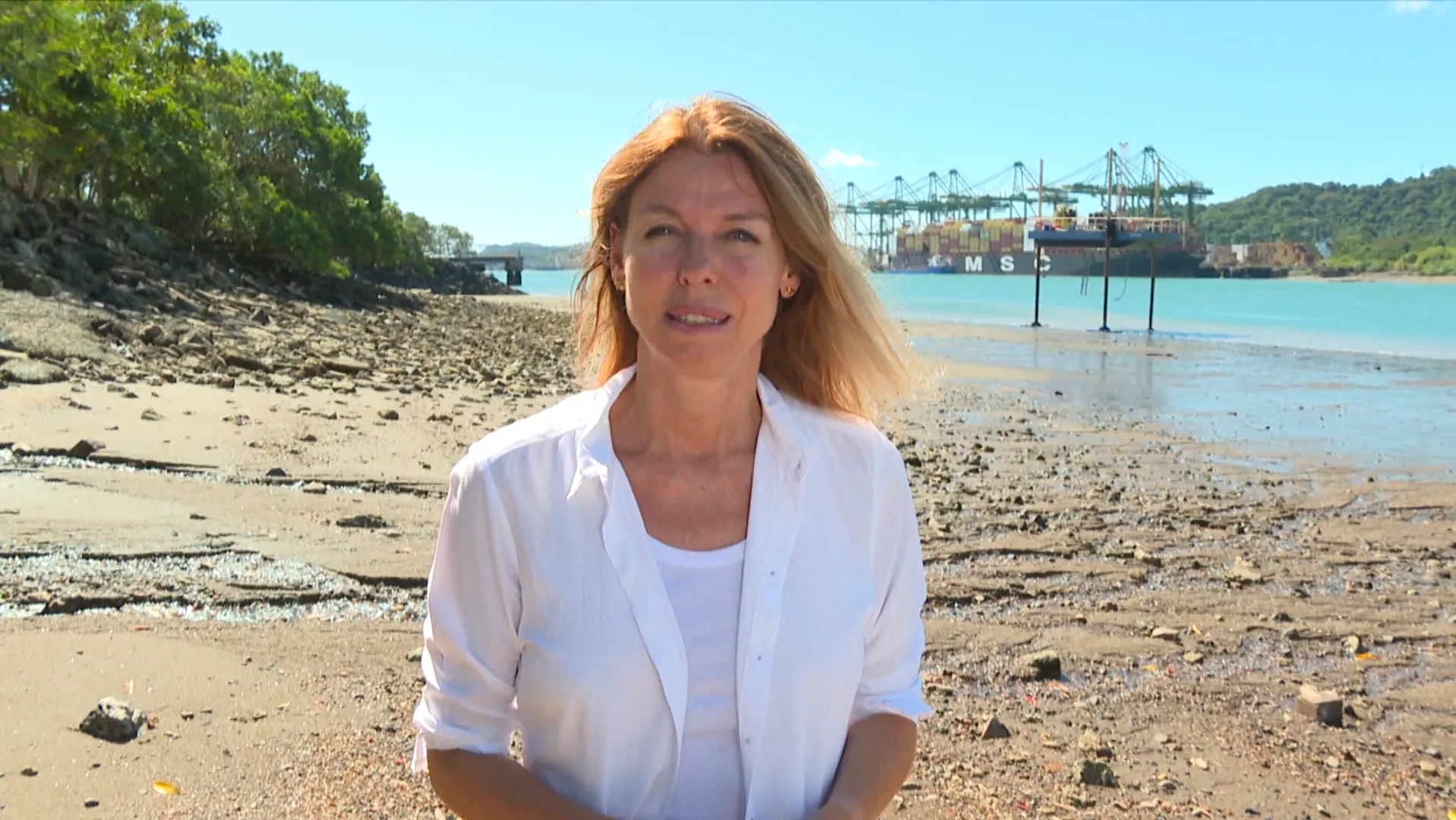
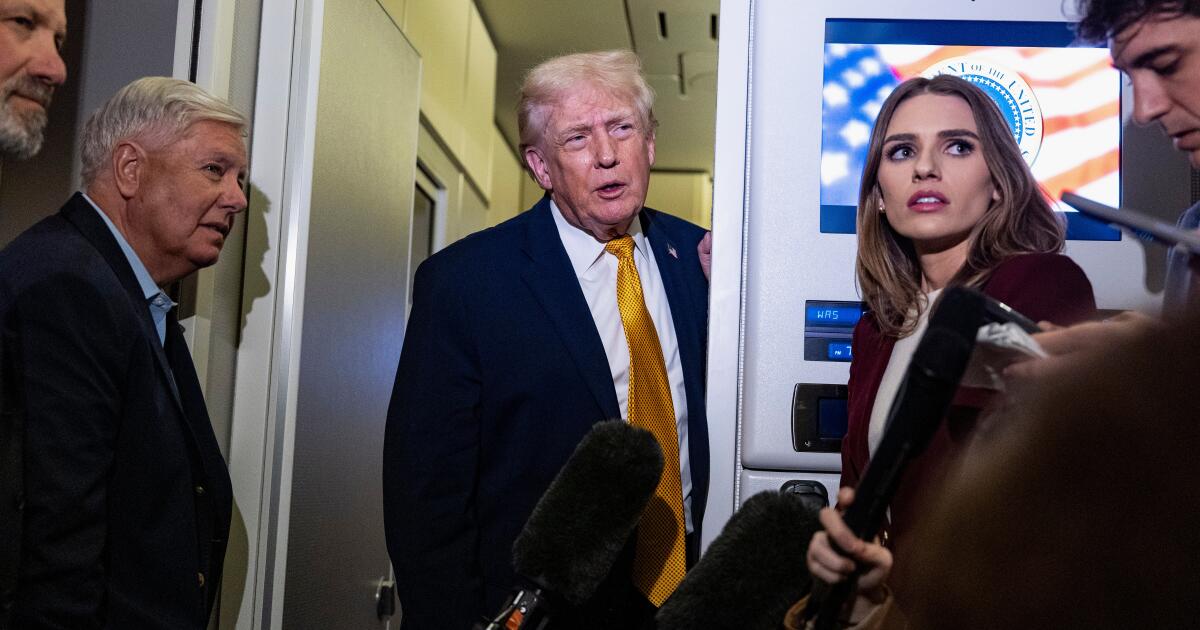
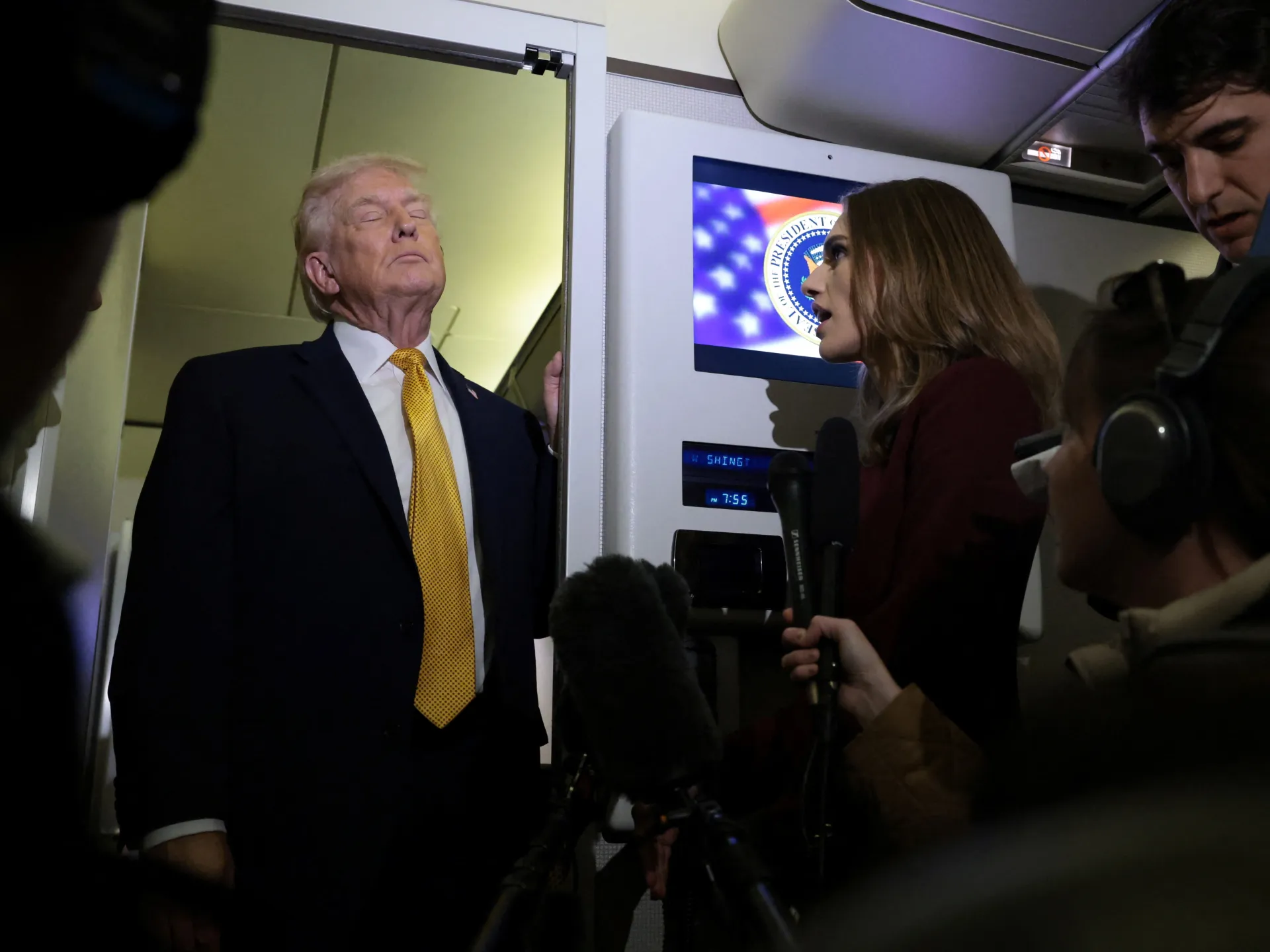
US President Donald Trump is promoting his nation’s economic record, insisting prices are falling and investment is surging – but the data, and rising cost-of-living pressures, tell a different story. Jillian Wolf checks the facts.
Subscribe to our channel: http://bit.ly/AJSubscribe Follow us on X : https://twitter.com/AJEnglish Find us on Facebook: https://www.facebook.com/aljazeera Check our website: http://www.aljazeera.com/ Check out our Instagram page: https://www.instagram.com/aljazeeraenglish/ Download AJE Mobile App: https://aje.io/AJEMobile
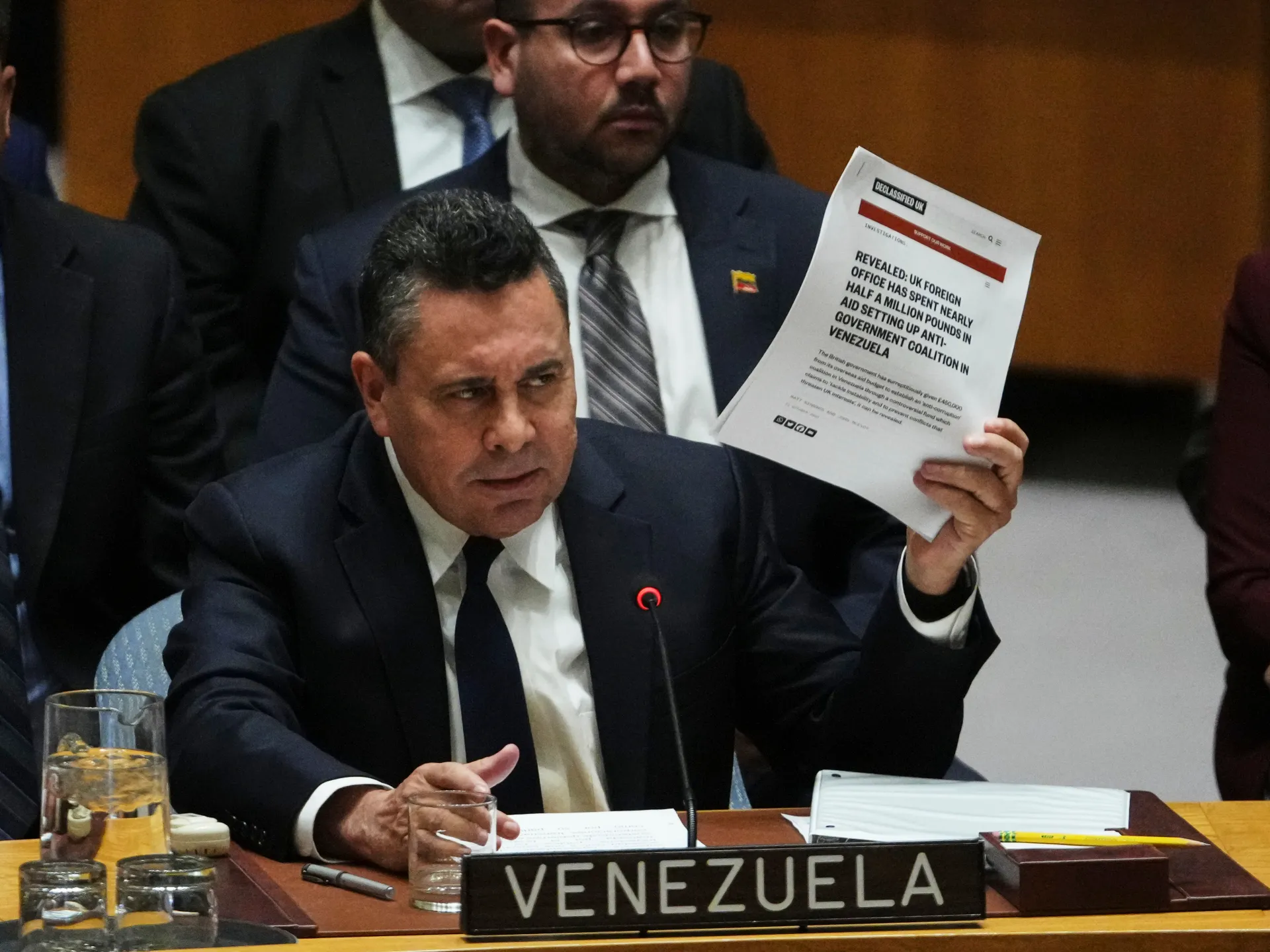
Historian Alan McPherson tells Marc Lamont Hill how the US is carrying out a regime change campaign in Venezuela.
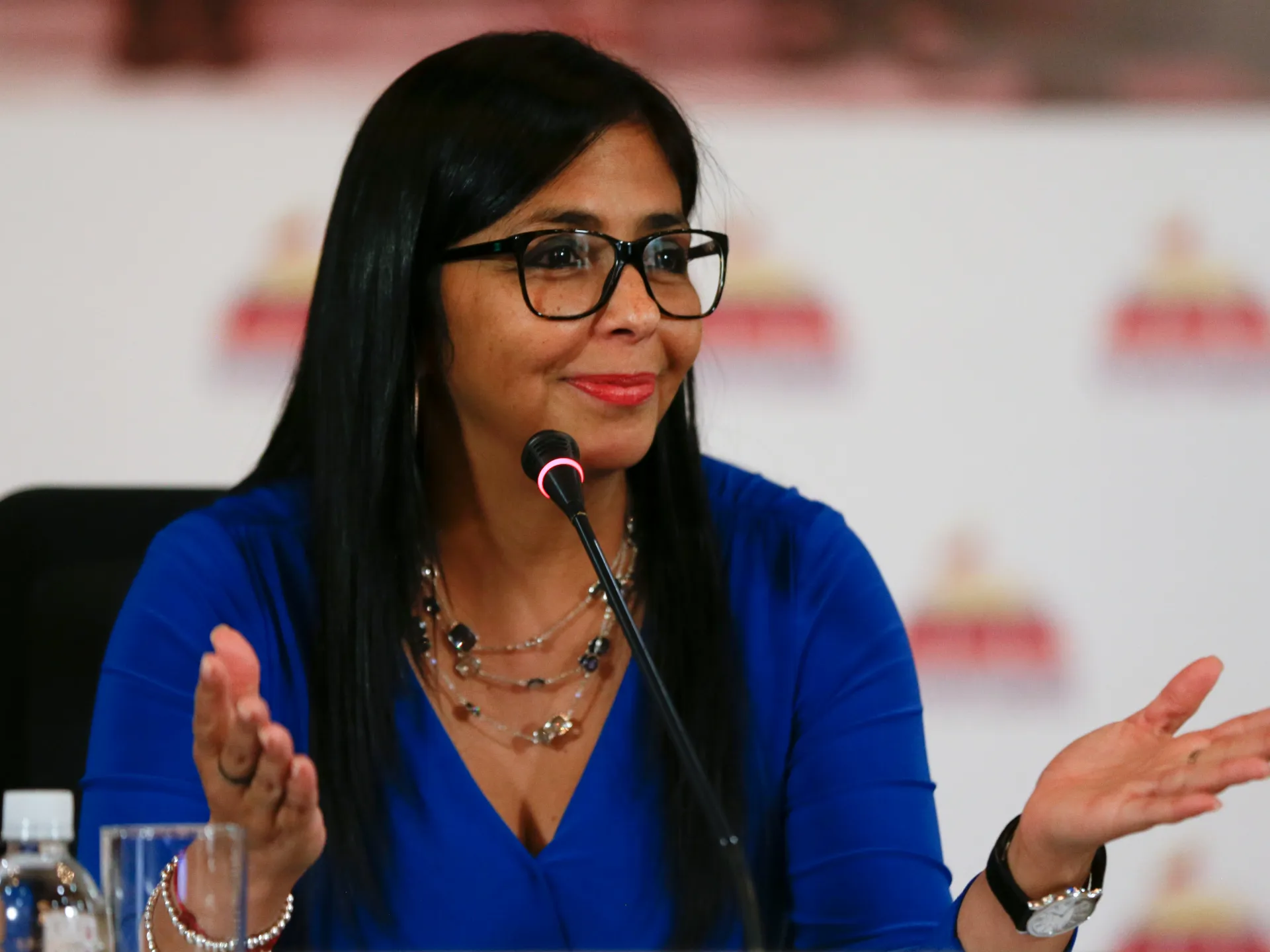
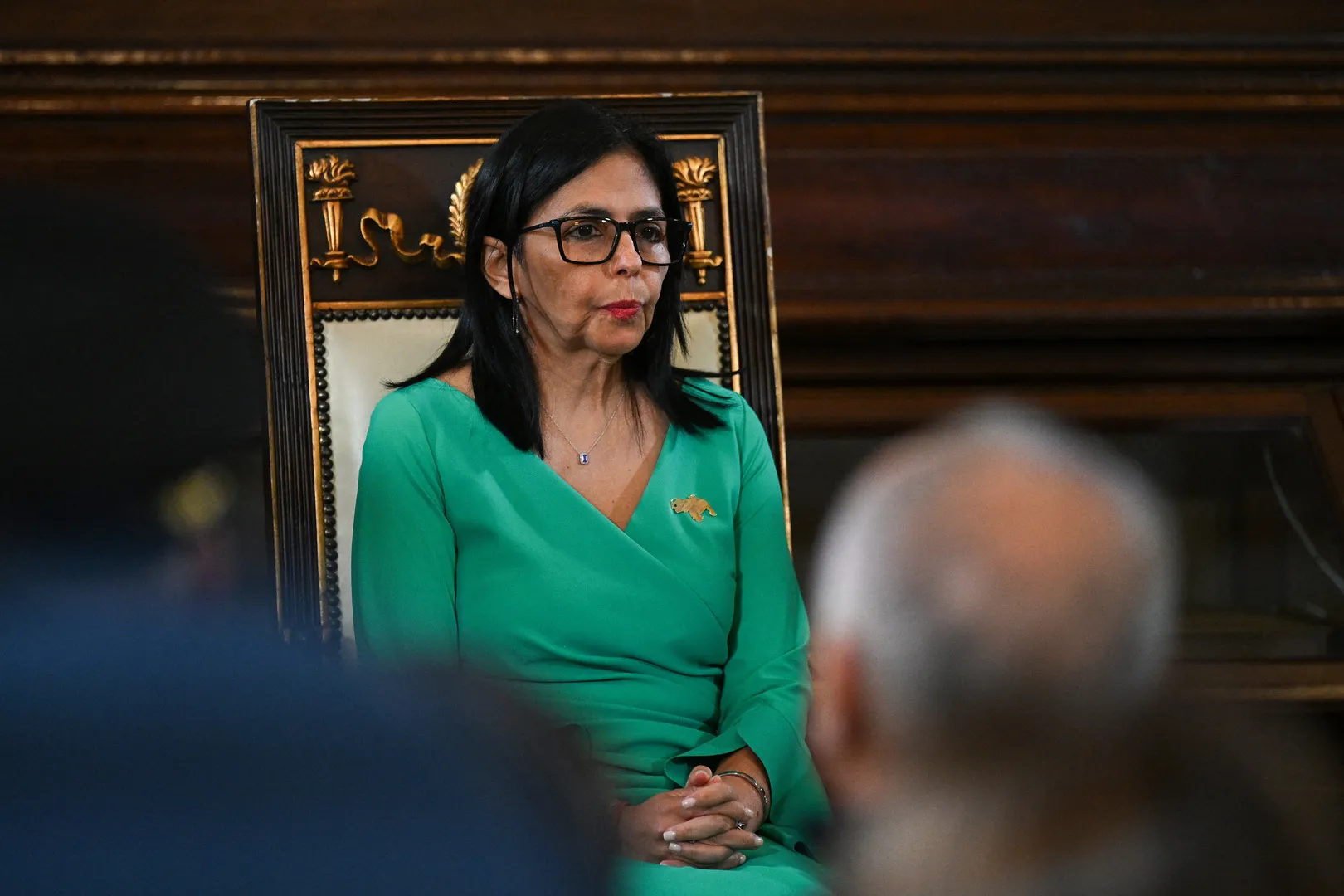
Is the United States orchestrating regime change in Venezuela? Could this spark an all-out war?
This week on UpFront, Marc Lamont Hill speaks to Alan McPherson, an author and history professor at Temple University who specialises in US-Latin American relations.
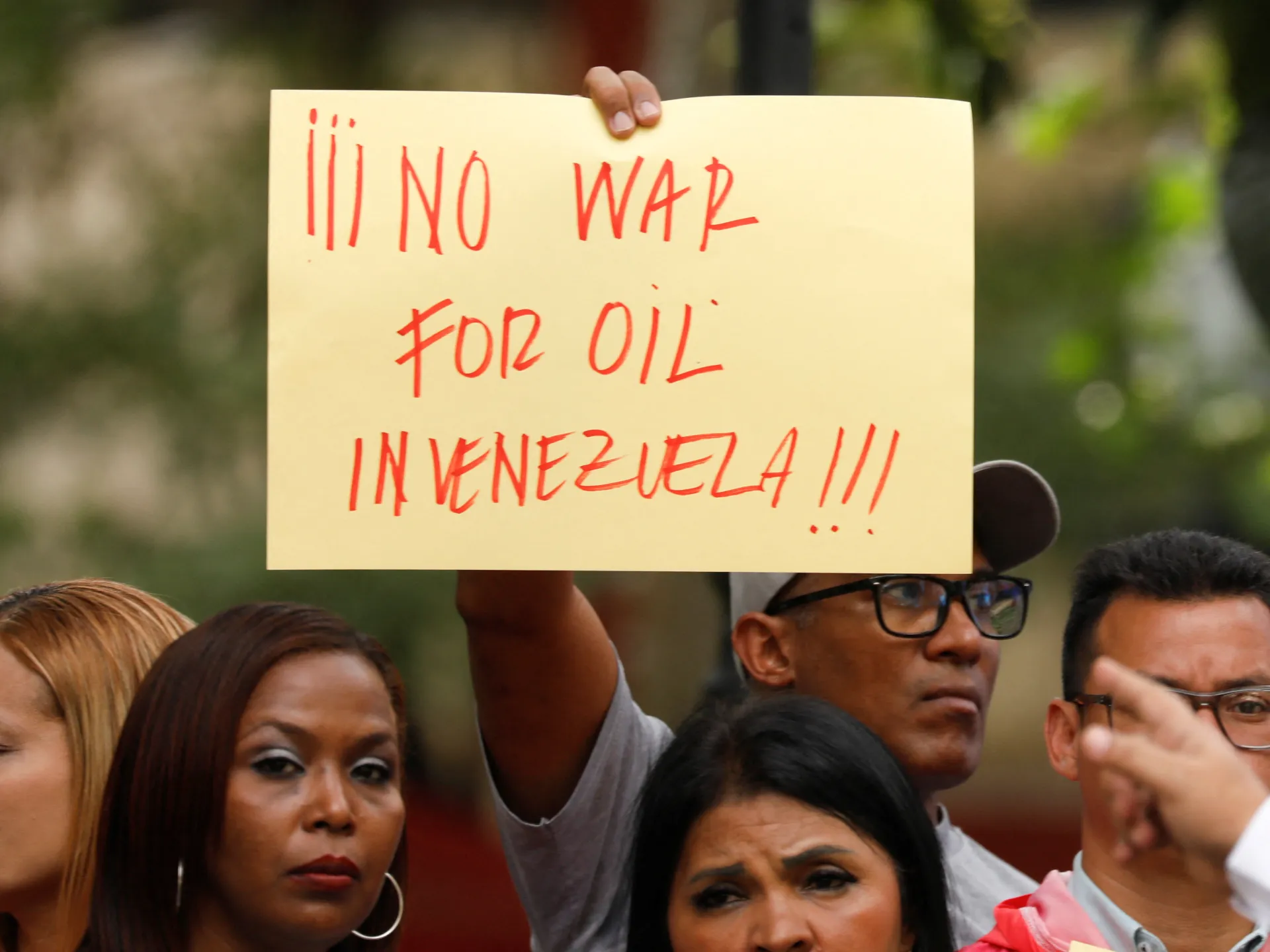
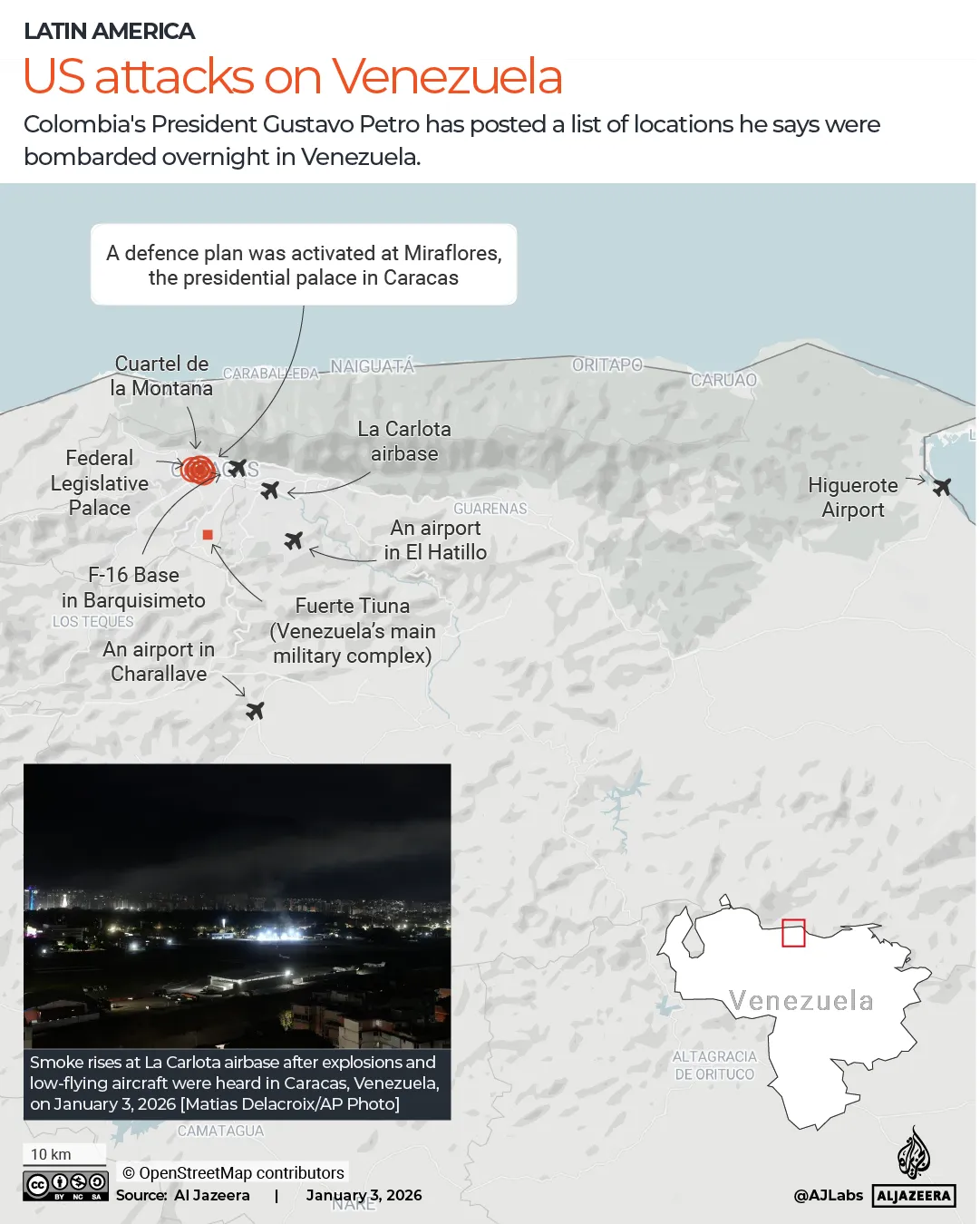
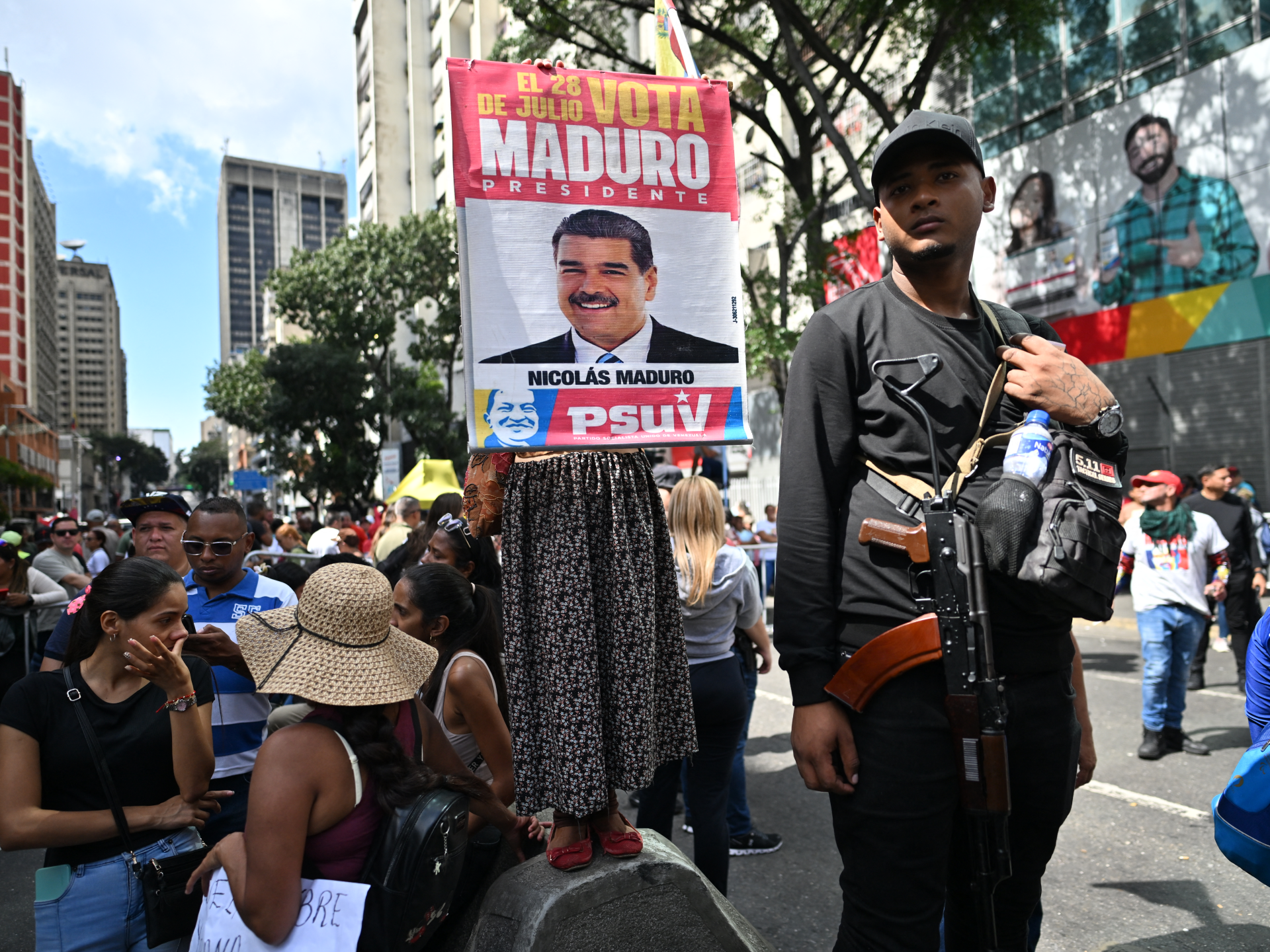
The US is continuing the largest military build-up in Latin America in decades and has seized an oil tanker off the coast of Venezuela. US President Donald Trump has also threatened to attack Venezuela by land “very soon”, while the Pentagon continues to strike alleged drug boats in the Caribbean and Pacific. At least 87 people have been killed in what human rights groups have called extrajudicial killings and murder.
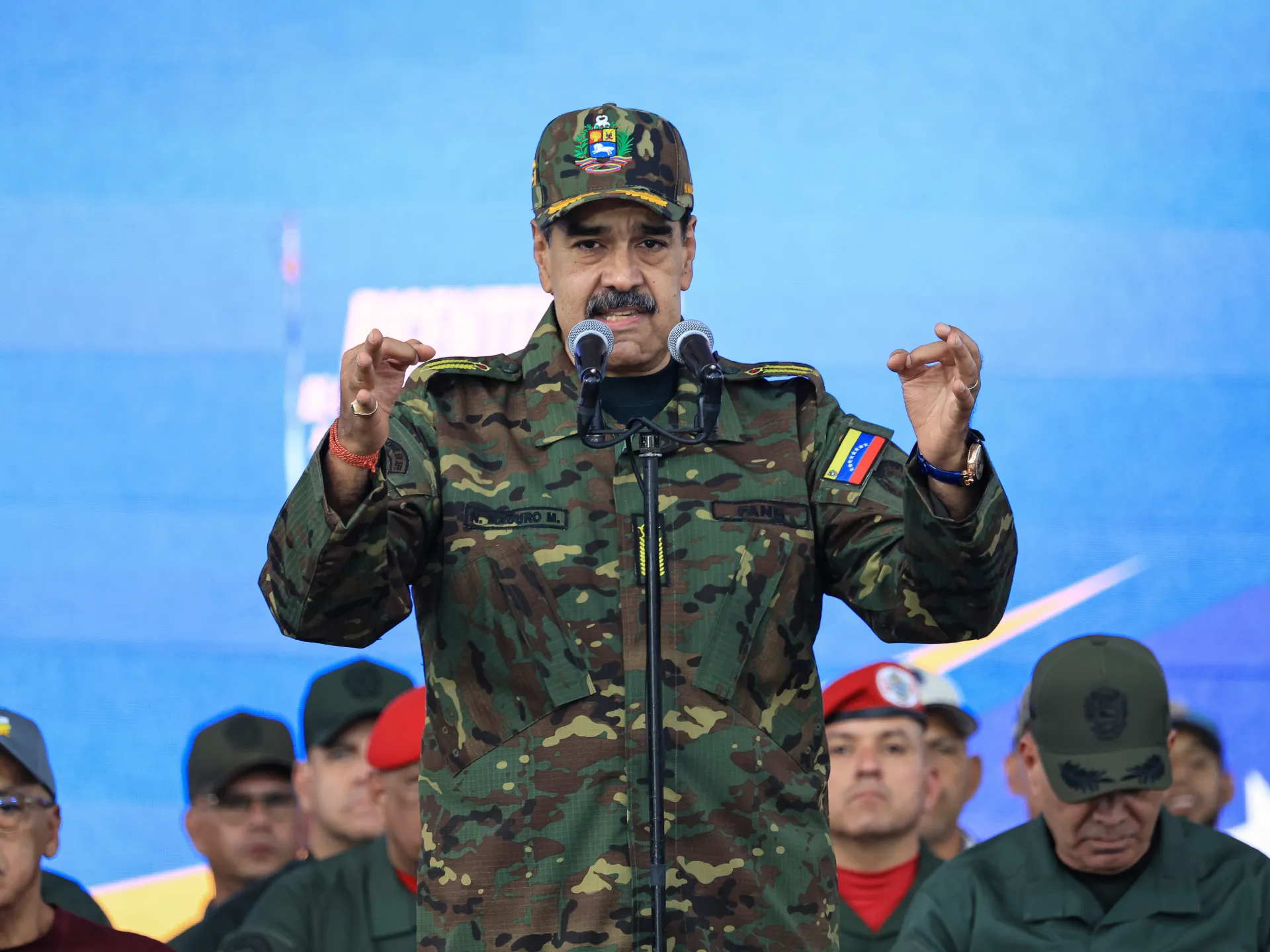
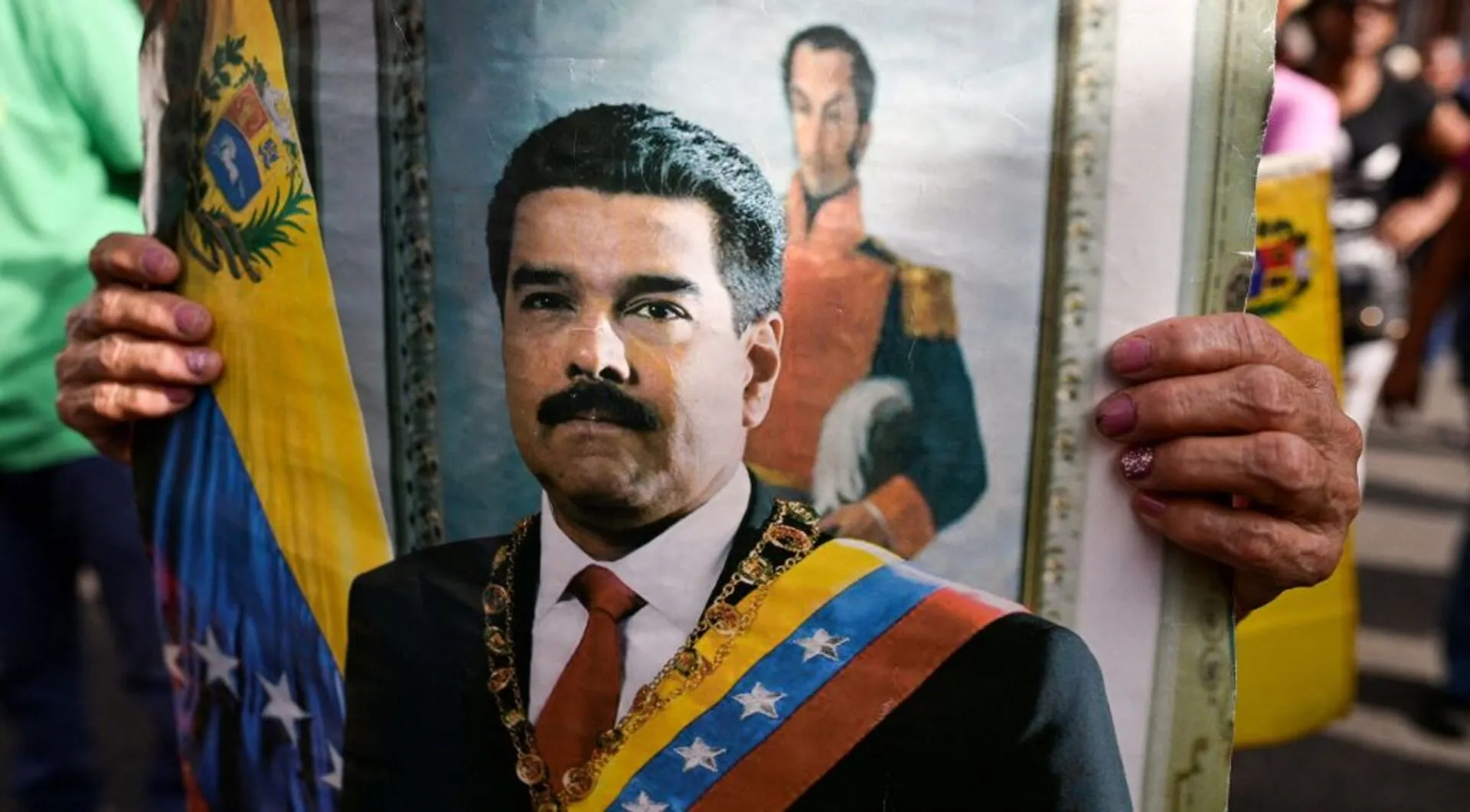
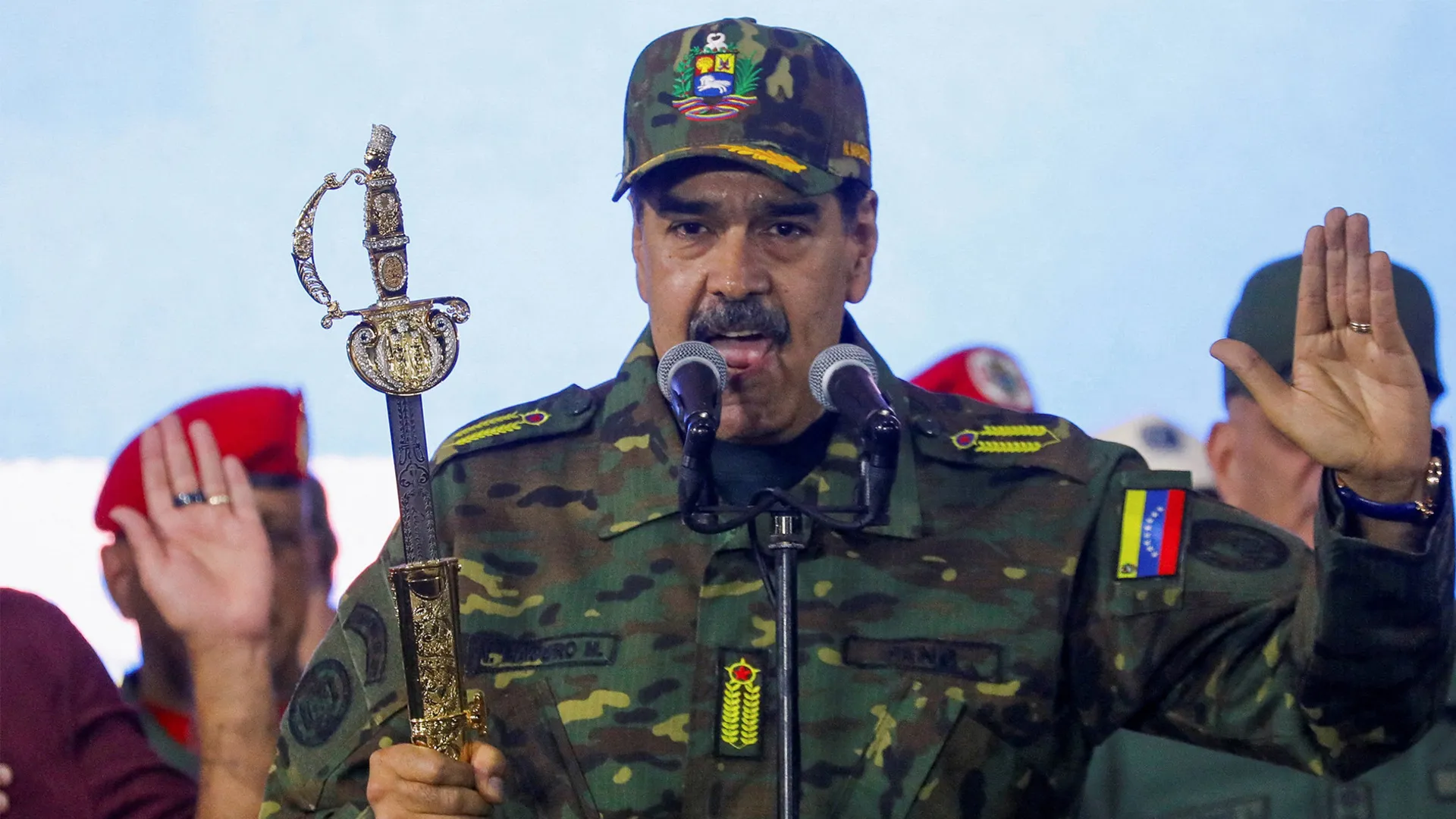
The Trump administration has made clear that it wants Venezuelan President Nicolas Maduro out of power, and has thrown its support behind opposition figure and Nobel Peace Prize laureate Maria Corina Machado. She supports foreign intervention and wants to privatise Venezuelan oil, leaving many to question how much the ideologies of US politicians and the interests of oil companies are driving the push for regime change inside Venezuela.
The Ukrainian president says Kyiv could drop its long-held ambition of joining NATO in exchange for Western security guarantees.
Ukraine has indicated it is prepared to drop its long-held ambition of joining NATO in exchange for Western security guarantees, President Volodymyr Zelenskyy has said ahead of meetings with US envoys and European allies in Berlin.
Zelenskyy described the proposal on Sunday as a concession by Kyiv, after years of pressing for NATO membership as the strongest deterrent against future Russian attacks. He said the United States, European partners and other allies could instead provide legally binding security guarantees.
Recommended Stories
list of 3 itemsend of list
“From the very beginning, Ukraine’s desire was to join NATO; these are real security guarantees. Some partners from the US and Europe did not support this direction,” Zelenskyy said in response to questions from reporters in a WhatsApp chat.
“Thus, today, bilateral security guarantees between Ukraine and the US, Article 5-like guarantees for us from the US, and security guarantees from European colleagues, as well as other countries – Canada, Japan – are an opportunity to prevent another Russian invasion,” he said.
“And it is already a compromise from our part,” Zelenskyy added, stressing that such guarantees must be legally binding.
The shift would mark a significant change for Ukraine, which has long sought NATO membership despite Moscow viewing the alliance’s expansion as a threat.
While the move aligns with one of Russia’s stated war objectives, Kyiv has continued to reject demands to cede territory.
Zelenskyy said he was seeking a “dignified” peace and firm assurances that Russia would not launch another attack, as diplomats gathered to discuss what could become Europe’s deadliest conflict since World War II. He also accused Moscow of prolonging the war through sustained attacks on Ukrainian cities and critical infrastructure.
Pressure to reach a settlement
The talks come amid pressure from US President Donald Trump to reach a settlement. Trump’s envoy Steve Witkoff and his son-in-law Jared Kushner on Sunday arrived in the German capital city of Berlin for discussions involving Ukrainian and European representatives.
The decision to send Witkoff, who has previously led negotiations with both Kyiv and Moscow, suggested Washington saw scope for progress.
Zelenskyy said Ukraine, Europe and the US were reviewing a 20-point plan that could culminate in a ceasefire, though he reiterated that Kyiv was not holding direct talks with Russia. He said a truce along current front lines could be considered fair, while noting that Russia continues to demand a Ukrainian withdrawal from parts of Donetsk and Luhansk still under Kyiv’s control.
Despite diplomatic efforts, Russian attacks have continued, leaving thousands without electricity in recent strikes. Ukrainian officials say Moscow is deliberately targeting the power grid to deprive civilians of heat and water during winter.
Fighting has also intensified in the Black Sea. Russian forces recently struck Ukrainian ports, damaging Turkish-owned vessels, including a ship carrying food supplies. An attack on Odesa set grain silos ablaze, according to Deputy Prime Minister Oleksii Kuleba. Zelenskyy said the strikes “had no … military purpose whatsoever”.
Turkish President Recep Tayyip Erdogan warned against further escalation, saying the Black Sea should not become an “area of confrontation”.
“Everyone needs safe navigation in the Black Sea,” Erdogan said, calling for a “limited ceasefire” covering ports and energy facilities. Turkiye controls the Bosphorus Strait, a vital route for Ukrainian grain and Russian oil exports.
Police are not looking for anyone else over the shooting that wounded nine people at the Ivy League school in the northeastern US.
Published On 14 Dec 202514 Dec 2025
Share
Police in Providence, Rhode Island, have detained a “person of interest” after a manhunt for a gunman who killed two people at Brown University, officials say.
At a news conference on Sunday, Police Colonel Oscar Perez said the individual had been detained that morning and officers were not currently looking for anyone else in relation to the shooting at the Ivy League university in the northeastern United States.
Recommended Stories
list of 4 itemsend of list
Officials have not released the identity of the person of interest.
Nine people were wounded on Saturday, seven of them critically, when a suspect with a firearm entered a building where students were taking exams and opened fire.
The shooting sparked a manhunt involving more than 400 law enforcement personnel, including agents from the Federal Bureau of Investigation and the Bureau of Alcohol, Tobacco, Firearms and Explosives, while the campus was placed under lockdown as the search took place.
Students hid under desks for hours after warnings of an active shooter were released.
Brown said in an advisory on Sunday that police had lifted a shelter-in-place order for the campus although police remained at the location and still considered it an active crime scene.
Access to parts of the campus remained restricted on Sunday as police maintained a security perimeter around Minden Hall and nearby apartment buildings, the university said.
Officials had earlier released a video of the suspect, a male, possibly in his 30s, who was dressed in black.
Providence Deputy Police Chief Timothy O’Hara said on Saturday that the gunman may have worn a mask and investigators had retrieved shell casings from the scene.
Police are deployed in Providence on December 13, 2025, during the hunt for the shooter [Mark Stockwell/AP]
Detectives were looking into why the location was targeted, Perez told reporters. The incident was the second deadly gun attack at a US university in recent days after a shooting at Kentucky State University on Tuesday.
The Gun Violence Archive, which defines mass shootings as any incident in which four or more people are shot, has documented 389 such incidents in the US so far this year, including at least six at schools.
Last year, more than 500 mass shootings were recorded in the US.
US President Donald Trump has vowed retaliation against ISIL after an ambush near Palmyra in central Syria killed three US citizens. Trump blamed ISIL for the attack, though investigators are assessing the possibility it may have been an insider attack by a member of an allied force.
Some define time as linear, some see it as a block. Others refer to it as something spent, in the present, or the future. Meanwhile, others consider it to be supernatural or holy, or something to twist, tame or traverse.
As someone who has been sentenced to a lifetime behind bars, time is both abstract and defined. When you have so much time, it is all you have, yet, inside, you have almost no control over how to spend it.
Every day, I can hear it: tick, tick, tick. It’s torturous, like that dripping faucet in my cell.
So to quiet the sound, I study. I learn. I try to build something meaningful from the minutes.
At the time of my arrest in 2002, I was a 25-year-old entrepreneur who had started a successful business. I was enrolled in college, working towards my degree in Information Technology, when my world collapsed. Once in New Jersey State Prison (NJSP) in Trenton, I had a simple choice: either give up on all of my dreams, or fight for them alongside my efforts to prove my innocence. So, I decided to use my time to complete my education.
My father had brought our family to the United States from Pakistan so his two sons could have access to higher education. He passed away this past January, and it is because of him I keep studying, to fulfil the dream he carried across an ocean.
Yet on the inside, that dream has been hard to chase.
‘You guys aren’t going anywhere’
Prison life is an insidious thing. The environment is conducive to vice and illicit activities. Drugs and gambling are easy to find; doing something constructive, like education, well, that can be a monumental task.
The NJSP’s education department only offers GED-level (high-school level) education. Prisoners can also enrol in outside correspondence courses, also known as independent study. These include certifications, like in paralegal studies, costing about $750 to $1,000.
For-profit “correspondence schools” advertise mail-order college degrees, but most, costing anywhere from $500 to $1,000, are unaccredited – selling paper, not knowledge. Some men collect a bachelor’s, master’s, and even a doctorate in a single year. I could not bring myself to do that. For me, an accredited degree is something that cannot be dismissed, and would make me feel on par with those in the free world.
But the options for college degrees from reputable accredited universities can run into the thousands – a non-starter for most of those imprisoned. So I began with a prison paralegal training course taught by fellow prisoners helping others with their legal battles.
Later on, I watched a PBS documentary about the Bard Prison Initiative in New York, a real college programme, accredited and rigorous, for men and women in the state’s prisons. Inspired, I decided to write dozens of letters to reputable universities across the country, asking them to take me as a test case to do a degree. None replied.
Then I learned about NJ-STEP, a programme offering college courses to prisoners at East Jersey State Prison. But when I asked to enrol, the NJSP’s education supervisor replied that it was not offered at our prison. When I appealed to the administration, a security major told me, “Why should I bring the NJ-STEP here? You guys aren’t going anywhere.”
His words echoed, as if a sentence within a sentence.
[Illustration by Martin Robles]
The myth of higher education
Thomas Koskovich, 47, has spent nearly three decades in NJSP, where he is serving a life sentence.
When I asked him about the opportunities for higher education in the prison, he scoffed.
“What college programme?” he blurted.
“The only thing they let us do is something called independent study, and by the way, you pay for everything yourself. The prison doesn’t help you. They just proctor [meaning they provide someone to administer] the tests.”
Thomas works as a teacher’s aide, a prison job detail, in the Donald Bourne School, named after a policeman who was killed by a prison inmate in 1972. The teachers come from the outside, while aides like Thomas assist them and also tutor students requiring extra support. He helps men earn their GEDs while knowing there is no path offered beyond that to further higher education.
“I’ve seen guys stuck in GED classes for 15 years,” he said.
Prisoners get stuck for different reasons: classes get cancelled because of emergencies, or sometimes the men have little education to begin with and require years to learn to read and write. Students also get paid $70 a month to attend, so some consider it a job – particularly as prison jobs are scarce – and deliberately fail so they can stay at the school for longer.
Of the two dozen or so students, “the school averages maybe five to 10 graduates a year”, Thomas explained.
He earns about $1,500 a year, far less than the $20,000 he would need to afford an accredited correspondence degree. But he chooses to help others in the same school where he got his GED because, as he put it, “Most people in here aren’t career criminals. They just got caught in bad situations.”
He added, “If given half a chance, they’d choose a legal, meaningful life.”
Thomas sees education as key to self-betterment. It was a book, Pedagogy of the Oppressed by Paulo Freire, a Brazilian Marxist educator, given to him by an activist friend that showed him the power of education, he says.
Education equips us to “better handle stressful situations” and nurture creativity and “artistic expression”, he reflected. “But most importantly, we can develop skills that will allow us to earn a living legally and contribute to society in a positive way.”
The Department of Corrections may store bodies, but it does not nurture minds, though many will eventually be freed back into society after serving their terms, while others could win their freedom in court or through clemency.
And education can only help with transitioning into life on the outside. According to the Prison Policy Initiative, a research and advocacy nonprofit, limited access to education in prisons remains a major barrier to rehabilitation and reentry into society. Decades of studies support the idea that education in prison reduces recidivism – a RAND meta-analysis found a 43 percent lower likelihood of reoffending among inmates who pursued studies.
Kashif Hassan, 40, from Brooklyn in New York City, has been imprisoned for 15 years. Serving a life-plus-10-year sentence, he has earned multiple degrees, including two PhDs, one in business administration and one in criminal justice, through university distance education.
Unlike other prisoners, Kashif was fortunate in that his family could afford the tens of thousands in accredited college tuition fees.
“I have two sons,” he told me, “and I want to show them that no matter the circumstances, even here, you can keep learning.”
He laughed when I asked about support from the NJSP’s education department. “None,” he said. “They even cancelled the college correspondence roster [a list that allowed students enrolled in long-distance education to access the prison law library and school computers to type and print]. They say it’s for security, but really, it’s about control.”
Kashif has also been on the waiting list for a paralegal course for 10 years.
“Education is a powerful tool,” he said. “It helps you understand your rights, navigate the system, and articulate yourself better. Especially in here, it’s the difference between feeling powerless and feeling empowered.”
A door where there was a wall
In 2023, I learned of a glimmer of progress. The Thomas Edison State University (TESU) in Trenton – ranked among the state’s top 20 public institutions – launched a new programme enabling men in NJSP to pursue accredited college degrees.
In 2024, I began taking TESU courses for a liberal arts degree. My tuition is paid for by grants and scholarships. The programme runs independently from the NJSP’s education department, which only proctors exams. For those of us long shut out of higher learning, it felt revolutionary. As if a door opened where there had only been a wall. It has made me feel free and given me purpose.
For Michael Doce, 44, another student in the programme who is serving a 30-year sentence, the door is narrow but precious. “I want to stick it to the NJDOC, to say, ‘Look what I did all on my own.’”
Michael studied engineering at Rutgers University before he was imprisoned. Now he is earning a communications degree.
“My family buys used textbooks,” he said. These are mailed to the prison, but security checks mean they can take weeks to reach him.
“But the prison just banned used books,” he added. “Depending on how much new ones cost, I might not be able to continue.”
Al Jazeera requested clarification from the New Jersey Department of Corrections about the cancellation of the roster and the banning of used books, but did not receive a response.
Michael shrugged and gave a wry smile. “If too many guys signed up, they’d probably cancel the whole thing. I’m being funny, but not really.”
He maintains top grades and dreams of becoming a journalist. “A criminal conviction closes a lot of doors,” he told me. “I’m just trying to open new ones.”
‘Doing his own time’
There is a couplet from the 18th-century Urdu poet Mir Taqi Mir that goes:
Yaarān-e deyr o Ka‘bah, donon bulā rahe hain
Ab dekhen Mir, apnā jānā kidhar bane hai
My heart is torn between two calls – the world of love and the house of God.
Now it is a test to see which way my soul will turn.
Perhaps that captures the prisoner’s daily dilemma: between despair and determination; between giving up and growing. In the absence of rehabilitation, every man must choose his own path – “doing his own time,” as the popular prison phrase goes – towards light or darkness.
Men like Thomas, Kashif, Michael, and many others choose light. They choose education.
The Department of Corrections may store bodies, but it cannot own the will to grow. Education here is not charity. It is resistance. It is the one realm where we can still choose, and in choosing, we stay human and free.
Because in the end, freedom does not begin with release. It begins with the decision to grow. It begins with the mind.
And in this place, where time is both enemy and companion, every page turned, every lesson learned, is a way to quiet the endless ticking, a way to remind ourselves that even behind bars, time can still belong to us.
Tick. Tick. Tick.
This is the final story in a three-part series on how prisoners are taking on the US justice system through law, prison hustles and hard-won education.
Tariq MaQbool is a prisoner at New Jersey State Prison (NJSP), where he has been held since 2005. He is a contributor to various publications, including Al Jazeera English, where he has written about the trauma of solitary confinement (he has spent a total of more than two years in isolation) and what it means to be a Muslim prisoner inside a US prison.
Martin Robles is also a prisoner at NJSP. These illustrations were made using lead and coloured pencils. As he has limited art supplies, Robles used folded squares of toilet paper to blend the pigments into different shades and colours.
Myles Caggins, former US military spokesman for the Global Coalition to Defeat ISIS, talks about the attack in Syria that resulted in the killings of three Americans.
The United States has ended temporary legal protections for thousands of Ethiopian nationals, ordering them to leave the country within 60 days or face arrest and deportation.
Homeland Security Secretary Kristi Noem announced the decision on Friday, determining that conditions in Ethiopia “no longer pose a serious threat” to returning nationals despite ongoing violence in parts of the country.
Recommended Stories
list of 3 itemsend of list
The move affects approximately 5,000 refugees who fled armed conflict and is the latest action in the administration’s hardline crackdown to remove legal protections from at least one million people across multiple countries.
The termination of Temporary Protected Status (TPS) for Ethiopia takes effect in early February 2026, giving current beneficiaries two months to either leave voluntarily or find another legal basis to remain in the United States. Those who force authorities to arrest them “may never be allowed to return,” according to a Department of Homeland Security statement.
The decision comes despite the State Department’s own travel advisory for Ethiopia, which urges Americans to “reconsider” travel to the country due to “sporadic violent conflict, civil unrest, crime, communications disruptions, terrorism and kidnapping”.
The advisory, still in effect, warns that multiple regions remain off-limits and that the US embassy is “unlikely to be able to assist with departure from the country if the security situation deteriorates”.
Federal authorities justified the termination by citing peace agreements signed in recent years, including a 2022 ceasefire in Tigray and a December 2024 deal in Oromia. Analysts have also warned of the risk of renewed fighting between Ethiopia and Eritrea.
The Federal Register notice acknowledged that “some sporadic and episodic violence occurs” but claimed improvements in healthcare, food security and internal displacement figures demonstrated the country’s recovery.
However, the notice also cited national interest concerns, including Ethiopian visa overstay rates that exceed the global average by more than 250 percent and unspecified national security investigations involving some TPS holders.
The Ethiopian termination is part of a broader pattern under President Donald Trump, whose administration has moved to end protections for nationals from Haiti, Venezuela, Somalia, South Sudan and other countries since returning to office.
His administration has dismissed many nations as “Third World” countries, a term largely no longer used given its pejorative impetus for developing nations.
Over the past two weeks, Trump has escalated inflammatory racist attacks on Minnesota’s large Somali community in particular, including calling Somali immigrants “garbage” and directing a surge of ICE agents into the state, alarming residents and drawing criticism.
As of March 2025, approximately 1.3 million people held TPS in the United States, according to the American Immigration Council, a Washington-based research and advocacy organisation.
Trump has identified immigration control as central to his national security strategy, with the document published this month describing migration policies in Europe and elsewhere as contributing to what they term “civilizational erasure,” a far-right theory which is has been comprehensively debunked.
The approach has drawn sharp criticism for its racial selectivity. While terminating protections for Ethiopians who fled documented armed conflict, the administration simultaneously opened a refugee resettlement programme for white South Africans of Afrikaner ethnicity, claiming “race-based discrimination”. That discrimination has been rejected by the South African government and by numbers of Afrikaners themselves.
Scott Lucas, a professor of US and international politics at University College Dublin’s Clinton Institute, told Al Jazeera the contrast revealed a “perverse honesty” about the administration’s priorities.
“If you’re white and you’ve got connections you get in,” he said. “If you’re not white, forget about it.”
Legal challenges have mounted against several TPS terminations, with courts temporarily blocking some decisions.
Ethiopian TPS beneficiaries can continue working during the 60-day transition period, but after the deadline, anyone without an alternative legal status becomes subject to immediate arrest and removal.
The administration has offered what it calls a “complimentary plane ticket” and “$1,000 exit bonus” to those who depart voluntarily using a mobile app to report their departure.
United States President Donald Trump has pledged to pursue “serious retaliation” against the armed group ISIL (ISIS) after an ambush in central Syria killed two US service members and one civilian interpreter, also from the US.
The attack on US forces on Saturday was the first to inflict casualties since the fall of Syrian President Bashar al-Assad a year ago.
Recommended Stories
list of 4 itemsend of list
Three additional US military members were injured in the attack, as well as at least two Syrian troops, according to government and media reports.
In a social media post, Trump said he had received confirmation that the injured US soldiers were “doing well”.
He, however, warned that there would be serious consequences for what he described as an ISIL (ISIS) attack.
“This was an ISIS attack against the U.S., and Syria, in a very dangerous part of Syria, that is not fully controlled by them,” Trump wrote. “The President of Syria, Ahmed al-Sharaa, is extremely angry and disturbed by this attack. There will be very serious retaliation.”
His remarks echoed those of Secretary of Defense Pete Hegseth, who likewise promised to take severe action against anyone who attacked US service members.
“Let it be known, if you target Americans — anywhere in the world — you will spend the rest of your brief, anxious life knowing the United States will hunt you, find you, and ruthlessly kill you,” Hegseth wrote on social media.
Conducting ‘counter-terrorism operations’
Saturday’s attack was first announced by US Central Command, also known as CENTCOM.
It characterised the attack as an “ambush” carried out by a lone ISIL gunman, who was subsequently “engaged and killed”. Hegseth later confirmed that the perpetrator “was killed by partner forces”.
The attack took place near Palmyra in Syria’s central Homs region, according to Pentagon spokesperson Sean Parnell.
“The attack occurred as the soldiers were conducting a key leader engagement,” he wrote in a statement. “Their mission was in support of on-going counter-ISIS/counter-terrorism operations in the region.”
Tom Barrack, the US ambassador to Turkiye, meanwhile, described the incident as a “cowardly terrorist ambush targeting a joint U.S.–Syrian government patrol”. He noted there were “Syrian troops wounded in the attack” and wished them a “speedy recovery”.
But the details about the attack and the individuals involved remain unclear.
CENTCOM indicated the US government would withhold identifying information about the late US soldiers and their units “until 24 hours after their next of kin have been notified”.
The incident remains under “active investigation”, according to the US Department of Defense.
Who was the suspect?
The identity of the suspect has also not been released to the public.
But three local officials told the Reuters news agency that the assailant was a member of the Syrian security forces.
A spokesperson for the Syrian Interior Ministry also told the television channel Al-Ikhbariah TV that the attacker did not have a leadership role in the country’s security forces. He did not say whether the man was a junior member.
“On December 10, an evaluation was issued indicating that this attacker might hold extremist ideas, and a decision regarding him was due to be issued tomorrow, on Sunday,” the spokesperson, Noureddine el-Baba, said.
The official Syrian Arab News Agency (SANA) state news agency reported earlier that Syrian security forces and US troops came under fire during a joint patrol.
The news agency AFP, meanwhile, cited an anonymous Syrian military official as saying shots were fired “during a meeting between Syrian and American officers” at a Syrian base in Palmyra.
A witness in the city, who also asked to remain anonymous, told the agency that he heard the shots coming from inside the base.
Traffic on the Deir Az Zor–Damascus highway was temporarily halted as military aircraft conducted overflights in the area, the agency said.
A security source told SANA that US helicopters evacuated those who were wounded to the al-Tanf base near the Iraqi border.
A long-term US presence
In the aftermath of the attack, US officials pledged to double down on their efforts to combat ISIL (ISIS) in Syria.
“We will not waver in this mission until ISIS is utterly destroyed, and any attack on Americans will be met with swift and unrelenting justice,” Ambassador Barrack wrote on social media.
“Alongside the Syrian Government, we will relentlessly pursue every individual, facilitator, financier, and enabler involved in this heinous act. They will be identified and held accountable swiftly and decisively.”
The US has troops stationed in northeastern Syria as part of a decade-long effort to help a Kurdish-led force there combat ISIL (ISIS).
ISIL captured Palmyra in 2015, at the height of its military ascendancy in Syria, before losing the city 10 months later. During that time, it destroyed several ancient sites and artefacts while using others to stage mass executions.
ISIL (ISIS) was vanquished in Syria in 2018 but still carries out sporadic attacks without controlling any territory inside Syria.
As of December 2024, there were approximately 2,000 US troops stationed in Syria to continue the fight against ISIL (ISIS).
In late November, CENTCOM announced the destruction of “more than 15 sites containing ISIS weapons caches”, as the US continues its campaign against the armed group.
This month, Syria marked one year since the ouster of longtime leader Bashar al-Assad, but the war-ravaged nation continues to face stiff security and economic challenges as it seeks to rebuild and recover after 14 years of ruinous civil war.
Multiple people have been reported injured in a shooting near the Ivy League campus in Providence, Rhode Island.
Published On 13 Dec 202513 Dec 2025
Share
The mayor of Providence, Rhode Island, has confirmed that two people have been killed and eight more are critically injured after an active shooter was reported on the campus of Brown University.
Around 4:22pm local time (21:22 GMT) on Saturday, the Ivy League university issued an emergency update that there was a gunman near the Barus and Holley engineering lab.
Recommended Stories
list of 3 itemsend of list
“Lock doors, silence phones and stay stay hidden until further notice,” the university said in its update.
“Remember: RUN, if you are in the affected location, evacuate safely if you can; HIDE, if evacuation is not possible, take cover; FIGHT, as a last resort, take action to protect yourself.”
Later, at 5:27pm local time (22:27 GMT), the school reported that shots had been fired near Governor Street, approximately two blocks away.
The Providence Police Department announced a few minutes later, “Multiple shot in the area of Brown University.”
Earlier in the day, the university withdrew an announcement that indicated a suspect had been taken into custody. It clarified, “Police do not have a suspect in custody and continue to search for suspect(s).”
US President Donald Trump published a similar retraction on his online platform Truth Social, after erroneously posting around 5:44pm (22:44 GMT) that the suspect was in custody.
“I have been briefed on the shooting that took place at Brown University in Rhode Island,” Trump also wrote. “The FBI is on the scene.”
Law enforcement remains on site at the university. The incident is currently under investigation.
Saturday’s shooting is the second major incident of gun violence on a university campus this week.
Just four days ago, on December 9, Kentucky State University in the southern city of Frankfort also experienced gunfire on its campus, killing one student and leaving a second critically injured. The suspect in that case was identified as a Jacob Lee Bard, the parent of a student at the school.
The risk of gun violence has transformed the academic experience in the US, with many schools holding preparedness drills for active shooter situations.
The shooting comes as the academic semester winds down at Brown University. The last day of classes for the fall semester was on Thursday, and the school is in its final examination period until December 20.
The seventh oldest university in the US, Brown is considered part of the prestigious Ivy League, a cluster of private research colleagues in the Northeast. Its student body numbers at 11,005, according to its website.
This is a breaking news story. More details to come.
For more than a century, Warner Bros has been one of Hollywood’s biggest players, a legacy studio that helped define the Golden Age of cinema with iconic blockbuster movies. Now, it’s at the centre of a contentious, billion-dollar bidding war between Netflix, the world’s leading streaming platform, and Paramount Skydance, owned by the powerful Ellison family, which has close ties to President Trump.
Whichever way this goes, the outcome isn’t looking great.
Contributors: Matt Craig – Reporter, Forbes Daheli Hall – Writer and director Lee Hepner – Antitrust lawyer Dominic Patten – Executive editor, Deadline
On our radar
This week, Australia became the first country in the world to impose a social media ban for children less than the age of 16. The Australian government says it is taking on Big Tech and safeguarding children, but some young people were able to quickly bypass the new rules. Ryan Kohls reports.
The Imran Khan rumour mill
Despite being in jail for more than two years, Imran Khan continues to occupy airtime in Pakistan. After the army restricted access to Khan, rumours of his death ricocheted across social media. Pressure from his supporters and family forced the military to lift the restrictions and grant Khan’s sisters access to speak to him. Meenakshi Ravi reports on the showdown between Imran Khan and powerful Field Marshal Asim Munir, and what it reveals about power, politics and narrative control in Pakistan.
Featuring: Amber Rahim Shamsi – Pakistan Editor, Nukta Moeed Pirzada – Political YouTuber Mohammed Hanif – Author and journalist
Nobel Peace Prize winner among dozens released as United States removes potash sanctions.
Published On 13 Dec 202513 Dec 2025
Share
Belarus has freed 123 prisoners, including Nobel Peace Prize winner Ales Bialiatski and leading opposition figure Maria Kalesnikava, in exchange for sanctions relief from the United States.
John Coale, the US special envoy for Belarus, announced the lifting of sanctions on potash on Saturday after two days of talks with Belarusian President Alexander Lukashenko in Minsk.
Belarus is a leading global producer of potash, a key component in fertilisers,
The prisoner release was by far the biggest by Lukashenko since Trump’s administration opened talks this year with the close ally of Russian President Vladimir Putin. Western governments had previously shunned him because of his crushing of dissent and backing for Russia’s war in Ukraine.
Separately, Ukraine’s prisoner of war coordination centre said it had received 114 prisoners released by Belarus, including Ukrainian citizens accused of working for Ukrainian intelligence and Belarusian political prisoners.
The centre’s statement said the released captives would receive medical attention, adding that the Belarusian citizens who so wished would subsequently be transported to Poland or Lithuania.
ELN conducts military drills, orders civilians indoors, as Trump warns drug-producing nations face potential attack.
Colombia’s largest remaining rebel force has told civilians living under its authority to stay at home for three days while it stages military drills in response to burgeoning United States threats.
The National Liberation Army (ELN), a left-wing rebel group, ordered the lockdown on Friday, instructing residents to keep off major routes and rivers from Sunday morning as fighters conduct what the group describes as preparations to defend the country against “imperialist intervention”.
Recommended Stories
list of 3 itemsend of list
The announcement follows warnings from President Donald Trump that nations manufacturing and exporting cocaine to the US could face military strikes or even land attacks.
“It is necessary for civilians not to mix with fighters to avoid accidents,” the ELN said.
Colombia’s Defence Minister Pedro Sanchez rejected the rebel directive as “nothing more than criminal coercion”, pledging that government troops would maintain presence “in every mountain, every jungle, every river”.
The move underscores a deepening confrontation between Washington and Bogota as Trump escalates rhetoric against Colombian President Gustavo Petro.
Earlier this week, Trump told business executives that Petro had “better wise up, or he’ll be next”, citing cocaine production as justification for potential action, and alluding to the US military build-up near Venezuela amid threats to remove its President Nicolas Maduro.
In recent days, the Trump administration has imposed new sanctions on Venezuela, targeting three nephews of President Nicolas Maduro’s wife, Cilia Flores, as well as six crude oil tankers and shipping companies linked to them, as Washington steps up pressure on Caracas, following the US seizure of a Venezuelan oil tanker.
Petro has responded to Trump’s actions, including sanctioning the Colombian president, with equal defiance, warning Trump earlier this month against “waking the jaguar” and insisting any assault on Colombian territory would amount to a declaration of war.
The left-wing president has invited his US counterpart to witness laboratory demolitions firsthand, claiming his administration destroys drug facilities every 40 minutes. In late November, the government hailed what it said was its largest cocaine bust in a decade.
The rebel group, ELN, which fields roughly 5,800 fighters, maintains control over significant drug-producing areas, including the Catatumbo region along the Venezuelan frontier.
Al Jazeera correspondent Teresa Bo, who visited ELN-held territory in November, found the group exercising unchallenged authority, with fighters openly displaying banners declaring “Total peace is a failure” and no government soldiers visible.
Commander Ricardo, a senior figure interviewed during that visit, suggested the rebels might join wider resistance should Trump attack Venezuela. Such an intervention could provoke an armed response across Latin America, he warned, describing US actions as violations of regional self-determination.
The organisation has attempted peace negotiations with Colombia’s last five governments without success.
Discussions with Petro’s administration collapsed after the ELN launched a January assault in Catatumbo that killed more than 100 people and forced thousands from their homes.
Despite claiming ideological motivation, the group derives substantial income from narcotics trafficking, competing with former FARC fighters who refused to disarm under a 2016 peace settlement for control of coca cultivation zones and smuggling corridors.
Relations between Colombia and the US have deteriorated sharply since Trump returned to office.
Washington has imposed personal sanctions on Petro, cancelled his visa after he joined a pro-Palestinian demonstration in New York, and removed Colombia from its list of reliable counter-narcotics partners.
Meanwhile, Trump has deployed the nation’s largest aircraft carrier and nearly 15,000 troops to the Caribbean and has ordered more than 20 military strikes in recent months against alleged drug trafficking vessels in the Caribbean and off Latin America’s Pacific coast, killing more than 80 people.
Human rights groups, some US Democrats, and several Latin American countries have condemned the attacks as unlawful extrajudicial killings of civilians.
These are the key developments from day 1,388 of Russia’s war on Ukraine.
Published On 13 Dec 202513 Dec 2025
Share
Here’s where things stand on Saturday, December 13:
Fighting
Ukrainian forces said they had retaken parts of the northeastern town of Kupiansk and encircled Russian troops there, as President Volodymyr Zelenskyy visited the area and praised the operation, saying it strengthened Ukraine diplomatically.
In a video clip, President Zelenskyy, wearing a bulletproof vest, is seen standing in front of a sign bearing the town’s name at the entrance to Kupiansk. “Today it is extremely important to achieve results on the front lines so that Ukraine can achieve results in diplomacy,” he said.
Ukrainian drones struck two Russian oil rigs in the Caspian Sea, an official in the Security Service of Ukraine (SBU) said. The SBU drones hit the Filanovsky and Korchagin oil rigs, which both belong to Russia’s Lukoil. The Filanovsky rig – part of Russia’s largest Caspian oilfield – came under attack earlier this week as Ukraine steps up its campaign to disrupt Russian oil and gas output.
Ukraine said it conducted an operation alongside a local resistance movement to hit two Russian ships transporting weapons and military equipment in the Caspian Sea. They did not specify when the strike took place.
Ukraine’s military also said it attacked a major Russian oil refinery in Yaroslavl, northeast of Moscow, and industry sources said the facility had suspended output.
Russia attacked Ukraine’s Chornomorsk and Odesa ports, damaging three Turkish-owned vessels, including a civilian ship carrying food supplies, Ukrainian officials said.
Moscow previously threatened to cut “Ukraine off from the sea” in retaliation for Kyiv’s maritime drone attacks on its “shadow fleet” tankers thought to be used to export oil.
Russia also attacked energy facilities in the southern Ukrainian Odesa region overnight, causing fires and leaving several settlements in the region without electricity, the local governor and emergency service said.
Russia’s Ministry of Defence said it had destroyed 90 Ukrainian drones over the country and the Black Sea overnight.
Moscow’s Sheremetyevo airport said it suspended departures amid the overnight drone attacks, while in the city of Tver, 181km (112 miles) northwest of Moscow, authorities said seven people were injured.
Peace deal
Turkiye has called for an urgent end to the war in Ukraine after Turkish-owned vessels were damaged in an attack on Ukraine’s Chornomorsk port by Russia, saying the incident underscored risks to Black Sea maritime security.
Ankara called for an arrangement to suspend attacks targeting navigation safety, energy and port infrastructure “to prevent escalation”.
Turkish President Recep Tayyip Erdogan also met with Russian President Vladimir Putin, telling him that a limited ceasefire around energy facilities and ports in particular could be beneficial.
Ukrainian, European and United States national security advisers met and discussed coordination of their positions on proposals for a settlement to the conflict in Ukraine, the head of the Ukrainian negotiating team, Rustem Umerov, said.
Ukraine’s Prime Minister Yulia Svyrydenko said the meeting was attended from the US side by Jared Kushner and Steve Witkoff, as well as World Bank chief Ajay Banga and BlackRock CEO Larry Fink.
We continue our joint work with our American partners and the leadership of international financial institutions on the economic track within the broader effort to secure a just and lasting peace for Ukraine.
President Donald Trump said a US-proposed free economic zone in the Ukraine-controlled parts of the eastern Donbas would work after Washington suggested creating such an economic zone as a compromise between Ukraine and Russia.
Ukraine, the US and European powers are still working to find a joint position that would outline the contours of a peace deal, including security guarantees for Kyiv, in a ceasefire deal that “American negotiators are willing to bring to the Russians”, a French presidency official said.
Kremlin foreign policy aide Yury Ushakov said a ceasefire is only possible after Ukrainian forces withdraw from the entire Donbas region, and the area Kyiv currently controls is taken over by the Russian National Guard.
“If not by negotiation, then by military means, this territory will come under the full control of the Russian Federation. Everything else will depend entirely on that,” Ushakov said.
Sanctions
The European Union agreed to indefinitely freeze 210 billion euros ($246bn) worth of Russian sovereign assets held in Europe, removing a big obstacle to using the cash to help Ukraine defend itself against Russia. The agreement removes the risk that Hungary and Slovakia, which have better relations with Moscow than other EU states, could refuse to roll over the freeze at some point and force the EU to return the money to Russia.
Russia’s central bank said the EU plans to use its assets to support Ukraine were illegal and it reserved the right to employ all available means to protect its interests.
The bank said separately it was suing Brussels-based financial institution Euroclear – which holds many of the assets – in a Moscow court over what it said were damaging and “illegal” actions.
In advance of the vote to freeze the funds, Hungary lodged a protest against what it called an “unlawful” step by the EU to hold Russian assets indefinitely. Prime Minister Viktor Orban said the decision would “cause irreparable damage to the Union”.
“Hungary protests the decision and will do its best to restore a lawful situation,” Orban said.
International affairs
North Korean leader Kim Jong Un attended a welcoming ceremony for the 528th Regiment of Engineers of the Korean People’s Army that returned home after carrying out duties in Russia, praising the officers and soldiers for their “heroic” conduct and “mass heroism” during a 120-day overseas deployment.
Berlin has summoned Russia’s ambassador over what it said was a huge increase in threatening hybrid activities, including disinformation campaigns, espionage, cyberattacks and attempted sabotage. “[We] made it clear that we are monitoring Russia’s actions very closely and will take action against them,” Germany’s Federal Foreign Office spokesperson Martin Giese said.
Incident in November latest reported instance of Trump administration’s increasingly aggressive maritime tactics.
Published On 12 Dec 202512 Dec 2025
Share
United States forces raided a cargo ship travelling from China to Iran last month, according to the Wall Street Journal, in the latest reported instance of increasingly aggressive maritime tactics by the administration of US President Donald Trump.
Unnamed officials told the newspaper that US military personnel boarded the ship several hundred miles from Sri Lanka, according to the report on Friday. It was the first time in several years US forces had intercepted cargo travelling from China to Iran, according to the newspaper.
Recommended Stories
list of 3 itemsend of list
The operation took place in November, weeks before US forces seized an oil tanker off the coast of Venezuela earlier this week, citing sanctions violations. It was another action Washington has not taken in years.
US Indo-Pacific Command did not immediately confirm the report. An official told the newspaper that they seized material “potentially useful for Iran’s conventional weapons”. However, the official noted the seized items were dual-use, and could have both military and civilian applications.
Officials said the ship was allowed to proceed following the interdiction, which involved special operation forces.
Iran remains under heavy US sanctions. Neither Iran nor China immediately responded to the report, although Beijing, a key trading partner with Tehran, has regularly called the US sanctions illegal.
Earlier in the day, Chinese Foreign Ministry spokesperson Guo Jiakun condemned the seizure of the oil tanker off the coast of Venezuela, which was brought to a port in Texas on Friday.
The action came amid a wider military pressure campaign against Venezuela, which Caracas has charged is aimed at toppling the government of leader Nicolas Maduro.
Beijing “opposes unilateral illicit sanctions and long-arm jurisdiction that have no basis in international law or authorisation of the UN Security Council, and the abuse of sanctions”, Guo said.
White House spokesperson Karoline Leavitt told reporters on Thursday the Trump administration would not rule out future seizures of vessels near Venezuela.
The saga of a Los Angeles Army veteran who legally immigrated to the United States, was wounded in combat and self-deported to South Korea earlier this year, became a flashpoint during a testy congressional hearing about the Trump administration’s immigration policy.
Homeland Security Secretary Kristi Noem was grilled Thursday on Capitol Hill about military veterans deported during the immigration crackdown launched earlier this year, including in Los Angeles.
“Sir, we have not deported U.S. citizens or military veterans,” Noem responded when questioned by Rep. Seth Magaziner (D-R.I.).
Rep. Seth Magaziner (D-R.I.) speaks during a hearing of the House Committee on Homeland Security on Thursday. He was joined on a video call by Sae Joon Park, a U.S. military veteran who self-deported to South Korea.
(Mark Schiefelbein / Associated Press)
An aide then held up a tablet showing a Zoom connection with Purple Heart recipient Sae Joon Park in South Korea. The congressman argued that Park had “sacrificed more for this country than most people ever have” and asked Noem if she would investigate Park’s case, given her discretion as a Cabinet member. Noem pledged to “absolutely look at his case.”
Park, reached in Seoul on Thursday night, said he was skeptical that Noem would follow through on her promise, but said that he had “goosebumps” watching the congressional hearing.
“It was amazing. And then I’m getting tons of phone calls from all my friends back home and everywhere else. I’m so very grateful for everything that happened today,” Park, 56, said, noting that friends told him that a clip of his story appeared on ABC’s “Jimmy Kimmel Live!” show Thursday night.
The late-night host featured footage of Park’s moment in the congressional hearing in his opening monologue.
“Is anyone OK with this? Seriously, all kidding aside, we deported a veteran with a Purple Heart?” Kimmel said, adding that Republicans “claim to care so much about veterans, but they don’t at all.”
Park legally immigrated to the United States when he was 7, grew up in Koreatown and the San Fernando Valley, and joined the Army after graduating from Notre Dame High School in Sherman Oaks in 1988.
Sae Joon Park received a Purple Heart while serving in the Army.
(From Sae Joon Park)
The green card holder was deployed to Panama in 1989 as the U.S. tried to depose the nation’s de facto leader, Gen. Manuel Noriega. Park was shot twice and honorably discharged. Suffering post-traumatic stress disorder, he self-medicated with illicit drugs, went to prison after jumping bail on drug possession charges, became sober and raised two children in Hawaii.
Earlier this year, when Park checked in for his annual meeting with federal officials to verify his sobriety and employment, he was given the option of being immediately detained and deported, or wearing an ankle monitor for three weeks as he got his affairs in order before leaving the country for a decade.
At the time, Department of Homeland Security Assistant Secretary Tricia McLaughlin said Park had an “extensive criminal history” and had been given a final removal order, with the option to self-deport.
Park chose to leave the country voluntarily. He initially struggled to acclimate in a nation he hasn’t lived in since he was a child, but said Thursday night that his mental state — and his Korean-language skills — have improved.
“It hasn’t been easy. Of course, I miss home like crazy,” he said. “I’m doing the best I can. I’m usually a very positive person, so I feel like everything happens for a reason, and I’m just trying to hang in there until hopefully I make it back home.”
Among Park’s top concerns when he left the United States in June was that his mother, who is 86 and struggling with dementia, would die while he couldn’t return to the county. But her lack of awareness about his situation has been somewhat of a strange blessing, Park said.
“She really doesn’t know I’m even here. So every time I talk to her, she’s like, ‘Oh, where are you?’ And I tell her, and she’s like, ‘Oh, when are you coming home? Oh, why are you there?’” Park said. “In a weird way, it’s kind of good because she doesn’t have to worry about me all the time. But at the same time, I would love to be next to her while she’s going through this.”
Kilmar Abrego Garcia walked out of a US courthouse without being arrested by immigration authorities, relieving fears ICE may attempt to take him back into custody the day after he was released.
Athletics Integrity Unit Chair David Howman delivered the warning about the system’s inability to outsmart cheats.
Published On 12 Dec 202512 Dec 2025
Share
The global fight against doping has “stalled”, with athletes evading detection systems that are failing to keep pace with increasingly sophisticated cheats, a leading anti-doping official has warned.
Athletics Integrity Unit (AIU) Chair David Howman had already delivered a stark assessment at last week’s World Conference on Doping in Sport, declaring that despite his organisation’s proven track record of identifying rule-breakers, they are “not catching enough of them”.
Recommended Stories
list of 4 itemsend of list
The number of international disciplinary cases brought by the AIU has increased from 62 in 2021 to 100 in 2024, according to the body’s annual reports, while national cases went up from 185 to 305.
“Let’s be honest and pragmatic … intentional dopers at elite level are evading detection. We are not effective enough nowadays in catching cheats,” said Howman, who previously spent 13 years as director general of the World Anti-Doping Agency.
Among the elite athletes banned or suspended this year was women’s marathon world record-holder Ruth Chepngetich after the Kenyan admitted to anti-doping rule violations.
Chepngetich was banned for three years, but her record will remain on the books as it was set before her positive test.
Others include the United States’s Olympic 100 metres silver and bronze medallist Fred Kerley, who was provisionally suspended in August for whereabouts failures, and world 100 metres silver medallist Marvin Bracy, who accepted a 45-month sanction for anti-doping rule violations last month.
Howman’s blunt admission highlighted a troubling reality for clean sport advocates. While education programmes help deter some potential cheats, he said they are powerless against the most determined rule-breakers at sport’s highest levels.
“We have great education programmes which help, but they don’t impact the intentional rule-breakers in elite sport,” Howman acknowledged.
The AIU chief warned that the system’s inability to outsmart the cheats is undermining public confidence in anti-doping efforts.
“Our ineffectiveness in dealing with those who are beating the rules is hurting the anti-doping movement’s credibility, with the resulting risk that our clean-sport message falls on deaf ears,” he said.
Howman also called for a fundamental shift from mere box-ticking compliance to supporting “ambitious anti-doping efforts” that could actually catch clever cheats.
“A renewed focus on scientific research with closer alignment between WADA and cutting-edge ADOs [anti-doping organisations] on research priorities and opportunities would be beneficial,” he added.
“The International Standards [of WADA] might be better scrutinised regularly to ensure they fully support investigative efforts to uncover doping.”
The Department of Homeland Security has pledged to appeal the latest ruling, slamming it as ‘naked judicial activism’.
Kilmar Abrego Garcia, whose case has become a flashpoint in the Trump administration’s immigration crackdown in the United States, has been freed from detention on a judge’s order and returned to his home, according to reports.
Abrego Garcia was due to check in with US immigration officials on Friday, The Associated Press news agency reported, a day after returning to his home following his release from an immigration processing centre in the latest twist in a convoluted case of deportation and detention targeting the Maryland man.
Recommended Stories
list of 4 itemsend of list
In a ruling on Thursday, US District Judge Paula Xinis in Maryland ordered Immigration and Customs Enforcement to let Abrego Garcia go immediately, writing that federal authorities had detained him again after his return to the US without any legal basis.
The face of Trump’s hardline immigration policies
Abrego Garcia has an American wife and children and has lived in Maryland for years, under protected legal status since 2019, when a judge ruled he should not be deported because he could be harmed in his home country by a gang that targeted his family. He originally moved to the US without documentation as a teenager.
He then became the highest-profile case among more than 200 people sent to the notorious El Salvador’s CECOT mega-prison as part of President Donald Trump’s crackdown on refugees, migrants and asylum seekers in the US.
He was wrongfully deported by the Trump administration to El Salvador in March. A court later ordered his return to the US, where he was detained again, as immigration officials sought to deport him to a series of African countries instead of El Salvador.
‘Judicial activism’
The Department of Homeland Security slammed Thursday’s ruling and said it would appeal, labelling the decision as “naked judicial activism” by a judge appointed during President Barack Obama’s administration.
“This order lacks any valid legal basis, and we will continue to fight this tooth and nail in the courts,” said Tricia McLaughlin, the department’s assistant secretary.
Abrego Garcia’s lawyer, Simon Sandoval-Moshenberg, said he expected his client’s ordeal was far from over, and he was preparing to defend him against further deportation efforts.
“The government still has plenty of tools in their toolbox,” Sandoval-Moshenberg said.
“We’re going to be there to fight to make sure there is a fair trial.”
The lawyer said the judge’s ruling had made it clear that the government could not detain a person indefinitely without legal authority, adding that Abrego Garcia had already “endured more than anyone should ever have to”.
Legal battles ongoing
Abrego Garcia has filed a federal lawsuit claiming the Trump administration is illegally using the deportation process to punish him due to the attention his case received.
Since his return, federal authorities have also filed charges against Abrego Garcia for alleged human smuggling related to a 2022 traffic stop.
He has pleaded not guilty and filed a motion to dismiss the charges, claiming the prosecution is vindictive.
In her ruling on Thursday, Judge Xinis said Trump lawyers “affirmatively misled” the court, including falsely claiming that Costa Rica had rescinded an offer to accept Abrego Garcia.
Abrego Garcia has said he was willing to resettle there in the event he was deported from the US.
In a separate proceeding, Abrego Garcia has also petitioned to reopen his immigration case to seek asylum in the US.
These are the key developments from day 1,387 of Russia’s war on Ukraine.
Published On 12 Dec 202512 Dec 2025
Share
Here’s where things stand on Friday, December 12:
Fighting
Russian President Vladimir Putin thanked the Russian army after its forces reportedly took control of the town of Siversk in eastern Ukraine. Ukraine’s military responded, saying it remained in control of the town.
News agencies were unable to verify the battlefield claims around Siversk, a longstanding target in Russia’s drive to capture all of Ukraine’s Donetsk region.
Moscow’s forces have also taken control of the village of Lyman in Ukraine’s eastern Kharkiv region, Russian state news agencies reported, citing the Ministry of Defence.
Russia said Ukraine launched a major aerial attack with at least 287 drones downed over a number of regions inside the country, including Moscow. Russia’s Defence Ministry said at least 40 drones were shot down over the Moscow region, home to more than 22 million people.
Ukrainian drones hit two chemical plants in Russia’s Novgorod and Smolensk regions, the commander of Kyiv’s drone forces said. Ukrainian drones also struck Russia’s Filanovsky oil platform in the Caspian Sea for the first time, halting production at the facility owned by Lukoil, according to a Ukraine Security Service official.
Russia’s Ministry of Foreign Affairs has called on Britain to disclose what British soldier George Hooley, who was recently killed in Ukraine, was doing in the country.
Russia’s Foreign Ministry spokeswoman Maria Zakharova accused London of helping Kyiv carry out “acts of terrorism” on Russia, but provided no evidence for her assertion. Britain’s Ministry of Defence said Hooley died while observing Ukrainian forces test a new defensive capability away from the front line with Russian forces.
Peace deal
Ukraine has presented the United States with a revised 20-point framework to end its war with Russia, Ukrainian President Volodymyr Zelenskyy said, adding that the issue of ceding territory to Russia remains a major sticking point in negotiations.
Zelenskyy said, as a compromise, the US is offering to create a “free economic zone” in Ukraine-controlled parts of the eastern Donbas, which Russia has demanded Ukraine cede.
“They see it as Ukrainian troops withdrawing from the Donetsk region, and the compromise is supposedly that Russian troops will not enter this part of Donetsk region. They do not know who will govern this territory,” Zelenskyy said, adding that Russia is referring to it as a “demilitarised zone”.
Zelenskyy also said that Ukrainians should vote on any territorial concessions in a referendum and that he had discussed security guarantees for Ukraine in a video call with top US officials, including Secretary of State Marco Rubio, Secretary of Defense Pete Hegseth and White House special envoy Steve Witkoff.
Speaking at a meeting of the “coalition of the willing” – a group of 34 nations led by Britain and France that have pledged support for Ukraine against Russian aggression – Zelenskyy said that holding elections in Ukraine during wartime would require a ceasefire.
US President Donald Trump said the US will send a representative to participate in talks in Europe on Ukraine this weekend if there is a good chance of making progress on a ceasefire deal.
“We’ll be attending the meeting on Saturday in Europe if we think there’s a good chance. And we don’t want to waste a lot of time if we think it’s negative,” Trump said.
Earlier, White House Press Secretary Karoline Leavitt told reporters that Trump had grown weary of multiple meetings that never reached an agreement on ending the war in Ukraine.
Regional security
NATO chief Mark Rutte urged allies to step up defence efforts to prevent a war waged in Europe by Russia, which could be “on the scale of war our grandparents and great-grandparents endured”.
In a speech in Berlin, Rutte said too many allies of the military alliance did not feel the urgency of Russia’s threat in Europe and that they must rapidly increase defence spending and production to prevent war.
Sanctions
Russian and Belarusian youth athletes should compete in international events without access restrictions, the International Olympic Committee said, marking a first step in easing sanctions imposed following Russia’s 2022 invasion of Ukraine.
European Union governments have started a process to freeze Russian central bank assets immobilised in Europe for the long term to avoid votes every six months on rolling over the freeze, a move that would pave the way to use the money to provide a loan to Ukraine.
Belgium’s Deputy Prime Minister Vincent Van Peteghem said Russian frozen assets will have to be used for Ukraine at some point, adding that Brussels “would not take any reckless compromises” before it agreed to any deal on the issue.
Brussels has opposed an unprecedented plan to use Russian funds frozen in the EU – primarily in Belgian banking institutions – to fund a loan to Ukraine, saying it places the country at outsized risk of future legal action from Moscow.
Russia’s Foreign Ministry reiterated that the EU’s “manipulations” with Moscow’s frozen assets would not go unanswered.
Germany’s top fiscal court has ruled that authorities cannot, for now, sell or use an oil tanker and its cargo seized off the Baltic Sea coast, siding with the vessel’s owners in two separate cases.
The Panama-flagged Eventin was found drifting off Germany’s coast in January after departing Russia with about 100,000 metric tonnes of oil worth about 40 million euros ($47m). German authorities suspect the vessel is part of a “shadow fleet” used by Russia to skirt EU sanctions
Economy
Russia’s revenues from exports of crude oil and refined products fell again in November, the International Energy Agency said, touching their lowest level since its 2022 invasion of Ukraine.
The midwestern state of Indiana has dealt a setback to United States President Donald Trump’s redistricting push ahead of the pivotal 2026 midterm elections, voting down legislation to redraw its congressional map.
Late on Thursday afternoon, Indiana’s state Senate voted 31 to 19 to reject the proposed congressional districts, despite a strong Republican majority in the chamber.
Recommended Stories
list of 3 itemsend of list
Of the state Senate’s 50 seats, 39 are held by Republicans, and the state has voted consistently Republican in every presidential race since 1968, save for a single flip for Democrat Barack Obama in 2008.
The vote is likely to reinforce the sentiment that the Republican Party is fracturing under Trump’s leadership, as his poll numbers slump during the first year of his second term.
Trump was confronted with the results of the Indiana vote at an Oval Office signing ceremony shortly after it happened.
“Just a few moments ago, the Senate there rejected the congressional map to redistrict in that state,” one reporter said. “What’s your reaction?”
Trump responded by touting his successes in pushing other Republican-led states.
“ We won every other state. That’s the only state,” the president said, before referencing his three presidential bids. “It’s funny because I won Indiana all three times by a landslide, and I wasn’t working on it very hard.”
Trump then proceeded to denounce the Indiana Senate president, Rodric Bray, and threatened to support a primary challenge against the Indiana leader.
“He’ll probably lose his next primary, whenever that is. I hope he does,” Trump said.
“It’s, I think, in two years, but I’m sure he’ll go down. He’ll go down. I’ll certainly support anybody that wants to go against it.”
Fractures in the caucus
Currently, Indiana sends nine Congress members to the US House of Representatives, one for each of its nine districts. Two of those seats are currently occupied by Democrats.
Republican leaders in the state, however, had proposed a new map of congressional districts that sought to disempower Democratic voters in the state, clearing the way for conservative candidates to claim all nine seats in next year’s midterm races.
The proposed map was part of a nationwide effort by the Trump administration to defend Republican control in the US Congress.
Already, the partisan map had passed the lower chamber of Indiana’s legislature. On December 5, Indiana’s House of Representatives voted 57 to 41 to send the House Bill 1032 to the state Senate.
The bill had the backing of Indiana’s Republican Governor Mike Braun, who encouraged the state senators to emulate their colleagues in the lower chamber.
But even before the bill arrived in the state Senate, there were cracks in the Republican caucus. Twelve Republicans in the state House broke ranks to vote against the map.
And certain Republican state Senators likewise expressed reticence.
Some Republicans, like Indiana state Senator Greg Walker, had a history of opposing redistricting efforts. He was quoted in the Indiana Capital Chronicle as saying, “I cannot, myself, support the bill for which there must be a legal injunction in order for it to be found constitutional.”
Partisan redistricting has long been a controversial practice in US politics, with opponents calling the practice undemocratic and discriminatory.
Critics also pointed out that the Indiana proposal would force some voters in urban centres like Indianapolis to commute more than 200 kilometres for in-person voting.
Walker joined a total of 21 Republican state Senators, including Bray, in voting against the redistricting bill on Thursday.
A nationwide campaign
But the Trump administration had invested significant time and effort into swaying the vote.
In October, Vice President JD Vance travelled to the Hoosier State to try to convince wary Republicans. US House Speaker Mike Johnson reportedly made personal phone calls to state leaders. And a day before the critical state Senate vote, Trump took to social media with a mixture of cajoling and pressure.
“I love the State of Indiana, and have won it, including Primaries, six times, all by MASSIVE Majorities,” Trump began in a winding, 414-word post.
“Importantly, it now has a chance to make a difference in Washington, D.C., in regard to the number of House seats we have that are necessary to hold the Majority against the Radical Left Democrats. Every other State has done Redistricting, willingly, openly, and easily.”
Currently, the US House of Representatives holds a narrow 220-member Republican majority, out of a total of 435 seats.
All of those seats, however, will be up for grabs in the 2026 midterm elections, and Democrats are hoping to flip the chamber to their control.
Starting in June, reports began to emerge that Trump was petitioning the state legislature in the right-wing stronghold of Texas to redistrict, in an effort to help conservative candidates sweep up five extra congressional seats.
Texas Republicans complied, and in August, the state legislature embraced a new redistricted map, overcoming a walkout from state Democrats.
Republicans in other states, including Missouri and North Carolina, have followed suit, passing new maps that seek to increase right-wing gains in the midterm races.
But Democrats have fired back. In November, California voters passed a referendum to suspend their independent districting commission and adopt a Democrat-leaning map created by state lawmakers.
Indiana, however, appeared poised to buck the redistricting trend. In Wednesday’s lengthy post, Trump warned that the state could put Republican power “at risk” if it failed to pass a new map.
He also called Bray and other Republican splinter votes “SUCKERS” for the Democrats.
“Rod Bray and his friends won’t be in Politics for long, and I will do everything within my power to make sure that they will not hurt the Republican Party, and our Country, again,” Trump wrote.
“One of my favorite States, Indiana, will be the only State in the Union to turn the Republican Party down!”
In the wake of Thursday’s defeat, Trump and his allies doubled down on their threats to remove the 21 Republican state senators who voted against the bill from office.
“I am very disappointed that a small group of misguided State Senators have partnered with Democrats to reject this opportunity,” Governor Braun wrote on social media, calling it a decision to “reject the leadership of President Trump”.
“Ultimately, decisions like this carry political consequences. I will be working with the President to challenge these people who do not represent the best interests of Hoosiers.”