U.S

Judge: Epstein grand jury files can be released

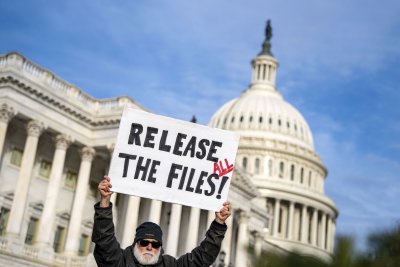
A demonstrator holds a poster during a press conference on the Epstein Files Transparency Act on Nov. 18 in Washington, D.C. On Wednesday, a New York federal judge ruled that the grand jury files in the case against Jeffrey Epstein can be released. File Photo by Bonnie Cash/UPI | License Photo

Dec. 10 (UPI) — A federal judge in New York said Wednesday that the 2019 grand jury files in the case against convicted sex offender Jeffrey Epstein can be released.

U.S. District Judge Richard Berman had denied a previous request by the Department of Justice. Grand jury proceedings are normally sealed. But the Epstein Files Transparency Act — signed into law on Nov. 19 — now allows for the release, Berman said.

“The Court hereby grants the Government’s motion in accordance with the Epstein Files Transparency Act and with the unequivocal right of Epstein victims to have their identity and privacy protected,” he said in the four-page ruling.

A federal judge in Florida on Dec. 5 ordered the release of grand-jury transcripts from the investigation against Epstein from 2005 to 2007. That investigation was abandoned.

The ruling comes one day after a similar ruling in which a judge allowed the release of grand jury files in the case of Epstein’s accomplice, Ghislaine Maxwell, who is serving 20 years for child sex trafficking. Epstein died by suicide in prison in 2019.

Congressional Democrats recently released photos of Epstein’s private island, Little St. James, in the U.S. Virgin Islands.

President Donald Trump walks on the South Lawn of the White House after arriving on Marine One in Washington on Tuesday. Trump said people were “starting to learn” the benefits of his tariff regime. Photo by Graeme Sloan/UPI | License Photo

Source link

‘So help me God’: S.C. atheist calls oath requirement unconstitutional

Dec. 10 (UPI) — A South Carolina atheist is suing for the right to serve as a poll worker without having to swear an oath to God.

James Reel alleges a requirement that citizens make a statement of belief in a monotheistic deity or forgo working at the polls violates the constitutional rights of nontheists or those who worship more than one deity.

The Greenville County resident became passionate about defending the American form of governing after observing negative political rhetoric during the 2020 election designed to undermine public trust in the electoral process, according to his suit. Reel decided to train as a poll worker.

But after completing three online courses in December 2023 and beginning in-person training, Reel learned he would be required to take an oath that ends with “so help me God.” He asked instead to be allowed to use a secular affirmation, which is a solemn vow without reference to a religious deity, but election officials denied the request.

The Freedom From Religion Foundation, a national nonprofit based in Madison, Wis., stepped in last year to help.

In letters to the South Carolina Election Commission and the Greenville County Voter Registration and Elections Board in late 2024 and early 2025, foundation staff attorney Madeline Ziegler said Reel does not want to profess a belief in a god, “which would make a mockery out of the oath and the solemn promise to support both the federal and state constitutions.”

The distinction between an oath and affirmation is critical because the opportunity to substitute an affirmation is required under federal law, Ziegler said.

“Article 6 of the United States Constitution prohibits the government from requiring any kind of religious test for public office, including to volunteer as a poll worker,” she wrote.

The required oath of office for public officials is in Article III, Section 26 of the South Carolina Constitution and in Title 7, Chapter 13 of the state code.

It says: “I do solemnly swear (or affirm) that I am duly qualified, according to the Constitution of this State, to exercise the duties of the office to which I have been appointed, and that I will, to the best of my ability, discharge the duties thereof, and preserve, protect and defend the Constitution of this State and of the United States. So help me God.”

To be appointed as a poll worker, state code requires citizens to take a training course conducted by one of the 46 county boards of voter registration and elections. Howard Knapp, the now former executive director of the election commission, said current policies and procedures make no particular reference to the contents of the oath, which must be signed by the prospective poll worker.

Although the commission has the authority to set policy on the conduct of elections by the county boards, “this grant of authority does not extend to a power to create election related policies and procedures that contradict explicit statutory requirements, and then instruct the county boards to ignore what is clearly stated in the code,” Knapp said in a January letter.

He added the commission has limited oversight authority over the boards, which are independent county government offices.

Bob Schaffner, chairman of the Greenville County Voter Registration and Elections Board, responded to the foundation that the board is subject to South Carolina laws and standard procedures determined by the State Election Commission in the Poll Manager Handbook issued to all poll workers.

The board is unaware of any specific complaint and the issue has never been raised in his 28 years of service, said Schaffner, who recently retired. He said in a March letter that the South Carolina attorney general might be a better agency to get clarification on state law.

After the requests for a secular affirmation were rejected, South Carolina attorney Steven Edward Buckingham and foundation attorneys Sam Grover and Kyle Steinberg acting as co-counsel filed suit on Reel’s behalf.

The suit, filed Oct. 8 in United States District Court for the District of South Carolina, names as defendants Jenny Wooten, executive director of the South Carolina State Election Commission; Conway Belangia, director of Voter Registration & Elections in Greenville County; and the Greenville County Voter Registration & Elections Board. Wooten and Belangia are being sued in their official capacities.

The lawsuit alleges violations of Article VI and the First Amendment’s free speech, free exercise of religion and establishment of religion clauses. Reel is seeking a permanent injunction against requiring poll workers to swear “so help me God” and the provision of a secular affirmation.

The suit says the state of South Carolina routinely allows attorneys, jurors, witnesses and many others to make a secular affirmation as a matter of conscience.

The oath mandate bars a growing number of people from serving as poll workers, according to the suit, which cites a 2024 Pew Research Center report that says about 28% of the population is religiously unaffiliated. In South Carolina, approximately 16% are unaffiliated.

Foundation Co-president Annie Laurie Gaylor called the oath requirement a “discriminatory and blatantly unconstitutional practice.”

“Jim Reel, a veteran who wants to continue serving his community as a poll worker, should be congratulated, not barred simply because he is an atheist,” Gaylor said.

In answers to the suit filed late last month, the defendants deny they are violating individuals’ rights and assert their actions in their official capacity were taken in good faith in compliance with existing state law and the South Carolina Constitution. They also argue they have immunity from being sued and ask that the suit be dismissed.

The lawsuit and foundation letters cite previous complaints about requirements to swear an oath referencing a belief in God to qualify to serve in a position or run for an office.

The U.S. Supreme Court ruled unanimously in 1961 that the states and the federal government could not force a person to profess a belief or disbelief in any religion because the requirement violated the Constitution.

The justices found in favor of Roy Torcaso, a Maryland man whose appointment as a notary public was revoked after he refused to take an oath declaring the existence of God.

In 1992, Herb Silverman’s application to be a notary public in South Carolina was denied because he crossed out the words “so help me God” on the form. He filed suit, and the state Supreme Court issued a unanimous ruling that the religious test requirement to hold public office violated the U.S. Constitution.

The foundation has brought two similar lawsuits recently. James Tosone, a nontheist, ran unsuccessfully for the New Jersey Senate in 2017 and 2021 and for the U.S. House of Representatives in 2018, and each time, he had to swear “so help me God” because there was no secular option for candidates for public office.

Since 2022, Tosone had sought to run for election, but was no longer willing to take the oath. The foundation, which alleged the secretary of state and the state of New Jersey were coercing a statement of belief in a monotheistic deity by requiring nontheists or those who worship more than one deity to swear “so help me God, filed suit in federal court in October 2023. The suit was settled in about a month after the state agreed to adopt a secular affirmation option.

In 2021, the foundation sued Alabama for requiring people who were registering to vote to sign an oath on a form that concluded, “so help me God.” A settlement allowed voters to check a box declining to include those four words.

Source link

U.S. sanctions network recruiting Colombians to fight in Sudan

Dec. 10 (UPI) — The United States has blacklisted a network of four Colombians and four entities accused of recruiting former Colombian military personnel to fight in Sudan’s civil war.

The sanctions were announced Tuesday by the U.S. Treasury, which said the network was aiding the Rapid Support Forces, a breakaway paramilitary unit that has been accused of committing ethnic cleansing and genocide in the nearly 1,000-day-old conflict.

The RSF has been waging war against the Sudanese Armed Forces since April 2023. According to the Treasury, the RSF has recruited hundreds of former Colombian military personnel since September 2024.

The Colombian soldiers provide the RSF with tactical and technical expertise. They serve as infantry, artillerymen, drone pilots, vehicle operators and instructors, with some even training children, according to the Treasury.

“The RSF has shown again and again that it is willing to target civilians — including infants and young children. Its brutality has deepened the conflict and destabilized the region, creating the conditions for terrorist groups to grow,” John Hurley, undersecretary for the Treasury for Terrorism and Financial Intelligence, said in a statement.

Colombian soldiers have aided the RSF in its late October capture of El Fasher in North Darfur following an 18-month assault, while committing alleged war crimes along the way, including mass killings, sexual violence and ethnically targeted torture.

The Treasury identified and sanctioned Alvaro Andrew Quijano Becerra, a 58-year-old retired Colombian military officer, who is accused by the United States of playing a leading role in the network from the United Arab Emirates. His Bogota-founded International Services Agency was also sanctioned for seeking to fill drone operator, sniper and translator roles for the RSF via its website, group chats and town halls.

Colombia-based employment agency Maine Global Corp., Colombia-based Comercializadora San Bendito and Panama-based Global Staffing S.A. were the other three entities sanctioned.

The other three individuals blacklisted were Claudia Viviana Oliveros Forero, Quijano’s 52-year-old wife; Mateo Andres Duque Botero, 50, the manager of Maine Global; and Monica Munoz Ucros, 49, Maine Global’s alternate manager and manager of Comercializadora San Bendito.

“Today’s sanctions disrupt an important source of external support to the RSF, degrading its ability to use skilled Colombian fighters to prosecute violence against civilians,” State Department spokesperson Thomas Pigott said in a statement.

Sanctions freeze U.S.-based assets of those named while barring U.S. persons from doing business with them.

Source link

Reports: Kentucky State University shooting leaves 1 dead, 1 hospitalized

Dec. 9 (UPI) — A suspect has been arrested and the campus secured following a shooting that killed one and left another hospitalized Tuesday afternoon at Kentucky State University in Frankfort.

The Frankfort Police Department responded to an emergency call reporting an active aggressor at the KSU campus at 3:35 p.m. EST, WKYT reported.

Two students were shot, with one deceased and the other hospitalized in critical condition, ABC News reported.

Officials with the Frankfort police said the campus remained on lockdown until further notice as of 4:35 p.m.

Kentucky Gov. Andy Beshear announced that he is aware of the shooting and a suspect was arrested.

The shooting occurred near the residential Witney M. Young Jr. Hall and was due to a personal dispute, according to the Frankfort Police Department.

“At this time, there is no ongoing threat to the campus community,” university officials told students in a statement.

University officials told CNN they are “in the process of gathering accurate and complete information” before providing media with an official statement.

Frankfort is located 40 miles northwest of Lexington, and KSU has more than 2,200 enrolled students and 450 faculty and staff.

The university is a historically black university that was founded in 1886.


Source link

Gene Simmons, others testify on proposed American Music Fairness Act

Dec. 9 (UPI) — KISS co-founder Gene Simmons and others testified for and against the proposed American Music Fairness Act during a Senate Judiciary subcommittee hearing Tuesday in Washington.

Simmons told the Senate Judiciary Intellectual Property Subcommittee that he supports the bill that would force AM/FM radio stations to pay royalties to the copyright holders of respective works played, according to Roll Call.

“It looks like a small issue [when] there are wars going on and everything,” Simmons said. “But our emissaries to the world are Elvis and Frank Sinatra.”

He said artists such as Elvis, Sinatra and Bing Crosby are treated “worse than slaves” by radio broadcasters.

“Slaves get food and water,” Simmons said. “Elvis and Bing Crosby and Sinatra got nothing for their performance.”

Also testifying in support of the proposed act was Michael Huppe, president and chief executive officer of SoundExchange, which helps music creators to collect royalties whenever their music is played internationally.

He said radio corporations made $250 billion in ad revenue over the past 16 years, while recording artists “were paid exactly zero.”

Broadcasters are using “other people’s property” to make money without paying them, and the United States is the only country that does not pay performers when they music is played on radio, Huppe said, adding that “even Russia and China pay.”

He said online streaming services pay recording artists, but not AM/FM stations.

Broadcasters once argued that radio promoted artists and new music, Huppe explained, but that no longer is the case.

He said most people now are exposed to new music online and via social platforms, such as TikTok and YouTube.

“The days of hearing a song on the radio and going out and buying a CD or an album at a store are long gone,” Huppe told the subcommittee.

Because the United States does not require royalty payments when songs are played on AM/FM radio, foreign governments do not pay royalties to U.S.-based artists.

Instead, he said nations like France collect royalties on U.S.-made music from French broadcasters and give them to French musical artists.

All other music delivery platforms pay artists, but AM/FM does not despite making nearly $14 billion in advertising last year from playing music, Huppe explained.

Broadcast radio stations pay DJs, talk show radio hosts and artists when the same programming is paid online, but not when they are played on analog broadcasts and AM/FM radio.

“No legitimate business or policy reason can justify that difference,” he said.

Opposing the proposed American Music Fairness Act, Henry Hinton, president of Inner Banks Media and longtime talk radio host in North Carolina, said the nation’s more than 5,100 free radio stations would suffer harm if it became law.

“I know firsthand the value and collaborative partnership of our stations and what we have with recording artists,” Hinton said, “but make no mistake: I also know firsthand that a new performance royalty imposed on local radio will create harm for stations, listeners and these very same artists.”

He called broadcast radio a “uniquely free service” that serves local communities “in a way that no other media can.”

Examples include hosting radiothons to raise money for local causes and providing “entertainment, inspiration and information,” including during emergencies and natural disasters.

Radio stations inform people of approaching danger and stay on the air, which at times is the only means of communication between emergency services personnel and the general public.

The Senate Judiciary subcommittee hearing lasted about 1.5 hours.

Attorney General Pam Bondi (C), FBI Director Kash Patel (R), U.S. Attorney for the District of Columbia Jeanine Pirro and others hold a press conference at the Department of Justice Headquarters on Thursday. The FBI arrested Brian Cole of Virginia, who is believed to be responsible for placing pipe bombs outside the Republican and Democratic party headquarters the night before the January 6, 2021, insurrection. Photo by Bonnie Cash/UPI | License Photo

Source link

Imprisoned former Colorado clerk Tina Peters seeks pardon from Trump

Dec. 9 (UPI) — Former Colorado clerk Tina Peters seeks a pardon from President Donald Trump after her request to be released via a writ of habeas corpus was denied.

Peters, 70, was the Mason County (Colo.) clerk and kept a copy of Colorado’s 2020 election results as reported by Dominion Voting Systems, according to her attorney.

Attorney Peter Ticktin wrote the president on Saturday while seeking Peters’ pardon and said other inmates have threatened and attacked her several times, The Hill reported.

“About 6 months ago, Mrs. Peters was threatened with harm … by a group of inmates” who said they would “stab and kill her,” Ticktin wrote.

“This was reported to the FBI and DOJ, which had agents interview her,” he said, adding that she was moved to a different unit.

“In the new unit, she was attacked by other prisoners three times in different locations where guards had to pull inmates off of her,” Ticktin said.

Peters has sought a transfer to a safer unit six times, but was denied each time, Axios Denver reported.

‘They stole our whole country’

Peters is serving a nine-year sentence after being convicted in 2024 of attempting to influence a public official, conspiracy to commit criminal impersonation, first-degree official misconduct, violation of duty and failure to comply with Colorado Secretary of State requirements.

Ticktin called her trial a “travesty” and said she was not allowed to raise her defenses.

“Tina Peters is a critical and necessary witness to the most serious crime perpetrated against the United States in history,” he wrote. “They stole our whole country for four years.”

He accused Dominion officials of carrying out an “illegal operation on our soil, which was supported and controlled by foreign actors.”

Ticktin said Dominion officials told Colorado Secretary of State Jena Griswold to help delete all data collected by Dominion voting machines and demanded criminal charges be filed against Peters when they learned she had a lawful copy of the state’s 2020 election data.

He told the president that Peters’ copy of that data is “essential” and that she is a “necessary and material witness” who can testify regarding chain of custody and other evidence regarding alleged misconduct during the 2020 election in Colorado.

Release petition denied

The pardon request preceded U.S. District Court of Colorado Chief Magistrate Judge Scott Varholak on Monday denying Peters’ request to be given a bond and released from prison pending the outcome of an active appeal of her conviction that is active in the Colorado Court of Appeals.

Varholak said three conditions must exist for a federal court to intervene in a state-level case and grant a writ of habeas corpus in the matter.

One is that there is an ongoing case, which her appeal satisfied, while another is that there be an important state interest, which Varholak agreed exists in the matter.

The third condition is that there be an adequate opportunity to raise federal claims in the state court proceeding, and the judge ruled her bond request satisfies that requirement.

When the three conditions are met, the federal court then must determine if one of three exceptions apply for it to intervene in a state case.

The exceptions are that the prosecution was done in bad faith or to harass the petitioner, is unconstitutional or related to any other extraordinary circumstances that create a “‘threat of irreparable injury, both great and immediate,'” Varholak explained.

He said Peters did not establish grounds for the federal court to determine one or more of the exceptions apply in her case and dismissed without prejudice her writ of habeas corpus petition.

Source link

BLS: Job openings rose slightly in October

Dec. 9 (UPI) — Job openings inched up slightly in October, despite fears of shrinkage.

The Bureau of Labor Statistics released its government shutdown-delayed October Job Openings and Labor Turnover Summary Tuesday, showing a small uptick in job openings that month.

But the job market isn’t rosy quite yet. Hiring stalled, layoffs increased and employees did not quit their jobs. The voluntary quits rate was at a five-year low.

The report also includes some data from September, which hadn’t been released because of the government shutdown from Oct. 1 to Nov. 12. The October data also was affected by the agency’s inability to collect data during the month.

At the end of October, there were about 7.67 million job openings in the United States, which is a slight raise from 7.66 million in September and 7.23 million in August, the report said.

In October, the number and rate of total separations (quits, layoffs, firings) were little changed at 5.1 million and 3.2%. The number of total separations decreased in health care and social assistance by 111,000 and in the federal government by 34,000.

The quits were at 2.9 million and 1.8%, which was down by 276,000 over the year. A drop in quits can indicate a lack of confidence in the job market.

The Federal Reserve is expected to release its decision on interest rates on Wednesday.

Furloughed federal workers line up as Jose Andres’ World Central Kitchen’s Relief Team sets up a free meal distribution site in Washington, D.C., on Monday. Photo by Bonnie Cash/UPI | License Photo

Source link

Judge orders grand jury evidence, transcripts released in Ghislaine Maxwell case

Dec. 9 (UPI) — A federal judge in New York on Tuesday granted a Justice Department request to release the grand jury files from the indictment hearing of convicted sex trafficker Ghislaine Maxwell.

Maxwell’s attorney David Oscar Markus had argued against releasing the grand jury evidence. In a filing, Markus wrote that Maxwell “does not take a position” on the Justice Department’s request to unseal the material, but said that releasing the material “would create undue prejudice” and prevent “the possibility of a fair retrial.”

U.S. District Judge Paul Engelmayer on Tuesday ordered the release of grand-jury transcripts and evidence from the case against Maxwell, who is serving 20 years in prison for sex trafficking of minors.

He also ordered the release of evidence shared between the prosecution and defense before Maxwell’s trial, but said that the Justice Department should take care not to release any identifying information on the victims. He said the Justice Department filed a motion to unseal grand jury materials in July but didn’t notify the victims. He ordered that a district attorney must “personally certify” that the material is “rigorously reviewed” before its release.

The new law passed last month by Congress requires the release of the Epstein files by Dec. 19. The Epstein Files Transparency Act was passed and signed by President Donald Trump on Nov. 19.

The new law’s language is “strikingly broad,” Engelmayer wrote. Congress’s “decision not to exclude grand jury materials despite knowledge as to their existence, while expressly excluding other categories of materials (such as classified information), indicates that the Act covers grand jury materials.”

On Dec. 5, U.S. District Judge Rodney Smith of Florida ordered the release of grand-jury transcripts from the investigation against Epstein from 2005 to 2007. That investigation was abandoned.

While awaiting trial in 2019, Epstein died by suicide in jail.

Lisa Phillips, a survivor of Jeffrey Epstein and Ghislaine Maxwell, speaks out during a rally with other survivors on Capitol Hill in Washington on September 3, 2025. Photo by Anna Rose Layden/UPI | License Photo

Source link

Supreme Court to hear arguments in campaign spending case

Dec. 9 (UPI) — The U.S. Supreme Court is scheduled to hear arguments Tuesday in a case questioning whether limits on how much political parties can spend in support of candidates violate the First Amendment of the Constitution.

The National Republican Senatorial Committee brought the case against the Federal Election Commission, saying the spending limits restrict the parties’ abilities to reach and influence voters, The New York Times reported.

The FEC has set limits on coordinated spending according to each state’s voting-age population and number of members in Congress.

Attorneys for Public Citizen, a voter advocacy group, filed a brief to the Supreme Court in support of maintaining the limits.

“If those contributions, which dwarf the base limits on [individual] contributions to candidates, are effectively placed at a candidate’s disposal through coordinated spending, they become potent sources of actual or apparent corruption,” the brief said.

The effort to free up coordinated spending is one of many in recent years by Republicans that have sought to loosen campaign purse strings across the board, including the 2010 Supreme Court ruling in Citizens United vs. FEC.

The Democratic National Committee, meanwhile, is expected to argue in favor of preserving coordinated spending limits, first enshrined in 1974 as a way to prevent bribery.

“This has been held constitutional at least twice before by the Supreme Court and more times by lower courts,” Democratic attorney Marc Elias said, according to ABC News.

Attorney General Pam Bondi (C), FBI Director Kash Patel (R), U.S. Attorney for the District of Columbia Jeanine Pirro and others hold a press conference at the Department of Justice Headquarters on Thursday. The FBI arrested Brian Cole of Virginia, who is believed to be responsible for placing pipe bombs outside the Republican and Democratic party headquarters the night before the January 6, 2021, insurrection. Photo by Bonnie Cash/UPI | License Photo

Source link

Cameroon Struggles with HIV Testing amid Sharp Drop in U.S. Aid

Cameroon is experiencing a severe shortage of HIV/AIDS test kits following a 74 per cent reduction in financial assistance from the United States Agency for International Development (USAID). The US agency funding in Cameroon has focused on health initiatives, including HIV/AIDS, malaria, and tuberculosis; humanitarian aid, such as food security and support for refugees, and governance. However, significant cuts to this funding in 2025 have adversely affected many health projects, forcing Cameroon to revise its budget.

The United States is the largest bilateral donor of humanitarian assistance in Cameroon, contributing over $650 million annually since 2014. This funding has provided emergency food assistance to more than 1.4 million people, delivered essential relief supplies, and promoted maternal and child health initiatives.

The Adamawa region of the country is facing a significant shortage of HIV/AIDS test kits, making it one of the hardest-hit areas. According to the Regional Technical Group for the fight against HIV/AIDS, the situation in the region is critical. Approximately 5.5 per cent of individuals living with the virus are unaware of their serological status, and 4 per cent of those infected have not yet started antiretroviral treatment.

Among those receiving effective treatment, 9.4% have not yet achieved the goal of suppressing the viral load, a necessary condition for slowing down the transmission of the virus. Recently, a sensitisation march took place in Ngaoundere, the regional capital of Adamawa. During this event, the Regional Technical Group for the fight against HIV-AIDS urged the community to remain vigilant. They also encouraged individuals living with HIV to consistently adhere to their medication regimen.

Despite a 74 per cent reduction in USAID funding, Cameroon continues to provide antiretroviral treatment to AIDS patients.

At the HIV-AIDS unit of the Protestant Hospital of Ngaoundere, which serves approximately 2,000 patients, access to testing, the critical first step, is currently very limited. This restriction complicates the identification of new cases and hinders referrals to available treatment options.

In 2024, Cameroon was estimated to have 480,232 people living with HIV, with approximately 10,000 new cases recorded that year. Although HIV remains a significant public health challenge, there has been encouraging progress, including a 50% reduction in HIV prevalence among individuals aged 15 to 64 over the past 14 years. According to the most recent Demographic Health Survey (DHS) conducted in 2018, the prevalence decreased from 5.4 per cent in 2004 to 4.3 per cent in 2011, and further down to 2.7 per cent in 2018.

Hamsatou Hadja, the permanent secretary of Cameroon’s National AIDS Control Committee, attributed the decline in HIV cases to a targeted strategy. “The fight against HIV is organised around a national vision aimed at eliminating AIDS as a public health threat by 2030. This involves reducing new infections, deaths, and the stigma associated with HIV,” Hamsatou said.

The country is on track to achieve the global “95-95-95” target, which aims for 95 per cent of people living with HIV to know their status, 95 per cent of those who know their status to be on treatment, and 95 per cent of those on antiretroviral therapy to have a suppressed viral load. According to the Committee, the rates in 2022 were 95.8 per cent, 92.3 per cent, and 89.2 per cent, respectively.

USAID funding cuts in 2025 have had widespread consequences across Africa, undermining health systems and humanitarian programs. Cameroon’s HIV/AIDS crisis is part of this broader trend, where reduced U.S. support has disrupted testing and treatment services.

Cameroon faces a severe shortage of HIV/AIDS test kits following a 74% funding reduction from USAID in 2025. USAID has been the largest bilateral donor in Cameroon, providing over $650 million annually and supporting health, humanitarian, and governance projects. The cut adversely affects HIV/AIDS testing and treatment, especially in the Adamawa region, where a significant portion of the population is unaware of their HIV status.

Progress has been made in reducing HIV prevalence, with a decrease from 5.4% in 2004 to 2.7% in 2018, and Cameroon is working towards the global “95-95-95” target for HIV. Despite funding cuts, the country continues to provide antiretroviral treatment, but the USAID cutbacks have generally disrupted health services. The National AIDS Control Committee attributes progress to targeted strategies and is committed to overcoming these challenges to eliminate AIDS by 2030.

Source link

Judge orders testimonies in contempt inquiry over deportation flight

Dec. 9 (UPI) — A federal judge has ordered two senior Justice Department attorneys, including one fired by the Trump administration, to testify before the court in its inquiry into a March deportation flight that proceeded in defiance of court orders.

Chief Judge James Boasberg of the U.S. District Court in Washington, D.C., on Monday ordered Erez Reuveni, a former Justice Department attorney-turned-whistleblower, to testify the morning of Dec. 15. Drew Ensign, a senior Justice Department official, is to testify the afternoon of Dec. 16.

“Both sides shall appear in person at such hearings and will have the opportunity to question witnesses,” Boasberg said in his order.

The case centers on a March 15 deportation flight of 100 Venezuelans to El Salvador under the Alien Enemies Act, which was last used to deport Japanese Americans during World War II.

The flight departed amid litigation over President Donald Trump‘s invocation of the AEA. As it departed, Boasberg issued an order for the plane to return, which it did not occur.

Earlier this month, Homeland Security Secretary Kristi Noem admitted she was responsible for allowing the plane to complete its flight, stating she made the decision prior to Boasberg issuing his temporary restraining order.

Boasberg has launched an inquiry to determine whether Noem’s decision was a willful violation of the court’s order.

In his order Monday, Boasberg said it “would be premature” to refer Noem for prosecution for criminal contempt and ordered the testimony of Reuveni and Ensign “to better understand the bases of the decision to transfer the deportees out of the United States’ custody in the context of the hearing on March 15, 2025.”

Reuveni, a 15-year DOJ veteran, was fired after acknowledging in court in April that the Trump administration wrongly deported Kilmar Abrego Garcia to El Salvador.

After his firing, he filed a whistleblower complaint alleging that Emil Bove, a former criminal attorney on Trump’s personal defense team, directed the Trump administration to disregard a court order to stop the deportation flight.

Ensign is being asked to testify as the government’s attorney of record during the March 15 hearing.

Noem, in a brief Dec. 4 sworn statement to the court, said she made the decision for the deportation flight to continue, and had done so after receiving “privileged legal advice” from Trump administration counsel.

Source link

Florida designates Muslim Brotherhood, CAIR as foreign terrorist groups

Dec. 9 (UPI) — Florida has designated the Muslim Brotherhood and the Council on American-Islamic Relations as foreign terrorist organizations, becoming the second GOP-led state in as many months to move against the Islamic groups.

Florida Gov. Ron DeSantis said in a Monday statement that the designations were “EFFECTIVE IMMEDIATELY.”

“Florida agencies are hereby directed to undertake all lawful measures to prevent unlawful activities by these organizations, including denying privileges or resources to anyone providing material support,” the Republican governor and President Donald Trump ally said.

The executive order signed by DeSantis accuses the Muslim Brotherhood of supporting and being affiliated with “political entities and front organizations that engage in terrorism and funnel money to finance terrorist activities.”

CAIR, the order alleges, was founded by persons connected to the Muslim Brotherhood.

The order also designates them based on their alleged connections to Hamas, an Iran-backed militant group in the Palestinian enclave of Gaza.

The designations, issued under state authority and while mostly symbolic, can prohibit contracts with the groups and bar them state funds and resources, among other measures.

On the governor’s personal X account, DeSantis said that members of the GOP-controlled Florida legislature were “crafting legislation to stop the creep of sharia law, and I hope that they codify these protections for Floridians against CAIR and the Muslim Brotherhood in their legislation.”

CAIR, and its Florida branch, were swift to respond, announcing they will sue Florida over the designation, which they called “defamatory and unconstitutional.”

The United States’ largest Muslim organization accused DeSantis of serving the Israeli government over residents of his state and of seeking to silence Americans critical of U.S. support for alleged Israeli war crimes.

“Gov. DeSantis knows full well that CAIR-Florida is an American civil rights organization that has spent decades advancing free speech, religious freedom and justice for all, including for the Palestinian people. That’s precisely why Gov. DeSantis is targeting our civil rights group,” CAIR National and CAIR-Florida said in a joint statement.

“We look forward to defeating Gov. DeSantis’ latest Israel First stunt in a court of law, where facts matter and conspiracy theories have no weight.”

The Muslim Brotherhood was founded in Egypt in the 1920s, renounced violence in the 1970s and now provides a mixture of religious teaching with political activism and social support, such as operating pharmacies, hospitals and schools, according to the Council on Foreign Relations.

CAIR was founded in 1994 with the mission to promote justice, protect civil rights and empower American Muslims. CAIR condemns all acts of terrorism by any group designated by the United States as a terrorist organization, including Hamas.

Neither the Muslim Brotherhood nor CAIR has been designated as terrorist organizations by the U.S. government.

However, President Donald Trump last month, via executive order, directed the Treasury and State Department to evaluate if any chapter of the Muslim Brotherhood in the United States should be blacklisted.

The Trump administration has accused the Muslim Brotherhood of fueling terrorism in the Middle East, highlighting actions by alleged members following Hamas’ Oct. 7, 2023, attack on Israel.

The federal government, under Trump, has repeatedly taken action against individuals and organizations that have criticized Israel over its war in Gaza, including revoking visas from students studying in the United States and fining universities over alleged failures to protect Jewish students during pro-Palestine protests that erupted on their campuses.

Federal immigration authorities last month detained British journalist and political commentator Sami Hamdi, who was on a CAIR speaking tour in the United States. He was released a little more than a week later under an agreement with the United States to leave the country.

No explicit reason for his detention was given, though Homeland Security spokesperson Tricia McLaughlin had said “those who support terrorism and undermine American national security will not be allowed to work or visit the country.”

Texas was the first state to designate CAIR and the Muslim Brotherhood on Nov. 18.

Source link

Rep. Jasmine Crockett launches U.S. Senate bid in Texas

Rep. Jasmine Crockett, D-Texas, speaks at the 2024 Democratic National Convention at the United Center in Chicago, Illinois on August 19, 2024. On Monday, Crockett announced she was launching a U.S. Senate bid in Texas and would vacate the 30th Congressional District seat she has held since 2023. File Photo by Tannen Maury/UPI | License Photo

Dec. 8 (UPI) — Rep. Jasmine Crockett, a Democrat and fierce Trump critic, announced Monday she was launching a high-stakes U.S. Senate campaign in Texas, the same day Democratic primary opponent Colin Allred dropped out.

Crockett, who filed just hours before the deadline, will face Democratic Rep. James Talarico of Austin in the March 3rd primary, as she tries to turn incumbent Republican Sen. John Cornyn‘s seat from red to blue.

“For too long, Texas has elected senators who have defended politics as usual and protected the status quo, while Texans have paid the price,” Crockett said on her website. “We’ve had senators who have pushed the American Dream further and further out of reach.”

“I’m running for the U.S. Senate because I believe Texas deserves a senator who will be an independent voice for all 30 million Texans — not a rubber stamp or party line vote for Donald Trump.”

Crockett’s primary opponent Talarico on Monday welcomed her to the race after Allred dropped out.

“We’re building a movement in Texas — fueled by record-breaking grassroots fundraising and 10,000 volunteers who are putting in the work to defeat the billionaire mega-donors and puppet politicians who have taken over our state,” Talarico said. “Our movement is rooted in unity over division — so we welcome Congresswoman Crockett into this race.”

Rep. Allred of Dallas decided Monday not to run in the U.S. Senate primary and opted instead to run for the newly-drawn 33rd Congressional District in Dallas County after the U.S. Supreme Court ruled last week that the redrawn map, which favors Republicans, could be used in the 2026 election.

In a statement, Allred admitted Crockett played a part in his decision to drop out.

“In the past few days, I’ve come to believe that a bruising Senate Democratic primary and runoff would prevent the Democratic party from going into this critical election unified against the danger posed to our communities and our Constitution by Donald Trump and one of his Republican bootlickers Paxton, Cornyn or Hunt,” Allred said earlier Monday.

The winner of the Democratic Senate primary will face one of three Republican primary opponents in the midterm elections, Republican incumbent Sen. John Cornyn, Attorney General Ken Paxton or U.S. Rep. Wesley Hunt.

On Monday, Paxton commented in a post on X saying, “everyone knows Crockett will be soundly defeated,” as he also focused on Cornyn’s campaign spending and lower standing in the polls.

Paxton has been vocal about Texas’ redrawn district map and the order’s appeal to the U.S. Supreme Court. Last month, he predicted the Supreme Court would “uphold Texas’s sovereign right to engage in partisan redistricting,” after he criticized partisan gerrymandering in Democratic-led states, including California, Illinois and New York.

Texas Republicans have not lost a statewide office in more than three decades. Crockett’s decision to run for the Senate also opens up the 30th Congressional District seat she has held since 2023.

Violeta Chamorro, Nicaragua

President-elect of Nicaragua Violeta Chamorro makes victory signs after attending Sunday service in Houston on March 11, 1990. Chamorro was the first woman elected president of Nicaragua and the first female president in the Americas. She led the country from 1990 to 1997 following the end of the Contra War. Photo by George Wong/UPI | License Photo

Source link

U.S. border agents confiscate 30K Tramadol pills

U.S. Customs and Border Protection said Monday it seized a case of Tramadol pain pills with an estimated street value at $150,000.

On Thursday, Cincinnati CBP officers seized a shipment that contained some 30,000 Tramadol tablets. Photo courtesy of U.S. Customs and Border Protection

Dec. 8 (UPI) — U.S. Customs and Border Protection said Monday it seized a case of Tramadol pain pills with an estimated street value at $150,000.

On Thursday, Cincinnati CBP officers seized a shipment that contained some 30,000 Tramadol tablets, officials said.

The Tramadol pain killer a schedule IV substance under the Controlled Substance Act due to its potential for abuse.

“Most people hear about CBP seizing narcotics shipments,” said Director of Field Operations LaFonda D. Sutton-Burke, Chicago Field Office.

“However, shipments of illegal prescription pills are very dangerous too,” Sutton-Burked said in a statement.

CBP agents routinely screen international passengers and cargo at ports of entry nationwide for narcotics, weapons and other U.S.-prohibited items.

A shipment from Barbados bound for St. Kitts-Nevis was intercepted and inspected for clearance in the United States.

Officers discovered small boxes inside containing 30 push pill tabs each totaling 30,000 tablets of 50mg Tramadol.

CBP’s Chicago field director confirmed the pills were “not regulated by the FDA.”

Tramadol is a prescribed medication to relieve moderate to nearly severe pain and, similar to opioid analgesics, it works by altering the brain’s perception of pain.

It’s frequently abused in narcotic addiction, chronic pain patients and healthcare professionals.

Federal officials urged international buyers to verify purchases and ensure imports comply with all state and U.S. regulations.

Source link

Trump White House announces $12B farm aid package

Dec. 8 (UPI) — U.S. President Donald Trump announced Monday a $12 billion dollar aid package to help American farmers hit hard by inflation, tariffs and China’s trade war to “provide much needed certainty” for next year’s crops.

Trump unveiled the aid package with Treasury Secretary Scott Bessent and Agriculture Secretary Brooke Rollins at a White House roundtable, where they were joined by farmers in soybean, corn, rice, cattle, potatoes, sorghum and the cotton industry.

“I’m delighted to announce this afternoon that the United States will be taking a small portion of the hundreds of billions of dollars we receive in tariffs … We’re going to use that money to provide $12 billion in economic assistance to American Farmers,” Trump said.

“This relief will provide much needed certainty to farmers as they get this year’s harvest to market and look ahead to next year’s crops, and it’ll help them continue their efforts to lower food prices for American families,” Trump added.

Rollins said farmers can begin applying for the one-time funding within the next few weeks. The money will be distributed before Feb. 28.

A White House spokesperson said Monday’s rollout reflected Trump’s “commitment to helping our farmers, who will have the support they need.”

“We are going to create this bridge because, again, agriculture is all about the future, you’ve got to start financing for planting next year, when things will be very good,” Bessent said Sunday.

Monday’s aid announcement is the latest effort to help U.S. farmers negatively affected by the president’s tariff policies and other factors, such as a drop in crop prices. Farmers lost billions of dollars in sales after China stopped buying U.S. soybeans in May to retaliate against Trump’s tariffs.

The White House said last month that China plans to buy at least 12 million metric tons of soybeans, sorghum and “other farm products” before the end of the year, after Trump and Chinese President Xi Jinping reached a preliminary trade agreement in October.

“Since my successful meeting in South Korea with President Xi, purchases have been made, and soybeans are being exported out of the United States to China as we speak,” Trump told Monday’s roundtable.

The Agriculture Department confirmed last week a half million more metric tons of soybeans, sorghum and wheat were being shipped to Chinese shores.

Last month, the American Farm Bureau Federation issued a warning that aid was “urgently needed” as the money needed to grow crops exceeded farming revenues and farm bankruptcies were starting to rise.

Monday’s package sets aside $11 billion in one-off checks for crop producers under the U.S. Department of Agriculture’s Farmer Bridge Assistance initiative, while another $1 billion is reserved for commodities that fall outside that program’s coverage.

“President Trump is helping our agriculture industry by negotiating new trade deals to open new export markets for our farmers and boosting the farm safety net for the first time in a decade,” stated White House spokesperson Anna Kelly.

Rollins revealed last week that the federal government was planning to issue the bridge payments to farmers.

“What you’ve been able to do is open those markets up and again, move toward an era where our farmers are not so reliant on government checks, but have the markets to sell their product,” Rollins said. “Having said that, we do have a bridge payment we’ll be announcing with you next week, as we’re still trying to recover from the Biden years.”

On Monday, Senate Minority Leader Chuck Schumer, D-New York, accused Trump of taking credit for fixing his own mess.

“Trump’s tariffs are hammering our farmers, making it more expensive to grow food and pushing farmers into bankruptcy,” Schumer said. “Farmers need markets to sell to — not a consolation prize for the ones he wrecked.”

On Monday, Iowa cattle and soybean farmer Cordt Holub told Trump he appreciated the bridge payments, saying, “it’s Christmas early for farmers.”

Source link

Allred switches from Texas U.S. Senate race to a House comeback bid. Crockett’s Senate decision looms

Former Rep. Colin Allred is ending his U.S. Senate campaign in Texas and instead will attempt a House comeback bid, potentially paving the way for Rep. Jasmine Crockett to enter the race for Democrats’ nomination in a state that is critical for the party’s long-shot hopes to reclaim a Senate majority in next year’s midterm elections.

Crockett, a high-profile House member who has sparred with President Trump, is expected to announce her decision on Monday, the final day of qualifying in Texas. Democrats expect she will enter the race for the seat now held by Republican Sen. John Cornyn. Democrats need a net gain of four Senate seats to wrest control from Republicans next November, and Texas, which Republicans have dominated for decades, is part of their ideal path.

Allred said in a statement Monday that he wanted to avoid “a bruising Senate primary and runoff” that could threaten Democrats’ chances in November. He said he would instead run for the House in a newly drawn district in the Dallas-Fort Worth area, which he previously represented in Congress before he won the Democrats’ Senate nomination in 2024 and lost the general election to Sen. Ted Cruz.

The former congressman did not name Crockett or state Rep. James Talarico, who has launched his Senate bid already, in his explanation. But Allred’s decision aligns with Crockett’s expected entry into the race. Her campaign has scheduled a “special announcement” in Dallas at 4:30 p.m. CST.

Republicans also expect a hotly contested primary among the incumbent Cornyn, state Atty. Gen. Ken Paxton and U.S. Rep. Wesley Hunt.

Allred says he wants to avoid a divisive Democratic primary

An internal party battle, Allred said, “would prevent the Democratic Party from going into this critical election unified against the danger posed to our communities and our Constitution by Donald Trump and one of his Republican bootlickers.”

Kamau Marshall, a Democratic consultant who has worked for Allred before and worked other campaigns in Texas, said Allred made the right call. But he said Talarico and Crockett both face distinct challenges and added that Democrats have work to do across the nation’s second-most populous state.

He said Crockett is a “solid national figure” who has a large social media following and is a frequent presence on cable news. That could be an advantage with Democratic primary voters, Marshall said, but not necessarily afterward.

“It’s going to be a sprint from now until the primary, but in Texas you have to think about the voter base overall in November, too,” Marshall said. “Who can do the work on the ground? After the primary, who can win in the general? … It’s about building complicated coalitions in a big state.”

Talarico, meanwhile, must raise money and build name recognition to make the leap from the Texas House of Representatives to a strong statewide candidate, Marshall said.

A winning Democratic candidate in Texas, Marshall said, would have to energize Black voters, mainly in metro Houston and Dallas, win the kind of diverse suburbs and exurbs like those Allred once represented in Congress, and get enough rural votes, especially among Latinos in the Rio Grande Valley.

Texas Democrats have big gaps to make up

The closest Democrats have come recently to a top-of-the-ticket victory in Texas elections was Beto O’Rourke’s challenge of Republican Sen. Ted Cruz in 2018. O’Rourke campaigned in all 254 counties — a notable feat for Texas Democrats — and got 48.3% of the vote. But that was still a statewide deficit of 215,000 votes. Just four years later, O’Rourke was the gubernatorial nominee and lost to Republican Gov. Greg Abbott by more than 880,000 votes, a gap of nearly 11 percentage points. In 2024, Allred lost the Senate general election by nearly 960,000 votes or 8.5 points.

Allred’s new House district is part of the new congressional map that Texas’ GOP-run Legislature approved earlier this year as part of Trump’s push to redraw House boundaries to Republicans’ advantage. It includes some areas that Allred represented in Congress from 2019-25. Most of the district is currently being represented by Rep. Marc Veasey, but he has planned to run in a new, neighboring district.

A former professional football player and civil rights attorney, Allred was among Democrats’ star recruits for the 2018 midterms, when the party gained a net of 40 House seats, including multiple suburban and exurban districts in Texas, to win a House majority that redefined Trump’s first presidency.

Besides avoiding a free-for-all Senate primary, Marshall said Allred is helping Democrats’ cause by becoming a candidate for another office, and he said that’s a key for the party to have any shot at flipping the state.

“The infrastructure isn’t terrible but it clearly needs improvement,” he said. “Having strong, competitive candidates for every office is part of building that energy and operation. Texas needs strong candidates in House races, for governor, lieutenant governor, attorney general — every office — so that voters are hearing from Democrats everywhere.”

Barrow writes for the Associated Press.

Source link

Judge orders the release of an immigrant with family ties to White House press secretary

A Brazilian woman with family ties to White House press secretary Karoline Leavitt will be released from ICE custody while she fights potential deportation, an immigration judge ruled Monday.

Bruna Ferreira, 33, a longtime Massachusetts resident, was previously engaged to Leavitt’s brother, Michael. She was driving to pick up their 11-year-old son in New Hampshire when she was arrested by Immigration and Customs Enforcement agents in Revere, Mass., on Nov. 12.

Ferreira later was moved to a detention facility in Louisiana, where an immigration judge ordered that she be released on $1,500 bond, her attorney Todd Pomerleau said.

“We argued that she wasn’t a danger or a flight risk,” he said in a text message. “The government stipulated to our argument and never once argued that she was criminal illegal alien and waived appeal.”

The Department of Homeland Security previously called Ferreira a “criminal illegal alien” and said she had been arrested for battery, an allegation her attorney denied. Neither the department nor the White House press secretary responded to requests for comment Monday.

Pomerleau said his client came to the U.S. as a toddler and later enrolled in the Deferred Action for Childhood Arrivals program, the Obama-era policy that shields immigrants who were brought to the U.S. as children. He said she was in the process of applying for a green card.

Karoline Leavitt grew up in New Hampshire, and made an unsuccessful run for Congress from the state in 2022 before becoming Trump’s spokesperson for his 2024 campaign and later joining him at the White House.

Ramer writes for the Associated Press.

Source link

Petco cyber breach affects customer SSNs, DOBs, other private data

A Petco store pictured Sept. 2018 in Hampstead just outside of Wilmington, N.C. The pet retailer says a massive data breach hit an unspecified number of its U.S. customer base, stating it located the problem internally and “immediately took steps to correct the issue and to remove the files from further online access.” File Photo by Ken Cedeno/UPI | License Photo

Dec. 8 (UPI) — Pet retailer Petco says a massive data breach hit an unspecified number of its U.S. customer base.

Petco stated it located the problem internally and “immediately took steps to correct the issue and to remove the files from further online access.”

On Friday, Petco filed a legally mandated report with the Texas attorney general’s office that revealed compromised data encompassed names, dates of birth, Social Security and driver’s license numbers, and other financial details, including account and credit or debit card numbers.

A company spokesperson told TechCrunch that Petco had provided “further information to individuals whose information was involved.”

It added that new digital alterations included “additional security measures and technical controls to enhance the security of our applications.”

Petco officials wrote in a notification letter filed with California’s attorney general they discovered a “setting within one of our software applications that inadvertently allowed certain files to be accessible online.”

California law requires breach disclosures when 500 or more state residents are affected, indicating Petco’s cyber incident met or exceeded that threshold.

In addition, the pet company has also informed customers in Massachusetts and Montana and has provided free credit and identity theft monitoring to those affected.

Petco has conducted business with more than 24 million customers, the company said in 2022.

Meanwhile, every year massive data breaches harm the public with bad actors targeting email service providers, retailers and government agencies that store private information on citizens.

Source link

Ex-Rep. Colin Allred drops Senate bid, to run for Texas’ redrawn House seat

Dec. 8 (UPI) — Former U.S. Rep. Colin Allred announced Monday he’s dropping his U.S. Senate campaign and will instead run for a newly redrawn district on the U.S. House of Representatives.

In a statement posted to X, Allred said he wants to avoid a “bruising” Democratic primary for the Senate.

“In the past few days, I’ve come to believe that a bruising Senate Democratic primary and runoff would prevent the Democratic Party from going into this critical election unified against the danger posed to our communities and our Constitution by [President] Donald Trump and one of his Republican bootlickers,” he said, referring to Texas Attorney General Ken Paxton, U.S. Sen. John Cornyn and U.S. Rep. Wesley Hunt.

“That’s why I’ve made the difficult decision to end my campaign for the U.S. Senate.”

Allred is instead running for the 33rd Congressional District, which is currently represented in the House by Rep. Marc Veasey, a Democrat. But after Texas redrew its congressional map this year, Veasey’s base was no longer in the 33rd District; he plans to run for the 30th District next year, an unnamed source told The Texas Tribune.

Both the old and new boundaries of the 33rd District is a meandering region including parts of Dallas and Tarrant Counties, and the eastern half of Fort Worth. The new map, reaches farther north and changes some of the boundaries in western Dallas County.

Allred was elected in 2018 to the U.S. House to represent the 32nd District, which encompassed a swath of eastern Dallas County. He flipped the district from red to blue.

“The 33rd District was racially gerrymandered by Trump in an effort to further rig our democracy, but it’s also the community where I grew up attending public schools and watching my mom struggle to pay for our groceries,” Allred said in his Monday statement.

Voting rights advocates and Democrats took the Republican-controlled Texas Legislature to the Supreme Court over the redrawn congressional map, accusing the Republicans of gerrymandering based on racial population. The high court last week gave Texas permission to use the new map in the next midterm elections.

“On January 6th, I was prepared to physically fight to defend our democracy,” Allred said. “Today, the danger we face from Donald Trump is even greater and has added a level of corruption and rigging of our economy that has made it harder than ever for Texans.”

Attorney General Pam Bondi (C), FBI Director Kash Patel (R), U.S. Attorney for the District of Columbia Jeanine Pirro and others hold a press conference at the Department of Justice Headquarters on Thursday. The FBI arrested Brian Cole of Virginia, who is believed to be responsible for placing pipe bombs outside the Republican and Democratic party headquarters the night before the January 6, 2021, insurrection. Photo by Bonnie Cash/UPI | License Photo

Source link

Supreme Court could overturn 90 years of precedent in FTC firing case Monday

1 of 3 | Former Federal Trade Commission Commissioners Rebecca Kelly Slaughter (L) and Alvaro Bedoya listen as Chair of the Federal Trade Commission Lina Khan testifies before the House Judiciary Committee in a hearing on “Oversight of the Federal Trade Commission (FTC) on Capitol Hill in Washington, D.C., on July 13, 2023. President Donald Trump fired the two commissioners in March. File Photo by Ken Cedeno/UPI | License Photo

Dec. 8 (UPI) — The U.S. Supreme Court is scheduled to hear arguments Monday about President Donald Trump‘s firing of Federal Trade Commissioner Rebecca Slaughter in a case that could upend 90 years of precedent.

The high court’s decision, which is expected in the summer, could allow presidents to remove independent regulators without just cause. If the Supreme Court sides with Trump, it would go directly against the court’s 1935 ruling in Humphrey’s Executor vs. United States, which upheld the FTC’s protections from removal as constitutional.

According to the 1935 Supreme Court decision, FTC commissioners may only be dismissed from their jobs “by the president for inefficiency, neglect of duty or malfeasance in office.”

In March, Trump fired Democratic FTC commissioners Slaughter and Alvaro Bedoya, both of whom claimed the terminations were illegal.

The FTC is a bipartisan, independent federal agency that works to protect consumers from questionable business practices. Slaughter said preventing the president from being able to terminate commissioners without just cause allows the FTC to remain independent.

“Independence allows the decision-making that is done by these boards and commissions to be on the merits, about the facts and about protecting the interests of the American people,” she said, according to NPR. “That is what Americans deserve from their government.”

Trump, meanwhile, insisted his executive power gives him the ability to fire workers at independent agencies. In September, the Supreme Court agreed with Trump, allowing him to fire Slaughter through a brief administrative stay on a lower court’s order blocking the termination.

Trump appointed Slaughter, a Democrat, to the FTC in 2018. Former President Joe Biden then appointed her to be acting chair of the agency before nominating her for a new term. The Senate confirmed that nomination, giving her a second seven-year term starting in 2024.

The Hill reported that U.S. Solicitor General D. John Sauer will represent the U.S. government in Monday’s Supreme Court hearing.

“The court should repudiate anything that remains of Humphrey’s Executor and ensure that the president, not multimember agency heads, controls the executive power that Article II vests in him alone,” Sauer said in court filings.

Source link

Column: The U.S. has a problem in Saudi Arabia, and it’s still not being fixed

Almost six months after Saudi journalist Jamal Khashoggi was murdered, the man believed to have ordered the killing has cemented his position as President Trump’s closest ally in the Arab world.

Crown Prince Mohammed bin Salman, the de facto ruler of Saudi Arabia, has weathered the initial storm over the Oct. 2 killing in the Saudi Consulate in Istanbul, Turkey. Trump and his aides have made clear that they consider the prince an essential U.S. partner in the Middle East.

If they were thinking long-term about American interests, they’d see that he’s also one of their biggest problems.

MBS, as he’s widely known, is an autocrat, a hothead and a disruptor. He’s a younger, Saudi version of Trump — only with fewer checks and balances.

The 33-year-old prince hasn’t done much to stabilize the Middle East. Instead, he’s made the area even less stable — not only by ordering a savage crackdown against dissidents like Khashoggi, but also by bullying other princes, kidnapping Lebanon’s prime minister, imposing an economic blockade on one neighbor, Qatar, and launching a disastrous war against another, Yemen.

When Trump talks about Saudi Arabia under MBS, he extols the kingdom as a buyer of U.S.-manufactured weapons, pointing to deals he claims (with characteristic exaggeration) could reach $110 billion.

“I don’t want to lose an order like that,” he said last year.

Secretary of State Michael R. Pompeo describes the Saudis in more strategic terms, as important allies in counterterrorism and the U.S.-led campaign to pressure Iran.

“It’s a mean, nasty world out there, the Middle East in particular,” Pompeo said. “There are important American interests…. Saudi Arabia [is] an important partner.”

Both make it sound as if the United States faces a single, all-or-nothing choice: stand by MBS, or walk away from the relationship entirely.

“I want to stick with an ally that in many ways has been very good,” Trump said.

But there’s a third alternative, of course — one the United States has often used when leaders of client states acted against U.S. interests. Call it “tough love.”

“You don’t want to walk away from the relationship. What you want to do is improve their behavior,” Robert W. Jordan, a U.S. ambassador to Saudi Arabia under President George W. Bush, told me last week. “I don’t see much of a strategy in place to do that.”

Part of the problem, Jordan said, is that the Trump administration has ceded leverage to the Saudis. “We treat them as if they’re our most valued customer in the world, and the customer’s always right,” he said.

Instead, he said, the administration should make it clear that it’s not happy with some of MBS’ decisions and back up its words with action.

“You have to make it clear that you’re serious about it,” he said. “There are subtle ways we can make clear that they need us more than we need them. Take spare parts. Their F-15s would be grounded in weeks if we held up their spare parts.”

In the months since Khashoggi was killed and his body dismembered, the Trump administration has done nothing like that.

Instead, Trump has questioned whether MBS should be held responsible for the crime, despite a CIA finding (with “medium to high confidence”) that he ordered it.

The administration has been similarly muted about the kingdom’s imprisonment of dissidents, including women’s rights activists who have been subjected to physical abuse and threats of rape.

Even in the case of Dr. Walid Fitaihi, a Saudi American dual citizen who has reportedly been tortured, the United States has said little.

And when it comes to the Saudi intervention in Yemen’s civil war, which MBS launched three years ago, the administration has backed the prince — despite mounting reports of civilian casualties from Saudi airstrikes.

“The way to alleviate the Yemeni people’s suffering is … by giving the Saudi-led coalition the support needed to defeat Iranian-backed rebels,” Pompeo said March 15.

If the administration wanted to send a tough-love message, one way would be to get an ambassador to Riyadh. Trump didn’t nominate a candidate for the job for almost two years; the Republican-led Senate hasn’t yet confirmed his choice, retired Gen. John P. Abizaid.

Abizaid has said he’s willing to talk tough.

“We should speak frankly to our partners when they do wrong,” he said in his Senate confirmation hearing on March 6.

But once he gets to Riyadh, Abizaid will face a problem: MBS has gotten used to doing business directly with Jared Kushner, the president’s son-in-law.

“They have to empower Abizaid; he has to be seen as the president’s man,” said Barbara A. Leaf, a former ambassador to the United Arab Emirates. “You cannot have MBS thinking that all he has to do is call Jared.”

The U.S.-Saudi relationship “needs to be reset,” argues Aaron David Miller, a Middle East expert who worked in both Republican and Democratic administrations. “We are tethering ourselves to a regime that is undermining American interests and American values.”

He acknowledged that it won’t be easy. “How do you identify a policy between abandonment and embrace?”

But it won’t happen at all unless Trump and his aides resolve to try, and there’s no sign that they have.

In this test of statecraft, they’re failing.

Source link