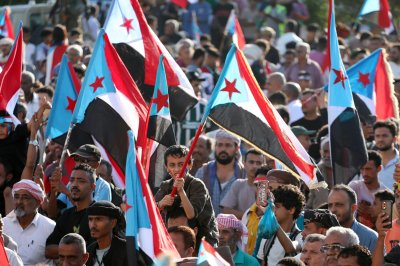
Some officials for Yemen’s separatist Southern Transitional Council on Friday said the council has been dissolved, but others deny the claim and say the STC is still active in southern Yemen. Photo by Najeeb Mohamed/EPA
Jan. 9 (UPI) — Some leaders of the Southern Transitional Council in Yemen announced the dissolution of the group that controlled southern Yemen territory, but others in the separatist group say it is still active amid peace talks Friday.
STC Secretary-General Abdulrahman Jalal al-Sebaihi announced the STC’s pending dissolution on Yemeni TV while attending peace talks in Riyadh, Saudi Arabia. His counterparts in Yemen said his declaration was made under duress and was not true.
“The decisions relating to the Southern Transitional Council cannot be taken except by the Council in its entirety, with all its institutions, and under the chairmanship of the president,” STC spokesman Anwar al-Tamimi said in a social media post.
“This will happen as soon as the STC delegation present in Riyadh is released,” he said.
“The STC will continue positive and constructive engagement with all political initiatives, which give the southern people the opportunity to determine their future.”
A coalition backed by Saudi Arabia has taken control of the territory in southern Yemen that formerly was held by the STC, which is supported by the United Arab Emirates.
The conflicting statements regarding the STC were made after STC leader Aidarous al-Zubaidi secretly left Yemen on Tuesday night with the help of the UAE instead of traveling to Riyadh to negotiate matters in Yemen.
Instead, he was taken to Abu Dhabi on Wednesday, which raised tensions between Saudi and UAE officials.
In addition to leading the STC, al-Zubaidi was a member of Yemen’s Presidential Leadership Council, which expelled him on Wednesday when he did not show up in Riyadh to discuss matters in Yemen.
The UAE and Saudi Arabia recently worked together to oppose Iran-backed Houthis in Yemen, and the STC wants to have an independent state recognized in South Yemen.
The STC’s dissolution could imperil efforts to re-establish a former north-south divide in Yemen, which existed prior to the nation’s unification in 1990.
Saudi Arabia supports the PLC, which is the internationally recognized government in Yemen, while the UAE backs the STC.
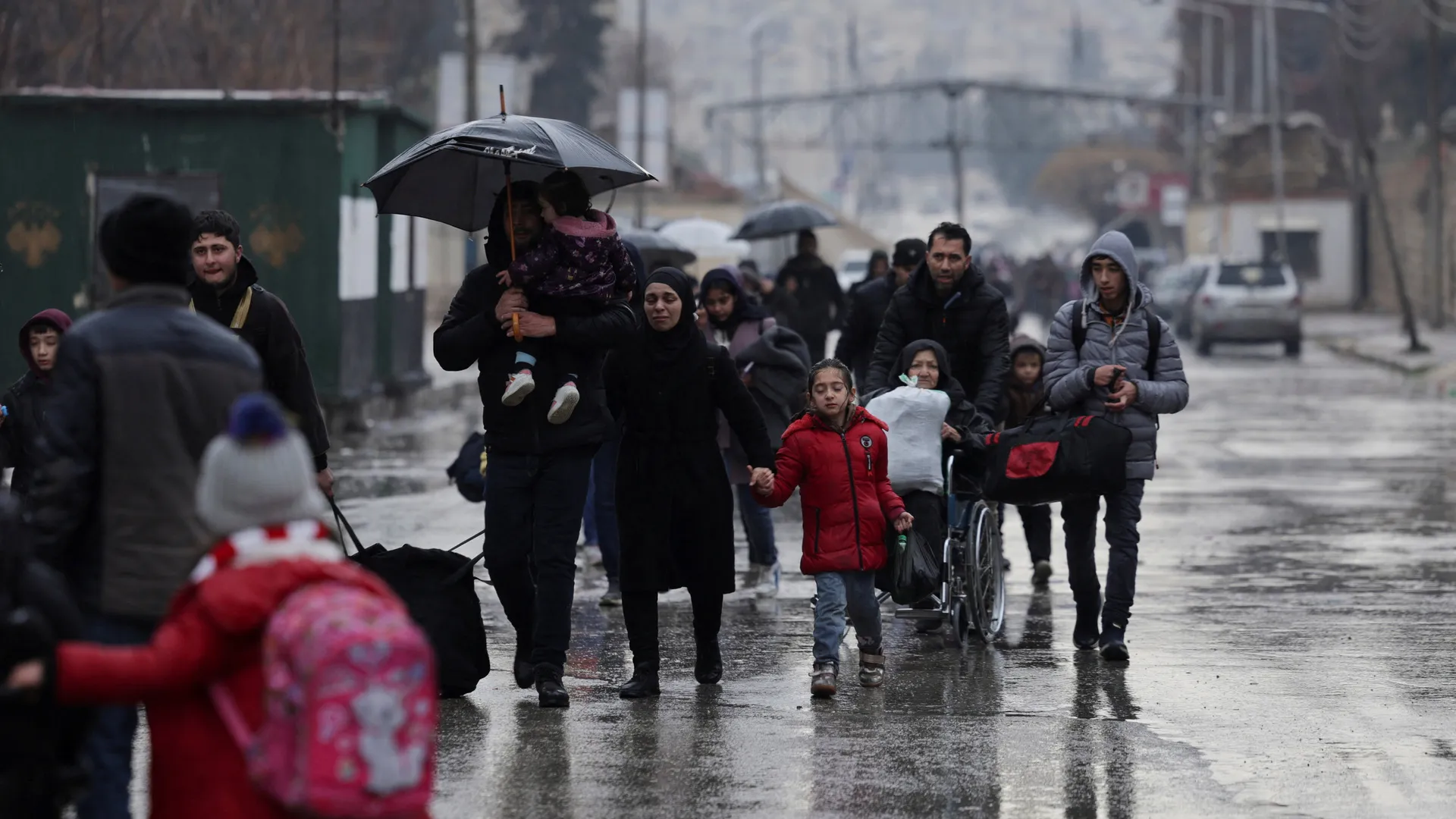
As a ceasefire between the Syrian army and the Kurdish-led Syrian Democratic Forces collapses, UN spokesperson Stephane Dujarric reminded all parties that they’re bound by international humanitarian law to protect civilians.
Senegal beat Mali 1-0 to reach AFCON 2025 semifinal where defending champions Ivory Coast or record winners Egypt await.
Recalled striker Iliman Ndiaye scored in the first half to give Senegal a 1-0 victory over 10-man Mali in Tangiers on Friday in the first 2025 Africa Cup of Nations quarterfinal.
Mali hopes were dealt a severe blow in first-half added time when Yves Bissouma was sent off after being shown a second yellow card.
Recommended Stories
list of 4 itemsend of list
The only goal followed a blunder by Mali goalkeeper Djigui Diarra, who then made a string of superb saves to prevent Senegal increasing their lead.
Senegal now face defending champions Ivory Coast or record seven-time winners Egypt, who meet on Saturday, in the semifinals.
Malian Lassine Sinayoko appealed for a penalty just three minutes into the first half, alleging he was fouled by Senegal captain Kalidou Koulibaly, who was back after a one-match suspension.
However, the South African referee waved play on, and VAR confirmed his decision was correct. Big-screen replays showed Sinayoko was guilty of simulation.
Mali captain Bissouma was yellow-carded midway through the half for fouling veteran Senegal striker and twice African player of the year Sadio Mane.
Sinayoko then broke clear only to be foiled by a superb sliding tackle from fellow French Ligue 1 player Krepin Diatta.
The deadlock was broken after 27 minutes on a cold, cloudy evening in the Mediterranean city thanks to Ndiaye.
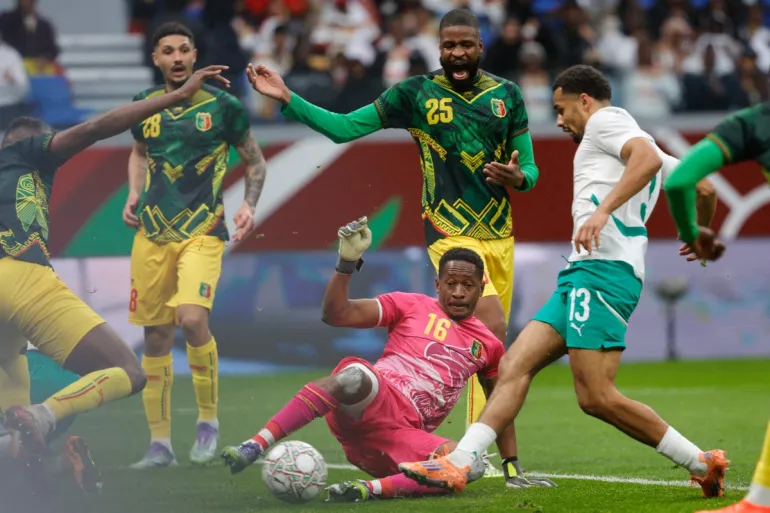
He was involved three times in a move which ended with goalkeeper Djigui Diarra allowing a Krepin Diarra cross to slip under his body, and Ndiaye struck the loose ball into the net.
Senegal’s forward Iliman Ndiaye celebrates scoring his team’s first goal in the nets of Mali’s goalkeeper Djigui Diarra during the Africa Cup of Nations [Abdel Majid Bziouat/AFP]
While the goal was a gift, it gave Senegal a deserved lead as they had dominated possession in only the second AFCON clash between the countries. The first was drawn at the group stage in 2004.
Pape Gueye, who scored twice for Senegal in the last-16 victory over Sudan, was just off target with a shot from outside the box.
Then, for the second successive knockout match, Mali were reduced to 10 men before half-time with Bissouma shown a second yellow card, followed by a red.
The Tottenham Hotspur midfielder fouled Idrissa Gueye in midfield, and Malian pleas for the incident to be reviewed by VAR were rejected.
Mali displayed tremendous spirit when reduced to 10 men against Tunisia in the round of 16, and it was evident again against the Senegalese as the second half progressed.
They came close to levelling on 55 minutes when defender Abdoulaye Diaby advanced for a free-kick. His close-range shot brought a reflex save from former Chelsea goalkeeper Edouard Mendy.
Diarra atoned for his first-half blunder by making several superb saves to keep alive Malian dreams of winning a maiden AFCON title.
With 15 minutes of regular time remaining, scorer Ndiaye was substituted. In his place came 17-year-old Paris Saint-Germain forward Ibrahim Mbaye, whose goal sealed victory over Sudan.
Diarra rescued Mali again as time ticked away, blocking a shot from substitute Pathe Ciss, who had broken clear.
The Malian goalkeeper made another outstanding save during seven minutes of added time by pushing away a Lamine Camara volley.
Jan. 9 (UPI) — Six pilot whales are dead and 15 others are stranded on New Zealand’s South Island, and volunteers are furiously working to save them.
About 55 whales washed up on Farewell Spit Thursday. The spit is a long peninsula of sand that juts out of the north end of the island. It’s been labeled a whale trap because they easily get stranded there. Most of the whales were able to get free, but about 15 of them were re-stranded and are lying along about 0.6 miles of beach.
Volunteers have been pouring buckets of water over the whales to keep them cool until the tide comes in, when they hopefully will be able to swim away.
“When the tide comes in, we’re going to have to move really quickly to bring these whales together, then move them out to deeper waters,” said Louisa Hawkes of Project Jonah, a nonprofit that helps marine mammals.
Pilot whales are very social animals, and rescuers believe their strong group bonds can help their chances of survival. Conditions must be just right for re-floating success.
On Friday, Project Jonah said the whales were in the tidal zone and were showing signs of encouraging behaviour, according to New Zealand’s RNZ news.
The organization appealed for extra volunteers to help with the operation. The New Zealand Department of Conservation sent rangers, a boat and a drone to look for more strandings.
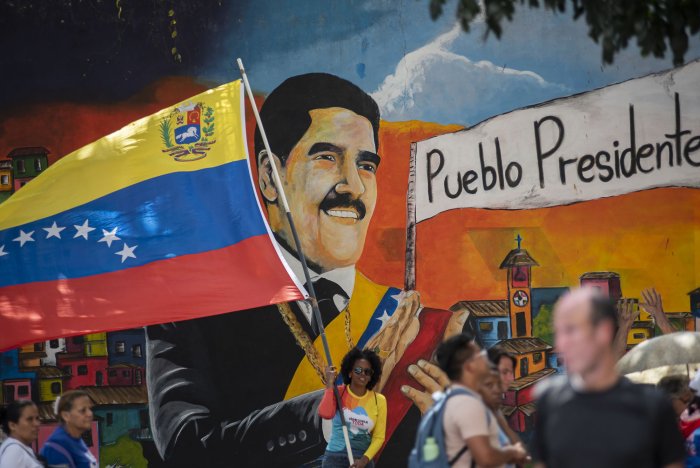
Supporters of ousted Venezuela’s President Nicolas Maduro carry his portrait during a rally outside the National Assembly in Caracas, Venezuela on Monday. Photo by Jonathan Lanza/UPI | License Photo
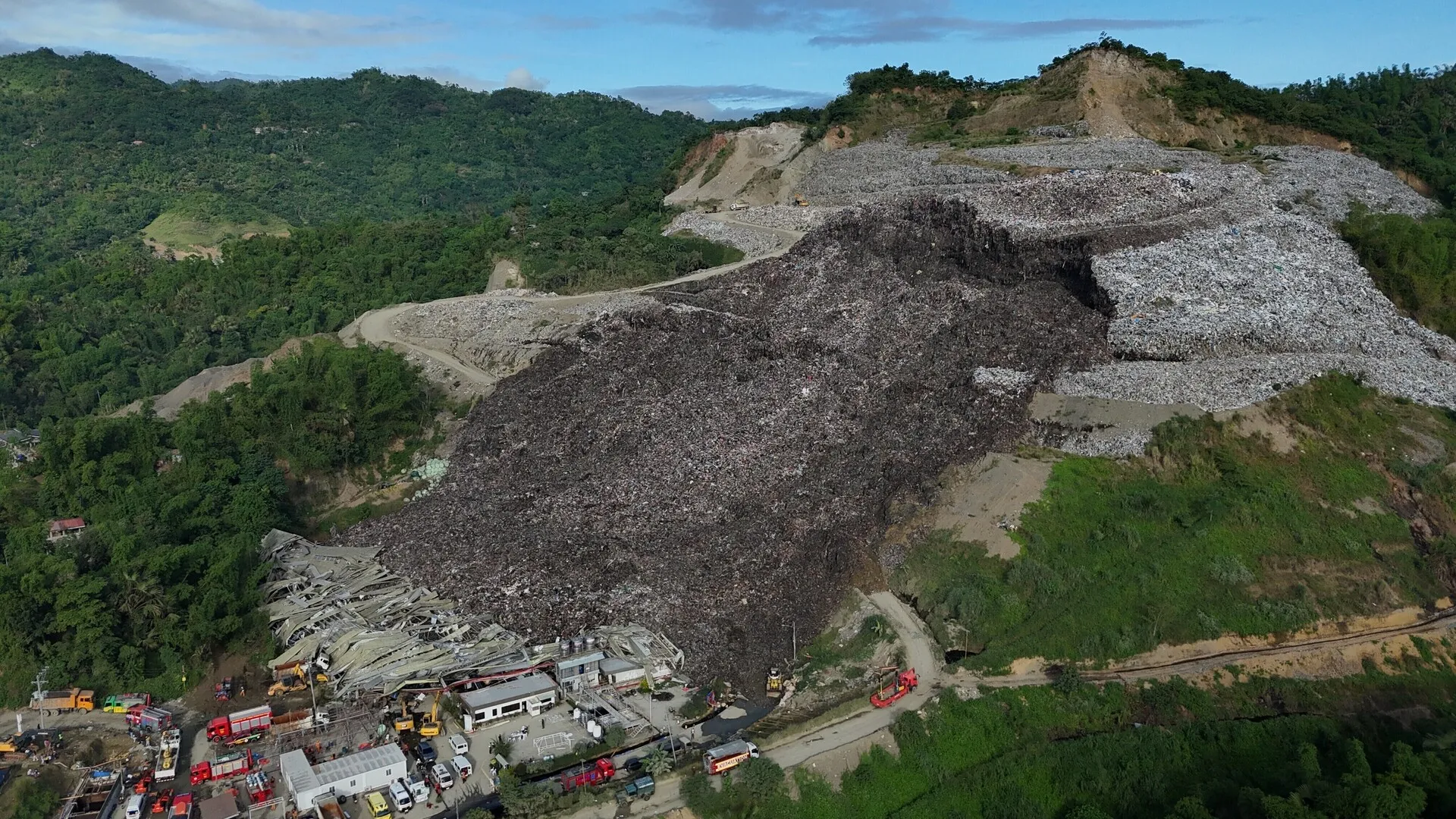
A collapse of garbage at a landfill in Cebu city, Philippines killed one worker, injured at least 12 and left 27 missing. Rescuers pulled multiple people alive from the debris as search efforts continued Friday.
UK PM Keir Starmer’s office says move to limit access to paying subscribers ‘insulting’ to victims and ‘not a solution’.
Published On 9 Jan 20269 Jan 2026
Share
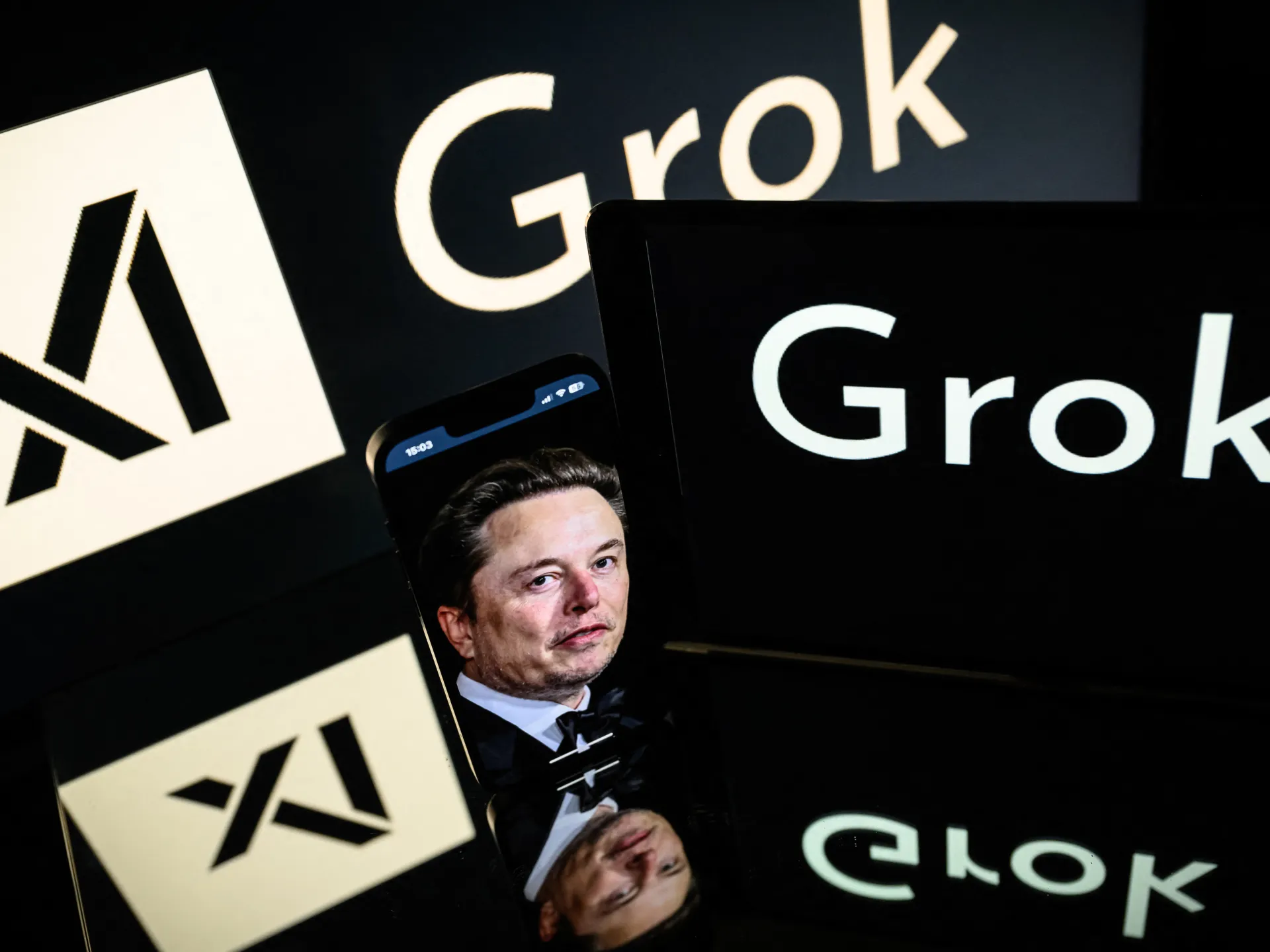
Elon Musk’s AI chatbot Grok has limited image generation on the social media platform X amid growing backlash over its use to create sexualised deepfakes of women and children.
Grok told X users on Friday that image generation and editing features were now available only to paying subscribers.
Recommended Stories
list of 3 itemsend of list
The standalone Grok app, which operates separately from X, still allows users to generate images without a subscription.
The move comes after Musk was threatened with fines and several countries pushed back publicly against the tool that allowed users to alter online images to remove the subjects’ clothes.
The European Commission said on Monday that such images circulating on X were unlawful and appalling.
The United Kingdom’s data regulator also said it had asked the platform to explain how it was complying with data protection laws following concerns that Grok was generating sexually abusive images of women.
On Friday, British Prime Minister Keir Starmer’s office called the move to limit access to paying subscribers “insulting” to victims and “not a solution”.
“That simply turns an AI feature that allows the creation of unlawful images into a premium service,” a Downing Street spokesperson said. “It’s insulting the victims of misogyny and sexual violence.”
The EU executive, for its part, said it had “taken note of the recent changes”.
But EU digital affairs spokesperson Thomas Regnier told reporters, “This doesn’t change our fundamental issue, paid subscription or non-paid subscription.”
“We don’t want to see such images. It’s as simple as that,” he said, adding, “What we’re asking platforms to do is to make sure that their design, that their systems do not allow the generation of such illegal content.”
The European Commission has ordered X to retain all internal documents and data related to Grok until the end of 2026 in response to the uproar about the sexualised images.
France, Malaysia and India have also criticised Musk’s platform over the issue.
Musk said last week that anyone using Grok to create illegal content would face the same consequences as uploading such material directly.
This is not the first time that Grok has been criticised, after the chatbot last year was slammed for providing anti-Semitic responses to questions from X users.
In July, Musk’s artificial intelligence firm xAI disabled Grok’s text replies and deleted posts after the chatbot praised Adolf Hitler and made anti-Semitic remarks.
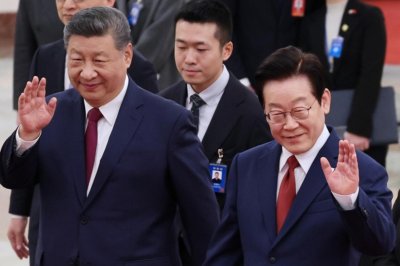
South Korean President Lee Jae Myung (R) and Chinese President Xi Jinping wave to children as they attend a welcome ceremony for the South Korean leader before their summit talks at the Great Hall of the People in Beijing on Monday. Photo by YONHAP/ EPA
SEOUL, Jan. 9 (UPI) — South Korean President Lee Jae Myung flew to China this week for a summit with his Chinese counterpart, Xi Jinping, for the second time in two months. Lee is the first president of the country to visit Beijing since 2019.
Lee said that the two leaders should meet at least once a year, stressing the significance of shoring up the bilateral relationship between the two neighbors, whose ties at times have been strained.
Observers point out that Lee’s meetings with Xi showcases Seoul’s delicate position amid the intensifying rivalry between the United States and China.
“Despite its security alignment with Washington, South Korea relies heavily on China for trade, although the dependence has declined somewhat in recent years. As a result, Seoul is in a delicate position,” Myungji University political science professor Shin Yul told UPI.
“In the past, there was a simple formula — the U.S. for security and China for trade. But at a time when the world’s two most powerful countries are at odds and conditions are changing so fast, such an approach may no longer work,” he said.
Relations between Seoul and Beijing became worse in 2016 and 2017, when South Korea cooperated with the United States to deploy the Terminal High Altitude Area Defense, or THAAD, missile defense system to tackle North Korea’s threats.
However, the decision provoked China, which feared the advanced radar system would provide a window into the communist country’s internal airspace.
Beijing eventually initiated with what Seoul described as unofficial economic retaliation, including restrictions on Korean cultural content, group tourism bans and regulatory pressure on Korean businesses operating in China.
Officially, however, Beijing has consistently denied taking retaliatory measures over the past decade. Against this backdrop, Lee expressed hope to deal with them during a meeting Tuesday with Chen Jining, Communist Party secretary of Shanghai.
“Korea-China relations will advance to an entirely new stage through this visit to China,” Lee said. “I believe this trip will serve as a valuable opportunity to resolve the minor frictions that existed in the past.”
Strategic ambiguity
Improved ties with China would offer short-term economic benefits for South Korea, as China is South Korea’s largest trading partner. Last year, South Korea’s exports to China totaled $130.81 billion, compared with $122.87 billion to the United States.
However, analysts caution that Seoul cannot prioritize relations with Beijing in isolation, as Beijing’s rivalry with the United States directly affects its core security alliance.
“We cannot closely collaborate with China in such sensitive industries as semiconductors and nuclear reactors,” economic commentator Kim Kyeong-joon, formerly vice chairman at Deloitte Consulting Korea, said in a phone interview.
“In addition, China is our competitor in many industries, including steel, automobiles, rechargeable batteries and petrochemicals. There have also been recurring conflicts over intellectual property issues between the two,” he added.
Concerns have grown among Korean corporations over technology leakage and imitation by their Chinese competitors, particularly in such high-tech sectors as semiconductors and displays.
In this climate, South Korea has little choice but to carefully balance its approach, said political commentator Choi Soo-young, who worked at the presidential house in the 2010s.
“We should shun a situation in which we are forced to single-handedly side with one of the two superpowers, the United States and China. That would be the worst-case scenario,” Choi said.
“In other words, we are required to maintain the so-called ‘strategic ambiguity.’ However, it is a tall task to achieve, as amply demonstrated by Japan’s case,” he said.
From the perspective of Seoul, strategic ambiguity refers to avoiding explicit alignment choices at a time when Washington and China have competing strategic interests, according to Choi.
China’s relationship with Japan has frayed in recent months amid geopolitical tensions, leading to economic standoffs with direct trade impacts.
For example, China imposed export restrictions on dual-use goods this month, targeting Japan. It also curbed exports of rare earth elements, which are vital to Japan’s electronics and automotive supply chains.
Meanwhile, the Seoul administration announced Friday that Lee is scheduled to visit Japan early next week for a summit with Japanese Prime Minister Sanae Takaichi.
Iranian authorities are enforcing an internet blackout after protests escalated in Tehran. It’s been two weeks since demonstrations flared up in protest at harsh economic conditions. They’ve spread to more than 100 towns and cities and taken on a political tone.
US president also says he will meet oil executives at White House on Friday to discuss Venezuela’s oil industry.
United States President Donald Trump has said he cancelled a second wave of attacks on Venezuela following “cooperation” from the South American nation.
The president said on Friday that Venezuela was releasing a large number of political prisoners as a sign of “seeking peace”, following last week’s US military operation to abduct President Nicolas Maduro.
Recommended Stories
list of 4 itemsend of list
“This is a very important and smart gesture. The USA and Venezuela are working well together, especially as it pertains to rebuilding, in a much bigger, better, and more modern form, their oil and gas infrastructure,” Trump said on Truth Social.
“Because of this cooperation, I have cancelled the previously expected second Wave of Attacks, which looks like it will not be needed, however, all ships will stay in place for safety and security purpose,” his post added.
Trump’s comments come hours after he indicated in an interview on Fox News’s Hannity programme that Venezuelan opposition leader Maria Corina Machado was coming to Washington next week, after previously dismissing the idea of working with her, saying that “she doesn’t have the support within or the respect within the country”.
The Republican president, however, had told The New York Times on Wednesday that the US was “getting along very well” with the Venezuelan government, led by acting interim President Delcy Rodriguez.
During the Fox interview, Trump also said he would meet oil executives at the White House on Friday and that the oil companies would spend at least $100bn in Venezuela, which he repeated in his Truth Social post.
“At least 100 Billion Dollars will be invested by BIG OIL, all of whom I will be meeting with today at The White House,” Trump wrote on his social media platform ahead of the gathering, where he was expected to convince the oil heads to support his plans in Venezuela.
The Trump administration has repeatedly said that it is running Venezuela, with Energy Secretary Chris Wright on Wednesday asserting that Washington will control the country’s oil industry “indefinitely”.
Rodriguez, who was Maduro’s deputy, has said that her government remains in charge, with the state-run oil firm saying only that it was in negotiations with the United States on oil sales.
US outlet NBC News reported that the heads of Exxon Mobil, Chevron and ConocoPhillips are expected at the White House meeting.
“It’s just a meeting to discuss, obviously, the immense opportunity that is before these oil companies right now,” Trump’s spokesperson Karoline Leavitt told reporters on Wednesday.
Chevron is the only US company that currently has a licence to operate in Venezuela. Exxon Mobil and ConocoPhillips left the country in 2007, after refusing then-President Hugo Chavez’s demand that they give up a majority stake in local operations to the government.
Sanctioned by Washington since 2019, Venezuela sits on about a fifth of the world’s oil reserves and was once a major crude supplier to the United States.
But it produced only about 1 percent of the world’s total crude output in 2024, according to OPEC, having been hampered by years of underinvestment, sanctions and embargoes.
Trump sees the country’s massive oil reserves as a windfall in his fight to further lower US domestic fuel prices, a major political issue.
But he could face an uphill task convincing the major US oil companies to invest in Venezuela due to uncertainty about governance post-Maduro, security and the enormous expense of restoring production facilities.
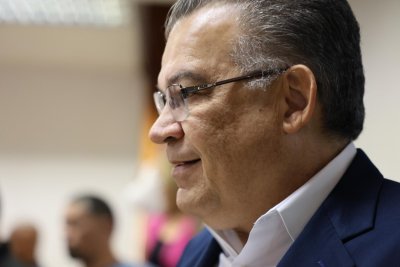
Enrique Marquez, seen here in August 23, 2024, was among the political prisoners released by Venezuela on Thursday. File Photo Miguel Gutierrez/EPA
Jan. 9 (UPI) — Venezuela’s government has begun to release Venezuelan and foreign political prisoners, less than a week after its former head, Nicolas Maduro, was seized in a U.S. military operation.
It was unclear how many prisoners were released on Thursday, but among them was former National Assembly vice president and opposition leader Enrique Marquez.
Henrique Capriles, a deputy of the National Assembly, posted a video of Marquez and Biagio Pilieri, a former deputy of the National Assembly, embracing loved ones in the street after being released from prison.
“This is one more step toward justice and the future,” Capriles said in the caption to the video posted to X.
“Freedom for political prisoners! We want to see all of them embracing their loved ones.”
En libertad mis amigos Enrique Márquez y Biagio Pilieri, quienes han pasado más de un año injustamente privados de su libertad. Un abrazo grande a sus familias.
Este es un paso más hacia la justicia y el futuro.
The center-right Primero Justicia party also said Venezuelan-Spanish human rights lawyer and activist Rocio San Miguel was among those released.
Spain’s foreign ministry confirmed in a statement of its own that five nationals — including one with dual nationality — were released on Thursday and were preparing travel to Spain.
“The Spanish Government extends its congratulations to these citizens, their families and friends,” the ministry said, adding that Minister Jose Manuel Albares had spoken to all of them personally.
“Spain, which maintains fraternal relations with the Venezuelan people, welcomes this decision as a positive step in the new phase Venezuela is currently undergoing.”
The United States and human rights organizations have called on Venezuela to release political prisoners for years.
According to Venezuelan NGO Foro Penal, there were 806 political prisoners in the country as of Monday.
Many arrests were conducted amid mass protests that erupted in the country in 2024 following Maduro, Venezuela’s authoritarian president, winning a third term in office in an election that was widely disputed.
The release comes after the United States arrested Maduro in a surprise military operation on Saturday and brought him to the United States on charges of narcoterrorism.
The capture has cast uncertainty over the future of the country, with key institutions still controlled by members of the Maduro regime and the Trump administration signaling a potentially long-term plan to rebuild Venezuela into a stable South American partner.
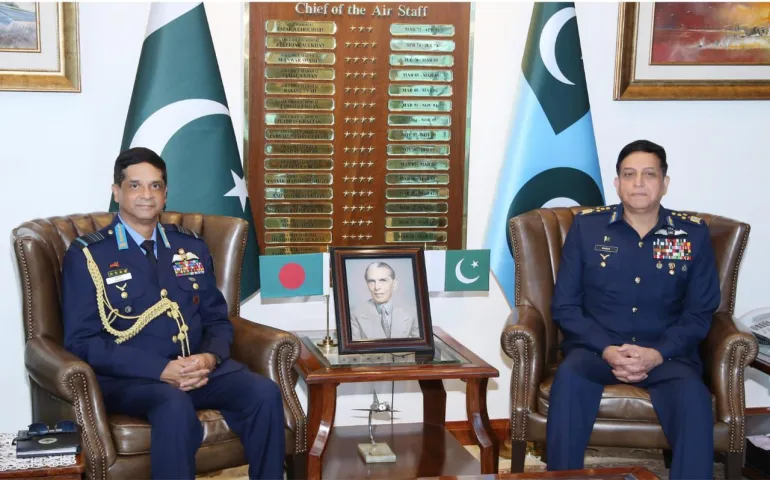
Islamabad, Pakistan – Less than a week into the new year, after a meeting between Pakistan’s Air Chief Marshal Zaheer Ahmed Babar Sidhu and his Bangladeshi counterpart Air Chief Marshal Hasan Mahmood Khan, the Pakistani military announced that a deal to sell its domestically produced JF-17 Thunder fighter jet could be imminent.
A statement by the Inter-Services Public Relations (ISPR), the military’s media wing, said Khan praised the Pakistan Air Force’s combat record and sought assistance to support the Bangladesh Air Force’s “ageing fleet and integration of air defence radar systems to enhance air surveillance”.
Recommended Stories
list of 4 itemsend of list
Alongside a promise of fast-tracked delivery of Super Mushshak trainer aircraft, the statement, issued on January 6, added that “detailed discussions were also held on potential procurement of JF-17 Thunder aircraft.”
The Super Mushshak is a light-weight, two-to-three seater, single-engine plane with fixed, non-retractable, tricycle landing gear. The plane is primarily used for training purposes. Besides Pakistan, more than 10 countries currently have deployed the plane in their fleet for pilot training, including Azerbaijan, Turkiye, Iran, Iraq and others.
Just a day later, it was reported by the Reuters news agency that Pakistan and Saudi Arabia were in talks to convert about $2bn of Saudi loans into a JF-17 fighter jet deal, further strengthening military cooperation between the two longtime allies. The discussions come only months after they signed a mutual defence pact in September last year.
Both developments followed reports in late December that Pakistan had reached a $4bn deal with a rebel faction in Libya, the self-styled Libyan National Army (LNA), including the sale of more than a dozen JF-17 Thunder jets.
While the Pakistani military has yet to formally confirm any agreement with Libya or Saudi Arabia, and Bangladesh has so far only expressed “interest” rather than signing a contract, analysts say events in 2025 have boosted the JF-17’s appeal.
However, the relatively cheap price of the plane, estimated at $25m-$30m, has meant that several countries in the last 10 years have shown interest in it, with Nigeria, Myanmar and Azerbaijan already having the jet in their fleets. And recent events have bolstered the reputation of Pakistan’s air fighting capabilities, say analysts.
In May, India and Pakistan fought an intense four-day air war, firing missiles and drones at each other’s territories, parts of Kashmir that they administer, and at military bases, after gunmen shot down 26 civilians in Indian-administered Kashmir. India blamed Pakistan, which denied any link to the attack.
Pakistan said it shot down several Indian fighter jets during the aerial combat, a claim Indian officials later acknowledged after initially denying any losses, but without specifying the number of jets downed.
“The PAF demonstrated superior performance against much more expensive Western and Russian systems, which has made these aircraft an attractive option for several air forces,” Adil Sultan, a former Pakistan Air Force air commodore, said.
The Indian Air Force (IAF) has traditionally relied on Russian Mirage-2000 and Su-30 jets, but in the 2025 fighting also used French Rafale jets.
Pakistan, for its part, relied on its recently imported Chinese J-10C Vigorous Dragon and the JF-17 Thunder as well as the United States’ F-16 Fighting Falcon jets, with 42 planes in the formation that took on 72 IAF planes, according to the PAF.
So what is the JF-17 Thunder, what can it do, and why are so many countries showing interest?
What is the JF-17 Thunder?
The JF-17 Thunder is a lightweight, all-weather, multi-role fighter aircraft jointly manufactured by the Pakistan Aeronautical Complex (PAC) and China’s Chengdu Aircraft Corporation (CAC).
Pakistan and China signed an agreement in the late 1990s to develop the aircraft, with work beginning in the early 2000s at the PAC in Kamra, situated in Pakistan’s Punjab province, just more than 80km (50 miles) away from the capital, Islamabad.
A retired Pakistan Air Force air commodore who worked closely on the programme said production is split between the two countries, with 58 percent carried out in Pakistan and 42 percent in China.
“We are manufacturing the front fuselage and vertical tail, whereas China makes the middle and rear fuselage of the plane, with a Russian engine being used, as well as British manufacturer Martin Baker’s seats are installed. However, the complete assembly of the plane is carried out in Pakistan,” he told Al Jazeera, speaking on condition of anonymity due to his involvement in the project.
He said the aircraft was first unveiled to the public in March 2007, with the induction of the first variant, Block 1, in 2009. The most advanced Block 3 variant entered service in 2020.
“The idea was to replace Pakistan’s ageing fleet, and subsequently, in the next decade or so, they made the bulk of our air force, with more than 150 combat jets part of the force,” he said.
Before the JF-17, Pakistan was primarily relying on French manufacturer Dassault’s Mirage III and Mirage 5, as well as Chinese J-7 fighter planes.
The Block 3 variant places JF-17 in the so-called 4.5 generation of fighter jets. It has air-to-air and air-to-surface combat capabilities, advanced avionics, an Active Electronically Scanned Array (AESA) radar, electronic warfare systems and the ability to fire beyond-visual-range missiles.
Their avionics and electronic capabilities are an upgrade from the fourth generation of fighter planes, such as the F-16 and Su-27, which were primarily built for speed and dogfighting.
The AESA radar gives these planes the capability to track multiple targets at once and provides more visibility at longer distances. However, unlike fifth-generation planes, they lack stealth capabilities.
The Pakistan Air Force says the jet offers high manoeuvrability at medium and low altitudes and combines firepower, agility and survivability, making it “a potent platform for any air force”.
Bangladesh Air Chief Marshal Hasan Mahmood Khan (left) met with the Pakistani Air Chief Marshal Zaheer Ahmed Babar Sidhu in Islamabad on January 6, during which a potential procurement of JF-17 was also discussed [Handout/Inter-Services Public Relations]
Who has bought the JF-17?
Myanmar was the first country to buy the JF-17, ordering at least 16 Block 2 aircraft in 2015. Seven have been delivered so far.
Nigeria became the second buyer, inducting three JF-17s into its air force in 2021.
Azerbaijan followed with an initial order of 16 jets in February 2024, worth more than $1.5bn. In November 2025, Azerbaijan unveiled five JF-17s during its Victory Day parade, formally making it the third foreign operator of the aircraft.
That same month, the Pakistani military announced it had signed a memorandum of understanding with a “friendly country” for procurement of the JF-17, describing it as a “noteworthy development” without naming the buyer.
Other countries, including Iraq, Sri Lanka and Saudi Arabia, have also explored the option of buying the JF-17 over the past decade, though those plans did not materialise.
While JF-17 makes the bulk of the PAF’s fighting squadron, the plane is not used by the Chinese air force, which is more reliant on its J-10, J-20 and J-35 fighter planes.
With the plane’s entire assembly carried out in Kamra, Pakistan is the primary seller of the JF-17 fighter plane, including its after-sales services.
How does the JF-17 compare to other fighter jets?
The most advanced fighters currently in service globally are fifth-generation jets such as the US F-22 and F-35, China’s J-20 and J-35, and Russia’s Su-57. These aircraft feature stealth technology – unlike all previous generations of jets.
The JF-17’s Block 3 variant, by contrast, belongs to the 4.5 generation, alongside jets such as Sweden’s Gripen, France’s Rafale, the Eurofighter Typhoon, India’s Tejas and China’s J-10, among others.
Still, while they don’t have stealth capabilities, 4.5 generation planes have specialised coating on them to reduce their radar signature, making them harder – though not impossible – to detect.
So, for instance, when a 4.5-generation jet enters the enemy’s radar zone, it can get detected, but it can also try to jam signals by using its electronic jamming capabilities, or use long-range missiles to attack the target, before turning back.
On the other hand, a fifth-generation plane remains entirely undetected by radars due to its physical design and weapons, which are stored internally.
While official pricing has not been disclosed, estimates put the JF-17’s unit cost at between $25m and $30m. By comparison, the Rafale costs more than $90m per aircraft, while the Gripen is priced at more than $100m.
An Islamabad-based regional security analyst who has closely monitored the development of the JF-17 planes said the jet’s appeal lies in its cost-effectiveness, lower maintenance requirements and combat record.
“The JF-17’s appeal is less about headline performance than the overall package, which includes lower price, flexible weapons integration, training, spares and generally fewer Western political strings,” he told Al Jazeera, requesting anonymity because of his involvement with the JF-17 project.
“In that sense, the JF-17 is a ‘good enough’ multirole jet optimised for accessibility. It can suit air forces modernising on tight budgets, but it is not a direct substitute for higher-end fighters like the J-10C or F-16V in range, payload, electronic warfare maturity and long-term upgrade headroom.”
Sultan, who is also dean of the Faculty of Aerospace and Strategic Studies at Islamabad’s Air University, said the JF-17’s performance against Indian aircraft in 2025 underscored its capabilities.
However, he cautioned that outcomes in air combat depend not only on the aircraft but on who is operating it.
“The jets’ integration with other systems such as ground and airborne radars, communication systems and the human skills mastered during training play the most vital role,” he said.
(Al Jazeera)
Why is the interest in JF-17s growing?
Pakistan’s air force again drew attention during the four-day conflict with India in May 2025, particularly on the night of May 7, when Indian aircraft struck targets inside Pakistani territory.
According to the PAF, Pakistani squadrons flying Chinese-made J-10C jets shot down at least six Indian aircraft. Indian officials initially denied losses but later acknowledged that “some” planes had been lost.
US President Donald Trump, who has claimed credit for brokering a ceasefire between the two countries, has repeatedly highlighted the performance of Pakistani jets, a claim India has strongly rejected.
Although the JF-17 was not involved in the reported shoot-downs, the PAF says it was part of the formations that engaged Indian aircraft.
Three days later, on May 10, the ISPR claimed a JF-17 was used to strike India’s Russian-made S-400 air defence system with a hypersonic missile. India has denied any damage to its defence system.
The Islamabad-based security analyst said Pakistan is using the May conflict to market the JF-17 as a combat-proven, affordable option for countries with limited defence budgets.
He added, however, that the possibility of a “potential procurement” should be treated cautiously.
“‘Expressions of interest’ should be treated cautiously as fighter jet procurements typically take years to translate from exploratory talks to signed contracts and deliveries,” he said, adding that “while PAF is continuing to market the JF-17 aggressively, the JF-17 for debt swap isn’t what PAF envisions.”
Other observers agree that Islamabad sees an opportunity to leverage its air force’s performance to secure defence exports and project itself as a rising middle power.
The retired air commodore involved in the JF-17 programme said combat performance remains the ultimate benchmark.
“Very few countries are making fighter jets, with most of the market dominated by Western developers who often attach many conditions to sales,” he said. “But everybody wants to diversify and avoid putting all their eggs in one basket, and that is where Pakistan comes in.”
On Bangladesh, he said Dhaka’s posture towards Pakistan has shifted sharply since a change of government in 2024.
“Such deals are not just about sale of a platform or a plane. It is a collaboration, an agreement at national level, showing strategic alignment between two countries,” he said.
Fighter jets, he added, are a long-term commitment, with service lives of three to four decades.
“If Bangladesh is getting a JF-17 or Super Mushshak trainers, you can be certain that they are in it for the long haul with training and after-sales services. They are also showing interest in Chinese J-10s, which means that strategically, they have decided who they want to align with in the future,” he said.
Jan. 9 (UPI) — Minnesota Gov. Tim Walz on Friday said he authorized the state’s National Guard to be “staged and ready” amid protests against the Trump administration after a federal immigration law enforcement officer fatally shot a woman in Minneapolis.
Protests have been reported in cities nationwide after a DHS officer shot and killed 37-year-old Renee Nicole Macklin Good on Wednesday in Minneapolis, with the city again being thrust into the national spotlight for protests against the federal government.
While the Trump administration is claiming the officer shot in self-defense, many activists and politicians say videos of the shooting contradict their explanation.
Amid the protests on Thursday, Walz, a Democratic and political opponent of President Donald Trump, ordered the Minnesota National Guard to be ready to assist local and state law enforcement in protecting critical infrastructure and maintain public safety.
“Minnesotans have met this moment. Thousands of people have peacefully made their voices heard. Minnesota: Thank you. We saw powerful peace,” Walz said in a Friday statement.
“Yesterday, I directed the National Guard to be ready should they be needed. They remain ready in the event they are needed to help keep the peace, ensure public safety and allow for peaceful demonstrations.”
Videos of the shooting show masked officers approaching Good in her car parked across a street. The Immigration and Customs Enforcement officer can be heard cursing and demanding Good to exit the vehicle before reaching into her driver-side window and trying to open the seemingly locked door.
The vehicle then backs a small amount before the wheels of the car are turned right and going forward. An ICE officer standing in front of the car then fires multiple shots, first into the front windshield and then through the opened driver-side window.
Trump and members of his administration have claimed the mother of three was a domestic terrorist trying to ram the ICE officer who fired on her in self-defense. Democrats and state and local officials have staunchly challenged the Trump administration’s claims.
“The Trump Administration is brazenly lying to justify murder, telling us to ignore what we’ve seen on video,” Rep. Don Beyer, D-Va., said in a statement.
When Israeli Foreign Minister Gideon Saar visited Somaliland on Tuesday, he became the first Israeli official to visit the breakaway republic since his country established full diplomatic relations with it in the closing days of last year.
Israeli Prime Minister Benjamin Netanyahu announced the diplomatic recognition of Somaliland – a breakaway part of Somalia – on December 26. He said that the recognition was in keeping with “the spirit of the Abraham Accords”, referring to the United States-led initiative encouraging a number of Arab countries to normalise relations with Israel in return for diplomatic and financial concessions from the US.
Recommended Stories
list of 4 itemsend of list
But Israel’s recognition of Somaliland has prompted protests within Somalia and complaints from dozens of countries and organisations, including Turkiye, Saudi Arabia and the African Union.
Meeting with Somaliland President Abdirahman Mohamed Abdullahi in the Somaliland capital of Hargeisa on Tuesday, Saar told reporters that Israel had not been discouraged by criticism of its decision.
“We hear the attacks, the criticism, the condemnations,” he said. “Nobody will determine for Israel who we recognise and who we maintain diplomatic relations with.”
Hegemon
Israel’s recognition of Somaliland comes after more than two years of its genocidal war on Gaza, and attacks on regional countries, including Lebanon, Iran, Syria, Yemen, and Qatar.
Attacks on Lebanon continue, and there are new indications that Israel may be seeking to launch renewed attacks on Iran, its main regional nemesis.
Israel’s wars appear to be an attempt to portray itself – with US backing – as the regional hegemon, uninterested in compromising with its enemies.
Recognition of Somaliland, despite regional opposition, marks the latest part of that strategy.
And Israel has found a new ally in the Horn of Africa on the back of its decision.
Despite being self-governing for more than 30 years, Somaliland has failed to gain international recognition, despite maintaining its own currency, passport and army.
Recognition has been elusive, meaning that even if there are qualms from some over ties with Israel, many are willing to overlook them in the hope that this decision will pave the path for other countries to follow.
“Clans, militias and corruption have ruined Somalia,” Somali journalist and human rights activist Abdalle Mumin, who was previously imprisoned by his country’s authorities, told Al Jazeera, “At least in Somaliland they have achieved some kind of peace and stability.”
“Many hope that other countries will follow Israel,” Mumin continued.
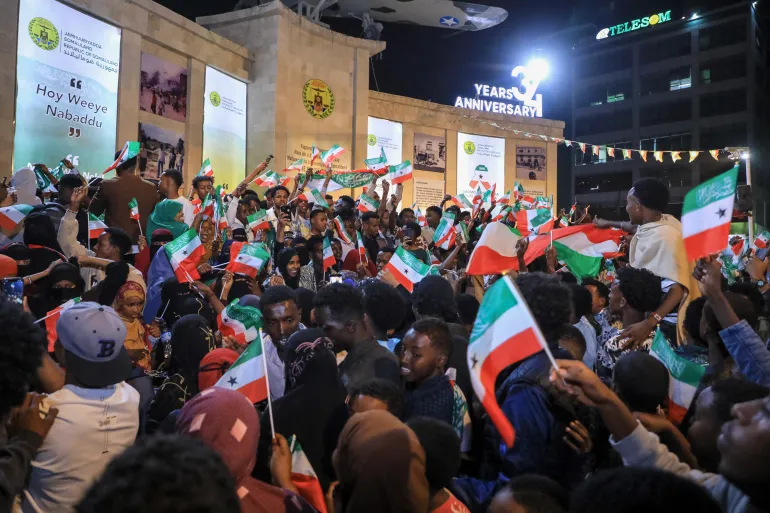
Residents wave Somaliland flags as they gather to celebrate Israel’s announcement recognising Somaliland’s statehood in downtown Hargeisa [Farhan Aleli/AFP]
Why has Israel recognised Somaliland?
Nevertheless, speculation over why Israel chose to recognise Somaliland has mounted since Netanyahu’s announcement, with analysts pointing to its strategic location at the crossroads between the Red Sea and the Indian Ocean.
Somaliland’s port of Berbera lies close to some of the world’s busiest maritime routes, which have come under attack over the past two years from Yemen’s Houthi rebel movement, a sworn enemy of Israel.
These were all factors in Israel’s recognition, former Israeli peace negotiator Daniel Levy said, acknowledging that the Netanyahu government also benefitted from preserving the suggestion that Somaliland may take in Palestinians forced out of Gaza.
However, Levy suspects Israel’s ambitions may be grander still, including increasing the country’s value to its chief sponsor, the US.
By securing an ally in a strategically important region,
The key dynamic, according to Levy, is momentum.
“If you set out to do something like this, you can’t just stop [at recognition],” he told Al Jazeera. “You have to keep taking steps: more aircraft, more presence, more moves. Once you’ve committed to this kind of game, you need to stay at the table.”
The timing of the move, shortly before Netanyahu’s meeting with US President Donald Trump on December 29, also held significance, Levy said.
Israel was trying to place itself more firmly on what it imagines Washington’s agenda to be, and how it imagines great power competition in the Horn of Africa, particularly with China, which maintains a base in neighbouring Djibouti, might play out.
“We’ve seen before that Israel can put something on the table and the Americans follow later,” he said.
Israel may be implicitly telling the US, “We’re active, and we’re positioned in a way that helps you. Having us there helps you.”
Map of Somalia showing Puntland and Somaliland regions [Al Jazeera]
Momentum
According to many observers, the past two years of war have already fundamentally changed the nature of Israel, with the strain of its genocidal war on Gaza, plus news assaults upon its regional neighbours, leaving the country fractured, isolated and with the hard right firmly in the ascendancy.
How enthusiastic the country might be for additional adventures in the Horn of Africa, a region, according to many observers, that remains largely unknown to much of the Israeli public, is unclear.
“Israelis have no idea what or where Somaliland is. It’s a non-issue in Israel,” Alon Pinkas, a former Israeli ambassador and consul general in New York, told Al Jazeera.
“The first time the news came out, it was published alongside maps showing the Horn of Africa, the Red Sea and its position across the Gulf of Aden. They had to show people where it was,” he said, dismissing the suggestion that Israel may ever station troops there.
“No, this is Netanyahu doing what he’s been doing ever since October 7, 2023: expanding the theatre of conflict,” he said. “Be that to Lebanon, Syria, Yemen or Iran. Now, it’s Somaliland. There’s no other rationale behind it. It’s about always moving forward.”
Fierce fighting and global funding cuts have pushed more than 33 million people towards starvation.
Millions of people in Sudan are in urgent need of humanitarian help, aid organisations have warned, as the war in the east African state marked its 1,000th day.
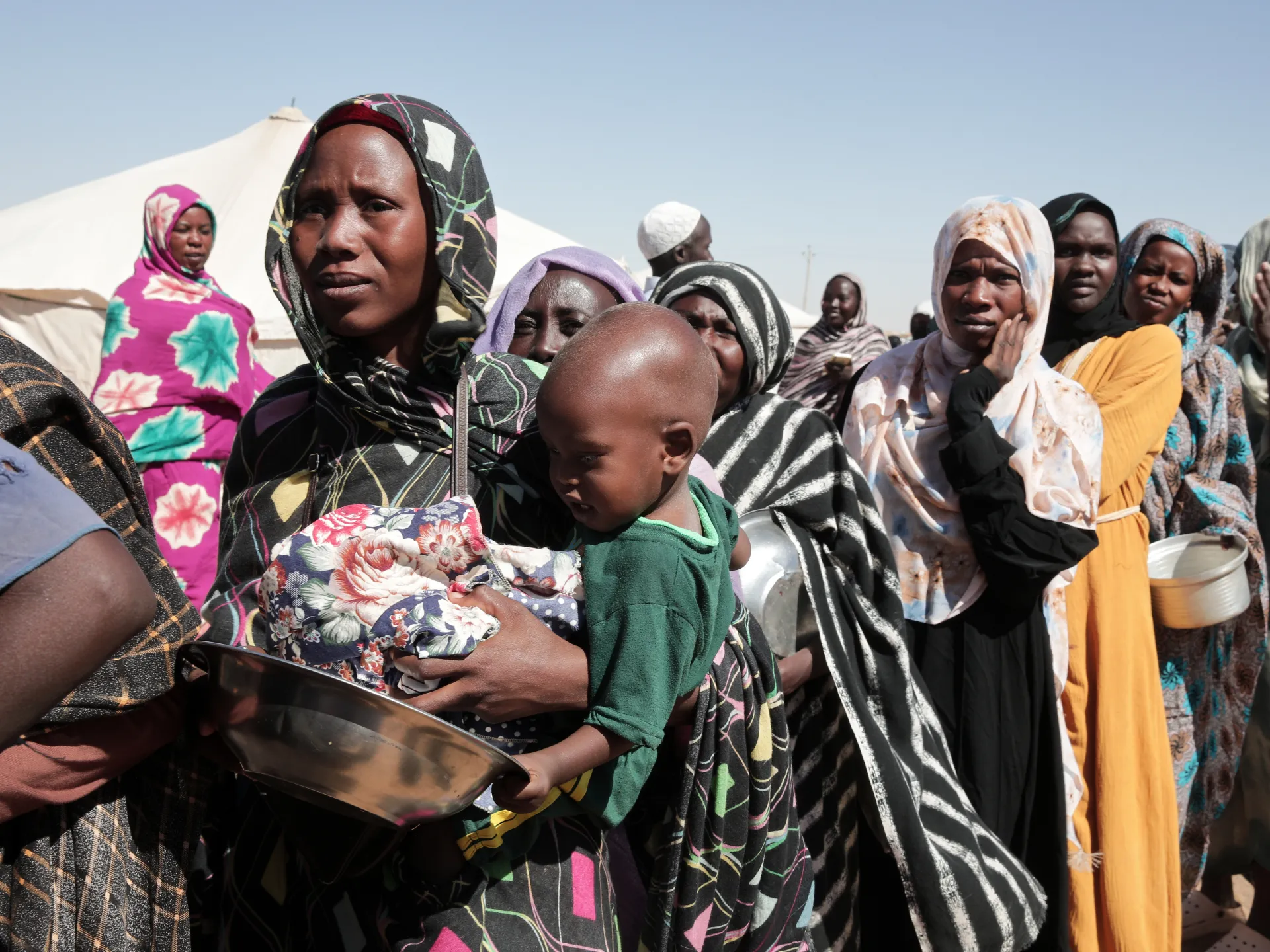
Fierce fighting and global funding cuts have pushed more than 33 million people towards starvation in what has become one of the world’s most severe humanitarian crises, nongovernmental organisations said on Friday as the grim anniversary passed.
Warning that Sudan’s hunger crisis is reaching unprecedented levels, the groups called on global governments to raise efforts to end the war between the country’s military rulers and paramilitary Rapid Support Forces (RSF), which began in April 2023.
Both sides have been accused of war crimes and crimes against humanity, while the RSF has been implicated in atrocities in Darfur that the United Nations says may amount to genocide.
The paramilitary group’s recent resurgence in the vast states of Darfur and Kordofan has forced the displacement of millions more people.
A new UN assessment in North Darfur shows more than half of young children are malnourished – one of the highest rates ever recorded worldwide, said Islamic Relief in a statement.
“More than 45% of people across Sudan – over 21 million people – are suffering acute food shortages and a recent Islamic Relief assessment in Gedaref and Darfur found 83% of families don’t have enough food,” the statement reads.
Separately, a coalition of 13 aid agencies called on the British government, as the UN Security Council penholder, to push for increased funding for the humanitarian response and to drive action to end the fighting.
In a statement, they warned that the world’s largest food crisis has left more than 21 million people facing acute food shortages, noting that millions of displaced people have been forced into unsafe, overcrowded settlements, rife with hunger and disease outbreaks, and gender-based violence.
“The conflict has driven the collapse of livelihoods and services, with an estimated 70 to 80 percent of hospitals and health facilities affected and non-operational, leaving roughly 65 percent of the population without access to healthcare,” the statement said.
“This war cannot be allowed to go on any longer. For 1,000 days we’ve seen our country ripped apart and civilians attacked, starved and forced from their land,” said Elsadig Elnour, Islamic Relief’s senior programme manager in Sudan.
Brutal choices
Yet with the Trump administration in the United States having led huge cuts in humanitarian funding, aid for Sudan is forced to compete with other conflict-plagued locations such as Gaza, Ukraine and Myanmar for an ever smaller pot.
The UN said last month, as it launched its 2026 appeal for aid funding, that it faced “brutal choices”. Due to a plunge in donor funding, it said it was being forced to ask for just $23bn, about half the amount it needs, despite humanitarian needs globally being at an all-time high.
“Sharp cuts in foreign assistance have further weakened humanitarian operations, stripping funding from essential programmes, meaning people won’t have enough to eat and feed their families, have access to basic healthcare, clean water and sanitation, or a safe place to live, with a heightened risk of gender-based violence,” the statement issued by the 13 aid agencies warns.
“Sudan cannot be allowed to fade into another forgotten crisis, worse, a neglected one. The scale of suffering is immense, and we have witnessed the exhaustion and fear etched into the faces of people arriving in search of food, shelter and safety,” said Samy Guissabi, country director for Action Against Hunger in Sudan.
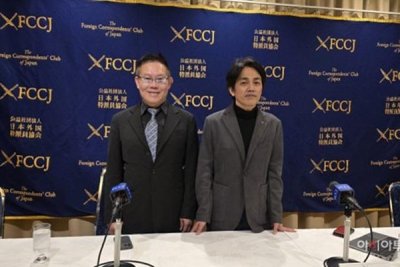
1 of 3 | Japanese defense and security experts discuss China-Japan tensions over the Taiwan Strait and the direction of U.S.-South Korea-Japan cooperation at the Foreign Correspondents’ Club of Japan in Tokyo on Jan. 8, 2026. John Chuan Tiong Lim (L) of the University of Tokyo’s Institute of Advanced Studies on Asia and Masayuki Masuda (R) of Japan’s National Institute for Defense Studies. Photo by Asia Today
Jan. 8 (Asia Today) — Japanese defense and security experts meeting in Tokyo on Thursday called for sustained security cooperation among Japan, the United States and South Korea as tensions between China and Japan sharpen over Taiwan.
Masayuki Masuda, director of the China Center at the National Institute for Defense Studies, a research institute affiliated with Japan’s Defense Ministry, said the priority is to keep deepening trilateral cooperation.
“What is important now is to continue deepening security cooperation among Japan, the United States and South Korea,” Masuda said during a news conference at the Foreign Correspondents’ Club of Japan.
His comments came ahead of an expected South Korea-Japan summit in Japan, with Masuda answering a question from Asia Today about the role Seoul should play as Beijing and Tokyo clash more openly over Taiwan.
Masuda said trilateral cooperation should not be viewed as limited to the Taiwan Strait, pointing instead to a broader security environment that also includes North Korea.
“The situation on the Korean Peninsula, such as the enhancement of North Korea’s nuclear and missile capabilities, must also be considered,” he said, describing cooperation as a structural necessity rather than a one-off response aimed at a specific country.
Masuda also said trilateral defense cooperation has already progressed, citing recent discussions among the three countries’ defense leaders and what he described as shared concern about China’s military behavior.
At the same time, he rejected the idea that Japan is pressing South Korea to make specific choices because of strained China-Japan ties, saying the focus should remain on what is needed within Japan-South Korea relations and cooperation that includes the United States.
John Chuan Tiong Lim, a researcher at the University of Tokyo’s Institute of Advanced Studies on Asia, also spoke during the session and pointed to U.S. policy as increasingly centered on Taiwan’s defense.
Lim said Washington’s public messaging can differ from its policy actions, adding that a Chinese attempt to take Taiwan by force would fundamentally alter the region’s security landscape.
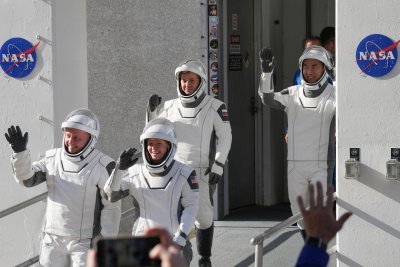
NASA’s SpaceX Crew-11 members, NASA pilot Mike Fincke, NASA commander Zena Cardman, mission specialist Oleg Platonov of Roscosmos and mission specialist Kimiya Yui from the Japan Aerospace Exploration Agency walk out of the operations center before boarding a SpaceX Falcon 9 rocket at Kennedy Space Center, Fla., in July. File Photo by Pat Benic/UPI | License Photo
Jan. 8 (UPI) — NASA said Thursday that four astronauts aboard the International Space Station will return to Earth a month earlier than scheduled after one of them suffered a “serious medical condition.”
Neither the astronaut nor the medical issue were made public, with NASA officials saying they were withholding the information due to medical privacy.
NASA Administrator Jared Isaacman told reporters in a press conference that they expect to announce an anticipated undock and re-entry timeline in the next 42 hours.
It will be the first medical early return of an astronaut in the 25-year history of the orbiting laboratory.
“After discussions with chief health and medical officer Dr. J.D. Polk and leadership across the agency, I’ve come to the decision that it’s in the best interest of our astronauts to return Crew-11 ahead of their planned departure,” Isaacman said.
NASA astronauts Zena Cardman and Mike Fincke, Japan Aerospace Exploration Agency astronaut Kimiya Yui and Roscosmos cosmonaut Oleg Platonov make up Crew-11, which launched on Aug. 1 for the ISS aboard a SpaceX Crew Dragon spacecraft.
Polk said the affected astronaut was “absolutely stable” but had suffered a medical incident “sufficient enough” that they would be best served by a complete evaluation on Earth.
“Again, because the astronaut is absolutely stable, this is not an emergent evacuation,” he said. “We’re not immediately disembarking and getting the astronaut down, but it leaves that lingering risk and lingering question as to what that diagnosis is, and that means there’s some lingering risk for that astronaut aboard.”
Though it is ISS’ first medical evacuation, Polk said it was being carried out as NASA was “erring on the side of caution for the crew member and in their best interest and their best medical welfare.”
The announcement came hours after NASA postponed Thursday’s spacewalk from the ISS due to an astronaut medical issue involving a single crew member.
“Safely conducting our missions is our highest priority, and we are actively evaluating all options, including the possibility of an earlier end to Crew-11’s mission,” NASA said in a statement. “These are the situations NASA and our partners train for and prepare to execute safely.”
Crew-11 was originally scheduled to complete its mission and return to Earth in late February, after being relieved by Crew-12.
Isaacman said they are now looking at earlier launch opportunities for Crew-12 to reach the ISS.
Until then, NASA astronaut Christopher Williams, who launched to the station late November, will maintain a U.S. presence on the orbital laboratory.
Along with Williams, the ISS is inhabited by cosmonauts Sergey Kud-Sverchkov and Sergei Mikayev, who arrived via Russian Soyuz on Nov. 27.
Unification Minister Chung Dong-young, South Korea’s point man on inter-Korean relations, speaks during a ceremony to mark his inauguration at the government complex in Seoul, South Korea, 25 July 2025. File Photo by YONHAP/ EPA
Jan. 8 (Asia Today) — South Korea’s Ministry of Unification said Thursday it will publicly livestream work reports by two affiliated organizations for the first time.
The ministry said the Inter-Korean Exchange and Cooperation Support Association and the Inter-Korean Hana Foundation will deliver their reports Wednesday at the inter-Korean talks headquarters conference room. The event will be streamed on the ministry’s UniTV channel.
A ministry official told reporters the live broadcast of an affiliated agency work report is unprecedented, adding that government ministries are now moving toward livestreaming work reports more broadly. The official said the ministry has received such reports when needed but they have not previously been made public.
President Lee Jae-myung received the first livestreamed work report last month. On Wednesday, senior presidential secretary for public relations and communication Lee Kyu-yeon said livestreamed policy briefings would be expanded to all 47 government ministries.
Lee said the government plans to livestream events led by the prime minister and ministries, major policy issues and matters of public interest. When ministries request live broadcasts on KTV, KTV will make them available to the public through television and YouTube channels. The Ministry of Unification is expected to use its own broadcast staff.
Lee said expanding live policy broadcasts is expected to improve transparency in government affairs and strengthen policy credibility.
Jan. 8 (UPI) — Seventeen House Republicans joined their Democratic colleagues Thursday evening to pass legislation that extends Affordable Care Act premium tax credits for three years.
The House lawmakers voted 230-196 in favor of House Bill 1834, known as Breaking the Gridlock Act, sending it to the Senate where passage is anything but assured. The Senate already shot down the proposal last month. President Donald Trump would also have to sign it.
“We did it!” Rep. Lauren Underwood, D-Ill., said in a recorded statement following the bill’s passing.
“And, honestly, I’m just a little bit hopeful that we might be able to get this across the finish line and save our healthcare.”
Affordable Care Act premium tax credits have greatly reduced the costs of healthcare coverage for more than 20 million people annually. The tax credits expired at the turn of the new year, setting the stage for premiums to double for millions of people.
Debate over how to address the expiration of premium tax credits was a key point of contention during the record 43-day government shutdown that ensued in October.
Nine Republicans broke from party leadership on Wednesday to join Democrats in forcing a vote on the House floor with a rarely used discharge petition after House Republicans prevented it from moving forward. Only four Republicans pushed for a floor vote last month when lawmakers tried to pass an extension before the end-of-year deadline.
House Minority Leader Hakeem Jeffries, D-N.Y., who had expected the extension to pass, applauded his party for standing strong on their months-long commitment to “fix our broken healthcare system and address the Republican healthcare crisis, beginning with the extension of the Affordable Care Act tax credits.”
To reporters after the vote, Jeffries called on Senate Majority Leader John Thune, R-S.D., to “immediately” bring the bill up for a vote and “stop playing procedural games that are jeopardizing the health, the safety and the well-being of the American people.”
Rep. Rob Bresnahan Jr. of Pennsylvania was one of the 14 Republicans to vote “yes” to H.B. 1834. In a statement, the junior House member criticized the Affordable Care Act, which is frequently called Obamacare, for allegedly failing to deliver on its promise to lower insurance costs.
“But the only thing worse than a three-year extension of these credits is to let them expire with no solution or off-ramp,” he said.
“I voted for this because, as of right now, it is the only path forward that keeps discussion alive to protect the 28,000 people in my district from immediate premium spikes.”
Rep. Mike Lawler, R-N.Y., is among the Republicans who supported voting on an extension last month. He said ahead of the vote that House members have been working with members of the Senate on a proposal that could pass through with reforms.
“We’ve been working with senators for weeks,” Lawler said. “I think that’s ultimately where we can get.”
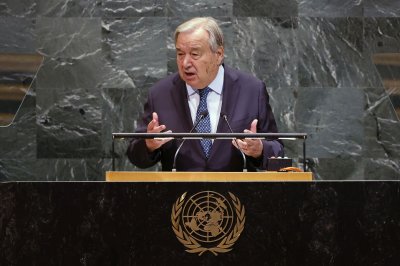
Jan. 8 (UPI) — Despite the Trump administration withdrawing the United States from 31 U.N. entities, the U.S. is obligated to continue providing assessed funding amounts, U.N. officials said on Thursday.
Despite the changes, U.N. Secretary-General Antonio Guterres the U.N.’s work will continue, and all member states, including the United States, are obligated to provide assessed contributions to the U.N.’s “regular and peacekeeping budgets” that have been approved by the General Assembly.
U.N. officials said they will continue to “deliver for those who depend on us” and “will continue to carry out our mandates with determination,” spokesman Stephane Dujarric said in a prepared statement.
“The secretary-general regrets the announcement by the White House regarding the United States’ decision to withdraw from a number of United Nations entities,” Dujarric continued.
“Assessed contributions to the United Nations’ regular budget and peacekeeping budget, as approved by the General Assembly, are a legal obligation under the U.N. Charter for all member states, including the United States,” he said.
“All United Nations entities will go on with the implementation of their mandates as given by member states.”
President Donald Trump announced the U.S. is withdrawing its participation in and funding for 66 international organizations, treaties and conventions and signed an executive order proclaiming such on Wednesday.
The decision affects U.S. participation in 31 U.N. entities, including its Population Fund that supports maternal and child health and combats sexual and gender-based violence.
The U.S. also is withdrawing from the U.N. Framework Convention on Climate Change, the U.N. Democracy Fund and other units within the U.N. Secretariat that are based in New York City and elsewhere.
The U.S. withdrawal from the UNFCCC marks a significant change in global cooperation on climate change, UNFCC Executive Sec. Simon Stiell said.
“While all other nations are stepping forward together, this latest step back from global leadership, climate cooperation and science can only harm the U.S. economy, jobs and living standards, as wildfires, floods, mega-storms and droughts get rapidly worse,” Steill said.
“It is a colossal own goal which will leave the U.S. less secure and less prosperous,” he added.
The U.S. also is withdrawing from and ceasing all participation in the U.N.’s regional commissions for the Asia-Pacific, Western Asia, Africa and Latin America and the Caribbean regions.
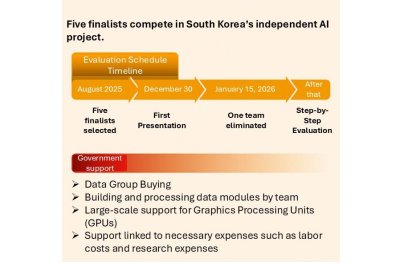
A graphic outlines the evaluation timeline and government support plan for South Korea’s sovereign AI project, including the selection of five teams, a first presentation by Dec. 30, elimination of one team by Jan. 15, 2026, and phased evaluations, alongside support such as joint data purchases, data module construction, large-scale GPU backing and funding for personnel and research costs. Graphic by Asia Today and translated by UPI
Jan. 8 (Asia Today) — South Korea’s push to develop a national artificial intelligence model has exposed a fundamental question the government has yet to answer: What, exactly, qualifies as a “sovereign” or “independent” AI?
A government-backed competition is underway to build a national AI system intended for use across society. The initiative, led by Ha Jung-woo, former Naver executive and now senior secretary for AI future planning at the presidential office, and Bae Kyung-hoon, former head of LG AI Research and now vice minister of science and ICT, aims to secure what officials call “AI sovereignty.” The stated goal is a Korean-built AI developed entirely with domestic technology.
As the competition has intensified, disputes over technical standards have moved to the forefront. The most prominent issue is whether participating models were truly built “from scratch” – a term borrowed from sports that implies starting with no preexisting foundation.
The debate first erupted when the CEO of Syonic AI publicly questioned whether Upstage’s model met that standard. Upstage CEO Kim Sung-hoon responded the following day by opening all training logs, checkpoints and experiment records for public verification. The company live-streamed the session, answered questions without prior preparation and ultimately received a public apology from the original accuser.
Senior Secretary Ha and Vice Minister Bae both praised the process on social media, calling it evidence that the national AI project is fostering a healthy and transparent ecosystem. They commended Upstage for proving the allegations unfounded through verification and credited the accuser for acknowledging the findings.
The controversy did not end there.
Attention soon shifted to Naver’s own “from scratch” claim. The company acknowledged that its model uses an encoder from China’s Qwen but said the component was not significant. In a statement, Naver said it had “strategically adopted a verified external encoder” to ensure compatibility with the global ecosystem and optimize system efficiency.
That explanation has been met with skepticism in the industry. Critics argue that the encoder is a core component of the model and that identical weights suggest a level of dependence comparable to directly adopting a foreign model. Because the entire system was trained around that structure, they say, the dependency cannot simply be removed.
The contrast in responses has drawn sharp comparisons. If a national athlete faces doping suspicions, the burden of proof lies with the athlete. Upstage disclosed everything immediately. Naver, critics argue, has asked for time without offering detailed verification. Post-hoc review, they say, is meaningless once the competition is over.
Naver has countered that innovation does not require building every technology from the ground up, arguing that AI advances by adding unique value atop proven global technologies.
But that raises a larger question: Is that what the government meant by a national AI strategy?
Industry observers say the issue is not a minor technical dispute but a political and strategic one, touching on technological sovereignty, research ethics and industrial trust. Some argue that marketing ambiguous standards risks undermining the very purpose of the project.
National AI systems are expected to underpin public services, defense, finance and other critical sectors. If their core components depend on foreign technology – particularly from countries where security assurances are uncertain – the issue extends beyond competitiveness to national economic and security risks.
What defines a “domestic AI”? Where are public funds and computing resources being directed? Who verifies technological independence, and by what criteria?
These are questions only the government can answer.
The project is officially called the Independent Foundation Model initiative. Without clear standards and qualifications, however, the national AI strategy risks losing both credibility and direction.
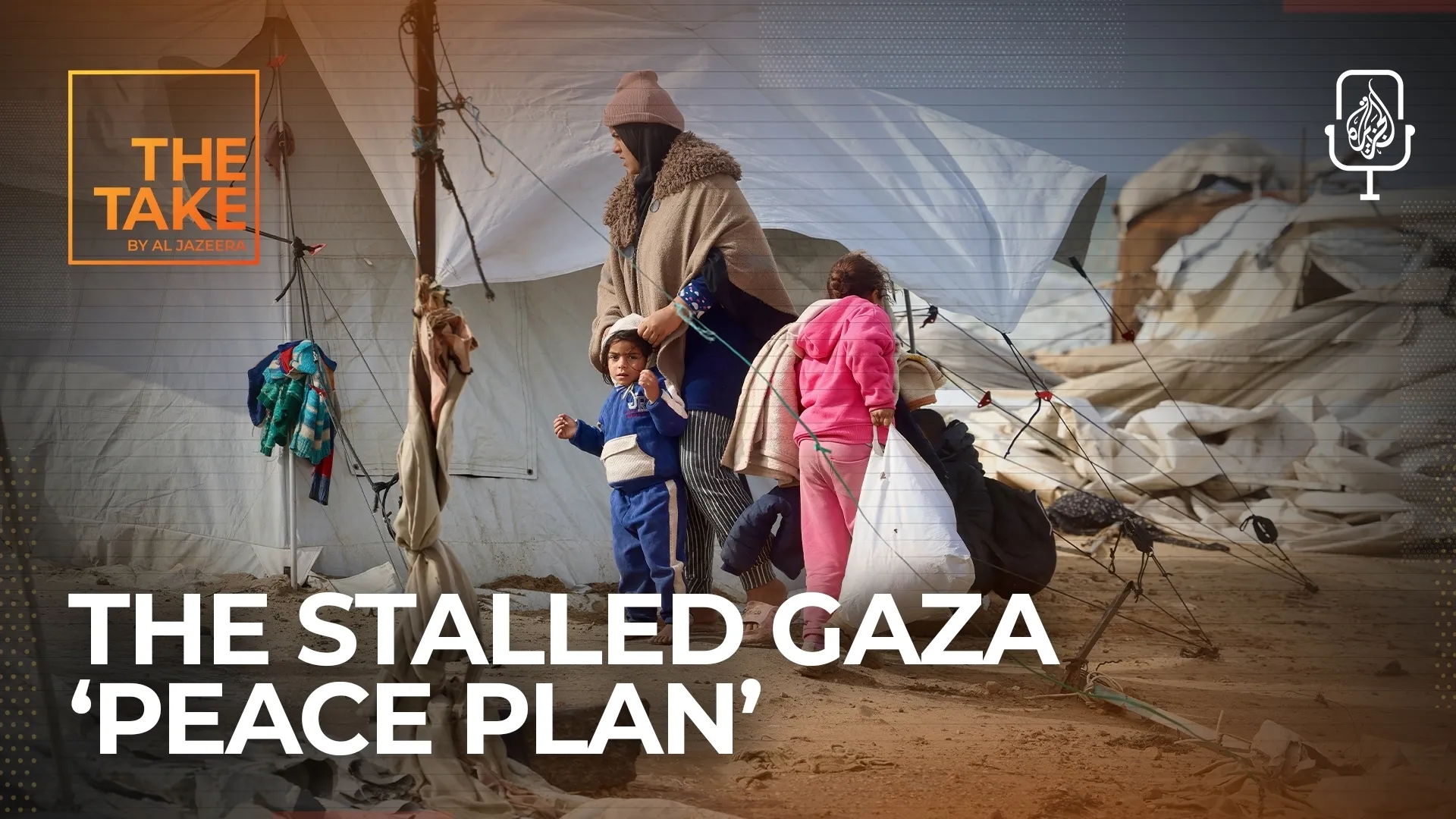
Despite an agreed-upon ‘peace plan’, Israel continues to violate the ceasefire.
In the three months since the United States unveiled a 20-point Gaza plan, more than 400 Palestinians have been killed and thousands injured in near-daily Israeli attacks. Gaza has been fragmented, with Israel controlling more than half its territory. Is this “peace plan” truly about peace?