Top News

Top news of today about travel

Ministry rebukes Coupang over data probe claim

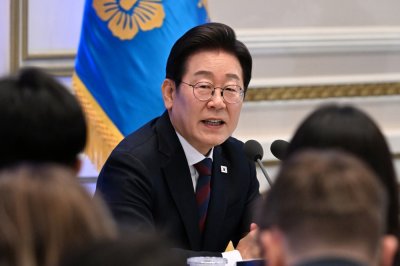
South Korean Minister of Science and ICT Bae Kyung-hoon (2R on right row), speaks during an inter-agency government meeting on Coupang’s personal data leak at the government complex in Seoul, South Korea, 30 November 2025. Photo by YONHAP/EPA

Dec. 26 (Asia Today) — South Korea’s Ministry of Science and ICT (MSIT) said Thursday it had lodged a strong protest after Coupang unilaterally disclosed what it called investigation results into a customer data breach, stressing that the claims have not been verified by the ongoing joint probe.

In a press release, the ministry said a public-private joint investigation team is still closely examining the type, scale and cause of the data leak. “The assertions made by Coupang have not been confirmed by the joint investigation team,” MSIT said.

Earlier in the day, Coupang posted a notice on its website stating that it had identified the leaker and secured all devices and hard disk drives used in the breach. The company claimed that, based on its investigation to date, the leaker stored customer information limited to about 3,000 accounts and subsequently deleted all of it.

Coupang also said it used forensic evidence, including “digital fingerprints,” to identify a former employee responsible for the leak, adding that the individual confessed to all actions and provided a detailed account of how customer information was accessed.

MSIT reiterated that any conclusions regarding the incident must come from the joint public-private investigation, cautioning against premature disclosures that could mislead the public while the probe remains underway.

–Copyright by Asiatoday

Source link

Saudi coalition will counter Yemen separatists undermining de-escalation | Conflict News

Saudi defence minister urges Yemen’s STC to withdraw “peacefully” from seized provinces, Hadramout and al-Mahra.

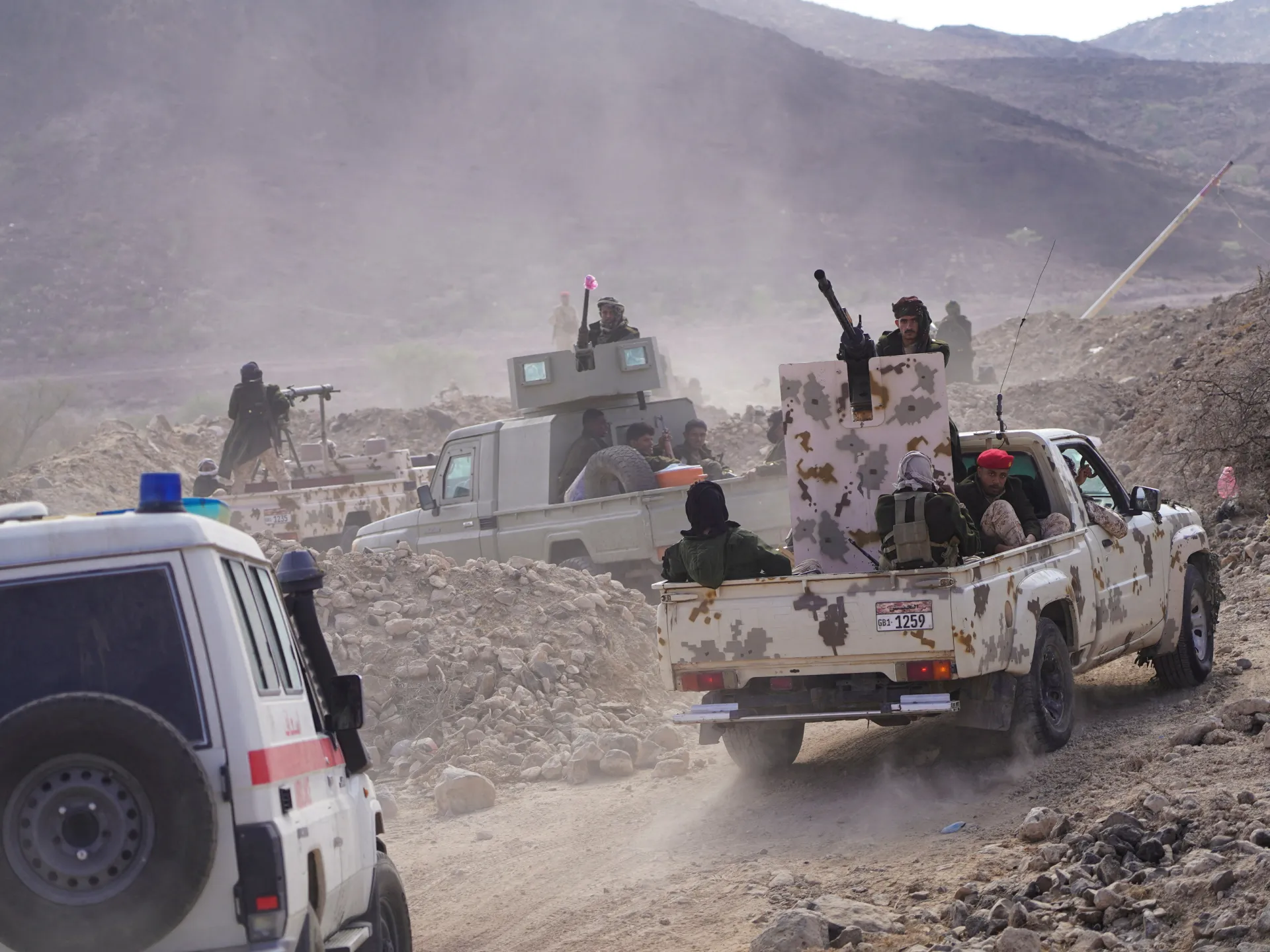
The Saudi-led coalition in Yemen says it will respond to any separatist military movements that undermine de-escalation efforts in the southern region, as Riyadh doubles down on calls for the group to “peacefully” withdraw from recently seized eastern provinces.

Saudi Arabia’s Defence Minister Khalid bin Salman said on X on Saturday that “it’s time” for troops from the separatist Southern Transitional Council (STC) to “let reason prevail by withdrawing from the two provinces and doing so peacefully”.

Recommended Stories

list of 4 itemsend of list

Brigadier General Turki al-Maliki, the spokesman for the Saudi-led coalition, said “any military movements that violate these [de-escalation] efforts will be dealt with directly and immediately in order to protect civilian lives and ensure the success of restoring calm,” according to the Saudi Press Agency.

Al-Maliki also accused the STC separatists of “serious and horrific human rights violations against civilians”, without providing evidence.

The statements came a day after the STC accused Saudi Arabia of launching air strikes on separatist positions in Yemen’s Hadramout province, and after Washington called for restraint in the rapidly escalating conflict.

Earlier this month, forces aligned to the STC took over large chunks from the Saudi-backed government in the provinces of Hadramout and al-Mahra. The STC and the government have been allies for years in the fight against the Iran-allied Houthi rebels.

Abdullah al-Alimi, a member of the Yemeni Presidential Leadership Council, the governing body of the internationally recognised government, welcomed the Saudi defence minister’s remarks, considering them to “clearly reflect the kingdom’s steadfast stance and sincere concern for Yemen’s security and stability”, he said on X.

Rashad al-Alimi, the head of the Presidential Leadership Council, said after an emergency meeting late on Friday that STC movements posed “serious violations against civilians”.

The STC, which has previously received military and financial backing from the United Arab Emirates (UAE), is seeking to revive the formerly independent state of South Yemen. The group warned on Friday that they were undeterred after strikes it blamed on Saudi Arabia hit their positions.

Diplomacy, de-escalation?

In Washington, US Secretary of State Marco Rubio said: “We urge restraint and continued diplomacy, with a view to reaching a lasting solution.”

Azerbaijan, meanwhile, said it welcomed efforts led by both Saudi Arabia and the UAE to de-escalate ongoing tensions in Yemen.

Following Friday’s raids, Yemen’s government urged the Saudi-led coalition to support its forces in Hadramout, after separatists seized most of the country’s largest province.

The government asked the coalition to “take all necessary military measures to protect innocent Yemeni civilians in Hadramout province and support the armed forces”, the official Yemeni news agency said.

A Yemeni military official said on Friday that about 15,000 Saudi-backed fighters were amassed near the Saudi border but had not been given orders to advance on separatist-held territory. The areas where they were deployed are at the edges of territory seized in recent weeks by the STC.

Separatist advances have added pressure on ties between Saudi Arabia and the UAE, close allies who support rival groups within Yemen’s government.

On Friday, the UAE welcomed Saudi efforts to support security in Yemen, as the two Gulf allies sought to present a united front.

Yemen’s government is a patchwork of groups that includes the separatists, and is held together by shared opposition to the Houthis.

The Houthis pushed the government out of Yemen’s capital, Sanaa, in 2014, and secured control over most of the north.

Source link

At least 15 dead, 19 injured in Guatemala as bus plunges into ravine | Transport News

The bus, which was travelling between Guatemala City and San Marcos, crashed for unknown reasons, authorities say.

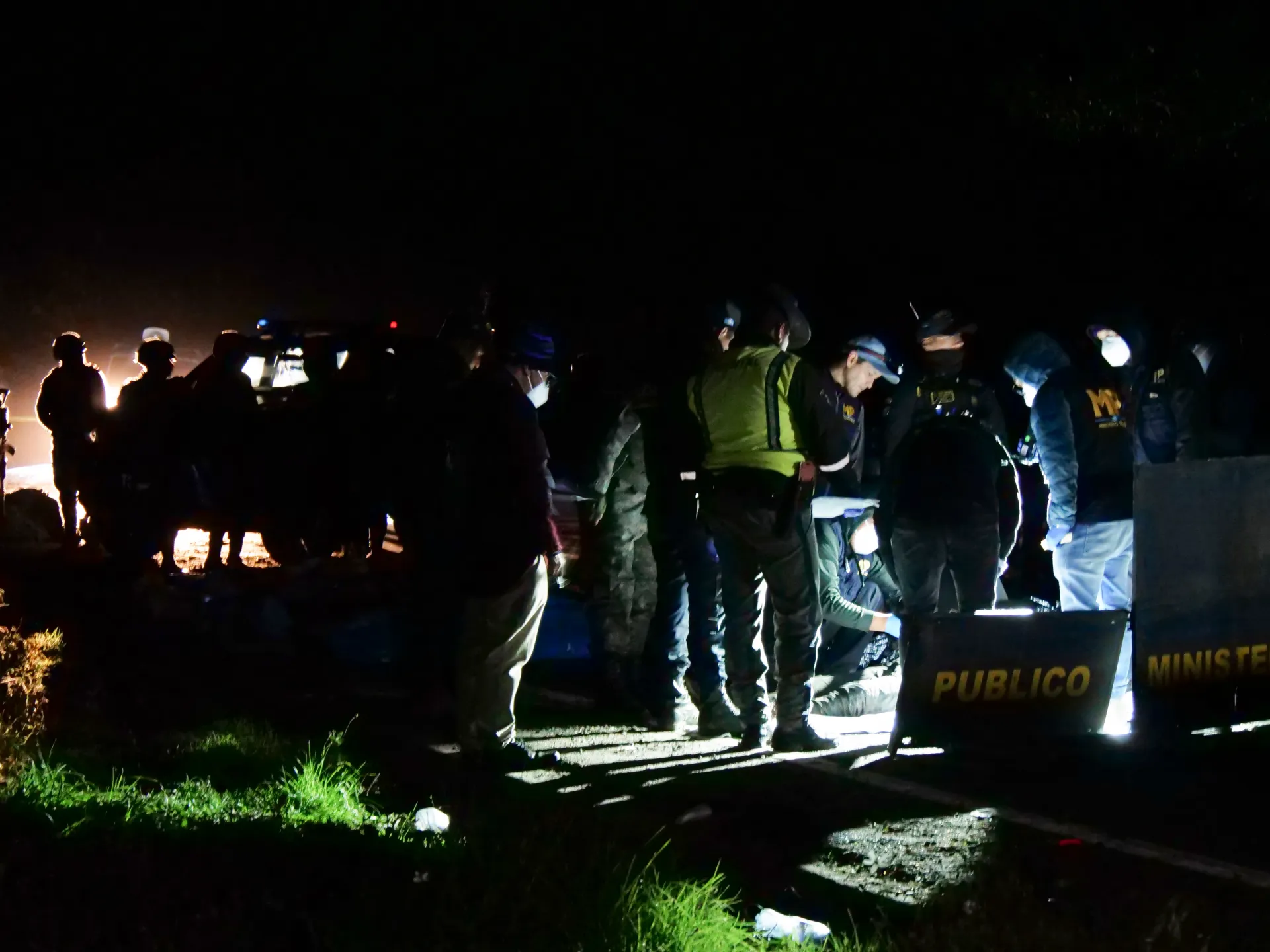
At least 15 people have been killed and 19 injured after a passenger bus plunged into a ravine on the Inter-American Highway in western Guatemala, local authorities say.

The deaths included 11 men, three women and a minor, according to Leandro Amado, a spokesperson for local firefighters.

Recommended Stories

list of 4 itemsend of list

Amado told reporters on Saturday that some 19 injured people were taken to hospitals near the scene of the accident.

The crash occurred in the Solola Department between kilometres 172 and 174, in an area nicknamed “Alaska Peak” because of its rugged terrain, in the department of Totonicapan (western Guatemala).

The dense fog in that area also often reduces visibility for drivers taking the route in question.

‘Reason unknown’

The bus, which was travelling between Guatemala City and the department of San Marcos, on the border with Mexico, fell into a ravine almost 75 metres (250ft) deep for unknown reasons, Amado added.

Images shared by the fire department on social media early on Saturday showed the wrecked bus in the ravine as firefighters worked at the scene of the incident to rescue the wounded and recover the bodies of the victims.

Relatives of the passengers have arrived at the scene of the accident as well as the hospitals around the area searching for their loved ones, local media reports said.

Early in 2025, more than 50 people died and many others were injured in another major bus crash in the country, when the vehicle plunged into a polluted ravine outside Guatemala City.

Source link

Investigation after jet carrying Libyan officers crashes in Turkiye | Transport News

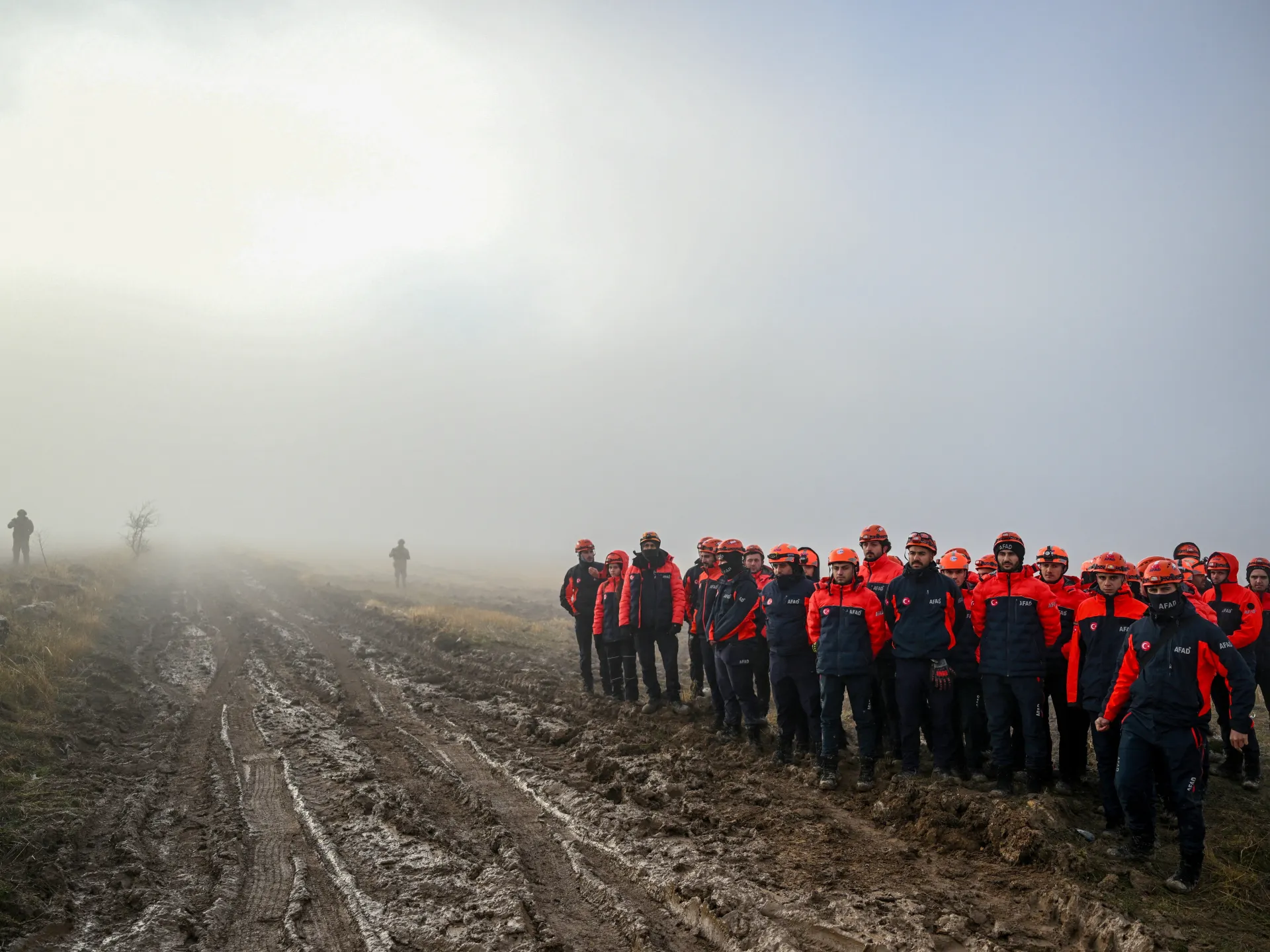
Istanbul, Turkiye – Turkish authorities and Libyan officials are conducting an investigation into the crash of a private jet that killed Libya’s army chief, Mohammed Ali Ahmed al-Haddad, and seven other people near Ankara.

The probe, coordinated by the Ankara Chief Public Prosecutor’s Office, is focusing on technical evidence, flight recordings, crew activity and aircraft maintenance, officials said. The French civil aviation investigations agency, BEA, has announced that it will participate in the probe.

Recommended Stories

list of 3 itemsend of list

General al-Haddad had been received in Ankara on Tuesday for talks with his Turkish counterpart, Selcuk Bayraktaroglu, and Defence Minister Yasar Guler.

According to officials, the French-made Dassault Falcon 50 took off from Ankara Esenboga Airport at 2:17pm on Tuesday, heading back to Libya, reported an electrical malfunction 16 minutes later and requested an emergency return.

Radar contact was lost shortly after at 2:41 pm (17:41 GMT) while the aircraft was descending towards the runway.

Officials said there was only a two-minute window between the emergency alarm and the crash.

The probe’s many factors

The forensic examination of the bodies of General al-Haddad and his military companions was completed early on Saturday and they have been repatriated to Libya after a ceremony in their honour at an airbase outside Ankara.

The site of Tuesday’s crash – near Kesikkavak village in Haymana district, roughly 70km (43 miles) south of Ankara – has been sealed off by Turkish security forces. All wreckage, including the cockpit voice recorder and flight data recorder, or “black boxes”, has been secured and transported for analysis, according to authorities.

As part of the prosecutor-led investigation, specialists are examining air traffic control recordings, radar data and airport security camera footage.

Authorities have also requested communication logs between the pilots and the control tower and are reviewing the crew’s rest periods, medical history and records of meals or medication taken before the flight.

Maintenance logs and documentation related to the aircraft’s most recent checks are also under scrutiny to identify any possible technical lapses.

Fuel samples have been taken from both the wreckage and airport tanks to rule out contamination or incorrect fuel use, while local weather data from the time of the crash has been requested.

If evidence points to a structural failure or design flaw, investigators said, the inquiry could be expanded to include manufacturers and maintenance contractors.

International rules and reporting timeline

Gursel Tokmakoglu, former head of the Turkish air force’s intelligence agency, said the crash should be viewed as an international case, given the number of actors involved.

“The Libyan government chartered an aircraft from a foreign country. The aircraft was manufactured in another country. The pilots were from elsewhere. The passengers were Libyan, and the crash happened in Turkiye,” he said.

“If you also consider insurance companies and international aviation bodies, this is clearly a multinational incident.”

Earlier, Turkish Transport Minister Abdulkadir Uraloglu had announced that the black boxes may be sent to another country for further analysis, raising some questions about why analysis could not be done in either Turkiye or Libya.

Tokmakoglu said Turkiye could either examine the black boxes domestically or send them abroad for further analysis.

“Transferring the recorders can help ensure greater transparency and a clearer understanding of what happened, especially in a case involving so many international stakeholders,” he said.

Tokmakoglu noted that according to preliminary findings, the aircraft transmitted the 7700 emergency “squawk” code, which indicates an emergency that requires immediate attention, and the crew reported an electrical malfunction.

However, he added, it would be premature to assume that the electrical malfunction was the cause of the aircraft’s crash.

“In aviation, an electrical failure can trigger other problems,” he said, likening such a situation to “being admitted to intensive care for heart failure but dying later from a lung infection”.

Aviation industry analyst Guntay Simsek told Al Jazeera, citing his own sources, that there are no indications so far that the crash was caused by an external factor such as an explosion, adding that the technical investigation remains ongoing.

The probe starting immediately is within general best practices after a crash, aviation industry analyst Guntay Simsek said, pointing to ICAO regulations that govern aircraft accident investigations, which require a preliminary report within 30 days and a final report within 12 months.
Source link

Trump gifts White House golden key to Lee

South Korean President Lee Jae Myung (R) shakes hands with US President Donald Trump (L) after conferring the state-awarded Grand Mugunghwa Medal, South Korea’s highest order of civil merit, on Trump ahead of their talks at the National Museum in Gyeongju, North Gyeongsang Province, southeastern South Korea, 29 October 2025. In front of Lee is a replica of a Korean gold crown from a royal tomb of the Silla Kingdom (57 B.C.–A.D. 935) that was gifted to the US leader. Photo by YONHAP/EPA

Dec. 26 (Asia Today) — US President Donald Trump has presented South Korean President Lee Jae-myung with a symbolic “Key to the White House,” returning a diplomatic gesture after receiving a replica of a Silla-era gold crown earlier this year.

Kang Hoon-sik, chief of staff at the presidential office, said on Facebook on Tuesday that Trump sent Lee one of only five specially made golden keys associated with the White House, noting it was the final remaining piece. Trump reportedly decided to send the gift after receiving a particularly meaningful present during his visit to South Korea in October.

During the October APEC summit in Gyeongju, Lee presented Trump with a model of the gold crown excavated from Cheonmachong, a royal tomb from the ancient Silla Kingdom, as part of a bilateral summit between the two leaders.

According to Kang, the golden key was delivered on Dec. 16 when South Korea’s ambassador to the United States, Kang Kyung-wha, met Trump for talks. During the meeting, Trump was quoted as saying, “I really like him,” referring to Lee, and highlighting what he described as a strong cooperative relationship between the two presidents.

The White House golden key is said to have been personally designed by Trump to be given only to select guests of special significance. The key presented to Lee is engraved with the U.S. presidential seal and the words “Key to the White House.”

The honor places Lee among a small group of recipients that includes Israeli Prime Minister Benjamin Netanyahu, former Japanese Prime Minister Taro Aso, Tesla CEO Elon Musk, and football star Cristiano Ronaldo.

Kang also recalled an anecdote from a memoir by Trump’s son-in-law, Jared Kushner, which described Trump jokingly telling Netanyahu that even after leaving office, showing the key at the White House gate would grant him entry.

“This golden key, carrying special meaning, is hoped to become a symbol of the strong South Korea-U.S. relationship,” Kang said, adding that the administration would continue working toward a solid future for the bilateral alliance.

–Copyright by Asiatoday

Source link

Hanwha rises as hub of US shipbuilding revival

Hanwha Group Vice
Chairman Kim Dong-kwan, second from right, explains the conglomerate’s
shipbuilding facilities to US Navy Secretary John Phelan, far right, at Hanwha’s
Geoje shipyard in South Korea, Wednesday. Photo courtesy of Hanwha Ocean

Dec. 26 (Asia Today) — Hanwha Group is positioning itself as a central player in the United States’ drive to revive its shipbuilding industry, with its Philadelphia shipyard emerging as a key operational base for Washington’s plan to restore naval power under President Donald Trump’s so-called “Golden Fleet” initiative.

Hanwha hosted a media day on Dec. 22 at its Hanwha Philly Shipyard in Pennsylvania, showcasing not just facilities but what executives described as a ready-to-execute platform aligned with U.S. national strategy to rebuild shipbuilding capacity and strengthen naval forces.

The significance of the site was underscored the same day when Trump publicly announced his Golden Fleet vision – aimed at countering China’s expanding naval power – and explicitly cited cooperation with South Korean conglomerate Hanwha. Trump recalled that during World War II, the United States built more than four ships a day on average, vowing to restore that capability.

Industry officials say the Philadelphia shipyard represents the point where political ambition meets practical execution.

Tom Anderson, head of shipbuilding at Hanwha Defense USA, said the shipyard should be seen not as a future possibility but as a fully prepared asset. The Golden Fleet concept centers on large, potentially nuclear-capable platforms and advanced surface vessels, while also elevating domestic production capacity as a political priority.

Rather than limiting cooperation to a single frigate program, Anderson said Hanwha is targeting the U.S. Navy’s core platform – the Virginia-class nuclear-powered submarine. “Hanwha Philly Shipyard has the capability to build nuclear-powered submarines,” he said, stressing that readiness extends beyond any single model to the entire class of nuclear-propulsion platforms.

The U.S. Navy currently requires two submarines per year but produces only about 1.2 due to capacity bottlenecks. To address this gap, Anderson proposed leveraging proven designs instead of starting from scratch, applying South Korea’s shipbuilding expertise in shortening construction timelines to the Virginia-class framework.

Acknowledging the complexity of nuclear submarine construction, Anderson outlined key prerequisites: workforce expansion, deployment of skilled Korean technicians, recruitment of personnel with Virginia-class experience, and close coordination with the U.S. Navy’s Naval Reactors program.

On the sensitive issue of nuclear material control, Anderson drew clear boundaries. “The reactor compartment is provided by the U.S. government,” he said, adding that strict safeguards and procedures for nuclear material management are already in place. Hanwha, he said, would comply with the same standards applied to all U.S. nuclear-submarine shipyards.

Questions at the briefing focused on timing. While declining to commit to a specific schedule, Anderson emphasized Hanwha’s readiness to move quickly once government decisions are made. “We fully recognize the urgency of submarine production,” he said.

Supply-chain resilience also emerged as a key theme. Anderson said Hanwha plans to integrate South Korea’s robust shipbuilding supply network to stabilize schedules and accelerate delivery, while maintaining the principle of “Made in the USA” production. In effect, Korean suppliers would serve as the arteries supporting U.S.-built vessels.

Cho Jong-woo, head of Hanwha Philly Shipyard, said expanded shipbuilding in the United States would allow Korean component makers and partner firms to enter global supply chains and grow alongside the U.S. naval buildup.

As Washington seeks to turn shipbuilding revival from slogan into strategy, Hanwha’s U.S. foothold is increasingly viewed as a critical pillar in rebuilding America’s maritime power.

–Copyright by Asiatoday

Source link

Lee orders review of juvenile age threshold

South Korean President Lee Jae Myung delivers a speech during a press conference to mark his first 30 days in office at the Yeongbingwan (state guest house) of the Blue House, in Seoul, South Korea, 03 July 2025. Photo by Kim Min-Hee /EPA

Dec. 26 (Asia Today) — President Lee Jae-myung has ordered a formal review of lowering the age threshold for juvenile offenders exempt from criminal punishment, reviving a long-running debate amid growing public concern over youth crime. Legal experts broadly support the intent but caution that the move may have only limited deterrent effects.

During a policy briefing with the Ministry of Justice on Dec. 19, Lee instructed officials to place the issue of lowering the minimum age for criminal responsibility on the Cabinet agenda, according to officials.

Under South Korea’s Criminal Act, established in 1953, children aged 10 to under 14 are classified as juvenile offenders and are exempt from criminal punishment, instead receiving protective measures focused on education and rehabilitation. The system was designed to prioritize the reformability of minors over punitive sanctions.

Critics argue, however, that crimes committed by juvenile offenders have risen sharply in both number and severity. According to the Supreme Court’s Judicial Yearbook 2025, 7,294 juvenile offenders received protective dispositions in 2024, more than double the 3,465 recorded in 2020.

Serious offenses, including sexual crimes and acts of extreme violence, have also increased. Police data show that between Jan. 1 and Sept. 10, 2024, juveniles under 14 accounted for about 20 percent – 63 out of 318 suspects – arrested in deepfake-related sexual crimes, highlighting concerns over new forms of digital abuse.

Many in the legal community agree that the age standard should reflect changes in adolescents’ physical and mental maturity as well as the social environment. Kim Ji-yeon, an attorney with Lawyers for a New Future for Youth, said the widespread perception that offenders under 14 cannot be criminally punished has been exploited. “Some youths commit serious crimes like deepfake offenses believing authorities cannot punish them,” she said, noting that the non-disclosure of juvenile criminal records has also been abused.

Kim added that lowering the age by about one year could help address these problems, even if it partially conflicts with the system’s rehabilitative purpose. “In reality, victims are often even younger, and protecting minor victims must be a priority,” she said.

Shin Hye-sung, a lawyer at Yulwoo Law Firm and a former juvenile court judge, also voiced support for lowering the age in cases involving sexual crimes. “Many 13-year-olds today are far more mature than in the past and capable of committing serious offenses,” he said. “Allowing the possibility of criminal trials could have a necessary deterrent effect.”

Still, Shin stressed the limits of such a reform. “Lowering the age will not bring dramatic change,” he said, noting that the rise in juvenile cases is largely driven by school violence. “Contrary to public perception, it is extremely rare for children under 14 to commit crimes serious enough to warrant criminal trials. Since such cases are uncommon, the overall impact of an age cut would likely be modest.”

As the issue returns to the National Assembly agenda, attention is focused on whether the proposal – which has repeatedly stalled in the past – can gain enough consensus to move forward this time.

–Copyright by Asiatoday

Source link

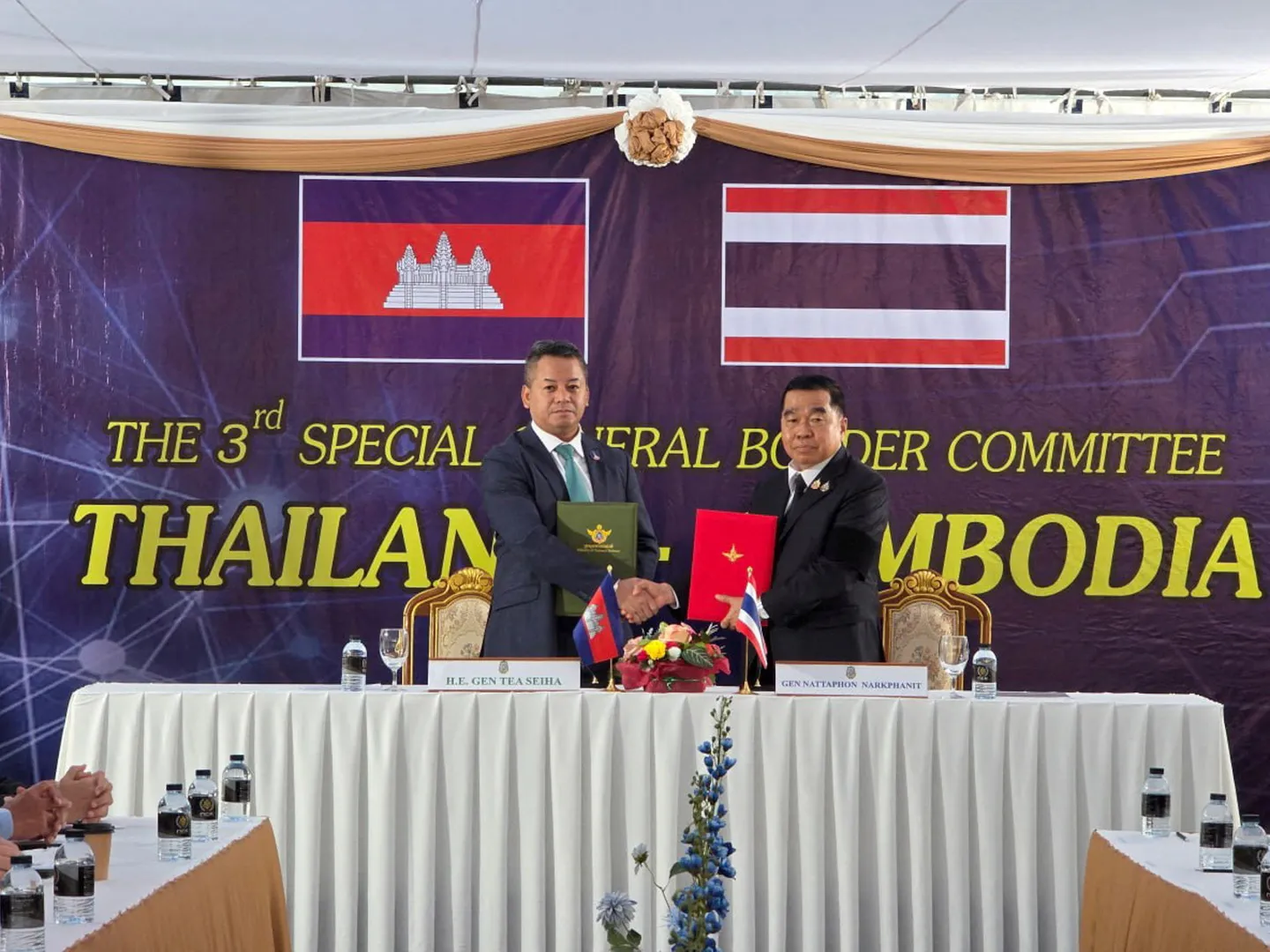
Thailand-Cambodia ceasefire starts, first 72 hours seen as critical test | Border Disputes

NewsFeed

A ceasefire between Thailand and Cambodia has come into effect after weeks of deadly fighting across the border. Al Jazeera’s Assed Baig says artillery fire has stopped but the next 72 hours will be a critical test of whether the truce holds. Hundreds of thousands of displaced civilians are hoping it lasts.

Source link

Progressives also call disinformation law unconstitutional

1 of 4 |
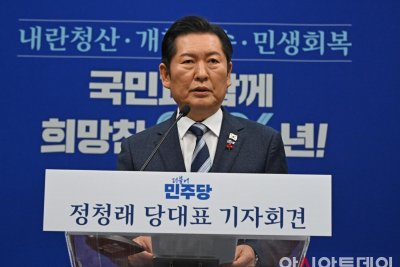
Jung Cheong-rae, leader of South Korea’s Democratic Party, speaks during his first news conference after taking office at the National Assembly in Seoul on Dec. 26. Photo by Asia Today

Dec. 26 (Asia Today) — A controversial revision to South Korea’s Information and Communications Network Act, driven through the National Assembly by the ruling Democratic Party, is facing a growing backlash not only from conservatives but also from within the broader progressive camp, with critics urging President Lee Jae-myung to exercise his veto.

The amendment, often dubbed the “anti-disinformation law,” passed the Assembly on Dec. 24 as the Democratic Party leveraged its 170-seat majority. However, smaller progressive allies – including the Progressive Party, the Basic Income Party and the Social Democratic Party – either opposed the bill or abstained, warning that it could violate constitutional protections on freedom of expression.

“The criteria for judging what constitutes harm to the public interest are unclear,” Sohn Sol, senior spokesperson for the Progressive Party, said in a statement on Wednesday. “There is a serious risk the law could be abused as a tool to arbitrarily suppress speech critical of those in power,” she said, calling on the president to return the bill to the Assembly.

During the plenary vote, Progressive Party lawmaker Jung Hye-kyung voted against the bill, while Sohn abstained. Lawmakers Yong Hye-in of the Basic Income Party and Han Chang-min of the Social Democratic Party also cast abstentions. Even Park Joo-min, a Democratic Party lawmaker, abstained, later saying that key provisions he had championed – including the complete repeal of criminal defamation for statements of fact and changes to complaint-based prosecution – were not included in the final version.

The revised law allows courts to award punitive damages of up to five times the assessed harm against media outlets or YouTubers found to have intentionally disseminated fabricated or manipulated information. It also empowers the Korea Communications Commission to impose fines of up to 10 billion won ($7.7 million) on those who repeatedly distribute content ruled to be false by the courts. Supporters argue the measures are necessary to dismantle profit-driven fake news operations.

Despite criticism from both opposition parties and parts of the progressive bloc, the Democratic Party has held firm. Party leader Jung Cheong-rae said “irresponsible freedoms that fuel chaos and profit from malicious agitation cannot be left unchecked,” while Supreme Council member Han Jun-ho dismissed warnings about chilled speech as “overblown.”

The main opposition People Power Party said it would seek legal remedies, including filing a jurisdictional dispute with the Constitutional Court, calling the law “an unconstitutional gag order that suffocates liberal democracy.” Floor leader Song Eon-seok urged President Lee to “immediately exercise his veto.”

Attention has also turned to the Justice Innovation Party, which played a swing role in the legislative process. While the party initially pushed alternative proposals – including limits on punitive damages claims by public officials and repeal of criminal defamation for factual statements – those demands were not fully reflected. The party ultimately backed the Democratic Party’s bill, citing future discussions on criminal law revisions, while securing amendments to strengthen defendants’ rights for journalists and other targets of lawsuits.

–Copyright by Asiatoday

Source link

UN renews Sudan ceasefire appeal over ‘unimaginable suffering’ of civilians | Sudan war News

UN Secretary-General Antonio Guterres appeals for immediate truce as fighting intensifies in Darfur and Kordofan regions.

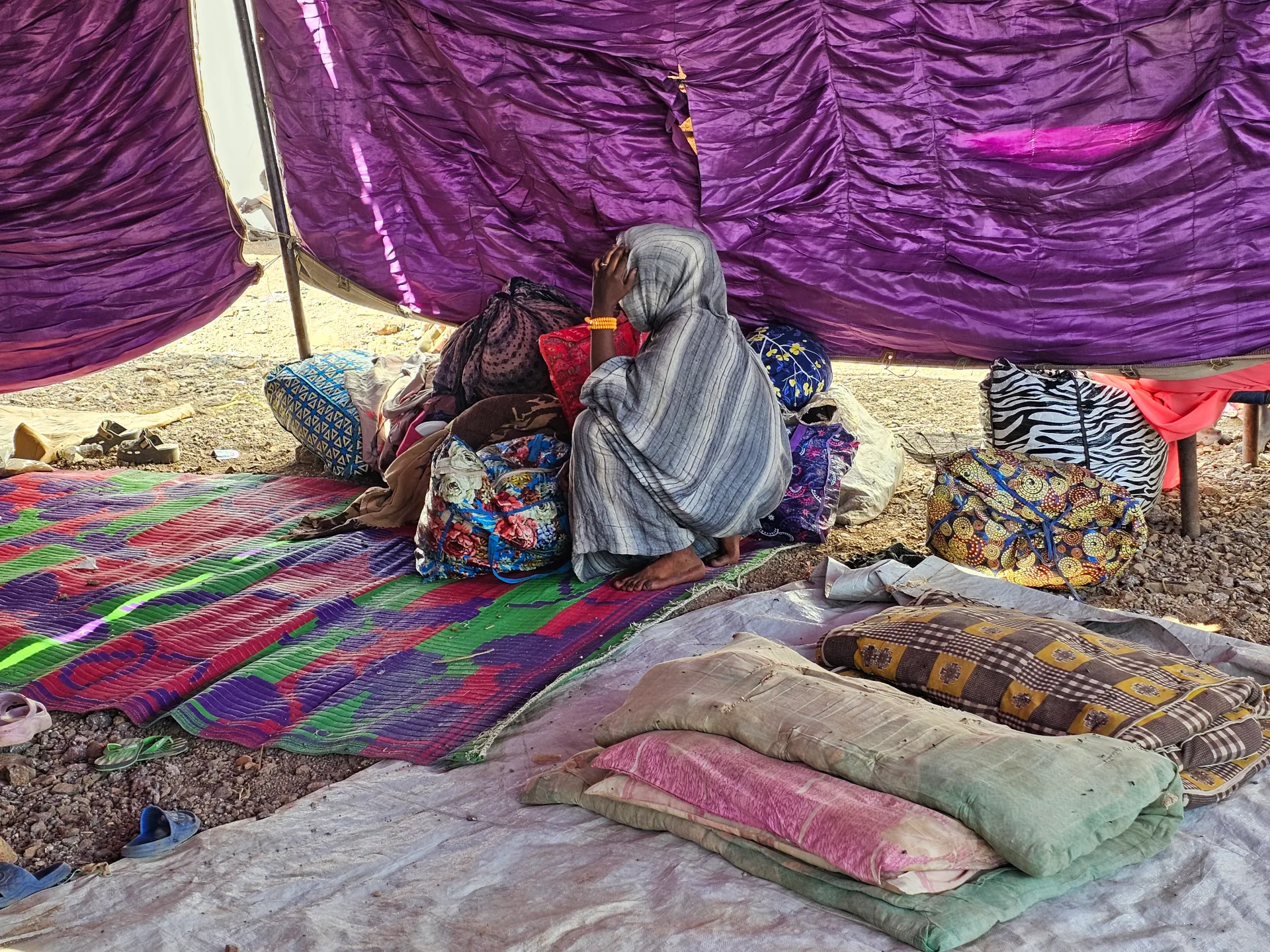
United Nations Secretary-General Antonio Guterres has called for an immediate ceasefire in Sudan’s brutal civil war, which the UN says has created the world’s worst humanitarian crisis.

Guterres’s appeal, made late on Friday, follows a peace initiative presented by Sudan’s Prime Minister Kamil Idris to the UN Security Council on Monday, which called for the paramilitary Rapid Support Forces (RSF) to disarm.

Recommended Stories

list of 4 itemsend of list

The plan was rejected by the RSF as “wishful thinking”.

The war erupted in April 2023 when a power struggle broke out between the Sudanese army and the RSF paramilitary group. Since then, the conflict has displaced 9.6 million people internally and forced 4.3 million to flee to neighbouring countries, while 30.4 million Sudanese now need humanitarian assistance, according to UN figures.

UN Assistant Secretary-General Mohamed Khaled Khiari told the UNSC this week that fears of intensified fighting during the dry season had been confirmed.

“Each passing day brings staggering levels of violence and destruction,” he said. “Civilians are enduring immense, unimaginable suffering, with no end in sight.”

The conflict has shifted in recent weeks to Sudan’s central Kordofan region, where the RSF captured the strategic Heglig oilfield on December 8. The seizure prompted South Sudanese forces to cross into Sudan to protect the infrastructure, which Khiari warned reflects “the increasingly complex nature of the conflict and its expanding regional dimensions”.

The RSF has also launched a final push to consolidate full control over North Darfur state, attacking towns in the Dar Zaghawa region near the Chad border since December 24. The offensive threatens to close the last escape corridor for civilians fleeing the country to Chad.

The violence spilled across Sudan’s borders on Friday when a drone attack killed two Chadian soldiers at a military camp in the border town of Tine.

A Chadian military intelligence officer told Reuters news agency the drone came from Sudan, though it remained unclear whether it was launched by the army or the RSF. Chad has placed its air force on high alert and warned it would “exercise our right to retaliate” if the strike is confirmed as deliberate.

Despite the intensifying conflict, the UN achieved a rare breakthrough, saying on Friday that it conducted its first assessment mission to el-Fasher since the city fell to the RSF.

UN Humanitarian Coordinator Denise Brown said the mission followed “months of intense fighting, siege, and widespread violations against civilians and humanitarian workers,” adding that “hundreds of thousands of civilians have had to flee el-Fasher and surrounding areas”.

Earlier this month, Yale University released a report documenting systematic mass killings by the RSF in el-Fasher, with satellite imagery showing evidence of burning and the burial of human remains on a mass scale.

US Secretary of State Marco Rubio warned last week that the fighting was “horrifying” and “atrocious”, telling a news conference that “one day the story of what’s actually happened there is going to be known, and everyone involved is going to look bad”.

Rubio said he wanted the war to end before the New Year, but there is no strong indication that progress has been made.

Prime Minister Idris’s peace plan proposed an immediate UN-monitored ceasefire and complete RSF withdrawal from the roughly 40 percent of Sudan it controls. But an adviser to RSF leader Mohamed Hamdan “Hemedti” Dagalo dismissed the proposal as “closer to fantasy than to politics”.

Upon returning to Port Sudan on Friday, Idris laid down a red line, saying the government would reject international peacekeeping forces because Sudan had been “burned” by them in the past.

Source link

Key Bolsonaro ally arrested in Paraguay while trying to flee to El Salvador | Jair Bolsonaro News

Ex-Brazilian police chief caught using fake Paraguay passport in attempt to board flight to Panama, sent back to Brazil.

A Brazilian former police chief, who fled the country after he was convicted as an accomplice in the attempted coup by Brazil’s far-right ex-President Jair Bolsonaro, has been arrested in Paraguay, according to the country’s immigration agency.

Silvinei Vasques was arrested on Friday at the Silvio Pettirossi International Airport in Paraguay’s capital Asuncion, the Paraguayan National Migration Directorate (DNM) said in a statement posted on its website.

Recommended Stories

list of 3 itemsend of list

The agency said Vasques was arrested for “identity theft” after “attempting to evade immigration controls by impersonating a Paraguayan citizen”.

Vasques was arrested while attempting to board a flight to Panama, declaring El Salvador as his final destination, the DNM statement said.

The wanted police chief had “clandestinely” entered Paraguay while “evading justice in his home country”, DNM added.

An image published on X by Paraguayan immigration authorities showed Vasques’s arrest and identification.

A separate video clip posted on the same account showed Vasques being turned over to Brazilian federal police at the Friendship Bridge border crossing that connects Paraguay’s Ciudad del Este and Brazil’s Foz do Iguacu.

Translation: The National Directorate of Migration (DNM) expelled Silvinei Vasques from the country. Moments ago, the DNM expelled Silvinei Vasques (50) from the country, subsequently handing him over to Brazilian Federal Police authorities at the Friendship Bridge border crossing.

Vasques, the former chief of Brazil’s highway police, was accused of deploying officers to prevent voters in left-leaning areas from casting their ballots in 2022 elections that Bolsonaro lost to left-wing candidate and current President Luiz Inacio Lula da Silva.

He was arrested in 2023 and placed under supervision with an electronic ankle monitor pending trial. Earlier this month, he was sentenced to more than 24 years in prison to be served under house arrest. He fled Brazil shortly after.

Brazilian media reported that Vasques broke his ankle monitor and drove across the border to Paraguay.

Brazil Supreme Court Justice Alexandre de Moraes ordered the fugitive’s preventive detention as a precautionary measure on  Friday, Reuters news agency reported, citing a court document and information from two people familiar with the matter.

Reached by Reuters, Vasques’s lawyer did not comment on his client’s attempt to flee.

Vasques is not the first official convicted over the 2023 coup attempt who has tried to escape from Brazil. In November, the Supreme Court ordered the arrest of the former intelligence agency director Alexandre Ramagem, who left the country in September and has since been living in the United States.

That same month, Justice Moraes also ordered Bolsonaro be detained after the former president tried to remove his court-ordered ankle monitor using a soldering iron, in what the court saw as an attempt to escape justice.

Bolsonaro, 70, is now serving a 27-year sentence in jail after being found guilty in September of having led the plot to prevent Lula from taking office.

On Thursday, the former president underwent surgery in hospital for a hernia.


Source link

UK youth to be offered military ‘gap year’ in bid to boost defence: Report | Military News

UK plans to boost ranks of armed forces by offering young people paid military experience amid growing Russian threats.

Teenagers in the United Kingdom will be offered paid “gap years” with the armed forces under a new “whole of society” approach to national defence that aims to increase recruitment among young people, according to reports.

The London-based i Paper reported on Friday that the UK’s Ministry of Defence hopes the scheme will broaden the appeal of military careers for British youth as tensions with Russia rise across Europe.

Recommended Stories

list of 4 itemsend of list

The scheme will initially be open to about 150 applicants aged 18 to 25 in early 2026, with ministers aiming to eventually expand the programme to more than 1,000 young people annually, depending on demand, according to British radio LBC.

With fears of threats from Russia growing amid Moscow’s war on Ukraine, European countries have looked to national service for young people as a means to boost their ranks, with France, Germany and Belgium announcing schemes this year.

Recruits to the UK scheme will not be deployed on active military operations and while pay has not been confirmed, the UK’s LBC news organisation reported that it is expected to match basic recruit salaries, typically about 26,000 pounds, or $35,000.

Under the programme, army recruits would complete 13 weeks of basic training as part of a two-year placement. The navy scheme would last one year while the Royal Air Force (RAF) is still considering options, according to reports.

UK Defence Secretary John Healey told the i Paper: “This is a new era for Defence, and that means opening up new opportunities for young people.”

News of the programme follows remarks earlier this month from the UK’s Chief of the Defence Staff, Air Chief Marshal Richard Knighton, who said Britain’s “sons and daughters” should be “ready to fight” and defend the country amid Russian aggression, the Press Association reports.

Knighton said that while a direct Russian attack on the UK is unlikely, hybrid threats are intensifying.

He referenced a recent incident involving a Russian spy ship suspected of mapping undersea cables near UK waters.

“Every day the UK is subject to an onslaught of cyber-attacks from Russia and we know that Russian agents are seeking to conduct sabotage and have killed on our shores”, Knighton said, warning that Russia’s military had become a “hard power [which] is growing quickly”.

The UK government announced earlier this year that defence and security spending will rise to 5 percent of gross domestic product (GDP) by 2035.

Source link

South Korea to open North Korea’s Rodong Sinmun to public access

1 of 2 | A foreign journalist who covered North Korea’s Punggye-ri nuclear test site demolition reads the Rodong Sinmun, the official newspaper of the country’s Workers’ Party, on a North Korean chartered flight heading to Beijing, China, 26 May 2018. Reporters from South Korea, China, Russia, the United States and Britain were invited to watch the dismantlement of the site, which was carried out on 24 May through a series of explosions over several hours. Photo by YONHAP/EPA

Dec. 26 (Asia Today) — South Korea’s Unification Ministry said Friday it will move ahead next week with administrative steps to make North Korea’s state newspaper, Rodong Sinmun, publicly accessible.

The ministry said a consultative meeting of supervisory agencies held Friday confirmed a consensus to reclassify Rodong Sinmun from “special materials” to “general materials,” clearing the way for broader public access.

Participants in the meeting included the Ministry of Unification, the National Intelligence Service, the Ministry of Culture, Sports and Tourism, the Ministry of Education, the Ministry of Science and ICT and the Korea Communications Commission.

Following completion of required administrative procedures, including the issuance of official notices to supervisory and handling agencies, the ministry said the reclassification will take effect next week.

Deputy Unification Ministry spokesperson Jang Yun-jeong said earlier Friday that the government has been reviewing ways to expand public access to North Korean materials. She noted that many such materials, including Rodong Sinmun, are currently designated as special materials and can be handled only by authorized agencies.

In a written response submitted Thursday to the office of Yoon Gun-young, the intelligence service said it plans to decide on reclassification through interagency consultations, citing the public’s right to know and the promotion of inter-Korean exchanges.

The Unification Ministry also said it is pushing to amend the Information and Communications Network Act and enact a separate law on the management and use of North Korean materials, a move that would allow access to North Korean websites and publications such as Rodong Sinmun.

President Lee Jae-myung has said the public should not be treated as inherently vulnerable to propaganda or agitation.

The plan has drawn mixed reactions. Some experts have urged a cautious, phased opening of North Korean media, while others have called for countermeasures against Pyongyang’s sophisticated propaganda efforts and warned of potential cybersecurity risks from North Korean websites.

— Reported by Asia Today; translated by UPI

© Asia Today. Unauthorized reproduction or redistribution prohibited.

Source link

Lee misunderstood question on North detainees, families unconvinced

Family members of victims of abductions, detentions and forced disappearances attend a public hearing calling for international solidarity at the Ministry of Unification in Seoul on Aug. 29, 2024. From left: Choi Jin-young, Kim Jeong-sam, Lee Shin-hwa, Choi Seong-ryong and Park Hye-ja. Photo by Yonhap News Agency

Dec. 26 (Asia Today) — South Korea’s Unification Ministry and the National Security Office have told families of South Korean nationals detained in North Korea that President Lee Jae-myung’s recent remarks on the issue resulted from a misunderstanding of a question and problems with on-site interpretation, according to relatives.

Family members said Unification Vice Minister Kim Nam-joong and officials from the ministry met relatives of detainees, including the families of missionaries Kim Jeong-wook and Choi Chun-gil, ahead of Christmas. They offered condolences and said the government would address the detainee issue, while explaining that Lee’s comments at a foreign press briefing on Dec. 3 stemmed from a misunderstanding of the question.

Relatives also said the National Security Office contacted families after the Dec. 3 briefing at the presidential guesthouse and said the detainee issue had been reported to Lee in September. Officials said Lee confused it with a separate case involving a South Korean detained in connection with a Cambodia scam incident, and said interpretation problems prevented an appropriate response, the families said.

At the Dec. 3 briefing, Lee responded to a question about South Koreans detained in North Korea by saying he was hearing about it “for the first time” and asked national security adviser Wi Sung-lak whether it was true. After the question was clarified, Lee said he lacked specific details and would review the matter.

The presidential office said the next day that six South Korean nationals, including defectors, were detained from 2013 to 2016 on charges including espionage.

Choi Jin-young, the son of detained missionary Choi Chun-gil, said he was told Lee knew about the detainees but there had been “a slight misunderstanding.” Choi said the government promised to handle the issue going forward.

But he said the explanations “sounded like nothing but excuses” and argued the case risks being forgotten. He said he urged the government to at least run a public awareness campaign.

Choi also criticized remarks in government briefings suggesting there is little that can be done without inter-Korean dialogue, saying families consider that “heartbreaking.” He said the government could still pursue cooperation by raising the issue with senior Chinese officials.

Kim Jeong-sam, brother of detained missionary Kim Jeong-wook, said he hoped the incident would prompt the government to focus more on the detainee issue. He said he was told the matter is included in the administration’s 100 key policy tasks, adding that the explanation about Lee’s remarks eased some concerns.

South Korea says six of its nationals have been detained in North Korea since 2013 through 2016 on charges including espionage. They include missionaries Kim Jeong-wook, detained in October 2013, Kim Guk-gi, detained in October 2014, and Choi Chun-gil, detained in December 2014, along with three former North Korean defectors. A defector journalist working for a North Korea-focused outlet is also reported to have been abducted by North Korea in China.

— Reported by Asia Today; translated by UPI

© Asia Today. Unauthorized reproduction or redistribution prohibited.

Source link

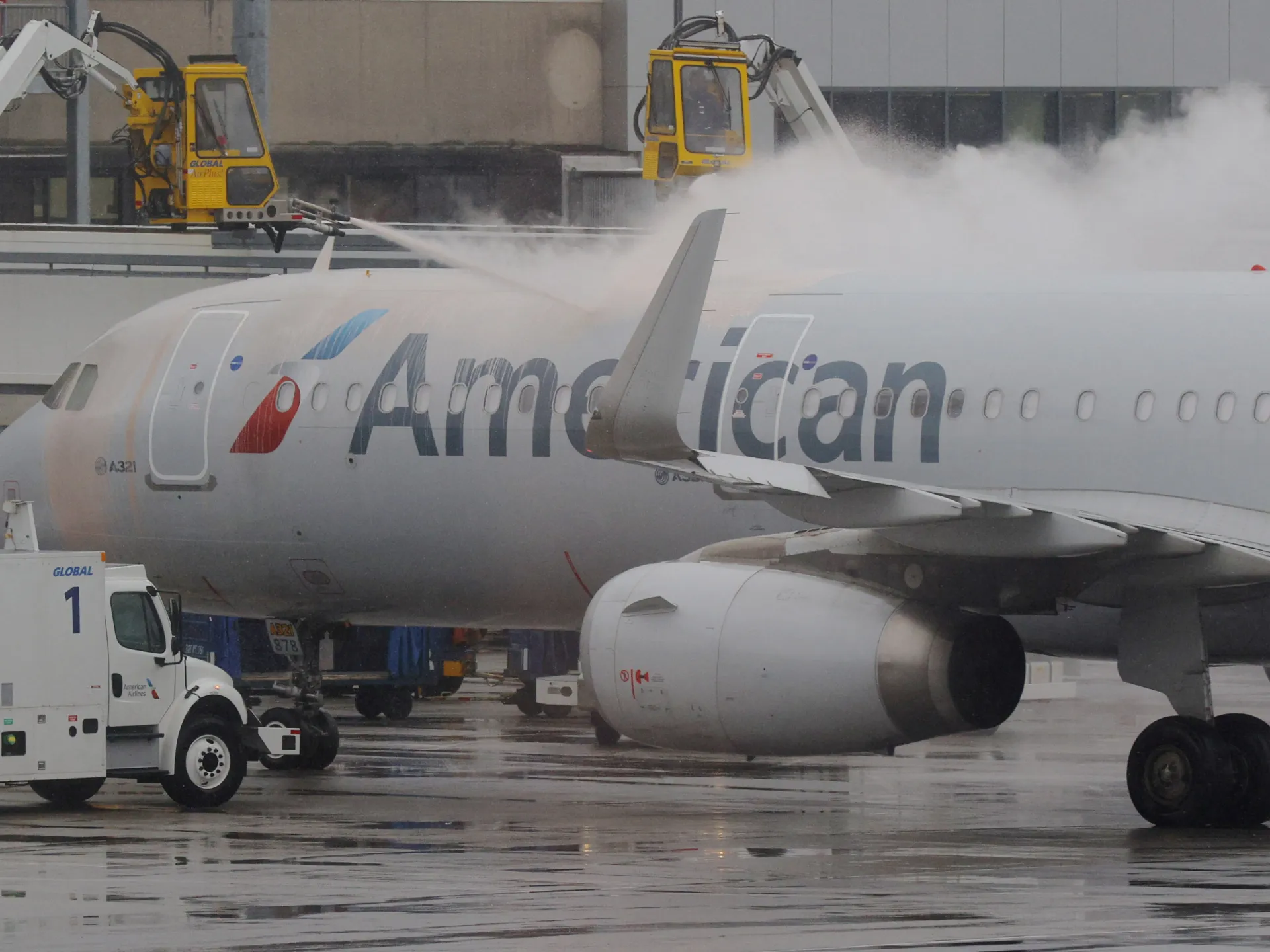
Over 1,500 flights cancelled as winter storm Devin hits US holiday travel | Travel News

More than 40 million Americans under winter storm warnings or weather advisories as heavy snow expected.

Thousands of flights have been cancelled and delayed in the United States due to winter storm Devin, airline monitoring website FlightAware reports, dealing a blow to air travel during peak holiday time.

A total of 1,581 flights “within, into or out of the” US were cancelled and 6,883 delayed as of 4pm US Eastern Time (21:00 GMT) on Friday, according to FlightAware, which describes itself as the world’s largest flight tracking data company.

Recommended Stories

list of 4 itemsend of list

The delays and cancellations came as the US National Weather ⁠Service warned of winter storm Devin causing “hazardous travel conditions” and heavy snow forecast across parts of the Midwest and northeast.

More than 40 million Americans were under winter storm warnings or weather advisories on Friday, plus another 30 million under flood or storm advisories in California, where a so-called atmospheric river has brought a deluge of rain.

New York City, the largest US city, was bracing for up to 250mm (10 inches) of snow overnight on Friday, the most expected in four years. Temperatures were forecast to drop into the weekend when an Arctic blast is expected to swoop down from Canada.

New York’s John F Kennedy airport, ⁠Newark Liberty international airport and LaGuardia airport warned travellers of potential delays or cancellations. More than half of the flight cancellations and delays took place at these three airports, according to FlightAware.

JetBlue Airways cancelled 225 flights on Friday, the most among the US carriers, closely followed by Delta Air Lines, which cancelled 212 flights. Republic Airways cancelled 157 flights, while 146 were cancelled by American Airlines and 97 by United Airlines.

“Due to winter storm Devin, JetBlue has cancelled approximately 350 flights today and tomorrow, primarily in the Northeast where JetBlue has a large operation,” a JetBlue spokesperson told the Reuters news agency.

On the US West Coast, powerful winter storms brought the wettest Christmas season to Southern California in 54 years.

There was still a risk of more flash flooding and mudslides on Friday despite slackening rain around Los Angeles, the National Weather Service warned.

Firefighters rescued more than 100 people on Thursday in Los Angeles County, with one helicopter pulling 21 people from stranded cars, officials said.

Source link

Opposition parties advance impeachment of Taiwan’s president, premier

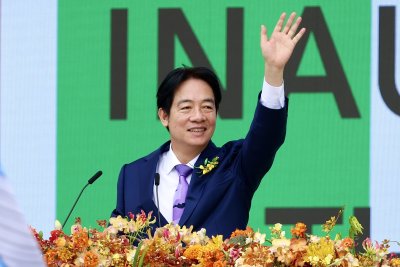
Taiwan President William Lai Ching-te, pictured, and Premier Cho Jung-tai will undergo impeachment proceedings after Taiwan’s legislature approved an impeachment motion on Friday. File Photo by Ritchie B. Tongo/EPA-EFE

Dec. 26 (UPI) — Taiwan President William Lai Ching-te and Premier Cho Jung-tai face impeachment proceedings filed by opposition party leaders accusing them of constitutional and legislative violations.

Members of Taiwan’s KMT and TPP parties and two independent lawmakers secured enough support on Friday to advance impeachment proceedings to go before Taiwan’s Constitutional Court, Al Jazeera reported.

The impeachment effort is viewed as symbolic because a two-thirds majority is needed to impeach an official holding public office in Taiwan.

“It’s not possible to have a real impeachment,” Yen-tu Su, a constitutional law and democratic theory expert at Taiwan’s Academia Sinica, told Al Jazeera.

“They want to make a record that President Lai would be the first president considered impeached in the history of Taiwan’s democracy,” he said. “It’s a way to register their protest.”

The Legislative Yuan approved an impeachment motion with a 60-51 vote on Friday, but it would take 76 of its 113 seated members to impeach the president and premier.

The conflict arises from Lai’s administration refusing to enact a legislatively approved amendment that would give more public funding for local units of government, according to the South China Morning Post.

The Legislative Yuan is controlled by opposition parties, but Lai’s refusal to enact the law change created conflict, and Cho Jung-tai declined to sign the amendment.

Lai became president in 2024, but Taiwan’s legislature has been divided and mostly deadlocked since.

Source link

Poll finds majority backs ‘peaceful two-state’ approach to unification

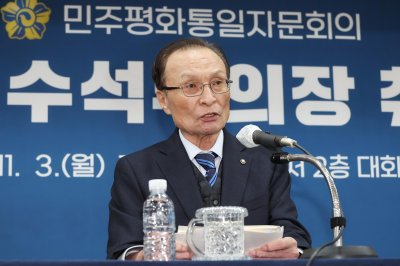
Former Prime Minister Lee Hae-chan, new senior vice chairman of the presidential Peaceful Unification Advisory Council, speaks dung a ceremony at the council’s secretariat in Seoul, South Korea, 03 November 2025, to mark his inauguration. The council advises the president on unification issues for policymaking purposes. Photo by YONHAP/EPA

Dec. 26 (Asia Today) — A South Korean public opinion survey released Friday found majority support for a concept described as a “peaceful two-state” approach aimed at long-term unification, with respondents saying tensions should be eased first to pursue peaceful coexistence.

The Democratic Peaceful Unification Advisory Council said its fourth-quarter national unification opinion survey found 55.5% agreed with the view that hostility between South and North Korea should be resolved first to achieve peaceful coexistence and pursue long-term unification. About 40.5% disagreed.

The survey also found 56.8% approved of the Lee Jae-myung administration’s North Korea policy direction, including goals described as a Korean Peninsula “free from war worries,” “a new era of peaceful coexistence” and “joint growth” between the two Koreas. About 35.1% disapproved.

On prospects for inter-Korean relations next year, 49.4% said they expected no change, 34.3% predicted improvement and 13.6% forecast deterioration.

Asked about the necessity of unification, 68% said it is necessary, down 0.6 percentage points from the previous quarter. The most-cited reasons were economic development, at 28.2%, and eliminating the threat of war, at 27.6%.

Views of North Korea were nearly split, with 44% seeing it as an object of vigilance and hostility and 42.7% seeing it as an object of cooperation and support.

The council said the survey was conducted over three days from Friday through Sunday among 1,000 adults ages 19 and older. It reported a 95% confidence level and a margin of error of plus or minus 3.1 percentage points, using proportional allocation by gender, age and region and a combined telephone interview method on landlines and mobile phones.

— Reported by Asia Today; translated by UPI

© Asia Today. Unauthorized reproduction or redistribution prohibited.

Source link

Thailand’s military strikes Cambodian targets amid cease-fire talks

The Thai military moves armored vehicles on Thursday near the Thai-Cambodian border as cease-fire negotiations continue following military actions on Friday morning. Photo by Rungroj Yongrit/EPA

Dec. 26 (UPI) — The Thai military advanced on Cambodia’s Banteay Meanchey Province on Friday morning after carrying out air strikes as the two nations continue negotiating a possible cease-fire.

Thai tanks, armored vehicles and infantry advanced into Chouk Chey Village in the O’Chrov District of Banteay Meanchey Province, which is located in northwestern Cambodia and along its border with Thailand, the Khmer Times reported.

Thai F-16 fighter jets dropped about 40 bombs onto the area from 6:08 a.m. local time to 7:15 before the Thai military’s ground forces advanced into it.

The air strikes were done “in the most ruthless and inhumane manner” as they destroyed public infrastructure, civilians’ homes and private property, Cambodian Defense Ministry spokeswoman Lt. Gen. Maly Socheata said.

“The brutal actions above are indiscriminate attacks by the Thai military,” Socheata said.

She called the attacks a “serious violation of international humanitarian law” and said the Cambodian military continues to perform its duties to defend the nation’s territories.

“We will protect our dignity with courage and unwavering resolve, at any cost, and without succumbing to coercion or intimidation in any form,” Socheata said.

Thai Air Force officials denied attacking civilians and their homes, and told the BBC that they struck a “fortified military position” after civilians evacuated the area.

Friday’s military actions were intended to give Thailand control of the village of Nong Chan.

Meanwhile, respective Cambodian and Thai negotiators continue discussing a potential cease-fire while meeting at a border checkpoint for a third day and are scheduled to meet again on Saturday.

Fighting between the two nations resumed earlier in December despite agreeing to a cease-fire in July amid border disputes dating back to the early 20th century.

At least 41 have died and about a million more are displaced since the fighting resumed this month along the 500-mile border separating the two nations.

The hostilities started in May when a Cambodian soldier was killed during a clash between the opposing forces and escalated when the Cambodian military fired rockets into Thailand on July 24.

Chinese and U.S. officials each have tried to mediate a lasting peace in the matter.

A young girl sits in front of a nativity scene in Manger Square, outside the Church of Nativity, in the biblical town of Bethlehem, West Bank, on December 23, 2025. Photo by Debbie Hill/UPI | License Photo

Source link

Winter storms cancel at least 1,865 flights, delay many more

Post-holiday travelers on Frontier Airlines and virtually all others are experiencing flight delays and cancellations amid stormy weather from coast to coast. File Photo by CJ Gunther/EPA-EFE

Dec. 26 (UPI) — Winter Storm Devin is slowing road traffic and impacting flights amid post-holiday travel in the Great Lakes and Northeast, while torrential rain and localized flooding are affecting travel in California.

Airlines for America estimated a record 52.6 million airline passengers from Dec. 19 through Jan. 5, with Friday and Saturday seeing the most, CNBC reported.

The record number of flight passengers means a large number of passengers will be affected by flight cancellations and delays due to the stormy weather.

A total of 5,902 flights were delayed and 1,865 canceled so far at U.S. airports as of 5 p.m. EST on Friday, according to FlightAware.

The airport affected the most is John F. Kennedy International, with 153 outbound flights canceled and 143 delayed, and another 220 inbound flights canceled and 67 delayed and affecting about 45% of inbound and outbound flights.

Newark Liberty International in New Jersey has 104 outbound flights canceled and 163 delayed, and 140 inbound flights are canceled and 98 delayed.

New York City’s LaGuardia Airport also has a significant number of flights impacted, with 87 outbound flights canceled and 97 delayed, and 153 inbound flights canceled and 43 delayed.

The airlines most impacted are Delta Air Lines, JetBlue, Republic and Southwest, but virtually all airlines have scheduled flights affected, so travelers are advised to check well ahead and watch for updates before traveling to respective airports.

AAA earlier forecast 109.5 million people would travel more than 50 miles by car to reach their holiday destinations over Christmas, millions of whom could encounter very poor driving conditions while heading home.

Snow, sleet and freezing rain in the Northeast and Great Lakes have triggered an ice storm warning in central and western Pennsylvania, while southern New York and the Tri-State area are subject to a winter storm warning into Saturday.

Stormy weather also continues in Southern California and along the West Coast, with heavy rainfall causing flooding, mudslides and debris flows in low-lying areas and snowstorms at higher elevations.

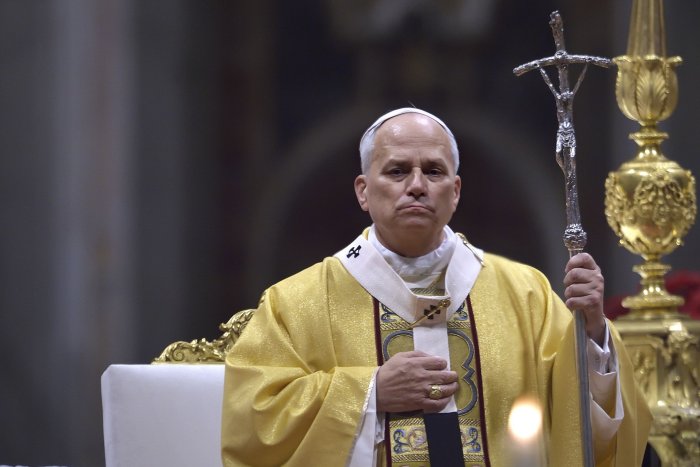
Pope Leo XIV celebrates the Christmas vigil Mass on Christmas eve on Wednesday in St. Peter’s Basilica in Vatican City, Vatican. Photo by Stefano Spaziani/UPI | License Photo

Source link

Judge blocks deportation of British man Trump accused of ‘censorship’

Dec. 26 (UPI) — A federal judge has blocked the deportation of a British man targeted by President Donald Trump.

Imran Ahmed, founder and CEO of the Center for Countering Digital Hate, was one of five people placed on a visa ban after the government accused him of censorship.

Ahmed filed suit against Secretary of State Marco Rubio and Attorney General Pam Bondi to prevent “the imminent prospect of unconstitutional arrest.”

The suit said the case comes from “the federal government’s latest attempt to abuse the immigration system to punish and punitively detain noncitizens for protected speech and silence viewpoints with which it disagrees.”

Ahmed is a legal permanent resident of the United States, where he lives with his American wife and child. He praised the judge’s decision.

“I will not be bullied away from my life’s work of fighting to keep children safe from social media’s harm and stopping antisemitism online,” Ahmed said.

The speed of the judge’s decision was telling, said his lawyer Roberta Kaplan.

“The federal government can’t deport a green card holder like Imran Ahmed, with a wife and young child who are American, simply because it doesn’t like what he has to say,” the BBC reported she said.

Rubio said in a statement Tuesday that the five had “led organized efforts to coerce American platforms to censor, demonetize and suppress” the views of Americans with whom they disagreed.

“These radical activists and weaponized NGOs have advanced censorship crackdowns by foreign states — in each case targeting American speakers and American companies,” Rubio said. He described the five as “agents of the global censorship-industrial complex.”

The others included in the ban are former European Union technology commissioner Thierry Breton; Anna-Lena von Hodenberg and Josephine Ballon of Berlin-based non-profit HateAid; Clare Melford, co-founder of Global Disinformation Index.

Ahmed told The Guardian that it was another attempt to deflect accountability and transparency.

“This has never been about politics,” he said. “What it has been about is companies that simply do not want to be held accountable and, because of the influence of big money in Washington, are corrupting the system and trying to bend it to their will, and their will is to be unable to be held accountable. There is no other industry that acts with such arrogance, indifference and a lack of humility and sociopathic greed at the expense of people.”

Ahmed said he had not formally received any notification from the government.

“I’m very confident that our first amendment rights will be upheld by the court,” he told The Guardian.

He is expected to be in court Monday, when the protective order will be confirmed.

In 2023, Elon Musk‘s company X sued the CCDH after it reported on a rise in hate speech on the platform since Musk’s takeover. The case was dismissed but X appealed the decision.

Simon Cowell, the judge on the TV series “American Idol” strangles the show’s host Ryan Seacrest during the May 15, 2003 photo op for the 2003 Fox Upfront at New York’s Grand Central Station in New York City. Photo by Ezio Petersen/UPI | License Photo

Source link

Times Square adds July 3 ball drop for nation’s 250th birthday

Dec. 26 (UPI) — A red, white and blue glass ball will drop on July 3 in New York City’s Times Square to celebrate the nation’s 250th birthday in a first for the city.

The event will mark the first time that Times Square has hosted a second ball drop after the ad-hoc America250 committee announced the decision on Friday, The Hill reported.

“One Times Square has long been a place where the world comes together to celebrate pivotal moments — from the end of World War II to the moon landing,” said Michael Phillips, who leads the company that owns One Times Square.

“We’re proud to serve as the starting point of this historic year, showcasing the nation’s celebration on a global stage.”

The committee said it will connect the traditional New Year’s ball drop with the July 3 event.

The Times Square ball to be used in the New Year’s celebration will drop at midnight on New Year’s Day in its traditional manner.

It then will be illuminated with red, white and blue lights and rise again to above a “2026” sign, where it will drop a ton of red, white and blue confetti at 12:04 a.m. EST, according to the New York Post.

A “dynamic pyro finale” will close out the New Year’s Day event as “America the Beautiful” plays.

The same ball will return to Times Square on July 3 to honor the 250th anniversary of the United States and the 1776 signing of the Declaration of Independence, which gave birth to the country.

“To ring in the 4th of July, starting with the same type of festivities that you would normally see on New Year’s Eve — what better way to represent this global impact that we as a country have and the responsibility that comes with that?” America250 chairwoman Rosie Rios told The Post.

“It’s going to be huge,” she added, “and it’s going to be beyond anyone’s expectations.”

The America250 committee also is sponsoring a contest for youth in grades 3 through 12 to earn an opportunity to visit “some of the nation’s most iconic historic and cultural landmarks” while participating in “America’s Field Trip.”

Students will share their perspectives on what the United States means to them in essays, and 250 will be selected to participate in the field trip or opt for a cash prize.

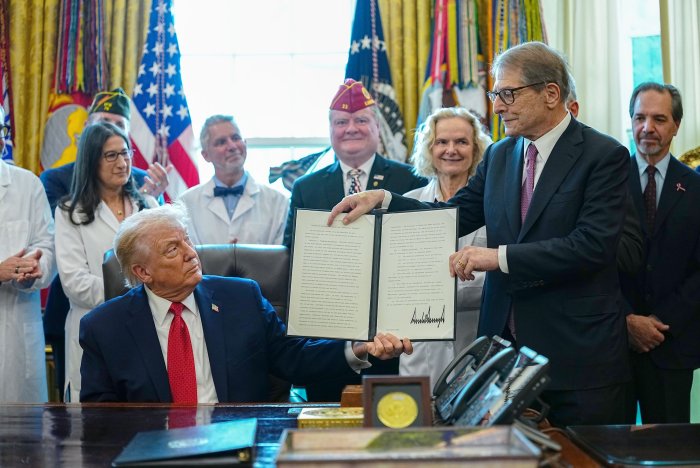
President Donald Trump holds a signed executive order reclassifying marijuana from a schedule I to a schedule III controlled substance in the Oval Office of the White House on Thursday. Photo by Aaron Schwartz/UPI | License Photo

Source link

Reports: Saudi Arabia fires on separatist holdings in Yemen

People wave South Yemen flags on Thursday during a rally in Aden, Yemen, calling for the region’s independence that was organized by the Southern Transitional Council separatist group. Photo by Najeeb Mohamed/EPA

Dec. 26 (UPI) — Saudi Arabia has reportedly fired on the eastern Hadramout province in Yemen.

The Southern Transitional Council, a separatist group in Yemen, claims that the Saudis fired warning airstrikes at its forces.

The STC seized two oil-rich provinces in December. The group is backed by the United Arab Emirates. It released a video showing the airstrikes that it said were close to its positions in Wadi Nahab in the Hadramaut province.

The strikes haven’t been independently verified.

Saudi Arabia on Thursday made a diplomatic appeal urging the STC to abandon Hadramaut and al-Mahra, which it recently captured . The strikes would be the first military action by Saudi Arabia since that plea.

“The kingdom remains hopeful that the public interest will prevail through ending the escalation by the Southern Transitional Council and the withdrawal of its forces from the two governorates in an urgent and orderly manner,” Saudi Arabia said in a statement on Thursday.

“The kingdom stresses the importance of cooperation among all Yemeni factions and components to exercise restraint and avoid any measures that could destabilize security and stability, which may result in undesirable consequences,” the statement said.

On Thursday, there were large demonstrations in the port city of Aden calling for STC President Aidarous al-Zubaidi to declare independence from Yemen. The U.N. and several other gulf states back Yemen and want it to stay whole. The United States hasn’t taken a side.

The Houthis have controlled the northern areas of Yemen since 2015.

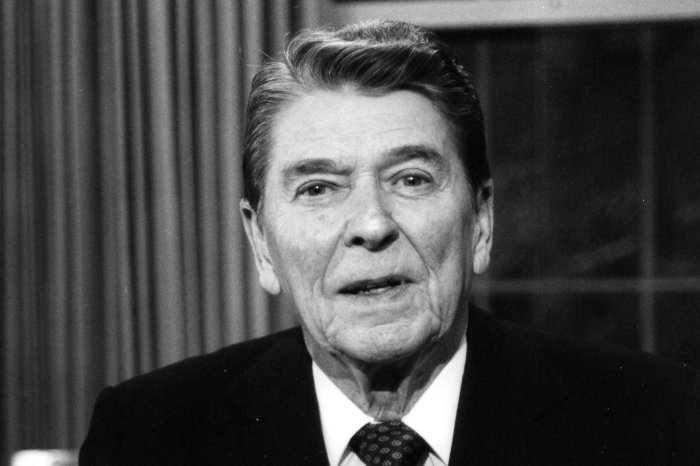
Former actor and sports broadcaster Ronald Reagan, known for films such as “Knute Rockne, All American” and “Kings Row,” is pictured in the Oval Office after delivering his farewell address to the nation on January 11, 1989. Reagan later served as the 40th president of the United States. Photo by Joe Marquette/UPI | License Photo

Source link