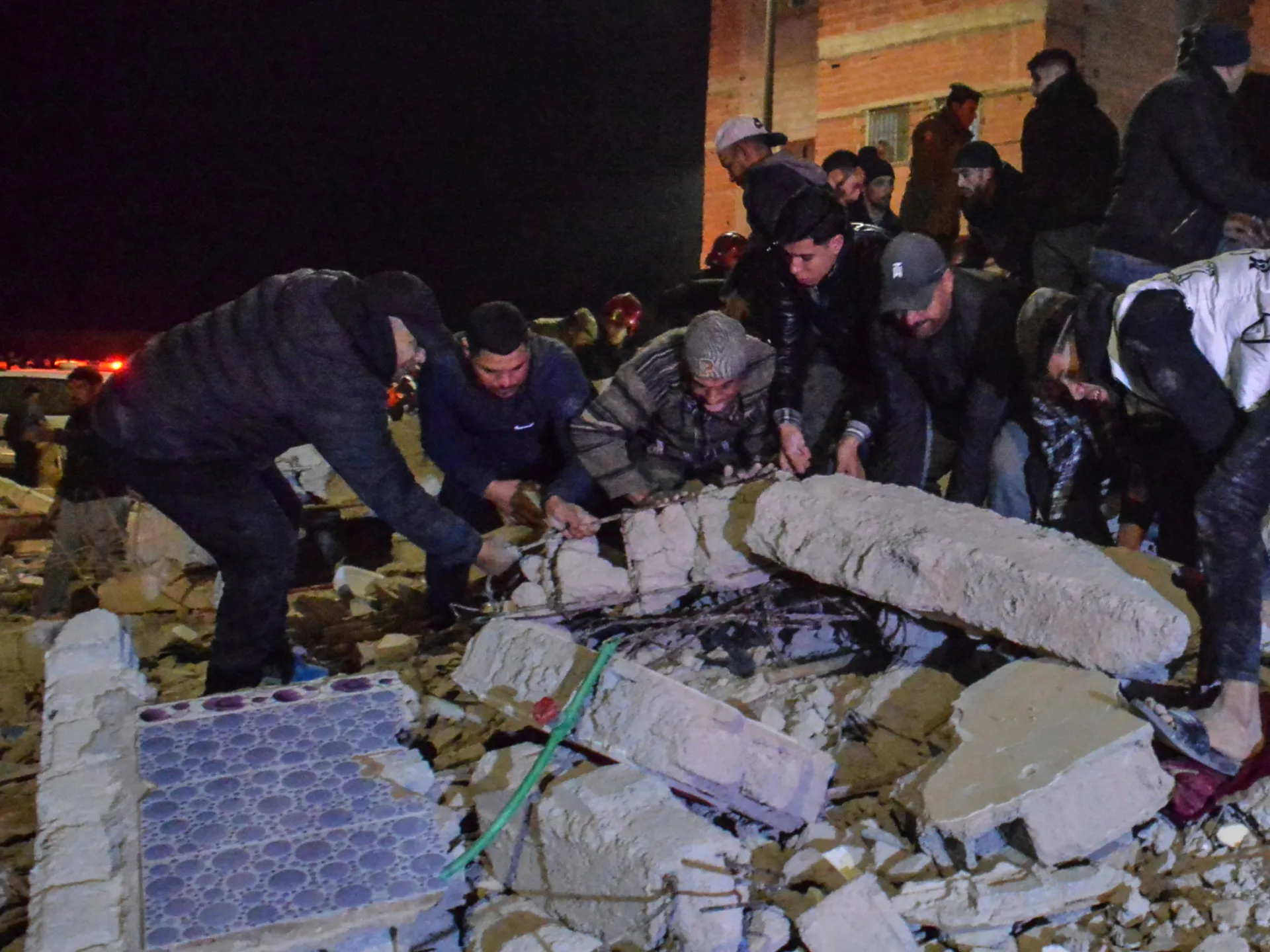
Almost two dozen people are confirmed dead after two buildings collapsed in the Moroccan city of Fez, angering residents who said the structures had clear problems before the deadly incident.
Dec. 10 (UPI) — The House of Representatives will vote on Wednesday on the bipartisan $900 billion defense policy bill, though some lawmakers take issue with some of its provisions.
The 3,086-page bill authorizes $8 billion more in spending than President Donald Trump had asked for.
“This year’s National Defense Authorization Act helps advance President Trump and Republicans’ Peace Through Strength Agenda by codifying 15 of President Trump’s executive orders, ending woke ideology at the Pentagon, securing the border, revitalizing the defense industrial base, and restoring the warrior ethos,” House Speaker Mike Johnson said in a statement.
The bill would codify the use of active-duty troops at the U.S.-Mexico border, create a “Golden Dome” to protect the U.S. from aerial attacks and ban diversity, equity and inclusion programs at the Department of Defense. The bill would also create a 3.8% raise for all service members.
It includes a ban on transgender women competing in sports at military academies.
The annual legislation has normally been approved with bipartisan support. But several Republicans have voiced dissent.
“I think that it’s in trouble because it’s not the version we sent over,” Rep. Anna Paulina Luna, R-Fla., told The Hill. She said she was disappointed with the bill because it authorizes funds for the Ukraine Security Assistance Initiative. It includes $400 million for military help to Ukraine in fiscal years 2026 and 2027.
Last week, Rep. Elise Stefanik, R-N.Y., criticized Johnson for blocking a provision requiring the FBI to tell Congress when it begins counterintelligence investigations on candidates running for federal office. It was later added.
Rep. Marjorie Taylor Greene, R-Ga., said on X that the bill will “fund foreign aid and foreign country’s wars.” She also accused Republican leadership of breaking a promise to include a ban on creating a central bank digital currency. Hardline conservatives have argued that the digital currency could be used to spy on Americans.
“Conservatives were promised that an anti-Central Bank Digital Currency language, authored by Tom Emmer, the whip, would be in the NDAA,” Rep. Keith Self, R-Texas, said on Fox Business Monday. “There are red lines that we need to put in here.”
Emmer, R-Minn., said about leaving the anti-CBDC segment out, “they’ll understand what is going on, and they’ll be fine,” The Hill reported.
Rep. Andy Harris, R-Md., said he doesn’t like that the bill allows “8 billion more than we should have.”
Defense Secretary Pete Hegseth will see his travel budget cut under the bill until the Pentagon releases the footage of strikes against alleged drug boats near Venezuela. His travel budget would be reduced by 25% until he shares “unedited video of strikes conducted against designated terrorist organizations in the area of responsibility of the United States Southern Command.”
It also requires him to submit some overdue reports before getting his travel budget back.
“That was a bipartisan shot across the bow to Donald Trump to hand over the tapes, done by Republicans. I salute them for their courage for bucking Trump and bucking Hegseth,” Senate Minority Leader Chuck Schumer, D-N.Y., said on the Senate floor Tuesday.
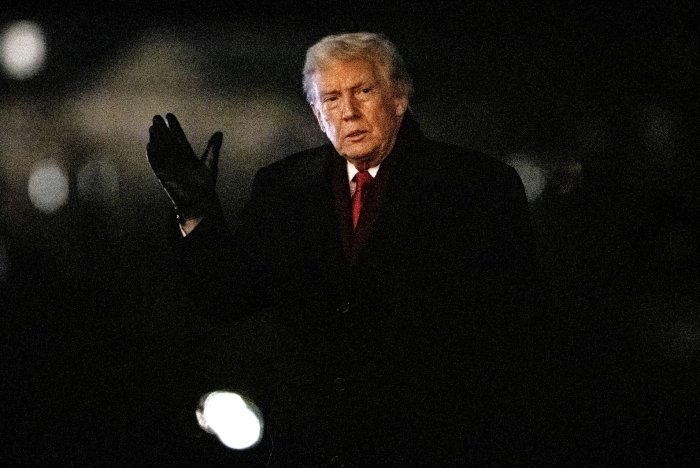
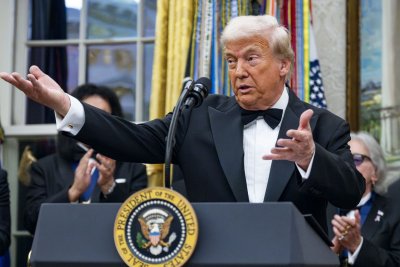
President Donald Trump walks on the South Lawn of the White House after arriving on Marine One in Washington on Tuesday. Trump said people were “starting to learn” the benefits of his tariff regime. Photo by Graeme Sloan/UPI | License Photo
A demonstrator holds a poster during a press conference on the Epstein Files Transparency Act on Nov. 18 in Washington, D.C. On Wednesday, a New York federal judge ruled that the grand jury files in the case against Jeffrey Epstein can be released. File Photo by Bonnie Cash/UPI | License Photo
Dec. 10 (UPI) — A federal judge in New York said Wednesday that the 2019 grand jury files in the case against convicted sex offender Jeffrey Epstein can be released.
“The Court hereby grants the Government’s motion in accordance with the Epstein Files Transparency Act and with the unequivocal right of Epstein victims to have their identity and privacy protected,” he said in the four-page ruling.
A federal judge in Florida on Dec. 5 ordered the release of grand-jury transcripts from the investigation against Epstein from 2005 to 2007. That investigation was abandoned.
The ruling comes one day after a similar ruling in which a judge allowed the release of grand jury files in the case of Epstein’s accomplice, Ghislaine Maxwell, who is serving 20 years for child sex trafficking. Epstein died by suicide in prison in 2019.
Congressional Democrats recently released photos of Epstein’s private island, Little St. James, in the U.S. Virgin Islands.
President Donald Trump walks on the South Lawn of the White House after arriving on Marine One in Washington on Tuesday. Trump said people were “starting to learn” the benefits of his tariff regime. Photo by Graeme Sloan/UPI | License Photo
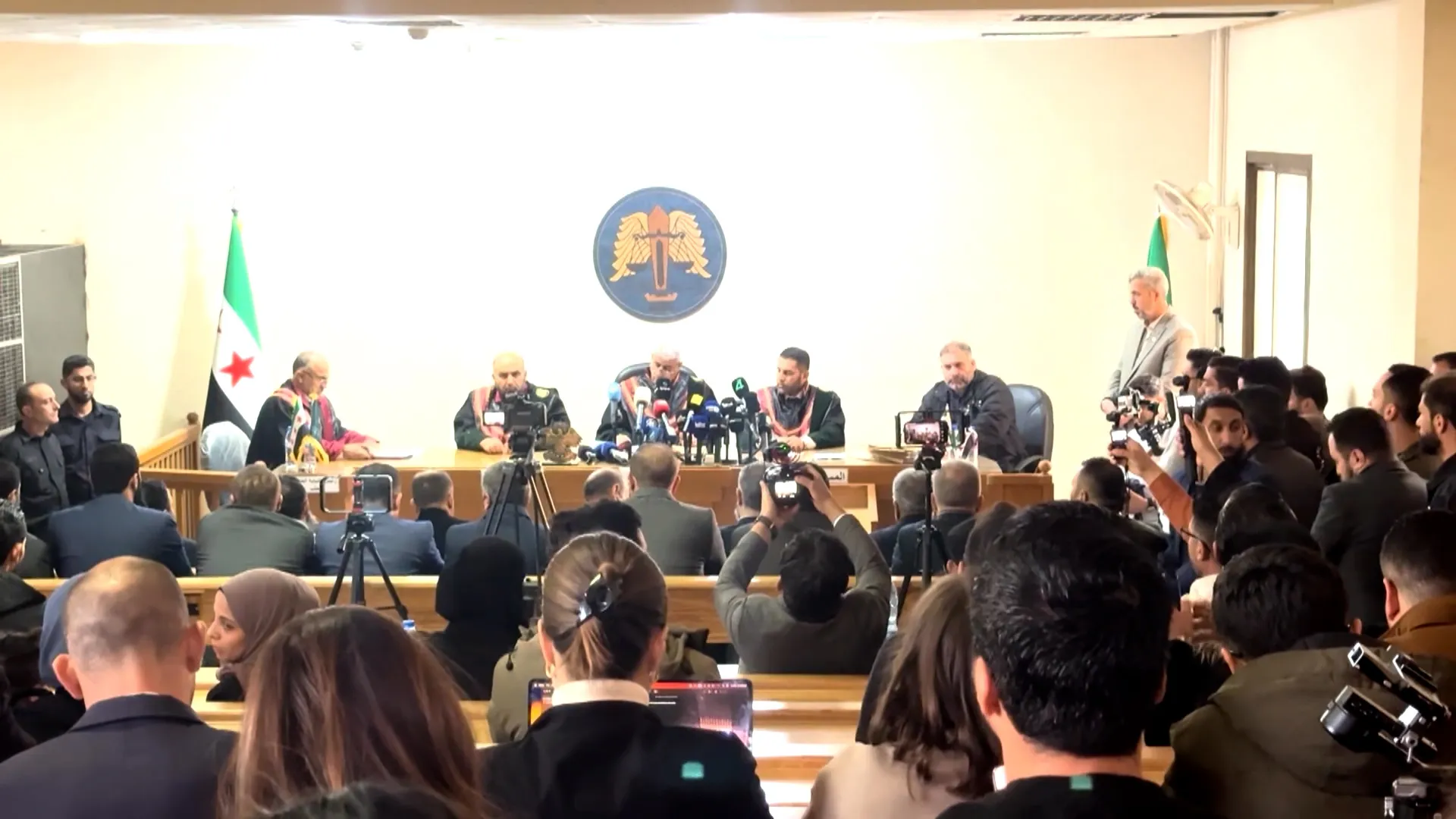
Syria is seeing major political changes, but security on the ground is still unstable. Israeli attacks continue in the south, while armed groups and internal tensions remain uncertain elements to Syria’s security. Al Jazeera’s Osama Bin Javaid breaks it down.
Ana Corina Sosa addresses the audience at Oslo City Hall on Wednesday after accepting the 2025 Nobel Peace Prize on behalf of her mother, Maria Corina Machado, who was given the award in her absence in recognition of her struggle for democracy in Venezuela. Sosa proceeded to deliver a lecture written by her mother who was unable to attend due to a travel ban. Pool photo by Ole Berg-Rusten/EPA
Dec. 10 (UPI) — Nobel Peace Prize laureate Maria Corina Machado did not attend a ceremony in Oslo to receive her award on Wednesday as the Venezuelan opposition leader was in hiding from the regime of President Nicolas Maduro, somewhere in the country.
The Norwegian committee said in a news release that Machado had done everything possible to make what it said would have been a very risky journey, but confirmed she was safe and appeared to suggest her imminent arrival in Norway.
“Machado has done everything in her power to come to the ceremony today. A journey in a situation of extreme danger. Although she will not be able to reach the ceremony and today’s events, we are profoundly happy to confirm that she is safe and that she will be with us in Oslo,” the statement read.
The news followed days of contradictory statements over whether Machado, who has been in hiding since disputed elections in July 2024, would make it to Oslo. Machado, who has been repeatedly threatened with arrest by Venezuelan authorities has not appeared in public since January.
Machado’s daughter, Ana Corina Sosa, received the diploma and medal on her behalf at the ceremony at City Hall in the Norwegian capital.
The committee shared a recording of a phone call with Machado in which she confirmed she would not attend to receive her prize, which was awarded in recognition “her struggle to achieve a just and peaceful transition from dictatorship to democracy.”
“I want to thank the Norwegian Nobel committee for this immense recognition to the fight of our people for democracy and freedom. We feel very emotional and very honoured, and that’s why I’m very sad and very sorry to tell you that I won’t be able to arrive in time for the ceremony, but I will be in Oslo and on my way to Oslo right now.
“I know that there are hundreds of Venezuelans from different parts of the world that were able to reach your city, that are right now in Oslo, as well as my family, my team, so many colleagues. Since this is a prize for all Venezuelans, I believe that it will be received by them.”
Machado, who ran for president in 2011 and attemped to run last year, has been a leader of the country’s democratic movement more than 20 years, opposing and holding to account the administration of Hugo Chavez, first, and then the authoritarian rule of Maduro.
She was elected to the National Assembly in 2010 but removed in 2014 after being accused of conspiring with other critics and the United States to assassinate Maduro. She denies the charges which she says were based on fabricated evidence.
In October 2023, she won a primary to run against Maduro in last summer’s election, to which the Maduro government responded by banning her from politics for 15 years. She was replaced on the ballot by Edmundo Gonzalez.
The results of the July 2024 were widely rejected by the opposition and internationally, including by Brazil, Colombia and the United States, which instead recognized Gonzalez as the real winner.
He fled the country in September in 2024 and was granted political asylum in Spain.
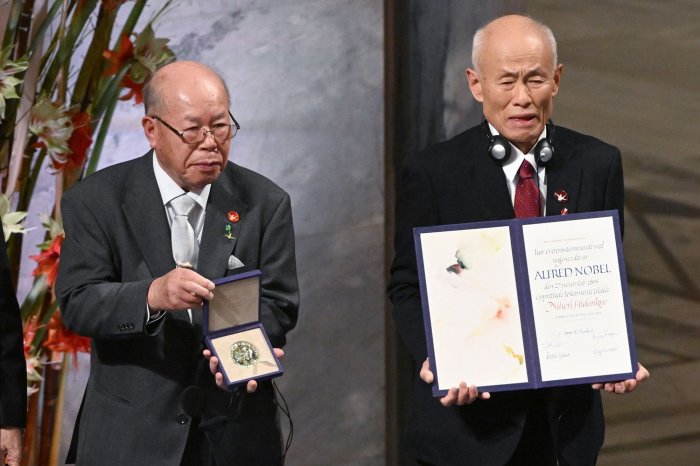
Representative Shigemitsu Tanaka (L) holds the medal while Toshiyuki Mimaki holds the certificate for the 2024 Nobel Peace Prize winner Nihon Hidankyo, a Japanese grassroots movement of atomic bomb survivors from Hiroshima and Nagasaki, at the Nobel Prize awarding ceremony in Oslo, Norway. The honor was for advocating on behalf of atomic bomb survivors and nuclear disarmament. File Photo by Paul Treadway/UPI | License Photo
Ukrainian President Volodymyr Zelensky (L) is greeted by Italian Prime Minister Giorgia Meloni on Tuesday as he arrives for a meeting at the Chigi Palace in Rome. Photo by Riccardo Antimiani/EPA
Dec. 10 (UPI) — Ukrainian President Volodymyr Zelensky said Ukraine could hold elections within the next three months in response to allegations by U.S. President Donald Trump that Kyiv was using the war as an excuse to stay in power.
Speaking to reporters Tuesday evening, Zelensky said he was ready for elections and would seek to hold them on condition that the United States and other allies provided guarantees to keep voters safe at a time when Ukraine’s cities were under attack day and night.
“I’m asking now, and stating this openly, for the U.S. to help me. Together with our European partners, we can ensure the security needed to hold elections. If that happens, Ukraine will be ready to conduct elections in the next 60 to 90 days,” said Zelensky.
“I personally have the will and readiness for this,” he added, saying that he had instructed lawmakers to come with proposals to amend legislation that currently prohibits the holding of elections while the country is under a state of martial law.
“I’m waiting for proposals from our partners, expecting suggestions from our lawmakers, and I am ready to go to the elections,” Zelensky said.
Zelensky’s comments came after Trump, in an interview with Politico, said “it’s time” for Ukraine to hold an election because it was getting to the point where it was no longer a democracy.
“I think it’s an important time to hold an election. You know, they’re using war not to hold an election, but I would think the Ukrainian people would, you know, should have that choice. And maybe Zelensky would win. I don’t know who would win, but they haven’t had an election in a long time,” Trump said.
“You know, they talk about a democracy, but it gets to a point where it’s not a democracy anymore.”
Ukraine has been under martial law since Russia launched its full-scale invasion on Feb. 24, 2022, meaning that Zelensky has remained in office long beyond the expiration of his five-year term in May 2024.
Zelensky said in September that he would not run for a second term, saying his goal was to serve his country amid a crisis and finish the war, not win elections.
The offer represents a new position for his administration. For the first half of the war it completely rejected suggestions that elections should be held before relenting to U.S. pressure and saying toward the end of 2024 that it would consider holding elections if a cease-fire were implemented.
A significant majority of Ukrainians say elections should be held only after the war ends, with only around a fifth in favor of elections following a cease-fire. Support for Zelensky is also down markedly, after a recent corruption scandal involving some of his close associates.
Critics warn of numerous pitfalls of elections, ranging from the logistical issue of people being in the wrong places with large numbers of Ukrainians displaced internally, 4 million refugees overseas and 1 million mobilized in the military. There is also the question of how to include Ukrainians living in regions of the country occupied by Russia.
“In order for these elections to be fair all of the people of Ukraine would need to be allowed to vote,” Ukrainian opposition MP Lesia Vasylenko told the BBC.
“Elections are never possible in wartime.”
The United States, Canada, Australia and New Zealand all held elections during World War II with only Britain effectively suspending democracy in favor of a government of national unity through July 1945. However, Britain was the only nation under direct, sustained attack and imminent threat of invasion.
Tuesday’s moves came amid a U.S. drive to broker a peace deal that was making little to no headway in bridging the gap between Moscow, which is demanding Ukraine cede territory and demilitarize and Kyiv, which has vowed not to give up land or cut the size of its military without cast-iron security guarantees.
South Africans honor Nelson Mandela
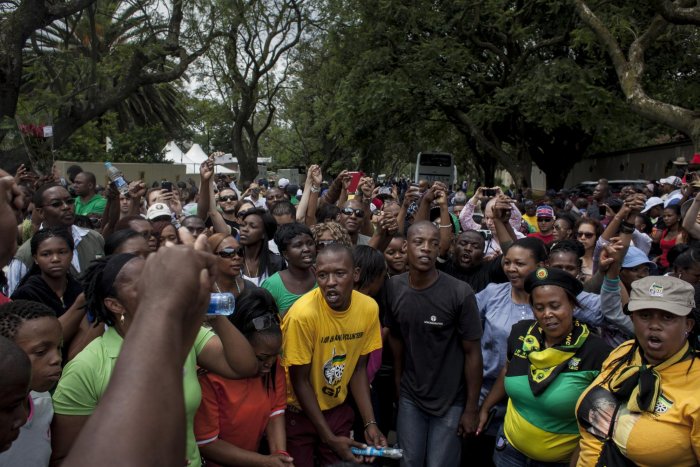
Large crowds gather outside Nelson Mandela’s former home in the Johannesburg suburb of Houghton to pay their respects on December 7, 2013. Mandela, former South African president and a global icon of the anti-apartheid movement, died on December 5 at age 95 after complications from a recurring lung infection. Photo by Charlie Shoemaker/UPI | License Photo
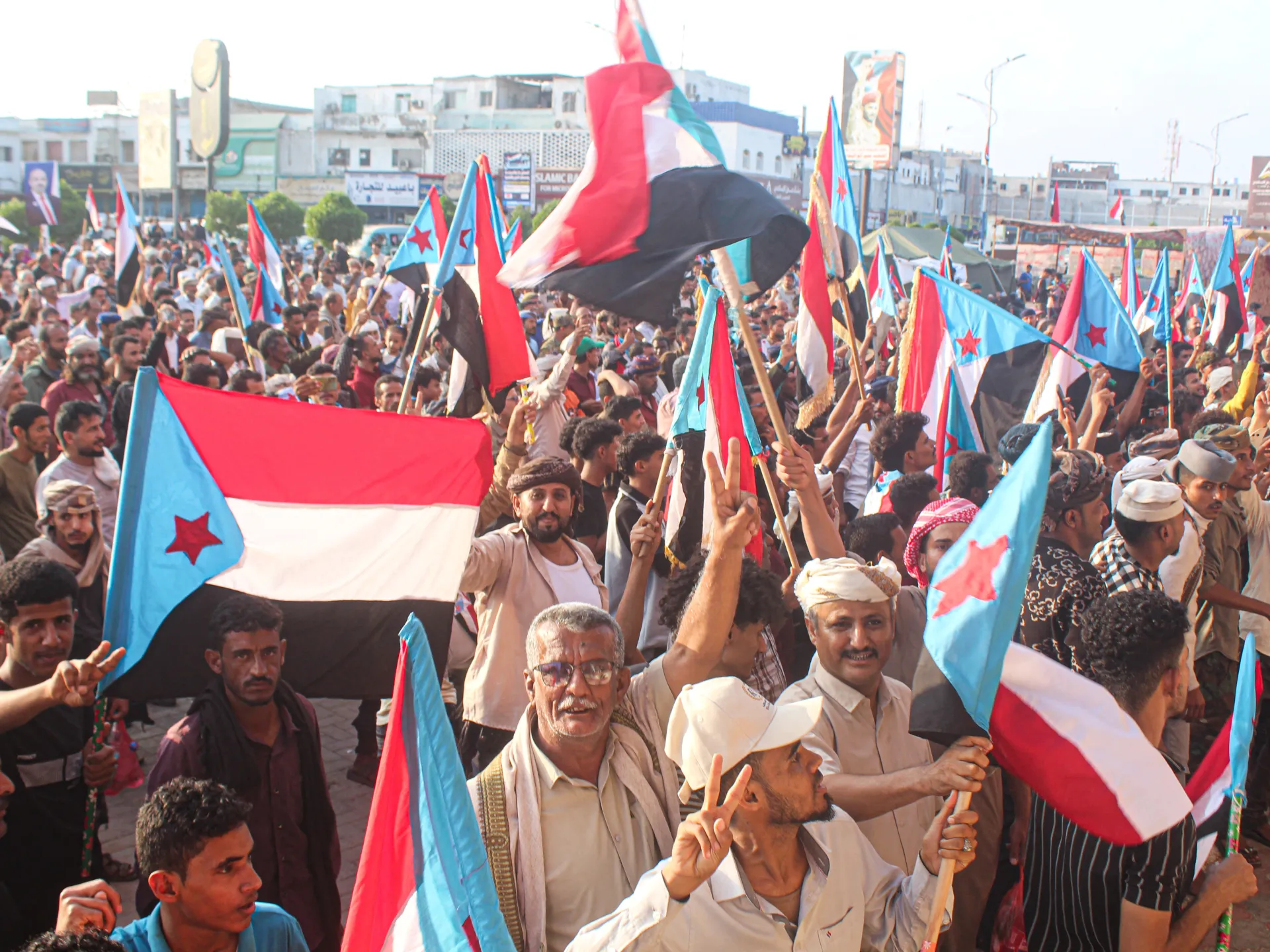
The military gains made by forces of the Southern Transitional Council (STC) in southern Yemen mark a significant turning point in the country’s political and military conflicts.
The latest fighting is between the STC and internationally recognised Yemeni government, known as the Presidential Leadership Council (PLC), and led by Rashad al-Alimi. The irony here is that the STC, led by Aidarus al-Zubaidi, is also a member of the Yemeni PLC. But the relationship between the two groups is shaky and at times, turbulent.
Recommended Stories
list of 2 itemsend of list
Yemen’s government condemned the STC’s latest military advance and land grab across the south and labelled the group separatists – calling their action a “unilateral and a blatant violation of the transitional phase’s framework”.
On the ground, STC forces have completed their control over the remaining southern governorates, furthering the group’s efforts to revive its decades-old aspiration of establishing an independent state in the south of Yemen.
The battle of Hadramout
The latest and rapid developments are redrawing the map of control in Yemen, and it could have further implications on the future of a strong, coherent and unified country.
The fall of Hadramout last week was sudden, and it was seen as a shocking development – although it came after a long period of tension in the oil-rich province. The Yemeni government remained more of a bystander – maintaining some military brigades stationed in its camps in the governorates of Hadramout and al-Mahra. While local and tribal proxies affiliated with regional countries, they were competing for control and influence.
Taking advantage of its superior military equipment and massive forces, the STC advanced nearly unchallenged to overtake Hadramout and al-Mahra.
The government forces lacked modern weapons, sufficient manpower and perhaps the willingness to fight.
The fall of Hadramout was pivotal and posed greater importance in the eyes of many Yemeni politicians, given the special status of this governorate locally and regionally. It dealt a final blow to what remained of the components of Yemeni unity and the government’s legitimacy, and it thwarted all the bets that considered Hadramout to be immune from falling to STC forces.
Both the incoming STC forces and government and local tribal fighters had their own alliances and allegiances to competing regional powers – with connections and loyalties with tribal leaders, politicians and local actors in Hadramout.
Why does Hadramout matter?
Hadramout is a crucial and essential governorate in Yemen, occupying more than a third of the country’s area, approximately 200,000 square kilometres (77,000 square miles), with a population of nearly two million.
It is home to the largest share of Yemen’s oil wealth, containing the most important oil fields and export terminals. Furthermore, it is a stronghold of Yemeni and Arab Gulf businessmen and a cradle of cultural and historical wealth. In short, Hadramout is the Yemeni governorate that possesses the elements of a fully fledged state, and its inhabitants had hoped to establish a Hadrami state that would restore their past glories, far removed from the political and military conflict that engulfed the rest of Yemen’s governorates.
Hadramout governorate has always had a unique political and administrative character throughout all eras and political systems, especially during the socialist regime that ruled the South from the early 1970s until 1990, when the two Yemeni parts, North and South, unified.
This unique character continued under the unified state, as Hadramout remained governed by its own people and refused to accept officials from outside its geographical boundaries. Consequently, the people of Hadramout consider the STC’s control over it an unprecedented occupation, given that most of the STC’s leaders come from the Lahj and Dhale governorates, which are marginal areas – and that would be unacceptable for them. Therefore, the stability and continuity of the STC’s authority in the governorate are doubtful because the group lacks local and popular support.
‘Divorce without return’
These repercussions will undoubtedly cast a shadow over the eight-member PLC in Yemen, headed by Rashad al-Alimi, who, along with his cabinet members and his guards, was expelled from the presidential palace in the al-Maashiq district of Aden.
Many considered this a “divorce without return” and a disastrous end to all previous understandings and agreements aimed at maintaining a political order based on shared principles that would not harm any party.
In light of these developments, the legitimate government now only controls modest areas of land in the governorates of Taiz and Marib.
But Marib is already besieged by Houthi forces from the north, and by the STC forces from the south. The Houthis are a group backed by Iran and control the capital and the north and northwestern parts of Yemen. Taiz is besieged by the Houthis from the north and from the east by the forces of Brigadier General Tariq Saleh, the son of the ousted Yemeni president, Ali Abdullah Saleh.
It is not unlikely that these areas will fall into the hands of either of these two powerful parties at any moment. If that happens, the legitimate Yemeni government will become just a piece of paper, even though it practically lacks any influence on the ground since the rise of the STC forces and the growing power of the Houthis.
The unattainable southern aspiration for secession
As political sociology researcher Fayrouz al-Wali says, the STC does not have the authority to declare southern independence, despite its military control on the ground, because this decision rests not with it but with external regional powers that have deep interests in southern Yemen.
She noted that the path to statehood in the south does not lead through the gates of the Ma’ashiq Palace in Aden, but rather through the United Nations Security Council, where regional powers could play a pivotal role.
There is also a realisation that it would be difficult for the STC to declare independence in the foreseeable future, at least, because of the lack of essential resources to fund the budget of a nascent state without even the most basic elements of sustainability. Such a state would inherit an empty treasury from a country exhausted by more than a decade of war.
In addition to the economic, security and military challenges, and the lack of public services, the southern state envisioned by the STC would face discord with neighbouring powerful countries and other nations that do not wish to see Yemen fragmented into warring mini-states. This would create an unstable security situation with dire consequences for the entire region.
Dec. 10 (UPI) — A South Carolina atheist is suing for the right to serve as a poll worker without having to swear an oath to God.
James Reel alleges a requirement that citizens make a statement of belief in a monotheistic deity or forgo working at the polls violates the constitutional rights of nontheists or those who worship more than one deity.
The Greenville County resident became passionate about defending the American form of governing after observing negative political rhetoric during the 2020 election designed to undermine public trust in the electoral process, according to his suit. Reel decided to train as a poll worker.
But after completing three online courses in December 2023 and beginning in-person training, Reel learned he would be required to take an oath that ends with “so help me God.” He asked instead to be allowed to use a secular affirmation, which is a solemn vow without reference to a religious deity, but election officials denied the request.
The Freedom From Religion Foundation, a national nonprofit based in Madison, Wis., stepped in last year to help.
In letters to the South Carolina Election Commission and the Greenville County Voter Registration and Elections Board in late 2024 and early 2025, foundation staff attorney Madeline Ziegler said Reel does not want to profess a belief in a god, “which would make a mockery out of the oath and the solemn promise to support both the federal and state constitutions.”
The distinction between an oath and affirmation is critical because the opportunity to substitute an affirmation is required under federal law, Ziegler said.
“Article 6 of the United States Constitution prohibits the government from requiring any kind of religious test for public office, including to volunteer as a poll worker,” she wrote.
The required oath of office for public officials is in Article III, Section 26 of the South Carolina Constitution and in Title 7, Chapter 13 of the state code.
It says: “I do solemnly swear (or affirm) that I am duly qualified, according to the Constitution of this State, to exercise the duties of the office to which I have been appointed, and that I will, to the best of my ability, discharge the duties thereof, and preserve, protect and defend the Constitution of this State and of the United States. So help me God.”
To be appointed as a poll worker, state code requires citizens to take a training course conducted by one of the 46 county boards of voter registration and elections. Howard Knapp, the now former executive director of the election commission, said current policies and procedures make no particular reference to the contents of the oath, which must be signed by the prospective poll worker.
Although the commission has the authority to set policy on the conduct of elections by the county boards, “this grant of authority does not extend to a power to create election related policies and procedures that contradict explicit statutory requirements, and then instruct the county boards to ignore what is clearly stated in the code,” Knapp said in a January letter.
He added the commission has limited oversight authority over the boards, which are independent county government offices.
Bob Schaffner, chairman of the Greenville County Voter Registration and Elections Board, responded to the foundation that the board is subject to South Carolina laws and standard procedures determined by the State Election Commission in the Poll Manager Handbook issued to all poll workers.
The board is unaware of any specific complaint and the issue has never been raised in his 28 years of service, said Schaffner, who recently retired. He said in a March letter that the South Carolina attorney general might be a better agency to get clarification on state law.
After the requests for a secular affirmation were rejected, South Carolina attorney Steven Edward Buckingham and foundation attorneys Sam Grover and Kyle Steinberg acting as co-counsel filed suit on Reel’s behalf.
The suit, filed Oct. 8 in United States District Court for the District of South Carolina, names as defendants Jenny Wooten, executive director of the South Carolina State Election Commission; Conway Belangia, director of Voter Registration & Elections in Greenville County; and the Greenville County Voter Registration & Elections Board. Wooten and Belangia are being sued in their official capacities.
The lawsuit alleges violations of Article VI and the First Amendment’s free speech, free exercise of religion and establishment of religion clauses. Reel is seeking a permanent injunction against requiring poll workers to swear “so help me God” and the provision of a secular affirmation.
The suit says the state of South Carolina routinely allows attorneys, jurors, witnesses and many others to make a secular affirmation as a matter of conscience.
The oath mandate bars a growing number of people from serving as poll workers, according to the suit, which cites a 2024 Pew Research Center report that says about 28% of the population is religiously unaffiliated. In South Carolina, approximately 16% are unaffiliated.
Foundation Co-president Annie Laurie Gaylor called the oath requirement a “discriminatory and blatantly unconstitutional practice.”
“Jim Reel, a veteran who wants to continue serving his community as a poll worker, should be congratulated, not barred simply because he is an atheist,” Gaylor said.
In answers to the suit filed late last month, the defendants deny they are violating individuals’ rights and assert their actions in their official capacity were taken in good faith in compliance with existing state law and the South Carolina Constitution. They also argue they have immunity from being sued and ask that the suit be dismissed.
The lawsuit and foundation letters cite previous complaints about requirements to swear an oath referencing a belief in God to qualify to serve in a position or run for an office.
The U.S. Supreme Court ruled unanimously in 1961 that the states and the federal government could not force a person to profess a belief or disbelief in any religion because the requirement violated the Constitution.
The justices found in favor of Roy Torcaso, a Maryland man whose appointment as a notary public was revoked after he refused to take an oath declaring the existence of God.
In 1992, Herb Silverman’s application to be a notary public in South Carolina was denied because he crossed out the words “so help me God” on the form. He filed suit, and the state Supreme Court issued a unanimous ruling that the religious test requirement to hold public office violated the U.S. Constitution.
The foundation has brought two similar lawsuits recently. James Tosone, a nontheist, ran unsuccessfully for the New Jersey Senate in 2017 and 2021 and for the U.S. House of Representatives in 2018, and each time, he had to swear “so help me God” because there was no secular option for candidates for public office.
Since 2022, Tosone had sought to run for election, but was no longer willing to take the oath. The foundation, which alleged the secretary of state and the state of New Jersey were coercing a statement of belief in a monotheistic deity by requiring nontheists or those who worship more than one deity to swear “so help me God, filed suit in federal court in October 2023. The suit was settled in about a month after the state agreed to adopt a secular affirmation option.
In 2021, the foundation sued Alabama for requiring people who were registering to vote to sign an oath on a form that concluded, “so help me God.” A settlement allowed voters to check a box declining to include those four words.
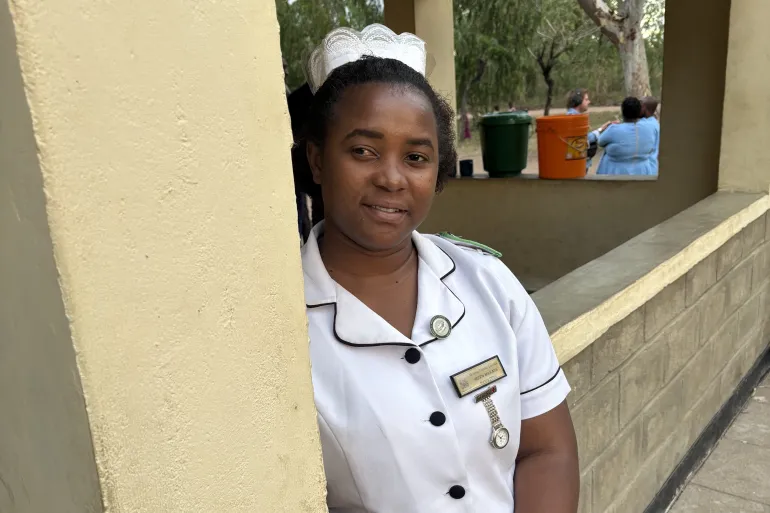
Mulanje and Lilongwe, Malawi — Ireen Makata sits in her white nursing uniform on a weathered bench at a health post in Malawi’s southern Mulanje district.
The facility is one of 13 in the district, located within a seminomadic, predominantly agricultural community 65km (40 miles) east of Blantyre, Malawi’s commercial capital, near the Mulanje mountain range.
Recommended Stories
list of 3 itemsend of list
The beige-painted facility stands out from the dozens of huts around it made of red bricks, with straw roofs. To the right of the main entrance is a supply room with diminishing medical supplies. On the other side is an ambulance that Makata says is now rarely used.
Health posts like this were set up to serve remote communities and alleviate pressure on district hospitals. They were crucial in providing communities with basic healthcare, antenatal care, family planning and vaccines.
The clinic in Mulanje used to see dozens of women a day, providing maternal care, including helping women give birth, dispensing medicines and, when needed, transport to the hospital. But now, since funds were cut, it is open only around once every two weeks, stretching its supplies for as long as it can and unable to regularly transport visiting healthcare workers.
Health posts like this are facing closure – 20 have already shuttered in the country – due to the Trump administration cutting United States Agency for International Development (USAID) funding in February. This is forcing the country’s health system to withdraw critical services, placing further stress on hospitals, and leaving thousands of women and children without needed care in a region burdened by poverty and long distances to hospitals.
Makata, a nursing officer specialising in maternal and newborn care, usually based at the district hospital, says she used to visit the post two or three times a week. Now she rarely comes and no longer sees most of the patients she used to care for.
“Most of the women who relied on this post now find the distance to access a district hospital too far,” she tells Al Jazeera.
It would take a large chunk of a day, travelling on the bumpy dirt roads of Mulanje district, to reach one. That long visit “takes them away from their day-to-day activities, which bring income or food to their table,” she explains.
Many cannot afford to do that and now go without care.
“They are failing to get the ideal treatment for antenatal care services, especially during the first trimester of pregnancy,” Makata says.
Ireen Makata, a nursing officer and safe motherhood coordinator at Musa Community Health Post in Mulanje [Imran-Ullah Khan/Al Jazeera]
‘Baby and mother in jeopardy’
USAID funding was all-encompassing. It funded remote medical outposts, covering everything from the training of new staff and the provision of drugs and supplies for pregnant women to petrol for ambulances.
The US government provided close to 32 percent of Malawi’s total health budget before the cuts.
USAID funded the health posts through a programme called MOMENTUM in 14 of Malawi’s 28 districts, starting in 2022, helping strengthen existing clinics and set up new ones. As of 2024, there were 249 posts. The programme also provided medical outreach to communities and equipment. About $80m was being invested in the programme by Washington.
Early this year, US President Donald Trump issued stop-work orders on USAID-funded programmes as part of an executive order to pause and re-evaluate foreign aid.
With that move, MOMENTUM was shelved, and the two dozen mobile posts were shuttered as a result. Medical trainees were left in limbo, and life-saving equipment was sold off in fire sales by Washington.
The United Nations Population Fund (UNFPA) still provides technical and financial support to several remote districts for maternal and newborn health, but the available resources are not enough to cover the sites funded by MOMENTUM. There are fears that the UNFPA sites will run out of resources and supplies in the coming months.
In the wake of Trump’s funding cuts, health experts in Malawi have raised urgent concerns that new mothers and children will face the greatest impact, with many lives potentially lost as a result.
Makata has set up a WhatsApp group for women to contact her with concerns and questions, but she is frustrated that she cannot work as she used to.
“We would go to where people resided and give them permanent and long-term care,” she says, referring to the posts. “It’s not easy for me to see this. We can’t help those who need the services the most.”
Massitive Matekenya, a community leader for the Musa community in Mulanje district, dressed in a black blazer and oversized chequered-green tie, is at the vacant Mulanje health post.
These days, he says, it is hard to put on a brave face for the people he represents.
“Women in our community are now giving birth on the way to the district hospital since it’s such a long distance away,” says Matekenya. “That puts baby and mother in jeopardy with the potential of the mother bleeding out.”
Matekenya struggles to boost morale as he is constantly faced with community anger over the fact that medical outreach has ended.
He says a 40-year-old woman from his community recently died from malaria. “She had no quick referral to the nearest health facility due to issues of transport,” Matekenya says, noting that the community reached out to a politician but that his assistance came too late.
“I’m worried,” he says. “With family planning services not being offered any more, we are expecting to see a spike in pregnancies, and we are anticipating a possible rise in maternal deaths.”
Female patients recovering or awaiting treatment for obstetric fistula at the Bwaila Fistula Centre in Lilongwe [Imran-Ullah Khan/Al Jazeera]
Impact on fistula care
In a health clinic in Malawi’s capital, Lilongwe, a woman dressed in black with a golden brooch shuffles from hall to hall. Margaret Moyo is tending to her daily responsibilities as head coordinator at the Bwaila Fistula Centre.
Obstetric fistula occurs when a hole between the birth canal and bladder or rectum is formed during an obstructed and extended labour. Women who do not receive medical treatment can be left incontinent.
Beyond the physical pain, women suffering from obstetric fistula also face social stigma due to the constant leaking and are often ostracised from their communities.
The Bwaila Fistula Centre receives more than 400 patients a year from all over the country, as well as from districts in neighbouring Mozambique. It has 45 beds, one doctor and 14 specialised nurses, and some 30 patients were at the centre when Al Jazeera visited in August.
With fewer resources, individuals will not be seen as often during pregnancy, which could lead to undetected maternal health issues, including more cases of fistula, Moyo argues. She is also concerned that conversations around prevention and education will take a backseat.
“The focus should be on training midwives, access to care and education to delay pregnancy in younger women since they are often most at risk of fistula,” says Moyo.
Before the USAID cuts, Malawi’s government had already forecast a $23m shortfall for reproductive, maternal, and newborn health funding for 2025 owing to drops in foreign aid.
Margaret Moyo, head coordinator at the Bwaila Fistula Centre in Lilongwe [Imran-Ullah Khan/Al Jazeera]
‘I am able to help them’
For the past five years, Moyo has been running what she calls an “ambassador” programme at her facility. Patients who undergo successful fistula repair and are reintegrated into their communities are trained and sent out into their communities.
So far, 120 fistula survivors have become patient ambassadors who educate through community outreach to bring in new patients for treatment.
One such ambassador is Alefa Jeffrey. Wearing a grey “Freedom from Fistula Foundation” T-shirt, the 36-year-old mother of four crosses her arms and gazes towards the floor as she talks about being ostracised after she gave birth and developed a fistula.
“I wasn’t allowed to go to church because the other girls made fun of me and said I smelled bad because I was leaking urine and stool,” she says. “My family told me to go to a traditional healer, but he wasn’t able to help.”
Jeffrey could deal with the physical pain, but she was tormented by the negative interactions with friends and family.
“I got used to dealing with fistula, but it was what people were saying that was giving me the most pain,” recounts Jeffrey, who says she even contemplated suicide.
But she also started looking for answers, asking the traditional healer and then eventually meeting an ambassador who came to her community to speak to women.
Having successfully undergone treatment, involving surgery and follow-up patient and educational care, Jeffrey now advocates for fistula education.
She has set up a WhatsApp group for people to chat with her for information about the condition. She has also brought in 39 mothers from her community to the clinic.
“I’m an expert now. I’m able to convince people to come, which isn’t easy,” says Jeffrey. “Some women have lived with a fistula for so long they don’t believe they can be repaired, and they have already given up, but I am able to help them.”
Patients await treatment for various ailments at the Nsanje District Hospital [Imran-Ullah Khan/Al Jazeera]
Lessons from the past: ‘We didn’t panic’
Although health experts are worried about the future of a system without USAID in a country where more than 70 percent of the population lives below the poverty line, government leaders say they have been there before.
Back in 2017, during his first presidency, Trump halted funding for the UNFPA and several groups that provided family planning. Malawi’s government approached NGOs and other countries to alleviate the gaps in funding.
Through community and grassroots innovations, they believe they can weather the storm again.
“We didn’t panic when we heard about the USAID cuts,” says Dr Samson Mndolo, Malawi’s secretary of health. “Instead, we looked at how to be more efficient and get more services for our money.
“We looked at areas where we could maximise resources, so for example if an officer goes to a community to do immunisations, they can now provide family planning services in the same trip too.”
Sitting in his office in the Lilongwe City Council building behind an organised desk, Mndolo discusses the challenges.
“As soon as the stop-work orders came out, we lost close to 5,000 health workers. The majority of these are what we call HIV diagnostic assistants,” he says, referring to the fallout from the USAID cuts. “We are looking now to push towards a health system that is more community-based and not necessarily hospital-based.” In such a system, doctors and health workers from central hospitals would be dispatched more to remote communities, and regular community outreach would become part of their remit, requiring them to perform a wider array of services.
Mndolo and his colleagues are setting up online initiatives and WhatsApp chat groups to field questions from remote patients. He remains optimistic about Malawi’s health system and says the worst thing the country can do now is to lose hope.
“Each crisis is an opportunity. This gives us a chance to strengthen the system and retrain our workforce and digital health systems,” he says.
“We are not naive. This will take some time, but once we get a hold of that as a nation, we can be better with time; that is the opportunity that is there for us.”
Despite such reassurance, those in remote communities say they feel isolated.
Tendai Kausi, a 22-year-old mother from the Musa community in the Mulanje district, still goes to the remote health post for help with her four-year-old son, Saxton. But because of the cuts and closures, many women from her community do not, and she has seen new mothers carry pregnancies in their isolated villages – far from healthcare and without routine checks.
“This is not good for the development of our country,” she says.
“My child will be affected because the services here will not get better,” Kausi says. “I feel very sad for my community.”
Patients at the Bwaila Fistula Centre [Imran-Ullah Khan/Al Jazeera]
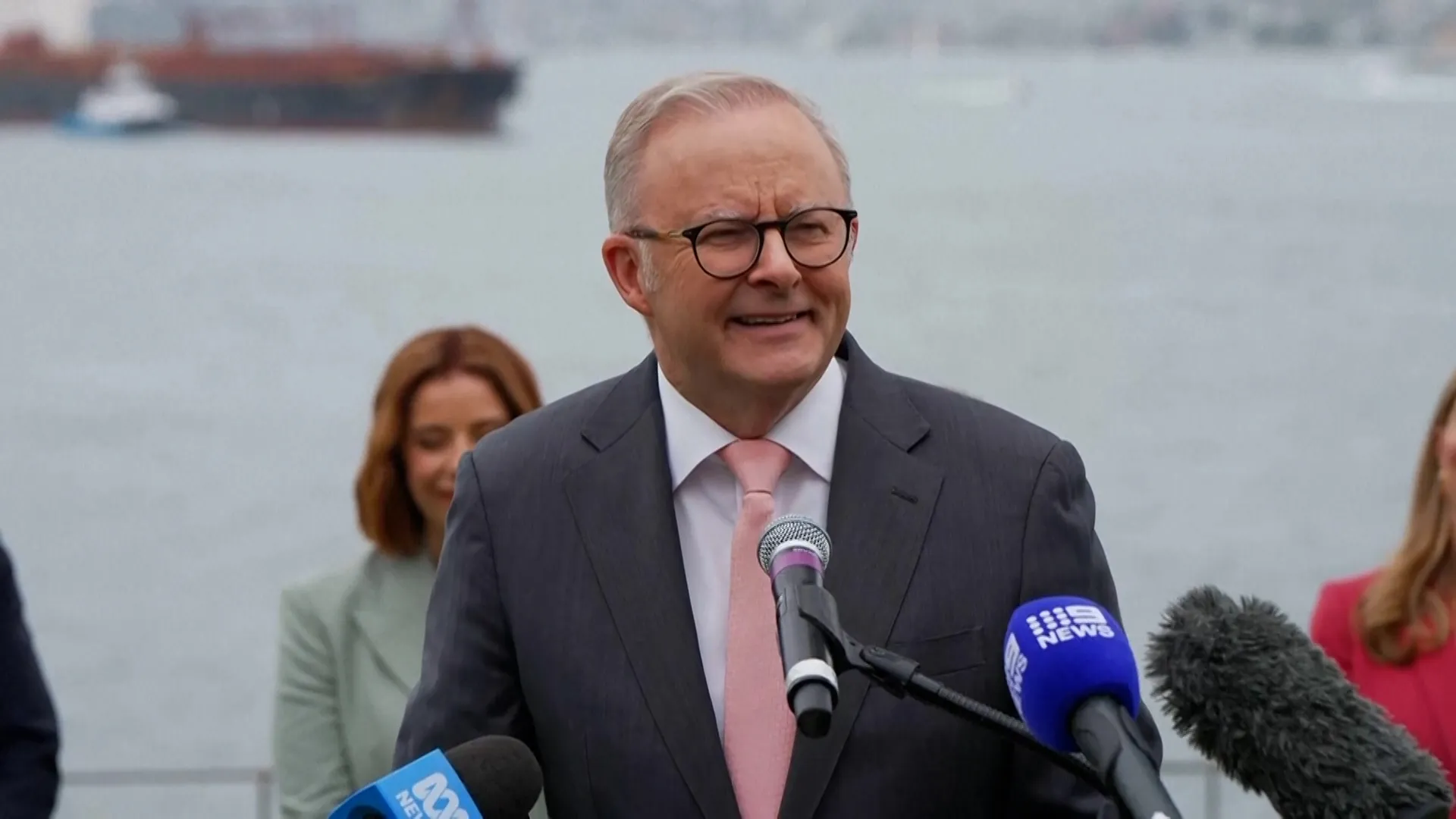
Australia’s Prime Minister Anthony Albanese was joined by 12-year-old campaigner Florence Brodribb at an event to welcome the start of Australia’s world-first ban on social media for under-16s.
Dec. 10 (UPI) — The United States has blacklisted a network of four Colombians and four entities accused of recruiting former Colombian military personnel to fight in Sudan’s civil war.
The sanctions were announced Tuesday by the U.S. Treasury, which said the network was aiding the Rapid Support Forces, a breakaway paramilitary unit that has been accused of committing ethnic cleansing and genocide in the nearly 1,000-day-old conflict.
The RSF has been waging war against the Sudanese Armed Forces since April 2023. According to the Treasury, the RSF has recruited hundreds of former Colombian military personnel since September 2024.
The Colombian soldiers provide the RSF with tactical and technical expertise. They serve as infantry, artillerymen, drone pilots, vehicle operators and instructors, with some even training children, according to the Treasury.
“The RSF has shown again and again that it is willing to target civilians — including infants and young children. Its brutality has deepened the conflict and destabilized the region, creating the conditions for terrorist groups to grow,” John Hurley, undersecretary for the Treasury for Terrorism and Financial Intelligence, said in a statement.
Colombian soldiers have aided the RSF in its late October capture of El Fasher in North Darfur following an 18-month assault, while committing alleged war crimes along the way, including mass killings, sexual violence and ethnically targeted torture.
The Treasury identified and sanctioned Alvaro Andrew Quijano Becerra, a 58-year-old retired Colombian military officer, who is accused by the United States of playing a leading role in the network from the United Arab Emirates. His Bogota-founded International Services Agency was also sanctioned for seeking to fill drone operator, sniper and translator roles for the RSF via its website, group chats and town halls.
Colombia-based employment agency Maine Global Corp., Colombia-based Comercializadora San Bendito and Panama-based Global Staffing S.A. were the other three entities sanctioned.
The other three individuals blacklisted were Claudia Viviana Oliveros Forero, Quijano’s 52-year-old wife; Mateo Andres Duque Botero, 50, the manager of Maine Global; and Monica Munoz Ucros, 49, Maine Global’s alternate manager and manager of Comercializadora San Bendito.
“Today’s sanctions disrupt an important source of external support to the RSF, degrading its ability to use skilled Colombian fighters to prosecute violence against civilians,” State Department spokesperson Thomas Pigott said in a statement.
Sanctions freeze U.S.-based assets of those named while barring U.S. persons from doing business with them.
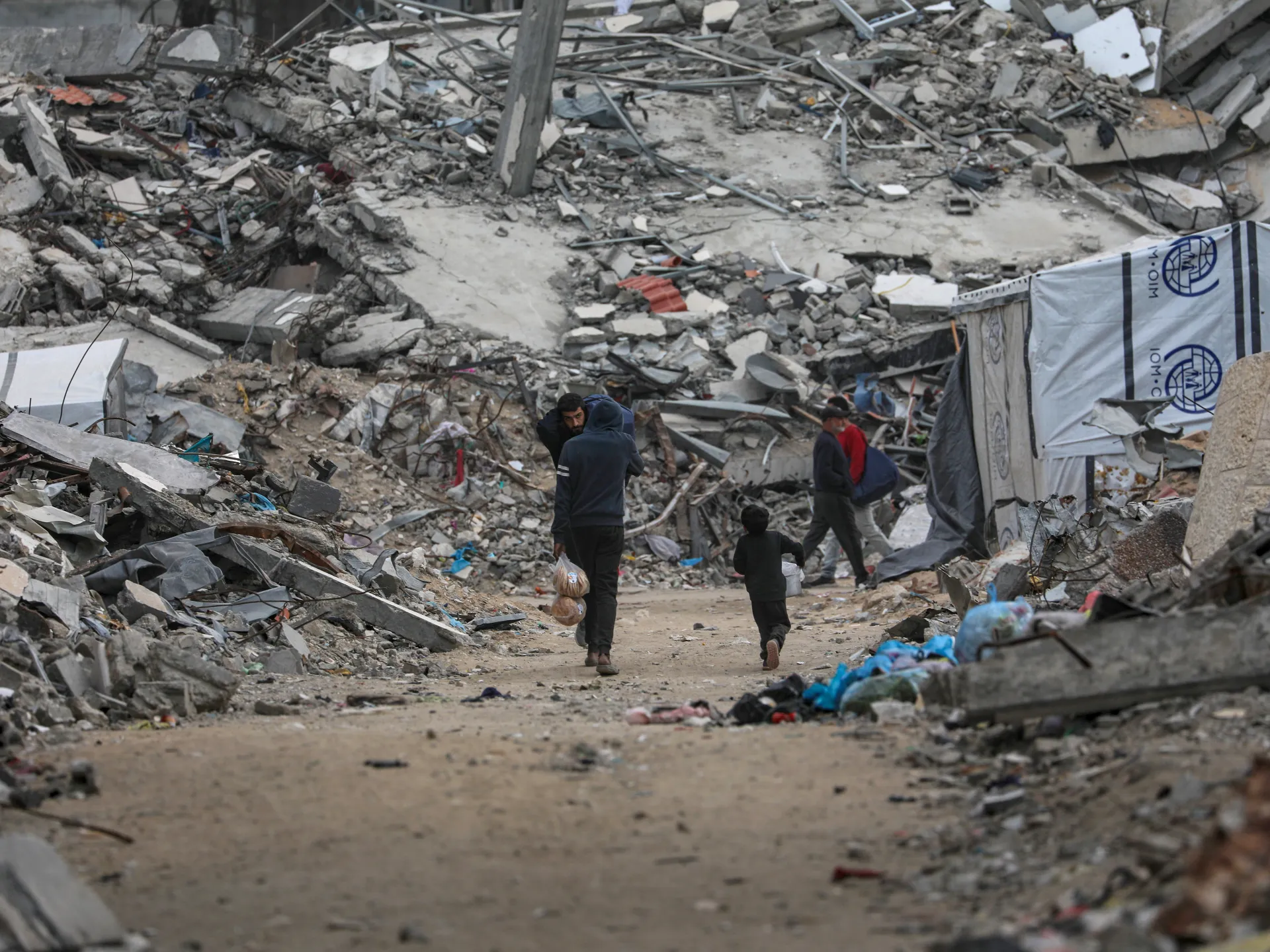
The catastrophic violence in Gaza has unfolded within an international system that was never designed to restrain the geopolitical ambitions of powerful states. Understanding why the United Nations has proved so limited in responding to what many regard as a genocidal assault requires returning to the foundations of the post–World War II order and examining how its structure has long enabled impunity rather than accountability.
After World War II, the architecture for a new international order based on respect for the UN Charter and international law was agreed upon as the normative foundation of a peaceful future. Above all, it was intended to prevent a third world war. These commitments emerged from the carnage of global conflict, the debasement of human dignity through the Nazi Holocaust, and public anxieties about nuclear weaponry.
Yet, the political imperative to accommodate the victorious states compromised these arrangements from the outset. Tensions over priorities for world order were papered over by granting the Security Council exclusive decisional authority and further limiting UN autonomy. Five states were made permanent members, each with veto power: the United States, the Soviet Union, France, the United Kingdom, and China.
In practice, this left global security largely in the hands of these states, preserving their dominance. It meant removing the strategic interests of geopolitical actors from any obligatory respect for legal constraints, with a corresponding weakening of UN capability. The Soviet Union had some justification for defending itself against a West-dominated voting majority, yet it too used the veto pragmatically and displayed a dismissive approach to international law and human rights, as did the three liberal democracies.
In 1945, these governments were understood as simply retaining the traditional freedoms of manoeuvre exercised by the so-called Great Powers. The UK and France, leading NATO members in a Euro-American alliance, interpreted the future through the lens of an emerging rivalry with the Soviet Union. China, meanwhile, was preoccupied with a civil war that continued until 1949.
Three aspects of this post-war arrangement shape our present understanding.
First, the historical aspect: Learning from the failures of the League of Nations, where the absence of influential states undermined the organisation’s relevance to questions of war and peace. In 1945, it was deemed better to acknowledge power differentials within the UN than to construct a global body based on democratic equality among sovereign states or population size.
Second, the ideological aspect: Political leaders of the more affluent and powerful states placed far greater trust in hard-power militarism than in soft-power legalism. Even nuclear weaponry was absorbed into the logic of deterrence rather than compliance with Article VI of the Non-Proliferation Treaty, which required good-faith pursuit of disarmament. International law was set aside whenever it conflicted with geopolitical interests.
Third, the economistic aspect: The profitability of arms races and wars reinforced a pre–World War II pattern of lawless global politics, sustained by an alliance of geopolitical realism, corporate media, and private-sector militarism.
Why the UN could not protect Gaza
Against this background, it is unsurprising that the UN performed in a disappointing manner during the two-plus years of genocidal assault on Gaza.
In many respects, the UN did what it was designed to do in the turmoil after October 7, and only fundamental reforms driven by the Global South and transnational civil society can alter this structural limitation. What makes these events so disturbing is the extremes of Israeli disregard for international law, the Charter, and even basic morality.
At the same time, the UN did act more constructively than is often acknowledged in exposing Israel’s flagrant violations of international law and human rights. Yet, it fell short of what was legally possible, particularly when the General Assembly failed to explore its potential self-empowerment through the Uniting for Peace resolution or the Responsibility to Protect norm.
Among the UN’s strongest contributions were the near-unanimous judicial outcomes at the International Court of Justice (ICJ) on genocide and occupation. On genocide, the ICJ granted South Africa’s request for provisional measures concerning genocidal violence and the obstruction of humanitarian aid in Gaza. A final decision is expected after further arguments in 2026.
On occupation, responding to a General Assembly request for clarification, the Court issued a historic advisory opinion on July 19, 2024, finding Israel in severe violation of its duties under international humanitarian law in administering Gaza, the West Bank, and East Jerusalem. It ordered Israel’s withdrawal within a year. The General Assembly affirmed the opinion by a large majority.
Israel responded by repudiating or ignoring the Court’s authority, backed by the US government’s extraordinary claim that recourse to the ICJ lacked legal merit.
The UN also provided far more reliable coverage of the Gaza genocide than was available in corporate media, which tended to amplify Israeli rationalisations and suppress Palestinian perspectives. For those seeking a credible analysis of genocide allegations, the Human Rights Council offered the most convincing counter to pro-Israeli distortions. A Moon Will Arise from this Darkness: Reports on Genocide in Palestine, containing the publicly submitted reports of the special rapporteur, Francesca Albanese, documents and strongly supports the genocide findings.
A further unheralded contribution came from UNRWA, the UN agency for Palestinian refugees, whose services were essential to a civilian population facing acute insecurity, devastation, starvation, disease, and cruel combat tactics. Some 281 staff members were killed while providing shelter, education, healthcare, and psychological support to beleaguered Palestinians during the course of Israel’s actions over the past two years.
UNRWA, instead of receiving deserved praise, was irresponsibly condemned by Israel and accused, without credible evidence, of allowing staff participation in the October 7 attack. Liberal democracies compounded this by cutting funding, while Israel barred international staff from entering Gaza. Nevertheless, UNRWA has sought to continue its relief work to the best of its ability and with great courage.
In light of these institutional shortcomings and partial successes, the implications for global governance become even more stark, setting the stage for a broader assessment of legitimacy and accountability.
The moral and political costs of UN paralysis
The foregoing needs to be read in light of the continuing Palestinian ordeal, which persists despite numerous Israeli violations, resulting in more than 350 Palestinian deaths since the ceasefire was agreed upon on October 10, 2025.
International law seems to have no direct impact on the behaviour of the main governmental actors, but it does influence perceptions of legitimacy. In this sense, the ICJ outcomes and the reports of the special rapporteur that take the international law dimensions seriously have the indirect effect of legitimising various forms of civil society activism in support of true and just peace, which presupposes the realisation of Palestinian basic rights – above all, the inalienable right of self-determination.
The exclusion of Palestinian participation in the US-imposed Trump Plan for shaping Gaza’s political future is a sign that liberal democracies stubbornly adhere to their unsupportable positions of complicity with Israel.
Finally, the unanimous adoption of Security Council Resolution 2803 in unacceptably endorsing the Trump Plan aligns the UN fully with the US and Israel, a demoralising evasion and repudiation of its own truth-telling procedures. It also establishes a most unfortunate precedent for the enforcement of international law and the accountability of perpetrators of international crimes.
In doing so, it deepens the crisis of confidence in global governance and underscores the urgent need for meaningful UN reform if genuine peace and justice are ever to be realised.
The views expressed in this article are the author’s own and do not necessarily reflect Al Jazeera’s editorial stance.
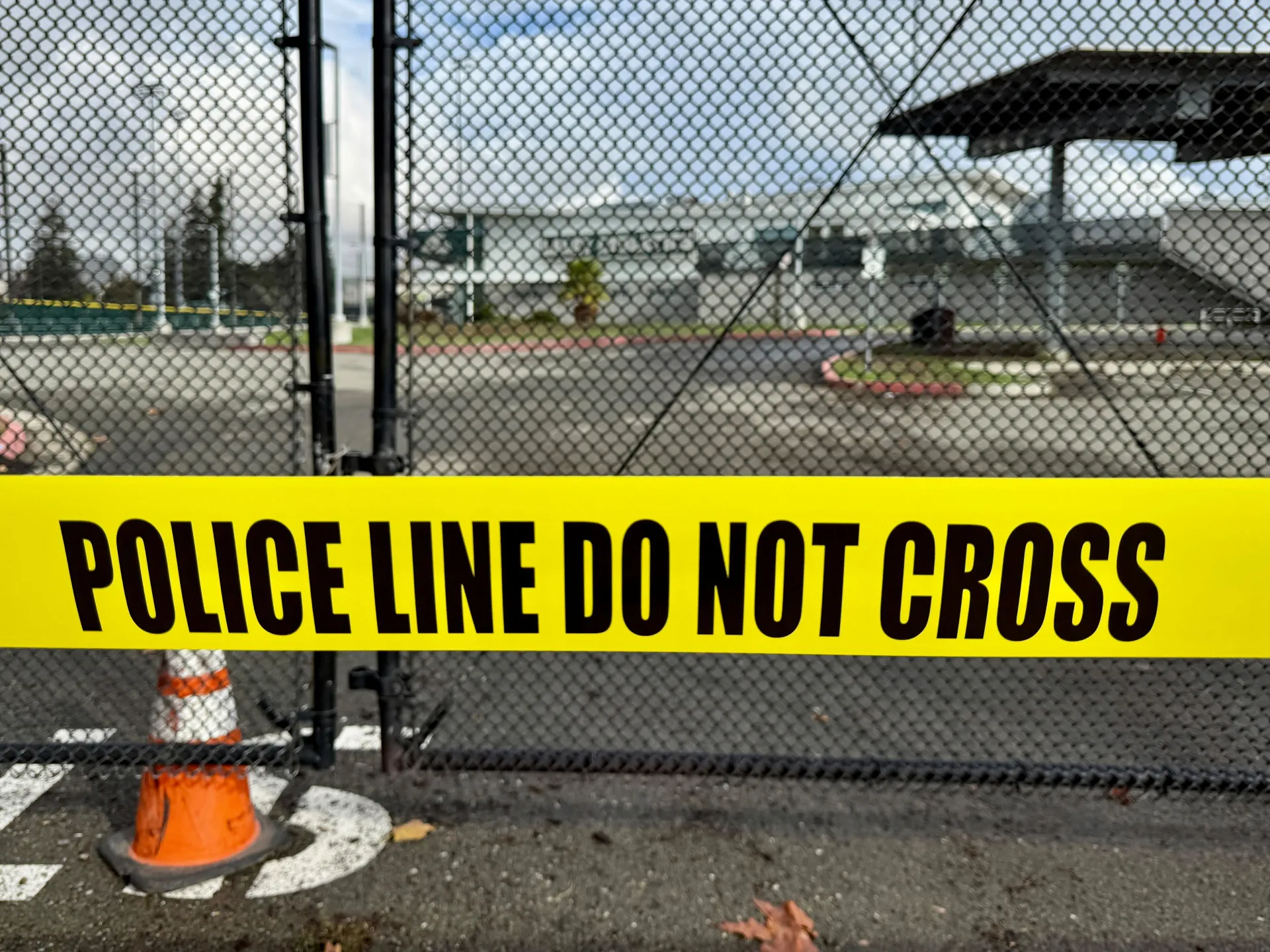
Dec. 9 (UPI) — A suspect has been arrested and the campus secured following a shooting that killed one and left another hospitalized Tuesday afternoon at Kentucky State University in Frankfort.
The Frankfort Police Department responded to an emergency call reporting an active aggressor at the KSU campus at 3:35 p.m. EST, WKYT reported.
Two students were shot, with one deceased and the other hospitalized in critical condition, ABC News reported.
Officials with the Frankfort police said the campus remained on lockdown until further notice as of 4:35 p.m.
Kentucky Gov. Andy Beshear announced that he is aware of the shooting and a suspect was arrested.
We are aware of a reported shooting at Kentucky State University in Frankfort. At this time, we are aware of some injuries. We will share more information as available. Law enforcement are on scene, and a suspect has been arrested. Let’s pray for all those affected.— Governor Andy Beshear (@GovAndyBeshear) December 9, 2025
The shooting occurred near the residential Witney M. Young Jr. Hall and was due to a personal dispute, according to the Frankfort Police Department.
“At this time, there is no ongoing threat to the campus community,” university officials told students in a statement.
University officials told CNN they are “in the process of gathering accurate and complete information” before providing media with an official statement.
Frankfort is located 40 miles northwest of Lexington, and KSU has more than 2,200 enrolled students and 450 faculty and staff.
The university is a historically black university that was founded in 1886.
Rights group FairSquare accuses world football governing body of ‘openly flouting’ its own rules on political neutrality.
Published On 10 Dec 202510 Dec 2025
Share
FIFA President Gianni Infantino’s effusive praise for Donald Trump and the decision by the world football governing body to award a peace prize to the US president have triggered a formal complaint over ethics violations and political neutrality.
Human rights group FairSquare said on Tuesday that it has filed a complaint with FIFA’s ethics committee, claiming the organisation’s behaviour was against the common interests of the global football community.
Recommended Stories
list of 3 itemsend of list
The complaint stems from Infantino awarding Trump FIFA’s inaugural peace prize during the December 6 draw for the 2026 World Cup to be played in the United States, Canada and Mexico in June and July.
“This complaint is about a lot more than Infantino’s support for President Donald Trump’s political agenda,” FairSquare’s programme director Nicholas McGeehan said.
“More broadly, this is about how FIFA’s absurd governance structure has allowed Gianni Infantino to openly flout the organisation’s rules and act in ways that are both dangerous and directly contrary to the interests of the world’s most popular sport,” said McGeehan, head of the London-based advocacy group.
According to the eight-page complaint from the rights group filed with FIFA on Monday, Infantino’s awarding of the peace prize “to a sitting political leader is in and of itself a clear breach of FIFA’s duty of neutrality”.
“If Mr. Infantino acted unilaterally and without any statutory authority this should be considered an egregious abuse of power,” the rights group said.
FairSquare also pointed to Infantino lobbying on social media earlier this year for Trump to receive the Nobel Peace Prize for his role in the Israel-Gaza conflict. Venezuela’s Maria Corina Machado ultimately received the prize.
FairSquare said it wants FIFA’s independent committee to review Infantino’s actions.
The New York-based Human Rights Watch also criticised FIFA’s awarding of the prize to Trump, saying his administration’s “appalling human rights record certainly does not display exceptional actions for peace and unity”.
Disciplinary action from the FIFA Ethics Committee can include a warning, a reprimand and even a fine. Compliance training can also be ordered, while a ban can be levied on participation in football-related activity. But it remains unclear if the ethics committee will take up the complaint.
Infantino has not immediately responded, and FIFA said it does not comment on potential cases.
Current FIFA-appointed ethics investigators and judges are seen by some observers to operate with less independence than their predecessors a decade ago, when FIFA’s then-president, Sepp Blatter, was removed from office.
Trump was on hand for the World Cup 2026 draw ceremony on Friday, along with Mexican President Claudia Sheinbaum and Canadian Prime Minister Mark Carney.
But it was Trump who received the most attention during the event at the Kennedy Centre in Washington, DC.
During the event, Infantino presented Trump with a gold trophy, a gold medal and a certificate.
“This is your prize; this is your peace prize,” Infantino told Trump.
FIFA also played a video that touched on some of Trump’s efforts towards so-called peace agreements.
Dec. 9 (UPI) — KISS co-founder Gene Simmons and others testified for and against the proposed American Music Fairness Act during a Senate Judiciary subcommittee hearing Tuesday in Washington.
Simmons told the Senate Judiciary Intellectual Property Subcommittee that he supports the bill that would force AM/FM radio stations to pay royalties to the copyright holders of respective works played, according to Roll Call.
“It looks like a small issue [when] there are wars going on and everything,” Simmons said. “But our emissaries to the world are Elvis and Frank Sinatra.”
He said artists such as Elvis, Sinatra and Bing Crosby are treated “worse than slaves” by radio broadcasters.
“Slaves get food and water,” Simmons said. “Elvis and Bing Crosby and Sinatra got nothing for their performance.”
Also testifying in support of the proposed act was Michael Huppe, president and chief executive officer of SoundExchange, which helps music creators to collect royalties whenever their music is played internationally.
He said radio corporations made $250 billion in ad revenue over the past 16 years, while recording artists “were paid exactly zero.”
Broadcasters are using “other people’s property” to make money without paying them, and the United States is the only country that does not pay performers when they music is played on radio, Huppe said, adding that “even Russia and China pay.”
He said online streaming services pay recording artists, but not AM/FM stations.
Broadcasters once argued that radio promoted artists and new music, Huppe explained, but that no longer is the case.
He said most people now are exposed to new music online and via social platforms, such as TikTok and YouTube.
“The days of hearing a song on the radio and going out and buying a CD or an album at a store are long gone,” Huppe told the subcommittee.
Because the United States does not require royalty payments when songs are played on AM/FM radio, foreign governments do not pay royalties to U.S.-based artists.
Instead, he said nations like France collect royalties on U.S.-made music from French broadcasters and give them to French musical artists.
All other music delivery platforms pay artists, but AM/FM does not despite making nearly $14 billion in advertising last year from playing music, Huppe explained.
Broadcast radio stations pay DJs, talk show radio hosts and artists when the same programming is paid online, but not when they are played on analog broadcasts and AM/FM radio.
“No legitimate business or policy reason can justify that difference,” he said.
Opposing the proposed American Music Fairness Act, Henry Hinton, president of Inner Banks Media and longtime talk radio host in North Carolina, said the nation’s more than 5,100 free radio stations would suffer harm if it became law.
“I know firsthand the value and collaborative partnership of our stations and what we have with recording artists,” Hinton said, “but make no mistake: I also know firsthand that a new performance royalty imposed on local radio will create harm for stations, listeners and these very same artists.”
He called broadcast radio a “uniquely free service” that serves local communities “in a way that no other media can.”
Examples include hosting radiothons to raise money for local causes and providing “entertainment, inspiration and information,” including during emergencies and natural disasters.
Radio stations inform people of approaching danger and stay on the air, which at times is the only means of communication between emergency services personnel and the general public.
The Senate Judiciary subcommittee hearing lasted about 1.5 hours.
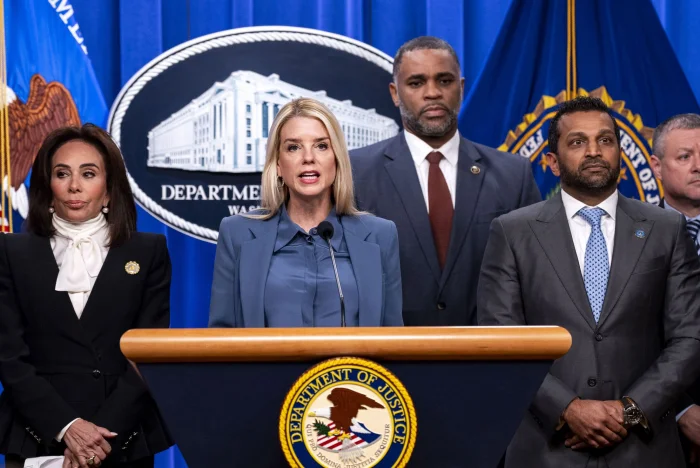
Attorney General Pam Bondi (C), FBI Director Kash Patel (R), U.S. Attorney for the District of Columbia Jeanine Pirro and others hold a press conference at the Department of Justice Headquarters on Thursday. The FBI arrested Brian Cole of Virginia, who is believed to be responsible for placing pipe bombs outside the Republican and Democratic party headquarters the night before the January 6, 2021, insurrection. Photo by Bonnie Cash/UPI | License Photo
Kentucky Governor Andy Beshear said the shooting appeared to be an isolated incident rather than a mass shooting event.
Published On 10 Dec 202510 Dec 2025
Share
A shooting at Kentucky State University in the United States has left one person dead and another in critical condition, police said. The suspected shooter, who is not a student, has been taken into custody.
The Frankfort Police Department said on Tuesday that officers responded to reports of “an active aggressor” and secured the campus, which was briefly placed on lockdown. Authorities said there was no ongoing threat.
Recommended Stories
list of 4 itemsend of list
Kentucky Governor Andy Beshear said the shooting appeared to be an isolated incident rather than a mass shooting event.
“Today there was a shooting on the campus of Kentucky State University. Two individuals were critically injured, and sadly, at least one of them is not going to make it,” Beshear said in a post on X.
“This was not a mass shooting or a random incident… the suspected shooter is already in custody, which means that while this was frightening, there is no ongoing threat,” he said.
“Violence has no place in our commonwealth or country. Please pray for the families affected and for our KSU students,” he added.
The shooting that took place today at Kentucky State University appears to be an isolated incident – not a mass shooting. The suspect has been arrested, and there is no ongoing threat. Two individuals were critically injured, and I am sad to share that one has now passed away.1/2 pic.twitter.com/4G1BgJNVQj
Earlier on Tuesday, a stabbing at a central North Carolina high school left one student dead and another injured, authorities said.
Forsyth County Sheriff Bobby Kimbrough said officers at North Forsyth High School in Winston-Salem responded shortly after 11am local time (16:00 GMT), following reports of a dispute between students.
“We responded to an altercation between two students,” Kimbrough said at a news conference, adding that “there was a loss of life”.
In an email to families and staff, Winston-Salem/Forsyth County Schools Superintendent Don Phipps confirmed that one student died and another was injured.
Sheriff’s office spokesperson Krista Karcher later said the injured student was treated at a hospital and released.
Kimbrough declined to take questions at the news conference, citing an ongoing investigation, and did not provide details about the potential charges.
North Carolina Governor Josh Stein called the incident “shocking and horrible” in a post on X, saying he was praying for the students involved and their loved ones.
The stabbing that took place at North Forsyth High School is shocking and horrible. I am praying for all students in the community and their loved ones.
North Carolinians need to be safe wherever they are — especially in school. I have spoken with Sheriff Kimbrough to offer my…
Dec. 9 (UPI) — Former Colorado clerk Tina Peters seeks a pardon from President Donald Trump after her request to be released via a writ of habeas corpus was denied.
Peters, 70, was the Mason County (Colo.) clerk and kept a copy of Colorado’s 2020 election results as reported by Dominion Voting Systems, according to her attorney.
Attorney Peter Ticktin wrote the president on Saturday while seeking Peters’ pardon and said other inmates have threatened and attacked her several times, The Hill reported.
“About 6 months ago, Mrs. Peters was threatened with harm … by a group of inmates” who said they would “stab and kill her,” Ticktin wrote.
“This was reported to the FBI and DOJ, which had agents interview her,” he said, adding that she was moved to a different unit.
“In the new unit, she was attacked by other prisoners three times in different locations where guards had to pull inmates off of her,” Ticktin said.
Peters has sought a transfer to a safer unit six times, but was denied each time, Axios Denver reported.
‘They stole our whole country’
Peters is serving a nine-year sentence after being convicted in 2024 of attempting to influence a public official, conspiracy to commit criminal impersonation, first-degree official misconduct, violation of duty and failure to comply with Colorado Secretary of State requirements.
Ticktin called her trial a “travesty” and said she was not allowed to raise her defenses.
“Tina Peters is a critical and necessary witness to the most serious crime perpetrated against the United States in history,” he wrote. “They stole our whole country for four years.”
He accused Dominion officials of carrying out an “illegal operation on our soil, which was supported and controlled by foreign actors.”
Ticktin said Dominion officials told Colorado Secretary of State Jena Griswold to help delete all data collected by Dominion voting machines and demanded criminal charges be filed against Peters when they learned she had a lawful copy of the state’s 2020 election data.
He told the president that Peters’ copy of that data is “essential” and that she is a “necessary and material witness” who can testify regarding chain of custody and other evidence regarding alleged misconduct during the 2020 election in Colorado.
Release petition denied
The pardon request preceded U.S. District Court of Colorado Chief Magistrate Judge Scott Varholak on Monday denying Peters’ request to be given a bond and released from prison pending the outcome of an active appeal of her conviction that is active in the Colorado Court of Appeals.
Varholak said three conditions must exist for a federal court to intervene in a state-level case and grant a writ of habeas corpus in the matter.
One is that there is an ongoing case, which her appeal satisfied, while another is that there be an important state interest, which Varholak agreed exists in the matter.
The third condition is that there be an adequate opportunity to raise federal claims in the state court proceeding, and the judge ruled her bond request satisfies that requirement.
When the three conditions are met, the federal court then must determine if one of three exceptions apply for it to intervene in a state case.
The exceptions are that the prosecution was done in bad faith or to harass the petitioner, is unconstitutional or related to any other extraordinary circumstances that create a “‘threat of irreparable injury, both great and immediate,'” Varholak explained.
He said Peters did not establish grounds for the federal court to determine one or more of the exceptions apply in her case and dismissed without prejudice her writ of habeas corpus petition.
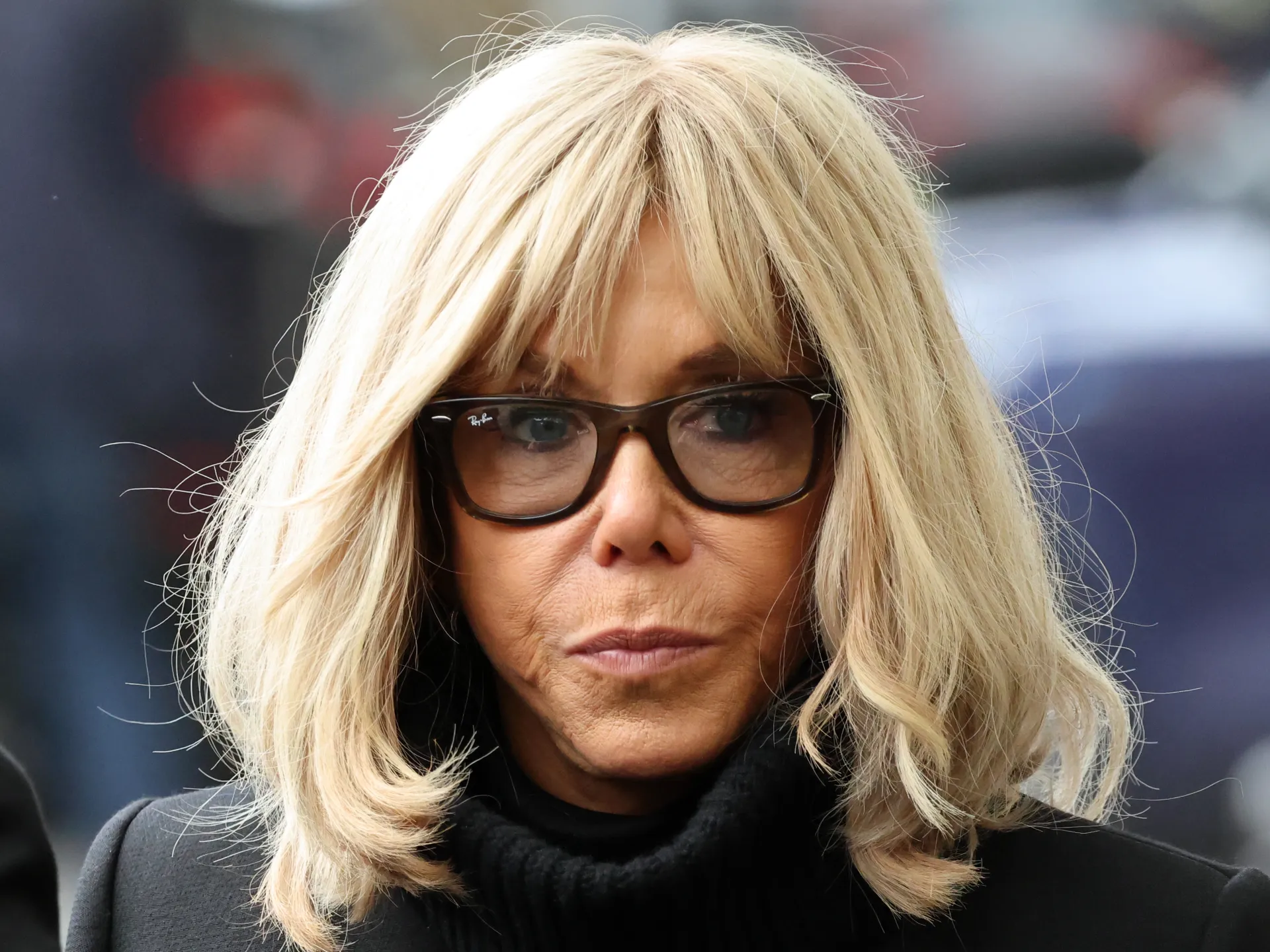
The French first lady’s team says she had intended to criticise a feminist group’s ‘radical method’ of protest.
Published On 9 Dec 20259 Dec 2025
Share
French First Lady Brigitte Macron is facing criticism after a video emerged of her using a sexist slur against feminist activists who disrupted the show of an actor-comedian once accused of rape.
Macron’s team said on Tuesday that she had intended to criticise their “radical method” of protest.
Recommended Stories
list of 3 itemsend of list
The scene filmed on Sunday showed France’s first lady in discussion backstage at the Folies Bergère theatre in central Paris with actor Ary Abittan before a performance he was about to give.
The previous night, feminist campaigners had disrupted his show, wearing masks of the actor bearing the word “rapist” and shouting, “Abittan, rapist!”
A woman in 2021 accused the actor of rape, but in 2023, investigators dropped the case, citing a lack of evidence.
Before Sunday’s performance, Macron is seen in the video, published by local media Public on Monday, asking him how he was feeling. When he said he was feeling scared, Macron was heard jokingly responding, using a vulgar expression in French, “If there are any stupid bitches, we’ll kick them out”.
The feminist campaign group “Nous Toutes” (“All of Us”) said its activists disrupted Abittan’s show to protest what it described as “the culture of impunity” around sexual violence in France.
The group later turned the insult into a hashtag on social media, #sallesconnes, and many shared it in a show of support.
Among those was actor Judith Godreche, who has become a feminist icon since accusing two directors of sexually abusing her when she was a minor and calling for an end to such behaviour in France’s cultural sector.
“We too are stupid bitches,” she posted on Instagram.
An activist who took part in the action, and who gave the pseudonym of Gwen to avoid repercussions, said the collective was “profoundly shocked and scandalised” by Macron’s language.
“It’s yet another insult to victims and feminist groups,” she said.
The first lady’s team argued her words should be seen as “a critique of the radical method employed by those who disrupted the show”.
France has been rocked by a series of accusations of rape and sexual assault against well-known cultural figures in recent years.
Screen icon Gerard Depardieu was convicted in May of sexually assaulting two women on a film set in 2021, and is to stand trial charged with raping an actor in 2018. He denies any wrongdoing.
French President Emmanuel Macron in 2023 had expressed admiration for Depardieu, saying at the time the actor was the target of a “manhunt” and that he stood behind the presumption of innocence.
Opponents of President Macron on the left wing of French politics criticised his wife’s use of a sexist slur, and some said she should apologise.
The critics included former French President François Hollande. Speaking to broadcaster RTL, Hollande said: “There’s a problem of vulgarity.”
But on the French far-right, National Rally lawmaker Jean-Philippe Tanguy said Brigitte Macron’s comments were delivered in private and “stolen”.
“If each of us were filmed backstage saying things with friends, I think there would be plenty to comment on,” he told broadcaster BFMTV. “All of this is very hypocritical.”
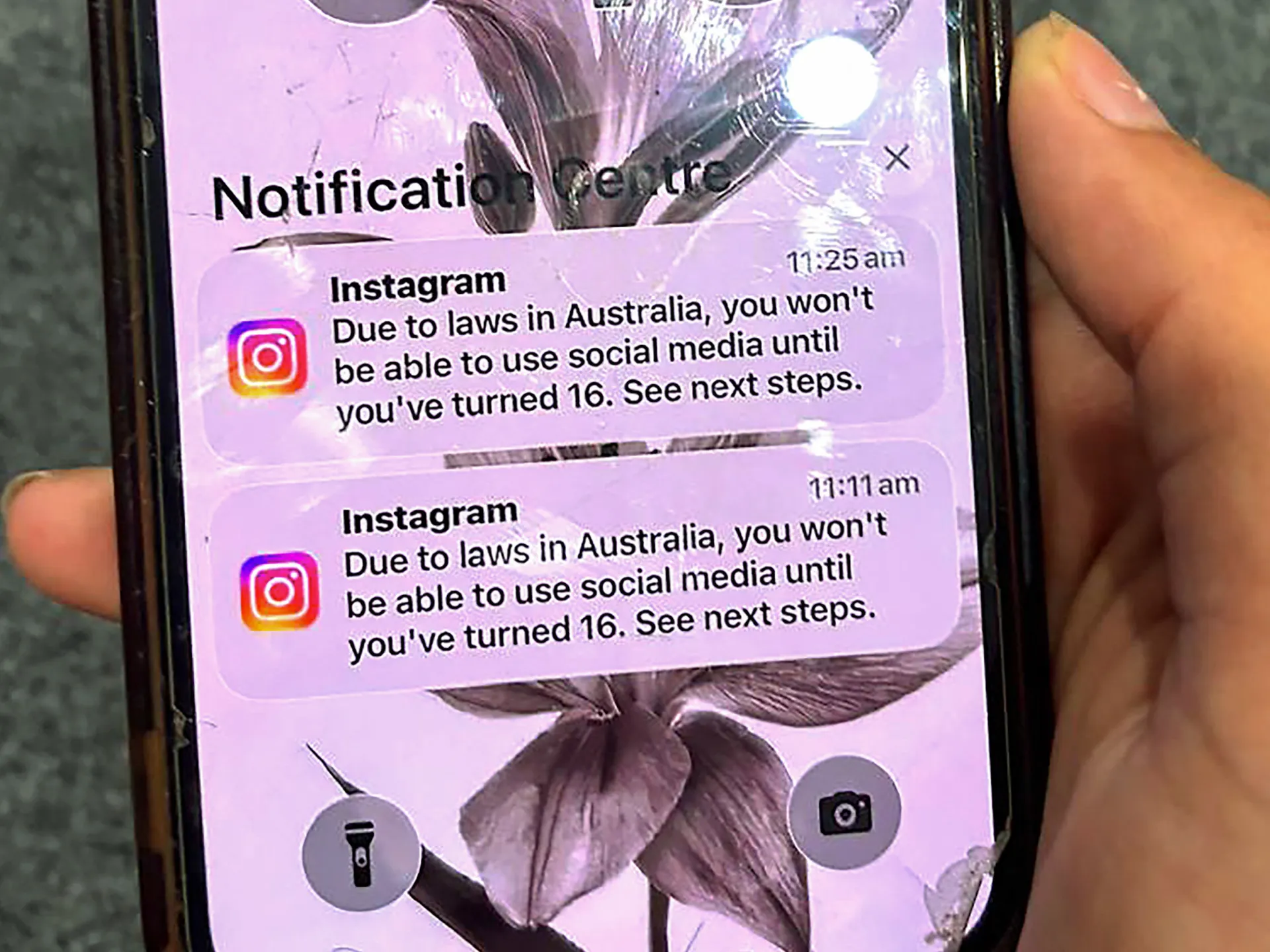
Dec. 9 (UPI) — Australian youth under age 16 are losing access to their social media accounts amid a national law that takes effect on Wednesday and is the world’s first such ban.
The nation’s lawmakers in 2024 enacted the social media ban that blocks access to 10 internationally popular social media sites — Facebook, Instagram, TikTok, X, Reddit, YouTube, Twitch, Kick, Snapchat and Threads.
Others could be added if they add significantly more users or otherwise are deemed social media instead of gaming or peer-to-peer communication sites, such as Bluesky, Steam, YouTube Kids, WhatsApp and Steam.
The law punishes the respective social media companies with up to $32 million in fines instead of children who might access the sites or their parents, according to the BBC.
The social media companies are required to ensure users are of legal age before accessing the respective sites by subjecting them to facial age assurance tests.
Officials at Elon Musk-owned X discussed with Australian officials the measures they would take to abide by Australia’s new law but have not shared that information with X users, Australian eSafety commissioner Julie Inman Grant told The Guardian.
The owners and operators of the nine other affected social media sites likewise confirmed they will abide by the new Australian law.
Officials for at least one other, Bluesky, have said they proactively will block access for Australians under age 16 despite it being deemed a “low risk” for children by the country’s eSafety commission due to its total user base of about 50,000 in Australia.
Australia-based k-ID service co-founder Kieran Donovan told The Guardian that the company has conducted hundreds of thousands of age verifications in recent weeks for Snapchat users and others.
The parent of one child suggested the age verification system is flawed and told The Guardian that her 15-year-old daughter is upset because “all of her 14- to 15-year-old friends have been ageverified as 18 by Snapchat,” but she wasn’t.
Another parent said his child will use a virtual private network and other tactics to bypass the age restrictions on social media.
Many free speech advocates say they support the effort to protect children but warned that the law could cause unintended harm.
Such harm might include making it harder to restrict harmful content or behaviors, creating security risks and inhibiting free speech and restricting minors’ access to information while restricting their speech.
Many also accuse the Australian government of saying it is better equipped to determine what is best for children than their parents by making it impossible for parents to choose whether or not to allow their children to access the banned social media sites.
Some Australian teens have filed a legal challenge to the new law.
While the Australian law takes effect on Wednesday, Malaysian officials have enacted a similar ban there that is scheduled to take effect in 2026.
Children under 16 can no longer access 10 of the world’s biggest platforms, including Facebook, TikTok and Instagram.
Australia has banned children under 16 from social media in a world-first, as other countries consider similar age-based measures amid rising concerns over its effects on children’s health and safety.
Under the new law, which came into effect at midnight local time on Wednesday (13:00 GMT on Tuesday), 10 of the biggest platforms face $33m in fines if they fail to purge Australia-based users younger than 16.
Recommended Stories
list of 3 itemsend of list
The law has been criticised by major technology companies and free speech campaigners, but praised by parents and child advocates.
The Australian government says unprecedented measures are needed to protect children from “predatory algorithms” filling phone screens with bullying, sex and violence.
“Too often, social media isn’t social at all,” Prime Minister Anthony Albanese said in advance of the ban.
“Instead, it’s used as a weapon for bullies, a platform for peer pressure, a driver of anxiety, a vehicle for scammers and, worst of all, a tool for online predators.”
The law states that Facebook, Instagram, YouTube, TikTok, Snapchat and Reddit are forbidden from creating or keeping accounts belonging to users in Australia under 16.
Streaming platforms Kick and Twitch are also on the government’s blacklist, as are message boards Threads and X. Popular apps and websites such as Roblox, Pinterest and WhatsApp are currently exempt – but the government has stressed that the list remains under review.
Meta, YouTube and other social media giants have already condemned the ban.
YouTube, in particular, has attacked the law, describing it as “rushed” and saying it would only push children into deeper, darker corners of the internet.
While most platforms have begrudgingly agreed to comply, for now, legal challenges are in the wind.
Online discussion site Reddit said Tuesday it could not confirm local media reports that said it would seek to overturn the ban in Australia’s High Court.
The Sydney-based internet rights group Digital Freedom Project has already launched its own bid to have teenagers reinstated to social media.
Some parents, tired of seeing children stuck to their phones, see the ban as a relief.
Father-of-five Dany Elachi said the restrictions were a long-overdue “line in the sand”.
“We need to err on the side of caution before putting anything addictive in the hands of children,” he told the AFP news agency.
The Australian government concedes the ban will be far from perfect at the outset, and canny teenagers will find ways to circumvent it.
Social media companies bear the sole responsibility for checking users are 16 or older.
Some platforms say they will use AI tools to estimate ages based on photos, while young users may also choose to prove their age by uploading a government ID.
There is keen interest in whether Australia’s sweeping restrictions can work as regulators around the globe wrestle with the potential dangers of social media.
Australia’s Communications Minister Anika Wells said last week that the European Commission, France, Denmark, Greece, Romania and New Zealand were also interested in setting a minimum age for social media.