Today

India-Bangladesh tensions rock cricket, as sport turns diplomatic weapon | Cricket News

New Delhi, India – On January 3, 2026, a single directive from the Board of Control for Cricket in India (BCCI) quietly ended the Indian Premier League (IPL) season of Bangladesh’s only cricketer in the tournament, Mustafizur Rahman, before it could even begin.

The Kolkata Knight Riders (KKR), a professional Twenty20 franchise based in Kolkata that competes in the IPL and is owned by Red Chillies Entertainment, associated with Bollywood actor Shah Rukh Khan, were instructed by India’s cricket board to release the Bangladesh fast bowler.

Not because of injury, form, or contract disputes, but due to “developments all around” – an apparent reference to soaring tensions between India and Bangladesh that have been high since ousted former Bangladesh Prime Minister Sheikh Hasina received exile in New Delhi in August 2024.

Within days, Mustafizur signed up for the Pakistan Super League (PSL), the Bangladesh Cricket Board (BCB) protested sharply, the IPL broadcast was banned in Bangladesh, and the International Cricket Council (ICC) – the body that governs the sport globally – was pulled into a diplomatic standoff.

What should have been a routine player transaction instead became a symbol of how cricket in South Asia has shifted from a tool of diplomacy to an instrument of political pressure.

Cricket has long been the subcontinent’s soft-power language, a shared obsession that survived wars, border closures, and diplomatic freezes. Today, that language is being rewritten, say observers and analysts.

India, the financial and political centre of world cricket, is increasingly using its dominance of the sport to signal, punish, and coerce its neighbours, particularly Pakistan and Bangladesh, they say.

The Mustafizur affair: When politics entered the dressing room

Rahman was signed by KKR for 9.2 million Indian rupees ($1m) before the IPL 2026 season.

Yet the BCCI instructed the franchise to release him, citing vague external developments widely understood to be linked to political tensions between India and Bangladesh.

The consequences were immediate.

Mustafizur, unlikely to receive compensation because the termination was not injury-related, accepted an offer from the PSL – picking the Pakistani league after an Indian snub – returning to the tournament after eight years.

The PSL confirmed his participation before its January 21 draft. The BCB, meanwhile, called the BCCI’s intervention “discriminatory and insulting”.

Dhaka escalated the matter beyond cricket, asking the ICC to move Bangladesh’s matches from the upcoming T20 World Cup, which India is primarily hosting, to Sri Lanka over security concerns.

The Bangladeshi government went further, banning the broadcast of the IPL nationwide, a rare step that underlined how deeply cricket intersects with politics and public sentiment in South Asia.

The BCB on January 7 said the International Cricket Council (ICC) has assured it of Bangladesh’s full and uninterrupted participation in the ICC Men’s T20 World Cup 2026, dismissing media reports of any ultimatum.

The BCB said the ICC responded to its concerns over the safety and security of the national team in India, including a request to relocate matches, and reaffirmed its commitment to safeguarding Bangladesh’s participation while expressing willingness to work closely with the Board during detailed security planning.

Yet for now, Bangladesh’s matches remain scheduled for the Indian megacities of Kolkata and Mumbai from February 7, 2026, even as tensions simmer.

Navneet Rana, a BJP leader said that no Bangladeshi cricketer or celebrity should be “entertained in India” while Hindus and minorities are being targeted in Bangladesh.

Meanwhile, Indian Congress leader Shashi Tharoor questioned the decision to release Mustafizur Rahman, warning against politicising sport and punishing individual players for developments in another country.

A pattern, not an exception

The Mustafizur controversy fits into a broader trajectory.

While all cricket boards operate within political realities, the BCCI’s unique financial power gives it leverage unmatched by any other body in the sport, say analysts.

The ICC, the sport’s global body, is headed by Jay Shah, the son of India’s powerful home minister Amit Shah – widely seen as the second-most influential man in India after Prime Minister Narendra Modi. The IPL, meanwhile, is by far the richest franchise league in the world.

India, with 1.5 billion people, is cricket’s biggest market and generates an estimated 80 percent of the sport’s revenue.

All of that, say analysts, gives India the ability to shape scheduling of events and matches, venues, and revenue-sharing arrangements. This, in turn, has made cricket a strategic asset for the Indian government.

When political relations sour, cricket is no longer insulated.

Nowhere is this clearer than in India’s relationship with Bangladesh at the moment. India has historically been viewed as close to Hasina, whose ouster in 2024 followed weeks of popular protests that her security forces attempted to crush using brutal force. An estimated 1,400 people were killed in that crackdown, according to the United Nations.

India has so far refused to send Hasina back to Bangladesh from exile, even though a tribunal in Dhaka sentenced her to death in late 2025 over the killings of protesters during the uprising that led to her removal. That has spurred sentiments against India on the streets of Bangladesh, which escalated after the assassination of an anti-India protest leader in December.

Meanwhile, attacks on Hindus and other religious minorities in Bangladesh since August 2024 – a Hindu Bangladeshi man was lynched last month – have caused anger in India.

Against that backdrop, the BCCI’s move to kick Rahman out of the IPL has drawn criticism from Indian commentators. Senior journalist Vir Sanghvi wrote in a column that the cricket board “panicked” and surrendered to communal pressure instead of standing by its own player-selection process, turning a sporting issue into a diplomatic embarrassment.

He argued Bangladesh did not warrant a sport boycott and warned that mixing communal politics with cricket risks damaging India’s credibility and regional ties.

Echoing the concern, Suhasini Haidar, diplomatic editor of The Hindu, one of India’s largest dailies, said on X that the government was allowing social media campaigns to overpower diplomacy. She referred to how Indian Foreign Minister S Jaishankar had travelled recently to Dhaka to attend the funeral of former Bangladesh PM Khaleda Zia, and wondered why Bangladeshi cricketers couldn’t then play in India.

Cricket analyst Darminder Joshi said the episode reflected how cricket, once a bridge between India and its neighbours, was increasingly widening divisions.

That was particularly visible late last year, when India and Pakistan faced off in cricket matches months after an intense four-day aerial war.

The Asia Cup standoff

The 2025 Asia Cup, hosted by Pakistan in September, was meant to be a celebration of regional cricket.

But citing government advice, the BCCI informed the ICC and the Asian Cricket Council (ACC) – the sport’s continental governing body – that India would not travel to Pakistan.

After months of wrangling, the tournament was held under a hybrid model, with India playing its matches in the United Arab Emirates while the rest were hosted in Pakistan.

But in three matches that the South Asian rivals played against each other during the competition – India won all three – the Indian team refused to publicly shake hands with their Pakistani counterparts.

“There is no rule in cricket that mandates a handshake. Yet players often tie each other’s shoelaces or help opponents on the field, that is the spirit of the game,” Joshi, the cricket analyst, told Al Jazeera. “If countries are in conflict, will players now refuse even these gestures? Such incidents only spread hate and strip the game of what makes it special.

“Sporting exchanges once softened bilateral tensions; this decision does exactly the opposite, making the game more hostile instead of more interesting.”

The controversy did not end with the final. India won the tournament, defeating Pakistan, but refused to accept the trophy from ACC President Mohsin Naqvi, who is also the Pakistan Cricket Board chairman and Pakistan’s interior minister.

The trophy remains at the ACC headquarters in Dubai, creating an unprecedented limbo that has defied resolution despite multiple ICC and ACC meetings. The BCCI requested that the trophy be sent to India. Naqvi has refused.

From bridge to divider

Unlike Pakistan, Bangladesh has historically enjoyed smoother cricketing ties with India. Bilateral series continued even during political disagreements, and Bangladeshi players became familiar faces in the IPL.

The Mustafizur episode marks a turning point. The current moment stands in stark contrast to earlier eras when cricket was deliberately used to soften political hostilities.

The most celebrated example remains India’s 2004 tour of Pakistan, the so-called “Friendship Series”.

That tour took place after years of frozen ties following the Kargil War, an armed conflict between India and Pakistan that took place from May to July 1999.

The then-Prime Minister Atal Bihari Vajpayee personally met the Indian team before departure, handing captain Sourav Ganguly a bat inscribed with the Hindi words: “Khel hi nahi, dil bhi jeetiye” which translates to “don’t just win matches, win hearts too”.

Special cricket visas allowed thousands of Indian fans to travel across the border. Pakistani then-President Pervez Musharraf followed the games and publicly lauded Indian cricketers who developed followings of their own in Pakistan.

The 2008 Mumbai attacks, carried out by fighters that Pakistan acknowledged had come from its territory, froze cricketing ties.

But in 2011, when India and Pakistan faced off in the World Cup semifinal in Mohali, Indian then-Prime Minister Manmohan Singh invited his Pakistani counterpart, Yousuf Raza Gilani, over – the two premiers watched the match together in what was widely seen as an act of “cricket diplomacy”.

By intervening in a franchise-level contract and linking it, however obliquely, to geopolitical tensions as has happened with the Mustafizur case, the BCCI sent a clear message, say analysts: Access to Indian cricket is conditional.

Sport journalist Nishant Kapoor told Al Jazeera that releasing a contracted player purely on political grounds was “absolutely wrong” and warned it would widen mistrust in the cricketing ecosystem.

“He is a cricketer. What wrong has he done?” Kapoor said.

Source link

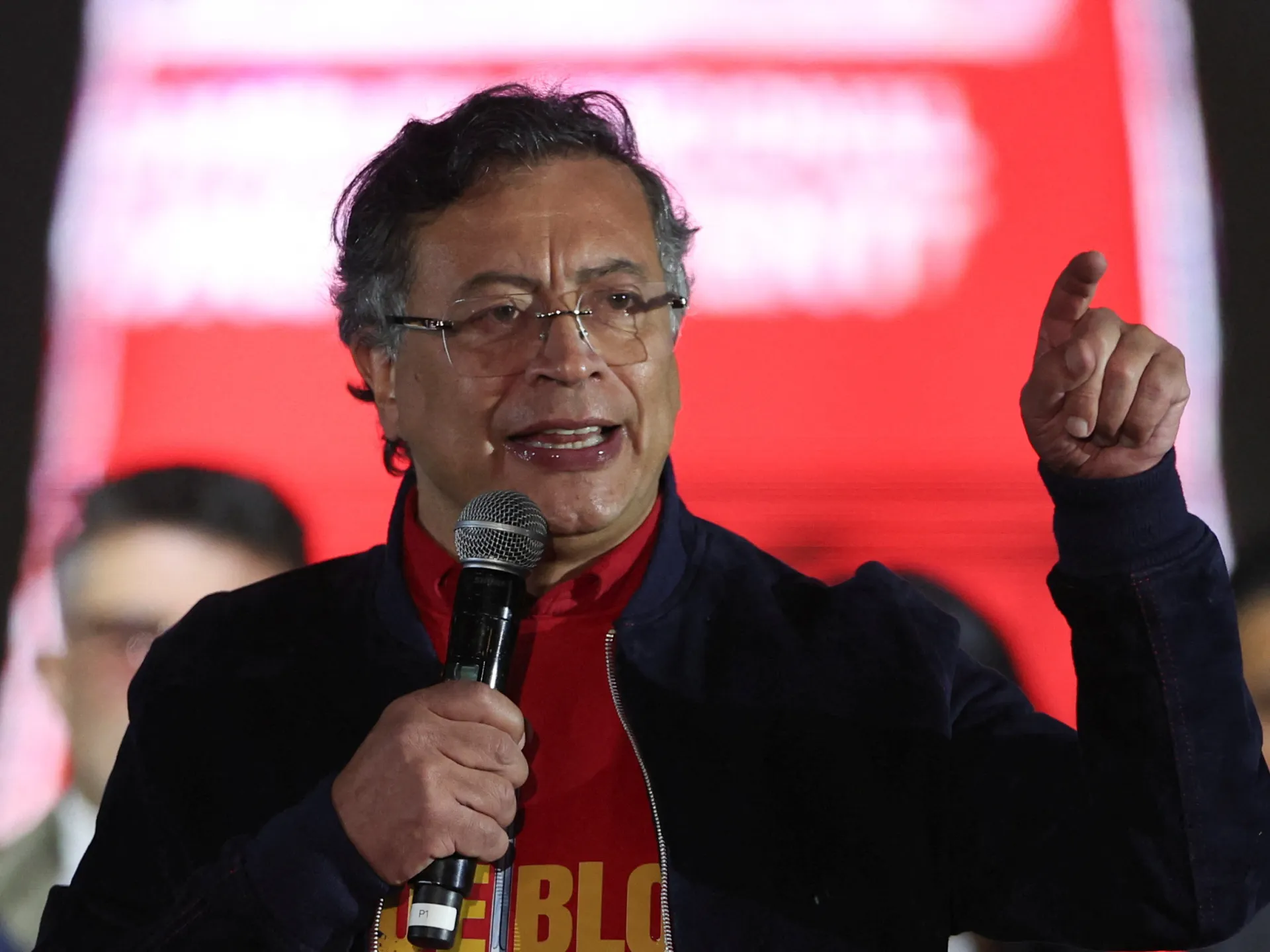
Petro says Colombia cooperating with US ‘despite insults, threats’ | Politics News

Speaking to Al Jazeera, Gustavo Petro calls for ‘shared government through dialogue’ in Venezuela, leading to elections.

Colombia’s President Gustavo Petro has stressed the importance of having open lines of communication with the United States despite President Donald Trump’s recent threats of military action against the South American country.

In an interview with Al Jazeera’s Teresa Bo in Colombia’s capital, Bogota – which aired on Friday – Petro said his government is seeking to maintain cooperation on combating narcotics with Washington, striking a softer tone following days of escalating rhetoric.

Recommended Stories

list of 3 itemsend of list

His comments came after holding a phone call with Trump on Wednesday, a direct contact that Petro called a “means of communication that did not exist before”.

Petro, Colombia’s first left-wing president, said that previously, information between the two governments had been transmitted through unofficial channels “mediated by political ideology and my opposition”.

“I have been careful – despite the insults, the threats and so on – to maintain cooperation on drug trafficking between Colombia and the United States,” Petro said.

US threats

Just hours after the US military abducted Venezuelan President Nicolas Maduro on Saturday, Trump turned his threats of military action towards Colombia.

Trump accused Petro – without evidence – of running cocaine mills, calling him a “sick man”.

Asked on Sunday whether he would authorise a military operation against Petro, Trump said, “Sounds good to me.”

In response, Petro promised to defend his country, saying that he would “take up arms” for his homeland.

While temperatures have cooled in the wake of the call between the two leaders on Wednesday, observers have largely seen Trump’s threats as the potential next step in the White House’s stated goal of establishing US “pre-eminence” in the Western Hemisphere.

But the feud between the Trump administration and Petro pre-dated the attack on Venezuela.

The Colombian president has been a vocal critic of Israel’s US-backed genocidal war on Gaza.

In September, Washington revoked Petro’s US visa after he spoke at a pro-Palestine march outside the United Nations General Assembly in New York.

Weeks later, the Trump administration imposed sanctions on the Colombian president, who is term-limited and set to leave office after a presidential election in May.

‘Shared government through dialogue’

Petro was among the first world leaders to condemn the abduction of Maduro, calling the US raid an “attack on the sovereignty of Venezuela and Latin America”.

In his interview with Al Jazeera, Petro warned that Venezuela, which borders his country, could fall into violence in the post-Maduro era. He said that “would be a disaster”.

“To that extent, what I have proposed is a shared government through dialogue among all the political forces in Venezuela and a series of steps towards elections,” he said.

Petro added that he has spoken to Venezuela’s interim President Delcy Rodriguez, and he sensed she is worried about the future of the country.

“She’s also facing attacks,” the Colombian president said. “Some accuse her of betrayal, and that is constructed as a narrative that divides the forces that were part of the Maduro government.”
Source link

UK travellers warned of EU border deadline for rules enforced today

Under the change Britons will provide four fingerprints and a facial biometric scan to a machine during their first arrival

British travellers visiting Europe are being warned to prepare for the possibility of even longer queues from today. The rollout of the EU’s new border check tech aims to eventually speed up entry, but its expansion this month presents a risk of greater delays, according to travel association ABTA.

Under the automated Entry/Exit System (EES), Britons will provide four fingerprints and a facial biometric scan to a machine during their first arrival, followed by one scan on each subsequent arrival and departure. “As more places introduce the system, and more passengers are processed through it, there is a greater risk that people will face queues and delays,” ABTA warns.

“It’s important travellers are prepared for this as they prepare to go through passport control.” The EU set a January 10 deadline for its member states to roll out the EES at half of their border crossings.

Manual passport stamping will continue until 9 April, meaning double red tape. “We are also urging border authorities to do all they can to minimise delays. They have contingency measures at their disposal – such as standing down the system or limiting checks – and we want them to be utilised to help manage the flow of people,” ABTA says.

The Entry Exit System (EES) requires non-EU citizens to register at the EU border by scanning their passport and having their fingerprints and photograph taken. The rollout began last October and mean British passport-holders need to register on their first visit to a country where EES checks are operating. Registration is valid for a rolling three-year period or until the passport expires.

The new system will be phased in over six months, meaning different ports may have varying requirements until April 2026. By January 10 half of all checkpoints should be in operation.

On exit, and for subsequent visits to a participating country, travellers will only need to scan their passport and provide either fingerprints or a photograph at the border.

EES will be a requirement when entering Schengen area countries including Iceland, Liechtenstein, Norway and Switzerland. EES will not be required when travelling to Ireland and Cyprus.

For travellers using the Port of Dover, Eurotunnel at Folkestone or Eurostar at St Pancras International, the process will take place at the border before they leave the UK.

The government has supported these juxtaposed ports (Eurostar, St Pancras; Eurotunnel, Folkestone; and the Port of Dover) with £10.5m of funding for border infrastructure to make the change as smooth as possible for travellers. While EES is an EU system, the government has been working closely with the travel industry, ports and transport operators to help raise public awareness and understanding of the border changes.

Minister for Border Security and Asylum, Alex Norris, said: “We recognise that EES checks will be a significant change for British travellers, which is why we have worked closely with our European partners to ensure the rollout goes as smoothly as possible.

“The UK and EU have a shared objective of securing our borders and these modernisation measures will help us protect our citizens and prevent illegal migration.”

Minister for Aviation, Maritime and Decarbonisation, Keir Mather, said: “We’ve backed our ports and operators with £10.5 million to help them get ready for the EU’s new Entry/Exit System, ensuring they have the infrastructure and systems in place to manage the changes.

“Our priority is to minimise disruption for travellers and hauliers, particularly at our busiest border crossings. We’ll continue working closely with European partners and local resilience forums to keep traffic flowing and journeys smooth.”

Travellers do not need to take any action before travelling and the process is free. Registration will take place upon arrival at the EU border and may take slightly longer than previous border checks.

Whilst the checks should only take 1-2 minutes for each person, they may lead to longer wait times at border control upon arrival in the Schengen area. At the juxtaposed ports, where registration will be completed in the UK prior to departure, there may be longer waits at busy times. Eurotunnel, Eurostar and the Port of Dover have plans in place to minimise disruption as much as possible.

Children under 12 will not be fingerprinted but under the new EU rules, all travellers, including babies, will be photographed and have digital records created.

The UK Government has rolled out its own Electronic Travel Authorisation (ETA) scheme, which is a digital permission to travel for visitors who do not need a visa for short stays, or do not have another valid UK immigration status prior to travelling to the UK.

Source link

Russia-Ukraine war: List of key events, day 1,416 | Russia-Ukraine war News

These are the key developments from day 1,416 of Russia’s war on Ukraine.

Here is where things stand on Saturday, January 10:

Fighting:

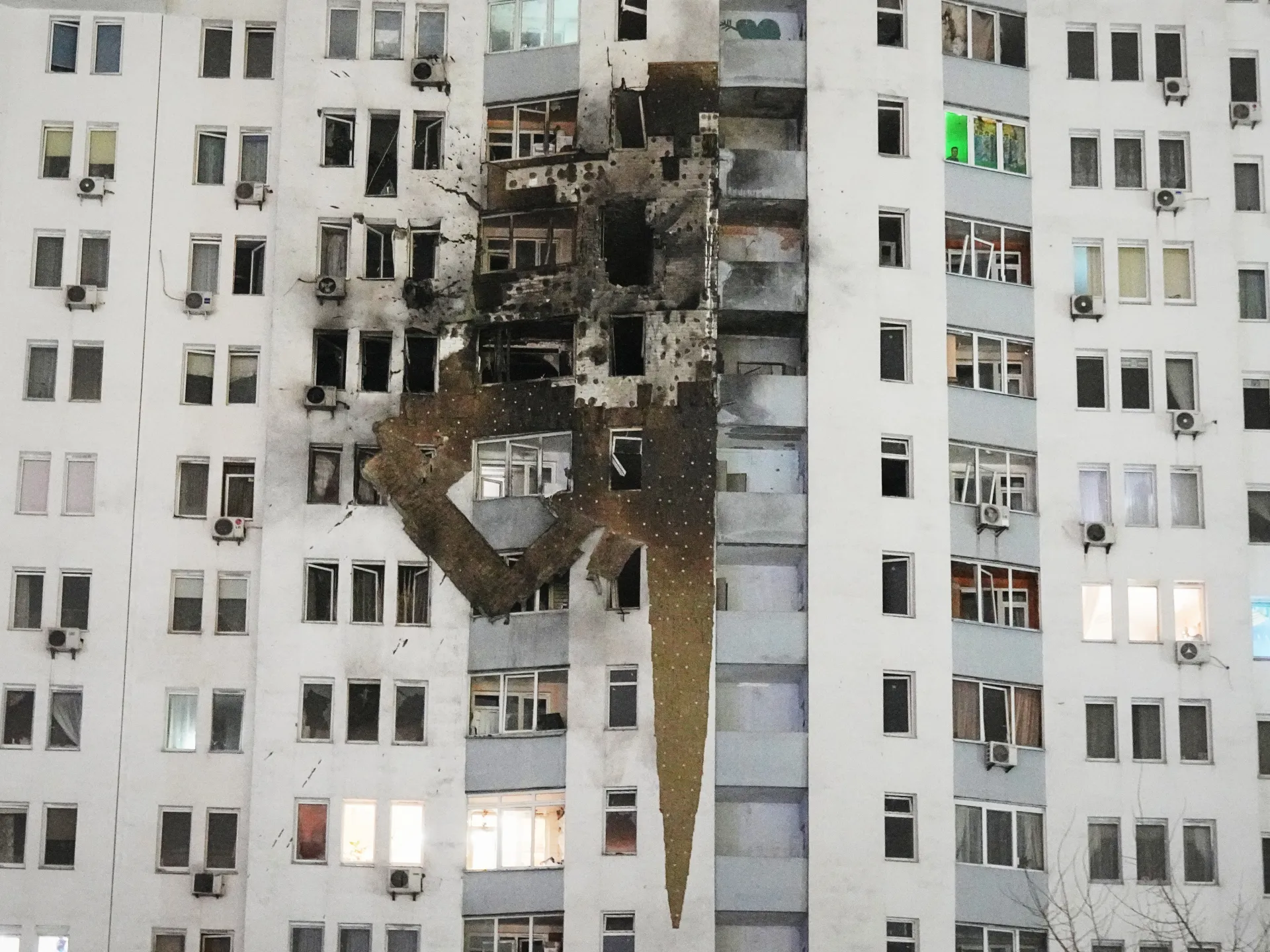
  • The death toll from a massive Russian attack on Ukraine’s capital Kyiv that began on Thursday night has risen to four, the Ukrainian State Emergency Service wrote in an update shared on Facebook on Friday. At least 25 people were also injured, including five rescuers, the service added.
  • The attack left thousands of Kyiv apartments without heat, electricity and water as temperatures fell to minus 10 degrees Celsius (14 degrees Fahrenheit) on Friday, Kyiv Mayor Vitali Klitschko and other local officials said.
  • Klitschko called on people to temporarily leave the city, saying on Telegram that “half of apartment buildings in Kyiv – nearly 6,000 – are currently without heating because the capital’s critical infrastructure was damaged by the enemy’s massive attack”.
  • Russian forces shelled a hospital in the Ukrainian city of Kherson just after midday on Friday, damaging the intensive care unit and injuring three nurses, the regional prosecutor’s office wrote on Telegram.
  • “As a result of the attack, three nurses aged 21, 49, and 52 were wounded. At the time of the shelling, the women were inside the medical facility,” the office said in a statement.
  • The head of the World Health Organization (WHO), Tedros Adhanom Ghebreyesus, condemned attacks on healthcare in Ukraine in a statement shared on X, saying that there had been nine attacks since the beginning of 2026, killing one patient, one medic and injuring 11 others, including healthcare workers and patients.
  • Tedros said that the attacks further “complicated the delivery of health care during the winter period” and called for “the protection of health care facilities, patients and health workers”.
  • Russian forces attacked two foreign-flagged civilian vessels with drones in Ukraine’s southern Odesa region, killing a Syrian national and injuring another, Ukraine’s Deputy Prime Minister Oleksii Kuleba and other officials said on Friday.
  • A Ukrainian drone attack on a bus in Russia’s Belgorod region injured four people, the regional task force reported, according to Russia’s TASS state news agency.
  • Russian forces seized five settlements in Ukraine’s Zaporizhia region, including Zelenoye, the Russian Ministry of Defence said, according to TASS.
  • Ukrainian battlefield monitoring site DeepState said on Friday that Russian forces advanced in Huliaipole and Prymorske in the Zaporizhia region, but did not report any further changes.
  • Ukrainian President Volodymyr Zelenskyy said on Friday that Russia’s Oreshnik missile strike late on Thursday was “demonstratively” close to Ukraine’s border with the European Union.
  • The International Atomic Energy Agency has begun consultations to establish a temporary ceasefire zone near Ukraine’s Zaporizhzhia nuclear power plant after military activity damaged one of two high-voltage power lines, Director General Rafael Mariano Grossi said in a statement on Friday.

Sanctions

  • US forces seized the Olina oil tanker and forced it to return to Venezuela so its oil could be sold “through the GREAT Energy Deal”, United States President Donald Trump said in a post on Truth Social on Friday. According to The Associated Press news agency, US government records showed that the Olina had been sanctioned for moving Russian oil under its prior name, Minerva M.
  • Ukraine’s ambassador to the US, Olha Stefanishyna, said that Ukrainian nationals were among members of the crew of the Russian-flagged tanker Marinera seized earlier this week by US forces over its links to Venezuela, according to Interfax Ukraine news agency.
  • The Russian Foreign Ministry separately said on Friday that the US had released two Russian crewmembers from the Marinera, expressing gratitude to Washington for the decision and pledging to ensure the return home of crewmembers.

Politics and diplomacy

  • Qatar’s Ministry of Foreign Affairs expressed “deep regret” over damage to its embassy in Kyiv, confirming that no diplomats or staff were hurt, in a statement on Friday. The ministry underscored the importance of protecting diplomatic buildings and reiterated its call for a “resolution to the Russian-Ukrainian crisis through dialogue and peaceful means”.
  • British Defence Secretary John Healey said that the United Kingdom was allocating 200 million pounds ($270m) to fund preparations for the possible deployment of troops to Ukraine, during a visit to Kyiv on Friday.
  • The leaders of Britain, France and Germany described Russia’s use of an Oreshnik intermediate-range ballistic missile in western Ukraine as “escalatory and unacceptable”, according to a readout of their call released by Prime Minister Keir Starmer’s office on Friday.

Source link

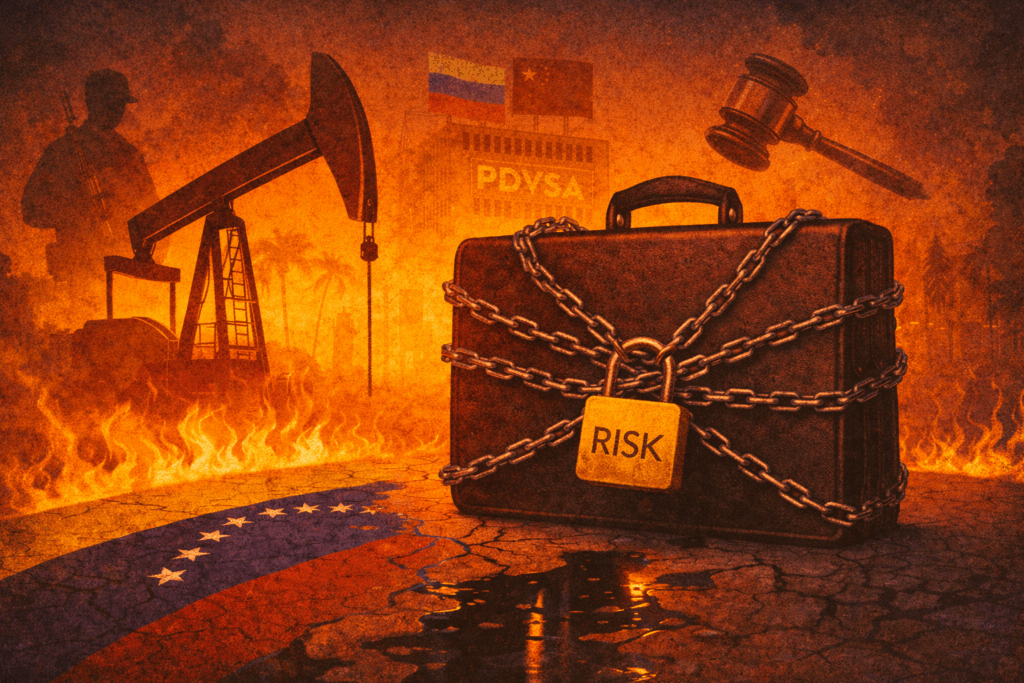
What It Really Takes to Invest in Venezuelan Oil Today

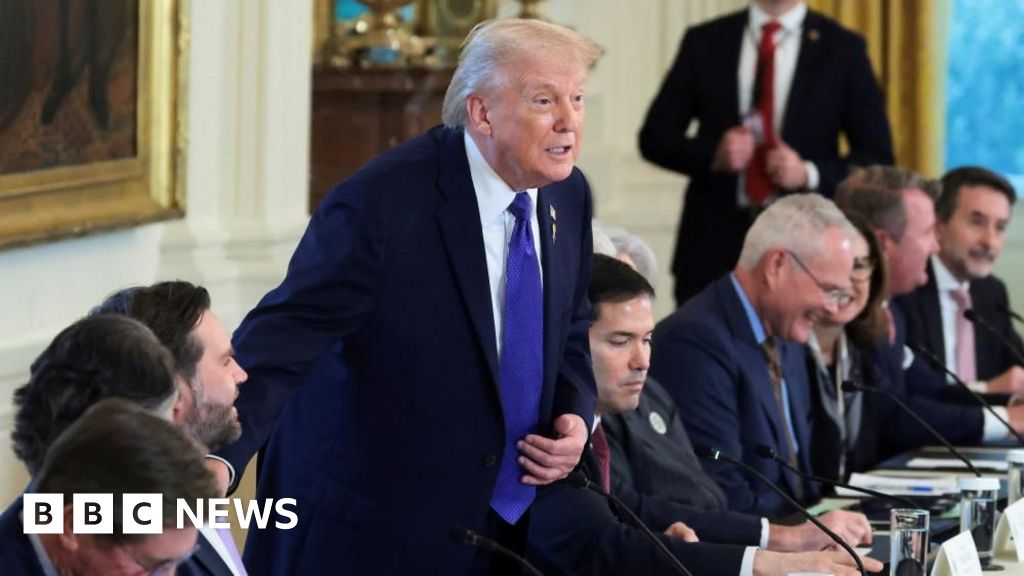
Today Trump brought the heads of Exxon, Chevron, ConocoPhillips and many other oil giants into the White House. He talked about something like a $100 billion investment, promised U.S. protection, and warned Russia and China to keep their hands off. 

But there is a fundamental difference between systems imposed by the state (like China), versus the U.S. In China, if the top leader says “go build,” a company might grumble in private but it will die trying. In the U.S., you can’t order private companies to sink tens of billions into a country and just hope they salute. There are shareholders, lawyers, insurers, boards, and risk people involved. The oil tycoons will happily try to join forces, but the market is their true boss. Trump has to convince the private sector that the money will be safe and that’s exactly where up to this point, the new regime in Venezuela is still failing the test.

An oil project doesn’t get approved because someone “likes the idea” or gets mandated. First, the company tries to prove the oil is really there and worth extracting (surveys, test wells, production forecasts). Then they price the whole mess: what it’ll cost to fix old equipment or build new stuff, how long it’ll take, and what could go wrong. Finance teams run scenarios like a nervous pilot checking every gauge: oil prices, delays, tax changes, accidents, expropriation. Lawyers obsess over the contract details (who owns what, who can change the rules, where disputes get decided). And here’s the institutional reality check: if courts can’t be trusted, contracts are just paper, and if nobody can say who truly controls the police, the military, and the streets, then there’s no safeguard (especially if there’s reluctance to enact more force by the US). Only if the numbers still work after all that, and the risks can be insured or controlled, does the board sign off on the “final investment decision,” which is the moment the company stops talking and starts spending real billions of dollars. So from first study to first meaningful barrels, you’re usually talking 18–36 months for a brownfield restart (in existing/old facilities), and 3–7 years for a bigger rebuild or new development (which seems to be Trump’s appetite).

These things will be discussed behind closed doors, not in the media show presented today, and we’ll learn more soon enough.

Here’s a prospective roadmap, on what could happen, depending on the type of work:

6 months

The companies already present in Venezuela will probably invest quickly in debottlenecking (“low-hanging fruits”) that requires low investment and gradually increases production.

Most companies will commit to starting an exploratory technical and commercial feasibility process to assemble a development business plan for the country. This only requires bringing in a limited technical team, so upfront costs will be very low, and any of these companies can take the risk without long-term guarantees (if they lose that money and time, who cares). Trump will guarantee security for the personnel sent to Venezuela.

Based on private agreements around buying Venezuelan assets (privatization), new exploration, asset expansion, etc., Trump will instruct the interim leadership so that PDVSA and Congress enable those actions.

The first privatizations begin to be announced (the least complex and most obvious ones), those requiring the least purchase investment and the least production-recovery investment. I think this could happen even before free elections, because as Trump said, most of these companies are used to operating in some of the most sinister places in the world.

Engineering phases move forward to restore basic services needed to operate facilities (especially electricity supply). Stabilizing the country’s electrical system is fundamental for the oil industry.

6 to 18 months

Engineering advances for larger-scale projects that can meaningfully increase production. Again, this is very low-cost for the companies, and they take relatively little risk moving these forward even if they may have to cancel later.

Gradual production increases materialize as the debottlenecking projects (“low-hanging fruit”) come online.

FID (Final Investment Decision) might happen for some small or medium-sized projects, with U.S. guarantees that the government cannot expropriate them.

18 months +

This is where it gets interesting, because a democratic transition becomes fundamental for these companies to make FIDs to buy major PDVSA assets or execute greenfield projects (new plants, new infrastructure, etc.).

Remember: most of these companies are publicly traded. They will invest in projects with the highest returns at an acceptable level of risk. If the Trump administration cannot guarantee long-term stability through a healthy democracy, it’s likely these companies won’t risk huge sums of money.

The pace will also be dictated by expectations for oil prices at the time. If prices are expected to be low, investment will move more slowly.

This entire analysis also somewhat ignores the complexity of human talent in the country. It will be uphill to find the talent needed to execute these projects and operate the plants, and that could stretch timelines even further. Venezuela once had it, but it’s now dispersed all over the world (including Venezuela).

That’s why the political transition has to move fast. If Trump wants serious capital to be involved, the reforms have to be visible and irreversible, starting with unmistakable signals that the old regime’s habits are gone. A clean first step that could be an important signal: free every political prisoner. Not a symbolic handful. All of them. 

Big projects don’t live on election cycles, they live on 10–20-year timelines for ROI. If investors think the whole arrangement can be shaken up after the 2028 election (due to the Democrats retaining the White House), they’ll hesitate, or they’ll demand terms so protective that Venezuela’s interim regime won’t like them.

Venezuela’s economic restart and Venezuela’s political liberation are the same project. You don’t get one without the other. If the transition wants oil money to actually land it has to build the boring stuff that makes capitalism work: credible courts, enforceable contracts, and proof that the control of violence is achieved.

Source link

Syrian army ramps up Aleppo strikes against Kurdish fighters | Syria’s War News

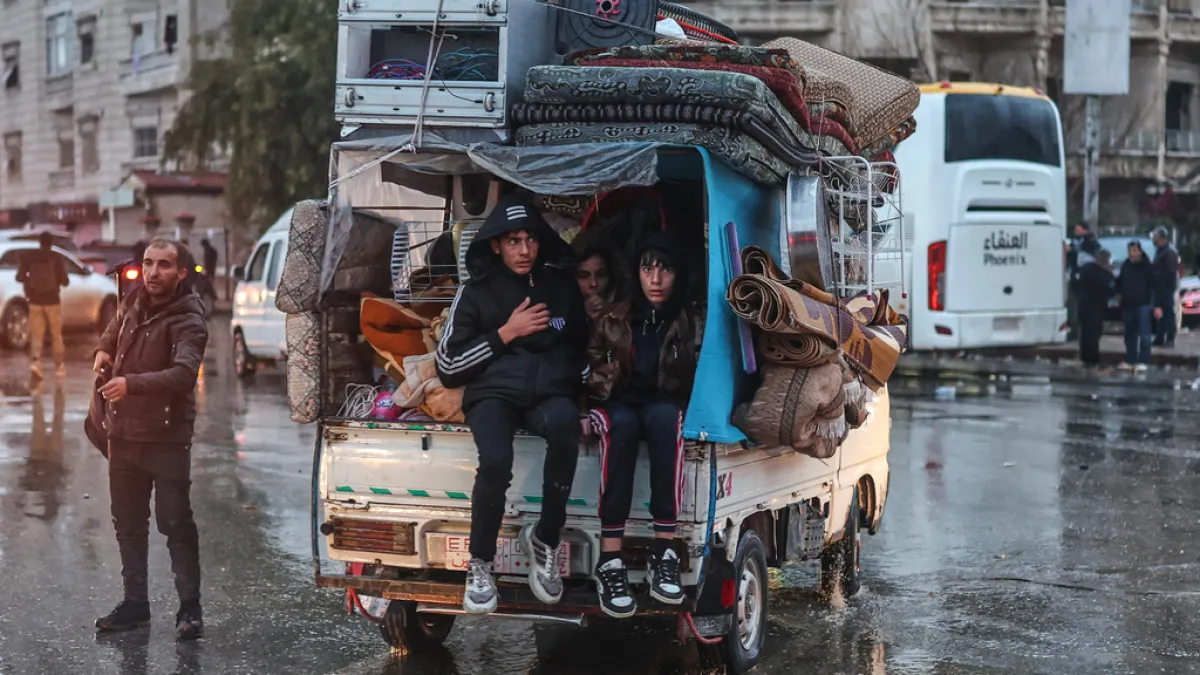
The Syrian army is locked in intense fighting in Aleppo after Kurdish-led Syrian Democratic Forces (SDF) fighters refused to withdraw under a ceasefire, as more civilians fled their homes to escape the violence in the northern Syrian city.

Aleppo’s emergency chief Mohammed al-Rajab told Al Jazeera Arabic that 162,000 people have fled fighting in the city’s Ashrafieh and Sheikh Maqsoud neighbourhoods.

Recommended Stories

list of 3 itemsend of list

A Syrian military source has told Al Jazeera Arabic that the army is “making progress” in the Sheikh Maqsoud neighbourhood, the epicentre of the most intense fighting, and now controls 55 percent of the area.

Meanwhile, Syria’s state-run SANA news agency said that the military had arrested several members of the SDF in its latest operations in Sheikh Maqsoud, which the army announced on Friday evening after a deadline for Kurdish fighters to evacuate the area, imposed as part of its temporary ceasefire, expired.

Syria’s Ministry of Defence had declared the ceasefire earlier on Friday, following three days of clashes that erupted after the central government and the SDF failed to implement a deal to fold the latter into the state apparatus.

After some of the fiercest fighting seen since last year’s toppling of Syria’s former leader Bashar al-Assad, Damascus presented Kurdish fighters a six-hour window to withdraw to their semi-autonomous region in the northeast of the country in a bid to end their longstanding control over parts of Aleppo.

But Kurdish councils that run the city’s Sheikh Maqsoud and Ashrafieh districts rejected any “surrender” and pledged to defend areas that they have run since the early days of the Syria’s war, which erupted in 2011.

Syria’s army then warned it would renew strikes on Sheikh Maqsoud and urged residents to evacuate through a humanitarian corridor, publishing five maps highlighting targets, with strikes beginning roughly two hours later.

As violence flared, the SDF posted footage on X showing what it said was the aftermath of artillery and drone attacks on Khaled Fajr Hospital in Sheikh Maqsoud, accusing “factions and militias affiliated with the Damascus government” of “a clear war crime”.

A Defence Ministry statement cited by the state-run news agency SANA said the hospital was a weapons depot.

In another post on X, the SDF said that government militias were attempting to advance on the neighbourhood with tanks, encountering “fierce and ongoing resistance by our forces”.

Later, the Syrian army said three of its soldiers had been killed and 12 injured in SDF attacks on its positions in Aleppo.

It also claimed that Kurdish fighters in the neighbourhood had killed more than 10 Kurdish youths who refused to take up arms with them, then burned their bodies to intimidate other residents.

The SDF said on X that the claims were part of the Syrian government’s “policy of lies and disinformation”.

At least 22 people have been killed and 173 others wounded in Aleppo since the fighting broke out on Tuesday, the worst violence in the city since Syria’s new authorities took power after toppling Bashar al-Assad a year ago.

The director of Syria’s civil defence told state media that 159,000 people had been displaced by fighting in Aleppo.

Mutual distrust

The violence in Aleppo has brought into focus one of the main faultlines in Syria, with powerful Kurdish forces that control swaths of Syria’s oil-rich northeast resisting integration efforts by Syria’s President Ahmed al-Sharaa’s government.

The agreement between the SDF and Damascus was struck in March last year, with the former supposed to integrate with the Syrian Defence Ministry by the end of 2025, ​but Syrian authorities say there has been little progress since.

Sheikh Maqsoud and Ashrafieh have remained under the control of Kurdish units linked to the SDF, despite the group’s assertion that it withdrew its fighters from Aleppo last year, leaving Kurdish neighbourhoods in the hands of the Kurdish Asayish police.

Marwan Bishara, senior political analyst with Al Jazeera, said there were significant gaps between the two sides, particularly when it came to integrating the Kurdish fighters into the army as individuals or groups.

“What would you do with the thousands of female fighters that are now part and parcel, of the Kurdish forces? Would they join the Syrian army? How would that work out?” said Bishara.

“The Kurdish are sceptical of the army and how it is formed in Damascus, and of the central government and its intentions. While … the central government is, of course, wary of and sceptical that the Kurds want to join as Syrians in a strong united country,” he added.

Turkiye refrains from military action

In the midst of the clashes, Syria’s President al-Sharaa spoke by phone with Turkish leader Recep Tayyip Erdogan, saying he was determined to “end the illegal armed presence” in Aleppo, according to a Syrian presidency statement.

Turkiye, which shares a 900-kilometre (550-mile) border with Syria, views the SDF as an extension of the Kurdistan Workers’ Party (PKK), which waged a four-decade armed struggle against the Turkish state, and has warned of military action if the integration agreement is not honoured.

Turkiye’s Defence Minister Yasar Guler welcomed the Syrian government operation, saying that “we view Syria’s security as our own security and … we support Syria’s fight against terrorist organisations”.

Omer Ozkizilcik, nonresident senior fellow for the Syria Project in the Atlantic Council, told Al Jazeera that Turkiye had been intending to launch an operation against SDF forces in Syria months ago, but had refrained at the request of the Syrian government.

Elham Ahmad, a senior official in the Kurdish administration in Syria’s northeast, accused Syria’s authorities of “choosing the path of war” by attacking Kurdish districts in Aleppo and of trying to end deals between the two sides.

Alarm spreads

Al-Sharaa spoke with Iraqi Kurdish leader Masoud Barzani on Friday, affirming that the Kurds were “a fundamental part of the Syrian national fabric”, the Syrian presidency said.

The former al-Qaeda commander has repeatedly pledged to protect minorities, but government-aligned fighters have killed hundreds of Alawites and Druze over the last year, spreading alarm in minority communities.

A spokesperson for the United Nations Secretary-General Antonio Guterres expressed “grave concern” over the ongoing violence in Aleppo, despite efforts to de-escalate the situation.

“We call on all parties in Syria to show flexibility and return to negotiations to ensure the full implementation of the March 10 agreement,” said Stephane Dujarric.

France’s Ministry of Foreign Affairs said it was working with the United States, which has long been a key backer of the SDF, particularly during its fight to oust ISIL (ISIS) from Syria, to de-escalate.

French President Emmanuel Macron urged al-Sharaa on Thursday to “exercise restraint”, reiterating his country’s desire to see “a united Syria where all segments of Syrian society are represented and protected”.

Source link

Russia’s Oreshnik Intermediate Range Ballistic Missile Used In Large-Scale Attack On Ukraine

A second example of Russia’s Oreshnik intermediate-range ballistic missile (IRBM) has been fired against Ukraine. Moscow claimed the overnight strike was in retaliation for a supposed attempted Ukrainian drone attack on President Vladimir Putin’s residence late last month — an allegation Kyiv and Washington have said is false. Ukrainian authorities described Moscow’s justification for the latest Oreshnik strike, part of a massive overnight missile and drone barrage, as “absurd.”

The Oreshnik (Russian for hazel tree) missile first emerged in public after it was used in what was then an unprecedented attack on Ukraine in November of 2024. The Pentagon states that the Oreshnik is based on the RS-26, a mysterious strategic weapon system, the development of which was supposedly halted in 2018. There was also an unverified report of a failed Oreshnik launch directed at Ukraine in February 2025, but this was subsequently refuted by Ukrainian authorities.

The Security Service of Ukraine (SBU) has demonstrated fragments of the “Oreshnik” weapon that Russia used to attack the Lviv region. pic.twitter.com/xAkQvnZz00

— Clash Report (@clashreport) January 9, 2026

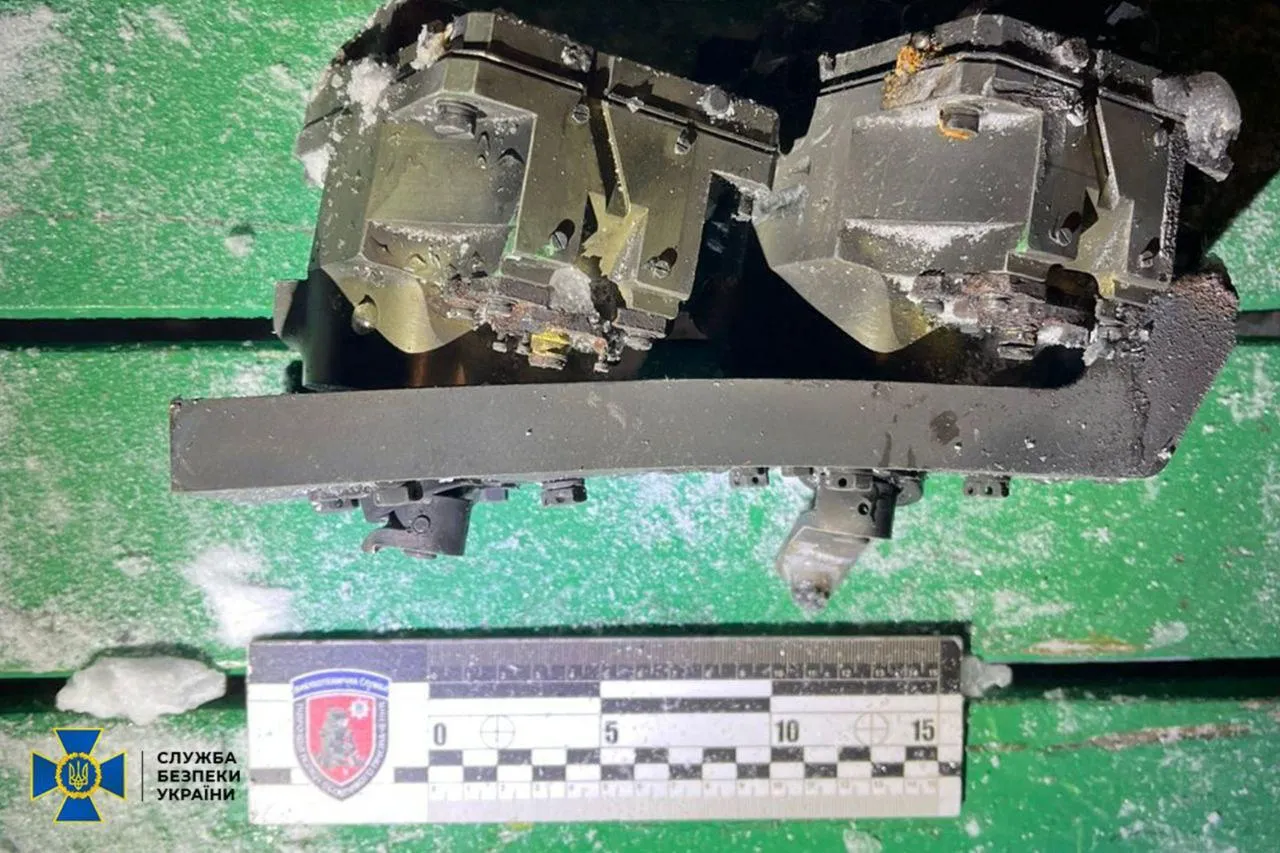
Ukrainian Security Service has demonstrated the pieces of Oreshnik that Russia used to attack Lviv region.

The parts found so far:
▪️ stabilization and guidance unit (the missile’s “brains”, essentially);
▪️ spare parts from the engine installation;
▪️ fragments of the… https://t.co/Tk9XwcSfAf pic.twitter.com/KHsMvoE6tE

— Anton Gerashchenko (@Gerashchenko_en) January 9, 2026

Late last month, the Oreshnik was in the news again, after Belarus announced the deployment of the missile on its territory, which you can read more about here. On this latest occasion, however, it appears that the IRBM was launched from the Kapustin Yar test range in Russia.

Ukraine confirmed the overnight Oreshnik strike, saying it took place in the west of the country, close to the Polish border. Videos posted to social media confirm that the Oreshnik’s target was in the Lviv region; the footage included the telltale signs of glowing reentry vehicles plunging toward the ground.

Russian forces struck Europe’s largest Bilche-Volytsko-Uherske UGS in Lviv region with Oreshnik missile. Target: (690-890m) gas storage in faulted geology. Goal: induce seismic disruption along faults to compromise integrity, following prior hits on surface infrastructure. pic.twitter.com/ox06EIxloW

— Rybar in English (@rybar_en) January 9, 2026

They just fired an Oreshnik missile for the first time at Lviv 🇺🇦 🤬 most likely coming from Belarus with the speed it reached us.

Fucking animals using cluster munitions 🤬 pic.twitter.com/7VLUqvm517

— Richard Woodruff 🇺🇦 (@frontlinekit) January 8, 2026

Big fire illuminates night skies in Lviv region after Russian Oreshnik strike of Europe’s largest underground gas storage facility. I saw such skies as child in Western Ukraine after gas pipeline explosion dozens kilometers away. There are reports of big gas pressure drop in Lviv… pic.twitter.com/8ofd11pxpB

— Ivan Katchanovski (@I_Katchanovski) January 8, 2026

Unverified social media reports suggested the target may have been a large underground gas storage facility, something that at least one Ukrainian official denied, saying the missile struck a residential area. However, the local governor of the Lviv region confirmed that Russian strikes had damaged a critical infrastructure facility there.

The largest gas storage facility in Ukraine and one of the largest in Europe was targeted during last nights strikes.

Bilche–Volitsko–Ugerskoye is located about 10 kilometres north of Stryi, Lvov region. pic.twitter.com/a7c09rjOSB

— ayden (@squatsons) March 29, 2024

Ukraine’s foreign minister said the use of an Oreshnik missile so close to the EU and NATO border posed a “grave threat” to European security and called on partners to increase pressure on Moscow.

Initial reports suggest that the Oreshnik used in last night’s strike may have carried inert warheads, as was apparently the case with the example fired in November 2024. On that occasion, Ukrainian authorities said that the missile carried six warheads, each containing six more sub-payloads, but that these contained no explosives.

Debris from the Oreshnik missiles in a photo published by Ukraine’s Security Service. SBU

It’s possible the missile was used in an attempt to penetrate the underground storage facility and damage it without the use of a large explosive warhead, instead having the reentry vehicles burrow deep into the ground upon impact at very high-speed.

While the Oreshnik is nuclear-capable, the potential value of a conventionally armed intercontinental ballistic missile (ICBM), which some countries may be looking at fielding if they haven’t already, is something that we discussed in detail in this previous story.

Dmitry Stefanovich, a research fellow at the Russian Center for International Security, IMEMO RAS, noted that the latest Oreshnik strike differed from the first in that it was combined with a large number of other ground- and sea-launched long-range weapons, and said that it was still unclear whether the United States was notified of the attack in advance, via the Nuclear Risk Reduction Center (NRRC), as was the case when it was first employed.

Other nuclear analysts suggest that the United States did receive prior notification. We have approached U.S. authorities for clarification on that point.

It appears that Russia notified the United States about the launch, just as it did in November 2024. The 1988 ballistic missile notification agreement requires notification at least 24 hours in advance. https://t.co/gfppS5H8A7

— Pavel Podvig (@russianforces) January 9, 2026

As for the claim that the IRBM strike was in retaliation for an attempted drone strike against Putin himself, Stefanovich was less convinced:

“In general, the question remains that if Russia is engaged in the demilitarization of Ukraine and has been conducting a special military operation for many years, why link massive strikes to ‘terrorist attacks’? Of course, it takes time to accumulate weapons and find targets, but such rhetoric does not look very solid.”

So, some thoughts on the second Oreshnik battle use.

Overall it does look impressive, but the results are still unclear. I wonder how many Oreshniks have already been made. That way, several missiles could have been used, by the way assessing the fratricide threat can be useful…

— Dmitry Stefanovich (@KomissarWhipla) January 9, 2026

Putin has repeatedly invoked the Oreshnik in recent months as a threat against Ukraine and the West, especially since its range — estimated at up to 3,400 miles — is enough to reach every NATO capital city in Europe from within Russian territory.

Putin has made some extravagant claims about the Oreshnik in the past, pointing to its supposed invulnerability to interception.

The Russian leader has described the Oreshnik as “a ballistic missile equipped with non-nuclear hypersonic technology” capable of reaching a peak speed of Mach 10. “The kinetic impact is powerful, like a meteorite falling,” the Russian president has also said.

In this pool photograph distributed by the Russian state agency Sputnik, Russia's President Vladimir Putin meets with military chiefs in Moscow on November 22, 2024. Russian President Vladimir Putin said on November 22, 2024 that Moscow would carry out more tests of the hypersonic Oreshnik ballistic missile in "combat conditions," a day after firing one on Ukraine. (Photo by Gavriil GRIGOROV / POOL / AFP) (Photo by GAVRIIL GRIGOROV/POOL/AFP via Getty Images)
Russian President Vladimir Putin meets with military chiefs in Moscow on November 22, 2024, a day after firing the first Oreshnik missile against Ukraine. Photo by Gavriil GRIGOROV / POOL / AFP GAVRIIL GRIGOROV

As we have discussed in the past, Russian claims of hypersonic performance for the Oreshnik are factual, but also a bit misleading in a modern context. There is no evidence of true hypersonic boost-glide vehicles, for example, but larger ballistic missiles, even ones with traditional designs, do reach hypersonic speeds, typically defined as anything above Mach 5, in the terminal stage of their flight.

As for the claimed attempted Ukrainian attack on Putin’s residence, while this is now being used to frame the latest use of the Oreshnik, Ukraine and U.S. national security officials have denied that attempted attack. Furthermore, a CIA assessment also found no evidence of it having happened.

More significant is likely the fact that the latest Oreshnik strike came just days after Ukraine’s European allies agreed on key elements of postwar security guarantees, which would come into play in the event of a ceasefire with Russia. The agreement included a declaration that some of these allies would be ready to deploy troops to Ukraine after a peace deal.

This very significant new commitment regarding troops has been under discussion for months. The Kremlin has repeatedly said it will categorically oppose any NATO soldiers being based on Ukrainian soil.

BELARUS - DECEMBER 30: (----EDITORIAL USE ONLY â" MANDATORY CREDIT - 'RUSSIAN DEFENSE MINISTRY / HANDOUT' - NO MARKETING NO ADVERTISING CAMPAIGNS - DISTRIBUTED AS A SERVICE TO CLIENTS----) A screen grab from a video shows installation of the Oreshnik missile system on December 30, 2025 in Belarus. Belarus has placed a military unit equipped with the Russian-made Oreshnik mobile ground-based missile system on combat duty, according to official information. The unitâs launch, communications, security, and technical crews completed additional training before becoming operational. Belarusian President Alexander Lukashenko has previously said that up to 10 Oreshnik ballistic missile systems could be deployed in the country. (Photo by Russian Defense Ministry/Anadolu via Getty Images)
A screencap from a Russian Ministry of Defense video shows the deployment of components of the Oreshnik missile system in Belarus on December 30, 2025. Russian Ministry of Defense screencap

Overall, the use of a single Oreshnik against Ukraine overnight appears to be more of a symbolic sideshow, engineered to create alarm in the West (as well as in Ukraine), rather than deliver a specific effect on a high-priority target.

After all, the IRBM was just one part of a much larger barrage launched against targets across the country last night. This is said to have involved 242 drones, 13 other ballistic missiles, and 22 cruise missiles, based on Ukrainian Air Force figures.

Russian forces carried out particularly heavy strikes on Kyiv, hitting several districts of the Ukrainian capital.

According to Ukrainian authorities, at least four people were killed in the region, and another 19 were injured. Meanwhile, at least five rescue workers were injured while responding to the attacks, Ukraine’s security service said.

The Kyiv mayor, Vitali Klitschko, said half of the capital’s apartment blocks were left without heating after the Russian strikes.

KYIV, UKRAINE - JANUARY 09: A view at the site of a Russian drone attack in Kyiv, Ukraine on January 09, 2026. According to the statement made by Kyiv mayor Vitalii Klychko, 4 people Were killed and 19 wounded. Among those killed was the paramedic who arrived on scene of the attack when the second wave of the attack took place. According to the statement published by the Ukrainian Airforce, 242 UAV, 22 cruise and 13 ballistic missiles were used to target Ukraine tonight, also, an intermediate range ballistic missile was used to target Lviv region in the West of Ukraine. (Photo by Danylo Antoniuk/Anadolu via Getty Images)
The site of a Russian drone attack in Kyiv, Ukraine, on January 9, 2026. Photo by Danylo Antoniuk/Anadolu via Getty Images

Qatar’s Embassy in Kyiv was damaged during an overnight Russian missile-drone strike.

Russian strikes left around half a million households without power amid emergency outages. pic.twitter.com/XAJfzn94uP

— Clash Report (@clashreport) January 9, 2026

Overall, the use of a single Oreshnik IRBM without warheads and the possibility that nothing of military value was hit, suggests that the missile was primarily used as an instrument of intimidation. It’s also unclear how many of these expensive IRBMs have actually been manufactured at this point, and whether Russia would even be able to fire multiple examples in any kind of sustained campaign. According to an assessment from the U.K. Ministry of Defense, Russia currently has only a handful of Oreshniks.

U.K. Ministry of Defense

That said, the Kremlin clearly has reasons enough to lash out at Ukraine and its allies at this point, and has opted for this type of missile-based signaling. At this stage, it remains very much questionable whether it will have the desired coercive effect.

Contact the author: thomas@thewarzone.com

Thomas is a defense writer and editor with over 20 years of experience covering military aerospace topics and conflicts. He’s written a number of books, edited many more, and has contributed to many of the world’s leading aviation publications. Before joining The War Zone in 2020, he was the editor of AirForces Monthly.


Source link

Iran Threatens Protesters With Death

On the 13th day of increasingly tense protests against Iran’s leadership, Crown Prince Reza Pahlavi urged U.S. President Donald Trump to intervene on behalf of the anti-government demonstrators. His comments came a short while after Supreme Leader Ayatollah Ali Khamenei finally addressed the unrest with a defiant tone, blaming Trump for sparking the protests and suggesting that crackdowns will become more severe. Meanwhile, an Iranian prosecutor is threatening protestors with death. More on that later in this story.

Amid all the rhetoric, the ferocity of the unrest has reportedly compelled the U.S. intelligence community to rethink its initial assessment of the situation, recognizing that it is more serious than initially thought. Meanwhile, observers say the death toll has increased as millions of Iranians again took to the streets across the nation. Protestors are blaming a regime crackdown, while Iranian security forces say they have been the subject of attacks by unruly mobs.

As we previously noted, the protests began Dec. 28. 2025, sparked by anger over rising prices, devalued currency, a devastating drought, and brutal government crackdowns. You can catch up with our previous coverage of the unfolding events here.

Video emerging on social media shows large crowds continuing demonstrations throughout the country, with some showing damaged buildings in the aftermath of previous protests. However, getting a full picture of what is unfolding remains a challenge given the ongoing shutdown of internet and phone service in Iran.

Despite the violence committed by the Iranian regime and the internet outage across the country the people in Iran are unfazed and continue to fight. Tehran tonight. pic.twitter.com/QyfFvGhclU

— (((Tendar))) (@Tendar) January 9, 2026

🚨 IRAN RISES UP

Despite the massacre we witnessed last night, anti-Islamic Iranians are once again out. Day 13 of the uprising.

This one is in Zahedan. pic.twitter.com/GsSqQx6hIQ

— Tousi TV (@TousiTVOfficial) January 9, 2026

Pahlavi, whose fatally ill father, Mohammad Reza Pahlavi, fled Iran ahead of the 1979 Islamic revolution, is now living in exile in the U.S. He called upon Trump to back up tough words with actions. As we have pointed out before, the American leader has said the Khamenei regime is “going to have to pay hell” if it starts killing protestors in large numbers.

“Mr. President, this is an urgent and immediate call for your attention, support, and action,” Pahlavi extolled on X. “Last night you saw the millions of brave Iranians in the streets facing down live bullets. Today, they are facing not just bullets but a total communications blackout. No Internet. No landlines. Ali Khamenei, fearing the end of his criminal regime at the hands of the people and with the help of your powerful promise to support the protesters, has threatened the people on the streets with a brutal crackdown.”

“I have called the people to the streets to fight for their freedom and to overwhelm the security forces with sheer numbers. Last night they did that,” Pahlavi continued. “Your threat to this criminal regime has also kept the regime’s thugs at bay. But time is of the essence. The people will be on the streets again in an hour. I am asking you to help. You have proven and I know you are a man of peace and a man of your word. Please be prepared to intervene to help the people of Iran.”

Mr. President, this is an urgent and immediate call for your attention, support, and action. Last night you saw the millions of brave Iranians in the streets facing down live bullets. Today, they are facing not just bullets but a total communications blackout. No Internet. No…

— Reza Pahlavi (@PahlaviReza) January 9, 2026

Asked for a response from the Trump administration, the White House referred us to the president’s remarks yesterday, which can be seen in the following video.

#Trump says: “I have let [#Iran‘s leaders] know that if they start killing people … we’re going to hit them very hard. … [T]hey know and they’ve been told very strongly … that if they do that, they’re going to have to pay hell”. pic.twitter.com/Uppnejnuvt

— Kyle Orton (@KyleWOrton) January 8, 2026

In his speech before supporters in Qom province, Khamenei took aim at Trump and other outside “hirelings” for fanning the flames.

Trump “made an irrelevant and provocative statement declaring that, should the government of Iran take certain actions, he would move against it,” Khamenei complained. “Such remarks have emboldened rioters and elements hostile to the nation. Were he truly capable of governing his own country, he would attend to its numerous internal crises.”

The Iranian leader then intimated that those continuing to protest will be met with a harsh response.

“Certain people accept and act according to his wishes, engaging in acts of sabotage and arson merely to please” Trump, Khamenei continued. “It must be clearly understood that the Islamic Republic was established through the sacrifice of hundreds of thousands of honorable individuals, and those who opposed it have failed. The Islamic Republic will not be overthrown. Do not serve foreign powers, whoever you may be, if you become an agent of foreigners and act on their behalf, the Iranian nation will disown you, and the Islamic establishment will likewise reject you as for that arrogant man who sits in judgment over the entire world.”

Full Speech: Khamenei’s 1st Reaction Amid Iran Protests, Trump Regime Change Threat, Israel War Plan


Tehran’s prosecutor took an even harsher stance, threatening protestors with death.

“We will show no leniency toward instigators of unrest,” said Ali Salehi. “They will be charged with Fasad fil ard (‘spreading mischief on earth’), which carries the death penalty.”

BREAKING:

Tehran’s chief prosecutor said the Islamic regime will execute anti-regime protesters

“We will show no leniency toward instigators of unrest. They will be charged with Fasad fil ard (‘spreading mischief on earth’), which carries the death penalty,” said Ali Salehi. pic.twitter.com/mSjUAeLlFC

— Visegrád 24 (@visegrad24) January 9, 2026

So far, “at least 51 protesters, including nine children under the age of 18, have been killed and hundreds more injured in the first 13 days of the new round of nationwide protests in Iran,” the Norway-based Iran Human Rights NGO (IHRNGO) reported on Friday. “IHRNGO has also received reports of dozens more protesters being killed in Tehran, Mashhad, Karaj (Fardis) and Hamedan. These reports are currently being verified and not included in the present figures.”

A video shows multiple bodies on hospital floor in Tehran as the Islamic Republic continues its campaign of repression during an internet and telephone blackout. pic.twitter.com/HLTyhrFFzq

— Yashar Ali 🐘 (@yashar) January 9, 2026

There are claims that Iran’s Basij security forces opened fire on protestors in Tehran.

Eyewitness report from Tehran:

“ Last night in central Tehran, around 8–9 p.m., riot police were dispersing people with tear gas and pellet guns. But when we moved past Enghelab, toward Sharif University and Behboudi, there were no officers there; the riot units had all pulled… https://t.co/i2hi9ApA4e

— ثنا ابراهیمی | Sana Ebrahimi (@__Injaneb96) January 9, 2026

Meanwhile, Iran’s state media has released a video it claims shows protestors shooting security forces in Kermanshah. Iranian officials said security personnel were killed in Tehran as well.

“After unrest in various cities and locations, the capital was also affected by the brutal attacks of armed terrorism,” the official Iranian Tasnim news agency claimed. “Last night, armed terrorists martyred several personnel of the Greater Tehran Police Intelligence with direct Kalashnikov gunfire.”

Meanwhile, Iranian intelligence is urging residents to turn in those engaging in demonstrations.

As the protests rage on, the idea that they pose a serious challenge to the Khamenei regime is gaining increasing traction in U.S. intelligence circles, Axios reported on Friday.

“Early this week, U.S. intelligence assessed that the protests lacked sufficient energy to challenge the stability of the regime,” U.S. officials told Axios. “But that view is being reassessed in light of recent events.”

Mike Waltz, the U.S. Ambassador to the U.N., said, “America stands with the Iranian people in their quest for basic dignity and freedom.”

The Iranian regime is once again BRUTALIZING its own people instead of listening to them.

As @POTUS has made clear, we are watching!

America stands with the Iranian people in their quest for basic dignity and freedom. https://t.co/FLYLA70sq5

— Ambassador Mike Waltz (@USAmbUN) January 9, 2026

Though Khamenei has vowed not to back down to protestors, a British Member of Parliament suggested some Iranian leaders may be preparing to leave the country.

“We’re also seeing Russian cargo aircraft coming and landing in Tehran, presumably carrying weapons and ammunition, and we’re hearing reports of large amounts of gold leaving Iran,” Tom Tugendhat told parliament. He then asked whether the government could update lawmakers on reports that “suggest that the regime itself is preparing for life after the fall.”

U.K. Minister for the Middle East and North Africa Hamish Falconer said he was “not in a position to give a detailed update” on the reports.

The War Zone cannot independently verify Tugendhat’s claim.

In the UK House of Commons, Tom Tugendhat, the Conservative MP and Chair of the Foreign Affairs Committee, asked Hamish Falconer, the Labour MP for and Minister for the Middle East and North Africa, to respond to reports that Russian cargo aircraft have recently landed in Iran… pic.twitter.com/XkKjRUiAI9

— Ounces (@OuncesApp) January 8, 2026

Yesterday, we noted that the protests are raging as Israeli Prime Minister Benjamin Netanyahu ordered new plans to attack Iran over concerns about its nuclear weapons ambitions and the rebuilding of the country’s military capabilities. The Israeli leader’s statement came days before Trump’s latest threat to take action against Iran.

Though no military movements by either Jerusalem or Washington appear imminent, these threats, as we reported yesterday, raise the question of whether either would risk an attack that could potentially galvanize the population behind the Ayatollah. A senior Israeli Defense Forces (IDF) official told us that these concerns are baked into any attack plans.

“If Israel were to strike Iran as an exploitation of an opportunity, namely a moment of Iranian weakness, such a move would, in my view, take place only with full coordination, cooperation, and backing from President Trump,” said the official, offering an unclassified assessment of the situation. “Israel, as I understand it, would not act independently in such a scenario.”

US President Donald Trump (R) greets Israeli Prime Minister Benjamin Netanyahu (L) upon arrival at Trump's Mar-a-Lago residence in Palm Beach, Florida, on December 29, 2025. (Photo by Jim WATSON / AFP via Getty Images)
US President Donald Trump (R) and Israeli Prime Minister Benjamin Netanyahu (L) would likely act in concert for any attack on Iran, a senior IDF official tells us. (Photo by Jim WATSON / AFP) JIM WATSON

“Should Trump decide that the time is right and that it aligns with his own interests to confront Iran, he would likely give a green light for an Israeli strike,” the official added, speaking on condition of anonymity to discuss operational details. “There is a relatively high likelihood that Trump could pursue such a course, particularly in light of Khamenei’s repeated public disparagement of him, Trump’s explicit warnings to the Iranian leadership against harming protesting civilians, and the fact that the Iranian regime has now begun violently suppressing and killing protesters.”

Regardless of what actions will be taken in the future, the official concurred with Khamenei that outside influences have already been at work during these protests.

“It is reasonable to assume that covert operatives, alongside recruited and motivated Iranian citizens, are helping to organize, lead, and sustain the protests and the broader struggle against this totalitarian system,” he posited.

Update: 4:30 PM Eastern –

During a meeting with oil industry officials Friday afternoon, Trump repeated his stance that he could attack Iran if the crackdowns on protesters get out of hand.

“Iran is in big trouble,” Trump said. “It looks to me that the people are taking over certain cities that nobody thought were really possible just a few weeks ago. We’re watching the situation very carefully. I’ve made the statement very strongly that if they start killing people like they have in the past, we will get involved. We’ll be hitting them very hard where it hurts. And that doesn’t mean boots on the ground, but it means hitting them very, very hard where it hurts. So we don’t want that to happen.”

Trump – “Iran’s in big trouble. It looks to me that the people are taking over certain cities that nobody thought were really possible… We’re watching… I made the statement very strongly that if they start killing people like they have in the past, we will get involved.” pic.twitter.com/GoA5zWEAkN

— Emily Schrader – אמילי שריידר امیلی شریدر (@emilykschrader) January 9, 2026

One site of the ongoing protests has been geolocated to Tehran.

Meanwhile, it appears that Iranian anti-regime demonstrators have practically taken over Mashhad, Iran’s second-largest city. The regime’s security forces have retreated to just a few government buildings and don’t move from there.

BREAKING:

The Iranian anti-regime protesters have practically taken over Iran’s 2nd-largest city Mashhad.

The regime’s security forces have retreated to just a few government buildings and don’t move from there. pic.twitter.com/DEiEvr0kYc

— Visegrád 24 (@visegrad24) January 9, 2026

Contact the author: howard@thewarzone.com

Howard is a Senior Staff Writer for The War Zone, and a former Senior Managing Editor for Military Times. Prior to this, he covered military affairs for the Tampa Bay Times as a Senior Writer. Howard’s work has appeared in various publications including Yahoo News, RealClearDefense, and Air Force Times.


Source link

Trump seeks $100bn for Venezuela oil, but Exxon boss says country ‘uninvestable’

US President Donald Trump has asked for at least $100bn (£75bn) in oil industry spending for Venezuela, but received a lukewarm response at the White House as one executive warned the South American country was currently “un-investable”.

Bosses of the biggest US oil firms who attended the meeting acknowledged that Venezuela, sitting on vast energy reserves, represented an enticing opportunity.

But they said significant changes would be needed to make Venezuela an attractive investment. No major financial commitments were immediately forthcoming.

Trump has said he will unleash the South American nation’s oil after US forces seized its leader Nicolas Maduro in a 3 January raid on its capital.

“One of the things the United States gets out of this will be even lower energy prices,” Trump said in Friday’s meeting in the White House.

But the oil bosses present expressed caution.

Exxon’s chief executive Darren Woods said: “We have had our assets seized there twice and so you can imagine to re-enter a third time would require some pretty significant changes from what we’ve historically seen and what is currently the state.”

“Today it’s uninvestable.”

Venezuela has had a complicated relationship with international oil firms since oil was discovered in its territory more than 100 years ago.

Chevron is the last remaining major American oil firm still operating in the country.

A handful of companies from other countries, including Spain’s Repsol and Italy’s Eni, both of which were represented at the White House meeting, are also active.

Trump said his administration would decide which firms would be allowed to operate.

“You’re dealing with us directly. You’re not dealing with Venezuela at all. We don’t want you to deal with Venezuela,” he said.

The White House has said it is working to “selectively” roll back US sanctions that have restricted sales of Venezuelan oil.

Officials say they have been coordinating with interim authorities in the country, which is currently led by Maduro’s former second-in-command, Vice-President Delcy Rodríguez.

But they have also made clear they intend to exert control over the sales, as a way to maintain leverage over Rodríguez’s government.

The US this week has seized several oil tankers carrying sanctioned crude. American officials have said they are working to set up a sales process, which would deposit money raised into US-controlled accounts.

“We are open for business,” Trump said.

Venezuela’s oil production has been hit in recent decades by disinvestment and mismanagement – as well as US sanctions. At roughly one million barrels per day, the country accounts for less than 1% of global supply.

Chevron, which accounts for about a fifth of the country’s output, said it expected to bolster its production, building on its current presence, while Exxon said it was working to send in a technical team to assess the situation in the coming weeks.

Repsol, which currently boasts output of about 45,000 barrels per day, said it saw a path to triple its production in Venezuela over the next few years under the right conditions.

Executives at other firms also said Trump’s promises of change would encourage investment and they were hoping to seize the moment.

“We are ready to go to Venezuela,” said Bill Armstrong, who leads an independent oil and gas driller. “In real estate terms, it is prime real estate.”

But analysts say meaningfully increasing production would take significant effort.

“They are being as polite as humanly possible, and being as supportive as they can, without committing actual dollars,” said David Goldwyn, president of the energy consultancy Goldwyn Global Strategies and former US state department special envoy for international energy affairs.

Exxon and Shell are “not going to invest single-digit billions of dollars, much less tens of billions of dollars”, without physical security, legal certainty and a competitive fiscal framework, Goldwyn said.

“It’s not really welcome from an industry point of view,” he said. “The conditions are just not right.”

While smaller companies might be more eager to jump in and help boost Venezuela’s oil production over the next year, he said those investments would likely hover in the $50m range – far from the “fantastical” $100bn figure that Trump has floated.

Rystad Energy estimates it would take $8bn to $9bn in new investments per year for production to triple by 2040.

Trump’s suggested $100bn of investment into Venezuela could have a major impact – if it were to materialise, said the firm’s chief economist, Claudio Galimberti.

He said companies would only be likely to invest on that scale with subsidies – and political stability.

“It’s going to be difficult to see big commitments before we have a fully stabilised political situation and that is anybody’s guess when that happens,” he said.

Additional reporting by Danielle Kaye

Source link

Let’s Talk About All The Things We Did And Didn’t Cover This Week

Welcome to Bunker Talk. This is a weekend open discussion post for the best commenting crew on the net, in which we can chat about all the stuff that went on this week that we didn’t cover. We can also talk about the stuff we did or whatever else grabs your interest. In other words, it’s an off-topic thread.

This week’s second caption reads:

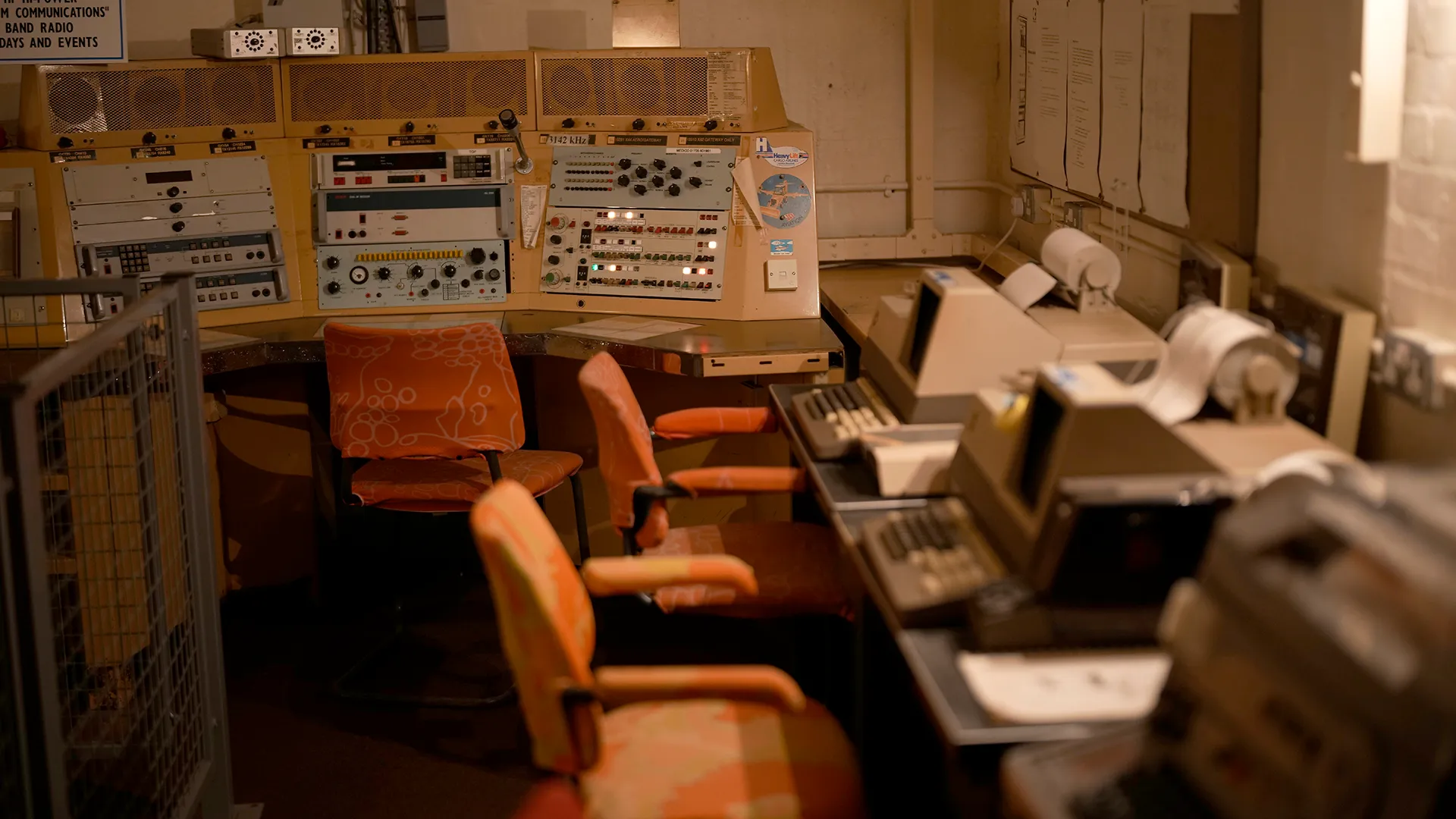
NANTWICH, ENGLAND – MAY 24: A general view inside the former RAF Hack Green secret nuclear bunker on May 24, 2023 in Nantwich, England. Hack Green played a central role in the defence of Britain for almost sixty years. It was chosen during WW2 to protect the land between Birmingham and Liverpool from hostile attack and as a location for the new RADAR equipment. The bunker went on to be used for shelter and protection during the Cold War. As relations between East and West thawed many of the UK’s nuclear bunkers were sold off. The Secret Bunker is now privately owned by the Siebert family and is run as a museum trust. (Photo by Christopher Furlong/Getty Images)

Also, a reminder:

Prime Directives!

  • If you want to talk politics, do so respectfully and know that there’s always somebody that isn’t going to agree with you. 
  • If you have political differences, hash it out respectfully, stick to the facts, and no childish name-calling or personal attacks of any kind. If you can’t handle yourself in that manner, then please, discuss virtually anything else.
  • No drive-by garbage political memes. No conspiracy theory rants. Links to crackpot sites will be axed, too. Trolling and shitposting will not be tolerated. No obsessive behavior about other users. Just don’t interact with folks you don’t like. 
  • Do not be a sucker and feed trolls! That’s as much on you as on them. Use the mute button if you don’t like what you see.  
  • So unless you have something of quality to say, know how to treat people with respect, understand that everyone isn’t going to subscribe to your exact same worldview, and have come to terms with the reality that there is no perfect solution when it comes to moderation of a community like this, it’s probably best to just move on. 
  • Finally, as always, report offenders, please. This doesn’t mean reporting people who don’t share your political views, but we really need your help in this regard.

Tyler’s passion is the study of military technology, strategy, and foreign policy and he has fostered a dominant voice on those topics in the defense media space. He was the creator of the hugely popular defense site Foxtrot Alpha before developing The War Zone.


Source link

X could face ban in UK over deepfakes, minister says

Liv McMahonand

Laura Cress,Technology reporters

Watch: Backlash against Elon Musk’s Grok AI explained

Technology Secretary Liz Kendall says she would back regulator Ofcom if it blocks UK access to Elon Musk’s social media site X for failing to comply with online safety laws.

Ofcom says it is urgently deciding what to do about X’s artificial intelligence (AI) chatbot Grok, which digitally undressed people without their consent when tagged beneath images posted on the platform. X has now limited the use of this image function to those who pay a monthly fee.

But Downing Street said the change was “insulting” to victims of sexual violence.

Musk said on X the UK government “want any excuse for censorship” as he replied to a post questioning why other AI platforms were not being looked at.

Kendall said: “Sexually manipulating images of women and children is despicable and abhorrent.

She added: “I, and more importantly the public, would expect to see Ofcom update on next steps in days not weeks.”

She said the Online Safety Act “includes the power to block services from being accessed in the UK, if they refuse to comply with UK law” and “if Ofcom decide to use those powers they will have our full support”.

The BBC has approached X for comment.

An Ofcom spokesperson said: “We urgently made contact [with X] on Monday and set a firm deadline of today [Friday] to explain themselves, to which we have received a response.”

“We’re now undertaking an expedited assessment as a matter of urgency and will provide further updates shortly.”

Ofcom’s powers under the Online Safety Act include being able to seek a court order to prevent third parties from helping X raise money or be accessed in the UK – should the firm refuse to comply.

These so-called business disruption measures remain largely untested.

The use of Grok to generate non-consensual sexualised images has been condemned by politicians on all sides, with Prime Minister Sir Keir Starmer calling it “disgraceful” and “disgusting”.

Reform UK leader Nigel Farage said it was “horrible in every way” and that X “needs to go further” than the changes it had made to Grok earlier on Friday.

But he said the idea of banning X in the UK was “frankly appalling” and an attack on free speech.

The Liberal Democrats have called for access to X to be temporarily restricted in the UK while the social media site was investigated.

‘Humiliated and dehumanised’

Grok is a free tool which users can tag directly in posts or replies under other users’ posts to ask it for a particular response.

The tool can still edit images on X if accessed through other areas of the platform, such as via its in-built “edit image” function, or on its separate app and website.

Many requests have been made asking it to edit images of women to show them in bikinis or little clothing – something those subject to such requests have told the BBC left them feeling “humiliated” and “dehumanised“.

However as of Friday morning, Grok has told users asking it to alter images uploaded to X that “image generation and editing are currently limited to paying subscribers”, adding users “can subscribe to unlock these features”.

Some posts on the platform seen by BBC News suggest only those with a blue tick “verified” mark – exclusive to X’s paid subscriber tier – were able to successfully request image edits to Grok.

Dr Daisy Dixon, a lecturer in philosophy at Cardiff University and female X user who said she had seen an increase in people using Grok to undress her, welcomed the change but said it felt “like a sticking plaster”.

“Grok needs to be totally redesigned and have built-in ethical guardrails to prevent this from ever happening again,” she told the BBC.

“Elon Musk also needs to acknowledge this for what it is – yet another instance of gender-based violation.”

Hannah Swirsky, head of policy at the Internet Watch Foundation, said it “does not undo the harm which has been done”.

“We do not believe it is good enough to simply limit access to a tool which should never have had the capacity to create the kind of imagery we have seen in recent days,” she said.

The charity previously said its analysts had discovered “criminal imagery” of girls aged between 11 and 13 which “appeared to have been created” using Grok.

A mocked-up image of the leaked WhatsApp messages from Labour MPs, with identities redacted

A mocked-up image of the leaked WhatsApp messages from Labour MPs, with identities redacted

Labour MPs are increasingly unhappy with the party’s use of X to get its political messages out.

Leaked messages from the Parliamentary Labour Party’s WhatsApp group, used to post announcements for backbench Labour MPs to share on social media, show at least 13 Labour MPs have called on the government to stop using the platform.

The messages, first reported by Politics Home and seen by BBC News, show Labour MPs calling on the government to “take a stand” and “put our messages out in other places”.

One MP said: “As some of us have requested since Musk went all fascist, rather than X, our government should start using another platform”.

Another said: “Any images of children (and women) in government comms on X put those children in harms way.”

Earlier on Friday, Downing Street suggested that the government would continue posting on X.

The prime minister’s official spokesperson told reporters changes to the way Grok complied with user requests to edit images on the platform showed X “can move swiftly when it wants to”.

They said it was “abundantly clear that X needs to act and needs to act now”.

“It is time for X to grip this issue, if another media company had billboards in town centres showing unlawful images, it would act immediately to take them down or face public backlash,” they added.

A green promotional banner with black squares and rectangles forming pixels, moving in from the right. The text says: “Tech Decoded: The world’s biggest tech news in your inbox every Monday.”

Source link

Marine XQ-58 Valkyries Will Launch Via Rockets Or Runways

Kratos has confirmed to TWZ that the landing gear-equipped version of its XQ-58 Valkyrie drone being developed for the U.S. Marines will still be able to make rocket-assisted takeoffs from static launchers. This means the new addition to the stealthy Valkyrie family will retain a valuable degree of runway independence, though they will have to touch down on a runway at the end of their sortie. This opens up additional operational possibilities, though there are also tradeoffs.

TWZ had reached out to Kratos yesterday for more details about the CTOL version of the XQ-58. This followed the announcement of a team-up between that company and Northrop Grumman to develop and deliver Valkyrie variants to the U.S. Marine Corps under the Marine Air-Ground Task Force Uncrewed Expeditionary Tactical Aircraft (MUX TACAIR) Collaborative Combat Aircraft (CCA) program. Kratos first disclosed that it was working on a Valkyrie with built-in landing gear last year, and the company now says it is aiming for a first flight early this year.

A previously released rendering of the landing gear-equipped CTOL version of the XQ-58. Kratos

“The initial aircraft for the MUX TACAIR CCA contract will be landing gear version Valkyries, which can take off and land conventionally, or be booster-launched and conventionally landed,” a Kratos spokesperson told us.

When asked if this meant the CTOL Valkyrie would be able to use existing static launchers or if it would require a new launch architecture for boosted takeoffs, that spokesperson also responded: “the same.”

“Unfortunately, [we] cannot share more,” they added when asked for further details about the ongoing development of the CTOL version of the XQ-58, though they did confirm the early 2026 target timeframe for a first flight.

The baseline Valkyrie design, which first flew in 2019, does not have landing gear and is designed to take off via the rocket-assisted method from static launchers. The drone is then recovered via parachute at the end of a sortie.

An XQ-58 seen being launched using the rocket-assisted method. USAF/2nd Lt. Rebecca Abordo
An XQ-58 descends down to the ground via parachute after a sortie. USAF

Before announcing plans for the CTOL version, Kratos had also unveiled a special launch trolley that allows variants without landing gear to take off from traditional runways, though not land back on them.

Kratos Valkyrie Trolley Launch System


Details about the CTOL configuration of the XQ-58 and its comparative capabilities to existing variants remain limited. There have been indications that the landing gear-equipped type may be very similar in many respects to earlier types, which is underscored now by the confirmation that it can still be launched via rocket boosters. Whether or not the CTOL version is larger and, if so, to what degree, is still unknown. That it can make use of existing static launchers would limit how much bigger it could be, both dimensionally and weight-wise. It is also unclear if the parachute recovery system could be fitted, if desired.

“You’ll be able to do a conventional takeoff and land with retractable gear,” Steve Fendley, president of the Unmanned Systems Division at Kratos, had told Aviation Week last year. “You give up a proportion of your payload volume of your internal payload, but you can still maintain all the external.”

Runway-independent configurations do present their own limitations when it comes to maximum takeoff weight, and, by extension, payload capacity, as well as range. Kratos has told TWZ in the past that the versions of the XQ-58 without landing gear get a boost “in the 10s of % for both fuel and payload capacity” just when using the aforementioned launch trolley, and that this “enables quite an advantage for [the] amount of payload and range / endurance of the system.”

Another look at an XQ-58 without landing gear on the special launch trolley. Kratos

What we now know is that the CTOL version offers a single platform with the flexibility to take off from conventional runways, which could allow for heavier overall weights, or to use the existing rocket-boosted method from a much wider array of potential operating locations. In a real-world operational scenario, the drones could fly a rocket-boosted mission to start, recover on a runway at a tertiary site, and then continue to fly sorties from there, or be deployed elsewhere. This would combine the benefits of runway independence, including the difficulties imposed on enemies trying to target what could be widely distributed launch points, during an initial wave, and the advantages offered by normal runway-centric tactical air operations for follow-on sorties.

Furthermore, the runway-independent launch capability would allow forward deployments virtually anywhere for use in that first-day-of-war context. It should be remembered here that Kratos has also previously shown a model of a static launcher for the Valkyrie that fits discreetly inside a standard shipping container.

An XQ-58 that can land like any other fixed-wing aircraft on a runway offers advantages for resetting the drones and getting them back into the fight. It takes far more time and effort to get runway-independent types ready for relaunch after they touch down via parachute. That method of landing also relies on airbags to cushion the impact, and a failure of that element of the system can lead to significant damage. There is, of course, always the potential for accidents while operating from traditional runways. Regardless, a Valkyrie that uses a runway should be able to achieve significantly higher sortie rates.

A US Air Force XQ-58 seen being recovered after a test flight. USAF capture

The CTOL variant’s flexibility could also have benefits outside of a tactical scenario. TWZ has previously noted that a landing gear-equipped version would be easier to integrate, overall, with other tactical air assets that rely on traditional runways, which would also be relevant for training and other day-to-day peacetime activities. That being said, a significant portion of the Marine Corps’ future CCA fleets, as well as those that the U.S. Air Force and the U.S. Navy plan to acquire and field, may not ever be daily fliers.

There are still tradeoffs, especially if the CTOL version of the Valkyrie otherwise remains unchanged in many respects from previous versions. Kratos has been steadily working to expand the performance envelope of the XQ-58 design, but it has been made clear that some degree of internal volume has to be sacrificed to give the drone built-in landing gear. Even if the CTOL design is larger overall, the revised internal configuration could create different payload restrictions that might be further magnified when employed in a runway-independent mode. It’s also important to point out that the rocket-launched method makes use of expendable boosters, a steady supply of which is then required to support those operations.

The rocket boosters can be seen falling away after the launch of an XQ-58 in the video below.

Kratos XQ-58A Valkyrie Test Flight


For the moment, the U.S. Marine Corps looks to be trying to find the optimal mix of flexibility for its future operational Valkyrie fleets. However, a key advantage of the XQ-58 has historically been its total lack of any need for a runway. TWZ has repeatedly highlighted the importance of that kind of total runway independence to the Corps’ still-evolving expeditionary and distributed concepts of operations, which focus heavily on the rapid establishment of forward operating bases in far-flung locales, especially remote islands with limited infrastructure. The Marines expect these operations to be regularly conducted within an adversary’s so-called “weapons engagement zone,” further underscoring the critical need for very high degrees of operational flexibility to survive, let alone fight effectively.

The Marine Corps could still acquire additional versions of the XQ-58 down the line, including fully runway-independent types, or add completely different designs to its future CCA fleets, giving it a further mix of capabilities. The Valkyrie was designed from the outset to be highly modular and to use open architecture systems, making it easier to integrate new and improved capabilities and functionality to existing examples, as well.

“The uncrewed weapons systems under development [as part of the MUX TACAIR program] will enhance Marine Corps Aviation’s lethality and ability to support the Stand-in Force (SiF) by delivering air-to-ground, reconnaissance, and Electronic Warfare (EW) capabilities,” according to official budget documents released last year. “The Marine Corps will use a spiral approach for capability insertion into TACAIR. MUX TACAIR Increment I will rapidly accelerate the time between development and fielding, ensuring rapid and relevant capability delivery of a Minimum Viable Product (MVP) to the warfighter.”

The growing array of options for launching and recovering XQ-58 variants is something that could also easily appeal to other potential operations beyond the Marine Corps. The only other known operator of the Valkyrie currently is the U.S. Air Force, which oversaw the type’s first flight in 2019 and has been using the drones primarily for test and evaluation purposes since then.

XQ-58A Valkyrie Demonstrator Inaugural Flight


Kratos told Aviation Week yesterday that there is another opportunity for XQ-58 sales in the United States, but did not elaborate. The company is not among those known to be under contract now to develop concepts for carrier-based CCAs for the U.S. Navy. It may be one of the nine firms currently competing in the second phase, or Increment 2, of the U.S. Air Force’s CCA program, which that service has so far declined to name. Kratos was notably absent from Increment 1 of that program and had previously expressed interest in taking part in Increment 2.

Valkyrie has also begun making inroads overseas, and Kratos is now working with Airbus on a version for the German Air Force. Whether that will be a landing gear-equipped variant or not is unknown.

More details about the CTOL version of the XQ-58 may emerge as Kratos gets closer to a first flight and as work on the initial prototype for the Marine Corps proceeds. It is very possible, if not probable, that the first example of the CTOL configuration will be the one in the works now for the Marines. The service has previously said it hopes to receive its first MUX TACAIR CCA prototype before the end of the year.

If nothing else, it has been confirmed now that the CTOL type will have an added layer of flexibility by retaining a runway-independent launch capability.

Contact the author: joe@twz.com

Joseph has been a member of The War Zone team since early 2017. Prior to that, he was an Associate Editor at War Is Boring, and his byline has appeared in other publications, including Small Arms Review, Small Arms Defense Journal, Reuters, We Are the Mighty, and Task & Purpose.


Source link

Man admits racist abuse of footballer Jess Carter

A 60-year-old man has admitted sending abusive social media messages to England footballer Jess Carter.

Nigel Dewale sent the posts to Carter’s TikTok account during the Uefa Women’s Euro 2025 tournament last summer, which defending champions the Lionesses went on to win.

The messages included a derogatory reference to Carter’s race and suggested people with brown skin were “murderers” and “groomers”.

Dewale, of Great Harwood in Lancashire, appeared at Blackburn Magistrates’ Court on Friday where he pleaded guilty to sending a malicious message via a public communications network between 19 and 23 June last year.

He also pleaded guilty to possession of an offensive weapon, namely an extendable baton, in a private place in February.

Magistrates adjourned the case until 25 March for pre-sentence reports and warned Dewale, of Prospect Street, that all sentencing options were open including prison.

Dewale was granted unconditional bail.

Central defender Carter plays her club football for American side Gotham FC in the National Women’s Soccer League, having previously represented Chelsea and Birmingham City in the UK.

The 28-year-old, from Warwick, previously said she was stepping away from social media after she was subjected to racist abuse online during the tournament.

Lancashire Police said the UK Football Policing Unit launched an investigation in July and traced the messages to Dewale, who was arrested in August.

Mark Roberts, Chief Constable for Cheshire Police and the national lead for football policing, said: “Dewale’s comments were totally abhorrent, they caused emotional distress for Miss Carter and her family and I welcome the guilty plea entered today.

“We have been clear that hate crime online or in person, is not acceptable and as we have shown in this case, you cannot hide behind a social media profile to post vile comments and spread hate.”

Source link

Dazzling pink sky seen over Birmingham in Storm Goretti snowfall

Vanessa PearceWest Midlands

Getty Images An aerial shot of Birmingham city centre which shows a vivid pink glow, coming from the St Andrew's football ground, being reflected off clouds above it, sending the whole sky pinkGetty Images

The stadium lights sent the sky over Birmingham a vivid pink

As rare snowfall blanketed much of the West Midlands on Thursday evening, residents were struck by an unexpected sight: a mysterious pink glow lighting up the sky.

There was much speculation on social media as to whether the phenomenon was an unusually vivid sunset. Or was it the Northern Lights making a surprise appearance?

The truth was far more down-to-earth.

It turns out the source of the display were simple pink LED lights being used on the pitch at Birmingham City’s football ground, the club has confirmed.

Getty Images An aerial view of Birmingham City Football Club ground, St Andrews. It is surrounded by snow-covered buildings in the city centre and the pitch can be seen lit up in a bright pink colourGetty Images

Other aerial photos helped to trace the phenomenon to Birmingham City’s football stadium

Skies across the city turned a dazzling shade of pink with other images also shared from Hednesford in Staffordshire.

BBC weather presenter Simon King said cloud cover and falling snow meant the sky could be more reflective, and Birmingham City’s St Andrew’s stadium was shown as the source of light.

Hednesford Town Football Club posted on social media that a similar phenomenon, earlier in the week, was caused by their LED pitch lights “helping the grass grow and recover, keeping us ready to chase three points, not the aurora”.

Lord Brocket/BBC Weather Watchers A bright pink sky over snowy roofs and trees in Hednesford, StaffordshireLord Brocket/BBC Weather Watchers

The sky turned a bright pink over Hednesford in Staffordshire

“Atmospheric conditions with low cloud and even during snow, can make the sky a little more reflective and show a glow of street lighting, buildings and even purple lights from football stadiums,” the meteorologist added.

A bright pink sky over a snowy Birmingham road

It could be seen in Birmingham city centre

Met Office spokesman Grahame Madge added: “The blue wavelengths of light are more easily scattered by snow or water droplets, allowing the longer wavelengths – such as red and orange – to get through.

“This can have the effect of turning colours more pink or orange.”

GLMCC Pink sky above a clock tower in Birmingham city centre. The face of the clock is lit and heavy snow can be seen falling around it. GLMCC

It happened as heavy snow began to fall in the city

GLMCC Pink sky over a Morrisons supermarket in Small Heath area of Birmingham. The supermarket is lit with snow seen in its car park and a bright street light. GLMCC

This stunning image was taken close to Green Lane Masjid in the Small Heath area of Birmingham

Mysterious bright pink captured in Birmingham during storm

GLMCC Bright pink sky over BirminghamGLMCC

The effect was caused by lights from Birmingham City’s football ground

EliP/BBC Weather Watchers A river is in the foreground and lit up buildings can be seen behind. The sky is strange tint of pink and purple.EliP/BBC Weather Watchers

BBC Weather Watchers captured images of the phenomenon

Hednesford Town Football Club Hednesford Town Football ground with pink LED lights being used to treat a corner of the pitch. A floodlight can be seen in the background, lighting up the grass.  Hednesford Town Football Club

Hednesford Town Football Club shared an image of pink LED lights being used to treat the pitch

Source link

US seizes fifth oil tanker linked to Venezuela, officials say

US forces have seized another tanker in the Caribbean Sea, officials say, as the Trump administration continues its efforts to control exports of Venezuelan oil.

The tanker, the Olina, is on multiple countries’ sanctions lists and the fifth vessel to be seized by the US in recent weeks.

The US is using the seizures to pressure Venezuela’s interim government and remove the so-called dark fleet of tankers from service. Officials say this fleet consists of more than 1,000 vessels that transport sanctioned and illicit oil.

“Once again, our joint interagency forces sent a clear message this morning: ‘there is no safe haven for criminals,'” said the US military’s Southern Command on Friday.

The vessel reportedly left Venezuelan waters late on Sunday, after the US seized President Nicolás Maduro in an early morning raid.

Officials said Friday’s operation was carried out before dawn by Marines and sailors in coordination with the Department of Homeland Security, and that it was seized after it “departed Venezuela attempting to evade US forces”.

Homeland Security Secretary Kristi Noem wrote on X that it was “another ‘ghost fleet’ tanker ship suspected of carrying embargoed oil”.

Noem also shared a video appearing to show troops dropping onto a ship from a helicopter, and described the operation as “safe” and “effective”.

Maritime risk company Vanguard Tech said the vessel was attempting to break through the US naval blockade in the Caribbean. It had been sailing under a false flag registered to Timor-Leste, according to the International Maritime Organization.

Vanguard Tech added that the vessel’s location tracker was last active 52 days ago, northeast of Curacao, and that “the seizure follows a prolonged pursuit of tankers linked to sanctioned Venezuelan oil shipments in the region”.

The US had sanctioned the Olina last January, then named Minerva M, accusing it of helping finance Russia’s war in Ukraine by moving Russian oil to foreign markets.

Earlier this week, the US said it seized two other tankers linked to Venezuelan oil exports in “back-to-back” operations in the North Atlantic and Caribbean.

One of them was the Russian-flagged Marinera seized with the help of the UK Royal Navy, which gave logistical support by air and sea.

The Marinera is allegedly part of shadow fleet carrying oil for Venezuela, Russia and Iran, breaking US sanctions. US officials said that Marinera was falsely flying the flag of Guyana last month, which made it stateless.

US authorities alleged the second tanker – the M/T Sophia – was “conducting illicit activities”.

Experts have told BBC Verify that under UN international maritime law, authroties can board a stateless vessel.

President Donald Trump says Venezuela – which has the world’s largest proven oil reserves – “will be turning over” up to 50 million barrels of oil worth some $2.8bn (£2.1bn) to the US.

The oil, according to Secretary of State Marco Rubio, would be sold “in the marketplace at market rates” and that the US would control how the proceeds were dispersed “in a way that benefits the Venezuelan people”.

Source link

Owner of Swiss ski resort held in custody after deadly New Year’s Eve fire

One of the co-owners of the Swiss bar where 40 people died in a fire on New Year’s Eve has been detained.

Sources told Swiss media that Jacques Moretti, a French national, was a potential flight risk.

The blaze at Le Constellation bar in Crans-Montana left 116 people injured. Many of the victims were aged under 20.

It emerged this week that the bar in the ski resort had not undergone safety checks for five years.

Jacques Moretti and his French wife Jessica, who own the bar together, had been placed under criminal investigation by Swiss prosecutors.

They are both suspected of manslaughter by negligence, bodily harm by negligence and arson by negligence, the prosecutors’ office in Valais said.

The prosecutors have said they believe the fire started when people celebrating the New Year raised champagne bottles with sparklers attached, setting light to sound-insulating foam on the ceiling of the basement bar.

On Friday, Switzerland staged a minute of silence on a national day of mourning for the victims of the fire.

Church bells then rang across the country for five minutes.

Trains and trams came to a halt and Zurich airport briefly paused operations.

At a local commemoration staged in Crans-Montana, there was a standing ovation for firefighters.

Source link

Frank at Spurs crisis point – but has he been doomed from start?

The club hierarchy is aware of the current disconnect between Frank and Spurs fans, arguably exacerbated by his high-risk strategy of going public with criticism after keeper Gugliemo Vicario was booed, then cheered ironically, after making an error in the home reverse against Fulham at the end of November.

Frank described Vicario’s treatment as “unacceptable” and not the actions of “true Spurs supporters”. Bold – but an approach that rarely goes down well, or ends well.

The fact that the discontent was so public brought Frank’s turmoil into sharper relief, with travelling supporters making their feelings known loudly in Monaco after a goalless draw in the Champions League, in a fierce reaction to another 0-0 stalemate at his former club Brentford, then again when Spurs went down at Bournemouth.

Van de Ven and other players appeared to confront supporters at The Vitality Stadium following Antoine Semenyo’s late winner, with Romero later launching his public broadside at the club.

Frank defended Romero, saying he is “a young leader”, when in fact the Argentine – too often a disciplinary and playing liability – is 27 and a World Cup winner for his country.

He appeared to treat Romero with kid gloves when a heavier punishment could easily have been in order, only increasing the impression, publicly at least, that Frank struggles to impose himself on his players.

And at the heart of it all is a stodgy playing style which has not won enough matches, or favour with Spurs fans.

The timid five-man defence Frank employed in the 4-1 hammering in the north London derby at Arsenal on 23 November was another point of heavy contention, while Spurs still show no signs of true identity.

Spurs – as a club and fanbase – is currently a joyless place.

They are reasonably placed at 11th in the Champions League table, with a chance of reaching the top eight to automatically qualify for the knockout phase, but there has been no improvement in the Premier League.

They are currently 14th on 27 points, while after 21 games last season they were 13th with 24 points under Postecoglou.

Frank’s Brentford played long and quick to put opponents under pressure with the quality of forwards Ivan Toney, Bryan Mbeumo and Yohan Wissa to carry out the game plan successfully. Frank’s communication and strategy was clear.

None of this has happened at Spurs, leading Frank to crisis point before the FA Cup meeting with Villa.

Source link

Luke Littler signs record sponsorship deal worth reported £20m

World number one Luke Littler has signed a record sponsorship deal for a darts player worth a reported £20m.

The 18-year-old, who claimed the £1m prize for winning the World Championship earlier this month, has signed a 10-year agreement with Target Darts.

Target has described the deal as “the largest agreement in darts history between a brand and a player” and PA Media reports that it is worth up to £20m with potential bonuses and add-ons.

BBC Sport has contacted Littler’s representatives and Target Darts for comment.

Littler has won two world titles and already has 10 major titles to his name.

“Target has believed in me from day one,” said Littler, who is also managed by the company.

“From my playing career to my product range, we’ve built everything together and I’m really excited to commit to our partnership long-term and see where we can take this next.”

Source link

Doctors strike called off in Scotland as union backs latest pay deal

Scotland’s resident doctors have called off a planned four-day strike over pay.

They had been set to go on the first national walkout staged by NHS workers on Tuesday, having accused ministers of going back on promises over pay.

But after further negotiations, the British Medical Association union is to suspend the strike and put a fresh pay offer to members – and is recommending that it is accepted.

Health secretary Neil Gray said it was “great news” which would avoid disruption to patient care.

Resident doctors – who used to be called junior doctors – make up about 42% of all Scotland’s doctors and range from newly qualified doctors to those with 10 years or more experience.

Members will now consider an offer of a 4.25% pay rise in 2025-26, followed by a 3.75% increase in 2026-27.

The pay deal offered by the Scottish government matches one already accepted by nurses and other healthcare staff, and was previously rejected by the BMA last year.

However it now comes alongside a separate package of contractual reform.

Gray said the deal had been struck following “days of intensive and constructive talks” between the government and the union.

He added that total investment in the offer – covering both pay and contract reform over the two-year period – will be £133m.

Dr Chris Smith, who chairs BMA Scotland’s resident doctors committee, said just before Christmas that discussions between the union and the government had been “useful” and welcomed a “constructive approach”.

Scotland has been the only part of the UK to have avoided strike action by NHS workers.

A previous proposed strike in Scotland in the summer of 2023 was called off at the last minute after a deal was agreed.

Source link

US to support Cambodian-Thai ceasefire with $45m aid pledge | Border Disputes News

The aid is earmarked to help support both countries in border stabilisation efforts, demining and tackling drug trafficking and cyberscams.

The United States has announced it will provide $45m in aid to help solidify a fragile truce brokered by President Donald Trump between Thailand and Cambodia.

Michael DeSombre, the US assistant secretary for East Asia, said on Friday that the US would offer $20m to help both countries combat drug trafficking and cyberscams, which have become a major concern in Cambodia.

Recommended Stories

list of 3 itemsend of list

DeSombre was meeting with senior Thai and Cambodian officials in Bangkok and Phnom Penh on Friday and Saturday to discuss implementation of the peace accords, according to a senior State Department official.

DeSombre also said $15m would be given for border stabilisation efforts to help support people displaced by the recent fighting, as well as $10m for de-mining and unexploded ordnance clearance.

“The United States will continue to support the Cambodian and Thai governments as they implement the Kuala Lumpur Peace Accords and pave the way for a return to peace, prosperity and stability for their people and the region,” DeSombre said in a statement.

DeSombre was referring to an agreement signed between the two countries in Trump’s presence during his October visit to Malaysia, then head of the ASEAN regional bloc.

Border clashes between Cambodia and Thailand flared up again last month, after the collapse of a truce brokered in July by Trump and Malaysian Prime Minister Anwar Ibrahim to end a previous round of conflict.

The Southeast Asian neighbours agreed on another ceasefire on December 27, halting 20 days of fighting that killed at least 101 people and displaced more than half a million on both sides.

Thailand accused Cambodia of violating this latest ceasefire, though later retracted the accusation, with the Thai military saying the Cambodian side had contacted them to explain the so-called violation was an accidental fire.

Cambodia, meanwhile, has called on Thailand to pull its forces out of several border areas that Phnom Penh claims as its own.

The nations’ longstanding conflict stems from a dispute over France’s colonial-era demarcation of their 800km (500-mile) border, where both sides claim territory and several centuries-old temple ruins.

Trump has listed the conflict as one of several wars he says he has solved as he loudly insists he deserves the Nobel Peace Prize.

Trump, on taking office, drastically slashed foreign aid, including for months freezing longstanding assistance to Cambodia for de-mining, with the administration saying it will provide money only in support of narrow US interests.

US citizens have been targeted by financial fraud operations taking place at scam centres throughout Southeast Asia.

Thailand is a longtime US ally, while the US has sought to improve relations with Cambodia to try to woo it away from strategic rival China.

Source link