UK plans to boost ranks of armed forces by offering young people paid military experience amid growing Russian threats.
Published On 27 Dec 202527 Dec 2025
Share
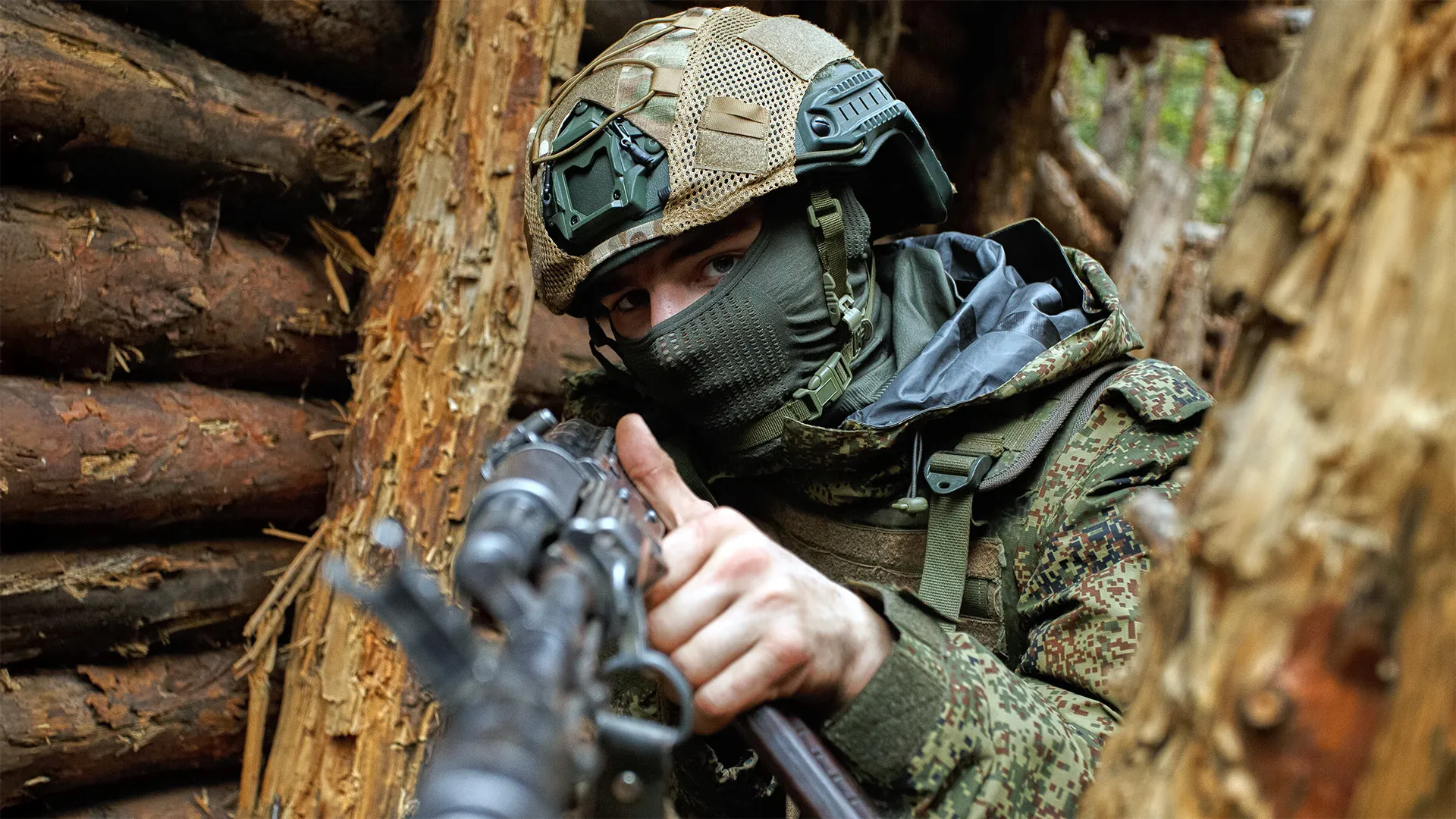
Teenagers in the United Kingdom will be offered paid “gap years” with the armed forces under a new “whole of society” approach to national defence that aims to increase recruitment among young people, according to reports.
The London-based i Paper reported on Friday that the UK’s Ministry of Defence hopes the scheme will broaden the appeal of military careers for British youth as tensions with Russia rise across Europe.
Recommended Stories
list of 4 itemsend of list
The scheme will initially be open to about 150 applicants aged 18 to 25 in early 2026, with ministers aiming to eventually expand the programme to more than 1,000 young people annually, depending on demand, according to British radio LBC.
With fears of threats from Russia growing amid Moscow’s war on Ukraine, European countries have looked to national service for young people as a means to boost their ranks, with France, Germany and Belgium announcing schemes this year.
Recruits to the UK scheme will not be deployed on active military operations and while pay has not been confirmed, the UK’s LBC news organisation reported that it is expected to match basic recruit salaries, typically about 26,000 pounds, or $35,000.
Under the programme, army recruits would complete 13 weeks of basic training as part of a two-year placement. The navy scheme would last one year while the Royal Air Force (RAF) is still considering options, according to reports.
UK Defence Secretary John Healey told the i Paper: “This is a new era for Defence, and that means opening up new opportunities for young people.”
News of the programme follows remarks earlier this month from the UK’s Chief of the Defence Staff, Air Chief Marshal Richard Knighton, who said Britain’s “sons and daughters” should be “ready to fight” and defend the country amid Russian aggression, the Press Association reports.
Knighton said that while a direct Russian attack on the UK is unlikely, hybrid threats are intensifying.
He referenced a recent incident involving a Russian spy ship suspected of mapping undersea cables near UK waters.
“Every day the UK is subject to an onslaught of cyber-attacks from Russia and we know that Russian agents are seeking to conduct sabotage and have killed on our shores”, Knighton said, warning that Russia’s military had become a “hard power [which] is growing quickly”.
The UK government announced earlier this year that defence and security spending will rise to 5 percent of gross domestic product (GDP) by 2035.
Ukrainian president highlights ‘significant progress’ in talks, but Moscow says Kyiv is working to ‘torpedo’ deal.
Published On 26 Dec 202526 Dec 2025
Share
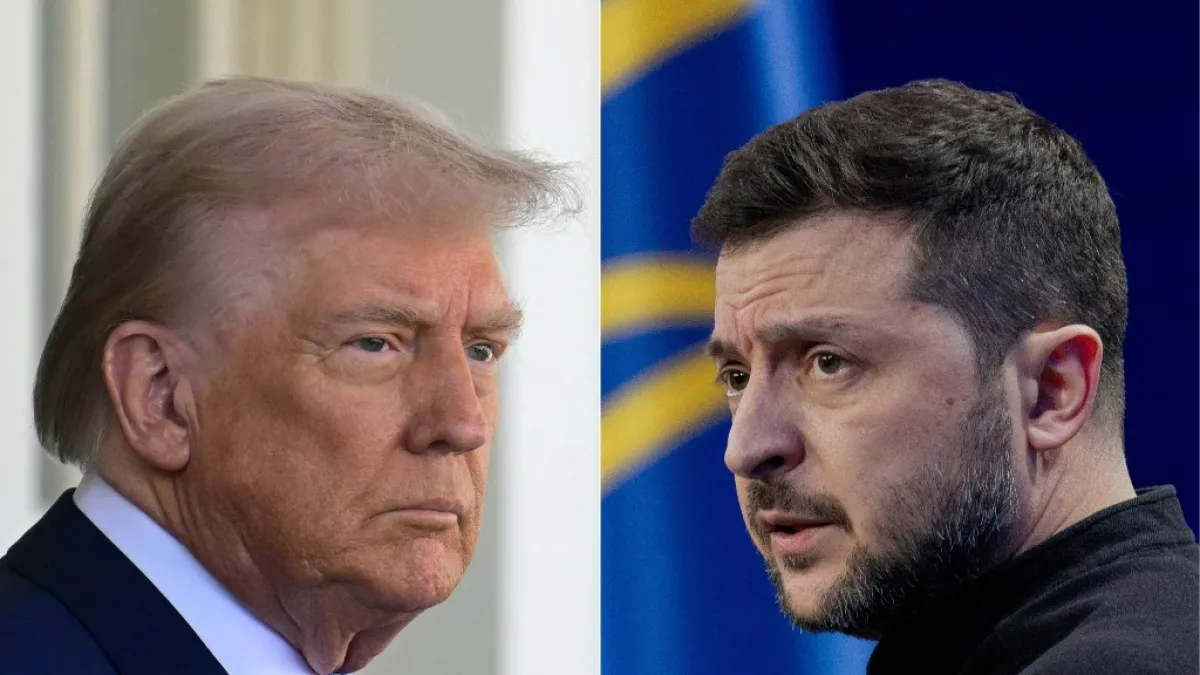
Ukrainian President Volodymyr Zelenskyy is to meet with his United States counterpart, Donald Trump, in Florida on Sunday to discuss territorial disputes that continue to block progress towards ending Russia’s war on Ukraine.
Announcing the meeting on Friday, Zelenskyy said the talks could be decisive as Washington intensifies its efforts to broker an end to Europe’s deadliest conflict since World War II. “A lot can be decided before the New Year,” Zelenskyy said.
Recommended Stories
list of 3 itemsend of list
Territory remains the most contentious issue in the negotiations. Zelenskyy confirmed he would raise the status of eastern Ukraine and the Zaporizhzhia Nuclear Power Plant, which has been under Russian control since the early months of Russia’s invasion.
“As for the sensitive issues, we will discuss both Donbas and the Zaporizhzhia Nuclear Power Plant. We will certainly discuss other issues as well,” he told reporters in a WhatsApp chat.
Moscow has demanded that Kyiv withdraw from parts of the Donetsk region still under Ukrainian control as it pushes for full authority over the wider Donbas area, which includes Donetsk and Luhansk. Ukraine has rejected that demand, instead calling for an immediate halt to hostilities along the existing front lines.
Territorial concessions
In an attempt to bridge the divide, the US has floated the idea of establishing a free economic zone should Ukraine relinquish control of the contested area although details of how such a plan would operate remain unclear.
Zelenskyy reiterated that any territorial concessions would require public approval. He said decisions on land must be made by Ukrainians themselves, potentially through a referendum.
Beyond territory, Zelenskyy said his meeting with Trump would focus on refining draft agreements, including economic arrangements and security guarantees. He said a security pact with Washington was nearly finalised while a 20-point peace framework was close to completion.
Ukraine has sought binding guarantees after previous international commitments failed to prevent Russia’s invasion, which began in February 2022.
Trump has previously voiced impatience with the pace of negotiations, but he has indicated he would engage directly if talks reached a meaningful stage.
Last week, US Secretary of State Marco Rubio said his country is the only mediator that can speak to both sides to secure a peace agreement. At the same time, he downplayed the importance of the conflict for Washington.
“It’s not our war. It’s a war on another continent,” he said.
Zelenskyy said European leaders could join Sunday’s discussions remotely and confirmed he had already briefed Finnish President Alexander Stubb on what he described as “significant progress”.
Despite Zelenskyy’s assertion, Russian Deputy Foreign Minister Sergey Ryabkov accused Ukraine of working to “torpedo” the peace talks, saying a revised version of the US peace plan promoted by Kyiv was “radically different” from an earlier version negotiated with Washington.
“Our ability to make the final push and reach an agreement will depend on our own work and the political will of the other party,” he said during a television interview on Friday.
Ryabkov said any agreement must remain within the parameters set out between Trump and Russian President Vladimir Putin during a summit in August, which Ukraine and European partners have criticised as overly conciliatory towards Russia’s war aims.
On the ground, Moscow has intensified strikes on Ukraine’s energy infrastructure and the southern port city of Odesa while an attack on Kharkiv on Friday killed two people.
Poland’s defence minister said Russian aircraft was ‘escorted’ from area and did not pose immediate security threat.
Published On 26 Dec 202526 Dec 2025
Share
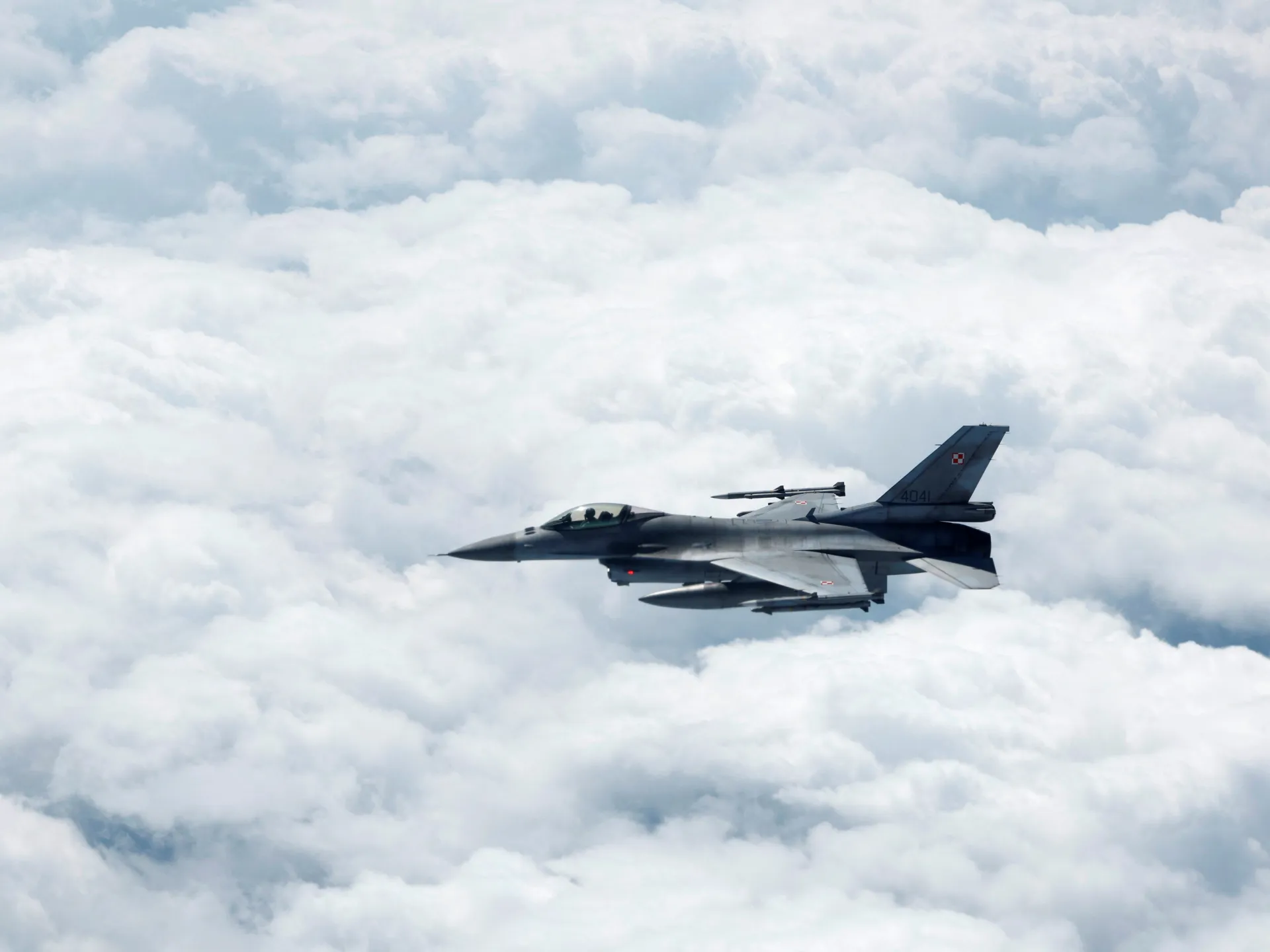
Poland said its air force intercepted a “Russian reconnaissance aircraft” flying near the border of its airspace just hours after tracking suspected smuggling balloons coming from the direction of neighbouring Belarus.
“This morning, over the international waters of the Baltic Sea, Polish fighter jets intercepted, visually identified, and escorted a Russian reconnaissance aircraft flying near the border of Polish airspace from their area of responsibility,” the Operational Command of the Polish Armed Forces said in a post on X on Thursday.
Recommended Stories
list of 4 itemsend of list
Polish forces also tracked unknown “objects” flying in the direction of Poland from Belarus during the previous night, prompting Warsaw to temporarily close civilian airspace in the northeast of the country.
“After detailed analysis, it was determined that these were most likely smuggling balloons, moving in the direction and at the speed of the wind. Their flight was continuously monitored by our radar systems,” Operational Command said.
The post did not disclose any further details about the number or size of the balloons.
Polish Defence Minister Wladyslaw Kosiniak-Kamysz said on X that the incidents did not pose an immediate threat to Poland’s security, and he thanked the “nearly 20,000 of our soldiers who, during the Holidays, watch over our safety”.
“All provocations over the Baltic Sea and near the border with Belarus were under the full control of the Polish Army,” he said.
Translation: Another busy night for the operational services of the Polish Army. All provocations, both over the Baltic Sea and over the border with Belarus, were under full control. I thank nearly 20,000 of our soldiers who, during the Holidays, watch over our safety – and as can be seen – do so extremely effectively.
The Belarusian and Russian embassies in Warsaw did not immediately respond to the Reuters news agency’s requests for comment.
Smuggler balloons from Belarus have repeatedly disrupted air traffic in neighbouring Lithuania, forcing airport closures. Lithuania says the balloons are sent by smugglers transporting cigarettes and constitute a “hybrid attack” by Belarus, a close ally of Russia. Belarus has denied responsibility for the balloons.
The latest air alerts in Poland came three months after Poland and NATO forces shot down more than a dozen Russian drones as they flew over Polish airspace between September 9 and 10.
The event was the largest incursion of its kind on Polish airspace since Russia invaded Ukraine in February 2022.
Following the incident, NATO-member Poland called an emergency session of the United Nations Security Council to discuss the “blatant violation of the UN Charter principles and the customary law”.
Polish Foreign Minister Radoslaw Sikorski said at the time that Russia was testing how quickly NATO countries could respond to threats.
These are the key developments from day 1,401 of Russia’s war on Ukraine.
Published On 26 Dec 202526 Dec 2025
Share
Here is where things stand on Friday, December 26:
Fighting
Officials in Russia’s Krasnodar region reported a huge fire following a Ukrainian drone strike on two storage tanks holding oil products in the southern Russian port of Temryuk. The blaze spread across roughly 2,000 square metres (some 21,500 square feet).
Long-range Ukrainian drones targeted oil storage facilities at Temryuk port, as well as a gas processing plant in Russia’s Orenburg region, Ukraine’s SBU security service said.
Ukraine’s General Staff said its military also struck the Novoshakhtinsk oil refinery in Russia’s Rostov region using Storm Shadow missiles, triggering several explosions.
The General Staff described the Russian refinery as a major supplier of oil products in southern Russia that supports Moscow’s military operations in Ukraine.
Russia’s Ministry of Defence announced that its forces had taken control of the settlement of Sviato-Pokrovske in eastern Ukraine’s Donetsk region, according to reports from Russian state news agencies.
Regional security
Poland sent fighter jets to intercept a Russian reconnaissance aircraft flying near its airspace over the Baltic Sea and said dozens of objects entered Polish airspace from Belarus overnight, warning the incidents during the holiday season may signal a provocation.
Russia’s Ministry of Foreign Affairs accused the United States of encouraging what it called “piracy” in the Caribbean and Pacific Ocean by blockading Venezuela, while expressing hope that US President Donald Trump’s pragmatism could prevent further escalation.
Moscow also reiterated its support for Venezuelan President Nicolas Maduro’s government and its efforts to safeguard national sovereignty amid threats by the US to remove Maduro from power.
Peace talks
Ukrainian President Volodymyr Zelenskyy said he spoke with Donald Trump’s special envoy Steve Witkoff and son-in-law, Jared Kushner, for about an hour on how to end the war with Russia and “how to bring the real peace closer”.
“Of course, there is still work to be done on sensitive issues,” the Ukrainian leader said. “But together with the American team, we understand how to put all of this in place. The weeks ahead may also be intensive. Thank you, America!”
Russia believes negotiations with the US to end the war in Ukraine are making gradual progress, Russian Foreign Ministry spokeswoman Maria Zakharova said. She described the talks as slow-moving but advancing steadily.
Politics and diplomacy
Kremlin spokesman Dmitry Peskov said President Vladimir Putin had sent the US president a Christmas greeting along with a congratulatory message.
Russia said it had put forward a proposal to France concerning Laurent Vinatier, a French researcher imprisoned under Russia’s foreign agent laws, adding that the next steps in the Frenchman’s case now rest with Paris.
Sanctions
Russia’s target of producing 100 million tonnes of liquefied natural gas annually has been pushed back by several years due to international sanctions, the country’s Deputy Prime Minister Alexander Novak said in comments aired on state television.
‘Main reason for optimism’ is a belief that war in Ukraine will end in 2026 with Moscow’s ‘objectives’ achieved,’ pollster says.
Published On 25 Dec 202525 Dec 2025
Share
A majority of Russians expect the war in Ukraine to end in 2026, a state-owned research centre said, as Russian forces make advances on the battlefield and efforts intensify to reach a ceasefire deal between Kyiv and Moscow.
VTsIOM, Russia’s leading public opinion research centre, said on Wednesday that its annual survey of sentiment around the outgoing year and expectations for the coming year found Russians are viewing 2026 with “growing optimism”.
Recommended Stories
list of 4 itemsend of list
“Expectations for next year traditionally look much more optimistic … In other words, while the negative perception of the current situation persists, Russians have become more likely to accept (or believe, hope?) future improvements this year, but they still do so with caution,” the organisation said in a review of its survey findings released online.
In a year-end presentation, VTsIOM deputy head Mikhail Mamonov said 70 percent of 1,600 people surveyed viewed 2026 as being a more “successful” year for Russia than this year, with 55 percent of respondents linking hope for a better year to a possible end to what Russia officially calls its “special military operation” in Ukraine.
“The main reason for optimism is the possible completion of the special military operation and the achievement of the stated objectives, in line with the national interests outlined by the president,” Mamonov said at the presentation.
Mamonov pointed to the Russian military’s ongoing offensive in Ukraine, Washington’s reluctance to finance the Ukraine war and the European Union’s inability to fully replace the United States’ role in Ukraine – financially and militarily – as key factors behind the prospects for an eventual deal to end the fighting.
At the conclusion of the conflict, reintegration of Russian military veterans into society and the reconstruction of Russian-controlled regions of Ukraine, as well as Russian border areas, will be the main priorities, Mamonov added.
While the actual level of Russian public fatigue with the war is difficult to measure due to strict state controls on the media, expressions of public dissent as well as the prosecution of those who criticise Moscow’s war on its neighbour, approximately two-thirds of Russians support peace talks, according to independent pollster Levada, the highest number since the start of the war in 2022.
Ukrainian President Volodymyr Zelenskyy said in comments released on Wednesday that he would be willing to withdraw troops from Ukraine’s eastern industrial heartland as part of a plan to end the war, if Moscow reciprocated by also pulling back its forces and allowed the area to become a demilitarised zone monitored by international forces.
In comments to reporters about an overarching 20-point plan that negotiators from Ukraine and the US had hammered out in Florida in recent days, Zelenskyy also said that a similar arrangement could be possible for the area around the Zaporizhzhia nuclear power plant, which is currently under Russian control.
Russia has given no indication that it will agree to any kind of withdrawal from land it has seized in Ukraine and has long insisted that Kyiv must give up the remaining territory it still holds in the Donbas industrial area before any discussions on the cessation of fighting.
Russia has captured most of Luhansk and about 70 percent of Donetsk – the two regions that make up the Donbas.
Zelenskyy also said that figuring out the future control of the Donbas as part of the plan was “the most difficult point”, and creating a demilitarised economic zone in the region would require difficult discussions on how far troops would be required to move back and where international forces would be stationed.
Such discussions should be held at the leaders’ level, he said.
These are the key developments from day 1,400 of Russia’s war on Ukraine.
Published On 25 Dec 202525 Dec 2025
Share
Here is where things stand on Thursday, December 25:
Fighting
An explosion in Moscow killed three people, including two police officers, just days after a car bomb killed a high-ranking Russian general in the same area of the capital.
An official from Ukraine’s military intelligence, known as GUR, told The Associated Press news agency that the attack had been carried out as part of a Ukrainian operation and the two police officers were targeted for taking part in Russia’s war in Ukraine.
Russian air defence units downed 16 Ukrainian drones en route to Moscow throughout Wednesday, the capital’s Mayor Sergei Sobyanin said.
Sobyanin said the drones were repelled over a period of about 17 hours, and emergency crews were examining fragments where the drones hit the ground, but no damage was reported.
Two of four major airports servicing Moscow were forced to limit operations for a time due to the drone attacks, Russia’s civil aviation authority said on Telegram.
Russia’s Ministry of Defence said its aerial defence units destroyed 172 Ukrainian drones overnight, nearly half of them over regions bordering Ukraine.
Ukraine said its drones had struck the Yefremov synthetic rubber plant in Russia’s Tula region, south of Moscow, and a storage facility for marine drones in Russian-occupied Crimea.
Tula regional governor, Dmitry Milyaev, said debris from a downed Ukrainian drone ignited a fire at an industrial site, and Russian air defence units destroyed 12 Ukrainian drones over the region.
A sunflower oil spill, caused by Russian aerial bombardments, has contaminated the shoreline around the southern Ukrainian city of Odesa, killing wildlife and triggering warnings from conservationists, the AFP news agency reports.
“The cause was damage to sunflower oil tanks as a result of massive enemy attacks on port infrastructure, causing some of the oil to spill,” Odesa Governor Oleh Kiper said in a statement. The Pivdenny port in the region was temporarily closed on Wednesday to help with the cleanup.
A Russian-backed court in occupied Ukraine sentenced a Colombian man to 19 years in prison for fighting for Kyiv’s army.
Russia’s Prosecutor General said the Supreme Court in the Russian-controlled area of Ukraine’s Donetsk region sentenced Oscar Mauricio Blanco Lopez, 42, to 19 years in jail. The Colombian arrived in Ukraine in May 2024 to sign up with the Ukrainian army and had been “taken prisoner by Russian servicemen” in December 2025.
Ceasefire talks
Ukrainian President Volodymyr Zelenskyy revealed for the first time details of an agreement between the United States and Ukrainian negotiators on ending the war with Russia. The 20-point plan, agreed on by US and Ukrainian negotiators after marathon talks, is now being reviewed by Moscow.
As part of the plan, President Zelenskyy said Ukraine would be willing to withdraw troops from the country’s eastern industrial heartland if Moscow also pulled back and the area becomes a demilitarised zone monitored by international forces.
A similar arrangement could be possible for the area around the Zaporizhzhia nuclear power plant, which is currently under Russian control, Zelenskyy said. The Ukrainian leader said that any peace plan would need to be put to a referendum in Ukraine.
Asked about the latest development in ceasefire talks, Kremlin spokesperson Dmitry Peskov said Moscow would decide its position based on information received by Russian presidential envoy Kirill Dmitriev, who met with US envoys in Florida over the weekend.
Russia has given no indication that it will agree to any kind of withdrawal from land it has seized in Ukraine. Moscow has also insisted that Ukraine relinquish the remaining territory it still holds in the Donbas. Russia has captured most of Luhansk and about 70 percent of Donetsk – the two areas that make up the Donbas.
Politics and diplomacy
A majority of Russians expect the war in Ukraine to end in 2026, Russia’s state pollster VTsIOM said, in a sign that the Kremlin could be testing public reaction to a possible peace settlement as diplomatic efforts to end the conflict intensify.
During the pollster’s year-end presentation, VTsIOM Deputy Head Mikhail Mamonov said 70 percent of the 1,600 respondents saw 2026 as a more “successful” year for Russia than 2025, while for 55 percent that hope was linked to a possible end to Russia’s war in Ukraine.
A Russian court has scheduled the first public hearing in a criminal case against German sculptor Jacques Tilly, who is accused of discrediting the Russian military through his satirical Carnival floats depicting Russia’s President Vladimir Putin.
The court in Moscow said the trial will begin on December 30 and proceedings will be held in absentia, as Tilly – who faces up to 10 years in jail or a fine – is not in Russia.
Zelenskyy said in his Christmas address on Wednesday that despite marking the holiday at a “difficult” time, the nation’s unity remains intact. “Ukrainians are together tonight,” Zelenskyy said, adding the country had “without a doubt” been changed by the war. “It hardly matters what dishes are on the table – what matters is who is at the table,” he said.
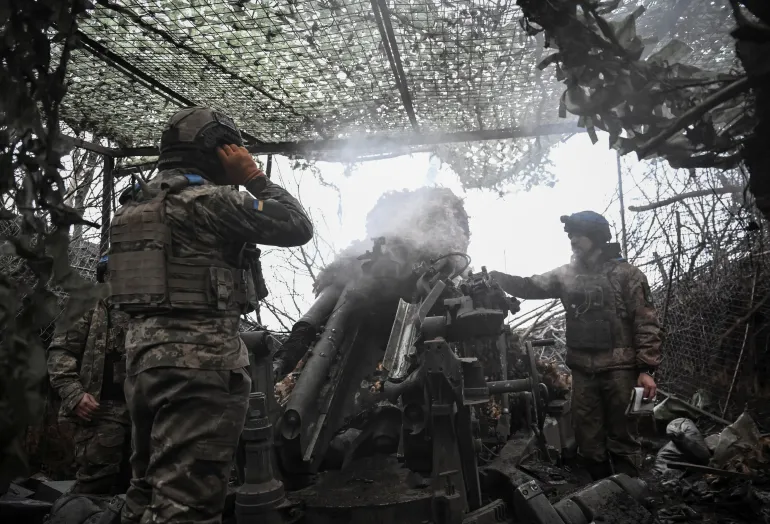
Artillerymen of the 44th Separate Artillery Brigade fire a M777 Howitzer towards Russian troops, amid Russia’s attack on Ukraine, in Dnipropetrovsk region, Ukraine, on December 24, 2025 [Reuters]
Regional security
France’s President Emmanuel Macron said he spoke with NATO chief Mark Rutte to discuss the situation in Ukraine and the work undertaken by the “coalition of the willing”. “Starting in January in Paris, we will continue the work begun within this framework to provide Ukraine with solid security guarantees, a prerequisite for a robust and lasting peace,” Macron said on social media.
Democratic senators in the US have urged President Donald Trump to reverse a recall of nearly 30 career ambassadors, warning the move leaves a dangerous leadership vacuum that allows adversaries like Russia and China to expand their influence. The Trump administration in recent days has ordered career diplomats serving across Europe, Asia, Africa and Latin America back to Washington to ensure US missions abroad reflect its “America First” priorities.
Economics
Kazakhstan’s exports of its flagship CPC Blend of oil will be their lowest in 14 months in December, as bad weather delays efforts to repair Russian loading infrastructure after Ukrainian drone strikes last month, two sources told the Reuters news agency.
On November 29, Ukrainian drones hit the Caspian Pipeline Consortium terminal located near Russia’s Black Sea port of Novorossiysk, leaving just one out of three jetties operational and prolonging export delays. Poor weather has added to the difficulty of carrying out maintenance work necessary to allow exports to recover.
Ukraine’s Ministry of Finance said it completed the settlement of a deal to restructure $2.6bn of growth-linked debt.
The Ukrainian military says its forces have withdrawn from the battle-scarred town of Siversk in the eastern Donetsk region after heavy fighting with Russian forces.
In a statement on Telegram on Tuesday, Ukraine’s General Staff said that Russian troops had a “significant advantage” in manpower and equipment and had exerted constant pressure on the defending Ukrainian troops by staging small-unit assaults in difficult weather conditions.
Recommended Stories
list of 4 itemsend of list
Ukraine’s decision to withdraw its forces was made to “preserve the lives of our soldiers and the combat capability of the units”, the General Staff said.
Heavy losses were inflicted on Russian forces before the order to retreat was given, and Siversk remains “under the fire control of our troops”, and “enemy units are being blocked to prevent their further advance,” the General Staff added.
Ukraine’s DeepState military monitoring site reported late on Tuesday that Russian forces had occupied Siversk as well as Hrabovske, a village in Ukraine’s Sumy region close to the border with Russia.
Russian Lieutenant General Sergei Medvedev had told Russian President Vladimir Putin on December 11 that troops had taken Siversk, where fighting has been fierce in recent months, but Ukrainian officials denied the Russian reports at the time.
Ukraine’s military said at the time that Russian troops were “taking advantage of unfavourable weather conditions” to launch attacks, but were mostly being “destroyed on the approaches”.
The Kyiv Independent news site said that, despite Siversk’s modest size – it had a pre-war population of 10,000, and now, just a few hundred civilians remain – the town was key to the defence of northern Donetsk.
The town had helped shield the larger Sloviansk and Kramatorsk areas, “the main bastions of Ukraine’s so-called ‘fortress belt’”, which Russia has been unable to conquer since the start of fighting, the Kyiv Independent said.
Donetsk is one of three Ukrainian regions at the centre of Russia’s territorial demands, which are the stumbling blocks to reaching an agreement on a ceasefire. Ukraine’s leaders have said they will not concede their country’s territory taken during Moscow’s invasion.
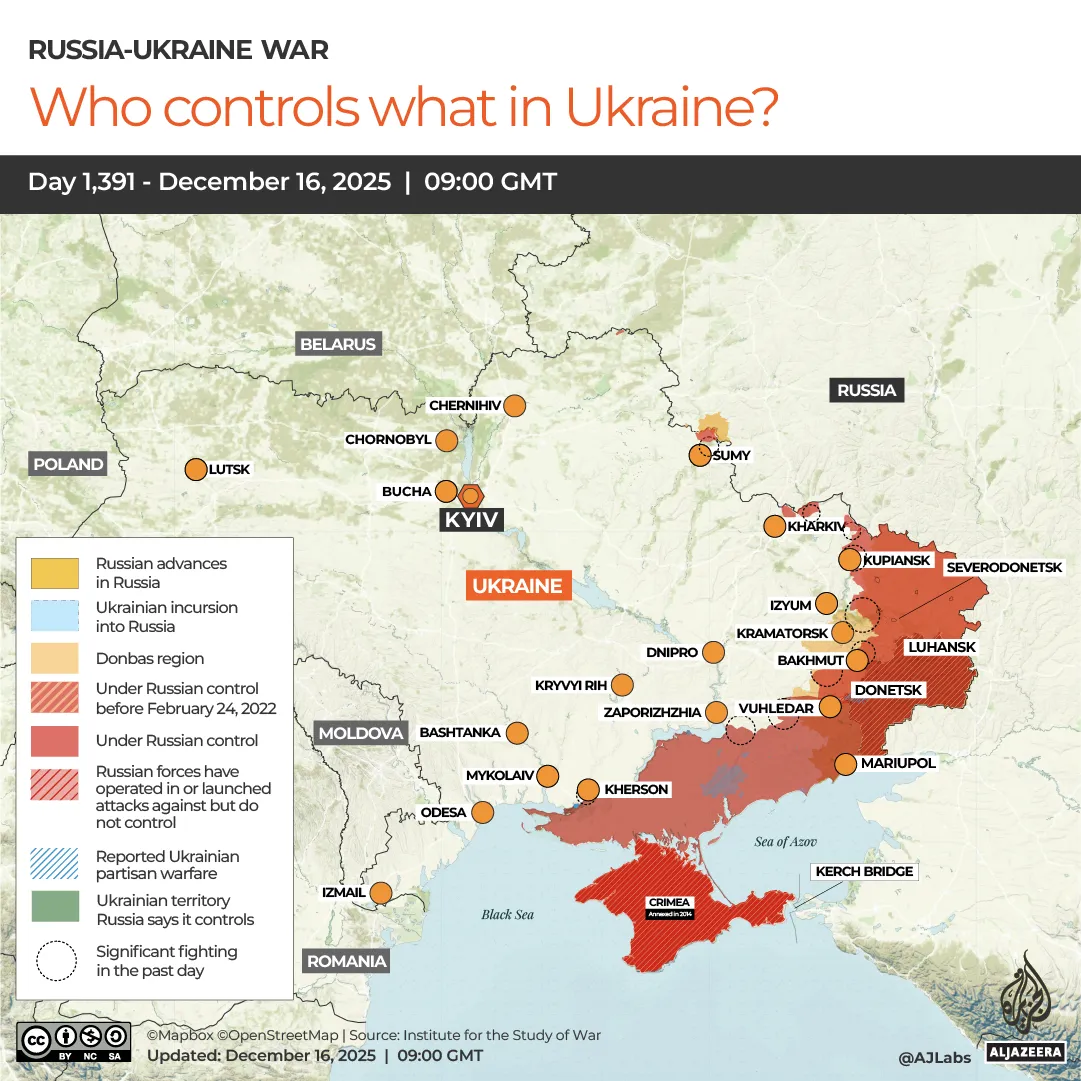
Russian forces had already seized an estimated 19 percent of Ukrainian territory as of early December, including Crimea, which Moscow annexed in 2014, all of the Luhansk region, and more than 80 percent of Donetsk, according to the Reuters news agency.
Russian forces also control about 75 percent of the Kherson and Zaporizhia regions, and small parts of the Kharkiv, Sumy, Mykolaiv and Dnipropetrovsk regions, according to Reuters.
A 28-point peace plan first put forward by the administration of US President Donald Trump last month says that a negotiated settlement would see Crimea, Luhansk and Donetsk “recognised as de facto Russian, including by the US”.
Ukrainian President Volodymyr Zelenskyy recently said that the United States is pushing for Ukraine to withdraw its forces from the Donetsk region to establish a “free economic zone” in the area, which he said the Russian side is referring to as a “demilitarised zone”.
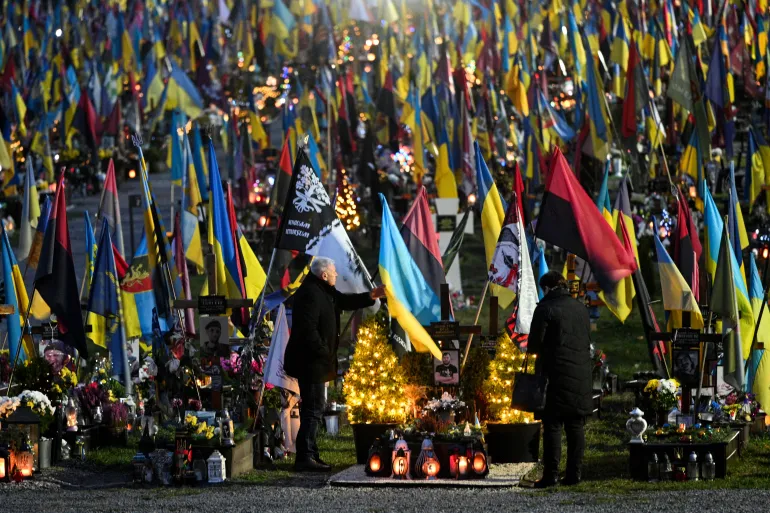
People visit the graves of fallen Ukrainian soldiers, decorated with Christmas trees and New Year’s decorations, at the Lychakiv Military Cemetery, in Lviv, Ukraine on Tuesday [Yuriy Dyachyshyn/AFP]
Pope saddened as fighting continues over Christmas
The latest setback for Kyiv on the battlefield came as Zelenskyy said on Tuesday that Russian forces had launched another “massive attack” on Ukraine on Monday night, killing at least three people, including a four-year-old girl, across 13 regions targeted with drones and missiles.
In Russia, Ukrainian drone attacks killed four people in the Belgorod region over the past two days, local officials said.
Pope Leo expressed disappointment on Tuesday that Russia had apparently refused to agree to a ceasefire on December 25, the date many Christians celebrate Christmas.
“I will make an appeal one more time to people of goodwill to respect at least Christmas Day as a day of peace,” Leo said, speaking to reporters outside his residence in Castel Gandolfo, Italy.
“Maybe they will listen to us, and there will be at least 24 hours, a day of peace, across the world,” he said.
While most people in Ukraine and Russia are Christians, many are Orthodox, meaning they observe Christmas on January 7.
Russian President Vladimir Putin announced an unexpected 30-hour unilateral truce a day before Easter this year, a rare pause in Russia’s war on Ukraine, which has now continued for close to three years, after Russia’s full-scale invasion in February 2022.
These are the key developments from day 1,399 of Russia’s war on Ukraine.
Published On 24 Dec 202524 Dec 2025
Share
Here is where things stand on Wednesday, December 24:
Fighting
Russian forces began a “massive attack” on Ukraine on Monday night, killing three people and targeting 13 regions with 650 drones and 30 missiles, Ukrainian President Volodymyr Zelenskyy said in a post on X.
Those killed in the overnight attack included a four-year-old girl in the central Zhytomyr region, Governor Vitalii Bunechko said on Telegram. “Doctors struggled to save the child’s life, but in the end, they were unable to save her,” Bunechko said, adding that five people were also injured in the attack.
Russian forces also launched drones and missiles at the Vyshhorod district of Ukraine’s Kyiv region, killing a woman and injuring three people, Governor Mykola Kalashnyk said.
In Ukraine’s western Khmelnytskyi region, one person was killed by Russian shelling, Governor Serhii Tiurin said.
Russian drone attacks on Kyiv’s Sviatoshynskyi district left five people injured, said Tymur Tkachenko, the head of the Kyiv City Military Administration.
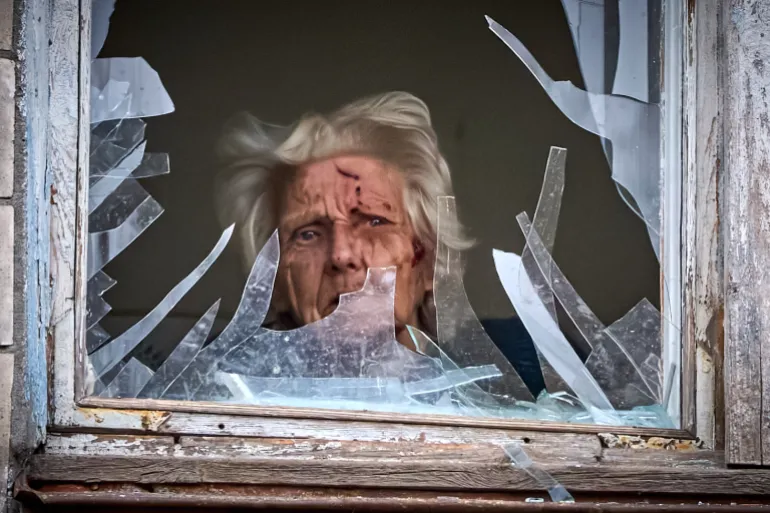
An injured elderly woman looks out of her broken window after an apartment building was hit by a Russian drone during an aerial attack in Kyiv, Ukraine, on Tuesday [Efrem Lukatsky/AP Photo]
Ukraine’s Ministry of Energy said that “emergency power outages” were introduced in several regions across the country due to Russian forces targeting energy infrastructure. The ministry said that it was working to restore electricity to the Rivne, Ternopil and Odesa regions. The ministry said that the situation was “most difficult” in the border regions, “as restoring electricity is complicated by continuous fighting”.
Ukraine’s General Staff said Ukrainian troops have withdrawn from the Donetsk region’s Siversk area after heavy fighting, noting that Moscow’s forces had a “significant advantage” there.
Ukraine’s Ministry of Foreign Affairs said that Ukrainian F-16 fighter pilots shot down 621 of 673 Russian “aerial targets” on Tuesday night, including 34 of 35 cruise missiles.
In Russia, a Ukrainian drone strike on a car killed three men in the Belgorod region on Monday, the region’s emergency response team reported.
Another Ukrainian drone attack in Belgorod on Tuesday killed one person and injured three, the region’s operational headquarters said on Telegram.
Russian forces shot down 56 Ukrainian drones in a day, as well as a guided bomb, Russia’s Ministry of Defence said, according to the state news agency TASS.
Ceasefire
Zelenskyy said in his nightly address, “We sense that America wants to reach a final agreement” to end the war in Ukraine, and that “there is full cooperation” from the Ukrainian side.
In an earlier post on X, Zelenskyy said that “several draft documents have now been prepared”, following talks in Miami. “In particular, these include documents on security guarantees for Ukraine, on recovery, and on a basic framework for ending this war,” he said.
Pope Leo said that Russia’s apparent refusal to agree to a ceasefire on December 25 is “among the things that cause me much sadness”.
“I will make an appeal one more time to people of goodwill to respect at least Christmas Day as a day of peace,” Leo told reporters outside his residence in Castel Gandolfo, Italy.
Russian forces have struck Ukraine’s southern Black Sea port of Odesa, damaging port facilities and a ship, the region’s governor says.
The attack late on Monday followed another at the weekend when Moscow carried out a sustained barrage of drones and missile attacks on the wider area around Odesa, which is home to ports crucial to Ukraine’s overseas trade and fuel imports. They followed Russian threats to cut “Ukraine off from the sea”.
Recommended Stories
list of 4 itemsend of list
The escalation in Russia’s assault on Odesa, Ukraine’s biggest port city, has unfolded as Washington steps up diplomatic efforts to bring an end to the war. Ukrainian officials met members of a US delegation on Friday in Florida while US envoys held talks with Russian representatives on Saturday.
“The situation in the Odesa region is harsh due to Russian strikes on port infrastructure and logistics,” Ukrainian President Volodymyr Zelenskyy told reporters in Kyiv on Monday. “Russia is once again trying to restrict Ukraine’s access to the sea and block our coastal regions.”
What happened in the latest Russian attack on Odesa?
On Tuesday, the head of the Odesa Regional Military Administration, Oleh Kiper, said Russian strikes overnight had damaged a civilian cargo vessel and a warehouse in a district of Odesa while the roof of a two-storey residential building had caught fire.
Meanwhile, strikes on Saturday on the port of Pivdennyi near Odesa damaged storage reservoirs, Ukrainian Deputy Prime Minister Oleksii Kuleba said. Those came just one day after a ballistic missile strike, also in Pivdennyi, had killed eight people and wounded at least 30.
These are just the latest strikes in an escalation of hostilities in the area over the past few weeks.
Last week, Russia launched one of its largest aerial assaults of the war on the Black Sea region, damaging energy infrastructure and causing a power outage in Odesa, leaving hundreds of thousands of residents without electricity for several days.
Russia’s Ministry of Defence did not immediately comment on the strikes, but the Kremlin has previously described Ukraine’s economic infrastructure as a “legitimate military objective” during the nearly four-year war.
On the Telegram messaging app, Kuleba said on Friday that Russian forces were targeting power infrastructure and a bridge over the Dniester River near the village of Mayaky, southwest of Pivdennyi, which was struck five times in 24 hours.
That bridge links parts of the region separated by waterways and serves as the primary westbound route to border crossings with Moldova. It is currently out of operation. Kuleba said the route normally carries about 40 percent of Ukraine’s fuel supplies.
(Al Jazeera)
Why is Russia targeting Odesa?
“The focus of the war may have shifted towards Odesa,” Kuleba said, warning that the “crazy” attacks could intensify as Russia tries to weaken Ukraine’s economy.
Russian President Vladimir Putin has previously said Moscow wants to restrict Ukraine’s Black Sea access in retaliation for Kyiv’s recent drone attacks on Russia’s sanctions-evading “shadow fleet” of vessels, which carry a variety of commodities.
Ukraine said those vessels are used to illegally export sanctioned oil, which provides Russia with its main source of revenue for financing its full-scale invasion of its neighbour.
How important is the port of Odesa to Ukraine?
Odesa’s port has long been central to Ukraine’s economy. Called a “pearl by the sea”, Odesa is Ukraine’s third most populous city after Kyiv and Kharkiv.
Black Sea ports – including Odesa and two others close by, Pivdennyi and Chornomorsk – and Mykolaiv to the east handled more than 70 percent of Ukraine’s exports before the war.
But Odesa’s role as a trading hub has grown in recent years as ports in the Zaporizhia, Kherson and Mykolaiv regions have been occupied by Russia.
Since the war began in February 2022, Ukraine has continued to rank among the world’s top five exporters of wheat and corn – largely through Odesa.
By targeting Odesa’s shipping facilities with missiles and drones, Ukrainian officials said, Putin aims to destroy Ukrainian trade and business infrastructure.
Zelenskyy, who has previously accused Russia of “sowing chaos” on the people of Odesa, said: “Everyone must see that without pressure on Russia, they have no intention of genuinely ending their aggression.”
What would it mean for Ukraine if Odesa were destroyed?
If the port of Odesa were badly damaged, the economic impact for Ukraine would be severe. The city and its surrounding areas would suffer major job losses in the shipping and logistics industries, seriously squeezing local incomes. Meanwhile, port-dependent businesses would falter and investment would fall away.
Nationally, Ukraine’s export capacity would be hit hard. As a key gateway for grain and other commodities, disruptions there would raise transport costs, slow shipments and reduce export volumes, choking foreign currency earnings and piling pressure on the hryvnia, Ukraine’s currency.
Elsewhere, farmers would suffer from lower prices for their produce as well as storage bottlenecks with knock-on effects across rural economies. The government would also lose customs revenue just as reconstruction costs would rise, weakening the country’s overall economic resilience.
What other acts of maritime warfare have Ukraine and Russia engaged in during the war?
Over the past six months, maritime warfare between Ukraine and Russia has intensified. Both sides have targeted naval and commercial assets across the Black Sea and beyond.
Ukrainian forces have increasingly used underwater drones and unmanned surface vessels to strike ships tied to Russia’s shadow fleet.
Kyiv has expanded its reach elsewhere, claiming drone strikes in the Mediterranean on December 19 on the Qendil, a Russian-linked tanker, marking an expansion in Kyiv’s maritime operations.
At the same time, Russian forces have ramped up attacks on commercial targets, including a Turkish-flagged ship carrying trucks and other freight near Odesa with drone attacks on December 13.
These actions reflect a shift towards what is referred to as “asymmetric naval warfare”, in which drones and improvised systems play a growing role in disrupting each side’s economic and military support networks at sea, experts said.
“This [killing in Moscow] is a mode of warfare which would be referred to as, quote-unquote, irregular.”
The killing of a top Russian general is a “direct message” to senior Russian military leaders from Ukraine, says Marina Miron, of King’s College London.
Kyiv, Ukraine – Have you been on a plane during severe turbulence, fearing that the shaking aircraft is about to fall apart and tumble down? Brief moments of weightlessness stop your breath, perhaps you whisper prayers and remember everyone you love.
That’s the feeling you get during a Russian air raid in Kyiv, Ukraine, and there have been more than 1,800 of them since Russia’s full-scale invasion began in 2022.
Recommended Stories
list of 4 itemsend of list
These days, they are bigger, scarier and longer than ever, because each one involves hundreds of drones and dozens of missiles.
They begin after dark and sometimes last in waves until dawn. Whooshing missiles tear up the night sky in two. Drones buzz like horror movie chainsaws or giant mosquitoes out of childhood flu nightmares.
What’s really harrowing is to hear two or three drones at once – I sardonically call it “stereo” and “Dolby surround” – while the arrhythmia of bass drum-like air defence explosions coincides with your heartbeat.
Each boom and thud chokes your body with adrenaline, and some shake your house, but after a couple of hours, your brain gives up, and you fall asleep processing the booms into nightmares.
And in the morning, you fall awake – feeling hungover and disoriented – and read about the consequences. You’re glad when no one is killed, and still sad because several people are usually wounded, and several apartment buildings are damaged.
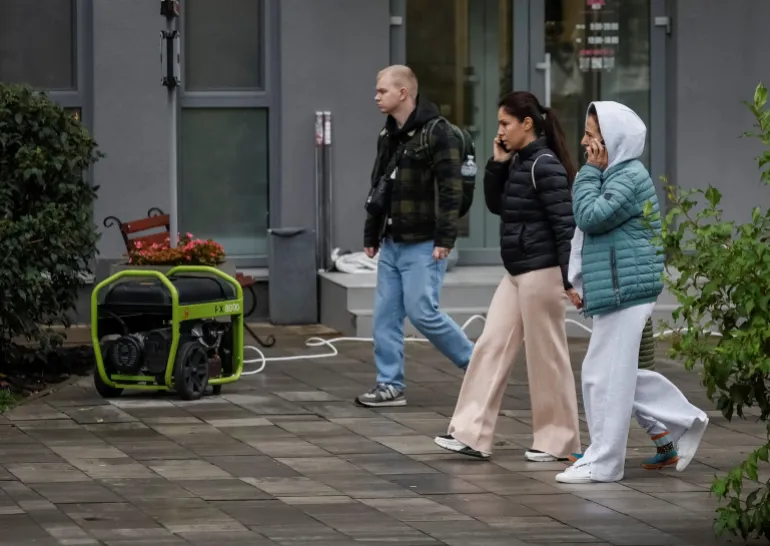
People walk near a petrol-run generator, used to generate electricity for a medical clinic during a power blackout, after critical civil infrastructure was hit by Russian missile and drone attacks in Kyiv, Ukraine, October 10, 2025 [Gleb Garanich/Reuters]
Sometimes, I think about the people who operate the drones and launch the missiles. How they come back to their families after the night shift, what they tell their children and, most importantly, themselves.
But I prefer the memory of a crowd of high school graduates who walked past my house in June, at dawn, after their prom night that coincided with an especially long and loud air raid.
Their laughter and happiness about the sunrise, the clouds of blossoming trees around them, the rugs of flowers and grass under their feet, and the future ahead of them made them sound immortal. It was a sound that defied Russian President Vladimir Putin.
In recent months, blackouts have been the most inevitable part of each air raid. It feels as though keeping millions awake and horrified during the raids is only part of Moscow’s strategy of terrorising Ukraine.
Moscow’s logic appears simple: if you do not want to surrender, you will freeze. It methodically destroys power stations, transmission and central heating lines to keep millions without electricity, light and heat.
And then there are “planned outages”. There are usually three a day, lasting between two and eight hours.
You can hear an outage because even the sounds in your ears barely register, such as the fridge’s purring or the flow of hot water in the heating system, are gone. You can see an outage because the neighbourhood lights go out, making the stars in the night sky closer and brighter.
How to survive darkness
What saves you from darkness and disconnection is gadgets.
Apart from smartphones with energy-saving modes, wi-fi hotspots and flashlights, there are laptops, tablets, wireless speakers and vacuum cleaners running on batteries.
There are also inexpensive rechargeable lamps – I have 10 of them. Three are pint-sized and bright enough for my mother to read. Three more are motion-activated, which means she can safely use the bathroom any time, and the cat is perpetually amazed.
There is a cap lamp that makes me look like a miner and helps me cook or find something in the basement, and two tiny lamps that can be stuck into a power bank and just glow in a corner.
And there is a Christmas garland in the kitchen that makes each outage feel festive.
But the most important device, the symbolic hearth of my powerless house, is a $1,200, 20kg (40lbs) battery that can keep us warm and energised for up to 12 hours.
I live on the outskirts of Kyiv in a remodelled summer house that has its own pump and a natural gas-powered heating system. Both need electricity, along with the two 50-litre (13-gallon) water heaters.
But boiling water and microwaving meals is too energy-consuming, so we stick to frying pans and an old-fashioned whistling kettle that scares the cat.
And when the power is back on, there is no room for procrastination.
You need to recharge all the lamps and devices, start a washing machine, wash dishes, and go out for groceries without risking your life while crossing the road with the traffic lights off.
The electricity’s comeback may be deceptive – sometimes, it’s too weak. I recently tried to microwave a bowl of soup, twice, but it remained cold.
And for extreme emergencies, I have a gasoline-fuelled generator. It’s loud, shaky and stinky, and you need an entire canister of gas worth $30 for it to keep it going all night.
But such generators keep Ukraine running.
You can see them next to shops, offices and apartment buildings. Some are chained to trees or walls to prevent theft, and some are too huge and heavy to be carried away.
During a recent music festival celebrating Ukrainian composers, a giant diesel generator powered the concert hall.
My internet provider turns them on seconds after an outage begins, so I am online no matter what.
You also need to be prepared when you go out.
After covering the 2008 Russian war in Georgia, I used to drive everyone around me mad with my I-have-to-be-ready-for-any-emergency obsession.
Now, all of Ukraine feels the same obsession.
The phone has to be fully charged. There has to be a power bank in my backpack – along with a basic first aid kit, a lighter (I don’t smoke), extra batteries for the Dictaphone, pens and a pencil to take notes in subzero temperatures, when ballpen ink freezes.
A couple of months ago, I used the lighter at Kyiv’s Independence Square, dotted with hundreds of tiny Ukrainian flags next to photos of fallen soldiers.
I helped a man with a toddler light a tiny candle that he wanted to place next to the photo of his younger brother.
“He’s the toddler’s father,” the man said, and all I could utter was “God rest his soul” as I walked away, hiding tears and putting the lighter back.
These are the key developments from day 1,398 of Russia’s war on Ukraine.
Published On 23 Dec 202523 Dec 2025
Share
Here is where things stand on Tuesday, December 23:
Fighting
A car bomb killed Russian Lieutenant General Fanil Sarvarov in southern Moscow, the third such killing of a senior Russian military officer in just more than a year. Russian investors pointed the finger at Ukraine. Kyiv has not commented on the incident.
Russian forces struck Ukraine’s Black Sea port of Odesa late on Monday, damaging port facilities and a ship in the second such attack on the region in less than 24 hours, according to Ukrainian officials.
Ukrainian Deputy Prime Minister Oleksii Kuleba said on the Telegram app that the latest attack on Odesa is part of Russia’s attempt “to disrupt maritime logistics by launching systematic attacks on port and energy infrastructure”.
Kuleba said the attack also caused damage to energy infrastructure, disrupting electricity supply to more than 120,000 customers in the Odesa region. One person was hurt in the attack, the Ministry of Internal Affairs said.
Ukrainian President Volodymyr Zelenskyy confirmed media reports that residents of Hrabovske village, straddling the border with Russia in Ukraine’s Sumy region and home to 52 people, were taken by Russian troops. Zelenskyy said that 13 Ukrainian servicemen were among those taken.
Ukraine’s military said it hit a Tamanneftegaz oil terminal in Russia’s Krasnodar region in an overnight attack, causing explosions and a fire. The Ukrainian General Staff said the oil terminal was part of Russia’s energy infrastructure that supported the financing and logistics of Russian troops fighting in Ukraine.
A Ukrainian drone attack also damaged two vessels in the same region. All crew on the ships at the Volna terminal have been safely evacuated, according to regional authorities.
Russia’s Ministry of Defence said it had captured Vilcha village in Ukraine’s eastern Kharkiv region. The claim could not be immediately verified.
Politics and diplomacy
US President Donald Trump said that talks to end the war in Ukraine are going “OK”, amid questions about their progress, with Moscow and Kyiv still far apart on some key matters.
Zelenskyy, meanwhile, described the negotiations in Miami as “very close to a real result”. He also told a gathering of Ukrainian diplomats that the peace process “all looks quite worthy”, even as he conceded that “not everything is ideal with this, but the plan is there”.
Separately, in his nightly video address to the nation, Zelenskyy said the key issue in the talks was to determine whether the US was able to “get a response from Russia; real readiness on the part of that country to focus on something other than aggression”. He said that continued pressure on the Kremlin was vital to reduce Moscow’s capacity to wage war.
The Kremlin said talks between Russia and the US in Miami on ways to resolve the conflict in Ukraine should not be seen as a breakthrough. Kremlin spokesman Dmitry Peskov told the Izvestia news outlet that the discussions were expected to continue in a “meticulous” expert-level format.
Peskov also questioned the reliability of the sources cited in a Reuters news agency report, which said that the US intelligence community believes Putin wants to seize all of Ukraine and reclaim parts of Europe that belonged to the former Soviet bloc. Peskov told reporters in Moscow that if the report was accurate, then the US’s intelligence conclusions were wrong.
Russian Deputy Foreign Minister Sergey Ryabkov declared that Moscow is ready to confirm in a legal agreement that it has no intention of attacking either the European Union or the US-led NATO military alliance, the state RIA news agency reported.
Military aid
The Czech Republic’s National Security Council will debate the future of a Czech-led, Western-financed scheme organising artillery ammunition supplies for Ukraine on January 7, Prime Minister Andrej Babis said. The scheme also brings together foreign donors, including Germany, Denmark and the Netherlands.
Regional security
Swedish customs released the Russian ship Adler, which it boarded over the weekend to perform an inspection, with marine tracking data showing the vessel was on the move again. Swedish customs declined to say what cargo the Adler had been carrying. The Adler is under EU sanctions, while the vessel and its owners, M Leasing LLC, are both subject to US sanctions, suspected of involvement in weapons transport.
US Special Envoy Steve Witkoff has hailed talks on ending Moscow’s war in Ukraine as “productive and constructive”, after holding separate meetings with Ukrainian, European and Russian negotiators in the state of Florida.
The talks in Miami on Sunday were the latest in a series of meetings between the US, Russia and Ukraine on a 20-point plan touted by US President Donald Trump to end the nearly four-year-old war.
Recommended Stories
list of 4 itemsend of list
Despite the optimism from the US, there have been no clear signals of imminent resolutions to key hurdles, including on the issue of the territory Russia has seized during the conflict.
Witkoff, who met with Russian President Vladimir Putin’s special envoy Kirill Dmitriev on Saturday, held talks on Sunday with officials from Ukraine and Europe. He then held separate talks with the Ukrainian delegation, led by senior official Rustem Umerov.
Trump’s son-in-law, Jared Kushner, also joined the meetings.
Witkoff, in a joint statement with Umerov, called Sunday’s talks “productive and constructive”, saying they focused on a “shared strategic approach between Ukraine, the United States and Europe”.
“Particular attention was given to discussing timelines and the sequencing of next steps,” they said.
Witkoff and Umerov said that bilateral discussions between Ukrainian and US officials on Sunday focused on developing and aligning positions on four key documents: the 20-point plan, a “multilateral security guarantee framework,” a “US Security guarantee framework for Ukraine”, and an “economic & prosperity plan”.
In a separate X post that used some of the same language, Witkoff said his talks with Dmitriev were also “productive and constructive”.
“Russia remains fully committed to achieving peace in Ukraine,” Witkoff said in the post. “Russia highly values the efforts and support of the United States to resolve the Ukrainian conflict and re-establish global security.”
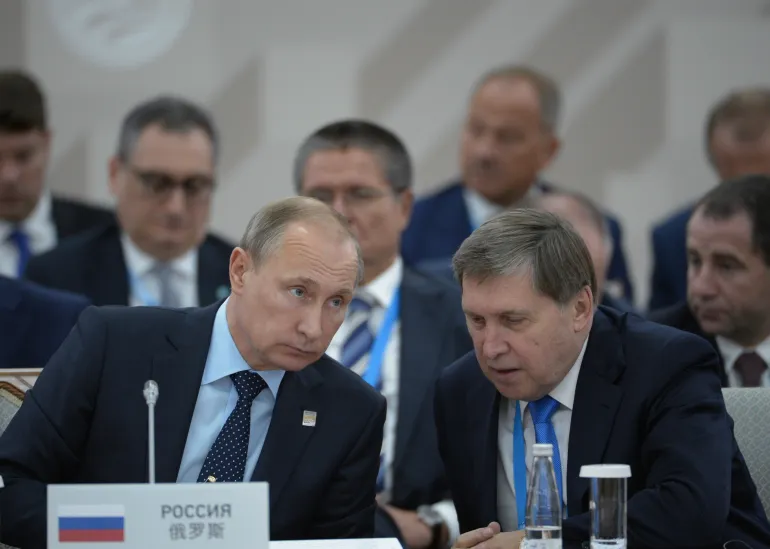
Russian President Vladimir Putin with presidential aide Yury Ushakov [File/Handout: RIA Novosti via Getty Images]
Earlier on Sunday, Putin’s top foreign policy aide, Yury Ushakov, said that the changes requested by Ukraine and its European allies to the framework put forth by the US were not improving prospects for peace.
Ushakov said that Dmitriev was due to return to Moscow on Monday and would report to Putin on the outcome of his talks.
“After that, we will formulate the position with which we will proceed, including in our contacts with the Americans,” he said.
Russia, which launched a full-scale invasion of Ukraine in February 2022, sees Europe as “pro-war” and argues that its participation in the talks only hinders them.
Separately on Sunday, Kremlin spokesman Dmitry Peskov said that Putin was ready to talk with his French counterpart, Emmanuel Macron, after the latter said Europe should reach out to the Russian president to end the war.
Putin has “expressed readiness to engage in dialogue with Macron”, Peskov told Russian state news agency RIA Novosti. “Therefore, if there is mutual political will, then this can only be assessed positively.”
Macron’s office welcomed the Russian statement.
“It is welcome that the Kremlin has publicly agreed to this approach. We will decide in the coming days on the best way to proceed,” it said.
Trump first shared his plan consisting of 28 points to end the war in Ukraine last month, triggering immediate criticism from European leaders who said it echoed the Kremlin’s demands.
Zelenskyy has since said that Ukraine and its European allies have shared their own version of a 20-point plan, which was based on the initial plan put forward by the White House.
One of the key sticking points between Russia and Ukraine remains Russia’s demand to retain some of the land it has captured in Ukraine since launching its full-scale invasion after years of fighting in Ukraine’s east.
Zelenskyy has described the talks as “constructive” and said they were “moving at a fairly rapid pace”. He nevertheless cautioned that “much depends on whether Russia feels the need to end the war for real”.
He also hailed this week as “historic” for Ukraine, thanking Europe for pledging $100bn of funding over the next two years.
These are the key developments from day 1,397 of Russia’s war on Ukraine.
Published On 22 Dec 202522 Dec 2025
Share
Here is where things stand on Monday, December 22:
Fighting
A Russian attack on Ukraine’s Kharkiv region killed a 49-year-old man and a 42-year-old woman, according to Governor Oleh Syniehubov. The killings took place in the village of Izyum.
Russian attacks also killed one person in Ukraine’s Donetsk region, and one person in the southeastern Zaporizhia region, local officials reported.
Russian forces have shelled the Zaporizhia region nearly 5,000 times over the past week, wounding 60 people and damaging hundreds of buildings, according to Governor Ivan Fedorov.
Overall, Russian forces have launched about 1,300 drones, nearly 1,200 guided aerial bombs, and nine missiles towards Ukraine over the past week, according to Ukrainian President Volodymyr Zelenskyy.
Ukraine’s ombudsman, Dmytro Lubinets, accused Russian forces of “illegally” detaining about 50 residents of the village of Hrabovske in the Sumy region and “forcibly deporting” them to Russian territory.
The Kyiv Independent, citing Ukrainian authorities, reported that wreckage from a Ukrainian drone attack on Russia damaged a pipeline in the Krasnodar Krai region.
Russia’s Ministry of Defence said its forces shot down 29 Ukrainian drones in the past 24-hour period.
The Russian Federal Security Service (FSB) claimed that Russian forces shot down 252 drones over the Russian-occupied Donbas region, using the “Donbas Dome electronic warfare system” over the past week, the TASS news agency reported.
Politics and diplomacy
US envoys Steve Witkoff and Jared Kushner met with a Ukrainian delegation, led by senior official Rustem Umerov and European officials, as the US continued to host talks in Miami, Florida, on a prospective peace deal for Russia’s war on Ukraine for a third day on Sunday.
Witkoff said in a post on X late on Sunday that the talks with the Ukrainians and Europeans had been “productive and constructive” and focused on a “shared strategic approach between Ukraine, the United States and Europe”.
In a second post about two hours later, Witkoff said that the US had also had “productive and constructive meetings” with Russian envoy Kirill Dmitriev over the past two days.
“Russia remains fully committed to achieving peace in Ukraine [and] highly values the efforts and support of the United States to resolve the Ukrainian conflict and re-establish global security,” Witkoff said.
Earlier, Russian President Vladimir Putin’s top foreign policy aide, Yury Ushakov, said that changes made by European countries and Ukraine to the US’s proposals for an end to Russia’s war did not improve prospects for peace.
“I am sure that the proposals that the Europeans and Ukrainians have made or are trying to make definitely do not improve the document and do not improve the possibility of achieving long-term peace,” Ushakov was quoted as saying by Russian news agencies.
Kremlin spokesman Dmitry Peskov said the Russian president was ready to talk with his French counterpart, Emmanuel Macron, after the latter said Europe should reach out to Moscow to end the war.
Macron’s office welcomed the Russian statement, saying: “It is welcome that the Kremlin has publicly agreed to this approach. We will decide in the coming days on the best way to proceed.”
India’s Ministry of External Affairs said that “202 Indian nationals are believed to have been recruited into the Russian armed forces” during Russia’s war on Ukraine. It said Russian authorities had reported that 26 had been killed and seven were missing.
Sweden’s customs service said on Sunday that Swedish authorities boarded a Russian freighter that anchored in Swedish waters on Friday after developing engine problems, to inspect the cargo. The owners of the vessel, the Adler, are on the European Union’s sanctions list, Martin Hoglund, spokesman at the customs authority, said.
“Shortly after 0100 last night [00:00 GMT] we boarded the ship with support from the Swedish Coast Guard and the police service in order to make a customs inspection,” Hoglund said. “The inspection is still ongoing.”
Yury Ushakov’s remarks come a day after US and Russian officials held talks on the US proposal in Florida.
Published On 21 Dec 202521 Dec 2025
Share
Russian President Vladimir Putin’s top foreign policy aide says that changes made by European countries and Ukraine to the United States’ proposals for an end to Russia’s war on Ukraine did not improve prospects for peace.
“I am sure that the proposals that the Europeans and Ukrainians have made or are trying to make definitely do not improve the document and do not improve the possibility of achieving long-term peace,” Yury Ushakov was quoted as saying by Russian news agencies on Sunday.
Recommended Stories
list of 4 itemsend of list
The US-drafted proposals for an end to the nearly four-year war, leaked to the media last month, raised European and Ukrainian concerns that they favour more of Russia’s wartime demands and that US President Donald Trump’s administration could push Kyiv into conceding too much.
Since then, European and Ukrainian negotiators have met with Trump envoys in an attempt to add their own proposals to the US drafts, though the exact contents of the current proposal have not been disclosed.
The remarks from Ushakov came after Putin’s special envoy, Kirill Dmitriev, met in Florida on Saturday with US special envoy Steve Witkoff and Trump’s son-in-law Jared Kushner. Dmitriev said the talks would continue on Sunday.
The Miami meeting followed US talks on Friday with European and Ukrainian officials.
In the wake of those talks, Ukrainian President Volodymyr Zelenskyy said his team should hold more talks with European allies.
“There is a shared sense that after the work by our diplomatic team in the United States, we should now hold consultations with European partners in a broader circle,” Zelenskyy said in a post on X on Sunday.
Three-way talks?
Zelenskyy had said on Saturday that Ukraine would back a US proposal for three-way talks with the US and Russia if it facilitated more exchanges of prisoners and paved the way for meetings of national leaders.
Ushakov said that a proposal for three-way talks had not been seriously discussed by anyone and that it was not being worked on.
Russia says that European leaders are intent on scuttling the talks by introducing conditions that they know will be unacceptable to Russia, which took 12-17 square kilometres (4.6 to 6.6 square miles) of Ukrainian territory per day in 2025.
Ukraine and European leaders say that Russia cannot be allowed to achieve its aims in what they call its imperial-style land grab.
Ukraine battles attempted Russian breakthrough
In Ukraine, fighting continues with the Ukrainian army battling an attempted Russian breakthrough in the Sumy region, it said on Sunday, following reports that Moscow forcibly moved 50 people from a border village there.
This marks a renewed Russian advance in the part of the region previously largely spared from intense ground fighting since Ukraine regained land there in a swift 2022 counter-offensive.
“Fighting is currently ongoing in the village of Grabovske,” Ukraine’s joint task force said, adding the troops were “making efforts to drive the occupiers back into Russian territory”.
Zelenskyy said that over the week, “Russia has launched approximately 1,300 attack drones, nearly 1,200 guided aerial bombs, and nine missiles of various types” against Ukraine.
Russia launched its full-scale invasion of Ukraine in February 2022 after eight years of fighting in the country’s east.
Some European leaders feel sidelined as US mediation takes Russian priorities into consideration.
After years of support from the United States for the Ukraine war to continue “as long as it takes”, the Trump administration is now pushing to end Europe’s war – quickly and imperfectly.
While details are still under negotiation, they include issues such as ensuring Ukraine never joins NATO and Russia’s control over about 20 percent of Ukraine.
To understand the implications for Europe, the US and their relations, host Steve Clemons speaks with Kurt Volker, Trump’s former special representative for Ukraine negotiations, and retired Colonel Heino Klinck, former director of US Army international affairs.
From a Russian air strike in Zaporizhzhia in Ukraine to demonstrations calling for the removal of US Immigration and Customs Enforcement from Minnesota, here is a look at the week in photos.
Negotiators from Russia and the United States have met in the US city of Miami as Ukrainian President Volodymyr Zelenskyy urged Washington to ramp up the pressure on Moscow to end its war on Ukraine.
The meeting on Saturday took place between Russian President Vladimir Putin’s special envoy, Kirill Dmitriev, and US President Donald Trump’s special envoy, Steve Witkoff, and his son-in-law, Jared Kushner.
Recommended Stories
list of 3 itemsend of list
Dmitriev told the reporters the talks were positive and would continue on Sunday.
“The discussions are proceeding constructively,” said Dmitriev. “They began earlier and will continue today, and will also continue tomorrow.”
Earlier, US Secretary of State Marco Rubio had said that he may also join the talks in Miami. He said that progress has been made in discussions to end the war, but there is still a way to go.
“The role we’re trying to play is a role of figuring out whether there’s any overlap here that they can agree to, and that’s what we’ve invested a lot of time and energy [on], and continue to do so,” Rubio said. “That may not be possible. I hope it is. I hope it can get done this month, before the end of the year.”
Trump’s envoys have for weeks been negotiating a 20-point peace plan with Ukrainian, Russian and European officials.
While US officials say they have made progress, major differences remain on the issues of territory and possible security guarantees that Kyiv says are essential for any agreement.
Russia has shown few signs that it is willing to give up its expansive territorial demands in Ukraine, which it believes it is well-positioned to secure as the war grinds on and political fractures emerge among Ukraine’s European allies.
In Kyiv, Zelenskyy said he remains supportive of a US-led negotiations process, but that diplomacy needs to be accompanied by greater pressure on Russia.
“America must clearly say, if not diplomacy, then there will be full pressure… Putin does not yet feel the kind of pressure that should exist,” he said.
The Ukrainian leader said Washington has also proposed a new format for talks with Russia, comprised of three-way talks at the level of national security advisers from Ukraine, Russia, and the US.
Zelenskyy expressed scepticism that the talks would result in “anything new”, but said he would support trilateral discussions if they led to progress in areas such as prisoner swaps or a meeting of national leaders.
“If such a meeting could be held now to allow for swaps of prisoners of war, or if a meeting of national security advisers achieves agreement on a leaders’ meeting… I cannot be opposed. We would support such a US proposal. Let’s see how things go,” he said.
The last time Ukrainian and Russian envoys held official direct talks was in July in Istanbul, which led to prisoner swaps but little else.
The talks in Miami come after Putin promised to press ahead with his military offensive in Ukraine, hailing Moscow’s battlefield gains in an annual news conference on Friday.
Putin, however, suggested that Russia could pause its devastating strikes on the country to allow Ukraine to hold a presidential ballot, a prospect that Zelenskyy rejected.
Meanwhile, the death toll in Ukraine’s Black Sea Odesa region from an overnight Russian ballistic missile strike on port infrastructure rose to eight, with 30 people wounded.
A civilian bus was struck in the attack, Ukrainian Prime Minister Yulia Svyrydenko said.
The Russian attacks on the coastline region have wrought havoc in recent weeks, hitting bridges and cutting electricity and heating for hundreds of thousands in freezing temperatures.
Moscow earlier said it would expand strikes on Ukrainian ports as retaliation for targeting its sanctions-busting oil tankers.
On Saturday, Ukraine claimed to have destroyed two Russian fighter jets at an airfield in Moscow-occupied Crimea, according to the security service SBU. Kyiv’s army said it struck a Russian oil rig in the Caspian Sea as well as a patrol ship nearby.
Putin described Russia’s initial full-scale invasion of Ukraine as a “special military operation” to “demilitarise” the country and prevent the expansion of NATO.
Kyiv and its European allies say the war, the largest and deadliest on European soil since World War II, is an unprovoked and illegal land grab that has resulted in a tidal wave of violence and destruction.
Here is where things stand on Sunday, December 21:
Fighting
The death toll from a Russian missile attack on Ukraine’s port city of Odesa rose from seven to eight, with at least 30 others wounded, according to Ukrainian authorities.
Ukrainian President Volodymyr Zelenskyy described the situation in Odesa as “harsh” and accused Russia of trying to block Kyiv’s access to the Black Sea.
The Ukrainian leader also said that he is looking to replace the head of the Southern Air Command, Dmytro Karpenko, over the Russian strikes on Odesa.
Ukrainian Deputy Prime Minister Oleksii Kuleba said Russian forces also attacked the nearby port of Pivdennyi on Saturday, hitting several reservoirs.
Ukraine’s military said its special forces carried out a drone attack on a Lukoil oil rig in the Caspian Sea on Friday, along with the Russian military patrol ship Okhotnik. The military also said that the Filanovsky oil rig, which had been targeted twice this month, was damaged in the strike.
The Ukrainian military also said it destroyed two Russian fighter jets at an airfield in the occupied Crimean peninsula.
Russia’s Ministry of Defence said its forces took control of the villages of Svitle and Vysoke, located in Ukraine’s eastern Donetsk region and the northeastern Luhansk region, respectively.
Diplomacy and ceasefire talks
Zelenskyy said the United States proposed a new format for talks with Russia, comprised of three-way talks at the level of national security advisers from Ukraine, Russia, and the US.
The Ukrainian leader expressed scepticism that the talks would result in “anything new”, but added that he believes that US-led talks have the best chance of success.
He added that he would support trilateral discussions if they led to progress in areas such as prisoner swaps or a meeting of national leaders. “If such a meeting could be held now to allow for swaps of prisoners of war, or if a meeting of national security advisers achieves agreement on a leaders’ meeting… I cannot be opposed. We would support such a US proposal. Let’s see how things go,” he said.
Zelenskyy also pushed back against calls for Ukraine to hold elections as the war drags on, stating that voting cannot take place in Russian-occupied areas and that security conditions must first improve. “It is not [Russian President Vladimir] Putin who decides when and in what format the elections in Ukraine will take place,” Zelenskyy said.
Zelenskyy urged European leaders to approve a measure to seize frozen Russian assets and use them to fund Ukraine’s war effort, saying that doing so will strengthen Ukraine’s leverage at the negotiating table. The International Monetary Fund has estimated that Ukraine will need about 137 billion euros ($161bn) in 2026 and 2027, as the demands of the war continue to strain the country’s economy.
Russian special envoy Kirill Dmitriev held talks with his US counterpart, Steve Witkoff, and US President Donald Trump’s son-in-law, Jared Kushner, in the city of Miami.
“The discussions are proceeding constructively. They began earlier and will continue today, and will also continue tomorrow,” Dmitriev said
Russian Minister of Foreign Affairs Sergey Lavrov attended a summit in Cairo, held to advance closer cooperation between Russia and African nations, and attended by more than 50 countries. Lavrov pitched Russia as a “reliable partner” to African countries in areas such as security and national sovereignty.
Weapons
Ukrainian presidential aide Oleksandr Kamyshin announced a deal with Portugal on the joint production of maritime drones, saying it would help “defend Europe from the sea”.
A Russian ballistic missile strike on port infrastructure in Ukraine’s Odesa port in the south has killed at least eight people and wounded 27, as Moscow intensifies attacks on the strategic Black Sea region and talks to end the war remain in a critical stage.
The attack late on Friday hit critical logistics infrastructure, with some of the wounded trapped on a bus at the strike’s epicentre as trucks caught fire in a car park.
Recommended Stories
list of 2 itemsend of list
Ukrainian officials say the bombardment is part of a sustained Russian campaign against Odesa’s civilian infrastructure that has left more than two million people without electricity, water and heating for days amid freezing temperatures in the war’s fourth punishing winter.
Moscow struck the same port again on Saturday, hitting reservoirs in what Ukrainian Deputy Prime Minister Oleksii Kuleba described as deliberately targeting civilian logistics routes.
The escalation comes as both sides trade blows across multiple fronts, while United States-led negotiations and numerous high-level meetings in Europe to end the war lumber on without a breakthrough.
Russia claimed on Saturday to have seized the villages of Svitle in the eastern Donetsk region and Vysoke in the northeastern Sumy region, though the reports could not be independently verified.
Ukraine has responded with a widening campaign against Russian military and energy assets.
On Friday night, Ukrainian drones struck the Filanovsky oil rig belonging to Russian energy giant Lukoil in the Caspian Sea, along with a military patrol ship patrolling near the platform.
The attack marked the first officially acknowledged Ukrainian strike on Caspian drilling infrastructure, though the rig had been hit at least twice before in December.
Between December 14 and 15, Ukrainian forces used sea drones to strike a Russian Kilo-class submarine at the Novorossiysk Naval Base in the Black Sea, according to a United Kingdom Defence Intelligence assessment.
Miami talks
The attacks unfold as American and European officials gather in Miami for weekend talks aimed at ending the nearly four-year war, with Russian and Ukrainian teams also in attendance.
Russian envoy Kirill Dmitriev said on Saturday he was heading to Miami.
US Secretary of State Marco Rubio said Washington would not force Ukraine into any agreement, though he described the conflict as “not our war”.
Trump envoys Steve Witkoff and Jared Kushner are leading discussions with Ukrainian negotiator Rustem Umerov and officials from the UK, France and Germany. Russian representatives, including Kremlin key negotiator Dmitriev, are meeting separately with American officials.
The key obstacle remains territorial concessions, with reports suggesting Washington is pushing Kyiv to cede parts of the eastern Donetsk region.
Russian President Vladimir Putin showed no signs of compromise at his annual choreographed news conference on Friday, pledging to press ahead with military operations and predicting new successes before the year’s end.
Putin’s remarks were the latest in a drumbeat of often-repeated maximalist Russian positions nearly four years after he ordered troops into the neighbouring country.
The issue of territory gained, lost, to be ceded or not, delves into the heart of the matter on one of the most contentious issues in the talks to end the war so far.
Putin has demanded Ukraine cede all territory in four key regions his forces have captured and occupied, along with Crimea, which Moscow seized and annexed in 2014.
He also wants Ukrainian troops to withdraw from parts of eastern Ukraine that Russian forces have not yet taken in the eastern Donetsk region, where fighting remains attritional – conditions Kyiv has rejected outright.
As talks continue, so does the fighting, with Russia controlling large parts of Ukraine’s eastern and Black Sea coastal regions.
Putin projected confidence on Friday about battlefield progress, saying Russian forces had “fully seized strategic initiative” and would make further gains before the year ends.
However, that narrative is on shaky ground this week, as Moscow’s assertion of inevitable victory flew in the face of facts on the ground.
Ukraine steadily took back control of almost all of its northern city of Kupiansk after isolating Russian forces within it, belying Russian claims to have seized it.
Russian forces were also unable to dislodge Ukrainian defenders from the eastern city of Pokrovsk in the eastern area of Donetsk to back up Moscow’s claims of total control.
Ukraine received a boost on Friday when European leaders agreed to provide a 90 billion euros ($105bn) loan to cover military and economic needs for the next two years.
President Volodymyr Zelenskyy, who met Polish President Karol Nawrocki in Warsaw the same day to reinforce regional unity against Russia, said the funds would go towards defence if the war continues or reconstruction if peace is achieved.
These are the key developments from day 1,395 of Russia’s war on Ukraine.
Published On 20 Dec 202520 Dec 2025
Share
Here is where things stand on Saturday, 20 December :
Fighting
Russian attacks targeting ports in Ukraine’s Odesa killed seven people and wounded 15, Governor Oleh Kiper said in a post on Telegram.
Kiper described the attack as “massive” and said it involved Russian ballistic missiles, which targeted trucks that caught fire.
The Kyiv Independent news outlet reported that Odesa city has been suffering from chronic power outages since December 13, due to earlier Russian attacks.
Russian forces attacked Ukraine’s Dnipro region with artillery shelling and drones, damaging homes, power lines and a gas pipeline, Vladyslav Hayvanenko, acting head of the Dnipropetrovsk Regional State Administration, wrote on Facebook.
Ukraine has taken back control of almost all of its northern city of Kupiansk after isolating Russian forces and unending Russian claims to have seized the key urban centre.
Aid
European Union leaders agreed to provide a $105.5bn interest-free loan to Ukraine to meet the country’s military and economic needs for the next two years.
EU leaders decided to borrow cash on capital markets to fund Ukraine’s defence against Russia, rather than use frozen Russian assets, diplomats said.
Diplomacy
In his annual “results of the year” speech in Moscow on Friday, Russian President Vladimir Putin blamed Ukrainian President Volodymyr Zelenskyy for refusing to discuss giving up the Ukrainian Russia has seized, as part of truce negotiations.
“We know from statements from Zelenskyy that he’s not prepared to discuss territory issues,” Putin said.
The Russian president also attacked Europe’s handling of frozen Russian assets, labelling plans to use them to fund Ukraine as “robbery”, rather than theft, because it was being done openly.
“Whatever they stole, they’ll have to give it back someday,” Putin said, pledging to pursue legal action in courts that he described as “independent of political decisions”.
Ceasefire talks
US Secretary of State Marco Rubio said that progress has been made to end Russia’s war on Ukraine in a year-end address in Washington, DC.
“I think we’ve made progress, but we have a ways to go, and obviously, the hardest issues are always the last issues,” Rubio told reporters.
“We don’t see surrender any time in the near future, and only a negotiated settlement can end this war,” Rubio said, adding that any decision about ending the war will be up to Ukraine and Russia, and not the US.
Top Ukrainian negotiator Rustem Umerov, who is in the US for ceasefire discussions, said the US and Kyiv had agreed to continue their joint efforts to reach a ceasefire.
“We agreed with our American partners on further steps and on continuing our joint work in the near future,” Umerov wrote on Telegram, without providing further details. He added that he had informed Zelenskyy of the outcome of the talks.
Putin’s special envoy, Kirill Dmitriev, is heading to Miami for a meeting with Trump’s envoy, Steve Witkoff, and the US president’s son-in-law, Jared Kushner, a Russian source told Reuters.
The meeting in Miami this weekend comes after Witkoff and Kushner held talks in Berlin with Ukrainian and European officials earlier this week to try to reach a deal to end the war.
The Russian source said that any meeting between Dmitriev and Ukrainian negotiators currently in the US had been ruled out.
Regional Security
Turkiye’s Ministry of the Interior said that it found a Russian-made reconnaissance drone in the İzmit district of Kocaeli, in northwestern Turkiye, based on “initial findings” from an ongoing investigation.
An “unmanned aerial vehicle (UAV) believed to be of the Russian-made Orlan-10 type, used for reconnaissance and surveillance, was found,” the ministry said in a post on X.
Turkiye’s Ministry of National Defence said on Monday that it had shot down a drone over the Black Sea as it approached Turkish airspace, according to local reports, without providing further details.
Ukraine’s Ukrinform news site reported on Friday that after the drone was shot down, Turkiye had informed both Kyiv and Moscow “of the need to act cautiously” so as not to “negatively affect security in the Black Sea”.