Politics

Latest news about politics

Trump says he’s inviting Kazakhstan and Uzbekistan to next year’s G20 summit in Miami

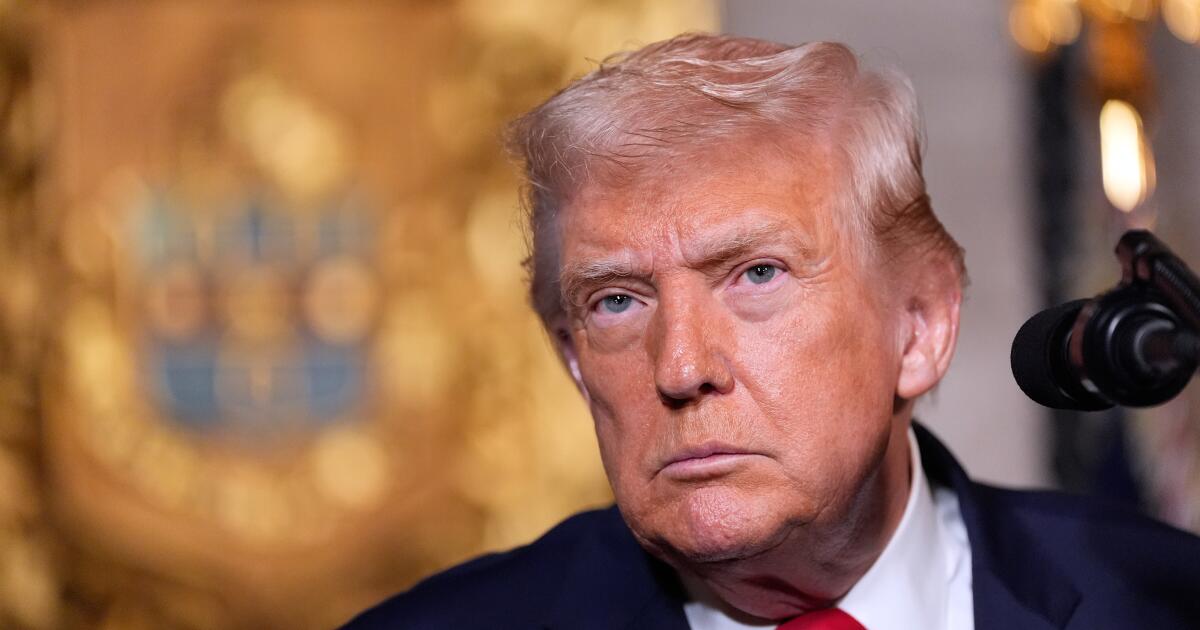
President Trump said he will be extending invitations to next year’s U.S.-hosted Group of 20 summit to Kazakhstan and Uzbekistan as the Republican administration looks to deepen its relationship with the Central Asian nations.

Trump announced the plan on Tuesday after holding separate phone calls with Kazakhstan President Kassym-Jomart Tokayev and Uzbekistan President Shavkat Mirziyoyev.

Neither country is a member of the G20, but the host country of the annual leaders’ gathering of major economies often invites non-members to attend the summit. The 2026 gathering is planned for Trump’s golf club in Doral, Fla., near Miami.

“The relationship with both Countries is spectacular,” Trump said in a social media post about the calls. Trump is currently on vacation at his Mar-a-Lago resort in Florida.

The Kazakh and Uzbek leaders visited Washington last month along with the leaders of Kyrgyzstan, Tajikistan, and Turkmenistan for talks with Trump.

The administration is giving greater attention to Central Asia, which holds deep reserves of minerals and produces roughly half the world’s uranium, as it intensifies the hunt for rare earth metals needed for high-tech devices, including smartphones, electric vehicles and fighter jets.

Central Asia’s critical mineral exports have long tilted toward China and Russia.

During last month’s visit, Tokayev announced that his Muslim-majority country will join the Abraham Accords, the Trump administration effort to strengthen ties between Israel and Arab and Muslim majority countries.

The largely symbolic move came as the administration is trying to revive an initiative that was the signature foreign policy achievement of Trump’s first term, when his administration forged diplomatic and commercial ties between Israel and the United Arab Emirates, Bahrain and Morocco.

Trump last month announced that he is barring South Africa from participating in next year’s summit at his Miami-area club and will stop all payments and subsidies to the country over its treatment of a U.S. government representative at this year’s meeting.

Trump chose not to have an American government delegation attend this year’s summit hosted by South Africa, saying he did so because its white Afrikaners were being violently persecuted. It is a claim that South Africa, which was mired for decades in racial apartheid, has rejected as baseless.

Madhani writes for the Associated Press.

Source link

DOJ releases third batch of Epstein files; shows Trump flights

Dec. 23 (UPI) — The Department of Justice Tuesday released a third cache of files from the Jeffrey Epstein case, including flight logs that show President Donald Trump flew on Epstein’s plane more than has been reported.

The logs show Trump flew on Epstein’s plane at least eight times in the 1990s. One of those flights included an unnamed 20-year old woman.

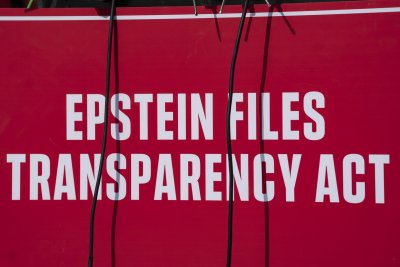
The documents are released to comply with the Epstein Files Transparency Act, which became law on Nov. 19, though the Justice Department didn’t release all the files on time.

Epstein was an American billionaire financier who was a convicted sex offender. He died by suicide in jail while awaiting trial.

The information about the flights comes from an email sent in January 2020 from a New York federal prosecutor to an unnamed person. The email doesn’t accuse Trump of any wrongdoing.

“For your situational awareness, wanted to let you know that the flight records we received yesterday reflect that Donald Trump traveled on Epstein’s private jet many more times than previously has been reported (or that we were aware), including during the period we would expect to charge in a [Ghislaine] Maxwell case,” the email said.

Ghislaine Maxwell, Epstein’s accomplice, is serving time for sex trafficking.

It said Trump “is listed as a passenger on at least eight flights between 1993 and 1996, including at least four flights on which Maxwell was also present. He is listed as having traveled with, among others and at various times, Marla Maples, his daughter Tiffany, and his son Eric,” it said.

“On one flight in 1993, he and Epstein are the only two listed passengers; on another, the only three passengers are Epstein, Trump, and then-20-year-old [redacted]. On two other flights, two of the passengers, respectively, were women who would be possible witnesses in a Maxwell case.”

The Justice Department said there were multiple references to Trump in the latest release. It called some of the mentions “untrue and sensationalist claims.”

“The Department of Justice has officially released nearly 30,000 more pages of documents related to Jeffrey Epstein. Some of these documents contain untrue and sensationalist claims made against President Trump that were submitted to the FBI right before the 2020 election. To be clear: the claims are unfounded and false, and if they had a shred of credibility, they certainly would have been weaponized against President Trump already,” the department said on X.

“Nevertheless, out of our commitment to the law and transparency, the DOJ is releasing these documents with the legally required protections for Epstein’s victims.”

Source link

Trump announces plans for new Navy ‘battleship’ as part of a ‘Golden Fleet’

President Trump has announced a bold plan for the Navy to build a new, large warship that he is calling a “battleship” as part of a larger vision to create a “Golden Fleet.”

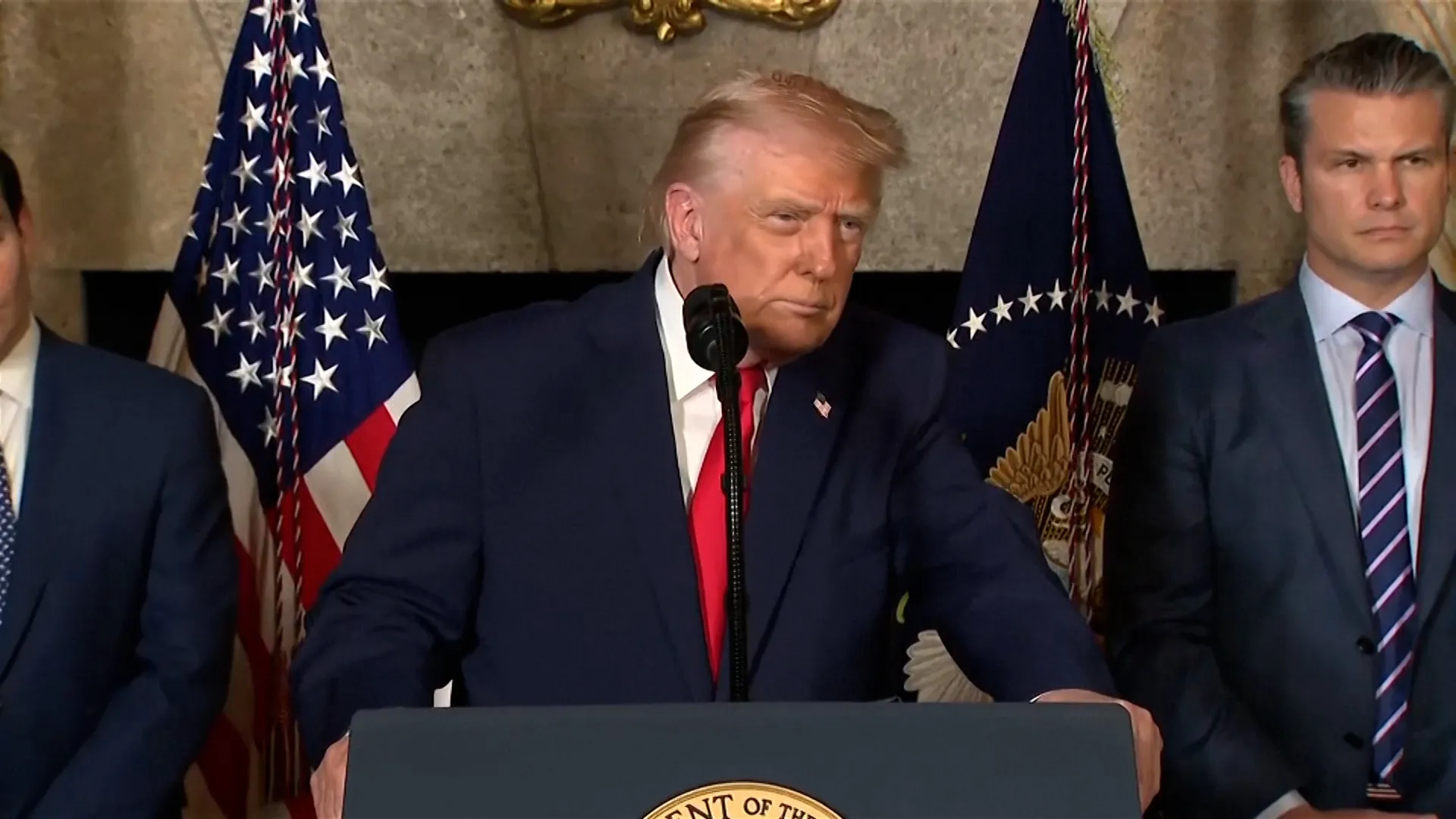
“They’ll be the fastest, the biggest, and by far 100 times more powerful than any battleship ever built,” Trump claimed during the announcement at his Mar-a-Lago resort in Florida.

According to Trump, the ship, the first of which will be named the USS Defiant, will be longer and larger than the World War II-era Iowa-class battleships and will be armed with hypersonic missiles, nuclear cruise missiles, rail guns, and high-powered lasers — all technologies that are in various stages of development by the Navy.

The announcement comes just a month after the Navy scrapped its plans to build a new, small warship, citing growing delays and cost overruns, deciding instead to go with a modified version of a Coast Guard cutter that was being produced until recently. The sea service has also failed to build its other newly designed ships, like the new Ford-class aircraft carrier and Columbia-class submarines, on time and on budget.

Meanwhile, the Navy has struggled to field some of the technologies Trump says will be aboard the new ship.

The Navy spent hundreds of millions of dollars and more than 15 years trying to field a railgun aboard a ship before finally abandoning the effort in 2021.

Laser technology has seen more success in making its way onto Navy ships in recent years, but its employment is still limited. One system that is designed to blind or disable drone sensors is now aboard eight destroyers after spending eight years in development.

Developing nuclear cruise missile capabilities or deploying them on ships may also violate non-proliferation treaties that the U.S. has signed with Russia.

A U.S. official, who spoke on condition of anonymity to discuss ongoing plans, told the Associated Press that design efforts are now underway for the new ship and construction is planned to begin in the early 2030s.

Both Trump and Navy Secretary John Phelan spoke about the new Trump-class warship as a spiritual successor to the battleships of the 20th century, but historically that term has referred to a very specific type of ship — a large, heavily armored vessel armed with massive guns designed to bombard other ships or targets ashore.

This type of ship was at the height of prominence during World War II, and the largest of the U.S. battleships, the Iowa-class, were roughly 60,000 tons. But after World War II, the battleship’s role in modern fleets diminished rapidly in favor of aircraft carriers and long-range missiles. The U.S. Navy did modernize four Iowa-class battleships in the 1980s by adding cruise missiles and anti-ship missiles, along with modern radars, but by the 1990s all four were decommissioned.

According to a newly created website for the “Golden Fleet,” this new “guided missile battleship” is set to be roughly the same size as Iowa-class battleships but only weigh about half as much, around 35,000 tons, and have far smaller crews — between 650 and 850 sailors.

Its primary weapons will also be missiles, not large naval guns.

Trump has long held strong opinions on specific aspects of the Navy’s fleet, sometimes with a view toward keeping older technology instead of modernizing.

During his first term, he unsuccessfully called for the return to steam-powered catapults to launch jets from the Navy’s newest aircraft carriers instead of the more modern electromagnetic system.

He has also complained to Phelan about the look of the Navy’s destroyers and decried Navy ships being covered in rust.

Phelan told senators at his confirmation hearing that Trump “has texted me numerous times very late at night, sometimes after one (o’clock) in the morning” about “rusty ships or ships in a yard, asking me what am I doing about it.”

On a visit to a shipyard that was working on the now-canceled Constellation-class frigate in 2020, Trump said he personally changed the design of the ship.

“I looked at it, I said, ‘That’s a terrible-looking ship, let’s make it beautiful,’” Trump said at the time.

He said Monday he will have a direct role in designing this new warship as well.

“The U.S. Navy will lead the design of these ships along with me, because I’m a very aesthetic person,” Trump said.

Phelan said the new USS Defiant “will inspire awe and reverence for the American flag whenever it pulls into a foreign port.”

Toropin and Madhani write for the Associated Press.

Source link

Feds file suit to overturn Washington, D.C., gun control laws

Dec. 23 (UPI) — The federal government is suing Washington, D.C., to ease its gun-ownership laws, which are the strictest in the nation.

The U.S. Department of Justice filed the suit Monday in federal court seeking to declare the laws unconstitutional and prevent the District from enforcing them. The laws ban most semiautomatic rifles and other firearms from being registered with the police department. This makes any possession of those guns illegal. AK-47s and AR-15s are among those that are illegal. Those owning those guns can face misdemeanor charges and fines.

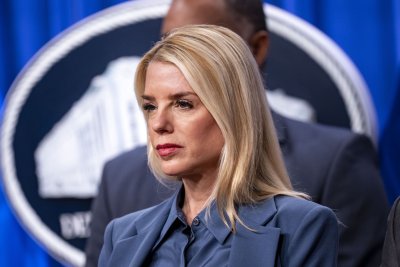
The action “underscores our ironclad commitment to protecting the Second Amendment rights of law-abiding Americans,” Attorney General Pam Bondi said in a statement. “Washington, D.C.’s ban on some of America’s most popular firearms is an unconstitutional infringement on the Second Amendment — living in our nation’s capital should not preclude law-abiding citizens from exercising their fundamental constitutional right to keep and bear arms.”

The suit cites District of Columbia v. Heller, which was decided by the Supreme Court in 2008. Before Heller, the District made it illegal to carry unregistered firearms but it also banned the registration of handguns. The Heller decision said that people can have guns in their homes for self-defense.

After Heller, the District updated its gun laws and included a registry and training requirements. But it still makes assault rifles impossible to register.

The suit filed by the Justice Department argues the merit of the law.

“D.C.’s current semi-automatic firearms prohibition that bans many commonly used pistols, rifles or shotguns is based on little more than cosmetics, appearance, or the ability to attach accessories, and fails to take into account whether the prohibited weapon is ‘in common use today’ or that law-abiding citizens may use these weapons for lawful purposes protected by the Second Amendment. Therefore, the District’s restrictions lack legal basis,” the filing said.

D.C. Mayor Muriel E. Bowser, a Democrat, said in a statement Monday, reported by the Washington Post, that the District would “vigorously defend our right to make decisions that keep our city safe.”

“Gun violence destroys families, upends communities, and threatens our collective sense of safety. MPD has saved lives by taking illegal guns off our streets — efforts that have been praised by our federal partners,” Bowser said. “It is irresponsible to take any steps that would lead to more, and deadlier, guns in our communities, especially semi-automatic rifles like AR-15s.”

Lawyers from Everytown Law, a gun safety organization, said the city’s gun bans are legal.

“The legal consensus is clear: assault weapon bans are constitutional. Since the Supreme Court’s rulings in Bruen and Rahimi, federal courts have repeatedly affirmed that these laws are consistent with the Second Amendment,” Bill Taylor, deputy director of Second Amendment litigation at Everytown Law, said in a statement. “Assault weapons are designed for mass devastation, and we look forward to supporting D.C. as it defends this critical common-sense safety measure.”

District of Columbia U.S. Attorney Jeanine Pirro told prosecutors in August not to enforce felony charges for the city’s ban on openly carrying rifles and shotguns in public or the city’s ban on magazines that hold more than 10 bullets.

Source link

Romney raises funds at posh locales

With his White House aspirations riding in no small part on the kind of Ohio voter who favors Budweiser over Pouilly-Fuissé, Mitt Romney -– like John F. Kerry before him -– has been struggling mightily to shed his image as a man of the Massachusetts elite.

This weekend, he gave it a break.

Romney took a jaunt to the most rarefied precincts of Martha’s Vineyard, Cape Cod and Nantucket on Saturday, after a Friday evening of mingling with millionaires in the Hamptons on Long Island.

It was all part of a chase, by private plane of course, for campaign money.

The former governor of Massachusetts left most of his traveling press behind. (“Bad optics,” campaign consultants call it.) Instead, he let just a small pool of reporters tag along to catch glimpses of Romney mostly from afar as he and his entourage made their way along such streets as Lily Pond Lane in East Hampton, N.Y.

“An 8-foot hedge blocked your pooler’s view of Romney exiting the house and getting into his SUV,” a journalist in the pool reported from outside the Southampton estate of hedge fund mogul Martin Gruss, where the Republican candidate stayed overnight on Friday.

Around the time of Romney’s “clambake luncheon” on Martha’s Vineyard, which included a $50,000-a-ticket VIP reception, President Obama was telling a less well-to-do crowd in New Hampshire that his rival was pushing tax cuts for the rich on the premise that “somehow prosperity’s going to rain down on all of you.”

Not that Obama, whose fundraising dinners with the likes of George Clooney have made headlines, hasn’t had optics problems of his own. Republicans trashed Obama when his campaign put out a video of Vogue editor Anna Wintour telling donors “don’t be late” to a soiree at Sarah Jessica Parker’s house on the same day that the unemployment rate notched up to 8.2%.

Romney’s weekend opened at Sebonack Golf Club in Southampton, where his motorcade rolled through the stately brick gates and up a long, winding driveway. Guests included NFL football team owners Steve Ross (Miami Dolphins) and Woody Johnson (New York Jets).

“I guess if all golf courses were like this, I can understand why the president plays so much golf,” Romney told donors at the club. “If I had a course like this near me, I think I’d probably play a lot of rounds as well. This is just gorgeous.”

On Martha’s Vineyard, Romney joined donors at a private home near the Farm Neck Golf Club, where Obama and former President Bill Clinton have played during family vacations.

Before taking off for Cape Cod, where billionaire businessman Bill Koch and his wife, Bridget, threw a reception for Romney, the candidate lamented his time spent hunting for money.

“You appreciate all the help you get,” he said. “But you wish you could spend more time on the campaign trail.”

From Cape Cod, Romney flew on to Nantucket, where Kerry’s windsurfing during his 2004 campaign for president was captured on videotape that was used in advertising by PresidentGeorge W. Bush’s reelection campaign to portray the Massachusetts senator as a flip-flopping elitist.

michael.finnegan@latimes.com

Source link

California counties unsure how how they’ll pay for uninsured

In 2013, before the Affordable Care Act helped millions get health insurance, California’s Placer County provided limited healthcare to some 3,400 uninsured residents who couldn’t afford to see a doctor.

For several years, that number has been zero in the predominantly white, largely rural county stretching from Sacramento’s eastern suburbs to the shores of Lake Tahoe.

The trend could be short-lived.

County health officials there and across the country are bracing for an estimated 10 million newly uninsured patients over the next decade in the wake of Republicans’ One Big Beautiful Bill Act. The act, which President Trump signed into law this summer, is expected to reduce Medicaid spending by more than $900 billion over that period.

“This is the moment where a lot of hard decisions have to be made about who gets care and who doesn’t,” said Nadereh Pourat, director of the Health Economics and Evaluation Research Program at UCLA. “The number of people who are going to lose coverage is large, and a lot of the systems that were in place to provide care to those individuals have either gone away or diminished.”

It’s an especially thorny challenge for states such as California and New Mexico where counties are legally required to help their poorest residents through what are known as indigent care programs. Under Obamacare, both states were able to expand Medicaid to include more low-income residents, alleviating counties of patient loads and redirecting much of their funding for the patchwork of local programs that provided bare-bones services.

Placer County, which estimates that 16,000 residents could lose healthcare coverage by 2028, quit operating its own clinics nearly a decade ago.

“Most of the infrastructure that we had to meet those needs is gone,” said Rob Oldham, Placer County’s director of health and human services. “This is a much bigger problem than it was a decade ago and much more costly.”

In December, county officials asked to join a statewide association that provides care to mostly small, rural counties, citing an expected rise in the number of uninsured residents.

New Mexico’s second-most populous county, Doña Ana, added dental care for seniors and behavioral health benefits after many of its poorest residents qualified for Medicaid. Now, federal cuts could force the county to reconsider, said Jamie Michael, Doña Ana’s health and human services director.

“At some point we’re going to have to look at either allocating more money or reducing the benefits,” Michael said.

Straining state budgets

Some states, such as Idaho and Colorado, abandoned laws that required counties to be providers of last resort for their residents. In other states, uninsured patients often delay care or receive it at hospital emergency rooms or community clinics. Those clinics are often supported by a mix of federal, state and local funds, according to the National Assn. of Community Health Centers.

Even in states like Texas, which opted not to expand its Medicaid program and continued to rely on counties to care for many of its uninsured, rising healthcare costs are straining local budgets.

“As we have more growth, more people coming in, it’s harder and harder to fund things that are required by the state Legislature, and this isn’t one we can decrease,” said Windy Johnson, program manager with the Texas Indigent Health Care Assn. “It is a fiscal issue.”

California lawmakers face a nearly $18-billion budget deficit in the 2026-27 fiscal year, according to the latest estimates by the state’s nonpartisan Legislative Analyst’s Office. Gov. Gavin Newsom, who recently acknowledged he’s mulling over a White House run, has rebuffed several efforts to significantly raise taxes on the ultrawealthy. Despite blasting the bill passed by Republicans in Congress as a “complete moral failure” that guts healthcare programs, the Democrat this year rolled back state Medi-Cal benefits for seniors and for immigrants without legal status after rising costs forced the program to borrow $4.4 billion from the state’s general fund.

H.D. Palmer, a spokesperson for the state’s Department of Finance, said that the Newsom administration is still refining its fiscal projections and that it would be premature to discuss potential budget solutions.

Newsom will unveil his initial budget proposal in January. State officials have said California could lose $30 billion a year in federal funding for Medi-Cal under the new law, as much as 15% of the state program’s entire budget.

“Local governments don’t really have much capacity to raise revenue,” said Scott Graves, a director at the independent California Budget & Policy Center with a focus on state budgets. “State leaders, if they choose to prioritize it, need to decide where they’re going to find the funding that would be needed to help those who are going to lose healthcare as a result of these federal funding and policy cuts.”

Reviving county-based programs in the near term would require “considerable fiscal restructuring” through the state budget, the Legislative Analyst’s Office said in an October report.

No easy fixes

It’s unclear how many people are enrolled in California’s county indigent programs, because the state doesn’t track enrollment and utilization. But enrollment in county health safety net programs dropped dramatically in the first full year of Affordable Care Act implementation, going from about 858,000 people statewide in 2013 to roughly 176,000 by the end of 2014, according to a survey at the time by Health Access California.

“We’re going to need state investment,” said Michelle Gibbons, executive director of the County Health Executives Assn. of California. “After the Affordable Care Act and as folks got coverage, we didn’t imagine a moment like this where potentially that progress would be unwound and folks would be falling back into indigent care.”

In November, voters in affluent Santa Clara County approved a sales tax increase, in part to backfill the loss of federal funds. But even in the home of Silicon Valley, where the median household income is about 1.7 times the statewide average, that is expected to cover only a third of the $1 billion a year the county stands to lose.

Health advocates fear that, absent major state investments, Californians could see a return to the previous patchwork of county-run programs, with local governments choosing whom and what they cover and for how long.

In many cases, indigent programs didn’t include specialty care, behavioral health or regular access to primary care. Counties can also exclude people based on immigration status or income. Before the ACA, many uninsured people who needed care didn’t get it, which could lead to them winding up in emergency rooms with untreated health conditions or even dying, said Kiran Savage-Sangwan, executive director of the California Pan-Ethnic Health Network.

Rachel Linn Gish, interim deputy director of Health Access California, a consumer advocacy group, said that “it created a very unequal, maldistributed program throughout the state.”

“Many of us,” she said. “including counties, are reeling trying to figure out: What are those downstream impacts?”

KFF Health News is a national newsroom that produces in-depth journalism about health issues and is one of the core operating programs at KFF, the independent source for health policy research, polling and journalism.

Source link

‘It’s a Wonderful ICE?’ Trumpworld tries to hijack a holiday classic

For decades, American families have gathered to watch “It’s a Wonderful Life” on Christmas Eve.

The 1946 Frank Capra movie, about a man who on one of the worst days of his life discovers how he has positively impacted his hometown of Bedford Falls, is beloved for extolling selflessness, community and the little guy taking on rapacious capitalists. Take those values, add in powerful acting and the promise of light in the darkest of hours, and it’s the only movie that makes me cry.

No less a figure of goodwill than Pope Leo XIV revealed last month that it’s one of his favorite movies. But as with anything holy in this nation, President Trump and his followers are trying to hijack the holiday classic.

Last weekend, the Department of Homeland Security posted two videos celebrating its mass deportation campaign. One, titled “It’s a Wonderful Flight,” re-creates the scene where George Bailey (Jimmy Stewart in one of his best performances) contemplates taking his own life by jumping off a snowy bridge. But the protagonist is a Latino man crying over the film’s despairing score that he’ll “do anything” to return to his wife and kids and “live again.”

Cut to the same man now mugging for the camera on a plane ride out of the United States. The scene ends with a plug for an app that allows undocumented immigrants to take up Homeland Security’s offer of a free self-deportation flight and a $1,000 bonus — $3,000 if they take the one-way trip during the holidays.

The other DHS clip is a montage of Yuletide cheer — Santa, elves, stockings, dancing — over a sped-up electro-trash remake of Mariah Carey’s “All I Want for Christmas is You.” In one split-second image, Bedford Falls residents sing “Auld Lang Syne,” just after they’ve saved George Bailey from financial ruin and an arrest warrant.

“This Christmas,” the caption reads, “our hearts grow as our illegal population shrinks.”

“It’s a Wonderful Life” has long served as a political Rorschach test. Conservatives once thought Capra’s masterpiece was so anti-American for its vilification of big-time bankers that they accused him of sneaking in pro-Communist propaganda. In fact, the director was a Republican who paused his career during World War II to make short documentaries for the Department of War. Progressives tend to loathe the film’s patriotism, its sappiness, its relegation of Black people to the background and its depiction of urban life as downright demonic.

Then came Trump’s rise to power. His similarity to the film’s villain, Mr. Potter — a wealthy, nasty slumlord who names everything he takes control of after himself — was easier to point out than spots on a cheetah. Left-leaning essayists quickly made the facile comparison, and a 2018 “Saturday Night Live” parody imagining a country without Trump as president so infuriated him that he threatened to sue.

But in recent years, Trumpworld has claimed that the film is actually a parable about their dear leader.

Trump is a modern day George Bailey, the argument goes, a secular saint walking away from sure riches to try to save the “rabble” that Mr. Potter — who in their minds somehow represents the liberal elite — sneers at. A speaker at the 2020 Republican National Convention explicitly made the comparison, and the recent Homeland Security videos warping “It’s a Wonderful Life” imply it too — except now, it’s unchecked immigration that threatens Bedford Falls.

The Trump administration’s take on “It’s a Wonderful Life” is that it reflects a simpler, better, whiter time. But that’s a conscious misinterpretation of this most American of movies, whose foundation is strengthened by immigrant dreams.

Frank Capra

Director Frank Capra

(Handout)

In his 1971 autobiography “The Name Above the Title,” Capra revealed that his “dirty, hollowed-out immigrant family” left Sicily for Los Angeles in the 1900s to reunite with an older brother who “jumped the ship” to enter the U.S. years before. Young Frank grew up in the “sleazy Sicilian ghetto” of Lincoln Heights, finding kinship at Manual Arts High with the “riff-raff” of immigrant and working-class white kids “other schools discarded” and earning U.S. citizenship only after serving in the first World War. Hard times wouldn’t stop Capra and his peers from achieving success.

The director captured that sentiment in “It’s a Wonderful Life” through the character of Giuseppe Martini, an Italian immigrant who runs a bar. His heavily accented English is heard early in the film as one of many Bedford Falls residents praying for Bailey. In a flashback, Martini is seen leaving his shabby Potter-owned apartment with a goat and a troop of kids for a suburban tract home that Bailey developed and sold to him.

Today, Trumpworld would cast the Martinis as swarthy invaders destroying the American way of life. In “It’s a Wonderful Life,” they’re America itself.

When an angry husband punches Bailey at Martini’s bar for insulting his wife, the immigrant kicks out the man for assaulting his “best friend.” And when Bedford Falls gathers at the end of the film to raise funds and save Bailey, it’s Martini who arrives with the night’s profits from his business, as well as wine for everyone to celebrate.

Immigrants are so key to the good life in this country, the film argues, that in the alternate reality if George Bailey had never lived, Martini is nowhere to be heard.

Capra long stated that “It’s a Wonderful Life” was his favorite of his own movies, adding in his memoir that it was a love letter “for the Magdalenes stoned by hypocrites and the afflicted Lazaruses with only dogs to lick their sores.”

I’ve tried to catch at least the ending every Christmas Eve to warm my spirits, no matter how bad things may be. But after Homeland Security’s hijacking of Capra’s message, I made time to watch the entire film, which I’ve seen at least 10 times, before its customary airing on NBC.

I shook my head, feeling the deja vu, as Bailey’s father sighed, “In this town, there’s no place for any man unless they crawl to Potter.”

I cheered as Bailey told Potter years later, “You think the whole world revolves around you and your money. Well, it doesn’t.” I wondered why more people haven’t said that to Trump.

When Potter ridiculed Bailey as someone “trapped into frittering his life away playing nursemaid to a lot of garlic eaters,” I was reminded of the right-wingers who portray those of us who stand up to Trump’s cruelty as stupid and even treasonous.

And as the famous conclusion came, all I thought about was immigrants.

People giving Bailey whatever money they could spare reminded me of how regular folks have done a far better job standing up to Trump’s deportation Leviathan than the rich and mighty have.

As the film ends, with Bailey and his family looking on in awe at how many people came to help out, I remembered my own immigrant elders, who also forsook dreams and careers so their children could achieve their own — the only reward to a lifetime of silent sacrifice.

The tears flowed as always, this time prompted by a new takeaway that was always there — “Solo el pueblo salva el pueblo,” or “Only we can save ourselves,” a phrase adopted by pro-immigrant activists in Southern California this year as a mantra of comfort and resistance.

It’s the heart of “It’s a Wonderful Life” and the opposite of Trump’s push to make us all dependent on his mercy. He and his fellow Potters can’t do anything to change that truth.

Source link

‘Peace prospects dire’: More tensions as M23 fights on in DRC despite deal | Conflict News

When Qatar helped secure a peace deal to end ongoing conflict between the M23 rebel group and Democratic Republic of the Congo’s (DRC) government last month, there was hope among many Congolese that a permanent ceasefire would soon emerge to end the fighting that has uprooted close to a million people in the country’s troubled east, and give war-racked communities some respite as the new year rolls in.

Since late 2021, the group, which the United States and the United Nations say is backed by Rwanda, has clashed with the Congolese army in heavy offensives that have killed at least 7,000 people this year alone. Several regional attempts at resolution have failed. Still, when M23 representatives and Congolese government officials met for negotiations in Doha and proceeded to sign a peace deal in November, exhausted Congolese dared to hope. This deal, some reckoned, could be different.

Recommended Stories

list of 3 itemsend of list

So when the rebels launched yet another offensive and temporarily seized the strategic city Uvira this month, hopes for lasting peace were painfully crushed, as some concluded that those at the helm of the talks were playing politics.

“It’s clear that they don’t have any will to end this conflict,” Congolese lawyer and political analyst Hubert Masomera told Al Jazeera from the M23-held eastern city of Goma, blaming both sides. “Despite the number of deaths and the extent of the destruction, there is still procrastination over the implementation of the peace agreements and compliance with the ceasefire. People here feel abandoned to their sad fate.”

Fears that the conflict will not only continue, but that it could soon take on a regional dimension, are deepening, too – a sensitive prospect in a DRC where two civil wars in the past were prompted by its neighbours.

Uvira, the newly captured city the rebels then withdrew from as a “trust-building measure” following US pressure last week, is a major transport and economic hub in the huge South Kivu province. It’s strategically located on the border with Rwanda and is just 30 kilometres from the Burundian capital, Bujumbura. The city was the last eastern stronghold of the Congolese army and its allies – local “Wazalendo” militias and about 3,000 Burundian soldiers. Early this year, M23 also seized control of South Kivu’s capital city, Bukavu, as well as Goma, the capital of North Kivu province.

Experts say M23’s advance on Uvira widens the group’s area of control significantly, puts it at the mouth of the mineral-rich Katanga region, and positions Rwandan proxies right at Burundi’s doorstep at a time when both governments are ramping up a war of words and accusing each other of backing rebels.

Rwanda, for its part, continues to distance itself from accusations that it backs M23.

FILE PHOTO: A view shows the remains of a vehicle hit by heavy and light weapons during the fighting in the town that led to the fall of Goma into the hands of the M23 rebels, eastern Democratic Republic of Congo, February 5, 2025. REUTERS/Arlette Bashizi/File Photo
A view shows the remains of a vehicle hit by heavy and light weapons during the fighting in the town that led to the fall of Goma to M23 rebels, on February 5, 2025 [File: Arlette Bashizi/Reuters]

DRC conflict’s complex history

The recent scenes in eastern DRC appear like an eerie playback of a tragic tale, conflict monitors say.

Similar peace negotiations in late 2024, led by the African Union and Angola, seemed ready to deliver peace ahead of a new year. But they collapsed after a highly anticipated meeting between the presidents of Rwanda and DRC was called off. Both sides accused each other of foiling the talks.

“There’s a sense of deja vu,” Nicodemus Minde, East Africa analyst at the Institute for Security Studies (ISS), said. “It’s symbolic because we were exactly here last year … the prospects for peace are dire.”

Conflict in the DRC has long been mired in a complex mix of ethnic grievances, poor governance and interference from its much smaller neighbours. It goes back to the 1994 genocide of Tutsis and moderate Hutus in Rwanda, which displaced millions into neighbouring eastern DRC, making them a minority there. Rwanda has since viewed the DRC as a hiding place for Hutu genocidaires, however, and its hot pursuit of them toppled a government in Kinshasa and led to the first and second Congo wars (1996-2003). The UN also accused the Rwandan and allied Ugandan forces of looting the DRC’s vast mineral wealth, including gold, coltan and tin, during the conflict.

Scores of militias emerged as governments armed and counter-armed civilians in the wars, many of which are still active in the DRC. The M23 itself is only the latest iteration of a Tutsi militia that fought in the Congo wars, and whose fighters integrated into the DRC army. In 2012, these fighters revolted, complaining of poor treatment by the Congolese forces. Now, the M23 claims to be fighting the marginalisation of ethnic Tutsis, some of whom say they are systematically denied citizenship, among other complaints. The M23 and its allied Congo River Alliance (AFC) have not stated goals of taking Kinshasa, even though members of the group have at times threatened to advance on the capital. Officially, the rebels claim to be “liberating” eastern DRC communities.

In 2012, M23 initially emerged with enough force to take the strategic city of Goma, but was forced back within a year by Congolese forces and a special UN intervention force of troops from South Africa, Tanzania and Malawi. When the M23 resurfaced in late 2021, though, it was with much more ferocity, boosted by about 4,000 Rwandan troops in addition to its own 6,000 fighters, according to the UN. Lightning and intensely bloody offensives have since seen it control vast swaths of territory, including the major cities of Goma, Bukavu – and now, Uvira.

On the map, M23 appears to be eking out a slice of Congolese territory wedged between the DRC and neighbouring Rwanda, Uganda and Burundi. If it gains control of the two Kivus in their entirety, it would lord over a resource-rich area five times Rwanda’s size with easy access to Kigali and Kampala.

“They are trying to create some sort of buffer zone which the neighbouring countries, particularly Rwanda but also Uganda, have an interest in controlling,” analyst Paul-Simon Handy, also of the ISS, told Al Jazeera.

Kigali officially denies backing M23, but justifies its actions based on accusations that the DRC supports a Hutu rebel group, the Democratic Forces for the Liberation of Rwanda (FDLR). The FDLR did exist for many years in the DRC, but it simply no longer poses a significant threat to Kigali, analyst Minde said.

Rwanda’s tensions with Burundi have similar historic correlations, as Hutus who perpetrated the 1994 genocide similarly fled there, and Kigali alleges the government continues to back rebels. In 2015, Burundi accused Rwanda of sponsoring an abortive coup in Bujumbura. Kigali denies this.

drc
US President Donald Trump hosts the signing ceremony of a peace deal with the president of Rwanda, Paul Kagame, left, and the president of the Democratic Republic of the Congo, Felix Tshisekedi, right, at the United States Institute of Peace in Washington, DC, on December 4, 2025 [Andrew Caballero-Reynolds/AFP]

Does the US deal have a chance?

Several African countries have attempted to help solve the crisis, militarily and diplomatically, but all have failed. The regional bloc, the East African Community, of which the DRC is a part, deployed about 6,500 Kenyan-led peacekeepers to stabilise eastern DRC, as Kenyan diplomats developed a Nairobi Peace Process in 2022 that was meant to see several rebel groups agree to a truce. The agreement collapsed only a year later, however, after Congolese President Felix Tshisekedi grew frustrated over the force’s refusal to launch offensives against M23.

Then, the Southern African Development Community (SADC), of which the massive DRC is also a part, deployed troops from South Africa, Tanzania and Malawi in May 2023. There was hope that the trio, which proved crucial in driving back the first M23 insurrection, would again record success. They appeared no match for the new M23, though, and withdrew this June.

Meanwhile, the Angola-led Luanda Peace Process collapsed after President Joao Lourenco stepped back in March, citing frustration with both sides amid constant finger-pointing.

Qatar and the US stepped in to broker peace in June this year, using a unique two-pronged approach. The Doha peace talks, on the one hand, have focused on negotiations between the DRC and M23, while the Washington talks focus on the DRC and the Rwanda governments. Some experts warned that Washington’s motivation – aside from President Donald Trump’s fixation on being a global peacemaker figure – was a clause in the deal that guarantees US extraction of rare earth minerals from both countries. The agreement was unlikely to hold on that basis, rights groups said.

After a few no-shows and wobbles, the M23 finally agreed to the Doha framework on November 15. The agreement includes eight implementation protocols, including one on ceasefire monitoring and another on prisoner exchange. On December 4, President Trump sat next to a smiling Paul Kagame and Tshisekedi as all three signed the US-peace deal in Washington, which mandated both Rwanda and DRC to stop supporting armed groups. There were pockets of fighting as the signatures were penned, but all was supposed to be largely peaceful from then on.

What happened in Uvira barely a week after was the opposite. The Congolese government said at least 400 people were killed and 200,000 others displaced as M23 fighters pressed on the city. Thousands more were displaced into Burundi, which already homes some 200,000 Congolese refugees. Fleeing Uvira residents shared accounts of bombed villages, summary killings and widespread sexual violence by both sides, according to medical group Doctors Without Borders (MSF).

Is there hope for peace?

Even though M23 began withdrawing from Uvira on Thursday, analysts are still scrambling to understand what the group was hoping to achieve by taking the city, shattering the peace agreements and angering Washington.

US Secretary of State Marco Rubio directly scolded Rwanda after Uvira’s capture, saying Kigali had violated the deal. Last week, Deputy Secretary of State Christopher Landau met with DRC Foreign Minister Therese Kayikwamba Wagner in Washington and promised that the US “is prepared to take action to enforce adherence” from Rwanda.

What that action looks like is unclear, but what’s certain, Minde said, was that the agreement seemed to favour Kigali more than Kinshasa.

“If you look at the agreement, the consequences [of either party breaching] were not forthright, and this points to the weakness of the deal,” he said, adding that there is much more at stake for DRC if there is a breach, including escalating conflict and mass displacement within the country. But that was not taken into account, the analyst explained.

Uvira’s fall, albeit on hold, is not only a blow to Trump’s peacemaker reputation but also sharpens tensions between Burundi and Rwanda, with analysts saying it could lead to direct clashes.

Bujumbura accuses Kigali of supporting the antigovernment Red Tabara rebels – a charge Rwanda and the rebels deny – and tensions between the two governments have led to border closures since last year. Last week, M23 announced that it captured hundreds of Burundian soldiers during the Uvira offensive.

Fears of a regional spillover also prompted the UN Security Council to extend the mandate of the MONUSCO peacekeeping mission for a year, ahead of its December 20 expiration. The 11,000 troop force has been in place since 1999, but has a complicated relationship with the DRC government, which says it has not done enough to protect civilians. MONUSCO forces initially began withdrawing in 2024, but then paused that move in July amid the escalating M23 offensive. Ituri, the force’s headquarters, is held by M23, meaning the troops are unable to do much.

Amid the chaos, the finger pointing, and the political games, it’s the Congolese people who are feeling the most despair at the turn of events so close to the new year, analysts say. After more than three decades of war that has turned the green, undulating hills of eastern DRC into a perpetual battlefield, Masameko in Goma said it’s locals, more than anyone else, with the most at stake.

“People have suffered enough and need to breathe, to sleep with the certainty that they will wake up tomorrow,” he said. “[They need] to live in their homes without fear of a bomb falling on them. That is all the people in this part of the republic need.”

Source link

Budget Gap Getting Wider, Connell Says

Bolstering Republican calls for deeper spending cuts, state Controller Kathleen Connell warned Wednesday that disappointing revenues are paving the way for the state’s budget gap to swell to nearly $27 billion.

Connell’s warning came as talks over a new spending blueprint, already more than eight weeks overdue, appeared stalled in the Assembly. Democrats want $4.2 billion in new revenue to help close a budget gap that has been projected at $23.6 billion, but Republicans seek deeper spending cuts to eliminate the need for tax hikes and to diminish future shortfalls.

Connell said June and July revenues are running $434 million below projections by Gov. Gray Davis’ administration, and the state would take in $2.9 billion less than anticipated during the current fiscal year if the trend continues.

Even after a budget is adopted for 2002-03, the imbalance between revenue and expenditures is expected to continue. Connell projects a $12-billion shortfall next year, and she said the situation warrants a midyear review of the spending plan lawmakers approve this year.

Anita Gore, a spokeswoman for the state Department of Finance, had no comment on Connell’s revised revenue forecast. Gore said her department would not revise its revenue estimates until January.

Connell said her office is preparing a plan for the state to borrow as much as $12 billion to avert a cash crunch that will materialize in November if the current standoff drags into the fall. She warned, however, that securing the short-term borrowing would not free her to make certain payments without a budget in place.

State payments for abortion services provided after Sunday as well as payments owed to 21 regional centers that help connect the developmentally disabled to services–ranging from transportation to residential care–will cease without legislative intervention until a budget is approved and signed by Davis.

Abortion rights advocates disagreed Wednesday with Connell’s interpretation of the law.

Connell has already stopped paying elected officials, legislative staff and hundreds of vendors who provide goods and services to the state. Assembly Republicans urged Democrats Wednesday to hear a bill that would allow emergency appropriations to be made for the developmentally disabled, vendors and others.

Source link

Video: Maduro rejects Trump’s warning against ‘acting tough’ | Nicolas Maduro

NewsFeed

US President Donald Trump warned Nicolas Maduro to ‘not play tough’ and to step down on Monday, while the Venezuelan leader said Trump should focus on the issues in his own country. Trump told reporters the US will keep 1.9 million barrels of oil that were seized near Venezuela in December.

Source link

Ex-President’s Ex-Friend Looks Back – Los Angeles Times

There is an unmistakable aura of sadness when William P. Rogers talks about the man who was once his close friend and how that friend deceived him.

“I never before had a friend who turned out to be not quite a friend,” says the former attorney general and secretary of State.

The friend was Richard Nixon.

Oblivious to the clatter of dishes and the hum of lunch conversation in a crowded restaurant, Rogers sat at a corner table recently and looked back on years at the center of history.

He was President Eisenhower’s attorney general and Nixon’s secretary of State. In private law practice, he represented Martin Luther King Jr. before the Supreme Court.

But he is quick to point out that he had no role in one landmark event of the Nixon years–Watergate.

Nixon “never asked me about any of that nonsense until much too late,” Rogers said.

Rogers left the Nixon administration in August 1973 and resumed private law practice, a low-profile life he clearly enjoyed. He rarely gave interviews and never talked in detail about his relationship with Nixon.

Now 84, he put aside that reluctance and recalled his years as a valued advisor and close friend to Nixon as well as the discomforting knowledge of how much Nixon never told him.

“He didn’t lie; he just didn’t tell me the truth,” Rogers said.

It wasn’t only the truth about Watergate.

When Nixon sent Henry Kissinger, his White House national security advisor, on a secret trip to China, his secretary of State was left out in the cold.

Neither did Rogers know about Kissinger’s secret negotiations with North Vietnam.

Their bureaucratic struggle was no contest. After the 1972 election, Nixon decided it was time to replace Rogers with Kissinger.

White House Chief of Staff H. R. Haldeman wrote in his diary: “Had a meeting with Rogers this afternoon and got into the separation. It didn’t work out very well in that Rogers obviously was shocked to be told that he was to leave.”

Kissinger wrote that he believed Nixon “wished to establish, for once, a relationship of primacy over his old friend and mentor Bill Rogers to whom he had so often turned during the periods of his own weakness.”

Rogers was a young lawyer on the staff of a Senate committee and Nixon was a freshman congressman from California when they met in 1948. Nixon was agonizing over whether to believe Whittaker Chambers’ allegation that Alger Hiss, a high State Department official, was a member of an underground communist group.

Nixon asked Rogers to review their sworn testimony. He wanted to know if he could prove one of them was lying. “I said, ‘I’m sure you can.’ I based it on the fact that Chambers had given a lot of particulars that you can’t make up,” Rogers said.

Hiss was convicted of lying and Nixon’s political career was on the rise.

Two years later, Nixon was elected to the Senate and in 1952 Eisenhower offered him the vice presidential nomination.

Rogers was on a campaign trip with his friend when the news broke that a group of California supporters of Nixon had established an $18,000 fund to help cover expenses. His position on the Republican ticket in jeopardy, Nixon made his case to the voters in a televised appearance that came to be known as the Checkers speech.

In his book “Six Crises,” Nixon wrote that the night before the speech, “I took a long walk with Rogers up and down the side streets near the hotel to get some fresh air and exercise and to test out the first outline of my speech on him. He encouraged me to go forward with the plan I had adopted.”

Nixon saved his career with a brilliant speech that referred to his wife’s “respectable Republican cloth coat” and the Texan who gave the Nixons their cocker spaniel, Checkers.

Rogers and Nixon remained fast friends through the Eisenhower administration. But losses in the 1960 presidential race and the 1962 race for governor of California left Nixon embittered, said his former friend.

“He was a changed man,” Rogers said.

From there, the two men took different paths. Rogers spent the Kennedy-Johnson years in private law practice, arguing Martin Luther King Jr.’s case in 1964 before the Supreme Court, which said for the first time that the news media had special protection against libel suits by public officials.

When Nixon finally became president in January 1969, Rogers returned to government as secretary of State, despite having little experience in diplomacy.

“I recognized when I took the job that President Nixon wanted to run things himself and that’s what he did,” Rogers said. “He always sort of resented the State Department.”

At the start of the second term, Watergate began to dominate Nixon’s presidency.

What was it like, watching the scandal unfold?

“What do you do?” said Rogers, his expression betraying the uncountable hours he has spent looking back on that period.

When Nixon realized he would have to fire Haldeman and John Ehrlichman, he asked Rogers to do it for him. Rogers refused.

“He said, ‘Will you be with me when I do it?’ I said, ‘No, Mr. President. . . . They’re your people.’ ”

In August of that year, Nixon became the first president to resign the office.

After that, Rogers and his wife saw the former president and his wife, Pat, a couple of times.

“We saw them once for lunch,” Rogers recalled. “Remarkably, we had conversations just as if nothing had happened.

“I couldn’t understand that.”

Source link

The Mystic Behind Wilson’s Mystique : Politics: Adviser met with guru before agreeing to run reelection bid.

George Gorton, who is managing Gov. Pete Wilson’s reelection campaign, doesn’t worry about the future.

The 47-year-old political consultant’s state of calm is partly a result of recent poll numbers that show Wilson ahead of his challenger, state Treasurer Kathleen Brown. But truth be known, Gorton says, he hasn’t really worried since 1985, when he hooked up with an Asian monk called Buddhadassa, learned to meditate and succeeded, for the first time, in silencing his mind.

Yes, that’s right. Wilson’s most trusted campaign adviser–the man who has repeatedly sought to discredit Brown this year by linking her to the “Moonbeam” reputation of her brother Jerry Brown–has a mantra. And if not for advice he sought from a Tibetan guru known as the 47th Reincarnation of the Precious Destroyer of Illusions, Gorton says he might not be running Wilson’s reelection bid at all.

The revelation is surprising coming from a man who is described by those who know him as one of the most driven, go-for-the-jugular consultants in California politics. Many say that he is responsible for some of Wilson’s harshest campaign rhetoric and that he is willing to do virtually whatever it takes to win. After 24 years in politics, the bearded, twice-divorced Republican has a tough-guy image–not a mystical one.

But Gorton, whose early career was tarnished by Watergate, says he is misunderstood. To hear him tell it, he is on a search for truth–a search that in December, 1992, led him to the Che Waung monastery in Nepal to meet the Tibetan wise man.

“I was asking him about whether or not I should do this campaign. I said, ‘I’m very torn,’ ” Gorton said, recalling how the guru threw the moe –a fortune-telling ritual–three times before giving his answer. Then, through an interpreter, he told Gorton: “It doesn’t matter what you do because your life is going to change dramatically in two years anyway.”

Sitting in his office, where a large photo of his four-year-old son, A.J., and a framed batik of Siddhartha hang on the wall, Gorton said he is readying himself for the prophesy to come true this December. He has sold Direct Communication, the successful telemarketing firm that helped make him a millionaire. And win or lose, after the Nov. 8 election he is considering chucking politics altogether.

“I want to be open to anything,” he said. “It’s not that I don’t like what I do. I do. But it is sort of a warrior’s profession. And I’m heading into a period in my life where I may want to be . . . more of a healer than a warrior.”

Gorton’s thoughts of quitting come precisely as his talents are being widely recognized. This campaign has been grueling. In May, 1993, the incumbent was 23 points behind. A recent Times poll put Wilson nine points ahead, and even Democrats say Gorton deserves credit for deciding on a campaign message and sticking to it.

“One of the things that consultants for incumbents often forget is that you have the ability to integrate into your campaign what’s happening in government,” said Bill Cavala, a consultant to Assembly Speaker Willie Brown (D-San Francisco). “George made sure (to do that). . . . Last month, every day (Wilson) signed a little package of legislation, that shows the governor is on top of something. . . . It’s a good campaign. It’s focused. I’ve seen few do it as well.”

Gorton’s relationship with Wilson is unusually close and, as a result, the role he plays in the campaign is unlike that of many political consultants. Part of that is a result of how long they’ve known each other. Gorton has played key roles in Wilson’s five statewide campaigns and was manager of three.

Brown hired her current campaign chairman, Clint Reilly, just seven months ago. The contrasts don’t end there. Reilly’s style is to be in control of everything: His firm not only presides over campaign strategy but also produces the television commercials and designs Brown’s campaign mailers.

Gorton has a more modest role and a gentler touch. The rhetoric of Wilson’s campaign may be harsh at times, but Gorton-the-manager resembles less a dictator than a chairman of the board. Some say his greatest talent is encouraging fruitful debate. And he does it for $20,000 a month (Reilly’s firm will make at least $1 million from the race).

Larry Thomas, a longtime Wilson adviser who is senior counsel to the 1994 campaign, calls Gorton “a person who prefers consensus to giving orders.” Sometimes, Gorton–who has been known to spend months trekking in the Himalayas and who once, years ago, experimented briefly with Scientology–will use his unconventional experiences to try to draw out his staff.

“He might say in a meeting, ‘This is something I learned in est training,’ ” Don Sipple, Wilson’s media consultant, said with a laugh. “This is not a guy who has incense burning in his house and has a Nehru jacket on and then slips into a Brooks Brothers suit and Hermes tie to come to work. This is not a dual life. It is one.”

To understand Gorton is to understand Wilson’s cohesive team of advisers–and the loss they suffered in 1991. In June of that year, Otto Bos, Wilson’s 47-year-old director of communications, died suddenly of a heart attack. A Wilson confidant for 14 years, Bos also was a perfect partner for Gorton–smooth when Gorton was blunt, deliberative when Gorton was decisive.

They had worked together since 1982, when Gorton managed Wilson’s bid for the U.S. Senate and Bos was press secretary. By Wilson’s 1990 campaign for governor–their third race together–”(George) and Otto were larger than the sum of their parts,” Thomas said.

The sudden death of Bos tore a ragged hole in Wilson’s inner circle, which also includes Chief of Staff Bob White and pollster Richard Dresner.

“But with Otto’s death, George emerged,” said Stuart K. Spencer, a veteran Republican political consultant. “In terms of the Wilson operation, George had maybe been Otto’s equal, but he had not been No. 1. No doubt in my mind that George is now No. 1.”

Not everyone thinks that is a good thing. One Republican consultant said that “without Otto Bos, there’s very few people to restrain George.” (Though this person added, “His handling of Kathleen Brown has been masterful.”)

Joe Scott, a corporate and political consultant who has worked in several nonpartisan campaigns, blamed Gorton for what he calls Wilson’s “shrill” discussion of Proposition 187, the ballot measure that seeks to deny state benefits such as public schooling and non-emergency health care to illegal immigrants.

“(Gorton) appeals to the attack dog part of Pete,” Scott said. Without Gorton, he added, “I don’t think (Wilson) would have been so shrill on Proposition 187, blowing past the reality and using it to scapegoat immigrants.”

But Gorton’s admirers say he is only doing what it takes to win.

“The conventional wisdom would be: ‘You’re the incumbent. You defend. We’ll throw the spears, you catch them,’ ” said Bill Lowery, a Washington lobbyist, former San Diego congressman and one of Gorton’s best friends. “Guess what? George Gorton doesn’t buy off on that simplistic paradigm. Neither does Pete. . . . Did (the campaign) get a little shrill at times? Yes. But it wasn’t their choice. They’re not going to lay back and let Pete be defined by an opponent or the media. That’s what winners are all about.”

Gorton’s political involvement began in the 1960s, when he was president of the Aztec College Republicans at San Diego State University. After a brief stint as a high school math teacher, he worked as youth director for New York conservative James Buckley’s winning U.S. Senate campaign.

Gorton came back to San Diego to do the same youth mobilization work for a state assemblyman who was about to run for mayor: Wilson. Then, President Richard M. Nixon came calling.

“It was the first year that 18-year-olds had the vote, and (Nixon) was very concerned about it,” said Gorton, recalling how Nixon’s deputy campaign manager, Jeb Magruder, flew to San Diego to recruit him to be national college director for the Committee to Reelect the President, commonly known as CREEP. “I said, ‘You’re kidding. I’m just a kid from San Diego.’ ”

Soon, the kid from San Diego was getting his picture taken in the Oval Office (today, the photo hangs in a frame on his office wall). But Watergate was about to break, and so was Gorton’s fledgling career.

Gorton had hired a college student named Ted Brill to spy on a group of Quakers conducting a peace vigil outside the White House. Gorton says he paid Brill with a personal check because Magruder told him Brill’s life would be threatened if he were named in campaign finance reports.

Bob Woodward, the reporter for the Washington Post, found out about Brill, who reportedly said he had been told to set up the Quakers for a drug arrest–a contention Gorton denies. According to Woodward, Brill also suggested that he was not the only paid spy–an allegation that led to a Post editorial that decried the Republicans’ “kiddie spy corps.”

Then, as now, Gorton said there was no band of spies. Gorton was never tried or convicted of any Watergate offense, and he says the only impropriety involved his payments to Brill.

“It was a campaign reporting violation, which wasn’t my fault. And it wasn’t a big deal–we didn’t get fined for it,” he said. Still, Gorton was fired. And things would only get worse.

As Gorton was looking for work, he gave out the phone number of a friend at Republican Party headquarters to ensure he didn’t miss prospective employers’ calls. That led to more news stories that said the Republican National Committee was helping find jobs for people implicated in Watergate. And that prompted then-Republican Party Chairman George Bush to call a news conference to banish Gorton from the party headquarters and bar him from working again in Republican campaigns.

“It was a miserable time. I certainly realized that (while) I was terribly loyal . . . no one was loyal to me,” Gorton says today. “But Watergate did a real interesting thing for me. It made me realize that I was responsible for my own life–how I live it, what I put into it, what I get out of it.”

At age 26, he returned to San Diego believing he would never work in politics again. He earned minimum wage at a bank. He gave tours of the city. He even promoted a friend’s record album, trying to convince radio stations to play “The Mike Curb Congregation Sings Winnie the Pooh.” (Curb would later become lieutenant governor).

But soon, Gorton was back, first as assistant finance director for the state Republican Party, then as finance director and then as an independent consultant. And he kept in close touch with Wilson, working on his unsuccessful bid for governor in 1978.

The first campaign Gorton actually managed was Lowery’s bid for Congress in 1980. “We were down 34 points in February and ended up winning by 10–that’s pretty Herculean,” recalls Lowery, who said that even then, Gorton had a tactic he still employs today: “Marshal the resources till the end and make them count. George is a stickler for that.”

He has certainly followed that strategy in the 1994 race. During the summer, when Brown was hammering Wilson with several ads about California’s failing economy, Gorton did not match her blow for blow. It would have been a waste, he said.

Many believe the 1994 election is a turning point for Gorton. Particularly if Wilson is reelected, they say, Gorton’s talents will probably be much in demand among Republicans who seek the presidency in 1996. The question is: After so many years in Wilson’s circle, does Gorton truly want to work for anyone else?

“He is going to have to make a decision after this campaign,” said Spencer, the political consultant. “If Pete Wilson decides to run for the presidency, George has got a horse there. But if Pete decides, ‘I’m gonna stay as governor,’ George is going to have to decide: ‘Am I going to make the next step and find another candidate?’ ”

“There are any number of presidential campaigns that would be tickled to have George on their team,” said Sipple, the media consultant. “But there would be a using dimension of that, and it would get away from the family dimension (of the Wilson operation). My hunch is that’s what George is all about. He is not a mercenary.”

After the election, Gorton plans to take a good long rest. For starters, he will travel to Asia and Africa. After that, he’s not so sure.

Lowery, the lobbyist, says Gorton “is at a fork in the road. One path could be the predictable: to be involved in ’96 (presidential politics) in a key way. The second path would be to find a new challenge. I don’t know which one he’s going to take. I don’t think he knows.”

Source link

Bustamante Is Urged to Cancel Ads Involved in Fund Dispute

A day after a judge found that Lt. Gov. Cruz Bustamante’s fund-raising practices violated state law, a state senator wrote to Bustamante’s lawyers demanding that he cancel any remaining advertising paid for with disputed donations.

“To fail to do so is open defiance of the judge’s order” that the money in question be returned, said the letter sent Tuesday by state Sen. Ross Johnson (R-Irvine), whose lawsuit led to the ruling.

Superior Court Judge Loren McMaster of Sacramento on Monday said Bustamante should not have spent funds that he raised in excess of current state limits, although the money went into an account created before the limits took effect. Bustamante’s violation was in moving the money to a new account and then spending it on the ads, McMaster ruled.

The judge issued a preliminary injunction that forbids Bustamante to transfer any more of the disputed money to his current campaign.

Bustamante campaign strategist Richie Ross said the money, as much as $4 million, had been spent. The ads it paid for were in opposition to Proposition 54, an initiative that will share the Oct. 7 ballot with the recall measure.

On Tuesday, Ross said the ads paid for by the disputed money will expire Thursday, and commercials airing as of Friday will be paid for by money that is not a focus of the lawsuit.

“We’re going to obey the court’s order,” Ross said. “We will do that to the letter.”

Bustamante accepted donations of $100,000 to $1.5 million in the old account from labor unions and Indian tribes. He then established the new fund to oppose Proposition 54, the initiative that would restrict government’s ability to collect some racial and ethnic data.

The anti-Proposition 54 ads he paid for were taped at a Bustamante-for-governor campaign rally and feature him denouncing the initiative. Johnson contended that the ads were an integral part of Bustamante’s campaign to replace Gov. Gray Davis if he is recalled.

Bustamante began airing the commercials last week. The cost of airing television ads statewide is about $2 million per week.

Johnson said that if Bustamante refuses to cancel the remaining ads and obtain refunds from television stations, he will ask McMaster to hold Bustamante in contempt of Monday’s order.

“They have an obligation to say when and where and how they’ve spent that money, and whether it is irretrievable,” Johnson said.

Source link

Schumer urges Senate to take legal action over Justice Department’s staggered Epstein files release

The Senate’s top Democrat urged his colleagues Monday to take legal action over the Justice Department’s incremental and heavily redacted release of records pertaining to the late sex offender Jeffrey Epstein.

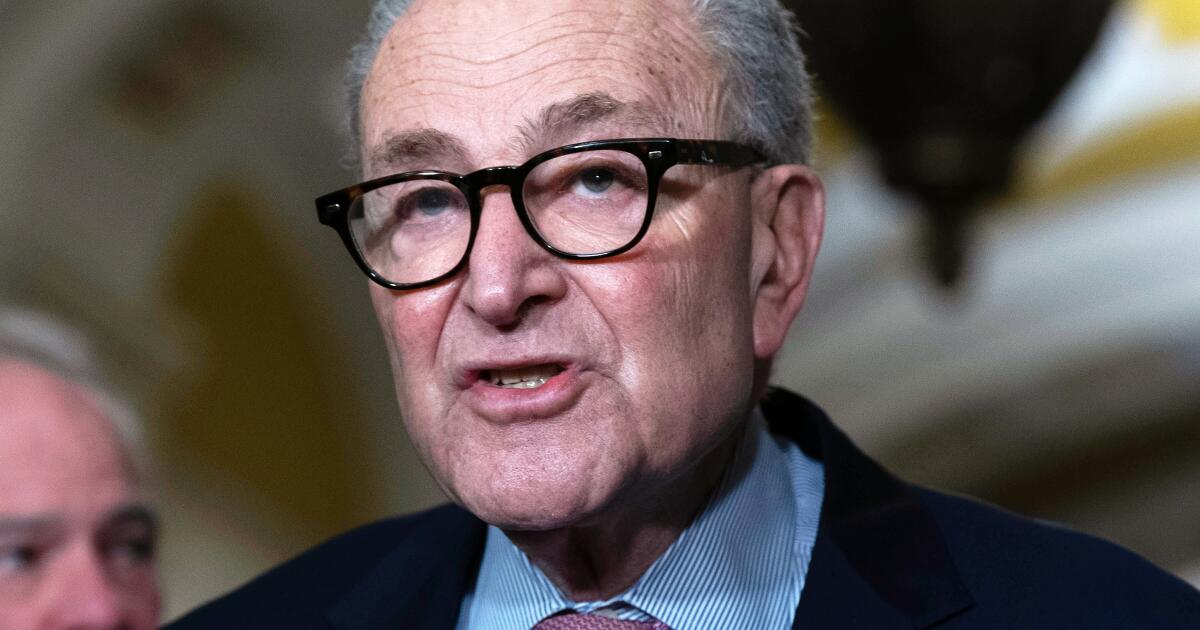
Minority Leader Chuck Schumer introduced a resolution that, if passed, would direct the Senate to file or join lawsuits aimed at forcing the Justice Department to comply with the Epstein Files Transparency Act, the law enacted last month that required disclosure of records by last Friday.

“Instead of transparency, the Trump administration released a tiny fraction of the files and blacked out massive portions of what little they provided,” Schumer (D-N.Y.) said in a statement. “This is a blatant cover-up.”

In lieu of Republican support, Schumer’s resolution is largely symbolic. The Senate is off until Jan. 5, more than two weeks after the deadline. Even then, the resolution will likely face an uphill battle for passage. But it allows Democrats to continue a pressure campaign for disclosure that Republicans had hoped to put behind them.

The Justice Department said it plans to release records on a rolling basis by the end of the year. It blamed the delay on the time-consuming process of obscuring victims’ names and other identifying information. So far, the department hasn’t given any notice when new records arrive.

That approach angered some accusers and members of Congress who fought to pass the transparency act. Records that were released, including photographs, interview transcripts, call logs, court records and other documents, were either already public or heavily blacked out, and many lacked necessary context.

There were few revelations in the tens of thousands of pages of records that have been released so far. Some of the most eagerly awaited records, such as FBI victim interviews and internal memos shedding light on charging decisions, weren’t there.

Nor were there any mentions of some powerful figures who’ve been in Epstein’s orbit, like Britain’s former Prince Andrew.

Deputy Atty. Gen. Todd Blanche on Sunday defended the Justice Department’s decision to release just a fraction of the files by the deadline as necessary to protect survivors of sexual abuse by the disgraced financier.

Blanche pledged that the Trump administration would meet its obligation required by law. But he stressed that the department was obligated to act with caution as it goes about making public thousands of documents that can include sensitive information.

Blanche, the Justice Department’s second-in-command, also defended its decision to remove several files related to the case from its public webpage, including a photograph showing Donald Trump, less than a day after they were posted.

The missing files, which were available Friday but no longer accessible by Saturday, included images of paintings depicting nude women, and one of a series of photographs along a credenza and in drawers. In that image, inside a drawer among other photos, was a photograph of Trump, alongside Epstein, Melania Trump and Epstein’s longtime associate, Ghislaine Maxwell.

Blanche said the documents were removed because they also showed victims of Epstein. Blanche said the Trump photo and the other documents will be reposted once redactions are made to protect survivors.

“We are not redacting information around President Trump, around any other individual involved with Mr. Epstein, and that narrative, which is not based on fact at all, is completely false,” Blanche told NBC’s “Meet the Press.”

Blanche said Trump, a Republican, has labeled the Epstein matter “a hoax” because “there’s this narrative out there that the Department of Justice is hiding and protecting information about him, which is completely false.”

“The Epstein files existed for years and years and years and you did not hear a peep out of a single Democrat for the past four years and yet … lo and behold, all of a sudden, out of the blue, Senator Schumer suddenly cares about the Epstein files,” Blanche said. “That’s the hoax.”

Sisak and Neumeister write for the Associated Press. AP reporter Kevin Freking in Washington contributed to this report.

Source link

U.S. signs new health deals with 9 African countries that mirror Trump’s priorities

The U.S. government has signed health deals with at least nine African countries, part of its new approach to global health funding, with agreements that reflect the Trump administration’s interests and priorities and are geared toward providing less aid and more mutual benefits.

The agreements signed so far, with Kenya, Nigeria and Rwanda among others, are the first under the new global health framework, which makes aid dependent on negotiations between the recipient country and the U.S.

Some of the countries that have signed deals either have been hit by U.S. aid cuts or have separate agreements with the Trump administration to accept and host third-country deportees, although officials have denied any linkage.

The Trump administration says the new “America First” global health funding agreements are meant to increase self-sufficiency and eliminate what it says are ideology and waste from international assistance. The deals replace a patchwork of previous health agreements under the now-dismantled U.S. Agency for International Development.

U.S. aid cuts have crippled health systems across the developing world, including in Africa, where many countries relied on the funding for crucial programs, including those responding to outbreaks of disease.

The new approach to global health aligns with President Trump’s pattern of dealing with other nations transactionally, using direct talks with foreign governments to promote his agenda abroad. It builds on his sharp turn from traditional U.S. foreign assistance, which supporters say furthered American interests by stabilizing other countries and economies and building alliances.

A different strategy

The deals mark a sharp departure from how the U.S. has provided healthcare funding over the years and mirrors the Trump administration’s interests.

South Africa, which has lost most of its U.S. funding — including $400 million in annual support — due in part to its disputes with the U.S., has not signed a health deal, despite having one of the world’s highest HIV prevalence rates.

Nigeria, Africa’s most populous country, reached a deal but with an emphasis on Christian-based health facilities, although it has a slight majority Muslim population. Rwanda and Uganda, which each have deportation deals with the U.S., have announced health pacts.

Cameroon, Eswatini, Lesotho, Liberia and Mozambique also are among those that have signed health deals with the U.S.

According to the Center for Global Development, a Washington think tank, the deals “combine U.S. funding reductions, ambitious co-financing expectations, and a shift toward direct government-to-government assistance.”

The deals represent a reduction in total U.S. health spending for each country, the center said, with annual U.S. financial support down 49% compared with 2024.

A faith-based deal in Nigeria, a lifeline for several others

Under its deal, Nigeria, a major beneficiary of USAID funds, would get support that has a “strong emphasis” on Christian faith-based healthcare providers.

The U.S. provided approximately $2.3 billion in health assistance to Nigeria between 2021 and 2025, mostly through USAID, official data shows. The new five-year agreement will see U.S. support at over $2 billion, while Nigeria is expected to raise $2.9 billion to boost its healthcare programs.

The agreement “was negotiated in connection with reforms the Nigerian government has made to prioritize protecting Christian populations from violence and includes significant dedicated funding to support Christian healthcare facilities,” the State Department said in a statement.

The department said “the president and secretary of State retain the right to pause or terminate any programs which do not align with the national interest,” urging Nigeria to ensure “that it combats extremist religious violence against vulnerable Christian populations.”

For several other countries, the new deals could be a lifeline after U.S. aid cuts crippled their healthcare systems and left them racing to fill the gaps.

Under its deal, Mozambique will get U.S. support of over $1.8 billion for HIV and malaria programs. Lesotho, one of the poorest countries in the world, clinched a deal worth over $232 million.

In the tiny kingdom of Eswatini, the U.S. committed to provide up to $205 million to support public health data systems, disease surveillance and outbreak response, while the country agreed to increase domestic health expenditures by $37 million.

No deal for South Africa after disputes

South Africa is noticeably absent from the list of signatories following tensions with the Trump administration.

Trump has said he will cut all financial assistance to South Africa over his widely rejected claims that it is violently persecuting its Afrikaner white minority.

The dismantling of USAID resulted in the loss of over $436 million in yearly financing for HIV treatment and prevention in South Africa, putting the program and thousands of jobs in the healthcare industry at risk.

Health compacts with countries that signed deportation deals

At least four of the countries that have reached deals previously agreed to receive third-country deportees from the U.S., a controversial immigration policy that has been a trademark of the Trump administration.

The State Department has denied any linkage between the healthcare compacts and agreements regarding accepting third-country asylum seekers or third-country deportees from the United States. However, officials have said that political considerations unrelated to health issues may be part of the negotiations.

Rwanda, one of the countries with a deportation deal with the U.S., signed a $228-million health pact requiring the U.S. to support it with $158 million.

Uganda, another such country, signed a health deal worth nearly $2.3 billion in which the U.S. will provide up to $1.7 billion. Eswatini also has started receiving flights with deported prisoners from the United States.

Magome and Gumede write for the Associated Press. AP writers Evelyne Musambi in Nairobi, Kenya; Dyepkazah Shibayan in Abuja, Nigeria; Mark Banchereau in Dakar, Senegal; and Matthew Lee in Washington contributed to this report.

Source link

Trump denies disaster aid requests for Colorado flooding, wildfires

Colorado Gov. Jared Polis (R) talks with President Donald Trump in the Cabinet Room of the White House in Washington, D.C., on May 13, 2020. On Monday, Polis called on Trump to reverse his recent decision to deny the state disaster relief for recent flooding and fire damage. File Pool Photo by Doug Mills/UPI | License Photo

Dec. 22 (UPI) — Colorado lawmakers have called on President Donald Trump to reverse a recent decision denying state disaster aid requests in the wake of “life-threatening flooding and historic wildfires.”

In a statement Sunday, Colorado Gov. Jared Polis announced Trump had rejected the state’s requests for help and accused the president of playing “political games.” He said the state would be appealing the decision.

“Coloradans impacted by the Elk and Lee fires and the flooding in Southwestern Colorado deserve better than the political games President Trump is playing,” Polis said.

“I call on the president’s better angels, and urge him to reconsider these requests. This is about the Coloradans who need this support, and we won’t stop fighting for them to get what they deserve,” the Democratic governor added.

Polis declared a disaster emergency on Aug. 3, for the Elk Fire and added the Lee Fire three days later. He filed an executive order by the end of August as the state revealed initial damage estimates from the fires and mudslides totaled more than $27 million.

In October, Polis declared a disaster emergency to unlock $6 million in state funding for flood response and recovery in Western Colorado.

Democratic Sen. Michael Bennet said, “Trump’s decision to deny Colorado’s request for critical federal assistance is unacceptable.”

“Communities in Western Colorado are in serious need of help after the life-threatening flooding and historic wildfires earlier this year,” Bennet added. “Trump continues to use Coloradans for political games; it is malicious and obscene.”

While a president can tap additional federal assistance with a major disaster under the Stafford Act, the Trump administration has recently denied some states’ requests for aid as it works to downsize the Federal Emergency Management Agency.

The White House said Monday, “there is no politicization to the president’s decisions on disaster relief.” White House spokeswoman Abigail Jackson explained Trump’s decision, adding that the administration sent two firefighting planes to Colorado to help fight the fires.

“The president responds to each request for federal assistance under the Stafford Act with great care and consideration,” Jackson said, “ensuring American tax dollars are used appropriately and efficiently by the states to supplement — not substitute, their obligation to respond to and recover from disasters.”

Source link

California, other states sue to protect federal consumer agency

California joined 21 other states and the District of Columbia Monday in a lawsuit that seeks to prevent the federal Consumer Financial Protection Bureau from being defunded and closed by the Trump administration.

The legal action filed in U.S. District Court in Eugene, Ore. accuses Acting Director Russell Vought of trying to illegally withhold funds from the agency by unlawfully interpreting its funding statute. Also named as defendants are the agency itself and the Federal Reserve’s Board of Governors.

“For California, the CFPB has been an invaluable enforcement partner, working hand-in-hand with our office to protect pocketbooks and stop unfair business practices. But once again, the Trump administration is trying to weaken and ultimately dismantle the CFPB,” California Attorney General Rob Bonta said, in a press conference to announce the 41-page legal action.

The agency did not immediately respond to a request for comment.

Established by Congress in 2010 after the subprime mortgage abuses that gave rise to the financial crisis, the agency is funded by the Federal Reserve as a method of insulating it from political pressure.

The Dodd-Frank Act statute requires the agency’s director to petition for a reasonable amount of funding to carry out the CFPB’s duties from the “combined earnings” of the Federal Reserve System.

Prior to this year that was interpreted to mean the Federal Reserve’s gross revenue. But an opinion from the Department of Justice claims that should be interpreted to mean the Federal Reserve’s profits, of which it has none since it has been operating at a loss since 2022. The lawsuit alleges the interpretation is bogus.

“Defendant Russell T. Vought has worked tirelessly to terminate the CFPB’s operations by any means necessary — denying Plaintiffs access to CFPB resources to which they are statutorily entitled. In this action, Plaintiffs challenge Defendant Vought’s most recent effort to do so,” the federal lawsuit states.

The complaint alleges the agency will run out of cash by next month if the policy is not reversed. Bonta said he and other attorney generals have not decided whether they will seek a restraining order or temporary injunction to change the new funding policy.

Prior to the second Trump administraition, the CPFB boasted of returning nearly $21 billion to consumers nationwide through enforcement actions, including against Wells Fargo in San Francisco over a scandal involving the creation of accounts never sought by customers.

Other big cases have been brought against student loan servicer Navient for mishandling payments and other issues, as well as Toyota Motor Credit for charging higher interest rates to Black and Asian customers.

However, this year the agency has dropped notable cases. It terminated early a consent order reached with Citibank over allegations it discriminated against customers with Armenian surnames in Los Angeles County.

It also dropped a lawsuit against Zelle that accused Wells Fargo, JP Morgan Chase, Bank of America and other banks of rushing the payments app into service, leading to $870 million in fraud-related losses by users. The app denied the allegations.

Monday’s lawsuit also notes that the agency is critical for states to carry out their own consumer protection mission and its closure would deprive them of their statutorily guaranteed access to a database run by the CFPB that tracks millions of consumer complaints, as well as to other data.

Vought was a chief architect of Project 2025, a Heritage Foundation blueprint to reduce the size and power of the federal bureaucracy during a second Trump admistration. In February, he ordered the agency to stop nearly all its work and has been seeking to drastically downsize it since.

The lawsuit filed Monday is the latest legal effort to keep the agency in business.

A lawsuit filed in February by National Treasury Employees Union and consumer groups accuses the Trump administration and Vought of attempting to unconstitutionally abolish the agency, created by an act of Congress.

“It is deflating, and it is unfortunate that Congress is not defending the power of the purse,” said Colorado Attorney General Philip Weiser, during Monday’s press conference.

“At other times, Congress vigilantly safeguarded its authority, but because of political polarization and fear of criticizing this President, the Congress is not doing it,” he said.

Source link

Judge allows Kilmar Abrego Garcia to remain free through Christmas

Kilmar Abrego Garcia delivers remarks during a rally before his check in at the ICE Baltimore Field Office in Baltimore Maryland, on August 25. On Monday, a federal judge allowed the Salvadoran native to remain free through Christmas, after he was released earlier this month, as he awaits trial on human smuggling charges in Tennessee. File Photo by Shawn Thew/EPA

Dec. 22 (UPI) — A federal judge on Monday allowed Kilmar Abrego Garcia to remain free through Christmas as she barred Immigration and Customs Enforcement from re-detaining the Salvadoran native.

U.S. District Judge Paula Xinis in Maryland extended a temporary restraining order to keep federal officials from deporting Abrego Garcia, after the U.S. Supreme Court ruled he was deported and imprisoned in March without legal authority to El Salvador.

“This is an extremely irregular and extraordinary situation,” Xinnis told attorneys Monday, as she pressed the government on whether it would detain Abrego Garcia if there were no restraining order.

“Show your work, that’s all,” Xinis said. “Give it to me and we don’t have to speculate.”

Abrego Garcia was released from ICE detention on Dec. 11, following efforts to deport him to an African nation where he has no connection.

“Because Abrego Garcia has been held in ICE detention to effectuate third-country removal absent a lawful removal order, his requested relief is proper,” according to Xinis.

The U.S. Department of Homeland Security called Xinis’ rulings “naked judicial activism by an Obama-appointed judge.”

Abrego Garcia, who illegally entered the United States nearly 15 years ago, has accused the White House of vindictive prosecution. The administration has called him an MS-13 gang member, which he denies.

Abrego Garcia had been living in Maryland with his wife and children before being deported to El Salvador’s CECOT mega-prison in March. He was returned to the United States in June and is awaiting trial on human smuggling charges in Tennessee. He has pleaded not guilty.

On Monday, Abrego Garcia’s attorneys said he is prepared to go to Costa Rica, which the judge said the government refuses to consider.

The “persistent refusal to acknowledge Costa Rica as a viable removal option, their threats to send Abrego to African countries that never agreed to take him and their misrepresentation to the court that Liberia is now the only country available to Abrego, all reflect that whatever purpose was behind his detention, it was not for the ‘basic purpose’ of timely third-country removal,” Xinis wrote.

Source link

Ex-CIA Director John Brennan wants ‘favored’ Trump judge kept away from Justice Department inquiry

Lawyers for former CIA Director John Brennan want the Justice Department to be prevented from steering an investigation of him and other former government officials to a “favored” judge in Florida who dismissed the classified documents case against President Trump.

The request Monday is addressed to U.S. District Judge Cecilia Altonaga, the chief judge in the Southern District of Florida, where federal prosecutors have launched a criminal investigation related to the U.S. government assessment of Russian interference in the 2016 presidential election. Brennan and other officials have received subpoenas, and his lawyers say Brennan has been advised by prosecutors that he’s a target of the investigation.

Brennan’s lawyers say the Justice Department is engaged in “judge shopping” and trying to arrange for the case to be handled by U.S. District Judge Aileen Cannon, who issued favorable rulings to Trump during the classified documents case and dismissed it last year. The letter asks Altonaga to exercise her “supervisory authority” as chief judge to ensure that the Justice Department is unable to steer the current election interference investigation into her courtroom.

“In short, we are seeking assurance that any litigation arising out of this grand jury proceeding will be heard by a judge who is selected by the court’s neutral and impartial processes, not by the prosecution’s self-interested maneuvering contrary to the interests of justice,” wrote Brennan’s attorneys, Kenneth Wainstein and Natasha Harnwell-Davis. The New York Times earlier reported on the letter.

It remains unclear what crime prosecutors in Florida believe was committed, but the subpoenas issued last month to Brennan and other former law enforcement and intelligence officials sought documents related to the preparation of the Obama administration’s intelligence community assessment, made public in January 2017, that detailed how Russia waged a covert influence campaign to help Trump defeat Democratic nominee Hillary Clinton.

Trump was investigated but not charged during his first term over whether his campaign conspired with Russia to tip the outcome of the election. He has long sought retribution over the Russia investigation and the officials who played a key part in it.

His Justice Department in September secured a false-statement and obstruction indictment against James Comey, the FBI director at the time the Russia investigation was launched, though the case was dismissed and its future is in doubt because of a judge’s ruling that blocked prosecutors from accessing materials they considered to be key evidence.

Brennan’s lawyers say the Trump administration’s Justice Department tried to “forum-shop” the investigation into Brennan to multiple jurisdictions, including Pennsylvania, before settling in Florida. But they say prosecutors have been unable to answer basic questions about why Florida is a proper venue for the investigation given that the intelligence community assessment at issue was produced by officials in the Washington, D.C., area.

The grand jury investigation is based in the Miami division of the Southern District of Florida, but Brennan’s lawyers say they’re concerned that the Trump administration may be poised to transfer the case to the smaller Fort Pierce division, where Cannon is the only judge. They cited as a basis for that alarm a Justice Department decision to seek an additional grand jury in Fort Pierce even though there’s no apparent caseload need.

“The United States Attorney’s efforts to funnel this investigation to the judge who issued this string of rulings that consistently favored President Trump’s positions in previous litigations should be seen for what it is,” Brennan’s lawyers wrote.

Tucker writes for the Associated Press.

Source link

Thailand and Cambodia agree to meet amid renewed cross-border fighting | Border Disputes News

Planned talks come as Southeast Asian leaders urge both countries to show ‘maximum restraint’ and return to dialogue.

Thailand and Cambodia have agreed to hold a meeting of defence officials later this week as regional leaders push for an end to deadly violence along the two countries’ shared border.

Thailand’s Foreign Minister Sihasak Phuangketkeow announced the planned talks on Monday after a special meeting in Kuala Lumpur of Southeast Asian foreign ministers, who were trying to salvage a ceasefire.

Recommended Stories

list of 3 itemsend of list

That truce was first brokered by Association of Southeast Asian Nations (ASEAN) chair Malaysia and United States President Donald Trump after cross-border fighting broke out in July.

Sihasak told reporters that this week’s discussions would be held on Wednesday in Thailand’s Chanthaburi, within the framework of an existing bilateral border committee.

But just hours after the regional crisis talks were held in Malaysia, Cambodia’s Ministry of Defence said the Thai military deployed fighter jets to bomb areas of Siem Reap and Preah Vihear provinces.

The Thai army said Cambodia had fired dozens of rockets into Thailand, with Bangkok’s air force responding with air strikes on two Cambodian military targets.

Thailand and Cambodia have engaged in daily exchanges of rocket and artillery fire along their 817km (508-mile) land border following the collapse of the truce, with fighting at multiple points stretching from forested regions near Laos to the coastal provinces of the Gulf of Thailand.

Despite the cross-border fire, Cambodia’s Ministry of Interior said it remains “optimistic that the Thai side will demonstrate sincerity” in implementing a ceasefire.

Thailand’s Sihasak, however, cautioned that the upcoming meeting may not immediately produce a truce. “Our position is a ceasefire does not come with an announcement, but must come from actions,” he said.

His ministry said the two nations’ militaries would “discuss implementation, related steps and verification of the ceasefire in detail”.

The planned meeting comes as ASEAN on Monday urged both countries to show “maximum restraint and take immediate steps towards the cessation of all forms of hostilities”.

In a statement after the talks in Kuala Lumpur, ASEAN also called on both Thailand and Cambodia to “restore mutual trust and confidence, and to return to dialogue”.

ASEAN members also reiterated their concerns over the ongoing conflict and “called upon both parties to ensure that civilians residing in the affected border areas are able to return, without obstruction and in safety and dignity, to their homes”.

Source link

For Bass and LAFD, there’s no watering down how bad 2025 has been

The year was already a debacle for the Los Angeles Fire Department and Mayor Karen Bass, with multiple stumbles before and after the epic January blaze that obliterated Pacific Palisades, so it was hard to imagine that things could get worse in the closing days of 2025.

But they have.

A blistering Times investigation found that the Fire Department cleaned up its after-action report, downplaying missteps.

In other words, there was a blatant attempt to mislead the public.

And Bass representatives said they requested that her comments in the final minutes of a video interview — in which she admitted that “both sides botched it” in the Eaton and Palisades fires — be edited out because she thought the interview had ended.

Please.

Together, these developments will echo through the coming mayoral election, in which Bass will be called out repeatedly over one of the greatest disasters in L.A. history. We’re a long way from knowing whether she can survive and win a second term, but Austin Beutner and any other legitimate contenders are being handed gifts that will keep on giving.

In the case of the altered report, kudos to Times reporters Alene Tchekmedyian and Paul Pringle, who have been trying all year to keep the LAFD honest, which is no easy task.

In the latest bombshell dropped by the two reporters, they dug up seven drafts of the department’s self-analysis, or after-action report, and found that it had been altered multiple times to soften damning conclusions.

Language saying LAFD did not fully pre-deploy all crews and engines, despite the forecast of extreme conditions, was removed.

Language saying some crews waited more than an hour for their assignments during the fire was removed.

A section on “failures” became a section on “primary challenges.”

A reference to a violation of national guidelines on how to avoid firefighter injury and death was removed.

The central role of the earlier Lachman fire, allegedly started by an arsonist, was also sanitized. A reference to that unchecked brushfire, which later sparked the inferno, was deleted from one draft, then restored in the final version. But only in a brief reference.

Even before the smoke cleared on Jan. 7, I had one former LAFD official telling me he was certain the earlier fire had not been properly extinguished. Crews should have been sitting on it, but as The Times has reported, that didn’t happen.

What we now know with absolute clarity is that the LAFD cannot be trusted to honestly and thoroughly investigate itself. And yet after having fired one chief, Bass asked the current chief to do an investigation.

Sue Pascoe, who lost her home in the fire and is among the thousands who don’t yet know whether they can afford to rebuild because their insurance — if they had any — doesn’t cover the cost of new construction. Pascoe, editor of the local publication Circling the News, had this reaction to the latest expose:

“To kill 12 people, let almost 7,000 homes/businesses burn, and to destroy belongings, memorabilia and memories stored in the homes — someone needs to be held accountable.”

But who will that be?

Although the altered after-action report seems designed to have minimized blame for the LAFD, if not the mayor, the Bass administration said it wasn’t involved.

“We did not red-line, review every page or review every draft of the report,” a spokesperson told the Times. “We did not discuss the Lachman Fire because it was not part of the report.”

Genethia Hudley Hayes, president of the Board of Fire Commissioners, told The Times she noticed only small differences between the final report and an earlier report she had seen.

“I was completely OK with it,” she said, adding that the final report “did not in any way obfuscate anything.”

Well I’m not OK with it, and I suspect a lot of people who lost everything in the fire feel the same way. As I’ve said before, the conditions were horrific, and there’s little doubt that firefighters did their best. But the evidence is mounting that the department’s brass blew it, or, to borrow a phrase from Bass, “botched it.”

As The Times’ David Zahniser reported, Bass said her “botched” comment came in a casual context after the podcast had ended. She also said she has made similar comments about the emergency response on numerous occasions.

She has made some critical comments, and as I mentioned, she replaced the fire chief. But the preparation and response were indeed botched. So why did her office want that portion of the interview deleted?

Let’s not forget, while we’re on the subject of botching things, that Bass left the country in the days before the fire despite warnings of catastrophic conditions. And while there’s been some progress in the recovery, her claim that things are moving at “lightning speed” overlooks the fact that thousands of burned out properties haven’t seen a hammer or a hardhat.

On her watch, we’ve seen multiple misses.

On the blunderous hiring and quick departure of a rebuilding czar. On the bungled hiring of a management team whose role was not entirely clear. On a failed tax relief plan for fire victims. On the still-undelievered promise of some building fee waivers.

In one of the latest twists on the after-action report, Tchekmedyian and Pringle report that the LAFD author was upset about revisions made without his involvement.

What a mess, and the story is likely to smolder into the new year.

If only the Lachman fire had been as watered down as the after-action report.

steve.lopez@latimes.com

Source link