Authorities board vessel off Swedish coast after it suffered an engine failure.
Published On 21 Dec 202521 Dec 2025
Share
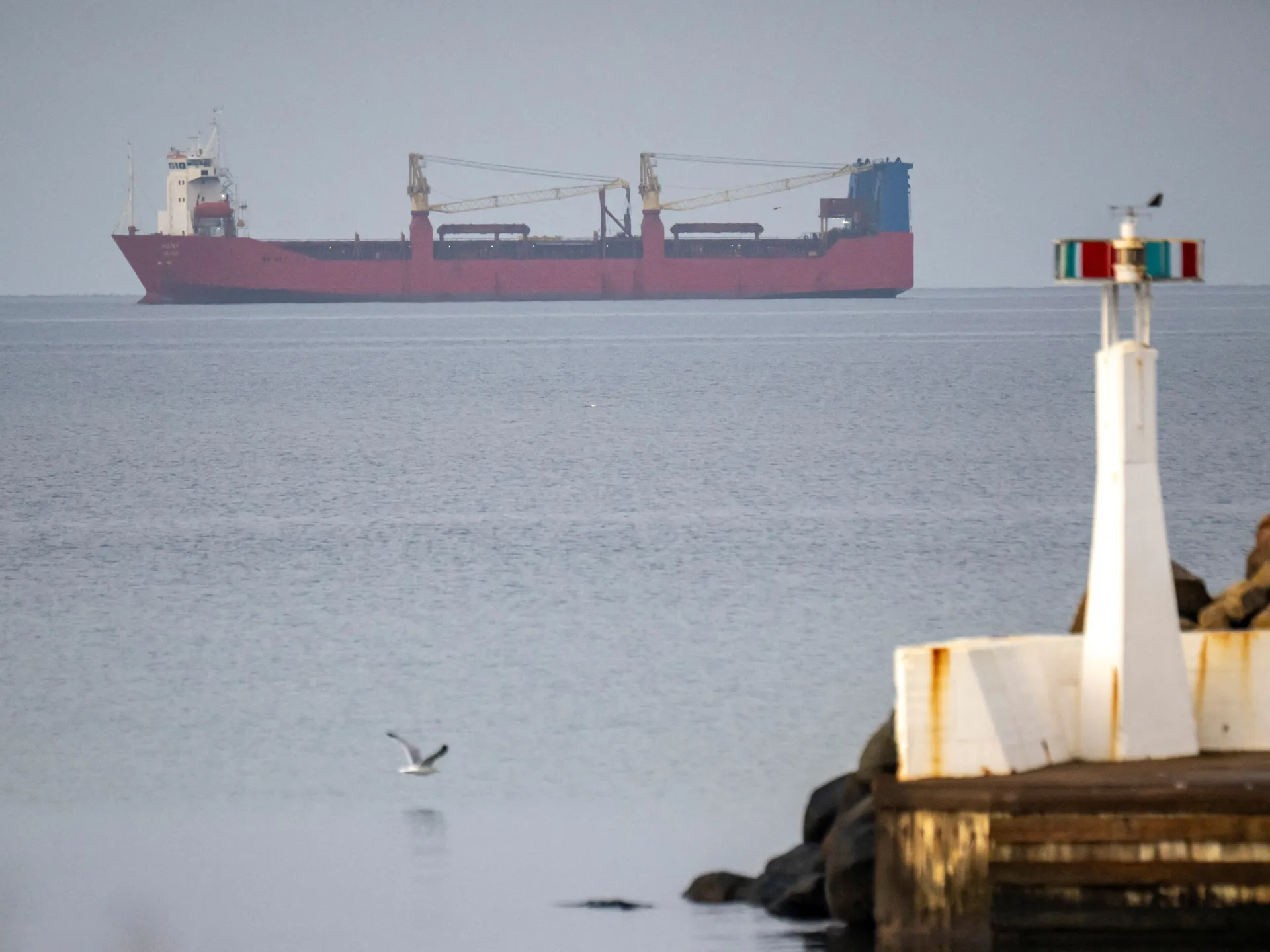
Sweden’s customs service has said that authorities boarded a Russian freighter that anchored in Swedish waters on Friday after developing engine problems, and were conducting an inspection of the cargo.
The owners of the vessel, the Adler, are on the European Union’s sanctions list, Martin Hoglund, spokesman at the customs authority, said on Sunday.
Recommended Stories
list of 4 itemsend of list
“Shortly after 0100 (00:00 GMT) last night we boarded the ship with support from the Swedish Coast Guard and the police service in order to make a customs inspection,” Hoglund said. “The inspection is still ongoing.”
Hoglund declined to say what the customs service had found on board the ship.
According to ship-tracking service Marine Traffic, the Adler is a 126-metre-long, roll-on, roll-off container carrier. It is anchored off Hoganas in southwest Sweden.
EU and US sanctions
In addition to the Adler being on an EU sanctions list, the vessel and its owners, M Leasing LLC, are also both subject to US sanctions, suspected of involvement in weapons transport, according to OpenSanctions, a database of sanctioned companies and individuals, persons of interest and government watchlists.
Hoglund said the ship had left the Russian port of St Petersburg on December 15, but he said customs did not have any information about its destination.
The night-time operation was led by the Swedish Customs Administration along with the coastguard, National Task Force, Swedish Security Service and prosecutors.
In a previous incident, the Adler was boarded by Greek forces in the Mediterranean in January 2021. The operation was carried out under the auspices of the EU’s Operation Irini, which monitors the United Nations arms embargo on Libya.
Three people arrested in connection with suspected theft of items worth between 15,000 and 40,000 euros.
Published On 21 Dec 202521 Dec 2025
Share
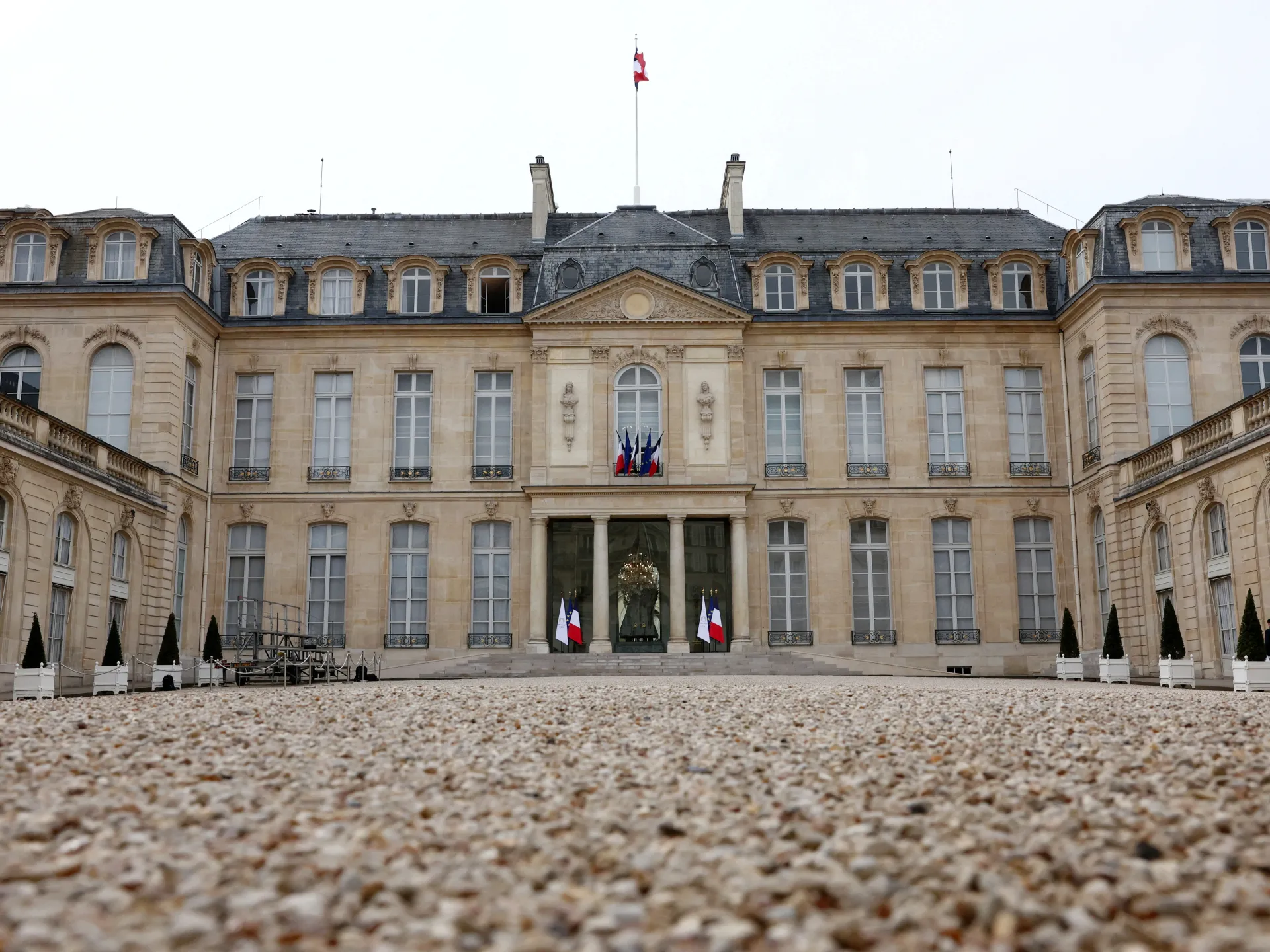
France’s presidential silverware keeper and two other men are set to stand trial over the alleged theft of porcelain and other tableware worth thousands of euros, the Paris prosecution office has said.
Prosecutors said the silverware keeper Thomas M and his partner Damien G were arrested on suspicion of theft on Tuesday. Another man, Ghislain M, was arrested on suspicion of receiving stolen goods. Their full names were not given due to French privacy customs.
Recommended Stories
list of 4 itemsend of list
The Elysee, the president’s official residence, had reported the disappearance of silverware and tableware pieces used for state dinners and other events, with the value of the missing items estimated between 15,000 and 40,000 euros ($17,500 and $46,800), the prosecution office said.
Interviews with presidential staff pointed suspicions at Thomas M, whose suspected downward inventory adjustments appeared to anticipate future thefts, prosecutors said.
They said about 100 objects were discovered in Thomas M’s personal locker, his vehicle and home, including copper pots, Sevres porcelain and Baccarat champagne glasses.
Investigators found an air force-stamped plate and ashtrays that Thomas M was selling on the online marketplace Vinted, prosecutors said, items that are not available to the general public.
The three suspects appeared in court Thursday on charges of jointly stealing moveable property listed as part of the national heritage – an offence punishable by up to 10 years in prison and a 150,000-euro ($175,000) fine, as well as aggravated handling of stolen goods.
The trial was postponed to February 26. The defendants were placed under judicial supervision, banned from contacting one another, prohibited from appearing at auction venues and barred from their professional activities.
French paper Le Parisien, which first reported the case, said Ghislain M worked as a guard at the Louvre museum, citing his lawyer as saying that his client’s motivation for his suspected involvement was his “passion” for rare antique goods.
In October, the museum experienced its own robbery when thieves disguised as construction workers stole priceless pieces from France’s crown jewels, prompting a debate about security standards at the country’s landmarks.
The Sevres porcelain factory, one of the Elysee’s main suppliers, identified a number of items on auction websites, prosecutors said, adding that some items had been returned.
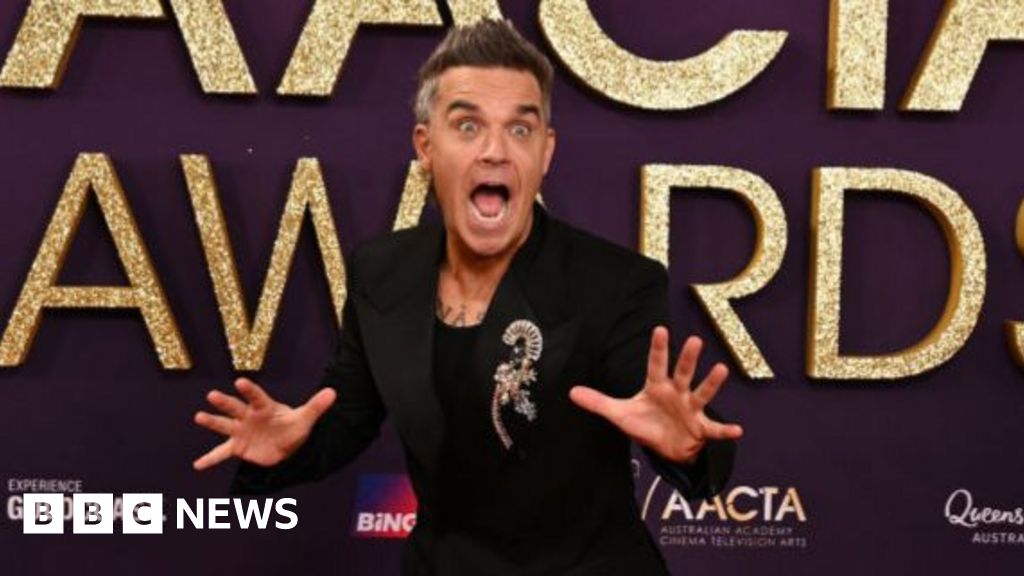
This is the moment Robbie Williams made a 94-year-old fan’s wish come true.
Norma, a resident of Humberston Care Home in North East Lincolnshire, told staff she had followed the singer from when he was in Take That and had always wanted to see him.
The home organised for her to see a Robbie Williams tribute act and then went one step further by organising for her to speak to the singer, who admitted he was urged to call her by his daughter, who had seen Norma’s story online.
Norma said: “I was absolutely amazed. I really was surprised.
“Nothing like this has happened to me before.
“He was in America, laid out on the bed. I nearly said to him you could have got done up for me!”
The moment was organised by Bailey Greetham, who holds fitness and wellbeing sessions with residents, and films videos on behalf of the home.
He added: “She said I was off to a Robbie Williams tribute but I am a little bit upset because it’s not the real Robbie.
“I had the camera with me so I said let’s film something and we put it on the internet and it got a million views and Robbie was tagged 5,000 times.”
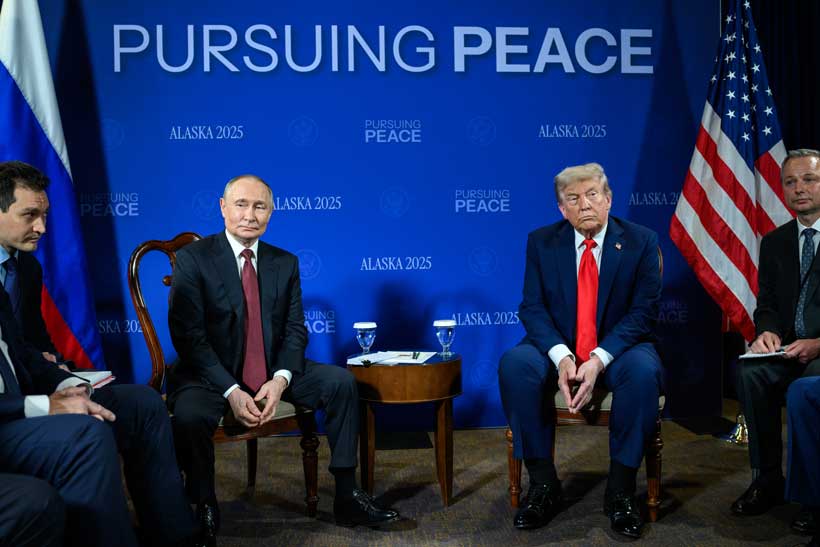
Some European leaders feel sidelined as US mediation takes Russian priorities into consideration.
After years of support from the United States for the Ukraine war to continue “as long as it takes”, the Trump administration is now pushing to end Europe’s war – quickly and imperfectly.
While details are still under negotiation, they include issues such as ensuring Ukraine never joins NATO and Russia’s control over about 20 percent of Ukraine.
To understand the implications for Europe, the US and their relations, host Steve Clemons speaks with Kurt Volker, Trump’s former special representative for Ukraine negotiations, and retired Colonel Heino Klinck, former director of US Army international affairs.
NEWS BRIEF U.S. and Russian officials are set to meet in Florida for high-level talks aimed at ending the war in Ukraine, following separate discussions with Ukrainian and European negotiators. The talks, led by property magnate-turned-diplomat Steve Witkoff and Jared Kushner for the U.S., and Kirill Dmitriev for Russia, seek to narrow gaps in a […]
San Francisco’s skyline is dominated by the 1,070-foot Salesforce Tower as viewed from the top of Mount Tamalpias in Marin County, California on February 18, 2019. File Photo by Terry Schmitt/UPI | License Photo
Dec. 21 (UPI) — Power has been largely restored after a widespread and unexplained blackout left swaths of San Francisco without electricity on Saturday, just days before Christmas.
Pacific Gas and Electric said in a statement Saturday afternoon that the blackout was affecting about 130,000 businesses and homes. At the time, the company said it had “stabilized the grid” and did not expect the blackout to further spread.
Late Saturday night, the company said crews restored about 95,000 customers. Of the 35,000 customers still without power Saturday night, another 10,000 have since had their service restored.
“We apologize for the delay in getting your power back on,” Pacific Gas and Electric said in a notice on its outage map around 3:45 p.m. local time Saturday. “Unforeseen issues can cause unexpected delays for our crews.”
Mayor Daniel Lurie said on social media that Muni lines — the diverse network of public transportation including buses, light rail, and historic street cars and cable cars — was affected by the blackout. The outage also affected city street lights, he said.
Because of that, Lurie said the city would increase its police presence overnight. The San Francisco Police Department later posted on social media that officers would be working to keep the city safe.
Meanwhile, emergency management officials urged residents to “stay home if you can, avoid all unnecessary travel, and check on neighbors safely.”
The Bay Area Rapid Transit system also said that it had closed its Powell Street and Civic Center stations downtown, which have since reopened.
The cause of the outage was not immediately clear but a spokesman for the San Francisco Fire Department told The New York Times that a fire at a large Pacific Gas and Electric substation in the South Market neighborhood contributed to the blackout.
From a Russian air strike in Zaporizhzhia in Ukraine to demonstrations calling for the removal of US Immigration and Customs Enforcement from Minnesota, here is a look at the week in photos.
‘The scale of needs is so huge.’ As Gaza’s displaced Palestinians suffer from winter storms after surviving two years of genocidal war, UNICEF’s Jonathan Crickx explains how many clothes, blankets and tents are needed to save children from dying.
Liverpool and Egypt star forward Mohamed Salah is centred on winning his first Africa Cup of Nations title.
Published On 21 Dec 202521 Dec 2025
Share
Egypt captain Mohamed Salah has put aside his travails at Liverpool and is focused on Africa Cup of Nations (AFCON) success with his national team, coach Hossam Hassan said on Sunday.
Egypt’s talisman is at the tournament in Morocco on the back of a fiery outburst after being dropped by the Premier League champions, but his comments and subsequent apology to teammates have had no impact on his form, Hassan said ahead of Egypt’s opening Group B match against Zimbabwe in Agadir on Monday.
Recommended Stories
list of 4 itemsend of list
“Salah’s morale in training is very high, as if he were just starting out with the national team, and I believe he will have a great tournament with his country,” said the coach.
At 33, it is arguably Salah’s last chance to win an elusive trophy with Egypt and add international honours to an impressive collection of medals at club level.
“I believe Salah will be among the best players at the tournament, and he will remain an icon and one of the best players in the world.
“I support him technically and morally, because we cannot forget that Salah needs to win the Africa Cup of Nations,” Hassan added.
Manchester City forward Omar Marmoush, right, will pair with Mohamed Salah to form an awesome front-line attack for Egypt at AFCON [File: Ahmed Mosaad/NurPhoto via Getty Images]
Liverpool struggles on the backburner
Salah goes into Monday’s match having last started for Liverpool in their 4-1 home loss to PSV Eindhoven in the Champions League at the end of November.
He was dropped for the next game against West Ham United, and after a draw with Leeds United on December 6, lashed out at the club and Liverpool coach Arne Slot, telling journalists he felt he had been made a scapegoat for their poor start to the season and suggested that he may not have long left at Anfield.
Hassan said he had kept in touch with his captain throughout the controversy.
“There was constant communication with Mohamed Salah during what I don’t want to call a crisis because any player can have a difference of opinion with his coach at his club.”
Salah has not scored since Liverpool’s 2-0 win over Aston Villa at the start of November, including an outing with Egypt in a friendly against Uzbekistan last month.
“The same situation happened with Salah when he went through a period of not scoring goals with Liverpool,” Hassan told reporters.
“Then he returned to the right path through the national team, and as a result, he came back at a level even better than before. I believe he will deliver a strong tournament alongside his teammates.”
Salah has twice been a Cup of Nations runner-up, in 2017 and 2021. Egypt have won a record seven AFCON titles, but their last success was in 2010.
South Korean President Lee Jae Myung takes questions during a news conference to mark 100 days in office at the Blue House in Seoul, South Korea, 11 September 2025. File Photo by EPA/KIM HONG-JI / REUTERS POOL
Dec. 19 (Asia Today) — President Lee Jae-myung on Friday questioned South Korea’s restrictions on access to North Korean state media such as Rodong Sinmun and the Korean Central News Agency, saying the policy treats citizens as if they could be swayed by propaganda.
“Isn’t the reason for blocking access to Rodong Sinmun because they fear the public might fall for propaganda and become communists?” Lee said during a joint briefing by the Foreign Ministry and the Unification Ministry at the Government Complex Seoul.
Lee criticized the approach as treating the public “not as autonomous beings” but as people susceptible to “propaganda and agitation,” and he ordered that access to North Korean media be opened.
Lee asked a Unification Ministry official whether opening access could trigger political backlash, including accusations that the government is trying to turn South Korea into a communist state.
The official cited Rodong Sinmun as an example, saying ordinary citizens and researchers currently cannot access it in real time under existing rules, even though South Korean media and scholars frequently cite it.
“There is a gap between the system and reality,” the official said.
Lee pressed the point, asking why citizens should be prevented from seeing it and whether officials were afraid they might be influenced by propaganda.
Lee said greater access could help the public better understand North Korea and its realities. He argued the restriction, as currently applied, assumes citizens are vulnerable to manipulation.
When a Unification Ministry official said the ministry would pursue opening access to North Korean information, including Rodong Sinmun, as a national policy task, Lee said it did not need to be treated as a solemn initiative.
“Why pursue this as a national policy task? Just open it up,” he said.
Leaders from Mali, Niger and Burkina Faso are hoping to find a way to repel advancing fighters linked to al-Qaeda. Al Jazeera’s Laura Khan explains what’s at stake at an Alliance of Sahel States summit in Bamako.
The United States Department of Justice (DOJ) has released thousands more documents relating to the prosecution of the late sex offender and financier Jeffrey Epstein, including photographs of prominent figures he spent time with. But campaigners behind the Epstein Files Transparency Act, which compelled the Justice Department on Friday to release all files still sealed, say far too much information in them has been redacted.
Furthermore, according to US media, at least 16 of the files – which they said were disclosed late – have since “disappeared” from the website where they were released. The deleted files included a photograph showing President Donald Trump.
The Epstein Files Transparency Act, which Trump signed into law after it passed through Congress in November, required the government to release all remaining unclassified material in its possession relating to Epstein’s and his girlfriend Ghislaine Maxwell’s sex trafficking cases. Maxwell is currently serving 20 years in prison for her part in the scandal.
Despite heavy redaction of many of the documents, which has angered Democrats and some Republicans alike, there is some new information about the powerful people who associated with the disgraced late financier.
The Justice Department said it will release more documents in the coming weeks.
Here’s what we know about what’s been released so far:
A painting of former US President Bill Clinton wearing a dress is displayed inside the Manhattan home of Jeffrey Epstein in this image from his estate released by the US Justice Department on December 19, 2025 [Handout/US Justice Department via Reuters]
What’s new in this tranche of Epstein files?
This is just the latest release of documents relating to the prosecution of Epstein, who died by suicide in a New York jail in 2019. The first tranche of about 950 pages of court documents was made public in early 2024.
One document released this time around confirms that the Federal Bureau of Investigation (FBI) was tipped off about the convicted sex offender’s crimes nearly a decade before he was first arrested.
In September 1996, Epstein survivor Maria Farmer complained to the FBI that the late financier was involved in child sex abuse. Farmer said officials failed to take steps to investigate.
While the name of the complainant is redacted in the document relating to this complaint to the FBI, Farmer has confirmed it was made by her.
Now in her 50s, Farmer said in a statement via her lawyers after the release on Friday that she feels “redeemed” and this was “one of the best days of my life”.
“I want everyone to know that I am shedding tears of joy for myself but also tears of sorrow for all the other victims that the FBI failed,” she said.
Newly released transcripts of grand jury proceedings also include testimony from FBI agents who described interviews that they conducted with girls and young women describing their experiences of being paid to perform sex acts for Epstein. The youngest interviewee was 14, according to local media.
One woman, then aged 21, told a grand jury that Epstein had hired her when she was 16 to perform a sexual massage and that she had gone on to recruit other girls to do the same.
“For every girl that I brought to the table, he would give me $200,” she said.
They were mostly people she knew from high school, she said, adding that she told them that if they were under age, “just lie about it and tell him that you are 18.”
Much of the material published had already been circulating in the public domain after years of court action and investigations.
However, many of the new photos – some of them heavily blacked out – feature well-known public figures.
From left from second from left, Ghislaine Maxwell, Rolling Stones frontman Mick Jagger and former US President Bill Clinton are seen in this image, part of the latest trove of documents from US government investigations into Epstein [Handout/US Justice Department via Reuters]
Who features in the newly released photos?
Among the documents released on Friday are photographs in a folder labelled “DOJ Disclosures”. Most of the photographs were seized by the FBI during various searches of Epstein’s homes in New York City and the US Virgin Islands.
New photos show the musicians Mick Jagger, Michael Jackson and Diana Ross in photographs with Epstein and at times with other people whose faces have been blacked out.
In one image, Jagger can be seen sitting between Epstein and former US President Bill Clinton. Popstar Jackson is also pictured standing next to Clinton and posing for a photo with Epstein in front of a painting in another.
From left, Michael Jackson, Bill Clinton and Diana Ross are seen in this image released by the Department of Justice [Handout/US Justice Department via Reuters]
Other famous men featured in the newly released photos include the actor Kevin Spacey, comedian Chris Tucker, billionaire Richard Branson, former UK ambassador to the US Peter Mandelson and Andrew Mountbatten-Windsor – formerly known as Britain’s Prince Andrew – and his former wife, Sarah Ferguson.
In one black and white image, Andrew can be seen lying across the laps of five people whose faces have all been blacked out while Maxwell stands behind them.
The Justice Department did not include any details about the contents or context of the photos.
Ghislaine Maxwell and Andrew Mountbatten-Windsor are seen in this image released by the Department of Justice [Handout/US Justice Department via Reuters]
Virginia Giuffre, who was one of Epstein’s most prominent accusers and who died by suicide in April aged 41, accused Mountbatten-Windsor of sexual abuse when she was 17. He settled a lawsuit with her in 2022 but continued to deny the allegation.
Another prominent figure among the photos is Clinton. One photo shows him in a swimming pool with Maxwell and another person whose face has been blacked out. Another photo shows the former US president in a hot tub with a woman whose face is also redacted.
Clinton swims in a pool with Maxwell in this image released by the Department of Justice [Handout/US Justice Department via Reuters]
While Clinton has never been accused of any wrongdoing in connection with Epstein’s crimes, his spokesperson said the White House was using him as a scapegoat.
“This is about shielding themselves from what comes next, or from what they’ll try and hide forever. So they can release as many grainy 20-plus-year-old photos as they want, but this isn’t about Bill Clinton. Never has, never will be,” the spokesperson said in a statement.
Clinton in the past has said he cut ties with Epstein before the late financier pleaded guilty to solicitation of a minor in Florida.
From right, Bill Clinton and Kevin Spacey can be seen in this image from Epstein’s estate released by the Department of Justice [Handout/US Justice Department via Reuters]
Does Trump appear in the Epstein files?
Trump hardly appears in the files at all. The few photos that do feature him are ones that have been circulating in the public domain for decades.
According to one court document released on Friday, Epstein was alleged to have taken a 14-year-old girl to Trump’s Mar-a-Lago resort in Florida and to have introduced her to the president.
While introducing her, Epstein elbowed Trump, asking him – referring to the teenager: “This is a good one, right?” Trump smiled and nodded in agreement, said the document from a case against Epstein’s estate and Maxwell in 2020.
In the court filing, the unnamed plaintiff herself makes no specific accusation against Trump.
In response to media requests for comment about this court document, White House spokeswoman Abigail Jackson said the Trump administration was “the most transparent in history” and by “recently calling for further investigations into Epstein’s Democrat friends, the Trump Administration has done more for the victims than Democrats ever have,” she added.
A photo originally labelled File 468, which includes a picture of Trump, has been removed from the Justice Department’s Epstein files website [Handout/Department of Justice]
Have some of the files disappeared since they were published on Friday?
Apparently, yes. One image, originally labelled File 468, which showed the inside of a desk drawer, included a photograph of Trump alongside Epstein, US first lady Melania Trump and Maxwell.
Other missing photos were images of paintings depicting nude women and one showing a series of photographs on a cupboard and in drawers.
On Saturday, The Associated Press news agency reported that at least 16 files published on Friday had disappeared from the Justice Department’s webpage.
The department has not provided any explanation or statement to the public about this but said in a post on X that “photos and other materials will continue being reviewed and redacted consistent with the law in an abundance of caution as we receive additional information.”
Democrats on the Oversight Committee in the US House of Representatives also released 68 photos, drawn from the 95,000 photos and files the Oversight Committee has so far received from the Epstein estate.
Democrats in the committee said the images, which they released on Thursday, “were selected to provide the public with transparency into a representative sample of the photos” and “to provide insights into Epstein’s network and his extremely disturbing activities”.
Following the Justice Department’s release on Friday, the committee’s Democratic members questioned in a post on X why the image featuring a photo of Trump, a Republican, was missing, stating: “What else is being covered up? We need transparency for the American public.”
Epstein appears with several women whose identities have been obscured in this image released by Democrats on the House Oversight Committee on December 18, 2025 [Handout/House Oversight Committee Democrats via Reuters]
Why has so much been redacted?
Among the thousands of documents published on Friday, at least 550 pages were reportedly fully redacted.
One 119-page document labelled “Grand Jury-NY” is completely redacted as is a set of three consecutive documents totalling 255 pages. Each page is fully blacked out.
Campaigners behind the Epstein Files Transparency Act said they had hoped to obtain more information about how the sex offender had been able to avoid serious federal charges for so many years.
However, many crucial FBI interviews with Epstein’s accusers and internal Justice Department memos on charging decisions are unreadable.
Todd Blanche, the deputy attorney general, sent a six-page letter to members of Congress laying out the redaction process, noting that the law mandates that the department omit or redact any references to victims and files that could jeopardise pending investigations or litigation.
Blanche explained that he had, therefore, instructed attorneys to redact or withhold material that contained personally identifiable information about victims; depicted or contained child sexual abuse materials; would jeopardise an active investigation or prosecution; or contained classified national defence or foreign policy information.
Without specifying which, Blanche added that in some instances, the department had withheld or redacted information covered by deliberative-process privilege, work-product privilege and attorney-client privilege.
Bill Clinton and a woman are seen in this image from the Epstein estate released by the Department of Justice [Handout/US Justice Department via Reuters]
When will the remaining files be released?
The Justice Department has said the publication of thousands more documents concerning investigations into Epstein will be released in the coming days as the year-end holidays approach.
The department missed its original Friday deadline to release all the information it had on Epstein in violation of the law signed by Trump in November ordering a complete release within 30 days.
After the drop on Friday, the department published two much smaller tranches on Saturday, which went beyond the initial redactions and featured identities of prosecutors, FBI case agents and other law enforcement personnel who appeared before two federal grand juries in New York state.
Several US lawmakers expressed anger about the White House’s failure to produce all the documents required under the law within the time limit.
Representatives Ro Khanna, a Democrat, and Thomas Massie, a Republican – the duo who introduced the petition that eventually led to the passing of the Epstein Files Transparency Act – strongly criticised the partial release on social media.
Massie wrote that it “grossly fails to comply with both the spirit and the letter of the law”.
Khanna called the release so far “disappointing” and added: “We’re going to push for the actual documents.”
Senate Democratic leader Chuck Schumer accused the Trump administration of being “hell-bent on hiding the truth” and reiterated that the failure to release all the Epstein documents by Friday’s deadline amounts to “breaking the law”.
Meanwhile, officials from the Trump administration have been publicising the photographs featuring former Democratic President Clinton and hailing the current government as “the most transparent in history”.
Can campaigners take further steps to obtain more of the documents?
In a statement, Schumer said Senate Democrats are working “closely with attorneys for the victims of Jeffrey Epstein and with outside legal experts to assess what documents are being withheld and what is being covered up by [US Attorney General] Pam Bondi”.
Representatives Robert Garcia and Jamie Raskin, the ranking Democrats on the House Oversight and Judiciary committees, said they are examining “all legal options” after “the Department of Justice is now making clear it intends to defy Congress itself.”
“Donald Trump and the Department of Justice are now violating federal law as they continue covering up the facts and the evidence about Jeffrey Epstein’s decades-long, billion-dollar, international sex trafficking ring,” Garcia and Raskin said in a statement.
Senator Ron Wyden, another top Democrat on the Senate Finance Committee who investigated Epstein’s financial ties, said on social media that the failure to release all the files was “a continuation of this administration’s coverup on behalf of a bunch of pedophiles and sex traffickers”.
The Associated Press reported that if Democratic lawmakers so choose, they could go to court to force the Justice Department to comply with the law. However, that would likely be a lengthy process.
Separately, the House Oversight Committee has issued a subpoena for the Epstein files, which could give Congress another avenue to force the release of more information to the committee. But that would require Republicans to join them in contempt-of-Congress proceedings against a Republican administration.
This undated photo released by the US House Oversight Committee from Epstein’s estate shows Trump surrounded by six women whose identities have been concealed [Handout/US House Oversight Committee]
Egyptian fisherman Issam al-Shazly was executed on Tuesday after being convicted of drug-related charges
Saudi Arabia has surpassed its record for the number of executions carried out annually for a second year in a row.
At least 347 people have now been put to death this year, up from a total of 345 in 2024, according to the UK-based campaign group Reprieve, which tracks executions in Saudi Arabia and has clients on death row.
It said this was the “bloodiest year of executions in the kingdom since monitoring began”.
The latest prisoners to be executed were two Pakistani nationals convicted of drug-related offences.
Others put death this year include a journalist and two young men who were children at the time of their alleged protest-related crimes. Five were women.
But, according to Reprieve, most – around two thirds – were convicted of non-lethal drug-related offences, which the UN says is “incompatible with international norms and standards”.
More than half of them were foreign nationals who appear to have been put to death as part of a “war on drugs” in the kingdom.
The Saudi authorities have not responded to the BBC’s request for comment on the rise in executions.
“Saudi Arabia is operating with complete impunity now,” said Jeed Basyouni, Reprieve’s head of death penalty for the Middle East and North Africa. “It’s almost making a mockery of the human rights system.”
She described torture and forced confessions as “endemic” within the Saudi criminal justice system.
Ms Basyouni called it a “brutal and arbitrary crackdown” in which innocent people and those on the margins of society have been caught up.
Tuesday saw the execution of a young Egyptian fisherman, Issam al-Shazly, who was arrested in 2021 in Saudi territorial waters and said he had been coerced into smuggling drugs.
Reprieve says that 96 of the executions were solely linked to hashish.
“It almost seems that it doesn’t matter to them who they execute, as long as they send a message to society that there’s a zero-tolerance policy on whatever issue they’re talking about – whether it’s protests, freedom of expression, or drugs,” said Ms Basyouni.
There has been a surge of drug-related executions since the Saudi authorities ended an unofficial moratorium in late 2022 – a step described as “deeply regrettable” by the UN human rights office.
Speaking anonymously to the BBC, relatives of men on death row on drugs charges have spoken of the “terror” they’re now living in.
One told the BBC: “The only time of the week that I sleep is on Friday and Saturday because there are no executions on those days.”
Cellmates witness people they have shared prison life with for years being dragged kicking and screaming to their death, according to Reprieve.
Reuters
Prince Mohammed bin Salman has loosened social restrictions while simultaneously silencing criticism
The de facto ruler of Saudi Arabia, Mohammed bin Salman – who became crown prince in 2017 – has changed the country profoundly over the past few years, loosening social restrictions while simultaneously silencing criticism.
In a bid to diversify its economy away from oil, he has opened Saudi Arabia up to the outside world, taken the religious police off the streets, and allowed women to drive.
But the kingdom’s human rights record remains “abysmal”, according to the US-based campaign group Human Rights Watch, with the high level of executions a major concern. In recent years, only China and Iran have put more people to death, according to human rights activists.
“There’s been no cost for Mohammed bin Salman and his authorities for going ahead with these executions,” said Joey Shea, who researches Saudi Arabia for Human Rights Watch. “The entertainment events, the sporting events, all of it is continuing to happen with no repercussions, really.”
According to Reprieve, the families of those executed are usually not informed in advance, or given the body, or informed where they have been buried.
The Saudi authorities do not reveal the method of execution, although it is believed to be either beheading or firing squad.
In a statement sent to the BBC, the UN’s special rapporteur on extrajudicial, summary or arbitrary executions, Dr Morris Tidball-Binz, called for an immediate moratorium on executions in Saudi Arabia with a view to abolition, as well as “full compliance with international safeguards (including effective legal assistance and consular access for foreign nationals), prompt notification of families, the return of remains without delay and the publication of comprehensive execution data to enable independent scrutiny”.
Amnesty International
Abdullah al-Derazi and Jalal al-Labbad were executed in October and August respectively after being convicted of crimes they allegedly committed as minors
Among the Saudi nationals executed this year were Abdullah al-Derazi and Jalal al-Labbad, who were both minors at the time of their arrest.
They had protested against the government’s treatment of the Shia Muslim minority in 2011 and 2012, and participated in the funerals of people killed by security forces. They were convicted of terrorism-related charges and sentenced to death after what Amnesty International said were grossly unfair trials that relied on torture-tainted “confessions”. UN human rights experts had called for their release.
The UN also condemned the execution in June of the journalist, Turki al-Jasser, who had been arrested in 2018 and sentenced to death on charges of terrorism and high treason based on writings he was accused of authoring.
“Capital punishment against journalists is a chilling attack on freedom of expression and press freedom,” said Unesco’s Director-General, Audrey Azoulay.
Reporters Without Borders said he was the first journalist to be executed in Saudi Arabia since Mohammed bin Salman came to power, although another journalist, Jamal Khashoggi, was murdered by Saudi agents at the Saudi consulate in Istanbul in 2018.
Human Rights Watch
Journalist Turki al-Jasser was executed in June after seven years in detention
Last December, UN experts wrote to the Saudi authorities to express concern over a group of 32 Egyptians and one Jordanian national who had been sentenced to death on drugs charges, and their “alleged absence of legal representation”. Since then, most of the group have been executed.
A relative of one man put to death earlier this year said that he had told her that people were being “taken like goats” to be killed.
The BBC has approached the Saudi authorities for a response to the allegations but has not received one.
But in a letter dated January 2025 – in reply to concerns raised by UN special rapporteurs – they said that Saudi Arabia “protects and upholds” human rights and that its laws “prohibit and punish torture”.
“The death penalty is imposed only for the most serious crimes and in extremely limited circumstances,” the letter stated. “It is not handed down or carried out until judicial proceedings in courts of all levels have been completed.”
The National Assembly building in Seoul. Photo by Asia Today
Dec. 19 (Asia Today) — A South Korean civic group said most retired National Assembly officials subject to post-employment screening were cleared to take private-sector jobs, calling the results evidence of a serious revolving-door problem involving major companies, supervised agencies and law firms.
The Citizens’ Coalition for Economic Justice said at a news conference Thursday that it analyzed employment screening decisions involving retired National Assembly officials from 2020 to 2025. The group said the review covered lawmakers, aides and National Assembly Secretariat staff.
South Korea’s post-employment screening system is designed to determine whether a retired public official’s new job is closely related to their former duties and whether it should be approved. The purpose is to prevent improper collusion between public officials and private institutions.
CCEJ said 427 of 438 National Assembly cases, or 97.5%, received decisions allowing employment, either as “employment possible” or “employment approved.” The group said “employment possible” applies when the new position is deemed unrelated to the official’s previous duties, while “employment approved” applies when there is a connection but authorities find grounds for a special approval.
CCEJ said more than half of those cleared, 239 people, joined private companies. By major corporate groups, the group said Coupang hired the most, with 16 people, including 15 aides and one policy research fellow. LG followed with 11, SK with 10, Samsung with nine and KT with eight.
CCEJ said the National Assembly holds significant powers, including legislation, budgeting and state audits. It argued that when former officials move directly into jobs at audited agencies, major corporations or law firms tied to their prior duties, it can lead to collusion between politics and business and preferential treatment for former officials.
The group called for stronger requirements for approving post-retirement employment tied to the National Assembly, tighter reviews of job relevance and disclosure of specific reasons when screening results are announced.
This year, in the US-China trade war and the grand military parade, China demonstrated economic and military strength that forced the United States to back down. However, Beijing merely displayed its power; various parties discovered that this giant does not know how to wield it.
The US paused its economic attacks on China, but the Dutch government directly “took control of” a Chinese-owned company in the Netherlands—Nexperia—through public authority. The EU expanded anti-dumping measures against China, with France as the main driver behind anti-China economic policies.
The US publicly acknowledged that China’s rising military power in the Western Pacific can no longer be suppressed and adjusted its global strategy to focus on the Western Hemisphere. Yet Japan shifted the Taiwan issue from strategic ambiguity to strategic clarity, adopting a more confrontational posture and challenging China’s bottom line. Regional countries, in various ways, have called for “peace” in the Taiwan Strait—support that amounts to nothing less than opposing China’s unification and indirectly endorsing Japan’s position. Meanwhile, the Philippines, mired in internal chaos, continued to provoke China in the South China Sea.
Since China has the capability to confront the US, it should have the ability to punish Europe, Japan, and the Philippines for their unfriendliness toward China. But Beijing did not do so. When facing challenges from these parties, it only issued symbolic verbal protests or took measures that failed to eradicate the problems—putting on a full defensive posture but lacking concrete and effective actions. As a result, events often started with thunderous noise but ended with little rain, fizzling out in the end.
From Beijing’s appeasement toward Europe, Japan, and the Philippines, all parties have reason to believe that China is a giant that doesn’t know how to use its own power. This presents a strategic opportunity for the weak to overcome the strong—especially now, as the US contracts its global strategy and distances itself from its allies. Maximizing benefits from China’s side is the rational choice.
For example, with Japan: Beijing responded to Tokyo’s intervention in the Taiwan issue with high-intensity verbal criticism, but its actions were inconsistent with its words. Although it revisited the “enemy state clauses” at the UN, raised the postwar Ryukyu sovereignty issue, and even conducted joint military exercises with Russia 600 kilometers from Tokyo, these actions were far less intense than the rhetoric. Even the verbal criticism cooled down after a month.
The US maintained a low profile on the China-Japan dispute, adopted a cool attitude toward Tokyo, and even indirectly expressed condemnation—likely the main reason Beijing de-escalated. This shows that China’s original intent in handling the incident was to force the US to “decouple” from Japan on the Taiwan issue and isolate Tokyo, which maintains close ties with Taipei.
Influenced by official attitudes, the Chinese people once again mistook official rhetoric for commitments, believing Beijing would go to war if necessary to eradicate Japan’s interference in internal affairs. After all, unresolved deep-seated hatred—akin to a sea of blood—remains between China and Japan. Moreover, this year marks the 80th anniversary of China’s victory in the War of Resistance Against Japanese Aggression, with various events held throughout the year to engrave in memory the national humiliation of Japan’s invasion of China.
But after Trump indirectly criticized Japan for provoking unnecessary disputes, Beijing seemed satisfied and stepped down gracefully. Although the dispute has not ended and continues to develop, like its handling of Philippine provocations, China has placed disputes with neighbors into long-term games, effectively shelving the issues—and causing the Chinese people renewed frustration.
After this three-way interaction, the asymmetry between Beijing’s words and actions has likely become deeply ingrained. In the future, it will be much harder for Beijing to mobilize the 1.4 billion people’s shared enmity.
The key point: In this dispute, who—China, Japan, or the US—gained the greatest substantive strategic benefits? So far, it’s hard to say who won the first round. China appeared to come out looking the best, preserving the most face, yet Japan also gained, and the US obtained leverage for future talks with China.
In the first round of this dispute, China strategically established the legitimacy of denying Japan’s intervention in the Taiwan issue, narrowing Tokyo’s diplomatic space for anti-China actions via Taiwan. Japan’s right wing advanced toward national normalization, hollowing out its peace constitution to cope with US strategic contraction; additionally, the Liberal Democratic Party regained public support. The US demonstrated its influence in East Asia—even after “withdrawing” its military to the second island chain—and raised its bargaining chips at the US-China negotiation table.
However, from a medium- to long-term perspective, Japan gains nothing worth the loss: the Ryukyu Islands will become a burden rather than an outer defense wall. The two major powers, China and the US, will orderly redraw their spheres of influence in East Asia; the US will gain a dignified pretext for abandoning Taiwan, while China will recover Taiwan at a lower cost.
Conversely, beyond the asymmetry between words and actions, there is also asymmetry between actions and strength. Beijing’s greatest loss is that the international community—especially its neighbors and Europe—has seen through China’s essence of appearing fierce but being timid inwardly. They have once again discovered that antagonizing China brings no adverse consequences; on the contrary, it can yield unexpected benefits—provided they give China the face it needs to achieve strategic gains.
For example, Vietnam: After the China-Japan dispute cooled, a Vietnamese warship transited the Taiwan Strait under the pretext of freedom of navigation without prior notification to China, signaling it is not a vassal of Beijing and aligning with Washington’s position.
Vietnam is a major beneficiary of the US-China confrontation, with massive Chinese goods rerouted through Vietnam to the US; transit trade has skyrocketed its economic growth. Thus, it firmly believes maximizing benefits lies in a neutral stance between China and the US. However, from a supply chain perspective, China is the supplier and the US the customer—the latter slightly more important. Factoring in China-Vietnam South China Sea disputes and China’s habitual concessions versus the lethal US carrot-and-stick approach, Vietnam naturally leans more pro-US.
Additionally, during the China-Japan dispute, Singapore’s prime minister publicly sympathized with Japan, while Thailand and Vietnam jointly called for peace in the Taiwan Strait—showing Southeast Asian nations, like Japan, hope to maintain the peaceful status quo in the Taiwan Strait and oppose military conflict in the region, which is equivalent to opposing China’s recovery of Taiwan. Of course, Northeast Asia’s South Korea holds the same view; some countries publicly state it due to internal and US factors, while others choose silence.
China’s neighboring countries all see the fact that the Philippines’ intense anti-China stance has gone unpunished. Despite deep internal political turmoil, Manila can still spare efforts to provoke China in the South China Sea—clearly a profitable path. Neighbors conclude: If China can concede on core interests, what can’t it concede?
On the other side of the globe, Europe has noticed this phenomenon too. The Dutch government rashly took over a Chinese enterprise, severely damaging China’s interests and prestige; Beijing’s response started strong but ended weakly—mainly to avoid impacting China-EU trade, even amid decoupling risks everywhere. No wonder Britain subsequently sanctioned two Chinese companies on suspicion of cyberattacks, unafraid of angering Beijing just before Prime Minister Starmer’s planned January visit to China.
In short, whether on the regional Taiwan issue or extraterritorial China-EU economic issues, China faces a broken windows effect. Although from a grand strategic view, all related events remain controllable for Beijing, appeasement only invites more trouble. It’s not impossible that China will eventually be unable to suppress public indignation and be forced to suddenly take tough measures—like at the end of the pandemic, when people took to the streets and Beijing immediately lifted lockdowns, rendering all prior lockdown justifications untenable overnight.
Indeed, China currently appears as a giant that doesn’t know how to use its power. But when a rabbit is cornered, it bites. When Beijing is forced to align actions with strength, the intensity will be astonishing; then, China will want more than just face.
There’s a saying: Attack is the best defense. But with its long history, this nation views offense and defense more comprehensively. The Chinese believe that when weak, attack is the best defense; when holding an advantage, defense is the best attack. As long as the opponent’s offense can be controlled within acceptable limits, persistent defense inflicts less damage than the opponent’s self-exhaustion in stamina. Conversely, when at a disadvantage, a full assault is needed to reverse it.
In other words, China doesn’t fail to know how to use power; it deems using power uneconomical. This explains why the West walks a path of decline while China continues rising—the latter accumulates power, and the former overdraws it.
President Trump is shrewd and pragmatic; he knows cornering China awakens the giant, so he eased US-China relations. But simultaneously, the US doesn’t mind—and even quietly encourages—its allies to provoke China, while positioning itself as a mediator to benefit. This is a reasonable tactic and the most effective offensive against China.
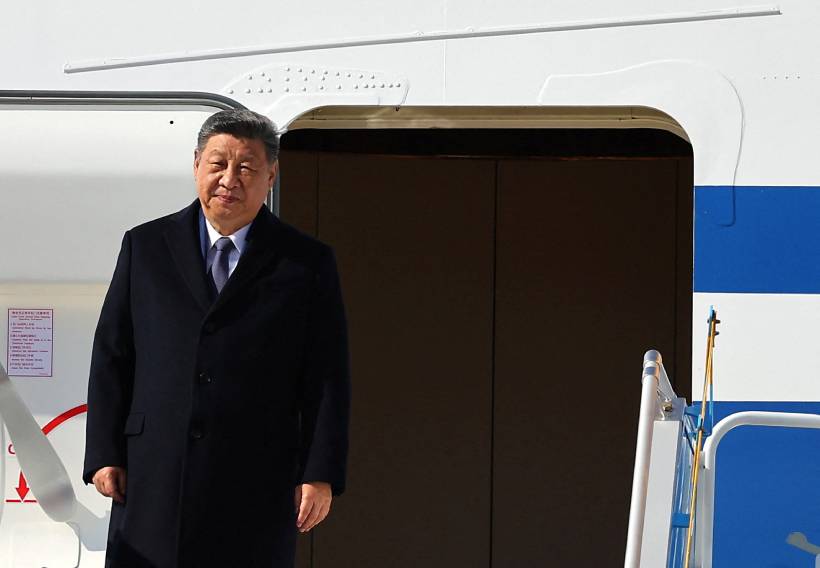
Xi Jinping once said China has great patience—implying that if patience is exhausted, the world will see a completely different China, one that uses power without regard for cost.
More than 8,000 candidates sat for a government exam on a runway in Odisha in India, to compete for only 187 positions with the state’s Home Guard. Drones were used to monitor examinees. 18% of Indians under 24 are unemployed, according to the ILO.
South Korean President Lee Jae Myung delivers a speech during a ceremony to mark the 77th Armed Forces Day in Gyeryong, South Korea, 01 October 2025. File Photo by KIM HONG-JI /EPA
Dec. 19 (Asia Today) — President Lee Jae-myung said Friday that while North Korea’s “hostile two-state” line may reflect current realities, South Korea must “return to our proper place” and work to restore channels for contact, dialogue and cooperation.
Speaking at a joint work report by the Foreign Ministry and the Unification Ministry at the Government Complex Seoul, Lee pointed to what he described as an unprecedented buildup along the inter-Korean boundary.
“For the first time since the 1950s war, North Korea has erected triple fences along the entire demarcation line, severed bridges, cut off roads and built retaining walls,” Lee said. He added that North Korea may have acted out of concern that the South could invade, but said it was regrettable and appeared tied to “strategic desires.”
Lee said the moves could be part of Pyongyang’s strategy, but argued South Korea must respond with patience and sustained effort to improve what he described as a situation in which the North “fundamentally refuses contact itself.”
“As I’ve said before, we must find even the smallest opening,” Lee said. “We need to communicate, engage in dialogue, cooperate and pursue a path of coexistence and mutual prosperity between the North and South.”
He said there is currently “not even a needle’s eye of an opening,” repeating that the situation is “truly not easy.”
Lee also appeared to criticize the previous administration’s approach to North Korea, saying “one could call it a kind of karma.” He added that if a strategy contributed to the current impasse, “then we must change it now.”
Lee said the government should make proactive efforts to ease tensions and create conditions for trust to emerge, adding that the Unification Ministry should now take a leading role.
“It is certainly not an easy task, but it is equally clear that it is not something we should give up on,” he said.
Australia has swept to an 82-run win in the third Ashes Test at Adelaide Oval to retain the urn with two matches to spare and leave England facing recriminations over another failed campaign.
Chasing a world record 435 runs to win on Sunday, England battled doggedly on day five but folded for 352 with left-armed quick Mitchell Starc taking three wickets and Scott Boland the last dismissal of Josh Tongue before tea.
Recommended Stories
list of 4 itemsend of list
“Three-nil is hugely satisfying for many reasons but particularly with how the chat before the series was how equally poised it was going to be,” Australia captain Pat Cummins, who took six wickets on his return from a back injury, told reporters
“This group’s amazing at just cracking on.”
Much of the talk in the build-up to the Ashes had been the age profile of the Australia squad, but Starc said the veterans had proved their worth.
“We do laugh at some of the comments that get back to us about how old we are,” the 35-year-old said.
“I’m sure experience plays a part going through your highs and lows. … That plays a big part in all of this.”
After eight-wicket defeats in Perth and Brisbane, England have now lost the Ashes in three matches for the fourth consecutive tour while losing 16 of their last 18 Tests in the country.
Although two Tests remain, the latest surrender may top the previous tours for sheer disappointment.
There were expectations of a genuine contest, fighting words from England captain Ben Stokes and hope that “Bazball” might win the urn in Australia for the first time since 2010-2011.
All that was swept aside in Adelaide, where England ditched their trademark aggression, reverted to more traditional Test batting and were still beaten convincingly.
“We obviously came here with a goal in mind, and we haven’t been able to achieve it. It hurts, and it sucks,” England skipper Stokes said.
“They’ve been able to outdo us on a much higher level. … I thought we did incredibly well to take us where we did in this fourth innings.
“We couldn’t do what we came here to do, but there was some good stuff to come out of this game.”
England’s Jamie Smith scored 60 and mounted an England comeback on the final day, but it wasn’t enough to save the match – and the series [Asanka Brendon Ratnayake/Reuters]
The king of Adelaide
On day five while still needing 228 runs to win, England’s hopes were pinned on all-rounder Will Jacks and wicketkeeper Jamie Smith after they resumed on 207 for six.
Jacks turned his ankle when pushing off his crease for a run but battled on for 40 minutes until rain halted play.
England fans cheered, but it was just a passing squall, the ground soon bathed in sunshine.
The Surrey duo brought up a fifty-run partnership with the old ball and were soon spared spinner Nathan Lyon, who came off with a hamstring injury after cutting off a four in the field.
When the second new ball came, Smith attacked with gusto, smashing both Cummins and Starc for back-to-back fours.
But with the deficit trimmed to 150 runs, he threw the bat at a Starc delivery for a third time in succession and was caught for 60 by a back-pedalling Cummins at mid-on.
Jacks played a steadier hand with tailender Carse, who finished 39 not out and hung tough with the all-rounder for 52 runs.
Home fans shifted uncomfortably in their seats as the pair reduced the deficit to under 100 runs, but Starc returned and Marnus Labuschagne flew in the slips to snuff out the danger.
Jacks, on 47, drove at a Starc ball that moved away off the seam, and Labuschagne dived to his left for another terrific one-handed catch, having removed Ollie Pope with a screamer in the slips on day four.
Jofra Archer then tried to slog Starc but sent the ball down the throat of Jake Weatherald at deep point to leave England one wicket from defeat before Boland had Tongue sending another slips catch to Labuschagne.
Australia wicketkeeper Alex Carey was named Man of the Match for a first-innings 106 and 72 in the second while Travis Head set up the victory with 170 in the third innings, his fourth consecutive Test ton at Adelaide Oval.
“If he wasn’t before, he’s the king of Adelaide,” Starc said of Head, who also scored a match-winning 123 in Perth.
“He’s not going to have to pay for another beer [here]. I don’t know how he does it, but jeez, it’s bloody good to watch.”
Australia’s captain Pat Cummins, right, shakes hands with England captain Ben Stokes after the third Ashes cricket Test match in Adelaide [William West/AFP]
The way the story is often told is that Western countries gifted human rights to the world and are the sole guardians of it. It may come as a surprise for some, then, that the international legal framework for prohibiting racial discrimination largely owes its existence to the efforts of states from the Global South.
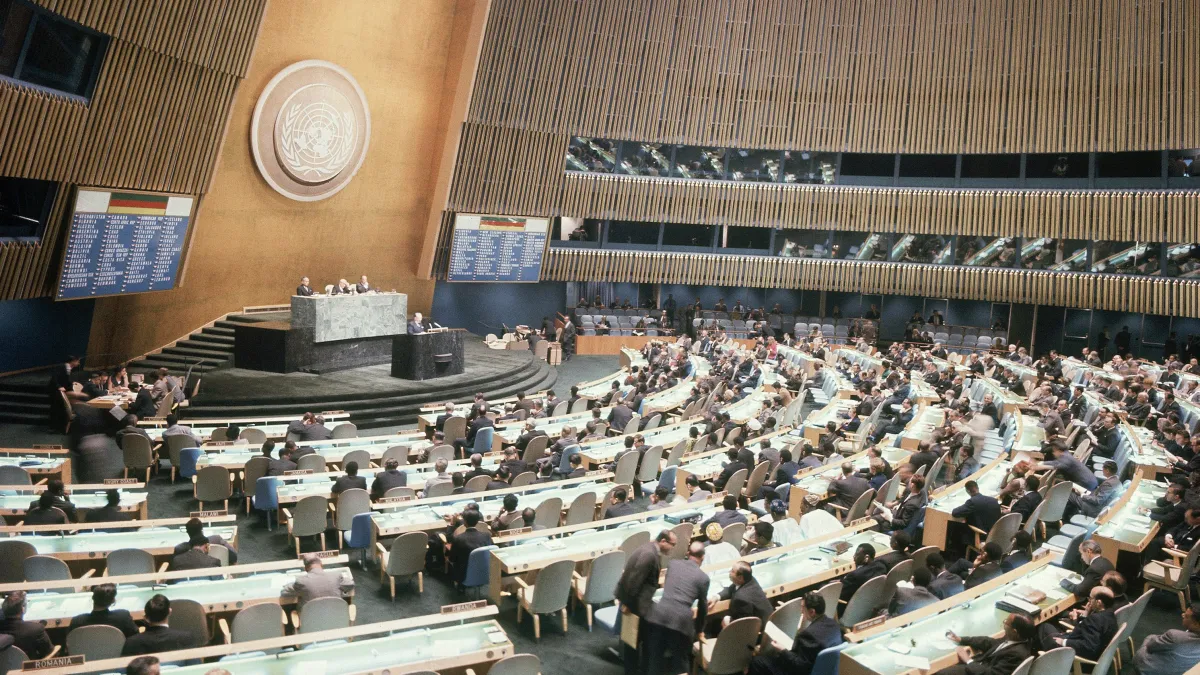
In 1963, in the midst of the decolonisation wave, a group of nine newly independent African states presented a resolution to the United Nations General Assembly (UNGA) calling for the drafting of an international treaty on the elimination of racial discrimination. As the representative from Senegal observed: “Racial discrimination was still the rule in African colonial territories and in South Africa, and was not unknown in other parts of the world … The time had come to bring all States into that struggle.”
The groundbreaking International Convention on the Elimination of All Forms of Racial Discrimination (ICERD) was unanimously adopted by the UNGA two years later. The convention rejected any doctrine of superiority based on racial differentiation as “scientifically false, morally condemnable and socially unjust”.
Today, as we mark 60 years since its adoption, millions of people around the world continue to face racial discrimination – whether in policing, migration policies or exploitative labour conditions.
In Brazil, Amnesty International documented how a deadly police operation in Rio de Janeiro’s favelas this October resulted in the massacre by security forces of more than 100 people, most of them Afro-Brazilians and living in poverty.
In Tunisia, we have seen how authorities have for the past three years used migration policies to carry out racially targeted arrests and detentions and mass expulsions of Black refugees and asylum seekers.
Meanwhile, in Saudi Arabia, Kenyan female domestic workers face racism and exploitation from their employers, enduring gruelling and abusive working conditions.
In the United States, diversity, equity and inclusion (DEI) initiatives aimed at tackling systemic racism have been eliminated across federal agencies. Raids by Immigration and Customs Enforcement (ICE) targeting migrants and refugees are a horrifying feature of President Donald Trump’s mass deportation and detention agenda, rooted in white supremacist narratives.
Migrants held in detention centres have been subjected to torture and a pattern of deliberate neglect designed to dehumanise and punish.
Elsewhere, Amnesty International has documented how new digital technologies are automating and entrenching racism, while social media offers inadequately moderated forums for racist and xenophobic content. For example, our investigation into the United Kingdom’s Southport racist riots found that X’s design and policy choices created fertile ground for the inflammatory, racist narratives that resulted in the violent targeting of Muslims and migrants.
Even human rights defenders from the Global South face racial discrimination when they have to apply for visas to Global North countries in order to attend meetings where key decisions are made on human rights.
All these instances of systemic racism have their roots in the legacies of European colonial domination and the racist ideologies on which they were built. This era, which spanned nearly four centuries and extended across six continents, saw atrocities that had historical consequences – from the erasure of Indigenous populations to the transatlantic slave trade.
The revival of anti-right movements globally has led to a resurgence of racist and xenophobic rhetoric, a scapegoating of migrants and refugees, and a retrenchment in anti-discrimination measures and protections.
At the same time, Western states have been all too willing to dismantle international law and institutions to legitimise Israel’s genocide against Palestinians in Gaza and shield Israeli authorities from justice and accountability.
Just as the creation of the ICERD was driven by African states 60 years ago, Global South countries continue to be at the forefront of the fight against racial oppression, injustice and inequality. South Africa notably brought the case against Israel at the International Court of Justice and cofounded The Hague Group – a coalition of eight Global South states organising to hold Israel accountable for genocide.
On the reparations front, it is Caribbean and African states, alongside Indigenous peoples, Africans and people of African descent, that are leading the pursuit of justice. The Caribbean Community (CARICOM) has been intensifying pressure on European governments to reckon with their colonial past, including during a recent visit to the United Kingdom by the CARICOM Reparations Commission.
As the African Union announced 2026-36 the Decade of Reparations last month, African leaders gathered in Algiers for the International Conference on the Crimes of Colonialism, at which they consolidated demands for the codification of colonialism as a crime under international law.
But this is not enough. States still need to confront racism as a structural and systemic issue, and stop pretending slavery and colonialism are a thing of the past with no impact on our present.
Across the world, people are resisting. In Brazil, last month, hundreds of thousands of Afro-Brazilian women led the March of Black Women for Reparations and Wellbeing against racist and gendered historic violence. In the US, people fought back against the wave of federal immigration raids this year, with thousands taking to the streets in Los Angeles to protest and residents of Chicago mobilising to protect migrant communities and businesses against ICE raids.
Governments need to listen to their people and fulfil their obligations under ICERD and national law to protect the marginalised and oppressed against discrimination.
The views expressed in this article are the authors’ own and do not necessarily reflect Al Jazeera’s editorial stance.
Real Madrid star forward scores his 59th goal in a calendar year to equal Cristiano Ronaldo’s record tally at the club.
Published On 21 Dec 202521 Dec 2025
Share
Kylian Mbappe has equalled Cristiano Ronaldo’s club record of 59 goals in a calendar year for Real Madrid with a late penalty in his side’s 2-0 home win over Sevilla in La Liga, with the French forward celebrating his 27th birthday in style.
Mbappe missed several earlier chances before getting his opportunity from the spot four minutes from time on Saturday, and he made no mistake to net his 59th goal in as many games across all competitions in 2025 to level Ronaldo’s 2013 haul.
Recommended Stories
list of 4 itemsend of list
“Today, and because of the record, it’s incredible, in my first year to be able to do what Cristiano did,” Mbappe told RMTV.
“My idol, the best player in the history of Real Madrid and a reference in world football. It’s an honour for me.”
Jude Bellingham put Real in front in the opening half, and Sevilla went down to 10 men with 22 minutes remaining after Marcao received a second booking, but the hosts had goalkeeper Thibaut Courtois to thank for keeping them ahead.
Real are second in the La Liga standings on 42 points, one behind Barcelona, who are away to third-placed Villarreal on Sunday, while Sevilla are ninth on 20 points.
Xabi Alonso’s side were looking to end the year on a high note after losing top spot in November with three consecutive draws, and they saw out 2025 with three successive wins in all competitions, but it was far from a straightforward success.
Sevilla created plenty of problems early on, with Isaac Romero chipping a shot narrowly wide when sent through on goal, bringing whistles from the home crowd with Real under pressure.
Mbappe sent a snap shot wide, as the hosts struggled to find a clear-cut chance, and Sevilla’s Lucien Agoume put another strike wide for the visitors before Real went in front seven minutes before the break.
Rodrygo put a free kick into the box, and Bellingham rose to power a header into the far corner to settle Real’s nerves at the break.
Mbappe scores Real’s second goal in the 86th minute, equalling Ronaldo’s record of 59 goals in a calendar year [Oscar Del Pozo/AFP]
Mbappe made to wait
Mbappe sent an effort straight at the keeper and dragged another shot wide, while at the other end, Courtois twice denied Alexis Sanchez and Romero with Real all too easy to open up at the back.
From a corner, Mbappe hit the crossbar with a header, and after Marcao’s sending off, Rodrygo struck a beautiful shot on the turn, but Sevilla keeper Odysseas Vlachodimos touched it onto the bar.
Real were hanging on for the win with Mbappe still labouring to find the net when Juanlu Sanchez fouled Rodrygo in the box and the birthday boy stepped up to score before pulling out Ronaldo’s celebration.
“I wanted to give him a little nod because he has always been affectionate with me,” Mbappe added.
“Normally, I have my own celebration, but I wanted to share that with him, and like I said, he’s been my idol since I was a kid. I have a very good relationship with him; he’s a friend now.”
Mbappe thought he had been gifted the perfect chance to score again when the referee pointed to the spot two minutes later, but the official changed his mind after a VAR check, and the Frenchman had to settle for a share of the record.