News

Super flu’ wave hits hospitals in England with no peak yet

Nick TriggleHealth correspondent

Getty Images A&E departmentGetty Images

The number of patients in hospital in England with influenza has risen by more than 50% in the past week, with NHS bosses warning there is no sign of “super flu” peaking yet.

In the week up to Sunday there were 2,660 flu cases a day on average in hospital – and NHS England said the numbers had continued rising this week.

NHS England said it was the equivalent of having three hospitals full of flu patients, with some reporting nearly one in 10 beds occupied by patients with the virus.

Officials said the numbers had continued rising this week with fears it may top 5,000 by the weekend.

Increases are also being reported across the UK.

In Scotland, the number of confirmed cases rose by nearly a quarter in the last week, while the number of people admitted to hospital for flu went up 15%.

The picture was similar in Wales and Northern Ireland, with children and young people particularly affected, according to health officials there.

Some schools have had to bring back Covid-like measures to prevent the spread of the virus. One site in Caerphilly had to close temporarily while some schools in Aberdeenshire reduced their hours.

Children and young people aged five to 14 also had the highest positivity rates for flu in England.

But in terms of who is most affected or sickest, hospital admission rates for flu in England are highest among people over 75 and children under five.

Writing in the Times, Health Secretary Wes Streeting said: “This winter, our NHS faces a challenge unlike any it has seen since the pandemic.”

He said the number of people admitted to hospital with flu “could triple by the peak of the pressures – and the NHS doesn’t know when the peak will hit”.

NHS England medical director Prof Meghana Pandit said: “This unprecedented wave of super flu is leaving the NHS facing a worst-case scenario for this time of year – with staff being pushed to the limit to keep providing the best possible care for patients.”

The numbers in hospital with flu is at its highest level at this time of year since records began – although they only date back to 2021 and so do not capture the two worst flu seasons of the past 15 years which were seen in 2014-15 and 2017-18.

Chart showing flu rates in hospital

Flu rates began rising a month earlier than normal this year driven by a mutated strain of the virus. The dominant strain is H3N2, but it has some genetic changes this year.

It means the general public has not encountered this exact version of flu before, which means there is maybe less immunity.

NHS England said the number of patients in hospital with the vomiting bug norovirus was also on the rise, with more than 350 beds occupied by people with that virus.

Chart showing hospitals with most flu cases

It comes ahead of a strike by resident doctors, the new name for junior doctors, which is due to start next week.

There are hopes it may be called off after a fresh offer from Health Secretary Wes Streeting prompted the British Medical Association to agree to poll their members to see if they were willing to call off the five-day walkout that is due to begin on Wednesday. The results of that poll will be be announced on Monday.

Prime Minister Sir Keir Starmer accused the BMA of being “irresponsible” and said it should accept the offer on the table, adding the offer can only go forward if they stop strike action “particularly in the run-up to Christmas, particularly when we’ve got a problem with flu.”

Daniel Elkeles, of NHS Providers, which represents hospitals, said: “The NHS is in the thick of a storm come early. Flu is hitting hard and other winter bugs are surging.

“Now more than ever, the NHS needs all hands on deck.

“We have to hope that BMA resident doctors will step back from next week’s strike, take up the government’s sensible offer and end their damaging dispute.”

Data from the UK Health Security Agency (UKHSA), which takes into account levels of infection in the community as well as hospitals, shows infection rates are continuing to rise, but not as sharply as they were in the previous week.

But officials stressed it was too early to take that as a sign that flu could be peaking.

They said the virus was unpredictable and a lull could be followed by another surge.

Dr Conall Watson, an infectious diseases expert at the UKHSA, urged people who are eligible for a free flu vaccine on the NHS, which includes the over 65s, those with certain health conditions and pregnant women, to still come forward if they had not yet got one.

“There is still plenty of flu vaccine available to protect those who need it – what’s running out is time to be protected ahead of Christmas.

“If you are eligible this is the last chance to get protected as we head into Christmas – so make an appointment with the NHS today.”

It can take up to two weeks following vaccination to develop the fullest protection from the jab, Dr Watson added.

Dr Vicky Price, president of the Society for Acute Medicine, said winter viruses were placing further strain on an “already buckling system”.

She said patients were facing long waits in A&E as hospital staff were being overloaded with patients.

But she accused NHS England and the government of using it as a “convenient scapegoat” for the “predictable breakdown” in NHS capacity caused by workforce shortages.

“The situation in emergency departments has become so dire that what was once considered a critical incident is now seen as normal and routine. What is happening is not an isolated emergency, but the culmination of systemic failure.”

Source link

Trump diehard supporter Mike Lindell announces run for Minnesota governor

Dec. 11 (UPI) — Mike Lindell, creator of the MyPillow and a noted conspiracy theorist, has announced he is running for governor of Minnesota.

Lindell is a longtime friend and supporter of President Donald Trump and is known for saying that voting machines in the United States are rigged and can flip elections.

Though he’s lost lawsuits for his election denials, he is still saying that the 2020 election was stolen.

He enters a crowded field of Republicans vying for Gov. Tim Walz’s office, including speaker of the Minnesota House of Representatives Lisa Demuth, former state senator and 2022 Republican nominee for governor Scott Jensen, lawyer Chris Madel and state Rep. Kristin Robbins.

Walz’s campaign is already attacking Lindell for his ties to Trump, labeling him “the far-right CEO, election denier, and Donald Trump’s top ally in Minnesota.”

“Mike Lindell is selling conspiracies, MAGA extremism, and pillows. He has no business holding the highest office in our state,” Walz’s campaign said in a fundraising email last week.

Lindell announced his campaign on Thursday, with an eight-minute video filmed on the factory floor of his MyPillow company. He claimed that the President Joe Biden administration “targeted my banks, they targeted my suppliers, they even took my phone.”

He said he wants to stop the “rampant fraud” in Walz’s administration, stop rising property taxes and “the crime that threatens you and your family.” He also wants to change the state’s voting system so that voters submit paper ballots that are then hand-counted.

The fraud Lindell references comes from an investigation of dozens of people who allegedly stole from the state’s program to feed children during the COVID-19 pandemic. Several Somali immigrants allegedly created small companies that billed state agencies for millions in social services that never went to the intended people. Walz has said that anyone who stole from the government will be prosecuted.

Trump has responded by ending deportation protections for all Minnesota Somalis.

Lindell told the Minneapolis Star Tribune that he told Trump he was thinking of running for governor back in August, but he wouldn’t say what Trump’s response was.

But Trump didn’t back him in his bid for chair of the Republican National Committee in 2023. He only got four votes in that election.

Trump’s former personal lawyer Rudy Giuliani now works for Lindell on his media network, LindellTV, and he’s been giving Lindell political advice.

“He’s been part of many campaigns,” Lindell told the Star Tribune. “He knows what he’s doing.”

LindellTV now has credentials to cover the White House and the Pentagon, The New York Times reported.

Lindell calls his story “the American Dream on steroids,” touting his rise from crack cocaine addiction to successful business owner. He considers himself the frontrunner in the field of candidates and said, “I believe I will stand on my own merit,” Lindell said.

President Donald Trump stands with Saudi Arabia’s Crown Prince Mohammed bin Salman during a black tie dinner at the White House in Washington, on November 18, 2025. Photo by Anna Rose Layden/UPI | License Photo

Source link

This Is What The B-52’s New Radar Looks Like

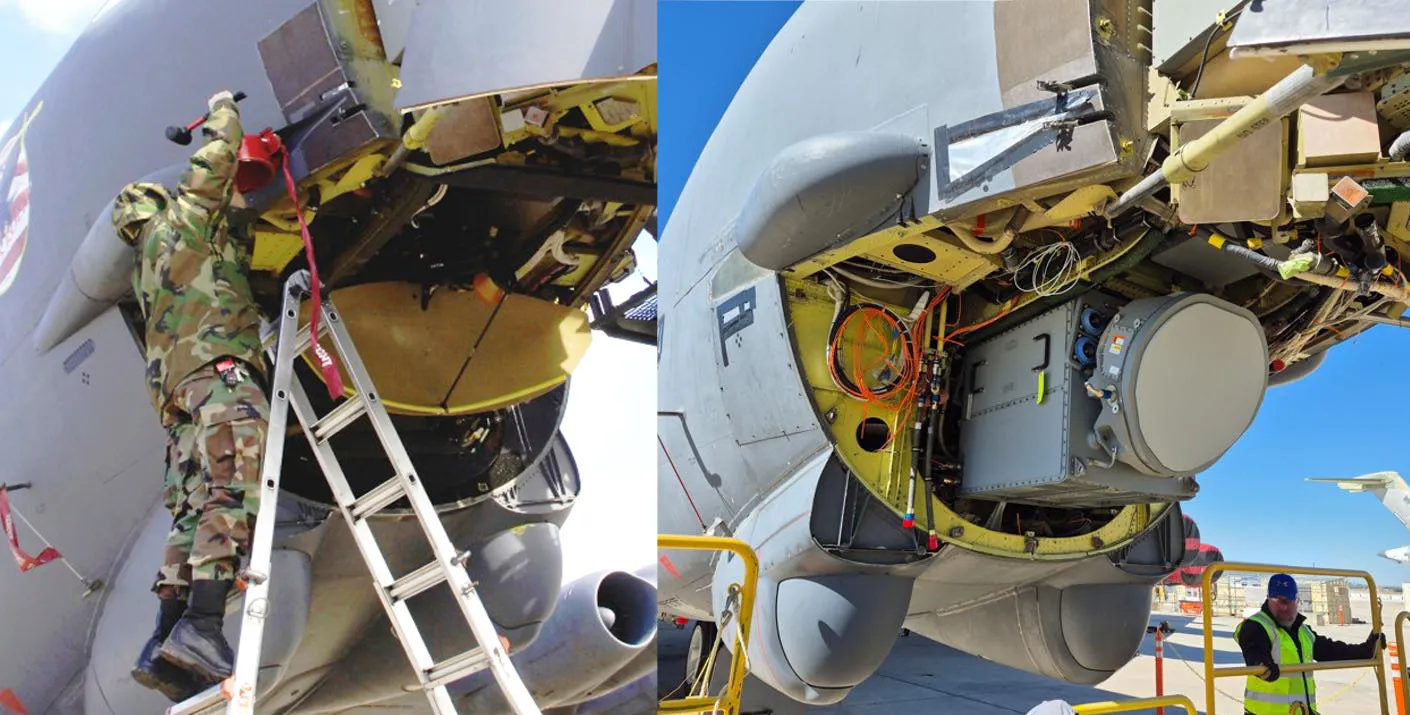
The first B-52 ever equipped with an active electronically scanned array (AESA) radar has arrived at Edwards Air Force Base for testing. This is a major and much-delayed milestone, one of many that will occur as the B-52H morphs into the significantly modernized B-52J. With the news of the ferry flight, which originated in San Antonia, where the installation of Raytheon’s AN/APQ-188 Bomber Modernized Radar System took place, we are also getting a good look at what the fighter-derived radar looks like installed in the B-52’s unique nose profile. To say it is a more modern-looking arrangement than the mechanically scanned AN/APQ-166 that came before it is an understatement.

The AN/APQ-166 legacy radar and the new AN/APG-79 mounted under the BUFF’s cavernous nose cone. (USAF/composite)

“The ferry flight of this upgraded B-52 marks an important moment in our efforts to modernize the bomber force,” Secretary of the Air Force Troy Meink said in a statement in an Air Force press release. “This radar modernization ensures that the B-52 will continue to serve as a cornerstone of American airpower well into the future. We are committed to extending the life of this vital platform, allowing it to operate alongside next-generation fighter and bomber aircraft.”

Edwards AFB gets its upgraded B-52, arriving from at the end of its ferry flight from Texas. (Edwards AFB PAO) James West

The BUFF’s new radar is based directly on the AN/APG-79 that has equipped most F/A-18E/F Super Hornets and all F/A-18G Growlers, as well as nearly 100 F/A-18A-D Hornets still serving with the USMC. The F-15E Strike Eagle and F-15EX Eagle II’s AN/APG-82 also builds upon AN/APG-79 technology. At this point, it’s one of the Pentagon’s most proven fighter AESA just based on time served and production numbers.

That isn’t to say that things have been smooth going in adapting the radar to the B-52’s needs. The program has gone over budget and busted schedules, which led the USAF to inquire about alternatives. The price tag also rose high enough to trigger a deep, legally mandated review of the program’s core requirements and cost estimates. Flight testing of the first B-52 with the new radar was originally expected to start in 2024.

Just getting the new radar to fit physically in the B-52’s nose is known to be one of the challenges the program has had to overcome.

“The Air Force continues to refine the system radome design to, address aircraft integration issues. Depending on final radome design, radar performance may be impacted,” the Pentagon’s Office of the Director of Test of Evaluation noted in its most recent annual report, which was released earlier this year. “The program office should fully characterize performance with the final radome design to inform operational employment tactics.”

From the pictures that have been released now, the external shaping of the B-52’s nose looks to be largely unchanged following the installation of the AN/APQ-188. There is a relatively narrow off-color seam visible between the nose and the cockpit.

Close-up looks at the nose of the first B-52 to receive the new AN/APQ-188 radar. The off-color seam is visible between the nose and the cockpit. USAF

It’s worth noting that the AN/APG-79 variant installed in the BUFF is angled downward. This would reflect its unique placement in the B-52, basically in the lower deck of a massive radome enclosure. Its ability to look up is hampered by the bulkhead above it, something we will come back to later on.

The new radar installation on the B-52 also comes along with “two Display and System Sensor Processors as its mission computers to integrate the radar with B-52 systems, along with two large 8×20-inch high-definition touchscreens at the Nav and Radar Nav stations for radar imagery, control and legacy displays, and two fighter-like hand controllers for radar operation,” according to a press release from Boeing. “The system features upgraded cooling, providing liquid cooling for the radar and engine bleed-air heating for very cold conditions.”

Another view of the first B-52 fitted with the new AN/APQ-188 radar arriving at Edwards. USAF

Regardless of the issues the radar upgrade program has faced, the USAF appears to be sticking with the AN/APG-79-derived AN/APQ-188. A new AESA radar is really a must-have in order to keep the B-52 relevant for decades to come.

Simply put, giving the B-52 a modern multimode AESA provides a massive capability boost. As we have discussed in the past:

In general, AESA radars offer greater range, fidelity, and resistance to countermeasures, as well as the ability to provide better overall general situational awareness, compared to mechanically scanned types. Increasingly advanced AESAs bring additional capabilities, including electronic warfare and communications support.

For the B-52, any new multi-mode AESA will improve the bomber’s target acquisition and identification capabilities, including when used together with targeting pods available for the bombers now. New radars for the bombers will also be helpful when it comes to guiding networked weapons over long distances to their targets and could provide a secondary ground moving target indicator (GMTI) and synthetic aperture radar surveillance capabilities. The radar upgrade could help defend B-52s from air-to-air threats, including through improved detection of incoming hostile aircraft.

Beyond their tactical advantages, AESAs are generally more reliable, particularly due to their lack of moving parts. Without the need to move a radar dish rapidly in multiple directions, while the jet is under various g-loads and is rocked by turbulence and hard landings, the actual time the radar is available for use goes up. The aforementioned secondary electronic warfare capability also can’t be understated. The new radar will surely become a key and very powerful component of the B-52’s upgraded electronic warfare suite, which will be critical to its ability to survive in future fights.

As mentioned, the positioning of the AN/APQ-188 in the BUFF’s nose impacts its ability to look up. At the same time, this is also aligned more with air-to-surface tasks considering the B-52’s mission set. As a point of comparison, the AN/APG-79 as installed in the Super Hornet is angled upward. This is due, at least in part, to match the reduced observability (stealthy) features of the Super Hornet. In the Legacy Hornet, the array is nearly vertical, as there are no low-observable demands for that platform. In that case, space concerns may also be an issue. The B-52 is about as unstealthy as an aircraft can get, so the downward angle is clearly not dictated by observability design drivers.

AN/APG-79(V)4, a special configuration for the Legacy Hornet that can slot into the AN/APG-65/73 space is seen in this image. (RTX)
The AN/APG-79 installed on a Super Hornet. US Navy via Researchgate.net

The new radar is just one facet of the comprehensive upgrade program now in development for the B-52 that will end in the jet receiving the B-52J designation. Even more important than the new radar is replacing the BUFF’s antique TF-33 low-bypass turbofan engines with Rolls-Royce F-130 turbofans. That program is now well underway but is also behind schedule and over budget, with full operational capability not slated till 2033. So the fully featured ‘super BUFF’ won’t be plowing the skies anytime soon, but the hope is that once complete, the fleet of 76 jets can remain reliable and relevant through 2050, at least, serving alongside the drastically more modern B-21 Raider.

You can learn all about what makes up the B-52J and how it will be used in our video below.

B-52 Future Stratofortress: The Upgrades That Will Transform The B-52H Into The B-52J


As it stands now, the Air Force plans to put the B-52 with the new AN/APQ-188 through a series of ground and flight tests in the next year. An initial round of system functional checks was conducted before the plane was flown to Edwards, according to Boeing’s release.

Following the successful completion of the testing at Edwards, the Air Force will make a formal decision regarding the start of series production of the radars for integration on the rest of the B-52 fleet. The service has said most recently that it expects to reach initial operational capability with the AN/APQ-188 on the B-52 sometime in the 2028 to 2030 timeframe.

“This phase of the program is dedicated to getting it right at the start so that we can execute the full radar modernization program,” Troy Dawson, Vice President of the Boeing Bombers division, said in a statement.

A major step in that direction has now been achieved with the arrival of the first B-52 to feature the AN/APQ-188 at Edwards.

Contact the author: Tyler@twz.com

Tyler’s passion is the study of military technology, strategy, and foreign policy and he has fostered a dominant voice on those topics in the defense media space. He was the creator of the hugely popular defense site Foxtrot Alpha before developing The War Zone.


Source link

Gaza’s camps brace for floods as Israel blocks key shelter supplies | Gaza

NewsFeed

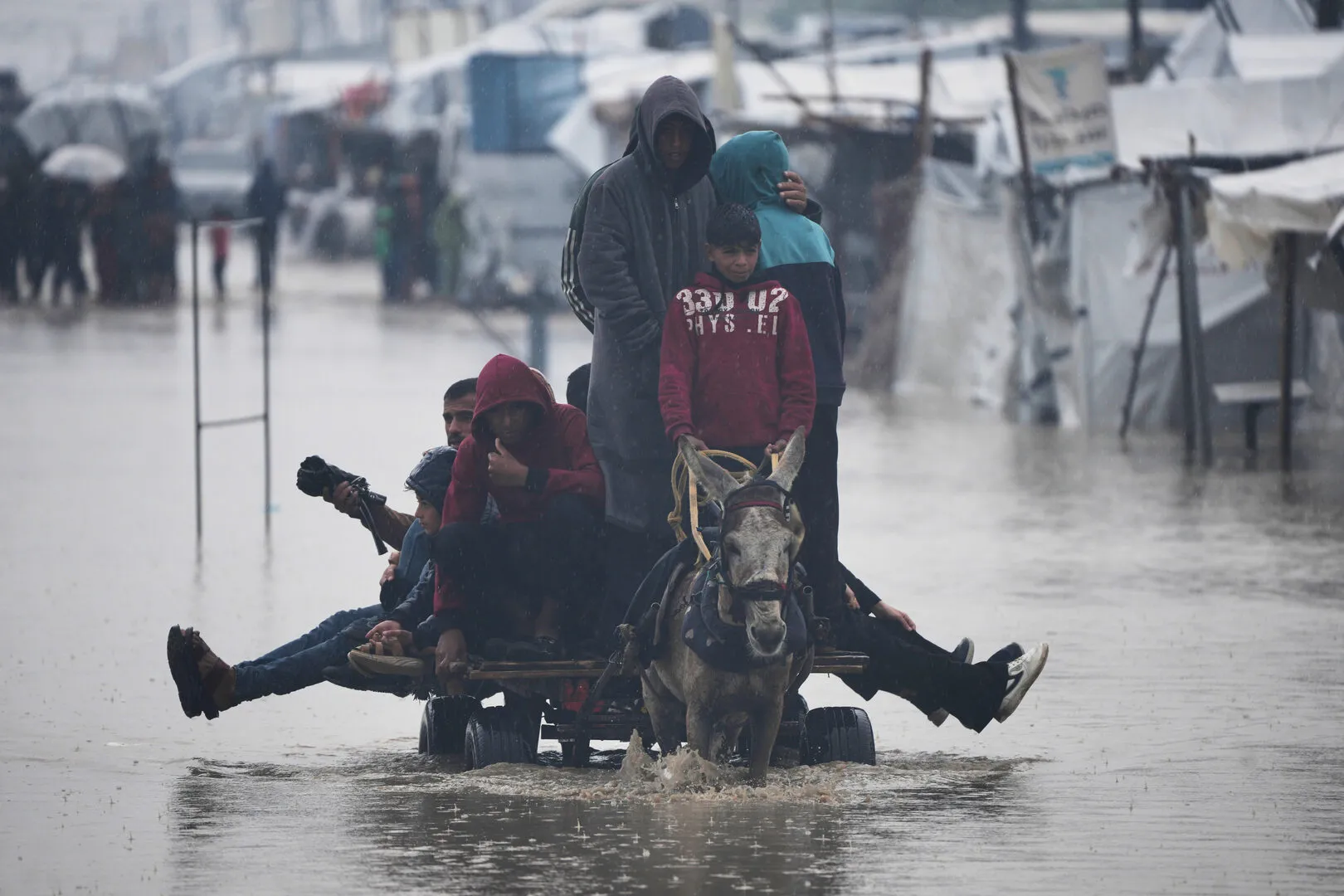
Storm Byron is set to hit Gaza as nearly 1.5 million Palestinians shelter in flood-prone camps with little protection. Aid groups say Israel’s restrictions on vital shelter materials — including timber and tent poles — have left families exposed to severe winds, rain, and disease.

Source link

MyPillow founder and Trump supporter Mike Lindell says he’s running for Minnesota governor in 2026

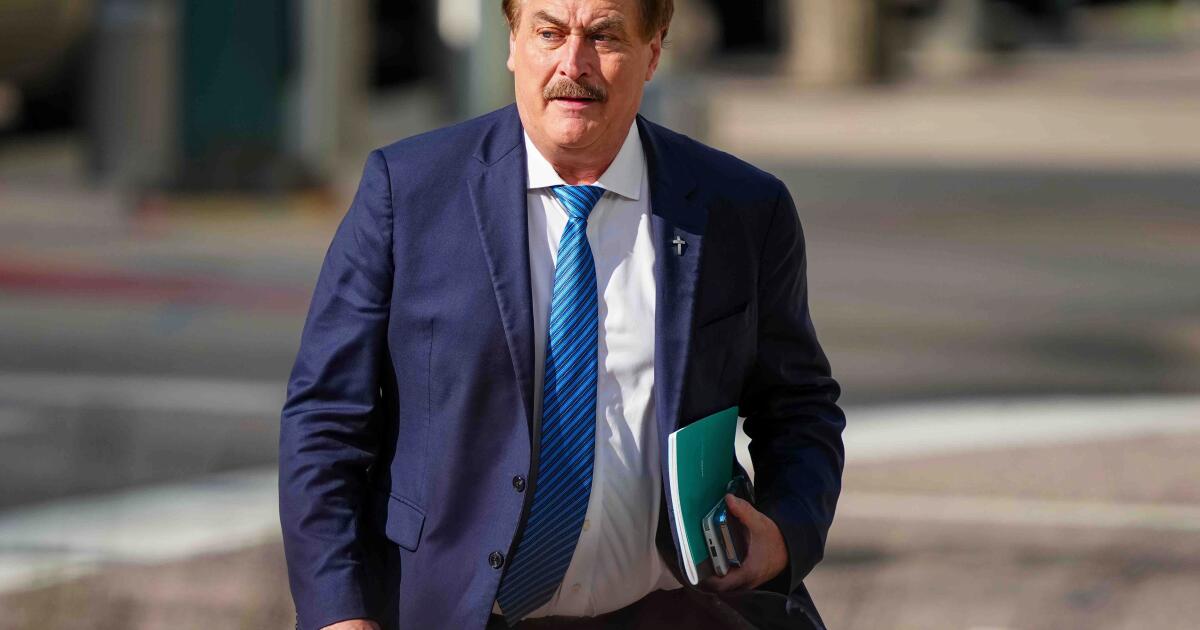
Mike Lindell, the fervent supporter of President Trump known to TV viewers as the “MyPillow Guy,” officially entered the race for Minnesota governor Thursday in hopes of winning the Republican nomination to challenge Democratic Gov. Tim Walz.

“I’ll leave no town unturned in Minnesota,” Lindell told the Associated Press in an interview ahead of a news conference set for Thursday.

He said he has a record of solving problems and personal experiences that will help businesses and and that he will fight addiction and homelessness as well as fraud in government programs. The fraud issue has particularly dogged Walz, who announced in September that he’s seeking a third term in the 2026 election.

A TV pitchman and election denier

Lindell, 64, founded his pillow company in Minnesota in 2009 and became its public face through infomercials that became ubiquitous on late-night television. But he and his company faced a string of legal and financial setbacks after he became a leading amplifier of Trump’s false claims that the 2020 election was stolen. He said he has overcome those setbacks.

“Not only have I built businesses, you look at problem solution,” Lindell said in his trademark rapid-fire style. “I was able to make it through the biggest attack on a company, and a person, probably other than Donald Trump, in the history of our media … lawfare and everything.”

While no Republican has won statewide office in Minnesota since 2006, the state’s voters have a history of making unconventional choices. They shocked the world by electing former professional wrestler Jesse Ventura as governor in 1998. And they picked a veteran TV pitchman in 1978 when they elected home improvement company owner Rudy Boschwitz as a U.S. senator.

Lindell has frequently talked about how he overcame a crack cocaine addiction with a religious conversion in 2009 as MyPillow was getting going. His life took another turn in 2016 when he met the future president during Trump’s first campaign. He served as a warm-up speaker at dozens of Trump rallies and co-chaired Trump’s campaign in Minnesota.

Trump’s endorsement could be the key to which of several candidates wins the GOP nomination to challenge Walz. But Lindell said he doesn’t know what Trump will do, even though they’re friends, and said his campaign isn’t contingent on the president’s support.

His Lindell TV streaming platform was in the news in November when it became one of several conservative news outlets that became credentialed to cover the Pentagon after agreeing to a restrictive new press policy rejected by virtually all legacy media organizations.

Lindell has weathered a series of storms

Lindell’s outspoken support for Trump’s false claims that the 2020 election was stolen triggered a backlash as major retailers discontinued MyPillow products. By his own admission, revenue slumped and lines of credit dried up, costing him millions. Several vendors sued MyPillow over billing disputes. Fox News stopped running his commercials. Lawyers quit on him.

Lindell has been sued twice for defamation over his claims that voting machines were manipulated to deprive Trump of a victory.

A federal judge in Minnesota ruled in September that Lindell defamed Smartmatic with 51 false statements. But the judge deferred the question of whether Lindell acted with the “actual malice” that Smartmatic must prove to collect. Smartmatic says it’s seeking “nine-figure damages.”

A Colorado jury in June found that Lindell defamed a former Dominion Voting Systems executive by calling him a traitor, and awarded $2.3 million in damages.

But Lindell won a victory in July when a federal appeals court overturned a judge’s decision that affirmed a $5-million arbitration award to a software engineer who disputed data that Lindell claimed proved Chinese interference in the 2020 election. The engineer had accepted Lindell’s “Prove Mike Wrong Challenge,” which he launched as part of his 2021 “Cyber Symposium” in South Dakota, where he promised to expose election fraud.

The campaign ahead

Lindell said his crusade against electronic voting machines will just be part of his platform. While Minnesota uses paper ballots, it also uses electronic tabulators to count them. Lindell wants them hand-counted, even though many election officials say machine counting is more accurate.

Some Republicans in the race include Minnesota House Speaker Lisa Demuth; Dr. Scott Jensen, a former state senator who was the party’s 2022 candidate; state Rep. Kristin Robbins; defense lawyer and former federal prosecutor Chris Madel; and former executive Kendall Qualls.

“These guys haven’t lived what I live,” Lindell said.

Lindell wouldn’t commit to abiding by the Minnesota GOP endorsement and forgoing the primary if he loses it, expressing confidence that he’ll win. He also said he’ll rely on his supporters to finance his campaign because his own finances are drained. “I don’t have the money,” he acknowledged.

But he added that ever since word got out last week that he had filed the paperwork to run, “I’ve had thousands upon thousands of people text and call, saying from all around the country … ‘Hey, I’ll donate.’”

Karnowski writes for the Associated Press.

Source link

Competing Senate healthcare bills fail to pass

Dec. 11 (UPI) — The Senate failed to approve either of two competing healthcare plans meant to address healthcare costs likely to rise in the new year with the expiration of Affordable Care Act tax credits.

Democrats and Republicans each put forth their own healthcare plans, but neither mustered the 60 votes needed to overcome the Senate’s filibuster rule with identical 51-48 vote totals, NBC News and The Hill reported.

Each proposal mostly received party-line support, with only Sen. Rand Paul, R-Ky. voting against the GOP proposal, which all Senate Democrats also opposed.

Senate Democrats received some GOP support for their proposal, with Sens. Susan Collins, R-Maine, Josh Hawley, R-Mo., Lisa Murkowski, R-Alaska, and Dan Sullivan, R-Alaska, voting in favor.

Sen. Steve Daines, R-Mont., did not cast a vote for or against either measure.

The Democrats’ plan included a three-year extension of enhanced ACA subsidies beyond the Jan. 1 expiration date. The proposal would also limit health insurance premiums under the ACA to 8.5% of the policyholders’ incomes.

The enhanced subsidies were put in place during the COVID-19 pandemic as part of the 2021 American Rescue Plan.

To pass, Democrats needed at least 13 Republicans to vote in favor of the plan.

The expiring subsidies were the crux of a six-week government shutdown this fall. Democrats refused to vote in favor of a House Republican-drafted stopgap funding measure without including language that would see the subsidies extended beyond December.

Without the subsidies, healthcare premiums through the ACA were forecast to more than double in some cases. The Congressional Budget Office projects about 3.8 million will drop coverage annually over the next eight years without the additional subsidies. In 2025, a record 24 million Americans got their health insurance through the healthcare marketplace.

“We have 21 days until Jan.1,” Senate Democratic leader Chuck Schumer said on the Senate floor Wednesday. “After that, people’s healthcare bills will start going through the roof. Double, triple, even more.

“There is only one way to avoid all of this. The only realistic path left is what Democrats are proposing — a clean, direct extension of this urgent tax credit.”

Republicans, however, refused to consider the subsidies as part of the continuing resolution. Ultimately, Republicans agreed to consider a separate healthcare vote as a tradeoff to reopening the government.

The Republican plan, unveiled Tuesday by Sens. Bill Cassidy and Mike Crapo, doesn’t extend the subsidies but provides $1,500 health savings accounts for those earning less than 700% of the poverty level.”

“It delivers the benefit directly to the patient, not to the insurance company, and it does it in a way that actually saves money to the taxpayer,” Senate Republican leader John Thune said.

He described the Democrats’ plan as a “partisan messaging exercise” and called the idea that it would lower healthcare costs a “tour of fantasy land,” according to ABC News.

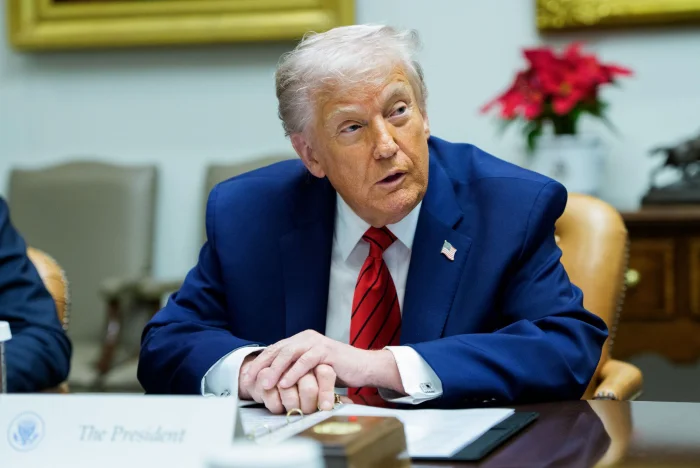
President Donald Trump makes remarks during a roundtable meeting with high-tech business executives in the Roosevelt Room of the White House on Wednesday. The president announced that the United States has seized an oil tanker near Venezuela and a revealed a new special corporate immigration gold card focused on keeping students in the United States. Photo by Aaron Schwartz/UPI | License Photo

Source link

US lawmakers join calls for justice in Israel’s attacks on journalists | Freedom of the Press News

Washington, DC – American journalist Dylan Collins wants to know “who pulled the trigger” in the 2023 Israeli double-tap strike in south Lebanon that injured him and killed Reuters video reporter Issam Abdallah.

Collins and his supporters are also seeking information about the military orders that led to the deadly attack. But more than two years later, Israel has not provided adequate answers on why it targeted the clearly identifiable reporters.

Recommended Stories

list of 3 itemsend of list

Press freedom advocates and three United States legislators joined Collins, an AFP and former Al Jazeera journalist, outside the US Capitol on Thursday to renew calls for accountability in this case and for the more than 250 other killings of journalists by Israel.

“I want to know who pulled the trigger; I want to know what command structure approved it, and I want to know why it’s gone unaddressed until today – on our strike and all the others targeted,” Collins said.

Senator Peter Welch and Congresswoman Becca Balint, who represent Collins’s home state of Vermont, and Senator Chris Van Hollen stressed on Thursday that they will continue to push for accountability in the strike, which wounded six journalists.

“We’re not letting it go. It doesn’t matter how long they stonewall us. We’re not letting it go,” Balint told reporters.

The attack

Welch said he was sending his seventh letter to the US Department of State demanding answers, accusing Israel of obfuscation.

Israeli authorities, he said, claim they investigated the attack and ruled the shooting unintentional, but they provided no evidence that they questioned soldiers. Israel also never contacted the key witnesses – namely, Colins and other survivors of the strike.

A man holding a video camera surrounded by a tree with blossoms
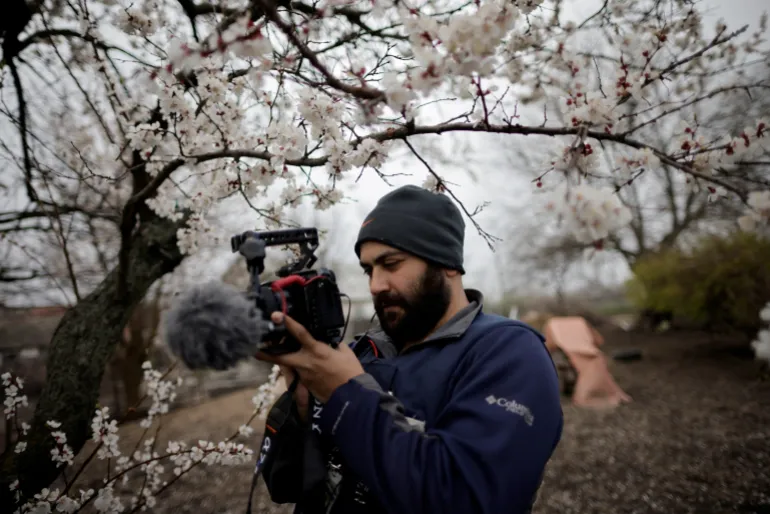
Slain Reuters journalist Issam Abdallah on assignment in Zaporizhia, Ukraine, April 17, 2022 [File: Ueslei Marcelino/Reuters]

In October, the Israeli army told the AFP news agency that the attack was still “under review” in an apparent contradiction of what Welch had been told.

“The investigation, non-investigation – there’s nothing there,” Welch said. “You’re basically getting the run-around, and you’re getting stonewalled. That’s the bottom line.”

Israel received more than $21bn in US military aid during the two years of its genocidal war on Gaza.

Throughout the war, Israel has stepped up its attacks on the press. But the country has a long history of killing journalists without accountability.

The October 13, 2023, strike, which wounded Al Jazeera’s Carmen Joukhadar and Elie Brakhia and left AFP’s Christina Assi with life-altering injuries, was well-documented in part because the journalists were livestreaming their reporting.

The correspondents, who had set up their equipment on a hilltop near the Lebanese-Israeli border to cover the escalation on the front, were in clearly marked press gear and vehicles.

Israeli drones had also circled above the journalists before the attack.

“We thought the fact that we could be seen was a good thing, that it would protect us. But after a little less than an hour at the site, we were hit twice by tank fire, two shells on the same target, 37 seconds apart,” Collins said at a news conference on Thursday.

“The first strike killed Issam instantly and nearly blew Christina’s legs off her body. As I rushed to put a tourniquet on her, we were hit the second time, and I sustained multiple shrapnel wounds.”

The AFP journalist added that the attack seemed “unfathomable in its brutality” at that time, but “we have since seen the same type of attack repeated dozens of times.”

Israel has been regularly employing such double-tap attacks, including in other strikes on journalists in Gaza.

“This is not an incident in the fog of war. It was a war crime carried out in broad daylight and broadcast on live television,” Collins said.

Earlier this year, UN rapporteur Morris Tidball-Binz called the 2023 strike “a premeditated, targeted and double-tapped attack from the Israeli forces, a clear violation, in my opinion, of IHL (international humanitarian law), a war crime”.

US response

Despite the wounding of a US citizen in the strike, the administration of then-President Joe Biden – which claimed to champion freedom of the press and the “rules-based order” – did next to nothing to hold Israel to account.

Biden’s successor, Donald Trump, also pushed on with unconditional US support for Israel.

On Thursday, Collins decried the lack of action from the US government, saying that he reached out to officials in Washington, DC, and showed them footage of the strike.

“I thought that when an American citizen is wounded in an attack carried out by the US’s greatest ally in the Middle East that we would be able to get some answers. But for two years, I’ve been met by deafening silence,” he told reporters.

“In fact, neither the Biden nor the Trump administrations have ever publicly acknowledged that a US citizen was wounded in this attack.”

Israeli soldiers and settlers have killed at least 10 US citizens, including Al Jazeera correspondent Shireen Abu Akleh, over the past decade.

Senator Van Hollen said accountability in the October 13, 2023, attack is important for journalists and US citizens across the world.

“We have not seen accountability or justice in this case, and the State Department – our own government – has not done much of anything really to pursue justice in this case,” Van Hollen told reporters.

“It is part of a broader pattern of impunity for attacks on Americans and on journalists by the government of Israel.”

He called the US approach a “dereliction of duty” by the Trump and Biden administrations.

Israeli ‘investigation’

Amelia Evans, advocacy director at the Committee to Protect Journalists (CPJ), said Senator Welch’s description of the Israeli probe shows that the country’s “purported investigative bodies are not functioning to deliver justice but to shield Israeli forces from accountability”.

Evans urged the Trump administration to “take action” and demand the completion of probes into the killing of Abu Akleh in 2022 and the 2023 attack on journalists in Lebanon.

“It must demand Israel name all the military officials throughout the command chain who were involved in both cases,” she said.

“But as Israel’s key strategic ally, the United States must do much more than that. It must publicly recognise Israel’s failure to properly investigate the war crimes committed by its military.”

Israel often uses claims of investigation in response to abuses.

Former State Department spokesperson Matthew Miller, who spent almost two years defending Israeli war crimes and justifying Washington’s unflinching support for its Middle East ally, acknowledged that tactic recently.

“We do know that Israel has opened investigations,” Miller, who incessantly invoked alleged Israeli probes from the State Department podium, said in June.

“But, look, we are many months into those investigations. And we’re not seeing Israeli soldiers held accountable.”

‘Chilling effect’

Amid the push for justice, Collins paid tribute to his colleague Abdallah, who was killed in the 2023 Israeli attack.

“Losing Issam was tough on everyone,” he told Al Jazeera. “He was like the dynamo of the press scene in Lebanon. He knew everyone. He was always the first person to help you out if you’re in a jam. He had a larger-than-life personality.”

The killing of Abdullah, Collins added, had a “chilling effect” on the coverage of that conflict, which escalated into a full-blown war between Israel and Hezbollah in September 2024.

The violence saw Israel all but wipe out nearly all the border towns in Lebanon.

Even after a ceasefire was reached in November of last year, the Israeli military continues to prevent reconstruction in the devastated villages as it carries out near-daily attacks across the country.

“If the intention was to stop people from covering the war, then it has worked to some degree,” said Collins.

Source link

Nuclear ambition, proxies & defiance: Iran’s former top diplomat | Israel-Iran conflict

On the Record

In this episode of On the Record, Al Jazeera’s Ali Hashem is joined by Iran’s former foreign minister, Mohammad Javad Zarif. They discuss Iran’s political and military involvement in the Middle East and beyond. Zarif reflects on Iran’s involvement with resistance groups in Syria, Gaza and Lebanon and why Iran’s nuclear ambitions have not been obliterated by either the US or Israel.

Source link

Denmark plans to ban access to social media for anyone under 15 | Social Media

NewsFeed

The Danish government has announced a new plan to restrict the use of social media for anyone under the age of 15, though in some cases parents will be able to let their children use social platforms from age 13. The reforms come amid concerns that kids are getting too swept up in a digital world with harmful content.

Source link

Austrian lawmakers pass headscarf ban for under-14s in schools | Religion News

Rights group Amnesty says ban, which will affect around 12,000 girls, will ‘add to racist climate towards Muslims’.

Austria’s lower house of parliament has passed a ban on Muslim headscarves in schools after a previous ban was overturned on the grounds that it was discriminatory.

Lawmakers passed the new legislation on Thursday by a large majority, meaning that girls younger than 14 will not be permitted to wear headscarves that “cover the head in accordance with Islamic traditions” in all schools, with non-compliance fines ranging from 150 to 800 euros ($175-930).

Recommended Stories

list of 2 itemsend of list

In 2019, the country introduced a ban on headscarves for under-10s in primary schools, but the Constitutional Court struck it down the following year, ruling that it was illegal because it discriminated against Muslims, going against the state’s duty to be religiously neutral.

The Austrian government says it has “done [its] best” to see that this law will hold up in the courts.

The new law, which was proposed by the governing coalition of three centrist parties at a time of rising anti-immigration and Islamophobic sentiment, was also backed by the far-right Freedom Party, which wanted it to go even further so it would apply to all students and staff. The Greens were the only party to oppose it.

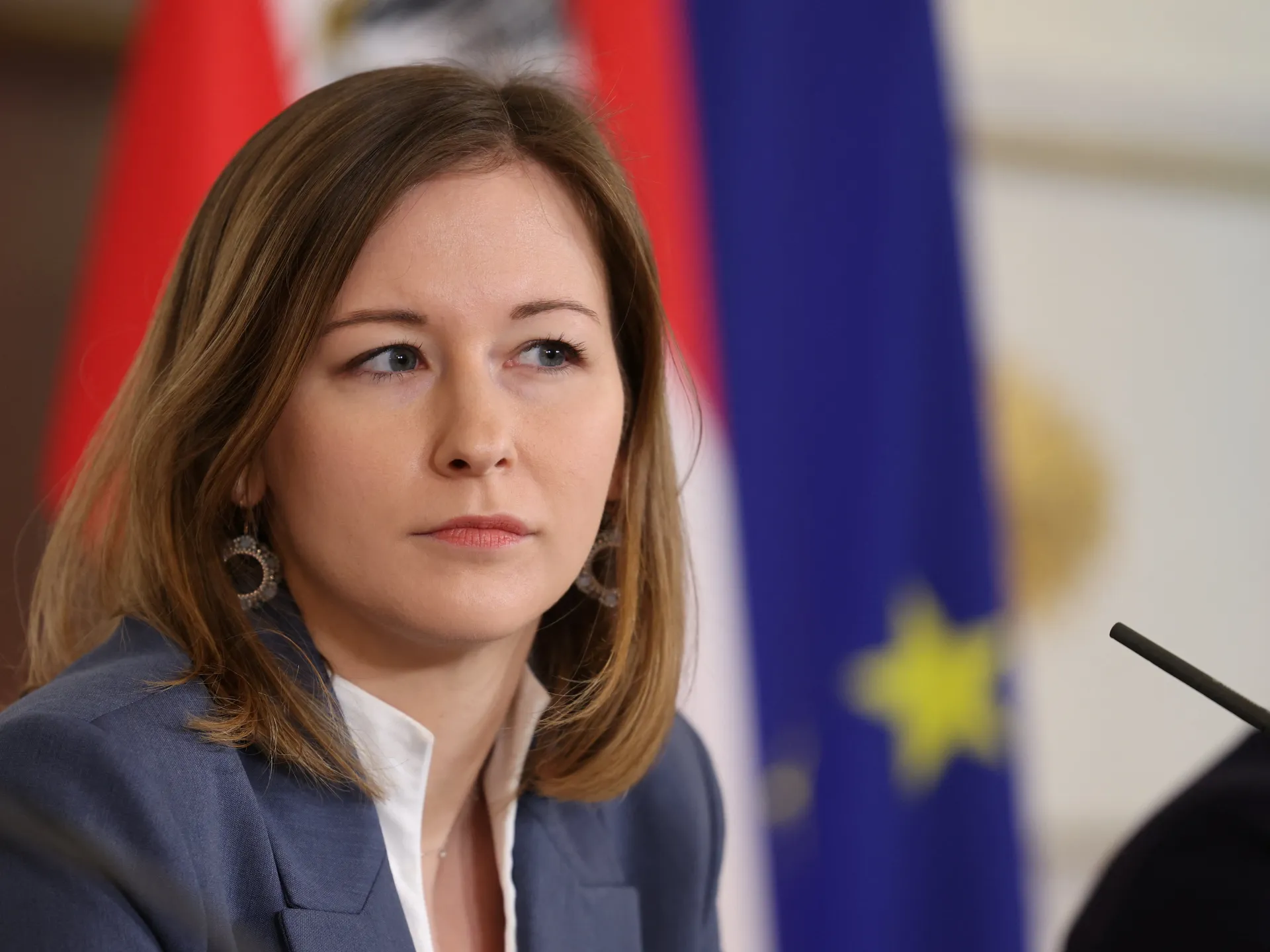
Integration Minister Claudia Plakolm, of the conservative People’s Party, which leads the governing coalition, called headscarves for minors “a symbol of oppression”.

Yannick Shetty, the parliamentary leader of the liberal Neos, the most junior party in the governing coalition, told the lower house that the headscarf “sexualises” girls, saying it served “to shield girls from the male gaze”.

Rights groups have criticised the plan. Amnesty International said it would “add to the current racist climate towards Muslims”.

IGGOe, the body officially recognised as representing the country’s Muslim communities, said the ban “jeopardises social cohesion”, saying that “instead of empowering children, they are stigmatised and marginalised”.

Angelika Atzinger, managing director of the Amazone women’s rights association, said a headscarf ban would send girls “the message that decisions are being made about their bodies and that this is legitimate”.

Education Minister Christoph Wiederkehr of the Neos said young girls were coming under increasing pressure from their families, and also from unrelated young boys, who tell them what to wear for “religious reasons”.

The Greens’ deputy parliamentary leader, Sigrid Maurer, agreed that this was a problem, and suggested interdisciplinary teams, including representatives of the Muslim community, be set up to intervene in schools when “cultural tensions” flare.

Under the ban, which comes into effect in February, an initial period would be launched during which the new rules would be explained to educators, parents and children with no penalties for breaking them.

After this phase, parents will face fines for repeated non-compliance.

The government said that about 12,000 girls would be affected by the new law.


Source link

Premier League predictions: Chris Sutton v England Gaming star Daniel ‘Stingray’ Ray – and AI

This is another big game at the bottom of the table.

I am so pleased for Leeds boss Daniel Farke because I was fed up with the rubbish being talked about how he cannot manage in the Premier League.

Leeds have had a tough run of games against Manchester City, Chelsea and Liverpool and it felt like there were people out there who were waiting and even wishing for Farke to fail, so he would be sacked.

I am delighted that it has turned out very differently. The performances, the guts, and the quality that Leeds have shown has been brilliant, even in defeat at City, and against Chelsea and Liverpool they have picked up points too.

Dominic Calvert-Lewin’s goals have made the difference, and they will go into this game full of belief, and thinking they have got a real chance.

Brentford are still favourites, though, because their home form is so good – with five wins, a draw and just one defeat under Keith Andrews so far.

The Bees were pretty limp when they went to Spurs last week but on their own patch it is a different story. They have won their past three games there, against Liverpool, Newcastle and Burnley so, like Leeds, they will be full of confidence.

I remember Farke’s last game as Norwich manager in November 2021, when his team beat Brentford but he was sacked a few hours later. This time, I am backing Brentford to win, but Farke’s future should not be in doubt.

Sutton’s prediction: 2-0

Stingray’s prediction: Both teams score quite a lot of goals. 2-2

AI’s prediction: 2-2

Source link

Architects of artificial intelligence named Time Person of the Year

An illustration picture shows the introduction page of ChatGPT, an interactive AI chatbot model trained and developed by OpenAI. Time magazine named the creators of artificial intelligence as the Time Person of the Year. File Photo by Wu Hao/EPA-EFE

Dec. 11 (UPI) — Time magazine on Thursday named the architects of artificial intelligence as the 2025 Person of the Year.

While no one specific person was singled out by the magazine for the annual honor, the cover story for the edition featured interviews with Nvidia CEO Jensen Huang, Softbank CEO Masayoshi Son, U.S. Energy Secretary Chris Wright and Baidu CEO Robin Li.

Time editor in chief Sam Jacobs, in a letter to readers about the selection, said no one had a greater impact on individuals than those who created AI.

“This was the year when artificial intelligence’s full potential roared into view, and when it became clear that there will be no turning back or opting out,” he wrote.

“For these reasons, we recognize a force that has dominated the year’s headlines, for better or worse. For delivering the age of thinking machines, for wowing and worrying humanity, for transforming the present and transcending the possible, the architects of AI are Time’s 2025 Person of the Year.”

The Person of the Year edition of the magazine features two covers this year — one depicting builders on scaffolding constructing the letters “AI” and another showing several tech leaders sitting on a steel beam above a cityscape, reminiscent of an iconic 1932 photo of construction workers eating lunch on a steel beam. The edition goes on sale beginning Dec. 19.

Time also named YouTube CEO Neal Mohan as CEO of the Year; Leonardo DiCaprio as Entertainer of the Year; A’ja Wilson as Athlete of the Year; and KPop Demon Hunters as Breakthrough of the Year.

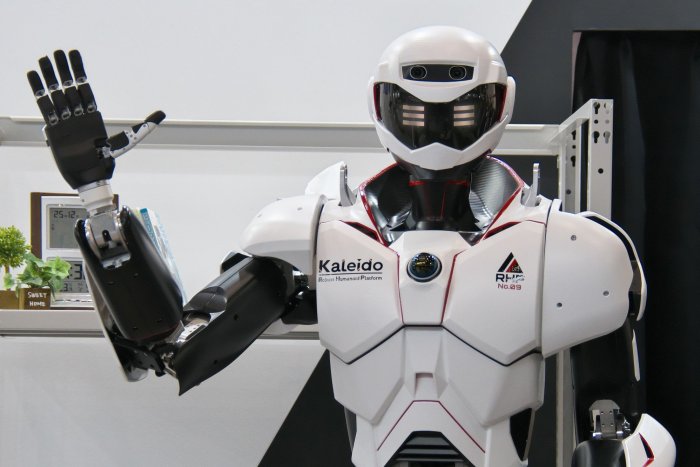
Company Kawasaki Heavy Industries presents its latest humanoid robot, “RHP Kaleido 9,” during the 2025 International Robot Exhibition in Tokyo on December 3, 2025. Photo by Keizo Mori/UPI | License Photo

Source link

India’s Modi Holds Third Call With Trump Since US Tariff Increase

To provide the best experiences, we use technologies like cookies to store and/or access device information. Consenting to these technologies will allow us to process data such as browsing behavior or unique IDs on this site. Not consenting or withdrawing consent, may adversely affect certain features and functions.

The technical storage or access is strictly necessary for the legitimate purpose of enabling the use of a specific service explicitly requested by the subscriber or user, or for the sole purpose of carrying out the transmission of a communication over an electronic communications network.

The technical storage or access is necessary for the legitimate purpose of storing preferences that are not requested by the subscriber or user.

The technical storage or access that is used exclusively for statistical purposes.
The technical storage or access that is used exclusively for anonymous statistical purposes. Without a subpoena, voluntary compliance on the part of your Internet Service Provider, or additional records from a third party, information stored or retrieved for this purpose alone cannot usually be used to identify you.

The technical storage or access is required to create user profiles to send advertising, or to track the user on a website or across several websites for similar marketing purposes.

Source link

Bulgarian government resigns after mass protests | Politics News

PM Zhelyazkov says cabinet stepping down before parliament had been due to hold no-confidence vote.

Bulgaria’s government has resigned following weeks of street protests against its economic policies and its perceived failure to tackle corruption.

Prime Minister Rosen Zhelyazkov announced the resignation of his cabinet in a televised statement on Thursday, minutes before parliament had been due to vote on a no-confidence motion.

Recommended Stories

list of 4 itemsend of list

The resignation comes weeks before Bulgaria is due to join the eurozone on January 1.

“Our coalition met, we discussed the current situation, the challenges we face and the decisions we must responsibly make,” Zhelyazkov said, announcing the government’s decision to step down.

“Our desire is to be at the level that society expects,” he said. “Power stems from the voice of the people.”

Mass protests

Thousands of Bulgarians rallied on Wednesday evening in Sofia and dozens of other towns and cities across the Black Sea nation, the latest in a series of rolling demonstrations that have underlined public frustration with corruption and the failure of successive governments to root it out.

Last week, Zhelyazkov’s government withdrew its 2026 budget plan, the first drafted in euros, due to the protests.

Opposition parties and other organisations said they were protesting plans to hike social security contributions and taxes on dividends to finance higher state spending.

Despite the government’s retreat over the budget plan, the protests have continued unabated in a country that has held seven national elections in the past four years – most recently in October 2024 – amid deep political and social divisions.

President Rumen Radev also called on the government earlier this week to resign. In a message to lawmakers on his Facebook page on Thursday, Radev said: “Between the voice of the people and the fear of the mafia. Listen to the public squares!”

Radev, who has limited powers under the Bulgarian constitution, will now ask the parties in parliament to try to form a new government. If they are unable to do so, as seems likely, he will put together an interim administration to run the country until new elections can be held.

Source link

Venezuela’s Machado taunts Maduro government after dramatic exit to Oslo | Nicolas Maduro News

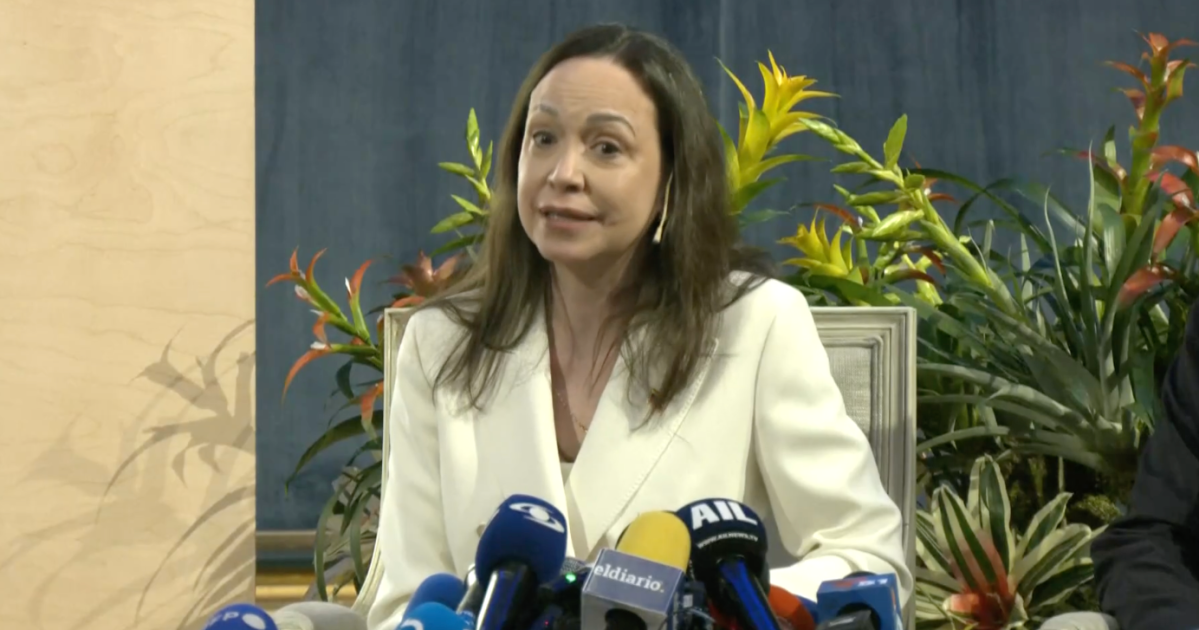
Venezuelan opposition leader and Nobel Peace laureate Maria Corina Machado has declared that authorities in her home country would have attempted everything possible to prevent her journey to Norway, after she emerged publicly for the first time in nearly a year.

Machado greeted supporters from an Oslo hotel balcony in the early hours of Thursday following a high-risk exit from Venezuela, where she had been in hiding since January.

Recommended Stories

list of 2 itemsend of list

The journey, which purportedly included navigating 10 military checkpoints and crossing the Caribbean by fishing vessel, brought her to the Norwegian capital to collect her Nobel Peace Prize.

During a news conference at Norway’s parliament, the 58-year-old right-wing opposition figure delivered sharp criticism of President Nicolas Maduro’s administration, asserting that the government deploys national resources to suppress its population.

When questioned about an oil tanker seized by Washington on Wednesday, she argued this demonstrated how the regime operates. Asked whether she would support a United States invasion, Machado claimed Venezuela had already been invaded by Russian and Iranian agents alongside drug cartels.

“This has turned Venezuela into the criminal hub of the Americas,” she said, standing alongside Norwegian Prime Minister Jonas Gahr Stoere.

“What sustains the regime is a very powerful and strongly funded repression system. Where do those funds come from? Well, from drug trafficking, from the black market of oil, from arms trafficking and from human trafficking. We need to cut those flows.”

The trip reunited her with family members she had not seen in almost two years, including her daughter, who accepted the Nobel Peace Prize on her behalf at Wednesday’s ceremony.

Aligned with Trump 

The political leader has welcomed international sanctions and US military intervention in Venezuela, a move her critics say harkens back to a dark past.

The US has a long history of interference in the region, particularly in the 1980s, when it propped up repressive right-wing governments through coups, and funded paramilitary groups across Latin America that were responsible for mass killings, forced disappearances and other grave human rights abuses.

Venezuelan authorities cited Machado’s support for sanctions and US intervention when they barred her from running for office in last year’s presidential election, where she had intended to challenge Maduro. Machado has accused Venezuela’s president of stealing the July 2024 election, which was criticised by international observers.

Praising the Trump administration’s approach, Machado said the president’s actions had been “decisive to reach the point where we are right now, in which the regime is weaker than ever.”

She insisted she would return home but did not say when. “I’m going back to Venezuela regardless of when Maduro goes out. He’s going out, but the moment will be determined by when I’m finished doing the things that I came out to do,” she told reporters.

Her escape comes as tensions between Washington and Caracas have intensified sharply. The Trump administration has positioned major naval forces in the Caribbean and conducted strikes against alleged drug vessels since September. The US seized what Trump called a “very large” oil tanker off the coast of Venezuela, on Wednesday.

Machado has aligned herself with right-wing hawks close to Trump who argue that Maduro has links to criminal gangs that pose a direct threat to US national security, despite doubts raised by the US intelligence community.

The Trump administration has ordered more than 20 military strikes in recent months against alleged drug-trafficking vessels in the Caribbean and off Latin America’s Pacific coast, killing more than 80 people.

Human rights groups, some US Democrats, and several Latin American countries have condemned the attacks as unlawful extrajudicial killings of civilians.

The Wall Street Journal (WSJ) reported that Machado’s two-month escape operation involved wearing a disguise and departing from a coastal fishing village on a wooden boat bound for Curacao before boarding a private aircraft to Norway.

US forces were alerted to avoid striking the vessel, the WSJ reported, as they had one with similar boats in recent months. Machado confirmed receiving assistance from Washington during her escape.

Maduro, in power since 2013 following the death of Hugo Chavez, says Trump is pushing for regime change in the country to access Venezuela’s vast oil reserves. He has pledged to resist such attempts.

A United Nations report released on Thursday accused Venezuela’s security forces of crimes against humanity over more than a decade.

Venezuelan Minister of the Interior Diosdado Cabello said Machado left the country “without drama” but provided no details.

Source link

Mexico to begin levying up to 50% tariffs on China, others

Dec. 11 (UPI) — Mexico’s congress has approved charging up to 50% tariffs on Chinese imports Wednesday.

Mexican President Claudia Sheinbaum proposed the tariffs in September and said they are a way to boost domestic production. But others, like China, have said it’s a way to align with President Donald Trump, who has been pressuring other countries to distance themselves from China.

Mexico’s congress approved the tariffs Wednesday, and Sheinbaum is expected to sign the bill. The law would create up to 50% tariffs on China and any other country with which Mexico doesn’t have a trade agreement, including Thailand, India and Indonesia. The tariffs would take effect Jan. 1 and will include more than 1,400 products, like cars, metals, appliances and clothing.

After the United States, China is Mexico’s second-largest exporter. The United States sold $334 billion to Mexico last year, and China sold $130 billion in goods, The New York Times reported. China buys little from Mexico, which is another reason for the tariffs, Sheinbaum has said.

The Chinese government has warned Mexico to “think twice” about imposing the levies, saying it would harm China and other countries. It said the move was made “under coercion to constrain China,” alluding to Trump’s pressure.

The Chinese Ministry of Commerce said in a statement Thursday that the tariffs would “substantially harm” the country and others. It said for Mexico to “correct its erroneous practices of unilateralism and protectionism as soon as possible,” The Times reported.

Mexico is in talks with Trump, trying to reduce tariffs. The United States imposes 50% tariffs on Mexican steel and aluminum. Trump has threatened to add more to the tariffs for several reasons, including synthetic fentanyl and water rights from the Rio Grande.

Source link

‘Act of piracy’ or law: Can the US legally seize a Venezuelan tanker? | Donald Trump News

United States President Donald Trump has said that the US has seized a sanctioned oil tanker close to the coast of Venezuela, in a move that has caused oil prices to spike and further escalates tensions with Caracas.

“We’ve just seized a tanker on the coast of Venezuela, large tanker, very large, largest one ever, actually, and other things are happening,” Trump said on Wednesday.

Recommended Stories

list of 1 itemend of list

The Venezuelan government called the move an act of “international piracy”, and “blatant theft”.

This comes as the US expands its military operations in the region, where it has been carrying out air strikes on at least 21 suspected drug-trafficking vessels since September. The Trump administration has provided no evidence that these boats were carrying drugs, however.

Here is what we know about the seizure of the Venezuelan tanker:

What happened?

The US said it intercepted and seized a large oil tanker off the coast of Venezuela, marking the first operation of its kind in years.

The last comparable US military seizure of a foreign tanker occurred in 2014, when US Navy SEALs boarded the Morning Glory off Cyprus as Libyan rebels attempted to sell stolen crude oil.

The Trump administration did not identify the vessel or disclose the precise location of the operation.

However, Bloomberg reported that officials had described the ship as a “stateless vessel” and said it had been docked in Venezuela.

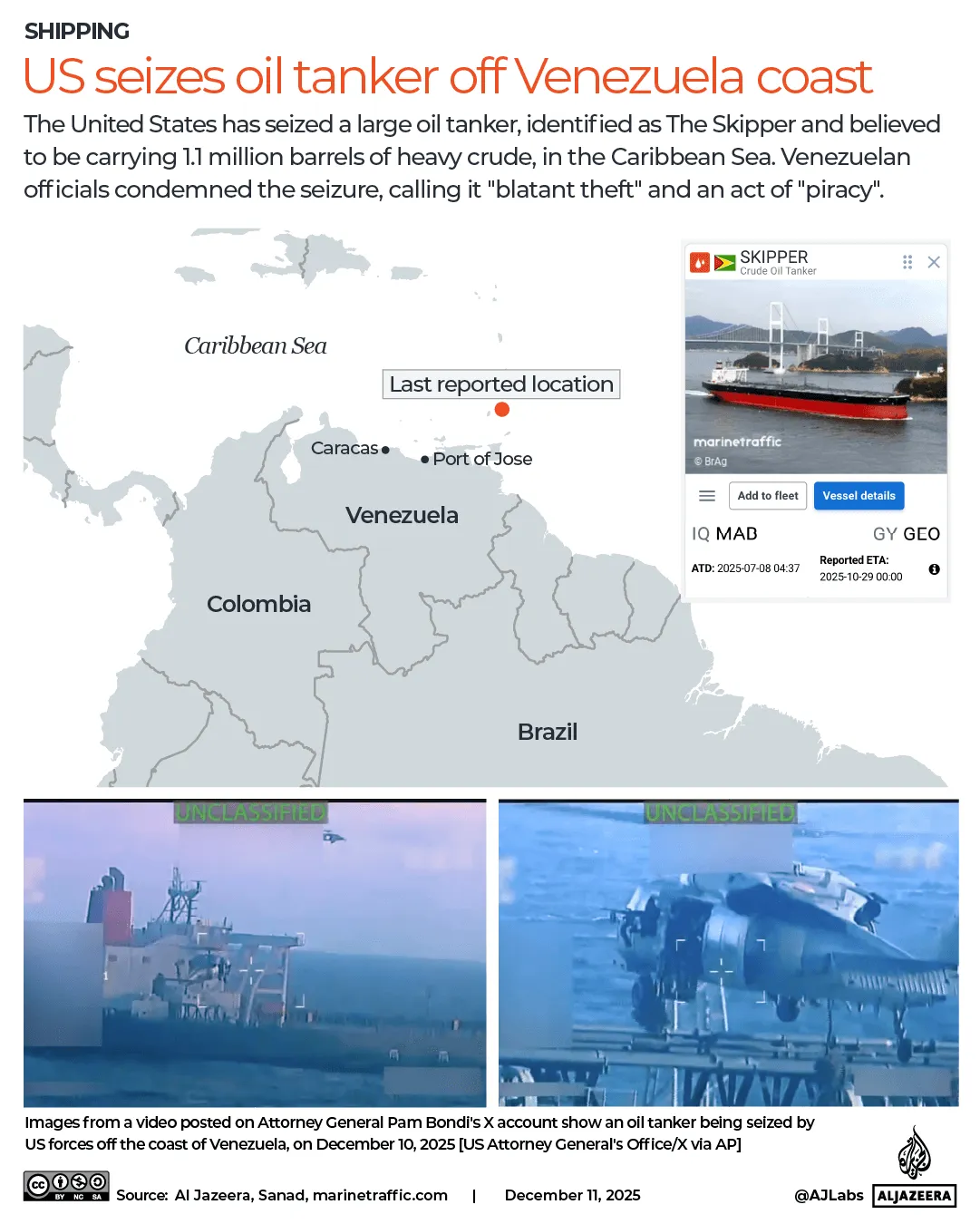
Soon after announcing the latest operation on Wednesday, US Attorney General Pam Bondi released a video showing two helicopters approaching a vessel and armed personnel in camouflage rappelling onto its deck.

“Today, the Federal Bureau of Investigation, Homeland Security Investigations and the United States Coast Guard, with support from the Department of War, executed a seizure warrant for a crude oil tanker used to transport sanctioned oil from Venezuela and Iran,” Bondi said.

She added that “for multiple years, the oil tanker has been sanctioned by the United States due to its involvement in an illicit oil-shipping network supporting foreign terrorist organisations”.

Experts said the method of boarding demonstrated in the video is standard practice for US forces.

“The Navy, Coast Guard and special forces all have special training for this kind of mission, called visit, board, search, and seizure – or VBSS,” Mark Cancian, a retired Marine Corps colonel and senior adviser at the Center for Strategic and International Studies, told Al Jazeera.

“It is routine, especially for the Coast Guard. The government said it was a Coast Guard force doing the seizure, though the helicopter looks like a Navy SH-60S.”

Which vessel was seized?

According to a Reuters report, British maritime risk firm Vanguard identified the crude carrier Skipper as the vessel seized early Wednesday off Venezuela’s coast.

MarineTraffic lists the Skipper as a very large crude carrier measuring 333m (1,093 feet) in length and 60m (197 feet) in width.

The tanker was sanctioned in 2022 for allegedly helping to transport oil for the Lebanese armed group, Hezbollah, which is backed by Iran, and Iran’s Quds Force.

The Skipper departed Venezuela’s main oil terminal at Jose between December 4 and 5 after loading about 1.8 million barrels of Merey crude, a heavy, high-sulphur blend produced in Venezuela.

“I assume we’re going to keep the oil,” President Trump said on Wednesday.

Before the seizure, the tanker had transferred roughly 200,000 barrels near Curacao to the Panama-flagged Neptune 6, which was headed for Cuba, according to satellite data analysed by TankerTrackers.com.

According to shipping data from Venezuela’s state-owned oil and gas company Petroleos de Venezuela (PDVSA), the vessel also transported Venezuelan crude to Asia in 2021 and 2022.

Where did the seizure take place?

The US said it seized the oil tanker in the Caribbean Sea.

US officials have said the action occurred near Venezuelan territorial waters, though they have not provided precise coordinates.

MarineTraffic data shows the vessel’s tracker still located in the Caribbean.

INTERACTIVE US seizes oil tanker off Venezuela coast map-1765444506

Cancian noted that “seizing sanctioned items is common inside a country’s own territory. It is unusual in international waters”.

He added: “Russia has hundreds of sanctioned tankers sailing today, but they have not been boarded.”

Experts say it is unclear whether the seizure was legal, partly because many details about it have not been made public.

Still, the US could make use of various arguments to justify the seizure if needs be.

One is that the boat is regarded as stateless. Under the UN Convention on the Law of the Sea (UNCLOS), ships need “a nationality”.

The government of Guyana, Venezuela’s neighbour, said the Skipper was “falsely flying the Guyana flag”, adding that it is not registered in the country.

If a vessel flies a flag it is not registered under, or refuses to show any flag at all, states have the “right of visit”, allowing their officials to stop and inspect the ship on the high seas – essentially meaning international waters.

If doubts about a ship’s nationality remain after checking its documents, a more extensive search can follow.

In previous enforcement actions against sanctioned ships, the US has seized not the ship itself but the oil on board. In 2020, it confiscated fuel from four tankers allegedly carrying Iranian oil to Venezuela.

US law also allows the Coast Guard, which carried out this operation, to conduct searches and seizures on the high seas in order to enforce US laws, stating that it “may make inquiries, examinations, inspections, searches, seizures, and arrests upon the high seas” to prevent and suppress violations.

But some legal experts argue that the US has overstepped, as it “has no jurisdiction to enforce unilateral sanctions on non-US persons outside its territory”, according to Francisco Rodriguez, a senior research fellow at the Center for Economic and Policy Research (CEPR).

Rodriguez said the US is relying on maritime rules for stateless vessels “as an entryway to justify enforcing US sanctions outside of US territory”.

“To the extent that the US is able to continue to do so, it could significantly increase the cost of doing business with Venezuela and precipitate a deepening of the country’s economic recession,” he warned in a CEPR article.

How has Venezuela responded to the seizure?

Venezuela’s Foreign Ministry stated that “the true reasons for the prolonged aggression against Venezuela have finally been exposed”.

“It is not migration, it is not drug trafficking, it is not democracy, it is not human rights – it was always about our natural resources, our oil, our energy, the resources that belong exclusively to the Venezuelan people,” the statement said.

The ministry described the incident as an “act of piracy.”

The government added that it will appeal to “all” international bodies to denounce the incident and vowed to defend its sovereignty, natural resources, and national dignity with “absolute determination”.

“Venezuela will not allow any foreign power to attempt to take from the Venezuelan people what belongs to them by historical and constitutional right,” it said.

Venezuela's President Nicolas Maduro
Venezuela’s President Nicolas Maduro gestures towards supporters, during a march to commemorate the 1859 Battle of Santa Ines in Caracas, Venezuela, on December 10, 2025 [Gaby Oraa/ Reuters]

What are the potential consequences for Venezuela’s oil exports?

Experts say the seizure could produce short-term uncertainty for Venezuelan oil exports, largely because “this has been the first time [the United States has]… seized a shipment of Venezuelan oil”, Carlos Eduardo Pina, a Venezuelan political scientist, told Al Jazeera.

That may make shippers hesitate, though the broader impact is limited, Pina said, since “the US allows the Chevron company to continue extracting Venezuelan oil”, and US group Chevron holds a special waiver permitting it to produce and export crude despite wider sanctions.

Chevron, which operates joint ventures with PDVSA, said its operations in Venezuela remain normal and continue without disruption.

The US oil major, which is currently responsible for all Venezuelan crude exports to the US, increased shipments last month to 150,000 barrels per day (bopd), up from 128,000 bpd in October.

Inside Venezuela, Pina warned the move could spark financial panic, however: “It could instil fear, trigger a currency run… and worsen the humanitarian crisis.”

How will this affect US-Venezuela relations?

Diplomatically, Pina said he views the action as a political message to Venezuelan President Nicolas Maduro, noting its timing – “the same day that [opposition leader] Maria Corina Machado was awarded the Nobel Prize” – and calling it “a gesture of strength… to remind that [the US is present in the Latin American region].”

Maduro has long argued that the Trump administration’s strikes on boats in the Caribbean and eastern Pacific are not, in fact, aimed at preventing drug running, but are part of a plan to effect regime change in Venezuela. Trump has authorised CIA operations in Venezuela and has given conflicting messages about whether he would consider a land invasion.

Analysts see this latest action as part of a broader strategy to pressure the Maduro government.

“This is certainly an escalation designed to put additional pressure on the Maduro regime, causing it to fracture internally or convincing Maduro to leave,” said Cancian.

“It is part of a series of US actions such as sending the Ford to the Caribbean, authorising the CIA to move against the Maduro regime, and conducting flybys with bombers and, recently, F-18s.”

Cancian added that the broader meaning of the operation depends on what comes next.

“The purpose also depends on whether the US seizes additional tankers,” he said. “In that case, this looks like a blockade of Venezuela. Because Venezuela depends so heavily on oil revenue, it could not withstand such a blockade for long.”


Source link

Sweden’s push for an ex-IKEA CEO to lead UNHCR signals a new refugee order | Refugees

On October 14, the Swedish government announced it was nominating the CEO of IKEA, Jesper Brodin, as its candidate for United Nations High Commissioner for Refugees (UNHCR). Less than a month later, as the current high commissioner, Filippo Grandi, approached the end of his mandate, Brodin resigned from his position at the Swedish furniture giant, which he had led for eight years. In January 2026, the office of the UN secretary-general is expected to present a preferred candidate to the General Assembly for what former UNHCR head of research Jeff Crisp has called a “pro forma election”. Can the former chief of an iconic multinational company become the world’s highest authority on refugees — and what will it mean if he does?

In interviews, Jesper Brodin often refers to a small pamphlet by IKEA founder Ingvar Kamprad, titled The Testament of a Furniture Dealer, as outlining the values that inspire his way of doing business: innovation, sustainability and collective effort over individualism. Does the UNHCR need to learn lessons from a “furniture dealer”? The question matters because Brodin’s appeal is often framed in terms of corporate values, yet it remains unclear how — or whether — these translate into the protection of refugees. Whether Brodin has any chance of making it to the Geneva post or not, the question is worth asking, for the role of IKEA as a donor and operational partner of the UNHCR is significant and is likely to grow.

While humanitarianism and business have historically been companions, particularly since the end of the Cold War, this is the first time a business leader has been proposed to head the UN refugee agency. The nomination comes at a time when the UNHCR faces a dramatic cash crunch, and when political pressures and anti-refugee sentiment are increasing globally. Many scholars and practitioners believe the future of the global refugee regime itself may be at stake. Understanding the implications of Sweden’s choice, then, requires examining how corporate humanitarianism now shapes refugee protection.

Many were taken aback by the nomination. Yet the move by Sweden is anything but surprising. Over the past three decades, corporations have taken on increased responsibility for responding to humanitarian crises, while traditional organisations compete for a rapidly diminishing pool of resources. Research on the commodification of compassion has shown how, increasingly, “doing good” and “doing well” have become one and the same. This kind of “brand aid” involved both promoting commercial brands (from Toms shoes to Starbucks) through their involvement in humanitarian causes, and turning aid itself into a branded activity — something most effectively done through corporate partnerships. It began around two decades ago but has now become the dominant model of humanitarian engagement. As one major humanitarian donor in Kinshasa told us, “It’s now all about collaborations between the private sector, businesses and philanthropists.” Indeed, when the desire to help becomes something you can sell, corporations such as IKEA can profit from involvement in global helping that builds their ethical branding. But can the UNHCR profit from being led by IKEA’s CEO? The question goes to the heart of a growing unease about the direction of the refugee regime.

We see three main problems here. First, UNHCR is caught between contradictory demands from donor states in the Global North and hosting states in the South. Brodin and IKEA’s brand of feel-good capitalism cannot reconcile these fundamental tensions over sovereignty. Jesper Brodin has been lauded as a businessman and touts his credibility as a leader and negotiator. “Trump likes people in the business world,” we are told. However, the challenges to the agency’s protection mandate require a vision that goes well beyond the smiling face of compassionate capitalism. While formally remaining the guardian of the 1951 Refugee Convention, UNHCR has been operating in what scholars such as Bhupinder Chimni have described as an “erosion” of the international refugee regime — a long-term weakening of asylum norms and burden-sharing commitments. Donor governments in the Global North have used their limited support for UNHCR’s humanitarian activities in the Global South as a way to deflect attention from the disregard for refugee rights within their own borders. How will Brodin fare in navigating these competing pressures — from containment agendas in the Global North to protection obligations that lie at the heart of UNHCR’s mandate?

Second, Brodin often mentions his experience as a supply chain manager in a company that has put logistical innovation at the core of its business strategy as an important asset for the job. Indeed, this aligns with UNHCR’s current focus on renewing its own supply chain strategy. He also talks about “bringing the values and the assets of refugees to the business community,” a phrase he uses to refer to refugees’ skills and labour potential. However, this endeavour has proved far more complex than he makes it sound. Almost 10 years after IKEA’s first attempt to integrate refugees into its own supply chains in Jordan, the number of people the programme involves remains small, and refugees in the country still face significant barriers to work and social security.

A study we published in 2021 highlighted that a focus on refugee logistics actually meant working towards integrating displaced people into global supply chains rather than providing them with material support or infrastructure. Whether for business or for disaster relief, logistics depend on networks of infrastructure and rules that only function through ongoing negotiation with governments.

Finally, the contradictions of IKEA’s corporate and foundation ownership structure — what makes it work well as a business — embody the paradox of mixing public needs for refugee protection with private objectives for profit. The IKEA Foundation, the company’s philanthropic arm, has been working with UNHCR since 2010, supporting its operations in 16 countries. The UN agency defines the collaboration as “transformative”, highlighting how it has become a model for all its partnerships with the private sector. Moreover, the nomination comes at a time when major donor states, including the US, the United Kingdom and Germany, are slashing their budgets. In this geopolitical context, Sweden, while facing its own economic challenges, may well be seeking to stake its position as one of the last remaining humanitarian powers in the Western world. Brodin’s bid draws on Sweden’s perceived reputation for frugality and sustainability.

However, there is an unspoken yet fundamental contradiction between Brodin’s promise to address UNHCR’s crisis by “holding the purse strings” and the position of IKEA within global economic structures that have contributed to the humanitarian funding crisis in the first place. In 2017, following calls from EU parliamentary groups, the European Commission opened an in-depth investigation into the Netherlands — where the company is headquartered — for its tax treatment of Inter IKEA, one of the two groups operating the IKEA business. The company’s ownership structure, which benefits its commercial operations, may also reduce its tax burden, thereby reducing contributions to public finances. Here, as in many other cases, big business promises to fix global inequality it has helped create.

In the present global climate of hostility to migrants and refugees, Brodin and IKEA’s brand of feel-good capitalism risks further hollowing out UNHCR’s protection mandate, reducing humanitarianism to a matter of well-managed supply chains. The stakes are high: when humanitarian priorities are shaped by corporate logic, core protections — from asylum access to basic assistance — risk being eroded. What benefits a business organisation does not necessarily serve the rights or needs of refugees.

The views expressed in this article are the authors’ own and do not necessarily reflect Al Jazeera’s editorial stance.

Source link

Olympic ski champion Michelle Gisin airlifted after Swiss crash | Winter Olympics News

Swiss suffer third crash in a month by an Olympic champion in training ahead of World Cup and 2026 Milan Cortina Games.

Two-time Olympic champion Michelle Gisin has been airlifted from the course after crashing hard in a practice run for a World Cup downhill.

The 32-year-old Swiss skier hit the safety fences racing at more than 110km/h (69mph) on a cloudy morning on Thursday at St Moritz in practice for the downhills scheduled for Friday and Saturday, followed by a super-G on Sunday.

Recommended Stories

list of 4 itemsend of list

One of Gisin’s skis seemed to catch an edge approaching a fast left-hand turn, and she lost control, going straight on and hitting through the first layer of safety nets until being stopped by the second.

There was no immediate report of any injury. Television pictures showed Gisin conscious, lying by the course with scratches and cuts on her face as medics assessed her.

Gisin is the third current Olympic champion in the Swiss women’s Alpine ski team to crash in training in the past month, after Lara Gut-Behrami and Corinne Suter.

Gisin, who won gold in Alpine combined at the past two Winter Games, is currently the veteran leader of the Swiss women’s speed team because of injuries to her fellow 2022 Beijing Olympic champions.

Michelle Gisin (SUI) celebrates after winning the gold medal in the women’s alpine skiing combined event during the Beijing 2022 Olympic Winter Games
Michelle Gisin celebrates after winning the gold medal in the women’s Alpine skiing combined event during the Beijing 2022 Olympic Winter Games [File: Harrison Hill/Reuters]

Gut-Behrami’s Olympic season was ended after she tore the anterior cruciate ligament (ACL) in her left knee while crashing in practice last month at Copper Mountain, Colorado, in the United States.

Suter is off skis for about a month with calf, knee and foot injuries from a crash while training at St Moritz last month.

At the last Winter Games in China, Suter won the downhill, Gut-Behrami won the super-G — where Gisin took bronze — and Gisin took the final title in individual combined. The Swiss skiers have seven career Olympic medals.

Gisin crashed on Thursday when American star Lindsey Vonn was already on the course, having started her practice run. Vonn was stopped while Gisin received medical help and resumed her run later.

Vonn was fastest in the opening practice on Wednesday.

The Milan Cortina Olympics open on February 6 with a women’s Alpine skiing race at the storied Cortina d’Ampezzo hill.

Concerns had been raised in advance of the World Cup in September, primarily about how to limit risks in the high-speed sport, following the death of Italian skier Matteo Franzoso in a training accident in Chile.

The debate continued into the start of the Olympic ski season a month later, with prominent American skier Mikaela Shiffrin stating: “We are often training in conditions where the variables are just too many to control, and you have to decide sometimes: is this unreasonably dangerous?”

Source link

At least 33 killed, 76 injured after Myanmar military bombs hospital

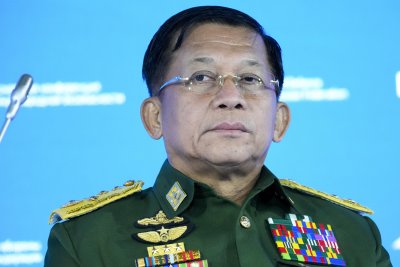
Commander-in-Chief of Myanmar’s armed forces, Senior General Min Aung Hlaing. The military government has been engaged in an increasingly bloody civil war with ragtag resistance forces, mainly in the center and north of the country, since seizing power in February 2021, three months after a general election in November 2020. File photo Alexander Zemlianichenko/EPA

Dec. 11 (UPI) — Airstrikes by Myanmar’s military government killed at least 33 patients and staff and injured 76, many of them critically, at a public hospital in Rakhine State in the west of the country, ahead of elections on Dec. 28.

Two 500-pound bombs were dropped in the attack on Wednesday night on the town of Mrauk-U in a region controlled by ethnic Rakhine rebels of the Arakan Army, one of a number of minorities fighting the repressive regime in Naypyidaw.

Images and footage circulating online of the aftermath and on Thursday morning show dozens of bodies, fierce fires, a large crater, one building completely destroyed and a second gutted and trees uprooted by the blast.

Arakan Army spokesman Khine Thu Kha noted that the attack came on International Human Rights Day.

The CRPH government-in-exile, representing lawmakers of Aung San Suu Kyi’s National League for Democracy and other lawmakers ousted when the military seized power in a coup in 2021, said the attack was a criminal act by an illegitimate military dictatorship.

“We strongly condemn the inhumane actions of the murderous military junta that is trying to gain legitimacy through a sham election. This action only serves to further highlight the long-standing crimes committed by the military coup,” CRPH said in a post on X.

“We deeply regret the loss of loved ones and the loss of lives in this brutal attack. We pray for the speedy recovery of the injured Rakhine people. We reiterate our commitment to continue working with all stakeholders to end the unjust military dictatorship and its violence as well as to bring peace in Myanmar.”

In the run-up to elections that the military junta is heralding as an “off-ramp” to fighting that has raged since 2021, airstrikes by its forces on rebel-held areas vowing to block the ballot have escalated sharply, hitting civilian targets, including schools, medical facilities, monasteries and displacement camps.

More than 100,000 homes have been razed in arson attacks, 3.6 million people displaced, with almost 22 million in need of humanitarian assistance, according to the United Nations, which said the junta had created “a humanitarian catastrophe,” exploiting an earthquake that hit the country in March to attack victims and gain a military advantage.

The U.N. said the elections would not be free or fair, accusing the regime of a cynical bid to create a veneer of legitimacy.

“Having driven Myanmar into a devastating humanitarian and human rights crisis and failed to consolidate control over the country, the junta is making a desperate bid to manufacture a facade of legitimacy by holding sham elections,” Tom Andrews, Special Rapporteur on human rights in Myanmar, said in a report in October.

“The polls will be neither free nor fair. A free and fair election is not possible when opposition leaders are arrested, detained, tortured or executed; when it is illegal to criticize the junta or the election; when journalists are in prison for having reported the truth.”

U.N. Human Rights Chief Volker Turk pleaded with the Trump administration not to go through with plans to end Temporary Protected Status, shielding people from Myanmar from being deported.

Speaking at the Nov. 28 press briefing in Geneva, Turk said the idea that any state would forcibly return Myanmar nationals who had fled the country in fear against the backdrop of “very serious human rights violations” was appalling.

In October, at least 24 anti-government protesters were killed and 47 were injured in Chaung-U, 200 miles northwest of Naypyidaw, after they were bombed by paragliders as they held a candle-lit vigil demanding the release of arbitrarily detained prisoners, opposing military conscription and this month’s election.

Sagaing, a quasi self-governing region in the center of the country, was targeted because it is a resistance hub, with People’s Defense Force volunteer militias running the local administration.

Source link

Hundreds of items stolen in ‘high-value’ Bristol museum raid

Avon and Somerset Police A blurry CCTV image of four men wearing jackets and baseball caps in a street at night time. Avon and Somerset Police

Police want to speak to these four men after more than 600 artefacts were stolen

More than 600 artefacts “of significant cultural value” have been stolen from Bristol Museum’s archive in a “high-value” raid, police say.

Four men gained entry to a building in the Cumberland Basin area of the city in the early hours of 25 September, Avon and Somerset Police said.

Items from the museum’s British Empire and Commonwealth collection were stolen and detectives are now trying to trace four males captured in the area on CCTV.

“The theft of many items which carry a significant cultural value is a significant loss for the city,” Det Con Dan Burgan said.

Avon and Somerset Police Two CCTV images places side by side. One is a man in a dark jacket, grey trousers and white hat and carrying a bag. The second is a group of all four males in the street, they all have hats or their hoods up. All are carrying bags. Avon and Somerset Police

The men are described as being white and were all wearing jackets and baseball caps

“These items, many of which were donations, form part of a collection that provides insight into a multi-layered part of British history, and we are hoping that members of the public can help us to bring those responsible to justice,” he added.

“So far, our enquiries have included significant CCTV enquiries as well as forensic investigations and speaking liaising with the victims.”

Police are keen to speak to anyone who recognises the men captured on CCTV, or who may have seen possible stolen items being sold online.

All of the men are thought to be white. The first was described as of medium to stocky build and was wearing a white cap, black jacket, light-coloured trousers and black trainers.

The second was described as being of slim build and was wearing a grey, hooded jacket, black trousers and black trainers.

The third was wearing a green cap, black jacket, light-coloured shorts and white trainers. Police said he appeared to walk with a slight limp in his right leg.

The fourth was described as being of large build and was wearing a two-toned orange and navy or black puffy jacket, black trousers and black and white trainers.

Source link