News

Russian Retaliation Strike Raises Stakes In Black Sea Shipping War

A Russian Shahed kamikaze drone strike on a ship in the port of Chornomorsk was in retaliation for a recent spate of Ukrainian attacks on Russian oil tankers in the Black Sea, the Ambrey maritime security firm tells us. The attack on the Turkish-owned CENK-T roll-on, roll-off cargo ship comes after Russian President Vladimir Putin warned he would “cut Ukraine off from the sea” in response to Ukraine’s stepped-up campaign against Russian commercial shipping. 

As we have previously reported, Ukraine carried out three attacks on Russian-connected oil tankers in the Black Sea in late November and early December. Reports emerged on Wednesday that they carried out a fourth one, which you can read more about later in this story.

“This attack was the first retaliation,” Joshua Hutchinson, a former Royal Marine commando now serving as the company’s Managing Director of Risk and Intelligence, told us Friday afternoon.

Video emerging on social media showed several angles of the attack. One showed the Shahed flying over the port of Chornomorsk before the CENK-T‘s bow became engulfed in flames.

Early reports on this incident from both Ambrey and Russian media claimed Russia used an Iskander-M ballistic missile to carry out the attack, but the video clearly shows otherwise. While it’s possible another strike occurred using a ballistic missile, we have seen no evidence of it at this time.

SON DAKİKA | Türk gemisinin vurulma anı Türk gemiciler tarafından kaydedildi.

🔴 Türk kargo gemisi CENK-T Rus füzesiyle vuruldu.

🔴Sakarya-Karasu’dan kalkan gemi, Romanya üzerinden Ukrayna Odesa Limanı’na giderken saldırıya uğradı. pic.twitter.com/9U1TlI2BTg

— Global Eksen (@globaleksen1) December 12, 2025

A separate video showed different views of the 606-foot-long Panamanian-flagged vessel in flames following the strike. One view appeared to be across the harbor, while another was a closer view, dockside, with the ship burning and people running from the scene. The strike injured at least one person, according to Ambrey.

Kargo gemisi CENK-T, Rus füzesiyle vuruldu.

▪️Sakarya-Karasu’dan Romanya’ya, oradan Ukrayna’nın Odesa Limanı’na giden jeneratör taşıyan Panama bayraklı yolcu ve konteyner gemisi CENK-T, Rus İskender füzesinin hedefi oldu.

▪️Saldırı sonrası 185 metrelik gemide yangın çıktı. pic.twitter.com/OKlCFto6jb

— TRHaber (@trhaber_com) December 12, 2025

In addition to the CENK-T being hit, Ukrainian President Volodymyr Zelensky said several other targets in the Odesa region were attacked in a volley of missile and drone strikes. Though Russia has frequently attacked Ukrainian ports, this incident marks an escalation to the Black Sea shipping wars, increasing the danger to commercial vessels regardless of nation of origin, Hutchinson told us.

“We are heading to an uncharted time,” he explained. “We are now seeing two state actors attacking commercial shipping.”

While Russia has hit Ukrainian ports before, strikes on ships have been largely incidental. A concerted campaign against vessels would make shipping companies think twice before sending vessels into this area due to the risks to ships and crews. We saw that play out when the Houthis were attacking Red Sea shipping and a large percentage of companies opted to avoid the region. This would be very problematic for Ukraine.

The CENK-T was reportedly bringing in a shipment of generators, which Ukraine badly needs as Russia attacks its energy infrastructure. As we noted earlier in this story, on Dec. 2, Putin threatened to attack the shipping of nations helping Ukraine. We reached out to the vessel’s owner, CENK RoRo, for more information about the attack and how it will respond.

Zelensky decried the attack, saying it was another sign Russians aren’t interested in peace.

“Today’s Russian strike, like many other similar attacks, had, and could not have, any military sense,” the Ukrainian leader stated on X. “A civilian ship in the Chornomorsk port was damaged. This once again proves that the Russians not only do not take the current chance for diplomacy seriously enough, but also continue the war aimed at destroying normal life in Ukraine.”

Today, the Russian army carried out a missile strike on our Odesa region, and last night there was also a Russian attack on Odesa’s energy infrastructure. At one point we talked about the situation in this city and the people of Odesa with President Trump.

Today’s Russian… pic.twitter.com/gIgXUlc4AJ

— Volodymyr Zelenskyy / Володимир Зеленський (@ZelenskyyUa) December 12, 2025

The Russians have not officially commented on the CENK-T strike; however, Russian media acknowledged that it was in response to the attacks that damaged the four Russian ships and that the tempo could increase.

“Earlier, Vladimir Putin directly stated that the strikes by the Russian Armed Forces on Ukrainian ports are a completely justified response to Kyiv’s actions,” the Russian Readovka media outlet suggested. “At the same time, the sinking of just 10-15 ships in one port could paralyze its operations.”

The most recent of those took place on Wednesday when Sea Baby drones from Ukraine’s state security service (SBU) attacked the Serbian-flagged crude oil tanker Dashan in the Black Sea. Video of that attack showed the drones approaching the ship, which erupted in flames.

Ukraine’s SBU security service says its Sea Baby naval drones today struck another Russian “shadow fleet” tanker in the Black Sea.

Video from an SBU source purports to show the oil tanker “Dashan” being hit by the attack drone and explosions in the stern area. “The vessel,… pic.twitter.com/mtfBqYe1gQ

— Christopher Miller (@ChristopherJM) December 10, 2025

The Dashan attack, as we noted in our previous coverage, was preceded by others. On Dec. 2, a Ukrainian aerial drone struck the Russian-owned oil tanker Midvolga-2 about 80 miles north of the Turkish city of Sinop. A few days earlier, oil tankers, Kairos and Virat, were struck in quick succession off Turkey’s Black Sea coast by Ukrainian Sea Baby drones. These vessels are reportedly part of Russia’s “shadow fleet” that evades sanctions.

SINOP, TURKIYE - DECEMBER 02: An aerial view of the 'MIDVOLGA-2,' a vessel sailing from Russia to Georgia, arrives off the coast of Sinop, a northern province of Turkiye, after coming under attack in international waters in the Black Sea on December 02, 2025. (Photo by Ramazan Ozcan/Anadolu via Getty Images)
An aerial view of the Midvolga-2, a vessel sailing from Russia to Georgia, as it arrived off the coast of Sinop, a northern province of Turkiye following an attack in international waters in the Black Sea on December 2, 2025. (Photo by Ramazan Ozcan/Anadolu via Getty Images) Anadolu

Ukraine, as we have frequently reported, is waging a campaign against Russia’s energy infrastructure involving numerous attacks on refineries, ports and other supply hubs inside Russia. The attack on the Dashan is a further indication that Ukraine is taking this fight to Russian vessels at sea.

Meanwhile, the Trump administration has reportedly signaled its support for the Ukrainian attacks on Russian vessels 

The Atlantic suggested that while the Biden administration feared escalation and opposed attacks on Russian vessels in international waters, Trump has taken the opposite tack. The publication reported that not only did the Trump administration not object to strikes, but in a number of cases, approved the transfer of intelligence to Kyiv, which was used to hit oil infrastructure facilities in Russia. The War Zone cannot independently verify that claim.

In the wake of today’s attack, Ambrey issued a warning to all ships making Black Sea port calls. These vessels “are advised to conduct comprehensive voyage threat assessments,” the company stated. “The crew is advised to remain within the designated Safe Muster Point (SMP) during missile attacks on infrastructure. The SMP should be located above the waterline, amidships and low-down in the superstructure.”

The coming days will tell if both parties continue to prosecute commercial shipping targets and what that could mean for maritime access to Ukraine.

Contact the author: howard@thewarzone.com

Howard is a Senior Staff Writer for The War Zone, and a former Senior Managing Editor for Military Times. Prior to this, he covered military affairs for the Tampa Bay Times as a Senior Writer. Howard’s work has appeared in various publications including Yahoo News, RealClearDefense, and Air Force Times.


Source link

Mexico’s aerospace sector is growing. Will it be undercut in USMCA review? | Aviation

Monterrey, Mexico – In April, Mexican President Claudia Sheinbaum announced the country’s aerospace industry could see sustained annual growth of as much as 15 percent over the next four years, and attributed the sector’s expansion to a robust local manufacturing workforce, increasing exports, and a strong presence of foreign companies.

But with the review of the United States-Mexico-Canada Agreement (USMCA) coming up – the free-trade treaty between the three countries that helped Mexico’s aerospace sector to grow and flourish – the industry’s future is no longer certain.

Recommended Stories

list of 4 itemsend of list

Stakeholders warn that ensuring investment stability and strengthening labour standards are essential to protecting the sector’s North American supply chain.

Mexico is striving to become one of the top 10 countries in aerospace production value, a goal outlined in Plan Mexico, the country’s strategic initiative to enhance global competitiveness in key sectors.

As the sixth-largest supplier of aerospace parts to the US, the industry has benefited significantly from the USMCA, which fostered regional supply chain integration, said Monica Lugo, director of institutional relations at the consulting firm PRODENSA.

However, the integration is no guarantee of business continuing to grow as the country is at an “unprecedented moment” with US President Donald Trump and his wide-ranging tariff policies.

Lugo, a former USMCA negotiator, said that recent tariffs on materials like steel and aluminium — critical to the aerospace sector— have eroded trust in the US as a reliable partner. She predicts that if current conditions continue, the sector risks losing capital, investments and jobs.

“Having this great uncertainty – one day it’s on, the next it’s off, who knows tomorrow – and based on no specific criteria, but rather on the president’s mood, creates chaos and severely damages the country and the economy,” she said.

On December 4, Trump suggested the US might let the USMCA expire next year, or negotiate a new deal. This follows comments by US Trade Representative Jamieson Greer to US news outlet Politico that the administration is considering separate deals with Canada and Mexico.

A booming aerospace sector

The Mexican aerospace market is valued at $11.2bn, and is expected to more than double to $22.7bn by 2029, Sheinbaum said, citing data from the Mexican Aerospace Industry Federation (FEMIA). Home to global companies like Bombardier, Safran, Airbus, and Honeywell, Mexico has established itself as a key player in the global aerospace market and is now the world’s twelfth-largest exporter of aerospace components.

Marco Antonio Del Prete, secretary of sustainable development in Queretaro, attributes this success in part to heavy investment in education and training. In 2005, the Queretaro government promised Canada’s Bombardier that it would invest in education and set up the Aeronautical University, which now offers programmes ranging from technical diplomas to master’s degrees in aerospace manufacturing and engineering.

“Since Bombardier’s arrival, an educational and training system was created that allows us to develop talent in a very efficient way, let’s say, fast track,” Del Prete told Al Jazeera.

Bombardier has served as an anchor, propelling Queretaro’s rise as a high-skilled manufacturing hub for parts and components.

While the Bombardier plant in Queretaro originally focused on wiring harnesses, it has evolved to specialise in complex aerostructures, including the rear fuselage for the Global 7500, Bombardier’s ultra-long-range business jet, and key components for the Challenger 3500, the mid-sized business jet.

Marco Antonio Carrillo, a research professor at the Autonomous University of Queretaro (UAQ), pointed out that the area’s wide educational offerings have cultivated a powerful workforce, which has gained significant attention from aeroplane makers, mainly from the US, Canada and France.

“This development [of Queretaro] has been, if you look at it in terms of time, truly explosive,” Carrillo said.

Mexico also aims to join France and the US as the third country capable of fully assembling an engine for Safran.

But the International Association of Machinists and Aerospace Workers (IAM) Union, which represents more than 600,000 workers in Canada and the US, is worried that progress could lead to more advanced manufacturing and assembly work to eventually shift to Mexico, given the local investment in aeronautical universities and training.

“Right now they’re [Mexican workers] doing more entry-level type things, but our concern is that later on, larger pieces of the aerospace operation will go to Mexico,” Peter Greenberg, the IAM’s international affairs director, told Al Jazeera.

High-skilled, low-cost workforce

Of the three countries in the USMCA agreement, Mexico’s biggest attraction has been its low-cost manufacturing.

Edgar Buendia and Mario Duran Bustamante, economics professors at the Rosario Castellanos National University, cite Mexico’s low labour costs and geographical proximity to the US as the country’s key advantages. This is partly why the US has intensified pressure on the Mexican government, including during the initial USMCA negotiations in 2017, to raise wages to level the playing field and reduce unfair competition.

“Most US companies have incentives to move their production here in Mexico, given the [low] wages and the geographic location. So, to prevent that from happening, the United States is pressuring Mexico to raise labour standards, ensure freedom of association, and improve working conditions,” Buendia told Al Jazeera, things that will benefit Mexican workers even as employer-dominated labour groups worry that they may lose their advantage.

The IAM originally opposed the USMCA’s predecessor, NAFTA. Greenberg said that while they acknowledge USMCA will continue, US and Canadian workers “would probably be perfectly happy” if the agreement ended as the NAFTA deal had led to plants being shuttered and workers being laid off as jobs moved from the US and Canada to low-cost Mexico.

“There is a need for stronger incentives to keep work in the United States and Canada. We want to see the wages in Mexico go up so that it doesn’t become automatically a place where companies go to because they know they will have lower wages and workers who do not have any bargaining power or strong units,” Greenberg added.

Under Sheinbaum’s Morena party, Mexico has raised the minimum wage from 88 pesos ($4.82) in 2018 to 278.8 pesos ($15.30) in 2025, with the rate in municipalities bordering the US reaching 419.88 pesos ($23). On December 4, Sheinbaum announced a 13 percent rise in the minimum wage — and 5 percent for the border zone— set to begin in January 2026.

Despite these increases and the competitiveness of wages in the aerospace sector, researchers agree that a significant wage gap persists between Mexican workers and their US and Canadian counterparts.

“The wage gap is definitely abysmal,” said Javier Salinas, a scholar at the UAQ Labor Center, specialising in labour relations in the aerospace industry. “The [aerospace] industry average is between 402 [Mexican pesos] and 606, with the highest daily wage being 815. [But] 815, converted to US dollars, is less than $40 for a single workday.”

By contrast, Salinas estimates that a worker in the US earns an average of about 5,500 pesos, or $300, per day.

‘Protection unions’

The USMCA required Mexico to end “protection unions”, a longstanding practice where companies sign agreements with corrupt union leaders — known as “sindicatos charros” — without the workers’ knowledge. This system has been used to prevent authentic union organising, as these sindicatos often serve the interests of the company and government authorities rather than the workers.

Salinas argues that despite the 2019 labour reform, it remains difficult for independent unions to emerge. Meanwhile, “protection unions” continue to keep wages low to maintain competitiveness.

“But imagine, a competitiveness based on precarious or impoverished working conditions. I don’t think that’s the way forward,” Salinas said.

Even with new labour courts and laws mandating collective bargaining, organising in Mexico remains dangerous. Workers attempting to create independent unions frequently face firing, threats, or being blacklisted by companies.

Humberto Huitron, a lawyer specialising in collective labour law and trade unionism, explains that Mexican workers, including in the aerospace sector, often lack effective representation. “There’s discrimination during hiring or recruitment. They don’t hire workers who are dismissed for union activism,” he said.

Beyond demanding that Mexico enforce its labour reform, the IAM is calling for the expansion and strengthening of the Rapid Response Mechanism (RRM), which allows the US to take action against factories if they fail to uphold freedom of association and collective bargaining rights.

While not in the aerospace sector, the US recently invoked the RRM against a wine producer in Queretaro. Previous such actions in the state had been limited to the automotive sector.

“No one knows exactly what is going on in all of the factories in Mexico,” Greenberg said.

According to FEMIA, there are 386 aerospace companies operating in 19 states. These include 370 specialised plants that generate 50,000 direct jobs and 190,000 indirect jobs.

Del Prete, however, assured Al Jazeera that, in Queretaro, unions are independent and “they have their own organisation.”

Salinas points out that in Queretaro, there has not been a strike in decades, adding, “Imagine the control of the workforce: 29, 30 years without a single strike in the private sector.”

Source link

The $72B Question: Is Netflix Really YouTube’s Rival?

What Happened

Netflix has announced a proposed $72 billion acquisition of Warner Bros Discovery, aiming to absorb HBO Max and consolidate a subscriber base of 428 million. To justify the massive scale, Netflix argues it needs this merger to compete effectively with YouTube, which Nielsen ranks as America’s most-watched TV platform. However, antitrust experts and former regulators are deeply skeptical, noting that YouTube’s model built on user-generated content, influencers, and advertising, differs fundamentally from Netflix’s premium, scripted, subscription-based ecosystem. The Department of Justice and global regulators are expected to scrutinize the deal closely, particularly Netflix’s claim that it competes in the same market as YouTube.

Why It Matters

This isn’t just another media merger, it’s a defining test for how regulators view competition in the digital entertainment era. If accepted, Netflix’s “YouTube as rival” argument could set a precedent allowing giant streaming platforms to consolidate further by defining their market extremely broadly. The deal would give Netflix unprecedented control over both premium original content and major legacy film/TV libraries, potentially allowing it to dominate pricing and distribution in the paid streaming sector. How regulators respond will signal whether antitrust enforcement can keep pace with the evolving, platform-driven media landscape.

Critical Analysis

Netflix’s YouTube argument faces several critical weaknesses. First, content and business models are fundamentally different: Netflix invests billions in exclusive, scripted originals and operates on a subscription-first model, while YouTube monetizes user-generated videos through ads and creator partnerships. Second, historical precedent works against Netflix: regulators have repeatedly rejected broad market definitions in favor of specific “sub-markets” (e.g., “premium natural supermarkets” in the Whole Foods case), and internal company documents often reveal how firms really view their competition.

Third, new merger review rules will force Netflix to turn over internal strategic documents early, which could undermine its public claims if those materials don’t mention YouTube as a primary competitor. Finally, Netflix’s claim that bundling will lower prices for consumers is viewed with extreme skepticism by regulators, who often see such promises as unenforceable and worry more about price hikes for non-bundled users.

Conclusion

Netflix faces an uphill battle to convince regulators that swallowing Warner Bros Discovery is necessary to compete with YouTube. The DOJ is likely to define the relevant market narrowly, around premium, subscription-based streaming, where the combined entity would hold overwhelming share and pricing power. Unless Netflix can produce compelling internal evidence that it genuinely views YouTube as a direct competitor for the same viewer time and dollars, this deal is at high risk of being challenged or blocked. The outcome will not only shape the future of streaming consolidation but also test the boundaries of modern antitrust logic in a platform-dominated world.

This briefing is based on information from Reuters.

Source link

King Charles III reports progress in personal cancer fight

Dec. 12 (UPI) — Britain’s King Charles III is making good progress in his personal fight against cancer and will undergo precautionary treatments in 2026.

Charles, 77, announced his progress in a video released Friday, and he credited his recovery to the “remarkable advances that have been made in cancer care in recent years,” according to CNN.

“Today, I am able to share with you the good news that thanks to early diagnosis, effective intervention and adherence to ‘doctor’s orders,’ my own schedule of cancer treatment can be reduced in the new year,” Charles said in a video filmed ahead of a special event to benefit the Cancer Research UK charity.

The king was diagnosed with cancer in early 2024 after undergoing a medical procedure on his prostate, but he does not have prostate cancer.

The exact type of cancer with which Charles is afflicted has not been reported, the BBC said.

The king said treatments are going so well that they are entering a “precautionary phase,” but his cancer is not in remission or otherwise cured.

His video speech for the charitable cancer fundraiser encourages viewers to undergo regular cancer screenings.

“Early diagnosis quite simply saves lives,” Charles said.

“I know from my own experience that a cancer diagnosis can feel overwhelming,” he added. “Yet, I also know that early detection is the key that can transform treatment journeys, giving invaluable time to medical teams.”

The U.K. National Health Service offers cancer screening programs for breast, bowel and cervical cancers for people of qualifying ages.

It also is rolling out a lung cancer screening program for adults between ages 55 and 74 and who have been or currently are tobacco smokers.

The king has stayed relatively silent about his cancer diagnosis and treatments until recording the video message.

He also participated in an Advent service at Westminster Abbey earlier in the week and has continued working to prevent cancer from defining his current existence, according to the BBC.

Source link

How does sectarianism impact daily life in Lebanon? | Politics

We look at the sectarianism that persists in Lebanon, undermining the country’s unity.

Lebanese social media pages were filled recently with heated exchanges and views, with people commenting on developments that reflect the deep sectarianism in the country. From a Christmas decoration to stand-up comedy material to the right to citizenship, people in Lebanon are not holding back.

Presenter: Stefanie Dekker

Guests:
Jean Marc Boulos – Content creator
Rodrigue Ghosn – Actor and standup comedian
Ramzi Kaiss – Lebanon researcher at Human Rights Watch

Source link

National Trust files suit against Trump to stop ballroom construction

The demolition of the East Wing of the White House is seen during construction in Washington, D.C., on Nov. 17. The National Trust for Historic Preservation has filed a lawsuit to stop construction of the ballroom. Photo by Bonnie Cash/UPI | License Photo

Dec. 12 (UPI) — The National Trust for Historic Preservation has filed a lawsuit against the President Donald Trump administration to block construction of a ballroom on White House grounds.

The suit claims the ballroom construction is unlawful and asks the court to stop further construction until the plans go through a review process, as required by law.

Former White House attorney under presidents Bill Clinton and Barack Obama, Greg Craig, is representing the Trust. Defendants in the suit include the president, the National Park Service, the Department of the Interior, the General Services Administration and their leaders. The lawsuit was filed Friday in the U.S. District Court for the District of Columbia.

“No president is legally allowed to tear down portions of the White House without any review whatsoever — not President Trump, not President Biden, not anyone else,” the filing said. “And no president is legally allowed to construct a ballroom on public property without giving the public the opportunity to weigh in. President Trump’s efforts to do so should be immediately halted, and work on the ballroom project should be paused until the defendants complete the required reviews — reviews that should have taken place before the defendants demolished the East Wing, and before they began construction of the ballroom — and secure the necessary approvals.”

Trump initially said the project wouldn’t interfere with the building and would be “near it but not touching it.” But then the East Wing was demolished to make way for the ballroom project. The now-$300 million project is being funded by donors, Trump has said.

The National Trust said it sent a letter to the Park Service, the National Planning Commission and the Commission of Fine Arts in October asking them to stop the demolition and begin review procedures. But it didn’t get a response.

“Yet it appears the site preparation and preliminary construction of the proposed new ballroom is proceeding without any review by either commission or by Congress, and without the necessary approvals,” the suit said. “By evading this required review, the defendants are depriving the public of its right to be informed and its opportunity to comment on the defendants’ proposed plans for the ballroom project.”

White House press secretary Karoline Leavitt said in October that the president doesn’t need approval for demolition but only needs it for “vertical construction.”

White House spokesperson Davis Ingle said in a statement Friday: “President Trump has full legal authority to modernize, renovate, and beautify the White House — just like all of his predecessors did.”

Source link

Eurovision winner Nemo returns trophy in protest over Israel’s inclusion | Israel-Palestine conflict News

Singer’s statement follows walkout by five countries after organisers cleared Israel to participate in next year’s contest.

Swiss Eurovision winner Nemo said they will return their 2024 victory trophy because Israel is being allowed to compete in the pop music competition.

The singer, who won the 2024 edition with operatic pop track, The Code, posted a video on Instagram showing them placing the trophy in a box to be sent back to the Geneva headquarters of the European Broadcasting Union (EBU).

Recommended Stories

list of 3 itemsend of list

“Eurovision says it stands for unity, for inclusion and dignity for all people,” Nemo said, adding that Israel’s participation amid its ongoing genocidal war on Gaza showed those ideals were at odds with organisers’ decisions.

The EBU, which organises Eurovision, cleared Israel last week to take part in next year’s event in Austria, prompting Spain, the Netherlands, Ireland, Slovenia and Iceland to announce they would be boycotting the contest.

“When entire countries withdraw, it should be clear that something is deeply wrong,” Nemo said on Thursday.

On Friday, contest director Martin Green said in a statement sent to The Associated Press that organisers were “saddened that Nemo wishes to return their trophy which they deservedly won in 2024”.

“We respect the deeply held views Nemo has expressed and they will always remain a valued part of the Eurovision Song Contest family,” he added.

Next year’s Eurovision is scheduled to take place in Austria’s capital, Vienna, after Austrian singer JJ won the 2025 contest in Basel, Switzerland. Traditionally, the winning country hosts the following year.

“This is not about individuals or artists. It’s about the fact that the contest was repeatedly used to soften the image of a state accused of severe wrongdoing, all while the EBU insists that this contest is non-political,” said Nemo.

“Live what you claim. If the values we celebrate on stage aren’t lived off stage, then even the most beautiful songs become meaningless,” they added.

Israel’s genocidal war on Gaza has killed at least 70,369 Palestinians, according to the territory’s health authorities.

The country’s military has continued to attack the enclave despite a ceasefire with Palestinian group Hamas reached back in October.

Source link

Elite cheats slip through net as anti-doping system has ‘stalled’, says AIU | Athletics News

Athletics Integrity Unit Chair David Howman delivered the warning about the system’s inability to outsmart cheats.

The global fight against doping has “stalled”, with athletes evading detection systems that are failing to keep pace with increasingly sophisticated cheats, a leading anti-doping official has warned.

Athletics Integrity Unit (AIU) Chair David Howman had already delivered a stark assessment at last week’s World Conference on Doping in Sport, declaring that despite his organisation’s proven track record of identifying rule-breakers, they are “not catching enough of them”.

Recommended Stories

list of 4 itemsend of list

The number of international disciplinary cases brought by the AIU has increased from 62 in 2021 to 100 in 2024, according to the body’s annual reports, while national cases went up from 185 to 305.

“Let’s be honest and pragmatic … intentional dopers at elite level are evading detection. We are not effective enough nowadays in catching cheats,” said Howman, who previously spent 13 years as director general of the World Anti-Doping Agency.

Among the elite athletes banned or suspended this year was women’s marathon world record-holder Ruth Chepngetich after the Kenyan admitted to anti-doping rule violations.

Chepngetich was banned for three years, but her record will remain on the books as it was set before her positive test.

Others include the United States’s Olympic 100 metres silver and bronze medallist Fred Kerley, who was provisionally suspended in August for whereabouts failures, and world 100 metres silver medallist Marvin Bracy, who accepted a 45-month sanction for anti-doping rule violations last month.

Howman’s blunt admission highlighted a troubling reality for clean sport advocates. While education programmes help deter some potential cheats, he said they are powerless against the most determined rule-breakers at sport’s highest levels.

“We have great education programmes which help, but they don’t impact the intentional rule-breakers in elite sport,” Howman acknowledged.

The AIU chief warned that the system’s inability to outsmart the cheats is undermining public confidence in anti-doping efforts.

“Our ineffectiveness in dealing with those who are beating the rules is hurting the anti-doping movement’s credibility, with the resulting risk that our clean-sport message falls on deaf ears,” he said.

Howman also called for a fundamental shift from mere box-ticking compliance to supporting “ambitious anti-doping efforts” that could actually catch clever cheats.

“A renewed focus on scientific research with closer alignment between WADA and cutting-edge ADOs [anti-doping organisations] on research priorities and opportunities would be beneficial,” he added.

“The International Standards [of WADA] might be better scrutinised regularly to ensure they fully support investigative efforts to uncover doping.”

Source link

World Cup ticket prices: Fans tell of ‘anger and disappointment’ at cost

“It’s a chance to qualify. It is a chance to participate in a big event,” Fifa president Gianni Infantino declared in January 2017.

The Fifa Council had just unanimously voted to expand the World Cup to 48 teams. Nations who had never or rarely reached the finals were being given hope.

Infantino added: “Football is more than Europe and South America. Football is global.

“The football fever you have in a country that qualifies for the World Cup is the most powerful tool you can have, in those nine months before qualifying and the finals.”

Yet that “football fever” is falling a little flat after the ticket prices were released.

While the players will be there, the price of tickets could outstrip wages.

Take Haiti, one of the poorest countries in the world. The average wage in the Caribbean nation is around $147 (£110) a month.

The cheapest tickets for Haiti’s first game at the World Cup in 42 years, against Scotland, cost $180 (£135).

To attend all three matches – they also play Brazil and Morocco – would cost $625 (£467). That’s more than four months’ salary for the average Haitian, just to get into the ground.

It’s a similar story for Ghana, where the average monthly salary is around $254 (£190).

Ghana supporter Jojo Quansah told BBC World Service that fans would have to cancel their plans.

“It’s a bit of a disappointment for those who, for the last three-and-a-half years, have been trying to put some money away in the hope that they can have their first World Cup experience,” he said.

“Fifa themselves have gone ahead to increase the number of teams so a lot more smaller football nations will get a chance to have themselves and their fans represented.

“It’s been overshadowed by pricing those same fans out of a chance to watch their country play at the World Cup.

“I have a feeling that quite a number of people within the next couple of months, are going to drop out of that desire to be at the next World Cup. Sadly. So sadly.”

Other nations could see their fans priced out.

Source link

Germany summons Russian ambassador on alleged election interference

Dec. 12 (UPI) — The German Foreign Ministry said it summoned the Russian ambassador Friday after accusing Moscow’s military intelligence of a cyberattack on air traffic control and attempted election interference.

A spokesperson for the ministry said a hacker group behind the 2024 cyberattack likely has ties to GRU, Russia’s military intelligence.

“We can now clearly attribute the cyberattack against German Air Safety in August 2024 to the hacker collective APT28, also known as Fancy Bear,” the ministry said, according to Euronews.

The ministry also said it can be “definitively stated” that Russia attempted to interfere in February’s general elections in an attempt to undermine government institutions and processes.

A Russian propaganda group called Storm-1516 is accused of launching a targeted disinformation campaign to influence the election. The group allegedly spread misinformation about ballot manipulation, Green Party candidate Robert Habeck and now-Chancellor Friedrich Merz, the BBC reported.

“Russia is thus very specifically threatening our security,” the ministry added.

South Africans honor Nelson Mandela

Large crowds gather outside Nelson Mandela’s former home in the Johannesburg suburb of Houghton to pay their respects on December 7, 2013. Mandela, former South African president and a global icon of the anti-apartheid movement, died on December 5 at age 95 after complications from a recurring lung infection. Photo by Charlie Shoemaker/UPI | License Photo

Source link

China’s High-Flying Swarm Mothership Drone Has Flown

China’s heavyweight jet-powered Jiutian drone, said to have a maximum takeoff weight of around 17.6 tons (16 metric tons), has flown. A key mission for the design is expected to be acting as a mothership for swarms of smaller uncrewed aerial systems, as TWZ has explored in the past. It has also been shown previously armed with various air-to-surface and air-to-air munitions, and could perform a variety of other missions, including airborne signal relay and logistics.

The Jiutian’s manufacturer, the state-run Aviation Industry Corporation of China (AVIC), announced the drone’s first flight, which took place earlier today in Pucheng County in China’s central Shaanxi Province. The drone was first shown publicly at the 2024 Zhuhai Airshow, and it has also been referred to as the SS-UAV. What the “SS” stands for in that acronym remains unclear. The name Jiutian (also sometimes written Jiu Tian), or “The Ninth Heaven,” refers to the highest level of the heavens in traditional Chinese mythology, but is also commonly translated simply as “High Sky.”

A view of the Jiutian drone on the ground before taking off for its first flight. capture via Chinese internet/X

Jiutian is some 53.6 feet (16.35 meters) long and has a wingspan of around 82 feet (25 meters), per AVIC. In addition to its maximum takeoff weight, the company says it has a maximum payload capacity of nearly 13,228 pounds (6,000 kilograms), a ferry range of approximately 4,349.5 miles (7,000 kilometers), and can stay aloft for up to 12 hours. The drone’s stated maximum operational ceiling is 49,212.5 feet (15,000 meters), and it can fly at speeds up to 378 knots and as low as 108 knots.

In terms of its general configuration, Jiutian has a high-mounted wing with a very minimal sweep and small winglets at the tips, as well as an H-shaped tail. It has a single jet engine mounted in a nacelle on top of the rear fuselage. Its tricycle landing gear includes main units that retract into sponsons under the wings. As TWZ has noted in the past, these features together give the drone the outward appearance of something of a mashup of the A-10 Warthog and OV-10 Bronco attack aircraft. There is also a resemblance to rugged De Havilland aircraft, with its landing gear looking especially tough, which could point to being able to operate out of rougher fields.

A top-down look at the Jiutian offering a good general view of the design. Chinese internet via X

Jiutian is notably large compared to many other armed uncrewed aircraft designs currently on the market globally. For instance, the jet-powered Wing Loong-10 drone (also known as the WZ-10) in Chinese service now, produced by AVIC’s Chengdu Aircraft Industry Group (CAIG) subsidiary, has a maximum takeoff weight of around 3.5 tons (3,200 kilograms). CAIG’s Wing Loong 3 pusher-propeller-driven armed drone, the largest member of that design family to date, has a maximum takeoff weight of around six tons. As another point of comparison, the stated maximum takeoff weight of newer extended-range versions of the U.S. MQ-9 Reaper, which are also notably smaller overall, is just under six tons.

AVIC has described the Jiutian as a “general purpose” design capable of performing a wide range of missions, and its modular payload section has drawn particular attention since it was first unveiled. At the 2024 Zhuhai Airshow, that section had a Chinese phrase printed on the side reading “ascension of the beehive mission module,” according to a machine translation. It also said “Isomerism Hive Module” in English, which appeared to be a mistranslation. A term typically used in chemistry, isomerism refers to the potential existence of isomers, which are molecules or ions with identical molecular formula, but that differ in the physical and chemical arrangements of their atoms. AVIC subsequently confirmed that the intent was to communicate a drone swarm launch capability, according to Chinese state media.

A rendering shown on Chinese state television depicting the launch of a swarm of smaller uncrewed aerial systems from a Jiutian drone. CCTV capture

As TWZ wrote last year:

“China’s interest in swarming capabilities and the ability to launch them from various platforms, including high-altitude balloons, is not new. For military purposes, swarms have a number of inherent benefits, including the ability to rapidly fan out across a broad area to carry out various missions depending on how they are configured, including intelligence, surveillance, and reconnaissance (ISR), electronic warfare, and kinetic strike. Individual drones in a swarm can also be equipped with different payloads to give the entire grouping a multi-mission capability. Large numbers of uncrewed aerial systems operating closely together also present significant challenges for defenders who could easily find themselves overwhelmed or otherwise confused about how to best respond to the incoming threats.”

The War Zone previously laid out a case for giving exactly this kind of drone swarm launch capability to reconfigured P-8 Poseidon maritime patrol planes, which you can read more about here. Drones launching other drones offers a way to push these capabilities further forward while reducing the risk to crewed platforms.”

Having a platform capable of delivering a swarm of drones within hundreds of miles of a particular area would offer huge advantages, especially for attacking ships at sea, island outposts, and other distributed or dispersed target sets. Even the most modern warships in service in the United States and elsewhere today notably lack any real ability to defend against a high-volume attack of this kind. This is something TWZ previously highlighted in a detailed case for arming U.S. Navy warships with their own swarms of drones to bolster their defensive and offensive capabilities, which you can find here.

As mentioned, Jiutian has been displayed in the past with four pylons under each wing loaded with various munitions, as well. This has included PL-12 radar-guided air-to-air missiles, TL-17 land-attack cruise missiles (an export variant of the KD-88), and precision-guided bombs.

Jiutian has a sensor turret under its nose of the kind typically fitted with a mix of electro-optical and infrared cameras. It could also contain a laser designator for employing munitions using that type of guidance.

The drone also has a dome on top of the nose in line with a beyond-line-of-sight communications array and a nose radome. The latter has pointed to at least provisions for the installation of a radar. That could be used to help spot and target aerial threats using weapons like the PL-12, as well as for other targeting purposes, and just to assist with navigation and provide additional situational awareness. Jiutian could use air-to-air weapons for self-defense or to actively hunt flying targets.

The modular payload section is large enough to serve a host of other potential purposes, as well. It could accommodate additional sensors, such as a side-looking airborne radar (SLAR), as well as electronic warfare suites and communication arrays. Jiutian’s ability to fly high and for extended periods at relatively low speeds could make it a particularly ideal platform for more general surveillance and reconnaissance, as well as acting as an airborne communications node. China’s People’s Liberation Army (PLA) had already been expanding its fleet of high-altitude, long-endurance drones and increasingly employing them on routine surveillance and reconnaissance missions, over land or water, around its borders. Many of those existing designs can also carry air-to-surface munitions, but with nowhere near the same capacity as the Jiutian.

A Chinese WZ-7 drone seen flying over or around the East China Sea. This picture was taken from a Japanese aircraft sent to intercept it. Japanese Ministry of Defense

AVIC itself has highlighted how Jiutian’s internal space could be utilized for carrying cargo, and it could be a relevant addition for providing logistics support to far-flung locales. The PLA has pronounced needs in this regard with an ever-growing array of remote and austere operating locations, such as its highly strategic island outposts in the South China Sea and its bases spread across the Himalayan Plateau along its disputed border with India. As mentioned earlier, the Jiutian’s landing gear could point to its ability to perform any of its missions while forward-deployed at sites with more limited infrastructure to perform.

Uncrewed platforms could also offer cost benefits compared to traditional crewed cargo aircraft for conducting routine resupply operations to those areas, where the latter may not even be able to operate at all. At the same time, this all seems likely to be at most a secondary mission set for the Jiutian. AVIC and other Chinese aviation firms have already been developing a growing array of larger drones expressly designed primarily for logistics roles.

AVIC and the PLA have also been heavily touting Jiutian’s potential to perform various non-military missions. “Its modular payload system enables roles ranging from precise deliveries of heavy cargo to remote regions, to emergency communication and disaster relief, to geographic surveying and resource mapping,” according to a post today from the China Military Bugle account on X, an official mouthpiece for China’s armed forces.

A large unmanned aerial vehicle (#UAV), named “Jiutian,” completed its maiden flight on December 11, 2025, according to the Aviation Industry Corporation of China (#AVIC).

The domestically developed general-purpose drone, measuring 16.35 meters in length and 25 meters in… pic.twitter.com/LwUHyNaEp6

— China Military Bugle (@ChinaMilBugle) December 11, 2025

More broadly, Jiutian is reflective of China’s increasingly dominant position in the uncrewed aviation space globally. AVIC and other firms in China have been steadily unveiling new designs, large and small, in recent years, and getting many of them at least to first flight. Just this year, TWZ has been the first to report on the emergence of multiple new Chinese uncrewed aircraft with flying wing-type designs, an area of development that has become particularly pronounced in the country. Just last month, the PLA announced that it had put its first flying wing uncrewed combat air vehicle (UCAV), the GJ-11, into operational service, as you can read more about here. There has been a notable surge in Chinese military aviation developments, in general, since last year, which also includes the emergence of significant new crewed types, such as the J-36 and J-XDS stealth fighters.

It’s worth pointing out that AVIC’s heavy focus on non-military missions for Jiutian underscores the significant overlap between the military and commercial ends of China’s aerospace industry, as well as the role that ostensibly civilian research institutions often play. This is something TWZ routinely highlights. These kinds of dual-purpose relationships are also prevalent in the country outside of the aviation realm.

When it comes to the Jiutian design, specifically, more insights into its capabilities and expected roles may now begin to emerge as the drone is now in flight testing.

Contact the author: joe@twz.com

Joseph has been a member of The War Zone team since early 2017. Prior to that, he was an Associate Editor at War Is Boring, and his byline has appeared in other publications, including Small Arms Review, Small Arms Defense Journal, Reuters, We Are the Mighty, and Task & Purpose.


Source link

Liverpool vs Brighton: Premier League – teams, start time, lineups, Salah | Football News

Who: Liverpool vs Brighton
What: English Premier League
Where: Anfield in Liverpool, United Kingdom
When: Saturday, December 9, at 3pm (15:00)
How to follow: We’ll have all the buildup on Al Jazeera Sport from 12:00 GMT in advance of our text commentary stream.

All eyes will be on the Liverpool team sheet when it is released at roughly the same time the bus carrying the squad will arrive at Anfield for the Brighton match on Saturday.

Recommended Stories

list of 4 itemsend of list

Speculation is rife that the Premier League match could be Mohamed Salah’s last for the defending champions, following the public fallout with the club.

The Reds, and their beleaguered manager Arne Slot, will hope the focus is very much on the football and turning around a form book that has seen the Merseyside club fall to 10th in the table.

Al Jazeera Sport takes a closer look at a game that will be the focus of the Saturday agenda in the English top flight, and beyond.

What is the latest on Salah’s future at Liverpool?

Salah has not started a game for Liverpool since the 4-1 defeat at PSV Eindhoven in the UEFA Champions League on November 26.

The Egyptian forward was benched for the following three Premier League games and, following fierce criticism of the club’s treatment of him, was then dropped from the squad that travelled to Italy to face Inter Milan on Tuesday – a game the Reds won 1-0.

Speculation has mounted surrounding a move to the Saudi Pro League since Salah’s outburst following last Saturday’s 3-3 draw at Leeds United, when the 33-year-old claimed he had been “thrown under the bus” for their recent woes on the field.

Liverpool manager Arne Slot said on Friday morning that he would speak with Salah to decide whether the forward would return to the match-day squad for the Brighton game.

The eyes and ears of the world, and in particular in Saudi Arabia, will be on the Anfield club for news of the team and the squad before kickoff against Brighton on Saturday.

What has Liverpool’s form been in the Premier League this season?

The Reds have lost six of their games in the Premier League this season – part of a run that saw them lose nine of 12 games in all competitions.

The struggling title holders have taken five points from their last three league games, however, starting with a 2-0 win at West Ham – the first game of Salah’s exile from the starting lineup.

The last two matches, though, have seen the Reds held to a 1-1 home draw by newly promoted Sunderland, before the draw at Leeds that led to Salah’s outburst.

What has Brighton’s form been in the Premier League this season?

Brighton’s solid season sees them sit two places above Liverpool on goal difference.

A win for either side could result in them climbing as high as fourth.

One league win in five to begin the season left the Seagulls sitting slightly perilously, but a run of only two defeats in 11 in the English top flight followed, with six wins in that time.

That form had expectations flying high on the south coast before two home games, but a 4-3 defeat by Aston Villa was followed by a 1-1 draw with West Ham in their last match.

What happened the last time Liverpool played Brighton?

Brighton were 3-2 winners in a Premier League fixture on May 19, in the last encounter between the sides.

Liverpool twice took the lead in the first half of the game at Amex Stadium through Harvey Elliott and Dominik Szoboszlai.

Yasin Ayari’s 31st-minute goal kept the Seagulls in the game at the break before Kaoru Mitoma and Jack Hinshelwood, who netted five minutes from time, turned the game around in the second period.

What happened in the corresponding fixture between Liverpool and Brighton last season?

Liverpool were 2-1 winners in the preceding match at Anfield last season, but were forced to come from behind after Ferdi Kadioglu gave the away team the lead in the 14th minute.

The Seagulls held the lead until the 70th minute, when Cody Gakpo and Mohamed Salah scored twice in three minutes to set up the win.

Head-to-head

This is the 44th meeting between the sides, with Liverpool winning 23 of those encounters and Brighton emerging victorious on 8 occasions.

The fixture dates back to 1907 and an FA Cup tie at Anfield, where Brighton secured a 1-1 draw. Liverpool made no mistake in the reply, however, winning 3-0 on the south coast.

Brighton would have to wait a further six games for their first win against Liverpool, a 3-1 victory in the old second division of English football (now known as the Championship).

Liverpool team news

There is a question mark over Alexander Isak’s status for Saturday, with Slot saying the forward picked up a knock in the first half against Inter Milan, and that he will be evaluated on Friday before they decide whether or not he can start.

Slot is pleased with how Isak and Hugo Ekitike have played together, saying their partnership will continue to improve.

“The more they play together, the more they will adapt to each other and the better they will cooperate,” Slot said. “I saw promising things from the both of them, it’s only the second time they’ve played together. We will see more of them playing together in the future.”

Slot will have Federico Chiesa available on Saturday after he recovered from illness, while Wataru Endo and Cody Gakpo are expected to be out for a “few weeks”.

Brighton team news

Stefanos Tzimas, Solly March, Adam Webster are all absent with knee injuries, while James Milner is also out for several months with a muscle problem.

Kaoru Mitoma will have a fitness test as he attempts a comeback from an ankle problem which has kept him out since September.

Yasin Ayari and Tom Watson could both return from knocks, but both are still being monitored at this stage.

Predicted Liverpool starting lineup:

Alisson; Gomez, Konate, van Dijk, Kerkez; Jones, Gravenberch, Mac Allister; Szoboszlai, Isak, Wirtz

Predicted Brighton starting lineup:

Verbruggen; Wieffer, Dunk, van Hecke, Kadioglu; Baleba, Ayari; Minteh, Rutter, De Cuyper; Welbeck


Source link

Finland Orders Latest US Air-to-Air Missiles for F-35 Fleet

NEWS BRIEF Finland has announced it will procure Advanced Medium Range Air-to-Air Missiles (AMRAAM) from the United States, a key step in arming its fleet of 64 F-35 fighter jets as Helsinki continues to bolster its air defenses against Russia. The missiles, described as the latest and most advanced variant, are scheduled to be delivered […]

The post Finland Orders Latest US Air-to-Air Missiles for F-35 Fleet appeared first on Modern Diplomacy.

Source link

Thai PM dissolves parliament, fresh elections scheduled for early 2026

Thai Prime Minister Anutin Charnvirakul addresses journalists outside Government House in Bangkok on Friday after dissolving the House of Representatives, the country’s parliament. Photo courtesy Royal Thai Government/EPA

Dec. 12 (UPI) — Thai Prime Minister Anutin Charnvirakul dissolved parliament on Friday, triggering fresh elections just three months after his minority government replaced a government headed by Paetongtarn Shinawatra.

In King Maha Vajiralongkorn’s decree approving the move, Anutin blamed recent deadly border clashes with Thailand’s northern neighbor Cambodia among other issues his administration has struggled to overcome.

The Thai Pride Party leader was elected by lawmakers in September with the backing of the People’s Party, which lent its support on condition that he dissolve the House of Representatives within four months.

However, facing a no-confidence vote after the People’s Party withdrew its backing amid a dispute over constitutional reform, Anutin brought the date forward.

“The appropriate solution is to dissolve parliament, which is a way to return political power to the people,” he said.

Anutin will stay on as caretaker prime minister, albeit with severely limited powers, until the elections, which by law must be held within 60 days.

His administration has been under fire over cross-border fighting with Cambodian forces that has killed at least 20 people and forced hundreds of thousands to flee and for failures in dealing with severe flooding in the south of the country in November in which more than 170 died.

“The government had executed every means in public administration to quickly resolve the urgent issues overwhelming the country… but running the country requires stability,” Anutin wrote in Friday’s decree.

“As a minority government, together with troubling domestic political circumstances, it has been unable to carry out public administration continuously, effectively and with stability.”

Shinawatra, Anutin’s predecessor, was removed from office in August after Thailand’s Constitutional Court found she had broken ethics rules in a phone call to a former Cambodian Prime Minister Hun Sen.

The fall of the government, the third in two years, threatens to exacerbate a deepening political, security and economic crisis, with the economy slowing sharply in the third quarter, posting annualized GDP growth of just 1.2%.

Anutin insisted the dissolution of parliament would have no impact on the country’s military operations on the border with Cambodia after fighting re-erupted Monday, threatening to unravel an already fragile cease-fire brokered by U.S. President Donald Trump in July.

Trump was scheduled to hold phone calls with Anutin and Cambodian Prime Minister Hun Manet on Friday evening to try to get the truce back on track.

Analysts warned that internal Thai politics could complicate that effort with the increasingly tough position being signaled by Anutin’s party on the territorial dispute.

“We see a risk of the conflict persisting into 2026 if the Thai government [of Anutin] judges that adopting a harder line could bolster its political standing ahead of the likely early-2026 elections,” Oxford Economics leader economist Alexandra Hermann told CNBC.

South Africans honor Nelson Mandela

Large crowds gather outside Nelson Mandela’s former home in the Johannesburg suburb of Houghton to pay their respects on December 7, 2013. Mandela, former South African president and a global icon of the anti-apartheid movement, died on December 5 at age 95 after complications from a recurring lung infection. Photo by Charlie Shoemaker/UPI | License Photo

Source link

Refugees describe neighbours killed as M23 cements control of key DRC city | Conflict News

Congolese refugees have recounted harrowing scenes of death and family separation as they fled intensified fighting in the eastern Democratic Republic of the Congo (DRC), where Rwanda-backed M23 rebels captured a strategic city despite a recent United States-brokered peace agreement.

M23 has cemented control over Uvira, a key lakeside city in DRC’s South Kivu province that it seized on Wednesday, despite a peace accord that President Donald Trump had called “historic” when signed in Washington just one week earlier.

Recommended Stories

list of 3 itemsend of list

Al Jazeera, which is the first international broadcaster to gain access to the city since M23’s takeover, saw residents tentatively returning home after days of violence, amid a heavy presence of rebel fighters on Friday.

The day before, M23 fighters combed the streets to flush out remaining Congolese forces and allied militias – known as “Wazalendo” – after taking over key parts of the city.

Meanwhile, at Nyarushishi refugee camp in Rwanda’s Rusizi district, Akilimali Mirindi told the AFP news agency she fled South Kivu with just three of her 10 children after bombs destroyed her home near the border.

“I don’t know what happened to the other seven, or their father,” the 40-year-old said, describing corpses scattered along escape routes as about 1,000 people reached the camp following renewed clashes this month.

Regional officials said more than 413 civilians have been killed since fighting escalated in early December, with women and children among the dead.

The offensive has displaced about 200,000 people, and threatens to drag neighbouring Burundi deeper into a conflict that has already uprooted more than seven million across eastern DRC, according to United Nations figures.

Uvira sits on Lake Tanganyika’s northern shore, directly across from Burundi’s largest city, and serves as South Kivu’s interim government headquarters after M23 seized the provincial capital, Bukavu, in February.

Al Jazeera correspondent Alain Uaykani, who gained access to the city on Friday, reported a tenuous calm and the heavy presence of M23 soldiers but described harrowing scenes on the journey there.

“Here in Uvira, we have seen different groups of the Red Cross with their equipment, collecting bodies, and conducting burials across the road,” Uaykani said.

He added that the Al Jazeera crew saw abandoned military trucks destroyed along the road to Uvira, and the remains of people who were killed.

Residents who fled Uvira told AFP of bombardment from multiple directions as M23 fighters battled Congolese forces and their Burundian allies around the port city.

“Bombs were raining down on us from different directions,” Thomas Mutabazi, 67, told AFP at the refugee camp. “We had to leave our families and our fields.”

‘Even children were dying’

Refugee Jeanette Bendereza had already escaped to Burundi once this year during an earlier M23 push in February, only to return to DRC when authorities said peace had been restored. “We found M23 in charge,” she said.

When violence erupted again, she ran with four children as “bombs started falling from Burundian fighters”, losing her phone and contact with her husband in the chaos.

Another refugee, Olinabangi Kayibanda, witnessed a pregnant neighbour killed alongside her two children when their house was bombed. “Even children were dying, so we decided to flee,” the 56-year-old told an AFP reporter.

M23 spokesperson Lawrence Kanyuka announced on Wednesday that Uvira had been “fully liberated” and urged residents to return home.

Fighting had already resumed even as Trump last week hosted Congolese President Felix Tshisekedi and his Rwandan counterpart Paul Kagame at a widely attended signing ceremony.

The December 4 Washington agreement obliged Rwanda to cease supporting armed groups, though the M23 was not party to those negotiations and is instead involved in separate Qatar-mediated talks with Kinshasa.

DRC’s government accused Rwanda of deploying special forces and foreign mercenaries to Uvira “in clear violation” of both the Washington and earlier Doha agreements.

The US embassy in Kinshasa urged Rwandan forces to withdraw, while Congolese Foreign Minister Therese Kayikwamba Wagner called for Washington to impose sanctions, saying condemnation alone was insufficient.

Rwanda denies backing M23 and blames Congolese and Burundian forces for ceasefire violations.

In a statement on Thursday, President Kagame claimed that more than 20,000 Burundian soldiers were operating across multiple Congolese locations and accused them of shelling civilians in Minembwe.

UN Secretary-General Antonio Guterres warned the escalation “increases the risk of a broader regional conflagration” and called for an immediate cessation of hostilities.

Source link

Gaza rescuers pull bodies from another collapsed house amid severe storm | Israel-Palestine conflict

NewsFeed

Rescuers pulled bodies from under the rubble of a collapsed house in Gaza’s Beit Lahiya after heavy rain and winds brought the heavily damaged building crumbling to the ground. At least 12 people have died over the last 24 hours as Storm Byron inflicts further damage on the remnants of Israel’s genocide war.

Source link

A ‘fearful’ country? Crime concerns grip Chile ahead of presidential race | Elections News

Domino effect

Chile has nearly 15.8 million registered voters, and this year, for the first time since 2012, all of them are required by law to vote in the presidential race.

Kast is believed to have the upper hand in Sunday’s run-off.

Though he came in second place during the first round of voting in November, he is expected to sweep up additional support from conservative candidates who did not make the cut-off for the second vote.

But some voters expressed scepticism about the emphasis on crime in this year’s race.

Daniela Ocaranza, a mother who lives in a low-income neighbourhood in Santiago, considers the heightened focus on crime to be a ploy.

She volunteers at an organisation that fights for affordable housing, and she thinks politicians are leveraging the uptick in crime to convince the voters to put more resources into security.

“Crime has increased,” Ocaranza acknowledged. “But this happens in all countries.”

She said the media is partly to blame in raising fears. It shows “you the same crime 30 times a day — morning, noon and night — so the perception is that there is more”.

“But there are many other things that are more important,” Ocaranza stressed, pointing to issues like education, healthcare and pensions. They are areas that she sees best addressed by Jara, whom she will be voting for on Sunday.

For his part, Johnson said politicians draw up hardline policies to appease residents who want urgent action taken.

But he noted that research has shown punitive measures don’t typically produce results. In the meantime, he warned that the outsized fears about crime can have real-world ramifications.

“Today, there are fewer people consuming art, going out to see theatre, going out to restaurants. So it doesn’t just limit someone’s quality of life but also economic development,” Johnson said.

“Fear is extremely harmful. It might even be more hurtful than the actual crime.”

Source link

SoFi Stadium could be the home of USC football during the 2028 Olympics

From Ryan Kartje: Since it first opened in 1923, the Los Angeles Memorial Coliseum has been the sole home of USC football. No major sports team in the city’s history has played in the same venue for longer.

But after more than a century spent by USC in the city’s iconic stadium by the campus, The Times learned that the 2028 Summer Olympics and Paralympic Games likely will force USC to find a new home for its football team in 2028, with the likeliest option being SoFi Stadium in Inglewood.

People with knowledge of the situation not authorized to discuss it publicly told The Times that the Coliseum would not be ready for the start of the college football season in September 2028 because of the $100-million temporary track that’s being built on top of the Coliseum field to host the track-and-field competition at the L.A. Olympics and Paralympic Games.

The logistics still are being worked out with LA28, the city’s organizing committee, and USC has not made a final decision about where the 2028 football season will be played. A source said the school hasn’t officially determined whether the Coliseum field could be ready later in the fall, perhaps to host a portion of USC’s 2028 home schedule. But even if it is logistically possible, it’s not clear that USC’s athletic department would find that arrangement in its best interest, given it would mean uprooting the team midseason or spending a long stretch of the season away from L.A.

“USC and LA28 are working in lockstep on all logistics for the Olympic and Paralympic Games,” USC athletics spokesperson Cody Worsham said in a statement. “We will share details with the public when they are finalized.”

Continue reading here

DAVE ROBERTS HELPS UCLA

From Ben Bolch: Dave Roberts might have just contributed to another monumental steal.

UCLA landed what could be the coup of the college football coaching carousel with some assistance from the celebrated Dodgers manager and Boston folk hero whose stolen base in the 2004 playoffs sparked the Red Sox’s run to their first World Series title in nearly a century.

This time, Roberts came out of the advisory bullpen to help his alma mater snag what it hopes is a championship coach in Bob Chesney.

“I just see him as a guy that failure’s not an option,” Roberts told The Times of the coach who has agreed to a five-year, $33.75-million contract. “He’s gonna win. I think I have a pretty good gut and read on people and I couldn’t have more conviction in coach Chesney.”

Continue reading here

WHICH DODGERS WILL PLAY IN THE WBC?

From Jack Harris: The 2026 World Baseball Classic begins in less than three months.

Between now and then, the Dodgers will have to have some “delicate” conversations with their star trio of Japanese pitchers.

As of now, Dodgers front-office officials said at this week’s winter meetings, no final decisions have been made about whether Yoshinobu Yamamoto and Roki Sasaki will participate in the tournament, nor if Shohei Ohtani (who has already confirmed his participation) will pitch in addition to hitting.

“We’re still working through that,” said president of baseball operations Andrew Friedman, who met with Team Japan manager Hirokazu Ibata at the Signia by Hilton Orlando this week.

Continue reading here

Shohei Ohtani made ‘very big contribution’ to help Dodgers teammate’s mother battle cancer

CLIPPERS LOSE AGAIN

Amen Thompson’s three-point play with 17.2 seconds left helped the Houston Rockets to a 115-113 win over the Clippers on Thursday night.

Thompson tipped in Alperen Sengun’s miss to break a 110-110 tie, was fouled by Kris Dunn and hit the free throw. The putback came off Houston’s third offensive rebound of the possession and 21st of the night.

Thompson made eight of 12 from the field and finished with 20 points, nine rebounds and eight assists.

Continue reading here

Clippers box score

NBA standings

DUCKS’ WINNING STREAK ENDS

Anders Lee scored twice and had two assists, and David Rittich made 31 saves as the New York Islanders beat the Ducks 5-2 on Thursday night.

Simon Holmstrom had a goal and two assists and defensemen Travis Mitchell and Ryan Pulock each scored as the Islanders won for the fifth time in six games.

Leo Carlsson and Troy Terry scored for the Ducks, who had their three-game winning streak ended.

Continue reading here

Ducks summary

NHL standings

THIS DAY IN SPORTS HISTORY

1937 — Rookie Sammy Baugh throws second-half touchdown passes of 55, 78 and 33 yards to overcome a 14-7 Chicago lead and give the Washington Redskins a 28-21 victory over the Chicago Bears for the NFL championship.

1953 — Maurice Richard of the Montreal Canadiens becomes the NHL’s all-time leading scorer with a goal and two assists in a 7-2 victory against the New York Rangers. Richard finishes the game with 611 points, one more than injured linemate Elmer Lach, who has held the record since February 1952.

1965 — Chicago’s Gale Sayers scores six touchdowns with 336 combined yards to lead the Bears to a 61-20 rout of the San Francisco 49ers. The six TDs give Sayers an NFL-record 21 for the season. Sayers’ first touchdown is a reception, the next four rushing and the final, an 85-yard punt return.

1968 — Arthur Ashe becomes first Black person be ranked No. 1 in tennis.

1971 — Bobby Hull of the Chicago Blackhawks scores his 1,000th point with an assist in the first period of a 5-3 victory over the Minnesota North Stars.

1977 — NBA Commissioner Larry O’Brien fines Kermit Washington $10,000 and suspends the Lakers forward for at least 60 days (26 games) for punching Houston’s Rudy Tomjanovich during a game on Dec. 9. The suspension is the longest ever in NBA history and the fine is the maximum permissible under league rules.

1986 — James “Bonecrusher” Smith knocks out Tim Witherspoon in the first round to win the WBA heavyweight title in New York.

1987 — Guard Mookie Blaylock leads Oklahoma to an NCAA-record 33 steals with 13 in a 152-84 victory over Centenary.

1990 — Connecticut uses a stifling press and quickness to jump to a 32-0 lead en route to an 85-32 victory over New Hampshire. New Hampshire plays 11 minutes and 48 seconds before scoring its first point.

2015 — Keenan Reynolds ends his Navy career with a clean sweep against Army. Reynolds rushes for two touchdowns and throws for another score to lead the No. 21 Midshipmen to their 14th straight win over the Black Knights, 21-17. Reynolds is the first quarterback over the 116-game series to go 4-0.

2015 — The Golden State Warriors’ NBA-record start ends at 24 wins when the Milwaukee Bucks beat them 108-95.

2016 — Tom Brady connects with Chris Hogan for a 79-yard touchdown pass in the fourth quarter to help the New England Patriots overcome a sloppy second half and claim a 30-23 win over the Baltimore Ravens. Brady throws for 406 yards and three touchdowns, becoming the fourth NFL quarterback with at least 450 career touchdown passes. He also throws just his second interception of the season.

2021 — Dutchman Max Verstappen wins Formula 1 Drivers’ Championship.

2024 — Six-time Super Bowl winning coach Bill Belichick is introduced as next head football coach at the University of North Carolina.

Compiled by the Associated Press

Until next time…

That concludes today’s newsletter. If you have any feedback, ideas for improvement or things you’d like to see, email me at houston.mitchell@latimes.com. To get this newsletter in your inbox, click here.

Source link

Former Terraform CEO Do Kwon sentenced to 15 years in prison for crypto scheme

Police officers escort South Korean crypto mogul Do Kwon (C) to a holding facility pending his extradition in Podgorica, Montenegro, on March 23, 2024. A U.S. judge sentenced Kwon to 15 years in prison Thursday for a fraudulent cryptocurrency scheme. File Photo by Boris Pejovic/EPA-EFE

Dec. 12 (UPI) — A federal judge in New York sentenced Do Kwon, the former CEO of blockchain and cryptocurrency company Terraform Labs, to 15 years in prison for a scheme that cost victims billions of dollars.

The 34-year-old South Korean native received a higher sentence than defense lawyers and even prosecutors sought — five years and 12 years, respectively, The New York Times reported. Prosecutors agreed to let Kwon serve the second half of his sentence in South Korea.

U.S. District Judge Paul A. Engelmayer for the Southern District of New York said he went with the 15-year sentence because Kwon’s crimes represented “fraud on an epic, generational scale.” He also ordered Kwon to pay more than $19 million in proceeds from the scheme.

The judgment was handed down in court Thursday, some four months after Kwon pleaded guilty to one count of conspiring to commit commodities fraud, securities fraud and wire fraud as well as one count of committing wire fraud. Authorities arrested Kwon in Montenegro after he led them on an 18-month manhunt, The Guardian reported.

“Do Kwon devised elaborate schemes to mislead investors and inflate the value of Terraform’s cryptocurrencies for his own benefit,” U.S. Attorney Jay Clayton said Thursday in a news release.

“When his crimes caught up to him, Kwon embarked on a deceptive public relations campaign to cover up his fraud, laundered the proceeds of his illegal schemes and sought to purchase political protection in foreign countries to evade criminal prosecution.”

Federal prosecutors said Terraform, under Kwon, offered a unique blockchain that issued stablecoins under a distinct protocol that it falsely claimed would maintain a fixed value even when market conditions fluctuated. He told investors the company’s stablecoin, UST, could always be exchanged for $1 of its blockchain’s native LUNA token.

Kwon received investments from several firms across the globe to buy or lend Terraform’s cryptocurrencies built on the company’s blockchain. The market value of all UST and LUNA surpassed $50 billion by spring 2022.

Prosecutors said, though, that much of that growth was due to Kwon’s falsifications about Terraform’s technology, causing the two cryptocurrencies to collapse in value and losing investors $40 billion. Kwon hid the losses through a fraudulent audit.

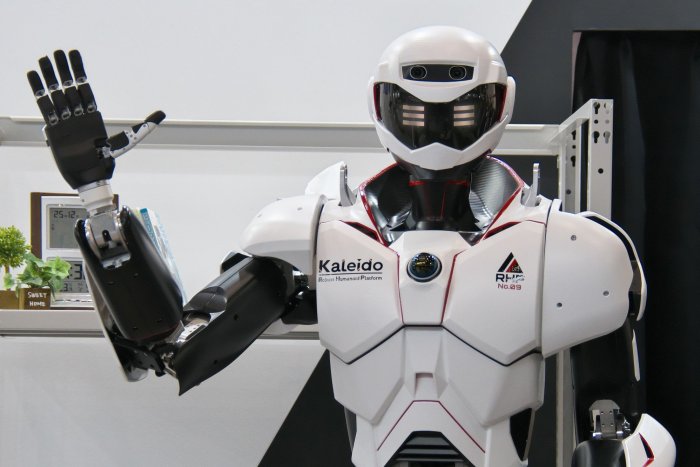
Company Kawasaki Heavy Industries presents its latest humanoid robot, “RHP Kaleido 9,” during the 2025 International Robot Exhibition in Tokyo on December 3, 2025. Photo by Keizo Mori/UPI | License Photo

Source link