Dec. 22 (UPI) — Beijing unveiled tariffs as high as 42.7% on imports of European Union dairy products on Monday, saying the subsidies Brussels provided to producers in the 27-country bloc were the cause of “substantial damage” to China’s dairy industry.
The import taxes of between 21.9% and 42.7%, which come into force Tuesday following a 16-month-long anti-subsidy probe by China’s Ministry of Commerce, will affect France’s famous Roquefort, other blue, fresh and processsed cheeses as well as whole and unsweetened milk and cream.
“The investigating authority has preliminarily determined that imported dairy products originating from the European Union were subsidized, causing substantial damage to the relevant dairy product industry in China, and that there is a causal relationship between the subsidies and the substantial damage,” the ministry said in a statement.
It said that the highest levy would be applied to the products of firms that had failed to cooperate with the investigation with firms that had been cooperative only subject to a rate of 28.6%.
Firms named in the ministry list hailed from across the bloc with France, the Netherlands and Belgium heavily represented. Italian and Spanish producers also feature. Most companies were hit with a rate of 28.6% or 29.7%.
The Netherlands’ Friesland Campina and its subsidiary in neighboring Belgium were both hit with the top 42.7% rate along with an “Other EU Companies” grouping, which is not specified. It is unclear if this group is all EU companies not named in the document that export to China.
The EU criticized the action, saying it was neither justified nor warranted.
The move came just over a year after the EU hit China’s massive EV sector with import tariffs of as high as 36.3%, alleging unfair competition due to subsidies provided to the industry by the Chinese government.
Among the big three EV makers — BYD, Geely and SAIC — BYD and Geely were slapped with duties of 17% and 19.3% respectively, along with a 21.3% tariff on other “cooperating companies.”
The top rate was applied to SAIC together with other EV makers deemed not to have cooperated with the EU’s investigation.
The EV tariffs also saw Beijing launch anti-competition probes into Europe’s brandy and pork products industries, leading to accusations the EU was dumping surplus pork production in the Chinese market.
In September, Beijing imposed short-lived tariffs of between 15.6% and 62.4% on EU pork and pig by-product imports, but revised them down to between 4.9% and 19.8% on Tuesday.
Prosecutors accuse the official, named as Fahad A, of torturing dozens of prisoners in jail run by Syrian intelligence.
Published On 22 Dec 202522 Dec 2025
Share
German prosecutors have charged a former Syrian security official with crimes against humanity, accusing him of torturing dozens of prisoners at a Damascus jail while ex-President Bashar al-Assad was in power.
Germany’s Federal Public Prosecutor General’s office announced the indictment on Monday, alleging the ex-prison guard, named only as Fahad A, took part in more than 100 interrogations between 2011 and 2012 in which prisoners were “subjected to severe physical abuse”.
Recommended Stories
list of 3 itemsend of list
The abuse included electric shocks, cable beatings, forced stress positions and suspensions from the ceiling, according to a statement by the prosecutor’s office.
“As a result of such mistreatment and the catastrophic prison conditions, at least 70 prisoners died,” said the statement, noting the former guard is also charged with murder.
The official was arrested on May 27 and formally indicted on December 10.
He is being held in pre-trial detention, the German prosecutor’s office added.
Syrians have demanded justice for crimes committed under the decades-long rule of al-Assad, who was removed from power in December 2024 after a rapid rebel offensive.
The Assad regime, which was accused of mass human rights abuses, including the torture of detainees and enforced disappearances, fell after nearly 14 years of civil war.
Universal jurisdiction
In Germany, prosecutors have used universal jurisdiction laws to seek trials for suspects in crimes against humanity committed anywhere in the world.
Based on these laws, several people suspected of war crimes during the Syrian conflict have been arrested in the last few years in Germany, which is home to about one million Syrians.
In June, a court in Frankfurt handed a life sentence to a Syrian doctor convicted of carrying out acts of torture as part of al-Assad’s crackdown on dissent.
The doctor, Alaa Mousa, was accused of torturing patients at military hospitals in Damascus and Homs, where political prisoners were regularly brought for supposed treatment.
Witnesses described Mousa pouring flammable liquid on a prisoner’s wounds before setting them alight and kicking the man in the face, shattering his teeth. In another incident, the doctor was accused of injecting a detainee with a fatal substance for refusing to be beaten.
One former prisoner described the Damascus hospital where he was held as a “slaughterhouse”.
Presiding judge, Christoph Koller, said the verdict underscored the “brutality of Assad’s dictatorial, unjust regime”.
They are methodically compiling victories — the latest, Sunday’s 34-17 thumping of the Dallas Cowboys — and perfectly content on the fringes of the national spotlight.
Lots of people wrote them off when those offensive linemen started falling like tall timber, yet the Chargers have found ways to win in spite of that. Seven times in eight games they have walked away victorious, keeping them in the running for the top seed in the AFC.
“We’re not worried about the outside noise,” said edge rusher Khalil Mack, part of a defense that has pitched second-half shutouts two weeks in a row. “Not getting too high, not getting too low. Staying even-keeled and trying to stack wins.”
Despite all that success, the Chargers (11-4) had yet to cement a spot in the postseason by the time they boarded the bus from AT&T Stadium to the airport. They needed a loss or tie by Houston — which beat Las Vegas later Sunday — or by Indianapolis, playing host to San Francisco on Monday night.
As for the Cowboys (6-8), they were eliminated from playoff contention the week before. They were playing for pride and had the NFL’s No. 1 offense, which showed up with Dak Prescott touchdown passes in the first two quarters.
But the quarterback of note in this game was Justin Herbert, who threw for 300 yards and two touchdowns and plunged across the goal line for another score. He also had a 34-yard scramble up the middle, the longest of the game, which ended with a violent collision that had him prone and wincing for a moment.
Clippers forward John Collins hangs on to the rim after dunking in front of Lakers guard Marcus Smart (36), guard Luka Doncic (77) and center Jaxson Hayes (11) on Saturday at Intuit Dome.
“I was proud that we improved from three [after starting] four for 33,” the coach deadpanned. “So we got better as the game progressed.”
With four starters out because of injuries, the Lakers’ ice cold shooting doomed them to a season low in points. Star guard Luka Doncic left the game with 12 points at halftime after a left leg contusion sustained in the first half. Redick noticed the NBA’s leading scorer limping on the court during the second quarter. Fellow starters Austin Reaves (calf), Deandre Ayton (elbow) and Rui Hachimura (groin) already were sidelined as well as key reserve Gabe Vincent (back).
It left them with just one starter in LeBron James, who had 36 points, four rebounds and three assists as the Lakers (19-8) fell behind by 22 but cut the deficit to seven in the fourth quarter before fading again.
USC center Gabe Dynes dunks during a 102-63 win over the UC Santa Cruz at Galen Center on Sunday. Dynes finished with 16 points.
(John McGillen / USC Athletics)
From Ryan Kartje: The call came Monday morning, just six days before USC was slated to play its final nonconference contest. In light of the deadly shooting on Brown’s campus, its men’s basketball team wouldn’t make the trip west. If coach Eric Musselman hoped to test his Trojans again before the new year, he and his USC staff had less than 24 hours to find a replacement.
Which is how USC found itself facing UC Santa Cruz, a 6-6 Division III team with losses to Chapman, Redlands and Claremont-Mudd-Scripps, on Sunday. USC had no trouble overwhelming the Banana Slugs in a 102-63 victory. But given the scrambling it took to schedule Santa Cruz, no one was complaining about the seamless victory heading into the Trojans’ winter break.
Musselman, who notched his 250th career win, initially hoped that USC could find a D-1 program to take Brown’s place. But rules limiting the amount of regular-season games a D-1 program can play narrowed that list considerably. It left USC’s coaches counting by hand to decide which teams would fit.
USC’s Jazzy Davidson controls the ball in front of California’s Mjracle Sheppard during the first half Sunday at Chase Center.
(Thearon W. Henderson / Getty Images)
From the Associated Press: Freshman Jazzy Davidson scored a go-ahead layup with 4:05 remaining and finished with a season-best 24 points, leading the No. 19 USC women past California 61-57 on Sunday in the Invisalign Bay Area Women’s Classic.
After Davidson’s basket, Londynn Jones hit a jumper the next time down as USC used a 6-0 burst to take control. The Trojans answered each Cal threat with a key defensive play or big basket.
Cal called time out with 43.8 seconds left and trailing 56-54, but as the Golden Bears tried to set up a play, USC’s Kennedy Smith made a steal of Sakima Walker’s bad pass.
From Jay Posner: After days of deliberation and faced with a forecast getting soggier by the day, Santa Anita officials have decided to postpone opening day of the 2025-26 race meeting from Friday until Sunday, Dec. 28.
It’s just the second time since 1976 that Santa Anita will not open on the day after Christmas. The other time was in 2019 for the same reason: wet weather. More than eight inches of rain are projected to fall between Tuesday night and Friday at Santa Anita.
Angels star Mike Trout signs autographs for fans before a game against the Minnesota Twins at Angel Stadium on Sept. 8.
(Kevork Djansezian / Getty Images)
From columnist Bill Shaikin: Christmas is three days away, and you’re running out of time to get a gift for the Angels fan in your life. How about a Dodgers cap?
Next year the Dodgers will try to become the first National League team to win three consecutive World Series. The Angels will try to end baseball’s longest postseason drought at 11 years, still without much of a plan beyond rushing first-round draft picks to the major leagues while treading the financial waters until Anthony Rendon’s contract runs out.
On Sunday they missed out on Japanese slugger Munetaka Murakami, who signed with the 102-loss Chicago White Sox. Of the Angels’ five acquisitions this winter, three did not play in the majors last season, and not because they are up-and-coming prospects.
Author and journalist Shea Serrano’s new book, “Expensive Basketball,” is a New York Times bestseller that highlights unique, breakthrough moments in NBA history.
(Al Seib / Los Angeles Times)
From Gustavo Arellano: When Fernando Mendoza won the Heisman Trophy this weekend with another Latino finalist looking on from the crowd, the Cuban-American quarterback did more than just become the first Indiana Hoosier to win college football’s top prize, and only the third Latino to do so. He also subtly offered a radical statement: Latinos don’t just belong in this country, they’re essential.
At a time when questions swirl around this country‘s largest minority group that cast us in a demeaning, tokenized light — how could so many of us vote for Trump in 2024? Why don’t we assimilate faster? Why does Supreme Court justice Brett Kavanaugh think it’s OK for immigration agents to racially profile us? — the fact that two of the best college football players in the country this year were Latino quarterbacks didn’t draw the headlines they would’ve a generation ago. That’s because we now live in an era where Latinos are part of the fabric of sports in the United States like never before.
That’s the untold thesis of four great books I read this year. Each is anchored in Latino pride but treat their subjects not just as sport curios and pioneers but great athletes who were and are fundamental not just to their professions and community but society at large.
1894 — The United States Golf Association is founded, becoming the governing body for the game in the country.
1915 — The Federal League folds. Owners of the American and National Leagues buy out half of the owners (Pittsburgh, Newark, Buffalo, and Brooklyn) of the Federal League teams. Phil Ball, owner of the St. Louis Terriers, is allowed to buy the St. Louis Browns of the AL, and Charles Weeghman, owner of the Chicago Whales, buys out the Chicago Cubs of the NL.
1924 — Babe Dye of the Toronto St. Patricks scores five goals in a 10-2 victory over the Boston Bruins.
1946 — The Cleveland Browns beat the New York Yankees 14-9 in the first AAFC championship game.
1969 — Pete Maravich sets an NCAA record by hitting 30 of 31 foul shots, and scores 46 points to lead LSU to a 98-89 victory over Georgia.
1974 — Boston’s Phil Esposito scores two goals, including his 500th goal, to lead the Bruins to a 5-4 win over the Detroit Red Wings at Boston Garden.
1990 — Paul Coffey becomes the second NHL defenseman to record 1000 points. Coffey reaches the milestone with an assist on Kevin Stevens’ goal in second-period of a 4-3 win against the New York Islanders.
1996 — Brett Hull becomes the 24th player in NHL history to score 500 goals, with a hat trick in the St. Louis Blues’ 7-4 win over the Los Angeles Kings. Brett and his father, Bobby Hull, are the first father-son tandem to each score 500 goals.
2003 — Brett Favre passes for 399 yards and four touchdowns a day after his father dies, moving into second place in NFL history for career TD passes while leading the Green Bay Packers to a 41-7 victory over the Oakland Raiders. Favre passes Fran Tarkenton on the NFL’s career list with his 343rd career TD throw.
2005 — Reggie Campbell of Navy ties the NCAA bowl record with five touchdowns and had 290 all-purpose yards, leading the Midshipmen to a 51-30 win over Colorado State in the Poinsettia Bowl.
2006 — Peter Bondra scores his 500th NHL goal early in the third period to snap a 1-all tie and lead Chicago past Toronto 3-1.
2007 — Eathyn Manumaleuna blocks a field goal as time expires to give BYU a 17-16 victory over UCLA in the Las Vegas Bowl.
2009 — Nebraska’s Ndamukong Suh becomes the first defensive player voted The Associated Press College Football Player of the Year, winning the award after his dominant performance against Texas in the Big 12 title game.
2013 — Peyton Manning finishes 32 for 51 for 400 yards and four touchdown passes to set the single season touchdown mark in Denver’s 37-13 win over Houston. Manning, with 51 touchdown passes, passes Tom Brady (50 in 2007) for the most in a single season in NFL history.
2013 — Tom Brady leads the Patriots to a 41-7 win at Baltimore as New England clinches the AFC East. It’s the 11th division title for Brady, the most by a starting quarterback in NFL history.
2016 — Matt Linehan throws for 381 yards and four touchdowns and runs for a another score to help Idaho beat Colorado State 61-50 in the Famous Idaho Potato Bowl. It’s the third-highest scoring game in bowl history. Idaho (9-4) matches its highest victory total since moving to FBS in 1996.
2020 — Argentine soccer superstar Lionel Messi scores his 644th goal for FC Barcelona during 3-0 win over Real Valladolid to break Pele’s record for most goals for one club; Pele, 643 goals for Santos 1956-74.
Compiled by the Associated Press
Until next time…
That concludes today’s newsletter. If you have any feedback, ideas for improvement or things you’d like to see, email me at houston.mitchell@latimes.com. To get this newsletter in your inbox, click here.
The Great Omari Mosque is one of Gaza City’s most significant landmarks, with origins dating back more than 2,000 years. It was destroyed in an Israeli strike in December 2023. Hatem Haniya, the mosque’s administrator, reflects on its history and its deep significance to the people of Gaza.
Authorities have shuttered drug factories that were cash pipeline for former ruler Bashar al-Assad, UN report.
Published On 22 Dec 202522 Dec 2025
Share
Syria’s government has cracked down on the Captagon industry, which boomed under former longtime leader Bashar al-Assad, according to a United Nations report.
Since al-Assad’s ouster a year ago, Syria’s new authorities have dismantled a network of factories and storage sites, a research brief published on Monday by the UN Office on Drugs and Crime (UNODC) said.
Overall, 15 industrial-level laboratories and 13 storage sites have been shuttered, according to the UNODC report. The agency said the action has “drastically changed” the Captagon market across the region.
Syria’s role in the drug trade had previously drawn scrutiny from numerous Gulf states, where the pill is popular, including Saudi Arabia. It also helped to prompt Western sanctions.
‘Political will and international cooperation’
For years, the Captagon trade provided billions of dollars in profit for networks and individuals aligned with the former government “either within the leadership of the regime’s security apparatus, Syria’s commercial sector and business elite, and/or family members of Bashar al-Assad”, according to Caroline Rose, an expert on Syrian drug trafficking at the New Lines Institute think tank.
Maher al-Assad, Bashar’s brother and former commander of the army’s elite Fourth Division, was identified as a key player, profiting from protecting shipments through Latakia, a former al-Assad stronghold.
Despite the current Syrian government’s targeting of the industry, large seizures of the drug across the region suggest that significant stockpiles of the pills originating from Syria remain in circulation, the report noted.
Smaller-scale production is also likely continuing inside Syria and in neighbouring countries, the UNODC added, with Gulf countries still the top buyers of the drug.
The UN agency said the disruption of the Middle East’s Captagon industry shows that with “political will and international cooperation … even highly complex drug markets can be destabilised within a relatively short period of time”.
However, it warned that the shift risks pushing regional consumers towards new synthetic substances, like methamphetamine, which has recently grown in popularity.
“Without addressing the underlying demand for ‘Captagon,’ trafficking and use are likely to shift toward other substances, such as methamphetamine, with new routes and actors emerging to fill the gap,” it said.
Israeli settlers attacked Palestinians who were forced out of their homes in occupied East Jerusalem, as Israeli forces demolished a four-storey residential building displacing around 100 people on Monday. It was the latest in a series of demolitions targeting Palestinian homes in the area.
Palestinian officials condemn the actions as part of a ‘systematic policy of displacement’ in the occupied territory.
Israeli forces have stormed towns in the occupied West Bank and demolished a residential building.
Soldiers fired stun grenades and tear gas on Monday as they carried out the demolition in East Jerusalem. Palestinian officials accused Israel of a campaign of displacement in the city, saying the operation was part of a systematic attempt to ethnically cleanse Palestinians from their land.
Recommended Stories
list of 4 itemsend of list
Scores of Palestinians were displaced as Israeli bulldozers tore through a four-storey residential building. Activists called it the largest such demolition in the area this year.
Three bulldozers destroyed the building with 13 apartments in the Wadi Qaddum neighbourhood of the Silwan district, south of Jerusalem’s Old City, Al Jazeera Arabic correspondents reported.
Israeli forces cordoned off surrounding roads, deployed heavily across the area and positioned security personnel on the rooftops of neighbouring houses. During the operation, a young man and a teenage boy were arrested.
Residents were told the demolition order was issued because the building had been constructed without a permit.
Palestinians face severe obstacles in obtaining building permits due to Israel’s restrictive planning policies, activists say, a policy that they assert is part of a systematic attempt to ethnically cleanse Palestinians from their land.
Israel’s security cabinet has recently approved the recognition of 19 new settlements in the West Bank, expanding the total number approved this year to 69 as the government continues its settlement push.
‘Systematic policy of displacement’
The Jerusalem governorate, affiliated with the Palestinian Authority, condemned the demolition.
“The building’s destruction is part of a systematic policy aimed at forcibly displacing Palestinian residents and emptying the city of its original inhabitants,” the governorate said in a statement.
“Any demolition that expels residents from their homes constitutes a clear occupation plan to replace the land’s owners with settlers.”
The Jerusalem municipality, an Israeli authority whose jurisdiction over East Jerusalem is not recognised under international law, said the demolition was based on a 2014 court order.
Israeli human rights groups Ir Amim and Bimkom said the demolition was carried out without warning despite a scheduled meeting on Monday to discuss steps to legalise the building.
“This is part of an ongoing policy. This year alone, around 100 East Jerusalem families have lost their homes,” the groups said, calling Monday’s demolition the largest of 2025.
Escalated attacks
Elsewhere in the West Bank, Israeli forces damaged agricultural land and uprooted trees in the northern town of Silat al-Harithiya.
In the city of Halhul, north of Hebron, Israeli forces stormed several neighbourhoods with large numbers of military vehicles, deployed sniper teams and took up positions across the city.
Al Jazeera Arabic journalists reported that Israeli vehicles entered Halhul through multiple checkpoints, including Nabi Yunis, while closing the Halhul Bridge checkpoint linking the city to Hebron.
Since Israel launched its war on Gaza in October 2023, Israeli forces and settlers have also sharply escalated attacks across the West Bank.
More than 1,102 Palestinians have been killed in the territory, about 11,000 wounded and more than 21,000 arrested, according to Palestinian figures.
Members of the Rio de Janeiro Police carry out an operation in Rio de Janeiro in October. The police launched a major operation in two favelas aimed at arresting the leaders of the Red Command, the largest criminal gang in the city, and to halt its territorial expansion. File Photo by Antonio Lacerda/EPA
SANTIAGO, Chile, Dec. 19 (UPI) — After nearly two decades of relative stability, the advance of organized crime has reshaped security across Latin America.
The expansion of illicit economies, armed disputes over territorial control and rising violence triggered new migration flows and partly explain the region’s political shift toward right-wing governments in 2025.
According to a report by the Global Initiative Against Transnational Organized Crime, 39 organized crime groups are operating across Latin America.
The report said these groups have become more interconnected and sophisticated, “coordinating operations not only at the local level but also across borders and even continents.”
One of the main factors behind the expansion of criminal structures is business diversification, said organized crime specialist Hugo Contreras, who holds a doctorate in social complexity sciences and is a researcher at the School of Government at Universidad del Desarrollo.
“Organized groups stopped being just traffickers and adopted a portfolio of activities such as extortion, contract killings, smuggling, arms trafficking and human trafficking,” Contreras told UPI. “That has multiplied and diversified their sources of illicit income, as well as their territorial control and disputes.”
He said the trend has been compounded by institutional weakness, including collapsed prison systems that have turned into logistical hubs for criminal groups and judicial systems ill-prepared to confront the phenomenon.
“There has been an emergence of more aggressive and sophisticated transnational criminal gangs, with international networks, greater financial capacity and increased firepower,” Contreras said.
He added that the situation has been reinforced by “massive migration flows from different conflict regions, which these groups have exploited to conceal their members, recruit new people and expand their criminal activities into other countries.”
Pablo Carvacho, director of research and development at the Center for Justice and Society at the Pontifical Catholic University of Chile, shared that assessment, noting that organized crime is especially dynamic and adaptable.
“Migratory processes created space for the development of transnational illicit activities such as human trafficking and sexual or labor exploitation, particularly affecting a highly vulnerable group like migrants,” Carvacho told UPI.
“These flows served as an entry point for countries such as Chile, where criminal activity was not as developed as what we are seeing today,” he said.
The new scenario has deeply transformed internal security dynamics across the region, turning local problems into international threats that are more violent and more damaging to social and political stability, Contreras said.
Criminal organizations manage and contest territory, impose their own rules, control prisons and challenge state authority.
“This forces governments to move beyond traditional crime-control strategies and adopt comprehensive responses that combine financial intelligence, border security, international cooperation and prison reform,” he said.
Contreras said the impact varies widely across the region depending on how deeply organized crime has taken root in each country.
In 2025, Mexico, Ecuador, Brazil and Haiti ranked among the world’s 10 most dangerous countries based on indicators such as mortality, risk to civilians, geographic spread of conflict and the number of armed groups, according to a conflict index published by the Armed Conflict Location and Event Data Project, a nongovernmental organization known as ACLED.
The report said rising violence has been a common trend across Latin America this year. However, the sharpest deterioration was recorded in those four countries.
In Mexico, the organization linked the surge in violence to factors including an internal war within the Sinaloa cartel following the July 2024 arrest in the United States of Ismael “El Mayo” Zambada, one of the group’s historic leaders.
In Ecuador, ACLED warned that violence levels are on track to reach record highs in 2025. It said the homicide rate could be the highest in Latin America for a third consecutive year and that gang-related violence has caused more than 3,600 deaths.
In Haiti, gangs have taken advantage of the political instability the country has faced since 2021, expanding their operations from the capital, Port-au-Prince, to other areas.
In a different political context, criminal gangs in Brazil have also fueled major clashes as they fought for territorial control in cities such as Rio de Janeiro. A large-scale police operation in that city targeting the Comando Vermelho, one of the country’s main criminal groups, left 121 people dead.
The rise in violence and organized crime has contributed to at least 10 countries in the region electing right-wing governments in the 2024-2025 period.
Carvacho said more conservative platforms “place greater emphasis on public order and the intensive use of coercive tools, with strategies based on police force, military deployment, harsher criminal penalties and territorial control.”
He said these approaches often rely on emergency measures under states of exception, with rapid executive decisions and reforms, as well as a greater willingness to strengthen ties with foreign intelligence agencies, including those of the United States.
In Carvacho’s view, containing transnational organized crime requires coordination among countries because “emergency policies alone will not stop its advance.”
He said what can truly weaken these organizations is targeting their financial assets and reducing the pool of people, including children and adolescents, vulnerable to recruitment.
“Everything else is treating the symptoms of a disease,” Carvacho said. “It is arriving late to a problem that is not about criminal law but about vulnerability and the lack of opportunities in communities excluded from society. That is where the state must act.”
Ruth Dodsworth was made an Officer of the Order of the British Empire (OBE) by King Charles III earlier this year
TV weather presenter Ruth Dodsworth has revealed that she used to “dread” Christmas Day with her abusive ex-husband.
The 50-year-old described the festive season as serving to amplify the problems of people living with domestic violence, especially those whose partner’s behaviour is triggered by alcohol.
Ms Dodsworth added that the highlight of each 25 December would be when Wignall “passed out drunk”, affording her “an hour or two of relief” with her children.
Warning: This story contains distressing content and discussion of domestic abuse
“I never knew who I was going to come home to, Jekyll or Hyde,” said Ms Dodsworth, who met Wignall in 2001, a year after she started her job as a weather presenter for ITV Wales.
“When you live with someone like that, Christmas just makes everything worse on so many levels.
“There’s more pressure on people to have a wonderful time, with more parties and more alcohol.
“And, because drink was a key part of my ex-husband’s behavioural changes, it would just make for an awful time – as it can for too many other people.”
Ms Dodsworth and Wignall married in 2002, while his controlling behaviour began about eight years later when the couple moved from Swansea to Cowbridge in the Vale of Glamorgan.
At that time she had become the family’s main breadwinner, his nightclub business having begun to fail.
“It was a volatile, frightening relationship that several times nearly cost me my life,” she told BBC Radio Wales.
“I never knew when the violence was going to happen or when it would finish.
“And I grew to dread Christmas Day because he’d start drinking in the morning.”
Ms Dodsworth added that her family “would be on eggshells” around Wignall whenever they came over, “because they were frightened of him too”.
South Wales Police
Jonathan Wignall was jailed in 2021 after a nine-year campaign of harassment and stalking
“And, after they’d gone, I would be left with him – so it was a highlight when he’d pass out,” she said.
“It meant an hour or two of relief when I wasn’t frightened and could just be with my kids.”
She described feeling a lot of “mum guilt” that she “didn’t get them out of that situation sooner”.
“But, I didn’t want to admit to the outside world that there was something wrong with my marriage,” said Ms Dodsworth, adding that eventually leaving had been the best decision she ever made.
She added: “My life was saved because I got out – I asked for help and set those wheels in motion.
“It wasn’t easy, but I did it.”
‘Huge spike’ in calls for support
Stephanie Grimshaw, head of public affairs and communications at Welsh Women’s Aid, told BBC Radio Wales Breakfast one in four women experience domestic abuse in England and Wales, adding “it doesn’t change just because it’s Christmas”.
She said: “Christmas Day and the days surrounding are actually our quietest time for our helpline, but then we have a huge spike in January and the days following Christmas when survivors tell us they were not able to reach out.
“That’s really dangerous if they feel they’re not able to reach out for support.
“It’s so important those family and loved ones who are supporting survivors make them a safe space.”
If you are affected by any of the issues raised in this story, support and advice is available via the BBC Action Line.
A Russian general was killed in Moscow on Monday when an explosive device detonated underneath his car. Authorities say they are investigating whether Ukrainian special services were involved.
Abubakar Shekau, a founding leader of the Boko Haram terror group, killed himself with a suicide vest four years ago at his base in Sambisa, during an attack by ISWAP, an offshoot of his group. Through archived materials and interviews with over ten individuals, including former associates, friends, bodyguards, and captives of Shekau, HumAngle’s Editor-in-Chief, Ahmad Salkida, penned what is arguably the most in-depth exposé into the life of the terror leader.
Following its publication in November, our website suffered a cyber attack that took us offline for a while, but it didn’t hinder a widespread reception of the story, which sparked a national discourse on the history of the insurgency that has gripped Nigeria for over a decade, and how the terror that Shekau ignited has outlived him.
2. Maitatsine: The Preacher of Fire (1927 – 1980)
Maitatsine is a Cameroonian and Kano-based Islamic preacher whose teachings and activities turned violent, birthing several cult-like movements in Nigeria’s North that radicalised and also influenced young people. In December 1980, his ideology culminated in one of the deadliest urban uprisings in Nigerian history. This ideology, the rejection of modernity, would later influence terror leaders like Muhammad Yusuf and Abubakar Shekau.
The exposé carefully examined the unhealed wound that Maitatsine created. It is yet another archival documentation that seeks to contribute to the understanding of Nigeria’s contemporary security challenges and how they emerged from unassuming places.
3. The Boys Lured into Boko Haram’s Enclave with Food Rations
When terror groups are referred to in the media, the description is often ‘armed men’, but that’s not always the case, as we’ve reported on women terrorists and this time, young boys. For this investigation, we spent time with Hassan Audu, a 16-year-old who, alongside his brother, was captured by Boko Haram terrorists, who in turn used food to keep him within their ranks.
The story offers insight into the terror group’s recruitment strategy for child soldiers and what the governance structure is like in their enclaves in North Central Nigeria, including in the group’s logistics department, where Audu worked.
4. A Robbery Incident Killed His Wife and Unravelled His Whole Life
We spent eight months tracking the effects of one tragedy on the life of one man and then represented the story in an interactive story that blends photos, videos, illustrations, and animations. Modu Bakura, a 30-year-old resident of Bama, northeastern Nigeria, was robbed three years ago. He lost his wife in the attack and also suffered several injuries that took months to recover from.
We penned a tender narrative of this incident, and the years that have followed, and how he continues to survive amidst debt and emotional hurt.
5. What Life Could Have Been for Leah Sharibu at 22
In May, Leah Sharibu turned 22. It was also her seventh year in captivity after Islamic State West Africa Province (ISWAP) abducted her alongside 104 other schoolgirls from their dormitory in Dapchi, northeastern Nigeria. She’s the only one among the girls who remains in captivity, and has since become a global face of schoolchildren abducted in Nigeria during the reign of the insurgency in the country.
To commemorate her birthday, we sat with her only sibling to understand who she was before captivity and what she imagined her life would be like in seven years. That conversation gave birth to a speculative non-fiction narrative where we constructed what would have been, while also reflecting on her current reality, and how his family has continued to grieve her absence.
6. The Disappearing ₦aira
Two years ago, we interviewed everyday Nigerians to highlight the cost-of-living crisis that is faced in the country and how it has impacted their lives. This time around, we looked at the root of the crisis, not just the fruits. Through a data-driven interactive storytelling approach, we showed how the smaller denominations of the Nigerian Naira are disappearing
7. From Elephants to Warthogs: The Shadow Wildlife Trade Financing Boko Haram in Nigeria
Terrorism financing is one issue that comes up every time there’s a discussion about insurgency in Nigeria, and even across the world.
In this investigation, we uncovered how terror groups like Boko Haram are using wildlife to fund their activities in the country. Not only is this causing harm to communities, but animals like Elephants have also vanished in conflict-affected areas in the North East, prompting poachers and terrorists to turn to Warthogs, an overlooked species with tusks just as valuable.
8. Boko Haram is Tracking and Assassinating Defectors in Nigeria’s North East. Here’s How
Since the Nigerian government started the deradicalisation of terrorist deserters, we have extensively covered the struggle of reintegration that they face. But this report is different, it explores a challenge that is not often spoken about: the assassination of terrorists deserters by the groups they were once loyal to. Boko Haram, for instance, has created a spy network that tracks its defectors and assassinates them or forces them to return to their enclaves.
Through interviews with some deserters, we revealed how this approach has increased issues of recidivism and its impact on the Operation Safe Corridor programme.
9. The Intersection Between Healthcare and Loyalty to Terror Groups in Nigeria
In last year’s Atypical List, we featured the story of Mariam, who we used to represent women as willing participants in terror. We spoke to her again recently, and she is on the brink of recidivism. The recent USAID funding cut is making it difficult for her to access the anti-retroviral medications that were the very reason why she defected.
10. To Those We Miss
When we report on missing persons, we often tell you how they went missing and how their families are faring. So, we thought, how about we give the families of these missing persons the mic and allow them to bare their minds unfiltered? This gave birth to this heartwarming video, where families sent words to their loved ones who have gone missing, some for decades.
The provided articles delve into various socio-political issues afflicting Nigeria, highlighting key aspects of terrorism, personal tragedies, and socio-economic challenges. One article investigates Abubakar Shekau’s life and the terror he perpetuated through Boko Haram, which persisted even after his death during an ISWAP attack. Another piece explores Maitatsine, a preacher whose violent ideology influenced radical groups, affecting Nigeria’s socio-political landscape.
Further, the role of young boys being recruited into Boko Haram with promises of food, and the impact of terrorism on individuals such as Modu Bakura who lost his wife to robbery, are examined. Leah Sharibu’s continued captivity serves as a poignant reminder of unresolved insurgency impacts. Economic analysis discloses the disappearance of smaller Naira denominations amid a cost-of-living crisis. Additionally, investigations reveal Boko Haram’s reliance on illegal wildlife trade for funding and their spy networks targeting defectors. Healthcare access issues for former terrorists highlight the complex interplay between resources and loyalty. Lastly, a video gives a voice to families of long-missing persons, shedding light on their enduring hopes and struggles.
Results of the Korea Federation of SMEs’ “2026 SME Export Outlook Survey.” Graphic by Asia Today and translated by UPI
Dec. 21 (Asia Today) — Nearly half of South Korea’s small and medium-sized exporters expect their overseas shipments to decline next year, with many citing intensifying low-price competition from China as their biggest challenge, a survey released Sunday found.
The Korea Federation of SMEs said its “2026 SME Export Outlook Survey” polled 1,300 exporting SMEs from Dec. 1-12.
In the survey, 68.6% of respondents said they expect exports to increase in 2026 compared with this year, while 31.4% forecast a decrease, the federation said.
Among firms expecting export growth, cosmetics exporters (86.4%) and medical and biotech exporters (86.1%) were the most optimistic, the federation said. The most common reason for expecting export growth, in multiple responses, was improved product competitiveness through new product launches and quality improvements (47.1%), followed by diversification of export markets (29.8%) and improved price competitiveness due to exchange rate appreciation (21.6%).
Among SMEs forecasting weaker exports, 49.3% cited intensifying low-price competition from China as their main export challenge, followed by greater exchange rate volatility (44.6%), sharp increases in raw material prices (37.0%) and uncertainty over U.S. and European Union tariff policies (35.0%), the federation said.
Planned responses to weaker export performance included diversifying export markets (28.2%), improving quality or launching new products (23.0%) and reducing production costs such as labor and raw materials (21.8%), according to the survey.
Despite tariff concerns, the United States ranked first among markets SMEs most want to enter or expand into, at 21.0% when combining first-, second- and third-priority choices, the federation said. Europe followed at 15.2%, with Japan and China tied at 10.6%.
For government priorities to strengthen export competitiveness, respondents most frequently called for expanding support for an export voucher program (53.5%), followed by building a system to counter China’s low-cost offensive (35.8%) and strengthening diplomacy to respond to U.S. and EU tariffs (35.1%), the federation said. Other priorities included expanding support for participation in overseas exhibitions, including in emerging markets (31.5%) and supporting overseas certification and regulatory compliance (27.2%).
Chu Moon-gap, head of the federation’s economic policy division, said it was significant that SMEs are projecting export growth by improving competitiveness despite external headwinds such as tighter export regulations by various countries. He added that companies’ ability to reduce total costs, including production and logistics costs, tariffs and lead times, will be key to export competitiveness and said the government should prepare cost-reduction support measures to help SMEs respond to China’s low-cost competition.
Honduras’ presidential election occurred on November 30, but nearly three weeks later, there is still no clear winner. The elections have faced issues with the vote counting process, allegations of fraud, and U. S. involvement. Conservative candidate Nasry Asfura of the National Party leads center-right candidate Salvador Nasralla of the Liberal Party by about 43,000 […]
United States President Donald Trump’s second administration has introduced a bold and unconventional strategy for the Middle East. The administration intends to recalibrate US influence in a region historically scarred by conflict, prioritising regional stability through economic strength and military consolidation by asserting a stronger, business-minded US presence.
At the centre of Trump’s ambitious goal is what the new US envoy to Iraq, Mark Savaya, described as his goal to “make Iraq great again”. This approach moves away from traditional endless war tactics towards a transactional, results-oriented diplomacy that aims to restore Iraqi sovereignty and economic vitality. It could be the “great gamble” for Trump, who seeks an Iraq that serves as a stable, sovereign regional hub rather than a battleground for foreign interests.
Trump’s primary plans and wishes for Iraq involve a twofold mission: consolidating all armed forces under the command of the legitimate state and drastically reducing the influence of malign foreign players, most notably Iran. The administration seeks to open Iraqi markets to international investment, upgrade the country’s infrastructure, and secure the independence of its energy sector. Hence, the plan is to ground a genuine partnership that respects Iraq’s unity while ensuring that it is no longer a central node for militia activity or external interference.
Militias and political gridlock
This assertive US strategy lands directly in a highly contested and fractured political environment in Iraq, which is less a single state than a patchwork of competing powers. The heart of the problem lies not just in parliament, but also in the persistent shadow influence of armed factions and militias that often operate outside the formal chain of state command. Those groups were among the biggest winners in the November 2025 elections.
Now the ongoing government negotiations have thrown a stark light on these non-state actors.
Their power raises crucial concerns for the future: How can Iraq enforce the law and, crucially, attract the foreign investment needed for revival if armed groups challenge state authority? The consolidation of the country’s armed forces under complete state control is an urgent necessity, underscored by rising regional tensions and security threats.
Moreover, the path to achieving genuine stability is severely obstructed by entrenched political interests.
For Iraq to achieve stability, it must urgently strengthen its institutional frameworks and clearly establish a separation of powers. Yet, many political parties seem more focused on maintaining control over lucrative state resources than on implementing the meaningful reforms the country desperately needs. The result is a governance model struggling to stand firm amid the crosscurrents of competing loyalties and power grabs.
Washington’s play
To achieve these high-stakes goals, Trump has bypassed traditional diplomatic channels by appointing Mark Savaya as the US special envoy to Iraq on October 19. Such an appointment signals a shift towards “deal-making” diplomacy. Savaya’s mission is to navigate the complex political turmoil following Iraq’s parliamentary elections to steer the country towards a stable transition. His job is to bridge the gap between institutional support and massive financial investment, acting as a direct representative of Trump’s business-centric foreign policy.
Savaya is an Iraqi-born, Detroit-based businessman lacking the traditional diplomatic background; his experience is rooted in the private sector in the cannabis industry, but he gained political prominence as an active supporter of Trump’s campaign in Michigan.
He played a key role in the delicate negotiations that secured the release of Elizabeth Tsurkov, the Israeli-Russian academic and Princeton University student who had been kidnapped by an Iraqi militia for more than two years.
Savaya’s communal and ethnic ties have given him significant access to Iraqi power centres that traditional diplomats often lack.
The Iran factor
Iraq’s position in a geopolitical tug-of-war is compounding the internal struggles, forced to balance its critical relationships with two giants: the US and Iran. On the one hand, Washington’s objective is clear: it wants to bolster Iraq’s sovereignty while simultaneously pushing back against the dominance of powerful, often Iran-backed, militias. The US believes that allowing these armed groups too much sway could leave the nation isolated and wreck its fragile economic stability.
But Iranian influence remains a formidable and enduring force. Tehran views Iraq not just as a neighbour but also as a crucial strategic ally for projecting its power across the entire region. The Islamic Revolutionary Guard Corps (IRGC) has been actively working to maintain unity among key Shia factions in Baghdad. This move clearly signals Iran’s deep and enduring interest in shaping Iraq’s political alignment and its future path. Iraq must therefore navigate this high-stakes balancing act to survive.
Savaya’s mission unfolds at a time when Iran’s regional “axis of resistance” is under unprecedented pressure. Having already lost their primary foothold in Syria after the fall of the Assad regime in late 2024, and seeing Hezbollah’s political and military standing in Lebanon severely decimated by the 2025 conflict with Israel, Iranian proxies now face the very real prospect of losing their grip on Iraq too.
In Lebanon, a new government is committed to regaining the state’s monopoly on the use of force, leaving Hezbollah increasingly isolated. This regional retreat means that for Tehran, maintaining influence in Baghdad is a final, desperate stand to remain a relevant regional power.
Other regional actors
The success of Trump’s gamble also depends on the roles of other regional players. Turkiye has recently recalibrated its strategy to integrate Iraq into ad hoc regional trade and security frameworks, effectively diluting Iran’s centrality. Simultaneously, Gulf monarchies such as Saudi Arabia and the United Arab Emirates are emerging as key economic and security partners for Baghdad, offering an alternative to reliance on Iran.
However, these regional actors also bring their own agendas — such as Turkiye’s focus on containing Kurdish movements — which may conflict with US objectives. If Savaya can successfully align these diverse regional interests with Trump’s plan, he may fundamentally rewrite Iraq’s turbulent future.
A realist pragmatism
The “Make Iraq Great Again” strategy reflects a pragmatic reassertion of US interests within the anarchic international system, prioritising Washington’s security and economic power over idealistic goals.
By appointing Savaya — an unconventional, business-oriented envoy — the Trump administration is employing “transactional realism”, utilising economic diplomacy and personal ties as strategic tools to pull Iraq away from Iran’s orbit. This approach views the US-Iran rivalry as a zero-sum game of power politics, where integrating Iraq’s armed forces under centralised state control is fundamental to restoring a state-centric order and sidelining non-state militias that currently feed Tehran’s regional influence.
The new US envoy to Iraq has made clear that “there is no place for armed groups in a fully sovereign Iraq”. His calls resonated with Iraqi officials and militia leaders alike – now at least three militias close to Iran have publicly agreed to disarm. However, other groups have yet to do the same, while rejecting the call from the outset.
However, this high-stakes attempt to shift the regional balance of power faces a significant “security dilemma”, as aggressive moves to diminish Iranian influence may trigger a violent defensive response from Tehran to protect its remaining strategic assets. While the strategy seeks to exploit a regional shift – leveraging the weakened state of Iranian proxies in Syria and Lebanon – it must contend with the “hybrid” power of Iraqi militias and the narrow self-interests of neighbouring players like Turkiye and the Gulf states.
The success of this gamble depends on whether the US can dismantle the shadow economies that facilitate foreign interference and establish a stable, autonomous Iraqi state capable of navigating the intense geopolitical tug-of-war between Washington and Tehran.
The stakes for Iraq’s future
Ultimately, the appointment of Savaya serves as the definitive stress test for Iraqi sovereignty, marking a high-stakes transition towards a transactional “America First” strategy aimed at “Making Iraq Great Again”. By attempting to consolidate military command under the state and dismantle the shadow economies fuelling Iranian influence, Savaya’s mission seeks to exploit the current regional weakening of Tehran’s proxies to transform Iraq into a stable, autonomous hub.
However, the success of this “Great Gamble” hinges on Savaya’s ability to overcome entrenched political opposition and reconcile the presence of US forces with the demand for national unity. If this unconventional diplomatic push can bridge internal divides — particularly between Baghdad and the semi-autonomous Kurdish region in the north — Iraq may finally secure a path towards economic independence; otherwise, the nation risks remaining a perpetual battleground caught in the geopolitical crossfire between Washington and Tehran.
The views expressed in this article are the author’s own and do not necessarily reflect Al Jazeera’s editorial stance.
On December 16, Sudanese political parties, armed movements, civil society organisations, and prominent political figures signed a nine-point political roadmap in Nairobi, presenting it as a civilian-led initiative aimed at ending Sudan’s war and restoring a democratic transition.
Framed as an antiwar, pro-peace platform, it seeks to position civilians as a “third pole” against the two military actors in Sudan’s conflict: the Sudanese Armed Forces (SAF) and the paramilitary Rapid Support Forces (RSF).
Its authors say it represents an attempt to reclaim political agency for civilians after months of marginalisation by armed actors and foreign mediators, even though the declaration does not outline any concrete steps towards military reform.
The roadmap reignited longstanding debates within Sudanese political and civic circles about representation, legitimacy, and the persistent dominance of elite-driven civilian politics.
The roadmap
The Nairobi declaration emerged after a statement released by the Quad – Egypt, Saudi Arabia, the United Arab Emirates (UAE), and the United States – in September.
The Quad statement called for an immediate three-month truce to lead to a permanent ceasefire, humanitarian access to help civilians, and the creation of a political process for a civilian transition.
It also emphasised excluding remnants of former President Omar al-Bashir’s regime and reforming Sudan’s security forces under civilian oversight, all points that the Nairobi declaration echoed.
The Nairobi signatories included the National Umma Party, the Sudanese Congress Party, civil society organisations – including the Darfur Lawyers Association and the Coordination of Internally Displaced Persons and Refugees – and the Sudan Liberation Movement (SLM-AW) led by Abdelwahid al-Nur.
Former Prime Minister Abdalla Hamdok, who led Sudan’s transitional civilian government from al-Bashir’s overthrow in 2019 until the October 2021 military coup by the SAF and the RSF working in concert, also signed the declaration.
It was likewise endorsed by al-Nur, longtime leader of the SLM-AW armed group that controls Jebel Marra in Darfur and has historically rejected what he describes as “elite-driven” political settlements.
Falling short
Sudanese researcher Hamid Khalafallah told Al Jazeera that despite the intent to present a civilian leadership, the declaration falls short of reflecting Sudan’s broader civic movement.
The Nairobi coalition, he argued, mirrors earlier civilian formations that failed to connect with Sudanese citizens, particularly those most affected by the war.
“It’s in many ways a reproduction of former groups that have … struggled to represent the Sudanese people,” he said. “It’s still very much an elite group that does politics in the same way they always have.”
Although resistance committees – neighbourhood groups that emerged from Sudan’s protest movement and helped topple al-Bashir in 2019 – were referenced in the declaration, no committees formally endorsed or signed it.
Former Prime Minister Abdalla Hamdok, left, and Abdelwahid al-Nur met in 2019 in Khartoum [File: Embassy of France in Sudan/Facebook]
Drafts were reportedly shared with some grassroots groups, but the process advanced without waiting for collective deliberation – reinforcing concerns that civilians on the ground remain politically instrumentalised rather than empowered.
While al-Nur’s participation was hailed by some as a breakthrough, Khalafallah questioned the underlying motivation, arguing that his inclusion was intended to counterbalance rival military-aligned forces rather than transform civilian politics.
Before the Nairobi declaration, there were three main civilian coalitions in Sudan, each aligned with a warring party or accused of such an alliance.
Tasis is the coalition of political parties and armed movements that was founded in February 2025, before forming the RSF’s parallel government in July 2025, while the Democratic Bloc is a grouping of parties and armed groups aligned with the SAF.
Finally comes Hamdok’s Sumoud, comprising political parties and civil society organisations and accused by SAF of supporting the RSF.
Europe’s one-track civilian strategy
European officials have distanced themselves from the Nairobi initiative.
A senior European Union diplomat, speaking on condition of anonymity, told Al Jazeera that Brussels does not see the Nairobi roadmap as the foundation for a unified civilian process.
“We would like to see only one civilian process, that’s why we are helping the African Union [AU],” the source said. “Everything else is a distraction, like this Nairobi one.”
According to the EU official, the priority is not multiplying civilian platforms but consolidating them under a single credible framework, led by the AU and broadly accepted by Sudanese society.
“Our aim is to create a credible third pole – versus RSF and SAF,” the source said. “An inclusive one, supported by most Sudanese citizens.”
The EU plans to build a broad coalition that can take the lead after the Quad’s humanitarian truce and ceasefire proposals are accepted by the SAF and the RSF, including reforms placing security forces under civilian-led oversight.
The EU’s language reflects growing frustration among international actors with Sudan’s fragmented civilian landscape, while insisting that abandoning it would legitimise military rule by default.
“Of course, we are not naive that civilians will take over tomorrow,” the source said. “But we have to stand for our values.”
The EU official was blunt in assessing the conduct of Sudan’s warring parties, rejecting narratives that frame either side as a governing authority.
“I would not call what RSF does in Darfur ‘governing’, SAF is a bit better – but not much,” the source said.
“Look at the oil deal they did,” the official added. “Money is important; people are not.”
They referred to the latest agreement between the SAF and the RSF – under South Sudanese mediation – that both would withdraw from the Heglig oil facility, with South Sudanese troops deployed to secure the refinery following SAF’s pullout and the RSF’s capture of the site.
Warring parties as spoilers?
US-Africa policy expert Cameron Hudson told Al Jazeera that the Nairobi declaration appears to mimic the Quad’s recent statement, effectively presenting to the international community a roadmap that aligns with pre-existing objectives to gain Quad support.
“My sense is that the Nairobi declaration reverse engineers what the Quad has said,” Hudson said, suggesting that the initiative is designed more to attract international endorsement than to build genuine domestic consensus.
Hudson warned that this approach mishandles the sequencing of Sudan’s political transition, “prematurely” linking ceasefire efforts with reforms of the army or other political changes, arguing that these should remain on separate tracks until violence subsides.
“If what the Quad wants is an unconditional ceasefire, then it needs to pursue that, not create opportunities to trade a ceasefire for political assurances during a transition,” he said.
“For that reason, it is premature to be talking about reforming the army or other political reforms. These should remain in separate tracks for now.”
The tension is stark. The Quad and the European Union increasingly state that neither the SAF nor the RSF should have a political future and that remnants of the Bashir regime must be excluded entirely.
Yet both armed forces remain indispensable to any cessation of hostilities, creating an unresolved contradiction at the heart of international strategy.
Four residents of Pari, a low-lying Indonesian island, filed the complaint in January 2023.
Published On 22 Dec 202522 Dec 2025
Share
A Swiss court has agreed to hear a legal complaint against cement giant Holcim, accusing the company of failing to do enough to cut carbon emissions.
NGO Swiss Church Aid (HEKS/EPER), which is supporting the complainants, said on Monday that the court had decided to admit the legal complaint. Holcim confirmed the decision and said it plans to appeal.
Recommended Stories
list of 4 itemsend of list
The complaint was filed in January 2023 by four residents of Pari, a low-lying Indonesian island that has suffered repeated flooding as rising global temperatures drive up sea levels. The case was submitted to a court in Zug, Switzerland, where Holcim has its headquarters.
According to HEKS, this is the first time a Swiss court has admitted climate litigation brought against a big corporation.
If successful, it would also be the first case seeking to hold a Swiss company legally responsible for its contribution to global warming, the group has previously said.
The lawsuit is also among the first climate cases brought by people in the Global South directly affected by climate change and forms part of a growing push for compensation for “loss and damage”, campaigners backing the case said.
The nongovernmental organisation supporting the plaintiffs said Holcim was selected because it is one of the world’s largest carbon dioxide emitters and the biggest so-called “carbon major” based in Switzerland.
A study commissioned by HEKS and conducted by the United States-based Climate Accountability Institute found that Holcim emitted more than 7 billion tonnes of carbon dioxide between 1950 and 2021 – about 0.42 percent of total global industrial emissions over the period.
Holcim has said it is committed to reaching net-zero emissions by 2050 and is following a science-based pathway to meet that goal. The company says it has cut direct CO2 emissions from its operations by more than 50 percent since 2015.
The plaintiffs are seeking compensation for climate-related damage, financial contributions to flood protection measures on Pari Island, and a rapid reduction in Holcim’s carbon emissions.
Cement production accounts for about 7 percent of global carbon dioxide emissions, according to the Global Cement and Concrete Association.
A “60 Minutes” story on the Trump administration’s imprisonment of hundreds of deported Venezuelan migrants to El Salvador was pulled by CBS News Editor-In-Chief Bari Weiss shortly before it was scheduled to air Sunday night.
The unusual decision drew a sharp rebuke from Sharyn Alfonsi, the correspondent for the piece.
Alfonsi said the decision was motivated by politics, according to an email she circulated to colleagues and viewed by the Times. Alfonsi noted that the story was ready for air after being vetted by the network’s attorneys and the standards and practices department.
“It is factually correct,” Alfonsi wrote. “In my view, pulling it now — after every rigorous internal check has been met is not an editorial decision, it is a political one.”
According to the CBS News press department’s description of the segment, Alfonsi spoke to released deportees who described “the brutal and torturous conditions they endured inside CECOT,” one of El Salvador’s harshest prisons.
In a statement, a representative for CBS News said the report called “Inside CECOT” will air in a future “60 Minutes” broadcast. “We determined it needed additional reporting,” the representative said.
Weiss viewed the segment late Thursday, according to people familiar with the matter who were not authorized to comment publicly. She had a number of issues with story and asked for additional reporting, which could not be completed in time for airing on Sunday. A press release promoting the story went out Friday.
Weiss reportedly wanted the story to have an interview with an official in President Trump’s administration.
But Alonsi said in her email the program “requested responses to questions and/or interviews” with the the Department of Homeland Security, the White House and the State Department.
“Government silence is a statement, not a VETO,” Alfonsi wrote. “Their refusal to be interviewed is a tactical maneuver designed to kill the story.”
Alfonsi’s email said she learned the story was pulled on Saturday and that she had not discussed the matter with Weiss.
Even if Weiss’ concerns might be valid, the sudden postponement of a “60 Minutes” piece after it has been promoted on air, on social media and through listings on TV grids is a major snafu for the network.
For Weiss, it’s perilous situation as her every move as a digital media entrepreneur with no experience in television is being closely scrutinized.
As the founder of the conservative-friendly digital news site who was personally recruited by Paramount Chief Executive David Ellison, journalists at CBS News and media industry observers are watching to see if Weiss’ actions are tilting its editorial content to the right.
Trump recently said “60 Minutes” is “worse” under Paramount’s new ownership following an interview with Rep. Marjorie Taylor Greene, in which she was highly critical of the president and his administration.
Paramount acquired the Free Press for $150 million as part of the deal to bring Weiss over. Her first major move was to air a highly sympathetic town hall with Erika Kirk, the widow of slain right-wing activist Charlie Kirk. Erika Kirk has taken over as head of Turning Point USA, the political organization her husband founded.
Dec. 21 (Asia Today) — South Korea’s industry ministry said Sunday it has raised concerns with Canada over strengthened tariff-rate quota measures on steel set to take effect Dec. 26 and asked Ottawa to consider steps including an exemption or expanded quota for South Korea.
A tariff-rate quota (TRQ) is a trade system under which a limited volume of steel imports can enter Canada at a lower or zero tariff, while shipments exceeding that quota face much higher duties. Under Canada’s revised measures, the amount of South Korean steel that can enter Canada at the lower tariff rate will be reduced, and shipments above that limit would face much higher tariffs.
The Ministry of Trade, Industry and Energy said Trade Negotiations Director General Yeo Han-gu met Canadian Minister of International Trade Maninder Sidhu and Canadian Deputy Minister of Foreign Affairs Ali Essassi in Toronto on Dec. 18 local time and conveyed the position of South Korean industry on the measures.
Canada plans to lower the TRQ utilization rate for free trade agreement partners including South Korea from 100% to 75% and for non-FTA countries from 50% to 20%, the ministry said. Imports exceeding the quota would face a 50% tariff and a new 25% tariff would be applied to certain steel derivative products, according to the ministry.
The ministry said Yeo traveled to Canada one week after a phone call with Sidhu on Dec. 11 to hold detailed discussions. It said he asked Canada to take favorable measures for South Korea, citing large-scale investments by South Korean companies in Canada including battery makers and cooperation potential in sectors such as steel, electric vehicles, batteries, energy and critical minerals.
Yeo also said some steel items, including pipelines used in Canada’s oilsands crude production, are difficult to produce domestically and are largely supplied through imports, including from South Korea. Tightening TRQ measures on South Korean steel could affect both South Korean exporters and Canadian industry, he said, according to the ministry.
The ministry said Yeo and Sidhu agreed to establish a new strategic sector dialogue channel between trade ministers under the Korea-Canada free trade agreement, which marks its 10th anniversary this year. They also agreed to set up a hotline for discussions on issues including steel, electric vehicles, batteries, energy and critical minerals, the ministry said.
Sidhu proposed using Canada’s duty drawback system, which the ministry said remains in operation through the end of January 2026 for certain steel items not produced domestically. The ministry said South Korea plans to continue consultations on steel TRQs through high-level and working-level channels.
The ministry said Yeo also met South Korean companies operating in the Toronto area in sectors including steel, autos, home appliances and minerals to hear concerns about trade uncertainty. It said he visited a battery plant backed by LG Energy Solution in Windsor on Dec. 19 and toured the facilities.
The ministry said Yeo later held a meeting in Detroit with South Korean auto parts companies and reviewed issues including Section 232 tariffs on automobiles, Mexico’s announced tariff increases on non-FTA countries and trends related to USMCA revisions. It said he also met potential foreign investors in the auto parts sector to discuss investment opportunities tied to South Korea’s smart factory and manufacturing AI capabilities.
Yeo said shifting trade conditions across the United States, Canada and Mexico pose challenges for South Korean firms operating locally, but also create opportunities tied to changes in North American supply chains, the ministry said.
London, United Kingdom – Two Palestine Action-affiliated remand prisoners on hunger strike have been taken to hospital, according to a family member and a friend, adding to fears that the young Britons refusing food in protest could die at any moment.
Twenty-eight-year-old Kamran Ahmed, who is being held at Pentonville prison in London, was hospitalised on Saturday, his sister, Shahmina Alam, told Al Jazeera.
Recommended Stories
list of 4 itemsend of list
Amu Gib, 30, who has not eaten food for 50 days at HMP Bronzefield in Surrey, was taken to hospital on Friday, said the Prisoners for Palestine group and friend Nida Jafri, who is in regular contact with them. Gib uses the pronoun they.
Ahmed and Gib are among six detainees protesting across five prisons over their alleged involvement in break-ins at the United Kingdom’s subsidiary of the Israeli defence firm Elbit Systems in Bristol and a Royal Air Force base in Oxfordshire.
They deny the charges against them, such as burglary and violent disorder.
“It’s day 42 [of Ahmed’s hunger strike], and at this point, there’s significant risk of organ damage,” said his sister, Alam. “We know that he’s rapidly been losing weight in the last few days, losing up to half a kilogram [1.1lbs] a day.”
Ahmed’s last recorded weight was 60kg (132lbs).
When Al Jazeera first interviewed Alam on December 12, Ahmed, who is 180cm (5′ 11”), weighed 64kg (141lbs), having entered prison at a healthy 74kg (163lbs). On Thursday, Alam told journalists at a news conference in London that he weighed 61.5kg (136lbs).
Ahmed’s speech was slurred in a call with the family on Friday, said Alam. He is said to be suffering from high ketone levels and chest pains.
“Honestly, I don’t know how he’s going to come out of this one,” said Alam.
It is the third time Ahmed has been hospitalised since he joined the hunger strike.
Shahmina Alam with her younger brother, Kamran Ahmed, a Palestine Action-linked hunger striker [Courtesy of the Alam family]
‘Critical stage’
The hunger strikers’ demands include immediate bail, the right to a fair trial and the de-proscription of Palestine Action, which accuses the UK government of complicity in Israel’s war crimes in Gaza. The UK government banned Palestine Action in July, branding it a “terror” group, a label that applies to groups such as ISIL (ISIS).
The protesters have called for an end to their alleged censorship in prison, accusing authorities of withholding mail, calls and books. They are also urging that all Elbit sites be closed.
The six are expected to be held for more than a year until their trial dates, well beyond the UK’s six-month pre-trial detention limit.
Qesser Zuhrah, a 20-year-old who has refused food for 50 days, is also in hospital, having lost 13 percent of her body weight, according to her lawyers. The other protesters are Heba Muraisi, Teuta Hoxha and Lewie Chiaramello, who is diabetic and refuses food every other day.
There was no immediate comment from either Pentonville or HMP Bronzefield.
‘I’m scared’
Gib called their friend, Jafri, on Thursday from prison, telling her they needed a wheelchair to attend a doctor’s appointment where their vital signs would be checked.
Prison staff at first “refused” to provide a wheelchair, and later, after offering one, “refused to push” it, Jafri said. “So they laid there with … no check of their vitals on day 47 of their hunger strike,” Jafri said.
When they are hospitalised, the prisoners are unable to call their loved ones, as they can from jail.
Jafri told Al Jazeera, “I’m scared they’re there alone with no phones and no calls allowed.”
Gib, who has lost more than 10kg (22lbs), is below the normal range for most health indicators, which is “highly concerning” for their immune system, their lawyers have said.
Prison officials have “failed to provide [Gib] with thiamine [a vitamin] consistently, and Amu is feeling the effects on their cognitive function”, the lawyers said.
Gib’s eyes are also “sore with the bright [prison] lights”, Jafri said.
Amu Gib (left) with their friend, Nida Jafri [Courtesy: Nida Jafri]
The lawyers have demanded a meeting with Secretary of State for Justice David Lammy, hoping his intervention could be life-saving. Thousands of everyday Britons, hundreds of doctors and dozens of MPs have urged Lammy to heed their call. But so far, he has refused, leading critics to accuse the UK government of wilfully ignoring the issue.
The UK media have also been accused of downplaying the protest and its dangers.
The protest is said to be the largest coordinated hunger strike in UK prisons since 1981, when Irish Republican inmates led by Bobby Sands refused food.
“In contrast to the robust media coverage of the Irish hunger strikes in the 1980s, the Palestine Action hunger strikes have been largely met with media silence,” wrote Bart Cammaerts, a professor of politics and communication at the London School of Economics.
“What will it take for the British media to pay attention to the plight of jailed pro-Palestinian activists? The death of an activist? Or the awakening of a moral conscience?”
US Special Envoy Steve Witkoff has hailed talks on ending Moscow’s war in Ukraine as “productive and constructive”, after holding separate meetings with Ukrainian, European and Russian negotiators in the state of Florida.
The talks in Miami on Sunday were the latest in a series of meetings between the US, Russia and Ukraine on a 20-point plan touted by US President Donald Trump to end the nearly four-year-old war.
Recommended Stories
list of 4 itemsend of list
Despite the optimism from the US, there have been no clear signals of imminent resolutions to key hurdles, including on the issue of the territory Russia has seized during the conflict.
Witkoff, who met with Russian President Vladimir Putin’s special envoy Kirill Dmitriev on Saturday, held talks on Sunday with officials from Ukraine and Europe. He then held separate talks with the Ukrainian delegation, led by senior official Rustem Umerov.
Trump’s son-in-law, Jared Kushner, also joined the meetings.
Witkoff, in a joint statement with Umerov, called Sunday’s talks “productive and constructive”, saying they focused on a “shared strategic approach between Ukraine, the United States and Europe”.
“Particular attention was given to discussing timelines and the sequencing of next steps,” they said.
Witkoff and Umerov said that bilateral discussions between Ukrainian and US officials on Sunday focused on developing and aligning positions on four key documents: the 20-point plan, a “multilateral security guarantee framework,” a “US Security guarantee framework for Ukraine”, and an “economic & prosperity plan”.
In a separate X post that used some of the same language, Witkoff said his talks with Dmitriev were also “productive and constructive”.
“Russia remains fully committed to achieving peace in Ukraine,” Witkoff said in the post. “Russia highly values the efforts and support of the United States to resolve the Ukrainian conflict and re-establish global security.”
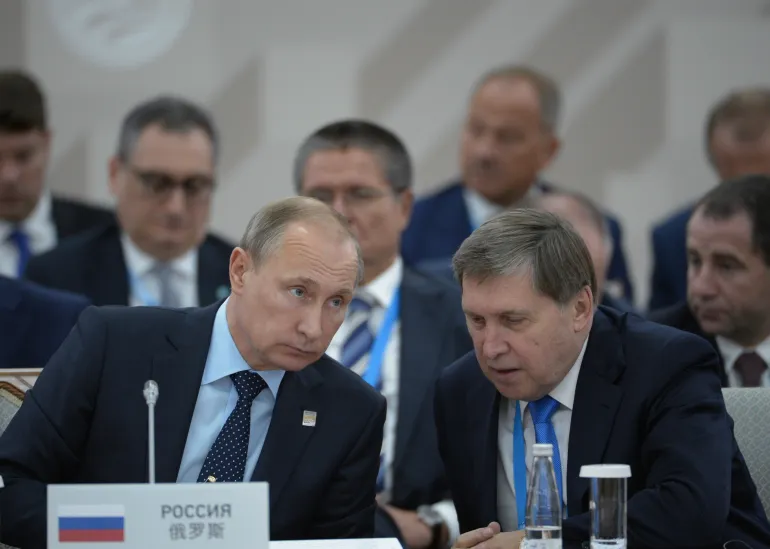
Russian President Vladimir Putin with presidential aide Yury Ushakov [File/Handout: RIA Novosti via Getty Images]
Earlier on Sunday, Putin’s top foreign policy aide, Yury Ushakov, said that the changes requested by Ukraine and its European allies to the framework put forth by the US were not improving prospects for peace.
Ushakov said that Dmitriev was due to return to Moscow on Monday and would report to Putin on the outcome of his talks.
“After that, we will formulate the position with which we will proceed, including in our contacts with the Americans,” he said.
Russia, which launched a full-scale invasion of Ukraine in February 2022, sees Europe as “pro-war” and argues that its participation in the talks only hinders them.
Separately on Sunday, Kremlin spokesman Dmitry Peskov said that Putin was ready to talk with his French counterpart, Emmanuel Macron, after the latter said Europe should reach out to the Russian president to end the war.
Putin has “expressed readiness to engage in dialogue with Macron”, Peskov told Russian state news agency RIA Novosti. “Therefore, if there is mutual political will, then this can only be assessed positively.”
Macron’s office welcomed the Russian statement.
“It is welcome that the Kremlin has publicly agreed to this approach. We will decide in the coming days on the best way to proceed,” it said.
Trump first shared his plan consisting of 28 points to end the war in Ukraine last month, triggering immediate criticism from European leaders who said it echoed the Kremlin’s demands.
Zelenskyy has since said that Ukraine and its European allies have shared their own version of a 20-point plan, which was based on the initial plan put forward by the White House.
One of the key sticking points between Russia and Ukraine remains Russia’s demand to retain some of the land it has captured in Ukraine since launching its full-scale invasion after years of fighting in Ukraine’s east.
Zelenskyy has described the talks as “constructive” and said they were “moving at a fairly rapid pace”. He nevertheless cautioned that “much depends on whether Russia feels the need to end the war for real”.
He also hailed this week as “historic” for Ukraine, thanking Europe for pledging $100bn of funding over the next two years.
US and Ukrainian envoys say “productive and constructive” talks have taken place in Miami, but there still appears to be no major breakthrough in efforts to end Ukraine’s war with Russia.
Donald Trump’s special envoy, Steve Witkoff, issued a joint statement with the top Ukrainian negotiator, Rustem Umerov, after three days of meetings with European allies.
The pair said the meeting focused on aligning positions on a 20-point plan, a “multilateral security guarantee framework”, a “US Security guarantee framework for Ukraine” and an “economic & prosperity plan”.
Separate talks have been taking place in Miami between the US and the Russian envoy, Kirill Dmitriev.
“Our shared priority is to stop the killing, ensure guaranteed security, and create conditions for Ukraine’s recovery, stability, and long-term prosperity,” Witkoff and Umerov said in a statement.
The meetings are the latest step in weeks of diplomatic activity, sparked by the leaking of a 28-point US peace plan which shocked Ukraine and its European allies for appearing to favour Russia, which launched a full-scale invasion of Ukraine nearly four years ago.
Witkoff said representatives from Russia had met himself and other US officials in southern Florida, including Trump’s son-in-law Jared Kushner.
Witkoff said the meetings with Russian envoy Dmitriev were also “productive and constructive” and that “Russia remains fully committed to achieving peace in Ukraine”.
Trump has been pushing Ukraine and Russia to come to an agreement on ending the war, but so far the two countries have been unable to agree on major issues, including Moscow’s demand to keep land it has already seized.
US intelligence reports continue to warn that Russian President Vladimir Putin still wants to capture all of Ukraine and reclaim parts of Europe that belonged to the former Soviet empire, six sources familiar with US intelligence told the Reuters news agency.
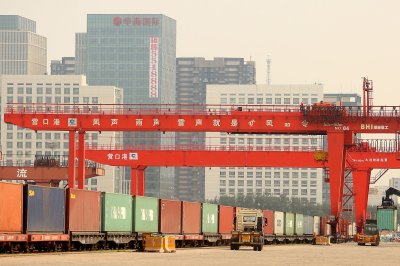

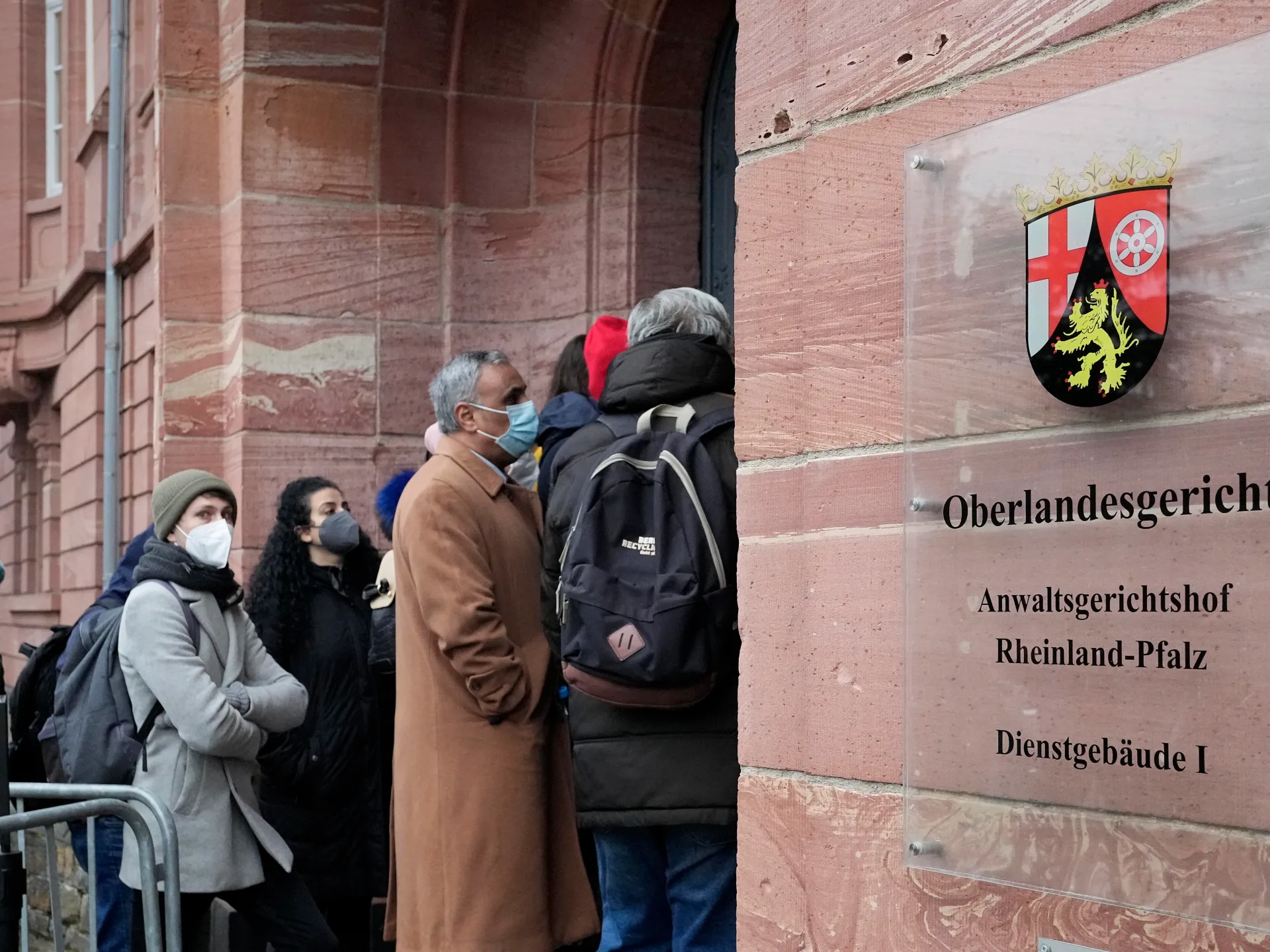
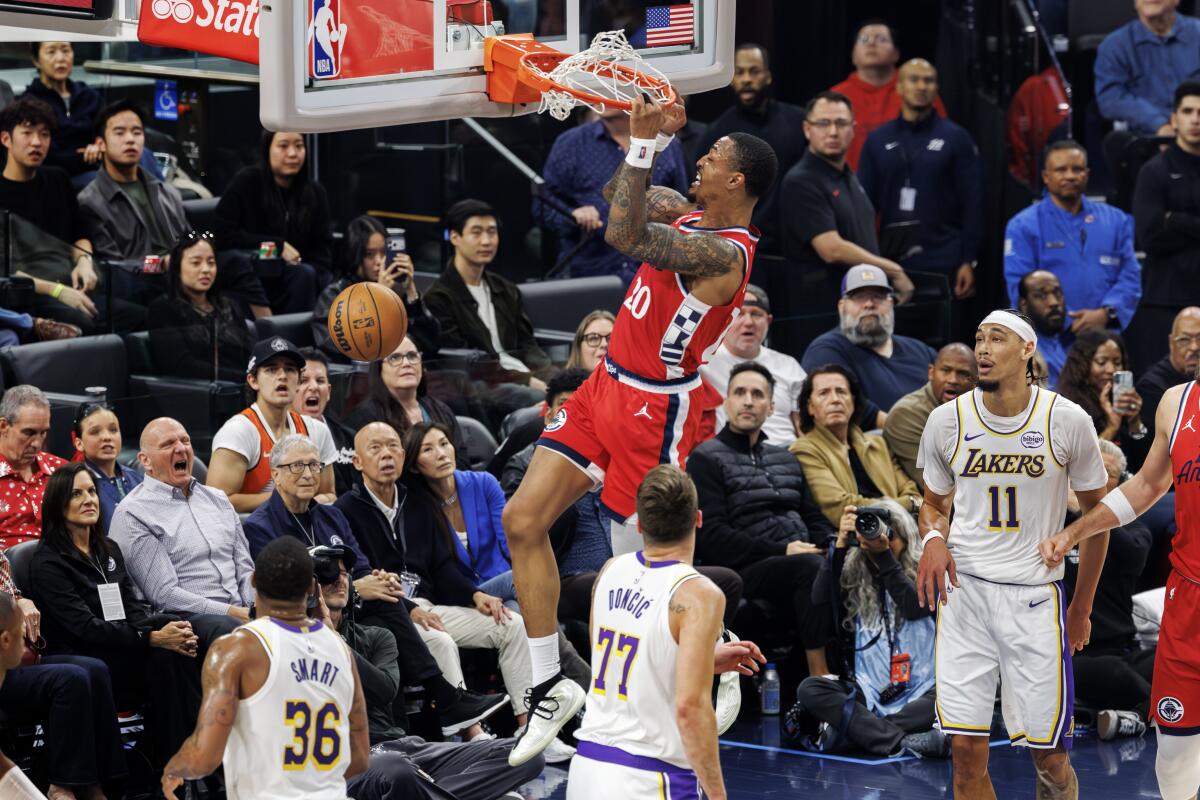


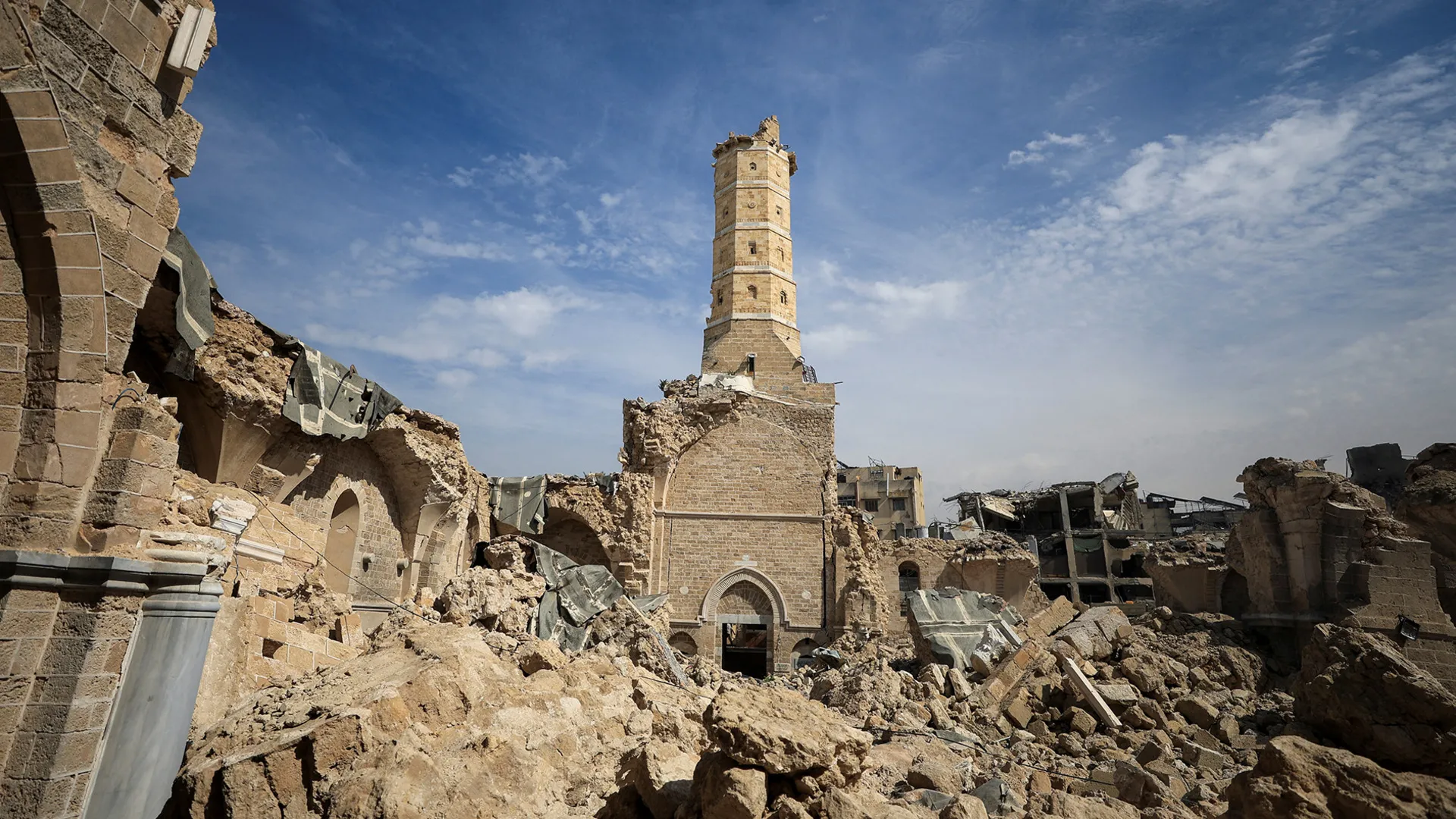
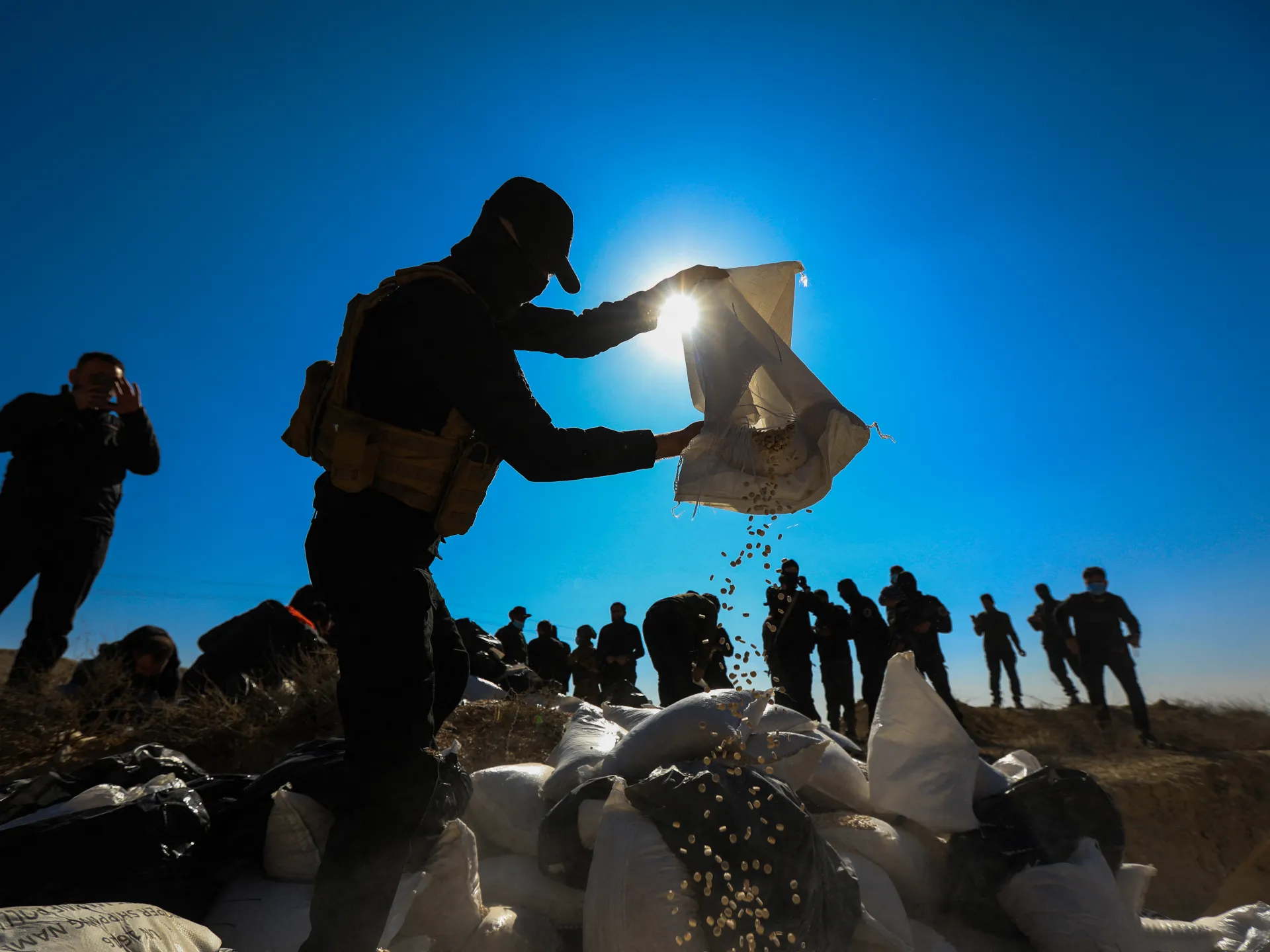

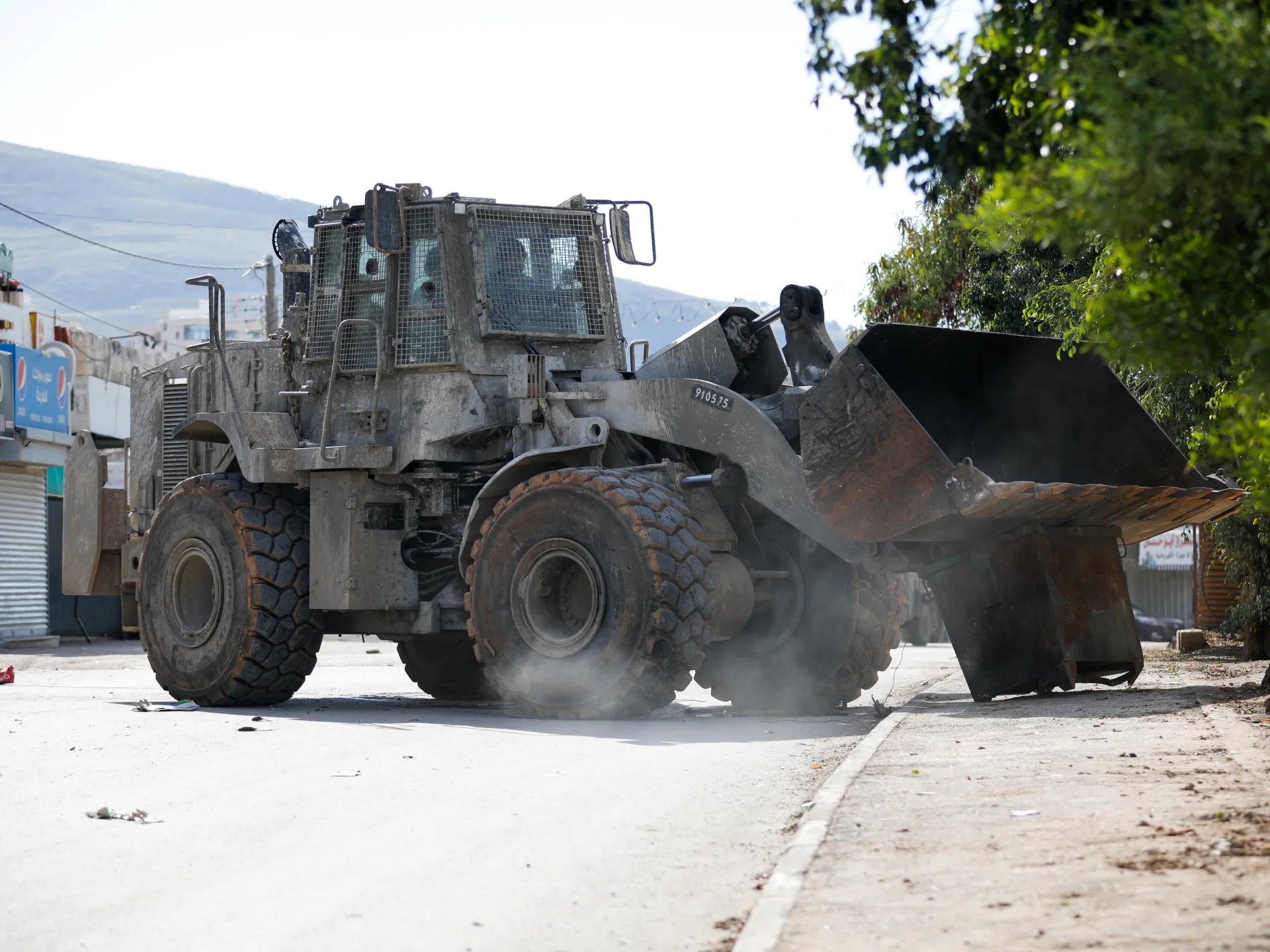
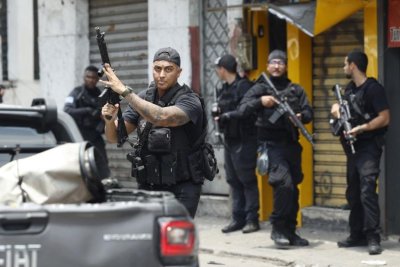




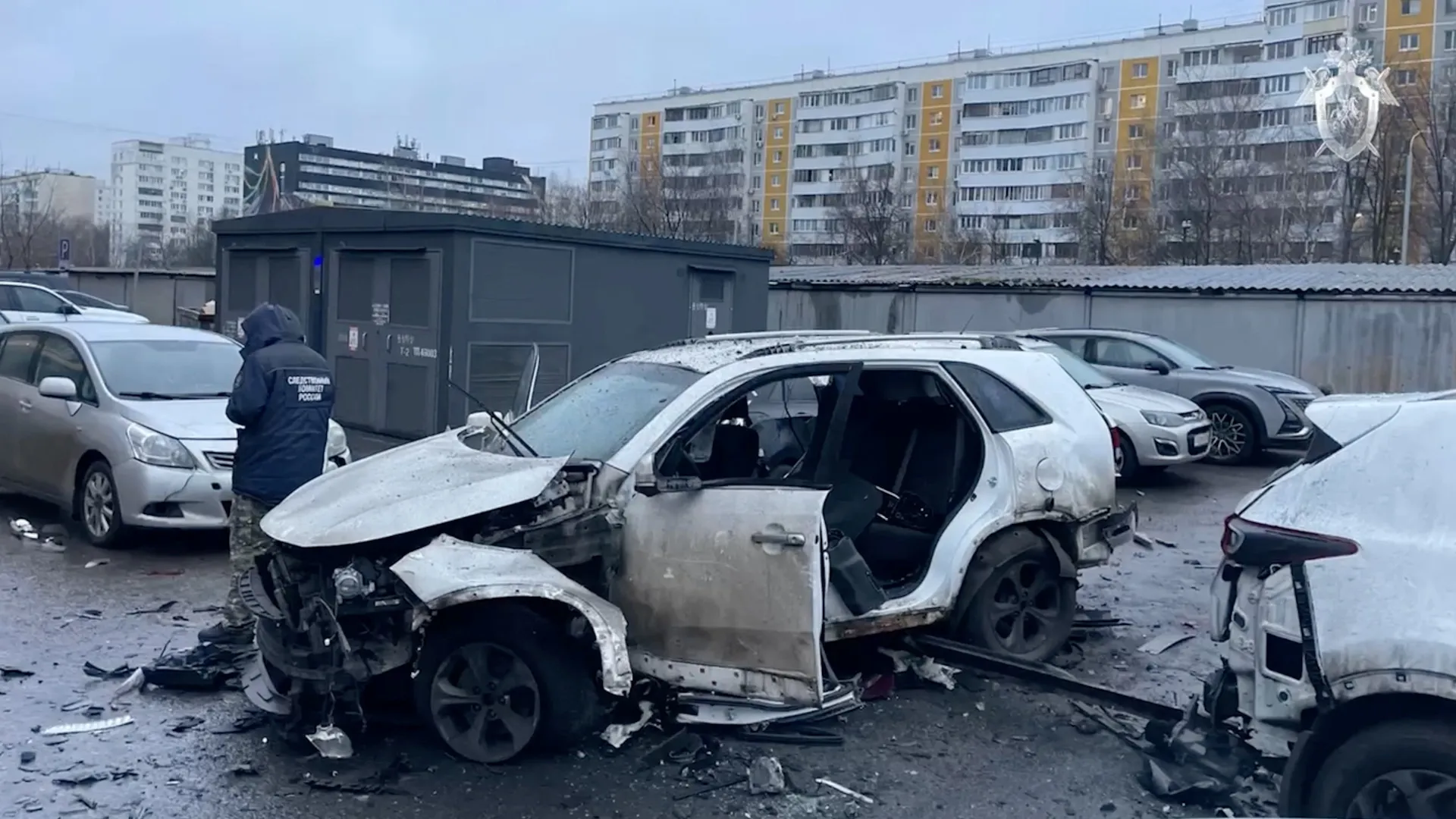


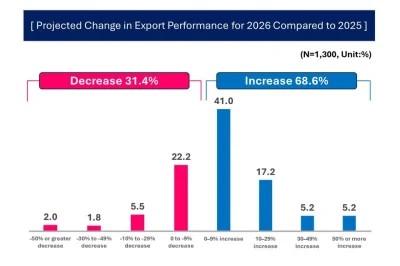

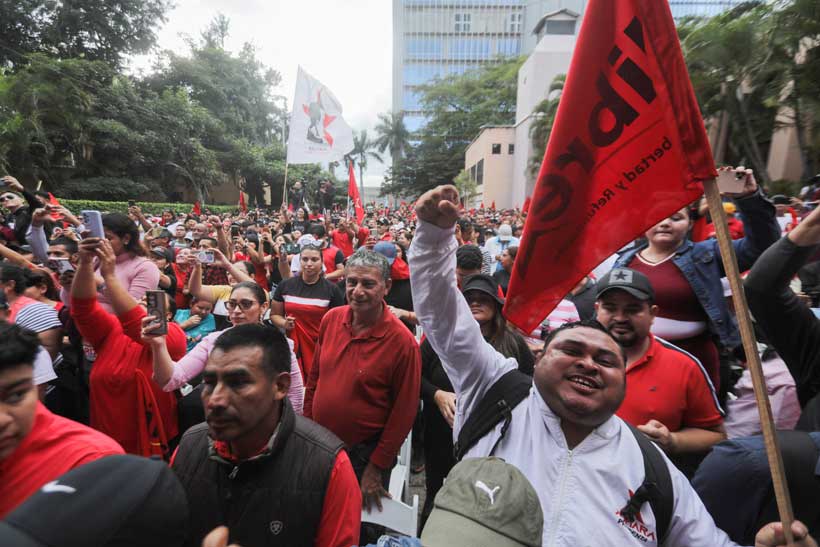

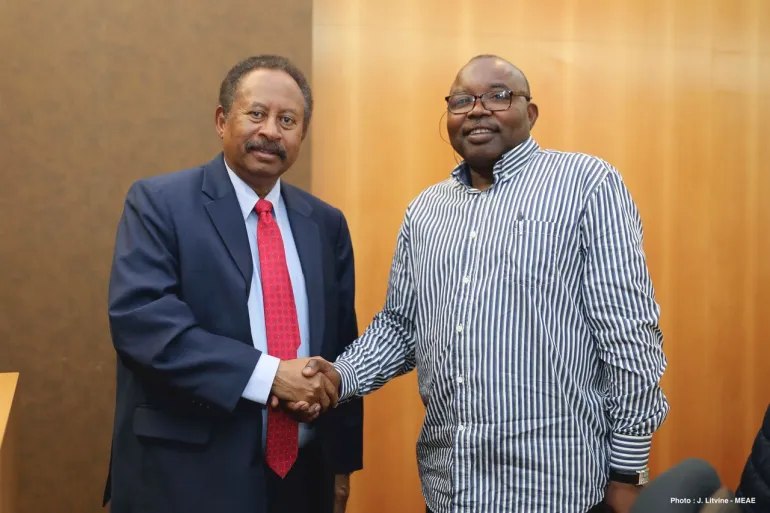


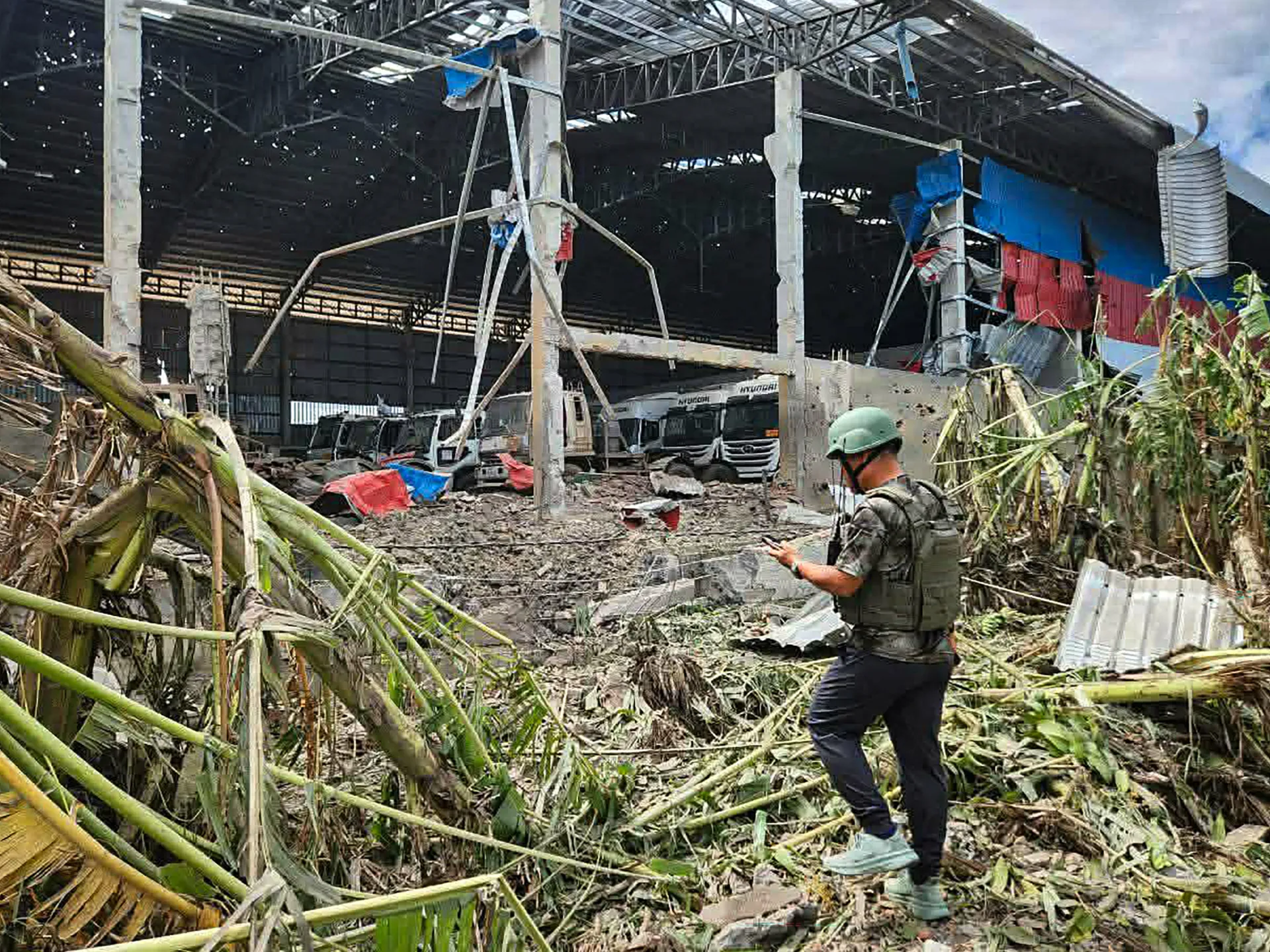
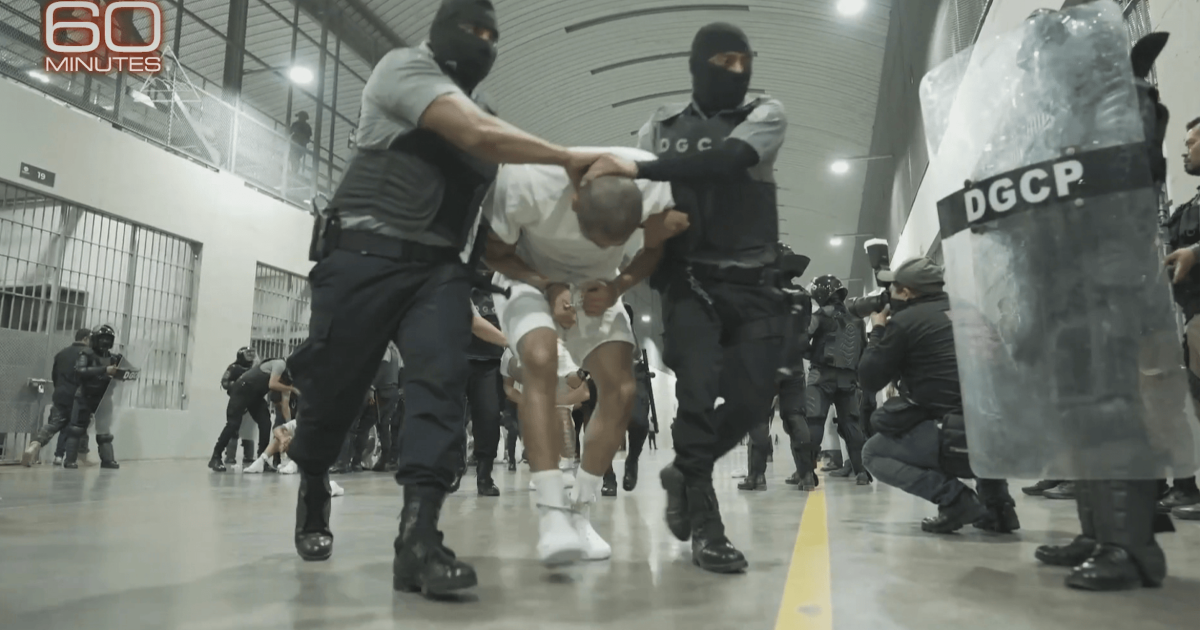


![Shahmina Alam with Kamran Ahmed - Palestine Action linked hunger striker [Courtesy of Alam family]](https://i0.wp.com/www.aljazeera.com/wp-content/uploads/2025/12/WhatsApp-Image-2025-12-15-at-15.26.19-1-1765801678.jpg?w=640&ssl=1)