The United States Department of the Treasury has issued a new round of sanctions aimed at isolating Venezuela’s oil industry, as part of President Donald Trump’s pressure campaign against the South American country.
The sanctions announced on Wednesday target four companies and their associated oil tankers, which are allegedly involved in transporting Venezuelan oil.
Recommended Stories
list of 3 itemsend of list
Trump has claimed that Venezuelan leader Nicolas Maduro leads a so-called “narco-terrorist” government that seeks to destabilise the US, a charge repeated in the latest sanctions announcements.
“Maduro’s regime increasingly depends on a shadow fleet of worldwide vessels to facilitate sanctionable activity, including sanctions evasion, and to generate revenue for its destabilizing operations,” the Treasury said on Wednesday.
Petroleum is Venezuela’s primary export, but the Trump administration has sought to cut the country off from its international markets.
Wednesday’s notice accuses four tankers – the Nord Star, the Rosalind, the Valiant and the Della – of helping Venezuela’s oil sector to circumvent existing sanctions, thereby providing the “financial resources that fuel Maduro’s illegitimate narco-terrorist regime”.
“President Trump has been clear: We will not allow the illegitimate Maduro regime to profit from exporting oil while it floods the United States with deadly drugs,” said Treasury Secretary Scott Bessent.
“The Treasury Department will continue to implement President Trump’s campaign of pressure on Maduro’s regime.”
Claims on Venezuelan oil
The sanctions come a day after Washington imposed sanctions on a separate Venezuelan company it says assembled drones designed by Iran.
In recent months, the Trump administration has cited several motives for ratcheting up pressure against Venezuela, ranging from immigration to Maduro’s contested election in 2024.
Trump, for instance, has framed the pressure campaign as a means of stemming the trade of illegal drugs, despite Venezuela exporting virtually none of the administration’s main target, fentanyl.
Critics have also accused Washington of seeking to topple Maduro’s government to take control of the country’s vast oil reserves.
Trump officials have fuelled those suspicions with remarks seeming to assert ownership over Venezuela’s oil.
On December 17, a day after Trump announced a “total and complete blockade” of sanctioned oil tankers entering and leaving Venezuela, his top adviser, Stephen Miller, claimed that the US “created the oil industry in Venezuela”.
He suggested that the oil was stolen from the US when Venezuela nationalised its petroleum industry, starting in 1976.
That process accelerated after the 1998 election of socialist President Hugo Chavez, who reasserted state control over Venezuela’s oil sector, ultimately leading to the seizure of foreign assets in 2007.
That “tyrannical expropriation” scheme, Miller alleged, “was the largest recorded theft of American wealth and property”.
Still, one major US oil company, Chevron, continues to operate in the country.
Trump has echoed Miller’s claims, writing online that the US “will not allow a Hostile Regime to take our Oil, Land, or any other Assets”.
He added that all of those assets “must be returned to the United States, IMMEDIATELY”.
Military build-up in the Caribbean
In recent months, the Trump administration has tightened its focus on Venezuela’s oil industry, taking a series of military actions against tankers.
On December 10, the administration seized its first tanker, the Skipper, followed by a second seizure 10 days later.
The US military has reportedly been pursuing a third tanker as it crosses the Atlantic Ocean.
The attacks on the oil tankers come several months after the US began surging aircraft, warships and other military assets to the Caribbean region along Venezuela’s coast.
Since September 2, the US military has conducted dozens of bombing campaigns against alleged drug-smuggling boats in international waters in the Caribbean Sea and eastern Pacific, in what rights groups call extrajudicial killings.
More than 100 people have been killed, and the administration has offered scant legal justification for the attacks.
On Monday, Trump told reporters that the US had struck a “dock area” in Venezuela he claimed was used to load the alleged drug boats.
The dock bombing is believed to be the first of its kind on Venezuelan soil, though Trump has long threatened to begin attacking land-based targets.
While the administration has not officially revealed which agency was behind the dock strike, US media has widely reported it was conducted by the Central Intelligence Agency (CIA).
“Bienvenue a Bamako!” The fixer, the minder and the men linked to the Malian government were waiting for us at the airport in Bamako. Polite, smiling – and watchful.
It was late December, and we had just taken an Air Burkina flight from Dakar, Senegal across the Sahel, where a storm of political upheaval and armed violence has unsettled the region in recent years.
Recommended Stories
list of 3 itemsend of list
Mali sits at the centre of a reckoning. After two military coups in 2020 and 2021, the country severed ties with its former colonial ruler, France, expelled French forces, pushed out the United Nations peacekeeping mission, and redrew its alliances
Alongside Burkina Faso and Niger, now also ruled by military governments backed by Russian mercenaries, it formed the Alliance of Sahel States (AES) in September 2023. Together, the regional grouping withdrew from the wider Economic Community of West African States (ECOWAS) bloc, accusing it of serving foreign interests rather than African ones.
This month, leaders from the three countries converged in Bamako for the Confederal Summit of Heads of State of the AES, the second such meeting since the alliance was formed. And we were there to cover it.
The summit was a ribbon-cutting moment. Leaders of the three countries inaugurated a new Sahel Investment and Development Bank meant to finance infrastructure projects without reliance on Western lenders; a new television channel built around a shared narrative and presented as giving voice to the people of the Sahel; and a joint military force intended to operate across borders against armed groups. It was a moment to celebrate achievements more than to sign new agreements.
But the reason behind the urgency of those announcements lay beyond the summit hall.
In this layered terrain of fracture and identity, armed groups have found room not only to manoeuvre, but to grow. Jama’at Nusrat al-Islam wal-Muslimin (JNIM), an al-Qaeda affiliate, has expanded from rural Mali, launching attacks across the region and reaching the coast of Benin, exploiting weak state presence and long-unresolved grievances.
As our plane descended toward Bamako, I looked out at an endless stretch of earth, wondering how much of it was now under the control of al-Qaeda affiliates.
From the airport, our minders drove us fast through the city. Motorbikes swerved around us, street hawkers peddled their wares, and Malian pop blared from speakers. At first, this did not feel like a capital under siege. Yet since September, armed groups have been operating a blockade around Bamako, choking off fuel and goods, the military government said.
We drove past petrol stations where long queues stretched into the night. Life continued even as fuel grew scarce. People sat patiently, waiting their turn. Anger seemed to have given way to indifference, while rumours swirled that the authorities had struck quiet deals with the very fighters they claimed to be fighting, simply to keep the city moving.
Motorcycles line up near a closed petrol station, amid ongoing fuel shortages caused by a blockade imposed by al Qaeda-linked fighters in early September, in Bamako, Mali [Stringer/Reuters]
‘To become one country, to hold each other’s hand’
Our minders drove us on to the Sahel Alliance Square, a newly created public space built to celebrate the union of the three countries and its people.
On the way, Malian forces sped past, perhaps toward a front line that feels ever closer, as gunmen linked to JNIM have set up checkpoints disrupting trade routes to the capital in recent months. In September 2024, they also carried out coordinated attacks inside Bamako, hitting a military police school housing elite units, nearby neighbourhoods, and the military airport on the city’s outskirts. And yet, Bamako carries on, as if the war were taking place in a faraway land.
At Sahel Alliance Square, a few hundred young people gathered and cheered as the Malian forces went by, drawn by loud music, trivia questions on stage and the MC’s promise of small prizes.
The questions were simple: Name the AES countries? Name the leaders?
A microphone was handed to the children. The alliance leaders’ names were drilled in: Abdourahamane Tchiani of Niger. Ibrahim Traore of Burkina Faso. Assimi Goita of Mali. Repeated again and again until they stuck.
Correct answers won a prize: a T-shirt stamped with the faces of the alliance leaders.
Moussa Niare, 12 years old and a resident of Bamako, clutched a shirt bearing the faces of the three military leaders.
“They’ve gathered together to become one country, to hold each other’s hand, and to fight a common enemy,” he told us with buoyant confidence, as the government’s attempt to sell the new alliance to the public appeared to be cultivating loyalty among the young.
France out, Russia in
While Mali, Burkina Faso and Niger went through separate political transitions, the paths that brought them into a shared alliance followed a similar pattern.
Between 2020 and 2023, each country saw its democratically elected leadership removed by the military, the takeovers framed as necessary corrections.
In Mali, Colonel Goita seized power after months of protest and amid claims that President Ibrahim Boubacar Keita had failed to curb corruption or halt the advance of armed groups.
In Burkina Faso, the army ousted President Roch Marc Christian Kabore in early 2022 as insecurity worsened; later that year, Captain Traore emerged from a counter-coup, promising a more decisive response to the rebellion.
In Niger, soldiers led by General Tchiani detained President Mohamed Bazoum in July 2023, accusing his government of failing to safeguard national security and of leaning too heavily on foreign partners.
What began as separate seizures of power have since become a shared political project, now expressed through a formal alliance. The gathering in Bamako was to give shape to their union.
One of the key conclusions of the AES summit was the announced launch of a joint military battalion aimed at fighting armed groups across the Sahel.
This follows months of escalating violence, as regional armies assisted by Russian mercenaries push back against armed groups who have been launching attacks for over a decade.
Under the previous civilian governments, former colonial ruler France had a strong diplomatic and military presence. French troops, whose presence in the region dates back to independence, are now being pushed out, as military rulers recast sovereignty as both a political and security imperative. The last troops left Mali in 2022, but at its peak, France had more than 5,000 soldiers deployed there. When they withdrew, the country became a symbol of strategic failure for France’s Emmanuel Macron.
But even before that, French diplomacy appeared tone deaf, and patronising at best, failing to grasp the aspirations of its former colonies. The common regional currency, the CFA franc, still anchored to the French treasury, has become a powerful symbol of that resentment.
Now, French state television and radio have been banned in Mali. In what was once the heart of Francophone West Africa, French media has become shorthand for interference. What was lost was not only influence, but credibility. France was no longer seen as guaranteeing stability, but as producing instability.
Across the Sahel and beyond, anti-French sentiment is surging, often expressed in French itself – the language of the coloniser is now also the language of resistance.
Captain Ibrahim Traore of Burkina Faso attends the Alliance of Sahel States (AES) second summit in Bamako, Mali [Mali Government Information Center via AP]
‘Like a marriage of reason’
At the end of the summit, Mali’s Goita was preparing to hand over the AES’s rotating leadership to Traore of Burkina Faso.
Young, charismatic, and the new rock star of Pan-Africanism, Traore, in particular, has captured young audiences with help from a loose ecosystem of pro-Russian messaging and Africanist influencers. Across social media platforms, short videos circulate relentlessly: speeches clipped for virality, images of defiance, and slogans reduced to shareable fragments.
Meanwhile, in Burkina Faso, journalists and civil society actors who have criticised the military rules have been sent to the front line under a conscription policy introduced by Traore. Human rights groups outspoken about alleged extrajudicial killings say they have been silenced or sidelined. But much of it is dismissed as collateral, the price, supporters argue, of sovereignty finally reclaimed.
Before the ceremony, we met Mali’s finance minister. At first, he was confident, rehearsed, assured. But when pressed about financing for the ambitious infrastructure projects the three governments have laid out for the Sahel, his composure faltered and his words stuttered. This was a government official unaccustomed to being questioned. The microphone was removed. Later, away from the camera, he told me, “The IMF won’t release loans until Mali has ironed out its relations with France.”
The spokesperson, irritated by my questions, took me aside. As he adjusted the collar of my suit, slowly and patronisingly, he said he sometimes thought about putting journalists in jail “just for fun”.
He did not question the organisation I worked for. He questioned my French passport; my allegiance. I told him my allegiance was to the truth. He smiled, as if that answer confirmed his suspicions.
In the worldview of Mali’s military government – men shaped by years on the front line, living with a permanent sense of threat – journalists and critics are part of the problem. Creating safety was the challenge. The alliance, the spokesperson explained, was the solution to what they could not find within regional body, ECOWAS.
The half-century-old West African institution is a bloc that the three countries had once helped shape. Now, the AES leaders say its ageing, democratically elected presidents have grown detached, more invested in maintaining one another in office than in confronting the region’s crises. In response, they are promoting the AES as an alternative.
As the Sahel alliance grows, it’s also building new infrastructure.
At its new television channel in Bamako, preparations were under way. The ON AIR sign glowed. State-of-the-art cameras sat on tripods like polished weapons.
The channel’s director, Salif Sanogo, told me it would be “a tool to fight disinformation,” a way to counter Western, and more specifically French, narratives and “give voice to the people of the Sahel, by the people of the Sahel”.
The cameras had been bought abroad. The installation was overseen by a French production company. The irony went unremarked.
To defend the alliance, he offered a metaphor. “It’s like a marriage of reason,” he said. “It’s easier to make decisions when you’re married to three. When you’re married to 15, it’s a mess.” He was referring to the 15 member states of ECOWAS.
‘We will survive this, too’
Two years into the AES alliance, they have moved faster than the legacy regional bloc they left behind. A joint military force now binds their borders together, presented as a matter of survival rather than ambition. A mutual defence pact recasts coups and external pressure as shared threats, not national failures. A common Sahel investment and development bank, meant to finance roads, energy, and mineral extraction without recourse to Western lenders, offers sovereignty, they say, without conditions. A common currency is under discussion.
A shared news channel is intended to project a single narrative outward, even as space for independent media contracts at home. And after withdrawing from the International Criminal Court, they have proposed a Sahel penal court, one that would try serious crimes and human rights violations on their own terms. Justice brought home, or justice brought under control, depending on who you ask.
What is taking shape is not just an alliance, but an alternative architecture, built quickly, deliberately, and in full view of its critics.
Where ECOWAS built norms slowly, through elections, mediation, and consensus, AES is building structure. Where ECOWAS insists on patience, AES insists on speed.
To supporters, this is overdue self-determination, dignity restored after decades of dependency. To critics, it is power concentrated in uniforms, accountability postponed, repression dressed up as emancipation.
From the summit stage as he took over the alliance’s leadership, Traore redrew the enemy: Not al-Qaeda. Not ISIL. Not even France. But their African neighbours, cast as the enemy within. He warned of what he called a “black winter”, a speech that held the room and travelled far beyond it, drawing millions of viewers online.
“Why are we, Black people, trying to cultivate hatred among ourselves,” he asked, “and through hypocrisy calling ourselves brothers? We have only two choices: either we put an end to imperialism once and for all, or we remain slaves until we disappear.”
Away from the summit’s “black winter”, under a sunlit sky in Bamako, life moved on with a quieter rhythm. Music drifted through public squares and streets, carrying a familiarity that cut across the tension of speeches and slogans. It was Amadou and Mariam, Mali’s most internationally known musical duo, whose songs once carried the country’s everyday joys far beyond its borders. Amadou died suddenly this year. But the melody lingers.
Its lyrics hold the secret of the largest alliance of all. Not one forged by treaties or uniforms, but by people, across Mali and the Sahel, in all their diversity.
“Sabali”, Mariam sings.
“Forbearance.
“We have survived worse. We will survive this, too.”
Sapang Kawayan, Philippines – Two hours north of the capital, Manila, on the vast grounds of a former United States military base, the Philippine government is pushing ahead with plans for a multibillion-dollar “smart city” that President Ferdinand Marcos Jr hopes to turn into a future “mecca for tourists” and a “magnet for investors”.
The New Clark City, which is being built on the former Clark Air Base, is central to the government’s effort to attract foreign investment and ease congestion in Manila, where nearly 15 million people live.
Recommended Stories
list of 4 itemsend of list
To accompany the city’s development, the government has also laid out an ambitious slate of projects at a nearby airport complex — new train lines, expanded airport runways, and a $515m stadium that officials hope will be enticing enough to draw the global pop singer Taylor Swift.
Caught between the rising new city and the site of the proposed stadium lies the Indigenous Aeta village of Sapang Kawayan. For the roughly 500 families who live there, in houses of nipa grass and rattan, the developments spell disaster.
“We were here before the Americans, even before the Spanish,” said Petronila Capiz, 60, the chieftain of the Aeta Hungey tribe in Sapang Kawayan. “And the land continues to be taken from us.”
Historians say American colonisers, who seized the Philippines from Spain in 1898, took over the 32,000-hectare (80,000-acre) tract that became Clark Air Base in the 1920s, dispossessing the Aetas, a seminomadic and dark-skinned people thought to be among the archipelago’s earliest inhabitants.
Many were displaced, though some moved deeper into the jungle inside the base and were employed as labourers.
The US turned over the base to the Philippine government in 1991, some four decades after granting the country independence. Since then, the Bases Conversion and Development Authority, or BCDA, has managed the complex. Some 20,000 Aetas are thought to remain in the Clark area today, spread across 32 villages.
But most of their claims to the land are not recognised.
In Sapang Kawayan, residents fear the government’s development boom means they could be pushed out long before they can establish such claims. The community – along with other Aeta villages in Clark – is working with researchers from the University of the Philippines to expedite a long-pending application for a Certificate of Ancestral Domain Title, or CADT — the only legal mechanism that would allow them to assert rights to their territory and its resources.
In January, July and September, Aetas young and old gathered under makeshift wooden shelters in Sapang Kawayan, assembling family trees and sharing stories and photographs. Volunteers documented each detail in hopes of demonstrating that the community there predates colonial rule.
Their 17,000-hectare claim overlaps with nearly all of the 9,450 hectares designated for New Clark City, while 14 kilometres to the south is the airport complex where the new railway line, runway and stadium are slated to rise.
Together, the new city and airport complex “will eat up the fields where we farm, the rivers where we fish and the mountains where we get our herbs”, Capiz said.
Aetas work with researchers at the University of the Philippines to expedite their application for an ancestral land title [Michael Beltran/Al Jazeera]
‘Taylor Swift-ready’
The Philippine government first announced plans for New Clark City under then-President Rodrigo Duterte, promoting it as a solution to the crippling congestion in Metro Manila. The BCDA describes the development as a “green, smart and disaster-resilient metropolis”.
Construction began in 2018 with major roads and a sports complex that hosted the Southeast Asian Games in 2019.
Designed to accommodate 1.2 million people, the city is expected to take at least 30 years to complete.
The BCDA is now building three highways linking New Clark City to the airport complex, where the “Taylor Swift–ready” stadium is planned. Officials have hyped that the stadium, to be built by 2028, will lure Swift after she skipped the Philippines during the South Asian leg of her Eras tour last year.
“One of the main elements that make Clark so attractive to investors is its unmatched connectivity,” the BCDA’s president, Joshua Bingcang, said this year, citing the airport, a nearby seaport and major expressways. “But we need to further build on this connectivity and invest more in infrastructure.”
That expansion has come at a cost for Aeta communities.
Counter-Mapping PH, a research organisation, and campaigners estimate that hundreds of Aeta families have been displaced since construction of the city began, including dozens of families who were given just a week in 2019 to “voluntarily” vacate ahead of the Southeast Asian Games.
They warn that thousands more could be uprooted as development continues.
The BCDA has offered financial compensation of $0.51 per square metre as well as resettlement for affected families. In July, it broke ground on 840 housing units, though it is unclear whether they are intended for displaced Aetas.
The agency maintains that no displacement has occurred because Aetas have no proven legal claim to the area. In a statement to Al Jazeera, the BCDA said it “upholds the welfare and rights of Indigenous peoples” and acknowledges their “long historical presence” in central Luzon, where Clark is located. However, it noted that Clark’s boundaries follow “long-established government ownership” dating to the US military base, and that the New Clark City does not encroach on any recognised ancestral domains.
The BCDA also contended that it is the National Commission on Indigenous Peoples (NCIP) that deals with the applications for a Certificate of Ancestral Domain Title, and stressed that it respected “lands awarded to Indigenous peoples”.
The Clark International Airport Corporation, which oversees the airport complex, offered similar assurances, stating that “there are no households or communities existing in the said location”. The group added that while the extended Clark area has Aeta communities, none exist within the airport complex itself.
Labourers work on buildings in the games village for the Southeast Asian Games (SEA Games) in New Clark City in Capas town, Tarlac province, north of Manila, on July 19, 2019 [Ted Jibe/AFP]
‘Since time immemorial’
Only a handful of Aeta tribes have been awarded CADTs.
Two certificates have been granted on the outskirts of Clark, while the application filed by Sapang Kawayan and other villages inside the base have languished since 1986.
Marcial Lengao, head of NCIP’s Tarlac office, told Al Jazeera that to grant Aetas in Clark a CADT they must “prove that they have been there since time immemorial”, meaning, during or before the arrival of the Spanish colonisers to the archipelago 400 years ago.
The commission, he said, specifies minimum requirements for a CADT: a genealogy of at least five clans dating back at least three generations or to the precolonial period, testimonies from elders, a map of the domain and a census of the current population.
Lengao said Sapang Kawayan’s application has yet to complete these.
But even if the application is granted, the village faces another unique hurdle. Because the BCDA owns land rights to Clark, any CADT approved by the commission in the area must then be deliberated by the executive branch or the president’s office.
“They will be responsible for finding a win-win solution,” Lengao said.
Activists, however, denounced the NCIP’s requirements as onerous and warned that the longer Aetas remain without a CADT, the more vulnerable they are to losing their lands.
“Without a CADT and without genuine recognition from the government, the Aetas will continue to be treated like squatters on their own land,” said Pia Montalban of Karapatan-Central Luzon, a local rights group.
‘Among the most abused Indigenous Filipinos’
The Aetas, who rely on small-scale subsistence farming, are among the most historically disenfranchised Indigenous peoples in the Philippines. No official data exists on the Aeta population, but the government believes them to be a small subset of the Philippines’s Indigenous peoples, numbering in the tens of thousands nationwide.
The Aeta Tribe Foundation describes them as among the “poorest and least educated” groups in the nation.
“They are among the most abused Indigenous Filipinos,” said Jeremiah Silvestre, an Indigenous psychology expert who worked closely with Aeta communities until 2022 while teaching at the Tarlac State University. “Partly because of their good-natured culture, many have taken advantage of Aetas. Worse, they live off a land that is continuously taken from them.”
Silvestre, too, described the CADT process as “unnecessarily academic”, saying it required Indigenous elders to present complete genealogies and detailed maps to government officials in what he likened to “defending your dissertation”.
Changes in government personnel can restart the entire process, he noted.
A World Bank report last year found that Indigenous peoples in the Philippines “often face insurmountable bureaucratic hurdles in their efforts to process CADTs”. The report called recognising and protecting Indigenous land rights a “crucial step in addressing poverty and conflict”.
For the families of Sapang Kawayan, experts fear the lack of formal recognition could lead to displacement and homelessness.
“There’s no safety net,” Silvestre said. “We may see more Aetas begging on the street if this continues. Systemic poverty will also mean the loss of an Indigenous culture.”
Victor Valantin, an Indigenous Peoples Mandatory Representative for Tarlac Province, which includes parts of Clark, fears that the territory for the Aetas in the former base is shrinking as the new projects accelerate.
“We’ll have to move and move,” he said. “Shopping centres won’t move for us.”
Valantin went on to lament what he sees as a familiar imbalance.
“BCDA projects happen so fast,” he said. “But anything for us will be awfully slow.”
China has held two-day military drills – Justice Mission 2025 – around Taiwan, marking the sixth round of large-scale war games since 2022, when then-Speaker of the United States House of Representatives Nancy Pelosi visited the island.
The exercise included 10 hours of live fire drills on Tuesday as Chinese forces practised encircling Taiwan and blockading its major ports.
Recommended Stories
list of 4 itemsend of list
What happened during the Justice Mission 2025?
The war games began on Monday in the waters and airspace to the north, southwest, southeast and east of Taiwan’s main island, according to China’s Eastern Theatre Command spokesperson Shi Yi.
The exercises saw China deploy its naval destroyers, frigates, fighter planes, bombers, drones, and long-range missiles to simulate seizing control of Taiwan’s airspace, blockading its ports, and striking critical infrastructure, “mobile ground targets” and maritime targets, Shi said.
The exercises also simulated a blockade of Taiwan and its main ports, Keelung and Kaohsiung.
Tuesday’s live-fire drills were held in five zones around Taiwan between 8am and 6pm local time (00:00 GMT and 10:00 GMT), according to the Eastern Theatre Command. Chinese forces fired long-range rockets into the waters around the island, according to a video released by the military on social media.
Taiwan’s coastguard said seven rockets were fired into two drill zones around the main island.
Ground forces take part in long-range live-fire drills targeting waters north of Taiwan, from an undisclosed location in this screenshot from a video released by the Eastern Theatre Command of China’s People’s Liberation Army on December 30, 2025 [Handout/Eastern Theatre Command via Reuters]
Taiwan’s Ministry of Defence said it had tracked 130 air sorties by Chinese aircraft, 14 naval ships and eight “official ships” between 6am on Monday and 6am on Tuesday.
Ninety of the air sorties crossed into Taiwan’s air defence identification zone (ADIZ), an area of land and sea monitored by Taipei, during the 24 hours, in the second-largest incursion of its kind since 2022.
How were the exercises different from last time?
Justice Mission 2025 was the largest war game since 2022 in terms of the area covered, according to Jaime Ocon, a research fellow at Taiwan Security Monitor.
“These zones are very, very big, especially the southern and southeast zones around Taiwan, which actually breached territorial waters,” he told Al Jazeera, referring to the region within 12 nautical miles (22km) of Taiwan’s coast. “That’s a big escalation from previous exercises.”
They also focused explicitly on blockading Taiwan, unlike past iterations, sending a strong message to Taipei and its unofficial allies, particularly the US and Japan.
“This is a clear demonstration of China’s capability to conduct A2/AD – anti-access aerial denial – making sure that Taiwan can be cut off from the world and that other actors like Japan, the Philippines, or the United States cannot directly intervene,” Ocon said.
A blockade would impact not only the delivery of weapons systems but also critical imports, such as natural gas and coal, that Taiwan relies on to meet nearly all its energy needs. It would also disrupt vital global shipping routes through the Taiwan Strait.
Alexander Huang, director-general of Taiwan’s Council on Strategic and Wargaming Studies, told Al Jazeera the drills were similar to those held after Pelosi’s visit in August 2022.
“For this drill, it actually interfered with international civil aviation routes and also maritime shipping routes. In previous drills, they tried to avoid that, but this time they actually disrupted the air and maritime traffic,” he said.
The drills also put pressure on Taiwan’s maritime and transport links to Kinmen and Matsu islands, which are closer to the Chinese mainland.
Why did China stage the exercises now?
China has a history of holding military exercises to express its anger with Taiwan and its allies, but large-scale exercises have become more frequent since Pelosi’s Taiwan visit.
Beijing claims Taiwan as a province and has accused the US of interfering in its internal affairs by continuing to sell weapons to Taipei and supporting its “separatist” government led by President William Lai Ching-te.
Washington does not officially recognise Taiwan, whose formal name is the Republic of China, but it has pledged to help Taipei defend itself under the 1979 Taiwan Relations Act and the 1982 Six Assurances.
The Justice Mission 2025 came just days after Washington approved a record-breaking $11.1bn arms sale to Taiwan.
China’s Ministry of Foreign Affairs said on Monday that the drills were a “punitive and deterrent action against separatist forces who seek ‘Taiwan independence’ through military build-up, and a necessary move to safeguard China’s national sovereignty and territorial integrity”. Beijing sanctioned 30 US firms and individuals over the arms sale.
Experts also say the exercises were linked to a separate but related diplomatic row between China and Japan.
Beijing was angered in November by remarks from Japanese Prime Minister Sanae Takaichi that an attack on Taiwan would be a “survival-threatening situation” for Japan. Such a scenario would legally permit Japan to exercise its “right of collective self-defence” and deploy its military, she said.
Several flights were cancelled at the Taipei airport during China’s latest military drills around Taiwan, December 30, 2025 [Ann Wang/Reuters]
How is Taiwan responding to the drills?
Taiwan cancelled more than 80 domestic flights on Tuesday and warned that more than 300 international flights could be delayed due to flight rerouting during the live-fire drills.
Taiwan’s Defence Ministry said the coastguard monitored the exercises near the outlying islands and that an undisclosed number of naval vessels had also been deployed nearby. Taipei also monitored all incursions into its ADIZ, including the Taiwan Strait, sections of coastal China, and waters around Taiwan.
In a statement on Tuesday, Defence Minister Wellington Koo said, “[Beijing’s] highly provocative actions severely undermine regional peace and stability [and] also pose a significant security risk and disruption to transport ships, trade activities, and flight routes.”
Koo described the exercises as a form of “cognitive warfare” that aimed to “deplete Taiwan’s combat capabilities through a combination of military and non-military means, and to create division and conflict within Taiwanese society through a strategy of sowing discord”.
How did the US respond to the drills?
US President Donald Trump has so far remained quiet about the military drills, telling reporters on Monday that he was “not worried”.
“I have a great relationship with President Xi, and he hasn’t told me anything about it,” Trump said when asked about the exercises during a news conference, according to Reuters. “I don’t believe he’s going to be doing it,” he added, seemingly referring to the prospect of actual military action targeting Taiwan.
William Yang, a senior analyst for Northeast Asia at the International Crisis Group, told Al Jazeera that Trump might avoid saying much about the Justice Mission 2025 exercises as he hopes to meet President Xi Jinping in April to discuss a US-China trade deal. “It’s a diplomatic strategy to make sure the US response is not going to immediately upset the temporary trade truce between the US and China,” Yang said.
“I think it’s quite consistent with how he personally and his administration have been handling the issue of Taiwan by trying to de-prioritise making public statements,” he said.
The Saudi-led coalition carried out a targeted strike at Yemen’s Mukalla port, accusing foreign-backed vessels of delivering weapons to southern separatists.
Published On 30 Dec 202530 Dec 2025
Share
The Saudi-led coalition in Yemen has carried out a “limited military operation” targeting what it described as foreign military support at Mukalla port, days after warning the separatist Southern Transitional Council (STC) group against taking military action in Hadramout province.
Coalition air forces carried out the military operation early on Tuesday, targeting unloaded weapons and vehicles, the official Saudi Press Agency (SPA) reported.
Recommended Stories
list of 4 itemsend of list
Coalition spokesperson Turki al-Malki said two ships entered Mukalla port on Saturday and Sunday without coalition authorisation, disabled their tracking systems, and unloaded large quantities of weapons and combat vehicles “to support” the STC.
The Saudi-backed head of Yemen’s presidential council, Rashad al Alimi, said on Tuesday after the air strike that all forces of the United Arab Emirates must leave Yemen within 24 hours.
People attend a rally organised by the Southern Transitional Council in Aden, Yemen [File: Fawaz Salman/Reuters]
“Given the danger and escalation posed by these weapons … the coalition air forces carried out a limited military operation this morning targeting weapons and combat vehicles that had been unloaded from the two ships at the port of al-Mukalla,” SPA reported.
Two sources told Reuters news agency that the strike specifically targeted the dock where the cargo had been unloaded. The coalition said there were no casualties or collateral damage and emphasised that the operation was conducted in accordance with international humanitarian law.
The strike comes amid heightened tensions following an offensive earlier this month by the STC against Yemeni government troops backed by the coalition.
Saudi Defence Minister Khalid bin Salman Al Saud posted on X that the STC troops should “peacefully hand over” two regional governorates to the government. Meanwhile, United States Secretary of State Marco Rubio called for “restraint and continued diplomacy, with a view to reaching a lasting solution”.
A divided Yemen
The STC was initially part of the Saudi-led coalition that intervened in Yemen in 2015 against the Houthis, but the group later pursued self-rule in southern Yemen. Since 2022, the STC, which has previously received assistance from the United Arab Emirates, has controlled southern territories outside Houthi areas under a Saudi-backed power-sharing arrangement.
In recent weeks, however, the STC has swept through swaths of the country, expelling other government forces and their allies.
Day two of the ‘Justice Mission 2025’ drills will include 10 hours of live-fire exercises and a simulated blockade of Taiwan’s major ports.
China has begun a second day of military drills around Taiwan in the latest escalation of tensions over the self-governing island.
China’s military said on Tuesday that it had deployed navy destroyers, bombers and other forces as part of the war games, which Beijing claims are aimed at “separatist” and “external” forces.
Recommended Stories
list of 4 itemsend of list
The drills were due to include live-fire exercises between 8am and 6pm local time (00:00 to 10:00 GMT) in five maritime and airspace zones around Taiwan, as well as air and sea patrols, simulated precision strikes and anti-submarine manoeuvres, according to Chinese state media.
Taiwan’s Ministry of National Defence said some of the live-fire drills would take place in what Taiwan considers its territorial waters, or within 12 nautical miles (22km) from the coastline, according to Taiwan’s Central News Agency.
More than 80 domestic flights were cancelled on Tuesday, many to Taiwan’s outlying islands, and more than 300 international flights could face delays due to rerouted air traffic during the drills, according to Taiwan’s Civil Aviation Administration.
The exercises, code-named “Justice Mission 2025”, began early Monday and came days after the United States announced its largest-ever weapons package for Taiwan, worth $11.1bn.
State news outlet The China Daily said the drills were “part of a series of Beijing’s responses to the US arms sales to Taiwan as well as a warning to the [Taiwanese president] Lai Ching-te authorities in Taiwan”, in an editorial on Monday.
China’s Ministry of Foreign Affairs spokesperson, Lin Jian, also told reporters on Monday that the exercises were “a punitive and deterrent action against separatist forces who seek Taiwan independence through military buildup, and a necessary move to safeguard China’s national sovereignty and territorial integrity”.
Justice Mission 2025 marks the sixth time China has staged large-scale military drills around Taiwan since then-US Speaker of the House of Representatives Nancy Pelosi visited Taiwan in 2022.
A key focus of the “Justice Mission 2025” exercises will be “anti-access and area denial capability” to ensure that Taiwan cannot receive supplies from allies like Japan and the US during a conflict, according to William Yang, senior analyst for Northeast Asia at the Crisis Group.
They will also include simulating a blockade of Taiwan’s major ports in the north and south, and taking control of strategically important waterways, like the Bashi Channel and Miyako Strait, through which Taiwan imports much of its energy supplies, Yang said.
China’s Eastern Theatre Command released a poster on Tuesday, titled “Hammer of Justice: Seal the Ports, Cut the Lines”, showing large metal hammers hitting the port of Keelung in the north and the port of Kaohsiung in the south.
Taiwan’s Defence Ministry said it had tracked 130 air sorties by Chinese aircraft, 14 naval ships and eight “official ships” between 6am on Monday (22:00 GMT, Sunday) and 6am on Tuesday (22:00 GMT, Monday).
The exercises were also monitored by Taiwanese coastguard ships and an undisclosed number of naval vessels, according to Taiwan’s Defence Ministry.
China has begun two days of military exercises around Taiwan, including live-fire drills that Beijing says simulate a blockade of key ports. Taiwan condemned the move, launching fighter jets, and mobilising troops in response.
Beijing to impose sea, air restrictions for 10 hours, starting at 00:00 GMT on Tuesday, in five zones around Taiwan.
China has deployed air, navy and rocket troops to the waters around Taiwan for drills that its military said were aimed at testing combat readiness and delivering a “stern warning” against “separatist” and “external interference” forces.
The announcement on Monday came amid anger in Beijing over an $11.1bn weapons sale to Taiwan by the United States, as well as a statement by Japanese Prime Minister Sanae Takaichi, who suggested that the Japanese military could get involved if China were to attack the self-governed island.
Recommended Stories
list of 3 itemsend of list
Beijing considers Taiwan as part of its territory and has pledged to take control of the island by force if necessary.
In a statement, the Chinese military’s Eastern Theatre Command said it was dispatching army, navy, air force and rocket force troops to five zones around Taiwan for its “Just Mission 2025”, beginning on Monday.
The live-fire exercises will begin on Tuesday in the Taiwan Strait and areas to the north, southwest, southeast and east of the island, it said.
Shi Yi, a spokesperson for the Eastern Theatre Command, said the activities will focus “on training for maritime and aerial combat readiness patrols, gaining integrated control, sealing off key ports and areas and conducting multi-dimensional deterrence”. The drills serve “as a serious warning to ‘Taiwan Independence’ separatist forces and external interference forces”, he added.
A separate statement with a map showed five large zones surrounding the island where “live firing activities will be organised” from 8am to 6pm (00:00-10:00 GMT) on Tuesday. “For the sake of safety, any irrelevant vessel or aircraft is advised not to enter the afore-mentioned waters and airspace,” the statement said.
The planned drills mark China’s sixth major round of war games since 2022 – after then-US House of Representatives Speaker Nancy Pelosi visited Taiwan – and were described by the state-owned Xinhua news agency as “a legitimate and necessary action to safeguard China’s sovereignty and national unity”.
During the drills, Shi said Chinese vessels and aircraft will approach Taiwan “in close proximity from different directions” and troops of multiple services will “engage in joint assaults to test their joint operations capabilities”, according to Xinhua.
While the Chinese military has practised port blockades around Taiwan during war games last year, this marks the first time it has publicly stated that drills around the island are aimed at deterring foreign military intervention.
Taiwan’s government condemned the drills.
A presidential office spokesperson urged China not to misjudge the situation and undermine regional peace, and called on Beijing to immediately halt what they described as irresponsible provocations.
“In response to the Chinese authorities’ disregard for international norms and the use of military intimidation to threaten neighbouring countries, Taiwan expresses its strong condemnation,” said Karen Kuo, the spokesman for the presidential office.
The island’s defence ministry said two Chinese military aircraft and 11 ships had been operating around the island over the last 24 hours, and that Taiwan’s military was on high alert and poised to carry out “rapid response exercises”.
That particular drill is designed to move troops swiftly in case China suddenly turns one of its frequent drills around the island into an attack.
“All members of our armed forces will remain highly vigilant and fully on guard, taking concrete action to defend the values of democracy and freedom,” it said in a statement.
The exercises come after the US announced earlier this month that it had approved $11.1bn in arms sales to Taiwan in the largest ever weapons package for the island. The move drew a protest from China’s Ministry of National Defence and warnings that the military would “take forceful measures” in response.
Beijing last week also imposed sanctions against 20 US defense-related companies and 10 executives over the move.
In an interview aired on Sunday, Taiwanese President William Lai Ching-te told Sanli E-Television that the island must continue to raise the cost of aggression and strengthen its indigenous defence capabilities to deter China, stressing that peace can only be secured through strength.
“If China sets 2027 as the year to be ready for an invasion of Taiwan, then we have only one choice: to keep raising the difficulty so that China can never meet that standard. Taiwan will naturally remain safe,” Lai said.
Voting is under way in Myanmar’s heavily restricted election, the first since the military toppled Aung San Suu Kyi’s democratically-elected government in a coup in 2021. Al Jazeera’s Tony Cheng explains the process from a polling station in Yangon.
The military rulers expand emergency powers, warning that people, property, and services may be requisitioned.
Published On 28 Dec 202528 Dec 2025
Share
Niger’s military rulers have approved a general mobilisation and authorised the requisition of people and goods as they intensify the fight against armed groups across the country, according to a government statement.
The decision followed a cabinet meeting on Friday and marks a major escalation by the military government, which seized power in a July 2023 coup that toppled the country’s democratically elected president, Mohamed Bazoum.
Recommended Stories
list of 4 itemsend of list
“People, property, and services may be requisitioned during general mobilisation to contribute to the defence of the homeland, in compliance with the legislation and regulations in force,” the government said in a statement issued late on Saturday.
“Every citizen is required to respond immediately to any call-up or recall order, to comply without delay with the implementation of measures for the defence of the homeland, and to submit to requisition,” it added.
The authorities said the measures aim to “preserve the integrity of the national territory” and “protect the population” as Niger continues to face attacks by armed groups operating across several regions.
Niger has been embroiled in deadly armed conflict for more than a decade, with violence linked to fighters affiliated with al-Qaeda and the ISIL (ISIS) group. Nearly 2,000 people have been killed, according to the Armed Conflict Location and Event Data Project (ACLED), which tracks political violence.
The southeast of the country has also suffered repeated attacks by Boko Haram and its splinter group, the ISIL affiliate in West Africa Province (ISWAP), further stretching Niger’s security forces.
The mobilisation order comes five years after Niger expanded its armed forces to around 50,000 troops and raised the retirement age for senior officers from 47 to 52. Since taking power, the military government has also urged citizens to make “voluntary” financial contributions to a fund launched in 2023 to support military spending and agricultural projects.
Soon after the coup, Niger’s rulers ordered French and United States troops, who had supported operations to combat rebel fighters, to withdraw from the country.
Niger has since deepened security cooperation with neighbouring Mali and Burkina Faso, also ruled by a military government. The three Sahel states have formed a joint force of 5,000 troops, presenting it as a regional response to armed groups while further distancing themselves from Western partners.
Mamady Doumbouya may win amid accusations of restrictions on the media and the opposition parties.
Published On 28 Dec 202528 Dec 2025
Share
Guinea is holding a presidential election in which incumbent military leader General Mamady Doumbouya, who took power in a 2021 coup, is widely anticipated to secure victory.
Some 6.7 million registered voters will go to the polls, which opened at 07:00 GMT on Sunday and will close at 18:00 GMT.
Recommended Stories
list of 4 itemsend of list
The former special forces commander, aged 41, faces eight other candidates in the election, as ousted President Alpha Conde and longtime opposition leader Cellou Dalein Diallo remain in exile.
The opposition has called for a boycott of the vote in the mineral-rich country where 52 percent of the population lives in poverty, according to World Bank figures.
While long blighted by coups, Guinea experienced a democratic transition with the November 2010 election of Alpha Conde, the country’s first freely elected president. Doumbouya overthrew him in September 2021.
Officials set up a ballot box at a polling station in Conakry [Patrick Meinhardt/AFP]
Under Doumbouya, Guinea effectively “reverted to what it has essentially known since independence in 1958: authoritarian regimes, whether civilian or military”, Gilles Yabi, founder of the West African think tank Wathi, told the AFP news agency.
Provisional results could be announced within two days, according to Djenabou Toure, head of the General Directorate of Elections.
Restrictions on opposition
Political debate has been muted under Doumbouya. Civil society groups accuse his government of banning protests, curbing press freedom and restricting opposition activity.
The campaign period “has been severely restricted, marked by intimidation of opposition actors, apparently politically motivated enforced disappearances, and constraints on media freedom”, United Nations rights chief Volker Turk said on Friday.
These conditions “risk undermining the credibility of the electoral process”, he added.
Opposition leader Diallo has condemned the vote as “an electoral charade” aimed at giving legitimacy to “the planned confiscation of power”.
In September, Guinea approved a new constitution in a referendum, which the opposition called on voters to boycott.
The new document allowed military leaders to stand for election, paving the way for Doumbouya’s candidacy.
It also lengthened presidential terms from five to seven years, renewable once.
‘Hope things will be sorted’
Guinea holds the world’s largest bauxite reserves and the richest untapped iron ore deposit at Simandou, officially launched last month after years of delay.
Doumbouya has claimed credit for pushing the project forward and ensuring Guinea benefits from its output. His government this year also revoked EGA subsidiary Guinea Alumina Corporation’s licence after a refinery dispute, transferring its assets to a state-owned firm.
The turn towards resource nationalism – echoed in Mali, Burkina Faso and Niger – has boosted his popularity, as has his youth in a country where the median age is about 19.
“For us young people, Doumbouya represents the opportunity to send the old political class into retirement,” Mohamed Kaba, a mechanic in Conakry, told the Reuters news agency.
“There is a lot of corruption right now, but I hope these things will be sorted out.”
Polls have opened in Myanmar’s first general election since the country’s military toppled Nobel laureate Aung San Suu Kyi’s democratically elected government in a 2021 coup.
The heavily restricted election on Sunday is taking place in about a third of the Southeast Asian nation’s 330 townships, with large areas inaccessible amid a raging civil war between the military and an array of opposition forces.
Recommended Stories
list of 3 itemsend of list
Following the initial phase, two rounds of voting will be held on January 11 and January 25, while voting has been cancelled in 65 townships altogether.
“This means that at least 20 percent of the country is disenfranchised at this stage,” said Al Jazeera’s Tony Cheng, reporting from Myanmar’s largest city, Yangon. “The big question is going to be here in the cities, what is the turnout going to be like?”
In Yangon, polling stations opened at 6am on Sunday (23:30 GMT, Saturday), and once the sun was up, “we’ve seen a relatively regular flow of voters come in,” said Cheng.
“But the voters are generally middle aged, and we haven’t seen many young people. When you look at the ballot, there are only few choices. The vast majority of those choices are military parties,” he said.
The election has been derided by critics – including the United Nations, some Western countries and human rights groups – as an exercise that is not free, fair or credible, with anti-military political parties not competing.
Aung San Suu Kyi, who was deposed by the military months after her National League for Democracy (NLD) won the last general election by a landslide in 2020, remains in detention, and her party has been dissolved.
The pro-military Union Solidarity and Development Party (USDP) is widely expected to emerge as the largest party.
The military, which has governed Myanmar since 2021, said the vote is a chance for a new start, politically and economically, for the nation of 55 million people, with Senior General Min Aung Hlaing consistently framing the polls as a path to reconciliation.
The military chief cast his ballot shortly after polling stations opened in Naypyidaw, the country’s capital.
The polls “will turn a new page for Myanmar, shifting the narrative from a conflict-affected, crisis-laden country to a new chapter of hope for building peace and reconstructing the economy”, an opinion piece in the state-run Global New Light of Myanmar said on Saturday.
‘A resounding USDP victory’
But with fighting still raging in many areas of the country, the elections are being held in an environment of violence and repression, according to UN human rights chief Volker Turk. “There are no conditions for the exercise of the rights of freedom of expression, association or peaceful assembly that allow for the free and meaningful participation of the people,” he said last week.
The civil war, which was triggered by the 2021 coup, has killed an estimated 90,000 people, displaced 3.5 million and left some 22 million people in need of humanitarian assistance.
According to the Assistance Association for Political Prisoners, more than 22,000 people are currently detained for political offences.
In downtown Yangon, stations were cordoned off overnight, with security staff posted outside, while armed officers guarded traffic intersections. Election officials set up equipment and installed electronic voting machines, which are being used for the first time in Myanmar.
The machines will not allow write-in candidates or spoiled ballots.
Among a trickle of early voters in the city was 45-year-old Swe Maw, who dismissed international criticism.
“It’s not an important matter,” he told the AFP news agency. “There are always people who like and dislike.”
In the central Mandalay region, 40-year-old Moe Moe Myint said it was “impossible for this election to be free and fair”.
“How can we support a junta-run election when this military has destroyed our lives?” she told AFP. “We are homeless, hiding in jungles, and living between life and death,” she added.
The second round of polling will take place in two weeks’ time, before the third and final round on January 25.
Dates for counting votes and announcing election results have not been declared.
Analysts say the military’s attempt to establish a stable administration in the midst of an expansive conflict is fraught with risk, and that significant international recognition is unlikely for any military-controlled government.
“The outcome is hardly in doubt: a resounding USDP victory and a continuation of army rule with a thin civilian veneer,” wrote Richard Horsey, an analyst at the International Crisis Group in a briefing earlier this month.
“But it will in no way ease Myanmar’s political crisis or weaken the resolve of a determined armed resistance. Instead, it will likely harden political divisions and prolong Myanmar’s state failure. The new administration, which will take power in April 2026, will have few better options, little credibility and likely no feasible strategy for moving the country in a positive direction,” he added.
The Southeast Asian nation of about 50 million is riven by civil war, and there will be no voting in rebel-held areas, which is more than half the country [Nhac Nguyen/AFP]
The US president says air strikes are against ISIL, claiming the group targets Christians.
“More to come”: Those are the words of United States Defense Secretary Pete Hegseth after his country carried out a wave of air strikes against ISIL (ISIS) in northwestern Nigeria.
Hegseth said the aim is to stop the group’s killing of what he called “innocent Christians”.
Recommended Stories
list of 4 itemsend of list
Back in November, President Donald Trump warned the US would take action against the group if the Nigerian government continued to allow what he claimed was the targeting of Christians.
Many say Trump was pressured by his right-wing Christian base in the US to carry out the recent attacks in Nigeria. But what could be the fallout on the African country with a highly complex religious makeup?
Presenter: Adrian Finighan
Guests:
Malik Samuel – Senior researcher at Good Governance Africa
Ebenezer Obadare – Senior fellow for Africa studies at the Council on Foreign Relations
David Otto – Deputy director of counterterrorism training at the International Academy for the Fight Against Terrorism
Yangon, Myanmar – Voters in parts of Myanmar are heading to the polls on Sunday for an election that critics view as a bid by the country’s generals to legitimise military rule, nearly five years after they overthrew the government of Nobel Laureate Aung San Suu Kyi.
The multi-phased election is unfolding amid a raging civil war, with ethnic armed groups and opposition militias fighting the military for control of vast stretches of territory, stretching from the borderlands with Bangladesh and India in the west, across the central plains, to the frontiers with China and Thailand in the north and east.
Recommended Stories
list of 4 itemsend of list
In central Sagaing, voting will take place in only a third of the region’s townships on Sunday. Another third will be covered during a second and third phase in January, while voting has been cancelled altogether in the remainder.
Fighting, including air raids and arson, has intensified in several areas.
“The military is deploying troops and burning villages under the guise of ‘territorial dominance’,” said Esther J, a journalist based there. “People here are saying this is being done for the election.”
In most of the region, “we haven’t seen a single activity related to the election,” she said. “No one is campaigning, organising or telling people to vote.”
Across Myanmar, voting has been cancelled in 56 of the country’s 330 townships, with more cancellations expected. The conflict, triggered by the 2021 coup, has killed an estimated 90,000 people and displaced more than 3.5 million, according to monitoring groups and the United Nations. It has left nearly half of the country’s population of 55 million in need of humanitarian assistance.
“People [in Sagaing] say they have no interest in the election,” said Esther J. “They do not want the military. They want the revolutionary forces to win.”
Shifting battlefield
For much of last year, the Myanmar military appeared to be losing ground.
A coordinated offensive launched in late 2023 by the Three Brotherhood Alliance – a coalition of ethnic armed groups and opposition militias – seized vast areas, nearly pushing the military out of western Rakhine state and capturing a major regional military headquarters in the northeastern city of Lashio, about 120km (75 miles) from the Chinese border. Armed with commercial drones modified to carry bombs, the rebels were soon threatening the country’s second-largest city of Mandalay.
The operation – dubbed 1027 – marked the most significant threat to the military since the 2021 coup.
But the momentum has stalled this year, largely because of China’s intervention.
In April, Beijing brokered a deal in which the Myanmar National Democratic Alliance Army agreed to surrender the city of Lashio, without a single shot being fired. The military subsequently reclaimed key towns in north and central Myanmar, including Nawnghkio, Thabeikkyin, Kyaukme and Hsipaw. In late October, China brokered another agreement for the Ta’ang National Liberation Army to withdraw from the gold mining towns of Mogok and Momeik.
“The Myanmar military is definitely resurgent,” said Morgan Michaels, a research fellow at the International Institute for Strategic Studies (IISS). “If this current trend continues, the Myanmar military could be back in a relatively dominant position in a year or so, maybe two.”
The military turned the tide by launching a conscription drive, expanding its drone fleet and putting more combat credible soldiers in charge. Since announcing mandatory military service in February 2024, it has recruited between 70,000 to 80,000 people, researchers say.
“The conscription drive has been unexpectedly effective,” said Min Zaw Oo, executive director at the Myanmar Institute for Peace and Security. “Economic hardship and political polarisation pushed many young men into the ranks,” he said, with many of the recruits technically adept and serving as snipers and drone operators. “The military’s drone units now outmatch those of the opposition,” he added.
According to the Armed Conflict Location & Event Data Project (ACLED), a monitoring group, air and drone attacks by the military have increased by roughly 30 percent this year. The group recorded 2,602 air attacks that it said killed 1,971 people – the highest toll since the coup. It said Myanmar now ranks third in the world for drone operations, behind only Ukraine and Russia.
China, meanwhile, has applied pressure beyond brokering ceasefires.
According to analysts, Beijing pressed one of the strongest armed ethnic groups, the United Wa State Army, to cut off weapons supplies to other rebels, resulting in ammunition shortages across the country. The opposition forces have also suffered from disunity. “They are as fragmented as ever,” said Michaels of the IISS. “Relationships between these groups are deteriorating, and the ethnic armed organisations are abandoning the People’s Defence Forces,” he said, referring to the opposition militias that mobilised after the coup.
China’s calculations
China, observers say, acted for fear of a state collapse in Myanmar.
“The situation in Myanmar is a ‘hot mess’, and it’s on China’s border,” said Einar Tangen, a Beijing-based analyst at the Centre for International Governance Innovation. Beijing, he said, wants to see peace in Myanmar to protect key trade routes, including the China-Myanmar Economic Corridor that, when completed, will link its landlocked Yunnan province to the Indian Ocean and a deep seaport there.
Tangen said Beijing harbours no love for the military, but sees few alternatives.
Indeed, after the coup, Beijing refrained from normalising relations with Myanmar or recognising coup leader Min Aung Hlaing. But in a sign of shifting policy, Chinese President Xi Jinping met Min Aung Hlaing twice this year. During talks in China’s Tianjin in August, Xi told Min Aung Hlaing that Beijing supports Myanmar in safeguarding its sovereignty, as well as “in unifying all domestic political forces” and “restoring stability and development”.
Tangen said China sees the election as a path to more predictable governance. Russia and India, too, have backed the process, though the UN and several Western nations have called it a “sham”. But Tangen noted that while Western nations denounce the military, they have done little to engage with the rebels. The United States has dealt further blows by cutting off foreign aid and ending visa protections for Myanmar citizens.
“The West is paying lip service to the humanitarian crisis. China’s trying to do something but doesn’t know how to solve it,” Tangen said.
Limited gains, lasting war
The military’s territorial gains, meanwhile, remain modest.
In northern Shan state, Myanmar’s largest, the military has recaptured only 11.3 percent of the territory it had lost, according to the Institute for Strategy and Policy – Myanmar, a think tank. But it is western Rakhine State that remains the “larger and more intense theatre of war”, said Khin Zaw Win, a Yangon-based analyst.
There, the Arakan Army is pushing beyond the borders of the state, overrunning multiple bases, and pushing east in a move that threatens the military’s defence industries. In northern Kachin state, the battle for Bhamo, a gateway to the north, is approaching its first anniversary, while in the southeast, armed groups have taken a “number of important positions along the border with Thailand”, he said.
So the military’s recent gains in other parts were “not that significant”, he added.
ACLED, the war monitor, also described the military’s successes as “limited in the context of the overall conflict”. In a briefing this month, Su Mon, a senior analyst at ACLED, wrote that the military remains in a “weakened position compared to before the 2021 coup and Operation 1027 and is unable to assert effective control over the areas it has recently retaken”.
Still, the gains give the military “more confidence to proceed with the elections”, said Khin Zaw Win.
The military-backed Union Solidarity and Development Party, which has fielded the most candidates, is expected to form the next government. Aung San Suu Kyi’s National League for Democracy has been dissolved, and she remains held incommunicado, while other smaller opposition parties have been barred from participating.
Khin Zaw Win said he does not expect the election to “affect the war to any appreciable extent” and that the military might even be “deluded to go for a complete military victory”.
But on the other hand, China could help de-escalate, he said.
“China’s mediation efforts are geared toward a negotiated settlement,” he noted. “It expects a ‘payoff’ and does not want a protracted war that will harm its larger interests.”
Zaheena Rasheed wrote and reported from Kuala Lumpur, Malaysia, and Cape Diamond reported from Yangon, Myanmar.
Ukrainian President Volodymyr Zelenskyy has accused Russia of using ordinary apartment blocks on the territory of its ally Belarus to attack Ukrainian targets and circumvent Kyiv’s defences.
Zelenskyy made the allegations on Friday amid revelations by intelligence experts that Moscow has likely stationed its new nuclear-capable hypersonic ballistic missiles at a former airbase in eastern Belarus – a move seen as bolstering Russia’s ability to strike targets in Europe.
Recommended Stories
list of 3 itemsend of list
“We note that the Russians are trying to bypass our defensive interceptor positions through the territory of neighbouring Belarus. This is risky for Belarus,” Zelenskyy wrote on the Telegram messaging app on Friday after a military staff meeting.
“It is unfortunate that Belarus is surrendering its sovereignty in favour of Russia’s aggressive ambitions,” the Ukrainian leader said.
Zelenskyy said Ukrainian intelligence had observed that Belarus was deploying equipment “in Belarusian settlements near the border, including on residential buildings” to assist Russian forces in carrying out their attacks.
“Antennae and other equipment are located on the roofs of ordinary five-storey apartment buildings, which help guide ‘Shaheds’ [Russian drones] to targets in our western regions,” he said.
“This is an absolute disregard for human lives, and it is important that Minsk stops playing with this,” he added.
The Russian and Belarusian defence ministries did not immediately respond to requests for comment.
Russia had previously used Belarusian territory to launch its February 2022 invasion of Ukraine, and Belarus remains a steadfast ally, though President Alexander Lukashenko has pledged to commit no troops to the conflict.
Russian President Vladimir Putin and Belarusian President Alexander Lukashenko attend a wreath-laying ceremony at the Eternal Flame in the Hall of Military Glory at the Mamayev Kurgan World War II memorial complex in Russia’s southern city of Volgograd in April 2025 [File: Alexander Nemenov/AFP]
Belarus defence minister: ‘Our response’ to the West’s ‘aggressive actions’
Amid reports of closer Russian and Belarusian coordination in the war on Ukraine, satellite imagery analysed by two US researchers appears to show that Moscow is stationing Oreshnik hypersonic ballistic missiles in eastern Belarus, according to an exclusive Reuters news agency report.
Oreshnik had been described by Russian President Vladimir Putin as impossible to intercept, and he previously made clear his intention to deploy the missiles – which have an estimated range of up to 5,500km (3,400 miles) – in Belarus.
Researchers Jeffrey Lewis of the Middlebury Institute of International Studies, in California, and Decker Eveleth of the CNA research and analysis organisation in Virginia, said they were 90 percent certain that mobile Oreshnik launchers would be stationed at the former Russian airbase near Krichev, some 307km (190 miles) east of the Belarus capital of Minsk.
The United States researchers said reviews of satellite imagery revealed a hurried construction project in Belarus that began between August 4 and 12, and contained features consistent with those of a Russian strategic missile base.
One “dead giveaway” in a November 19 satellite image was a “military-grade rail transfer point” enclosed by a security fence to which missiles, their mobile launchers and other components could be delivered by train to the site, Eveleth told Reuters.
Another feature, said Lewis, was the construction of a concrete pad that was then covered with earth, and which he called “consistent” with a camouflaged missile launch point.
The researchers’ assessment broadly aligns with US intelligence findings, according to the report.
Russia and Belarus have yet to comment on the Reuters report.
But, earlier this month, President Lukashenko acknowledged the deployment of such weapons in his country, although he did not say to which part of the country the Russian missiles have been deployed. He added that up to 10 Oreshniks would be deployed within the country.
State-run BelTA news agency quoted Belarusian Defence Minister Viktor Khrenin as saying this week that the Oreshnik’s deployment would not alter the balance of power in Europe and was “our response” to the West’s “aggressive actions”.
The White House did not immediately respond to a request for comment on the reported Russian missile deployment to Belarus.
Ukraine’s capital came under a new “massive” Russian attack early on Saturday, with explosions reported in the city, air defences in operation and the Ukrainian military saying cruise and ballistic missiles were being deployed.
On Sunday, President Zelenskyy is scheduled to meet with US President Donald Trump to finalise a possible ceasefire deal between Moscow and Kyiv.
In advance of the meeting, Zelenskyy told the Axios news site that he was open to putting the Washington-led “20-point” peace plan to a referendum – as long as Russia agreed to a 60-day ceasefire to allow Ukraine to prepare for and hold such a vote.
UK plans to boost ranks of armed forces by offering young people paid military experience amid growing Russian threats.
Published On 27 Dec 202527 Dec 2025
Share
Teenagers in the United Kingdom will be offered paid “gap years” with the armed forces under a new “whole of society” approach to national defence that aims to increase recruitment among young people, according to reports.
The London-based i Paper reported on Friday that the UK’s Ministry of Defence hopes the scheme will broaden the appeal of military careers for British youth as tensions with Russia rise across Europe.
Recommended Stories
list of 4 itemsend of list
The scheme will initially be open to about 150 applicants aged 18 to 25 in early 2026, with ministers aiming to eventually expand the programme to more than 1,000 young people annually, depending on demand, according to British radio LBC.
With fears of threats from Russia growing amid Moscow’s war on Ukraine, European countries have looked to national service for young people as a means to boost their ranks, with France, Germany and Belgium announcing schemes this year.
Recruits to the UK scheme will not be deployed on active military operations and while pay has not been confirmed, the UK’s LBC news organisation reported that it is expected to match basic recruit salaries, typically about 26,000 pounds, or $35,000.
Under the programme, army recruits would complete 13 weeks of basic training as part of a two-year placement. The navy scheme would last one year while the Royal Air Force (RAF) is still considering options, according to reports.
UK Defence Secretary John Healey told the i Paper: “This is a new era for Defence, and that means opening up new opportunities for young people.”
News of the programme follows remarks earlier this month from the UK’s Chief of the Defence Staff, Air Chief Marshal Richard Knighton, who said Britain’s “sons and daughters” should be “ready to fight” and defend the country amid Russian aggression, the Press Association reports.
Knighton said that while a direct Russian attack on the UK is unlikely, hybrid threats are intensifying.
He referenced a recent incident involving a Russian spy ship suspected of mapping undersea cables near UK waters.
“Every day the UK is subject to an onslaught of cyber-attacks from Russia and we know that Russian agents are seeking to conduct sabotage and have killed on our shores”, Knighton said, warning that Russia’s military had become a “hard power [which] is growing quickly”.
The UK government announced earlier this year that defence and security spending will rise to 5 percent of gross domestic product (GDP) by 2035.
Agreement follows talks aimed at ending weeks of deadly clashes along the Thailand-Cambodia border.
Published On 27 Dec 202527 Dec 2025
Share
Thailand and Cambodia said they have signed a ceasefire agreement to end weeks of fierce fighting along their border that has killed more than 100 people and forced the displacement of more than half a million civilians in both countries.
“Both sides agree to an immediate ceasefire after the time of signature of this Joint Statement,” the Thai and Cambodian defence ministers said in a statement on Saturday.
Recommended Stories
list of 4 itemsend of list
“Both sides agree to maintain current troop deployments without further movement,” the ministers said.
The ceasefire is scheduled to take effect at noon local time (05:00 GMT) and extends to “all types of weapons” and “attacks on civilians, civilian objects and infrastructures, and military objectives of either side, in all cases and all areas”.
The agreement, signed by Thai Defence Minister Natthaphon Narkphanit and his Cambodian counterpart Tea Seiha, ends 20 days of fighting, the worst between the two Southeast Asian neighbours in years.
This is a breaking news story. More to follow soon.
The Ministry of Defence (MoD) is to launch a “gap year” scheme to give school and college leavers a taste of the Army, Royal Navy and RAF, but without making a long-term commitment.
The paid 12-month course is aimed at under-25s and is part of efforts to help solve long-term recruitment and retention problems in the armed forces.
Applications open in spring 2026 to be part of the first cohort of 150 recruits, with ministers planning for the scheme to eventually grow to 1,000 young people a year.
The programme is paid but officials have yet to announce a salary.
The MoD says those who join the “gap year” programme will learn skills of leadership, teamwork and problem solving to set them up “for life” whether they pursue a career in the armed forces or not.
Officials hope the scheme will bring a broader range of people into the forces, and that some decide to stay to pursue a career in the military.
Defence Secretary John Healey MP said: “This is a new era for Defence, and that means opening up new opportunities for young people to experience and learn from our Armed Forces.
“This gap year scheme will give Britain’s young people a taste of the incredible skills and training on offer across the Army, Royal Navy and RAF. It’s part of our determination to reconnect society with our forces, and drive a whole of society approach to our nation’s defence.
“As families come together at this time of year, and young people think about their futures, I want the outstanding opportunities on offer in our Armed Forces to be part of that conversation in homes across the UK.”
Shadow defence secretary James Cartlidge said: “As ever with Labour, the reality does not match the spin. A scheme involving just 150 participants is barely a pilot, let alone the ‘whole of society’ response they claim to be delivering.
“Of course, the Australian scheme has its strengths but these tiny numbers do nothing for our war readiness, and expose the harsh reality that Labour is prioritising higher welfare spending over a proper increase in the defence budget. Meanwhile, their Defence Investment Plan is months behind schedule, and we still have no idea when, or how, they intend to reach 3% of GDP on defence.
“In contrast, the Conservatives are serious about defending our country, which is why we announced the Sovereign Defence Fund, to raise an additional £50bn for defence and strengthen our deterrence by giving our Armed Forces the modern capabilities they need.”
The “gap year” scheme was recommended by the UK Strategic Defence Review in June after being inspired by the Australian Defence Force (ADF).
The ADF gap year programme has been in operation for more than a decade, with applicants offered the chance “get a feel for military life while enjoying unique experiences you can’t find anywhere else”.
The Thai military moves armored vehicles on Thursday near the Thai-Cambodian border as cease-fire negotiations continue following military actions on Friday morning. Photo by Rungroj Yongrit/EPA
Dec. 26 (UPI) — The Thai military advanced on Cambodia’s Banteay Meanchey Province on Friday morning after carrying out air strikes as the two nations continue negotiating a possible cease-fire.
Thai tanks, armored vehicles and infantry advanced into Chouk Chey Village in the O’Chrov District of Banteay Meanchey Province, which is located in northwestern Cambodia and along its border with Thailand, the Khmer Times reported.
Thai F-16 fighter jets dropped about 40 bombs onto the area from 6:08 a.m. local time to 7:15 before the Thai military’s ground forces advanced into it.
The air strikes were done “in the most ruthless and inhumane manner” as they destroyed public infrastructure, civilians’ homes and private property, Cambodian Defense Ministry spokeswoman Lt. Gen. Maly Socheata said.
“The brutal actions above are indiscriminate attacks by the Thai military,” Socheata said.
She called the attacks a “serious violation of international humanitarian law” and said the Cambodian military continues to perform its duties to defend the nation’s territories.
“We will protect our dignity with courage and unwavering resolve, at any cost, and without succumbing to coercion or intimidation in any form,” Socheata said.
Thai Air Force officials denied attacking civilians and their homes, and told the BBC that they struck a “fortified military position” after civilians evacuated the area.
Friday’s military actions were intended to give Thailand control of the village of Nong Chan.
Meanwhile, respective Cambodian and Thai negotiators continue discussing a potential cease-fire while meeting at a border checkpoint for a third day and are scheduled to meet again on Saturday.
Fighting between the two nations resumed earlier in December despite agreeing to a cease-fire in July amid border disputes dating back to the early 20th century.
At least 41 have died and about a million more are displaced since the fighting resumed this month along the 500-mile border separating the two nations.
The hostilities started in May when a Cambodian soldier was killed during a clash between the opposing forces and escalated when the Cambodian military fired rockets into Thailand on July 24.
Chinese and U.S. officials each have tried to mediate a lasting peace in the matter.
A young girl sits in front of a nativity scene in Manger Square, outside the Church of Nativity, in the biblical town of Bethlehem, West Bank, on December 23, 2025. Photo by Debbie Hill/UPI | License Photo
Poland’s defence minister said Russian aircraft was ‘escorted’ from area and did not pose immediate security threat.
Published On 26 Dec 202526 Dec 2025
Share
Poland said its air force intercepted a “Russian reconnaissance aircraft” flying near the border of its airspace just hours after tracking suspected smuggling balloons coming from the direction of neighbouring Belarus.
“This morning, over the international waters of the Baltic Sea, Polish fighter jets intercepted, visually identified, and escorted a Russian reconnaissance aircraft flying near the border of Polish airspace from their area of responsibility,” the Operational Command of the Polish Armed Forces said in a post on X on Thursday.
Recommended Stories
list of 4 itemsend of list
Polish forces also tracked unknown “objects” flying in the direction of Poland from Belarus during the previous night, prompting Warsaw to temporarily close civilian airspace in the northeast of the country.
“After detailed analysis, it was determined that these were most likely smuggling balloons, moving in the direction and at the speed of the wind. Their flight was continuously monitored by our radar systems,” Operational Command said.
The post did not disclose any further details about the number or size of the balloons.
Polish Defence Minister Wladyslaw Kosiniak-Kamysz said on X that the incidents did not pose an immediate threat to Poland’s security, and he thanked the “nearly 20,000 of our soldiers who, during the Holidays, watch over our safety”.
“All provocations over the Baltic Sea and near the border with Belarus were under the full control of the Polish Army,” he said.
Translation: Another busy night for the operational services of the Polish Army. All provocations, both over the Baltic Sea and over the border with Belarus, were under full control. I thank nearly 20,000 of our soldiers who, during the Holidays, watch over our safety – and as can be seen – do so extremely effectively.
The Belarusian and Russian embassies in Warsaw did not immediately respond to the Reuters news agency’s requests for comment.
Smuggler balloons from Belarus have repeatedly disrupted air traffic in neighbouring Lithuania, forcing airport closures. Lithuania says the balloons are sent by smugglers transporting cigarettes and constitute a “hybrid attack” by Belarus, a close ally of Russia. Belarus has denied responsibility for the balloons.
The latest air alerts in Poland came three months after Poland and NATO forces shot down more than a dozen Russian drones as they flew over Polish airspace between September 9 and 10.
The event was the largest incursion of its kind on Polish airspace since Russia invaded Ukraine in February 2022.
Following the incident, NATO-member Poland called an emergency session of the United Nations Security Council to discuss the “blatant violation of the UN Charter principles and the customary law”.
Polish Foreign Minister Radoslaw Sikorski said at the time that Russia was testing how quickly NATO countries could respond to threats.
These are the key developments from day 1,401 of Russia’s war on Ukraine.
Published On 26 Dec 202526 Dec 2025
Share
Here is where things stand on Friday, December 26:
Fighting
Officials in Russia’s Krasnodar region reported a huge fire following a Ukrainian drone strike on two storage tanks holding oil products in the southern Russian port of Temryuk. The blaze spread across roughly 2,000 square metres (some 21,500 square feet).
Long-range Ukrainian drones targeted oil storage facilities at Temryuk port, as well as a gas processing plant in Russia’s Orenburg region, Ukraine’s SBU security service said.
Ukraine’s General Staff said its military also struck the Novoshakhtinsk oil refinery in Russia’s Rostov region using Storm Shadow missiles, triggering several explosions.
The General Staff described the Russian refinery as a major supplier of oil products in southern Russia that supports Moscow’s military operations in Ukraine.
Russia’s Ministry of Defence announced that its forces had taken control of the settlement of Sviato-Pokrovske in eastern Ukraine’s Donetsk region, according to reports from Russian state news agencies.
Regional security
Poland sent fighter jets to intercept a Russian reconnaissance aircraft flying near its airspace over the Baltic Sea and said dozens of objects entered Polish airspace from Belarus overnight, warning the incidents during the holiday season may signal a provocation.
Russia’s Ministry of Foreign Affairs accused the United States of encouraging what it called “piracy” in the Caribbean and Pacific Ocean by blockading Venezuela, while expressing hope that US President Donald Trump’s pragmatism could prevent further escalation.
Moscow also reiterated its support for Venezuelan President Nicolas Maduro’s government and its efforts to safeguard national sovereignty amid threats by the US to remove Maduro from power.
Peace talks
Ukrainian President Volodymyr Zelenskyy said he spoke with Donald Trump’s special envoy Steve Witkoff and son-in-law, Jared Kushner, for about an hour on how to end the war with Russia and “how to bring the real peace closer”.
“Of course, there is still work to be done on sensitive issues,” the Ukrainian leader said. “But together with the American team, we understand how to put all of this in place. The weeks ahead may also be intensive. Thank you, America!”
Russia believes negotiations with the US to end the war in Ukraine are making gradual progress, Russian Foreign Ministry spokeswoman Maria Zakharova said. She described the talks as slow-moving but advancing steadily.
Politics and diplomacy
Kremlin spokesman Dmitry Peskov said President Vladimir Putin had sent the US president a Christmas greeting along with a congratulatory message.
Russia said it had put forward a proposal to France concerning Laurent Vinatier, a French researcher imprisoned under Russia’s foreign agent laws, adding that the next steps in the Frenchman’s case now rest with Paris.
Sanctions
Russia’s target of producing 100 million tonnes of liquefied natural gas annually has been pushed back by several years due to international sanctions, the country’s Deputy Prime Minister Alexander Novak said in comments aired on state television.
US president says ‘deadly strike’ in Nigeria targeted ISIL fighters who had killed ‘primarily, innocent Christians’.
Published On 25 Dec 202525 Dec 2025
Share
The United States has carried out an air strike against ISIL (ISIS) fighters in northwest Nigeria, US President Donald Trump said.
“Tonight, at my direction as Commander in Chief, the United States launched a powerful and deadly strike against ISIS Terrorist Scum in Northwest Nigeria,” Trump said in a post on his Truth Social platform on Thursday evening.
Recommended Stories
list of 4 itemsend of list
Trump said ISIL fighters had “targeted and viciously” killed “primarily, innocent Christians, at levels not seen for many years, and even Centuries!”
“I have previously warned these Terrorists that if they did not stop the slaughtering of Christians, there would be hell to pay, and tonight, there was,” Trump said.
The US military’s Africa Command (AFRICOM), which is responsible for operations in Africa, said in a post on X that the air strike was carried out “at the request of Nigerian authorities” and had killed “multiple ISIS terrorists”.
“Grateful for Nigerian government support & cooperation,” US Secretary of Defense Pete Hegseth wrote on social media, warning also of “more to come”, without providing details.
In a statement, AFRICOM said the strike occurred in “Soboto state,” an apparent reference to Nigeria’s Sokoto state.
[Al Jazeera]
The US military action comes weeks after Trump said he had ordered the Pentagon to begin planning for potential military action in Nigeria following claims of Christian persecution in the country.
Nigeria’s government has said armed groups target both Muslim and Christian communities in the country, and US claims that Christians face persecution do not represent a complex security situation and ignore efforts by Nigerian authorities to safeguard religious freedom.
Al Jazeera’s Shihab Rattansi, reporting from Washington DC, said the threat of US military action in Nigeria had been “percolating for some time” and Donald Trump had accused Nigeria of not doing enough to protect its Christian community in his first term as president.
“But in the last two months or so, with congressional pressure and the State Department, they declared Nigeria a particular country of concern when it came to the rights of Christians and we had heard that the US had begun overflight surveillance of Nigeria from an airbase in Accra, in Ghana, over the last several weeks. And now we have this,” Rattansi said.
“On Christmas day, the Trump administration acts. This will go down very well with Trump’s Christian evangelical base, I am sure,” he said.
Trump issued his attack statement on Christmas Day while he was at his Palm Beach, Florida, Mar-a-Lago Club, where he has been spending the holiday.
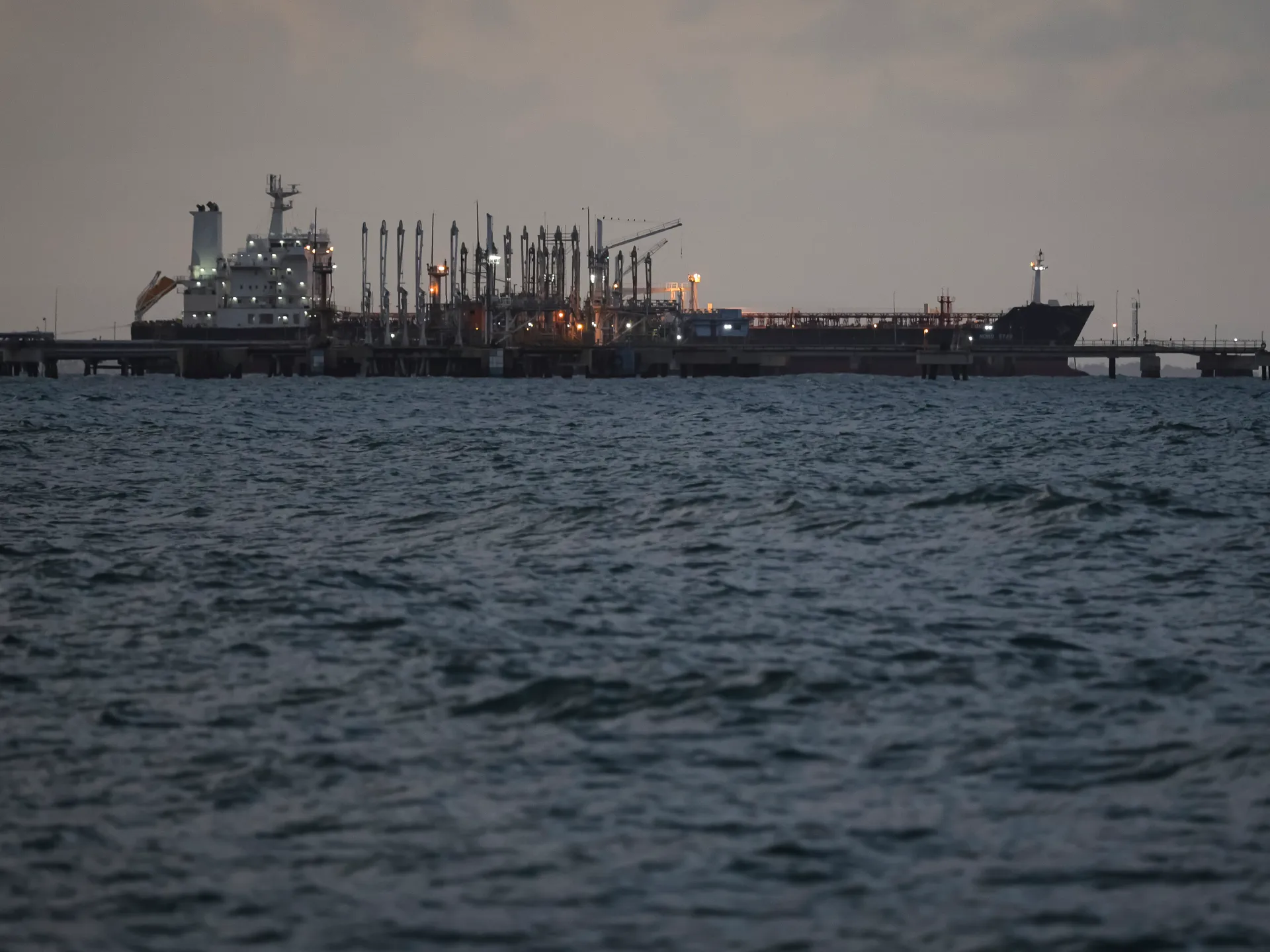
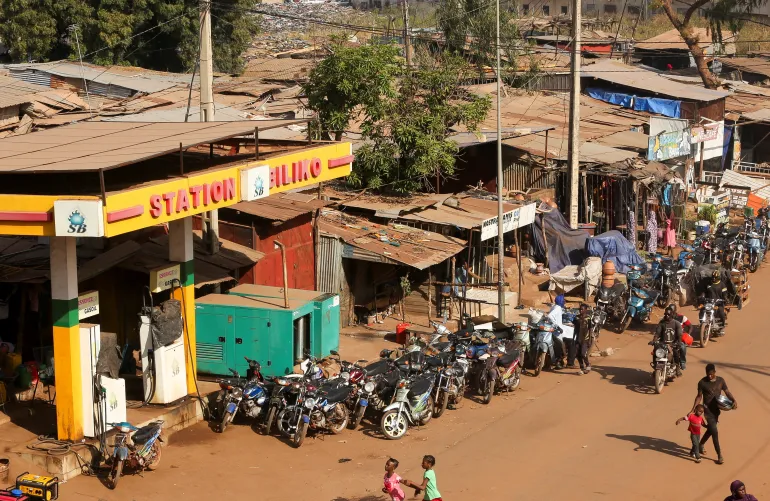


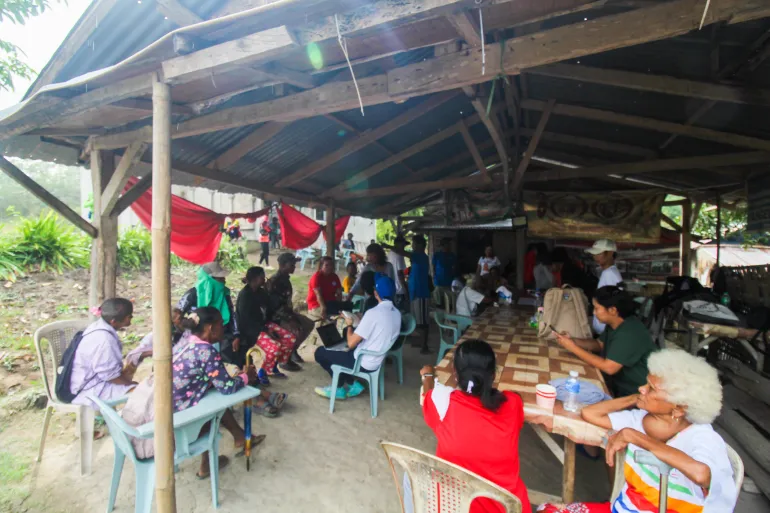


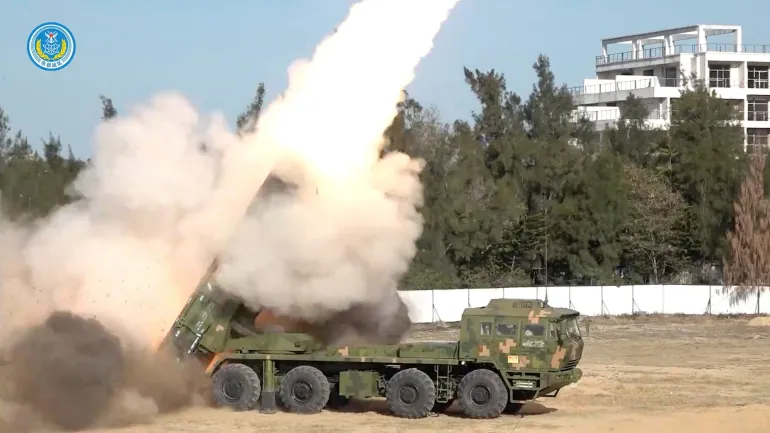


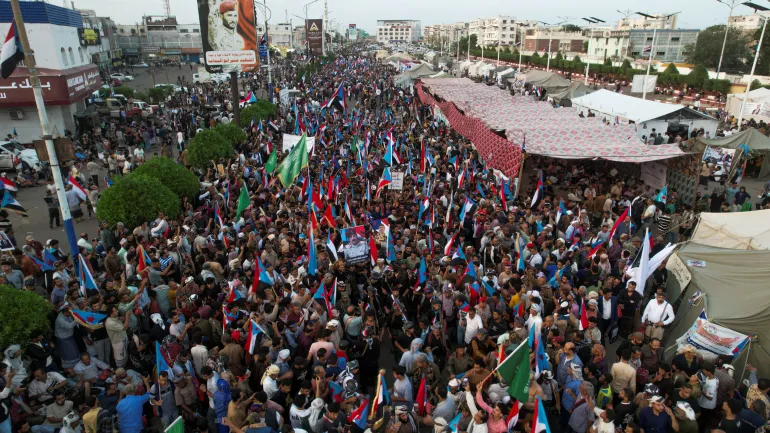

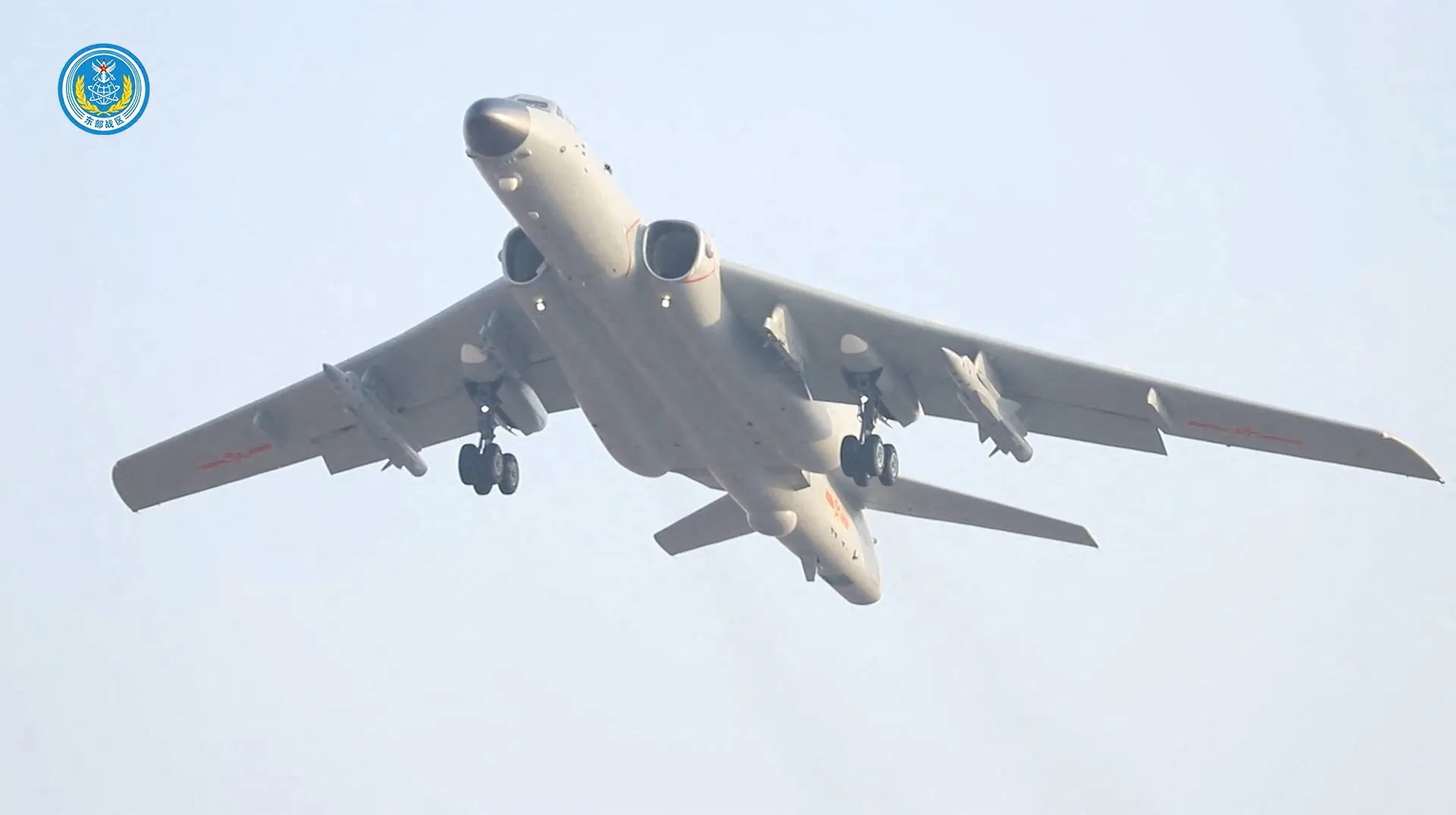
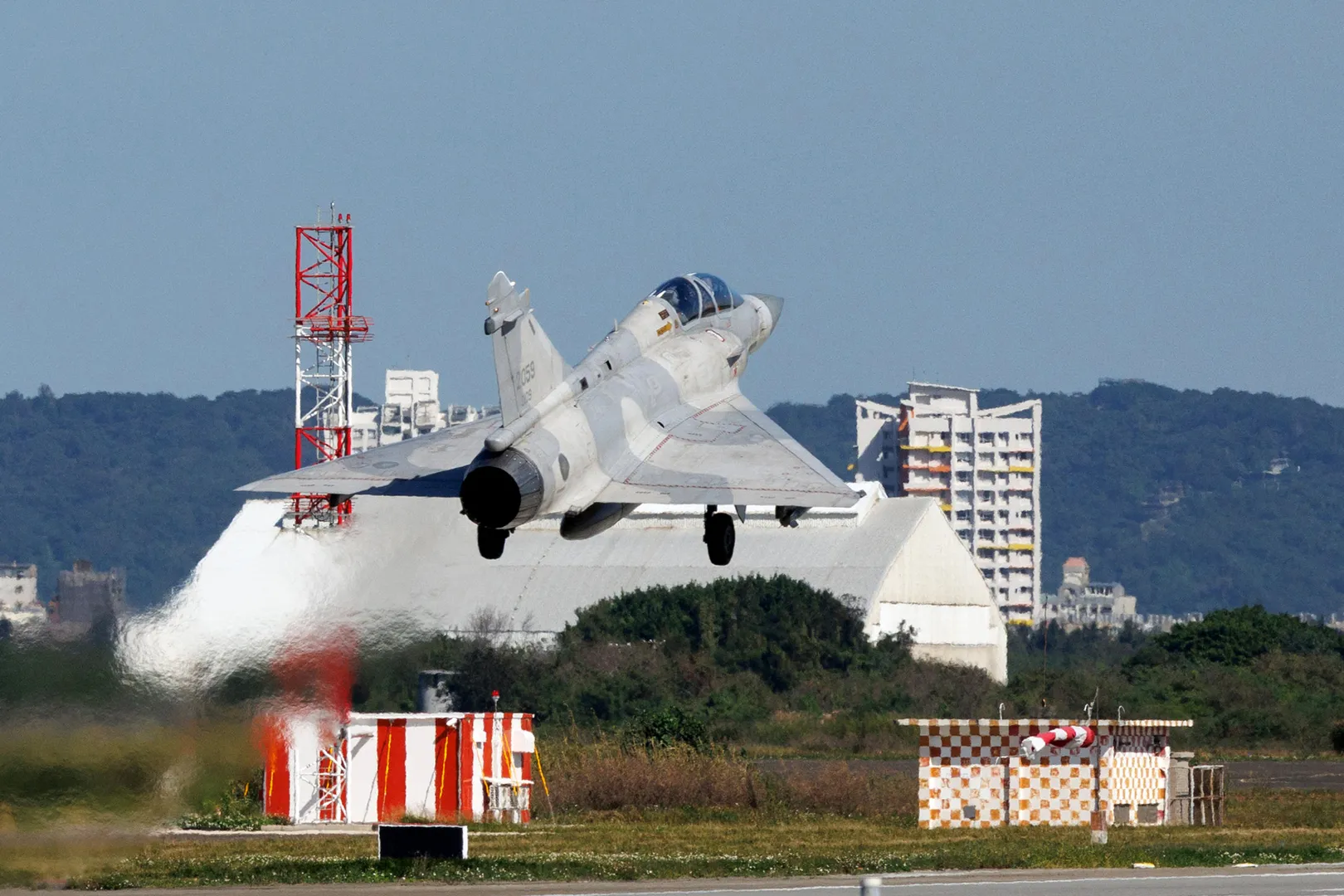
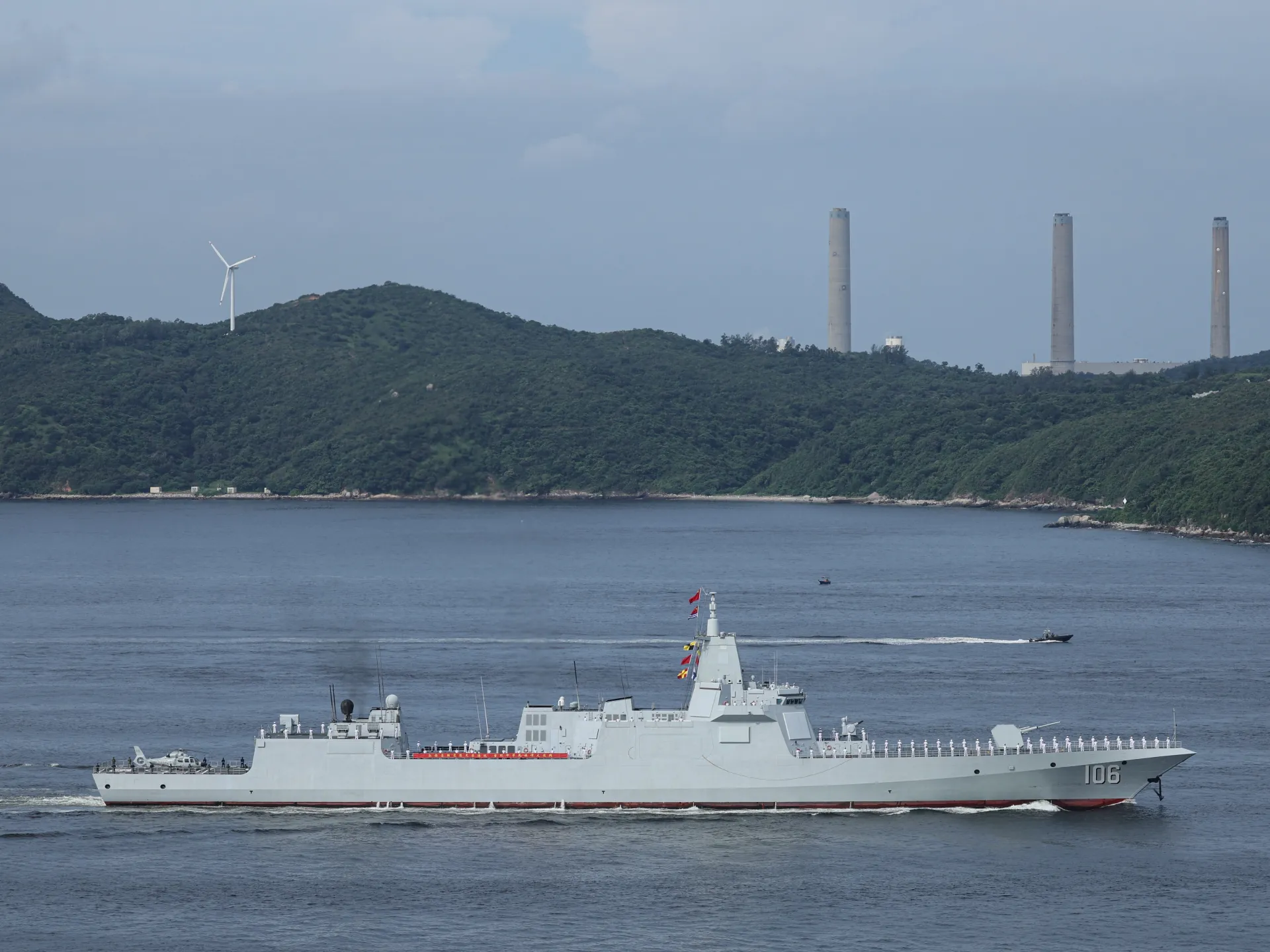
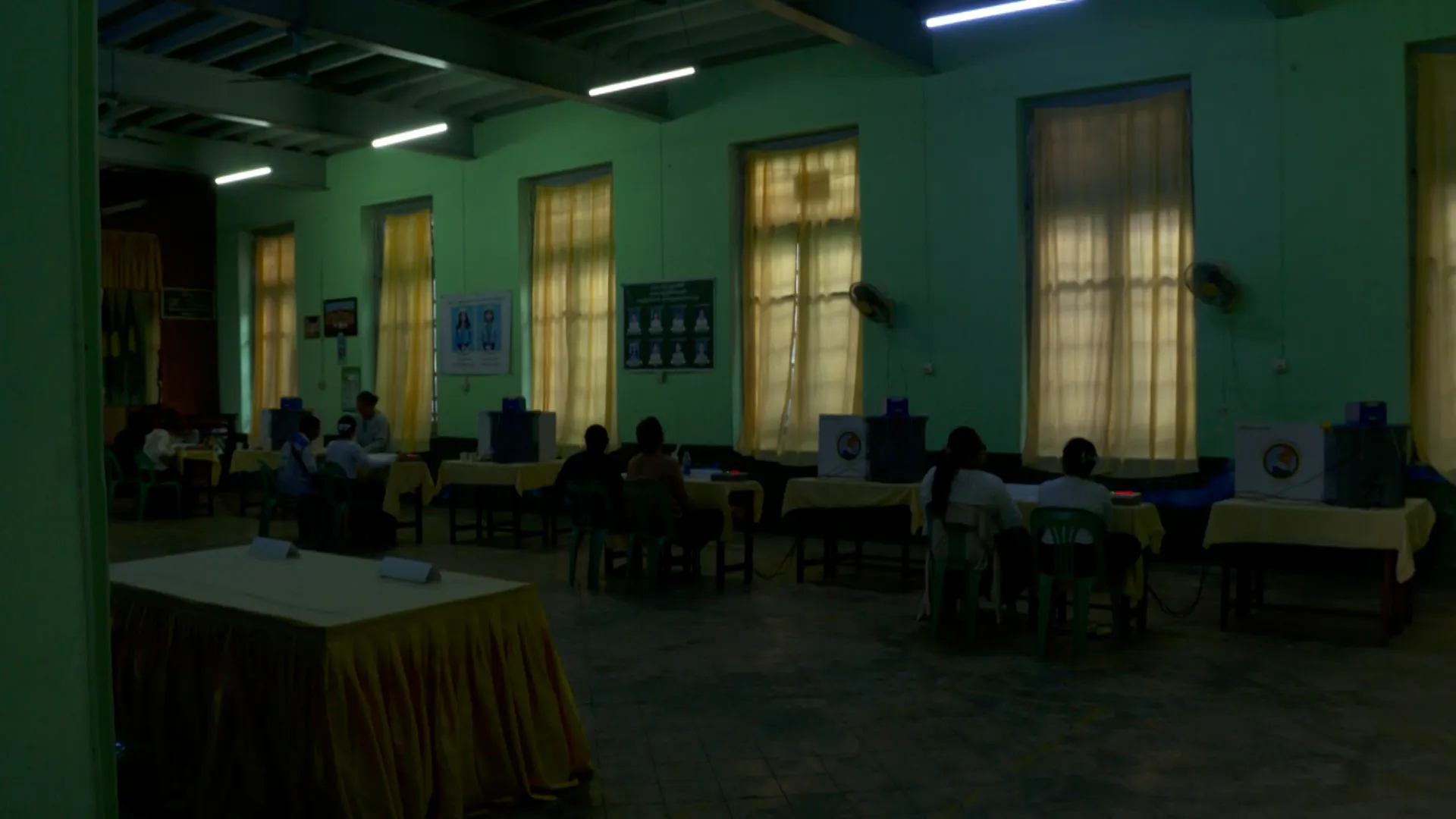
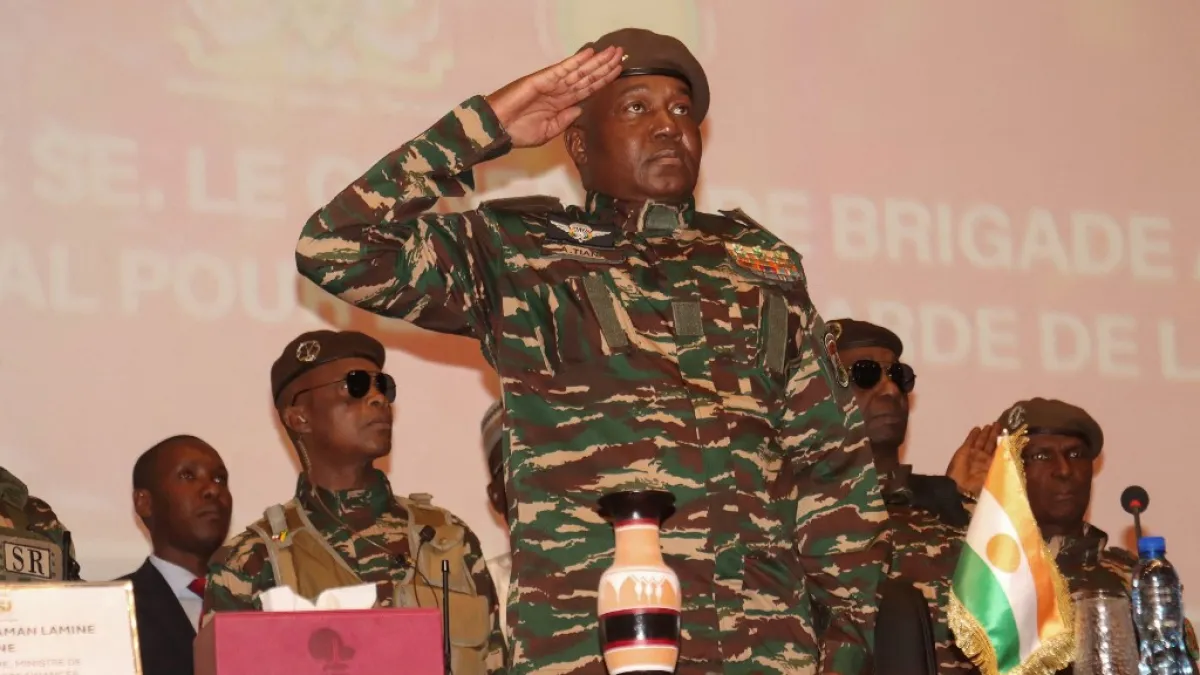
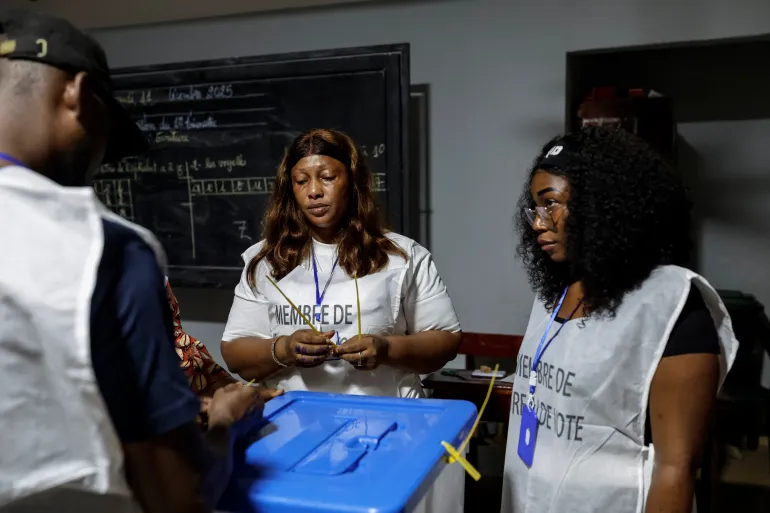

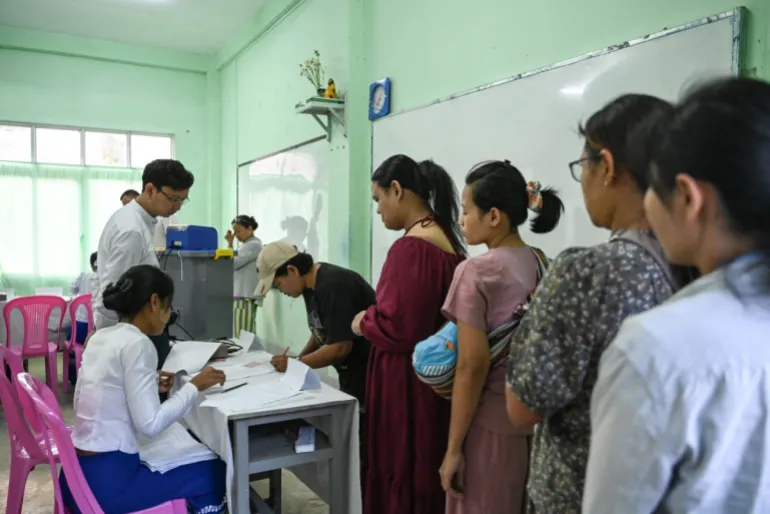


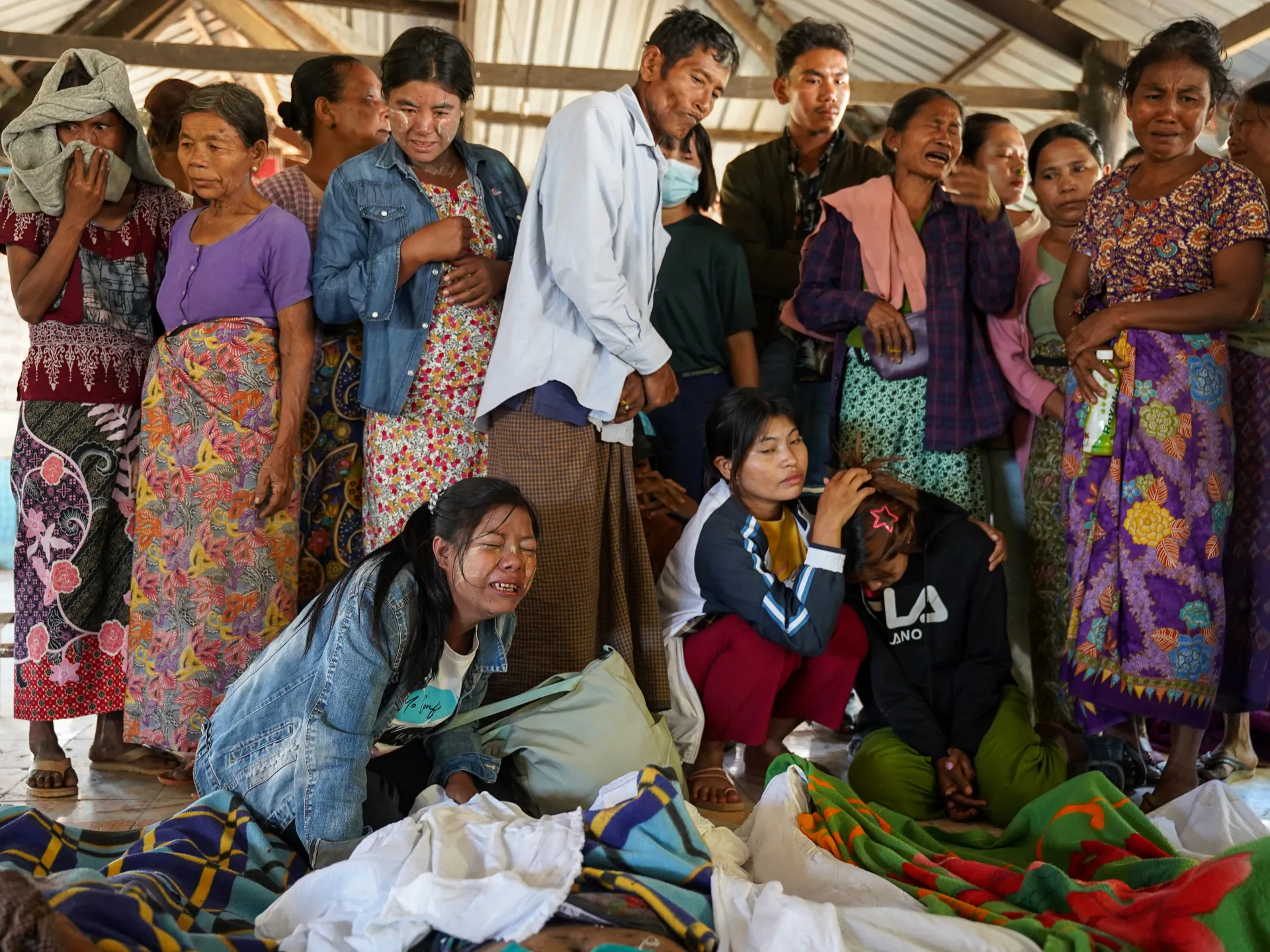
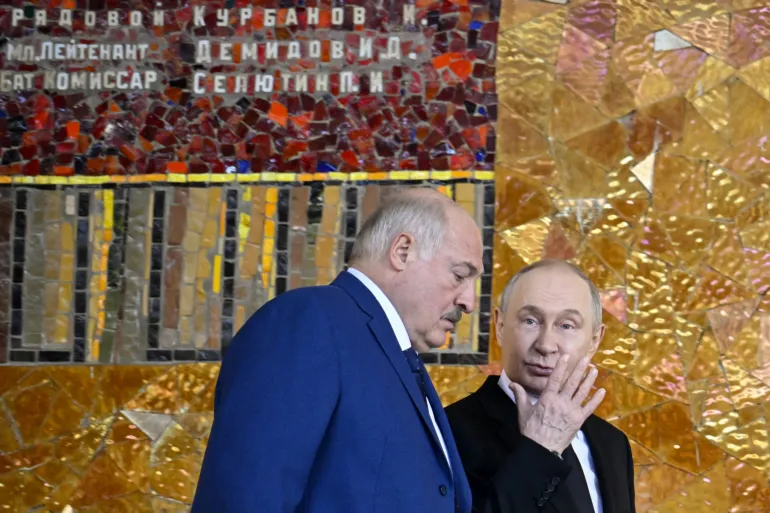



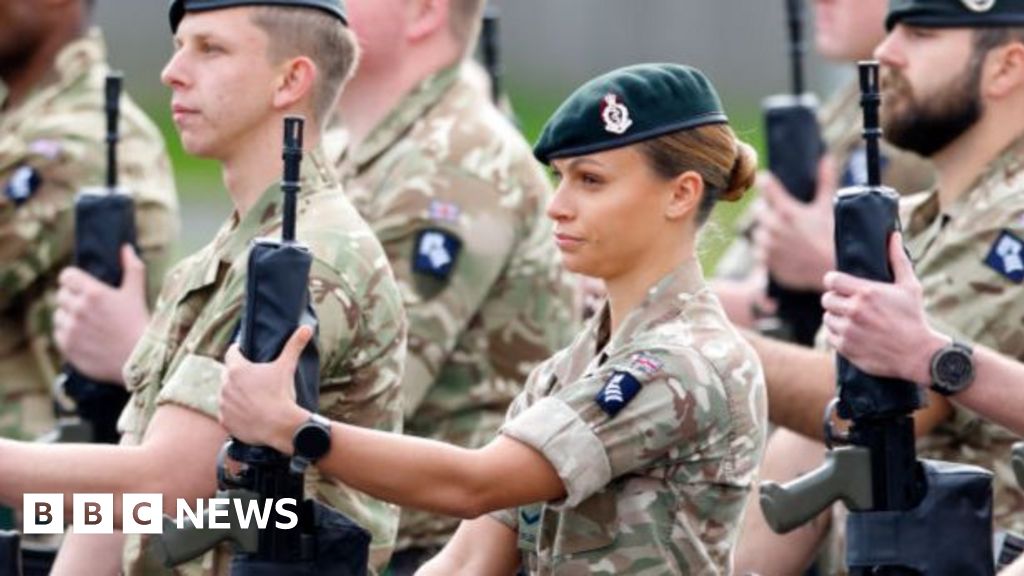


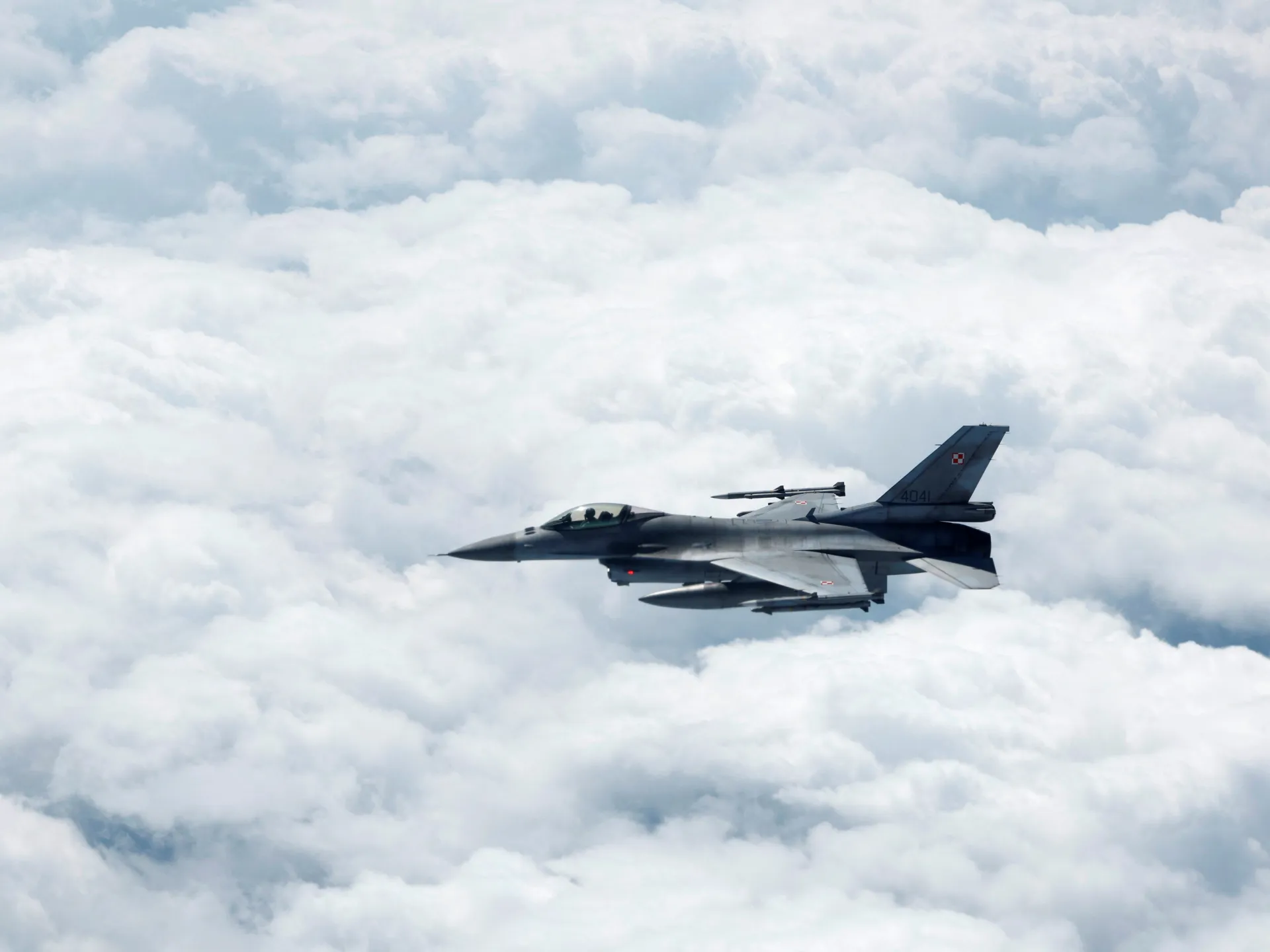

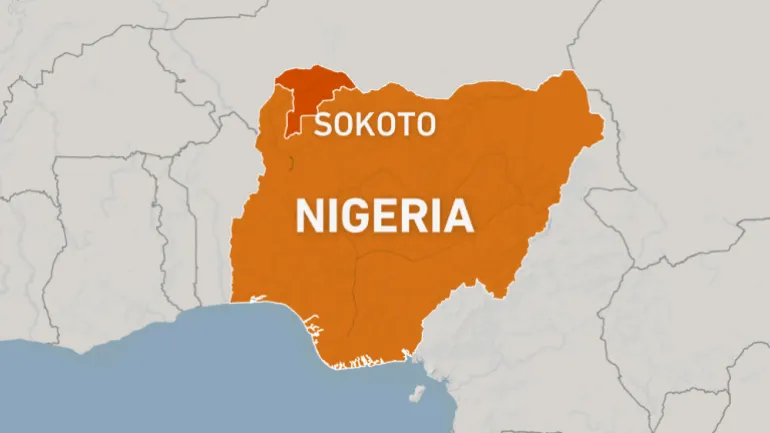
![[Al Jazeera]](https://i0.wp.com/occasionaldigest.com/wp-content/uploads/2025/12/WEB-MAP-NIGERIA-SOKOTO-1000X562-1766711326.jpg?w=640&ssl=1)