Middle East

US Senate passes $901bn defence bill | Military News

Legislation reflects Democrats’ efforts to seek tighter oversight of Trump administration’s military action.

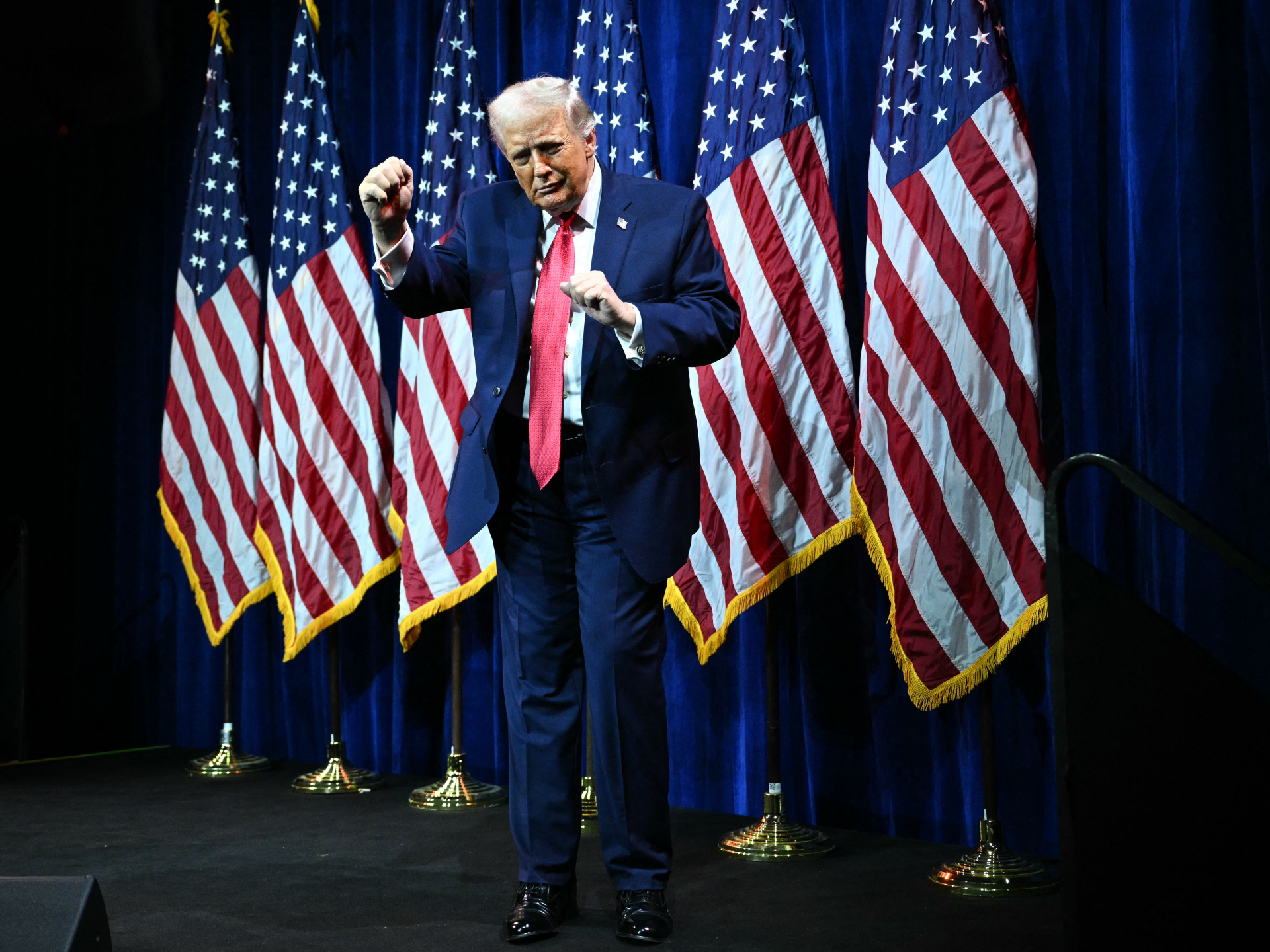
The United States Senate has passed a $901bn bill setting defence policy and spending for the 2026 fiscal year, combining priorities backed by President Donald Trump’s administration with provisions designed to preserve congressional oversight of US military power.

The National Defense Authorisation Act (NDAA) was approved in a 77-20 vote on Wednesday with senators adopting legislation passed by the House of Representatives last month. It now goes to Trump for his signature.

Recommended Stories

list of 4 itemsend of list

Several provisions in the bill reflect efforts by Democratic lawmakers, supported by some Republicans, to constrain how quickly the Trump administration may scale back US military commitments in Europe.

The bill requires the Pentagon to maintain at least 76,000 US soldiers in Europe unless NATO allies are consulted and the administration determines that a reduction would be in the US national interest. The US typically stations 80,000 to 100,000 soldiers across the continent. A similar measure prevents reductions in US troop levels in South Korea below 28,500 soldiers.

Congress also reinforced its backing for Ukraine, authorising $800m under the Ukraine Security Assistance Initiative with $400m allocated for each of the next two years. A further $400m per year was approved to manufacture weapons for Ukraine, signalling continued congressional support for Kyiv and cementing Washington’s commitment to Europe’s defence.

Asia Pacific focus, congressional oversight

The bill also reflects priorities aligned with the Trump administration’s national security strategy, which places the Asia Pacific at the centre of US foreign policy and describes the region as a key economic and geopolitical battleground.

In line with that approach, the NDAA provides $1bn for the Taiwan Security Cooperation Initiative, aimed at strengthening defence cooperation as the US seeks to counter China’s growing military influence.

The legislation authorises $600m in security assistance for Israel, including funding for joint missile defence programmes, such as the Iron Dome, a measure that has long drawn broad bipartisan support in Congress.

The NDAA increases reporting requirements on US military activity, an area in which Democrats in particular have sought greater oversight.

It directs the Department of Defense to provide Congress with additional information on strikes targeting suspected smuggling and trafficking operations in the Caribbean and the eastern Pacific, adding pressure on Defense Secretary Pete Hegseth to provide lawmakers with video footage of US strikes on alleged drug-smuggling boats operating in international waters near Venezuela.

Lawmakers moved to strengthen oversight after a September strike killed two people who had survived an earlier attack on their boat.

Some Democratic lawmakers said they were not briefed in advance on elements of the campaign, prompting calls for clearer reporting requirements.

Sanctions and America First

The legislation repeals the 2003 authorisation for the US invasion of Iraq and the 1991 authorisation for the Gulf War. Supporters from both parties said the repeals reduce the risk of future military action being undertaken without explicit congressional approval.

The bill also permanently lifts US sanctions on Syria imposed during the regime of President Bashar al-Assad after the Trump administration’s earlier decision to temporarily ease restrictions. Supporters argue the move will support Syria’s reconstruction after al-Assad’s removal from power a year ago.

Other provisions align more closely with priorities advanced by Trump and Republican lawmakers under the administration’s America First agenda.

The NDAA eliminates diversity, equity and inclusion offices and training programmes within the Department of Defense, including the role of chief diversity officer. The House Armed Services Committee claims the changes would save about $40m.

The bill also cuts $1.6bn from Pentagon programmes related to climate change. While the US military has previously identified climate-related risks as a factor affecting bases and operations, the Trump administration and Republican leaders have said defence spending should prioritise immediate military capabilities.

Source link

Analysis: Yemen’s future after the separatist STC’s expansion eastwards | Conflict News

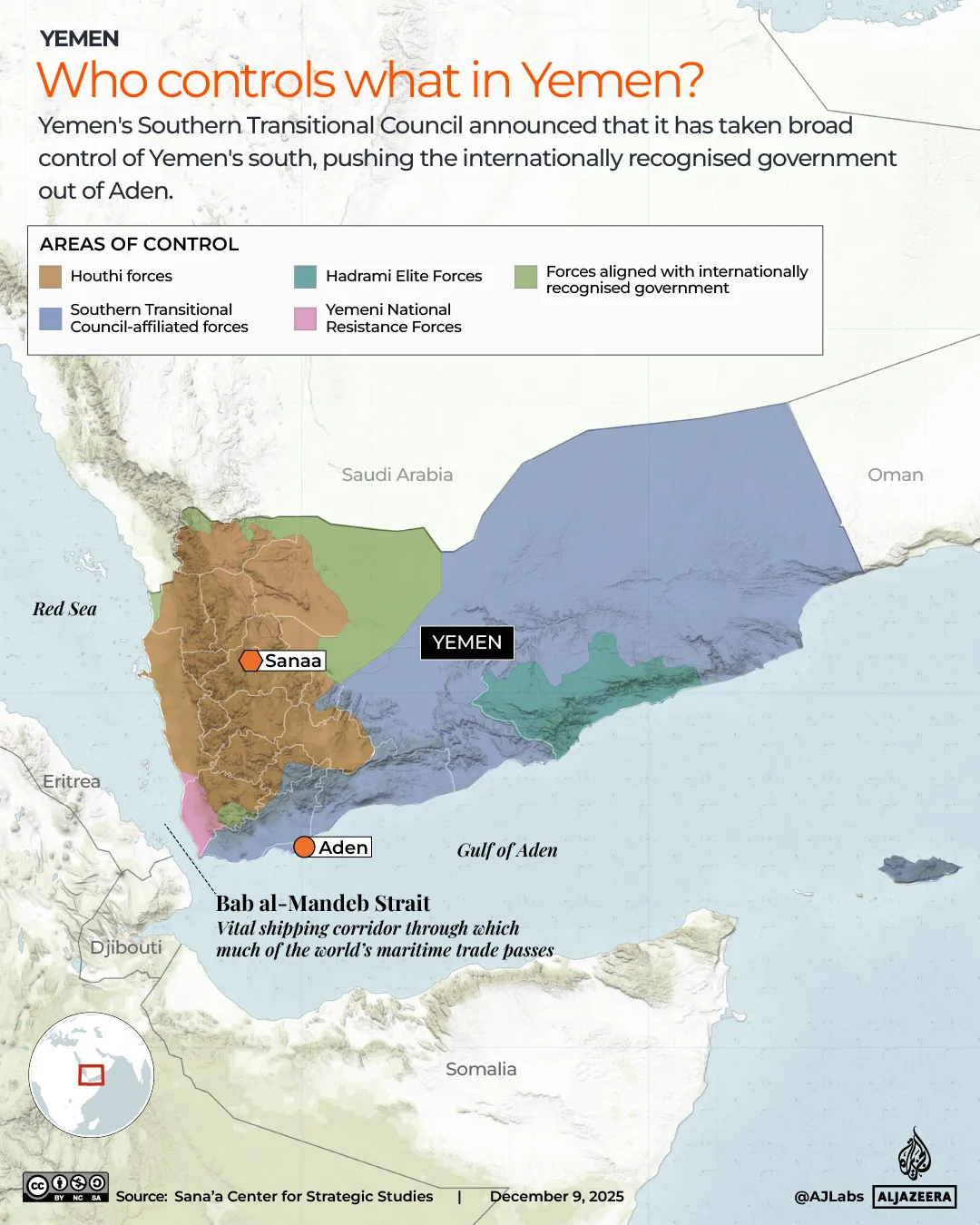
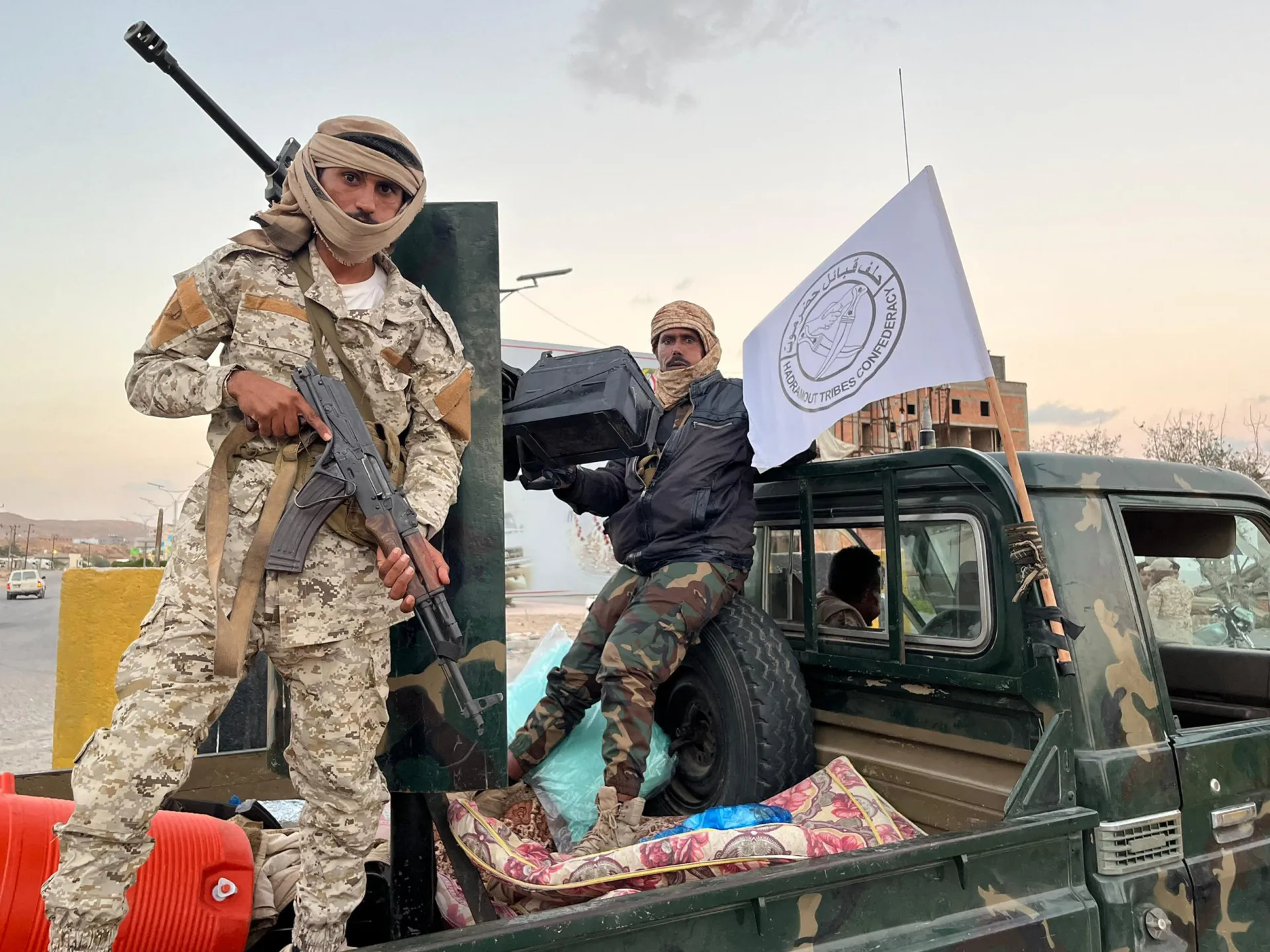
Yemen’s separatist Southern Transitional Council (STC) is trying to create facts on the ground with its recent advances in the country’s eastern governorates of Hadramout and al-Mahra.

Its military push this month highlights that Yemen’s conflict – ongoing for more than a decade – cannot be reduced to one simply between the internationally recognised government and the Houthis. Instead, an overlapping map of influence is evident on the ground with de facto authorities competing over security, resources and representation.

Recommended Stories

list of 3 itemsend of list

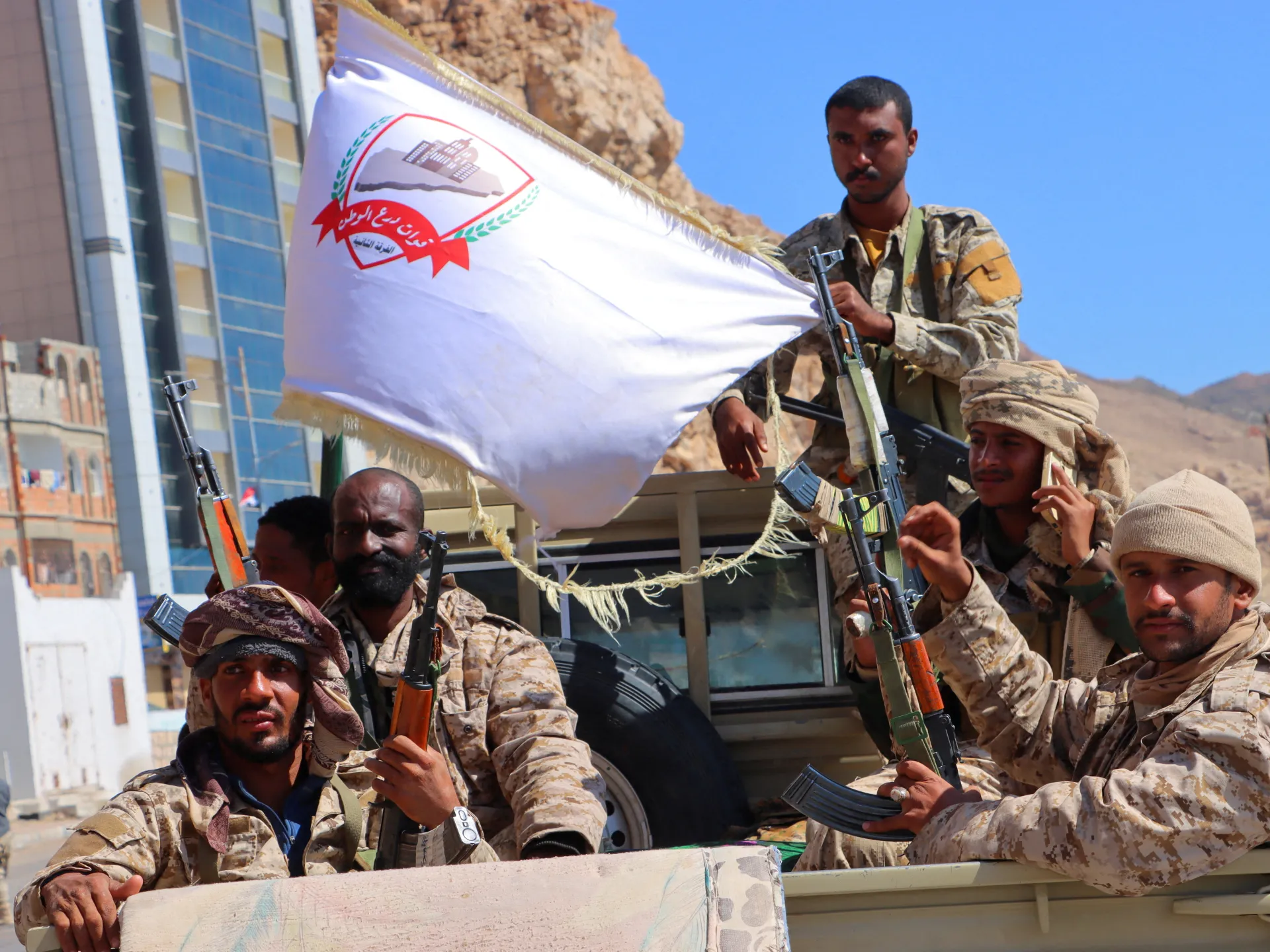
At the heart of these changes is the STC, backed by a regional power, which now stands as the most powerful actor in Yemen’s south and parts of its east at a time when the government’s ability to impose unified administration over the whole country is distant and the economy is suffering.

In this context comes what the Yemeni government has said is the International Monetary Fund’s (IMF’s) decision to suspend activities in the country. While the IMF has not publicly commented on the topic, President Rashad al-Alimi, the head of Yemen’s Presidential Leadership Council, warned on Sunday that the decision was a “wake-up call” and an early signal of the cost of the STC’s security and military escalation in Hadramout and al-Mahra.

Al-Alimi stressed that Yemen’s economic circumstances – the country is the poorest in the region and has suffered immensely during the war – cannot withstand any new tensions. He added that the security instability in eastern Yemen would immediately affect the distribution of salaries, fuel and services and international donor confidence.

The solution, according to al-Alimi, is for the withdrawal of forces who have arrived in Hadramout and al-Mahra from outside the two governorates, calling it a necessary step to contain tensions and restore a path of trust with the international community.

But that economic warning cannot be understood in isolation from the shift in power in eastern Yemen, where competition for influence has become a direct factor in generating tension that leaves donors wary.

A new balance of power

The STC is clear that its goal is ultimately the secession of the territories in Yemen – its south and east – that formerly made up the country of South Yemen before unification in 1990.

It is opposed to the Houthis, who control Yemen’s capital, Sanaa, and much of Yemen’s populous northwest, and the STC’s leader, Aidarous al-Zubaidi, has a seat on the government’s Presidential Leadership Council, officially as one of its vice chairmen.

The STC and government forces have previously fought, most notably in 2018 and 2019, in Aden and its surrounding governorates.

Its current expansion eastwards, focused on government forces and those affiliated with them, is part of that ongoing division in the anti-Houthi camp but one that redraws the balance of power within it, turning resource-rich Hadramout and al-Mahra into a multiparty arena of competition.

There are three concurrent trends that are emerging as a result: the expansion of STC forces with regional support, a desire by local and tribal forces – independent of the STC – to solidify their presence and the clearly limited tools the government has to confront its rivals.

The result is the further fragmentation of the state on three interconnected levels.

Politically, there is fragmentation within the same anti-Houthi camp with multiple decision-making centres. The government and regional actors are finding it more difficult to unify security and administrative policies, and the idea of a single “chain of command” controlling territory under anti-Houthi control has been eroded.

Geographically, new lines of contact have now been formed. Whereas lines of control were previously between the Houthis and government forces, they are now between Houthi and STC forces as well as grey areas contested by local and tribal forces and multiple military groups.

And then there is fragmentation on the representative level with mounting disputes over who actually speaks for the south and Hadramout and the practical decline of the concept of a single state as a sovereign framework for managing resources and institutions.

In Hadramout and al-Mahra, the fragmentation is particularly sensitive as both governorates include important border crossings with Saudi Arabia and Oman and also have a long coastline with routes tied to trade, smuggling and irregular migration.

Any imbalance here does not remain local; it quickly spills over into the region.

Economy hostage to security

The IMF’s suspension of activities carries not only financial implications but also a political reading that the security and institutional environments no longer provide sufficient conditions for sustaining support programmes.

The Yemeni state relies heavily on its own limited resources and fragile external support, so any disruption in resource areas, ports or supply routes translates into immediate pressure on livelihoods.

The latest military developments increase pressure on the exchange rate and the government’s ability to meet its financial obligations and widen the trust gap between society and the state, prompting non-institutional alternatives based on levies and loyalties.

And it will shrink the room for the government to manoeuvre, meaning the government has to take into account the cost of any escalation because any military move increases an economic bill that it cannot pay and drains what remains of the government’s ability to manage services.

Now that the impression has taken root that Yemen has turned into “islands of influence”, some external actors may be inclined to deal directly with de facto local authorities at the expense of the government, weakening the political centre rather than helping it to strengthen.

That is why the latest developments are so important if not existential to the government and al-Alimi. His call for the withdrawal of outside forces from Hadramout and al-Mahra is part of an attempt to stop the deterioration of trust in Yemen and to present the government once again as capable of controlling the other parties in the anti-Houthi camp if reasonable political and economic conditions are provided.

Houthis gain while rivals stay divided

The Houthis, who overthrew the government in Sanaa in a coup in 2014, have benefitted from the developments in Hadramout and al-Mahra even without being directly involved.

Every struggle for influence in areas outside the group’s control gives it clear gains, including the disintegration of the front opposing it and its rivals being preoccupied by internal conflicts rather than by the Houthis themselves.

In the anti-Houthi camp, the notion of a united front recedes every time a military confrontation between its components takes place, and the discussion shifts from confronting the Houthis to disputes over power and resources within the same camp.

The divisions within the anti-Houthi camp and the regional dimension to them also allow the Houthis to reinforce their narrative that their rivals are working within competing foreign agendas, as opposed to the Houthis, who portray themselves as independent actors able to carry out their own decisions.

Moreover, the recent conflict and its consequences ultimately improve the Houthis’ negotiating position now that the other side is even more fragmented and weak. The Houthis will enter any upcoming settlement from a more cohesive organisational and administrative position, raising the ceiling of their conditions.

The Houthis may have their own economic and social tensions, but divisions among their enemies give them extra time to sustain the war economy and their instruments of control over it and over the people they rule.

Rising risks, domestic and regional

The current course of events in Yemen elevates a number of overlapping risks.

Domestically, there is the possibility of front lines turning into actual borders between adjacent entities, the expansion of security vacuums and declining prospects for producing a unifying social contract.

Regionally, there could be an expansion of the areas considered lawless along the borders with Saudi Arabia and Oman, increasing the risks of smuggling and leading to higher costs for managing border security.

Internationally, the growing need for global powers to communicate with multiple parties in Yemen prolongs the crisis and increases the chances that the conflict is internationalised through competition over ports, resources and shipping routes.

However, the picture painted does not mean there will be a decisive victory for any side and instead makes a mosaic of authorities, all needing external sponsorship, more likely. Inevitably, that will weaken the prospect of establishing a stable state.

A way out?

Lowering tensions by making partial deals on redeployments of forces is not enough. Instead, the path forward needs a broader approach based on three interlinked pillars.

First, the national project needs to be redefined by drafting a vision of the state that guarantees fair partnership for all the regions of Yemen within a viable federal framework and redefines the political centre as a guarantor of rights and services.

Second, security must be based on a model of local forces under a national umbrella. In Hadramout and al-Mahra, this should be done by building professional local forces within a clear national and legal framework with practical arrangements for withdrawing outside forces and ensuring that security decision-making in state institutions is uniform.

Third, an economic deal is necessary to restore trust by concluding a transparent agreement on managing resources in the governorates that produce them, the fair distribution of revenues and the linking of international support to an implementable reform plan with a clear commitment to protecting sovereign facilities under central management.

In the absence of these steps, Yemen will continue towards a gradual model of disintegration from the peripheries in which the most cohesive armed entities advance and contested margins expand.

If that continues, the economy will be the first victim of fragmentation, making conditions even more difficult for millions of Yemenis.

And the governance crisis will eventually turn into a prolonged stability crisis, the repercussions of which will be difficult to contain locally and perhaps even regionally.

Saeed Thabit is the Al Jazeera Media Network’s bureau chief for Yemen

Source link

Activists decry state of Tunisia’s democracy, 15 years after Arab Spring | Arab Spring

NewsFeed

The Arab Spring began in Tunisia 15 years ago, after Mohamed Bouazizi set fire to himself triggering unrest which toppled the dictator and sparked hopes for freedom. Relatives of political prisoners say President Kais Saied has pushed the country back into authoritarianism.

Source link

False spring: The end of Tunisia’s revolutionary hopes? | Arab Spring News

Fifteen years ago, a Tunisian fruit seller, Mohamed Bouazizi, despairing at official corruption and police violence, walked to the centre of his hometown of Sidi Bouzid, set himself on fire, and changed the region forever.

Much of the hope triggered by that act lies in ruins. The revolutions that followed in Tunisia, Libya, Egypt and Syria have cost the lives of tens and thousands before, in some cases, giving way to chaos or the return of authoritarianism.

Recommended Stories

list of 4 itemsend of list

Only Tunisia appeared to fulfil the promise of the “Arab Spring”, with voices from around the world championing its democratic success, ignoring economic and political failings through much of its post-revolutionary history that stirred discontent.

Today, many of Tunisia’s post-revolutionary gains have been cast aside in the wake of President Kais Saied’s dramatic power grab in July 2021. Labelled a coup by his opponents, it ushered in a new hardline rule in Tunisia.

Burying the hopes of the revolution

Over the following years, as well as temporarily shuttering parliament – only reopening it in March 2023 – Saied has rewritten the constitution and overseen a relentless crackdown on critics and opponents.

“They essentially came for everyone; judges, civil society members, people from all political backgrounds, especially the ones that were talking about unifying an opposition against the coup regime,” Kaouther Ferjani, whose father, 71-year-old Ennahdha leader Said Ferjani, was arrested in February 2023.

In September, Saied said his measures were a continuation of the revolution triggered by Bouzazzi’s self-immolation. Painting himself a man of the people, he railed against nameless “lobbyists and their supporters” who thwart the people’s ambitions.

However, while many Tunisians have been cowed into silence by Saied’s crackdown, they have also refused to take part in elections, now little more than a procession for the president.

In 2014, during the country’s first post-revolution presidential election, about 61 percent of the country’s voters turned out to vote.

By last year’s election, turnout had halved.

“Kais Saied’s authoritarian rule has definitively buried the hopes and aspirations of the 2011 revolution by systematically crushing fundamental rights and freedoms and putting democratic institutions under his thumb,” Bassam Khawaja, deputy director at Human Rights Watch, told Al Jazeera English.

In the wake of the revolution, many across Tunisia became activists, seeking to involve themselves in forging what felt like a new national identity.

The number of civil society organisations exploded, with thousands forming to lobby against corruption or promote human rights, transitional justice, press freedom and women’s rights.

At the same time, political shows competed for space, debating the direction the country’s new identity would take.

BEIJING, CHINA - MAY 31: Tunisian President Kais Saied attends a signing ceremony with Chinese President Xi Jinping (not pictured) at the Great Hall of the People on May 31, 2024 in Beijing, China. (Photo by Tingshu Wang - Pool/Getty Images)
Tunisian President Saied attends a ceremony with President Xi Jinping in China [ingshu Wang/Getty Images]

“It was an amazing time,” a political analyst who witnessed the revolution and remains in Tunisia said, asking to remain anonymous. “Anybody with anything to say was saying it.

“Almost overnight, we had hundreds of political parties and thousands of civil society organisations. Many of the political parties shifted or merged… but Tunisia retained an active civil society, as well as retaining freedom of speech all the way up to 2022.”

Threatened by Saied’s Decree 54 of 2022, which criminalised any electronic communication deemed by the government as false, criticism of the ruling elite within the media and even on social networks has largely been muzzled.

“Freedom of speech was one of the few lasting benefits of the revolution,” the analyst continued.

“The economy failed to pick up, services didn’t really improve, but we had debate and freedom of speech. Now, with Decree 54, as well as commentators just being arrested for whatever reason, it’s gone.”

In 2025, both Amnesty International and Human Rights Watch slammed Tunisia’s crackdown on activists and nongovernmental organisations (NGOs).

In a statement before the prosecution of six NGO workers and human rights defenders working for the Tunisian Council for Refugees in late November, Amnesty pointed to the 14 Tunisian and international NGOs that had their activities suspended by court order over the previous four months.

Included were the Tunisian Association of Democratic Women, the Tunisian Forum for Social and Economic Rights, the media platform Nawaat and the Tunis branch of the World Organisation against Torture.

‘Plotting against state security’

Dozens of political figures from post-revolution governments have also been arrested, with little concern for party affiliation or ideology.

In April 2023, 84-year-old Rached Ghannouchi, leader of what had been Tunisia’s main political bloc, the Ennahdha Party, was arrested on charges of “plotting against state security”.

According to his daughter, Yusra, after a series of subsequent convictions, Ghannouchi currently faces a further 42 years in jail.

Later the same year, Ghannouchi’s principal critic, Abir Moussi, the leader of the Free Destourian Party, was jailed on a variety of charges.

Critics dismiss the charges, saying the criteria for arrest have been the person’s potential to rally opinion against Saied.

“This is not just the case for my father,” Yusra continued, referring to others, such as the leading post-coup opposition figure Jawhar Ben Mubarak.

“Other politicians, judges, journalists, and ordinary citizens … have been sentenced to very heavy sentences, without any evidence, without any respect for legal procedures, simply because Tunisia has now sadly been taken back to the very same dictatorship against which Tunisians had risen in 2010.”

The head of Tunisia's Islamist movement Ennahdha Rached Ghannouchi greets supporters upon arrival to a police station in Tunis ,on February 21, 2023, in compliance to the summons of an investigating judge. (Photo by FETHI BELAID / AFP)
The head of Tunisia’s Ennahdha, Rached Ghannouchi, greets supporters upon arrival at a police station in Tunis on February 21, 2023, in compliance with the summons of an investigating judge [Fethi Belaid/AFP]

Ghannouchi and Moussi, along with dozens of former elected lawmakers, remain in jail. The political parties that once vied for power in the country’s parliament are largely absent.

In their place, since Saied’s revised 2022 constitution weakened parliament, is a body that is no longer a threat to the president.

“The old parliament was incredibly fractious, and did itself few favours,” said Hatem Nafti, essayist and author of Our Friend Kais Saied, a book criticising Tunisia’s new regime. He was referring to the ammunition provided to its detractors by a chaotic and occasionally violent parliament.

“However, it was democratically elected and blocked legislation that its members felt would harm Tunisia.

“In the new parliament, members feel the need to talk tough and even be rude to ministers,” Nafti continued. “But it’s really just a performance… Nearly all the members are there because they agree with Kais Saied.”

Hopes that the justice system might act as a check on Saied have faltered. The president has continued to remodel the judiciary to a design of his own making, including by sacking 57 judges for not delivering verdicts he wanted in 2022.

By the 2024 elections, that effort appeared complete, with the judicial opposition to his rule that remained, in the shape of the administrative court, rendered subservient to his personally appointed electoral authority, and the most serious rivals for the presidency jailed.

“The judiciary is now almost entirely under the government’s control,“ Nafti continued. “Even under [deposed President Zine El Abidine] Ben Ali you had the CSM [Supreme Judicial Council], which oversaw judges’ appointments, promotions, and disciplinary matters.

“Now that only exists on paper, with the minister of justice able to determine precisely what judges go where and what judgements they’ll deliver.”

Citing what he said is the “shameful silence of the international community that once supported the country’s democratic transition”, Khawaja said: ”Saied has returned Tunisia to authoritarian rule.”

A man holds a flare as protesters rally.
A protest against Saied on fourth years after his power grab. Tunis, July 25, 2025 [Jihed Abidellaoui/Reuters]

Source link

Israel to advance plans for 9,000 houses in occupied East Jerusalem | Israel-Palestine conflict News

Israeli authorities are engaged in multiple major efforts, including building settlements and pursuing annexation, to ensure there will be no Palestinian state in the future.

Israeli authorities are expected to advance plans to build 9,000 new housing units in an illegal settlement on the site of the abandoned Qalandiya airport in occupied East Jerusalem, in another attempt to cut off Palestinian lands from each other and block any possibility of a contiguous Palestinian state ever emerging.

The so-called Atarot neighbourhood in northern East Jerusalem, reminiscent of the E1 plan to undermine Palestinian statehood, is to be discussed and have its outlines approved on Wednesday by the District Planning and Building Committee, according to Israeli group Peace Now.

Recommended Stories

list of 3 itemsend of list

The advocacy group said the new settlement is envisioned to be built within a densely populated Palestinian urban area, stretching from Ramallah in the occupied West Bank and Kafr Aqab in the north through the Qalandiya refugee camp, ar-Ram, Beit Hanina and Bir Nabala.

It would build an Israeli enclave in an area where hundreds of thousands of Palestinians live in close proximity, with the aim of blocking development in a key area and further damaging the likelihood of a sovereign Palestinian state being established.

“This is a destructive plan that, if implemented, would prevent any possibility of connecting East Jerusalem with the surrounding Palestinian area and would, in practice, prevent the establishment of a Palestinian state alongside Israel,” Peace Now said.

Translation: The massacre government is working to establish a new ultra-Orthodox mega-settlement across the Green Line north of Jerusalem. The new political attack called ‘Atarot’ is planned to be built in the heart of the Palestinian state that will be established alongside Israel. This involves 9,000 housing units that Israel will have to evacuate. Isn’t it a shame?

The organisation said the far-right government of Prime Minister Benjamin Netanyahu is seizing every moment to bury chances for a future of peace and compromise.

“Especially now, when it is clear to everyone that the ideas of ‘managing the conflict’ and ‘decisive victory’ have led to a security disaster for Israel, we must act to resolve the conflict.”

The plan’s advancements date back to early 2020, when Israel’s Housing Ministry sent it to the Jerusalem municipality to prepare it for approval. It completed the bureaucratic preparation process within months, but faced objections from the Environmental Protection and Health ministries, according to Peace Now, which said the administration of United States President Barack Obama had also opposed it.

It would need further government consideration and approval before being given legal effect and moving towards tender processes to select construction contractors.

Most of the plan area is designated as “state land” by Israeli authorities, meaning they would not have to seek permission from Palestinian landowners.

Israel has been quickly advancing with several major projects to build illegal settlements on occupied Palestinian territory and pursuing annexation of the occupied West Bank, alongside its genocidal war on Gaza that started in October 2023 and has now killed more than 70,000 people.

The E1 plan, which would see the construction of thousands of illegal Israeli homes in the occupied West Bank, is hailed by Israeli officials despite international condemnation.

Israel’s security cabinet last week signed off on plans to formalise 19 illegal settlements across the West Bank.

Demolitions and widespread arrests

Israeli forces continue to launch raids across the occupied West Bank and support violent settlers in attacking Palestinian lands while issuing permits to demolish Palestinian homes.

Israeli authorities began carrying out demolition operations Wednesday morning in the town of Biddu, located northwest of occupied East Jerusalem, under the pretext that the Palestinian buildings lacked permits.

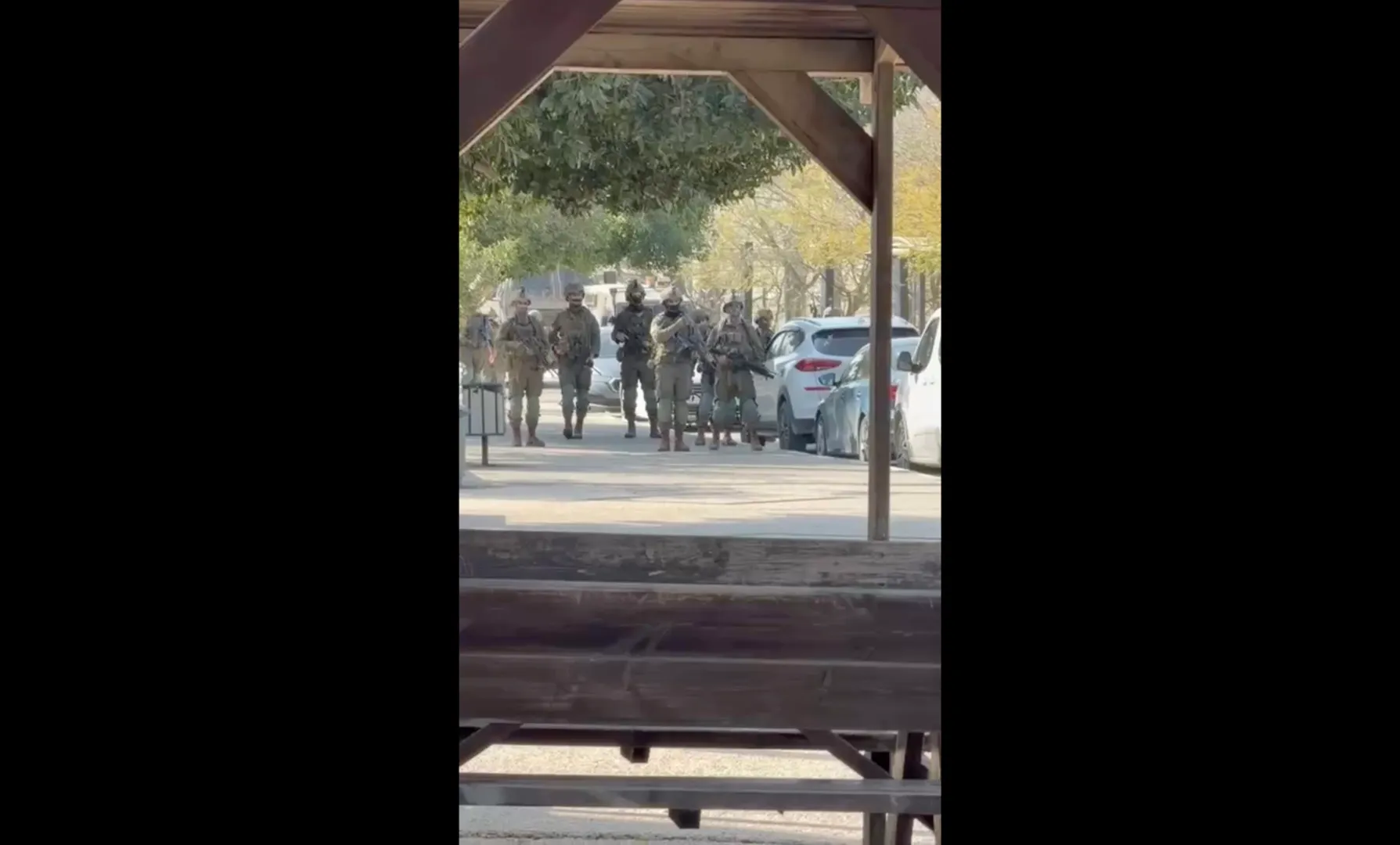
In the central part of the West Bank, settlers, who have been rampaging with impunity often backed by the Israeli military, burned Palestinian vehicles and wrote racist slogans in the village of Ein Yabrud in Ramallah on Wednesday.

Several Palestinians were also arrested during raids across the West Bank, including in Nablus.

Local authorities said the Israeli military plans to demolish 25 residential buildings in the Nur Shams refugee camp this week.

Source link

Canadian MP blocked from West Bank rejects Israel’s ‘safety concern’ claims | Israel-Palestine conflict News

A Canadian lawmaker who was denied entry to the occupied West Bank, alongside fellow politicians and civil society leaders, has dismissed Israel’s claims that the delegation posed a threat to public safety.

Jenny Kwan, a Canadian MP with the left-leaning New Democratic Party (NDP), questioned whether Canada’s recognition of an independent Palestinian state earlier this year contributed to Israel’s decision to block the group.

Recommended Stories

list of 3 itemsend of list

“How is it that members of parliament are a public safety concern?” she said in an interview with Al Jazeera. “How is it that civil society organisations who are doing humanitarian work… [are] a security concern?”

Kwan and five other MPs were among 30 Canadian delegates denied entry to the Israeli-occupied West Bank on Tuesday after Israel deemed them a risk to public safety.

The delegation, organised by nonprofit group The Canadian-Muslim Vote, was turned back to Jordan at the King Hussein (Allenby) Bridge crossing, which connects Jordan with the West Bank and is controlled by Israel on the Palestinian side, after an hours-long security check.

Kwan said another female MP in the group was “manhandled” by Israeli border agents while attempting to keep an eye on a delegate who was being taken for additional interrogation.

“She was shoved – not once, not twice, but multiple times – by border agents there,” Kwan said. “A member of parliament was handled in that way – If you were just an everyday person, what else could have happened?”

The delegates had been expected to meet with Palestinian community members to discuss daily realities in the West Bank, where residents have faced a surge in Israeli military and settler violence.

They were also planning to meet with Jewish families affected by the conflict, said Kwan, who described the three-day trip as a fact-finding mission.

“I reject the notion that that is a public safety concern,” she said of the delegation’s mission.

Lack of information

Global Affairs Canada, the country’s Foreign Ministry, did not respond to Al Jazeera’s questions about the incident.

Canadian Foreign Affairs Minister Anita Anand said on Tuesday afternoon that the ministry was in contact with the delegation and had “expressed Canada’s objections regarding the mistreatment of these Canadians while attempting to cross”.

The Israeli military did not respond to Al Jazeera’s repeated requests for comment.

In a statement to Canada’s public broadcaster CBC News, the Israeli military agency that oversees affairs in the occupied Palestinian territory, COGAT, said the Canadian delegates were turned back because they arrived “without prior coordination”.

COGAT also said the group’s members were “denied for security reasons”.

But the delegates said they had applied for, and received, Israel Electronic Travel Authorization permits before they reached the crossing. Kwan also said the Canadian government informed Israel ahead of time of the delegation’s plans.

“I’m not quite sure exactly what kind of coordination is required,” Kwan told Al Jazeera.

“We followed every step that we’re supposed to follow, so I’m not quite sure exactly what they mean or what they’re referring to.”

Canada-Israel ties

Canada, a longstanding supporter of Israel, faced the ire of Israeli Prime Minister Benjamin Netanyahu after it joined several European allies in recognising an independent Palestinian state in September.

“Israel will not allow you to shove a terror state down our throats,” Netanyahu said in a speech at the United Nations General Assembly in New York City.

The recognition came after months of mass protests in Canada and other Western countries demanding an end to Israel’s genocidal war against Palestinians in Gaza, which has killed more than 70,000 people since October 2023.

Rights advocates also called for action to stem a surge in deadly Israeli violence against Palestinians in the West Bank.

Against that backdrop, members of the Canadian delegation questioned whether their entry refusal was part of an Israeli effort to prevent people from witnessing what is happening on the ground in the Palestinian territory.

“‘What are they trying to hide?’ is the question that comes to mind,” Fawad Kalsi, the CEO of the relief group Penny Appeal Canada and one of the delegates, told Al Jazeera on Tuesday.

Kwan, the Canadian MP, raised a similar question, saying, “If people cannot witness” what is happening on the ground in the West Bank, “then misinformation and disinformation will continue”.

She added that she also saw foreign doctors being turned back to Jordan at the King Hussein (Allenby) Bridge crossing as they tried to bring medicine and baby formula into the West Bank.

“If we as members of parliament could face denial of entry,” she said, “imagine what is going on on the ground with other people, and the difficulties that they face, that we do not know about.”

Source link

Palestinian infant freezes to death in Gaza as Israel keeps blocking aid | Child Rights News

Winter cold ‘becomes lethal’ as Israel restricts entry of tents, blankets and other shelter supplies to ravaged enclave.

A Palestinian infant has frozen to death in the Gaza Strip, local authorities say, as Israel continues to restrict the entry of shelter supplies and other humanitarian aid to the enclave despite the harsh winter conditions there.

The Palestinian Ministry of Health in Gaza said on Tuesday that the two-week-old baby, Mohammed Khalil Abu al-Khair, died a day earlier after seeking treatment for severe hypothermia, brought on by the extreme cold gripping Gaza.

Recommended Stories

list of 3 itemsend of list

Reporting from Gaza City, Al Jazeera’s Tareq Abu Azzoum noted that the child’s death comes as basic protections in Gaza have been “systematically dismantled” due to Israel’s genocidal war against Palestinians in the territory.

“Families are living in tents on wet ground without heating, electricity or sufficient clothing,” Abu Azzoum said. “When food, fuel, shelter and aid are banned, cold absolutely becomes lethal.”

Israel’s two-year war has decimated more than 80 percent of the structures across Gaza, forcing hundreds of thousands of families to take refuge in flimsy tents or overcrowded makeshift shelters.

A huge storm that recently hit the Strip killed at least 11 people as torrential rains and fierce winds flooded tents and caused damaged buildings to collapse.

“We try to dry the children’s clothes over the fire,” Umm Mohammed Assaliya, a displaced Palestinian mother, told Al Jazeera from Gaza City.

“There are no spare clothes for them. I am exhausted. The tent we were given cannot withstand winter conditions. We need blankets,” she said.

Humanitarian groups have urged Israel to allow unimpeded deliveries of aid to Gaza.

But the United Nations agency for Palestinian refugees, UNRWA, which the UN says is best suited to distribute supplies in the territory, says the Israeli government has blocked it from bringing aid directly into Gaza.

“People have reportedly died due to the collapse of damaged buildings where families were sheltering. Children have reportedly died from exposure to the cold,” UNRWA said in a social media post on Tuesday.

“This must stop. Aid must be allowed in at scale, now.”

Hamas slams Israeli ceasefire violations

Meanwhile, Hamas has condemned Israel for its repeated violations of a ceasefire deal that came into effect in October.

At least 393 Palestinians have been killed and 1,074 others wounded in Israeli attacks on Gaza since the first full day of the ceasefire on October 11, according to the latest figures from the enclave’s Health Ministry.

The Israeli military also killed a senior Hamas leader, Raed Saad, in a targeted attack on a vehicle in western Gaza City on Saturday, further straining the tenuous truce.

On Tuesday, Hamas leader Ghazi Hamad accused Israel of “manipulating” the text of the US-brokered agreement.

“We want to make it absolutely clear: the ceasefire agreement is straightforward, detailed, and unambiguous. However, it’s evident that the Israeli occupation has distorted the text, manipulating and violating every single article,” Hamad said.

“Since day one, Hamas has fully abided by the agreement and honoured its commitments. In contrast, Israel has deliberately committed several systematic and preplanned breaches.”

Source link

Iran’s foreign minister says strikes won’t stop nuclear programme | Israel-Iran conflict

Exclusive: Iran’s foreign minister sits down with Fault Lines to discuss the nuclear standoff and diplomatic deadlock.

In an exclusive, wide-ranging interview recorded in October with Al Jazeera’s Fault Lines documentary programme, Iranian Foreign Minister Abbas Araghchi tells correspondent Hind Hassan that strikes by Israel and the United States in June caused “serious damage” to Iran’s nuclear facilities but insists its nuclear programme will continue.

“Technology cannot be eliminated by bombing,” he says, arguing that Iran’s scientific knowledge remains intact.

As Iran remains locked in a standoff with the US and refuses to renew negotiations while zero uranium enrichment demands remain in place, Araghchi says European snapback sanctions have undermined future cooperation with the United Nations nuclear watchdog, the International Atomic Energy Agency, and Iran would reconsider how it cooperates in the future.

Despite emphasising that “diplomacy is our priority,” the foreign minister insists that Iran is prepared to fight back if it is attacked again. Araghchi maintains that while Tehran has “never trusted the United States as an honest negotiating partner”, Iran remains prepared to engage diplomatically if both sides respect each other’s rights and pursue mutual interests based on equality.

Source link

How Israel’s expansion push deepens Palestinian suffering in West Bank | Israel-Palestine conflict News

A new wave of Israeli policies is changing the reality and boundaries on the ground in the occupied West Bank.

The Israeli government has approved the formalisation of 19 so-called settlement outposts as independent settlements in the occupied West Bank. This is the third wave of such formalisations this year by the government, which considers settlement expansion and annexation a top priority. During an earlier ceremony of formalisation, Finance Minister Bezalel Smotrich said, “We are advancing de facto sovereignty on the ground to prevent any possibility of establishing an Arab state in [the West Bank].”

Settlement outposts, which are illegal under international law, are set up by a small group of settlers without prior government authorisation. This does not mean that the settlers, who are often more ideological and violent, do not enjoy government protection. Israeli human rights organisations say that settlers in these so-called outposts enjoy protection, electricity and other services from the Israeli army. The formalisation opens the door to additional government funds, infrastructure and expansion.

Many of the settlement outposts formalised in this latest decision are concentrated in the northeastern part of the West Bank, an area that traditionally has had very little settlement activity. They also include the formalisation of two outposts evacuated in 2005 by the government of Israeli then-Prime Minister Ariel Sharon.

While these government decisions may seem bureaucratic, they are in fact strategic in nature. They support the more ideological and often more violent settlers entrenching their presence and taking over yet more Palestinian land, and becoming more brazen in their attacks against Palestinians, which are unprecedented in scope and effect.

The Israeli human rights organisation B’Tselem estimates that settler attacks against Palestinians have forcibly displaced 44 communities across the West Bank in the past two years. These arson attacks, vandalism, physical assault and deadly shootings are done under the protection of Israeli soldiers. During these settler attacks, 34 Palestinians were killed, including three children. None of the perpetrators has been brought to justice. In fact, policing of these groups has dropped under the direction of Israel’s national security minister, Itamar Ben-Gvir, who is a settler himself.

United Nations Secretary-General Antonio Guterres recently sounded the alarm about Israel’s record-breaking expansion of illegal settlements in the West Bank and the unprecedented levels of state-backed settler violence. In a briefing to the UN Security Council, Guterres reminded states that all settlements are illegal under international law. He also warned that they erode Palestinian rights recognised under this law, including to a state of their own.

In September, United States President Donald Trump said he “will not allow” Israel to annex the West Bank, without offering details of what actions he would take to prevent such a move.

But Israel is undeterred. The government continues to pursue its agenda of land grab, territorial expansion and annexation by a myriad of measures that fragment, dispossess and isolate Palestinians in the West Bank, including East Jerusalem, and continues its genocidal violence in Gaza.

More than 32,000 Palestinians have been forcibly displaced from their homes in three refugee camps in the occupied West Bank for nearly a year. The Israeli army continues to occupy Nur Shams, Tulkarem and Jenin refugee camps and ban residents from returning. Meanwhile, Israeli forces have demolished and damaged 1,460 buildings in those camps, according to a preliminary UN estimate. This huge, destructive campaign has changed the geography of the camps and plunged more families into economic and social despair.

This is the state hundreds of thousands of Palestinians across the West Bank find themselves in because of Israeli restrictions, home demolitions and land grabs. The Israeli army has set up close to 1,000 gates across the West Bank, turning communities into open-air prisons. This has a direct and devastating effect on the social fabric, economy and vitality of these communities, which live on land that is grabbed from under them to execute the expansion of illegal settlements, roads and so-called buffer zones around them.

According to the UN Conference on Trade and Development, Israeli practices and policies over the past two years have cost the Palestinian people 69 years of development. The organisation recently reported that the Palestinian gross domestic product (GDP) has shrunk to 2010 levels. This is visible most starkly in Gaza, but it is palpable in the West Bank as well.

The results of these policies and this reality are Palestinians leaving their homes and Israel expanding. During the summer, Israeli Prime Minister Benjamin Netanyahu told a local news station he was on a “historic and spiritual mission”, in reference to the vision of the Greater Israel that he said he was “very” attached to.

Source link

Israel to demolish 25 homes in occupied West Bank’s Nur Shams camp | Occupied West Bank News

Rights groups say the demolition order, which will affect 100 Palestinian homes, is an attempt to ‘cage in’ Palestinians.

The Israeli military will demolish 25 residential buildings in the occupied West Bank’s Nur Shams refugee camp this week, according to local authorities.

Abdallah Kamil, the governor of the Tulkarem governorate where Nur Shams is located, told the AFP news agency on Monday that he was informed of the planned demolition by the Israeli Defence Ministry body COGAT.

Recommended Stories

list of 4 itemsend of list

Faisal Salama, the head of the popular committee for the Tulkarem camp, which is near Nur Shams, said the demolition order would affect 100 family homes.

Israel launched Operation Iron Wall in the occupied West Bank in January. It says the campaign is aimed at combating armed groups in refugee camps in the northern West Bank.

Human rights organisations have warned that Israel is using many similar tactics it used in its genocidal war against the Palestinian people in Gaza to seize and control territory across the occupied West Bank.

“This is part of a wider campaign that has persisted for about a year, targeting three refugee camps and demolishing or damaging a total of about 1,500 homes in the past year, and forcibly displacing 32,000 Palestinians,” said Al Jazeera’s Nour Odeh, reporting from the West Bank’s Ramallah.

Palestinians and human rights organisations say such demolitions are an attempt to “cage in” Palestinians and alter the geography in the West Bank, she added.

On Monday, a dozen displaced Nur Shams residents held a demonstration in front of armoured Israeli military vehicles blocking their way back to the camp. They protested against the demolition orders and demanded the right to return to their homes.

The head of the Palestinian National Council, Rouhi Fattouh, said that the Israeli decision is part of “ethnic cleansing and continuous forced displacement”, the Palestinian news agency Wafa reported.

‘Social death’

Omer Bartov, a professor of holocaust and genocide studies at Brown University, told Al Jazeera that Israel was “dehumanising” the Palestinian population in the occupied West Bank.

“[It is creating] a growing situation of social death, which is a term that was used to describe what happened to Jewish populations in Germany in the 1930s. That is, that your population, the Jewish population of Israel, increasingly has no contact with the people on the other side, and it exists as if they don’t exist,” he said.

“It dehumanises the population because you treat it as a population that has to be controlled, and it dehumanises the people doing it because they have to think of that population as being lesser than human.”

Aisha Dama, a camp resident whose four-floor family home, housing about 30 people, is among those to be demolished, told the AFP she felt alone against the military.

“On the day it happened, no one checked on us or asked about us,” she said.

“All my brothers’ houses are to be destroyed, all of them, and my brothers are already on the streets,” said Siham Hamayed, another camp resident.

Nur Shams, along with other refugee camps in the West Bank, was established after the 1948 Nakba, when hundreds of thousands of Palestinians were forcibly displaced from their homes in what is now Israel.

With time, the camps they established inside the West Bank became dense neighbourhoods. Residents pass on their refugee status from one generation to the next.

Source link

How will US respond to the killing of three of its soldiers in Syria? | Syria’s War

Washington has blamed ISIL (ISIS) for the attack and promised retaliation.

Three US soldiers have been killed in an attack in Syria’s central city of Palmyra.

It is the first known deadly attack on US forces since former Syrian President Bashar al-Assad was deposed last year. Washington has accused the ISIL (ISIS) group of carrying out the assault.

The government in Damascus has expanded its ties with Washington and joined a coalition to fight the ISIL group.

But how much of a security challenge is ISIL in Syria?

Will the US now reinforce its military presence? What risks could that pose?

Presenter: Dareen Abughaida

Guests:

Colin Clarke – executive director of The Soufan Center

Dareen Khalifa – senior adviser at the International Crisis Group

Orwa Ajjoub – PhD candidate in global politics, focusing on armed groups in Syria

Source link

Gaza authorities struggle to recover bodies from rubble amid winter storms | Israel-Palestine conflict News

Authorities in Gaza have warned that stormy weather could spur more war-damaged buildings to collapse and heavy rains are making it more difficult to recover bodies still under the rubble.

Authorities sounded the alarm on Monday, three days after two buildings collapsed in Gaza, killing at least 12 people, during winter rains that have also washed away and flooded the tents of displaced Palestinians and led to deaths from exposure.

Recommended Stories

list of 4 itemsend of list

A ceasefire has been in effect since October 10 after two years of Israel’s genocidal war against the Palestinian people in Gaza, but humanitarian agencies said Israel is letting very little aid into the enclave, where nearly the entire population has been displaced.

Al Jazeera’s Tareq Abou Azzoum said despite a shortage of equipment and fuel and the weather conditions in the enclave, Palestinian Civil Defence teams retrieved the bodies of 20 people on Monday.

The bodies were recovered from a multistorey building bombed in December 2023 where about 60 people, including 30 children, were believed to be sheltering.

Gaza Civil Defence spokesman Mahmoud Basal called on the international community to provide mobile homes and caravans for displaced Palestinians rather than tents.

“If people are not protected today, we will witness more victims, more killing of people, children, women, entire families inside these buildings,” he said.

Father mourns children killed in building collapse

Mohammad Nassar and his family were living in a six-storey building that was badly damaged by Israeli strikes earlier in the war and collapsed in heavy rain on Friday.

His family had struggled to find alternative accommodation and had been flooded out while living in a tent during a previous bout of bad weather. Nassar went out to buy some necessities on Friday and returned to a scene of carnage as rescue workers struggled to pull bodies from the rubble.

“I saw my son’s hand sticking out from under the ground. It was the scene that affected me the most. My son under the ground and we are unable to get him out,” Nassar said. His son, 15, died as did a daughter, aged 18.

Exposure warning

The head of the United Nations agency for Palestinian refugees warned on Monday that more aid must be allowed into Gaza without delay to prevent putting more displaced families at serious risk.

“With heavy rain and cold brought in by Storm Byron [late last week], people in the Gaza Strip are freezing to death,” UNRWA Commissioner General Philippe Lazzarini posted on X.

“The waterlogged ruins where they are sheltering are collapsing, causing even more exposure to cold,” he added.

Lazzarini said UNRWA has supplies that have waited for months to enter Gaza that he said would cover the needs of hundreds of thousands of Gaza’s more than two million people.

UN and Palestinian officials said at least 300,000 new tents are urgently needed for the roughly 1.5 million people still displaced. Most existing shelters are worn out or made of thin plastic and cloth sheeting.

Gaza authorities, meanwhile, were still digging to recover about 9,000 bodies they estimated remain buried in rubble from Israeli bombing during the war, but the lack of machinery is slowing down the process, spokesman Ismail al-Thawabta said.

Azzoum reported that Civil Defence teams said they require a surge in heavy machinery to expedite the work.

“They are saying that they are still in need, initially, for 40 excavators and bulldozers in order to achieve some slight progress in the whole process on the ground,” Azzoum said, reporting from Gaza City.

Israel’s continuing ban on the entry of heavy machinery into the Gaza Strip is a violation of the ceasefire, he added.

Earlier on Sunday, Hamas said Israel’s continuing violations of the ceasefire risk jeopardising the agreement and progress towards the next stage of United States President Donald Trump’s plan to end the war.

Since the ceasefire began, Israel has continued to strike Gaza on a daily basis, carrying out nearly 800 attacks and killing nearly 400 people, according to authorities in Gaza, while blocking the free flow of humanitarian aid.

“There is no real sense of safety nor protection for families,” Azzoum said of the ongoing violations.

Source link

Israel demolishes more buildings in military-controlled Gaza: Analysis | Gaza News

Satellite images show ongoing demolitions behind the ‘yellow line’; experts warn actions likely violate Geneva Convention.

Satellite images reviewed by Al Jazeera’s Sanad fact-checking agency show that the Israeli military has continued to demolish buildings in areas of Gaza it has occupied since a ceasefire with Hamas went into effect.

The Palestinian group has decried such demolitions as a violation of the ceasefire deal, which went into force on October 10. Legal experts and United Nations officials have said throughout the war that the destruction of civilian infrastructure could constitute a war crime.

Recommended Stories

list of 3 itemsend of list

The Israeli military did not immediately respond to a request for comment from Al Jazeera, but officials have previously said such actions have been done within the ceasefire’s framework and were in response to active threats.

Israel has remained in control of about 58 percent of Gaza since the ceasefire began, withdrawing behind the so-called “yellow line” that divides coastal Gaza from its border regions.

Satellite images showed the latest demolitions took place between November 5 and December 13, with most concentrated in the Shujayea and the Tuffah neighbourhood in Gaza City.

INTERACTIVE - Gaza map Israel’s withdrawal in Trump’s 20-point plan yellow line map-1760017243

The images also appeared to show demolitions in the southern city of Rafah as well as the apparent destruction of agricultural facilities east of Deir el-Balah in central Gaza.

In an email to Al Jazeera, Adil Haque, a professor of law and armed conflict at Rutgers Law School, explained that under the Fourth Geneva Convention, “any destruction by an Occupying Power of private property is prohibited, except where such destruction is rendered absolutely necessary by military operations”.

“The exception is extremely narrow. The destruction must be absolutely necessary, not merely convenient or advantageous,” Haque said. “And the absolute necessity must arise from military operations, that is, from combat or direct preparations for combat.”

“With a general ceasefire in place, and only a few sporadic exchanges of fire, it is not plausible that such significant destruction of civilian property has been rendered absolutely necessary by military operations,” he added.

Violations continue

The Sanad analysis further found that Israel appears to have created a new advanced military outpost in Tal al-Za’atar in northern Gaza, with new tents and equipment added between November 5 and December 13.

Before its creation, there were 39 active Israeli military points inside the enclave, according to Sanad.

Israeli military operations have devastated Gaza throughout the war, with the UN Relief and Works Agency for Palestine Refugees (UNRWA) reporting last month that 282,000 housing units have been destroyed in the enclave, where about 1.5 million Palestinians remain displaced.

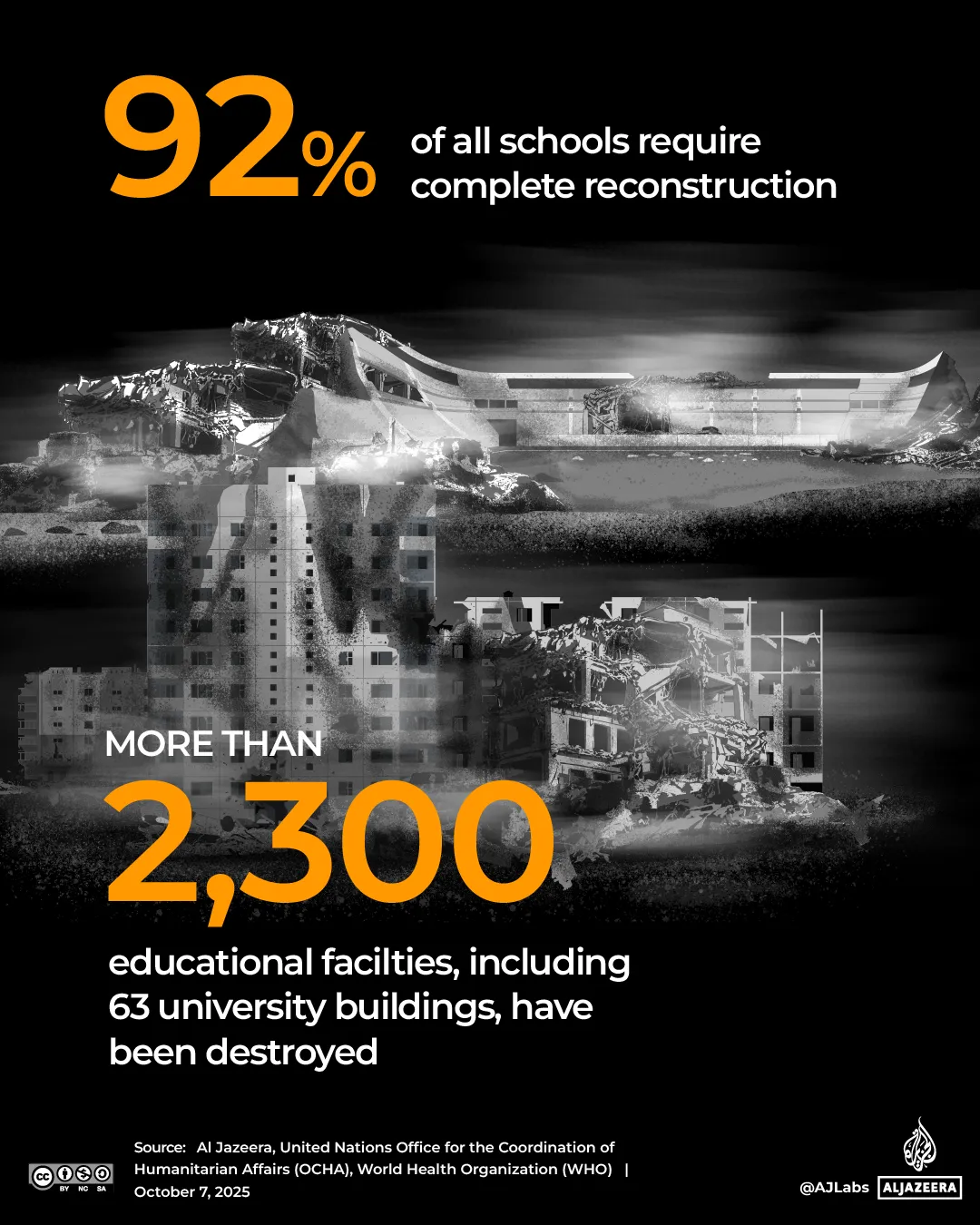
About 93 percent of schools have been destroyed or damaged throughout the war, with 63 percent of hospitals remaining out of commission as of December 9.

A UN Human Rights Council independent commission in September repeatedly cited attacks on civilian infrastructure, particularly medical facilities, in finding that Israel has committed genocide in Gaza.

INTERACTIVE - Where Israeli forces are positioned yellow line gaza map-1761200950

Meanwhile, Gaza’s Health Ministry has said that 391 Palestinians have been killed in Israeli attacks in the enclave since the ceasefire went into effect.

All told, at least 70,663 Palestinians have been killed in Gaza since the Hamas-led attack on southern Israel on October 7, 2023, which killed at least 1,139 people.

Last week, Hamas political bureau member Hossam Badram decried a reported statement by Israeli army chief Eyal Zamir in which the military official described the “yellow line” as the “new borderline” with Gaza.

At the time, Badran said that Hamas viewed Israeli demolitions in the area as a continuation of military operations.

Source link

The real reason Israel wants to open the Rafah crossing | Israel-Palestine conflict

On December 3, Israel announced that the Rafah border crossing with Egypt would reopen “in the coming days”, allowing Palestinians to leave Gaza for the first time in months. The statement was, of course, framed as a humanitarian gesture that would allow those in urgent need to travel for medical care, education or family reunification to leave.

However, Israel’s announcement was met almost immediately with Egypt’s denial, followed by a firm rejection from several Arab and Muslim states.

To the rest of the world, this response may seem cruel. It may seem like Arab states want to forcibly keep in Gaza Palestinians desperate to evacuate to safety. This fits right into the Israeli narrative that neighbouring Arab countries are responsible for Palestinian suffering because they would not “let them in”.

This is a falsehood that has unfortunately made its way into Western media, even though it is easily disproved.

Let us be clear: No, Arab states are not keeping us against our will in Gaza, and neither is Hamas.

They want to make sure that when and if some of us evacuate temporarily, we are able to come back. We want the same – a guarantee of return. Yet, Israel refuses to grant it; it made clear in its December 3 announcement that the Rafah crossing would be open only one way – for Palestinians to leave.

So this was clearly a move meant to jump-start forced displacement of the Palestinian population from their homeland.

For Palestinians, this is not a new reality but part of a long and deliberate pattern. Since its inception, the Israeli state has focused on the dispossession, erasure, and forced displacement of the Palestinians. In 1948, 750,000 Palestinians were expelled from their homes and were not allowed to return. My 88-year-old grandfather was among them. He still keeps the Tabu (land registry document) for the dunams of land he owns in his village of Barqa, 37km (23 miles) north of Gaza, where we are still not allowed to return.

In 1967, when Israel occupied Gaza, it forbade Palestinians who were studying or working abroad from returning to their homes. In the occupied West Bank, where colonisation has not stopped for the past 58 years, Palestinians are regularly expelled from their homes and lands.

In the past two years alone, Israel has seized approximately 55,000 dunams of Palestinian land, displacing more than 2,800 Palestinians. In Jerusalem, Palestinians whose families had lived in the holy city for centuries risk losing their residency there if they cannot prove it is their “centre of life”. In the past 25 years, more than 10,000 Palestinian residencies have been revoked.

Since October 2023, Israel has repeatedly attempted to engineer forced mass displacement in Gaza – dividing the Strip into isolated zones separated by military corridors and “safe” axes and launching successive operations to push residents of the north towards the south. Each wave of mass bombing carried the same underlying objective: to uproot the people of Gaza from their homes and push them towards the border with Egypt. The most recent push occurred just before the latest ceasefire took effect.

According to Diaa Rashwan, chairman of the Egyptian State Information Service, Cairo rejected Israel’s proposal because it was an attempt to shun its commitments outlined in the second phase of the ceasefire. That phase requires Israel to withdraw from Gaza, support the reconstruction process, allow the Strip to be administered by a Palestinian committee, and facilitate the deployment of a security force to stabilise the situation. By announcing Rafah’s reopening, Israel sought to bypass these obligations and redirect the political conversation towards depopulation rather than reconstruction and recovery.

That Israel wants to create the conditions to make our expulsion inevitable is clear from other policies as well. It continues to bombard the Strip, killing hundreds of civilians and terrorising hundreds of thousands.

It continues to prevent adequate amounts of food and medicines from getting in. It is allowing no reconstruction materials or temporary housing. It is doing everything to maximise the suffering of the Palestinian people.

This reality is made even more brutal by the harsh winter. Cold winds tear through overcrowded camps filled with exhausted people who have endured every form of trauma imaginable. Yet despite hunger, exhaustion, and despair, we continue to cling to our land and reject any Israeli efforts to displace and erase us.

We also reject any form of external guardianship or control over our fate. We demand full Palestinian sovereignty over our land, our resources, and our crossings. Our position is clear: the Rafah crossing must be opened in both directions; not as a tool of displacement, but as a right to free movement.

Rafah must be accessible for those who wish to return, and for those who need to leave temporarily: students seeking to continue their education abroad, patients in urgent need of medical treatment unavailable in Gaza, and families who have been separated and long to be reunited. Thousands of critically ill Palestinians have been denied life-saving care due to the siege, while hundreds of students holding offers and scholarships from prestigious universities around the world have been unable to travel to pursue their education.

Rafah should also be open to those who simply need rest after years of trauma – to step outside Gaza briefly and return with dignity. Mobility is not a privilege; it is a basic human right.

What we demand is simple: the right to determine our future, without coercion, without bargaining over our existence, and without being pushed into forced displacement disguised as a humanitarian project.

The views expressed in this article are the author’s own and do not necessarily reflect Al Jazeera’s editorial stance.

Source link

Africa Cup of Nations 2025: Full match schedule, teams, groups and format | Football News

  • The Africa Cup of Nations, commonly known as AFCON, will be held in Morocco this year and kicks off in the capital, Rabat, on Sunday.
  • Host nation Morocco take on Comoros in the opening match of the four week tournament.
  • The final will be held on January 18 at the 69,500-capacity Prince Moulay Abdellah Stadium in Rabat.
  • Nine venues across six cities have been selected for the continental showpiece event.
  • The 24 participating teams have been drawn into six groups, with 68 matches in total.
  • The group stage will run until December 31, with the knockout stage starting on January 3.

Here are the details on the teams, groups, format, match fixtures, kickoff times and venues for AFCON 2025:

Teams and groups

Group A: Morocco, Mali, Zambia, Comoros
Group B: Egypt, South Africa, Angola, Zimbabwe
Group C: Nigeria, Tunisia, Uganda, Tanzania
Group D: Senegal, DR Congo, Benin, Botswana
Group E: Algeria, Burkina Faso, Equatorial Guinea, Sudan
Group F: Ivory Coast, Cameroon, Gabon, Mozambique

Recommended Stories

list of 4 itemsend of list

Format

The top two teams of each group, along with the best four third-placed teams, will advance to the knockout stage, beginning with the round of 16. That is followed by the quarterfinals, semifinals and the final. There is also a third-place playoff between the two losing semifinalists.

In the knockout stages, if a match is level at the end of normal playing time, teams will play 30 minutes of extra time and, if required, a penalty shootout.

Egypt's national team soccer players pose for a group picture before their match with Sierra Leone in the World Cup 2026 qualifying soccer match at Cairo International Stadium, Egypt, Tuesday, March 25, 2025. (AP Photo/Amr Nabil)
Egypt are the most successful team in Africa with a record seven AFCON titles, though they last won the trophy in 2010 [File: Amr Nabil/AP]

Match schedule

⚽ Group Stage

December 21

Group A: Morocco vs Comoros (Prince Moulay Abdellah Stadium, 8pm/19:00 GMT)

December 22

Group A: Mali vs Zambia (Stade Mohammed V, 3:30pm/14:30 GMT)

Group B: Egypt vs Zimbabwe (Adrar Stadium, 6pm/17:00 GMT)

Group B: South Africa vs Angola (Marrakesh Stadium, 8:30pm/19:30 GMT)

December 23

Group C: Nigeria vs Tanzania (Fez Stadium, 1pm/12:00 GMT)

Group C: Tunisia vs Uganda (Prince Moulay Abdellah Stadium, 3:30pm/14:30 GMT)

Group D: Senegal vs Botswana (Ibn Batouta Stadium, 6pm/17:00 GMT)

Group D: DR Congo vs Benin (Al Barid Stadium, 8:30pm/19:30 GMT)

December 24

Group E: Algeria vs Sudan (Moulay Hassan Stadium, 1pm/12:00 GMT)

Group E: Burkina Faso vs Equatorial Guinea (Stade Mohammed V, 3:30pm/14:30 GMT)

Group F: Ivory Coast vs Mozambique (Marrakesh Stadium, 6pm/17:00 GMT)

Group F: Cameroon vs Gabon(Adrar Stadium, 8:30pm/19:30 GMT)

Rest day on Christmas

December 26

Group A: Morocco vs Mali (Prince Moulay Abdellah Stadium, 1pm/12:00 GMT)

Group A: Zambia vs Comoros (Stade Mohammed V, 3:30pm/14:30 GMT)

Group B: Egypt vs South Africa (Adrar Stadium, 6pm/17:00 GMT)

Group B: Angola vs Zimbabwe (Marrakesh Stadium, 8:30pm/19:30 GMT)

December 27

Group C: Nigeria vs Tunisia (Fez Stadium, 1pm/12:00 GMT)

Group C: Uganda vs Tanzania (Al Barid Stadium, 3:30pm/14:30 GMT)

Group D: Senegal vs DR Congo (Ibn Batouta Stadium, 6pm/17:00 GMT)

Group D: Benin vs Botswana (Prince Moulay Abdellah Stadium, 8:30pm/19:30 GMT)

December 28

Group E: Algeria vs Burkina Faso (Moulay Hassan Stadium, 1pm/12:00 GMT)

Group E: Equatorial Guinea vs Sudan (Stade Mohammed V, 3:30pm/14:30 GMT)

Group F: Ivory Coast vs Cameroon (Marrakesh Stadium, 6pm/17:00 GMT)

Group F: Gabon vs Mozambique (Adrar Stadium, 8:30pm/19:30 GMT)

December 29

Group A: Comoros vs Mali (Stade Mohammed V, 6:30pm/17:30 GMT)

Group A: Zambia vs Morocco (Prince Moulay Abdellah Stadium, 6:30pm/17:30 GMT)

Group B: Angola vs Egypt (Adrar Stadium, 8:30pm/19:30 GMT)

Group B: Zimbabwe vs South Africa (Marrakesh Stadium, 8:30pm/19:30 GMT)

December 30

Group C: Tanzania vs Tunisia (Prince Moulay Abdellah Stadium, 6pm/17:00 GMT)

Group C: Uganda vs Nigeria (Fez Stadium, 6pm/17:00 GMT)

Group D: Benin vs Senegal (Ibn Batouta Stadium, 8:30pm/19:30 GMT)

Group D: Botswana vs DR Congo (Al Barid Stadium, 8:30pm/19:30 GMT)

December 31

Group E: Equatorial Guinea vs Algeria (Moulay Hassan Stadium, 6pm/17:00 GMT)

Group E: Sudan vs Burkina Faso (Stade Mohammed V, 6pm/17:00 GMT)

Group F: Gabon vs Ivory Coast (Marrakesh Stadium, 8:30pm/19:30 GMT)

Group F: Mozambique vs Cameroon (Adrar Stadium, 8:30pm/19:30 GMT)

Rest days on January 1 and 2 

External view of Prince Moulay Abdellah Stadium.
External view of the 69,500-capacity Prince Moulay Abdellah Stadium in Rabat, which will be used for the AFCON final on January 18 [Emre Asikci/Anadolu via Getty Images]

⚽ Round of 16

January 3

Winner Group D vs 3rd Group B/E/F (Ibn Batouta Stadium, 6pm/17:00 GMT)

Runner-up Group A vs Runner-up Group C (Stade Mohammed V, 8:30pm local/19:30 GMT)

January 4

Winner Group A vs 3rd Group C/D/E (Prince Moulay Abdellah Stadium, 6pm/17:00 GMT)

Runner-up Group B vs Runner-up Group F (Al Barid Stadium, 8:30pm local/19:30 GMT)

January 5

Winner Group B vs 3rd Group A/C/D (Adrar Stadium, 6pm/17:00 GMT)

Winner Group C vs 3rd Group A/B/F (Fez Stadium, 8:30pm local/19:30 GMT)

January 6

Winner Group E vs Runner-up Group D (Moulay Hassan Stadium, 6pm/17:00 GMT)

Winner Group F vs Runner-up Group E (Marrakesh Stadium, 8:30pm local/19:30 GMT)

Rest days on January 7 and 8

⚽ Quarterfinals

January 9

Quarterfinal 1 (Ibn Batouta Stadium, 6pm/17:00 GMT)

Quarterfinal 2 (Prince Moulay Abdellah Stadium, 8:30pm/19:30 GMT)

January 10

Quarterfinal 3 (Marrakesh Stadium, 6pm/17:00 GMT)

Quarterfinal 4 (Adrar Stadium, 8:30pm/19:30 GMT)

Rest days on January 11, 12 and 13 

⚽ Semifinals

January 14

Winner QF1 vs Winner QF4 (Ibn Batouta Stadium, 6pm/17:00 GMT)

Winner QF3 vs Winner QF2 (Prince Moulay Abdellah Stadium, 8:30pm/19:30 GMT)

Rest days on January 15 and 16

⚽ Third-place playoff

January 17

Loser SF1 vs Loser SF2 (Stade Mohammed V, 8pm local/19:00 GMT)

⚽ Final

January 18

Winner SF1 vs Winner SF2 (Prince Moulay Abdellah Stadium, 8pm local/19:00 GMT)

Interior view of Prince Moulay Abdellah Stadium.
Internal view of the Prince Moulay Abdellah Stadium in Rabat [File: Emre Asikci/Anadolu via Getty Images]

Source link

Questions linger about gun reform, anti-Semitism after Bondi Beach shooting | Gun Violence News

Australian Prime Minister Anthony Albanese has pledged a review of his country’s gun laws and added support for Jewish Australians, as his government faces scrutiny following a deadly shooting at Sydney’s Bondi Beach.

On Monday afternoon, Albanese faced reporters to answer questions about the shooting, which took place a day earlier, during a local Hanukkah celebration. At least 15 people have died, including a 10-year-old girl, and dozens are reported injured.

Recommended Stories

list of 4 itemsend of list

“What we saw yesterday was an act of pure evil, an act of terror, an act of anti-Semitism: an attack on the first day of Hanukkah, targeted at the Jewish community,” Albanese said in prepared remarks, after visiting the crime scene.

“A dark day in Australia’s history, on what should have been a day of light.”

The Australian government has yet to name the suspected attackers, identifying them only as a 50-year-old man and his 24-year-old son. The father died in a shootout with police, while the son is currently being treated at a local hospital.

Hanukkah is sometimes called the Festival of Lights, and in Monday’s news conference, Albanese encouraged Australians to participate in a show of solidarity with the country’s Jewish community.

“I would urge and join with others who have urged Australians across the country to light a candle, put it in their front window tonight at 6:47pm [19:47 GMT] to show that light will indeed defeat darkness – part of what Hanukkah celebrates, of course,” he said. “We are stronger than the cowards who did this.”

But while Albanese and other officials urged calm, critics questioned whether the government had done enough to curtail both anti-Semitism and gun violence.

Netanyahu spurs scrutiny

One of Albanese’s highest-profile critics in the wake of the attack was Israeli Prime Minister Benjamin Netanyahu.

The right-wing Israeli leader blamed Albanese’s centre-left government for failing to protect Australia’s Jewish community. He also linked the shooting to Australia’s recent decision to recognise Palestinian statehood.

“Your call for a Palestinian state pours fuel on the anti-Semitic fire,” Netanyahu said in remarks directed at Albanese, voicing sentiments he later repeated in a social media post.

“It emboldens those who menace Australian Jews and encourages the Jew hatred now stalking your streets.”

Those remarks fuelled outrage and accusations that Netanyahu was leveraging the tragedy for political aims.

In a post on social media, UN special rapporteur Ben Saul also criticised Netanyahu for linking Australia’s recognition of Palestinian statehood to Sunday’s shootings.

“I am disgusted that the Israeli PM links Australia’s principled support for a Palestinian State with yesterday’s terrorist attack in Bondi,” said Saul, who also serves as an international law chair at the University of Sydney.

“Australia has taken extensive measures to prevent anti-semitism,” Saul added.

When asked on Monday morning about Netanyahu’s remarks, Albanese said his focus was on bringing people together.

“This is a moment for national unity,” the Australian prime minister told reporters in Sydney. “This is a moment for Australians to come together. That’s precisely what we’ll be doing.”

He also said his government would beef up funding and support to protect Jewish community members, including covering the costs of guard services.

“We’re extending the funding for the National Council for Jewish Community Security and its state-based community security groups, to provide overall security cover to the Jewish community,” Albanese said.

“We’re also working with Jewish community organisations to see how we can best support charity efforts, including through tax-deductible status for donations.”

Mourners gather by floral tributes at the Bondi Pavillion in memory of the victims of a shooting at Bondi Beach, in Sydney on December 15, 2025.
Mourners gather by floral tributes at the Bondi Pavilion in Sydney on December 15, 2025 [Saeed Khan/AFP]

Australia’s gun reforms under scrutiny

Albanese also told reporters on Monday afternoon that he would be convening a meeting of state premiers to discuss “tougher gun laws, including limits on the number of guns that can be used or licensed by individuals”.

“People’s circumstances change. People can be radicalised over a period of time. Licences should not be in perpetuity,” said Albanese.

His remarks follow questions about the six guns recovered from the scene of the shooting and the revelation that the 24-year-old suspect had previously come under police scrutiny.

Officials have repeatedly said the 50-year-old suspect had “met the eligibility criteria for a firearms licence”, and that the 24-year-old was previously not deemed to be a threat.

Australia introduced some of the world’s strictest gun laws, including bans on automatic and semiautomatic rifles and shotguns, after a shooter killed 35 people in the Tasmanian town of Port Arthur in 1996.

The 1996 reforms, introduced under former Prime Minister John Howard, were hailed as a success after Australia saw no mass shootings occur for close to two decades.

However, according to a recent report from the Australia Institute, the implementation of the laws has lapsed in recent years, with more guns now in the country than before 1996.

On Monday, Albanese said the reforms had “made an enormous difference” and were a “proud moment” of bipartisan action, but that reviews were now needed to ensure better coordination between states.

Chris Minns, the premier of New South Wales, where the shooting took place, also told reporters on Monday he would be reviewing gun laws.

“We want to make sure that prospective reform and change in New South Wales has a lasting impact,” Minns said. “It’s not the last time I’ll be mentioning it, and you can expect action soon.”

Sunday’s shooting at Bondi Beach follows several other mass shootings in recent years, including a 2022 attack in Wieambilla, Queensland, linked to Christian fundamentalist ideology that left six people dead.

An Australian man was also responsible for the attack in 2019 that killed 51 people at a mosque in Christchurch, New Zealand, where semiautomatic weapons are still sold.

Source link

We now see the ugly face of Gaza’s ‘new normal’ | Israel-Palestine conflict

Winter came to Gaza last month with a violent storm. I woke up at night to a disaster. Our tent was flooded with water which had transformed our “floor” into a shallow pool. The mattresses and pillows were completely soaked, cooking pots were submerged, the clothes were drenched, and even our bags— which function as our “closets”—were filled with water. Nothing inside remained dry.

As I tried to understand what was happening, I suddenly heard children crying at the entrance of our tent. I opened it quickly and found three children from the neighbouring tents, their lips blue from the cold, with their mother trembling behind them saying, “We are completely soaked… the rain leaked inside and the water reached everywhere.”

The same tragic scene was repeated all around us: women, children, and elderly people sitting in the street under the rain, their bedding drenched and their belongings scattered, while confusion and cries filled the air.

All 1.4 million displaced Palestinians who lack proper shelter suffered that day—people with no protection against the weather or its sudden storms.

For us, it took two full days for our belongings to dry because the sun barely appeared; everything stayed cold and damp. We didn’t move to another place—we stayed where we were, trying to salvage whatever we could, because there was simply nowhere else to go.

Only a week later, an even stronger winter storm arrived with severe rainfall. Tents were flooded again; little children froze in the rain again.

This week, when Storm Byron hit, we were flooded once again. Despite all our efforts to reinforce the tents, secure them tightly, and bring in stronger tarps, nothing worked. The winds were fiercer, the rain heavier, and the water pushed its way inside from every direction. The ground no longer absorbed anything. The water began rising rapidly beneath our feet, turning the entire area into a swamp.

According to the authorities, the strong winds destroyed at least 27,000 tents. These are 27,000 families who already struggled and now have nothing, no shelter, nowhere to hide from the rain and cold.

The rain also brought down damaged homes where people had been sheltering. Every time there is a storm or strong wind, we hear the sound of falling debris and concrete pillars from badly damaged buildings near us. This time, the situation was so bad that 11 people were killed by collapsed buildings.

It is clear that after everything we have endured, we – like other displaced Palestinians – cannot survive a third winter in these harsh conditions. We survived two winters in displacement, living in tents that protected neither from cold nor rain, waiting with exhausted patience for a ceasefire that would end our suffering. The ceasefire finally came, but relief did not. We remain in the same place, with bodies drained by malnutrition and illness, under tents worn out by the sun and wind.

We are a family of seven living in a tent that is four by four metres (13 feet by 13 feet). Among us are two children aged five and 10 and our grandmother, aged 80. We, the adults, can push through the cold and hardship. But how can the elderly and children bear what we live every day?

We sleep on mattresses pressed directly against the ground, with cold seeping in from below and above, with only two blankets that can’t shield us from the freezing nights. Everyone in the tent has two blankets each, barely enough to offer temporary warmth. There is no source of heating—no electricity, no heater—just tired bodies trying to share whatever warmth remains.

My grandmother cannot tolerate the cold at all. I watch her shiver through the night, her hand on her chest as if trying to hold herself together. All we can do is pile every blanket we have on top of her and watch anxiously until she is able to fall asleep.

Many people in Gaza live in conditions far worse than ours.

Most families who just want a modest tent over their heads cannot afford one. The price of tents can go as high as $1,000; the rent one has to pay to pitch a tent on a piece of land can be as much as $500. Those who cannot pay live in the street in makeshift shelters.

Salah al-Din Street, for example, is crowded with them. Most are simply blankets hung and wrapped around small spaces for minimal privacy, offering no protection from rain or cold. With any strong gust of wind, they burst open.

There are also children living directly in the streets, sleeping on the cold ground. Many have lost their mothers or fathers during the war. When you pass by, you see them—sometimes silent, sometimes crying, sometimes searching for something to eat.

Despite repeated promises of aid and reconstruction, the trickle of supplies that entered Gaza has made almost no difference on the ground. Earlier this month, the United Nations announced it had managed to distribute only 300 tents during November; 230,000 families received a single food parcel each.

We did not receive any food parcel—there are simply too many people in need, and the quantities are far too small for everyone to access. Even if we had received one, its contents wouldn’t have lasted us longer than a week or two.

Food prices continue to be high. Nutritious items like meat and eggs are either unavailable or cost too much. Most families have not eaten a proper protein meal in months.

There is no mass campaign to remove rubble or level the ground so people can pitch their tents due to an equipment shortage. No steps have been taken to provide permanent housing for families.

All of this means we now face a terrifying possibility: that life in a tent—one that can be flooded or ripped apart by the wind at any moment—may become our long-term reality. This is an unbearable thought.

During the bombardment, we lived with the constant fear of death, and perhaps the intensity of the war overshadowed everything else—the cold, the rain, the tents shaking above our heads. But now, after the mass bombing has stopped, we are facing the full ugliness of Gaza’s “new normal”.

I fear this winter will be much worse for Gaza. With no heating, no real shelter, and the weather getting worse each day, we are likely to see many deaths among the children, the elderly and the chronically ill. Already, the first deaths from hypothermia were reported – babies Rahaf Abu Jazar  and Taim al-Khawaja and nine-year-old Hadeel al-Masri. If the world is really committed to ending the genocide in Gaza, it needs to take real, urgent action and ensure that we have at least the basic conditions for survival: food, housing and medical care.

The views expressed in this article are the author’s own and do not necessarily reflect Al Jazeera’s editorial stance.

Source link