Venezuelan officials say US air strikes killed at least 40 people, destroyed parts of the capital and violated their national sovereignty with the abduction of President Nicolas Maduro. Venezuelans are divided between fear of ongoing US intervention and celebrating his removal.
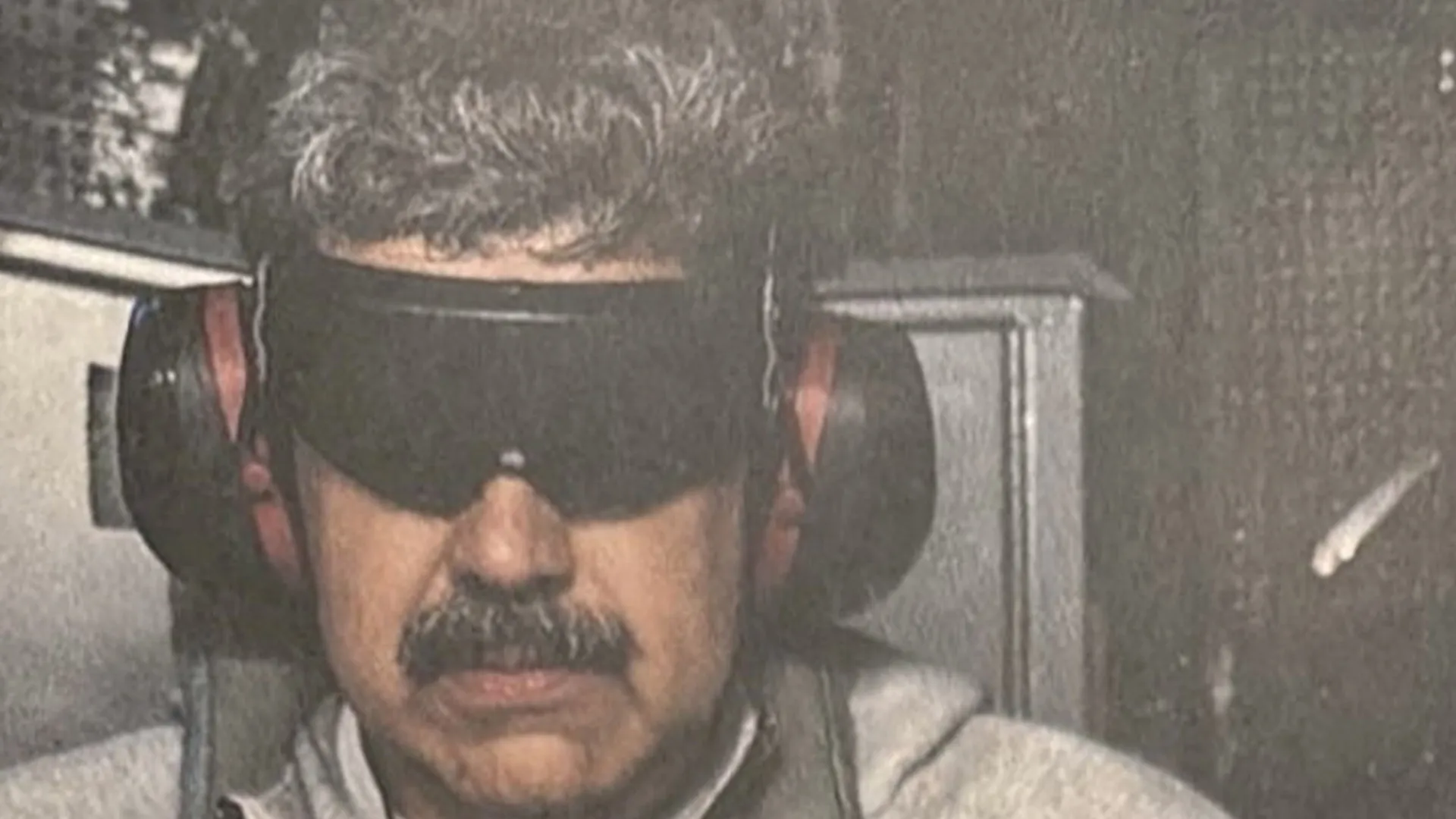
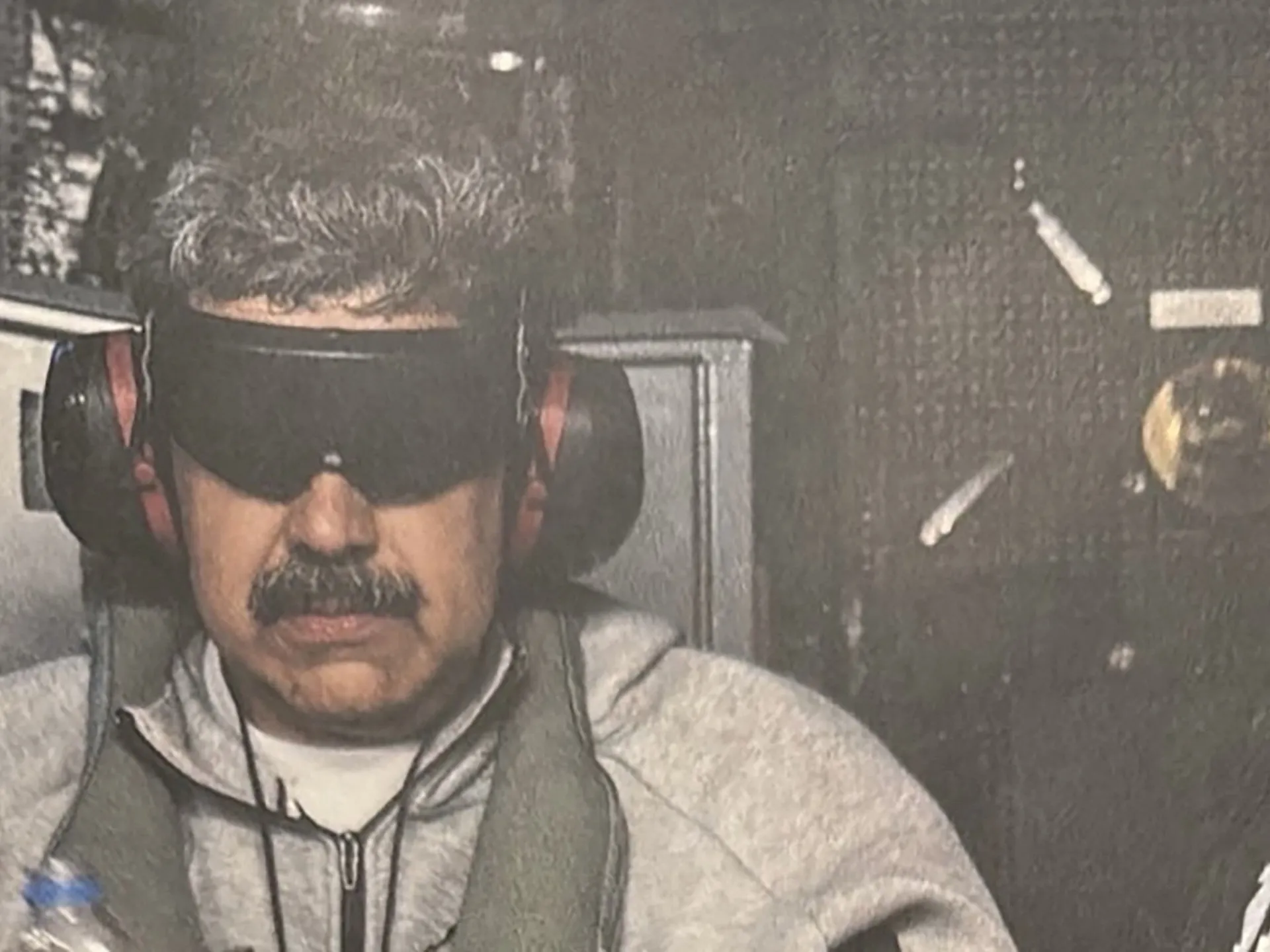
The image of abducted Venezuelan President Nicolas Maduro bound and blindfolded aboard the USS Iwo Jima posted by Donald Trump prompted shock and condemnation.
A brief power vacuum had emerged in Venezuela in the sudden chaos and confusion after the abduction of President Nicolas Maduro by the United States.
But shortly after the US military rained strikes down on Caracas and other areas on Saturday, US President Donald Trump – in a surprise snub against Venezuelan opposition leader Maria Corina Machado, who was awarded last year’s Nobel Peace Prize – noted that Vice President Delcy Rodriguez, 56, had been sworn in as interim president.
Recommended Stories
list of 4 itemsend of list
The right-wing Machado – who had cosied up to Trump, especially after her October Nobel win, an honour that he himself coveted and she dedicated to him – was described by the US president as not having enough support or “respect” to be Venezuela’s leader.
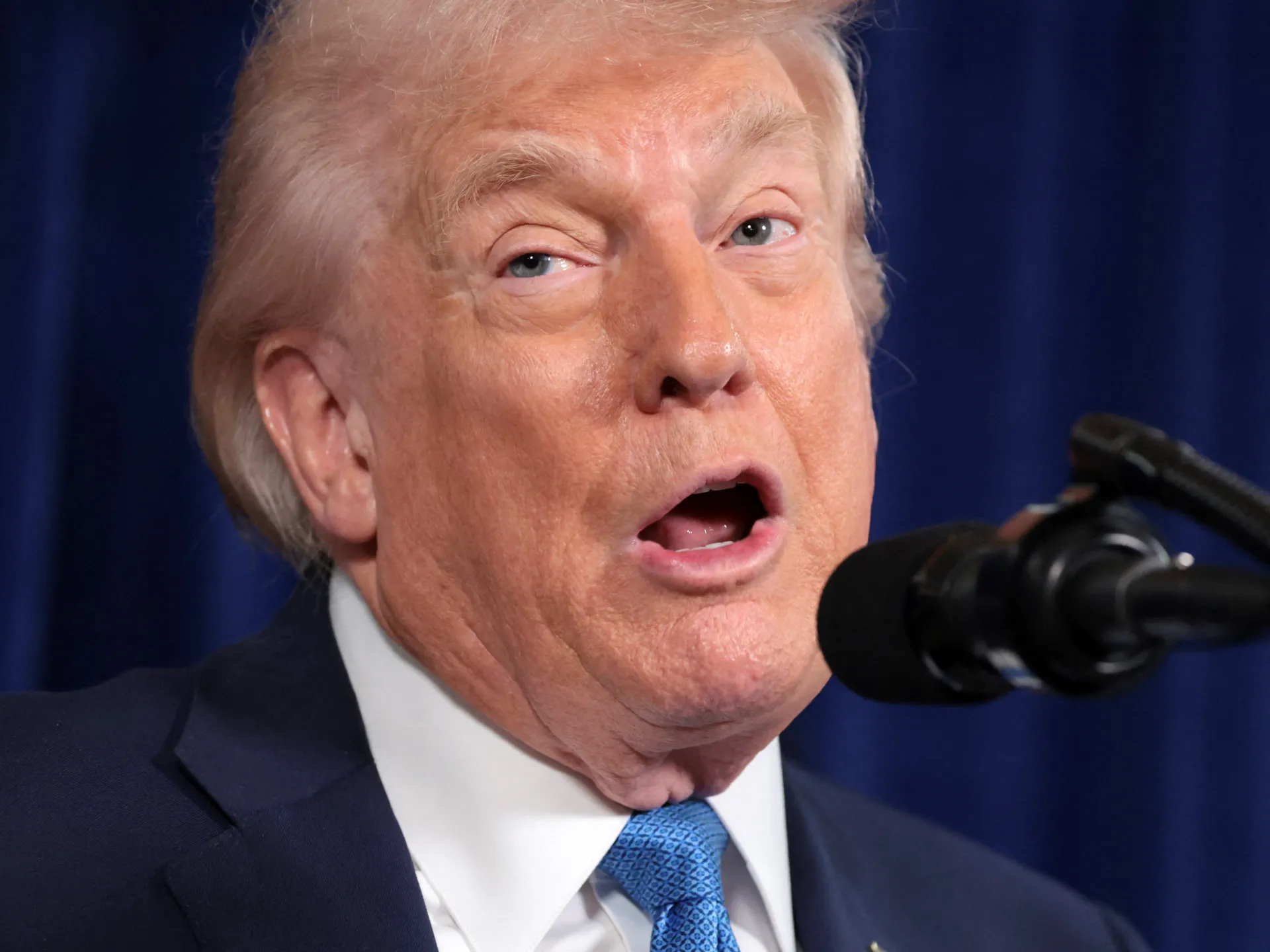
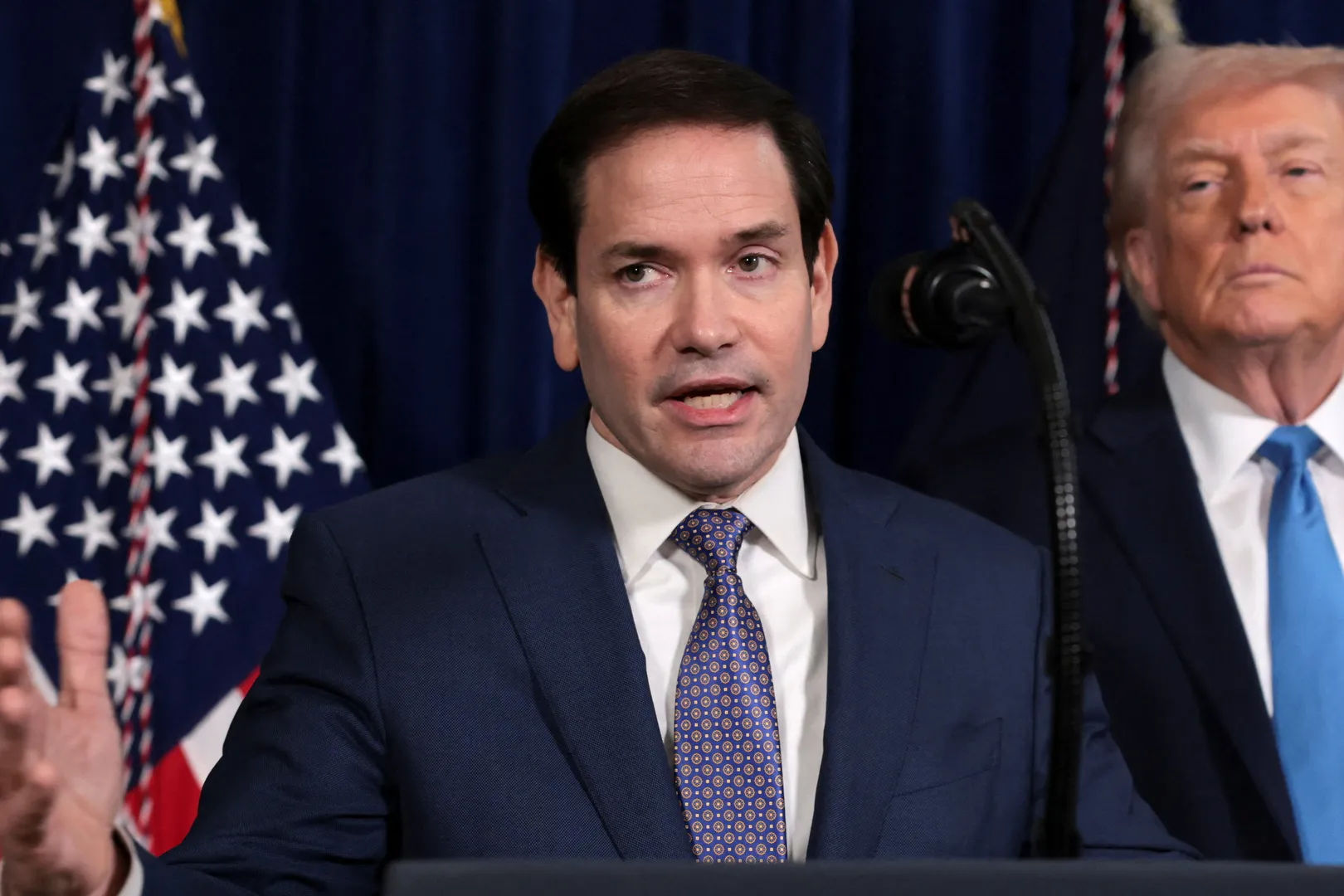
Trump said Rodriguez had talked to US Secretary of State Marco Rubio and was “essentially willing to do what we think is necessary to make Venezuela great again”.
“I think she was quite gracious,” Trump added. “We can’t take a chance that somebody else takes over Venezuela that doesn’t have the good of the Venezuelan people in mind.”
However, Rodriguez’s remarks soon after the strikes and abduction were diametrical: She criticised the US military action as “brutal aggression” and called for Maduro’s immediate release.
“There is only one president in this country, and his name is Nicolas Maduro,” Rodriguez said defiantly on state television as she was flanked by top civilian officials and military commanders.
Who, then, is the current acting president of Venezuela?
Revolutionary roots
A Caracas native, Rodriguez was born on May 18, 1969. She is the daughter of left-wing rebel fighter Jorge Antonio Rodriguez, who founded the Socialist League party in the 1970s. Her father was killed while tortured in police custody in 1976, a crime that shook many activists of the era, including a young Maduro.
Rodriguez’s brother, also named Jorge, also holds a key role in government as the head of the National Assembly.
She is an attorney who graduated from the Central University of Venezuela and rose rapidly through the political ranks in the past decade. Rodriguez has a long history of representing on the world stage what late President Hugo Chavez called his socialist “revolution” with those carrying on his legacy referred to as Chavistas.
She served as communication and information minister from 2013 to 2014, foreign minister from 2014 to 2017 and as the head of a pro-government Constituent Assembly, which expanded Maduro’s powers, in 2017.
Economic prowess
Rodriguez is sometimes perceived as more moderate than many soldiers who took up arms with Chavez in the 1990s.
Rodriguez’s roles as finance and oil minister, held simultaneously with her vice presidential post, have made her a key figure in the management of Venezuela’s economy and gained her major influence with the country’s withered private sector. She has applied orthodox economic policies in a bid to fight hyperinflation.
Maduro added the oil ministry to Rodriguez’s portfolio in August 2024, tasking her with managing escalating US sanctions on Venezuela’s most important industry.
Rodriguez developed strong ties with Republicans in the US oil industry and on Wall Street who balked at the notion of a US-led change in Venezuela’s government.
Among her past interlocutors were Blackwater security company founder Erik Prince and, more recently, Richard Grenell, a Trump special envoy who tried to negotiate a deal with Maduro for greater US influence in Venezuela.
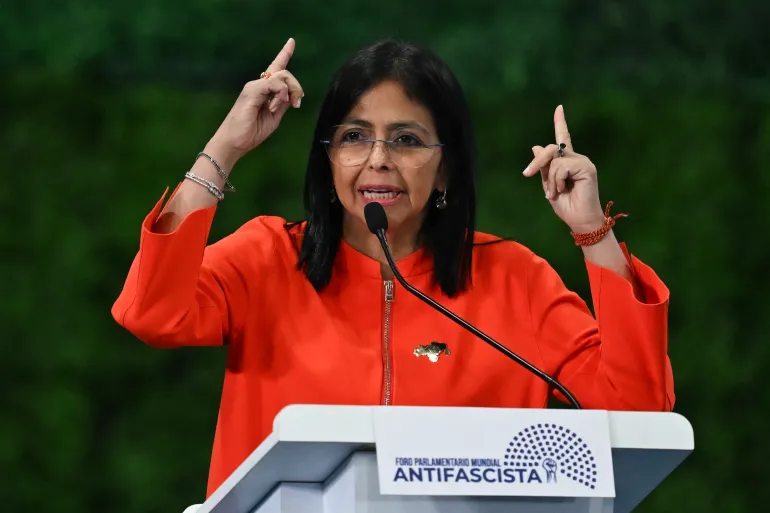
Venezuelan Vice President Delcy Rodriguez speaks during the Antifascist Global Parliamentary Forum in Caracas [File: AFP]
A ‘tiger’
Despite being perceived as more moderate, Maduro has called Rodriguez a “tiger” for her die-hard defence of his socialist government.
When she was named vice president in June 2018, Maduro described her as “a young woman, brave, seasoned, daughter of a martyr, revolutionary and tested in a thousand battles”.
After Maduro’s abduction on Saturday, Rodriguez demanded the US government provide proof of life for Maduro and his wife, Cilia Flores, and minced no words in denouncing the US actions.
“We call on the peoples of the great homeland to remain united because what was done to Venezuela can be done to anyone. That brutal use of force to bend the will of the people can be carried out against any country,” she said in an address broadcast by the state television channel VTV.
The Constitutional Chamber of Venezuela’s Supreme Court later on Saturday ordered Rodriguez to serve as acting president.
The court ruled that Rodriguez will assume “the office of President of the Bolivarian Republic of Venezuela, in order to guarantee administrative continuity and the comprehensive defence of the Nation”.
The United States intervention in Venezuela to abduct President Nicolás Maduro is not law enforcement extended beyond its borders. It is international vandalism, plain and unadorned.
Power has displaced law, preference has replaced principle and force has been presented as virtue. This is not the defence of the international order. It is its quiet execution. When a state kidnaps the law to justify kidnapping a leader, it does not uphold order. It advertises contempt for it.
The forcible seizure of a sitting head of state by the US has no foothold in international law. None. It is not self-defence under Article 51 of the United Nations Charter. It was not authorised by the UN Security Council. International law is many things, but it is not a roving moral warrant for great powers to perform regime change by abduction.
The claim that alleged human rights violations or trafficking in narcotics justifies the removal of a foreign head of state is particularly corrosive. There is no such rule. Not in treaty law. Not in custom law. Not in any serious jurisprudence.
Human rights law binds states to standards of conduct. It does not license unilateral military seizures by self-appointed global sheriffs. If that were the rule, the world would be in a permanent state of sanctioned chaos.
Indeed, if the US were serious about this purported principle, consistency would compel action far closer to home. By the logic now advanced, there would be a far stronger legal and moral case to seize Israeli Prime Minister Benjamin Netanyahu, given the extensive documentation of mass civilian harm and credible allegations of genocide arising from Israel’s conduct in Gaza.
Yet no such logic is entertained. The reason is obvious. This is not law. It is power selecting its targets.
Regime change is not an aberration in American foreign policy. It is a habit with a long paper trail, from Iran in 1953 to Guatemala in 1954, Chile in 1973 and Iraq in 2003.
But the kidnapping of a sitting president marks a new low. This is precisely the conduct the post-1945 legal order was designed to prohibit. The ban on the use of force is not a technicality. It is the central nervous system of international law. To violate it without authorisation is to announce that rules bind only the weak.
The US understands this perfectly. It is acting anyway and in doing so is conducting the autopsy of the UN Charter system itself.
The rot does not stop there. Washington has repeatedly violated its obligations under the UN Charter and the UN Headquarters Agreement. It has denied entry to officials it disfavours. Preventing the Palestinian president from addressing the UN General Assembly in person last year was not a diplomatic faux pas. It was a treaty breach by the host state of the world’s principal multilateral institution.
The message was unmistakable. Access to the international system and adherence to the UN Charter is conditional on American approval.
The UN was designed to constrain power, not flatter it. Today, it increasingly fails to constrain serious international law violations. Paralysed by vetoes, bullied by its host and ignored by those most capable of violating its charter, the UN has drifted from the supposed guardian of legality to a stage prop for its erosion.
At some point, denial becomes self-deception. The system has failed in its core promise. Not because international law is naive but because its most powerful beneficiary has decided it is optional.
It is, therefore, time to say the unsayable: The UN should be permanently relocated away from a host state that treats treaty obligations as inconveniences. And the international community must begin a serious, sober conversation about an alternative global structure whose authority is not hostage to one capital, one veto or one currency – or a system whose powers supersede the UN precisely because the UN has been hollowed out from within.
Law cannot survive as a slogan. Either it restrains those who wield the most force, or it is merely rhetoric deployed against those who do not. What the US has done in Venezuela is not a defence of order. It is a confirmation that international order has been replaced by preference. And preferences, unlike law, recognise no limits.
The views expressed in this article are the author’s own and do not necessarily reflect Al Jazeera’s editorial stance.
In a move that stunned the world, the United States bombed Venezuela and toppled President Nicolas Maduro amid condemnation and plaudits.
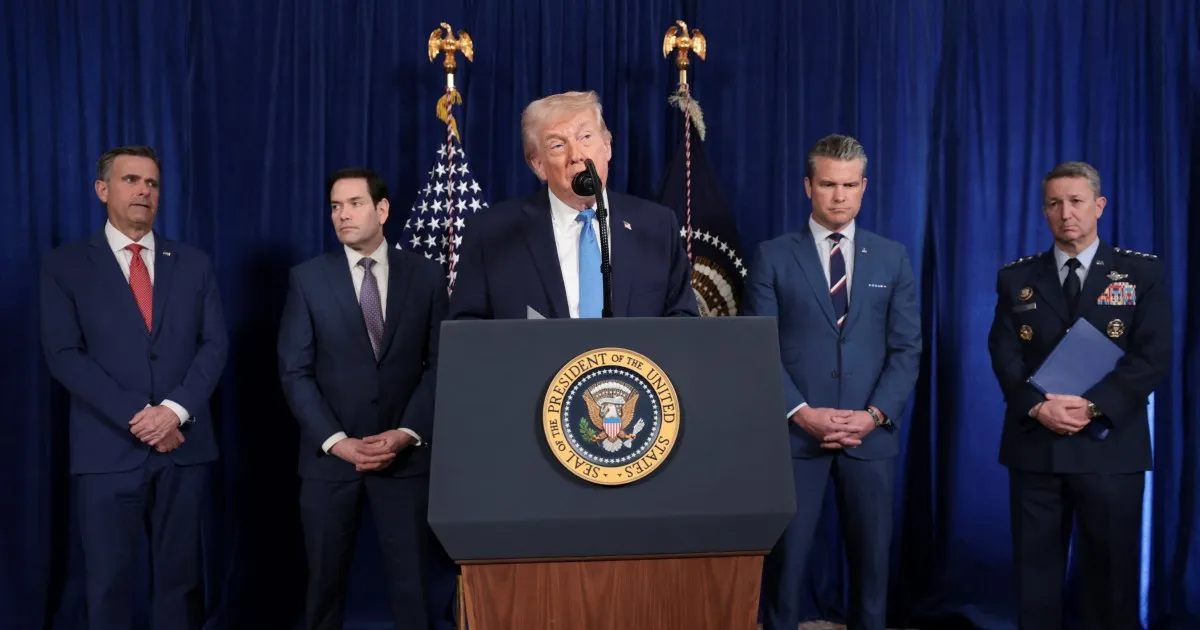
In a news conference on Saturday at his Mar-a-Lago resort in Florida, President Donald Trump praised the operation to seize Maduro as one of the “most stunning, effective and powerful displays of American military might and competence in American history”.
Recommended Stories
list of 4 itemsend of list
It was the riskiest and most high-profile military operation sanctioned by Washington since the US Navy’s SEAL team killed al-Qaeda leader Osama bin Laden in a safe house in Pakistan’s Abbottabad in 2011.
News of the 63-year-old Maduro being abducted took over the global news cycle.
After months of escalation and threats over Maduro’s alleged involvement in shipping drugs to the US, the Trump administration had increased pressure on Caracas with a military build-up in the Caribbean and a series of deadly missile attacks on alleged drug-running boats that had killed more than 100 people and whose legality has been heavily questioned by the United Nations and legal experts.
The US had also previously offered a $50m reward for information leading to Maduro’s arrest.
But while the military was conducting operations in the Caribbean, US intelligence had been gathering information about Maduro, his eating habits, and special forces covertly rehearsed a plan to remove him from power forcibly.
Here’s everything we know about how Maduro and his wife, Cilia Flores, were “captured”.
How was Maduro abducted?
The operation, named “Absolute Resolve”, was carefully rehearsed for months, according to General Dan Caine, chairman of the Joint Chiefs of Staff, who spoke at Trump’s news conference.
Trump also told Fox News that US forces had practised their extraction of Maduro on a replica building.
“They actually built a house which was identical to the one they went into with all the same, all that steel all over the place,” Trump said.
At 11:46pm local time on Friday (03:46 GMT on Saturday), Trump gave the green light.
On Friday night, Caine said, “the weather broke just enough, clearing a path that only the most skilled aviators in the world could move through”, with about 150 aircraft involved in the operation, taking off from 20 different airbases across the Western Hemisphere.
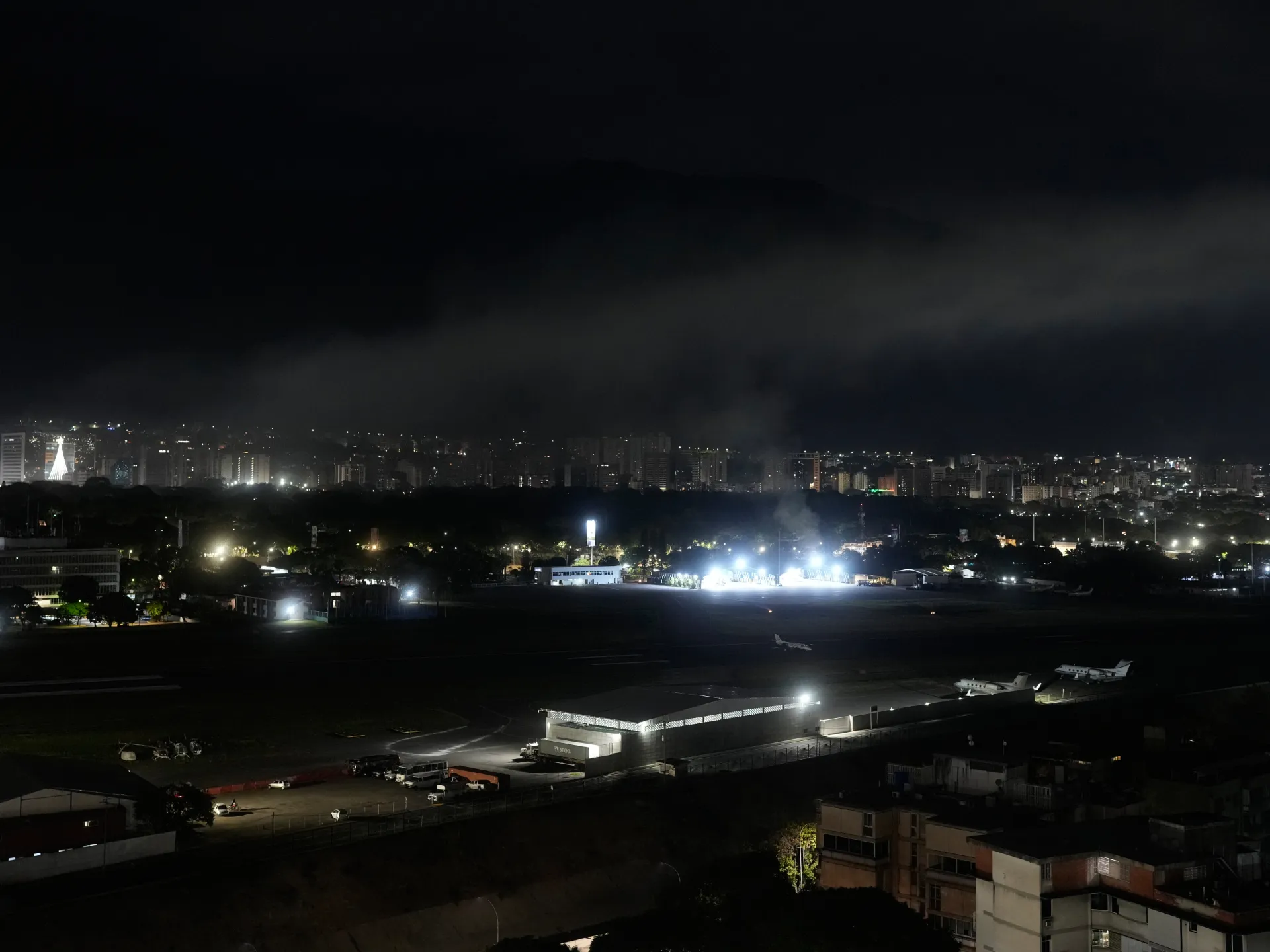
As part of the operation, US forces disabled Venezuela’s air defence systems, with Trump saying the “lights of Caracas were largely turned off due to a certain expertise that we have”, without elaborating.
Several deafening explosions rang out across the capital, with Pete Hegseth, the defence secretary, describing it as part of a “massive joint military and law enforcement raid” that lasted less than 30 minutes.
US helicopters then touched down at Maduro’s compound in the capital at 2:01am (06:01 GMT) on Saturday, with the president and his wife then taken into custody.
There has been no readout on whether there was an exchange of fire, in a chaotic scramble, or if they were taken without a struggle.
At 4:29am (08:29 GMT), just two and a half hours later, Maduro was put on board a US aircraft carrier, en route to New York. Trump later posted a photograph of the Venezuelan leader on his Truth Social social media platform, blindfolded, wearing a grey tracksuit.
After departing the USS Iwo Jima, US forces escorted Maduro on a flight, touching down in New York’s Stewart Air National Guard Base at about 4:30pm (21:30 GMT).
How many people were killed in the US strikes on Venezuela?
The US strikes hit Caracas as well as the states of Miranda, Aragua and La Guaira, according to the Venezuelan government.
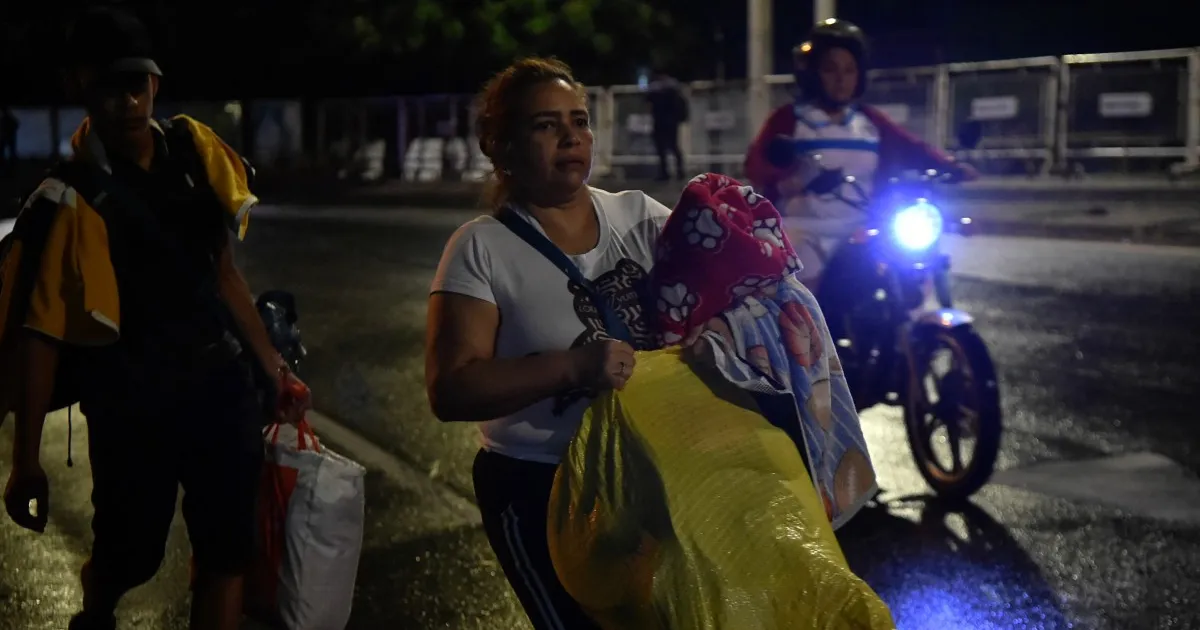
To Linda Unamumo, a public worker, the US attacks caused an explosion that was so strong it destroyed the roof of her house.
“Even up until a little while ago, I was still crying … I was crying because I was so scared … I had to leave my house with my daughter, with my family, and go to another house, a neighbour’s house. It was really traumatic. I wouldn’t wish it on anyone, really,” she told the AFP news agency.
While official casualty counts have yet to be released, an official told The New York Times newspaper on condition of anonymity that at least 40 people had been killed in the attacks.
According to Trump, a few US members were injured in the operation, but he believed no one was killed.
What’s next for Venezuela?
During his news conference on Saturday, Trump announced that the US would “run” the country until a new leader was chosen.
“We’re going to make sure that country is run properly. We’re not doing this in vain,” he said. “This is a very dangerous attack. This is an attack that could have gone very, very badly.”
The president did not rule out deploying US troops in the country and said he was “not afraid of boots on the ground if we have to”.
Trump also, somewhat surprisingly, ruled out working with opposition figure and Nobel Peace Prize winner Maria Corina Machado, who had dedicated her prize, which he so wanted to win himself, to the US president.
“She doesn’t have the support within or the respect within the country,” he said.
The Constitutional Chamber of Venezuela’s Supreme Court ordered Vice President Delcy Rodriguez to serve as acting president following the US’s abduction of Maduro.
The court ruled that Rodriguez will assume “the office of President of the Bolivarian Republic of Venezuela, in order to guarantee administrative continuity and the comprehensive defence of the Nation”.
The court also said it would work to “determine the applicable legal framework to guarantee the continuity of the State, the administration of government, and the defense of sovereignty in the face of the forced absence of the President of the Republic”.
Trump had said earlier on Saturday that the US would not occupy Venezuela, provided Rodriguez “does what we want”.
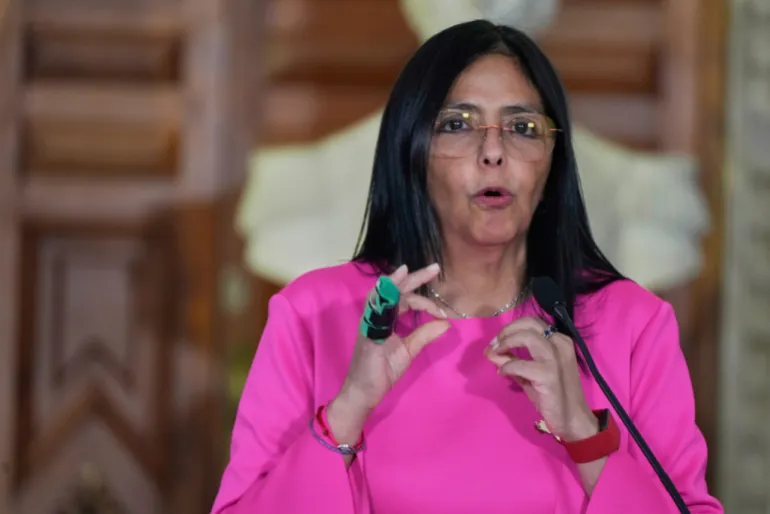
Venezuelan Vice President Delcy Rodriguez speaks to the press at the Foreign Office in Caracas, Venezuela, on August 11, 2025 [Ariana Cubillos/AP Photo]
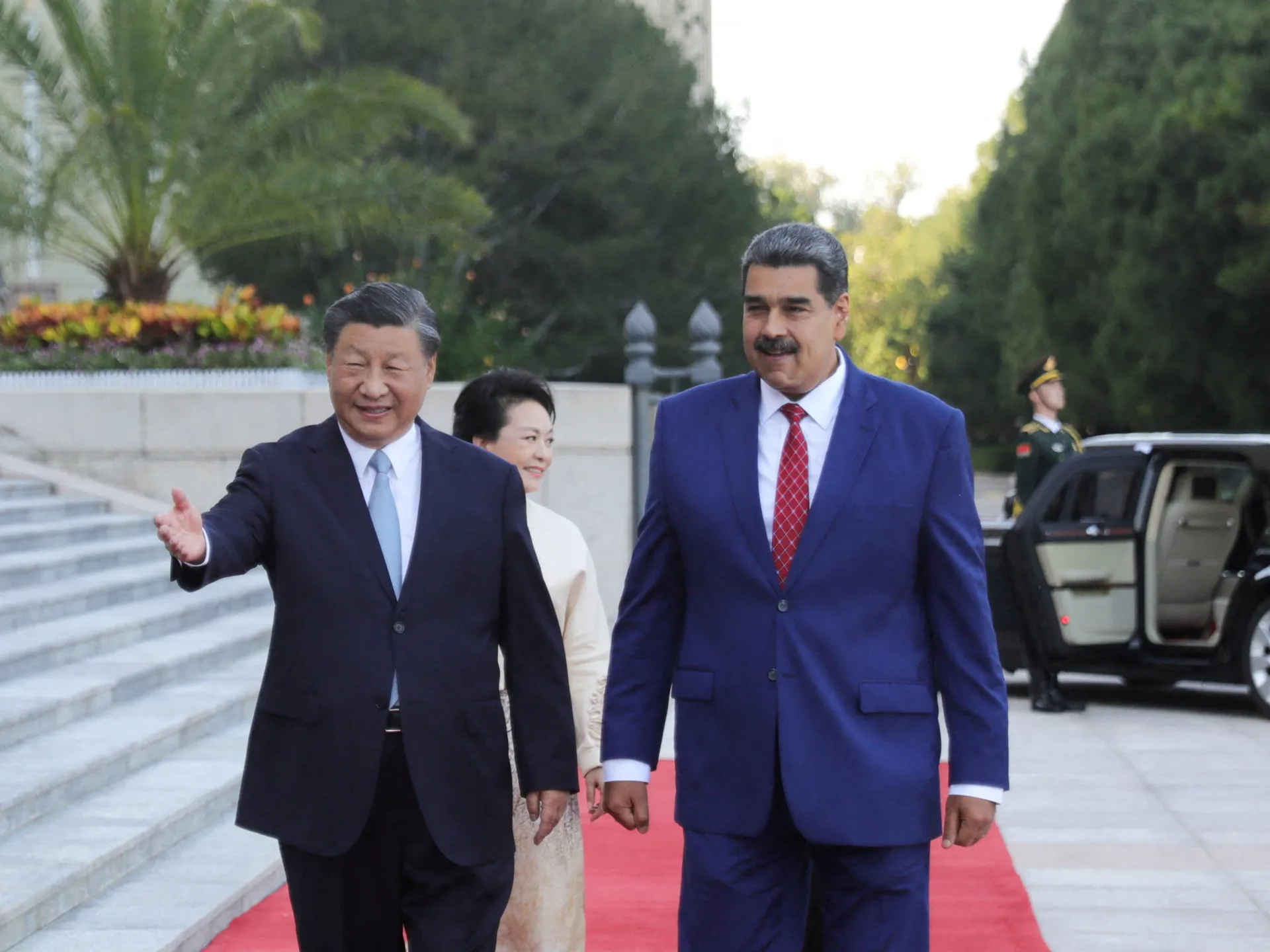
China has called on the United States to immediately release Venezuelan President Nicolas Maduro after Washington carried out massive military strikes on the capital, Caracas, as well as other regions, and abducted the leader.
Beijing on Sunday insisted the safety of Maduro and his wife Cilia Flores be a priority, and called on the US to “stop toppling the government of Venezuela”, calling the attack a “clear violation of international law“.
Recommended Stories
list of 4 itemsend of list
It was the second statement issued by China since Saturday, after US President Donald Trump said Washington had taken Maduro and his wife and flown them out of the country.
On Saturday, Beijing slammed the US for “hegemonic acts” and “blatant use of force” against Venezuela and its president, urging Washington to abide by the United Nations charter.
China is closely watching developments in Venezuela, according to Andy Mok, a senior research fellow at the Center for China and Globalisation.
Mok told Al Jazeera that a Chinese delegation had met Venezuelan officials just hours before the US action, adding that Beijing was not surprised by Washington’s move, given the scale of US strategic and economic interests in the region.
What did stand out, he said, was how the operation was carried out, as it may “represent the long-term US strategy in the region”.
China is Venezuela’s largest buyer of oil, Mok added, although the country accounts for only 4-5 percent of its total oil imports. Beyond energy, he said, China has growing trade and investment interests across Latin America, meaning Beijing is paying close attention to political shifts in the region.
Mok warned that if a future US administration were to revive a Monroe Doctrine-style policy, it could increase tensions with China, as Latin America is a “pillar of China’s Global South strategy”.
Still, China is likely to limit its response to the events in Venezuela to diplomatic protest rather than hard power, according to China-based analyst Shaun Rein.
“I think China has issued a very strong condemnation of the United States, and they’re working with other Latin American and Caribbean countries to say this isn’t right,” Rein, founder of the China Market Research Group, told Al Jazeera.
Rein said Beijing is deeply alarmed but constrained, and its options are limited.
“There’s not a lot of things that China can do. Frankly, it doesn’t have the military power. It only has two military bases outside of China, while America has 800,” Rein noted, stressing that, “historically, China is not warlike”.
“China is just going to make proclamations criticising the United States’ actions, but they’re not going to push back with military action, and they’re probably not going to push back with economic sanctions.”
Global condemnations, celebrations
World reaction has poured in since the US military action in Venezuela, with opinion firmly split over the intervention.
Left-leaning regional leaders, including those of Brazil, Colombia, Chile and Mexico, have largely denounced Maduro’s ouster, while countries with right-wing governments, from Argentina to Ecuador, have largely welcomed it.
Australian Prime Minister Anthony Albanese on Sunday said he backed a “peaceful, democratic transition” of power in Venezuela, but urged that international law be respected.
His government was “monitoring developments”, he said in a statement.
South Korea also responded on Sunday, calling for a de-escalation of tensions.
“Our government urges all involved parties to make utmost efforts toward easing regional tensions. We hope for a quick stabilisation of the situation via dialogue, ensuring democracy is restored, and the will of the Venezuelan people is honoured,” its Ministry of Foreign Affairs said.
Venezuela has been increasingly isolated, particularly after Maduro’s contested election in 2024.
China and Russia, however, continue to maintain strong economic and strategic ties, and alliances have grown with Iran over their shared opposition to US policy.
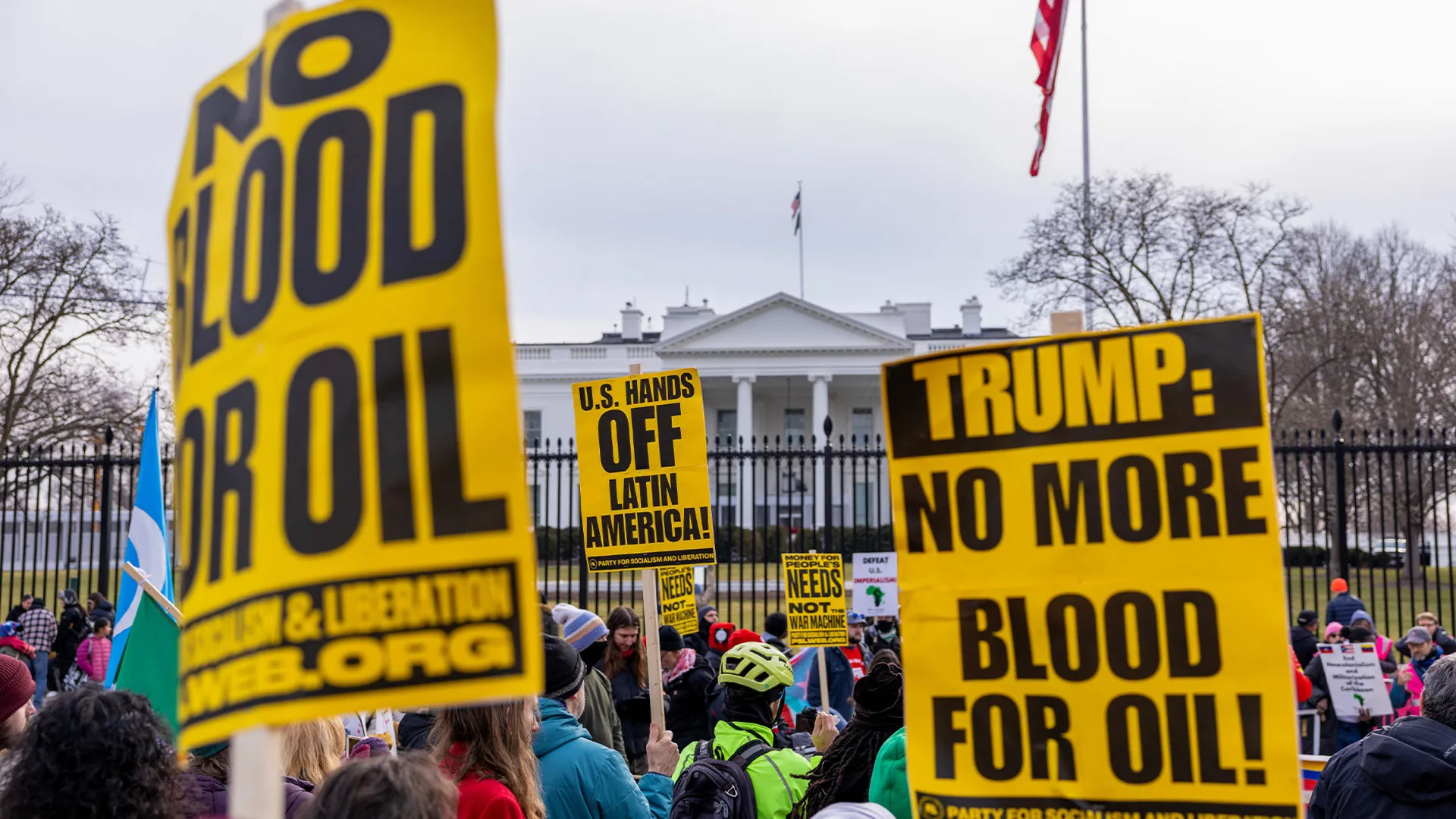
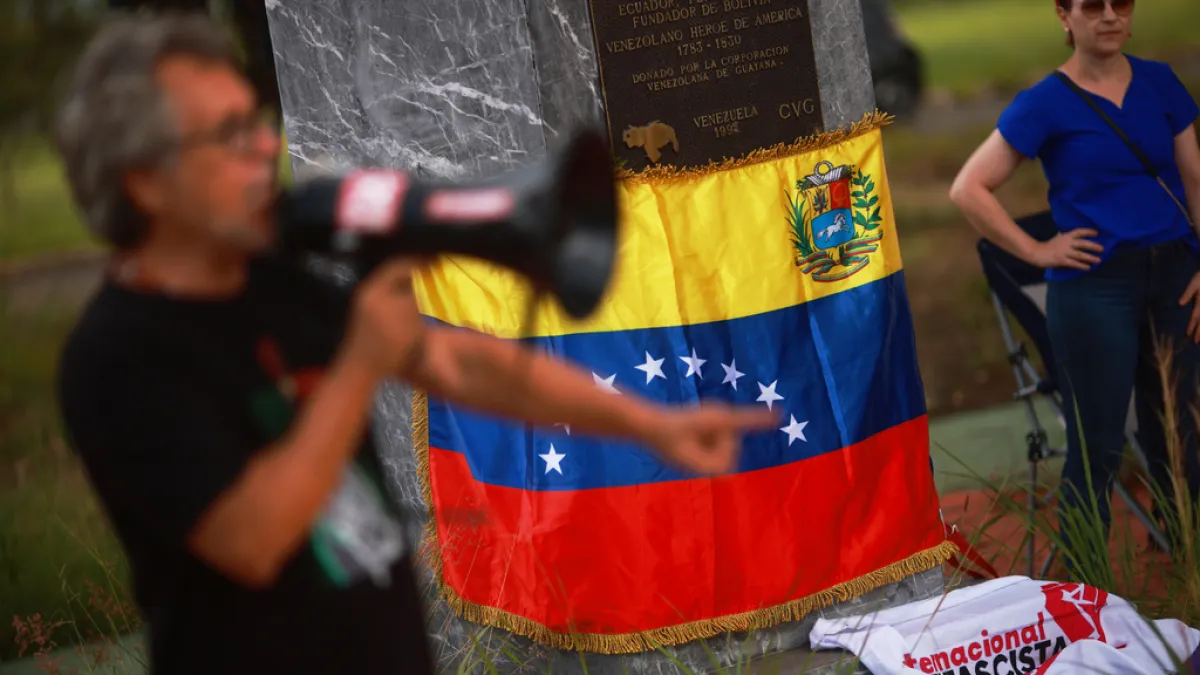
Protesters have rallied worldwide after Donald Trump announced the US would ‘run’ Venezuela following the abduction of President Nicolas Maduro and his wife. Demonstrators from Paris to Sao Paulo are denouncing what they call US aggression and imperialism.
Harlan Ullman, a senior advisor at Atlantic Council talks about Donald Trump’s plan to take over Venezuela and the significant issues that need to be considered.
Within hours of a massive operation of regime change in Venezuela, United States President Donald Trump revelled in his “success”. He posted a photo of Venezuelan President Nicolas Maduro in handcuffs and then addressed the American public.
He praised the military for launching “one of the most stunning, effective and powerful displays of American military might” in US history, allegedly rendering Venezuelan forces “powerless”. He announced that Maduro and his wife would be indicted in New York for “narcoterrorism” and claimed – without evidence – that US operations have reduced maritime drug trafficking by 97 percent.
Trump went further, declaring that the US would “run the country” until an unspecified transition could be arranged, while openly threatening a “second and much larger attack”. Crucially, he framed these claims within a broader assertion of US “domination over the Western Hemisphere”, explicitly invoking the 1823 Monroe Doctrine.
The US military intervention in Venezuela represents something far more dangerous than a single act of aggression. It is the latest manifestation of a centuries-old pattern of US interference that has left Latin America scarred. The regime change operation in Caracas is a clear sign the Trump administration is embracing this old policy of interventionism with renewed fervour. And that bodes ill for the region.
That this attack targeted Maduro’s repressive and corrupt government, which was responsible for the immense suffering of many Venezuelans, makes the situation no less catastrophic. Washington’s long history of supporting brutal dictatorships across the region strips away any pretence of moral authority. Trump himself can hardly claim any moral high ground given that he is himself embroiled in a major political scandal due to his close ties with convicted paedophile Jeffrey Epstein and has maintained unconditional support for Israel’s genocide in Gaza.
The Trump administration’s attack on Venezuela solidifies a catastrophic pattern of violations of international law. If the US can unilaterally launch military strikes against sovereign nations at a whim, then the entire framework of international law becomes meaningless. This tells every nation that might and power trump legality and sovereignty.
For Latin America specifically, the implications are chilling. To understand why this attack reverberates so painfully across the region, one must take a quick look at its history. The US has orchestrated or supported coups and military dictatorships throughout the region with disturbing regularity.
In Guatemala in 1954, the CIA overthrew the democratically elected government of Jacobo Arbenz. In Chile in 1973, the US backed the coup that brought Augusto Pinochet to power and ushered in an era of unchecked political violence. In 1983, the US invaded and occupied the island of Grenada to overthrow its socialist government. In Argentina, Brazil, Uruguay, and throughout Central America, Washington provided training, funding and political cover for military regimes that tortured dissidents and murdered civilians.
The new question now is, if the US carried out regime change in Venezuela so easily, who is next? Colombia’s President Gustavo Petro, who has been at odds with the Trump administration, was quick to react – and is right to be concerned, as in December, Trump threatened an intervention, saying “he’ll be next“. Others in the region are also nervous.
Beyond the looming threat of US intervention, Latin America now also faces the potential regional instability that a regime change in Caracas is likely to create. The political crisis under Maduro had already spilled beyond its borders into neighbouring Colombia and Brazil, where Venezuelans fled poverty and repression. One can only imagine the ripple effect the US-enacted regime change will have.
There are probably many Venezuelans who are celebrating Maduro’s ouster. However, the US intervention directly undermines the political opposition in Venezuela. It would allow the regime, which appears to retain power, to paint all opposition as foreign agents, eroding its legitimacy.
The Venezuelan people deserve democracy, but they have to achieve it themselves with international support, not to have it imposed at gunpoint by a foreign power with a documented history of caring more about resources and geopolitical dominance than human rights.
Latin Americans deserve better than to choose between homegrown authoritarianism and imported violence. What they need is not American bombs but genuine respect for self-determination.
The US has no moral authority to attack Venezuela, regardless of Maduro’s authoritarian nature. Both can be true: Maduro is a dictator who caused immense harm to his people, and US military intervention is an illegal act of aggression that will not resolve the crisis of democracy in Venezuela.
The region’s future must be determined by people themselves, free from the shadow of empire.
The views expressed in this article are the author’s own and do not necessarily reflect Al Jazeera’s editorial stance.
United States President Donald Trump has said that Washington will “run” Venezuela until a political transition can take place, hours after US forces bombed the South American country and “captured” its president, Nicolas Maduro.
Speaking during a news conference on Saturday, Trump said the US would “run the country until such time as we can do a safe, proper and judicious transition”.
Recommended Stories
list of 3 itemsend of list
“We don’t want to be involved with having somebody else get in, and we have the same situation that we had for the last long period of years,” he said.
The Trump administration launched attacks on Venezuela’s capital, Caracas, and seized Maduro and his wife in the early hours of Saturday.
A plane carrying the Venezuelan leader landed in New York state on Saturday evening, according to US media.
Footage broadcast by CNN, Fox News and MS Now showed US officials escorting a person they identified as Maduro off a plane at the Stewart international airport, about 97 kilometres (60 miles) northwest of New York City.
Maduro’s capture took place after a months-long US pressure campaign against his government, which included US seizures of oil tankers off the Venezuelan coast, as well as deadly attacks on alleged drug-smuggling boats in the Caribbean. The attacks were widely denounced as extrajudicial killings.
Washington had accused the Venezuelan leader, who has been in power since 2013, of having ties to drug cartels. Maduro had rejected the claim, saying the US was working to depose him and take control of Venezuela’s vast oil reserves.
During Saturday’s news conference, Trump said that “very large United States oil companies” would move into Venezuela to “fix the badly broken… oil infrastructure and start making money for the country”.
He added that his administration’s actions “will make the people of Venezuela rich, independent and safe”.
The Trump administration has defended Maduro’s “capture, saying the left-wing leader faced drug-related charges in the US.
These charges include “narco-terrorism conspiracy, cocaine importation conspiracy, possession of machine guns and destructive devices, and conspiracy to possess machine guns and destructive devices against the United States”, US Attorney General Pam Bondi said.
“They will soon face the full wrath of American justice on American soil in American courts,” she added in a post on X.
A Justice Department official told the Reuters news agency that Maduro is expected to make an initial appearance in Manhattan federal court on Monday.
‘Illegal abduction’
But legal experts, world leaders and Democratic Party lawmakers in the US have condemned the administration’s actions as a violation of international law.
“Attacking countries, in flagrant violation of international law, is the first step towards a world of violence, chaos, and instability, where the law of the strongest prevails over multilateralism,” Brazilian President Luiz Inacio Lula da Silva wrote on X.
Ben Saul, the United Nations special rapporteur on human rights and counterterrorism, slammed what he called Washington’s “illegal abduction” of Maduro. “I condemn the US’ illegal aggression against Venezuela,” Saul wrote on social media.
A spokesperson for UN chief Antonio Guterres said he was “deeply alarmed” by the situation, describing the US’s actions as setting “a dangerous precedent”.
“The Secretary-General continues to emphasize the importance of full respect – by all – of international law, including the UN Charter. He’s deeply concerned that the rules of international law have not been respected,” Guterres’s office said in a statement.
Earlier on Saturday, Venezuela’s defence minister released a defiant statement in response to the US attacks, urging people to remain united.
“We will not negotiate; we will not give up,” Vladimir Padrino Lopez said, stressing that Venezuela’s independence is not up for negotiation. “We must maintain calm and [be] united in order to prevail in these dire moments.”
Uncertainty prevails
It remains unclear how exactly the US plans to “run” Venezuela, and how long the purported transitional period will last.
During Saturday’s news conference, Trump said that US Secretary of State Marco Rubio had spoken with Venezuelan Vice President Delcy Rodriguez.
“She was sworn in as president just a little while ago,” Trump told reporters. “She had a long conversation with [Rubio], and she said, ‘We’ll do whatever you need’. I think she was quite gracious, but she really doesn’t have a choice.”
Rodriguez appeared to contradict that in a news conference in Caracas later in the day.
“We demand the immediate release of President Nicolas Maduro and his wife. The only president of Venezuela is President Nicolas Maduro,” she said.
“We are ready to defend Venezuela. We are ready to defend our natural resources, which should be for national development,” she added.
Al Jazeera’s Latin America editor Lucia Newman, reporting from Chile, said that, if Rodriguez is “on board” with the US plan for Venezuela, as Trump and Rubio have suggested, “she certainly didn’t sound like it” during her address.
“She sounded like her typical, fiery self, very much on the side of… Maduro, demanding that he be released and saying that Venezuela would not be a colony of the United States,” Newman said.
The events of the day have brought “a rollercoaster of emotions” to “Venezuelans both inside and outside of the country”, said Caracas-based journalist Sissi de Flaviis.
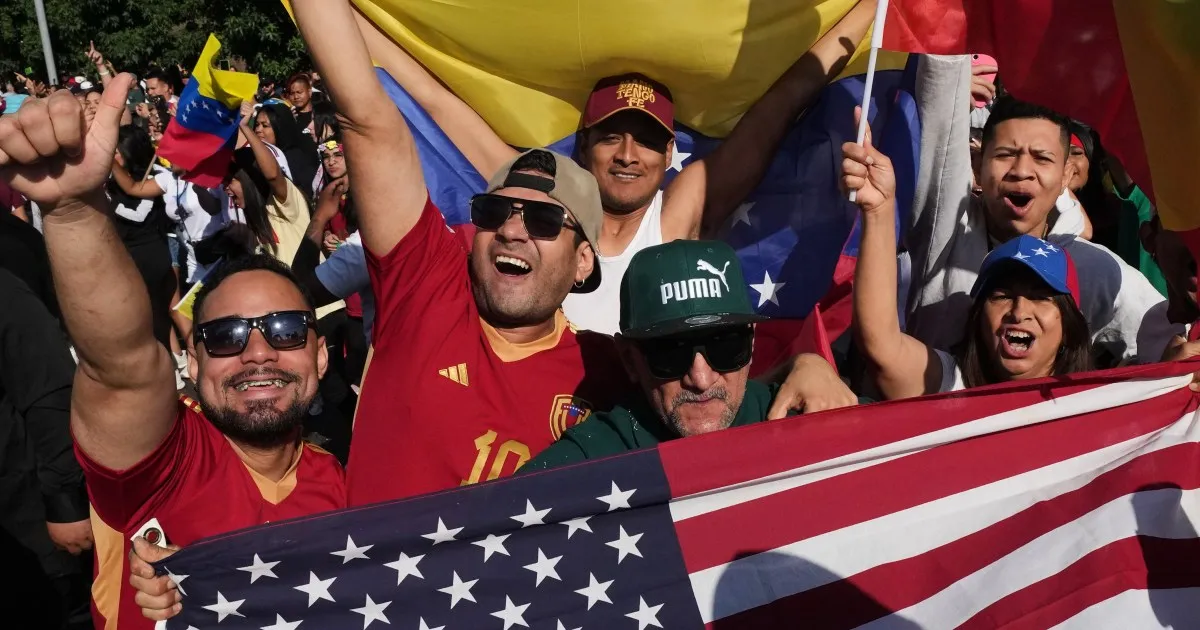
“When we first heard that Maduro was taken out of the country, there was a mix of reactions,” she said. “A lot of people couldn’t believe it. Other people were pretty much celebrating. Other people were kind of on standby, waiting.”
After Trump’s news conference announcing US plans to run Venezuela, “there’s been a shock”, de Flaviis added.
“People are a bit concerned about what this will actually mean for us, what this will mean for the government and who is going to lead us in the next few days, months and years.”
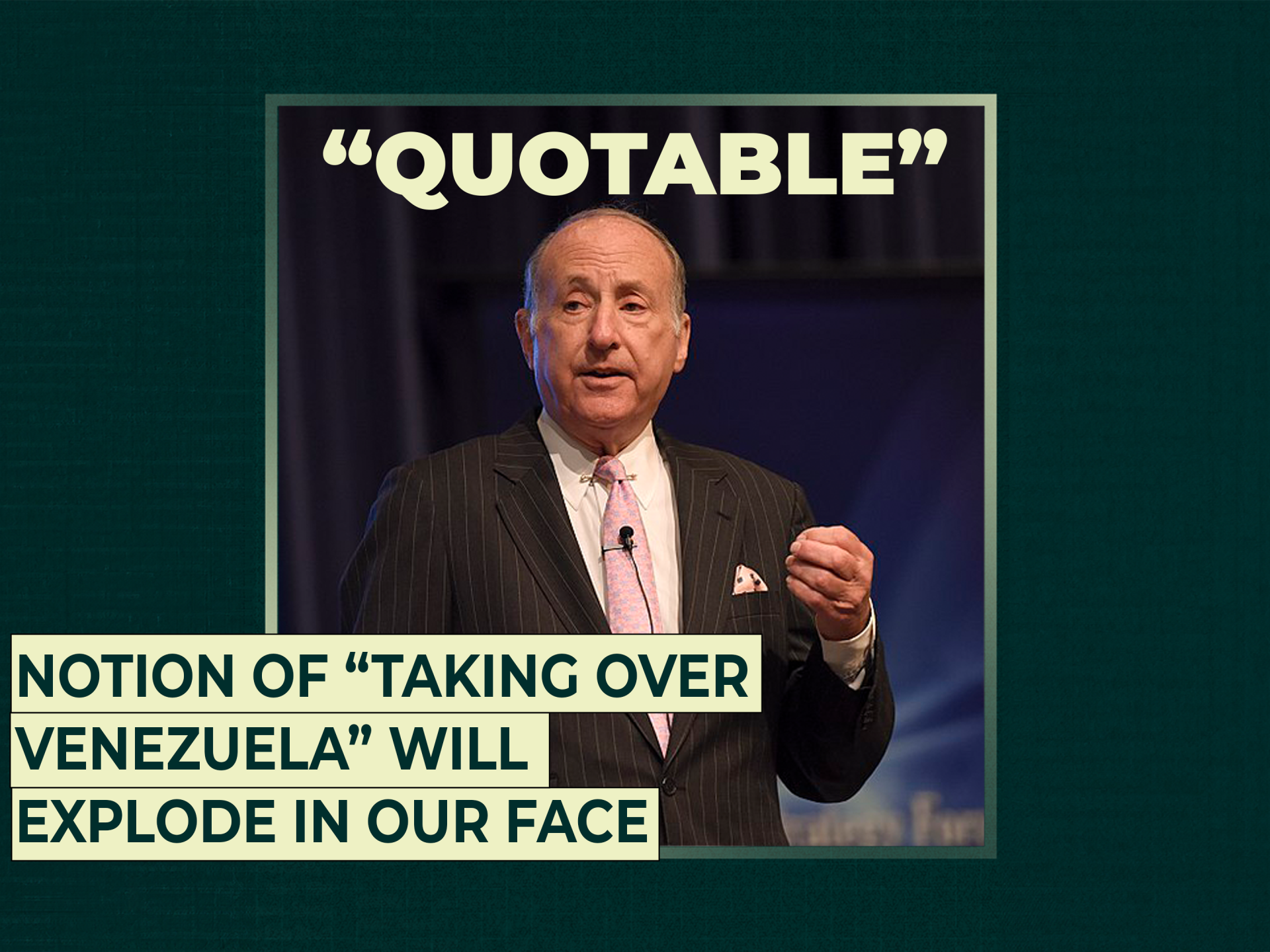
Meanwhile, Harlan Ullman, a former US naval officer, told Al Jazeera that “the notion of America taking over Venezuela is going to explode in our faces”.
“When Trump says, ‘We’re going to run the country’: We’re not capable of running America, how are we going to be able to run Venezuela?” Ullman said.
“I do not believe that we have a plan for dealing with Venezuela,” he added. “A country is extraordinarily complex. We lack the knowledge, understanding and all the logistics to do this.”
Sao Paulo, Brazil – Venezuela has temporarily closed its border with Brazil following the United States’s early morning attack on Caracas, in which US forces also “captured” President Nicolas Maduro and his wife, Cilia Flores.
The border crossing between the Brazilian city of Pacaraima and Santa Elena de Uairen in Venezuela had been closed on the Venezuelan side for about five hours, blocking citizens from entering Brazil, a Brazilian military official told Al Jazeera.
Recommended Stories
list of 3 itemsend of list
“There was no formal protocol from Venezuela regarding entry and exit criteria. The fact is that Brazilians are allowed to leave, while Venezuelans face restrictions. But this could change at any time,” said the official, who spoke on condition of anonymity because he is not authorised to speak on the matter.
The head of Brazil’s Federal Police also announced the temporary closure, and the governor of the state of Roraima told Reuters that the border had been reopened after the brief closure.
Brazil’s government said it is monitoring the border and has sent military personnel to the region to bolster security.
“The Minister of Defense indicated that there is no abnormal activity on the border between Brazil and Venezuela, which will continue to be monitored, and that he is in contact with the Governor of Roraima,” read a statement from Brazil’s Ministry of Foreign Affairs.
Venezuelans make up Brazil’s largest foreign population, according to the Brazilian Institute of Geography and Statistics. The state of Roraima alone is home to 77,563 immigrants from the country. In all, some 8 million Venezuelans have fled their homes in the past decade, with more than 6 million resettling in other Latin American countries.
“I think it’s very possible that there will be an exodus of Venezuelans to Brazil, and, in fact, we are already seeing concrete signs of it,” Jessica Leon Cedeno, a Venezuelan journalist who lives in Sao Paulo, told Al Jazeera.
“Millions of people have left the country in search of better living conditions and opportunities.”
Lula says US attacks could ‘destabilise’ the region
Brazilian President Luiz Inacio Lula da Silva said on Saturday that US President Donald Trump’s actions inside Venezuela were “unacceptable”.
“The bombings on Venezuelan territory and the capture of its president cross an unacceptable line,” wrote Lula on X. “These acts represent a grave affront to Venezuela’s sovereignty and yet another extremely dangerous precedent for the entire international community.”
Brazil’s leader has urged restraint for months amid an increased US military buildup off Venezuela’s coast.
Analysts worry that Maduro’s removal could plunge Venezuela into chaos, potentially resulting in another wave of mass migration, as it witnessed in 2019 after a failed attempt to remove Maduro.
Joao Carlos Jarochinski Silva, a professor of international relations at the Federal University of Roraima, said that a potential wave of migration would depend on multiple factors, including whether Washington continues its military campaign inside the country and whether what remains of Maduro’s regime will put up a fight.
“What is the resilience capacity of Chavismo within Venezuela?” Jarochinski Silva said, referring to the political movement named after former President Hugo Chavez. “This could have consequences that are truly worrying, but given the current scenario, there is no context of fear.”
He added that Trump has so far focused on applauding his military’s action inside Venezuela and has not addressed key humanitarian concerns. Earlier this year, the Trump administration cut funding to the US government’s main agency for foreign aid, USAID, which heavily affected Venezuela’s neighbours, Brazil and Colombia.
“The United States has been cutting humanitarian resources lately,” he said, adding that there will be consequences to the US military actions inside the country. “For example, refugees, other people who may be affected by this. He doesn’t commit to this agenda at any point.”
US President Donald Trump and his allies have defended the US attacks on Venezuela and the removal of President Nicolas Maduro from power amid widespread condemnation that the actions violate international law.
Trump told reporters on Saturday that Maduro was “captured” after US military strikes on the Venezuelan capital, Caracas, for carrying out a purported “campaign of deadly narco-terrorism against the United States”.
Recommended Stories
list of 3 itemsend of list
He said the US government would “run” the South American country during a political transition, promising the Venezuelan people that they would become “rich, independent and safe”.
But Claire Finkelstein, a professor of law at the University of Pennsylvania, has rejected the Trump administration’s arguments in defence of the attacks and removal of Maduro, as well as its plans to exert control over Venezuela.
“I don’t think there’s any basis under international law for the action that occurred overnight by the US government,” Finkelstein told Al Jazeera, describing the attacks as an “illegal use of force [and] a violation of Venezuelan sovereignty”.
“Maduro has personal jurisdiction rights, so not only is it a violation of Venezuelan sovereignty, but it’s a violation of his personal, international rights,” she said.
Numerous statutes of international law – including the UN Charter – prohibit states from attacking another country without provocation.
“All Members shall refrain in their international relations from the threat or use of force against the territorial integrity or political independence of any state, or in any other manner inconsistent with the Purposes of the United Nations,” the UN Charter says.
The US actions came amid a months-long pressure campaign against Maduro, whom the Trump administration accused, without evidence, of being linked to drug traffickers.
Washington had carried out deadly strikes on alleged drug-smuggling boats in the Caribbean, seized vessels carrying oil off the Venezuelan coast, sanctioned members of Maduro’s family, and threatened to launch attacks on the country’s soil.
“Nicolas Maduro wasn’t just an illegitimate dictator, he also ran a vast drug-trafficking operation,” US Congressman Tom Cotton, a top Trump ally, wrote on social media on Saturday, welcoming the moves against the Venezuelan leader.
Before he was seized, Maduro had said he was open to dialogue with the US on drug trafficking. He also had accused the Trump administration of seeking to depose him and seize control of Venezuela’s vast oil reserves.
‘No imminent threat’
Democratic Party lawmakers in the US had been demanding answers from the Trump administration about its aims in Venezuela, accusing the Republican president of seeking to unlawfully carry out acts of war without congressional oversight.
Under the US Constitution, only Congress has the power to declare war.
But that authority has been weakened over the last several decades, with the US carrying out military strikes around the world during its so-called “war on terror” based on loosely-interpreted congressional authorisations.
On Saturday, Gregory Meeks, the top Democrat on the House of Representatives Foreign Affairs Committee, said that, despite the Trump administration’s claims, “there was no imminent threat to the United States” from Venezuela, “certainly not one that justified military action without congressional authorization”.
“These actions violate both US and international law and, by Trump’s own admission, this is not a limited operation,” Meeks said in a statement shared on social media.
This was echoed by the University of Pennsylvania’s Finkelstein, who said there was no “immediate threat” to the US that would justify the executive branch carrying out attacks without notifying Congress.
“It was an act of war against Venezuela, and we did not have the kind of self-defence justification that would normally justify bypassing Congress,” she told Al Jazeera.
“Even if you believe the US is at grave danger because of drug trafficking, there isn’t the kind of imminence there that would justify the president moving unilaterally and not turning to Congress and trying to get them on board.”
Finkelstein also rejected Trump’s plans for the US to “run” Venezuela as “incredibly illegal”.
“States have sovereignty rights, and you cannot just invade them and take them over,” she said.
“Even if Maduro were to fall of his own accord and we had not brought that about, we don’t have the right to go in and start running their government,” Finkelstein said.
“Democracy is premised on the idea that the people are sovereign and the people choose their own leaders, and that’s something we should be promoting in Latin and South America, not trying to undermine.”
US President Donald Trump says the US “successfully captured” Venezuela President Nicolas Maduro and his wife “in the dead of night” and they will “face American justice” for alleged narcoterrorism. Trump said the US will run Venezuela until there is a “safe… and judicious” transition of power.
US President Donald Trump says ‘a team’ from the US will be running Venezuela for now, but he would not specify who is on the team. He was speaking at a news conference with Secretary of State Marco Rubio and Secretary of Defense Pete Hegseth.
Medellin, Colombia – The shock removal of Venezuelan leader Nicolas Maduro by the United States military has triggered alarm in bordering Colombia, where analysts warn of the possibility of far-reaching repercussions.
The Colombian government condemned Washington’s early Saturday morning attacks on Venezuela – which included strikes on military targets and Maduro’s capture – and announced plans to fortify its 2,219-kilometre (1,378-mile) eastern land border, a historic hotbed of rebellion and cocaine production.
Recommended Stories
list of 3 itemsend of list
Security analysts also say Maduro’s deposition could aggravate an already deteriorating security situation in Colombia, while refugee advocacy groups warn the country would bear the brunt of possible migration waves triggered by the fallout from the intervention.
The Colombian government held an emergency national security meeting at 3am (09:00GMT), according to President Gustavo Petro.
“The Colombian government condemns the attack on the sovereignty of Venezuela and Latin America,” wrote the president in an X post, announcing the mobilisation of state forces to secure the border.
The ELN factor
The National Liberation Army (ELN), a left-wing group and the largest remaining rebel force in the country, have been vocal as recently as December in its preparations to defend the country against “imperialist intervention”.
Security analysts say the primary national security risk to Colombia following the attacks stems from ELN, which controls nearly the entire border with Venezuela.
“I think there is a high risk now that the ELN will consider retaliation, including here in Colombia, against Western targets,” said Elizabeth Dickinson, deputy director for Latin America at Crisis Group International.
The rebel group is heavily involved in cocaine trafficking and operates on both sides of the border; it has benefited from ties with the Maduro government, and US intervention threatens the group’s transnational operations, according to analysts.
The ELN, which positions itself as a bastion against US imperialism in the region, had already stepped up violence in response to the White House’s threats against Colombia and Venezuela. In December, it ordered Colombians to stay home and bombed state installations across the country, an action it described as a response to US aggression.
The Colombian government has ramped up security measures in anticipation of possible retaliatory action by the ELN following Maduro’s removal.
“All capabilities of the security forces have been activated to protect the population, strategic assets, embassies, military and police units, among others, as well as to prevent any attempted terrorist action by transnational criminal organisations, such as the ELN cartel,” read a statement on Saturday morning issued by Colombia’s Ministry of Defence.
‘Mass influx of refugees’
In addition to fears of increased violence, Colombia also stands to bear the brunt of any migration crisis initiated by a conflict in Venezuela.
In an X post on Saturday morning, Petro said the government had bolstered humanitarian provisions on its eastern border, writing, “all the assistance resources at our disposal have been deployed in case of a mass influx of refugees.”
To date, Colombia has received the highest number of Venezuelan refugees worldwide, with nearly 3 million of the approximately 8 million people who have left the country settling in Colombia.
The previous wave of mass migration in 2019 – which followed opposition leader Juan Guaido’s failed attempt to overthrow Maduro – required a massive humanitarian operation to house, feed, and provide medical attention to refugees.
Such an operation is likely to prove even more challenging now, with Colombia losing roughly 70 percent of all humanitarian funds after the Trump administration shuttered its USAID programmes in the country last year.
“There is a real possibility of short-term population movement, both precautionary and forced, especially if instability, reprisals, or power vacuums emerge,” said Juan Carlos Viloria, a leader of the Venezuelan diaspora in Colombia.
“Colombia must prepare proactively by activating protection mechanisms, humanitarian corridors, and asylum systems, not only to respond to potential arrivals, but to prevent chaos and human rights violations at the border,” added Viloria.
A further collapse in US-Colombia relations
Analysts say Maduro’s removal raises difficult questions for Petro, who has been engaged in a war of words with Trump since the US president assumed office last year.
The Colombian leader drew Trump’s ire in recent months when he condemned Washington’s military buildup in the Caribbean and alleged a Colombian fisherman had been killed in territorial waters. In response, the White House sanctioned Petro, with Trump calling him a “thug” and “an illegal drug dealer”.
“Petro is irascible at the moment because he sees Trump and his threats no longer as empty, but as real possibilities,” said Sergio Guzman, Director at Colombia Risk Analysis, a Bogota-based security consultancy.
Indeed, Trump has on multiple occasions floated military strikes against drug production sites in Colombia. However, experts say it is unlikely the White House would take unilateral action given their historic cooperation with Colombian security forces.
Despite Petro condemning Washington’s intervention in Venezuela, he previously called Maduro a “dictator” and joined the US and other nations in refusing to recognise the strongman’s fraudulent re-election as president in 2024.
Rather than supporting Maduro, the Colombian leader has positioned himself as a defender of national sovereignty and international law.
On Saturday, Petro called for an emergency meeting of the United Nations Security Council, which Colombia joined as a temporary member just days ago.
“Colombia reaffirms its unconditional commitment to the principles enshrined in the Charter of the United Nations,” wrote the president in an X post.
This story has been published in conjunction with Latin America Reports.
United States President Donald Trump announced on Saturday morning that his country’s forces had bombed Venezuela and captured the South American nation’s president, Nicolas Maduro, and First Lady Cilia Flores in a dramatic overnight military attack that followed months of rising tensions.
Venezuela’s government said that the US had struck three states apart from the capital, Caracas, while neighbouring Colombia’s President Gustavo Petro released a longer list of places that he said had been hit.
The operation has few, if any, parallels in modern history. The US has previously captured foreign leaders, including Iraq’s Saddam Hussein and Panama’s Manuel Noriega, but after invading those countries in declared wars.
Here is what we know about the US attacks and the lead-up to this escalation:
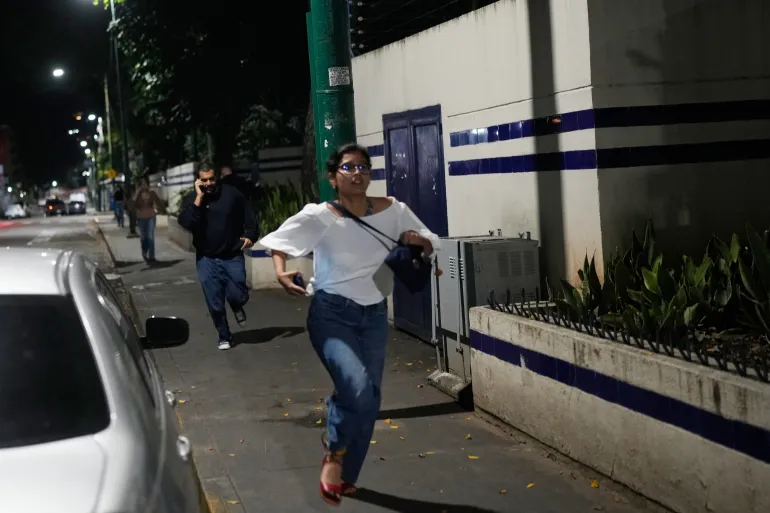
Pedestrians run after explosions and low-flying aircraft were heard in Caracas, Venezuela, on Saturday, January 3, 2026 [Matias Delacroix/ AP Photo]
How did the attack unfold?
At least seven explosions were reported from Caracas, a city of more than three million people, at about 2am local time (06:00 GMT), as residents said they heard low-flying aircraft. Lucia Newman, Al Jazeera’s Latin America editor, reported that at least one of the explosions appeared to come from near Fort Tiuna, the main military base in the Venezuelan capital.
Earlier, the US Federal Aviation Administration had issued instructions to American commercial airlines to stay clear of Venezuelan airspace.
Within minutes of the explosions, Maduro declared a state of emergency, as his government named the US as responsible for the attacks, saying that it had struck Caracas as well as the neighbouring states of Miranda, Aragua and La Guaira.
The US embassy in Bogota, Colombia, referred to the reports of the explosions and asked American citizens to stay out of Venezuela, in a statement. But the diplomatic mission did not confirm US involvement in the attacks. That came more than three hours after the bombings, from Trump.
Supporters of Venezuelan President Nicolas Maduro embrace in downtown Caracas, Venezuela, on Saturday, January 3, 2026, after US President Donald Trump announced that Maduro had been captured and flown out of the country [Cristian Hernandez/ AP Photo]
What did Trump say?
In a post on his Truth Social platform, Trump said, a little after 09:00 GMT that the US had “successfully carried out a large scale strike against Venezuela and its leader, President Nicolas Maduro, who has been, along with his wife, captured and flown out of the Country”.
Venezuela has not yet confirmed that Maduro was taken by US troops — but it also has not denied the claim.
Trump said that the attack had been carried out in conjunction with US law enforcement, but did not specify who led the operation.
Trump announced that there would be a news conference at his Mar-a-Lago resort in Florida at 11am local time (16:00 GMT) on Friday, where more details would be revealed.
Where did the US attack in Venezuela?
While neither the US nor Venezuelan authorities have pinpointed locations that were struck, Colombia’s Petro, in a social media post, listed a series of places in Venezuela that he said had been hit.
They include:
La Carlota airbase was disabled and bombed.
Cuartel de la Montana in Catia was disabled and bombed.
The Federal Legislative Palace in Caracas was bombed.
Fuerte Tiuna, Venezuela’s main military complex, was bombed.
An airport in El Hatillo was attacked.
F-16 Base No 3 in Barquisimeto was bombed.
A private airport in Charallave, near Caracas, was bombed and disabled.
Miraflores, the presidential palace in Caracas, was attacked.
Large parts of Caracas, including Santa Monica, Fuerte Tiuna, Los Teques, 23 de Enero and the southern areas of the capital, were left without electricity.
Attacks were reported in central Caracas.
A military helicopter base in Higuerote was disabled and bombed.
The US Navy’s Gerald R Ford Carrier Strike Group, including the flagship USS Gerald R Ford, USS Winston S Churchill, USS Mahan and USS Bainbridge, sail towards the Caribbean Sea, in the Atlantic Ocean, on November 13, 2025 [US Navy/Petty Officer 3rd Class Tajh Payne/Handout via Reuters]
What led to these US attacks on Venezuela?
Trump has, in recent months, accused Maduro of driving narcotics smuggling into the US, and has claimed that the Venezuelan president is behind the Tren de Aragua gang that Washington has proscribed as a foreign terrorist organisation.
But his own intelligence agencies have said that there is no evidence that Maduro is linked to Tren de Aragua, and US data shows that Venezuela is not a major source of contraband narcotics entering the country.
Starting in September, the US military launched a series of strikes on boats in the Caribbean Sea that it claimed were carrying narcotics. More than 100 people have been killed in at least 30 such boat bombings, but the Trump administration is yet to present any public evidence that there were drugs on board, that the vessels were travelling to the US, or that the people on the boats belonged to banned organisations, as the US has claimed.
Meanwhile, the US began its largest military deployment in the Caribbean Sea in at least several decades, spearheaded by the USS Gerald Ford, the world’s largest aircraft carrier.
In December, the US hijacked two ships carrying Venezuelan oil, and has since imposed sanctions on multiple companies and their tankers, accusing them of trying to circumvent already stringent American sanctions against Venezuela’s oil industry.
Then, last week, the US struck what Trump described as a “dock” in Venezuela where he claimed drugs were loaded onto boats.
Could all this be about oil?
Trump has so far framed his pressure and military action against Venezuela and in the Caribbean Sea as driven by a desire to stop the flow of dangerous drugs into the US.
But he has increasingly also sought Maduro’s departure from power, despite a phone call in early December that the Venezuelan president described as “cordial”.
And in recent weeks, some senior aides of the US president have been more open about Venezuela’s oil: the country’s vast reserves of crude, unmatched in the world, amounted to an estimated 303 billion barrels (Bbbl) as of 2023.
On December 17, Trump’s top adviser Stephen Miller claimed that the US had “created the oil industry in Venezuela” and that the South American country’s oil should therefore belong to the US.
But though US companies were the earliest to drill for oil in Venezuela in the early 1900s, international law is clear: sovereign states — in this case Venezuela — own the natural resources within their territories under the principle of Permanent Sovereignty over Natural Resources (PSNR).
Venezuela nationalised its oil industry in 1976. Since 1999, when socialist President Hugo Chavez, Maduro’s mentor and predecessor, came to power, Venezuela has been locked in a tense relationship with the US.
Still, one major US oil company, Chevron, continues to operate in the country.
The Venezuelan opposition, led by Nobel Peace Prize laureate Maria Corina Machado, has publicly called for the US to intervene against Maduro, and has pointed to the oil reserves that American firms could tap more easily with a new dispensation in power in Caracas.
Oil has long been Venezuela’s biggest export, but US sanctions since 2008 have crippled formal sales and the country today earns only a fraction of what it once did.
Venezuelan Vice President Delcy Rodriguez speaks to the media at the Foreign Office in Caracas, Venezuela, on August 11, 2025 [Ariana Cubillos/AP Photo]
How has Venezuela’s government reacted?
While Venezuela has not confirmed Maduro’s capture, Vice President Delcy Rodrigues told state-owned VTV that the government had lost contact with Maduro and First Lady Flores and did not have clarity on their whereabouts.
She demanded that the US provide “proof of life” of Maduro and Flores, and added that Venezuela’s defences were activated.
Earlier, in a statement, the Venezuelan government said that it “rejects, repudiates and denounces” the attacks.
It said that the aggression threatens the stability of Latin America and the Caribbean, and places the lives of millions of people at risk. It accused the US of trying to impose a colonial war, and force a regime change — and said that these attempts would fail.
This combination of pictures created on August 7, 2025 shows US President Donald Trump in Washington, DC, on July 9, 2025, and Venezuelan President Nicolas Maduro, right, in Caracas on July 31, 2024 [Jim Watson and Federico Parra/AFP]
What happens to Maduro next?
In a statement posted on X, Trump’s Attorney General Pam Bondi announced that Maduro and his wife have been indicted in the Southern District of New York.
Maduro has been charged with “Narco-Terrorism Conspiracy, Cocaine Importation Conspiracy” among other charges, Bondi said. It was unclear if his wife is facing the same charges, but she referred to the Maduro couple as “alleged international narco traffickers.”
“They will soon face the full wrath of American justice on American soil in American courts,” she added.
Mike Lee, a Republican senator from Utah, earlier posted on X that he had spoken to US Secretary of State Marco Rubio, who had told him that Maduro had been “arrested by US personnel to stand trial on criminal charges in the United States, and that the kinetic action we saw tonight was deployed to protect and defend those executing the arrest warrant.”
In 2020, US prosecutors had charged Maduro with running a cocaine-trafficking network.
But US officials remain silent on the illegality of Maduro’s capture and the attacks on Venezuela, which violate UN charter principles of sovereignty and territorial integrity of nations.
Russia and Cuba, close Maduro allies, condemned the attack. Colombia, which neighbours Venezuela and has itself been in Trump’s crosshairs, said that it “rejects the aggression against the sovereignty of Venezuela and of Latin America” – even though Bogota itself does not recognise Maduro’s government.
Most other nations have been relatively muted in their response to the US aggression so far.
Venezuela’s Interior Minister Diosdado Cabello, left, Defence Minister Vladimir Padrino Lopez, second from left, and Vice President Delcy Rodriguez, centre, seen here at a ceremony commemorating the 80th anniversary of the Soviet Union’s victory over Nazi Germany in World War II in Caracas, Venezuela, on Tuesday, May 13, 2025. Rodriguez, Cabello and Lopez are among the leaders widely seen as Maduro’s closest aides [Cristian Hernandez/AP Photo]
What’s next for Venezuela?
Constitutionally, Rodriguez, the vice president, is next in line to take charge if Maduro indeed has been plucked out of Venezuela by the US.
Other senior leaders seen as close to Maduro and influential within the Venezuelan hierarchy include Interior Minister Diosdado Cabello, National Assembly President — and Delcy’s brother — Jorge Rodriguez, and military chief General Vladimir Padrino López.
But it is unclear whether the state apparatus that Chavez and Maduro carefully built over a quarter century will last without them.
“Maduro’s capture is a devastating moral blow for the political movement started by Hugo Chavez in 1999, which has devolved into a dictatorship since Nicolas Maduro took power,” Carlos Pina, a Venezuelan analyst based in Mexico, told Al Jazeera.
If the US does engineer — or has already engineered — a regime change, the opposition’s Machado could be a front-line candidate to take Venezuela’s top job, though it is unclear how popular that might be. In a November poll in Venezuela, 55 percent of participants were opposed to military intervention in their country, and an equal number were opposed to economic sanctions against Venezuela.
Trump might be mistaken if he thinks the US can stay out of the chaos that’s likely to follow in a post-Maduro Venezuela, suggests Christopher Sabatini, a senior research fellow for Latin America, the US and North America programme at Chatham House.
“Assuming even if there is regime change – of some sort, and it’s by no means clear even if it does happen that it will be democratic – the US’s military action will likely require sustained US engagement of some sort,” he said.
“Will the Trump White House have the stomach for that?”
The reported capture of Venezuelan president evokes previous eras when other leaders were seized by the US.
President Donald Trump’s claim that the United States has captured his Venezuelan counterpart Nicolas Maduro and his wife amid “large scale” attacks on Venezuela, has stunned the world.
Venezuela’s Vice President Delcy Rodriguez says the government does not know the whereabouts of Maduro and his wife, Cilia Flores.
Recommended Stories
list of 4 itemsend of list
In an audio message broadcast on state television on Saturday, Rodriguez said the government was demanding proof that Maduro and Flores are still alive.
The rapidly escalating developments follow repeated deadly strikes by US forces in the Caribbean Sea and eastern Pacific Ocean on what Washington claims are drug-smuggling boats, and an attack on a docking area for alleged Venezuelan drug boats.
The reported capture of Maduro evokes previous eras when other leaders, such as Panama’s former military leader Manuel Noriega and former Iraqi President Saddam Hussein, were seized by the US.
Manuel Noriega
In another direct intervention into Latin America, the US invaded Panama in 1989 to depose military and de facto leader Manuel Noriega, citing the protection of US citizens in Panama, undemocratic practices, corruption and the illegal drug trade.
Before attacking Panama, the US indicted Noriega for drug smuggling in Miami in 1988, just as it has targeted Maduro.
Noriega forced Nicolas Ardito Barletta to resign in 1985, cancelled the elections in 1989 and backed anti-US sentiment in the country, before the operation took place.
The US foray into Panama was at the time the largest US combat operation since the Vietnam War. The US government trotted out various justifications for the operation, such as improving the lot of the Panamanians by hauling Noriega off to the US to face drug-trafficking charges.
When the general began to show signs of being less obliging to US regional designs, however, he was rendered persona non grata by Washington.
He was tried on the Miami indictment after being flown to the US and was imprisoned there until 2010, when he was extradited to France to face another trial. France then sent him back to Panama a year later.
Noriega died in prison in Panama in 2017, where he was serving a sentence for his crimes.
Saddam Hussein
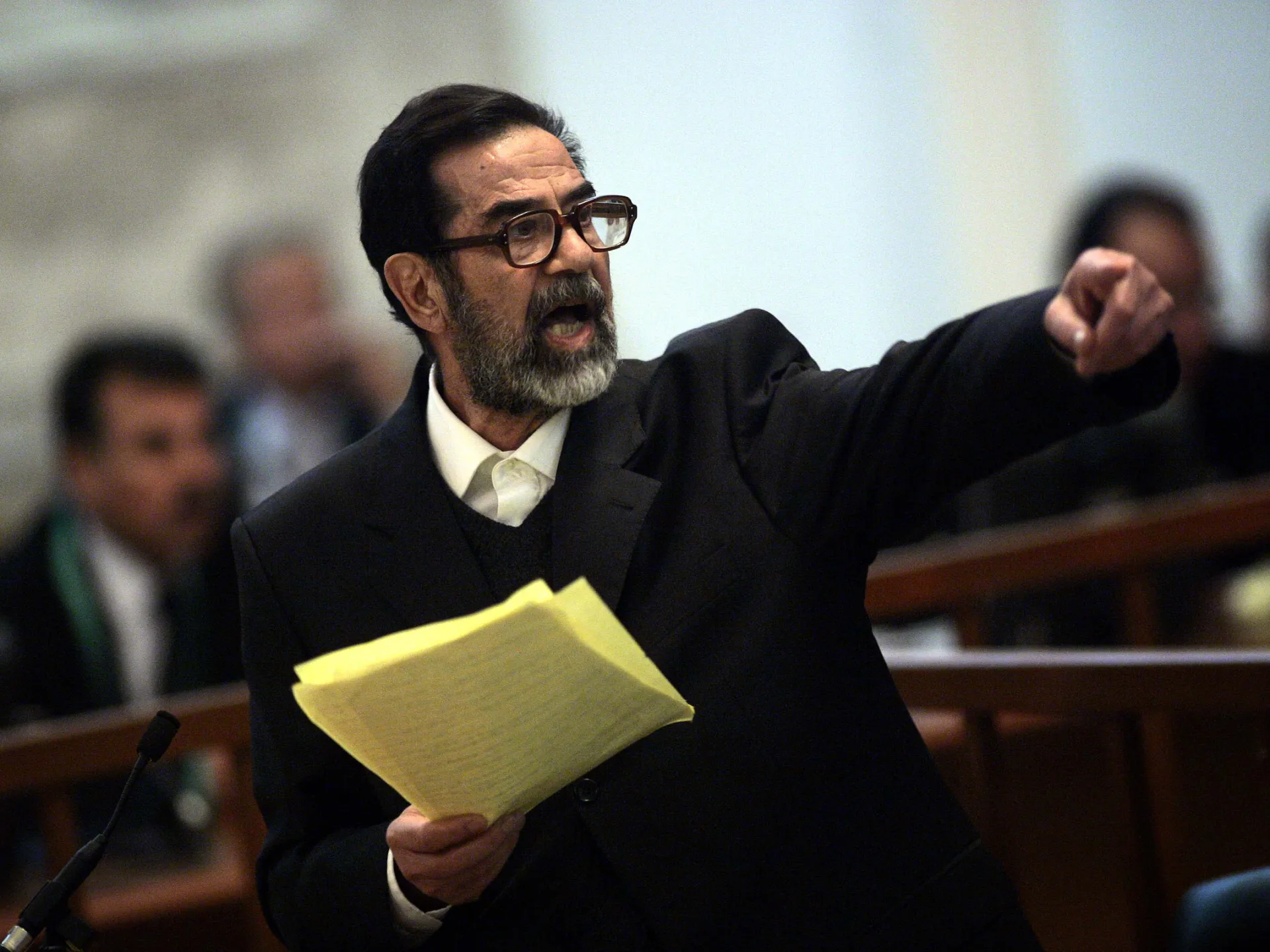
Iraqi President Saddam Hussein was captured by US forces on December 13, 2003, nine months after the US-led invasion and occupation of Iraq started based on false intelligence of Baghdad possessing weapons of mass destruction (WMD).
The US also claimed in the build-up to the 2003 war, without basis, that Saddam supported armed groups like al-Qaeda.
However, no WMDs were ever found in the country.
Saddam was found hiding in a hole near his hometown of Tikrit.
He stood trial in an Iraqi court and received the death penalty, leading to his execution by hanging for crimes against humanity on December 30, 2006.
Juan Orlando Hernandez
The case of Honduras’s Hernandez demonstrates what some observers suggest is a hypocritical approach by the US.
Hernandez was captured in his home in Tegucigalpa in an operation by the US agents and Honduran forces in February 2022 – only days after he left his position as president of his country.
In April 2022, he was extradited to the US over his alleged involvement in corruption and the illegal drug trade, and in June of the same year, he was sentenced to 45 years in prison.
However, Hernandez was pardoned by US President Donald Trump on December 1, 2025.
Days later, Honduras’s top prosecutor issued an international arrest warrant for Hernandez, intensifying legal and political turmoil just days after the ex-leader walked free from a United States prison.
Venezuela leader strikes conciliatory tone while renewing claim US wants to topple government to access vast oil reserves.
Venezuela is open to negotiating a deal with the United States to combat drug trafficking, President Nicolas Maduro has said, even as he remained silent on a reported CIA-led strike on his country last week.
The latest statement, made during an interview that aired on Thursday, comes as Maduro has struck a more conciliatory tone towards the US amid Washington’s months-long sanctions and military pressure campaign.
Recommended Stories
list of 3 itemsend of list
That included, on Thursday, the release of more than 80 prisoners accused of protesting his disputed victory in the 2024 election, the second such release in recent days.
“Wherever they want and whenever they want,” Maduro told Spanish journalist Ignacio Ramonet of the idea of dialogue with the US on drug trafficking, oil and migration in an interview on state TV.
He stressed that it is time for both nations to “start talking seriously, with data in hand”.
“The US government knows, because we’ve told many of their spokespeople, that if they want to seriously discuss an agreement to combat drug trafficking, we’re ready,” he said.
Still, Maduro renewed his allegations that the US is trying to topple his government and gain access to Venezuela’s vast oil reserves through Washington’s months-long sanctions and military pressure campaign.
“If they want oil, Venezuela is ready for US investment, like with Chevron,” he added, referring to the US oil giant, which is the only major oil company exporting Venezuelan crude to the US.
Asked point-blank by Ramonet if he confirmed or denied a US attack on Venezuelan soil, Maduro said: “This could be something we talk about in a few days.”
To date, Maduro has not confirmed a US land attack on a docking facility that allegedly targeted drug boats.
For months, the US has launched numerous strikes on alleged drug smuggling boats originating from Venezuela, in what rights groups have decried as extrajudicial killings. The Trump administration has also imposed a blockade on sanctioned oil tankers entering and exiting Venezuela’s coast.
Tensions further escalated after Trump revealed earlier this week a strike on a docking area for alleged Venezuelan drug boats, in the first known attack on Venezuelan territory of the US campaign.
Trump has not confirmed widespread reports in US media that the attack was a CIA operation or where it occurred, saying only it was “along the shore”.
“There was a major explosion in the dock area where they load the boats up with drugs,” he told reporters at his Mar-a-Lago resort in Florida.
“So we hit all the boats and now we hit the area, it’s the implementation area, that’s where they implement. And that is no longer around.”
The US president has repeatedly threatened ground strikes on drug cartels in the region, which he has labelled “narcoterrorists”. He has claimed, without providing evidence, that Maduro leads a trafficking organisation that aims to destabilise the US by flooding it with drugs.
However, regional experts have noted that Venezuela is not known to be involved in the illicit fentanyl trade, which far and away accounts for the highest number of overdose deaths in the US. Trump has labelled the drug a “weapon of mass destruction”.
Maduro has said the Trump administration’s approach makes it “clear” that the US “seek to impose themselves” on Venezuela through “threats, intimidation and force”.
Maduro’s interview was taped on New Year’s Eve, the same day the US military struck five alleged drug-smuggling boats, killing at least five people.
The latest attacks bring the total number of known boat strikes in the Caribbean and eastern Pacific to 35 and the number of people killed to at least 115, according to numbers announced by the Trump administration.
Venezuelans and Colombians have been among the victims.