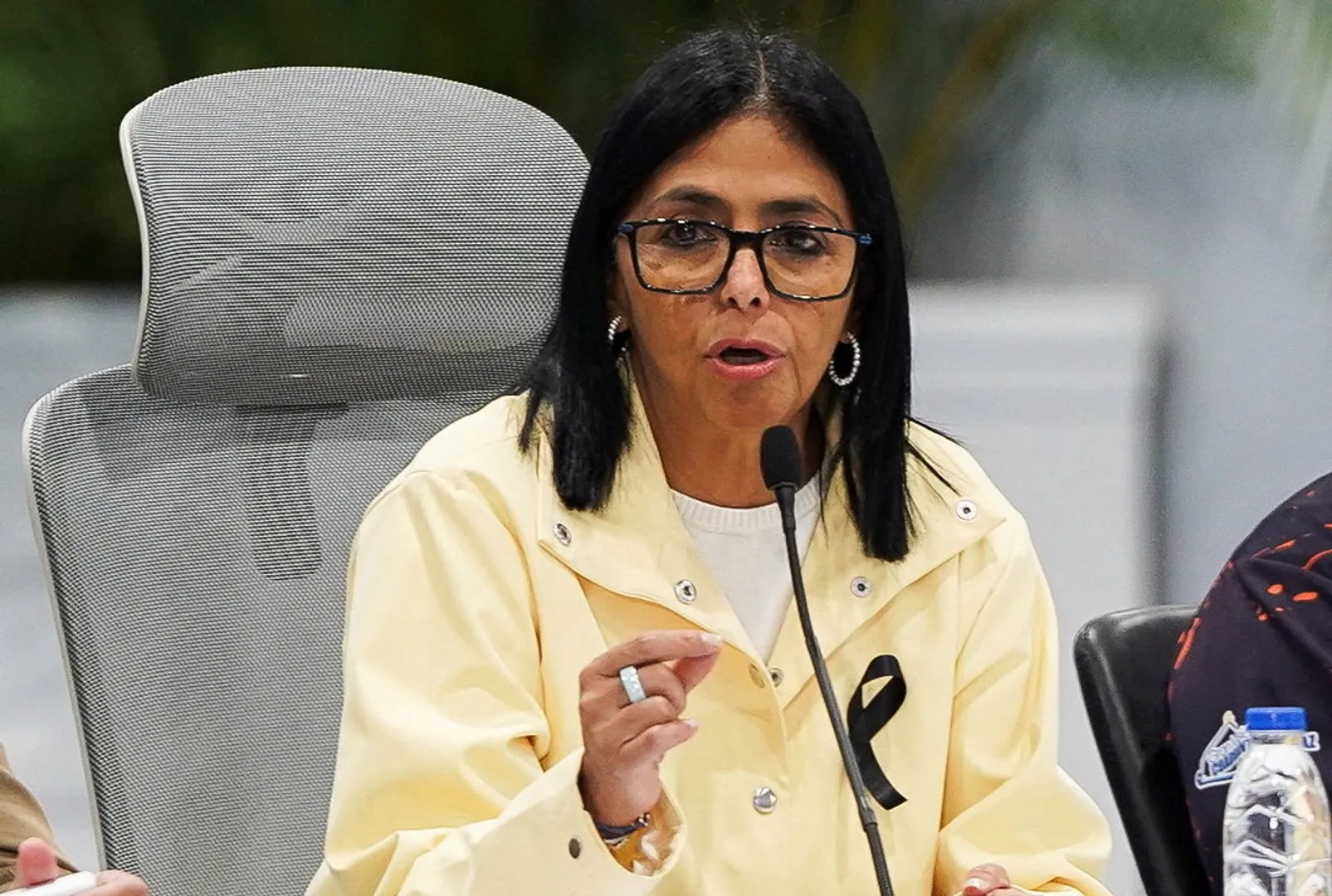
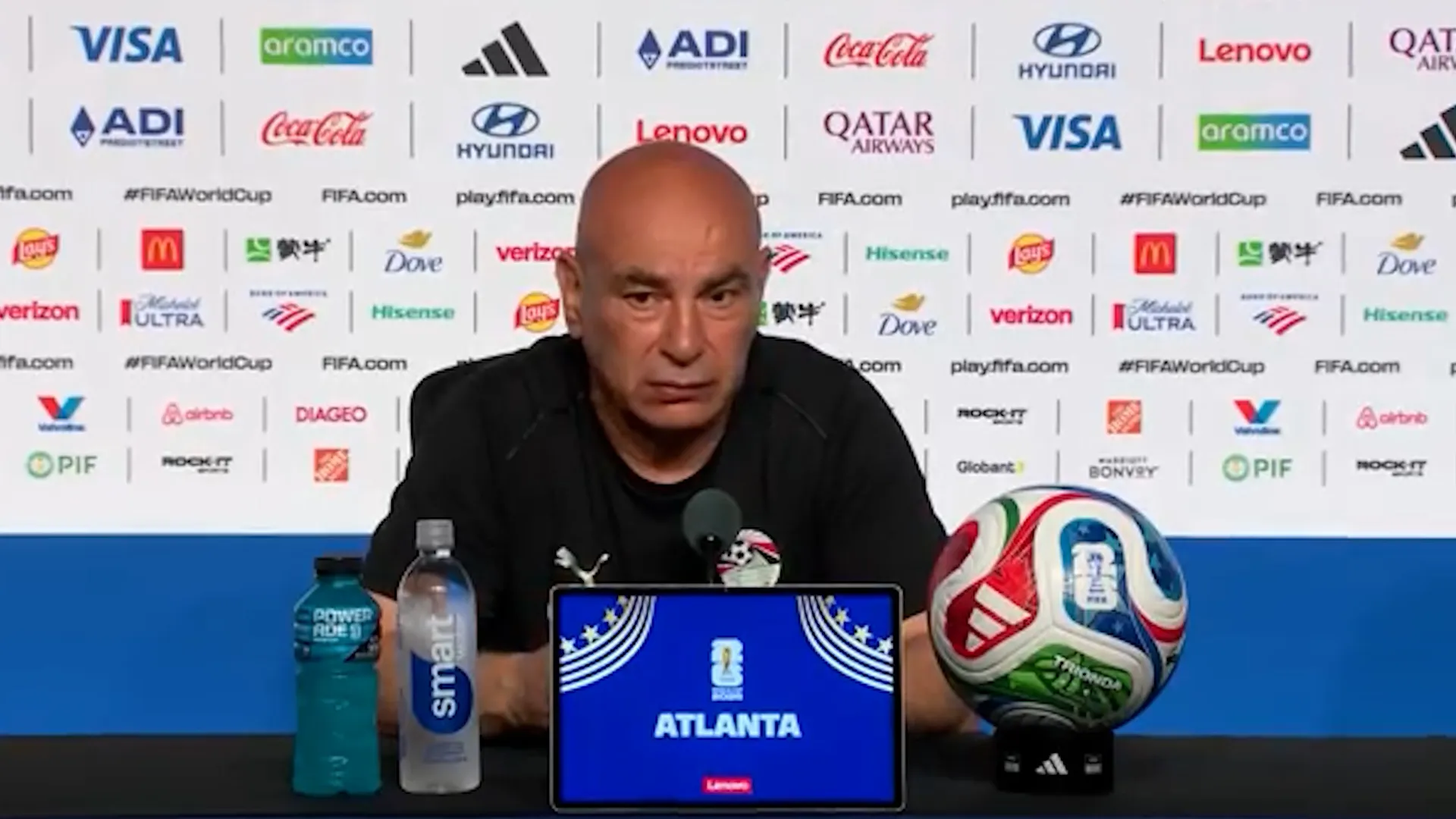
Egypt head coach Hossam Hassan has called for players and reporters at the World Cup to speak out about the killing of children in Gaza and Palestine. Hassan made the comments after his team’s controversial 3-2 defeat to Argentina in the last 16.
The 2026 World Cup has a prize pool of $871 million, the biggest in football history. How much is every country getting and where does the money come from? Al Jazeera’s Yasmeen ElTahan explains.
Four wins to go. How can your team reach the final and win the World Cup 2026? Click here to find out.
Who: Switzerland vs Colombia What: FIFA World Cup 2026 – Round of 16 Where: BC Place Vancouver, Vancouver, Canada When: Tuesday, July 7, at 1pm (20:00 GMT) How to follow: We will have all the build-up on Al Jazeera Sport from 16:45 GMT before our live text commentary stream.
Recommended Stories
list of 4 itemsend of list
The World Cup’s round of 16 concludes on Tuesday in Vancouver, as Switzerland and Colombia face off, with both aiming to match their best performances.
Colombia have established themselves as dangerous outsiders at the tournament, right from topping their group to advancing into the last-16, all while conceding just one goal.
The South Americans’ sturdy defence, though, will face a tricky test against Switzerland, whose breakout star Johan Manzambi has caught global attention.
Playing at the same venue for a third consecutive time, Switzerland has a slight advantage heading into the game. But with Colombia boasting a balance of attacking flair and disciplined defence, the Swiss will have very little space and opportunity to exploit.
Al Jazeera tells you everything about Switzerland vs Colombia:
How did Switzerland and Colombia reach the round of 16?
Switzerland topped Group B with seven points, beating Canada and Bosnia and Herzegovina, and drawing with Qatar. They sealed a 2-0 victory over Algeria in the round of 32, bringing up their first World Cup knockout victory since 1938.
Colombia topped Group K with seven points, beating Uzbekistan and DR Congo, and holding Portugal to a draw. In the round of 32, they beat Ghana 1-0.
Swiss youngster Manzambi is the man to watch
Switzerland’s 20-year-old midfielder Manzambi has arguably been their trump card at the tournament, thanks to his three goals and two assists.
Though he started his debut World Cup off the bench in the first game, the youngster has since become an integral part of the Swiss attack. From setting up chances to finishing them off in style, the swashbuckling Manzambi played an all-round role for his national side.
His breakout performance in the tournament prompted coach Murat Yakin to call him “a very precious and important player”.
“He has been constantly improving his performance. He is a team player. He’s not only a player that you like to watch … he is an all-rounder. He has many qualities and there is still so much potential in him,” Yakin added.
The Swiss attacking quartet of Manzambi, Breel Embolo, Dan Ndoye and Ruben Vargas have been in fine form, scoring eight of their team’s nine goals between them.
Should they click again and guide the team to victory, it would see Switzerland through to the quarterfinals for the first time since they hosted the tournament in 1954 – and their fourth overall (also 1934 and 1938).
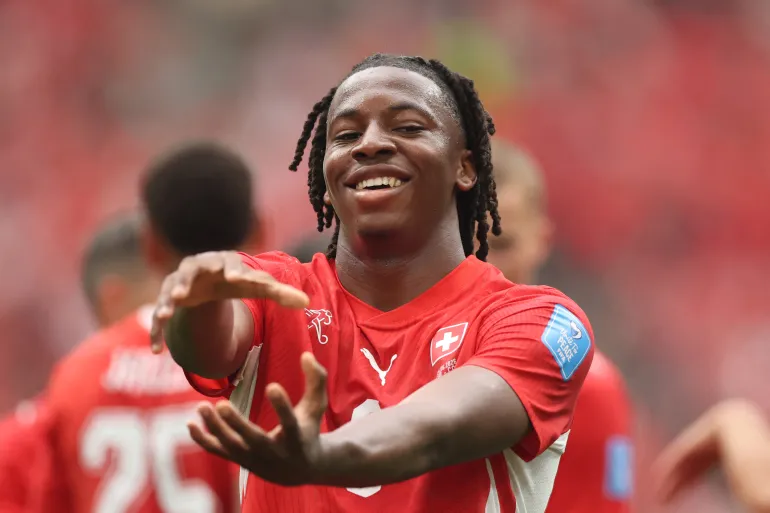
Breakout star Johan Manzambi is just 20 years old, but he’s racking up performances far beyond his years [Alex Grimm/Getty Images via AFP]
Colombia coach praises his ‘versatile’ team
Colombia coach Nestor Lorenzo emphasised his “versatile” team’s ability to adapt to situations, as they look to follow in the footsteps of the their 2014 Brazil World Cup performance that resulted in the nation’s best-ever placing in the last-eight of the tournament.
“I believe it is key for us to have those types of players, players who interpret the game with simplicity, and that they know how to behave. They grasp the game, they understand the game,” Lorenzo said.
“On top of the fact that they have the physical and technical capacity that allows for improved versatility, they understand the game. They understand the different moments, and it enables the team to grow. I think we have many players of this sort who are highly versatile.”
Colombia have conceded just once so far – against Uzbekistan in their opening game – and registered five goals in five games, with Daniel Munoz scoring twice and Bayern Munich winger Luis Diaz bagging a goal and assist each.
Colombia’s Luis Diaz was the player of the match in their opening 3-1 World Cup win over Uzbekistan [Eloisa Sanchez/Reuters]
Switzerland vs Colombia prediction
The Opta supercomputer gives Colombia a 41.9 percent likelihood of winning in regulation time, while Switzerland’s chances of winning are 28.2 percent.
The model estimates a 29.9 percent probability of the game going to extra time.
Switzerland vs Colombia: How to watch, schedule
Switzerland: RTS, SRF, RSI (10pm, Central European Summer Time)
Colombia: Caracol, RCN Television SA (3pm, Colombia Time)
United States: FOX, FOX One, Telemundo App, Telemundo Network, Peacock (3pm, Eastern Daylight Time)
United Kingdom: STV, STV Player, ITVX, ITV1 (9pm, British Summer Time)
To check the TV listings for your country, head to FIFA’s TV listing schedule here.
Colombia fans celebrate after the match as their country qualified for the round of 16 stage of the World Cup [Siphiwe Sibeko/Reuters]
Who will the winner face in the quarterfinals?
The winner of the Switzerland vs Colombia match will play either Argentina or Egypt in the quarterfinals in Kansas City in the US, on Saturday, July 11.
Switzerland vs Colombia: Head-to-head
Wednesday’s World Cup match between Switzerland and Colombia will be their fifth meeting across all competitions. Three of those four previous encounters were friendlies, and the most recent dates back to March 2007, when Colombia won 3-1.
The only competitive encounter between these teams was a group-stage match at the 1994 World Cup, which Colombia won 2-0.
However, Colombia’s record against European opposition this year has not been great – they lost to Croatia and France in March friendlies, and drew with Portugal in their final group game this month at the tournament.
Switzerland vs Colombia: Team news
Switzerland have a major fitness issue: Mazambi, Vargas and Djibril Sow, three influential players, quit training early on Monday, raising doubts about their availability.
“Obviously, if they have to quit the training session earlier, everybody is very annoyed because this is going to be a very big loss. If they might not play, it could be a huge issue for us,” coach Yakin said.
Switzerland’s Aebischer and Jaquez are out with muscle injuries, while Colombia’s Cordoba is sidelined due to a groin injury.
Breel Embolo #7 of Switzerland celebrates scoring his team’s first goal during the round of 32 match between Switzerland and Algeria [Fran Santiago/Getty Images/AFP]
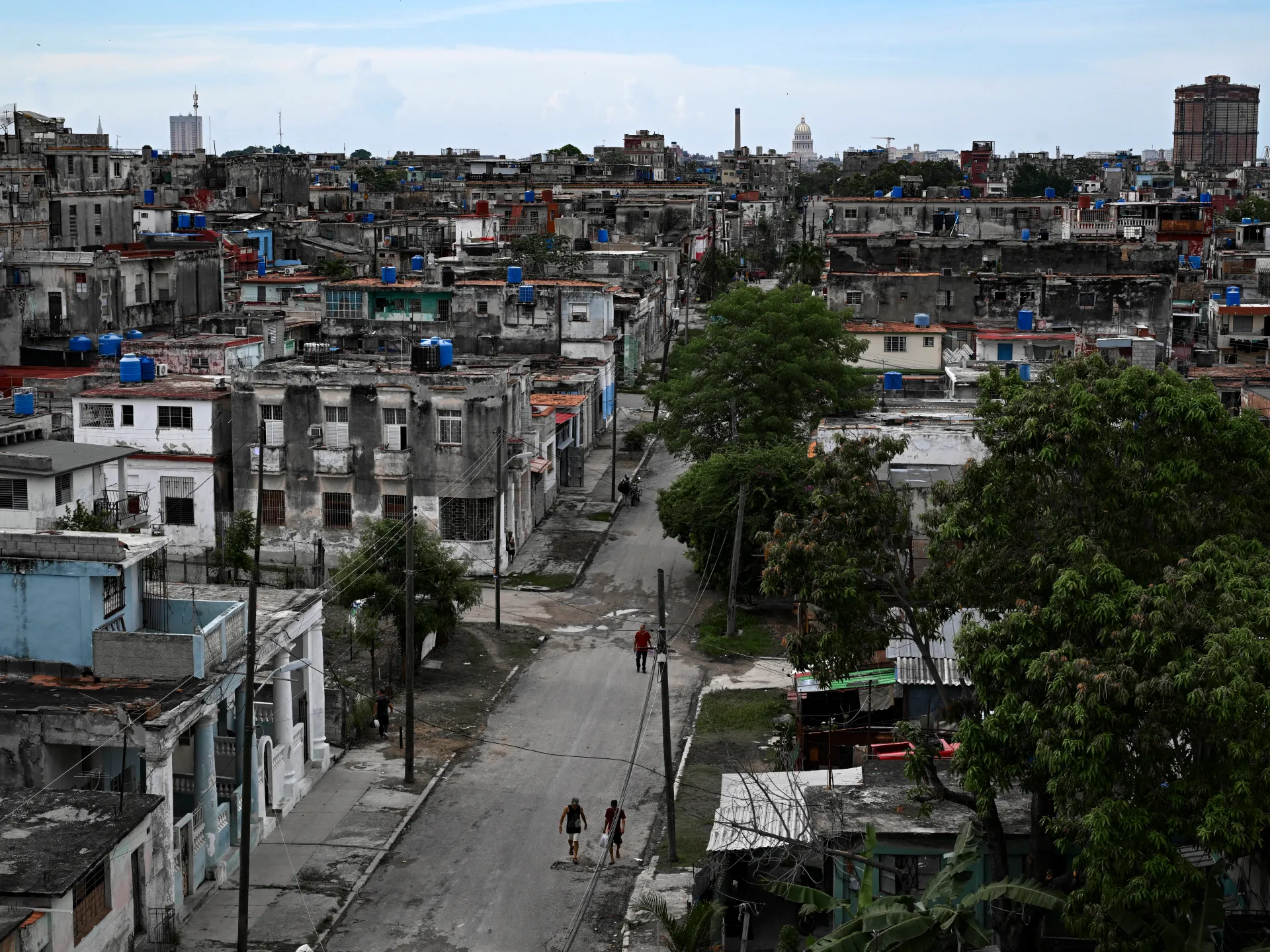
People in Cuba already faced an ongoing economic and humanitarian crisis, largely due to a US blockade.
Published On 7 Jul 20267 Jul 2026
Cuba has suffered its third nationwide power blackout since the start of the year, as the country’s fuel reserves diminish and its electric grid crumbles due to an energy crisis precipitated by the US fuel blockade.
The blackout in the country of nearly 10 million people was reported on Monday by the state-run Electric Union, which said that the cause is under investigation.
Recommended Stories
list of 4 itemsend of list
Cuba’s Energy and Mines Minister Vicente de la O Levy said protocols were quickly activated to restore electricity throughout Cuba after the outage.
“Vital services continue to be protected, amidst this complex situation exacerbated by the energy blockade we face,” he said.
Grid operator UNE said it was providing electricity to some vital services, including hospitals and food production centres, but by late afternoon was able to serve only 1 percent of the capital, Havana’s, demand.
Cuba was already struggling with fuel supplies before US President Donald Trump cut off oil deliveries from Venezuela to the island in January. But Trump’s actions, including threatening tariffs on any country that sells or provides oil to Cuba, have made things significantly worse, and deepened the island’s financial crisis. As a result, blackouts and power cuts have accelerated.
Since January, Washington has only allowed one oil tanker, from Russia, to pass its blockade and dock in Cuba, as part of a sanctions campaign aimed at ending more than six decades of communist government in Havana.
Trump has pointed to the US abduction of Venezuela’s socialist president, Nicolas Maduro, in January, and his replacement with a successor that can be pressured to work with the US, as a potential blueprint for Cuba.
Cuban President Miguel Díaz-Canel accused the US of trying to “incite social unrest by strangling Cuba’s fuel supply”.
“The actions of electrical workers in the midst of a genocidal energy blockade are heroic,” he wrote on social media.
The blackout is the eighth on the island of 9.6 million people since late 2024. It comes as the state imposes power cuts across the country – over 30 hours straight in parts of Havana and over 70 hours in some rural areas – in a desperate attempt to preserve fuel.
“Living like this is agony,” Meyboll Font, a 51-year-old self-employed social media community manager, told the AFP news agency.
Font said her Havana neighbourhood has been surviving on just “three or four hours of power a day”, but that the blackout was worse because “you never know when it [electricity] will return”.
Announcement comes days after Peru’s electoral agency certified right-wing Fujimori as winner in razor-thin race.
Published On 6 Jul 20266 Jul 2026
Left-wing candidate Roberto Sanchez has conceded to Keiko Fujimori in Peru’s presidential race, days after the electoral authority declared her the victor in last month’s run-off.
The statement on Monday caps an election season marred by logistical issues at polling sites, long vote counts and allegations of fraud.
Recommended Stories
list of 3 itemsend of list
Sanchez and his party said they “recognised that the National Elections Board had officially proclaimed the electoral results”. Sanchez had said in June he would not recognise a Fujimori presidency and would instead launch “a movement of popular and patriotic resistance”.
Fujimori and Sanchez had progressed to the June 7 run-off after outpacing 33 other candidates in the April general election.
In the final vote count, certified by the National Jury of Elections (JNE) last week, Fujimori defeated Sanchez by a razor-thin margin, winning about 9,223,000 votes to 9,173,000 for Sanchez.
Sanchez, a member of Peru’s Congress, had fostered support among rural and indigenous Peruvians, following closely in the footsteps of former president Pedro Castillo, who was impeached and arrested in 2022 after attempting to dissolve Congress.
He even wore the same style of wide-brimmed straw hat, common in the northern Andean region, as Castillo on the campaign trail.
Among other platforms, he called for the overhaul of Peru’s constitution to grant greater recognition and autonomy to the country’s varied ethnic groups.
He had also called for state oversight of natural resources and for increased taxes on the highest earners.
As the run-off vote count stretched on for weeks, 57-year-old Sanchez repeatedly alleged voting irregularities and fraud. Election monitors countered the claims, saying no proof had emerged.
Fujimori ran on a tough-on-crime platform, but vowed to unite the country after her win.
She was among several right-wing candidates supported by the administration of US President Donald Trump, which has taken a militaristic approach to fighting organised crime in Latin America.
The 51-year-old is the daughter of former President Alberto Fujimori, who was jailed for human rights abuses before he died in 2024.
Peru has seen years of political churn, with Fujimori set to become Peru’s ninth president in 10 years when she takes office later this month.
She begins amid a period of government transformation, with the country set to reconstitute its legislature into two bodies, the Senate and the Chamber of Deputies.
The Senate was dissolved in the 1990s by Fujimori’s father, creating a unicameral system that critics charged made impeaching a president too easy and common.
President Lula accuses Jair Bolsonaro’s son, now a presidential hopeful, of helping triggered proposed US tariffs.
Published On 6 Jul 20266 Jul 2026
Brazilian presidential hopeful Flavio Bolsonaro, the son of former President Jair Bolsonaro, is asking the Trump administration to delay proposed tariffs on Brazilian goods until after October’s election, as he tries to counter allegations from President Luiz Inacio Lula da Silva that his family helped bring them about.
The Trump administration proposed the 25 percent tariffs in June, citing alleged trade violations including illegal deforestation and what it called unfair electronic payment practices, catching Brazil’s government by surprise. Lula had said relations were improving after a White House meeting with Trump in May.
Recommended Stories
list of 4 itemsend of list
The announcement came shortly after Bolsonaro met senior US officials in Washington, prompting accusations back home that he had invited US pressure on Brazil, with Lula accusing the right-wing senator of lobbying Washington to impose the tariffs.
He has since doubled down on those accusations, saying in a social media post last week, “the origin of all this was motivated by the Bolsonaro family itself” and that Bolsonaro’s request to delay the tariffs until after the election was “yet another act of treason against the Fatherland”.
Bolsonaro rejects the allegation, arguing instead that it’s Lula who would gain a political advantage if the tariffs were imposed.
“New US tariffs on Brazilian products would hand the current Brazilian government precisely the political victory it has been engineering,” Bolsonaro wrote in a submission to the Office of the US Trade Representative.
Brazilian officials have spent months trying to persuade Washington not to move ahead with the tariffs. But Bolsonaro says the government hasn’t gone far enough to find common ground with the US and is calling for a 180-day delay before any final decision is made.
“Brazil holds general elections in October 2026, and the political landscape that determines the viability of any negotiated resolution will be redefined within roughly ninety days,” he wrote.
So far, there is little sign his efforts are paying off. In a response to a letter Bolsonaro sent last month, Secretary of State Marco Rubio said US officials still had “substantial differences” with Brazil over the issues they say justify the proposed tariffs.
The dispute has left Brazilians split over who’s telling the truth. A Quaest poll published last month found 47 percent of Brazilians agreed with Lula’s claim that Bolsonaro had encouraged the United States to impose tariffs, while 35 percent agreed with Bolsonaro that he had tried to stop them.
Washington has until July 15 to decide whether to impose the tariffs which, if approved, would still exempt beef, coffee, rare earth minerals and aircraft parts. They would come on top of the tariffs Trump imposed last year over what he described as a “witch hunt” against Jair Bolsonaro, who was convicted months later.
Bolsonaro has made Brazil’s relationship with the United States a central part of his campaign, as Trump has taken a more active role in Latin American politics. That has included the capture of Venezuelan President Nicolas Maduro in Caracas and backing right-wing candidates across the region, including Abelardo De La Espriella, who narrowly won Colombia’s presidential election last month.
Four wins to go. How can your team reach the final and win the World Cup 2026? Click here to find out.
Who: Argentina vs Egypt What: FIFA World Cup 2026 – Round of 16 Where: Atlanta Stadium, Atlanta, Georgia, the United States When: Tuesday, July 7, at 12pm (16:00 GMT) How to follow: We will have all the build-up on Al Jazeera Sport from 12:30 GMT before our live text commentary stream.
Recommended Stories
list of 4 itemsend of list
Get ready for a spicy battle of the number 10s – a dazzling duel between Lionel Messi and Mohamed Salah, two of the greatest forwards in world football, as Argentina face Egypt in the World Cup round of 16.
Argentina have been the clear favourites in every game they’ve played at the tournament, but after being made to work for victory in the last tie, the presumption that the reigning champions are unbeatable has been broken.
Egypt, on the other hand, are on a historic run of their own, gearing up to chase a first-ever quarterfinal berth. One of only two African sides remaining at the tournament, they carry the hopes of the continent and have gone toe-to-toe with the world’s best.
Al Jazeera tells you everything about Argentina vs Egypt:
How did Argentina and Egypt reach the round of 16?
Argentina topped Group J with a perfect record of nine points, winning against Austria, Algeria and Jordan. In the round of 32, they were pushed to extra time by a resilient Cape Verde team before edging past the tournament debutants 3-2 in a thrilling contest.
Egypt came second in Group G with five points, drawing with Belgium and Iran and winning against New Zealand. They defeated Australia 4-2 on penalties in the round of 32 after the game was tied 1-1 following extra time. It marked the first-ever World Cup knockout for Egypt, who made their tournament debut in 1934.
Argentina legend Messi, France’s Kylian Mbappe and Norway’s Erling Haaland are all tied at seven goals, with Mbappe leading the list, his two assists breaking the tie.
If Messi – who has scored in each of Argentina’s four games so far – finds the net against Egypt, not only will he become the Golden Boot leader, but he will also join Guillermo Stabile (1930) as the only Argentina player to score eight goals in a single World Cup.
But ahead of Tuesday’s last-16 tie, there have been concerns about fatigue, and it’s not just limited to Messi.
Argentina were forced to play extra time by Cape Verde in the heat in Miami in the US on Friday, while Egypt-Australia went all the way to penalties on the same day. Those gruelling knockout games left both teams with little time for rest and recovery.
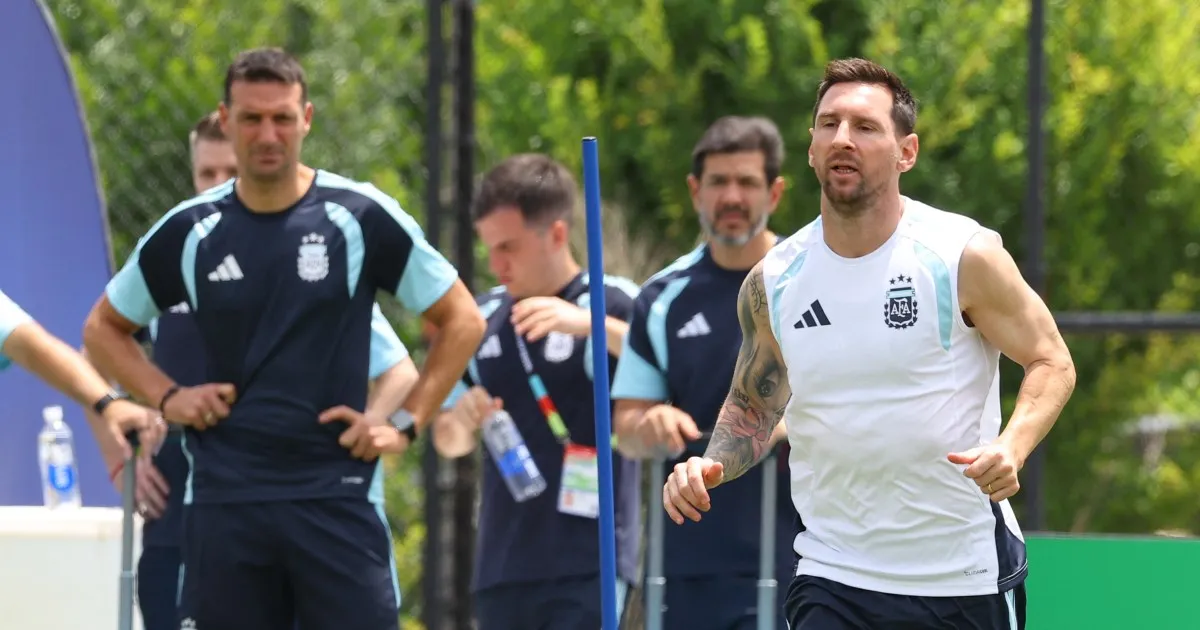
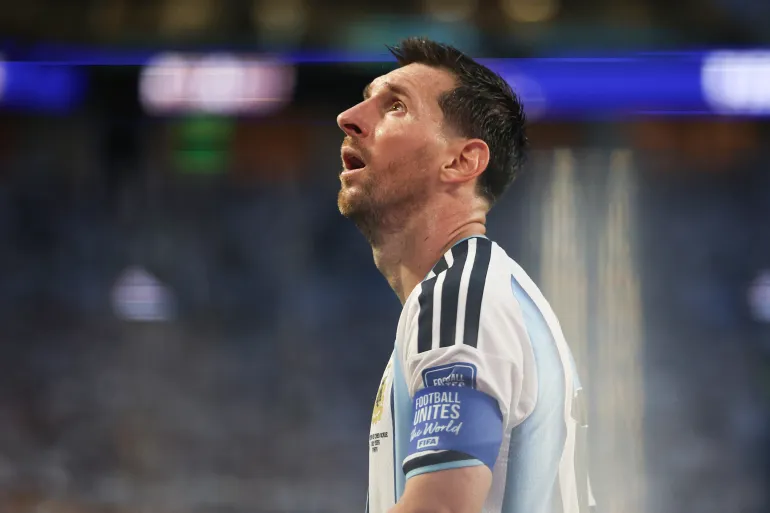
Argentina’s 39-year-old forward Lionel Messi played the full 120 minutes against Cape Verde [AFP]
Messi admitted after the last match that he was tired, and he lamented Argentina’s inability to press their opponents high up the pitch.
Meanwhile, Egypt relied heavily on their defensive organisation and looked to Salah and Manchester City forward Omar Marmoush to launch counterattacks against Australia, an approach they could employ again against Argentina.
For Egypt, a fully fit Salah could be crucial after the attacking winger entered the Australia match with a hamstring concern and at times appeared reluctant to sprint at full speed during a draining 120-minute contest.
If Egypt stun Argentina, they will become the fifth African nation to reach the World Cup quarterfinals after Cameroon (1990), Senegal (2002), Ghana (2010) and Morocco (2022 and 2026).
Argentina vs Egypt prediction
The Opta supercomputer gives Argentina a 69.1 percent likelihood of winning in regulation time, while Egypt’s chances of winning are 12.3 percent.
The model estimates a 18.5 percent probability of the game going to extra time.
Argentina vs Egypt: Kickoff, TV schedule
Argentina: TyC Sports, TyC Sports Play (1pm, Argentina Standard Time)
United Kingdom: BBC One, BBC iPlayer (5pm, British Summer Time)
To check the TV listings for your country, head to FIFA’s TV listing schedule here.
Argentina supporters are hoping for a back-to-back World Cup triumph [Roberto Schmidt/AFP]
Who will the winner face in the quarterfinals?
The winner of the Argentina vs Egypt match will play either Switzerland or Colombia in the quarterfinals in Kansas City in the US on Saturday, July 11.
Argentina vs Egypt: Head-to-head
This will be the first World Cup match between Argentina and Egypt.
Their last meeting was a friendly in Cairo in 2008, which Argentina won 2-0.
Argentina are on an eight-game winning run against African nations at the World Cup, with two of those coming in this edition (3-0 vs Algeria, 3-2 vs Cape Verde). No side in the competition’s history has won three games against African opponents in a single edition before.
Argentina vs Egypt: Team news
Argentina’s Gonzalez (ankle injury) and Medina (physical discomfort) are doubtful, while Egypt’s Fatouh (muscle) and El Fotouh (hamstring) are out injured.
Argentina’s predicted lineup
(4-4-2): E Martinez (goalkeeper); Molina, Romero, L Martinez, Tagliafico; De Paul, Mac Allister, Fernandez, Almada; Messi, Lautaro
Fifty years ago, in 1976, the median age of the global population was just under 21 years. That means of the 4.1 billion people on Earth at the time, about half were younger than 21 and half were older. Today the median age is 31, and by 2050 the United Nations projects it will reach 36. The typical human being is steadily getting older.
What is the replacement rate?
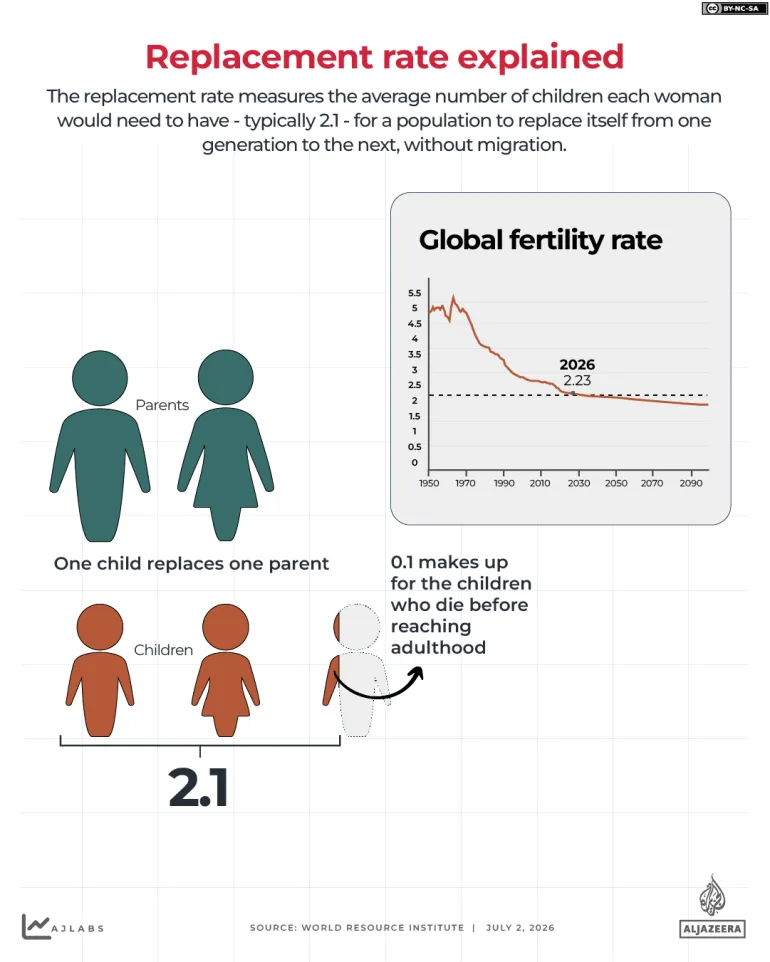
The engine of that change is fertility. Demographers measure it using the total fertility rate, the average number of children a woman would have over her lifetime at current birth rates. The figure that matters most is the replacement rate, generally put at about 2.1 births per woman. That is the level at which a generation exactly replaces itself, keeping the population stable over the long run without immigration. The slight margin above two accounts for children who do not survive to adulthood.
[Al Jazeera]
The global fertility rate today is about 2.2, barely above replacement and down from approximately five in the 1960s. The United Nations expects it to reach the replacement level around the middle of this century and to keep falling after that. More than half of all countries are already below replacement, including China, the United States, India, Japan and most of Europe.
In practical terms, a fertility rate below replacement means that, over time, each generation is smaller than the one before it. Fewer babies today means fewer working-age adults tomorrow, and a growing share of retirees supported by a shrinking workforce. That is the pressure now facing pension systems, health services and labour markets from Italy to South Korea. It is why population ageing, more than raw numbers, is becoming the defining demographic story of the century.
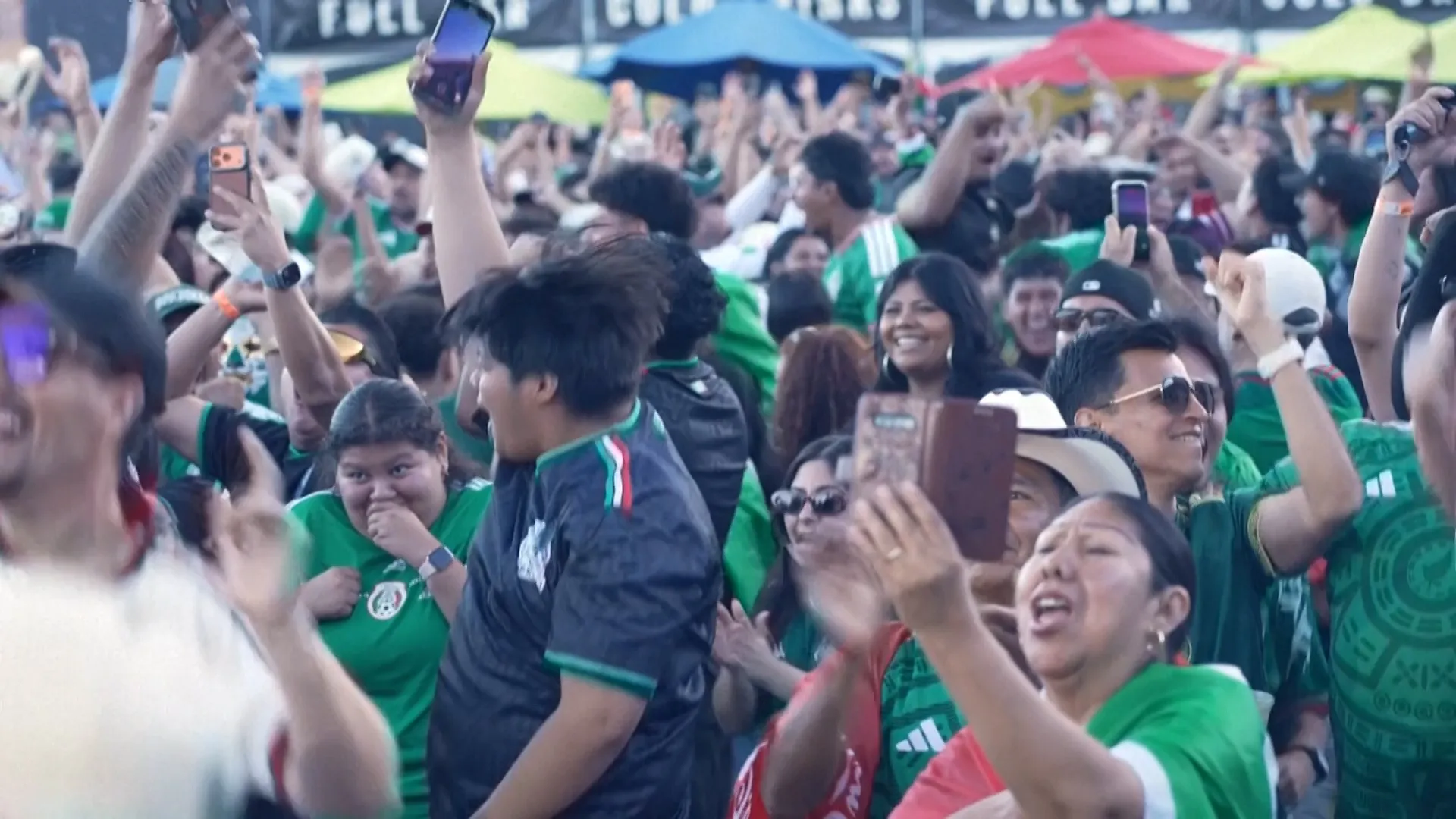
Mexico’s World Cup dream ended with a thrilling 3-2 loss to England in the Round of 16, but many of the host nation’s fans celebrated their team despite the loss.
The FIFA World Cup 2026 quarterfinals lineup as it builds, with match kickoff times and locations.
Published On 6 Jul 20266 Jul 2026
As the biggest FIFA World Cup in history enters its fourth week, fewer than half of the 48 teams that kicked off the tournament remain in contention to win the title in North America.
The quarterfinals are now under way, with four of the last eight teams confirmed on the second day of action in the round of 16.
Some nations confirmed for the third stage of the knockouts recorded comfortable victories, while others had late scares but pulled through.
Here’s what you need to know about the World Cup’s quarterfinal stage:
Which teams are in the quarterfinals so far?
Morocco
France
Norway
England
What’s the schedule of the remaining round-of-16 matches?
Portugal vs Spain on Monday, July 6, at 2pm (19:00 GMT) – Dallas Stadium, United States
USA vs Belgium on Monday, July 6, at 5pm (00:00 GMT, Tuesday) – Seattle Stadium, US
Switzerland vs Colombia on Tuesday, July 7, at 1pm (20:00 GMT) – BC Place Stadium, Vancouver, Canada
Argentina vs Egypt on Tuesday, July 7, at 12pm (16:00 GMT) – Atlanta Stadium, US
What’s the full match schedule for the World Cup quarterfinals?
France vs Morocco on Thursday, July 9, at 4pm (20:00 GMT) – Boston Stadium, US
USA/Belgium vs Portugal/Spain on Friday, July 10, at 12pm (19:00 GMT) – Los Angeles Stadium, US
Norway vs England on Saturday, July 11, at 5pm (19:00 GMT) – Miami Stadium, US
Argentina/Egypt vs Switzerland/Colombia on Sunday, July 12, at 8pm (01:00 GMT, Monday) – Kansas City Stadium, US
Where can you watch the World Cup games?
Fans in the US can watch every match in English on Fox and FS1, with all 104 games also available to stream on Fox One and the Fox Sports app.
Spanish-language coverage in the US is available on Telemundo and Universo, with streaming through Peacock. Cord-cutters can also watch via services that carry Fox and FS1, including Fubo, Hulu + Live TV, YouTube TV and DirecTV.
In Canada, TSN is the primary English-language broadcaster, with selected matches also shown on CTV. French-language viewers can follow the action on RDS and RDS2.
England hands Mexico their first World Cup loss at Estadio Azteca, winning 3-2 to reach the 2026 quarterfinals.
Published On 6 Jul 20266 Jul 2026
Jude Bellingham’s double inflicted a rare defeat on Mexico at their Estadio Azteca as 10-man England won a nerve-racking World Cup classic 3-2 to reach the quarterfinals.
Harry Kane also scored from the penalty spot as the Three Lions overcame Jarell Quansah’s red card, high altitude, and a fervent home support on Sunday to keep their quest for a first major tournament win in 60 years alive.
Recommended Stories
list of 4 itemsend of list
England have relied on Bellingham and Kane throughout the tournament, and the duo has carried them into a last-eight showdown with Erling Haaland’s Norway.
Bellingham struck twice in 98 seconds in the first half to condemn Mexico to just a third defeat in 90 matches at the Azteca.
Julian Quinones and Raul Jimenez reduced the Mexican arrears, but they fell short of a place in the quarterfinals.
Victory also helped to erase some of England’s nightmarish memories at the Azteca in the quarterfinals of the 1986 World Cup, when Diego Maradona scored a double for Argentina, including the infamous “Hand of God” goal.
Sunday’s match was delayed by an hour after a thunderstorm and heavy rain lashed the Mexican capital for hours before the planned 6pm (00:00 GMT) kickoff time.
Despite the sodden conditions, more than 80,000 fans crammed into the stadium to create a deafening noise.
England coach Thomas Tuchel was wary of a fast start from Mexico as his side adjusted to the altitude of 2,240 metres (7,350 feet) above sea level.
Mexico had flown out of the traps when they won a World Cup knockout game for the first time in 40 years against Ecuador 2-0 on Tuesday.
This time, England managed to keep Javier Aguirre’s side at bay, but they did need a crucial intervention from Jordan Pickford to deny Jimenez opening the scoring with a diving header that was headed for the bottom corner.
Tuchel made three changes to the side that needed a heroic performance from Kane to prevent an embarrassing early exit to DR Congo.
Quansah was forced to deputise at right-back with Reece James not fit to start for a third consecutive game, opening up Tuchel to criticism over his decision not to select more specialist cover in the position.
Anthony Gordon and Bukayo Saka also started out wide, and both made telling contributions.
Saka’s cross picked out Bellingham to power in a header for the first goal Mexico conceded in five World Cup games.
The hosts failed to compose themselves, as within two minutes, the Real Madrid midfielder had doubled England’s lead.
Kane’s ball across fell perfectly for Bellingham to power in his fourth goal of the tournament.
Yet what should have been a comfortable lead was nearly wiped out by half-time.
Quinones blasted in his fourth goal of the tournament to spark the Mexico rally after England failed to clear a free kick.
Jimenez drilled wide and saw another header saved by Pickford before Bellingham made a last-ditch intervention to deny Cesar Montes a certain equaliser.
Nico O’Reilly nearly restored England’s two-goal cushion as his deflected shot cannoned off the post.
Quansah was shown a straight red card on 54 minutes after a VAR review for a mistimed lunge on Jesus Gallardo.
But just six minutes later, the 10 men had added to their lead when Gordon was wiped out by Mexico goalkeeper Raul Rangel and Kane emphatically dispatched the penalty.
The England captain’s sixth goal of the tournament puts him just one behind Haaland, Lionel Messi and Kylian Mbappe in the race for the Golden Boot.
The game took another huge momentum swing when, this time, Kane was penalised for a foul inside his own box and Jimenez slotted home the penalty to set up a frantic final 20 minutes.
England, though, stood tall, defending at times frantically to resist the Mexican wave during 11 minutes of additional time, and have reached a third consecutive FIFA World Cup quarterfinal.
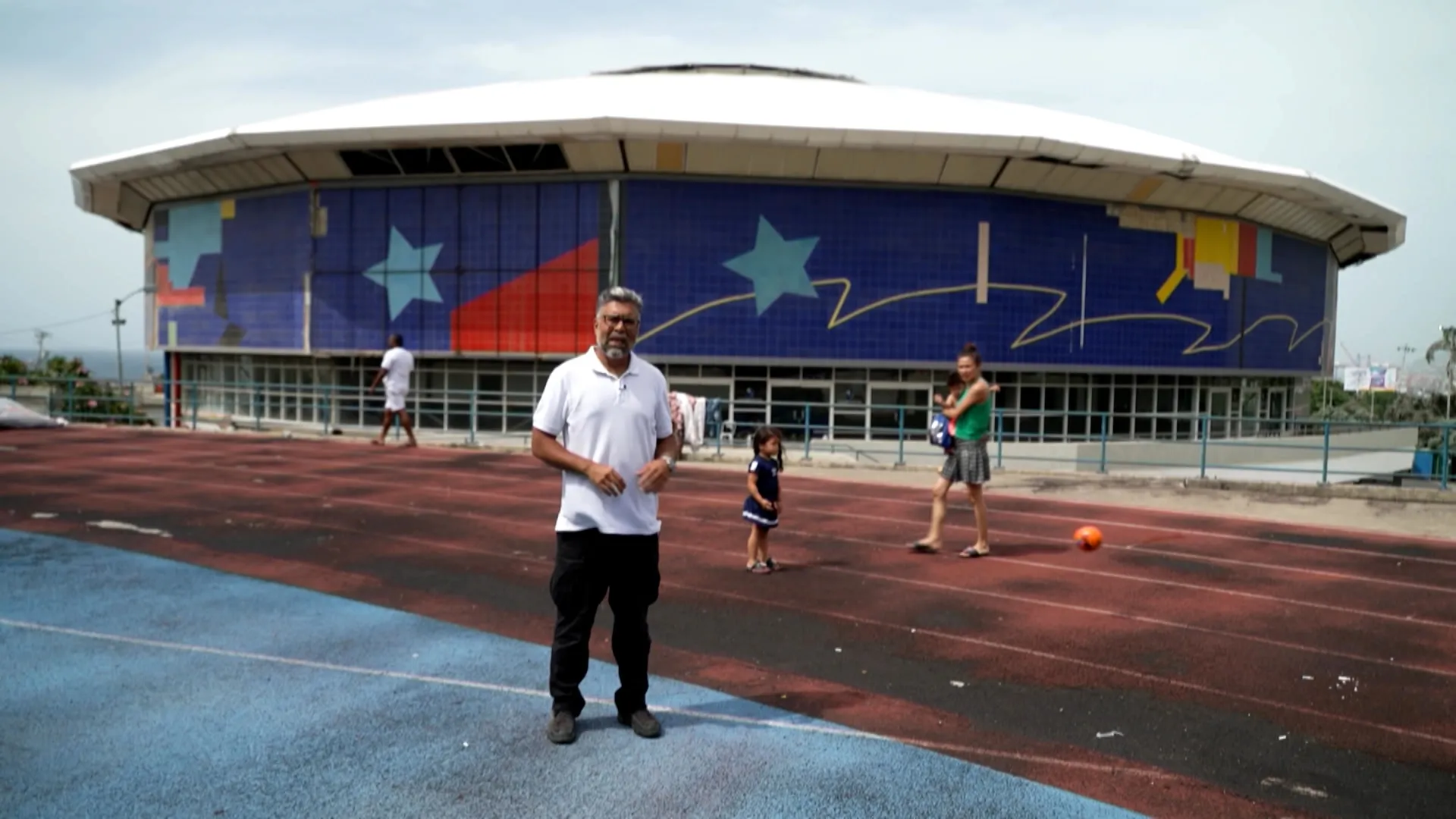
A sports stadium in La Guaira state has been turned into a makeshift home and logistics centre for thousands of victims of the Venezuela earthquakes. As Al Jazeera’s Zein Basravi reports aid organizations are planning to make this a model for other shelters.
At first, Jesus did not believe it was possible, but then he heard his father shouting out from the rubble, saying: “Don’t leave me here.”
“I said, ‘Trust me: Stay calm. Keep the kids calm over there. I’m not leaving here without you,'” Jesus recalled.
Jose had been trapped for more than an hour by that point, unsure of his fate. He and his two younger sons had survived the collapse with relatively minor injuries, but dangers remained. The debris could still shift and crush them.
“The first thing I thought of was my children. I had the little one right here,” Jose recalled, lifting his hands to his chest. “And I still had the other one. He was right next to me but buried. I couldn’t see his face; I could only see one foot and one hand.”
Still, Jose put on a brave face for his boys. A friendly voice had pierced the rubble: Jesus’s friend, the firefighter.
He had been shouting for survivors. He had also brought Jesus’s old firefighting equipment to the site.
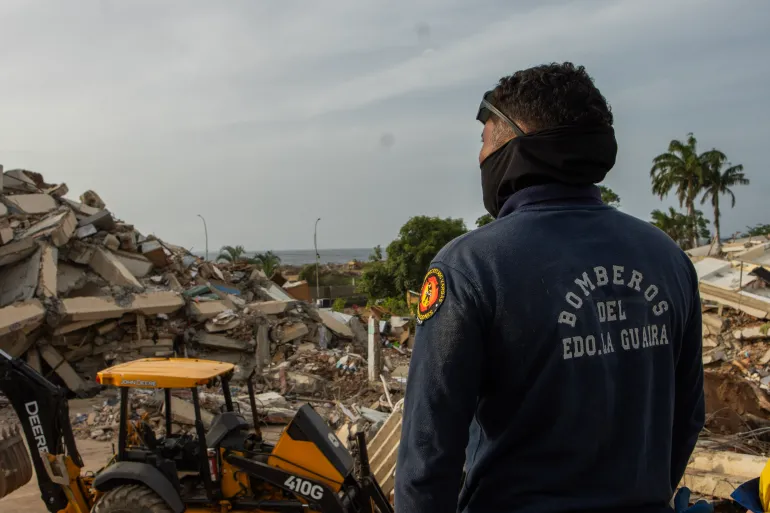
Jesus Garcia looks at the remains of the Ritasol Palace apartment complex [Alfie Pannell]
After finding out his father and brothers were alive, Jesus began desperately trying to get them out. But he realised he would have to wait until the next day for the sun to come up and, crucially, to get his hands on a jackhammer that could drill through the floors of rubble separating him from his family.
Finally, the next morning, a specialist squad from the police arrived with the gear they needed to carry out the rescue.
With the help of his firefighting team from La Guaira, who showed up to help their old comrade, Jesus was able to pull his father and two younger brothers from the rubble at about 3:30pm on June 25, more than 20 hours after the earthquakes.
He quickly swept Diego and Santiago into his arms.
“When I saw them, I hugged them, gave them a kiss, and said, ‘I love you, brother,'” Jesus recalled. “Then I stepped away for a moment and started crying.”
Jose is still shaken from the experience, which has changed his life forever. “I am someone who will be grateful for the rest of my life that I was given this opportunity. Not just me, but my two young children.”
Venezuela has marked its 215th Independence Day as citizens continue to grapple with grief following a pair of deadly earthquakes on June 24.
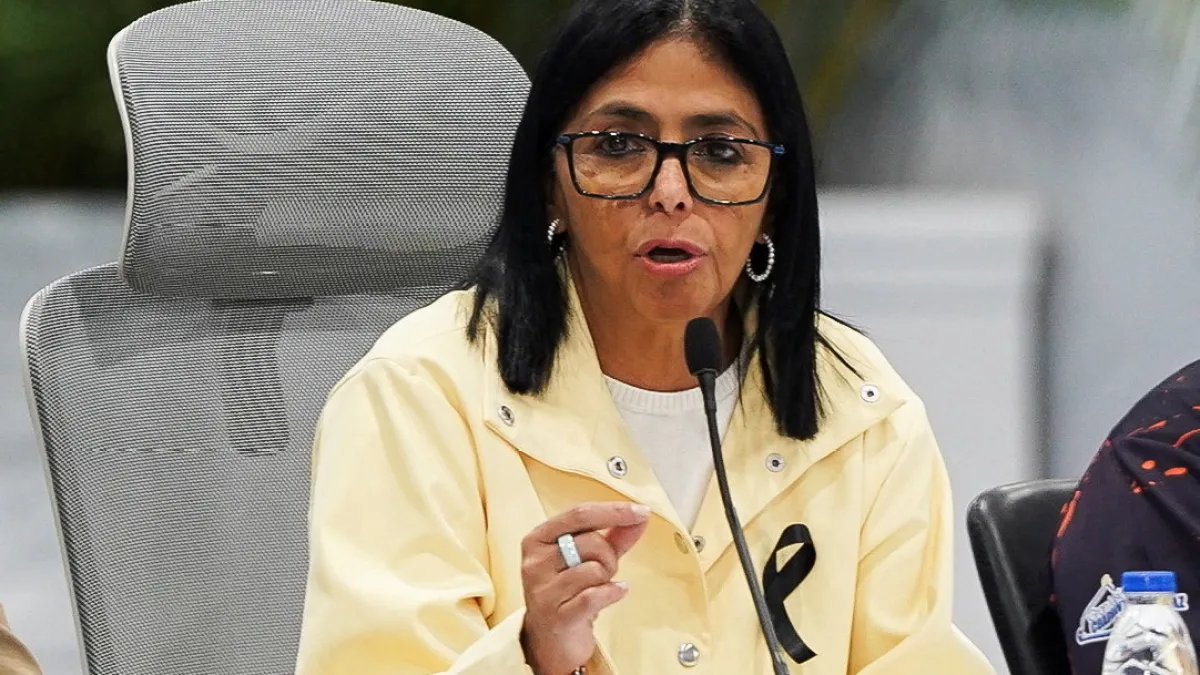
On Sunday, interim President Delcy Rodriguez sought to project strength during a military service in honour of the annual holiday.
Recommended Stories
list of 3 itemsend of list
“There will be no social unrest here,” Rodriguez said. “What we have here is deep social solidarity.”
But Rodriguez’s government has faced backlash since the twin earthquakes struck, hitting Venezuela with magnitudes of 7.2 and 7.5, respectively.
On Sunday, Venezuela’s Ministry of Communication and Information announced that it had recorded 3,342 deaths as a result of the earthquakes, with more expected. Thousands of people remain missing.
In addition, some 16,470 people are injured, while 17,345 have been left without homes.
The powerful seismic activity levelled buildings along Venezuela’s northern coastline, damaging regions like La Guaira and the Caracas metropolitan area.
Critics have accused the United Socialist Party of Venezuela, which has led the country since 2007, of chronic mismanagement and corruption.
That, they say, has left Venezuela incapable of handling a crisis of the current scale. The June 24 earthquakes are the deadliest in a century for the country, and they represent the most catastrophic natural disaster Venezuela has weathered since the flash floods of 1999.
After the earthquakes, residents reported that government aid was slow to reach the most affected areas. Some accused the government of impeding the flow of foreign assistance.
In Sunday’s remarks, Rodriguez accused critics of seeking to stir “hatred” against the state.
“Attempts are being made today to attack Venezuelan institutions,” Rodriguez said. “There can be no room for any kind of conspiracy, internal or external, from whatever source it may come.”
The earthquakes are the first major disaster the Rodriguez government has had to contend with.
Rodriguez was sworn in as acting president in January, after serving as vice president under then-President Nicolas Maduro.
But on January 3, the United States launched a military operation to abduct and imprison Maduro on drug- and weapons-related charges. He is currently facing trial in New York.
Since taking power, Rodriguez has sought to work within the demands of US President Donald Trump. Her government has overseen reforms, for example, to its nationalised mining and fuel industries allowing more foreign investment.
The Trump administration, meanwhile, has stood by Rodriguez, even amid the outpouring of criticism following the earthquakes.
Media reports have emerged that the US has repeatedly rejected requests from Venezuela’s main opposition leader, Maria Corina Machado, to help her return to the country.
Machado had been living in hiding under Maduro for fear she would be arrested for her politics. In December, shortly before Maduro’s abduction, she secretly left Venezuela to collect a Nobel Peace Prize for promoting democracy.
But Machado has yet to return, though she has said she wants to be in the country to help with disaster relief efforts.
Her political coalition, Vente Venezuela, has been organising its own volunteer effort to collect donations and distribute supplies.
In a message to mark Venezuela’s Independence Day, Machado sought to draw a parallel between the US and her country.
“Yesterday, the people of the United States celebrated the 250th anniversary of their Declaration of Independence. Mere hours separate these commemorations, reflecting far more than a coincidence of history,” she wrote.
“They remind us that our nations are bound by the same republican ideals and by a shared commitment to the defense of the free world.”
In January, Machado presented Trump with her Nobel Peace Prize medal, in what was widely seen as an attempt to curry favour with the US president.
She has repeatedly pushed for new elections in Venezuela, claiming that her party has had a mandate to lead since the 2024 presidential race.
That election saw Maduro claim a third term as president, despite published vote tallies indicating he lost the race to the opposition candidate, Edmundo Gonzalez, an ally of Machado.
“We have built an unshakable democratic legitimacy, we have defeated the regime’s lies with the truth, and we have peacefully mobilized an entire nation that today is outraged and desperate for change,” Machado wrote in her Independence Day message.
“Enduring alliances are built on truth and trust. Now is the time to move forward with determination and to carry out, with unwavering resolve, the decisive chapter of our shared strategy.”
Four wins to go. How can your team reach the final and win the World Cup 2026? Click here to find out.
Who: Brazil vs Norway What: FIFA World Cup 2026 – Round of 16 Where: New York New Jersey Stadium, East Rutherford, New Jersey, US When: Sunday, July 5, at 4pm (20:00 GMT) How to follow: We will have all the build-up on Al Jazeera Sport from 17:00 GMT before our live text commentary stream.
Recommended Stories
list of 3 itemsend of list
Two of the world’s most exciting forwards, Vinicius Jr and Erling Haaland, will light up Sunday evening in New Jersey when Brazil face Norway in a blockbuster round of 16 clash.
For all their dominance on the world stage, Brazil have historically struggled to find a way past Norway, and after four failed attempts, the Selecao will hope the fifth time is the charm.
Carlo Ancelotti’s talented side has its fair share of flaws, and having narrowly escaped elimination in the last 32 against Japan, they need an improved performance against Norway – one of the dark horses at this tournament.
Spearheaded by Haaland and Martin Odegaard, Norway arrive with bragging rights – they are one of only three countries Brazil have faced at a World Cup without registering at least one victory.
How did Brazil and Norway reach the round of 16?
Brazil finished at the top of Group C, with wins over Scotland and Haiti, and a draw with Morocco. They fought from a goal down to beat Japan 2-1 in stoppage time in the last 32.
Norway came second in Group I, winning against Iraq and Senegal and falling to France. They sealed a late 2-1 victory over Ivory Coast in the last 32 – the Scandinavian nation’s first World Cup knockout victory after previous exits to Italy in 1938 and 1998.
Can Haaland extend Norway’s dream run?
Be it for club or country, towering forward Haaland’s impact cannot be understated.
Of the 10 goals Norway have scored at the tournament, Haaland is responsible for half – numbers that are remarkable for a 25-year-old making his World Cup debut.
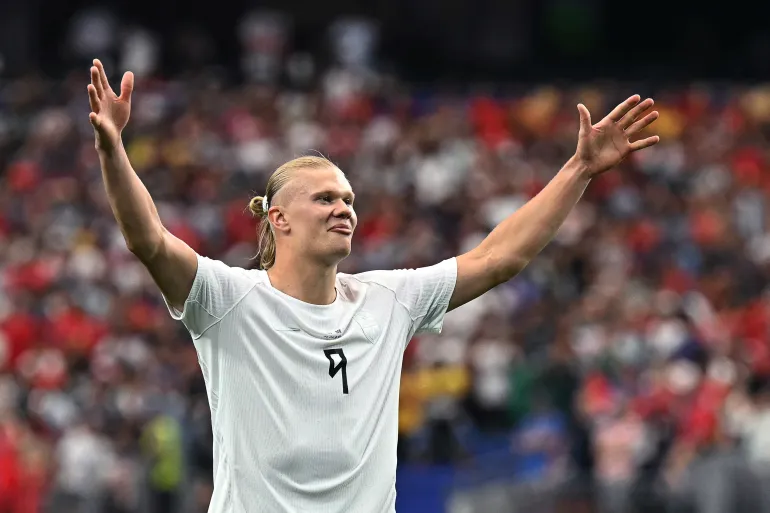
Come Sunday, Norway will need their 1.95-metre- (6.4ft)-tall, pony-tailed talisman to strike again if they are to reach the quarterfinals for the first time.
Brazil will be wary of Norway’s lethal striker Erling Haaland [Paul Ellis/AFP]
Norway could take inspiration from their 1998 World Cup side, which famously beat Brazil 2-1 in a group game. And they need not look further than their coach Stale Solbakken – a midfielder in that Norwegian squad – for words of advice.
“Brazil are favourites, of course they are, but we are hopeful that we will give them a match, and we are not playing the game for fun – we are playing to win the game and to reach the quarterfinals,” said Solbakken. “It’s possible, but it’s very difficult.”
The Norwegians will be wary of Brazil’s very own trump card Vinicius, whose four goals at the tournament have made him the team’s leading scorer and most influential player. Vinicius became the first Brazilian since Ronaldo and Rivaldo in 2002 to score in all three group stage matches at a World Cup. That was the last time Brazil lifted the trophy.
Brazil vs Norway prediction
The Opta supercomputer gives Brazil a 53.6 percent likelihood of winning in regulation time, while Norway’s chances of winning are 22.4 percent.
The model estimates a 24 percent probability of the game going to extra time.
Brazil vs Norway: Kickoff time, TV channel
Brazil: SBT, CazeTV (4pm, Brasilia Standard Time)
Norway: TV2, NRK (9pm, Central European Summer Time)
United Kingdom: ITV1, ITVX, STV, STV Player (8pm, British Summer Time)
United States: FOX, FOX One, Telemundo App, Telemundo Network, Peacock (4pm, Eastern Daylight Time)
To check the TV listings for your country, head to FIFA’s TV listing schedule here.
Norway fans do the traditional rowing celebration in the stands [Dylan Martinez/Reuters]
Who will the winner face in the quarterfinals?
The winner of the Brazil vs Norway match will face either Mexico or England in the quarterfinals in Miami on Saturday, July 11.
Brazil vs Norway: Head-to-head
Norway hold the rare distinction of never having lost to Brazil, with two wins and two draws from their four previous meetings, including a memorable 2-1 victory over Brazil in the group stage of the 1998 World Cup.
Brazil and Norway last met in a friendly in 2006, which ended 1-1.
More worryingly for Ancelotti, Brazil have been eliminated from each of their last six World Cup knockout ties against European opponents since beating Germany in the 2002 final.
Brazil vs Norway: Team news
Brazil’s Lucas Paqueta picked up a hamstring injury in the last game, while Raphinha, who also picked up the same issue in the second game, has resumed individual training and could make the bench.
Norway’s Julian Ryerson is out with a thigh injury.
Brazil’s Bruno Guimaraes has four assists at the World Cup – only Pele recorded more (six) for the five-time world champions at a World Cup [Annegret Hilse/Reuters]
How can your team reach the final and win the World Cup 2026? Click here to find out.
Who: France vs Paraguay What: FIFA World Cup 2026 – Round of 16 Where: Philadelphia Stadium, US When: Saturday, July 4, at 5pm (21:00 GMT) How to follow: We will have all the build-up on Al Jazeera Sport from 18:00 GMT before our live text commentary stream.
Recommended Stories
list of 4 itemsend of list
Kylian Mbappe’s France have been the outstanding team so far at this World Cup and will be expected to get the better of Paraguay on Saturday and extend their run to the quarterfinals.
France look a very good bet to win their third World Cup, and they are certainly expected to overcome a Paraguay team ranked 41st in the world.
After winning the trophy in 2018 and losing the 2022 final on penalties, France are hoping to become only the third team in World Cup history to reach three consecutive finals, after West Germany and Brazil.
That remains a long way off but their performances so far suggest they will take some beating.
Tuesday’s 3-0 defeat of Sweden in the last 32, in which Mbappe scored twice and Bradley Barcola once, made it four wins in four matches with 13 goals scored.
But the Paraguayans head to Philadelphia with their confidence sky-high after their victory on penalties against Germany – which led to a national holiday being declared back home.
What happened in France’s last-32 game?
Mbappe scored twice, and Michael Olise was in scintillating form as France beat Sweden 3-0.
The Real Madrid striker finished a superb move to break the deadlock just before half-time. Olise set up Paris Saint-Germain winger Barcola for the second goal on 53 minutes, and then delivered a delightful pass for Mbappe to complete a convincing victory.
Mbappe’s strikes saw him move level with Lionel Messi on six goals in the all-star golden boot race at this World Cup.
The France captain now has 18 World Cup goals in total, meaning he is just one behind Messi’s overall record of 19, a mark 27-year-old Mbappe will keep chasing.
Olise in action against Sweden [AFP]
What happened in Paraguay’s last-32 game?
The Germans trailed 1-0 at half-time to Julio Enciso’s 42nd-minute header from Matias Galarza’s cross on Monday.
It was a limp display by the four-time winners in the first period, but they drew level in the second half, when Kai Havertz scored eight minutes after the restart with a glancing header from Florian Wirtz’s ball in from the flank.
Germany then had a Jonathan Tah goal from a corner ruled out after a VAR review for a foul on Paraguay’s keeper, and with no further goal, the game went to spot kicks after extra time.
Havertz, who helped Arsenal end a 22-year wait to win the English Premier League title this season, missed the opening kick of the shootout. The forward’s side would miss three kicks in total, as Paraguay, who themselves missed two kicks, eventually prevailed 4-3.
Deschamps releases the handbrake
France have enjoyed plenty of success during Didier Deschamps’s 14 years in charge, but for a long time there was a sense that a pragmatic coach was not allowing his team to maximise their attacking potential.
Now at his last tournament before stepping down, that appears to have changed. Mbappe, Barcola, Ousmane Dembele and the brilliant Michael Olise seem unstoppable.
“There is an excellent rapport between the attacking players. They speak the same footballing language,” said Deschamps after the Sweden game.
But France’s coach says his side will not take Paraguay lightly.
“They are not here by chance. Germany are a top side, and they have that South American DNA, which means they get stuck in,” Deschamps said.
“And they have good players too. You can’t just qualify for the last 16 of the World Cup like that by chance.”
Mbappe in action against Sweden during the Round of 32 [Vincent Carchietta/Reuters]
‘We also have our own strengths’
One Paraguayan player well-known in France is Julio Enciso of Strasbourg, who scored against Germany.
He recognises that few people will expect Paraguay to win as they aim to reach the quarterfinals of the World Cup for just the second time.
“We also have our own strengths, and with our style of play, we’re going to try to make things difficult for any opponent,” said Enciso.
Enciso celebrates scoring against Germany in the last 32 [AFP]
Extreme heat warnings
One potential opponent for both teams is the weather, with temperatures in Philadelphia set to reach 37 degrees Celsius (98 Fahrenheit) on Saturday.
This match will take place in the city where the American Declaration of Independence was signed 250 years ago, but celebrations for the occasion are at risk of being affected by storms.
France have already played in Philadelphia in this World Cup, and their 3-0 win over Iraq during the group stage was interrupted for two hours because of rain and thunder.
Coping with the conditions could be a challenge, and both sides will want to avoid the draining prospect of extra time and penalties.
The last meeting of the countries at a World Cup featured extra time and turned out to be one of the most pivotal moments in the modern history of the French national team.
On their way to winning the trophy for the first time on home soil in 1998, Les Bleus – with Deschamps as captain – edged Paraguay 1-0.
France vs Paraguay: Kickoff time, TV channel
France: Bein Sports 1 (11pm, Central European Time)
United Kingdom: BBC, ITV (10pm, British Summer Time)
United States: FOX, Telemundo (5pm, Eastern Daylight Time)
To check the TV listings for your country, head to FIFA’s TV listing schedule here.
France vs Paraguay prediction
The Opta supercomputer gives France a 78.8 percent chance of winning in regulation time, while Paraguay are at 7.6 percent.
The model estimates a 13.7 percent probability that the game will go to extra time.
Head-to-head
The two countries have faced each other five times, with France winning three of the games and two ending as draws.
France beat Paraguay 5-0 in their most recent encounter – a friendly in 2017 – in which Olivier Giroud scored a hat-trick.
June 02, 2017: France 5-0 Paraguay (friendly)
June 01, 2014: France 1-1 Paraguay (friendly)
May 31, 2008: France 0-0 Paraguay (friendly)
June 28, 1998: France 1-0 Paraguay (World Cup last 16)
June 08, 1958: France 7-3 Paraguay (World Cup group stage)
Team news
Neither side has any suspensions or reported injury concerns.
Lionel Messi opens scoring but Argentina taken to extra time by Cape Verde, which threatened greatest World Cup upset.
Published On 4 Jul 20264 Jul 2026
Reigning champions Argentina needed an extra-time own goal to overcome a Cape Verde side with incredible levels of resilience 3-2 in a thrilling contest and secure their spot in the last 16 of the World Cup.
The Africans, playing in their first World Cup, had twice come from a goal down on Friday to silence the vast majority of the crowd of 64,478 packed into a hot and humid Miami Stadium.
Recommended Stories
list of 4 itemsend of list
Six minutes into the second period of extra time, Lionel Messi swung a corner into the box, and Cristian Romero rose to head home off the arm of Cape Verde centre-back Diney Borges and finally set up a date with Egypt in Atlanta next Tuesday.
Messi had, almost inevitably, given Argentina the lead in the 29th minute with his seventh goal of the tournament, but Deroy Duarte equalised just before the hour mark.
The Blue Sharks held on to send the match into an additional half hour before Lisandro Martinez lashed a sumptuous shot into the roof of the net in the second minute of the first period of extra time to put Argentina ahead again.
Cape Verde were not done yet, however, and left back Sidny Lopes Cabral curled a beautiful shot into the top corner of the net in the 103rd minute of the contest to put the scores back on level terms at 2-2.
Lopes Cabral could have equalised again after Romero’s goal, but his finely struck free kick was saved by Argentina goalkeeper Emiliano Martinez, who had to be at his best to deny Cape Verde in the dying minutes.
Cape Verde were beaten but far from outclassed by the three-times world champions as they put in a fourth magnificent display of teamwork and grit at their first World Cup.
The only one of the four World Cup debutants to make it to the last 32 and ranked 67th in the world coming into the tournament, Cape Verde had hoped to frustrate Argentina as they did Spain, Uruguay and Saudi Arabia in group-stage draws.
They succeeded, while showing no shortage of quality of their own, for much of the game with a never-say-die desperation and a neat pass-and-move game.
Cape Verde’s Sidny Lopes Cabral scores their second goal past Argentina’s Emiliano Martinez [Paul Childs/Reuters]
Messi aside, Argentina were largely bereft of ideas against an obdurate defence and Cape Verde libero Kevin Pina was the most impressive player on the park for long periods of the contest.
It was Argentina who made the breakthrough in the 29th minute, however, when Lisandro Martinez lofted a long ball over the top of the defence to the feet of Messi.
The 39-year-old maestro took a touch with the outside of his left boot and buried it in the roof of Vozinha’s net for his 20th goal over six editions of football’s global showpiece.
Cape Verde knew they would need to score to keep their World Cup campaign alive and Duarte fired a shot at goal soon after half-time that drew a diving save out of Martinez.
Just before the hour mark, captain Ryan Mendes was freed down the right, and his pass into the box found the Dutch-born midfielder, who controlled the ball with his left foot before drilling it past Martinez with his right.
Messi had a chance to put Argentina back in front four minutes later when he was played through on goal, but Vozinha stood up well to keep his shot out of the net.
One of Messi’s trademark free kicks was tipped away by Vozinha in the 72nd minute, and Cape Verde defender Pico Lopes had to intervene to prevent Enzo Fernandez from scoring 10 minutes later.
Cape Verde held on to force the dramatic period of extra time, and they will now return home heroes having put their tiny island-nation firmly on the footballing map.
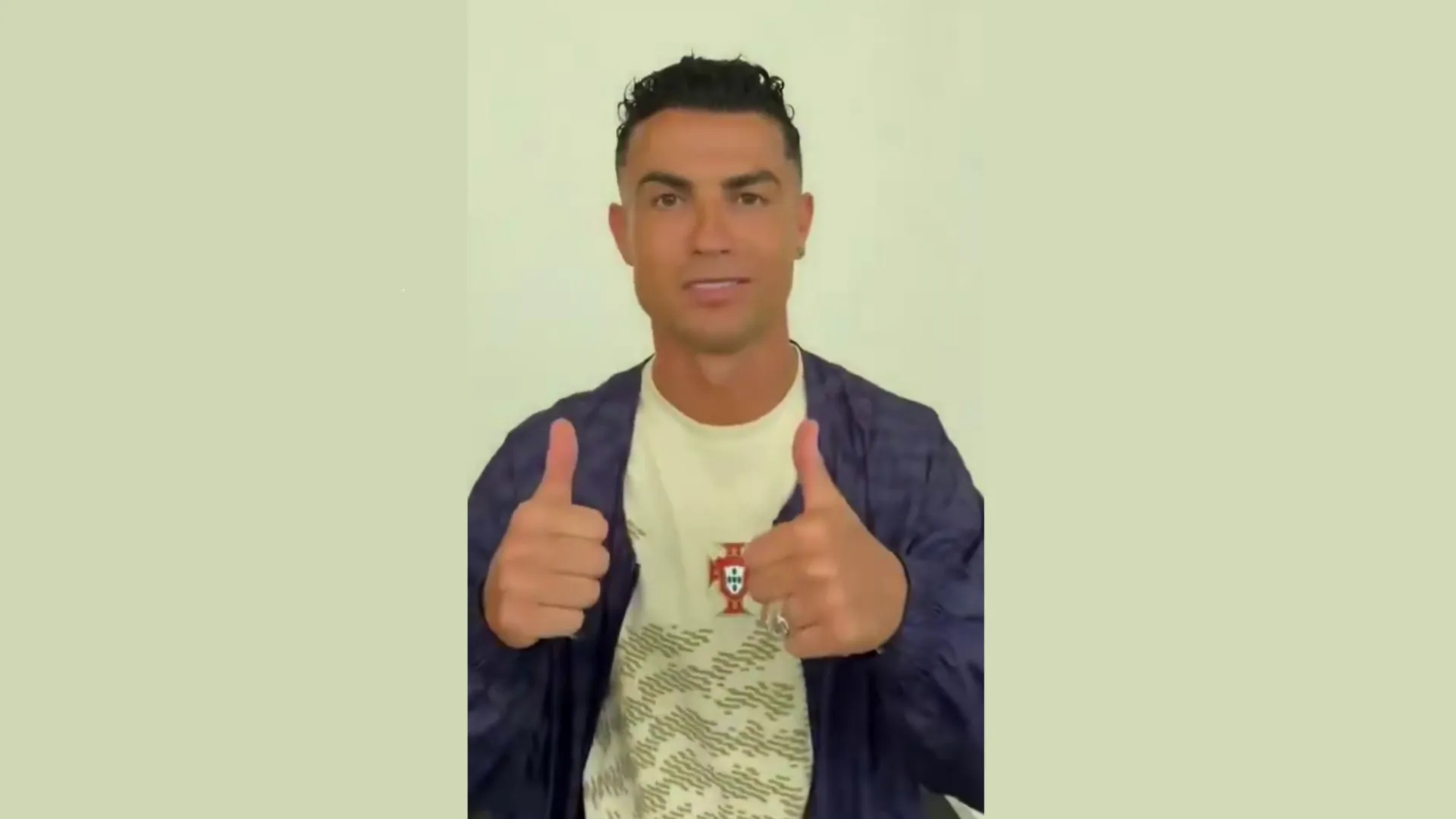
Cristiano Ronaldo has sent a message to a young Venezuelan earthquake survivor, who is recovering in hospital after having his leg amputated. Andres Mieles, who was also orphaned in the June 24 disaster, had requested a Ronaldo trading card to keep his spirits up – but the superstar himself had other ideas.
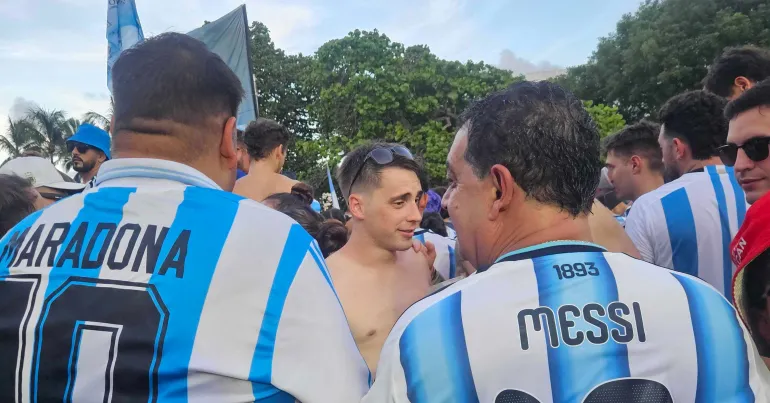
Miami, United States – Singing to the beat of the drum, jumping and dancing with joyful abandon, sporting their famous light blue and white shirts, and waving large flags bearing images of their heroes, Argentinian football fans have announced their team’s arrival in Miami in grand fashion.
A day before Argentina’s first knockout match of the FIFA World Cup 2026 – and their first fixture in the Sunshine State – the portion of Miami Beach known as Little Buenos Aires came to life as close to a thousand revellers geared up for Lionel Messi’s “homecoming” on Friday.
The defending champions and one of the pre-tournament favourites will take on the fairytale team of the World Cup – the small African island nation of Cape Verde.
The match at Miami Stadium will pit a team supported by one of the largest travelling fan bases of the tournament against an outfit that may not have strong backing in the stands but has endeared itself to the neutrals with its heroic performances.
Among Argentinian supporters, though, there’s no room for sympathy for the team punching above its weight.
For Adrian Elizondo, the logic is simple: “Messi deserves to win another World Cup.”
“It’s Messi’s last World Cup and since he’s the greatest player of all time, he deserves to walk away with another trophy,” Elizondo told Al Jazeera.
Elizondo believes there’s more to Argentina’s success than Messi.
“We have good players, a great coach and tens of thousands of people supporting the team. We make a big difference.”
A quick glance at the party-like atmosphere in Miami Beach reinforced Elizondo’s claim.
Miami, where Messi has been playing his club football since 2023, is home to at least 30,000 Argentinians, according to local census data.
Add to this mix another 20,000 fans following the team on their quest to defend the title in the United States and it becomes evident that Miami is “Messi Country”.
Argentina fans gather in Miami before their team’s World Cup match against Cape Verde, on July 2, 2026 [Hafsa Adil/Al Jazeera]
The crowd in North Beach, which is home to several decades-old Argentinian restaurants and cafes, started building more than 24 hours before kickoff and showed no sign of letting up as the evening went on.
Fans, from toddlers to supporters in their 70s, were seen walking towards the central area in Little Buenos Aires.
A small pocket of enthusiasts would begin singing “Muchachos” – the famous Argentinian football anthem – and hundreds of others would soon join in.
While the lyrics speak to the heartbreak of lost World Cup finals and past heroes, the mood among fans was festive, especially as Messi and Co broke a 36-year title drought four years ago in Qatar and emulated his hero Diego Maradona in leading them to a World Cup trophy.
For Argentina fans, Maradona and Messi are commonly considered the master and the protege. It’s part of their footballing folklore which is reinforced at every opportunity.
In Miami, as men, women and children danced on the streets, a group of supporters dressed in the shirts of Argentinian football club Newell’s Old Boys proudly stood in front of a banner connecting the two national heroes with the club.
Jorge Martinelli, second left, and other Argentina fans from Newell’s Old Boys club [Hafsa Adil/Al Jazeera]
Jorge Martinelli travelled to Miami from Rosario, the club’s base, with his friends and proudly shared some facts about his hometown.
“Messi was born in Rosario and played in Newell’s youth teams before joining Barcelona, while Maradona came to the club in 1993,” he tells Al Jazeera.
Is there any other connection between the two iconic captains? Martinelli said: “Yes, it’s a cosmic connection.
“Many here believe Maradona is guiding the team from the heavens above,” he quipped.
Amid Martinelli’s explanation of the spiritual connection between the two, fans let off crackers to celebrate Miami’s favourite footballing son’s return to his adopted home.
The Rosario resident said he does not want to contemplate a future after Messi retires from international football.
“It will create a big hole in the national team, the same as what happened after Maradona,” he said.
For now, though, he believes Messi is the favourite to do what even the great Maradona couldn’t achieve: successfully defend the title.
“He [Messi] is here. He’s playing. Maradona is watching.”
Interim President of Venezuela, Delcy Rodriguez, says 80% of the buildings that collapsed in back-to-back earthquakes were privately developed. She also confirmed that more than 2,500 people are dead and that search and rescue operations still continue.














![Argentina fans gather in Miami before their team's World Cup match against Cape Verde, on July 2 [Hafsa Adil/Al Jazeera]](https://i0.wp.com/occasionaldigest.com/wp-content/uploads/2026/07/argentina-fans-in-miami-world-cup-1783064472.jpeg?w=640&ssl=1)
![Argentina fans gather in Miami before their team's World Cup match against Cape Verde, on July 2 [Hafsa Adil/Al Jazeera]](https://i0.wp.com/occasionaldigest.com/wp-content/uploads/2026/07/20260702_201113-1-1783064477.jpg?w=640&ssl=1)