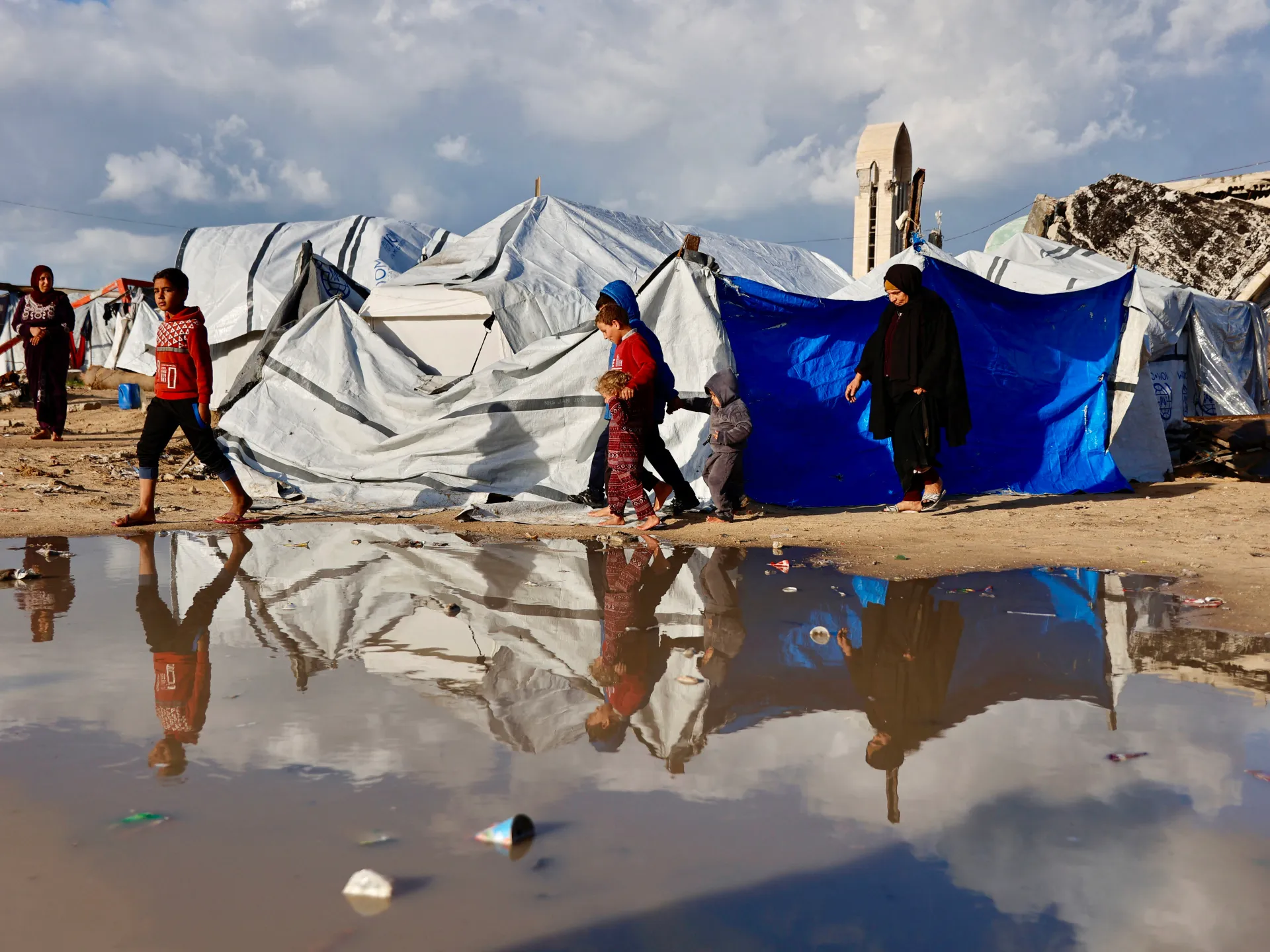
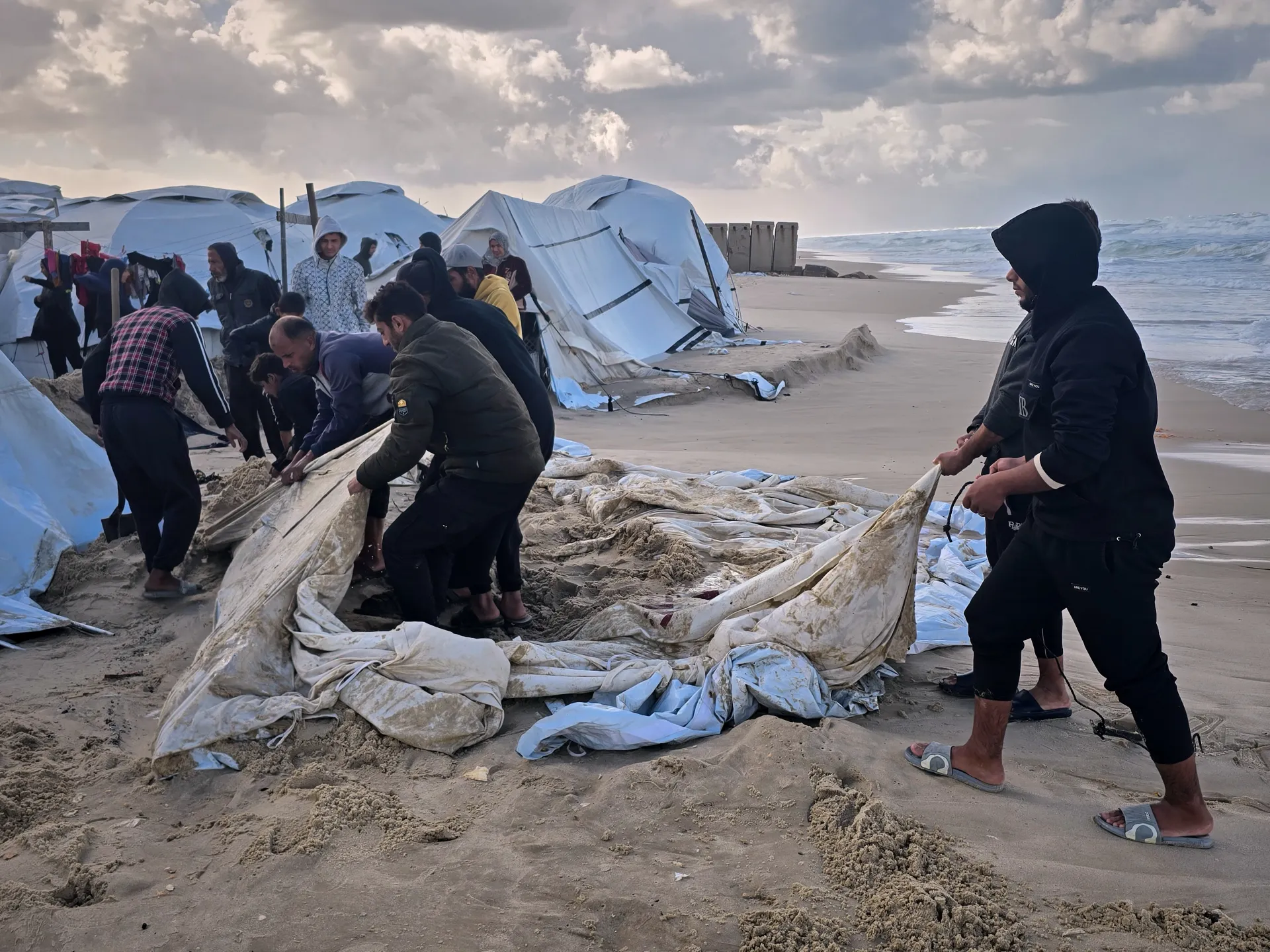
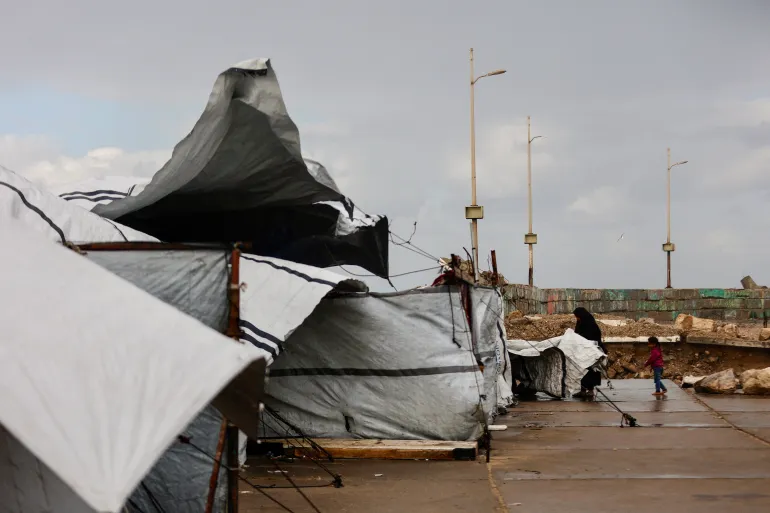
Deir el-Balah and Nuseirat, Gaza Strip – In her tent made of fabric sheets with a roof covered in white plastic tarp, Sanaa Issa tries to steal a quiet moment with her daughters.
Sanaa spoke to Al Jazeera as the new year approached, and with a ceasefire officially in place in Gaza. But, lying on a wet blanket in a tent with rain pouring down, Sanaa doesn’t have a huge amount to be positive about.
Recommended Stories
list of 3 itemsend of list
“We didn’t know whether to blame the war, the cold, or the hunger. We’re moving from one crisis to another,” Sanaa told Al Jazeera, describing a harsh year she, and other displaced Palestinians like her, have faced in the Gaza Strip.
Amid worsening humanitarian conditions, the once-ambitious hopes of Palestinians in Gaza, dreams of a better future, prosperity, and reconstruction, are gone. In their place are basic human needs: securing flour, food and water, obtaining tents to shield them from the cold, accessing medical care, and simply surviving bombardments.
For Palestinians like Sanaa, hope for the new year has been reduced to a daily struggle for survival.
Sanaa is a 41-year-old mother of seven, who has been solely responsible for raising her children after her husband was killed in an Israeli strike in November 2024, at the end of the first year of Israel’s genocidal war on Gaza.
“Responsibility for the children, displacement, securing food and drink, making tough decisions here and there. Everything was required of me at once,” Sanaa, who fled with her family from al-Bureij to Deir el-Balah, both in central Gaza, said.
Sanaa’s biggest challenge in 2025 was securing “a loaf of bread” and getting her hands on even a kilogram of flour every day for her family.
“During the famine, I slept and woke up with one wish: to get enough bread for the day. I felt I was dying while my children were starving before me, and I could do nothing,” she said bitterly.
The search for flour eventually saw Sanaa decide to go to the US-backed GHF aid distribution points that opened at the end of May across Gaza.
“At first, I was scared and hesitant, but the hunger we live through can force you to do things you never imagined,” Sanaa said, describing her weekly visits to the aid points.
Visiting the sites, which the US and Israel supported as alternatives to long-established aid organisations, was inherently dangerous. More than 2,000 Palestinians were killed in and around GHF sites, according to the United Nations, before the GHF officially ended its mission in late November.
But going to the sites wasn’t just a risk to Sanaa’s life, it was a path that “took away her dignity”, leaving lasting scars.
On one occasion, Sanaa was hit by shrapnel in her arm while waiting for aid at the Netzarim distribution point in central Gaza, and her 17-year-old daughter was injured in the chest at the Morag point east of Rafah.
But her injuries didn’t stop her from trying again, although she began to go alone, leaving her children behind in relative safety.
During the famine in Gaza, Sana’a’s greatest wish was to provide a loaf of bread for her seven children, amid a six-month-long Israeli blockade that prevented food and goods from entering [Abdelhakim Abu Riash/Al Jazeera]
Desperation
The war in Gaza led to severe interruptions in food and humanitarian aid, the last of which began in late March 2025, eventually leading to the declaration of a famine. It continued until October 2025, gradually easing after the ceasefire announcement.
During this period, the United Nations officially declared a state of famine, confirming that parts of Gaza had entered catastrophic hunger stages, with acute shortages in food, water, and medicine, and high rates of malnutrition among children and pregnant women.
Thousands of residents had to search for food using dangerous methods, including by waiting for long hours at the GHF sites.
“Hunger lasted a long time; it wasn’t a day or two, so I had to find a solution,” Sanaa said. “Each time, people crowded in their hundreds of thousands. Some would spend the night there, hundreds of thousands of displaced people – men, women, children, old and young.”
“The scenes were utterly humiliating. Bombing and heavy gunfire on everyone, not to mention the pushing and fighting among people over aid.”
The crowds meant that Sanaa often returned to her tent empty-handed, but the rare times she brought back a few kilos of flour felt like “a festival”, she recalled.
“One time, I got five kilos [11 pounds] of flour. I cried with joy returning to my children, who hadn’t tasted bread for days,” she added.
Sanaa sits with her children inside their tent, holding on to the hope that living conditions will improve in the coming year [Abdelhakim Abu Riash/Al Jazeera]
Sanaa divided the five kilos over two weeks, sometimes mixing it with ground lentils or pasta dough. “We wanted to recite a spell over the flour so it would multiply,” she said with dark humour.
A heavy silence followed as Sanaa adjusted the plastic tarp over her tent against the strong wind, then said:
“We witnessed humiliation beyond measure? All this for what? For a loaf of bread!” she added with tearful eyes. “If we were animals, perhaps they would have felt more pity for us.”
Despite the hardships she has endured and continues to face, Sanaa has not lost hope or her prayers for Gaza’s future.
“Two years are enough. Each year has been harder than the previous one, and we are still in this spiral,” she added. “We want proper tents to shelter us in winter, a gas cylinder to cook instead of burning wood, we want life and reconstruction.”
“Our basic rights have become distant wishes at year’s end.”
Batoul Abu Shawish, 20, lost her entire family in an Israeli strike that targeted their home in Nuseirat during the ceasefire in November 2025 [Abdelhakim Abu Riash/Al Jazeera]
The only survivor
Sanaa’s husband was one of the more than 71,250 Palestinians killed by Israel during the war.
Twenty-year-old Batoul Abu Shawish can count her father, mother, two brothers and two sisters – her whole immediate family – among that number.
Batoul comes into the new year wishing for only one thing: to be with her family.
Her heartbreaking loss came just a month before the end of the year, on November 22.
Despite the ceasefire, an Israeli bomb struck the home her family had fled to in central Gaza’s Nuseirat refugee camp.
“I was sitting with my two sisters. My brothers were in their room, my father had just returned from outside, and my mother was preparing food in the kitchen,” she recalled, eyes vacant, describing the day.
“In an instant, everything turned to darkness and thick dust. I didn’t realise what was happening around me, not even that it was bombing, due to the shock,” Batoul added, as she stood next to the ruins of her destroyed home.
She was trapped under the debris of the destroyed home for about an hour, unable to move, calling for help from anyone nearby.
“I couldn’t believe what was happening. I wished I were dead, unaware, trying to escape the thought of what had happened to my family,” Batoul said.
“I called for them one by one, and there was no sound. My mother, father, siblings, no one.”
After being rescued, she was found to have severe injuries to her hand and was immediately transferred to hospital.
“I was placed on a stretcher above extracted bodies, covered in sheets. I panicked and asked my uncle who was with me: ‘Who are these people?’ He said they were from the house next to ours,” she recalled.
As soon as Batoul arrived at the hospital, she was rushed into emergency surgery on her hand before she could learn about what had happened to her family.
“I kept asking everyone, ‘Where is my mom? Where is my dad?’ They told me they were fine, just injured in other departments.”
“I didn’t believe them,” Batoul added, “but I was also afraid to call them liars.”
The following day, her uncles broke the news to Batoul that she had lost her mother and siblings. Her father, they told her, was still in critical condition in the intensive care unit.
“They gathered around me, and they were all crying. I understood on my own,” she said.
“I broke down, crying in disbelief, then said goodbye to them one by one before the funeral.”
Batoul’s father later succumbed to his injuries three days after the incident, leaving her alone to face her grief.
“I used to go to the ICU every day and whisper in my father’s ear, asking him to wake up again, for me and for himself, but he was completely unconscious,” Batoul said as she scrolled through photos of her father on her mobile phone.
“When he died, it felt as if the world had gone completely dark before my eyes.”
Batoul al-Shawish holds a photo on her phone showing her with her family, including her father, mother, and siblings Muhammad, Youssef, Tayma, and Habiba [Abdelhakim Abu Riash/Al Jazeera]
‘Where is the ceasefire?’
Israel said that it conducted the strikes in Nuseirat in response to an alleged gunman crossing into Israel-held territory in Gaza, although it is unclear why civilian homes in Nuseirat were therefore targeted.
According to Gaza’s Government Media Office and the Ministry of Health, around 2,613 Palestinian families were completely wiped out during the war on the Gaza Strip up until the announcement of the ceasefire in October 2025.
Those families had all of their members killed, and their names erased from the civil registry.
The same figures indicate that approximately 5,943 families were left with only a single surviving member after the rest were killed, an agonising reflection of the scale of social and human loss caused by the war.
These figures may change as documentation continues and bodies are recovered from beneath the rubble.
For Batoul, her family was anything but ordinary; they were known for their deep bond and love for one another.
“My father was deeply attached to my mother and never hid his love for her in front of anyone, and that reflected on all of us.”
“My mother was my closest friend, and my siblings loved each other beyond words. Our home was full of pleasant surprises and warmth,” she added.
“Even during the war, we used to sit together, hold family gatherings, and help one another endure so much of what we were going through.”
The understandable grief that has overtaken Batoul leaves no room for wishes for a new year or talk of a near future, at least for now.
One question, however, weighs heavily on her: why was her peaceful family targeted, especially during a ceasefire?
“Where is the ceasefire they talk about? It’s just a lie,” she said.
“My family and I survived bombardment, two years of war. An apartment next to our home in eastern Nuseirat was hit, and we fled together to here. We lived through hunger, food shortages, and fear together. Then we thought we had survived, that the war was over.”
“But sadly, they’re gone, and they left me alone.”
Batoul holds onto one wish from the depths of her heart: to join her family as soon as possible.
At the same time, she carries an inner resignation that perhaps it is her fate to live this way, like so many others in Gaza who have lost their families.
“If life is written for me, I will try to fulfil my mother’s dream that I be outstanding in my field and generous to others,” said Batoul, a second-year university student studying multimedia, who is currently living with her uncle and his family.
“Life without family,” she said, “is living with an amputated heart, in darkness for the rest of your life, and there are so many like that now in Gaza.”
Batoul al-Shawish stands in front of the rubble of her destroyed home, where she was trapped for about an hour before being rescued [Abdelhakim Abu Riash/Al Jazeera]
Israeli Prime Minister Benjamin Netanyahu has reached the end of his latest trip to the United States and appears to have gained what he wants from President Donald Trump.
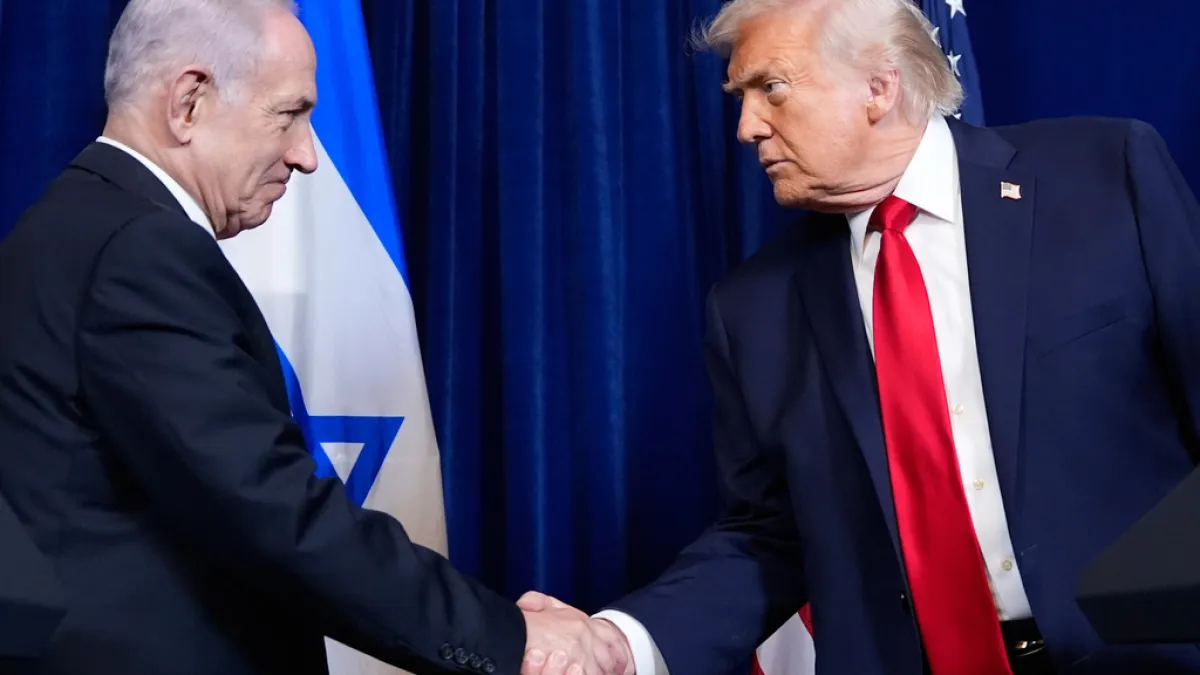
Trump hailed Netanyahu after their meeting on Monday, calling him a “hero” and saying Israel – and by extension its prime minister – had “lived up to the plan 100 percent” in reference to the US president’s signature Gaza ceasefire.
Recommended Stories
list of 4 itemsend of list
That is despite reports emerging last week that US officials were growing frustrated over Netanyahu’s apparent “slow walking” of the 20-point ceasefire plan – imposed by the US administration in October – suspecting that the Israeli prime minister might be hoping to keep the door open to resuming hostilities against the Palestinian group Hamas at a time of his choosing.
Under the terms of that agreement – after the exchange of all captives held in Gaza, living and dead, aid deliveries into the enclave and the freezing of all front lines – Gaza would move towards phase two, which includes negotiations on establishing a technocratic “board of peace” to administer the enclave and the deployment of an international security force to safeguard it.
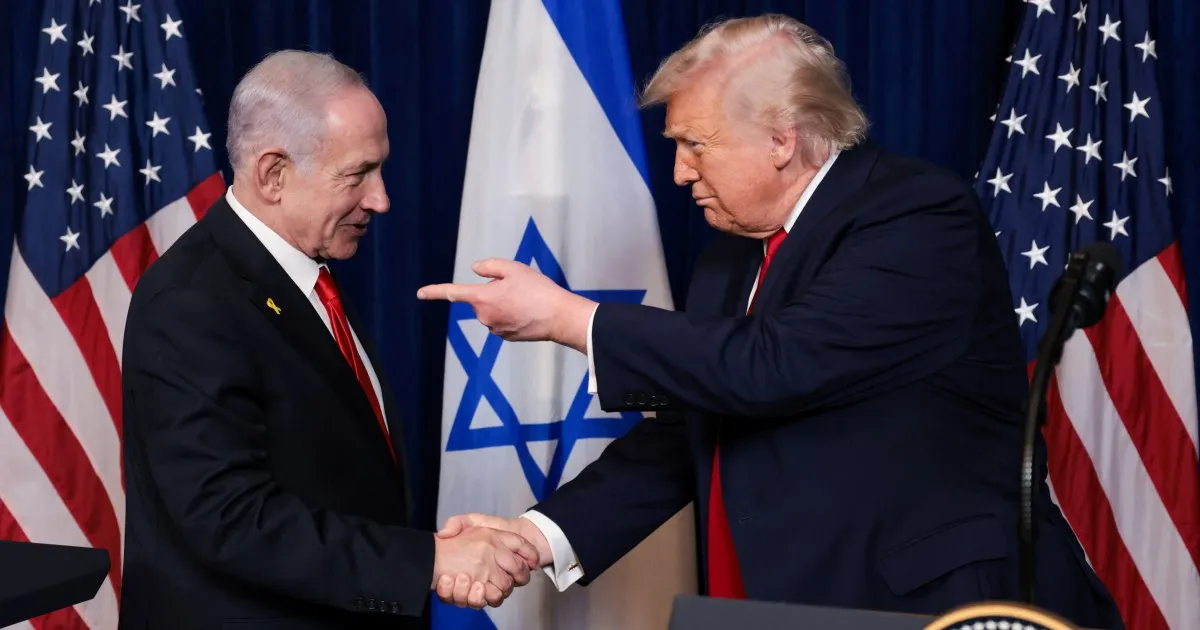
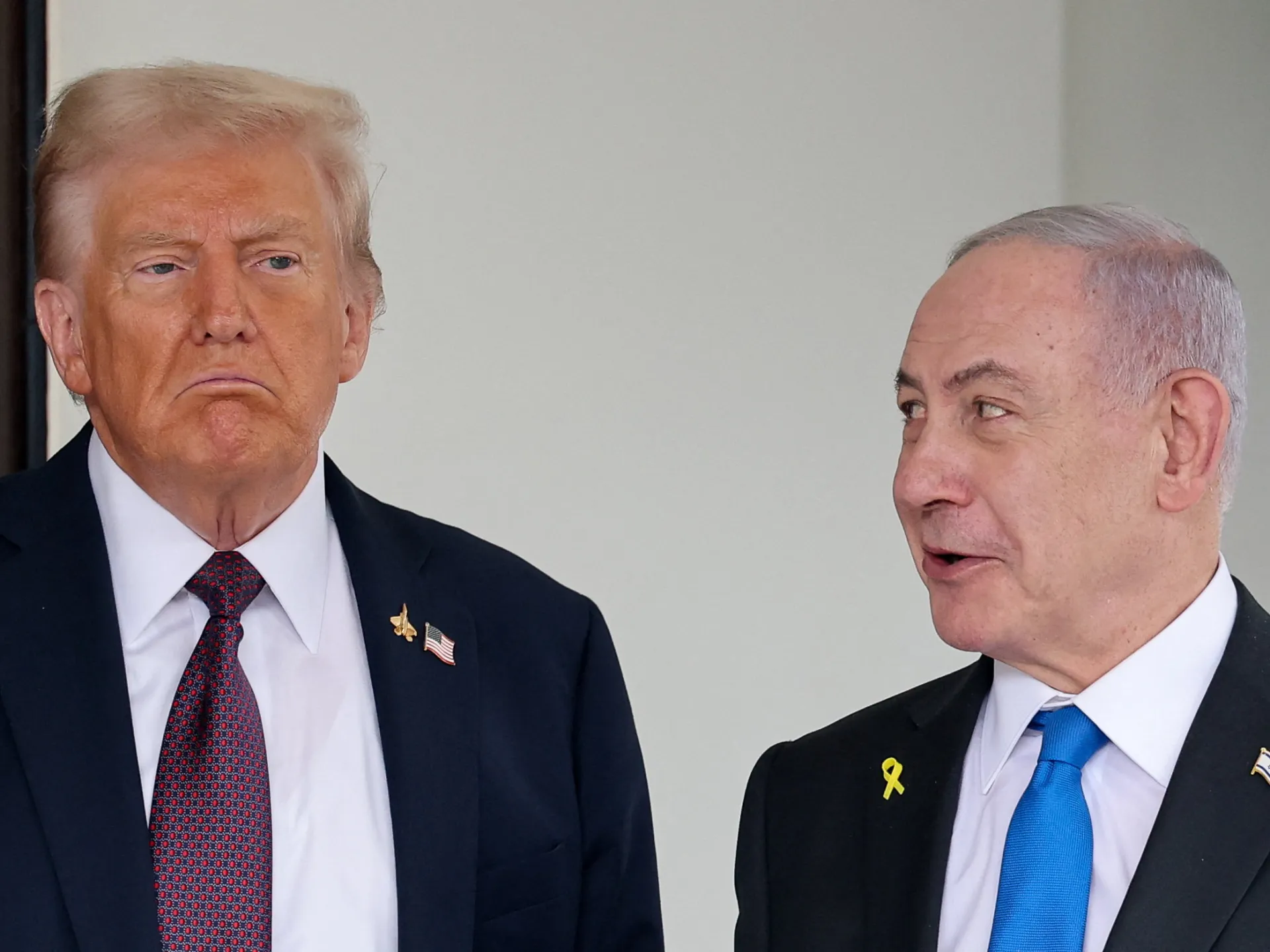
US President Donald Trump, right, called Israeli Prime Minister Benjamin Netanyahu a ‘hero’ during his visit to Trump’s Florida estate on December 29, 2025, saying he had lived up to Trump’s ceasefire plan ‘100 percent’ [Jonathan Ernst/Reuters]
So far, Netanyahu has not allowed in all of the required aid that Gaza desperately needs and is also maintaining that phase two cannot be entered into until Hamas returns the body of the last remaining captive. He has also demanded that Hamas disarms before Israel withdraws its forces, a suggestion fully endorsed by Trump after Monday’s meeting.
Hamas has repeatedly rejected disarmament being forced upon it by Israel, and officials have said that the question of arms was an internal Palestinian matter to be discussed between Palestinian factions.
So is Netanyahu deliberately trying to avoid entering the second phase of the agreement, and why would that be the case?
Here are four reasons why Netanyahu might be happy with things just as they are:
He’s under pressure from his right
Netanyahu’s ruling coalition is, by any metric, the most right wing in the country’s history. Throughout the war on Gaza, the support of Israel’s hardliners has proven vital in shepherding the prime minister’s coalition through periods of intense domestic protest and international criticism.
Now, many on the right, including National Security Minister Itamar Ben-Gvir and Finance Minister Bezalel Smotrich, oppose the ceasefire, protesting against the release of Palestinian prisoners and insisting that Gaza be occupied.
Netanyahu’s defence minister, Israel Katz, has also shown little enthusiasm for honouring the deal his country committed to in October. Speaking at a ceremony to mark the expansion of the latest of Israel’s illegal settlements in the occupied West Bank, Katz claimed that Israel’s forces would remain in Gaza, eventually clearing the way for further settlements.
Katz later walked his comments back, reportedly after coming under pressure from the US.
Israeli Defence Minister Israel Katz [Menahem Kahana/AFP]
He doesn’t want an international force in Gaza
Allowing an international force to deploy to Gaza would limit Israel’s operational freedom, constraining its military’s ability to re-enter Gaza, conduct targeted strikes or pursue Hamas remnants within the enclave.
So far, despite the ceasefire, Israeli forces have killed more than 400 people in the enclave since agreeing to halt fighting on October 10.
Politically, agreeing to an international stabilisation force, particularly one drawn from neighbouring states, would broaden what Israel has often seen as a domestic war into an international conflict with many of the strategic, diplomatic and political decisions over that conflict being made by actors outside of its control.
It could also be framed domestically as a concession forced by the US and international community, undermining Netanyahu’s repeated claims of maintaining Israeli sovereignty and strategic independence.
“If Netanyahu allows a foreign military force into Gaza, he immediately denies himself a large degree of his freedom to operate,” Israeli political analyst Nimrod Flaschenberg said from Berlin. “Ideally, he needs things to remain exactly where they are but without alienating Trump.”
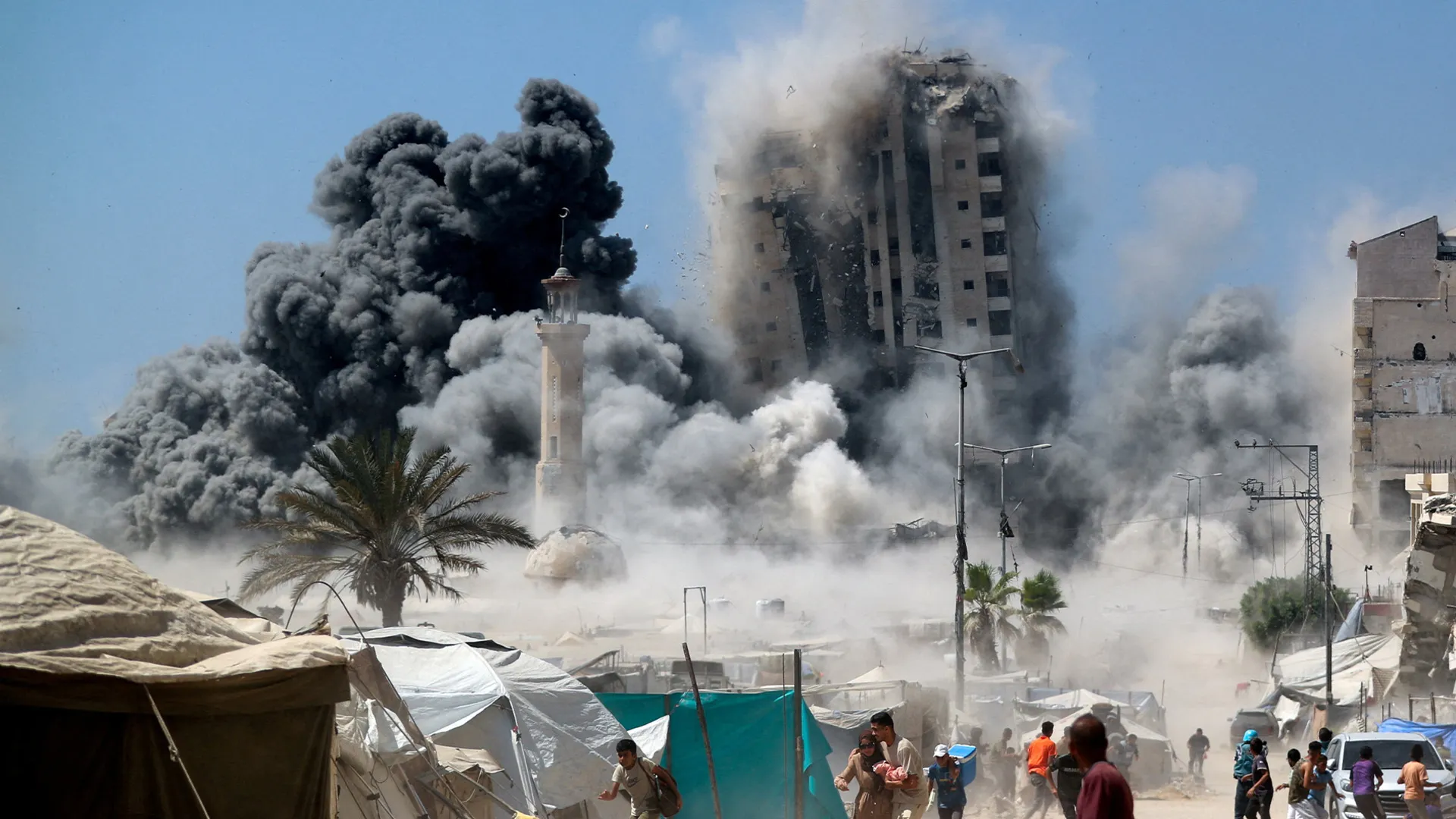
Smoke rises from an Israeli strike on Gaza’s Bureij refugee camp on October 19, 2025, in one of the near-daily attacks Israel has carried out since the ceasefire went into effect [Eyad Baba/AFP]
He wants to resist any progress towards a two-state solution
While not explicitly mentioning a two-state solution, the ceasefire agreement does include provisions under which Israel and the Palestinians commit to a dialogue towards what it frames as a “political horizon for peaceful and prosperous co-existence”.
Netanyahu, however, has been arguing against a two-state solution since at least 2015 when he campaigned on the issue.
More recently, at the United Nations in September, he branded the decision to recognise a Palestinian state “insane” and claimed that Israel would not accept the establishment of a Palestinian homeland.
Israeli ministers have also been at work ensuring that the two-state solution remains a practical impossibility. Israel’s plan to establish a series of new settlements severing occupied East Jerusalem – long considered the future capital of any Palestinian state – from the West Bank would make the establishment of a feasible state impossible.
This isn’t just an unfortunate consequence of geography. Announcing the plans for the new settlements in August, Smotrich said the project would “bury the idea of a Palestinian state”.
Israeli Finance Minister Bezalel Smotrich holds a map near the settlement of Maale Adumim showing a land corridor known as E1, in which Israel plans to build thousands of settler homes and which Smotrich says would ‘bury the idea of a Palestinian state’ [Menahem Kahana/AFP]
A resumption of war would benefit him
Netanyahu faces numerous domestic threats, from his own corruption trial to the potentially explosive issue of forcing conscription on Israel’s ultra-religious students. There is also the public reckoning he faces for his own failures before and during the Hamas-led attacks on southern Israel on October 7, 2023, all of which will fall within a critical election year for the prime minister.
Each of these challenges risks fracturing his coalition and weakening his hold on power. All of them, however, could be derailed – or at least politically blurred – by a new conflict either with Hamas in Gaza, Hezbollah in Lebanon or possibly even with Iran.
Renewed fighting would allow him to once more present himself as a wartime leader, limit criticism and rally both his allies and adversaries around the well-worn flag of “national emergency”.
In 2025, Israel carried out thousands of attacks in Gaza and the occupied West Bank, with at least 10,600 attacks recorded across multiple countries including Lebanon, Iran, Syria, Yemen and Qatar.
Hassan Sheikh Mohamud says his country believes the move is linked to Israel’s plans to forcibly displace Palestinians from Gaza.
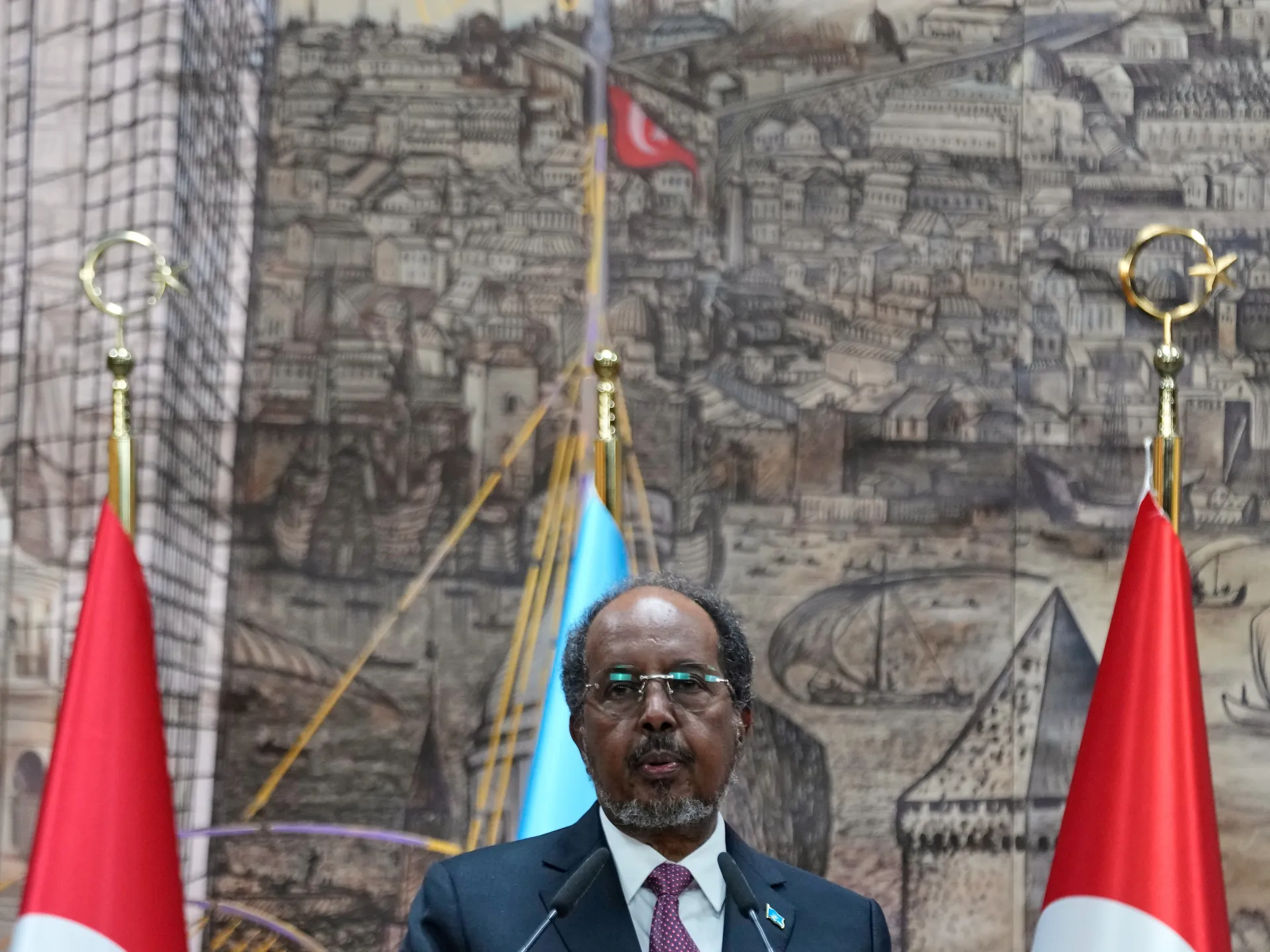
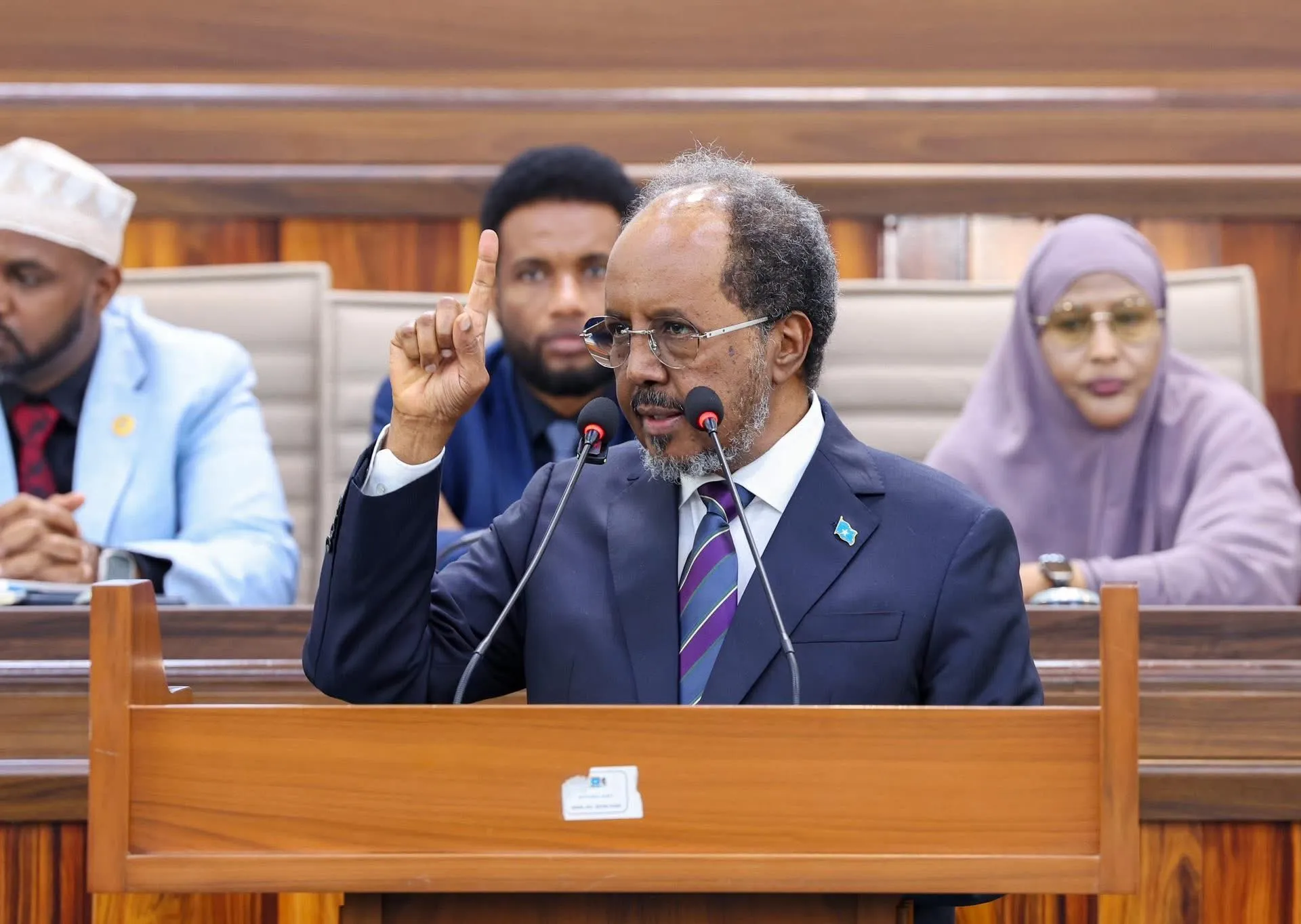
Somali President Hassan Sheikh Mohamud has told Al Jazeera that Israel’s “unexpected and strange” recognition of Somaliland may have implications for Palestinians in Gaza.
“Somaliland has been claiming the secession issue for a long time, over the past three decades, and no one country in the world has recognised it,” Mohamud told Al Jazeera in an exclusive interview from Istanbul, Turkiye, on Tuesday.
Recommended Stories
list of 4 itemsend of list
“For us, we’ve been trying to reunite the country in a peaceful manner,” the Somali leader added. “So, after 34 years, it was very unexpected and strange that Israel, out of nowhere, just jumped in and said, ‘We recognise Somaliland’.”
Israel last week became the first and only country to formally recognise Somaliland, a breakaway region in northwest Somalia, bordering the Gulf of Aden.
Somalia’s president also told Al Jazeera that, according to Somali intelligence, Somaliland has accepted three Israeli conditions in exchange for Israeli recognition: the resettlement of Palestinians, the establishment of an Israeli military base on the coast of the Gulf of Aden, and Somaliland joining the Abraham Accords. The accords are a set of pacts establishing the normalisation of ties between Israel and several Arab states. The UAE, Bahrain, Morocco and Sudan have signed onto the accords.
Mohamud also said that Somalia has intelligence indicating there is already a certain level of Israeli presence in Somaliland, and Israeli recognition of the region is merely a normalisation of what was already happening covertly.
Israel will resort to forcibly displacing Palestinians to Somalia, and its presence in the region is not for peace, the Somali leader added.
A 20-point plan released by the administration of US President Donald Trump ahead of a ceasefire between Israel and Hamas in Gaza said that “no one will be forced to leave Gaza, and those who wish to leave will be free to do so and free to return”.
However, Israel has reportedly continued to explore ways to displace Palestinians from the besieged and occupied territory, including in mysterious flights to South Africa, which has formally accused Israel of committing genocide in Gaza.
Israel is also seeking to control strategically important waterways connecting vital seas of commercial and economic significance, namely the Red Sea, the Gulf and the Gulf of Aden, Mohamud said.
The Somali leader was in Turkiye on Tuesday, where he gave a joint news conference with Turkish President Recep Tayyip Erdogan, with the two leaders warning that Israel’s recognition of the breakaway region could destabilise the Horn of Africa.
Somaliland declared independence from Somalia in 1991, but had failed to gain recognition from any United Nations member state, before Israel changed its position last Friday.
Israel’s move was swiftly condemned, including by most members of the UN Security Council at an emergency meeting convened in New York on Monday.
The United States was the only member of the 15-seat body that defended Israel’s move, although it stressed that the US’s position on Somaliland remained unchanged.
Yesterday, Israeli Prime Minister Benjamin Netanyahu paid his fifth visit to the United States since President Donald Trump took office in January. Before the meeting between the two, the Israeli press described the prime minister as fully engaged in an attempt to placate his domestic political partners by achieving “concessions” from Trump. What were these concessions? They were predominantly related to denying Turkiye any presence in the Gaza stabilisation force and to US approval for an Israeli strike on Iran.
Netanyahu failed on both counts. Trump specifically referred to his good relationship with Turkish President Recep Tayyip Erdogan, and spoke of “Bibi’s” respect for him, too. With regard to Iran, Trump mentioned Iran’s willingness to “make a deal” and provided clear guidelines for American involvement while saying nothing about authorising a solo Israeli operation. Israeli media suggests that Trump provided Israel with a “green light” for a strike on Iran. That is not reflected in Trump’s official statement in any way.
Trump talked about the reconstruction of Gaza beginning “soon”. When he spoke of the disarmament of Hamas, he said that it must happen or nearly 60 states will make it happen. Hamas has already agreed to disarm if the process is carried out by a Palestinian-led force. Trump said nothing to suggest that he does not agree with Hamas’s logic, especially when one considers the refusal of most participating countries to carry out a violent disarmament of the group. Trump also made no mention of the last hostage body held in Gaza as a necessary condition for moving to “Stage II” of the deal.
Nothing is more significant in Trump’s world than the use of language and symbolic gestures. When Trump referred to Netanyahu as a “great wartime prime minister” as he was discussing his blueprint for “peace”, he made it clear that his guest was running out of time. This was also clearly apparent when Trump said he had spoken with Israel’s official head of state, President Isaac Herzog, about a pardon for Netanyahu and was assured such a pardon was imminent. President Herzog, by the way, categorically denied that such a conversation had taken place.
What may be the best reflection of the Trump-Netanyahu meeting at Mar-a-Lago has to do with a brief conversation over the phone between Trump and Israeli Minister of Education Yoav Kish. The purpose of the call was for Kish to inform Trump that he will be awarded the Israel Prize on Israel’s Independence Day in 2026.
The award is given out by the minister of education in a televised ceremony attended by Israel’s leaders. It marks the official end of Independence Day celebrations. Its recipients are most frequently career academics at a late stage of their careers. The prize reflects a lifetime’s devotion to the expansion of human knowledge. Sometimes, special prizes are awarded in civic categories, most often for what is called a “life’s work”, such as fostering coexistence between Jews and Palestinians, promoting social equality, etc.
The prize, as understood by its name, is nearly always awarded to Israeli citizens but can be awarded to Jews living abroad and even to non-Jews who have made a “special contribution to the Jewish people”.
In other words, the Trump-Netanyahu meeting involved Trump instructing Netanyahu with regard to upcoming measures and Netanyahu snapping to attention and signalling his acceptance by heaping yet another semi-fictitious honour on Trump’s already crowded head.
Yet, despite these clear displays of the unequal nature of their relationships, there have been persistent voices suggesting that Trump and Netanyahu are operating in cahoots. According to such analyses, the United States fully supports the Israeli attempt to “change the Middle East” – Netanyahu’s favourite phrase – as the Americans make a pivot to Asia and the global race for dominance with China.
Israel will “take care” of the “Iranian threat” as the Arabs languish in their own irresolvable internal tensions and competitions. The mobilisation of Arab states after the Israeli strike on Doha is all but ignored.
These voices also point to the fact that Israel continues to completely ignore the “ceasefire” enacted by “Stage I” of the Trump plan, and does so with the full support of the United States. In fact, Trump said that Israel has “lived up” to the ceasefire “100 percent”, and that he has no problems with Israel’s actions in Gaza. These include bombing, destruction of buildings and infrastructure, the blocking of life-saving aid amid harsh weather and many other steps that ensure and expand the ongoing Israeli genocide.
It is indeed extremely difficult to reconcile this with the notion that Israel has run out of options for delaying Stage II and an internationally-brokered solution to Palestinian statehood. After all, one hears repeatedly from Israeli media about initiatives to “settle Gaza”, “relocate” 1.5 million Palestinians to Somaliland and dismantle the Oslo Accords, one ethnically cleansed Palestinian community at a time.
The US and other countries, like Germany and the UK, continue to buy Israeli arms at a massive rate and to equip Israel with arms of their own. How is it possible to reach a conclusion that the Israeli genocide is reaching its endgame?
The short answer is that it is not. Israel continues to kill, destroy, subvert and expand its efforts to destabilise any semblance of regional order. For example, Israel recognised the statehood of Somaliland in order to have a “dumping ground” for ethnically cleansed Palestinians, but also to pit the United Arab Emirates against Saudi Arabia, as both have conflicting interests in Somalia, and, by doing so, ensure that the Palestinian question is not addressed and that everyone remains frozen by fear of Israeli weapons.
The longer answer recognises the effects of this genocide on Israel itself: Genocide consumes genocidaires.
That is not to suggest that justice is assured by cosmic forces; far from it. Justice should be pursued at the most grounded and realistic level, as should the dignity and preservation of Palestinian lives.
However, the genocide has shaped Israel in its image on a daily, immediate level. Violence is rising as quickly as the prices of the staples, democracy is backsliding, and there is no end in sight to the “forever war”. This is not an abstract, “strategic” matter.
While Israel has been actively seeking to delete Palestinian identity for nearly 80 years, it has not succeeded in doing so. Israel’s internal contradictions have surfaced with paralysing force over the past two years.
Israel will not “die” or “recede”, but the gap between Israeli perceptions of the world and global perceptions of Israel has never been wider.
Trump and his vision of America do not appreciate “losers”. Israel no longer has any “wins” in the offing. It can and does kill and burn, procrastinate and obfuscate.
Even Trump recognises that this power has no lasting effects following its own immediate application. Israel has no options. There is no greater loss.
The views expressed in this article are the author’s own and do not necessarily reflect Al Jazeera’s editorial stance.
Israeli attacks, violating a ceasefire agreement, are reported across Gaza, as Palestinian misery compounded by rains.
Israeli forces have carried out strikes across the Gaza Strip as they continue with their near-daily violations of the ceasefire agreement, with Israel’s genocidal war on the besieged enclave continuing apace and displaced Palestinians enduring the destruction of their few remaining possessions in flooding brought about by heavy winter rains.
Israeli air strikes on Tuesday targeted locations north of Rafah and east of Khan Younis, the Maghazi camp in central Gaza and Beit Lahiya in the north of the Strip, Al Jazeera’s Hind Khoudary reported.
Recommended Stories
list of 4 itemsend of list
Reporting from Gaza City, Khoudary said artillery shelling had been reported in the territory’s southern and central regions, while there had also been an attack in the Gaza City neighbourhood of Shujayea, striking close to the tent of a displaced family.
She said the latest attacks, in violation of the United States-brokered ceasefire that came into force in October, numbering nearly 1,000 now, were coming at a time of immense hardship for hundreds of thousands of displaced Palestinians, as heavy rains and strong winds had ravaged their makeshift camps, destroying the few possessions they had left.
Gaza’s Government Media Office said on Sunday that Israel had committed 969 ceasefire violations since it came into effect on October 10, resulting in the deaths of 418 civilians and injuries to more than 1,100.
“Palestinians are still very traumatised and anxious,” Khoudary said. “The situation on the ground continues to deteriorate as the rain continues.”
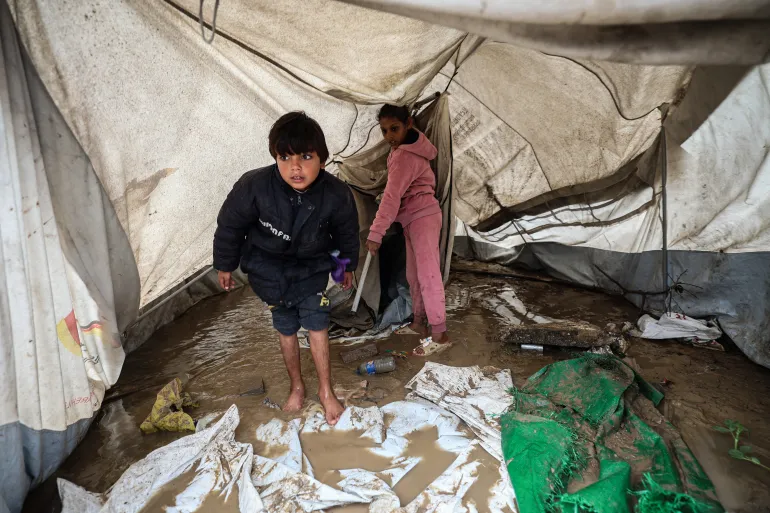
Displaced Palestinian children shelter inside a flooded tent in the Bureij refugee camp in the central Gaza Strip on December 29, 2025 [Eyad Baba/AFP]
Calls to allow supplies in
Aid groups have repeatedly called for Israeli authorities to lift restrictions to allow more supplies, including shelter equipment, into the territory, where displaced families have been trying to stay dry in flimsy, battered tents that offer scant protection from the elements after months of use.
“Families here are helpless while the Israeli authorities continue to restrict all kinds of shelter into the Gaza Strip,” Khoudary said.
Officials have warned that the severe conditions also bring new dangers, with the threat of disease and illness as overwhelmed and damaged sewage systems contaminate floodwaters, as well as the risk that buildings could collapse amid heavy rain and wind.
At least two people have been killed by damaged structures falling amid the severe weather in recent days.
‘We are still suffering’
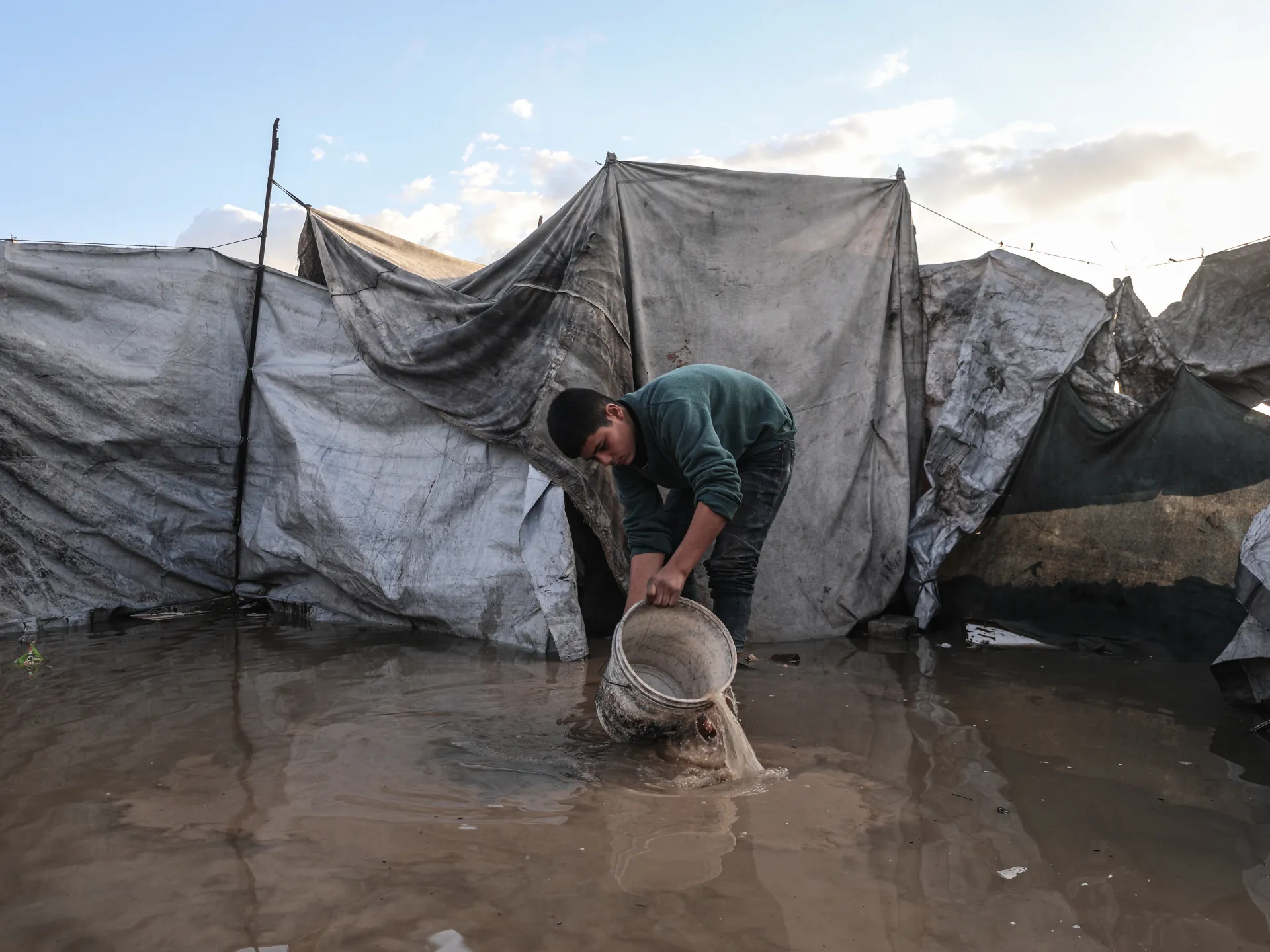
In a displacement camp east of Deir el-Balah in central Gaza, heavy rain in recent days has left tents submerged in muddy water, destroying the few possessions that the families had taken with them from their homes.
Inside the tents, an Al Jazeera team found essential items like pillows, mattresses and bedcovers soaked in muddy water.
“The tent has been flooded,” said Mohammed al-Louh, a resident.
“I took my family out, but I couldn’t even get a blanket, a mattress or a bag of flour. I have no way to sleep with my children or keep them warm.”
Another man, Haitham Arafat, said he had lost his son and daughter as well as his home to Israel’s genocidal war, and was still suffering amid the severe conditions.
“I fled to this place. Does this mean the war is over?” he said.
“No, we are still suffering. We haven’t slept for two days because of the heavy rain.”
Reporting from the camp, Al Jazeera’s Ibrahim al-Khalili said the winter storms had brought a new “chapter of suffering” for Palestinians who had been plunged into a humanitarian crisis by Israel’s war.
“What was meant to be a temporary shelter for them has turned into a flooded trap,” he said.
Most United Nations Security Council (UNSC) members have slammed Israel’s recognition of Somaliland at a meeting convened in response to the move, which several countries said may also have serious implications for Palestinians in Gaza.
The United States was the only member of the 15-member body not to condemn Israel’s formal recognition of the breakaway region of Somalia at the emergency meeting in New York City on Monday, although it said its own position on Somaliland had not changed.
Recommended Stories
list of 4 itemsend of list
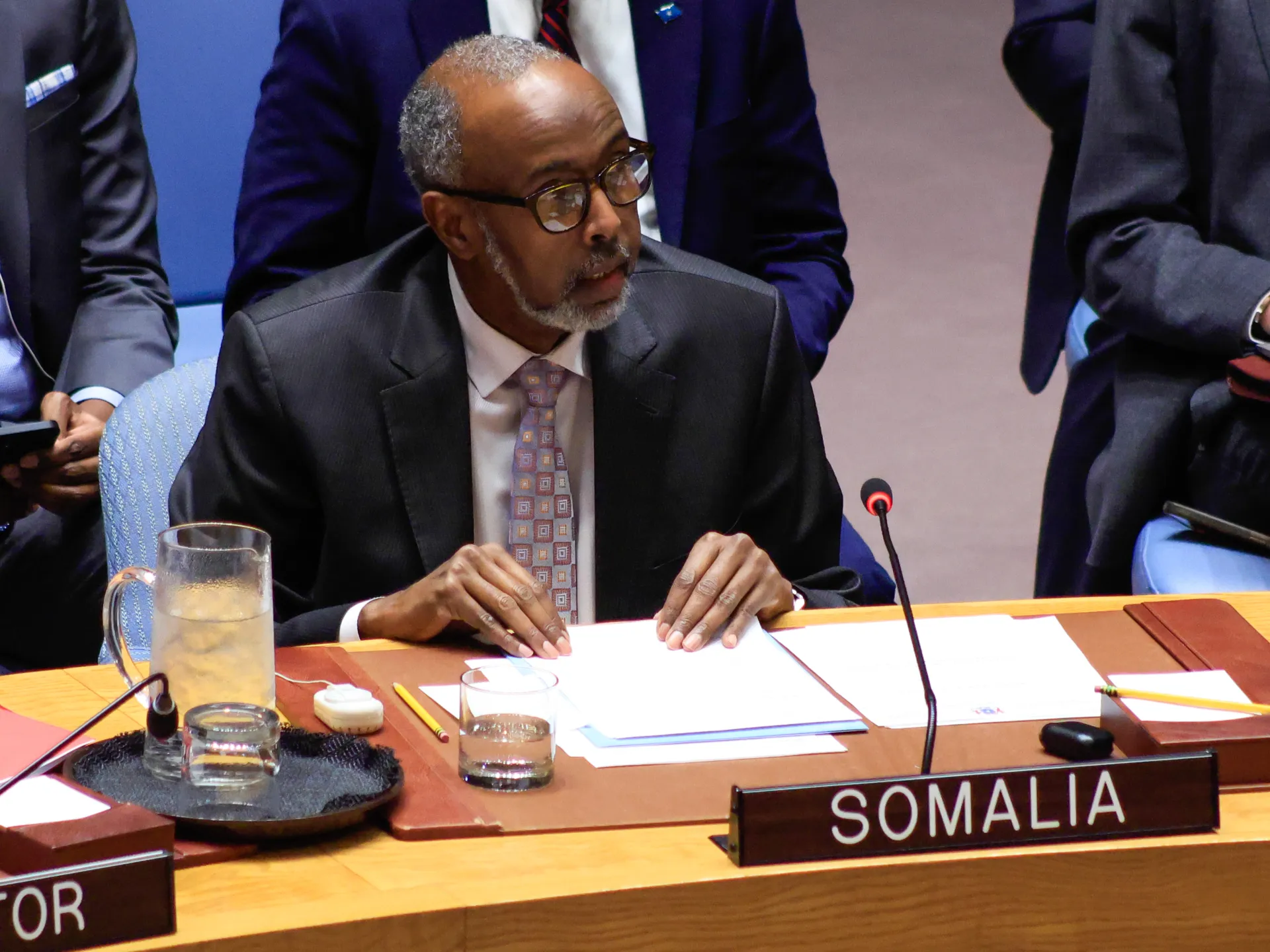
Addressing the UNSC, Somalia’s UN ambassador, Abu Bakr Dahir Osman, implored members to firmly reject Israel’s “act of aggression”, which he said not only threatened to fragment Somalia but also to destabilise the wider Horn of Africa and the Red Sea regions.
In particular, Osman said that Somalia was concerned the move could be aimed at advancing Israel’s plans to forcibly “relocate the Palestinian population from Gaza to the northwestern region of Somalia”.
“This utter disdain for law and morality must be stopped now,” he said.
The emergency meeting was called after Israel last week became the first and only country to recognise the self-declared Republic of Somaliland as an independent and sovereign state.
Al Jazeera’s Gabriel Elizondo, reporting from UN headquarters in New York, said that “14 of the 15 council members condemned Israel’s recognition of Somaliland”, while the US “defended Israel’s action but stopped short of following Israel’s lead”.
Tammy Bruce, the US deputy representative to the UN, told the council that “Israel has the same right to establish diplomatic relations as any other sovereign state”.
However, Bruce added, the US had “no announcement to make regarding US recognition of Somaliland, and there has been no change in American policy”.
Israel’s deputy ambassador to the UN, Jonathan Miller, told the council that Israel’s decision was “not a hostile step toward Somalia, nor does it preclude future dialogue between the parties”.
“Recognition is not an act of defiance. It is an opportunity,” Miller claimed.
Many other countries expressed concerns about Israel’s recognition of Somaliland, including the implications for Palestinians, in statements presented to the UNSC.
Speaking on behalf of the 22-member Arab League, its UN envoy, Maged Abdelfattah Abdelaziz, said the group rejected “any measures arising from this illegitimate recognition aimed at facilitating forced displacement of the Palestinian people, or exploiting northern Somali ports to establish military bases”.
Pakistan’s deputy UN ambassador, Muhammad Usman Iqbal Jadoon, said at the meeting that Israel’s “unlawful recognition of [the] Somaliland region of Somalia is deeply troubling”, considering it was made “against the backdrop of Israel’s previous references to Somaliland of the Federal Republic of Somalia as a destination for the deportation of Palestinian people, especially from Gaza”.
China and the United Kingdom were among the permanent UNSC members to reject the move, with China’s UN envoy, Sun Lei, saying his country “opposes any act to split” Somalia’s territory.
“No country should aid and abet separatist forces in other countries to further their own geopolitical interests,” Sun Lei said.
Some non-members of the UNSC also requested to speak, including South Africa, whose UN envoy, Mathu Joyini, said that her country “reaffirmed” Somalia’s “sovereignty and territorial integrity” in line with international law, the UN Charter and the constitutive act of the African Union.
Comparison with Palestinian recognition
In addition to defending Israel’s decision, US envoy Bruce compared the move to recognise Somaliland with Palestine, which has been recognised by more than 150 of the UN’s member states.
“Several countries, including members of this council, have unilaterally recognised a non-existent Palestinian state, yet no emergency meeting has been convened,” Bruce said, criticising what she described as the UNSC’s “double standards”.
However, Slovenia’s UN ambassador, Samuel Zbogar, rejected the comparison, saying, “Palestine is not part of any state. It is illegally occupied territory… Palestine is also an observer state in this organisation [the UN].”
“Somaliland, on the other hand, is a part of a UN member state, and recognising it goes against… the UN Charter,” Zbogar added.
The self-declared Republic of Somaliland broke away from Somalia in 1991, after a civil war under military leader Siad Barre.
Israeli Prime Minister Benjamin Netanyahu and US President Donald Trump have presented a united front and heaped praise on each other as they held another meeting to discuss the tensions in the Middle East.
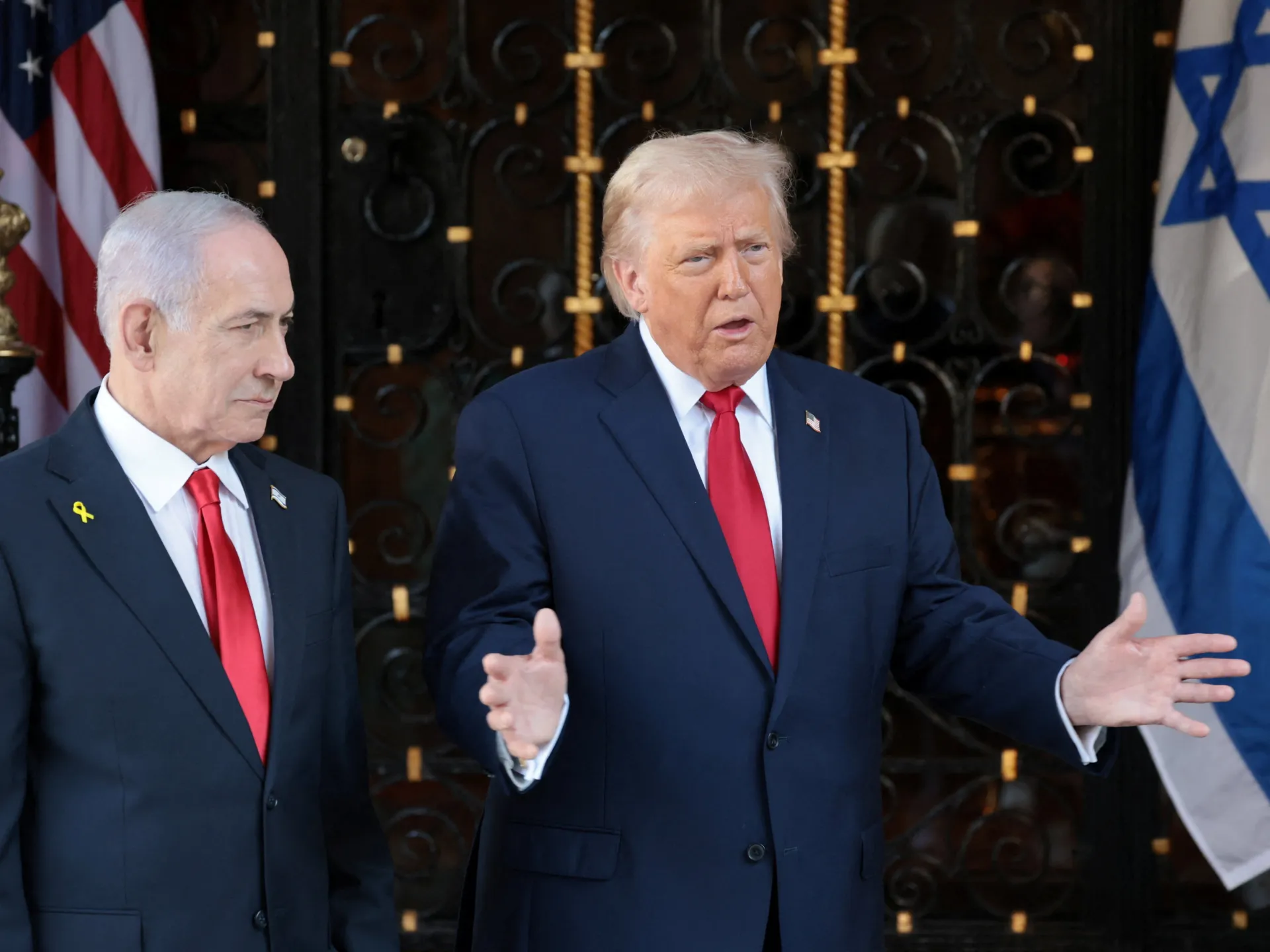
On Monday, Netanyahu paid his fifth visit to the United States since Trump’s inauguration in January, meeting the president at his Mar-a-Lago resort in Florida.
Recommended Stories
list of 3 itemsend of list
Their mutual flattery turned into geopolitical alignment as the two leaders addressed the most pressing issues in the Middle East: Gaza and Iran.
Trump claimed that Israel is helping the people of Gaza and dismissed the near-daily Israeli ceasefire violations.
Here are the key takeaways from Monday’s meeting.
Trump stresses Hamas must disarm
Before and after his meeting with Netanyahu, Trump stressed that Hamas must disarm, issuing a stern threat to the Palestinian group.
Asked what would happen if Hamas refused to give up its weapons, Trump said: “It would be horrible for them, horrible. It’s going to be really, really bad for them.”
Last week, US Secretary of State Marco Rubio said that Washington’s top priority was to move to the second phase of the ceasefire, which would see the establishment of a technocratic Palestinian administration and the deployment of an international police force.
But on Monday, Trump kept the focus on Hamas, reiterating the claim that other countries have offered to “wipe them out” if the group refuses to give up its weapons.
Israel has killed 414 Palestinians in Gaza since the start of the ceasefire in October, and it continues to restrict the flow of international aid into the territory, including temporary shelter provisions, despite people suffering deadly weather conditions in makeshift tents.
Trump, however, said that Israel is fully living up to its commitments under the deal – “100 percent”.
“I’m not concerned about anything that Israel is doing,” he told reporters.
US threatens Iran
Trump suggested that Washington would carry out further military action against Iran if Tehran rebuilds its nuclear programme or missile capacity.
The president kept returning to the oft-cited argument that the US air strikes against Iranian nuclear facilities in June are what paved the way for the ceasefire in Gaza.
“Now I hear that Iran is trying to build up again, and if they are, we’re going to have to knock them down,” Trump said.
“We’ll knock them down. We’ll knock the hell out of them. But, hopefully, that’s not happening.”
In recent weeks, Israeli officials and their US allies have shifted the focus to Iran’s missile programme, arguing it should be dealt with before it poses a threat to Israel.
When asked whether the US would back an Israeli attack targeting Iran’s missile programme, Trump said, “If they will continue with the missiles, yes. The nuclear? Fast. OK? One will be: Yes, absolutely. The other is: We’ll do it immediately.”
Iran has ruled out negotiating over its missile programme, and it has denied seeking to build a nuclear weapon.
Israel, meanwhile, is widely believed to have an undeclared nuclear arsenal.
Bromance festival
Since the early days of Israel’s genocidal war on Gaza, US media reports have suggested that the US president, first Joe Biden, then Trump, was angry or frustrated at Netanyahu.
But the US military and diplomatic support for Israel has never been interrupted.
Ahead of Netanyahu’s visit, similar reports emerged about a potential rift between him and Trump.
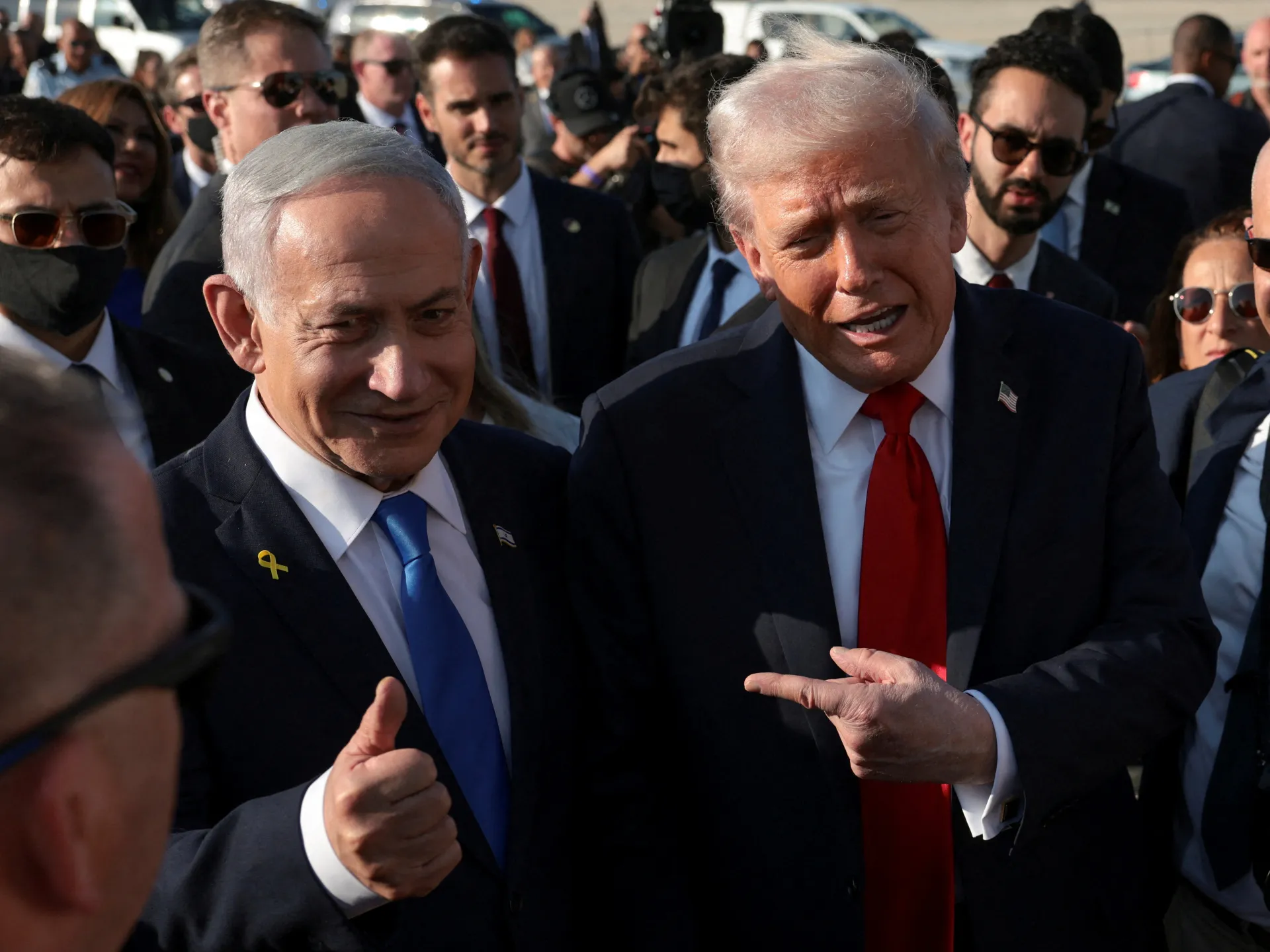
Nonetheless, the two leaders put on a show of brotherly romance on Monday.
Trump called Netanyahu a “hero”, stressing that Israel may not have existed without his wartime leadership.
“We’re with you, and we’ll continue to be with you, and a lot of good things are happening in the Middle East,” Trump told Netanyahu.
“We have peace in the Middle East, and we’re going to try and keep it that way. I think we will be very successful in keeping it that way. And you’ve been a great friend.”
The US president also highlighted his efforts to secure a presidential pardon for Netanyahu, who is facing corruption charges in Israel.
The Israeli prime minister announced that the US president will be awarded the Israel Prize, which is normally given to Israeli citizens.
“I have to say that this reflects the overwhelming sentiment of Israelis across the spectrum,” Netanyahu said.
“They appreciate what you’ve done to help Israel, and to help our common battle against the terrorists and those who would destroy our civilisation.”
Netanyahu has notably not been pardoned.
Trump calls for Israel-Syria rapprochement
One area where Trump appeared to press Netanyahu was Syria.
Trump said Netanyahu is “going to get along” with Syria, lauding Syrian President Ahmed al-Sharaa.
Since the fall of former President Bashar al-Assad last year, Israel has expanded its occupation of southern Syria beyond the Golan Heights, seizing large areas in Jabal al-Sheikh. The Israeli military has also been carrying out raids, reportedly abducting and disappearing people in the country.
The new Syrian authorities have stressed that they do not seek conflict with Israel, but talks to reach a security agreement between the two countries have stalled.
“We do have an understanding regarding Syria,” Trump said. “Now, with Syria, you have a new president. I respect him. He’s a very strong guy, and that’s what you need in Syria.”
Netanyahu was non-committal on Israel’s approach to Syria.
“Our interest is to have a peaceful border with Syria,” he said. “We want to make sure that the border area right next to our border is safe — we don’t have terrorists, we don’t have attacks.”
On renewed war in Lebanon: ‘We’ll see about it.’
Since the start of the truce in Gaza, Israel has intensified its attacks in Lebanon, leading to fears that it may re-launch its full-scale war against the country.
Earlier this year, the Lebanese government issued a decree to disarm Hezbollah, but the group pledged to hold onto its weapons to defend the country against Israel.
On Monday, Trump did not rule out renewing the conflict in Lebanon.
“We’ll see about it,” the president said when asked whether he would support more Israeli strikes in Lebanon.
“The Lebanese government is at a little bit of a disadvantage, if you think of it, with Hezbollah. But Hezbollah has been behaving badly, so we’ll see what happens.”
Speaking alongside Benjamin Netanyahu, Trump threatens to ‘knock’ down Iran’s attempts to rebuild nuclear capabilities.
United States President Donald Trump suggested that Washington would consider further military action against Iran if Tehran rebuilds its nuclear programme or missile capacity.
Speaking in Florida on Monday, Trump did not rule out a follow-up attack after the June air strikes that damaged three Iranian nuclear facilities.
Recommended Stories
list of 3 itemsend of list
“Now I hear that Iran is trying to build up again, and if they are, we’re going to have to knock them down,” Trump told reporters. “We’ll knock them down. We’ll knock the hell out of them. But hopefully that’s not happening.”
Trump issued his threat as he welcomed Israeli Prime Minister Benjamin Netanyahu to his Mar-a-Lago estate in Palm Beach, Florida.
Trump said that the US and Israel have been “extremely victorious” against their enemies, referring to the wars in Gaza and Lebanon, and the strikes against Iran in June.
When asked whether the US would back an Israeli attack against Iran targeting Tehran’s missile programme, Trump said, “If they will continue with the missiles, yes; the nuclear, fast. Okay, one will be yes, absolutely. The other is: We’ll do it immediately.”
Another round of strikes against Iran would likely stir internal opposition in the US, including from segments of Trump’s own base of support.
Trump has repeatedly said that the June strikes “obliterated” Iran’s nuclear programme.
With the nuclear issue address, according to Trump, Israeli officials and their US allies have been drumming up concern about Iran’s missiles.
Tehran fired hundreds of missiles at Israel in June in response to the unprovoked Israeli attack that killed the country’s top generals, several nuclear scientists and hundreds of civilians.
Senator Lindsey Graham, an Iran hawk who is close to Trump, visited Israel this month and repeated the talking points about the dangers of Iran’s long-range missiles, warning that Iran is producing them “in very high numbers”.
“We cannot allow Iran to produce ballistic missiles because they could overwhelm the Iron Dome,” he told The Jerusalem Post, referring to Israel’s air defence system. “It’s a major threat.”
Iran has ruled out negotiating over its missile programme, which is at the core of its defence strategy.
On Monday, Trumps said Iran should “make a deal” with the US.
“If they want to make a deal, that’s much smarter,” Trump said. “You know, they could have made a deal the last time before we went through a big attack on them, and they decided not to make the deal. They wish they made that deal.”
The prospect of returning to war in the Middle East comes weeks after the Trump administration released a National Security Strategy calling for shifting foreign policy resources away from the region and focusing on the Western Hemisphere.
In June, Iran responded to the US strikes with a missile attack against a US base in Qatar, which did not result in American casualties. Trump announced a ceasefire to end the war shortly after the Iranian response.
But advocates warn that another episode of attacking Iran may escalate into a longer, broader war.
Trita Parsi, executive vice president at the Quincy Institute, a US think tank that promotes diplomacy, told Al Jazeera last week that the Iranian response would be “much harsher” if the country is attacked again.
“The Iranians understand that unless they strike back hard and dispel the view that Iran is a country that you can bomb every six months – unless they do that – Iran will become a country that Israel will bomb every six months,” Parsi said.
Severe weather conditions are bringing further misery to displaced Palestinians in Gaza, who have already suffered relentless bombardment, siege and loss in Israel’s genocidal war for more than two years, as Israel continues to block critical shelter and aid supplies into the territory.
Flimsy tents were flooded and makeshift camps engulfed in mud on Monday following heavy winter rains lashing the enclave in recent days.
Recommended Stories
list of 4 itemsend of list
The harsh conditions have added to the suffering of Palestinians in Gaza, most of whom are reduced to sheltering in tents and other makeshift structures since Israel’s war destroyed an estimated 80 percent of the buildings there.
Officials are warning that severe conditions also bring new dangers, with the threat of disease and illness as overwhelmed and damaged sewage systems contaminate floodwaters, and the risk that damaged buildings could collapse amid heavy rainfall.
On Sunday, a 30-year-old woman was killed when a partially destroyed wall collapsed onto her tent in the Remal neighbourhood to the west of Gaza City amid fierce winds, Al Jazeera Arabic reported.
Officials have warned people not to shelter in damaged buildings, but the tents offer limited protection from the heavy rain and no real protection against flooding.
At least 15 people, including three babies, have died this month from hypothermia following the rains and plunging temperatures, according to the authorities in Gaza.
Two-month-old baby Arkan Firas Musleh was the latest infant to die as a result of the extreme cold.
Contaminated floodwater
Reporting from Gaza City’s Zeitoun neighbourhood, where most of the buildings have been reduced to rubble by Israeli attacks, Al Jazeera’s Hind Khoudary said the heavy rains had created deep puddles and thick mud that was difficult to pass in places.
“People are struggling to walk in those mud puddles,” she said. “These are not only water, but it’s also sewage, rubbish.”
A team of municipal workers were trying to pump sewage from the overwhelmed network, amid reports of flooded tents from residents.
“Families are saying that sewage water has been coming into their tents,” she said.
Calls for aid deliveries
Aid groups have called for the international community to pressure Israel to lift restrictions on life-saving aid deliveries into the territory, which they say are falling far short of the amount called for under the US-brokered ceasefire.
“More rain. More human misery, despair and death,” Philippe Lazzarini, commissioner-general of UNRWA, the top United Nations group overseeing aid in Gaza, wrote on social media on Sunday.
“Harsh winter weather is compounding more than two years of suffering. People in Gaza are surviving in flimsy, waterlogged tents and among ruins.”
There was “nothing inevitable about this”, he added. “Aid supplies are not being allowed in at the scale required.”
More Israeli attacks
Meanwhile, despite the ceasefire that came into effect on October 10, Israeli attacks on Palestinians have continued in Gaza.
Three Palestinians were injured on Monday when Israeli forces targeted the Jabalia camp in northern Gaza, a medical source told Al Jazeera Arabic.
Witnesses said the attack happened in an area from which Israeli forces had withdrawn under the ceasefire agreement.
Witnesses also reported an Israeli air raid on the eastern areas of the Bureij camp in central Gaza, artillery shelling east of Rafah and further Israeli attacks east of Gaza City, Al Jazeera Arabic reported.
A 20-point plan proposed by United States President Donald Trump in September called for an initial truce followed by steps towards a wider peace. So far, as part of the first phase, there has been the exchange of captives held in Gaza and prisoners in Israeli jails, and a partial withdrawal of Israeli forces from the enclave. However, it still occupies almost half of the territory.
However, Israeli attacks have not stopped, while humanitarian aid flows into the territory have not been what was promised.
Since the truce went into effect, more than 414 Palestinians have been killed and more than 1,100 wounded in ceasefire violations, according to Gaza’s Ministry of Health.
Winter rain has lashed the Gaza Strip over the weekend, flooding displacement camps with ankle-deep water as Palestinians struggled to stay dry in flimsy, worn-out tents. These Palestinians have been displaced after more than two years of Israel’s genocidal war, which has destroyed much of the besieged enclave.
In Khan Younis, soaked blankets and swamped clay cooking ovens added to the misery. Children in flip-flops navigated through puddles while adults desperately used shovels and tin cans to remove water from tents or extracted collapsed shelters from mud.
“Puddles formed, and there was a bad smell,” said Majdoleen Tarabein, displaced from Rafah in southern Gaza. “The tent flew away. We don’t know what to do or where to go.”
She and her family attempted to wring sodden blankets dry by hand.
“When we woke up in the morning, we found that the water had entered the tent,” said Eman Abu Riziq, also displaced in Khan Younis. “These are the mattresses. They are all completely soaked.”
She added that her family is still grieving her husband’s death less than two weeks ago.
“Where are the mediators? We don’t want food. We don’t want anything. We are exhausted. We just want mattresses and covers,” pleaded Fatima Abu Omar while trying to stabilise a collapsing shelter.
At least 15 people, including three babies, have died this month from hypothermia following the rains and plunging temperatures, according to the authorities in Gaza.
Emergency workers have warned against staying in damaged buildings due to collapse risks, yet with most of the territory in rubble after relentless and ongoing Israeli bombardment, shelter options are scarce. United Nations estimates from July indicate nearly 80 percent of Gaza’s buildings have been destroyed or damaged.
Since the ceasefire between Israel and Hamas began, 414 people have been killed and 1,142 wounded, with the overall Palestinian death toll reaching at least 71,266, according to the Health Ministry.
Aid deliveries to Gaza fall significantly short of ceasefire-mandated amounts, humanitarian organisations report. The Israeli military authority overseeing humanitarian aid stated that 4,200 aid trucks entered Gaza in the past week, along with sanitation equipment and winter supplies, but refused to specify the quantity of tents provided. Aid groups emphasise that current supplies cannot meet overwhelming needs.
Since the ceasefire, approximately 72,000 tents and 403,000 tarps have entered Gaza, according to Shelter Cluster, an international aid coalition led by the Norwegian Refugee Council.
“People in Gaza are surviving in flimsy, waterlogged tents and among ruins,” Philippe Lazzarini, commissioner-general of the UN refugee aid organisation in Gaza, said on social media. “There is nothing inevitable about this. Aid supplies are not being allowed in at the scale required.”
I am a Palestinian. And increasingly, that fact alone is treated as a provocation.
In recent months, I have watched anti-Semitism — a real, lethal form of hatred with a long and horrific history — be stripped of its meaning and weaponised to silence Palestinians, criminalise solidarity with us, and shield Israel from accountability as it carries out a genocide in Gaza. This is not about protecting Jewish people. It is about protecting power.
The pattern is now impossible to ignore.
A children’s educator, Ms Rachel, whose entire public work is built around care, learning, and empathy, is branded “Anti-Semite of the Year” — not for her engaging in any form of hate speech, but for expressing concern for Palestinian children. For acknowledging that children in Gaza are being bombed, starved, and traumatised. For expressing compassion.
As a Palestinian, I hear the message clearly: even empathy for our children is dangerous.
Then there is Palestine Action, a protest movement that targets weapons manufacturers supplying Israel’s military. Instead of being debated, challenged, or even criticised within a democratic framework, it is proscribed as a “terrorist” organisation, casually equated with ISIL (ISIS) – a group responsible for mass executions, sexual slavery, and genocidal violence.
This comparison is not just obscene. It is deliberate. It collapses the meaning of “terrorism” so completely that political dissent becomes extremism by definition. Resistance becomes pathology. Protest becomes “terror”. And Palestinians, once again, are framed not as a people under occupation, but as a permanent threat.
Language itself is now being criminalised. Phrases like “globalise the Intifada” are banned without any serious engagement with history or meaning. Intifada — a word that literally means “shaking off” — is torn from its political context as an uprising against military occupation and reduced to a slur. Palestinians are denied even the right to name their resistance.
At the same time, international law is being actively dismantled.
Staff and judges at the International Criminal Court are sanctioned and intimidated for daring to investigate Israeli war crimes. Francesca Albanese, the United Nations special rapporteur on Palestine, has not only been sanctioned, but also relentlessly smeared — because she uses the language of international law to describe occupation, apartheid, and genocide.
When international law is applied to African leaders, it is celebrated. When it is applied to Israel, it is treated as an act of hostility.
This brings us to Australia — and to one of the most revealing moments of all.
After the horrific Bondi Beach attack, which shocked and horrified people across Australia, Israel’s Prime Minister Benjamin Netanyahu accused the Australian government of encouraging anti-Semitism. Not because of any incitement, not because of inflammatory rhetoric — but because Australia had moved towards recognising Palestine as a state.
Read that again.
The diplomatic recognition of Palestinian statehood — long framed as essential to peace and grounded in international law — is presented as a moral failing, even as a contributor to anti-Semitic violence. Palestinian existence itself is treated as the problem.
What makes this moment so disturbing is not only that Netanyahu made this claim, but that so many centres of power ran with it rather than challenged it.
Instead of forcefully rejecting the idea that recognising Palestinian rights could “encourage anti-Semitism”, governments, institutions, and commentators allowed the premise to stand. Some echoed it outright. Others stayed silent. Almost none confronted the dangerous logic at its core: that Palestinian political recognition is inherently destabilising, provocative, or threatening.
This is how moral collapse happens — not with thunder, but with acquiescence.
The result is not safety for the Jewish people, but erasure of the Palestinian people.
As a Palestinian, I find it devastating.
It means my identity is not merely contested — it is criminalised. My grief is not simply ignored — it is politicised. My demand for justice is not debated — it is pathologised as hatred.
Anti-Semitism is real. It must be confronted seriously and without hesitation. The Jewish people deserve safety, dignity, and protection — everywhere. But when anti-Semitism is stretched to include children’s educators, UN experts, international judges, protest movements, chants, words, and even the diplomatic recognition of Palestine, then the term no longer serves to protect Jewish people.
It protects a state from accountability.
Worse still, this weaponisation endangers Jews by collapsing Jewish identity into the actions of a government committing mass atrocities. It tells the world that Israel speaks for all Jews — and that anyone who objects must therefore be hostile to Jews themselves. That is not protection. It is recklessness masquerading as morality.
For Palestinians like me, the psychological toll is immense.
I am tired of having to preface every sentence with disclaimers.
I am deeply pained by watching my people starve while being lectured about tone.
I am angry that international law seems to apply only in certain politically convenient cases.
And I am grieving — not just for Gaza, but for the moral collapse unfolding around it.
Opposing genocide is not anti-Semitism.
Solidarity is not “terrorism”.
Recognising Palestine is not incitement.
Naming your suffering is not violence.
If the world insists on calling me an anti-Semite for refusing to accept the annihilation of my people, then it is not anti-Semitism that is being countered.
It is genocide that is being justified.
And history will remember who helped make that possible.
The views expressed in this article are the author’s own and do not necessarily reflect Al Jazeera’s editorial stance.
A Palestinian woman in Gaza has died as a winter storm threatens the lives of nearly 900,000 Palestinians living in tents across the devastated coastal enclave.
The 30-year-old, identified as Alaa Marwan Juha, died on Sunday when a wall collapsed onto her tent in the Remal neighbourhood to the west of Gaza City, Al Jazeera Arabic reported.
Recommended Stories
list of 4 itemsend of list
The incident occurred amid heavy rain and strong winds that have battered the Gaza Strip since Saturday evening, flooding and blowing away thousands of tents sheltering the forcibly displaced Palestinians.
Al Jazeera Arabic, citing witnesses, reported that the partially destroyed wall gave way under the force of the wind, crashing down on the tent beside it. The wall collapse also injured several members of Juha’s family, the network reported.
Many Palestinian families have been living in tents since late 2023 as Israel waged its genocidal war on Gaza. The enclave is imminently facing freezing temperatures, rain and strong winds, as the authorities warn the downpour could intensify into a full-blown storm.
‘Disaster area’
Amjad Shawa, director of the Palestinian NGOs Network (PNGO), told Al Jazeera Arabic that the severe weather conditions are exacerbating an already catastrophic humanitarian situation.
“This low-pressure system will complicate matters further … and poses a danger to the lives of citizens,” Shawa said.
He said the tents offer no real protection against flooding and called for an urgent entry of mobile homes, or caravans, and equipment to repair destroyed sewage networks.
“Tents represent neither a choice nor a solution,” he said, noting that agreed humanitarian protocols stipulate the provision of adequate shelter.
A displaced Palestinian woman adjusts the canvas of the family tent shelter as the region experiences rain and cold winter conditions, in Gaza City, on December 28, 2025 [AFP]
Shawa urged the international community to pressure Israel to lift restrictions on life-saving aid, describing the entire Gaza Strip as a “disaster area”.
At least 15 people, including three babies, have died this month from hypothermia following the rains and plunging temperatures, according to the authorities in Gaza.
Emergency workers have warned people not to stay in damaged buildings, several of which have completely collapsed. But with much of the Palestinian territory reduced to rubble, there are few places to escape the rain.
Meanwhile, the healthcare system in Gaza is on the brink of total collapse, and the absence of much-needed aid, including medicine and medical supplies, is exacerbating the situation.
Ceasefire violations
Separately on Sunday, Israeli Prime Minister Benjamin Netanyahu left Tel Aviv for the United States, as negotiators and others discuss the second stage of the ceasefire, the first phase of which took effect on October 10.
Israel continues to violate the ceasefire agreement and block desperately needed humanitarian aid to the war-ravaged coastal enclave, even though these are stipulated in the first phase of the agreement.
A 20-point plan proposed by US President Donald Trump in September called for an initial truce followed by steps towards a wider peace. So far, as part of the first phase, there has been the exchange of captives held by Hamas in Gaza and prisoners in Israeli jails, and a partial withdrawal of Israeli forces from the enclave.
However, Israeli attacks continue. Since the truce went into effect, more than 414 Palestinians have been killed and 1,142 wounded in ceasefire violations, according to Gaza’s Ministry of Health.
Israel’s genocidal war on Gaza has killed at least 71,266 Palestinians and wounded 171,219 since October 2023.
Israel has held Gaza doctor Hussam Abu Safia for an entire year without charge. His son is pleading for his release, describing his father’s mistreatment in detention and recalling his refusal to abandon his patients at Kamal Adwan Hospital.
Israeli Prime Minister Benjamin Netanyahu will visit the United States to meet with President Donald Trump as regional turmoil approaches a boiling point amid Israel’s attacks in Palestine, Lebanon and Syria and mounting tensions with Iran.
Netanyahu is to hold talks with Trump at the president’s Mar-a-Lago resort in Florida on Monday as Washington pushes to complete the first phase of the Gaza truce.
Recommended Stories
list of 3 itemsend of list
The visit comes as the US continues to pursue its 20-point “peace plan” in the Palestinian enclave despite near-daily Israeli violations of the truce.
Israel is also escalating attacks in the occupied West Bank, Lebanon and Syria as Israeli officials suggest that another war with Iran is possible.
What will Netanyahu discuss with Trump, and where do US-Israel ties stand?
Al Jazeera looks at the prime minister’s trip to the US and how it may play out.
When will Netanyahu arrive?
The Israeli prime minister will arrive in the US on Sunday. However, the talks will not take place at the White House. Instead, Netanyahu will meet Trump in Florida, where the US president is spending the holidays.
The meeting between the two leaders is expected to take place on Monday.
How many times has Netanyahu visited Trump?
This will be Netanyahu’s fifth visit to the US in 10 months. The Israeli prime minister has been hosted by Trump more than any other world leader.
In February, he became the first foreign leader to visit the White House after Trump returned to the presidency.
He visited again in April and July. In September, he also met with Trump in Washington, DC, after the United Nations General Assembly in New York.
What has the relationship between Trump and Netanyahu been like so far?
Netanyahu often says Trump is the best friend Israel has ever had in the White House.
During his first term, Trump pushed US policy further in favour of Israel’s right-wing government. He moved the US embassy to Jerusalem, recognised and claimed Israeli sovereignty over Syria’s occupied Golan Heights and cut off funding to the United Nations agency for Palestinian refugees (UNRWA).
Since returning to the White House this year, Trump has shown a greater willingness to publicly disagree with Netanyahu. Still, his administration has provided unflinching support for Israel, including the decision to renew the genocidal war on Gaza in March after a brief ceasefire.
Trump joined the Israeli attack on Iran in June to the dismay of some segments of his base. And he pushed to secure the current truce in Gaza.
The US president also opposed the Israeli attack on Doha in September. And he swiftly lifted sanctions against Syria despite some apparent Israeli reservations.
The ties between the two leaders have seen some peaks and valleys. In 2020, Trump was irked when Netanyahu rushed to congratulate Joe Biden on his election victory against Trump, who has falsely insisted the election was fraudulent.
“I haven’t spoken to him [Netanyahu] since,” Trump told the Axios news site in 2021. “F*** him.”
The strong ties between the two leaders were rekindled after Trump won the presidency again in 2024 and unleashed a crackdown on Palestinian rights activists in the US.
In November, Trump formally asked Israeli President Isaac Herzog to pardon Netanyahu, who is facing corruption charges at home.
The two leaders, however, are not in complete alignment, and cracks in their positions are showing up over issues that include Gaza, Syria and the US partnerships with Turkiye and the Gulf states.
During his US visit, Netanyahu may seek to flatter Trump and project a warm relationship with the US president to advance his agenda and signal to his political rivals in Israel that he still enjoys support from Washington.
How has Netanyahu dealt with the US since October 7, 2023?
Since the outbreak of the war in Gaza, Netanyahu has asked for unchecked US diplomatic and military support.
Then-President Biden travelled to Israel 11 days after Hamas’s October 7, 2023, attacks on southern Israel, and he declared that support for the US ally is “vital for America’s national security”.
His “bear hug” of Netanyahu on arrival at the airport in Tel Aviv would set the stage for the US backing of Israel as it unleashed horror and destruction on Gaza, which has translated into more than $21bn in military aid and multiple vetoes at the UN Security Council over the past two years.
Netanyahu has seized on the notion that Israel is an extension of US interests and security structure. In a speech to the US Congress last year, the prime minister argued that Israel is fighting Iran indirectly in Gaza and Lebanon.
“We’re not only protecting ourselves. We’re protecting you,” he told US lawmakers.
Throughout the war, there have been countless reports that Biden and Trump have been displeased or angry with Netanyahu. But US weapons and political backing for Israel have continued to flow uninterrupted. And Netanyahu makes a point of always expressing gratitude to US presidents, even when there may be apparent tensions.
Where does the US stand on the Gaza truce?
US Secretary of State Marco Rubio said last week that the top priority for the Trump administration is to complete the first stage of the Gaza ceasefire and move from mere cessation of hostilities to long-term governance, stabilisation and reconstruction of the Palestinian enclave.
Israel has been violating the ceasefire in Gaza regularly, recently killing at least six Palestinians in an attack that targeted a wedding.
But Trump, who claims to have brought peace to the Middle East for the first time in 3,000 years, has focused on broadly moving the truce forward rather than on Israel’s daily conduct.
“No one is arguing that the status quo is sustainable in the long term, nor desirable, and that’s why we have a sense of urgency about bringing phase one to its full completion,” Rubio said last week.
The top US diplomat has also suggested that there could be some flexibility when it comes to disarming Hamas under the agreement, saying the “baseline” should be ensuring that the group does not pose a threat to Israel rather than removing the guns of every fighter.
But Israel appears to be operating with a different set of priorities. Defence Minister Israel Katz said on Tuesday that the country is looking to re-establish settlements in Gaza, which are illegal under international law.
He later walked back those comments but stressed that Israel would maintain a permanent military presence in the territory, which would violate the Trump plan.
Expect Gaza to be a key topic of discussion between Netanyahu and Trump.
Can a Syria agreement be reached?
Trump has literally and figuratively embraced Syrian President Ahmed al-Sharaa over the past year, lifting sanctions against the country and beginning security cooperation with his government’s security forces.
But Israel is pursuing its own agenda in Syria. Hours after the collapse of the government of former President Bashar al-Assad a year ago, Israel began expanding its occupation of Syria beyond the Golan Heights.
Although the new Syrian authorities stressed early on that they did not seek confrontation with Israel, the Israeli military launched a bombardment campaign against Syria’s state and military institutions.
Israeli forces have also been conducting raids in southern Syria and abducting and disappearing residents.
After the Israeli military killed 13 Syrians in an air raid last month, Trump issued a veiled criticism of Israel.
“It is very important that Israel maintain a strong and true dialogue with Syria and that nothing takes place that will interfere with Syria’s evolution into a prosperous state,” he said.
Syria and Israel were in talks earlier this year to establish a security agreement short of full diplomatic normalisation. But the negotiations appeared to collapse after Israeli leaders insisted on holding onto the land captured after al-Assad’s fall.
With Netanyahu in town, Trump will likely renew the push for a Syria-Israel agreement.
Why is Iran back in the headlines?
Netanyahu’s visit comes amid louder alarm bells in Israel about Iran rebuilding its missile capacity after their 12-day war in June.
NBC News reported last week that the Israeli prime minister will brief the US president about more potential strikes against Iran.
The pro-Israel camp in Trump’s orbit seems to be already mobilising rhetorically against Iran’s missile programme.
US Senator Lindsey Graham visited Israel this month and called Iran’s missiles a “real threat” to Israel.
“This trip is about elevating the risk ballistic missiles pose to Israel,” Graham told The Jerusalem Post.
Trump authorised strikes against Iran’s nuclear sites during the June war, which he said “obliterated” the Iranian nuclear programme.
Although there is no evidence that Iran has been weaponising its nuclear programme, fears about a possible Iranian atomic bomb were the driving public justification for the US involvement in the conflict.
So it will be hard for Netanyahu to persuade Trump to back a war against Iran, said Sina Toossi, a senior fellow at the Center for International Policy.
The president is portraying himself as a peacemaker and prioritising a possible confrontation with Venezuela.
“It could just as well backfire on Netanyahu,” Toossi said of the push for more strikes against Iran. But he underscored that Trump is “unpredictable”, and he has surrounded himself with pro-Israel hawks, including Rubio.
What is the state of US-Israel relations?
Despite growing dissent on the left and right of the US political spectrum, Trump’s support for Israel remains unwavering.
This month, the US Congress passed a military spending bill that includes $600m in military aid to Israel.
The Trump administration has continued to avoid even verbal criticism of Israel’s aggressive behaviour in the region, including Gaza ceasefire violations and the expansion of illegal settlements in the West Bank.
At a White House Hanukkah celebration on December 16, Trump bemoaned the growing scepticism of unconditional support for Israel in Congress, falsely likening it to anti-Semitism.
“If you go back 10, 12, 15 years ago, at the most, the strongest lobby in Washington was the Jewish lobby. It was Israel. That’s no longer true,” Trump said.
“You have to be very careful. You have a Congress in particular which is becoming anti-Semitic.”
Despite Trump’s position, analysts said the gap between the strategic priorities of the US and Israel is growing.
While Washington is pushing for economic cooperation in the Middle East, Israel is seeking “total dominance” over the region, including US partners in the Gulf, Toossi said.
“Israel is pushing this uncompromising posture and strategic objective that I think is going to come to a head more with core US interests,” Toossi told Al Jazeera.
What’s next for the US-Israel alliance?
If you drive down Independence Avenue in Washington, DC, you will likely see more Israeli than American flags displayed on the windows of congressional offices.
Despite the shifting public opinion, Israel still has overwhelming support in Congress and the White House. And although criticism of Israel is growing within the Republican base, Israel’s detractors have been pushed to the margins of the movement.
Marjorie Taylor Greene is leaving Congress; commentator Tucker Carlson is facing constant attacks and accusations of anti-Semitism; and Congressman Tom Massie is facing a Trump-backed primary challenger.
Meanwhile, Trump’s inner circle is filled with staunch Israel supporters, including Rubio, megadonor Miriam Adelson and radio show host Mark Levin.
But amid the erosion of public support, especially among young people, Israel may face a reckoning in American politics in the long term.
On the Democratic side, some of Israel’s strongest supporters in Congress are facing primary challenges from progressive candidates who are centring Palestinian rights.
The most powerful pro-Israel lobbying group, the American Israel Public Affairs Committee (AIPAC), is increasingly becoming a toxic brand for Democrats.
On the right, the faultlines in the consensus in support of Israel are growing wider. That trend was put on display at the right-wing AmericaFest conference this month when debates raged around support for Israel, a topic that was a foregone conclusion for conservatives a few years ago.
Although the Trump administration has been pushing to codify opposition to Zionism as anti-Semitism to punish Palestinian rights supporters, Vice President JD Vance has presented a more nuanced view on the issue.
“What is actually happening is that there is a real backlash to a consensus view in American foreign policy,” Vance recently told the UnHerd website.
“I think we ought to have that conversation and not try to shut it down. Most Americans are not anti-Semitic – they’re never going to be anti-Semitic – and I think we should focus on the real debate.”
Bottom line, the currents are changing, but the US commitment to Israel remains solid – for now.
Somalia’s president calls for unity at an emergency joint session of parliament, which declares the Israeli move ‘null and void’.
Somalia’s president has condemned Israel’s recognition of the breakaway region of Somaliland as a “naked invasion”, warning that the move threatens to ignite separatist movements elsewhere.
Addressing an emergency joint session of parliament on Sunday, President Hassan Sheikh Mohamud said Israeli Prime Minister Benjamin Netanyahu has committed the “greatest abuse” of Somalia’s sovereignty in the nation’s history and referred to Israel as an “enemy”.
Recommended Stories
list of 4 itemsend of list
“I am encouraging the Somali people to be calm and to defend the unity and the independence of our country, which is facing this naked invasion,” he said.
Lawmakers unanimously passed a resolution declaring Israel’s recognition as “null and void” although the measure is largely symbolic given that Somalia has not controlled Somaliland since it declared independence in 1991, which Somalia has never accepted.
The resolution warns that individuals or institutions violating Somalia’s sovereignty will face legal consequences under the country’s penal code and international law. It directed the government to take up the matter with the United Nations, African Union, Arab League and other regional bodies.
‘Existential threat’
Netanyahu on Friday announced that Israel had established full diplomatic relations with Somaliland, describing the move as being in the spirit of the United States-brokered Abraham Accords, which normalised ties between Israel and several Arab countries.
The announcement made Israel the first UN member state to formally recognise the self-declared state, which has sought international acceptance for more than three decades without success.
Mohamud accused Netanyahu of trying to import Middle Eastern conflicts into Somalia and promised his country would not allow its territory to be used as a military base to attack other nations.
He urged Somalis to set aside “tribal and regional rivalries” to confront what he described as an “existential threat” to the country’s unity.
“We need to combine our wisdom and strengths to defend our existence and sovereignty,” the president said, calling on Somaliland’s leaders to enter meaningful negotiations to preserve Somalia’s territorial integrity.
Somali Prime Minister Hamza Barre told Al Jazeera Arabic that Israel was “searching for a foothold in the Horn of Africa” and called on it to recognise and accept a Palestinian state instead.
Defending the Israeli move, Somaliland President Abdirahman Mohamed Abdullahi, known locally as Cirro, said on Friday that Somaliland’s recognition “is not a threat, not an act of hostility” to neighbouring countries.
He said his nation is “deeply rooted in Islamic values of moderation, justice and coexistence” and does not represent an alignment against any Islamic nation or community.
A joint statement issued on Saturday by 21 Arab and African countries and the Organisation of Islamic Cooperation condemned the recognition as a grave violation of international law and the UN Charter.
In a statement, the Palestinian Ministry of Foreign Affairs expressed support for Somalia.
Regional leaders – including the presidents of Kenya, Uganda, Tanzania and Djibouti – held phone calls with Mohamud to reaffirm support for Somalia’s territorial integrity. Eritrea separately called on China to take action at the UN Security Council, drawing parallels to the Taiwan issue.
The European Union issued a statement calling for respect for Somalia’s sovereignty but stopped short of condemning the move. It urged authorities in Mogadishu and Hargeisa to engage in dialogue.
Israel’s move to recognise Somaliland came during a more than two-year genocidal war in Gaza, in which more than 70,000 Palestinians have been killed.
Israel is currently being investigated by the International Court of Justice over allegations of genocide, and Netanyahu is the subject of an arrest warrant issued by the International Criminal Court on accusations of war crimes and crimes against humanity.
Somaliland broke away from Somalia in 1991 after a civil war under military ruler Siad Barre. The self-declared republic controls part of northwestern Somalia and has its own constitution, currency and flag. It claims the territory of the former British Somaliland protectorate, but its eastern regions remain under the control of rival administrations loyal to Somalia.
Asked by the New York Post on Friday if he would recognise Somaliland, US President Donald Trump replied “no” although he added that the matter remained under study. “Does anyone know what Somaliland is, really?” Trump asked.
The UN Security Council is expected to discuss Israel’s recognition of Somaliland on Monday.
From Sudan to Gaza, impunity for violence against women is fuelling conflict worldwide, the UN’s deputy chief warns.
In today’s conflicts, women and girls are facing escalating violence with near-total impunity. From mass rapes in Sudan to attacks on schools and shelters in Gaza and Syria, and the segregation of women in Afghanistan, protection is collapsing as wars intensify. Speaking to Talk to Al Jazeera, UN Deputy Secretary-General Amina Mohammed warns that violence against women is not a side issue but a front-line threat to peace and development. With funding shrinking and the political will faltering, she confronts hard questions about the world’s failure to protect those most at risk.
From displaced Palestinian families struggling in the cold winter in makeshift tents in Gaza, Christmas celebrations in Ukraine amid the ongoing Russia-Ukraine war, to the historic gathering of more than one million people in Dhaka welcoming home Bangladesh’s opposition leader Tarique Rahman after his 17-year self-imposed exile, here is a look at the week in photos.
Tens of thousands of displaced Palestinians in Gaza, surrounded by tents and debris, are suffering through more winter rains after two years of Israeli bombardment destroyed much of the Strip.
A polar low-pressure system accompanied by heavy rain and strong winds swept across the Gaza Strip on Saturday. It is the third polar low to affect the Palestinian territory this winter, with a fourth low-pressure system forecast to hit the area starting on Monday, meteorologist Laith al-Allami told the Anadolu news agency.
Recommended Stories
list of 4 itemsend of list
Many families have been living in tents since late 2023, for most of the duration of Israel’s genocidal war on Gaza.
The enclave is imminently facing freezing temperatures, rain and strong winds, as the authorities warn the downpour could intensify into a full-blown storm.
Mohammed Maslah, a displaced Palestinian now in Gaza City, told Al Jazeera in his rugged tent that he did not have a choice but to stay there.
“I could not find anywhere to live in Gaza, except Gaza Port,” he told Al Jazeera. “I’m forced to stay here because my home is under Israeli control. After just a few hours of rain, we were soaked.”
In Deir al-Balah, Shaima Wadi, a mother of four children who was displaced from Jabaliya in the north, spoke to the Associated Press. “We have been living in this tent for two years. Every time it rains and the tent collapses over our heads, we try to put up new pieces of wood,” she said. “With how expensive everything has become, and without any income, we can barely afford clothes for our children or mattresses for them to sleep on.”
The heavy rains earlier this month flooded tents and makeshift shelters across Gaza, where most of the buildings have been destroyed or damaged by Israeli attacks.
So far in December, at least 15 people, including three babies, died from hypothermia following rains and plunging temperatures, with several buildings collapsing, according to the authorities in Gaza. Aid organisations have called for Israel to allow more shelters and other humanitarian aid into the territory.
Ibrahim Abu al-Reesh, head of field operations for the Civil Defence in the Gaza Port area, said that his teams responded to various distress calls as weather conditions got harsher in places where displaced people set up fragile tents.
“We worked hard to cover some of these damaged tents with plastic sheets after they were flooded by rainwater,” he told Al Jazeera.
Al Jazeera’s Ibrahim Al Khalili, reporting from Gaza City, said that winter has been adding to the suffering of tens of thousands of displaced Palestinians who do not have safe shelters.
“The same misery repeats as each rain fills neighbourhoods with muddy water,” he said.
Ceasefire talks
As Palestinians face dire conditions in Gaza, Israeli Prime Minister Benjamin Netanyahu is expected to visit Washington, DC, in the coming days while negotiators and others discuss the second stage of the ceasefire that took effect on October 10.
The progress in the peace process has been slow. Challenges in phase two of the ceasefire include the deployment of an international stabilisation force, a technocratic governing body for Gaza, the proposed disarmament of Hamas and further Israeli troop withdrawals from the territory.
So far, the agreement has partially held despite Israel’s repeated violations.
Since the ceasefire went into effect, more than 414 Palestinians have been killed and 1,142 wounded, according to Gaza’s Ministry of Health.
It also said the bodies of 679 people were pulled from the rubble during the same period, as the truce makes it safer to search for the remains of people killed earlier.
The ministry on Saturday said that 29 bodies, including 25 recovered from under the rubble, had been brought to local hospitals over the past 48 hours.
The overall Palestinian death toll from Israel’s war has risen to at least 71,266, the ministry said, and another 171,219 have been wounded.
Incursion follows Israeli defence minister’s order for military to ‘act forcefully’ against the Palestinian town.
Published On 27 Dec 202527 Dec 2025
Share
Israeli forces have carried out mass arrests and forced dozens of families from their homes in the town of Qabatiya in the occupied West Bank, on the second day of a sweeping military operation ordered by Israel’s defence minister.
Israeli forces sealed off entrances to Qabatiya while rounding up and interrogating dozens of residents on Saturday, local sources told Al Jazeera. They converted several homes into military interrogation centres, displacing their occupants, according to the Palestinian Wafa news agency.
Recommended Stories
list of 4 itemsend of list
Israel’s Army Radio reported that the town is subject to a “full curfew”.
The crackdown follows an order by Israeli Defense Minister Israel Katz to “act forcefully … against the village of Qabatiya”, where he claims a Palestinian alleged of carrying out a stabbing and car-ramming attack in northern Israel hails from.
In a statement on Friday, Israel’s military said it had deployed troops from multiple divisions, along with border police and members of the Shin Bet security service, into Qabatiya. It said forces had raided the attack suspect’s home and were preparing to demolish it.
Rights groups have long condemned Israel’s practice of demolishing the family homes of Palestinians accused of attacks against Israelis, describing it as an illegal form of collective punishment.
Israel’s military claimed its forces would “scan additional locations in the village” and “work to arrest wanted individuals and locate weapons”.
“There is a sense of fear among people in town,” one resident told Al Jazeera. “There are Israeli threats and Israeli incitement.”
The Israeli military raids on Saturday also extended elsewhere in the occupied West Bank, including to several villages surrounding Ramallah and Hebron, Wafa reported. Israeli forces assaulted and arrested eight people from the towns of Dura, Abda and Imreish near Hebron, according to the news agency.
Israeli military incursions and attacks across the occupied West Bank have been a near-daily occurrence during Israel’s genocidal war on Gaza.
Since October 7, 2023, Israeli authorities have arrested nearly 21,000 Palestinians. As of December 1, some 9,300 Palestinian prisoners were in Israeli jails, more than a third of them detained without charges.
Palestinian prisoners have been tortured, sexually abused and even killed in custody.


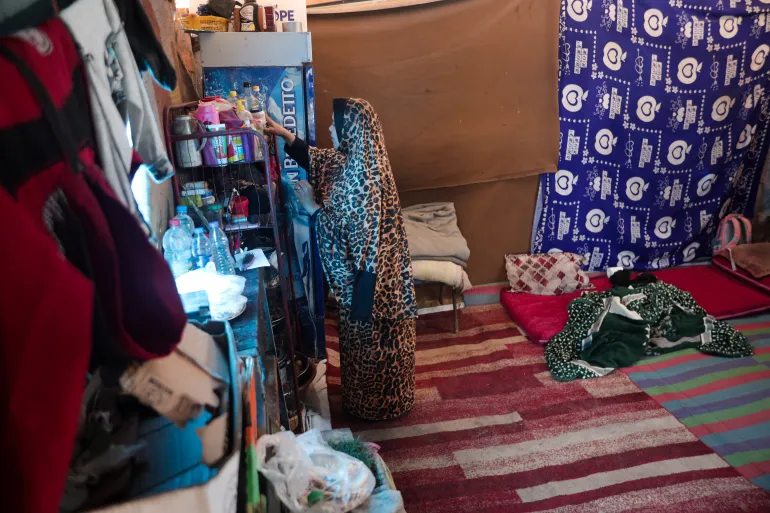
![During the famine, Sana’a’s greatest wish was to provide a loaf of bread for her seven children, amid a six-month-long blockade that prevented food and goods from entering [Abdelhakim Abu Riash/Al Jazeera]](https://i0.wp.com/www.aljazeera.com/wp-content/uploads/2025/12/873A1745-1767205773.jpg?w=640&ssl=1)
![Sana’a sits with her children inside their tent, holding on to hope that living conditions will improve in the coming year [Abdelhakim Abu Riash/ Al Jazeera]](https://i0.wp.com/www.aljazeera.com/wp-content/uploads/2025/12/873A1784-1767206217.jpg?w=640&ssl=1)
![Batoul Abu Shawish, 20, lost her entire family in an Israeli strike that targeted their home in Nuseirat during the ceasefire in November 2025 [Abdelhakim Abu Riash/ Al Jazeera]](https://i0.wp.com/www.aljazeera.com/wp-content/uploads/2025/12/873A1950-1767206334.jpg?w=640&ssl=1)
![Batoul holds a photo on her phone showing her with her family, including her father, mother, and siblings Muhammad, Youssef, Tayma, and Habiba [Abdelhakim Abu Riash/Al Jazeera]](https://i0.wp.com/www.aljazeera.com/wp-content/uploads/2025/12/873A2057-1767206534.jpg?w=640&ssl=1)
![Batoul stands in front of the rubble of her destroyed home, where she was trapped for about an hour before being rescued when it was hit [Abdelhakim Abu Riash/ Al Jazeera]](https://i0.wp.com/www.aljazeera.com/wp-content/uploads/2025/12/873A1970-1767206634.jpg?w=640&ssl=1)
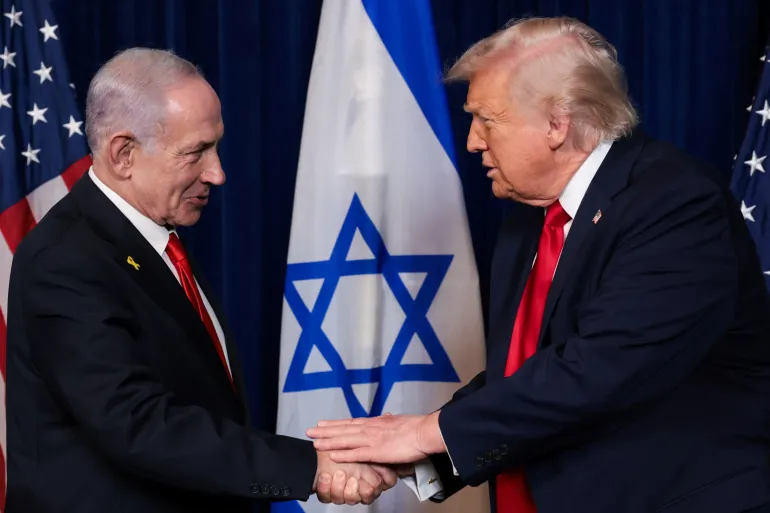


![Israeli far-right Finance Minister Bezalel Smotrich holds a map of an area near the settlement of Maale Adumim, a land corridor known as E1, outside Jerusalem in the occupied West Bank, on August 14, 2025, after a press conference at the site. [Menahem Kahana/AFP]](https://i0.wp.com/occasionaldigest.com/wp-content/uploads/2025/12/AFP__20250814__69HV6DR__v1__HighRes__IsraelPalestinianConflictSettlementPolitics-1755194568.jpg?w=640&ssl=1)