YouTube personality Adam the Woo, known for his videos about his travels and exploring theme parks and other pop culture destinations, has died.
The content creator, whose full name was David Adam Williams, was found dead Monday in his home in Celebration, Fla., the Osceola County Sheriff’s Office confirmed to The Times. He was 51.
Sheriff’s deputies responded to a call at Williams’ home at 2:53 p.m. Monday after a “friend had borrowed a ladder and looked in the 3rd story window to see a male on a bed that was not moving,” a spokesperson for the sheriff’s office said in a statement. “Upon entering the residence with Fire Rescue, the male was reported deceased.”
According to the statement, deputies had also been dispatched to the home earlier that afternoon for a well-being check where “[t]he residence was secured, [but] no contact was made with the adult male residing there.”
Adam the Woo described himself on his YouTube channel as “[a]n 80s pop culture nerd with a desire to travel and video what I see.” He posted more than 4,000 videos about his adventures at Disney and Universal theme parks, pop culture conventions, movie filming locations, abandoned cities and more across his two YouTube channels, which combined had more than 1 million subscribers.
The vlogger had shared a look at his Christmas decorations as well as the holiday festivities in his community in the latest video posted to his the Daily Woo channel on Sunday. As news of his death circulated on Tuesday, Adam the Woo’s fans shared tributes in the comments of his videos.
“I hope his friends and Family look back at all his videos and tell themselves he lived a life he dreamed of living,” one fan posted on his latest video. “He saw the world. He had so many friends and fans and was so loved.”
“It never felt like you were watching him. It always felt like you were there with him,” posted another. “We will forever be grateful for the journeys you took us on, Adam.”
Williams was last seen on Sunday “by the friend that looked into his window,” the Osceola County Sheriff’s Office spokesperson said. The investigation is ongoing and the medical examiner will conduct an autopsy to determine the cause of death.
We might rarely get to see snowfall in Los Angeles, but logging onto social media in December means the arrival of a different kind of flurry. The one where our friends, both close and parasocial, excitedly share the year-end music-listening data dumps of their Spotify Wrapped.
Spotify Wrapped only represents the culmination of our listening habits on a single music platform, but every shared Wrapped post seems to come with some self-evident clarity about our personal identity. Spotify Wrapped bares our souls and provides us the opportunity to see ourselves deconstructed via our musical inclinations. By most accounts, it’s an irresistible delight. Oh, Spotify, you rascal, you’ve got us pegged.
Maybe it’s not such a bad idea to take that temperature check.
But listening to music can be a passive experience — one enjoyed in tandem with folding laundry, or driving a car. To really learn about ourselves and how our year has been, we might want to turn elsewhere, to a habit with more intention. I’m talking, of course, about reading.
While there’s apps for tracking our reading habits, like StoryGraph or Goodreads, I’m devoted to a wholly analogue tracking method that’s helped me churn through books faster and with more intent than ever before: the book stack.
Starting every January, whenever I finish a book, I place it sidelong atop a shelf in the corner of my living room. With each new book I conquer, the stack gets taller, eventually becoming a full tower by December. A book stack, low on analytics, can’t tell me the total number of pages I’ve read, or how many minutes I spent reading, but it’s a tangible monument to my year’s reading progress. Its mere presence prods me into reading more. It calls me a chump when the stack is low and cheers for me when it reaches toward the ceiling.
My first book stack started in 2020, a wry joke to demonstrate the extra time we could all devote to reading books during a pandemic. The joke barely worked. I ended up reading just 19 books that year, only a few more than I had the previous year (though it could’ve been more if one of those books wasn’t “Crime and Punishment”).
Still, the book stack model gamified my reading habits and now I give books time I didn’t feel I had before. I bring books to bars, movie theaters and the DMV. If ever I have to wait around somewhere, you better believe I’ll come armed with a book.
The pandemic may have waned, but my book stack count continued to climb, peaking in 2023 after reading 52 books, averaging one per week.
But, hey, it’s about quality, not quantity, right? If there’s a quality to be gleaned from my 2025 book stack, you’d see that I’ve been looking for hot tips on how to survive times of extreme authoritarian rule. Some were more insightful than others.
In the stack was Carl Bernstein and Bob Woodward’s “All the President’s Men,” a landmark true story about two intrepid reporters who brought down the president of the United States by repeatedly bothering people at their homes for information. Fascinating as it is, it also feels like a relic from a time when doing something like that could still work. Philip Roth’s “The Plot Against America” tells the story of a Jewish New Jersey family in an alternate timeline where an “America First” Charles Lindbergh beats Franklin Roosevelt in the 1940 presidential election, ignoring the threat of Hitler in Europe and giving way to a rise in antisemitism at home. Roth paints a dreary portrait of how that scenario could have played out, but the horrors are resolved by something of a deus ex machina rather than by any one character’s bold, heroic actions. Then there’s Anthony Doerr’s Pulitzer Prize-winning “All the Light We Cannot See,” about the converging stories of a German boy enlisted in Hitler’s army and a blind French girl during World War II. Sadly, this novel reads less like a book about living under fascist rule than a thirsty solicitation to become source material for Steven Spielberg’s next movie.
Each of these titles have merit, but this year’s book stack had two gems for anyone who wants to know how best to resist tyranny. Pointedly, there was Timothy Snyder’s tidy pocket-sized handbook “On Tyranny” filled with 20 short but fortifying chapters of practical wisdom like “Do not obey in advance,” “Defend institutions” and “Believe in truth.” Each is applicable to our current moment, informed by historical precedent set by communist and fascist regimes of the past century. This book — well over a million copies sold — came out at the start of Trump’s first term in 2017, so I came a little late to this party. The fact that Snyder himself moved to Canada this year should give us all pause.
Practical advice can also be found in great fiction, and on that front I found comfort and instruction in Hans Fallada’s “Alone in Berlin” (a.k.a. “Every Man Dies Alone”), based on the true story of a married couple living in Berlin during World War II who wrote postcards urging resistance against the Nazi regime and secretly planted them in public places for random people to discover. Under their extreme political conditions, this small act of civil disobedience means risking death. Not only is the story riveting, there’s also great pleasure in seeing the mayhem each postcard causes and how effective they are at exposing the subordinate class of fascists for what they truly are: nitwits.
Also notable in “Alone in Berlin” is the point of view of both the author and his fictional heroes. Neither a target of persecution, nor a military adversary, Fallada nevertheless endured the amplified hardships of living under Nazi rule during World War II. His trauma was still fresh while writing this book and it’s evident in his prose. He survived just long enough to write and publish “Alone in Berlin” before dying in 1947 at the age of 53.
If I’ve learned anything from these books, it’s that it’s in our best interest to not be afraid. Tyrants feed on fear and expect it. A citizenry without fear is much harder to control. That’s why we need to raise our voices against provocations of our rights, always push back, declare wrong things to be wrong, get in the way, annoy the opposition, and allow yourself to devote time to do things for your own enjoyment.
And in that spirit, my book stack also includes a fair amount of palate cleansers in the mix: Jena Friedman’s “Not Funny,” short stories by Nikolai Gogol, Jhumpa Lahiri’s “The Namesake” (whose main character is named after Gogol), and a pair of Kurt Vonnegut novels. Though it’s hard to read Vonnegut without stumbling upon some apropos nuggets of wisdom, like this one from his novel “Slapstick:” “Fascists are inferior people who believe it when somebody tells them they’re superior.”
Zachary Bernstein is a writer, editor and songwriter. He’s working on his debut novel about a poorly managed remote island society.
Perry Bamonte, guitarist and keyboardist for the Cure, has died. He was 65.
The band announced on its website on Dec. 26 that Bamonte died “after a short illness at home over Christmas.”
“Quiet, intense, intuitive constant and hugely creative, ‘Teddy’ was a warm hearted and vital part of the Cure story,” the band said.
The London-born Bamonte began touring with the Cure as a guitar tech and assistant in 1984, then joined the band full-time in 1990. He performed over 400 shows with the group and recorded on the albums “Wish,” “Wild Mood Swings,” “Bloodflowers,” “Acoustic Hits” and “The Cure.”
Bamonte parted ways with the Cure after 14 years, later performing with the group Love Amongst Ruin. He returned to the Cure in 2022 for “another 90 shows, some of the best in the band’s history,” the group said, including the Nov. 1, 2024, London show documented on the concert film “The Show of a Lost World.”
As a member of the Cure, Bamonte was inducted into the Rock & Roll Hall of Fame in 2019. The band is still scheduled for a run of European festivals and headline shows in 2026.
“Our thoughts and condolences are with all his family,” the group said. “He will be missed.”
Nobody does a jaw-drop reaction like Bobby Berk. It’s only surprising when you assume he’s probably seen it all after eight seasons traveling the world as the interior design expert on Netflix’s reboot of “Queer Eye”; writing his 2023 book, “Right at Home: How Good Design is Good for the Mind”; making many TV appearances (including a Taylor Swift video) and selling pretty much anything to make your home shine on BobbyBerk.com.
But in his new HGTV series “Junk or Jackpot?”, premiering Friday at 9:30 p.m. Pacific, genuine reactions come often from Burke as he enters the homes of Los Angeles collectors and sees not only rooms jam-packed with action figures, pinball machines, puppets, marionettes and more, but also some jackpot items just sitting on a bookshelf. In one episode, for example, a collector shows Berk a trading card he has that is appraised in the $100,000 range. “I’m pretty sure I said, ‘What the f—?’ though I assume it was bleeped because it’s HGTV,” says Berk from his Los Angeles home. “I’m used to Netflix, where I could say whatever I wanted. But, yeah, that was just crazy to me.”
Reactions aside, the real marvel on “Junk or Jackpot?” is watching an enthusiastic Berk swoop into people’s homes to help them learn how to come to terms with a collecting hobby that has grown into something that’s stifling homes and putting a damaging strain on relationships. “Obviously, I’m not a therapist. I’m a designer, even though in our field, we often make the joke that we’re not just designers, we’re marriage counselors,” he says.
But Berk, born in Houston and raised in conservative Mount Vernon, Mo., is a self-taught pro at identifying what isn’t working and doing everything possible to fix it, including in his own life. Case in point: Berk, not feeling safe coming out in Mount Vernon, left home at 15 and bounced around for several years in various cities, never finishing high school. “From 15 to 22, I moved around and can’t even count the amount of places I had to move around to just due to finances and situations going on in life,” he recalls.
Eventually, he landed in New York City and worked for stores like Restoration Hardware, Bed Bath & Beyond and Portico before he opened his first online store in 2006 and first physical store in Soho in 2007. Soon thereafter, Berk was racking up appearances on networks like HGTV and Bravo before “Queer Eye” came calling in 2018 and took him to new heights, including his 2023 Emmy win for structured reality program. He also received an honorary degree from Otis College of Art and Design in 2022.
Now, with “Junk or Jackpot?” about to launch, the 44-year-old Berk spoke about how he was handpicked by pro wrestler and movie star John Cena for the show, the key to helping collectors let go of things that are weighing down their lives, and, after living many places and traveling the globe, where he considers home with husband Dewey Do and their mini Labradoodle, Bimini.
“I’m not a therapist. I’m a designer, even though in our field, we often make the joke that we’re not just designers, we’re marriage counselors,” Berk says.
(Jason Armond/Los Angeles Times)
What are the origins of “Junk or Jackpot?” and what does John Cena have to do with it all?
I’ve been toying back and forth with HGTV for years, even when I was still on “Queer Eye,” but with my exclusivity with Netflix, I couldn’t do design shows with anybody else. We always just kept that line of communication open, so then when this specific opportunity came about, Loren Ruch, the head of HGTV, who’s unfortunately since passed, reached out. He said, “Hey, John Cena’s created the show for us and you’re the top of his list of who he wants it to host it.” John was a big “Queer Eye” fan, so I said yes. It shot here in L.A., which was really important to me. We were really lacking for entertainment jobs here in the city so that was a big plus for me to be able to bring jobs here to L.A. to all of our amazing crews.
And it’s not your typical design show. Obviously, there’s nothing wrong with a typical design show and they do help people. But coming from “Queer Eye” where everyone we helped was because it was somebody deserving, somebody that was going through something and needed that extra boost in their life. That’s what this was with “Junk or Jackpot?”
Every single collector, as we’re calling them, had a story going on. With Patrick and Roger [in the premiere episode], Roger had moved out and their relationship was on the rocks because there was literally no space for Roger. With Carly and Johnny in another episode, they had a kid that they weren’t expecting to have in their early 40s, so it was a life-changing moment for them. Their priority needed to be their son, J.D.
I love the show because it was helping people at these moments in their life where they’re like, “We have this thing that we love and has brought us joy, but now this thing is actually starting to have negative things happening in our life.” I wanted to come in and really bring back the joyous part of their collection.
HGTV hasn’t given you a huge budget to revamp the homes and the collectors have to work themselves to sell off their collectibles to pay for the renovation. How did that angle come about?
It was a bit of therapy and I wanted the collectors to really realize that, yes, the collection that they have has value but this other thing that is happening in their life because of this collection has value, too. I wanted them to either be able to prove to themselves that what they were wanting to change in their life had more value than those things. Like with Patrick, Roger had a value.
I wanted them to go through the exercise of “You need to start parting with things.” And if you notice, I never pushed them to get rid of the most precious pieces of their collection. I pushed them to get rid of the things that often they had duplicates of but weren’t necessarily something like, “Oh, I got this as a child” or “somebody got this for me.” I wanted them to emotionally disconnect with those things so they could prioritize things better in life and in the future, they would have a lot easier time letting go even if I wasn’t there to push them.
Swatches and mood boards in Berk’s office. The host of “Junk or Jackpot?” says it is not your typical design show.(Jason Armond/Los Angeles Times)
How do you consider budget with the collectors? In one episode, you choose to cover a brick wall instead of tearing it down and building a new one.
The homeowners are the ones footing the bill for this, because again, a portion of this is the exercise of letting go. To your point, if we had just come in at HGTV and said, “Here’s all the money!” They’re like, “All right, I have no motivation to get rid of anything.” I wanted to make sure we made budget-conscious decisions and I think that’s also a really important thing to share with people at home that you don’t always have to go out and knock out a fireplace if you hate the material. You can do a thing like micro cement and you can completely change it for a minimal cost.
What would you say you learned from shooting the first season of “Junk or Jackpot?”
I wouldn’t say I learned anything necessarily new, but it was reaffirmed to me the emotional attachment and mental health aspect that your space and design can have on you, either in a good way or a bad way.
In the bad way, your house becomes so cluttered and overwhelmed with something that used to spark joy for you, but it’s now having an effect on not only your mental health, but your relationships with other people. On the other hand, the difference in your mental health just redoing that space, reorganizing that space, reclaiming that space can have on your mental health and your relationships not only with yourself, but with your family and your friends.
Vivian, who collects Wonder Woman memorabilia, her friends stopped coming over because there was just nowhere to sit. Her best girlfriend used to come in from Vegas all the time, where she lives, and she would spend the night and now she’s like, “I just can’t anymore because I’m surrounded literally. It’s too much and I just can’t do it anymore.” You see how just changing your space really can change your life.
“I wanted to make sure we made budget-conscious decisions and I think that’s also a really important thing to share with people at home, that you don’t always have to go out and knock out a fireplace if you hate the material,” Berk says.
(Jason Armond / Los Angeles Times)
Season 1 is set in Los Angeles but assuming you get more seasons, would you want to do other cities or countries?
I personally would always love just to keep doing L.A. I live there and with “Queer Eye” for eight years, we traveled all over America. That being said, this is a very niche show, so it might be hard to continue doing it in the same city season after season, so we probably will have to go to other cities, and I’d be fine with that. But I would at least like another season or two in L.A. After spending the last eight years filming “Queer Eye,” I like being home.
That said, you have lived in New York, you’re in L.A. now and you also have a place in Portugal. Where do you call home?
L.A. is definitely home for me. Portugal’s great, but L.A. is definitely home. Although the more time we spend in Southeast Asia, specifically Vietnam, since my husband’s originally from there, that also feels like home. I believe in reincarnation, and I was definitely from over there in my last life. Like when I landed in Vietnam, in China, anywhere in Southeast Asia — I just feel very at home.
“Queer Eye” was such a roller coaster for all you guys but what are your reflections now that it is behind you? Were you able to enjoy it at the time?
Yes and no. It was an amazing roller coaster. I enjoyed most of it, but there were times where we were just exhausted. I don’t know if you know the flight app “Flighty,” but it tracks your flights and tells you how many hours you’ve been in planes every year and how many times you’ve been on the exact same plane. I was looking the other day at how much I flew in 2019. Keep in mind in 2019, five months of the year I was filming, so I wasn’t flying anywhere. So this was just seven months, and I flew 200 flights. I flew over 500,000 miles. I don’t miss that. That was a lot. But as much as I can remember of it, I look back with fondness.
Dec. 25 (UPI) — The remains of two Iowa National Guard soldiers killed in an ambush in Syria arrived at the Iowa National Guard base in Des Moines, with funeral services for both scheduled for this weekend.
The bodies of Staff Sgt. William Nathaniel Howard and Staff Sgt. Edgar Brian Torres-Tovar were carried off a KC-135 on Wednesday afternoon at the base as Gov. Kim Reynolds, Sen. Joni Ernst, U.S. Rep. Zach Nunn, leaders from the Guard and their families looked on, Iowa Public Radio and KCCI Des Moines reported.
“Today’s honorable transfer of Sgt. Howard and Sgt. Torres-Tovar marks their return to Iowa,” Reynolds said in a post on X. “They can now be laid to rest after making the ultimate sacrifice in defense of our nation.”
Today’s honorable transfer of Sgt. Howard and Sgt. Torres-Tovar marks their return to Iowa. They can now be laid to rest after making the ultimate sacrifice in defense of our nation. Please join me in continuing to pray for their families and honor the service and legacy of these… pic.twitter.com/zlXpziDdYI— Gov. Kim Reynolds (@IAGovernor) December 24, 2025
Howard and Torres-Tovar, who were promoted to the rank of staff sergeant posthumously, and a civilian U.S. interpreter were killed in an attack in Palmyra, Syria, on Dec. 13, in a lone gunman attack.
Their flag-draped caskets were saluted by Ernst, Nunn and Guard leaders before their families had a moment alone with them.
Iowa state and Des Moines police officers then escorted processions to Marshalltown, where Howard’s visitation and funeral will be held on Saturday, and south Des Moines, where Torres-Tovar’s visitation will be held Sunday, ahead of his funeral and burial on Monday.
Three other Guard members were also injured in the attack, two of whom are receiving treatment in the United States, while the other was treated in Syria.
President Donald Trump holds a signed executive order reclassifying marijuana from a schedule I to a schedule III controlled substance in the Oval Office of the White House on Thursday. Photo by Aaron Schwartz/UPI | License Photo
KANSAS CITY, Mo. — Travis Kelce has played 96 regular-season home games for the Kansas City Chiefs.
The next one might be the last.
The 36-year-old Kelce, who was chosen for the Pro Bowl for the 11th time on Tuesday, will be inside Arrowhead Stadium on Thursday night for a Christmas showdown with the Denver Broncos.
And with the Chiefs eliminated from playoff contention for the first time in a decade, and a trip to Las Vegas for their finale, it could be the last time that Kelce walks off his beloved field.
“What Travis has done to this organization, to his teammates, his coaches, this city — it’s special,” Chiefs offensive coordinator Matt Nagy said. “I hope like hell that’s not true. I just have so much respect for him.”
Kelce has not yet announced whether he will retire after a superlative 13-year career in which he won three Super Bowl rings and was an All-Pro on four occasions. But he has said that his decision will be made quickly after the season ends, giving the Chiefs ample time to not only prepare for free agency and the draft but their future without him.
“I’d rather just keep the focus on this team right now,” Kelce said last week, “and all the conversations I have with the team and everything moving forward will be with them. And I think it’s a unique time in my life, and unfortunately I know when the season ends this year. Typically we go into it and we don’t know when it will end.”
He’s had a heck of a final season, if that turns out to be the case.
After doubling down on fitness after the Chiefs were waylaid by the Eagles in the Super Bowl last February, Kelce has played in every game during a difficult season for the team. He has 68 catches for 803 yards, allowing him to join Jerry Rice as the only players in NFL history to eclipse the 800-yards receiving mark in 12 consecutive seasons.
Kelce also has five touchdown receptions, matching the most he’s had in the past three seasons.
And while Kelce could have shut it down after the Chiefs were eliminated from postseason contention for the first time since his first full season in the NFL, he has continued to take the field every day. He had one catch for six yards in last week’s 26-9 loss to the Titans, but it pushed his streak — the longest active one in the league — to 189 games with at least one reception.
It didn’t help that backup quarterback Gardner Minshew joined Kelce’s good friend, Patrick Mahomes, by suffering a bone bruise one week after the two-time MVP tore knee ligaments. Chris Oladokun finished the game at quarterback and will start on Thursday night against Denver.
“I will say this: What [Kelce] is going through even these last couple games — we’re out of the playoffs, we’re out, and he’s out there every day, practicing, leading, helping people out,” Nagy said. “That should show a lot of these younger guys why he’s playing this game, and why he is so special.”
Etc.
Cornerbacks Trent McDuffie (knee), Jaylen Watson (groin) and receivers Nikko Remigio (knee), Rashee Rice (concussion) and Tyquan Thornton (concussion) did not practice Tuesday. … The Chiefs have signed quarterback Shane Buechele as Oladokun’s backup for the rest of the season. TE Noah Gray would serve as the emergency quarterback.
Chargers quarterback Justin Herbert runs with the ball against the Dallas Cowboys on Dec. 21.
(Julio Cortez / Associated Press)
Saturday, 1:30 p.m. TV: CBS, NFL Network.
Line: Chargers by 1½. O/U: 39½.
Houston has been a hard matchup for the Chargers, and can turn up the heat on Justin Herbert. But Jim Harbaugh’s team has found new ways to win, and is capable of outscoring the Texans, who are really struggling in the red zone. Low-scoring and physical.
Christmas is a Christian holiday that observes the birth of Jesus. But did you know that the earliest followers of Jesus did not annually commemorate his birth? Or that Santa Claus is inspired by the acts of kindness of a fourth-century Christian saint? And have you heard about the modern-day Japanese tradition of eating Kentucky Fried Chicken on Christmas?
Since the early 20th century, Christmas has evolved from a religious holiday to a hugely popular cultural holiday observed by Christian and secular people across the globe who gather with families, exchange gifts and cards and decorate Christmas trees.
Here’s a look at the history, beliefs and the evolution of Christmas:
Origins and early history of Christmas
Early followers of Jesus did not annually commemorate his birth but instead focused on commemorating their belief in his resurrection at Easter.
The story of the birth of Jesus appears only in two of the four Gospels of the New Testament: Matthew and Luke. They provide different details, though both say Jesus was born in Bethlehem.
The exact day, month and even year of Jesus’s birth are unknown, said Christine Shepardson, a professor at the University of Tennessee who studies early Christianity.
The tradition of celebrating Jesus’ birth on Dec. 25, she said, only emerged in the fourth century.
“It’s hard to overemphasize how important the fourth century is for constructing Christianity as we experience it in our world today,” Shepardson said. It was then, under Emperor Constantine, that Christians began the practice of gathering at churches instead of meeting at homes.
Some theories say the date coincides with existing pagan winter solstice festivals, including the Roman celebration of Sol Invictus, or the “Unconquered Sun,” on Dec 25.
While most Christians celebrate Christmas on Dec. 25, some Eastern Orthodox traditions celebrate the holy day on Jan. 7. That’s because they follow the ancient Julian calendar, which runs 13 days behind the Gregorian calendar, used by Catholic and Protestant churches as well as by much of the secular world.
Rowdy medieval celebrations
For centuries, especially during the Middle Ages, Christmas was associated with rowdy street celebrations of feasting and drinking, and for many Christians, it “was not in good standing as a holiday,” said Thomas Ruys Smith, a professor of American literature and culture at the University of East Anglia in England.
“Puritans,” he said, “were not fond of Christmas.”
But in the 19th century, he said, Christmas became “respectable” with “the domestic celebration that we understand today — one centered around the home, the family, children, gift-giving.”
The roots of modern-day Christmas can be traced back to Germany. In the late 19th century, there are accounts of Christmas trees and gift-giving that, according to Smith, later spread to Britain and America, helping to revitalize Christmas on both sides of the Atlantic.
Christmas became further popularized with the publication of “A Christmas Carol” by Charles Dickens in 1843, and the writings of Washington Irving, who was a fan of St. Nicholas and helped popularize the celebration of Christmas in America.
The first Rockefeller Center Christmas tree was put up by workers in 1931 to raise spirits during the Great Depression. The tradition stuck as the first tree-lighting ceremony was held in 1933 and remains one of New York City’s most popular holiday attractions.
America’s secular Santa is inspired by a Christian saint
St. Nicholas was a fourth-century Christian bishop from the Mediterranean port city of Myra (in modern-day Turkey). His acts of generosity inspired the secular Santa Claus legend.
The legends surrounding jolly old St. Nicholas — celebrated annually on Dec. 6 — go way beyond delivering candy and toys to children. He is believed to have interceded on behalf of wrongly condemned prisoners and miraculously saved sailors from storms.
Devotion to St. Nicholas spread during the Middle Ages across Europe and he became a favorite subject for medieval artists and liturgical plays. He is the patron saint of sailors and children, as well as of Greece, Russia and New York.
Devotion to St. Nicholas seems to have faded after the 16th century Protestant Reformation, except in the Netherlands, where his legend remained as Sinterklaas. In the 17th century, Dutch Protestants who settled in New York brought the Sinterklaas tradition with them.
Eventually, St. Nicholas morphed into the secular Santa Claus.
It’s not just Santa who delivers the gifts
In the U.K., it’s Father Christmas; in Greece and Cyprus, St. Basil (who arrives on New Year’s Eve). In some parts of Italy, it’s St. Lucy (earlier in December) and in other Italian regions, Befana, a witch-like figure, who brings presents on the Epiphany on Jan. 6.
Instead of a friendly Santa Claus, children in Iceland enjoy favors from 13 mischievous troll brothers, called the Yule Lads. They come down from their mountain cave 13 days before Christmas, according to folklore.
Christian traditions of Christmas
One of the oldest traditions around Christmas is bringing greenery — holly, ivy or evergreen trees — into homes. But determining whether it’s a Christian tradition is harder. “For many people, the evergreen can symbolize Christ’s promise of eternal life and his return from death,” Smith said. “So, you can interpret that evergreen tradition within the Christian concept.”
The decorating of evergreen trees is a German custom that began in the 16th century, said Maria Kennedy, a professor at Rutgers University—New Brunswick’s Department of American Studies. It was later popularized in England and America.
“Mistletoe, an evergreen shrub, was used in celebrations dating back to the ancient Druids — Celtic religious leaders — some 2,000 years ago,” Kennedy writes in The Surprising History of Christmas Traditions.
“Mistletoe represented immortality because it continued to grow in the darkest time of the year and bore white berries when everything else had died.”
Other traditions include Christmas services and Nativity scenes at homes and churches. More recently, Nativity scenes — when erected on public property in the U.S. — have triggered legal battles over the question of the separation of church and state.
Christmas caroling, Kennedy writes, can also be traced back to European traditions, where people would go from home to home during the darkest time of the year to renew relationships within their communities and give wishes for good luck, health and wealth for the forthcoming year.
“They would recite poetry, sing and sometimes perform a skit. The idea was that these acts would bring about good fortune to influence a future harvest,” Kennedy writes.
Kentucky Fried Chicken for Christmas in Japan
Among the many Christmas traditions that have been adopted and localized globally, there’s one that involves KFC.
In 1974, KFC launched a Christmas campaign where they began to sell fried chicken with a bottle of wine so it could be used for a Christmas party.
KFC says the idea for the campaign came from an employee who overheard a foreign customer at one of its Tokyo restaurants saying that since he couldn’t get turkey in Japan, he’d have to celebrate Christmas with Kentucky Fried Chicken.
“That really stuck,” Smith said. “And still today, you have to order your KFC months in advance to make sure that you’re going to get it at Christmas Day.”
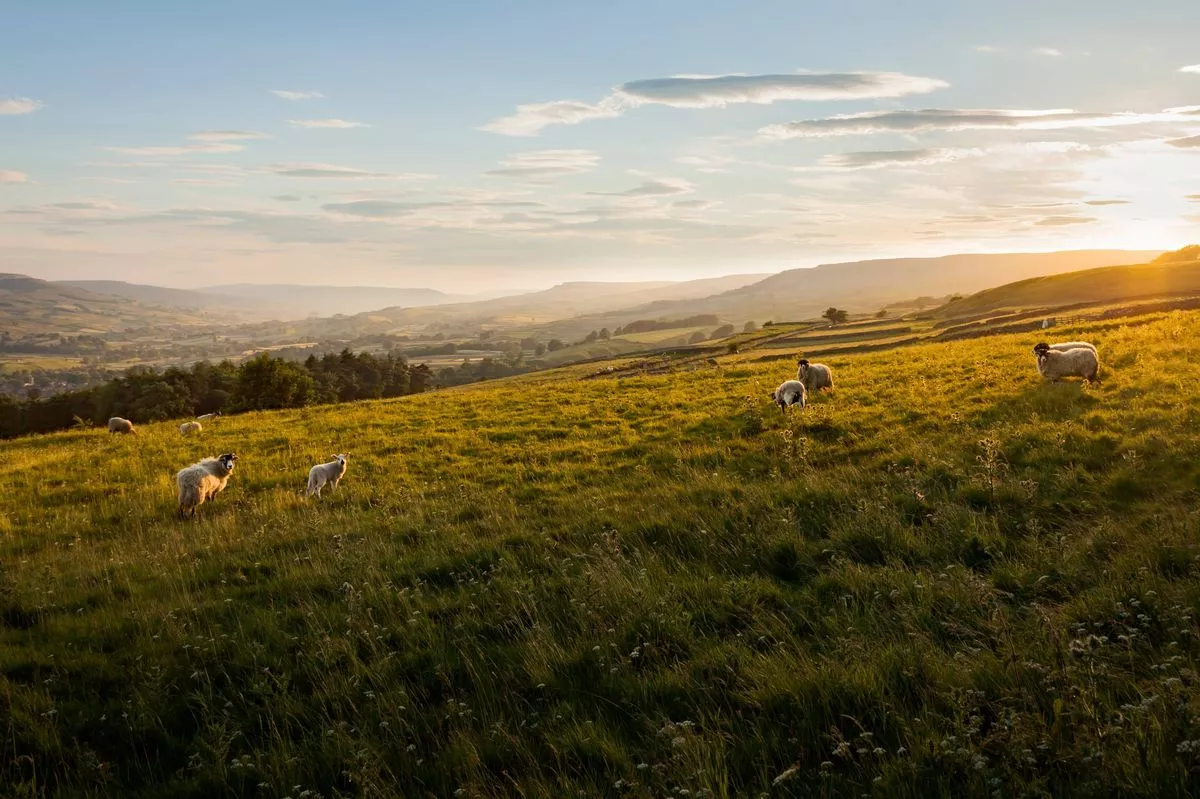
Picturesque Yorkshire Dales village is famous for its award-winning cheese from Wensleydale Creamery and unique attractions including The Forbidden Corner
08:00, 24 Dec 2025Updated 08:19, 24 Dec 2025
An aerial view the stunning dale(Image: undefined via Getty Images)
Nestled peacefully along the upper reaches of the River Ure, this idyllic village represents a haven for food enthusiasts.
Whilst Wensleydale is widely recognised for its delicious cheese, there’s far more to explore and experience in this delightful Yorkshire village. Interestingly, Wensleydale stands as one of the few dales not named after its river, deriving its name instead from the historic market town of Wensley. Located within the stunning Yorkshire Dales National Park, it’s home to the renowned Wensleydale Creamery, situated in the Hawes area. Guests can immerse themselves in the award-winning Flagship Cheese Experience and Visitor Centre, which honours a legacy spanning up to 1,000 years of regional artisan cheesemaking.
Employing recipes refined across generations using fresh locally-sourced milk, according to the company’s time-honoured tradition, the practice traces back to when Cistercian monks originally introduced cheesemaking to the locale. The region happens to be an ideally open, expansive valley, carved by glaciers, and its wide river provided the perfect environment for dairy cattle.
A recent visitor to the factory described their visit as a “cheese lover’s dream”. They said: “The cheese is delicious, and you can taste a huge variety both in the tasting room and in the cafe!. Especially enjoyed the traditional Wensleydale cheeses with added dried fruits, including apricots, blueberries and cranberries.
“Next time we’d definitely do the cheese experience and eat in the restaurant too!” The unique terrain of Wensleydale has shaped its most famous export – the cheese beloved by Britons nationwide – whilst its stunning scenery continues to benefit the area every single day.
Among its most breathtaking sights is Aysgarth Falls, a natural wonder that captivates numerous walkers who explore the region. A recent visitor to the location described it as “Beautiful. Unspoiled. Not commercialised.” They shared on TripAdvisor: “It had rained heavily overnight, and the falls were spectacular. Ignore what AI says about the distance from the visitor centre car park – it’s a gentle stroll through woodland to the middle falls.”
During your journey to Wensleydale, you’re also likely to discover “the strangest place” on Earth, better recognised as The Forbidden Corner. This attraction presents an extraordinary maze of tunnels, concealed pathways, sculptures, water installations and various curiosities nestled within its mysterious gardens.
The Yorkshire Dales location boasts peculiar features including a temple of the underworld, a glass pyramid, and sculptures depicting various historical periods. It’s an excellent family outing that keeps you connected with nature whilst offering a far more engaging experience.
With its fascinating heritage, exceptional culinary options and vast countryside, it provides an ideal combination of tradition and charm in the Yorkshire Dales. Who would have thought that so much could be tucked away in the valleys just a stone’s throw from your home, whether it’s for a day trip to one of its numerous attractions or a staycation to discover everything?
CHRIS Rea became the third of his siblings to die in just three months – sending his heartbroken family “into shock”.
Devastated relatives of the Driving Home for Christmas singer revealed he had welcomed his first grandchild shortly before his “tragic” death.
Sign up for the Showbiz newsletter
Thank you!
Chris Rea was the third of his siblings to die in just three months, his family saidCredit: GettyThe Driving Home for Christmas singer also welcomed a grandchild shortly before his deathCredit: EPAChris Rea and family Launch party for Michael Winner’s new book ‘Winner’s Dinners’ held at Belvedere restaurant. London,Credit: Alamy
Chris died in hospital following a short illness, a spokesperson for his family said on Monday.
In a statement on behalf of his wife and two children, they said: “It is with immense sadness that we announce the death of our beloved Chris.
“He passed away peacefully in hospital earlier today following a short illness, surrounded by his family.”
The singer songwriter’s death – just three days before Christmas – becomes the latest heartbreak for his family.
His older sister, Camille Whitaker, revealed two of Chris’ siblings had also sadly passed away just months ago.
She told how her youngest sibling, Nicholas, died in hospital aged 66 in October after battling brain cancer.
Just days after his funeral, Camille’s twin sister Geraldine Milward died suddenly – sending the family into shock.
She told the Daily Mail: “It is an awful pain. It is gut-wrenching what happened. The family has been quite shocked by it.
“It is tragic. We can’t sort of get around it.”
Camille, who says she last spoke to Chris less than a week ago, admitted his family will be “wrecked” by his passing.
The iconic hit writer lived with his wife and family at home in Buckingham and remained “very close” with his family.
Camille also told how Chris was “very pleased” when he became a grandfather for the first time this year.
Prior to his death, the singer-songwriter battled a number of health issues after being diagnosed with pancreatic cancer over 40 years ago.
Chris reportedly went under the knife for serious ops nine times, spending over half a year in hospital following his cancer diagnosis at the age of 33.
Discussing the shock prognosis with Saga, he told how it had been his “Mount Everest” to climb.
Chris explained: “The original illness hit me hard. I almost had a nervous breakdown with the shock of it. That was the Mount Everest to climb.
“When they said it was pancreatic cancer, I could not believe it. It seemed that if your DNA says you are going to have cancer, then you can.
“They did not think I would recover from the first operation, but I was determined to do so for my wife and the girls.”
The iconic hit-writer died earlier on Monday in hospital, his family confirmedCredit: Getty
Dec. 23 (UPI) — An explosion Tuesday afternoon at a nursing home in eastern Pennsylvania killed at least two and left many injured and missing, local officials said.
The explosion took place at 2:15 p.m. EST at the Silver Lake Nursing Home in the borough of Bristol. It originated in the nursing home’s basement and caused a fire and part of the building to collapse, a Bucks County spokesperson told NBC News.
Pennsylvania Gov. Josh Shapiro traveled to the nursing home’s location and told media a gas leak is suspected of causing the deadly explosion and fire.
Shapiro commended the actions of police, firefighters and other first-responders to help others and minimize potential casualties.
The nursing home has 174 beds, most of which were occupied, and a worker told WCAU that about 50 people usually are inside the building.
The nursing home is located about 20 miles south of Philadelphia, and most of its residents are between ages 50 and 95.
The explosion shook nearby buildings and caused a response from fire departments and first responders in Pennsylvania’s Montgomery, Bucks and Philadelphia Counties, plus another from Burlington County in New Jersey.
This is a developing story.
Former President Joe Biden presents the Presidential Citizens Medal to Liz Cheney during a ceremony in the East Room of the White House in Washington, on January 2, 2025. The Presidential Citizens Medal is bestowed to individuals who have performed exemplary deeds or services. Photo by Will Oliver/UPI | License Photo
CASTEL GANDOLFO, Italy — Pope Leo XIV said Tuesday he was “very disappointed” that his home state of Illinois had approved a law allowing for medically assisted suicide, and he called for greater respect for life.
Leo said he had spoken “explicitly” with Gov. JB Pritzker and urged him to not sign the bill into law. Chicago Cardinal Blase Cupich did the same, Leo told reporters as he left his country house in Castel Gandolfo, south of Rome.
“We were very clear about the necessity to respect the sacredness of life from the very beginning to the very end, and unfortunately, for different reasons, he decided to sign that bill,” Leo said. “I am very disappointed about that.”
Pritzker signed the legislation Dec. 12. The measure is also known as “Deb’s Law,” honoring Deb Robertson, a resident of the state living with a rare terminal illness. She had pushed for the measure’s approval and testified to the suffering of people and their families wanting the chance to decide for themselves how and when their lives should end.
Pritzker, a Democrat, had said he had been moved by stories of patients suffering from terminal illnesses.
Leo, who grew up in Chicago, cited Catholic teaching, which calls for the defense and protection of life from conception until natural death, forbidding abortion and euthanasia.
“I would invite all people, especially in these Christmas days, to reflect upon the nature of human life, the goodness of human life,” Leo said. “God became human like us to show us what it means really to live human life, and I hope and pray that the respect for life will once again grow in all moments of human existence, from conception to natural death.”
The state’s six Catholic dioceses had criticized Pritzker’s signing, saying the law puts Illinois “on a dangerous and heartbreaking path.”
Eleven other states and the District of Columbia allow medically assisted suicide, according to the advocacy group, Death With Dignity. Delaware was the latest, and its provision takes effect Jan. 1, 2026. Seven other states are considering allowing it.
Santalucia writes for the Associated Press. AP writer Nicole Winfield contributed to this report from Rome.
Bob Mortimer is leading the tributes for Chris Rea following the Driving Home For Christmas star’s tragic deathCredit: youtubeBob was good friends with the late star the pair even making the song Lets Dance together in 1997 for Middlesbrough’s Football Club’s FA Cup FinalCredit: YouTube/Gone FishingOn his tribute post bob added a sweet picture of Chris in a bubble bath holding an eggCredit: X/RealBobMortimer
He made a huge impact in the entertainment industry and following his passing a host of celebrities have shared their tributes to the late singer.
Comedian Bob Mortimer branded the star a ‘brilliant bloke’, taking to X to pen a heartfelt message, he wrote: “So so sad. A lovely brilliant funny giant of a bloke. Oh Man….RIP Chris .. Boro legend forever. Love to family and friends”.
On the post the comedian added a sweet picture of Chris in a bubble bath holding an egg, which features in Bob’s memoir recalling a time on Would I Lie To You ? where Chris had ‘supposedly’ put an egg in his bath, after the episode Rea sent him the pic.
Bob was good friends with the late star, the pair even making the song Lets Dance together in 1997 for Middlesbrough’s Football Club’s FA Cup Final.
The football team also wrote a tribute on their own page for Chris, who hails from Middlesborough, they wrote: We’re deeply saddened to learn of the passing of Chris Rea. A Teesside icon. Rest in peace, Chris.”
TV star Lizzie Cundy also took to X to express her own condolences, she said: “I’m so sad to hear Chris Rea has died. I was lucky enough to star in his music video Driving home for Christmas.
“I loved every minute and was an honour to work with him and be in his iconic music video . He will always be an inspiration and legend to me. Rest in peace Chris.”
Lizzie appeared in the smash festive hit’s music video back in 2009, alongside a host of celebs including Gail Porter and Martin Shaw.
TV presenter Timmy Mallet wrote in his tribute: “ #RIP Chris Rea I bought his house 1991 on garage wall is happy Christmas message his daughters sprayed it’s still there.
“Chris is driving home For Christmas now singing for our nearest & dearest. Grateful for his wonderful gravely voice. God bless you Chris #RIP”
During Rea’s last TV appearance, on BBC’s Mortimer and Whitehouse Gone Fishing in 2020, the singer revealed a special gift he gave childhood sweetheart Joan.
He guest starred on the show for a special Christmas episode where he talked about his battle with serious health issues over the years.
Mortimer also spoke about how his health battles had strengthened the bond between him and his family.
Rea was quick to agree and beamed as he said he shared a similar experience with Joan.
The singer replied: “It was exactly the same for me. I was in hospital and the pancreatic cancer nurse comes in and tells me ‘it’s not grade three cancer phone your wife!’
“So I phone my wife and she pulled the car over and burst into tears.”
Themusicianhad his pancreas removed after he was diagnosed with pancreatic cancer in 2001 and suffered a stroke in 2016.
The singer went on to make a light-hearted joke about leaving his wife the royalties to his famous hit.
“I gave her all the money, all the rights to all the songs, and now she won’t give them back,” he laughed.
Rea’s wife of 57 years played a key role in writing his Christmas smash hit.
Rea’s wife of 57 years Joan played a key role in writing his Christmas smash hitCredit: Shutterstock EditorialFollowing a short illness Chris sadly passed away in hospital just three days before ChristmasCredit: EPARea’s last TV appearance was on the BBC’s Mortimer and Whitehouse Gone Fishing in 2020Credit: WARNING: Use of this image is subject to the terms of use of BBC Pictures’ Digital Picture
The year was already a debacle for the Los Angeles Fire Department and Mayor Karen Bass, with multiple stumbles before and after the epic January blaze that obliterated Pacific Palisades, so it was hard to imagine that things could get worse in the closing days of 2025.
But they have.
A blistering Times investigation found that the Fire Department cleaned up its after-action report, downplaying missteps.
In other words, there was a blatant attempt to mislead the public.
And Bass representatives said they requested that her comments in the final minutes of a video interview — in which she admitted that “both sides botched it” in the Eaton and Palisades fires — be edited out because she thought the interview had ended.
Please.
Together, these developments will echo through the coming mayoral election, in which Bass will be called out repeatedly over one of the greatest disasters in L.A. history. We’re a long way from knowing whether she can survive and win a second term, but Austin Beutner and any other legitimate contenders are being handed gifts that will keep on giving.
In the case of the altered report, kudos to Times reporters Alene Tchekmedyian and Paul Pringle, who have been trying all year to keep the LAFD honest, which is no easy task.
In the latest bombshell dropped by the two reporters, they dug up seven drafts of the department’s self-analysis, or after-action report, and found that it had been altered multiple times to soften damning conclusions.
Language saying LAFD did not fully pre-deploy all crews and engines, despite the forecast of extreme conditions, was removed.
Language saying some crews waited more than an hour for their assignments during the fire was removed.
A section on “failures” became a section on “primary challenges.”
A reference to a violation of national guidelines on how to avoid firefighter injury and death was removed.
The central role of the earlier Lachman fire, allegedly started by an arsonist, was also sanitized. A reference to that unchecked brushfire, which later sparked the inferno, was deleted from one draft, then restored in the final version. But only in a brief reference.
Even before the smoke cleared on Jan. 7, I had one former LAFD official telling me he was certain the earlier fire had not been properly extinguished. Crews should have been sitting on it, but as The Times has reported, that didn’t happen.
What we now know with absolute clarity is that the LAFD cannot be trusted to honestly and thoroughly investigate itself. And yet after having fired one chief, Bass asked the current chief to do an investigation.
Sue Pascoe, who lost her home in the fire and is among the thousands who don’t yet know whether they can afford to rebuild because their insurance — if they had any — doesn’t cover the cost of new construction. Pascoe, editor of the local publication Circling the News, had this reaction to the latest expose:
“To kill 12 people, let almost 7,000 homes/businesses burn, and to destroy belongings, memorabilia and memories stored in the homes — someone needs to be held accountable.”
But who will that be?
Although the altered after-action report seems designed to have minimized blame for the LAFD, if not the mayor, the Bass administration said it wasn’t involved.
“We did not red-line, review every page or review every draft of the report,” a spokesperson told the Times. “We did not discuss the Lachman Fire because it was not part of the report.”
Genethia Hudley Hayes, president of the Board of Fire Commissioners, told The Times she noticed only small differences between the final report and an earlier report she had seen.
“I was completely OK with it,” she said, adding that the final report “did not in any way obfuscate anything.”
Well I’m not OK with it, and I suspect a lot of people who lost everything in the fire feel the same way. As I’ve said before, the conditions were horrific, and there’s little doubt that firefighters did their best. But the evidence is mounting that the department’s brass blew it, or, to borrow a phrase from Bass, “botched it.”
As The Times’ David Zahniser reported, Bass said her “botched” comment came in a casual context after the podcast had ended. She also said she has made similar comments about the emergency response on numerous occasions.
She has made some critical comments, and as I mentioned, she replaced the fire chief. But the preparation and response were indeed botched. So why did her office want that portion of the interview deleted?
Let’s not forget, while we’re on the subject of botching things, that Bass left the country in the days before the fire despite warnings of catastrophic conditions. And while there’s been some progress in the recovery, her claim that things are moving at “lightning speed” overlooks the fact that thousands of burned out properties haven’t seen a hammer or a hardhat.
On her watch, we’ve seen multiple misses.
On the blunderous hiring and quick departure of a rebuilding czar. On the bungled hiring of a management team whose role was not entirely clear. On a failed tax relief plan for fire victims. On the still-undelievered promise of some building fee waivers.
In one of the latest twists on the after-action report, Tchekmedyian and Pringle report that the LAFD author was upset about revisions made without his involvement.
What a mess, and the story is likely to smolder into the new year.
If only the Lachman fire had been as watered down as the after-action report.
Rea said he was on the dole at the time, his manager had just left him and he had been banned from driving.
His then-girlfriend Joan (who he met when they were both 16 and went on to marry) had to pick him up in London in her mini and drive him home.
That’s what inspired the song, which was written in 1978, 10 years before it was released as a single in 1988.
Asked about what he thinks of when he hears the song, the singer joked about how it bought him “that lovely little holiday in the Maldives”.
The song has since been covered by artists including Engelbert Humperdinck and Stacey Solomon.
Rea was good friends with Mortimer and in 1997 they recorded Let’s Dance for Middlesbrough Football Club’s FA Cup Final.
On Monday evening, Mortimer posted on X: “So so sad. A lovely brilliant funny giant of a bloke. Oh Man… RIP Chris… Boro legend forever. Love to family and friends.”
But alongside the singer-songwriter’s success, he had suffered with various bouts of ill-health over the years.
He had his pancreas removed a few years after being diagnosed with pancreatic cancer at the age of just 33 in 1994, which meant he developed type 1 diabetes. He later had a stroke in 2016.
Rea (centre) appeared on Mortimer & Whitehouse: Gone Christmas Fishing in 2020
“None of my heroes were rock stars. I arrived in Hollywood for the Grammy Awards once and thought I was going to bump in to people who mattered, like Ry Cooder or Randy Newman. But I was surrounded by pop stars.”
He added: “The celeb thing has gone totally wrong in the sense that everyone has tried to top each other. They don’t put the work in.”
Speaking of his wife in the same interview, he said: “Our golden moment is each morning when there is an elbow fight over whose turn it is to make the coffee.
“Then there are the large mugs of fresh coffee, BBC Breakfast news or Sky and we gaze out of the window over the countryside for an hour and we are still 16. We are lucky to still have that feeling.”
Rea was born in 1951 in Middlesbrough to an Italian father and Irish mother, and had six siblings. He began his working life helping out with his family’s ice-cream business.
“To be Irish Italian in a coffee bar in Middlesbrough – I started my life as an outsider,” he later said.
Getty Images
Once he found the guitar, he soon began playing in various bands and released his debut album Whatever Happened To Benny Santini? in 1978.
His commercial breakthrough came in the 1980s, as two of his studio albums – The Road To Hell (1989) and Auberge (1991) – went to number one in the UK.
He returned to his blues roots in his later years while facing his health challenges.
After his stroke nine years ago, he recovered to launch a new album, Road Songs For Lovers, in 2017.
He took the album on the road at the end of that year but had to cancel a number of shows after he collapsed mid-song while performing at the New Theatre in Oxford.
Rea released a new album in October 2025, titled The Christmas Album, featuring a remaster of Driving Home For Christmas as well as other festive tracks.
Paying tribute to Rea following his death, journalist Tony Parsons described him as a “top man” and “hugely underrated songwriter”.
TV personality Lizzie Cundy, who appeared in the music video for a 2009 version of Driving Home For Christmas, said that she was “so sad” to hear the musician had died.
“I loved every minute and was an honour to work with him and be in his iconic music video,” she said. “He will always be an inspiration and legend to me.”
Andy McDonald, Labour MP for Middlesbrough and Thornaby East, said he was “very saddened” to hear the news of Rea’s death.
In a post on X, he said: “Chris, a most cherished son of Middlesbrough, will live on through his wonderful music. My sincere condolences to his family.”
Rea and his wife Joan shared two daughters, Josephine and Julia. He credited his family with helping him to cope after his ill health.
“It’s music and family with me. I’m only one of four, that’s how I am,” Rea once said. “I’m 25% of a unit. It’s always been that way and we like it that way. In between that there’s music.”
LEGENDARY British singer-songwriter Chris Rea has tragically passed away aged 74.
The singer, from Middlesbrough, penned the smash hit Driving Home For Christmas in 1978.
Sign up for the Showbiz newsletter
Thank you!
Chris Rea penned the legendary Christmas tune ‘Driving Home for Christmas’Credit: RedfernsRea has recorded 25 studio albums, two of which topped the UK Albums ChartCredit: Getty
Christopher Rea was born on 4 March 1951 inMiddlesbroughin theNorth Riding of Yorkshireto anItalianfather, Camillo Rea,and anIrishmother, Winifred K. Slee.
In 1973 he joined the local Middlesbrough band, Magdalene and began writing songs.
He went on to enjoy a long and sucesfull career on the British music scene.
His most famous song Driving Home for Christmas, song has made a reappearance on the UK Singles Chart every year since 2007.
It’s now a chart regular at this time of year, reaching its highest position in 2021 when it made it to number 10.
Rea was diagnosed with pancreatic cancer at the age of just 33 and faced nine serious operations – spending a total of 32 weeks in hospital.
While appearing on the TV show Mortimer & Whitehouse: Gone Fishing Christmas special in 1994 Rea told the hosts he had “never really gotten over” his diagnosis.
He has previously opened up on his health battle, revealing that some of his internal organs, his pancreas, gallbladder, and left quadrant of the liver were “all gone” after an operation.
It was after he had received the lifesaving surgery that the star discovered he had type 1 diabetes.
Speaking candidly about the moment he told his wife Joan Lesley about the diagnosis Rea said: “She pulled the car over and burst into tears.”
Chris has previously said he has to take “34 pills every day” after his health struggles.
His wife Joan was there when the hitmaker wrote the Christmas favourite Driving Home for Christmas.
The pair have been together since they met as 16 year olds in Middlesbrough and it is said Rea has the longest surviving relationship in the music industry.
The couple have two daughters together Josephine, born 16 September 1983, and Julia Christina, born 18 March 1989.
Speaking to Bob Mortimer about its origins, Chris previously said: “I was on the dole when I wrote that.
“My manager had just left me. I’d just been banned from driving.
“My now wife, Joan, had to drive down to London to pick me up in the Mini and take me home, and that’s when I wrote it.”
That Christmas drive up north was a magical one indeed, not only did he write a famous song, he also received a cheque for £15,000 upon stepping through his front door.
His song Fool (if you think it’s over) had become a hit in America and earned him a pretty sum. The timing couldn’t have been better given he was down to his last £200.
It was a while before Driving Home would make any money.
Rea has faced a lengthy health battleCredit: Redferns
The Las Vegas Museum of Art has revealed new key details of Pritzker Prize-winning architect Diébédo Francis Kéré’s design for the city’s first freestanding museum, which is expected to break ground in 2027.
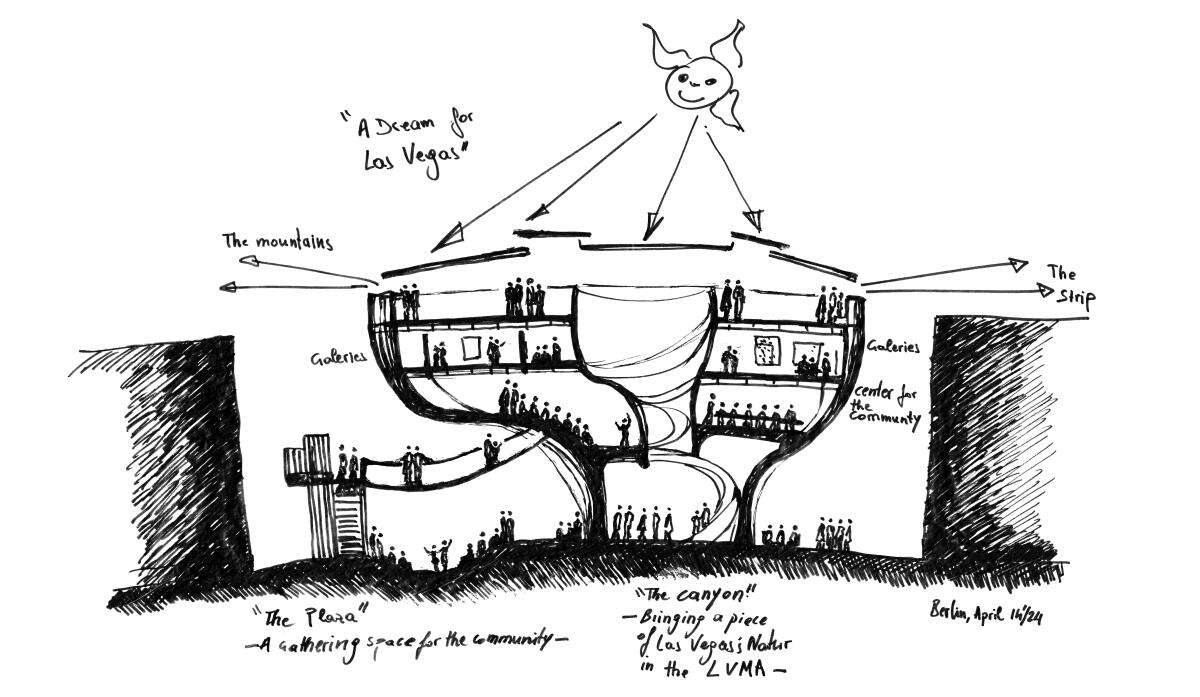
The earthy red structure will feature a facade of locally sourced stone, and was inspired by the canyons and red rock landscape that stretches beyond the brash, man-made playground of Sin City, Kéré said in an interview alongside the museum’s executive director, Heather Harmon.
“How can I use what is surrounding Las Vegas to create something open and welcoming?” he said. “We started to think about the subtle beauty of the nature, and to bring it into the core of the museum.”
Renderings of the structure, which is situated in Symphony Park, show a cubed modernist building with a large awning that stretches over a bustling entry plaza to provide shade. A curved grand entrance staircase spirals through the center of the museum and is visible from the building’s floor-to-ceiling windows. Cloistered second-floor galleries are meant to provide a peaceful sanctuary for taking in the art.
A concept sketch for the Las Vegas Museum of Art by architect Diébédo Francis Kéré.
(Diébédo Francis Kéré / Las Vegas Museum of Art)
Architect Paul R. Williams’ Guardian Angel Cathedral, which opened in the city in 1963, is cited as a design influence, as are the singular stocky trunk baobab trees of the African savanna. Kéré was born in the village of Gando in the West African country of Burkina Faso, and noted that although the natural environment of his home country is quite different from that of Las Vegas, he was able to find many design parallels for inspiration.
Kéré, who is also a professor at Yale in New Haven, Conn., has made many trips to Las Vegas over the last few years, and received personalized tours of the city and its natural surroundings from Harmon and Elaine Wynn, a museum board member and philanthropist who died in April.
They went to the Valley of Fire State Park, which features fantastical sandstone formations the same color as the museum’s renderings. They also saw various quarries as well as the Hoover Dam. In the city, they visited the west side, which is rooted in the city’s rich African American history, as well as Ward 3 on the east side, which is home to a large Latino population.
“We looked at community spaces, we looked at people in community spaces,” said Harmon. “And we really wanted to have that feeling of understanding as we approached the project — just knowing firsthand who we were building the museum for.”
The 60,000-square-foot building is expected to welcome more than 2.4 million year-round Las Vegas residents, as well as millions of global tourists. The museum is expected to cost about $200 million, including its endowment. The target opening date is in 2029.
Last year, the Los Angeles County Museum of Art announced it would share its collection with the Vegas museum, which does not have plans to become a collecting institution. LACMA director and LVMA founding trustee Michael Govan told The Times that the sharing arrangement is part of a paradigm shift for LACMA, allowing it to expand access to its collection without increasing the physical footprint of its home base. (Critics, including former Times art critic Christopher Knight, disagreed with the move.)
“I think that’s a very 20th century idea — to keep adding wings until you’re a million square feet on Fifth Avenue,” Govan said in an interview at the time.
WE all know that reindeer pull Santa’s sleigh – but did you realise his entire fleet of magical-hooved creatures is female?
“We know this because of their horns,” Diego Osorno tells me, pointing towards Vixen, one of Grouse Mountain’s resident herd.
Sign up for the Travel newsletter
Thank you!
Grouse Mountain, a 4,100ft tall peak that towers over the city of VancouverCredit: Destination VancouverThe Sun’s Sophie Swietochowski at Grouse MountainCredit: Supplied
At that moment, she decides to depart her hay-filled lodge and gently plod off through the snow, tilting her antlers towards the shimmering Christmas lights in a well-timed performance.
Males shed their antlers in the winter months, while females cast theirs in summer, the knowledgeable Diego shares. He is one of a few rangers here at Grouse Mountain, a 4,100ft tall peak that towers over the city of Vancouver, on Canada’s western coast in British Columbia.
This magnificent landmark will be celebrating its 100th birthday next year, and for those already planning their 2026 wintry getaway, few places offer more Christmas cheer, aside from Santa’s home in the North Pole.
A small “skating pond” sits just beyond the reindeer shelter, where kids can twirl on ice in front of snow-topped fir trees listening to festive music echo between the trunks.
Elsewhere on the peak, you can trudge through fresh white powder on a snowshoe experience, weaving through the frosty woodland which, at this time of year, is dripping in twinkling lights.
These lights are almost as magical as the ones glimmering up from the city of Vancouver at night.
Birds-eye views of the city are spectacular from the cliffside restaurant, The Observatory, and you can soak them up while you dive into fondue — a bubbling pot of rich, gooey cheese served alongside thick slices of charcuterie, pickles and hunks of bread for dipping.
Of course, there’s skiing and snowboarding, too. In fact, visitors will have their pick of three mountains for snowsports when staying in Vancouver, which is partly what makes this region one of the best in the world for night skiing.
You can hit the slopes in a mere 25 minutes from the city centre, including the cable car journey. And Vancouver’s breathtaking nature doesn’t end with its mountains. At the foot of the snow-capped cliffs lies a huge harbour, filled with ships, fishing boats and humming seaplanes — and plenty of wildlife, too.
Winter isn’t the season for spotting whales, but you’re still in with a chance of catching something emerging from the waters, especially if you decide to take a stroll around the seawall of Stanley Park.
This is Vancouver’s answer to Central Park in New York, except it’s roughly 20 per cent larger, boasting 1,000 acres of lush green space bang in the centre of a skyscraper city.
A pal had spotted seals here only a few days earlier, but during my morning run, I only spied black squirrels (cool, nonetheless) and a seagull cracking into a crab that it had plucked from the water for breakfast.
Messy but fun
That sight hammered home just how fresh the grub here really is.
With a huge body of water on its doorstep, wild salmon is, unsurprisingly, very popular in Vancouver. It’s also a staple in the diets of the indigenous communities around these parts. Sushi is big, too. In fact, it turns out Vancouver is where the California roll was invented, supposedly by Japanese-Canadian chef Hidekazu Tojo, although there is some debate over this.
One of the best places in the city to sample this is Miku Waterfront, near the cruise port. This restaurant has rightly earned a place in the Michelin guide for its extremely high-quality dishes at prices that won’t break the bank.
I polished off clean plates of oshizushi, a sushi block made from layered rice and slabs of fresh tuna or mackerel, dolloped with a smattering of saffron as well as perfectly-crafted nigiri, which I was instructed not to dip in soy sauce as the seasoning had already been meticulously balanced.
Right they were.
An extremely filling lunchtime Shokai consisting of ten pieces of traditional sushi, rolls and nigiri with appetisers and miso soup, will set you back just under £25, in a swish setting.
For more snacking with a festive twist, there are two Christmas markets in the cityCredit: Destination VancouverUndercover ice-skating in domeCredit: Ian Harland
Asian influences can be seen throughout a large number of restaurants in Vancouver due to a wave of Cantonese and South Asian communities immigrating to the city over recent years. Anh And Chi at the northern end of Main Street serves immaculately executed Vietnamese classics, including DIY rice paper rolls that you construct at the table. Messy but fun.
During the festive period, however, you can’t go wrong with a slap-up Christmassy meal within a sparkling globe-style dome at H Tasting Lounge.
Order the 24-hour braised beef shank, which is lit on fire tableside, the smoky smell of rosemary and meat engulfing the dome.
Cold plunge pools
If you simply can’t decide what tickles your fancy, book on to a food tour with foodietours.ca around the public markets of Granville Island.
This industrial area has become a hub for arts and food, and more than 50 independent vendors flog their homemade delights to not just tourists and locals, but A-list celebs, too.
Pop star Harry Styles once bought Hobbs Pickles’ entire stock of sweet pickles in one day. I had to resist doing the same after sampling their dill flavour.
Vancouver-born actor Seth Rogen, on the other hand, regularly makes a beeline for Lee’s Donuts, which sells the classic ring-shaped bake in all manner of flavours, from cinnamon to honey-dip.
For more snacking with a festive twist, there are two Christmas markets in the city. The main Vancouver Christmas Market (entry from £3.80), offers a more commercial atmosphere with wooden stalls selling all the classics.
Seafood restaurant Miku is in Michelin GuideCredit: Destination VancouverA snow-covered Cypress MountainCredit: Destination Vancouver
Meanwhile, the Shipyards markets on the North Shore are a little more crafty and free to visit, serving quirkier titbits like pickled spruce tree tips.
They taste like capers, if you’re wondering.
I was also grateful for the city’s emphasis on wellness after gorging one too many poffertjes (mini Dutch pancakes).
Spas have become a large part of the culture here and the two-hour thermal circuit at Circle Wellness will ensure every ounce of stress is extracted from your body through specially designed hot pebble floors, Himalayan salt chambers and cold plunge pools.
From my private shipping container, I watched the steam billow from my cedar tub, clashing with the air’s chill.
Some things are just made for winter. And Vancouver is one of them.
GO: VANCOUVER
GETTING THERE: Air Canada flies from Heathrow to Vancouver from £712 each way including one checked bag. See aircanada.com.
STAYING THERE: Rooms at The Westin Bayshore cost from £202 per night on a room-only basis. See marriott.com. For more information, see destinationvancouver.com.
Dec. 19 (UPI) — Sales of previously owned homes rose 0.5% in November from October, reflecting a slowdown, due to high mortgage rates, high prices and less supply.
Home sales were 1% lower than November 2024, according to the National Association of Realtors. Sales came in at an annualized rate of 4.13 million units.
The numbers are based on closings, so contracts may have been signed in the preceding months when rates dipped slightly.
Supply fell in November after rising most of the year. The association said there were 1.43 million homes for sale at the end of the month, which is down 5.9% from October, but up 7.5 percent year-over-year.
That’s a 4.2-month supply. A six-month supply is considered balanced between buyer and seller.
The average 30-year fixed-rate mortgage rate was 6.24%, down from 6.25% in October and 6.81% from a year ago, showing slow change in rates.
The median existing-home price for all housing types was $409,200, up 1.2% from a year ago.
The median time on the market for properties was 36 days, up from 34 days last month and 32 in November 2024.
“Existing-home sales increased for the third straight month due to lower mortgage rates this autumn,” said the Association of Realtors’ Chief Economist Lawrence Yun in a statement. “However, inventory growth is beginning to stall. With distressed property sales at historic lows and housing wealth at an all-time high, homeowners are in no rush to list their properties during the winter months.”
Month-over-month sales increased in the Northeast and South, showed no change in the West, and fell in the Midwest. Year-over-year sales showed no change in the Northeast and South, and decreased in the Midwest and West.
“Wage growth is outpacing home price gains, which improves housing affordability. Still, future affordability could be hampered if housing supply fails to keep pace with demand,” Yun said. “As has been the case throughout the year, single-family home sales outperformed condominium sales in November. The typical price of a sold condo was 13.5% lower than the typical price of a single-family home. However, the purchase price does not include the condominium association fees, which are rising and making these purchases more expensive.”
Former President Joe Biden presents the Presidential Citizens Medal to Liz Cheney during a ceremony in the East Room of the White House in Washington, on January 2, 2025. The Presidential Citizens Medal is bestowed to individuals who have performed exemplary deeds or services. Photo by Will Oliver/UPI | License Photo
IF you’re dreaming of going somewhere picturesque and peaceful, there’s a certain stunning cottage calling your name.
Residing in one of Wales‘ beautiful peninsulas, the white-washed home – known as Bwthyn Trehilyn – is incredibly popular for holiday bookings.
Sign up for the Travel newsletter
Thank you!
Bwthyn Trehilyn on Strumble Head is a gorgeous rural cottageCredit: Under The ThatchIt features a private garden, ideal for a quiet breakfast outdoorsCredit: Under The ThatchRural views are plentiful around the propertyCredit: Under The Thatch
This isn’t only because it boasts six bedrooms, scenic views and the perfect step away to disconnect from the hubbub of busy, daily life.
It just so happens to be owned by a famous TV star.
Comedian, actor and television presenter Griff Rhys Jones took ownership of the now-beautiful cottage when it was in a rather derelict state.
It was once part of a collection of stone properties that collectively formed a working Pembrokeshire farm.
But now Bwthyn Trehilyn is enjoying a new lease of life as a holiday rental, thanks to becoming the fifth property renovated by Griff.
Under the Thatch, a company who curate collections of the most refined holiday homes in Wales, announced Bwthyn Trehilyn as the top-selling accommodation for 2025.
Visitors adored the charm of the building, as well as its thoughtfully updated interiors including its adjoining servants’ wing, a former mill, and a granary.
Interior designers did their best to keep some of the interior’s original character, incorporating vintage furniture relevant to the period and restoring wooden ceiling beams.
Though one of the main sells for travellers was its location, being only a short walk away from the Abermawr beach.
The beach features a private lake, ideal for watching a stunning rural sunset melt into the water or an evening of fishing.
It only took a stroll through the area back in 2004 for Griff to decide he just had to snap up the cottage and return it to its former beauty.
Interior designers renovating the cottage kept an old-world feel insideCredit: Under The ThatchIt features vintage furniture and beautiful colour combinationsCredit: Under The ThatchModern features have been intertwined into the property, tooCredit: Under The Thatch
PHOENIX — Camdyn Glover used to be a quiet conservative. She worried what her teachers would think or if she would lose friends over her convictions. But she said something changed when Charlie Kirk was assassinated in September, and she started crying in her classroom at Indiana University while other students cheered and clapped.
“We can’t be silenced,” Glover decided.
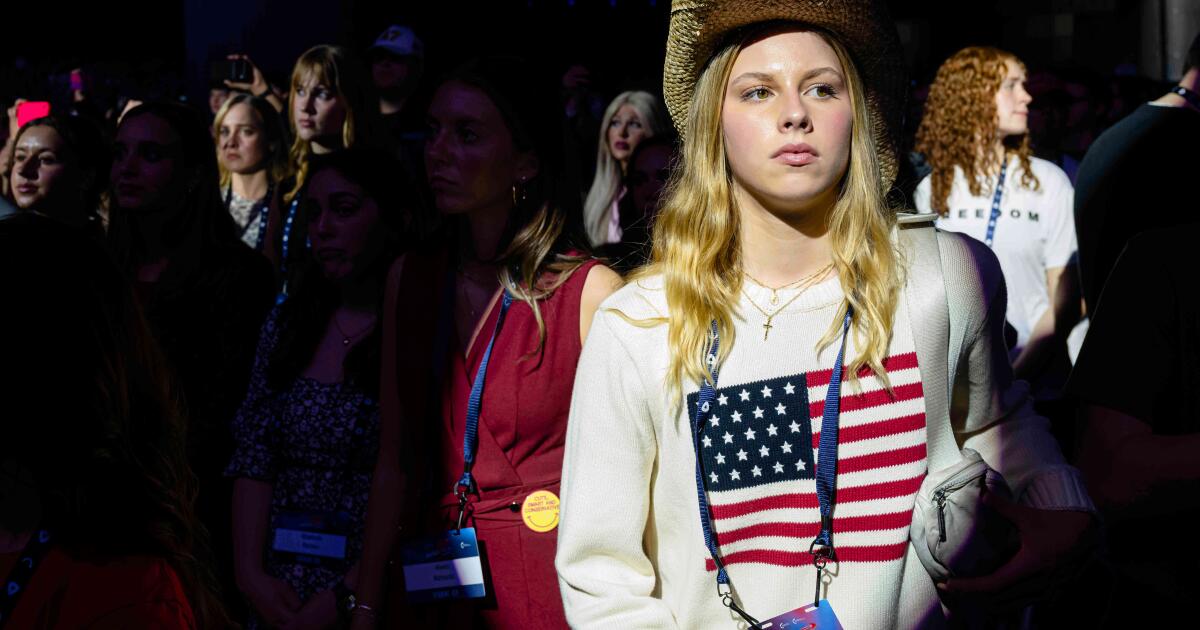
Now she’s visiting Phoenix with her parents and brothers for this year’s Turning Point USA conference, the first to take place since Kirk’s death. Although the organization became a political phenomenon with its masculine appeals to college men, it’s also been expanding outreach to young women like Glover. The shift is poised to accelerate now that Turning Point is led by Erika Kirk, Charlie’s widow, who has embraced her new role at the helm of a conservative juggernaut with chapters across the country.
If successful, the organization that helped return President Trump to the White House could narrow a gender divide that has been a persistent challenge for Republicans. Turning Point offers a blend of traditional values, such as encouraging women to prioritize marriage over careers, and health trends pushed by online influencers.
Glover, 18, said discovering Turning Point in high school gave her an appreciation for dialogue when she felt like an outcast for her beliefs, such as being anti-abortion. At her first conference, she feels like she’s found a political and cultural home for herself.
“They want to promote a strong independent woman who does hold these values and can go stand up for herself,” she said. “But it’s also OK to do it in heels, put some makeup on, wear a dress.”
‘If Erika can do it, I can do it’
One of Glover’s classmates, Stella Ross, said she stumbled upon Charlie Kirk on TikTok in the months before the last presidential election.
She already felt like her perspectives were being treated differently on campus and thought she was receiving unfairly low grades in her political science classes. A devout Catholic, Ross said she was inspired by how Charlie Kirk wasn’t afraid to weave his evangelical faith into his political arguments.
She also noticed how many women posted comments of appreciation on Erika Kirk’s videos, and she joined Indiana University’s Turning Point chapter in the same month that Trump won his comeback campaign.
“I was like, wow, if Erika can do it, I can do it,” Ross said.
Ross has career aspirations of her own — she interns with Indiana’s Republican Party and aspires to be a press secretary for a governor or president. But she hopes to have flexibility in her job to be fully present with her children and believes that a traditional nuclear structure — man, woman and their children — is “God’s plan.”
When she thinks of Erika Kirk, “it’s really cool to see that she can live out that balance and it makes me feel like that could be a more realistic future for me because I’m seeing it firsthand.”
A new messenger
Erika Kirk often appeared alongside with her husband at Turning Point events. A former beauty pageant winner who has worked as a model, actress and casting director, she also founded a Christian clothing line and a ministry that teaches about the Bible.
In a recent interview with The New York Times, she said she had fully bought into “boss babe” culture before Charlie showed her a “healthier” perspective on life. Now she leads the multimillion-dollar organization, which she said at a memorial for her husband would be made “10 times greater through the power of his memory.”
The political gap between young men and women has been growing for years, according to a recent Gallup analysis. Not only have women under 30 become more likely to identify as ideologically liberal, they’ve also embraced liberal views on issues such as abortion, the environment and gun laws.
The schism was clearly apparent in the last presidential election, where 57% of male voters under 30 supported Trump, compared to only 41% of women under 30, according to AP VoteCast.
Turning Point has been working to change that, hosting events like the Young Women’s Leadership Summit and urging attendees to embrace traditional family values and gender roles.
Charlie Kirk said earlier this year that if a young woman’s priority is to find a husband, she should go to college for a “MRS degree.” Matthew Boedy, a professor of rhetoric at University of North Georgia, said Erika Kirk could be a more effective messenger because she was focused on her career before meeting her husband.
“I do think her story resonates more because she tried it out and can tell them it is not for them,” he said.
Some conservative women are turned off by this approach. Raquel Debono, an influencer who lives in New York City, described the event as a “Stepford wives conference,” featuring women in pink floral dresses.
She said Turning Point’s emphasis on being traditional wives “leaves out a lot of women who work,” she said, “and I think they’re going to lose all those voters, honestly, in the next election cycle if they keep it up.”
Debono founded her own organization, Make America Hot Again, where she throws parties intended to make voters feel welcomed into the conservative movement and allow them to get to know people who share their politics.
‘Big time’ growth for some chapters
Aubree Hudson had been president of Turning Point’s chapter at Brigham Young University for only two weeks when she visited nearby Utah Valley University for an event with Charlie Kirk.
She said she was standing only about six feet away when he was fatally shot. She ran to find her husband, who was at the back of the crowd, and they fled to her car.
Hudson, 22, is from a rural farm town in southwestern Colorado. Her conservative convictions are rooted in her family’s faith and patriotism. A copy of the U.S. Constitution hangs in her parents’ home, and her father taught her to value God, family and country, in that order. Her mother stayed at home, telling her children that “you guys are my career.”
Since Kirk’s assassination, Hudson said the number of people — particularly women — getting involved with the organization jumped “big time.”
Emma Paskett, 18, is one of them. She was planning to attend the Utah Valley University event after one of her classes, but Kirk was shot before she made it there.
Although she wasn’t very familiar with Turning Point before that point, Paskett said she started watching videos of Kirk later that night.
Paskett considers Erika Kirk to be a “one in a million” role model, and her role as a leader was a driving factor in signing up.
“That’s exactly what I want to be like,” she said.
Govindarao writes for the Associated Press. AP writer Amelia Thomson-DeVeaux contributed to this report from Washington.
A UK city has been hailed as home to ‘one of the world’s most scenic winter train journeys’
The holiday season may be the best time to ride the rails
A city in the UK has been hailed as the backdrop for “one of the world’s most scenic winter train journeys“. National Geographic experts have lauded the route as “breathtaking,” promising travellers an eyeful of unforgettable vistas. In their roundup of Europe’s top 10, they said: “The holiday season may be the best time to ride the rails on these iconic routes through Germany’s enchanted Black Forest, and Norway’s frozen waterfalls.”
But it’s Scotland that truly steals the show with its mist-shrouded hills, serpentine lochs, and stark winter landscapes. For those hunting for a festive or winter escape, this rail journey delivers an unrivalled experience.
So, where in Scotland can you find this picturesque railway journey?
Stretching around 180 miles from Glasgow to Mallaig via Fort William, the West Highland Line is your ticket to awe-inspiring scenery.
As the National Geographic expert elaborated: “Route: Glasgow to Mallaig. Often cited as one of the world’s most scenic rail journeys, the West Highland Line serves up raw, haunting beauty.
“It slices through Rannoch Moor, a sprawling peat bog, skirts Loch Lomond, and soars over the Glenfinnan Viaduct, (a spectacle long before the Hogwarts Express catapulted it to Hollywood fame).”
They added: ” Edinburgh and Glasgow both boast unique Christmas festivities worth checking out. Edinburgh’s markets spill across Princes Street Gardens under the watchful eye of the castle, while Glasgow is set to light up with a Christmas lights trail this year.”
Glasgow’s Christmas market
The Winter Wonderland Christmas market at St Enoch Square is set to run from 6 November to 24 December, boasting family rides, an ice rink, local vendors, and live music. As reported by Secret Glasgow, the event will feature the world’s first solar-powered observation wheel and a fully licensed festive bar.
Glasgow is also set to host its largest beer hall yet, accommodating up to 700 guests with pub quizzes, live music, and festive beverages on offer. The venue will be adorned with fairy lights and fire pits, serving mulled wine and winter cocktails in both indoor and outdoor spaces.
In lieu of the traditional Christmas Lights Switch-On, which has been cancelled due to redevelopment works at George Square, the city will instead showcase a festive light trail.
Key attractions include dazzling art installations along Sauchiehall, Buchanan, and Argyle Streets, as well as a grand Christmas tree and crib at the Cathedral Precinct, providing a perfect backdrop for festive photos.
Top 10 scenic train routes in Europe, according to National Geographic