SCOTLAND could soon have its own direct link to Europe via ferry.
Plans have been in the works for years to connect Scotland to northern France and it’s set to become a reality in 2026.
Sign up for the Travel newsletter
Thank you!
The proposed route will connect a town in Fife, Scotland to the city of DunkirkCredit: AlamyThe route to France would be one of the longest in Europe taking around 20 hoursCredit: Alamy
Speaking in Westminster in November 2024, Scottish MP Graeme Downie proposed that £3 million in funding was needed to start up the service.
He said: “It is estimated the direct ferry link would initially carry 51,000 passengers a year, rising to 79,000, bringing an additional £11.5 million of spend to the Scottish economy.”
The new proposed route would become one of the longest ferry journeys in Europe.
But that title currently belongs to the service between Portsmouth to Bilbao in Spain, which lasts between 27 and 30 hours.
In the past, Scotland had a similar service between Rosyth and Zeebrugge which Belgium previously connected Scotland to Europe.
The overnight crossing took 17 hours and operated four times per week.
DFDS offers three routes from the UK to France – but these are from Dover and NewhavenCredit: Alamy
The route was discontinued in 2008, following six years of service.
It was reintroduced in 2009, but was pulled again in 2010 because of insufficient demand.
DFDS operates three main routes from the UK to France.
Currently, there are no direct passenger ferries from Scotland to mainland Europe.
Other routes DFDS offers include those to the Channel Islands from southern England and the northernmost major ferry route from the UK from Newcastle to Amsterdam.
Another ferry route connects Essex to the Netherlands…
Elsewhere in the UK, Harwich, a seaside town in Essex, already has a direct ferry service to Europe.
Brits looking to head to the Netherlands will be excited to know about Harwich’s ferry link to the Hook of Holland.
With a journey time of roughly seven hours, many tourists opt for the sleeper service so they can arrive in Holland early in the morning.
From the Dutch ferry port, Rotterdam is 40 minutes away by car, while a drive to Amsterdam takes just over an hour.
Wales’ craggy coastline is among the most beautiful in the world and can be enjoyed year-round
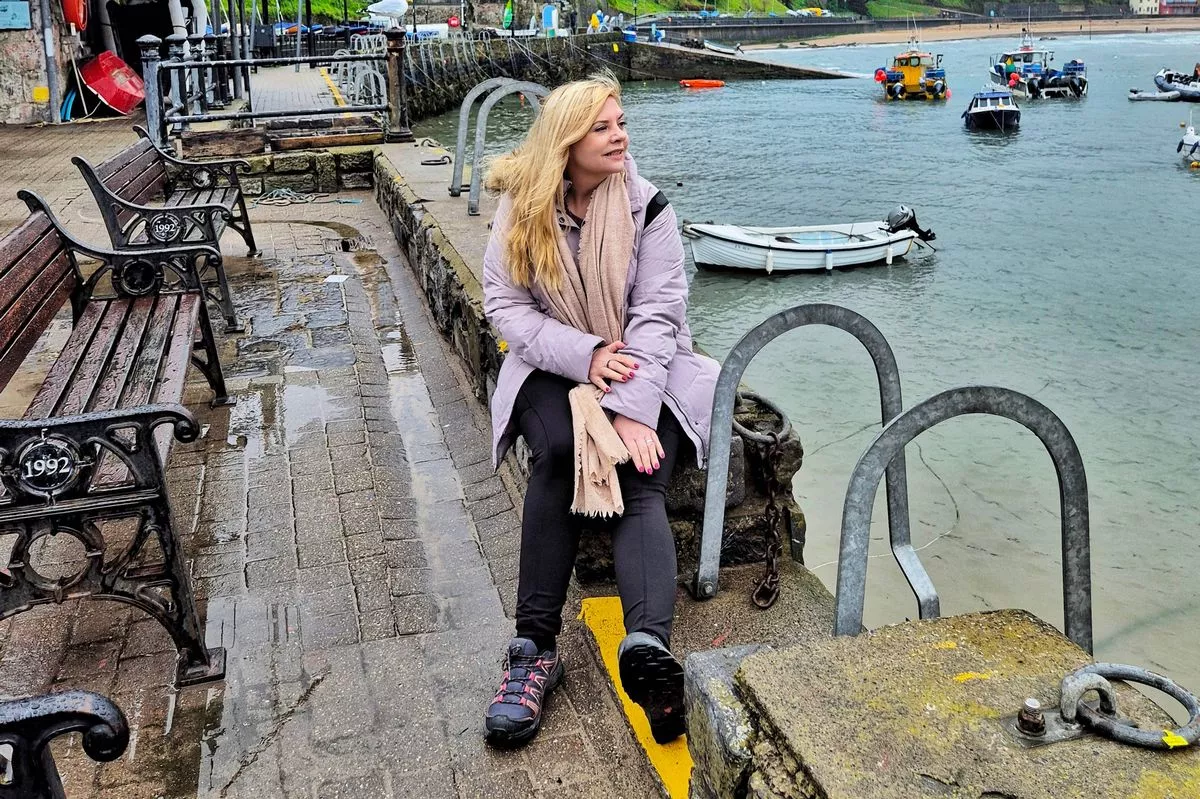
I stayed a weekend out of season in UK’s ‘best’ seaside town — I won’t go in summer again(Image: Portia Jones )
The UK’s craggy coastline is among the most beautiful in the world and can be enjoyed year-round, especially in winter when crowds disperse and prices drop. I spent an affordable winter weekend in Tenby, widely considered one of the UK’s best seaside towns — and now summer travel is officially off the list as I want to avoid the crowds and sky-high prices.
There’s a particular joy in taking a solitary coastal walk on a Tuesday in November while everyone else is stuck at their desks. Strolling around the seafront, it’s easy to see why Tenby is such a hit. With picturesque beaches just a short stroll from the lively town centre, pubs, cobbled streets, and eye-catching, brightly coloured houses, I’m not surprised that this coastal jewel consistently tops the list of the country’s “best seaside towns”.
Stepping beyond its historic 13th-century walls, you’ll find sandy beaches and dramatic cliffside vistas over the sea towards the mesmerising Caldey Island. I have visited Tenby many, many times over the years, from childhood holidays to grown-up escapes and I love it a bit more with each visit. While admittedly summer is perfect for sea swimming and long wine-filled afternoons on sun-trap pub terraces, I have come to appreciate Tenby more in winter, especially when I can bag a good accommodation deal.
Sure, the weather might not be as sunny, but this is Wales. It’s completely unpredictable, so you may as well chance a cheaper autumn visit and hope the weather gods smile upon you. I love that if you visit Tenby during the week, say, mid-January, you can escape the crowds and wander the pretty streets and sandy beaches in relative peace. Just wrap up warm, buy a hot chocolate, and watch the waves roll in from a chilled-out seaside cafe.
Where to stay in Tenby
You can get some pretty good deals in the off-season, especially if you visit midweek rather than at the weekend. One of my favourite spots is YHA Manorbier, a very affordable stay that’s a short drive from the town centre.
This budget-friendly hostel, situated on a former military installation, offers glamping and camping facilities and costs under £50 for a private en-suite room for two (YHA members pay even less). Accommodation options include affordable private rooms, unique American Airstreams, cute camping pods, and pitch-up camping.
I usually book a clean, private en-suite room for just £45 for two, and as a YHA member, I get an extra 10% off. Win! Yes, the private rooms can have limited space for large luggage, which estate agents might call “bijou” and normal people might call “compact”. However, for just over £20 each it’s a genuine bargain – especially in the pricey Pembrokeshire area. You’re here for the vibes.
A community-spirited atmosphere fostered by shared kitchens, mismatched mugs, and conversations over wine in the lounge. Want to stay closer to town? Check out autumn deals on Booking.com and book a seaside hotel for around £70 for two adults, or spoil yourself with a stay at a four-star property, the Dunes, for just £80 for a night in the off-season.
The Premier Inn Tenby Town Centre hotel costs just £48 for a night for two in January and offers a cosy stay right in the middle of all the action.
Things to do in Tenby off-season
There’s still plenty to do in Tenby after the busy summer season has ended. You can stomp along the coast path, drink craft ales in local boozers, browse boutique shops, and pick up locally made gifts. Tenby has several sandy beaches where you can take a chilly winter sea dip if you’re feeling brave or drink hot chocolate overlooking the blustery shoreline.
South Beach is a dune-backed sandy beach close to the town and has the added accolade of being a Blue Flag Beach. For food options, check out Salty’s Beach Bar and Restaurant, located right on the beach.
Nearby Castle Beach was crowned the UK’s best beach in 2019 and currently holds a 4.8 out of five rating on Google. Unlike most places in the UK, it’s just a few steps from the town centre. North Beach in the Pembrokeshire town has previously been voted the most photogenic in the UK, beating other stunning sites like Durdle Door in Dorset and Brighton seafront. Pretty Harbour Beach is the smallest but has a backdrop of colourful houses, bobbing boats, and a road leading back to town.
Autumn is also a great time to traverse the Tenby Coast Path. This scenic section of the larger Pembrokeshire Coast Path offers views of Tenby’s colourful harbour, Caldey Island, and St Catherine’s Island.
Popular routes include the four-mile walk to Saundersfoot, a moderate nine-mile loop returning inland, and a challenging 10.9-mile point-to-point path to Freshwater East.
If it’s raining, head to Tenby Museum and Art Gallery, the oldest independent museum in Wales. Established in 1878, this retro museum houses a wide-ranging collection of local geology, biology, archaeology, and maritime artefacts.
Many of the exhibits also relate to the culture and heritage of South Pembrokeshire, offering insight into local history and art. A small gift shop near the entrance also sells local books and gift items.
The museum’s admission price is £6.50 for adults and £3.50 for children. It also operates a reusable ticket scheme – all tickets are valid for one year after purchase, so you can make as many return visits as you like within that time at no additional charge.
Places to eat and drink in Tenby
There are two local breweries in Tenby for Welsh tipples. Both produce quality beers and supply local bars and restaurants. Tenby Brewing Co., which took over from Preseli Brewery, has multiple stockists in Tenby and is one of Wales’s leading craft breweries.
The award-winning brewery was born when two friends decided (over a pint) to quit the rat race and start their own brewery. The Yard is their hip venue here at the brewery, with a capacity of 150, an exciting rotating food offering from awesome pop-up food vendors, draft beer lines from their range, and some of their favourite brewers.
The newer brewery on the scene, Harbwr, is a craft brewery and taproom that brews a range of cask and bottled ales just above Tenby harbour.
Food-wise, Tenby’s cluster of tiny streets and pastel-coloured buildings hides its best restaurants and cafes down the narrowest of alleys.
One of these more secluded dining finds is Plantagenet House, with a warren of flagstone floors, exposed beams, and a 40ft medieval Flemish chimney.
If you book early enough, you can bag a table by the fireplace. A recommended dish is their vegan Thai coconut curry, featuring squash, chargrilled spring onion, spiced rice, and roasted almonds.
Links restaurant is located on the ground floor of Tenby Golf Club and is a great Michelin-recommended dining choice for gastronomes.
Led by a talented local chef, the menu features simple yet incredibly tasty dishes made with the best Welsh produce. Start your meal with their freshly baked ale bread, served with whipped Marmite butter – trust me, it’s the perfect opener.
The atmosphere is relaxed but refined, and the menu strikes the perfect balance between unpretentious and exciting. From hot-smoked salmon with cucumber and buttermilk to heritage tomatoes paired with buffalo mozzarella, there are loads of lush dishes to choose from.
For mains, enjoy locally sourced delights like Pembrokeshire beef or Cornish cod in a bisque sauce, or tuck into a tender Welsh lamb rump, served with all the right accompaniments.
And don’t forget to save room for dessert, whether it’s rich dark chocolate fondant with tarragon ice cream or tangy lemon meringue with almond cake and blueberry sorbet, you won’t go home hungry.
D. Fecci and Sons possibly serve the best fish and chips in Wales and have been serving visitors and locals since 1935. With potatoes grown up the road in Pembrokeshire and groundnut oil making haddock, cod, and calamari fantastically light, the chippy also serves fresh mackerel in the summer.
For sweet treats, pop into Môr Tenby, a swish family-run coffee shop and gift shop that sells its own blend of coffee (“Coffi Môr”), chocolate products, deli items, home fragrances, homeware, gifts, and Welsh produce.
A beloved institution in Tenby, Top Joe’s is the go-to spot for pizza lovers.
This former ’60s diner has transformed into an artisan pizzeria serving freshly-made pizza, pasta, and salads with the finest Italian ingredients. Located in the heart of this picturesque beach town, it’s a firm favourite with locals and visitors.
Chef Giovanni Recchia, recently named one of the best in the world at the Pizza World Championships, brings his expertise to the menu. He crafts pizzas with locally milled flour and top-notch ingredients, including cured meats from Trealy Farm Charcuterie.
After snapping up a room for just £50, strolling straight into pubs that are usually rammed, and demolishing fish and chips by the sea, I can honestly say winter has stolen the crown as my favourite time in Tenby.
In 2026, I fully intend to resist the siren call of summer and book another cold-weather escape, where I can wander the streets before anyone else wakes up and claim the town entirely for myself.
A flight attendant with over five years of experience has shared the ideal seats to book on long-haul flights for maximum comfort – and which rows you should avoid at all costs.
There is one place that’s best to sit(Image: Getty)
Few experiences test human endurance quite like a marathon economy flight.
Squeezing into those minuscule seats with barely any legroom whilst the journey drags into double-digit hours can push anyone to their limits, yet several strategies can help make the ordeal more bearable.
When embarking on a distant adventure, ensuring your experience is as comfortable as can be is paramount, and industry insiders have shared exactly how to achieve this.
Travel medical insurance specialists at AllClear have collaborated with a seasoned Virgin Atlantic flight attendant to unveil optimal seating choices, areas to steer clear of, and crucially, techniques for snatching some shut-eye during those marathon journeys.
The crew member, boasting over half a decade of flying experience, revealed that nervous flyers should prioritise booking seats positioned above the aircraft’s wings.
They explained: “Seats over the wings usually offer the smoothest ride during turbulence, and the further forward you sit on the aircraft, the less you’ll feel the impact of it.
“Likewise, sitting over the wing is often one of the smoother spots on the plane. Being closest to the aircraft’s centre of gravity, you tend to feel less movement and vibration compared with seats further back.”
Regarding securing some rest during extended flights, striking the right balance proves particularly challenging.
Finding a peaceful spot for slumber becomes essential, though this can prove elusive, the aviation professional warned.
They explained to the Express.: “You can never truly predict the quietest spot on a plane, as it depends on the passengers around you. But the aft [rear] of the plane can be a bit noisy because toilet flushes are quite loud.
“The seats at the back on all our aircraft recline, so that’s not a problem, but sometimes light catches through the galley curtains on a night flight, and it can be noisy as the crew are working. So, I also wouldn’t choose back row seats.”
For the ultimate in-flight experience, the cabin crew member suggested one particular area to aim for when selecting your seat: “The ideal seat would be around five rows from the back, or five rows from the front.
“Crew work front to back simultaneously, or two carts from the front of economy to the back. So, five seats from the front is best as you’ll get your first meal choice.
“It’s also closer to the front for turbulence, as if you’re five from the back you’ll feel it more, and being closer at the front means you’ll get off quicker.”
A former coal train in Northern Spain has been transformed into a luxury travel experience, allowing passengers to explore this lesser-known part of the country from a comfortable, private compartment
12:16, 29 Dec 2025Updated 12:18, 29 Dec 2025
Passengers will enjoy their own private compartment with a bathroom(Image: Nattivus Experience S.L.)
There’s an undeniable romance to train travel, perhaps because it harks back to a time of black and white films and a slower pace of life. It’s no surprise that experiences like the Orient Express are on many people’s wish lists, offering a nostalgic way to see the world, coupled with luxurious accommodation.
The Orient Express is legendary but comes with a hefty price tag, with fares on the Venice Simplon-Orient-Express starting at around £3,800+ for cabins. For those who fancy a rail adventure without breaking the bank, there are other luxury train journeys across Europe that offer fantastic experiences for less.
One such journey can be found in Northern Spain, aboard an unlikely vehicle: a former coal train. La Robla Express once ran between the regions of León and Palencia to Vizcaya, supplying coal to the booming steel industry of the north in the late 19th century.
After the industry waned, the track was abandoned, and the magnificent old trains were left gathering dust in storage sheds. That was until the early 2000s, when Spanish train company RENFE decided to breathe new life into the line and repurpose the old engines as a travelling hotel, allowing passengers to discover the splendour of this part of Spain, reports the Express.
The company embarked on its first journey in 2009, and the train has been providing a unique experience for rail lovers ever since.
The La Robla Express currently offers two popular journeys. The first is the La Robla Route, a three-day, two-night trip either from Bilbao to Leon or vice versa. And for true train buffs, there’s the longer Pilgrim’s Route, a six-day, five-night journey that covers a larger portion of the Camino de Santiago route.
On the La Robla Route, you’ll have the chance to visit towns such as Frómista, renowned for its medieval architecture, and the Roman villa of La Olmeda. Excursions are available at various stops, allowing you time to explore each location.
The extended Pilgrim’s Route takes you through more of northern Spain, including Oviedo, known for its gothic cathedral and numerous UNESCO sites. You’ll travel through the verdant countryside of Northern Spain, with stops along the pristine coast in Ferrol and A Coruña.
Departures are scheduled from June to September in 2026, taking advantage of the mild climate in this region of Spain. The north tends to be cooler than the more tourist-heavy coastal areas of Southern Spain, and the train is equipped with air conditioning for a comfortable journey.
During the day, you can take in the views from your private compartment, complete with its own bathroom featuring a sink and toilet. You’re also free to roam the train, find a cosy spot in the lounge, or enjoy a drink with fellow travellers.
At night, each compartment transforms into a cosy bedroom of 36.8 square feet, equipped with fold-down bunk beds. The bedrooms feature storage space, reading lights, and a music system, providing a snug retreat.
Best of all, unlike some sleeper services, the train stops for the night, ensuring no sudden movements disturb your slumber. Onboard dining is available in a luxurious dining car, offering meals such as a daily buffet breakfast and dinners that highlight local ingredients and dishes. Additionally, there’s an opportunity to dine at local restaurants at various points of the journey, with guests being transported to local dining spots along the route.
The train’s shorter itinerary, La Robla Express, starts from €2,600 (£2,267) for a double room, working out at €1,300 per person. This includes full board, excursions and entrance fees, and all organised activities.
For the longer Pilgrim’s Route, tickets start at €3,400 (£2,965) for two sharing a double room, presenting an affordable alternative to luxury trains like the Orient Express.
The Brenner Base Tunnel, which is currently under construction, will be the longest tunnel in the world when it opens in 2032 – and it will connect Austria and Italy.
Longest tunnel in the world costing £7billion will connect 3 European cities(Image: BBT)
The Brenner Base Tunnel is presently being built and will link Austria and Italy together. This remarkable tunnel, destined to become the world’s longest, is due to launch in 2032.
The rail tunnel will join Innsbruck in Austria with Franzensfeste/Fortezza in Italy, bridging two nations across different time zones. Building costs are projected at 8.54billion euros (£7.4billion).
The spectacular BBT will form a cutting-edge railway tunnel spanning 55km (34 miles) in total.
BBT explained: “In May 1994, a railway bypass was opened south of Innsbruck, known as the Inn valley tunnel. This 12.7 km tunnel links to the Brenner Base Tunnel.
“Passenger and freight trains along this stretch will therefore not only travel through the Brenner Base Tunnel, but for a few kilometres, through the Inn valley tunnel as well. This line, totalling 64 kilometres, will become the longest underground railway connection in the world.”
An unusual aspect of the Brenner Base Tunnel is the “exploratory tunnel running from one end to the other.”
“This tunnel lies between the two main tunnels and about 12m below them and with a diameter of 5m is noticeably smaller than the main tubes.
“The excavations currently underway on the exploratory tunnel should provide information on the rock mass and thereby reduce construction costs and times to a minimum.
“The exploratory tunnel will be essential for drainage when the BBT becomes operational.”
For tourists, there’s a great mix of beaches and busy towns like Bridgetown, the island’s capital – it has pretty architecture, shops, vibrant markets and National Heroes Square.
Generally visitors will head to the West Coast for luxury stays and calm waters or the South Coast for vibrant nightlife.
Wherever you go, you don’t have to look far for beautiful beaches as they’re all across Barbados, from Sandy Bay Beach to Dover Beach.
Another is Carlisle Bay on the southwest coast which is popular for spotting turtles and diving among shipwrecks.
Barbados even has a beach with pink sand, called Crane Beach, which is found on the southeast coast.
It’s well-known for having soft, pink sand which is made finely from crushed coral and shells that create a pinkish hue.
One visitor wrote on Tripadvisor: “It has beautiful pink and white sand and very, very few tourists. Magnificent crashing waves and warm shallow water – perfection!”
Most read in Beach holidays
Another described it as having “incomparable views with pink sugar sand”.
A different part of the island however, was revealed to be one of the ‘Best Places to Go in 2026’.
The East Coast of Barbados is known for its rugged coastlineCredit: Alamy
The East Coast of Barbados was mentioned by Condé Nast Traveller thanks to its “dramatic scenery, world-class surfing, and colourful fishing villages preserve the island’s unspoiled character.”
For those visiting, it suggested starting in Bathsheba, a village with a popular surfing beach often referred to as ‘The Soup Bowl’.
Another spot on the East Coast is Martin’s Bay, and on Thursdays head to Bay Tavern Fish Fry for some red snapper or macaroni pie (essentially baked mac and cheese).
Deputy Travel Editor Kara Godfrey visited the Caribbean island last January. She said: “Rum alcohol is in the fabric of this beautiful island.
“And Barbados certainly isn’t short of rum bars — there are about 1,500 of them, with one next to every church on the island. (That’s a lot of booze stops for the world’s 13th smallest country).
“It’s home to the oldest rum distillery in the world, Mount Gay. So it would be rude to deny myself a rum punch after a trip to Harrison’s Cave, one of the island’s most popular attractions.
The village of Bathsheba has a popular ‘Soup Bowl’ surfing beachCredit: Alamy
Kara continued: “After a quick tram tour underground, above ground is where you can find Mount Gay taster sessions. That rambunctiousness was why we ended up in aKFCafter being told that it’s much better in theCaribbean.“
Unlike January in the UK, you’re guaranteed to have sun in Barbados and temperatures for the first month of the year sit between 23C and 28C.
AFTER the expense of Christmas, planning a summer holiday might be the last thing on your mind. But did you know booking now could actually knock HUNDREDS off the price?
From choosing when to travel to how you pack, our expert suggestions will make your trip substantially more affordable. Don’t lose out by waiting until the last minute – do these 15 things NOW to bag the best summer bargain.
Simply ticking an extra box before you search for flights could save you more than you thoughtCredit: Getty
1. Set up price alerts for flights
If you haven’t got set dates that you need to travel, you can set up price alerts on flights to find the best deals.
To do this, click the “price alerts” button on your results page on comparison sites like Skyscanner, Kayak or Google Flights.
You then need to enter your email address to be alerted if prices drop.
It’s important to remember that, while comparison sites are great for checking prices across many different airlines, it’s usually cheaper to book directly with the airline, especially after adding on checked bags and seat selection.
2. Book flights at least two months in advance
Don’t wait until the last minute to book your flight – it rarely pays off.
According to research by Skyscanner, the cheapest time to book international flights is normally two to six months before you travel – meaning that you should be booking as early as January or February if you plan to fly in July or August.
Setting up price alerts is a simple way to save more on your next holidayCredit: AlamyYou can set up price alerts on Skyscanner by clicking the bell button to the left of your searchCredit: Skyscanner
Member benefits include discounts on bookings, earning points for free nights or upgrades, and redeeming points or vouchers for flights, hotels or other travel expenses.
In fact, research by Which? suggests that loyalty schemes are the cheapest way to book hotels – outstripping even popular platforms like Booking.com and Hotels.com.
Most chain hotels have loyalty schemes, which are free to join and promise instant access to discounted room rates.
Free membership with the likes of Hilton and Accor can save you up to £40 a night – that’s around £300 for a week in Dubai via the Hilton Honors loyalty scheme.
Tesco Clubcard points can be converted into Virgin points, which can be put towards flightsCredit: Alamy
5. Collect air miles and loyalty points
Your weekly shop could help pay for your summer holiday, as long as you sign up to the right loyalty scheme.
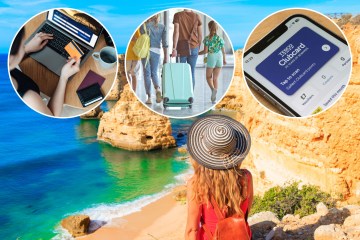
Tesco Clubcard points can be converted into Virgin points: £1.50 of Clubcard vouchers will get you 300 Virgin Points, which can be used for flights and upgrades.
Meanwhile, Nectar points can be changed into Avios points, with one Avios per 1.6 Nectar points.
You can use this as currency towards flights with airlines including British Airways, Qatar Airways and Iberia.
But you’ll need to get spending in Nectar retailers for that flight – with around 18,500 Avios needed for a short-haul economy return flight.
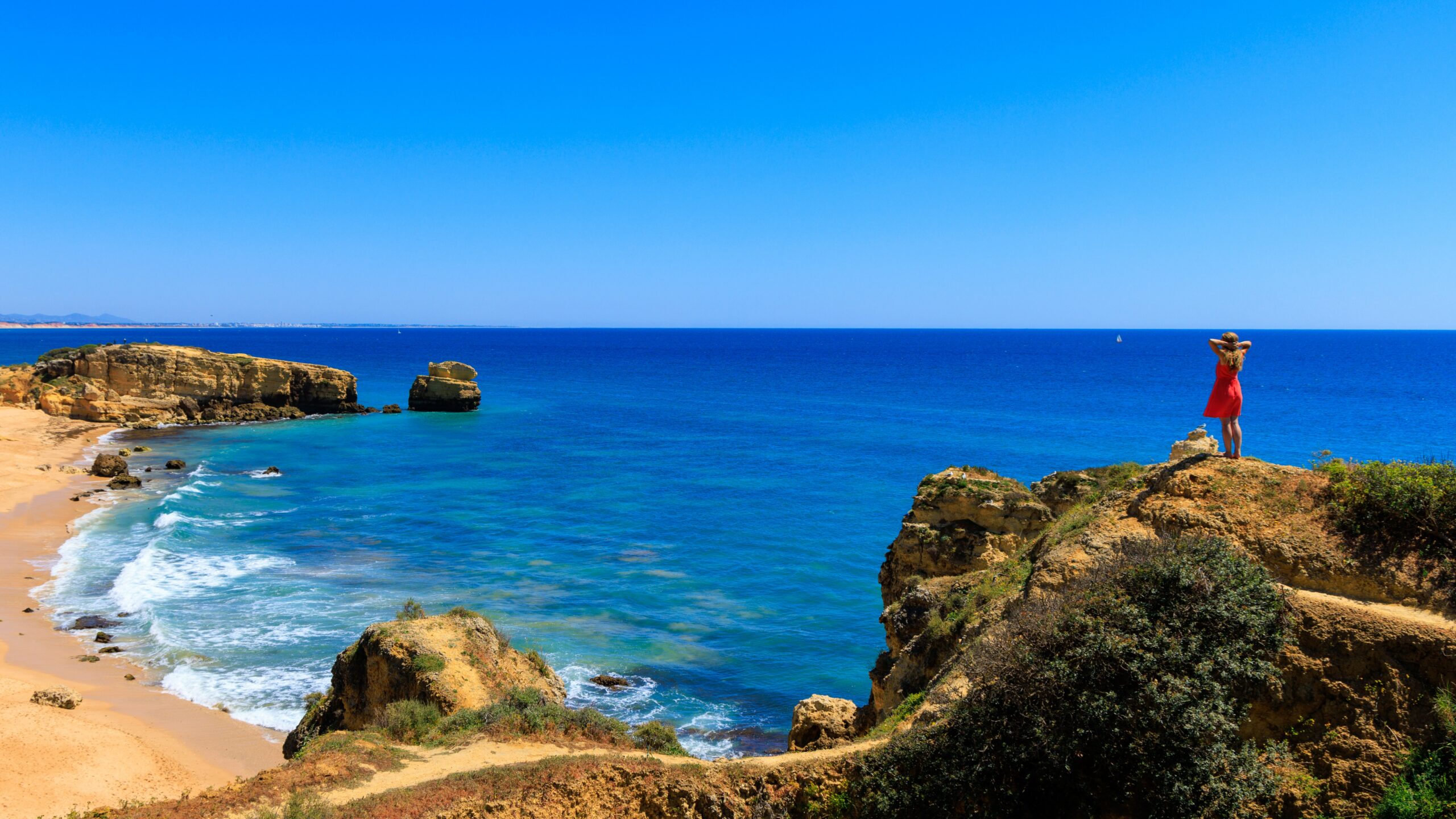
The Algarve in Portugal was recently rated the cheapest holiday destination to visitCredit: Getty
6. Pick a budget-friendly holiday destination
The Algarve, in Portugal, is Europe’s best value-for-money destination, according to a report by the Post Office.
For the ninth year running, it emerged as the cheapest holiday destination in 2025, thanks to low-cost meals and drinks.
A three-course meal for two with wine will set you back just £40.33 in this sun-drenched region.
Resorts in Cape Town, Bulgaria and Spain’s Costa del Sol, where a beer costs around £2.07, £2.47 and £2.46 respectively, also ranked well for affordability.
Before homing in on your destination, it’s worth checking roughly how much you may spend while you’re away via the report and other cost of living databases like numbeo.com.
7. Research where to get cheap eats
It’s always a good idea to research your destination before you travel – especially if you’re looking to cut costs when you arrive.
Eating out can burn a serious hole in your pocket, so swot up on best bargain restaurants, food trucks and markets ahead of time.
Google Maps allows you to filter by price, while review sites like Tripadvisor or OpenTable have value-focused lists.
When you arrive at your destination, make lunch your main meal – this is when many restaurants offer good value set menus – and avoid eating near the main tourist hotspots.
Sites like TheFork, Time Out and Groupon offer discounts on dining in cities around the world.
If you’re planning a family holiday, it’s worth searching for packages with free children’s placesCredit: Getty
8. Snap up free kids’ places… by January
When researching your summer holiday, look out for free children’s places on package holidays.
These allow one child (aged up to 16) to travel for free with two full-paying adults on a holiday package.
Many holiday operators, such as Tui and Jet2Holidays, also include transfers, food and drink and entertainment like kids’ clubs.
But you’ll need to be quick – free child places are in high demand and can be limited, so book early to bag the bargain.
If you’re travelling in peak summer, it’s a good idea to book in early January to get the holiday you’re after.
9. Weigh up a package holiday against a DIY break
Depending on where and when you travel, a package holiday might be the cheapest option, particularly if you’re staying on an all-inclusive basis.
This means you won’t have to splash out on meals, snacks and drinks locally.
However, it’s always worth comparing the cost with a DIY break.
According to MoneySavingExpert, booking late (no more than 10 weeks before departure) is normally the cheapest way to get a package.
But doing this means you run the risk of losing out on other discounts, such as free kids’ places, which you usually need to book well in advance – so weigh up all your options.
Starting a savings pot is an easy way to set aside for future holidaysCredit: Getty
10. Start a savings pot
Parents fork out over £1,000 extra per week during the school holidays, according to research from life insurance broker Reassured.
This is before they add on an extra £481 per person for a holiday abroad.
So it’s a good idea to start putting money aside for next year’s summer holiday now.
Decide how much you want to spend next summer, factoring in the cost of food and experiences while you’re away, and start saving gradually.
Divide the total into however many pay days you have left until your holiday, and set aside part of the budget in a savings account, repeating the process every payday.
This should help reduce the financial stress of the holiday when it rolls around.
Arranging your airport parking earlier rather than later can save you some serious cashCredit: Getty
11. Book airport parking early
The cost of booking airport parking can creep up if left until the last minute.
The earlier you book, the more likely you are to find the best price.
For instance, if you turn up at Manchester Airport’s multi-storey car park to park for a week, you’ll fork out £406 – quadruple the price of a booking made four months in advance (£95).
Heathrow’s short-stay car parks cost £616 per week at the turn-up price – £393 more than if you book a month in advance (£223).
Even booking just a couple of hours ahead can be far cheaper than the price if you pay on arrival.
Other tips to cut the cost of airport parking include using trusted off-site providers, such as APH, I Love Meet and Greet and Sentinel Car Park, which are usually cheaper than the official airport car parks.
If you have an early flight or live far from the airport, seek out airport parking hotel deals, which often offer a better rate for parking.
12. Dodge tourist trap destinations
Popular hotspots tend to cost more – so look to lesser-known alternatives for cheaper rates.
For instance, if you’re heading to France, consider Lille instead of Paris for a more affordable French experience.
In Lille, the average daily cost per person (including accommodation, food, transport and entertainment) is about £128 (€146).
Meanwhile, the same will cost you £230 (€265) in the French capital, according to budgetyourtrip.com.
Lesser-known spots help you stretch your budget by offering lower accommodation and dining costs.
It’s important to be aware of how much your luggage weighs and its dimensions before travelCredit: Getty
13. Keep baggage costs under control
Make sure you know your luggage allowance – and stick to them – to avoid unnecessary baggage fees.
Each airline has its own restrictions, so check yours well in advance to avoid hefty fees of going over the limit.
For instance, easyJet charges around £10 per extra kilo at the desk, while Ryanair charges an extra £10.50 per kilo that you go over.
The cheapest way is to travel light and take hand luggage only.
Create a packing list in advance, and only pack what you will realistically use.
Roll, instead of fold, your clothes to maximize space and take travel-sized toiletries instead of bulky bottles.
If you can’t be this ruthless with your packing then add your checked bag at the time you book your flight – it will cost less than adding it on later.
14. Book hotels on your smartphone for a cheaper rate
This simple trick could save you hundreds of pounds when booking a hotel stay – make the booking on your mobile phone instead of your laptop or computer.
Which? Travel discovered that this can give you a much better price.
Platforms such as Booking.com, Expedia and Hotels.com offer mobile-only discounts on selected hotels with up to 40 per cent off stays – but only if your booking is made on a smartphone.
The research found you could slash £270 off the cost of an apartment in Amsterdam on Booking.com, and save £60 on a weekend in Edinburgh with Expedia thanks to these mobile-exclusive prices.
So to make sure you’ve found the best deal, it’s always worth double checking a mobile and laptop price.
It’s worth booking using your phone to make use of mobile-exclusive pricesCredit: Alamy
15. Book at the end of the summer season
As demand increases, so does the price.
Being flexible about when you travel can lead to huge savings.
If you want to get the best deals on flights and accommodation, consider a holiday later in the summer season.
Many Brits escape in the early summer months, leading to price peaks in June and July.
Prices become less steep in late August and early September, as it is less popular.
In 2023, average ticket prices dropped by £94 from their peak in early July to August, according to Expedia.
Some airlines and hotels will tempt you with discounts to encourage booking in the less popular months.
So, to save on your sunshine, scheduling your trip for the end of August could be the way to go.
Booking your holiday for the late summer season can save you some extra cashCredit: Alamy
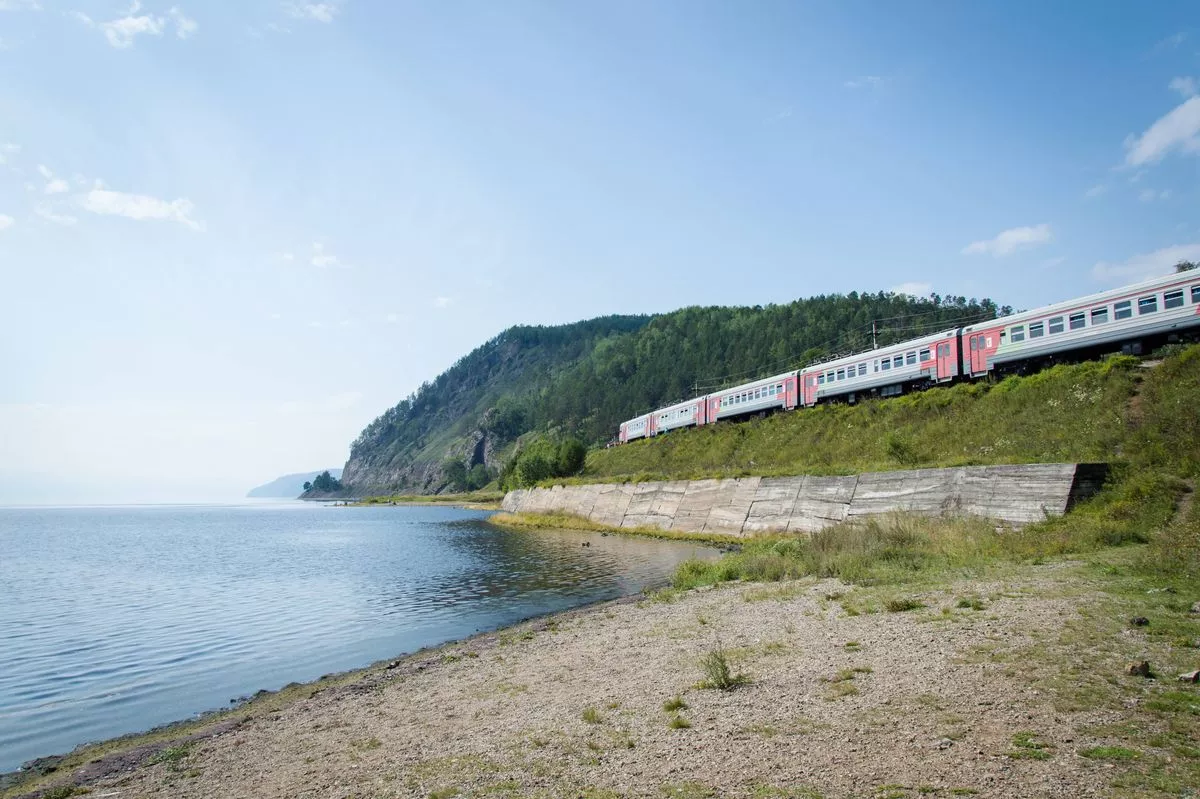
The Trans-Siberian Railway is a series of train routes in Russia, Mongolia and China that connect remote parts of the world and offer holidaymakers ‘absolutely incomparable landscapes’
The world’s longest train route crosses 8 time zones to connect 3 countries(Image: unikatdesign via Getty Images)
The Trans-Siberian Railway in Russia is the longest railway journey, traversing three countries and two continents, taking holidaymakers to some of the world’s most secluded spots. The train links Russia, Mongolia and China on a continuous journey across eight time zones.
The classic Trans-Siberian journey takes seven days, connecting Moscow to Vladivostok over a distance of 9,258km (6,152 miles).
Other routes include the six-day Trans-Manchurian trip from Moscow to Beijing, a five-day journey to Ulan-Bator, and the shortest route, the Trans-Mongolian, which runs from Moscow to Beijing via Mongolia.
Ticket prices range from roughly $120 (£88) for a standard ticket to $1,000 (£740) for first class travel.
Russian Train stated: “As soon as it was built at the beginning of the 19th century, the Trans-Siberian Railway was proclaimed the finest of the diamonds on the crown of the Russian Empire and became famous to the whole world.
“Since then, it has been attracting many travellers striving to see the miracle of engineering and to experience the peculiar way of journey.
“At the same time, the Trans-Siberian regular trains are mostly used by locals for their commuting needs, so it is an excellent way to meet the real people and feel the pure soul of the country.”
The Trans-Siberian Railway presents holidaymakers with “absolutely incomparable landscapes”, making the journey a truly unique adventure.
One traveller reviewed the train trip on Tripadvisor as a “unique, unforgettable journey”, while another described it as a “fascinating experience”.
“My wife and I crossed off our list one of these ‘must-do in our lifetime’ items, which was the Trans Siberian Railway. Time flies on the train, I barely read one book in four days, the rest of the time stared out of the window; Russia by train is fascinating!”
She said: “I visited the city of Vilnius during the festive season, but you can get cheap drinks and food all year round – not to mention enjoy wandering around its beautiful Old Town.
“If you look up, beautiful churches dominate the skyline – the Old Town has around 40 alone.
“It has winding cobbled streets lined with shops, cafes and restaurants. I discovered one bar called Vynomanai, which sold coffee for €2 (£1.74) and beer for €3 (£2.62).
“As it was Christmas, you could also grab a hot wine or an Aperol Spritz for €5 (£4.26).
“The best snack I tried was kepta duona, which is essentially fried bread in garlic – which is like the UK’s version of pork scratchings. But, if you want something slightly fancier, Vilnius has four Michelin-star restaurants with tasting menus.
“There’s so much to see, and one quirky visit is to the Lukiskiu Kalejimas prison where you can take a tour around the cells – unbelievably it was used up until 2019.
“But to get a feel of the city, head out into the Old Town early on Sunday morning, you can hear the church bells chime and the streets were practically deserted when I went for a wander.”
MUST SEE/DO
As a city that was occupied by the Nazis then the Soviets, Vilnius is immersed in history – much of which is kept alive today in its charming streets and even at the Lukiškės Prison.
Eagle-eyed Stranger Things fans may recognise the jail as the location where Hopper was held captive at the beginning of the fourth series.
Lukiškių kalėjimas is a former prison that was used for filming Stranger ThingsCredit: Alice Penwill
The space has since been transformed into a culture hub and its tarted-up prisoner cells are now home to a series of mini art galleries.
If you are into late-night music, make a beeline for the former prison’s chapel which hosts raves with performances from DJs like Jungle and King Krule in the courtyard.
HIDDEN GEM
Within the capital sits a fascinating mini nation in its own right: The Independent Republic of Užupis.
It was founded in 1997 by a group of artists as an April Fool’s joke and, rather bizarrely, has its own government, constitution and even currency.
The region is less than 1sq km in size but it is well worth strolling its streets.
Book a tour with a local guide, through First Choice, who can point out all the weird and wonderful spots.
You can easily hike up to Three Crosses Hill in VilniusCredit: Alamy
BEST VIEW
Scramble to the top of the Hill of Three Crosses (a relatively easy climb) for breathtaking vistas over the city.
Standing 165metres above Vilnius’s centre, the monument at the peak features three illuminated concrete crosses that are visible from most parts of the city.
RATED RESTAURANT
Etno Dvaras is somewhat of a chain in Vilnius, with seven restaurants dotted around the city.
Here you get slap-up Lithuanian grub – think meat, potatoes and plenty of cheese – and each restaurant serves up different dishes depending on the day of the week.
If you tire of traditional food, check out Justa Pasta, an Italian joint serving incredible wine and fresh pasta, or Gogi Guy, a Korean street food spot.
BEST BARS
Vilnius is known for its local craft beer, so you should swing by one of its many microbreweries and taprooms.
For local beers with a twist, Alaus Biblioteka (or Beer Library) organises its beer bottles on shelves like books in a library.
There are over 17 beer taps and almost 500 bottled beers to pick from.
For something that packs more of a punch, Alchemikas is a small late-night cocktail bar where talented mixologists shake up unusual concoctions.
The Palace Hotel is right in the middle of Vilnius’ Old TownCredit: Alamy
Los Angeles is a place where essentially anyone can find themselves, especially outdoors lovers.
The hiking trails of Griffith Park offer tremendous views of the city and landscape. Kenneth Hahn State Recreation Area near Culver City features lush spaces to spend a Saturday with family and friends. But for Angelenos seeking adventure — and even solitude — a vast forested expanse awaits.
Angeles National Forest is a 700,000-plus acre wonderland that has long billed itself as L.A.’s “backyard playground.” But it’s so much more than that.
For almost a decade, I’ve hiked much of its 557 miles of trails, and so rarely was it just for exercise. I’ve sought refuge in our San Gabriel Mountains when life got overwhelming, whether it was after my brother died and my soul ached more than I could communicate, or it was just to briefly escape news headlines that kept breaking my heart. But it was also for joy.
Every hike in Angeles National Forest offers us a chance to be awestruck by our natural environment. I’ll never forget the first time I saw a California newt waddling through Millard Canyon falls. I’ve spotted hopping deer, hooting owls and exactly one haughty rattlesnake (as all other rattlers were much calmer — even the one my dog booped).
I’ve felt the temperature shift from cool to crisp on a winter’s day hike in Icehouse Canyon as a cold mist wafted through the trees, and I’ve sweated through my clothes on the exposed hillsides of the Strawberry Peak trail. I’ve made snow angels with my dog near Mt. Waterman and swam in my skivvies in the San Gabriel River.
Years ago, Angeles National Forest supervisor Michael J. Rogers pointed out what anyone who has spent time there knows too well.
“This is a national forest that could very easily be enjoyed and loved to death,” Rogers wrote for The Times on the forest’s 100th anniversary in 1992. “All of the unique values that visitors seek such as cool trees, shaded streams, solitude, beautiful vistas, watchable wildlife, fresh pine-scented air could all be lost through overuse and abuse.”
My intention with this guide falls in line with Rogers’ message: I hope you not only appreciate what the forest has to offer but also understand your responsibility to practice the “leave no trace” principles, leaving only footprints and taking only memories (and selfies).
Adventure awaits in Angeles National Forest. May you find the start and continuation of it in this guide.
Note: To bookmark this page for future use, press Ctrl+D (Windows/Linux) or Cmd+D (Mac).
A sweeping view of Angeles Crest Highway and the San Gabriel Mountains from the Hoyt Mountain trail.
(Jaclyn Cosgrove / Los Angeles Times)
Angeles National Forest is about 700,000 acres of federal land managed by the U.S. Forest Service. Its northern boundary extends through mountain ranges near the 5 Freeway near Gorman, eastward to the L.A. County and San Bernardino County line near Wrightwood. Its southern boundary runs near Castaic Lake southeast and eastward, ending north of Claremont, where the San Bernardino National Forest’s boundary begins.
It is located within a portion of the Sierra Pelona Mountains in the west, and the San Gabriel Mountains, which span about 60 miles from near Newhall to Cajon Canyon northeast of San Bernardino, according to state geology research. Angeles National Forest’s elevation ranges from 1,200 feet to 10,064 feet, its highest point being Mt. San Antonio, or Mt. Baldy as it’s more commonly known.
The original home of severalIndigenous communities for thousands of years, the forest grows several species of trees, plants and animals endemic only to the San Gabriel Mountains or California, including the San Gabriel manzanita, the big cone Douglas fir and the endangered mountain yellow-legged frog. An estimated 14%, or about 29,000 acres, of Angeles National Forest is considered “old-growth” forest — white fir, lodgepole pine, Jeffrey pine (which has a bark that smells like butterscotch or vanilla), ponderosa pine and others that have grown for more than a century into hulking giants.
It is home to five wilderness areas: Cucamonga Wilderness; Magic Mountain Wilderness; Pleasant View Ridge Wilderness; San Gabriel Wilderness; and Sheep Mountain Wilderness. Wilderness areas are the “most protected” federal land in the country. Each of these wilderness areas offers something different. For example, when hiking in Cucamonga, you might spot bighorn sheep, while Magic Mountain is occasionally host to a California condor passing through.
The view of the San Gabriel Mountains as seen from the Mt. Waterman area in the Angeles National Forest.
(Genaro Molina / Los Angeles Times)
What to bring
A full tank or battery. Consider entering the forest with either a full tank of gas or full charge on your vehicle’s battery. There are no gas or electric charging stations (outside of a plug-in you might find on a forest service building).
Sustenance. If hiking, you will likely want to pack all of the water you need for the day unless you plan to filter it from somewhere along the trail. If camping, check the Angeles National Forest website to see whether your campground offers drinking water. You will also want to bring all of your food, unless you plan to visit one of the few places — including Camp Williams Cafe, Cosmic Cafe, the Adams Pack Station or Top of the Notch restaurant — in the forest to buy food and you know the establishment will be open.
A thoughtfully packed bag. When preparing for a hike, some pack the “10 essentials,” which includes navigation tools, a light source and emergency shelter, while others preach a different method of considering specifically what’s needed for the day. Search and rescue team members generally recommend that folks have in their pack whatever they’d need to spend a night in the woods, just in case things go awry.
Parking pass. To park in most places in the forest, you will need a $5 single-day Adventure Pass, a $30 annual Adventure Pass or an America the Beautiful pass. You can be ticketed without properly displaying your pass. If visiting trails near Wrightwood, you might need a Big Pines parking pass, as many of those locations are managed by a concessionaire, Mountain High.
Driving up Angeles Crest Highway to Mountain High.
(Ryan Fonseca / Los Angeles Times)
Getting there
Much of Angeles National Forest’s hiking trails and day-use areas through the San Gabriel Mountains can be accessed via the 66-mile, winding Angeles Crest Highway, or State Route 2. The speed limit is 55 mph, unless otherwise posted. It’s advisable to take it easy, though, both to enjoy the view and avoid an accident.
State Route 39, another winding mountain road, takes visitors north to popular trails along the San Gabriel River and into the Crystal Lake area. The road features jaw-dropping views of the San Gabriel Valley, occasional wildflower blooms and steep drop-offs. Best to let whoever in your party isn’t scared of heights drive.
Lupine is sometimes spotted on the hillsides around San Gabriel Canyon Road (Highway 39) in the Angeles National Forest north of Azusa.
(Raul Roa/Los Angeles Times)
In 1978, a landslide destroyed the segment of Highway 39 that connected it to Highway 2, turning it into what one public official called “a 27-mile-long cul-de-sac.” Officials have said it is too costly — and dangerous to bighorn sheep — to repair, although there have been recent discussions about its reopening.
Regardless of where you’re traveling in Angeles National Forest, you should check road conditions before heading out, especially in the winter, as officials will close forest roads to protect the public, including because of snow, or require that drivers carry tire chains.
You should keep in mind while traveling to trailheads that it is considered rude in mountain driving culture not to let faster vehicles pass you. Angeles Crest Highway has several paved turnouts for this reason. Additionally, please take good care to notice signage regarding segments of the highway where daytime headlight use is required.
Lastly, be aware that there are dirt fire roads and several off-road vehicle routes through the forest. Your phone or car’s mapping app might try to send you down one to reach a trail. Please do not assume a road will be passable just because it’s open. When in doubt, call the ranger station before heading out.
Things you should know
Communicating while away. You should assume you won’t have cellphone reception anywhere in Angeles National Forest. For safety while you’re out of your mobile service area, you should share this form with a family member or friend to ensure someone knows where you’re headed. You should also print the form and place it on your dashboard so, in the event of emergency, rescuers can find you more quickly than having to track down details of your whereabouts from your family. If you forget to bring the form, simply write down the details of your day or overnight trip, including when you expect to return, and leave them on your car dash.
Emergencies. Emergency services in Angeles National Forest include 23 fire stations such as the Clear Creek Fire Station and the Monte Cristo Fire Station off Highway 2. Volunteer search-and-rescue crews respond in most hiking emergencies. If you are ever rescued by helicopter, you will not be charged by these groups. That said, they’re always in need of donations to stay afloat.
Fire restrictions. Forest officials will, at times, limit campfires and stove usage because of elevated wildfire risk. Before heading out, check the Angeles National Forest alerts webpage to discern what’s allowed on your trip. If campfires are allowed, you must still secure a free campfire permit and have a copy with you.
A vehicle heads north on Highway 39 into a winter wonderland with a good accumulation of snow at the 5,000-feet level in the Angeles National Forest north of Azusa in January.
(Raul Roa / Los Angeles Times)
Weather. Checking the forecast is not always top of mind for your average Angeleno, but hikers and campers must assess the weather before leaving for the forest. Temperatures in Angeles National Forest can range from below freezing overnight in winter, especially above 6,000 feet, to above 100 degrees in summer. Even after checking the forest, remember that elevation will play a role in temperature. Generally, for every 1,000 feet you gain, the temperature can drop from around 3½ to 5 degrees, something meteorologists call “environmental lapse rate.”
Eaton fire closures. Please note that the following guide does not include any of the trails burned in the Eaton fire, as they remain closed. Once they’re open, this guide will be updated.
Leave no trace. Whenever you hike, camp or otherwise visit Angeles National Forest, please practice the “leave no trace” principles, which include packing out everything you pack in, respecting the animals (which means not taking selfies with them), and overall ensuring these lands are protected for generations to come.
With that said, take a deep breath, and imagine being surrounded by the fresh scent of pine as mountain chickadees chirp all around you. Yes, friend, that’s possible — and all within a short drive of L.A. Let’s go on an adventure!
(Ruby Fresson / For The Times)
For Angelenos seeking a relaxing respite (easy)
It might seem daunting to drive into the hulking mountains surrounding L.A., but there are many easy-going and family-friendly adventures to be had in Angeles National Forest. Many families and friend groups spend time visiting vista lookouts and at one of several day-use picnic areas, which often feature picnic tables and grills (when allowed).
Here you’ll find some kid-friendly and wheelchair accessible trails and other opportunities, including campgrounds where you can easily drive up and spend a weekend.
These campgrounds are in the “easy” category because they’re straightforward to reach. Additionally, they all usually offer piped (i.e. drinking) water, but you should check on the campground sites linked here to ensure it is available before heading out.
Crystal Lake Campground is a 120-site campground north of Azusa.
(Raul Roa / Los Angeles Times)
The campgrounds below range from $12 to $30 per night for single sites ($5 per additional vehicle), with some requiring payment by cash or check. They are available on a first-come, first-served basis unless otherwise noted; feature picnic tables and fire rings; have vault toilets; and allow dogs.
Appletree Campground: Open year-round, Appletree features eight first-come, first-served walk-in sites that are a short distance, less than 100 yards, from the parking area. Three sites are ADA accessible. A Big Pines pass from Mt. High is required to park. Each site has a grill on top of the usual amenities. The campground is only 10 minutes from Wrightwood, a cozy mountain town with restaurants and a local grocery store.
Buckhorn Campground: Arguably one of the most beautiful of Angeles National Forest’s campground offerings, Buckhorn is a popular 38-site campground shaded by California incense-cedar, white fir and tall sugar and Jeffrey pine trees. It sits at around 6,500-feet elevation and, as such, is open from spring to fall since it is often blanketed in snow come winter. Campers should be prepared to pack their food and scented items in the bear boxes supplied, as our ursine neighbors are around the area. Many campers walk the short distance to the Burkhart trailhead and visit Cooper Canyon Falls, a 40-foot cascade reachable by carefully scrambling down from the trail. Others simply lounge in hammocks and play in the seasonal spring that runs through the site.
Chilao Campground:Chilao has 84 campsites spread over two loops, Little Pines and Manzanita. Its landscape features large boulders, sweeping views and pine trees (especially the eponymous loop). Piped water is available, although it is at times turned off, so please check the campground website before heading out. The Chilao Visitor Center, open on the weekends, is nearby.
Coldbrook Campground:Coldbrook Campground sits on the north fork of the San Gabriel River, where visitors can splash around its cool waters. Its 22 campsites offer shade and a river soundscape.
Crystal Lake Campground:Crystal Lake is a 120-site campground north of Azusa. It sits at 5,539-feet elevation and features great views of nearby peaks, including Mt. Islip and Windy Gap. Visitors can fish in Crystal Lake when it’s deep enough and find a hot meal at Crystal Lake Cafe and General Store.
Los Alamos Campground: One of few campgrounds in Angeles National Forest requiring reservations, the Los Alamos Campground has 90 individual and three group camp sites. Visitors are a short drive from Pyramid Lake where they can swim at Vaquero Beach or fish and boat elsewhere. Call ahead to ensure that Pyramid Lake isn’t experiencing an algal bloom, which has been a common occurrence in recent years.
Monte Cristo Campground:Monte Cristo has 19 individual drive-in sites, including some with large shady sycamore trees. A small creek runs through the middle of the campground and has small pools to splash in. Drive 2½ miles south to the nearby Hidden Springs Picnic Area for more swimming.
Table Mountain Campground: Open spring through fall, Table Mountain has more than 100 campsites that can be reserved through Recreation.gov, although first-come first-served may, at times, be available. This large campground is operated by Mountain High Resort near Wrightwood and near the company’s North Lodge, where guests can play a round at the disc golf course with sweeping views of the desert below. A Big Pines pass from Mt. High is required to park.
Bonus spots
The forest and the surrounding area have far more to explore than hiking trails and campgrounds. Some of the spots listed here are outside the forest but are included because they’re worth visiting when nearby.
Visitors walks on a path through fields of California poppies in the Antelope Valley California Poppy Reserve in Lancaster.
(Francine Orr / Los Angeles Times)
The Antelope Valley California Poppy Reserve: Although not in Angeles National Forest, this state natural reserve is over 1,700 acres of open space that bursts, when conditions are right, with bright orange poppies from sometime between mid-February to May. Note: Do not leave the trail and trample the poppies to nab selfies or other images, regardless of whether you see others doing it.
A ruby-crowned kinglet after it was measured and banded at the Bear Divide banding station near Santa Clarita.
(Jaclyn Cosgrove / Los Angeles Times)
Bear Divide Banding Station: Volunteers operate this banding station seasonally from late March through mid-May. They place nets on the hillside to catch migratory birds that they add small metal bands to the legs of, collecting annual population data for further research.
Camp Williams: A privately operated RV and tent campground on the East Fork of the San Gabriel River; also has a cafe that’s open on weekends.
Cali Splash Park at Castaic Lake: If hiking near Castaic Lake, the Cali Splash Park offers what’s essentially a massive bounce house and obstacle course in the middle of a lake, a memorable experience and fun surprise after an early morning hike.
Jackson Lake in Angeles National Forest near Wrightwood.
(Jaclyn Cosgrove / Los Angeles Times)
Elizabeth Lake Day Use: A small picnic area about 30 minutes west of Lancaster where visitors can fish and kayak on a seasonal lake, or sag pond, formed by the San Andreas fault.
Jackson Lake: A small mountain lake near Wrightwood where Mountain High, a local ski resort, offers kayak, paddleboard and pedal boat rentals until the winter season. Guests can also fish, as the lake is stocked with rainbow trout several times a year, according to Mountain High.
Mt. Wilson Observatory: Visitors can look through large telescopes, enjoy Sunday afternoon concerts, take guided tours of the grounds and snag a bite to eat at the Cosmic Cafe, which is open seasonally.
Placerita Canyon Nature Center: Although not in Angeles National Forest, this charming facility near Santa Clarita is within a short hike from federal land. Swing by before a hike, and you can say hello to the animal ambassadors, which usually include red-tailed hawks and other native birds.
Stonyvale Picnic Site: A lesser-traveled picnic area with 11 tables and grills near Big Tujunga Creek, where families and friends can spend the day splashing in its cool waters, especially in the spring when it is flowing.
Vasquez Rocks Nature Center: This L.A. County park has been the site of several movies and television shows and is a fun side quest for those hiking on nearby federal forest trails.
Wildwood Picnic Area: A large picnic area near Sunland-Tujunga situated next to Big Tujunga Creek meanders where visitors can splash around the exposed rock bed of Stone Canyon.
(Ruby Fresson / For The Times)
Are you ready to expand your hiking excursions beyond your favorite L.A. trails? Have you been hiking up to Mt. Hollywood, wondering what those peaks are beyond the city? Well, buckle up, buttercup, because here you’ll find an assortment of day hikes and weekend camping ideas that will have you filing for vacation before you realize you’re typing an email to your boss.
These trails are varying levels of difficulty, but are listed as moderate because none of them should require you to have significant technical outdoors knowledge. Enjoy!
These campgrounds are considered “moderate” because they either do not offer water but still offer car camping or they require a short backpacking trip. They offer opportunity for memorable outdoor experiences in remote places without making you feel like you’re secretly being filmed for “Naked and Afraid.”
The campgrounds here range from free to $12 per night ($5 per additional vehicle); available on a first-come, first-served basis; feature picnic tables and fire rings; have vault toilets; and allow dogs.
Cooper Canyon Trail Camp: The Cooper Canyon Trail Camp is a backcountry campground shaded by towering old pine trees. It has five sites, and bear-proof boxes are available to store food and scented items. It can be reached a few different ways, including a 1½-mile one-way trip down a fire road starting at Cloudburst Summit. There is no piped water. Campers will need to either bring their own or filter water from the nearby river.
Gould Mesa Trail Camp: Gould Mesa is a five-site backpacking campground accessed by a two-mile hike via the Gabrielino Trail starting near Pasadena. It can also be accessed by hiking Gould Mesa Road from La Cañada Flintridge. The Arroyo Seco flows nearby and offers seasonal swimming holes for campers. No fee charged outside of Adventure Pass for your vehicle at the trailhead.
Glenn Camp Campground: Accessible via a seven-mile bike ride or hike, the Glenn Camp Campground is a 10-site forested haven next to the West Fork of the San Gabriel River. There is no piped water. Campers will need to either bring their own or filter water from the nearby river.
Horse Flat Campground:Horse Flat is a 26-site shaded campground offering corrals and hitching posts should you have an equine companion. It is close to the Silver Moccasin National Recreation Trail, which you can hike to nearby Mt. Hillyer for bouldering. No water available. Closes seasonally.
Oak Flat Campground: Oak Flat is a rustic 20-site campground near Castaic that will provide you with an easy night of car camping although you might, at times, hear Interstate 5. Shaded by oak trees, the campground is close to Whitaker Peak and Piru Creek at Frenchman’s Flat. There is no piped water, so campers will need to bring their own.
Bonus spots
Pyramid Lake near Castaic.
(Eric Thayer / Los Angeles Times)
Adams Pack Station: A last remaining pack station in Southern California, this rustic shop in Big Santa Anita Canyon sells hot meals, hiking gear and souvenirs. Its wooden deck is close to the donkeys, who are worth saying hello to.
Castaic Lake: A fishing and swimming spot to cool off after a hike in the western Angeles National Forest.
Cora and Kenny, two donkeys at Adams Pack Station in Big Santa Anita Canyon.
(Jaclyn Cosgrove / Los Angeles Times)
Chantry Flat picnic area: A large picnic area with grills offering a great spot to rest after a nice hike through nearby Big Santa Anita Canyon.
Green Valley SmokeHouse: Nestled in the gorgeous rural town of Green Valley, this is a family-owned local restaurant with a robust menu that features both meat by the pound and vegan options. It’s an easy stop if you’re hiking or camping in the western end of Angeles National Forest.
Sturtevant Camp: Founded in 1893, the camp has cabins to rent, but is also a fun day trip. It’s a four(ish)-mile hike from Chantry Flat to reach the camp. If you would prefer not to haul in your gear, you can hire a mule team from Adams Pack Station to carry it for you.
(Ruby Fresson / For The Times)
For the adventurer whose friends regularly call them ‘hardcore’ at parties (advanced)
The trails here are challenging but worthy adventures for experienced hikers to consider. What does “experienced” mean exactly? Unlike the trails categorized above as “easy” or “moderate,” the trails here require you to plan ahead, bringing plenty of water and other supplies, looking over topography maps and reading trail reports. With proper planning, though, you will find yourself on a great adventure that’s also close to home. Please note: Some of the trails below may be covered in snow in winter and require technical experience.
The Gabrielino Trail is a 26(ish)-mile National Recreation Trail that hikers traditionally start at Chantry Flats and hike north, west and finally south to its exit point near Pasadena.
The entire Silver Moccasin Trail, another National Recreation Trail in Angeles National Forest, is 53 miles — and you could buy yourself a vintage Scouting America “Silver Moccasins” badge on eBay afterward as a humble brag to friends.
An estimated 176 miles of the Pacific Crest Trail‘s 2,500 miles are through Angeles National Forest. Per the forest service, you can take the trail through Angeles high country, from near Mt. Gleason through Mill Creek Summit, Mt. Pacifico, Sulphur Springs, Cooper Canyon, Mt. Williamson, Little Jimmy, Mt. Baden-Powell and Blue Ridge and on to the Cajon Pass area.
Campgrounds
The campgrounds here are considered “advanced” because they require a level of planning and preparation that falls beyond your average car-camping trip. Several are backpacking sites and do not offer potable water. Some do not have streams to filter water. Despite the challenge to reach them, they are worth it for the sweeping views and solitude, the ability to nap under a hulking pine tree without interruption, outside of maybe a Steller’s jay curious about whether the weird animal (i.e. you) in its yard has any food to steal.
Unless otherwise noted, the campgrounds here range from free to $12 per night ($5 per additional vehicle); are available on a first-come, first-served basis; and allow dogs.
Big Rock Campground:Big Rock has eight free first-come, first-served sites, with picnic tables and campfire rings. It has vault toilets. Big Rock is on the “expert” list because the road to reach it is frequently closed. This means you’ll need to hike about one-eighth of a mile from a locked gate or take a 4×4 high-clearance vehicle from Vincent Gulch down Big Rock Creek Road (if open). You could also park at Vincent Gulch (displaying a Big Pines parking pass) and hike down the road to reach the campground. Either way, you’ll likely find solitude and hopefully seasonal springs to filter water from. Otherwise, you’ll need to pack in what you need.
Bear Camp: This trail camp, labeled “extremely primitive” by the Forest Service, has seven sites, each with a picnic table and campfire ring. It does not have toilets. Bear Camp is located on the far northwestern corner of the forest and is best reached by 4×4 or mountain bike, or by hiking the Pacific Crest Trail, which passes by it. It is, per the Forest Service, “extremely primitive” and lacks toilets or water. That said, each site features fire rings, bear-proof storage lockers and picnic tables.
Hoegees Trail Camp: A 14-site backcountry trail camp accessed by hiking by a 2½-mile, one-way hike up the Upper Winter Creek Trail in Big Santa Anita Canyon.
Little Jimmy Trail Camp: Little Jimmy is a 16-site campground positioned among tall trees at 7,500-feet elevation. It has a seasonal spring where campers can filter water when the spring is running. It is free. It has vault toilets. Each site has bear boxes, as it is an area of high bear activity, along with picnic tables and campfire rings. You can reach it via a 1½-mile hike from Islip Saddle.
Messenger Flats Campground: A backcountry campground reachable via a 10-mile hike from Mill Creek with vault toilets and picnic tables. Potable water is not available.
Mt. Pacifico Campground: A 10-tent-only campground with picnic tables and vault toilets but no potable water. Mt. Pacifico is reachable by high-clearance vehicles until the first winter storm of the season is expected, and the Forest Service then closes the road. Hikers can access the campground all season by taking the road or Pacific Crest Trail before turning east onto a spur that leads to the campground.
Sawmill Campground: Although you can drive to the eight-site Sawmill Campground, it is on the “hard” list because of the drive itself over a bumpy, steep, dirt road. Once there, you’ll be treated to expansive views of the Antelope Valley and beyond. Each site has a picnic table and campfire ring, and there is a vault toilet available. Potable water is not available.
Southfork Campground: A remote and rustic 21-site campground reachable with a high-clearance vehicle, as the road isn’t maintained. Campers often visit the South Fork of Big Rock Creek to splash around and observe fish swimming about.
Sulphur Springs Trail Camp: Sulphur Springs Trail Camp sits at 5,300 feet and features about six tent-camping sites. You can reach it by parking at Three Points and hiking about 3.6 miles of the Pacific Crest Trail to reach the camp. Its campsites are shaded by tall pine trees, ideal for hanging a hammock. It has vault toilets but no potable water or bear boxes.
The landmark Mt. Baldy Lodge, with quaint and cozy cabins in the village just as you enter town.
(Chris Erskine / Los Angeles Times)
Buckhorn Ski Lodge: A backcountry ski club with an off-grid cabin in a remote area of Angeles National Forest.
Mt. Baldy village: A small community near several popular trailheads where you can stop to eat at the Mt. Baldy Lodge and visit the Mt. Baldy visitor center, which is open generally midday on weekends. You can check the forest’s website for the visitor center’s latest hours.
Rowher Flats OHV: An off-roading site for motorcycles, ATVs and 4-wheel drive vehicles. Get your vroom-vroom on via several miles of trails.
A contemplative sign in Big Santa Anita Canyon in Angeles National Forest.
(Jaclyn Cosgrove / Los Angeles Times)
Respecting the land 🗻
L.A. is the second largest city in the U.S. and is often called the “entertainment capital of the world.”
But it offers residents and visitors alike the rare opportunity to spend the morning along bustling Hollywood Boulevard before finding total solitude in Angeles National Forest. With that opportunity comes a great responsibility to protect it so that Angeles National Forest is not loved to death but rather cherished for generations to come.
I stayed in a cheap all-inclusive for a month in winter and instantly regretted it
Every January I try to escape Britain’s gloom for sun and wine that doesn’t cost £8 a glass. I convince my long-suffering husband to log off and join me on my yearly escapades to sunny and cheaper places like Sri Lanka and Costa Rica. In January 2025 I was itching for a new destination and ‘the Egypt saga’ was set in motion.
Cut back to Christmas 2024 when, fuelled by mulled wine and poor judgement, I was doom-scrolling and found a deal that stopped me in my tracks: almost four weeks in an all-inclusive resort in Hurghada, flights included, for just under £1,700 for both of us. I booked immediately. No research. No caution. I was so giddy with the adrenaline of having bagged a bargain I forgot the first rule of resort booking: always check the reviews. Always.
“How bad could it possibly be though?” I dreamed as I packed. As a freelancer I intended to ‘work’ during my extended jaunt – preferably with a pina colada in hand like I have seen other smug ‘world citizens’ do on Instagram. My husband stayed suspiciously quiet.
Our budget booking promised a “four-star resort and aqua park and private beach” so I was fully expecting spacious, stylish rooms with plush bedding, multiple delicious dining options, and peaceful pools and spas to unwind in after a busy morning doing important writing and sharing my new life on Instagram. In a plot twist no-one saw coming what we actually got was a rundown bargain-bin resort that clearly hadn’t been updated since 1987 with the ‘private beach’ a bus ride away.
While certain parts were pleasant (I really liked the towering palm trees, our room balcony, and the abundance of resident cats) there were vast areas that needed an update and some serious deep cleaning.
Shabby and dirty room decor, exposed wiring, freezing cold pools, and screeching groups of budget holiday punters who were already drunk by 10am. It seems Egypt’s idea of four stars is very different from mine. “Swanky”, apparently, is a relative term.
Because I’m “annoyingly positive” (according to my family) I earnestly declared that we would make “the best of it” while stepping over broken paving slabs as Pharrell Williams played on loop. However my eternal optimism eventually faltered when I tried to work.
The “free wifi” was confined to the smoke-filled chaotic lobby where everyone was glued to YouTube on their phones. You couldn’t send so much as an email as the connection was utterly dire. This meant we had to buy local sim cards with data, which felt like being back in the dial-up era. Work completely stalled so we headed to the pool, abandoning all hope of finishing my mountain of assignments. Future me could sort that out.
If blaring 2010-era music was stressful being hassled by resort staff while lounging by an icy pool was worse. Headphones, fake naps, and avoiding eye contact didn’t help. Every 20 seconds someone asked if we wanted a photoshoot, a massage, or tickets to the resort party. Yes, a party you’ve technically already paid for. Joy. To be fair I know next to nothing about all-inclusives. Most of my travel has been DIY so I was unprepared for many aspects of resort life.
I totally appreciate that staff earn most of their money from commissions but I’m only human; I have only so much patience for endless sales pitches when I’m trying to relax and drink lukewarm wine at 11am.
Back in our extremely basic room (certainly no Egyptian cotton sheets here) sleep escaped us as deafening music went on into the early hours. I’m pretty sure I now know all the lyrics to Rihanna’s Pon de Replay. Come, Mr DJ, won’t you turn the music down? I am old and tired.
Food-wise I also hadn’t considered how eating the same reheated trays of dubious pasta, watery stews, and charred meat from the all-inclusive buffet could get quite repetitive. And, yes, prompt several frantic loo dashes.
On top of that there was an awkward expectation to tip every time we sat down to eat even though the whole point of “all-inclusive” is that you’ve already paid to serve yourself from the questionable buffet.
Salvation did not arrive in the form of alcohol. The wine tasted like dishwater, the cocktails like ground-down Fruit Pastilles, yet I remain in awe of my fellow Brits who somehow managed to down enough terrible booze to render a rhino comatose.
The worst part, really, is that I’ve been to Egypt’s historic capital, Cairo, enough to know that Egyptian food and drink are worth celebrating.
Koshari, ful medames, tameya, grilled kebabs, stuffed vegetables, molokhiyya: I was ready to feast like a queen. Instead local options at the resort were sparse and what they did serve was a pale shadow of the rich, fragrant dishes I’d enjoyed in Cairo. One mediocre bite and I mourned my lost koshari (a bonkers mix of grains, legumes, and pasta).
So why, you might reasonably ask, did we not call it quits, check out, and head home after failing spectacularly to live the #nomad dream?
To take a short break from being a negative Nancy what actually saved us from despair was the town of Hurghada itself. This seaside strip is the second biggest town on the Red Sea and is one of Egypt’s busiest holiday destinations. Home to world-renowned coral reefs, bazaars, bars, restaurants, and hotels there’s actually plenty to do once you step outside the resort. Rather than wallow in buyer’s remorse we spent as much time as possible exploring Sakalla, the frenetic town centre, Hurghada’s marina, and the kaleidoscope-coloured coral reefs.
Who needs tacky poolside entertainment when, for around £25 each, you can hop on a dive boat and swim among shoals of fish and even pods of dolphins as you explore vibrant coral reefs? I honestly couldn’t believe that we witnessed dolphins in the wild in turquoise waters for less than the cost of a sad lunch in Britain.
This is what you need to come to Hurghada for – not cheap resorts but instead to float in clear waters as clownfish, angelfish, and parrotfish dart in and out of reefs.
Over in Hurghada’s surprisingly swish marina we discovered a large yacht harbour lined with shops with restaurants and buzzing bars offering outdoor seating. Here we escaped the beige hotel buffet and feasted on meaty shawarma and sweet, flaky baklava.
There are also plenty of excursions and day trips from Hurghada to keep you busy. Instead of paying the resort’s extortionate prices we haggled with local operators like seasoned diplomats. Best decision of the trip.
We booked a day-long desert safari by quad bike and 4×4 vehicle, including dinner and stargazing in a traditional Bedouin village, for around £23 each including pickup.
Hurghada sits at the edge of the Eastern Desert – a vast sweep of volcanic hills, sand flats, stony plateaus, and wind-carved gullies that look like a film set. It stretches from the Nile to the Red Sea and is where tourists head for quad biking, camel riding, and desert camps.
First they handed me my own quad bike. Within minutes I was tearing across the desert like I’d been cast in Mad Max, sand smacking me in the face as I tried to remember whether I’d purchased travel insurance. The desert rolled out around us in every direction: golden ridges, jagged red mountains, and the glorious sound of silence.
After my brief yet glorious action-hero era we swapped the quad bikes for a jeep. The driver treated dunes like a Top Gear challenge, launching us over rises and plummeting into valleys with the latent enthusiasm of a man who has never Googled “spinal compression injury”.
The scenery was astonishing: jagged dark-red mountains in the distance, rippled sand glowing gold, and long stretches of valley that made Britain feel very far away indeed.
Eventually, after enough bumps to rearrange my internal organs, we reached a small Bedouin village where we sipped sweet tea, learned about desert life, and watched a spectacular sunset.
As the sun dropped behind the mountains the whole landscape exploded in colour and, for the first time for the entire trip, I actually stopped complaining.
But the serenity didn’t last. Because eventually we had to return to our subpar resort where music boomed, food was abysmal, and the pool was arctic cold. And that’s when it hit me – perhaps the issue wasn’t Egypt.
The problem was my delusional belief that I could be a ‘digital nomad’ in a super-budget place where the wifi barely loads a weather app. Instagram told me I could work carefree from a sun lounger, cocktail in hand, living my best life. Reality suggests I need an actual desk, a functioning internet connection, and maybe fewer drunk tourists vomiting into a nearby plant pot. Yup, British people take all-inclusive bars extremely seriously.
Here’s the thing I should have known by now. In travel, as in life, you get exactly what you pay for. During my 20s, while backpacking on the cheap, I stayed in three-dollar-a-night hostels with sanitary conditions so questionable the Red Cross would have intervened.
I’m older now though. I like comfort and have learnt the hard way that “four-star” can mean very different things depending on the destination.
As an introduction to resort life this was certainly character-building. And while Hurghada itself was brilliant I have accepted that working in all-inclusive is a fantasy best left to influencers who only have to upload a single staged #blessed photo and lie down on the lounger again.
It’s safe to say that lessons have been learned and my ego has been checked. This travel writer has been suitably humbled and will do better. Next time I’ll stick to my DIY trips, read the fine print, and stop pretending a resort pool is a suitable workspace.
THE January sales are about to land and now is an excellent time to bag yourself a bargain, whether it’s a summer holiday, homeware or that set of golf clubs you’ve had your eye on for months.
But don’t just spend your cash willy-nilly. I’m going to let you in on my top travel hack that will help you score big in the sales – bagging yourself a free holiday, just by doing your ordinary shopping.
Sign up for the Travel newsletter
Thank you!
Sophie has a nifty tip that means you can bag yourself a free holidayCredit: Sophie SwietochowskiSophie has nearly enough Avios points to fly to New York City in business classCredit: Getty
I can truthfully say, there is no catch. The more you spend, the greater your getaway.
So, what’s the secret? Avios. But not in the way you know it.
You’ll likely have heard of the flight rewards system, whereby travel spend is converted into points that can be redeemed against flights, hotels, shopping and more.
The chances are, however, you’re not using the system properly. And by that, I mean reaping mega benefits every time you spend.
I’m not just talking about flight spend. You can earn points every time you catch the train to work, fill up your car with fuel, or do your weekly grocery shop.
Say hello to the Avios portal. I believe it to be the BEST points-benefits system out there for travellers – and I’m an avid subscriber to rewards schemes (special nod to my Boots card and the MyWaitrose account).
Right now, I am just shy of enough points to fly to New York City in business class with British Airways (I have 80,000 to be exact).
A business class seat would cost me 88,000 points flying at an off-peak time. Although I would still have to pay a £199.50 flat fee, a nominal charge that covers taxes, carrier fees and a fixed Avios amount.
That cost is small, though, when you consider the fact that the absolute cheapest business class flight you can currently book to NYC with British Airways is £1,832 – and that’s in the January sale, meaning I would have saved a minimum of £1,600 by using points.
To put this into a wider perspective, I could also fly to Sydney in Australia (55,000 points) or Tokyo and back again (38,500 points each way) or even to Amsterdam and back again up to FOUR times (10,000 points each way).
Short-haul trips to the likes of Amsterdam require less pointsCredit: Alamy
Flat fees are tiny on short-haul flights too, with costs to destinations like Amsterdam, Corfu and Gran Canaria capped at just £1 as opposed to the near £200 for my fancy NYC business class seat.
My high points score has nothing to do with me being a travel editor, either. In fact, I earn very little from my adventures through work and barely anything from flights alone.
Instead, it’s my regular, everyday spending that helps me earn big with Avios.
My commute to work, my trips to the BP for fuel and my incessant fashion purchases on ASOS are what stacks those points up.
Better still, if you’re doing a big splurge in the January sales, you can rake them in thick and fast.
So, how does it work and where can you earn?
Thousands of retailers have partnerships with the Avios store. You can earn when you spend on hotels, homeware, sports, fashion, toys, attractions and entertainment from Argos and TravelZoo to Boots and Alton Towers.
You can earn points on a trip to Alton Towers tooCredit: Alamy
The number of points you earn varies per retailer, for example when you purchase from M&S Flowers & Hampers you will earn up to 24 Avios per £1 spent, whereas booking a rail journey through Trainline will earn you 1 Avios per £1 spent.
Many retailers have bonus offers for January, including Booking.com where you can bag 8 Avios per £1 until January 31, up from 4Aviosper £1 and Viator which has a 12 Avios per £1 offer until February 7, 2026.
My rule of thumb whenever I shop for something (big or small) is: check whether the retailer I want to buy from is on the Avios shop, and if not, can I buy the product I want from another retailer that will earn me points?
To collect points on in-store purchases, you simply have to link your card – any card – to your account and spend on this card in Avios-linked stores.
To make online purchases, you have to register your visit to the retailers website by first going through the Avios shop website (avios.com).
Simply log on, click on ‘collect avios’ and search for the retailer in the ‘search for brands’ box.
Once you’ve found the retailer, click on ‘shop now’ to register your visit and carry out your online shopping as you would normally. It really is that simple.
If, like me, you do a lot of shopping on your phone, I’d recommend downloading the Avios app, which makes things a little easier and keeps you logged in.
Your Avios is then redeemable with certain airlines, which includes OneWorld Alliance partners like British Airways and Qatar Airways as well as Aer Lingus and Vueling.
Avios points can be used with certain airlines – like British AirwaysCredit: Boarding1Now
You can also book holiday packages, including flights and hotels, through British Airways Holidays.
So, how long does it take before you earn yourself enough for a free flight or holiday? Well, that’s difficult to answer.
Last time I wrote about Avios was in April 2025 and back then I had 57,000 points. Now I have 80,000 – so I’ve earned myself 23,000 points in 8 months, the equivalent of a return flight to Brussels, Paris or Turin in Italy.
But I’m single and in the process of buying my first home, so my spending is frugal.
If you use this hack to do your January sale shopping, however, you’ll certainly be one step closer to bagging yourself a free getaway.
Here’s some useful tips for shopping through the Avios Shop….
Having an Amex Express card will further boost your Avios pointsCredit: Alamy Stock Photo
Get yourself an Amex
First things first, get yourself an American Express (AMEX) credit card, if you don’t already have one. Yes, you don’t technically need one in order to collect points, but it’s an easy way to boost your earnings. I have the free British Airways Amex.
Just make sure you pay it off in full every month. And if you don’t trust yourself to do all of your spending on that card, start by committing to a small and regular spend, like the weekly food shop.
If you’re successfully approved for a British Airways free Amex, you’ll be given a bonus 5,000 Avios if you spend £2,000 in the first three months of having the card.
It’s an incentive – and credit card companies are hoping that you forget to pay them back, so just make sure you have enough money in your current account to pay off the spend and don’t get caught out.
Link your accounts
Accounts that you use regularly like Uber are a great way of boosting your points. You can link certain regular accounts you use to your Avios account.
For example, I have my BPme Rewards and Uber account both linked to my Avios one, which means I don’t need to log on and register my visit as explained above, with normal online shopping.
Everything is done automatically and I’m earning points without lifting a finger.
I book my train to work through Uber every time and it earns me a steady and regular number of points every month.
Look for deals
Right now you can bag a bonus 50 per cent Avios with certain retailers.
There are so many deals at various times of the year. There’s also special offers on certain deals such as The Wine Flyer, whereby you earn a promises amount of points if you spend over a certain figure on bottles.
Most recently, over the Christmas period, if you spent over £150 on wine through the Avios shop, you’d bag 5,000 bonus Avios on top of the usual 5 Avios per £1 spent,
But my rule is never to spend unless you really need it. The whole point of a free holiday or flight is that you’re only spending on what you would normally.
Sign up your parent/partner/pal
You’ll bag a bonus 500 Avios if you refer a friend – a simple referral code does the trick.
You’ll also notice certain offers, such as a bonus 9,000 Avios if you order a second Amex linked to your account for a partner or child to spend on.
You’ll then be responsible for paying off their spend, however. But there’s nothing stopping you from ordering a second card and not passing it over to that person, though.
That way you’ll bag the bonus points without the panic. Just keep your eyes peeled for those offers in your inbox.
Nestled in the heart of the Forest of Dean near Coleford, this forest is a spectacle of gnarled trees, moss-draped rocks and gorges, picturesque wooden bridges, endless verdant landscapes, and a complex network of footpaths that add to its charm. Visitors to this unique woodland often rave about its unparalleled beauty, likening it to a world of its own. With hidden caves, peculiar rock formations, and age-old trees whispering untold tales, this distinctive Gloucestershire landscape is a must-see for travel enthusiasts, particularly those keen on uncovering the UK’s natural wonders and mysteries. The woodland has even been recognised as a regionally important geological site in the ‘Forest of Dean Local Plan Review’.
Known as Puzzlewood, this exceptional temperate forest has been luring visitors to its leafy threshold for years. With a star-studded resume, Puzzlewood has served as a filming location for Star Wars: The Force Awakens, The Secret Garden, The Huntsman: Winter’s War, Doctor Who, Merlin, Netflix’s Our Planet and BBC’s Atlantis, earning it some serious celebrity credentials, reports Gloucestershire Live.
In fact, it’s widely speculated that this magical woodland was the muse behind JRR Tolkien’s Middle-earth in The Lord of the Rings series, specifically places like Mirkwood and the Old Forest. This enchanting forest is even rumoured to have sparked the imagination of JK Rowling, inspiring the Forbidden Forest in her Harry Potter series.
Spanning a vast 14 acres, Puzzlewood was earlier this year ranked seventh in Big 7 Travel’s ’50 Most Beautiful Places in the UK’ list for 2025. The woods hold a rich history, believed to have been used for cast iron mining during the Roman era. A staggering 3,000 Roman coins were discovered within its dreamlike landscape back in 1848. Visitors often describe Puzzlewood as “the most magical place on Earth”, and it’s not hard to see why with its glowing reviews.
One enchanted Tripadvisor user wrote: “A truly amazing and mystical place. Immerse yourself in the sights, sounds and smells of a deep forest experience. We were first to arrive and were able to enjoy the true beauty of the forest without anyone around for a while.”
They added: “A beautiful journey through pathways and gullies lined with moss and ferns, to towering trees high above, listen carefully to the birds and take time to just stand and watch, take in the smells of the forest and watch as the shyest of wildlife may just appear and surprise you. A truly refreshing and relaxing visit. We will definitely return again and again as the seasons change. Definitely underpriced for the truly immersive experience you get.” Another delighted guest said: “Even on a rainy day, Puzzlewood is a special place to visit. It has the feel of a magical glade full of ferns, moss covered rocks and intertwined trees and plants. At every turn there is a photo worthy view of a mystical place.”
Though currently shut for the winter months, Puzzlewood will reopen its doors to visitors from February 14, 2026. Entry for grown-ups is priced at £9.90 each, whilst youngsters can access these enchanted woodlands for £8.50. Concession passes for adults (carers, over-65s, disabled) are available for £8.90, and tots under 2 get free admission — though pushchairs aren’t permitted within the grounds. Concession passes for children (disabled) cost £7.50.
Pets aren’t allowed inside Puzzlewood owing to the site’s resident wildlife, though verified pet-sitting services are listed on their website. Guests should be aware that Puzzlewood features over 200 narrow and uneven steps which can become treacherous, particularly in wet weather. Robust footwear with excellent grip is advised.
An on-site café serves refreshments and those wishing to experience the captivating forest beyond standard opening times can reserve accommodation at Puzzlewood, offering exclusive and unlimited woodland access (during daylight only) plus the chance to assist with morning feeding sessions and meet the site’s cherished animals.
The crumbling cliff edge is just metres away. An automatic blind, which I can operate without getting out of bed, rises to reveal an ocean view: the dramatic storm-surging North Sea with great black-backed gulls circling nearby and a distant ship on the horizon. A watery gold sunrise lights the clouds and turbulent grey water.
I’m the first person to sleep in the new Kraken lodge at Still Southwold, a former farm in Easton Bavents on the Suffolk coast. It’s a stylish wooden cabin, one of a scattering of holiday lets in an area prone to aggressive coastal erosion. The owner, Anne Jones, describes the challenges of living on a coast that is rapidly receding in the face of climate-exacerbated storms: the waves have eroded more than 40 hectares (100 acres), and the family business “is no longer a viable farm”. Instead, it is home to low-carbon cottages and cabins, “designed to be movable when the land they stand on is lost to the sea”. The latest projects include a sea-view sauna and a ‘dune hut’ on the beach for reflexology treatments “with the sea and waves as the backdrop”.
By train, bus and on foot, I’m here for the beaches, marshes, heathland and villages. Arriving at sunset, Still Southwold feels wild and remote, with lapwings flapping through the twilight like huge bats, but Southwold pier is just an easy 10-minute walk away. Heading to the bus stop next morning, I notice plumes of spray behind the beach huts. Waves are crashing over the concrete promenade near the pier. There’s a contrast between the brightly painted row of huts, with their candy stripes and stained-glass dolphins, and the heaving, uncontainable ocean behind them. It’s a worrying sign, as the path I’ve chosen today is only walkable at low tide. Erosion means the official coast path between Lowestoft and Southwold has been mostly rerouted inland and the soft cliff edges are perilous.
Kraken cabin at Still Southwold. Photograph: Big Fish Photography/Still Southwold
A 20-minute bus ride from the end of Pier Avenue brings me to Kessingland, a village just south of Lowestoft. Heading for the coast, with supplies from Bushells Bakery, I soon reach Rider Haggard Lane. The author of King Solomon’s Mines, H Rider Haggard,spent several summers in a holiday home on the cliffs in Kessingland, where he was visited by his friend Rudyard Kipling. Haggard planted marram grass to stop the sea encroaching and, climbing down steps on to the beach, I find there’s still a wide marram-grass-covered band of shingle. The sandy cliffs include layers of clay and fossil traces of steppe mammoths, hippos and sabre-toothed cats.
At the far end of the beach, near flood management works, a Natural England sign warns that the beach-walking route from here to Southwold is impassable near Easton Bavents. The owners of Still Southwold give visitors a code for a gate between their clifftop farm and Covehithe Beach. I press on, looking warily at the mess of washed-up kelp and driftwood that winter waves have hurled on to the land.
A hardy hiker is heading the other way in shorts, with a battered rucksack. He’s one of only three people I meet all day, and I check the state of the beach ahead. Is it safe? Is it walkable? “There’s a storm surge,” says the hiker. “The tide’s been much higher than expected. The wind’s from the north and the North Sea’s wider at the top than the bottom – it’s like someone blowing on a teacup.” The image stays with me all day, intensified by the milky-brown colour of the water, as the giant-tea-cooling waves roll into the sandy shore.
Benacre broad. Photograph: Matthew Murphy/Alamy
Benacre Broad is unexpectedly lovely. A loop of woods and marshes surrounds a beautiful and fragile lake, cut off from the sea by a shifting bank of sand and shingle, decked with salt-bleached roots and tree trunks like a natural sculpture garden. The coast here has retreated more than 500 metres in the last couple of centuries, and salt water now often breaches the bird-rich lake. I eat my sandwich in the sheltered bird hide, listening for resident warblers in the reeds, but hear only the roar of the sea.
The atmospheric ruins of a huge medieval church stand on the cliffs above Benacre. St Andrew’s, Covehithe is now just the tall 14th-century tower and a smaller thatched building, under decaying arches, with the old octagonal carved font inside. At the end of the lane from church to coast, a red warning sign says “Footpath Closed” where the old coastal path ends abruptly on the collapsed cliff edge.
Later, the warm bar of the Swan in Southwold is extra welcome after a chilly day on windswept beaches. There’s port-laced mulled wine on offer, as well as creamy Baron Bigod brie from the Fen Farm Dairy or slow-cooked Blythburgh pork with apple.
Next day, I meet friends in the scone-scented Bloom cafe on Southwold High Street and we stroll across Southwold Common to Walberswick. We’re following a section of the nightjar waymarks of the Sandlings Walk, a long-distance hike through surviving fragments of heathland between Southwold and Ipswich. Since medieval times, 90% of what was once a continuous stretch of Suffolk heath has been lost.
The ferry across the Blyth. Photograph: Alamy
The last autumn colours are glowing across Walberswick Common, with its bracken and birch trees. We head back along boardwalks by the Dunwich River, remembering the drowned town of Dunwich not far away under the waves, a kind of Suffolk Atlantis. The wind has dropped today and the marsh is full of noises: the sudden trilling of a Cetti’s warbler and the rare song of a bearded tit from the miles of whispering reedbeds. We cross the Blyth estuary by rowing boat ferry for lunch at the harbourside Sole Bay Fish Company, before heading back towards Southwold as the sun sets.
Accommodation was provided by Still Southwold (cabins from £617 for three nights) and transport by Greater Anglia (singles from Norwich to Lowestoft £10.10, advance singles from London to Lowestoft from £17).
Airports outside London are set to be ‘most extreme’ as they face ‘unprecedented’ rises
Many of the UK’s airports are set to be affected(Image: NurPhoto, NurPhoto via Getty Images)
Air travellers are being urged to prepare for soaring ticket prices as regional airports throughout the UK brace for “unprecedented” property tax increases next year. An examination of official Government figures for the Press Association has shown that regional airports are among those confronting the sharpest business rates rises of any industry in the UK during a comprehensive overhaul of property assessments that determine the levy.
While London’s Heathrow and Gatwick are also being hammered with staggering business rates increases, the data reveals that the most severe cases are concentrated beyond London, with regional airports poised to bear the brunt. Global tax consultancy Ryan’s analysis of Valuation Office Agency (VOA) figures discovered that rateable values have rocketed more than six times over in certain instances during the latest property reassessment, causing tax demands to skyrocket.
Despite so-called transitional relief, which caps rises at 30% next year, regional airports will still face some of the most substantial cash hikes nationwide. The majority of airports will witness their bills more than treble over the coming three years.
Manchester Airport stands among the hardest hit, with its business rates demand poised to leap by £4.2 million to £18.1 million next year, Ryan’s figures show. Bristol Airport will experience a £1.2 million jump to £5.2 million, whilst Birmingham International Airport anticipates a £1.8 million surge to £7.6 million.
Newcastle International Airport faces a £244,755 rise to £1.1 million. Alex Probyn, who leads property tax practice for Europe and Asia-Pacific at Ryan, said: “With an unprecedented 295% sector-wide uplift, regional airports simply cannot absorb a cost shock of this magnitude. These increases will inevitably flow through the system: first into airport charges, then into airline costs, and ultimately into ticket prices.”
Airport operators have raised concerns that this tax hike could stifle investment in the sector.
A spokesperson from Manchester Airports Group said: “Airports were already some of the highest rates-payers in the country and were prepared to pay significantly more. But increases of more than 100% mean we have to look again at our plans to invest more than £2 billion in our airports across the UK over the next five years.
“It is inevitable air travel will become more expensive as the industry absorbs these costs. That impacts hard-working people throughout the country and makes global trade harder for businesses.”
AirportsUK, the trade group representing the sector, is formulating a response to the Treasury’s consultation on the business rates plan, which concludes in February. It criticised the plans as “short-sighted” and warned they will “have a knock-on effect for the businesses that depend on airport connectivity in all areas of England”. This threatens to “negatively impacting local economies that depend on the supply chains, tourists and connections their airports provide”, the organisation warned.
The group emphasised the significance of government intervention: “That is why the long-term review into how airport business rates are calculated, also announced by Government, is so important and we will engage with Treasury to ensure this delivers the positive outcome airports need to drive investment and economic growth.”
Additional regional airports bracing for colossal rate hikes include Liverpool Airport facing a £233,100 surge to £1 million, East Midlands International Airport confronting a £437,895 leap to £1.9 million and Bournemouth Airport dealing with a £102,398 jump to £443,723.
The forest features the spectacular Cascades Walk boardwalk along the river, with visitors comparing the scenic beauty to the Canadian wilderness
Incredible vistas at Hafren Forest, nestled within which is the source of the River Severn(Image: Getty)
Tucked away in the heart of Wales, one remarkable forest brimming with thousands of pine and spruce trees has left visitors so spellbound they struggle to believe they’re still in the UK. Boasting around 15 square miles of stunning scenery and rich wildlife, Hafren Forest possesses an enchanting quality, where you can wander beneath the leafy canopy on various trails that encounter streams and waterfalls en route.
Situated just a brief drive from the Welsh town of Llanidloes, this makes an ideal spot for winter rambles, witnessing the seasonal transformation up close.
One of the forest’s crown jewels is the Cascades Walk, a scenic half-mile boardwalk that meanders alongside the River Severn. When TikTok explorers going by @tomharbourne stumbled upon the forest, they hailed it as “the best boardwalk in the country.”
The adventurers, who have a knack for uncovering hidden gems across the UK, ventured to Hafren Forest. They posted a TikTok clip, simply titled “This is not Canada” featuring the boardwalk stroll, bordered by flowing water and tree-lined paths on both sides.
They continue: “This walk showcases some of the most amazing scenery Wales has to offer and the views you get on this stunning walk immediately will have your thoughts drifting away to pine forests of Canada or Alaska.”
The Cascades Walk offers a breathtaking viewpoint with cascading waterfalls, providing the ideal spot to take a breather and soak up the splendour of nature.
The boardwalk is easily navigable and even includes ramps for wheelchair users and mobility scooters, ensuring it’s a welcoming spot for everyone.
You’ll also find the Source of the Severn Trail within the forest, leading intrepid explorers to the river’s origin on the slopes of Pumlumon, the loftiest peak in the Cambrian Mountains.
This hour-long trail takes visitors along the river, through a vibrant wildflower meadow, before crossing a footbridge where the River Severn roars down a gully to create the renowned Severn-Break-its-Neck waterfall.
The forest itself was established in the 1930s by the Forestry Commission, with the river’s source located on the slopes of Pumlumon (Plynlimon), the tallest mountain in mid-Wales. It’s also a paradise for wildlife lovers.
It’s home to an array of rare bird species, such as buzzards, goshawks, red kites, and merlins.
Plus, almost all of the UK’s native freshwater fish species inhabit its waters, making it a hotspot for biodiversity.
Content cannot be displayed without consent
Forest walks can range from a quick 30-minute stroll to a more challenging 4.5-hour hike, with terrain varying from a man-made boardwalk to loose stone and steep inclines, depending on your chosen route.
With picnic areas conveniently situated near the car park and at the end of the boardwalk, it’s the perfect place to pause and appreciate the otherworldly beauty of the surroundings.
The forest is a perfect spot for families, couples, and large groups, offering ample room for all to roam and relish.
Whether you’re after a tranquil escape or a fun-filled family day out, Hafren Forest has got you covered.
What’s more, entry won’t cost you a penny, making it a wallet-friendly choice for nature enthusiasts keen to soak up the breathtaking Welsh scenery without splashing the cash.
Whether it’s the picturesque vistas, the abundant wildlife, or the serene trails that catch your eye, Hafren Forest is an essential stop-off for anyone touring Wales.
The passenger said she was flung out of her seat when the plane suddenly dropped – Ryanair has stated the plane was forced to make a U-turn due to air turbulence
03:49, 29 Dec 2025Updated 05:23, 29 Dec 2025
A Ryanair flight, which departed from Birmingham Airport on Sunday afternoon, was forced to return to the UK after issuing a general emergency code (file image)(Image: Getty Images)
A passenger aboard the Ryanair flight forced to return to the United Kingdom after a mid-flight emergency has said the experience ‘felt like something out of a horror movie’.
The Boeing was bound for Tenerife but was forced to return to the UK mid-flight.
“It felt like something you see on a horror movie,” said a 33-year-old passenger from Lichfield, who did not wish to be named.
“We were smooth cruising then out of nowhere all of a sudden the plane jerked to the left extremely quickly and then to the right, it felt like a loss of control, and then we plummeted down and we were flung out of our seats,” the passenger said.
Passengers informed The Aviation Herald that flight FR1121 experienced turbulence, resulting in injuries to several individuals while cabin service was underway. The flight then made a U-turn and descended to FL100 (flying at 10,000ft).
The aircraft safely touched down back at Birmingham around one hour and 32 minutes after take-off. According to AirLive, it was parked on a remote stand at the airport for paramedics to attend to passengers. The severity of the passengers’ injuries is yet to be determined.
“I came out physically unharmed but the mental toll this has taken it awful… this has really traumatised me,” the woman said.
“The cabin crew said within their 10 years as cabin crew they’ve never experienced anything like it.”
She said other passengers claimed to see a fighter jet pass the Boeing before the incident, but this has not been confirmed.
Ryanair said in a statement: “”FR1121 from Birmingham to Tenerife on 28th December returned to Birmingham Airport shortly after take-off due to air turbulence.
“The aircraft landed normally before passengers disembarked and returned to the terminal, where a small number of passengers were provided with medical assistance. This flight continued to Tenerife at 21:06 local.”
The Mirror has reached out to the airline for further comment.
YouTuber Steve Marsh and partner Alicja had their Christmas dinner at Sherry’s Bar in Benidorm and were stunned when the bill for their three-course meal with wine arrived at their table
A couple had Christmas dinner in Benidorm (stock)(Image: Thomas Barwick via Getty Images)
A YouTuber who enjoyed a three-course Christmas feast in Benidorm with his other half has confessed they were taken aback by the final bill.
Steve Marsh jetted off to the Spanish resort with his partner Alicja, where the couple tucked into their festive meal at Sherry’s Bar.
As they left the restaurant, Steve and Alicja chatted about the cost – €70 for the pair, working out at just over £61 for two – with Alicja admitting her shock that it wasn’t €70 each, hailing the establishment for its excellent value.
Following the meal, Steve declared himself “broken” after demolishing the generous roast dinner complete with all the trimmings and wine, which came as part of the package.
Before heading off for a dip in the sea, he remarked: “But to be able to get a Christmas dinner in Spain on the 24th of December, that was pretty good wasn’t it? Oh boy. Nobody said it was easy.”
While Steve and Alicja opted for a Benidorm Christmas, questions have been raised about what the future holds for this beloved British holiday hotspot.
In recent times, Europe has witnessed repeated waves of anti-tourism demonstrations, with residents voicing their frustrations.
Consequently, there are worries that visitors might look elsewhere, potentially damaging local European economies.
Benidorm isn’t shielded from these economic shifts, with one visitor branding it a “ghost town” and “empty” during a late summer visit. The TikToker, posting as @yorkshirebargainhunter, shared clips online revealing just how deserted Benidorm has become, according to the Express.
They remarked: “If you’re in Benidorm right now, what do you think? Why do you think it’s so quiet? Why is nobody around? Even this bar here is fully shut down.
“We’re in the height of summer. Everywhere should be absolutely rammed, but it’s not. It’s absolutely dead. This is one of the main strips in Benidorm and it should be absolutely rammed.”
Amid reports of declining visitor numbers, tourism bosses have indicated that holidaymakers might be staying away because they no longer feel welcomed.
Speaking to the Majorca Daily Bulletin, Miguel Pérez-Marsá, head of the nightlife association, said: “The tourists we’re interested in are being driven away; they don’t feel welcome and are going to other destinations.”
AS the year comes to a close, most theme parks across the UK have shut up shop for the season.
But theme park fanatics have plenty to look forward to in 2026, as both thrillseekers and families with young children can expect new favourites.
Sign up for the Travel newsletter
Thank you!
Fans of Bluey can ride a new coaster at Alton Towers’ CBeebies LandCredit: Alton TowersThe Octonauts ride is a popular choice at CBeebies LandCredit: Alton Towers Resort
2026 is set to be a huge year in the world of theme parks and attractions – here are the most exciting new rides and rollercoasters set to open next year.
Bluey Ride, Alton Towers, UK
Alton Towers will welcome the world’s first ever Bluey coaster next year.
The new addition will sit inside of Alton Towers’ CBeebies Land, home to rides like the Octonauts Rollercoaster Adventure and Peter Rabbit Hippity Hop.
As well as enjoying a brand new ride, Bluey fans can take part in the popular Heeler family interactive show, and stay to meet Bluey and Bingo afterwards.
Excitement is building as Disneyland Paris prepares to open their World of Frozen land in Spring 2026.
The new land will see the introduction of a new ride at Disneyland Paris: Frozen Ever After.
The frosty land of Arendelle is bought to life in the brand new World of FrozenCredit: Disneyland ParisFrozen Ever After already exists as a ride at the Disney World EPCOT park in Florida USACredit: Disney WorldThe ride is already a popular choice amongst EPCOT visitorsCredit: Getty
The ride is inspired by the popular version at Disneyworld’s EPCOT in Florida.
Boarding this boat-themed ride will take visitors on a journey through the familiar scenes of Disney’s Frozen.
Fans can sing along to Frozen tunes as they look out for the movie’s popular characters in animatronic form.
Frozen Ever After will be less of a fear-inducing ride and more of an immersive experience.
It is a slow-moving journey with descents down short waterfalls – so bare in mind that you might get wet!
Visitors will also be able to stroll through Arendelle, as well as meet Anna, Elsa and Olaf.
Frozen Ever After, and the World of Frozen land, is set to open on 29 March 2026.
Drakon and Vild Swing, Paultons Park, UK
Paultons Park in Hampshire are due to open their first ever inverting rollercoaster, as well as a Wild Swing ride in the spring of 2026.
The amusement park is home to the famous Peppa Pig World, but new coaster Drakon is set to thrill an older crowd.
Drakon is set to be one of the most exhilerating rides at Paultons ParkCredit: Paultons ParkThe ride will be ready in time for 2026Credit: Paultons Park
Drakon riders can expect to coast their way up a vertical lift hill before plummeting into a beyond vertical drop.
The terrifying drop means that riders will hang over the edge at an angle greater than 90°, or steeper than falling straight down.
As well as this, visitors can expect to regularly ride upside down, due to the inverting design.
The inverting coaster even intertwines with Raven – the new name for the park’s Gerstlauer Bobsled ride previously named Cobra.
As well as Drakon, the park will be introducing the ‘Vild Swing’ ride.
Vild Swing is a 12m-high ART Wild Swing ride, the first of its kind to land in the UK.
Valgard – The Realm of Vikings will open in 2026Credit: Paultons ParkPaultons Park is popular amongst families for its for Peppa Pig WorldCredit: Paultons Park
The family-friendly ride is a free-swinging gondola with no rollovers, therefore it will be more of a gentle thrill than Drakon.
The rides will be part of the theme park’s brand new Viking-themed world: Valgard – Realm of the Vikings.
The new themed area cost roughly £12m to build, and is set to open in May 2026.
Spider-themed ride, Gröna Lund, Sweden
Gröna Lund (or “Green Grove”) in Sweden is Stockholm’s oldest amusement park.
It’s located on Stockholm‘s DjurgårdenIsland, and has over 30 rides.
The park is home to a mix of both thrilling coasters and family-friendly rides, and is now set to open a brand new thrill ride: Spindeln (The Spider).
Spindeln will be a Super Jumper ride – the first of its kind to arrive in Sweden.
Created by the Italian SBF Visa Group, the Super Jumper is made up of multiple arms which rise and fall quickly, designed to look like the spider’s legs.
The terrifying spider ride is complete with the latest new harnessing technologyCredit: Gröna LundGröna Lund sits on the waterfront in Stockholm, SwedenCredit: Gröna Lund
This creates a bouncing effect as the central tower rotates, meaning riders can expect plenty of spooky sudden jumps and spins.
The thrill ride has space for 42 riders, and is ideal for older and younger guests alike.
Spindeln will be the first Super Jumper in the world to allow younger children to ride, with a minimum height requirement of 100cm when accompanied by an adult.
The coaster is set to open to the public in Summer 2026.
Raiponce Tangled Spin, Disneyland Paris
March 2026 will see Disneyland Paris open up not one, but two brand new themed worlds.
As well as introducing the brand new World of Frozen, the land previously known as Walt Disney Studios Park will become Disney Adventure World.
The park revamp also sees the addition of a brand new ride, Raiponce Tangled Spin.
Raiponce Tangled Spin is a spinning miniature boat rideCredit: Disneyland paris
Visitors will be able to climb aboard a small gondola that gently turns under sparkling lanterns, just like the famous scene in the film Tangled.
The glowing lanterns illuminate ceiling paintings inspired by those made by the princess in the popular movie.
This will be the second standalone Tangled themed ride across Disney parks worldwide, alongside Rapunzel’s Lantern Festival at Tokyo DisneySea.
The gentle ride is suitable for all ages, and will open alongside Frozen Ever After on 29 March 2026.
Aviktas, Blackpool Pleasure Beach Resort, UK
Blackpool’s Pleasure Beach is known for its rides such as Valhalla, Big Dipper as well as its Nickelodeon Land.
And now the amusement park have invested £8.72m into a new ride, set to be the tallest of its kind in the UK by almost double.
Aviktas will be a Gyro Swing ride – a giant spinning pendulum seating 40 visitors.
Riders will face outwards to sea as they swing 120°, reaching a maximum height of 138 feet.
Pleasure Beach Resort’s new addition will tower over the parkCredit: Pleasure Beach Resort
The Gyro Swing ride is “one of the most exciting flat rides in existence” said CEO of Pleasure Beach Resort, Amanda Thompson OBE.
“It’s dynamic, fast, and incredibly high, as well as being completely weightless at the top”.
Aviktas is currently under construction, and due to open in 2026.
The amusement park also recently revamped their Launch Pad ride.
The shot tower ride had its cylinder replaced and reopened in May of 2025.
This made for more powerful launches, intense g-force, and moments of weightlessness.
“This is a great re-imagining. The ride has got back its ‘oomph’” said Scott Bickerton, owner of YouTube channel Your Experience Guide.
The resort is one of Blackpool’s most popular attractionsCredit: Pleasure Beach Resort
“You can really feel the g-force and there’s a great moment of airtime at the top. It’s amazing to have this ride back.”
Alton Towers hosts Bluey meet and greets and even themed hotel roomsCredit: Alton towers
WE’VE had a corker of a year, travelling far and wide to hunt the best bargain getaways, newest spine-tingling attractions and hottest resorts to share with you, our wonderful readers.
From a behind-the-scenes look at the first new theme park to open in Orlando in 25 years, to discovering secret speakeasys on board the world’s largest cruise ship, here are The Sun Travel’s top trips from 2025.
Sign up for the Travel newsletter
Thank you!
Here are The Sun Travel’s top trips from 2025, pictured Universal Resort OrlandoCredit: Supplied
EPIC UNIVERSE, FLORIDA
Lisa Minot, Head Of Travel
Epic Universe surpassed Lisa’s high expectationsCredit: supplied
UNIVERSAL’S hugely anticipated third theme park opened this year and I was among the very first to get a sneak peek.
I can definitely say the reality surpassed my high expectations. The attention to detail, sheer scale and truly immersive nature of the five new “worlds” that make up the £7billion park are astonishing.
From the breathtaking recreation of 1920s Paris in the Wizarding World Of Harry Potter – Ministry of Magic, to the technicolour dreamscape of Super Nintendo World, there is something for every age and interest.
Families with younger kids will love How To Train Your Dragon – Isle of Berk, a whimsical recreation of the movie franchise’s Viking village, complete with colourful longboats.
And thrill-seekers will enjoy Dark Universe with its Monsters Unchained and Curse Of The Werewolf attractions as well as the Stardust Racers dual-launch coaster in Celestial Park.
In 2025, visitors were restricted to one-day tickets to the new park, to manage capacity and give as many people the chance to visit as possible.
But from next year, Epic will be included on 14-day multi-park tickets, meaning you can pop in and out as many times as you like.
BAHAMAS CRUISE
Sophie Swietochowski, Assistant Travel Editor
For Sophie, 2025 has been her year of cruisingCredit: Supplied
IT has been my year for cruising, from sampling a knock-out cheese souffle on board Oceania’s new Allura to sipping frozen margaritas on the glossy sun deck of Princess Cruises’ Sun Princess.
However, none of these ships were as mindboggling as Star Of The Seas. Royal Caribbean’s newest colourful giant shares its title of “largest cruise ship in the world” with sister ship, Icon Of The Seas.
You need a whole week at sea to sample all the non-stop activities and to sink a beer or cocktail in every one of the 19 or so bars (save room for a punchy boulevardier from the coffee-themed Rye & Bean).
Much of what is on board has already been seen on Icon, including the thrill ride Crown’s Edge that sends passengers free-falling towards the ocean, their plummets saved by a harness as they dangle from the edge of the 16th deck.
What’s unique to Star, though, is the Lincoln Park Supper Club, an all-singing immersive dining experience that takes passengers back to the jazz boom of Chicago in the roaring Twenties.
It is costly for speciality dining but, my word, you’ll be well fed and watered. If you like martinis, you won’t regret booking this.
OSEA ISLAND, ESSEX
Caroline McGuire, Head of Travel (Digital)
Osea is a private island linked to the mainland by a causewayCredit: Getty
PICTURE a private island with two outdoor pools, white clapboard houses and a huge sandy beach and you are more likely to be imagining somewhere exotic in the Caribbean than Essex.
But Osea is a private island linked to the mainland by a causeway you can only drive over for a few hours every day – which means you are marooned for most of the day and night.
Osea has several houses available to rent, from one-bedroom studios to 12-bedroom mansions, the largest featuring a recording studio that has been used by everyone from Stormzy to Rihanna.
It also has a tiny pub, a yoga studio, a bar and a huge event space where people can hold parties for up to 200 people.
I was there for a friend’s 50th and we spent a glorious 48 hours swimming in the sea, going on walks, eating, drinking and generally considering ourselves incredibly lucky to be in such a magical place.
You can only go to Osea if you are booked to stay in one of the properties but they are available to the public, with rooms from £60pp a night.
INDIA
Kara Godfrey, Deputy Travel Editor
Kara got to tick off top bucket list attractions thanks to Intrepid’s Women ExpeditionsCredit: Supplied
INDIA has long been on my wish list to travel to, but as a young woman, I was always extremely wary.
However, Intrepid’s Women Expeditions meant I could tick off all of the top bucket list attractions while staying safe with a local female guide.
So I could visit the famous pink palace of Jaipur, and the stunning Taj Mahal in Agra.
But it also meant we got to experience this vast country like a local, meeting female rickshaw drivers and staying at the rustic Chandelao Garh – a 17th century former fort which is now a hotel with 20 rooms.
And, with Virgin Atlantic launching more flights to India in the New Year, it’ll be easier to get there than ever before.
SARDINIA
Cyann Fielding, Travel Reporter
Sardinia boasts warming breezes and the smell of olive trees in the airCredit: Not known, clear with picture desk
ITALY is full of stunning, historic cities and hidden gems, but one island destination, thought to be a top spot to visit in 2026, offers a serene escape in the Mediterranean Ocean.
Sardinia is closer to Africa than mainland Italy, so boasts warming breezes and the smell of olive trees in the air.
If I am heading to a hot country, I prefer to be somewhere where everything I could want is at my fingertips – and Hilton’s Conrad Chia Laguna Resort achieves this.
Many of its stylish, sprawling rooms have small private gardens looking out to Chia Beach, surrounded by cream-coloured limestone.
The Conrad also has relaxing pools ideal for a refreshing dip before stretching out on one of the sun loungers.
For a touch of indulgence, the spa has a circuit of saunas, hot tubs and steam rooms ideal for a rejuvenation session.
The plush Hilton resort is just an hour from Cagliari – the island’s vibrant capital – which boasts a rich history and is the ideal spot for a day trip.
Return flights with British Airways in January start from a bargain £35 per person.
FINLAND
Alice Penwill, Travel Reporter
Alice headed to Finland for a winter adventureCredit: Supplied
I’VE always been a fan of a hot holiday and since I live in the UK, who can really blame me?
But after heading to Finland for a winter adventure, I now think chilly getaways could be the way forward.
After a variety of activities from hiking through a snowy blueberry farm in outer Jyväskylä to taking a dip in a frozen lake in the city of Tampere – after a hot sauna, of course – I came to appreciate and love the cold.
One of the most special nights was at Revontuli Lakeland Village, in Hankasalmi, Jyväskylä Region, where I was able to get all cosy and enjoy a beautiful snow-scape from the comfort of a pretty igloo.
They’re easy to get to from the UK, with airlines British Airways operating direct flights from London to São Miguel.
Once you’ve landed in São Miguel, you can hop from island to island by ferry or inter-island flight.
The best time to visit them is in spring or summer, when temperatures peak to a sunny 25 °C.
Plus, these islands make for a rather inexpensive holiday.
Most read in Beach holidays
Most attractions are outdoor spectacles, meaning that they are free to admire.
Food and drink is affordable across the islands, too, with lunch and a drink averaging around just €10.
São Miguel – best for water sports and volcanic baths
São Miguel is the largest and most popular of the islands, and is home to some mind-blowing nature and wildlife.
It is nicknamed “The Green Island” for its signature rolling green hills backed by thick forests.
There is plenty of beautiful flora which makes the island burst with colour in springtime – from bright blue hydrangeas to pink rhododendron.
The volcanic island is also home to over 30 geysers, waterfalls, geothermal pools, as well as two crater lakes: one green and one blue.
There is also plenty of wildlife to spot, including whales, dolphins, turtles lizards and exotic birds.
The best time of year to visit for bird, whale and dolphin watching is from April to October.
Apart from admiring the nature, there are plenty of unique places to visit in São Miguel like the island’s pineapple plantation and tea factory.
Lagoa do Fogo sits in São Miguel’s green valleyCredit: GettyThe Boca de Inferno viewpoint looks over the island’s twin green and blue lakesCredit: GettyYou can swim in geothermal pools on São Miguel islandCredit: Alamy
Santa Maria – best for cheap food and sunbathing
Santa Maria is the southernmost island in the Azores, meaning it is the hottest and sunniest option.
It’s also a super cheap destination, with a meal and a pint costing an average of £8.91 per person.
It’s also home to the largest waterfall in the Azores, Aveiro Waterfall.
It’s great for sporty travellers, with plenty of walking trails, snorkelling and diving.
Sao Lourenco bay in Santa Maria has formed in a volcanic craterCredit: Alamy
There’s 55 locations to go scuba diving, including caves and wrecks where you can come face to face with manta rays and whale sharks.
Hike to the island’s highest point, Pico Alto, for views over the rugged coastline.
For a unique experience, head to Barreiro de Faneca – the island’s vast “Red Desert” with a Martian-like landscape.
Or for something more chilled, you can spend your days sunbathing on its golden sand beaches to unwind.
Vila de Porto has some beautiful architecture, like this Santa Marian chapelCredit: Alamy
Central Group – best for outdoor adventurers
The Central Group is a cluster of five small Azores islands – Pico, Faial, Graciosa, São Jorge, and Terceira.
The latter three islands are sometimes referred to as “The Triangle” due to their formation in the water.
Pico is famously home to Mount Pico, the highest mountain in Portugal that towers over the islands.
Faial, on the other hand, is a tiny island more suited to day trip visits.
It’s often considered the best spot among the islands for whale and dolphin watching.
Mount Pico is the highest point in the whole of PortugalCredit: Alamy
Graciosa, or the “White Island”, is a peaceful UNESCO biosphere reserve.
With its unique features like craters and lava caves, this island is more for adventure and exploring than sunbathing.
Similarly, São Jorge is known for its rare landscape features.
Most notably it is known for its fajãs, which are flat coastal plains formed by lava flows.
Terceira is one of the larger islands in the Azores, and is home to their oldest city – Angra de Heroísmo.
Here, cobbled streets and historic buildings give this island a more bustling and lived-in feel than the others in the Central Group.
Praia da Vitoria Imperio chapel on Terceira Island stands out with its bright coloursCredit: GettyPorto Pim bay on Faial Island has houses overlooking the calm watersCredit: Alamy
Flores and Corvo – best for remote island feel
Flores and Corvo are known as the Western islands of the Azores.
These islands are not as frequently visited as others, and make for a real remote island experience.
Flores is bursting with wild greenery and unspoilt landscapes, and is often called the most beautiful island in the Azores.
“Flores” is the Portuguese word for “flowers” – and this island really lives up to its name, blooming with colour in springtime.
And if you’re looking to feel like you’ve really gotten far away from the real world, Corvo is the smallest and most remote island of the archipelago.
Flores has a beautiful rugged coastlineCredit: AlamyThe landscapes of Corvo are unspoiltCredit: AlamyCorvo is the smallest of the islandsCredit: Alamy
The island is home to just 430 people, who all live in one village called Vila do Corvo.
The island itself is tiny, covering just over 17 square kilometres.
Corvo only received electricity in 1963, and is most popular with birdwatchers and hikers.
These westernmost islands feel truly isolated – the perfect spot if you’re after that castaway, edge-of-the-world experience.
The islands are home to many volcanic craters which make for beautiful viewpointsCredit: Getty
WHOEVER or whatever chiselled Chesil Beach did a mighty fine job.
The XXXL sandstone cliffs and 12 miles of shingle on Dorset’s Jurassic Coast are a treat for fossil hunter, swimmer and rambler alike.
Sign up for the Travel newsletter
Thank you!
Chesil Beach is a treat for fossil hunter, swimmer and rambler alikeCredit: GettyWeymouth in a great winter travel destinationCredit: Graham HuntFeat on seafood at The Catch, WeymouthCredit: Andy Redgate
But for a winter getaway, whether you like a bracing seaside walk, or brooding, storied villages like from the Thomas Hardy novels, Dorset is your wonderland.
First stop on our recent break was the latter — the village of Cranborne, inspiration for Hardy’s Tess Of The D’Urbevilles with its Norman church, coaching inn and thatched cottages.
But our Victorian hotel-restaurant La Fosse was as worldly as it was olde-worlde — chef-patron Mark Hartstone’s cuisine as classy as the interior design by his French wife Emmanuelle and the dining area’s woodland mural with REAL branches.
The menu proudly lists Mark’s local suppliers and our three-course feast, £75 for two, included treats such as anchovies and rhubarb compote, pork tenderloin in apple sauce, and braised quince with praline ice cream. Our bedroom was then just as sumptuous, with church view.
Our next stop, Portland Peninsula in the English Channel off Weymouth, could not have differed more — the full windsock, this wild outpost, but great for blowing away thoughts of the annual tax return.
Our home, though, was the height of comfort — literally so, for the Pennsylvania Estate’s luxury Clifftop Apartments lord it high over the Channel with grandstand terraces.
Hewn of the same Portland Stone as Buckingham Palace, these glass-fronted superpads with James Bond-style kitchen-lounge, two bedrooms, and your own telescope for whale-watching, are quite the treat for two couples sharing or a family.
We swam in nearby Church Ope Cove, named for a now ruined 11th- century chapel with pirate graves — and it was a fine appetiser before bussing into Weymouth for dinner.
Most read in Best of British
Star of the town’s bouji harbour is seafood restaurant The Catch, hailed recently by one posh critic as “the best restaurant in the world”.
Again, you are in treat land — the tasting menu and wine flight for two costs several hundred. But our fare, from oyster with fermented chilli and pickled shallot, and pickled mackerel with beetroot and salted plum, to chocolate, pear and hazelnut praline choux, was of the gods.
The harbourside Ebike Cafe, in a former grain warehouse, is also foodie heaven — its power porridges, buddha bowls, smoothies and fine wines as hipster-trendy as anything East London could serve up.
Across the harbour is Bennett’s Fish & Chips — top spot to meet the locals and admire old photos of the town — before the posh eateries then spill out on to nearby Chesil Beach.
Walk the epic shore, famed for TV drama Broadchurch, and The Watch House, Hive Beach Cafe and The Club House all offer premium bites.
The Island Sauna, overlooking Portland Harbour, is just the place to flopB&B at La Fosse, Cranborne is from £89 a nightCredit: SuppliedSelf-catering apartments at Clifftops, Portland are from £546 for three nights minimumCredit: supplied
At the first, we had the best beer-battered haddock, with craft cider, and at The Club House sea bass in seaweed butter sauce, and oysters.
If all that makes you lazy, The Island Sauna, overlooking Portland Harbour, is just the place to flop.
Another trip highlight, literally, was a tour of the Edwardian Portland Bill Lighthouse. As you climb its stair, you hear a haunting recording of the foghorn, at a polite fraction of full might, before being regaled with Spanish Armada tales.
Offshore is the Portland Brace tidal race where currents collide to create perilous turbulence, and our guide told how Sir Francis Drake suckered the Spanish into it before turning his guns on them.