Government

Venezuela’s Machado taunts Maduro government after dramatic exit to Oslo | Nicolas Maduro News

Venezuelan opposition leader and Nobel Peace laureate Maria Corina Machado has declared that authorities in her home country would have attempted everything possible to prevent her journey to Norway, after she emerged publicly for the first time in nearly a year.

Machado greeted supporters from an Oslo hotel balcony in the early hours of Thursday following a high-risk exit from Venezuela, where she had been in hiding since January.

Recommended Stories

list of 2 itemsend of list

The journey, which purportedly included navigating 10 military checkpoints and crossing the Caribbean by fishing vessel, brought her to the Norwegian capital to collect her Nobel Peace Prize.

During a news conference at Norway’s parliament, the 58-year-old right-wing opposition figure delivered sharp criticism of President Nicolas Maduro’s administration, asserting that the government deploys national resources to suppress its population.

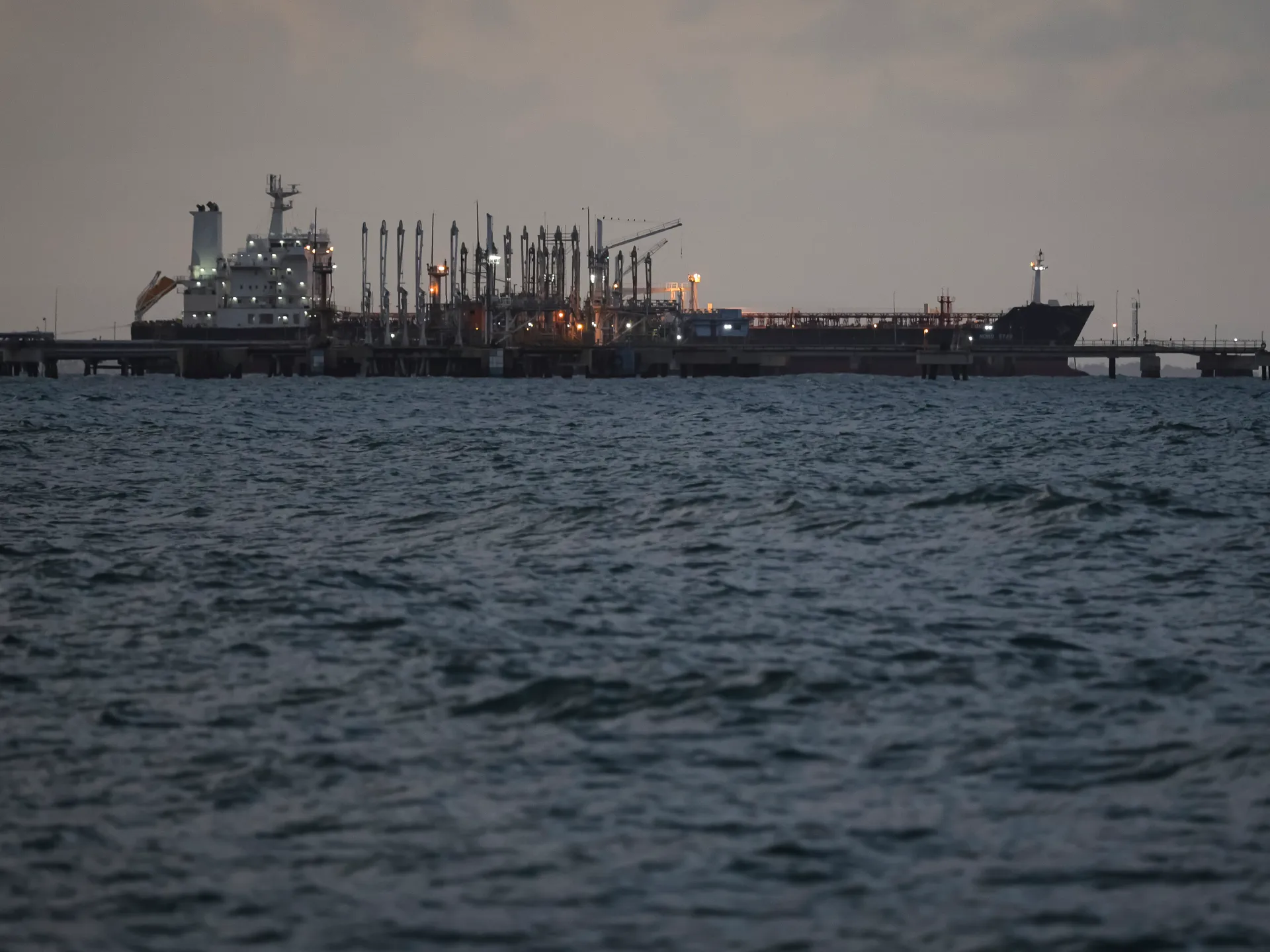
When questioned about an oil tanker seized by Washington on Wednesday, she argued this demonstrated how the regime operates. Asked whether she would support a United States invasion, Machado claimed Venezuela had already been invaded by Russian and Iranian agents alongside drug cartels.

“This has turned Venezuela into the criminal hub of the Americas,” she said, standing alongside Norwegian Prime Minister Jonas Gahr Stoere.

“What sustains the regime is a very powerful and strongly funded repression system. Where do those funds come from? Well, from drug trafficking, from the black market of oil, from arms trafficking and from human trafficking. We need to cut those flows.”

The trip reunited her with family members she had not seen in almost two years, including her daughter, who accepted the Nobel Peace Prize on her behalf at Wednesday’s ceremony.

Aligned with Trump 

The political leader has welcomed international sanctions and US military intervention in Venezuela, a move her critics say harkens back to a dark past.

The US has a long history of interference in the region, particularly in the 1980s, when it propped up repressive right-wing governments through coups, and funded paramilitary groups across Latin America that were responsible for mass killings, forced disappearances and other grave human rights abuses.

Venezuelan authorities cited Machado’s support for sanctions and US intervention when they barred her from running for office in last year’s presidential election, where she had intended to challenge Maduro. Machado has accused Venezuela’s president of stealing the July 2024 election, which was criticised by international observers.

Praising the Trump administration’s approach, Machado said the president’s actions had been “decisive to reach the point where we are right now, in which the regime is weaker than ever.”

She insisted she would return home but did not say when. “I’m going back to Venezuela regardless of when Maduro goes out. He’s going out, but the moment will be determined by when I’m finished doing the things that I came out to do,” she told reporters.

Her escape comes as tensions between Washington and Caracas have intensified sharply. The Trump administration has positioned major naval forces in the Caribbean and conducted strikes against alleged drug vessels since September. The US seized what Trump called a “very large” oil tanker off the coast of Venezuela, on Wednesday.

Machado has aligned herself with right-wing hawks close to Trump who argue that Maduro has links to criminal gangs that pose a direct threat to US national security, despite doubts raised by the US intelligence community.

The Trump administration has ordered more than 20 military strikes in recent months against alleged drug-trafficking vessels in the Caribbean and off Latin America’s Pacific coast, killing more than 80 people.

Human rights groups, some US Democrats, and several Latin American countries have condemned the attacks as unlawful extrajudicial killings of civilians.

The Wall Street Journal (WSJ) reported that Machado’s two-month escape operation involved wearing a disguise and departing from a coastal fishing village on a wooden boat bound for Curacao before boarding a private aircraft to Norway.

US forces were alerted to avoid striking the vessel, the WSJ reported, as they had one with similar boats in recent months. Machado confirmed receiving assistance from Washington during her escape.

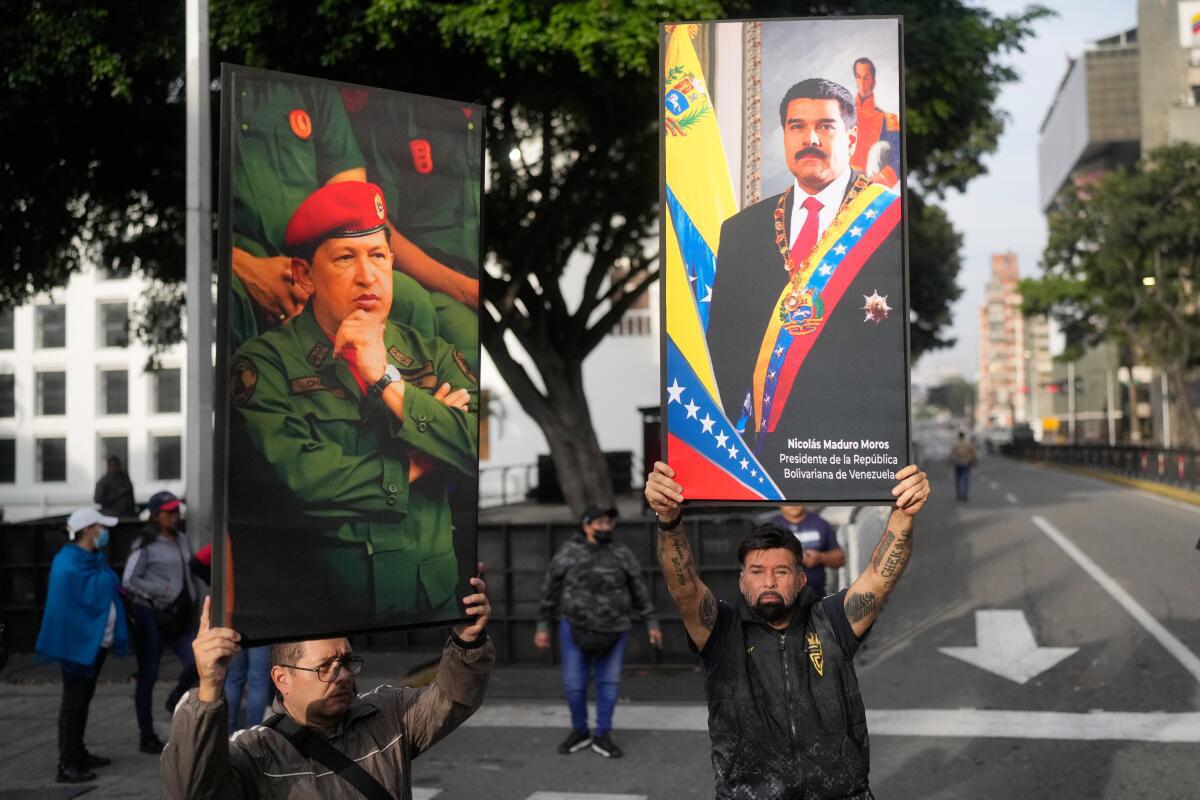
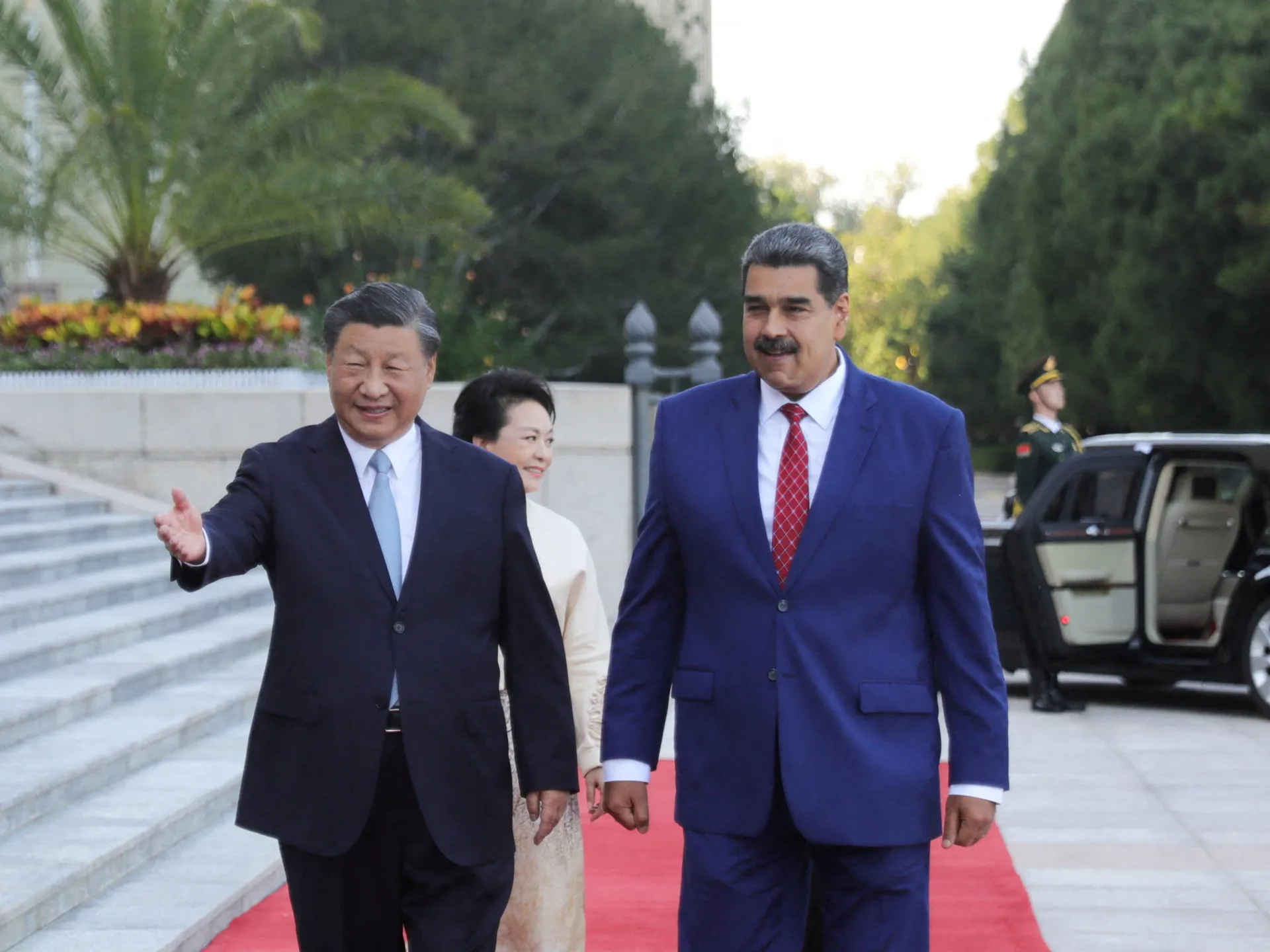
Maduro, in power since 2013 following the death of Hugo Chavez, says Trump is pushing for regime change in the country to access Venezuela’s vast oil reserves. He has pledged to resist such attempts.

A United Nations report released on Thursday accused Venezuela’s security forces of crimes against humanity over more than a decade.

Venezuelan Minister of the Interior Diosdado Cabello said Machado left the country “without drama” but provided no details.

Source link

Trump says the U.S. has seized an oil tanker off the coast of Venezuela

President Trump said Wednesday that the United States has seized an oil tanker off the coast of Venezuela as tensions mount with the government of Venezuelan President Nicolás Maduro.

Using U.S. forces to seize an oil tanker is incredibly unusual and marks the Trump administration’s latest push to increase pressure on Maduro, who has been charged with narcoterrorism in the United States. The U.S. has built up the largest military presence in the region in decades and launched a series of deadly strikes on alleged drug-smuggling boats in the Caribbean Sea and eastern Pacific Ocean.

“We’ve just seized a tanker on the coast of Venezuela, a large tanker, very large, largest one ever seized, actually,” Trump told reporters at the White House.

Trump said “other things are happening,” but did not offer additional details, saying he would speak more about it later.

The seizure was led by the U.S. Coast Guard and supported by the Navy, according to a U.S. official who was not authorized to comment publicly and spoke on the condition of anonymity. The official added that the seizure was conducted under U.S. law enforcement authority.

Venezuela has the world’s largest proven oil reserves and produces about 1 million barrels a day. Locked out of global oil markets by U.S. sanctions, the state-owned oil company sells most of its output at a steep discount to refiners in China.

The transactions usually involve a complex network of shadowy intermediaries as sanctions scared away more established traders. Many are shell companies, registered in jurisdictions known for secrecy. The buyers deploy so-called ghost tankers that hide their location and hand off their valuable cargoes in the middle of the ocean before they reach their final destination.

During past negotiations, among the concessions the U.S. has made to Maduro was approval for oil giant Chevron Corp. to resume pumping and exporting Venezuelan oil. The corporation’s activities in the South American country resulted in a financial lifeline for Maduro’s government.

Maduro did not address the seizure during a speech before a ruling-party organized demonstration in Caracas, Venezuela’s capital. But he told supporters that Venezuela is “prepared to break the teeth of the North American empire if necessary.”

Maduro, flanked by senior officials, said that only the ruling party can “guarantee peace, stability, and the harmonious development of Venezuela, South America and the Caribbean.”

The seizure comes a day after the U.S. military flew a pair of fighter jets over the Gulf of Venezuela in what appeared to be the closest that warplanes had come to the South American country’s airspace since the start of the administration’s pressure campaign. Trump has said land attacks are coming soon but has not offered any details on location.

It was not immediately clear who owned the tanker or what national flag it was sailing under. The Coast Guard referred a request for comment to the White House.

Madhani and Toropin write for the Associated Press. AP writer Regina Garcia Cano in Caracas, Venezuela, contributed to this report.

Source link

Justice Department can unseal records from Epstein’s 2019 sex trafficking case, judge says

Secret grand jury transcripts from Jeffrey Epstein’s 2019 sex trafficking case can be made public, a judge ruled on Wednesday, joining two other judges in granting the Justice Department’s requests to unseal material from investigations into the late financier’s sexual abuse.

U.S. District Judge Richard M. Berman reversed his earlier decision to keep the material under wraps, citing a new law that requires the government to open its files on Epstein and his longtime confidant Ghislaine Maxwell. The judge previously cautioned that the 70 or so pages of grand jury materials slated for release are hardly revelatory and “merely a hearsay snippet” of Epstein’s conduct.

On Tuesday, another Manhattan federal judge ordered the release of records from Maxwell’s 2021 sex trafficking case. Last week, a judge in Florida approved the unsealing of transcripts from an abandoned Epstein federal grand jury investigation in the 2000s.

The Justice Department asked the judges to lift secrecy orders in the cases after the Epstein Files Transparency Act, passed by Congress and signed into law by President Trump last month, created a narrow exception to rules that normally keep grand jury proceedings confidential. The law requires that the Justice Department disclose Epstein-related material to the public by Dec. 19.

The court records cleared for release are just a sliver of the government’s trove — a collection of potentially tens of thousands of pages of documents including FBI notes and reports; transcripts of witness interviews, photographs, videos and other evidence; Epstein’s autopsy report; flight logs and travel records.

While lawyers for Epstein’s estate told Berman in a letter last week that the estate took no position on the Justice Department’s unsealing request, some Epstein victims backed it.

“Release to the public of Epstein-related materials is good, so long as the victims are protected in the process,” said Brad Edwards, a lawyer for some victims. “With that said, the grand jury receives only the most basic information, so, relatively speaking, these particular materials are insignificant.”

Questions about the government’s Epstein files have dominated the first year of Trump’s second term, with pressure on the Republican intensifying after he reneged on a campaign promise to release the files. His administration released some material, most of it already public, disappointing critics and some allies.

Berman was matter of fact in his ruling on Wednesday, writing that the transparency law “unequivocally intends to make public Epstein grand jury materials and discovery materials” that had previously been covered by secrecy orders. The law “supersedes the otherwise secret grand jury materials,” he wrote.

The judge, who was appointed by President Clinton, a Democrat, implored the Justice Department to carefully follow the law’s privacy provisions to ensure that victims’ names and other identifying information are blacked out. Victim safety and privacy “are paramount,” he wrote.

In court filings, the Justice Department informed Berman that the only witness to testify before the Epstein grand jury was an FBI agent who, the judge noted, “had no direct knowledge of the facts of the case and whose testimony was mostly hearsay.”

The agent testified over two days, on June 18, 2019, and July 2, 2019. The rest of the grand jury presentation consisted of a PowerPoint slideshow and four pages of call logs. The July 2 session ended with grand jurors voting to indict Epstein.

Epstein, a millionaire money manager known for socializing with celebrities, politicians, billionaires and the academic elite, killed himself in jail a month after his 2019 arrest. Maxwell was convicted in 2021 by a federal jury of sex trafficking for helping recruit some of Epstein’s underage victims and participating in some of the abuse. She is serving a 20-year prison sentence.

Maxwell’s lawyer told a judge last week that unsealing records from her case “would create undue prejudice” and could spoil her plans to file a habeas petition, a legal filing seeking to overturn her conviction. The Supreme Court in October declined to hear Maxwell’s appeal.

Maxwell’s grand jury records include testimony from the FBI agent and a New York Police Department detective.

Judge Paul A. Engelmayer sought to temper expectations as he approved their release on Tuesday, writing that the materials “do not identify any person other than Epstein and Maxwell as having had sexual contact with a minor.”

“They do not discuss or identify any client of Epstein’s or Maxwell’s,” wrote Engelmayer, an appointee of President Obama, a Democrat. “They do not reveal any heretofore unknown means or methods of Epstein’s or Maxwell’s crimes.”

Sisak writes for the Associated Press.

Source link

Student killed, suspect in custody in Kentucky State University shooting | Gun Violence News

Kentucky Governor Andy Beshear said the shooting appeared to be an isolated incident rather than a mass shooting event.

A shooting at Kentucky State University in the United States has left one person dead and another in critical condition, police said. The suspected shooter, who is not a student, has been taken into custody.

The Frankfort Police Department said on Tuesday that officers responded to reports of “an active aggressor” and secured the campus, which was briefly placed on lockdown. Authorities said there was no ongoing threat.

Recommended Stories

list of 4 itemsend of list

Kentucky Governor Andy Beshear said the shooting appeared to be an isolated incident rather than a mass shooting event.

“Today there was a shooting on the campus of Kentucky State University. Two individuals were critically injured, and sadly, at least one of them is not going to make it,” Beshear said in a post on X.

“This was not a mass shooting or a random incident… the suspected shooter is already in custody, which means that while this was frightening, there is no ongoing threat,” he said.

“Violence has no place in our commonwealth or country. Please pray for the families affected and for our KSU students,” he added.

Stabbing at North Carolina high school

Earlier on Tuesday, a stabbing at a central North Carolina high school left one student dead and another injured, authorities said.

Forsyth County Sheriff Bobby Kimbrough said officers at North Forsyth High School in Winston-Salem responded shortly after 11am local time (16:00 GMT), following reports of a dispute between students.

“We responded to an altercation between two students,” Kimbrough said at a news conference, adding that “there was a loss of life”.

In an email to families and staff, Winston-Salem/Forsyth County Schools Superintendent Don Phipps confirmed that one student died and another was injured.

Sheriff’s office spokesperson Krista Karcher later said the injured student was treated at a hospital and released.

Kimbrough declined to take questions at the news conference, citing an ongoing investigation, and did not provide details about the potential charges.

North Carolina Governor Josh Stein called the incident “shocking and horrible” in a post on X, saying he was praying for the students involved and their loved ones.


Source link

Flavio Bolsonaro retracts suggestion of a ‘price’ to end 2026 election bid | Elections News

Former President Jair Bolsonaro has endorsed his eldest son’s campaign to be Brazil’s next president in the 2026 race.

Far-right Senator Flavio Bolsonaro has reaffirmed his commitment to running in Brazil’s 2026 presidential race, despite criticism that he appeared to be openly haggling over whether to remain a candidate.

On Tuesday, Bolsonaro met with reporters outside federal police headquarters in the capital Brasilia, where his father, former President Jair Bolsonaro, is serving a 27-year sentence for attempting to foment a coup.

Recommended Stories

list of 3 itemsend of list

The younger Bolsonaro said he conveyed to his father that he would not shrink from the 2026 race.

“I told him this candidacy is irreversible,” Flavio said. “And in his own words, ‘We will not turn back.’ Now it is time to talk to people, so we can have the right people on our side.”

The senator also attempted to clear up the comments that sparked the initial controversy.

On Sunday, Flavio raised eyebrows when he told Brazilian media that he could exit the race — for the right “price”.

“There’s a possibility I won’t go all the way,” Flavio said at the time. “I have a price for that. I will negotiate.”

He declined to name what that price would be, but his comments were widely interpreted to be a reference to his father’s imprisonment.

In September, a panel on Brazil’s Supreme Court convicted Jair of five charges related to his attempts to overturn the 2022 presidential election, including one count of seeking the violent abolition of the democratic rule of law.

Jair lost the 2022 race to current Brazilian President Luiz Inacio Lula da Silva, a left-wing leader who has announced he will run for a fourth term in 2026.

In November, the Supreme Court panel ordered Jair to be taken into custody to begin his sentence, after the ex-president admitted to damaging his ankle monitor.

Separately, in 2023, Brazil’s Supreme Electoral Tribunal ruled that Jair should be barred from holding public office for eight years, as a penalty for misusing the presidential office to spread election falsehoods.

Since his detention, Jair has backed his eldest son’s candidacy in the 2026 race. Liberal Party (PL) president Valdemar Costa Neto also confirmed on Friday that Jair’s endorsement meant that Flavio would indeed lead the party’s ticket.

Flavio has since received other right-wing endorsements, including from Sao Paulo Governor Tarcisio de Freitas, who was previously considered a frontrunner to represent the PL.

But Flavio’s comments on Sunday have thrown his nascent candidacy into doubt.

Critics, including from Lula’s Workers Party, have seized upon Flavio’s suggestion of a “price” to question his ethics and commitment.

“No one launches a candidacy one day, and the next day says, ‘Look, I can negotiate,’” Edinho Silva, the president of the Workers Party, told reporters. “It’s not just me. No one would take it seriously.”

But Flavio on Tuesday dismissed the attacks and reaffirmed he would stay in the race, while fighting for his father’s freedom.

“My price is Bolsonaro free and on the ballot,” he said. “In other words, there is no price.”

Source link

Turkish student who criticized Israel can resume research at Tufts after visa revoked, judge rules

A federal judge has allowed a Tufts University student from Turkey to resume research and teaching while she deals with the consequences of having her visa revoked by the Trump administration, leading to six weeks of detention.

The arrest of Rümeysa Öztürk, a doctoral student studying children’s relationship to social media, was among the first as the Trump administration began targeting foreign-born students and activists involved in pro-Palestinian advocacy. She had co-authored an op-ed criticizing her university’s response to Israel and the war in Gaza. Caught on video in March outside her Somerville residence, immigration enforcement officers took her away in an unmarked vehicle.

Öztürk has been out of a Louisiana immigrant detention center since May and back on the Tufts campus. But she’s been unable to teach or participate in research as part of her studies because of the termination of her record in the government’s database of foreign students studying temporarily in the United States.

In her ruling Monday, Chief U.S. District Judge Denise J. Casper wrote that Öztürk is likely to succeed on claims that the termination was “arbitrary and capricious, contrary to law and in violation of the First Amendment.”

The government’s lawyers unsuccessfully argued that the Boston federal court lacked jurisdiction and that Öztürk’s Student and Exchange Visitor Information System record, or SEVIS record, was terminated legally after her visa was revoked, making her eligible for removal proceedings.

“There’s no statute or regulation that’s been violated by the termination of the SEVIS record in this case,” Assistant U.S. Atty. Mark Sauter said during a hearing last week. The Associated Press sent an email Tuesday seeking comment from Sauter on whether the government plans to appeal.

In a statement, Öztürk, who plans to graduate next year, said while she is grateful for the court’s decision, she feels “a great deal of grief” for the education she has been “arbitrarily denied as a scholar and a woman in my final year of doctoral studies.”

“I hope one day we can create a world where everyone uses education to learn, connect, civically engage and benefit others — rather than criminalize and punish those whose opinions differ from our own,” said Öztürk, who is still challenging her arrest and detention.

The then-30-year-old was one of four students who wrote the opinion piece in the campus newspaper. It criticized the university’s response to student activists demanding that Tufts “acknowledge the Palestinian genocide,” disclose its investments and divest from companies with ties to Israel.

Öztürk, who is Muslim, was meeting friends in March for iftar, a meal that breaks a fast at sunset during the month of Ramadan, according to her lawyer, Mahsa Khanbabai. Her student visa had been revoked several days earlier, but she was not informed of that, her lawyers said. The government asserted that terminating her SEVIS record two hours after her arrest was a proper way of informing Tufts University about her visa revocation.

A State Department memo said Öztürk’s visa was revoked following an assessment that her actions “‘may undermine U.S. foreign policy by creating a hostile environment for Jewish students and indicating support for a designated terrorist organization’ including co-authoring an op-ed that found common cause with an organization that was later temporarily banned from campus.”

Öztürk running out of time to pursue teaching, research goals

Without her SEVIS status reinstated, Öztürk said she couldn’t qualify as a paid research assistant and couldn’t fully reintegrate into academic life at Tufts.

“We have a strange kind of legal gaslighting here, where the government claims it’s just a tinkering in a database, but this is really something that has a daily impact on Ms. Öztürk’s life,” her attorney, Adriana Lafaille of the American Civil Liberties Union of Massachusetts, said in court.

“We are running out of time to make this right. Each day that goes by is a day that she is being prevented from doing the work that she loves in the graduate program that she came here to be part of. Each day that this happens is a day that the government is allowed to continue to punish her for her protected speech.”

Öztürk, meanwhile, has maintained a full course load and fulfilled all requirements to maintain her lawful student status, which the government hasn’t terminated, her lawyer said.

Record created to collect information on international students

SEVIS is mandated by Congress in the Illegal Immigration Reform and Immigrant Responsibility Act of 1996 and administered by the director of Immigration and Customs Enforcement “to collect information relating to nonimmigrant foreign students” and “use such information to carry out the enforcement functions of” ICE.

According to the U.S. Department of Homeland Security, when a SEVIS record is terminated, a student loses all on- and off-campus employment authorization and allows ICE agents to investigate to “confirm the departure of the student.”

Willingham and McCormack write for the Associated Press. McCormack reported from Concord, N.H.

Source link

France’s prime minister faces crunch vote in parliament | Politics News

Sébastien Lecornu faces a vital test to his premiership over the social security budget bill.

France’s National Assembly is set to vote on a major social security budget bill, in a critical test for the embattled Prime Minister Sebastien Lecornu, who has pledged to deliver the country’s 2026 budget before the end of the year.

Debate on the legislation began on Tuesday afternoon. Lecornu governs without a majority in parliament, and has sought support from the Socialist Party by offering concessions, including suspending President Emmanuel Macron’s controversial pension reform.

Recommended Stories

list of 3 itemsend of list

If lawmakers reject the plan, France could face another political crisis and a funding gap estimated at 30 billion euros ($35bn) for its healthcare, pension, and welfare systems.

“This social security budget bill is not perfect, but it is the best possible,” Lecornu wrote on X on Saturday, warning that failure to pass it would threaten social services, public finances, and the role of parliament.

Socialist leader Olivier Faure said on Monday that his party could back the bill after the government agreed to suspend Macron’s 2023 pension reform, which raised the retirement age, until after the 2027 presidential election.

But the far-right National Rally and the hard-left France Unbowed have both signalled their opposition, along with more moderate right-wing parties.

Even government allies, including the centrist Horizons party and conservative Republicans, could abstain or vote against the legislation. They argue that freezing the pension reform and raising taxes to win socialist support undermines earlier commitments.

France, the eurozone’s second-largest economy, has been under pressure to reduce its large budget deficit. But political instability has slowed those efforts since Macron’s snap election last year resulted in a hung parliament.

Lecornu, a close Macron ally, said last week that rejection of the bill would nearly double the expected shortfall from 17 billion to 30 billion euros ($20bn-$35bn), threatening the entire 2026 public spending plan.

Without a deal before year-end, the government may be forced to introduce temporary funding measures.

The government aims to bring the deficit below 5 percent of GDP next year, but its narrow political options have led to repeated clashes over public spending.

Budget disputes have already toppled three governments since last year’s election, including that of former Prime Minister Michel Barnier, who lost a no-confidence vote over his own budget bill.

Source link

Agent-tracking app ICEBlock sues Trump administration in free speech fight | Donald Trump News

The Trump administration has accused ICEBlock of making federal agents vulnerable to attack and called for its removal.

The developer of a popular app used to monitor and share alerts about immigration enforcement activities has sued the administration of United States President Donald Trump for pressuring Apple to remove it.

ICEBlock, whose name refers to Immigration and Customs Enforcement (ICE), had one million users before it was dropped from Apple’s app store, according to a lawsuit filed on Monday.

Recommended Stories

list of 3 itemsend of list

Developer Joshua Aaron alleged in the complaint that the Trump administration’s campaign against the tracking app amounted to a violation of free speech.

“When we see our government doing something wrong, it’s our duty as citizens of this nation to hold them accountable, and that is exactly what we’re doing with this lawsuit,” Aaron said in the lawsuit.

The suit calls on the district court system to protect the Texas-based software company from “unlawful threats” under the Trump administration.

It also names as defendants some of Trump’s highest-level officials, including Attorney General Pam Bondi, Homeland Security Secretary Kristi Noem and ICE’s acting director, Todd Lyons.

First released in April, ICEBlock quickly became a widely used tool across the US as communities sought ways to share information about immigration raids.

Since returning to office for a second term, Trump has pushed a campaign of mass deportation, targeting a wide range of immigrants, many of whom are in the country legally.

Those raids, many carried out by heavily armed immigration agents in military-style attire, have also faced repeated accusations of human rights abuses.

Critics have questioned the violence used in some arrests, as well as the ICE officers’ use of face masks and plainclothes to conceal their identities.

There have also been reports of inhumane conditions once immigrants are in custody, including overcrowding, a lack of sanitation and faeces-smeared walls.

Human rights advocates have also questioned the speed with which deportations are being carried out, claiming the immigrants arrested have no opportunity to exercise their due process rights and are often prevented from contacting lawyers.

Even US citizens have been accidentally detained in the immigration sweeps. Some immigrants have been deported despite court orders mandating that they remain in the US.

The Trump administration has faced fierce criticism and judicial rebukes for its tactics.

But it maintains that software like ICEBlock puts federal immigration agents in danger of retaliation.

“ICEBlock is designed to put ICE agents at risk just for doing their jobs, and violence against law enforcement is an intolerable red line,” Attorney General Bondi has said.

In October, ICEBlock was pulled from Apple’s app store, a popular platform for downloading mobile software. The Justice Department confirmed that it had contacted Apple to push for the removal.

The lawsuit states that the tech company told Aaron the app had been removed following “information provided to Apple by law enforcement”.

Aaron has countered that the app is an exercise of essential free speech rights and is meant to help protect people from overbearing government activity.

“We’re basically asking the court to set a precedent and affirm that ICEBlock is, in fact, First Amendment-protected speech and that I did nothing wrong by creating it,” Aaron told The Associated Press news agency in an interview.

“I mean, these are people that are wearing masks — which is the antithesis of everything about this country — and they are not identifying themselves, and they’re zip-tying children, and they’re throwing women into vans.”

Source link

Honduran election authorities resume vote tallies amid allegations of fraud | Elections News

Central American nation on edge after voting plagued by fraud claims and a recent history of contested elections.

Election officials in Honduras have released updated voting results from the country’s November 30 election, following a three-day pause in tallies amid allegations of fraud and inconsistencies.

With 89 percent of ballots tallied on Monday, the conservative candidate Nasry Asfura held a slim lead of 40.21 percent over centrist contender Salvador Nasralla, who has 39.5 percent.

Recommended Stories

list of 3 itemsend of list

Rixi Moncada, a leftist candidate with the governing LIBRE party, is trailing in third place, with 19.28 percent.

“After carrying out the necessary technical actions (with external auditing), the data is now being updated in the results,” Ana Paola Hall, president of the National Electoral Council (CNE), said in a social media post.

Allegations of fraud had dominated the lead-up to the election, and statements from United States President Donald Trump-backed have likewise stirred controversy.

In the final days before the election, Trump indicated that he may not be able to work with anyone but Asfura. That, in turn, led to an outcry from other candidates who accused the US leader of election meddling.

The electoral body stated that about 14 percent of the tally sheets showed inconsistencies and would be reviewed. Hall added in her post that candidates must “stay alert and, where applicable, file the corresponding challenges in accordance with the law”.

Following a coup in 2009, Honduras experienced a period of repression and disputed elections that left many sceptical about the legitimacy of the electoral process. Security forces killed at least 16 people when they opened fire on protesters following a contested vote in 2017, with about 30 killed in protests across the country.

The prolonged vote-counting has fuelled concerns that similar clashes might erupt.

The opposition has also criticised Trump’s stated preference for Asfura as a form of interference, given his threat that US support could be withdrawn if he did not win.

Trump has previously written, “If he [Asfura] doesn’t win, the United States will not be throwing good money after bad.”

Moncada, the Libre candidate, has said she will not recognise the results that took place under “interference and coercion”. Nasralla has also said that Trump’s interference may have cost him votes.

Accusations of impropriety are widespread, with a conservative member of the CNE panel accusing a LIBRE member of “intimidation”, and Nasralla saying that “the corrupt ones are the ones holding up the counting process”.

Rights groups and civil society organisations have called for patience and transparency.

Source link