How the French Empire built power through language, schooling and cultural assimilation and what it means today.
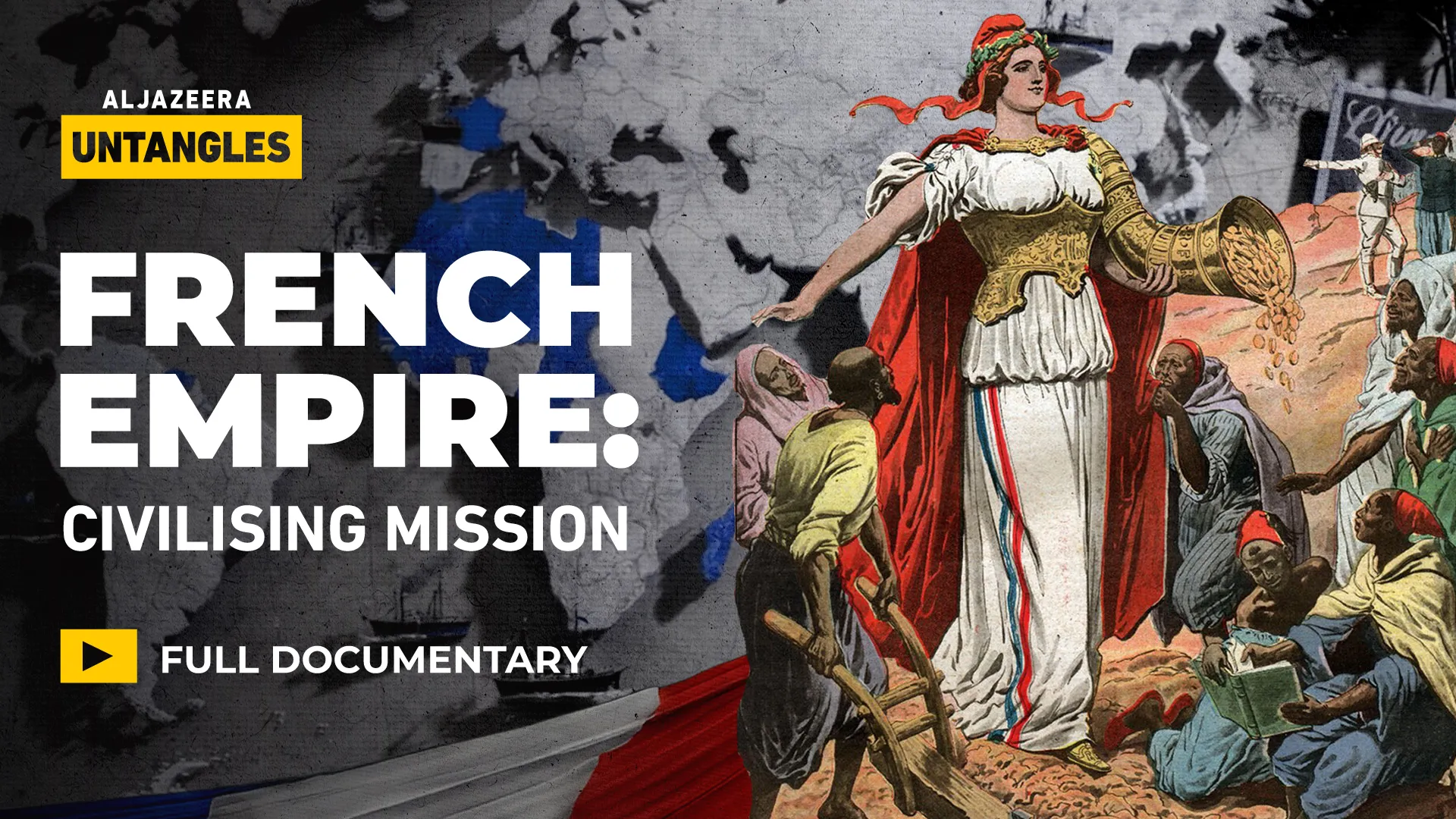
Beyond armies and violence, France built its empire through language, schooling and cultural influence. This film explores how assimilation became a method of rule and a source of resistance.
At the heart of French colonial rule was the mission “civilisatrice”, a doctrine that claimed to lift up colonised societies through education, administration and the French language. In practice, this system sought to reshape colonised people’s identities, loyalties and cultures, replacing local traditions with French norms while maintaining strict political and economic control. Schools, legal systems and bureaucracies became tools of empire as powerful as armies.
Through case studies in Algeria, Indochina and West Africa, the documentary shows how colonial administrations operated on the ground. In Algeria, settler colonialism and mass repression led to war. In Indochina, education and bureaucracy coexisted with exploitation and nationalist resistance. In West Africa, language policy and indirect rule reshaped social hierarchies and governance.
This episode examines how resistance movements challenged the promise of civilisation, forcing France to confront the contradictions at the heart of its empire. Anticolonial struggles, intellectual movements and armed uprisings not only weakened imperial rule but reshaped French politics, culture and identity itself.
The documentary also places French colonial strategies in a broader modern context. In the contemporary world, the United States projects influence less through formal empire and more through soft power. Hollywood cinema, television and digital platforms circulate American values, lifestyles and narratives globally, shaping cultural imagination in ways that echo earlier imperial projects. At the same time, US dominance in higher education, academic publishing and institutional standards helps define what knowledge is valued, taught and legitimised worldwide.
It also draws direct connections between French colonialism and the modern world. Contemporary debates over language, immigration, secularism and inequality are deeply rooted in colonial systems designed to classify, discipline and extract. Many modern state institutions, education models and economic relationships reflect structures first imposed under empire.
By tracing how cultural control, education and administration functioned as instruments of power, the documentary reveals how the legacy of French colonialism continues to shape modern capitalism, global inequality and postcolonial relations today.
Algeria’s parliament has begun debating a draft law that would criminalise France’s colonial rule from 1830 to 1962. Al Jazeera’s Nada Qaddourah explains what we know about the bill.
The United States has imposed visa bans on five Europeans, including a former European Union commissioner, accusing them of pressuring tech firms to censor and suppress “American viewpoints they oppose”.
In a statement on Tuesday, US Secretary of State Marco Rubio characterised the individuals as “radical activists” who had “advanced censorship crackdowns” by foreign states against “American speakers and American companies”.
Recommended Stories
list of 4 itemsend of list
“For far too long, ideologues in Europe have led organized efforts to coerce American platforms to punish American viewpoints they oppose,” he said on X.
“The Trump Administration will no longer tolerate these egregious acts of extraterritorial censorship,” he added.
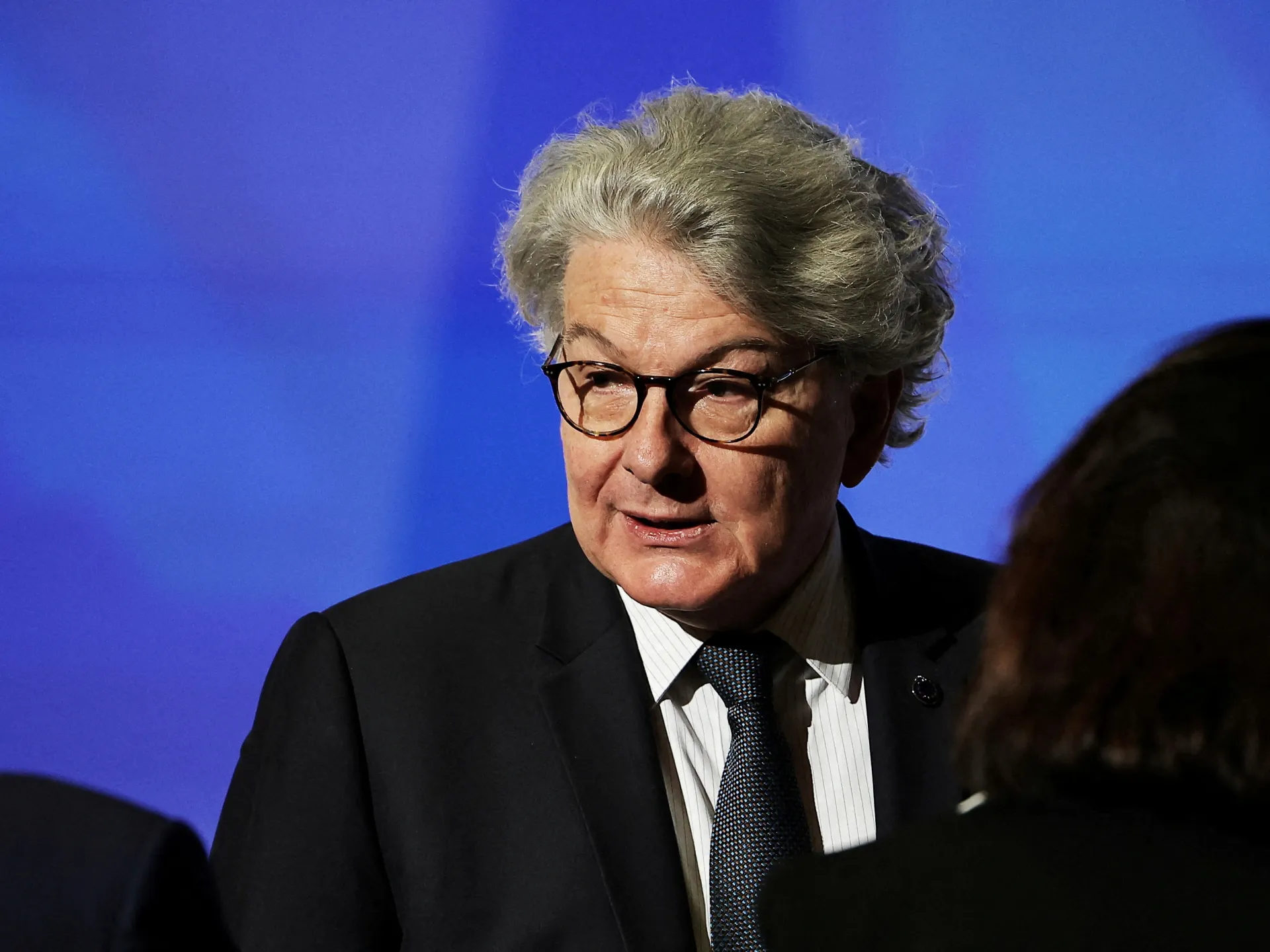
The most prominent target was Thierry Breton, who served as the European commissioner for the internal market from 2019-2024.
Sarah Rogers, the undersecretary for public diplomacy, described the French businessman as the “mastermind” of the EU’s Digital Services Act (DSA), a landmark law intended to combat hateful speech, misinformation and disinformation on online platforms.
Rogers also accused Breton of using the DSA to threaten Elon Musk, the owner of X and a close ally of US President Donald Trump, ahead of an interview Musk conducted with Trump during last year’s presidential campaign.
‘Witch hunt’
Breton responded to the visa ban in a post on X, slamming it as a “witch hunt” and comparing the situation with the US’s McCarthy era, when officials were chased out of government for alleged ties to communism.
“To our American friends: Censorship isn’t where you think it is,” he added.
The others named by Rogers are: Imran Ahmed, chief executive of the Centre for Countering Digital Hate; Josephine Ballon and Anna-Lena von Hodenberg, leaders of HateAid, a German organisation, and Clare Melford, who runs the Global Disinformation Index (GDI).
French Minister for Europe and Foreign Affairs Jean-Noel Barrot “strongly” condemned the visa restrictions, stating that the EU “cannot let the rules governing their digital space be imposed by others upon them”. He stressed that the DSA was “democratically adopted in Europe” and that “it has absolutely no extraterritorial reach and in no way affects the United States”.
Ballon and von Holdenberg of HateAid described the visa bans as an attempt to obstruct the enforcement of European law on US corporations operating in Europe.
“We will not be intimidated by a government that uses accusations of censorship to silence those who stand up for human rights and freedom of expression,” they said in a statement.
A spokesperson for the GDI also called the US action “immoral, unlawful, and un-American”, as well as “an authoritarian attack on free speech and an egregious act of government censorship”.
The punitive measures follow the Trump administration’s publishing of a National Security Strategy, which accused European leaders of censoring free speech and suppressing opposition to immigration policies that it said risk “civilisational erasure” for the continent.
The DSA in particular has emerged as a flashpoint in US-EU relations, with US conservatives decrying it as a weapon of censorship against right-wing thought in Europe and beyond, an accusation Brussels denies.
The legislation requires major platforms to explain content-moderation decisions, provide transparency for users and grant researchers access to study issues such as children’s exposure to dangerous content.
Tensions escalated further this month after the EU fined Musk’s X for violating DSA rules on transparency in advertising and its methods for ensuring users were verified and actual people.
Washington last week signalled that key European businesses – including Accenture, DHL, Mistral, Siemens and Spotify – could be targeted in response.
The US has also attacked the United Kingdom’s Online Safety Act, which imposes similar content moderation requirements on major social media platforms.
The White House last week suspended the implementation of a tech cooperation deal with the UK, saying it was in opposition to the UK’s tech rules.
BRITS could soon be heading to Paris, Brussels and Amsterdam with Virgin Trains – and now, there is a first glimpse at the trains that will be used.
Virgin Trains has revealed more details about services it hopes to run to Europe from 2030, with cheaper tickets and potential Manchester and Birmingham routes.
Sign up for the Travel newsletter
Thank you!
Virgin Trains is set to rival Eurostar with services through the Channel Tunnel by 2030Credit: Alamy
Back in October, Virgin Trains revealed that it had been granted permission by the Office of Rail and Road to access Temple Mills depot in East London.
The approval essentially means that the operator is a step closer to launching cross-channel services that will eventually rival Eurostar.
Though precise details of schedules and ticket prices have yet to be revealed, Virgin Trains has said it plans to initially use 12 trains for the European service, each of which will have seven carriages.
The operator has made an agreement with Alstom for these trains, which will be Avelia Stream trains – energy-efficient and modern, according to Virgin.
What exactly Virgin Trains will look like at London St Pancras is yet to be revealed, but Virgin has said that it will “improve the experience” for passengers.
Richard Branson has previously said he wants a direct service from London to Charles de Gaulle Airport.
He also mentioned hopes to launch a route to Disneyland Paris, which Eurostar used to have a route to but axed it in 2023.
The main benefit for passengers, though, could be the potentially cheaper tickets as Virgin has expressed on a number of occasions how fares are likely to be competitive, or even cheaper, than current Eurostar tickets.
According to Eurostar, its lowest fare between London and Paris is £39.
However, looking at current prices, the cheapest fare in the next six weeks is £51.
Whilst the prices for Virgin Trains tickets are not clear yet, Branson said last month: “If you have competition, then fares will inevitably come down.
Routes would include destinations in Paris, Brussels and AmsterdamCredit: Getty
“If we’ve got seats that need selling, we will reduce the cost of them.”
Passengers on Virgin Trains may also be able to collect Virgin Red loyalty points when they book through Virgin, as they do with Virgin Atlantic flights.
Before services are able to launch, Virgin Trains needs to form a commercial agreement with Eurostar (the current operator of Temple Mills), secure finance, access to tracks and stations and gain safety approvals from the ORR and authorities in the EU.
The Channel Tunnel is currently only used by Eurostar and LeShuttle.
However, a report over the summer revealed there is capacity for more trains to access the Temple Mills depot, which is essential for cross-channel services.
At the time of the announcement in October, Martin Jones, deputy director, access and international at the Office of Rail and Road said: “With this decision we are backing customer choice and competition in international rail, unlocking up to £700million in private sector investment and stimulating growth.
“While there is still some way to go before the first new services can run, we stand ready to work with Virgin Trains as their plans develop.”
Three people arrested in connection with suspected theft of items worth between 15,000 and 40,000 euros.
Published On 21 Dec 202521 Dec 2025
Share
France’s presidential silverware keeper and two other men are set to stand trial over the alleged theft of porcelain and other tableware worth thousands of euros, the Paris prosecution office has said.
Prosecutors said the silverware keeper Thomas M and his partner Damien G were arrested on suspicion of theft on Tuesday. Another man, Ghislain M, was arrested on suspicion of receiving stolen goods. Their full names were not given due to French privacy customs.
Recommended Stories
list of 4 itemsend of list
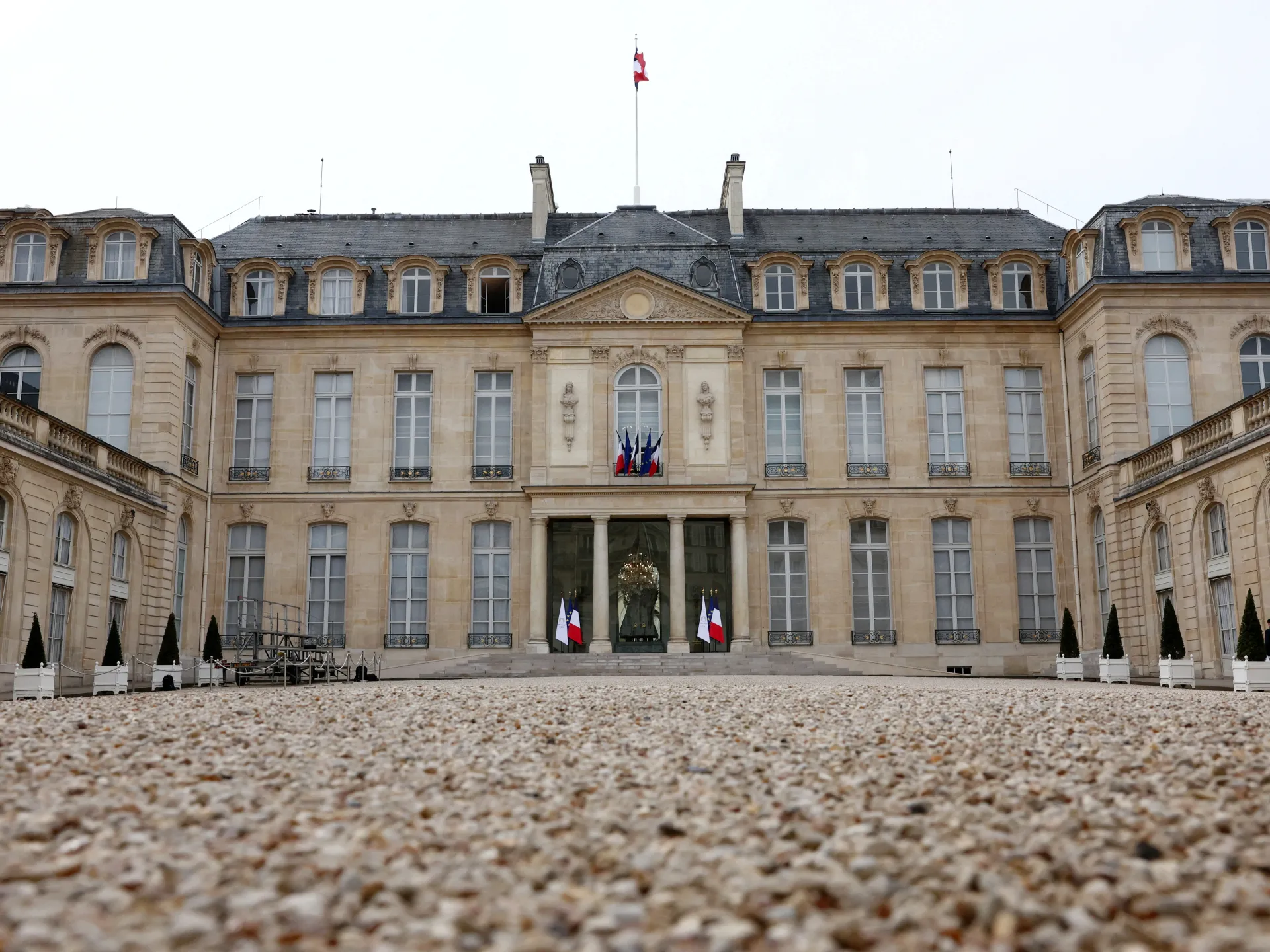
The Elysee, the president’s official residence, had reported the disappearance of silverware and tableware pieces used for state dinners and other events, with the value of the missing items estimated between 15,000 and 40,000 euros ($17,500 and $46,800), the prosecution office said.
Interviews with presidential staff pointed suspicions at Thomas M, whose suspected downward inventory adjustments appeared to anticipate future thefts, prosecutors said.
They said about 100 objects were discovered in Thomas M’s personal locker, his vehicle and home, including copper pots, Sevres porcelain and Baccarat champagne glasses.
Investigators found an air force-stamped plate and ashtrays that Thomas M was selling on the online marketplace Vinted, prosecutors said, items that are not available to the general public.
The three suspects appeared in court Thursday on charges of jointly stealing moveable property listed as part of the national heritage – an offence punishable by up to 10 years in prison and a 150,000-euro ($175,000) fine, as well as aggravated handling of stolen goods.
The trial was postponed to February 26. The defendants were placed under judicial supervision, banned from contacting one another, prohibited from appearing at auction venues and barred from their professional activities.
French paper Le Parisien, which first reported the case, said Ghislain M worked as a guard at the Louvre museum, citing his lawyer as saying that his client’s motivation for his suspected involvement was his “passion” for rare antique goods.
In October, the museum experienced its own robbery when thieves disguised as construction workers stole priceless pieces from France’s crown jewels, prompting a debate about security standards at the country’s landmarks.
The Sevres porcelain factory, one of the Elysee’s main suppliers, identified a number of items on auction websites, prosecutors said, adding that some items had been returned.
Leaders from Mali, Niger and Burkina Faso are hoping to find a way to repel advancing fighters linked to al-Qaeda. Al Jazeera’s Laura Khan explains what’s at stake at an Alliance of Sahel States summit in Bamako.
French President Emmanuel Macron indicated that Europe may need to directly engage with Russian President Vladimir Putin if U.S.-led efforts toward a Ukraine peace deal fail. European leaders have been dissatisfied with their exclusion from peace talks led by the Trump administration and have been focused on supporting Ukraine’s negotiating position from afar. During remarks in Brussels, Macron emphasized the necessity for a solid peace agreement with security guarantees, suggesting that without this, Europe should prepare to re-establish direct dialogue with Russia. This comes after EU leaders decided to provide Ukraine with a 90 billion euro loan, utilizing the EU’s budget rather than frozen Russian assets, amid internal divisions.
Macron argued that the EU cannot afford to lose its communication channels with Moscow, particularly as U.S. officials prepare for talks with Russian negotiators. Most EU nations, except Hungary and Slovakia, have halted communication with Putin since the invasion of Ukraine. Macron highlighted the need for a strategic approach to facilitate renewed discussions with Russia, warning that continued inaction might leave EU leaders isolated and marginalized in negotiations.
Moreover, some EU leaders expressed concerns about diminishing public support for sustaining Ukrainian resistance to the ongoing war. The summit’s outcome aims to support Ukraine financially, reflecting a recognition of the war’s broader implications for European security, despite worries about increasing political pressure and potential public fatigue regarding the conflict. Danish Prime Minister Frederiksen noted that Putin is likely counting on a combination of war fatigue and societal uncertainty to undermine European resolve.
EU delays Mercosur trade deal until January amid farmer protests and opposition from France and Italy.
The European Union has delayed a massive free-trade deal with South American countries amid protests by EU farmers and as last-minute opposition by France and Italy threatened to derail the agreement.
European Commission chief spokesperson Paula Pinho confirmed on Thursday that the signing of the trade pact between the EU and South American bloc Mercosur will be postponed until January, further delaying a deal that had taken some 25 years to negotiate.
Recommended Stories
list of 4 itemsend of list
Commission President Ursula von der Leyen was expected to travel to Brazil on Saturday to sign the deal, but needed the backing of a broad majority of EU members to do so.
The Associated Press news agency reported that an agreement to delay was reached between von der Leyen, European Council President Antonio Costa and Italian Prime Minister Giorgia Meloni – who spoke at an EU summit on Thursday – on the condition that Italy would vote in favour of the agreement in January.
French President Emmanuel Macron had also pushed back against the deal as he arrived for Thursday’s summit in Brussels, calling for further concessions and more discussions in January.
Macron said he has been in discussions with Italian, Polish, Belgian, Austrian and Irish colleagues, among others, about delaying the signing.
“Farmers already face an enormous amount of challenges,″ the French leader said.
The trade pact with Argentina, Brazil, Bolivia, Paraguay and Uruguay would be the EU’s largest in terms of tariff cuts.
But critics of the deal, notably France and Italy, fear an influx of cheap commodities that could hurt European farmers, while Germany, Spain and Nordic countries say it will boost exports hit by United States tariffs and reduce reliance on China by securing access to key minerals.
Brazil’s President Lula says Italy’s PM Meloni asked for ‘patience’
The EU-Mercosur agreement would create the world’s biggest free-trade area and help the 27-nation European bloc to export more vehicles, machinery, wines and spirits to Latin America at a time of global trade tensions.
Al Jazeera’s Dominic Kane, reporting from Berlin, said Germany, Spain and the Nordic countries were “all lobbying hard in favour of this deal”. But ranged against them were the French and Italian governments because of concerns in their powerful farming sectors.
“Their worry being that their products, such as poultry and beef, could be undercut by far cheaper imports from the Mercosur countries,” Kane said.
“So no signing in December. The suggestion being maybe there will be a signing in mid-January,” he added.
“But there must now be a question about what might happen between now and mid-January, given the powerful forces ranged against each other in this debate,” he added.
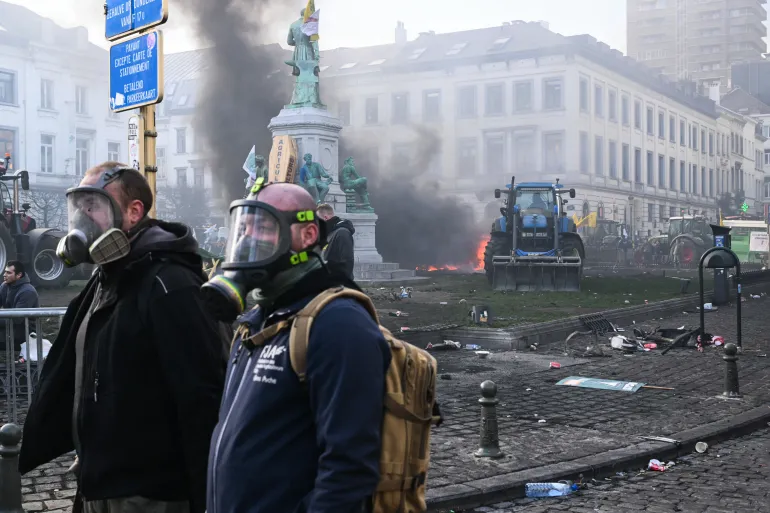
Farmers wear gas masks at the Place du Luxembourg near the European Parliament, during a farmers’ protest on December 18, 2025 [Nicolas Tucat/AFP]
Mercosur nations were notified of the move, a European Commission spokeswoman said, and while initially reacting with a now-or-never ultimatum to its EU partners, Brazil opened the door on Thursday to delaying the deal’s signature to allow time to win over the holdouts.
Brazil’s President Luiz Inacio Lula da Silva said Italy’s Meloni had asked him for “patience” and had indicated that Italy would eventually be ready for the agreement.
The decision to delay also came hours after farmers in tractors blocked roads and set off fireworks in Brussels to protest the deal, prompting police to respond with tear gas and water cannon.
Protesting farmers – some travelling to the Belgian capital from as far away as Spain and Poland – brought potatoes and eggs to throw and waged a furious back-and-forth with police while demonstrators burned tyres and a faux wooden coffin bearing the word “agriculture”.
The European Parliament evacuated some staff due to damage caused by protesters.
European champions Paris Saint-Germain pushed all the way in Intercontinental Cup final in Qatar by South Americans.
Published On 17 Dec 202517 Dec 2025
Share
Back-up goalkeeper Matvei Safonov saved four penalties as Paris Saint-Germain edged out Brazilians Flamengo 2-1 in a shootout to win the FIFA Intercontinental Cup final in Qatar.
PSG led through Khvicha Kvaratskhelia before Jorginho’s spot-kick levelled for Flamengo as the game finished 1-1 after extra time on Wednesday.
Recommended Stories
list of 4 itemsend of list
Copa Libertadores winners Flamengo defeated Mexicans Cruz Azul and African champions Pyramids last week to earn the right to face PSG and pushed the European champions all the way with a dogged display.
But Luis Enrique’s men, who received a bye to the final, were indebted to Safonov and followed in the footsteps of Real Madrid, who lifted the inaugural title last year.
PSG thought they had taken the lead in the ninth minute when Fabian Ruiz cleverly hooked the ball into an empty net after Flamengo goalkeeper Agustin Rossi miskicked a clearance while trying to prevent a corner.
But the goal was ruled out by VAR because Rossi had narrowly failed to stop the ball from going out of play.
But PSG did break the deadlock eight minutes before half-time courtesy of another Rossi error.
The Argentinian turned Desire Doue’s low cross, which looked to be too strong for Kvaratskhelia, straight into the Georgian’s pass for the simplest of tap-ins.
Flamengo managed to stay in the game, though, and were awarded a penalty on the hour mark for a foul by Marquinhos on Uruguay midfielder Giorgian de Arrascaeta after a VAR review.
Former Chelsea and Arsenal player Jorginho stepped up to send Safonov the wrong way in trademark fashion.
PSG pressed for a winner, sending on Bradley Barcola and Ousmane Dembele, who set up a last-gasp chance for Marquinhos.
But the centre-back could not react quickly enough to get his effort on target as the ball flashed across goal and the game headed into extra time.
Both teams saw half-chances come and go in the added half-hour, with Dembele flashing a shot narrowly off target in the 116th minute.
That set the stage for Safonov – playing in place of regular first-choice Lucas Chevalier, who is still regaining full fitness after an ankle injury – to steal the headlines and spare the blushes of Dembele and Barcola, who both missed for PSG.
When armed soldiers in the small West African nation of Benin appeared on national television on December 7 to announce they had seized power in a coup, it felt to many across the region like another episode of the ongoing coup crisis that has seen several governments toppled since 2020.
But the scenes played out differently this time.
Recommended Stories
list of 4 itemsend of list
Amid reports of gunfire and civilians scampering to safety in the economic capital, Cotonou, Beninese and others across the region waited with bated breath as conflicting intelligence emerged. The small group of putschists, on the one hand, declared victory, but Benin’s forces and government officials said the plot had failed.
By evening, the situation was clear – Benin’s government was still standing. President Patrice Talon and loyalist forces in the army had managed to hold control, thanks to help from the country’s bigger neighbours, particularly its eastern ally and regional power, Nigeria.
While Talon now enjoys victory as the president who could not be unseated, the spotlight is also on the Economic Community of West African States (ECOWAS). The regional bloc rallied to save the day in Benin after their seeming resignation in the face of the crises rocking the region, including just last month, when the military took power in Guinea-Bissau.
This time, though, after much criticism and embarrassment, ECOWAS was ready to push back against the narrative of it being an ineffective bloc by baring its teeth and biting, political analyst Ryan Cummings told Al Jazeera.
“It wanted to remind the region that it does have the power to intervene when the context allows,” Cummings said. “At some point, there needed to be a line drawn in the sand [and] what was at stake was West Africa’s most stable sovereign country falling.”
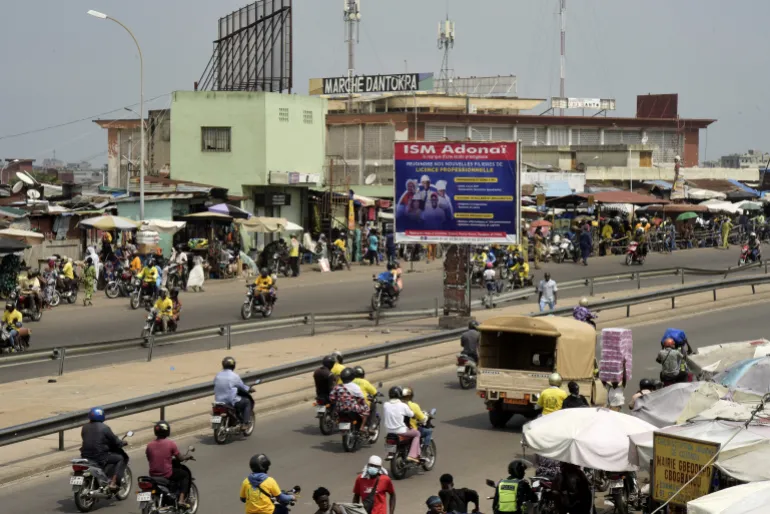
People gather at the market of Dantokpa, two days after Benin’s forces thwarted the attempted coup against the government, in Cotonou, December 9, 2025 [Charles Placide Tossou/Reuters]
Is a new ECOWAS on the horizon?
Benin’s military victory was an astonishing turnaround for an ECOWAS that has been cast as a dead weight in the region since 2020, when a coup in Mali spurred an astonishing series of military takeovers across the region in quick succession.
Between 2020 and 2025, nine coup attempts toppled five democratic governments and two military ones. The latest successful coup, in Guinea-Bissau, happened on November 28. Bissau-Guineans had voted in the presidential election some days before and were waiting for the results to be announced when the military seized the national television station, detained incumbent President Umaro Sissoco Embalo, and announced a new military leader.
ECOWAS, whose high-level delegation was in Bissau to monitor the electoral process when the coup happened, appeared on the back foot, unable to do much more than issue condemnatory statements. Those statements sounded similar to those it issued after the coups in Mali, Burkina Faso, Niger, and Guinea. The bloc appeared a far cry from the institution that, between 1990 and 2003, successfully intervened to stop the civil wars in Liberia and Sierra Leone, and later in the Ivory Coast. The last ECOWAS military intervention, in 2017, halted Gambian dictator Yahya Jammeh’s attempt to overturn the election results.
Indeed, ECOWAS’s success in its heyday hinged on the health of its members. Nigeria, arguably ECOWAS’s backbone, whose troops led the interventions in Liberia and Sierra Leone, has been mired in insecurity and economic crises of its own lately. In July 2023, when Nigeria’s President Bola Ahmed Tinubu was the ECOWAS chair, he threatened to invade Niger after the coup there.
It was disastrous timing. Faced with livelihood-eroding inflation and incessant attacks by armed groups at home, Nigerians were some of the loudest voices resisting an invasion. Many believed Tinubu, sworn in just months earlier, had misplaced his priorities. By the time ECOWAS had finished debating what to do weeks later, the military government in Niger had consolidated support throughout the armed forces and Nigeriens themselves had decided they wanted to back the military. ECOWAS and Tinubu backed off, defeated.
Niger left the alliance altogether in January this year, forming the Alliance of Sahel States (AES) with fellow military governments in Mali and Burkina Faso. All three share cultural and geographic affinities, but are also linked by their collective dislike for France, the former colonial power, which they blame for interfering in their countries. Even as they battle rampaging armed groups like Jama’at Nusrat al-Islam wal-Muslimin (JNIM), the three governments have cut ties with French forces formerly stationed there and welcomed Russian fighters whose effectiveness, security experts say, fluctuates.
Sierra Leone’s President Julius Maada Bio, who chairs ECOWAS, walks with Guinea-Bissau’s transitional president, Major-General Horta Inta-A, during a meeting in Bissau, Guinea-Bissau, on December 1, 2025 [Delcyo Sanca/Reuters]
But Benin was different, and ECOWAS appeared wide awake. Aside from the fact that it was one coup too far, Cummings said, the country’s proximity to Nigeria, and two grave mistakes the putschists made, gave ECOWAS a fighting chance.
The first mistake was that the rebels had failed to take Talon hostage, as is the modus operandi with putschists in the region. That allowed the president to directly send an SOS to his counterparts following the first failed attacks on the presidential palace at dawn.
The second mistake was perhaps even graver.
“Not all the armed forces were on board,” Cummings said, noting that the small group of about 100 rebel soldiers had likely assumed other units would fall in line but had underestimated how loyal other factions were to the president. That was a miscalculation in a country where military rule ended in 1990 and where 73 percent of Beninese believe that democracy is better than any other form of government, according to poll site Afrobarometer. Many take particular pride in their country being hailed as the region’s most stable democracy.
“There was division within the army, and that was the window of opportunity that allowed ECOWAS to deploy because there wasn’t going to be a case of ‘If we deploy, we will be targeted by the army’. I dare say that if there were no countercoup, there was no way ECOWAS would have gotten involved because it would have been a conventional war,” Cummings added.
Quickly reading the room, Benin’s neighbours reacted swiftly. For the first time in nearly a decade, the bloc deployed its standby ground forces from Nigeria, Ghana, the Ivory Coast, and Sierra Leone. Abuja authorised air attacks on rebel soldiers who were effectively cornered in a military base in Cotonou and at the national TV building, but who were putting up a last-ditch attempt at resistance. France also supported the mission by providing intelligence. By nightfall, the rebels had been completely dislodged by Nigerian jets. The battle for Cotonou was over.
At least 14 people have since been arrested. Several casualties were reported on both sides, with one civilian, the wife of a high-ranking officer marked for assassination, among the dead. On Wednesday, Beninese authorities revealed that the coup leader, Colonel Pascal Tigri, was hiding in neighbouring Togo.
At stake for ECOWAS was the risk of losing yet another member, possibly to the landlocked AES, said Kabiru Adamu, founder of Abuja-based Beacon Security intelligence firm. “I am 90 percent sure Benin would have joined the AES because they desperately need a littoral state,” he said, referring to Benin’s Cotonou port, which would have expanded AES export capabilities.
Nigeria could also not afford a military government mismanaging the deteriorating security situation in northern Benin, as has been witnessed in the AES countries, Cummings said. Armed group JNIM launched its first attack on Nigerian soil in October, adding to Abuja’s pressures as it continues to face Boko Haram in the northeast and armed bandit groups in the northwest. Abuja has also come under diplomatic fire from the US, which falsely alleges a “Christian genocide” in the country.
“We know that this insecurity is the stick with which Tinubu is being beaten, and we already know his nose is bloodied,” Cummings said.
Revelling in the glory of the Benin mission last Sunday, Tinubu praised Nigeria’s forces in a statement, saying the “Nigerian armed forces stood gallantly as a defender and protector of constitutional order”. A group of Nigerian governors also hailed the president’s action, and said it reinforced Nigeria’s regional power status and would deter further coup plotters.
Nigerian ECOWAS Ceasefire Monitoring Group (ECOMOG) soldiers guard a corner in downtown Monrovia during fighting between militias loyal to Charles Taylor and Roosevelt Johnson in Liberia in 1996. Between 1990-2003, ECOWAS successfully intervened to help stop the Liberian civil war [File: Reuters]
Not yet out of the woods
If there is a perception that ECOWAS has reawakened and future putschists will be discouraged, the reality may not be so positive, analysts say. The bloc still has much to do before it can be taken seriously again, particularly in upholding democracy and calling out sham elections before governments become vulnerable to mass uprisings or coups, Beacon Security’s Adamu said.
In Benin, for example, ECOWAS did not react as President Talon, in power since 2016, grew increasingly autocratic, barring opposition groups in two previous presidential elections. His government has again barred the main opposition challenger, Renaud Agbodjo, from elections scheduled for next April, while Talon’s pick, former finance minister Romuald Wadagni, is the obvious favourite.
“It’s clear that the elections have been engineered already,” Adamu said. “In the entire subregion, it’s difficult to point to any single country where the rule of law has not been jettisoned and where the voice of the people is heard without fear.”
ECOWAS, Adamu added, needs to proactively re-educate member states on democratic principles, hold them accountable when there are lapses, as in the Benin case, and then intervene when threats emerge.
The bloc appears to be taking heed. On December 9, two days after the failed Benin coup, ECOWAS declared a state of emergency.
“Events of the last few weeks have shown the imperative of serious introspection on the future of our democracy and the urgent need to invest in the security of our community,” Omar Touray, ECOWAS Commission president, said at a meeting in the Abuja headquarters. Touray cited situations that constitute coup risks, such as the erosion of electoral integrity and mounting geopolitical tensions, as the bloc splits along foreign influences. Currently, ECOWAS member states have stayed close to Western allies like France, while the AES is firmly pro-Russia.
Another challenge the bloc faces is managing potential fallout with the AES states amid France’s increasing closeness with Abuja. As Paris faces hostility in Francophone West Africa, it has drawn closer to Nigeria, where it does not have the same negative colonial reputation, and which it perceives as useful for protecting French business interests in the region, Cummings said. At the same time, ECOWAS is still hoping to woo the three rogue ex-members back into its fold, and countries like Ghana have already established bilateral ties with the military governments.
“The challenge with that is that the AES would see the intervention [in Benin] as an act not from ECOWAS itself but something engineered by France,” Adamu said. Seeing France instigating an intervention which could have benefitted AES reinforces their earlier complaints that Paris pokes its nose into the region’s affairs, and could push them further away, he said.
“So now we have a situation where they feel like France did it, and the sad thing is that we haven’t seen ECOWAS dispel that notion, so the ECOWAS standby force has [re]started on a contentious step,” Adamu added.