Welcome to Screen Gab, the newsletter for everyone who would rather reflect on the year in pop culture than look at their current bank statement.
Santa wasn’t the only one making lists this year. As the final days of the year come to a close, we’ve gathered several of our key year-end TV and film lists for 2025 in one handy place for easy browsing while you wait in return lines, prepare to board flights or zone out on the couch.
We also threw in some other recent lists, unbound to 2025 but still useful this time of year when our brains need all the help they can get to winnow down viewing choices.
Enjoy!
From left, Tessa Thompson in “Hedda”; Benedict Cumberbatch and Olivia Colman in “The Roses”; Michael B. Jordan and Miles Caton in “Sinners.”
(Photo illustration by Josep Prat Sorolla / For The Times; photos from Amazon Prime, Searchlight Pictures and Warner Bros. Pictures )
The 10 best movies of 2025 — and where to find them: The best movies of 2025 include “Sinners,” “Hedda,” “One Battle After Another,” “Eddington” and “The Naked Gun,” according to our critic Amy Nicholson.
The 12 best needle drops of 2025: These songs made their scenes indelible, from classic rock and dance pop to old-timey blues and thrash. There’s even a former Beatle on here.
Best of 2025: Television — from left, Anna Lambe in “North of North,” Ethan Hawke and Michael Hitchcock in “The Lowdown,” “Women Wearing Shoulder Pads.”
(Photo illustration by Josep Prat Sorolla / For The Times; photos by Netflix, FX and Warner Bros.)
The best TV shows of 2025: The TV series on this list delivered real surprises with new directions and original formats, while others just had good old-fashioned storytelling, according to our critic Robert Lloyd.
The 16 best documentaries of 2025: The documentary films and series that captured our attention this year feature famous people and ordinary people, as well as new ideas and perspectives.
The best reality TV of 2025: Scandals, competitions and breakups are par for the course on reality shows, but this year also brought some tender moments that made for must-see TV.
The 33 best comedy specials of 2025: Specials by Frankie Quiñones, Andrew Schulz, Jordan Jensen, Sebastian Maniscalco, Bill Burr, Atsuko Okatsuka and Gabriel Iglesias make our list.
15 must-watch British crime drama series: Whether with an old-fashioned one-case-per-episode or a more sprawling multistrand story, quaint or violent, historic or modern, the birthplace of Agatha Christie understands that we all need stories that make sense of seemingly senseless acts.
NEW YORK — Two sisters testified at Harvey Weinstein’s most recent criminal trial. Kaja Sokola accused the disgraced movie mogul of sexual assault. Ewa Sokola was called as a witness to boost her claims, but ultimately ended up helping the defense.
Now, Ewa Sokola is suing Kaja on claims of defamation, alleging in a lawsuit filed Tuesday in Manhattan federal court that the psychotherapist and ex-model’s public remarks amount to libel and are damaging Ewa’s reputation and business as a cardiologist in Poland.
Ewa Sokola says that her younger sister has made false statements subjecting her to public hatred, shame, contempt, ridicule, ostracism and disgrace in Wrocław, Poland. She seeks unspecified damages.
Messages seeking comment were left for Kaja Sokola’s lawyers and spokesperson on Thursday and Friday.
In a split verdict in June, Weinstein was convicted of forcibly performing oral sex on film and television production assistant and producer Miriam Haley and acquitted on a charge involving Kaja Sokola’s allegations of similar conduct. Both women said they were assaulted in 2006.
The judge declared a mistrial on the final charge, alleging Weinstein raped former actor Jessica Mann, after the jury foreperson declined to deliberate further.
Weinstein has not yet been sentenced as a judge weighs a defense request to throw out the verdict after two jurors told Weinstein’s lawyers that other jurors had bullied them into convicting him. Judge Curtis Farber is expected to rule on Jan. 8.
Kaja Sokola has said her sister’s testimony at Weinstein’s state court trial in New York earlier this year undermined her own testimony that he forced oral sex at a Manhattan hotel just before her 20th birthday.
Weinstein had arranged for Kaja Sokola to be an extra for a day in the film “The Nanny Diaries,” and separately agreed to meet her and Ewa. After they chatted, she testified, Weinstein told her he had a script to show her in his hotel room, and she went up with him. There, she said, Weinstein pushed her onto a bed and assaulted her.
After the trial, Kaja Sokola criticized her sister’s testimony, saying that though she was called as a prosecution witness, she ended up serving Weinstein’s cause by providing his lawyers with a journal in which she wrote about the men who had sexually assaulted her in her life but did not include Weinstein.
According to the lawsuit, Kaja Sokola repeatedly characterized her sister’s testimony as a personal “betrayal” and falsely accused her of omitting journals in which she described what happened with Weinstein.
The lawsuit also said Kaja Sokola had falsely accused Ewa Sokola of homicide, theft, falsification of medical records, sexual impropriety and immoral conduct, and of colluding with Weinstein’s defense team.
The lawsuit said Kaja Sokola’s false claims have cost Ewa Sokola referrals and led to a reduction in patients and employees for her medical practice while damaging her professional reputation and her standing within the medical community.
Sisak and Neumeister write for the Associated Press.
Has there been a year this decade when we’ve been sad to see it go?
I thought about that while reading our “25 ways to banish this no good, very bad year” list, which contains some terrific ideas, and I’d be very happy to watch you jump into the Pacific on New Year’s Day, if you feel so inclined. But they’re all predicated on the idea that this year has given off a stench that needs to be smothered, the same way you’d cleanse your dog in tomato juice after an encounter with a skunk.
And this is true. Even Game 7 of the World Series can’t erase the heartache that 2025 has inflicted upon us, though props to Kiké Hernández for doing his best to distract from the headlines.
I’m Glenn Whipp, columnist for the Los Angeles Times and host of The Envelope newsletter, wishing you and yours a better new year. It’s a low bar. I’m optimistic we can jump it.
Sign up for The Envelope
Get exclusive awards season news, in-depth interviews and columnist Glenn Whipp’s must-read analysis straight to your inbox.
Did anyone really want to see a third “Avatar” movie?
Sure, someone must have. It sold $89 million in tickets last weekend, though that number fell short of analysts’ forecast for James Cameron’s three-hour movie. For comparison, 2022’s “Avatar: The Way of Water” brought in $134 million in its opening weekend. That movie, like the series’ 2009 first film, built its $2-billion-plus box office over time.
“Avatar: Fire and Ash” may well do the same.
Still, doesn’t it feel like there should be more excitement to go see a movie that might gross $2 billion worldwide? Maybe you were among the first in line to see it last Friday. No judgment. I’ve seen every Cameron movie in a theater, a streak I suspect will continue as long as he’s making films.
The thing is, Cameron himself is giving the distinct impression that he’s ready to move on from “Avatar,” even though he has already written scripts for the fourth and fifth entries in the franchise. He has other projects in the works, adapting “Ghosts of Hiroshima,” which revolves around the true story of the only survivor of both atomic bombs dropped on Japan. And he has teased a “Terminator” reboot.
Cameron is 71, a kid compared to Ridley Scott (88) and Martin Scorsese (83), but still … the clock is ticking.
Do you want him devote another three years (or more) to the lush, gorgeous world of Pandora?
Maybe if “Avatar: Fire and Ash” had spent less time repeating the same themes — and, sometimes, the same scenes — almost beat for beat from the “The Way of Water,” I’d feel differently. The new movie is, of course, a visual feast, though with just three years between the second and third films, the technological advances don’t feel as awe-inspiring this time around. Cameron remains adept at world-building and creating tense action set pieces. He’s also unrivaled at serving up lumpy dialogue, and the new film has serious pacing issues. “Fire and Ash” feels every bit like a 197-minute movie.
When I did my last set of Oscar best picture power rankings on Nov. 3, I put “Fire and Ash” at No. 10, sight unseen. This was in part because Cameron is Cameron and deserves respect and also because would-be contenders like “A House of Dynamite,” “Springsteen: Deliver Me From Nowhere,” “The Smashing Machine” and “After the Hunt” weren’t connecting with voters.
But the franchise fatigue with “Avatar” feels real. It’ll still probably win the visual effects Oscar and pick up a nomination for sound. But I suspect it’s going to fall just outside the 10 movies nominated for best picture.
If that happens, will anyone cry “snub”? Likely not. “Avatar: Fire and Ash” can still inspire wonder, but for the first time in his career, Cameron is spinning his wheels. It feels like he’s ready to return to Earth.
The film, based on a true story, is based on a daring mission to the moon
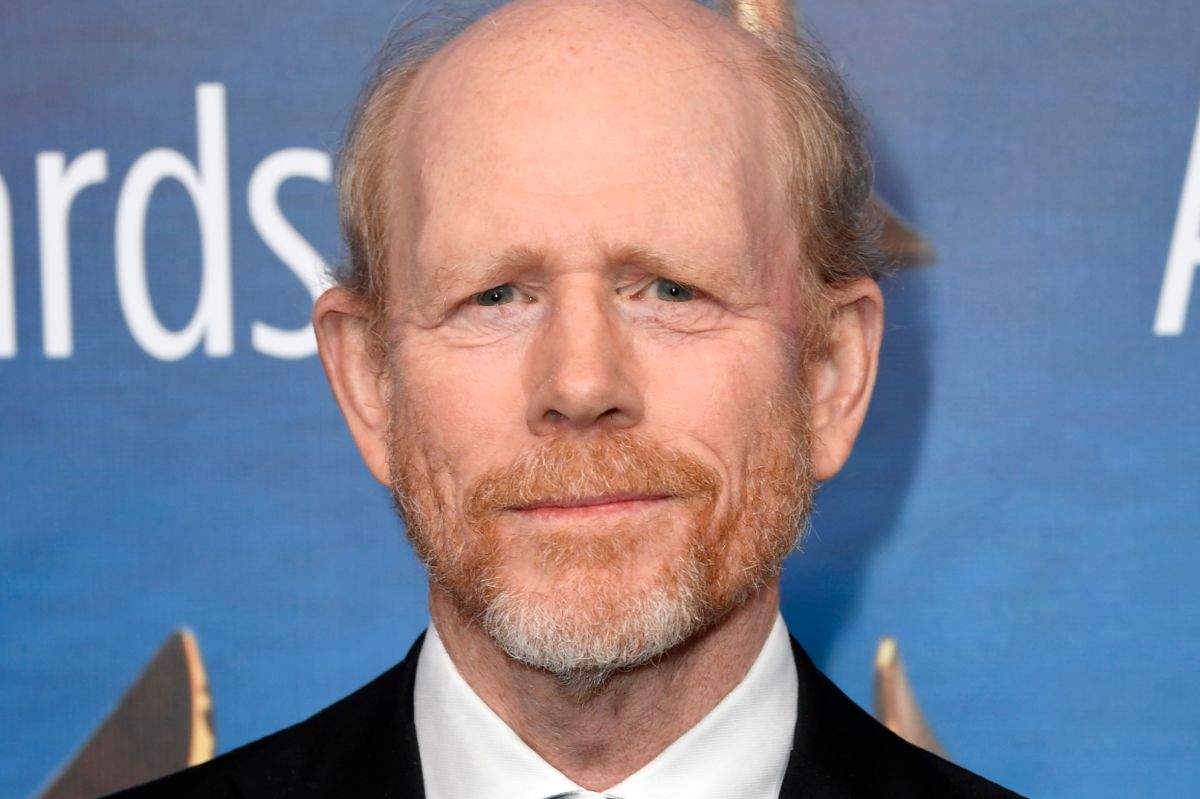
The film was directed by Ron Howard
We all know the story of the first moon landing when Neil Armstrong became the first man to set foot on its surface but almost as dramatic is the story of three astronauts who almost lost their lives on the USA’s third attempt to stand on the surface.
The Apollo 13 mission in 1969 saw Jim Lovell, Jack Swigert and Fred Haise take off from earth on course for the moon. However, the mission almost ended in disaster and this 1995 blockbuster directed by Ron Howard and starring Tom Hanks and Lovell, Kevin Bacon as Swigert and Bill Paxton as Haise is being shown on ITV tonight.
After an unexpected explosion in space, NASA is running out of time to find a way to bring the three astronauts back to earth safely. The film was a huge commercial success when it was released, going on to become the third most successful film of 1995, behind Die Hard With A Vengance and Toy Story, which also starred Hanks.
Apollo 13 also went on to be nominated for nine Academy Awards and picked up two Oscars for Best Sound and Best Film Editing. It was also five BAFTAs and four Golden Globes.
It won over critics with an impressive 94 percent approval rating on the movie review aggregator site, Rotten Tomatoes. One critic described to film as Ron Howard’s “finest work”. They added: “In his finest directorial work, Ron Howard embraces everything that the astronauts of Apollo 13 aspired to be and ended up as. Unforgettable.”
Another said: “Director Ron Howard, who has built a career on easygoing, reassuring movies from Night Shift to The Paper, finally achieves true drama.” A third added: “For Apollo 13, the 1970 space mission, everything went wrong. But for Apollo 13, the movie, everything goes right. Director Ron Howard, who has a history of blowing hot and cold, is so far into his hot mode in this movie that he’s dang near on fire.”
Fans also couldn’t get enough of the movie. One wrote: “A phenomenal epic odyssey of the daring odds of the Apollo 13 crew trying to return back home against all odds after their space shuttle malfunctions. The cast is great, with Tom Hanks, Kevin Bacon, Bill Paxton, and Ed Harris all giving great performances.”
Another added: “Brilliant masterpiece!! It’s very gripping from start to finish!” While a third said: “All-time classic. An American masterpiece.”
Apollo 13 is on ITV4 at 6.35pm on Boxing Day, December 26.
‘For the latest showbiz, TV, movie and streaming news, go to the new Everything Gossip website‘.
To rebel is to defy. It is to understand that the world as it is can and should be better.
So it’s no surprise rebels were everywhere on our movie screens in 2025. Filmmakers in the U.S. and abroad depicted the lengths to which people will go to stand up against the bland (and at times violent) vision of conformity they see around them. It’s a theme that comes through most organically in these films’ costume designs.
In “Wicked: For Good,” for instance, Cynthia Erivo’s Elphaba Thropp stands apart from the glossy superficiality of the Emerald City. Paul Tazewell, an Oscar winner earlier this year for the first “Wicked,” once again wrapped Elphaba’s defiant spirit in the very fabric of her costumes. As she fights for animal rights and defies the authority of that fraud of a Wizard, the titular witch dons dresses and capes (and, yes, even a knitted cardigan that had the internet abuzz) that ground her in that land “made of dirt and rock and loam” she sings about.
Cynthia Erivo as Elphaba in “Wicked: For Good.”
(Giles Keyte / Universal Pictures)
Not that all rebels choose to stand out. In Paul Thomas Anderson’s politically urgent thriller “One Battle After Another” — costumed by four-time Oscar winner Colleen Atwood — members of the French 75 revolutionary group know better than to draw attention to themselves.
“Take Deandra [played by Regina Hall], for instance, who’s always lived off the grid,” Atwood tells The Envelope. “They have lives, but they are still somewhere on the wanted list, and some weirdo can suddenly know who they are. So they really have to blend in. They have to be not noticeable. That was a big goal with everybody’s costume in the movie, all the French 75 costumes — and Leo as well.”
That’s why DiCaprio spends much of the film in a red bathrobe, making him both incredibly hard to miss and also decidedly ordinary-looking. “Would you wear it the whole time?” Atwood remembers asking herself: “Would he get rid of it? And Paul goes, ‘Why would you take off your clothes if you’re running?’”
Leonardo DiCaprio, left, and Benicio Del Toro in “One Battle After Another.”
(Warner Bros. Pictures)
Atwood’s choice to put Benicio Del Toro in a gi and a turtleneck was similarly driven by this approach: These are all people who move through the world wanting to disrupt the system without making such disruption all that conspicuous. Here we may also add the off-the-rack suits Teddy and Don (Jesse Plemons and Aiden Delbis) wear in “Bugonia” to face their kidnapped CEO; the beret-and-turtleneck-wearing revolutionary (Richard Ayoade) in “The Phoenician Scheme”; and the stylish, delightfully unbuttoned shirts Wagner Moura wears throughout “The Secret Agent.”
Not all instances of rebellion are so obviously political. Take Harry Lighton’s deliciously kinky dom-com “Pillion,” which finds shy young Colin (Harry Melling) entering into a BDSM relationship with an enigmatic biker called Ray (Alexander Skarsgård).
“Ray’s an anomaly; he’s the rebel, you can’t place him,” costume designer Grace Snell says. When we first meet him, he is wearing a striking white leather biking outfit: “I wanted him to be like a light at night on this bike and a shiny toy for Colin.”
Harry Melling, left, and Alexander Skarsgård in “Pillion.”
(Festival de Cannes)
The leather and kink gear that Skarsgård, Melling and the rest of the “Pillion” cast wear allowed Snell to give audiences the Tom of Finland fantasy Lighton’s film clearly demands. Yet the film is about a quieter rebellion.
“Colin’s kind of testing his boundaries and understanding who he is as a gay man, and exploring what that means for him,” Snell says. It’s why he spends much of the film in uniform, as a traffic warden, as a member of a barbershop quartet, and later as the new member of Ray’s biker gang.
“Pillion” is about self-fashioning at its most elemental: how gear and uniforms, roles and positions, can help you bloom into yourself; how in losing yourself in another you can find who you want to be.
Blending such a lesson in ways political and personal is Bill Condon’s “Kiss of the Spider Woman,” also costumed by Atwood. The musical is framed by the tension between Valentin (Diego Luna), a righteous revolutionary, and Molina (Tonatiuh), a gay hairdresser, who share a prison cell under Argentina’s military regime.
Diego Luna and Jennifer Lopez in “Kiss of the Spider Woman.”
(Roadside Attractions)
Along with designer Christine L. Cantella, Atwood aimed to honor the history the film was depicting and the message it embodies. “Not only is it set in a revolutionary time, but it’s also about two people opening each other’s eyes to the world,” Atwood says, “in a way that is such a great message for today.”
Atwood and Cantella had to balance the dingy reality of the prison — where Molina finds modest beauty in his silk robes — and the movie musical he loses himself in — where Jennifer Lopez’s Aurora is dressed like a silver-screen siren throughout. Lopez’s big number, where she dons an ode to the all-white ensemble Chita Rivera wore in the original Broadway show, including a fedora to match, is all about the lure of escapist Hollywood fantasy: “Turn off the lights and turn on your mind,” she sings.
As the ending of the musical attests, there may be a way to do both, to be politically engaged and still enjoy the beauty of the world around you. For, as these varied films attest, a rebel doesn’t just voice their discontent at the status quo. They wear it proudly.
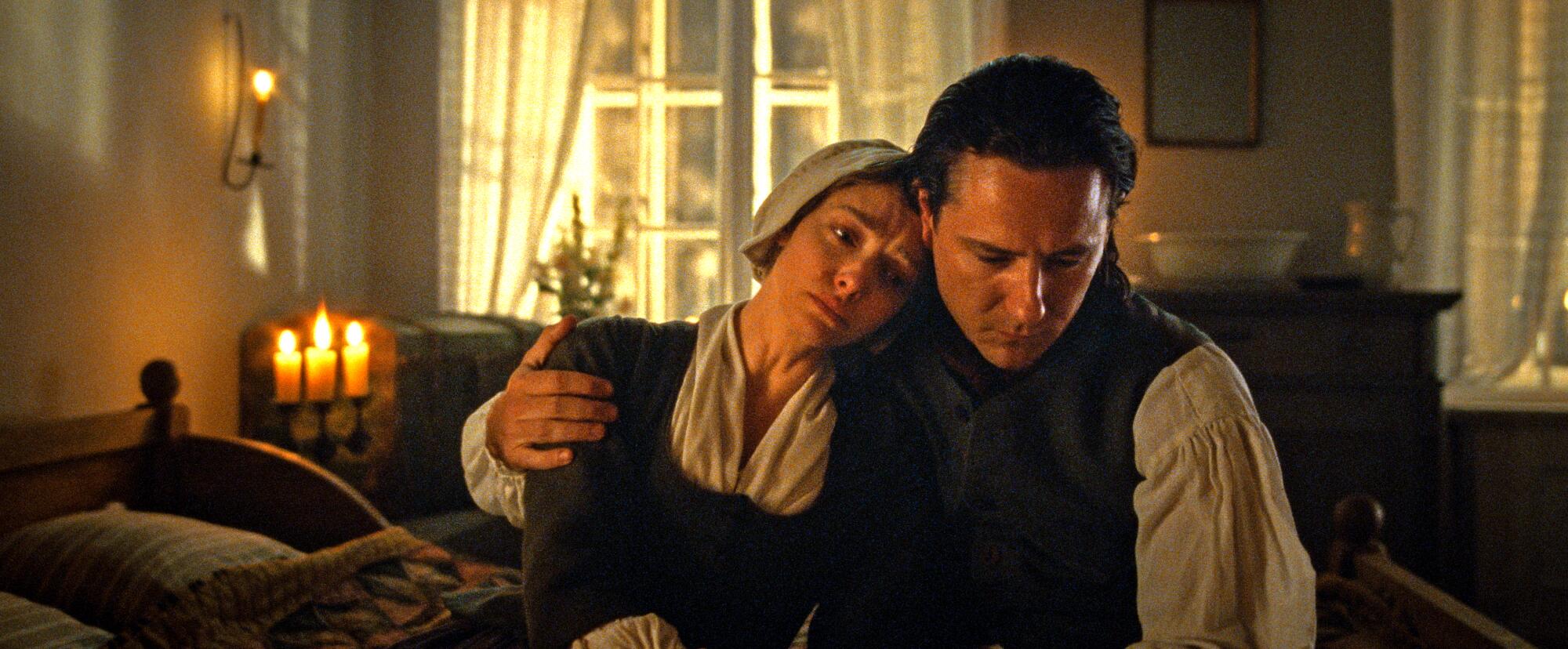
If the Shakers have a lasting cultural legacy, it is their music — most famously “Simple Gifts,” the uplifting spiritual Aaron Copland immortalized in his ballet “Appalachian Spring.” It stands to reason, then, that a film about Ann Lee, the founding “mother” of this 18th century celibate Christian sect, would be a musical. But this was no conventional woman and “The Testament of Ann Lee,” directed by Mona Fastvold and opening in L.A. on Dec. 25, is no ordinary musical.
“Ann Lee was very radical and extreme,” says composer Daniel Blumberg, “and Mona is as well.”
As conceived by Fastvold and Blumberg, the entire tapestry of this film is musicalized — from the emphatic breathing, chest thumping and floor stomping that make up the worshipers’ rituals, to the songs, inspired by Shaker traditionals and performed by star Amanda Seyfried and the cast. Even the sounds of wind, the creaking of ships and a passing cow play a part.
“This cow walks past during the song ‘I Love Mother,’” says Blumberg, 35, visiting L.A. from his native England and speaking from a hotel room over Zoom. Bald with severe features but a soft and guileless disposition, he’s fidgety about the whole Hollywood press dance — this is only his fourth feature film score. But Blumberg is eager to dissect his music-making process and brag about his collaborators. “We were tuning the cows to the song,” he says.
Amanda Seyfried and Lewis Pullman in the movie “The Testament of Ann Lee.”
(Searchlight Pictures)
In a prologue about Lee’s harsh childhood in Manchester, England, her mother hums a tune to her based on the traditional Shaker hymn “Beautiful Treasures.” The melody is then completed on celeste in Blumberg’s score, surrounded by a liturgical choir. The entire film is this kind of holistic musical current: score, songs and environment all in conversation with each other, every component a part of the dance.
“The whole project was very dangerous,” says Blumberg, an indie singer-songwriter with a cult following in the U.K. and now an Oscar for last year’s “The Brutalist.” “It’s always on the edge. And for me that’s a good place to be when you’re making art.”
In one stunning montage, we see a newly married Lee subjugated to religiously-tinged sex (a catalyst for her dogmatic rejection of carnal relations), give birth to several babies, mourn their deaths and express her sorrow in a fervent dance for God. Erotic noises and the cries of childbirth weave together with prayerful moaning and a mother’s keening cries, all integrated into Blumberg’s instrumental score — a guided meditation for bells and strings — with Seyfried singing “Beautiful Treasures.”
“It was very important to me to try and create this hypnotic feel to the film,” says Fastvold, speaking on Zoom from her car during the awards-season whirlwind. “You had to understand it on a sensorial level. Because I think a lot of the appeal, especially early on, were these kinds of endless dance/voice/confession sessions that would last for days.”
“If it’s just someone preaching to you,” she adds, “I certainly can’t connect to that.”
The director, 44, grew up in a secular home in Norway, but her film about this radical American sect is strikingly earnest. Fastvold doesn’t judge Lee’s convictions; there isn’t an ounce of cynicism or condescension. After having a prophetic vision in which Lee is told she is the female incarnation of Jesus Christ, Seyfried sings, “I hunger and thirst / After true righteousness / I hunger and thirst” with utter heart-bleeding sincerity. The camera and the music share her faith completely.
“I never felt like I wanted to laugh at them,” says Fastvold. “I wanted to laugh with them and sometimes their naivete is funny and endearing. But I never wanted to ridicule them. Of course, it’s a very scary thing to try and do.”
When Seyfried read the screenplay two years ago, she experienced some of that intimidation.
“It was definitely the most confused I’ve been in a while reading a script,” she says, nursing a hot tea on Zoom, “because I’m seeing these placeholders for where the hymns will be, when the music comes in, when the diegetic sound goes out or if it doesn’t at all. It was all very foreign to me — which is not necessarily a bad thing. It just leaves me with so many questions.”
Fastvold co-wrote “The Testament of Ann Lee” with her partner, Brady Corbet, who directed “The Brutalist.” They were developing it while working on his breakthrough epic. Blumberg, who has made a number of solo albums and been part of several bands including Cajun Dance Party and Yuck, became friends with Corbet a decade ago. The trio became inseparable.
Fastvold was listening to Blumberg’s records when she decided to direct “The World to Come” in 2020, a warm historical romance about two women in a chilly frontier America. She remembers being captivated by the “beautiful dissonance” in his music. “There’s this mournful, slightly atonal quality to his compositions,” she says.
Fastvold hired Blumberg to score her film — his first — and invited him to the set in Romania to experience the time-traveling feeling of the woods and the sound of passing sheep. She even gave him a small on-screen part, selling a blue dress to Katherine Waterston’s character. It was emblematic of her and Corbet’s then-burgeoning philosophy: of making lavish films on a shoestring, using stunning foreign environments to portray a bygone America and roping crew members and family into the collaboration.
For her ambitious follow-up musical about the Shakers, Fastvold knew she needed Blumberg at the ground level, along with choreographer Celia Rowlson-Hall, a collaboration that required proximity. “We kind of move in together for a while and just start figuring it out,” Fastvold says.
“The whole project was very dangerous,” says Blumberg. “It’s always on the edge. And for me that’s a good place to be when you’re making art.”
(Ian Spanier / For The Times)
They discussed how to cast a spell on the audience and how, with cinema, “you’ve got these tools to use,” says Blumberg, “with image, sound, the writing of it all and just to push those as far as possible. Obviously with the edit you can move in time very quickly, and then with sound you can bring people into the room that the characters are in, but also bring them into the heavens. It was trying to use the materials that we had to make an experience — with the story, but inside the story as well. An immersive experience.”
Fastvold and Blumberg immersed themselves in the thousands of songs the Shakers left behind, including hymns and what the group called “gift songs” and “dance songs.”
“What is our dialogue with this tradition and what is it that we’re bringing to this conversation?” Fastvold remembers them asking each other. “Because really that, to me, is what folk music is. It’s passed on, it’s transformed — it turns into something else and then passed on again.”
They found several Shaker songs that fit the needs of given scenes and moments; whenever they couldn’t, Blumberg wrote an original. The Jewish composer recalled the niguns — wordless, improvised prayers — that he grew up hearing in synagogue, and he drew on that sense memory. Many Shaker songs are mantra-like prayers addressed to God, simple rising and falling melodies based on a short repeated phrase. Blumberg got creative with the harmonies, creating demos that he sang himself.
“It was very nerve-racking,” he says, “because score is a moment where you can fix things — you do it after the edit — but this was going to define the pace of the film. There’s quite high stakes of it working.”
Seyfried was nervous too. Even though she’s a trained singer, with film credits including “Mamma Mia!” and “Les Misérables,” this peculiar religious epic required an enormous leap of faith.
“I knew Mona was going to shoot it beautifully,” Seyfried says, “and I knew that Daniel was going to be there every step of the way. And I knew that I was in good hands — but I didn’t know at that point that I could trust myself as a singer, as a musician. It was completely new territory for me. Terrifying.”
The songs were prerecorded for playback on set. The first thing Seyfried recorded in studio was an a cappella song for a scene late in the film — the lyric is “How can I but love my dear faithful children?” She says she felt miserable.
“I was just like: I sound terrible,” Seyfried says sincerely. “This song is not fun to sing. It’s beautiful, but I don’t sound beautiful. I don’t like the way I sound. And we kept doing it and my voice was dry.”
Blumberg patiently worked at finding the most comfortable key for her voice. “I had no idea how lucky I was,” she says.
Amanda Seyfried in the movie “The Testament of Ann Lee.”
(TIFF)
In the process of working with Blumberg, Seyfried says she came to a deeper appreciation of the character as well as her own singing voice. “I was so critical of it,” she remembers, but the role gave her a different kind of freedom. “I was playing somebody who didn’t necessarily have to be a beautifully trained singer,” she says. “She sang because she wanted to feel alive, and she wanted to feel free, and she wanted to feel connected to her faith — and that already just liberates the performer.”
After extensive rehearsals that continued throughout production, Fastvold shot the film in Budapest. Blumberg was always on set, accompanying the actors with a small keyboard. (Thomasin McKenzie and Lewis Pullman are among the cast members who also sing in the film.) Sometimes the actors had a simple click track in an earpiece, other times a “stomp track” from the foot choreography. They would sing live in addition to lip-syncing to playback and Fastvold amassed a huge variety of live tracks — vocals, breaths and other bodily sounds — for her final mix.
“I wanted all of that life and that natural feel to it,” she says, “to not have it feel polished at all, to just be really raw. Because they weren’t singing to entertain. It’s never performative. It’s always from this place of prayer or pain.”
With her principal cast surrounded by Hungarian extras, Fastvold roped everyone, from the dialect coach to the first assistant director’s son to Blumberg’s sister, into the dance.
“If you came to visit, you were in the movie,” she says. “The cast is the crew and the crew is the cast. It’s how I like to do it.” Once again, Daniel Blumberg appears on-screen, in scenes of Shaker worship; he also sings an original duet, “Clothed by the Sun,” with Seyfried under the end credits.
But at this point his work was only half done. Armed with a cut of the film, pillared by the songs he wrote and arranged, Blumberg crafted a score that subtly teed up song melodies and established a sense of spiritual trance. He gravitated toward the sound of bells; he and Fastvold found a handbell from Ann’s era that they used in early demos and he ended up renting some 50 church bells, in different keys, all laid out on the floor of his London flat.
He extended the bell idea with the jangly celeste, also known as a bell piano, and he augmented those bells with a small string ensemble, a choir and, at one point, even an electric guitar.
It was Blumberg’s idea to have two veteran improvising singers, Phil Menton and Maggie Nichols (who also appears in the film), to each record a track where they improvised along to the entire film. Working with mixer Steve Single, Fastvold and Blumberg would occasionally bring up one of these stems and layer it into the rest of the soundtrack for an added color.
“We’d say, ‘Let’s hear what Maggie was doing at this point,’” Blumberg says, “and then we’d bring up her stem and be like, ‘Oh, wouldn’t it be nice if she follows that character there?’ Or, ‘Wouldn’t it be nice if she’s humming outside the window?’ Or if it’s almost like the heavens speaking down on Ann?”
The final result is utterly unique to Blumberg and Fastvold, a period character study by way of trance and an experiential approximation of religious fervor. By exploring a distant and somewhat alien community through the device of music, they somehow tapped into something universal.
One of Blumberg’s favorite moments in the film is a scene where a group of sailors, transporting Lee and her disciples to the new world, shout at the Shakers to stop singing. “They really sound like this out-of-tune rabble, and you hear what maybe other people might have heard,” he says. “And then a few minutes later they’re praying on the ship and I’ve used all these reverbs and there’s all these choirs singing in the background — it’s almost like what they felt from within.”
Like the Shakers and their songs and prized furniture, “Ann Lee” was made with craft and care by a small and familial utopian community of its own.
“There were no notes from film people,” says Blumberg. “It was our bubble. So the only fear was just them trying to release it and everyone going, ‘No, that’s just mad.’ But what I was trying to do from the start was: If I got to something that seemed good, how can I push that further? Like, really trying to push everything to the extreme.”
The 1999 romantic comedy is available to watch on Film 4 this evening
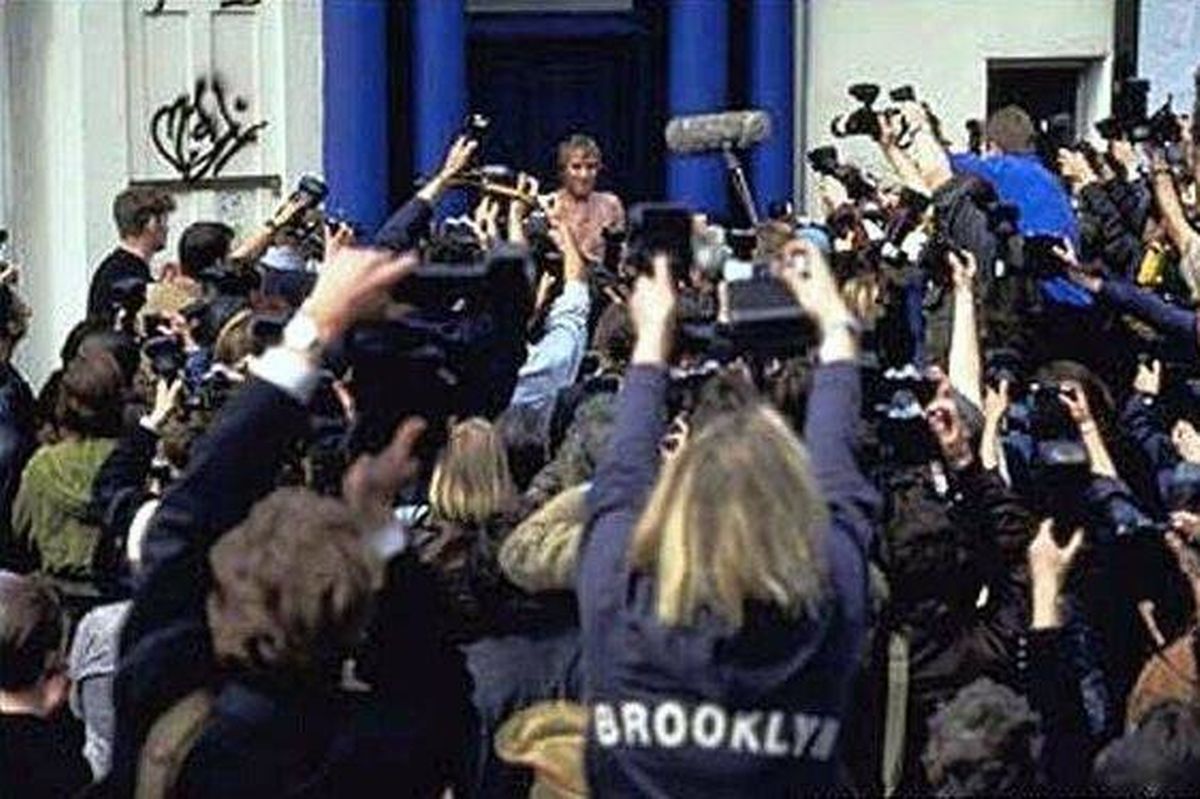
The film has been hailed the blue print for all rom-coms(Image: Press Association)
This much-loved romantic comedy is set to return to our televisions on Film 4 on Christmas Day.
Written by Richard Curtis, and starring Julia Roberts and Hugh Grant, the nineties classic Notting Hill spins the tale of an improbable romance between a British bookshop owner and a world-famous American actress. The film features a fantastic supporting cast including Rhys Ifans, Hugh Bonneville, Emma Chambers, Tim McInnerny and Gina McKee, and remains a favourite for its feel-good factor, nostalgia and unforgettable quotes.
Its award-winning soundtrack, brimming with hits from iconic musicians, perfectly complements this heartwarming narrative. The life of travel bookshop proprietor William Thacker (played by Grant) takes a surprising twist when the beautiful and renowned US actress Anna Scott (portrayed by Roberts) walks into his Notting Hill, London shop to buy a book. Their lives couldn’t be more contrasting – Will, a divorcee, cohabits with his messy Welsh flatmate Spike (Ifans), while Anna stays at the Ritz hotel during her promotional tour for her latest film.
After Anna surprises Will with a kiss, a flirtation develops into a romance, leading her to meet his eccentric circle of friends. However, as in any love story, there are heartbreaking hurdles to surmount, and the couple find themselves separated due to misunderstandings and miscommunication. Packed with iconic one-liners, including the unforgettable “I’m just a girl, standing in front of a boy”, the film became a runaway hit with both critics and cinema-goers when it premiered in 1999.
The rom-com hauled in £31 million at UK box offices alone, cementing its position as Britain’s biggest-grossing film of the time. The movie garnered numerous awards, including a BRIT Award for its outstanding soundtrack featuring numbers such as Ronan Keating’s When You Say Nothing At All, Elvis Costello’s She, and Bill Withers’ Ain’t No Sunshine.
Fans still adore every element of this treasured classic. On Rotten Tomatoes, where it boasts an impressive 84% rating, one critic wrote: “Charming, feel-good romantic comedy that still holds up. Notting Hill has just the right mix of humor, heart, and sincerity. “The chemistry between Hugh Grant and Julia Roberts is natural and warm, and the story – while simple – hits all the right notes. It’s light but not shallow, and there are moments that genuinely stay with you.”
Another admirer suggested it should be considered the definitive romantic comedy template: “Expertly written and brilliantly directed!” they said. “Classic that should be a sort of ‘model’ for love stories. With Roberts and Grant in the lead, what could go wrong hey? Razor sharp wit and spectacular characters, this is a winner.” A third viewer, who admitted they don’t usually gravitate towards romantic films, gave it a glowing five-star rating and remarked: “Not a rom-com type but this really worked for me. The two leads were superb / It’s perfect… one of the best rom coms of all time.”
Notting Hill is on Film 4 at 11.15pm on Christmas Day.
THEY were the sweet child actors who made us laugh and cry in our favourite festive films.
But since their big breaks in Christmas movies, few have bagged big parts and many traded fame for ‘normal’ jobs away from our screens.
Sign up for the Showbiz newsletter
Thank you!
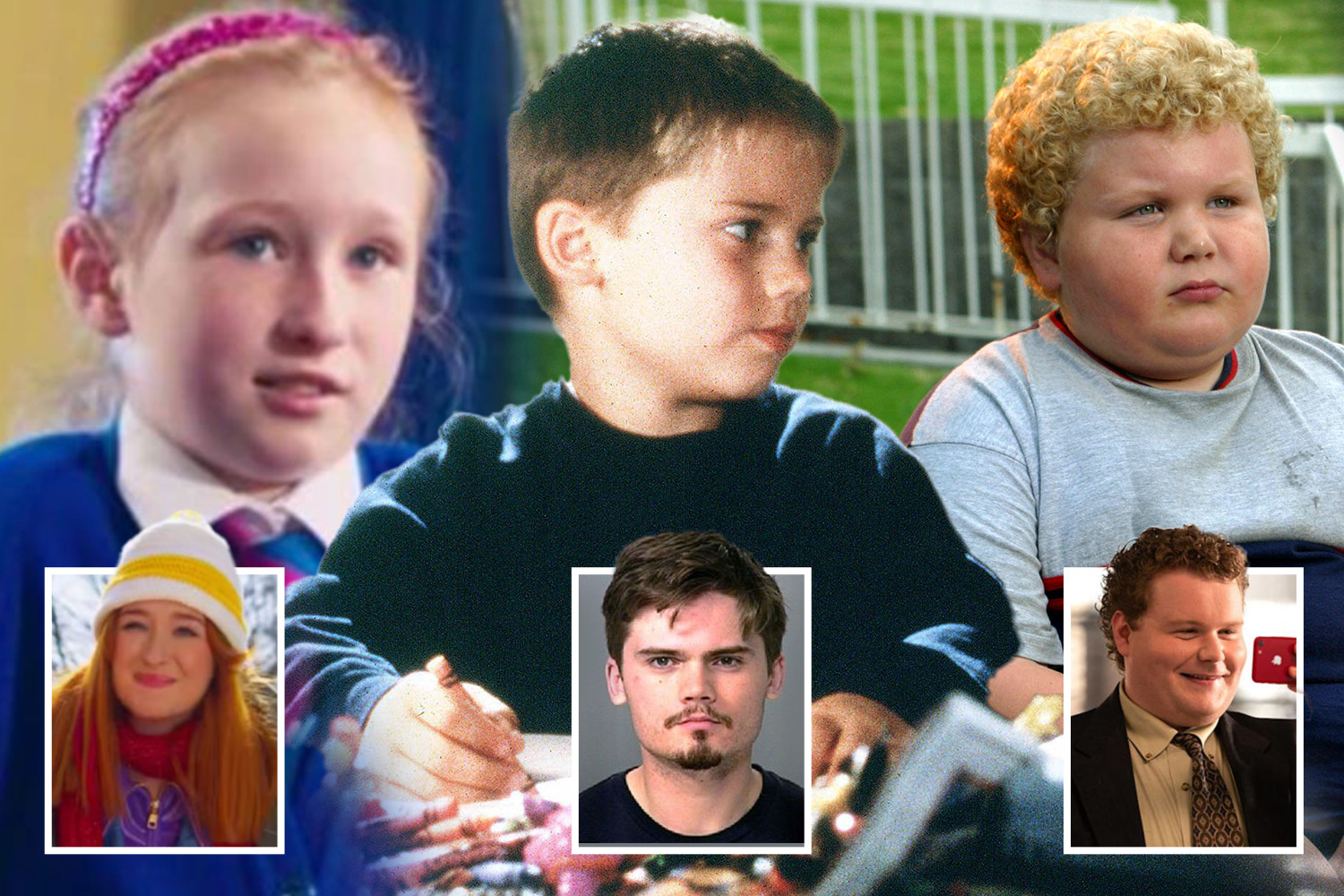
Stars like Jake Lloyd got their big break on Christmas filmsCredit: AlamyNativity!’s Sydney Isitt-Ager has landed her first grown up role in Christmas On Mistletoe FarmSydney is still a successful actressCredit: instagram/sydneyisitt_ager
And another big name, who starred alongside Arnold Schwarzenegger, Natalie Portman and Ewan McGregor, had quit the profession following a “full-blown psychotic breakdown”.
It can be a tough industry that sees some like high-flying star Thomas, who recently returned to his Love Actually role for a Google Pixel ad, rise to international acclaim while others end up in the depths of despair.
He started as Thurman Merman and now is in a Canadian law series
As dorky Thurman Merman, Brett Kelly had his first role in Bad Santa and its sequel.
He went on to have roles in Paul Feig’s Unaccompanied Minors in 2006 and Adrien Brody film High School before studying business in Canada.
But in 2016, he chose to gain 50lbs to bring back his role as Thurman in Bad Santa 2.
He said: “The pain came after. It took about four months to put on and then I’d say about twice that to take it all off.”
For the last four years, the 32-year-old been starring in Canadian legal drama Family Law where he plays paralegal Cecil Patterson.
Jingle all the Way – Jake Lloyd
Jake found fame as Jamie in Jingle All The Way
The 1996 film was Jake Lloyd’s first Hollywood role – starring as Arnold Schwarznegger’s son Jamie in the holiday romp.
His biggest role came in 1999 when the ten-year-old was cast by George Lucas as Anakin Skywalker in Star Wars: The Phantom Menace.
In 2001, he quit the industry after bullies targeted him over his role in the Sith vs Jedi epic.
He told The Sun at the time: “My entire school life was really a living hell.”
In 2015, Jake was arrested after a car chase and was held for 10 months while awaiting trial.
He was then diagnosed with schizophrenia and transferred to a psychiatric facility in 2023, where he completed to 18-month inpatient stay.
Jake, now 36, said he needed to hit “rock bottom” to help him accept his diagnosis, medication and the need to “honestly take part in treatment”.
Love Actually – Thomas Brodie-Sangster
Thomas married Tallulah Riley last year
Thomas was 13 when he starred as Sam who seeks advice from his stepdad Daniel (Liam Neeson) after falling for a classmate.
The London-born actor went on to star in Nanny McPhee and The Maze Runner movies, as well as playing Paul McCartney in the John Lennon biopic Nowhere Boy.
He starred as Jojen Reed in two seasons of Game of Thrones and, more recently, he has appeared in the historical TV drama Wolf Hall: The Mirror and the Light.
In June 2024, Thomas, now 35 married actress Tallulah Riley at Anstey village church in Hertfordshire.
Tallulah, who starred in the 2007 movie St. Trinian’s, previously wed Tesla mogul Elon Musk, twice.
They first married in 2010, divorcing two years later, before tying the knot a second time in 2013 and splitting in 2014.
Deck the Halls – Alia Shawkat
Alia Shawkat’s first Hollywood role was in Deck the Halls before appearing on Arrested Development
She may be better known for playing Maeby Funke in Arrested Development but one of Alia’s first roles was in Deck the Halls.
She starred as Matthew Broderick’s daughter Madison in the festive flick back in 2006.
Since, she has had roles in Broad City, sells paintings and provided vocals for band Fake Problems in 2010.
This year, Alia, now 36, notched up eight acting credits on IMDB – including runaway hit Severance, starring Adam Scott, Lego Marvel Avengers and Poker Face.
BBC One’s new Christmas drama Stuffed has been branded “iconic” by fans
A hidden treasure of a comedy on the BBC, hailed as “brilliant” by viewers, is set to air tonight.
Stuffed, starring Guz Khan and Morgana Robinson, is a comedy-drama that follows a family embarking on a once-in-a-lifetime trip to Lapland.
Khan portrays Arslan Farooqi, who, after receiving an unexpected £8,000 Christmas bonus at work, decides to take his multi-faith family on this festive adventure.
Joined by his wife Hannah (played by Robinson), his two daughters, and brother-in-law Jamie, they trade Coventry for the enchantment of Christmas in Lapland.
However, their holiday soon descends into chaos when Arslan discovers that his bonus was given in error and needs to be returned, reports Wales Online.
The BBC’s synopsis teases: “Things go downhill fast when Arslan finds out the bonus was a mistake, and to make matters worse, they have already spent every penny of it.
“What ensues is one man’s quest to salvage a Christmas he doesn’t believe in, while ideally not losing his job, his family, and everything he has ever worked for. And surprise, surprise, it doesn’t go too smoothly.”
For the latest showbiz, TV, movie and streaming news, go to the new **Everything Gossip** website
The film can be streamed on BBC iPlayer and will also be broadcast on BBC One tonight at 9pm.
One enthusiastic fan recommended: “If you’ve not watched it yet, try Stuffed on the iPlayer. Brilliant new addition to the Christmas film list. Guz Khan is brilliant.”
Another viewer gushed: “Absolutely loved Stuffed on BBC iPlayer with my fav man @GuzKhanOfficial, him and Morgana are a dream team working together.”
Another viewer chimed in: “Loved it, hope some more will follow!” while a fourth echoed: “We need a regular series for this! Loved it made me laugh throughout.”
One enthusiastic fan declared: “This is iconic on tv I didn’t know what to watch during the Christmas holidays, same old home alone and polar express but this… is perhaps the best drama I’ve seen.”
Guz had previously shared his apprehensions about Stuffed’s release with The Guardian, saying: “You never know when you make something. I never thought we’d ever be in this kind of slot. There’s lots of things that come along with doing a Christmas special.”
He continued: “A lot of the work I get asked to do is like: ‘Come in and do your thing.’ I just did season two of The Gentlemen, and it was such a fun week. There’s no rules. You can go absolutely crazy.
“But this was a little bit different. You have to follow some guidelines. And so it was a really good challenge for me. Where I’d usually express myself with dialogue, I had to try and get the same feeling with an expression.”
Stuffed airs on BBC One tonight at 9pm and is available to watch on iPlayer.
For decades, American families have gathered to watch “It’s a Wonderful Life” on Christmas Eve.
The 1946 Frank Capra movie, about a man who on one of the worst days of his life discovers how he has positively impacted his hometown of Bedford Falls, is beloved for extolling selflessness, community and the little guy taking on rapacious capitalists. Take those values, add in powerful acting and the promise of light in the darkest of hours, and it’s the only movie that makes me cry.
No less a figure of goodwill than Pope Leo XIV revealed last month that it’s one of his favorite movies. But as with anything holy in this nation, President Trump and his followers are trying to hijack the holiday classic.
Last weekend, the Department of Homeland Security posted two videos celebrating its mass deportation campaign. One, titled “It’s a Wonderful Flight,” re-creates the scene where George Bailey (Jimmy Stewart in one of his best performances) contemplates taking his own life by jumping off a snowy bridge. But the protagonist is a Latino man crying over the film’s despairing score that he’ll “do anything” to return to his wife and kids and “live again.”
Cut to the same man now mugging for the camera on a plane ride out of the United States. The scene ends with a plug for an app that allows undocumented immigrants to take up Homeland Security’s offer of a free self-deportation flight and a $1,000 bonus — $3,000 if they take the one-way trip during the holidays.
The other DHS clip is a montage of Yuletide cheer — Santa, elves, stockings, dancing — over a sped-up electro-trash remake of Mariah Carey’s “All I Want for Christmas is You.” In one split-second image, Bedford Falls residents sing “Auld Lang Syne,” just after they’ve saved George Bailey from financial ruin and an arrest warrant.
“This Christmas,” the caption reads, “our hearts grow as our illegal population shrinks.”
“It’s a Wonderful Life” has long served as a political Rorschach test. Conservatives once thought Capra’s masterpiece was so anti-American for its vilification of big-time bankers that they accused him of sneaking in pro-Communist propaganda. In fact, the director was a Republican who paused his career during World War II to make short documentaries for the Department of War. Progressives tend to loathe the film’s patriotism, its sappiness, its relegation of Black people to the background and its depiction of urban life as downright demonic.
Then came Trump’s rise to power. His similarity to the film’s villain, Mr. Potter — a wealthy, nasty slumlord who names everything he takes control of after himself — was easier to point out than spots on a cheetah. Left-leaning essayists quickly made the facile comparison, and a 2018 “Saturday Night Live” parody imagining a country without Trump as president so infuriated him that he threatened to sue.
But in recent years, Trumpworld has claimed that the film is actually a parable about their dear leader.
Trump is a modern day George Bailey, the argument goes, a secular saint walking away from sure riches to try to save the “rabble” that Mr. Potter — who in their minds somehow represents the liberal elite — sneers at. A speaker at the 2020 Republican National Convention explicitly made the comparison, and the recent Homeland Security videos warping “It’s a Wonderful Life” imply it too — except now, it’s unchecked immigration that threatens Bedford Falls.
The Trump administration’s take on “It’s a Wonderful Life” is that it reflects a simpler, better, whiter time. But that’s a conscious misinterpretation of this most American of movies, whose foundation is strengthened by immigrant dreams.
Director Frank Capra
(Handout)
In his 1971 autobiography “The Name Above the Title,” Capra revealed that his “dirty, hollowed-out immigrant family” left Sicily for Los Angeles in the 1900s to reunite with an older brother who “jumped the ship” to enter the U.S. years before. Young Frank grew up in the “sleazy Sicilian ghetto” of Lincoln Heights, finding kinship at Manual Arts High with the “riff-raff” of immigrant and working-class white kids “other schools discarded” and earning U.S. citizenship only after serving in the first World War. Hard times wouldn’t stop Capra and his peers from achieving success.
The director captured that sentiment in “It’s a Wonderful Life” through the character of Giuseppe Martini, an Italian immigrant who runs a bar. His heavily accented English is heard early in the film as one of many Bedford Falls residents praying for Bailey. In a flashback, Martini is seen leaving his shabby Potter-owned apartment with a goat and a troop of kids for a suburban tract home that Bailey developed and sold to him.
Today, Trumpworld would cast the Martinis as swarthy invaders destroying the American way of life. In “It’s a Wonderful Life,” they’re America itself.
When an angry husband punches Bailey at Martini’s bar for insulting his wife, the immigrant kicks out the man for assaulting his “best friend.” And when Bedford Falls gathers at the end of the film to raise funds and save Bailey, it’s Martini who arrives with the night’s profits from his business, as well as wine for everyone to celebrate.
Immigrants are so key to the good life in this country, the film argues, that in the alternate reality if George Bailey had never lived, Martini is nowhere to be heard.
Capra long stated that “It’s a Wonderful Life” was his favorite of his own movies, adding in his memoir that it was a love letter “for the Magdalenes stoned by hypocrites and the afflicted Lazaruses with only dogs to lick their sores.”
I’ve tried to catch at least the ending every Christmas Eve to warm my spirits, no matter how bad things may be. But after Homeland Security’s hijacking of Capra’s message, I made time to watch the entire film, which I’ve seen at least 10 times, before its customary airing on NBC.
I shook my head, feeling the deja vu, as Bailey’s father sighed, “In this town, there’s no place for any man unless they crawl to Potter.”
I cheered as Bailey told Potter years later, “You think the whole world revolves around you and your money. Well, it doesn’t.” I wondered why more people haven’t said that to Trump.
When Potter ridiculed Bailey as someone “trapped into frittering his life away playing nursemaid to a lot of garlic eaters,” I was reminded of the right-wingers who portray those of us who stand up to Trump’s cruelty as stupid and even treasonous.
And as the famous conclusion came, all I thought about was immigrants.
People giving Bailey whatever money they could spare reminded me of how regular folks have done a far better job standing up to Trump’s deportation Leviathan than the rich and mighty have.
As the film ends, with Bailey and his family looking on in awe at how many people came to help out, I remembered my own immigrant elders, who also forsook dreams and careers so their children could achieve their own — the only reward to a lifetime of silent sacrifice.
The tears flowed as always, this time prompted by a new takeaway that was always there — “Solo el pueblo salva el pueblo,” or “Only we can save ourselves,” a phrase adopted by pro-immigrant activists in Southern California this year as a mantra of comfort and resistance.
It’s the heart of “It’s a Wonderful Life” and the opposite of Trump’s push to make us all dependent on his mercy. He and his fellow Potters can’t do anything to change that truth.
Alfred Hitchcock never won an Oscar for directing. Neither did Stanley Kubrick nor Robert Altman nor Sidney Lumet nor Federico Fellini nor Orson Welles.
It’s a group almost as distinguished as the list of winners.
But we’re likely going to cross one name off that ignominious list this year — Paul Thomas Anderson.
I’m Glenn Whipp, columnist for the Los Angeles Times and host of The Envelope newsletter. I already gave away who’s on top of our Oscar power rankings for director. How does the rest of the list shake out? Let’s take a look.
Sign up for The Envelope
Get exclusive awards season news, in-depth interviews and columnist Glenn Whipp’s must-read analysis straight to your inbox.
1. Paul Thomas Anderson, ‘One Battle After Another’
Anderson has three Oscar nominations for directing — “There Will Be Blood,” “Phantom Thread” and “Licorice Pizza.” That feels light. He has 11 Oscar nominations in all, including five as a writer and three as a producer. He has never won. That feels wrong. So with “One Battle After Another,” he checks off both of the main boxes that Oscar winners often possess — he directed the year’s best movie and he’s well overdue for an honor. Like Sean Baker for “Anora” last year, Anderson likely will come home with an armful of Oscars, as he also produced and wrote the movie.
2. Jafar Panahi, ‘It Was Just an Accident’
Panahi has never been nominated for an Oscar, though his films have won the top prizes at the Venice Film Festival (“The Circle”), the Berlin Film Festival (“Taxi”) and, this year, the Cannes Film Festival (“It Was Just an Accident”). That movie’s withering takedown of the cruelty and corruption of authoritarianism packs a punch; it’s also unexpectedly funny in its clear-eyed social critique. Panahi has been imprisoned by the Iranian government many times for speaking out and was recently again sentenced, in absentia, to a year in prison on charges of “propaganda activities against the system.” Like we needed another reason to celebrate the man and his work.
3. Ryan Coogler, ‘Sinners’
(Eli Ade / Warner Bros. Pictures)
Coogler has two Oscar nominations, but they aren’t what you might expect. He was nominated for producing “Judas and the Black Messiah,” the thrilling 2021 historical drama looking at the politics of race. And he earned a songwriting nod for the Rihanna ballad “Lift Me Up” from “Black Panther: Wakanda Forever.” Coogler should have landed an adapted screenplay nomination for the first “Black Panther” movie, a more inventive, world-building work than the umpteenth remake of “A Star Is Born.” But that’s the past. Coogler, like Anderson, figures to be feted in multiple categories at the upcoming Oscars and may well bring home the prize for original screenplay.
4. Chloé Zhao, ‘Hamnet’
(Agata Grzybowska / Focus Features)
Zhao owns two Oscars for directing and producing “Nomadland,” the empathetic and searching portrait of America that felt like a balm when it premiered during the pandemic. After an ill-fitting detour into the Marvel Cinematic Universe with “Eternals,” Zhao came all the way back with “Hamnet,” a deeply felt look at love, loss and the cathartic power of art. Even those who find it overwrought laud the movie’s climactic sequence, a performance of “Hamlet” at the Globe Theatre. I’d argue the ending works so well because of the care Zhao took earlier in establishing the wonder and joy of the family’s life. “Hamnet,” to my damp eyes, is her best film.
5. Joachim Trier, ‘Sentimental Value’
(Lewis Joly / Invision / AP)
From here, you could shuffle the five through eight slots and make a good case for any of these directors landing the fifth slot in the field. Trier has much to recommend his subtle interweaving of past and present, hope and hurt in “Sentimental Value.” He received a screenplay nomination for his last movie, “The Worst Person in the World,” also starring Renate Reinsve. The directors branch boasts a strong contingent of voters from all over the world, a group that could easily nominate the filmmakers behind two of the year’s most celebrated international feature contenders. Plus, “Sentimental Value’s” salty view of Hollywood is bound to appeal to this bunch.
6. Guillermo del Toro, ‘Frankenstein’
The affable, movie-loving Del Toro has won many fans inside and outside the industry over the years, along with Oscars for directing and producing the 2017 best picture winner “The Shape of Water” and for “Pinocchio,” the enchanting 2022 movie that snagged animated feature. “Frankenstein” is far from his best work, but it probably has enough admirers to land a best picture nomination and mentions in several other categories. Director, though? If Del Toro didn’t make the cut for “Nightmare Alley,” he’s probably a near-miss for this one too.
7. Josh Safdie, ‘Marty Supreme’
(Atsushi Nishijima / A24)
It’s “Marty Supreme” week! The movie finally arrives on Christmas and, over the holidays, we’ll begin to have the sorts of conversations that will shed some light on the movie and its Oscar chances beyond the certain nominations for best picture and lead actor Timothée Chalamet. Is the title character, a single-minded ping-pong player oblivious to anything but his own advancement, a jerk? Or is he just like any other man in his 20s? Is the film’s last shot a sign of growth or a man contemplating his own death sentence? We’ll have time to discuss and, yes, revel in the unhinged chaos Safdie unleashes here.
8. Clint Bentley, ‘Train Dreams’
(Daniel Schaefer / BBP Train Dreams)
And finally, we arrive at the man behind “Train Dreams,” a contemplative film about an ordinary man puzzling through loss, guilt, the mundane and the magnificent. It’s the anti-”Marty Supreme” — quiet, painterly, a tad slow, sure, but hypnotic in the way it evokes a bygone America. Just the second movie Bentley has directed, following the little-seen 2021 drama “Jockey,” it has built a devoted following since landing on Netflix last month.
The Na’vi won the battle of the box office this weekend, as “Avatar: Fire and Ash” hauled in a hefty $88 million in the U.S. and Canada during its opening weekend.
The third installment of the Disney-owned 20th Century Studios’ “Avatar” franchise brought in an estimated total of $345 million globally, with about $257 million of that coming from international audiences. The movie reportedly has a budget of at least $350 million.
Box office analysts had expected a big international response to the most recent film, particularly since its predecessor “Avatar: The Way of Water” had strong showings in markets like Germany, France and China.
In China, the film opened to an estimated $57.6 million, marking the second highest 2025 opening for a U.S. film in the country since Disney’s “Zootopia 2” a few weeks ago. (That film went on to gross more than $271.7 million in China on its way to a global box office total of $1.1 billion.)
The strong response in China is another sign that certain movies can still do well in the country, which was once seen as a key force multiplier for big blockbusters and animated family films but has in recent years cooled to American movies due to geopolitics and the rise of its domestic film industry.
Angel Studio’s animated biblical tale “David” came in second at the box office this weekend, with an estimated domestic gross of $22 million. Lionsgate thriller “The Housemaid,” Paramount Animation and Nickelodeon Movies’ “The Spongebob Movie: Search for Squarepants” and “Zootopia 2” rounded out the top five.
The weekend’s haul likely comes as a relief to theater owners, who have weathered a roller coaster year.
After a difficult first three months, the spring brought hits like “A Minecraft Movie” and “Sinners” before the summer ended mostly flat. A sleepy fall brought panic to the exhibition business until closer to the Thanksgiving holiday, when “Wicked: For Good” and “Zootopia 2” drew in audiences.
It’s odd the moments you remember after someone’s gone.
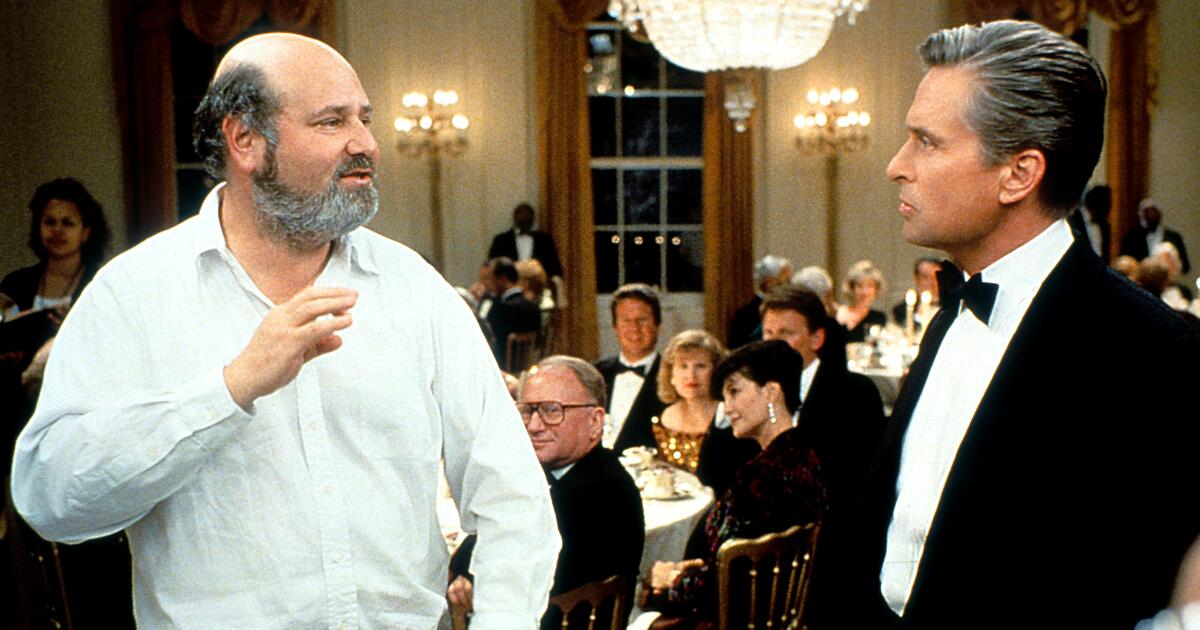
Scrolling through a seemingly infinite number of clips featuring Rob Reiner being compassionate and kind, scenes from his movies that feature a bone-deep empathy for the ways human beings struggle and strive to be better, I kept thinking back to a little wink in “This Is Spinal Tap,” the 1984 mockumentary Reiner directed and co-starred in, playing filmmaker Marty DiBergi.
I’ve seen this movie so many times that I could probably act out the whole thing upon request. It provided a soundtrack to a family trip to Stonehenge several years ago. But thinking about Reiner in the wake of the horrible news that he and his wife, Michele Singer Reiner, were found dead in their home on Sunday night, their son Nick subsequently charged with their murders, I randomly landed on the scene where DiBergi talks with Spinal Tap lead singer David St. Hubbins (Michael McKean) after guitarist Nigel Tufnel (Christopher Guest) leaves the band.
St. Hubbins blithely insists he won’t miss Nigel any more than insignificant band members who played briefly in the group. DiBergi is stunned. He loves Spinal Tap and fears for its future. Reiner plays the moment with such sincere heartbreak, partly in character, but mostly I think because that’s who he was. Reiner couldn’t help it. He felt things deeply and spent much of his life working to make things better for those on society’s margins. He will be missed in so many ways.
I’m Glenn Whipp, columnist for the Los Angeles Times and host of The Envelope newsletter. How to describe this week? None more black will do. But Christmas is coming, and that Vince Guaraldi song never fails to make me smile. Let’s look at some good news for those who made the Oscar shortlists this week.
Sign up for The Envelope
Get exclusive awards season news, in-depth interviews and columnist Glenn Whipp’s must-read analysis straight to your inbox.
The film academy announced shortlists for 12 categories at the 98th Oscars, whittling down the list of contenders and offering a few indications about what films are scoring early points with voters.
Ryan Coogler’s critically acclaimed, genre-defying blockbuster “Sinners” picked up eight mentions, as did “Wicked: For Good.” Both movies placed two songs on the original song shortlist and both were cited in the newly created casting category.
The bounty for “Sirât,” the Oliver Laxe thriller that is unquestionably one of the most memorable movies of the year, offered an indication that the word of mouth on this movie is strong enough to land it a spot among the nominees for international feature.
Can it do better than that? It should. Here are five suggestions for voters, including “Sirât,” as the lists are narrowed ahead of Oscar nominations on Jan. 22.
Cinematography: ‘Sirât’
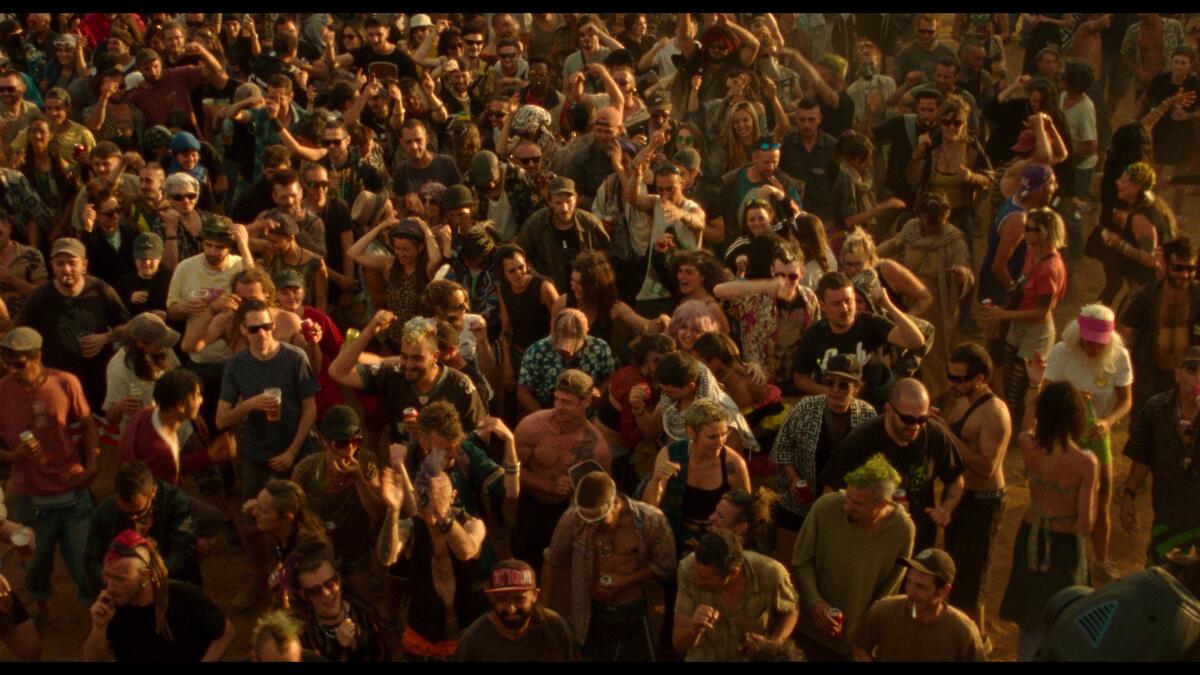
“Sirât” contains so many surprising twists and turns that when asked to describe the plot, I simply tell people that it’s about a father who shows up at a rave in southern Morocco with his young son looking for his missing daughter. The long desert journey they end up taking is astonishing, and cinematographer Mauro Herce, shooting on 16mm film, captures every treacherous mile in dramatic detail.
Original score: ‘Marty Supreme’
Voting with the Los Angeles Film Critics Assn., I cast my ballot for Kangding Ray’s hypnotic score for (you guessed it) “Sirât.” But that was just one of many soundtracks that found its way into my life this year. Hans Zimmer’s synth-heavy “F1” score makes for propulsive listening while pedaling on an exercise bike and ranks among the celebrated composer’s best work. And I share Times film editor Josh Rothkopf’s enthusiasm for Daniel Lopatin’s throwback electronic beats in “Marty Supreme,” a delight for anyone who grew up listening to the ethereal soundscapes created by Tangerine Dream.
Casting: ‘Weapons’
I’m highlighting Zach Cregger’s horror-mystery “Weapons” here partially because of its inexplicable absence in the makeup and hairstyling category. I guess voters knew it was Amy Madigan in that bright red wig all along. That omission aside, “Weapons” is a prime example of what a great casting director can do, making use of familiar faces (Josh Brolin, Julia Garner, Madigan) in unexpected ways, finding the right child actor (Cary Christopher) to deliver big emotional moments and elevating emerging talent (Austin Abrams) to unexpected heights. Allison Jones, one of the greats, belongs among the casting category’s inaugural set of nominees.
Documentary: ‘My Undesirable Friends: Part 1 — Last Air in Moscow’
Julia Loktev’s five-hour chronicle of the chilling Russian crackdown on independent journalists has won documentary honors from both the Los Angeles and New York film critics. The doc begins in 2021, when the journalists, mostly women, are forced to label themselves as “foreign agents” simply for doing their jobs, covering Putin’s regime in a factual manner. Things intensify after Russia’s invasion of Ukraine, turning “My Undesirable Friends” into a cautionary tale about the perils of bending to an autocrat. It goes without saying, but this is essential viewing.
A GROUP of office workers were left shocked when they learned their colleague is a former child star, and had a role in an iconic festive film.
The actor now keeps a low profile working as a Logistics Manager for the upcoming 2026 Commonwealth Games, which will take place in Glasgow. But do you recognise him?
Sign up for the Showbiz newsletter
Thank you!
Office workers had the highlight of their week when they realised their colleague is a former child starCredit: tiktok@commonwealthsportJoe Lane was left mortified when his co-workers realised he was in the Nativity! movie back in 2009Credit: tiktok@commonwealthsportJoe portrayed Edward, one of the key characters in the hit film NativityCredit: Lionsgate
He portrayed schoolboy Edward in the film, which is centred around a heartbroken primary school teacher’s journey to make his class’s nativity play reach Hollywood, and win his ex-girlfriend back in the process.
In a TikTok shared by Joe’s colleagues, the former actor was left red-faced when they figured out his famous past.
The clip showed Joe, dressed in a Christmas jumper and a festive headband, as he is shaken by his colleagues.
It then cuts to clips of him in the movie, before his colleagues recreate a hilarious moment by his character Edward.
Joe’s starring moment in the film saw him take to the microphone during the final Nativity performance and impersonate fart sounds with his armpit.
The former child star had his head in his hands when his co-workers cornered him at his desk and re-enacted the funny moment in the TikTok video.
“When you find out your colleague was in the nativity films,” read the video, with the caption adding: “The most exciting office development this week”.
The film was cast by producers holding open calls for local kids in Coventry, with the aim to use non-professional actors for an authentic feel.
After appearing in the first movie, Joe appears to have steered away from continuing an acting career.
He went on to become a semi-professional rugby player, before moving into logistics for sporting events.
Coventry-born Joe is now living in Glasgow after spending time in Australia and London.
It appears he has been keen to keep his famous past under wraps in the workplace.
One TikTok user commented on the video to reveal that they had previously worked with Joe, and had no clue of the connection.
“I worked with Joe at Coventry Rfc and unless I was out of the loop he kept this very well hidden!” they said.
Another commenter joked “So he didn’t become shrek??”, referencing the scene in Nativity! where character Mr. Poppy told Edward, “You could be Shrek”.
Joe as Edward, centre, in the Christmas smashCredit: LionsgateJoe was less than impressed when his colleagues reenacted his famous screen momentCredit: tiktok@commonwealthsport
Cadi Mullane, who played Crystal – one of the main children in the film – previously detailed what filming was like in a TikTok video.
She said: “I was part of an agency called Stagecoach, they were looking for kids who were really chatty, who could dance a little bit and sing a little bit. Apparently that was me.
“There was about seven auditions. But I’m from Wales so I had to keep travelling up to London which was a bit annoying, but it was OK because I really wanted to be in a film.
“They looked at how well we could sing and how well we got on with the other kids, cause that was important, obviously.”
Cadi went on to recall how the movie filmed throughout the summer, with no scripts for the children.
She said: “It was filmed in Coventry but obviously I’m not from Coventry so we all stayed in a hotel together. It was like The Suite Life Of Zach and Cody, honestly.
“There was no scripts. Everything was improvised, except from some bits. We basically just spoke loads of rubbish, and then we were asked to say it again on camera.”
The film is centred around a Coventry school’s nativity show and their feat to take it to HollywoodCredit: AlamyThe film was fronted by award winning actor Martin FreemanCredit: AlamyA number of local children took part in the film, with producers hiring non-professionals for an “authentic feel”Credit: Alamy
It is often said that film directors are siloed off from one another, that they don’t get to watch how others work. So when you put a group of them together, as with the six participants in The Envelope’s 2025 Oscar Directors Roundtable, they are quick to share all sorts of ideas. Like where they prefer to sit in a movie theater — centered in a row or on an aisle? How far back is the best for sound, or so the screen runs up to the edges of your peripheral vision? Should you even take the worst seats in the house, since somebody will eventually be asked to pay money to sit there?
Guillermo del Toro, there with his adaptation of Mary Shelley’s classic novel “Frankenstein,” likes the top of the first quarter of the theater. Rian Johnson, who finds new twists for Benoit Blanc in his third “Knives Out” detective story, “Wake Up Dead Man,” says, “I look for wherever Guillermo’s sitting.” Nia DaCosta, who made the bold, adventurous Ibsen adaptation “Hedda,” likes the top of the first third. Mona Fastvold, who explores the life of the founder of the religious movement known as the Shakers in “The Testament of Ann Lee,” likes the center a little farther back. Jon M. Chu, who made the second part of a musical adaptation with “Wicked: For Good,” sits dead center — and has been known to talk to the theater manager if the sound isn’t loud enough. And Benny Safdie, who explores the rise and fall of mixed martial arts fighter Mark Kerr in “The Smashing Machine,” tries to find a spot where he can fidget in his seat and not bother anyone.
Read on for more excerpts of their conversation about the art of adaptation, navigating budget constraints at any scale and much more.
Jon, I’ve heard you say that with “Wicked: For Good,” you wanted the film to be deeper but not darker. And it doesn’t pull any punches as far as dealing with themes of antiauthoritarianism. What was it like to have those very serious ideas and yet still have this be a buoyant, crowd-pleasing musical?
Chu: The reason we made it was because it had that meat to it, and it was always a two-movie, yearlong experience that set up the fairy tale first. And Movie 2 is kind of where we all are, this moment of this fairy tale shattered in front of us.
I have five children now, so I’m thinking about how to present stories to my kids. Do I still believe in the possibility of dreams and the American Dream? “For Good” really gets to delve into that stuff. And because it was shorter than the first half, we get more room to do it. We added new songs to explore that idea. So it all felt really fitting. Movie 1 could be an answer. Movie 2 is much more of a challenge: Who are we gonna be now that we know the truth?
All of your films in their own way are speaking to right now. Rian, “Wake Up Dead Man” is specifically set in the year 2025 and all the “Knives Out” pictures have been dealing with our contemporary reality. What makes you want to do that?
Johnson: That kind of started for me with the first movie. This is a genre, the murder mystery genre, that I love and that I’m just seeing so much of growing up. But it’s also a genre where most of what I had seen throughout my whole life, murder mysteries are period pieces set usually in a cozy little bubble of a little “Queensfordshire” place in England.
And I guess my realization was, that’s not what Agatha Christie did. She was not writing period pieces. She wasn’t an incredibly political writer, but she was always writing to her time. It’s not trying to do anything radical in terms of making it new or updating it, but let’s set it very much unapologetically in the modern moment. … You have a group of suspects that have a hierarchy of power amongst them and the person at the top they all wanna bump off — it’s such a potent vehicle for building a little microcosm of society.
Benny, one of my favorite things in “The Smashing Machine” is that it’s funny to realize setting a story at the turn of millennium is a period piece now. What was it like crafting this very specific, recent time period?
Safdie: It’s a time period that I think everybody thinks is just yesterday. But when you actually get into the nitty-gritty, it’s a long time ago. And things were very different and everybody knows exactly what those things are too. Because it was heavily documented, there was so much footage of it, it’s so top of mind. And I think a large amount of people also want to go back there a little bit, to this time where the internet was just kind of happening. People want to go back to this simpler moment. But trying to re-create what that feels like is what I was really going after — just thinking about how you would live in that time, and then represent that in the movie. Because I did want it to kind of feel like time travel.
Guillermo, you’ve spoken so much about how “Frankenstein” has been a lifelong dream project for you. Now that it’s done, where does that leave you?
Del Toro: There’s a massive postpartum depression, No. 1, and it’s real. And it affected me more than I thought it would, to be candid. But fortunately, I’ve been very interested in two new themes that are going to be sure to produce blockbusters, which is memory and regret. The dynamic duo of past 60. And I always thought about that in the abstract, but now I try to make the movies not only about the moment I’m in, but about me.
And I’m seriously trying to express what makes me uneasy, what makes me believe in the possibilities of grace even in the most horrible circumstances. And I’m not talking only social, but personal or philosophical. Something happens when the six clicks in on the counter. And all you can do is [ask], “Do I feel I have something to say, genuinely?” And then you go to that. Cronenberg, I had dinner with him when he was turning 74, and he said you have to scare yourself into being young again.
Nia, “Hedda” is such a bold adaptation of the play “Hedda Gabler.” You switched the gender of one of the main characters. You aren’t afraid to inject issues of race and class and sexual identity into the story. Were you ever concerned that you were asking too much of this classic text?
DaCosta: I wrote it on spec, so I wasn’t thinking about anything besides letting my freak flag fly, basically. I just thought, “This character makes more sense as a woman.” OK, what does that mean now? How does that affect the rest of the story? And then I just go from there. And then it ended up being really bountiful and generative.
And then when I met Tessa [Thompson] three years later, I thought, “Oh, when I write this, eventually Tessa will play Hedda.” So now she’s Black. OK, what does that mean? And Tessa’s also mixed-race. So then you get that element of it as well. And then I chose the 1950s, and then I chose England and the country house. You just treat these things as truths, and the story has to go in a certain direction. So I never worry about those things. Maybe because I’m a Black woman, so my presence or my identity for some people will complicate the story. But for me, it just is life.
Guillermo, in adapting “Frankenstein,” did you feel like you were dealing with the Mary Shelley text and also all the Frankenstein movies that we know?
Del Toro: I put all the cinematic stuff on the side. I didn’t want to make an erudite cinematic movie or a referential movie. I have lived with the three iterations of the text for my entire life. And there’s a lot of the interstitial stuff that I took from her biography, fusing with my biography, because even if you sing a song everybody knows, you’re doing it with your lungs. And your passion and your pain and your throat. … It’s the difference between seeing a living animal and taxidermy. If you just want the text, then buy the text. You cannot be more faithful to that text than reading the text. But if you want to see how we interact and resuscitate something into being emotional again, then that’s what we try to do.
Mona, “The Testament of Ann Lee” is a story told with music, but is it a musical? Is that a question you asked yourself as you were making it?
Fastvold: I consider it a musical. I do. But it’s just a different kind of musical. No one’s singing dialogue. It’s not magic when they start to sing. I think, as I was writing the script with Brady [Corbet], we realized early on it had to be a musical because the Shakers worship through ecstatic song and dance. They would be moved by the divine spirit and then receive a song or a piece of movement, and then they would start to sing and dance. Their life was a musical, so that’s what it had to be. And that was exciting to me, to create the whole structure of that.
But it couldn’t be, “OK, here’s a story and then here’s an amazing musical number.” It had to come from this place of worship. So all the musical bits and pieces of the film, our moments of feeling moved by the spirit and having this sort of religious experience, it had to be grounded in that and it had to be really organic-sounding and -looking. So we had to ground it in live recordings and create the soundscape and the music in dialogue with my choreographers. Every body slap and stomp is part of the rhythm and the music of it, because it couldn’t just be where diegetic audio fades out and then there’s this great, wonderful piece.
Chu: In a weird way, we all make musicals. All the movies, everybody has a take on how music integrates with it.
Del Toro: I was aiming for opera.
Guillermo, Jon, both of your films have a sense of scale to them. What kind of challenges does that present? Is it wrangling all the extras? Is it having the sets built on time? Jon, just the number of florists credited at the end of “Wicked: For Good” is wild.
Chu: It’s like building Disneyland, essentially. We had the warehouses going — there’s first a recording studio, so we’re recording music while their dance rehearsals are going on. You have hundreds and hundreds of people. Then you go to the costumes department and then you have the hair, just the wigs alone. People are getting there at 2:30 in the morning. And that’s before you even start the day.
We were planning two movies at the same time. So we had 20-something musical numbers rehearsed and worked with our cinematographer and our team to understand everything and build sets around these pieces. And then you get there on the day and how do I say, “Hey, all that stuff we did, this is actually happening over here. Let’s move everything over here”? I felt the hardest thing was being OK with wasting money if it was the right thing to do at that moment. I needed to feel free and had everybody aware that if I’m moving all of a sudden, we’ve got to go and we’ve got to figure it out. And I think that’s where the magic is.
Del Toro: To me, it’s three things. The first one is tonal, meaning everything that you do, you’re not doing eye candy, you’re doing eye protein. You’re telling a story. So it’s not about looking good or looking big. It’s about, does the gesture happen at the right moment? Because you can make gestures on the wrong moment of the film, and they don’t have a dramatic impact. I say we designed the movie for the Creature to feel real, of a piece with the world. So that’s the first one.
The second one: Is it expressing something different every time we go to a bigger thing? It’s not about the scale. And the final one to me is, does it feel real in the world? So the way I go at it is, there’s no typeface, no paint, no photograph, nothing, that cannot be investigated and designed to within an inch of its life. Even great movies, I’m very fidgety. I go, “That’s not a painting from the 1930s. Somebody painted it much later.” Or a typeface or a carnival banner or something like that. So at the end of the day, if you do your job right, you have a world and people just get into it almost like a vibe. Nobody should notice, but if you do it right, they want to experience it over and over again.
Rian, you make a really bold decision in “Wake Up Dead Man,” where the signature character of the series, Daniel Craig’s Benoit Blanc, is offscreen for much of the first 45 minutes or so of the movie. Did you have to convince people that’s the way things should go?
Johnson: Not really. For this one, first of all, it is a little closer to actually a traditional detective structure. That’s kind of how most Agatha Christie books work, is you meet the suspects in the first act. You get a very good idea of who’s gonna get bumped off. And then, end of the first act, the murder happens, and then the detective shows up and starts to solve it. So there was a precedent for it. But the real reason I had done backflips in the previous two movies to get around that was so we could get Blanc in there earlier. The reason it made sense for this [is] because Father Jud, who’s played by Josh O’Connor, [is] kind of the protagonist of it because of the themes of religion, and so the whole lay of the land was more complicated and delicate in this one to set up. I felt like the audience would be best served by having that runway and getting the time before this powerhouse that is Daniel playing Benoit Blanc comes in and brings this whole new energy to it.
The other thing that I’ve landed on with them is you have to constantly resist the candy of the mystery. You have to always remind yourself [that] the mystery elements are not a load-bearing wall, that those are never going to keep an audience entertained or engaged. You need to do the same thing you do in any movie where you have an emotional, bold line going that’s thrown at the beginning, that lands at the end. And the mystery then has to support that.
Mona, with “Ann Lee,” but also with “The Brutalist,” it seems like the movies that you and Brady Corbet are collaborating on together, you’re doing so much with relatively limited resources. What is it that the two of you are doing in these films that you’re able to make them seem so grand?
Fastvold: I mean, there’s no trick. I had to prep for almost a year for this one, because I knew that no one was going to give me a lot of money to make a musical about the founders of the Shakers. It was not gonna be this sexy pitch. It was a hard pitch. So I knew that it was going to be a limited budget. But at the same time, I just desperately wanted “Ann Lee” to have a really grand story. And I wanted there to be a believable, lush world. And I wanted to tell a story about her whole life, not just a day in her life.
So I had to make it work somehow. It was so much about saying, “OK, I’m working with my [director of photography], my production designer, my costume designer every weekend and night for months and months before we started official prep. And same with my choreographer and composer and with all of the cast as well, just rehearsing. Amanda [Seyfried] was rehearsing at night while she was shooting something else. She would go and have dance rehearsals at night, on the weekends, so we could keep on adjusting.
So the only way that I could, to quote David Lynch, get dreamy on set, which was something I really wanted, was by having so much prep time, and then just really knowing what my Plan A and B was, and to sort of experiment in advance more. And because I knew there’s no way that you can try and build a world and then have the same flexibility on this budget, it’s all about knowing every line item in my budget, what everything costs in Hungary, what everything costs in Sweden. “OK, this is how much a cherry picker in Hungary costs, and therefore I’m gonna take out two shots and only build half the roof.”
The 2025 Envelope Directors Roundtable. Top row, left to right: Rian Johnson, Benny Safdie, and Mona Fastvold. Bottom row, left to right: Nia DaCosta, Jon M. Chu and Guillermo del Toro.
Chu: I think that’s one of the biggest lessons I learned being a director. You don’t have a right to make your movie, because it costs so much and you need so much help. You do have to earn the right to make your movie. That is a part of our job.
Nia, you come to “Hedda” having just made a Marvel movie. You’ve just also finished a sequel to “28 Years Later.” Is there a secret through line for you that connects all these projects?
DaCosta: Being a nerd, Marvel, horror, comic books, for me, those things that I’ve done that I haven’t written are worlds that I loved as a kid. So “Candyman” was hugely important to me when I was younger. I used to love Marvel comics as a kid. “28 Days Later” is one of my formative films that I watched. And so when the opportunities came up to be a part of those worlds, it was really exciting for me. And then “Hedda,” I’m a theater nerd too, so I just really go by my passion, and I’m really compelled by just interesting characters.
“Hedda” and “28 Years Later” are very different films, but for me, they were so similar because I learned from my experience jumping into the studio system after making a sub-million-dollar movie [“Little Woods”] what works for me and what doesn’t work for me. And what works for me is really being given authorship. And so I’m setting the tone early. We’re not here to battle. We’re here to make the vision that I have. And if you’re into it, cool and great, let’s work together. If you’re not into it, then it doesn’t have to exist or I’ll find another way for it to exist.
Del Toro: The ambition should always be beyond the budget. If they give you $130 [million], you want to make a movie that is $260 [million]. But the way to that I found by doing “Devil’s Backbone,” which is $3 million, or “Shape of Water,” which is $19.3. “Shape of Water” opened with all the different sets in the first 15 minutes. And then it’s two sets. Lab, apartment, lab, apartment, lab, apartment. I always tell the departments, let’s choose meatballs and gravy. Where do we put the real resources? You reach a plateau no matter what the budget. Never spend money on a plateau. It always needs to mean something.
Safdie: You pick and choose the moments when you’re gonna get big. We were doing the hospital scene and then we built the plane in the hallway of the hospital. Because that was the most affordable. But there was a column in the middle of the plane, and I would always joke that we should go through the column. I find those limitations exciting. Because you really have to figure it out.
Rian, “Glass Onion” had a more robust theatrical release than “Dead Man” has gotten. Do you feel like as filmmakers that all of you are being put in this position of fighting for the future of theaters and moviegoing?
Johnson: I actually feel incredibly optimistic at this moment about the future of moviemaking. I don’t feel that way because we’re all picking up signs and marching down the street and preaching to people that they need to keep this sacred. I feel optimistic about it because I go to movie theaters and I see them packed with young people who want to go to movie theaters and have that experience.
And I see them coming out for new movies. I see them at revival cinemas. I see theaters at 2 p.m. on a Tuesday showing a Melville film that are just full of young people who are excited. And then you see it with movies that have come out this year. You see it with something like Ryan [Coogler]’s movie, “Sinners,” or with so many films that have struck chords with audiences and created cultural events. You can’t wag your finger at people and say, “You should be going to the theater and having this theatrical experience,” but you feel it rising right now. And so for me, it’s less that I want to advocate for it. It’s more that I want to ride that wave of it coming up.
This little village sits within the stunning North York Moors National Park and is the real-life set for a number of popular TV and film productions – but there’s more than meets the eye
Its railway station has famous ties to a major movie(Image: Edwin Remsberg via Getty Images)
Nestled within the stunning landscape of the North York Moors National Park, this charming village brims with character and boasts surprising connections to the entertainment world.
Goathland sits amid the Yorkshire Moors, crafted as a perfectly English settlement with abundant discoveries awaiting visitors. Most will instantly recognise it from its starring role in the beloved television series Heartbeat, where it’s known as Aidensfield. Debuting in 1992, Heartbeat was a British police drama set in this Yorkshire village during the 1960s. The show proved enormously popular with audiences and enjoyed an impressive television run until its concluding episode in 2010. Yet Heartbeat’s finale wasn’t Goathland’s last moment in the spotlight, as it became a key filming location for the Harry Potter movie series.
Indeed, the picturesque railway station served as Hogsmeade Station throughout the films and boasts a fascinating heritage of its own. It stands as a treasured piece of history along the North Yorkshire Moors Railway (NYMR) heritage route, celebrated for its authentic Victorian architecture from the 1800s, drawing countless visitors eager to witness these features.
The location serves as a paradise for train enthusiasts, with the railway operator providing various steam journeys featuring breathtaking trips across the moorland. A recent visitor to the station shared on TripAdvisor: “We enjoyed travelling on the steam trains and made some very special memories. We found all the staff (many of which are volunteers) to be very friendly and more than willing to chat and share stories of the railway. We thoroughly enjoyed our time visiting and would recommend.”
Beyond the station, this charming village boasts an enviable location, nestled near Whitby whilst bordering tranquil countryside. This makes it the perfect retreat for those eager to discover the great outdoors, particularly within Dalby Forest. The park encompasses a staggering 8,500 acres of terrain that provides breathtaking vistas, countless hiking paths and cycling routes for those wanting to explore the region. Part of this includes the Dalby Activity Centre, which boasts an array of adrenaline-fuelled pursuits and several Go Ape courses to challenge your adventurous spirit.
Other delightful features of this concealed village treasure include its nearness to Thomason Foss, a charming small waterfall providing a peaceful stroll and spot for a wild dip during summer.Afterwards, when keen ramblers seek somewhere to pause for a swift drink, they’ll frequently end up at The Goathland Hotel Bar.
Alternatively, guests can unwind with a brew at the traditional village tea rooms, which one recent guest described as a “great find”. They commented: “Excellent food and service, Would thoroughly recommend to anyone visiting Goathland. Plenty of tables to accommodate all sized parties and allowing well behaved dogs is a bonus.”
In the style of the hit festive film, The Holiday, Matt Bailey and his wife Sophie Addyman, swapped their London flat to spend Christmas in Germany, before flying to Bangkok the following year
After watching the Christmas movie, The Holiday, Matt Bailey and his wife, Sophie Addyman, were left inspired (Image: Handout)
The Holiday has become one of the most beloved Christmas movies in the UK. It follows the journey of two women played by Cameron Diaz and Kate Winslet, who opt to swap their Los Angeles mansion and cosy countryside cottage during the festive season. For obvious reasons, it’s an enduring festive smash.
For two viewers, the film provided more than a merry thrill. It inspired them to find their own house swap, just like Cameron and Kate, for a Christmas like never before.
Matt Bailey, 47, and his wife, Sophie Addyman, 47, had been watching The Holiday, and the next thing they knew, they were signed up to a house-swapping website, looking for somewhere to spend the festive season. “We were in a flat in London, and it was primarily because we wanted to get away for Christmas,” Matt exclusively told the Mirror.
“We didn’t want to pay extortionate accommodation fees for nice places that we wanted to go.” Soon, the couple found a house swap available in the medieval fairytale town of Rothenburg ob der Tauber, Germany, which Matt described as “one of the most Christmassy towns in the world”.
Through Love Home Swap, now known as Home Exchange, Matt and Sophie swapped their London flat in Earlsfield with another couple who had a flat that was built into the ancient walls of Rothenburg ob der Tauber. “It was small and cosy, it was just what we wanted,” Matt, a commercial director, said of their accommodation.
Through the direct home swap, they flew out to Germany on December 21 and stayed until December 31. “They have a year-round Christmas museum there, and it was absolutely magical,” Matt shared. “It was like a little chocolate box town.”
In terms of what they got up to during the trip, Matt continued: “We spent a lot of time wandering around. They had a lovely little Christmas market in the town, and we’ve still got a couple of baubles we bought in the Christmas shop there. In Germany, they tend to have their big celebration on Christmas Eve, so we went out for dinner on Christmas Eve, andthen on Christmas Day, we just had a nice, chilled day relaxing.
“We wandered around the town while everything was shut. It’s quite a touristy place, so it was lovely to be over there during Christmas time, and we were the only ones wandering around the town and taking pictures.”
When asked if it felt a little strange not being in the UK for Christmas, Matt confessed that “it did a bit”, but they felt “at home straight away” during the house swap and “were able to ease into German life very easily”.
Having completed their first successful house swap, the couple were keen to broaden their horizons and, the following year in 2013, jetted off to Bangkok for Christmas. Matt explained that they managed to get in touch with a couple from Bangkok that had grown-up children living in London, so they were keen to stay in the city over the festive period.
This saw them swap their southwest London flat for a Bangkok apartment in a tower block right in the centre of the bustling and vibrant capital of Thailand. “It was incredibly well located, and it had a shared swimming pool – it was really nice,” Matt said.
“They don’t celebrate Christmas over there at all, so Christmas Day was just a normal day, but we’d arranged to go on a food-based walking tour around Bangkok.
“It was strange though, as we rang home and everyone was there, sitting around having Christmas dinner, whereas we went to a rooftop bar, had a couple of glasses of champagne on Christmas Day. We later met up with an Australian couple we had met during the food tour and went out for drinks with them to celebrate.”
He added: “It was really quiet at first on Christmas evening, but we were told to go to this really lively place, and before we knew it, six or seven like VW camper vans pulled up, opened the doors and bang, it’s a cocktail bar on the street. Everyone’s just sat on the street, drinking these cocktails from these little vans, which were ridiculously cheap and crazy strong as well.
“Then you had a few food trucks outside, so you got street food, and it just sort of seemed to emerge organically that this whole street just became a party.”
Following their Christmas street party, they then flew to one of the Thai islands on Boxing Day for three days, before returning to Bangkok for the New Year, which Matt described as “absolutely mental.”
The couple have since moved out of London to Lincolnshire and welcomed two children, William, 10 and Jack, six, but are still making the most of being able to house swap. Last year, the family went to Bruges, Belgium, on December 27 for a week to celebrate the New Year, and this year they’re heading to Bonn in Germany.
And that’s not all. The family also uses Home Exchange to plan their half-term holidays, with trips to Portugal, France, Spain, Denmark, Iceland, and Wales.
Matt estimates that they’ve used Home Exchange for 12 trips in total, seeing them only needing to pay for their transport and food during each stay, rather than forking out for accommodation costs. They’ve even used Home Exchange as a way to test out an area before moving, with others doing the same.
Do you have a travel story to share? Email webtravel@reachplc.com
A Gold Rush movie from director Ang Lee and a biopic set in Long Beach and produced by Snoop Dogg are among the 28 films that have been awarded a tax credit for shooting in California, the state’s film commission said Wednesday.
Together, the 28 films are expected to hire more than 4,800 cast and crew members, as well as more than 22,000 background actors, the commission said. The projects are projected to generate $562 million in economic activity throughout the state.
Of the 28 projects, 18 are indie films with budgets of $10 million or less, five are indies with budgets of more than $10 million and five are non-independent feature films.
Seventeen of the projects will be shooting outside the Los Angeles region, which qualifies them for additional benefits under the revamped California film and television production incentive program that was approved earlier this year. The state has now doubled the annual amount of funds allocated to the program from $330 million to $750 million and expanded the eligibility criteria.
This is the fourth round of TV or film projects that have been awarded tax credits under the revised program. Together, those projects are on track to generate $4.2 billion in economic activity in California and more than 25,000 cast and crew jobs across 4,000 filming days in the state, the commission said.
“In a highly competitive global environment, productions have choices,” said Colleen Bell, director of the California Film Commission. “This round shows that when California puts the right tools on the table, filmmakers want to stay, create and invest here.”
In addition to the “Gold Mountain” film from Lee, which was awarded $7.7 million in tax credits, and the untitled NBCUniversal project from Snoop Dogg ($17 million), an indie film called “Guerrero” directed by Gina Rodriguez was also awarded a $4.5-million tax credit, along with an untitled Sony project produced by actor Glen Powell ($9.9 million).
“California raised me, inspired me, and now helpin’ bring this biopic to life in 2026,” Snoop Dogg said in a statement. “Much respect — that’s real teamwork, ya dig.”
No, our Women in Film issue doesn’t exclusively feature women — Noah Baumbach and Brendan Fraser feature in our Dec. 16 edition as well — but it does shine a particular spotlight on their extraordinary contribution to the year in film.
As performers and production designers, writers, directors and more, the women included here helped fashion deeply felt stories of parenthood, friendship, grief and betrayal, and that’s just for starters. Read on for more highlights from this week’s Envelope.
The Envelope Actresses Roundtable
(Jason Armond / Los Angeles Times)
This year’s Oscar Actresses Roundtable was full of laughter, sparked by everything from Gwyneth Paltrow’s impression of mother Blythe Danner to Sydney Sweeney’s tales from inside the ring on “Christy.” But when it comes to self-determination, this year’s participants — who also included Emily Blunt, Elle Fanning, Jennifer Lopez and Tessa Thompson — are dead serious.
As performers, producers and businesswomen, the sextet told moderator Lorraine Ali, the boxes that Hollywood and the broader culture seek to put them in need not apply. And realizing that is its own liberation. As Lopez put it, “I don’t ever feel like there’s somebody who can say to me, ‘No, you can’t.’”
‘Hamnet’s’ last-minute miracle
(Evelyn Freja / For The Times))
Since the moment I first saw “Hamnet,” I’ve been raving to everyone I know about its climactic sequence, set inside the Globe Theatre during a performance of Shakespeare’s “Hamlet.” (Well, if you can call it “raving” when you preface your recommendation with the sentence, “I sobbed through the last 45 minutes.”) As it turns out, though, the process of making the film’s final act was as miraculous as the finished product.
“There were only four days left of shooting on ‘Hamnet’ when Chloé Zhao realized she didn’t have an ending,” Emily Zemler begins this week’s digital cover story, which features Zhao, actors Jessie Buckley, Paul Mescal and Joe Alwyn and production designer Fiona Crombie. What they created from that point, combining kismet, creative inspiration and grueling preparation, will buoy your belief in the power of art. “It was like a tsunami,” Buckley tells Zemler. “I’ll never forget it.”
A Is for Animal Wrangler
When I first read Helen Macdonald’s transporting “H Is for Hawk,” which combines memoir, nature writing and literary criticism, I can’t say I closed the book wondering when we’d get a film adaptation. Little did I know that director Philippa Lowthorpe, star Claire Foy and a pair of married bird handlers would provide such a thorough answer to my skepticism.
As Lisa Rosen writes in her story on the marriage of art and goshawk in “H Is For Hawk,” that meant shaping the production around the notoriously wary birds of prey, including its lead performance. “It wasn’t like having another actor who had another agenda or actions or a perspective that they wanted to get across in the scene,” Foy told Rosen of her extensive screen time alone with the five goshawks who stood in for Helen’s. “I was along for the ride with these animals.”
Joe Ely, a singer-songwriter and foundational figure in Texas’ progressive country-rock scene, has died. He was 78.
According to a statement from his representatives, Ely died Dec. 15 at home in New Mexico, from complications of Lewy Body Dementia, Parkinson’s disease and pneumonia.
Ely had an expansive vision for country and rock, heard on singles like “All My Love,” “Honky Tonk Masquerade,” “Hard Livin’,” “Dallas” and “Fingernails.” Born in 1947 in Amarillo, Texas, Ely was raised in Lubbock before moving to Austin and kicking off a new era of country music in the region, one that reflected both punk and the heartland rock of the era back into the roughhousing country scenes they came from.
After founding the influential band the Flatlanders with Jimmie Dale Gilmore and Butch Hancock (which dissolved soon after recording its 1972 debut), he began a solo career in 1977. He released several acclaimed albums, including 1978’s ambitiously rambling “Honky Tonk Masquerade,” before finding his popular peak on 1980’s harder-rocking “Live Shots” and 1981’s “Musta Notta Gotta Lotta.”
Ely, beloved for barroom poetry that punctured country music’s mythmaking, was a ready collaborator across genres. He befriended the Clash on a tour of London and sat in on the band’s sessions recording their epochal “London Calling” LP. He later toured extensively with the group, singing backup on “Should I Stay or Should I Go,” and earning a lyrical tribute on “If Music Could Talk” — ”Well there ain’t no better blend than Joe Ely and his Texas men.”
Ely was a favorite opener for veteran rock acts looking to imbue sets with Texas country swagger. He performed with the Rolling Stones, Stevie Nicks, Tom Petty & the Heartbreakers and Bruce Springsteen, who later sang with him on “Odds of the Blues” in 2024. Springsteen once said of Ely: “Thank God he wasn’t born in New Jersey. I would have had a lot more of my work cut out for me.”
In the ‘90, Ely joined a supergroup, the Buzzin Cousins, with John Mellencamp, Dwight Yoakam, John Prine and James McMurtry, to record for Mellencamp’s film “Falling From Grace.” Robert Redford later asked Ely to compose material for his film “The Horse Whisperer,” which led to collaborations with his old Flatlanders bandmates and a reunion in the 2000s. He also acted in in the musical “Chippy: Diaries of a West Texas Hooker” at Lincoln Center in New York City and joined the Tex-Mex collective Los Super Seven — he shared in the band’s Grammy for Mexican-American/Tejano Music Performance in 1999, his only such award.
Ely was inducted into the Austin City Limits Hall of Fame in 2022 and released his last album, “Love and Freedom,” in February.
Even the most accomplished actors sometimes feel out of their depth on a movie.
Gwyneth Paltrow, who returns to the big screen this fall as an Old Hollywood star trying to make a new start in “Marty Supreme,” was “way out over her skis” in her early 20s when she played a Park Avenue wife opposite older co-star Michael Douglas in “A Perfect Murder.” Jennifer Lopez, who showcases her triple-threat skill set in the musical “Kiss of the Spider Woman,” felt a “huge” responsibility to get it right when portraying Tejana icon Selena Quintanilla in the 1997 biopic about the late singer. And Emily Blunt, who goes toe-to-toe with Dwayne Johnson in the mixed martial arts saga “The Smashing Machine,” had to avoid being typecast as the go-to “acerbic British bitch” after the success of 2006’s “The Devil Wears Prada.”
These and many more tales from inside the maelstrom of megawatt stardom were the subject of The Envelope’s 2025 Oscar Actresses Roundtable, where Paltrow, Lopez and Blunt were joined by Sydney Sweeney, who transformed physically and emotionally to play boxing legend Christy Martin in “Christy”; Tessa Thompson, who tries to keep up appearances as the title character in “Hedda,” Nia DaCosta’s acclaimed new adaptation of “Hedda Gabler”; and Elle Fanning, who plays an American star struggling to find her way into a Norwegian art film in “Sentimental Value.”
In conversation with Times critic Lorraine Ali, the six performers discussed how they deal with bad press, resist being put in career boxes and inhabited some of the most-talked-about film roles of the year.
Jennifer, you play the title role in “Kiss of the Spider Woman,” a story set in Argentina during a military dictatorship. It takes place in a political prison where the men imagine themselves in a glamorous, sweeping musical. As producer on the film, why was it important for you to tell this story now?
Lopez: It’s never been more relevant, which is really scary. Manuel Puig wrote the novel in the 1970s about these two prisoners during the uprising in Argentina. It really is a love story about seeing the humanity in another person, like two very different people with different political views. One is queer, and the other is a political revolutionary. The two of them were like oil and water. But they escaped into the [fantasy of] a movie, which is “Kiss of the Spider Woman.” They slowly come together and see each other’s souls instead of who they were on the outside. I think with everything that’s happening in the world right now, especially in this country, with Latinos and queer communities being targeted, demonized — there’s never been a more important time to say, “Look at me on the inside. Stop with all of this divisiveness. See people for who they are.”
Gwyneth, “Marty Supreme” is set in the 1950s. You play Kay Stone, a faded starlet. Who did you base her on?
Paltrow: She’s an amalgam of a few ideas, but principally Grace Kelly, who also had this amazing movie career and was this incredible star, and then walked away from it for marriage. My character does the same. When I was looking at photographs [of Kelly during] her films, and then photographs after she got married, it was like the light dimmed. She lost something. My character had a very rough road to get to stardom, so she walks away from this big career to marry an unsuitable but very wealthy man. And then her son dies, so she has a lot of tragedy.
Sydney, “Christy” is the story of Christy Martin, a pioneer in popularizing women’s boxing in the 1980s and 1990s. You really transformed for the role. Can you talk about that transformation?
Sweeney: Her story is probably one of the most important stories I’ll ever get to tell, so I felt that immense importance. I needed to fully transform myself. I trained every day for three months leading up to shooting. I put on 35 pounds. And I got to spend time with her, and now she’s like one of my best friends. I just kinda lived and breathed Christy for the entirety of the whole thing.
There’s so much violence in her world, particularly outside the ring. Was the real-life Christy there when you shot the domestic abuse scenes between her and her husband, Jim Martin (played by Ben Foster)?
Sweeney: To protect her, we didn’t have her on set when we were shooting the last part of the movie where the domestic violence came into play. The following Monday, we had her come to set, and the entire crew stood up and just started applauding. It was so beautiful. Then after that, she was on set all the time. We would be in the ring, and she’d be sitting [outside the ring], and I’d hear her say, “Hit her with the left hook, Sydney!”
Lopez: She was coaching from the sidelines?
Sweeney: Oh, yeah. We were having a blast. And in the fights, we actually fought. My No. 1 thing with all the girls was that I don’t want this to be fake because so much of Christy comes to life in the ring. I didn’t want to have [the camera] at the back of my head or have to cut to fake the punches. Every single one of those girls, they’re badasses. They punched me, and I punched them. We had bloody, broken noses. I had a concussion.
Blunt: Sydney broke someone’s nose.
Sweeney: I got a concussion. I’m not going to confirm [what else happened]. But I definitely caused some, uh, bruises and blood.
Emily, with “The Smashing Machine,” you play Dawn Staples, girlfriend to Mark Kerr, who was a pioneer in the field of MMA fighting. How much did you know about that world before taking on the role?
Blunt: I knew very little, and I was moved that Mark Kerr was my first window into [MMA] because he is such a juxtaposition to the violence of the world. This is a man who headbutted people to oblivion, and when you meet him, he’s like [subdued tone], “Hi, how are you?” He’s so nice. And I said to Mark one day, “How did you do that?” And he goes, “I know, it was nasty.” He’s just so sweet and dear and eloquent. But I think he was sort of filled with this uncontrollable rage that he hardly knew what to do with, and he struggled so much with his own demons. The movie is more about struggle and fragility than it is about fighting.
Tessa, “Hedda” is an adaptation of Henrik Ibsen’s play “Hedda Gabler” and you play the title role. Your castmate, Nina Hoss, said the role of Hedda Gabler is for women actors what Hamlet is for men. Do you agree?
Thompson: I like to say that Hamlet is the male Hedda, just because I think it’s a nice reversal. But people say that because the truth is that we don’t have that many [roles] that are canonical in the same way that Hedda Gabler is, so it feels like this behemoth. It’s one of the parts in theater that feels like a mountain to climb. There’s a kind of complexity to the character that has compelled audiences and actors for centuries … which is the case with both [Hedda and Hamlet]. But I think the comparison is kind of boring, frankly. I remember an actor saying to me, “Oh, I learned in drama school you have to have your Hedda ready.” And I did not have my Hedda ready, but I got it ready.
The wardrobe and sets in “Spider Woman,” “Hedda” and “Marty Supreme” are beautiful. Did you swipe mementos when the films wrapped?
Paltrow: No, you can’t.
Lopez: I mean, you can.
Paltrow: I tried the Birkin bag from “The Royal Tenenbaums” [but I could not], so I took the loafers instead.
Blunt: Not the same. Not quite.
Thompson: [To Gwyneth]: I was almost you [in “Tenenbaums”] for Halloween, but I couldn’t get it together in time and I wanted do you justice. But one day …
Paltrow: Next year. I’ll lend you the loafers.
Elle, in “Sentimental Value,” you play a Hollywood star who’s cast in an art–house European production. In reality, you were shooting the massive production “Predator: Badlands” when you joined “Sentimental Value,” a smaller European film. Were the parallels with your character, Rachel, apparent at the time?
Fanning: I got a call that “Joachim Trier has a part for you and would like to talk over Zoom, and here’s the script.” I was like, “Oh, my gosh, Joachim Trier [who made] ‘The Worst Person in the World.’” I would’ve said yes to one line. But I was already doing “Predator.” I was about to go off to New Zealand, but it’s very important for Joachim to rehearse, so he [wanted me] to come to Oslo. I wasn’t sure which movie I could do, and I wanted to do both. So, of course, there were parts to the character that I could relate to. I kept thinking, “There’s a lot of meta-ness going on in this film,” particularly for my character, being the Hollywood actress coming to Oslo for the first time, working with a Norwegian director. And coming off of this action-packed film to go to this very intimate, emotional foreign film, they fed into each other in ways that I didn’t expect them to.
How do you all deal with rough reviews?
Paltrow: I try to never read anything about myself, full stop, ever. Period.
Lopez: Wait, not anything about yourself? Ever? Period? Because I don’t read reviews of my films either, but people will bring it to you it when it’s good and you’re like, “Oh, nice.” But there’s other things they’ll bring you …
Paltrow: Sometimes I’ll come upon it.
Lopez: And you want to die.
Paltrow: Want to die. Like when someone forwards you a link to something really horrible about yourself, and they’re like, “Oh, this is bull—.” I do try to avoid [that kind of stuff]. I deleted Instagram.
Blunt: Me too.
Lopez: You need to cleanse every once in a while.
Sweeney: Sounds nice. I can’t do that.
How do you push the negative stuff about you or your personal life aside and focus on your work?
Sweeney: It helps when you love what you do. Like, if you’re loving the characters that you get to play, you’re loving the people you get to work with, and you’re proud of what you’re doing, then it’s just outside noise. When we walk on set, the world kind of disappears and we get come to life in a different kind of way. Those are the moments and the relationships that matter. Everything else is just people we don’t know.
Paltrow: [To Lopez] I want to hear your answer to this question.
Lopez: From the very beginning, for whatever reason, I’ve been a lightning rod for nice things and a lot of negativity. And it’s hard because you say to yourself, “These people don’t get me. They don’t see me. They don’t understand me.” Then all of a sudden they do. And then they don’t again. Even from when I was very young, I would always say, “I know who I am. I’m a good person. I know what I’m doing. People wouldn’t hire me if I wasn’t good at what I do.” I was always affirming myself and keeping my feet on the ground. Luckily, I had a great mom and dad who really instilled in me a sense of self. And what Sydney was saying, I’d have to block out the noise so I can put my head on the pillow at night and go, “I did good today. I was a good person. I was kind to people. I worked really hard. I’m a good mom.” That has always helped me through.
Thompson: Not having your sense of self or identity entangled in this other self that belongs to the public seems like such a healthy thing. I’m still trying to figure out my balance with that. When I was acting in some projects, I felt like I was delivering a lump of clay that got sculpted by somebody else. So if someone was harsh on the final [product], I was like, “Well, I didn’t sculpt it. I’m just the material.” But now that I produce, it’s a completely different thing. It’s building it from the ground up and feeling so much responsibility to the people that you’ve made it with. You made a baby and sent it into the world, and you just hope it doesn’t get misunderstood.
Gwyneth, you’re stepping back into the film world with “Marty Supreme” after seven years doing other things, such as Goop. Were you nervous coming back into the fold?
Paltrow: I [had been] doing things like “Iron Man” and “The Avengers,” which are totally fun, but it’s like doing a TV show where you go back in and you know the character. It’s not that difficult. So it had been a really long time, and I was like, “How did I used to do this? How are you, like, natural?” And then I did the camera test and I was really nervous. I felt like a fish out of water. And then luckily the first scene that I shot for real was a scene in the movie where she’s rehearsing a play. And I started in the theater, and I did a million plays before I ever did a film. The camera was far away, and I had my mom’s voice in my head. She’s like, “You’re on the boards, you know, just let the energy come through your body.”
Can wardrobe and styling help you embody the emotional core of a role?
Blunt: Dawn’s got a vibe for sure. It was that very overt ’90s, overglamorized thing, and everything was so revealing. I feel like my t— looked like two heads by the time they were done with the Wonderbra. They were just up under my chin. That helps you stand different, walk different. And the nails helped me. She had this incredibly long, square, chunky French tip manicure, and she’d talk with her hands. And the spray tan and the wig. It’s all fabulous. It’s such an amazing thing to look at yourself and go, “Who’s that?”
Thompson: [In “Hedda”], the construction of those dresses in the ’50s, there’s so much boning. We had Lindsay Pugh, who’s a brilliant costume designer. I also started looking up the starlets of the time and what their waist sizes were. It was like 20 or 21 inches. They were extreme. In the beginning, when we were constructing the dress, I was like, “I’m going to try to get down to that Dior-like silhouette,” which is impossible. Then we [fell in] love with the idea that the dress doesn’t actually fit her, because she’s inside of a life that doesn’t fit her. But the sheer sort of circumference of the dress makes her a woman who comes into a room and takes up space. A big part of [a woman’s] currency was their beauty and their body. That felt very foreign to me to inhabit. I didn’t recognize or had maybe suppressed the idea of using that part of me to gain power in the world.
The 2025 Envelope Oscar Actresses Roundtable: Top row, left to right, Tessa Thompson, Gwyneth Paltrow and Elle Fanning. Bottom row, left to right, Sydney Sweeney, Jennifer Lopez and Emily Blunt.
Hollywood likes to put people in boxes, particularly women. What boxes has it tried to stuff you in?
Fanning: I was in “Maleficent” and I played Sleeping Beauty, so like Disney princess in pink. Blond.
Blunt: But look at that face. Come on!
Fanning: But I can be mean too! In “The Great,” [I played] Catherine the Great, she was a queen, but she was raunchy. It was such a delicious show in that way. People were like, “Whoa.” They were surprised [seeing me like] that.
Blunt: If there’s a movie that takes off, you will have to carve out space away from that. I remember after “The Devil Wears Prada,” I got offered every acerbic British bitch. I’m like, “I should not do that for a while.”
Paltrow: When I stepped back to be an entrepreneur around 2008, I really confused and upset people. Nobody understood what I was doing, and I faced a lot of criticism and confusion over the course of the 17 years since I sent out my first Goop newsletter. I really do think that women, we are so incredibly multifaceted. We are all the archetypes. We’re not just a mother, or an artist, or an intellectual. We’re all the things. So I’ve always kind of tried to make it my mission to say, like, “No, don’t put us in boxes. We get to define who we are.”
Blunt: Was it hard for you to keep going and ignore it?
Paltrow: It was really hard. Some days I was like, “Why did I do this? The headwinds are so extreme and I’m so misunderstood. I had a perfectly good job. People did my hair. Why on earth did I do this to myself?”
Thompson: And you also did it before there was a cultural appreciation for people doing multihyphenates and starting businesses.
Lopez: I think our generation started thinking, like, “We need and want to do other things.” Even when I started acting and I had done my early films, “Out of Sight” and “Selena,” and then decided I wanted to record music, and it was such a big deal. People were like, “They’re never going take you seriously as an actor ever again.”
Paltrow: And you had the No. 1 movie and the No. 1 album in the same time, right?
Lopez: It was in the Guinness Book of Records. But that’s the thing, everybody’s always trying to tell you: “You can only do this,” or “You can only do that.” I had my perfume line. I had my clothing lines. I have my J Lo beauty now. You have to just do what feels good for you. It doesn’t mean it’s for everybody. Somebody wants to just act their whole life, that’s beautiful too. That’s fantastic. I still want to direct. I still want to write more books. And I don’t ever feel like there’s somebody who can say to me, “No, you can’t.”
Blunt: Say that to Sydney and she’ll break their nose.
I think about Rob Reiner almost every time I put on my socks.
I am old enough to remember the famously hilarious (and largely improvised) bit from “All in the Family” in which Reiner’s Mike “Meathead” Stivic and Carroll O’Connor’s Archie Bunker argue about the correct order of donning footwear — both socks first (Archie’s method) or sock/shoe, sock/shoe (Mike’s).
The straight-faced back and forth was, and is, a pitch-perfect exhibition of how much time and energy we waste judging, and arguing about, personal differences that are none of anyone’s business and matter not at all.
I also think about Reiner whenever my now-adult children and I sit down for a movie night. When all other suggestions fail, at least one of his films — ”Stand by Me,” “The Princess Bride,” “A Few Good Men,” “When Harry Met Sally…,” “Misery” — will achieve consensus, in large part, because of that same understanding.
Reiner was, above all, a compassionate filmmaker, willing to excavate all manner of conflict and tension in search of the essential humanity that connects us all.
Reiner helped shape the culture of my youth and early adulthood with such brilliant empathy that his random appearances on television — as Jess’ (Zooey Deschanel) father in “New Girl” or, more recently, Ebra’s (Edwin Lee Gibson) business mentor on “The Bear” — sparked immediate reflexive delight, as if a beloved uncle had shown up unexpectedly at a family dinner.
It helped, no doubt, that I share his political leanings. Reiner’s advocacy for gay marriage and early education were well-known, as was, in recent years, his unvarnished criticism of President Trump, who Reiner, like many others, considered a danger to democracy.
That criticism should have prepared me for the chilling invective unleashed by some, including Trump, in the wake of the news that Reiner and his wife, Michele Singer Reiner, were found dead in their home on Sunday night, victims of a knife attack, and that their son Nick, who has a history of drug addiction, was in police custody.
Even as the millions who were touched by Reiner’s work struggled to process their shock, grief and horror, Trump responded with a post in which he claimed that the Reiners’ murders were “reportedly due to the anger he caused others through his massive, unyielding, and incurable affliction with a mind crippling disease known as TRUMP DERANGEMENT SYNDROME, sometimes referred to as TDS.”
Even so, between the shocking news of the Reiners’ deaths, the possible involvement of their son and the unhinged and cold-hearted response of the president of the United States, it is difficult to know how to react, short of tearing out one’s hair and screaming up to an indifferent sky.
No person’s life means intrinsically more than any other — many people are killed by violence each and every weekend, often by family members; that we seem to have become inured to mass shootings is another sort of horror.
But Reiner’s work, in film, television and politics, affected millions around the world personally and culturally. In “All in the Family,” his young leftie was far from the hero of the piece — Mike’s values were more humane and progressive than the bigoted Archie’s, but he could be just as narrow-minded as his father-in-law and just as capable of change.
As a director, Reiner championed independent filmmaking, which is to say smartly written movies that told interesting stories about characters that were recognizable in their humor and humanity (which is one reason he was so successful in adapting Stephen King’s work, including the novella “Stand by Me” is based on and “Misery”).
His political activism too was grounded in the desire to make life better for those historically marginalized by policy and culture. He campaigned against tobacco use and for Proposition 10, which increased the tax on cigarettes, and funded early education. In 2009, he used his considerable influence to co-found the American Foundation for Equal Rights and successfully fought to legally challenge Proposition 8, which banned same-sex marriage in California.
As an artist and a public figure, he put his money where his mouth was and remained invariably sincere, a powerful and compelling trait that has become increasingly rare in a time of the sound-bite inanities, muddy thinking, obvious contradictions and outright falsehoods that threaten our public and political discourse.
Reiner mastered many mediums and wielded a broad palette but his signature artistic trait was empathy. No story was too small, or too brutal, to be examined with kindness and an understanding that the most grave injustice we can commit is to choose apathy or revenge when connection and transcendence are always possible.
The news cycle surrounding the Reiners’ deaths is likely to get worse, as details emerge and reactions of all kinds continue. For a long while, it will be difficult to think of Reiner and his wife as anything but victims of a brutal crime of truly tragic proportions and the regrettable heartlessness that our political divisions have created.
Ironically, and mercifully, solace for this loss, and so many others, can be found in Reiner’s work, films and performances that are impossible to watch without feeling at least a little bit better.
As Hollywood and the world mourns, I will try to think of Reiner as I always have. After all, no matter the order, we all put on our shoes and socks one at a time.
And then, as his artistic legacy teaches us, we stand and try to do the best we can with whatever happens next.