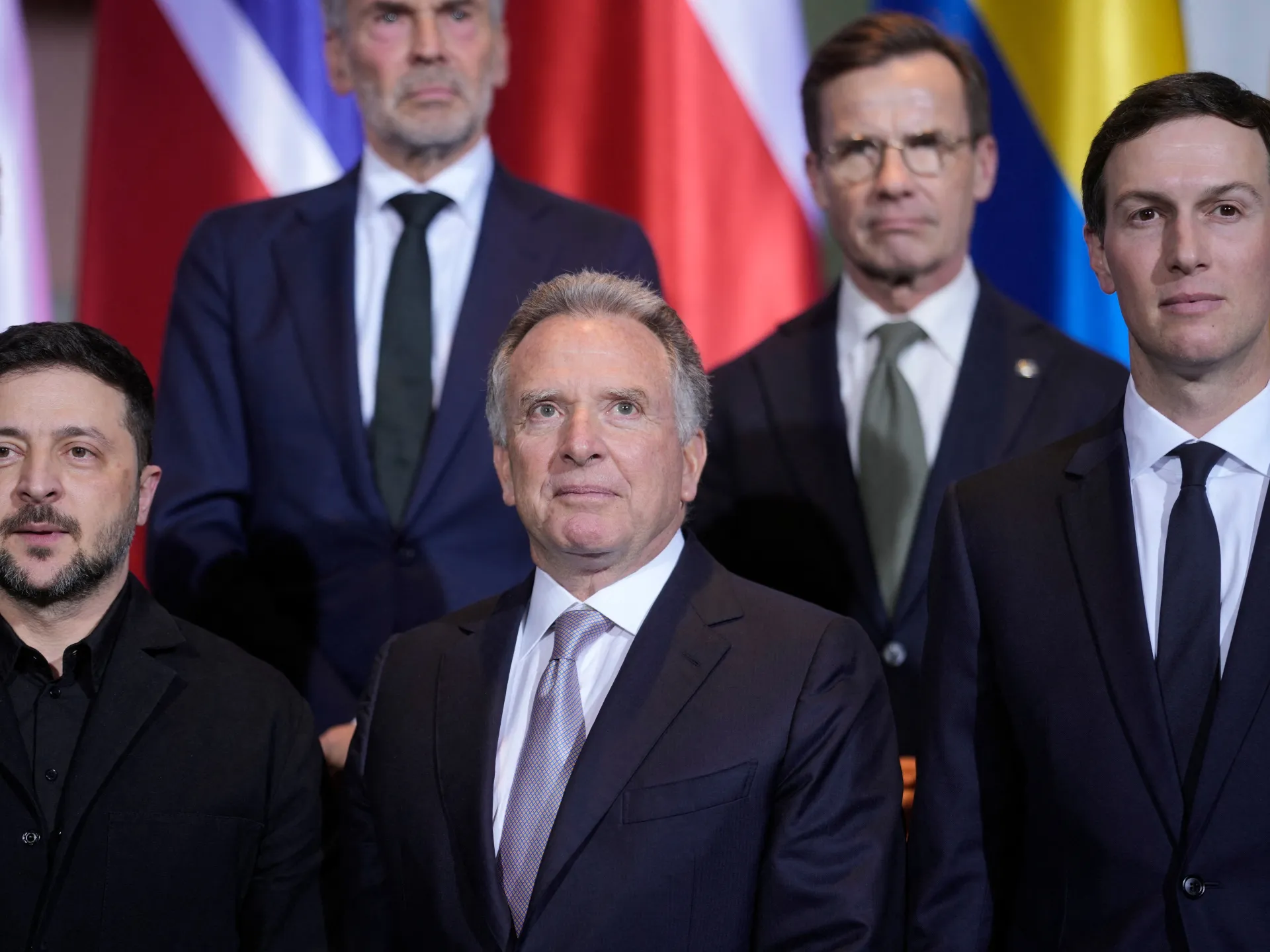
Netflix and Paramount are locked in an epic tug-of-war for HBO and Warner Bros. — the historic film factory behind Batman, Harry Potter, Scooby-Doo, “Casablanca” and “The Matrix.”
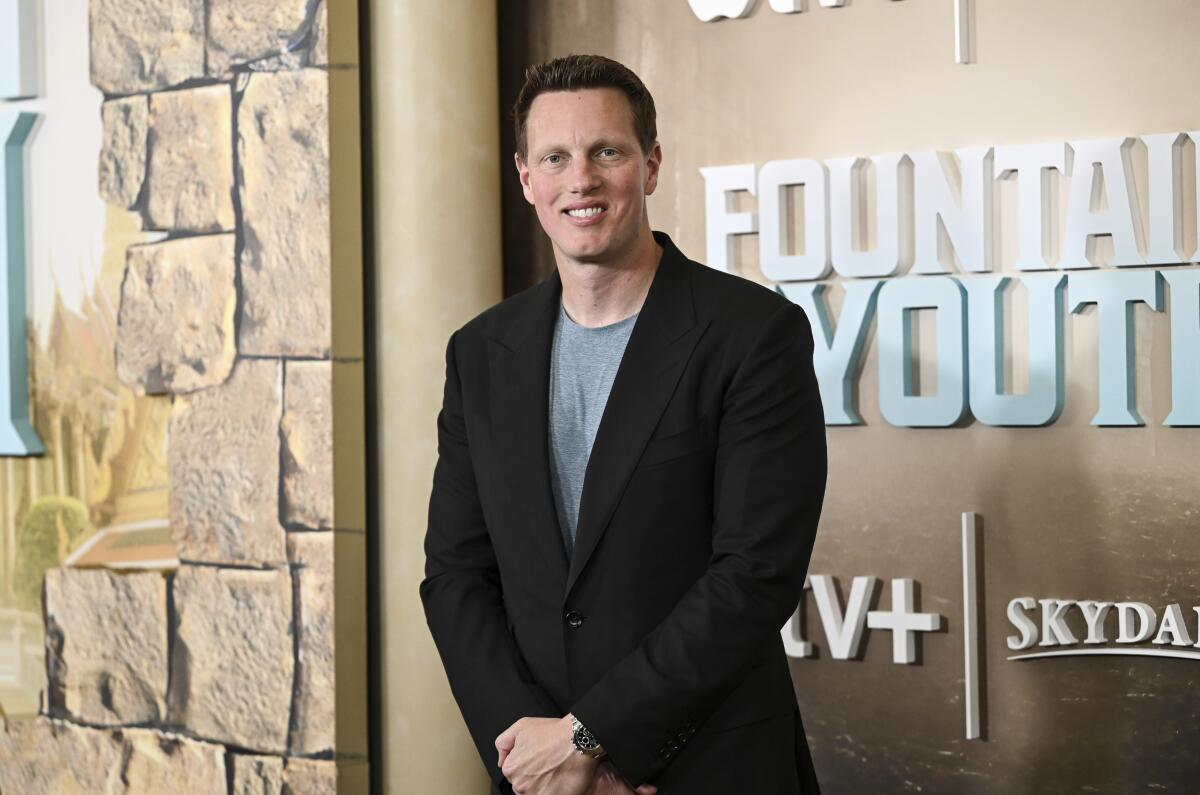
Warner Bros. Discovery awarded the prize to Netflix, prompting Paramount to mount a hostile takeover bid valued at $108 billion for all of the Warner assets, which also include CNN, TBS, HGTV and TLC. The Larry Ellison-backed media company, run by his son David Ellison, has asked Warner shareholders to sell their shares to Paramount.
Warner Bros.’ sale has become the industry’s game of thrones.
The streaming king, Netflix, hopes to buy a chunk of the company — HBO, HBO Max, Warner Bros. film and TV studios and the 110-acre lot in Burbank — through its $82.7-billion deal. Not included are Warner’s basic cable channels, which are set to be spun off into a separate, publicly-traded company called Discovery Global.
Both deals would fundamentally reorder Hollywood and raise antitrust concerns. Netflix would boast more than 400 million subscribers worldwide, furthering its market dominance. And Paramount’s takeover would combine two major film studios and two leading news organizations, CNN and CBS News, under Ellison family control.
When Qatar helped secure a peace deal to end ongoing conflict between the M23 rebel group and Democratic Republic of the Congo’s (DRC) government last month, there was hope among many Congolese that a permanent ceasefire would soon emerge to end the fighting that has uprooted close to a million people in the country’s troubled east, and give war-racked communities some respite as the new year rolls in.
Since late 2021, the group, which the United States and the United Nations say is backed by Rwanda, has clashed with the Congolese army in heavy offensives that have killed at least 7,000 people this year alone. Several regional attempts at resolution have failed. Still, when M23 representatives and Congolese government officials met for negotiations in Doha and proceeded to sign a peace deal in November, exhausted Congolese dared to hope. This deal, some reckoned, could be different.
Recommended Stories
list of 3 itemsend of list
So when the rebels launched yet another offensive and temporarily seized the strategic city Uvira this month, hopes for lasting peace were painfully crushed, as some concluded that those at the helm of the talks were playing politics.
“It’s clear that they don’t have any will to end this conflict,” Congolese lawyer and political analyst Hubert Masomera told Al Jazeera from the M23-held eastern city of Goma, blaming both sides. “Despite the number of deaths and the extent of the destruction, there is still procrastination over the implementation of the peace agreements and compliance with the ceasefire. People here feel abandoned to their sad fate.”
Fears that the conflict will not only continue, but that it could soon take on a regional dimension, are deepening, too – a sensitive prospect in a DRC where two civil wars in the past were prompted by its neighbours.
Uvira, the newly captured city the rebels then withdrew from as a “trust-building measure” following US pressure last week, is a major transport and economic hub in the huge South Kivu province. It’s strategically located on the border with Rwanda and is just 30 kilometres from the Burundian capital, Bujumbura. The city was the last eastern stronghold of the Congolese army and its allies – local “Wazalendo” militias and about 3,000 Burundian soldiers. Early this year, M23 also seized control of South Kivu’s capital city, Bukavu, as well as Goma, the capital of North Kivu province.
Experts say M23’s advance on Uvira widens the group’s area of control significantly, puts it at the mouth of the mineral-rich Katanga region, and positions Rwandan proxies right at Burundi’s doorstep at a time when both governments are ramping up a war of words and accusing each other of backing rebels.
Rwanda, for its part, continues to distance itself from accusations that it backs M23.
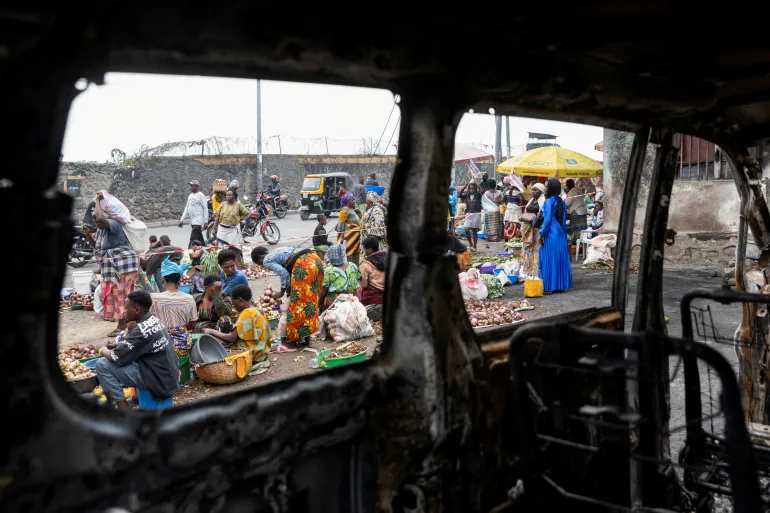
A view shows the remains of a vehicle hit by heavy and light weapons during the fighting in the town that led to the fall of Goma to M23 rebels, on February 5, 2025 [File: Arlette Bashizi/Reuters]
DRC conflict’s complex history
The recent scenes in eastern DRC appear like an eerie playback of a tragic tale, conflict monitors say.
Similar peace negotiations in late 2024, led by the African Union and Angola, seemed ready to deliver peace ahead of a new year. But they collapsed after a highly anticipated meeting between the presidents of Rwanda and DRC was called off. Both sides accused each other of foiling the talks.
“There’s a sense of deja vu,” Nicodemus Minde, East Africa analyst at the Institute for Security Studies (ISS), said. “It’s symbolic because we were exactly here last year … the prospects for peace are dire.”
Conflict in the DRC has long been mired in a complex mix of ethnic grievances, poor governance and interference from its much smaller neighbours. It goes back to the 1994 genocide of Tutsis and moderate Hutus in Rwanda, which displaced millions into neighbouring eastern DRC, making them a minority there. Rwanda has since viewed the DRC as a hiding place for Hutu genocidaires, however, and its hot pursuit of them toppled a government in Kinshasa and led to the first and second Congo wars (1996-2003). The UN also accused the Rwandan and allied Ugandan forces of looting the DRC’s vast mineral wealth, including gold, coltan and tin, during the conflict.
Scores of militias emerged as governments armed and counter-armed civilians in the wars, many of which are still active in the DRC. The M23 itself is only the latest iteration of a Tutsi militia that fought in the Congo wars, and whose fighters integrated into the DRC army. In 2012, these fighters revolted, complaining of poor treatment by the Congolese forces. Now, the M23 claims to be fighting the marginalisation of ethnic Tutsis, some of whom say they are systematically denied citizenship, among other complaints. The M23 and its allied Congo River Alliance (AFC) have not stated goals of taking Kinshasa, even though members of the group have at times threatened to advance on the capital. Officially, the rebels claim to be “liberating” eastern DRC communities.
In 2012, M23 initially emerged with enough force to take the strategic city of Goma, but was forced back within a year by Congolese forces and a special UN intervention force of troops from South Africa, Tanzania and Malawi. When the M23 resurfaced in late 2021, though, it was with much more ferocity, boosted by about 4,000 Rwandan troops in addition to its own 6,000 fighters, according to the UN. Lightning and intensely bloody offensives have since seen it control vast swaths of territory, including the major cities of Goma, Bukavu – and now, Uvira.
On the map, M23 appears to be eking out a slice of Congolese territory wedged between the DRC and neighbouring Rwanda, Uganda and Burundi. If it gains control of the two Kivus in their entirety, it would lord over a resource-rich area five times Rwanda’s size with easy access to Kigali and Kampala.
“They are trying to create some sort of buffer zone which the neighbouring countries, particularly Rwanda but also Uganda, have an interest in controlling,” analyst Paul-Simon Handy, also of the ISS, told Al Jazeera.
Kigali officially denies backing M23, but justifies its actions based on accusations that the DRC supports a Hutu rebel group, the Democratic Forces for the Liberation of Rwanda (FDLR). The FDLR did exist for many years in the DRC, but it simply no longer poses a significant threat to Kigali, analyst Minde said.
Rwanda’s tensions with Burundi have similar historic correlations, as Hutus who perpetrated the 1994 genocide similarly fled there, and Kigali alleges the government continues to back rebels. In 2015, Burundi accused Rwanda of sponsoring an abortive coup in Bujumbura. Kigali denies this.
US President Donald Trump hosts the signing ceremony of a peace deal with the president of Rwanda, Paul Kagame, left, and the president of the Democratic Republic of the Congo, Felix Tshisekedi, right, at the United States Institute of Peace in Washington, DC, on December 4, 2025 [Andrew Caballero-Reynolds/AFP]
Does the US deal have a chance?
Several African countries have attempted to help solve the crisis, militarily and diplomatically, but all have failed. The regional bloc, the East African Community, of which the DRC is a part, deployed about 6,500 Kenyan-led peacekeepers to stabilise eastern DRC, as Kenyan diplomats developed a Nairobi Peace Process in 2022 that was meant to see several rebel groups agree to a truce. The agreement collapsed only a year later, however, after Congolese President Felix Tshisekedi grew frustrated over the force’s refusal to launch offensives against M23.
Then, the Southern African Development Community (SADC), of which the massive DRC is also a part, deployed troops from South Africa, Tanzania and Malawi in May 2023. There was hope that the trio, which proved crucial in driving back the first M23 insurrection, would again record success. They appeared no match for the new M23, though, and withdrew this June.
Meanwhile, the Angola-led Luanda Peace Process collapsed after President Joao Lourenco stepped back in March, citing frustration with both sides amid constant finger-pointing.
Qatar and the US stepped in to broker peace in June this year, using a unique two-pronged approach. The Doha peace talks, on the one hand, have focused on negotiations between the DRC and M23, while the Washington talks focus on the DRC and the Rwanda governments. Some experts warned that Washington’s motivation – aside from President Donald Trump’s fixation on being a global peacemaker figure – was a clause in the deal that guarantees US extraction of rare earth minerals from both countries. The agreement was unlikely to hold on that basis, rights groups said.
After a few no-shows and wobbles, the M23 finally agreed to the Doha framework on November 15. The agreement includes eight implementation protocols, including one on ceasefire monitoring and another on prisoner exchange. On December 4, President Trump sat next to a smiling Paul Kagame and Tshisekedi as all three signed the US-peace deal in Washington, which mandated both Rwanda and DRC to stop supporting armed groups. There were pockets of fighting as the signatures were penned, but all was supposed to be largely peaceful from then on.
What happened in Uvira barely a week after was the opposite. The Congolese government said at least 400 people were killed and 200,000 others displaced as M23 fighters pressed on the city. Thousands more were displaced into Burundi, which already homes some 200,000 Congolese refugees. Fleeing Uvira residents shared accounts of bombed villages, summary killings and widespread sexual violence by both sides, according to medical group Doctors Without Borders (MSF).
Is there hope for peace?
Even though M23 began withdrawing from Uvira on Thursday, analysts are still scrambling to understand what the group was hoping to achieve by taking the city, shattering the peace agreements and angering Washington.
US Secretary of State Marco Rubio directly scolded Rwanda after Uvira’s capture, saying Kigali had violated the deal. Last week, Deputy Secretary of State Christopher Landau met with DRC Foreign Minister Therese Kayikwamba Wagner in Washington and promised that the US “is prepared to take action to enforce adherence” from Rwanda.
What that action looks like is unclear, but what’s certain, Minde said, was that the agreement seemed to favour Kigali more than Kinshasa.
“If you look at the agreement, the consequences [of either party breaching] were not forthright, and this points to the weakness of the deal,” he said, adding that there is much more at stake for DRC if there is a breach, including escalating conflict and mass displacement within the country. But that was not taken into account, the analyst explained.
Uvira’s fall, albeit on hold, is not only a blow to Trump’s peacemaker reputation but also sharpens tensions between Burundi and Rwanda, with analysts saying it could lead to direct clashes.
Bujumbura accuses Kigali of supporting the antigovernment Red Tabara rebels – a charge Rwanda and the rebels deny – and tensions between the two governments have led to border closures since last year. Last week, M23 announced that it captured hundreds of Burundian soldiers during the Uvira offensive.
Fears of a regional spillover also prompted the UN Security Council to extend the mandate of the MONUSCO peacekeeping mission for a year, ahead of its December 20 expiration. The 11,000 troop force has been in place since 1999, but has a complicated relationship with the DRC government, which says it has not done enough to protect civilians. MONUSCO forces initially began withdrawing in 2024, but then paused that move in July amid the escalating M23 offensive. Ituri, the force’s headquarters, is held by M23, meaning the troops are unable to do much.
Amid the chaos, the finger pointing, and the political games, it’s the Congolese people who are feeling the most despair at the turn of events so close to the new year, analysts say. After more than three decades of war that has turned the green, undulating hills of eastern DRC into a perpetual battlefield, Masameko in Goma said it’s locals, more than anyone else, with the most at stake.
“People have suffered enough and need to breathe, to sleep with the certainty that they will wake up tomorrow,” he said. “[They need] to live in their homes without fear of a bomb falling on them. That is all the people in this part of the republic need.”
JOHANNESBURG — The U.S. government has signed health deals with at least nine African countries, part of its new approach to global health funding, with agreements that reflect the Trump administration’s interests and priorities and are geared toward providing less aid and more mutual benefits.
The agreements signed so far, with Kenya, Nigeria and Rwanda among others, are the first under the new global health framework, which makes aid dependent on negotiations between the recipient country and the U.S.
Some of the countries that have signed deals either have been hit by U.S. aid cuts or have separate agreements with the Trump administration to accept and host third-country deportees, although officials have denied any linkage.
The Trump administration says the new “America First” global health funding agreements are meant to increase self-sufficiency and eliminate what it says are ideology and waste from international assistance. The deals replace a patchwork of previous health agreements under the now-dismantled U.S. Agency for International Development.
U.S. aid cuts have crippled health systems across the developing world, including in Africa, where many countries relied on the funding for crucial programs, including those responding to outbreaks of disease.
The new approach to global health aligns with President Trump’s pattern of dealing with other nations transactionally, using direct talks with foreign governments to promote his agenda abroad. It builds on his sharp turn from traditional U.S. foreign assistance, which supporters say furthered American interests by stabilizing other countries and economies and building alliances.
A different strategy
The deals mark a sharp departure from how the U.S. has provided healthcare funding over the years and mirrors the Trump administration’s interests.
South Africa, which has lost most of its U.S. funding — including $400 million in annual support — due in part to its disputes with the U.S., has not signed a health deal, despite having one of the world’s highest HIV prevalence rates.
Nigeria, Africa’s most populous country, reached a deal but with an emphasis on Christian-based health facilities, although it has a slight majority Muslim population. Rwanda and Uganda, which each have deportation deals with the U.S., have announced health pacts.
Cameroon, Eswatini, Lesotho, Liberia and Mozambique also are among those that have signed health deals with the U.S.
According to the Center for Global Development, a Washington think tank, the deals “combine U.S. funding reductions, ambitious co-financing expectations, and a shift toward direct government-to-government assistance.”
The deals represent a reduction in total U.S. health spending for each country, the center said, with annual U.S. financial support down 49% compared with 2024.
A faith-based deal in Nigeria, a lifeline for several others
Under its deal, Nigeria, a major beneficiary of USAID funds, would get support that has a “strong emphasis” on Christian faith-based healthcare providers.
The U.S. provided approximately $2.3 billion in health assistance to Nigeria between 2021 and 2025, mostly through USAID, official data shows. The new five-year agreement will see U.S. support at over $2 billion, while Nigeria is expected to raise $2.9 billion to boost its healthcare programs.
The agreement “was negotiated in connection with reforms the Nigerian government has made to prioritize protecting Christian populations from violence and includes significant dedicated funding to support Christian healthcare facilities,” the State Department said in a statement.
The department said “the president and secretary of State retain the right to pause or terminate any programs which do not align with the national interest,” urging Nigeria to ensure “that it combats extremist religious violence against vulnerable Christian populations.”
For several other countries, the new deals could be a lifeline after U.S. aid cuts crippled their healthcare systems and left them racing to fill the gaps.
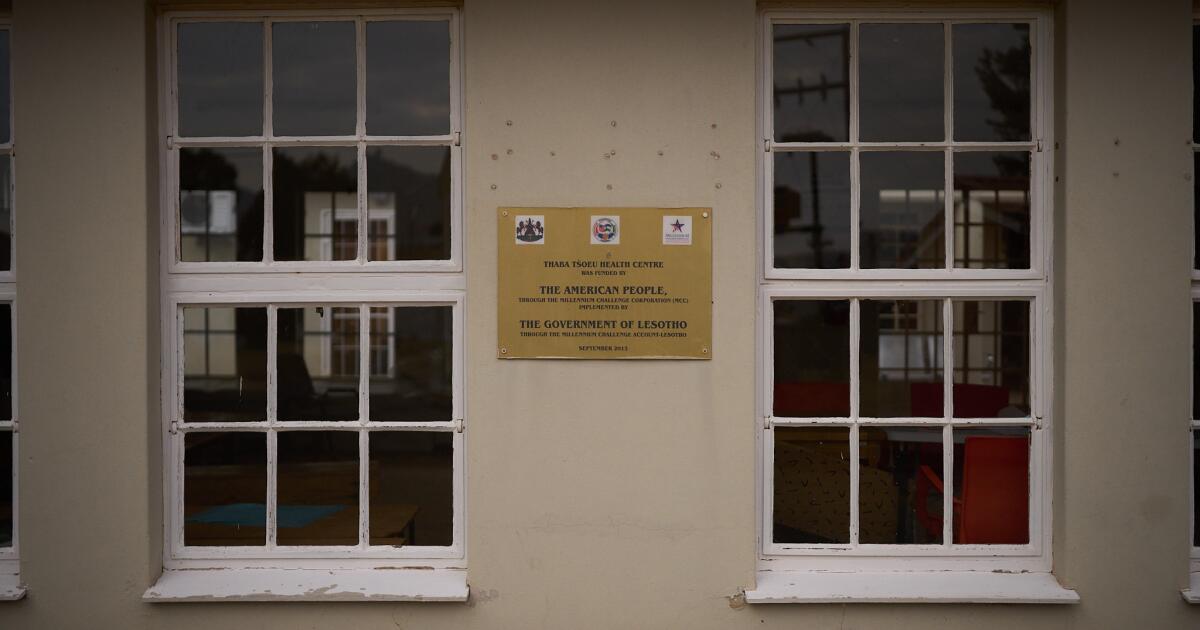
Under its deal, Mozambique will get U.S. support of over $1.8 billion for HIV and malaria programs. Lesotho, one of the poorest countries in the world, clinched a deal worth over $232 million.
In the tiny kingdom of Eswatini, the U.S. committed to provide up to $205 million to support public health data systems, disease surveillance and outbreak response, while the country agreed to increase domestic health expenditures by $37 million.
No deal for South Africa after disputes
South Africa is noticeably absent from the list of signatories following tensions with the Trump administration.
Trump has said he will cut all financial assistance to South Africa over his widely rejected claims that it is violently persecuting its Afrikaner white minority.
The dismantling of USAID resulted in the loss of over $436 million in yearly financing for HIV treatment and prevention in South Africa, putting the program and thousands of jobs in the healthcare industry at risk.
Health compacts with countries that signed deportation deals
At least four of the countries that have reached deals previously agreed to receive third-country deportees from the U.S., a controversial immigration policy that has been a trademark of the Trump administration.
The State Department has denied any linkage between the healthcare compacts and agreements regarding accepting third-country asylum seekers or third-country deportees from the United States. However, officials have said that political considerations unrelated to health issues may be part of the negotiations.
Rwanda, one of the countries with a deportation deal with the U.S., signed a $228-million health pact requiring the U.S. to support it with $158 million.
Uganda, another such country, signed a health deal worth nearly $2.3 billion in which the U.S. will provide up to $1.7 billion. Eswatini also has started receiving flights with deported prisoners from the United States.
Magome and Gumede write for the Associated Press. AP writers Evelyne Musambi in Nairobi, Kenya; Dyepkazah Shibayan in Abuja, Nigeria; Mark Banchereau in Dakar, Senegal; and Matthew Lee in Washington contributed to this report.
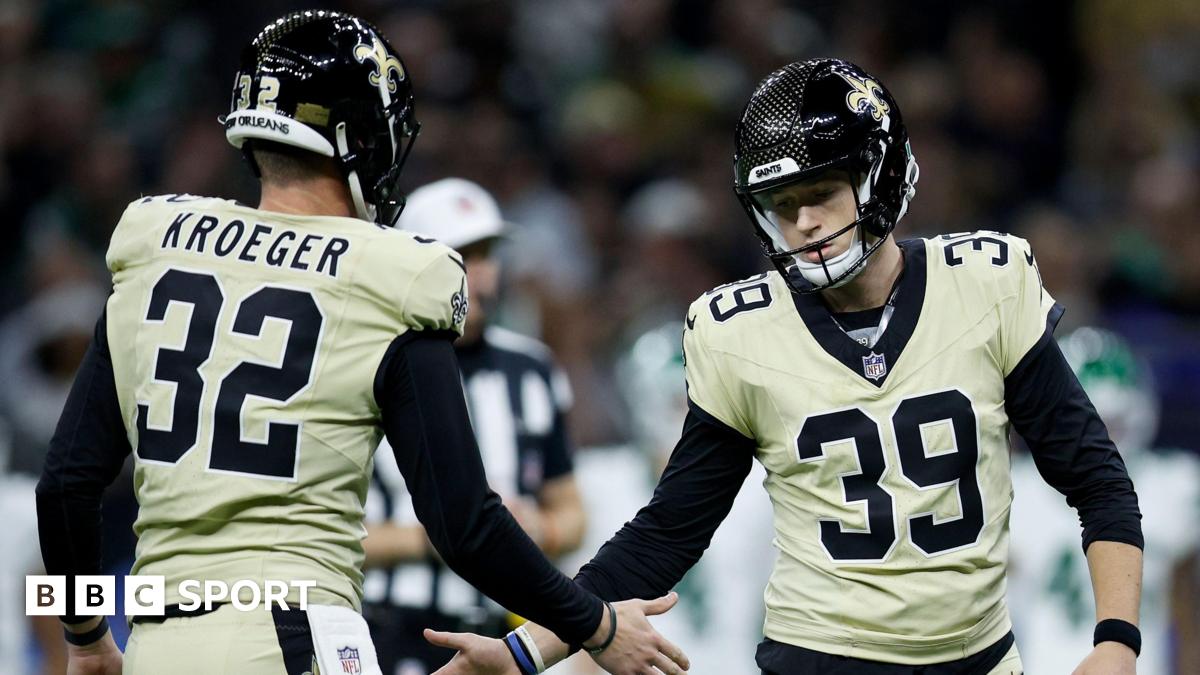
Charlie Smyth celebrated his new three-year contract as he kicked 17 points in the New Orleans Saints’ 29-6 win over the New York Jets.
Former Gaelic footballer Smyth was rewarded for his match-winning kick against the Carolina Panthers with a spot on the Saints’ 53-man roster, along with a new deal.
The 24-year-old either had to be permanently promoted to the roster or released having been elevated from the Saints’ practice squad on three previous occasions.
Smyth had his best showing in the NFL in Sunday’s win over the Jets as he kicked five field goals and landed two extra point attempts.
“I want to give great credit to the offence and defence today. We are starting to play some real complementary football here,” Smyth said after the win.
“The support from everyone in New Orleans has been unreal. This team has stuck together and that is why the wins have started to come.”
In Smyth’s four NFL outings to date, the Saints have won three times and he has had a successful onside kick, which had a 7% success rate, a match-winning kick and 17 points in a single game.
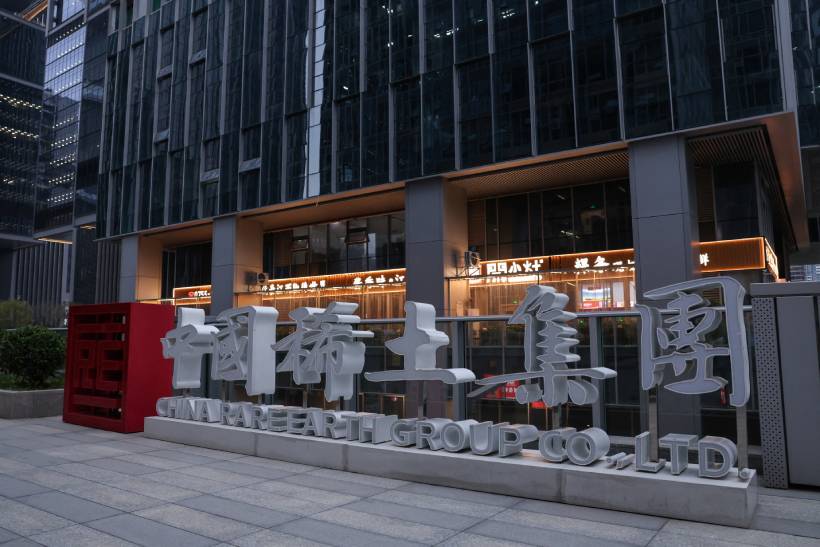
NEWS BRIEF China’s rare-earth magnet exports surged to 6,150 metric tons in November, the second-highest level on record and a 12% increase from October, following the U.S.-China agreement to streamline exports of the critical elements. The recovery comes after China restricted magnet exports in April during the trade war, bringing parts of the global supply […]
With the ongoing fracas over President Trump’s demolition of the White House’s East Wing, a number of other Trump administration-led attempts to remake the architectural landscape of Washington, D.C., have flown largely under the radar. This includes the sale and possible demolition of the Wilbur J. Cohen Building, which was completed in 1940 and was added to the National Register of Historic Places in 2007.
Part of what makes the building so beloved is a series of 1942 frescoes by Ben Shahn titled “The Meaning of Social Security,” commissioned as part of the Roosevelt administration’s robust New Deal art program. In a recent article in the New Republic, architectural historian Gray Brechin is quoted as calling the Cohen building, “a kind of Sistine Chapel of the New Deal.”
The structure, originally known as the Social Security Administration Building, has served as the headquarters for Voice of America since 1954. In March, Trump signed an executive order cutting funding for the agency that oversees VOA, and most of its staff was placed on administrative leave. In June, more than 600 VOA employees received layoff notices, and the service basically shut down.
At the beginning of this year, Congress agreed to sell the Cohen building, which had been suffering from major maintenance issues. The scope of the threat to the building became clear earlier this month when Bloomberg reported that “The White House is independently soliciting bids to recommend the demolition of the historic buildings [including the Cohen building], without the input of the General Services Administration, which maintains government buildings.”
“Federal properties can be sold quickly with limited public input. As powerful interests move in haste to sell this historic building, we call for the process to be paused and conducted with transparency, respect, and public participation,” the petition, which has garnered more than 4,700 signatures, states.
The Shahn frescoes aren’t the only precious New Deal artworks in danger. Other art housed in the Cohen building include murals by Seymour Fogel and Philip Guston.
I’m arts and culture writer Jessica Gelt wondering when enough is enough. Here’s your arts news for the week.
On our radar
Grant Gershon conducts the Los Angeles Master Chorale at Walt Disney Concert Hall.
(Jamie Phan / Los Angeles Master Chorale)
Disney Hall-e-lu-jah It’s hard to imagine the holidays without music, and the Los Angeles Master Chorale has three days of caroling and chorusing that should lift anyone’s seasonal spirits. A new addition to the choir’s traditional offerings is the family-friendly “Carols for Kids” (11 a.m. Saturday. Walt Disney Concert Hall), featuring Youth Chorus LA and designed for even the squirmiest children, 6 and under. That will be followed by the “Festival of Carols” (2 p.m. Saturday. Disney Hall), a program of global holiday music. The group’s performance of “Handel’s Messiah” (7 p.m. Sunday. Disney Hall) is a worthy centerpiece of any celebration. If you’re ready to have your own voice be heard, “Carols on the Plaza” (6 p.m. Monday, across the street at the Music Center’s Jerry Moss Plaza), is your chance to join in on free outdoor caroling with family, friends and fellow Angelenos. Festivities conclude with the Master Chorale’s “Messiah Sing-Along” (7:30 p.m. Monday) back at Disney Hall where 2,000 voices will unite for the “Hallelujah Chorus.” — Kevin Crust Walt Disney Concert Hall, 111 S. Grand Ave.; Music Center, 135 N. Grand Ave., downtown L.A. lamasterchorale.org
You’re reading Essential Arts
The week ahead: A curated calendar
FRIDAY The Fruit Cake Follies In its 27th year, this madcap holiday variety show promises “music, mirth and merriment.” 8:30 p.m. Friday and Saturday, with dinner at 6:30 p.m.; 1 p.m Sunday, with brunch at 11 a.m. Catalina Jazz Club, 6725 Sunset Blvd. Hollywood. catalinajazzclub.com
Guadalupe Maravilla: A Performance Expanding on his solo exhibition “Les soñadores,” the transdisciplinary artist creates a collective ritual combining sound, vibration and healers from around the world alongside L.A.-based artists. 8 p.m. REDCAT, 631 W. 2nd St., downtown L.A. redcat.org
Piotr Beczala The Polish-born tenor, known for his work in opera and the classical vocal canon, performs, accompanied by conductor and pianist Kamal Khan. 7:30 p.m. Broad Stage, Santa Monica College Performing Arts Center, 1310 11th St., Santa Monica broadstage.org
“Wet” by Sahar Khoury at Parker Gallery, 2025
(Sahar Khoury / Parker Gallery)
Sahar Khoury The interdependence of materials and their social and cultural environments inspired the sculptor’s newest solo exhibition, “Wet,” a series of pieces created from ceramic, steel, iron, brass and aluminum. 11 a.m.–6 p.m. Tuesday–Saturday, through Jan. 17. Parker Gallery, 6700 Melrose Ave. parkergallery.com
SATURDAY Christmas Joy Concert The free Third@First concert series continues with a program of carols, classic and new. 4 p.m. First United Methodist Church of Pasadena, 500. E. Colorado Blvd., Pasadena. thirdatfirst.org
Sanaa Lathan and Omar Epps in the romantic drama “Love & Basketball.”
(New Line Cinema)
Love & Basketball Writer-director Gina Prince-Bythewood marks the 25th anniversary of her modern romance classic, starring Sanaa Lathan, Omar Epps, Alfre Woodard and Dennis Haysbert. 7 p.m. Academy Museum, 6067 Wilshire Blvd. academymuseum.org
The cast of “Nutcracker! Magical Christmas Ballet.”
Nutcracker! Magical Christmas Ballet This 80-plus city tour offers a distinct blend of classical ballet with avant-garde circus techniques and global influences, complete with 10-foot-tall animal puppets constructed by Roger Titley. For its 33rd year on the road, the production adds a new character: Sweets the Dog, created by Barry Gordemer of the award-winning puppeteer studio Handemonium. — Ashley Lee Noon, 4 and 8 p.m. Saturday. Wiltern Theatre, 3790 Wilshire Blvd., Los Angeles; and 1:30 and 6:30 p.m. Sunday. La Mirada Theatre for the Performing Arts, 14900 La Mirada Blvd. nutcracker.com
SUNDAY Collecting Impressionism at LACMA This new exhibition traces how the museum built its collection and its pursuit of legitimacy through early acquisitions of American and California Impressionism and donations of paintings by Edgar Degas and Camille Pissarro from major Hollywood collectors. Through Jan. 3, 2027. Los Angeles County Museum of Art, Resnick Pavilion, 5905 Wilshire Blvd. lacma.org
Actor Taylor Nichols, left, and director Whit Stillman at a 20th anniversary screening of “Metropolitan” at the 2010 Sundance Film Festival.
(Jemal Countess / Getty Images)
Metropolitan It’s hard to believe that it’s been 35 years since the young socialites of the “urban haute bourgeoisie” entered our consciousness via filmmaker Whit Stillman’s delightfully droll film and its banter-driven, Oscar-nominated screenplay. Stillman and actor Taylor Nichols will be on hand for a Q&A with the screening. 2 p.m. Aero Theatre, 1328 Montana Ave., Santa Monica. americancinematheque.com
WEDNESDAY
Aloe Blacc and Maya Jupiter host the 2025 L.A. County Holiday Celebration.
(Music Center)
L.A. County Holiday Celebration The Music Center’s annual spectacular features more than 20 local music ensembles, choirs and dance companies. The free, ticketed event will also be broadcast on PBS SoCal. Aloe Blacc and Maya Jupiter are this year’s hosts. 3-6 p.m. Dec. 24. Dorothy Chandler Pavilion, 135 N. Grand Ave., downtown L.A. musiccenter.org
— Kevin Crust
Dispatch: A director with a human touch
Cameron Watson is the new artistic director of Skylight Theatre Company.
(David Zaugh)
Stage director Cameron Watson has one of the best batting averages in town.
His productions of “The Sound Inside” at Pasadena Playhouse, “On the Other Hand, We’re Happy” for Rogue Machine Theatre at the Matrix and “Top Girls” at Antaeus Theatre Company were morale-boosting for a critic in the trenches, offering proof that serious, humane, highly intelligent and happily unorthodox drama was alive and well in Los Angeles.
Watson’s appointment as artistic director of Los Feliz’s Skylight Theatre Company starting Jan. 1 is good news for the city’s theater ecology. Producing artistic director Gary Grossman, who led the company for 40 years with enormous integrity, built the small but ambitious Skylight into an incubator of new work that embraces diversity and the local community.
Developing new plays is fraught with risk. Watson has the both the artistic acumen and audience sensitivity needed to usher Skylight through this perilous moment in the American theater when so many companies seem to be holding on by a thread.
Watson, like Peter Brook before him, knows how to convert an empty space into a realm of magic and meaning. For Watson, the play’s the thing. But for the spark to happen, actors and audience members need a director as intuitively attuned to the uncertain human drama as Skylight Theatre Company’s new leader. (The director’s current production of “Heisenberg” at Skylight ends Sunday.)
— Charles McNulty
Culture news and the SoCal scene
Moving in stereo The most Tony-nominated play in Broadway history, “Stereophonic,” is playing at the Hollywood Pantages Theatre through Jan. 2. Times theater critic Charles McNulty caught opening night and wrote that the first touring production fails to capture the high notes of the Broadway original. A few days later, I sat down for an interview at Amoeba Records with Will Butler, the former Arcade Fire multi-instrumentalist who wrote the music for the show. Our interview took place before Butler got onstage with the cast of the show for a short live in-store performance.
Boiling in Brooklyn Brooklyn was also on McNulty’s itinerary, where he saw Michelle Williams in the new revival of Eugene O’Neill’s “Anna Christie” at St. Ann’s Warehouse. “Michelle Williams seems to have unlimited emotional access. Her inner intensity expresses itself in a frenzy of volcanic feeling that can never be tamped down once it reaches its boiling point,” McNulty writes.
The name game The Kennedy Center continued its Trump-era transformation Thursday after the board voted unanimously to rename the world-famous performing arts venue The Donald J. Trump and the John F. Kennedy Memorial Center for the Performing Arts. It remains unclear if the move is legal, or if the name change will need to be made official via an act of Congress.
Viva Las Vegas I got a look at newly revealed architectural plans for the Las Vegas Museum of Art, which is expected to break ground in 2027. Pritzker Prize-winning architect Diébédo Francis Kéré is designing the city’s first freestanding museum and says his ideas were inspired by the red rocks and canyons of the desert surrounding Sin City.
Enjoying this newsletter? Consider subscribing to the Los Angeles Times
LACMA United Workers at Los Angeles County Museum of art voted to unionize Wednesday. The vote in favor was 96%, and came after LACMA rejected workers’ requests for voluntary recognition. Staffers have expressed disappointment in management over what they are calling its anti-union campaign.
La malchance The Louvre is down on its luck. Maintenance issues have lately plagued the famous Paris museum, and then there was that infamous heist. Now workers have voted to strike over working conditions among other complaints.
Sealing of deal postponed despite decades of preparation.
European farmers are protesting against the EU-Mercosur deal.
That is as signing has been postponed until January, due to disagreements in Europe.
The European-South American deal, planned for more than 25 years, would create the world’s largest free-trade zone.
So, why is there division?
Presenter: Folly Bah Thibault
Guests:
Pieter Cleppe – Editor-in-chief at BrusselsReport.eu Ciaran Mullooly – Member of the European Parliament for the Independent Ireland group Gustavo Ribeiro – Founder and editor-in-chief of the Brazilian Report online newspaper
Only a few years ago, Keith Lee was a professional MMA fighter, doing food delivery and making social media videos to ease his social anxiety.
On Thursday night, however, Lee found himself under the glare of bright lights and walking the red carpet outside the historic Hollywood Palladium on Sunset Boulevard about to be recognized as TikTok’s “Creator of the Year.”
He and hundreds of other creators had gathered for TikTok’s first American awards show. And they had good reason to celebrate.
Only a few minutes before the start of the inaugural show, they got word about a deal that would allow TikTok to keep operating in the U.S. through a joint venture controlled by a group of U.S. investors that includes tech giant Oracle Corp. TikTok confirmed the deal in an email to employees and said it is expected to close next month.
“[TikTok] is the best way to reach people and I know so many people who rely on it to support their families,” said Lee, who has 17.3 million followers of his casual restaurant reviews. “For me, it’s my career now so I can’t imagine it not being around.”
Creators — many of whom are based in Southern California — rely on the app as a key source of income, while businesses and brands turn to the platform and its influencers to promote their products.
Many had worried that the app might disappear after the Supreme Court upheld a ban on the platform because of national security concerns raised by President Trump in 2020.
Trump subsequently allowed TikTok, which has offices in Culver City, to keep operating in the U.S. and in September signed an executive order outlining the new joint venture.
Comedy creator Adam W., who attended the awards show, called the news “game changing.”
With 22.6 million followers on TikTok, Adam W. has amassed a massive audience for his videos that parody pop culture trends.
In one, he’s a contestant on “The Bachelor,” surrounded by a line of lookalike blond models; in another, he’s drinking matcha lattes with Will Smith.
“That’s so good to hear,” said Adam W. of the new ownership. “So many people are able to make careers off of TikTok. There’s so many people out there who go to TikTok to get away from their reality and it means a lot to them, so I think it’s really valuable for us to have.”
TikTok said the awards show is intended to celebrate the influencers who’ve helped transform the app into a global force that has shaped the way younger Americans shop and consume entertainment.
“You represent a truly global community of over 1 billion people on TikTok,” Kim Farrell, the app’s global head of creators, said at the event. “This year, you showed the world just how much impact creators have.”
Despite the historic moment, the awards show was not without technical glitches. Screens that were intended to display clips of contestants and visuals during speeches were dark the entire night.
The two-hour show, in which creators received awards in several categories, featured a range of skits parodying TikTok cultural moments, from Jools Lebron telling the crowd to “be demure,” to Rei Ami of K-Pop Demon Hunters shooting a Labubu cannon into the crowd.
“TikTok definitely changed my life,” Lee said in an interview. “I always planned my life around food, so I’m blessed to just turn the camera on and do the same thing.”
The new ownership of TikTok should allow the app to rebound after it lost market share amid uncertainty over its future, said Max Willens, an analyst at EMarketer.
“This past year, because a lot of advertisers weren’t really sure whether TikTok was going to stay or go, it did kind of slow the momentum that we had seen on that platform,” Willens said. “We think that moving forward that is going to wind up just being a blip.”
United States President Donald Trump announced new agreements aimed at lowering prescription drug prices.
On Friday, alongside leaders from Bristol Myers Squibb, Gilead Sciences, and Merck, among other leading pharma giants, the president announced deals that would cut prices on their medications to match that of the developed nation with the lowest price.
Recommended Stories
list of 4 itemsend of list
“Starting next year, American drug prices will come down fast and furious and will soon be some of the lowest in the developed world,” Trump said.
“This is the biggest thing having to do with drugs in the history of the purchase of drugs.”
Under the deals, each drugmaker will cut prices on some of the drugs sold to the Medicaid programme for low-income people, senior administration officials said, promising “massive savings” on widely used medicines without giving specific figures.
“We were subsidising the entire world. We’re not doing it anymore,” Trump said at a White House news conference, flanked by nine pharma executives.
Mehmet Oz, the director of the Centres for Medicare and Medicaid Service, said Regeneron, Johnson & Johnson, and AbbVie would visit the White House after the holidays for the launch of the government’s TrumpRx website.
US patients currently pay by far the most for prescription medicines, often nearly three times more than in other developed nations, and Trump has been pressuring drugmakers to lower their prices to what patients pay elsewhere.
The details of each deal were not immediately available, but officials said they included agreements to cut cash-pay direct-to-consumer prices of select drugs sold potentially through the TrumpRx.gov website, to launch drugs in the US at prices equal to – not lower than – those in other wealthy nations and to increase manufacturing. In return, companies can receive a three-year exemption from any tariffs.
Drug prices fall
Merck said it will sell its diabetes drugs Januvia, Janumet and Janumet XR – set to face generic competition next year – directly to US consumers at about 70 percent off list prices. If approved, its experimental cholesterol drug enlicitide will also be offered through direct-to-consumer channels.
Enlicitide is one of two Merck drugs expected to receive a speedy review under the FDA’s new, fast-track pathway, the Reuters news agency has previously reported.
Amgen said it will expand its direct-to-patient programme to include migraine drug Aimovig and rheumatoid arthritis medicine Amjevita, offering both at $299 a month – nearly 60 percent and 80 percent below current US list prices.
In July, Trump sent letters to leaders of 17 major pharmaceutical companies, outlining how they should provide so-called most-favoured -nation prices to the US government’s Medicaid health programme for low-income people, and guarantee that new drugs will not be launched at prices above those in other high-income countries.
So far, five companies have struck deals with the administration to rein in prices. They are Pfizer, Eli Lilly, AstraZeneca, Novo Nordisk and EMD Serono, the US division of Germany’s Merck.
A portion of revenues from each company’s foreign sales will also be remitted to the US to offset costs, officials said.
The companies pledged together to invest more than $150bn in the US for R&D and manufacturing, according to officials, although it was unclear whether that included earlier commitments. Several also agreed to donate drug ingredients to the US strategic reserve.
Trump has long focused on the disparity between drug prices in the US and other wealthy countries, which have government-run health systems that negotiate price discounts.
The spectre of tighter price controls by the US government initially spooked investors, but the terms of the deals announced so far have calmed many of those fears.
Analysts have noted that Medicaid, which accounts for only approximately 10 percent of US drug spending, already benefits from substantial price discounts, exceeding 80 percent in some cases.
Walt Disney Co. is expanding its presence in the Middle East, inking a deal with Saudi media conglomerate MBC Group and UAE firm Anghami to form a streaming bundle.
The bundle will allow customers in Bahrain, Kuwait, Oman, Qatar, Saudi Arabia and the UAE to access a trio of streaming services — Disney+; MBC Group’s Shahid, which carries Arabic originals, live sports and events; and Anghami’s OSN+, which carries Arabic productions as well as Hollywood content.
The trio bundle costs AED89.99 per month, which is the price of two of the streaming services.
“This deal reflects a shared ambition between Disney+, Shahid and the MBC Group to shape the future of entertainment in the Middle East, a region that is seeing dynamic growth in the sector,” Karl Holmes, senior vice president and general manager of Disney+ EMEA, said in a statement.
Disney has already indicated it plans to grow in the Middle East.
Earlier this year, the company announced it would be building a new theme park in Abu Dhabi in partnership with local firm Miral, which would provide the capital, construction resources and operational oversight. Under the terms of the agreement, Disney would oversee the parks’ design, license its intellectual property and provide “operational expertise,” as well as collect a royalty.
Disney executives said at the time that the decision to build in the Middle East was a way to reach new audiences who were too far from the company’s current hubs in the U.S., Europe and Asia.
TikTok has finalized a deal with Oracle and two other investors that will allow the popular social video platform to continue its business in U.S.
The deal, expected to close on Jan. 22, will be 50% held by a new investor consortium that includes tech giant Oracle, Silver Lake and MGX, a technology fund in the United Arab Emirates (with each holding 15%). The rest of the group is made up of ByteDance owning 19.19% and affiliates of existing ByteDance investors holding 30.1%, TikTok said in a memo to employees.
“With these agreements in place, our focus must stay where it’s always been — firmly on delivering for our users, creators, businesses and the global TikTok community,” TikTok CEO Shou Zi Chew wrote in his memo.
The company’s future for many years in the U.S. had been uncertain, amid security concerns among legislators about ByteDance’s ties to China. TikTok’s parent company, ByteDance had been under pressure to divest its ownership in the app’s U.S. operations or face a nationwide ban, due to a law Congress passed that went into effect in January. President Trump has signed orders that have allowed TikTok to keep operating in the country and in September signed an executive order outlining the new joint venture.
The venture, which would oversee U.S. data protection, algorithm security, content moderation and software assurance, would be governed by a seven-member board that is majority American, Chew said in his memo. Oracle will be the security partner responsible for “auditing and validating compliance with the agreed upon National Security Terms,” Chew wrote.
Oracle Chief Executive Larry Ellison is also a party in effort to buy Warner Bros. Discovery.
Oracle did not return a request for comment. Silver Lake declined to comment. The White House on Thursday referred questions about the deal back to TikTok. In September, Trump said that Chinese President Xi Jinping had approved the deal.
“These safeguards would protect the American people from the misuse of their data and the influence of a foreign adversary, while also allowing the millions of American viewers, creators, and businesses that rely on the TikTok application to continue using it,” Trump stated in his executive order.
The announcement will come as a relief to some creators and businesses who rely on TikTok to entertain and reach fans and customers.
“I hope it just stays true to the platform and the independence we get from it,” said Yasmine Sahide, who posts comedy videos on TikTok and has 2.4 million followers. “I hope we’re still able to monetize our videos the same way because without that, I think a lot of people would leave or feel uninspired.”
Keith Lee, a TikTok creator who posts videos about food, said he expects the algorithm to change.”I just hope that we can still stay connected with our community and reach an audience the same way as before,” said Lee, who has 17.3 million followers.
Many TikTok creators are based in Southern California, close to TikTok’s office in Culver City. Over the years when TikTok’s future appeared uncertain, some of those creators diversified, posting their content to other platforms like YouTube and Instagram.
“It’s a smart way to avoid ownership and data issues,” said Ray Wang, principal analyst at Constellation Research, of the deal.
If finalized, the deal would remove a persistent issue in Beijing-Washington relations and signal progress in broader talks. But it would also deprive China’s most valuable private company of total control of an American social media phenomenon.
ByteDance’s coveted algorithms are considered central to TikTok’s business. Under the the deal proposed by Washington, ByteDance will license its AI recommendation technology to a newly created U.S. TikTok entity, which will use the existing algorithm to retrain a new system that is secured by Oracle, according to Bloomberg. The algorithm will be retrained on U.S. user data by the U.S. joint venture, according to TikTok.
Some industry observers questioned whether the deal addresses the larger concerns surrounding TikTok in the law Congress passed.
“While these executive orders positively have allowed the platform to operate and maintain the venue for speech, they do not resolve the underlying concerns about the law, which could be applied to other platforms in the future and raise questions about executive power,” said Cato Institute senior fellow in tech policy Jennifer Huddleston in a statement.
“Just because TikTok remains available under such orders does not mean that the policy concerns about the underlying law have been resolved.”
EU delays Mercosur trade deal until January amid farmer protests and opposition from France and Italy.
The European Union has delayed a massive free-trade deal with South American countries amid protests by EU farmers and as last-minute opposition by France and Italy threatened to derail the agreement.
European Commission chief spokesperson Paula Pinho confirmed on Thursday that the signing of the trade pact between the EU and South American bloc Mercosur will be postponed until January, further delaying a deal that had taken some 25 years to negotiate.
Recommended Stories
list of 4 itemsend of list
Commission President Ursula von der Leyen was expected to travel to Brazil on Saturday to sign the deal, but needed the backing of a broad majority of EU members to do so.
The Associated Press news agency reported that an agreement to delay was reached between von der Leyen, European Council President Antonio Costa and Italian Prime Minister Giorgia Meloni – who spoke at an EU summit on Thursday – on the condition that Italy would vote in favour of the agreement in January.
French President Emmanuel Macron had also pushed back against the deal as he arrived for Thursday’s summit in Brussels, calling for further concessions and more discussions in January.
Macron said he has been in discussions with Italian, Polish, Belgian, Austrian and Irish colleagues, among others, about delaying the signing.
“Farmers already face an enormous amount of challenges,″ the French leader said.
The trade pact with Argentina, Brazil, Bolivia, Paraguay and Uruguay would be the EU’s largest in terms of tariff cuts.
But critics of the deal, notably France and Italy, fear an influx of cheap commodities that could hurt European farmers, while Germany, Spain and Nordic countries say it will boost exports hit by United States tariffs and reduce reliance on China by securing access to key minerals.
Brazil’s President Lula says Italy’s PM Meloni asked for ‘patience’
The EU-Mercosur agreement would create the world’s biggest free-trade area and help the 27-nation European bloc to export more vehicles, machinery, wines and spirits to Latin America at a time of global trade tensions.
Al Jazeera’s Dominic Kane, reporting from Berlin, said Germany, Spain and the Nordic countries were “all lobbying hard in favour of this deal”. But ranged against them were the French and Italian governments because of concerns in their powerful farming sectors.
“Their worry being that their products, such as poultry and beef, could be undercut by far cheaper imports from the Mercosur countries,” Kane said.
“So no signing in December. The suggestion being maybe there will be a signing in mid-January,” he added.
“But there must now be a question about what might happen between now and mid-January, given the powerful forces ranged against each other in this debate,” he added.
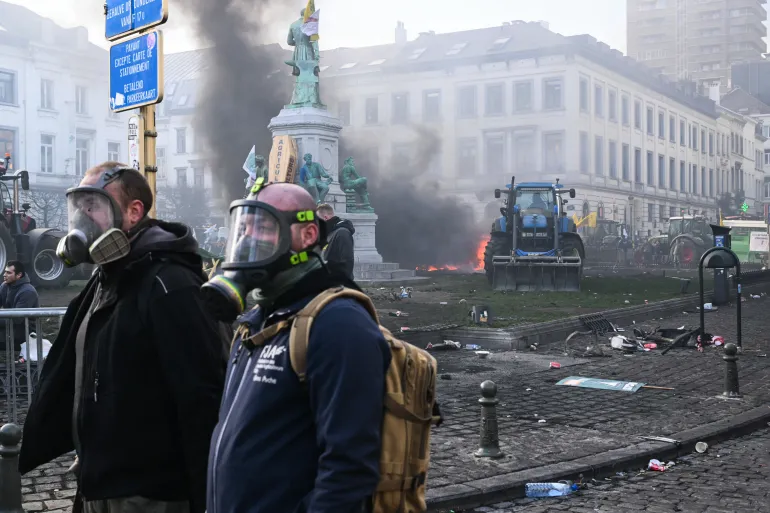
Farmers wear gas masks at the Place du Luxembourg near the European Parliament, during a farmers’ protest on December 18, 2025 [Nicolas Tucat/AFP]
Mercosur nations were notified of the move, a European Commission spokeswoman said, and while initially reacting with a now-or-never ultimatum to its EU partners, Brazil opened the door on Thursday to delaying the deal’s signature to allow time to win over the holdouts.
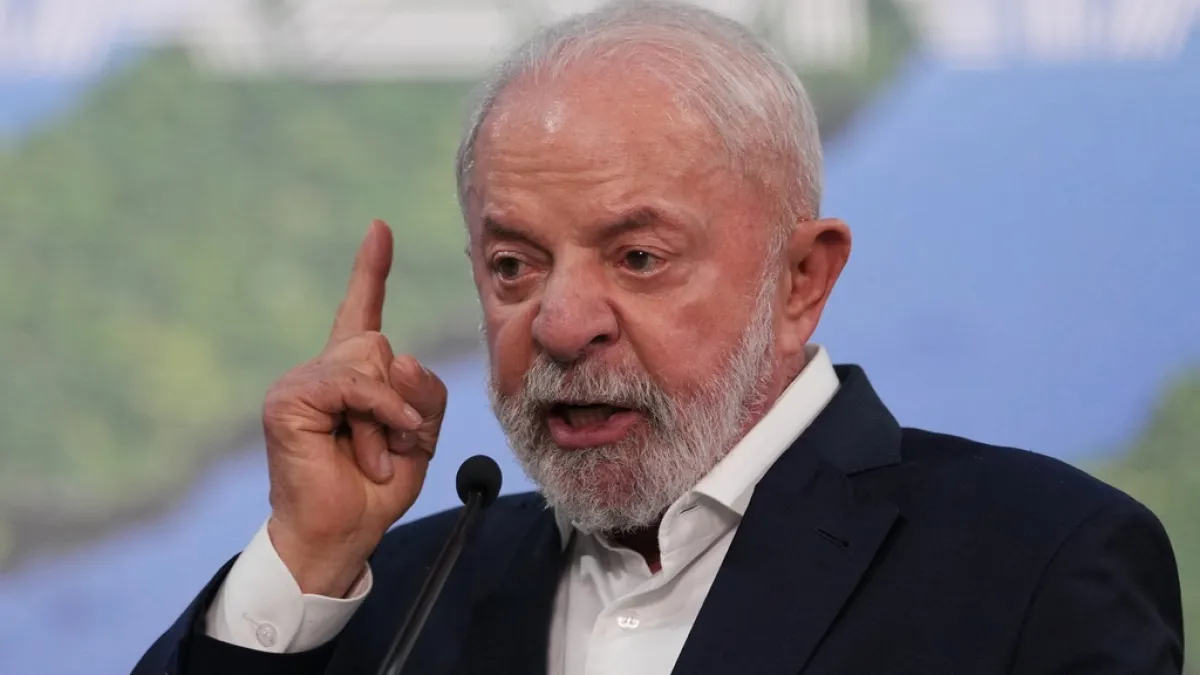
Brazil’s President Luiz Inacio Lula da Silva said Italy’s Meloni had asked him for “patience” and had indicated that Italy would eventually be ready for the agreement.
The decision to delay also came hours after farmers in tractors blocked roads and set off fireworks in Brussels to protest the deal, prompting police to respond with tear gas and water cannon.
Protesting farmers – some travelling to the Belgian capital from as far away as Spain and Poland – brought potatoes and eggs to throw and waged a furious back-and-forth with police while demonstrators burned tyres and a faux wooden coffin bearing the word “agriculture”.
The European Parliament evacuated some staff due to damage caused by protesters.
Kitsch Liao, associate director at the Atlantic Council Global China Hub, says Beijing’s reaction to the largest US arms sale to Taiwan is an information warfare tactic.
Thousands protest as EU leaders clash over trade pact farmers fear will flood Europe with cheaper South American goods.
Published On 18 Dec 202518 Dec 2025
Share
Hundreds of tractors have clogged the streets of Brussels as farmers converged on the Belgian capital to protest against the contentious trade agreement between the European Union and South American nations they say will destroy their livelihoods.
The demonstrations erupted on Thursday as EU leaders gathered for a summit where the fate of the Mercosur deal hung in the balance. More than 150 tractors blocked central Brussels, with an estimated 10,000 protesters expected in the European quarter, according to farm lobby Copa-Cogeca.
Recommended Stories
list of 2 itemsend of list
It made for a twin-tracked day of febrile tension outside and inside at the EU summit as leaders were perhaps more focused on a vote to determine whether they are able to use nearly $200bn in frozen Russian assets to support Ukraine over the next two years.
Outside the gilded halls on the streets, farmers hurled potatoes and eggs at police, set off fireworks and firecrackers, and brought traffic to a standstill.
Authorities responded with tear gas and water cannon, setting up roadblocks and closing tunnels around the city. One tractor displayed a sign reading: “Why import sugar from the other side of the world when we produce the best right here?”
“We’re here to say no to Mercosur,” Belgian dairy farmer Maxime Mabille said, accusing European Commission chief Ursula von der Leyen of trying to “force the deal through” like “Europe has become a dictatorship”.
A protester throws an object, as farmers protest against the EU-Mercosur free-trade deal in Brussels, Belgium [Yves Herman/Reuters]
Protesters fear an influx of cheaper agricultural products from Brazil and neighbouring countries would undercut European producers. Their concerns centre on beef, sugar, rice, honey and soya beans from South American competitors facing less stringent regulations, particularly on pesticides banned in the EU.
“We’ve been protesting since 2024 in France, in Belgium and elsewhere,” said Florian Poncelet of Belgian farm union FJA. “We’d like to be finally listened to.”
France and Italy now lead opposition to the deal, with President Emmanuel Macron declaring that “we are not ready” and the agreement “cannot be signed” in its current form.
France has coordinated with Poland, Belgium, Austria and Ireland to force a postponement, giving critics sufficient votes within the European Council to potentially block the pact.
However, Germany and Spain are pushing hard for approval. German Chancellor Friedrich Merz warned that decisions “must be made now” if the EU wants to “remain credible in global trade policy”, while Spanish Prime Minister Pedro Sanchez argued the deal would give Europe “geo-economic and geopolitical weight” against adversaries.
The agreement, 25 years in the making, would create the world’s largest free-trade area covering 780 million people and a quarter of global gross domestic product (GDP).
Supporters say it offers a counterweight to China and would boost European exports of vehicles, machinery and wines amid rising US tariffs.
Despite provisional safeguards negotiated on Wednesday to cap sensitive imports, opposition has intensified. Von der Leyen remains determined to travel to Brazil this weekend to sign the deal, but needs backing from at least two-thirds of EU nations.
Brazil’s President Luiz Inacio Lula da Silva issued an ultimatum on Wednesday, warning that Saturday represents a “now or never” moment, adding that “Brazil won’t make any more agreements while I’m president” if the deal fails.
IF you want to make 2026 the year of family-friendly days out from theme parks to aquariums, castles and waxwork museums – take advantage of the Merlin Black Friday Sale.
You can save up to £60 on an annual pass that will allow you entry to around 20 attractions across the country – but the offer ends very soon.
Sign up for the Travel newsletter
Thank you!
The Merlin annual pass allows entry into theme parks- like Alton TowersCredit: AlamyFor the little ones, head to Cbeebies Land also in Alton Towers
Until December 21, you can get £60 off a Merlin Essential yearly pass, costing just £79 rather than £139.
With this, you can enter over 20 top attractions for 339 days out of the year.
Some of the attractions include Alton Towers which is perfect for families who love rollercoasters, or those wanting to try out the Bluey ride in its CBeebies Land.
For foodies, in Birmingham there’s Cadbury World families can uncover the story of Cadbury chocolate – and get to taste some too.
Jordan Middleton, Head of Merlin Annual Pass, commented on the sale: “Just in time for the festive season, our Black Friday Magic Sale has great savings of up to £60.
“With offers starting at just £79 – which is equal to just £1.52 per week – Merlin Annual Pass is the gift for those who you have no idea what to buy.”
Other attractions included in the pass are the London Eye and London DungeonCredit: AlamyThere’s also Warwick Castle for history buffsCredit: Alamy
There are two other pass options.
One is the Gold Pass which is also in the Black Friday sale for £199 rather than £239 – a saving of £40.
This has extra benefits including free parking, up to 20 per cent discount on food, drinks and retail, up to 20 per cent off short breaks at themed Resort hotels.
And there’s discounted entry for family and friends and less restricted access to the attractions.
The Platinum annual pass remains at £299 per person per year with all the perks of the Gold Pass, along with guaranteed entry all year round with no restrictions.
Platinum Passholders will also receive free Fastrack Resort Theme Parks and free tickets for family and friends, with no restrictions throughout the year.
All attractions included in the Merlin yearly passes…
Alton Towers Resort
Chessington World of Adventures Resort
Legoland Windsor Resort
London Eye
Thorpe Park
Sea LIFE – London, Birmingham, Manchester, Blackpool, Brighton, Weymouth, Great Yarmouth, Hunstanton, Scarborough, Loch Lomond
Warwick Castle
Madame Tussauds, London
Shrek’s Adventure! London
Legoland Discovery Centre, Birmingham & Manchester
Israeli Prime Minister Benjamin Netanyahu has announced ‘the largest gas deal in Israel’s history’, worth around $35 billion, with Egypt. Cairo has been a vocal critic of Israel’s genocide in Gaza, but experts say the country is facing an energy crisis.
Dec. 18 (UPI) — The United States has approved a massive $11.1 billion arms deal with Taiwan, the self-government Asian island announced Thursday.
The U.S. Congress was informed of the sale on Wednesday, the president’s office said in a statement.
The package includes eight items, such as HIMARS rocket systems, TOW missiles, Javelin anti-tank missiles, anti-armor loitering munition systems, spare attack helicopter parts and the Taiwan Tactical Network military communication platform and Tactical Awareness Kit, among other lethal equipment.
Taiwan’s foreign ministry said in a statement that it “welcomed” the announcement and expressed its “sincere appreciation for the United States’ long-standing support for regional security and Taiwan’s self-defense.
The arms sale is the second to Taiwan of President Donald Trump’s second administration and comes as China increases its military pressure on the self-governing island.
Hours prior to the deal being announced, Taiwan’s Ministry of National Defense said 40 sorties of Chinese fighter jets and eight navy vessels were detected operating around the island. Of the fighter jets, 26 had crossed the median line and entered Taiwan’s northern, central, southwestern and eastern Air Defense Identification Zone.
A day earlier, 23 sorties of fighter jets were detected and nine fighter jets and seven navy vessels were spotted a day before that.
China views Taiwan as a breakaway province and has vowed to take it back by force if necessary. Taiwan is a self-governing island that Beijing has never ruled.
The office of Taiwanese President Lai Ching-te said the arms deal highlights the close partnership between the two countries and demonstrates “the importance the U.S. government attaches to Taiwan’s national defense needs.”
Presidential Office spokesperson Karen Kuo added that due to increasing security concerns, Taiwan will raise defense spending to more than 3% of GDP next year and aims for it to be 5% by 2030.
“Taiwan will continue to reform national defense, strengthen whole-of-society defense resilience, demonstrate our determination for self-defense and maintain peace through strength,” Kuo said.
The U.S.-Taiwan Business Council said it was a record single U.S. security package for Taiwan and was in response to the threat posed by China and a potential Beijing ground invasion.
“We continue to see the prioritization of platforms and munitions that address a D-Day-style attack on the island,” USTBC President Rupert Hammond-Chamber said in a statement.
Huge US arms package for Taiwan includes HIMARS rocket systems, howitzer artillery, antitank missiles, and drones.
Published On 18 Dec 202518 Dec 2025
Share
The United States has approved $11.1bn in arms sales to Taiwan, one of Washington’s largest-ever weapons packages for the self-ruled island, which Beijing has promised to unify with mainland China.
The US State Department announced the deal late on Wednesday during a nationally televised address by President Donald Trump.
Recommended Stories
list of 4 itemsend of list
Weapons in the proposed sale include 82 High Mobility Artillery Rocket Systems, or HIMARS, and 420 Army Tactical Missile Systems, or ATACMS – worth more than $4bn – defence systems that are similar to what the US had been providing Ukraine to defend against Russian aerial attacks.
The deal also includes 60 self-propelled howitzer artillery systems and related equipment worth more than $4bn and drones valued at more than $1bn.
Other sales in the package include military software valued at more than $1bn, Javelin and TOW missiles worth more than $700m, helicopter spare parts worth $96m and refurbishment kits for Harpoon missiles worth $91m.
In a series of separate statements announcing details of the weapons deal, the Pentagon said the sales served US national, economic and security interests by supporting Taiwan’s continuing efforts to modernise its armed forces and to maintain a “credible defensive capability”.
Taiwan’s defence ministry and presidential office welcomed the news while China’s foreign ministry did not immediately respond to a request for comment from the Reuters news agency.
Washington’s huge sale of arms to Taiwan will likely infuriate China, which claims Taiwan is part of its territory and has threatened to use force to bring it under its control.
“The United States continues to assist Taiwan in maintaining sufficient self-defence capabilities and in rapidly building strong deterrent power,” Taiwan’s defence ministry said in a statement.
Taiwan presidential office spokesperson Karen Kuo said Taiwan would continue to reform its defence sector and “strengthen whole-of-society defence resilience” to “demonstrate our determination to defend ourselves, and safeguard peace through strength”.
China’s Taiwan Affairs Office said on Wednesday that it opposed efforts by the US Congress to pass bills “related to Taiwan and firmly opposes any form of military contact between the US and Taiwan”.
“We urge the US to abide by the one China principle and the provisions of the three Sino-US joint communiques : Stop ‘arming Taiwan’, stop reviewing relevant bills, and stop interfering in China’s internal affairs,” the office’s spokesperson Zhu Fenglian said in a statement.
Zhu said Taiwan’s political leaders were pursuing “independence”, and were “willing to let external forces turn the island into a ‘war porcupine’,” which could result in the population becoming “cannon fodder” and “slaughtered at will, which is despicable”.
Taiwan’s President William Lai Ching-te last month announced a $40bn supplementary defence budget, to run from 2026 to 2033, saying there was “no room for compromise on national security”.
Brazilian president says it is now or never after Italy joins France in saying it is not ready to sign trade deal.
Published On 17 Dec 202517 Dec 2025
Share
Brazilian President Luiz Inacio Lula da Silva has warned he may abandon a long-awaited trade deal between members of the South American bloc Mercosur and the European Union after key countries sought a delay.
The Brazilian leader issued the threat on Wednesday after Italy joined fellow heavyweight France in saying it was not ready to commit to the pact to create the world’s biggest free-trade area.
Recommended Stories
list of 4 itemsend of list
The EU had expected its 27 member states to approve the deal in time for European Commission President Ursula von der Leyen to fly to Brazil to sign an agreement with the host, along with Mercosur partners Argentina, Paraguay and Uruguay, on Saturday.
“I’ve already warned them: If we don’t do it now, Brazil won’t make any more agreements while I’m president,” Lula told a cabinet meeting.
“We have given in on everything that diplomacy could reasonably concede.”
‘Premature’ to sign: Meloni
The deal, more than two decades in the making, has been keenly backed by economic powerhouse Germany, along with Spain and the Nordic countries, amid rising Chinese competition and recent United States tariffs, which have increased the incentive to diversify trade.
It would allow the EU to export more vehicles, machinery, spirits and wine to Latin America, and more beef, sugar, rice, honey and soya beans to flow in the opposite direction.
France, eager to protect its agriculture industry, had already called for a delay on a vote to approve the deal, and gained the support necessary to potentially block the agreement when Italian Prime Minister Giorgia Meloni said on Wednesday that Rome was also not ready.
“It would be premature to sign the deal in the coming days,” she told parliament, saying that some of the safeguards Italy is seeking on behalf of farmers were yet to be finalised.
She said Italy did not seek to block the deal altogether, and was “very confident” that her government’s concerns would have been addressed to allow it to be signed early next year,
French President Emmanuel Macron told a cabinet meeting on Wednesday that his government would “firmly oppose” any attempts to force through the deal.
Hungary and Poland are also lukewarm on the agreement.
By contrast, German Chancellor Friedrich Merz said Wednesday he would push “intensively” for the bloc to approve the deal by the year’s end, in what he described as a test of the EU’s “ability to act”.
EU reaches agreement on agricultural safeguards
In an effort to allay some of the concerns, the EU struck a provisional deal on Wednesday to set tighter controls on imports of farm products, amid a background of farmer protests against the deal.
It determined the trigger for launching an investigation into such imports if import volumes rose by more than 8 percent per year or prices fell by that amount in one or more EU members.
EU leaders will discuss the matter at a Brussels summit on Thursday, a commission spokesman said.
Warner Bros. Discovery has sharply rejected Paramount’s latest offer, alleging the Larry Ellison family has failed to put real money behind Paramount’s $78-billion bid for Warner’s legendary movie studio, HBO and CNN.
Paramount “has consistently misled WBD shareholders that its proposed transaction has a ‘full backstop’ from the Ellison family,” Warner Bros. Discovery’s board wrote in a Wednesday letter to its shareholders filed with the Securities & Exchange Commission.
“It does not, and never has,” the Warner board said.
For Warner, what was missing was a clear declaration from Paramount that the Ellison family had agreed to commit funding for the deal. A Paramount representative was not immediately available for comment Wednesday.
The Warner auction has taken a nasty turn. Last week, Paramount launched a hostile takeover campaign for Warner after losing the bidding war to Netflix. Warner board members unanimously approved Netflix’s $72-billion deal for the Warner Bros. film and television studios, HBO and HBO Max.
In its letter, the Warner board reaffirmed its support for Netflix’s proposal, saying it represented the best deal for shareholders. Warner board members urged investors not to tender their shares to Paramount.
Board members said they were concerned that Paramount’s financing was shaky and the Ellison family’s assurances were far from ironclad. Warner also said Paramount’s proposal contained troubling caveats, such as language in its documents that said Paramount “reserve[d] the right to amend the offer in any respect.”
The Warner board argued that its shareholders could be left holding the bag.
Paramount Chief Executive David Ellison has argued his $78-billion deal is superior to Netflix’s proposal.
(Evan Agostini / Evan Agostini/invision/ap)
Paramount Chairman David Ellison has championed Paramount’s strength in recent weeks saying his company’s bid for all of Warner Bros. Discovery, which includes HBO, CNN and the Warner Bros. film and television studios, was backed by his wealthy family, headed by his father, Oracle co-founder Larry Ellison, one of the world’s richest men.
In its letter last week to shareholders, asking for their support, Ellison wrote that Paramount delivered “an equity commitment from the Ellison family trust, which contains over $250 billion of assets,” including more than 1 billion Oracle shares.
In regulatory filings, Paramount disclosed that, for the equity portion of the deal, it planned to rely on $24 billion from sovereign wealth funds representing the royal families of Saudi Arabia, Qatar and Abu Dhabi as well as $11.8 billion from the Ellison family (which also holds the controlling shares in Paramount). This week, President Trump’s son-in-law Jared Kushner’s Affinity Partners private equity firm pulled out of Paramount’s financing team.
Paramount’s bid would also need more than $60 billion in debt financing.
Paramount has made six offers for Warner Bros., and its “most recent proposal includes a $40.65 billion equity commitment, for which there is no Ellison family commitment of any kind,” the Warner board wrote.
“Instead, they propose that [shareholders] rely on an unknown and opaque revocable trust for the certainty of this crucial deal funding,” the board said.
Throughout the negotiations, Paramount, which trades under the PSKY ticker, failed to present a solid financing commitment from Larry Ellison — despite Warner’s bankers telling them that one was necessary, the board said.
“Despite … their own ample resources, as well as multiple assurances by PSKY during our strategic review process that such a commitment was forthcoming – the Ellison family has chosen not to backstop the PSKY offer,” Warner’s board wrote.
Board members argued that a revocable trust could always be changed. “A revocable trust is no replacement for a secured commitment by a controlling stockholder,” according to the board letter.
David Ellison has insisted Paramount’s Dec. 4 offer of $30 a share was superior to Netflix’s winning bid. Paramount wants to buy all of Warner Bros. Discovery, while Netflix has made a deal to take Warner’s studios, its spacious lot in Burbank, HBO and HBO Max streaming service.
Paramount’s lawyers have argued that Warner tipped the auction to favor Netflix.
Paramount, which until recently enjoyed warm relations with President Trump, has long argued that its deal represents a more certain path to gain regulatory approvals. Trump’s Department of Justice would consider any anti-trust ramifications of the deal, and in the past, Trump has spoken highly of the Ellisons.
However, Warner’s board argued that Paramount might be providing too rosy a view.
“Despite PSKY’s media statements to the contrary, the Board does not believe there is a material difference in regulatory risk between the PSKY offer and the Netflix merger,” the Warner board wrote. “The Board carefully considered the federal, state, and international regulatory risks for both the Netflix merger and the PSKY offer with its regulatory advisors.”
The board noted that Netflix agreed to pay a record $5.8 billion if its deal fails to clear the regulatory hurdles.
Paramount has offered a $5 billion termination fee.
Should Warner abandon the transaction with Netflix, it would owe Netflix a $2.8 billion break-up fee.
Warner also pointed to Paramount’s promises to Wall Street that it would shave $9 billion in costs from the combined companies. Paramount is in the process of making $3 billion in cuts since the Ellison family and RedBird Capital Partners took the helm of the company in August.
Netflix and iHeartMedia announced Tuesday they have an exclusive video partnership deal to bring more than 15 original podcasts, including “The Breakfast Club,” true crime podcast “My Favorite Murder” and Chelsea Handler’s “Dear Chelsea” to the subscription streaming service.
The multi-year deal, which launches in early 2026, includes new episodes from the podcasts and some library episodes. The video podcasts will first roll out on Netflix in the U.S. and later to other markets. Netflix declined to disclose the financial terms of the deal.
The announcement comes as Netflix is adding more video podcasts to its lineup to diversify the content on its streaming service and better compete with YouTube. Several of the iHeart podcasts involved in the deal, including “My Favorite Murder,” have posted videos of their podcasts on Google’s video platform prior to the deal’s announcement.
“With this partnership we are incredibly excited to offer our members such unmatched variety, and to deliver highly entertaining podcasts featuring some of the world’s most dynamic personalities,” said Lauren Smith, Netflix’s vice president of content licensing and programming strategy in a statement.
In October, Netflix announced next year it would stream 16 Spotify video podcasts, including sports audio programs like “The Bill Simmons Podcast” and “The Ringer Fantasy Football Show.”
Video podcasts have become more popular among audio listeners. Roughly 70% of podcast listeners prefer their shows with video, according to a Cumulus Media study. Some of the programs also have huge followings — for example, “My Favorite Murder,” with hosts Karen Kilgariff and Georgia Hardstark, has generated about 2 billion lifetime downloads according to iHeart and Netflix in a press release.
Other video podcasts coming to Netflix include comedy podcast “This is Important,” mental health podcast “The Psychology of your 20s” and history podcast “Behind the Bastards.”
iHeart will keep its audio-only rights and distribution as part of the deal, with its podcasts continuing to be on iHeartRadio and “everywhere podcasts are heard,” the companies said. iHeart did not immediately return a request for comment on the financial terms of the Netflix deal.
“Netflix has a leading video-first service, and this partnership perfectly complements our strong audio foundation,” Bob Pittman, iHeartMedia CEO in a statement. “Working with Netflix—an important leader in entertainment— gives fans one more way to connect with the personalities they love and opens the door to new audiences, including viewers discovering these shows for the first time.”
US President Donald Trump has said that an agreement to end Russia’s war on Ukraine is “closer than ever” after key leaders held talks in Berlin, but several officials said that significant differences remain over territorial issues.
Trump told reporters in the Oval Office on Monday that he had “very long and very good talks” with Ukrainian President Volodymyr Zelenskyy and the leaders of France, Germany, the United Kingdom and NATO.
Recommended Stories
list of 4 itemsend of list
“We’re having tremendous support from European leaders. They want to get it [the war] ended also,” he said.
“We had numerous conversations with President [Vladimir] Putin of Russia, and I think we’re closer now than we have been, ever, and we’ll see what we can do.”
Zelenskyy had earlier said that negotiations with US and European leaders were difficult but productive.
The high-level discussions, involving Zelenskyy, a US delegation led by envoy Steve Witkoff, Trump’s son-in-law, Jared Kushner, and European leaders, took place in Berlin over two days amid mounting pressure from Washington for Kyiv to make concessions to Moscow to end one of Europe’s deadliest conflicts since World War II.
In a statement following the talks, European leaders said they and the US were committed to working together to provide “robust security guarantees” to Ukraine, including a European-led “multinational force Ukraine” supported by the US.
They said the force’s work would include “operating inside Ukraine” as well as assisting in rebuilding Ukraine’s forces, securing its skies and supporting safer seas. They said that Ukrainian forces should remain at a peacetime level of 800,000.
Two US officials, speaking to the Reuters news agency, described the proposed protections as “Article 5-like”, a reference to NATO’s Article 5 mutual defence pledge.
Ukraine had earlier signalled it may be willing to abandon its ambition to join the NATO military alliance in exchange for firm Western security guarantees.
Speaking to reporters in Berlin, Zelenskyy said that Kyiv needed a clear understanding of the security guarantees on offer before making any decisions on territorial control under a potential peace settlement. He added that any guarantees must include effective ceasefire monitoring.
Ukrainian officials have been cautious about what form such guarantees could take. Ukraine received security assurances backed by the US and Europe after gaining independence in 1991, but those did not prevent Russia’s invasions in 2014 and 2022.
German Chancellor Friedrich Merz said Washington had offered “considerable” security guarantees during the Berlin talks.
“What the US has placed on the table here in Berlin, in terms of legal and material guarantees, is really considerable,” Merz said at a joint news conference with Zelenskyy.
“We now have the chance for a real peace process,” he said, adding that territorial arrangements remain a central issue. “Only Ukraine can decide about territorial concessions. No ifs or buts.”
Merz also said it was essential for the European Union to reach an agreement on using frozen Russian assets to support Ukraine to demonstrate to Moscow that continuing the war is futile. He warned that EU members must share the risks involved in appropriating those assets, or risk damaging the bloc’s reputation.
Meanwhile, the EU has adopted new sanctions targeting companies and individuals accused of helping Russia circumvent Western restrictions on oil exports that help finance the war.
In Moscow, Kremlin spokesperson Dmitry Peskov said that Putin was “open to peace and serious decisions” but opposed to what he described as “temporary respites and subterfuges”.
Reporting from Berlin, Al Jazeera’s Dominic Kane said the outcome of the talks remains unclear.
“We know American emissaries were speaking to Ukrainians here in Berlin yesterday and today. Talks between those two groups have finished, according to a statement by Zelenskyy’s office,” Kane said.
“What we don’t yet know is how much of the US-led 28-point plan – parts of which were acceptable to Moscow but strongly opposed by Kyiv and EU officials – remains intact.”
Kane added that the German government has presented a separate 10-point proposal focused on military and intelligence cooperation rather than a peace settlement. European leaders are expected to continue discussions on the remaining areas of disagreement.
Fighting continues
Meanwhile, Ukraine said on Monday that Russia launched 153 drones overnight, with 17 striking their targets.
Russia’s Ministry of Defence said its forces destroyed 130 Ukrainian drones over Russian territory.
Kyiv said its underwater drones struck a Russian submarine docked at the Black Sea port of Novorossiysk. Ukraine has stepped up naval attacks in recent weeks on what it has described as Russia-linked vessels in the Black Sea.
Russian forces have continued to target the Ukrainian port city of Odesa, with two Turkish cargo ships hit in recent days. Kyiv said the strikes were aimed at Russian targets.
Zelenskyy also accused Moscow of using its attacks as leverage in peace negotiations.
He said Russia has struck every power station in Ukraine as part of its campaign against the country’s energy infrastructure.