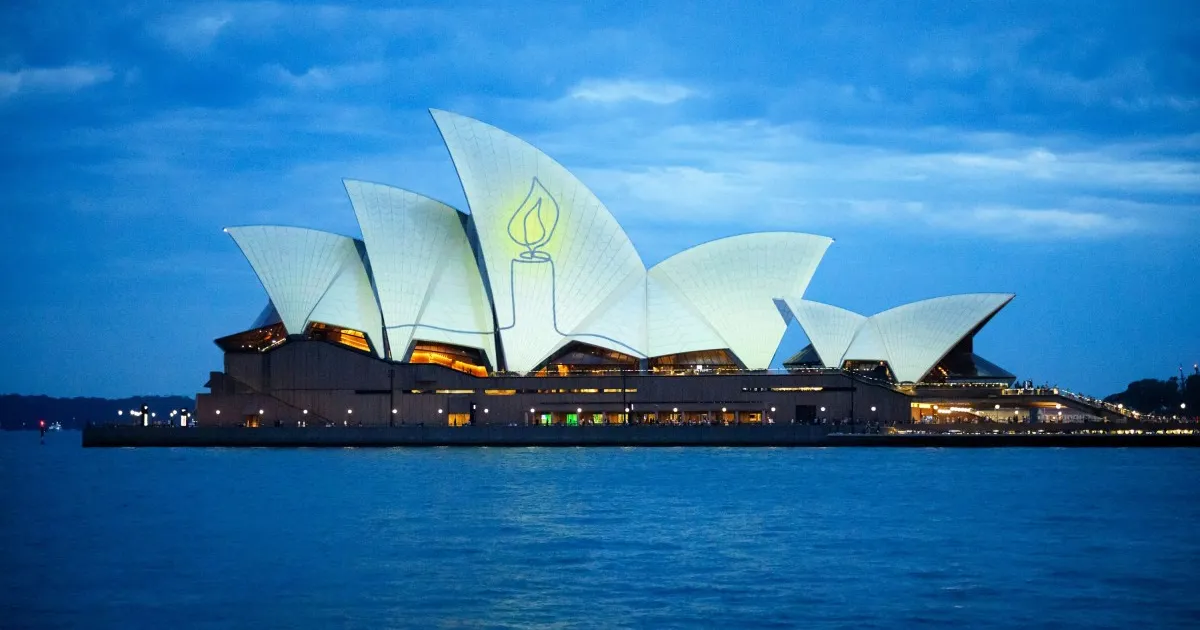
Families of victims of the deadly attack on a Jewish celebration at Australia’s Bondi Beach earlier this month have called for a national inquiry into rising anti-Semitism.
In an open letter published on Monday, relatives of 11 of the victims of the attack called on Australian Prime Minister Anthony Albanese to hold a royal commission into what they called the “rapid” and “dangerous” rise of anti-Jewish sentiment following Hamas’s October 7, 2023 attacks on Israel.
Recommended Stories
list of 4 itemsend of list
Fifteen people, most of them Jewish, were killed when two gunmen opened fire on a Hanukkah celebration at Sydney’s iconic Bondi Beach on December 14.
Australian authorities have said the suspected gunmen, Sajid Akram and his son Naveed, were inspired by the ISIL (ISIS) group.
In their letter, the families said they needed to know why “clear warning signs were ignored” and “how antisemitic hatred … [was] allowed to dangerously grow unchecked”.
“As proud Australians and proud Jews, we have endured more than two and a half years of relentless attacks,” the families said.
“Our children feel unsafe at school and university. Our homes, workplaces, sporting fields, and public spaces no longer feel secure.”
The response of Albanese’s Labor government to the attack, including proposals to tighten gun laws and introduce tougher legislation against hate speech, was “not nearly enough,” the families said.
“The dangerous rise of antisemitism and radicalism in Australia is not going away,” they said.
“We need strong action now. We need leadership now.”
The calls for an inquiry into anti-Semitism came as Albanese on Monday announced the terms of an independent review into whether law enforcement and intelligence agencies could have done more to prevent the attack.
Albanese and his government colleagues have resisted calls for a public inquiry into the attack, arguing that such a process would take years and could undermine social cohesion by platforming extremist voices.
Albanese told a news conference that the review, led by former intelligence chief Dennis Richardson, would examine what authorities knew about the suspected gunmen before the attack and information sharing between federal and state agencies, among other issues.
“Just over two weeks ago, anti-Semitic terrorists tried to tear our country apart, but our country is stronger than these cowards,” Albanese said.
“They went to Bondi Beach to unleash mass murder against our Jewish community. We need to respond with unity and urgency rather than division and delay.”
Anti-Jewish sentiment, as well as anti-Islam and anti-immigration sentiment, are rising in Australia. Many Australians have expressed their concerns over a rise in right-wing extremism in the country, where one in two people is either born overseas or has a parent born overseas.
In September, thousands of people held rallies in cities, including Sydney, Perth, Canberra and Brisbane, demanding an end to “mass migration”.
The Australian government has condemned the rallies, which took place under the banner of “March for Australia”, as racist, while Minister for Multicultural Affairs Anne Aly said the gatherings were “organised by Nazis”.
The group behind “March for Australia” said on its website and social media that “mass migration has torn at the bonds that held our communities together” and that its rallies aimed to do “what the mainstream politicians never have the courage to do: demand an end to mass immigration”.
But Australia also experienced a sharp rise in both anti-Semitic and Islamophobic incidents since October 7, 2023.
The Executive Council of Australian Jewry, which supports the International Holocaust Remembrance Alliance’s (IHRA) definition of antisemitism, documented 1,654 anti-Jewish incidents nationwide between October 1, 2024 and September 30, 2025, after more than 2,060 incidents the previous year.
The Islamophobia Register Australia recorded 309 in-person incidents of Islamophobia and 366 online incidents between January 1, 2023 and November 31, 2024.
Numerous rights organisations, including some Jewish groups, have criticised the IHRA definition of anti-Semitism, arguing that it has been used to conflate legitimate criticism of Israel – particularly of its genocidal war on Gaza – with anti-Jewish bigotry.
One of Albanese’s highest-profile critics in the wake of the Bondi Beach attack was Israeli Prime Minister Benjamin Netanyahu – he blamed Albanese’s government for failing to protect Australia’s Jewish community and also linked the shooting to Australia’s recent decision to recognise Palestinian statehood.
PROSECUTORS at the helm of the murder case against Nick Reiner have a chance to pull a “historically uncommon” move if they pursue the death penalty, an attorney has warned.
Nick Reiner pictured at the premiere of Spinal Tap II: The End Continues at The Egyptian Theatre in Los Angeles on September 9Credit: APMichele Singer Reiner and Rob Reiner attend The Wolf Of Wall Street premiere at the Ziegfeld Theatre in New York City in December 2013Credit: GettyNick Reiner, wearing a blue anti-suicide vest, made his first court appearance on December 17 days after he allegedly killed his parents, Rob Reiner and Michele Singer ReinerCredit: Reuters
A plea was not entered, as defense attorney Alan Jackson told the judge that the case against Nick was premature.
Eric Faddis, a criminal defense attorney based in Colorado, believes Nick’s legal team is teeing up for an insanity defense down the road, which he suspects they could have a hard time trying to prove.
“In order to prove that, how that works is that the defense would have to prove it’s more likely than not that [Nick] Reiner had a mental disease or defect, which caused him to not know the difference between right or wrong or to not understand the nature of his conduct,” Faddis, who is not associated with the case, told The U.S. Sun.
“So, that’s a high bar. It’s not like in the movies where people get off on insanity regularly. Prevailing on a not guilty by reason of insanity defense is uncommon. But it’s still certainly possible.”
Nick had been diagnosed with schizophrenia some time before he allegedly slaughtered his parents, according to TMZ.
The troubled middle child of Reiner, 78, and Singer, 68, was reportedly being treated by a psychiatrist for his condition, but in the month before the murders, Nick’s behavior became “alarming” as doctors switched his medication.
Weeks before the murders, Nick’s prescription was changed, making him “erratic and dangerous,” TMZ reported.
Nick had been open about his struggles with drug addiction, and admitted in a 2016 interview with People that he had been to rehab dozens of times since he was 15 years old.
Faddis said the claims of Nick’s reported mental health disorder could be “supportive of a not guilty by reason of insanity defense.”
“Doesn’t mean he’ll win, but it sounds like they’re compiling evidence in support of that defense,” he added.
UNCOMMON PURSUIT
Nick has been charged with two counts of first-degree murder.
Los Angeles County District Attorney Nathan Hochman said he has not decided whether his office will pursue the death penalty against Nick.
However, Faddis said with Hochman at the helm, it would not be surprising if the district attorney sought to sentence Nick to death.
“It’s hard to say. Historically, Los Angeles has not been the most death penalty-friendly county,” Faddis said.
“It’s not something they pursue commonly, as compared to like Utah or something like that.
“But, with Nathan Hochman at the helm, you know, he has made some unexpected moves on different cases, including the Menendez brothers’ case that he was on.
“There was sort of this social movement to try and get the Menendez brothers released. And I think a lot of people thought perhaps Hochman would go along with that, but he didn’t.”
“So, if he did pursue the death penalty in this case, it would be historically uncommon, but not totally unexpected just based on how Hochman has made decisions in other cases.”
Rob Reiner and his son Nick pictured together at the 2015 Toronto International Film FestivalCredit: SplashThe Reiner family from front to back: Jake Reiner, Michele Singer Reiner, Romy Reiner, Rob Reiner, and Nick ReinerCredit: Instagram/michelereinerAn aerial view of Rob Reiner’s home in Brentwood in Los AngelesCredit: EPA
HOLLYWOOD NIGHTMARE
Reiner and Singer died minutes after they were allegedly brutally attacked by their son, according to their death certificates.
The iconic filmmaker’s time of death was recorded as 3:45 pm on December 14, while his wife’s was noted as 3:46 pm.
The grisly scene at Reiner’s Brentwood home was only uncovered after a massage therapist arrived at the couple’s front gate for a scheduled appointment on the afternoon of December 14, according to The New York Times.
After the therapist received no answer at the front gate, she decided to call the couple’s daughter, Romy, who reportedly lived in the area.
When Romy, 27, arrived and entered her parents’ home, she stumbled upon the gruesome scene and reportedly came across her father’s body first.
Reiner and Singer were found in their bed with their throats slashed and could have been asleep when they were murdered, the Daily Mail reported.
When Los Angeles police arrived at the scene at around 3:30 pm, Romy told authorities that her brother Nick lived in their parents’ home.
However, authorities were unable to locate Nick on the property.
Nick was eventually arrested at around 9:15 pm near Exposition Park, about 14 miles from where his parents were found dead, Alan Hamilton, the deputy police chief at the LAPD, said.
Moments later, after exiting the gas station, the video captured three police cruisers swarming Nick at a nearby sidewalk.
Nick was seen raising his hands and surrendering to police as multiple officers approached him and took him into custody.
Timeline of Rob and Michele Reiner’s death
Rob Reiner and his wife of Michele Singer Reiner were found dead in their Los Angeles home on December 14, 2025.
Timeline:
December 13, 2025: Reiner and his wife Michele attended a holiday party on the evening of December 13 with their son, Nick.
Sources conveyed to The U.S. Sun that the couple and their son were engaged in a heated public argument while at the event.
December 14, 2025: Reiner and Michele were found dead in their Brentwood home in Los Angeles at around 3:30 pm PST.
The couple’s daughter, Romy, reportedly discovered her parents’ bodies.
Online police records show Reiner and Michele’s 32-year-old son, Nick, was arrested at 9:15 pm PST on December 14.
December 15, 2025: Authorities in Los Angeles announce that Nick Reiner was arrested and charged with murder.
Nick was booked into a Los Angeles jail at 5:04 am and was being held on $4 million bail, which was later revoked.
December 16, 2025: Los Angeles District Attorney Nathan Hochman formally charged Nick Reiner with two counts of first-degree murder.
Hochman said his office would consider the death penalty in Nick’s case.
Nick’s scheduled court appearance on December 16 was postponed due to what his attorney said was a procedural issue.
December 17, 2025: Nick Reiner briefly appeared in court. A plea was not entered.
December 23, 2025: The death certificates of Rob Reiner and Michele Singer Reiner disclosed that the couple died of multiple sharp force injuries caused with “a knife, by another.”
Attack comes a day after an Israeli army reservist in civilian clothes rammed his vehicle into a Palestinian man praying on the roadside.
Published On 26 Dec 202526 Dec 2025
Share
Two people have died in a stabbing and car-ramming attack in northern Israel, officials say.
Israeli police and emergency workers said a Palestinian from the Israeli-occupied West Bank attacked and killed a man and a woman on Friday before he was shot and wounded.
Recommended Stories
list of 3 itemsend of list
The attack came a day after an Israeli military reservist dressed in civilian clothes rammed his vehicle into a Palestinian man who was praying on a roadside in the West Bank after earlier firing shots in the area.
“Footage was received of an armed individual running over a Palestinian individual,” the Israeli military said in a statement about Thursday’s attack, adding that the Israeli reservist’s military service had been terminated. The Palestinian man went to hospital for checks after the attack before returning home.
In Friday’s incident, Israeli police said the attacker first crashed his vehicle into people in the northern city of Beit Shean, killing a 68-year-old man, and then sped onto a highway.
Later, he fatally stabbed a 20-year-old woman near the highway, “and the suspect was ultimately engaged with gunfire near Maonot Junction in Afula following intervention by a civilian bystander,” police said, adding that the attacker was taken to a hospital.
Both the victims were pronounced dead at the scene by paramedics, Israel’s rescue services said. A teenage boy was hospitalised with minor wounds sustained in the car-ramming, according to bystanders.
The Israeli military said the attacker had “infiltrated into Israeli territory several days ago”.
Since Israel’s genocidal war in Gaza began in October 2023, tens of thousands of Palestinians have been killed there.
At the same time, Israeli settlers have escalated violence in the West Bank, seizing Palestinian land and harassing civilians while Israeli forces conduct regular raids and arrests.
More than 1,000 Palestinians have been killed in the West Bank since October 7, 2023, mostly in operations by security forces and some by settler violence, according to the United Nations.
In the same period, 57 Israelis have been killed in Palestinian attacks.
After Friday’s incident, Israeli Defence Minister Israel Katz said he had instructed the military to respond forcefully in the West Bank town of Qabatiya, where he said the assailant came from.
The Israeli military said it was “preparing for an operation” in the area.
Suspect is in police custody; no information about potential motive.
Published On 26 Dec 202526 Dec 2025
Share
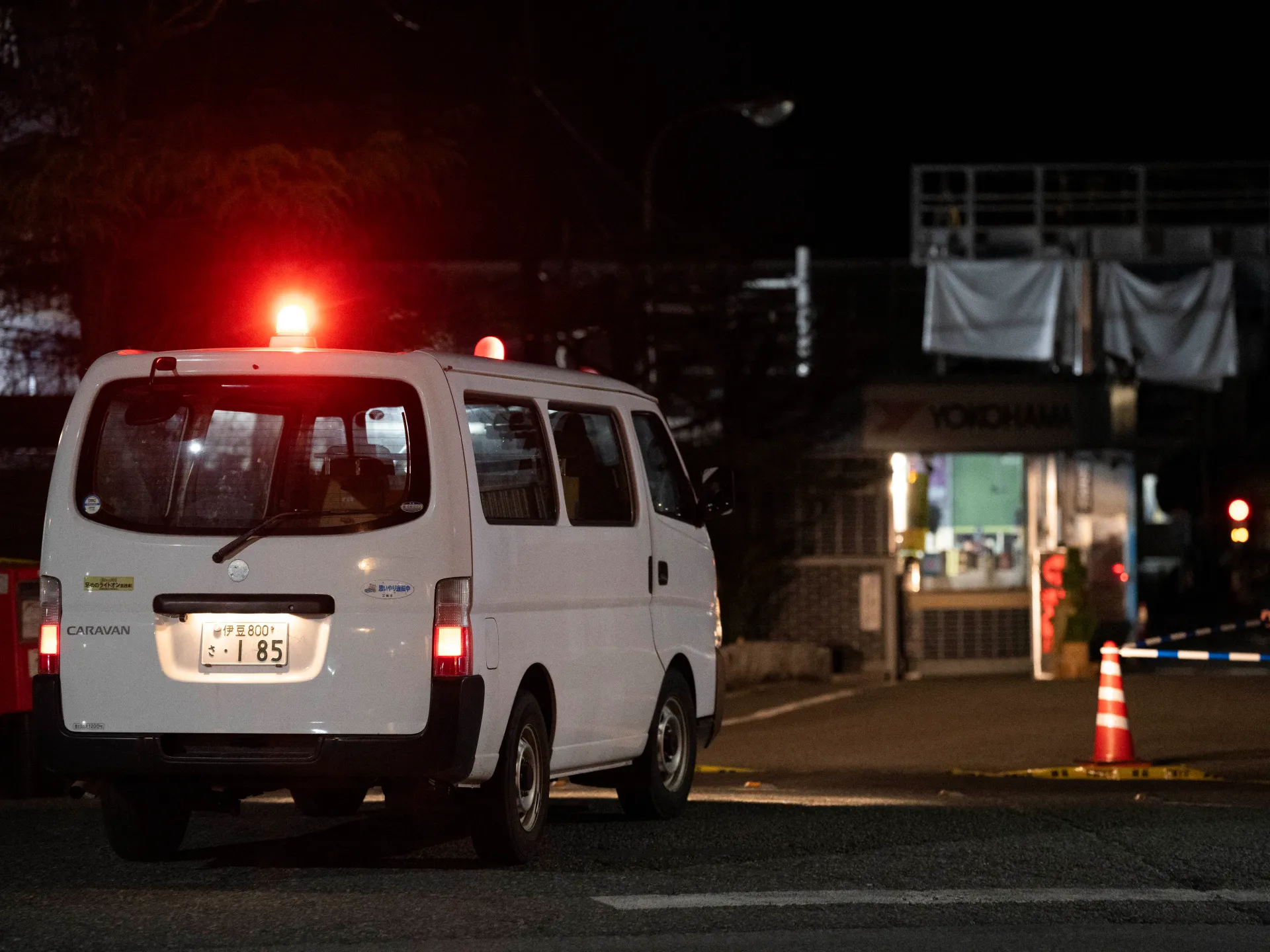
A man has carried out a mass stabbing attack at a Japanese tyre factory, also spraying victims with a chemical substance, according to local officials.
Eight people were stabbed and seven others were injured after being sprayed by a bleach-like agent at the Yokohama Rubber Co tyremaker in Japan’s Mishima, southwest of Tokyo, on Friday, said the Fujisan Nanto Fire Department.
Recommended Stories
list of 3 itemsend of list
Japanese media named the suspect as a 38-year-old who is now in custody. He is being charged with attempted murder, reported Japan’s Asahi Shimbun newspaper, citing the Shizuoka prefectural police.
The suspect was carrying a survival knife and wearing what appeared to be a gas mask, according to investigators cited in the Asahi report. He is believed by police to have acted alone, the report added, though there was no immediate information about a potential motive.
The Associated Press news agency cited the fire department as saying five of the stab victims are in serious condition, but conscious.
An employee of a nearby car dealership said she was “shocked” to learn of the attack in what is generally a “quiet” area.
“I’m scared, but I’m also shocked that it could have happened in a place like this,” the unnamed employee told Asahi Shimbun.
Violent crime is relatively rare in Japan, which has a low murder rate and some of the world’s toughest gun laws.
In June, Japan executed a man dubbed the “Twitter Killer”, after he was convicted of killing and dismembering nine people he met on social media. The execution was the country’s first use of capital punishment in nearly three years.
A Japanese man was also sentenced to death in October for a shooting and stabbing rampage that killed four people, including two police officers, in 2023.
DNA testing delays funeral plans as investigators examine the wreckage of jet crash that killed Libyan army chief.
Published On 25 Dec 202525 Dec 2025
Share
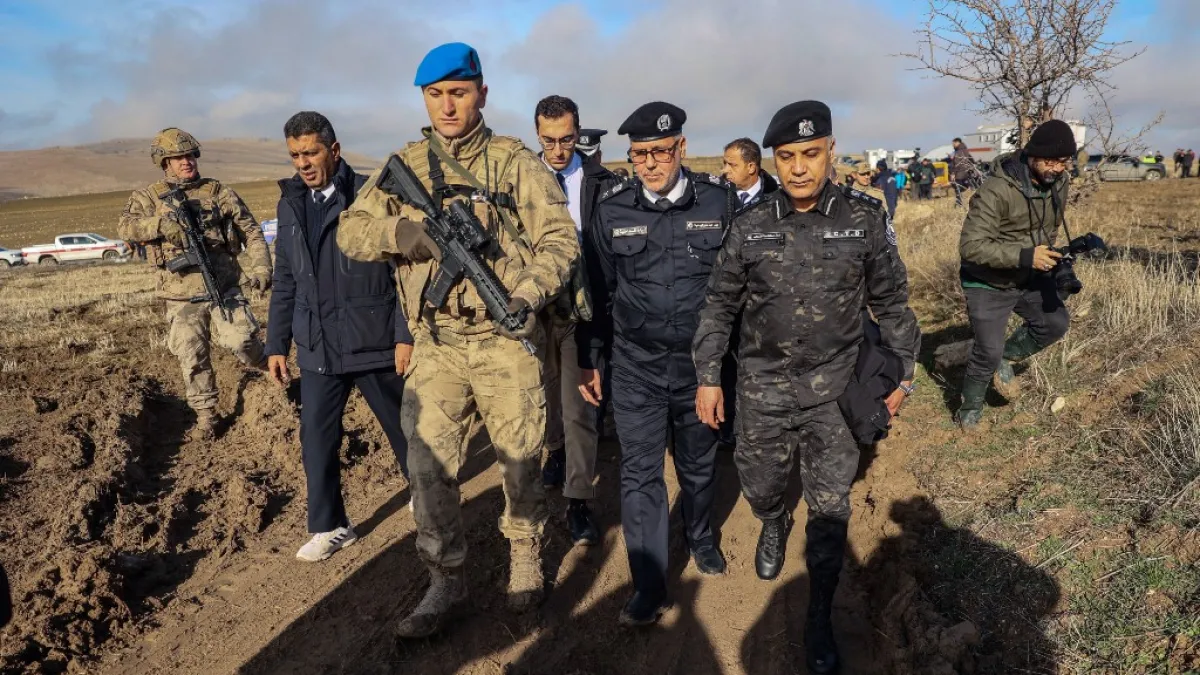
Officials from Libya and Turkiye have stepped up coordination over the investigation into a plane crash near Ankara that killed Libya’s army chief and seven other people as forensic work and preparations for repatriating the bodies are conducted.
Libya’s Criminal Investigation Department chief, Major General Mahmoud Ashour, led a delegation to the Ankara Chief Public Prosecutor’s Office on Thursday as part of the joint inquiry.
The visit followed discussions with Turkish prosecutors overseeing the case.
On Tuesday, a private jet carrying Libya’s army chief of staff, Mohammed Ali Ahmed Al-Haddad, reported an electrical malfunction shortly after taking off from Ankara Esenboga Airport.
According to Turkiye’s head of communications, Burhanettin Duran, the aircraft, bound for Tripoli, requested an emergency landing 16 minutes after takeoff.
Air traffic controllers redirected the Dassault Falcon 50 back towards Ankara’s airport, but radar contact was lost three minutes later as the jet descended.
The wreckage was found near the village of Kesikkavak in Ankara’s Haymana district. Eight people, including three crew members, were killed.
Search and rescue teams reached the site after Turkiye’s Ministry of Interior launched emergency operations while multiple authorities joined the investigation into the cause of the crash.
Funeral prayers delayed
Reporting from Misrata, Libya, Al Jazeera’s Malik Traina said preparations were under way for the return of Al-Haddad’s body although the timeline remains uncertain.
“Earlier today, we spoke to the minister of communications, and we were told the funeral prayer will be held tomorrow. That’s starting to change, now they’ve been receiving phone calls from government officials saying that it could likely be postponed till Saturday,” Traina said on Thursday.
Traina said the recovery process has taken longer due to the severity of the crash, which scattered remains across a wide area and necessitated DNA testing.
“There’s a lot of pressure for that process to finish as soon as possible. Whether or not that’ll happen, we’re gonna have to wait and see.
“He really was someone who tried to build up the military institutions, especially in western Libya, a place that is divided with powerful armed groups and militias controlling vast areas of land.”
Jordan’s military said the attacks ‘neutralised arms and drug traffickers’ and destroyed their laboratories and factories.
Published On 25 Dec 202525 Dec 2025
Share
Jordan’s military has launched strikes on drug and weapons smugglers in the country’s northern border regions with Syria, targeting sites used as “launch points” by trafficking groups into Jordanian territory, according to reports.
The Jordan News Agency, Petra, said the strikes on Wednesday “neutralised a number of arms and drug traffickers who organise weapons and narcotics smuggling operations along the northern border of the Kingdom”.
Recommended Stories
list of 4 itemsend of list
Jordan’s armed forces destroyed “factories and workshops” used by the trafficking groups, Petra reports, adding that the attacks were carried out based on “precise intelligence” and in coordination with regional partners.
The Jordanian military did not name the partner countries involved in the strikes but warned that it would “continue to counter any threats with force at the appropriate time and place”, Petra said.
Syrian state broadcaster Al-Ikhbariah TV reported on its Telegram channel that the Jordanian army had carried out air strikes on locations in the southern and eastern countryside of Syria’s Suwayda governorate.
A resident of Syria’s Suwayda border region told the AFP news agency that the bombardment “was extremely intense and targeted farms and smuggling routes”, while the UK-based Syrian Observatory for Human Rights said jets and helicopters had reportedly taken part in the raid.
The observatory said photos taken at the scene of the attacks showed destruction at an abandoned military barracks of the former al-Assad regime in Suwayda.
There were no initial reports of casualties from the Jordanian attacks and no official comment from authorities in Damascus.
A farm believed to have been used for storing drugs was among the targets, according to the Zaman Al Wasl online news site, which also reported that similar Jordanian attacks had been carried out previously in a bid to stem the flow of captagon – an addictive, amphetamine-type stimulant.
Before the removal of Syria’s President Bashar al-Assad in December 2024, captagon had become the regime’s largest export and key source of funding amid the country’s years of grinding civil war.
Produced in vast quantities in Syria, the synthetic drug flooded the region, particularly the Gulf states, prompting neighbouring countries to announce seizures and call on both Lebanon and Damascus to ramp up efforts to combat the trade.
Although Damascus denied any involvement in the drug trade, analysts estimated that production and smuggling of captagon brought in billions of dollars for al-Assad, his associates and allies as they looked for an economic lifeline amid the civil war, which was fought between 2011 and the regime’s toppling last year.
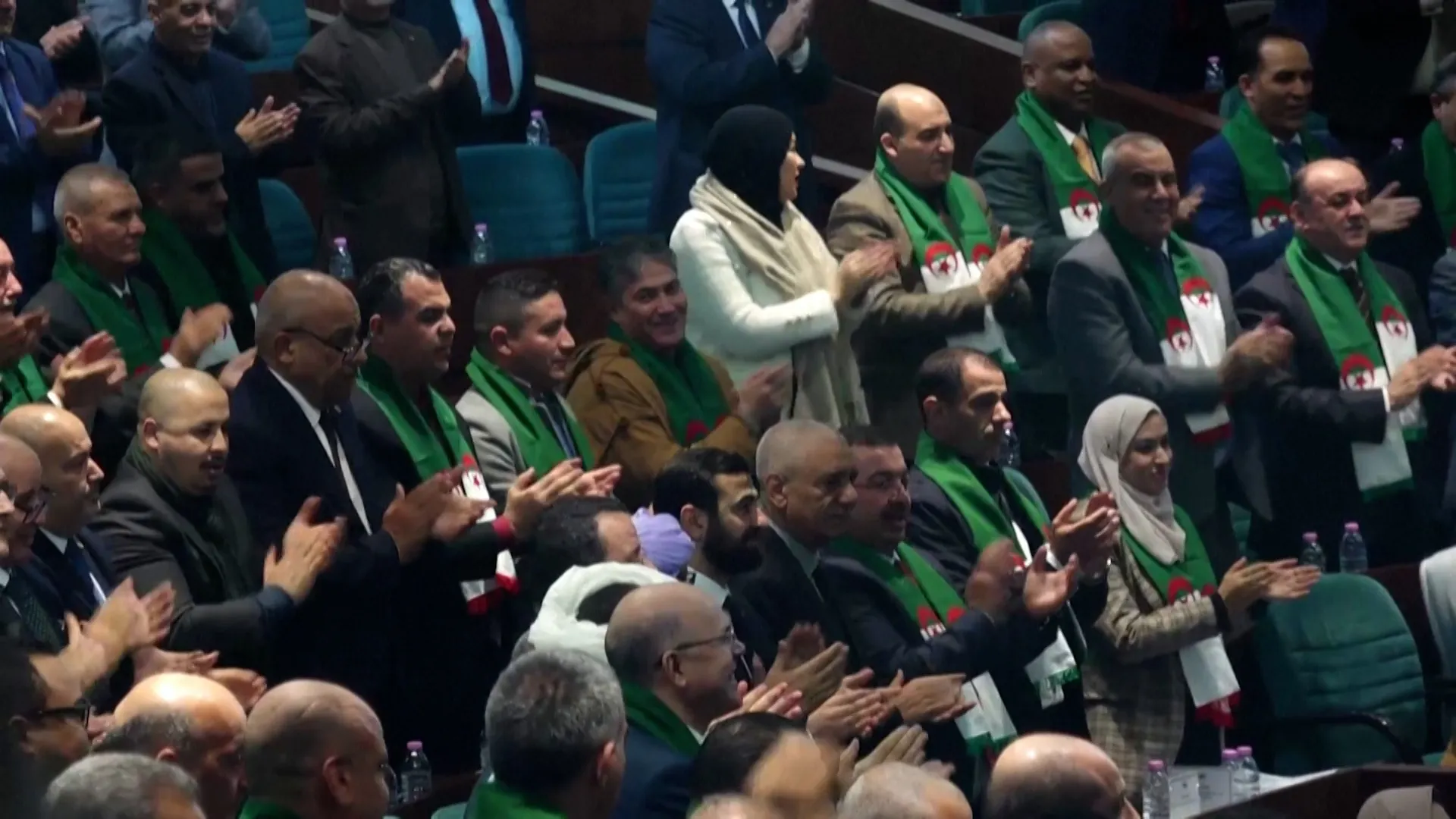
Algeria’s parliament unanimously passed a law declaring France’s colonisation a crime. Lawmakers celebrated in the chamber as they demanded an apology, reparations and assigned France legal responsibility for the harms caused during colonial rule.
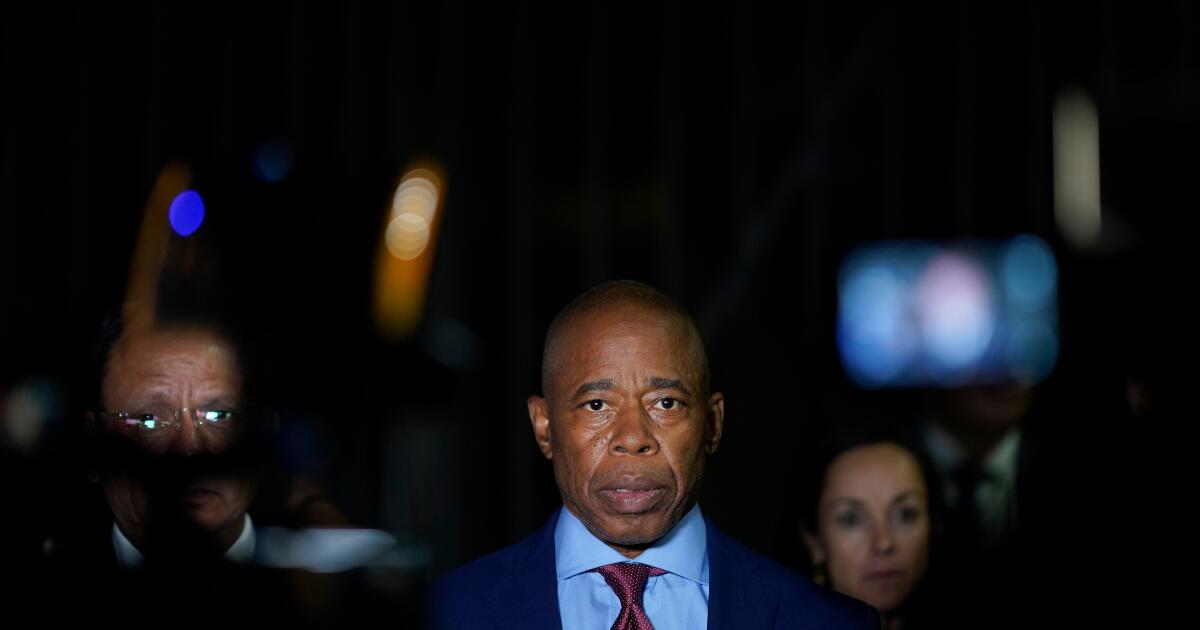
NEW YORK — Four years ago, New York City Mayor Eric Adams swept into office with swaggering confidence, pledging to lead a government unlike any other in history and declaring himself the “future of the Democratic Party.”
On the first promise, the mayor more than delivered. But as his tumultuous term comes to an end, Adams, 65, finds himself in the political wilderness, his onetime aspirations as a party leader now a distant memory.
Instead, he has spent his final weeks in power wandering the globe, publicly mulling his next private sector job and lashing out at the “haters” and “naysayers” whom he accuses of overlooking his accomplishments.
For many of his supporters, the Adams era will be looked back on as a missed opportunity. Only the second Black mayor in city history, he helped steer New York out of the throes of the COVID-19 pandemic, often linking the city’s comeback to his own rise from humble roots in working-class Queens.
At a moment when many Democrats were struggling to address voter concerns about public safety, he drew national attention for a “radically practical” agenda focused on slashing crime and reactivating the economy.
But while most categories of crime returned to pre-pandemic levels, Adams will probably be remembered for another superlative: He is the only New York City mayor of the modern era to be indicted while in office.
“That’s a disappointment for voters, especially for Black voters, who had high expectations and aspirations,” said Basil Smikle, a political strategist who served as executive director of the state’s Democratic Party. “He entered with a lot of political capital, and that was squandered, in part because of his own hubris.”
Equally memorable, perhaps, were the strange subplots along the way: his hatred of rats and fear of ghosts; the mysteries about his home, his diet, his childhood; and his endless supply of catchphrases, gestures and head-scratching stories that could instantly transform a mundane bureaucratic event into a widely shared meme.
“So many mayors want to be filtered, they want to pretend who they are and act like they are perfect,” Adams said during a recent speech at City Hall, a freewheeling affair that ended with the mayor burying a time capsule of his achievements beneath a Manhattan sidewalk. “I am not.”
Swagger versus seriousness
Adams took over from Mayor Bill de Blasio in January 2022, amid a COVID-19 spike that was killing hundreds of New Yorkers every day, along with a worrisome uptick in both violent crime and unemployment.
Adams, a former police captain, Brooklyn borough president and state senator, increased patrols on streets and subways, brought back a controversial anti-crime unit and appointed the department’s first female police commissioner. He also raised eyebrows for installing many of his former Police Department allies, including some ex-officials with histories of alleged misconduct.
As he encouraged New Yorkers to return to their pre-pandemic lives, Adams made an effort to lead by example, frequenting private clubs and upscale restaurants in order to “test the product” and “bring swagger back” to the city, he said.
But if New Yorkers initially tolerated Adams’ passion for late-night partying, there seemed to be a growing sense that the mayor was distracted, or even slacking off, according to Hank Sheinkopf, a longtime Democratic consultant and supporter of Adams.
“There was a tension between swagger and seriousness,” Sheinkopf said. “New Yorkers wanted to see more seriousness. They didn’t want to see him out partying at some club they couldn’t afford to go into.”
It didn’t help that Adams often declined to say who was footing the bills for his meals, his entry into private clubs or his flights out of the city. When reporters staked out his nighttime activities, they found that Adams, who long professed to be a vegan, regularly ordered the branzino.
Asked about his diet, the mayor acknowledged that he ate fish and occasionally “nibbled” on chicken, describing himself, as he often would in the coming years, as “perfectly imperfect.”
City Hall in crisis
The corruption investigation into Adams’ campaign, launched quietly in the early stages of his mayoralty, first spilled into public view in the fall of 2023, as federal agents seized the mayor’s phones as he was leaving an event. It loomed for nearly a year, as Adams faced new struggles, including a surge of migrants arriving in the city by bus.
Then, on Sept. 26, 2024, federal prosecutors brought fraud and bribery charges against Adams, accusing him of allowing Turkish officials and other businesspeople to buy his influence with illegal campaign contributions and steep discounts on overseas trips.
Investigators also seized phones from the mayor’s police commissioner, schools chancellor and multiple deputy mayors. Each denied wrongdoing, but a mass exodus of leadership followed, along with questions about the mayor’s ability to govern.
Adams insisted, without evidence, that he had been politically targeted by the Biden administration for his criticism of its immigration policy. But his frequently invoked mantra — “stay focused, no distractions, and grind” — seemed to lose potency with each new scandal.
Among them: a chief adviser indicted by state prosecutors in a separate alleged bribery scheme involving a bike lane and minor TV role; another longtime adviser forced to resign after handing a chip bag filled with cash to a reporter; and a string of abuse and corruption allegations within the Police Department, many of them linked to longtime friends Adams had installed in high-ranking positions.
Looking back at what went wrong, both supporters and critics of the mayor tend to agree on at least one point: Adams could be loyal to a fault, refusing to distance himself from long-serving allies even after they appeared to cross ethical lines.
“There was one City Hall made up of dedicated and competent leaders focused on executing his priorities,” said Sheena Wright, Adams’ former first deputy mayor. “There was another City Hall made up of people who knew the mayor for a long time, and who were allowed to operate outside the norms of government.”
‘A nuclear bomb’
Facing a plummeting approval rating and the prospect of years in prison, Adams began aligning himself with President Trump, going to great lengths to avoid criticizing the Republican and even leaving open the possibility of switching parties.
That seemed to work: Weeks after Trump took office, the Justice Department dismissed the corruption case, writing in a two-page memo that it had interfered with Adams’ ability to help with the president’s immigration agenda.
But in the view of Evan Thies, one of Adams’ closest advisers at the time, that was the moment that sealed Adams’ fate as a one-term mayor.
“The memo hit like a nuclear bomb,” Thies said.
The damage worsened a few days later, when Adams appeared on “Fox & Friends” alongside Trump’s border director Tom Homan, who threatened to “be up his butt” if the mayor didn’t comply with Trump’s agenda.
“It seemed to confirm the belief that he had traded his duty to New Yorkers for his personal freedom,” Thies recalled. “It wasn’t true, but that was perception.”
Adams adamantly denied striking a deal with the Trump administration. He has continued to suggest a broad conspiracy against him, at times blaming bureaucrats in the “deep state.”
Even with his case behind him, Adams struggled to build a reelection campaign. Earlier this year, his approval rating sank to a record low. In September, he abandoned his efforts, throwing his support behind former Gov. Andrew Cuomo, a onetime rival he’d recently referred to as a “snake and a liar.”
As of late December, Adams’ plans for life after he leaves office remain uncertain.
“I did what I had to do, I left everything I had on the ice, and I’m looking forward to the next step of my journey,” he said during a farewell speech at City Hall.
Then, for the third time in as many months, Adams took off on an international trip. This time, the destination was Mexico.
The limited series is one to binge-watch this Christmas period
For those seeking a break from traditional festive TV, Netflix is currently streaming a tense crime drama that had viewers hooked from the very first scene.
The Glass Dome (or Glaskupan) originally dropped in April and quickly climbed the streaming giant’s most-watched charts, but it may have slipped under your radar.
Set in a small Swedish community, the six-part show follows criminologist Leijla as she sets out to investigate the vanishing of a local girl, in the same town she was once held captive.
The search brings up difficult feelings for Leijla, who still hasn’t discovered the truth behind her own kidnapping. While it sounds like a simple whodunnit drama, the limited series is packed with plot twists that most viewers won’t see coming.
Swedish actress Léonie Vincent leads the show as accomplished career woman Leijla. Viewers first meet the main character while she is working in the United States, before she receives a concerning phone call begging her to return to Sweden.
She’s joined by fellow Stockholm-born actor Johan Hedenberg as her adoptive father Valter, who is also keen to uncover the truth.
A glowing IMDb review from the time of release said: “From the very beginning, it pulls you in with its intense atmosphere and never lets go.
“The plot is packed with brutal and unexpected twists that hit you when you least expect them, and the tension only escalates with each episode.”
The same fan added: “Just when you think you’ve figured it out, everything changes again. It’s unpredictable, addictive, and full of surprises right up to the final scene. If you enjoy clever, suspenseful storytelling, this series is a hidden gem you shouldn’t miss.”
Get Netflix free with Sky
This article contains affiliate links, we will receive a commission on any sales we generate from it. Learn more
Sky is giving away a free Netflix subscription with its new Sky Stream TV bundles, including the £15 Essential TV plan.
This lets members watch live and on-demand TV content without a satellite dish or aerial and includes hit shows like Stranger Things and The Last of Us.
Someone else raved: “One of those rare thrillers that hooks you from the very first scene. The storyline is well crafted — just when you think you’ve figured out who’s behind the crime, the plot twists and makes you question everything again.
“It’s a true whodunnit that keeps your brain ticking till the very end.”
While another impressed viewer raved on X, formerly Twitter: “Just binged Glaskupan (The Glass Dome) on Netflix and wow, this Nordic thriller had me on edge! Perfect mix of suspense and mystery, after True Detective, Mind Hunter, The Chestnut Man, This one got me. 7/10, Highly recommend!”
Another X user shared: “Y’all… ‘The Glass Dome’ on Netflix was completely wild to me. I swear I didn’t expect that twist. I did not see that s*** coming,” while a third described it as “mind blowing”.
The 50-year-old comedian is already facing similar charges, including rape and sexual assault, involving four women.
Published On 23 Dec 202523 Dec 2025
Share
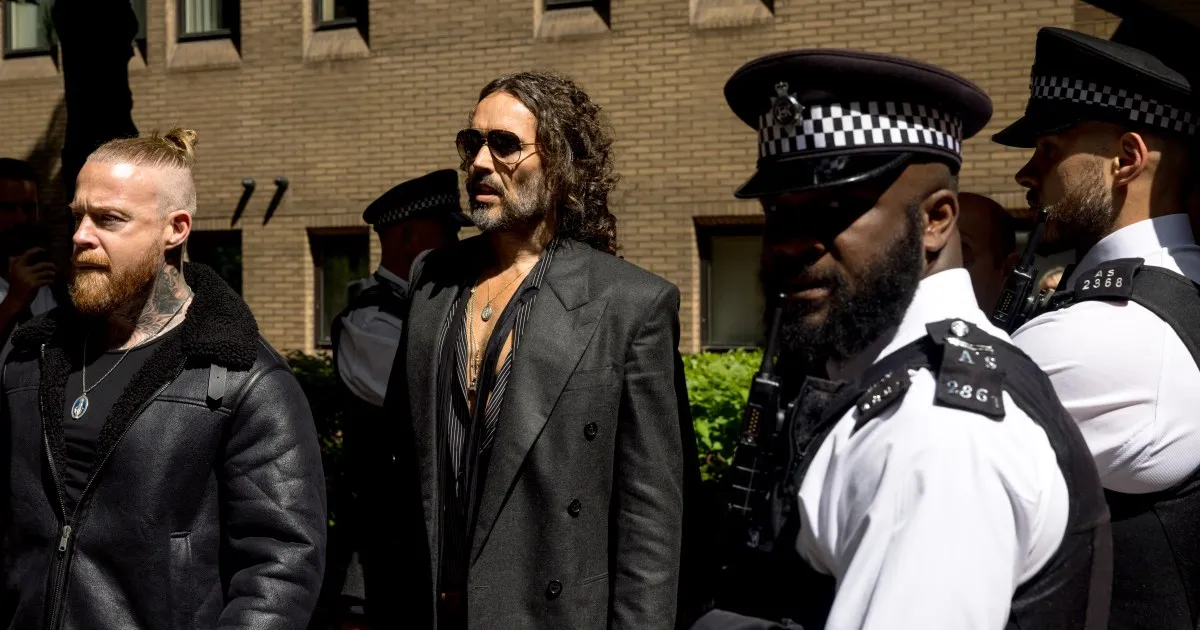
British authorities have brought new counts of rape and sexual assault against comedian Russell Brand, who is already facing similar charges involving four women.
The United Kingdom’s Crown Prosecution Service (CPS) said on Tuesday that the new charges – one count of rape and one of sexual assault – against Brand were in relation to two further women. The alleged offences took place in 2009, the CPS said.
Recommended Stories
list of 3 itemsend of list
Brand, 50, had already been charged in April with two counts of rape, two counts of sexual assault and one count of indecent assault. The charges were brought after an 18-month investigation launched when four women alleged they had been assaulted by the comedian.
Prosecutors said these offences took place from 1999 to 2005, one in the English seaside town of Bournemouth and the other three in London.
Brand pleaded not guilty to those charges in a London court.
He is expected to appear at Westminster Magistrates’ Court on January 20 in relation to the two new charges. A trial has also been scheduled for June 16 and is expected to last four to five weeks.
The Get Him to the Greek actor, known for risque stand-up routines and battles with drugs and alcohol, has dropped out of the mainstream media in recent years. He built a large following online with videos mixing wellness with conspiracy theories as well as discussions about religion.
When the first group of charges was announced in April, Brand said he welcomed the opportunity to prove his innocence.
“I was a fool before I lived in the light of the Lord,” he said in a social media video. “I was a drug addict, a sex addict and an imbecile. But what I never was, was a rapist. I’ve never engaged in nonconsensual activity. I pray that you can see that by looking in my eyes.”
Detective Chief Inspector Tariq Farooqi said the women involved in the case “continue to receive support from specially trained officers”.
He added the police investigation was ongoing and urged “anyone affected by this case or anyone with information to come forward”.
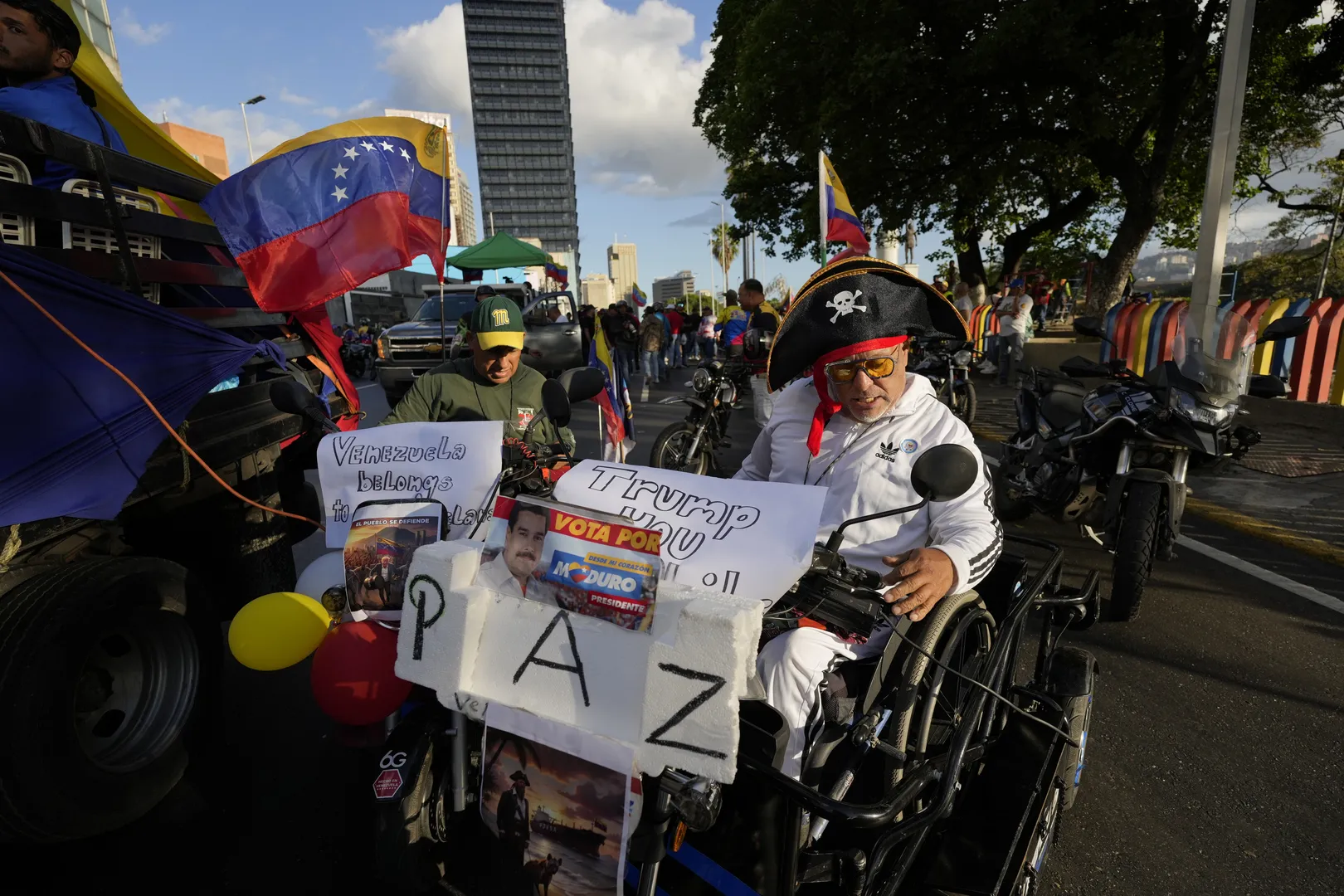
Motorcyclists wearing pirate costumes rode through Caracas in a protest against US President Donald Trump, after Washington ordered the seizure of Venezuelan oil tankers under a blockade targeting vessels linked to sanctions.
Members of the Rio de Janeiro Police carry out an operation in Rio de Janeiro in October. The police launched a major operation in two favelas aimed at arresting the leaders of the Red Command, the largest criminal gang in the city, and to halt its territorial expansion. File Photo by Antonio Lacerda/EPA
SANTIAGO, Chile, Dec. 19 (UPI) — After nearly two decades of relative stability, the advance of organized crime has reshaped security across Latin America.
The expansion of illicit economies, armed disputes over territorial control and rising violence triggered new migration flows and partly explain the region’s political shift toward right-wing governments in 2025.
According to a report by the Global Initiative Against Transnational Organized Crime, 39 organized crime groups are operating across Latin America.
The report said these groups have become more interconnected and sophisticated, “coordinating operations not only at the local level but also across borders and even continents.”
One of the main factors behind the expansion of criminal structures is business diversification, said organized crime specialist Hugo Contreras, who holds a doctorate in social complexity sciences and is a researcher at the School of Government at Universidad del Desarrollo.
“Organized groups stopped being just traffickers and adopted a portfolio of activities such as extortion, contract killings, smuggling, arms trafficking and human trafficking,” Contreras told UPI. “That has multiplied and diversified their sources of illicit income, as well as their territorial control and disputes.”
He said the trend has been compounded by institutional weakness, including collapsed prison systems that have turned into logistical hubs for criminal groups and judicial systems ill-prepared to confront the phenomenon.
“There has been an emergence of more aggressive and sophisticated transnational criminal gangs, with international networks, greater financial capacity and increased firepower,” Contreras said.
He added that the situation has been reinforced by “massive migration flows from different conflict regions, which these groups have exploited to conceal their members, recruit new people and expand their criminal activities into other countries.”
Pablo Carvacho, director of research and development at the Center for Justice and Society at the Pontifical Catholic University of Chile, shared that assessment, noting that organized crime is especially dynamic and adaptable.
“Migratory processes created space for the development of transnational illicit activities such as human trafficking and sexual or labor exploitation, particularly affecting a highly vulnerable group like migrants,” Carvacho told UPI.
“These flows served as an entry point for countries such as Chile, where criminal activity was not as developed as what we are seeing today,” he said.
The new scenario has deeply transformed internal security dynamics across the region, turning local problems into international threats that are more violent and more damaging to social and political stability, Contreras said.
Criminal organizations manage and contest territory, impose their own rules, control prisons and challenge state authority.
“This forces governments to move beyond traditional crime-control strategies and adopt comprehensive responses that combine financial intelligence, border security, international cooperation and prison reform,” he said.
Contreras said the impact varies widely across the region depending on how deeply organized crime has taken root in each country.
In 2025, Mexico, Ecuador, Brazil and Haiti ranked among the world’s 10 most dangerous countries based on indicators such as mortality, risk to civilians, geographic spread of conflict and the number of armed groups, according to a conflict index published by the Armed Conflict Location and Event Data Project, a nongovernmental organization known as ACLED.
The report said rising violence has been a common trend across Latin America this year. However, the sharpest deterioration was recorded in those four countries.
In Mexico, the organization linked the surge in violence to factors including an internal war within the Sinaloa cartel following the July 2024 arrest in the United States of Ismael “El Mayo” Zambada, one of the group’s historic leaders.
In Ecuador, ACLED warned that violence levels are on track to reach record highs in 2025. It said the homicide rate could be the highest in Latin America for a third consecutive year and that gang-related violence has caused more than 3,600 deaths.
In Haiti, gangs have taken advantage of the political instability the country has faced since 2021, expanding their operations from the capital, Port-au-Prince, to other areas.
In a different political context, criminal gangs in Brazil have also fueled major clashes as they fought for territorial control in cities such as Rio de Janeiro. A large-scale police operation in that city targeting the Comando Vermelho, one of the country’s main criminal groups, left 121 people dead.
The rise in violence and organized crime has contributed to at least 10 countries in the region electing right-wing governments in the 2024-2025 period.
Carvacho said more conservative platforms “place greater emphasis on public order and the intensive use of coercive tools, with strategies based on police force, military deployment, harsher criminal penalties and territorial control.”
He said these approaches often rely on emergency measures under states of exception, with rapid executive decisions and reforms, as well as a greater willingness to strengthen ties with foreign intelligence agencies, including those of the United States.
In Carvacho’s view, containing transnational organized crime requires coordination among countries because “emergency policies alone will not stop its advance.”
He said what can truly weaken these organizations is targeting their financial assets and reducing the pool of people, including children and adolescents, vulnerable to recruitment.
“Everything else is treating the symptoms of a disease,” Carvacho said. “It is arriving late to a problem that is not about criminal law but about vulnerability and the lack of opportunities in communities excluded from society. That is where the state must act.”
Joseph McCabe, who runs his own construction firm and co-owns a party boat business, was jailed for 46 weeks on Friday at Edinburgh Sheriff Court after admitting four sexual offences
Joseph McCabe sexually assaulted cabin crew(Image: Alexander Lawrie)
A former soldier who sexually assaulted four Jet2 cabin crew during a flight to Tenerife has been jailed.
Joseph McCabe groped and slapped the buttocks of two flight attendants before grabbing a third around the waist and attempting to hug a fourth. A court heard McCabe’s behaviour forced the plane, which had left Edinburgh, to be diverted to the Portuguese island of Porto Santo.
Police there arrested the 40-year-old man and, last month, he admitted the four sexual offences. McCabe, who was a private in the Royal Logistic Corps for five years, was jailed for 46 weeks on Friday at Edinburgh Sheriff Court.
The court heard McCabe made sexual comments to one woman about her tights and make up, asked her age and where she lived and ripped up a written warning he had been given for his drunken conduct. The former soldier also threw his bank card at an air employee and began dancing in the aisle on the plane in March last year.
The defendant, who now runs his own construction firm and co-owns a party boat business called The Drunken Anchor, has been handed a lifelong ban from flying with Jet2 and has refused to pay the £5,000 fine the airline had imposed on him.
Sentencing, Sheriff Alison Stirling said the offence had involved “a high level of culpability and a high level of harm”. McCabe, who has two children, was also placed on the sex offenders register for 10 years and was made subject to non-harassment orders banning him from having any contact with the victims for an indefinite period. Solicitor Anna Kocela, defending, said her client is a self-employed building boss and had been drinking excessively at the time of the flight due to a family bereavement.
Previously, prosecutor Miriam Farooq told the court the Jet2 flight took off from Edinburgh Airport bound for Tenerife with around 110 passengers on board at around 8.30am on March 15 last year, reports Daily Record.
Ms Farooq said the flight was packed with families and children and shortly after take off cabin crew had noticed McCabe “making multiple trips to the toilet”.
The fiscal depute said around 90 minutes into the flight a female flight attendant was serving a passenger when she “felt someone behind her touching her buttocks”.
The employee turned round to find McCabe was “looking at her with a smirk on his face” and had asked her “where she bought her tights because he liked them”.
McCabe, from Glasgow, was given a verbal warning on the flight and then ripped up a written warning given to him by the air crew for his shocking behaviour.
Three people arrested in connection with suspected theft of items worth between 15,000 and 40,000 euros.
Published On 21 Dec 202521 Dec 2025
Share
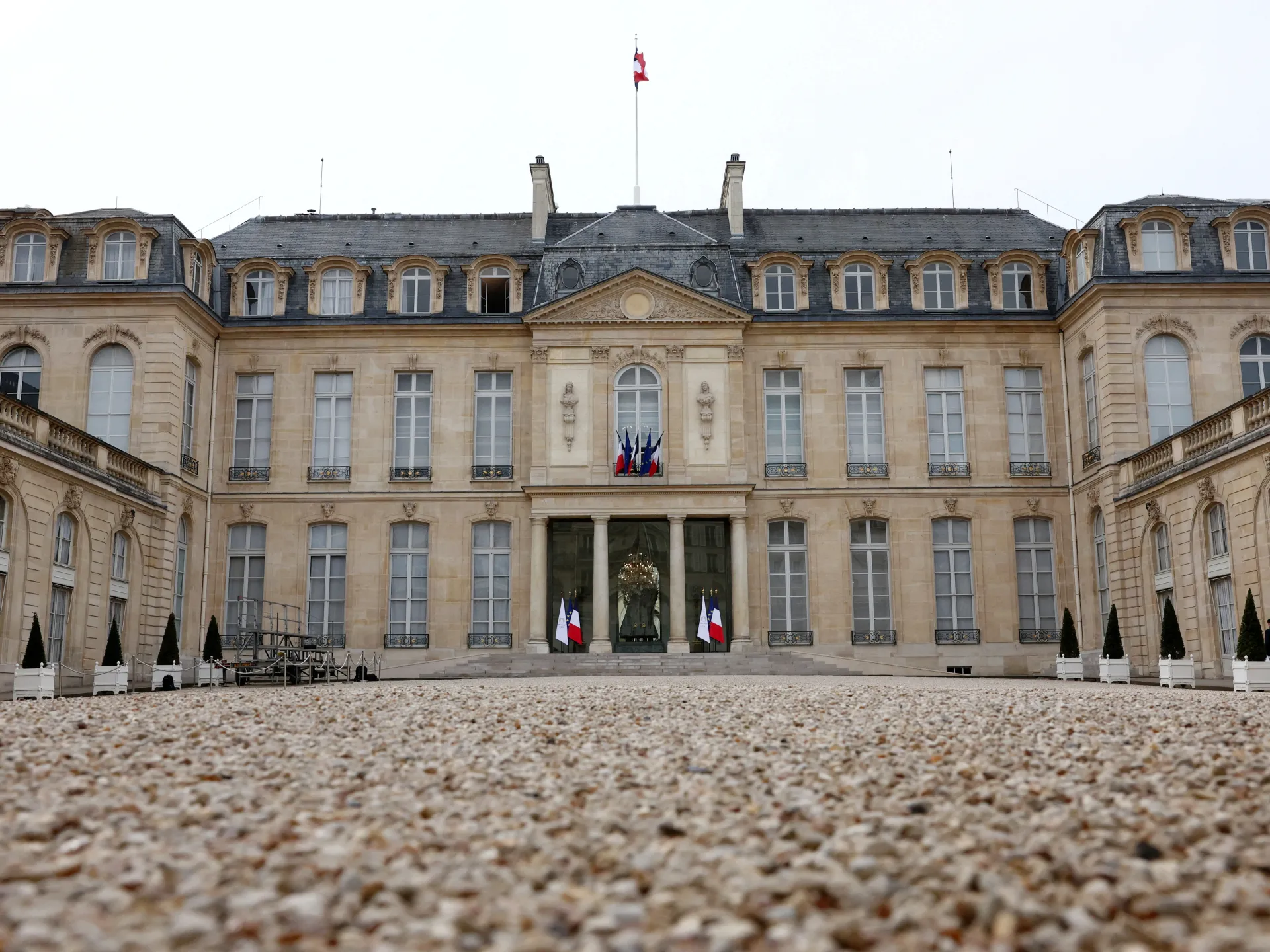
France’s presidential silverware keeper and two other men are set to stand trial over the alleged theft of porcelain and other tableware worth thousands of euros, the Paris prosecution office has said.
Prosecutors said the silverware keeper Thomas M and his partner Damien G were arrested on suspicion of theft on Tuesday. Another man, Ghislain M, was arrested on suspicion of receiving stolen goods. Their full names were not given due to French privacy customs.
Recommended Stories
list of 4 itemsend of list
The Elysee, the president’s official residence, had reported the disappearance of silverware and tableware pieces used for state dinners and other events, with the value of the missing items estimated between 15,000 and 40,000 euros ($17,500 and $46,800), the prosecution office said.
Interviews with presidential staff pointed suspicions at Thomas M, whose suspected downward inventory adjustments appeared to anticipate future thefts, prosecutors said.
They said about 100 objects were discovered in Thomas M’s personal locker, his vehicle and home, including copper pots, Sevres porcelain and Baccarat champagne glasses.
Investigators found an air force-stamped plate and ashtrays that Thomas M was selling on the online marketplace Vinted, prosecutors said, items that are not available to the general public.
The three suspects appeared in court Thursday on charges of jointly stealing moveable property listed as part of the national heritage – an offence punishable by up to 10 years in prison and a 150,000-euro ($175,000) fine, as well as aggravated handling of stolen goods.
The trial was postponed to February 26. The defendants were placed under judicial supervision, banned from contacting one another, prohibited from appearing at auction venues and barred from their professional activities.
French paper Le Parisien, which first reported the case, said Ghislain M worked as a guard at the Louvre museum, citing his lawyer as saying that his client’s motivation for his suspected involvement was his “passion” for rare antique goods.
In October, the museum experienced its own robbery when thieves disguised as construction workers stole priceless pieces from France’s crown jewels, prompting a debate about security standards at the country’s landmarks.
The Sevres porcelain factory, one of the Elysee’s main suppliers, identified a number of items on auction websites, prosecutors said, adding that some items had been returned.
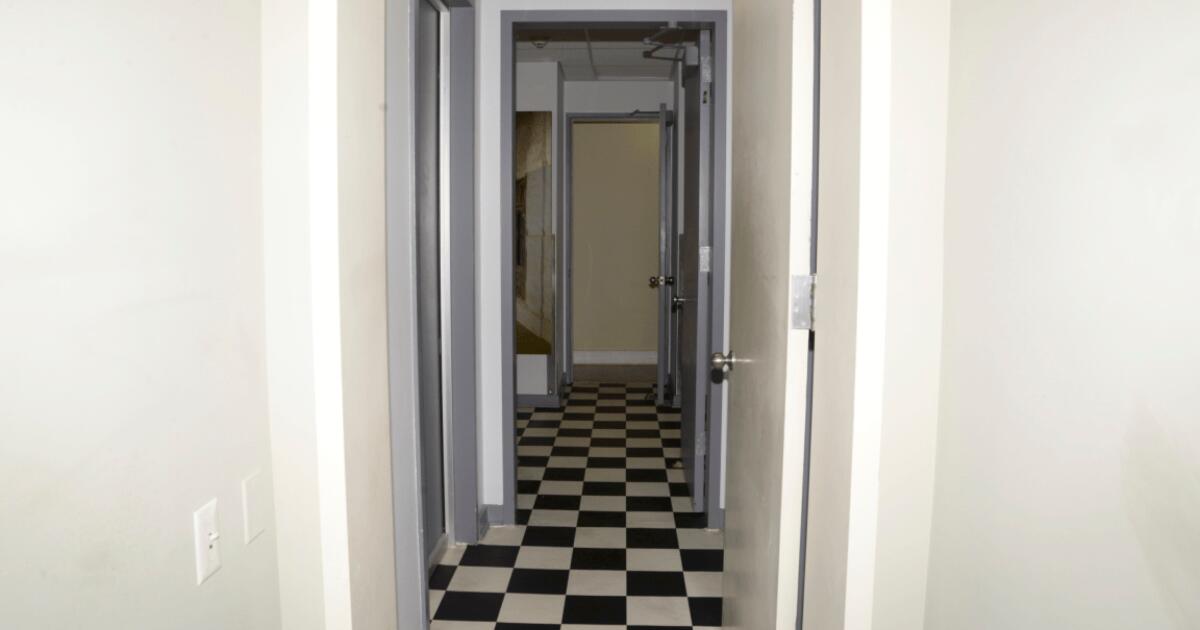
NEW YORK — At least 16 files disappeared from the Justice Department’s public webpage for documents related to Jeffrey Epstein — including a photograph showing Donald Trump — less than a day after they were posted, with no explanation from the government and no notice to the public.
The missing files, which were available Friday and no longer accessible by Saturday, included images of paintings depicting nude women, and one showing a series of photographs along a credenza and in drawers. In that image, inside a drawer among other photos, was a photograph of Trump, alongside Epstein, Melania Trump and Epstein’s longtime associate and accomplice, Ghislaine Maxwell.
The Justice Department didn’t answer questions Saturday about why the files disappeared but said in a post on X that “photos and other materials will continue being reviewed and redacted consistent with the law in an abundance of caution as we receive additional information.”
Online, the unexplained missing files fueled speculation about what was taken down and why the public was not notified, compounding long-standing intrigue about Epstein and the powerful figures who surrounded him. Democrats on the House Oversight Committee pointed to the missing image featuring a Trump photo in a post on X, writing: “What else is being covered up? We need transparency for the American public.”
The episode deepened concerns that had already emerged from the Justice Department’s much-anticipated document release. The tens of thousands of pages made public offered little new insight into Epstein’s crimes or the prosecutorial decisions that allowed him to avoid serious federal charges for years, while omitting some of the most closely watched materials, including FBI interviews with victims and internal Justice Department memos on charging decisions.
Scant new insight in the disclosures
Some of the most consequential records expected about Epstein are nowhere to be found in the Justice Department’s initial disclosures, which span tens of thousands of pages.
Missing are FBI interviews with survivors and internal Justice Department memos examining charging decisions — records that could have helped explain how investigators viewed the case and why Epstein was allowed in 2008 to plead guilty to a relatively minor state-level prostitution charge.
The gaps go further.
The records, required to be released under a recent law passed by Congress, hardly reference several powerful figures long associated with Epstein, including Britain’s former Prince Andrew, renewing questions about who was scrutinized, who was not and how much the disclosures truly advance public accountability.
Among the fresh nuggets: insight into the Justice Department’s decision to abandon an investigation into Epstein in the 2000s, which enabled him to plead guilty to that state-level charge, and a previously unseen 1996 complaint accusing Epstein of stealing photographs of children.
The releases so far have been heavy on images of Epstein’s homes in New York City and the U.S. Virgin Islands, with some photos of celebrities and politicians.
There was a series of never-before-seen photos of former President Clinton but fleetingly few of Trump. Both have been associated with Epstein but both have since disowned those friendships. Neither has been accused of any wrongdoing in connection with Epstein, and there was no indication the photos played a role in the criminal cases brought against him.
Despite a Friday deadline set by Congress to make everything public, the Justice Department said it plans to release records on a rolling basis. It blamed the delay on the time-consuming process of obscuring survivors’ names and other identifying information. The department has not given any notice when more records might arrive.
That approach angered some Epstein accusers and members of Congress who fought to pass the law forced the department to act. Instead of marking the end of a years-long battle for transparency, the document release Friday was merely the beginning of an indefinite wait for a complete picture of Epstein’s crimes and alleged crimes and the steps taken to investigate them.
“I feel like again, the DOJ, the justice system is failing us,” said Marina Lacerda, who alleges Epstein started sexually abusing her at his New York City mansion when she was 14.
Redactions, lack of context
Federal prosecutors in New York brought sex trafficking charges against Epstein in 2019, but he killed himself in jail after his arrest.
The documents just made public were a sliver of potentially millions of pages of records in the department’s possession. In one example, Deputy Atty. Gen. Todd Blanche said Manhattan federal prosecutors had more than 3.6 million records from sex trafficking investigations into Epstein and Maxwell, though many duplicated material already turned over by the FBI.
Many of the records released so far had been made public in court filings, congressional releases or freedom of information requests, though, for the first time, they were all in one place and available for the public to search for free.
Ones that were new were often lacking necessary context or heavily blacked out. A 119-page document marked “Grand Jury-NY,” probably from one of the federal sex trafficking investigations that led to the charges against Epstein in 2019 or Maxwell in 2021, was entirely blacked out.
Trump’s Republican allies seized on the Clinton images, including photos of the Democrat with singers Michael Jackson and Diana Ross. There were also photos of Epstein with actors Chris Tucker and Kevin Spacey, and even Epstein with TV newscaster Walter Cronkite. But none of the photos had captions and was no explanation given for why any of them were together.
The meatiest records released so far showed that federal prosecutors had what appeared to be a strong case against Epstein in 2007 yet never charged him.
Transcripts of grand jury proceedings, released publicly for the first time, included testimony from FBI agents who described interviews they had with several girls and young women who described being paid to perform sex acts for Epstein. The youngest was 14 and in ninth grade.
One had told investigators about being sexually assaulted by Epstein when she initially resisted his advances during a massage.
Another, then 21, testified before the grand jury about how Epstein had hired her when she was 16 to perform a sexual massage and how she had gone on to recruit other girls to do the same.
“For every girl that I brought to the table he would give me $200,” she said. They were mostly people she knew from high school, she said. “I also told them that if they are under age, just lie about it and tell him that you are 18.”
The documents also contain a transcript of an interview Justice Department lawyers did more than a decade later with the U.S. attorney who oversaw the case, Alexander Acosta, about his ultimate decision not to bring federal charges.
Acosta, who was Labor secretary during Trump’s first term, cited concerns about whether a jury would believe Epstein’s accusers.
He also said the Justice Department might have been more reluctant to make a federal prosecution out of a case that straddled the legal border between sex trafficking and soliciting prostitution, something more commonly handled by state prosecutors.
“I’m not saying it was the right view,” Acosta added. He also said that the public today would probably view the survivors differently.
“There’s been a lot of changes in victim shaming,” Acosta said.
Jennifer Freeman, an attorney representing Epstein accuser Maria Farmer and other survivors, said Saturday that her client feels vindicated after the document release. Farmer sought for years documents backing up her claim that Epstein and Maxwell were in possession of child sexual abuse images.
“It’s a triumph and a tragedy,” she said. “It looks like the government did absolutely nothing. Horrible things have happened and if they investigated in even the smallest way, they could have stopped him.”
Sisak and Caruso write for the Associated Press. AP journalists Ali Swenson, Christopher L. Keller, Kristin M. Hall, Aaron Kessler and Mike Catalini contributed to this report.
The United States Department of Justice (DOJ) has released thousands more documents relating to the prosecution of the late sex offender and financier Jeffrey Epstein, including photographs of prominent figures he spent time with. But campaigners behind the Epstein Files Transparency Act, which compelled the Justice Department on Friday to release all files still sealed, say far too much information in them has been redacted.
Furthermore, according to US media, at least 16 of the files – which they said were disclosed late – have since “disappeared” from the website where they were released. The deleted files included a photograph showing President Donald Trump.
The Epstein Files Transparency Act, which Trump signed into law after it passed through Congress in November, required the government to release all remaining unclassified material in its possession relating to Epstein’s and his girlfriend Ghislaine Maxwell’s sex trafficking cases. Maxwell is currently serving 20 years in prison for her part in the scandal.
Despite heavy redaction of many of the documents, which has angered Democrats and some Republicans alike, there is some new information about the powerful people who associated with the disgraced late financier.
The Justice Department said it will release more documents in the coming weeks.
Here’s what we know about what’s been released so far:
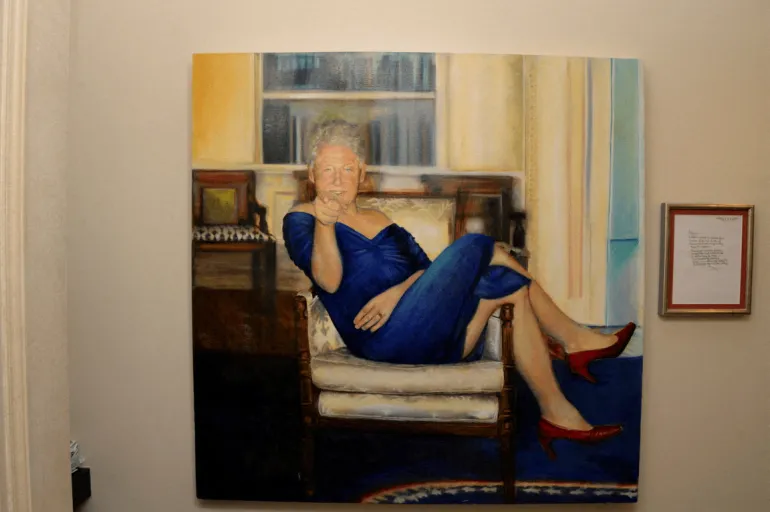
A painting of former US President Bill Clinton wearing a dress is displayed inside the Manhattan home of Jeffrey Epstein in this image from his estate released by the US Justice Department on December 19, 2025 [Handout/US Justice Department via Reuters]
What’s new in this tranche of Epstein files?
This is just the latest release of documents relating to the prosecution of Epstein, who died by suicide in a New York jail in 2019. The first tranche of about 950 pages of court documents was made public in early 2024.
One document released this time around confirms that the Federal Bureau of Investigation (FBI) was tipped off about the convicted sex offender’s crimes nearly a decade before he was first arrested.
In September 1996, Epstein survivor Maria Farmer complained to the FBI that the late financier was involved in child sex abuse. Farmer said officials failed to take steps to investigate.
While the name of the complainant is redacted in the document relating to this complaint to the FBI, Farmer has confirmed it was made by her.
Now in her 50s, Farmer said in a statement via her lawyers after the release on Friday that she feels “redeemed” and this was “one of the best days of my life”.
“I want everyone to know that I am shedding tears of joy for myself but also tears of sorrow for all the other victims that the FBI failed,” she said.
Newly released transcripts of grand jury proceedings also include testimony from FBI agents who described interviews that they conducted with girls and young women describing their experiences of being paid to perform sex acts for Epstein. The youngest interviewee was 14, according to local media.
One woman, then aged 21, told a grand jury that Epstein had hired her when she was 16 to perform a sexual massage and that she had gone on to recruit other girls to do the same.
“For every girl that I brought to the table, he would give me $200,” she said.
They were mostly people she knew from high school, she said, adding that she told them that if they were under age, “just lie about it and tell him that you are 18.”
Much of the material published had already been circulating in the public domain after years of court action and investigations.
However, many of the new photos – some of them heavily blacked out – feature well-known public figures.
From left from second from left, Ghislaine Maxwell, Rolling Stones frontman Mick Jagger and former US President Bill Clinton are seen in this image, part of the latest trove of documents from US government investigations into Epstein [Handout/US Justice Department via Reuters]
Who features in the newly released photos?
Among the documents released on Friday are photographs in a folder labelled “DOJ Disclosures”. Most of the photographs were seized by the FBI during various searches of Epstein’s homes in New York City and the US Virgin Islands.
New photos show the musicians Mick Jagger, Michael Jackson and Diana Ross in photographs with Epstein and at times with other people whose faces have been blacked out.
In one image, Jagger can be seen sitting between Epstein and former US President Bill Clinton. Popstar Jackson is also pictured standing next to Clinton and posing for a photo with Epstein in front of a painting in another.
From left, Michael Jackson, Bill Clinton and Diana Ross are seen in this image released by the Department of Justice [Handout/US Justice Department via Reuters]
Other famous men featured in the newly released photos include the actor Kevin Spacey, comedian Chris Tucker, billionaire Richard Branson, former UK ambassador to the US Peter Mandelson and Andrew Mountbatten-Windsor – formerly known as Britain’s Prince Andrew – and his former wife, Sarah Ferguson.
In one black and white image, Andrew can be seen lying across the laps of five people whose faces have all been blacked out while Maxwell stands behind them.
The Justice Department did not include any details about the contents or context of the photos.
Ghislaine Maxwell and Andrew Mountbatten-Windsor are seen in this image released by the Department of Justice [Handout/US Justice Department via Reuters]
Virginia Giuffre, who was one of Epstein’s most prominent accusers and who died by suicide in April aged 41, accused Mountbatten-Windsor of sexual abuse when she was 17. He settled a lawsuit with her in 2022 but continued to deny the allegation.
Another prominent figure among the photos is Clinton. One photo shows him in a swimming pool with Maxwell and another person whose face has been blacked out. Another photo shows the former US president in a hot tub with a woman whose face is also redacted.
Clinton swims in a pool with Maxwell in this image released by the Department of Justice [Handout/US Justice Department via Reuters]
While Clinton has never been accused of any wrongdoing in connection with Epstein’s crimes, his spokesperson said the White House was using him as a scapegoat.
“This is about shielding themselves from what comes next, or from what they’ll try and hide forever. So they can release as many grainy 20-plus-year-old photos as they want, but this isn’t about Bill Clinton. Never has, never will be,” the spokesperson said in a statement.
Clinton in the past has said he cut ties with Epstein before the late financier pleaded guilty to solicitation of a minor in Florida.
From right, Bill Clinton and Kevin Spacey can be seen in this image from Epstein’s estate released by the Department of Justice [Handout/US Justice Department via Reuters]
Does Trump appear in the Epstein files?
Trump hardly appears in the files at all. The few photos that do feature him are ones that have been circulating in the public domain for decades.
According to one court document released on Friday, Epstein was alleged to have taken a 14-year-old girl to Trump’s Mar-a-Lago resort in Florida and to have introduced her to the president.
While introducing her, Epstein elbowed Trump, asking him – referring to the teenager: “This is a good one, right?” Trump smiled and nodded in agreement, said the document from a case against Epstein’s estate and Maxwell in 2020.
In the court filing, the unnamed plaintiff herself makes no specific accusation against Trump.
In response to media requests for comment about this court document, White House spokeswoman Abigail Jackson said the Trump administration was “the most transparent in history” and by “recently calling for further investigations into Epstein’s Democrat friends, the Trump Administration has done more for the victims than Democrats ever have,” she added.
A photo originally labelled File 468, which includes a picture of Trump, has been removed from the Justice Department’s Epstein files website [Handout/Department of Justice]
Have some of the files disappeared since they were published on Friday?
Apparently, yes. One image, originally labelled File 468, which showed the inside of a desk drawer, included a photograph of Trump alongside Epstein, US first lady Melania Trump and Maxwell.
Other missing photos were images of paintings depicting nude women and one showing a series of photographs on a cupboard and in drawers.
On Saturday, The Associated Press news agency reported that at least 16 files published on Friday had disappeared from the Justice Department’s webpage.
The department has not provided any explanation or statement to the public about this but said in a post on X that “photos and other materials will continue being reviewed and redacted consistent with the law in an abundance of caution as we receive additional information.”
Democrats on the Oversight Committee in the US House of Representatives also released 68 photos, drawn from the 95,000 photos and files the Oversight Committee has so far received from the Epstein estate.
Democrats in the committee said the images, which they released on Thursday, “were selected to provide the public with transparency into a representative sample of the photos” and “to provide insights into Epstein’s network and his extremely disturbing activities”.
Following the Justice Department’s release on Friday, the committee’s Democratic members questioned in a post on X why the image featuring a photo of Trump, a Republican, was missing, stating: “What else is being covered up? We need transparency for the American public.”
Epstein appears with several women whose identities have been obscured in this image released by Democrats on the House Oversight Committee on December 18, 2025 [Handout/House Oversight Committee Democrats via Reuters]
Why has so much been redacted?
Among the thousands of documents published on Friday, at least 550 pages were reportedly fully redacted.
One 119-page document labelled “Grand Jury-NY” is completely redacted as is a set of three consecutive documents totalling 255 pages. Each page is fully blacked out.
Campaigners behind the Epstein Files Transparency Act said they had hoped to obtain more information about how the sex offender had been able to avoid serious federal charges for so many years.
However, many crucial FBI interviews with Epstein’s accusers and internal Justice Department memos on charging decisions are unreadable.
Todd Blanche, the deputy attorney general, sent a six-page letter to members of Congress laying out the redaction process, noting that the law mandates that the department omit or redact any references to victims and files that could jeopardise pending investigations or litigation.
Blanche explained that he had, therefore, instructed attorneys to redact or withhold material that contained personally identifiable information about victims; depicted or contained child sexual abuse materials; would jeopardise an active investigation or prosecution; or contained classified national defence or foreign policy information.
Without specifying which, Blanche added that in some instances, the department had withheld or redacted information covered by deliberative-process privilege, work-product privilege and attorney-client privilege.
Bill Clinton and a woman are seen in this image from the Epstein estate released by the Department of Justice [Handout/US Justice Department via Reuters]
When will the remaining files be released?
The Justice Department has said the publication of thousands more documents concerning investigations into Epstein will be released in the coming days as the year-end holidays approach.
The department missed its original Friday deadline to release all the information it had on Epstein in violation of the law signed by Trump in November ordering a complete release within 30 days.
After the drop on Friday, the department published two much smaller tranches on Saturday, which went beyond the initial redactions and featured identities of prosecutors, FBI case agents and other law enforcement personnel who appeared before two federal grand juries in New York state.
Several US lawmakers expressed anger about the White House’s failure to produce all the documents required under the law within the time limit.
Representatives Ro Khanna, a Democrat, and Thomas Massie, a Republican – the duo who introduced the petition that eventually led to the passing of the Epstein Files Transparency Act – strongly criticised the partial release on social media.
Massie wrote that it “grossly fails to comply with both the spirit and the letter of the law”.
Khanna called the release so far “disappointing” and added: “We’re going to push for the actual documents.”
Senate Democratic leader Chuck Schumer accused the Trump administration of being “hell-bent on hiding the truth” and reiterated that the failure to release all the Epstein documents by Friday’s deadline amounts to “breaking the law”.
Meanwhile, officials from the Trump administration have been publicising the photographs featuring former Democratic President Clinton and hailing the current government as “the most transparent in history”.
Can campaigners take further steps to obtain more of the documents?
In a statement, Schumer said Senate Democrats are working “closely with attorneys for the victims of Jeffrey Epstein and with outside legal experts to assess what documents are being withheld and what is being covered up by [US Attorney General] Pam Bondi”.
Representatives Robert Garcia and Jamie Raskin, the ranking Democrats on the House Oversight and Judiciary committees, said they are examining “all legal options” after “the Department of Justice is now making clear it intends to defy Congress itself.”
“Donald Trump and the Department of Justice are now violating federal law as they continue covering up the facts and the evidence about Jeffrey Epstein’s decades-long, billion-dollar, international sex trafficking ring,” Garcia and Raskin said in a statement.
Senator Ron Wyden, another top Democrat on the Senate Finance Committee who investigated Epstein’s financial ties, said on social media that the failure to release all the files was “a continuation of this administration’s coverup on behalf of a bunch of pedophiles and sex traffickers”.
The Associated Press reported that if Democratic lawmakers so choose, they could go to court to force the Justice Department to comply with the law. However, that would likely be a lengthy process.
Separately, the House Oversight Committee has issued a subpoena for the Epstein files, which could give Congress another avenue to force the release of more information to the committee. But that would require Republicans to join them in contempt-of-Congress proceedings against a Republican administration.
This undated photo released by the US House Oversight Committee from Epstein’s estate shows Trump surrounded by six women whose identities have been concealed [Handout/US House Oversight Committee]
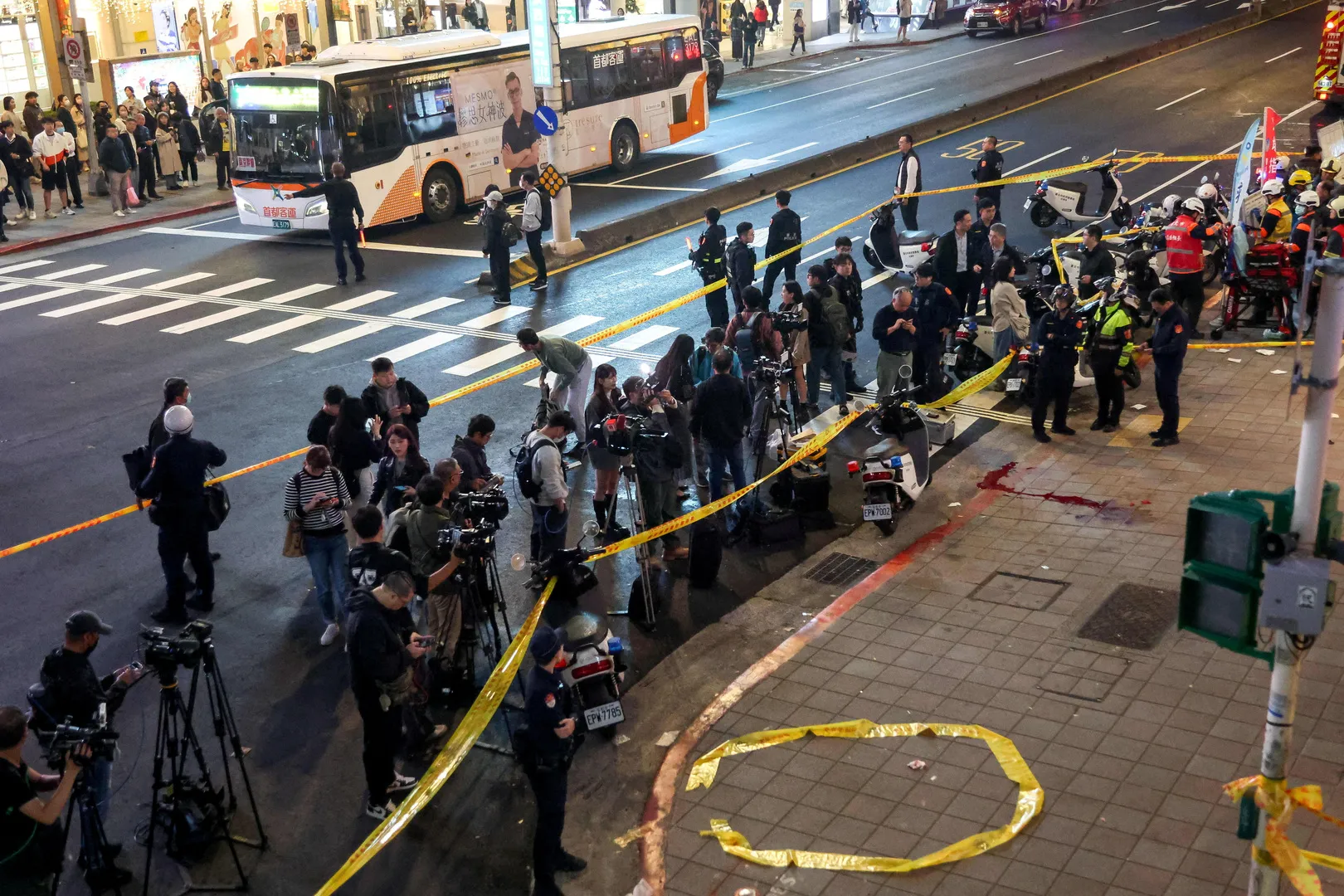
Taiwan’s president Lai Ching-te has ordered sweeping security reforms after a knife and smoke grenade attack killed three people and injured 11 in Taipei. The suspect, Chang Wen, 27, set fires and struck multiple sites before dying from a fall.
WASHINGTON — Lawmakers unhappy with Justice Department decisions to heavily redact or withhold documents from a legally mandated release of files related to Jeffrey Epstein threatened Saturday to launch impeachment proceedings against those responsible, including Pam Bondi, the U.S. attorney general.
Democrats and Republicans alike criticized the omissions, while Democrats also accused the Justice Department of intentionally scrubbing the release of at least one image of President Trump, with Senate Minority Leader Chuck Schumer (D-N.Y.) suggesting it could portend “one of the biggest coverups in American history.”
Trump administration officials have said the release fully complied with the law, and that its redactions were crafted only to protect victims of Epstein, a disgraced financier and convicted sex offender accused of abusing hundreds of women and girls before his death in 2019.
Rep. Ro Khanna (D-Fremont), an author of the Epstein Files Transparency Act, which required the release of the investigative trove, blasted Bondi in a social media video, accusing her of denying the existence of many of the records for months, only to push out “an incomplete release with too many redactions” in response to — and in violation of — the new law.
Khanna said he and the bill’s co-sponsor, Rep. Thomas Massie (R-Ky.), were “exploring all options” for responding and forcing more disclosures, including by pursuing “the impeachment of people at Justice,” asking courts to hold officials blocking the release in contempt, and “referring for prosecution those who are obstructing justice.”
“We will work with the survivors to demand the full release of these files,” Khanna said.
He later added in a CNN interview that he and Massie were drafting articles of impeachment against Bondi, though they had not decided whether to bring them forward.
Massie, in his own social media post, said Khanna was correct in rejecting the Friday release as insufficient, saying it “grossly fails to comply with both the spirit and the letter of the law.”
The lawmakers’ view that the Justice Department’s document dump failed to comply with the law echoed similar complaints across the political spectrum Saturday, as the full scope of redactions and other withholdings came into focus.
The frustration had already sharply escalated late Friday, after Fox News Digital reported that the names and identifiers of not just victims but of “politically exposed individuals and government officials” had been redacted from the records — which would violate the law, and which Justice Department officials denied.
Among the critics was Rep. Marjorie Taylor Greene (R-Ga.), who cited the Fox reporting in an exasperated post late Friday to X.
“The whole point was NOT to protect the ‘politically exposed individuals and government officials.’ That’s exactly what MAGA has always wanted, that’s what drain the swamp actually means. It means expose them all, the rich powerful elites who are corrupt and commit crimes, NOT redact their names and protect them,” Greene wrote.
Senior Justice Department officials later called in to Fox News to dispute the report. But the removal of a file published in the Friday evening release, capturing a desk in Epstein’s home with a drawer filled of photos of Trump, reinforced bipartisan concerns that references to the president had been illegally withheld.
In a release of documents from the Epstein family estate by the House Oversight Committee this fall, Trump’s name was featured over 1,000 times — more than any other public figure.
“If they’re taking this down, just imagine how much more they’re trying to hide,” Schumer wrote on X. “This could be one of the biggest coverups in American history.”
Several victims also said the release was insufficient. “It’s really kind of another slap in the face,” Alicia Arden, who went to the police to report that Epstein had abused her in 1997, told CNN. “I wanted all the files to come out, like they said that they were going to.”
Trump, who signed the act into law after having worked to block it from getting a vote, was conspicuously quiet on the matter. In a long speech in North Carolina on Friday night, he did not mention it.
However, White House officials and Justice Department leaders strongly pushed back against the notion that the release was somehow incomplete or out of compliance with the law, or that the names of politicians had been redacted.
“The only redactions being applied to the documents are those required by law — full stop,” said Deputy Atty. Gen. Todd Blanche. “Consistent with the statute and applicable laws, we are not redacting the names of individuals or politicians unless they are a victim.”
Other Republicans defended the administration. Rep. James Comer (R-Ky.), chair of the House Oversight Committee, said the administration “is delivering unprecedented transparency in the Epstein case and will continue releasing documents.”
Epstein died in a Manhattan jail awaiting trial on sex trafficking charges. He’d been convicted in 2008 of procuring a child for prostitution in Florida, but served only 13 months in custody in what many condemned as a sweetheart plea deal for a well-connected and rich defendant.
Epstein’s crimes have attracted massive attention, including among many within Trump’s own political base, in part because of unanswered questions surrounding which of his many powerful friends may have also been implicated in crimes against children. Some of those questions have swirled around Trump, who was friends with Epstein for years before the two had what the president has described as a falling out.
Evidence has emerged in recent months that suggests Trump may have had knowledge of Epstein’s crimes during their friendship.
Epstein wrote in a 2019 email, released by the House Oversight Committee, that Trump “knew about the girls.” In a 2011 email to Ghislaine Maxwell, who was convicted of conspiring with Epstein to help him sexually abuse girls, Epstein wrote that “the dog that hasn’t barked is trump. [Victim] spent hours at my house with him … he has never once been mentioned.”
Trump has ardently denied any wrongdoing.
The records released Friday contained few if any major new revelations, but did include a complaint against Epstein filed with the FBI back in 1996 — which the FBI did little with, substantiating longstanding fears among Epstein’s victims that his crimes could have been stopped years earlier.
Sen. Adam Schiff (D-Calif.), one of the president’s most consistent critics, wrote on X that Bondi should appear before the Senate Judiciary Committee to explain under oath the extensive redactions and omissions, which he called a “willful violation of the law.”
“The Trump Justice Department has had months to keep their promise to release all of the Epstein Files,” Schiff wrote. “Epstein’s survivors and the American people need answers now.”
Footage shows a massive crowd filling streets to honour Sharif Osman Hadi, a leader of the 2024 student-led uprising, who was shot dead by a masked gunman while leaving a Dhaka mosque. Bangladesh’s interim leader Mohammad Yunus joined mourners days after Hadi died in a Singapore hospital.
THE slashing deaths of Hollywood star Rob Reiner and his wife have sparked a raft of questions, many of which stem from their alleged killer son, Nick.
Here is a look at five mysteries that leave glaring holes in the murder investigation, from hazy information about Nick’s mental health to debates on his unconfirmed motivation.
Sign up for the Showbiz newsletter
Thank you!
Nick Reiner, 32, has been accused of killing his parents Rob and Michele ReinerCredit: GettyRob, 78 and Michele, 68, were found dead with their throats slit on SundayCredit: GettyJake Reiner, Nick, Romy Reiner, Michele, and Rob are seen attending a Four Sixes Ranch Steakhouse pop-up grand opening on September 14, 2024, in Las Vegas, NevadaCredit: Getty
Nick, 32, is accused of murdering his parents, filmmaker Rob, 78, and his wife Michele, 68, after a chaotic weekend that spiraled from a celebrity bash to a late-night arrest near the University of Southern California.
Nick was arrested later that night and is charged with two counts of first-degree murder, meaning he could face the death penalty if convicted.
However, his fate is still hanging in the balance, as his arrest is complicated by missing hours, unclear motives, and unanswered questions about what he did while his parents lay dead.
Here is what has been revealed about the case and what remains to be revealed.
WHAT HAPPENED AT CONAN O’BRIEN’S PARTY?
On Saturday night, Rob, Michele, and Nick were all said to have attended a star-studded holiday party hosted by comedian Conan O’Brien.
And according to several insiders, the night reportedly went sideways for the trio.
Guests present at the party claimed that Nick behaved erratically the entire night
According to the Wall Street Journal, there was one awkward moment where Nick interrupted Saturday Night Live alum Bill Hader during a private conversation and was told to butt out.
Nick was said to have asked Hader odd questions like ” What’s your name? What’s your last name? Are you famous?”
One witness told the Daily Mail, “Nick just stood there and stared before storming off.”
Tensions escalated when multiple attendees saw Rob, Michele, and Nick locked in a heated argument.
At one point, a guest suggested calling the police, Daily Mail reported.
“They got into an argument, the father and son. It got so bad and loud someone wanted to call the police to report it,” an insider told the outlet.
Timeline of Rob and Michele Reiner’s death
Rob Reiner and his wife of Michele Singer Reiner were found dead in their Los Angeles home on December 14, 2025.
Timeline:
December 13, 2025: Reiner and his wife Michele attended a holiday party on the evening of December 13 with their son, Nick.
Sources conveyed to The U.S. Sun that the couple and their son were engaged in a heated public argument while at the event.
December 14, 2025: Reiner and Michele were found dead in their Brentwood home in Los Angeles at around 3:30 pm PST.
The couple’s daughter, Romy, reportedly discovered her parents’ bodies.
Online police records show Reiner and Michele’s 32-year-old son, Nick, was arrested at 9:15 pm PST on December 14.
December 15, 2025: Authorities in Los Angeles announce that Nick Reiner was arrested and charged with murder.
Nick was booked into a Los Angeles jail at 5:04 am and was being held on $4 million bail, which was later revoked.
December 16, 2025: Los Angeles District Attorney Nathan Hochman formally charged Nick Reiner with two counts of first-degree murder.
Hochman said his office would consider the death penalty in Nick’s case.
Nick’s scheduled court appearance on December 16 was postponed due to what his attorney said was a procedural issue.
But O’Brien reportedly intervened before anyone rang 911, the insider claimed.
“But Conan stepped in and said, ‘it’s my house, my party, I’m not calling the police.’ He talked them out of calling the police.”
“When the s**t was hitting the fan, somebody said we need to call the police. The conversation was about getting this kid put into a mental-health hold,” the source told the Mail.
Nick eventually stormed off the party.
An aerial view of Rob Reiner and Michele’s estate in Brentwood, Los AngelesCredit: EPA
Outlets have also reported that Rob confided to friends that he is scared of Nick.
“I’m petrified of him,” Rob told his friends.
“I can’t believe I’m going to say this, but I’m afraid of my own son. I think my own son can hurt me.”
WAS NICK HIGH ON DRUGS?
No official details have been released saying Nick was on drugs or drunk at the time of the alleged killings.
But questions are swirling because he has a documented history of substance abuse, and the hours after the party, and after he is believed to have fled the family home, are still largely unaccounted for.
According to a TMZ report, Nick was receiving care from a Los Angeles-based rehab facility that focuses on mental illness and substance abuse, and costs $70,000 a month.
Nick had been diagnosed with schizophrenia, and a report claims his behavior became increasingly “alarming” as doctors worked to fine-tune his treatment.
Things got worse three to four weeks before the murders after doctors changed his medication, leaving him even more unstable.
“Nick was out of his head,” a source told TMZ, with the report also alleging his substance abuse made his condition worse.
Nick was described as quiet, introverted and darkly funnyCredit: Instagram/michelereinerRob and. Nick Reiner attend AOL Build Presents: “Being Charlie” at AOL Studios In New York on May 4, 2016Credit: Getty
One avenue his attorney, Alan Jackson, could explore is having him declare mentally unfit for trial, which would pause the proceedings while he is evaluated and treated.
That’s different from an insanity defense, which argues he wasn’t legally responsible at the time of the alleged killings.
Los Angeles criminal defense lawyer Daniel Rubin told Fox News the defense strategy will depend on “the weight and admissibility” of evidence, witness testimony, the events before the deaths, “the defendant’s mental health issues,” and any mitigating factors.
Rubin said if Reiner is found mentally incompetent, a judge can order a formal competency assessment by specialists.
“If he is found ‘incompetent,’ he will need to be medicated or treated to the point where he will be able to assist in his own defense and understand the proceedings,” Rubin added.
This process could take several weeks to several months.
If a judge finds him unfit, the case typically goes on ice while doctors work to restore competency, and it can restart if he stabilizes.
Even if he’s never restored, that doesn’t mean he goes home; he could still be held in a secure hospital setting rather than a prison.
And if he’s found fit and later convicted, prison is still very much on the table.
WILL HE GET HIS PARENTS’ FORTUNE?
If Nick already has cash or there is a trust that allows discretionary payouts, it’s possible funds could be used toward his legal bills while the criminal case is pending – because he’s presumed innocent and the inheritance question isn’t “final” yet.
Some reports say that, until there’s a conviction or a civil finding, he isn’t automatically treated as disqualified in every setting.
But any move to use estate or trust cash could trigger an immediate probate war, with other relatives or beneficiaries pushing to freeze payouts while the murder case is pending.
If Nick is convicted, California’s so-called “slayer statute” would likely kick in, a law that blocks someone from inheriting from a person they feloniously and intentionally killed.
In that scenario, he’d be treated as if he died before his parents for inheritance purposes, meaning he wouldn’t collect from their estate.
If he’s barred, the money would typically flow to other heirs or whoever is next in line under the will or trust.
Rob and Michele’s combined estate has been estimated at around $200 million, making the financial stakes enormous as the case heads toward court.
Nick had been diagnosed with schizophrenia, and a report claims his behavior became increasingly “alarming”Credit: Instagram/michelereinerNick was receiving care from a Los Angeles-based rehab facility that focuses on mental illness and substance abuseCredit: Facebook/ Nick Reiner
Pickpockets can be very skilled at blending into crowds – but if you know what to look for, it’s easy to spot them.
Pickpockets can spoil your holiday(Image: Getty)
Pickpocketing is widespread globally. Across Europe, particularly during peak tourist periods, it can be rampant.
Well-known destinations such as Barcelona, Paris and London frequently appear at the top of pickpocketing crime statistics, but according to James Smith, a fluent Spanish speaker and founder of Learn Spanish, there’s no need for concern.
He explained: “After living in Spain for years, you start to notice the same patterns locals watch for. You shouldn’t be suspicious of everyone. It’s more about knowing what behaviour stands out in a crowd.”
Blending into crowds
He noted that pickpockets can be exceptionally adept at melting into crowds – however, if you’re aware of what to spot, they’re easily identifiable, reports the Express.
He remarked: “They’ll dress like tourists, carry maps, even take photos. But if you know what to look for, their behaviour can easily give them away.”
Loitering
The initial warning sign to watch for is anyone lingering in a heavily populated location. Whilst most individuals are passing through the vicinity, pickpockets will remain stationary in one position – close to tube station entrances or famous landmarks.
“Watch for people who seem to be killing time in high-traffic areas,” said James.
“Genuine tourists stop to look at something specific. Pickpockets scan the crowd itself.”
Whilst they’re surveying the masses, you’ll observe their gaze concentrating on people’s bags and pockets. Authentic tourists will be admiring the attractions – but pickpockets will be studying you.
Walking close behind
Another red flag is individuals trailing too closely behind you. In packed areas it’s understandable that people might be squeezed closer together, but if you’re in a less busy location and you spot someone walking closely behind you, it’s wise to remain alert.
Extra clothing
In hotter destinations like Barcelona and Madrid, James cautions that people donning extra clothing could be dodgy. He explained that thieves often sport jackets, scarves, or carry bags they can utilise to hide pinched items or mask their hands whilst they operate.
In Barcelona’s warm-to-mild climate, someone wearing multiple layers is conspicuous.
To protect yourself and your possessions, James offers some advice.
He explained: “The habits locals use are simple but effective. Always hold your bag in front of you in crowded spaces, not hanging off your shoulder where you can’t see it. Keep zips facing inward against your body. Avoid using your phone while walking through busy streets, especially near popular tourist spots.
“Front pockets are much harder to pick than back pockets, so keep your wallet there. If you’re carrying a backpack, swing it round to your front on the metro or in queues.
“Stay aware, but don’t let it make you anxious. Locals don’t walk around in fear, they just notice their surroundings and keep their belongings secure. Once these habits become automatic, you can relax and enjoy your trip.”