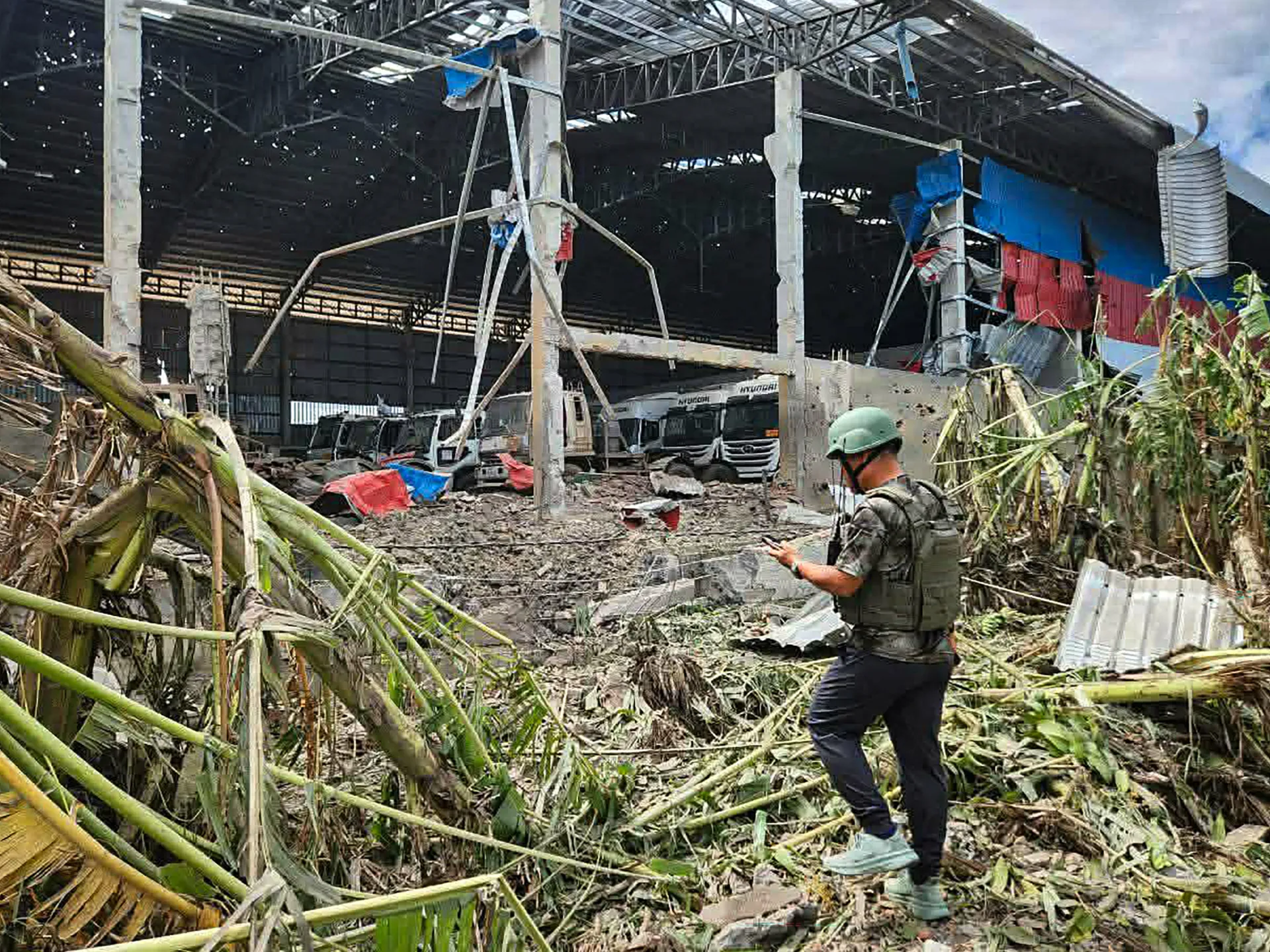
An Al Jazeera crew at the Thai border with Cambodia was forced to take shelter in a bunker as Cambodia shelled the village of Ban Nong Mek, in Thailand’s Sisaket province.
Australian Prime Minister Anthony Albanese has declared the shooting at Sydney’s Bondi Beach a ‘terrorist’ attack targeting a Jewish community event. New South Wales police say at least a dozen people were killed by two gunmen at the scene.
At least 11 people have been killed and more than two dozen wounded in a mass shooting at Sydney’s Bondi Beach, Australian officials said, adding that one of the suspected attackers was killed while another one was in critical condition.
New South Wales Police Commissioner Mal Lanyon said on Sunday, 29 people were injured, including two police officers, in what he declared a “terrorist incident”.
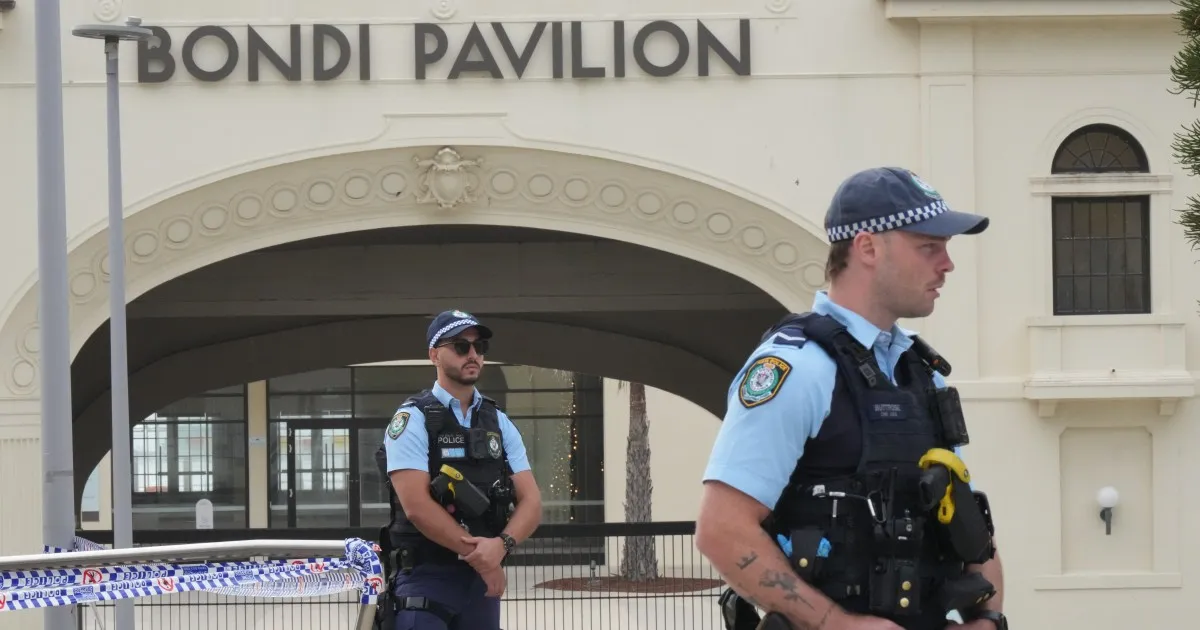
The shooting occurred at about 6:47pm (07:47 GMT) near the Bondi Pavilion during a Hanukkah celebration attended by more than 1,000 people, Lanyon said.
“I’ve also authorised special powers under Section 5 and Section 6 to ensure that if there is a third offender – and we are currently investigating that at the moment – we will make sure that we prevent any further activity. Section 6 allows us to investigate today’s incident,” he said.
In a televised news conference, Prime Minister Anthony Albanese called the deadly shooting a “targeted attack on Jewish Australians on the first day of Hanukkah”.
Albanese said the “evil” that was unleashed at Bondi Beach is “beyond comprehension”.
“An attack on Jewish Australians is an attack on every Australian, and every Australian tonight will be – like me – devastated by this attack on our way of life.”
One of the world’s most famous beaches, Bondi is typically crowded with locals and tourists, especially on warm weekend evenings.
Video shared on X shows the dramatic moment a bystander disarms a gunman during a mass shooting at Sydney’s Bondi Beach that has left a dozen people dead and injured. The suspect gets away then joins another shooter who continues firing from a bridge.
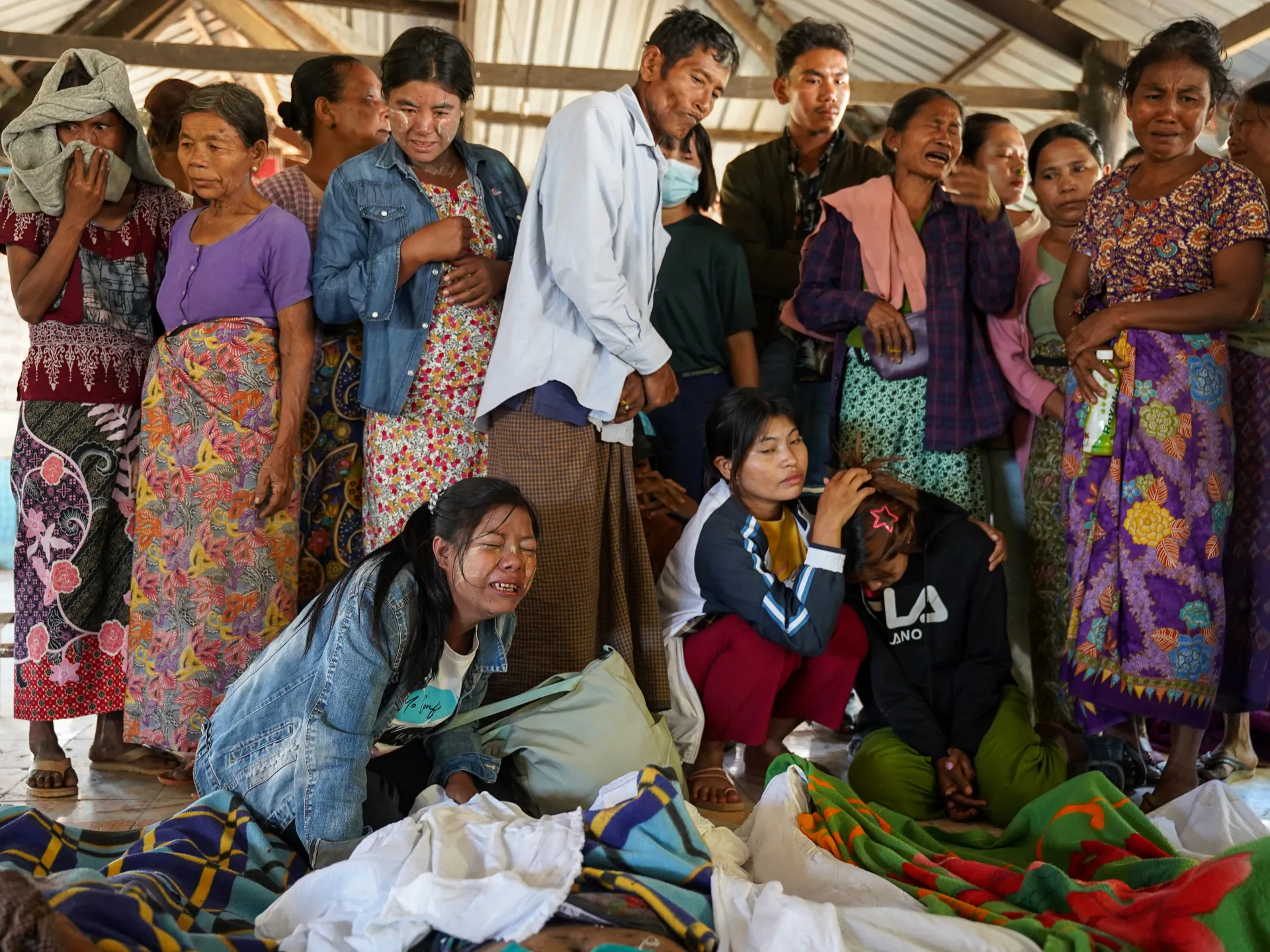
From the cleanup efforts in Sri Lanka in the wake of Cyclone Ditwah’s destruction to the devastating Myanmar military air attack on a hospital that killed 30 people, here is a look at the week in photos.
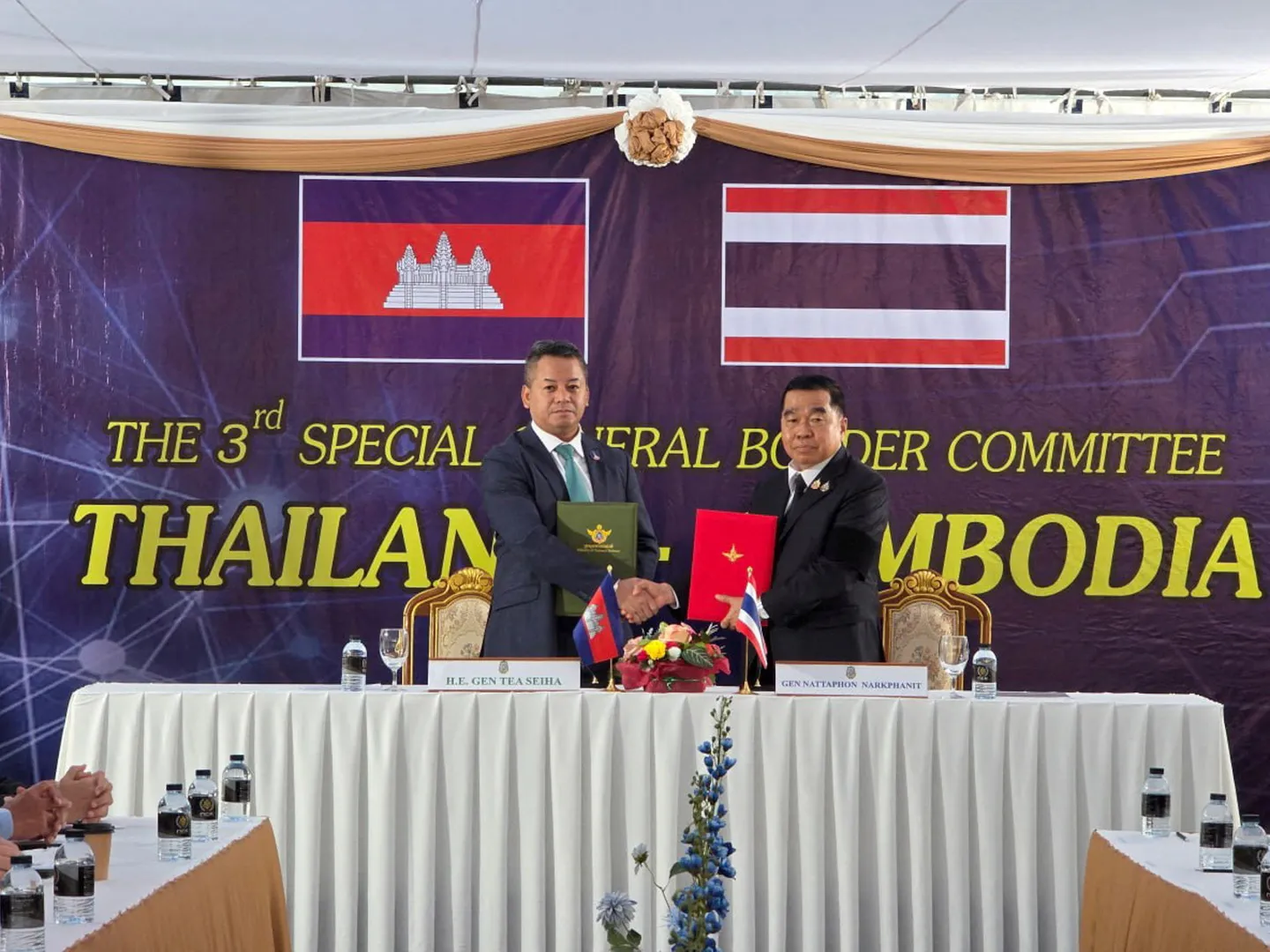
Renewed border clashes between Cambodia and Thailand entered a second week after Bangkok denied US President Donald Trump’s claim that a truce had been agreed to halt the deadly fighting.
A Royal Thai Navy spokesman says its military launched an operation to reclaim border ‘territories’ in Trat province.
Thailand’s military has launched a new offensive against Cambodia to “reclaim sovereign territory”, spurning mediation efforts including that of United States President Donald Trump.
Violence between the two Southeast Asian nations continued on Sunday, a day after Phnom Penh announced that it was shutting all of its crossings with Thailand, its northern neighbour.
Recommended Stories
list of 3 itemsend of list
The conflict stems from a long-running dispute over the colonial-era demarcation of their 800km (500-mile) shared border. Fighting has left at least 25 soldiers and civilians dead, and displaced over half a million people on both sides.
The newspaper Matichon Online quoted a Royal Thai Navy spokesman, Rear Admiral Parach Rattanachaiyapan, as saying that its forces “launched a military operation to reclaim Thai sovereign territory” in an area of the coastal province of Trat.
“The operation began in the early morning hours with heavy clashes, conducted under the principles of self-defence according to international law and the preservation of national sovereignty,” Rattanachaiyapan told the Thai newspaper.
The Thai military said it has “successfully controlled and reclaimed the area, expelling all opposing forces”.
The public television channel Thai PBS also reported that the country’s military “planted the Thai national flag” after “driving out all opposing forces” in the area.
Thailand’s TV 3 Morning News quoted the military as saying that, as of early Sunday, the country’s “army, Navy and Air Force are continuing with [their] operations” along the border.
It also reported “sporadic clashes” in several other areas, including in Surin’s Ta Khwai area where “direct fire and indirect” and drone attacks took place.
There were no immediate reports on casualties from the latest incidents. The Cambodian military has yet to issue a statement regarding the latest fighting on Sunday.
But the Cambodian news website Cambodianess reported attacks in at least seven areas including in Pursat province, where the Thai military reportedly used F-16 fighter jet to drop bombs in the Thma Da commune.
Thai military also allegedly fired artillery shells southward into Boeung Trakoun village in the Banteay Meanchey province.
Al Jazeera could not independently confirmed the reports as of publication time.
Displaced Thai villagers who fled their homes following clashes between Thai and Cambodian troops rest at an evacuation centre in Si Sa Ket province in Thailand [Rungroj Yongrit/EPA]
Border shutdown
Late on Saturday, Cambodia announced that it was shutting all border crossings with Thailand due to the fighting.
“The Royal Government of Cambodia has decided to fully suspend all entry and exit movements at all Cambodia-Thailand border crossings, effective immediately and until further notice,” Cambodia’s Ministry of Interior said in a statement late on Saturday.
The border shutdown was yet another symptom of the frayed relations between the neighbouring countries, despite international pressure to secure peace.
Earlier on Saturday, Trump had declared that he had won agreement from both countries for a new ceasefire.
But Thai officials said they had not agreed to pause the conflict. Rather, Thai Prime Minister Anutin Charnvirakul pledged that his country’s military would continue fighting on the disputed border.
Thai Minister of Foreign Affairs Sihasak Phuangketkeow also said on Saturday that some of Trump’s remarks did not “reflect an accurate understanding of the situation” on the ground.
Cambodia has not commented directly on Trump’s claim of a new ceasefire, but its Ministry of National Defence said earlier that Thai jets carried out air strikes on Saturday morning.
The latest large-scale fighting was set off by a skirmish on December 7, which wounded two Thai soldiers, derailing a ceasefire promoted by Trump that ended five days of combat in July.
The July ceasefire was brokered by Malaysia and pushed through by pressure from Trump, who threatened to withhold trade privileges unless Thailand and Cambodia agreed. It was formalised in more detail in October at a regional meeting in Malaysia that Trump attended.
Trump has cited his work on the Southeast Asian conflict as he lobbies for a Nobel Peace Prize.
Late on Saturday, a spokesman for Trump said in a statement: “The President expects all parties to fully honor the commitments they have made in signing these agreements, and he will hold anyone accountable as necessary to stop the killing and ensure durable peace.”
Displaced people gather at a temporary camp in the Banteay Meanchey province of Cambodia on Saturday amid clashes along the country’s border with Thailand [Tang Chhin Sothy/AFP]
The Philippines has accused Chinese coastguard ships of firing water cannon at Filipino fishermen near a disputed South China Sea shoal, injuring three people and causing “significant damage” to two fishing vessels.
On Saturday, the Philippine coastguard (PCG) said that nearly two dozen Filipino fishing boats were attacked a day earlier, near an atoll called the Sabina Shoal that falls within the country’s 200km (124-mile) Exclusive Economic Zone (EEZ).
Recommended Stories
list of 3 itemsend of list
The fishermen faced high-pressure spray from Chinese water cannon, and Chinese vessels attempted aggressive blocking manoeuvres, according to Manila.
It was the latest in a series of confrontations between Chinese and Philippine ships in the contested waters of the South China Sea, which Beijing claims nearly in its entirety despite an international ruling against the claim.
Friday’s incident took place in a fish-rich area about 150km (93 miles) from the Philippine island of Palawan.
“As a result of these aggressive actions, three Filipino fishermen sustained physical injuries, including bruises and open wounds,” Commodore Jay Tarriela, a spokesman for the Philippine coastguard, said in a statement posted on Facebook.
“Two [Filipino fishing boats] also suffered significant damage from high-pressure water cannon blasts.”
During the incident, a Chinese boat also cut the anchor lines of several Filipino vessels, endangering their crews, according to the Philippine coastguard.
“The PCG calls on the Chinese coastguard to adhere to internationally recognised standards of conduct, prioritising the preservation of life at sea over pretensions of law enforcement that jeopardise the lives of innocent fishermen,” it said in a separate statement.
PCG Successfully Renders Assistance to Harassed Filipino Fishermen at Escoda Shoal Amid Aggressive Actions by Chinese Vessels
The Philippine Coast Guard (PCG) today announced the successful deployment of its multi-role response vessels, MRRV-4403 and MRRV-4411, to the vicinity… https://t.co/DW4eXgtjG3pic.twitter.com/P2QOwRDjbB
China, however, defended its actions on Friday as necessary to maintain its “territorial sovereignty” over the Sabina Shoal, which it referred to by the Chinese name Xianbin Jiao.
In a statement, Chinese coastguard spokesperson Liu Dejun said the military’s vessels had taken “necessary control measures, including issuing verbal warnings and expelling by external means, in accordance with laws and regulations”.
Dejun accused the Philippine vessels of having “deliberately intruded” on the shoal “under the pretext of fishing”.
Tarriela told the Reuters news agency that the Chinese coastguard’s statement amounted to an admission of wrongdoing.
In Saturday’s statement, the Philippine coastguard added that the vessels it deployed to aid the injured fishermen were repeatedly blocked from reaching the Sabina Shoal.
“Despite these unprofessional and unlawful interferences, the PCG successfully reached the fishermen this morning and provided immediate medical attention to the injured, along with essential supplies,” the statement said.
There has been a history of clashes between Chinese and Philippine vessels in the South China Sea, as each side seeks to assert its territorial claims.
A separate incident on Friday took place at the Beijing-controlled Scarborough Shoal, known in China as Huangyan Dao.
There, the Chinese military said that it had also “warned and expelled” several small aircraft from the Philippines that flew through what it considers its airspace.
In October, the Philippines also accused a Chinese ship of deliberately ramming one of its government vessels in the Spratly Islands, where Beijing has sought to assert its sovereignty claims for years. Beijing blamed Manila for the incident.
A month earlier, one person was injured when a water cannon from a Chinese coastguard vessel shattered a window on the bridge of a fisheries bureau vessel near the Scarborough Shoal.
China claims an area in the South China Sea that cuts into the exclusive economic zones of Brunei, Indonesia, Malaysia, the Philippines and Vietnam, which all have competing claims.
In 2016, an international tribunal sided with the Philippines, finding that China’s claims exceeded lawful limits under the United Nations Convention on the Law of the Sea.
But China denounced the ruling and has refused to abide by it.
Cross-border fighting between Thailand and Cambodia has shown no signs of easing, after US President Donald Trump announced the two sides would halt attacks. The violence has killed dozens and forced mass displacement.
Kim Jong Un participates in latest public event to honour North Korean troops who served with Russian forces in war against Ukraine.
Published On 13 Dec 202513 Dec 2025
Share
North Korea’s leader Kim Jong Un has hugged injured soldiers in wheelchairs at a ceremony in the capital, Pyongyang, to welcome home troops who served with Russian forces in the war against Ukraine.
State-run Korean Central News Agency said on Saturday that Kim praised the “mass heroism” of the returning 528th Regiment of Engineers of the Korean People’s Army, which had served in Russia’s Kursk region.
Recommended Stories
list of 4 itemsend of list
Kim hailed the regiment’s conduct during its 120-day overseas deployment, which commenced in early August and involved combat and engineering duties, including mine clearing in the Kursk region of Russia, where Ukrainian forces had infiltrated and occupied for months before withdrawing.
“You could work a miracle of turning a vast area of danger zone into a safe and secure one in a matter of less than three months, the task which was believed to be impossible to be carried out even in several years,” Kim said, according to South Korea’s Yonhap news agency.
“The armed villains of the West, armed with whatever latest military hardware they are, cannot match this revolutionary army with an unfathomable spiritual depth,” Kim added at the ceremony on Friday.
North Korean leader Kim Jong Un on Friday welcomed soldiers from the Korean People’s Army’s 528th Regiment of Engineers, who returned from an overseas deployment in Russia’s Kursk region [KCNA via AFP]
The North’s leader also spoke of the “heartrending loss” of nine members of the regiment and announced that the unit would be conferred with the Order of Freedom and Independence. The deceased troops would also be honoured with the title Hero of the Democratic People’s Republic of Korea, KCNA said, referring to North Korea’s official name.
Video footage of the ceremony released by North Korea showed uniformed soldiers disembarking from an aircraft and Kim embracing soldiers seated in wheelchairs, as other soldiers and officials gathered to welcome the troops.
The Russian Ministry of Defence confirmed last month that North Korean troops, who had helped Russia repel Ukraine’s incursion into Kursk, were now involved in clearing the area of mines.
Concluding a key meeting of his ruling Workers’ Party of Korea on Thursday, Kim also praised the deployment of North Korean troops in support of Russia’s war on Ukraine, saying it “demonstrated to the world the prestige of our army”.
North Korea’s “ever-victorious army” was the “genuine protector of international justice”, Kim said.
Under a mutual defence pact between Moscow and Pyongyang, an estimated 14,000 North Korean soldiers were deployed to fight for Russia, with the number of those killed or wounded ranging between 3,000 and 4,000.
The welcoming ceremony held on Friday marks the latest event to publicly honour North Korean soldiers who served in Russia’s war on Ukraine.
In October, Kim was featured embracing weeping soldiers at a ground-breaking ceremony for a planned memorial to those who fought for Russia, and in June, state media showed Kim draping coffins with the national flag in what appeared to be the repatriation of soldiers’ remains from Russia.
The welcoming home ceremony on Friday in Pyongyang, North Korea, for the Korean People’s Army’s 528th Regiment of Engineers [KCNA via AFP]
Witnesses at the hospital and the UN say the attack killed medics, patients and may ‘amount to a war crime’.
Published On 13 Dec 202513 Dec 2025
Share
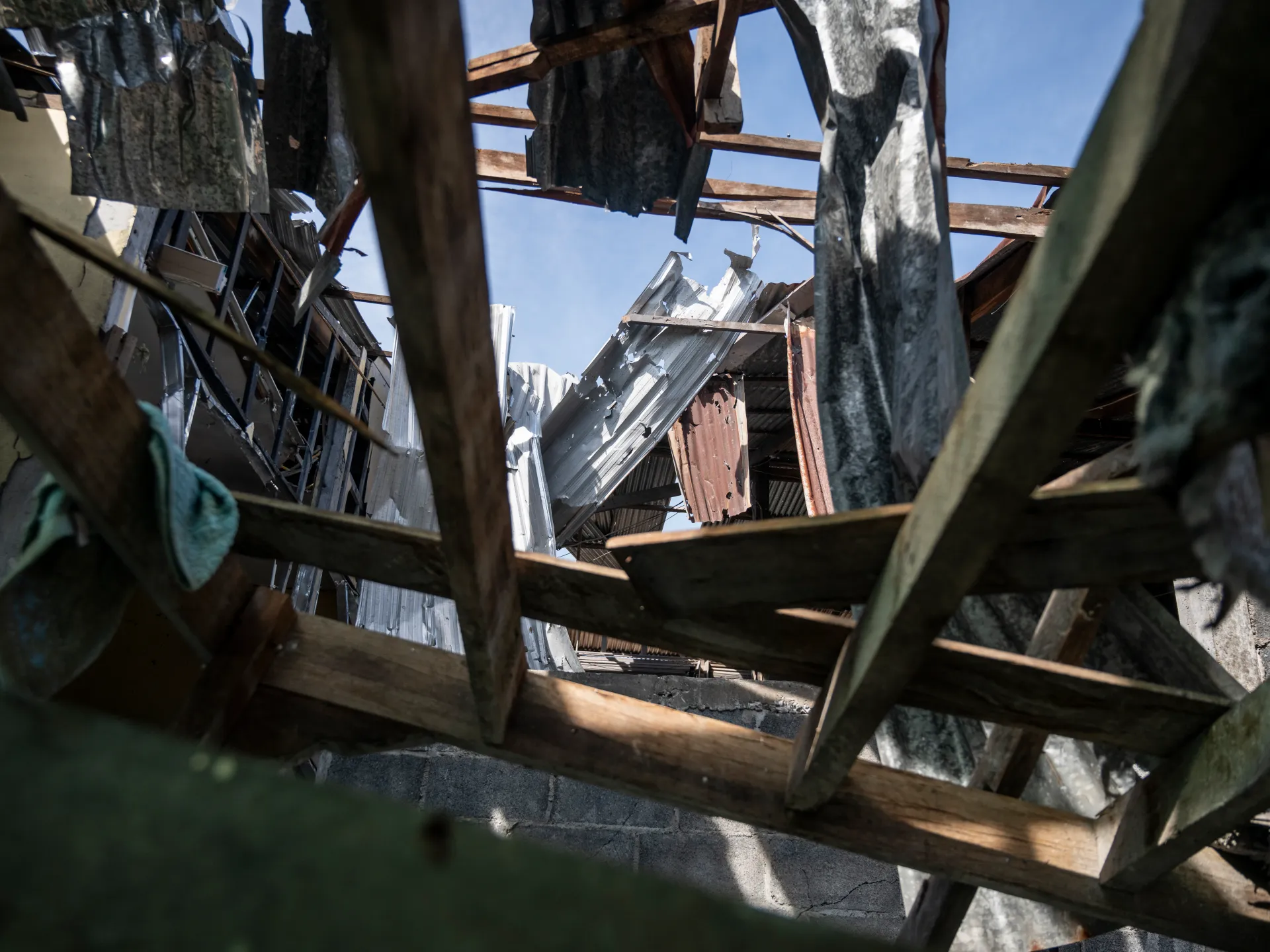
Myanmar’s military has acknowledged it conducted an air strike on a hospital in the western state of Rakhine that killed 33 people, whom it accused of being armed members of opposition groups and their supporters, but not civilians.
Witnesses, aid workers, rebel groups and the United Nations have said the victims were civilians at the hospital.
Recommended Stories
list of 3 itemsend of list
In a statement published by the state-run Global New Light of Myanmar newspaper on Saturday, the military’s information office said armed groups, including the ethnic Arakan Army and the People’s Defence Force, used the hospital as their base.
It said the military carried out necessary security measures and launched a counterterrorism operation against the general hospital in Mrauk-U township on Wednesday.
However, the United Nations on Thursday condemned the attack on the facility providing emergency care, obstetrics and surgical services in the area, saying that it was part of a broader pattern of strikes causing harm to civilians and civilian objects that are devastating communities across the country.
UN rights chief Volker Turk condemned the attacks “in [the] strongest possible terms” and demanded an investigation. “Such attacks may amount to a war crime. I call for investigations and those responsible to be held to account. The fighting must stop now,” he wrote on X.
World Health Organization chief Tedros Adhanom Ghebreyesus said he was “appalled”. “At least 33 people have been killed … including health workers, patients and family members. Hospital infrastructure was severely damaged, with operating rooms and the main inpatient ward completely destroyed,” he wrote on X.
Myanmar has been gripped by attritional fighting in a raging civil war.
Mrauk-U, located 530km (326 miles) northwest of Yangon, the country’s largest city, was captured by the Arakan Army in February 2024.
The Arakan Army is the well-trained and well-armed military wing of the Rakhine ethnic minority movement, which seeks autonomy from Myanmar’s central government. It began its offensive in Rakhine in November 2023 and has seized a strategically important regional army headquarters and 14 of Rakhine’s 17 townships.
Rakhine, formerly known as Arakan, was the site of a brutal army counterinsurgency operation in 2017 that drove about 740,000 Muslim-majority Rohingya to seek safety across the border in Bangladesh. There is still ethnic tension between the Buddhist Rakhine and the Rohingya.
The Arakan Army pledged in a statement on Thursday to pursue accountability for the air strike in cooperation with global organisations to ensure justice and take “strong and decisive action” against the military.
The military government has stepped up air strikes ahead of planned December 28 elections. Opponents of military rule charge that the polls will be neither free nor fair and are mainly an effort to legitimise the army retaining power.
Myanmar has been in turmoil since the army took power in 2021, triggering widespread popular opposition. Many opponents of military rule have since taken up arms, and large parts of the country are now embroiled in conflict.
China has marked the anniversary of the 1937 massacre by Japanese soldiers, as tensions soar over Taiwan.
China has held a low-key memorial ceremony for the Nanjing Massacre, as a diplomatic crisis between Beijing and Tokyo over Taiwan continues to simmer.
President Xi Jinping did not attend the ceremony on Saturday commemorating the 1937 attack, in which China says Imperial Japan’s troops slaughtered 300,000 people in the eastern city of Nanjing.
Recommended Stories
list of 3 itemsend of list
A post-World War II Allied tribunal put the death toll at 142,000, but some conservative Japanese politicians and scholars have denied that a massacre took place at all. China and Japan have long sparred over their painful history.
Japanese Prime Minister Sanae Takaichi has infuriated Beijing after her remarks last month in which she projected that a hypothetical Chinese attack on the self-governed island of Taiwan could trigger a military response from Japan.
Doves flew over the national memorial centre in Nanjing after the ceremony, which was completed in less than half an hour, in front of an audience that included police officers and schoolchildren.
Shi Taifeng, head of the ruling Communist Party’s powerful organisation department, made far less combative remarks than recent rhetoric from Chinese government officials.
“History has proven and will continue to prove that any attempt to revive militarism, challenge the post-war international order, or undermine world peace and stability will never be tolerated by all peace-loving and justice-seeking peoples around the world and is doomed to fail.”
He did not mention Takaichi but alluded to China’s previous assertions that the Japanese leader seeks to revive the country’s history of militarism.
On Saturday, the Eastern Theatre Command of China’s People’s Liberation Army put out a picture on its social media accounts of a large bloody sword, of the type used by many Chinese soldiers during the war, chopping off the head of a skeleton wearing a Japanese army cap.
“For nearly 1,000 years, the eastern dwarves have brought calamity; the sea of blood and deep hatred are still before our very eyes,” it said, using an old expression for Japan.
Dispute over Taiwan
Last month, Japan’s Defence Minister Shinjiro Koizumi announced that Tokyo was moving forward with plans to deploy a missile system on Yonaguni, the country’s westernmost island located 110km (68 miles) off Taiwan’s east coast, which has hosted a Japanese military base since 2016.
China’s Ministry of Foreign Affairs blasted the announcement, describing Japan’s plan as a “deliberate attempt to create regional tension and provoke military confrontation”. Koizumi pushed back, saying the Type 03 guided missile system was purely defensive and “intended to counter aircraft and missiles invading our nation”.
Beijing views Taiwan as its own territory and has promised to unite the island with the Chinese mainland, an aspiration that Taipei says infringes on its sovereignty and that only Taiwan’s citizens can decide their future.
Both countries have since traded quarrelsome accusations, with Japan summoning China’s ambassador earlier this month over an incident in which Chinese military aircraft allegedly twice locked fire-control radar onto Japanese fighter jets.
Illuminating aircraft with radar signals a potential attack that could force targeted planes to take evasive measures, making it among the most threatening actions a military aircraft can take.
For its part, the Chinese embassy denied Tokyo’s claims, saying in a statement that “China solemnly demands that Japan stop smearing and slandering, strictly restrain its frontline actions, and prevent similar incidents from happening again”.
Cambodia’s Ministry of Defence said Thai F-16 fighter jets continued to bomb targets inside country.
Published On 13 Dec 202513 Dec 2025
Share
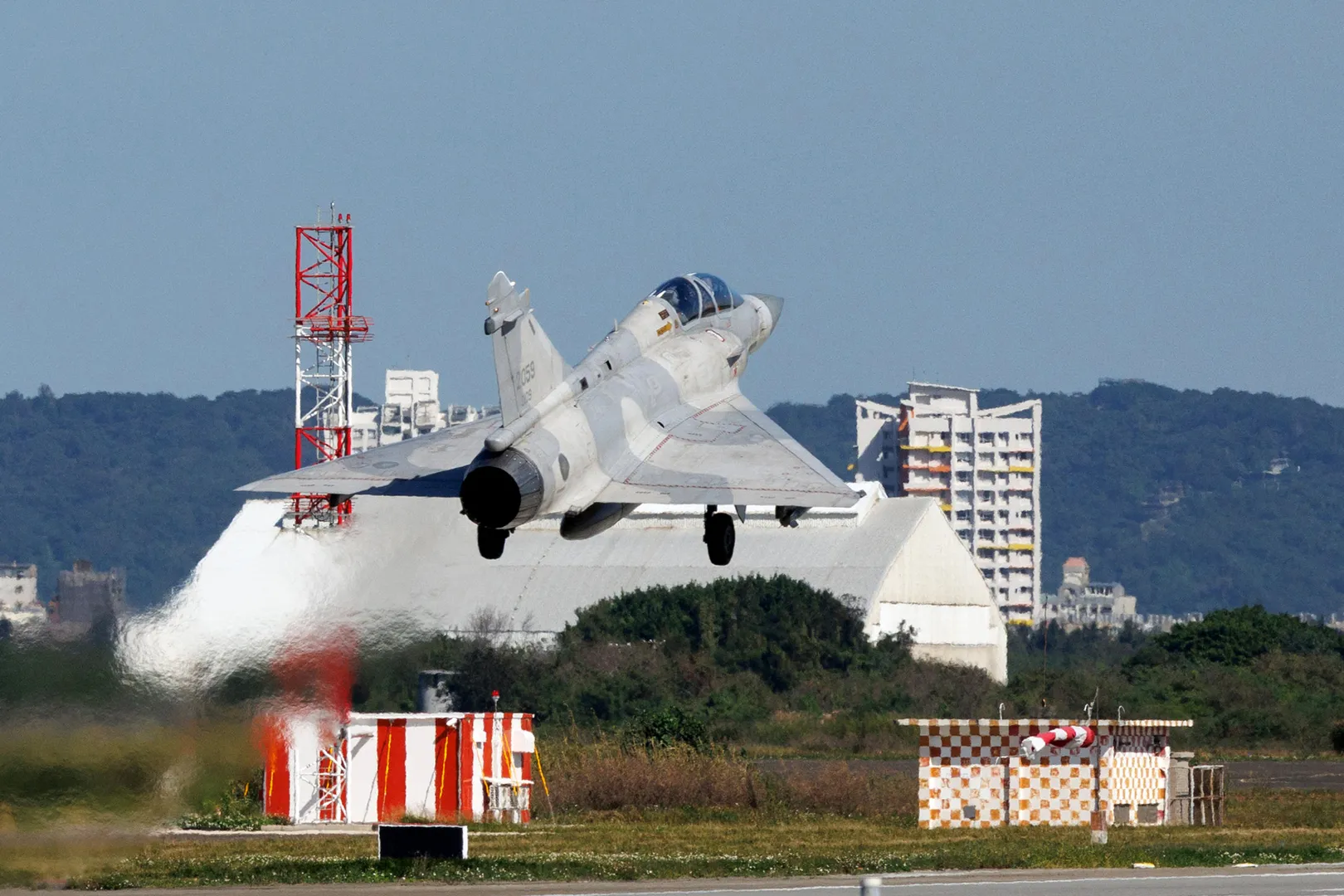
Cambodia has accused Thailand of continuing to drop bombs in its territory hours after United States President Donald Trump said Bangkok and Phnom Penh had agreed to stop fighting.
“On December 13, 2025, the Thai military used two F-16 fighter jets to drop seven bombs” on a number of targets, the Cambodian Defence Ministry said in a post on social media on Saturday.
Recommended Stories
list of 4 itemsend of list
“Thai forces have not stopped the bombing yet and are still continuing the bombing,” the ministry said, listing aerial attacks on hotel buildings and bridges earlier in the morning.
The reports of continued bombing follow after President Trump said that Thailand and Cambodia had agreed “to cease all shooting” on Friday.
“I had a very good conversation this morning with the Prime Minister of Thailand, Anutin Charnvirakul, and the Prime Minister of Cambodia, Hun Manet, concerning the very unfortunate reawakening of their long-running War,” Trump said on his Truth Social platform.
“They have agreed to CEASE all shooting effective this evening, and go back to the original Peace Accord made with me, and them, with the help of the Great Prime Minister of Malaysia, Anwar Ibrahim,” he said.
This is a breaking news story. More to follow soon.
Dili, East Timor – On the 50th anniversary of Indonesia’s invasion of East Timor, longtime independence advocate and now the country’s President Jose Ramos-Horta reflected on the last half-century of politics and diplomacy in his country.
Ramos-Horta was serving as the foreign minister of the newly declared Democratic Republic of East Timor in the days leading up to Indonesia’s invasion in December 1975.
Recommended Stories
list of 4 itemsend of list
Formed by the independence party Fretilin after colonial Portugal’s withdrawal from the country, the new government in East Timor’s capital Dili was under pressure from Indonesia and its threat of invasion.
As the danger intensified, Ramos-Horta flew to the United Nations in New York to plead for international recognition and protection for East Timor’s fragile independence. Despite unanimous support at the UN for Timorese self-determination, Indonesian troops launched their invasion on December 7, 1975.
Ramos-Horta’s colleagues, including Prime Minister Nicolau Lobato and other Fretilin leaders, either went into hiding or were killed in the ensuing attack. Unable to return home, Ramos-Horta became East Timor’s voice in exile for the next 24 years.
During his exile, Ramos-Horta lobbied governments, human rights organisations, and the UN to condemn Indonesia’s occupation, which resulted in the deaths of an estimated 200,000 Timorese through conflict, famine, and repression.
Silenced by a military-imposed media blackout for much of the 1980s, it was only in the 1990s that reports of Indonesian atrocities – including the 1991 Santa Cruz massacre – began to filter out and East Timor’s struggle for independence gained international attention.
Ramos-Horta’s tireless advocacy earned him a Nobel Peace Prize, along with Bishop Carlos Belo, in 1996.
A UN-sponsored referendum delivered an overwhelming vote for independence in 1999, leading to a fully independent East Timor in 2002. However, the country continues to face economic challenges and remains one of Southeast Asia’s poorest nations.
In the years overseeing his country’s transition from conflict to reconciliation, Ramos-Horta has held the roles of foreign minister, prime minister and now president.
Al Jazeera’s Ali MC sat down with Ramos-Horta on a recent trip to East Timor, where the president spoke about his country’s long road to peace and hopes for it to prosper from membership of the Association of Southeast Asian Nations (ASEAN), increased trade with China, and development of the offshore Greater Sunrise gas field.
Al Jazeera: Reflecting on your role as an ambassador for East Timor after Indonesia’s 1975 invasion, what were some of the key challenges that you faced while advocating for your country on the international stage?
Ramos-Horta: First, we were in the midst of the Cold War with that catastrophic US engagement in the wars against North Vietnam, Cambodia and Laos.
Then, you can say – the US defeat, if not military defeat, it was a total political defeat at the hands of the Vietnamese. So, it was in the midst of all of this that Indonesia invaded Timor-Leste [the official Portuguese-language name for East Timor], on December 7, 1975. The day before, US President Gerald Ford and Secretary of State Kissinger were in Jakarta, and they officially gave the green light to President Soeharto to invade – immorally – with the use of American weapons.
So, it was within this context that it was very challenging for us to mobilise sympathy, support and the media. The invasion merited only one small, short column in The New York Times.
In Australia, there was more coverage. But the coverage didn’t last long, because Indonesia did a very good job, with Australian complicity, in blocking any news out of East Timor. At that time, not a single journalist came – the first foreign journalist to come here was in 1987.
The absence of [proof of] death is the worst enemy of any struggle. There were terrible massacres on the day of the invasion, hundreds of people shot and dumped into the sea, including an Australian, Roger East [a journalist killed by Indonesian forces on the day of the invasion].
Many, many countless people shot on the spot. Many were alive and dragged to the port of Dili, shot and fell into the sea. Many more killed randomly around town. And zero media coverage, not a single camera.
East Timorese President Jose Ramos-Horta addresses the 78th Session of the UN General Assembly in New York City, US, in 2023 [File: Brendan McDermid/Reuters]
AJ: How did that lack of media coverage make it difficult for you, as an ambassador overseas, to describe to the international community exactly what was happening in East Timor?
Ramos-Horta: Terribly difficult.
To mobilise people who are potentially sympathetic, you can do so effectively if you have a backup for what you say, what you allege, what you report. This must be backed up with visuals.
But people were sympathetic and listened to me. I was persuasive enough for them to believe what might be going on.
AJ: Given your own personal experience in the struggle for independence in East Timor, does that influence the way that you advocate? Does that bring a more personal response to your diplomacy?
Ramos-Horta: My personal instinct as a person is not shaped by anyone, by any school, any religion. It is me, always, against injustice and abuse.
Then came our experience and the fight for independence. When we fought for independence and for freedom, I went around the world begging for support, begging for sympathy. Then, we became independent.
Well, how can I not show sympathy in a real way towards the Palestinians? Why would I not show sympathy in a real way towards the people of Myanmar? Just showing sympathy, because we cannot do much more.
What can we do? We are not even a mid-sized country. But speaking out – a voice – is very important.
AJ: What are your reflections on what has occurred in Gaza?
Ramos-Horta: It is one of the most abominable humanitarian catastrophes in modern times, in the 21st century, next to the killing fields in Cambodia during Pol Pot’s regime.
The amount of bombs dropped on Gaza is more than the combined amount of the bombs dropped on London and Dresden during World War II, and more than the bombs dropped on Cambodia by the Americans during the Vietnam War.
The suffering inflicted on civilians, women and children is just unbelievable.
How we, human beings in this 21st century, can descend so low and how Israel, a country that I always admired, first out of sympathy for what Jewish people went through, through their lives, through their history – always persecuted, always having to flee, and then culminating in the horrendous Holocaust. When you survive a Holocaust experience, like the Jews, I would think that you are a person that is the most sympathetic to anyone yearning for freedom, for peace, for dignity. Because you understand.
They [Israelis] are doing the opposite.
And you have to understand, also, the people who are on the other side. You know the Palestinians, who had 70 years of occupation and brutality, they are not going to show any sympathy to the Jews or Israelis. So, this whole situation has generated hatred and polarisation as never before.
Palestinian President Mahmoud Abbas, right, meets East Timor’s President Jose Ramos Horta in the occupied West Bank city of Ramallah in 2011 [File: Mohamad Torokman/Reuters]
AJ: What can the international community learn from the experience of East Timor and people such as yourself?
Ramos-Horta: I am thoroughly disillusioned with the so-called international community, particularly the West, that enjoy entertaining themselves lecturing Third World countries on democracy, human rights, transparency, anticorruption, etc, etc.
They could never find the case to help poorer countries getting out of extreme poverty. But they found billions of dollars for the last three years to pump into the war in Ukraine.
I don’t condemn that. It is white people supporting white people being attacked. But then they are silent on Israel as it bulldozes the whole of Palestine; carpet bombing, killing tens of thousands of civilians.
And yet, with incredible, nauseating hypocrisy, when they are asked to comment on this, they say Israel has the right to defend itself!
Defend itself against children, against women, against students, against academics, against universities, that they bulldoze completely. Defend themselves against doctors and nurses in hospitals that they bulldoze.
And in an incredible contortion, you have the secretary-general of NATO say Iran presents a threat to the whole world. I know the whole world, literally, and I don’t know of anyone in the whole world that I know that considers Iran a threat to them.
I feel nauseated with such dishonesty, such inhumanity. So, I’m thoroughly disappointed. And I was always an admirer of the West.
AJ: Reflecting on many decades in politics in East Timor, is there anything that stands out to you as a personal success or something that you feel most proud about?
Ramos-Horta: I feel proud that we have been able to keep the country at peace. We have zero political violence. We have zero ethnic-based or religious-based tensions or violence. We don’t have even organised crime. We have never had a bank robbery or armed robbery in someone’s home. We don’t have that. And we are ranked among having the freest media in the world and the freest democracy in the world. I’m proud of my contribution in that.
A Pride Parade from East Timor’s capital, Dili, to the famed Cristo Rei statue of Christ, which was built by the Indonesians during the occupation. While East Timor has a large Catholic population, LGBT rights have become more accepted, with even President Ramos-Horta expressing support [Ali MC/Al Jazeera]
AJ: East Timor is set to join the Association of Southeast Asian Nations (ASEAN). What will be the benefits of being a part of that?
Ramos-Horta: We’ll be part of a community of 700 million people, a community whose combined GDP is at least $4 trillion.
And that means the possibility of Timor-Leste benefitting from our neighbours is greater. There will be more free movement of capital. There’ll be more people attracted to visit Timor-Leste and more embassies opening.
These are the benefits of being associated with an organisation like ASEAN. There are concrete, material benefits besides the importance of the strategic alliance, the strategic partnership, with our neighbours.
AJ: China is really emerging in the Southeast Asia and Pacific regions. Are there any tensions over East Timor’s relationship with China?
Ramos-Horta: We don’t view China as an enemy of anyone, unlike some in America.
The US is not able to digest the fact that China today is a global superpower, that China today is a major global financial and economic power. That it is no longer the US that rules this unipolar world, that it has a competitor.
But the Chinese are very modest, and they say they are not competing to be number one with the US.
Any rational, intelligent person who is informed about China – even if a leader emerged in China that would view Australia and the US with hostility – would, in his right mind, think that you can overpower the US economically and militarily.
AJ: What is the projected benefit economically for East Timor from the Greater Sunrise Gas Field?
Ramos-Horta: The existing studies point to it taking seven years for the whole project to be completed and deliver gas and revenue to Timor-Leste.
But long before that, the day we sign the agreement, within the following few months, two years, a lot of investments already start to happen. Because we have to build all the infrastructure on the south coast that will run into the tens of millions of dollars, hundreds of millions of dollars.
The pipeline will take its time to reach Timor, but the pipeline will be served by all the infrastructure built on the south coast, plus housing. Hundreds, maybe thousands of houses for workers, for people and so on. Then improvement in the agriculture sector. Farmers in the community benefitting because they will sell produce to the company, to the workers and so on.
Despite more than two decades of independence, East Timor remains one of the poorest countries in the region [Ali MC/Al Jazeera]
Incident in November latest reported instance of Trump administration’s increasingly aggressive maritime tactics.
Published On 12 Dec 202512 Dec 2025
Share
United States forces raided a cargo ship travelling from China to Iran last month, according to the Wall Street Journal, in the latest reported instance of increasingly aggressive maritime tactics by the administration of US President Donald Trump.
Unnamed officials told the newspaper that US military personnel boarded the ship several hundred miles from Sri Lanka, according to the report on Friday. It was the first time in several years US forces had intercepted cargo travelling from China to Iran, according to the newspaper.
Recommended Stories
list of 3 itemsend of list
The operation took place in November, weeks before US forces seized an oil tanker off the coast of Venezuela earlier this week, citing sanctions violations. It was another action Washington has not taken in years.
US Indo-Pacific Command did not immediately confirm the report. An official told the newspaper that they seized material “potentially useful for Iran’s conventional weapons”. However, the official noted the seized items were dual-use, and could have both military and civilian applications.
Officials said the ship was allowed to proceed following the interdiction, which involved special operation forces.
Iran remains under heavy US sanctions. Neither Iran nor China immediately responded to the report, although Beijing, a key trading partner with Tehran, has regularly called the US sanctions illegal.
Earlier in the day, Chinese Foreign Ministry spokesperson Guo Jiakun condemned the seizure of the oil tanker off the coast of Venezuela, which was brought to a port in Texas on Friday.
The action came amid a wider military pressure campaign against Venezuela, which Caracas has charged is aimed at toppling the government of leader Nicolas Maduro.
Beijing “opposes unilateral illicit sanctions and long-arm jurisdiction that have no basis in international law or authorisation of the UN Security Council, and the abuse of sanctions”, Guo said.
White House spokesperson Karoline Leavitt told reporters on Thursday the Trump administration would not rule out future seizures of vessels near Venezuela.
The 156-day trial, the most high-profile use of Beijing’s draconian national security law, is set to come to a close.
Hong Kong’s High Court is set to hand down a verdict in the case of pro-democracy campaigner and media mogul Jimmy Lai next week, bringing an end to his lengthy national security trial.
Lai’s verdict will be delivered by a three-judge panel in a hearing that begins at 10am local time (02:00 GMT) on Monday, according to a court diary notice seen on Friday.
Recommended Stories
list of 3 itemsend of list
Founder of the now-shuttered pro-democracy Apple Daily newspaper, Lai, 78, is charged with foreign collusion under Hong Kong’s national security law, which Beijing imposed following huge and sometimes violent pro-democracy protests in 2019.
He previously pleaded not guilty to two counts of conspiring to collude with foreign forces, as well as a third count of sedition under a colonial-era law.
Authorities accuse Lai, who has been detained since December 2020, of using the Apple Daily to conspire with six former executives and others to produce seditious publications between April 2019 and June 2021.
He is accused of using his publication to conspire with paralegal Chan Tsz-wah, activist Andy Li, and others to invite foreign countries – including the United States, Britain and Japan – to impose sanctions, blockades and other hostile measures against Hong Kong and China.
Prosecutors also accuse Lai of stoking hatred against authorities in Beijing and Hong Kong through writing and publishing more than 150 critical op-eds in the outlet.
He faces life imprisonment if convicted.
Lai has been held in solitary confinement for more than 1,800 days, with his family saying they fear for his wellbeing and his health is deteriorating as he suffers from diabetes, high blood pressure, as well as heart palpitations that require medication.
In August, the court postponed closing arguments in his 156-day trial – which began in December 2023 – citing a “medical issue” involving the 78-year-old’s heart.
Authorities say Lai has received proper treatment and medical care during his detention.
Trump to do ‘everything I can to save him’
Hong Kong was handed back to China in 1997 after more than 150 years under British colonial rule.
As part of the “one country, two systems” approach, Hong Kong officially operates a separate judicial system based on Common Law traditions, meaning Lai has greater legal protections than he would in mainland China.
But Hong Kong has experienced significant democratic backsliding in recent years, which accelerated following mass pro-democracy protests in 2019-20, which resulted in a harsh crackdown on dissent in the territory by Beijing.
In 2020, Chinese authorities introduced a draconian national security law to crush the protest movement, establishing secession, subversion, terrorism, and collusion with foreign organisations as crimes carrying hefty punishments.
Lai’s trial represents the most high-profile use of that law, with critics condemning his trial as politically motivated.
The Chinese and Hong Kong governments insist Lai is being given a fair trial and have said the legal process must be allowed to reach its conclusion.
But his case has drawn international scrutiny, including from US President Donald Trump, who has repeatedly promised to “save” Lai. In August, Trump promised to do “everything I can to save him”.
“His name has already entered the circle of things that we’re talking about, and we’ll see what we can do,” Trump told Fox News Radio.
Trump also reportedly raised Lai’s case during a meeting with Chinese leader Xi Jinping when the pair met in South Korea in October.
Fighting between Cambodia and Thailand has entered its fifth day, with Cambodia accusing the Thai military of continued shelling and Thailand’s caretaker Prime Minister Anutin Charnvirakul confirming that he is scheduled to speak with United States President Donald Trump.
Thai forces allegedly carried out new attacks in three Cambodian provinces in the early hours of Friday morning, according to Cambodian news outlet The Khmer Times.
Recommended Stories
list of 3 itemsend of list
The newspaper reported that Thai forces opened fire in the Ta Moan, Ta Kra Bei and Thmar Daun areas of Cambodia’s Oddar Meanchey province.
It also reported Thai shelling in the Phnom Khaing and An Ses areas of the country’s Preah Vihear province, as well as the areas of Prey Chan Village and Boeung Trakuan in nearby Banteay Meanchey province.
No new casualties were reported following the renewed fighting.
At least 20 people have been killed across both countries, with nearly 200 more wounded, since fighting resumed on Monday.
An estimated 600,000 people have also been displaced on both sides of the Thai-Cambodia border since the breakdown of a peace agreement brokered by Trump in October.
Displaced people carry boxes with drinking water distributed at a temporary camp in Cambodia’s Oddar Meanchey province on December 11, 2025 [Tang Chhin Sothy/AFP]
In a Facebook post, Cambodia’s Ministry of Defence also rejected as “fake news” a claim from the Thai military that it was using foreign mercenaries to operate suicide drones in its attacks on targets in Thailand.
“The Ministry of National Defence of Cambodia would like to reject propaganda disseminated on the Thai 2nd Army Area Facebook page, which accused Cambodia of using foreigners to help launch FPV [first person view] drones in the Cambodian-Thai border conflict,” the ministry said.
Separately, the ministry also rejected accusations from Thai media outlets alleging that it was preparing to launch Chinese-made PHL-03 missiles in the border dispute.
The PHL-03 is a truck-mounted multiple rocket launcher that can fire guided and unguided rockets with a range of 70km to 130km (43.5 miles to 81 miles), according to a US military database, while Cambodia’s BM-21 Soviet-designed multi-rocket launchers have a range of just 15km to 40km (9.3 miles to 25 miles).
“Cambodia demands the Thai side to deliberately stop spreading false news in order to divert attention to its violations of international law by painting Cambodia as a pretext to use more violent weapons on Cambodia,” the Defence Ministry said.
The Southeast Asian neighbours accuse one another of reigniting the conflict that centres around a centuries-old border dispute along their 800-kilometre (500-mile) frontier, where both sides claim ownership over a smattering of historic temples.
The continued fighting involving artillery, fighter jets, tanks and drones comes as Thailand’s caretaker Prime Minister Anutin confirmed he was scheduled to speak with President Trump at 21:20 local time (14:20 GMT) on Friday.
Trump promised on Wednesday to reach out to the leaders of both countries, saying he thinks he “can get them to stop fighting”.
White House Press Secretary Karoline Leavitt said on Thursday that Trump had yet to call the Thai and Cambodian leadership, but added that “the administration is obviously tracking this at the highest levels and is very much engaged”.
Thailand’s top diplomat Sihasak Phuangketkeow spoke with US counterpart Marco Rubio on Friday ahead of the planned call between Trump and Anutin, Thailand’s foreign ministry said.
Sihasak told Rubio that Thailand was committed to a peaceful resolution, but said sustainable peace must be backed up by actions and genuine commitment, the ministry said in a statement, adding that Rubio confirmed US readiness to constructively promote peace.
Anutin also said his decision to dissolve parliament on Thursday – earlier than expected – would not affect the management of the ongoing border conflict.
The move comes following a breakdown in relations between Anutin’s Thai Pride Party and the opposition People’s Party, the largest bloc in the Thai legislature.
Government spokesperson Siripong Angkasakulkiat said a legislative impasse had paralysed the government’s agenda, meaning Anutin’s party “can’t go forward in parliament”.
Thailand’s King Maha Vajiralongkorn endorsed the dissolution, the country’s official Royal Gazette announced on Friday, making way for early elections.
The national polls must now be held within 45 to 60 days in Thailand.
A tsunami warning has been issued following a strong quake off northeast coast of Japan.
Published On 12 Dec 202512 Dec 2025
Share
An earthquake with a preliminary magnitude of 6.7 has hit Japan’s northeastern region, prompting a tsunami advisory from the Japan Meteorological Agency (JMA).
The earthquake struck on Friday off the coast of Aomori Prefecture at 11:44am local time (02:44 GMT) at a depth of 20km (12.4 miles), according to the JMA.
Recommended Stories
list of 4 itemsend of list
The United States Geological Survey (USGS) also said that the quake measured 6.7.
Japan’s Nuclear Regulation Authority said there were no immediate signs of abnormalities at the region’s nuclear facilities.
National broadcaster NHK said that the level of shaking from the quake was less than a bigger magnitude 7.5 earthquake that hit in the same region on Monday and tore apart roads, smashed windows and triggered tsunami waves of up to 70 centimetres (2.3ft).
Following Monday’s quake, which injured at least 50 people, the JMA issued a rare special advisory warning to residents across a wide area, from Hokkaido in the north to Chiba, east of Tokyo, to be on alert for an increased possibility of a powerful earthquake hitting again within a week.
The northeast region is haunted by the memory of a massive magnitude 9.0 undersea quake in 2011, which triggered a tsunami that left about 18,500 people dead or missing.
The JMA issued its first special advisory in 2024 for the southern half of Japan’s Pacific coast warning of a possible “megaquake” along the Nankai Trough.
The government has said that a quake in the Nankai Trough and subsequent tsunami could kill as many as 298,000 people and cause up to $2 trillion in damages.
Amid fears of a “megaquake”, NHK reported on Thursday that people in the northeast of Japan were stocking up on disaster-related goods such as torches, water storage tanks and support poles to prevent furniture toppling over due to tremors.
One shop in Hokkaido’s Hakodate City reported sales of bottled water and disaster kits tripling following Monday’s quake.
“We decided to prepare, so I bought disaster kits for everyone,” a male customer in his 30s told NHK while visiting a shop with his family.
Japan sits on top of four major tectonic plates along the western edge of the Pacific “Ring of Fire” and is one of the world’s most seismically active countries.
A vehicle rests on the edge of a collapsed road in the town of Tohoku in Aomori Prefecture, on December 9, 2025, following a magnitude 7.5 earthquake off the coast of northern Japan [JIJI Press/AFP]
Al Jazeera’s Barnaby Lo has been to a displacement camp in Cambodia where people have taken refuge from cross-border fighting with Thailand. Half a million people have been displaced by the fighting.
Both sides have accused each other of violating international law as they await a promised phone call from Donald Trump.
Renewed fighting between Thailand and Cambodia has entered its fourth day, with both sides accusing one another of violating international law, as they await a promised phone call from United States President Donald Trump.
Cambodia’s Ministry of Defence accused Thailand’s military of carrying out numerous attacks within the country in the early hours of Thursday morning, including deploying tanks and artillery to strike targets in the country’s Pursat, Banteay Meanchey, and Oddar Meanchey provinces.
Recommended Stories
list of 3 itemsend of list
In one such attack, Cambodia accused Thai soldiers of violating international humanitarian law by firing on civilians in Prey Chan village in Banteay Meanchey province.
In another, it accused Thai forces of shelling “into Khnar Temple area”, and said Thai forces had also “fired artillery and support fire into the O’Smach area”.
“Cambodia urges that Thailand immediately stop all hostile activities and withdraw its forces from Cambodia’s territorial integrity, and avoid acts of aggression that threaten peace and stability in the region,” the Defence Ministry said.
Clashes took place on Wednesday at more than a dozen locations along the contested colonial-era demarcated 817-kilometre (508-mile) Thai-Cambodian border, with some of the most intense fighting being reported since a five-day battle in July, which saw dozens killed on both sides.
Cambodia’s Ministry of the Interior said homes, schools, roads, Buddhist pagodas and ancient temples had been damaged by “Thailand’s intensified shelling and F-16 air strikes targeting villages and civilian population centres up to 30km [18.6 miles] inside Cambodian territory”.
“It should be noted that … these brutal acts of aggression of the Thai military indiscriminately opened fire targeting civilian areas, especially schools, and further destroyed Ta Krabey and Preah Vihear temples, the highly sacred cultural sites of Cambodia and the world cultural heritage,” it said.
The ministry added that, as of Wednesday, the death toll on the Cambodian side of the border stands at 10 civilians, including one infant, while 60 people have been injured.
Responding to the accusations, the Thai army said Cambodia had “intentionally” used a historical site as a “military base of operations” and therefore was guilty of violating international law.
“Cambodia intentionally used the ancient site for military operations, as a base to attack Thailand, and deliberately undermined the protection of the ancient site. Thailand retaliated as necessary,” the Thai army said.
Eight Thai soldiers have also been killed in the fighting so far this week, with 80 more wounded, it said.
Both sides have blamed one another for reigniting the conflict, which began on Monday and has expanded to five provinces across Thailand and Cambodia, according to a tally by the AFP news agency.
More than 500,000 Thai and Cambodian civilians have been forced to flee border areas due to fighting.
It was only on October 26 that Trump presided over the signing of a ceasefire between the Southeast Asian neighbours in Kuala Lumpur, Malaysia. Hailing the deal, which was also brokered by Malaysian Prime Minister Anwar Ibrahim, Trump said mediators had done “something that a lot of people said couldn’t be done”.
Optimistic of securing another peace deal, Trump told reporters on Wednesday that “I think I can get them to stop fighting”.
“I think I’m scheduled to speak to them tomorrow,” he added.
Australia’s Prime Minister Anthony Albanese was joined by 12-year-old campaigner Florence Brodribb at an event to welcome the start of Australia’s world-first ban on social media for under-16s.