Mali win penalty shootout after a 1-1 last-16 draw to set up Africa Cup of Nations quarterfinal with Senegal.
Published On 3 Jan 20263 Jan 2026
Share
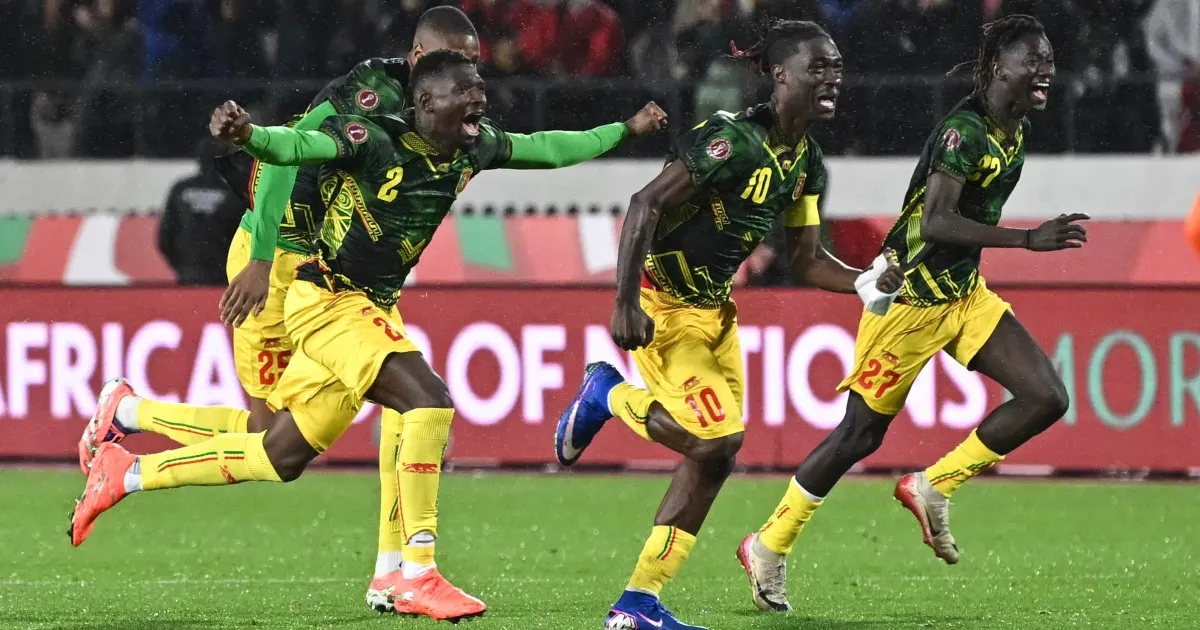
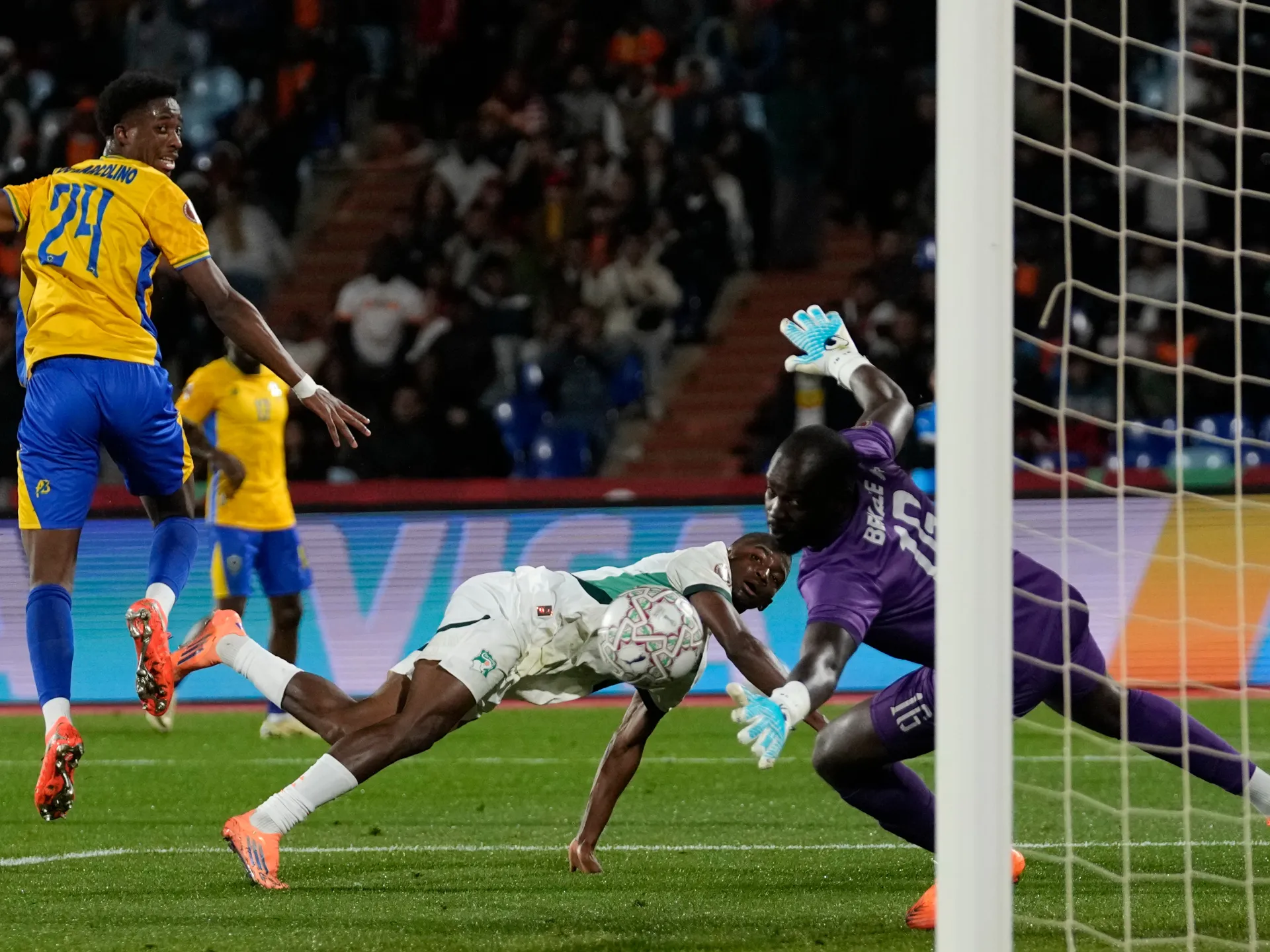
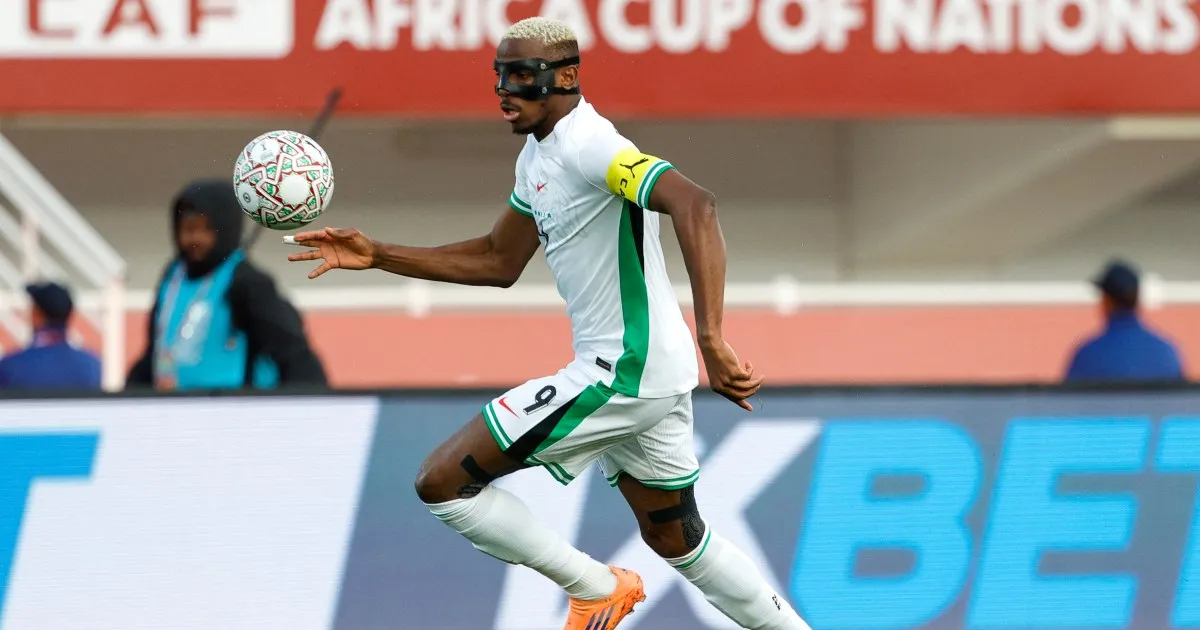
El Bilal Toure scored the winning spot-kick as a 10-man Mali beat Tunisia 3-2 on penalties to reach the Africa Cup of Nations quarterfinals after their last-16 tie had finished 1-1 at the end of extra time.
It looked as if Tunisia had got the job done on Saturday against a Mali side forced to play most of the game a man down when substitute Firas Chaouat headed the Carthage Eagles in front in the 88th minute.
Recommended Stories
list of 4 itemsend of list
Mali had defender Woyo Coulibaly sent off in the 26th minute at the Mohammed V Stadium in Casablanca, but earned a reprieve when they were awarded a stoppage-time penalty.
Lassine Sinayoko converted from the spot to take the tie to extra time and, eventually, on to the decisive shootout.
Captain Yves Bissouma, the Tottenham Hotspur midfielder, blazed Mali’s first kick over the bar, but Ali Abdi then missed for Tunisia before Eagles goalkeeper Djigui Diarra saved two further penalties and Toure won it.
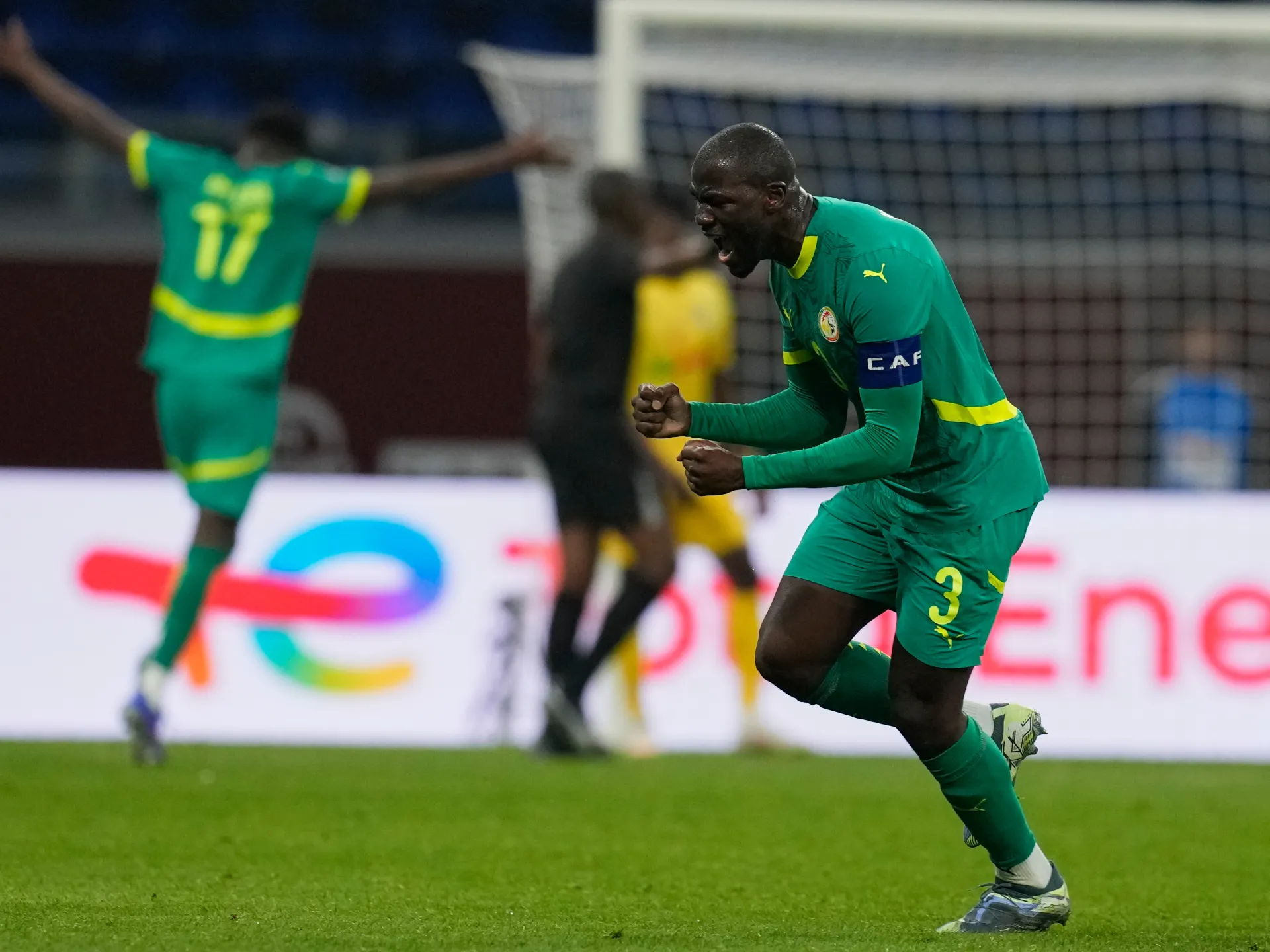
Tom Saintfiet’s Mali advanced to a quarterfinal next Friday in Tangier against West African neighbours Senegal, after the 2022 champions came from behind to beat Sudan 3-1 earlier.
Mali have never won the Cup of Nations, and their prospects here were not helped when right-back Coulibaly, currently based in Italy’s Serie A with Sassuolo, was shown a straight red card for raking his studs down the back of Hannibal Mejbri’s calf.
Yet, the game remained goalless and extra time was looming when Tunisia finally made their numerical superiority count as Elias Saad flighted a ball into the box and Club Africain striker Chaouat stole a march on his marker to head home.
That goal was celebrated by the majority of the 41,982 crowd in Morocco’s largest city, with many locals choosing to give their backing to their fellow North Africans.
And yet, a tie that appeared to be over took a dramatic twist in injury time, with South African referee Abongile Tom pointing to the spot when the ball struck the arm of Tunisia defender Yassine Meriah inside the area.
Auxerre forward Sinayoko kept his cool through a long delay as the official consulted with the VAR team before converting the penalty, with the match in the 96th minute.
Tunisia toiled to create chances in extra time as heavy rain fell. The conditions forced many spectators in the largely uncovered stadium to abandon their seats.
Chaouat had the ball in the net again at the start of the second period of extra time, but was this time denied by the offside flag.
A penalty shootout appeared inevitable, and so it transpired, with Bissouma and Nene Dorgeles failing from the spot for Mali.
However, Abdi’s miss and Diarra’s saves from Elias Achouri and Mohamed Ali Ben Romdhane allowed Mali to win it, when Toure, who had failed to score a penalty in the same stadium against Zambia in the group stage, stepped up to score.
Who: South Africa vs Cameroon What:CAF 2025 Africa Cup of Nations Where: Al Barid Stadium, Rabat, Morocco When:Sunday, January 4, 8pm (19:00 GMT) How to follow: We will have all the buildup on Al Jazeera Sport from 16:00 GMT in advance of our text commentary stream.
A crunch encounter awaits in arguably the tie of the round in the last 16 at the 2025 CAF Africa Cup of Nations (AFCON) between South Africa and Cameroon.
The showdown at the compact Al Medina Stadium in Rabat has the makings of a fascinating contest between a Bafana Bafana side building towards the World Cup and a Cameroon team that entered the AFCON in disarray.
Cameroonian football federation president and Indomitable Lions legend Samuel Eto’o sacked national team coach Marc Brys just weeks before the competition started, replacing him with David Pagou.
His opposite number on Sunday, Hugo Broos, led Cameroon to an unlikely 2017 AFCON title
Al Jazeera Sport takes a look at the mouth-watering match-up.
How did South Africa reach the 2025 AFCON last 16?
South Africa’s 2-1 victory against near neighbours Angola was the first time they opened an AFCON with a win in 21 years.
Oswin Appollis had given South Africa the lead, but Show had Angola level by the break, before Lyle Foster netted the winner from outside the box.
Mohamed Salah led 10-man Egypt to a 1-0 win against South Africa in the second group stage match, and in doing so, he secured the Pharaohs’ place in the next round.
The Liverpool player converted a penalty on 45 minutes, but South Africa were denied a spot kick late in the second half, when Yasser Ibrahim appeared to handle the ball inside the box.
The crunch game came against another neighbouring country for Bafana Bafana as Appollis scored a penalty in the final 10 minutes to hand South Africa a 3-2 victory over Zimbabwe.
South Africa finished with six points in the group, one behind winners Egypt.
How did Cameroon reach the 2025 AFCON last 16?
Cameroon opened with a 1-0 win against Gabon as Karl Etta Eyong, assisted by Bryan Mbeumo, settled the game with his sixth-minute strike.
A point was rescued against defending champions Ivory Coast in their second match after Amad Diallo gave the Ivorians the lead in the 51st minute, only for Ghislain Konan to put through his own net five minutes later – Konan had laid on the assist for Diallo only moments earlier.
Cameroon again had to come from behind in their final group stage match against Mozambique, with a thunderbolt from Christian Kofane delivering a 2-1 victory.
Ivory Coast and Cameroon finished level on seven points, and both had a plus-two goal difference. The Ivorians topped the table because they scored five goals to Cameroon’s four.
Who will South Africa or Sudan face in the AFCON 2025 quarterfinals?
The winner will face the victor of the match between the hosts, Morocco, and Tanzania in Rabat on January 9.
Who are South Africa’s key players?
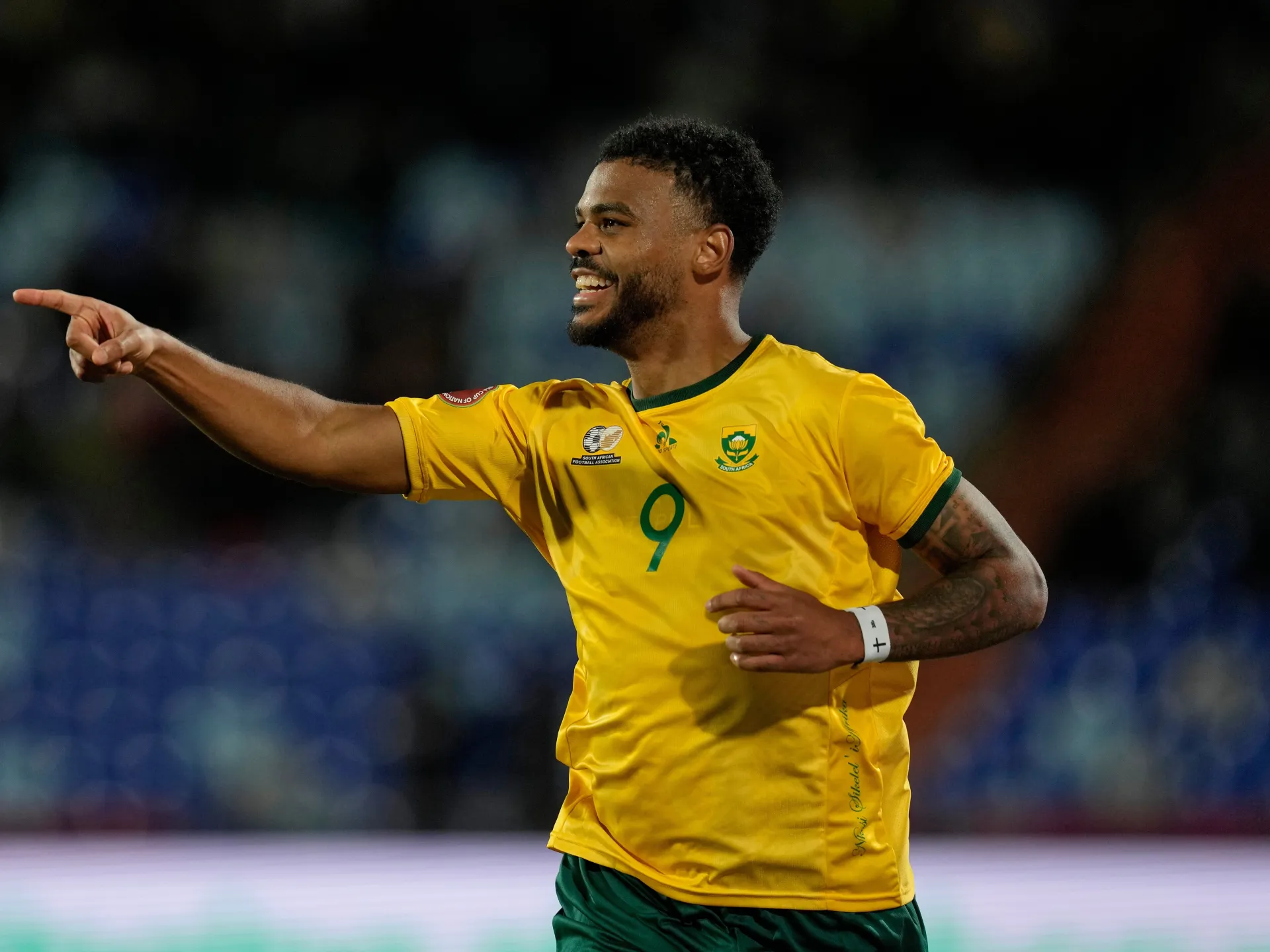
Foster is the main man for Bafana Bafana, and has already netted one crucial goal with his late winner in his side’s opening match against Angola.
Sipho Mbule has been given a role of greater-than-expected responsibility at the tournament, starting high up the park, along with Foster, in an attack-minded setup.
At the other end of the pitch, Ronwen Williams remains a pillar of strength in South Africa’s goal.
Who are Cameroon’s key players?
With seven goals across all competitions, Bryan Mbeumo headed into the tournament as Manchester United’s standout performer in an otherwise mixed and chaotic season for the Red Devils.
An injury kept Mbeumo out of the previous AFCON, but this time, the 26-year-old has a golden opportunity to clinch his first trophy with Cameroon.
Carlos Baleba arrived at AFCON without any major-tournament experience, but the 21-year-old has already produced performances that belie his age.
Have South Africa ever won an AFCON?
South Africa have won the tournament only once, when they were the hosts in 1996. Bafana Bafana were also finalists in 1998, while they were the bronze medallists at the last AFCON.
Have Cameroon ever won an AFCON?
Cameroon lifted two out of three AFCONs between 1982-1986, beating Nigeria in both finals. The 1984 title went to Egypt, with the Indomitable Lions the defeated finalists.
Back-to-back titles were secured in 2000 and 2002, while a further defeat to Egypt came in the 2008 final, before Cameroon lifted their fifth and last title in 2017.
When did South Africa and Cameroon last meet?
The last encounter between the sides ended in a 0-0 draw in a qualifier for the 2016 ACFON.
The match was played in South Africa, while the reverse qualifier in Cameroon ended in a 2-2 draw.
The sides have drawn their last three encounters.
Have South Africa and Cameroon ever played at an AFCON finals before?
The only meeting between the teams at an AFCON event was in the 1996 edition, hosted and won by South Africa.
Bafana Bafana, making their debut at the tournament, were 3-0 winners in the group stage encounter, which was also the opening game of that edition.
When did South Africa first meet Cameroon?
The first match between the sides was of particular note, given it was South Africa’s first match after apartheid ended.
Bafana Bafana claimed a 1-0 win in the match on July 7, 1992, which was played in Durban.
It was the first of a three-game series between the sides, which saw South Africa claim two wins to Cameroon’s one.
Head-to-head
This is the 10th meeting with the draw being the overall winner in previous encounters, accounting for five of the results between the African giants.
Bafana Bafana have claimed victory on three occasions, however, leading Cameroon with just one win in matches between the sides.
South Africa team news
Broos confirmed that Sphephelo Sithole’s omission against Zimbabwe was a tactical decision and not injury-related.
Relebohile Mofokeng and Bathusi Aubaas are both battling for a place.
Captain Nouhou Tolo was forced off with a hamstring injury against Mozambique. He was replaced in defence by Christopher Wooh, who will be on standby once more, should Tolo fail to recover.
Mbeumo and Baleba were both removed at half-time in that game so as to avoid bookings that would have led to suspensions for this match.
Senegal come from behind to ease past Sudan 3-1 and book their place in the Africa Cup of Nations quarterfinals.
Published On 3 Jan 20263 Jan 2026
Share
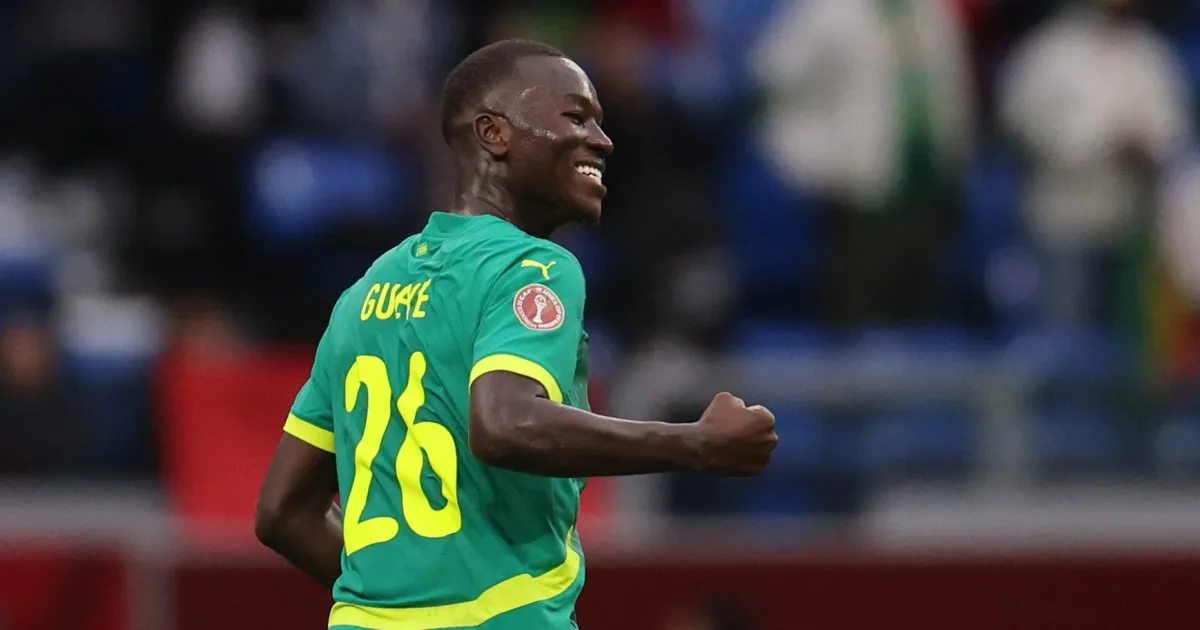
Pape Gueye scored twice, and teenager Ibrahim Mbaye grabbed the winner four minutes after coming off the bench to clinch a 3-1 victory for Senegal over Sudan in Tangier in the first Africa Cup of Nations last-16 match.
Rattled by an early Aamir Abdallah goal for Sudan on Saturday, Senegal recovered to lead 2-1 at half-time through Pape Gueye’s goals. Mbaye then put the outcome beyond doubt after 77 minutes.
Recommended Stories
list of 4 itemsend of list
Former champions Senegal will face Mali or Tunisia, who meet in Casablanca later on Saturday, in the quarterfinals.
It was predicable result as Senegal are 99 places higher in the world rankings than Sudan, who were representing a country ravaged by civil war since April 2023.
Senegal made six changes to the team that started a 3-0 win over Botswana in their final group match. A notable absentee was suspended captain and centre-back Kalidou Koulibaly.
Ghana-born Sudan coach Kwesi Appiah retained only one of the team that began a 2-0 loss to Burkina Faso – forward Abdallah.
It was the first meeting of the countries at an AFCON tournament. They were in the same 2026 World Cup qualifying group, though, with Senegal winning at home and drawing away.
Sudan rocked Senegal by taking a sixth-minute lead through Abdallah, a semi-professional who plays for an Australian second-tier club in Melbourne.
It was a superb goal as the Sudan striker took possession just inside the area and curled the ball over former Chelsea goalkeeper Edouard Mendy and into the net.
Sudan had qualified for the knockout stage as one of the best four third-placed nations despite failing to score in three group matches. An own goal brought victory over Equatorial Guinea.
A brave save from Monged Abuzaid on 29 minutes foiled Nicolas Jackson, who is on loan to Bayern Munich from Chelsea, but Senegal equalised almost immediately after.
Former African player of the year Sadio Mane set up Pape Gueye, who equalised with a low shot into the corner of the net.
Senegal were attacking continuously while Sudan had little to offer going forward in a match watched by Confederation of African Football (CAF) President Patrice Motsepe from South Africa.
The Mauritanian referee pointed to the penalty spot after Ismaila Sarr was fouled by Abuzaid. However, the decision was reversed after a long VAR review revealed a Senegalese player was offside in the buildup.
Ismaila Sarr from Crystal Palace then scored, only to be ruled offside in another let-off for the Sudanese.
Abuzaid was constantly in action and did well to push away a Pape Gueye shot with an outstretched right hand as half-time approached.
There was still time for Pape Gueye to score again, however, and give Senegal a half-time advantage in the Mediterranean city.
The goal was brilliantly executed by the midfielder from La Liga club Villarreal three minutes into added time. He used his left foot to side-foot a cross into the net past Abuzaid.
Senegal introduced Mbaye midway through the second half as they sought the insurance of a third goal. He made an immediate impact, latching on to a long pass and beating Abuzaid at his near post.
The 17-year-old Paris Saint-Germain forward represented France at age-limit levels before switching his international allegiance to Senegal, where his father was born.
Hugo Broos lead Cameroon to the 2017 AFCON title but will have be no room for sentimentality with his South Africa side.
Published On 3 Jan 20263 Jan 2026
Share
South Africa coach Hugo Broos has promised to show “no mercy” to Cameroon when he comes up against his former side in the last 16 of the Africa Cup of Nations on Sunday.
Broos will lead Bafana Bafana out at Al Medina Stadium in Rabat against the nation he led to an unexpected AFCON triumph in Gabon in 2017.
Recommended Stories
list of 4 itemsend of list
“Tomorrow’s game is surely a special game for me. If you win an AFCON with a country, then a part of them stays in your heart, but tomorrow I can’t have mercy for them because I am the coach of South Africa now and I want to win the game,” Belgian Broos told reporters Saturday in the Moroccan capital.
“They are a very good team, a young team, and they have a good fighting spirit and mentality, which means if we want to beat them, we will have to be at our best.”
Cameroon took seven points from a possible nine in the group stage in Morocco despite a chaotic build-up to the tournament.
Coach Marc Brys was sacked by football federation president and Indomitable Lions legend Samuel Eto’o only a few weeks before their opening game, with David Pagou appointed as his replacement.
“I would have preferred to face Cameroon in the final – maybe now is a little too soon,” Broos said.
“I was curious to see Cameroon with all the changes in their team, and I have been surprised. They did not have much preparation time, but the coach has done a good job, and for us it will be a difficult match.”
He added, “No mercy tomorrow! You can be sure. I have to win that game, that is all that counts.”
South Africa upset with Morocco AFCON setup before Cameroon test
Meanwhile, the 73-year-old expressed anger at tournament organisers for forcing his side to train at the Moroccan national team’s facility, a 45-minute drive away from their hotel in Rabat.
Whoever wins on Sunday will face Morocco in the quarterfinals, should the hosts see off outsiders Tanzania in their last-16 tie.
“I don’t understand why CAF [the Confederation of African Football] allowed that. I have to say that because it makes me unhappy,” Broos complained.
Bafana Bafana, who have qualified for this year’s World Cup, are hoping to at least match their run to the semifinals at the last Cup of Nations in the Ivory Coast in 2024.
But their coach admits that could be a tall order given the depth of quality left in the competition.
“It was the ambition when we came here to do at least as well as two years ago, but I said this tournament would be much more difficult.
“At the last AFCON, a lot of big teams were knocked out early, but this time they are all here, which means to get to the final, even the semifinals, it will be much more difficult, but our ambition remains intact.”
Egypt has been ranked as the leading African country in global soft power influence for 2024, according to a report by Business Insider Africa. The report, based on the Global Soft Power Index published by Brand Finance, places Egypt 39th worldwide with a soft power score of 44.9 points.
South Africa and Morocco follow Egypt in the continent’s rankings, securing second and third place with scores of 43.7 and 40.6 points, respectively. The index also noted that “Egypt secures the gold for its ‘rich heritage’” while the UAE ranks number one in the Middle East and 10th globally. Globally, the US leads with a record-high score of 78.8 points, an increase from 74.8 in 2023.
The Global Soft Power Index assesses the perceptions of all 193 UN member states, evaluating countries based on eight pillars: business and trade, international relations, education and science, culture and heritage, governance, media and communication, sustainable future, and people and values.
Soft power is defined as a country’s ability to influence others through attraction and persuasion rather than coercion. Countries like Egypt are leveraging diplomacy, culture, and education to enhance their global reputation and build goodwill.
Meanwhile, China which sits on third place on the global index has been expanding its influence in Africa over the past decade and is currently hosting the China-Africa forum, with African leaders keen to explore investment and loan opportunities. China, the world’s number two economy, is Africa’s largest trading partner, with bilateral trade hitting $167.8 billion in the first half of this year.
Crash kills two men and injures British boxer Anthony Joshua in Nigeria.
Published On 2 Jan 20262 Jan 2026
Share
The driver of a car carrying British boxer Anthony Joshua that was involved in a fatal crash in Nigeria has been charged with reckless and dangerous driving, police in southwestern Nigeria’s Ogun State say.
Adeniyi Mobolaji Kayode, 46, was driving the boxer and two of his friends, Latif Ayodele and Sina Ghami, on a busy highway linking Lagos and Ibadan on Monday when the Lexus SUV in which they were travelling rammed into a stationary truck.
Recommended Stories
list of 4 itemsend of list
“The defendant was granted bail in the sum of 5 million naira ($3,480) with two sureties. He was remanded pending when he meets his bail condition,” police spokesman Oluseyi Babaseyi told the AFP news agency on Friday.
Kayode has been held in police custody since he was discharged from hospital on Thursday.
Preliminary investigations showed that the vehicle was moving at an excessive speed and had burst a tyre before the crash, the Traffic Compliance and Enforcement Agency in Ogun State, where the accident occurred, told AFP earlier in the week.
After leaving the hospital on Wednesday, Joshua and his mother paid their respects at the funeral home where the bodies of his friends were being prepared for repatriation.
A government source suggested to AFP on Thursday that the remains of the victims may have been repatriated to the United Kingdom. Joshua’s whereabouts are unknown.
Who: Senegal vs Sudan What: CAF Africa Cup of Nations Where: Ibn Batouta Stadium in Tangier When: Saturday, January 3, 5pm (16:00 GMT) How to follow: We’ll have all the build-up on Al Jazeera Sport from 13:00 GMT in advance of our text commentary stream.
The AFCON round of 16 begins with a clash between the heavyweights and minnows, as title favourites Senegal face Sudan, the lowest-ranked side remaining in the competition.
Recommended Stories
list of 4 itemsend of list
Boasting considerable attacking firepower in Nicolas Jackson and Sadio Mane, Senegal stormed their way into the knockouts, affirming their place among the title favourites as the AFCON 2021 champions seek their second title.
The 117th-ranked Sudan, on the other hand, needed a helping hand to qualify and will play in the knockout stages for the first time in 14 years. Reaching the round of 16 represents a significant achievement for Sudan, whose footballing progress has defied ongoing turmoil at home.
Here’s everything you need to know about Senegal vs Sudan:
What’s going on in Sudan?
Sudan has been ravaged by war since fighting broke out between the Sudanese Armed Forces (SAF) and the paramilitary Rapid Support Forces (RSF) in April 2023.
The conflict has killed tens of thousands, displaced more than 12 million people and triggered famine in several parts of Sudan, a situation the United Nations has described as the “world’s worst humanitarian crisis”.
Sudan’s goalkeeper, Mohamed Abooja, had to deal with the anguish of his brother being taken prisoner by the RSF. “Of course, the team has been impacted. Everyone has just tried to get through this period, but it has been difficult with the tension all over Sudan,” Abooja told AFP news agency.
“In the end, our results on the pitch are what make the people happy and boost their morale.”
How did Sudan reach the 2025 AFCON round of 16?
Sudan’s team progressed to the last 16 as one of the four best third-placed teams, collecting three points in Group E courtesy of a 1-0 victory over Equatorial Guinea: a result that marked only their second-ever win at the tournament since lifting the trophy in 1970.
That historic victory was aided by a moment of good fortune, with an own goal from Equatorial Guinea’s Saul Coco proving decisive.
How did Senegal reach the round of 16?
Senegal, Africa’s second-highest-ranked nation at 19th in the world, finished top of Group D with seven points after two wins and a draw, edging DR Congo on goal difference.
They finished the group stage with the joint-second highest goal tally (seven, alongside Algeria), just one behind Nigeria.
Who will the winner face in the next round?
The winner of the Senegal and Sudan match will stay in Tangier to face the winner of the Mali and Tunisia match in the quarterfinals on January 9.
Who are Senegal’s best players?
Striker Nicolas Jackson made an impressive start with two goals in the opening match against Botswana, while Cherif Ndiaye also has two goals to his name – both scored after coming on as a substitute.
The experienced winger Sadio Mane is another star player of Senegal, alongside midfielders Iliman Ndiaye and Idrissa Gana Gueye.
Mane has been involved in 17 AFCON goals (10 goals, 7 assists), the most by any player since 2010.
Who are Sudan’s best players?
Midfielders Walieldin Khidir and Ammar Toaifour, along with defender Sheddy Barglan, have been Sudan’s standout performers at the tournament.
Senegal and Sudan form guides
All matches, most recent result last:
Senegal: W-D-W-W-L
Sudan: L-W-L-L-L
Senegal are on a 14-match unbeaten run at AFCON (W9 D5).
Senegal have kept 17 clean sheets at AFCON since 2017, more than any other team.
Sudan have conceded six goals, the most of any team to reach the round of 16.
Sudan won just one of their last seven AFCON matches (D1 L5).
Head-to-head
Senegal and Sudan have met in seven previous encounters, across competitive and friendly games.
Senegal boast an unbeaten record, having won four times and drawn three times.
When did Senegal and Sudan last meet?
The teams recently met in a 2026 FIFA World Cup qualifying match in September when Senegal won 2-0.
Senegal vs Sudan – stat attack
Saturday’s game will be their first meeting at AFCON and fifth overall in a span of a year.
Senegal have never lost to an East African opponent at AFCON, having played five matches, winning four and drawing one.
Have Senegal ever won an AFCON title?
This is Senegal’s 18th appearance at the AFCON finals, with their best result being the 2021 title they won in Cameroon. They have also finished runners-up twice: in 2002 and 2019.
Have Sudan ever won an AFCON title?
Sudan are making their 10th appearance this year. Since their debut in 1957, they have finished runners-up twice – in 1959 and 1963 – and won their only trophy in 1970.
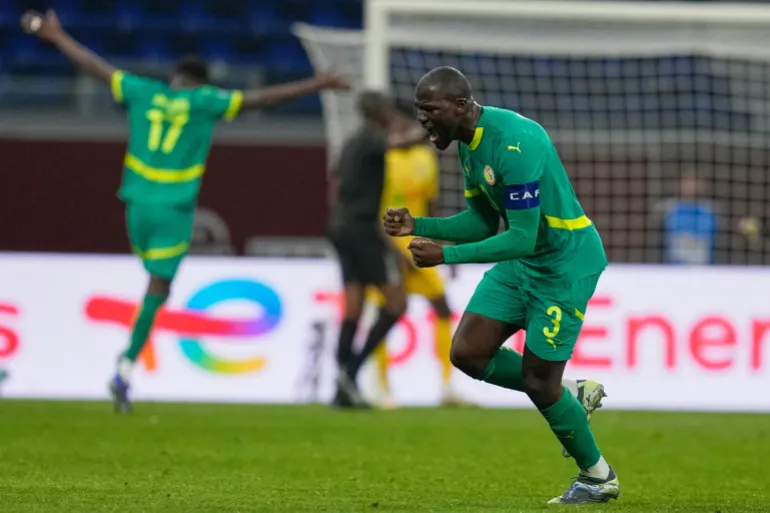
Senegal captain Kalidou Koulibaly, a key member of their defence, will miss the match against Sudan after his sending off in the last match [File: Themba Hadebe/AP]
Senegal team news
Senegal coach Pape Thiaw will be without his captain, Kalidou Koulibaly, who is suspended for this match, having picked up a red card in their final group game.
Senegal’s predicted lineup
Edouard Mendy; Krepin Diatta, Abdoulaye Seck, Moussa Niakhate, Ismail Jakobs; Idrissa Gana Gueye, Pape Gueye; Ismaila Sarr, Iliman Ndiaye, Sadio Mane; Nicolas Jackson
Sudan team news
Sudan coach Kwesi Appiah will be without midfielders Salah Adil, Abo Eisa and Abuaagla Abdalla, who are injured.
Sudan’s predicted lineup
Monged El Neel; Sheddy Barglan, Mohamed Ereng, Mustafa Karshom, Bakhit Khamis; Walieldin Khidir, Abdelrazig Omer, Ammar Taifour; Aamir Abdallah, Mohammed Abdel-Rahman, Mohamed Eisa
Cape Town, South Africa – Lucy Campbell, with her long grey dreadlocks, stands animated in front of the thick stone walls of the Castle of Good Hope in Cape Town’s city centre, her small frame accentuated by their towering height.
The 65-year-old activist-turned-historian has a message for the 10 American students who have come to hear her version of the city’s history. Dressed in a black hoodie and blue jeans, Campbell is well-spoken but shows her disdain for Cape Town’s colonial past, often erupting in harsh language for those she blames for its consequences.
Recommended Stories
list of 3 itemsend of list
“This castle speaks to the first economic explosion in Cape Town,” she says at the beginning of her five-stop tour of the city. “It’s an architectural crime scene.”
Campbell refuses to enter the 17th-century castle, which she sees as a symbol of the violence and dispossession that the colonial era brought to South Africa’s second biggest city.
“That is where they used to hang people,” she says, pointing to one of the castle’s five bastions. It was built by the settlers of the Dutch East India Company, commonly known by its Dutch acronym, VOC. The VOC built the fortress as part of its efforts to establish a refreshment post between the Netherlands and other trade destinations in the East. The castle is now run by the South African military.
Campbell, an accredited tour guide, has been giving privately run tours like this for 17 years, starting at the castle and offering a scathing critique of the city’s monuments and museums for dozens of people each year.
She says most official tributes, such as the Slave Memorial erected in 2008 in Church Square, fail to do justice to the enslaved people who contributed to the construction of Cape Town and often neglect to acknowledge the Indigenous population that lived here for hundreds of years before the Dutch arrived in 1652, displacing them and introducing slavery to the Cape.
Campbell can still see clear echoes in the city of the “genocide” and dispossession of the Khoi people, the Indigenous herders who lived on this land for thousands of years. She remembers her mother’s stories about how this history personally affected her family, who are descendants of the famously wealthy Hessequa, a subset of the Khoi. The Hessequa lost their land and livestock to the Dutch.
Known as “the people of the trees”, the Hessequa lived for centuries in the farming area now known as Swellendam, about 220km (137 miles) east of Cape Town. The arrival of European settlers transformed them from land and cattle owners to peasant workers employed by white people, conditions that in many places persist to this day.
Land ownership in Cape Town and South Africa as a whole remains overwhelmingly in the hands of the white minority. Rights groups have also accused white farmers of sometimes abusing predominantly mixed-race agricultural workers and evicting them on a whim, a practice that has carried on since the colonial era.
“Many of them have worked there for generations, and they are just being evicted,” Campbell says. “There’s no pension. There’s nothing. So the ailments of the past [continue].”
Visitors enter Cape Town’s Castle of Good Hope, one of South Africa’s oldest surviving colonial buildings [Esa Alexander/Reuters]
The coloniality of the museum
With a resume that includes posts ranging from trade union administrator and mechanic’s assistant to historian, Campbell started her tours after working at the Groot Constantia estate of the VOC colonial Governor Simon van der Stel, now a museum. This is where she got her first taste for history.
When she started working on the estate as an information officer in 1998, she found that the history of enslaved and Indigenous people was largely erased on the property, including the “tot” system, the use of wine as payments to workers that dates back centuries and was still in use on some Cape Town farms years after the fall of apartheid in 1994.
Alarmed by this erasure of her ancestors at the estate, Campbell resigned and pursued a degree in history. Armed with a postgraduate degree specialising in the history of slavery in the Cape,Campbell established Transcending History Tours in 2008.
Her academic research uncovered the inherently colonial nature of museums globally. She discovered that human remains were held in museums, universities and in private ownership, especially in Europe. The South African Museum, founded in 1825, housed human remains that were used in studies that sought to reinforce racist ideologies, such as seeking to prove that non-Europeans were racially inferior. Even though these studies have been halted, the remains continued to be housed by these institutions.
Campbell would prefer that the museums she tours be decentralised and relocated to the Cape Flats, a mainly nonwhite working-class area where Campbell and most descendants of the Khoi and enslaved people live. She argues this would make the museums more accessible to these communities, bringing them closer to their personal histories and demonstrating that their current difficult living conditions and marginalisation are not natural or inevitable, but rather the result of a cruel past.
“At night, this place is filled with homeless people,” she says on a sunny morning in September as the tour leaves the castle.
A few steps away, past two lions perched on pillars at the castle’s entrance and a moat filled with fish and pondweed, a barefoot man is asleep on the sidewalk while a woman in a bra and camouflage pants scrounges for food in the shrubs. Like most of the unhoused on the wealthy city’s streets, they are people of colour.
The tour passes the Grand Parade, the city’s public square and oldest urban open space, where the mud and wood predecessor to the existing castle stood. For many years, it served as a training ground for the colonial garrison before becoming a marketplace, surrounded by striking buildings, such as the Edwardian City Hall.
The parade’s most famous moment in modern South African history was as the setting of Nelson Mandela’s first public speech after his release from prison in 1990. Today, traders still gather here to sell everything from brightly coloured dashikis (colourful, traditional garments) to kitchen electronics.
Krotoa, a Khoi woman, was the first Indigenous person in South Africa to have an official interracial marriage [File: Creative Commons]
A ‘trailblazer’
A few blocks away, the group stops to look at a plaque in St George’s Mall dedicated to one of Campbell’s heroes, Krotoa, a Khoi woman known as the progenitor of Cape Town’s mixed-race population after her marriage to a Danish surgeon.
The plaque dedicated to her in this busy modern commercial area feels misplaced and superficial to Campbell, who says it fails to celebrate the woman’s historical significance. Campbell also dislikes the commonly used image of Krotoa on the plaque, which she says is fabricated.
“The Krotoa that I know, she’s a trailblazer. She’s an interpreter. She’s a negotiator,” Campbell says.
The niece of the Khoi chief Autshumato, Krotoa joined the household of the first Dutch governor in the Cape, Jan van Riebeeck, at about the age of 12. As one of the first Indigenous interpreters, she became a mediator between the Dutch and the Khoi, playing a key role in the cattle trade, which was vital to the settlers’ survival at the Cape. She also negotiated in the conflict that arose between locals and the settlers.
Krotoa’s influence in van Riebeeck’s government eventually led to her becoming the first Indigenous person to be baptised as a Christian in 1662 and adopting the name Eva. She married a Danish soldier, who was later appointed as the VOC surgeon, Pieter van Meerhof, in 1664, and the couple became the Cape’s first recorded interracial marriage.
In the end, though, Krotoa was a controversial figure: Khoi leaders criticised her for adopting colonial ways, and both they and Dutch officials accused her of being a spy for the other side.
“She went right into the kitchens of the Dutch,” Campbell says. “She used to tell them, ‘I know you. I know who you are. You can’t do anything for yourself. Slaves have to do everything for you.’”
Campbell says Krotoa was instrumental as a mediator in the first Khoi-Dutch war, which lasted from 1659 to 1660 and was sparked by a campaign led by local Khoi leader Nommoa, or Doman, to reclaim the Cape Peninsula. The Dutch were victorious against the two Khoi groups, the Gorinhaiqua and the Gorachouqua, and expelled them from the peninsula to mountain outposts about 70km (44 miles) away.
Asked what she would consider a fitting memorial for Krotoa, Campbell says: “Monuments are Eurocentric and hierarchic. Where her memorial should be, I am not sure. What I know is that her story and her memory should be a popular memory and part of our learning in schools and in other tertiary learning. She and her Danish husband van Meerhof were sent to Robben Island. She also spent lots of time at the first castle, which is today’s Golden Acre [shopping mall], and her so-called plaque in Castle Street is a humiliation of the contributions she made in resisting the colony in favour of her people.”
A seal from the Registrar of Slaves and Deeds is seen on display at the Slave Lodge Museum in Cape Town [File: Mike Hutchings/Reuters]
Profits over people
Around the corner from Krotoa’s memorial in Castle Street, Campbell stops at another VOC landmark – the cobbled walkway featuring the VOC’s bronze emblem framed by an outline of the castle’s five ramparts.
“I want you to see how the VOC is embedded right in the fabric of the city,” she says, pointing to the insignia emblazoned in the street.
Then she directs her tour’s attention to nearby skyscrapers, which she views as symbols of wealth rooted in VOC exploitation.
As she speaks, workers on their lunch breaks walk by while others sell beaded jewellery, paintings, leather handbags and other wares in stalls dotted along the mall. Most of these workers live in overcrowded townships far outside the city, which is famed for its French Riviera-like lifestyle and has often been voted one of the world’s top tourist destinations.
“For me, it’s important to speak of that company, the first company that came here,” Campbell says, explaining the origin of capitalism in the region.
“It comes from there – profits before people. It comes from history. … The VOC is alive and kicking in the city.”
Restoring memory
The most haunting stop on the tour comes next: the Slave Lodge. It stands on the doorstep of the parliament precinct and the gardens that the VOC established to provide fresh produce to ships journeying between the East and the Netherlands.
Thousands of enslaved people from as far away as Angola, Benin, Indonesia, India and Madagascar were housed here from 1679 to 1811. Converted into a museum, it contains artefacts, including shackles and the reconstructed hull of a slave ship as well as a plinth recording the names of the enslaved people – names assigned to them by slave owners when they arrived at the Cape.
The Slave Lodge in Cape Town housed thousands of enslaved people from 1679 to 1811 [Creative Commons]
Campbell objects to the pristine exhibits, saying they are in stark contrast to the building’s dark history as a place of suffering and violence. One of the most horrific aspects of life there was the sexual violence inflicted by soldiers on women, including rape and coercion into sex work, often with payments made to the VOC.
This violent culture has had lasting effects, contributing to today’s high levels of sexual crimes and domestic violence on the Cape Flats, according to Campbell.
“The Slave Lodge does not get the reflection that it should get,” Campbell tells her tour. “It is very much veneered and made palatable to the visitors. It doesn’t bring the voices of the women in.”
The tour ends in the street behind the Slave Lodge, where Campbell shows the tourists a macabre landmark they might otherwise miss. On a traffic island in the middle of Spin Street is the spot where the city’s slave auctions were once held. A tree that marked the spot was chopped down in 1916. In its place, a slab of stone was installed in 1953, inscribed with a fading and barely legible message about its historical significance.
“It looks like a drain,” Campbell says, noting the sharp contrast between this neglected memorial and the bronze statue of Afrikaner leader Jan Smuts, oddly situated in front of the Slave Lodge, where the plaque bearing his name has been restored to a brilliant gleam.
In 2008, the city tried to rectify this oversight at the auction site, unveiling a commemorative art installation designed by prominent artists Gavin Younge and Wilma Cruise across the street. It consists of 11 granite blocks, roughly at knee height, inscribed with the assigned names of enslaved people and words that recall their tortured reality: “Suicide, infanticide, abscond, escape, flee.”
Activists have criticised the installation for being too cold and failing to convey the deep wounds left by nearly 200 years of slavery.
“Birds s*** on it, people sit on it, but they don’t know what it is,” Campbell says. “They have the names of the slaves that were held at the Slave Lodge, but there’s no story. … It’s a monument that only serves the master, at the end of the day, because it doesn’t bring out the pain of the people.
“I would have loved to see a high rise to bring out the memory of the people, … something more visible.”
Historian Lucy Campbell, third from right, poses with American students at the end of her tour through historic sites that tell the story of slavery and colonialism in Cape Town [Gershwin Wanneburg/Al Jazeera]
Gambian authorities say 96 people rescued after boat capsizes along popular West African migration route.
Published On 1 Jan 20261 Jan 2026
Share
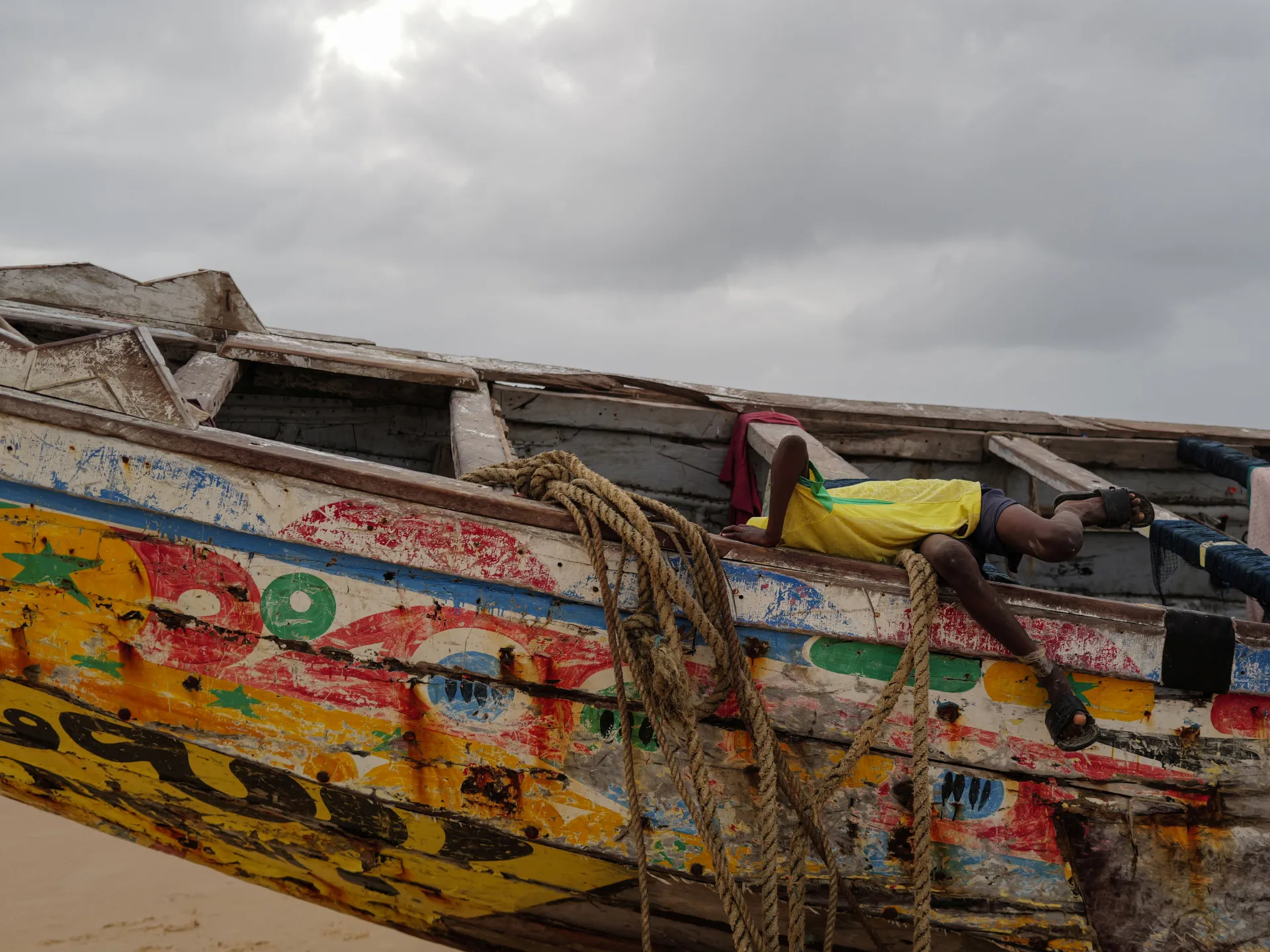
At least seven people have died after a boat carrying more than 200 people capsized along a popular migration route off the Gambian coast, with dozens more believed to be missing, local authorities say.
The boat was reported to have capsized around midnight on Thursday in the vicinity of a village in The Gambia’s North Bank region, the Ministry of Defence said in a statement.
Recommended Stories
list of 3 itemsend of list
Authorities said seven bodies were recovered, and at least 96 people were rescued, many of whom were seriously wounded.
Alerted by a distress call, the Gambian navy launched a search-and-rescue operation after midnight, involving several naval vessels and a fishing boat that came to assist, according to the statement.
The shipwrecked vessel was later found “grounded into a sandbank”, the Defence Ministry said.
Several of the victims have been identified as not being of Gambian nationality, and the authorities are currently verifying their identity, the statement added.
The Gambia has become a jumping-off point for migrants and asylum seekers seeking to reach Spain’s Canary Islands, a gateway to continental Europe, by boat from West Africa.
More than 10,000 people died attempting the journey across the Atlantic, a 58 percent increase over 2023, according to the rights group Caminando Fronteras.
However, irregular migration into the EU along the West African route fell 60 percent during the first 11 months of 2025, according to the Frontex border agency, which credited stronger prevention efforts by departure countries for the drop.
Still, migrants and asylum seekers continue to try to reach Europe on flimsy and often overcrowded vessels.
In May, seven women and girls died when a small boat transporting more than 100 people capsized while approaching the Canary Islands.
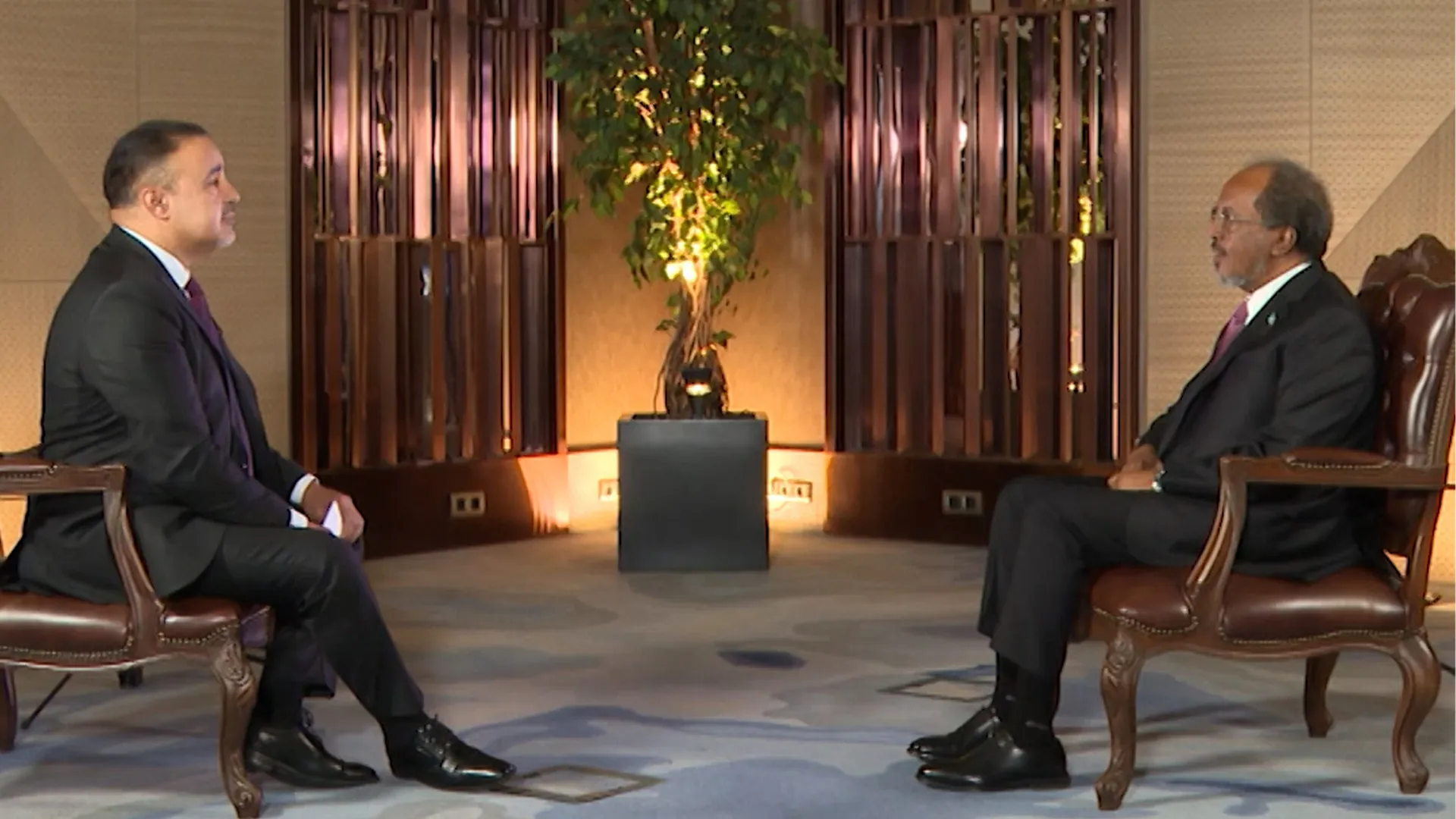
In an exclusive interview, Somalia’s president Hassan Sheikh Mohamud told Al Jazeera that terror groups ISIL and al-Shabab are responsible for destroying the Somali people’s livelihood and security, and says the groups opened the door to Israeli recognition of Somaliland.
In an exclusive interview, Somalia’s president Hassan Sheikh Mohamud told Al Jazeera that the breakaway region of Somaliland has agreed to accept displaced Palestinians being relocated there in exchange for recognition. Somaliland officials have rejected the allegations.
Mali and Burkina Faso have announced they are imposing full visa bans on United States citizens in retaliation for US President Donald Trump’s ban on US visas for their citizens this month.
The two West African countries, which are both governed by the military, on Tuesday became the latest African nations to issue “tit-for-tat” visa bans on the US. These follow Trump’s new visa restrictions, which now apply to 39 countries in Africa, Asia, the Middle East and Latin America. The White House said they were imposed on “national security” grounds.
Recommended Stories
list of 4 itemsend of list
“In accordance with the principle of reciprocity, the Ministry of Foreign Affairs and International Cooperation informs the national and international community that, with immediate effect, the Government of the Republic of Mali will apply the same conditions and requirements to US nationals as those imposed on Malian citizens,” the Malian ministry said in a statement.
Burkina Faso’s foreign minister, Karamoko Jean-Marie Traore, in a separate statement similarly cited a reciprocity rule for his country’s visa ban.
Which countries have issued bans on visas for US citizens?
The US directive issued on December 16 expanded full US visa bans to citizens of five nations other than Mali and Burkina Faso: Laos, Niger, Sierra Leone, South Sudan and Syria.
Travellers holding travel documents issued by the Palestinian Authority were also banned from entering the US under the order.
The US cited the countries’ poor screening and vetting capabilities, information-sharing policies, visa overstay rates and refusal to take back their deported nationals for the ban.
Trump’s order also noted countries were additionally assessed based on whether they had a “significant terrorist presence”.
The US ban takes effect on Thursday.
Mali, Burkina Faso and neighbouring Niger have been plagued by violence from armed groups linked to al-Qaeda and ISIL (ISIS) for years. The violence in those countries has displaced millions of civilians.
On Friday, Niger banned entry for US citizens, also citing the US ban on its citizens. The country is also military-led like its neighbours Mali and Burkina Faso. All three formed the Alliance of Sahel States in July 2024 to tackle security problems and improve trade relations.
In its own reciprocal move, Chad stopped issuing visas to US citizens on June 6 with an exception for US officials. Only US citizens who were issued visas before June 9 are now allowed entry into Chad.
The country was on an initial list of 12 nations whose citizens the Trump administration issued a full visa ban on from June 9.
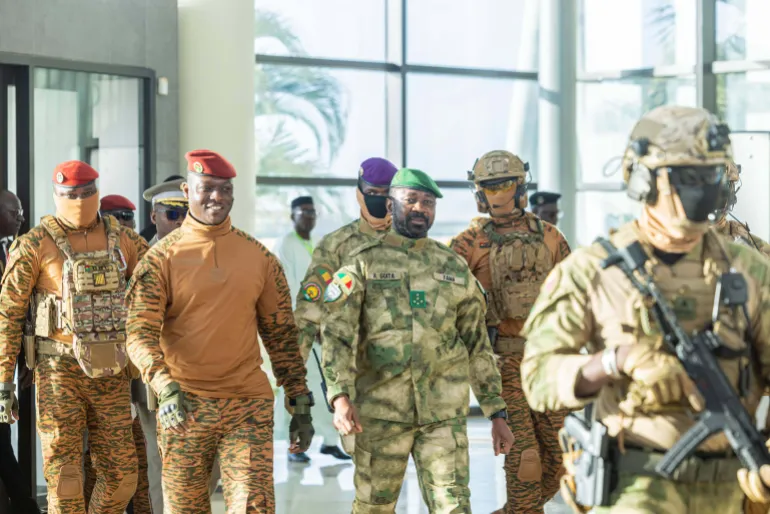
Burkina Faso President Ibrahim Traoré, second from left, walks alongside Malian President Assimi Goïta during an Alliance of Sahel States summit on security and development in Bamako, Mali, on December 23, 2025 [Handout/Mali government information centre via AP]
Which countries are affected by the US visa bans?
Citizens of 39 countries are now under full or partial entry restrictions to the US, according to the US-based Council on Foreign Relations think tank.
Those fully banned are:
Afghanistan
Burkina Faso
Chad
Equatorial Guinea
Eritrea
Haiti
Iran
Laos
Libya
Mali
Myanmar
Niger
Republic of Congo
Sierra Leone
Somalia
South Sudan
Sudan
Syria
Yemen
Holders of travel documents issued by the Palestinian Authority are also fully banned.
Those partially restricted are:
Angola
Antigua and Barbuda
Benin
Burundi
Cuba
Dominica
Gabon
The Gambia
Ivory Coast
Malawi
Mauritania
Nigeria
Senegal
Tanzania
Togo
Tonga
Turkmenistan
Venezuela
Zambia
Zimbabwe
Is Trump specifically targeting African countries with visa bans?
Trump’s approach to Africa regarding visa entries in his second term as US president is similar to that of his first administration when he issued a “Muslim ban”, which included citizens of three African nations – Somalia, Sudan and Libya – as well as Yemen, Syria, Iraq and Iran.
In later updates to the ban, Sudan was removed while Chad was added.
Most countries under US entry restrictions since Trump took office on January 20 are in Africa. Of the 39 affected countries, 26 are African nations.
How have US-Africa trade relations fared under Trump?
Tradewise, the US has shifted away from its preferential African Growth and Opportunity Act (AGOA) trade programme to a tariff-based regime that has also been applied to most other countries around the world under Trump’s tariffs policy.
From 2000, AGOA provided African nations with duty-free access to US markets, bolstering African exports to the US of a wide range of goods, from wine to cars.
AGOA created an estimated 300,000 jobs in African countries and indirectly sustained another 1.2 million jobs, according to the US-based Center for Strategic International Studies.
However, AGOA expired in September after the US Congress failed to renew it. Although the Trump administration said it supported a one-year extension, no steps have been announced to revive the programme.
Instead, African countries now face often steep tariffs as the US sometimes justifies them on political grounds.
South African President Cyril Ramaphosa met with Trump at the White House in May and explained that crime in the country targets the population at large – not just its white citizens – but was unable to persuade Trump.
Trump’s administration is also prioritising its access to critical rare earth minerals, used to develop high-tech devices, in a bid to remain competitive with China, which mines about 60 percent of the world’s rare earth metals and processes 90 percent of them.
Trump took up a mediator role in the conflict between the Democratic Republic of the Congo (DRC) and neighbouring Rwanda this year after the DRC government proposed a minerals deal with the US. The US and United Nations accuse Rwanda of backing a rebellion by the M23 armed group in the eastern DRC.
Trump did not commit to US military intervention in the DRC but successfully secured a peace pact between the two countries on December 4 after applying diplomatic pressure on Rwanda.
Aid groups have since reported rising hunger in northern Nigeria, Somalia and northeastern Kenya.
Health observers and analysts have also raised the alarm about the risk of undoing work to prevent and contain the spread of HIV in Lesotho and South Africa.
In northern Cameroon, officials have reported a spike in malaria deaths as drug supplies fall. This month, the US unilaterally pledged $400m in health funding to the country over the next five years on the condition that Cameroon raises its own annual health spending from $22m to $450m.
African nations were also most affected when Trump recalled 30 career diplomats appointed by former President Joe Biden from 29 countries last week.
Fifteen of them had been stationed in African nations: Algeria, Burundi, Cameroon, Cape Verde, Gabon, Ivory Coast, Egypt, Madagascar, Mauritius, Niger, Nigeria, Rwanda, Senegal, Somalia and Uganda.
Meanwhile, the US has continued to intensify strikes against armed groups linked to ISIL and al-Qaeda, similar to those during Trump’s first term as president from 2017 to 2021.
In Somalia, the US launched strikes in September targeting al-Shabab and the ISIL affiliate in Somalia Province, according to the US-based New America Foundation think tank.
The US also targeted ISIL- and al-Qaeda-linked groups in northwestern Nigeria for the first time on Thursday.
While those strikes were carried out in collaboration with the Nigerian government, a war of narratives prevailed between the two countries.
The US claims to be “saving” Nigerian Christians, who it alleges are experiencing a genocide.
Nigerian authorities, on the other hand, deny claims of genocide and say people of all religions have been badly affected by armed groups operating in the country.
As we enter 2026, one truth is impossible to ignore: children around the world are facing their greatest levels of need in modern history – just as the humanitarian system meant to protect them and their futures is battling some of its biggest challenges in decades.
The events of 2025 marked a dramatic rupture in global humanitarian and development efforts. When the United States abruptly halted foreign aid in January, billions of dollars vanished overnight. Critical programmes were suspended, offices closed, and millions suddenly lost access to food, healthcare, education, and protection. Overnight, lifelines that communities had depended on for decades were thrown into jeopardy – and children, as always, paid the highest price.
For international NGOs, the shock was immediate and severe. At Save the Children, we were forced to take some of the toughest decisions in our 106-year history. We had to close country offices, cut thousands of staff positions, and wind down life-saving operations. We estimated that about 11.5 million people – including 6.7 million children – would feel the immediate impacts of these cuts, while many more would be impacted in the longer term.
The aid cuts came at a time when children globally were already facing major challenges, from conflict to displacement, to climate change, with decades of progress at risk of being reversed.
The facts are startling. In 2025, one in every five children was living in an active conflict zone where children are being killed, maimed, sexually assaulted and abducted in record numbers. About 50 million children globally are displaced from their homes. Nearly half the world’s children – about 1.12 billion – cannot afford a balanced diet, and some 272 million were out of school.
These numbers point to a global failure. Behind each statistic is a child whose childhood is being cut short, a childhood defined by fear, hunger and lost potential.
For children, the collapse of aid was not an abstract budgetary decision, but it was deeply personal. Health clinics closed, classrooms closed, and protection services disappeared just as violence, climate shocks and displacement intensified. Years of hard-won progress in child survival, education and rights were suddenly at risk of being undone, leaving millions of children more vulnerable to hunger, exploitation and violence.
The crisis also revealed the fragility of the global aid system itself. When humanitarian support is concentrated among a handful of government donors, sudden political shifts reverberate directly through children’s lives. The events of 2025 showed how quickly international commitments can unravel – and how devastating that can be for the youngest and least protected.
Yet amid this turmoil, something extraordinary happened.
In many places, families, teachers, health workers and local organisations found ways to keep learning going, to provide care, and to create spaces where children could still play, heal and feel safe. These efforts underscored a simple truth: Responses are strongest when they are rooted close to children themselves.
There were also moments of progress. In a year marked by pushback against human rights, important legal reforms advanced children’s protection – from a ban on corporal punishment in Thailand, to the criminalisation of child marriage and the passing of a digital protection law in Bolivia. These gains reminded us that change is possible even in difficult times, when children’s rights are put at the centre of public debate and policy.
Out of the shocks of 2025 has come a moment of reckoning and an opportunity: to adapt, to innovate, towards approaches that are more sustainable, more locally led and more accountable to the people they are meant to serve. For children, this shift is critical. Decisions made closer to communities are more likely to reflect children’s real needs and aspirations.
This period of reinvention has also revived difficult questions that can no longer be postponed. How can life-saving assistance be insulated from political volatility? How can funding be diversified so that children are not abandoned when a single donor withdraws? And how can children and young people meaningfully participate in decisions that shape their futures?
Innovation alone will not save children, but it can help. When digital tools, data and community-led design are used responsibly, they can improve access, accountability and trust. Used poorly, they risk deepening inequalities. The challenge is not technological — it is political and ethical.
Children do not stop wanting to learn, play or dream because bombs fall or aid dries up. In camps, cities and ruined neighbourhoods, they organise, speak out and imagine futures that adults have failed to secure for them. They remind us why our work – and our ability to adapt – matters so profoundly.
In Gaza this year, I witnessed the horrors that children are living through daily, with the war now raging for more than two years and most of the Strip covered in rubble. I saw children facing malnutrition at our healthcare clinics and heard how some now wish to die to join their parents in heaven. No child should ever be living under such terror that death is preferable. They are children, and their voices need to be heard.
If 2025 exposed the failures of the old aid model, 2026 must become a turning point. A different choice is possible — one that builds systems resilient to political shocks, grounded in local leadership and accountable to the children they claim to serve. The challenge now is to reshape our systems so that, no matter how the world changes, we can put children first, always, everywhere.
The views expressed in this article are the author’s own and do not necessarily reflect Al Jazeera’s editorial stance.
Ivorians to face Burkina Faso in last 16 while Cameroon meet South Africa and Mozambique play Nigeria.
Published On 31 Dec 202531 Dec 2025
Share
Substitute Bazoumana Toure scored in stoppage time for Ivory Coast, who came from two goals down to beat Gabon 3-2 in Marrakesh and top Group F at the Africa Cup of Nations.
Cameroon also fell behind on Wednesday, against Mozambique in Agadir, but a thunderbolt from Christian Kofane delivered a 2-1 victory.
Recommended Stories
list of 4 itemsend of list
Defending champions Ivory Coast and Cameroon finished level on seven points, and both had a plus-two goal difference. The Ivorians topped the table because they scored five goals and Cameroon four.
The results completed the last 16 lineup. Ivory Coast will face Burkina Faso, Cameroon meet South Africa and Mozambique face Nigeria.
In Marrakesh, Gabon rocked Ivory Coast by building a two-goal lead midway through the first half before the title-holders cut the deficit just before the break to trail 2-1 at half-time.
Guelor Kanga struck after 11 minutes for the Gabonese Panthers, whose best-known footballer, Pierre-Emerick Aubameyang, had returned to France for treatment of a thigh injury.
The 2015 African player of the year scored in a 3-2 loss to Mozambique three days ago that eliminated Gabon from the race to be among the 16 qualifiers for the knockout stage.
Ivory Coast fell further behind on 21 minutes when Los Angeles-based Denis Bouanga claimed his first goal of the tournament.
Ivorian Jean-Philippe Krasso netted on 44 minutes after being set up by Wilfried Zaha, the former Crystal Palace winger recalled for the AFCON after missing the triumphant 2024 campaign.
The defending champions took off captain Franck Kessie and Zaha halfway through the second half, but Amad Diallo, who scored in the first two group matches, remained on the bench.
Manchester United winger Diallo was finally introduced on 76 minutes, replacing Oumar Diakite, who was walking a disciplinary tightrope having been yellow-carded.
It was another substitute, Evann Guessand, who equalised with six minutes of regular time left. The Aston Villa striker was a late inclusion in the squad when injured Sebastien Haller withdrew.
In the southern coastal city of Agadir, Cameroon legends Roger Milla and Samuel Eto’o were among the crowd that saw Mozambique take a surprise lead on 23 minutes.
Geny Catamo from leading Portuguese club Sporting unleashed a low shot that bounced in front of goalkeeper Devis Epassy and flew just inside the left post.
The lead lasted five minutes before five-time champions Cameroon levelled when Feliciano ‘Nene’ Jone conceded an own goal.
Facing two unmarked Cameroonian attackers, goalkeeper Ivane Urrubal blocked the ball, which ran loose to Frank Magri.
Magri hit the post and Nene, attempting to clear, managed only to steer the ball into the Mozambican net.
Cameroon had the ball in the net again 10 minutes later, but the scorer, Germany-based 19-year-old Christian Kofane, was ruled offside.
The teen made up for his disappointment by putting the Indomitable Lions ahead on 55 minutes with a fierce shot from outside the box that flew into the net off the underside of the crossbar.
“Bienvenue a Bamako!” The fixer, the minder and the men linked to the Malian government were waiting for us at the airport in Bamako. Polite, smiling – and watchful.
It was late December, and we had just taken an Air Burkina flight from Dakar, Senegal across the Sahel, where a storm of political upheaval and armed violence has unsettled the region in recent years.
Recommended Stories
list of 3 itemsend of list
Mali sits at the centre of a reckoning. After two military coups in 2020 and 2021, the country severed ties with its former colonial ruler, France, expelled French forces, pushed out the United Nations peacekeeping mission, and redrew its alliances
Alongside Burkina Faso and Niger, now also ruled by military governments backed by Russian mercenaries, it formed the Alliance of Sahel States (AES) in September 2023. Together, the regional grouping withdrew from the wider Economic Community of West African States (ECOWAS) bloc, accusing it of serving foreign interests rather than African ones.
This month, leaders from the three countries converged in Bamako for the Confederal Summit of Heads of State of the AES, the second such meeting since the alliance was formed. And we were there to cover it.
The summit was a ribbon-cutting moment. Leaders of the three countries inaugurated a new Sahel Investment and Development Bank meant to finance infrastructure projects without reliance on Western lenders; a new television channel built around a shared narrative and presented as giving voice to the people of the Sahel; and a joint military force intended to operate across borders against armed groups. It was a moment to celebrate achievements more than to sign new agreements.
But the reason behind the urgency of those announcements lay beyond the summit hall.
In this layered terrain of fracture and identity, armed groups have found room not only to manoeuvre, but to grow. Jama’at Nusrat al-Islam wal-Muslimin (JNIM), an al-Qaeda affiliate, has expanded from rural Mali, launching attacks across the region and reaching the coast of Benin, exploiting weak state presence and long-unresolved grievances.
As our plane descended toward Bamako, I looked out at an endless stretch of earth, wondering how much of it was now under the control of al-Qaeda affiliates.
From the airport, our minders drove us fast through the city. Motorbikes swerved around us, street hawkers peddled their wares, and Malian pop blared from speakers. At first, this did not feel like a capital under siege. Yet since September, armed groups have been operating a blockade around Bamako, choking off fuel and goods, the military government said.
We drove past petrol stations where long queues stretched into the night. Life continued even as fuel grew scarce. People sat patiently, waiting their turn. Anger seemed to have given way to indifference, while rumours swirled that the authorities had struck quiet deals with the very fighters they claimed to be fighting, simply to keep the city moving.
Motorcycles line up near a closed petrol station, amid ongoing fuel shortages caused by a blockade imposed by al Qaeda-linked fighters in early September, in Bamako, Mali [Stringer/Reuters]
‘To become one country, to hold each other’s hand’
Our minders drove us on to the Sahel Alliance Square, a newly created public space built to celebrate the union of the three countries and its people.
On the way, Malian forces sped past, perhaps toward a front line that feels ever closer, as gunmen linked to JNIM have set up checkpoints disrupting trade routes to the capital in recent months. In September 2024, they also carried out coordinated attacks inside Bamako, hitting a military police school housing elite units, nearby neighbourhoods, and the military airport on the city’s outskirts. And yet, Bamako carries on, as if the war were taking place in a faraway land.
At Sahel Alliance Square, a few hundred young people gathered and cheered as the Malian forces went by, drawn by loud music, trivia questions on stage and the MC’s promise of small prizes.
The questions were simple: Name the AES countries? Name the leaders?
A microphone was handed to the children. The alliance leaders’ names were drilled in: Abdourahamane Tchiani of Niger. Ibrahim Traore of Burkina Faso. Assimi Goita of Mali. Repeated again and again until they stuck.
Correct answers won a prize: a T-shirt stamped with the faces of the alliance leaders.
Moussa Niare, 12 years old and a resident of Bamako, clutched a shirt bearing the faces of the three military leaders.
“They’ve gathered together to become one country, to hold each other’s hand, and to fight a common enemy,” he told us with buoyant confidence, as the government’s attempt to sell the new alliance to the public appeared to be cultivating loyalty among the young.
France out, Russia in
While Mali, Burkina Faso and Niger went through separate political transitions, the paths that brought them into a shared alliance followed a similar pattern.
Between 2020 and 2023, each country saw its democratically elected leadership removed by the military, the takeovers framed as necessary corrections.
In Mali, Colonel Goita seized power after months of protest and amid claims that President Ibrahim Boubacar Keita had failed to curb corruption or halt the advance of armed groups.
In Burkina Faso, the army ousted President Roch Marc Christian Kabore in early 2022 as insecurity worsened; later that year, Captain Traore emerged from a counter-coup, promising a more decisive response to the rebellion.
In Niger, soldiers led by General Tchiani detained President Mohamed Bazoum in July 2023, accusing his government of failing to safeguard national security and of leaning too heavily on foreign partners.
What began as separate seizures of power have since become a shared political project, now expressed through a formal alliance. The gathering in Bamako was to give shape to their union.
One of the key conclusions of the AES summit was the announced launch of a joint military battalion aimed at fighting armed groups across the Sahel.
This follows months of escalating violence, as regional armies assisted by Russian mercenaries push back against armed groups who have been launching attacks for over a decade.
Under the previous civilian governments, former colonial ruler France had a strong diplomatic and military presence. French troops, whose presence in the region dates back to independence, are now being pushed out, as military rulers recast sovereignty as both a political and security imperative. The last troops left Mali in 2022, but at its peak, France had more than 5,000 soldiers deployed there. When they withdrew, the country became a symbol of strategic failure for France’s Emmanuel Macron.
But even before that, French diplomacy appeared tone deaf, and patronising at best, failing to grasp the aspirations of its former colonies. The common regional currency, the CFA franc, still anchored to the French treasury, has become a powerful symbol of that resentment.
Now, French state television and radio have been banned in Mali. In what was once the heart of Francophone West Africa, French media has become shorthand for interference. What was lost was not only influence, but credibility. France was no longer seen as guaranteeing stability, but as producing instability.
Across the Sahel and beyond, anti-French sentiment is surging, often expressed in French itself – the language of the coloniser is now also the language of resistance.
Captain Ibrahim Traore of Burkina Faso attends the Alliance of Sahel States (AES) second summit in Bamako, Mali [Mali Government Information Center via AP]
‘Like a marriage of reason’
At the end of the summit, Mali’s Goita was preparing to hand over the AES’s rotating leadership to Traore of Burkina Faso.
Young, charismatic, and the new rock star of Pan-Africanism, Traore, in particular, has captured young audiences with help from a loose ecosystem of pro-Russian messaging and Africanist influencers. Across social media platforms, short videos circulate relentlessly: speeches clipped for virality, images of defiance, and slogans reduced to shareable fragments.
Meanwhile, in Burkina Faso, journalists and civil society actors who have criticised the military rules have been sent to the front line under a conscription policy introduced by Traore. Human rights groups outspoken about alleged extrajudicial killings say they have been silenced or sidelined. But much of it is dismissed as collateral, the price, supporters argue, of sovereignty finally reclaimed.
Before the ceremony, we met Mali’s finance minister. At first, he was confident, rehearsed, assured. But when pressed about financing for the ambitious infrastructure projects the three governments have laid out for the Sahel, his composure faltered and his words stuttered. This was a government official unaccustomed to being questioned. The microphone was removed. Later, away from the camera, he told me, “The IMF won’t release loans until Mali has ironed out its relations with France.”
The spokesperson, irritated by my questions, took me aside. As he adjusted the collar of my suit, slowly and patronisingly, he said he sometimes thought about putting journalists in jail “just for fun”.
He did not question the organisation I worked for. He questioned my French passport; my allegiance. I told him my allegiance was to the truth. He smiled, as if that answer confirmed his suspicions.
In the worldview of Mali’s military government – men shaped by years on the front line, living with a permanent sense of threat – journalists and critics are part of the problem. Creating safety was the challenge. The alliance, the spokesperson explained, was the solution to what they could not find within regional body, ECOWAS.
The half-century-old West African institution is a bloc that the three countries had once helped shape. Now, the AES leaders say its ageing, democratically elected presidents have grown detached, more invested in maintaining one another in office than in confronting the region’s crises. In response, they are promoting the AES as an alternative.
As the Sahel alliance grows, it’s also building new infrastructure.
At its new television channel in Bamako, preparations were under way. The ON AIR sign glowed. State-of-the-art cameras sat on tripods like polished weapons.
The channel’s director, Salif Sanogo, told me it would be “a tool to fight disinformation,” a way to counter Western, and more specifically French, narratives and “give voice to the people of the Sahel, by the people of the Sahel”.
The cameras had been bought abroad. The installation was overseen by a French production company. The irony went unremarked.
To defend the alliance, he offered a metaphor. “It’s like a marriage of reason,” he said. “It’s easier to make decisions when you’re married to three. When you’re married to 15, it’s a mess.” He was referring to the 15 member states of ECOWAS.
‘We will survive this, too’
Two years into the AES alliance, they have moved faster than the legacy regional bloc they left behind. A joint military force now binds their borders together, presented as a matter of survival rather than ambition. A mutual defence pact recasts coups and external pressure as shared threats, not national failures. A common Sahel investment and development bank, meant to finance roads, energy, and mineral extraction without recourse to Western lenders, offers sovereignty, they say, without conditions. A common currency is under discussion.
A shared news channel is intended to project a single narrative outward, even as space for independent media contracts at home. And after withdrawing from the International Criminal Court, they have proposed a Sahel penal court, one that would try serious crimes and human rights violations on their own terms. Justice brought home, or justice brought under control, depending on who you ask.
What is taking shape is not just an alliance, but an alternative architecture, built quickly, deliberately, and in full view of its critics.
Where ECOWAS built norms slowly, through elections, mediation, and consensus, AES is building structure. Where ECOWAS insists on patience, AES insists on speed.
To supporters, this is overdue self-determination, dignity restored after decades of dependency. To critics, it is power concentrated in uniforms, accountability postponed, repression dressed up as emancipation.
From the summit stage as he took over the alliance’s leadership, Traore redrew the enemy: Not al-Qaeda. Not ISIL. Not even France. But their African neighbours, cast as the enemy within. He warned of what he called a “black winter”, a speech that held the room and travelled far beyond it, drawing millions of viewers online.
“Why are we, Black people, trying to cultivate hatred among ourselves,” he asked, “and through hypocrisy calling ourselves brothers? We have only two choices: either we put an end to imperialism once and for all, or we remain slaves until we disappear.”
Away from the summit’s “black winter”, under a sunlit sky in Bamako, life moved on with a quieter rhythm. Music drifted through public squares and streets, carrying a familiarity that cut across the tension of speeches and slogans. It was Amadou and Mariam, Mali’s most internationally known musical duo, whose songs once carried the country’s everyday joys far beyond its borders. Amadou died suddenly this year. But the melody lingers.
Its lyrics hold the secret of the largest alliance of all. Not one forged by treaties or uniforms, but by people, across Mali and the Sahel, in all their diversity.
“Sabali”, Mariam sings.
“Forbearance.
“We have survived worse. We will survive this, too.”
Hassan Sheikh Mohamud says his country believes the move is linked to Israel’s plans to forcibly displace Palestinians from Gaza.
Somali President Hassan Sheikh Mohamud has told Al Jazeera that Israel’s “unexpected and strange” recognition of Somaliland may have implications for Palestinians in Gaza.
“Somaliland has been claiming the secession issue for a long time, over the past three decades, and no one country in the world has recognised it,” Mohamud told Al Jazeera in an exclusive interview from Istanbul, Turkiye, on Tuesday.
Recommended Stories
list of 4 itemsend of list
“For us, we’ve been trying to reunite the country in a peaceful manner,” the Somali leader added. “So, after 34 years, it was very unexpected and strange that Israel, out of nowhere, just jumped in and said, ‘We recognise Somaliland’.”
Israel last week became the first and only country to formally recognise Somaliland, a breakaway region in northwest Somalia, bordering the Gulf of Aden.
Somalia’s president also told Al Jazeera that, according to Somali intelligence, Somaliland has accepted three Israeli conditions in exchange for Israeli recognition: the resettlement of Palestinians, the establishment of an Israeli military base on the coast of the Gulf of Aden, and Somaliland joining the Abraham Accords. The accords are a set of pacts establishing the normalisation of ties between Israel and several Arab states. The UAE, Bahrain, Morocco and Sudan have signed onto the accords.
Mohamud also said that Somalia has intelligence indicating there is already a certain level of Israeli presence in Somaliland, and Israeli recognition of the region is merely a normalisation of what was already happening covertly.
Israel will resort to forcibly displacing Palestinians to Somalia, and its presence in the region is not for peace, the Somali leader added.
A 20-point plan released by the administration of US President Donald Trump ahead of a ceasefire between Israel and Hamas in Gaza said that “no one will be forced to leave Gaza, and those who wish to leave will be free to do so and free to return”.
However, Israel has reportedly continued to explore ways to displace Palestinians from the besieged and occupied territory, including in mysterious flights to South Africa, which has formally accused Israel of committing genocide in Gaza.
Israel is also seeking to control strategically important waterways connecting vital seas of commercial and economic significance, namely the Red Sea, the Gulf and the Gulf of Aden, Mohamud said.
The Somali leader was in Turkiye on Tuesday, where he gave a joint news conference with Turkish President Recep Tayyip Erdogan, with the two leaders warning that Israel’s recognition of the breakaway region could destabilise the Horn of Africa.
Somaliland declared independence from Somalia in 1991, but had failed to gain recognition from any United Nations member state, before Israel changed its position last Friday.
Israel’s move was swiftly condemned, including by most members of the UN Security Council at an emergency meeting convened in New York on Monday.
The United States was the only member of the 15-seat body that defended Israel’s move, although it stressed that the US’s position on Somaliland remained unchanged.
Mamady Doumbouya faced eight rivals for the presidency, but the main opposition leaders were barred from running.
Published On 30 Dec 202530 Dec 2025
Share
Guinea coup leader Mamady Doumbouya has been elected president, according to provisional results, paving the way for a return to civilian governing after a military takeover nearly five years ago.
The provisional results announced on Tuesday showed Doumbouya winning 86.72 percent of the vote held on December 28 – an absolute majority that allows him to avoid a runoff.
Recommended Stories
list of 4 itemsend of list
The Supreme Court has eight days to validate the results in the event of any challenge.
Doumbouya, 41, faced eight rivals for the presidency, but the main opposition leaders were barred from running and had urged a boycott of the vote.
The former special forces commander seized power in 2021, toppling then-President Alpha Conde, who had been in office since 2010. It was one in a series of nine coups that have reshaped politics in West and Central Africa since 2020.
Senegal beat Benin 3-0 to top AFCON 2025 group, while DR Congo beat Botswana, setting up a mouth-watering Algeria tie.
Published On 30 Dec 202530 Dec 2025
Share
Senegal saw off Benin on Tuesday to go through to the last 16 of the Africa Cup of Nations as winners of Group D, leaving the Democratic Republic of the Congo (DRC) to settle for second place, which means they will play Algeria in a heavyweight tie in the next round.
Sadio Mane’s Senegal, the 2022 African champions, came into the final round of group games needing to beat Benin in Tangier, and hope their Congolese rivals have not managed to move above them on goal difference.
Recommended Stories
list of 4 itemsend of list
Senegal ran out 3-0 winners against Benin, with Abdoulaye Seck and Habib Diallo scoring before skipper Kalidou Koulibaly was sent off in the second half. Cherif Ndiaye then added a late penalty.
The DRC beat the already-eliminated Botswana 3-0 at the same time in Rabat, meaning the leading duo both finished with seven points from three games, but Pape Thiaw’s Senegal topped the section by a difference of two goals.
As a result, Senegal have a far kinder path in the knockout phase and will remain in Tangier for a last-16 tie on Saturday against the third-place finisher in Group E.
That will be either Burkina Faso or Sudan, who play each other in Casablanca on Wednesday.
The Leopards, in contrast, must play the 2019 champions Algeria in the last 16 next Tuesday, with the winner of that potentially having to face Nigeria in the quarterfinals.
Benin’s three points, courtesy of a solitary 1-0 win over Botswana, are enough for them to go through as one of the best third-placed teams.
It will be just their second appearance in the AFCON knockout stages, and their reward is a meeting with Mohamed Salah’s Egypt in Agadir on Monday.
Israel-based centre-back Seck headed Senegal into the lead from Krepin Diatta’s free kick on 38 minutes, and their second goal arrived just after the hour, when a superb cutback by Mane was turned in by Diallo.
Skipper Koulibaly was then sent off after a yellow card was upgraded to red following a VAR review, leaving the Lions of Teranga to play out the final 19 minutes plus stoppage time a man down.
Ndiaye’s 97th-minute penalty made it 3-0 and ended any doubt about Senegal’s final position in the group.
Playmaker Gael Kakuta, once of Chelsea and now playing in Turkiye, was in outstanding form for the DRC against Botswana at Al Medina Stadium, as his back heel set up Nathanael Mbuku for the opener.
Kakuta then converted a penalty shortly before half-time and got his second and his team’s third on the hour mark from Theo Bongonda’s assist.
Another goal at that point could have left the DRC and Senegal with identical records and facing a possible drawing of lots to determine their final group positions.
The DRC thought they had it when Fiston Mayele put the ball in the net on 64 minutes.
Somali President Hassan Sheikh Mohamud has accused Israel of violating international law and of ‘illegal aggression’.
Turkish President Recep Tayyip Erdogan has condemned Israel’s decision to recognise Somaliland as a sovereign state, calling the move “illegitimate and unacceptable”.
At a joint news conference with Somali President Hassan Sheikh Mohamud in Ankara on Tuesday, Erdogan warned that Israel’s recognition of the breakaway region of Somalia could destabilise the Horn of Africa.
Recommended Stories
list of 4 itemsend of list
He added that Turkiye and Somalia were deepening energy cooperation after promising signs from joint offshore exploration efforts.
“Preserving the unity and integrity of Somalia in all circumstances holds special importance in our view. Israel’s decision to recognise Somaliland is illegitimate and unacceptable,” Erdogan said.
“The Netanyahu government has the blood of 71,000 of our Palestinian brothers and sisters on its hands. Now it is trying to destabilise the Horn of Africa as well, after its attacks on Gaza, Lebanon, Yemen, Iran, Qatar and Syria,” he added, referring to Israel’s genocidal war on Gaza.
Israel became the first and only country to formally recognise Somaliland last Friday, describing the move as being in the spirit of the Abraham Accords, which normalised ties between Israel and several Arab nations.
Somalis step on an image depicting Israeli Prime Minister Benjamin Netanyahu during a demonstration in Mogadishu [Feisal Omar/Reuters]
‘Illegal aggression’
Somaliland unilaterally declared independence from Somalia in 1991, following the collapse of the central government after a civil war. Despite maintaining its own currency, passport and army, it has failed to gain international recognition.
Standing alongside Ergogan, Mohamud accused Israel of “illegal aggression”, saying the recognition breaches the United Nations charter and African Union agreements.
“Israel is exporting its problems in Gaza and Palestine, and it is trying to divert the attention of the entire world, including the Arab and Islamic world,” he later told Al Jazeera in an interview.
“Israel will resort to forcibly displacing Palestinians in Somalia. It also wants to control strategically important waterways that connect vital seas, both commercially and economically, between the Red Sea, the Gulf, and the Gulf of Aden.”
Destabilising Africa
Mohamud warned that the move would have international consequences and also said it could mark the beginning of instability in the Horn of Africa, particularly in Somalia.
He recalled that Turkiye had previously played a mediating role between Somalia and Somaliland and continues to support efforts to resolve the dispute peacefully.
Abdinor Dahir, an independent researcher, said that Turkiye has invested heavily in Somalia, supporting its security forces and political process, while mediating talks between Somalia and Somaliland.
Israel’s recognition “threatens Turkiye’s economic interests” and presence in the country and “poses a direct challenge to Somalia’s sovereignty”, he told Al Jazeera.
Dahir warned that Somalia, which has endured years of civil war and continues to fight armed groups including al-Shabab and ISIL (ISIS), has made progress on security, which could be undermined by the move.
The recognition risks “destabilising the wider African region, and could transfer the Middle East conflict into the Horn of Africa”, he said.
Elsewhere in Group C, Tanzania scrape through to the knockout stages for the first time after 1-1 draw with Tunisia.
Published On 30 Dec 202530 Dec 2025
Share
Raphael Onyedika has scored twice, and Paul Onuachu has netted his first international goal in four years as already-qualified Nigeria overcame 10-man Uganda 3-1 to maintain a 100 percent record after the group stage and send the East African side home.
Nigeria finished top of Group C on Tuesday with nine points, followed by Tunisia in second with four and Tanzania, who reached the round of 16 as one of the four best third-placed sides after their 1-1 draw with Tunisia, also on Tuesday.
Recommended Stories
list of 4 itemsend of list
It was a dominant performance from Nigeria despite resting several regulars, having already been assured of the top spot in the group.
After Onuachu missed a simple chance midway through the first half, he found the back of the net after 28 minutes.
Fisayo Dele-Bashiru showed quick feet on the left, and his pass in to Onuachu was perfect for the big forward to finish. The goal was the striker’s first for Nigeria since 2021.
Uganda were reduced to 10 men in the 56th minute when substitute goalkeeper Salim Jamal Magoola used his hands about 9 metres (10 yards) outside his area to stop a Victor Osimhen shot.
Magoola had been a halftime replacement for injured starter Denis Onyango, so Uganda had to use their third goalkeeper in the game as Nafian Alionzi was brought on for midfielder Baba Alhassan.
Nigeria scored their second goal in the 62nd minute when Onyedika took Samuel Chukwueze’s pass and drilled his shot low through the legs of Alionzi.
Onyedika netted his second five minutes later with a side-footed finish, Chukwueze again the provider with a pass from the right.
Uganda got a consolation goal with 15 minutes left as the Nigerian defence momentarily went to sleep and Rogers Mato had time and space from Allan Okello’s pass to lift the ball over the keeper and into the net.
Nevertheless, Nigeria have impressed in the group stage, having been losing finalists two years ago and following the shock of missing out on 2026 World Cup qualification.
Meanwhile, Tanzania reached the knockout stage of the Africa Cup of Nations for the first time, 45 years after their maiden appearance, by coming from behind to draw 1-1 with fellow qualifiers Tunisia in Rabat.
Feisal Salum’s powerful shot three minutes into the second half was enough to secure the draw after Tunisia had been ahead with a 43rd-minute penalty converted by Ismael Gharbi.
It was only Tanzania’s second point of the tournament but proved enough for them to advance as one of the four best third-placed finishers.
Tanzania have been trying since 1980 to advance beyond the group stage and have still to win a match in four appearances.
Trump is seeking to end protected status for South Sudan, claiming country no longer poses danger to those returning.
Published On 30 Dec 202530 Dec 2025
Share
A federal judge has blocked the administration of President Donald Trump from stripping temporary protections from deportations for South Sudanese citizens living in the United States.
US District Judge Angel Kelley in Boston, Massachusetts, granted an emergency request on Tuesday in a lawsuit filed by several South Sudanese nationals and an immigrant rights group.
Recommended Stories
list of 3 itemsend of list
The order prevents the temporary protected status (TPS) for South Sudanese citizens from expiring on January 5 as the Trump administration has sought.
The lawsuit, led by the African Communities Together, accuses the US Department of Homeland Security of acting unlawfully in its effort to strip South Sudanese citizens of TPS, a US immigration status granted to citizens of countries experiencing natural disasters, conflict or other extraordinary circumstances that could make return to their homelands dangerous.
The status was initially granted for South Sudan in 2011 when the country officially broke away from Sudan. It has been repeatedly renewed amid repeated bouts of fighting, widespread displacement and regional instability.
The status allows eligible individuals to work and receive temporary protection from deportation.
The lawsuit further alleged that the Trump administration exposed South Sudan citizens to being deported to a country facing what is widely considered one of the world’s worst humanitarian crises.
Homeland Security Secretary Kristi Noem, in a notice published on November 5, had argued the country no longer met the conditions for TPS.
“With the renewed peace in South Sudan, their demonstrated commitment to ensuring the safe reintegration of returning nationals, and improved diplomatic relations, now is the right time to conclude what was always intended to be a temporary designation,” she said, appearing to refer to a tenuous 2018 peace agreement.
The statement contradicted the findings of a panel of United Nations experts, who wrote in a report to the UN Security Council in November that “while the contours of the conflict may be altered, the resulting human suffering has remained unchanged.”
“Ongoing conflict and aerial bombardments, coupled with flooding and the influx of returnees and refugees from the Sudan, have led to near-record levels of food insecurity, with pockets of famine reported in some of the communities most affected by renewed fighting,” it added.
The Trump administration has increasingly targeted TPS as part of its crackdown on immigration and its mass deportation drive.
It has moved to similarly end TPS for foreign nationals from countries including Syria, Venezuela, Haiti, Cuba and Nicaragua, prompting several court challenges.
It has also sought to deport individuals to countries in Africa, even if they have no ties there.