From breaking news to significant developments in politics, business, technology, entertainment, and more, we deliver the stories that shape our global landscape.
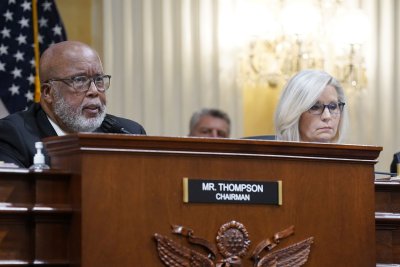
U.S. Rep. Bennie Thompson (L), D-Miss, pictured in December 2022 with then-U.S. Rep. Liz Cheney, R-Wyo., (R) at House Select Committee investigating the Jan. 6 insurrection on the U.S. Capitol in Washington, D.C. On Wednesday, an ex-Senate aide announced his bid to unseat Thompson. File Photo by Ken Cedeno/UPI | License Photo
Dec. 17 (UPI) — Evan Turnage, a Jackson lawyer and ex-senate aide, is challenging Rep. Bennie Thompson in Mississippi’s 2nd District Democratic primary.
Turnage, 33, a Yale Law and Murrah High alumnus, formerly advised U.S. Sens. Elizabeth Warren, D-Mass., and Senate Minority Leader Chuck Schumer, D-N.Y. He launched his campaign after returning home and hearing voters’ frustration over the district’s stagnant economy under Thompson’s long tenure, he said.
“I’ve talked to so many people and it’s clear that there’s an appetite for new leadership, an appetite for a fighter from Mississippi,” Turnage said in an interview.
Mississippi’s 2nd District covers Jackson and much of the Delta. With a majority-Black and solidly Democratic electorate, real competition happens in the primary and not the general election.
“This is the poorest district in the poorest state in the country. It was like that when he was elected, and it remains that way today,” he added.
Thompson, 77, has held the seat since 1993 as one of Mississippi’s longest-serving officials and has maintained broad support while gaining national recognition for civil rights issues, security and oversight.
Turnage joined Schumer’s team as chief counsel in early 2023, departing two years later to return to Jackson.
He said his time in the nation’s capital influenced his run for office, but a recent local Democratic runoff also shaped his decision.
“Grocery prices are the No. 1 economic concern I hear about,” Turnage said. “That experience in Washington showed me how much Congress can do when it’s willing to stand up to corporations.”
Turnage said his campaign will be focused on government reform, economic growth and protecting voting rights.
Mississippi’s Democratic primary is slated for March 2026.
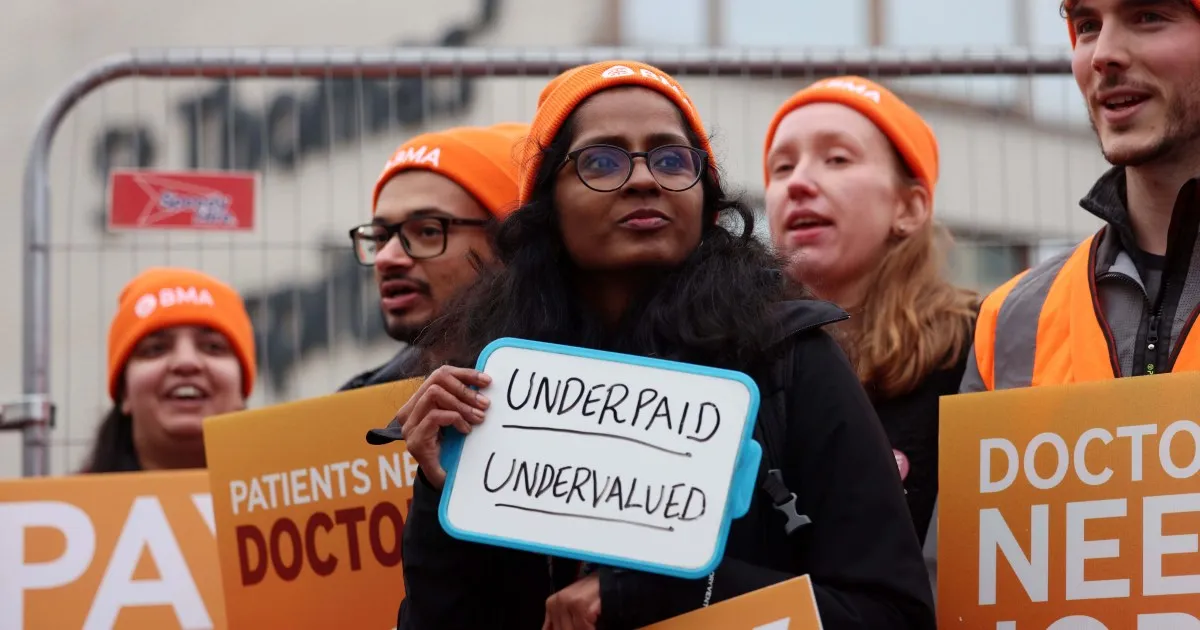
Young resident doctors have gone on strike in the UK, demanding better pay and more training positions that will allow them to continue in their field. Al Jazeera’s Sonia Gallego explains this is the 14th such strike in recent years.
A woman shows coca leaves during an event for the National Day of Acullico (chewing of the plant) in Santa Cruz, Bolivia, in January. Then-Bolivian President Luis Arce said his countrymen have shown the world that the coca leaf ‘is not cocaine, File Photo by Juan Carlos Torrejon/EPA
Dec. 17 (UPI) — The government of President Rodrigo Paz said it will push to revise Bolivia’s legal framework for coca leaf cultivation after official data showed that planted areas exceed authorized limits and continue to expand.
According to the 2024 Coca Crop Monitoring Report by the United Nations Office on Drugs and Crime, presented in La Paz, Bolivia ended 2024 with about 34,000 hectares of coca crops, a 10% increase from the previous year.
That figure exceeds by 12,000 hectares the cap set by the 2017 General Law of Coca, which authorizes 22,000 hectares for legal cultivation.
Coca leaf is recognized in Bolivia’s Constitution for traditional, medicinal and cultural uses, but part of the production is diverted to cocaine manufacturing, the report said.
Earlier this month, the World Health Organization decided to keep coca leaf on its list of controlled substances, citing the risk to public health posed by its easy conversion into cocaine.
Against that backdrop, the Office on Drugs and Crime urged the Paz administration to strengthen control strategies, particularly in protected areas, and to update data on domestic demand for licit consumption.
Vice Minister for Social Defense and Controlled Substances Ernesto Justiniano said the government plans to amend the law, but said new parameters will depend on a fresh study to determine how much coca is needed for traditional use in Bolivia, according to local newspaper El Deber.
“Bolivia has more coca than it needs for traditional uses. Crops have not stayed at 22,000 hectares. By 2024, they were at 34,000, and in the next report, we will probably be close to 40,000 hectares because very little was eradicated this year — barely 1,700 hectares,” Justiniano said.
He said he recalled a study released in 2013 estimated that 14,700 hectares were sufficient for legal consumption, but that the limit was raised to 22,000 hectares in 2017 — a decision the new government now questions as lacking “technical justification,” the outlet ERBOL reported.
At the same time, the government said the eradication of illegal coca crops will again become a central pillar of its anti-drug strategy, with a focus on what it calls surplus production feeding drug trafficking.
To prepare the new study on domestic demand for coca leaf, authorities said they will invite representatives from coca-growing groups, academic institutions and other sectors to ensure transparency of the data.
Officials expect that once the findings are released, negotiations will begin with coca growers from the Chapare, a coca-producing region in central Bolivia.
Justiniano said farmers there blocked eradication efforts this year, mainly in the tropical Cochabamba region, an area widely regarded as the political stronghold of former President Evo Morales.
Washington, DC – For the past two years, weekdays for Susanna have meant thumbing through picture books, organising cubby holes and leading classroom choruses of songs.
But her work as a pre-school teacher came to a screeching halt in October, when she found out her application to renew her work permit had been denied.
Recommended Stories
list of 3 itemsend of list
Susanna, who uses a pseudonym in this article for fear of reprisals, is one of the nearly 10 percent of teachers in the United States who are immigrants.
But while the US has increasingly looked abroad to fill teacher shortages, some foreign-born teachers say the deportation push under President Donald Trump has threatened their livelihoods — and risks traumatising their students.
Susanna, an asylum applicant who fled violence in Guatemala nearly a decade ago, said that losing her permit meant she had to stop working immediately.
She recalls breaking the news to her students, some of whom are only three years old. Many were too young to understand.
“In one week, I lost everything,” Susanna told Al Jazeera in Spanish. “When I told the kids goodbye, they asked me why, and I told them, ‘I can only tell you goodbye.’ There were kids that hugged me, and it hurt my heart a lot.”
Advocates warn that the sudden departure of teachers could harm the development of young children in school [Mohammed Zain Shafi Khan/Al Jazeera]
Looking abroad for teachers
Estimates vary as to how many foreign-born teachers currently work in the US. But one 2019 report from George Mason University found that there were 857,200 immigrants among the country’s 8.1 million teachers, in roles ranging from pre-school to university.
For the 2023-2024 school year alone, the US government brought 6,716 full-time teachers to the country on temporary exchange visas to fill openings in pre-kindergarten, primary and secondary school education.
Many hailed from the Philippines, as well as countries like Jamaica, Spain and Colombia.
The uncertainty for immigrants under Trump’s second term, however, has proven disruptive to schools that rely heavily on foreign-born teachers.
That is the case for the pre-school where Susanna worked, CommuniKids, which offers language immersion programmes in Washington, DC.
Cofounder and president Raul Echevarría estimates that immigrants — both citizens and non-citizens working with legal authorisation — comprise about 90 percent of CommuniKids’s staff.
But Echevarría told Al Jazeera that the push to rescind legal pathways to immigration has jeopardised the employment of several faculty members.
Five other teachers at the school have seen their ability to work affected by changes to the Temporary Protected Status (TPS) programme.
All five, Echevarría explained, were originally from Venezuela. But in October, the Trump administration ended TPS status for more than 350,000 Venezuelan citizens, including the teachers at CommuniKids.
Their authorisation to work legally in the US will expire on October 2, 2026, according to the US Citizenship and Immigration Services website.
“These teachers lost their ability to make a living,” Echevarria said, noting that his school requires educators with expertise in languages like Spanish, French and Mandarin.
CommuniKids, a language immersion school in Washington, DC, helps young children develop skills in French, Mandarin and Spanish [Mohammed Zain Shafi Khan/Al Jazeera]
‘Strong bonds’
For the schools themselves, the losses can be devastating. Every state in the US has reported teacher shortages to the federal government.
But advocates say the high stress and low pay of education make teachers difficult to recruit and keep.
That leads some states to look abroad for education workers. In North Carolina, for example, 1,063 foreign nationals worked full-time as grade-school teachers on temporary J-1 visas during the 2023-2024 school year.
The top destinations for such recruits were all southern states: North Carolina was followed by Florida with 996 teachers on J-1 visas, and Texas with 761.
But Echevarria said some of the biggest impacts of the deportation drive are felt by the students themselves.
“Our students develop strong bonds with their teachers, and all of a sudden, overnight, they lost their teachers,” said Echevarría.
“Their number one superpower”, he added, “is their ability to empathise and to create strong, effective bonds with people from any background”.
But when those bonds are broken, there can be mental health consequences and setbacks for educational achievement, particularly among younger children.
A 2024 study published by the American Educational Research Association found that, when teachers leave midyear, children’s language development takes a measurable hit.
In other words, the loss of a familiar teacher — someone who knows their routines, strengths and fears — can quietly stall a child’s progress. The consequences extend to a child’s sense of self and stability.
Mental health consequences
For parents like Michelle Howell, whose child attends CommuniKids, the loss of teachers has also made the classroom environment feel fragile.
“The teachers there aren’t just teachers for these young kids,” Howell said of CommuniKids. “They’re like extended family.
“They hug them, they hold them, they do the things a parent would do. When those people disappear, it’s not just hard for the kids. It’s hard for everyone.”
Howell, who is Chinese American, said the sudden disappearances reminded her of her own family’s history.
“I used to read about things like this happening in China, the place my family left to find safety,” she said. “It’s very disturbing to know that what we ran from back then is our reality now. People disappear.”
School psychologist Maria C, who asked to remain anonymous to protect her work in the Texas public school system, has noticed the children she works with struggling with instability caused by the deportation push.
The disappearance of a loved one or mentor — say, a favourite teacher — could flood a child’s body with cortisol, the hormone meant to protect them in moments of danger, she explained.
But when that stress becomes chronic, the same hormone starts to hurt more than it helps. It interferes with memory, attention and emotional regulation.
“For some, it looks like anxiety. For others, it’s depression or sudden outbursts,” Maria said. “They’re in fight-or-flight mode all day.”
She added that selective mutism, an anxiety disorder, is on the rise among the children she sees, who range in age from five to 12.
“It used to be rare, maybe one case per school,” she said. “Now I see it constantly. It’s a quiet symptom of fear.”
Preparing for the worst
Back at CommuniKids, Echevarría explained that he and other staff members have put together contingency plans, just in case immigration enforcement arrives at the pre-school.
The aim, he said, is to make both employees and students feel safer coming to class.
“We put those steps in writing because we wanted our staff to know they’re not alone,” he said. “We have attorneys on call. We’re partners with local police. But above all, our job is to protect our children.”
But as an added precaution, teachers are advised to carry their passports or work permits with them.
Even Echevarría, a US citizen born in Virginia, said he carries his passport wherever he goes. The fear of deportation has a way of lingering.
“I’m bilingual and of Hispanic descent,” he said. “Given how things are, I want to be able to prove I’m a citizen if anyone ever questions it.”
Fulton County District Attorney Fani Willis is testifying before a Georgia state Senate committee Wednesday about her case against President Donald Trump. File Photo by Erik S. Lesser/EPA
Dec. 17 (UPI) — Fulton County District Attorney Fani Willis is facing a Georgia state Senate committee over her attempts to prosecute President Donald Trump in a 2020 election interference case as well as her hiring of Nathan Wade, with whom she had a romantic relationship.
Willis has fought the subpoena requiring her to appear before the committee since the summer of 2024. Her attorney is former Georgia Gov. Roy Barnes, who said she maintains that the committee’s actions are politically motivated.
Barnes argued before the Georgia Supreme Court on Dec. 9 that the subpoena to testify issued by the committee is invalid because it was issued after the legislature adjourned.
The committee plans to ask about her decisions regarding the case against Trump and his supporters, some of whom pleaded guilty to charges. Sidney Powell, Jenna Ellis, Kenneth Chesebro and Scott Hall took plea deals after agreeing to testify. Trump later gave them all federal pardons.
Wade and Willis were removed from the case, and Willis fought to stay on the case, but lost her appeal. The case against Trump was dropped after a new prosecutor took over the case.
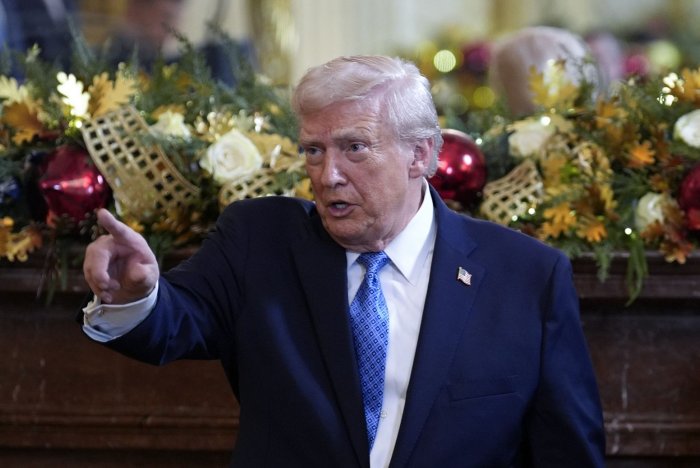
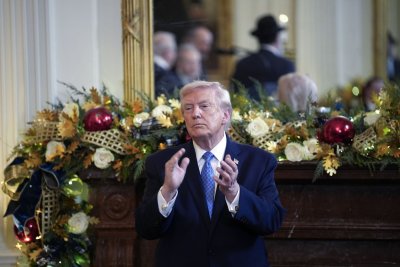
President Donald Trump participates in a Hanukkah reception in the East Room at the White House on Tuesday. Photo by Yuri Gripas/UPI | License Photo
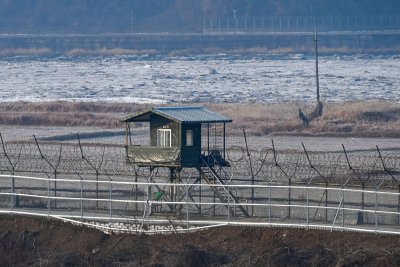
SEOUL, Dec. 17 (UPI) — The United Nations Command objected to a legislative effort in South Korea that would transfer authority over non-military access to the Demilitarized Zone from the UNC to Seoul, as debate grows over control of one of the world’s most sensitive border areas.
The UNC’s rare public statement follows renewed calls by Unification Minister Chung Dong-young and ruling party lawmakers for a bill that would allow the South Korean government to approve civilian entry into the DMZ without prior UNC authorization.
In a press release issued Tuesday, the U.S.-led UNC reiterated its authority to implement and enforce the 1953 Korean Armistice Agreement, including control over access to the DMZ.
“Since 1953, UNC has been the successful administrator of the Demilitarized Zone, a role that has been essential in maintaining stability, especially amid periods of heightened inter-Korean tensions,” it said.
Citing provisions that assign “civil administration and relief” within the zone to the UNC commander and grant the UNC Military Armistice Commission exclusive jurisdiction over entry approvals, the command stressed that no person, military or civilian, may enter the DMZ without specific authorization.
“Civil administration and relief in that part of the Demilitarized Zone which is south of the Military Demarcation Line shall be the responsibility of the Commander-in-Chief, United Nations Command,” the statement said.
The release added that the UNCMAC reviews access requests under established procedures designed to avoid actions that could be perceived as provocative or that could endanger safety.
The issue resurfaced earlier this month after Chung publicly backed legislation that would allow South Korea to grant access for “peaceful use” without UNC approval, arguing that current restrictions undermine Seoul’s sovereignty and the civilian use of the DMZ.
Chung cited recent cases in which Deputy National Security Adviser Kim Hyun-jong and Cardinal Lazzaro You Heung-sik were denied access to the buffer zone.
Seoul’s defense and foreign ministries have expressed reservations about the proposal, however, warning that separating civilian access from UNC procedures could complicate armistice maintenance and military coordination.
The UNC statement noted that the South Korean military already carries out “critical tasks such as policing, infrastructure support, medical evacuation [and] safety inspections,” highlighting what it described as Seoul’s sovereignty and primary role in its own defense.
In a follow-up release Wednesday, the UNC said it had granted Kim access to the DMZ for a briefing on North Korean military activities and South Korea’s response measures, as well as discussions on preventing accidental clashes.
“UNC is committed to maintaining peace and stability on the Korean Peninsula and actively supports measures that reduce the risk of miscalculation between military forces near the Military Demarcation Line,” it said.
Israeli authorities are engaged in multiple major efforts, including building settlements and pursuing annexation, to ensure there will be no Palestinian state in the future.
Israeli authorities are expected to advance plans to build 9,000 new housing units in an illegal settlement on the site of the abandoned Qalandiya airport in occupied East Jerusalem, in another attempt to cut off Palestinian lands from each other and block any possibility of a contiguous Palestinian state ever emerging.
The so-called Atarot neighbourhood in northern East Jerusalem, reminiscent of the E1 plan to undermine Palestinian statehood, is to be discussed and have its outlines approved on Wednesday by the District Planning and Building Committee, according to Israeli group Peace Now.
Recommended Stories
list of 3 itemsend of list
The advocacy group said the new settlement is envisioned to be built within a densely populated Palestinian urban area, stretching from Ramallah in the occupied West Bank and Kafr Aqab in the north through the Qalandiya refugee camp, ar-Ram, Beit Hanina and Bir Nabala.
It would build an Israeli enclave in an area where hundreds of thousands of Palestinians live in close proximity, with the aim of blocking development in a key area and further damaging the likelihood of a sovereign Palestinian state being established.
“This is a destructive plan that, if implemented, would prevent any possibility of connecting East Jerusalem with the surrounding Palestinian area and would, in practice, prevent the establishment of a Palestinian state alongside Israel,” Peace Now said.
Translation: The massacre government is working to establish a new ultra-Orthodox mega-settlement across the Green Line north of Jerusalem. The new political attack called ‘Atarot’ is planned to be built in the heart of the Palestinian state that will be established alongside Israel. This involves 9,000 housing units that Israel will have to evacuate. Isn’t it a shame?
The organisation said the far-right government of Prime Minister Benjamin Netanyahu is seizing every moment to bury chances for a future of peace and compromise.
“Especially now, when it is clear to everyone that the ideas of ‘managing the conflict’ and ‘decisive victory’ have led to a security disaster for Israel, we must act to resolve the conflict.”
The plan’s advancements date back to early 2020, when Israel’s Housing Ministry sent it to the Jerusalem municipality to prepare it for approval. It completed the bureaucratic preparation process within months, but faced objections from the Environmental Protection and Health ministries, according to Peace Now, which said the administration of United States President Barack Obama had also opposed it.
It would need further government consideration and approval before being given legal effect and moving towards tender processes to select construction contractors.
Most of the plan area is designated as “state land” by Israeli authorities, meaning they would not have to seek permission from Palestinian landowners.
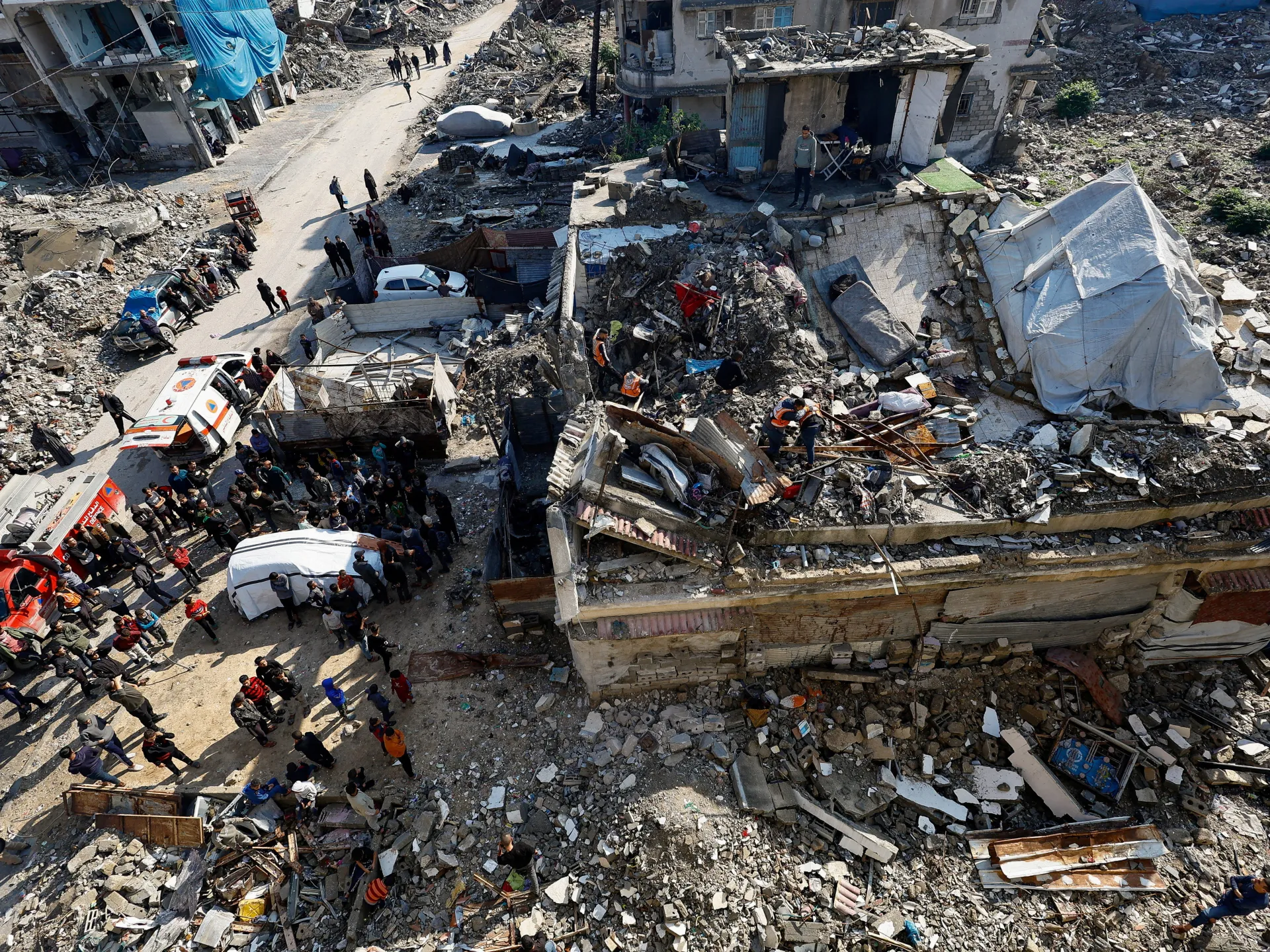
Israel has been quickly advancing with several major projects to build illegal settlements on occupied Palestinian territory and pursuing annexation of the occupied West Bank, alongside its genocidal war on Gaza that started in October 2023 and has now killed more than 70,000 people.
The E1 plan, which would see the construction of thousands of illegal Israeli homes in the occupied West Bank, is hailed by Israeli officials despite international condemnation.
Israel’s security cabinet last week signed off on plans to formalise 19 illegal settlements across the West Bank.
Demolitions and widespread arrests
Israeli forces continue to launch raids across the occupied West Bank and support violent settlers in attacking Palestinian lands while issuing permits to demolish Palestinian homes.
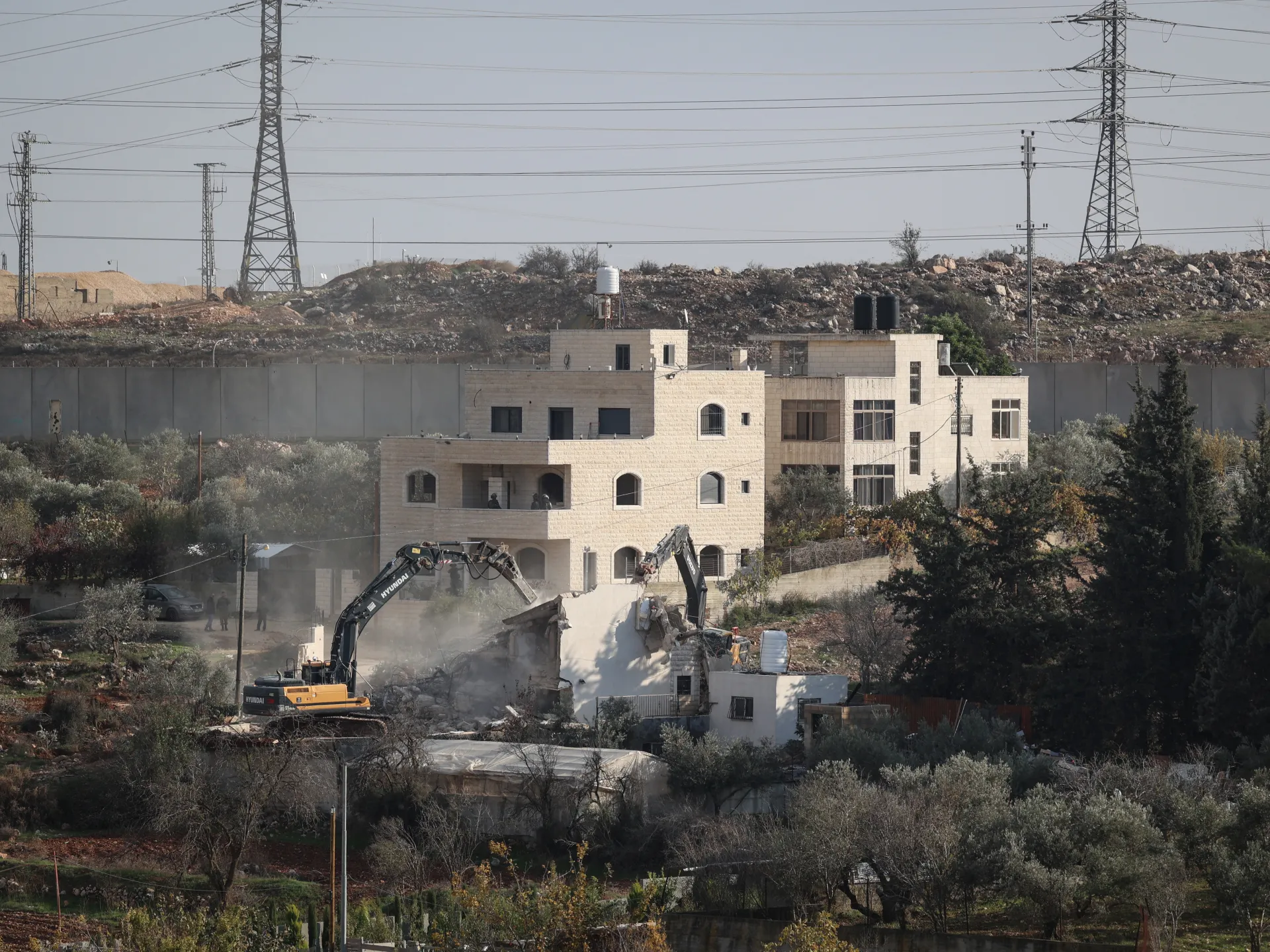
Israeli authorities began carrying out demolition operations Wednesday morning in the town of Biddu, located northwest of occupied East Jerusalem, under the pretext that the Palestinian buildings lacked permits.
In the central part of the West Bank, settlers, who have been rampaging with impunity often backed by the Israeli military, burned Palestinian vehicles and wrote racist slogans in the village of Ein Yabrud in Ramallah on Wednesday.
Several Palestinians were also arrested during raids across the West Bank, including in Nablus.
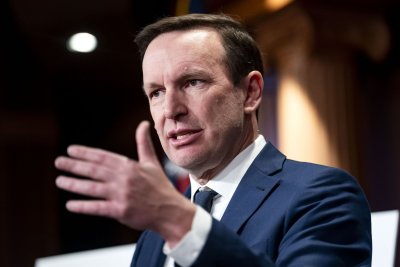
Dec. 17 (UPI) — There are no legal or national security justifications for the Trump administration’s attacks on ships in the eastern Pacific and Caribbean Sea, Sen. Chris Murphy said following a bipartisan classified briefing on the strikes.
At least 95 people have been killed in 25 military strikes on ships the Trump administration accuses of being used by drug cartels and gangs designated as terrorist organizations since Sept. 2.
The strikes have drawn mounting domestic and international condemnation and questions over their legality by both Democratic and Republican lawmakers.
The administration defends the strikes as legal under both U.S. and international law, arguing the United States is at war with the drug cartels who are flooding the country with deadly substances.
State Secretary Marco Rubio and Defense Secretary Pete Hegseth held a classified briefing on the strikes with members of Congress on Tuesday, with many Democrats, including Murphy, D-Conn., calling foul.
“While I obviously can’t tell you any classified information I learned, I can tell you this: that the administration had no legal justification for these strikes, and no national justification for these strikes,” Murphy said in a video posted to his X account.
On the national security front, the administration admitted to the lawmakers that there is no fentanyl coming to the United States from Venezuela and the cocaine that is coming from Venezuela is mostly going to Europe, he said.
“And so we are spending billions of your taxpayer dollars to wage a war in the Caribbean to stop cocaine from going from Venezuela to Europe,” he said. “That is a massive waste of national security resources and of your taxpayer dollars.”
On the legal front, the administration is justifying the strikes by stating they are targeting gangs and cartels that the Trump administration has designated as terrorist organizations.
Since February, President Donald Trump has designated 10 cartels and gangs as terrorist organizations, with Clan de Golfo blacklisted on Tuesday.
Murphy said that while the president has the power to designate groups as terrorist organizations, it does not give him the ability to carry out military strikes targeting them.
“A designated ‘terrorist organization’ allows the president to impose sanctions on those organizations and individuals,” he said. “Only Congress, only the American public, can authorize war. And there’s just no question that these are acts of war.”
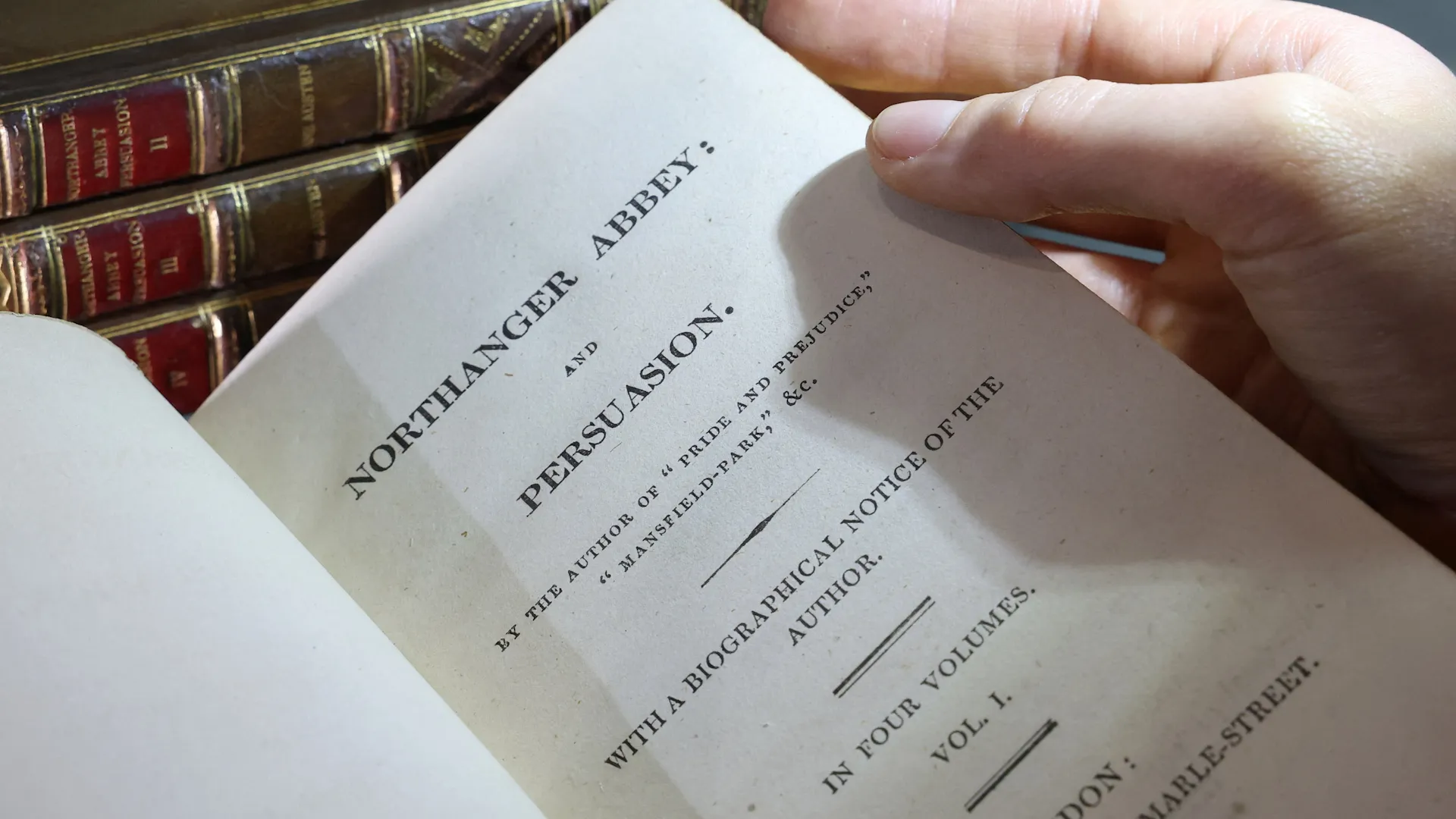
Fans of English novelist Jane Austen have been celebrating the anniversary of her birth 250 years ago. Al Jazeera’s Charlie Angela has been to Austen’s former home in southern England.
Song Eun-seok, floor leader of South Korea’s People Power Party, presides over a parliamentary strategy meeting at the National Assembly in Seoul on Dec. 16. Photo by Asia Today
Dec. 16 (Asia Today) — South Korea’s People Power Party said Tuesday its number of dues-paying members is nearing 1 million, arguing the growth reflects a strengthening of the opposition since the Lee Jae-myung administration took office.
Secretary-General Jeong Hee-yong said at a parliamentary strategy meeting at the National Assembly that, as of December, the party had 963,231 dues-paying members, which he described as the highest level since membership statistics were first compiled.
Jeong said the party had 744,354 dues-paying members in late November last year. That figure fell to 711,528 in April, then rose to 751,030 by Aug. 26, when the party held its national convention. Since then, Jeong said dues-paying membership has increased by 212,201 compared with the convention period.
Jeong said the leadership does not view the increase as a typical election-season boost. He said the number of “responsible members” – defined as members who have paid dues for more than three months – also rose by 53,995 compared with the convention period. He called the scale of the increase unprecedented.
Jeong said public demand to push back against the Lee Jae-myung administration and the Democratic Party is being reflected in higher party membership. He said the participation and solidarity of members shows expectations for the People Power Party to mount a stronger opposition.
He added that the party aims to build a more active organization with its members, win the next local elections and position itself as an alternative party focused on people’s livelihoods.
Ai Chip startup Rebellion aim to challenge Nvidia as unicorn. Computer chips circuits boards. File Photo by Jon Sullivan/Wikimedia Commons
Dec. 16 (Asia Today) — Rebellion Chief Executive Park Sung-hyun said Tuesday the South Korean AI semiconductor startup wants to “compete head-to-head” with Nvidia as the company marked its fifth anniversary and said its valuation has reached about 2 trillion won (about $1.5 billion), meeting the threshold commonly used for “unicorn” status.
“Even if it kills me, I want to step into the same ring as NVIDIA and face them head-on,” Park said at a media day at Rebellion’s headquarters in Seongnam, south of Seoul.
Founded in 2020, Rebellion has positioned itself as an AI chipmaker focused on inference – the computing used to run AI services – rather than large-scale model training. The company said it has built “real-world” usage references by deploying its chips in services with live traffic in telecommunications, the public sector and enterprise markets.
Executives said competition in AI semiconductors is shifting as AI services spread and inference becomes a key battleground, where power efficiency and operating costs can matter as much as raw performance. The company pointed to moves such as Google‘s expansion of its Tensor Processing Unit into large-scale cloud offerings as evidence that specialized AI chips developed for internal use can be adapted for commercial services.
Rebellion said it is seeking to differentiate itself in a market not fully centered on Nvidia by focusing from the outset on inference-optimized designs. Park said the company expects measures such as cost per token and throughput per watt to become increasingly important as AI services scale.
Park also criticized what he described as the practical challenges facing domestic AI chip companies, arguing that government support for AI infrastructure – particularly around graphics processing units – has largely benefited large companies and established cloud providers. “This is disappointing for AI semiconductor companies targeting the inference market,” he said, while adding the company plans to pursue competition through chips and systems rather than policy-driven, software-centric approaches.
Rebellion said its merger with Sapion Korea, finalized last year, strengthened its global expansion efforts. Through the deal, SK Telecom and SK Hynix became major shareholders, providing capital and boosting credibility, Park said. He added that SK Hynix’s brand reduces the burden on Korean startups seeking recognition abroad.
The company said it raised 92 billion won (about$70 million) from KT in a 2022 Series A round and 165 billion won (about $125 million) in a 2024 Series B round from overseas investors including Saudi Aramco and Singapore’s Pavilion Capital. Rebellion said a Series C round this year included investment from Arm, which it described as a milestone for an Asian startup.
Rebellion said it mass-produced its first neural processing unit, ATOM, in 2023 and later introduced a higher-performance inference chip, REBEL-Quad. It said it has established overseas subsidiaries in Japan, Saudi Arabia and the United States as it expands international business.
Rebellion said it has selected Samsung Securities as lead underwriter for an initial public offering and has begun listing preparations. The company plans to pursue a Korean listing first, while also targeting a longer-term U.S. listing, it said.
Park said the company now sees itself as part of South Korea’s “deep tech” push and aims to become a key player in global AI infrastructure.
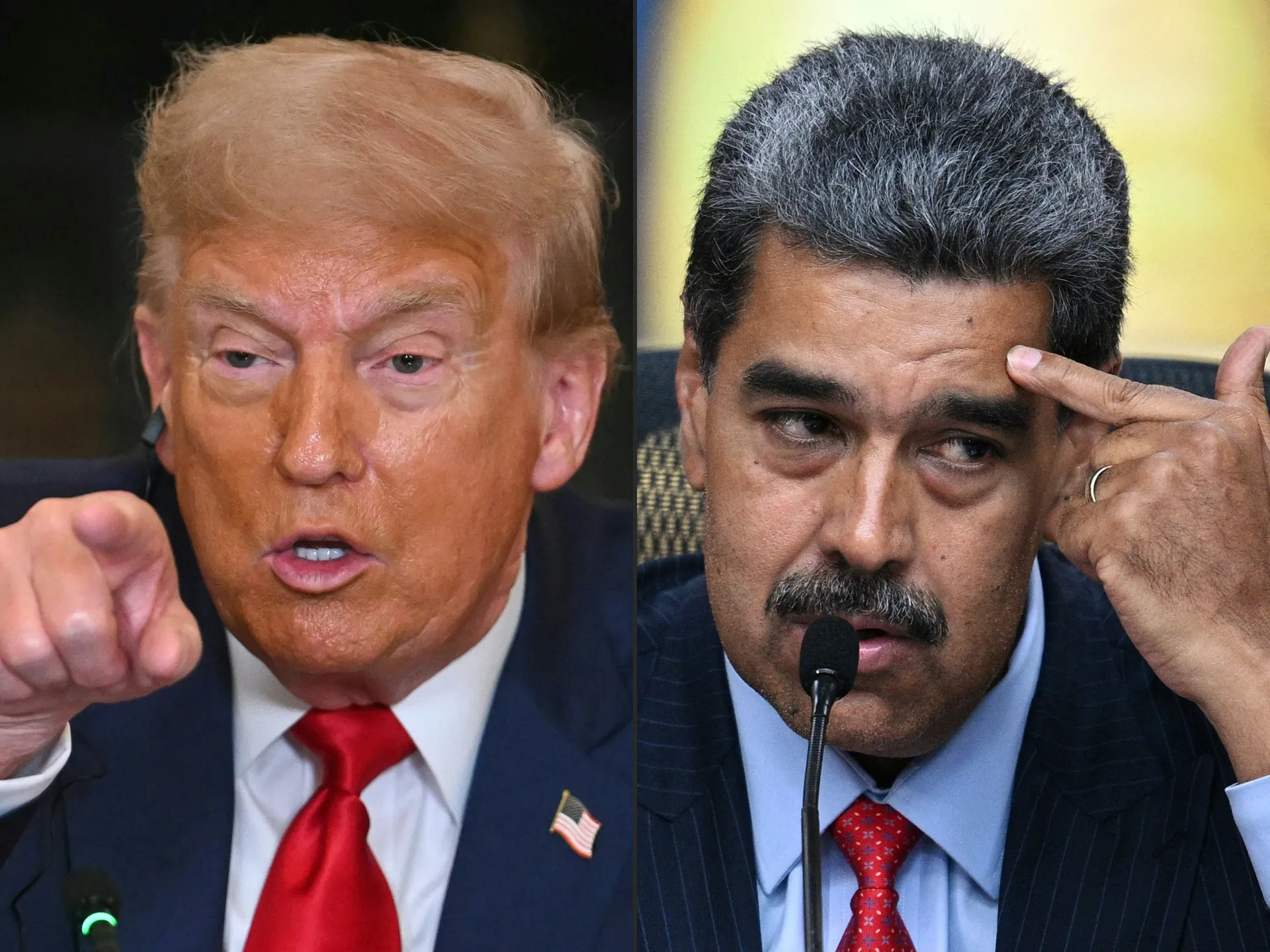
Dec. 16 (UPI) — President Donald Trump on Tuesday ordered “a total and complete blockade” of all sanctioned oil tankers going to or from Venezuela, raising already high tensions between Washington and Caracas by going after the South American nation’s main revenue source.
Trump has sought to oust Venezuela’s authoritarian president Nicolas Maduro since his first term and has ratcheted up the pressure on the socialist leader since returning to the White House in January.
He has accused Maduro of sending an invasion of criminals to the United States and of being the leader of a narcotics trafficking organization, allegations that U.S. intelligence agencies have not publicly supported.
An armada of U.S. naval vessels has been deployed to waters near Venezuela, and the U.S. military has been attacking civilian ships in the region the Trump administration alleges are trafficking drugs to the United States, drawing domestic and international condemnation.
“Today, I am ordering A TOTAL AND COMPLETE BLOCKADE OF ALL SANCTIONED OIL TANKERS going into, and out of, Venezuela,” Trump announced in a statement on his Truth Social media platform.
“America will not allow Criminals, Terrorists or other Countries, to rob, threaten or harm our Nation, and, likewise, will not allow a Hostile Regime to take our Oil, Land or any other Assets, all of which must be returned to the United States IMMEDIATELY.”
It was not immediately clear what U.S. land or assets Trump was referring to, though he has repeatedly stated that the United States has been wrongly denied access to Venezuela’s oil reserves.
“Venezuela is completely surrounded by the largest Armada ever assembled in the History of South America. It will only get bigger, and the shock to them will be like nothing they have ever seen before — Until such time as they return to the United States of America all of the Oil, Land and other Assets that they previously stole from us,” Trump said.
Trump accused Maduro in the statement of using oil revenues to finance drug terrorism, human trafficking and murder.
Venezuela rejected Trump’s demands and called on the residents of the United States and the rest of the world to do likewise, saying the South American nation will “never again be a colony of any empire or foreign power.”
“The President of the United States intends to impose, in an absolutely irrational manner, a so-called blockade on Venezuela with the aim of stealing the wealth that belongs to our Homeland,” Venezuela’s foreign ministry said in a statement.
Judge sentences former Harvard Medical School morgue manager for stealing organs and various body parts for sale to others.
Published On 17 Dec 202517 Dec 2025
Share
The former manager of the Harvard Medical School morgue has been sentenced to eight years in prison for the theft and sale of body parts, taken from cadavers that had been donated for medical research.
Cedric Lodge, who managed the morgue for more than two decades before being arrested in 2023, was given an eight-year sentence by a US District Judge in Pennsylvania on Tuesday.
Recommended Stories
list of 3 itemsend of list
“He caused deep emotional harm to an untold number of family members left to wonder about the mistreatment of their loved ones’ bodies,” prosecutors wrote in a court filing.
The 58-year-old Lodge pleaded guilty to transporting stolen goods across state lines in May, with prosecutors stating that he had taken heads, faces, brains, skin, and hands from cadavers in the morgue to his home in Goffstown, New Hampshire, before selling them to several individuals.
Lodge’s wife, Denise, was also sentenced to one year in prison for her role in facilitating the sale of the stolen organs and body parts to several individuals, including two people in Pennsylvania, who then mostly resold them.
Prosecutors asked District Judge Matthew Brann in Williamsport, Pennsylvania, to give Lodge 10 years in prison, the maximum sentence for the crime, which they said “shocks the conscience” and was carried out “for the amusement of the disturbing ‘oddities’ community”.
Patrick Casey, a lawyer for Lodge, asked the judge for leniency, while conceding “the harm his actions have inflicted on both the deceased persons whose bodies he callously degraded and their grieving families”.
Harvard Medical School has yet to comment on Lodge’s sentencing, but has previously called his actions “abhorrent and inconsistent with the standards and values that Harvard, our anatomical donors, and their loved ones expect and deserve”.
A US court ruled in October that Harvard Medical School could be sued by family members who had donated the bodies of loved ones for medical research. In that case, Chief Justice Scott L Kafker described the affair as a “macabre scheme spanning several years”.
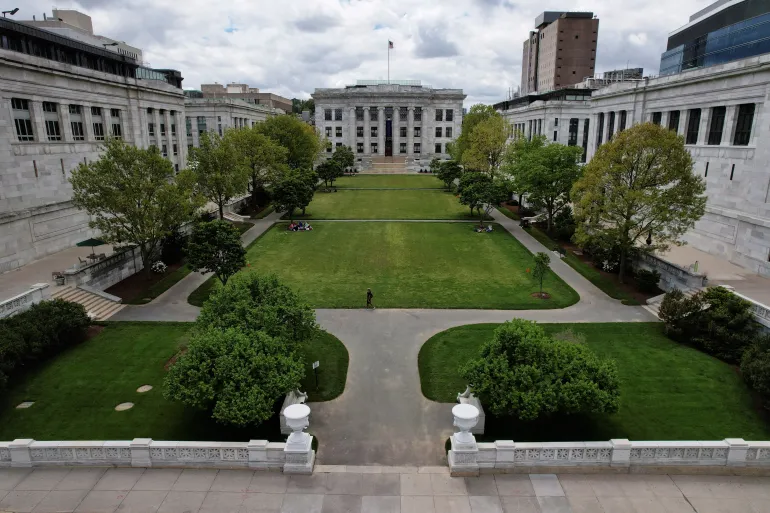
Harvard Medical School in the Longwood Medical Area in Boston, Massachusetts, US, in 2022 [Brian Snyder/Reuters]
Dec. 16 (UPI) — A suspect identified as Micah James Legnon has been arrested by agents from the FBI’s New Iberia office for allegedly planning an attack on federal agents.
Legnon, 29, was a member of the Turtle Island Liberation Front and had communicated with four members who were charged with allegedly planning a series of New Year’s Eve terrorist attacks in the Greater Los Angeles area on Monday, WDSU reported.
He is a resident of New Iberia and was arrested on Friday while driving to New Orleans after FBI agents saw him loading a military-style rifle and body armor into his vehicle and telling others in a Signal chat group that he was traveling to New Orleans.
New Iberia is located about 120 miles west of New Orleans, and Legnon allegedly shared a video that showed multiple firearms, gas canisters and body armor before leaving on Friday.
In that post, Legnon said he was “On my way to NOLA now, be there in about two hours,” but the FBI arrested him while driving east on U.S. Highway 90, according to WWL-TV.
In a Dec. 4 post, Legnon shared a Facebook post showing Customs and Border Protection agents arresting someone and said he wanted to “recreate Waco, Texas,” on the federal officers while referencing the 1993 federal siege on the Branch Davidians compound there.
He is a former Marine who was trained in combat and a self-professed satanist who used the alias “Black Witch” in group chats with four suspects accused of targeting locations throughout California.
Federal prosecutors filed a federal complaint against Legnon and asked the magistrate judge to seal it and related records due to an ongoing investigation.
They asked that it be unsealed on Tuesday, which is a day after the four suspects accused of planning the California terror attacks were charged with related crimes.
The FBI said Legnon had been communicating with the four suspects in California before the arrests were made and charges filed in the respective cases.
The Turtle Island Liberation Front is a far-left, anti-government, anti-capitalist and pro-Palestinian group, according to Attorney General Pam Bondi.
The order comes a week after the US military seized an oil tanker off Venezuela’s coast.
Published On 17 Dec 202517 Dec 2025
Share
United States President Donald Trump has ordered “a total and complete” blockade of all US-sanctioned oil tankers entering and leaving Venezuela.
“Venezuela is completely surrounded by the largest Armada ever assembled in the History of South America,” Trump said in a post on his social media platform Truth Social.
Recommended Stories
list of 4 itemsend of list
“For the theft of our Assets, and many other reasons, including Terrorism, Drug Smuggling, and Human Trafficking, the Venezuelan Regime has been designated a FOREIGN TERRORIST ORGANIZATION,” Trump said.
“Therefore, today, I am ordering A TOTAL AND COMPLETE BLOCKADE OF ALL SANCTIONED OIL TANKERS going into, and out of, Venezuela,” he said.
Trump’s comments come a week after US forces seized a sanctioned oil tanker off the coast of Venezuela and as Washington has ordered a huge build-up of US military forces off the Venezuelan coast in an operation said to target drug smuggling.
The US military has killed at least 90 people since September in attacks on dozens of vessels in the eastern Pacific Ocean and Caribbean Sea near Venezuela, in what international law experts have criticised as extrajudicial killings.
Washington claimed the vessels were involved in drug trafficking but has provided no evidence to support its allegations.
Caracas has long said the deployment of US forces to the region was aimed at allowing “external powers to rob Venezuela’s immeasurable oil and gas wealth“.
Despite holding the world’s largest proven oil reserves, Venezuela has faced severe restrictions on its exports in recent years under US sanctions first imposed during the first Trump presidency.
This is a breaking news story. More to follow shortly.
The National Weather Service on Tuesday issued wind and blizzard warnings for parts of Washington State amid flash flooding that has claimed at least one life. Image by the National Weather Service
Dec. 16 (UPI) — Officials are warning that conditions could worsen parts of Washington state already reeling from deadly flash flooding as a blizzard conditions approach amid evacuations and warnings of further flooding.
At least one person has been reported dead after the body of a 33-year-old male was recovered from a vehicle that was completely submerged in water at 1:30 a.m. PST on Tuesday in Snohomish County, ABC News reported.
“The vehicle left the roadway and entered a lower farmland/ditch area containing approximately 6 feet of water,” officials with Snohomish County Fire District 4 said in a prepared statement.
“Upon arrival, deputies located the vehicle in the water,” they said. “Fire rescue swimmers made contact with the vehicle and removed the driver from the car.”
The motorist had driven past road closure signs warning drivers of localized flooding and was pronounced dead at the scene after first responders attempted lifesaving treatment.
Two levees were breached as strong rainstorms passed through the Pacific Northwest in recent days. Weather conditions are now expected to take a turn for the worse.
The National Weather Service has issued wind and blizzard warnings in the same areas impacted by flash flooding.
Heavy rainfall is predicted to continue into Tuesday night before changing to snow after 1 a.m. on Wednesday.
Outdoor temperatures are expected to fall to 24 degrees, with a west wind of 28 mph creating a wind chill of between 7 and 17 degrees, according to the NWS.
Snow could be heavy at times on Wednesday and Thursday, with between 8 and 12 inches possible by Wednesday night and wind gusts of up to 49 mph on Wednesday. That’s on top of possibly between 4 and 8 inches of snowfall on Thursday and wind gusts of up to 31 mph.
Snow is expected through the next seven days, with lows in the low 20s and highs near 32 degrees.
The wind and blizzard warnings come as major flooding is possible on Wednesday morning along the Skagit River and potentially cresting on Thursday morning in Mount Vernon, the Seattle Times reported.
An estimated 2,100 residents of Pacific in the state’s King County are subject to an evacuation warning telling them to leave now due to a levee failure on the White River.
Highway 2 also could stay closed until further notice, while Highway 167 remained closed between Auburn and Kent, two small cities south of Seattle, on Tuesday morning.
A Canadian lawmaker who was denied entry to the occupied West Bank, alongside fellow politicians and civil society leaders, has dismissed Israel’s claims that the delegation posed a threat to public safety.
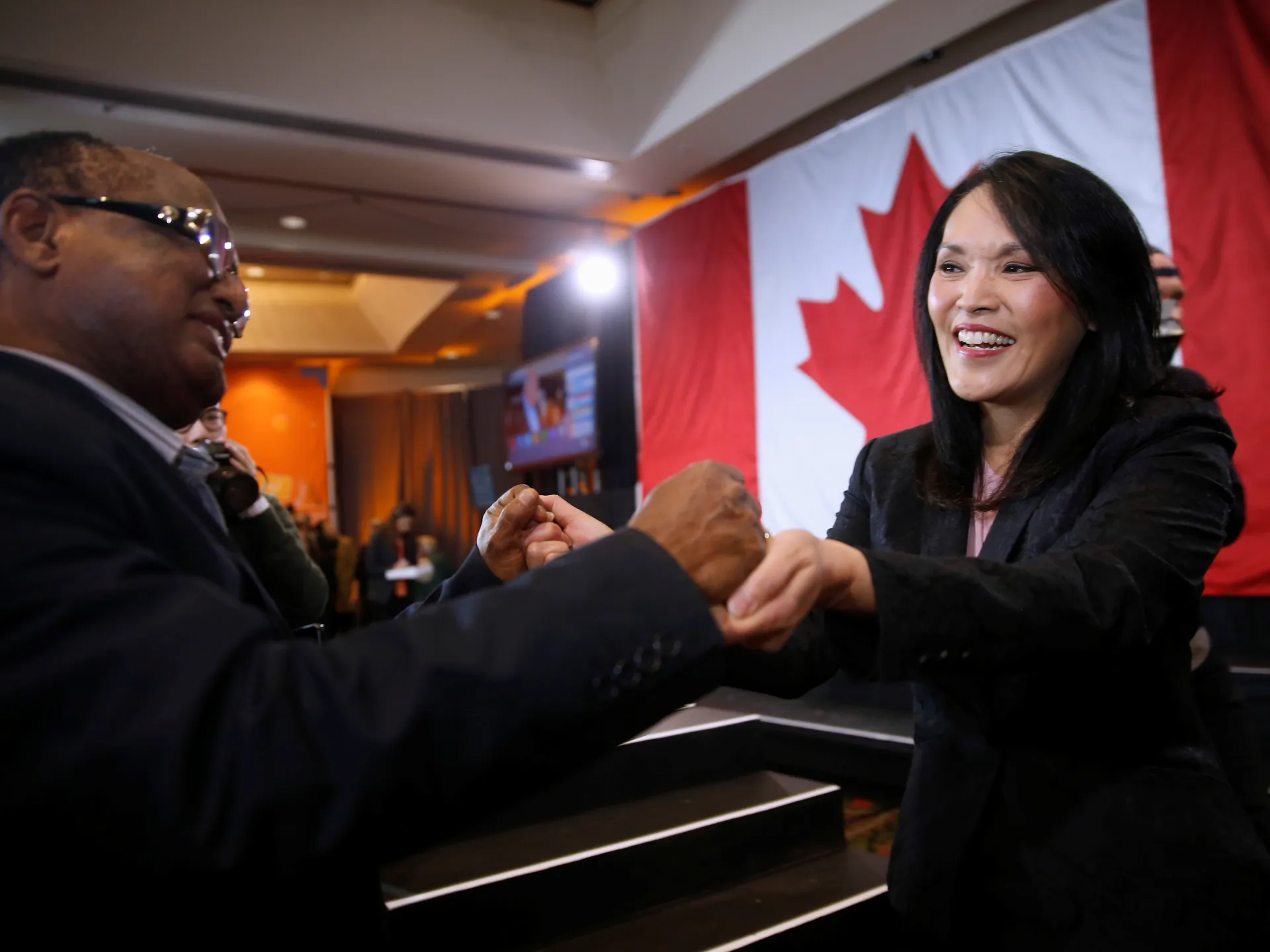
Jenny Kwan, a Canadian MP with the left-leaning New Democratic Party (NDP), questioned whether Canada’s recognition of an independent Palestinian state earlier this year contributed to Israel’s decision to block the group.
Recommended Stories
list of 3 itemsend of list
“How is it that members of parliament are a public safety concern?” she said in an interview with Al Jazeera. “How is it that civil society organisations who are doing humanitarian work… [are] a security concern?”
Kwan and five other MPs were among 30 Canadian delegates denied entry to the Israeli-occupied West Bank on Tuesday after Israel deemed them a risk to public safety.
The delegation, organised by nonprofit group The Canadian-Muslim Vote, was turned back to Jordan at the King Hussein (Allenby) Bridge crossing, which connects Jordan with the West Bank and is controlled by Israel on the Palestinian side, after an hours-long security check.
Kwan said another female MP in the group was “manhandled” by Israeli border agents while attempting to keep an eye on a delegate who was being taken for additional interrogation.
“She was shoved – not once, not twice, but multiple times – by border agents there,” Kwan said. “A member of parliament was handled in that way – If you were just an everyday person, what else could have happened?”
The delegates had been expected to meet with Palestinian community members to discuss daily realities in the West Bank, where residents have faced a surge in Israeli military and settler violence.
They were also planning to meet with Jewish families affected by the conflict, said Kwan, who described the three-day trip as a fact-finding mission.
“I reject the notion that that is a public safety concern,” she said of the delegation’s mission.
Lack of information
Global Affairs Canada, the country’s Foreign Ministry, did not respond to Al Jazeera’s questions about the incident.
Canadian Foreign Affairs Minister Anita Anand said on Tuesday afternoon that the ministry was in contact with the delegation and had “expressed Canada’s objections regarding the mistreatment of these Canadians while attempting to cross”.
The Israeli military did not respond to Al Jazeera’s repeated requests for comment.
In a statement to Canada’s public broadcaster CBC News, the Israeli military agency that oversees affairs in the occupied Palestinian territory, COGAT, said the Canadian delegates were turned back because they arrived “without prior coordination”.
COGAT also said the group’s members were “denied for security reasons”.
But the delegates said they had applied for, and received, Israel Electronic Travel Authorization permits before they reached the crossing. Kwan also said the Canadian government informed Israel ahead of time of the delegation’s plans.
“I’m not quite sure exactly what kind of coordination is required,” Kwan told Al Jazeera.
“We followed every step that we’re supposed to follow, so I’m not quite sure exactly what they mean or what they’re referring to.”
Canada-Israel ties
Canada, a longstanding supporter of Israel, faced the ire of Israeli Prime Minister Benjamin Netanyahu after it joined several European allies in recognising an independent Palestinian state in September.
“Israel will not allow you to shove a terror state down our throats,” Netanyahu said in a speech at the United Nations General Assembly in New York City.
The recognition came after months of mass protests in Canada and other Western countries demanding an end to Israel’s genocidal war against Palestinians in Gaza, which has killed more than 70,000 people since October 2023.
Against that backdrop, members of the Canadian delegation questioned whether their entry refusal was part of an Israeli effort to prevent people from witnessing what is happening on the ground in the Palestinian territory.
“‘What are they trying to hide?’ is the question that comes to mind,” Fawad Kalsi, the CEO of the relief group Penny Appeal Canada and one of the delegates, told Al Jazeera on Tuesday.
Kwan, the Canadian MP, raised a similar question, saying, “If people cannot witness” what is happening on the ground in the West Bank, “then misinformation and disinformation will continue”.
She added that she also saw foreign doctors being turned back to Jordan at the King Hussein (Allenby) Bridge crossing as they tried to bring medicine and baby formula into the West Bank.
“If we as members of parliament could face denial of entry,” she said, “imagine what is going on on the ground with other people, and the difficulties that they face, that we do not know about.”
Dec. 16 (UPI) — Tesla shares closed at a record-high $489.88 on Tuesday, days after CEO Elon Musk announced the company had been testing driverless vehicles in Texas.
Shares rose 3.1% for the day and were up 21% for the year, CNBC reported. This came after Tesla’s worst quarter since 2022 when it dropped 36% in the first quarter of this year.
Techstock² reported that in addition to the roboatxi announcement, Tesla saw a boost on the stock market in response to a fresh round of filings with the Securities Exchange Commission.
The filings showed that WT Wealth Management increased its Tesla stake by 178.7%, Carter Financial Group opened a new Tesla position, Orion Portfolion solutions increased its holdings of Tesla by 14.8%, National Wealth Management Group increased its stake by 26.3% and Momentum Wealth Planning purchased a new stake of 9,802 shares worth about $3.11 million.
Tesla also invested $1.2 billion in a battery cell plant in Berlin.
With Tuesday’s bounce, Tesla’s market cap reached $1.63 trillion, making it the seventh-most valuable company in trading behind Nvidia, Apple, Alphabet, Microsoft, Amazon and Meta, CNBC reported.