TOP NEWS

From breaking news to significant developments in politics, business, technology, entertainment, and more, we deliver the stories that shape our global landscape.

Tannane goal from own half sets Morocco on way to FIFA Arab Cup 2025 title | Football News

Morocco beat Jordan 3-2 as a strike from inside his own half by Oussama Tannane set the tone for a spectacular final.

Oussama Tannane’s wonder goal from inside his own half set Morocco on their way to their second FIFA Arab Cup title with a 3-2 win after extra time in the final against Jordan at the Qatar-hosted event.

A full house at Lusail Stadium in Doha on Thursday was quickly on their feet in the fourth minute when Qatar-based footballer Tannane drilled an effort from well over the halfway line – estimated at 59 metres – to catch out goalkeeper Yazeed Abulaila.

Recommended Stories

list of 4 itemsend of list

The Jordan keeper desperately scrambled back to his line in an attempt to stop the shot and collided with the post, resulting in a lengthy four-minute stoppage before he was cleared to continue and play resumed.

It was only the start of a turbulent final that saw Jordan come back to claim the lead, for the match to be sent to extra time, with Jordanian hearts broken seconds away from their first FIFA Arab Cup title in normal time.

Morocco's Oussama Tannane scores their first goal past Jordan's Yazeed Abu Laila
Oussama Tannane scores Morocco’s first goal past Jordan’s Yazeed Abulaila [Thaier Al-Sudani/Reuters]

Jordan, who were defeated finalists at the 2025 AFC Asian Cup, pulled level on the night three minutes into the second period when Ali Oliwan pulled away from his marker to head home from close range after a well-worked corner.

Jordan then took the lead for the first time after Mahmoud Almardi’s shot hit the raised hand of Achraf El Mahdioui inside the box, allowing Oliwan to convert from the penalty spot for his second in the 68th minute.

The drama was far from over, however, as second-half substitute Abderrazak Hamdallah levelled in the 88th minute – tapping in on the goal line after a scramble from a corner.

It was Oliwan, though, who had the chance of glory with virtually the final kick of normal time when – put clean through on goal – he was unable to beat the keeper to seal the final for Jordan with what would also have been his hat-trick.

Morocco's Marwane Saadane shoots at goal
Morocco’s Marwane Saadane shoots at goal, which resulted in his side’s win [Thaier Al-Sudani/Reuters]

Where many may not have taken their seats for Tannane’s opener, the same may have been the case for the start of extra time as Mohannad Abutaha volleyed a spectacular left-footed effort into the top right corner from the left edge of the box.

Like Tannane’s, it was a strike worthy of winning any final, but VAR ruled out the goal for a controversial handball as the Jordanian controlled the ball before unleashing the effort.

Worse was to follow when Hamdallah tapped in his second time – and the winning goal – after Marwane Saadane’s bicycle kick from a set piece fell kindly into his path from close range.

Morocco previously lifted the Arab Cup in 2012, defeating Libya in the final staged in Saudi Arabia. The Atlas Lions succeed Algeria, who defeated their North African neighbours Tunisia in the final four years ago.

Morocco's Abderazak Hamdallah celebrates
Abderrazak Hamdallah celebrates scoring third goal for Morocco, which sealed the FIFA Arab Cup 2025 final in Lusail, Qatar, December 18, 2025 [Mohammed Salem/Reuters]

Earlier, Morocco dominated the first period and Tannane, who plays his club football for Umm Salal in the Qatar league, had a glorious opportunity to double the lead on the stroke of half time when Abulaila spilled a cross into his path, but the forward failed to make a clean connection with his left-footed follow up and Issam Smeir slid to clear off the line.

The Jordanian stopper had to be on his feet throughout the first period and produced his best save in the 17th minute when Karim El Berkaoui, after exchanging a one-two with Tannane, drove across the face of goal from the edge of the box, but Abulaila was equal to it, low to his right, to push the effort wide.

Morocco, the first African nation to reach a World Cup semifinal when they achieved the feat at Qatar 2022, will now turn their attention to hosting the 2025 Africa Cup of Nations, where the squad will be further boosted by a number of their European-based stars who had to prioritise club over country during the Arab Cup.

The FIFA Arab Cup sold more than a million tickets for the 2025 event, doubling what was sold at the previous competition four years ago.

Morocco players and staff pose for a picture after winning the FIFA Arab Cup
Morocco players and staff pose for a picture after winning the FIFA Arab Cup [Thaier Al-Sudani/Reuters]

Source link

Hannah Dugan trial: Judges testify there was no court policy on ICE arrests

Dec. 18 (UPI) — Closing arguments began Thursday in the trial for Judge Hannah Dugan after the court heard testimony from fellow Milwaukee County judicial officials about a lack of court policy on immigration arrests in public areas.

The testimony came on Day 4 of Dugan’s trial. She pleaded not guilty earlier this year to federal charges including one count of obstructing an official proceeding and concealing a person from arrest, and another of concealing an individual to prevent his discovery and arrest.

The case stems from an incident on April 18, when Immigration and Customs Enforcement officials came to her courtroom and notified her they planned to arrest undocumented immigrant Eduardo Flores-Ruiz. They said she sent the agents to the chief judge’s office before going back to her courtroom, pushing Flores-Ruiz’s case to the front of her docket, then helped him and his lawyer leave from a private jury door.

The ICE agents ultimately found and arrested Flores-Ruiz outside the courthouse.

The defense called two fellow circuit court judges — Katie Kegel and Laura Gramling Perez — to the stand on Thursday to ask them about an email chain also involving Dugan. The email was about the courthouse and county policy on federal Immigration and Customs Enforcement arrests on courthouse grounds.

Kegel said she sent the email after people were “snatched up out of my gallery while waiting for their hearing” and wanted to know about any policies on “detentions of any sort from inside the courtroom.” She said she saw someone who wasn’t in law enforcement clothing — whom she was later told belonged to a federal task force unrelated to immigration — carrying out activity in the gallery of her courtroom.

Grayling Perez said Chief Judge Carl Ashley had scheduled online training via Zoom about ICE activity in the courthouse and that Dugan had had trouble registering for the training session. Gramling Perez said the training indicated that ICE can conduct enforcement actions in public areas of the courthouse with certain “statutory and policy limitations.” She suggested the court develop a policy for such incidents, including a requirement that federal agents consult with the chief judge beforehand.

Gramling Perez said she had concerns about ICE operating in the courthouse, as did Dugan, USA Today reported.

“We are in some uncharted waters with some very serious and even potentially tragic community interests at risk in the balance,” Dugan wrote in an email as testified by Gramling Perez.

Defense attorneys also called former Milwaukee Mayor Tom Barrett to testify to Dugan’s character, describing her as “extremely honest” and someone who “will tell you how she feels. Barrett said he’s known Dugan for more than 50 years and that they went to high school together.

The defense rested its cause after hearing from Barrett and closing arguments were underway.

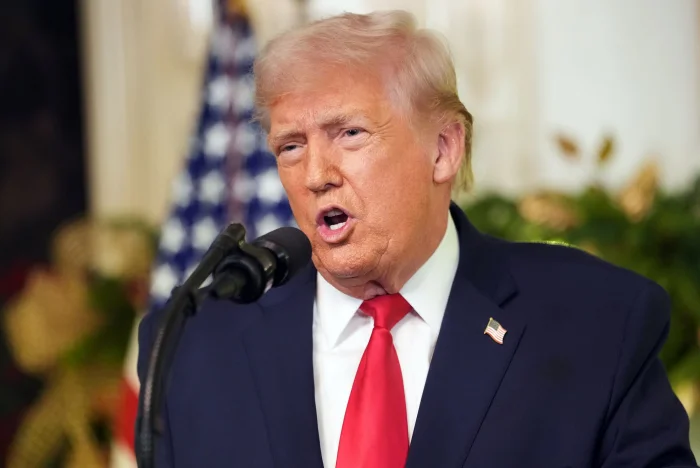
President Donald Trump delivers an address to the nation from the Diplomatic Room of the White House on Wednesday. Trump touted what he described as successes achieved by his administration during his first year back in office, while bashing his predecessor, former President Joe Biden, and the Democrats. Pool Photo by Doug Mills/UPI | License Photo

Source link

BP taps Woodside’s Meg O’Neill as CEO as it pivots back to fossil fuels | Oil and Gas News

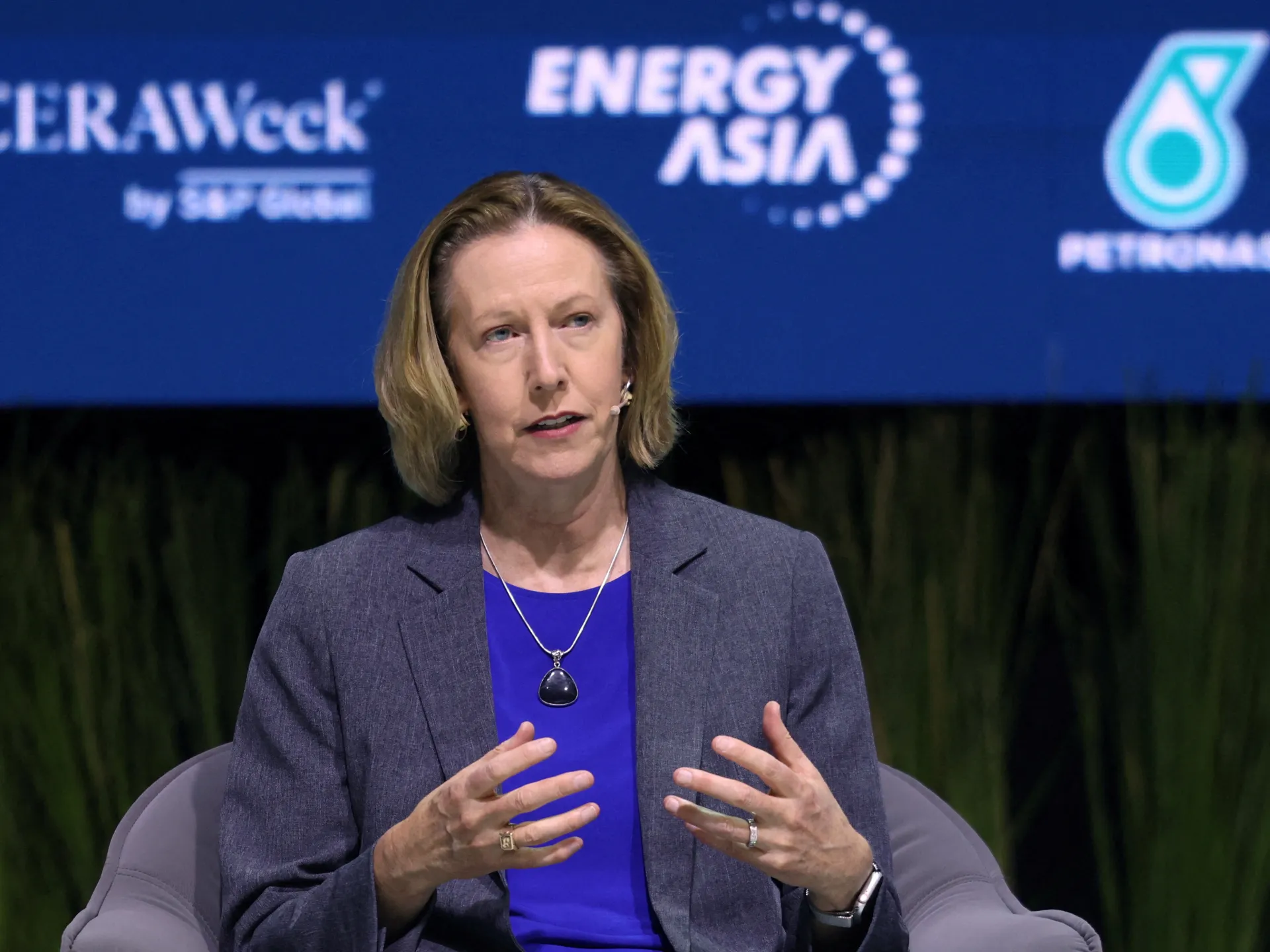
BP has tapped Woodside Energy’s Meg O’Neill as its next CEO, its first external hire for the post in more than a century and the first woman to lead a top-five oil major as the firm pivots back to fossil fuels.

O’Neill, an Exxon veteran, will take over in April following the abrupt departure of Murray Auchincloss, the second CEO change in just over two years as the British oil major strives to improve its profitability and share performance, which for years has lagged competitors like Exxon.

Recommended Stories

list of 4 itemsend of list

The company embarked on a major strategy shift earlier this year, slashing billions in planned renewable energy initiatives and shifting its focus back to traditional oil and gas. BP has pledged to divest $20bn in assets by 2027, including its Castrol lubricants unit, and reduce debt and costs.

“Progress has been made in recent years, but increased rigour and diligence are required to make the necessary transformative changes to maximise value for our shareholders,” new BP Chair Albert Manifold said in a statement.

When Manifold took up his post in October, he emphasised the need for a deeper reshaping of BP’s portfolio to increase profitability and faced pressure from activist investor Elliott Investment Management, one of BP’s largest shareholders, which called for him to urgently address the company’s shortcomings.

Elliott saw the change of CEO as a sign of BP’s willingness to act swiftly to deliver cost cuts and divestments, a person familiar with the situation said.

An external change

O’Neill, a 55-year-old American from Boulder, Colorado, and the first openly gay woman to helm a FTSE 100 company, headed Woodside since 2021, having previously spent 23 years at Exxon.

Under O’Neill’s leadership, Woodside merged with BHP Group’s petroleum arm to create a top 10 global independent oil and gas producer valued at $40bn and doubled Woodside’s oil and gas production.

The acquisition took the company to the US, where it embarked on a major Louisiana liquefied natural gas project, which it is progressing in an LNG market braced for oversupply.

BP spent more than 40 percent of its $16.2bn investment budget in the United States last year and plans to boost its US output to 1 million barrels of oil equivalent per day by the end of the decade.

Markets react

Woodside shares fell as much as 2.9 percent after news of O’Neill’s departure. At BP, shares were up 0.3 percent, compared with a broader index of European energy companies.

Like BP, Woodside shares have underperformed rivals. In absolute terms, though, the stock has risen about 10 percent during O’Neill’s tenure.

BP’s executive vice president, Carol Howle, will serve as interim CEO. Auchincloss, 55, will step down on Thursday and serve in an advisory role until December 2026.

BP said O’Neill’s appointment was part of its long-term succession planning, though it had not publicly announced a search process.

Auchincloss became CEO in 2024, taking over from Bernard Looney, who was fired after lying to the board about personal relationships with colleagues.

After an ill-fated foray into renewables under Looney, BP has promised to increase profitability and cut costs while re-routing spending to focus on oil and gas, launching a review in August of how best to develop and monetise oil and gas production assets.

During BP’s third-quarter earnings call last month, the company did not give an update on the closely watched sale process for its Castrol lubricants unit, the centrepiece of its $20bn asset-sale drive to slash its debt pile.

“We question whether this is set to change BP’s thinking once again on key strategic initiatives – should they defer the sale of Castrol? We think yes. Should they cut the buyback to zero and repair the balance sheet further? We think yes,” said RBC analyst Biraj Borkhataria.

Woodside said in a separate statement that O’Neill was leaving immediately, and it had appointed executive Liz Westcott as acting CEO, while intending to announce a permanent appointment in the first quarter of 2026.

Source link

Saturday’s Powerball jackpot spikes to $1.5B

Dec. 18 (UPI) — The Powerball prize has risen again with $1.5 billion now up for grabs this weekend with an estimated to be $686.5 million in cash.

Saturday’s prize is the fifth-biggest Powerball and seventh-largest U.S. jackpot.

“This jackpot is set to deliver the ultimate windfall,” according to Matt Strawn, Powerball’s product group chair and the Iowa Lottery‘s CEO.

No ticket matched all six winning numbers — 25, 33, 53, 62, 66 and Powerball 17 — so the jackpot increased as a result.

Meanwhile, lottery officials urged players to check tickets as many still won cash prizes.

Six players across the United States won $1 million each by matching all five white balls with winning tickets sold in Connecticut, New York, Pennsylvania and Tennessee.

Two more tickets sold in Arizona and Massachusetts doubled their prize to $2 million via Power Play. The drawing also yielded 72 winners of $50,000 and 14 winners of $200,000.

However, California prizes vary based on sales and number of winners.

A Florida ticket hit all five numbers in the Double Play draw that won $500,000. Double Play, a $1 Powerball add-on, gives players a second shot at prizes of up to $10 million in a separate live-streamed draw on Powerball.com.

Saturday marks the 45th Powerball drawing in the current jackpot streak and the longest in game history.

The last jackpot win was on September 6, when tickets in Missouri and Texas shared $1.787 billion.

This is just the second time Powerball has seen consecutive jackpots over $1 billion, the first being in 2023 when California winners claimed prizes of $1.08 billion in July and $1.765 billion in October.

“The jackpot grows with every $2 ticket sold, and a portion of each ticket supports local public programs and services. We encourage everyone to have fun and play responsibly,” Strawn added.

Source link

Paraguay, U.S. sign pact to strengthen regional security cooperation

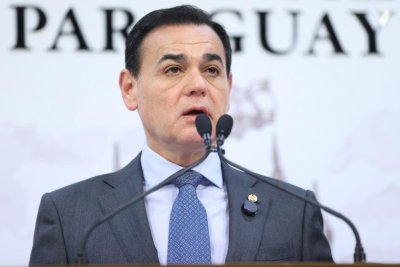
Paraguayan Foreign Minister Ruben Ramirez (shown) and U.S. Secretary of State Marco Rubio signed a security cooperation agreement to strengthen efforts against organized crime, drug trafficking and other transnational threats, Photo by Juan Pablo Pino/EPA

Dec. 18 (UPI) — Paraguay signed a security cooperation agreement with the United States to strengthen efforts against organized crime, drug trafficking and other transnational threats, as Asuncion seeks to reinforce its role as a strategic partner of Washington in central South America.

The agreement was signed this week by Paraguayan Foreign Minister Ruben Ramirez Lezcano and U.S. Secretary of State Marco Rubio. The document sets out general guidelines for joint work and must be sent to Paraguay’s Congress for review and approval.

Paraguay is a landlocked country between Brazil, Argentina and Bolivia. Its location has made it a key transit point for drug trafficking and smuggling routes across South America, which has led the government of President Santiago Pena to strengthen international security cooperation.

The agreement covers actions against transnational crime, training of military personnel, information sharing, humanitarian assistance and coordination in response to emergencies and natural disasters.

At the signing ceremony, Ramirez Lezcano highlighted the Paraguayan government’s commitment to shared goals with the United States.

“President Santiago Pena is deeply committed to continuing to work strongly on the relationship between our countries and on shared objectives such as fighting transnational organized crime, drug trafficking, human trafficking and corruption,” the foreign minister said.

He added that what is at stake “is not only security, but the freedom of people,” and said the agreement represents an important step to protect both values.

Rubio said the agreement also creates “the opportunity to train together, cooperate, exchange information directly and quickly, and respond to any humanitarian situation that may arise in the future, not only in Paraguay, but in the region.”

“It is a security agreement, but what also exists here is the opportunity to cooperate at the economic level, where there are many opportunities to use Paraguay’s potential so that it becomes a wealthier country,” Rubio said.

He added that Paraguayans are expected to have greater economic opportunities through cooperation with U.S. companies and interests “that are willing to invest responsibly and effectively in the economy and also help create jobs, work and sources of income for the citizens of your country.”

The United States and Paraguay have maintained decades of cooperation in areas such as security, counter-narcotics efforts, institutional strengthening and humanitarian assistance, according to official records from both governments.

Paraguay’s Foreign Ministry has said the relationship with the United States is strategic and has deepened in recent years amid a regional context marked by the advance of transnational organized crime.

The agreement signed in Washington adds to other bilateral instruments already in force and seeks to update cooperation mechanisms in response to emerging threats in South America.

Source link

Guests from Kharkiv City: Rebuilding Life in Rural Ukraine | Russia-Ukraine war

In the quiet village of Kozubivka in Ukraine’s Poltava region, Nelia and her husband Oleksandr open their home to people displaced from Kharkiv, where bombing and shelling have forced thousands to flee.

But rebuilding a life in rural Ukraine is not easy. City people must learn to navigate unfamiliar routines on the farm, endure physical labour and bear the emotional weight of displacement. In the process tempers flare despite moments of tenderness.

Through these intimate encounters, Guests from Kharkiv reveals what it means to create community in the middle of a war and the courage it takes to adapt to a new way of life.

A documentary short by Halyna Lavrinets, produced by Eleron Pictures.

Source link

Ex-President Yoon apologizes to commanders during trial over martial law bid

Former President Yoon Suk Yeol appears at a military court in central Seoul on Thursday. (Photo by Yonhap)

Ousted former President Yoon Suk Yeol on Thursday apologized to key military commanders who are standing trial for their involvement in his failed martial law bid, defending their action as the result of compliance with his orders.

Yoon made the remarks at a martial law trial against the commanders at the military court in central Seoul, which he attended as a witness. Defendants included Kwak Jong-keun, former chief of the Army Special Warfare Command; Yeo In-hyung, former head of the Defense Counterintelligence Command; and Lee Jin-woo, former head of the Capital Defense Command.

“It is pitiful to see senior military and police officials whom I know appear at the court,” Yoon said.

“I feel very sorry as they are people who did what they have to do upon my decision,” he said, adding he prayed late into the night after returning to the detention center following trials.

During Thursday’s trial, Yoon reiterated that he had no intention of maintaining martial law for an extended period and that the declaration was aimed only at exposing the “blatant” behavior of the then main opposition party.

“The martial law was imposed to raise an alarm bell to the public on the country’s perilous situation,” the former president said. “I was thinking that it would last half a day, or a day at the most.”

Yoon said he did not instruct any official, other than former Defense Minister Kim Yong-hyun, to review or prepare for the imposition of martial law.

The then opposition party’s drive to impeach the state auditor chief on the night before the martial law imposition became the “decisive trigger” for him to instruct for preparations for martial law, he claimed.

Speaking on a recent reshuffle of officials dispatched to the Defense Counterintelligence Command, Yoon said institutions pivotal to national security should not be neutralized due to their involvement in the martial law bid.

Yoon’s appearance at the military court, located within the defense ministry compound that also houses the presidential office, marked his first visit to his former office compound in about a year. It also came on his 65th birthday.

Copyright (c) Yonhap News Agency prohibits its content from being redistributed or reprinted without consent, and forbids the content from being learned and used by artificial intelligence systems.

Source link

What’s next for the global economy in 2026? | Business and Economy

2025 was the year of tariffs and a global shift in economic power.

Two words that largely define the economy right now: Global reordering.

President Donald Trump’s Tariffs have landed as a shock to global trade. This is 2025.

Major economies are rewriting their playbooks, and alliances are being redrawn.

From Africa’s minerals boom to the global AI race, countries are scrambling for influence – even as debt piles up.

They are spending more, borrowing more and making tough choices from defence to climate policy and labour shortages.

And through it all, people are bearing high costs.

Source link

S. Korea calls for China’s role in fostering conditions to resume talks with N. Korea

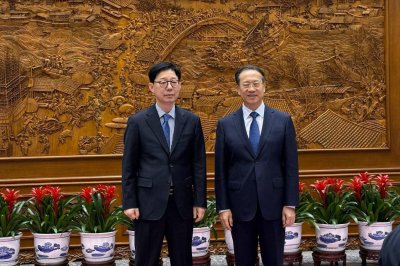
First Vice Foreign Minister Park Yoon-joo (L) poses with Chinese Executive Vice Foreign Minister Ma Zhaoxu during their strategic dialogue in Beijing on Thursday. South Korea called for China to play a role in resuming dialogue with North Korea. Photo courtesy of South Korea Foreign Ministry

South Korea on Thursday called on China to play a role in fostering conditions to resume dialogue with North Korea, with China reaffirming its commitment to ensuring stability on the Korean Peninsula, Seoul’s foreign ministry said.

First Vice Foreign Minister Park Yoon-joo made the call when he met with Ma Zhaoxu, China’s executive vice foreign minister, during the bilateral strategic dialogue in Beijing, the ministry said in a release.

The talks came as South Korea seeks to stably manage its ties with China, its largest trade partner and key economic benefactor of North Korea, amid the strategic rivalry between China and the United States, and Seoul’s drive to mend ties with Pyongyang.

“Vice Minister Park explained the government’s policy direction for peace and stability on the Korean Peninsula, and asked for China’s role in fostering conditions to resume dialogue with North Korea,” the ministry said in a release.

Ma reaffirmed that China will “continue its constructive role in ensuring peace and stability on the Korean Peninsula,” according to the ministry.

They also agreed to work together to enhance “political and friendly” mutual trust, continuing the positive momentum in bilateral relations to further develop their ties.

It marked the first such talks since the launch of the Lee Jae Myung government in June.

The two sides exchanged opinions on issues of mutual concern, including China’s steel structures built in the overlapping sea zone in the Yellow Sea. The steel towers have raised speculation that China has installed them to lay territorial claims to the area, as was done in the South China Sea.

Noting that bilateral relations have recovered with the recent summit talks between President Lee Jae Myung and Chinese President Xi Jinping in Gyeongju, they agreed to implement follow-up steps in a substantive manner, through robust exchanges both at the government and private sector levels.

They also discussed ways to revitalize cultural exchanges between the two countries in a way that will “narrow the emotional distance between their peoples,” the ministry said.

Although China has never officially confirmed it, it has restricted the inflow of Korean cultural content and exchanges between relevant industries, including K-pop concerts and Korean films.

Copyright (c) Yonhap News Agency prohibits its content from being redistributed or reprinted without consent, and forbids the content from being learned and used by artificial intelligence systems.

Source link

U.S. approves massive $11.1B arms deal with Taiwan

Dec. 18 (UPI) — The United States has approved a massive $11.1 billion arms deal with Taiwan, the self-government Asian island announced Thursday.

The U.S. Congress was informed of the sale on Wednesday, the president’s office said in a statement.

The package includes eight items, such as HIMARS rocket systems, TOW missiles, Javelin anti-tank missiles, anti-armor loitering munition systems, spare attack helicopter parts and the Taiwan Tactical Network military communication platform and Tactical Awareness Kit, among other lethal equipment.

Taiwan’s foreign ministry said in a statement that it “welcomed” the announcement and expressed its “sincere appreciation for the United States’ long-standing support for regional security and Taiwan’s self-defense.

The arms sale is the second to Taiwan of President Donald Trump’s second administration and comes as China increases its military pressure on the self-governing island.

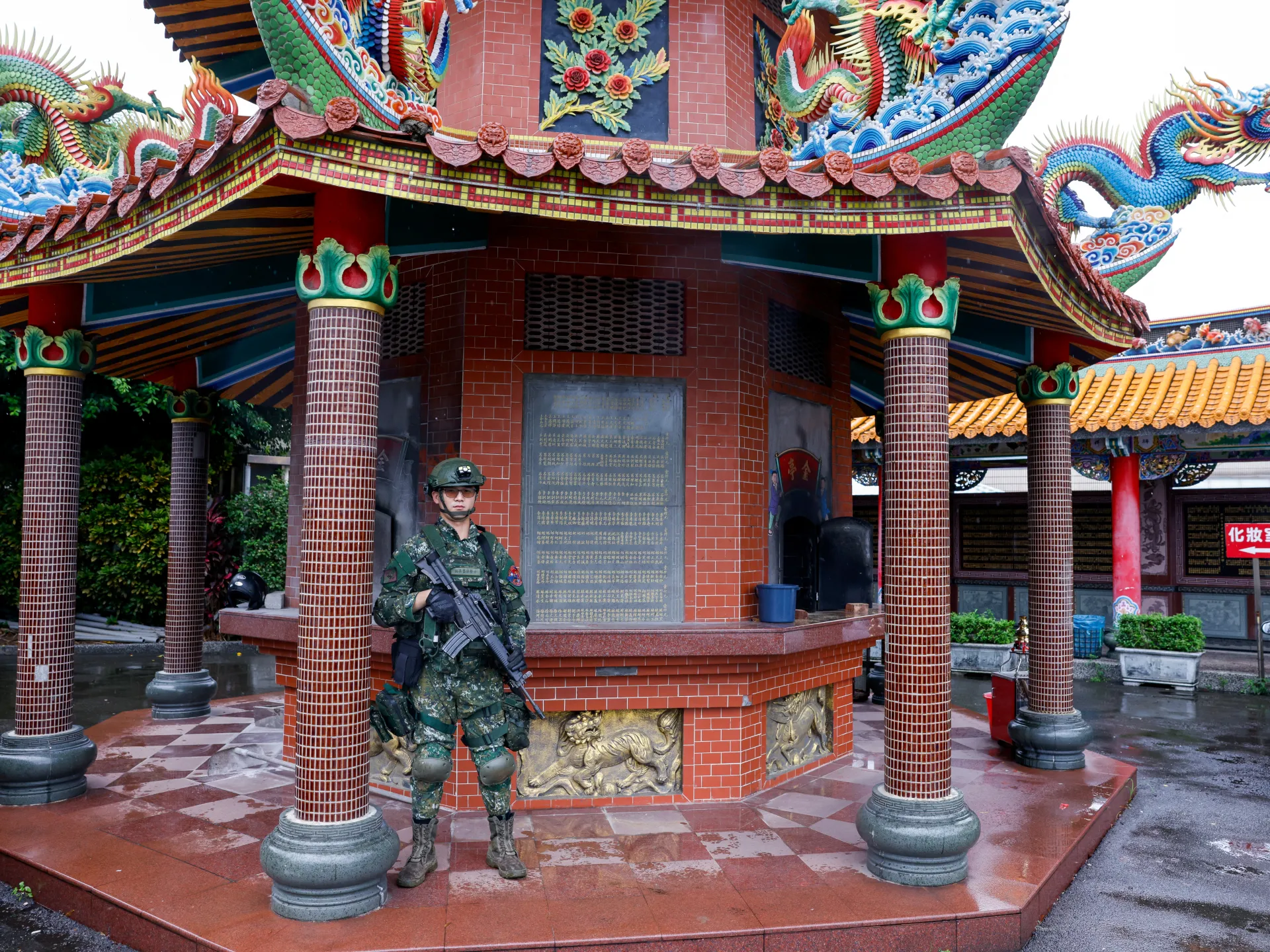
Hours prior to the deal being announced, Taiwan’s Ministry of National Defense said 40 sorties of Chinese fighter jets and eight navy vessels were detected operating around the island. Of the fighter jets, 26 had crossed the median line and entered Taiwan’s northern, central, southwestern and eastern Air Defense Identification Zone.

A day earlier, 23 sorties of fighter jets were detected and nine fighter jets and seven navy vessels were spotted a day before that.

China views Taiwan as a breakaway province and has vowed to take it back by force if necessary. Taiwan is a self-governing island that Beijing has never ruled.

The office of Taiwanese President Lai Ching-te said the arms deal highlights the close partnership between the two countries and demonstrates “the importance the U.S. government attaches to Taiwan’s national defense needs.”

Presidential Office spokesperson Karen Kuo added that due to increasing security concerns, Taiwan will raise defense spending to more than 3% of GDP next year and aims for it to be 5% by 2030.

“Taiwan will continue to reform national defense, strengthen whole-of-society defense resilience, demonstrate our determination for self-defense and maintain peace through strength,” Kuo said.

The U.S.-Taiwan Business Council said it was a record single U.S. security package for Taiwan and was in response to the threat posed by China and a potential Beijing ground invasion.

“We continue to see the prioritization of platforms and munitions that address a D-Day-style attack on the island,” USTBC President Rupert Hammond-Chamber said in a statement.

Source link

Cambodia says Thailand bombed casino hub on border, with no truce in sight | Conflict News

Despite Trump claim of ceasefire, no end on horizon to latest round of conflict recently reignited by border skirmish.

Cambodia’s defence ministry has accused Thailand’s military of bombing the casino hub of Poipet, a major land crossing between the two nations, which are engaged in renewed clashes along their border.

The ministry said in a statement on Thursday that Thai forces had “dropped 2 bombs” in the municipality of Poipet, located in the northwestern province of Banteay Meanchey, at about 11am (04:00 GMT) that morning.

Recommended Stories

list of 3 itemsend of list

At the time of reporting, Thailand had not yet confirmed the strike on the bustling casino hub, which is popular with Thai gamblers.

The interior ministry said this week that at least four casinos in Cambodia have been damaged by Thai strikes.

Renewed fighting between the Southeast Asian neighbours this month has killed at least 21 people in Thailand and 17 in Cambodia, while displacing about 800,000, officials said.

Thailand said on Tuesday that between 5,000 and 6,000 Thai nationals remained stranded in Poipet after Cambodia closed its land border crossings with its neighbour.

Cambodia’s interior ministry said the border closures were a “necessary measure” to reduce risks to civilians amid the ongoing combat, adding that air travel remained an option for those seeking to leave.

Truce denial

Five days of fighting between Cambodia and Thailand in July killed dozens of people before a truce was brokered by the United States, China and Malaysia, and then broken within months.

United States President Donald Trump, who has repeatedly intervened in the longstanding conflict this year, claimed last week that the two countries had agreed to a new ceasefire.

But Bangkok denied any truce had been agreed upon, and fighting with artillery, tanks, drones and jets has continued daily since a border skirmish earlier this month caused the latest round of conflict.

The conflict stems from a territorial dispute over the colonial-era demarcation of their 800km (500-mile) border and a smattering of ancient temple ruins situated on the frontier.

Each side has blamed the other for instigating the renewed fighting, claiming self-defence, while trading accusations of attacks on civilians.

China said it was sending its special envoy for Asian affairs to Cambodia and Thailand on Thursday for a “shuttle-diplomacy trip” to help bridge the gaps and “rebuild peace”.

Source link

UN Command says Armistice grants it authority over access to DMZ

Dec. 17 (Asia Today) — The United Nations Command issued an unusual public statement Tuesday opposing South Korea’s ruling party push to enact legislation governing civilian access to the Demilitarized Zone, saying the Korean War Armistice Agreement gives the command authority to control entry to the area.

In a statement titled “Statement on the Authority and Procedures of the UN Command Military Armistice Commission,” the UNC said Article 1, Paragraph 10 of the Armistice Agreement assigns responsibility for civilian administration and relief activities south of the Military Demarcation Line within the DMZ to the commander of the United Nations Command.

The UNC said the Military Armistice Commission manages the DMZ and supervises the movement and activities of both military personnel and civilians to ensure compliance with the armistice and preserve stability. It said Article 1, Paragraph 9 grants the United Nations Command authority to control access to the DMZ.

“Except for those engaged in civil administration and relief work, or those granted special permission by the Military Armistice Commission, no one, whether military or civilian, may enter the Demilitarized Zone,” the statement said.

The command added that access requests are reviewed case by case under established procedures to ensure movements within the DMZ are not perceived as provocative or pose safety risks to commission personnel and visitors.

The UNC said the Military Armistice Commission is composed of personnel from UNC member nations, the South Korean military and civilians, and is responsible for managing the DMZ and investigating suspected armistice violations. It said all investigations are conducted with transparency and neutrality.

“We will continue our efforts to uphold the Armistice Agreement and stability on the Korean Peninsula, while maintaining the hopeful expectation that a permanent peace treaty can eventually be concluded,” the statement said.

The comments came as Democratic Party lawmakers Lee Jae-gang and Han Jeong-ae have sponsored bills known as the Act on the Peaceful Use of the Demilitarized Zone, which would allow the South Korean government to exercise access rights to the DMZ solely for non-military and peaceful purposes.

South Korea’s Ministry of Unification has expressed support for the legislation, saying it agrees with its intent. Unification Minister Chung Dong-young has also defended the bill, describing it as an issue of territorial sovereignty.

The UN Command previously said after meeting Cho Won-cheol, head of the Ministry of Government Legislation, that the Armistice Agreement remains a binding framework governing both civilian and military access to the Armistice Control Zone, including the DMZ.

– Reported by Asia Today; translated by UPI. © Asia Today. Unauthorized reproduction or redistribution prohibited.

Source link

US approves $11bn in arms sales to Taiwan in deal likely to anger China | Weapons News

Huge US arms package for Taiwan includes HIMARS rocket systems, howitzer artillery, antitank missiles, and drones.

The United States has approved $11.1bn in arms sales to Taiwan, one of Washington’s largest-ever weapons packages for the self-ruled island, which Beijing has promised to unify with mainland China.

The US State Department announced the deal late on Wednesday during a nationally televised address by President Donald Trump.

Recommended Stories

list of 4 itemsend of list

Weapons in the proposed sale include 82 High Mobility Artillery Rocket Systems, or HIMARS, and 420 Army Tactical Missile Systems, or ATACMS – worth more than $4bn – defence systems that are similar to what the US had been providing Ukraine to defend against Russian aerial attacks.

The deal also includes 60 self-propelled howitzer artillery systems and related equipment worth more than $4bn and drones valued at more than $1bn.

Other sales in the package include military software valued at more than $1bn, Javelin and TOW missiles worth more than $700m, helicopter spare parts worth $96m and refurbishment kits for Harpoon missiles worth $91m.

In a series of separate statements announcing details of the weapons deal, the Pentagon said the sales served US national, economic and security interests by supporting Taiwan’s continuing efforts to modernise its armed forces and to maintain a “credible defensive capability”.

Taiwan’s defence ministry and presidential office welcomed the news while China’s foreign ministry did not immediately respond to a request for comment from the Reuters news agency.

Washington’s huge sale of arms to Taiwan will likely infuriate China, which claims Taiwan is part of its territory and has threatened to use force to bring it under its control.


“The United States continues to assist Taiwan in maintaining sufficient self-defence capabilities and in rapidly building strong deterrent power,” Taiwan’s defence ministry said in a statement.

Taiwan presidential office spokesperson Karen Kuo said Taiwan would continue to reform its defence sector and “strengthen whole-of-society defence resilience” to “demonstrate our determination to defend ourselves, and safeguard peace through strength”.

China’s Taiwan Affairs Office said on Wednesday that it opposed efforts by the US Congress to pass bills “related to Taiwan and firmly opposes any form of military contact between the US and Taiwan”.

“We urge the US to abide by the one China principle and the provisions of the three Sino-US joint communiques : Stop ‘arming Taiwan’, stop reviewing relevant bills, and stop interfering in China’s internal affairs,” the office’s spokesperson Zhu Fenglian said in a statement.

Zhu said Taiwan’s political leaders were pursuing “independence”, and were “willing to let external forces turn the island into a ‘war porcupine’,” which could result in the population becoming “cannon fodder” and “slaughtered at will, which is despicable”.

Taiwan’s President William Lai Ching-te last month announced a $40bn supplementary defence budget, to run from 2026 to 2033, saying there was “no room for compromise on national security”.

Source link

Survey finds strong demand-support calls from Korean small businesses

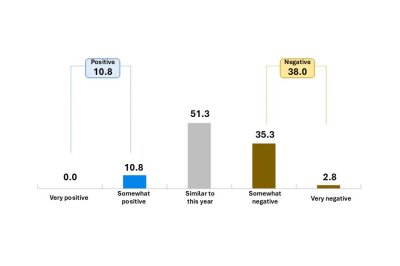
Outlook for next year’s business operations among South Korean small business owners, Dec. 16, 2025. Graphic by Asia Today and translated by UPI.

Dec. 16 (Asia Today) — Nearly half of South Korea’s small business owners say policies to boost domestic demand and consumer spending are the most urgently needed form of support, according to a new survey released Tuesday.

The Korea Federation of SMEs said 49.5% of respondents cited domestic demand and consumption stimulus as their top policy priority, according to its “Survey Results on Small Business Owners’ Management Status and Policy Tasks.”

The survey was conducted from Nov. 4 to 21 among 800 small businesses in daily life-related sectors, including wholesale and retail trade, lodging and food services, and manufacturing.

The results showed a largely pessimistic outlook for next year. About 89.3% of respondents said they expect business conditions to remain similar to this year (51.3%) or worsen (38.0%), while only 10.8% reported a positive outlook.

Asked about the biggest management burdens this year, respondents most frequently cited rising prices, including higher raw material and supply costs (56.3%), followed by declining sales due to weak domestic demand (48.0%), rising labor costs and labor shortages (28.5%), and loan repayment burdens (20.4%). Despite these pressures, 97.4% said they are not considering closing their businesses, which the federation attributed to the high share of livelihood-based startups, accounting for 91.4% of respondents.

The survey also found increased reliance on online platforms. The share of small business owners using online platforms rose 3.5 percentage points from a year earlier to 28.1%. Platform use was highest in the lodging and food service sector (44.3%), compared with wholesale and retail trade (20.3%) and manufacturing (15.5%). Among platform users, platform-based sales accounted for an average of 41.7% of total revenue, up 6.3 percentage points from a year earlier.

About 25.7% of respondents said their loan balances increased compared with the previous year, with the average interest rate on current loans at 4.4%. Among small business owners with loans, 90.4% said interest and principal repayments were burdensome.

Assessing the effectiveness of domestic demand stimulus policies implemented this year, 52.3% of respondents in the lodging and food service sector said they felt policy effects, compared with 18.0% in wholesale and retail trade and 8.5% in manufacturing. Among those who reported effects, 65.4% said the impact was temporary, while 19.7% cited short-term sales increases.

Looking ahead, respondents said future consumption-promotion policies should focus on concentrating spending in local commercial districts (41.8%), expanding the scale and duration of support (31.8%), and strengthening policy promotion (24.5%).

When asked about the most urgent tasks for the National Assembly or government, respondents cited stimulating consumption and reviving local economies (52.1%), addressing rising labor costs and labor shortages (45.0%), easing loan burdens caused by high interest rates (42.8%), and reducing energy costs (26.3%).

Choo Moon-gap, head of the Economic Policy Division at the Korea Federation of SMEs, said persistent inflation, weak domestic demand and a high exchange rate have worsened business conditions for small business owners. While consumption-stimulating measures such as livelihood recovery coupons have had some effect, he said, mid- to long-term growth policies that small business owners can clearly feel are also needed.

– Reported by Asia Today and translated by UPI.

© Asia Today. Unauthorized reproduction or redistribution prohibited.

Source link

‘No evidence’ Australia’s Bondi gunmen trained in the Philippines: Official | Crime News

Philippine official said ‘a mere visit’ to the country does not support claims the men underwent ‘terrorist training’.

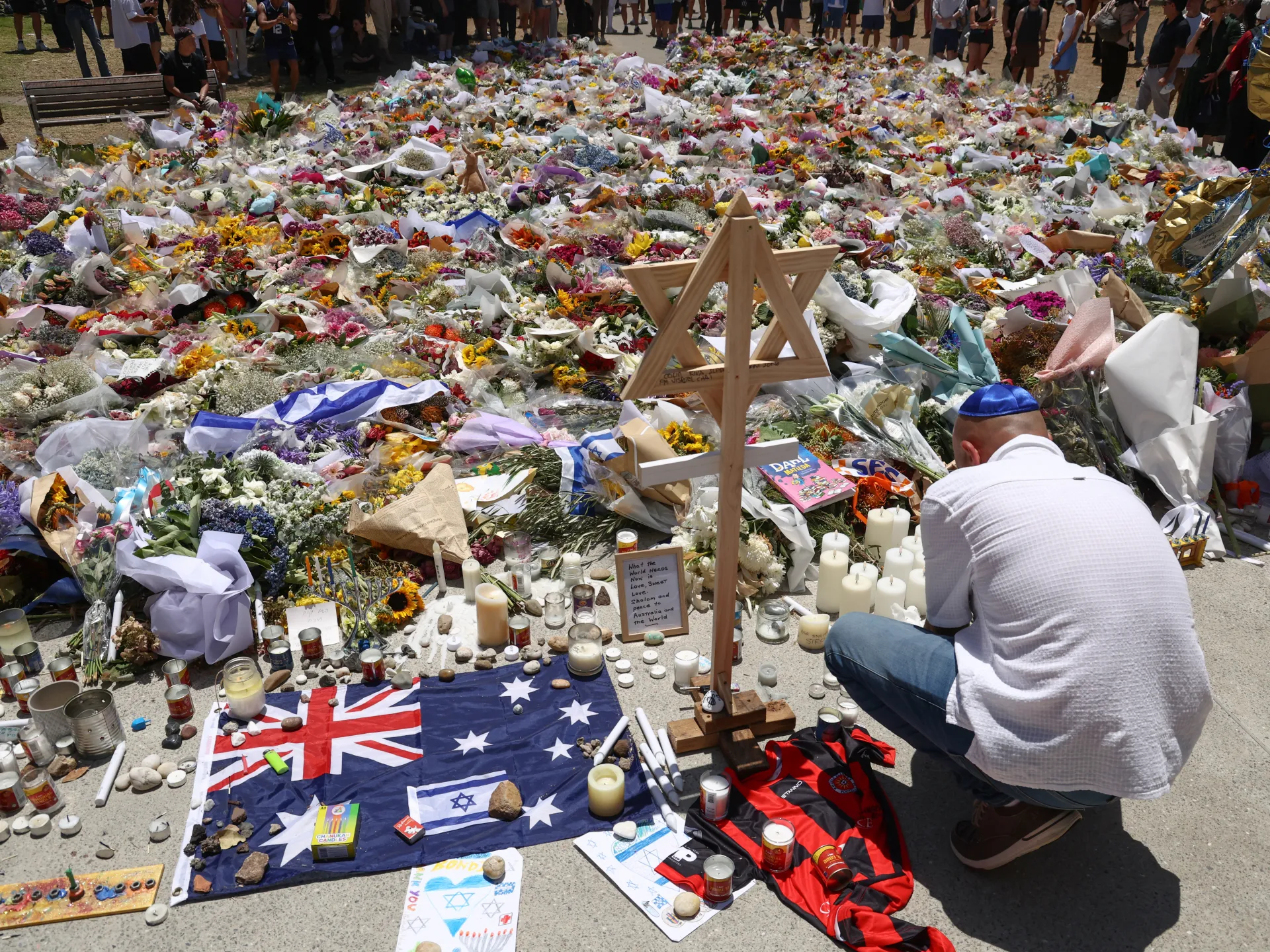
There is no evidence the suspected gunmen in the deadly Bondi Beach attack received military training in the southern Philippines, Manila’s national security adviser has said, as Australia announced plans to introduce measures to tighten the country’s hate speech laws.

In a Wednesday statement, Philippine National Security Adviser Eduardo Ano confirmed the two suspects in Sunday’s attack in Sydney, Australia – which saw 15 people killed after gunmen opened fire at a Jewish event – were in the country from November 1 to 28 this year.

Recommended Stories

list of 3 itemsend of list

Ano said immigration records showed that 50-year-old Sajid Akram and his 24-year-old son Naveed Akram travelled via the Philippine capital Manila to Davao City on the southern island of Mindanao. He added that Sajid had entered the country on an Indian passport, while Naveed entered on an Australian one.

Ano added that there was “no evidence” that the men had received “any form of military training” while in the country.

“A mere visit does not support allegations of terrorist training, and the duration of their stay would not have allowed for any meaningful or structured training,” he said.

The men mostly stayed in their hotel rooms when in Davao, according to a report by local news outlet MindaNews. Staff at the hotel said the pair checked in on November 1 and rarely went out for more than an hour at a time during their almost monthlong stay.

Australian authorities announced on Wednesday that Naveed Akram had been charged with 59 offences for his role in the attack, including murder and terror charges, when he woke from his coma. Sajid Akram, his father, was shot dead by police at the scene.

Ano also suggested that reports describing Mindanao – a Muslim-majority region in the Catholic-majority country, plagued by a decades-long secessionist conflict – as a “hotspot for violent extremism or Islamic State ideology” were “outdated and misleading”.

“Since the 2017 Marawi Siege, Philippine security forces have significantly degraded ISIS-affiliated groups in the country,” he said, referring to a five-month battle in which the ISIL-inspired Maute group seized the southern city and fought government forces.

“The remnants of these groups have been fragmented, deprived of leadership, and operationally degraded,” Ano added.

A 2014 peace agreement, which saw rebels drop their secessionist aspirations in exchange for a more powerful and better-funded Muslim autonomous region called Bangsamoro, has also brought a degree of calm to Mindanao.

But smaller rebel groups continue to carry out sporadic, deadly attacks across the restive southern Philippines’ region.

‘Also an attack on the Australian way of life’: Anthony Albanese

On Thursday, Australian Prime Minister Anthony Albanese pledged to introduce new legislation cracking down on hate speech in response to the Bondi Beach attack, as he acknowledged that Australia had witnessed an increase in anti-Semitism since the Hamas-led October 7, 2023, attacks on Israel, and Israel’s genocidal war on Gaza.

Announcing the new measures at a news conference, Albanese said his government will seek to introduce legislation making it easier to charge people promoting hate speech and violence – including religious preachers – while new powers will be created to cancel or reject visas of people who spread “hate and division”.

The legislation would also develop a regime to target organisations whose leaders engage in hate speech, Albanese added.

Albanese said rising anti-Semitism “culminated on Sunday in one of the worst acts of mass murder that this country has ever seen”.

“It was an attack on our Jewish community – but it was also an attack on the Australian way of life. Australians are shocked and angry. I am angry. It is clear we need to do more to combat this evil scourge, much more,” he said.

New South Wales Premier Chris Minns said on Wednesday he would recall the state parliament next week in order to pass urgent reforms on gun laws.

Source link

Trump touts successes, bashes Biden in address to nation

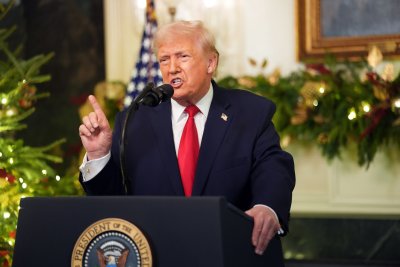
Dec. 17 (UPI) — In a relatively brief, campaign-style speech on Wednesday night, President Donald Trump touted what he described as successes achieved by his administration during his first year back in office, while bashing his predecessor, former President Joe Biden, and the Democrats.

Before Christmas trees and a Christmas laurel decorating the mantel of the Diplomatic Reception Room fireplace, the commander-in-chief said he has returned the United States from a place of destitution to a level of unparalleled success.

“Our country is back stronger than ever before. We’re poised for an economic boom the likes of which the world has never seen,” he said.

“We will celebrate the 250th anniversary of the Declaration of Independence. There could be no more fitting tribute to this epic milestone than to complete the comeback of America that began just one year ago.”

The speech comes amid economic concerns and fears of war in the United States, though Trump only touched on the former during the address. A day earlier, the Bureau of Labor Statistics reported unemployment had risen to its highest level since September 2021 during the pandemic. An ongoing U.S. military buildup in the Caribbean continues, and on Tuesday, Trump ordered a naval blockade of Venezuela oil tankers.

In the 18-minute speech, Trump described the country he inherited as a “mess” marked by inflation, high prices, rampant illegal immigration, unaffordability, transgender women playing women’s sports, “transgender for everybody,” censorship and crime.

“This is what the Biden administration allowed to happen to our country, and it can never be allowed to happen again,” he said.

“Our country was laughed at all over the world, but they are not laughing anymore.”

In the last 11 months, Trump said he has ushered more positive change into Washington “than any administration in American history.”

“There’s never been anything like it. And I think most would agree,” he said.

Trump also trumpeted his border policies, claiming they have resulted in “zero” undocumented migrants allowed to enter the United States. — an apparent reference to Customs and Border Protection data showing that, beginning in May, no migrants apprehended at the border were released into the U.S. interior.

“Do you remember when Joe Biden said he needed Congress to help with legislation to close the border?” he said. “As it turned out, we didn’t need legislation, we just needed a new president.”

This is a developing story.

Source link

Can India catch up with the US, Taiwan and China in the global chip race? | Technology News

In October, a small electronics manufacturer in the western Indian state of Gujarat shipped its first batch of chip modules to a client in California.

Kaynes Semicon, together with Japanese and Malaysian technology partners, assembled the chips in a new factory funded with incentives under Indian Prime Minister Narendra Modi’s $10bn semiconductor push announced in 2021.

Modi has been trying to position India as an additional manufacturing hub for global companies that may be looking to expand their production beyond China, with limited success.

One sign of that is India’s first commercial foundry for mature chips that is currently under construction, also in Gujarat. The $11bn project is supported by technology transfer from a Taiwanese chipmaker and has onboarded the United States chip giant Intel as a potential customer.

With companies the world over hungering for chips, India’s entry into that business could boost its role in global supply chains. But experts caution that India still has a long way to go in attracting more foreign investment and catching up in cutting-edge technology.

Unprecedented momentum

Semiconductor chips are designed, fabricated in foundries, and then assembled and packaged for commercial use. The US leads in chip design, Taiwan in fabrication, and China, increasingly, in packaging.

The upcoming foundry in Gujarat is a collaboration between India’s Tata Group, one of the largest conglomerates in the country, and Taiwan’s Powerchip Semiconductor Manufacturing Corporation (PSMC), which is assisting with the plant’s construction and technology transfer.

On December 8, Tata Electronics also signed an agreement with Intel to explore the manufacturing and packaging of its products in Tata’s upcoming facilities, including the foundry. The partnership will address the growing domestic demand.

Last year, Tata was approved for a 50 percent subsidy from the Modi government for the foundry, along with additional state-level incentives, and could come online as early as December 2026.

Even if delayed, the project marks a pivotal moment for India, which has seen multiple attempts to build a commercial fab stall in the past.

The foundry will focus on fabricating chips ranging from 28 nanometres (nm) to 110nm, typically referred to as mature chips because they are comparatively easier to produce than smaller 7nm or 3nm chips.

Mature chips are used in most consumer and power electronics, while the smaller chips are in high demand for AI data centres and high-performance computing. Globally, the technology for mature chips is more widely available and distributed. Taiwan leads production of these chips, with China fast catching up, though Taiwan’s TSMC dominates production for cutting-edge nodes below 7nm.

“India has long been strong in chip design, but the challenge has been converting that strength into semiconductor manufacturing,” said Stephen Ezell, vice president for global innovation policy at the Washington, DC-based Information Technology and Innovation Foundation (ITIF).

“In the past two to three years, there’s been more progress on that front than in the previous decade – driven by stronger political will at both the central and state levels, and a more coordinated push from the private sector to commit to these investments,” Ezell told Al Jazeera.

Easy entry point

More than half of the Modi government’s $10bn in semiconductor incentives is earmarked for the Tata-PSMC venture, with the remainder supporting nine other projects focused mainly on the assembly, testing and packaging (ATP) stage of the supply chain.

These are India’s first such projects – one by Idaho-based Micron Technology, also in Gujarat, and another by the Tata Group in the northeastern Assam state. Both will use in-house technologies and have drawn investments of $2.7bn and $3.3bn, respectively.

The remaining projects are smaller, with cumulative investments of about $2bn, and are backed by technology partners such as Taiwan’s Foxconn, Japan’s Renesas Electronics, and Thailand’s Stars Microelectronics.

“ATP units offer a lower path of resistance compared to a large foundry, requiring smaller investments – typically between $50m and $1bn. They also carry less risk, and the necessary technology know-how is widely available globally,” Ashok Chandak, president of the India Electronics and Semiconductor Association (IESA), told Al Jazeera.

Still, most of the projects are behind schedule.

Micron’s facility, approved for incentives in June 2023, was initially expected to begin production by late 2024. However, the company noted in its fiscal 2025 report that the Gujarat facility will “address demand in the latter half of this decade”.

Approved in February 2024, the Tata facility was initially slated to be operational by mid-2025, but the timeline has now been pushed to April 2026.

When asked for reasons behind the delays, both Micron and Tata declined to comment.

One exception is a smaller ATP unit by Kaynes Semicon, which in October exported a consignment of sample chip modules to an anchor client in California – a first for India.

Another project by CG Semi, part of India’s Murugappa Group, is in trial runs, with commercial production expected in the coming months.

The semiconductor projects under the Tata Group and the Murugappa Group have drawn public scrutiny after Indian online news outlet Scroll.in reported that both companies made massive political donations after they were picked for the projects.

As per Scroll.in, the Tata Group donated 7.5 billion rupees ($91m) and 1.25 billion rupees ($15m), respectively, to Modi’s Bharatiya Janata Party (BJP) just weeks after securing government subsidies in February 2024 and ahead of national elections. Neither group had made such large donations to the party before. Such donations are not prohibited by law. Both the Tata Group and the Murugappa Group declined to comment to Al Jazeera regarding the reports.

Meeting domestic demand a key priority

The upcoming projects in India – both the foundry and the ATP units – will primarily focus on legacy, or mature, chips sized between 28nm and 110nm. While these chips are not at the cutting-edge of semiconductor technology, they account for the bulk of global demand, with applications across cars, industrial equipment and consumer electronics.

China dominates the ATP segment globally with a 30 percent share and accounted for 42 percent of semiconductor equipment spending in 2024, according to DBS Group Research.

India has long positioned itself as a “China Plus One” destination amid global supply chain diversification, with some progress evident in Apple’s expansion of its manufacturing base in the country. The company assembles all its latest iPhone models in India, in partnership with Foxconn and Tata Electronics, and has emerged as a key supplier to the US market this year following tariff-related uncertainties over Chinese shipments.

Its push in the ATP segment, however, is driven largely by the need to meet the growing domestic demand for chips, anticipated to surge from $50bn today to $100bn by 2030.

“Globally, too, the market will expand from around $650bn to $1 trillion. So, we’re not looking at shifting manufacturing from China to elsewhere. We’re looking at capturing the incremental demand emerging both in India and abroad,” Chandak said.

India’s import of chips – both integrated circuits and microassemblies – has jumped in recent years, rising 36 percent in 2024 to nearly $24bn from the previous year. An integrated circuit (IC) is a chip serving logic, memory or processing functions, whereas a microassembly is a broader package of multiple chips performing combined functions.

The momentum has continued this year, with imports up 20 percent year-on-year, accounting for about 3 percent of India’s total import bill, according to official trade data. China remains the leading supplier with a 30 percent share, followed by Hong Kong (19 percent), South Korea (11 percent), Taiwan (10 percent), and Singapore (10 percent).

“Even if it’s a 28 nm chip, from a trade balance perspective, India would rather produce and package it domestically than import it,” Ezell of ITIF said, adding that domestic capability would enhance the competitiveness of chip-dependent industries.

Better incentives needed

The Modi government’s support for the chip sector, while unprecedented for India, is still dwarfed by the $48bn committed by China and the $53bn provisioned under the US’s CHIPS Act.

To achieve scale in the ATP segment for meaningful import substitution – and to advance towards producing chips smaller than 28nm – India will need continued government support, and there is a second round of incentives already in the works.

“The reality is, if India wants to compete at the leading edge of semiconductors, it will need to attract a foreign partner – American or Asian – since only a handful of companies globally operate at that level. It’s highly unlikely that a domestic firm will be competitive at 7nm or 3nm anytime soon,” Ezell said.

According to him, India needs to continue focusing on improving its overall business environment – from ensuring reliable power and infrastructure to streamlining regulations, customs and tariff policies.

India’s engineers make up about a fifth of the global chip design workforce, but rising competition from China and Malaysia to attract multinational design firms could erode that edge.

In its latest incentive round, the Indian government limited benefits to domestic firms to promote local intellectual property – a move that, according to Alpa Sood, legal director at the India operations of California-based Marvell Technology, risks driving multinational design work elsewhere.

“India already has a thriving chip design ecosystem strengthened by early-stage incentives from the government. What we need, to further accelerate and build stronger R&D muscle – is incentives that mirror competing countries like China [220 percent tax incentives] and Malaysia [200 percent tax incentives]. This will ensure we don’t lose the advantage we’ve built over the years,” Sood told Al Jazeera.

Marvell’s India operations are its largest outside the US.

The Trump effect

India’s upcoming chip facilities, while aimed at meeting domestic demand, will also export to clients in the US, Japan, and Taiwan. Though US President Donald Trump has threatened 100 percent tariffs on semiconductors made outside the US, none have yet been imposed.

A bigger concern for India-US engagement – so far limited to education and training – is Washington’s 50 percent tariff on India over its Russian crude imports. Semiconductors remain exempt, but the broader trade climate has turned uncertain.

“Over half the global semiconductor market is controlled by US-headquartered firms, making engagement with them crucial,” Chandak said. “Any alignment with these firms, either through joint ventures or technology partnerships – is a preferred option.”

The global chip race is accelerating, and India’s policies will need to keep pace to become a serious player amid growing geo-economic fragmentation.

“These new 1.7nm fabs are so advanced they even factor in the moon’s gravitational pull – it’s literally a moonshot,” Ezell said. “Semiconductor manufacturing is the most complex engineering task humanity undertakes – and the policymaking behind it must be just as precise.”

Source link

Republicans defy House leadership to force vote on healthcare subsidies | Politics News

An expanded federal healthcare subsidy that grew out of the pandemic looks all but certain to expire on December 31, as Republican leaders in the United States faced a rebellion from within their own ranks.

On Wednesday, four centrist Republicans in the House of Representatives broke with their party’s leadership to support a Democratic-backed extension for the healthcare subsidies under the Affordable Care Act (ACA), sometimes called “Obamacare”.

Recommended Stories

list of 3 itemsend of list

By a vote of 204 to 203, the House voted to stop the last-minute move by Democrats, aided by four Republicans, to force quick votes on a three-year extension of the Affordable Care Act subsidy.

Democrats loudly protested, accusing Republican leadership of gavelling an end to the vote prematurely while some members were still trying to vote.

“That’s outrageous,” Democratic Representative Jim McGovern of Massachusetts yelled at Republican leadership.

Some of the 24 million Americans who buy their health insurance through the ACA programme could face sharply higher costs beginning on January 1 without action by Congress.

Twenty-six House members had not yet voted – and some were actively trying to do so – when the House Republican leadership gavelled the vote closed on Wednesday. It is rare but not unprecedented for House leadership to cut a contested vote short.

Democratic Representative Rosa DeLauro of Connecticut said the decision prevented some Democrats from voting.

“Listen, it’s playing games when people’s lives are at stake,” DeLauro said. “They jettisoned it.”

It was the latest episode of congressional discord over the subsidies, which are slated to expire at the end of the year.

The vote also offered another key test to the Republican leadership of House Speaker Mike Johnson. Normally, Johnson determines which bills to bring to a House vote, but recently, his power has been circumvented by a series of “discharge petitions”, wherein a majority of representatives sign a petition to force a vote.

In a series of quickfire manoeuvres on Wednesday, Democrats resorted to one such discharge petition to force a vote on the healthcare subsidies in the new year.

They were joined by the four centrist Republicans: Mike Lawler of New York and Brian Fitzpatrick, Robert Bresnahan and Ryan MacKenzie of Pennsylvania.

The Democratic proposal would see the subsidies extended for three years.

But Republicans have largely rallied around their own proposal, a bill called the Lower Health Care Premiums for All Americans Act. It would reduce some insurance premiums, though critics argue it would raise others, and it would also reduce healthcare subsidies overall.

The nonpartisan Congressional Budget Office (CBO) on Tuesday said the legislation would decrease the number of people with health insurance by an average of 100,000 per year through 2035.

Its money-saving provisions would reduce federal deficits by $35.6bn, the CBO said.

Republicans have a narrow 220-seat majority in the 435-seat House of Representatives, and Democrats are hoping to flip the chamber to their control in the 2026 midterm elections.

Three of the four Republicans who sided with the Democrats over the discharge petition are from the swing state of Pennsylvania, where voters could lean right or left.

Affordability has emerged as a central question ahead of the 2026 midterms.

Even if the Republican-controlled House manages to pass a healthcare bill this week, it is unlikely to be taken up by the Senate before Congress begins a looming end-of-year recess that would stop legislative action until January 5.

By then, millions of Americans will be looking at significantly more expensive health insurance premiums that could prompt some to go without coverage.

Wednesday’s House floor battle could embolden Democrats and some Republicans to revisit the issue in January, even though higher premiums will already be in the pipeline.

Referring to the House debate, moderate Republican Senator Lisa Murkowski told reporters: “I think that that will help prompt a response here in the Senate after the first of the new year, and I’m looking forward to that.”

The ACA subsidies were a major point of friction earlier this year as well, during the historic 43-day government shutdown.

Democrats had hoped to extend the subsidies during the debate over government spending, but Republican leaders refused to take up the issue until a continuing budget resolution was passed first.

Source link

Senators sound alarm, seek answers on AI-powered toys

Dec. 17 (UPI) — Fears of risks to children’s mental health and development have two U.S. senators sounding an alarm and seeking information on toys that use artificial intelligence.

Sens. Richard Blumenthal, D-Conn., and Marsha Blackburn, R-Tenn., jointly wrote a letter sent to executives in charge of Mattel, Little Learners Toys, Miko, FoloToy, Curio Interactive and Kayi Robot to obtain information on testing of their respective AI-powered toys, NBC News reported.

“These AI toys — specifically those powered by chatbots embedded in everyday children’s toys like plushies, dolls, and other beloved toys — pose risks to children’s healthy development,” they said in the letter signed on Tuesday.

“While AI has incredible potential to benefit children with learning and accessibility, experts have raised concerns about AI toys and the lack of research that has been conducted to understand the full effect of these products on our kids.”

The senators said many AI toys do not cultivate interactive play and instead expose kids to “inappropriate content, privacy risks and manipulative engagement tactics.”

“These aren’t theoretical worst-case scenarios,” Blackburn and Blumenthal said. “They are documented failures uncovered through real-world testing, and they must be addressed.”

The senators said many of the toys use the same AI systems that are dangerous for older children and teens, but are included in toys that are marketed for children and infants.

Chatbots that simulate human conversations with children are especially problematic, the senators said.

“These chatbots have encouraged children to commit self-harm and suicide, and now your company is pushing them on the youngest children who have the least ability to recognize this danger,” Blumenthal and Blackburn wrote.

By way of an example, they said one teddy bear toy responded to a researcher’s question regarding “kink,” and the toy detailed a variety of sexual situations, including between adults and children.

The same toy also provided instructions on how to light a match when asked, they said.

“It is unconscionable that these products would be marketed to children, and these reports raise serious questions about the lack of child safety research conducted on these toys,” Blackburn and Blumenthal said.

The senators also aired their concerns about the data colleed by AI-powered toys and the potential for using that data to design addictive toys for children.

They likened it to social media addiction among youth and asked the respective toy company executives to explain what, if any, safeguards are used to prevent inappropriate conversations and if independent testing is done by third parties.

Blumenthal and Blackburn also want to know if the toy manufacturers share data collected by AI-powered toys with third parties.

Officials for Curio Interactive said their “top priority” is children’s safety when contacted by The Hill.

“Our guardrails are meticulously designed to protect kids, and our toys can only be used with parent permission,” they responded.

“We encourage parents to monitor conversations, track insights, and choose the controls that work best for their family on the Curio: Interactive Toys app,” they explained.

“We work closely with KidSAFE and maintain strict compliance with COPPA and other child-privacy laws.”

Source link

Chairman Brendan Carr to Congress: ‘The FCC is not independent’

Dec. 17 (UPI) — Chairman Brendan Carr said the Federal Communications Commission isn’t independent from the Trump administration in testimony Wednesday before Congress, during which the word “independent” was removed from the agency’s mission statement online.

Carr’s comment came as members on the Senate Commerce, Science and Transportation Committee questioned him on who the FCC answers to in the wake of a controversy that led to the brief suspension of Jimmy Kimmel‘s late-night talk show on ABC.

The Walt Disney Co. suspended Jimmy Kimmel Live! from Sept. 17 through Sept. 22 in response to comments he made about the assassination of right-wing activist and Turning Point USA founder Charlie Kirk.

The controversy stemmed from Kimmel suggesting the alleged gunman who killed Kirk was a pro-Trump Republican.

The Make America Great Again “gang [is] desperately trying to characterize this kid who murdered Charlie Kirk as anything other than one of them and doing everything they can to score political points from it,” he said in his monologue.

There was some discussion in the early days after the shooting as to the alleged shooter’s political leanings — he came from a largely right-wing family but had made some more left-leaning comments in recent months.

Just before the suspension, Carr described Kimmel’s comments as “truly sick” and threatened action against the network. At the time, Nester Media Group, which owns multiple ABC affiliates, was awaiting approval from the FCC for its planned merger with Tegna, prompting some to view Kimmel’s suspension as political.

“We can do this the easy way or the hard way,” Carr said at the time. “These companies can find ways to take action on Kimmel, or there is going to be additional work for the FCC ahead.”

Carr denied that Kimmel’s suspension had anything to do with government censorship and instead blamed it on ratings.

Democrats on the committee questioned Wednesday if Carr was truly acting independently or if he was beholden to Trump’s politics, The Hill reported.

Sen. Ben Ray Lujan, D-N.M., asked, “Yes or no, is the FCC an independent agency?

“On your website, it just simply says, man, the FCC is independent. This isn’t a trick question.”

“Congress did not include for-cause removal in the Communications Act,” Carr said. “So, formally speaking, the FCC is not independent.”

During testimony, the FCC’s website was updated to change the wording of its mission statement, eliminating the word “independent.” When asked about the removal, an FCC spokesperson cited the change in the administration 11 months ago.

“With the change in administration earlier this year, the FCC’s website and materials required updating. That work continues to ensure that they reflect the positions of the agency’s new leadership,” the spokesperson said in a statement to CNBC.

Sen. Ed Markey, D-Mass., accused Carr of being the chairman of the “Federal Censorship Committee,” saying he made “mafia threats” toward station owners in the wake of Kimmel’s comments about Kirk.

“And these broadcasters, they feel that censorship,” Markey said.

Carr said the broadcasters involved issued statements saying they made their decisions to suspend Kimmel independently of what he said about Kimmel.

“If broadcasters understand, perhaps for the first time in years, that they’re going to be held accountable to the public interest, to the broadcast hoax rule, to the news distortion policy, I think that’s a good thing,” Carr said, according to ABC News.

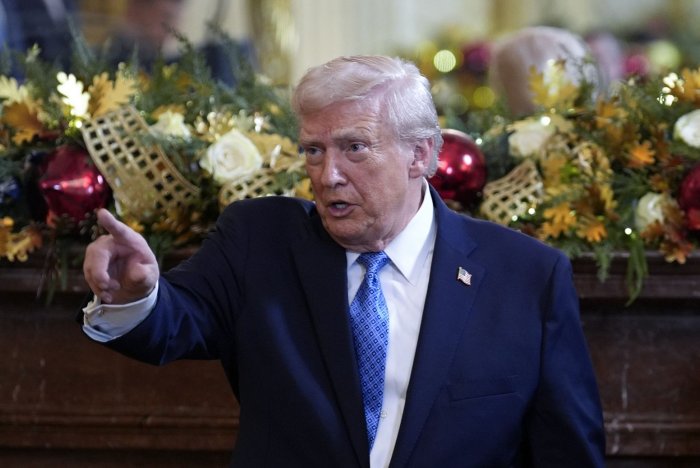
President Donald Trump participates in a Hanukkah reception in the East Room at the White House on Tuesday. Photo by Yuri Gripas/UPI | License Photo

Source link