TODAY

Discover the latest happenings and stay in the know with our up-to-date today news coverage. From breaking stories and current events to trending topics and insightful analysis, we bring you the most relevant and captivating news of the day.

US Congress advances bill to nix Caesar Act sanctions on Syria | Business and Economy News

The US has rolled back a series of restrictive economic sanctions put in place during the rule of Bashar al-Assad.

The United States House of Representatives has voted forward a bill that would end the restrictive Caesar Act sanctions on Syria, originally imposed during the rule of former leader Bashar al-Assad.

The bid to repeal the sanctions was passed on Wednesday as part of a larger defence spending package, known as the National Defense Authorization Act, or NDAA.

Recommended Stories

list of 3 itemsend of list

“With this NDAA, as many know, we are repealing sanctions on Syria that were placed there because of Bashar al-Assad and the torture of his people,” Representative Brian Mast of Florida said. “We’re giving Syria a chance to chart a post-Assad future.”

Mast had previously been opposed to dropping the sanctions. In his statement on the House floor on Wednesday, he warned that, under the bill, the White House could “reimpose sanctions if the president views it necessary”.

The bill now heads to the Senate and is expected to be voted on before the end of the year.

If passed, the NDAA would repeal the 2019 Caesar Act, which sanctioned the Syrian government for war crimes during the country’s 13-year-long civil war.

It would also require the White House to issue frequent reports confirming that Syria’s new government is combating Islamist fighters and upholding the rights of religious and ethnic minorities.

Human rights advocates have welcomed the easing of heavy sanctions that the US and other Western countries imposed on Syria during the war.

They argue that lifting those economic restrictions will aid Syria’s path towards economic recovery after years of devastation.

The Caesar Act was signed into law during President Donald Trump’s first term.

But in December 2024, shortly before Trump returned to office for a second term, rebel forces toppled al-Assad’s government, sending the former leader fleeing to Russia.

Trump has since removed many sanctions on Syria and met with President Ahmed al-Sharaa, who led the push that ousted al-Assad.

But some sanctions can only be removed by Congress, a step that Trump has encouraged lawmakers to take.

This month, Syrians celebrated the one-year anniversary of al-Assad’s overthrow with fireworks, prayer and public displays of pride. But the country continues to face challenges as it recovers from the destruction and damage wrought by the war.

Syrian officials have urged the repeal of remaining sanctions, saying that it is necessary to give the country a fighting chance at economic stability and improvement.

Syrian central bank Governor Abdulkader Husrieh called US sanctions relief a “miracle” in an interview with the news service Reuters last week.

The United Nations Security Council also voted to remove sanctions on al-Sharaa and Interior Minister Anas Khattab, who were previously on a list of individuals linked to ISIL (ISIS) and al-Qaeda.

Source link

Thursday 11 December Proclamation of the Republic in Burkina Faso

The region of modern-day Burkina Faso did not attract colonial attention until the late nineteenth century. By 1898, the kingdoms that now make up the majority of the region corresponding to modern-day Burkina Faso had become a French protectorate.

These territories were added to the Upper Senegal and Burkina Faso colony of French West Africa in 1904. Over the years, regions within the area were split apart into different colonies, before Upper Volta was created on September 4th 1947 becoming an overseas territory of the French Union.

On December 11th 1958, The Republic of Upper Volta became a self-governing autonomous republic within the French Community.

It was nearly two years before Upper Volta gained its full independence from France in August 1960. Upper Volta changed its name to Burkina Faso in August 1984.

Man Utd 0-3 Lyon: Humbled by Lyon – but key lessons learned

Skinner’s reminder of Lyon’s ability cannot be ignored as they boasted a side including 2018 Ballon d’Or winner Ada Hegerberg and USA World Cup winner Lindsey Heaps.

Legendary France centre-back Wendie Renard was an unused substitute and elite players such as Lily Yohannes, Kadidiatou Diani and Marie-Antoinette Katoto all came on in the second half.

That quality and the “speed and physicality” were the differences on the night, according to Skinner, but he also recognised the gap between United and Europe’s elite.

“Theirs is the upper echelon of that,” added Skinner. “They pay for it. They have grown in experience and have built that team over a long period of time.

“The reality is you have to be at your game in every moment because if not, they can take their opportunities. They were the better team – but I would expect them to be.

“It’s a juxtaposition because I don’t want to lose games. But we also have to take a moment and go, we’ve already qualified, let’s see where we go.

“All the things you see, I see. I also know what the fix is, but you can’t do it in one moment, you have to build it. We are progressing.”

Lyon boss Jonatan Giraldez described United’s season as “super positive” and said the answer to progress is about building a mentality to be better than the day before.

United’s challenge will only get greater as they look to continue their journey in the Champions League.

They currently sit ninth in the 18-team league table and occupying an unseeded position for the play-offs.

If they can climb at least one place, they will be seeded and avoid stronger opposition.

Skinner said that gives them more incentive to perform in their final league phase match against sixth-placed Juventus on 17 December – but just getting to this stage has been an achievement.

“When you go into the knockout stages, it is what it is. You have to play the best teams,” he added.

“We go [to Juventus] with confidence to try to win the game and see what happens. Our objective was always to qualify and we have done that. Where we finish is a bonus.”

Source link

Burundi Faces Refugee Surge as M23 Rebels Advance from Eastern Congo

Due to the ongoing advance of M23/AFC rebels in the Democratic Republic of Congo (DRC), scores of displaced people have crossed into Bujumbura, the capital city of Burundi, on Dec. 9.

Burundi is facing a major surge in refugees as families escape ongoing conflict. The unexpected influx, which includes individuals with ties to armed groups, has raised fears of a security and humanitarian crisis in the country. The chaotic situation at the South Kivu border sees both civilians and armed personnel caught up in the turmoil.

Refugees from Luvungi, Katogota, Bwegera, Luberizi, Mutarule, and Sange of the DRC crossed the border en masse at the Kaburantwa bridge under construction, on the 6th avenue in the Buganda zone of Bukinanyana district. According to local Burundian media, the rout of armed groups and regular forces allowed armed fighters to blend into the crowd.

On Dec. 8, joint operations conducted by Burundian soldiers, Congolese Wazalendo militias, and Rwandan rebels resulted in the seizure of weapons and uniforms, and the arrest of men suspected of being infiltrated fighters. These operations took place in Kansega, in the border area of ​​Ndava, Bukinanyana district.

Burundi has also accused the M23 rebels of conducting a bombing attack within its territory, signalling an increase in regional tensions, despite several peace agreements. The militant actions by the rebels continue despite the ratification of the Washington peace accord signed between DR Congo, the M23/AFC rebels, and Rwanda under the Trump administration.

Despite facing strong resistance from the DR Congo national army, the M23/AFC rebels, with support from Rwanda, continue to advance on the ground toward the capture of the city of Uvira in South Kivu, which has become the province’s provisional capital.

The two main parties involved in the conflict in the eastern Congo, the Kinshasa government and the M23/AFC rebels, previously signed a framework agreement. This agreement aimed to initiate new discussions on the underlying causes of the conflict and, eventually, to reach a comprehensive peace accord to restore normalcy in North Kivu and South Kivu. 

Despite multiple meetings with the mediator and several signed documents, including mechanisms for prisoner exchange and cease-fire verification, the measures have not yet been implemented. 

Kinshasa officials accuse Kigali of continuing to support M23/AFC rebels, violating the Washington Accords.

The advance of M23/AFC rebels in the Democratic Republic of Congo has led to a surge of refugees crossing into Burundi, resulting in fears of a security and humanitarian crisis. Burundi has accused M23 rebels of a bombing attack, raising regional tensions despite existing peace agreements.

Burundian, Congolese, and Rwandan forces have been conducting joint operations to address the situation, arresting suspected infiltrators. Despite efforts and multiple agreements, including the Washington Accords, conflicts persist with accusations of Rwanda supporting the rebels in violation of these agreements.

The conflict has centered around discussions and agreements intended to address underlying issues and establish peace in the affected regions of North and South Kivu, but implementation has faltered. The city of Uvira is currently a focal point, as the rebels advance despite resistance from the DR Congo’s national army.

Source link

If Zelensky’s Claim Of Using Homegrown Ballistic Missile For First Time Is True, It’s A Big Deal

Ukraine’s President Volodymyr Zelensky has announced that his country has begun using homegrown Sapsan (which means peregrine falcon) ballistic missiles in combat against Russia. While the claim may be disinformation, such a weapon would give Ukraine a highly valuable new standoff strike option, unlike any other in its inventory. It would also not be subject to any foreign restrictions on its use, as it continues to be the case with many longer-ranged weapons supplied by the United States and other Western partners.

Ukraine’s Sapsan ballistic missile is now in combat, Zelenskyy confirms. Russians often mistake strikes for cruise missiles

480-kg warhead — more than double ATACMS. Speed: 5.2 Mach. Expert verdict: “There’s no way they can intercept it” ⤵️

🔗 https://t.co/QE3tKU0Ioy pic.twitter.com/YhOQGJBcBH

— Euromaidan Press (@EuromaidanPress) December 10, 2025

“Ukraine is already using the Neptune, the long-range Neptune, the Palyanytsya, the Flamingo. And also, the Sapsan, I’ll be honest — we’ve begun using it,” Zelensky told journalists. The Ukrainian president added that he would not disclose how many of these weapons have been deployed, or what they targeted.

“Because for now we don’t want the enemy to know all the precedents and all the details,” Zelensky added.

As well as the Sapsan, Zelensky referred to four domestically produced weapons that we already knew had been used operationally. These are the land-attack version of the Neptune anti-ship cruise missile, the extended-range version of the same weapon, known as the Long Neptune, the Palyanytsya jet-powered missile/drone hybrid, and the very long-range Flamingo cruise missile.

President Zelensky showed the Palianytsia drone missile, which was first revealed yesterday.

All of its specifications are classified. What is known from the information in the video:

▪️ “Palianytsia” has a turbojet engine;
▪️ is launched from a ground platform;
▪️ the… pic.twitter.com/GyIEVFw52Q

— Slava 🇺🇦 (@Heroiam_Slava) August 25, 2024

It’s clear, too, that Zelensky wants to promote confusion among Russian authorities as to which of these weapons are being used in any given strike.

“There are many cases when our enemy believes a strike was carried out with a Neptune… And let them continue thinking that,” he added.

With that in mind, we should also consider the possibility that the Sapsan has not actually been used in combat. So far, there doesn’t seem to be any confirmed evidence of wreckage from impact sites in Russia, although the Russian Ministry of Defense has previously claimed that it successfully shot down examples of Ukrainian ballistic missiles over Crimea.

On the other hand, using the Sapsan in combat would certainly make sense, given Ukraine’s extensive efforts to ramp up domestic arms production, with a particular focus on the ability to hit targets deeper inside Russia.

As well as the aforementioned long-range missiles, Ukraine has also made use of an extensive array of domestically produced long-range kamikaze drones, as well as other munitions that blur the line between those weapons and traditional cruise missiles, like the Peklo ‘missile drone’.

As for Ukraine’s domestic ballistic missile program, the results remain much less clear, but we have been waiting to see a weapon of this kind deployed for a long time now. Perhaps, its development has also been accelerated by help from Western partners.

In August of 2024, Zelensky announced the first successful test of a new domestically developed ballistic missile, now understood to be the Sapsan.

Ukraine conducted the first sucessful test of a domestic-produced ballistic missile, Ukrainian President Zelensky announced on Tuesday. pic.twitter.com/Z4t675mQ27

— Status-6 (Military & Conflict News) (@Archer83Able) August 27, 2024

While details of the Sapsan remain scarce, the missile is closely related to the Hrim-2 (also written Grim-2 and which translates as Thunder-2 in English).

In fact, the Hrim-2 was developed as an export version of the original Sapsan, which had been intended for Ukrainian use.

The origins of the Hrim-2 and its immediate predecessors date back to the late 2000s, with development apparently accelerated after Russia’s annexation of the Crimean peninsula in 2014. A rocket motor test associated with the design occurred in 2018, and the two-round, 10-wheeled transporter-erector-launcher (TEL) for the missile, or at least a mockup, appeared at a parade that same year.

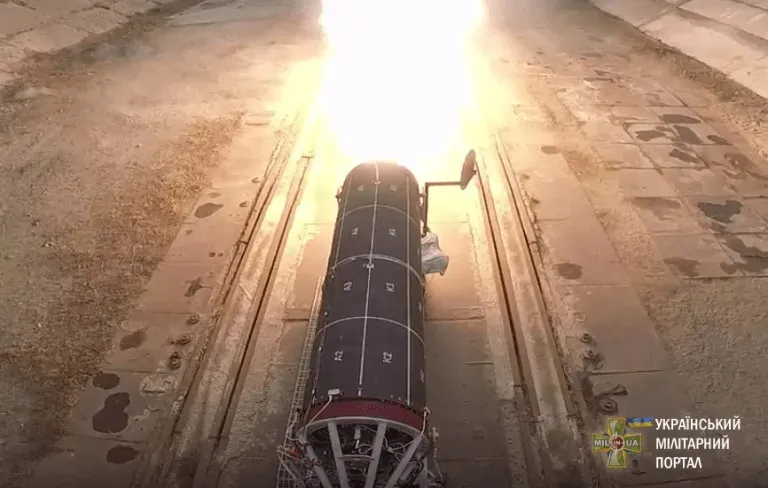
An image from a 2018 test of a rocket motor tied to the development of the Hrim-2/Sapsan missile. Government of Ukraine via Mil.in.ua
An artist’s rendition of the Hrim-2 TEL (as offered for export) from the Ukroboronexport webpage with the 2015 copyright date. Ukroboronexport

You can read more about what is known about the Hrim-2 and its development in this past War Zone piece, which followed speculation that Ukraine might have employed some of those missiles in an attack on Russia’s Saki Air Base in 2022.

While we don’t know what the Sapsan missile looks like, it is likely broadly similar to what we’ve seen of the Hrim-2 and preceding related designs, which, in turn, bear a superficial resemblance to Russia’s Iskander-M.

A picture of a test article associated with the development of the Hrim-2/Sapsan or one of their predecessors. Pivdenne Design Bureau
A Russian Iskander-M short-range ballistic missile. Russian Ministry of Defense

In terms of performance, the Hrim-2 reportedly has a range of at least 174 miles (280 kilometers) and possibly up to 310 miles (500 kilometers), and the same could well hold true for the Sapsan.

On the other hand, in 2023, Ukraine’s then-Minister of Defense Oleksii Reznikov also said that the country had a new long-range missile in development that could have a range of up to 620 miles (1,000 kilometers). This could also have been a direct reference to the Sapsan.

Regardless, it would seem highly likely that the Sapsan is in the category of short-range ballistic missiles (SRBM), which are traditionally defined as having maximum ranges of no more than 620 miles (1,000 kilometers).

Since the full-scale invasion, Ukraine has had only limited access to ballistic missiles, and none of these have come from domestic production.

The Ukrainian Armed Forces have been employing Soviet-era Tochka-U SRBMs, as well as even older Tochka types, both of which have the NATO reporting name SS-21 Scarab. These only have maximum ranges of 43 miles (70 kilometers) and 75 miles (120 kilometers), respectively, a fact that spurred the original development of the Sapsan/Hrim-2.

Точка-У: как ракетные удары ВСУ останавливают армию России в Украине | Донбасс Реалии


Furthermore, Ukraine has been receiving small numbers of ATACMS from the United States, which it has used to good effect.

Details from missile debris shown by Russia confirm Ukraine launched ATACMS at Voronezh region on November 18, marking the first use of U.S.-made missiles on Russian territory during Trump’s presidency. According to the Russian MoD, S-400 and Pantsir-S1 systems helped repel the… pic.twitter.com/8SeQCo9OEO

— NOELREPORTS 🇪🇺 🇺🇦 (@NOELreports) November 19, 2025

However, in common with additional types of ground and air-launched standoff munitions supplied to Ukraine by the U.S. government and other foreign partners, there are strict limitations imposed on the use of those weapons on targets deeper inside Russia.

Putting all this together, the utility of a ballistic missile of domestic production becomes very clear, as part of a multi-pronged effort to strike key targets outside of Ukraine’s borders (as well as further beyond the front lines, in Russian-controlled territory).

As we have noted in the past, a new source of ballistic missiles that are more capable and longer ranged than the Tochka family, and that are not subject to any Western restrictions like ATACMS, would be a key breakthrough for Ukraine.

A battery of three Ukrainian Tochka-U SRBMs fly off towards their Russian targets, as a Ukrainian soldier with a Stinger MANPADS keeps watch for enemy drones…🔥🇺🇦 https://t.co/68LnGr0W06

— Jimmy Rushton (@JimmySecUK) June 23, 2022

While long-range drones, cruise missiles, and drone/missile hybrids are valuable, ballistic missiles offer the advantage of very high speeds in the terminal phase of flight. This makes them much harder for enemy air and missile defenses to defeat. Ballistic missiles with unitary high-explosive warheads can also burrow down deeper into hardened targets or impart greater force on reinforced structures above ground, like bridges, thanks to that speed.

While we don’t know how Ukraine has employed Sapsan so far, provided that it has, a likely scenario would see the ballistic missiles combined with other types of missiles and drones in complex attacks to make it even harder for enemy forces to deal with. This would follow the same pattern that Russia routinely uses in large-scale attacks on Ukrainian targets.

If Ukraine is able to produce the Sapsan in meaningful numbers, and provided that it works to its full potential, the results could be significant, if it’s anything like the precedent set by Ukraine’s employment of American ATACMS.

Seems like 🇺🇦did another ATACMS strike near Kuban, Luhansk.

Action starts at 03:50. A dud and 3 hits within a minute. pic.twitter.com/aGP4cWKY07

— JB Schneider (@JohnB_Schneider) May 1, 2024

Even with the restrictions imposed by the U.S. government, Ukrainian ATACMS strikes have led to major changes in Russian operating procedures, especially at airbases within range of those missiles. It has also forced Russia to move additional air and missile defenses to the theater, including the S-500, the most advanced surface-to-air missile system in the country’s inventory today.

At this point, we still need to await independent verification of the Sapsan ballistic missile being used in combat. However, the value of such a weapon for the Ukrainian military is unquestionable, providing a powerful new vector for launching standoff strikes into Russia without any foreign restrictions. Provided it is being used operationally, we likely won’t have to wait too much longer for positive confirmation of this.

Contact the author: thomas@thewarzone.com

Thomas is a defense writer and editor with over 20 years of experience covering military aerospace topics and conflicts. He’s written a number of books, edited many more, and has contributed to many of the world’s leading aviation publications. Before joining The War Zone in 2020, he was the editor of AirForces Monthly.


Source link

Makers Without Mercy: Frankenstein and the Age of AI

Oscar-winning director Guillermo del Toro’s new film Frankenstein brings Shelley’s old questions back into sharp focus. Watching it, I wasn’t thinking about the film alone but about the world we now inhabit: a world driven by machines that imitate judgement, technologies released faster than any ethics can catch them, and creators who often step back from the consequences of what they build. The story became a frame for thinking about invention without care and the human cost of systems that move ahead of responsibility.

From the first shot, it was clear del Toro wasn’t interested in telling a simple horror story. He was asking what happens when creation slips away from responsibility. His protagonist Victor Frankenstein is a man capable of making life but unwilling to face what follows. His Creature is marked by a worn, unmistakably human presence, punished simply for existing. Together they pull Shelley’s story into the present, where knowledge outruns empathy and creators disown the harm their inventions cause. This isn’t a film review. It’s a way of thinking about an age built on AI, automated judgement and systems that move faster than the societies they reshape.

The Image as Argument

Del Toro’s visuals feel like political claims. Inside the lab, everything shines with promise, but the world around it already feels smaller, narrowed by Victor’s drive. Step outside, and the landscape is hard and unwelcoming. The images hint at a future where speed counts for more than judgement, and the tools we build quietly take choices away from the people who have to live with them.

The Creature and the Human Left Behind

The Creature’s journey exposes what gets left behind when systems evolve without accountability. His struggle is not mythic fortitude. It is the fight of someone denied belonging, yet still reaching for it. His suffering comes not from nature but neglect. That is where the story finds its political edge. When institutions, technologies or creators step back, people fall through the cracks. Monsters are produced through abandonment long before they ever lash out.

The Wound of Inheritance

Endurance teaches survival, but survival alone cannot heal neglect. To understand where that wound begins, we have to turn from myth to the people who make it. Like Shelley, the director builds his story on failed fathers: men who mistake intellect for affection and principle for presence.

In Shelley’s novel, Victor’s father is distant, a man of education and propriety who believes guidance is best delivered through correction rather than warmth. When Victor loses his mother, his father’s stoic restraint becomes a model of civility that hides a failure of empathy. That early absence of emotional attention shapes Victor’s later obsession with mastering life instead of understanding it. Shelley knew this pattern intimately.

Her father, William Godwin, preached liberty and reason but struggled with tenderness. He married Mary Wollstonecraft, the feminist intellectual, only after her death, a gesture that exposed how intellect can perform care without ever practising it. Shelley grew up inside that contradiction: a father who believed in just progress yet withheld warmth. Frankenstein became her answer to that hypocrisy. Victor Frankenstein is Godwin’s idea of pure reason turned human. He creates life but cannot care for what he has made. His emotional detachment does not just inform his choices; it defines his mythic role.Victor became the modern Prometheus. By the end, he finally confesses what drives him: pride, greed, and the hunger to control. It is the only peace he earns, and it feels like the confession of our own age.

Del Toro recognises the same model and turns it outward. His Victor belongs to our century of technocrats who build systems and then deny their consequences. He is our era’s new aristocracy of tech feudalism: ambitious, efficient, and unaccountable. The technology elite speak of optimisation, disruption, long-term futures and existential threats, but rarely of the ordinary lives reshaped by their decisions. Some imagine themselves visionaries, others saviours, others guardians of civilisation. But Shelley’s question cuts through that confidence. What does it mean to create something powerful, then step aside when it begins to rearrange the world?

Systems Without Stewards

The logic of the story echoes the world we now occupy. Tools built to support us now automate decisions about welfare, policing and work. Machine learning reshapes social life faster than regulators can understand it. Data systems expand with no clear stewards. What Shelley framed as a private tragedy now feels structural. Victor’s refusal to care has become a model reproduced across industries.

And this is where the parallel lands. We’ve slipped into a century shaped by people who build vast systems yet refuse to own the worlds those systems produce. Think of Elon Musk’s faith in acceleration, or Peter Thiel and Alex Karp insisting that Palantir’s surveillance tools are essential for democracy. Each stance mirrors Victor’s belief that intellect alone justifies power. They cast themselves as guardians of progress, yet their creations are already remaking social life faster than any public can respond. Frankenstein unsettles because it shows what follows when men commanding immense influence refuse to look directly at the people caught beneath their ambitions.

That is why the Frankenstein story matters again. It does not tell us how to regulate AI. It reminds us that danger begins when makers decide they are above the consequences of their work. Shelley wrote a warning. Del Toro simply holds up the mirror. The question is no longer whether Victor failed. It is whether we, facing our own age of unsupervised power, will choose to do any better.

Source link

US Federal Reserve cuts interest rates in final decision of the year | Banks News

The central bank cut rates for the third time in 2025 as limited government data clouds economic outlook.

The United States Federal Reserve has cut interest rates by a quarter of a percentage point, marking the last rate cut of the year.

On Wednesday, the Federal Reserve cut its benchmark interest rate by 25 basis points to 3.50 – 3.75 percent as US job growth has appeared to stall.

Recommended Stories

list of 4 itemsend of list

“Job gains have slowed this year, and the unemployment rate has edged up through September. More recent indicators are consistent with these developments. Inflation has moved up since earlier in the year and remains somewhat elevated,” the central bank said in a statement.

The cut was widely expected with an 89 percent probability of a rate cut, according to the CME Fed Watch, a tracker which monitors the likelihood of monetary policy decisions.

The decision came as the central bank faced gaps in many sets of government data used to assess the state of the US economy. During the record-long 43-day government shutdown, key agencies, including the Department of Labor, were unable to gather information needed for their reports.

Among them were import and export prices, the producer price index report, as well state employment and unemployment. The Bureau of Labor Statistics on Monday said that it would not release numbers from October because the agency did not have enough resources to collect information.

The last top-line data that the central bank had to make its interest rate decision was from September. At the time, the unemployment rate rose slightly to 4.4 percent and the core inflation rose to 2.8 percent.

A new government report on Wednesday showed US labour costs increased 0.8 percent in the third quarter, slightly less than expected.

The central bank might be more cautious about interest rate cuts in the next year as economic data shows a cooling labour market.

“There is considerable uncertainty around the labour market, but some of the weights should begin to lift early next year,” Ryan Sweet, managing director, US Macro Forecasting and Analysis at Oxford Economics, said in a report published ahead of the central bank’s decision.

“The challenge facing the Fed next year is the potential jobless expansion, when GDP increases but employment gains are modest, at best. This leaves the economy vulnerable to shocks because the labour market is the main firewall against a recession.”

Political turmoil

While the Fed has maintained its independence from partisan interference, there has been increased pressure from US President Donald Trump to cut rates further and he has often used hostile rhetoric towards the Fed chair to do it. The first rate cut in Trump’s second term as president came only in September.

The White House has also installed loyalist Stephen Miran to the Fed board where he is on leave from his job as an economic adviser in the White House. Miran has dissented against the 25 basis point rate cut that was undertaken at each of the two meetings he has attended in favour of larger half-percentage-point cuts.

On Wednesday, Miran, again, voted for a more aggressive cut of half a percentage point while governors Austan D Goolsbee and Jeffrey R Schmid voted not to make a rate cut at all. The other governors all voted for a 25 basis point cut.

“Still elevated inflation and a backlog of economic data complicate the picture for the Fed looking into next year — with President Trump’s aggressive push for lower short-term rates potentially complicating the objective of bringing down longer-term borrowing costs,” Daniel Hornung, policy fellow at Stanford Institute of Economic Policy Research, said in remarks provided to Al Jazeera.

Fed Chair Powell’s term is up in mid-May 2026. Trump, in an interview published on Tuesday in news outlet Politico, said support for immediately cutting interest rates would be a requirement for anyone he chose to lead the Federal Reserve.

Source link

Olympics decision on gender eligibility to come in early 2026 | Olympics News

IOC currently has no universal rule in place for the participation of transgender athletes at the Olympic Games.

The International Olympic Committee says it will announce eligibility criteria for transgender athletes early next year, after months of deliberation as it seeks to find a consensus on how to protect the female category.

The issue has been a source of controversy, with no universal rule in place for the participation of transgender athletes at the Olympic Games.

Recommended Stories

list of 4 itemsend of list

The IOC, under its new President Kirsty Coventry, did a U-turn in June, deciding to take the lead in setting eligibility criteria for Olympic participation, having previously handed responsibility to the individual sports federations, leading to a confusing patchwork of different approaches.

In September, Coventry set up the “Protection of the Female Category” working group, made up of experts as well as representatives of international federations, to look into how best to protect the female category in sports.

“We will find ways to find a consensus that has all aspects covered,” Coventry told a press conference on Wednesday following an IOC executive board meeting.

“Maybe it is not the easiest thing to do, but we will try our best, so when we talk about the female category, we are protecting the female category.”

Coventry said a decision would come in the first months of 2026.

“We want to make sure we have spoken to all stakeholders, taken adequate time to cross the Ts and dot the Is,” she said.

“The group is working extremely well. I don’t want to try to constrain the working group by saying they need to have a specific deadline, but I am hopeful in the next couple of months and definitely within the first quarter of next year we will have a clear decision and way forward, which I think we are all looking forward to,” said Coventry, a former Olympic swimming champion.

Before Coventry’s decision in June, the IOC had long refused to apply any universal rule on transgender participation for the Games, instructing international federations in 2021 to come up with their own guidelines. Under current rules, still in force, transgender athletes are eligible to take part in the Olympics.

Only a handful of openly transgender athletes have taken part in the Games. New Zealand’s Laurel Hubbard became the first openly transgender athlete to compete in a different gender category to that assigned at birth when the weightlifter took part in the Tokyo Olympics in 2021.

Currently, some international federations have rules in place, but others have not yet reached that stage.

US President Donald Trump has banned transgender athletes from competing in sports in schools in the United States, which civil society groups say infringes on the rights of trans people, as Los Angeles prepares to host the 2028 Summer Olympics.

Trump, who signed the “Keeping Men Out of Women’s Sports” order in February, has said he would not allow transgender athletes to compete at the LA Games.

Source link

WATCH: Palestine prepare for historic FIFA Arab Cup clash with Saudi Arabia | Football News

Palestine face Saudi Arabia in the quarterfinals of the FIFA Arab Cup, the first time the former have reached this stage.

After finishing on top of their group in the opening round of the 2025 FIFA Arab Cup, Palestine will look to continue their historic run when they face Saudi Arabia at Lusail Stadium on Thursday.

The Palestinian side also defied the odds to reach the knockout stages of the AFC Asian Cup for the first time earlier this year.

Having already beaten hosts and favourites Qatar, who were subsequently eliminated at the group stage, Palestine must now overcome a Saudi Arabia side that produced a shock at the Qatar 2022 FIFA World Cup when they defeated the eventual champions, Argentina.

Source link

Lance Corporal George Hooley named as British paratrooper killed in Ukraine

A member of the UK armed forces who died in Ukraine has been named as Lance Corporal George Hooley of the Parachute Regiment.

On Tuesday, the Ministry of Defence said the 28-year-old was killed in a “tragic accident” while observing Ukrainian forces test “a new defensive capability, away from the front lines”.

Paying tribute to the paratrooper in the Commons on Wednesday, Prime Minister Sir Keir Starmer said: “His life was full of courage and determination.

“He served our country with honour and distinction around the world in the cause of freedom and democracy, including as part of the small number of British personnel in Ukraine.”

Sir Keir said he had placed L/Cpl Hooley’s name on record in the Commons “to express our gratitude and respect, and to affirm that his service will never be forgotten”.

Defence Secretary John Healey shared his condolences with L/Cpl Hooley’s family and colleagues.

He wrote on X: “He served our country with distinction. His tragic death reminds us of the courage and commitment with which our outstanding armed forces serve every day.”

The BBC understands the incident is not thought to have been caused by hostile fire.

A military source told the BBC two Ukrainian personnel were believed to have died in the incident, and several more were injured.

The weapons system being tested was said to be an armed interceptor drone, according to unconfirmed reports.

Ukraine’s Ministry of Defence has been approached for comment.

It is not known what L/Cpl Hooley’s role was in the country. This is the first time the presence of paratroopers in Ukraine has been confirmed.

The UK government has never disclosed the number of service people in Ukraine, but has previously acknowledged a small number is there to support Ukrainian armed forces and provide security to diplomatic personnel.

The Parachute Regiment is an airborne infantry regiment of the British Army.

It has not been confirmed in which battalion L/Cpl Hooley served. The first battalion is under the direction of special forces, while others are part of the Army’s rapid response formation.

It is the first death of a UK service member in Ukraine since Russia launched its full-scale invasion of the country in February 2022.

The Parachute Regiment said it was mourning the death of the 28-year-old, who joined the British Army in November 2015.

He joined the Regiment in June 2016 after completing his training at the Infantry Training Centre Catterick in North Yorkshire, it said in a statement on social media.

Sir Keir told the Commons he had met Ukraine’s President Zelensky in Downing Street on Monday, alongside France’s President Macron and German Chancellor Friedrich Merz, as efforts to negotiate an end to the war intensify.

“We must redouble our efforts,” he told the House.

“The UK, Europe and our allies will stand shoulder-to-shoulder with Ukraine, stand up to Putin’s aggression and work to deliver a just and lasting peace.”

Conservative leader Kemi Badenoch, also speaking in the Commons, said: “The thoughts of the whole House will rightly be with family of Lance Corporal Hooley, who tragically died supporting Ukraine in her fight for freedom.”

US Defence Secretary Pete Hegseth, who welcomed Healey to Washington DC for defence talks on Wednesday, also paid tribute to L/Cpl Hooley, saying: “It is a reflection of the sacrifice and commitment that so many make around the world.”

A series of meetings to bring the war to an end have taken place in recent weeks, following interventions from US President Donald Trump and a range of European leaders.

Source link

8 Unarmed Protesters Dead, 16 Injured in Nigeria’s Adamawa State

The Nigerian military has, on Monday morning, allegedly opened fire on unarmed protesters in Adamawa State, North East Nigeria, killing eight people, seven of them women. 

According to the locals who spoke to HumAngle, the tragedy happened after a 24-hour curfew was imposed by the police in Lamurde to stop a communal clash in the community. Not satisfied with the decision, some women from Lamurde stood on the route to BaShaka, a community around the Lamurde axis, waving their leaves and chanting songs in protest. Hours later, HumAngle learned, members of the Nigerian military deployed to secure the area allegedly opened fire on them.

“When the soldiers came, they met the women standing on the highway, blocking the access road. The soldiers didn’t say anything to the women. They just opened fire. These women had nothing on them but leaves, and who attacks women during battle?” Morison, an eyewitness who also lost his son in a previous episode of the clash, said. 

After the gunshots broke out shortly after the soldiers arrived at the scene, seven women and one man were found dead at the spot. The rest fled with bullet wounds. One of the survivors, who is currently receiving treatment at the Numan General Hospital, recounted the harrowing incident to HumAngle. 

“When the soldiers arrived in their vehicle, they first fired gunshots in the air, and while we began to disperse, one particular officer knelt with a gun in hand and aimed at us, then he opened fire at us. He killed them all,” she said. 

She escaped with a gunshot wound in the hand. The other women are receiving treatment at the female surgical ward in Numan General Hospital, while some have been referred to the Moddibo Adama Teaching Hospital in Yola. A total of 16 people, mostly women, are currently receiving treatment at the Numan General Hospital. 

The soldiers left the scene after the incident, and later that day, locals crept out and carried the bodies, transporting them to the morgue in Numan Local General Hospital. HumAngle saw the bodies at the morgue today. The seven women and one man were wrapped in white clothes and placed on a local mat. They were later placed in a vehicle and conveyed back to their hometown in Lamurde for a mass burial. 

HumAngle gathered that the clash began Sunday night and by Monday morning had intensified. Homes were razed, properties destroyed, and many died, while several others were injured that morning. So far, the cause of the fresh clash is yet to be determined, but locals blame it on past grievances over land.

On Tuesday at dawn, a group of protesters consisting of men and women dressed in black from the Numan community stormed the Numan–Lamurde highway to protest in solidarity over the killing of the women. 

What the military is saying

In a statement issued via X and its other social media handles, the Nigerian Military denied killing the women. 

“While moving to secure the Secretariat, some women blocked the road to deny troops passage to the Secretariat, while armed men suspected to be fighting for Bachama extraction fired indiscriminately within the community. Troops then created a passage and proceeded to the Local Government Secretariat ( LGS) to secure the area. At this point, no woman was shot or injured. Otherwise, troops would not have been allowed to find any passage through the crowd,” a part of the statement read. 

The military further blamed the death of the women on the unprofessional handling of automatic weapons by the local militias, whom they described as ‘not proficiently trained  to handle such automatic weapons.’

Eyewitnesses like Morisson allege the military is shielding itself from accountability, and while the Bachama community in Lamurde and Numan is aggrieved over the killing of the women, Hyginus, the Tshobo community leader, says his people are in a dire situation as the security forces that have been deployed to the local government have camped in Lamurde town, leaving villages vulnerable. 

“We are just here. We don’t know what will happen next,” he said. 

The deceased have been laid to rest in a mass burial in Lamurde amidst hushed discussions of retaliation from their kinsmen. 

In September, HumAngle reported how a land dispute tore apart both communities, who are just a kilometre apart despite sharing the same resources.  In the clash, walls were torn, homes were burnt, valuables like motorcycles were set ablaze, and animals were slaughtered and left to bleed in the compounds where they were found. 

Speaking about the current incident, Hyginus Mangu, the leader of the Tshobo community, says he doesn’t know what caused the incident. 

“We just saw houses being set ablaze in Wammi 2 from Sunday night, and by Monday, it intensified,” he told HumAngle. 

The community leader explained that by Monday, three villages inhabited by Tshobo locals in Lamurde were completely burnt after being looted. The villages are Wammi 2, Bashaka, and Sabon Layi.

In Rigange, a Bachama-dominated community, Morrison Napwatemi, a resident of the area, explained that the clash resulted in the deaths of many natives, including his son. 

He explained that despite the intervention of the Adamawa State Governor in the past month, the fresh clash hints that the dispute is far from over. Even though the community is still under curfew, Morrison said there is a lot of tension in the land as locals are aggrieved. 

“It’s a terrible situation. It’s not something one would want to talk about,” he said. 

In Tshobo communities, the community leader explained that locals have currently rallied under a shade for safety, while some have climbed the mountains bordering Gombe. 

“Right now, we have no food, water, or security. We don’t know what will become of us later,” he said. 

While he doesn’t know the exact number of casualties so far, Hyginus said they have recorded many deaths. He fears his tribe might be wiped out as the clash is getting more deadly. 

Source link

F/A-18 Super Hornets Were Just Tracked Flying Deep Inside The Gulf Of Venezuela (Updated)

Online flight tracking data shows that a pair of U.S. Navy F/A-18 Super Hornets flew right into the center of the Gulf of Venezuela earlier today, and stayed there for some 40 minutes. This is a relatively small body of water bounded on three sides by Venezuela’s national territory, and is in the same general area where American forces are known to have previously probed that country’s air defenses. The sorties represent a new escalation in the maximum pressure campaign against Venezuelan dictator Nicolas Maduro that President Donald Trump’s administration has been conducting for months now.

The two Super Hornets, callsigns Rhino 11 and Rhino 12, look to have remained in international airspace throughout the duration of their sorties in the Gulf of Venezuela today, though this remains unconfirmed. Spoofing aircraft in open-source flight tracking is possible and does happen, but in this case, considering what we are seeing, and the recent history of certain U.S. platforms making their presence very known off the coast of Venezuela, this seems unlikely.

Even flying tight orbits in the middle of the Gulf could easily have brought the jets close to the Venezuelan coast. The body of water is approximately 75 miles long, north to south, and 150 miles wide, east to west, at its longest points. The opening to the Gulf from the Caribbean Sea to the north is only some 52 miles across, with Venezuela’s national airspace extending 12 miles from either side. Venezuelan authorities have claimed the entire body of water to be internal to the country’s national territory, something the United States has openly challenged for decades.

In addition to the F/A-18s, a pair of Navy EA-18G Growler electronic warfare jets, with the callsigns Grizzly 1 and Grizzly 2, were also tracked flying orbits in the Caribbean just north of the Gulf of Venezuela. One of the Navy’s MQ-4C Triton maritime surveillance drones also flew a mission further out in the Caribbean opposite Venezuela’s coastline at around the same time. It is highly probable that other U.S. military aircraft were also operating in the same broad area, but were not visible online. That the Super Hornets and Growlers were broadcasting their positions means they were intended to be seen, and to send a clear message to authorities in Venezuela.

Junto a los Super Hornet RHINO11 y RHINO12 estaban los EA-18G Growler con códigos de llamada GRIZZLY1 y GRIZZLY2. Son aviones de ataque electrónico aerotransportado. pic.twitter.com/2o31SEZMb2

— 𝘼𝙧𝙧𝙚𝙘𝙝𝙤 (@Arr3ch0) December 9, 2025

Where the F/A-18s or EA-18Gs were operating from during their sorties has not been confirmed. However, these types of aircraft are among those currently embarked on the Navy’s supercarrier USS Gerald R. Ford, which has been sailing in the region since last month.

A US Navy F/A-18E Super Hornet lands on the aircraft carrier USS Gerald R. Ford on November 17, 2025. USN
An EA-18G Growler also seen on the Ford‘s flight deck on November 17, 2025. USN

Ford was recently observed leaving St. Thomas in the U.S. Virgin Islands. U.S. Southern Command (SOUTHCOM) also posted pictures of Super Hornets and Growlers operating from the carrier, all of which were taken back in November, on social media at around the time of today’s flights off the coast of Venezuela.

‼️🇺🇸🇻🇪NEWS: The USS Gerald R. Ford is moving toward Venezuela after leaving St. Thomas yesterday.

The nuclear-powered carrier is heading south as part of Trump’s Operation Southern Spear, marking a major show of force aimed at increasing pressure on Maduro.

See the latest… pic.twitter.com/eNdIYkgyJ2

— The threat of missiles and drones (@StatWatch25) December 8, 2025

Ford-class aircraft carrier USS Gerald R. Ford (CVN 78) conducts flight operations while underway in the Caribbean Sea.

U.S. military forces are deployed to the U.S. Southern Command area of responsibility in support of Operation SOUTHERN SPEAR, Department of War-directed… pic.twitter.com/lVP1zSJgwa

— U.S. Navy (@USNavy) December 9, 2025

Super Hornets from Ford have also been spotted recently at Luis Muñoz Marín International Airport in Puerto Rico. Since September, Marine fighters and other aircraft have been operating from the former Naval Station Roosevelt Roads on the island in support of operations in the Caribbean, as well. TWZ has reached out to the Navy and U.S. Southern Command (SOUTHCOM) for more information about today’s flights near Venezuela.

The combination of F/A-18s and EA-18Gs, with the latter flying in a standoff position, is exactly what one would expect to see during actual strikes on targets in Venezuela. The Growlers would provide electronic warfare support to help cover the Super Hornets penetrating into the threat envelope of hostile air defenses on the way to their targets. Such a mission would also include a host of additional aircraft and other assets providing command and control, aerial refueling, surveillance and reconnaissance, and other support further away from the objective areas.

Whether or not the Venezuelan Air Force made any attempt to intercept any U.S. aircraft flying around the country’s borders today is unclear. The Gulf of Venezuela, as well as Lake Maracaibo, which lies immediately to the south, and the surrounding areas, are all highly strategic locales. Lake Maracaibo, in particular, is the country’s main oil-producing region. Tankers regularly sail in and out of the area, where key refineries are also situated.

As mentioned, this is not the first time that U.S. military aircraft have operated in this same general area, and with the explicit intent of testing and otherwise gathering intelligence about Venezuela’s air defenses. Those assets do present varying degrees of risk, as you can read more about here.

Back on November 20, Navy Super Hornets notably flew just north of the Gulf of Venezuela while a U.S. Air Force RC-135W Rivet Joint intelligence, surveillance, and reconnaissance (ISR) aircraft monitored the situation from a station further out in the Caribbean. Air Force B-52 bombers, which also now regularly take part in shows of force aimed at Venezuela, were tracked in the area at around the same time. One of the main missions of the Air Force’s Rivet Joint fleet is to help in crafting so-called “Electronic Orders of Battle” of enemy or potentially hostile forces in a given area, especially air defense nodes. EA-18Gs can collect information to help with this, as well.

FlightRadar24 has now identified FELIX11, one of the “unknown military aircraft” off the coast of Venezuela, as a U.S. Navy F/A-18E Super Hornet from the USS Gerald R. Ford (CVN-78), meaning that the others; PARTY11, LION11, LION12, as well as others not seen, are also likely… https://t.co/x6kX0H1UZv pic.twitter.com/KSPC4TbG19

— OSINTdefender (@sentdefender) November 20, 2025

“They are normal operational training flights from the aircraft carrier USS Ford and platforms performing training exercises,” a U.S. official told TWZ about those sorties. “They are also testing Venezuelan sensors and responses, and it is part of the pressure campaign to show U.S. capabilities in the Caribbean.”

It should be noted here that there has been a significant buildup of U.S. forces in the Caribbean overall since August, with approximately 15,000 personnel in total now deployed in the region. This includes Ford and a host of other major naval assets, as well as various crewed and uncrewed aircraft, and supporting elements on the ground. Special operations forces are also now heavily deployed in the region. President Trump also previously confirmed he had authorized the Central Intelligence Agency (CIA) to conduct covert operations inside Venezuela.

All of this is ostensibly in support of enhanced counter-narcotics operations, now dubbed Operation Southern Spear. The U.S. government accuses Maduro of being directly involved in drug trafficking in association with an entity referred to as the Cartel of the Suns, which is now also designated as a terrorist organization. Questions have been raised about those links. Maduro has been under indictment in the United States since 2020 on narcotics and other charges, and American authorities currently have a $50 million bounty out for information leading to his arrest.

President Trump ordered action — and the Department of War is delivering.

Today, I’m announcing Operation SOUTHERN SPEAR.

Led by Joint Task Force Southern Spear and @SOUTHCOM, this mission defends our Homeland, removes narco-terrorists from our Hemisphere, and secures our…

— Secretary of War Pete Hegseth (@SecWar) November 13, 2025

The sorties today follow weeks of escalating shows of force, as well as reports that the Trump administration could be getting closer to launching strikes or conducting other direct action missions on targets inside Venezuela. U.S. operations in the Caribbean already now include routine strikes on alleged drug-smuggling boats. Serious questions have been raised about the underlying intelligence behind those strikes, as well as their legality.

“I don’t want to say that,” President Trump said just today when asked about how far he might go to remove Maduro from office during an interview with Politico‘s Dasha Burns.

“His [Maduro’s] days are numbered,” Trump added in response to a follow-up question simply about whether he would like to see Maduro out of power.

He also declined to rule out a ground invasion of Venezuela or any other kind of military action, the potential prospect of which TWZ has recently explored.

During a recent interview Trump is asked about removing Maduro from power,
He refuses to rule out any options and says “Maduros days are numbered”

Trump also added that he wanted
“The people of Venezuela to be treated well”#Venezuela
pic.twitter.com/TPCV0huV6F

— CNW (@ConflictsW) December 9, 2025

If nothing else, today’s sorties in and around the Gulf of Venezuela make clear that the U.S. government remains committed to ratcheting up the pressure on Maduro.

Update, 7:00 PM EST:

There are indications that a new contingent of tactical jets, possibly EA-18G Growlers, has deployed from Naval Air Station Whidbey Island in Washington State to the Caribbean. The aircraft may be headed to the former Naval Station Roosevelt Roads in Puerto Rico based on online flight tracking data. Land-based EA-18Gs, on top of the Growlers already in the region aboard the USS Gerald R. Ford, would not be a typical show of force, but would represent a key force multiplier for any future strike operations.

Does this mean strikes are soon to begin in Venezuela, no it doesn’t, but it is among the most interesting movements we have seen that would point to preparing for this. More on Venezuela’s air defense capabilities here: https://t.co/IYAm9hIu0z

— Tyler Rogoway (@Aviation_Intel) December 9, 2025

And these would likely be land based, not deployed to augment the carrier air wing directly. Standard stuff for the EA community.

— Tyler Rogoway (@Aviation_Intel) December 9, 2025

Update, 12/10/2025:

In response to our queries yesterday, the U.S. Navy directed us to U.S. Southern Command (SOUTHCOM). In turn, a SOUTHCOM spokesperson provided the following statement:

“We conduct routine, lawful operations in international airspace, including over the Gulf of Venezuela. We will continue to fly safely, professionally, and in accordance with international law to protect the homeland, monitor illicit activity, and support stability across the Americas.”

Contact the author: joe@twz.com

Joseph has been a member of The War Zone team since early 2017. Prior to that, he was an Associate Editor at War Is Boring, and his byline has appeared in other publications, including Small Arms Review, Small Arms Defense Journal, Reuters, We Are the Mighty, and Task & Purpose.


Source link

Hungary Puts Juvenile Centres Under Police Oversight Following Abuse Scandal

Hungary’s government has moved state-run juvenile detention centres under direct police supervision in response to an abuse scandal at a facility in Budapest. The decision comes after a video showing physical abuse at the centre was published by a former lawmaker and opposition activist, sparking public outrage.

Incident Details
The video led to the resignation of the acting director of the Budapest juvenile centre. Prosecutors have detained three people connected to the state-run facility and are investigating the former director for alleged involvement in prostitution, money laundering, and human trafficking. The government cited failures in the social care system’s management of these centres as a key factor in the decision to place them under police oversight.

Political Fallout
Opposition leader Peter Magyar, head of the Tisza party, has called on Prime Minister Viktor Orban to resign and urged early elections. Magyar also announced a demonstration for Saturday in Budapest to protest the scandal. This incident follows a previous controversy that led to the resignation of President Katalin Novak, marking a rare political setback for Orban, who has been in power since 2010.

Current Status
The five state-run juvenile detention centres are now under direct police supervision. Prosecutors continue investigations into the abuse allegations, and further details are expected. Public demonstrations and political pressure are mounting ahead of upcoming elections.

With information from Reuters.

Source link

Woman racing against time to choose Christmas gift before husband buys her shit

A WOMAN is in a desperate race against time to think of a big-ticket item her husband can buy her for Christmas before he goes rogue.

Jess, aged 42, not her real name or age, was told yesterday ‘if there’s anything you want for Christmas I need to know this week, otherwise I’ll get you whatever’ and is frantically searching for the right item to stem a tide of crap.

She said: “It’s not that the gifts he gets me are entirely bad. It’s just they’re very ‘generic woman’.

“‘Here’s a scented candle, here’s some chocolates, here’s a bottle of artisanal gin. Does that take me up to the spending cap yet? Alright here’s a scarf.’ I’ve got five days or less to find something before he buys Expensive Secret Santa.

“It’s f**king stressful. I feel like I come across stuff I’d like which costs £200 every day, but put me against the clock and suddenly every website’s bare. No way am I getting any work done today. This is a quest.

“Wasn’t there a coat? Why didn’t I bookmark that coat I liked? Do I need shoes? He said this week but his patience can run out at any time and I’ll end up with a spa voucher and an air fryer.”

Husband Anthony, 28, not his real name or age, said: “Yeah, she didn’t give me any ideas so I’ve got her a spa voucher and an air fryer.”

Machado in Oslo, but will not attend Nobel Peace ceremony to receive award | Politics News

The build-up to the ceremony has been tinged with shadowy intrigue, after the Nobel institute earlier said Machado’s whereabouts were unknown.

Venezuelan opposition leader Maria Corina Machado will not receive the Nobel Peace Prize in person at an award ceremony in Oslo but she will be in the European city, the director of the Norwegian Nobel Institute has said.

Machado, 58, was due to receive the award on Wednesday at Oslo City Hall in the presence of Norway’s monarchs and Latin American leaders, including fellow right-wing politicians Argentinian President Javier Milei and Ecuadorean President Daniel Noboa.

Recommended Stories

list of 4 itemsend of list

The opposition leader of the Vente Venezuela party was awarded the prize in October, with the Nobel committee praising Machado’s role in the country’s opposition movement and her “steadfast” support for democracy.

Machado, who holds many right-wing views, dedicated it in part to United States President Donald Trump, who has said he, himself deserved the honour and was infuriated that he did not.

“Although she will not be able to reach the ceremony and today’s events, we are profoundly happy to confirm that Machado is safe and that she will be with us in Oslo,” the institute stated.

She is expected to reach Oslo “sometime between this evening and tomorrow morning,” the institute’s director Kristian Berg Harpviken told the AFP news agency on Wednesday, shortly before the 1pm (12:00 GMT) ceremony, at which her daughter, Ana Corina Sosa Machado, is set to accept the award in her place.

“I will be in Oslo, I am on my way,” Machado stated in an audio recording released by the institute.

The announcement was part of a sequence of events more befitting of cloak-and-dagger intrigue, as the institute had earlier stated Machado’s whereabouts were unknown. A planned news conference a day earlier was also cancelled due to her absence.

Machado has a decade-long travel ban on her and has spent more than a year in hiding.

Alignment with right-wing hawks

The political leader has welcomed international sanctions and US military intervention in Venezuela, a move her critics say harkens back to a dark past.

The US has a long history of interference in the region, particularly in the 1980s when it propped up repressive right-wing governments through coups, and funded paramilitary groups across Latin America that were responsible for mass killings, forced disappearances and other grave human rights abuses.

Venezuelan authorities cited Machado’s support for sanctions and US intervention when they barred her from running for office in last year’s presidential election, where she had intended to challenge President Nicolas Maduro. Machado has accused Maduro of stealing the July 2024 election.

Shortly after her Nobel win in October, Machado also voiced support for Israel in a phone call with Prime Minister Benjamin Netanyahu, during its ongoing genocidal war in Gaza.

Machado has previously pledged to move Venezuela’s embassy in Israel to Jerusalem, as Trump did with the US diplomatic presence during his first term in office, if her movement comes to power. This would be on par with other right-wing Latin American leaders who have taken pro-Israel stances, including Argentina’s Milei and former Brazilian President Jair Bolsonaro.

Machado has aligned herself with right-wing hawks close to Trump who argue that Maduro has links to criminal gangs that pose a direct threat to US national security, despite doubts raised by the US intelligence community.

The Trump administration has ordered more than 20 military strikes in recent months against alleged drug-trafficking vessels in the Caribbean and off Latin America’s Pacific coast.

Human rights groups, some US Democrats and several Latin American countries have condemned the attacks as unlawful extrajudicial killings of civilians.

Maduro, in power since 2013 following the death of Hugo Chavez, says Trump is pushing for regime change in the country to access Venezuela’s vast oil reserves. He has pledged to resist such attempts.

Venezuela’s armed forces are planning to mount a guerrilla-style resistance in the event of a US air or ground attack, according to sources with knowledge of the efforts and planning documents seen by the Reuters news agency.

Source link

Mohamed Salah: Egypt teammates rally behind unsettled teammate before AFCON | Football News

Salah’s relationship with Liverpool is strained, but the disgruntled star will be welcomed by Egypt teammates for AFCON, beginning December 21.

While the future of Mohamed Salah at Liverpool hangs in the balance, Egypt teammates have rallied behind the national team captain ahead of the 2025 Africa Cup of Nations (AFCON) in Morocco.

The record seven-time continental champions are in Group B with Angola, South Africa and Zimbabwe, and will be based in the southern coastal city of Agadir throughout the first round.

Recommended Stories

list of 3 itemsend of list

“Players like him do not get benched,” said striker Ahmed “Kouka” Hassan on social media, referring to Salah being a substitute in the last three Liverpool fixtures, and coming on only once.

“If he starts on the bench, you must make sure he is the first to come on, after 60 minutes, 65 at the latest.

“Mo is not just a teammate, he is a leader, a legend for club and country. Keep working hard, brother, every situation in life is temporary, moments like this pass, what stays is your greatness.”

Head coach and former star Hossam Hassan posted a photograph of himself and Salah and a message: “Always a symbol of perseverance and strength.”

“The greatest Liverpool legend of all time,” wrote winger Ahmed “Zizo” El Sayed. Goalkeeper Mohamed Sobhy called Salah “always the best”.

Liverpool have struggled in their title defence this season and lie 10th after 15 rounds, 10 points behind leaders Arsenal. Salah has also battled with just four goals in 13 top-flight appearances.

After twice surrendering the lead in a 3-3 draw at Leeds United last Saturday, Salah told reporters, “It seems like the club has thrown me under the bus”.

“I think it is very clear that someone wanted me to get all of the blame (for the slump) … someone does not want me in the club.”

Salah was omitted from the squad that travelled to Milan for a Champions League clash with Inter on Tuesday and has hinted that he may not play for Liverpool again.

Mohamed Salah fan holds flag.
A fan holds a flag in the stands dedicated to Salah during the UEFA Champions League tie between Inter Milan and Liverpool at San Siro Stadium on December 9, 2025 in Milan, Italy [Justin Setterfield/Getty Images]

‘Great feeling’

Saudi Arabia says it will do “whatever it can” to recruit Salah during the mid-season transfer window, a Public Investment Fund (PIF) source in the kingdom told AFP.

Although Egypt last won the AFCON 15 years ago in Luanda, Salah, 33, believes they will lift the trophy again before he retires.

“It will happen – that is what I believe. It is a great feeling every time you step on the field wearing the Egyptian colours.”

Salah has suffered much heartbreak in four AFCON tournaments as Egypt twice finished runners-up and twice exited in the round of 16.

He created the goal that put the Pharaohs ahead in the 2017 final, but Cameroon clawed back to win 2-1 in Libreville.

Hosts and title favourites Egypt were stunned by South Africa in the first knockout round two years later, conceding a late goal to lose 1-0.

Egypt reached the final again in 2022, only to lose on penalties to Senegal after 120 goalless minutes in Yaounde.

In the Ivory Coast last year, Salah suffered a hamstring injury against Ghana and took no further part in the tournament. Egypt lost on penalties to the Democratic Republic of the Congo in a last-16 clash.

This year, Egypt boast an array of attacking talent with Salah, Omar Marmoush from Manchester City, Mostafa Mohamed of Nantes and Mahmoud “Trezeguet” Hassan and Zizo from Cairo giants Al Ahly.

Group B is the only one of the six in Morocco featuring two qualifiers for the 2026 World Cup, with Egypt and South Africa heading to the global showpiece in North America.

South Africa exceeded expectations by finishing third at the 2024 AFCON, but Belgian coach Hugo Broos expects a tougher campaign in a tournament that kicks off on December 21.

“It will be harder because every opponent will be more motivated to beat us after our bronze medals,” said the tactician who guided Cameroon to the 2017 AFCON title.

Angola and Zimbabwe recently changed coaches, with France-born Patrice Beaumelle and Romanian Mario Marinica hired.

The Angolans have reached the quarterfinals three times, including last year, while the Zimbabweans have never gone beyond the first round.

Egypt's forward Ahmed 'Kouka' Hassan and Mohamed Salah react.
‘Players like him do not get benched’: Salah’s (#10) longtime Egyptian teammate Ahmed ‘Kouka’ Hassan (#18) is supporting his compatriot during his standoff with Liverpool after the 33-year-old claimed on Saturday that he was being scapegoated for the club’s poor performance in recent weeks  [File: Javier Soriano/AFP]

Source link

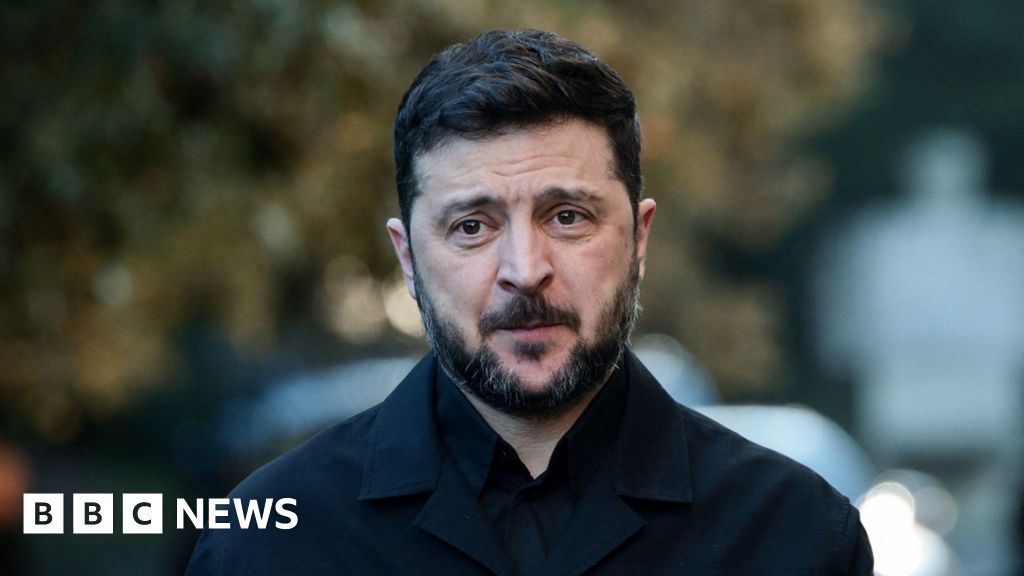
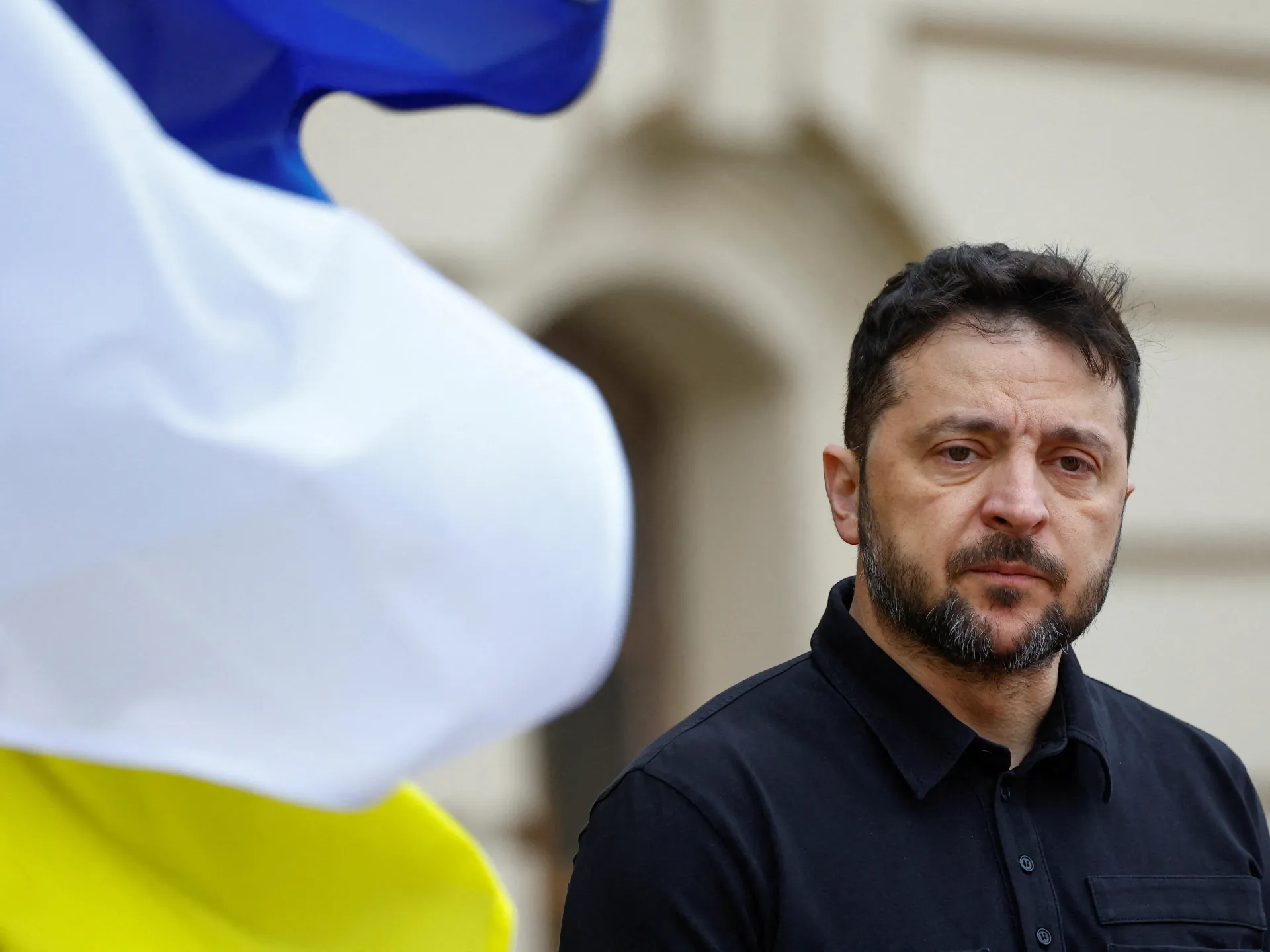
Ukraine ‘ready for elections’ if partners guarantee security, Zelensky says

Ukraine is “ready for elections”, President Volodymyr Zelensky has said, after US President Donald Trump repeated claims Kyiv was “using war” to avoid holding them.

Zelensky’s five-year term as president was due to end in May 2024, but elections have been suspended in Ukraine since martial law was declared after Russia’s invasion.

Speaking to reporters following Trump’s comments in a wide-raging Politico interview, Zelensky said he would ask for proposals to be drawn up which could change the law.

Elections could be held in the next 60 to 90 days if security for the vote was guaranteed with the help of the US and other allies, he said.

“I’m asking now, and I’m stating this openly, for the US to help me, perhaps together with our European colleagues, to ensure security for the elections,” he told reporters.

“The issue of elections in Ukraine, I believe, depends first and foremost on our people, and this is a question for the people of Ukraine, not the people of other countries. With all due respect to our partners,” Zelensky said.

“I’ve heard hints that we’re clinging to power, or that I personally am clinging to the presidency” and “that’s why the war isn’t ending”, which he called “frankly, a completely unreasonable narrative”.

Zelensky won election in 2019 with more than 73% of the vote.

Russia has consistently claimed Zelensky is an illegitimate leader and demanded new elections as a condition of a ceasefire deal – a talking point which has been repeated by Trump.

“They talk about a democracy, but it gets to a point where it’s not a democracy anymore,” the US president told Politico. He has suggested without evidence that Zelensky is the main obstacle to peace as US-led efforts to broker a peace deal to end the war in Ukraine continue.

There are significant practical obstacles to a wartime election.

Soldiers serving on the front lines could be either unable to vote or require leave to do so. According to the UN, there are about 5.7 million Ukrainians living abroad because of the conflict. And any ballot would require complex, additional security measures.

Such a vote would only be fair if all Ukrainians could participate, including soldiers fighting on the front line, a Ukrainian opposition MP told the BBC.

“In order for these elections to be fair all of the People of Ukraine would need to be allowed to vote,” Lesia Vasylenko told the BBC World Service’s Newsday programme.

She said that “elections are never possible in wartime”, alluding to the suspension of elections in the UK during World War Two.

Discussions around holding elections have made headlines since Russia’s full-scale invasion of Ukraine in 2022.

There is little domestic political pressure on Zelensky to call elections while the conflict is ongoing, said Oleksandr Merezhko, the chairman of the foreign policy committee in Ukraine’s parliament.

There was “strong consensus” among politicians and civil organisations that elections would not be held under martial law, the Servant of the People MP told the BBC.

“There is absolutely no chance to hold elections,” he said. “Even the opposition, which is against Zelensky and would like to see him removed are against elections, because they understand the danger of attempting to hold elections during the war.”

The idea was “exactly what Putin would want”, Merezhko added. “An election campaign would be divisive. Having failed to destroy us from outside, Putin wants to destroy us from within, using elections as another tool to do so.”

A poll by the Kyiv International Institute of Sociology (KIIS) in March found about 78% of people opposed holding elections after a ceasefire with security guarantees, and were of the opinion that they could only be held after a complete settlement.

The share fell to 63% in a September poll, while 22% said elections could be held after a ceasefire with security guarantees – a jump from 9% in March.

“Even a year ago, Zelensky said that he was ready for elections as soon as the conditions allow” in the face of previous pressure, Hanna Shelest, a foreign policy analyst with the think tank Ukrainian Prism, told the BBC.

The question was, however, how to create the conditions Zelensky outlined, Shelest told the Newsroom programme on the BBC World Service, given the numbers of soldiers and refugees who would be voting as well as unsecured areas in the country and ongoing strikes.

“You cannot guarantee the security of the polling stations,” she said.

Zelensky is also facing continued and increasing pressure from Trump to agree to a peace deal to end the war, with the US leader urging Zelensky to “play ball” by ceding territory to Moscow.

Source link

Joint Chinese-Russian Bomber Patrol Sends Japanese, South Korean Fighters Scrambling

Japan and South Korea scrambled jets on Tuesday in response to a joint Chinese-Russian bomber patrol over international waters near both of those nations. Though part of an annual bilateral exercise, the flights come as tensions between China and Japan are heightened over the latter’s increasing signals of support for Taiwan.

Two Russian Tu-95 Bear turboprop bombers flew south from the Sea of Japan into the East China Sea, the Japanese Defense Ministry (MoD) said. After flying between west of Japan and southeast of South Korea, they joined two Chinese H-6 series bombers near Okinawa Japan.

Japanese Defense Ministry

“They then conducted a long-distance joint flight from the East China Sea to the Pacific Ocean off the coast of Shikoku,” according to the ministry.

The bombers were joined by four Chinese J-16 Flanker multirole fighter derivatives “when these bombers flew back and forth between Okinawa Island and Miyako Island,” the Japanese MoD noted. The Bear bombers later flew back along the same route north into the Sea of Japan while the Chinese jets flew back toward China.

Australia is pushing back on a report that Russia asked to base its long-range bombers at an Indonesian airbase.
A Russian Tu-95M Bear turboprop bomber. (Crown Copyright) Crown Copyright
CHANGCHUN, CHINA - SEPTEMBER 16: H-6 bomber attends a flight rehearsal ahead of the 2025 Changchun Air Show on September 16, 2025 in Changchun, Jilin Province of China. The aviation open-day activities of the Chinese People's Liberation Army Air Force (PLAAF) and the Changchun Air Show 2025 will be held from September 19 to 23 in Changchun. (Photo by Cao Nan/VCG via Getty Images)
A Chinese H-6 bomber attends a flight rehearsal ahead of the 2025 Changchun Air Show on September 16, 2025 in Changchun, Jilin Province of China. (Photo by Cao Nan/VCG via Getty Images) VCG
CHANGCHUN, CHINA - SEPTEMBER 19: J-16 fighter jets perform maneuver flight demonstration during flight performance at the aviation open-day activities of the Chinese People's Liberation Army Air Force (PLAAF) and the Changchun Air Show 2025 on September 19, 2025 in Changchun, Jilin Province of China. The event will be held from September 19 to 23 in Changchun. (Photo by Zhang Xiangyi/China News Service/VCG via Getty Images)
Chinese J-16 fighter jets perform a maneuver flight demonstration during flight performance at the aviation open-day activities of the Chinese People’s Liberation Army Air Force (PLAAF) and the Changchun Air Show 2025 on September 19, 2025 in Changchun, Jilin Province of China. (Photo by Zhang Xiangyi/China News Service/VCG via Getty Images) 李旭伦

In addition to those flights, the Japanese said one Russian A-50 Mainstay early warning and control aircraft and two Russian Su-30 Flanker fighters were also spotted north of Japan in the Sea of Japan, the MoD stated.

“In response, fighter jets from the Japan Air Self-Defense Force’s Southwest Air Defense Command and other units were scrambled,” the MoD explained, without providing details about where jets flew.

The Beriev A-50U 'Mainstay' airborne warning and control system (AWACS) aircraft based on the Ilyushin Il-76 transport aircraft belonging to Russian Air Force in the air. 'U' designation stands for extended range and advanced digital radio systems. This aircraft was named after Sergey Atayants - Beriev's chief designer. (Photo by: aviation-images.com/Universal Images Group via Getty Images)
The Beriev A-50U ‘Mainstay’ airborne warning and control system (AWACS) aircraft. (Photo by: aviation-images.com/Universal Images Group via Getty Images) aviation-images.com

South Korea also sent fighters aloft as the Chinese-Russian joint flight briefly flew into its Air Defense Identification Zone (KADIZ), according to the Yonhap News Agency.

“Two Chinese military planes and seven Russian aircraft successively entered the KADIZ at around 10 a.m. prompting the military to dispatch Air Force fighter jets in preparation for a possible accidental situation,” the Joint Chiefs of Staff (JCS) said.

The JCS did not identify what kind of aircraft took part in the joint Chinese-Russian flight, but bombers and fighters “intermittently entered and left the KADIZ for about an hour before completely retreating from the air defense zone.”

中俄空中战略巡航现场画面
(微博 央视军事20251209)

12/9に実施の第10次中露合同空中パトロールの映像が公開。中国空軍[PLAAF]H-6K爆撃機や露 Tu-95爆撃機と思われる機体が参加。そのほか、映像内での中国側参加兵力はでJ-11BS戦闘機、Su-30MK2戦闘機、J-16戦闘機、KJ-500A早期警戒機となっている pic.twitter.com/4q3M1M6s0d

— KAROTASU (@type36512) December 9, 2025

Joint Chinese-Russian flights in this area are not new. Since 2019, the two countries have sent their military planes into the KADIZ once or twice a year during joint exercises, without prior notice, Yonhap explained.

The last such flight took place in November 2024 when “11 military planes from both China and Russia entered the KADIZ together,” Yonhap noted.

As we previously reported, the first such flight took place in June 2019 and resulted in South Korean jets firing about 360 20mm cannon shells in a series of warning shots after a Russian Mainstay violated airspace South Korea claims above a small group of islets, which it refers to as Dokdo. Japan also claims these as its national territory, calling them collectively Takeshima, and registered its own complaint at the time that the Mainstay had violated Japanese national airspace.

While this was the 10th joint flight, it came as China and Japan are locked in an intensifying dispute over Japanese Prime Minister Sanae Takaichi’s comments that any Chinese attack on Taiwan would be considered an existential threat to Tokyo. Beijing considers the breakaway island nation to be part of China and has made it clear that it will take back Taiwan peacefully or through military means. Meanwhile, it sees growing militancy from Japan, whose armed forces are designed for self-protection in the wake of World War II, as an increasing threat.

The flareup manifested itself on Saturday, when Chinese J-15 fighters launched from the aircraft carrier Liaoning near Okinawa and locked radar on two Japanese F-15 Eagle fighters. While both sides acknowledge the incident took place, there is a dispute about who caused it and how it was handled.

A Japanese Air Self-Defense Force F-15 Eagle. (U.S. Air Force photo/Airman 1st Class Brooke P. Beers) A Japanese Air Self-Defense Force F-15J flies alongside a U.S. Air Force KC-135 while waiting to be refueled over Okinawa. U.S. Air Force photo/Airman 1st Class Brooke P. Beers

Japan claims its fighters were targeted while flying a safe distance from the Liaoning and its escorts, which were conducting training missions in the area. China claims that the Japanese fighters were interfering with the training, which sparked the incident.

The issue carried into Tuesday, when China released what it says was a call between its carrier group and the Japanese warning them away. Japan had previously complained China did not answer a deconfliction hotline.

Chinese Navy Ship (CNS) Type 001 aircraft carrier Liaoning departs from Hong Kong waters on Tuesday morning July 11, 2017. 11JUL17 SCMP / Roy Issa (Photo by Roy Issa/South China Morning Post via Getty Images)
Chinese Navy Ship (CNS) Type 001 aircraft carrier Liaoning. (Photo by Roy Issa/South China Morning Post via Getty Images) Roy Issa

All this comes amid growing Chinese consternation about Japan’s plans to place additional weaponry on Yonaguni Island, located about 70 miles from Taiwan.

Japan is increasing its military presence on Yonaguni Island, located 70 miles east of Taiwan. Google Earth

Last week, the Japanese MoD announced plans “to deploy an electronic warfare [EW] air-defense unit capable of disrupting aircraft communications on the island of Yonaguni in Okinawa prefecture,” the Japanese Nikkei news outlet reported. The publication did not identify what type of EW system. 

In November, we noted that Japan wanted to install an air defense system on Yonaguni that was likely the beginning of an increasing militarization of the island given its proximity to Taiwan. You can read more about that in our initial story here.

These flights are part of an increasing level of military cooperation between China and Russia. Last year, two Chinese H-6-series aircraft flew with a pair of Russian Bear bombers through a portion of the Air Defense Identification Zone (ADIZ) around Alaska. It marked the first time Chinese H-6s of any kind have operated in this part of the world. Similar maritime flotillas have occurred at an increasing rate, as well.

While the joint Chinese-Russian bomber patrol near Japan and South Korea has become routine and is planned to continue, the growing tensions between Beijing and Tokyo show no signs of abating.

Contact the author: howard@thewarzone.com

Howard is a Senior Staff Writer for The War Zone, and a former Senior Managing Editor for Military Times. Prior to this, he covered military affairs for the Tampa Bay Times as a Senior Writer. Howard’s work has appeared in various publications including Yahoo News, RealClearDefense, and Air Force Times.


Source link

Sino–Morocco Partnership for AI and Electric Vehicles by 2026

Over the next eighteen months, Morocco aims to strengthen its strategic partnerships with Chinese counterparts in two main fields: artificial intelligence and electric vehicles, including batteries and components. This document examines the current factors driving cooperation, predicts the development of technology transfer and industrial growth, and highlights the promising prospects for Moroccan industries to expand into global markets by 2026. The analysis presents recent developments, such as plans for battery factories, the entry of Chinese electric vehicle brands, and increased AI initiatives, and offers policy suggestions to maximize benefits while reducing potential risks. 

Morocco’s industrial strategy over the past decade has been primarily focused on exports and anchored by major firms. Large assembly plants such as Renault and Stellantis, along with upgrades to ports and logistics networks like those in Tangier, have helped establish the country as a key auto hub serving Europe and Africa. At the same time, Morocco is actively advancing its digital and artificial intelligence capabilities through government conferences, initiatives to support startups, and collaborations between the public and private sectors. On the Chinese side, policies and corporate strategies aim to position battery and electric vehicle value-chain assets near Europe. They are also working to diversify manufacturing locations and secure supplies of rare earth elements and other upstream materials. Recent announcements, including plans for a significant Chinese gigafactory and several upstream projects around Tangier and Jorf Lasfar, suggest a strong potential for collaboration. Morocco’s strategic location, combined with China’s manufacturing ambitions, makes their partnership highly promising.

1. Two Pillars of Cooperation: What to Expect

 Electric vehicles and batteries.

Chinese companies are investing heavily in Morocco’s battery and component plants, including a gigafactory, while Chinese EV brands enter the local market through distributors. Meanwhile, global vehicle makers are expanding EV production, increasing demand for batteries and parts.

Likely near-term developments up to 2026:

1. Battery production will broaden, with final outputs (tens of GWh) from Chinese investments coming online or under construction. This will enable local assembly and some exports to Europe and Africa, transitioning Morocco from an assembly hub to also producing cells, cathodes, and anodes.

2. The local parts ecosystem will strengthen. Chinese upstream investments like copper and electrode factories will strengthen Moroccan suppliers in metal stamping, wiring harnesses, and thermal systems, enabling them to elevate and compete for supply contracts.

3. Chinese EV brands like BYD are expected to expand sales and may establish CKD (complete knock-down) assembly operations in Morocco or North Africa. This would reduce logistics costs and tariffs while serving regional markets.

Why this is likely to occur: Morocco’s strategic location near the EU, favorable trade agreements, and rising local content rates at key plants, combined with competitive labor and logistics costs, make it an attractive hub for Chinese firms aiming to serve Europe and Africa. These factors also help mitigate risks related to geopolitical trade tensions.

2. Technological Innovation

What is the current status? Morocco has initiated national projects focused on technological development, hosted numerous industry conferences, and is fostering innovation hubs in Casablanca and Rabat, supported by active universities and startups. Meanwhile, Chinese technology companies and research institutions are becoming increasingly engaged across Africa, especially in areas such as cloud computing, surveillance, smart cities, and industrial automation.

Short-term outlook to 2026:

1. Manufacturing technology: Chinese original equipment manufacturers and battery producers are likely to develop or collaborate on new systems for predictive maintenance, quality assurance via vision technology, and automation within factories. Moroccan suppliers and engineering companies are predicted to serve as key local partners, opening up opportunities to export services and software.

2. Data infrastructure and edge computing: Investments are expected in launching data centers or edge computing resources near ports and industrial areas. These will support electric vehicle telematics, smart logistics, and training systems, allowing Moroccan companies to offer combined telematics services across the region.

3. Skills and research partnerships: Agreements between Chinese and Moroccan organizations, including training programs and joint laboratories, will help develop expertise in areas such as machine learning, data management, and implanted systems—laying the footing for a domestic technology industry capable of exporting software and solutions.

By 2026, the combination of Chinese industrial commitments and Morocco’s own policy momentum is expected to bring several tangible benefits to the Moroccan industry in international markets:

First, the composition of exports will become more sophisticated, moving beyond a narrow range of assembled chassis or low-value parts. Instead, Morocco will export higher-value items such as battery modules, electric vehicle (EV) subassemblies, and software or telemetry services. Early shipments of these battery modules and vehicles with higher content will boost the average export value and enhance trade balances. The establishment of a battery gigafactory shifts the focus of value creation within vehicle exports.

Second, Morocco’s strategic geographic location and trade advantages—including proximity to the European Union and its role as an African gateway—combined with Chinese manufacturing capacity, will allow Moroccan producers to better serve markets in Europe, the Middle East, and Africa. Chinese firms may use the Kingdom as a hub for assembly, battery-pack finishing, and software services, thereby generating re-export opportunities and local production credits, strengthening Morocco’s position as an electromobility export hub.

Finally, new factories and the adoption of artificial intelligence will generate employment opportunities not only in manufacturing but also in engineering, data management, and quality assurance. Local suppliers securing tier-1 contracts will be compelled to meet international standards such as ISO, IATF, and environmental requirements, thereby increasing their competitiveness for foreign contracts. Additionally, vocational training programs—both public and private—will develop a skilled technician workforce that is enticing to foreign original equipment manufacturers.

This part highlights the development of new exportable service lines, including software, telematics, and analytics. The adoption of industrial AI systems has increased demand for these technologies, including predictive maintenance platforms, battery management software, and analytics dashboards. Moroccan IT companies and startups that collaborate on or adapt these systems for French-speaking and African markets will gain a competitive edge as early movers. This approach broadens Moroccan exports into higher-margin digital services.

Additionally, branding around green initiatives and regulatory standards creates opportunities. Manufacturing electric vehicle (EV) components, especially alongside renewable energy sources, enables Morocco to position itself as an environmentally friendly supplier to European buyers, who are increasingly concerned about carbon footprints and ESG compliance. This strategy could open doors to premium markets and green procurement contracts. Recent government focus on renewable energy and desalination further supports a narrative of sustainable industrial growth.

However, some risks and constraints must be managed. These include overreliance on a limited number of foreign partners, particularly Chinese firms, which could lead to dependence issues. Morocco needs to diversify its investor base and contain clauses on technology transfer and local value creation. Another challenge is the country’s limited capacity to absorb rapid industrialization, calling for the expansion of vocational training and university-industry R&D partnerships. Environmental and social standards are also critical, especially in battery production and chemical manufacturing, requiring strict regulation and the integration of green energy to prevent reputational damage. Geopolitical tensions, especially with shifting trade policies in Europe and the U.S., may complicate export access, so transparency and strategic alignment are essential.

To cope with these challenges, Morocco should implement local-content requirements with phased incentives, establish joint R&D centers and training quotas, conduct thorough environmental impact assessments, and negotiate trade frameworks with EU partners that safeguard tariff protections.

3. Policy recommendations to redouble 2026 outcomes

            1. Conditional incentives: Connect tax breaks and land allocation to measurable local content, technology transfer, and training objectives.

            2. National AI+Industry platform: Fund applied AI labs that link Moroccan engineering institutions with Chinese corporate R&D to adapt industrial AI use cases for local SMEs.

            3. Export facilitation for services: Start up fast-track export credit and soft-landing programs for Moroccan software companies to pilot resolutions in francophone Africa and the EU.

            4. Green manufacturing mandate: Require or incentivize renewable energy sourcing (PPA) for battery and chemical plants to sustain green branding.

            5. Standards & accreditation push: Large testing/certification labs (battery safety, automotive standards, software security) to enhance compliance for global markets.

To that end, the strategic partnership between China and Morocco in AI and electric vehicles offers Morocco a valuable opportunity to advance along the automotive and digital value chains. This shift could transform its export model from solely assembly to one that also emphasizes battery production and software development. Suppose policies focus on increasing local content, developing skills, setting standards, and ensuring environmental responsibility. In that case, the partnership is likely to lead to greater export diversity, the creation of more high-value industrial jobs, and a more substantial Moroccan footprint in European, African, and Middle Eastern markets by 2026. Recent investments and industrial growth offer a timely opportunity; however, the real test will be how swiftly Morocco can establish effective technology transfer, training programs, and regulatory frameworks, turning these opportunities into a sustained strategic alliance.

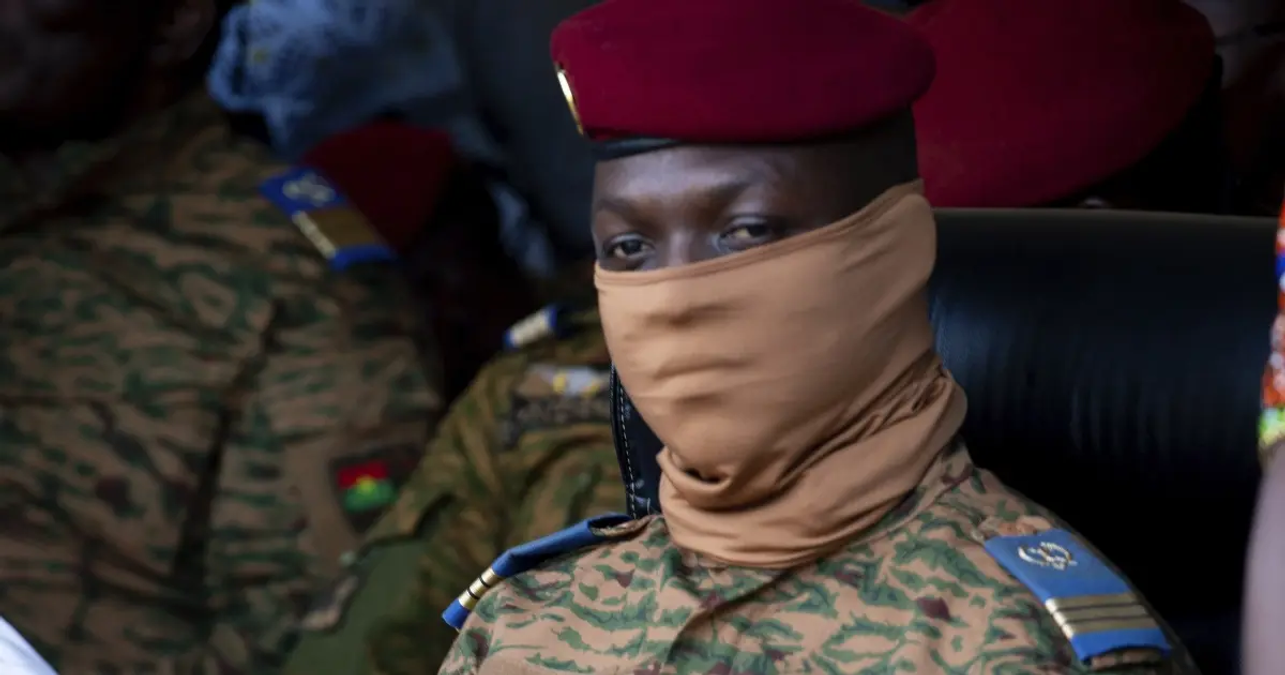
Source link

S Korea, Japan scramble warplanes in response to Russia, China air patrol | Military News

Seoul’s Joint Chiefs of Staff said Russian, Chinese planes entered its air defence zone during the joint exercise.

South Korea and Japan separately scrambled fighter jets after Russian and Chinese military aircraft conducted a joint air patrol near both countries.

Seven Russian and two Chinese aircraft entered South Korea’s Air Defence Identification Zone (KADIZ) at approximately 10am local time (01:00 GMT) on Tuesday, according to the office of the Joint Chiefs of Staff in Seoul.

Recommended Stories

list of 3 itemsend of list

The planes, which included fighter jets and bombers, were spotted before they entered the KADIZ – which is not territorial airspace but where planes are expected to identify themselves – and South Korea deployed “fighter jets to take tactical measures in preparation for any contingencies”, according to reports.

The Russian and Chinese planes flew in and out of the South Korean air defence zone for an hour before leaving, the military said, according to South Korea’s official Yonhap news agency.

On Wednesday the defence ministry said that a diplomatic protest had been lodged with representatives of China and Russia over the entry of their warplanes into South Korea’s air defence zone.

“Our military will continue to respond actively to the activities of neighbouring countries’ aircraft within the KADIZ in compliance with international law,” said Lee Kwang-suk, director general of the International Policy Bureau at Seoul’s defence ministry.

Japan separately deployed military aircraft to “strictly implement” air defence measures “against potential airspace violations”, following the reported joint patrol of Russia and China, Japanese Minister of Defence Shinjiro Koizumi said.

In a statement posted on social media late on Tuesday, Koizumi said two Russian “nuclear-capable Tu-95 bombers” flew from the Sea of Japan to the Tsushima Strait, and met with two Chinese jets “capable of carrying long-range missiles”.

At least eight other Chinese J-16 fighter jets and a Russian A-50 aircraft also accompanied the bombers as they conducted a joint flight “around” Japan, travelling between Okinawa’s main island and Miyako Island, Koizumi said.

“The repeated joint flights of bombers by both countries signify an expansion and intensification of activities around our country, while clearly intending to demonstrate force against our nation, posing a serious concern for our national security,” he added.

Koizumi’s statement comes just days after he accused Chinese fighter jets on Sunday of directing their fire-control radar at Japanese aircraft in two separate incidents over international waters near Okinawa.

On Monday, Japan’s Ministry of Defence said that it had monitored the movements of the Chinese aircraft carrier Liaoning and accompanying support vessels near Okinawa since Friday, adding that dozens of takeoffs and landings from Chinese aircraft on the carrier were monitored.

Japan said it was the “first time” that fighter jet operations on a Chinese aircraft carrier had been confirmed in waters between Okinawa’s main island and Minami-Daitojima island to the southeast.

FILE PHOTO: Chinese aircraft carrier Liaoning sails through the Miyako Strait near Okinawa on its way to the Pacific in this handout photo taken by Japan Self- Defence Forces and released by the Joint Staff Office of the Defence Ministry of Japan on April 4, 2021. Joint Staff Office of the Defence Ministry of Japan/HANDOUT via REUTERS ATTENTION EDITORS - THIS IMAGE WAS PROVIDED BY A THIRD PARTY. MANDATORY CREDIT. THIS PICTURE WAS PROCESSED BY REUTERS TO ENHANCE QUALITY. AN UNPROCESSED VERSION HAS BEEN PROVIDED SEPARATELY/File Photo
Chinese aircraft carrier Liaoning sails through the Miyako Strait near Okinawa on its way to the Pacific in this handout photo taken by Japan Self-Defence Forces and released by the Joint Staff Office of the Defence Ministry of Japan on April 4, 2021 [Joint Staff Office of the Defence Ministry of Japan via Reuters]

China’s Ministry of National Defence said on Tuesday that it had organised the joint air drills with Russia’s military according to “annual cooperation plans”.

The air drills took place above the East China Sea and western Pacific Ocean, the ministry said, calling the exercises the “10th joint strategic air patrol” with Russia.

Moscow also confirmed the joint exercise with Beijing, saying that it had lasted eight hours and that some foreign fighter jets followed the Russian and Chinese aircraft.

“At certain stages of the route, the strategic bombers were followed by fighter jets from foreign states,” the Russian Defence Ministry said.

Since 2019, China and Russia have regularly flown military aircraft near South Korean and Japanese airspace without prior notice, citing joint military exercises.

In November 2024, Seoul scrambled jets as five Chinese and six Russian military planes flew through its air defence zone. In 2022, Japan also deployed jets after warplanes from Russia and China neared its airspace.

China and Russia have expanded military and defence ties since Moscow’s full-scale invasion of Ukraine nearly four years ago. Both countries are also allies of North Korea, which is seen as an adversary in both South Korea and Japan.


Source link

Zelenskyy says Ukraine ready to hold polls if US, allies ensure security | Russia-Ukraine war News

Ukrainian leader responds to US President Trump’s suggestion that he is using the war as an excuse to avoid elections.

Ukrainian President Volodymyr Zelenskyy has declared that his government was prepared to hold elections within three months if the United States and Kyiv’s other allies can ensure the security of the voting process.

Zelenskyy issued his statement on Tuesday as he faced renewed pressure from US President Donald Trump, who suggested in an interview with a news outlet that the Ukrainian government was using Russia’s war on their country as an excuse to avoid elections.

Recommended Stories

list of 3 itemsend of list

Wartime elections are forbidden under Ukrainian law, and Zelenskyy’s term in office as the country’s elected president expired last year.

“I’m ready for elections, and moreover I ask… that the US help me, maybe together with European colleagues, to ensure the security of an election,” Zelenskyy said in comments to reporters.

“And then in the next 60-90 days, Ukraine will be ready to hold an election,” he said.

In a Politico news article published earlier on Tuesday, Trump was quoted as saying: “You know, they [Ukraine] talk about a democracy, but it gets to a point where it’s not a democracy any more.”

Zelenskyy dismissed the suggestion that he was clinging to power as “totally inadequate”.

He then said that he would ask parliament to prepare proposals for new legislation that could allow for elections during martial law.

Earlier this year, Ukraine’s parliament overwhelmingly approved a resolution affirming the legitimacy of Zelenskyy’s wartime stay in office, asserting the constitutionality of deferring the presidential election while the country fights Russia’s invasion.

In February, Trump also accused Zelenskyy of being a “dictator”, echoing claims previously made by Russian President Vladimir Putin.

Zelenskyy and other officials have routinely dismissed the idea of holding elections while frequent Russian air strikes take place across the country, nearly a million troops are at the front and millions more Ukrainians are displaced. Also uncertain is the voting status of those Ukrainians living in the one-fifth of the country occupied by Russia.

Polls also show that Ukrainians are against holding wartime elections, but they also want new faces in a political landscape largely unchanged since the last national elections in 2019.

Ukraine, which is pushing back on a US-backed peace plan seen as Moscow-friendly, is also seeking strong security guarantees from its allies that would prevent any new Russian invasion in the future.

Washington’s peace proposal involves Ukraine surrendering land that Russia has not captured, primarily the entire industrial Donbas region, in return for security promises that fall short of Kyiv’s aspirations, including its wish to join the NATO military alliance.
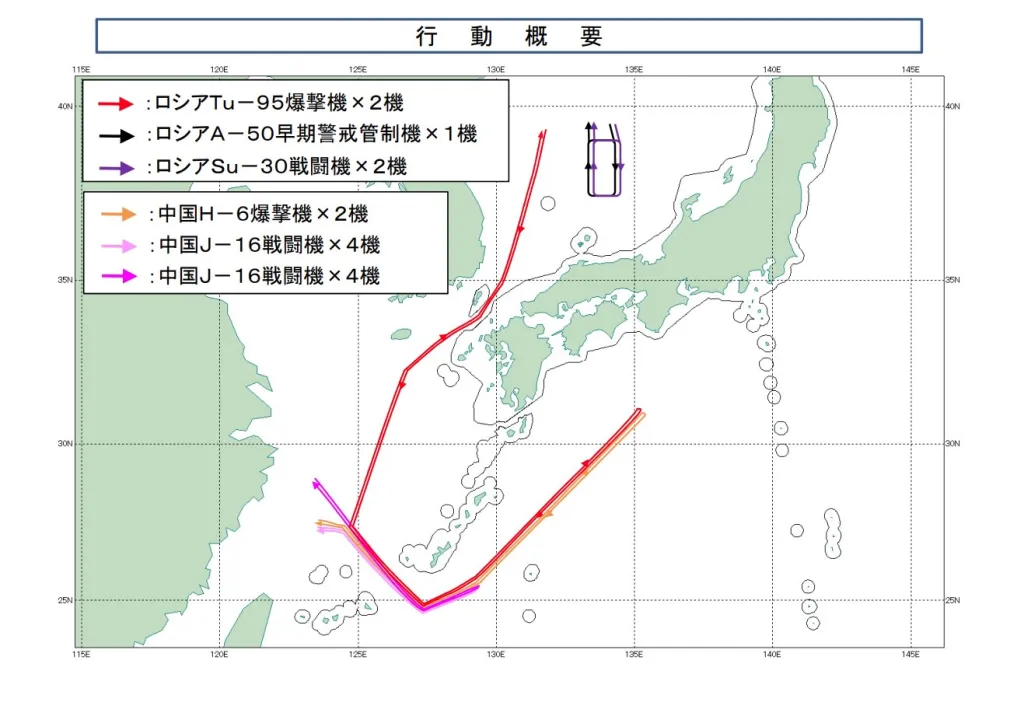
Source link