Stay up-to-date with the latest entertainment news from around the world. Get exclusive insights into celebrity gossip, red carpet events, movie premieres, music releases, and more.Stream TV Online Read more at: https://hotdog.com/tv/stream/
“I WANTED to exceed fans’ expectations with this tour,” Taylor Swift says during the opening episode of her The End of An Era six-part documentary series.
It’s not even up for debate that she did just that with the global trek, but I’m happy to report she also achieves this with her new Disney+ series.
Sign up for the Showbiz newsletter
Thank you!
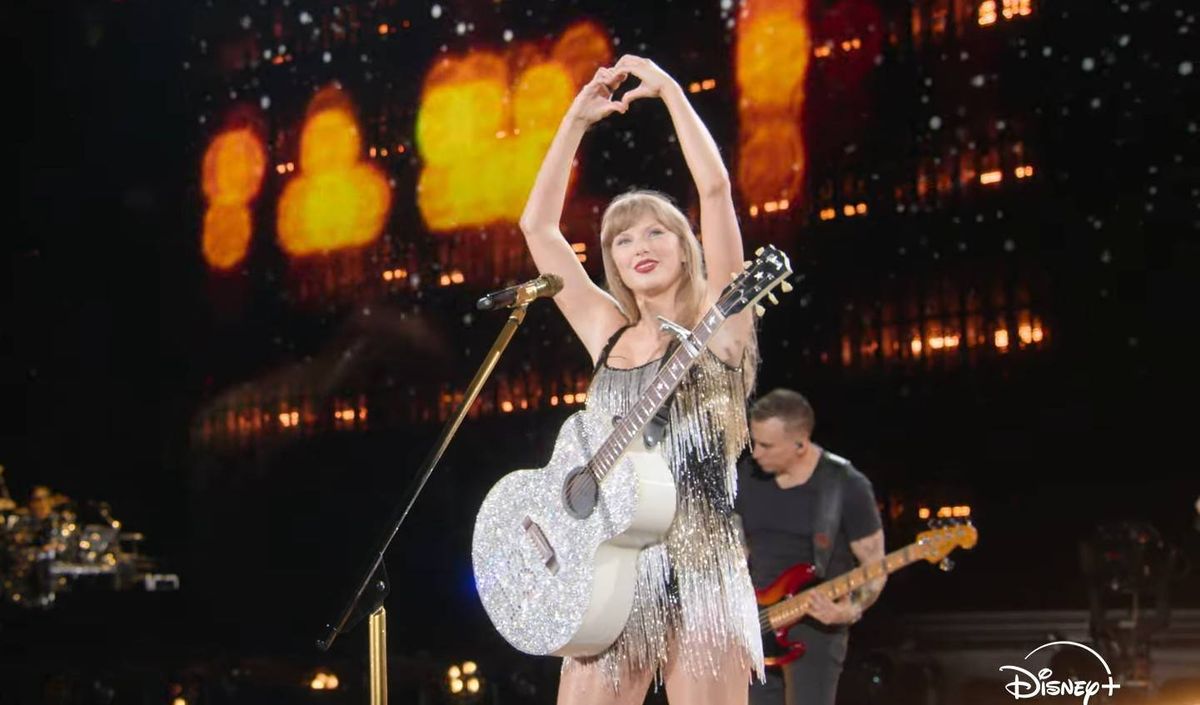
SuperstarTaylor reveals the truth behind her epic Eras tour in Taylor Swift, The End of An EraCredit: Disney +Taylor Swift discusses the Southport attack through tears on new Eras documentaryCredit: Disney
Disclaimer, I am a huge Swiftie, but before the first two episodes dropped I did have my concerns.
I feared the documentary would just be the same old footage of Taylor picking her outfits that we’ve now all seen a thousand times and fluffy backstories about her life on the road.
Of course, these types of moments are in there, but episode one alone pulls back the curtain on the most talked about tour of all time in ways other behind the scenes specials simply don’t.
The 43-minute long episode focuses on the heinous Southport attack, as well as the foiled terror plot at Taylor’s Vienna gigs, and lifts the lid on what went on behind the scenes.
Not that Taylor is moaning about her life – in fact at one point she openly accepts her reality isn’t normal.
Though as she sings on The Life of A Showgirl track Elizabeth Taylor, “Oftentimes it doesn’t feel so glamorous to be me”.
People were quick to join an online pile-on against Taylor over summer ’24 after she kept silent following the incident in Southport.
But those behind the wrath of masked crusaders may be feeling more than a little silly after the doc.
Episode 1 reveals rather than turning a blind eye behind and pulling up her drawbridge, away from the spotlight Taylor was determined to make a difference.
Taylor appeared visibly shaken by the events on her last tourCredit: Disney
And while I’ve obviously not spoken to any of those families in question, I would be willing to bet my flat that her decision to personally meet them has made a positive difference, far beyond that she gives herself credit for.
And it would be worth far more than a short Instagram story statement ever could.
In private Taylor was clearly struggling with the run of incidents, but on stage she never faltered.
While never brushing them under the carpet ignoring them, she was determined not to let events overshadow or dampen the magic she had created for the 10 million ticket holders on the 149 date trek.
I was lucky enough to attend three of the gigs in the capital – two of which took place after Vienna and Southport.
Both with those shows – and indeed with the new docuseries – the magic and escapism of Taylor’s world is very much alive and well.
A feat I doubt, even in decades to come, will ever change.
Ed Sheeran, a close friend of Taylor’s also appears in her docCredit: Splash
Hello! I’m Mark Olsen. Welcome to another edition of your regular field guide to a world of Only Good Movies.
Even in a year like this one, during which there are numerous truly remarkable movies in the awards-season conversation worthy of ongoing consideration, it is easy to grow tired of talking about a tightening circle of titles.
Which is part of the reason why the announcement of the program for the 2026 Sundance Film Festival came right on time this week. New movies! This will be Sundance’s last edition in its longtime home in Park City, Utah, before moving on to Boulder, Colo., starting in 2027. Adding to the import and emotion of the event is that it will be the first festival since the recent death of Sundance figurehead Robert Redford.
A number of films from the 2025 festival are still part of the ongoing awards conversation. Just this week, both “Train Dreams” and “Sorry, Baby” received Golden Globe nominations — which I am relatively certain was not on the minds of those filmmakers when they had their world premieres at Sundance this past January.
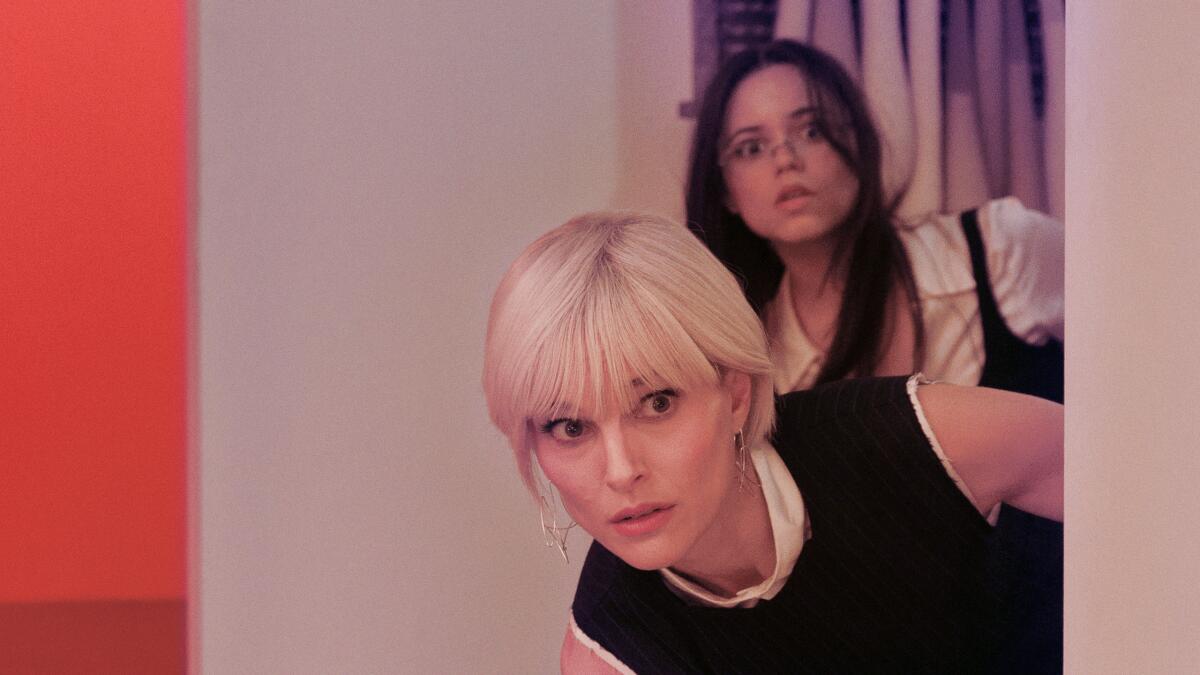
Natalie Portman and Jenna Ortega in “The Gallerist” by Cathy Yan, an official selection of the 2026 Sundance Film Festival.
(Sundance Institute / MRC II Distribution Company L.P.)
Among the titles to look forward to for Sundance 2026 are Gregg Araki’s provocative “I Want Your Sex,” Cathy Yan’s satirical “The Gallerist,” Jay Duplass’ family story “See You When I See You,” Tamra Davis’ ’90s music doc “The Best Summer” and a profile on Courtney Love called “Antiheroine.”
Of course, there will also be many titles from relatively unknown filmmakers, and it is that promise of discovery that keeps us coming back to Sundance year after year.
As festival director Eugene Hernandez put it, “As much as we can talk about the legacy and history and the old timers — which I think will add an incredible aspect to the festival this year — we’re creating a festival that is also focused on the celebration of new voices. … For so many people, it will be brand new, no matter what.”
‘Home Alone’ 35th anniversary
Macaulay Culkin and Joe Pesci in the movie “Home Alone.”
(20th Century Fox)
On Saturday, the Academy Museum will have a 35th anniversary screening of “Home Alone” with star Macaulay Culkin and director Chris Columbus in-person. Written by John Hughes, the film is about a young boy (Culkin) accidentally left behind by his family at the holidays and how he comes to defend himself against two bumbling thieves (Joe Pesci and Daniel Stern).
The movie has become a beloved all-ages holiday classic and seeing it with an enthusiastic audience should be a treat. The event is already sold out, but standby tickets are available.
In his original review of the movie, Peter Rainer noted, “Macaulay Culkin has the kind of crack comic timing that’s missing in many an adult star and even when the script gets soppy, he doesn’t turn himself into a cutesy ball of gloppy goo. He is refreshingly abrasive throughout.”
‘Mustang’ 10th anniversary
An image from Deniz Gamze Ergüven’s Oscar-nominated 2015 film “Mustang.”
(Cohen Media Group)
On Sunday, the American Cinematheque at the Los Feliz 3 will host a 10th anniversary screening of French-Turkish filmmaker Deniz Gamze Ergüven’s feature debut “Mustang,” which was nominated for the Academy Award for international feature. Ergüven is scheduled to be there in person.
The film is the story of five teenage sisters living in an isolated village and yearning for a life of freedom. In her review, Katie Walsh wrote, “‘Mustang’ beautifully expresses the girls’ unbridled energy, a force that refuses to be locked up, controlled or repressed. It’s a moving portrait of sisterhood, a celebration of a fierce femininity and a damning indictment of patriarchal systems that seek to destroy and control this spirit.”
In an interview with me at the time of the film’s release, Ergüven described the performances by the five actresses — Elit Iscan, Günes Sensoy, Ilayda Akdogan, Doga Zeynep Doguslu and Tugba Sunguroglu — as “one character with five heads.”
Ergüven added, “From very early on I always said it’s a monster of femininity, with 10 arms and 10 legs. They are intertwined, they are extremely familiar with one another. Sometimes, I said, they react to one another’s bodies as if they are extensions of their own body.”
Points of interest
‘Danger: Diabolik’ and ‘Barbarella’ in 35mm
Jane Fonda and John Phillip Law in the 1968 movie “Barbarella,” directed by Roger Vadim.
(Silver Screen Collection / Getty Images)
The Secret Movie Club is going to have a groovy Euro holiday party on Saturday with 35mm screenings of both Roger Vadim’s 1968 “Barbarella” and Mario Bava’s 1968 “Danger: Diabolik” at the Million Dollar Theater. Attendees are encouraged to dress in their best psychedelic finery.
“Barbarella” is one of those movies that’s difficult to describe and best to just experience for yourself: a sci-fi sex satire starring Jane Fonda directed by her then-husband Roger Vadim and co-written by counterculture maverick Terry Southern. Based on a French comic, the film was shot in Italy and produced by Dino De Laurentiis.
In a 1967 profile of Fonda and Vadim in Rome, which includes Fonda driving a Ferrari through the streets of the city to get from the historic villa where they are staying to Cinecittà studio, Fonda said, “The main thing about this role is to keep her innocent. You see, Barbarella is not a vamp and her sexuality is not measured by the rules of our society. She is not being promiscuous but she follows the natural reaction of another type of upbringing. She isn’t a so-called ‘sexually liberated woman’ either. That would mean rebellion against something. She is different. She was born free.”
“Danger: Diabolik” stars John Philip Law (also in “Barbarella”) as a master thief. With a score by Ennio Morricone and directed with high style by Bava, best known for more lurid genre excursions, the film is the ’60s Euro-heist jaunt of your wildest imagination.
Elaine May’s ‘A New Leaf’
Elaine May and Walter Matthau in the movie “A New Leaf.”
(United Archives via Getty Images)
On Wednesday, the Academy Museum will show Elaine May’s 1971 debut feature as writer-director, “A New Leaf,” in the big David Geffen Theater. Selected by the writer’s branch of the Academy, the screening will feature screenwriter Karen McCullah, writer-producer Kirsten “Kiwi” Smith and writer-producer Katie Silberman in person to talk about the film and May’s ongoing influence.
Even though the film as we know it was taken away from May and isn’t her complete vision, “A New Leaf” is nevertheless a film of bold, confident energy. Walter Matthau plays a trust fund playboy who is fast running out of money. He hatches a scheme to find, marry and then murder a woman of means to continue to fund his lifestyle. Enter May as a botanist who is equal parts awkward and rich. Dark, funny and insightful, the film is a true gem.
Here’s hoping the recently renewed interest in May’s slim body of directorial work — she has so far made only four films — spurs a long-gestating new project rumored to be shooting soon into a reality.
Eric Rohmer’s ‘My Night at Maud’s’ and ‘A Tale of Winter’
Françoise Fabian and Jean-Louis Trintignant in Eric Rohmer’s “My Night at Maud’s.”
(Janus Films)
On Wednesday at the Aero, the American Cinematheque will have a double-bill from French filmmaker Eric Rohmer: 1969’s “My Night at Maud’s” and 1992’s “A Tale of Winter.”
“My Night at Maud’s,” a breakout international hit for Rohmer, was nominated for two Oscars, for foreign language film and original screenplay. A series of conversations among an interlocking cast of characters, the film helped set the template for dialogue-driven adult dramas that still hold sway.
In his April 1970 review, Charles Champlin wrote, “‘My Night at Maud’s’ argues that thee attractive and intelligent people sitting around arguing about the philosophy of Pascal constitutes a movie. I agree. Standing on my chair and waving noisemakers in the air I agree. … But whether or not one cares about the substance of the arguments, ‘My Night at Maud’s’ is a hugely pleasurable evening out because of the excellence of its performances and the convincing and captivatingly credibility of its three principals. It is an adult film which makes clear once and for all what randy juvenilia all other ‘adult’ films are. This one is, of course, in impeccable taste.”
“A Tale of Winter” is the second of what became Rohmer’s “Tales of the Four Seasons.” In reviewing the film, Kevin Thomas wrote, “The French respect the quirky workings of the human heart more than any other people and among the French filmmakers, the keenest observer may be Eric Rohmer, whose ‘A Tale of Winter’ finds him at his scintillating best, never wiser or funnier.”
Taylor Swift’s Eras Tour ran from 2023 to 2024 and became a record breaking sensation
Taylor Swift’s highly anticipated new documentary, The End of an Era has finally landed on Disney Plus.
The six episode series, which will see two episodes released every week, gives an intimate look on the huge phenomenon that is the Eras Tour as it made headlines and excited fans around the world.
Disney teases: “In addition, the series features Gracie Abrams, Sabrina Carpenter, Travis Kelce, Ed Sheeran, and Florence Welch, along with her band, dancers, crew, and family members – offering never-before-seen insight into what it took to create a phenomenon.”
As well as the documentary, The Final Show also debuts today (December 12) which is the full concert film from the final show in Vancouver, featuring for the first ever time the entire set of The Tortured Poets Department.
As fans delve into the latest instalments of the brand new documentary, we have taken a look at some of the things that made the Eras Tour so huge.
Over 100 shows and 400 hours performed
The Eras tour ran from 2023 to 2024 meaning that Taylor and her crew performed a record breaking 149 shows.
Originally, the Eras Tour was announced back in 2022 with significantly less dates, but with such high demand, she added more to the diary and it quickly became a huge phenomenon.
The tour first kicked off in Arizona in March 2023 and came to an end in December 2024. In total, it is said the star spent over 480 hours on stage, which is the equivalent to just under three weeks.
As each show varied in length and was dependant on an array of things like the weather, each night was around three hours, making it a huge ambition that was successfully carried out.
According to reports, with 44 songs on her setlist, eventually increasing to 46 after her new album was released in 2024, Taylor also performed songs not on her setlist as part of a special acoustic performance.
The Eras Tour 100th show
Taylor’s 100th show was actually performed here in the UK, in Liverpool. Taking to Instagram, the star said: “So many dreamy memories from Liverpool!! We played our 100th show on The Eras Tour (which feels truly deranged to say because this show feels new to me every time we play it).”
She continued to thank everyone involved, adding the crowds were “expressive, generous and endlessly fun.”
What made the Eras Tour so popular?
The Eras Tour was a huge moment in Taylor’s career, celebrating all of the music through the decades, every era. Taylor took her music everywhere across the world, visiting over 20 countries.
It was a record breaking tour, bringing in over $2billion in sales making it the highest earning concert run. Taylor Swift Touring also confirmed over 10 billion people attended during the course of the tour.
And when it came to breaking records, reports suggest another record was broken when Ticketmaster sold the most tickets sold by an artist in a single day – many Swifties can remember the painstaking wait they endured for tickets.
There are many reasons the tour became a huge phenomenon, being timed post pandemic, but the main reason being it brought together fans of all ages, celebrating her entire career, being described as a huge cultural event.
Earthquake?
You may have seen reports at the time that Taylor Swift concerts generated seismic activity. In 2023 in Seattle, a seismologist said activity was recorded equivalent to a 2.3 magnitude earthquake.
Also in Edinburgh in 2024, reports suggest earthquake readings were again detected.
Friendship bracelets
Taylor Swift friendship bracelets are colourful, beaded bracelets that were made by fans for the Eras Tour, often traded in. Inspired by the song You’re On Your Own Kid, some fans ended up wearing dozens on their wrists, even hoping to give them to Taylor and her mum.
Food bank donations
While on tour, Taylor Swift donated to local food banks and charities when she visited a place.
According to ITV, the singer made a “generous donation” to around 1,400 food banks and community organisations in Edinburgh, Liverpool, Cardiff, and London.
Taylor Swift’s the End of an Era documentary is now available to stream on Disney Plus.
ICONIC rapper 50 Cent and actor Jason Momoa look totally different after undergoing major makeovers as part of their impending movie roles.
They have both undergone transformations for the movie Street Fighter which is due to be released in theatres next October.
Sign up for the Showbiz newsletter
Thank you!
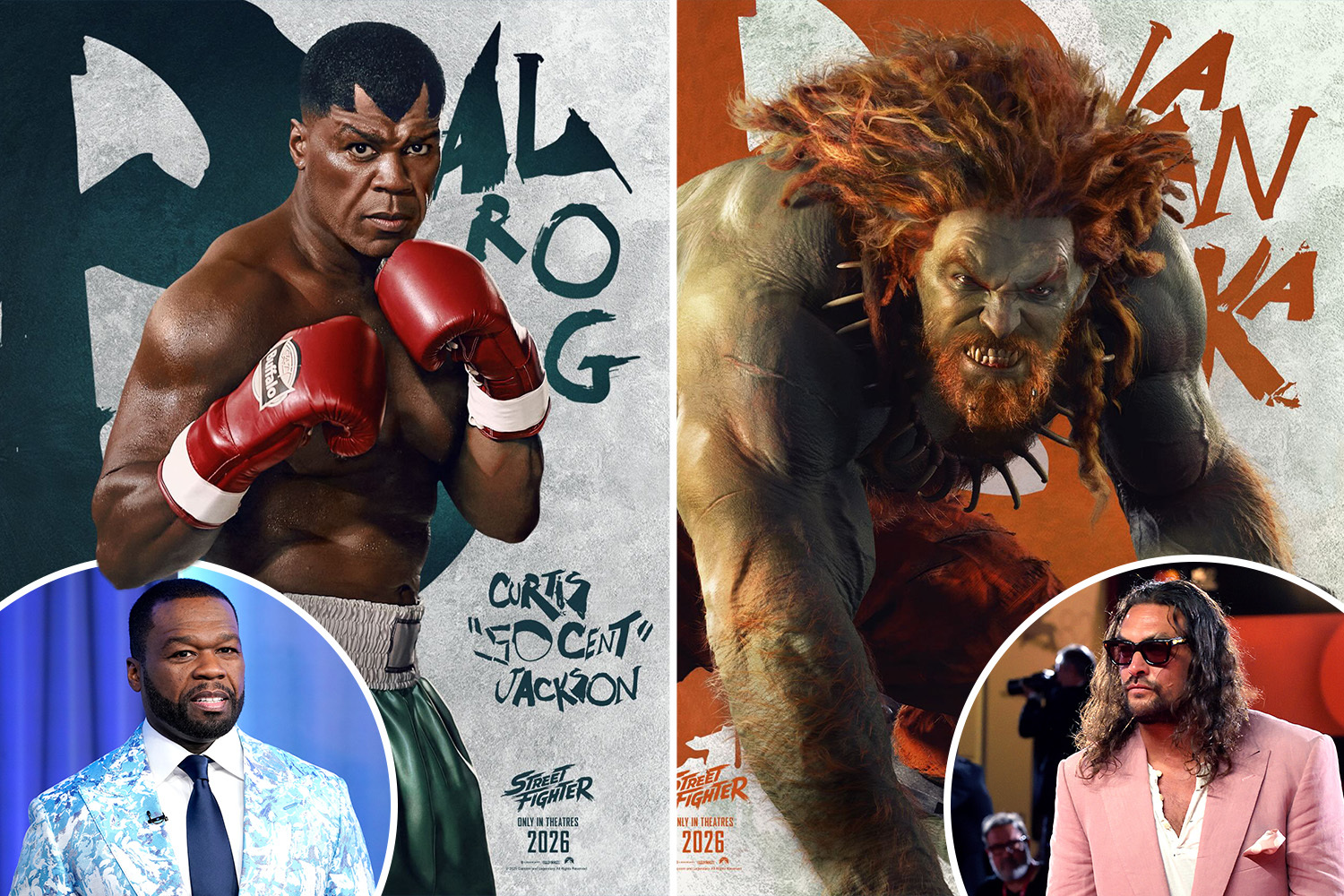
50 Cent has undergone a major transformationCredit: Instagram/streetfightermovieJason Momoa also looks totally different ahead of the release of the movie Street FighterCredit: Instagram/streetfightermovie
The two will be among an ensemble cast helping to reboot the popular film franchise.
In his poster promo image, Jason has transformed into Blanka the beast and looks a million miles away from himself.
He can be seen with ginger hair and a scruffy beard as he takes on the character.
Meanwhile, 50 Cent adopts his birth name of Curtis Jackson for his movie credit.
Donning boxing gloves and a unique haircut, he will play Balrog, a boxer, in the flick.
Other members of the cast include actor Noah Centenio, Andrew Koji, Orville Peck and Cory Rhodes.
Paramount Pictures have already released a synopsis for the movie, teasing: “Set in 1993, estranged Street FightersRyu(Andrew Koji) andKen Masters(Noah Centineo) are thrown back into combat when the mysteriousChun-Li(Callina Liang) recruits them for the next World Warrior Tournament: a brutal clash of fists, fate, and fury.
“But behind this battle royale lies a deadly conspiracy that forces them to face off against each other and the demons of their past.”
Street Fighter first launched as a popular video game that was first launched in 1987.
50 Cent previously revealed he had undergone an intense fitness regime in order to get himself ready for the movie role.
He wrote on TikTok three month ago alongside a video clip of him working out: “I don’t expect you to understand my level of discipline but watch it, it’s entertaining.”
50 Cent originally made his acting debut in the 2005 movie Get Rich or Die Tryin’.
He has since appeared in a plethora of hit movies and TV shows including Streets of Blood, Dead Man Running, Den Of Thieves and Power.
50 will be playing Balrog in the filmCredit: Instagram/streetfightermovieThe rapper has a completely different hairline to his Street Fighter characterCredit: GettyYou’d be forgiven for not recognising Jason in the picturesCredit: Getty
Kathy Kanjo, the director and CEO of the Museum of Contemporary Art San Diego, has been named the new director of the UC Irvine Langson Orange County Museum of Art. The news comes a little more than two months after UC Irvine announced it had acquired Orange County Museum of Art in a merger that created the new institution.
At that time, a rep for UCI said the hope was to announce a new director in the new year, so Kanjo’s appointment comes ahead of schedule. Kanjo has been at MCASD since 2016. Prior to that, she served as director of the University Art Museum at UC Santa Barbara.
When I first wrote about the merger, UC Irvine confirmed that it was taking over OCMA’s assets, employees and debt. A rep for UC Irvine declined to comment on a number, writing in an email that the budget for the new museum will come from university operating funds.
Kanjo inherits responsibility for a substantial collection of more than 9,000 artworks, including UC Irvine’s Gerald Buck Collection of more than 3,200 paintings, sculptures and works on paper by some of the state’s most important artists, including David Hockney and Ed Ruscha.
“The newly merged collection is both anticipated and underknown,” wrote Kanjo in an email. “I am eager to unveil and contextualize the artistic legacies of the Irvine, Buck, and OCMA collections from a particularly California point of view. Collected over time and together at last, these objects are an asset to be shared generously and supported by scholarly research. The constellation that is the UC Irvine Langson Museum offers a portrait of our state’s innovative artistic impulses.”
Kanjo also said the new museum would get a significant boost from UC Irvine’s research strength and commitment to public service.
“We will create rigorous and welcoming exhibitions that resonate with our region’s diverse audiences, young and old,” she wrote.
Despite the great fanfare of its opening in 2022, OCMA — with its 53,000-square-foot, $98-million Morphosis-designed building on the eastern edge of the Segerstrom Center for the Arts campus — never seemed fully realized. Problems were hinted at — but never explained — in April when CEO Heidi Zuckerman announced her intention to step down.
Meanwhile UC Irvine had been planning to construct a museum for its collection for quite some time. That, too, never really got off the ground. If there were ever a time to build consensus around a new mandate for the merged organizations, that time is now. Kanjo has a vision for the future that appears to center scholarship.
“I want to clarify the core identity of the collection and find connections back to campus and into the community,” she wrote. “The post is appealing because of its connection to UC Irvine, a leading research university, and the opportunity to work with the students within the Claire Trevor School of the Arts and all of the campus resources. The potential to foster innovation by working in a cross-disciplinary/cross-campus way is strong.”
I’m arts and culture writer Jessica Gelt, planning a drive to Orange County in the new year. Here’s your arts and culture news for the week.
On our radar
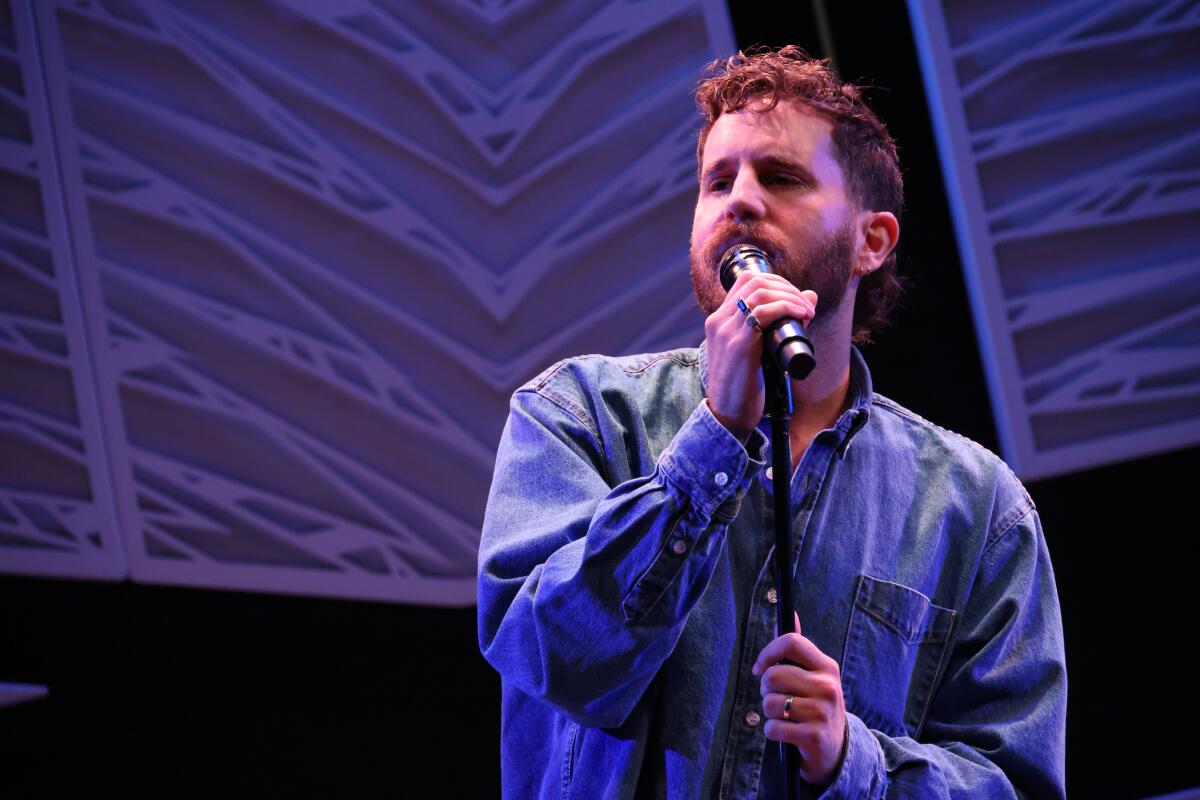
Broadway star Ben Platt will perform 10 shows at the Ahmanson starting Friday.
(Rob Kim / Getty Images)
Ben Platt: Live at the Ahmanson The award-winning star of stage and screen hits town for 10 shows where he’ll sing his greatest hits and Broadway favorites. And where Platt goes, his big-time friends follow, so expect some great surprise guests each night. 8 p.m. Friday-Saturday and Dec. 19-20; 3 and 8 p.m. Sunday and Dec. 21; 7:30 p.m. Wednesday-Thursday. Ahmanson Theatre, 135 N. Grand Ave., downtown L.A. centertheatregroup.org
“Holiday Legends” is this year’s seasonal performance by the Gay Men’s Chorus of Los Angeles.
(Gay Men’s Chorus of Los Angeles)
Holiday Legends The Gay Men’s Chorus of Los Angeles’ annual celebration pays homage to the greats, including Mariah Carey, Irving Berlin and Johnny Mathis, plus traditional choral classics, pop Christmas anthems and Hanukkah favorites. 8 p.m. Saturday. 3 p.m. Sunday. Saban Theatre, 8440 Wilshire Blvd., Beverly Hills gmcla.org
The Huntington in San Marino.
(Allen J. Schaben/Los Angeles Times)
Stories from the Library: From Brontë to Butler This series highlights the literary side of the Huntington and its world-class library. In the newest exhibition, journals, letters, photographs and personal items provide a behind-the-scenes look at two centuries of women writers bookended by Charlotte Brontë and Octavia E. Butler. Through June 15. The Huntington, 1151 Oxford Road, San Marino. huntington.org
You’re reading Essential Arts
The week ahead: A curated calendar
FRIDAY Holiday Soirée & Cabaret Fountain Theatre celebrates the season with a live announcement of its 2026 season, a cabaret performance from Imani Branch & Friends, plus, a raffle and reception. There will also be two separate performances of the cabaret. Soirée and cabaret: 7 p.m. Friday. Cabaret: 7 p.m. Saturday; 2 p.m. Sunday. Fountain Theatre, 5060 Fountain Ave. FountainTheatre.com
Violinist Renaud Capuçon.
(Los Angeles Philharmonic)
Mozart & Sibelius Violinist Renaud Capuçon joins conductor Gustavo Gimeno and the L.A. Phil for a program that combines “Mozartian elegance with brooding Nordic drama.” 8 p.m. Friday and Saturday; 2 p.m. Sunday. Walt Disney Concert Hall, 111 S. Grand Ave., downtown L.A. laphil.com
Santasia The long-running holiday spectacle featuring broad comedy, musical parodies and old school claymation returns to L.A. for a 26th year. Through Dec. 27. Whitefire Theatre, 13500 Ventura Blvd., Sherman Oaks. santasia.com
SATURDAY
Laurel Halo performs Saturday at the Nimoy.
(Norrel Blair)
Laurel Halo Currently based in L.A., the musician combines ambient, drone, jazz and modern sensibilities in new works for piano and electronics in a preview of her forthcoming album. 8 p.m. UCLA Nimoy Theater, 1262 Westwood Blvd. cap.ucla.edu
Sound + Source Art meets music as DJs Novena Carmel, Francesca Harding and KCRW music director Ale Cohen provide a site-specific soundtrack to the exhibition “Corita Kent: The Sorcery of Images.” 11 a.m.-6 p.m. Marciano Art Foundation, 4357 Wilshire Blvd. marcianoartfoundation.org
Pacific Jazz Orchestra The 40-piece hybrid big band and string ensemble, led by Chris Walden, presents its “Holiday Jazz Spectacular,” featuring vocalists Aloe Blacc, Sy Smith and Brenna Whitacre. 8 p.m. Alex Theatre, 216 N. Brand Blvd., Glendale. pacificjazz.org
Holiday Family Faire Theatricum Botanicum’s annual daylong winter wonderland featuring performances, food and drink and a marketplace; followed by “It’s a Wonderful Life: A Live Radio Play,” by Joe Landry, and starring Beau Bridges, Wendie Malick, Joe Mantegna and Rory O’Malley. 11 a.m. Family Faire; 5 p.m. “It’s a Wonderful Life.” Will Geer Theatricum Botanicum, 1419 Topanga Canyon Blvd, Topanga. theatricum.com
SUNDAY
The band Emily’s Sassy Lime in Olympia, Wash., circa 1995.
(Emily’s Sassy Lime)
Artist Talk Emily Ryan, Amy Yao and Wendy Yao of the ‘90s Orange County riot grrrl band Emily’s Sassy Lime join artist-activist-musician Kathleen Hanna of the band Bikini Kill for a discussion of adolescence, creativity and community. The talk is part of the museum’s “2025 California Biennial: Desperate, Scared, But Social,” which closes Jan. 4. 2 p.m. UC Irvine Langson Museum/Orange County Museum of Art, 3333 Avenue of the Arts, Costa Mesa. ocma.art
English Cathedral Christmas The Los Angeles Master Chorale brings the magic of Canterbury Cathedral downtown, reveling in the grand tradition of British choral works from the 16th century to the present.. 7 p.m Walt Disney Concert Hall, 111 S. Grand Ave., downtown L.A. lamasterchorale.org
TUESDAY Aron Kallay In “Midcentury/Modern,” the pianist performs works from world premieres by Michael Frazier, Zanaida Stewart Robles and Brandon Rolle, along with 20th century works by Grażyna Bacewicz and Sergei Prokofiev in a program presented by Piano Spheres. 8 p.m. Thayer Hall at the Colburn School, 200 S. Grand Ave., downtown L.A. pianospheres.org
WEDNESDAY BOTH: A Hard Day’s Silent Night Open Fist Theatre Company’s annual holiday charity concert benefiting Heart of Los Angeles, an organization that helps kids in underserved communities, infuses the music of the Beatles with Gospel flair to tell the Christmas story. 8 p.m. Wednesday-Friday; 3:30 and 9 p.m. Saturday; 3:30 and 7 p.m. Sunday. Atwater Village Theatre, 3269 Casitas Ave. openfist.org
Elaine May and Walter Matthau star in “A New Leaf,” which screens at the Academy Museum on Wednesday.
(Film Publicity Archive/United Archives via Getty Images)
A New Leaf Elaine May made Hollywood history with this 1971 screwball noir as the first woman to write, direct and star in her own feature film. Walter Matthau co-stars as a playboy who has burned through his own fortune so plans to marry and murder May’s kooky heiress to get hers. 7:30 p.m. Academy Museum, 6067 Wilshire Blvd. academymuseum.org
Culture news and the SoCal scene
Architect Frank Gehry in his Playa Vista office in 2015.
Swed also wrote a story that came out of a recent trip to Tokyo about Carl Stone, an L.A. based composer from the Japanese capital, who uses his laptop to record environmental sounds and transform them into sonic sculptures. “Stone’s iPad, with its open sonic complexity, created a sense of space, a roomy aural soundscape in which jazz and butoh became elements not egos, not larger than life, just more life, the merrier,” writes Swed.
McNulty wrote an interesting essay about characters breaking the fourth wall and how it can galvanize an audience. “Breaking the fourth wall is a tried-and-true method of calling an audience to attention. But a new breed of dramatist, writing in an age of overlapping calamities — environmental, political, economic, technological and moral — is retooling an old playwriting device to do more than inject urgency and immediacy in the theatrical experience,” McNulty writes.
I spent time in Palm Springs over the Thanksgiving break to cover the grand reopening of the Palm Springs Plaza Theatre, which recently underwent a $34-million restoration. To celebrate, it hosted an intimate show featuring actor, singer, songwriter Cynthia Erivo.
I also had the pleasure of sitting down for an interview with Broadway actor Ben Platt in advance of his 10-day residency at the Ahmanson Theatre. We bonded over being anxious people, and he shared that he keeps his anxiety in check through live performance.
Enjoying this newsletter? Consider subscribing to the Los Angeles Times
Cameron Watson is the new artistic director of Skylight Theatre Company.
(David Zaugh)
Cameron Watson has been named Skylight Theatre Company’s new artistic director, beginning Jan. 1. He will replace Gary Grossman, who is stepping down after four decades at the helm of the Los Feliz-based theater, during which time he turned the company into one of the most respected small theaters in the city. “Cameron’s passion, his theatrical vision and his ability to lead, listen, nurture and mentor make him the perfect fit for Skylight,” Grossman said in a statement.
Earlier this week, philanthropist MacKenzie Scott gave $20 million to the Japanese American National Museum — the largest single gift in the organization’s history. Scott, the former wife of Amazon founder Jeff Bezos, also gave the museum $10 million in 2021.
Hamza Walker, the Brick executive director who is behind the critically acclaimed “Monuments” exhibit at the Brick and MOCA, has been honored with the 2026 Audrey Irmas Award for Curatorial Excellence, given by the Bard College Center for Curatorial Studies. “Hamza’s three decades of curatorial practice have brought forward voices and perspectives that challenge dominant narratives, create dialogue, and have left a lasting imprint on the field,” said Tom Eccles, executive director of the Center for Curatorial Studies, in a statement.
The Times this week released its annual list of the 101 best restaurants in Los Angeles. I plan to go to every one. Well, maybe, like 20. It could get expensive.
The star died in hospital at the age of 77, his colleagues confirmed on TV.
Bethany Whittingham and Helen Kelly Head of Screen Time
15:28, 12 Dec 2025
The broadcaster has been a part of the show for several years(Image: Seven)
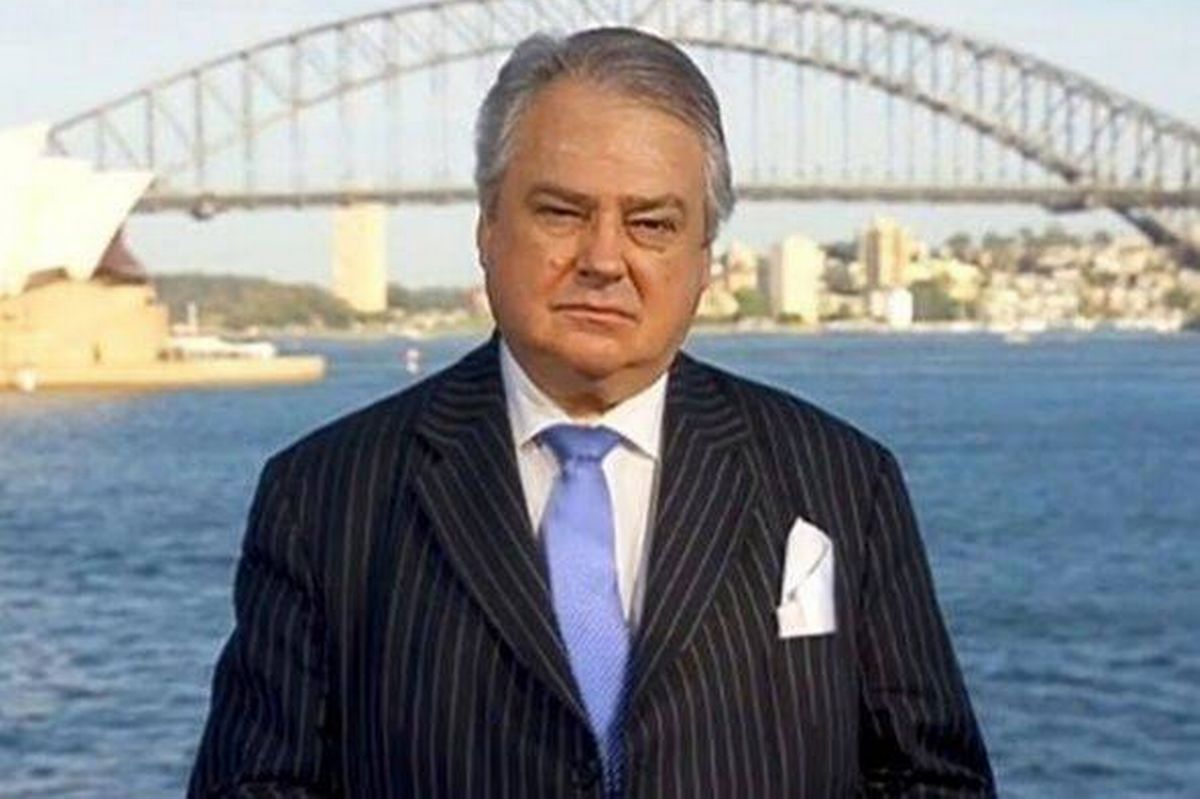
Sunrise star Dr Keith Suter has died in hospital at the age of 77 this year, it has been confirmed.
The broadcaster’s death was announced by hosts Samantha Armytage, Natalie Barr, and Matt ‘Shirvo’ Shirvington as they delivered an emotional tribute to him live on air.
They revealed that the former Foreign Affairs Editor, who held three doctorates and chaired numerous international bodies, “passed away peacefully in hospital”.
The sad news was delivered by Nat, 57, and Shirvo, 47, on Sunrise early Friday morning (December 12). They opened the programme saying: “Before we heard the news, we just wanted to pay a quick tribute to a close friend and member of this Sunrise, Dr Keith Suter, who passed away peacefully in hospital this week.
“Keith has been part of the Sunrise and Seven family for so many years, the most brilliant mind, a calm and trusted voice on some of the most complex stories, and a joy to work with behind the scenes as well.
“He helped explain wars, elections, and global crisis upon crisis, but he always did it with measure so people felt safe, and this morning our thoughts are with his beautiful family.”
Samantha, 49, who previously co-hosted Sunrise from 2013 to 2021 with fellow presenter David ‘Kochie’ Koch, also posted a moving tribute to the late broadcaster on Instagram, reports the Express.
Posting a picture of the Australian expert in his element whilst presenting on the breakfast programme, she wrote: “Very sad to hear of the passing of Dr Keith Suter overnight. He was a wonderful man.
“He guided us through many of the biggest world issues of our time – with grace and humour. You could talk to him all day, and often during breaking news, we did. RIP Dr Keith.”
Meanwhile, Nat and Shirvo shared on air that viewers had already begun sending their condolences to Suter’s family, with one observer noting that the presenter “made complicated world politics comprehensible and will be sorely missed.”
Nat reflected: “World affairs is complicated, and I think a lot of people, you kind of almost feel like you pretend you know what it is about, but we got to ask him really basic questions and boy, did he explain it all to us.”
Shirvo added: “He spoke to the people, didn’t he? And he was a beautiful man with such a lovely manner. And I tell you what, he always dressed so, so well as well.”
Nat responded with a chuckle: “I know. We are really going to miss him… Our sincere condolences to his family, he will be sorely missed.”
Suter was renowned for his extensive career with Seven, where he educated Australian audiences about international affairs and simplified intricate geopolitical matters. He also served as a futurist and strategic planning adviser, boasting three doctorates from Sydney.
The broadcaster specialised in international law of guerrilla warfare, the social and economic impacts of the arms race, and strategic planning scenarios. His groundbreaking work in this arena caught significant attention.
The Australian Government presented him with its Peace Medal in 1986, and he later received recognition as Rostrum’s Communicator of the Year in 1995.
During the 2019 Queen’s Birthday Honours, he was appointed a Member of the Order of Australia for “significant service to international relations, and to the Uniting Church of Australia.”
He chaired multiple organisations, including the International Humanitarian Law Committee of the Australian Red Cross and the International Commission of Jurists (NSW). Additionally, he held positions as director of studies at the International Law Association (Australia Branch) and managing director of the Global Directions think tank.
The telly veteran featured across numerous programmes on both wireless and television discussing politics and international matters, holding the position of Foreign Affairs Editor for Channel Seven for an extended period.
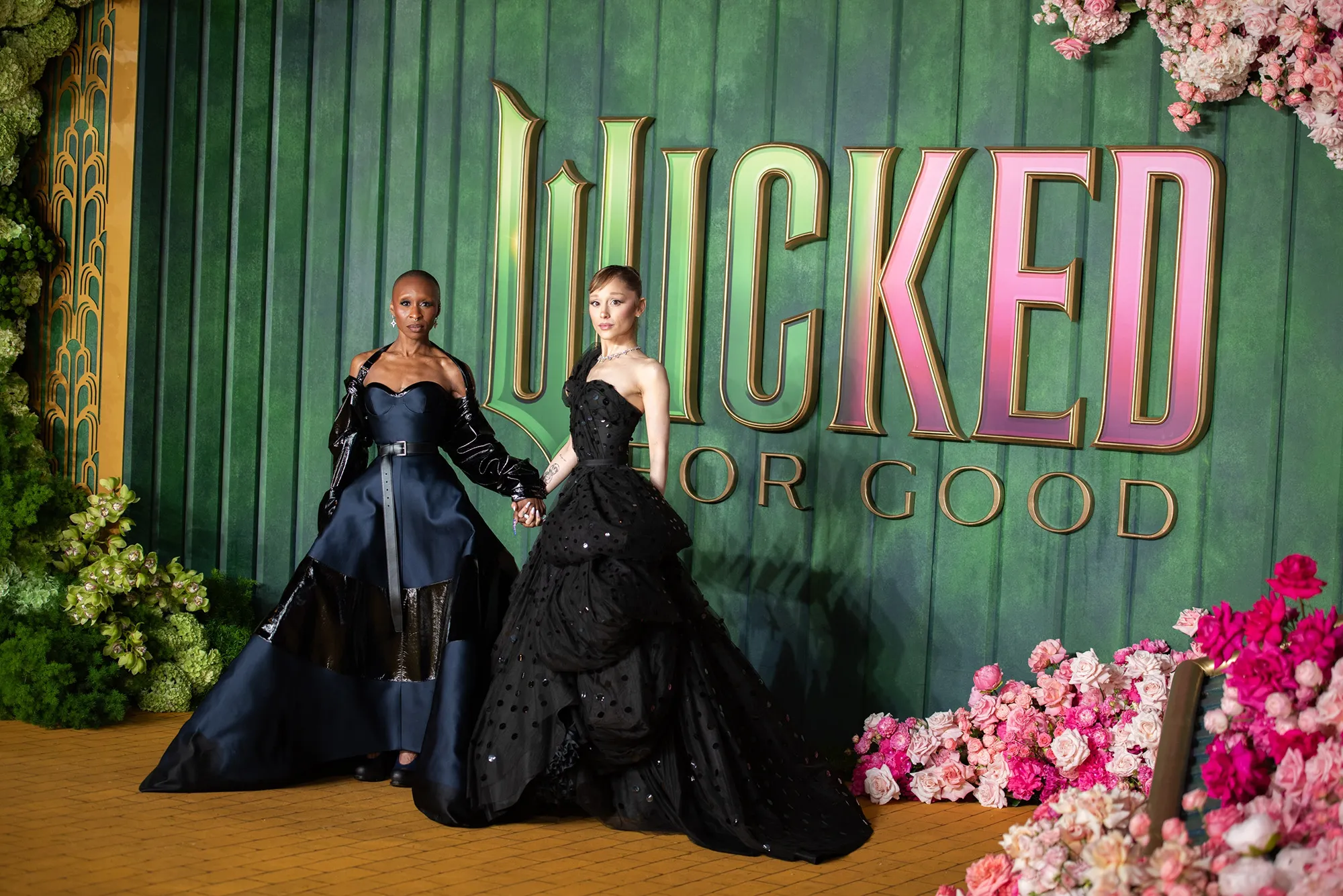
WICKED: For Good, the blockbuster musical sequel, recorded the second-biggest box office opening weekend of 2025, amassing £170million worldwide.
Google Trends data shows interest in the film surged ahead of its release on November 21 before dropping sharply in the weeks that followed.
Sign up for the Showbiz newsletter
Thank you!
Cinema-goers flocked to see the latest Wicked movie on its opening weekend
Searches for the film climbed steadily through October, peaking in November as hype around Ariana Grande and Cynthia Erivo reached its highest point.
The days just before the film’s release recorded the strongest search activity, with Google Trends showing a clear spike as fans hunted for new clips, early reviews and last-minute tickets.
But the data also reveals what happened once the spoiler-free rush was over. By the beginning of December, searches for “Wicked: For Good” had begun to fall fast.
Google searches for Wicked: For Good peaked in November, before falling sharply
The decline suggests the film’s online buzz was already settling, even though it launched during peak cinema-going season and arrived with one of the biggest fanbases in modern musical history.
Within the data, Google Trends shows that interest wasn’t just limited to the leads.
Bethany Weaver, a standout supporting cast member, saw a spike in searches immediately after release, indicating that audiences were curious about her role and keen to learn more about the rising star.
Fans flocked online to read interviews, explore her career and performance, giving Weaver her own moment in the spotlight.
The film’s soundtrack proved equally magnetic.
Searches for “Wicked songs” surged following the premiere, as viewers streamed iconic numbers, from soaring duets to emotional solos.
According to Google Trends, the soundtrack maintained high interest for several days after the release, showing that the music continued to engage fans even as searches for the film itself tapered off.
When the first Wicked movie hit UK cinemas in November 2024, its Google Trends curve showed a longer-lasting surge, with searches remaining elevated for weeks after release.
Fans showed interest in the movie’s stars – particularly lesser-known cast members
That film not only dominated box office charts in 2024, but also sparked a renewed and sustained interest in the stage musical and soundtrack.
Wicked: For Good, however, has dropped off much quicker.
While interest shot up immediately before and at the time of release, search volumes for the film itself had plunged by early December, indicating fans were moving on.
Only specific elements of the sequel, such as its soundtrack and cast members, continue to draw attention.
Where the original Wicked enjoyed a sustained afterlife, Wicked: For Good’s buzz seems to have been more short-lived.
Strong at first, the trend is declining, even as fragments of interest survive around music and memory‑making moments.
What does that say about the movie’s success? And how would a third film fare…?
“H Is for Hawk” is for the birds. And such majestic creatures they are, holding their own opposite the magnificent Claire Foy (“All of Us Strangers”).
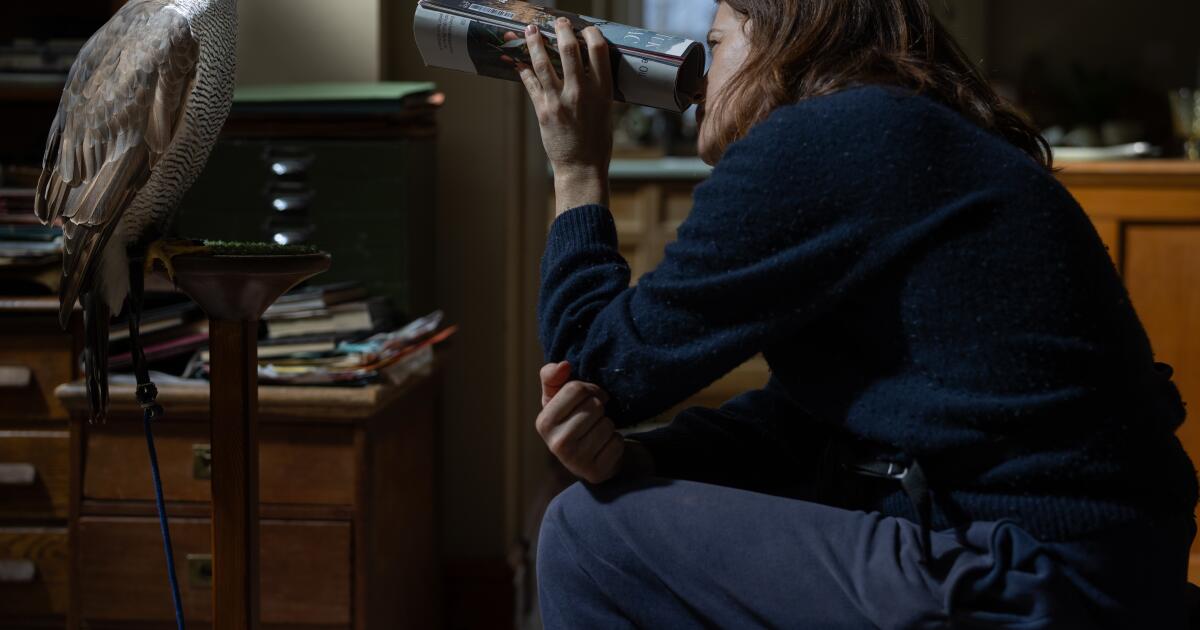
The film, directed by Philippa Lowthorpe and based on Helen Macdonald’s memoir, centers on Foy’s character Helen, devastated by the sudden loss of her father (played by Brendan Gleeson). In her grief, she turns to a childhood interest, falconry, and buys a goshawk. The wilder the bird, the tamer the name; Helen calls her Mabel.
Producer Dede Gardner and Lowthorpe had worked with Foy before (in “Women Talking” and “The Crown,” respectively) and agreed she’d be perfect as Helen. But Mabel was another story entirely.
Lowthorpe tapped Lloyd and Rose Buck, married bird specialists who had worked for decades on natural history documentaries with the likes of David Attenborough. Since they were conveniently located not far from her home in Bristol, England, the three got together to figure out how to make the film work.
Five birds were needed to play the character of Mabel at different points; the main two would have to be raised and trained by the couple long before filming began. Sisters Mabel 1 and Mabel 2 had the bulk of the work. “They’re from the same clutch, but they’re like chalk and cheese in character,” says Lloyd. “Mabel 2 is much shier and has more wildness in her,” so she was used in the nervous bird scenes early on. Mabel 1 was used to fly to and from Foy’s glove, and for much of the action depicting Helen cohabiting with Mabel in her house.
Jess, on loan from a friend in Scotland with a falconry center, was accustomed to people, so she was featured in Mabel’s calmest moments. Juha, the only male and much smaller than the females, was seen only in high aerial shots. And Lottie starred in the hunting scenes, traveling up to 45 miles an hour through the woods to capture her prey.
Before filming was set to begin, Foy visited the Bucks for two weeks of intensive falconry training. “That was a crucial moment for the whole project, because unless they’ve taken to Claire and she’s taken to them, I don’t think it could ever have worked,” Lloyd says. “But because she was so amazing, it works. She’s interested, clever, intelligent, but above all she’s just a lovely person, and that’s what they see. You can’t fool them, they’re not silly; they can see if someone’s pretending to like them but they don’t really.”
Foy was delighted to work with the birds and with the Bucks. “They’re incredibly kind people,” she says. “They’re so tender and so beautiful with their birds, and therefore they are with other human beings as well. But also they just threw me in. At the end of the first day I was with Lottie hunting, letting her release off my arm. Learning with the birds was the last piece of the puzzle of Helen and the experience I was going to have, so it became a really profound experience.”
“Claire put her heart and soul into that training,” Lowthorpe says. “She has great physical instincts as well as emotional instincts.”
Everything on set revolved around the hawks’ well-being. Filming took place between October and January, to avoid molting season. Everyone in the crew wore drab, dark colors, because that’s what the birds were used to. Microphones were hidden because the birds didn’t like booms, and most of the crew hid upstairs; even Lowthorpe hid behind a piece of furniture with her monitor. Lloyd or Rose would either hood or remove the scene’s Mabel, and give the all-clear, before the crew could reappear to work between takes.
“I told Charlotte Bruus Christensen, our fantastic DP, we should just film everything,” Lowthorpe recalls. “If you pin it you might kill the flavor of danger or surprise. Claire was so in tune in those scenes, she was able to react in an improvisational way, and she would be in her character at all times during those long, long takes. Like I was capturing the hawks, I was capturing Claire, allowing her to move wherever she wanted.”
“It wasn’t like having another actor who had another agenda or actions or a perspective that they wanted to get across in the scene,” Foy says. “I was along for the ride with these animals.”
When Helen takes Mabel for her first walk around the house, she talks gently to her. “This is my kitchen,” she says. Mabel flaps her wings wildly. “It’s not that bad.” The bird poops. “Oh, thanks very much.”
Mabel becomes both salvation and addiction to Helen. “To feel that alive, chasing a goshawk as it’s hunting, you’re part of this extraordinary experience, which feels spiritual and meaningful,” Foy explains. “I do think that we try to avoid the ugliness of grief at all costs, like that’s something you’re supposed to do alone in a cupboard that isn’t witnessed. We just are so afraid of that expression of it. The journey with Mabel is the most vivid expression of that experience.”
Back home in London, Foy says she intends to visit the Mabels. “Whenever you drive on the motorway in the U.K., you’ve birds of prey everywhere, and now I can identify them,” she says. “I see them everywhere I go. There’s an owl out the back of my house. I feel like I’m constantly looking upwards now.”
Series two of the Death in Paradise spin-off, Return to Paradise, concludes tonight
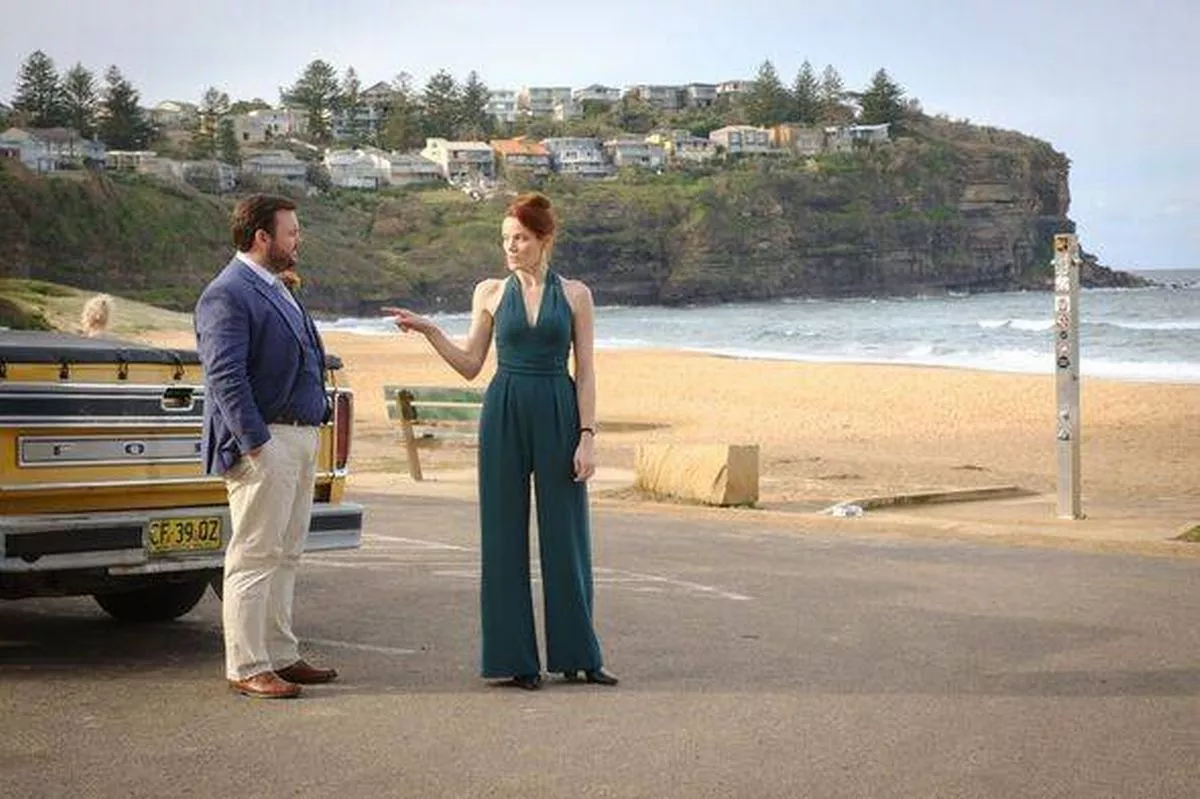
Return to Paradise concludes tonight, leaving fans wondering if Glenn and Daisy will tie the knot. The Death in Paradise spin-off, set in Australia, has been a massive hit with viewers, particularly after Anna Samson, portraying DI Mackenzie Clarke, stepped into the role of the show’s first female lead.
The synopsis for tonight’s climactic finale hints, “Mack is forced to interrupt Glenn and Daisy’s wedding when a guest collapses and dies, apparently poisoned by a fast-acting toxin present on the surface of a programme for the event.
“The happy couple are distinctly unhappy when the proceedings are halted, and it may be that Mack has finally pushed Glenn too far.”
However, after six thrilling episodes of the BBC drama, series two of Return to Paradise will draw to a close. The show, which typically airs every Friday at 8pm, will make way for the Celebrity Masterchef Final next week.
The synopsis for the upcoming show, scheduled to air between 8pm and 9pm on Friday, December 19, states, “Fifteen famous faces started the battle to become Celebrity MasterChef Champion 2025 and now only three remain,” reports the Express.
“The finalists must now cook and present a three-course meal for Grace Dent and John Torode, who will be expecting only the very best. The title is within reach – but any flaws in their cooking could see the contestants losing their grip on the trophy.”
Although the second series of Return to Paradise has wrapped up, devoted viewers needn’t fret, as both Death in Paradise and Beyond Paradise are set to deliver festive treats with a special Christmas episode arriving on screens this month.
Kris Marshall is returning as DI Humphrey Goodman in Beyond Paradise, joined once again by Sally Bretton as his beloved Martha Lloyd.
The Christmas special’s synopsis reveals: “When Esther discovers a man on the steps of the Shipton Abbott police station with no memory, holding a photo of Humphrey, the team gets to work to uncover who the mysterious man is while balancing a flurry of festive cases.”
It continues: “At the same time, with the help of Anne, Zoe and a special guest, Martha races to pull off her secret plan while Kelby tries to help a mystery man trapped inside his snowman costume. But with an influx of unexpected visitors, a slew of holiday crimes to crack, and a heartwarming reunion on the line, can the team juggle it all and still be ready for a life-changing reveal?”
Meanwhile, Don Gilet returns as DI Mervin Wilson in Death in Paradise, alongside Shantol Jackson reprising her role as his partner, Naomi Thomas.
The festive episode of Death in Paradise promises intrigue, as the synopsis reveals: “The office Christmas party of a lifetime takes a dark turn when four co-workers wake up to find a stranger dead in the pool of their Caribbean villa. DI Mervin Wilson and the team identify the murder weapon, but they’re left baffled when they find that it was locked in a drawer when the murder took place… thousands of miles away from the crime scene, in Swindon!
“Stuck in Saint Marie, the team calls on the help of a familiar face to crack the case. Meanwhile, Mervin’s anxiously waiting to hear back from his newly discovered brother, which prevents him from embracing Saint Marie’s Christmas celebrations. Can Mervin resolve his family situation and get into the festive spirit – for the sake of his team and the island?”
Viewers can catch Return to Paradise on BBC iPlayer.
Timothee Chalamet has addressed rumours he is Brit rapper EsDeeKid for the first timeCredit: Radio 1Fans have speculated the Hollywood star is the masked rapper from LiverpoolCredit: Instagram/esdeekidGreg James grilled him on BBC Radio OneCredit: Radio 1
EsDeeKid has never revealed his identity or anything connected to his personal life and keeps his face covered by masks at all time.
However, social media became awash with theories that the rap star was actually New Yorker Timothee thanks to a series of coincidences.
Now, the Wonka star has addressed the rumours for the first time in an interview on BBCRadio One with Greg James ahead of the release of his next movie, Marty Supreme.
Greg simply started by saying the name EsDeeKid to Timothee to which he quickly said: “No comment.”
The actor then coyly added with a smirk upon his face: “All will be revealed in due time.”
Greg then went on to explain the theory and showed Timothee images of EsDeeKid in which his piercing blue eyes, which bear a striking resemblance to the Dune actor’s, could be seen through gaps in his masks.
The radio host asked Timothee if he agreed that they were “beautiful eyes”, with the actor simply replying: “Yes.”
Greg then asked once again if the star was him leaving Timothee to repeat: “All… will be revealed in due time.”
Little is known about EsDeeKid but he began to emerge in 2023 and achieved recognition for his 2024 song Bally.
He previously revealed he still lived in the council house he grew up in.
His debut album, Rebel, released this June has become one of the most popular hip-hop albums of the year after reaching the top ten in the UK as well as charting in America and Australia.
Speculation that Timothee is behind the mask gained traction online last month.
“Their eyes are extremely similar, I haven’t seen anything like it,” wrote one user on Reddit earlier this month.
While another user was convinced they have the same hands: “Guys i did a huge analysis looking at pics of Timothy’s hands VS Esdee kids hands. Same exact hands. Same vein placement and everything. I should make a video about it because it’s literally proof.”
Their similar fashion sense has also been used as a way of comparison between the two.
Timothee is currently in the UK ahead of the release of his new movie, Marty Supreme.
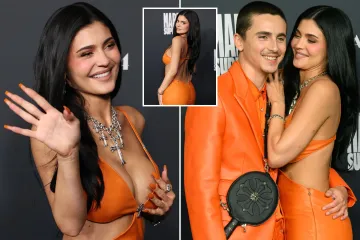
He was seen getting cosy with girlfriend Kylie Jenner at the launch of the film earlier this week where they coordinated in matching orange Chrome Hearts outfits.
The couple have been dating for almost three years having first been linked in April 2023 but have often kept their romance private and under wraps.
Timothee remained coy on the radio showCredit: Radio 1He is currently loved-up with Kylie JennerCredit: Getty
Kelvin Washington: Hello, everyone, welcome to another episode of The Envelope. Kelvin Washington here. You know who I’m with: Yvonne Villarreal, Mark Olsen, glad to be here with you. Thanks for watching and listening.
All right, let’s get it started. Mark, you had a chance to talk to Tonatiuh. And of course, this is a big moment for him. This is something he worked hard for and now getting a lot of recognition for — “Kiss of the Spider Woman.” Tell me a little bit more about your chat.
Mark Olsen: That’s right. So earlier this year at the Sundance Film Festival, there just was this great moment at the premiere of Bill Condon’s adaptation of the musical version of “Kiss of the Spider Woman,” where just to see a showcase like this for someone is so exciting. Tonatiuh, he’s acting, he’s singing, he’s dancing. There’s like so much in this performance. It’s wonderful to to see. He has a lot of poise and charisma just simply in conversation. So it made for a really exciting talk.
Washington: And also the difficulty playing multiple roles, right? I mean, I would imagine that would have been challenging.
Olsen: That’s right, in the structure of the film, he plays a political prisoner in a South American jail and he’s explaining a favorite movie of his to his cellmate, played by Diego Luna, and then he also becomes the dashing leading man of that movie [within] the movie.
Washington: Right. Diego, also Jennifer Lopez, so obviously around some big stars. I swing over to you — speaking of big stars, Kate Hudson has been one for for a long time.
Villarreal: I thought you were talking about me!
Washington: You thought I was talking about Kate? You and then Kate, of course.
Villarreal: Obviously.
Washington: Kate Hudson, a big star for for some years now, half of a tribute band for Neil Diamond, “Song Sung Blue.” Tell me a little bit about this.
Villarreal: I feel like it’s the perfect pairing to have both these guests in this episode. This one also showcases, you know, her singing abilities and her performing abilities as an actor — two of her passions. She recently released an album, and with this movie, we really get to see Kate onstage and embodying what that’s like. We see this couple who find success as this Neil Diamond tribute band, but in the middle of the height of that, her character Claire suffers a big tragedy and it really derails everything, and she has to find her way back to that. And it was a really touching conversation to hear Kate sort of embody that and her own thoughts on, you know, when you come from a world like this, it’s not a guarantee, and you have to really have passion for that. Hearing her talking about spending time with Neil Diamond at his cabin. And she sang for us a little bit. When you leave that film, I feel like there’s an instinct to go home and just listen to Neil Diamond. I know I did. Hopefully we can go karaoke at some point.
Washington: “Sweet Caroline…”
Villarreal: Do you have a Neil Diamond go-to, Mark?
Olsen: Well, I love the “Hot August Night” album recorded live at the Greek Theatre here in Los Angeles, so I’ll go with any of the tunes from that one.
Washington: I’m still upset with the both of you that I there was no “Bah, bah bah…” [to continue his “Sweet Caroline”].
Villarreal: Hugh Jackman’s character would not go for that. I’m just saying.
Washington: Would have joined me? Or not going for it, like you two leaving me hanging?
Villareal: He doesn’t want us to start with “Sweet Caroline.” You gotta go further than that. But I’ll allow it now.
Washington: Deep cuts?
Villarreal: Deep cuts.
Washington: All right, we’ll talk some more about it while you enjoy Mark and Tonatiuh.
Tonatiuh in “Kiss of the Spider Woman.”
(Roadside Attractions)
Mark Olsen: It seems like you’ve been approaching your career with such a sense of intentionality and purpose. And I would imagine, especially as a young actor starting out, you’re not necessarily in control of the roles that you get, what you could do. What have you done or how do you feel like you are trying to take that control and have that sort of intentionality in the roles that you take and what you’re doing with your career in this industry?
Tonatiuh: Well, I think I’ll pivot a little bit and say I’ve been working for 12 years as a working-class actor. I’ve been on an ABC show [“Promised Land”] as a series regular. I was in “Carry-On,” which at the time it was the No. 2 most-watched movie on Netflix, but I think we’re now at No. 5. “KPop Demon Hunters” slayed. But the only control that I really have is saying yes or no to auditions. I’m not necessarily getting offered roles. I’ve had an entire career where if I sit around and wait for someone to come knocking on my door, I will starve. And I didn’t get into this for the celebrity. I got into this because of the social impact that it had on my own life. Art to me is a mirror as to who we are as a country and who we are as people. And so it gives us an opportunity to really reflect on that, but it also gives us a destination to where we want to be. A lot of my sense of humor came from the TV shows and films that I watched growing up. And I was introduced to cultures that were different than mine. …
I think with this specific project, with “Kiss of the Spider Woman,” it was a role of a lifetime. Bill Condon wrote a fantastic script where we not only got to tell one movie but we get to tell two. We time travel and go back into a 1950s-style musical, and I get to live my Gene Kelly, Errol Flynn, Montgomery Clift fantasy with the character of Kendall Nesbitt. But then with the character of Molina, I get to be this almost genderless expression. In the totality of the film I get to play the gender spectrum. Hypermasculinity, classic masculinity, very Hollywood masculinity with Kendall, a genderless expression with Molina. And then at the very end you get a little surprise of a full female fantasy.
Olsen: Whether intended or not, this film is being released to a specific cultural and political moment. In particular, as someone who identifies as nonbinary and is the American-born child of an immigrant family, how are you processing the moment the movie is coming out to?
Tonatiuh: It comes in waves. It’s different waves. At first it was “Wow, how crazy relevant our film is,” and that’s powerful. And when I accepted the role, we’re giving the Hollywood treatment to a bunch of marginalized communities and we’re telling truly with our film, “Latinos are Hollywood.” In that era, in the 1950s, there weren’t very many, if at all, Latin stars, especially those who were allowed to be the leads in those films. And so with this we’re almost kind of rewriting history and subversively saying, “No, no, we’ve always been here” and reminding people of the dignity and the beauty of that. But, comma, we also are doing that for the queer experience. So Molina, in my view, is what we would consider in 2025 genderqueer. And we’re putting Molina right at the center, at the heart of the film. And my mission statement, and the whole reason I lost 45 pounds in 50 days, was to ensure that we can focus on their heart and their eyes and not even consider thinking about what their gender possibly could be. You’re just falling in love with a form, a person.
Olsen: This role, of course, in the original film was played by William Hurt. Do you feel it was important to have a queer performer in the part of Molina? What does that do for the story?
Tonatiuh: There’s a lot of lived experience that can go into the DNA of a character, right? But there’s also a sense of responsibility. I have met so many incredible, beautiful, gender-diverse individuals in my life. And so being able to center someone like that and to tell it with as much love, it’s just a little bit more icing on the cake. And there’s creative conversations as things are being built where you have to add and pitch perspectives that maybe someone missed because they don’t necessarily have that exact experience. I don’t necessarily subscribe to, “You always have to cast the person for the thing.” Although I relate and understand Molina, I’m an artist and my job is to bring that humanity to them. I don’t have to be identical to that person. That’s where my artistry comes from. But I think that the reverence and the respect and that sense of responsibility is what makes this unique.
Olsen: Your final number in the movie you begin in a tuxedo and you end in a dress.
Tonatiuh: With a 26-inch waist, mind you. Clock the waist.
Olsen: And there’s just something extremely powerful about that.
Tonatiuh: I mean, there’s something really cool about it. People weren’t expecting the flip with Kendall. So all of a sudden it’s like, “Wait, that’s the same guy. Now he’s looking dapper with a mid-Atlantic accent.” And then at the very end it’s a quite shocking revelation when we look down the barrel of the camera and she’s gorgeous. But that was the beauty of it. Molina dreams of being a Hollywood starlet. And I think, for me as an artist, this will probably be the only time in my life where I get to play a leading lady and a leading man at the same time. It was really special.
Olsen: Molina doesn’t really see themselves as a political person in the beginning of the film —
Tonatiuh: No, not at all.
Olsen: And part of the the journey of the film is Molina coming to realize that they are part of this fight whether they want to be or not.
Tonatiuh: Well, I think Molina falls in love. I think Molina felt like a loser in their own life who wasn’t capable of even defending themselves, right? They were just trying to survive. And there’s this twisted internalized messaging that children of marginalized groups or people who have been bullied, they start doing it to themselves as a way of protecting themselves from the world. Like, “I’ll punch myself first before you can, and I’ll make it funnier. Actually, it’ll be my whole personality.” And I think that there’s something healing in that. Valentin’s character says, “I’m disgusted when you’d make fun of yourself like that. Where’s your self-respect?” And I don’t think that they understood self-respect because I don’t think they experienced it before. And so it took living in a prison cell to find dignity again. And these two men who are diametrically opposed were able to drop all facades. They were stripped of their comforts, they were stripped of the very masks that they used to protect themselves and were forced to see each other in order to connect. And I think that’s a larger theme that’s happening in the world. I think we’re constantly being told that we’re divided and we’re not similar. But I think at the end of the day, we all want similar things. We want to feed our children. If something, God forbid, happens to us, we don’t want to go into medical debt over it. We want joy, we want community, we want connection, and I think that vulnerability is the price we pay for that connection.
Olsen: I was at the premiere of the movie at the Sundance Film Festival —
Tonatiuh: Were you really? Oh man, I wasn’t. I was fully disassociated that day.
Olsen: And something happened in that room. I think the entire audience felt they had seen someone arrive. What have the past few months been like since then?
Tonatiuh: I don’t know if I’ve arrived with this role. I’ve been preparing for this moment my entire life. I am an artist and I love what I do. And one of the biggest gifts that I got was I got to meet people, yes, at the top of their game like Jennifer Lopez and Diego Luna. But every dancer in our film was a person of color, a Latin dancer, people from the Black community, and they are also at the top of their game on Broadway. And that’s the beautiful part. I’ve met so many artists who were just dying for the opportunity. I feel like all of us are in waiting. And so it’s not for lack of talent, it’s for lack of opportunity. And with this, I am very proud of the work that I’ve done. I don’t know if I’ve arrived. People still have to see the movie, you know? And I have to get the next job. So we’ll see when that comes. But as an artist, I am feeling more emboldened to continue telling the stories that I want to tell and to continue sharing this 15 seconds of limelight with the things that I value. I think that’s what my mission statement is as an artist.
Olsen: What was it about this role that made you realize from the start that you were going to really grab it with both hands?
Tonatiuh: Well, I have no choice. No, no, no. After the strikes, after COVID. And I don’t wanna make this sound like a pity party, but the roles tend to go to the same 15 people. And I don’t come from nepotism. My mom was an immigrant in this country. She worked at a Jack in the Box drive-thru when she first got here. But I had a dream, and she and I and a bunch of my friends and community along the way just kept pushing and trying to make it happen. And so when you get three-dimensional characters, two, when you get three-dimensional characters and a really dynamic script. You gotta take it and fight. And I wanted to give it all. And it also was so important. We’re centering people who are currently being called terrorists for simply existing in this world. How can I not give them honor? This is our love letter to them. This is our way of saying we love you, we see you, and you’re not alone.
Olsen: Tell me about some of the outreach you’ve been doing to get the film in front of people and communities Hollywood may not always reach.
Tonatiuh: So I partnered with a couple of great individuals. It started off with my friend Ruben Garcia, who owns this incredible company called Mosaico. And we wanted to activate the Latin community and get people excited to come and see it. But then I kept thinking, “Man, our community has been going through a lot recently. And the country as a whole is experiencing some financial difficulties.” So I kept asking myself, “How do we give a little love and entertainment to folks?” So I reached out. I started calling friends. I started calling nonprofits. I started calling corporations and just saying, “Here’s what the mission is. We’d love to just gift things to people.” And so we created a small impact fund where we received some donations and we handed out QR codes. We just wanted to treat people for opening weekend, and we gifted tickets to the L.A. LGBT center because they have a youth services program. Los Angeles [has] one of the country’s biggest populations of unhoused queer youth. And it was important for me that they see themselves onscreen, that this is possible for them, that they get the Hollywood treatment. We gifted it to organizations that are helping with immigrant defense funds. We gifted it to their staff because they also need a little joy in their life.
And then another personal favorite was the very high school where I started acting, West Covina High School, is a public school. Their Teacher, Kim Battersby, was always going above and beyond, spending countless hours after school, over the weekend, and then she even had kids along the process. It is the performing arts programs that helped me see more of who I was. I felt like a weird little queer kid, I call it queer-do, in high school. And it was the on the stage where I felt I could practice being other people and seeing what worked and what didn’t and to learn more of who I was. I brought them out to the Grove and we filled it up with them and they dressed to the nines. They all got dressed up as if they were going to a premiere of their own. It was so sweet. And after the film, I thanked them and we took pictures and they were crying. Because they saw themselves. I taught some of them. And it was so sweet. And some of them shared their hearts with me and said that they’ve been scared of leaving the house because of what’s happening. That they’re walking around with their passports. That some of them feel like they’re invisible and that with this movie they felt seen. It was really touching.
Olsen: What does that mean to you? What do you hope those audiences receive from the film?
Tonatiuh: I mean, I think watch it. And be pleasantly surprised as to what the movie’s about. I don’t want to give too much away, naturally, because of course it’s fun to be surprised at a film. But I think our film does two wonderful things. It does hold up a mirror and it also reminds us of what we’re really about. And it creates so much joy. I mean, Jennifer, Diego, Bill, Colleen [Atwood], the incredible costumes; you get to see something that feels out of this time. And I think we could use a little Hollywood glamour right now.
Olsen: Can you talk about the challenge of this being essentially two performances — Molina in prison and then Kendall in the fantasy sequences?
Tonatiuh: Completely different performances. There are two different films with two different acting styles. And two different worlds to build. So let’s look at the movie. The first one, we were transported back into the 1950s, classic Hollywood. And so the first thing that I did as soon as I got the script is I called Bill and I said, “All right, give me every movie you want to reference, and I’ll watch as many of them as I could while preparing for it.” And I thought to myself, “Who is a wonderful tortured soul” — because Kendall’s really tortured — “that I could emulate?” And I instantly thought of Montgomery Clift, in “The Heiress” specifically. And I was just like, “Man, I want his energy, but I want to dance like Fred Astaire and Gene Kelly. And so preparing before set, I would just watch as many of these films as I was getting ready in the hair and makeup trailer. But there, you know, it’s down to the mannerisms, the small microexpressions, really trying to nail that acting style because it’s proscenium. But the crazy part is we’re a shoestring budget movie. I mean, it’s a musical, so it’s a little bit bigger than other independent films, but we only had about 20 days to shoot 12 musical numbers. And Bill wanted to shoot it in that style, which means if he could get away with a single take, he was gonna try to get away with a single take. And it took a powerhouse like Jennifer Lopez, but also Diego and myself, to really focus and nail those moments. And there’s one moment in particular, “Give Me Love,” [with] Jennifer in the Cyd Charisse green dress, making a nod to “Les Girls” and also “Singin’ in the Rain,” where I wasn’t even called to set and I was just there watching nonstop because I was like, “My God, this feels like I’m watching Marilyn or Rita or Cyd herself doing it.”
But then the second part was a naturalistic drama — well, a little bit of a fantasy, but inside of an Argentinian prison. And like I said, my mission statement was to make Molina as genderless as possible. I had just come off of “Carry-On,” so I had to lose 45 pounds in about 50 days. And this is not a commercial for Ozempic. I wish GLP-1 was sponsoring this because that would have been helpful. But no, I did it the old-fashioned way. I starved. But it was worth it. I really wanted to get that look and find his voice and the accent and transport us back into Argentina in the 1980s.
Olsen: But at the same time, is there some point of connection? Are the things that you’re doing in the two halves of the movie meant to bring them together?
Tonatiuh: Well, the two films are intrinsically connected. It’s Molina’s favorite film, but it’s also their diary. It’s their confession. Oftentimes it’s easier for us to say I love you through someone else’s song, or to say I’m scared. We look to films and music to transport us, to heal us. And so it starts off with Molina just sharing a little bit about who they are through their favorite film, but then it ends up becoming their confessions and their soul.
Olsen: Can you talk about the audition process and what it took to get this role?
Tonatiuh: I never feel really qualified to talk about the audition process because for me, this is how it went. They had been looking for months. I didn’t know about the project. I didn’t hear about it until Dec. 18 or 19, something like that. At that point, Hollywood’s completely shut down. I’m confident I was like the last person to hear about this audition. And then I locked myself up in a room after reading the material and just working it over and over and over again, until I found that throughline. ‘Cause there’s so many ways of telling a musical. Dec. 22, literally days before Christmas, I got a call saying, “You’re gonna come to New York. Jan. 2nd, 9 a.m.” Next thing you know, I’m doing a tango and a Bob Fosse number and singing in front of Bill Condon and [producer] Bernie Telsey. And then a little table read with Diego Luna and I get a text message from Bill saying, “Call me.” And I was like, “Oh man, it’s either ‘Call me, I’m sorry’ or ‘Call me, you got it’ and it was ‘You got it.’
Olsen: And then what was your audition number? What song did you do?
Tonatiuh: “She’s a Woman.” And with that number, it was so interesting because there were so many ways of telling that as well. My audition actually was from more so the point of view of Molina singing it, but within the context of the film, Kendall sings it. And so there becomes this almost “Victor/Victoria” moment where it’s Molina’s “I Want” song through Kendall Nesbitt. but played by Molina because he hated the original actor who was Kendall Nesbitt. And so it was really a thought process to think, “OK, well, how would the original Kendall do it and pay nods to him? But if Molina was able to take over his body and tell it, how would then he say it?”
Olsen: Jennifer Lopez’s performances in the musical numbers is a great reminder of why she is who she is. What was it like to see that up close?
Tonatiuh: What’s the quote? I feel it was like watching lightning strike. It was powerful and awe-inspiring. I mean, it was just incredible. But it was one of those moments, as soon as they say, “You’re gonna be singing and dancing with Jennifer Lopez,” it was like, “Oh, OK. Time to level up.” It felt like I was getting an invitation to the Olympics. I mean, these are some of the greats. Jennifer’s fantastic. Diego Luna is a phenomenal actor. Bill Condon is a master at this craft, specifically with musicals. And then even Colleen Atwood, who did all of our costumes, and Christine Cantella. They transported us with those fabrics, you know. And so it was really one of those moments like, “Oh wow, I’m I’m finally getting the invitation to go into the ring,” and it was either level up or die.
Olsen: And I know that in some ways they were almost two production units.
Tonatiuh: There were completely two different different productions.
Olsen: What was it like having to shift gears between the musical fantasia of the story within the story and the prison scenes that are, as you said, these very naturalistic, very dramatic scenes with Diego. How did you manage that?
Tonatiuh: I always joke around because people are like, “How did you start acting?” And I’m usually like, “My acting was a trauma response,” you know, just to survive and code-switch in the world. But jokes aside, I think that being able to shift quickly allows me to go from culture to culture, set to set, and just adapt quickly to that. We had a wonderful crew in Uruguay, which was amazing. But Bill Condon is an actor’s director. Once we went to Uruguay, he sat us down and we did traditional theater table reads. We sat at the table for a week and a half and we just talked about the script, beat by beat, moment by moment, really carving out what our thoughts were and his thoughts were. Sometimes we disagreed. Things in the script changed. He was so open to our perspectives — like we [were] the heads of the department for our individualized perspective, essentially. And the beauty of what we did was we shot this in order. It’s a two-man play. And so the first time that you see Molina entering the cell, meeting Valentin, was the first time that Diego and I ever saw each other in full character. These two people are discovering who they are with every passing scene and dropping the facades. But we as actors were learning to depend on one another. I always joke around that this is like the Stanford prison experiment, because we were in the cell before the sun went up, and we were out of the cell after the sun went down, straight to the hotel and back. And we were shooting in the dead of winter in Uruguay, so there was very little sunlight to begin with. So it was one of those moments where it was like we needed each other, and we created amongst ourselves a deep and and very personal bond.
Olsen: And tell me more about working with Bill, especially on the musical numbers. There are some extremely long and extended pieces of onscreen dancing.
Tonatiuh: He’s incredibly meticulous. In a good way. He has already thought about exactly what vision he wants. Down to the very film that plays in the theater at the end was a deliberate choice. And so it was really exciting because he invites you to his world and because he prioritizes the table reads, we’re able to fully understand what he’s trying to sell. So then we already know, we’re finely tuned to it. But everybody on the set, and those sets alone were just glorious. I felt like I was walking into the Titanic. It was incredible. And our choreographers, Chris Scott, Sergio Trujillo, Brandon Bieber, they also worked with Bill to basically do a dance between the camera and the dancers themselves. Because if you look back at old movies with Fred Astaire or with Gene Kelly, specifically Fred Astaire, they would zoom out just to show you from head to toe, we are dancing. This isn’t edited. It’s not done in the cut. Which was really, really cool.
Olsen: With everything that you’ve put into this project, how do you move forward from here? What is it that you see for yourself moving forward?
Tonatiuh: Well, with this project specifically, I think what I want is to get it into the hands of the people who I know will absolutely love it because I think that there’s a healing process in watching this, especially watching it in cinemas. It’s communal. The energy shifts and the technicolor washes over you in a way that a cellphone could never. But moving after that, I’m excited. My favorite thing is to transform. I’ve literally sat in theaters this weekend where people had no idea I was sitting next to them and that was me onscreen, and then I wait in the lobby to take pictures. Some people come up and they’re shocked that I’m there, A, but B that I look so different. And I didn’t get fat. I’m back to my normal weight, OK? I lost weight for Molina. But I love to transform. And up until this point in my career, I’ve only I’ve had a limited amount of ability to transform. I hope to be completely unrecognizable in my next role. And I don’t know what that’s gonna be. If I want to be a hero, if I want to play a villain, do something in the sci-fi world, an action world. I don’t know exactly what that is. And of course, I’d love to also go to Broadway. There’s one play in particular that I’ve been circling now for the last eight months, and I’m inches from putting it up. I’m inches from getting the rights. But I’m saying it on here because I am going to do that one way or another.
Hugh Jackman and Kate Hudson in “Song Sung Blue.”
(Focus Features)
Villarreal: Do you like doing podcasts as a fellow podcast host?
Hudson: I like talking to people. I like connecting, so I’m always down for for this. [With] podcasts you get to have more time to really unpack.
Villarreal: Has it made you appreciate the art of the interview?
Hudson: I’ve learned a lot. I was so used to being on the other side, being the person that’s being asked all the questions and having to navigate the right way to answer something and not get yourself into trouble. So when it flipped and we [she co-hosts “Sibling Reverie” with her brother, actor Oliver Hudson] started to interview, when I would listen to our podcast, I’d cut everything out. I’d be like, “Jesus, shut up, Kate.” I’d cut out so much. I’ve also learned that sometimes, you gotta get to the point. You gotta keep everybody on track. Oliver, my brother, is a great podcast host. He’s so funny. I feel so lucky to have him to be my partner.
Villarreal: Well, we’re very glad to have you here to talk about “Song Sung Blue.” This is a film that’s about love of self, love of others, love of music and finding your way back to all that after tragedy. Tell me about why this was the right movie for you at this point in your life and career.
Hudson: It’s a great question. These things aren’t calculated. You have these opportunities, you read something, you hope you get to play the part because you believe in the story and you believe in the filmmaker and you believe in your co-star. And then you just hope that it comes together. And with this, the story was there. [Writer-director] Craig [Brewer] wrote a great script. For me, as an actor, it gave me all the colors, all of the things that I love and have been doing for so long [and allowed me] to be able to do in one movie. And the thing that was weighing on me was that if the love story doesn’t work, if we don’t believe these two people are madly in love with each other and needing each other — they’re quite codependent — the movie’s not going to work. It didn’t matter how great the script was. And I said [to co-star Hugh Jackman], “Look, how comfortable are you with getting to know me? Because I really feel like this movie’s not gonna work if we don’t work. And we kind of have to, like, be really intimate with each other and get to know each other really well … and let me know if I ever make you uncomfortable.” I’m incredibly tactile. He felt the same way. And that actually became the easiest part, was our connection and how much we trusted each other and how connected we felt. Something happened on the set. We kind of knew that it was a special, what was starting to unfold was something really special. Then you just cross your fingers and hope that the movie, that it became what we felt like we were making. I remember seeing the movie and just going, “Oh, my God, this movie makes me miss movies.” I just feel so happy and humbled to be a part of it because you never know.
Villarreal: Tell me more about building that foundation with Hugh, because the film is based on a true story of these two Milwaukeeans who fall in love, start this tribute band of Neil Diamond music. How did the bond with Hugh take form? Were you sharing playlists?
Hudson: We do share a love of of music. The first thing we did was record music. In the last two years, I’ve been very immersed in music and writing and just saying, “I have to make music” because if I don’t, I’m not fulfilling my creative output, input — all of it. I have to be making music. So I’ve been spending a lot of time in the recording studio. So I was very excited that that was where we were starting. Hugh has a different side of the story, which is it appears to him [that] it came much easier to me than it did to him. I disagree with that, but I’m sure that’s what he would say. But it was great because we got to sing together. When you can sing with someone and you sound good together and you start to connect through music, it’s a very different kind of language. And that was the beginning of us being like, “Oh, this is gonna feel really good.” Energetically, we’re both very spirited people and we had a blast in the studio. It was a great initial connection. But the movie itself is about people who love music, and who don’t necessarily get the opportunities to make that this huge success that maybe once when they were younger they dreamed of. One of the things I love about Craig and what he understands, and what I understand about music as someone who’s lived it my whole life, whether it be through partnership or myself, is that you along the way meet all these incredible, incredible musicians — way more talented than you are or I am — that don’t have the opportunities that maybe have been put in front of others or myself. And when you see that and you live it and you know it and you love it — I have a profound respect for that musician, the one that is the session player or the one that is the tip-drawer musician, the one who ends up being an interpreter because they didn’t make it as their own artist. And I think that’s what Claire and Mike Sardina really are in their hearts. They’re musicians. And Hugh has that in him. He loves being onstage. He loves performing. He loves giving his art out. And I think musicians, some musicians, love that. So we connected there and we connected to the characters very much so, with that essence of believing and loving something so much that you just have to do it, no matter what.
Villarreal: Do you remember the first song you guys did together in those recording sessions?
Hudson: I think it might have been “Forever in Blue Jeans” or maybe it was “Cherry Cherry.” We did so many songs, but I think it was one of those.
Villarreal: Are you ready to ask him to be on your next album?
Hudson: We’re already like, “We’re taking this on the road. We’re going to go sing all kinds of songs.” You don’t have to twist our arms to get in front of a mic and start singing. And a good music movie is really hard to do.
Villarreal: Why?
Hudson: You have to understand the language. Craig is, in his heart, a musician, even though he’s not a musician. He lives and breathes music. He’s a Memphis, Tenn., boy. Most of his world is around music. That’s how I fell in love and met Craig. I was young when I met him. We’ve been trying to work together for 20 years. I was married to Chris [Robinson, of the Black Crowes] at the time. We’re music people in our blood. Some people don’t have any real connection to music. Music isn’t something that they can relate to. But there’s two types of music lovers: There’s the fan, you feel music in your bones that you can’t explain and it moves you to places that you couldn’t live without it; then there’s people who have music in them and it has to come out of them. That is another language that you can’t explain to someone unless they were born with that or have that in them. Craig has it in him. And so it translates onto the screen. It’s like Cameron Crowe. It’s like PTA [Paul Thomas Anderson]. He has music in him. You can tell by the way he directs and his use of music. There’s certain directors that really understand musicality. Craig has that, so he was able to access that for this movie.
Villarreal: What was that like connecting on that front with Claire when you met with her? At what point in the process did that come?
Hudson: I really did not want to get too close with Claire because I don’t want things to feel like [I’m] mimicking. It’s not a Bruce Springsteen or Bob Dylan or that kind of biopic. And it was important to Craig too, to make Mike and Claire their own characters. I got to know her while we were shooting, and then she’d come to set, and I’ve got this footage of us sitting and laughing with each other. And it’s so funny because there’s an energy there where you’re like, “Oh, my God, I am playing her.” You can see it sitting in the director’s chairs. It was good to get her essence, but then to create another version of Claire, the movie version.
Villarreal: Did you ever get to sing with her?
Hudson: No. I had to miss the wrap party, which really was upsetting. And apparently there was a lot of karaoke singing at the wrap party. We’ll do a redo. But Claire’s had a really interesting life. Her life has been hard. Their life is and was hard. And they somehow found a way to believe in each other and have this beautiful love and life together. Claire, when she comes and she talks about Mike, he still really lives in her every day. It’s like he’s almost still here. It’s an amazing thing to see.
Villarreal: What was your relationship to Neil Diamond‘s music coming into this?
Hudson: Like most people that aren’t hardcore Neil Diamond fans, I obviously knew his biggest songs. When I read the script, I did like a big deep dive into [him] and I was like, “Whoa, what a catalog.” So many great songs and what a great songwriter. And when you hear some of — like the last song of the movie [“I’ve Been This Way Before”], I’d never heard that song before. Neil loves that we use that song because it’s very rare. People don’t usually talk about that song. And even “Forever in Blue Jeans,” I forgot about that song. I forgot about, “Girl, You’ll Be a Woman Soon.” There’s so many songs.
Villarreal: I wanted to ask if “Soolaimon” is still playing in your head? Because it’s like an earworm for me now.
Hudson: Oh, my God. [Singing] Soooooo. Soolaimon. Oh, yeah. That song is fantastic. It’s such a great live song. And I didn’t know that song until we started the movie. Getting to know Neil’s catalog was really honestly an honor. And for him to give us the opportunity to sing all of it and to use it, so wonderful.
Villarreal: You also spent time with him … on your porch? His porch? I saw the Instagram post.
Hudson: I grew up in Colorado and he is my neighbor. But I’ve never met him. My whole life. And then I was talking with his son the other day who was at the premiere, and I was like, “It’s so weird we’ve never met.” He lives like 15 minutes from where I grew up. So we just sat on his porch and had lemonade, and we held hands and talked for hours.
Villarreal: What do you talk about with Neil Diamond?
Hudson: He was very open, and he’s in a place in his life where he did a lot of listening, and then he told me great stories about his childhood that I feel very honored that he shared with me, about where he grew up and how he grew up. And the one thing he did say, which I love — I asked him what his favorite song was to perform, then I asked if he missed performing. He said that he’s done so much and he feels good about what he’s done, but the song that he loves is “I Am … I Said.” He said that it’s like God wrote that song. It just came through him, and he was having a very hard time when he wrote that song and he was conflicted, he was having a hard time writing it, then all of a sudden it just poured through him. I loved the privilege of hearing that story from him. He said that his life has gifted him with these different eras where his music got new life. And he was just incredibly grateful to us, say[ing], like, “I know that this is gonna give my music another chapter.” Then Hugh went. I said to Hugh, “You have to go see Neil.” And so he went and flew to Colorado and sat with him. I feel so happy that he got to see the movie and he loves it and that we did good by him.
Villarreal: You asked him what his favorite song was to perform. What was yours? There’s the moment where Mike and Claire are playing alongside Eddie Vedder that really stands out in the film. And what do you feel when you perform?
Hudson: It’s been really great to exercise a new muscle, performing muscle. For the last two years, from the first time I had my first show to now, it feels very different. I get really excited. When something goes horribly wrong is actually kind of fun because that’s what live shows are, you get to not be perfect even though you’re striving for something great and to give something out that’s great. It’s not always going to be what you hope it’s going to be. Something’s gonna go wrong, it’s gonna sound weird, you’re not gonna hear this, the guitar’s not gonna [do that], and there’s something about that live experience when you’re performing that just feels so alive. One of the greatest feelings for me is when you see people singing your words back to you. I couldn’t believe the first time I saw people that I’d never seen know my music. I don’t care how many people that is. Even one person that you can see that actually is feeling something that you put out into the world is such a wonderful feeling. Performing is a blast. Singing with Hugh at Radio City, and you get to play all these cool venues and places that, as a music lover, you look around and what a bucket-list moment to sing in this historic venue. I’m so happy that I, like, had the courage to do it because I wouldn’t have had all of these experiences that I’ve had. I don’t think I would have been cast in this movie if I didn’t make music, if I didn’t go out on a limb and make an album.
Villarreal: We see in the film that, at the height of their stardom, Claire suffers a tragic accident and it upends their world. She’s in a state of depression and she’s being confronted with, “Who am I? And does this change everything about who I am because I’m not up there? And how do I get back there?” What was that like for you to delve into that headspace as a performer? For you, either as an actor or a singer, can you relate to that feeling of it being intrinsically a part of who you are and the fear of never doing it again?
Hudson: Like any role, there’s a lot of things that you can relate to or substitute. I sometimes substitute, you know, something that I can’t relate to with other things, as my own process. Meryl Streep always says you have to honor the character as much as you would honor your own life. That’s how you create a character. But then when you’re telling someone else’s life story, it’s almost like a double whammy because of the pressure that you’re sort of holding someone’s life. They’re giving you an opportunity to portray something that you don’t want to know let them down, especially with something as intimate and as vulnerable as what Claire went through.
I felt a responsibility to her struggles and how we looked at them — to have a family, to constantly be struggling to keep food on the table, to have the ups and downs of mental health. What I love about this movie is Craig doesn’t really hit you crazy over the head with Claire’s mental health struggles, but it is implied that she is up and down and is on medication and has been, and so when Claire’s up, she’s up; and when she falls it’s pretty dark. Everybody experiences trauma differently. Some people are better at pushing through or being optimistic in the face of tragedy. Claire is faced with that [idea that] nothing will ever be the same … Claire always said — we don’t say this in the movie — “Mike was a leg guy.” He would talk about them. And when that accident happened, she felt so unattractive to him. It’s like something was lost that she knew that he loved of her. Then it just hit everything from her inability to move, to be the partner she wanted to be for him, to the kids, to the drugs, to the the pain. It just was an awful spiral. I just wanted to do that as much justice [while] holding on to Claire’s inevitable optimism. She’s a very optimistic person.
Villarreal: Have you ever felt that fear of it being taken away from you? It’s one thing to decide to leave something that you love.
Hudson: I’m very stoic. I have a amazing family. I have a big support system and entered this industry knowing that if I don’t really love what I’m doing, if I’m not happy singing in that Thai restaurant, then this is not the right industry for me. If I’m not happy doing community theater or doing sketches with my friends at the local theater, I’m not in the right business. If you love it like that, then you are in the right business, because you know that it’s always gonna let you down. There’s the other side, the spiritual side, which is that I really live my life like we are all gonna die. It is inevitable. If there’s anything that’s inevitable, it is tragedy. We will meet it at some point, whether it be parents dying, whatever that is, we all will experience it at some point. So the harder thing is where the joy sits. How do we live now with joy and happiness and intention and positive intention? It’s something that I really live, authentically. So no, I don’t think about it because the reality is, if I did, then I’d be living in fear and anxiety and I choose to not do that.
Villarreal: Give me tips, Kate. I’m a worrywart.
Hudson: I worry about my kids. But life is too short. Time is so short. Lightning can strike twice. It’s the Claire line. You can’t live in that.
Villarreal: It really does feel like you are living in that sort of joy. Between this film, the album, you recently recorded a Christmas song, you’ve got the new season of “Running Point,” the podcast with your brother. I’m still waiting for “Something Blue” [the follow-up to “Something Borrowed.”]
Hudson: Oh, my God, me too. You know what? Ginny [Goodwin, her co-star in the film] and I — she was just on the podcast and we were talking about it and we were like, “We need Emily to write us in our 40s now.”
Villarreal: Who’s the villain? In “Something Borrowed.”
Hudson: Great question. Aren’t we all the hero and villain of our own story? Isn’t that how this works?
Villarreal: But you seem really happy.
Hudson: I am very happy. Age does that. You start to grow up and you realize you can go one of two ways: You can enjoy your life and your life experience. I’m on the back half — almost the back half. But you get to a certain point in your life where you have choices to make of either, you lean into enjoying everything, every blessing, or you’re miserable and you get more miserable. I want to enjoy my life and my kids. I love watching my kids grow up. And honestly, I love the decision that I made for me to make art differently than I was in my early 20s and 30s. Life presents itself the way it’s supposed to present itself. Opportunities as an actor come as they do. It’s a hard thing as an actor to wait for things to come to you because, as any actor knows, you’re at the mercy.
Villarreal: You could be waiting forever.
Hudson: Creatively, you have to, at some point, make the moves and take the risks to do things your way. Whether they’re liked or not liked, you have to do it. I think something happened in my 40s where I’m like, “I’m just gonna take the risks and make art and do things the way, tell stories the way, I’d like to do them.” And really enjoy what it is. It’s magic. Making movies is magic. And you can tell when people love doing them. You can tell when someone’s in it for something other than the art form of it. And sometimes we get them really right, sometimes we get them horribly wrong. But we gotta keep telling stories.
Coleen Nolan has opened up about a hidden family struggle on Friday’s Good Morning Britain
Coleen Nolan has opened up about a hidden family struggle on Friday’s Good Morning Britain (Image: ITV)
Coleen Nolan has revealed she spent ‘years crying’ and feeling like a ‘terrible mother’ over a hidden family struggle.
Over the summer, Coleen, 60, disclosed that her son, Shane, 37, had been fighting a secret battle with drugs which saw him ‘hit rock bottom’ and wreck his marriage to his beauty queen ex-wife, Maddie Wahdan.
Coleen’s son, Shane, whom she shares with ex-husband Shane Richie, separated from his beauty queen wife in December 2023 amid claims he had been unfaithful – just a year after they had tied the knot.
Over the summer, Shane, alongside his mother Coleen, spoke candidly about his struggle with drug addiction, which resulted in him being admitted to rehab as his family feared for his life.
Shane is now in a new relationship with girlfriend Kimberly Sallis, whom he has credited for helping him through the drug addiction, and in November they welcomed their first child together, a baby boy called Cruz-Carter, reports Wales Online.
Speaking about her son’s past struggle on Friday’s Good Morning Britain, Coleen confessed: “I felt like a terrible mother. I thought it was my fault.”
Coleen said of her son speaking out: “It was totally Shane’s decision. It would never have been me forcing him in to talk about it. He thought it was important to talk about and especially when it was during Men’s Mental Health month and all of that.
“When he did it, we were both nervous. I was quite emotional because it’s really hard as a parent or a relative to watch an addict. I mean, it was years of me crying because I couldn’t do anything. I’m his mum and I couldn’t do anything.”
Coleen went on: “People were like, ‘Well, you know, you’re going to have to kick him out. You’re going to have to do that.’ and I went ‘He’s my child!’
“I kept making excuses for him, ‘well, I think he did this… no, no, it’s just because he’s tired, you know.’ And then something major happened where he ended up with stitches in his head and all of that. I think that was a massive wake up call.
“Talking about it afterwards, he said to me, ‘Mum, I feel like a whole weight has been lifted off my shoulders.'” Coleen revealed it was equally beneficial for Shane to understand the impact his struggle had on her.
The Loose Women panellist emotionally shared: “I felt like a terrible mother. I thought it was my fault. I’d done things wrong. I couldn’t help him and it was nothing to do with me. As an addict, the only person that could have helped him was himself, which he did.”
Good Morning Britain continues on weekdays at 6am on ITV and ITV X.
OLIVIA Attwood has revealed she was cruelly shamed for the cosmetic procedures she has undergone by a presenter.
The former Love Island star, 34, described it as “one of the worst experiences” she has ever had.
Sign up for the Showbiz newsletter
Thank you!
Olivia Attwood has revealed she was cruelly shamed over her cosmetic surgeries by a female presenterCredit: youtube/@thisisoliviashouseOlivia has been open about the various procedures she has had doneCredit: GettyShe even fronted an ITV documentary about surgery, dubbed The Price Of PerfectionCredit: Refer to source
Olivia has been open about her aesthetic preferences; often talking to her fans about which surgical enhancements she has undergone and even making a documentary about cosmetic surgery.
But the star says that she was put in an uncomfortable position during an interview, where the presenter told her she looked older due to having procedures.
Talking on her new podcast, Olivia’s House, the star said: “I had an experience with a female host and one of the worst experiences that I’ve probably had in an interview because I felt like she didn’t want me there…
“I was meant to be promoting the documentary and everything I’d learned about the industry and she very much wanted to make it about me and what I looked like.”
Olivia continued: “She said in her second question, she said, ‘So you, what have you had done?’ And I was a bit like, whoa… I’m talking about the cosmetic industry as a whole.”
“She goes, ‘I don’t know what you were trying to achieve, but you look a lot older ‘cause of what you’ve done to yourself’.”
“It was really one of the worst experiences that I’ve probably had in an interview because I felt like… I felt like she didn’t want me there.”
“When I left that studio… I remember for 20 minutes I just sat in silence and I was like, ‘What? What just actually happened?’.”
While Olivia hasn’t named the presenter, she added that the situation felt “wrong”.
“It just felt just very like tonally wrong for a show that is meant to be about a safe space for women and uplifting women… it was just a really horrible experience and it stayed with me for a little while,” the star concluded.
At the time, Olivia didn’t acknowledge what was going on between them, but was pictured letting loose during a trip to Ibiza, where she cosied up to pal Pete Wicks.
Addressing the situation on her new show, the star admitted that she and Bradley have had a tough year – with issues from both sides.
And teasing that there is more to come, she told fans that Bradley would tell his side of the story “in his own words” when he comes onto the podcast.
Olivia didn’t name the presenter who shamed her, but said it made her feel “uncomfortable”Credit: youtube/@thisisoliviashouseTalking on her podcast, Olivia also detailed her relationship with Bradley DackCredit: Getty
Have you ever wondered what movie might draw praise from Jacob Elordi and Benicio Del Toro for its cinematic reverie?
When you gather six actors from some of this year’s most acclaimed films, a thoughtful discussion about their roles and the craft is to be expected. But in kicking off The Envelope’s 2025 Oscar Actors Roundtable, the talent reminded us that they’re movie fans like the rest of us, picking the films they wish they could experience again for the first time.
“I’d like to watch ‘The Dark Knight’ again in the exact same circumstance that I watched it,” Elordi said, referring to Christopher Nolan’s dark retelling of Batman’s battle with the Joker. “I was 11 and I was with my dad. I’d been told by my mother that I wasn’t allowed to see it because there’s a horrific sequence with a pencil and a magic trick. My dad — when my mum was away — took me to the cinema to see it. I remember the first time I saw Heath [Ledger, as the Joker] onscreen and really feeling just totally moved by something.”
Then Del Toro chimed in with his pick, “Papillon,” Franklin Schaffner’s 1973 prison film starring Dustin Hoffman and Steve McQueen: “I saw it when I was a kid. We got in late in the movie, and it was a scene where they’re trying to get a gator. And they’re running around the crocodile. I’ve always really enjoyed that film.”
“And you really see Steve McQueen do more in that movie than ever before,” Elordi says. “When he starts going mad in that cell.”
Jesse Plemons is more sheepish when coughing up his selection.
“Everyone’s listing serious movies. The movie that popped into my head was ‘Nacho Libre.’ In life, some things just give you simple pleasures that aren’t necessarily elevated or high art. But that movie makes me very happy, guys.”
There was no judgment. An atmosphere of friendly sharing and mutual understanding was felt throughout the conversation, which brought together Elordi, who portrays the misunderstood and abused Creature in Guillermo del Toro’s “Frankenstein”; Plemons, in his turn as Teddy, a conspiracy theorist who is convinced that aliens live among us in “Bugonia”; Benicio Del Toro, who plays Sergio St. Carlos, a karate sensei and revolutionary immigration activist in “One Battle After Another”; Will Arnett, who stars as Alex Novak, a middle-age suburbanite whose crumbling marriage inspires him to try stand-up comedy in “Is This Thing On?”; Wagner Moura, who portrays Marcelo Alves, a teacher trying to escape the Brazilian dictatorship in “The Secret Agent”; and Stellan Skarsgård, who plays Gustav Borg, a veteran film director and absentee father who decides to make a movie about his family in “Sentimental Value.” Read on for excerpts from our discussion.
These roles take you to intense places — emotionally, physically, mentally. But what’s the furthest you’ve gone to book a role because you really felt like it was something you were meant to play?
Moura: “Narcos” was a crazy adventure for me because I was cast to play that part that had nothing to do with me. I was a skinny Brazilian guy who didn’t speak Spanish at all. So I had to go through a very intense thing. I had to learn a language in order to play a character. That was crazy. That was the the furthest I’ve [gone] to play a part.
Plemons: Those early weeks are a lot of fun, right? The beginning. It’s like Christmas every day.
Moura: The beginning is always like, “What am I doing?” And you go to bed and go like, “Jesus Christ, this is … There’s no way I can pull this off.” At the same time, I remember going to bed and thinking, “Have I done everything I could?” And then I was like, “Yeah, go to bed. Sleep.”
Arnett: Did you ever think about quitting, about not doing it?
Moura: No. I had to go ahead and do it. That director trusted me, and he was like, “You can do it.” I didn’t want to disappoint him.
Have you gotten to that point, Will? Wanting to quit something because it felt like too much?
Arnett: All the time. Doing [“Is This Thing On?”], I felt like I was at the bottom of a mountain. Every day, I thought, “There’s no way I can do it.” I would come home and just think, “That was probably the worst day that anybody’s ever filmed a scene,” then just have to let it go.
With “Is This Thing On?,” you did a stand-up act in front of people, and they were tourists. Some of them didn’t know who you were. And you bombed a few times, right? Place me in that moment, and what does that do for your performance.
Arnett: I had them introduce me by my character name. So the people who did know who I was, we were saying that [they] thought I was probably having a midlife crisis or something, which I was, but for different reasons. I’d never done stand-up before, so going up and doing this in front of people and bombing was super vulnerable. There’s nowhere to hide, and you can’t just walk off. There was one time where I’d done a set at the Comedy Cellar, in the main room, and it was great. And went around the corner, like five minutes later, onto a different stage, with the same material, and it was dead silent. And the only person laughing was Bradley. I could see him laughing, and [I was] thinking, “Can I just walk off stage right now?” That was ego-stripping. It becomes kind of absurd. You end up kind of laughing at yourself, at the absurdity of it. It’s not out-of-body, but you separate yourself from the words as they’re coming out.
Stellan, “Sentimental Value” is, in some ways, about how the choices a parent makes in the service of their job or their art shape the lives of your children. How did it make you reflect on the choices you’ve made in your career and the impact it had on your family?
Skarsgård: I thought it had nothing to do with me. This was a good escape. But my second son, he called me and said, “You recognize yourself?” And I went, “Uh, no.” And of course I don’t recognize myself because he’s a different kind of man. He’s an old-fashioned man in a sense, a 20th century man. And I’m a 21st. [Laughs.] But it reminded me — since I stopped at the Royal Dramatic Theatre [in] 1989, I spent four months a year in front of the camera and eight months a year changing diapers and wiping asses. I don’t think I’ve been away a lot, but it made me think about, “Have you been present?” Not really. I have eight kids, which means there are eight different personalities, and some kids need a lot of attention and some don’t. You’re imperfect, but I’m sort of settled with that. My kids have to settle with it too. They’re not perfect either.
We often hear from the women who are mothers, how they balance their work with their careers. Many of you are fathers. How have you learned to navigate it?
Moura: For me, it’s the most difficult thing ever. I was thinking the other day, “What are the things that really define me as a human being?” Being a father is the strongest one, but being an artist is almost there. It’s hard because with our job, we have to travel a lot, and you’re not always able to bring your kids with you. They have school, and they have their own lives and their own things. I kind of think this is sort of an impossible perfect balance. But like Stellan said, it is what it is. And when I’m with them, I try to be with them. But being aware that, of course, there will be parts of their lives that I won’t be able to be there for them and sort of accept that.
Arnett: It’s funny, I’ve been traveling a lot doing this stuff. I’ve been back for a couple of days, but I’ve been busy. I’ve been going out all day, doing work and doing these things, and my 15-year-old said to me — I checked in on him. He’s doing his homework. I said, “How are you doing?” He said, “Good,” and he said, “I miss you.” And I was in the same place with him. I don’t even know if this is appropriate for this forum, but it really struck me. Him saying that stayed with me all day. And I woke up thinking about [that] this morning, and even this [round table], and saying, “Hey, we’re gonna have dinner tonight.” I had those moments of thinking, “Am I that guy?” Now I’m saying, “Let’s have dinner after … I gotta go do this thing.” It weighs on you. It is the most difficult balance.
Del Toro: I’ve tried to include my daughter in the process sometimes, you know? Sit her down, bounce lines with her, go see the movie when I’m done with the movie. Make her part of it too.
Jacob, so often when you’re talking to an actor, at least on my end, there’s curiosity about the research process and what you’ve had to learn to prepare for a role. But in playing the Creature in “Frankenstein,” this amalgamation of parts, your character’s really in a process of discovery. Did you have to unlearn things? How did you approach that?
Elordi: The nature of the character actually gives you an excuse to be absolutely free because he’s sort of the first man, in a lot of ways. You can really draw from everything and anything, like a smell or light, because he hasn’t felt the sun on his face. But there’s so many things that you can go back on and reconsider. A lot of the process was just closing the world off for the time of filming — not eating a cheeseburger when I wanted to eat a cheeseburger or just little stuff that made me feel Other. But strangely enough, because he’s made of so many different parts, and you get to go from being born to finding consciousness to the death of consciousness at the end, it’s like shooting fish in a barrel. You can’t really miss because everything is happening to him all the time. It’s interesting because you say you want to ask someone about the process, but the process is so f— boring.
Plemons: You studied some form of Japanese dance or movement?
Elordi: Guillermo had this idea to study Butoh. It’s a movement thing, like you’re in drama school again where [the instructor]’s like, “Imagine fire in your fingertips and a hurricane in your lungs, and your foot is a steam train.” And then you walk around the room for 40 minutes … I remember being in drama school, and I had to carry a stick that was called my Intellikey for two hours. It was a piece of bamboo. And move around the room as if that stick was a part of my soul or something. Something completely f— absurd. It was a similar process to that, but it was actually helpful because I had something to apply it to that was sort of physically not so human.
Do any of you have a thing that really helped you find your way into a character? Jesse, I feel like you have gone to some dark places.
Plemons: I guess the most curious is I do dream work. There are symbols and whatnot that you are gifted with that may not make sense on a conscious level, or they may. That’s something that’s hard to talk about. Anything that makes me feel like I’m just following my curiosity and I’m not working; I’m just following some trail that I don’t necessarily know where it’s leading — it’s hard to describe because the way I like to work is where anything goes.
Elordi: You kind of know when you get onto that thing too. When a dot does connect. Something happens, then, all of a sudden, you’re six hours down this little road on this sound that you heard in a song or something like that. You also know when it’s not working. But to be conscious about it can mess it up as well, if you’re like, “I’m gonna do this kind of thing and this. And this is gonna go to this voice.”
Does the work need to feel hard in order for you to feel like you’re challenging yourself?
Skarsgård: No. [I need] to not be afraid and not to be blocked; I need to feel safe. And I need [for] everybody on the set, they want me to be good, and I feel it. Then I can be free. I’m with you [Jesse], you have to be in a state where anything is possible. I don’t do backstories for my characters, ever, because it reduces the possibilities. Then you have to follow the backstory — so he couldn’t do that. You, as an actor, say to the director, “No, my character wouldn’t do that.” “How do you know?” Your character might be more interesting than you are.
Plemons: And this thing doesn’t exist yet, this moment —
Moura: There’s no better thing than being in a scene with another actor, and you look at the other guy or the other actors, and you go, like, “This can go anywhere.” Because these other guys, or this other actor, she’s ready to do whatever, to take this wherever. This is the thing that really moves me in a scene. It’s really hard when you work with an actor or with a director that sticks with the thing that they want the scene to be, that thing they thought at home, that they prepared for, and you can’t really move into that space.
Benicio, you really know how to make a character memorable and leave a lasting impression. With Sensei Sergio and what we see onscreen, what were you working with on the page and how much came from you in collaboration with Paul [Thomas Anderson, the film’s director]?
Del Toro: I just asked questions. Paul wants to hear what the actors have to say. I just bombard him with questions. Paul was very flexible … He’s very quick, and if he likes something, he would jump on it. My character was introduced by killing someone in my dojo. So, I asked him, “OK, so I killed this guy in the dojo … I’m not gonna drive Leo anywhere. I have to get rid of the body. And we’re gonna have to clean the dojo or set it on fire. And why am I doing that?” So, from there, it evolved into, like, “We’re not killing anybody.” I approach it a little bit like that — common sense. Logic. But every character is different and every story is different, and every director is different. I’ve been in movies where you just have to find yourself in there. And those are challenging, and they make you better.
“The Secret Agent” really explores how brutal a dictatorship can be on regular people. Wagner, your character Marcelo is not trying to overthrow the government. He’s just a man who’s trying to stick with his values. Tell me about portraying a person in that situation.
Moura: The dictatorship in Brazil was from ’64 to ’85. I was born in ’76, so the echoes of the dictatorship were still there. I remember my parents speaking like [mimics whispering] because they didn’t want people to hear what were they talking about. It’s important that Brazilian cinema is going back there to look at that big scar in our country. I directed a film [2019’s “Marighella”] about a freedom fighter, a guy who wanted to overthrow the government. But this one is different. Like you said, it’s just someone who’s trying to stick with the values that he has. And I think that this is a reality in many different parts of the world, where just the fact that you are who you are makes your life difficult or puts your life in danger, just by the color of your skin or your sexual orientation. You see the dictatorship and and what a dictatorship can do, but not in a obvious way.
Do any of you read reviews?
Skarsgård: Yes, sometimes. I prefer to read the good ones.
Has there been a bad review that propelled you or motivated you or helped you?
Skarsgård: Once I read a theater review that was really bad and that pointed out a grave mistake I made in the show, so I corrected it afterwards. But otherwise —
Elordi: You took the advice?
Skarsgård: Yeah.
Arnett: I did this show for Netflix like 10 years ago, and this guy wrote this review, and I’m embarrassed to say I wrote a point-for-point rebuttal email. I sent it as a draft to Mark Chappell, my partner, and he said, “Oh, hold on. Don’t send it. I’m gonna come over. Let’s talk for a minute.” And I didn’t send it.
Plemons: I’ve got one journalist — I am not gonna say their name — but …
Arnett: Who’s got it out for you?
Plemons: In a way that wasn’t even that intense, but said it [a performance of mine] was “misguided” — which, is just like, “What?” And then I started reading more of his reviews, and everything’s “misguided” to this guy. It’s like, “What do you mean?” So, I’m trying to be less misguided.
Can I jump in with a question for anyone? Talking about that balance between preparation — in certain cases, it’s necessary — then your experience where you rethink all of that. Given the fact that we’re not machines, that on any given day there are a number of variables that influence your mood and influence your mind and influence your ability to relax and do the scene, I’ve thought a lot about that ideal baseline place of being fully relaxed and in your [element]. I wish acting teachers had told me that when I was younger, that that’s like over half of the battle. I’m curious if you have any —
Top row, from left to right: Will Arnett, Wagner Moura and Jesse Plemons. Bottom row, from left to right: Benicio Del Toro, Jacob Elordi and Stellan Skarsgård.
Skarsgård: Tips?
Plemons: No, routines or [an] approach, anything you do to get yourself into a place where you feel like you can leave the preparation and [just be].
Skarsgård: The preparation can serve that purpose. You feel that you’re doing something because it’s a f— strange business, what we’re doing. You don’t know what it is, really, but you feel that, “OK, I’ve done this preparation. I’ve done three months of baking because I’m [playing] a baker.” You feel that you’re prepared, so you feel safer. But, personally, I make sure that the set is safe. I’m first on set. I come in early and, while they’re setting up, I’m gonna see what they’re doing. I’m making sure that I know what all the sound guys, the prop guys, what they’re doing at the same time. So, I feel a part of the unit. That’s my way of feeling safe.
Plemons: Yeah, I find that too. Any time you try and block anything out, you’re missing it. I know that’s sort of a cliche, but the times when I’ve felt maybe the best, I wasn’t blacked out. I was aware of everything.
Elordi: Key to the whole thing is you practice.
Plemons: Yeah, I was looking at the DP I had.
Elordi: That’s when I feel, like, the most comfortable, is when you feel like you are in a dialogue with the operator and the lighting guard and your director, and you’re all in the scene working towards [the same thing]. It’s not like, “Everyone, shut the f— up now. I need complete silence.” Complete silences are unnerving to me on a set. It’s like you’re all trying to reach this point for cut, and then you’ve got that piece of the thing. That makes me feel comfortable when it’s technical and not actually getting lost in this thing of like, “I need complete silence. My body needs to be supple and ready.”
Real Housewives of Cheshire star Debbie Davies has urged people to get checked out after discovering she has tonsil cancer caused by the HPV virus
22:38, 11 Dec 2025Updated 22:38, 11 Dec 2025
Real Housewives of Cheshire star Debbie Davies shared she has cancer(Image: Instagram)
Real Housewives of Cheshire star Debbie Davies has shared the sad news she has cancer. The 58-year-old reality star, who is also a psychic, ghost hunter and medium, took to Instagram to reveal she had been diagnosed with tonsil cancer at the end of November.
Posting a video, she told her followers how she had been experiencing a constantly sore mouth for a while and had “so many sore throats over the years”. But she said that “never for a moment” did she think it could be something so serious.
Doctors only discovered it was cancer after she had three teeth out and a nurse advised Debbie to get checked out. She said: “Thank God a nurse at Wythenshawe Hospital mentioned the possibility of it being cancer to me! Thanks to her I got checked out and now I’m getting treatment.”
Since her initial diagnosis, Debbie has been giving fans regular updates – and warning people what to look out for so it doesn’t happen to them, or they at least have the best chance of catching it early.
Sharing a photo of herself wearing a special mask covering her whole head apart from her nose that’s meant for radiotherapy treatment, Debbie said: “Constant sore throat? Get checked. Tonsil cancer caused by the HPV virus is no joke.”
In the caption she wrote: “The advice is simple, get checked. The mask looks grim but it’s doable and if you want to survive you’ve got no choice.
“Today someone messaged to say they’ve got diagnosed because they got seen after my first post, to me that makes baring my soul worth it, no woman wants to be seen at her worst, but if it saves lives I’ll do it.
“So apologies for banging on about this, it is what it is, please share and get this out there. Cancer – you are the devil’s work and I’m one of God’s women, so heaven help you picking a war with me.”
In her latest post, Debbie shared that she is having a mix of chemotherapy and radiotherapy over the next few weeks to hopefully be rid of the cancer for good.
She told fans: “I’m OK, and hopefully I’m going to be OK.
“So, finally, after a ton of appointments, I don’t go back until Monday and that’s for radiation and chemotherapy for six weeks.
“Although that’s not going to be easy and simple because the cancer is in my mouth, it’s on my tonsils and in my glands. So, I’m going to be very burnt from the radiotherapy. I’ve got that ordeal to get through.
“But six weeks of treatment and then, please God, I’ll be cancer free. So, keeping everything crossed. Six weeks, I’ll have to recover, but please God, I’ll go back to normal and be cancer free.”
Debbie first appeared on The Real Housewives of Cheshire in 2021, taking over from Dawn Ward, and quit after just one series. But she returned to the ITV2 show earlier this year for the 10th anniversary series.
IN one of my encounters with Pink Floyd’s Nick Mason, he cast his mind back to his first dealings with the “crazy diamond”.
This would have been late 1964, early ’65, when the band still called themselves The Tea Set because they rehearsed in a basement tearoom at Regent Street Polytechnic in London.
Sign up for the Showbiz newsletter
Thank you!
In 1975, a dishevelled Syd Barrett appeared at Abbey Road Studios, above, leaving Pink Floyd members stunned as they realised their frontman had changed beyond recognitionCredit: SuppliedPink Floyd’s Richard Wright, David Gilmour, Nick Mason and Roger WatersCredit: Storm Thorgerson, Sony Music EntertainmentSyd Barrett during his time in the band, pictured here in 1967Credit: Getty
Mason, Roger Waters and Richard Wright had found themselves not just a singer and a guitarist but a charismatic frontman, all set to “shine on”.
“Syd was the most delightful man, absolutely charming,” Mason told me. “He wrote wonderful, whimsical, pastoral English music.”
Barrett, a childhood friend of Waters in Cambridge, came up with Floyd’s first single, the eyebrow-raising Arnold Layne, about a pervert whose hobby was stealing women’s underwear from washing lines.
Before the second album, A Saucerful Of Secrets, was even completed, the troubled star had no choice but to leave and guitarist David Gilmour was already in place.
“It’s still not entirely clear what happened with Syd,” Mason continued. “There is a belief that maybe he didn’t want to be a pop star. You have to know that, in 1967, the rest of us DID want to be on Top Of The Pops.
“Maybe Syd realised it wasn’t what he wanted, but didn’t know how to get out of it.”
As students of Pink Floyd know, the band crossed paths with Barrett several years later in haunting, uncomfortable circumstances.
On June 5, 1975, a shambling figure — shaven-headed, overweight, largely incoherent and clutching a plastic shopping bag — pitched up at EMI Studios (Abbey Road), stomping ground not just of The Beatles but also Floyd.
Years later, keyboard player Wright described the scene: “I remember going in and Roger was already in the studio working.
“I came in and sat next to Roger. After ten minutes, Roger said to me, ‘Do you know who that guy is?’
“I said: ‘I have no idea. I assumed it was a friend of yours.’ Suddenly I realised it was Syd!”
Art director Storm Thorgerson, responsible with Aubrey “Po” Powell for the band’s iconic album covers, also witnessed the scene.
“Two or three people cried,” he said. “Syd sat around and talked for a bit, but he wasn’t really there.”
On that very day, the band were mixing their nine-part, 26-minute homage to Barrett, Shine On You Crazy Diamond.
To many, it ranks as the band’s greatest single composition, matching Gilmour’s elegant, fluid guitar, Wright’s serene keyboards and Mason’s perfectly weighted drumming to some of Waters’ most touching lyrics.
“You were caught in the crossfire of childhood and stardom. Blown on the steel breeze.”
The song would be split into two sections, Parts 1-5 and Parts 6-9, to bookend Wish You Were Here, the follow-up to a cultural phenomenon, The Dark Side Of The Moon.
Now, to mark its 50th anniversary, the album is appearing in expanded formats, adding alternate takes to the original release.
Poet Laureate and Floyd superfan Simon Armitage has written a stream-of-consciousness love letter to the band and, in particular, Wish You Were Here.
I’m very sad about Syd. I wasn’t for years. For years, I suppose he was a threat because of all that was written about him and us
Roger Waters
It has no capital letters or punctuation, but these lines give you the drift: “it’s the forty four minute five second guide to eternity — it’s infinity measured in five songs.”
And for the first time, Shine On You Crazy Diamond is also presented as one continuous piece thanks to a new remix by James Guthrie.
It stands as an emotional remembrance of Barrett, who died a recluse in 2006, aged 60, at his home in Cambridge.
Poignantly, as the track fades to nothing, you hear strains of the See Emily Play keyboard melody.
Waters once reflected: “I’m very sad about Syd. I wasn’t for years. For years, I suppose he was a threat because of all that was written about him and us.
“Of course, he was very important and the band would never have started without him but, on the other hand, it couldn’t go on with him.”
As for Shine On, he added: “It is not really about Syd. He’s just a symbol for the extremes of absence some people have to indulge in because the only way they can cope with how sad it is — modern life — is to withdraw completely.”
On the song’s scale in musical terms, Mason likened it to another lengthy set piece, Echoes, from 1971’s Meddle album. “Echoes,” he said, “was Shine On’s grandfather.”
Now let’s rewind to 1974 when Pink Floyd set about devising an album in the wake of the juggernaut that The Dark Side Of The Moon had already become.
Their initial attempt, using everyday objects as instruments, was not very encouraging, to say the least.
When I reminded Mason of it, he replied: “Some things I’ve been trying to obliterate from my brain — and I’m afraid you just brought that one up!
The legendary Wish You Were Here album cover shotCredit: Aubrey PowellDavid Gilmour (left) on stage with singer-songwriter Roy Harper at a free concert in Hyde Park, London, in 1974Credit: GettyPink Floyd’s Nick Mason on the drumsCredit: JD Mahn/Sony Music EntertainmentRichard Wright and David GilmourCredit: JD Mahn/Sony Music Entertainment
“The problem was that we ended up spending an awful lot of time grinding away, developing the sounds.
“We hadn’t even got any real music. Things like plucking rubber bands slowed down to quarter-speed.”
He added: “It was a fantastically fruitless exercise, really a way of putting off the ghastly business of what the hell were we going to do next.”
So, did the whole band buy into the daft idea? I ventured.
“We did,” Mason sighed. “If only two people at least had had the gumption to go, ‘F*** this! Let’s work on a record’.”
One of the extra Wish You Were Here tracks, Wine Glasses, offers listeners a taste of the project that became known as Household Objects.
And, as Mason reported, “The wine glasses did make it on to the beginning of Shine On.” (Listen carefully and you’ll hear the tinkling sound.)
So what about the three tracks, further exploring themes of absence and alienation, which were sandwiched between Shine On’s lengthy sections?
Synthesiser-heavy Welcome To The Machine was a product of Floyd’s infatuation with latest technology, and the others came with fascinating back stories.
If Barrett had been a surprise visitor to the Abbey Road sessions, so were two virtuoso violinists just as Floyd were recording the album’s title track, Wish You Were Here.
Mason picked up the story: “If someone was down the hall recording at Abbey Road, it was OK to pop in and say, ‘Hello’.
“Suddenly the door opened and Yehudi Menuhin and Stephane Grappelli were standing there, going, ‘Hello boys’.”
Menuhin, an American-born Brit, was widely regarded as one of the greatest 20th Century classical violinists. Grappelli, a French jazz violinist, was noted for an intuitive, more improvisational approach.
Mason added with English understatement: “By ’75, we were reasonably well known and Grappelli being French would have heard about us because we always had a standing in France.
“I think we invited them both to play with us. Menuhin wanted to but wasn’t comfortable improvising, whereas Grappelli could do it like stepping off a log.”
So the Frenchman went up to one of Pink Floyd’s mics and added gorgeous violin flourishes to a take of the acoustic guitar-led Wish You Were Here.
Ultimately, his contribution didn’t make the finished album, but it can be heard on the expanded editions.
Mason said: “I’m really astonished by it. We thought it had been recorded over, that we’d lost it for ever. I don’t know why we didn’t use it — it would have enhanced the record, but maybe it sounded too folky.
“Or maybe, in a pre-Euro world, we thought, ‘It’s a bloody Frenchman and he shouldn’t have anything to do with it!’”
Grappelli was paid £300 (a princely sum in those days), but went to his death in 1997 oblivious to this unlikely footnote to the Wish You Were Here story.
People did say to us: ‘Which one’s Pink?’ They thought Pink Floyd was the lead singer!
David Gilmour
Another outsider at the sessions — Floyd’s friend, folk-rock troubadour Roy Harper — felt “hard done by” when it came to payment for his lead vocals on Have A Cigar.
After numerous failed attempts by Waters to nail his withering put-down of music industry executives “on the gravy train”, he turned to a singer who loaded his delivery with the perfect sneering tone.
“Roy was recording in the studio anyway,” remembered Waters, “and was in and out all the time. I can’t remember who suggested it, maybe I did, probably hoping everybody would go, ‘Oh no Rog, you do it’, but they didn’t!
“They all went, ‘Oh yeah that’s a good idea’. And he did it and everybody went, ‘Oh, terrific!’ So that was that.”
We know how single-minded Waters can be and he still gave it one final go — but to no avail.
Tape engineer John Leckie recalled Waters saying to Harper that they should reward him for his efforts.
“And Roy said: ‘Just get me a season ticket for life at Lord’s.’ He kept prompting Roger, but it never came.”
Many years later in 2013, when Harper released his comeback album Man & Myth, I met him for coffee near Lord’s, just before the avid cricket fan watched England play Australia for The Ashes.
Best known for When An Old Cricketer Leaves The Crease, he bemoaned his lack of payment for Have A Cigar but talked about his close ties to three of Britain’s biggest rock bands.
“I was an interloper really,” he said. “I was the one who didn’t have a band. I drifted between Led Zeppelin, Pink Floyd and The Who basically.
“At the time, they were big and here was this strange interloper moving between all three.
“One thing I never did, for which I deserve credit, was to transfer what one said about the other. Keep it discreet!”
Violinists Yehudi Menuhin and Stephane Grappelli were surprise visitors at Abbey RoadCredit: Allan WarrenWright and Roger WatersCredit: Storm Thorgerson/Sony Music Entertainment
On the recording Have A Cigar, he said: “I listened to the song at home for a night. I came back the following day and didn’t quite nail it. But then, on the day after that, I did — and they had a song.”
The track’s most memorable line is, “Oh by the way, which one’s Pink?”
Gilmour once admitted: “People did say to us: ‘Which one’s Pink?’ They thought Pink Floyd was the lead singer!”
As you may have gathered, Wish You Were Here comes with a rich history and timeless, captivating music.
Emerging as it did from the mighty shadow cast by The Dark Side Of The Moon, it still shines on 50 years later.
PINK FLOYD Wish You Were Here 50th Anniversary
★★★★☆
Wish You Were Here 50th Anniversary is out December 12Credit: Supplied
For all those in search of pop star-infused festive cheer, Mariah Carey’s Holiday Bar opened earlier this month at the Mondrian Hotel’s Skybar.
The pop-up’s Los Angeles debut is steeped with the signature seasonal touch from the Queen of Christmas — neon signs of her lyrics light up the room, massive portraits of the star fill the space and every single song that plays — holiday-themed or not — is from Carey’s discography. (Disclaimer: “All I Want For Christmas Is You” does play every 30 minutes.)
“For as long as I’ve known Christmas, Mariah has always been there. It signals to me that childlike wonder and excitement of Christmas time that kind of harkens back to when I was a kid,” said Cathy Kwon, who was posing for a photo on the decorative sleigh. “The fact that the song itself [‘All I Want For Christmas Is You’] has stayed this popular for this long is remarkable.”
Ever since releasing her holiday album, “Merry Christmas,” in 1994, Carey has established herself as a permanent fixture in the holiday season. Every year, the 56-year-old singer has gift-wrapped a new festivity for her fans.
Last year, she embarked on Mariah Carey’s Christmas Time tour to celebrate the album’s 30th anniversary and this year, she’s doing a Vegas residency called “Christmastime in Las Vegas.” She’s also previously hosted several holiday specials for Apple TV and CBS. And nearly every year, her modern holiday classic, “All I Want For Christmas Is You,” climbs to the top of the charts.
Mariah Carey’s Holiday Bar will be open until Dec. 28.
(Eric Thayer / Los Angeles Times)
For her holiday bars, she partnered with the event company Bucket Listers to open four locations across the country, in Los Angeles, New York City, Miami and Las Vegas. The WeHo bar is complete with endless photo ops, including life-size cutouts and large-scale holiday-themed portraiture of the “Obsessed” singer, as well as cocktails featuring her own liqueur company, Black Irish. The bar’s pool is filled with candy cane floaties, twinkling Christmas trees decadently line every walkway and bursts of soapy snow fly through the air (occasionally landing in a cocktail or two).
Bucket Listers founder Andy Lederman says the demand for this experience has “surpassed every expectation” that the company had.
“She’s the queen of Christmas. Outside of Santa Claus and the Grinch, I don’t know if there’s anything more iconic,” Lederman said. “There’s really nothing like her during this time of year. It gives you such a great feeling to be able to celebrate her and to be a part of her wonderland with the people you love.”
Though Carey has since built out her holiday world far beyond its original soundtrack, many of the bar’s patrons came to indulge in the nostalgia provided by the 1994 holiday album. The record is a 10-track collection of reworked classic holiday covers and a handful of originals, offering a diverse selection of love songs, traditional festive tunes and modernized religious hymns.
Shannon Armah was sitting in the bar, catching up with a group of friends. The Miracle Mile resident grew up with the Mariah Carey Christmas album on repeat and describes early memories of listening to its songs in a car seat. To her, it’s the perfect balance of “fun and playful music” and music that is rooted in the religious “reason for the season.”
“We went to a Baptist church growing up, so hearing the gospel influence in the album is reminiscent of our usual Sunday experience,” Armah said. “It was very relatable. It also taps into the ‘90s nostalgia and brings back that feeling of simpler times.”
Maria Castillo takes a picture of Amanda Rico at the pop-up Mariah Carey Holiday Bar at the Mondrian Hotel.
Anthony Escalante, a real estate agent and manager of a luxury retail store, came to the Christmas bar dressed in his holiday best — a well-fitted, all-white vest and matching pants. He says he admires Carey’s holiday music for its ability to tell a story beyond the typical seasonal festivities.
“She’s the pioneer of reinventing modern Christmas songs,” said Escalante. “She speaks beyond a generic Christmas. [‘All I Want For Christmas Is You’] is about experiencing a holiday without the love of your life. She sets a tone for something that is more than just another Christmas song.”
People attend the pop-up Mariah Carey Holiday Bar at the Mondrian Hotel.
(Eric Thayer / Los Angeles Times)
The track’s ability to amass popularity year after year is what makes it one of the few contemporary holiday classics. Decked out in their Carey holiday apparel, Sara Rushton and Benji Flowers credit the singer as being one of the few pop stars to successfully put a modern twist on Christmas.
“Growing up, everything Christmas was old-fashioned. Christmas movies were really old, and there wasn’t really a new version of Christmas for millennials, or postmillennials,” said Rushton, who received her first Carey record in her stocking as kid. “But Mariah was someone who celebrates Christmas in a different festive way.”
Flowers, who works as a yoga instructor, looks to the pop star as one of the last exciting elements of the season. He proposes that the Mariah Carey bars should stay open all year, as Carey’s discography can lend itself to more than just the holiday season.
“I do think that it could be like a year-round thing, and they could have seasonal changes to it. She has a song for every moment in life. She’s got slow romantic songs and heartbreak. She’s got hip-hop and old disco. I mean, I can go on and on,” Flowers said. “It’s not a bad idea. At night, it could be all about the EDM remixes of her songs.”
Mariah Carey’s Holiday Bar will be open until Dec. 28.
As 2025 comes to a close, Pornhub has released its 12th annual Year in Reviewreport.
Like previous years, the data was full of spicy revelations regarding the “ever-evolving desires, curiosities, and cultural obsessions shaping our world.”
2025 proved to be an incredible year for LGBTQIA+ diversity, with “lesbian” being the top category on the platform and terms like “lesbian scissoring and “lesbian MILF” seeing an increase in searches.
The “Trans” category also saw an influx in traffic, becoming the second most viewed category on the platform. Searches for “trans threesome” and “trans amateur” rose by 67% and 49% respectively.
Other LGBTQIA+-inclusive terms that became more popular in 2025 included “queer,” “bisexual,” and “femboys,” the latter of which made this year’s Top 10 Search Terms list.
While “Twink” was the number one most viewed gay category for another year, the top 5 featured a few changes, with “Big Dick” rising three spots to take second place, “Bareback” moving one spot to take third place, “Black” rising three spots to secure fourth place, and “Group” moving up one spot to land in fifth place.
The “Daddy” and “Straight Guys” categories remained in the top 10 but saw a slight decrease in viewership, dropping two and four spots, respectively.
Tyler Wu, Malik Delgaty, Sandro Jenner, Rhyheim Shabazz, Jkab Ethan Dale, Legrand Wolf, Hunnypaint, Yummy Prince, Dante Colle and Mtwunk were the top 10 most viewed performers in the gay sector of Pornhub.
The top 10 most-viewed trans performers were: Emma Rose, Eva Maxim, Ariel Demure, SissyMilana, PuppygirlXO, Vicats, Daisy Taylor, DOTADASP, femboyhami, and Erica Cherry.
The United States held on to its title as the country leading the most traffic to Pornhub. At the same time, Mexico, the Philippines, Brazil, Germany, France, Italy, theUnited Kingdom, Spain, and Canada followed close behind.
As for the country with the longest time spent per visit, Japan took the top spot at 11 minutes and 2 seconds. The Philippines, Canada, theUnited States and Australia were neck and neck, with all four countries clocking in at 10 minutes, separated by a few seconds.
When analysing age demographics, the report found that 18-24-year-olds accounted for the largest share of viewers at 29%, followed by 25-34-year-olds and 35-44-year-olds at 23% and 17%, respectively.
The data also provided insight into each generation’s unique tastes. For Gen Z, “Party,” “Feet,” “POV,” “Virtual Reality,” and “Vertical Video” were their top five viewed categories.
Millennials flocked to the “Fetish,” “Role Play,” “Squirt,” “Red Head,” and “Toys” categories, while Gen X enjoyed “Fisting,” “Bukkake,” “Blonde,” “Vintage,” and “Double Penetration” the most.
Among the boomer generation (aged 55 and up), “Brunette,” “Babe,” “Casting,” “Mature,” and“Interracial” were the top five viewed categories.
BBC Question Time host Fiona Bruce had some important news to share during tonight’s show – Fiona paused a debate surrounding the lifting of the two-child benefit cap to make the announcement
Fiona Bruce stopped the debate to make the important announcement(Image: BBC)
Question Time host Fiona Bruce made a huge announcement about theBBC show’s future during tonight’s episode.
Thursday evening’s panel consisted of Stephen Flynn, Anas Sarwar, Russell Findlay, Angela Haggerty and Lord Malcolm Offord, who has defected to Reform. The current affairs debate was coming from Paisley inScotland.
After discussing the two child benefit cap Fiona said: “It’s been quite hard work this programme really to get a word in edgeways with you guys but we’re going to try aren’t we.” She then shared some important news about the programme’s future.
She said: “Before we get to the next question, we want to say this is our last show of 2025. We’re back on January 22 in Macclesfield. So if you live in or around Macclesfield and you would like to come and be part of the audience, apply (on) our website, and hopefully we will see you there on the 22nd of January.”
After the brief announcement the panel continued answering questions from audience members. James Sinclair put a question to the panel about the percentage of children in schools who don’t speak English as a first language.
When does the show take breaks throughout the year and why?
This break is just one of the usual breaks which the show takes as they work around Parliament’s schedule. Since the MPs will not be sitting over the festive season the show takes the opportunity to go off air.
They also break for a couple of weeks at Easter, the dates vary depending on when the holiday falls. There is a further and longer break of around 6 weeks during Parliament’s summer recess.
BBC Question Time returns on January 22 in Macclesfield and then on January 29 in King’s Lynn.
HOLLYWOOD actress Sydney Sweeney unmasks herself as a secret tourist during a whirlwind trip to the UK.
The Euphoria star enjoyed a sightseeing tour around London before heading to Soho Farmhouse in Oxfordshire for some relaxation.
Sign up for the Showbiz newsletter
Thank you!
Sydney Sweeney posed in a facemask with a pal while on a trip to the UKCredit: InstagramSydney was taken to London by designer brand Miu MiuCredit: InstagramSydney also visited the Soho Farmhouse in OxfordshireCredit: Instagram
Sydney, 28, shared pictures from her whistle-stop visit — including putting on a facemask with a pal in a hot tub and horse riding.
The trip was organised by designer brand Miu Miu, which recruited Sydney as an ambassador in 2022.
Sharing the snaps online, Sydney, whose psychological thriller The Housemaid is released later this month, told her fans: “Little London getaway.”
Jim Ward, a prolific voice actor whose work spans Nickelodeon shows “Fairly OddParents,” “Danny Phantom” and video games including “Ratchet & Clank,” has died. He was 66.
Ward died Wednesday, his former radio co-host commentator Stephanie Miller announced. “Our Good friend, Jim Ward passed away yesterday,” she tweeted Thursday. “We’re going to spend the morning remembering his brilliance.”
She first broke the news Wednesday, informing her followers on X (formerly Twitter) of “one of saddest messages I have ever received from the amazing Mrs. Jim Ward.” The voice actor co-hosted and often appeared as a guest on Miller’s eponymous syndicated talk radio program from 2004 to 2021.
Ward’s wife, Janice Ward, confirmed to TMZ that he died because of complications from advanced Alzheimer’s disease and was receiving treatment in Los Angeles before his death.
Though Ward often imitated public figures on Miller’s show, he is best known for voicing a wide variety of characters, including real estate tycoon Doug Dimmadome (the famed owner of the Dimmsdale Dimmadome) and dogged news anchor Chet Ubetcha on “The Fairly OddParents.” He also voiced various roles in series “My Life as a Teenage Robot,” “Danny Phantom,” “Ben 10,” “The Replacements” and dozens of other animated shows. In 2009, he earned a Daytime Emmy for his performance in the revival of “Biker Mice From Mars.”
Butch Hartman, the creator and animator for “Fairly OddParents” and “Danny Phantom,” mourned his longtime collaborator on social media. “To say the voice over world has lost a giant is an understatement,” Hartman said on Instagram, hours after Ward’s death.
“Rest in peace, dear friend and thank you for blessing us with your incredible talent and charm,” Hartman added. “Love you, brother.”
In the realm of video games, Ward’s voice acting credits were plentiful and ranged from the adventure classic “Escape From Monkey Island” in 2000 to the anti-Nazi shooter “Wolfenstein” in 2009 to the western-themed “Red Dead Redemption II” in 2018. Most notably, Ward voiced camera-ready space hero Captain Qwark in Insomniac Games’ “Ratchet & Clank” franchise, from the original game’s release in 2002 to its re-release in 2016, and the sequels and various shorts in between.
Ward’s video game voice credits also include the inaugural “Call of Duty,” “Resident Evil 4,” “Final Fantasy XIII,” “BioShock 2,” “Fallout: New Vegas” and numerous gaming tie-ins for TV and film projects.
Stephen Flynn, leader of the SNP at Westminster shared his outrage at Donald Trump’s comments about Europe “decaying” on BBC Question Time’s discussion from Paisley tonight
23:17, 11 Dec 2025Updated 23:22, 11 Dec 2025
Donald Trump’s comments about Europe “decaying” were discussed on Question Time(Image: AP)
On the panel tonight was Stephen Flynn, leader of theSNP at Westminster, Anas Sarwar MSP, leader of the ScottishLabour party, Russell Findlay, leader of the Scottish Conservative and Unionist Party, Reform UK member, Malcolm Offord and Journalist Angela Haggerty.
After making an important announcement about the show’s future Fiona swiftly moved on to discuss Donald Trump‘s comments towards Europe with the wider audience and the panel. She said: “Donald Trump said about European leaders ‘I think they’re weak and I also think they want to be so politically correct I think they don’t know what to do’. That’s pretty unflattering about Kier Starmer isn’t it?”
Stephen Flynn said: “I’m pretty outraged at the fact that when we’re at war on our continent, and we are at war withRussia, our most trusted ally is choosing proactively to try and divide Europe. I think that does the United States of America a massive disservice and I also think it does all of us a disservice.”
An audience member said: “My problem withDonald Trump is we give him too much respect, he doesn’t give us any respect. As the most powerful man in theworld supposedly, his behaviour is appalling… to me he’s an absolute disgrace to be the President of the United States.”
Another audience member chimed in saying: “Donald Trump is driven by money, nothing else. He is busy trying to cosy up to Putin because he reckons he’ll get a good deal there… everything he thinks about is money, money, money, how much can he make and apparently he has made an absolute fortune, him and his family.”
Malcolm Offord said: “The American point of view on this is that Europe doesn’t seem to want to defend its own borders and how long does America keep paying for that?”
Russell Findlay refuted Trump’s claims Europe is “decaying” but did address his concerns about the future and the safety in the UK. He said: “Well, the world is incredibly dangerous and volatile, and we should all think very seriously about our safety in this country… I’m deeply, deeply,deeply concerned about the future.”
BBC Question Time returns on January 22 in Macclesfield and then on January 29 in King’s Lynn.