POLITICS

Stay informed about the latest developments in politics with our comprehensive political news coverage. Get updates on elections, government policies, international relations, and the voices shaping the political landscape.

Indiana Republicans defy Trump, nix congressional redistricting plan

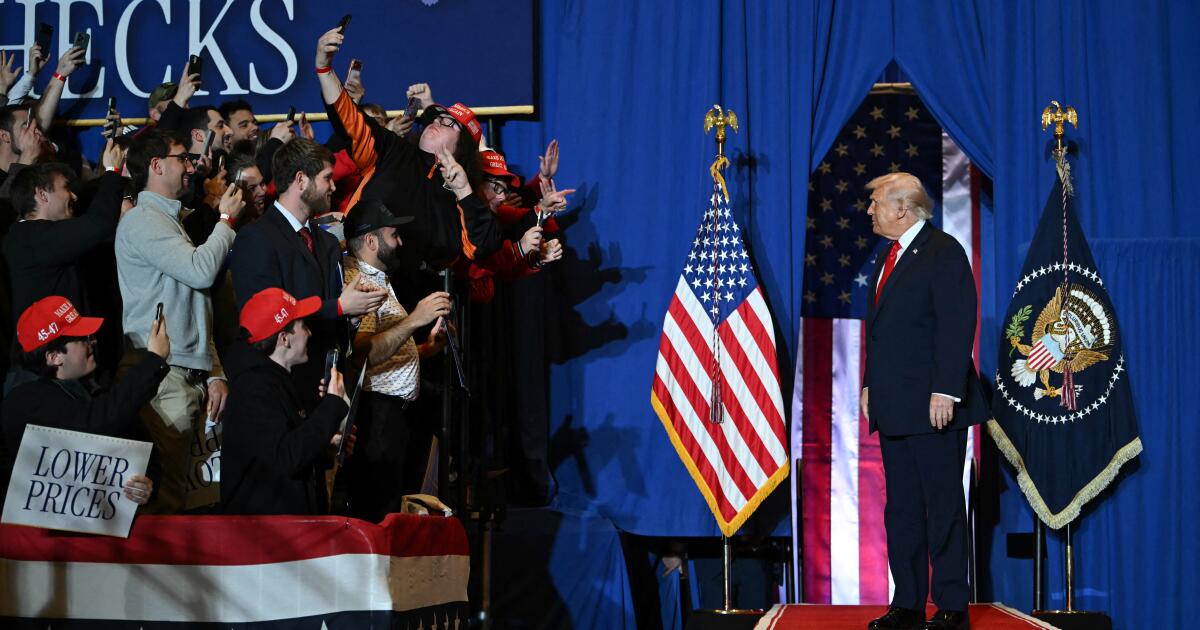
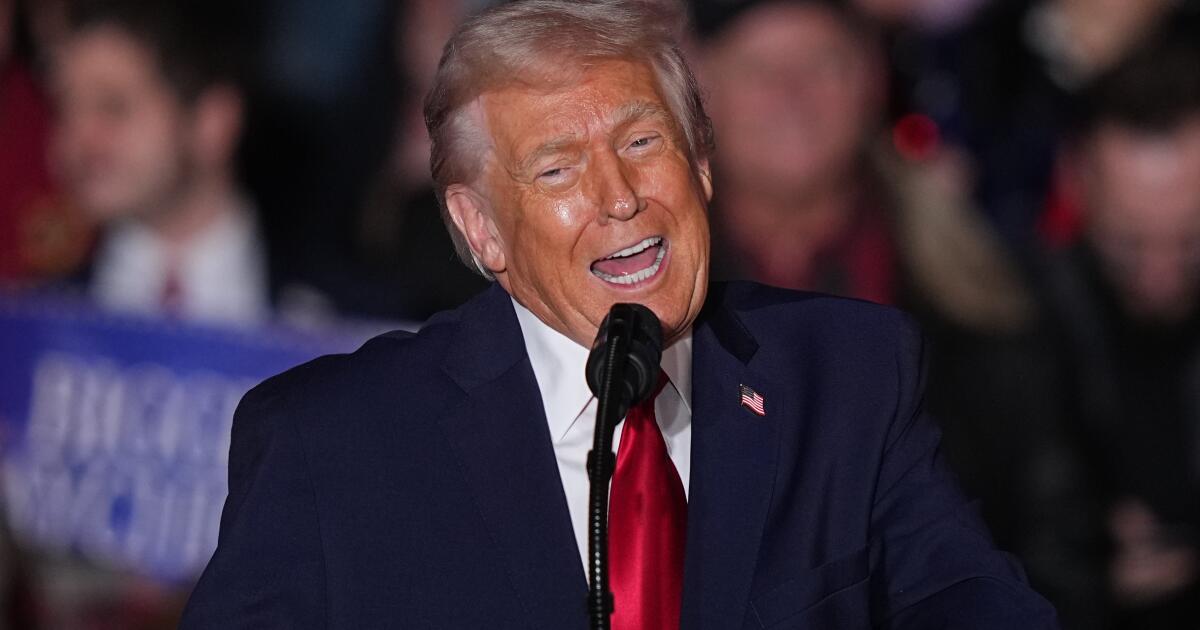
Indiana’s Republican-led Senate decisively rejected a redrawn congressional map Thursday that would have favored their party, defying months of pressure from President Trump and delivering a stark setback to the White House ahead of next year’s midterm elections.

The vote was overwhelmingly against the proposed redistricting, with more Republicans opposing than supporting the measure, signaling the limits of Trump’s influence even in one of the country’s most conservative states.

Trump has been urging Republicans nationwide to gerrymander their congressional maps in an unprecedented campaign to help the party maintain its thin majority in the House of Representatives. Although Texas, Missouri, Ohio and North Carolina went along, Indiana did not — despite cajoling and insults from the president and the possibility of primary challenges.

“The federal government should not dictate by threat or other means what should happen in our states,” said Spencer Deery, one of the Republican senators who voted no Thursday.

When the proposal failed, 31 to 19, cheers could be heard inside the chamber as well as shouts of “thank you!” The debate had been shadowed by the possibility of violence, and some lawmakers have received threats aimed at persuading them to support the proposal.

Trump tried to brush off the defeat, telling reporters in the Oval Office that he “wasn’t working on it very hard” despite his personal involvement in the pressure campaign.

Two Democratic districts targeted

The proposed map was designed to give Republicans control of all nine of Indiana’s congressional seats, up from the seven they currently hold. It would have essentially erased Indiana’s two Democratic-held districts — splitting Indianapolis among four districts that extend into rural areas, reshaping U.S. Rep. André Carson’s safe district in the city and eliminating the northwest Indiana district held by U.S. Rep. Frank J. Mrvan.

District boundaries are usually adjusted once a decade after a new census. But Trump has cast the issue in existential terms for his party as Democrats push to regain power in Washington.

“If Republicans will not do what is necessary to save our Country, they will eventually lose everything to the Democrats,” Trump wrote on social media the night before the vote.

The president said anyone who voted against the plan should lose their seats. Half of Indiana senators are up for reelection next year, and the conservative organization Turning Point Action had pledged to fund campaigns against them.

David McIntosh, president of Club for Growth, which had backed redistricting, said the vote allowed disloyal Republicans to “stick their finger in the eye of the president of the United States.”

Former Indiana Gov. Mitch Daniels praised the senators for “courageous principled leadership” in rejecting the new map.

A Republican who has vocally criticized Trump, Daniels said the outcome was “a major black eye for him and all the Washington groups that piled in, spent money, blustered and threatened.” He added that “this thing rubbed our state the wrong way and Republicans in our state very wrong from the jump.”

‘A full-court press’

Inside the state Senate chamber, Democratic lawmakers spoke out against redistricting ahead of the vote.

“Competition is healthy, my friends,” Sen. Fady Qaddoura said. “Any political party on Earth that cannot run and win based on the merits of its ideas is unworthy of governing.”

In the hallways outside, redistricting opponents chanted “Vote no!” and “Fair maps!” while holding signs with slogans such as “Losers cheat.”

Three times over the fall, Vice President JD Vance met with Republican senators — twice in Indianapolis and once in the White House — to urge their support. Trump joined a conference call with senators on Oct. 17 to make his own 15-minute pitch.

Behind the scenes, James Blair, Trump’s deputy White House chief of staff for political affairs, was in regular touch with members, as were other groups supporting the effort such as the Heritage Foundation and Turning Point USA.

“The administration made a full-court press,” said Republican Sen. Andy Zay, who said he was on the phone with White House aides sometimes multiple times per week, despite his commitment as a yes vote.

Across the country, mid-cycle redistricting so far has resulted in nine more congressional seats that Republicans believe they can win and six more congressional seats that Democrats think they can win — five in California. Some of the new maps, however, are facing litigation.

In Utah, a judge imposed new districts that could allow Democrats to win a seat, saying Republican lawmakers violated voter-backed standards against gerrymandering.

Republicans were split over plan

Despite Trump’s push, support for gerrymandering in Indiana’s Senate was uncertain. A dozen of the 50 senators had not publicly committed to a stance ahead of the vote.

Republican Sen. Greg Goode signaled his displeasure with the redistricting plan before voting no. He said some of his constituents objected to seeing their county split up or paired with Indianapolis. He expressed “love” for Trump but criticized what he called “over-the-top pressure” from inside and outside the state.

Sen. Michael Young, another Republican, said the stakes in Washington justify redistricting, as Democrats are only a few seats away from flipping control of the U.S. House in 2026. “I know this election is going to be very close,” he said.

Republican Sen. Mike Gaskill, the redistricting legislation’s sponsor, showed senators maps of congressional districts around the country, including several focused on Democratic-held seats in New England and Illinois. He argued that other states gerrymander and that Indiana Republicans should therefore play by the same rules.

The bill cleared its first hurdle Monday with a 6-3 Senate committee vote, although one Republican joined Democrats in opposing it and a few others signaled they might vote against the final version. The state House passed the proposal last week, with 12 Republicans siding with Democrats in opposition.

Among them was state Rep. Ed Clere, who said state troopers responded to a hoax message claiming there was a pipe bomb outside his home Wednesday evening. Indiana state police said “numerous others” received threats but wouldn’t offer details about an ongoing investigation.

In an interview, Clere said these threats were the inevitable result of Trump’s pressure campaign and a “winner-take-all mentality.”

“Words have consequences,” Clere said.

Volmert, Lamy and Beaumont write for the Associated Press and reported from Lansing, Mich., Indianapolis and Des Moines, respectively.

Source link

A political cartoonist reveals his secrets in a new video

Political cartoons have infuriated kings, crooks and captains of industry since the days of the penny press in 19th century England. In a new video produced by two talented Los Angeles Times staffers, Armand Emamdjomeh and Don Kelsen, I describe how I carry on this satirical tradition in a world of iPads and online news. Please check it out.

One thing I may not have stressed enough in the video is the work that comes before dreaming up ideas and doing drawings. I learned about that early from one of the masters, Paul Conrad. From 1964 to 1993, Conrad was a formidable editorial voice at this newspaper. His cartoons won Pulitzer Prizes in three different decades. I was lucky enough to meet Conrad when I was just starting my career, and I asked him how I could be a better cartoonist. His answer was simple: “Read, read, read.”

And he was right. It’s not just about drawing. It’s not just about humor. It’s about knowing enough to intelligently engage in the great debates of our times. It is a privilege to have a job where I can jump into that debate, and it’s an honor to practice my craft in the place where Conrad once raised political art to a lofty standard.

For close to two centuries, cartoonists such as Conrad ruled the world of political satire — or were, at least, the most lauded court jesters. Now, in the star-power glare of comic commentators such as Jon Stewart and Stephen Colbert, plain old political cartoons can seem old-fashioned.

Still, I think the best cartoons retain a unique, subversive capacity to get inside people’s heads and speak truth to power. Traditionally a creature of print, political cartoons are now finding a new life and new relevance in the world of digital journalism. Cartoons are visual and succinct — key attributes in grabbing the attention of wide-roaming online readers.

Excuse me now, it’s time to do the hard work. I need to go read, read, read.

Source link

GOP Sees Ruling as Charge to End Racial Preferences : Congress: Dole calls for Senate hearings. Clinton faces challenge of finding a politically viable response.

Republican critics of affirmative action hailed Monday’s Supreme Court decision as a mandate for even more sweeping action by Congress and vowed to press home their attack on federal programs of racial preference.

Senate Majority Leader Bob Dole called the ruling–that preferential treatment based on race is almost always unconstitutional–”one more reason for the federal government to get out of the race-preference business” and summoned fellow lawmakers “to follow the court’s lead and put the federal government’s own house in order.”

Dole, once a supporter of affirmative action, has called for hearings on the subject in the Senate, and has said he may sponsor legislation to rewrite many of the programs. He was joined in his praise of the court ruling by fellow presidential contender Sen. Phil Gramm (R-Tex.), who said Monday’s decision “greatly strengthens the prospects” that he would seek to amend all funding bills passing through Congress this year to bar the use of federal dollars for “quotas and set-asides.”

The court’s dramatic ruling, meantime, thrust President Clinton and other Democrats into a new bind both legally and politically. Administration officials acknowledged it has disrupted a review of the federal government’s 180-odd affirmative action programs now under way. Clinton had sought the review to help deflect criticism both from the GOP and conservative forces within his own party.

Legally, Clinton now can hope to save parts of affirmative action only if he can come up with new rationales that are defensible under the narrow terms outlined by the Supreme Court on Monday. The court said affirmative action programs can be upheld as a means to correct specific, provable cases of discrimination, but not to correct suspected discrimination by a society over time.

That, in turn, underscores Clinton’s political challenge in dealing with the charged issues of race and gender. The President must either acquiesce in cutbacks to affirmative action programs, thereby risking alienation of minority voters who are crucial to his party’s base, or actively defend the programs and risk offending large numbers of white voters.

“This has really intensified the question of which programs should live and which should die,” said one Senate Democratic aide. “And that really raises the heat on what Clinton has been doing.”

The White House has said it expects to complete its review of affirmative action by the end of this month. Before the court announced the rulings, officials familiar with the review have predicted that it would essentially affirm most principles of federal affirmative action, while calling for changes in the procurement “set aside” programs that have attracted so much criticism.

Administration aides were in general agreement that the decision now would considerably delay the results of the review, which were to be released in a major thematic speech.

“If we’re not back to square one, we’ve at least moved back some distance,” said one Administration official.

But with the White House still contemplating its next move on the issue, House Republicans are set to redraft completely the controversial programs that were launched in the early 1960s to compensate women and minorities for past discrimination in higher education and the job market.

Rep. Charles T. Canady (R-Fla.), a one-time Democrat who now chairs the House Judiciary Committee’s constitution subcommittee, is set later this month to unveil legislation that would forbid the federal government to use gender or race preferences in any federal program, and dismantle many of the programs that have come to be central to affirmative action.

The House bill would effectively repeal one of the central features of 160 government programs that use racial and gender preferences in hiring and promoting federal workers, granting federal contracts and awarding benefits under federal programs. It would call a virtual halt to federal programs that “set aside” slots and pools of funding for businesses owned by minorities and women, and would require substantial changes in other programs.

On Monday, Canady said the court’s decision “gives impetus” to Republicans’ political efforts to roll back many such programs, by making clear the court’s intent to “return to a focus on individual rights” over groups’ rights.

But the complex ruling, he added, also makes it vital for Congress to weigh in quickly with its own views on affirmative action. “You’ll now see all kinds of challenges and litigation moving through district appeals courts, all the way to Supreme Court,” Canady said.

But Democratic proponents of affirmative action on Monday said that the court’s ruling had increased pressure on the White House to act, and to do so quickly, before Congressional Republicans seize the initiative.

“It is perhaps even more important that the President take time to delineate a vision and a course of action . . . as only the President can do,” said Rep. Kweisi Mfume, (D-Md.) former chairman of the Congressional Black Caucus.

Mfume, focusing on one of the majority opinion’s few comments that could be construed as justifying existing programs, lauded the court for acknowledging that “race discrimination is real and government has a role in eradicating it.”

“For those Republicans who have some notion that they ought to do away with all set-asides in the government because there’s no need for them, the court is saying, that is not correct, there is still,” he said.

Mfume’s positive tone was echoed by Rep. Maxine Waters (D-Los Angeles), who said she was “somewhat disappointed . . . but certainly not discouraged” by the stringent standards called for by Monday’s Supreme Court ruling.

“We may have to do a lot more work and it’s going to be a little confused,” said Waters. But she asserted the new standards applied by the Supreme Court would by no means spell an end to existing affirmative action programs at the federal level.

“This ruling suggests that the strict scrutiny standards would have to be met, and that there is overwhelming and compelling reasons out there to meet them. It doesn’t take a Harvard scholar to do that. The group certainly has been discriminated against.”

The author of major affirmative action laws in California, Waters stated that with a simple technical change, California statutes allowing set-asides for women- and minority-owned contractors would be able to meet the standards set out by the Supreme Court Monday.

Times staff writer Janet Hook contributed to this story.

Source link

Transcript: Rand Paul’s filibuster of John Brennan’s CIA nomination

Sen. Rand Paul (R-Ky.) delivered a nearly 13-hour filibuster Wednesday of John Brennan’s nomination to lead the CIA. Paul used his time on the floor to question the legality of the White House‘s policies on drone use, beginning at 11:47 a.m. EST and ending at 12:39 a.m. EST Thursday.

Below is the transcript of Paul’s remarks, as his office released them, hour by hour.

Hour 1:

I rise today to begin to filibuster John Brennan’s nomination for the CIA I will speak until I can no longer speak. I will speak as long as it takes, until the alarm is sounded from coast to coast that our Constitution is important, that your rights to trial by jury are precious, that no American should be killed by a drone on American soil without first being charged with a crime, without first being found to be guilty by a court. That Americans could be killed in a cafe in San Francisco or in a restaurant in Houston or at their home in bowling green, Kentucky, is an abomination. It is something that should not and cannot be tolerated in our country. I don’t rise to oppose John Brennan’s nomination simply for the person. I rise today for the principle.

The principle is one that as Americans we have fought long and hard for and to give up on that principle, to give up on the bill of rights, to give up on the Fifth Amendment protection that says that no person shall be held without due process, that no person shall be held for a capital offense without being indicted. This is a precious American tradition and something we should not give up on easily. They say Lewis Carroll is fiction. Alice never fell down a rabbit hole and the White Queen’s caustic judgments are not really a threat to your security. Or has America the beautiful become Alice’s wonderland? ‘No, no, said the queen. Sentence first; verdict afterwards. Stuff and nonsense, Alice said widely – loudly. The idea of having the sentence first? ‘Hold your tongue, said the queen, turning purple. I won’t, said Alice. Release the drones, said the Queen, as she shouted at the top of her voice.

Lewis Carroll is fiction, right? When I asked the President, can you kill an American on American soil, it should have been an easy answer. It’s an easy question. It should have been a resounding and unequivocal, “no.” The President’s response? He hasn’t killed anyone yet. We’re supposed to be comforted by that.

The President says, I haven’t killed anyone yet. He goes on to say, and I have no intention of killing Americans. But I might. Is that enough? Are we satisfied by that? Are we so complacent with our rights that we would allow a President to say he might kill Americans? But he will judge the circumstances, he will be the sole arbiter, he will be the sole decider, he will be the executioner in chief if he sees fit. Now, some would say he would never do this. Many people give the President the – you know, they give him consideration, they say he’s a good man. I’m not arguing he’s not. What I’m arguing is that the law is there and set in place for the day when angels don’t rule government. Madison said that the restraint on government was because government will not always be run by angels. This has nothing, absolutely nothing to do with whether the President is a Democrat or a Republican. Were this a Republican President, I’d be here saying exactly the same thing. No one person, no one politician should be allowed to judge the guilt, to charge an individual, to judge the guilt of an individual and to execute an individual. It goes against everything that we fundamentally believe in our country.

This isn’t even new to our country. There’s 800 years of English law that we found our tradition upon. We founded it upon the Magna Carta from 1215. We founded it upon Morgan from Glamorgan and 725 A.D. We founded upon the Greeks and Romans who had juries. It is not enough to charge someone to say that they are guilty.

Now, some might come to this floor and they might say, “Well, what if we’re being attacked on 9/11? What if there are planes flying at the Twin Towers?” Obviously, we repel them. We repel any attack on our country.

If there’s a gentleman or a woman with a grenade launcher attacking our buildings or our Capitol, we use lethal force. You don’t get due process if you’re involved with actively attacking us, our soldiers or our government. You don’t get due process if you’re overseas in a battle shooting at our soldiers. But that’s not what we’re talking about. The Wall Street Journal reported and said that the bulk of the drone attacks are signature attacks. They don’t even know the name of the person. A line or a caravan is going from a place where we think there are bad people to a place where we think they might commit harm and we kill the caravan, not the person. Is that the standard that we will now use in America? Will we use a standard for killing Americans to be that we thought – killing Americans to be that we thought you were bad, we thought you were coming from a meeting of bad people and you were in a line of traffic and so, therefore, you were fine for the killing? That is the standard we’re using overseas. Is that the standard we’re going to use here?

I will speak today until the President responds and says no, we won’t kill Americans in cafes; no, we won’t kill you at home in your bed at night; no, we won’t drop bombs on restaurants. Is that so hard? It’s amazing that the President will not respond. I’ve been asking this question for a month. It’s like pulling teeth to get the President to respond to anything. And I get no answer.

The President says he hasn’t done it yet and I’m to be comforted, you are to be comforted in your home, you are to be comforted in your restaurant, you are to be comforted on-line communicating in your e-mail that the President hasn’t killed an American yet on the homeland. He says he hasn’t done it yet. He says he has no intention to do so. Hayek said that nothing distinguishes arbitrary government from a government that is run by the whims of the people than the rule of law. The law’s an amazingly important thing, an amazingly important protection. And for us to give up on it so easily really doesn’t speak well of what our founding fathers fought for, what generation after generation of American soldiers have fought for, what soldiers are fighting for today when they go overseas to fight wars for us. It doesn’t speak well of what we’re doing here to protect the freedom at home when our soldiers are abroad fighting for us, that we say that our freedom’s not precious enough for one person to come down and say, enough’s enough, Mr. President. Come clean, come forward and say you will not kill Americans on American soil. The oath of office of the President says that he will, to the best of his ability, preserve, protect, and defend the Constitution. He raises his hand, his right hand, puts his left hand on the bible, and he says, “i will.” The President doesn’t say, “I intend to if it’s convenient.” “I intend to, unless circumstances dictate otherwise.” The President says, “I will defend the Constitution, I will protect the Constitution.” There isn’t room for equivocation here, Mr. President. This is something that is so important, so fundamental to our country that he needs to come forward. When Brennan, whose nomination I am opposing today, was asked directly, “is there any limit to your killing? Is there any geographic limitation to your drone strike program?” Brennan responded and said, no, there is no limitation. So the obvious question would be, if there’s no limitation to whom you can kill and where you can kill and there’s no due process upon whom you will kill, does that mean you will do it in America? So the Senator from Oregon asked him that question directly in committee. And this so-called champion of transparency, this so-called advocate of some kind of process responded to the senator from Oregon by saying, “I plan to optimize secrecy and optimize transparency.” Gobbledygook.

You wer will you kill Americans on American soil? Answer the question. Our laws forbid the CIA From doinghat. It should have been an easy question. The 1947 national security act says the CIA Doesn’t operate in our country. We have the FBI. We have rules. We have separated powers to protect your rights. That’s what government was organized to do. That’s what the Constitution was put in place to do. To protect your rights. So when asked, he says, no answer. He says, “I will evade your answer.” And by letting him come forward, we let him get away with it. So I have hounded and hounded and hounded, and finally yesterday I get a response from Mr. Brennan, who wishes to be the CIA Chief, and he finally says, I will obey the law. Well, hooray. Good for him. It took a month to get him to admit that he will obey the law. But it’s not so simple.

You see, the drone strike program is under the department of defense, so when the CIA Says they’re not going to kill you in America, they’re not saying the defense department won’t. So Eric Holder sent a response, the attorney general, and his response says, “haven’t killed anyone yet. I don’t intend to kill anyone but I might.” And he pulls out examples that really aren’t under consideration. There is the use of lethal force that can always be repelled. If our country is attacked, the President has the right to defend and protect the country. Nobody questions that. Nobody questions if planes are flying towards the Twin Towers whether they can be repulsed by the military. Nobody questions whether a terrorist with a rocket launcher or a grenade launcher is attacking us, whether they can be repelled. They don’t get their day in court. But if you are sitting in a cafeteria in Dearborn, Mich., if you happen to be an Arab-American who has a relative in the Middle East and you communicate with them by e-mail and somebody says, oh, your relative is someone we suspect of being associated with terrorism, is that enough to kill you? For goodness sakes, wouldn’t we try to arrest and come to the truth by having a jury and a presentation of the facts on both sides of the issue? See, the real problem here, one of the things we did a long time ago is we separated the police power from the judicial power. This was an incredibly important first step. We also prevented the military from acting in our country because we didn’t want to have a police state. One of the things that we greatly objected to at the British was they were passing out what were called general writs or writs of assistance. These were warrants that allowed them to go into a house but allowed them to go into anyone’s house. And so what we did when we wrote our Constitution is we – we made the Constitution, we made the fourth amendment specific to the person and the place and the things to be looked for. We didn’t like the soldiers going willy-nilly into any house and looking for anything. So we made our Constitution much more specific.

I think this is something we shouldn’t give up on so easily. I think that the idea that we can deprive someone of their life without any kind of hearing, essentially allowing a politician. I’m not casting any aspersions on the President. I’m not saying he is a bad person at all, but he is not a judge. He’s a politician. He was elected by a majority, but the majority doesn’t get to decide who we execute. We have a process for deciding this. We have courts for deciding this, to allow one man to accuse you in secret, you never get notified you have been accused. Your notification is the buzz of the propellers on the drone as it flies overhead in the seconds before you’re killed. Is that what we really want from our government? Are we so afraid of terrorism, are we so afraid of terrorists that we’re willing to just throw out our rights and our freedoms, things that have been fought for and that we have gotten over the centuries.

At least 800 years if not 1,000 years’ worth of protection. Originally, the protections were against a monarch. We feared a monarch. We didn’t like having a monarch. We came to this country, so when we set up our presidency, there was a great deal of alarm, there was a great deal of fear over having a king, and so we limited the executive branch. Madison wrote in the federalist papers, he said that the Constitution states what history demonstrates, that the executive branch is the branch most prone to war, most likely to go to war, and therefore we – we took that power to declare war and we vested it in the legislature. We broke up the powers. Montesquieu wrote about the checks and balances and the separation of powers. He was somebody who Jefferson looked towards. They separated the powers because there was a chance for abuse of power when power resides in one person. Montesquieu said there can be no liberty when you combine the executive and the legislative. I would say something similar. There can be no liberty when you combine the executive and the judiciary. That’s what we’re doing here. We’re allowing the President to be the accuser in secret and we’re allowing him to be the judge and we’re allowing him to be the jury. No man should have that power. We should fear that power. Not because we have to say oh, we fear the current President. It has nothing to do with who the President is. It has nothing to do with whether you’re a Republican or Democrat. It has to do with whether or not you fear the consolidation of power, were you – whether you fear power being given to one person, whether they are a Republican or a Democrat. This is not necessarily a right-left issue.

Kevin Gosztola who writes at FireDogLake, writes the mere fact that the President’s answer to this question, whether you can kill an American on American soil, that the President’s answer was yes is outrageous. However, it fits the framework for fighting a permanent global war on terrorism without any geographic limitations, which the present administration, President Obama’s administration has maintained that it has the authority to waive. What’s important here is that we’re talking about a war without geographic limitations, but we’re also talking about a war without temporal limitations. There is no limit, no limit in time to this war. When will this war end? It’s a war that has, I think, an infinite timeline. So if you’re going to suspend your rights, if there is going to be no geographic limits to killing, which really means we’re not at war in Afghanistan, we’re at war everywhere and everybody that pops up is called al-Qaida now, whether they have ever heard of al-Qaida or not, whether they have any communication with some kind of network of al-Qaida, everybody is al-Qaida, but there is a new war or an ongoing war everywhere in the world, there is no limitations.

Glenn Greenwald has written also about this subject, and he was speaking at the freedom to connect conference, and he says there is a theoretical framework being built that posits that the U.S. Government has unlimited power. Some caw this inherent power. Inherent means it isn’t – it hasn’t been defined anywhere, it hasn’t been expressly given to the government. They have just decided this is their power, they are going to grab it and take what they can get. This isn’t new. The Bush Administration did some of this, too. When the Bush Administration tried to grab power, though on the left and some of us on the right were critical. When they tried to wiretap phones without a warrant, we raised a ruckus. Many on the right and many on the left. There was a loud outcry against President Bush for usurping, going across due process, not allowing due process, not obeying the restraints of warrants. Where is that outcry now? Glenn Greenwald writes – “there is a theoretical framework being built that posits that the U.S. Government has unlimited power. When it comes to any kind of threats it perceives, it makes the judgment to take whatever action against them that it warrants without any constraints or limitations of any kind.” As Greenwald suggests – this is going back to Gosztola words, as Greenwald suggests, answering yes to the question that you can kill Americans on American soil illustrates the real radicalism that the government has embraced in terms of how it uses its own power. To think that we were opposed to them listening to your conversations without a warrant but no one’s going to stand up and say they can kill you without a warrant, a judge’s review or a jury, no one’s going to object to that, where is the cacophony that stood up and said how can you tap my phone without going to a judge first? I ask how can you kill someone without going to a judge or a jury?

Are we going to give up our rights to politicians, to any politician of any stripe, are we going to give up the right to decide who lives and who dies? Gosztola goes on to say that the reason the administration didn’t want to answer yes or no to this question of can you kill Americans on American soil is because he says that a no answer would jeopardize the critical theoretical foundation that they have very carefully constructed that says there are no cognizable constraints on how U.S. Government power can be asserted.

Civil libertarians once expected more from the President. In fact, it was one of the things that I liked about the President. I’m a Republican. I didn’t vote or support the President either time, but I admired him, particularly in 2007 when he ran. I admired his ability to stand up and say we won’t torture people, that’s not what America does. How does the President’s mind work, though? The President that seemed so honorable, seemed so concerned with our rights, seemed so concerned with the right not to have your phone be tapped now says he’s not concerned with whether you can be killed without a trial. The leap of logic is so fantastic as to boggle the mind. Where is the Barack Obama of 2007? Has the presidency so transformed him that he has forgotten his moorings, forgotten what he stood for? Civilian libertarians once expected more from the President. Ask any civil libertarian whether or not the President should have the right to arbitrarily kill Americans on American soil and the answer is easy. Of course, no President should have the right or that power under the Constitution.

Now, Brennan has responded in committee that the CIA Now does not have the right to do it on American soil. The problem is that this program is under the department of defense, so it’s once again an evasive answer, not answering the true question will the government of America kill Americans on American soil? Gosztola from FireDogLake writes there may never be a targeted killing of a U.S. citizen on U.S. soil and the question of whether a U.S. citizen could be targeted and killed on U.S. soil may remain a hypothetical question for some time, but the fact that the Obama Administration has told a U.S. Senator that there is a circumstance where the government could target and kill an American citizen on American soil without charge or without trial is a stark example of an imperial presidency. This is what our Founding Fathers wanted to fight against. They wanted to limit the role and the power of the President. They wanted to check the President’s power with the power of the Senate, with the power of the house, with the power of the judiciary. Three co-equal branches. Not one of them should be able to run roughshod on the other.

The problem has become is that we have allowed this to happen. Not me personally but Congress in general has allowed the President to usurp this power. If there were an ounce of courage in this body, I would be joined by many other senators saying that they will not tolerate this, that we will come together today in bipartisan fashion and tell the President, tell any President that no President will ever have the authority to kill Americans without a trial. Now, when the President says he doesn’t intend to do so, you really have to think that through.

The President a year ago lined up – signed a law that says that you can be detained indefinitely, that you can be sent from America to Guantanamo Bay without a trial, and he wants us to be comforted, he wants us to remember and think good of him because he says I don’t intend to do so. It’s not enough. I mean, would you tolerate a Republican who stood up and said well, I like the First Amendment, I’m quite fond of the First Amendment, and I don’t intend to break the First Amendment but I might. Would conservatives tolerate someone who said I like the Second Amendment? I think it’s important and I am for gun ownership and I don’t intend to violate the Second Amendment, but I might. Would we tolerate that he doesn’t intend to do so as a standard? We have to think about the standards being used overseas. The President finally admitted they interviewed him at Google not too long ago, they interviewed him and asked him can you kill Americans at home and he was evasive and he said but if there are rules, he said the rules would be different outside than inside. Well, I certainly hope so. Outside the United States, the rules for killing are you can kill someone through a signature strike. We don’t have to know what your name is, who you are, who you’re with. If you’re in a line of traffic and we think you’re going from talking to bad people to talking to other bad people, we’ll kill you. I mean, is that going to be the standard in America? Now, when they are questioned about ‘have you killed civilians in your drone strikes?’, they say no, but they don’t count you as a civilian if you’re a male or if you’re between the ages of 16 and 50, you’re a potential and a probable combatant if that’s your age range.

So my question is if you’re not a civilian, if you’re in proximity to bad people, is that the standard we’re going to use in the United States? So if we’re going to kill Americans on American soil and the standard is going to be signature strikes that you’re close to bad people or that you’re in the same proximity as bad people, would that be enough? Are we happy with that standard? Are we hap that we have no jury, no trial, no charges, nothing done publicly? In Eric Holder’s response, the attorney general’s response to me, they maintain they’re not going to do this, just trust them. It’s not really about them, know. It is about the law. The law restrains everyone equally, regardless of your party, whether you’re Republican or Democrat. The law is out there for the time when somebody inadvertently elects a really bad person.

You know, when World War II ended, the currency was being destroyed in Germany in 1923, the paper money became so worthless that people wheeled it in wheelbarrows. They burned it for fuel. It became virtually worthless overnight. The beginning of September 1923, the paper, I think it was like 10, 15 marks for a loaf of bread. September 14, it was a thousand marks. September 30, it was 100,000 marks. October 15, it was a couple of million marks for a loaf of bread.

It was a chaotic situation. Out of that chaos, Hitler was elected, Democratically. They elected him out of this chaos. The point isn’t that anybody in our country is Hitler. I am not accusing anybody of being that evil. It is a misused anology. In a democracy you could someday elect someone who is very evil. That’s why we don’t give the power to the government. And it’s not an accusation of this President or anybody in this body. It’s a point to be made historically that occasionally even a democracy gets it wrong. So when a democracy gets it wrong, you want the law to be there in place. You want this rule of law.

As I mentioned, Hayek said this is what distinguishes us. Heritage has an author who has written some about the oath of office. His name is Kesavin. He writes that the location and the phrasing of the oath of office for the President – this is something I explained earlier – that the President says he will protect and defend and preserve the Constitution. The oath is – you know, words are important. The oath doesn’t say, “i intend to preserve, protect, and defend.” It says “I will.” Kesavin writes that the location and phrasing of the oath of office strongly suggests that it is not empowering but limiting. So the President doesn’t take an oath of office that says, “I intend to preserve, protect, and defend the Constitution, but I also feel that I have inherent powers that were never mentioned by anybody that I will be the sole arbiter of interpreting what those powers are.” That sounds more like a king. That’s not what we wanted. We did not want a imperial presidency. What Kesavin suggests is that the oath of office is not empowering but that it is limiting, that the clause limits the President and how the President can execute or how the executive power can be exercised. One unanswered word in that Constitution includes the Fifth Amendment to the Constitution. What does the Fifth Amendment say? The Fifth Amendment says that no person shall be held to answer for a capital or otherwise infamous crime unless on presentment or indictment of a grand jury. It is pretty explicit.

The Fifth Amendment protects you, it protects from you a king placing you in the tower, but it also should protect from you a President that might kill you with a drone. We were granted due process. It’s not always easy to sort out the details of who is a threat to the country and who’s not a threat to the country. If it were people with grenade launchers on their shoulder, that’s easy. And in fact I agree completely … You don’t get due process if you’re actively attacking America. But you have to realize that there have been reports that over half of the drone strikes overseas are not even directed towards an individual; they are directed towards a caravan of unnamed individuals. You also have to realize that overseas I have no problems if people are shooting at American soldiers, by all means, they get no due process. But you also have to realize that many – we don’t know because they won’t tell us the number – but many of the drone strikes overseas are done when you’re walking – I don’t know where you are a walking … To church, you’re walking along the road – they’re done when you’re in a car driving, they’re done when you’re in a house eating. They’re done when you’re at a restaurant eating. They’re done when you’re in a house sleeping. I am saying that they’re not actively involved in something that’s an imminent threat and if they were in America, they would be arrested.

If we think you are a terrorist in America we should arrest you. But here’s the question: You who is a terrorist? That’s why I’ve been so concerned about a lot around here who say that if you’re associated with terrorism that your government has already put out things that I think are of questionable nature. The Bureau of Justice put out a bulletin within the last year describing people who you need to be worried about. These are the people that you’re supposed to say something. If you say something, you’re supposed to say something. Who are these terrorists that live among you?

People who might be missing fingers on one hand, people who might have stains on their clothing, people who might have changed the color of their hair, people who like to pay in cash, people who own more than one gun, people who own weatherized ammunition, people who have seven days of food in their house. These are people that you should be afraid of and that you should report to your government. So says your government. Are they going to be on the drone strike list? I think we need to get an answer from the President.

If you’re going to kill people in America, we need rules, and we need to know what your rules are. Because I certainly don’t want to have seven days of food in my house if that’s on the list to terrorism. Interestingly, on government websites there are some government websites that advise you to have it in your house. If you live in a hurricane-prone area you’re supposed to keep some area food around. Who is going to decide when it’s okay to have food in your house and when it’s not?

There’s something called fusion centers, something that are supposed to coordinate between the federal government, the local government to find terrorists. The one in Missouri a couple years ago came up with a list and they sent this to every policemen in Missouri. The people on the list might be me. The people on the list from the fusion center in Missouri that you need to be worried about, that policemen should stop, are people that have bumper stick theirs might be pro-life, who have bumper stickers that might be for more border security, people who support third-party candidates, people who might be in the Constitution party. Oooh, isn’t there some irony there.

You believe in the Constitution so much, you might be a terrorist – you believe in the Constitution so much, you might be a terrorist. We need to be concerned about this. Things are not so black and white. If someone is shooting at us, a canon, a missile, a rocket, a plane, it is pretty easy to know what lethal attacks are. We’re talking about people in their homes, at a restaurant, or a cafe that someone is making an accusation. If the accusation is based on how many fingers you have on your hand, I have got a problem with that standard. If the standard to be used for killing Americans is whether you pay in cash, I’ve got a problem with that. If the standard to be used in America is being close to someone who is bad or the government thinks is bad is enough for you to be killed and not even account you as an accidental kill, to count you as combatant because you were near them – see, here’s the problem, and this is no passing problem; this is an important problem.

There was a man named al-Awlaki. He was a bad guy, by all evidence available to the public that I’ve read, he was treasonous. I have no sympathy for his death. I still would have tried him in a federal court for treason and I think you could have been executed. But his son was 16 years old, had missed his dad, gone for two years. His son sneaks out of the house and goes to Yemen. His son is then killed by a drone strike. They won’t tell us if he was targeted. Suspect, since there were other people in the group, about 20 people killed, that they were targeting someone else. I don’t know that. I don’t have inside information on that. But I suspect that.

But here’s the real problem: When the President’s spokesman was asked about al-Awlaki’s son, you know what his response was? This I find particularly callous and particularly troubling. The President’s response to the killing of al-Awlaki’s son, he said he should have chosen more responsible father.

You know, it’s kind of hard to choose who your parents are. That’s sort of like saying to someone whose father is a thief or a murderer or a rapist, which is obviously a bad thing, but does that mean it’s okay to kill their children think of the standard we would have if our standard for killing people overseas is, you should have chosen a more responsible parent.

It just boggles the mind and really affects me to think that that would be our standard. There’s absolutely no excuse for the President not to come forward on this. I’ve been asking for a month for an answer. It’s like pulling teeth to get any answer from the President. Why is that? Because he doesn’t want to answer the question the way he should, as a good and moral and upstanding and someone who believes in the Constitution should; that absolutely no – no American should ever be killed in America who’s I thinking in a cafe. No American should ever be killed in their house without a warrant and some kind of aggressive behavior by them. To be bombed in your sleep? There’s nothing American about that. There’s nothing Constitutional about that. But he says trust him. He says he hasn’t done it yet. He says he doesn’t intend to do so, but he might. Mr. President, that’s not just good enough. That’s not enough – it’s not enough for me to be placated. It’s not enough for me to be quiet.

So I have a come here today to speak for as long as I can – I won’t be able to speak forever. But I’m going to speak as long as I can to draw attention to something that I find really disturbing. People ask about this nomination process, because I’ve actually voted for a couple of the President’s nominees, some of whom I’ve objected to coming of whom I’ve had personal as well as political differences. This is not about partisanship. I voted for the Secretary of State, John Kerry. I’ve almost nothing in common with him politically. I have disagreed with him repeatedly on the floor. But gave the President the prerogative of choosing his secretary of state, because I think the President won the election. He deserves to get to make some choices on who is in his cabinet. I voted for the very controversial Secretary of Defense Chuck Hagel. There were things liked about him, things I disliked about him. I filibustered him twice before I voted to let him go forward. And people in my party given me a hard time, conservatives from my party have blasted me for doing that. But I gave the President that prerogative. So I’m not standing down here as a Republican who will never vote for a Democrat. I voted for the first two – I voted for the first three nominees by the President. This is not about partisanship. I have allowed the President to pick his political appointees, but I will not sit quietly and let him shred the Constitution. I cannot sit at my desk quietly and let the President say he will kill Americans on American soil who are not actively attacking the country.

The answer should be so easy. I cannot imagine that he will not expressly come forward and say, no, I will not kill Americans on American soil.

The Fifth Amendment says that no person shall be held for a capital or otherwise infamous crime unless on the presentment or indictment of a grand jury. It goes on to say that no person will be deprived of life, liberty, or property without due process. Now, some hear “due process” – and if you’re not a lawyer, I am not a lawyer – when you first hear that you think, what does that mean? What does it mean to have due process? What it means is you’re protected. You get protections. Is our justice system perfect? No.

Sometimes you go all the way through due process in our country. We’ve actually convicted people innocent. Fortunately it’s very rare, but think about that. We’ve actually convicted people who are innocent.

What are the chances that the President going through PowerPoint slideshows and flash cards might make a mistake and innocent or guilty? I would say there is a chance. Even our judicial system, it goes through all of these processes with the judge reviewing the indictment, with a jury reviewing it, then with the sentencing phase, with all of that going forward, we sometimes make mistakes. What are the chances that one man, one politician, no matter what part they’re from, could make a mistake on this? I think there’s a real chance that that exists. That’s why we put these rules in place. Patrick Henry wrote that the Constitution wasn’t given or written or put down to restrain you. The Constitution was to restrain us. There’s always been, since the beginning of time, since we first had government, this desire to restrain the government, to try to keep the government from going too strong, to keep the government from taking your rights. It’s interesting when you look at the Constitution, the Constitution gave what are called enumerated powers to government, and Madison said that these enumerated powers few and defined. The liberties you were given, though, are numerous and enumerated. Unlimited. So it is about 17 powers given to government which we’ve now transformed into about a gazillion or at least a million new. We don’t pay much attention to the enumerated powers for the Constitution anymore. But the Constitution left your rights as unenumerated. Your rights are limitless. So when we get to the Ninth and Tenth Amendments, it says specifically that those rights not granted to your government are left to the states and the people respectively. It didn’t list what those rights are.

The 14th Amendment talks about privileges and immunities are left you to also. They’re to be protected. But I don’t think there is a person in America – that’s why I can’t understand the President’s unwillingness to say, he’s not going to kill noncombatants. Think about that. He’s unwilling to say publicly that he’s not going to kill noncombatants, because that’s what we’re talking about here. I’m not talking about someone with a bazooka a grenade launcher on their shoulder. Anyone committing lethal force can be repelled with lethal force. No one argues that point.

I’m talking about whether you can kill noncombatants, because many of the people being killed overseas are noncombatants. Are they potential combatants? Maybe. Maybe the standard can be a – less overseas than it is here for people involved in a battle, but it’s getting kind of murky overseas as well, but for goodness sakes in America, we can’t just sort of have this idea that we’re going to kill noncombatants. We’re talking about people eating in a cafe, at home, in a restaurant. I think we need to be a little more careful.

The power that was given by the Constitution to the Senate was that of advise and consent. This Constitutional provision provides us with the power to consent to nominations or withhold consent. It’s a check on the Executive Branch but it only works if we actually use it. I’m here today to speak for as long as I can hold up to try to rally support from people from both sides to say for goodness sakes, why don’t we use some advice and consent? Why don’t we advise the President that he should come forward and say he will not condone nor does he believe he has the authority to kill noncombatants? As a check on the Executive Branch, this power that’s granted is the right to withhold consent. The Constitution doesn’t provide Senators with the specifics or the criteria of why we withhold consent. That’s left to us to decide. I withhold my consent today because I’m deeply concerned that the executive branch has not provided an answer, that the President refuses to say that he won’t kill noncombatants. The President swore an oath to the Constitution. He said he will protect, defend and preserve the Constitution. He didn’t say I intend to when it’s convenient. He said I will defend the Constitution, and it’s inexcusable for him not to come forward.

There is an author that writes for The Atlantic who has written a lot about the drone program by the name of Connor Friedersdorf. He recounts the tale of al-Awlaki’s son who was killed, and he said when the President’s spokesman was asked about the strike that killed him, the President’s spokesman replied well, he would have been fine if he had had a more responsible father. If that’s our standard, we have sunk to a real low. Cornered by reporters after this, White House Press Secretary Robert Gibbs attempted to defend the kill list, which is secret, of course. You have to remember, if we’re going to kill noncombatants in America or people we think might someday be combatants, the list will be secret, so you won’t get a chance to protest hey, I’m not that bad. I might have said that one time, but I’m not that bad. All right. I have objected to big government, not all government. I don’t – I’m not fomenting revolution. I was critical at that meeting. I was at a tea party meeting and I was critical of the President, but I’m not a revolutionary. Please don’t kill me.

Should we live in a country where you have to be worried about what you say? Should we live in a country where you have to worry about what you write? What kind of country would that be? Why is there not more moral outrage? Why is there not every senator coming down to say you’re exactly right, let’s go ahead and hold this nomination, and why don’t we hold it until we get more clarification from the President? Connor Friedersdorf of The Atlantic writes that it’s vital for the uninitiated to understand how team Obama misleads when it talks about the drone program. Ask how their kill list can be justified, Gibbs, the President’s spokesman replies, when there are people who are trying to harm us and have pledged to bring terror to these shores, we have taken the fight to them.

But since the kill list itself is secret, there is no way to offer a specific counterexample. It’s one thing to say yeah, these people are going to probably come and attack us, which to tell you the truth is probably not always true. There are people fighting a civil war in Yemen who probably have no conception of ever coming to America. Friedersdorf goes on to say we do know the U.S. drones are targeting people who have never pledged to carry out attacks in the United States, so we’re talking about noncombatants who have never pledged to carry out attacks are being attacked overseas. Think about it, if that’s going to be the standard at home, people who have never really truly been involved with combat against us. Take Pakistan where the CIA kills some people without even knowing their identities. This is more from Friedersdorf. As Obama nears the end of his term, officials said the kill list in Pakistan has slipped to fewer than ten al-Qaida targets, down from as many as two dozen, and yet we’re killing hundreds of people in Pakistan.

There is a quote that I think sort of brings this and makes this very poignant. There is a quote from an ex-CIA Agent, I think it’s Bruce Riedel, who says the drone strike program is sort of like a lawnmower. You can keep mowing them down, but as soon as the lawnmower stops, the grass grows again. Some people have gone one step further and said for every one you kill or maybe for every one you accidentally kill that you didn’t intend to kill, 10 more spring up.

Think about it. If it were your family member and they have been killed and they were innocent or you believe them to be innocent, it’s going to – is it going to make you more or less likely to become involved with attacking the United States?

I have written a couple letters to John Brennan who has been put up for the CIA nomination. It looks like the first letter was sent January 25. So here we are into March and I only got a response when he was threatened. So here’s a guy who the President promotes as being transparent and wanting to give a lot of information to the American people, he won’t respond to a U.S. Senator. How do they – they treat the U.S. Senate with disdain, basically. Won’t even respond to us much less the American people when I asked him these questions. He finally responded only when his nomination was threatened, so when it came to the committee, and it appeared as I had bipartisan support for slowing down his nomination if he didn’t answer his questions, then he answered his questions. It doesn’t give me a lot of confidence that in the future going forward, if he is approved, that he is going to be real forthcoming and real transparent about this. I don’t have a lot of anticipation or belief that we’re going to get more information after this nomination hearing.

Some are now saying, you know, you have gotten your pound of flesh. Let him go and we’ll keep working on this. The problem is once he’s gone, the discussion’s over. Others in my party have been trying to get information about what went horribly wrong in Benghazi and have gotten some of that information, but only by using it as leverage to try to get the President to do what is the honorable thing, and that is to be more transparent with his ways. In the first letter that I sent to Brennan, I asked him the question is it legal to order the killing of American citizens and that you would not be compelled to even give your reasoning, not even specific to the case but any of your reasoning? So finally as these questions came forward, some of the things were leaked out.

One of the most troubling things that came out is when Brennan and the President finally began to talk about the drone strike program, which according to the former press secretary they were to deny that it existed for years, when they finally came out, they told us a couple of things about their interpretation of it. One, that they have no geographic limit to their drone strikes. The second thing is they told us what they thought was imminent. And this is pretty important because a lot of Americans, myself included, believe that if we’re being attacked, you can respond with lethal force, but a lot of Americans think that you have to actually be engaged in that to respond with lethal force, but they told us that the way their lawyers interpret imminent is imminent doesn’t have to mean immediate. Well, only a bunch of lawyers could get together, government lawyers get together and say that imminent is not immediate.

And you have to understand and what we should be asking the President is “is this your standard for America? If you are going to assert that you have the right to kill Americans on American soil, are you going to assert, are you going to assert that your standard is that an imminent threat doesn’t have to be immediate?”

I’m quite concerned when I hear this kind of evasiveness, that sort of nonresponse to questions. We also asked would it not be appropriate to require a judge or a court to review this? See, here’s the real interesting thing: We had a President who ran for office saying your phone shouldn’t n tapped without a warrant. – Shouldn’t be tapped without a warrant. I happen to agree with candidate Obama, but what happened to candidate Obama who wanted to protect your right to privacy of your phone who doesn’t care much about your right not to be killed by a drone without any kind of judicial proceeding? I think we should demand it.

The way things work around here, though, is people kind of say yes, we’ll demand it and maybe later on this year we’ll talk about a bill or talk about getting something. What they should do is just say no more, we’re not going to move forward until we get some justice. We’re not going to let the President, any President, Republican or Democrat, do this. One of the other questions I asked the President was it is paradoxical that the federal government would need to go before a judge to authorize a wiretap on U.S. citizens even overseas but possibly not have any kind of oversight of killing an American here in America. We have asked him how many citizens have been killed. We haven’t gotten an answer to that. They say not many, and hopefully it hasn’t been many, but I think it’s important to know. I think it would be important to know if we’re going to target Americans in America, if that list exists. I think it would be important to know if being close to someone is also justified. You know, just because you – what if you just happen to live in the neighborhood of somebody who is a suspected terrorist. Is it okay because you were close to them? What if you happened to go to dinner with a guy you didn’t know or a woman you didn’t know and the government says they’re a terrorist? Just because you’re having dinner with them and you are a male between the ages of 16 and 50, does that make you a combatant? We also asked the question do you condone the CIA’s practice of counting civilians killed by U.S. drone strikes as militants simply because they were of the same age? Like every other question, no answer. We asked him whether al-Awlaki’s son was a target. No answer. We asked how many people have been targeted. No answer. Part of the problem with this is that we are or Congress in general is sloppy about writing legislation in general. I will give you an example. When Obamacare legislation was written, it’s over 2,000 pages but it leaves up to the secretary of health I think 1,800 times the power to decide at a later date what the law or the rule would be. So since Obamacare of 2,000 pages has been written, there have been now 9,000 pages of regulations. Dodd-frank is kind of the same way. Dodd-Frank was a couple thousand pages. It’s now going to wind up with 8,000 or 9,000 pages of regulations.

We abdicate our responsibility by not really writing legislation. We write shells of legislation that are imprecise and don’t retain the power, and because of that, the executive branch and the bureaucracy, which is essentially the same thing, do whatever they want. This happened also with the use of authorization of force in Afghanistan. This happened over 10 years ago now, 12 years ago. I thought we were going to war against the people who attacked us, and I’m all for that. I would have voted for the war. I would have preferred it to have been a declaration of war.

I think we were united in saying let’s get those people who attacked us on 9/11 and make sure it never happens again. The problem is as this war has drug on, they take that authorization of use of force to mean pretty much anything. And so they have now said that the war has no geographic limitations, so it’s really not a war in Afghanistan, it’s a war in Yemen, Somalia, Mali. It’s a war in unlimited places. Were we a body that cared about our prerogative to declare war, we would take that power back. But I’ll tell you how poor – and this is on both sides of the aisle – how poor is our understanding or belief in retaining that power here? About a year ago, I tried to end the Iraq war. You may say, well, I thought the Iraq war was already over. It is, but we still have an authorization of use of force that says we can go to war in Iraq any time.

And since they think the use of force in Afghanistan means limitless war anywhere, any time in the whole world, for goodness sakes, wouldn’t we try to take back a declaration of war, an authorization of force if the war is over? But here’s the sad part. I actually got a vote on it and I think I got less than 20 votes. You can’t end a war after it’s over up here. And it has repercussions, because these authorizations to use force are used for many other things. So the authorization of force says you can go after al-Qaida or associated terrorists. The problem is, is that when you allow the Executive Branch to sort of determine what is al-Qaida, you’ve got no idea.

Hour 2:

You know, or how much – if there’s an al-Qaida presence there trying to organize and come and attack us. Maybe there is. But maybe there’s also people who are just fighting their local government.

How about Mali? I’m not sure in Mali they’re probably worried more about trying to get the next day’s food than coming over here to attack us. But we have to ask these questions and we have to ask about limitations on force because essentially what we have now is a war without geographic boundaries and we have many on my side who come down here and they say, oh, the battlefield’s here in America.

Be worried. Be alarmed. Alarm bells should go off when people tell you that the battlefield’s in America. Why? Because when the battlefield’s in America, we don’t have due process. What they’re talking about is they want the laws of war. Another way of putting that, they call it the laws of war. Another way to put it is to call it martial law. That’s what they want in the United States when they say the battlefield is here.

One of them, in fact, said if you – if you – if they ask for a lawyer, you tell them to shut up. Well, if that’s the standard we’re going to have in America, I’m – I’m quite concerned that the battlefield would be here and that the Constitution wouldn’t apply. Because, to tell you the truth, if you are shooting at us in Afghanistan, the Constitution doesn’t apply over there. But I certainly want it to apply here. If you’re engaged in combat overseas, you don’t get due process. But when people say, oh, the battlefield’s come to America and the battlefield’s every, where the war is limitless in time and scope, be worried, because your rights will not exist if you call America a battlefield for all time. We’ve asked him whether the strikes are exclusively focused on al-Qaida and what is the definition of being part of al-Qaida.

In 1947, the National Security Act was passed and it said the CIA doesn’t operate in America. Most people, most laypeople know that. The CIA is supposed to be doing surveillance and otherwise outside the U.S. of foreign threats. The FBI works within the United States. They do some of the same thing but they’re different groups. The CIA operating in Iraq or Afghanistan doesn’t get a warrant before they do whatever they do to snoop on our enemies. The FBI in our country does. They operate under different rules, and for a reason. So we don’t want them to operate in the United States.

It’s not that we’re saying the CIA are bad people, we just don’t want them operating with no rules or the rules we allow them to operate with overseas. We don’t want them operating that way in our country. The disappointing thing is that a month ago when I asked John Brennan this question, as his nomination came forward, is that I couldn’t get an answer. He would not answer the question about the CIA operating in the United States. Only after yanking his chain, browbeating him in committee, threatening not to let him out of committee, does he final sale he’s going to obey – finally say he’s going to obey the law. We should be alarmed by that. Alarm bells should go off when we find that what we’re – what is going on here is that it takes that much for him to say he’s going to obey the law.

Now, the President has said, don’t worry because he’s not going to kill you with a drone unless it’s infeasible to catch you. Now, that would – sounds kind of comforting, but I guess if our – if our standard for whether we kill you or not is whether it’s practical or not, that – that – that does bother me a little bit. Just doesn’t sound quite strict enough. Because I’m kind of worried that, you know, maybe there’s a sequester and the President says we can’t have tours of the White House.

Maybe he’s not got enough people to go arrest you. He had policemen by him and he said he was going to lay off the policemen. Of course, he doesn’t have anything to do with the policemen so don’t worry about that. But he had the policemen by him and says he’s going to lay them off. So maybe he’s going to lay the policemen off because he’s going to kill you.

I know that sounds like a slippery slope beyond what we’ve asked for, but if the standard is it’s infeasible to capture you and that’s what you’re hanging your hat on, I would be a little concerned that that might not be enough protection for Americans on American soil. Now, there is a law called posse comitatus. It says the military doesn’t operate on U.S. soil unless there’s a declaration of an insurrection or civil war.

There has to be a procedure that Congress goes through. And we’ve had this law for a long time. And once again, the reason we do it is not because we think our military are bad people. I’m proud of our soldiers, I’m proud of our army, I’m proud of what they do for our country. But they operate under different rules. And it’s a much more dangerous environment they operate under. And it’s different. It’s still dangerous in America, but policemen have a different rules of engagement than your soldiers have. And there’s – there’s more restrictions and restraint on what we do in our country. So that’s why we say the military can’t operate here. So when we asked the President, can you kill Americans on American soil with your drone strikes, which is part of the military, it should be an easy answer. In fact, I hope someone’s calling him now and asking him for an answer. It would save me a lot of time and breath, and my throat’s already dry and I just got started. But if they would ask him for an answer, can the military operate in the United States? Well, no. The law says the military can’t operate in the United States.

It’s on the books and he should simply do the honorable thing and say he will obey the law. It’s simple. But I don’t get why they refuse to answer it – Why they refuse to answer it. It worries me that they refuse to answer the question, because by refusing to answer it, I believe that they believe they have expansive power, unlimited power. The real irony of this is, is that many on the left, Senator Barack Obama included, were very critical of the Bush Administration. They felt like the Bush Administration usurped power. They felt like the Bush Administration argued invalid aggrandizement or grasping for power. John yew was one of the architects of this, basically just saying hey, if I’m going to protect you, I can do whatever the hell I want. Many on the left objected to that. Some of us on the right also objected to this – this usurpation of power by the Republican President. But the thing is, is it – now the shoe’s on the other foot and we’re not seeing any of that. We’re all of a sudden now seeing a President whose worried about wiretaps not at all worried about the legality of killing Americans on American soil with no judicial process. But the – the law of posse comitatus presents this from happening.

It’s very clear. It’s been on the books 150-some-odd years. I would think it would be pretty easy for the President to go ahead and say he will obey the law. We asked Brennan the question on this and we got no answer. The answers that we’ve gotten are almost more disturbing than getting an answer really, to tell you the truth. Because when the President responds that “I haven’t killed any Americans yet at home” and that “I don’t intend to do so but I might,” it’s – it’s incredibly alarming and really goes against his oath of office. He says in his oath of office that I will preserve, I will protect, and I will defend the Constitution. It doesn’t say I intend to or that I might. Can you imagine the furor if people were talking about the second amendment? Can you imagine what conservatives would say if a President said, well, yeah, I kind of like the second amendment and I intend to, when convenient, when it’s feasible, to protect the second amendment? Or what about those who believe in the First Amendment. If the President were to say, I haven’t broken the First Amendment yet, I intend to follow it, but I might break it? Or I intend to follow it when it’s feasible? So I have all these rules – and that’s what the President answered.

When he was at Google campus a couple weeks ago, they asked him the question, can you kill Americans on American soil? And he said, well, the rules will probably be different outside the U.S. Than inside, which basically means yes, he thinks he can kill Americans on American soil but he’s going to have some rules. Don’t worry about it because he will maybe some rules and there will be a process but it won’t be due process. It will be a process that he sets up in secret in the White House, and I – I – I don’t find that acceptable. The only answer really acceptable – you know, we asked a question that could be “yes” or “no.” Can you kill an American on American soil? It’s a yes or no question. They’ve been evasive and they have never really answered the question. But when we asked it, we pretty much knew only one answer was acceptable and that answer’s no. And if you don’t answer it, basically by not answering it, you’re saying yes. I was actually a little bit startled when I finally got the answer, “yes, we can kill Americans on American soil.”

I thought for sure that they would just be evasive to the end and try get their nominee through without opening Pandora’s Box. But they have opened Pandora’s Box and it would be a mistake to ignore it. It would be a mistake for us to ignore the ramifications of what they’ve done. When we separate out police power from judicial power, it’s an important separation. You know, the police can arrest you, they’re allowed to do certain things, but the policeman that comes to your door and puts handcuffs on you doesn’t decide your guilt. Now, sometimes we don’t always think about how important this separation is but it’s incredibly important that those arrests – who arrest you do not – they’re not even really the ones who ultimately accuse you. The court, through the people, accuse you and then you’ve given a trial to determine your guilt.

And it’s complicated. It isn’t always clear who’s innocent and who’s guilty. Judges and juries make mistakes. But at least we have a process, you get appeals most of the time. So we have a significant process going on that has a several hundred year tradition at the least. So what really gets me about the process that the President favors is, it’s sort of – it’s the “trust me” process.

You know, I have no intention of doing bad things, I will do good things, I’m a good person. And I’m not really disputing his motives or not saying he isn’t a good person. But I’m disputing someone who’s naive enough to think that that’s good enough for our republic, that his good intentions are good enough for our republic. It never would have been accepted, it would have been laughed out of the Constitutional Convention. The Founding Fathers would have objected so strenuously that that person probably would never have been elected to office in our country. Someone who doesn’t believe that the rules have to be in place and that we can’t have our rights guaranteed by the intentions of our politicians. Think about it. Congress has about a 10 percent approval rating. Do you think the American people want to base whether they’re going to be killed by a drone on a politician? I certainly don’t. Doesn’t have anything to do with whether he’s a Republican or a Democrat. I would be here today if this were a Republican President.

Because you can’t give that much power to one person. We separated the police power from the adjudication or from the jury power from the decisions on innocence and guilt, it’s separate from the police power purposefully so and with great forethought. Some transform this, and the President’s tried, Brennan has tried to transform this into, oh, well, we need to reserve this power for when planes are attacking the Twin Towers. Well, that’s not what we’re talking about, Mr. President, and I think you misunderstand or you purposely misunderstand or you purposely obfuscate or you purposely mislead. No one is questioning whether the U.S. can repel an attack. No one is questioning whether your local police can repel an attack. Anybody involved in lethal force, the legal doctrine in our country and has been historically, has always been that the government can repel lethal attacks. The problem is, is that the drone strike program is often not about combatants. It is about people who may or may not be conspiring but they’re not in combat.

They’re in a car, they’re in their house, they’re in a restaurant, they’re in a cafe. If we’re going to bring that standard to America, what I’m doing down here today is asking the President to be ex– is asking the President to be explicit. If you’re going to have the standard that you’re going to kill noncombatants in America, come forward and please say it clearly so we know what we’re up against. If you’re not going to do it, come up with the easy answer, is I’m not going to kill noncombatants. That would have been easy for him to say. And he could have said, well, the military at some point in time, you know, has to repel invasions.

We know that, Mr. President, we’re not questioning that. But we are questioning a drone strike program that – you know, we don’t know, because nobody will tell us the numbers – the numbers are secret – one Senator said in a public meeting the other day, 4,700 people have been killed overseas. If I had to venture a guess, a significant amount of them weren’t involved in shooting at American soldiers. But if they were, by all means, kill them. If we’re fighting a war in Afghanistan, which we have been, and if there are soldiers around the bend that are a threat to our soldiers, there is no due process at that point. But that’s not what we’re arguing about. We’re arguing about targeted strikes of people not involved in combat. That’s my concern. My co
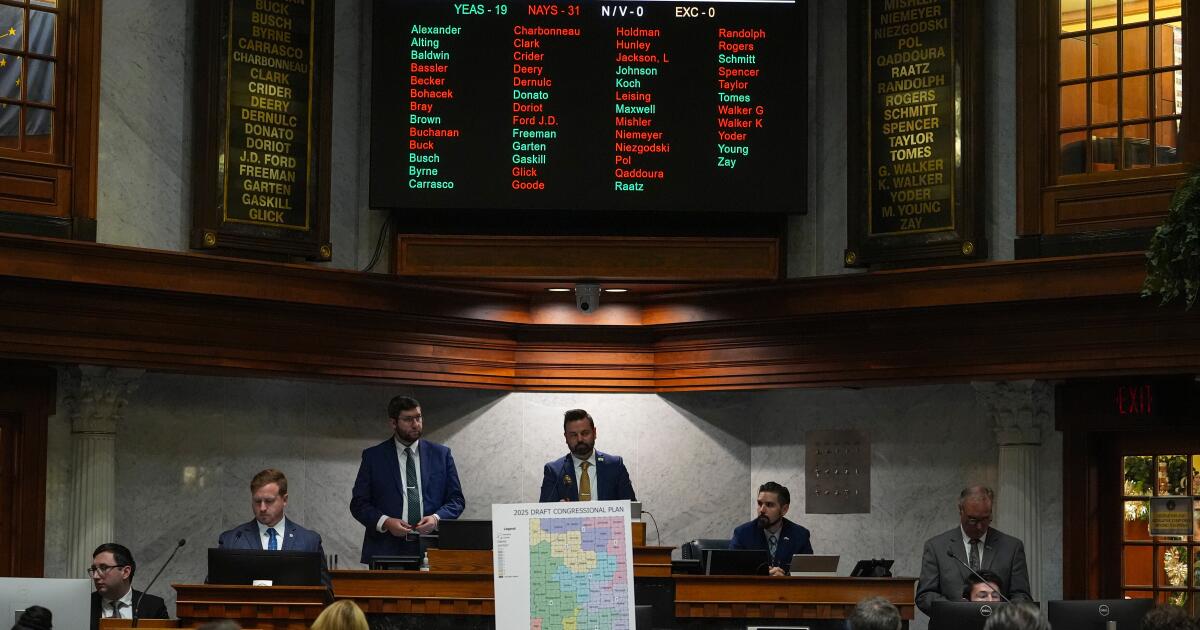

Source link

Justice Department drafting a list of ‘domestic terrorists’

Justice Department leadership has directed the FBI to “compile a list of groups or entities engaged in acts that may constitute domestic terrorism” by the start of next year, and to establish a “cash reward system” that incentivizes individuals to report on their fellow Americans, according to a memo reviewed by The Times.

Law enforcement agencies are directed in the memo, dated Dec. 4, to identify “domestic terrorists” who use violence, or the threat of violence, to advance political and social agendas, including “adherence to radical gender ideology, anti-Americanism, anti-capitalism, or anti-Christianity.”

Although the memo does not mention protests against President Trump’s immigration crackdown directly, it says that problematic “political and social agendas” could include “opposition to law and immigration enforcement, extreme views in favor of mass migration and open borders.”

The memo, sent by Atty, Gen. Pam Bondi to federal prosecutors and law enforcement agencies, follows on a presidential memorandum signed by Trump in the immediate aftermath of the killing of Charlie Kirk, a prominent conservative figure, that gave civil rights groups pause over the potential targeting of political activists, donors and nonprofits opposed to the president.

The memo also outlines what it says are causes of domestic terrorist activity, including “hostility towards traditional views on family, religion, and morality.”

“Federal law enforcement will prioritize this threat. Where federal crime is encountered, federal agents will act,” the memo states.

Some national security experts said the memo represents a dramatic operational shift, by directing federal prosecutors and agents to approach domestic terrorism in a way that is “ideologically one-sided.” At worst, critics said, the memo provides legal justification for criminalizing free speech.

“I think this causes a chilling impact, because it definitely seems to be directing enforcement toward particular points of view,” Mary McCord, a former acting assistant attorney general for national security, said in an interview.

The memo, for example, primarily focuses on antifa-aligned extremism, but omits other trends that in recent years have been identified as rising domestic threats, such as violent white supremacy. Since Trump resumed office, the FBI has cut its office designated to focus on domestic extremism, withdrawing resources from investigations into white supremacists and right-wing antigovernment groups.

The memo’s push to collect intelligence on antifa through internal lists and public tip lines also raised questions over the scope of the investigative mission, and how wide a net investigators might cast.

“Whether you’re going to a protest, whether you’re considering a piece of legislation, whether you’re considering undertaking a particular business activity, the ambiguity will affect your risk profile,” Thomas Brzozowski, a former counsel for domestic terrorism at the Justice Department, said in an interview.

“It is the unknown that people will fear,” he added.

Protesters in 1980s style aerobic outfits hold signs reading "Stop ICE Cruelty."

Protesters in 1980s style aerobic outfits work out during a demonstration dubbed “Sweatin’ Out the Fascists” on Sunday in Portland, Ore.

(Natalie Behring / Getty Images)

Groups such as the American Civil Liberties Union have expressed alarm over the new policy, which could be used by the Justice Department to target civil society groups and Democratic individuals and entities with burdensome investigations.

But the White House argues that Democratic appointees under the Biden administration targeted conservative extremists in similar ways.

Members of Trump’s team have embraced political retribution as a policy course. Ed Martin, the president’s pardon attorney, has openly advocated for Justice Department investigations that would burden who Trump perceives as his enemies, alongside leniency for his friends and allies.

“No MAGA left behind,” Martin wrote on social media in May.

Law enforcement agencies are directed in the memo to “zealously” investigate those involved in what it calls potential domestic terrorist actions, including “doxing” law enforcement. Authorities are also directed to “map the full network of culpable actors” potentially tied to crime.

Domestic terrorism is not an official designation in U.S. law. But the directive cites over two dozen existing laws that could substantiate charges against domestic extremists and their supporters, such as conspiracy to injure an officer, seditious conspiracy and mail and wire fraud.

Only in a footnote of the memo does the Justice Department acknowledge that the U.S. government cannot “investigate, collect, or maintain information on U.S. persons solely for the purpose of monitoring activities protected by the First Amendment.”

“No investigation may be opened based solely on activities protected by the First Amendment or the lawful exercise of rights secured by the Constitution or laws of the United States,” the footnote says.

Some tension could arise when citizens report what they believe to be suspected domestic terrorism to the FBI.

The memo directs the FBI online tip line to allow “witnesses and citizen journalists” to report videos, recordings and photos of what they believe to be suspected acts of domestic violence, and establish a “cash reward system” for information that leads to an arrest.

“People will inform because they want to get paid,” Brzozowski said. He added that some information could end up being unreliable and likely be related to other Americans exercising their constitutional rights.

State and local law enforcement agencies that adhere to the Justice Department directive will be prioritized for federal grant funding.

A man dressed as a bee holds an American flag at a No Kings protest.

A man dressed as a bee participates in the No Kings Day of Peaceful Action in downtown Los Angeles on Oct. 18.

(Genaro Molina / Los Angeles Times)

One of the directives in the memo would require the FBI to disseminate an “intelligence bulletin on Antifa and Antifa-aligned anarchist violent extremist groups” early next year.

“The bulletin should describe the relevant organizations structures, funding sources, and tactics so that law enforcement partners can effectively investigate and policy makers can effectively understand the nature and gravity of the threat posed by these extremist groups,” the memo states.

The mission will cross several agencies, with the FBI working alongside joint terrorism task forces nationwide, as well as the Counterterrorism Division and the National Threat Operations Center, among others, to provide updates to Justice Department leadership every 30 days.

Source link

Justice Department again fails to re-indict New York Atty. Gen. Letitia James, AP source says

A grand jury declined for a second time in a week to re-indict New York Attorney General Letitia James on Thursday in another major blow to the Justice Department’s efforts to prosecute the president’s political opponents.

The repeated failures amounted to a stunning rebuke of prosecutors’ bid to resurrect a criminal case President Trump pressured them to bring, and hinted at a growing public leeriness of the administration’s retribution campaign.

A grand jury rejection is an unusual circumstance in any case, but is especially stinging for a Justice Department that has been steadfast in its determination to seek revenge against Trump foes such as James and former FBI Director James Comey. On separate occasions, citizens have heard the government’s evidence against James and have come away underwhelmed, unwilling to rubber-stamp what prosecutors have attempted to portray as a clear-cut criminal case.

A judge threw out the original indictments against James and Comey in November, ruling that the prosecutor who presented to the grand jury, Lindsey Halligan, was illegally appointed U.S. attorney for the Eastern District of Virginia.

The Justice Department asked a grand jury in Alexandria, Va., to return an indictment Thursday after a different grand jury in Norfolk last week refused to do so. The failure to secure an indictment was confirmed by a person who was not authorized to publicly discuss the matter and spoke on the condition of anonymity.

It was not immediately clear Thursday whether prosecutors would try for a third time to seek a new indictment. A lawyer for James, who has denied any wrongdoing, said the “unprecedented rejection makes even clearer that this case should never have seen the light of day.”

“This case already has been a stain on this Department’s reputation and raises troubling questions about its integrity,” defense attorney Abbe Lowell said in a statement. “Any further attempt to revive these discredited charges would be a mockery of our system of justice.”

James, a Democrat who infuriated Trump after his first term with a lawsuit alleging that he built his business empire on lies about his wealth, was initially charged with bank fraud and making false statements to a financial institution in connection with a home purchase in 2020.

During the sale, she signed a standard document called a “second home rider” in which she agreed to keep the property primarily for her “personal use and enjoyment for at least one year,” unless the lender agreed otherwise. Rather than using the home as a second residence, prosecutors say James rented it out to a family of three, allowing her to obtain favorable loan terms not available for investment properties.

Both the James and Comey cases were brought shortly after the administration installed Halligan, a former Trump lawyer with no previous prosecutorial experience, as U.S. attorney amid public calls from the president to take action against his political opponents.

But U.S. District Judge Cameron McGowan Currie threw out the cases last month over the unconventional mechanism that the Trump administration employed to appoint Halligan. The judge dismissed them without prejudice, allowing the Justice Department to try to file the charges again.

Halligan had been named as a replacement for Erik Siebert, a veteran prosecutor in the office and interim U.S. attorney who resigned in September amid Trump administration pressure to file charges against both Comey and James. He stepped aside after Trump told reporters he wanted Siebert “out.”

James’ lawyers separately argued the case was a vindictive prosecution brought to punish the Trump critic who spent years investigating and suing the Republican president and won a staggering judgment in a lawsuit alleging he defrauded banks by overstating the value of his real estate holdings on financial statements. The fine was later tossed out by a higher court, but both sides are appealing.

Comey was separately charged with lying to Congress in 2020. Another federal judge has complicated the Justice Department’s efforts to seek a new indictment against Comey, temporarily barring prosecutors from accessing computer files belonging to Daniel Richman, a close Comey friend and Columbia University law professor whom prosecutors see as a central player in any potential case against the former FBI director.

Prosecutors moved Tuesday to quash that order, calling Richman’s request for the return of his files a “strategic tool to obstruct the investigation and potential prosecution.” They said the judge had overstepped her bounds by ordering Richman’s property returned to him and said the ruling had impeded their ability to proceed with a case against Comey.

Richer and Kunzelman write for the Associated Press. Richer reported from Washington. AP reporter Eric Tucker in Washington contributed to this report.

Source link

Noem links oil tanker seizure off Venezuela to U.S. antidrug efforts

Homeland Security Secretary Kristi Noem on Thursday linked the seizure of an oil tanker off the coast of Venezuela to the Trump administration’s counterdrug efforts in Latin America as tensions escalate with the government of President Nicolás Maduro.

Noem’s assertion, which came during her testimony to the House Homeland Security Committee, provided the Republican administration’s most thorough explanation so far of why it took control of the vessel on Wednesday. Incredibly unusual, the use of U.S. forces to seize a merchant ship was a sharp escalation in the administration’s pressure campaign on Maduro, who has been charged with narcoterrorism in the United States.

Trump officials added to it Thursday by imposing sanctions on three of Maduro’s nephews. The Venezuelan leader discussed the rising tensions with Russian President Vladimir Putin on Thursday. The Kremlin said in a statement that Putin reaffirmed his support for Maduro’s policy of “protecting national interests and sovereignty in the face of growing external pressure.”

Asked to delineate the U.S. Coast Guard’s role in the tanker seizure, Noem called it “a successful operation directed by the president to ensure that we’re pushing back on a regime that is systematically covering and flooding our country with deadly drugs and killing our next generation of Americans.”

Noem went on to lay out the ”lethal doses of cocaine” she said had been kept from entering the U.S. as a result.

Asked Thursday whether U.S. operations in the region were about drugs or oil, White House press secretary Karoline Leavitt also gave a bifurcated answer, saying the administration was “focused on doing many things in the Western Hemisphere.” She noted that such seizures could continue, arguing that the commodities being transported were used to fund the illegal drug trade.

“We’re not going to stand by and watch sanctioned vessels sail the seas with black market oil, the proceeds of which will fuel narcoterrorism of rogue and illegitimate regimes around the world,” she said.

The Justice Department had obtained a warrant for the vessel because it had been known for “carrying black market, sanctioned oil,” Leavitt said, adding that “the United States does intend to get the oil” that was onboard the tanker.

Trump told reporters a day earlier at the White House that the tanker “was seized for a very good reason.” Asked what would happen to the oil aboard the tanker, Trump said, “Well, we keep it, I guess.”

The U.S. has built up the largest military presence in the region in decades and launched a series of deadly strikes on alleged drug-smuggling boats in the Caribbean Sea and the eastern Pacific Ocean, a campaign that is facing growing scrutiny from Congress.

Trump, who has said land attacks are coming soon but has not offered more details, has broadly justified the moves as necessary to stem the flow of fentanyl and other illegal drugs into the U.S.

Venezuela’s government said in a statement that the tanker seizure “constitutes a blatant theft and an act of international piracy.” Maduro has insisted the real purpose of the U.S. military operations is to force him from office.

Kinnard writes for the Associated Press.

Source link

In Trump’s regime, Catholics are among the most powerful — and deported

Her brown face, green mantle and forgiving gaze is a mainstay of Southern California: In front yards. As murals. On decals flashing from car windows and bumpers. Sold at swap meets in the form of T-shirts, ponchos, statues, bags and so much more.

Tomorrow, it will be the feast day of Our Lady of Guadalupe, and She couldn’t come soon enough. 2025 will go down as one of the best and worst years ever to be a Catholic in the United States.

Members of my faith are in positions of power in this country like never before. Vice President JD Vance is a convert. A majority of the Supreme Court are practicing Catholics. Names of past Catholic diasporas like Kennedy, Bondi, Loeffler and Rubio dot Trump’s Cabinet. This week, he became the first president to formally recognize the Feast of the Immaculate Conception, a Catholic holy day celebrating Mary, the mother of Jesus.

“For nearly 250 years, Mary has played a distinct role in our great American story,” Trump declared, offering a brief Catholic history of the United States that would’ve made this country’s Puritan forefathers retch. He even shouted out Our Lady of Guadalupe’s feast day, commending the “steadfast devotion to Mary that originated in the heart of Mexico.”

It’s the second year in a row where Trump has wrapped himself in the Empress of the Americas. Last year, he shared Her famous image on social media on Sept. 8, when Catholics celebrate the birth of the Virgin Mary, with the caption “Happy birthday, Mary!”

I wish I could say Guadalupe is changing Trump’s shriveled excuse of a heart. But it’s impossible to reach that conclusion when so many Catholics in the U.S. face unholy persecution because of his deportation deluge.

A study released earlier this year by a coalition of evangelical and Catholic groups found that 61% of immigrants at risk of deportation in this country identify as Catholic, while nearly one-fifth of U.S. Catholics “would be impacted” by someone being deported. The latter figure is nearly three times the rate that evangelicals face and four times the rate of other Christian denominations.

Guadalupanos — people with a special devotion to Guadalupe, the overwhelming majority of whom are Latino — can’t even venerate Her in peace this year because of Trump.

The neighborhood house that I visit every year to pray the novena in honor of Guadalupe with others has seen way fewer people than last year. In Chicago, where immigration agents terrorized residents all fall, officials at the Shrine of Our Lady of Guadalupe in suburban Des Plaines are seeing the same even as they adopt security measures to reassure attendees. Out in the Coachella Valley, a beloved pilgrimage in honor of la guadalupana held for more than 20 years was canceled, with organizers announcing on Facebook in Spanish that the faithful should instead do a “spiritual interior pilgrimage where our mother invites us to keep us united in a secure environment.”

Since July, San Bernardino diocese bishop Alberto Rojas has allowed Catholics to skip Mass because of all the raids in the Inland Empire. He was joined this week by Diocese of Baton Rouge Bishop Michael Duca as la migra now roams Louisiana. “We should be anticipating the joy of Christmas, surrounded by our family in celebration,” Duca wrote, “instead of the experience of anxiety and fear.”

Pope Francis meets with U.S. Vice President JD Vance

The late Pope Francis meets with U.S. Vice President JD Vance and delegation during an audience at Casa Santa Marta on April 20 in Vatican City. A day later, Francis died at age 88.

(Vatican Pool / Getty Images)

That’s the sad irony of seeing Catholicism have such a prominent role in Trump’s second term. The main defamers of Catholics in the United States have been Protestants since the days of the founding fathers. They cast successive waves of immigrants — Irish, Italians, Poles, Mexicans, Vietnamese — as evil, stupid immigrants beholden to Rome. They wrongly predicted each group would ruin the American way of life.

Now that Catholics are at the top, they’re the ones pushing policies that persecute the new generation of immigrants, Catholic and not. They mock the exhortations of church leaders to follow the Bible’s many commands to protect the stranger, the meek, the least and the poor by arguing that deporting the undocumented is somehow righteous.

That’s why, as we end a terrible year and Trump vows to escalate his cruel anti-immigrant campaign in the next one, Catholics and non-Catholics alike need to remember who Our Lady of Guadalupe is like never before. She’s more than just an iconic image; this dark-skinned María stands against everything Trump and his brand of Catholicism preaches.

The faithful believe that Guadalupe appeared in 1531 near modern day Mexico City — not before the conquering Spanish priests who were destroying the old ways of the Aztecs and other Indigenous groups, but to the conquered who looked like her. The manuscript that shared her story with the world quoted her as promising to “hear all their cries … and remedy all their miseries, sorrows, and pains.”

Siding with the underdogs against the elites is why Mexicans carried Guadalupe’s banner in the War of Independence and during the Mexican Revolution. Why Cesar Chavez carried her during United Farm Workers marches and why generations of Chicano artists have reimagined la virgencita as everything from a bikini-clad model to a jogger — the more quotidian, the better.

It’s why there are 19 parishes, sanctuaries and missions named after her in the dioceses of Orange, Los Angeles and San Bernardino — by far the most of any saint, sacrament or Marian apparition in the Southland. It’s why the late Pope Francis regularly celebrated mass in honor of Guadalupe’s feast day at the Vatican and admonished those who wished to “gain ideological advantage over the mystery of Guadalupe” last year during a homily at St. Peter’s Basilica. Presiding over the service was Cardinal Robert Prevost, who is now Pope Leo XIV and whose devotion to Guadalupe is such that he was consecrated as a bishop 11 years ago this Dec. 12.

It’s why Guadalupe has emerged as a symbol against Trump’s deportation Leviathan.

Her message of hope for the poor over the privileged stands in contrast to the limousine Catholics who dominate Trumpland. They’re the ones that have successfully spent millions of dollars to move the church in the United States to the right (55% of Catholics chose Trump last year), repeatedly tried to torpedo the reforms of Pope Francis and are already souring on Pope Leo for describing Trump’s raids as “extremely disrespectful” to the dignity of migrants. They’re the ones who have expressed more outrage over the assassination of conservative firebrand Charlie Kirk this fall than the suffering that millions of their fellow Catholics have endured all year under Trump.

Our Lady of Guadalupe, grant us the strength to fight back against the Herod of our time.

Source link

MyPillow founder and Trump supporter Mike Lindell says he’s running for Minnesota governor in 2026

Mike Lindell, the fervent supporter of President Trump known to TV viewers as the “MyPillow Guy,” officially entered the race for Minnesota governor Thursday in hopes of winning the Republican nomination to challenge Democratic Gov. Tim Walz.

“I’ll leave no town unturned in Minnesota,” Lindell told the Associated Press in an interview ahead of a news conference set for Thursday.

He said he has a record of solving problems and personal experiences that will help businesses and and that he will fight addiction and homelessness as well as fraud in government programs. The fraud issue has particularly dogged Walz, who announced in September that he’s seeking a third term in the 2026 election.

A TV pitchman and election denier

Lindell, 64, founded his pillow company in Minnesota in 2009 and became its public face through infomercials that became ubiquitous on late-night television. But he and his company faced a string of legal and financial setbacks after he became a leading amplifier of Trump’s false claims that the 2020 election was stolen. He said he has overcome those setbacks.

“Not only have I built businesses, you look at problem solution,” Lindell said in his trademark rapid-fire style. “I was able to make it through the biggest attack on a company, and a person, probably other than Donald Trump, in the history of our media … lawfare and everything.”

While no Republican has won statewide office in Minnesota since 2006, the state’s voters have a history of making unconventional choices. They shocked the world by electing former professional wrestler Jesse Ventura as governor in 1998. And they picked a veteran TV pitchman in 1978 when they elected home improvement company owner Rudy Boschwitz as a U.S. senator.

Lindell has frequently talked about how he overcame a crack cocaine addiction with a religious conversion in 2009 as MyPillow was getting going. His life took another turn in 2016 when he met the future president during Trump’s first campaign. He served as a warm-up speaker at dozens of Trump rallies and co-chaired Trump’s campaign in Minnesota.

Trump’s endorsement could be the key to which of several candidates wins the GOP nomination to challenge Walz. But Lindell said he doesn’t know what Trump will do, even though they’re friends, and said his campaign isn’t contingent on the president’s support.

His Lindell TV streaming platform was in the news in November when it became one of several conservative news outlets that became credentialed to cover the Pentagon after agreeing to a restrictive new press policy rejected by virtually all legacy media organizations.

Lindell has weathered a series of storms

Lindell’s outspoken support for Trump’s false claims that the 2020 election was stolen triggered a backlash as major retailers discontinued MyPillow products. By his own admission, revenue slumped and lines of credit dried up, costing him millions. Several vendors sued MyPillow over billing disputes. Fox News stopped running his commercials. Lawyers quit on him.

Lindell has been sued twice for defamation over his claims that voting machines were manipulated to deprive Trump of a victory.

A federal judge in Minnesota ruled in September that Lindell defamed Smartmatic with 51 false statements. But the judge deferred the question of whether Lindell acted with the “actual malice” that Smartmatic must prove to collect. Smartmatic says it’s seeking “nine-figure damages.”

A Colorado jury in June found that Lindell defamed a former Dominion Voting Systems executive by calling him a traitor, and awarded $2.3 million in damages.

But Lindell won a victory in July when a federal appeals court overturned a judge’s decision that affirmed a $5-million arbitration award to a software engineer who disputed data that Lindell claimed proved Chinese interference in the 2020 election. The engineer had accepted Lindell’s “Prove Mike Wrong Challenge,” which he launched as part of his 2021 “Cyber Symposium” in South Dakota, where he promised to expose election fraud.

The campaign ahead

Lindell said his crusade against electronic voting machines will just be part of his platform. While Minnesota uses paper ballots, it also uses electronic tabulators to count them. Lindell wants them hand-counted, even though many election officials say machine counting is more accurate.

Some Republicans in the race include Minnesota House Speaker Lisa Demuth; Dr. Scott Jensen, a former state senator who was the party’s 2022 candidate; state Rep. Kristin Robbins; defense lawyer and former federal prosecutor Chris Madel; and former executive Kendall Qualls.

“These guys haven’t lived what I live,” Lindell said.

Lindell wouldn’t commit to abiding by the Minnesota GOP endorsement and forgoing the primary if he loses it, expressing confidence that he’ll win. He also said he’ll rely on his supporters to finance his campaign because his own finances are drained. “I don’t have the money,” he acknowledged.

But he added that ever since word got out last week that he had filed the paperwork to run, “I’ve had thousands upon thousands of people text and call, saying from all around the country … ‘Hey, I’ll donate.’”

Karnowski writes for the Associated Press.

Source link

Senate rejects extension of healthcare subsidies as costs are set to rise for millions of Americans

The Senate on Thursday rejected legislation to extend Affordable Care Act tax credits, essentially guaranteeing that millions of Americans will see a steep rise in costs at the beginning of the year.

Senators rejected a Democratic bill to extend the subsidies for three years and a Republican alternative that would have created new health savings accounts — an unceremonious end to a monthslong effort by Democrats to prevent the COVID-19-era subsidies from expiring on Jan. 1.

Ahead of the votes, Senate Democratic Leader Chuck Schumer of New York warned Republicans that if they did not vote to extend the tax credits, “there won’t be another chance to act,” before premiums rise for many people who buy insurance off the ACA marketplaces.

“Let’s avert a disaster,” Schumer said. “The American people are watching.”

Republicans have argued that Affordable Care Act plans are too expensive and need to be overhauled. The health savings accounts in the GOP bill would give money directly to consumers instead of to insurance companies, an idea that has been echoed by President Trump. But Democrats immediately rejected the plan, saying that the accounts wouldn’t be enough to cover costs for most consumers.

Some Republicans have pushed their colleagues to extend the credits, including Sen. Thom Tillis of North Carolina, who said they should vote for a short-term extension so they can find agreement on the issue next year. “It’s too complicated and too difficult to get done in the limited time that we have left,” Tillis said Wednesday.

But despite the bipartisan desire to continue the credits, Republicans and Democrats have never engaged in meaningful or high-level negotiations on a solution, even after a small group of centrist Democrats struck a deal with Republicans last month to end the 43-day government shutdown in exchange for a vote on extending the ACA subsidies. Most Democratic lawmakers opposed the move as many Republicans made clear that they wanted the tax credits to expire.

The deal raised hopes for bipartisan compromise on healthcare. But that quickly faded with a lack of any real bipartisan talks.

The dueling Senate votes are the latest political messaging exercise in a Congress that has operated almost entirely on partisan terms, as Republicans pushed through a massive tax and spending cuts bill this summer using budget maneuvers that eliminated the need for Democratic votes. They also tweaked Senate rules to push past a Democratic blockade of all of Trump’s nominees.

An intractable issue

The votes were also the latest failed salvo in the debate over the Affordable Care Act, President Obama’s signature law that Democrats passed along party lines in 2010 to expand access to insurance coverage.

Republicans have tried unsuccessfully since then to repeal or overhaul the law, arguing that healthcare is still too expensive. But they have struggled to find an alternative. In the meantime, Democrats have made the policy a central political issue in several elections, betting that the millions of people who buy healthcare on the government marketplaces want to keep their coverage.

“When people’s monthly payments spike next year, they’ll know it was Republicans that made it happen,” Schumer said in November, while making clear that Democrats would not seek compromise.

Even if they view it as a political win, the failed votes are a loss for Democrats who demanded an extension of the benefits as they forced a government shutdown for six weeks in October and November — and for the millions of people facing premium increases on Jan. 1.

Maine Sen. Angus King, an independent who caucuses with Democrats, said the group tried to negotiate with Republicans after the shutdown ended. But, he said, the talks became unproductive when Republicans demanded language adding new limits for abortion coverage that were a “red line” for Democrats. He said Republicans were going to “own these increases.”

A plethora of plans, but little agreement

Republicans have used the looming expiration of the subsidies to renew their longstanding criticisms of the ACA, also called Obamacare, and to try, once more, to agree on what should be done.

Thune announced earlier this week that the GOP conference had decided to vote on the bill led by Louisiana Sen. Bill Cassidy, the chairman of the Senate Health, Labor, Education and Pensions Committee, and Idaho Sen. Mike Crapo, the chairman of the Senate Finance Committee, even as several Republican senators proposed alternate ideas.

In the House, Speaker Mike Johnson (R-La.) has promised a vote next week. Republicans weighed different options in a conference meeting on Wednesday, with no apparent consensus.

Republican moderates in the House who could have competitive reelection bids next year are pushing Johnson to find a way to extend the subsidies. But more conservative members want to see the law overhauled.

Rep. Kevin Kiley (R-Rocklin) has pushed for a temporary extension, which he said could be an opening to take further steps on healthcare.

If they fail to act and healthcare costs go up, the approval rating for Congress “will get even lower,” Kiley said.

Jalonick writes for the Associated Press. AP writers Kevin Freking and Joey Cappelletti contributed to this report.

Source link

Senators clash over Trump’s National Guard deployments as military leaders face first questioning

Members of Congress clashed Thursday over President Trump’s use of the National Guard in American cities, with Republicans saying the deployments were needed to fight lawlessness while Democrats called his move an extraordinary abuse of military power that violated states’ rights.

Top military officials faced questioning over the deployments for the first time at the hearing before the Senate Armed Services Committee. They were pressed by Democrats over the legality of sending in troops, which in some places were done over the objections of mayors and governors, while Trump’s Republican allies offered a robust defense of the policy.

It was the highest level of scrutiny, outside a courtroom, of Trump’s use of the National Guard in U.S. cities since the deployments began and came a day after the president faced another legal setback over efforts to send troops to support federal law enforcement, protect federal facilities and combat crime.

“In recent years, violent crime, rioting, drug trafficking and heinous gang activity have steadily escalated,” said Mississippi Sen. Roger Wicker, the committee chairman. The deployments, he said, are “not only appropriate, but essential.”

Democrats argued they are illegal and contrary to historic prohibitions about the use of military force on U.S. soil.

Sen. Tammy Duckworth, D-Ill., had pushed for the hearing, saying domestic deployments traditionally have involved responding to major floods and tornadoes, not assisting immigration agents who are detaining people in aggressive raids.

“Trump is forcing our military men and women to make a horrible choice: uphold their loyalty to the Constitution and protect peaceful protesters, or execute questionable orders from the president,” said Duckworth, a combat veteran who served in the Illinois National Guard.

Military leaders point to training

During questioning, military leaders highlighted the duties that National Guard units have carried out. Troops are trained in community policing, they said, and are prohibited from using force unless in self-defense.

Since the deployments began, only one civilian — in California — has been detained by National Guard personnel, according to Air Force Gen. Gregory M. Guillot, commander of U.S. troops in North America. Guillot said the troops are trained to de-escalate tense interactions with people, but do not receive any specific training on mental health episodes.

“They can very quickly be trained to conduct any mission that we task of them,” Guillot said.

Republicans and Democrats see the deployments much differently

In one exchange, Sen. Mazie Hirono, D-Hawaii, noted how former Defense Secretary Mark Esper alleged that Trump inquired about shooting protesters during the George Floyd demonstrations. She asked whether a presidential order to shoot protesters would be lawful.

Charles L. Young III, principal deputy general counsel at the Defense Department, said he was unaware of Trump’s previous comments and that “orders to that effect would depend on the circumstances.”

“We have a president who doesn’t think the rule of law applies to him,” Hirono said in response.

Republicans countered that Trump was within his rights — and his duty — to send in the troops.

Republican Sen. Tim Sheehy of Montana, a former Navy SEAL officer, argued during the hearing that transnational crimes present enough of a risk to national security to justify military action, including on U.S. soil.

Sheehy claimed there are foreign powers “actively attacking this country, using illegal immigration, using transnational crime, using drugs to do so.”

Senators also offered their sympathies after two West Virginia National Guard members deployed to Washington were shot just blocks from the White House in what the city’s mayor described as a targeted attack. Spc. Sarah Beckstrom died a day after the Nov. 26 shooting, and her funeral took place Tuesday. Staff Sgt. Andrew Wolfe is hospitalized in Washington.

Hearing follows court setback for Trump

A federal judge in California on Wednesday ruled that the administration must stop deploying the California National Guard in Los Angeles and return control of the troops to the state.

U.S. District Judge Charles Breyer granted a preliminary injunction sought by California officials, but also put the decision on hold until Monday. The White House said it plans to appeal.

Trump called up more than 4,000 California National Guard troops in June without Democratic Gov. Gavin Newsom’s approval to further the administration’s immigration enforcement efforts.

The move was the first time in decades that a state’s National Guard was activated without a request from its governor and marked a significant escalation in the administration’s efforts to carry out its mass deportation policy. The troops were stationed outside a federal detention center in downtown Los Angeles where protesters gathered and were later sent on the streets to protect immigration officers as they made arrests.

Trump also had announced National Guard members would be sent to Illinois, Oregon, Louisiana and Tennessee. Other judges have blocked or limited the deployment of troops to Portland, Oregon, and Chicago, while Guard members have not yet been sent to New Orleans.

Klepper, Finley and Groves write for the Associated Press. AP writer Konstantin Toropin contributed to this report.

Source link

Trump’s handling of the economy is at its lowest point in AP-NORC polling

President Trump’s approval on the economy and immigration have fallen substantially since March, according to a new AP-NORC poll, the latest indication that two signature issues that got him elected barely a year ago could be turning into liabilities as his party begins to gear up for the 2026 midterms.

Only 31% of U.S. adults now approve of how Trump is handling the economy, the poll from The Associated Press-NORC Center for Public Affairs Research finds. That is down from 40% in March and marks the lowest economic approval he’s registered in an AP-NORC poll in his first or second term. The Republican president also has struggled to recover from public blowback on other issues, such as his management of the federal government, and has not seen an approval bump even after congressional Democrats effectively capitulated to end a record-long government shutdown last month.

Perhaps most worryingly for Trump, who’s become increasingly synonymous with his party, he’s slipped on issues that were major strengths. Just a few months ago, 53% of Americans approved of Trump’s handling of crime, but that’s fallen to 43% in the new poll. There’s been a similar decline on immigration, from 49% approval in March to 38% now.

The new poll starkly illustrates how Trump has struggled to hold onto political wins since his return to office. Even border security — an issue on which his approval remains relatively high — has declined slightly in recent months.

The good news for Trump is that his overall approval hasn’t fallen as steeply. The new poll found that 36% of Americans approve of the way he’s handling his job as president, which is down slightly from 42% in March. That signals that even if some people aren’t happy with elements of his approach, they might not be ready to say he’s doing a bad job as president. And while discontent is increasing among Republicans on certain issues, they’re largely still behind him.

Declining approval on the economy, even among Republicans

Republicans are more unhappy with Trump’s performance on the economy than they were in the first few months of his term. About 7 in 10 Republicans, 69%, approve of how Trump is handling the economy in the December poll, a decline from 78% in March.

Larry Reynolds, a 74-year-old retiree and Republican voter from Wadsworth, Ohio, said he believes in Trump’s plan to impose import duties on U.S. trading partners but thinks rates have spiraled too high, creating a “vicious circle now where they aren’t really justifying the tariffs.”

Reynolds said he also believes that inflation became a problem during the coronavirus pandemic and that the economy won’t quickly recover, regardless of what Trump does. “I don’t think it’ll be anything really soon. I think it’s just going to take time,” he said.

Trump’s base is still largely behind him, which was not always the case for his predecessor, President Joe Biden, a Democrat. In the summer of 2022, only about half of Democrats approved of how Biden was handling the economy. Shortly before he withdrew from the 2024 presidential race two years later, that had risen to about two-thirds of Democrats.

More broadly, though, there’s no sign that Americans think the economy has improved since Trump took over. About two-thirds of U.S. adults, 68%, continue to say the country’s economy is “poor.” That’s unchanged from the last time the question was asked in October, and it’s broadly in line with views throughout Biden’s last year in office.

Why Trump gets higher approval on border security than immigration

Trump’s approval ratings on immigration have declined since March, but border security remains a relatively strong issue for him. Half of U.S. adults, 50%, approve of how Trump is handling border security, which is just slightly lower than the 55% who approved in September.

Trump’s relative strength on border security is partially driven by Democrats and independents. About one-third of independents, 36%, approve of Trump on the border, while 26% approve on immigration.

Jim Rollins, an 82-year-old independent in Macon, Georgia, said he believes that when it comes to closing the border, Trump has done “a good job,” but he hopes the administration will rethink its mass deportation efforts.

“Taking people out of kindergarten, and people going home for Thanksgiving, taking them off a plane. If they are criminals, sure,” said Rollins, who said he supported Trump in his first election but not since then. “But the percentages — based on the government’s own statistics — say that they’re not criminals. They just didn’t register, and maybe they sneaked across the border, and they’ve been here for 15 years.”

Other polls have shown it’s more popular to increase border security than to deport immigrants, even those who are living in the country illegally. Nearly half of Americans said increasing security at the U.S.-Mexico border should be “a high priority” for the government in AP-NORC polling from September. Only about 3 in 10 said the same about deporting immigrants in the U.S. illegally.

Shaniqwa Copeland, a 30-year-old independent and home health aide in St. Augustine, Florida, said she approves of Trump’s overall handling of the presidency but believes his immigration actions have gone too far, especially when it comes to masked federal agents leading large raids.

“Now they’re just picking up anybody,” Copeland said. “They just like, pick up people, grabbing anybody. It’s crazy.”

Health care and government management remain thorns for Trump

About 3 in 10 U.S. adults approve of how Trump is handling health care, down slightly from November. The new poll was conducted in early December, as Trump and Congress struggled to find a bipartisan deal for extending the Affordable Care Act subsidies that will expire at the end of this month.

That health care fight was also the source of the recent government shutdown. About one-third of U.S. adults, 35%, approve of how Trump is managing the federal government, down from 43% in March.

But some Americans may see others at fault for the country’s problems, in addition to Trump. Copeland is unhappy with the country’s health care system and thinks things are getting worse but is not sure of whether to blame Trump or Biden.

“A couple years ago, I could find a dentist and it would be easy. Now, I have a different health care provider, and it’s like so hard to find a dental (plan) with them,” she said. “And the people that do take that insurance, they have so many scheduled out far, far appointments because it’s so many people on it.”

Sanders and Weissert write for the Associated Press. The AP-NORC poll of 1,146 adults was conducted Dec. 4-8 using a sample drawn from NORC’s probability-based AmeriSpeak Panel, which is designed to be representative of the U.S. population. The margin of sampling error for adults overall is plus or minus 4 percentage points.

Source link

Trump administration separates thousands of migrant families in the U.S.

President Trump’s zero-tolerance immigration policy split more than 5,000 children from their families at the Mexico border during his first term, when images of babies and toddlers taken from the arms of mothers sparked global condemnation.

Seven years later, families are being separated but in a much different way. With illegal border crossings at their lowest levels in seven decades, a push for mass deportations is dividing families of mixed legal status inside the U.S.

Federal officials and their local law enforcement partners are detaining tens of thousands of asylum-seekers and migrants. Detainees are moved repeatedly, then deported, or held in poor conditions for weeks or months before asking to go home.

The federal government was holding an average of more than 66,000 people in November, the highest on record.

During the first Trump administration, families were forcibly separated at the border and authorities struggled to find children in a vast shelter system because government computer systems weren’t linked. Now parents inside the United States are being arrested by immigration authorities and separated from their families during prolonged detention. Or, they choose to have their children remain in the U.S. after an adult is deported, many after years or decades here.

The Trump administration and its anti-immigration backers see “unprecedented success” and Trump’s top border adviser Tom Homan told reporters in April that “we’re going to keep doing it, full speed ahead.”

Three families separated by migration enforcement in recent months told The Associated Press that their dreams of better, freer lives had clashed with Washington’s new immigration policy and their existence is anguished without knowing if they will see their loved ones again.

For them, migration marked the possible start of permanent separation between parents and children, the source of deep pain and uncertainty.

A family divided between Florida and Venezuela

Antonio Laverde left Venezuela for the U.S. in 2022 and crossed the border illegally, then requested asylum.

He got a work permit and a driver’s license and worked as an Uber driver in Miami, sharing homes with other immigrants so he could send money to relatives in Venezuela and Florida.

Laverde’s wife Jakelin Pasedo and their sons followed him from Venezuela to Miami in December 2024. Pasedo focused on caring for her sons while her husband earned enough to support the family. Pasedo and the kids got refugee status but Laverde, 39, never obtained it and as he left for work one early June morning, he was arrested by federal agents.

Pasedo says it was a case of mistaken identity by agents hunting for a suspect in their shared housing. In the end, she and her children, then 3 and 5, remember the agents cuffing Laverde at gunpoint.

“They got sick with fever, crying for their father, asking for him,” Pasedo said.

Laverde was held at Broward Transitional Center, a detention facility in Pompano Beach, Fla. In September, after three months detention, he asked to return to Venezuela.

Pasedo, 39, however, has no plans to go back. She fears she could be arrested or kidnapped for criticizing the socialist government and belonging to the political opposition.

She works cleaning offices and, despite all the obstacles, hopes to reunify with her husband someday in the U.S.

They followed the law

Yaoska’s husband was a political activist in Nicaragua, a country tight in the grasp of autocratic married co-presidents Daniel Ortega and Rosario Murillo.

She remembers her husband getting death threats and being beaten by police when he refused to participate in a pro-government march.

Yaoska only used her first name and requested anonymity for her husband to protect him from the Nicaraguan government.

The couple fled Nicaragua for the U.S. with their 10-year-old son in 2022, crossing the border and getting immigration parole. Settling down in Miami, they applied for asylum and had a second son, who has U.S. citizenship. Yaoska is now five months pregnant with their third child.

In late August, Yaoska, 32, went to an appointment at the South Florida office of U.S. Immigration and Customs Enforcement. Her family accompanied her. Her husband, 35, was detained and failed his credible fear interview, according to a court document.

Yaoska was released under 24-hour supervision by a GPS watch that she cannot remove. Her husband was deported to Nicaragua after three months at the Krome Detention Center, the United States’ oldest immigration detention facility and one with a long history of abuse.

Yaoska now shares family news with her husband by phone. The children are struggling without their father, she said.

“It’s so hard to see my children like this. They arrested him right in front of them,” Yaoska said, her voice trembling.

They don’t want to eat and are often sick. The youngest wakes up at night asking for him.

“I’m afraid in Nicaragua,” she said. “But I’m scared here too.”

Yaoska said her work authorization is valid until 2028 but the future is frightening and uncertain.

“I’ve applied to several job agencies, but nobody calls me back,” she said. “I don’t know what’s going to happen to me.”

He was detained by local police, then deported

Edgar left Guatemala more than two decades ago. Working construction, he started a family in South Florida with Amavilia, a fellow undocumented Guatemalan migrant.

The arrival of their son brought them joy.

“He was so happy with the baby — he loved him,” said Amavilia, 31. “He told me he was going to see him grow up and walk.”

But within a few days, Edgar was detained on a 2016 warrant for driving without a license in Homestead, the small agricultural city where he lived in South Florida.

She and her husband declined to provide their last names because they are worried about repercussion from U.S. immigration officials.

Amavilia expected his release within 48 hours. Instead, Edgar, who declined to be interviewed, was turned over to immigration officials and moved to Krome.

“I fell into despair. I didn’t know what to do,” Amavilia said. “I can’t go.”

Edgar, 45, was deported to Guatemala on June 8.

After Edgar’s detention, Amavilia couldn’t pay the $950 rent for the two-bedroom apartment she shares with another immigrant. For the first three months, she received donations from immigration advocates.

Today, breastfeeding and caring for two children, she wakes up at 3 a.m. to cook lunches she sells for $10 each.

She walks with her son in a stroller to take her daughter to school, then spends afternoons selling homemade ice cream and chocolate-covered bananas door to door with her two children.

Amavilia crossed the border in September 2023 and did not seek asylum or any type of legal status. She said her daughter grows anxious around police. She urges her to stay calm, smile and walk with confidence.

“I’m afraid to go out, but I always go out entrusting myself to God,” she said. “Every time I return home, I feel happy and grateful.”

Salomon writes for the Associated Press.

Source link

Oregon senator mounts a one-man crusade to reform filibuster

To say the U.S. Senate has grown dysfunctional is like suggesting water is wet or the nighttime sky is dark.

The institution that fancies itself “the world’s greatest deliberative body” is supposed to serve as a cooling saucer that tempers the more hotheaded House, applying weight and wisdom as it addresses the Great Issues of Our Time. Instead, it’s devolved into an unsightly mess of gridlock and partisan hackery.

Part of that is owing to the filibuster, one of the Senate’s most distinctive features, which over roughly the last decade has been abused and misused to a point it’s become, in the words of congressional scholar Norman J. Ornstein, a singular “weapon of mass obstruction.”

Democrat Jeff Merkley, the junior U.S. senator from Oregon, has spent years on a mostly one-man crusade aimed at reforming the filibuster and restoring a bit of sunlight and self-discipline to the chamber.

In 2022, Merkley and his allies came within two votes of modifying the filibuster for voting rights legislation. He continues scouring for support for a broader overhaul.

“This is essential for people to see what their representatives are debating and then have the opportunity to weigh in,” said Merkley, speaking from the Capitol after a vote on the Senate floor.

“Without the public being able to see the obstruction,” he said, “they [can’t] really respond to it.”

What follows is a discussion of congressional process, but before your eyes glaze over, you should understand that process is what determines the way many things are accomplished — or not — in Washington, D.C.

The filibuster, which has changed over time, involves how long senators are allowed to speak on the Senate floor. Unlike the House, which has rules limiting debate, the Senate has no restrictions, unless a vote is taken to specifically end discussion and bring a matter to resolution. More on that in a moment.

In the broadest sense, the filibuster is a way to protect the interests of a minority of senators, as well as their constituents, by allowing a small but determined number of lawmakers — or even a lone member — to prevent a vote by commanding the floor and talking nonstop.

Perhaps the most famous, and certainly the most romanticized, version of a filibuster took place in the film “Mr. Smith Goes to Washington.” The fictitious Sen. Jefferson Smith, played by James Stewart, talks to the point of exhausted collapse as a way of garnering national notice and exposing political corruption.

James Stewart as he appeared in the movie 'Mr. Smith Goes to Washington'

The filibustering James Stewart received an Oscar nomination for lead actor for his portrayal of Sen. Jefferson Smith in the 1939 classic “Mr. Smith Goes to Washington.”

(From the Academy of Motion Picture Arts and Sciences)

In the Frank Capra classic, the good guy wins. (It’s Hollywood, after all.) In real life, the filibuster has often been used for less noble purpose, most notably the decades-long thwarting of civil rights legislation.

A filibuster used to be a rare thing, its power holstered for all but the most important issues. But in recent years that’s changed, drastically. The filibuster — or, rather, the threat of a filibuster — has become almost routine.

In part, that’s because of how easy it’s become to gum up the Senate.

Members no longer need to hold the floor and talk nonstop, testing not just the power of their argument but their physical mettle and bladder control. These days it’s enough for a lawmaker to simply state their intention to filibuster. Typically, legislation is then laid aside as the Senate moves on to other business.

That pain-free approach has changed the very nature of the filibuster, Ornstein said, and transformed how the Senate operates, much to its detriment.

The burden is “supposed to be on the minority to really put itself … on the line to generate a larger debate” — a la the fictive Jefferson Smith — “and hope during the course of it that they can turn opinions around,” said Ornstein, an emeritus scholar at the American Enterprise Institute. “What’s happened is the burden has shifted to the majority [to break a filibuster], which is a bastardization of what the filibuster is supposed to be about.”

It takes 60 votes to end a filibuster, by invoking cloture, to use Senate terminology. That means the passage of legislation now effectively requires a supermajority of the 100-member Senate. (There are workarounds, which, for instance, allowed President Trump’s massive tax-and-spending bill to pass on a 51-50 vote, with Vice President JD Vance casting the tie-breaker.)

The filibuster gives outsized power to the minority.

To offer but two examples, there is strong public support for universal background checks for gun buyers and greater transparency in campaign finance. Both issues have majority backing in the Senate. No matter. Legislation to achieve each has repeatedly been filibustered to death.

That’s where Merkley would step in.

He would not eliminate the filibuster, a prerogative jealously guarded by members of both parties. (In a rare show of independence, Republican senators rejected President Trump’s call to scrap the filibuster to end the recent government shutdown.)

Rather, Merkley would eliminate what’s come to be called “the silent filibuster” and force lawmakers to actually take the floor and publicly press their case until they prevail, give up or physically give out. “My reform is based on the premise that the minority should have a voice,” he said, “but not a veto.”

Forcing senators to stand and deliver would make it more difficult to filibuster, ending its promiscuous overuse, Merkley suggested, and — ideally— engaging the public in a way privately messaging fellow senators — I dissent! — does not.

“Because it’s so visible publicly,” Merkley said, “the American citizens get to weigh in, and there’s consequences. They may frame you as a hero for your obstruction, or a bum, and that has a reflection in the next election.”

The power to repair itself rests entirely within the Senate, where lawmakers set their own rules and can change them as they see fit. (Nice work, if you can get it.)

The filibuster has been tweaked before. In 1917, senators adopted the rule allowing cloture if a two-thirds majority voted to end debate. In 1975, the Senate reduced that number to three-fifths of the Senate, or 60 members.

More recently, Democrats changed the rules to prevent filibustering most presidential nominations. Republicans extended that to include Supreme Court nominees.

Reforming the filibuster is hardly a cure-all. The Senate has debased itself by ceding much of its authority and becoming little more than an arm of the Trump White House. Fixing that requires more than a procedural overhaul.

But forcing lawmakers to stand their ground, argue their case and seek to rally voters instead of lifting a pinkie and grinding the Senate to a halt? That’s something worth talking about.

Source link

A Times investigation finds fraud, theft at California’s county fairs

Like many of California’s fairs, the one in Humboldt County is a cherished local institution, beloved for its junk food, adorable baby animals and exhibits of local arts and crafts. Rock star chef Guy Fieri, who grew up in town, even turns up to host the chili cook-off.

But along with its Ferris wheels and funnel cakes, the Humboldt County event shares something darker in common with a number of California’s 77 local fairs: It has been racked with fraud and mismanagement.

The fair’s former bookkeeper is due in federal court early next year after pleading guilty to stealing $430,000 from the fair, according to documents filed in federal court. Police had arrested her after catching up with her at a local casino.

Humboldt is hardly an outlier. A Los Angeles Times investigation has found that one-third of the state’s 77 fairs — hallowed celebrations of the state’s agrarian tradition — have been plagued by an array of problems. Workers from at least four fairs have been prosecuted in the last few years for theft, bribery or embezzlement, with more than $1 million stolen, according to a Times review of criminal court filings. State auditors have accused officials at dozens of other fairs of misspending millions more, according to a Times review. Ventura suffered a cash heist, Santa Clara a kickback scheme, and across much of California, public funds have been spent in violation of state rules, including on prime rib steaks and fancy wines while once-proud fairgrounds crumble into disrepair.

A great horned owl performs for visitors during the raptor show at the Humboldt County Fair in Ferndale.

A great horned owl performs for visitors during the raptor show at the Humboldt County Fair in Ferndale.

(Genaro Molina / Los Angeles Times)

Drawing on thousands of pages of court filings, audits and public records from more than three dozen counties, along with scores of interviews, The Times identified at least 25 fairs where prosecutors, state auditors or government officials have accused employees in the last decade of misusing taxpayer money, pressuring businesses for bribes or treating public resources as their own. At still more fairs, officials have been called out in government reports or lawsuits for glaring failures of good governance.

Collectively, the fairs bring in more than $400 million a year in revenue, and many fairgoers see them as priceless cultural events honoring California‘s agricultural heritage and their local communities.

But despite their crucial role, The Times found that the state and county leaders overseeing these fairs have often failed to step in — even when problems are glaring or have been denounced by auditors or judges. The state department of Food and Agriculture oversees 52 of the local fairs through district agricultural associations. An additional 22, plus the state fair and two citrus fairs, are in the state’s “network of fairs,” meaning they receive some state funding but are overseen by local governments and nonprofits.

“There needs to be more accountability,” said John Moot, a San Diego lawyer who represented a carnival company that has sued both the San Diego and Orange County fairs — both of which are overseen by the state.

Last year that carnival company, Talley Amusements, was paid $500,000 by the San Diego County Fair to settle a lawsuit that alleged fair officials had engaged in bid-rigging when they went to hand out a multimillion-dollar contract to run rides and games on the midway. A San Diego County judge wrote that the evidence he reviewed “supports an inference of ‘favoritism,’ fraud’ and ‘corruption’ as to the award of public contracts, although no such definitive findings are made herein.”

Local newspapers called on the state to do something. When asked about the case, California officials said only that they continue “to review the circumstances of this case to determine whether further guidance or compliance measures are warranted.”

State officials also took a tolerant stance toward problems that the California state auditor uncovered. In 2019, an audit found that top officials at the Kern County Fair and in the state had allowed “gross mismanagement to continue unchecked for years.” The audit revealed as well that the Kern district agricultural association’s board of directors, appointed by the governor, had feasted on lobster dinners and fine wines paid by fair funds but failed to provide effective oversight. Kern fair officials did not respond to repeated requests for comment.

County leaders and local nonprofits have not always been better stewards. Some have failed to notice or take action as fair officials stole money or allowed fairgrounds to fall into debt or disrepair — even when grand juries warned there were problems.

“Not surprised,” said David McCuan, a professor of political science at Sonoma State University who is well-versed in local fairs. “There are generations of farmers and generations of networks of neighbors, friends and family members [who run these fairs]. They help each other. How business is done is insular. It’s not open or transparent.” At the same time, he said, “fairs are big money.” Put all those things together, he said, and the conditions are ripe for mismanagement and corruption.

Although many county fairs operate without incident, scandals sometimes erupt from the most mundane of matters.

Last year, Shasta County agreed to pay $300,000 to settle a lawsuit brought by a 9-year-old girl and her family after sheriff’s deputies seized her goat. The girl had raised the goat, a floppy eared brown and white guy known as Cedar, as part of the fair’s agricultural program, then changed her mind about watching a beloved animal turn into meat. But fair officials refused to allow her to back out; instead the county dispatched deputies across Northern California in pursuit of the animal, which was eventually butchered.

In a statement, a spokesperson for Gov. Gavin Newsom said “the state recognizes the challenges facing some of California’s fairgrounds and takes concerns about governance and accountability very seriously.”

In a separate statement, the California Department of Food and Agriculture said that “the difficulties uncovered at some fairs” should not overshadow their larger contributions. “These institutions serve as vital community hubs that play a key role in emergency response, as they support local economies.”

Fairgrounds are becoming increasingly important in the state’s disaster planning. During many of California’s recent wildfires, local fairgrounds have served as staging areas for firefighters and other emergency responders. Displaced animals find refuge there. They’ve also served as crucial evacuation centers — about 600 people, for example, lived at the Butte County fairgrounds in Chico for months after the 2018 Camp fire. Fairgrounds have become so essential to disaster response that the state has recently awarded tens of millions of dollars to upgrade facilities such as showers and kitchens that could be used for evacuees.

Yet in many counties, fairgrounds are in a state of disrepair. The Times identified more than a dozen that are plagued by leaky roofs, corroded and unsafe electrical systems, faulty plumbing, dangerously dilapidated grandstands and other unsafe conditions. This is partly because of mismanagement, but also because state funding for fairs has declined in recent years. Fair finances have also been hard hit by the declining popularity of horse racing.

“I think back to how full the fair used to be,” said Jeannie Fulton, gesturing to Humboldt’s half-empty fairgrounds during the August celebration.

“County fairs are still really valuable, but they are mismanaged in a lot of ways. We all see the grounds just deteriorating,” added Fulton, who runs the Humboldt County Farm Bureau. “They need to be run better.”

Mindy Romero, director of USC’s Center for Inclusive Democracy, said fair management may not be the most pressing issue facing state leaders but “there should be some accountability … these people are in charge of large amounts of money, and public trust and public resources.”

 Boer goat competition at the Humboldt County Fair in Ferndale.

A judge, left, tries to decide which Boer goat has the best qualities and features during the Boer goat competition with 4-H club members, right, at the Humboldt County Fair.

(Genaro Molina / Los Angeles Times)

County fairs are “supposed to be a place where everybody can come together, family and friends and you bring the kids … it’s these rituals and communities that we really need to take care of. If a community hears that their local fair is stealing it can make [people] even more distrustful of government,” she said.

‘Capricious abuse of power’

California’s first fair was held in 1854, in what is now downtown San Francisco. It was so popular that the idea quickly spread, to Humboldt County in 1861, to San Diego in 1880 and to Orange County in 1890. (Los Angeles didn’t get in on the tradition until 1922.)

In 1887, the state Legislature, anxious to harness and regulate the explosion of fairs, created district agricultural associations, mini state agencies that manage the fairgrounds in each county and are run by boards appointed by the governor.

California is a dramatically different place than it was in 1887, but the governance structure of fairs largely remains. The 52 district agricultural associations each put on a fair, guided by boards appointed by the governor.

The 25 other fairs in the state’s network of fairs follow a similar program. The goal is for fairs to pay for themselves through admission prices, contracts with vendors and other sources of revenue, but they also receive state funding. District agricultural associations get about $2.6 million a year from the state’s general fund; an additional $5 million from sales tax revenue at the fairs is handed out each year to all 77 fairs in the network.

Each of the fairs strives to reflect its particular community. In Nevada County, the rides and food vendors set up beneath towering pine trees, and a central attraction this year was a model-train exhibit showcasing the historic derailment of circus cars. The Los Angeles County Fair, one of the state’s biggest, is known for its preposterous combination of junk food: deep-fried Oreos and pickles; corn wrapped in Cheetos; chicken sandwiches with funnel cake buns. The Calaveras County Fair features a frog-jumping contest, a nod to Mark Twain’s famous short story.

In small rural counties, said Jeff Griffiths, an Inyo County supervisor who is president of the California State Assn. of Counties, the fairgrounds serve as a “social and cultural hub” for the community all year.

“They are our event space,” he said. “We don’t have SoFi Stadium. Concerts, car shows, dances, on and on, they all happen at the fairgrounds.”

Lavish expenditures have for decades been part of the mix. A 1986 state audit blasted the entire fair system, detailing state funds spent on parties, meals and expensive custom belt buckles, along with other misuses of state funds. These include improper contracting — a problem that continues to plague many fairs.

Five years ago, Ventura Flores was pleased when the Santa Clara County Fairgrounds hired his firm — 4 Diamond Security — to provide security as public health officials ramped up a massive COVID-19 testing and eventually vaccination operation at the fairgrounds. It was the middle of the pandemic, and 4 Diamond had little other work.

Scene from the Santa Clara County Fair at the Santa Clara County Fairgrounds in San José.

A performer with Animal Cracker Conspiracy high-fives Ryder Lang, 7, next to his friend Abigail Fielding, 6, both from San José, after entering the Santa Clara County Fair in San José.

(Nhat V. Meyer / Bay Area News Group)

When he got the job, however, the fair’s event’s director, Obdulia Banuelos-Esparza, informed Flores that he would have to slip her cash in secret if he wanted to keep his contract, according to a statement of probable cause produced by the Santa Clara County District Attorney’s office.

After he refused, Flores said, Banuelos-Esparza began to complain about the work his guards were doing, accusing them of shirking their duties and sleeping on the job. Flores said he doubted the accusations but also feared he would lose the job if he didn’t pay, according to the statement of probable cause.

Flores, who did not respond to emails and calls from The Times, told investigators that he began giving Banuelos-Esparza between $2,500 and $4,000 a month, continuing for more than a year until sometime in the fall of 2021, when he said he stopped paying her. Then fair officials, who had told him they would be renewing 4 Diamond’s contract for another six months, instead terminated it, according to the statement of probable cause.

The Santa Clara County district attorney began investigating the scheme in 2023, following a whistleblower complaint. In 2024, after reviewing Banuelos’ bank records, the district attorney charged her with extortion and bribery, issuing a statement that the fairgrounds should be “where our community goes for fairs, festivals, and fun. Not felonies.”

Banuelos pleaded no contest to commercial bribery this summer, according to a news release from the Santa Clara County district attorney, and will pay restitution and serve felony probation, but avoided jail time. Reached by phone, she declined to comment.

There had long been warning signs: A 2019 Santa Clara County grand jury report uncovered “financial reports lacking in accuracy and transparency, violations of local bingo regulations, questionable tax reporting practices” and other problems. The grand jury also called out “a relaxed level of scrutiny and oversight” by the county.

After Banuelos’ conviction, the district attorney released another statement, declaring the midway now “free of corruption.”

“Ride the Ferris wheel, see the farm animals, eat the food and have fun knowing our fair is safe,” he said.

Santa Clara’s fair is not the only one that has strayed from accepted contracting rules. State audits in recent years have called out more than a dozen fairs, including those in Santa Barbara and Turlock, for violating state policies by handing out money without signed agreements or competitive bidding.

In Fresno, officials required some vendors doing business with the Big Fresno Fair to also make donations to a foundation associated with the fair, according to a 2022 state audit. The foundation then purchased more than $21,000 in gift cards that it gifted to fair employees, along with more than $68,000, according to the audit.

In a statement, fair officials said that the fair and its board of directors “took the findings of the audit very seriously” and made corrective actions that satisfied the state. The statement added that the fair plays a vital role in the community: in addition to the fair itself, the fairgrounds host 250 events each year and are used during fires and other emergencies.

In San Diego, after Talley Amusements filed its 2022 lawsuit alleging bid-rigging, several fair officials testified in sworn depositions that Talley had actually won the bid, but that a top fair official had pressured them to change the scores to award the contract to a different company. One fair official also testified that she had shredded the original scoring documents.

Fair officials, however, admitted no wrongdoing, with a spokesperson in 2023 calling the allegations of bid-rigging “hogwash.” In a counterclaim filed in San Diego Superior Court, the fair accused Talley of submitting “a sham bid” that might have compromised public safety. In a statement, fair officials said that they agreed to settle the suit only because it was cheaper to do so than litigating it in court.

An ‘inside job’ safe heist

Every year, local fairs in California handle millions of dollars in cash — sometimes without the most basic of safeguards.

In the summer of 2022, a man working at the Ventura County Fair gave some accomplices a hot tip: A safe in the fair’s office was packed with more than half a million dollars in cash.

Alexander Piceno.

Alexander Piceno, who worked at the Ventura County Fair, was arrested and charged and pleaded guilty — along with three burglars — to stealing hundreds of thousands of dollars.

(Ventura County District Attorney’s office)

On the night of Aug. 10, Alexander Piceno, 30, who worked for a company processing cash for the fair, left the front door to the state’s 31st District Agricultural Assn. unlocked. He also left instructions on how to open the office safe, according to prosecutors. Two burglars walked in, loaded up $572,000 in paper bills (which weighed upward of 50 pounds), and jumped in a car headed back to Los Angeles.

Police quickly realized they were dealing with an inside job, and four conspirators including Piceno were later arrested and charged, and pleaded guilty to felonies, according to the district attorney. Most of the money, however, was never recovered; prosecutors said they seized $6,100 and a used pickup truck purchased with proceeds from the crime.

The Times, reviewing state audits, grand jury reports, lawsuits and criminal filings, found allegations of theft or inappropriate use of public resources at more than a dozen fairs, including those in San Joaquin, Monterey, Yolo, Inyo, Fresno and Tulare counties.

In Orange County, according to a 2018 state audit, officials at the 32nd District Agricultural Assn. caught an employee embezzling more than $9,000 in ticket sales but failed to report the crime to the state as required. The audit also noted that fair officials had spent more than $220,000 on catering without explaining a clear business purpose. In a statement, fair officials said that “issues cited” in the audit “have been addressed” and “new policies are in place regarding meals.” The statement added that all audits since have been “free of any issues.”

September 2022 photo of fairgoers on the opening day of the Tulare County Fair.

September 2022 photo of fairgoers on the opening day of the Tulare County Fair.

(Ari Plachta / Sacramento Bee)

In several cases, including in Stanislaus County, public money went for fancy meals for the board members who are supposed to be watching over the fair’s operations. State audits sometime read like restaurant menus, with references to prime rib, salmon, ribeye steak and fine wine. It is one of many perks board members enjoy, which also often include free tickets for themselves and friends to concerts, dinners and the fair itself.

State auditors also found plenty of gifts to staff, including bowling nights and credit card charges (with and without required receipts) for flowers, gift cards and even clothes.

One employee at the Stanislaus fair spent thousands of dollars on clothes, which he told state auditors he bought for himself and members of the maintenance staff to wear during fair events. But the audit also found that other members of the maintenance staff members “do not recall receiving these items.”

‘The fair got off scot-free’

Turkeys racing

September 2017 photo of turkeys competing in a race during the annual Kern County Fair in Bakersfield.

(Mark Ralston / AFP / Getty Images)

In Kern County, the state’s 15th Agricultural Assn. has put on a fair every year since 1916, except for two years during the Great Depression and in 2020 because of the COVID-19 pandemic. Held in Bakersfield, in the heart of California’s farm belt, the fair has an operating budget of about $10 million and welcomes around 350,000 people each year, according to officials.

To pull it off, the fair has a permanent staff of about 20, and hires about 500 temporary employees during the season. But investigators from the state auditor’s office found that some of these workers appeared far from wholly committed to their fair duties.

In a 2019 audit, investigators found that several employees maintained second jobs — which they performed not in their spare time, but while clocked into their posts at the fair. “Several witnesses told us that Employee A and the other employees left work for almost the entire day nearly every day for weeks or even months at a time,” the audit said.

The fair’s board of directors and chief executive had their own issues, auditors found, among them a taste for expensive dinners and bottles of fine Cabernet, paid for with fair credit cards despite rules against it. In addition, auditors found that at least one of the dinners, which included six board members gabbing together across a table, may have violated the state’s open meeting law that forbids a quorum of a governing body without public notice. Over a three-year period, the audit found, the Kern County fair “spent $132,584 on credit card purchases for which [it] had no supporting receipts.”

Auditors reserved some of their harshest criticisms for the lack of oversight by state officials that they said had allowed all of these “improper governmental activities.”

The audit reported that the department’s Fairs and Expositions branch did not conduct a single compliance audit of the more than 50 fairs under its purview from 2011 to 2017.

The audit generated a series of outraged headlines in newspapers around the state, many of them focused on the fine food and wine that board members and the CEO, Michael Olcott, had feasted upon. Olcott did not respond to repeated requests for comment.

The audit’s release did not bring about many substantive changes in the leadership at the Kern County Fair. Six years later, the CEO remains in his post, as do most of the board members who oversaw the fair back then. In a statement, state officials said they “worked with the fair’s leadership to implement corrective measures, including stronger financial controls, enhanced segregation of duties, and updated board and staff training on state contracting and accounting policies.” Officials also said they continue to “monitor the fair’s progress through periodic reviews and ongoing technical assistance.”

After the audit, the Kern County district attorney opened a case against the fair’s maintenance supervisor, accusing him of recycling scrap metal from the fair and pocketing the proceeds. The case is set to go to trial next year. The maintenance supervisor, Joe Hebert, maintains his innocence. He said that he is being scapegoated.

“Recycling scrap metal was part of my job and I had permission to do it,” Hebert said. “I could walk away and plead to a misdemeanor and I’m not going to do it,” he said.

Mark Salvaggio, a former Bakersfield City Council member who served on the Kern County fair board for several years ending in 2014, said he was outraged at the outcome of the audit. “The fair got off scot-free,” he said.

After the state auditor released its Kern County report, the California Department of Food and Agriculture threw its own auditing team into high gear. The division has released more than 15 audits since 2020 — after years of doing few or none.

A series of blistering reports have been issued, followed in some cases by radical changes in personnel.

In a statement, officials said they are “committed to ensuring transparency and accountability at California’s fairs.” Officials noted that audits check for compliance with state policies, and that the oversight program has been reestablished after being “drastically reduced” because of funding cuts during the Great Recession.

But some local officials say the audits, although they may be exposing examples of misspending, sometimes unfairly tarnish fair officials who often struggle to run vital community events with little training in government accounting and contracting rules.

“This is a very unique business that isn’t found anywhere else in state government,” said Corey Oakley, the CEO of the Napa Valley Expo. “We have live animals, corn dogs, flowers, drag queens, horse racing, tractors, destruction Derby …”

Griffiths of the California Assn. of Counties said he thinks the state should either fully fund fairs and “make them viable, or they should turn them over to local communities so we can run them.”

“They have to follow state requirements, but there is none of the benefit of state funding that comes with that,” he said. Meanwhile, he added, “the deferred maintenance on these things is outrageous. They’re falling apart.”

‘I pray we can keep this alive’

Bella Gantt uses her feet as she performs her blindfolded archery show for visitors at the Humboldt County Fair.

Bella Gantt uses her feet as she performs her blindfolded archery show for visitors at the Humboldt County Fair in Ferndale. Gantt is the only person in the world who performs a blindfolded archery show using her feet.

(Genaro Molina / Los Angeles Times)

In Humboldt, where the fair is in the state’s network of fairs but not directly overseen by the state, Fair Board President Andy Titus said he is desperate to make sure his local fair survives. His is the oldest continuously operating festival in the state but is reeling from the double blow of embezzlement and the loss of horse racing. The fairgrounds are also in tough shape; in 2023 the fair had to perform emergency repairs to make its grandstands safe enough for people to sit in them.

“I’ve loved this fair since I was a little kid,” said Titus, a local dairy farmer who said he grew up showing animals at the fair and now helps his children do the same. “I pray we can keep this alive.”

The fairgrounds sprawl across a flat coastal plain near the Victorian-era town of Ferndale. A few miles away, the cliffs of California’s Lost Coast rise up and white-capped waves pound into miles of empty beach. In a county with more trees than people, many residents say their yearly visits to the fair help them gather as a community in a part of California known for its isolation.

Nina Tafarella

Nina Tafarella stole more than $430,000 from the Humboldt County Fair, according to a federal criminal complaint, and has pleaded guilty to embezzlement charges.

(Humboldt County Sheriff )

But the beloved fair has not been well-run for some time, according to federal district court records in San Francisco. At the beginning of 2021, it was in “total chaos,” as one manager would describe to an FBI agent.

The organization was 15 years behind on auditing its books, and the state was threatening to cut off its funding. The fair also lacked a bookkeeper, a secretary and other assistance. Even the office itself was in disarray, with “approximately a year worth of backlogged mail and files on the floor,” an interim manager would later tell the FBI, according to an agent’s report of his interview with her filed in federal court.

The manager turned to Craigslist for a bookkeeper who could help make sense of the disorder, and found Nina Tafarella.

At this point in her life, Tafarella was recovering from an addiction to prescription painkillers, was drinking heavily and was in a state of stress and occasional seeming mania, according to a sentencing memo her attorney filed in federal court. She was also deep in the grips of a compulsive gambling problem, which got so bad that she started lying to her friends about how much time she was spending at casinos.

But she was cheerful and helpful and she was charging only about $35 to $40 an hour for her time, far less than a certified public accountant might have cost the fair. She was hired.

Fair officials did not check her references. If they had done a thorough background check, they might have learned that Tafarella had been accused of embezzling money from two previous businesses in Southern California where she worked as a bookkeeper. She had been fired, according to an account her own attorney filed in federal court, but the police and local district attorney had declined to file charges.

Tafarella was a friendly face in the office, bringing in coffee some days. But she also had some quirks: Her co-workers noticed that she did not reliably show up for work and she was “frequently observed at the casino” up the road from the fair office, according to an account her lawyer filed in federal court.

She was also using the fair’s financial software for her own gain. She created fake employee names — very similar to actual employees but often with the addition of the middle initial “J” — and began cutting huge checks to these fictional people, with the funds going right into accounts she controlled.

It all came crashing down at a nearby dance studio. Tafarella had also worked there and had stolen a little more than $20,000. But unlike the fair, the owner of the studio noticed and filed a police report.

After learning of that on Nov. 8, 2022, the fair called in an outside financial expert, who took a quick look at the books and discovered the ghost payroll scheme. Fair officials shut down Tafarella’s access to their bank accounts and by Nov. 15, when Tafarella was next due at work, an FBI agent was at the fair offices.

She did not show up. A short time later, a fair board member went up to the local Bear River Casino and found Tafarella at the gaming tables, according to a report from an FBI agent filed in federal court.

She was arrested and later pleaded guilty to five counts of wire fraud.

“Everybody was shocked,” Titus said. “She was always very friendly when you saw her.”

In filings to the judge overseeing her sentencing, Tafarella said she has now stopped drinking and gambling and that it “makes me sick” to think about what she has done. Still, in asking for a reduced sentence, her lawyer also argued that if the fair had been better run, it might have been able to protect itself from Tafarella’s schemes.

“Remarkably, the fair association’s own witnesses admitted that the Board was not financially savvy and had little to no idea about the state of the fair’s finances,” Tafarella’s lawyer wrote. Instead, “they solely entrusted Ms. Tafarella, who was suffering from visibly anxious, drinking too much, acting erratically, and reliably to be found at the casino, with the fair association’s finances.”

Titus, whose job at the fair is volunteer, said he has been working almost around the clock ever since to try to save the operation, which saw smaller crowds this year, partly because the lack of horse racing.

“It’s sad,” said Robin Eckerfield, a 72-year-old educator from Fortuna, who said she goes to the fair every year to sample the food, look at the crafts and catch up with old friends. She couldn’t help but notice the reduced offerings this year, a result of the fair’s dire circumstances.

The crowds were small enough that even on the day of the famous chili cook-off, celebrity chef Fieri could walk through the fair mostly unmobbed.

Fieri, who said he got his start as a chef with a pretzel cart at the fairgrounds as a kid, said he returns whenever he can to support it.

While handing out the trophies, Fieri delivered an impassioned speech to the paltry but enthusiastic crowd about the importance of supporting the annual event.

“We all love the fair,” he told the small crowd. “This is our fair. We have to keep it going. We have to keep it alive.”

Source link

Can wildlife crossings offer a lifeline for Eastern Sierra deer?

On a glorious September morning, a scientist emerged cheerfully from the depths of a corrugated metal tunnel under a remote stretch of Highway 395 north of the town of Bridgeport.

It wasn’t a planned encounter. I happened upon Ben Carter, of the California Department of Fish and Wildlife, as I toured the area with a couple of Caltrans employees.

Carter was switching out the SD cards from cameras installed to document animals that might be using two wildlife crossings recently constructed under the highway near Sonora Junction.

“We’ve got some deer sign coming through here, which is great,” he said, referring to cloven hoof prints pressed into the soft earth. He’d looked through a few photos at the other culvert and saw deer there, too, and perhaps a coyote.

You’re reading Boiling Point

The L.A. Times climate team gets you up to speed on climate change, energy and the environment. Sign up to get it in your inbox every week.

By continuing, you agree to our Terms of Service and our Privacy Policy.

The effort comes at a critical moment. Mule deer in the region have declined in recent years, sparking concern among hunters. Getting hit by cars or trucks is the second biggest cause of deer death, not counting unknown causes.

Some hunters would like the state to control the population of mountain lions in the area to help the deer, which the cougars eat. But state wildlife officials aren’t allowed to do that.

The big, charismatic cats are a “specially protected species” in the Golden State. (Officials are permitted to kill mountain lions in limited circumstances, including to protect endangered bighorn sheep. They recently began doing that again after a long hiatus, which I wrote about in a story this week.)

So wildlife crossings could be a win-win solution. Both hunters and conservationists are especially keen to see one rise along a stretch of the 395 that runs past the Mammoth Yosemite Airport — the top roadkill hot spot in the Eastern Sierra.

There are plans to put one there, but getting it off the ground is estimated to cost more than $65 million, according to Caltrans, which is leading the project.

Brian Tillemans, a hunter and former watershed resource manager for the L.A. Department of Water and Power, who has called on the state to help deer, said the crossing can’t come too soon.

“If there’s ever a spot for a deer crossing, it’s up here,” he added, driving near the proposed site.

Ben Carter, of CDFW, checks a trail camera at a wildlife undercrossing near the town of Bridgeport.

Ben Carter, of the California Department of Fish and Wildlife, checks a trail camera at a wildlife undercrossing recently installed near the town of Bridgeport.

(Jason Armond / Los Angeles Times)

At the other crossing, about 70 miles to the north, Carter expressed both hope and concern.

It’s among the top three roadkill hot spots in the region because deer migrate across the highway. But the project area didn’t perfectly align with their route, according to Carter. That’s because the undercrossings were put in opportunistically, as part of a shoulder-widening endeavor spearheaded by Caltrans.

Beth Pratt, of the National Wildlife Federation, who joined a tour of the crossing, was optimistic the animals would use it.

“I feel like word’s gonna get out,” she said. “I know they are really loyal to their migration sites. On the other hand, they can start being loyal to this.”

The trail cameras will determine if she’s right.

More recent animal news

It’s been a sad few weeks for real-life animal mascots in the northern part of the state.

Last week, Claude, a striking albino alligator living in San Francisco’s California Academy of the Sciences — where he served as unofficial mascot — passed away from liver cancer at the age of 30, my fellow Times reporter Hailey Branson-Potts reported. During his 17 years at the science museum, the ghostly white reptile became a cultural icon, appearing in children’s books, city advertisements and a 24/7 livestream. “Claude represented that core San Francisco value of seeing the beauty & value in everyone, including those who are a bit different from the norm. Rest in peace, buddy,” state Sen. Scott Wiener (D-San Francisco) tweeted.

A month earlier, a beloved bald eagle named Hope was fatally electrocuted on power lines near a Milpitas elementary school where she and her mate presided as mascots. The feathered local celebrity’s unceremonious end — covered by my colleague Susanne Rust — is not a one-off. Every year, as many as 11.6 million birds perish on wires that juice our TVs and blow dryers, according to a 2014 analysis. PG&E, which operates the power lines that killed Hope, said it took measures to make lines and poles around the eagle’s nesting area safe for raptors. (As for Hope’s widower, he may already have a new girlfriend.)

It’s not all doom and gloom for animals in the Golden State — and around the world.

The Los Angeles Zoo recently welcomed the birth of a baby gorilla, the fifth and latest addition in a baby boom of adorable great apes that includes three chimpanzees and an orangutan, writes Times staffer Andrea Flores.

Meanwhile, a global treaty has extended trade protections to more than 70 shark and ray species who have seen sharp declines, according to the New York Times’ Alexa Robles-Gil. She writes that the agreement includes a full international commercial trade ban for oceanic whitetip sharks, manta and devil rays, and whale sharks.

A few last things in climate news

Soon, the country’s largest all-electric hospital will open in Orange County, my editor Ingrid Lobet reports. It’s only the second facility of its kind in the U.S., and offers an alternative to the way that buildings contribute to climate change: burning natural gas.

Not far away, the city of Los Angeles is shifting away from the power source most harmful to the environment. Times staffer Hayley Smith writes that the L.A. Department of Water and Power has stopped receiving any coal-fired power. L.A. Mayor Karen Bass called it a “defining moment” for the city.

There are plans by the Trump administration to pump more water to farmlands in the Central Valley from the Sacramento-San Joaquin River Delta, per my colleague Ian James. California officials said the move could threaten fish and reduce the amount of water available for millions of people in other parts of California.

A nonprofit is trying to create a 1.2 million-acre national monument centered on the Amargosa River, which runs through the bone-dry Mojave Desert, according to Kurtis Alexander of the San Francisco Chronicle. Early this year, former president Joe Biden designated two massive national monuments in the Golden State, including one covering a large swath of the desert.

This is the latest edition of Boiling Point, a newsletter about climate change and the environment in the American West. Sign up here to get it in your inbox. And listen to our Boiling Point podcast here.

For more wildlife and outdoors news, follow Lila Seidman at @lilaseidman.bsky.social on Bluesky and @lila_seidman on X.

Source link

10 political thrillers to watch in a year of partisanship and upheaval

p]:text-cms-story-body-color-text clearfix”>

Political thrillers have been a staple of popular culture since the 1960s, when the Cold War threw conspiracy theory-loving writers into overdrive, and television and film are no exception.

This year, however, has seen a marked abundance of stories dealing with government scheming, corruption, incompetence and general mayhem. (Make of that what you will.) Some have given contemporary resonance to universal classics — assassination, mass casualty events, global annihilation — while others have taken veiled but obvious aim at recent or current leaders and events.

Landing at a time when conspiracy theories, nationalism and charges of treason have become the lingua franca of politics and people are regularly shoved into unmarked cars by ICE agents, some of the plotlines seem less far-fetched than in other eras. But the beauty of the political thriller is that there’s almost always someone able to fight back and ensure that justice prevails.

Here are a few that stood out.

Source link

Chip sales and security strategy signal Trump softening on China

President Trump last week released a national security strategy laying out his vision for America’s role in the world, tempering U.S. support for longstanding allies and recasting U.S. global interests in business terms.

China took note.

The paper’s section on Asia, almost entirely devoted to China and the threat of war over Taiwan, concludes with an imperative to win “economic and technological competition” in the Indo-Pacific.

But the document offers no strategic plan on how to bolster U.S. alliances and an infrastructural base unprepared for a war this decade. And it never once mentions the race against China for superiority in artificial intelligence.

You’re reading the L.A. Times Politics newsletter

George Skelton and Michael Wilner cover the insights, legislation, players and politics you need to know in 2024. In your inbox Monday and Thursday mornings.

By continuing, you agree to our Terms of Service and our Privacy Policy.

Three days after releasing the document, Trump announced that Nvidia, the world’s most valuable company and leading chip maker, could begin selling powerful chips to China — the kind of chips key to powering AI. Trump’s move broke with decades of U.S. export control policy he once supported.

It was a welcome series of events in Beijing, where Chinese-state media interpreted Trump’s actions as an “inward retrenchment” — pragmatic steps from a shrinking superpower, focused on U.S. trade in the region above all else. The president’s moves come as the White House has tried to lower tensions with Beijing triggered by Trump’s tariff hikes.

Trump alluded to economic concerns when he explained the decision on chips with a social media post: “We will protect National Security, create American Jobs, and keep America’s lead in AI.”

Trump’s new strategy “differs from the style of the first term, which emphasized ‘great power competition,’” one Chinese analysis read, “and shifts toward an inward and domestic focus, emphasizing ‘America First.’”

One provision of the paper suggested Trump would adopt a version of the Monroe Doctrine, asserting U.S. influence over the Western Hemisphere while allowing other regional powers — such as Russia and China — to assert dominance in their own backyards. Other portions described China’s threat to Taiwan in purely economic, not military, terms.

“The document adopts softer language and shifts its declaratory policy from ‘opposes’ to ‘does not support’ any unilateral change to the status quo in the Taiwan Strait,” said Tong Zhao, an expert on China at the Carnegie Endowment for International Peace. China views Taiwan as a breakaway province and has long spoken of reuniting with the mainland.

“China has shifted from merely opposing Taiwan independence to proactively promoting unification, and is no longer satisfied with simply maintaining the status quo,” Zhao said. The softer wording, he added, “could signal to Beijing a weaker U.S. commitment to preserving that status quo.”

It’s a strategic direction with few adherents in Washington.

For decades, U.S. presidents have maintained a policy of strategic ambiguity with China over Taiwan, suggesting that Washington would defend the island against Chinese military action without explicitly outlining its plans.

But Republican lawmakers on Capitol Hill have encouraged Trump to take the opposite tack, abandoning strategic ambiguity and recognizing Taiwanese independence. And this week, senior GOP senators spoke out against the president over his decision to allow Nvidia to sell chips into China.

Rush Doshi, a former Biden administration official now at Georgetown University’s School of Foreign Service, said it was a “big deal” that China isn’t even mentioned in the national security strategy until the 19th page.

“It’s also a significant departure from the first Trump term and the Biden administration,” Doshi said. “The aim is to stabilize relations with China rather than compete to secure American interests.”

A diplomat with the Chinese Foreign Ministry reacted cautiously to the Trump administration’s recent moves, telling reporters that both countries “stand to gain from cooperation and lose from confrontation.”

“The principle of mutual respect, peaceful coexistence, and win-win cooperation is the right way for the two countries to get along,” said Guo Jiakun, spokesperson for the Foreign Ministry, “and is the only realistic choice.”

Taiwanese officials declined to comment, but pointed to an official statement from their Foreign Ministry that said that the Trump administration “has continued to show support for Taiwan” with its national security strategy.

The statement said Taiwan was committed to working with the United States and bolstering its defense capabilities, adding, “these actions demonstrate to the international community Taiwan’s steadfast determination to protect itself and maintain the status quo.”

‘Military overmatch’

Trump’s security strategy emphasizes the need to deter a conflict over Taiwan to preserve global shipping routes in the region, stating the United States “will build a military capable of denying aggression anywhere in the First Island Chain” — a strategic ring of islands off the east coast of China, including Taiwan.

“Deterring a conflict over Taiwan, ideally by preserving military overmatch, is a priority,” the paper reads.

An internal Pentagon assessment first reported by the New York Times this week found the U.S. military had lost its strategic edge over China, and that its forces would be outgunned, or overmatched, in a direct conflict in the South China Sea. A defense official confirmed the veracity of the report to The Times.

Pledges by the Trump administration to transform the U.S. military, and particularly the Navy, in time for such a conflict may be too little, too late, with Chinese President Xi Jinping directing the Chinese army to be ready to reclaim Taiwan by 2027. And China’s rapidly expanding military capabilities on land and sea have shortened the warning time that Washington and its allies would have to come to Taiwan’s defense.

“The problem is, the lead time to prepare is getting shorter and shorter,” one Australian diplomat told The Times. “We won’t have much notice.”

Oriana Skylar Mastro, a strategic planner on China for U.S. Indo-Pacific Command and a fellow at Stanford University, said the document’s language on defending the First Island Chain is consistent with that of past administrations — but leaves out details on how it plans to carry that out.

“The United States needs to invest in the right technologies, and needs to build the right weapons, more of them — and then figure out where to place them,” Mastro said. “Part of the issue may be political, but for the most part, it’s just geography. There’s very little landmass in the combat radius of Taiwan, and those areas — southwest Japan, northwest Philippines — are already saturated [militarily]. There’s just not a lot of space to put stuff.”

The administration’s strategy also provides China with a road map to retake Taiwan in a way that Trump may be able to accept, Zhao said, allowing Chinese dominance over the island while pledging to maintain freedom of navigation throughout the region.

The administration’s approach to the area follows “mercantile logic,” Zhao said, providing Beijing with a path forward on unification that could avoid U.S. intervention — inspired by Russia’s efforts to woo Trump and his aides away from American commitments to Ukraine with promises of trade deals, financial opportunities and economic cooperation.

“If Washington was willing to tacitly accept China’s sovereignty claims over disputed features across the South China Sea,” Zhao said, “Beijing would have little incentive to threaten commercial navigation.”

What else you should be reading

The must-read: Congressional Democrats say Paramount’s bid for Warner raises ‘serious national security concerns’
The deep dive: In first year in Senate, Schiff pushes legislation, party message and challenges to Trump
The L.A. Times Special: AI slop ad backfires for McDonald’s

More to come,
Michael Wilner

Was this newsletter forwarded to you? Sign up here to get it in your inbox.

Source link

Trump must end National Guard deployment in L.A., judge rules

A federal judge ruled Wednesday that the Trump administration must immediately end the deployment of the National Guard in Los Angeles, the latest legal blow to the president’s embattled efforts to police American streets with armed soldiers.

Senior U.S. District Judge Charles R. Breyer said in his ruling that command of the remaining 300 federalized National Guard troops must return to Gov. Gavin Newsom, who sued the administration in June after it commandeered thousands of troops to quell protests over immigration enforcement in Los Angeles.

On June 12, Breyer ruled that deployment illegal — a decision that was challenged and ultimately reversed by the 9th Circuit Court of Appeals. The court said the esoteric statute Trump invoked to wrest command of the Guard from the governor afforded him “a great level of deference” to determine whether a rebellion was underway in Los Angeles, as the Justice Department claimed at the time.

The same sequence repeated this autumn in Oregon, where 200 California Guard troops were sent to help quash demonstrations outside an ICE facility.

Unlike in California, the Oregon decision was vacated amid claims the Justice Department inflated the number of federal protective personnel it said were detailed to Portland and misrepresented other facts to the court.

The decision is now under review by a larger panel of the 9th Circuit, while the Supreme Court weighs an almost identical challenge to the deployment in Illinois.

In both cases, conservative judicial appointees have signaled skepticism about the president’s authority to order boots on the ground, and to keep troops federalized indefinitely.

“States are not only owed protection by the federal government, they are owed protection from it,” Judge Jay Bybee wrote in a lengthy filing Tuesday in support of the 9th Circuit review. “There is no greater threat to the sovereignty of the states than an assertion of federal control over their domestic affairs.”

The “domestic violence” clause of the Constitution was part of a careful compromise between its framers allowing the president to deploy armed soldiers against citizens “only as a last resort,” the judge argued. The president should be compelled to provide some proof of his claims and the states should be empowered to test it — “particularly in the face of contrary evidence.”

That position earned him a sharp rebuke from the court’s newest member, Trump appointee Judge Eric Tung, who echoed the administration’s claim that its deployments were “unreviewable” by the courts.

A demonstrator interacts with US marines and national guards standing in line

A demonstrator interacts with U.S. Marines and National Guard troops standing in line at the entrance of the Metropolitan Detention Center following federal immigration operations in July.

(Etienne Laurent / AFP via Getty Images)

Their exchange reflects a deepening rift on the 9th Circuit, once the most liberal appellate division in the United States.

Trump remade the 9th Circuit in his first term, naming 10 judges to the bench. Those picks were largely curated by Leonard Leo of the libertarian-leaning Federalist Society.

But Leo has since lost favor to Tung’s longtime friend Mike Davis of the Article III Project, whose recommendations tack well to the right of his predecessor, experts said.

Still, infighting on the appellate bench is far from the only hurdle facing Trump’s domestic deployments.

In October, the Supreme Court ordered both the administration and the state of Illinois to address a theory by Georgetown University law professor Martin S. Lederman, who argued the statute only allows presidents to federalize the National Guard after they send in the army.

“If the court wants to rule against Trump on this, that’s the least offensive way,” said Eric J. Segall, a professor at Georgia State College of Law. “It’s a way to avoid all factual determinations for the moment.”

But such a ruling could open the door to even more aggressive military action in the future, he and others warn.

“If the Supreme Court comes in and says, ‘you have to use the active duty military before you can use the National Guard,’ it has the effect of saying everything that happened until now [was illegal],” said David Janovsky from the Project on Government Oversight. “But then you have the prospect of more active duty troops getting deployed.”

Congress, too, is taking a fine-toothed comb to Trump’s troop cases. The Senate Armed Services Committee is set to hear testimony Thursday from military top brass about repeated domestic deployments.

“Across the United States, Donald Trump has illegally deployed our nation’s servicemembers into American cities under unclear and false pretexts and despite the costs to our military and civil rights,” Sen. Tammy Duckworth (D-Ill.) said in a statement announcing the hearing. “The American people and our troops deserve answers.”

Meanwhile, the Trump administration has continued to broaden its claims of executive power in court.

In recent weeks, Department of Justice lawyers have argued that, once federalized, state Guard troops would remain under the president’s command in perpetuity. Breyer called that position “contrary to law” in his ruling Wednesday.

“Defendants’ argument for a president to hold unchecked power to control state troops would wholly upend the federalism that is at the heart of our system of government,” Breyer wrote.

California leaders cheered Wednesday’s ruling as a turning point in what until now has been an uphill legal battle to constrain the president’s use of state troops. The order was set to take effect on Monday, though it was all but certain to be appealed to the 9th Circuit.

“The President deployed these brave men and women against their own communities, removing them from essential public safety operations,” Newsom said in a statement Wednesday morning. “We look forward to all National Guard servicemembers being returned to state service.”

Atty. Gen. Rob Bonta called it “a good day for our democracy and the strength of the rule of law.”

Still, some legal scholars and civil liberties experts warn repeated deployments — and the slogging court battles that attend them — could inure the public to further politicization of the military around the midterms.

“The sense of normalization is probably part of the plan here,” Janovsky said. “Having troops trained for war on the streets of American cities puts everyone at more risk. The more we normalize the blurring of those lines, the higher the risk that troops will be used for inappropriate purposes against the American people.”

Times staff writers Kevin Rector and Jenny Jarvie contributed to this report.

Source link

Trump’s speech on combating inflation turns to grievances about immigrants from ‘filthy’ countries

On the road in Pennsylvania on Tuesday, President Trump tried to emphasize his focus on combating inflation, yet the issue that has damaged his popularity couldn’t quite command his full attention.

The president told the crowd gathered at a casino and resort in Mount Pocono that inflation was no longer a problem and that Democrats had used the term “affordability” as a “hoax” to hurt his reputation. But his remarks weaved wildly to include grievances he first raised behind closed doors in his first term in 2018 — and later denied saying — asking why the U.S. doesn’t have more immigrants from Scandinavia.

“Why is it we only take people from s—hole countries, right?” Trump said onstage. “Why can’t we have some people from Norway, Sweden, just a few?”

Trump said he objected to taking immigrants from “hellholes like Afghanistan, Haiti, Somalia and many other countries.” He added for emphasis that those places “are a disaster, right? Filthy, dirty, disgusting, ridden with crime.”

Tuesday’s gathering in the swing state — and in a competitive House district — was an official White House event, yet it seemed more like one of his signature campaign rallies that his chief of staff said he would hold regularly ahead of next year’s midterms. But instead of being in an arena that could draw several thousand attendees, it was held in a conference center ballroom at the Mount Airy Casino Resort in Mount Pocono, a small town of about 3,000 residents.

Voters starting to pin inflation on GOP

Following dismal results for Republicans in last month’s off-cycle elections, the White House has sought to convince voters that the economy will emerge stronger next year and that any anxieties over inflation have nothing to do with Trump.

He displayed a chart comparing price increases under his predecessor, Joe Biden, to prices under his own watch to argue his case. But the overall inflation rate has climbed since he announced broad tariffs in April and left many Americans worried about their grocery, utility and housing bills.

“I have no higher priority than making America affordable again,” Trump said. “They caused the high prices and we’re bringing them down.”

As the president spoke, his party’s political vulnerabilities were further seen as Miami voters chose Eileen Higgins to be their first Democratic mayor in nearly 30 years. Higgins defeated the Trump-endorsed Republican Emilio Gonzalez.

The president’s reception in the county hosting his Tuesday rally showed he could still appeal to the base, but it was unable to settle questions of whether he could hold together his 2024 coalition. Monroe County flipped to Trump last year after having backed Biden in 2020, helping the Republican win the swing state of Pennsylvania and return to the White House after a four-year hiatus.

As home to the Pocono Mountains, the county has largely relied on tourism for skiing, hiking, hunting and other activities as a source of jobs. Its proximity to New York City — under two hours by car — has also attracted people seeking more affordable housing.

In Monroe County, prices are a problem

But what seems undeniable — even to Trump supporters in Monroe County — is that inflation seems to be here to stay.

Lou Heddy, a retired maintenance mechanic who voted for Trump last year, said he’s noticed in the past month alone that his and his wife’s grocery bills have risen from $175 to $200, and he’s not sure Trump can bring food prices down.

“Once the prices get up for food, they don’t ever come back down. That’s just the way I feel. I don’t know how the hell he would do it,” said Heddy, 72.

But Suzanne Vena, a Democratic voter, blames Trump’s tariffs for making life more expensive, as she struggles with rising bills for food, rent and electricity on a fixed income. She remembers Trump saying that he would stop inflation.

“That’s what we were originally told,” said Vena, 66. “Did I believe it? That’s another question. I did not.”

The area Trump visited could help decide control of the House in next year’s midterm elections.

Trump held his rally in a congressional district held by first-term Republican Rep. Rob Bresnahan, who is a top target of Democrats. Scranton Mayor Paige Cognetti, a Democrat, is running for the nomination to challenge him.

Speaking to the crowd before Trump, Bresnahan said the administration was working to lower costs, but voters “aren’t asking for partisan arguments — they’re asking for results.”

It’s not clear if Trump can motivate voters in Monroe County to show up in next year’s election if they’re worried about inflation.

Nick Riley, 38, said he’s cutting back on luxuries, like going out to eat, as he absorbs higher bills for food and electricity and is having a hard time finding a good deal on a used car. Riley voted for Trump in 2020, but he sat out the 2024 election and plans to do so again next year.

“We’re all broke. It doesn’t matter whether you support Republicans or support Democrats,” Riley said. “We’re all broke, and we’re all feeling it.”

Trump to start holding more rallies

White House chief of staff Susie Wiles said on the online conservative talk show “The Mom View” that Trump would be on the campaign trail next year to engage supporters who otherwise might sit out a congressional race.

Wiles, who helped manage Trump’s 2024 campaign, said most administrations try to localize midterm elections and keep the president out of the race, but she intends to do the opposite of that.

“We’re actually going to turn that on its head,” Wiles said, “and put him on the ballot because so many of those low-propensity voters are Trump voters.”

The challenge for Trump is how to address the concerns of voters about the economy while simultaneously claiming that the economy is enjoying a historic boom.

Asked on a Politico podcast how he’d rate the economy, Trump leaned into grade inflation by answering “A-plus,” only to then amend his answer to “A-plus-plus-plus-plus-plus.”

The U.S. economy has shown signs of resilience with the stock market up this year and overall growth looking solid for the third quarter. But many Americans see the prices of housing, groceries, education, electricity and other basic needs as swallowing up their incomes, a dynamic that the Trump administration has said it expects to fade next year with more investments in artificial intelligence and manufacturing.

So far, the public has been skeptical about Trump’s economic performance. Just 33% of U.S. adults approve of Trump’s handling of the economy, according to a November survey by the Associated Press-NORC Center for Public Affairs Research.

But Trump indicated that his tariffs and other policies were helping industries such as the steel sector. He said those industries mattered for the country as he then specifically told Americans that they should buy fewer pencils and dolls from overseas.

“You don’t need 37 dolls for your daughter,” he told the crowd. “Two or three is nice.”

Levy and Boak write for the Associated Press. Boak reported from Washington.

Source link

Trump once denied using this slur about Haiti and African nations. Now he boasts about it

President Trump admitted Tuesday that he used the slur “shithole countries” to disparage Haiti and African nations during a 2018 meeting with lawmakers, bragging about a comment that sparked global outrage during his first term.

Back then, Trump had denied making the contemptuous statement during a closed-door meeting, but on Tuesday, he showed little compunction reliving it during a rally in Pennsylvania. He went on to further disparage Somalia as “filthy, dirty, disgusting, ridden with crime.”

Trump was boasting in his speech that he had last week “announced a permanent pause on Third World migration, including from hellholes like Afghanistan, Haiti, Somalia and many other countries,” when someone in the crowd yelled out the 2018 remark.

That prompted him to recall the 2018 incident. His telling hewed closely to the description offered at the time by people who were briefed on the Oval Office meeting.

“We had a meeting and I said, ‘Why is it we only take people from shithole countries,’ right? ‘Why can’t we have some people from Norway, Sweden?’” Trump told rallygoers.

“But we always take people from Somalia,” he continued. “Places that are a disaster. Filthy, dirty, disgusting, ridden with crime.”

The White House at the time did not deny Trump’s remarks, but the president posted on Twitter the day after the news broke that “this was not the language I used.” He added that he “never said anything derogatory about Haitians.”

Back in 2018, Trump’s comments denigrating predominantly Black nations while seeking more migration from predominantly white countries were widely denounced as racist. Some congressional Republicans condemned the comments, and foreign leaders were outraged. Botswana’s government summoned the U.S. ambassador, and Senegal’s president at the time, Macky Sall, said he was shocked, noting, “Africa and the Black race merit the respect and consideration of all.”

But since then, Trump has pushed past many norms and traditions of decorum that had guided his predecessors, both in his first term and in the years since. He often peppers his public remarks with curse words, and this year has dropped the F-bomb as cameras were rolling — on two separate occasions.

On Thanksgiving, in a pair of lengthy posts on social media complaining about immigrants, he demeaned Minnesota Gov. Tim Walz, using a dated slur for intellectually disabled people. Asked by a reporter if he stood by a comment that many Americans find offensive, Trump was unrepentant. “Yeah. I think there’s something wrong with him,” he said.

Cooper writes for the Associated Press.

Source link

Elon Musk says DOGE was only ‘somewhat successful’ and he wouldn’t do it again

Mega billionaire Elon Musk, in a friendly interview with his aide and conservative influencer Katie Miller, said his efforts leading the Department of Government Efficiency were only “somewhat successful” and he would not do it over again.

The Tesla and SpaceX chief executive, who also owns the social media platform X, still broadly defended President Trump’s controversial pop-up agency that Musk left in the spring before it shuttered officially last month. Yet Musk bemoaned how difficult it is to remake the federal government quickly, and he acknowledged how much his businesses suffered because of his DOGE work and its lack of popularity.

“We were a little bit successful. We were somewhat successful,” he told Miller, who once worked as a DOGE spokeswoman charged with selling the agency’s work to the public.

When Miller pressed Musk on whether he would do it all over again, he said: “I don’t think so. … Instead of doing DOGE, I would have, basically … worked on my companies.”

Almost wistfully, Musk added, “They wouldn’t have been burning the cars” — a reference to consumer protests against Tesla.

Still, things certainly have turned up for Musk since his departure from Trump’s administration. Tesla shareholders approved a pay package that could make Musk the world’s first trillionaire.

Musk was speaking as a guest on the “Katie Miller Podcast,” which Miller, who is married to top Trump advisor Stephen Miller, launched after leaving government employment to work for Musk in the private sector. The two sat in chairs facing each other for a conversation that lasted more than 50 minutes and spanned topics from DOGE to Musk’s thoughts on AI, social media, conspiracy theories and fashion.

Miller did not press Musk on the inner workings of DOGE and the controversial manner in which it took over federal agencies and data systems.

Musk credited the agency with saving as much as $200 billion annually in “zombie payments” that he said can be avoided with better automated systems and coding for federal payouts. But that number is dwarfed by Musk’s ambitious promises at one time that an efficiency commission could measure savings in the trillions.

Barrow writes for the Associated Press.

Source link