Stay informed and up-to-date with the latest news from around the world. Our comprehensive news coverage brings you the most relevant and impactful stories in politics, business, technology, entertainment, and more.
Weekly insights and analysis on the latest developments in military technology, strategy, and foreign policy.
Additional much-needed MiG-29 Fulcrum fighters are likely headed to Ukraine, with Poland in talks to provide the country with its last remaining examples. Poland already donated 14 of its MiG-29s to Ukraine, after becoming the first country to commit to supplying combat jets to Kyiv. The new package should also involve the transfer of drone and missile technology from Ukraine to Poland.
In a statement on X, the General Staff of the Polish Armed Forces confirmed that talks regarding the exchange of MiG-29s are underway.
Informujemy, że trwają rozmowy ze stroną ukraińską na temat przekazania samolotów MIG-29. Przekazywanie samolotów związane jest z osiąganiem przez nie docelowych resursów eksploatacyjnych oraz brakiem perspektywy ich dalszej modernizacji w Siłach Zbrojnych RP. Informujemy… pic.twitter.com/35obeH37rP
“The transfer of these aircraft is related to the fact that they have reached their target service life and there are no prospects for their further modernization in the Polish Armed Forces,” the statement says.
The General Staff states that no final decision has been made, but notes that the donation of the fighters is in line with NATO policy of supporting Ukraine and maintaining security on NATO’s eastern flank.
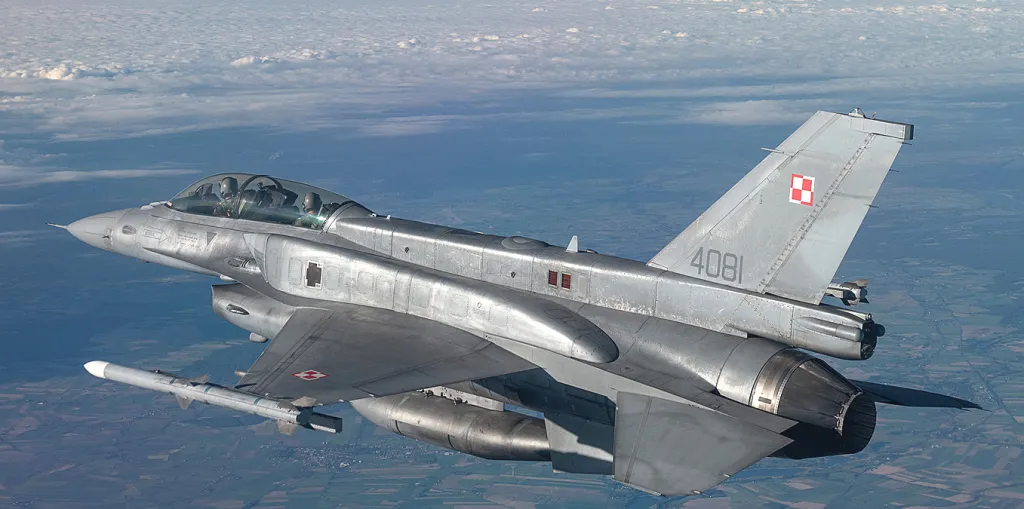
The statement adds that tasks of the MiG-29 aircraft being withdrawn from service will be carried out by Polish Air Force F-16 fighters and FA-50 light combat aircraft.
One of Poland’s F-16Ds with its conformal fuel tanks and enlarged spine prominently visible. Polish Ministry of Defense
Interestingly, the talks also involve the transfer of “selected drone and missile technologies” to Poland.
“The aim is not only to compensate for the equipment, but above all to acquire and jointly develop new defense and industrial capabilities,” the General Staff emphasizes.
Discussions around the possible transfer of Poland’s last MiG-29 jets to Ukraine began back in July 2024.
As of now, the Polish Air Force has 14 Fulcrums, comprising 11 single-seat MiG-29 fighters and three two-seat MiG-29UB combat trainers.
Polish Fulcrums came from a variety of sources, as you can read about here. As well as original deliveries from the Soviet Union, Poland acquired former Czechoslovakian MiG-29s inherited by the Czech Republic, as well as upgraded examples that had previously been flown by the German Luftwaffe (and, before that, by East Germany).
The remaining Polish aircraft are very much still active on the front line and in support of NATO.
On two occasions in late October of this year, for example, Polish MiG-29s intercepted a Russian Il-20 Coot intelligence-gathering aircraft over the Baltic Sea.
For the second time this week, a pair of MiG-29As with the Polish Air Force were scrambled earlier this morning from the 22nd Tactical Air Base in Malbork, in order to intercept and track a Russian Il-20M “Coot-A” Electronic Surveillance Aircraft operating over the Baltic Sea.… pic.twitter.com/ZQdlYN9RKV
In March 2023, Warsaw announced it would transfer the first batch of 14 MiG-29s to Ukraine. The first four of these MiG-29s are reported to have arrived in Ukraine the following month.
They were preceded by MiG-29s provided by Slovakia, which confirmed its donation soon after Poland. The Slovakian government approved the transfer of 13 MiG-29s to Ukraine, and the first arrived there in March 2023 — the first tactical jets to be officially supplied to Kyiv since Russia launched its full-scale invasion. Ukraine has apparently also received MiG-29 spare parts from other sources, too, with speculation that former Moldovan Fulcrums acquired by the United States might have been involved.
As far as Ukraine is concerned, additional fighters are in great demand, with steady attrition since the conflict began.
Ukraine started the war with around 50 MiG-29s in operational service, assigned to two regiments. According to the Oryx open-source tracking group, since the start of the current conflict, 33 Ukrainian MiG-29s have been confirmed destroyed, and more damaged. The actual figure is almost certainly higher, as Oryx only tallies losses that are confirmed with visual evidence.
A fully armed Ukrainian MiG-29 performs a combat mission in eastern Ukraine on August 1, 2023. Photo by Libkos/Getty Images LIBKOS
The situation as regards the Su-27 Flanker is even more serious, with the Ukrainian Air Force having begun the war with around 32 operational examples, at least 19 of which have been confirmed as destroyed — the most recent one earlier this week. Unlike the MiG-29, there is no potential source to help replace Flanker losses.
Russia shot down another Su-27 over eastern Ukraine on Sunday. Lt. Col. Yevhenii Ivanov, the pilot, was killed. It’s the 19th Su-27 loss since February 2022.
Ukraine may have only 12-23 left. And unlike MiGs or F-16s, no ally operates Su-27s—so there’s no donor pipeline.
It’s worth noting that additional examples of both these types have also been brought back to airworthiness after local overhauls. At least some of these were returned to action after long periods standing dormant or in storage.
Meanwhile, Ukraine has introduced more modern and capable F-16s and Mirage 2000s, but it’s significant that the MiG-29, in particular, remains a highly prized asset. This is a fact reflected in its continued adaptation to carry new weaponry, both Western-supplied and locally developed. With significant stocks of spares, weapons, and well-trained maintenance crews, the MiG-29 is regarded as easy to maintain and adapt. It is also well-suited to more austere operations, with the Ukrainian Air Force regularly moving the jets around between different operating locations, making it harder for the Russians to target them.
A Ukrainian F-16AM takes off with a full load of six AIM-9M Sidewinder air-to-air missiles. Ukrainian Air Force
Kyiv’s need for more MiG-29s, from whatever source, was underscored by the appearance of at least one former Azerbaijani example earlier this year. As you can read about here, this was likely one of three Azerbaijani MiG-29s that were undergoing repair in Ukraine and were left stranded there after the full-scale invasion began.
Should the final 14 Polish MiG-29s be supplied to Ukraine, which would appear to be a formality, the last source of NATO-owned Fulcrums is Bulgaria, which operates around a dozen examples.
A Bulgarian MiG-29 at Graf Ignatievo, Bulgaria, on February 17, 2022. Photo by Hristo Rusev/Getty Images Hristo Rusev
In the past, the Bulgarian Ministry of Defense ruled out a transfer of the jets to Ukraine, stating that such a move “would lead to a deficit of capabilities.”
Now that the Bulgarian Air Force has started to receive the 16 F-16C/D Block 70 fighters that it has ordered, that situation could change.
.@LockheedMartin’s first F-16 Block 70 jet for Bulgaria has arrived. With upgraded radar, avionics and weapon systems, the Fighting Falcon will deliver upgraded airpower to the Bulgarian Air Force and strengthen global security for decades to come. https://t.co/MYP08pQvUd
Returning to the Polish Air Force, once the last MiG-29s have gone, it will be left with a combat fleet spearheaded by 47 F-16C/D Block 52+ fighters, which will be upgraded to the F-16V configuration, as you can read about here.
A Polish Air Force MiG-29, in the foreground, and one of its Block 52+ F-16Cs, in the background. Polish Armed Forces
These are bolstered by 12 South Korean-made FA-50GFs that were delivered to Poland between July and December 2023. Another 36 of the more advanced FA-50PL aircraft are also on order.
The Polish Air Force presents MiG-29 and FA-50 aircraft during a military parade to celebrate Polish Army Day in Warsaw, on August 15, 2023. Photo by Dominika Zarzycka/NurPhoto Dominika Zarzycka
Starting next year, the first operational Polish fifth-generation fighter squadron is due to be established, with 32 F-35As on order and training already underway in the United States.
There is also the possibility that Poland might further increase its fighter inventory, adding another new type in the shape of the F-15EX, the latest version of the Eagle.
Exactly what kinds of drone and missile technologies might find their way from Ukraine to Poland is unclear.
However, the Polish Air Force is currently on something of a drone push, introducing the Turkish-made Bayraktar TB2 uncrewed aerial system, as also used by Ukraine, and these will ultimately be joined by three MQ-9B SkyGuardian drones, providing much expanded capabilities.
Whatever the case, the military relationship between Warsaw and Kyiv looks set to deepen further, both on a strategic level and, more immediately, with the likely transfer of badly needed MiG-29s for the Ukrainian Air Force.
The first National Security Strategy of the United States of America was released in 1950 under President Truman. It set firm strategic goals based on the containment doctrine to limit the influence of communist ideology in the global order. This first national security strategy marked the beginning of limited global policing in US geopolitics, but it was less pragmatic and more principled realism. American interests became specific to liberal internationalism and focused only on areas facing the spread of the communist threat.
The Core Security Thinking of the US
The core security thinking of Americans was to preserve their sphere of influence from any adversarial influence or intervention, echoing the Monroe Doctrine. The initial period had this core, and the first national security strategy laid the groundwork for this security thinking. In 1988, the scope of core security thinking expanded, and elements of realism advanced further, with the US beginning to engage in deterrence calculations and global outreach to build collective military alliances against the Soviets. Most importantly, the strategy also focused on strengthening the economy. The core security thinking in the US’s national security strategy by the late 1980s began to realize that, while the Monroe Doctrine is important, US strategic interests must also require adopting flexibility in its confrontational approach, guided by liberal internationalism and the containment of communism.
Pragmatism and Realism
After the Soviet disintegration, US National Security Strategy focused on navigating a multipolar world by reinforcing the idea of collective security under the H.W. Bush Administration. The 1991 and 1993 US National Security strategies expanded on the concepts that started to emerge in the late 1980s—deterrence and engagement. In the 1990s, this strategy was continued through Powell’s four pillars: strong defense, forward presence, alliances, and coalition-building. The national security strategy designs suggest that elements of pragmatism and distinctions of pure realism gradually began to take center stage in the US national security approach.
Strategy in Crises
The National Security Strategy changed after 9/11, possibly in response to shifted security priorities. The previous approach of principled realism, which involved pragmatic and defensive tactics, now showed a slight shift, with the US’s national security strategy emphasizing more openly offensive realism and dogmatism. By the mid-2000s, the US had reactionary national security strategies, moving away from the approach that began to develop in the late 1980s. Key shifts in security strategies after 2001 included the doctrine of preemption and unilateral actions, but another significant change was a major shift in the collective engagement perspective, differing from earlier ideas of shared strategic responsibilities among allies.
After 9/11, the US called on allies, particularly in NATO, to bear a greater share of the burden for collective defense efforts, shifting away from reliance solely on the US. The core security thinking, rooted in peace through engagement, shifted during the 1990s toward peace through strength. Another aspect, after the Monroe Doctrine, peace through strength, gained a label of permanence in the US National Security Strategy, though its effectiveness and emphasis varied over time.
Trump’s National Security Strategy: Rebooting and Readjustments
Trump’s 2025 national security strategy resembles his 2017 National Security Strategy. The nationalist ideals of America First and the focus on economic engagement—which is the main security approach this time—are a mix of realizations and reactions. The first reaction to the current global situation is reasserting the Monroe Doctrine, dubbed “Trump Corollary,” and the second is showing the will for peace through strength by deterrence. Even if conflicts occur, the strategy emphasizes engaging in conflict with strategic skill to quickly win wars with little to no casualties. The realization part of the strategy is the US increasing its understanding of collective efforts and economic strength. The strategy highlights stronger partnerships with countries like India for the Indo-Pacific.
Reaction and Challenge
The realistic approach in this strategy is flexible realism, aiming not at domination but at maintaining a balance of power, while not fully adopting defensive realism. The United States has embraced both offensive and defensive realism. Over the past ten years, the US National Security Strategy under Obama, Trump 1.0, and Biden has incorporated elements of defensive realism along with principled realism, with the US gradually increasing its efforts to balance power through the promotion of liberal and pro-democratic values—examples include its Middle East policy and the revival of QUAD in 2017. However, a notable development in the 2025 strategy is the US’s willingness to undertake offensive actions to maximize security, such as Operation Midnight Hammer against Iran and expanding operations in Latin America against Venezuela. Another prominent aspect of this strategy is the US’s focus on Europe’s burden-sharing, attempting to lighten its responsibilities and emphasizing that Europe should stand on its own, while the US remains a facilitator in Europe’s development. However, it is no longer willing to assume a broader role—similar to sentiments after 9/11. This strategy likely reflects the challenges posed by a rising China, Russia’s multipolar approach, and increasing strategic competition in multilateral arenas. The Trump approach—as mentioned in the strategy—is not just a reboot of the US National Security strategy after the 2000s but with some realizations.
Realization
There is a growing realization, as highlighted earlier, that the US can no longer sustain a confrontational approach and aggressive, offensive realism. The Trump strategy for 2025 recognizes the need to incorporate elements from both the late Cold War and post-Cold War periods. The latter was characterized by defensive realism and principal realism features—approaches that the US emphasized during the Clinton years, when embracing multilateralism, economic diplomacy, and regional collective engagements became central to US national security strategy, paving the way for more pragmatic interventions. A similar recognition of Clinton’s policy of enlargement through engagement is reflected in Trump 2.0 National Security Strategy—Shifting from Aid to Trade with Africa, which exemplifies this focus on promoting economic diplomacy and broadening engagement.
The US National Security Strategy 2025 reflects the nation’s understanding of how to adapt its engagement with the global order while maintaining realism. This time, US security thinking appears to find a balance between engagement and deterrence, which in previous years often seemed to conflict.
Here is where things stand on Sunday, December 14:
Fighting
Two people were killed in a Ukrainian drone strike on the Russian city of Saratov, regional Governor Roman Busargin said in a statement on Telegram. An unspecified number of people were also injured in the attack.
Russia’s Ministry of Defence said it hit Ukrainian industrial and energy facilities with hypersonic Kinzhal missiles, in what it called a retaliatory attack for Ukrainian strikes on “civilian targets” in Russia.
Ukraine’s southern port city of Odesa and the surrounding region have suffered major blackouts after a large overnight Russian attack on the power grid left more than a million households without power.
Ukrainian President Volodymyr Zelenskyy said Russia’s overnight attack on Ukraine included more than 450 drones and 30 missiles.
Prime Minister Yulia Svyrydenko described the attack as one of the war’s largest assaults on Odesa, where supplies of electricity and water had been knocked out. She said supplies of non-drinking water were being brought to areas of the city.
Ukraine’s power grid operator said a “significant number” of households were without power in the southern regions of Odesa and Mykolaiv, and that the Ukrainian-controlled part of the front-line Kherson region was totally without power.
Ukraine’s navy has accused Russia of using a drone to deliberately attack the civilian Turkish vessel Viva, which was carrying sunflower oil to Egypt, a day after Moscow hit two Ukrainian ports. None of the 11 Turkish nationals onboard the ship was hurt, and the vessel continued its journey to Egypt.
Earlier, it was also reported that three Turkish vessels were damaged in a separate attack.
Ukraine’s Zaporizhzhia nuclear power plant temporarily lost all offsite power overnight for the 12th time during the conflict, due to military activity affecting the electrical grid, according to Rafael Mariano Grossi, the director general of the International Atomic Energy Agency (IAEA). Both power lines are now reconnected, the IAEA said.
Neighbourhoods in the city of Odesa experienced power outages on Saturday night, following Russian missile and drone attacks on Ukrainian energy infrastructure [Oleksandr Gimanov/AFP]
US-led negotiations
Zelenskyy said he would meet US and European representatives in Berlin to discuss the “fundamentals of peace”. He added that Ukraine needed a “dignified” peace and a guarantee that Russia, which launched a full-scale invasion of his country in 2022, would not attack again.
US envoy Steve Witkoff and President Donald Trump’s son-in-law Jared Kushner will meet Zelenskyy and European leaders in Berlin on Sunday and Monday, a US official briefed on the matter said.
French President Emmanuel Macron, UK Prime Minister Starmer and German Chancellor Friedrich Merz were also expected to attend the Berlin meeting, The Wall Street Journal reported.
Europeans and Ukrainians are asking the US to provide them with “security guarantees” before any territorial negotiations in Russian-occupied eastern Ukraine, the French presidency said.
British Prime Minister Keir Starmer and European Commission President Ursula von der Leyen have discussed work on US-led peace proposals for Ukraine and efforts to use frozen Russian sovereign assets to provide funds for Kyiv, a Downing Street spokesperson said in a statement.
Turkish President Tayyip Erdogan, fresh from a meeting with his Russian counterpart Vladimir Putin in Turkmenistan, said he hopes to discuss a Ukraine-Russia peace plan with Trump, adding that “peace is not far away”.
Politics and diplomacy
Ukraine received 114 prisoners released by Belarus, including citizens accused of working for Ukrainian intelligence and Belarusian political prisoners, according to Kyiv’s POW coordination centre. The centre posted photos appearing to show the released captives boarding a bus, with some of them smiling and embracing.
Zelenskyy spoke to Belarusian prisoner Maria Kalesnikava after her release, presidential aide Dmytro Lytvyn told reporters. Lytvyn told reporters that military intelligence chief Kyrylo Budanov was present when the prisoners released by Belarus were received.
North Korean leader Kim Jong Un attended a welcoming ceremony for an army engineering unit that returned home after carrying out duties in Russia, North Korea’s KCNA news agency reported. At the event, Kim praised officers and soldiers for their “heroic” conduct during their 120-day overseas deployment.
Russia has sentenced top International Criminal Court (ICC) judges and its chief prosecutor Karim Khan to jail, in retaliation for the court’s 2023 decision to issue an arrest warrant for Putin over alleged war crimes during the Ukraine war.
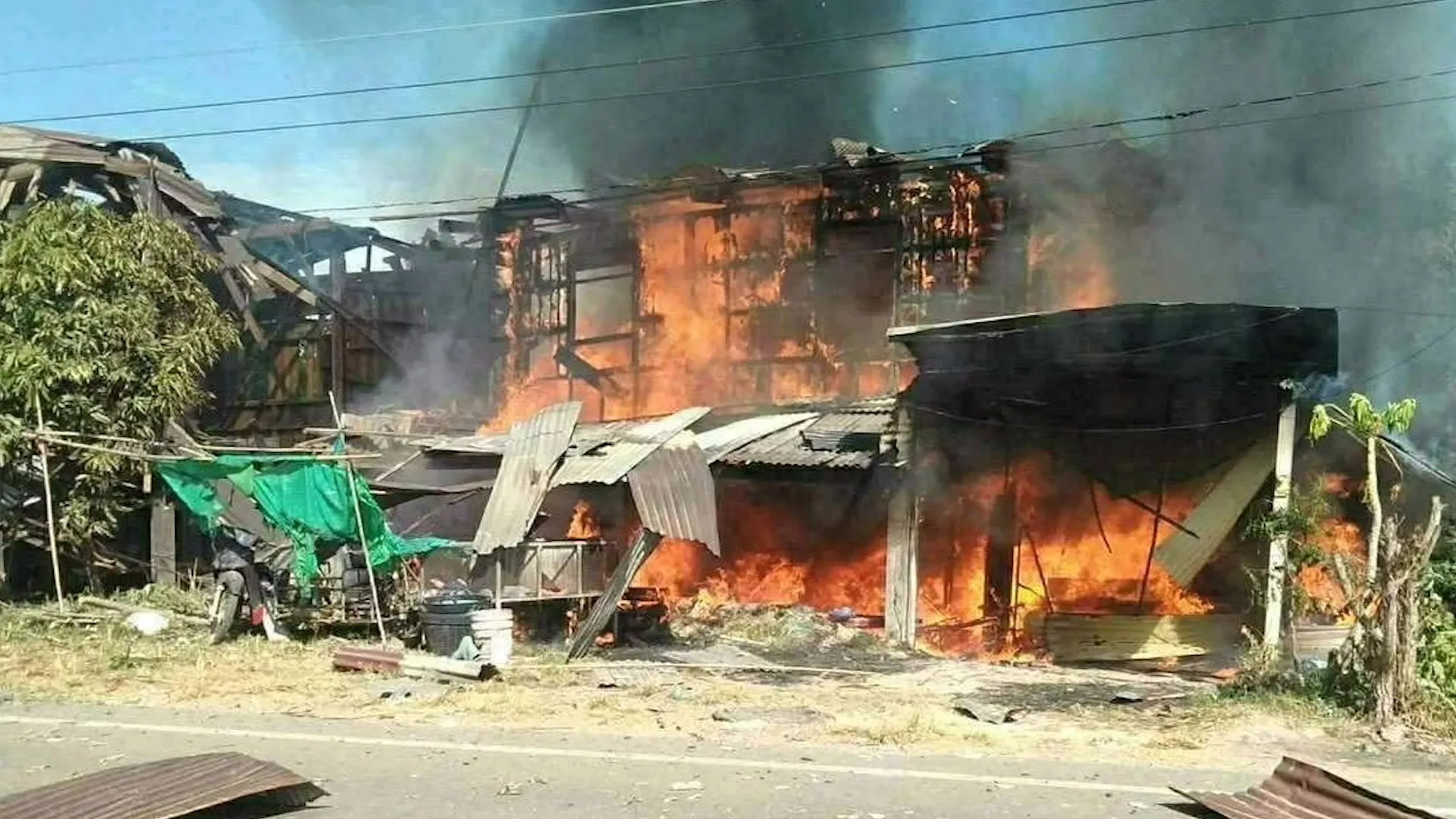
Cross-border fighting between Thailand and Cambodia has shown no signs of easing, after US President Donald Trump announced the two sides would halt attacks. The violence has killed dozens and forced mass displacement.
Multiple people have been reported injured in a shooting near the Ivy League campus in Providence, Rhode Island.
Published On 13 Dec 202513 Dec 2025
Share
The mayor of Providence, Rhode Island, has confirmed that two people have been killed and eight more are critically injured after an active shooter was reported on the campus of Brown University.
Around 4:22pm local time (21:22 GMT) on Saturday, the Ivy League university issued an emergency update that there was a gunman near the Barus and Holley engineering lab.
Recommended Stories
list of 3 itemsend of list
“Lock doors, silence phones and stay stay hidden until further notice,” the university said in its update.
“Remember: RUN, if you are in the affected location, evacuate safely if you can; HIDE, if evacuation is not possible, take cover; FIGHT, as a last resort, take action to protect yourself.”
Later, at 5:27pm local time (22:27 GMT), the school reported that shots had been fired near Governor Street, approximately two blocks away.
The Providence Police Department announced a few minutes later, “Multiple shot in the area of Brown University.”
Earlier in the day, the university withdrew an announcement that indicated a suspect had been taken into custody. It clarified, “Police do not have a suspect in custody and continue to search for suspect(s).”
US President Donald Trump published a similar retraction on his online platform Truth Social, after erroneously posting around 5:44pm (22:44 GMT) that the suspect was in custody.
“I have been briefed on the shooting that took place at Brown University in Rhode Island,” Trump also wrote. “The FBI is on the scene.”
Law enforcement remains on site at the university. The incident is currently under investigation.
Saturday’s shooting is the second major incident of gun violence on a university campus this week.
Just four days ago, on December 9, Kentucky State University in the southern city of Frankfort also experienced gunfire on its campus, killing one student and leaving a second critically injured. The suspect in that case was identified as a Jacob Lee Bard, the parent of a student at the school.
The risk of gun violence has transformed the academic experience in the US, with many schools holding preparedness drills for active shooter situations.
The shooting comes as the academic semester winds down at Brown University. The last day of classes for the fall semester was on Thursday, and the school is in its final examination period until December 20.
The seventh oldest university in the US, Brown is considered part of the prestigious Ivy League, a cluster of private research colleagues in the Northeast. Its student body numbers at 11,005, according to its website.
This is a breaking news story. More details to come.
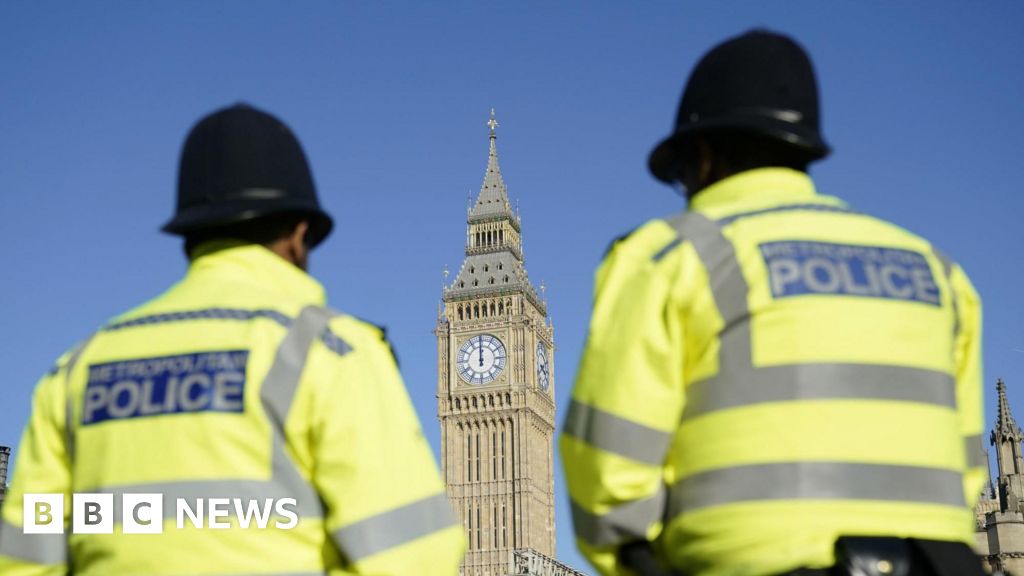
Specialist rape and sexual offence investigation teams will be introduced to every police force in England and Wales by 2029, the government has pledged.
It is part of a long-delayed plan aimed at halving violence against women and girls within a decade.
The strategy – which will include funding for undercover units operating online, and a roll out of domestic abuse protection orders – is due to be unveiled on Thursday, after being pushed back three times this year.
Home Secretary Shabana Mahmood said the measures will help to “bear down on abusers, stopping them in their tracks. Rapists, sex offenders and abusers will have nowhere to hide.”
The government says the new teams will have officers with specialist investigation skills for working on rape and sexual offence cases.
More than 50% of police forces already have these teams in place, but the government says every force will have dedicated officers by 2029.
It says staff will have the right training to understand the mindset of abusers and victims.
Announcing the move, the home secretary said: “This government has declared violence against women and girls a national emergency.
“For too long, these crimes have been considered a fact of life. That’s not good enough. We will halve it in a decade.”
Also announced is a roll out of domestic abuse protection orders, which have been trialled over the last year, across England and Wales.
They can ban individuals from contacting a victim, visiting their home or posting harmful content online, and can also be used in cases involving coercive or controlling behaviour. Breaching an order is a criminal offence.
There will also be almost £2m in investment for special undercover units of police officers operating online – to target those harassing women and girls on the internet.
It said sexually-motivated crimes against women in public remained widespread, criticised the limited nature of data on them, and called for urgent action to prevent predators from offending.
The publishing of the government’s strategy has been long delayed. It was initially expected to be announced in the spring.
In Labour’s general election manifesto last year the party pledged to use “every government tool available to target perpetrators and address the root causes of abuse and violence”.
The European Commission is proposing a “reparations loan” to raise 90 billion euros ($105 billion) to support Ukraine against Russia. This move is legally complex, with uncertainty about potential outcomes. After Russia’s invasion of Ukraine in 2022, Western nations froze Russian sovereign assets, with about 210 billion euros of these assets located in Europe, primarily in Belgium at Euroclear.
Belgium’s Prime Minister Bart de Wever has expressed worries about facing numerous legal challenges. He fears Belgium could be responsible for repaying Russia if there are successful claims against this plan and advocates for all EU countries to share this financial risk. De Wever is also concerned about liquidity issues if quick settlements are required by Euroclear, and he emphasizes that legal costs should be a joint effort among EU nations. Additionally, Belgium wants other G7 countries with Russian assets, like the UK, Canada, and Japan, to adopt similar measures to mitigate risk from potential Russian retaliation.
Possible challengers to the reparations loan include Russia, Belgium, and Euroclear. Russia might file a lawsuit at the European Court of Justice or use a Cold War treaty with Belgium to claim its rights. This could escalate to arbitration in Stockholm or the UN, while Belgium and Euroclear could also take legal action in Belgian courts or at the ECJ. Russia cannot engage the International Criminal Court or the European Court of Human Rights due to membership restrictions, and it does not recognize the International Court of Justice’s jurisdiction.
Legal challenges often take years and would not prevent asset use during proceedings. The average case at the ECJ lasts over three years and requires strong independent evidence. Experts suggest that Belgium and Euroclear might have a stronger position against Russia, but the ECJ usually supports EU foreign policy. The EU aims to avoid expropriation and can reverse actions if Russia ceases hostilities. Claims by Russia regarding asset confiscation are not fully developed, as sanctions typically override commercial contracts.
Orban’s government has been rocked by several child-abuse scandals in recent years.
Published On 13 Dec 202513 Dec 2025
Share
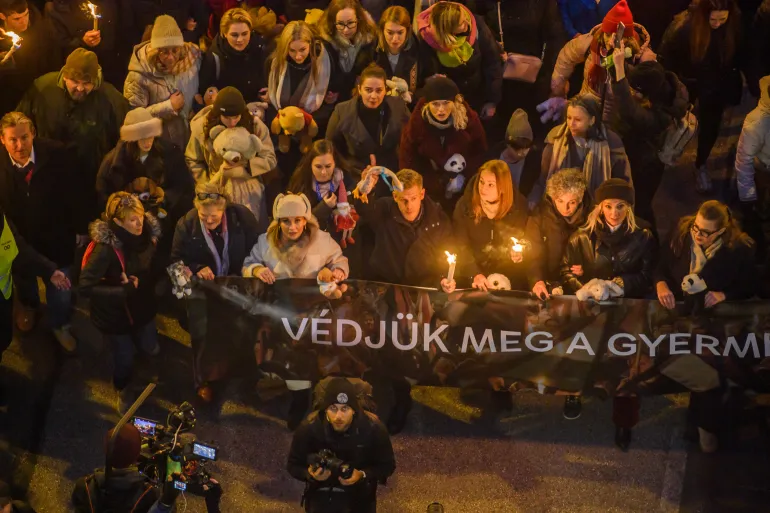
Tens of thousands of Hungarians have taken part in a demonstration in Budapest demanding Prime Minister Viktor Orban’s resignation over his inaction towards repeated child-abuse scandals in the country.
Since returning to power in 2010, Orban has promised to prioritise the protection of children in Hungary, but multiple high-profile child abuse scandals have rocked his government in recent years.
Saturday’s protests, led by opposition party TISZA’s leader Peter Magyar, came after new allegations regarding a juvenile detention centre in the country’s capital Budapest surfaced in September. Security camera footage from the centre showed the director of the Szolo Street juvenile detention centre kicking a boy in the head.
Earlier this week, four staff members were taken into custody, and the government announced that it would place all such child facilities under direct police supervision.
On Saturday, thousands of protesters walked through Budapest’s frosty streets behind a banner reading “Protect the children!” and called on the government to take more action against the perpetrators. Some people also carried soft toys and torches in solidarity with victims of physical abuse in a case dating back several years.
On Friday, Magyar also released a previously unpublished official report from 2021, which found that more than a fifth of children in state-run care institutions have been abused.
“We should be outraged at what is being done with the most vulnerable children,” Zsuzsa Szalay, a 73-year-old pensioner who took part in Saturday’s protest, told the AFP news agency.
Protesters in a demonstration demand Hungary’s Prime Minister’s resignation over the government’s perceived inaction about widespread abuse in child care institutions in Budapest, Hungary [Ferenc Isza/AFP]
Orban’s government has insisted that action was being taken against suspected child abuse.
The prime minister, who faces what could be the toughest challenge to his 15-year rule in an election likely to be held in April, has also condemned the abuse in an interview with news outlet Mandiner, and called it unacceptable and criminal. He added that “[even] young criminals should not be treated this way”.
But protesters on Saturday said Orban’s response was inadequate.
“Normally, a government would be toppled after a case like this,” 16-year-old David Kozak told AFP.
Last year, the country’s president, Katalin Novak, also bowed down to public pressure and resigned after pardoning the deputy director of a state-run children’s school who was convicted of covering up sexual abuse by its director.
“For them, the problem is not that the abuses happened, but that they were revealed,” Kozak added.
For more than a century, Warner Bros has been one of Hollywood’s biggest players, a legacy studio that helped define the Golden Age of cinema with iconic blockbuster movies. Now, it’s at the centre of a contentious, billion-dollar bidding war between Netflix, the world’s leading streaming platform, and Paramount Skydance, owned by the powerful Ellison family, which has close ties to President Trump.
Whichever way this goes, the outcome isn’t looking great.
Contributors: Matt Craig – Reporter, Forbes Daheli Hall – Writer and director Lee Hepner – Antitrust lawyer Dominic Patten – Executive editor, Deadline
On our radar
This week, Australia became the first country in the world to impose a social media ban for children less than the age of 16. The Australian government says it is taking on Big Tech and safeguarding children, but some young people were able to quickly bypass the new rules. Ryan Kohls reports.
The Imran Khan rumour mill
Despite being in jail for more than two years, Imran Khan continues to occupy airtime in Pakistan. After the army restricted access to Khan, rumours of his death ricocheted across social media. Pressure from his supporters and family forced the military to lift the restrictions and grant Khan’s sisters access to speak to him. Meenakshi Ravi reports on the showdown between Imran Khan and powerful Field Marshal Asim Munir, and what it reveals about power, politics and narrative control in Pakistan.
Featuring: Amber Rahim Shamsi – Pakistan Editor, Nukta Moeed Pirzada – Political YouTuber Mohammed Hanif – Author and journalist
Weekly insights and analysis on the latest developments in military technology, strategy, and foreign policy.
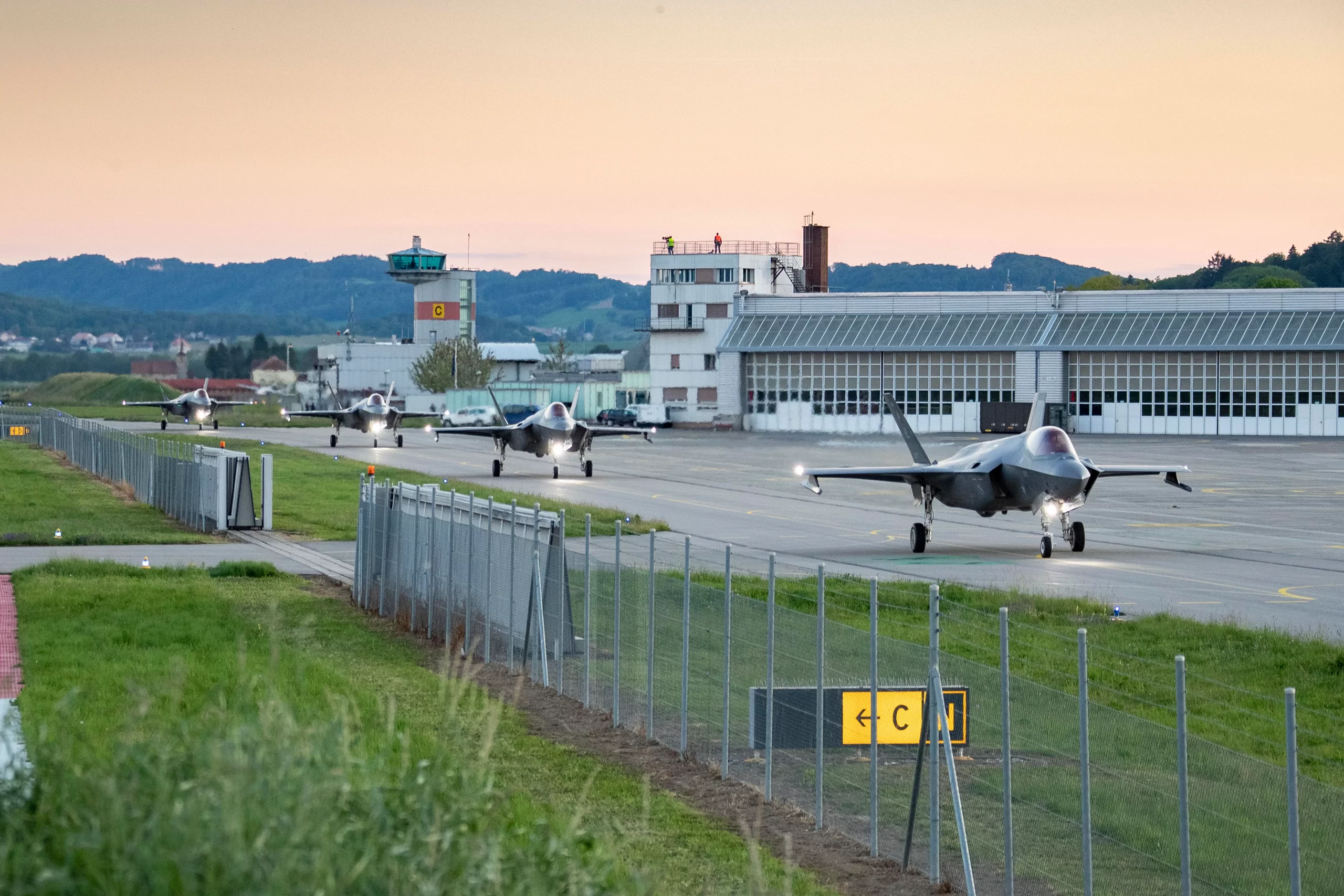
Switzerland will cut back its order for 36 Lockheed Martin F-35A Lightning II fighters in response to the program’s ballooning costs. The announcement puts a question mark over the future of the procurement. It also comes at a time when other customers are also looking at the stealth jet in terms of the value it gives for the considerable investment, not just in terms of upfront costs, but especially sustainment throughout the aircraft’s service life.
Following a cabinet meeting, the Swiss government today said it had instructed the defense ministry to buy the highest possible number of F-35As within the previously agreed budget of six billion Swiss francs ($7.54 billion). Reports suggest that, while the Swiss government viewed this as a fixed price, the United States later refuted that and claimed it was a misunderstanding.
F-35As during Swiss flight evaluations in June 2019. Lockheed Martin
“Due to foreseeable cost overruns, maintaining the originally planned number of 36 F-35As is not financially feasible,” the government said in a statement.
It’s presently unclear how many jets the Swiss budget will cover, but it’s worth noting that Finland’s order for 64 F-35As, budgeted at $9.4 billion, worked out with an equivalent cost-per-jet of around $82 million. However, additional costs of infrastructure, weapons, maintenance equipment, spare parts, training, and other systems and services need to be factored in. In the case of the F-35, in particular, these costs are uniquely high.
The original Swiss budget for a new fighter was narrowly approved by the public in a 2020 referendum.
A referendum is an unusual quirk of Swiss procurement, with the most expensive arms purchases first having to win the backing of the country’s voters. In this way, the maximum spend of six billion Swiss francs was approved before the type had been selected.
After what was described as a “comprehensive technical evaluation,” Switzerland’s Federal Council announced in 2021 that it planned to recommend to the country’s parliament that it procure 36 F-35As as part of the Air2030 program. The package also includes five Patriot air defense systems from Raytheon, which will provide the Alpine nation with a new long-range ground-based air defense capability.
“An evaluation has revealed that these two systems [F-35A and Patriot] offer the highest overall benefit at the lowest overall cost,” the Federal Council explained in a statement. “The Federal Council is confident that these two systems are the most suitable for protecting the Swiss population from air threats in the future.”
The F-35 will replace the Swiss Air Force’s existing fleet of 30 ‘legacy’ F/A-18C/D Hornets, scheduled to be withdrawn in 2030, as well as its aging F-5E/F Tiger II jets, which are slated for retirement in 2027. The first new F-35As were once expected to arrive in the country from 2025, a date that has already been pushed back.
A Swiss Air Force F/A-18C Hornet. U.S. Air Force Photo by Airman 1st Class Dillon Davis/Released 2nd Lt. Dillon Davis
Ironically, Swiss media reports at the time suggested that the F-35 was selected as it offered the best value for money.
“According to insiders, Switzerland can buy a larger number of F-35s with the budgeted six billion Swiss francs [$6.53 billion] than would be the case with the three competitors,” Swiss broadcaster SRF reported, citing anonymous sources.
According to the Federal Council’s findings, as of 2021, the fleet of 36 F-35As would cost around $5.48 billion, well within the price cap.
Now, at the current exchange rate, the budget cap stands at 7.54 billion, which is no longer sufficient for 36 of the stealth jets.
Meanwhile, regardless of unit price, the cost of actually sustaining the jets once in service has long been a cause for concern.
As we pointed out in the past, Block 4 might only start to become available after the Swiss begin receiving their jets, which would require them to either upgrade or decide against getting that capability boost.
It’s also far from clear what will happen next in Switzerland’s F-35 procurement; a lot will depend on how many of the jets can actually be obtained within the stipulated budget.
In the past, Switzerland has not been averse to walking away from fighter procurements entirely.
A previous fighter competition that sought a partial replacement for the F-5 fleet saw the Saab Gripen E/F being chosen, with a decision to buy 22 examples, before the entire project was rejected by a referendum in 2014.
A Swedish Air Force Gripen E. Saab SAAB
At the same time, it’s likely that at least some Swiss Cabinet members would prefer a European fighter, and critics of the F-35 have previously suggested another referendum to potentially overturn the decision to buy American. This issue has only become magnified since the Swiss decision, with European countries increasingly uncertain about buying U.S. defense products.
There’s also a big question over whether Switzerland needs such a sophisticated, low-observable multirole fighter, since its primary responsibility will be day-to-day air policing. The Swiss Air Force also sits outside of NATO, so it doesn’t make operational deployments outside of its borders.
Another option could see a push for a cheaper ‘complementary’ fighter, or light combat aircraft, to provide additional combat (and advanced training) ‘mass’ alongside a reduced fleet of F-35s. This would parallel the existing order of battle in which F-5s operate alongside F/A-18s.
A Swiss Air Force F-5E Tiger II releases flares over Brienz in the Bernese Alps in 2018, during the annual live-fire event at Axalp. Photo by FABRICE COFFRINI/AFP via Getty Images FABRICE COFFRINI
There is also the possibility that Switzerland determines that it needs the full 36 F-35s. The Swiss government also recently said that the deteriorating security situation in Europe means that the Swiss Air Force could need between 55 and 70 new fighter jets.
If that becomes policy, another referendum might be required on the total budget. The question could be put to the Swiss public, with a decision again to be made independent of aircraft type.
Tourism has been said to be The Gambia lifeline. The Smiling Coast has been receiving thousands of visitors who come to the region due to its warm reception and lively culture. Tourism has been touted as one of the greatest success stories in the country with almost a fifth of the national GDP and with thousands of employees in the formal and informal sectors. But it is a silent fact, seldom admitted, that beneath the smiling faces and the colorful postcards there is a lot more to be lost than gained by the Gambia in its tourism business. Tourism appears as a treasure of the state, however, to a great extent it turned out to be a trap in the economy.
The Gambia imported into its own country has followed an economic paradigm of liberalism, despite the fact that it idealizes open markets, deregulation, and foreign investment as the fastest way to development. The premise was straightforward, with opening up the tourism industry to foreigners, the nation would acquire employment, expertise, competition and eventually general prosperity. The tourism situation in Gambia today however tells a different story. It is not romantic, empowering or lucrative as many make it out to be. Interdependence has not brought about mutual prosperity; it has brought dependence.
A report released by UNCTAD (2022), the Gambia is losing up to 70 percent of its tourism income to foreign owned hotels, offshore booking systems, imported goods, airlines and repatriation of earnings. Most of the payments that are made by many tourists are made in Europe prior to getting on the plane. The government of Gambians has lost most of the potential earnings by the time they find themselves in Banjul.
This trend in the economy is not solely possible. It is indicative of a world dynamic as such as defined by dependency theorist Andre Gunder Frank (1966) who opined that developing countries tend to provide labour, culture, and even resources, as wealth and power is drained to more dominant players in the global arena.
Control of tourism in Gambia by the foreigners is not merely a matter of cash but a question of power. Major tour operators, international booking networks and foreign hotel chains are often in charge of the decisions of marketing, pricing, target groups and national branding. The industry involves local stakeholders, such as guesthouse owners, tour guides, craft sellers, musicians, farmers, taxi drivers, etc., who are not architects of the industry.
According to Robert Gilpin, a political economist (1987) cautioned that the global marketplace does not operate in terms of morality and fairness but on the basis of power, interests and strategic advantage. The adoption of liberal optimism in Gambia presupposed that the openness would bring about prosperity by default. But openness lacks strategy, and interdependence has no bargaining power; it is easy to exploit such weaklings. Well-intended policies without strategic protection are now yielding their results on the Gambia.
This does not imply that The Gambia should isolate and give up tourism. Tourism is one of the most feasible pillars of development of the country with limited natural resources, small domestic market, small industrial capacity and its geographical location. The problem of the model is not its structure, but its structure. The problem is not the existence of the foreigners but the lack of Gambians in the core of the industry. The issue is with ownership and control, unequal distribution of ownership, control and value.
Here the contemporary mercantilistic approach applies. Global engagement is not rejected in mercantilism but there must be strategic engagement. It does not see national wealth as the by-product of open markets, but a resource that has to be maintained and nurtured. A state that is mercantilist does not just watch over markets, it controls them. This is not to shut the borders but to make sure that national interests take precedence, relationships have to be founded on equal footing and economy has to feed its own citizens before it feeds others.
According to Peter Evans (1995), a political economist, refers to this as embedded autonomy a model, in which the state is strong, capable and visionary, but is also tightly related to society and local industries.
Three strategic pillars on which a mercantilist turn in Gambian tourism must be based are:
The ownership of the Gambians should be central and not peripheral.
The government assistance should be in form of available financing, taxation reforms, tourism incubators, land protection policies, investment literacy and procurement reforms which will favor Gambian owned hotels, lodges, transport organizations, tour agencies and tourism academies. No country can establish long term prosperity based on leased platforms.
Tourism has to be associated with agriculture, manufacturing, and creative industries.
Importation of food, drinks, furniture, art, souvenirs, and building materials has been a significant missed opportunity to most tourist hotels. The hospitality industry should be provided by Gambian farmers, carpenters, craft makers, tailors, artists, and designers. Once tourism sustains other industries, the money circulates and multiplies and is retained in the country.
The Gambia has to regain its tourism identity and branding.
It is now being promoted as a cheap winter resort to the rest of the world instead of a cultural giant. The Gambian culture, heritage, and values should become the driving force of the new tourism narrative, developed by Gambians themselves.
Critics tend to believe that The Gambia is too small to make bargaining power. However, size is not as important as strategy in international politics. Through ECOWAS and the African Union, small states are able to form regional blocs and speak with one voice.
The current trends in the world are not towards economic liberalism blindly. Even countries that were once the proponents of open markets are currently reshoring their industries, subsidizing, and empowering national value chains.
The army claims the member was working to re-establish Hamas’s capabilities in the Strip.
Published On 13 Dec 202513 Dec 2025
Share
The Israeli military has said it struck a “key” Hamas member in the area of Gaza City, without elaborating on who they may be.
In a post on Telegram, the army alleged that the member had been operating to re-establish Hamas’s capabilities, which have been severely depleted by more than two years of Israel’s genocidal war on Gaza.
Recommended Stories
list of 3 itemsend of list
There was no immediate comment from the Palestinian group.
The Wafa news agency reported that an Israeli drone hit a vehicle at the Nabulsi junction in the west of Gaza City, resulting in casualties.
The agency did not report on specific numbers, and it was not clear if the attack was the one that allegedly killed the Hamas member.
Since the ceasefire started in October, Israel has continued to attack Gaza daily – reaching nearly 800 times – in a clear breach of the agreement, according to authorities in Gaza.
Israel also continues to block the majority of aid trucks from entering the enclave. The United Nations General Assembly on Friday overwhelmingly backed a resolution demanding that Israel open unrestricted humanitarian access to the Gaza Strip, stop attacking UN facilities, and comply with international law, in line with its obligations as an occupying power.
Lionel Messi’s tour of India got off to chaotic start in Kolkata as fans vented their anger over the Argentina legend’s brief appearance at a city stadium. Fans paid up to $150 for a ticket to see their football idol – but many barely caught a glimpse of him.
Last month, I was waiting for a shared taxi at the Nuseirat roundabout when I witnessed a heartbreaking scene. As I stood by the side of the road, I felt a small hand tugging at my clothes.
I looked down and saw a little girl, no older than eight. She was barefoot, her shirt was torn, and her hair was messy and unwashed. Her eyes were beautiful, and her face showed innocence, yet exhaustion and despair clouded it.
She pleaded: “Please, please, give me just one shekel, God bless you.”
Before I gave her the money, I decided to speak with her. I knelt down and asked, “What is your name, my dear?”
She replied in a frightened voice, “My name is Nour, and I am from the north.” Her name, which means “light” in Arabic, stood in stark contrast to the darkness surrounding her.
I asked her, “Why are you asking for money, Nour?”
She looked at me hesitantly, then whispered, “I want to buy an apple… I crave one.”
In Gaza, a single apple now costs $7; before the war, a kilogramme of apples was less than a dollar.
I tried to ignore the pain rising in my chest. I thought about the circumstances we now face, where young children are forced to beg in the street just to buy an apple.
I gave Nour one shekel ($0.30), but as soon as I did, the situation worsened. A large group of children, all Nour’s age or younger, gathered around me, repeating the same request. I felt immense distress.
For more than two years, we have faced genocide. We have witnessed countless tragedies and horrors. But for me, the sight of children begging in the streets is particularly unbearable.
Before the war, Gaza was still a poor place. We used to see child beggars, but they were few, mostly roaming in a few areas. Now, they are everywhere, from the north to the south.
The genocidal war has destroyed families and livelihoods across Gaza. The carnage has orphaned more than 39,000 children, and the enormous destruction has deprived more than 80 percent of the workforce of their jobs, driving countless children into extreme poverty and forcing them to beg for survival.
But child begging is not just a result of poverty; it is a sign of a deep disintegration affecting the family, the education system, and the community. No parent sends their child to beg because they want to. The war has left many families in Gaza without options, and in many cases, there are no surviving parents to keep the children away from the streets.
Child beggars do not just lose their childhood; they also face exploitation, harsh labour, illiteracy and psychological trauma that leaves a lasting effect.
The more begging children increase in number, the more the hope for this generation diminishes. Houses can be rebuilt, infrastructure can be restored, but a young generation that is deprived of education and hope for the future cannot be rehabilitated.
The strength Gaza possessed before the war was not just about military power; it was about human power, the main pillar of which was education. We had one of the highest levels of literacy in the world. The enrolment rate for primary education stood at 95 percent; for higher education, it reached 44 percent.
Education stood as a counterforce to the debilitating siege that dispossessed the people of Gaza and crippled the economy. It nourished skills and ingenuity within the young generations to help them cope with an increasingly harsh economic reality. More importantly, education gave children a sense of direction, security and pride.
The systematic attack on Gaza’s education system – the destruction of schools, universities, libraries and the killing of teachers and professors – has pushed what used to be a remarkably resilient and effective educational system to the brink. The pillar that protected children and guaranteed them a clear future is now falling apart.
After I left the Nuseirat roundabout, Nour’s eyes stayed with me. It was not just because of the pain of seeing an innocent child being forced to beg. It was also because of the realisation that this encounter brought about: That the capacity of the next generation to rebuild Gaza one day is being taken away.
The world allowed Israel to carry out genocide in Gaza for two years. It knew what was going on, and yet it chose complicity and silence. Today, it cannot erase its guilt, but it can choose to redeem itself. It can take all necessary action to save the children of Gaza and to grant them the rights they are inherently given by the Convention on the Rights of Children: The right to food, water, healthcare, a safe environment, education, and protection from violence and abuse.
Anything short of that would mean continuing support for the slow genocide of Gaza.
The views expressed in this article are the author’s own and do not necessarily reflect Al Jazeera’s editorial stance.
Australian TV network Seven has accused a member of the England staff of a physical confrontation at Brisbane Airport.
England were travelling from Brisbane to Adelaide on Saturday afternoon before the third Test.
While the team moved through the airport, a member of the England security staff attempted to place himself between a cameraman and the squad.
The back-and-forth continued through the airport and the footage was broadcast by Seven.
Throughout the series Cricket Australia has issued instructions to media that teams will not be available for interview in transit through airports and all images should be captured from a respectful distance.
In the Seven report, journalist Tom Wilson said cameraman Nick Carrigan was “well within his rights to be filming” and “respects the unwritten rules of not getting too close”.
A spokesperson from Seven said: “There was an incident at Brisbane Airport involving a 7NEWS camera operator and a member of the England cricket team’s travelling party.
“While conducting routine filming in a public space, the camera operator was physically confronted despite acting respectfully and professionally.
“The safety and wellbeing of our staff is paramount. This matter is being taken seriously and is now being managed through the appropriate channels.”
England have not commented, but it is understood Seven has raised the incident with the touring team.
Cricket Australia has also declined to comment.
The episode comes as England ended their break in Noosa and prepare to return to training on Sunday before the crucial third Test.
England, 2-0 down after defeats in the opening two Tests, must win at the Adelaide Oval to keep their hopes of regaining the Ashes alive.
Weekly insights and analysis on the latest developments in military technology, strategy, and foreign policy.
The U.S. Navy says it is aiming to have the first of a new class of frigates based on an existing American design “in the water” by 2028. The U.S. Coast Guard’s Legend class National Security Cutter is reportedly the basis for the design in question. This all follows a decision to cancel the Constellation class frigate, a program marred by major delays and cost growth, which has now further exposed a highly concerning gap in the service’s future force structure plans. Constellation, meant to right the wrongs of the disastrous Littoral Combat Ship (LCS) program by buying a largely off-the-shelf frigate, had turned into a boondoggle of its own.
Navy Secretary John Phelan had announced the cancellation of Constellation just over two weeks ago. The Navy had awarded the first contract for a fleet of at least 10 of those warships in 2020. The service picked a design based on the existing Franco-Italian FREMM frigate, with the expectation that only relatively minor changes would be needed, and that this would help keep the program on track. However, over the past five years, the Constellation design morphed into almost a completely different vessel with only 15 percent commonality with its ‘parent.’ As of April, construction of the future USS Constellation was only around 10 percent complete, and the delivery timeline had slipped to 2029.
Navy Secretary John Phelan seen here speaking at a Marine Corps 250th anniversary event in October 2025. DoW
“We believe the future frigate can be in the water in 2028,” Jason Potter, the official currently performing the duties of the Assistant Secretary of the Navy for Research, Development, and Acquisition, told attendees at the U.S. Naval Institute’s annual Defense Forum Washington on Wednesday, according to Breaking Defense.
“We will be building a frigate. It will be based on an American design,” Phelan had said last weekend at the Reagan National Defense Forum, according to Defense One. “It is something we can build that we think, actually, will be done before the old Constellation.”
Phelan also said the follow-on frigate effort was part of a larger naval force structure and shipbuilding plan the Navy has been crafting under the current Trump administration, referred to as the “Golden Fleet.”
In addition, Breaking Defensereported that Phelan recently told individuals at a private dinner that the Legend class National Security Cutter, developed by U.S. shipbuilder Huntington Ingalls Industries (HII), would be the basis of the new frigate, citing two unnamed sources. That outlet said the Navy and HII declined to confirm or deny any connection between the National Security Cutter design and the post-Constellation frigate plans.
The Coast Guard’s Legend class cutter USCGC Hamilton. USCG
TWZ has also reached out for more information. In response to our queries, HII declined to speak to the Navy’s current frigate plans.
Starting with the National Security Cutter, 10 of which were built for the Coast Guard between 2005 and 2024, would not necessarily be a surprising choice. HII notably entered a variation of its Patrol Frigate concept, derived from the National Security Cutter, into the Navy’s FFG(X) competition that led to the Constellation class, something we will come back to later on.
A US Navy MH-60R Seahawk helicopter seen embarked on the Coast Guard’s Legend class cutter USCGC Midgett for an exercise in 2022. USCG
At the same time, the National Security Cutter design would have been modified significantly to meet Navy mission requirements for a frigate. The primary armament of each one of the Coast Guard’s Legend class cutters consists of a single 57mm gun in a turret on the bow. They also have a Phalanx Close-In Weapon System (CIWS) with a 20mm Vulcan cannon, and mounts for crew-operated machine guns at various points around the ship. The possibility of arming them with Harpoon anti-ship cruise missiles has come up in the past, but there has been no actual movement to integrate that capability.
In comparison, the Constellation class frigate design, with a displacement approaching 7,300 tons (at least per the original target), included a 32-cell Vertical Launch System (VLS) intended to fire SM-2 Block IIICs and Evolved Sea Sparrow Missiles (ESSM). These are both surface-to-air missiles. Some of those VLS cells were also expected to be loaded with a vertically-launched anti-submarine warfare weapon, likely a member of the RUM-139 Vertical Launch Anti-Submarine Rocket (VL-ARSOC) family or a follow-on design. All variants of the VL-ARSOC carry lightweight anti-submarine torpedoes as their payloads. There had been talk of integrating SM-6 multi-purpose missiles and Tomahawk land attack cruise missiles onto Constellation in the future.
There had been much discussion in the past about whether even the 32-cell VLS was sufficient for the Constellation‘s expected combination of anti-air, anti-surface warfare, and anti-submarine mission profiles, as you can read more about in detail in this past TWZ feature.
A rendering of a Constellation class frigate. The design’s 32-cell VLS array is seen right in front of the main superstructure. USN
Beyond the VLS, each Constellation class frigate was set to be armed with launchers for 16 RGM-184 Naval Strike Missile (NSM) cruise missiles (which have anti-ship and land-attack capabilities), a single launcher loaded with RIM-116 Rolling Airframe Missiles (RAM) for close-in defense, a 57mm main gun, and mounts for multiple crew-operated machine guns.
Navy requirements for sensors and other systems missions, as well as other design features, would also differ from what the Coast Guard has laid out for the Legend class, which would require significant changes to the existing design. As one example, the Constellation class frigates were expected to feature a version of the Aegis Combat System, a key capability not found on the Coast Guard’s cutters.
There is also the matter of the Navy’s distinct shipbuilding and survivability standards for surface warships. Power generation, cooling, and even tweaks to propulsion could be needed.
It is important to remember, as mentioned, that a central factor in the collapse of the Constellation class program was the excessive changes between that design and the Franco-Italian FREMM (which stands for Fregata Europea Multi-Missione, meaning European Multi-Mission Frigate in English), from which it was derived. The Navy had expressly intended to reduce risks for that program by starting with a proven, in-production warship.
An infographic from circa 2021 with details about how significantly the Constellation class design differed from its ‘parent’ design, the Franco-Italian Fregata Europea Multi-Missione (FREMM). USN via CRS
As mentioned, HII has already done significant design work on the Patrol Frigate concept over the past decade or so. HII has put forward multiple variations of that design, including ones with 12 and 16-cell VLS arrays, as well as various other weapons and mission systems beyond what are found on the Legend class configuration.
Patrol Frigate Variants – Information Video
“Regarding the original frigate competition, we did bid a variation of the NSC [National Security Cutter] that was lethal, low risk, and affordable,” an HII spokesperson had told Breaking Defense when asked about Phelan’s reported comments. “We look forward to partnering with the Navy on designs for the ships they need.”
There is also a question of whether the Navy might be able to more directly leverage the Coast Guard’s National Security Cutter program in its new frigate plans. In June of this year, HII confirmed to USNI News that it had stopped work on what was expected to be the 11th member of the Legend class, set to be named the USCGC Friedman, following the settlement of a contract dispute with the Coast Guard. How far along work on that ship was at the time, and whether it would be feasible to complete it in a new Navy-specific configuration, is unclear. Fabrication of the future Friedmanhad started in 2021. In addition, Congress previously approved funding for the Coast Guard to purchase long lead time materials in relation to an option to buy a 12th Legend class cutter, which has never been executed.
A picture HII release in 2021 showing workers cutting steel for the future USCGC Friedman. HII
The National Security Cutter’s career with the Coast Guard to date has not been entirely smooth sailing, either. The service has been open about the challenges it has been facing in operating and sustaining its Legend class ships.
“When a National Security Cutter pulls into port, we do a controlled parts exchange, which is a fancy term for cannibalizing our readiness,” Acting Coast Guard Commandant Adm. Kevin Lunday had said at the Navy League’s annual Sea Air Space conference earlier this year. “You can only cannibalize your readiness and eat your own readiness for so long in that downward death spiral, and that’s where we’re at.”
Lunday made clear that this was reflective of broader readiness issues facing his service, compounded by budgetary challenges. The Navy fielding a fleet of National Security Cutter-derived frigates might help here by spreading cost burdens differently across a shared supply chain. The Navy already has a history of cooperating with the Coast Guard on major shipbuilding efforts.
Though the Navy’s plan to use the National Security Cutter as a starting place for a new frigate does remain unconfirmed, it’s unclear what other options there might even be for a new warship in this category that is “based on an American design.” The U.S. subsidiary of Australian shipbuilder Austal and Lockheed Martin did compete for FFG(X) with expanded versions of their respective Independence and Freedom class Littoral Combat Ships (LCS). Lockheed Martin dropped out of the running early, reportedly because it could not rework the Freedom design enough to meet the Navy’s requirements. Austal USA had continued on, but the Navy passed on its offer, as well. Variations of the Freedom class LCS are still being built, including four Multi-Mission Surface Combatant (MMSC) derivatives for Saudi Arabia. The last Independence class LCS was delivered to the Navy earlier this year.
A Navy briefing slide highlighting the FFG(X) competitors. In addition to the FREMM, Independence class, Freedom class, and Patrol Frigate-based designs, General Dynamics’ Bath Iron Works (BIW) had submitted an offer in partnership with Spanish shipbuilder Navantia. USN
It should also be noted that there are several modern frigate designs available on the open market elsewhere in the world. Japan’s futuristic Mogami class stands out particularly in this regard, with examples of an expanded version with a larger 32-cell VLS array now being built and a historic export deal for additional hulls for Australia secured earlier this year. This means two U.S. allies in the Pacific are now set to have fleets of these ships, which could offer operational and sustainment benefits, especially in the context of a major conflict or other contingency that both nations might find themselves involved in. Finding ways to maximize that kind of commonality would also be advantageous for the U.S. Navy when selecting a new frigate.
A rendering of a Type 26 frigate. BAE SystemsThe South Korean Batch II Daegu class frigate ROKS Chuncheon. South Korean Defense Acquisition Program AdministrationThe first F110 frigate for the Spanish Navy seen being launched earlier this year. Navantia
A version of the Type 26 now in development for Canada, called the River class, as well as the F110, both notably feature the Aegis Combat system, as well as versions of Lockheed Martin’s still very new AN/SPY-7 radar. It’s also worth pointing out that the Canadian armed forces also refer to the future River class warships as destroyers rather than frigates, reflecting a particular view of their expected capabilities and mission sets. In the context of the U.S. Navy’s new frigate plans, being able to leverage an existing design that already has key desired systems baked in, at least in certain subvariants, could be highly beneficial. Integrating Aegis, and the radar arrays that go along with it, in particular, is a major design driver for any warship, and having to modify an existing type to incorporate those features would come along with costs and complexities.
This all can only prompt questions about whether the Navy may be hamstringing itself now by centering its new frigate plans on an existing American design. The U.S. shipbuilding sector, overall, faces significant challenges at present, especially around workforce retention, after decades of contracting in size. This contributed to delays with Constellation, and continues to impact other Navy shipbuilding programs. These issues have become increasingly concerning from a broad national security perspective, especially given the huge gap now that exists in shipbuilding capacity compared to that of China, and the U.S. government has been trying to take steps to reverse the worrisome trends. The prospect of leveraging foreign yards to help build future Navy warships, as well as sustain existing fleets, has been raised. American authorities have also been courting foreign investment in the shipbuilding industry in the United States. A U.S.-South Korean trade agreement announced in November notably included a pledge by the latter country to pump $150 billion into America’s shipbuilding sector.
Given what happened with the Constellation class, any future Navy frigate program is likely to face significant scrutiny, including from Congress, in general, and be seen as a major test of the service’s ability to avoid past pitfalls. Since he was confirmed to the post in March, Navy Secretary Phelan has been consistently pledging to shake up how the service buys ships and submarines, especially when it comes to accelerating delivery timelines and cutting costs.
From day one I made it clear: I won’t spend a dollar if it doesn’t strengthen readiness or our ability to win.
To keep that promise, we’re reshaping how we build and field the Fleet—working with industry to deliver warfighting advantage, beginning with a strategic shift away… pic.twitter.com/pbTpIPDfR8
“The requirements are going to be put in and done before we start building the first one,” Phelan also said about the new frigate plans at the Reagan National Defense Forum this past weekend, according to The Washington Times. “When we start building the first one, any change order will have to be put through me.”
“The Constellation class frigate was canceled because, candidly, it didn’t make sense anymore to build it,” Phelan also said. “It was 80 percent of the cost of a destroyer and 60 percent of the capability. You might as well build destroyers.”
Locking in the design of any future class of frigates for the Navy, and doing so relatively quickly, will be absolutely key to avoiding what happened with Constellation. This, in turn, will require the service to accept the fact that frigates are not destroyers, and the tradeoffs and risks that come with that, especially when it comes to potentially employing the ships more independently in a higher threat environment.
Plenty of good frigate designs to put directly into production with MINOR subsystem tweaks to meet U.S. Navy’s basic needs. Rapid design lock prior to construction.
They could have spiraled in new capabilities and done an expanded variant down the line. They just couldn’t keep their hands out of the cookie jar. Even after LCS and DDG-1000 disasters, they couldn’t help themselves and went totally against the programs core objective.
How the Navy proceeds in its push now to right the wrongs of the Constellation class program, and have the first example of a still sorely needed class of new frigates launched by 2028, will be an area of keen interest going forward.
I recall how, when I was still teaching EU law at ULB, I used to point to Article 122 TFEU with a certain pride bordering on mischief. “Students,” I would say, “we always complain that the treaties leave us powerless in a crisis—but look, quietly hidden in plain sight, there is this little Swiss-army-knife provision that lets the Council act fast, by qualified majority, in a spirit of solidarity, when severe economic difficulties arise.” I presented it as one of the smartest pieces of constitutional engineering in the entire treaty. Today, I am no longer so proud.
The European Commission is now invoking that very Article 122(1) TFEU in December 2025 to make the immobilization of €210 billion of Russian central bank assets permanent and to transform them into collateral for massive loans to Ukraine. Yet Article 122 is an economic-policy tool—not a foreign-policy or sanctions instrument. Freezing a third country’s sovereign reserves is, by definition, a restrictive measure governed by Article 215 TFEU, which requires unanimity under the CFSP.
The objective behind this legal switch is transparent: to bypass the vetoes of Hungary and possibly Slovakia. But this is a textbook evasion of the unanimity rule, the very type of maneuver the Court of Justice has repeatedly condemned—most famously in its 2012 ruling on sanctions against Zimbabwe.
Nor are the textual prerequisites of Article 122(1) even remotely satisfied. Its triggers—“severe difficulties in the supply of certain products, notably energy” or threats to the balance of payments—simply do not correspond to political inconvenience in renewing sanctions. And the Court has never equated a geopolitical stalemate with an “economic emergency.”
The Commission’s approach also stretches the Union’s powers far beyond their constitutional limits. The EU does not possess a general emergency competence and has no authority to adopt quasi-confiscatory measures against the central bank of a third state. Under customary international law, central-bank assets enjoy near-absolute immunity; using them as loan collateral without judicial process or a peace treaty amounts, in many experts’ view, to unlawful expropriation.
Such a precedent would be economically reckless. The ECB has repeatedly warned—if mostly behind closed doors—of the catastrophic effects this could have on the euro’s status as a reserve currency. The “without prejudice” clause in Article 122 does not grant it supremacy over more specific legal bases that deliberately require unanimity.
And even if one were to ignore these structural limits, the litigation risk is enormous. Should the Court annul the regulation—a highly probable outcome once Belgium files—the assets will need to be released, the loans will become illegal, and both the Union and Euroclear could face joint liability in the hundreds of billions.
For all these reasons, the overwhelming majority of independent EU and international-law scholars view the attempt to rely on Article 122(1) as legally indefensible. The political majority may still force the measure through in December 2025, but litigation is inevitable. When the action for annulment reaches Luxembourg, the court is likely to strike it down within one or two years. And in the process, my once-beloved Article 122—the provision I used to celebrate as a masterpiece of flexible, solidarity-driven drafting—may emerge severely damaged, perhaps permanently.
I never thought I would live to see the day when this provision would be twisted into what the Belgian Prime Minister has openly called “theft.” One further doctrinal point makes the misuse even clearer: Article 122(1) defines its object and purpose with remarkable precision. It authorizes Council action “in a spirit of solidarity between Member States” when Member States face severe economic difficulties. This solidarity clause is not decorative; the Court has repeatedly affirmed its binding nature.
A systemic reading reinforces this conclusion. Article 122(1) cannot be used to grant financial assistance—a power explicitly reserved for Article 122(2), which functions as a lex specialis. Measures under paragraph 1 therefore cannot include loans or any other form of financial aid, let alone the conversion of a third country’s frozen sovereign assets into collateral for a €100–200 billion lending operation to another third country. The Commission’s proposal is not merely constitutionally illegitimate for hijacking a CFSP sanction; it is textually impossible.
Recent developments only underscore the trend toward abusing Article 122 as a general crisis-financing mechanism. On 19 March 2025, the Commission proposed a Council regulation establishing the “SAFE instrument” (Security Action for Europe) to rapidly expand Europe’s arms industry. Although the proposal generically cites “Article 122 TFEU,” it is clear from its substance—providing financial assistance to Member States to support urgent, large-scale defense investments—that it relies on Article 122(2).
The SAFE regulation would mobilize €150 billion from the EU budget in the form of subsidies and subsidized loans for national defense projects. Since Member States may receive financial aid from the Union budget on account of severe difficulties only under Article 122(2), the proposal cannot be grounded in Article 122(1). Its explanatory memorandum invokes the “exceptional security context” and the need for “massive investments” in defense manufacturing—but these are political arguments, not legal ones.
Taken together, the Russian-assets plan and the SAFE proposal amount to a systematic attempt to transform Article 122 into a universal crisis and security financing clause—a purpose it was never designed to fulfill.
The European Parliament, while strongly supportive of assisting Ukraine, has raised alarm over this distortion of a 1957 economic-emergency provision, adopted in secret, by a qualified majority, without parliamentary scrutiny. When the case reaches Luxembourg, the Parliament will argue—rightly—that the Emperor has no clothes. And on current jurisprudence, the Court is likely to agree.
Article 122 allows the Council to legislate alone. That was grudgingly tolerated for €3 billion of extraordinary own resources during COVID. For €210 billion of another state’s sovereign assets in peacetime, it is constitutionally explosive.
The real motive remains the neutralization of Hungary’s veto in the CFSP. But the Court has annulled every previous attempt to launder a CFSP measure through a non-CFSP legal basis (see Case C-130/10). And while the war undeniably harms Europe’s economy, the Court has never accepted “we need to bypass a veto” as equivalent to an energy-supply crisis or a balance-of-payments emergency.
If the General Court or the ECJ strikes down the €150 billion defense fund for exceeding the scope of Article 122, then the Russian assets regulation—which is even further removed from classic economic policy grounds—has virtually no chance of surviving judicial review.
ELN conducts military drills, orders civilians indoors, as Trump warns drug-producing nations face potential attack.
Colombia’s largest remaining rebel force has told civilians living under its authority to stay at home for three days while it stages military drills in response to burgeoning United States threats.
The National Liberation Army (ELN), a left-wing rebel group, ordered the lockdown on Friday, instructing residents to keep off major routes and rivers from Sunday morning as fighters conduct what the group describes as preparations to defend the country against “imperialist intervention”.
Recommended Stories
list of 3 itemsend of list
The announcement follows warnings from President Donald Trump that nations manufacturing and exporting cocaine to the US could face military strikes or even land attacks.
“It is necessary for civilians not to mix with fighters to avoid accidents,” the ELN said.
Colombia’s Defence Minister Pedro Sanchez rejected the rebel directive as “nothing more than criminal coercion”, pledging that government troops would maintain presence “in every mountain, every jungle, every river”.
The move underscores a deepening confrontation between Washington and Bogota as Trump escalates rhetoric against Colombian President Gustavo Petro.
Earlier this week, Trump told business executives that Petro had “better wise up, or he’ll be next”, citing cocaine production as justification for potential action, and alluding to the US military build-up near Venezuela amid threats to remove its President Nicolas Maduro.
In recent days, the Trump administration has imposed new sanctions on Venezuela, targeting three nephews of President Nicolas Maduro’s wife, Cilia Flores, as well as six crude oil tankers and shipping companies linked to them, as Washington steps up pressure on Caracas, following the US seizure of a Venezuelan oil tanker.
Petro has responded to Trump’s actions, including sanctioning the Colombian president, with equal defiance, warning Trump earlier this month against “waking the jaguar” and insisting any assault on Colombian territory would amount to a declaration of war.
The left-wing president has invited his US counterpart to witness laboratory demolitions firsthand, claiming his administration destroys drug facilities every 40 minutes. In late November, the government hailed what it said was its largest cocaine bust in a decade.
The rebel group, ELN, which fields roughly 5,800 fighters, maintains control over significant drug-producing areas, including the Catatumbo region along the Venezuelan frontier.
Al Jazeera correspondent Teresa Bo, who visited ELN-held territory in November, found the group exercising unchallenged authority, with fighters openly displaying banners declaring “Total peace is a failure” and no government soldiers visible.
Commander Ricardo, a senior figure interviewed during that visit, suggested the rebels might join wider resistance should Trump attack Venezuela. Such an intervention could provoke an armed response across Latin America, he warned, describing US actions as violations of regional self-determination.
The organisation has attempted peace negotiations with Colombia’s last five governments without success.
Discussions with Petro’s administration collapsed after the ELN launched a January assault in Catatumbo that killed more than 100 people and forced thousands from their homes.
Despite claiming ideological motivation, the group derives substantial income from narcotics trafficking, competing with former FARC fighters who refused to disarm under a 2016 peace settlement for control of coca cultivation zones and smuggling corridors.
Relations between Colombia and the US have deteriorated sharply since Trump returned to office.
Washington has imposed personal sanctions on Petro, cancelled his visa after he joined a pro-Palestinian demonstration in New York, and removed Colombia from its list of reliable counter-narcotics partners.
Meanwhile, Trump has deployed the nation’s largest aircraft carrier and nearly 15,000 troops to the Caribbean and has ordered more than 20 military strikes in recent months against alleged drug trafficking vessels in the Caribbean and off Latin America’s Pacific coast, killing more than 80 people.
Human rights groups, some US Democrats, and several Latin American countries have condemned the attacks as unlawful extrajudicial killings of civilians.
Witnesses at the hospital and the UN say the attack killed medics, patients and may ‘amount to a war crime’.
Published On 13 Dec 202513 Dec 2025
Share
Myanmar’s military has acknowledged it conducted an air strike on a hospital in the western state of Rakhine that killed 33 people, whom it accused of being armed members of opposition groups and their supporters, but not civilians.
Witnesses, aid workers, rebel groups and the United Nations have said the victims were civilians at the hospital.
Recommended Stories
list of 3 itemsend of list
In a statement published by the state-run Global New Light of Myanmar newspaper on Saturday, the military’s information office said armed groups, including the ethnic Arakan Army and the People’s Defence Force, used the hospital as their base.
It said the military carried out necessary security measures and launched a counterterrorism operation against the general hospital in Mrauk-U township on Wednesday.
However, the United Nations on Thursday condemned the attack on the facility providing emergency care, obstetrics and surgical services in the area, saying that it was part of a broader pattern of strikes causing harm to civilians and civilian objects that are devastating communities across the country.
UN rights chief Volker Turk condemned the attacks “in [the] strongest possible terms” and demanded an investigation. “Such attacks may amount to a war crime. I call for investigations and those responsible to be held to account. The fighting must stop now,” he wrote on X.
World Health Organization chief Tedros Adhanom Ghebreyesus said he was “appalled”. “At least 33 people have been killed … including health workers, patients and family members. Hospital infrastructure was severely damaged, with operating rooms and the main inpatient ward completely destroyed,” he wrote on X.
Myanmar has been gripped by attritional fighting in a raging civil war.
Mrauk-U, located 530km (326 miles) northwest of Yangon, the country’s largest city, was captured by the Arakan Army in February 2024.
The Arakan Army is the well-trained and well-armed military wing of the Rakhine ethnic minority movement, which seeks autonomy from Myanmar’s central government. It began its offensive in Rakhine in November 2023 and has seized a strategically important regional army headquarters and 14 of Rakhine’s 17 townships.
Rakhine, formerly known as Arakan, was the site of a brutal army counterinsurgency operation in 2017 that drove about 740,000 Muslim-majority Rohingya to seek safety across the border in Bangladesh. There is still ethnic tension between the Buddhist Rakhine and the Rohingya.
The Arakan Army pledged in a statement on Thursday to pursue accountability for the air strike in cooperation with global organisations to ensure justice and take “strong and decisive action” against the military.
The military government has stepped up air strikes ahead of planned December 28 elections. Opponents of military rule charge that the polls will be neither free nor fair and are mainly an effort to legitimise the army retaining power.
Myanmar has been in turmoil since the army took power in 2021, triggering widespread popular opposition. Many opponents of military rule have since taken up arms, and large parts of the country are now embroiled in conflict.
China has marked the anniversary of the 1937 massacre by Japanese soldiers, as tensions soar over Taiwan.
China has held a low-key memorial ceremony for the Nanjing Massacre, as a diplomatic crisis between Beijing and Tokyo over Taiwan continues to simmer.
President Xi Jinping did not attend the ceremony on Saturday commemorating the 1937 attack, in which China says Imperial Japan’s troops slaughtered 300,000 people in the eastern city of Nanjing.
Recommended Stories
list of 3 itemsend of list
A post-World War II Allied tribunal put the death toll at 142,000, but some conservative Japanese politicians and scholars have denied that a massacre took place at all. China and Japan have long sparred over their painful history.
Japanese Prime Minister Sanae Takaichi has infuriated Beijing after her remarks last month in which she projected that a hypothetical Chinese attack on the self-governed island of Taiwan could trigger a military response from Japan.
Doves flew over the national memorial centre in Nanjing after the ceremony, which was completed in less than half an hour, in front of an audience that included police officers and schoolchildren.
Shi Taifeng, head of the ruling Communist Party’s powerful organisation department, made far less combative remarks than recent rhetoric from Chinese government officials.
“History has proven and will continue to prove that any attempt to revive militarism, challenge the post-war international order, or undermine world peace and stability will never be tolerated by all peace-loving and justice-seeking peoples around the world and is doomed to fail.”
He did not mention Takaichi but alluded to China’s previous assertions that the Japanese leader seeks to revive the country’s history of militarism.
On Saturday, the Eastern Theatre Command of China’s People’s Liberation Army put out a picture on its social media accounts of a large bloody sword, of the type used by many Chinese soldiers during the war, chopping off the head of a skeleton wearing a Japanese army cap.
“For nearly 1,000 years, the eastern dwarves have brought calamity; the sea of blood and deep hatred are still before our very eyes,” it said, using an old expression for Japan.
Dispute over Taiwan
Last month, Japan’s Defence Minister Shinjiro Koizumi announced that Tokyo was moving forward with plans to deploy a missile system on Yonaguni, the country’s westernmost island located 110km (68 miles) off Taiwan’s east coast, which has hosted a Japanese military base since 2016.
China’s Ministry of Foreign Affairs blasted the announcement, describing Japan’s plan as a “deliberate attempt to create regional tension and provoke military confrontation”. Koizumi pushed back, saying the Type 03 guided missile system was purely defensive and “intended to counter aircraft and missiles invading our nation”.
Beijing views Taiwan as its own territory and has promised to unite the island with the Chinese mainland, an aspiration that Taipei says infringes on its sovereignty and that only Taiwan’s citizens can decide their future.
Both countries have since traded quarrelsome accusations, with Japan summoning China’s ambassador earlier this month over an incident in which Chinese military aircraft allegedly twice locked fire-control radar onto Japanese fighter jets.
Illuminating aircraft with radar signals a potential attack that could force targeted planes to take evasive measures, making it among the most threatening actions a military aircraft can take.
For its part, the Chinese embassy denied Tokyo’s claims, saying in a statement that “China solemnly demands that Japan stop smearing and slandering, strictly restrain its frontline actions, and prevent similar incidents from happening again”.
US President Donald Trump’s overseas envoy will travel to Germany this weekend to meet Ukrainian President Volodymyr Zelensky and European leaders for the latest round of high-level talks on ending the war.
Steve Witkoff, who has been leading White House attempts to mediate between Ukraine and Russia, will discuss the latest version of the proposed peace agreement in Berlin.
The Trump administration is pushing for a deal to be in place by Christmas and has held several rounds of talks with Ukrainian and Russian representatives in recent weeks, though there has been little sign a breakthrough is imminent.
It has not yet been confirmed which European leaders will attend the Berlin talks.
The Wall Street Journal, which first reported details of the meeting, said UK Prime Minister Sir Keir Starmer, French President Emmanuel Macron and German Chancellor Friedrich Merz would all take part.
Confirmation of the Witkoff-Zelensky meeting comes days after Ukraine gave the US its revised version of a 20-point peace plan, the latest iteration of a proposal which first emerged in late November and has triggered a flurry of diplomatic activity.
The fate of territory in eastern Ukraine remains one of the most intractable topics in the negotiations, with Kyiv refusing to cede land which has been illegally occupied, and Moscow repeating its intention to take the Donbas region in full by force unless Ukraine withdraws.
The Ukrainian president told reporters that under the US-proposed terms, the Kremlin would undertake not to advance into the areas vacated by Ukraine’s forces, with the land between Russian-controlled parts of the Donbas and Ukraine’s defensive lines effectively turned into a demilitarised zone.
The proposal, seemingly an attempt to resolve the question of legal ownership by creating a new status for the land, has been publicly questioned by Zelensky, who said: “What will restrain [Russia] from advancing? Or from infiltrating disguised as civilians?”
Ukraine and allies in Europe have said publicly that the US-led talks have been fruitful, and have hailed progress on securing amendments to a plan which was widely viewed as favouring Russia when it first emerged.
But there have been signs in recent weeks that Trump is losing patience with Zelensky and his backers on the continent.
Zelensky said elections could be held within 90 days if the US and Europe provided the necessary security. Elections have been suspended since martial law was declared when Russia launched its full-scale invasion in February 2022.
As the White House’s diplomatic push continues, attention in Europe is focused on how to support Ukraine in the event of a peace deal, with talks ongoing over security guarantees and funding.
The Ukrainian government faces a stark financial situation: it needs to find an extra €135.7bn (£119bn; $159bn) over the next two years.
It is hoped that agreement paves the way for the funds to be loaned back to Ukraine if a deal can be reached at an EU summit next week, providing Kyiv with financial help for its military and efforts to rebuild parts of the country left devastated after nearly four years of all-out war.
That move has been condemned as theft by the Kremlin, and Russia’s central bank has said it will sue Euroclear, a Belgian bank where the vast majority of Russian assets frozen after the invasion are held.
Officials were still negotiating the exact structure of a deal to repurpose the Russian assets on behalf of Ukraine, with the Belgian government being particularly sceptical due to its particular legal exposure as the main holder.
Elsewhere, it was reported that the latest version of the peace plan being circulated envisions Ukraine rapidly joining the European Union.
The Financial Times said Brussels backed Ukraine’s swift accession to the bloc, an idea proposed by Ukraine in the latest draft it has given to Washington.
Ukraine formally applied to join the EU days after the 2022 invasion but despite promises of an accelerated process is still several years away from becoming a member.
Under the plan, Ukraine would become a member as soon as January 2027, AFP reported, citing an unnamed senior official. It was unclear whether Washington had approved that element of the draft.